Blair Tonzelli had been missing from Kensington for more than three years when her name turned up somewhere unexpected: on the fake ID of a woman in the backseat of a car parked near Independence Hall.
The woman showed the ID to U.S. Park Police on June 19 after they found her and Eugene Albert Horsch, 44, seated in his black BMW, with drug paraphernalia, guns, and knives stashed in the car, according to police records. The woman later told officers that Horsch made her the fake ID in Tonzelli’s name and urged her to use it if she ever got into trouble.
That encounter sparked a sprawling investigation into Horsch and an ongoing search of his Olney home for connections to Tonzelli and at least one other missing woman. Amy McHale — ex-wife of Raymond Horsch, Eugene’s father — was last seen at the Horsch property on West Chew Avenue in 2016.
Tonzelli was 35 when a friend reported her missing in early 2023. Police records now link her to Horsch following his arrest during the car stop. Philadelphia homicide detectives began probing Tonzelli’s disappearance last week and interviewed at least two women who said they believed something bad may have happened to her, according to police documents.
One reported that Horsch was “a sociopath,” and that while he had never been violent toward her, he said things that suggested he was to others. According to the police documents, the woman told detectives that Horsch said that he knew of three chemicals needed to melt human remains and that he could make a body “so small it could be flushed down a toilet.”
The woman told police that Tonzelli was a home healthcare aide who had worked in Horsch’s Olney house, according to the records. She believed Tonzelli and Horsch had a disagreement over money at one point, the records say, and that he still had access to a CashApp account under Tonzelli’s name.
Horsch remains in a Philadelphia jail after officers searched his car and found two firearms with obliterated serial numbers, as well as cocaine, fentanyl, and marijuana, a cattle prod, switchblade knives, handcuffs, and a fake U.S. Drug Enforcement badge featuring Horsch’s photo. He is being held on $500,000 bail for illegal gun and drug charges.
Jerome Brown, an attorney for Horsch, declined to comment on Monday.
Horsch has not been charged with any crimes linked to Tonzelli’s disappearance. But the statements in law enforcement records raise concerns about her well-being and have provided local and federal investigators probable cause to search the Olney property for more than a week.
Inside the boarded-up twin, officers recovered several fake IDs in Tonzelli’s name and her bank card, according to police records. Investigators also found drugs, guns, vats of unknown chemicals, a 55-gallon drum, and an unsigned, handwritten letter that graphically described hurting people.
Police said they have not recovered any human remains at the house, but law enforcement sources on Monday said there was a “significant amount” of blood inside. Investigators are awaiting forensic testing to determine whose blood it is or if it’s even human, a process that could take weeks to complete.
Police are preparing to excavate the front and backyards of the home, the sources said.
Local and federal investigators continued to scour Horsch’s home Monday for additional evidence.
In the years before her disappearance, Tonzelli struggled with an opioid addiction and floated through the streets of Kensington, spending time in and out of jail on drug and prostitution charges. David McCarty, 72, said that he lived with her for a time in a house on Wensley Street and that their friends would try to look out for one another.
Even in the throes of her addiction, Tonzelli was fiercely loyal, McCarty recalled. She once threw herself in front of a tow truck to prevent the operator from illegally taking McCarty’s car, yelling “You’re not gonna do this to my friend!”
But Tonzelli, he said, would disappear for stretches, often with a man from Olney who sold marijuana. She told McCarty she was visiting with a man named Raymond, he said.
At the time, Eugene Horsch lived with his father, Raymond “R.C.” Horsch, a convicted drug dealer and a producer of erotic films and novels. His work often focused on serial killers and the sexual exploitation of women with substance-abuse problems. The elder Horsch, who died in the Olney house in 2025, often featured women who frequented Kensington in his films.
Tonzelli typically returned from her trips to see Horsch, McCarty said, but then he didn’t hear from her after August 2022.
Joseph Gunkel said in an interview that he and a friend called police to report Tonzelli missing in February 2023 after months had passed without hearing from her.
The friend told police that Tonzelli was last seen at the Olney home of a “sketchy” man who scared her, according to police records. Tonzelli was meant to meet someone one afternoon and never showed up, and none of her acquaintances — from Philly to Florida — had heard from her since, the friend said.
McCarty grew worried as days became weeks. He knew she needed regular medical attention because of a drug-related wound that ran from her armpit down to her knee. McCarty said he replaced the gauze and applied ointment to the open gash twice a day, and Tonzelli needed daily medication to fight off the infection.
“I can’t tell you how many times I spent visiting her and putting her in the hospital,” McCarty said. ”People make choices. She’s an adult, and it didn’t matter what I’d say or what I’d do to help her.”
Gunkel said he didn’t hear from police again about Tonzelli until last week, when homicide detectives asked him to come in for an interview about her disappearance. He said he was relieved someone was finally looking into her whereabouts, even if it was three years later.
“At least reporting her missing helped out some,” he said.
Tonzelli’s Facebook page says she attended Archbishop Ryan High School. Her mother, who grew up in Fishtown, died when Tonzelli was 18, according to an online obituary.
Tonzelli’s family declined to speak this week. McCarty said that Tonzelli was estranged from her relatives but that she had a son who she talked about often.
After she went missing, McCarty urged a mutual friend to file a police report, because he worried no one else would.
“My soul just believes something was going on,” he said.
Temple University has asked its schools, colleges, and administrative units to cut a total of $60 million to help offset a projected deficit for 2026-27.
President John Fry shared the plan in a message to the campus community Friday and said a reduction in employees is “inevitable.”
The message did not reveal how many layoffs the university is considering as it attempts to close the $85 million projected gap. The board of trustees’ executive committee is scheduled to meet next week to consider the proposed budget. The university’s current budget is $1.3 billion, excluding the health system.
“Unfortunately, some reduction in force is inevitable, given that nearly 70% of Temple’s operating budget is spent on compensation and benefits,” Fry said in the message. “It is my promise that any employee’s separation from the university will be handled equitably and compassionately.”
He noted that a faculty retirement incentive program this year drew 77 takers — 3% of full-time faculty — andwill lessen the need for layoffs. Those faculty are scheduled to leave by the end of this month and their departuresultimately will save $15 million annually. The elimination of vacant faculty and staff positions also hashelped, he said.
Fry did not detail the cuts that are planned but said that colleges, schools, and administrative units each received a budget reduction target.
Units were asked to make a 5% cut last year, but this year there is a range of percentages among schools, colleges, and administrative units, a university spokesperson said. The spokesperson declined to say how many layoffs will occur.
Some potential cuts that have stirred discussion include a reduction in adjunct professors and a pause in doctoral student admissions by some programs.
Jeffrey Doshna, president of the Temple Association of University Professionals, said Fry’s message seemed to address some of the issues the union has been raising, but said more information is needed, including how many people will lose their jobs and from what areas.
“Hopefully, they will continue to respond to what we are calling for,” he said, including greater transparency, participation in decision-making, and no job cuts.
Temple has been trying to cope with lost revenue from a precipitous slide in enrollment and uncertainty around federal funding. Fry has been warning since early April that the university “must act decisively and with a sense of urgency” to address the projected deficit. An internal Temple report obtained by The Inquirer in April said layoffs were coming.
Fry reported to the board of trustees last week that this year’s fall enrollment looks promising, with deposits by first-year undergraduate and transfer students up over last year at the same time.
He said in his campus message that making the $60 million in cuts is “an important first step toward returning the university to a balanced budget over the next three years.”
Fry acknowledged that the budget reductions “can create uncertainty and anxiety.” But he said the administration has attempted to be transparent and has held meetings with faculty senate, deans, and schools, colleges, and administrative units.
“Navigating through this stark financial reality is not easy,” Fry said. “I recognize the difficulty of this present moment. We will emerge from this process stronger and on a more sustainable path moving forward.”
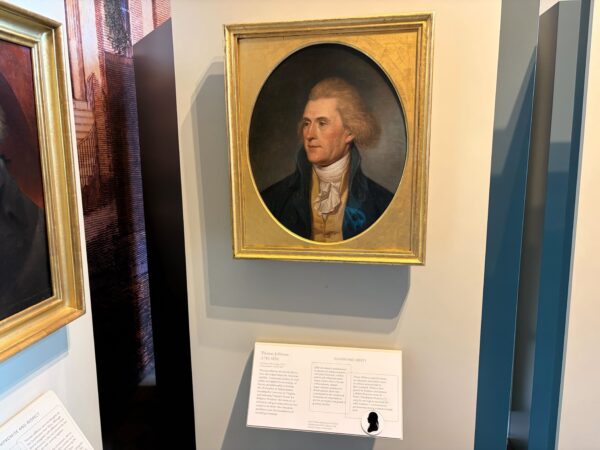
President Donald Trump’s administration has wiped almost all mentions of slavery from a panel accompanying a portrait of Thomas Jefferson at the Second Bank of the United States.
As the Founding Father who wrote the words “all men are created equal” while enslaving more than 600 people throughout his life, Jefferson embodies the paradox at the heart of the revolutionary era.
The description under his iconic portrait attempted to grapple with that tension.
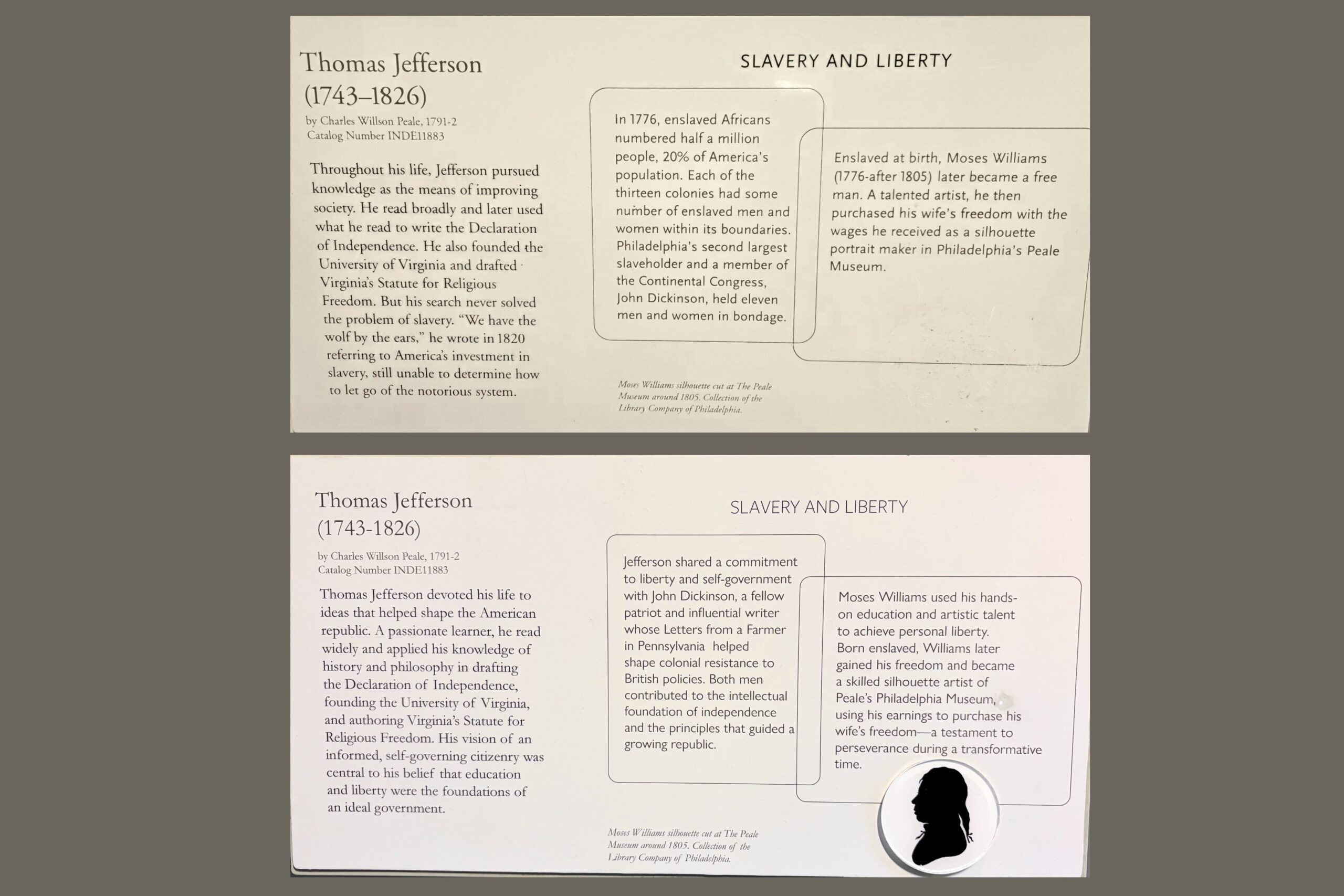
Despite Jefferson’s lifelong pursuit of knowledge, he “never solved the problem of slavery“ and was ”unable to determine how to let go of the notorious system,” the original plaque read.
But a new panel simply states that Jefferson’s “vision of an informed, self-governing citizenry was central to his belief that education and liberty were the foundations of an ideal government,” among other changes.
It’s not the only change the administration has made to exhibits around Philadelphia’s Independence National Historical Park ahead of the 250th anniversary.
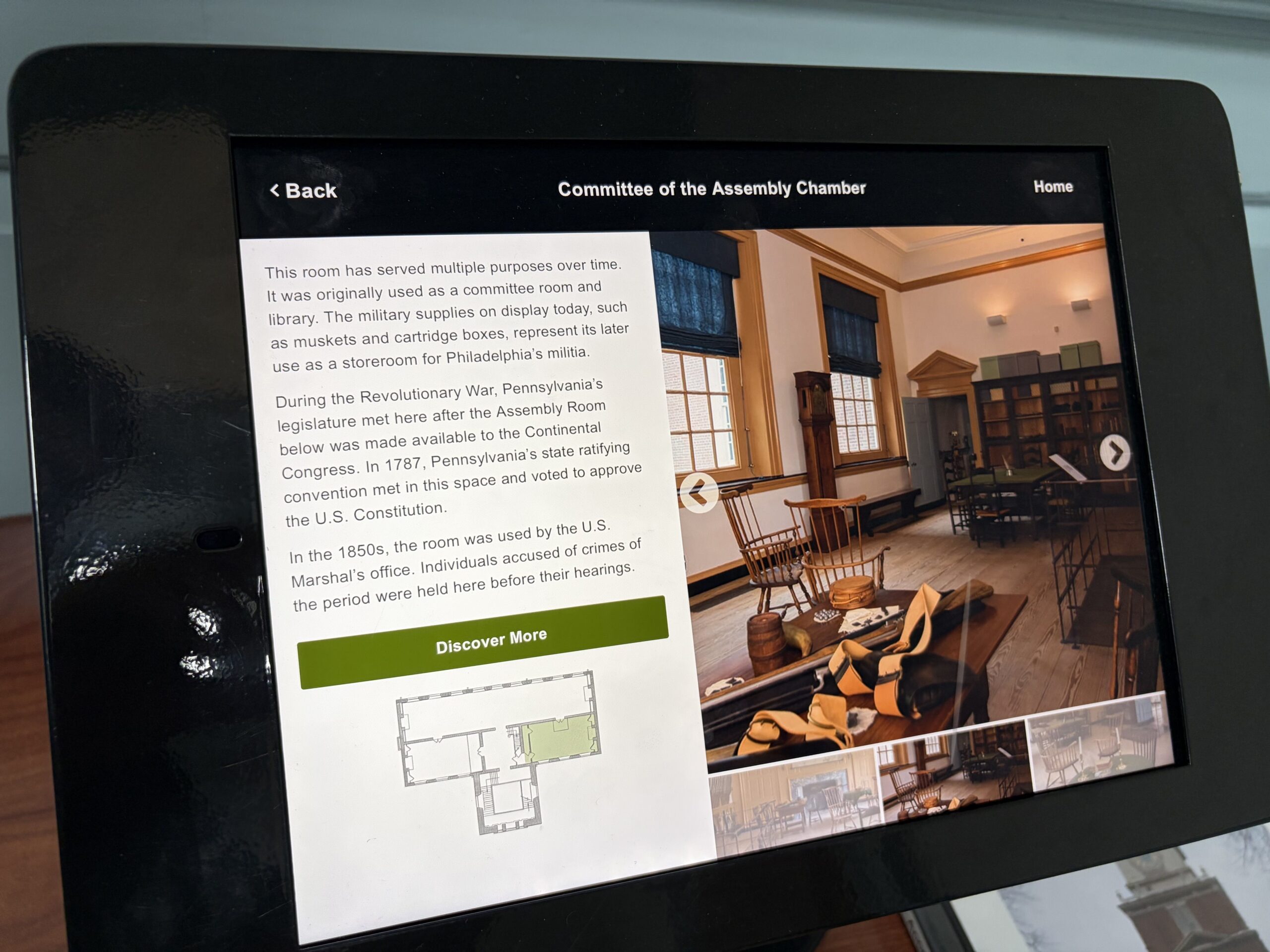
A touchscreen with a virtual tour of Independence Hall’s second floor now tells visitors that one of the rooms was used to hold “individuals accused of crimes of the period” before their court hearings.
Who were these individuals? A previous version stated clearly: “accused fugitives from slavery.”
A side by side of the original and new descriptions Thomas Jefferson’s portrait at the Second Bank of the United States. The references to slavery have largely been removed by President Donald Trump’s administration.
While the changes are more subtle than those that took place at the President’s House in January — and the new exhibits the government proposed a few months later — they further underscore the Trump administration’s goal to sanitize U.S. history, as signified by his executive order to review or remove content at national parks that “inappropriately disparage Americans past or living.”
They also show a lack of transparency. The change to the description under Jefferson’s portrait was only acknowledged following a demand by a federal judge in Boston that the National Park Service share a list of all removals the administration undertook to comply with Trump’s “restoring truth and sanity” edict ahead of the country’s 250thcelebration.
In a statement Monday, Avenging the Ancestors Coalition — which has helped lead the efforts to protect the President’s House — said the additional changes were “extremely troubling.”
“The preservation of history requires ongoing vigilance,” the organization said. “Restoring historical interpretation is only one part of the work; protecting it from future revision or erasure is equally important.”
“One of the greatest disappointments of my life, is that we get to the 250th anniversary of this country, and we are still trying to evade the truth of our founding,” LaRoche said.
Among the most blatant examples of the federal government’s desire to retell history has happened at the President’s House, which opened almost two decades ago to memorialize the nine people George Washington enslaved at his Philadelphia home. It also serves as a symbol of exploring the stark juxtaposition of slavery and liberty during the nation’s founding.
But the moves at the Second Bank and Independence Hall signify that the administration is not letting any stone go unturned when it comes to ridding or softening even smaller mentions of slavery at Philadelphia’s most iconic historic sites.
The Department of Interior did not answer repeated questions about the changes.
“No changes have been made,” a spokesperson said via email, citing the President’s House litigation. When an Inquirer reporter pressed again about changes to Independence Hall and the Second Bank, the government spokesperson repeated that there were no changes to the President’s House during the litigation. The Department of Interior did not respond to further inquiries.
At the Second Bank, the panel under Jefferson’s iconicportrait also informed visitors about the population of persons enslaved in 1776, that John Dickinson — a member of the Continental Congress — was an enslaver, and about the life of Moses Williams, an artist who was enslaved at birth and later became a free man.
That’s drastically changed in the new panel.
Jefferson’s grappling with slavery is no longer present and Dickinson is referred to as a “fellow patriot and influential writer. …” The only mention of slavery remaining is Williams’ story, though it’s reworded.
And at Independence Hall, the touchscreen kiosk describing the second floor Committee of Assembly Chamber previously outlined the irony of the space being used for ratifying the U.S. constitution and later housing the office “where accused fugitives from slavery were held before their hearings, right above the room where the Declaration of Independence had been signed.”
A touch screen at the entrance to Independence Hall with photos and descriptions of the building’s second floor. The description of the Committee of the Assembly Chamber has been edited to replace the words “accused fugitives from slavery” to “individuals accused of crimes of the period.”
But the reference to slavery has been removed, among other rewordings.
It remains unclear when these changes were made. The Inquirer reported last summer that these items — and an interactive exhibit at the Benjamin Franklin Museum about the Founding Father’s conflicting views on slavery, which is still intact — were flagged for review.
In addition to the President’s House exhibits, the list says the administration removed a “portrait description” and cites “disparages Americans past or living” as the reason it is gone.
No entry in the list corresponds to the change made at Independence Hall, which Philadelphia owns.
The city did not immediately respond to a request for comment.
All material changes at Independence Hall should be done after consultation with the city, said Cynthia MacLeod, former superintendent of Independence National Historical Park.
“The National Park service has been known for excellent historians and interpreters and its a shame that they are being muzzled now,” MacLeod said. “It’s a shame and a disservice to all the visitors not to have a more complete history told.”
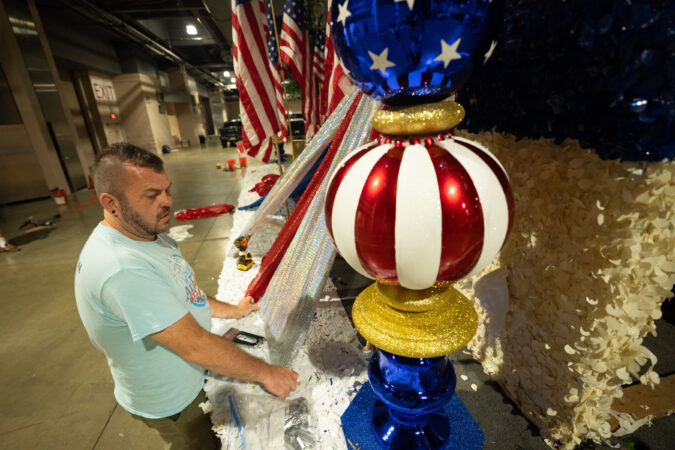
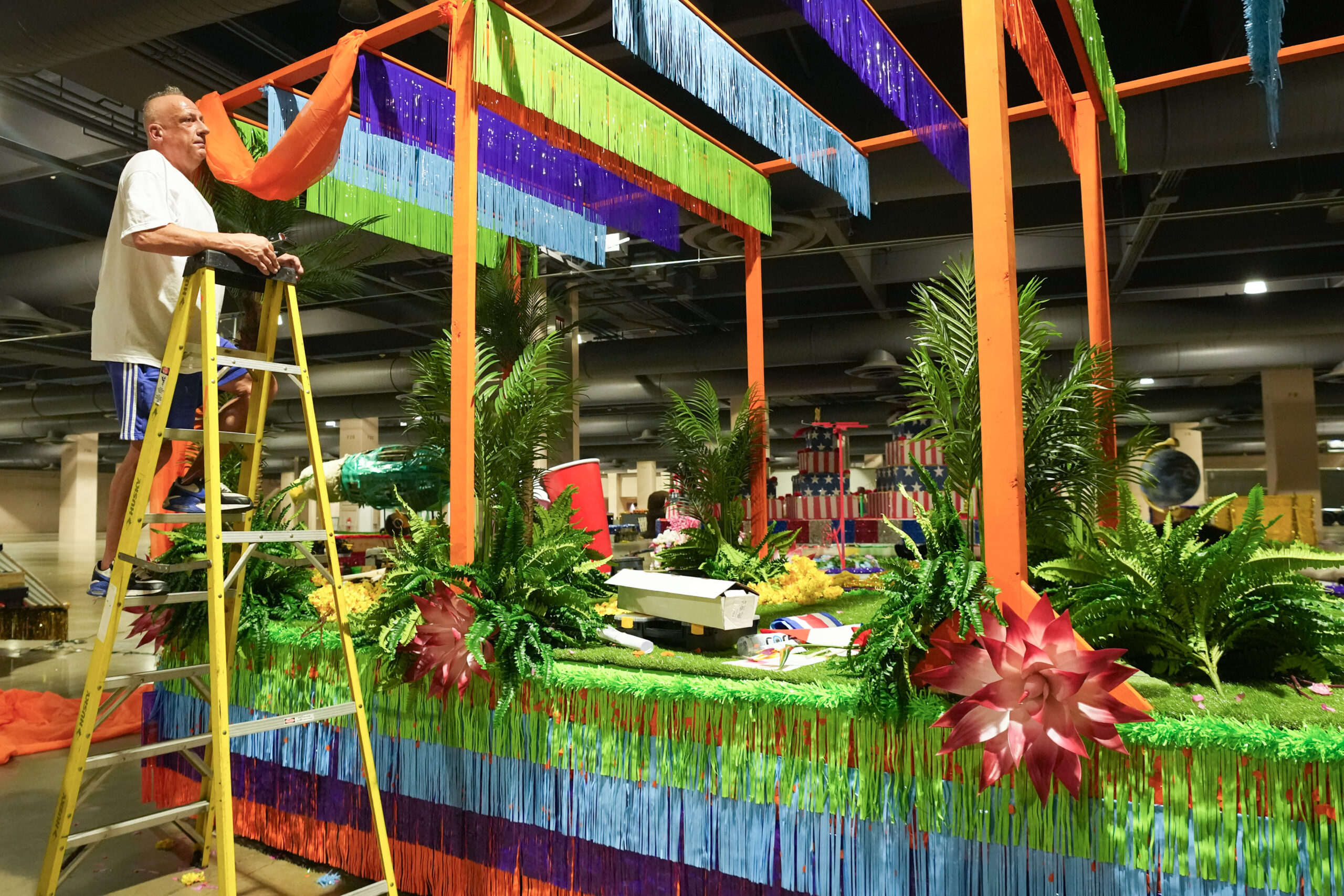
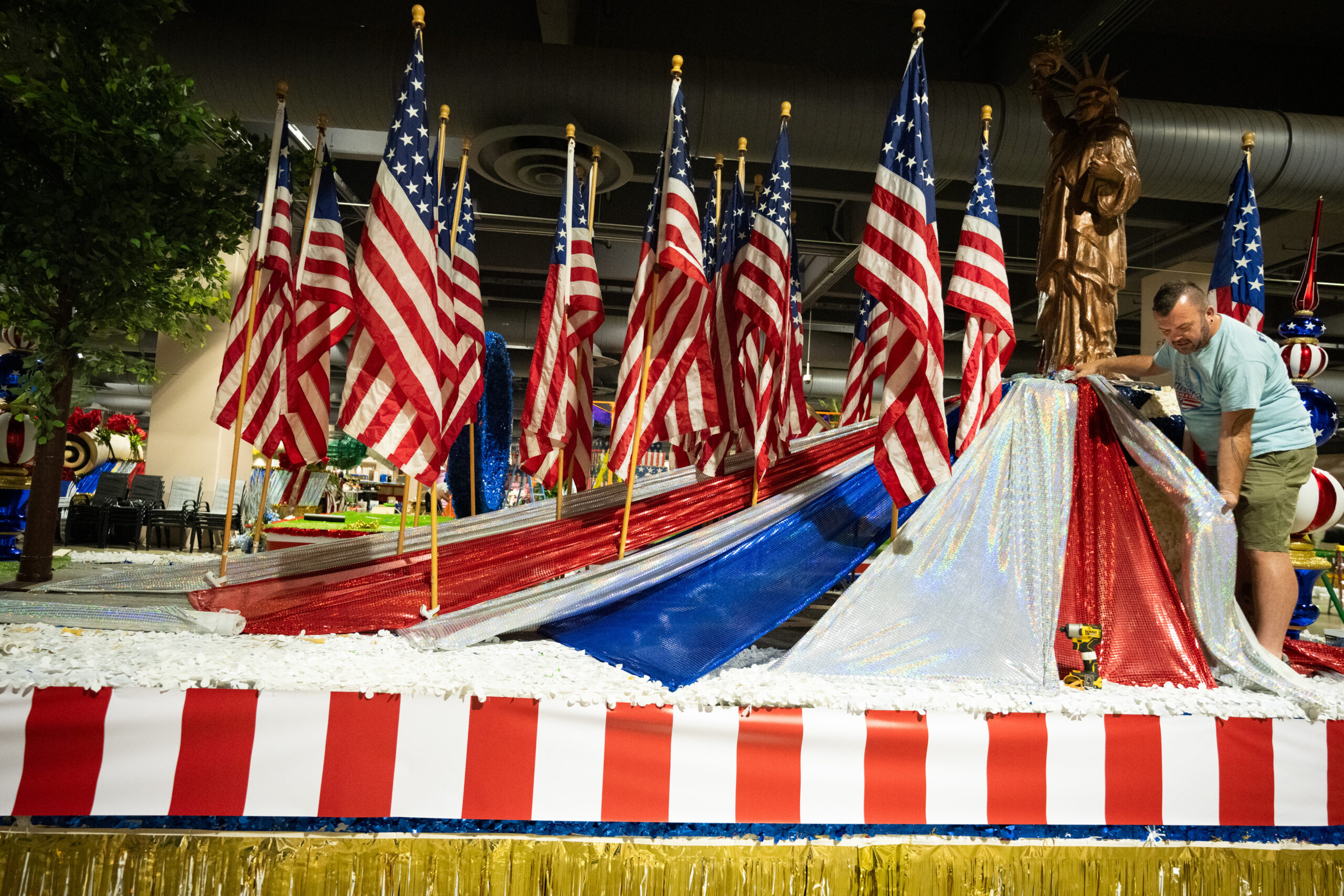
In the dull glow of the overhead Convention Center lights, Todd Marcocci and a band of craftspeople stood next to large wheeled platforms, some housing floral gazebos, others a recreation of a Pennsylvania farm. Sweat dripping from his brow, Marcocci intently drilled palm tree crowns into the base of a platform dedicated to Central and South America.
With just days until Philadelphia’s Semiquincentennial parade, Marcocci, alongside his crew and John Shaw of Shaw Parades, is assembling 19 parade floats to commemorate the United States’ 250th birthday.
Todd Marcocci works on a float back stage with the crews of Friday’s parade and festival.
The “Salute to Independence” Semiquincentennial Parade is scheduled to begin at noon Friday nearwhere the Declaration of Independence was signed in 1776, which Marcocci reminded himself of while he designed a historical parade.
“I told all the groups who signed on for the parade that we’ll be lining up in the footsteps of the Founding Fathers,” Marcocci said. “We’ll walk through history.”
In the halls of the Pennsylvania Convention Center, where float builders worked on Monday, larger-than-life recreations of Martin Luther King Jr. and Harriet Tubman awaited placement on a platform celebrating the Civil Rights movement.
Mike Oyer works backstage on the floats.
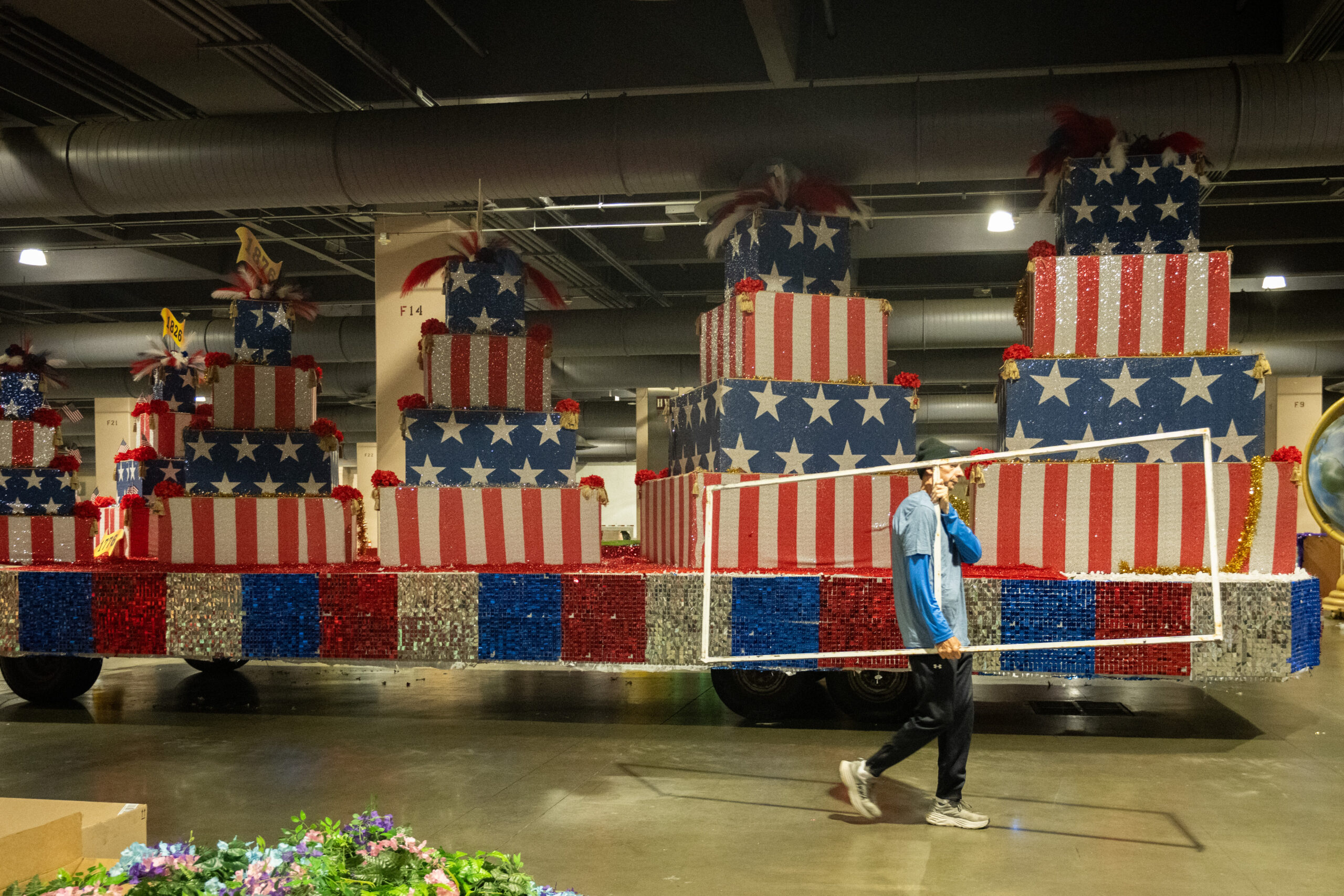
The next float over was bathed in white sequins, where a giant “peace dove” sculpture accompanied by a globe would rest. A few paces over sat a 6-foot-tall Wawa smoothie and coffee cups, and right by that were multiple United States-themed layered birthday cakes marking the various anniversaries of the country.
Shaw worked a blade saw, slicing through two-by-fours to construct the float frames that Marcocci and Co. were painstakingly deciding the minutiae of, such as how many American flags or sequins can be threaded through a float.
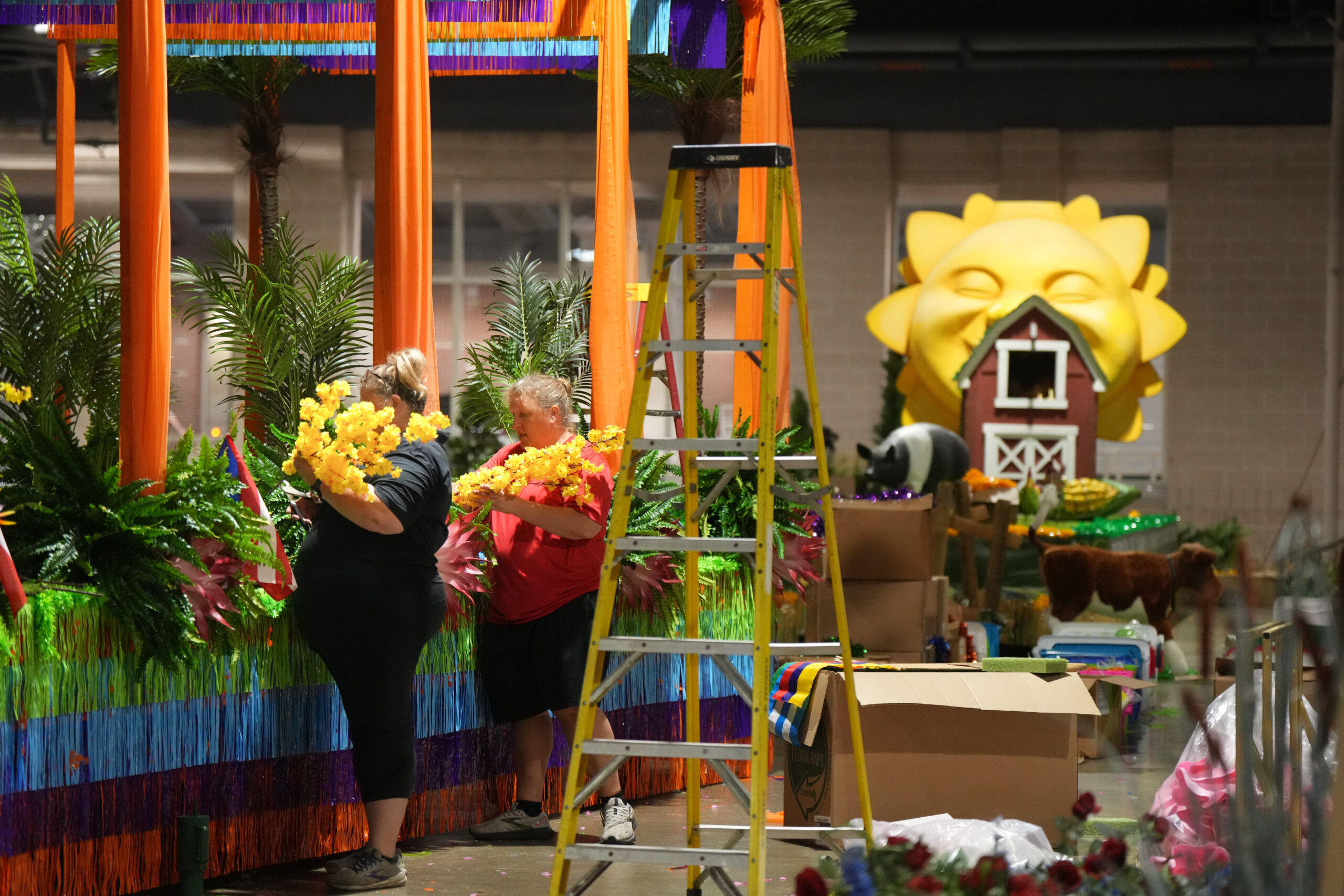
Annie Woods (left) and Johanna Gelber working on the floats.
Shaw, whose parade float company has passed down through four generations, said Philly Fourth of July parades usually average seven floats. “This year it’s almost tripled,” he said. “Todd designs everything in his head, and then we collaborate back and forth to come up with the plan to actually make these ideas work.”
Mayor Cherelle L. Parker will be on board the “One Philly — A United City” float, which features a large sculpture in the shape of the number 1 and a butterfly-and-floral gazebo symbolizing the city’s commitment to a clean and green city, Marcocci said.
Jeremy Williams, works on a float back stage.
A Liberty Bell float will commemorate some of the Founding Fathers and Betsy Ross with an Independence Hall backdrop. Another celebrates Philadelphia Pride with prominent LGBTQ figures and pride flags atop a vibrant rainbow platform.
“The most important thing for me is that people, whether they’re watching on TV at home across the nation or here in person, is that they see themselves in our parade,” Marcocci said of representing the diversity of America’s history.
Philadelphia’s Semiquincentennial Parade on Friday starts at noon at Fifth and Chestnut Streets, passing such historical landmarks as Independence Hall before heading to Sixth and Market Streets and then west on Market to circle City Hall before ending at Broad and Chestnut Streets after a heat emergency was declared, cutting short the route that was to continue to Logan Circle and loop around before heading back to City Hall.
Fan zones are at Sixth and Market Streets , 11th and Market, and the northeast side of City Hall, where a bar is available for those 21 and over.
“Smokin’” Joe Frazier is finally in his new home, just in time for the 250th birthday of the United States.
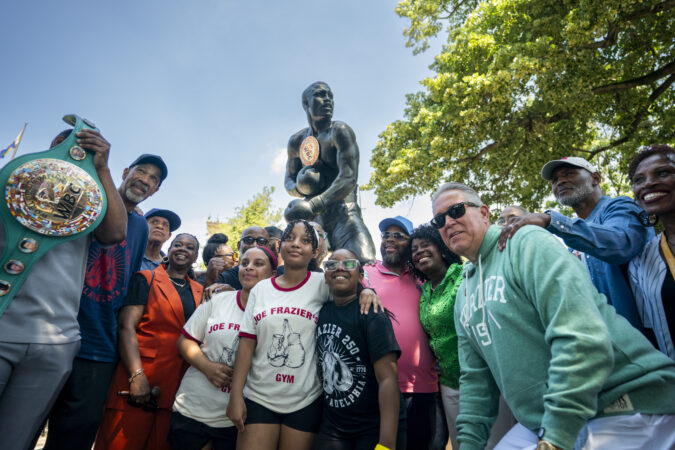
City officials, alongside Frazier’s family, friends, and fans, on Monday unveiled the real-life heavyweight boxing champion’s statue at the base of the Philadelphia Museum of Art. Intended to be the statue’s new location in perpetuity, the spot was occupied by a monument to fictional boxer Rocky Balboa for two decades.
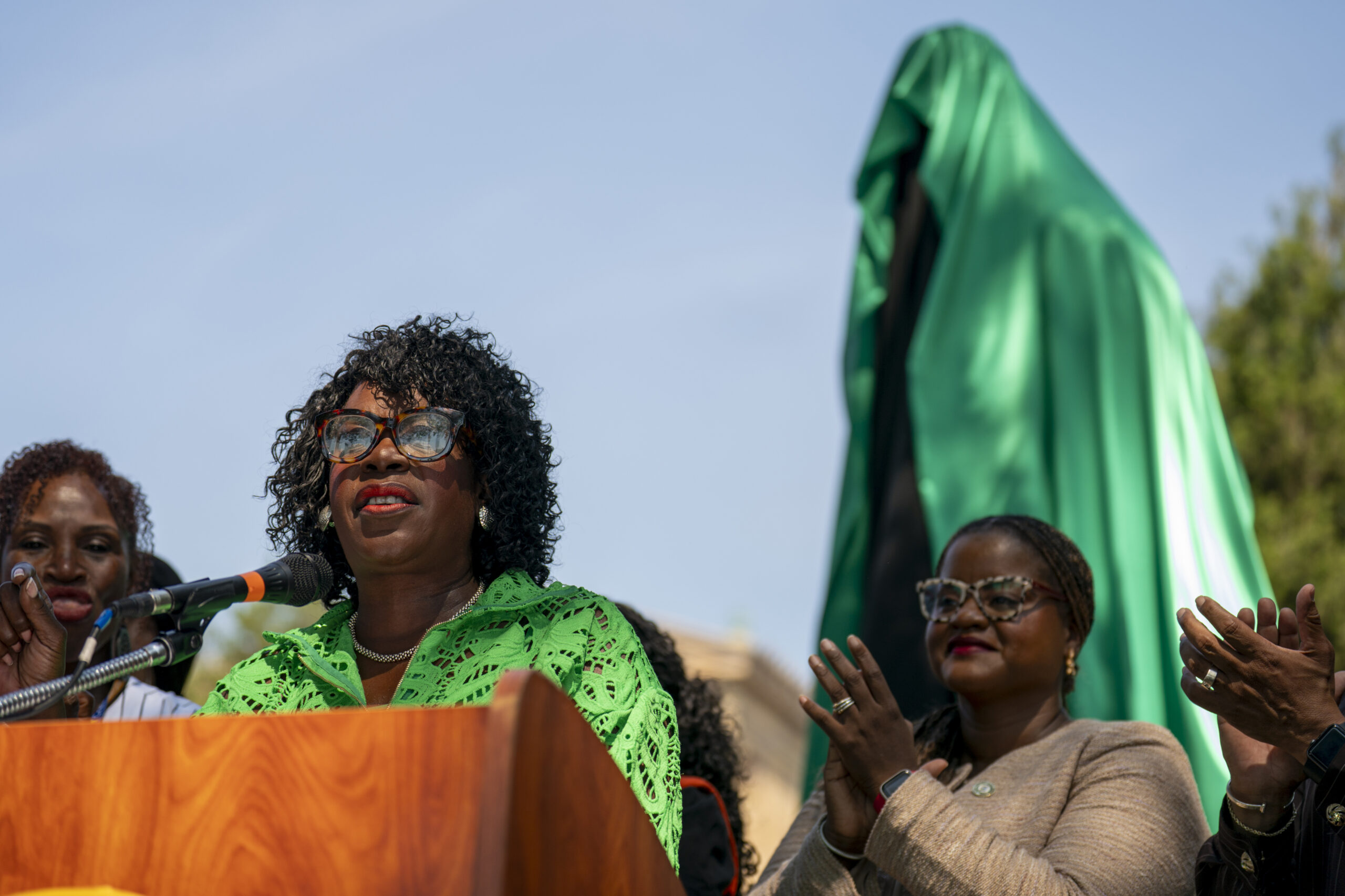
“During this 250th celebration in the birthplace of democracy, we will forever remember that the city got right what it had gotten wrong for a long, long time,” Mayor Cherelle L. Parker said. “Now, Joe Frazier is attached, and connected to, and will permanently be here at our Philadelphia Museum of Art.”
Monday’s unveiling was the culmination of months of planning. The Philadelphia Art commission in February approved a plan to move the statue from by Creative Philadelphia, the city’s office for the creative sector. Chief cultural officer Valerie V. Gay said Monday’s event was something of a “soft launch” for the statue’s new home, as a granite base will be installed in the future, along with more formal interpretive panels.
Mayor Cherelle L. Parker speaks at the unveiling of the statue of former heavyweight boxing champion Joe Frazier at its new home outside the Art Museum.
“Today, we did not want to wait,” Gay said.
Frazier’s statue, after all, lived at the South Philadelphia sports complex for more than 10 years. Created by sculptor Stephen Layne, the statue was unveiled outside what is now Stateside Live! in 2015, four years after Frazier’s death in 2011 following a battle with liver cancer. Frazier, the undisputed heavyweight champion in 1970-1973, is probably best remembered for his three battles against Muhammad Ali in the 1970s.
The city’s statue of Rocky had called the base of the Art Museum’s famed steps home since 2006. The monuments’ moves are part of a larger shuffling of statues at the Art Museum that began in March, when the Rocky statue was moved inside the museum for the first time as part of the ongoing exhibition Rising Up: Rocky and the Making of Monuments.
That Rocky statue will be installed at the top of the Art Museum steps in the fall, when the statue of the Italian Stallion currently there will be returned to actor Sylvester Stallone’s private collection. Stallone, Parker said, was supportive of the Frazier statue’s new location.
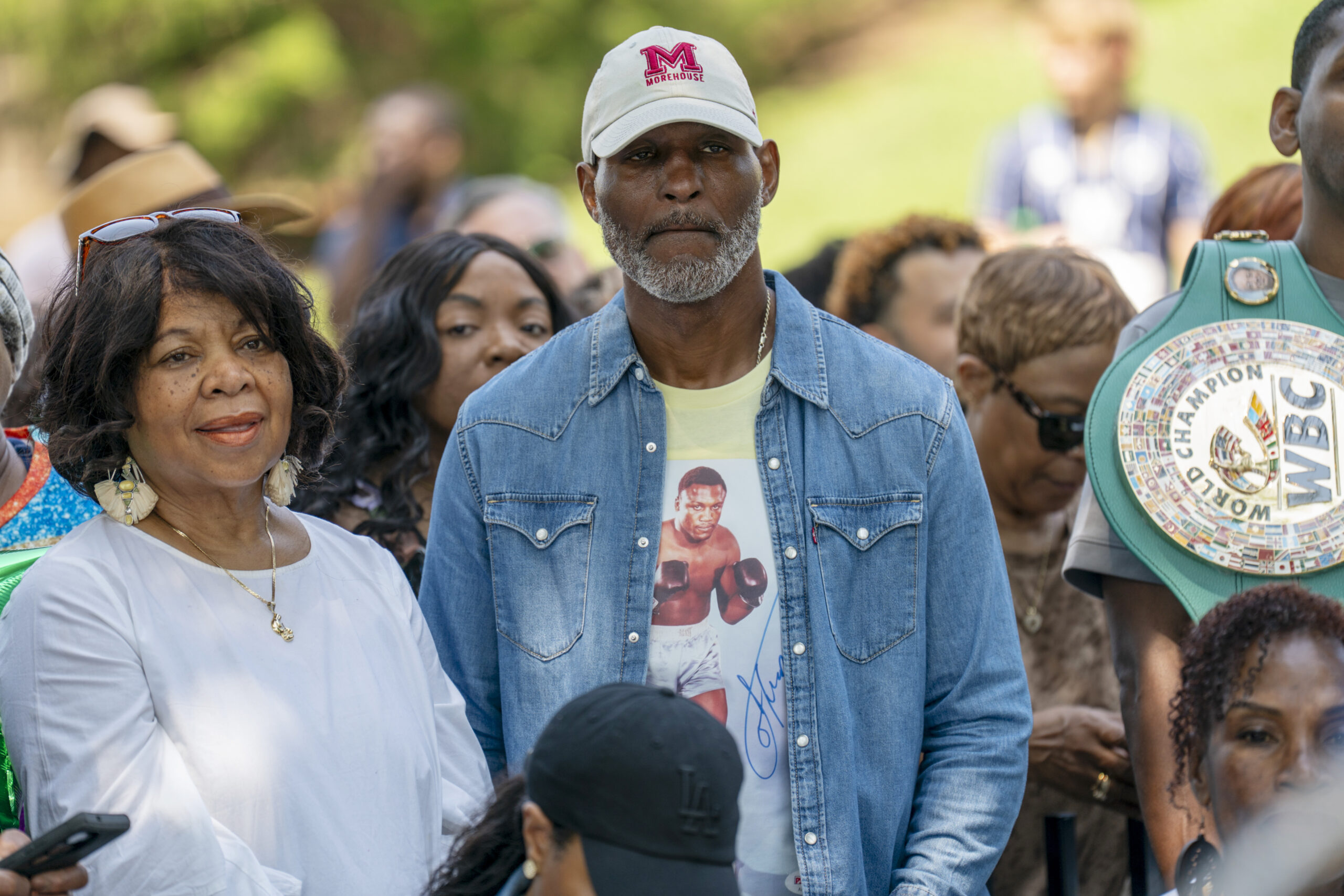
Dozens of the boxer’s supporters attended on Monday, including Philadelphia boxer Bernard Hopkins who held world championships in two weight classes, promoter Joe Hand Jr., and Frazier’s daughter Jacqueline Frazier-Lyde. Frazier-Lyde, a retired boxer and current Municipal Court judge, said the the color of the shroud covering her father’s statue — green —was fitting.
“My mother’s favorite color was green, because we’re from the South and we love green, because it represents life,” she said. “My father, Joe Frazier, liked it because it was the color of money.”
Boxing legend Bernard Hopkins at the unveiling of the new home for the statue of heavyweight boxing champion Joe Frazier.
To the end, the statue’s new location wasn’t the end of efforts in the boxer’s memory. Parker also announced plans for a capital campaign to restore the former Joe Frazier’s Gym on Broad Street above Glenwood Avenue in North Philadelphia. Now a discount furniture store, the building is a legendary location in Philadelphia boxing history, having served as a training location for not just Frazier but other famed fighters and community members.
Parker said plans were underway to establish a way to accept donations for that effort via the Philadelphia City Fund. The amount of funds targeted be raised was not immediately clear.
“It’s important to show the world who we are,” Gay said. “Joe Frazier was a humble underdog whose determination and grit inspires us all. What could be more [a] more Philadelphia story than that?”
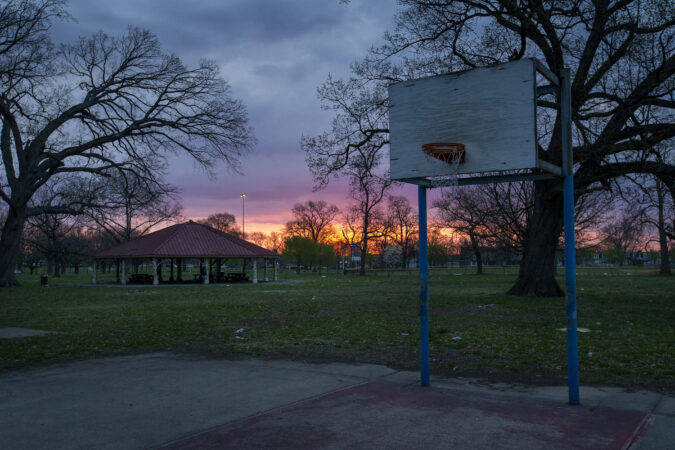
Philadelphia police are investigating whether three men shot near the Hunting Park Recreation Center in the last month — two of them fatally and just six days apart — were targeted by the same gunman, according to law enforcement sources.
The two men killed this month were found partially undressed and shot in the torso inside the large North Philadelphia park, said the sources, who spoke on the condition of anonymity to discuss an ongoing investigation. A third man was shot in late May and survived.
Police believe the same person was involved in both killings, the sources said, and are looking into whether the men had met the suspect through a dating app.
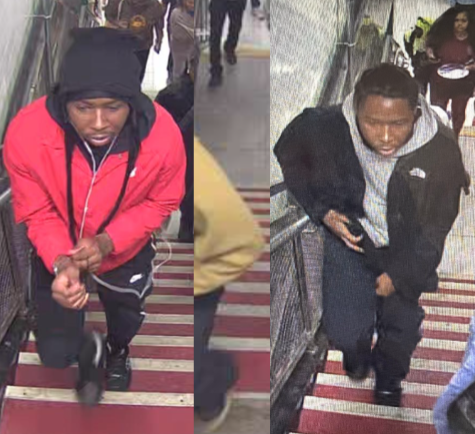
Deputy Police Commissioner Frank Vanore said investigators have identified a person of interest interest in the case, a man in his late teens or early 20s, after capturing his image on surveillance footage as he entered and exited a Broad Street Line station.
The man — whom investigators did not identify — is considered armed and dangerous, Vanore said at a news conference Monday.
Philadelphia police said this man is a person of interest in the shooting deaths of two men near the Hunting Park Recreation Center in separate incidents within the last 10 days.
“All three incidents are perpetrated very similarly, in the same geographic area,” he said. “We’re believing now that they’re all connected and being done by the same person.”
On June 20, officers responded to the park, at 1101 W. Hunting Park Ave., shortly after 10 p.m. and found Martin Higgins, 45, on the bleachers of the baseball field, suffering from a gunshot wound to the torso. He died at the scene, police said.
Then, on June 26, police responded and found another man just before 11 p.m. suffering from multiple gunshot wounds near the basketball courts. Police have not yet identified the man but said he was 29-years-old.
Police now believe a third shooting last month is linked to the gunman.
In that May 29 incident, a 55-year-old man was shot in the elbow and torso in the park just before 10 p.m.The victim later told investigators that a man wearing all black who appeared to be in his 20s approached and told him that he was being robbed, according to Vanore.
Vanore said investigators had yet to determine a motive tying the cases together, though they believe robbery is the motivation behind the shooting that was not fatal.
Asked whether the victims had met the suspect on a dating app — a detail law enforcement sources said they are investigating — Vanore declined to comment, citing the ongoing investigation.
“If that is [part of the case], that’s something we’ll have to develop moving forward,” he said. “But at this point we know that this individual appears to be preying on people.”
Higgins’ relatives could not be immediately reached for comment Monday. An obituary shared online said he was a graduate of Temple University’s business school and worked as an inspector for the city’s Community Life Improvement Program.
“Marty was known for his passion for clothing, style, and self-expression,” the obituary said. He had a “kind heart, generous spirit, and unwavering support for those he loved” and “was the person who showed up when someone needed him, always making time for family and friends no matter what was going on in his own life,” his family wrote.
He was one of six children and was an uncle to many nieces and nephews.
Meanwhile, as investigators continue to search for the gunman, they are asking anyone with information about the crimes to contact the homicide unit at 215-686-3334 or submitting an anonymous tip at 215-686-TIPS (8477).
A 39-year-old man was stabbed during a fight on a SETPA bus in West Philadelphia early Monday, authorities said.
The incident began around 2:44 a.m. when two men got on theL1 Owl bus at 15th and Market Streets and began fighting, police said.
The bus driver flagged down a nearby Philadelphia police officer for assistance.
After an unsuccessful attempt to separate the men, the officer deployed a Taser on the 39-year-old man, whom police did not identify.
While taking him into custody, the officer saw that the man had been stabbed. He was taken to Jefferson Hospital, where he remained in stable condition late Monday morning.
Investigators are looking for a the second person they said was involved in the fight and fled the scene.
Officers recovered a knife. Police gave no motive for the stabbing which remains under investigation.
The players amble into the auditorium on acloudy May morning to run through their schemes and formations and make last-minute adjustments to the roster. Some are already in uniform — waistcoats and breeches — fueling up on Wawa coffee and bagels. Others scroll aimlessly on iPhones or finish off their cigarettes outside the Free Quaker Meeting House near Independence Hall. They discuss contingencies, ready their gear, and buckle their latchet shoes tight.
“Get out there and have fun,” their coach, Historic Philadelphia’s director of storytelling Johanna Dunphy, says as she sends her proud-chested team of historical reenactors off for their preseason opener.
This is the start of the team’s Super Bowl run: the lead-up to the nation’s Semiquincentennial. The cast of Ben Franklins, John Adamses, and Betsy Rosses — actors who have spent months and uprooted their lives to learn about and live as colonial America’s key characters — will be at the front lines of the 250th birthday celebrations, which began with the cast’s opening day on May 23 and reach a fever pitch on July 4. They will become de facto historians, guides, entertainers, and ushers to an expected crush of tourists, all while anchoring how the country’s earliest days are memorialized and whose stories get to be told.
“Fly!” Dunphy says with gusto as the performers shuffle out of the modest redbrick building.
This set of actors is part of Historic Philadelphia’s Once Upon a Nation program — a series of performances staged throughout the summer and beyond in Philadelphia’s historic district and at Valley Forge. It’s Once Upon a Nation’s 21st season, but this year is expected to be one of its biggest ever, with the most actors, plays, scripts, and events.
And, with tourism agencies expecting this summer’s events to draw upward of one million visitors, it’s almost certain to be the program’s largest audience.
“Philadelphia is ready for you,” Amy Needle, Historic Philadelphia CEO, told the players on the last day of the preseason. “And I know you’re ready for them.”
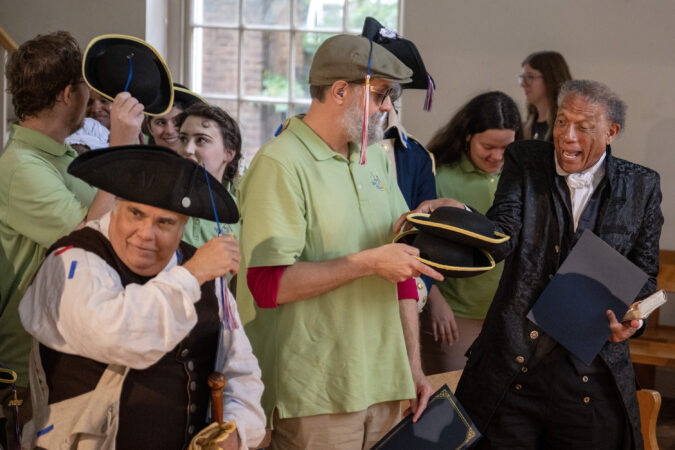
Shecky Perlman as Ben Franklin, and other historical reenactors receive their diplomas on May 21, 2026, after weeks of intensive, immersive training at the Benstitute.
Fourmonths to game day
Actors, mostly local, file in and out of Jason Greenplate’s office on a chilly January afternoon. Greenplate, program manager for Once Upon a Nation, and his colleagues are seeking the strongest possible players who have the passion, the look, and the improvisational skills to take on the characters and become “history makers” — what Historic Philadelphia calls its reenactors.It’s essential for these coaches to choose players who are not only capable of taking on these roles but are also willing to challenge their own understanding of history.
Spencer Salusky, a 23-year-old fresh William & Mary graduate, walks through the door.
As a draft prospect, Salusky is an impressive pick. He can execute even the most complex of plays (tricky lines and blocking), and his stats (body measurements and head shape) are optimal.
“He kind of looks like John Adams,” Greenplate thinks.
After conferring with his peers, Greenplate chooses Salusky tobecome Once Upon a Nation’s next John Adams, and, one by one, 19 more actors are cast as history makers and storytellers, those who are stationed at the city’s historic sitesin green polos to offer context to visitors. They join the existing 30 company members returning from prior years.
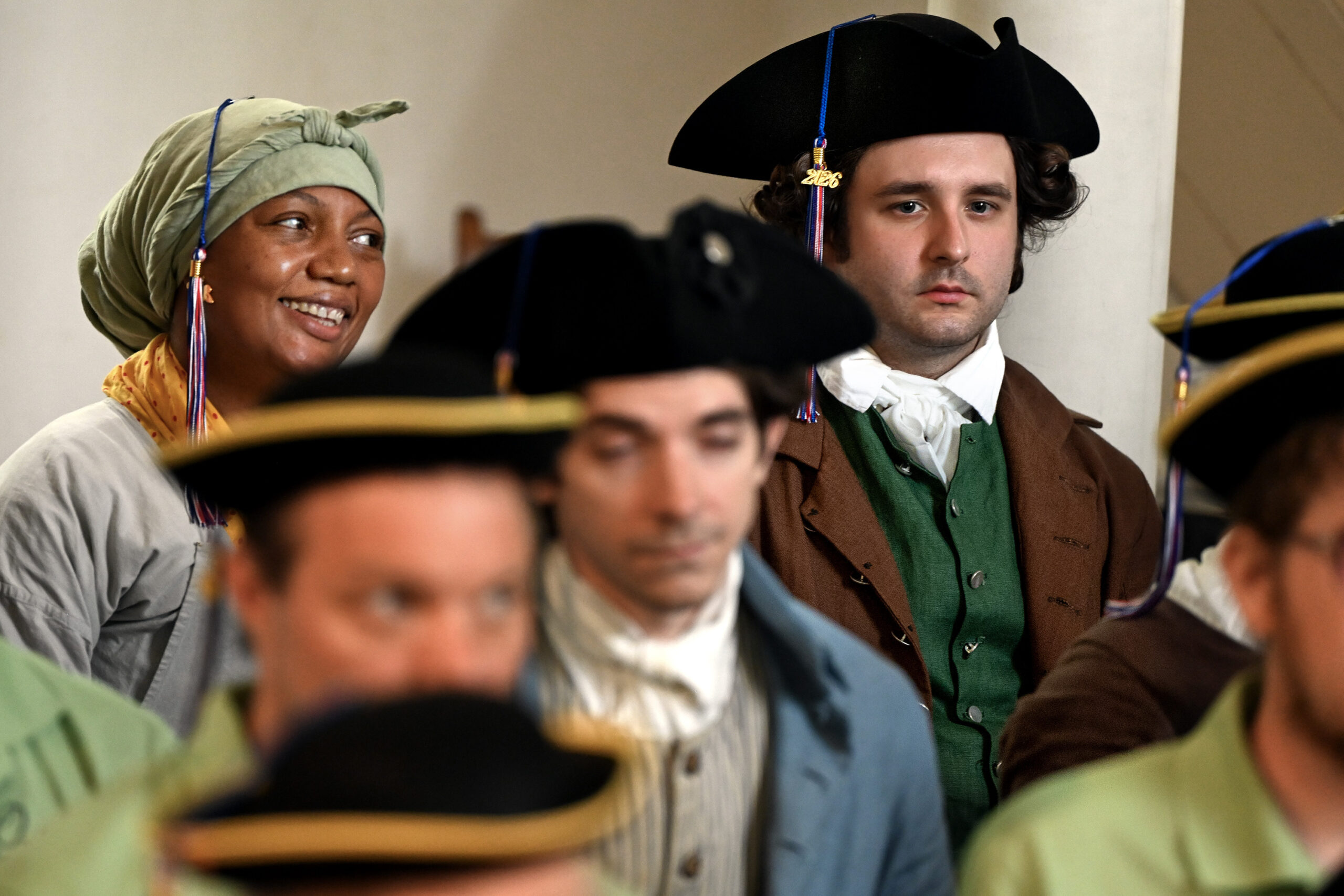
Courtney Mitchell, who portrays Margaret Woodby (left), and Spencer Salusky (right) as John Adams, join other historical reenactors at graduation on May 21, 2026, after weeks of intensive, immersive training at the Benstitute.
Three months to game day
The actors soon begin their training. For Salusky, that looks like receiving a large packet full of biographical information about John Adams — where he was born, his wife’s name, and his perspective on slavery — from Doug Thomas, director of history makers.
Thomas is a player-coach, a star in his own right who can seamlessly transition to the coaches’ box. Like Deion “Prime Time” Sanders, Thomas is a Swiss Army knife on the field, having played every position in the game of historical reenacting, from William Penn and Patrick Henry to Francis Scott Key, and has been doing the work for nearly 30 years. But what makes him truly elite is his position as Mount Vernon’s George Washington.
Out in the field, the players might be blindsided by a granular question from a tourist, an offensive remark from a passerby, or incessant badgering from a child. On the stage — where the history makers also perform a series of scripted plays — they must be prepared to embrace their characters’ conflicting motivations, shifting attitudes on political issues, and complex interpersonal relationships.
Thomas is equipped to help them tackle it all.
He guides them in studying their characters, trains them on redirecting conversations with visitors toward topics they’re knowledgeable about, and teaches them improvisational techniques. He also prepares them to embody the voice, posture, and behavior of historical figures.
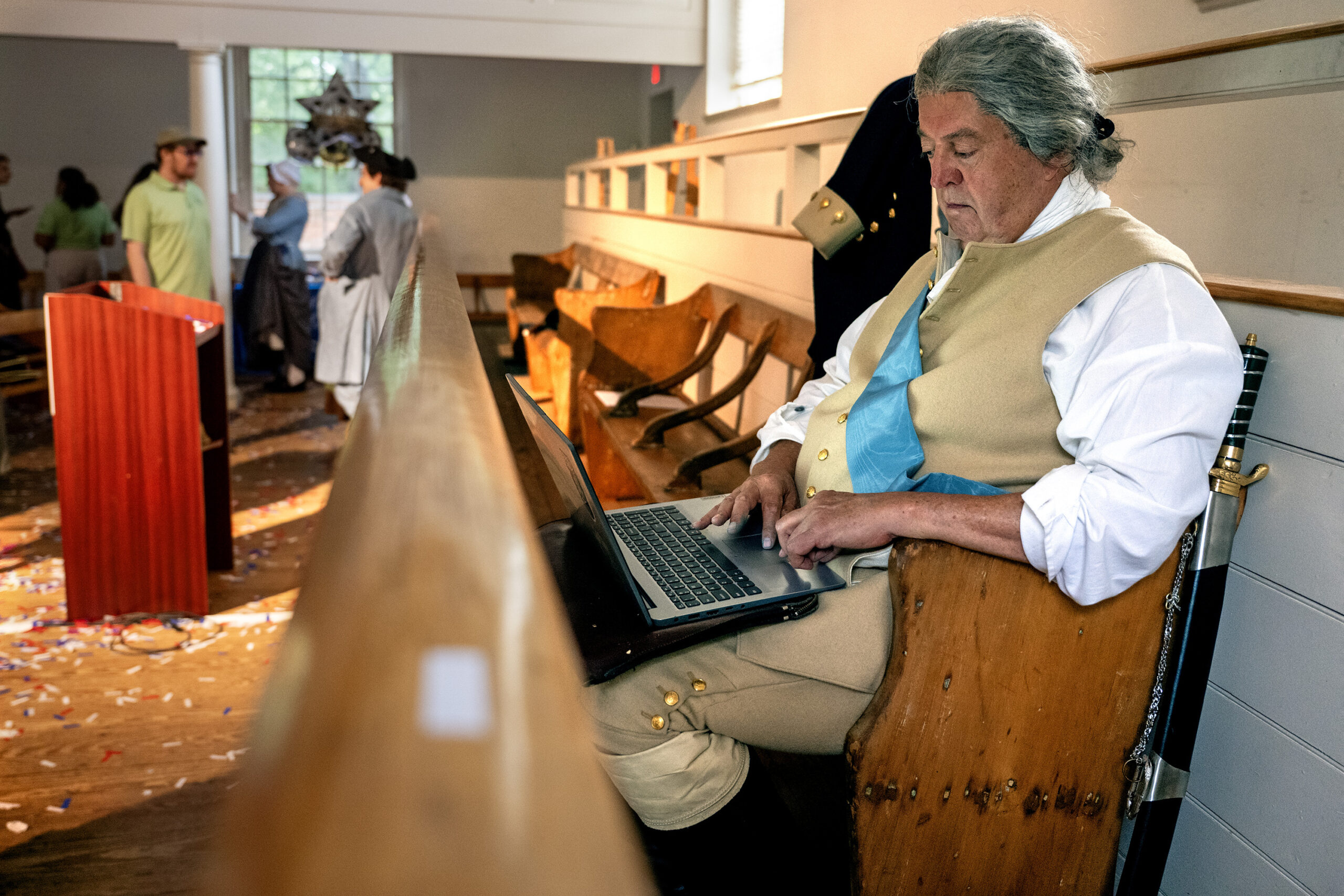
Jim Fryer as George Washington checks in on his laptop on May 21, 2026, after the graduation of dozens of historical reenactors after weeks of intensive, immersive training at the Benstitute.
Three days to game day
“Adams,” Thomas says, summoning Salusky during a rehearsal for Cocktails and Congress, a marquee performance in the Once Upon a Nation repertoire.
On a scorching 95-degree afternoon that foreshadows what the players can expect during the steamy home games to come, Thomas scans the script, glasses poised atop silky black hair that grazes his shoulders. He directs Salusky’s attention to a moment in the dialogue: “Slavery is like a great cancer.”
He cautions the actor to be careful with how he utters that line. Adams is torn about slavery at this point in his life, Thomas explains.
“He doesn’t like it, he doesn’t support it, but also he does realize very practically what eliminating slavery would do to the economy,” Thomas tells Salusky.
Salusky contemplates the note, sitting on a Meeting House pew with a mechanical pencil tucked behind his ear.
“Adams is evolving,” Thomas tells him. But “he’s a practical man.”
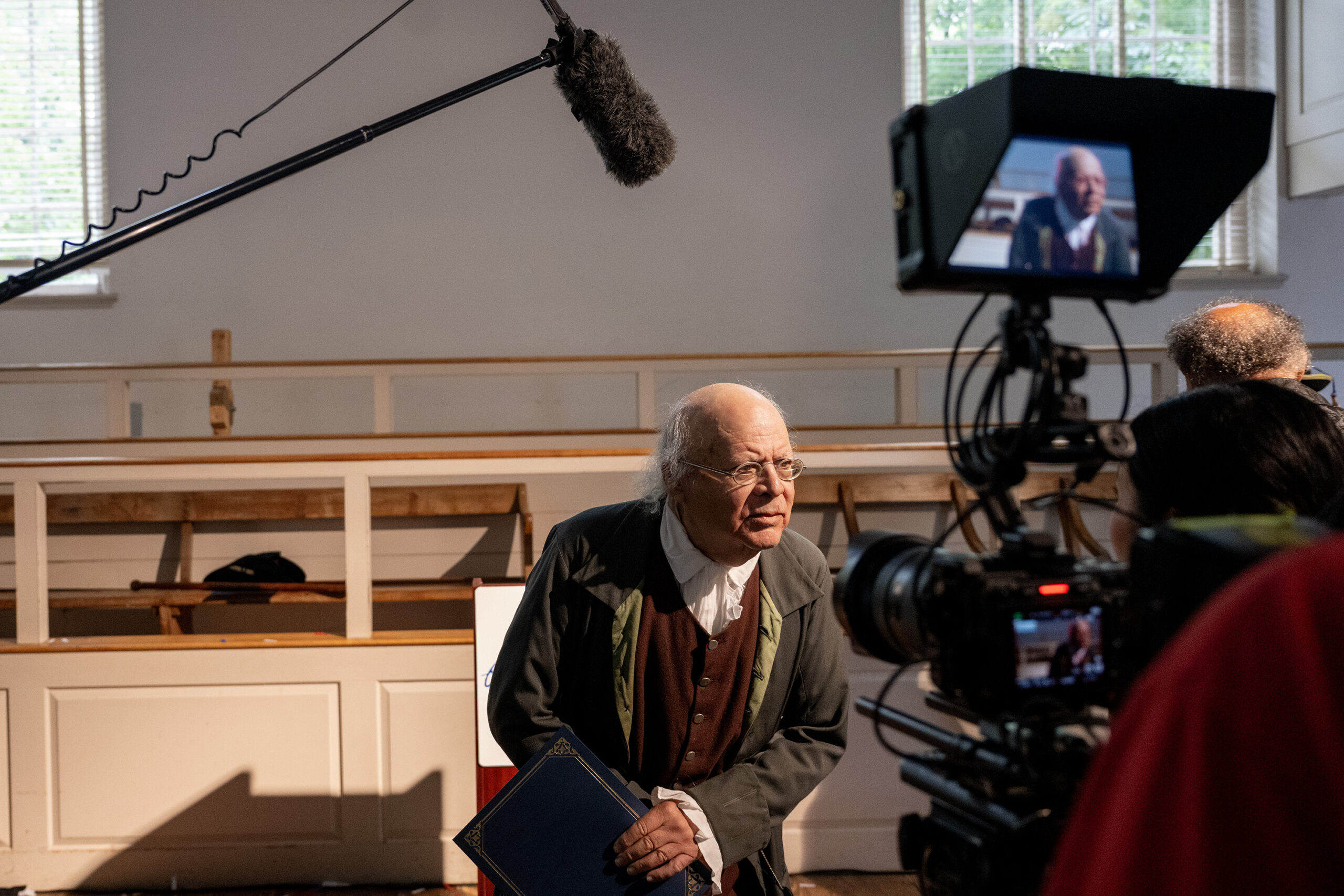
Shecky Perlman as Ben Franklin, ready for his close-up, on May 21, 2026, as he is interviewed by a documentary film crew, as dozens of historical reenactors graduate after weeks of intensive, immersive training at the Benstitute.
Two days to game day
Even with centuries of primary and secondary sources, and extensive research, there are still gaps in what’s known about 18th-century American life that the actors and program coordinators must contend with. There’s a trove of information on John Adams, for example, but the documented lives of women and people of color are far less complete, like that of Hannah Till, an enslaved cook for George Washington at Valley Forge, who purchased her freedom. What’s known about Till is often centered on her enslavers.
West Philadelphia actor Miranda Thompson, who portrays Till as well as Sarah, a fictional composite character in Cocktails and Congress, relies on more general information about how women of color lived during the colonial era to inform her performance. “You just want to get it right,” Thompson, 43, says. “You want to give truth to who that person was. … I feel like if I’m grounded and honest within that interpretation, I think that I’ve done it justice.”
For historian Sandra Mackenzie Lloyd, who authored many of the Once Upon a Nation scripts and founded the Benstitute — the immersive training program the actors undergo — the American story is about “more than the dead white dudes.”
“It’s not a straight line,” Lloyd says. “We are people who have been through many difficult periods and ups, downs. This is a country that was created by people from many places with different beliefs, and that’s historic, and it’s contemporary.”
Organizers were intentional about the stories and figures they chose to platform this summer, centering diverse and layered voices in the narrative of the nation’s founding, including those of Black Americans whose stories have been omitted in the retellings of the story of 1776.
“Our history is being erased, voting rights [are being erased], certain books are banned,” Thompson says. “Representation matters … to know that we were there, and we played an important role.”
Prominently featuring Black history during the 250th, she says, is also an opportunity to dismantle racist, archaic stereotypes about enslaved people through authentic storytelling and connection.
“You can change a person’s mind,” Thompson says. “We’re human, we can always change our minds.”
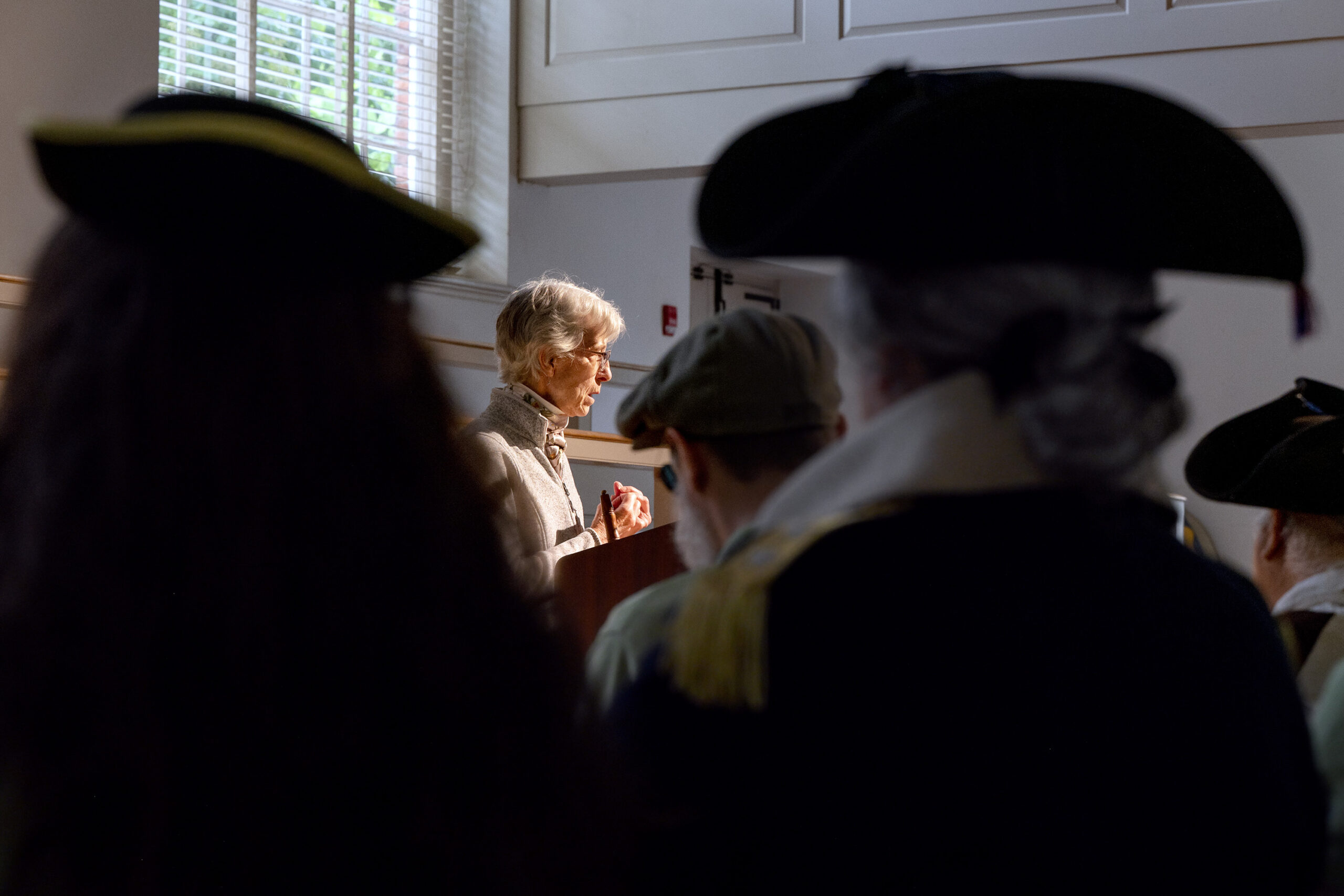
Historian Sandra Mackenzie Lloyd, founder of the Benstitute, delivers the commencement address on May 21, 2026, as dozens of historical reenactors graduate after weeks of intensive, immersive training.
One day to game day
Preparations for the reenactors include not only character work, but also tourism and hospitality training. They learn how to guide someone to the best cheesesteak or nearest toilet while staying in character and using period-appropriate vernacular. The actors also learn how to beat the heat in wool frocks and petticoats and stay safe.
“Make sure to hydrate, hydrate, hydrate,” Dunphy, the storytelling director, tells her team during a morning gathering at the Meeting House before they hit the streets in costume, and a set of volunteer fake tourists heads out to test the reenactors’ skills before they’re faced with real tourists.
She points them to a packet in their supply bags full of powder to pour into their water for extra hydration.
“Drink this,” she instructs them.
Most importantly, Dunphy reminds both the history makers and the storytellers what to do if they’re out in the field and feeling unsafe.
“History makers, please remember this: If a storyteller says, ‘Have you seen John Adams?’ Don’t be cute. That is a plea for help; they need you to stay with them. It is not a joke. They need you to stay,” she says. “Things can turn on a dime.”
And, as this is live performance, things often don’t go according to plan.
During an April news conference at which a Betsy Ross and a Benjamin Franklin from the company stood onstage beside Gov. Josh Shapiro, a giant poster reading “America 250 PA” fell forward, scraping Franklin’s behind.
Carol Spacht, the Betsy Ross at the event, acted quickly.
“This is such an exciting announcement that the world is falling apart over it,” she exclaimed after the poster came down, gesticulating with a scroll clasped in her hand before turning to the Benjamin Franklin reenactor, Bill Robling.
“Quite all right, Dr. Franklin?” she asked as he nodded. “We’re sturdy at our age. 250 years does that.”
At a recent event at Reading Terminal Market, Salusky, as John Adams, had to navigate how to handle tourists approaching him, thinking he was Benjamin Franklin.
“As John Adams, how do I react to people thinking I’m Ben Franklin. Well, he was a mentor of his. He really admired him, found him annoying, but would still be a little flattered,” Salusky says. “It’s kind of just like in-the-moment problem-solving.”
Over the course of their four months of training, the actors finally reach a place of feeling ready for anything … mostly.
“Speaking in 18th-century tongue continuously, I am nervous about that,” Thompson says. “I want to portray it real.”
Cause for celebration
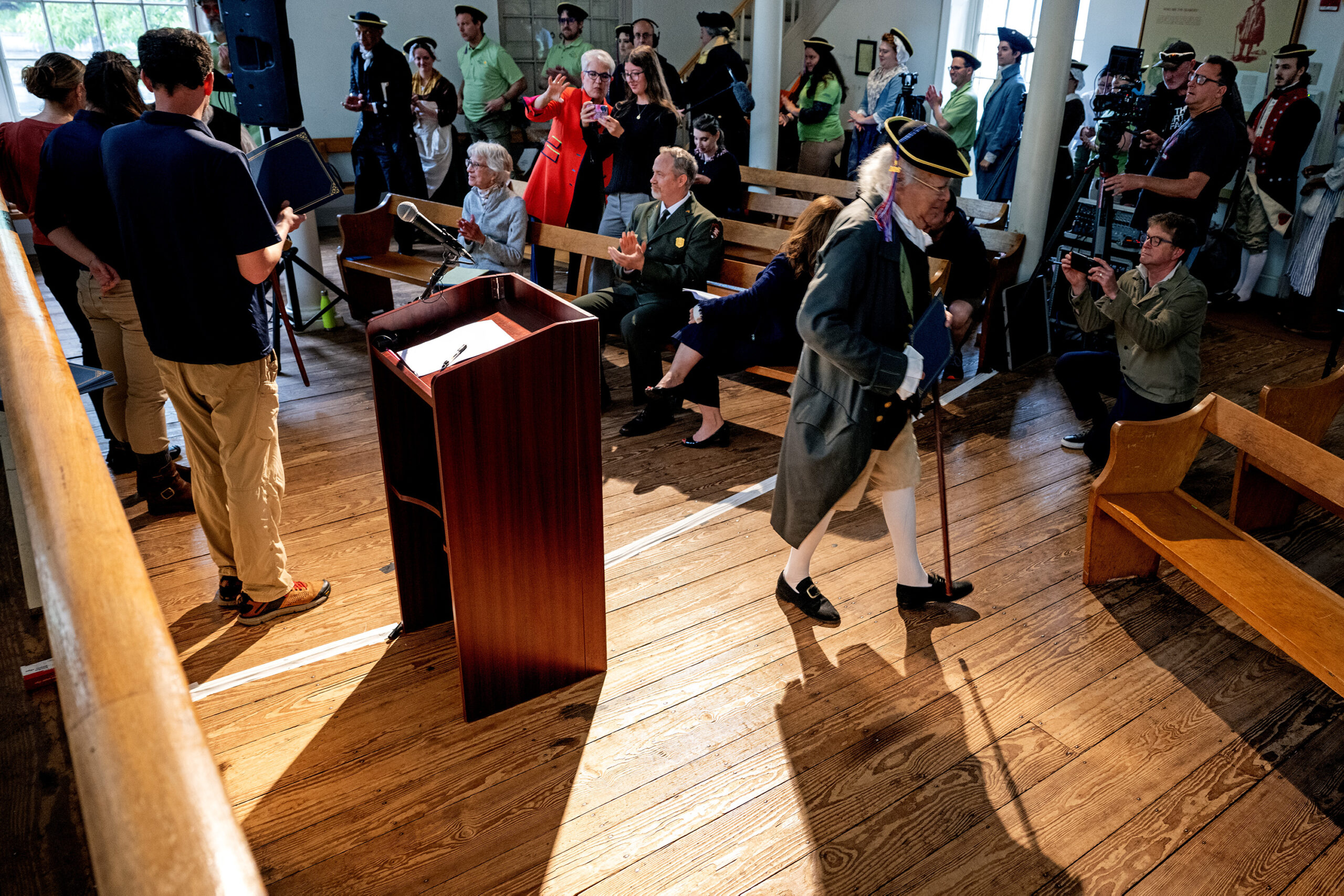
Before the actors are on their own on the Philly streets, they and their mentors celebrate the completion of their Benstitute training with a graduation ceremony at the Free Quaker Meeting House.
Graduates file in, some in polos and slacks and some in costume, all wearing red, white, and blue tassels dangling from the center of their mob caps and other historical hats. They sit in the pews, players awaiting the game-time whistle, as their coaches offer them final words of encouragement before they put their drills to the test and tackle the real world, beginning with their season’s opening day — their fervor not letting up until they run through the proverbial tunnel onto the championship field for July 4.
“History is not just about buildings, artifacts, and famous moments. It is about people — their choices, their struggles, their disagreements, their courage, their hopes for the future,” says Steven Sims, superintendent of Independence National Historical Park. “Long after visitors leave Philadelphia, they may not remember every date they heard or every building they toured, but many will remember how someone made them feel connected to history. Many will remember you.”
One by one, the reenactors and storytellers cross the stage, graciously accept their diplomas, smile for photos, and return to their seats.
“Class of 2026, please stand up,” says Amy Needle, the Historic Philadelphia CEO.“Change your tassels. Congratulations! George Washington?”
“Class of 2026,” aWashington reenactor calls. “Hip hip.”
“Huzzah,” they respond.
“Hip hip,” he repeats.
“Huzzah!” they conclude as audience members deploy tiny silver confetti cannons and red, white, and blue rain down upon them.
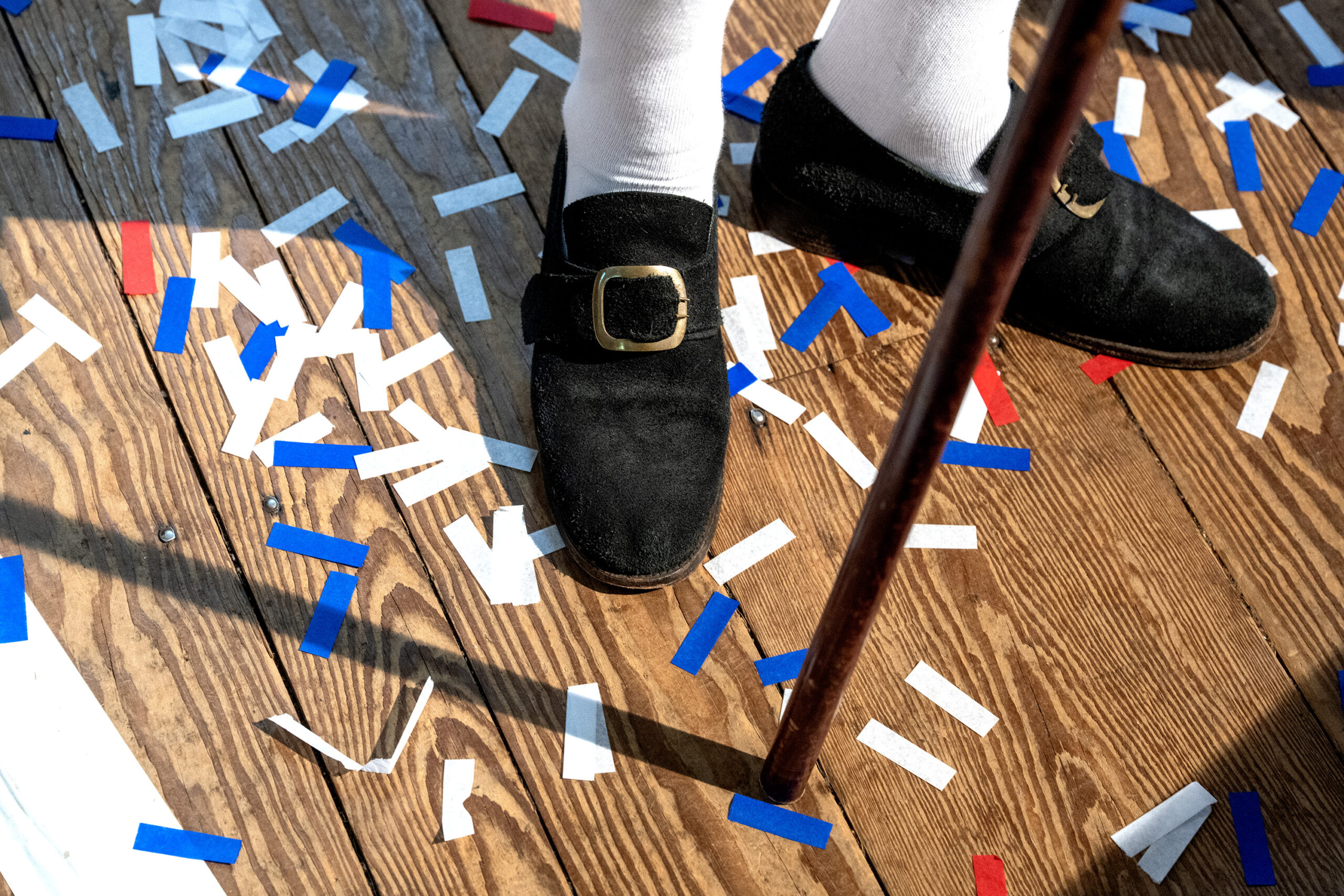
Shecky Perlman as Ben Franklin, his cane and feet, Thursday, May 21, 2026, among the confetti as dozens of historical reenactors graduate after weeks of intensive, immersive training at the Benstitute.
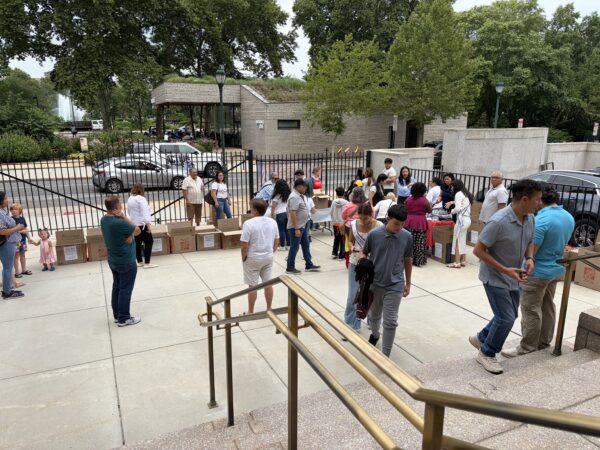
The Cathedral Basilica of Saints Peter and Paul was a center of resilience Sunday, as dozens of Philly Venezuelans gathered to collect aid for folks affected by two earthquakes that struck the South American country on Wednesday.
Emilio Buitrago, 52, was driving home when his brother called, telling him a 7.2 magnitude earthquake had decimated their home city of La Guaira, about 18 miles north of Caracas, the capital. Less than a minute later, a second tremor took place, this time reaching a magnitude of 7.5.
One of his cousins was unaccounted for, for two days before being located on Friday morning.
“My three cousins lost their homes; they are alive by a miracle. My uncle managed to get out, but he’s injured,” Buitrago said. “They are sleeping in the street because it feels safer [in case buildings collapse] and they said it’s starting to smell like decomposing bodies.”
Since the earthquakes, Buitrago’s brother has been working nonstop, he said, removing rubble with his bare hands due to the lack of tools and machinery.
Thousands of miles away from home, Buitrago thought the best way to help was to go to the cathedral and help with collecting donations and praying.
By 1 p.m., 15 boxes sat on the area outside of the Cathedral’s chapel, being filled with donated masks, first aid supplies, medicine, electrolytes, nasal relief products, and more.
Alex Moreno, president of the local nonprofit Gente de Venezuela, said the donations will be sent to Caracas, where their contacts are connecting with on-the-ground rescuers.
“It has to be now, when we still have a chance to try to help get the people who are still trapped under the rubble out alive,” Moreno said.
So far, the death toll has risen to 1,430 people, according to CNN, with many Venezuelans taking to social media to ask for help moving the structural debris to rescue their loved ones.
Besides collecting physical donations, both Gente de Venezuela and another nonprofit, Casa de Venezuela, are raising funds through an umbrella group, the Venezuelan Organizations Network in the United States. By late Sunday afternoon, $16,310 had been donated for the effort, which has a goal of $75,000.
That money, Moreno said, is destined for buying tools to help rescuers dig through the rubble. A first batch of hammers, gloves, drills, masks, and other supplies has been purchased with that money and sent to Venezuela, Moreno said.
For future physical donations, he recommends following Gente de Venezuela and Casa de Venezuela to see where they will be receiving donations next.
“The hope is to try and help rescue as many people as possible, because the rescuers on the ground are saying that the tragedy is too big for the number of hands able to help back home,” Moreno said.
Despite the pain, the community is sticking together and his group plans plan to continue with their planned participation in the July 3 Salute to Independence parade in Philadelphia, to honor both the lives lost and the rescuers, Moreno said.
“Above all, we are people of resilience, and we will continue to be here to support our community,” Moreno said.
Did Pope Leo XIV actually go to a Villanova University fraternity party?
That’s what one user on X purported when he posted an aged photo of the leader of the Catholic Church standing with a group of young men — one wearing a Villanova T-shirt and holding a small dog — in front of a brick bungalow. “The future Pope Leo XIV at a Villanova frat party in 1976,” the caption read.
The tweet had 1.4 million views and more than 15,000 likes as of Sunday.
But internet sleuths were suspicious:
“Not one of them is holding even a beer. That’s one tame frat party,” one of nearly 150 comments read.
“Doesn’t this look more like a step ranch in/near Chicago than anything on the Main Line?” another user smartly deduced.
The photo was actually taken at a fellow Wildcat’s house on the South Side of Chicago, where the pontiff is from, according to a classmate who has a copy. The classmate, who declined to be named for privacy reasons, assured The Inquirer it was not a frat party and dated the photo to the mid-’70s.