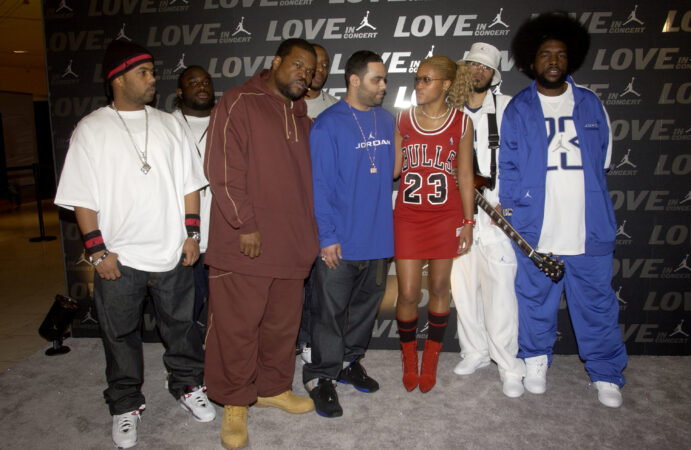
Rapper and actor Eve finally got recognition for her contribution to a Grammy Award-winning song by The Roots, and she had kind words for her hometown.
“I will say Philly started it,” Eve told a reporter at the Recording Academy Honors, presented by the Black Music Collective. “I came from Philadelphia. I think we’re used to being the underdogs in that city. And we also like to prove to you that you can underestimate me, but I’m going to show you.”
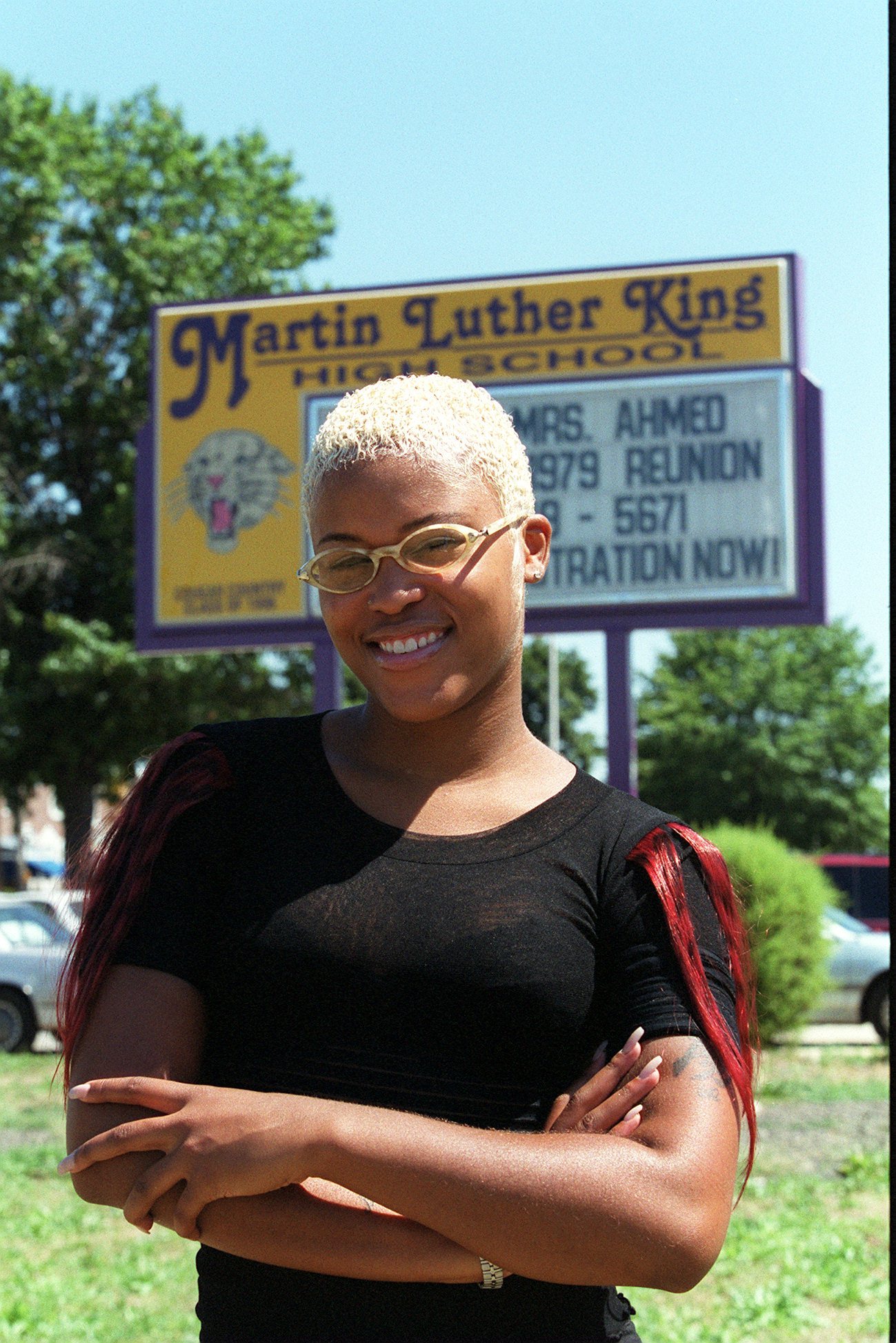
Rapper Eve Jeffers outside Martin Luther King High School in Philadelphia in 1999.
Eve grew up in West Philly and Germantown. In 1999, when she was a 19-year-old rapper going by “Eve of Destruction,” she laid down the essential second verse for The Roots’ “You Got Me.”
A year later, the song earned the Philly hip-hop group a Grammy for Best Rap Performance By a Duo or Group. Erykah Badu, who sang the hook, also won the award.
But Eve, who was not signed with a recording label, was not listed as a contributing artist on the song’s 1999 release and was overlooked by the awards committee.
That didn’t stop her from launching a successful solo career and winning a Grammy in 2002 for “Let Me Blow Ya Mind,” a Gwen Stefani collaboration that drips with early aughts vibes.
Eve’s memoir is titled ‘Who’s That Girl?’
At the ceremony Thursday in Los Angeles, Eve told the crowd that “this is actually for little Eve from Philly” on stage.
“What is yours never can miss you,” she said.
Addressing the crowd, Eve gave a shout-out to broadcaster Ebro Darden, who discussed the song at length on his podcast, The Message. She credited him for keeping people interested in seeing her receive a Grammy for the song.
Eve said she found success through being determined and understanding what kind of life she wanted to live. She encouraged other Black women to be there for themselves and fight for their dreams.
“I think, you know, we owe it to ourselves to show up for ourselves, to fight for ourselves, to be our own champion,” she said. “We deserve it. We are always the strongest for everyone else. We need to be the strongest for ourselves.”
This isn’t a typical report card item, and it shouldn’t be.
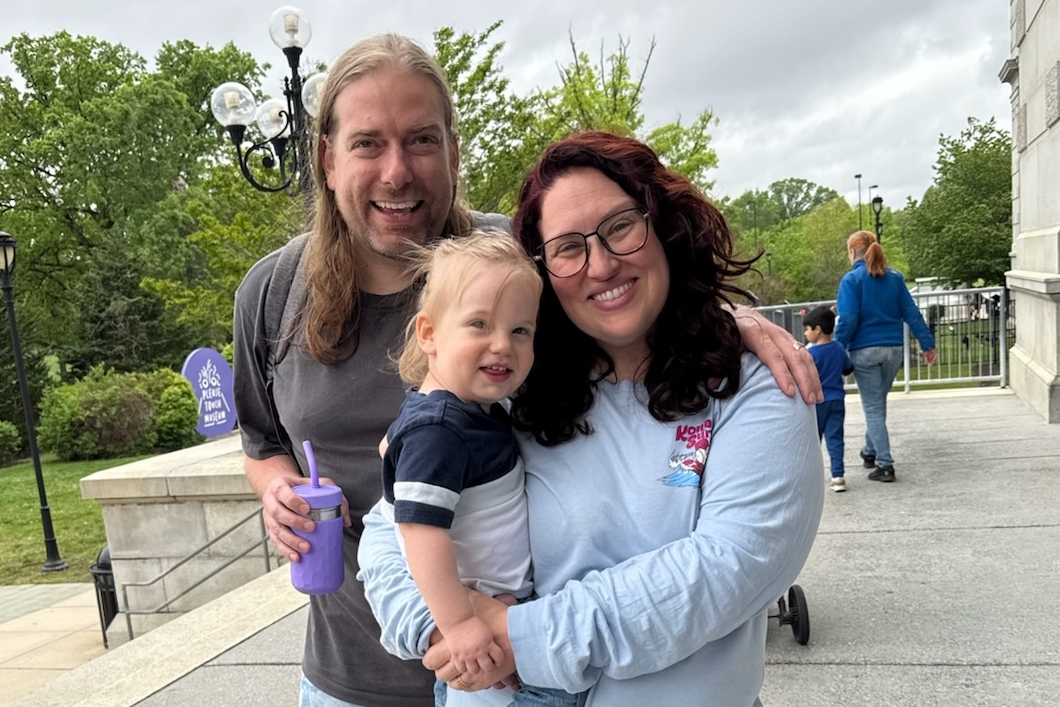
This week made it impossible not to understand who Dan McQuade was — and how deeply he mattered to Philadelphia — just by reading what people shared about the journalist and Philadelphia superfan after he died of cancer this week at age 43.
Colleagues, friends, editors, and readers kept circling the same truths: how funny he was, how kind he was, how precise his understanding of the city felt. Not in a forced or caricatured way, but in the way that comes from paying close attention, loving a place, and never taking it (or yourself) too seriously.
Dan had a gift for finding meaning in the everyday. He treated Philly’s quirks, tics, and absurdities not as punchlines to exploit, but as things worth documenting, celebrating, and occasionally poking fun at with affection. He gave people permission to laugh at the city without laughing at it. That’s harder than it sounds.
His impact was everywhere this week: in stories about Rocky runs and boardwalk T-shirts, in memories of long happy hours that turned into lifelong friendships, in anecdotes about him being the go-to fact-checker for all things Philly, in the way people described him as both brilliant and generous. A writer who made others better. A friend who showed up. A presence that made rooms, and timelines, lighter.
The tributes weren’t performative or flowery. They were specific. Personal. Grounded. Which feels fitting. McQuade’s work was never about being loud or self-important. It was about noticing things, connecting dots, and reminding people that there’s joy, and humor, in paying attention to where you live.
Philadelphia lost a journalist. But it also lost one of its clearest interpreters. Someone who understood that “Philadelphianness” isn’t a brand or a gimmick, but a way of moving through the world with skepticism, warmth, and a well-timed joke.
An A+ doesn’t feel like enough. But it feels right to say this much: Philly is better for having had Dan McQuade in it. And it won’t quite be the same without him.
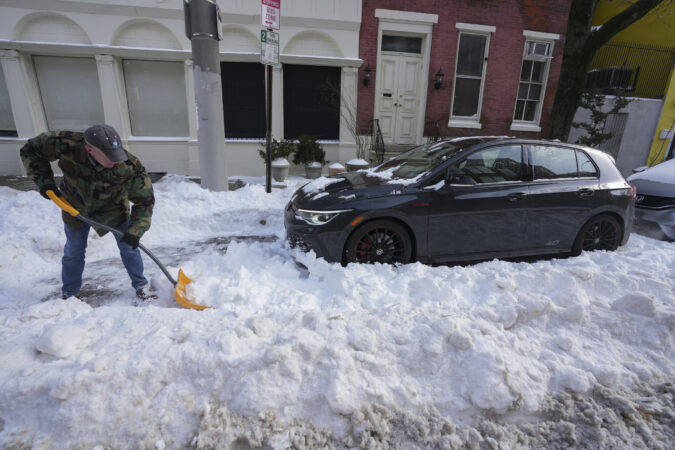
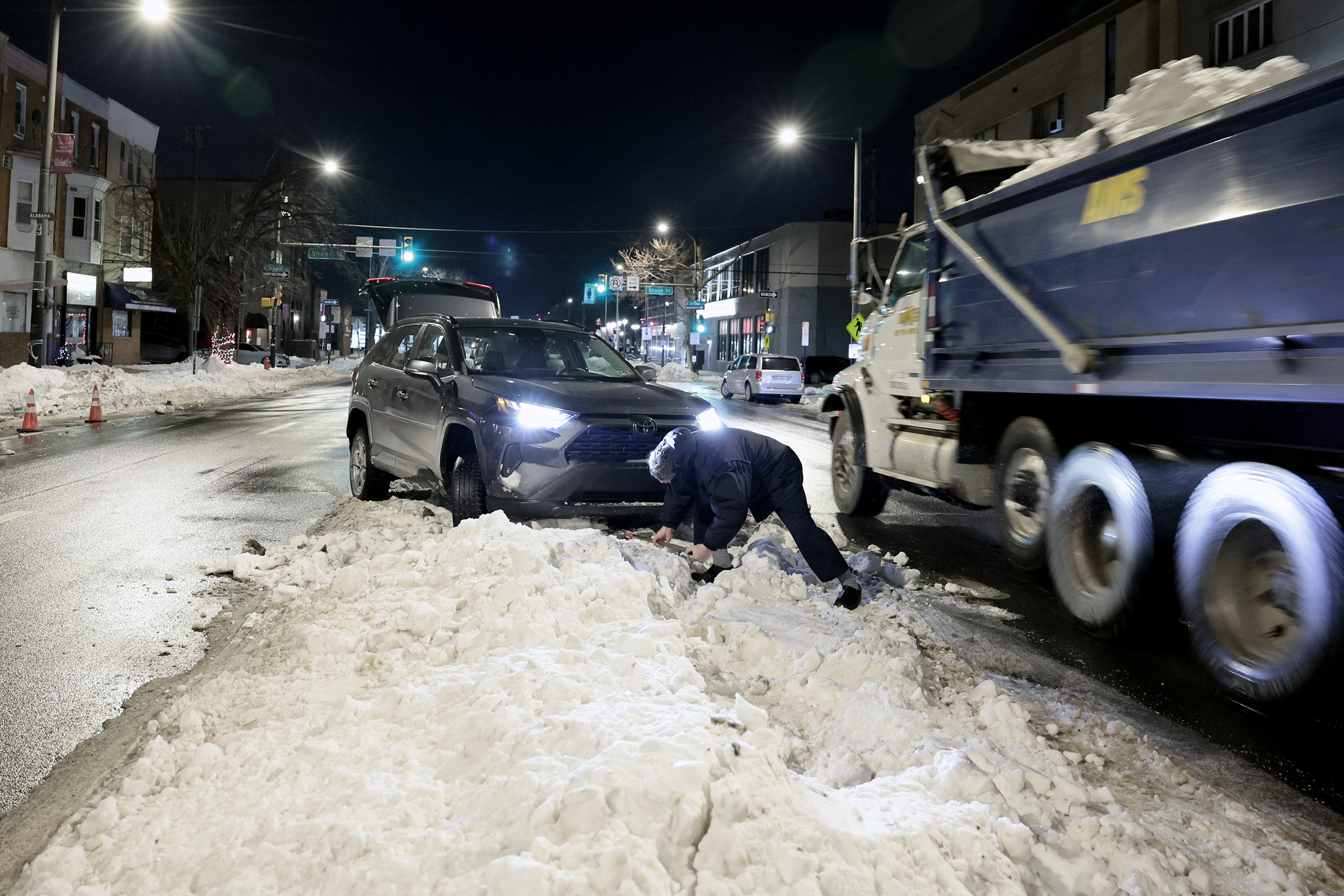
A man shovels snow from underneath his car after it became hung up while trying to park in the middle of South Broad Street in the early morning hours of Jan. 28, 2026. Dump trucks filled with snow from the city’s snow removal operations were zooming by as he worked to get his car free.
The snowstorm delivered. The plowing did not: F-
Let’s be clear: The snow itself did what snow is supposed to do. Nine-plus inches, pretty at first, historic enough to brag about, disruptive enough to cancel plans and spark group-chat meteorology. Fine. That’s winter.
What came after? That’s where everything fell apart.
The city promised differently. Mayor Cherelle L. Parker stood in front of cameras before the storm and said every street would get attention “as long as it takes.” That message mattered because Philadelphians have heard this story before, and expectations were deliberately raised.
Then reality hit.
Plow data show roughly a quarter of city streets got no treatment at all after the storm ended. Not plowed. Not salted. Nothing. And the longer it sat, the worse it got — snow compacting into ice, intersections blocked by frozen berms, cars effectively entombed.
This isn’t just an inconvenience. People with limited mobility are stuck. Workers can’t get out. Streets department explanations about sleet, freezing rain, and illegally parked cars may be true, but they don’t change the fact that many blocks are still uncleared a week later.
This is the part where Philly frustration kicks in hardest: The storm wasn’t unprecedented, but the response feels familiar in the worst way. The expectation has long been “don’t count on a plow,” and this week did little to change that.
New York tries to claim ‘Delco.’ Pennsylvania says absolutely not: A
Every so often, something happens that instantly unites Delco. Snowstorms. Eagles runs. Wawa shortages. And now: a county in upstate New York attempting to brand itself as “Delco.”
Absolutely not.
Stephanie Farr laid out the case perfectly: Delco isn’t just shorthand for Delaware County. It’s a culture. A personality. A way of life built on hoagie trays, Catholic school rivalries, beach flags, and a shared, deeply ingrained chip on the shoulder.
New York’s Delaware County is rural. Ours is suburban chaos packed into 184 square miles, powered by Wawa coffee, tailgating energy, and a pride so aggressive it gets tattooed on bodies and planted in Jersey Shore sand like a territorial marker.
The funniest part isn’t that there’s another Delaware County (there are several). It’s that this one thought it could simply adopt the nickname, slap it on merch, and call it authenticity. That’s not how Delco works. Delco is earned.
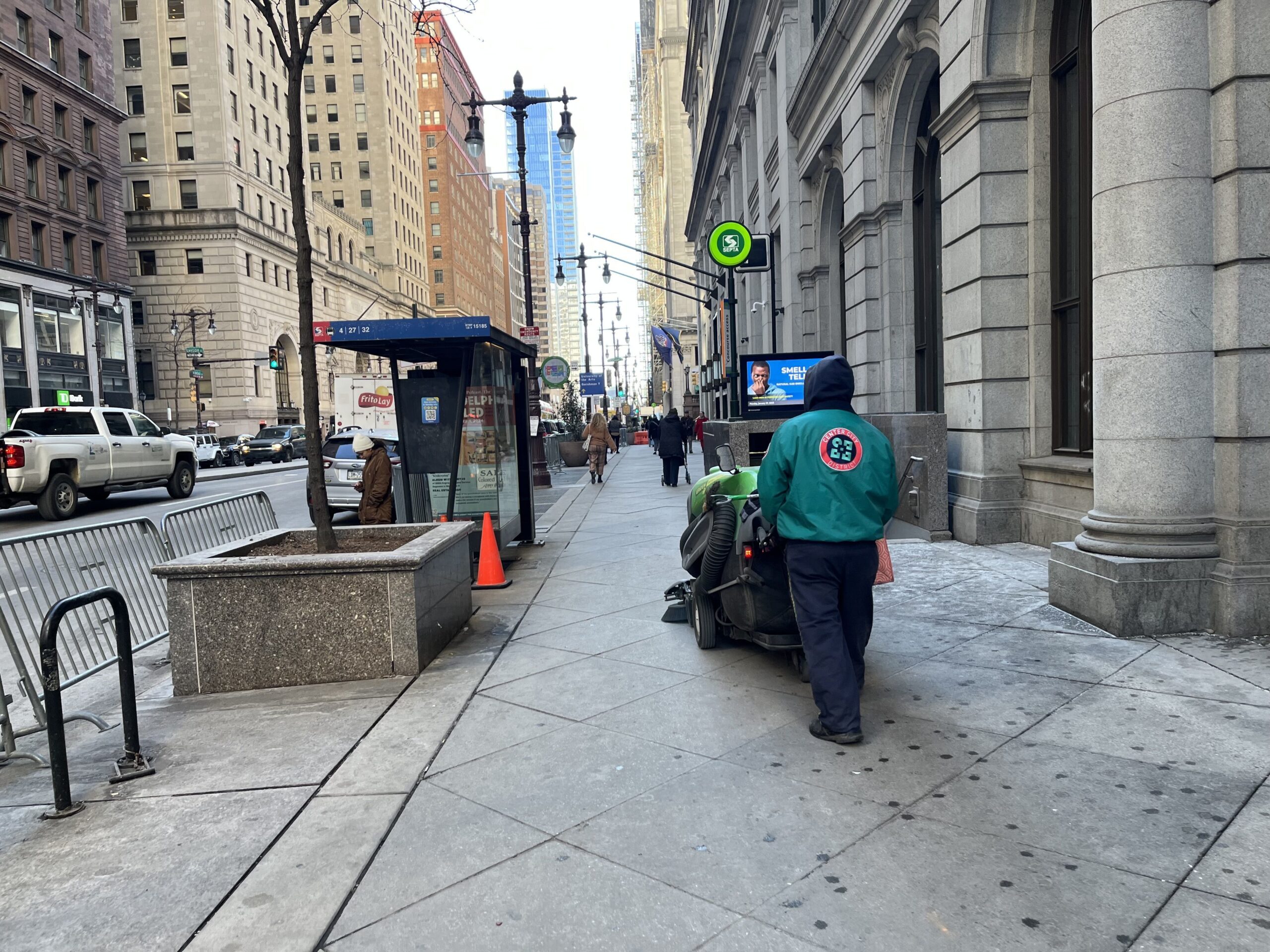
A Center City District worker cleaning the sidewalk on Broad Street the morning after the Philadelphia Eagles won the NFC Championship.
Center City West sidewalks are getting grimy (and it’s not your imagination): C
For nearly a decade, a lot of Center City West quietly benefited from something most people never realized existed: a privately funded sidewalk cleaning program that swooped in after city trash pickup and handled the leftover mess.
Asthe Fitler Focus reported, that program ended when the Center City Residents’ Association let its contract expire at the end of 2025. Not out of neglect, but necessity. The cost had ballooned to about 41% of CCRA’s projected 2026 budget, which is an unsustainable chunk for what was essentially backstopping city services.
The result has been immediate and visible. Trash bags torn open overnight. Litter lingering days after pickup. Sidewalks that used to reset themselves now just… don’t. CCRA deserves credit for being upfront about the trade-off and pivoting toward enforcement, even if it won’t bring immediate results.
The frustrating part is that the rules haven’t changed. Trash placement regulations exist. Containers are required. Enforcement is technically possible. But in reality, it’s complaint-driven, slow, and uneven. Meaning the difference between a clean block and a gross one often comes down to who has the time and energy to call 311 and wait on hold.
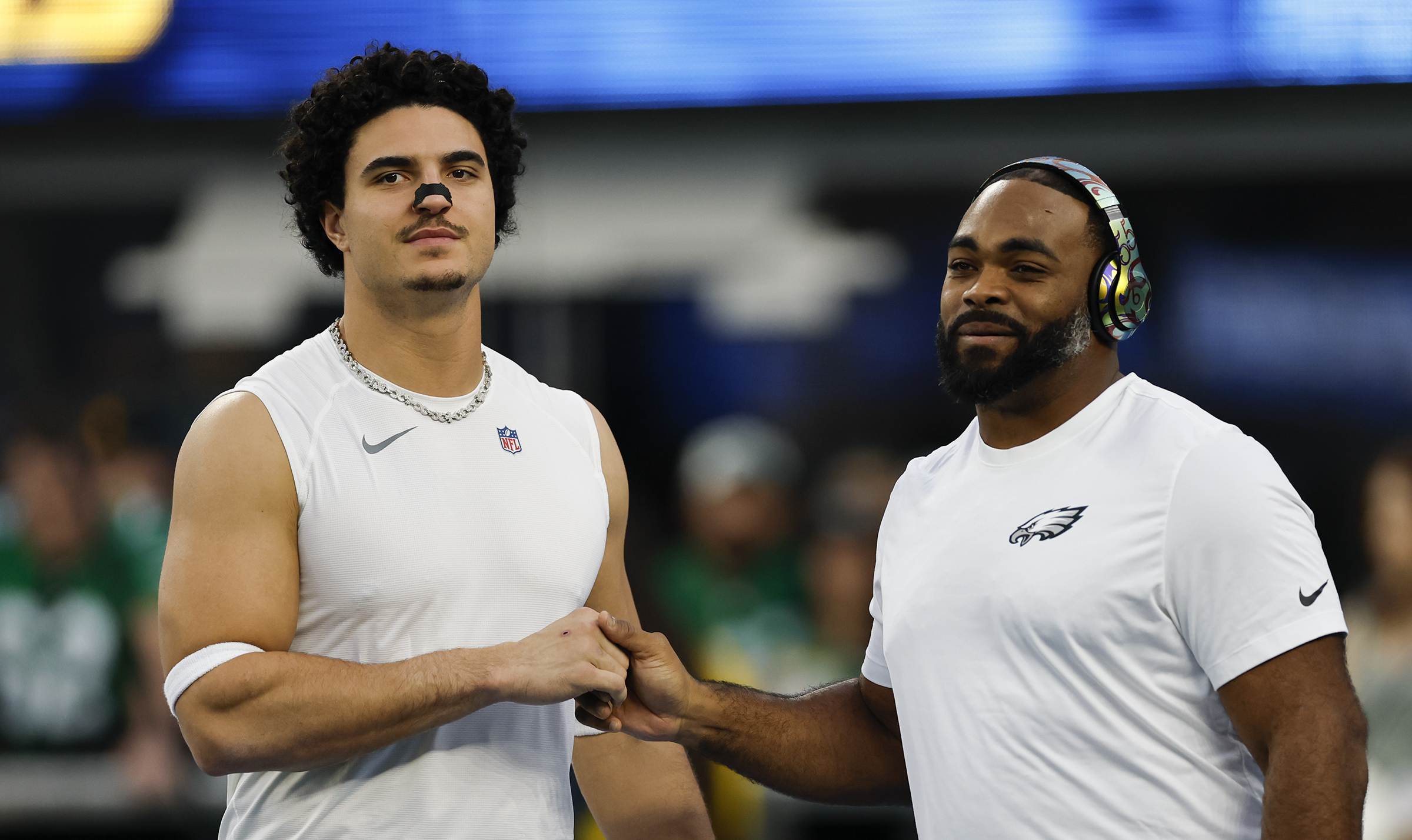
Eagles linebacker Jaelan Phillips (left) and defensive end Brandon Graham during warm-ups before the Eagles play the Los Angeles Chargers on Dec. 8, 2025 at SoFi Stadium in Inglewood, Calif.
Eagles fans agree on almost everything — except the part that actually hurts: B
In this year’s Inquirer Stay or Go poll, Eagles fans were unusually aligned on who still feels like the future: young defensive studs, the offensive line pillars, the rookies who look like actual hits. Cooper DeJean and Quinyon Mitchell clearing 96% stay feels less like optimism and more like self-preservation. The message is clear: The defense isn’t the problem. Or at least, it’s not our problem.
Where things get interesting is offense. Not because fans are confused, but because they’re suddenly colder. Jalen Hurts is still trusted, but not untouchable. A.J. Brown’s dip is real and telling: not rage, not rejection, just disappointment, Philly’s least favorite emotion. Fans didn’t turn on him. They just stopped defending him reflexively, which in this city is its own warning sign.
And then there’s Brandon Graham, the emotional Rorschach test of the poll. A franchise legend. A locker room heartbeat. A guy people want to want back. The split vote says everything: respect battling reality. Philly loves its icons, but it hates lying to itself more.
No one landed in the mushy middle. Fans know who they’re done with. They know who they’re attached to. There’s little patience left for “maybe.”
This wasn’t a meltdown poll. It was a sorting exercise. And the conclusion fans keep circling is uncomfortable but consistent: The Eagles don’t need vibes. They need clarity — and probably a few hard goodbyes.
The Inquirer mapped Philly’s dive bars (and proved how much the city loves them): A
When The Inquirer put out a call for Philly’s favorite dive bars, the response was immediate and overwhelming. Nearly 400 submissions poured in, which tracks for a city where dive bars aren’t just places to drink. They’re personal landmarks.
What the map really shows isn’t just where to grab a cheap beer. It’s how attached people are to the bars that feel like theirs. The ones tied to first jobs, postgame rituals, bad breakups, good Tuesdays, and nights that went exactly nowhere and somehow mattered anyway. These are rooms where nobody’s performing, the prices are low on purpose, and the atmosphere is set by regulars, not a concept.
It also surfaced one of Philly’s most reliable debates: Is being called a dive bar a compliment or an insult? Some owners bristle at the label. Others embrace it. Many bars live in the gray area: cheap, unpretentious, deeply loved, and absolutely uninterested in how they’re categorized. Very Philly.
Are there bars missing? Of course. There always will be. Philly has too many neighborhood institutions, and too many people willing to argue for them, for any list to feel definitive. But that’s not a failure of the map, it’s a feature of the city.
This isn’t a checklist. It’s a snapshot of how much Philadelphians still value places that don’t try to be anything other than what they are.
Snow savesies are back, and Philly is absolutely feral about it: C+
Every major snowstorm in Philly brings back the same question we never resolve: If you shovel out a spot, is it yours, or is public parking still public? This week’s viral Reddit thread, sparked by a wooden chair left in a shoveled space with a handwritten threat (“Move these chairs & I will destroy your car. Try me.”), confirms we are once again incapable of calm thought.
Some commenters were immediately in the respect the chair camp. One wrote, “After digging my s— out from snow past my knees I just want to one time come back to a spot,” while another argued, “Normally vehemently anti-savesies, but I feel like spending an hour digging out earns you a [savesie] or two.” This group is running on sore backs, wet boots, and pure principle.
Then there’s the other side: the chaos agents. “I’d move the chair and watch someone else park there,” one commenter said, which feels less like civic engagement and more like performance art. Another proudly added, “I take peoples cones all the time when I’m walking around. F— em.” (This explains so much.)
Somewhere in the middle were people admitting the quiet truth: Everyone dug out a spot. “The person who’s parked there dug out their car this morning, too,” one commenter noted, puncturing the idea that only one hero labored for the block.
So where does that leave us? With a very Philly stalemate. The chair is obnoxious. The threat is unhinged. The labor is real. The fear of retaliation is realer.
I spoke with a Friends School class this week, primarily about my photos decades ago of unhoused men in Center City. It was part of their week working with PhotoVoice, a research method where participants photograph their own lives to highlight community strengths and challenges, and advocate for social change.
After the class, and following many thoughtful questions from the middle schoolers about how in general I approach people before I photograph them, and specifically people in vulnerable situations, a student came up to ask me a more practical question: “How do you take pictures in bad weather?”
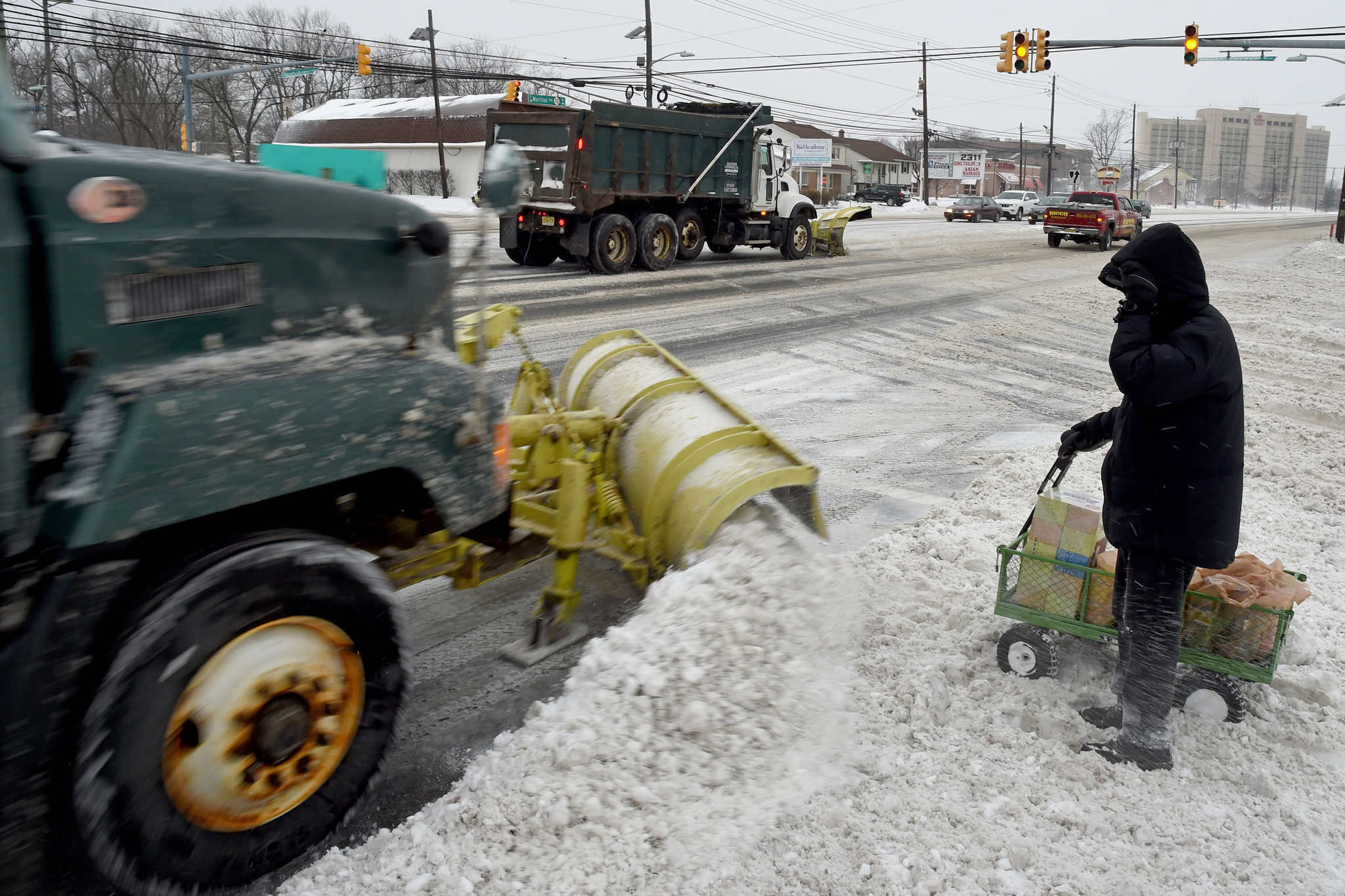
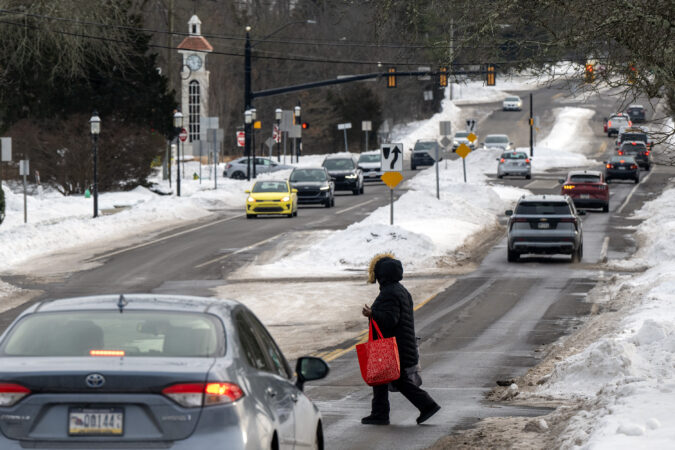
Pedestrians and plows on Rt. 70 in Cherry Hill in Januiary, 2018.
I don’t have an all-weather, sealed camera, so besides dressing as best I can for the conditions (and always having a spare pair of thick, dry wool socks in my car) keeping my camera protected is the biggest priority. I not only need to stave off mechanical/electronic breakdown, but have to keep my lens clear of the elements.
I told him I do have a dedicated rain sleeve but I’ve only used it once or twice at rainy sporting events (they’re priced from $2 each up to $200).
Mostly I use plastic bags or a large umbrellas (watching that I not catch the edges in my frame). I also try to find dry areas to stand in — while watching and photographing others out in the elements. I seek cover under a roof, awning, or doorway. I go into parking garages or subway entrances.
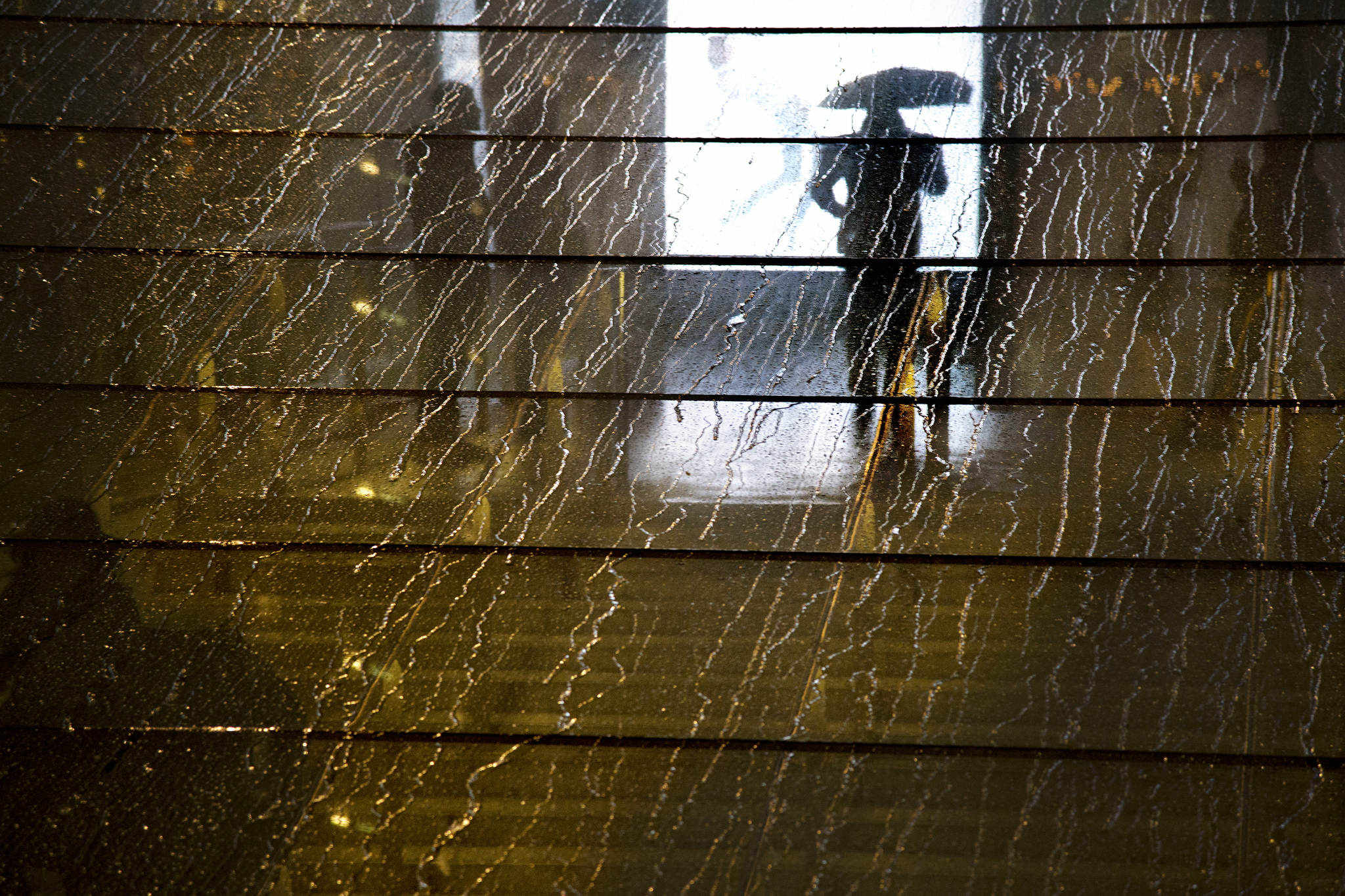
The glass entrance to SEPTA’s underground concourse at Dilworth Park by City Hall.
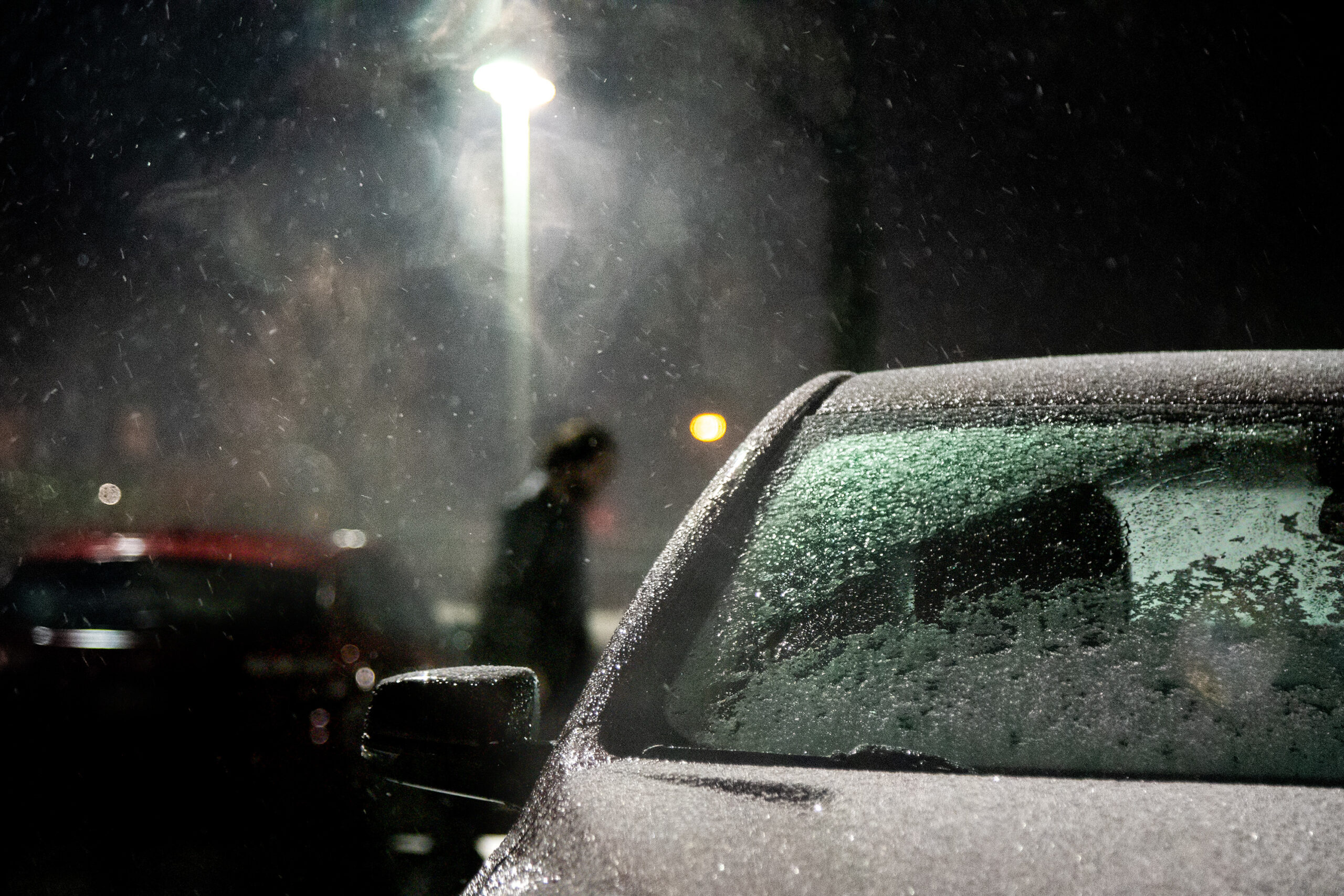
Sometimes I safely park my car where I can briefly open my leeward (downwind!) window. Other times the rain or snow on glass can even be an effective way to portray the “dab” weather. It can be in or out of focus to create a bokeh-like effect or blurred to convey mood. Your choice of a fast shutter or slow shutter can either stop the drops or show their movement.
Precipitation — some snow and some rain — falls on cars in a parking lot on City Avenue.
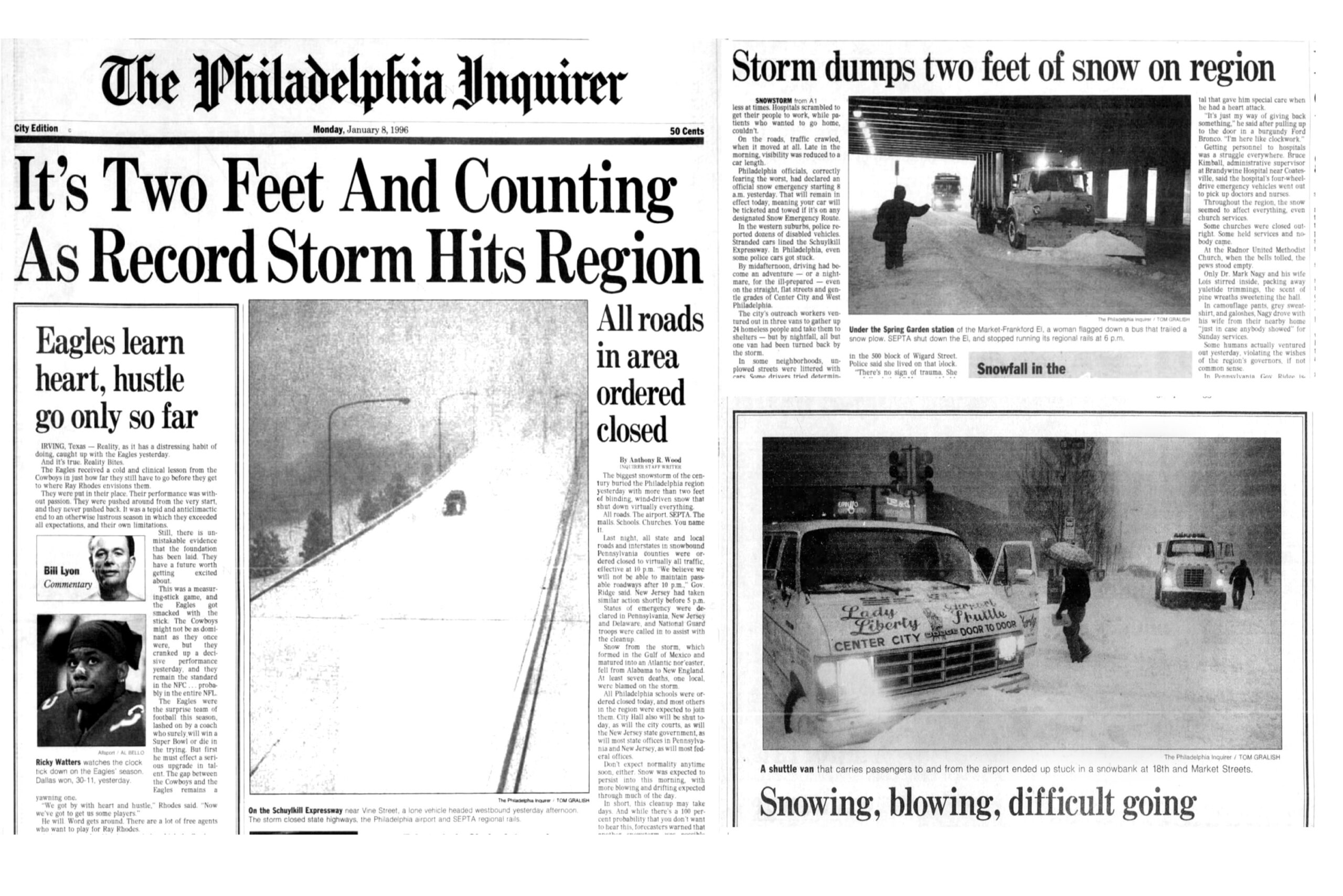
I’ve covered all of the biggest storms of the past few decades, including the historic “Blizzard of the Century” thirty years ago this month.
Front page and inside photos from The Philadelphia Inquirer. January 8, 1996.
So, I took my own advice while preparing to go out last Sunday. Knowing the roads would get worse as the day went on, I drove out of my South Jersey neighborhood while an early pass of the plows left main arteries somewhat passable, and headed straight to the nearest Wawa that I knew would have a clear-ish parking lot.
Stepping out from under the overhang — I made a few photos before walking out into on the wide street to get the few passing cars and plowing crews in a nearby shopping center.
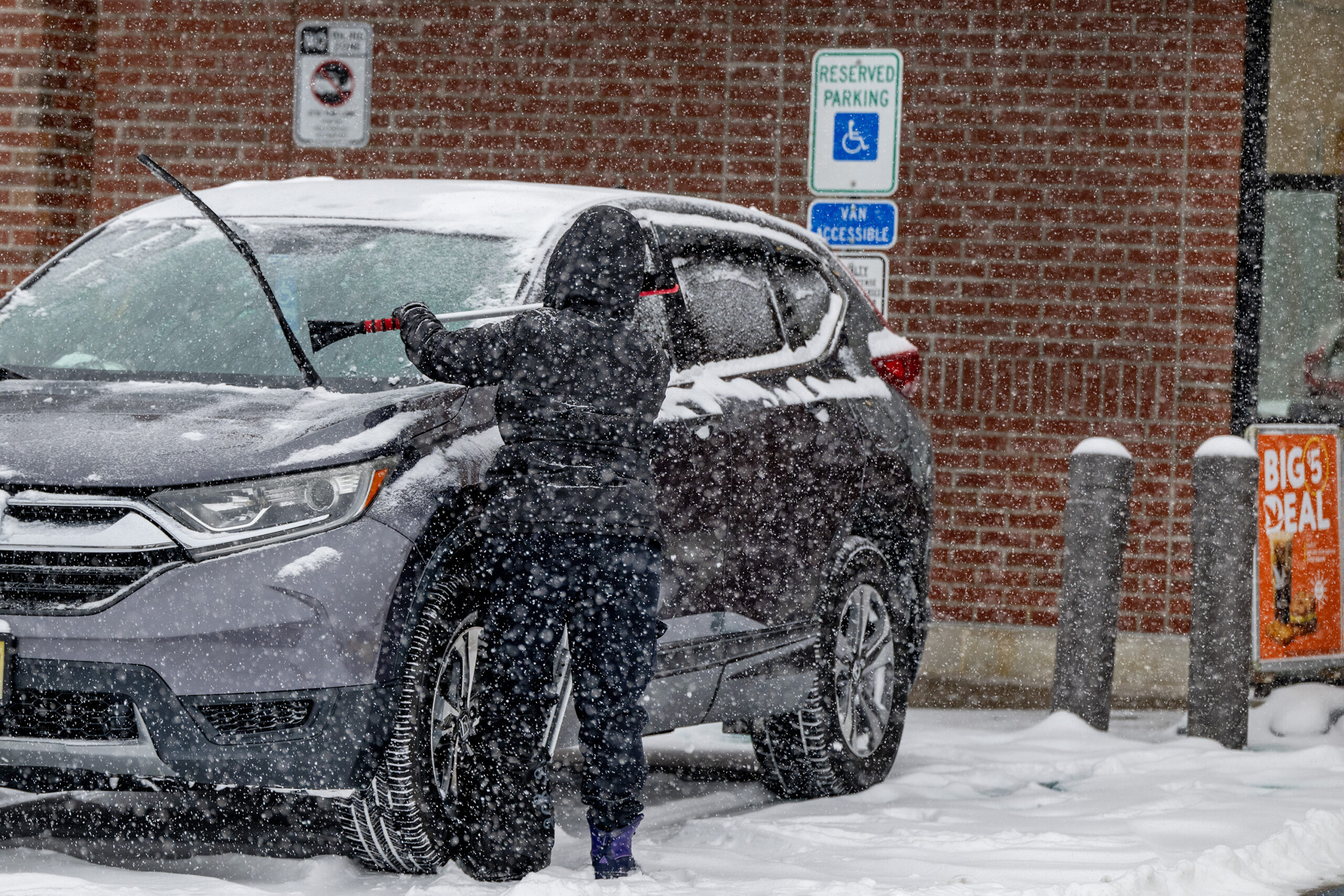
Carmen Roman clears snow off her car at a Cherry Hill Wawa early Sunday morning, Jan. 25, 2026, as heavy snow bands move through the region generating snowfall rates of 1 to 2 inches an hour.
From there, confirming my fears the roads would be more difficult to drive on, I headed the Westmont PATCO station, finding a safe place to park even as workers were hard at it, clearing the lot.
I made photos from the elevated platform before taking a train to Collingswood, where — standing on the leeward side of the stairwell shelter — I took more pictures then walked into downtown.
Haddon Avenue was plowed and relatively empty of cars, but the sidewalks were impassible. I sent in my best photo of people walking along the middle of the downtown street.
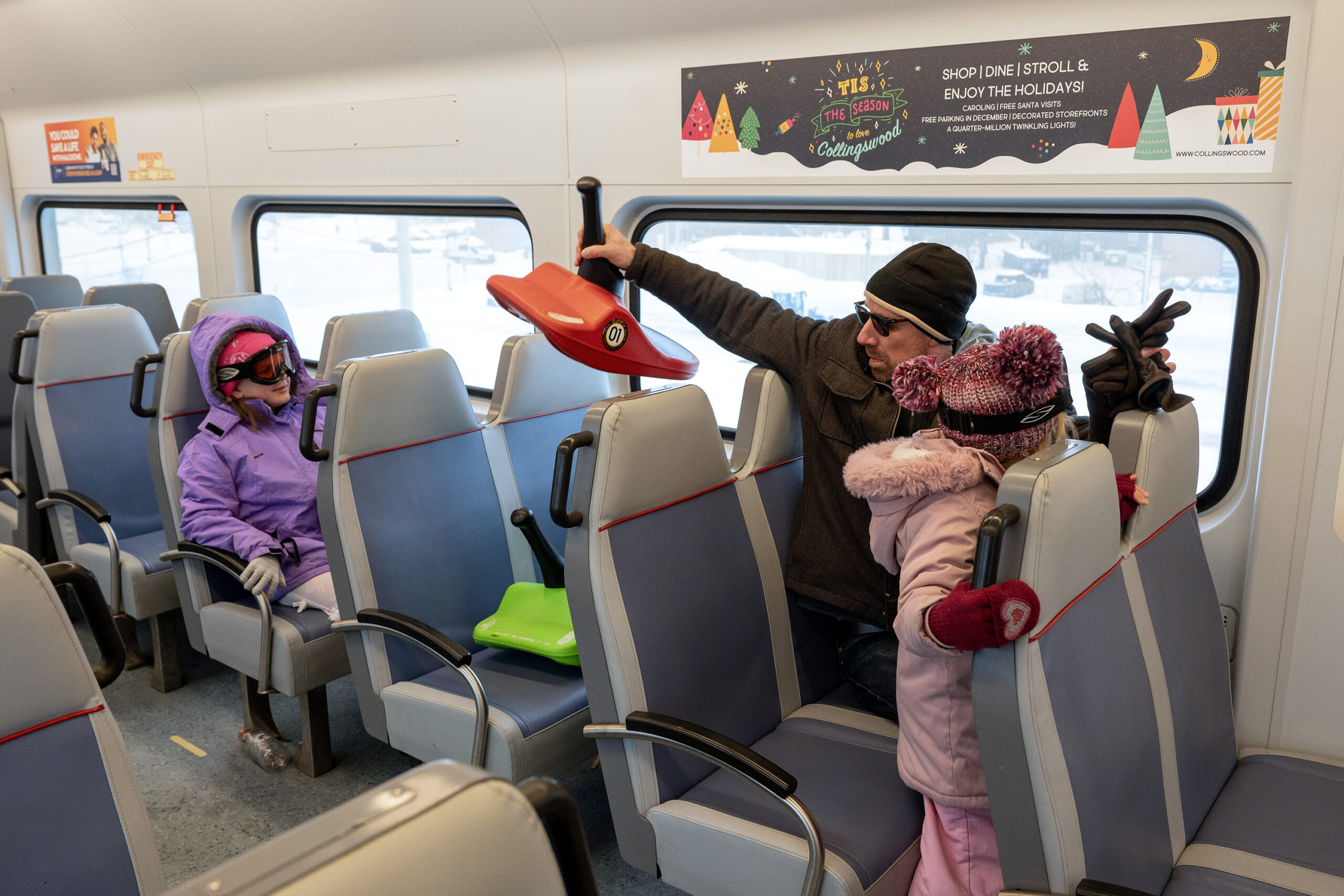
It was then I saw Mike Doveton and his daughters. Not wanting to repeat my earlier image, I asked if they were headed to or from sledding.
They were walking to the PATCO station to sled in Haddonfield, so I tagged along.
On the train headed to sled.
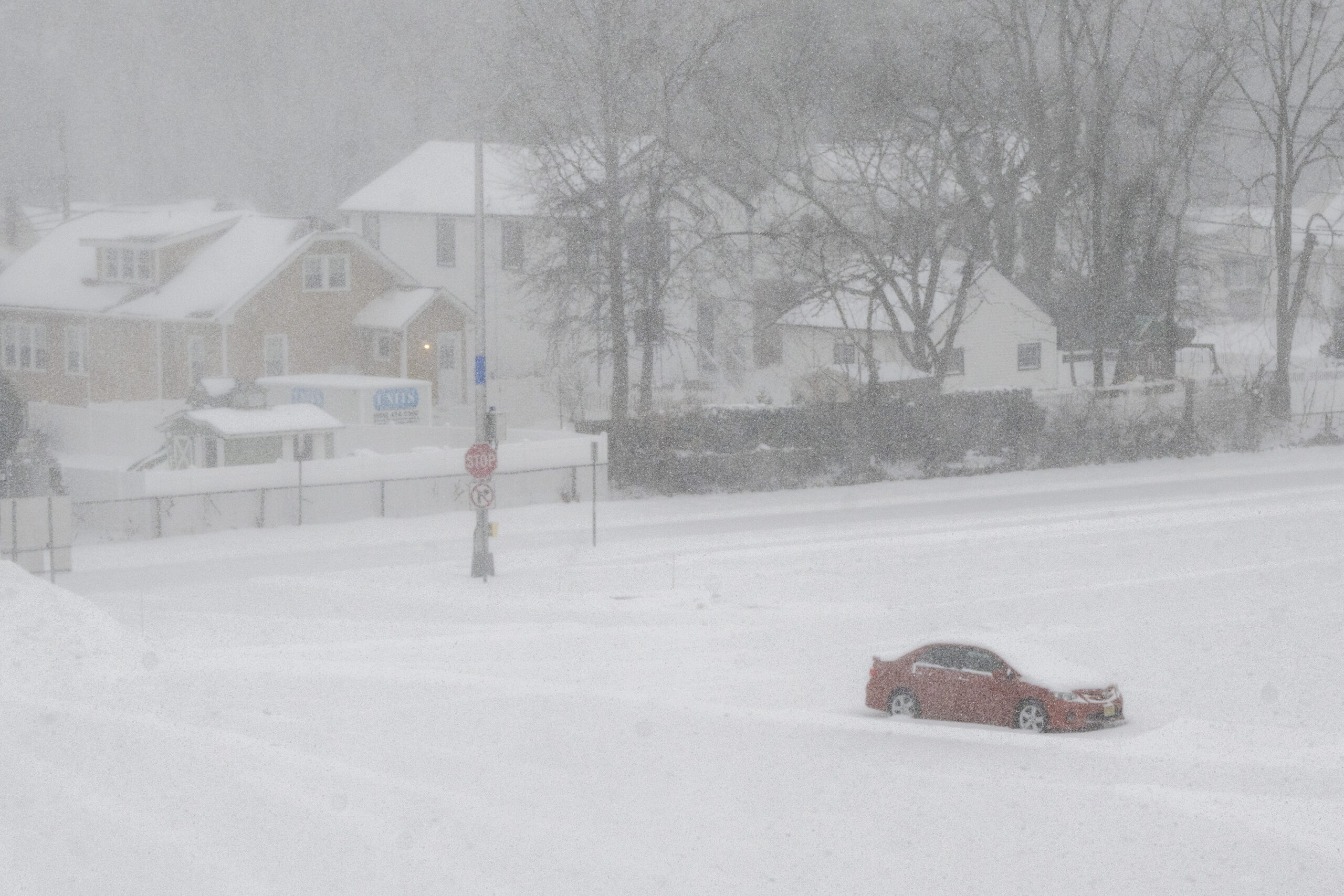
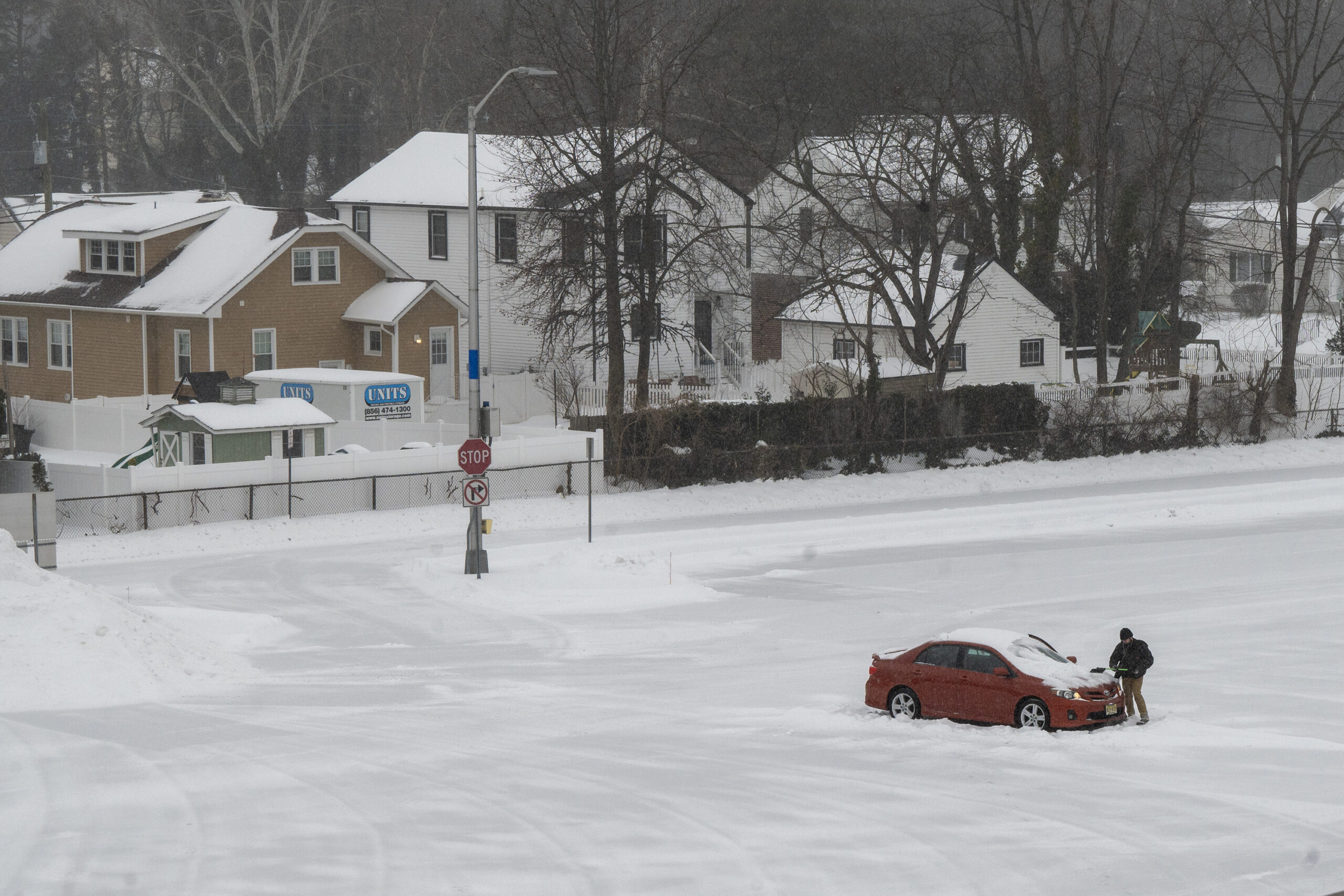
I went with them to their destination, but didn’t want another kids-on-a-hill photo, so I got back on the train returning to the Westmont station, and my car, calling it a day. Until I saw someone digging out their car — the same one I had photographed hours earlier. I got as close as I could to the spot on the platform and made an “after” photo.
Before and after in the Westmont PATCO station parking lot.
Luis Nova had left his car there on Friday, and was in Philadelphia all weekend helping friends move and going to a goodbye party. He spent the morning sledding with friends in Clark Park in West Philadelphia. Like me, he had experience with storms. “I spent four years in Rochester [NY],” he told me. “So I knew what I was signing up for and was ready. I left all my equipment to get myself out.”
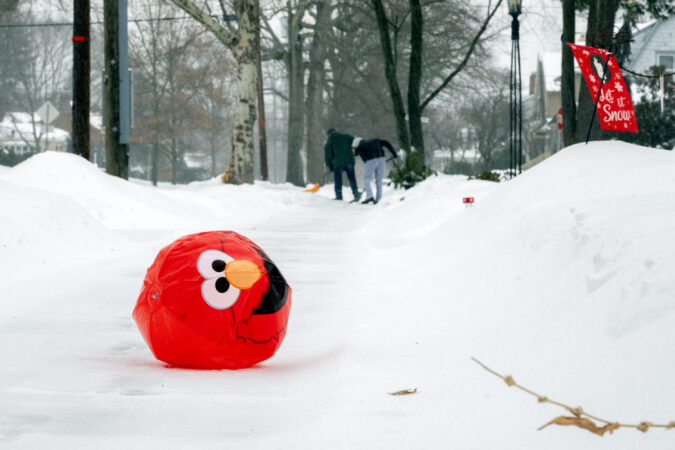
But the highlight of the day was at the very end, as I headed for home as the snow was turning to sleet. Two hours earlier, in the middle of the storm my grandson snapped a photo out our front window of an Elmo head in the middle of the street before the wind blew it away, and shared the picture with our family. As I approached my house, I see a red ball rolling fast down the street toward me. I almost drove into a snow bank laughing.
Not really, but I did pull into the driveway, grab a camera, jump out of my car and go chasing after it. The wind was really moving it, and I couldn’t see where it was, which was hard to imagine, being as the road and everything else was all white. I came up to a couple of guys shoveling and asked, “Did you see an Elmo head come this way?” They had, and said it went up a driveway and jumped onto the sidewalk. I found it and just as I was lining up my photo the wind took it again and it started spinning.
Since 1998 a black-and-white photo has appeared every Monday in staff photographer Tom Gralish’s “Scene Through the Lens” photo column in the print editions of The Inquirer’s local news section. Here are the most recent, in color:
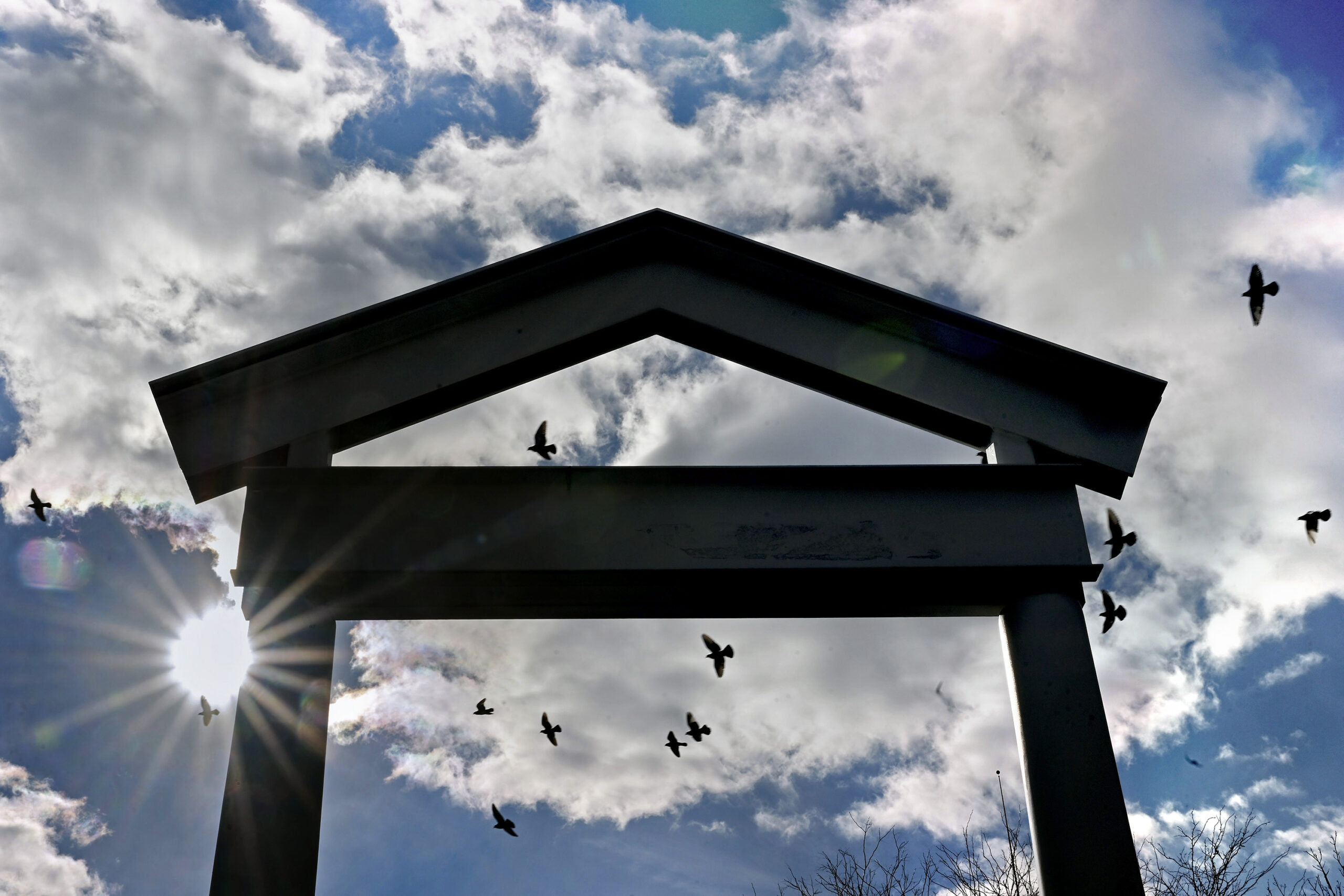
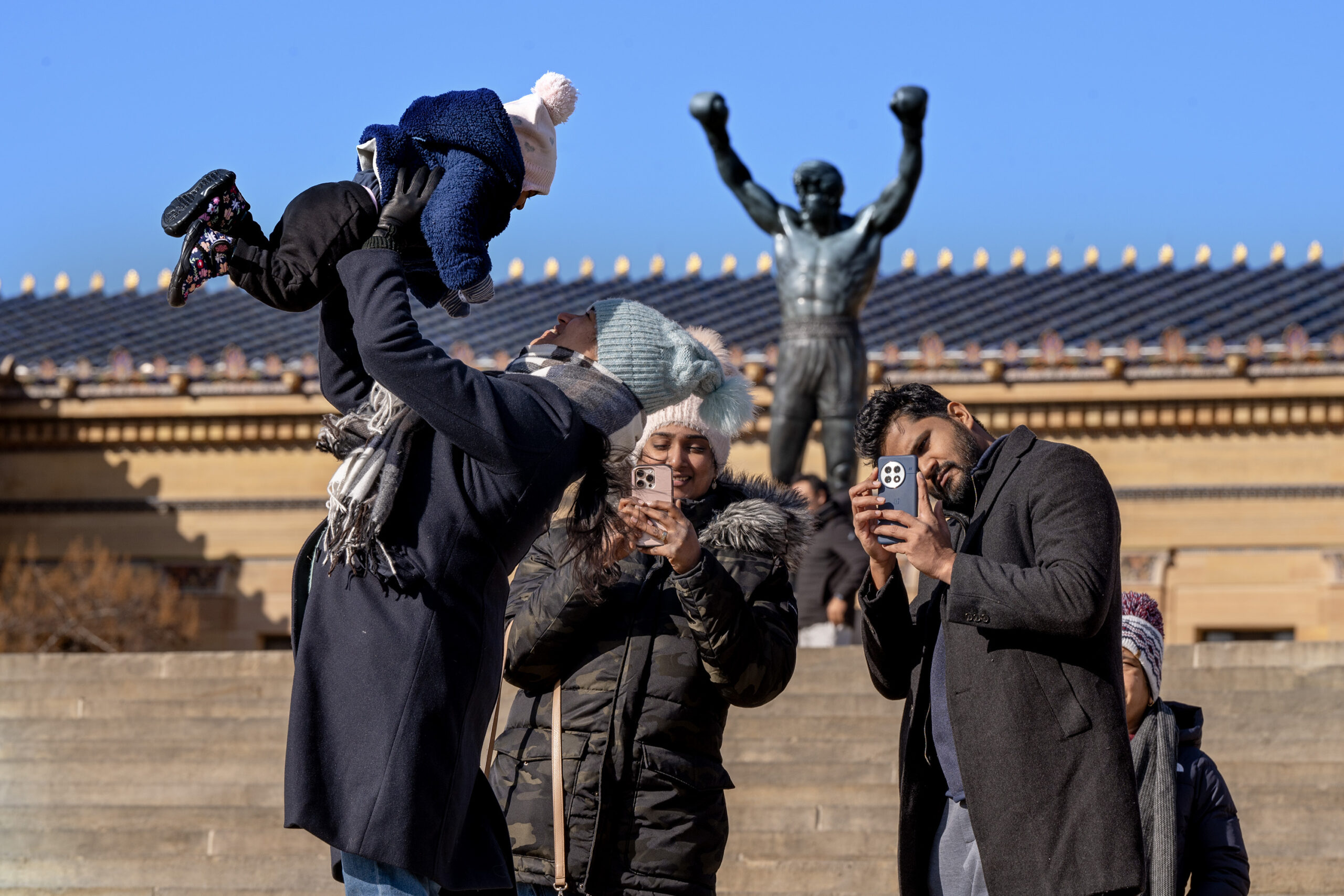
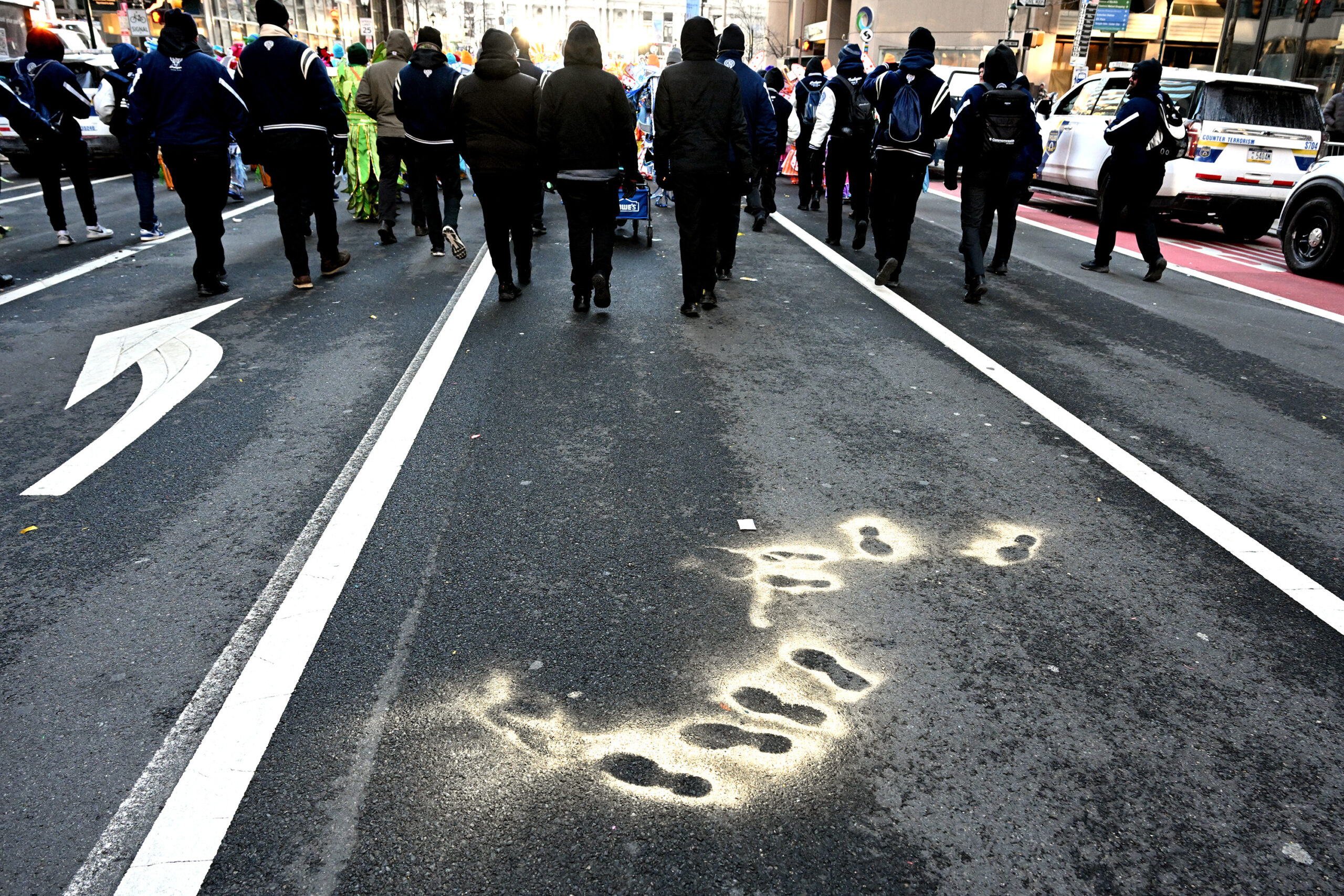
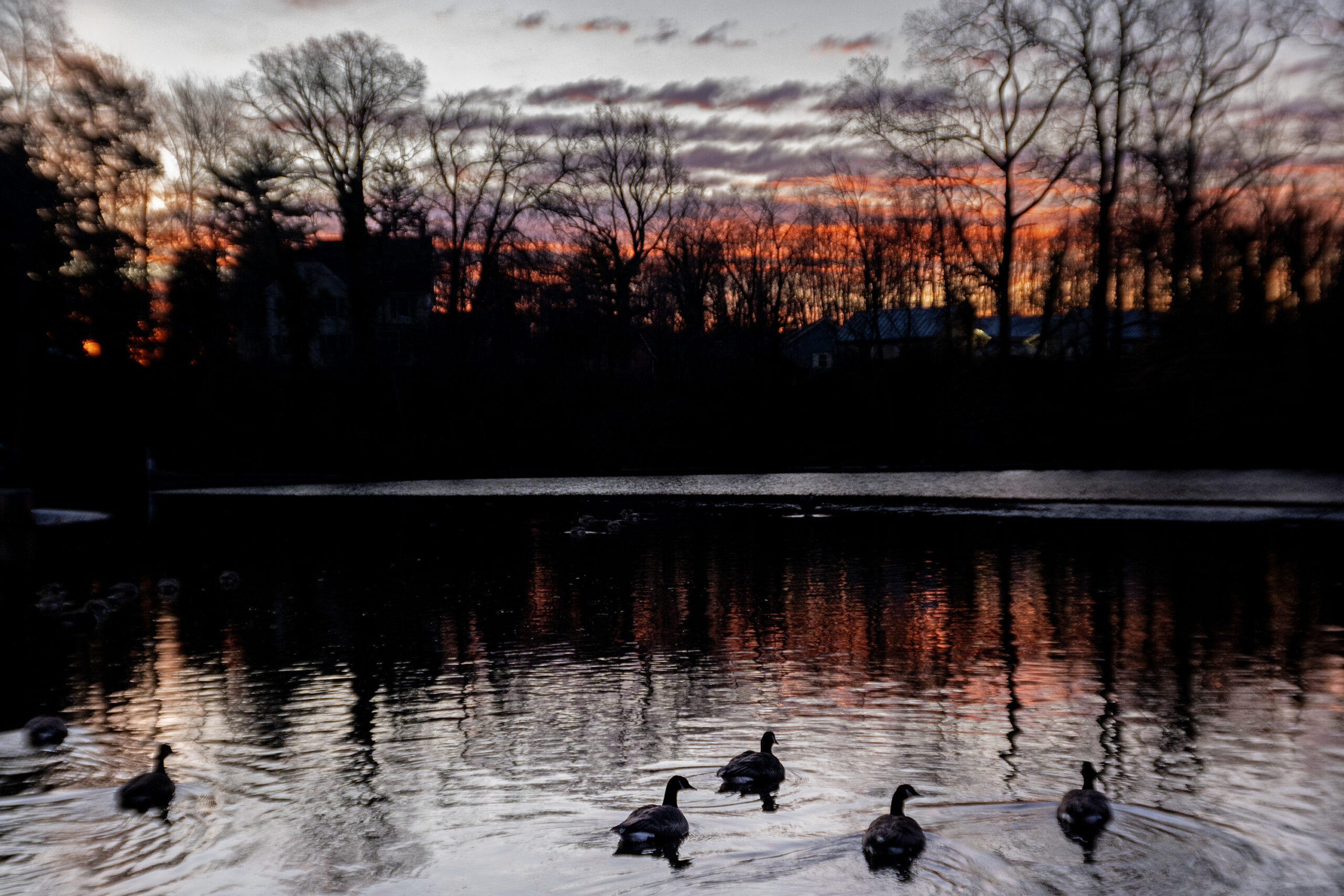
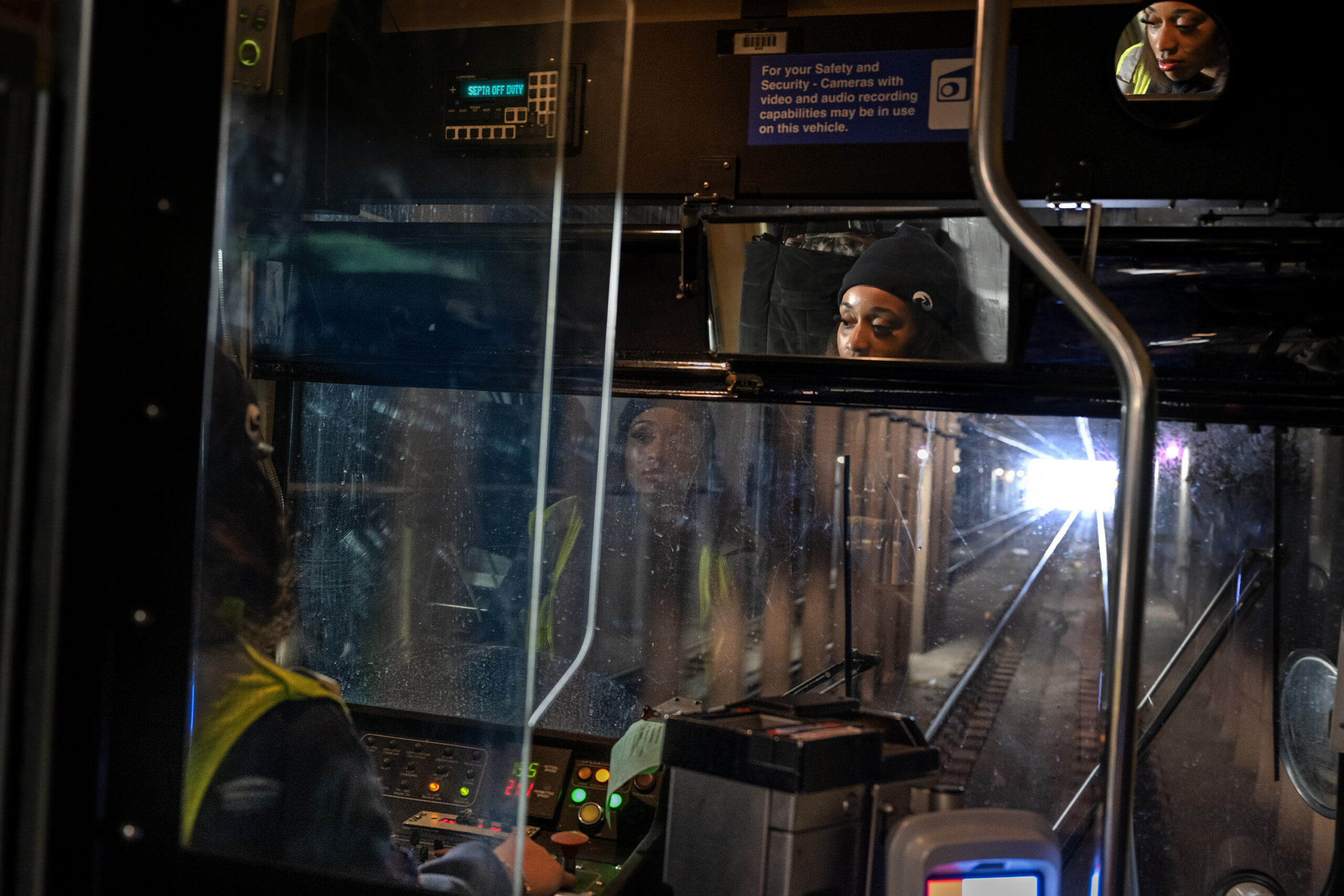
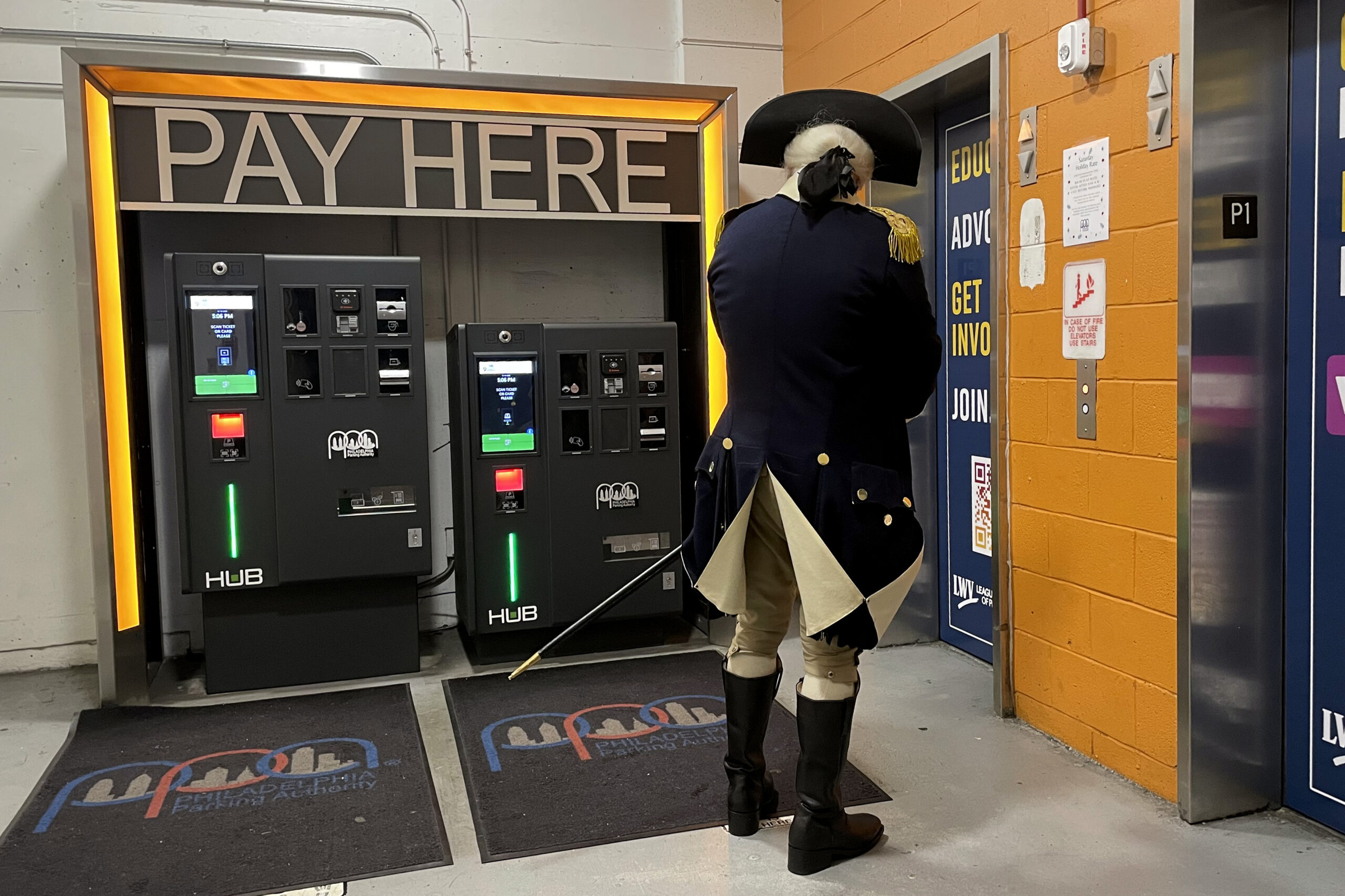
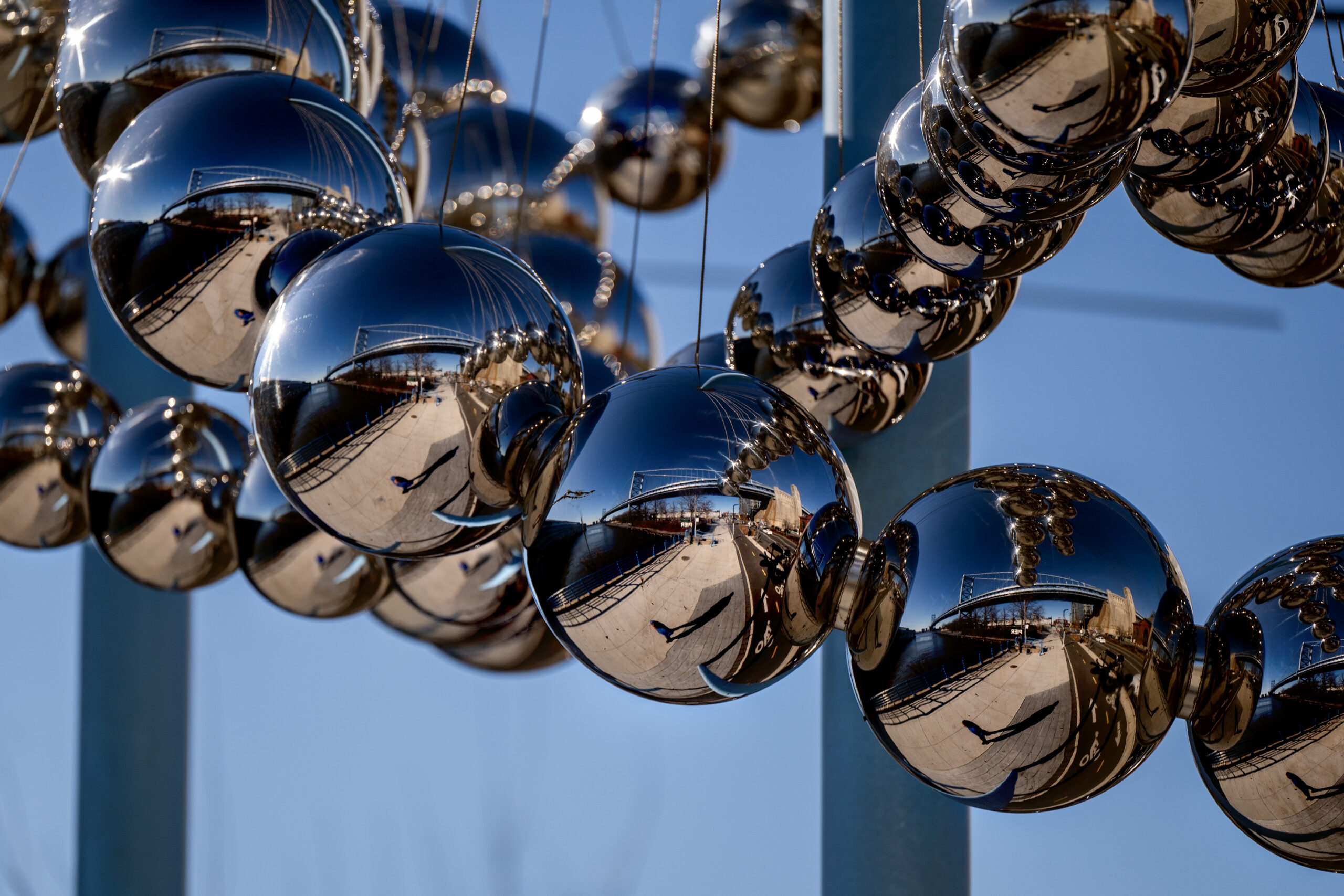
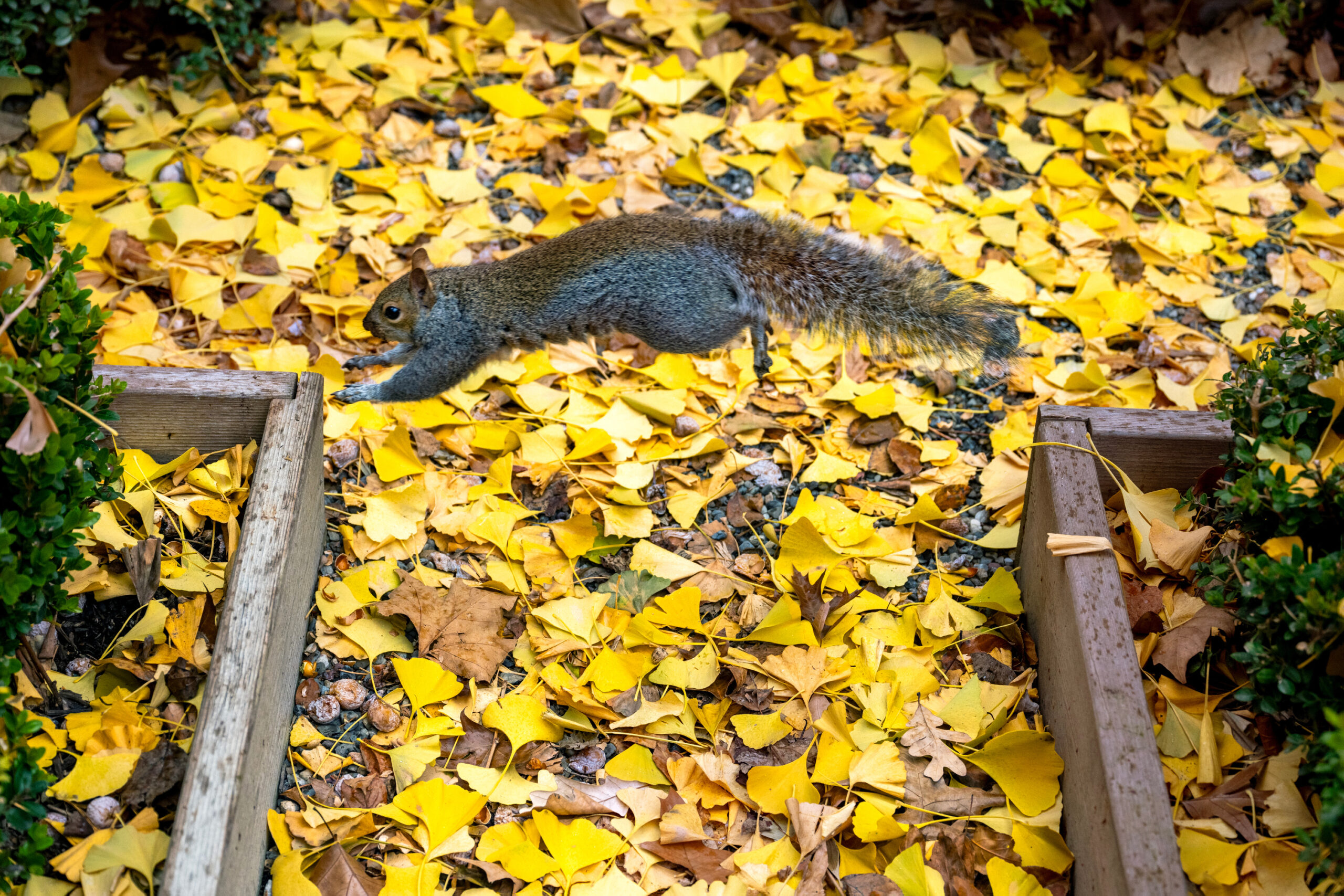
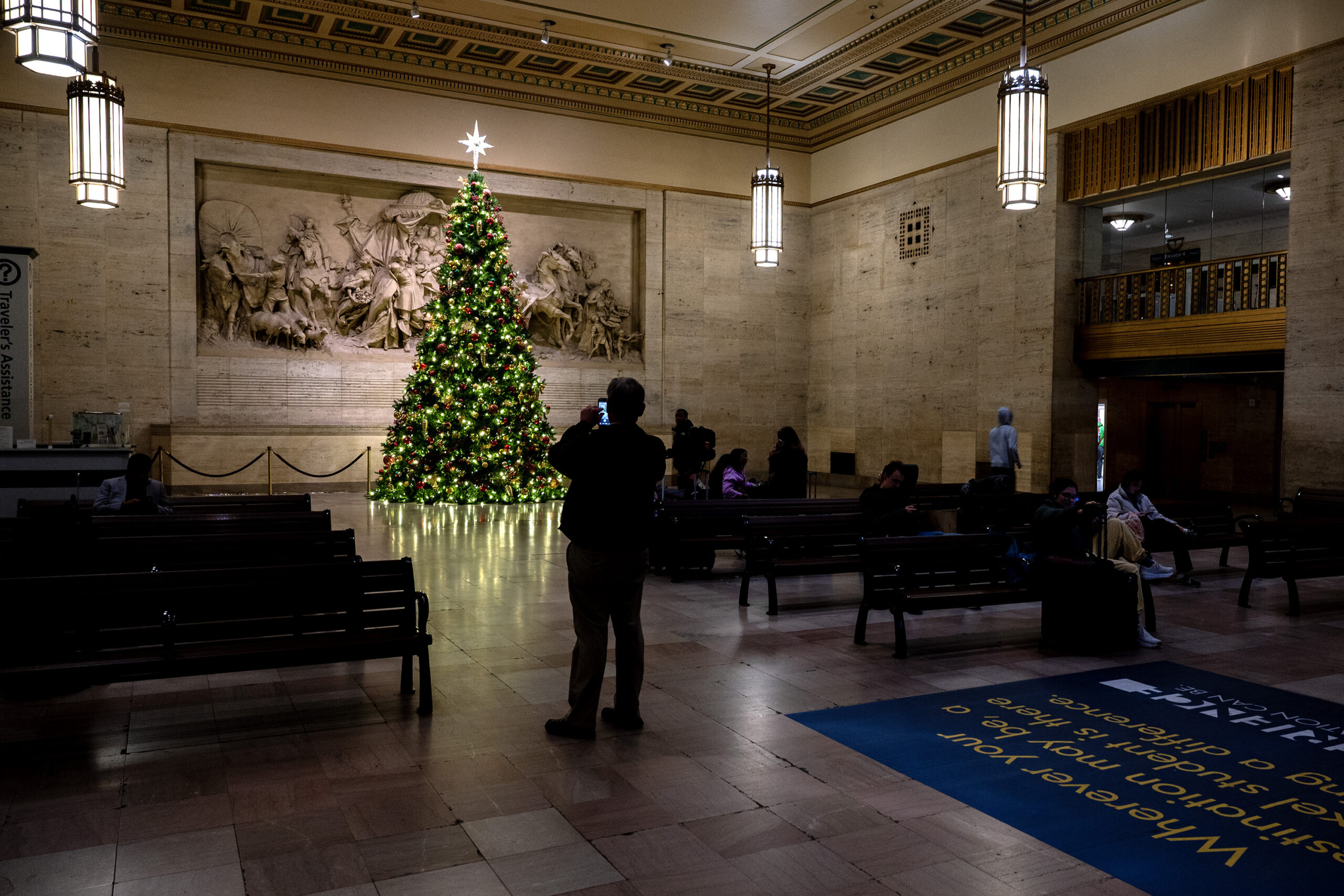
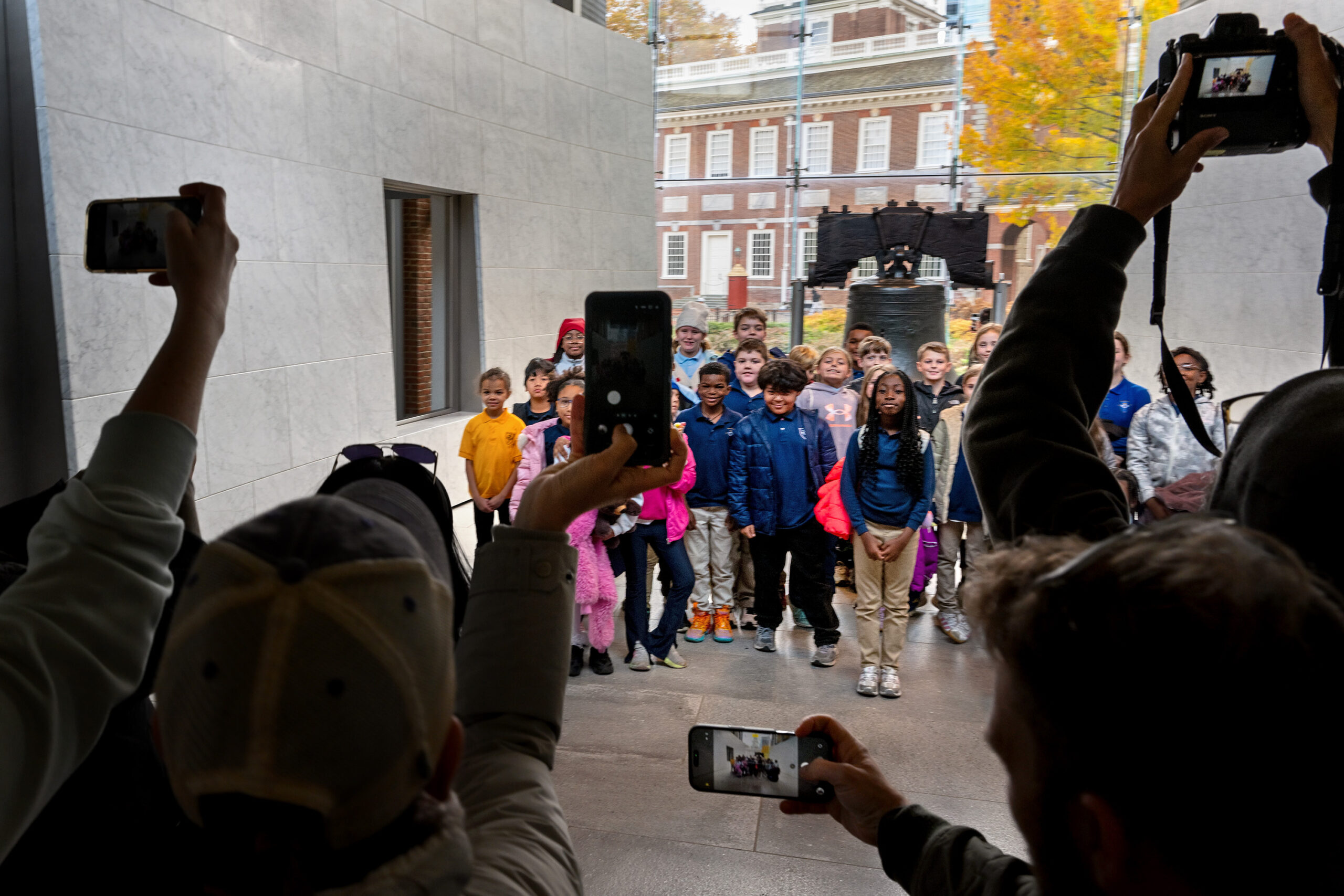
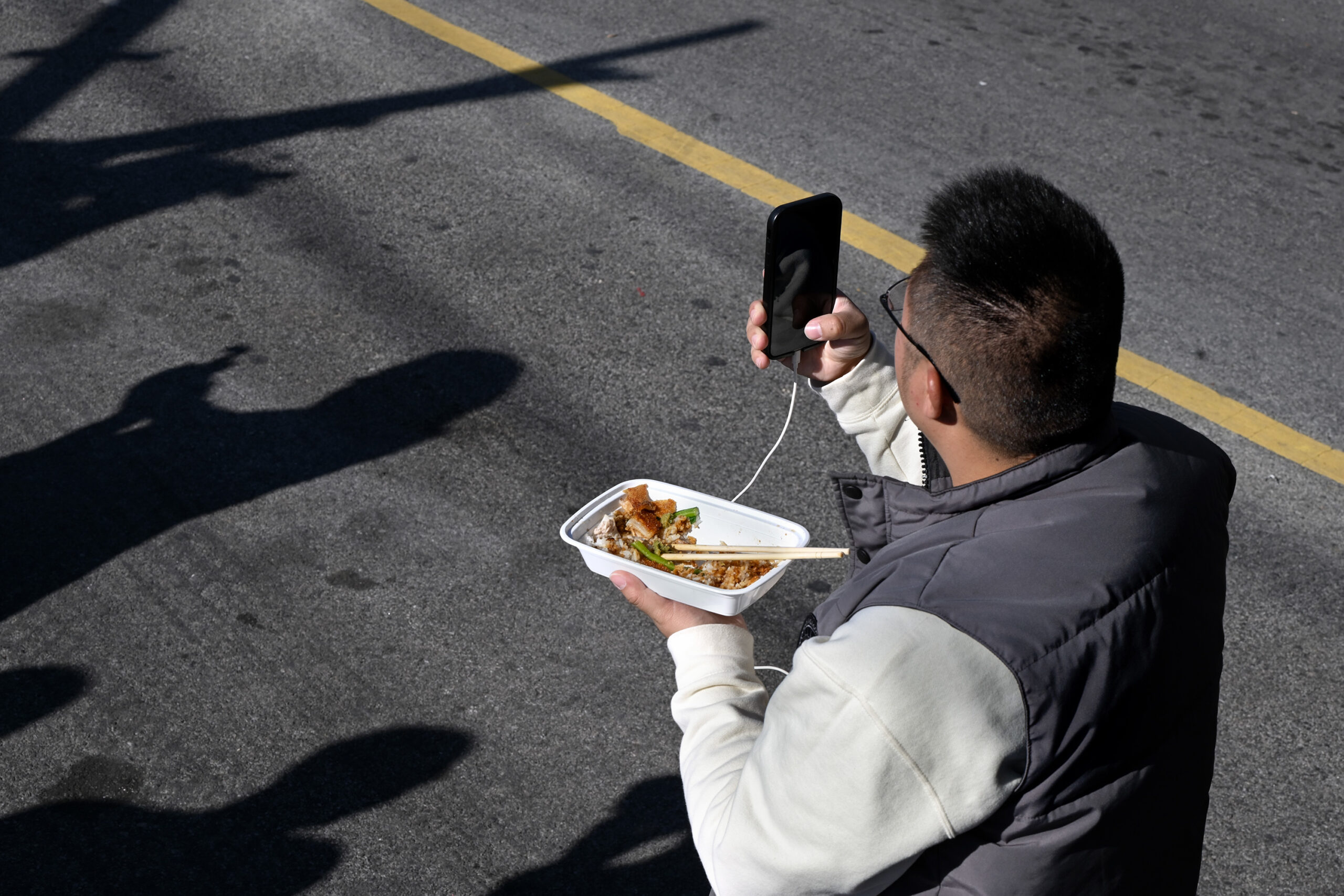
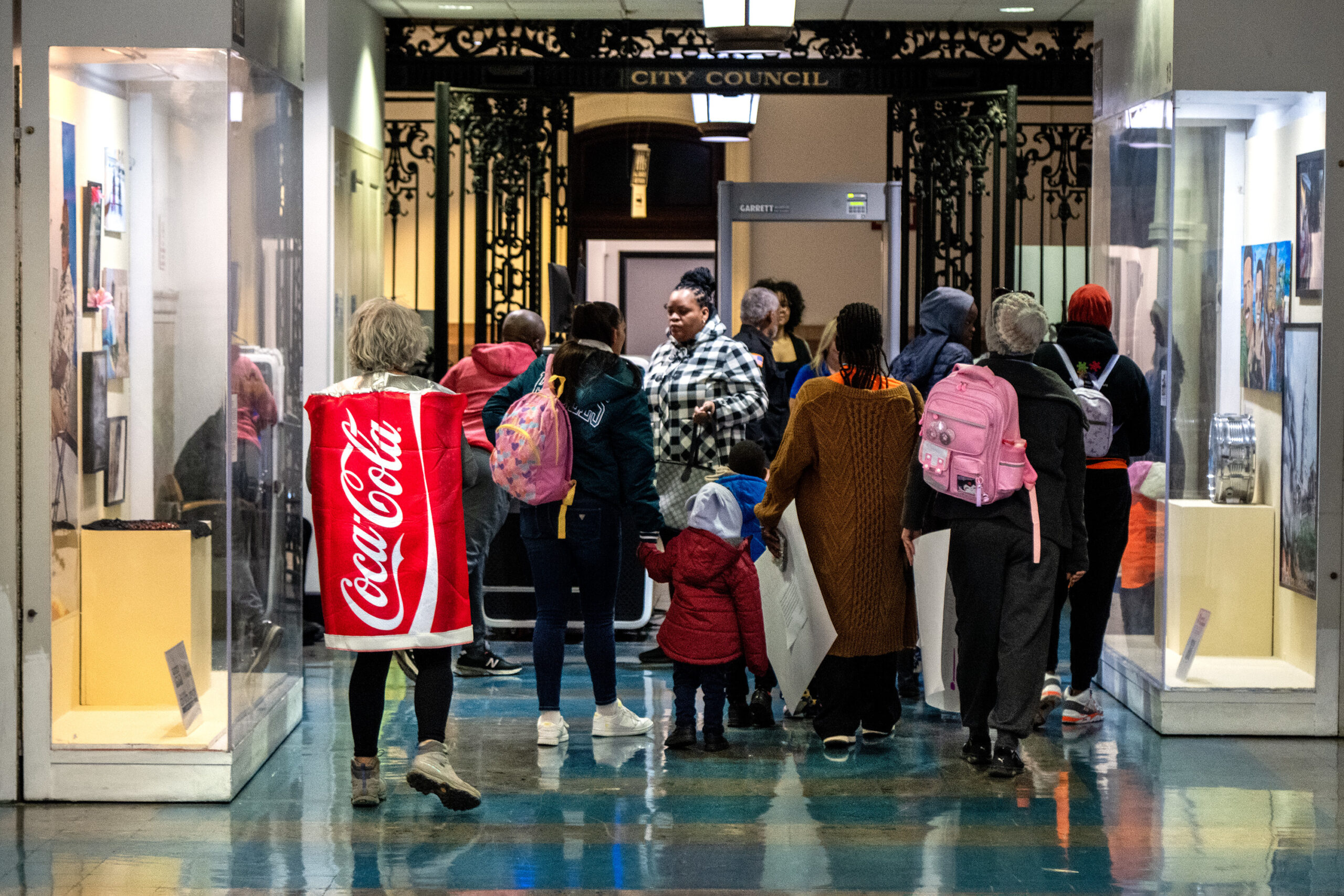
January 26, 2026: The President’s House in Independence National Historical Park hours Jan, 22, after all historical exhibits were removed following President Trump’s Executive Order last March that the content at national parks that “inappropriately disparage” the U.S. be reviewed. The site, a reconstructed “ghost” structure titled “Freedom and Slavery in the Making of a New Nation” (2010), serves as a memorial to the nine people George Washington enslaved there during the founding of America.January 19, 2026: A low-in-the-sky winter sun is behind the triangular pediment of the “front door” of the open-air President’s House installation in Independence National Historical Park. The reconstructed “ghost” structure with partial walls and windows of the Georgian home known in the 18th century as 190 High St. is officially titled, “Freedom and Slavery in the Making of a New Nation” (2010). It is designed to give visitors a sense of the house where the first two presidents of the United States, George Washington and John Adams, served their terms of office. The commemorative site designed by Emanuel Kelly, with Kelly/Maiello Architects, pays homage to nine enslaved people of African descent who were part of the Washington household with videos scripted by Lorene Cary and directed by Louis Massiah. Deepika Iyer holds her niece Ira Samudra aloft in a Rockyesque pose, while her parents photograph their 8 month-old daughter, in front of the famous movie prop at the top of the steps at the Philadelphia Art Museum. Iyer lives in Philadelphia and is hosting a visit by her mother Vijayalakshmi Ramachandran (partially hidden); brother Gautham Ramachandran; and her sister-in-law Janani Gautham who all live in Bangalore, India.January 5, 2026: Parade marshals trail behind the musicians of the Greater Kensington String Band heading to their #9 position start in the Mummers Parade. Spray paint by comic wenches earlier in the day left “Oh, Dem Golden Slippers” shadows on the pavement of Market Street. This year marked the 125th anniversary of Philly’s iconic New Year’s Day celebration.Dec. 29, 2025: Canada geese at sunrise in Evans Pond in Haddonfield, during the week of the Winter Solstice for the Northern Hemisphere. December 22, 2025: SEPTA trolley operator Victoria Daniels approaches the end of the Center City Tunnel, heading toward the 40th Street trolley portal after a tour to update the news media on overhead wire repairs in the closed tunnel due to unexpected issues from new slider parts.December 15, 2025: A historical interpreter waits at the parking garage elevators headed not to a December crossing of the Delaware River, but an event at the National Constitution Center. General George Washington was on his way to an unveiling of the U.S. Mint’s new 2026 coins for the Semiquincentennial, December 8, 2025: The Benjamin Franklin Bridge and pedestrians on the Delaware River Trail are reflected in mirrored spheres of the “Weaver’s Knot: Sheet Bend” public artwork on Columbus Boulevard. The site-specific stainless steel piece located between the Cherry Street and Race Street Piers was commissioned by the City’s Public Art Office and the Delaware River Waterfront Corporation and created and installed in 2022 by the design and fabrication group Ball-Nogues Studio. The name recalls a history that dominated the region for hundreds of years. “Weaver’s knot” derives from use in textile mills and the “Sheet bend” or “sheet knot” was used on sailing vessels for bending ropes to sails. November 29, 2025: t’s ginkgo time in our region again when the distinctive fan-shaped leaves turn yellow and then, on one day, lose all their leaves at the same time laying a carpet on city streets and sidewalks. A squirrel leaps over leaves in the 18th Century Garden in Independence National Historical Park Nov. 25, 2025. The ginkgo (Ginkgo biloba) is considered a living fossil as it’s the only surviving species of a group of trees that existed before dinosaurs. Genetically, it has remained unchanged over the past 200 million years. William Hamilton, owner the Woodlands in SW Phila (no relation to Alexander Hamilton) brought the first ginkgo trees to North America in 1785.November 24, 2025: The old waiting room at 30th Street Station that most people only pass through on their way to the restrooms has been spiffed up with benches – and a Christmas tree. It was placed there this year in front of the 30-foot frieze, “The Spirit of Transportation” while the lobby of Amtrak’s $550 million station restoration is underway. The 1895 relief sculpture by Karl Bitter was originally hung in the Broad Street Station by City Hall, but was moved in 1933. It depicts travel from ancient to modern and even futuristic times. November 17, 2025: Students on a field trip from the Christian Academy in Brookhaven, Delaware County, pose for a group photo in front of the Liberty Bell in Independence National Historical Park on Thursday. The trip was planned weeks earlier, before they knew it would be on the day park buildings were reopening after the government shutdown ended. “We got so lucky,” a teacher said. Then corrected herself. “It’s because we prayed for it.” November 8, 2025: Multitasking during the Festival de Día de Muertos – Day of the Dead – in South Philadelphia.November 1, 2025: Marcy Boroff is at City Hall dressed as a Coke can, along with preschoolers and their caregivers, in support of former Mayor Jim Kenney’s 2017 tax on sweetened beverages. City Council is considering repealing the tax, which funds the city’s pre-K programs. October 25, 2025: Austin Gabauer, paint and production assistant at the Johnson Atelier, in Hamilton Twp, N.J. as the finished “O” letter awaits the return to Philadelphia. The “Y” part of the OY/YO sculpture is inside the painting booth. The well-known sculpture outside the Weitzman National Museum of American Jewish History was removed in May while construction continues on Market Street and has been undergoing refurbishment at the Atelier at the Grounds for Sculpture outside of Trenton.
We’ll show you a photo taken in the Philly-area, you drop a pin where you think it was taken. Closer to the location results in a better score. This week we have three historic sites across the city! Good luck!
Round #18
Question 1
This location has been in the news recently. Where is it?
Loading…
ClickTap on map to guess the location in the photo
ClickTap again to change your guess and hit submit when you're happy
You will be scored at the end. The closer to the location the better the score
Tom Gralish / Staff Photographer
Pretty good/Not bad/Way off! Your guess was from the location.Spot on! Your guess was exactly at the location. Here's also where a random selection of Inquirer readers guessed.
The President’s House made headlines when the National Park Service removed exhibits about slavery following an executive order by President Donald Trump.
Quiz continues after ad
Question 2
Where can you find the Philly Renaissance Faire and an electronic music festival?
Loading…
Don Nigroni / Spotlight PA
Pretty good/Not bad/Way off! Your guess was from the location.Spot on! Your guess was exactly at the location. Here's also where a random selection of Inquirer readers guessed.
Fort Mifflin is a Revolutionary War-era historic landmark near Philadelphia International Airport. It recently hosted the Making Time ∞ festival.
Quiz continues after ad
Question 3
Where is this historic house?
Loading…
Michael Bryant / Staff Photographer
Pretty good/Not bad/Way off! Your guess was from the location.Spot on! Your guess was exactly at the location. Here's also where a random selection of Inquirer readers guessed.
Stenton, a colonial-era house and museum, is home to the Dinah Memorial – a memorial that honors a one-time enslaved housekeeper who saved the house from destruction by British soldiers.
Your Score
ARank
Amazing work. You know your Philly history.
BRank
Good stuff. You’re almost perfect.
CRank
C is a passing grade, but you could do better.
DRank
D isn’t great. Try again next week!
FRank
We don’t want to say you failed, but you didn’t not fail.
You beat % of other Inquirer readers.
We’ll be back next Saturday for another round of Citywide Quest.
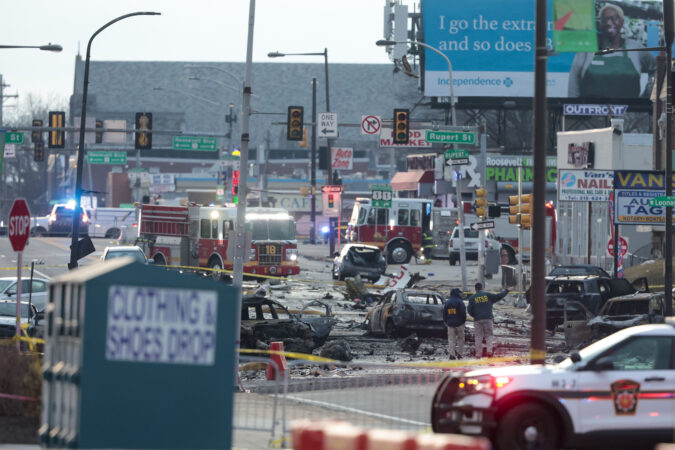
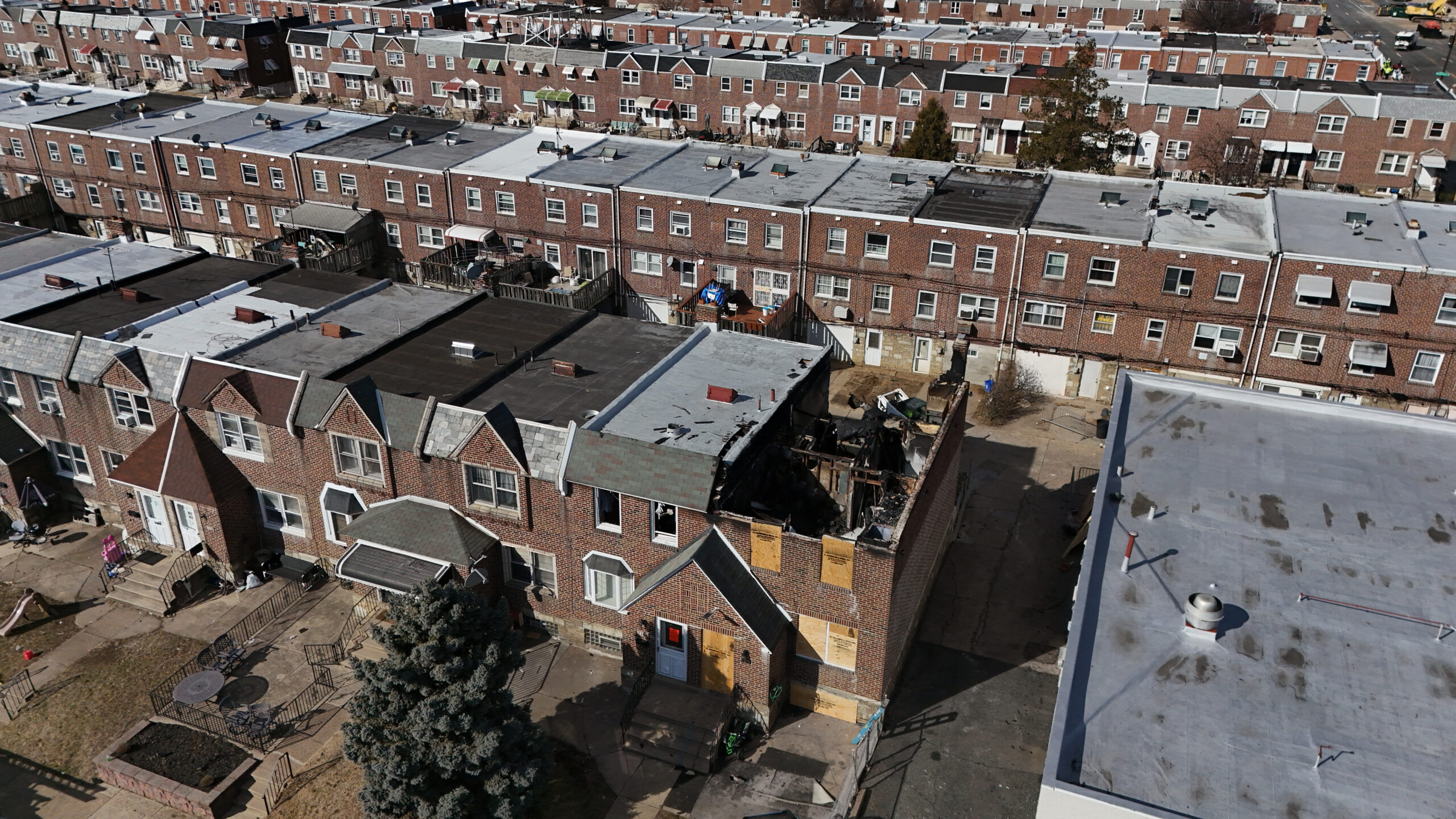
The destruction spanned multiple blocks, spreading wreckage across a debris field that stretched for more than a quarter mile near Roosevelt Mall on Cottman Avenue. The resulting damages totaled in the millions of dollars, and many area residents were left displaced and traumatized.
Now, on its first grim anniversary, the crash’s effects still loom large — not only in the memories of those directly impacted by the crash, but in the local and regional psyche.
With that in mind, city officials plan to hold a memorial observance to honor its victims. The event, slated to start at 5 p.m. at Engine 71 Fire Station — just blocks from where the crash occurred — will include a bell ceremony and wreath-laying. Mayor Cherelle L. Parker and other elected officials will speak.
As city officials said at the time, the crash was among the most significant black swan tragedies in Philadelphia’s history. And, in many ways, the neighborhood is still recovering. Here is what you need to know:
Eight killed, dozens injured
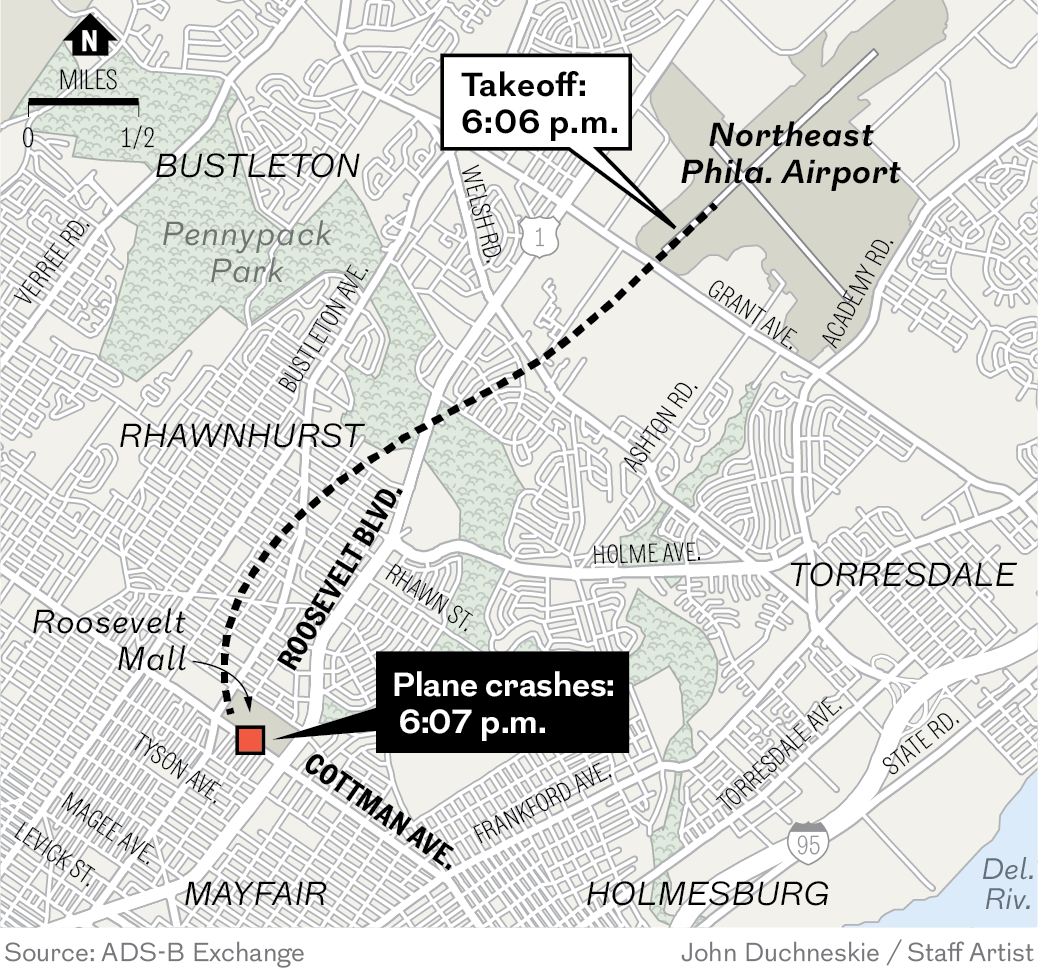
At 6:06 p.m., a Learjet 55 operated by a Mexican medical transport company known as Jet Rescue Air Ambulance took off from Northeast Philadelphia Airport en route to Springfield-Branson National Airport in Missouri on its way back to Mexico. Less than a minute later, after making it 1,650 feet into the air, it went nose down about 3.5 miles away from the airport, slamming into the ground near Bustleton and Cottman Avenues at a 45-degree angle at more than 270 mph.
Map of where a small jet crashed near Roosevelt Boulevard and Cottman Avenue in Northeast Philadelphia on Jan. 31.
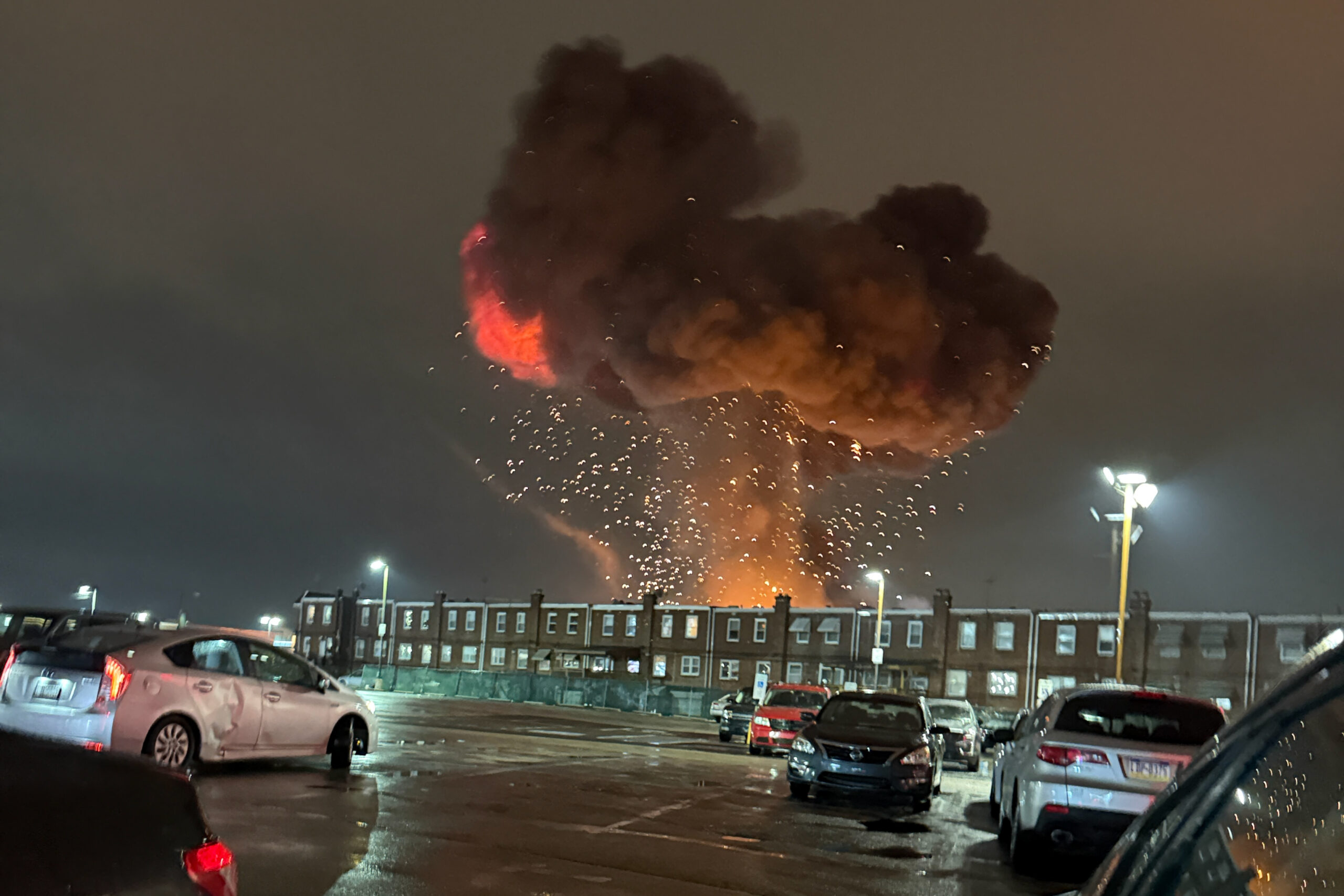
The crash tore an 8-foot deep crater into the earth and created a massive fireball that illuminated the neighborhood. The impact spread devastation across a 1,410-foot-long-by-840-foot-wide tract, damaging homes, vehicles, and businesses, and scattering human remains amid the debris field.
All six people aboard the aircraft were killed — among them Valentina Guzmán Murillo, 11, and her mother, Lizeth Murillo Osuna, 31. The pair were on their way home after Valentina had received four months of treatment for a spinal condition at Shriners Children’s Philadelphia, with her doctors celebrating her recovery only hours before.
Also killed were captain Alan Montoya Perales, 46; copilot Josue de Jesus Juarez Juarez, 43; doctor Raul Meza Arredondo, 41; and paramedic Rodrigo Lopez Padilla, 41. On the ground, Steven Dreuitt Jr., 37, died as a result of the crash, as did his fiancée, Dominique Goods Burke, 34, who succumbed months later to injuries she suffered that night.
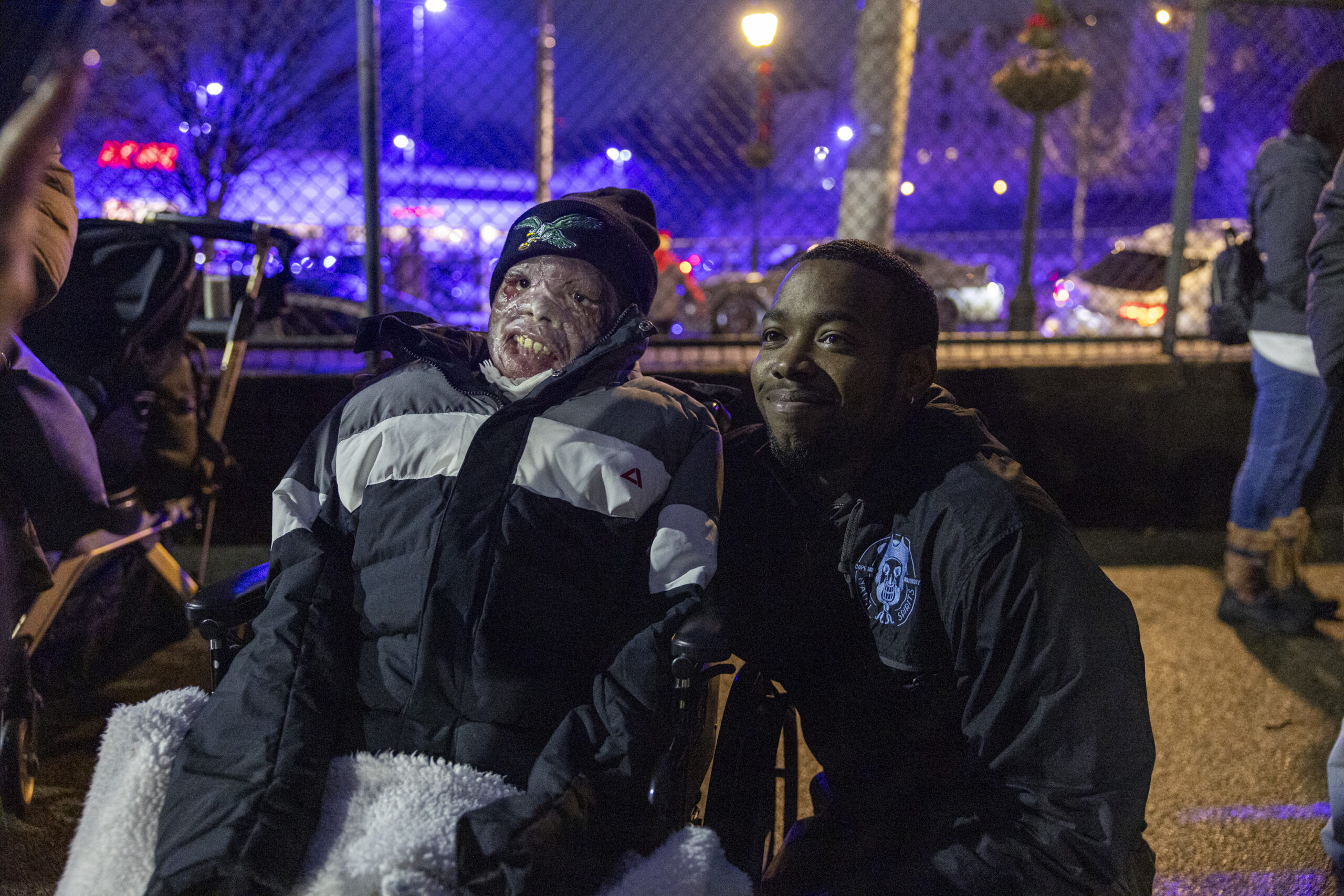
At least 24 other people were injured, with victims ranging in age from 4 to 85. Many suffered severe burns, smoke inhalation, and skull fractures, including 9-year-old Ramesses Dreuitt Vazquez, the young son of Dreuitt, who suffered burns over 90% of his body and spent nearly a year in the hospital before being released.
‘All hands on deck’
Ryan Tian, 23, of Delaware County, captured an explosion at a parking lot at Cottman and Bustleton Avenues Friday, Jan. 31, 2025. It was later discovered a medical transport plane bound for Mexico took off from Northeast Philadelphia Airport and crash soon after on Cottman.
The emergency response was massive, involving about 400 firefighters, police officers, and other first responders. Investigators later found that more than 300 properties had been impacted in some way.
The incident, Parker said the night of the crash, was an “all hands on deck” situation. Eyewitnesses and emergency responders described the ensuing chaos as resembling a war zone or feeling like a movie.
“This is a huge area,” Police Commissioner Kevin Bethel said of the crash site. “Nothing in that area will ever be normal again.”
Gov. Josh Shapiro and other officials also toured the devastated area. Ultimately, despite the damage the crash wrought, Shapiro’s office found that the impacts were too limited to ask President Donald Trump‘s administration for a federal disaster declaration, leaving the city and state to lead recovery efforts.
Investigation reveals little
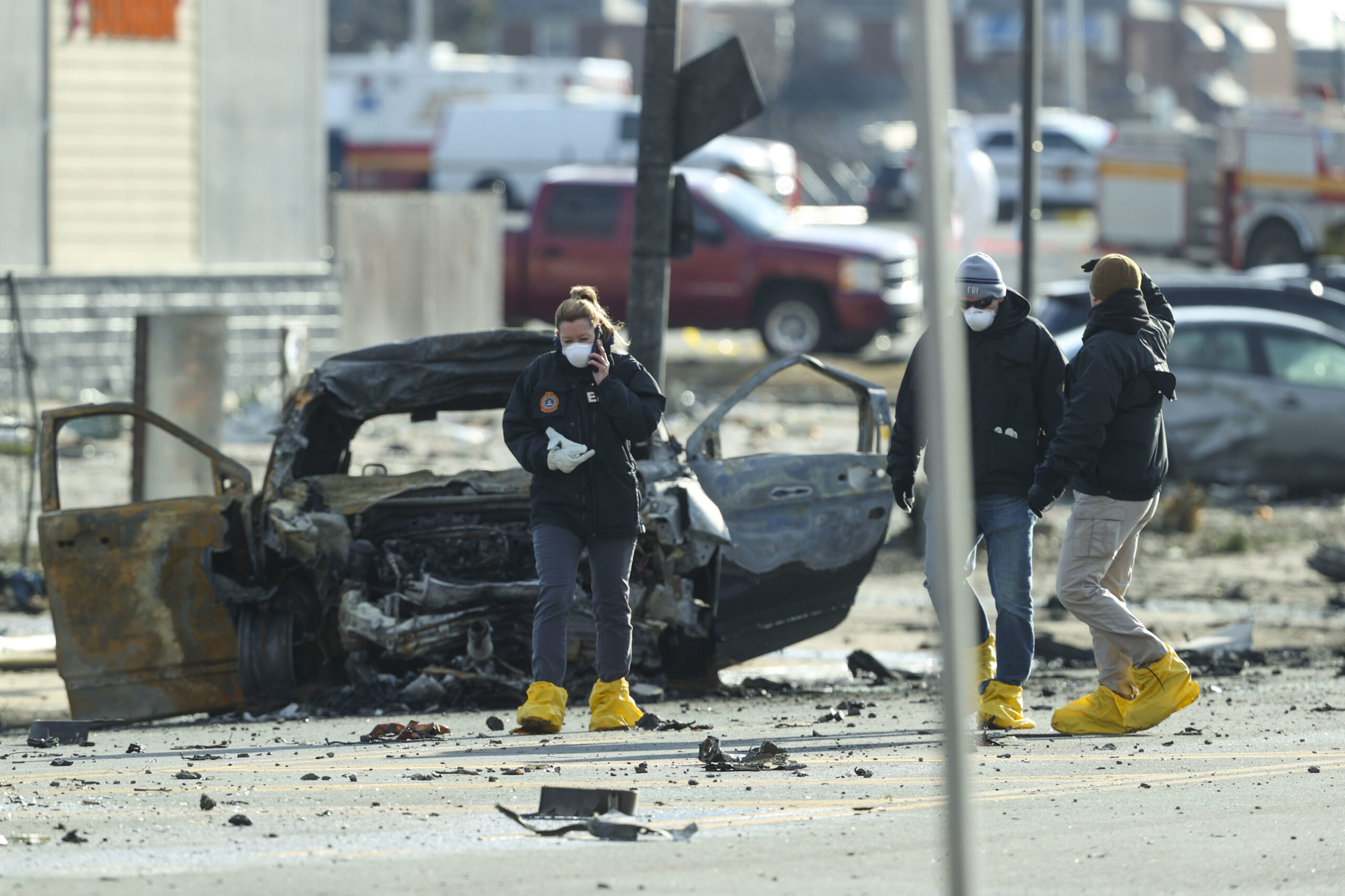
An investigator walks by a burned out car on Cottman Avenue Saturday, Feb. 1, 2025, in Philadelphia. A medical jet with six people on board crashed Friday evening near the Roosevelt Mall in Northeast Philadelphia scattering debris throughout the streets, and setting multiple homes and cars ablaze in a devastating scene
The investigation was led by the National Transportation Safety Board, which early on noted that the crashed craft made no distress calls and had only brief, routine communications with the Northeast Philadelphia Airport control tower after takeoff.
That left the aircraft’s cockpit voice recorder — or “black box” — as a key investigatory element. Days later, searchers found the unit at the bottom of the crater the craft had carved into the earth, but it was largely useless.
The recorder, the NTSB said, had “likely not been recording audio for several years,” and contained no clues as to what may have caused the crash. No official cause for the crash has yet been announced.
Reviews of the craft’s flight records, however, found that it had been used extensively in the months and weeks leading up to the crash. In the five days before the disaster, it had flown 12 flights covering 9,400 miles, and in its final year before it was destroyed, the aircraft had 163 takeoffs.
Fallout continues
Homes in the Northeast Philadelphia neighborhood across from the Roosevelt Mall where a plane crashed on nearby Cottman Avenue. More than a dozen properties were severely damaged by flying debris and fire. The home that the Gomez family rented on Calvert Street caught fire after a plane engine slammed into their roof. Photographed Tuesday, Feb. 4, 2025.
In June, five months after the crash, more than a dozen local residents and business owners told The Inquirer they were still grappling with unrepaired property damage and catching up on bills from lost incomes or extra expenses.
The city had marshaled significant resources, including opening sites offering mental health services and financial aid, and steering roughly $264,000 in grants to small businesses. The One Philly Fund, which was launched to serve as the city’s signature relief effort, however, only attracted some $35,000 in donations, falling woefully short of its desired impact.
Meanwhile, insurance claims were expected to exceed $10 million, and the city itself sought claims for property damage and personnel costs eclipsing $2.5 million. The medical jet company’s insurer, El Águila Compania de Seguros, hoped to consolidate all claims under a single court case, and compel a federal judge to divvy up the funds, which it said were “unlikely to be sufficient to resolve all claims.”
Later in the year, lawsuits against the medical jet company were filed.
A silver lining
Caseem Wongus, 26, is meeting Ramesses R. Dreuitt Vasquez, 10, for the first time after saving him from the fire from the jet crash at the beginning of the year, in Germantown, Pa., on Tuesday, Dec. 23, 2025.
Despite the trauma and devastation the crash brought to Philadelphia, at the end of 2025, there was at least some good news. Ramesses Dreuitt Vazquez, a boy who was severely injured in the crash, was released from the hospital, just in time for the holidays.
Vazquez, who turned 10 in October, had endured almost a full year in the hospital, undergoing more than 40 surgeries, including multiple skin grafts, and the amputation of fingers and ears. He spent months in physical therapy relearning how to get out of bed, walk, and climb stairs.
But about a week before Christmas, he made it out. And while noting that Ramesses faced a challenging road ahead, the boy’s grandmother, Alberta “Amira” Brown, expressed happiness with his recovery.
“It’s the best thing ever that he’ll be home for the holidays,” Brown told The Inquirer. “He is truly happy to be coming home.”
A former Philadelphia Fire Department medic has been charged with stealing money from a 72-year-old woman who had been pronounced dead during the response to an apartment in Center City last year, District Attorney Larry Krasner said Friday.
Gary Robb, 41, was charged in early December with misdemeanor theft and related crimes.
A spokesperson for the fire department declined to comment on the case except to say that Robb no longer worked for the department.
Robb could not be reached for comment Friday night.
On Oct. 16, Robb was part of a medic response to an apartment building on the 1300 block of Lombard Street and encountered an unresponsive person who was later pronounced dead, Krasner said.
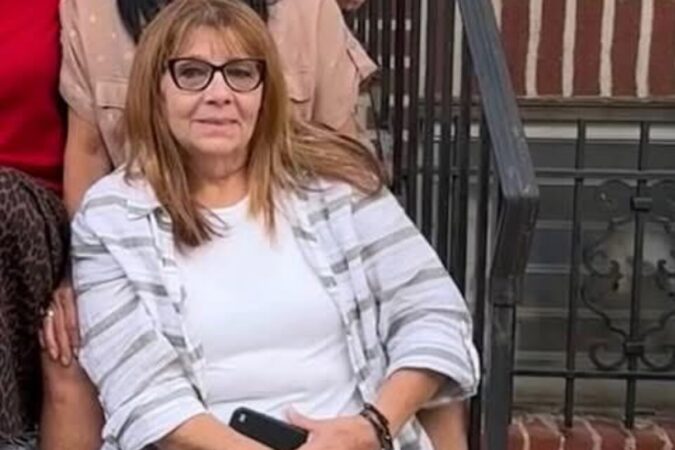
The person who died was identified as Nanette Santilli by her niece, Nicolette Santilli Holt, 28, of Philadelphia.
A video camera inside the home recorded Robb removing money from the dead person’s wallet and placing the money in his jacket pocket, the DA said.
“The alleged incident is an egregious misuse of power,” Krasner said in a statement.
“The men and women of the Philadelphia Fire Department are trusted public servants, and nothing alleged here diminishes the importance or integrity of their work. We will aggressively pursue the facts to ensure accountability and justice,” he said.
The investigation is ongoing.
Holt in an interview Friday night described her aunt as a generous person.
“She was the absolute best: crazy, loud, loving, gentle, funny — just one of a kind,” Holt said.
“She had a voice you couldn’t miss blocks away. She always had a loud set of keys, a roll of paper towels, and a Red Bull with her big handbag,” Holt said. “Truly one of a kind and would’ve helped anyone, so to see someone take advantage is a shame.”
The resistance was born on a Friday morning at the Gen. George A. McCall School photocopy machine.
The copier spat the message out on yellow, purple, and orange paper — page after page amplifying the same sentiment scrawled on each in big black letters: Learn all history.
In the aftermath of the removal of the slavery exhibit at the President’s House Site on Jan. 22, fourth-grade social studies teacher Kaity Berlin wanted to convert her rage into something productive, she said. She quickly thought of the words on one of her shirts: “Teach all history.” So she gathered some teacher friends, took to the photocopier, and headed to Independence National Historical Park.
Berlin wasn’t the only one who saw the shallow silver frames at the President’s House as a void screaming to be filled.
The city asked a federal justice to order that no more exhibits be removed from the President’s House and that the exhibits that were already removed be kept safe. In a hearing Friday, judge Cynthia M. Rufe didn’t issue a ruling but asked the Trump administration attorney that the exhibits remain untouched so she can review them Monday.
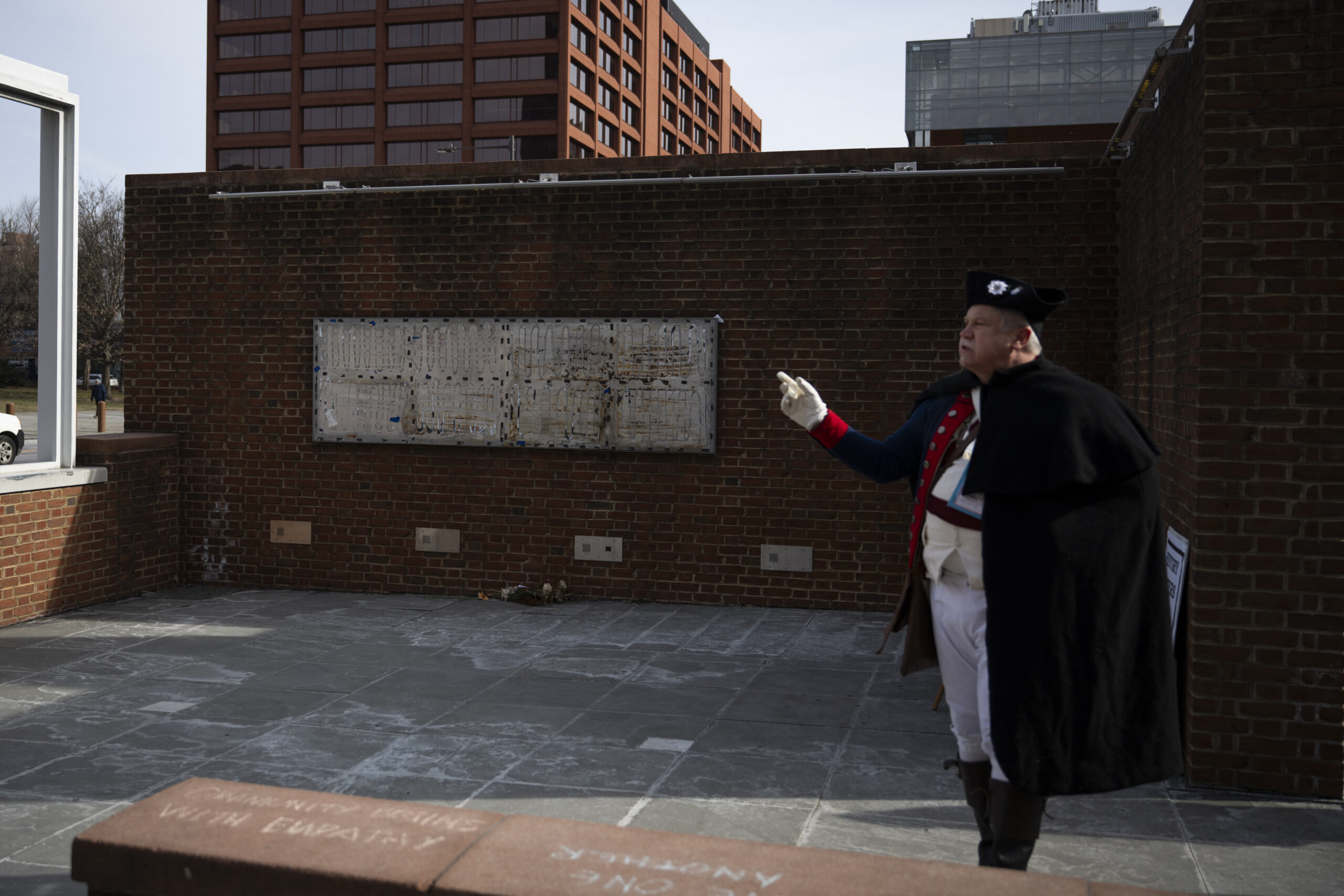
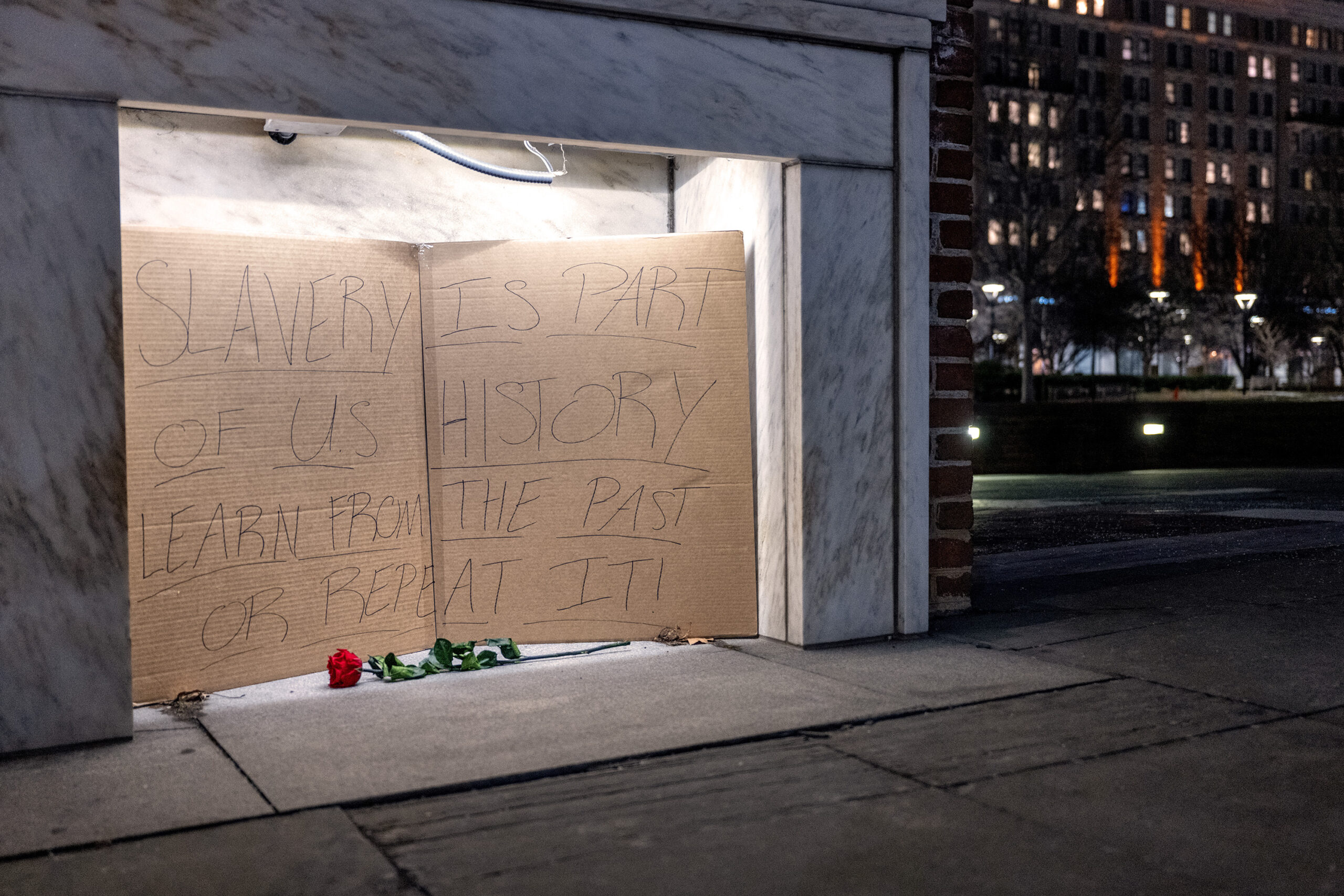
Over that first weekend colorful signs populated the walls, reenactors donned historic garb and positioned themselves along the red brick pillars with a flourish, some people held giant replica signs of the ones that were removed, and others laid flowers delicately across the facility.
To Berlin, whose school is a few blocks from the President’s House, posting the colorful signs was just a quick action she could take in her 45-minute prep period.
“It was just a cathartic way to be like ‘Ugh, this sucks,’” Berlin said.
But it soon became the first of numerous forms of activism and art that filled the space as more and more Philly-area residents yearned for a similar way to express their opposition to the removal of the plaques.
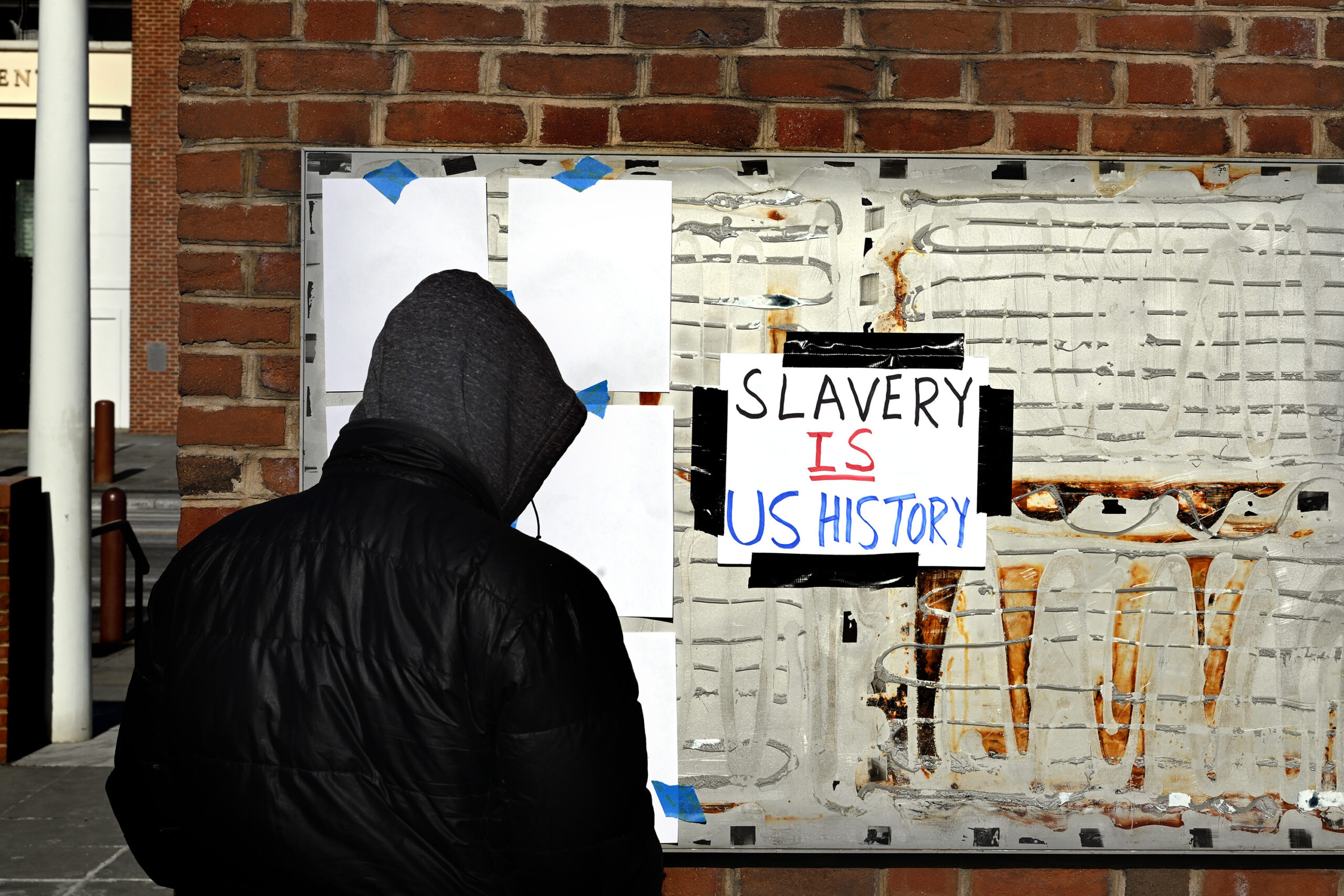
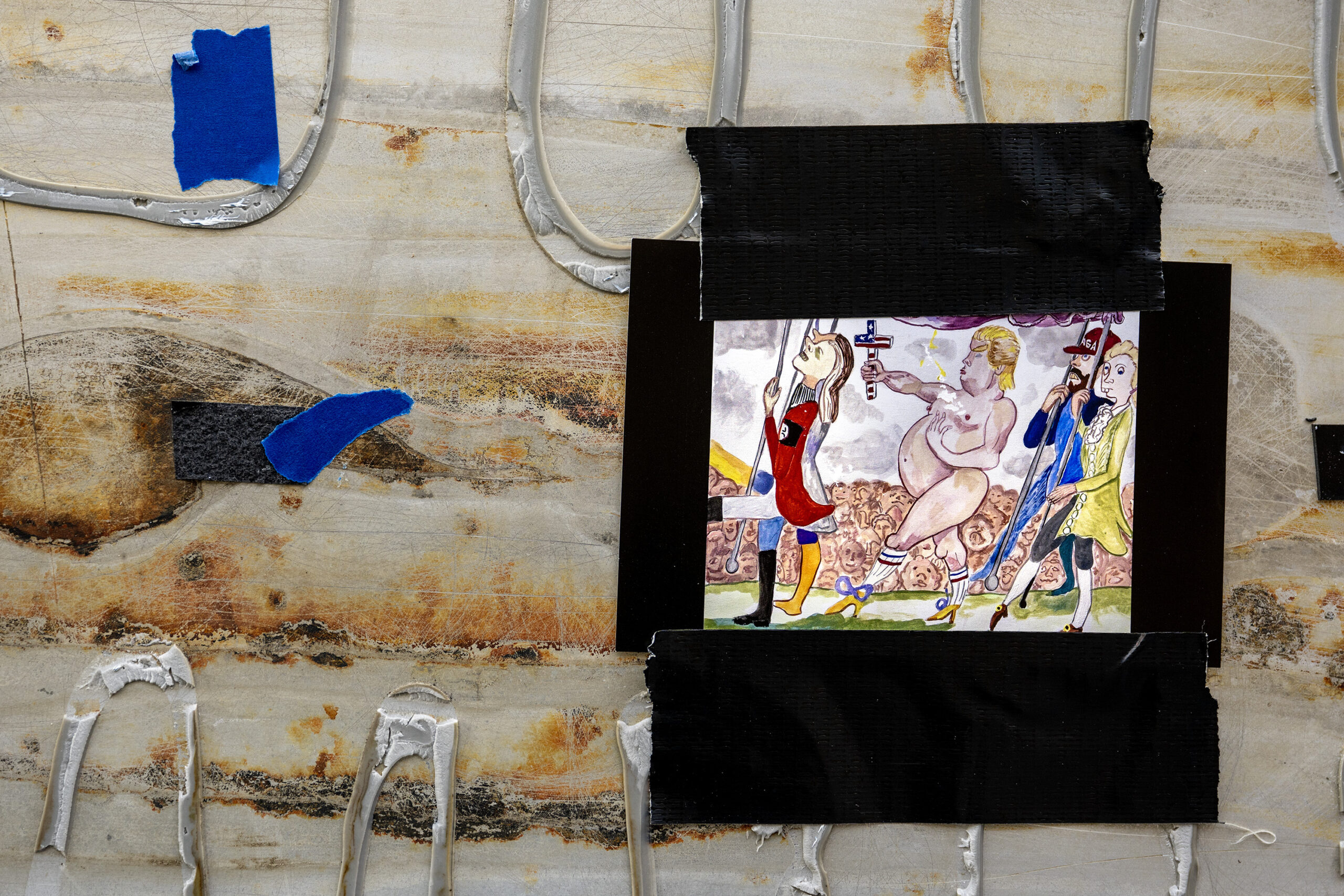
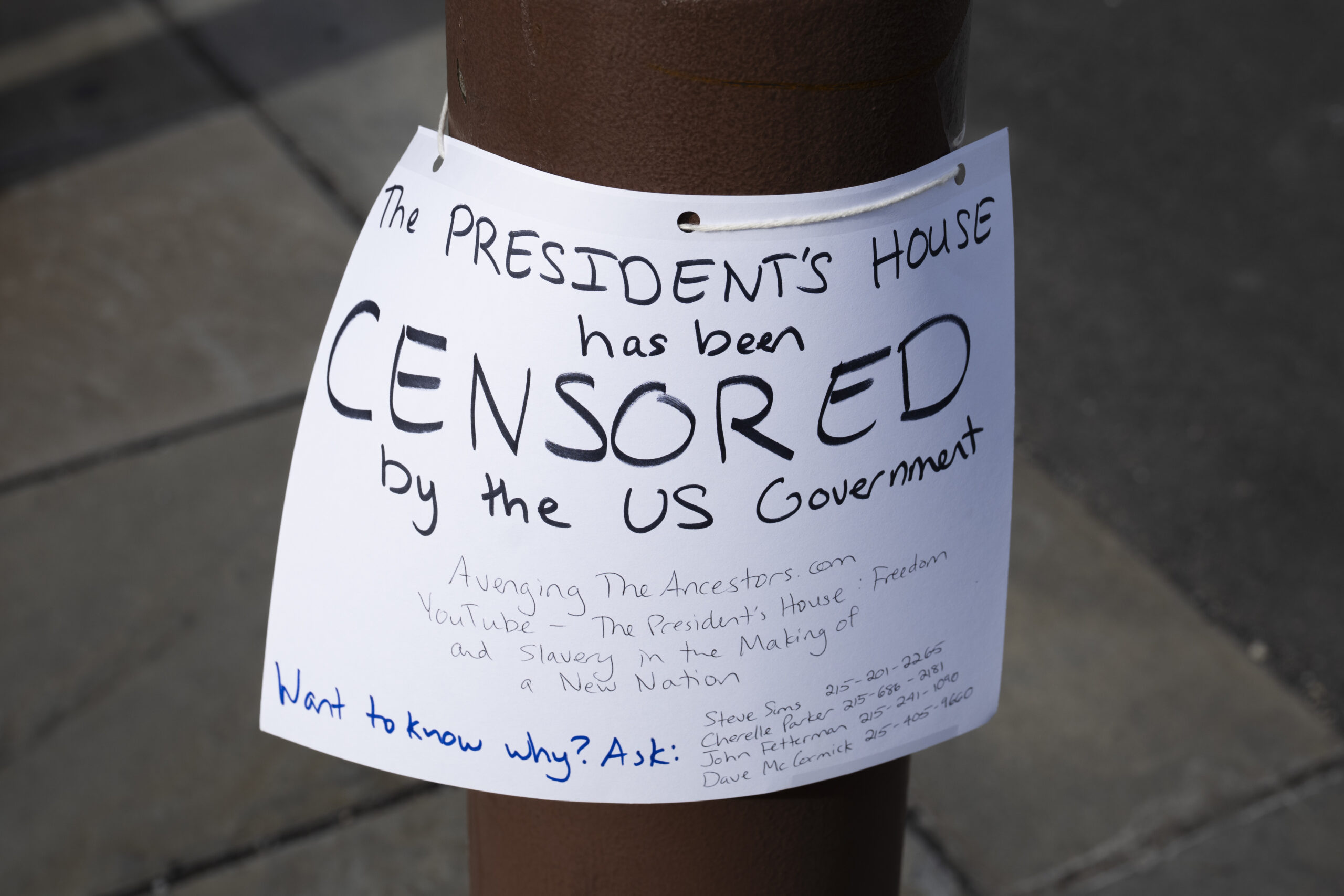
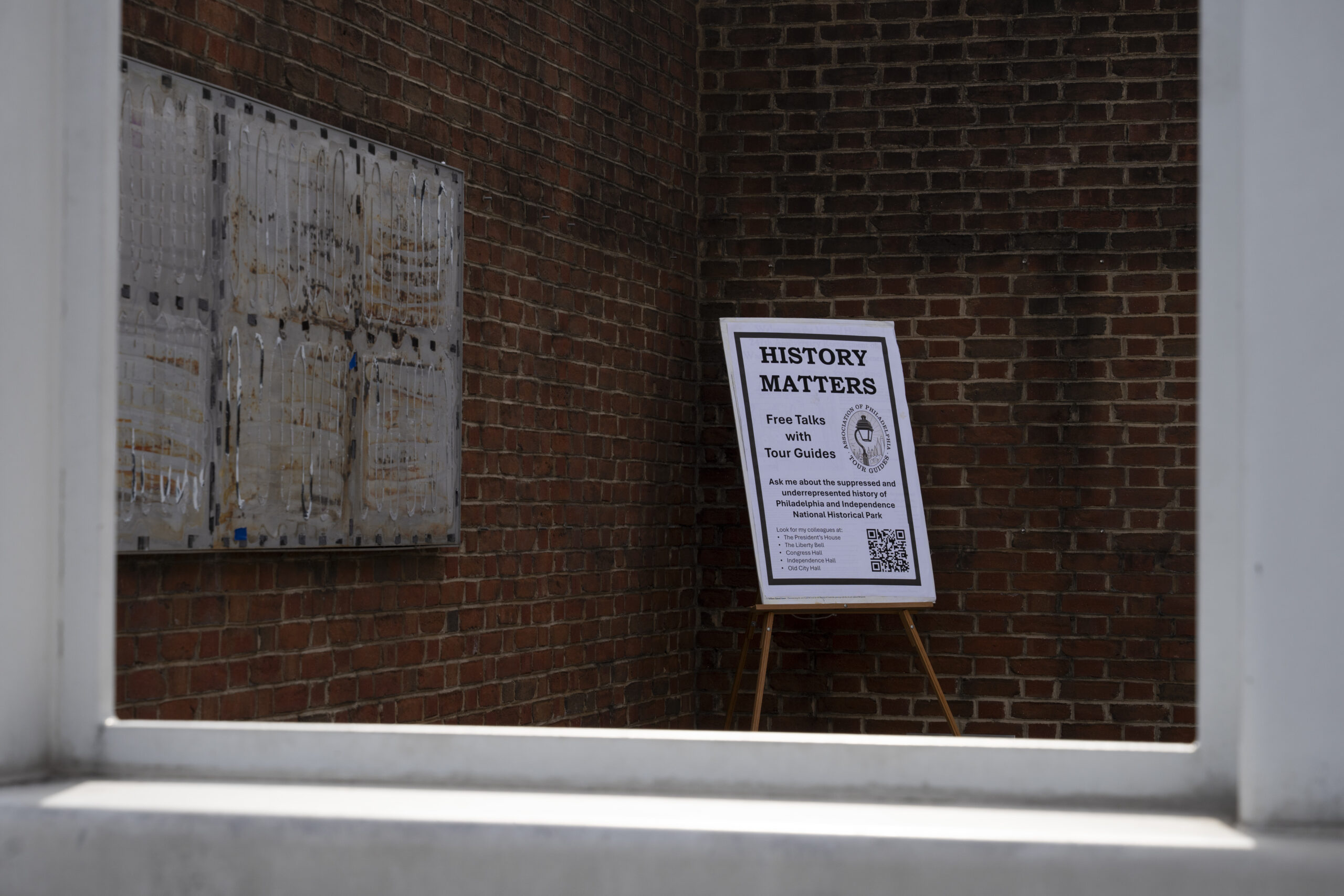
Media ranged from cardboard to poster board. Tools included Sharpies and pens. Many of the more informal signs were affixed with painter’s tape to nooks in the brick structure and empty metallic shells where the original signs hung. Some more official-looking signs included QR codes and printed messages balanced on easels. Others were replicas of the signs that were there made with assistance from professional printing services.
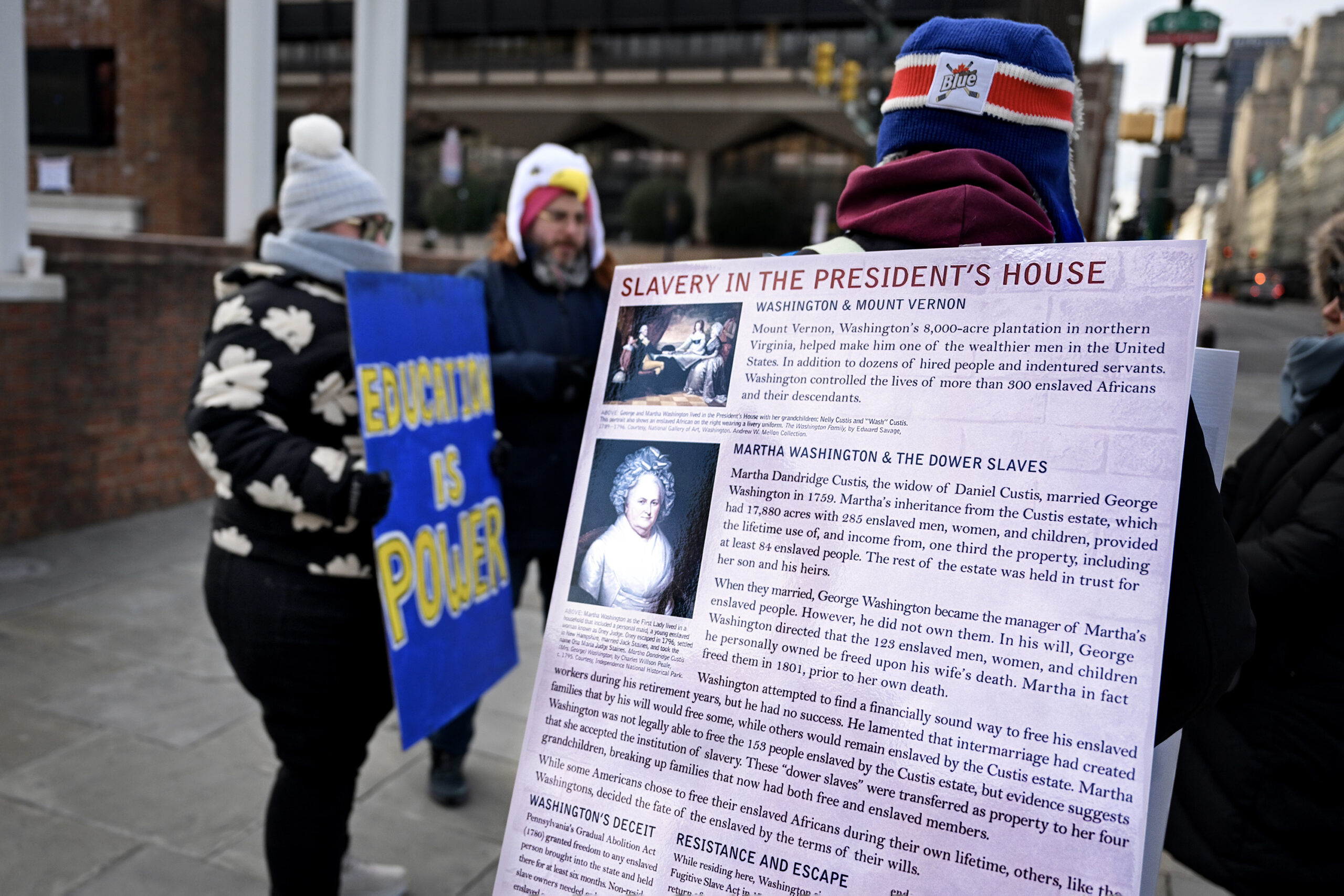
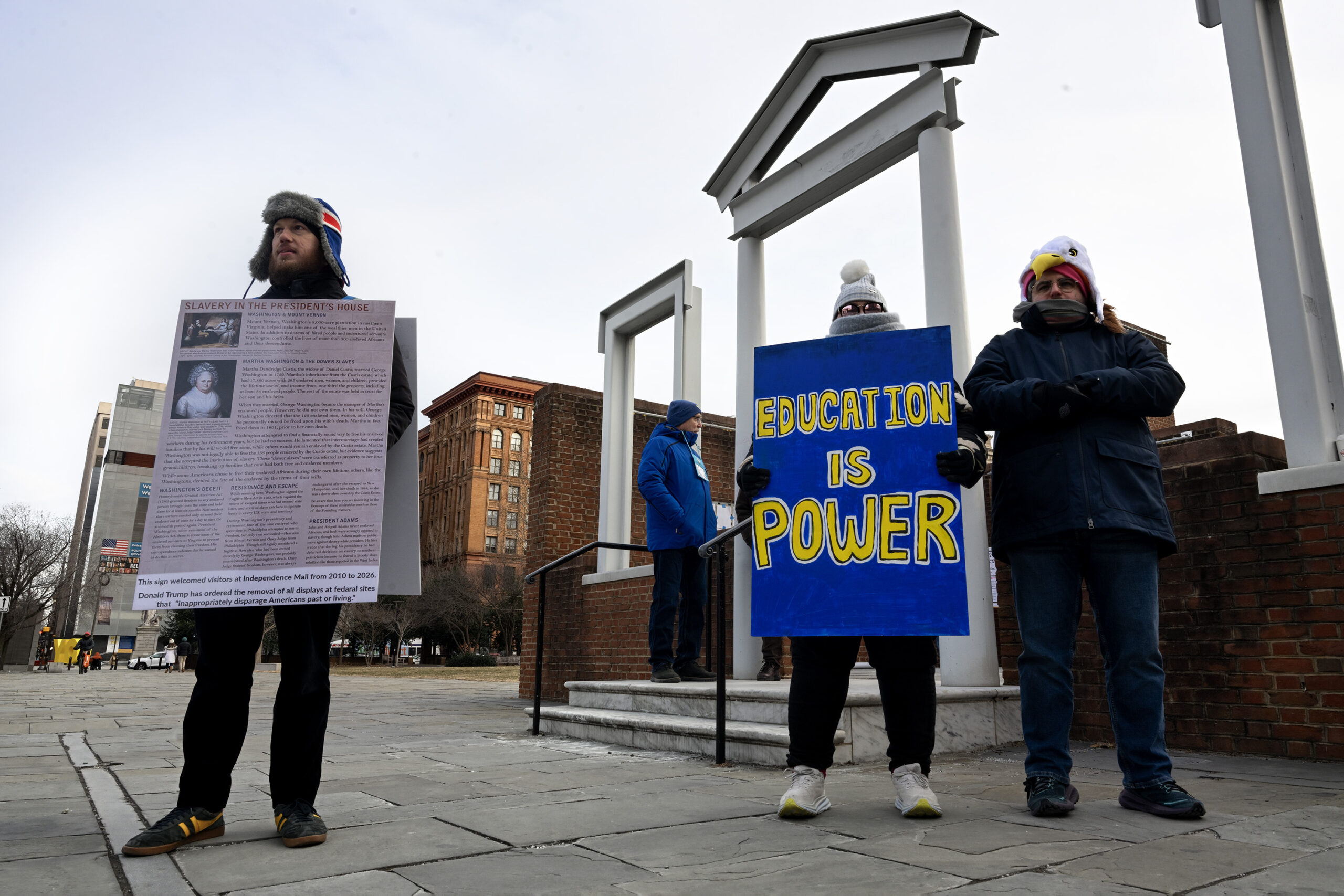
Ted Zellers, a property manager in North Philly, took a more full-body approach to his protest. He found a high-resolution image online of one of the removed signs, titled “Slavery in the President’s House,” got it printed twice, fashioned a sandwich board out of the posters, and became “a living sign,” he said.
It was an educational tool he could wield, but it doubled as a warning.
“I hope people will think about what other information is under threat of being disappeared,” Zellers said.
He expected to be the only person in the park with a sign, but was heartened to see a few dozen others there withstanding the 17-degree air interspersed with sharp winds slicing through the open air exhibit.
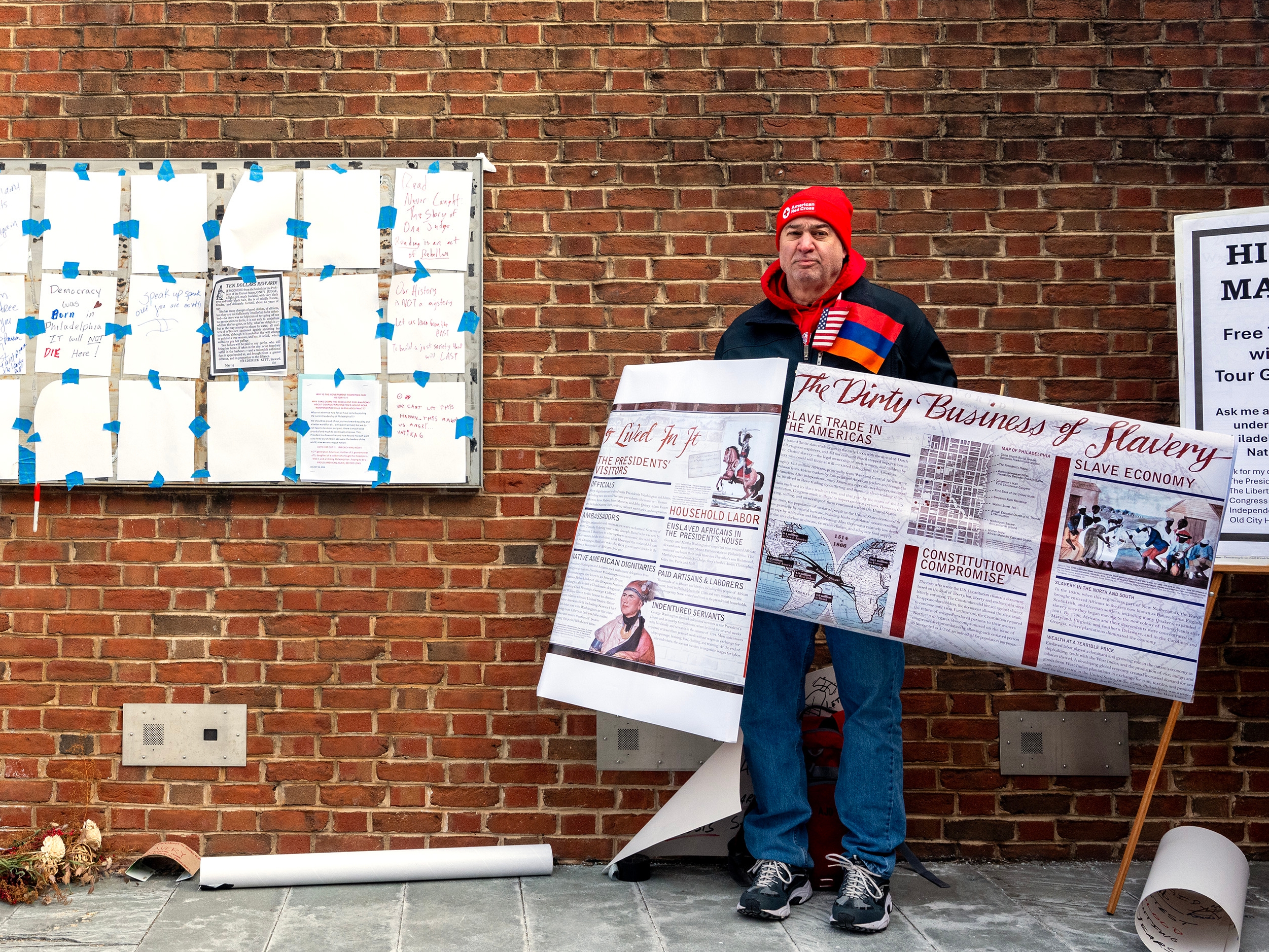
Albert DerMovsesian from Willow Grove, who came to the site equipped with one vertical sign detailing the labor that took place in the house and a horizontal one titled “The Dirty Business of Slavery,” found himself similarly pleased to see so many like-minded others around him.
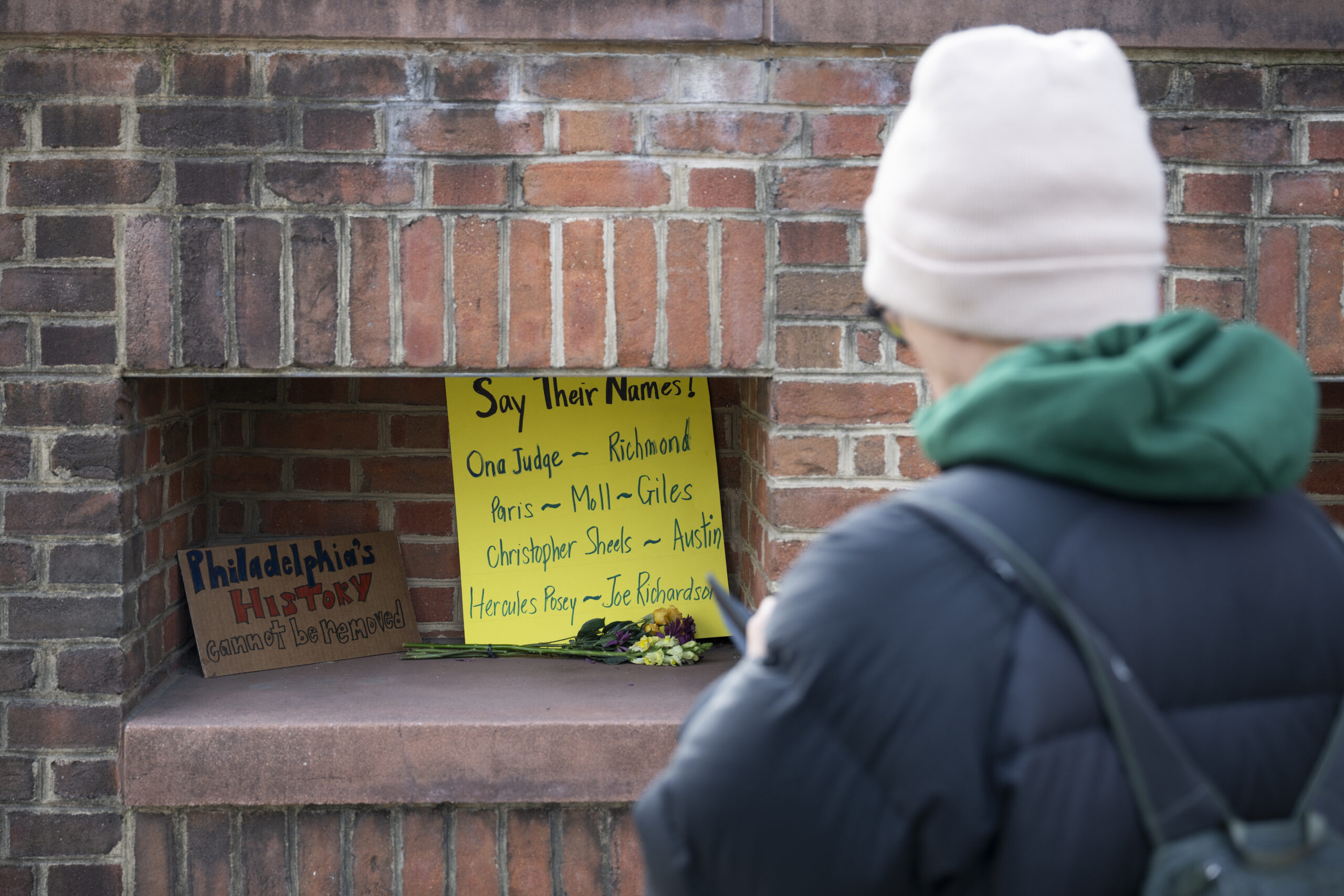
In the park he saw little kids writing on pieces of paper pasted to the walls, a woman leaving a sign with the names of those enslaved at the site, and people adorning the structure with flowers.
“It reminded me that I wasn’t alone,” DerMovsesian said.
“We don’t need 350 million Malcolm X’s to make the country better,” Zellers said. “We just need a lot of regular people who recognize that they’re part of networks and who can take some action and amplify what’s going on, pass it onm and get other people engaged.”
The collage of images developed organically, but hearkened back to a long lineage of protest art that has become increasingly prevalent under the Trump administration, said Nicolo Gentile, an artist and adjunct faculty member at Temple University’s Tyler School of Art and Architecture.
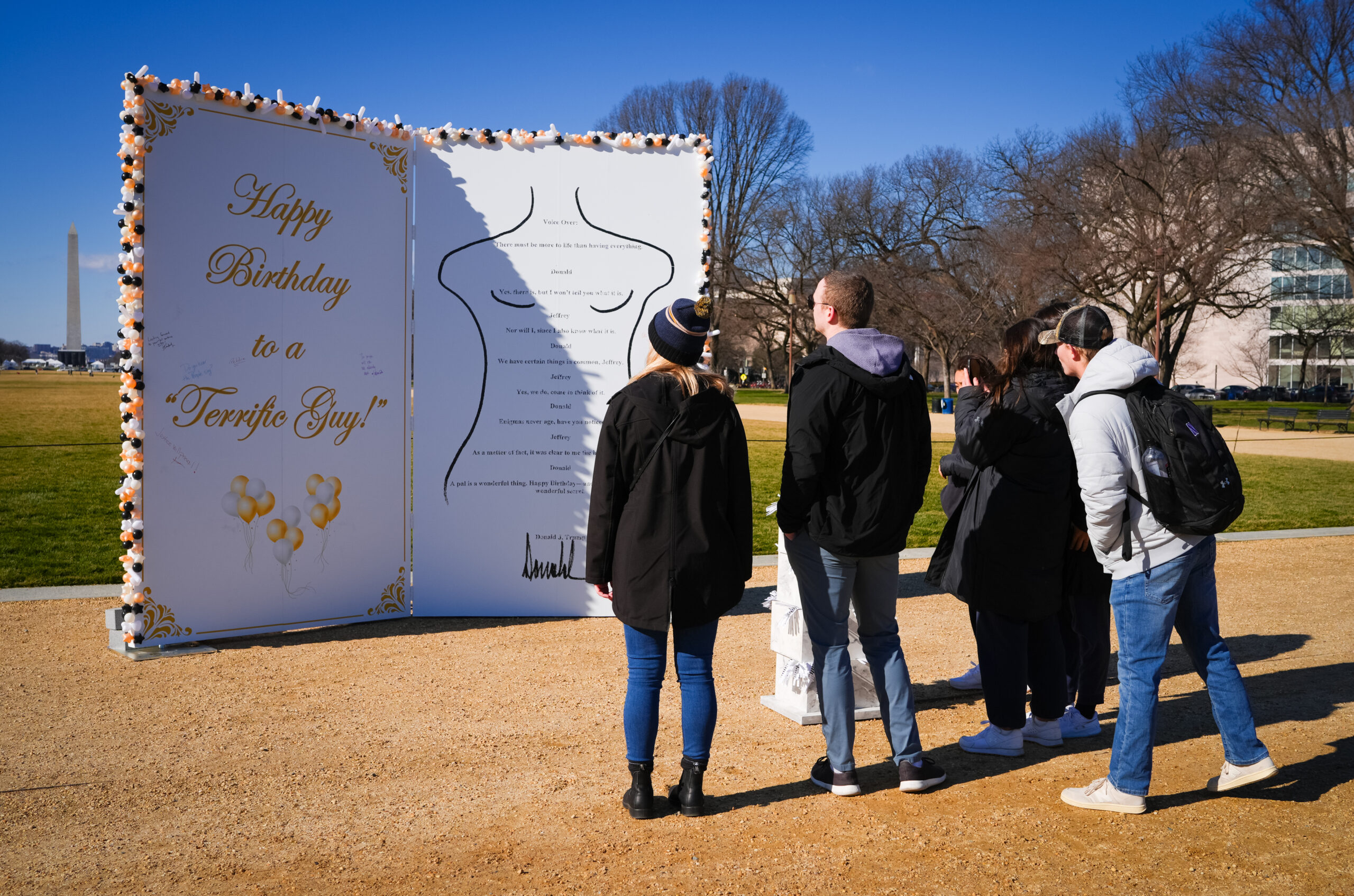
A new protest art installation referencing the Epstein files and President Donald Trump was installed on Third Street SW along the National Mall.
The assortment of papers reading “learn all history” gets its power from the relative anonymity of its author, Gentile said, as well as its use of repetition.
“It starts to create a texture of sound of a greater voice the way that the many voices of a chant during protest does,” he said.
While Berlin said she doesn’t see herself as an artist, she appreciates the punch of a stark and direct message through signage and art.
“I do love the impact of a good simple piece,” she said.
In some cases, political art can be used to “accelerate progress,” Gentile said, but sometimes its best use is halting regression and “to wedge our foot in the door as progress may seem to be closing.”
“This work seems to be the foot in the door,” he said.
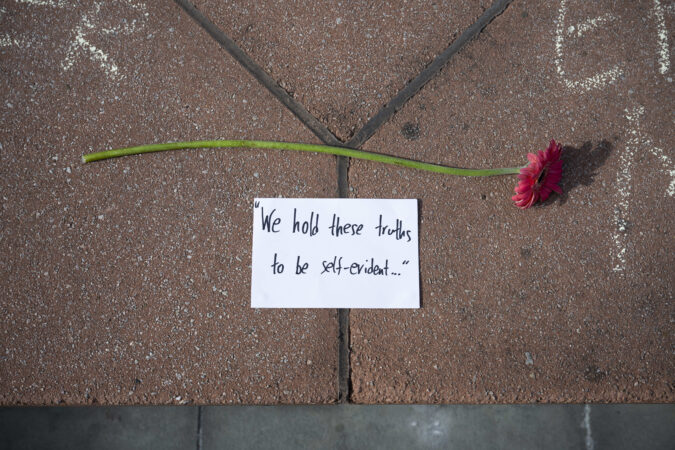
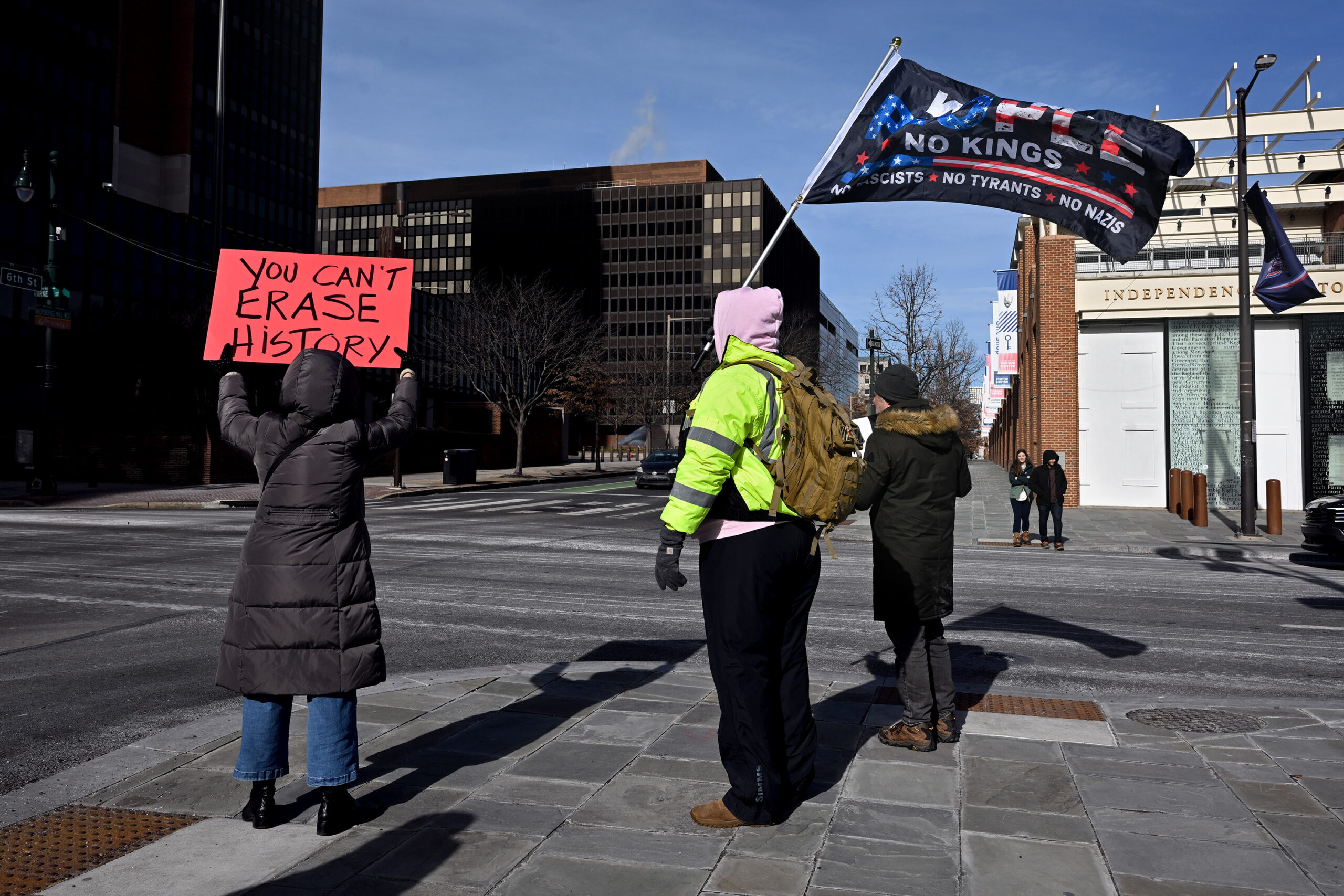
People leave notes on the spaces at the President’s House site in Independence National Historical Park.Ted Zellers (right) wears a sandwich board with a replica of one of the removed slavery panels as people visit and protest at the President’s House site.Ted Zellers (left) wears a sandwich board with a replica of one of the removed slavery panels, joining Jenna and Gregory May (right) protesting at the President’s House. People leave notes and political satire cartoons in the spaces at the President’s House.People protest at the President’s House site.Al DerMovsesian holds replicas of some of the removed slavery panels as people visit the President’s House site.The President’s House in Independence National Historical Park.The President’s House in Independence National Historical Park.Michael Carver portrays Mordecai Sheftall as part of a “History Matters” guide at The President’s House.A sign was placed at the President’s House.A group of teacher taped posters along the now barren brick walls of the President’s House.A single rose and a handwritten cardboard sign (“Slavery is part of U.S. history learn from the past or repeat it”) are inside an empty hearth at the President’s House.
A month after dangerous winds led Mummers string bands to cancel their New Year’s Day Parade competition, one string band says it’ll be too cold to play a makeup show Saturday.
“With extreme cold predicted for this weekend, our top priority is the health and safety of our members, and the forecasted conditions may put them at risk,” the Avalon String Band said on Facebook.
The band was set to join other groups at the 2026 String Band Spectacular at Lincoln Financial Field Saturday afternoon.
The Philadelphia Mummers String Band Association scheduled the event after the string bands canceled their New Year’s Day performances this year, when high winds destroyed props and sent five people to the hospital.
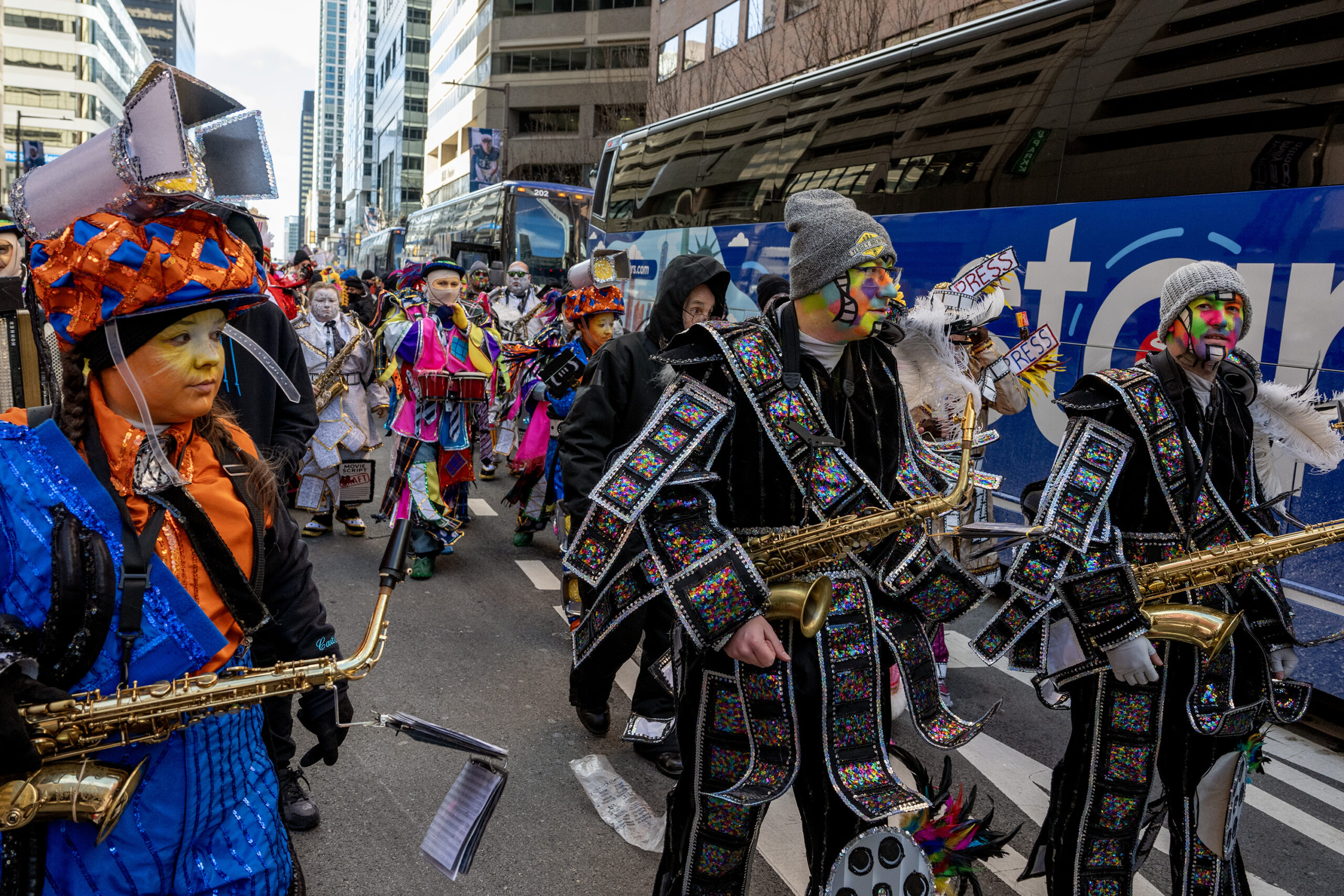
Musicians with the Uptown String Band arrive on buses for the Mummers Parade Thursday, Jan. 1, 2026, after the String Band competition was suspended because of high winds that destroyed props and caused injuries during morning setup. The bands still marched and played their music, but did not carry props, and were not judged. The Uptown theme was “From Script to Screen.”
Saturday a coastal “bomb cyclone” is expected to douse New Jersey and Delaware with snowfall, though forecasting models say Philadelphia won’t get hit. However, stinging winds and Arctic air will push temperatures down to zero Saturday morning, with windchills dipping as low as 10 degrees below 0.
It’s unclear whether other bands will follow the Avalon String Band’s lead. A total of 14 bands make up the Philadelphia Mummers String Band Association, according to its website.
Twelve organizations are set to perform Saturday, said Philadelphia Mummers String Band Association President Sam Regalbuto Friday afternoon. He said workers are getting the stages and props ready.
“Everyone’s on board,” Regalbuto said. “Everyone’s here. We’re good to go.”
The event will begin a 2 p.m. Saturday with the Philadelphia Gay Men’s Chorus singing the national anthem. The event will be broadcast on WDPN-TV (MeTV2) at 8 p.m. and will be streamed on WFMZ.
It looks like the Philly region will evade any snow generated by that coastal “bomb cyclone” during the weekend, but the disruptive snowpack on the ground continues to melt at a glacial pace. Maybe ever slower.
“For now, it’s not budging,” said David Robinson, the New Jersey state climatologist who is an international expert on snow cover.
And, ironically, that has a whole lot to do with what happened in the hours right after the snow stopped around 11:30 a.m. Sunday.
Add one of the more signifiant Arctic cold spells in Philadelphia’s period of record, and the entire region has endured a white and wintry week rarely experienced around here.
As of Friday morning, the official snow depth at the airport still was 6 inches, about two-thirds of what was measured when the storm ended five days before.
The cold won’t be as harsh during the workweek, but a thaw isn’t imminent, and some snow is possible Wednesday.
Temperatures are forecast to drop deep into the single digits Saturday morning, flirting with records. It is not due to get into the 20s until Sunday, when backlash winds from the potent coastal storm are expected to drive wind chills below zero.
Those winds may contribute to significant flooding at the Shore, where they could gust to 50 mph.
About last Sunday in Philly
About 7.5 inches of snow had fallen officially by 11:30 a.m. Sunday at Philadelphia International Airport, more in some other places, when it yielded to several hours of sleet that accumulated 2 to 3 inches, coating the snow with a sparkling, icy veneer.
“You can’t help but recognize the beauty of it,” said Robinson, a Rutgers University geography professor and keeper of the Rutgers Snow Lab.
While it may be an aesthetic pleasure, especially at night under the full “snow moon” rising this weekend, it has had a profoundly chilling effect on cleanup efforts.
The sleet, liquid that freezes before it lands, literally put an ice cap on the snow. “Ice pellets are tougher to melt,” said PennDot’s Thomas Rogal, a maintenance supervisor for the Philadelphia district. In a melting race, a homely sleet ball wouldn’t have a chance against a six-sided snowflake.
On Sunday, said Rogal, the sleet was a game-changer for the road crews. Instead of just plowing, crews were “scraping the road surfaces,” he said. Sleet added a stubborn stickiness to the mass of frozen material.
It also contained about as much liquid as several inches of snow, said Robinson.
The surprisingly cold temperatures, in the lower 20s and teens, inhibited the effectiveness of salt on Sunday. “The material just didn’t function,” said Rogal.
In the city, the glacial mass has been especially disruptive, a royal, inconvenient pain for people living on side streets, for street crews, for anyone who has tried shoveling, and for the schools.
A thermometer in a Central High School classroom on Friday read 39 degrees. That’s colder than the normal high for the date in Philly — outdoors.
When will all this go away?
Philly hasn’t had a stretch of days like this in which the temperature has failed to reach 30 degrees since 1979, according to records tracked by the Pennsylvania state climatologist.
And it likely is going to finish in the top 10 for consecutive days in which readings didn’t get past freezing, said Mike Silva, a meteorologist with the National Weather Service in Mount Holly.
Low temperatures Thursday and Friday morning, 13 and 11, respectively, were several degrees above the forecasts. That probably was related to the winds at the airport, he said.
It also may be related to the sleet, said Robinson: Ice doesn’t have quite the same chilling effect as fresh snow.
Conditions Saturday morning — clear skies and lighter winds — should be more conducive for daytime heating (we use the term loosely) to radiate into space. Morning lows could approach the record of 3 degrees, set in 1948.
Some moderation is expected with the workweek, but not much. “We were hoping to get to the mid-30s,” said Sliva, but “it looks like we may barely get to freezing.”
Even at those temperatures, some melting should occur.
The total daily solar energy beaming toward Philly now is about 30% higher than it was on Jan. 1, according to NASA’s calculations, and the sunrise-to-sunset time is increasing by about two minutes a day.
Even the cold has a bright side, said PennDot’s Rogal. Potholes, it turns out, have something in common with a lot of humans: “They aren’t particularly fond of this weather.”
“The freeze-thaw is what always gets us,” he said. “We’re actually in better shape when the cold sets and stays.”
Even if it snows next week — “There’s a couple of systems that could affect us,” said Silva — based on 150 years of official record-keeping for Philly, it is going to warm up and the ground will reappear.
Even as a child, Dan McQuade let his imagination run wild. “What are you doing?” his mother, Denise, would ask if she hadn’t heard any noise from his bedroom for a while. “I’m making stories,” he would reply.
Later, as a young man about town, his compassion for fellow Philadelphians inspired his father, Drew. Dan volunteered to give blood often, donated brand-new sneakers to other guys in need, and continually reached out to people he saw struggling with drug abuse and homelessness. “His kindness was what I loved about him the most,” his father said.
Dan McQuade was already an award-winning writer, blogger, and journalist when he met his future wife, Jan Cohen, online in 2014. To her, his jovial humor, wide-ranging intelligence, and shoulder-length hair made him unique in her circle. “I thought he was too cool for me,” she said.
His empathy, likely inspired by his parents, his wife said, led him to toil tirelessly for charitable nonprofits such as the Everywhere Project, Back on My Feet, and Prevention Point. “Service was always part of his life,” his wife said.
His coolness, as unconventional as it sometimes was, made those he encountered feel cool, too. Molly Eichel, an Inquirer editor and longtime friend, said: “He was annoyingly smart and incredibly kind.”
Dan McQuade died Wednesday, Jan. 28, of neuroendocrine cancer at his parents’ home in Bensalem. He was 43. His birthday was Jan. 27.
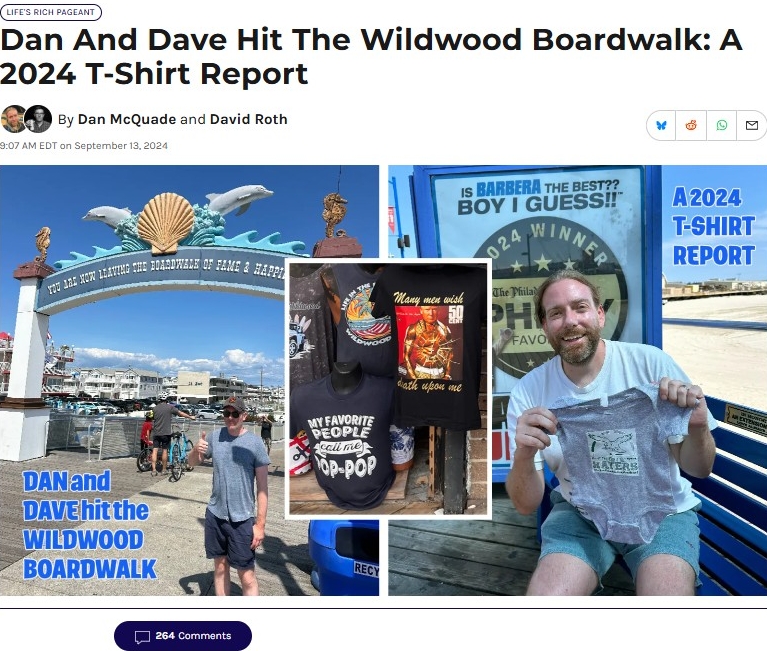
Mr. McQuade’s annual Wildwood T-shirt report was a favorite of his many readers and fans.
“It’s incredibly hard for me to imagine living in a Philadelphia without Dan McQuade,” said Erica Palan, an Inquirer editor and another of Mr. McQuade’s many longtime friends. “He understood Philadelphians better than anyone because he was one: quirky and funny, competitive and humble, loyal and kind.”
A journalism star at the University of Pennsylvania in the early 2000s, Mr. McQuade was a writer, sports editor, and columnist for the school’s Daily Pennsylvanian, and managing editor of its 34th Street Magazine. He earned two Keystone Press awards at Penn, was the Daily Pennsylvanian’s editor of the year in 2002, and won the 2003 college sports writing award from the Philadelphia Sportswriters Association.
He went on to create Philadelphia Weekly’s first blog, “Philadelphia Will Do,” and was a finalist for the Association of Alternative Newsmedia’s best blogger award. He served an internship at the Bucks County Courier Times in Levittown and worked for a while at the Northeast News Gleaner.
Often irreverent, always inventive, he filed thousands of notable stories about, among other things, the Wildwood T-shirt scene, the origin of “Go Birds,” sneaker sales, Donald Trump, Wawa hoagies, the Philly accent, parkway rest stops, the Gallery mall, soap box derbies, and Super Bowls. His stories sparkled with research and humor.
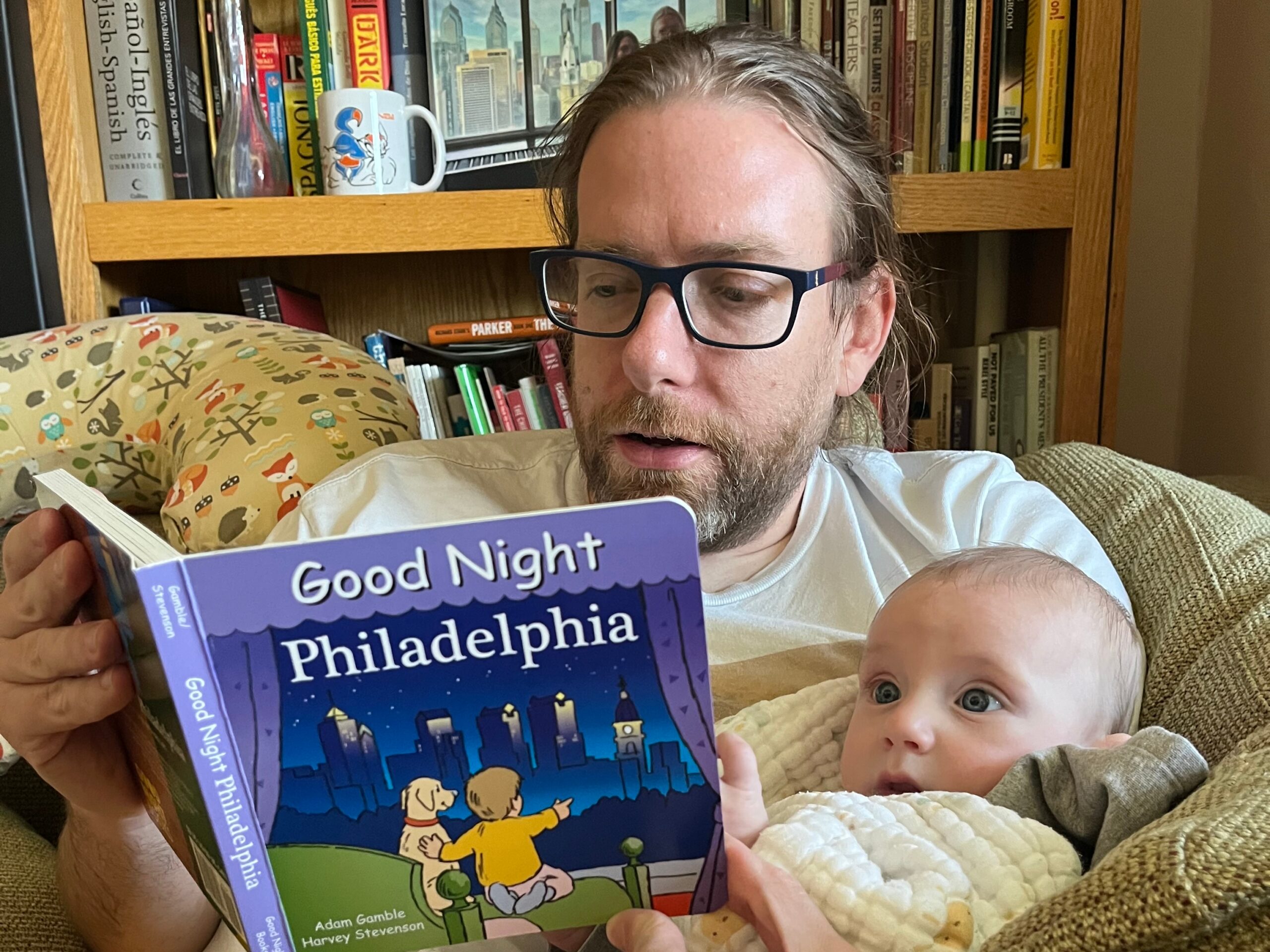
An avid reader himself, Mr. McQuade enjoyed reading local tales to his son, Simon.
“Dan was a truly authentic and engaging person,” Tom Ley, editor-in-chief at Defector, said in an online tribute. “His curiosity was relentless, and his interests were varied and idiosyncratic.”
For example, Mr. McQuade wrote in Philadelphia Magazine in 2013 that Sylvester Stallone’s famous training-run montage in Rocky II — it started in South Philly and ended two minutes of screen time later atop the Art Museum steps — actually showed city scenes that would have had the actor/boxer run more than 30 miles around town. “Rocky almost did a 50K,” Mr. McQuade wrote. “No wonder he won the rematch against Apollo!”
In 2014, he wrote in Philadelphia Magazine about comedian Hannibal Buress calling Bill Cosby a rapist onstage at the old Trocadero. The story went viral, and the ensuing publicity spurred more accusations and court cases that eventually sent Cosby to jail for a time.
When he was 13, Mr. McQuade wrote a letter to the editor of the Daily News that suggested combining the Mummers Parade with Spain’s running of the bulls. Crossing Broad’s Kevin Kinkead said he had “an innate gift for turning the most random things into engaging reads.”
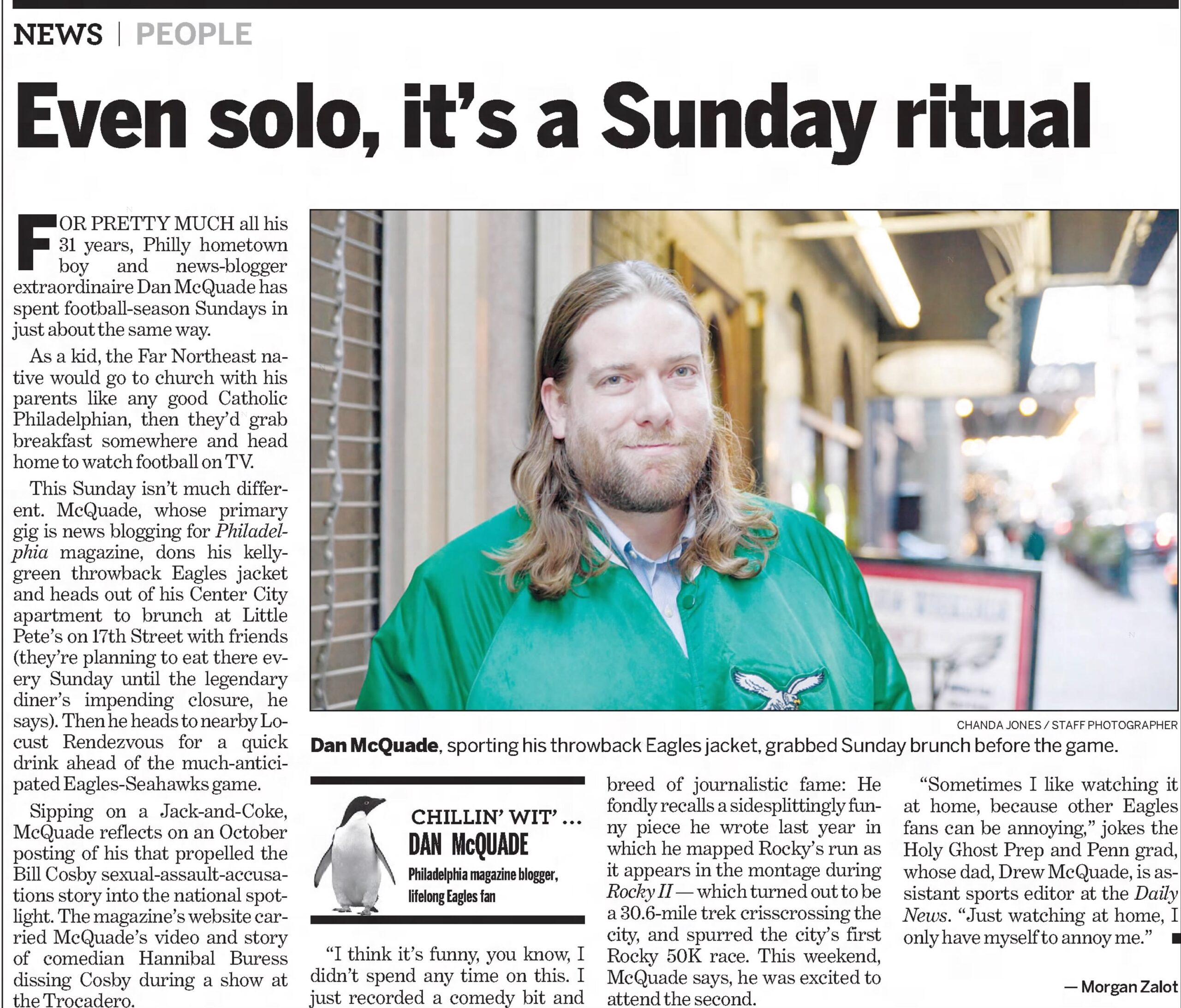
This story about Mr. McQuade appeared in the Daily News in 2014.
“Without Dan’s voice, Philly Mag wouldn’t be Philly Mag,” editor and writer Brian Howard said in a tribute on phillymag.com. “And, I’d argue, Philadelphia wouldn’t quite be Philadelphia.”
Other colleagues called him “a legend,” “a Philadelphia institution,” and “the de facto mayor of Philadelphia” in online tributes. Homages to him were held before recent Flyers and 76ers games.
“Sometimes,” his wife said, “he inserted himself into stories, so readers had a real sense of who he was because he was so authentic.”
Daniel Hall McQuade was born Jan. 27, 1983, in Philadelphia. His father worked nights at the Daily News for years, and the two spent many days together when he was young hanging around playgrounds and skipping stones across the creek in Pennypack Park.
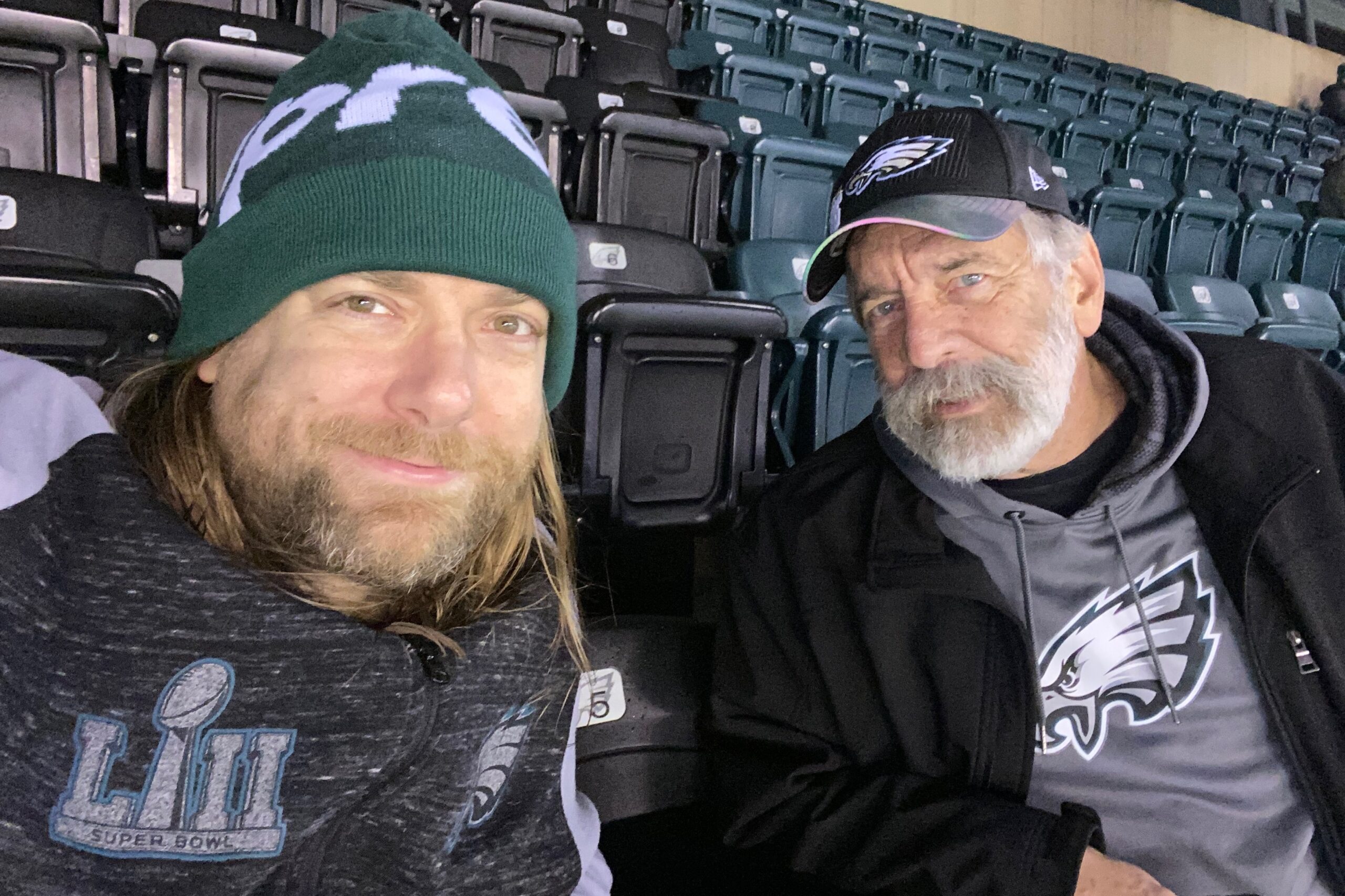
Mr. McQuade (left) and his father, Drew, shared a love of Philly sports and creative writing.
Later, they texted daily about whatever came to mind and bonded at concerts, Eagles games, and the Penn Relays. He grew up in the Northeast, graduated with honors from Holy Ghost Preparatory School in Bensalem, and earned a bachelor’s degree in English at Penn in 2004.
He overcame a serious stutter as a teen and played soccer and basketball, and ran cross-country and track at Holy Ghost. He married Jan Cohen in 2019 and they had a son, Simon, in 2023. They live in Wissahickon.
Mr. McQuade was a voracious reader and an attentive listener. “He never wanted to stop learning,” his wife said. He enjoyed going to 76ers games with his mother and shopping for things, his father said, “they didn’t need.”
He was mesmerized by malls, the movie Mannequin, the TV series Baywatch, and his wife’s cat, Detective John Munch. During the pandemic, he and his wife binged all 11 seasons of Baywatch.
Mr. McQuade doted on his wife, Jan, and their son, Simon.
He could be loud, his mother said, and Molly Eichel described his laugh as “kind of a honk.” His friend and colleague Alli Katz said: “In 50 years I’ll forget my own name. But I’ll remember his laugh.”
He was a vintage bootleg T-shirt fashionista, and his personal collection numbered around 150. He named Oscar’s Tavern on Sansom Street as his favorite bar in a recent podcast interview and said he would reluctantly pick a pretzel over a cheesesteak if that was the choice.
In September, Mr. McQuade wrote about his illness on Defector.com under the headline “My Life With An Uncommon Cancer.” In that story, he said: “Jan has been everything. My son has been a constant inspiration. My parents are two of my best friends, and I talk to them every day. Jan’s parents have been incredible.”
He also said: “I believe there are no other people on earth with my condition who are in as fortunate a situation. … For the past thousand words you have been reading about a bad break I got, but if only everyone in my position had it this good.”
Mr. McQuade and his wife, Jan Cohen, married in 2019.
His wife said: “He was truly the best guy.”
In addition to his wife, son, and parents, Mr. McQuade is survived by his mother-in-law, Cheryl Cohen, and other relatives.
Visitation with the family is to be from 9 to 10 a.m. Thursday, Feb. 5, at St. Martha Parish, 11301 Academy Rd., Philadelphia, Pa. 19154. Mass is to follow from 10 to 11 a.m.
Donations in his name may be made to the Everywhere Project, 1733 McKean St., Philadelphia, Pa. 19145.