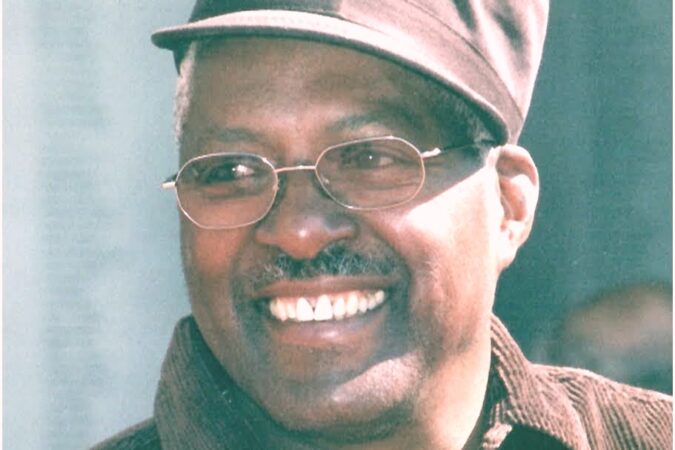
Evonn Wadkins, 88, formerly of Philadelphia, retired Philadelphia Mounted Police Officer, basketball and football star at Simon Gratz High School, builder, carpenter, plumber, bus driver, and volunteer, died Sunday, Jan. 11, of complications from a stroke at Bryn Mawr Extended Care Center.
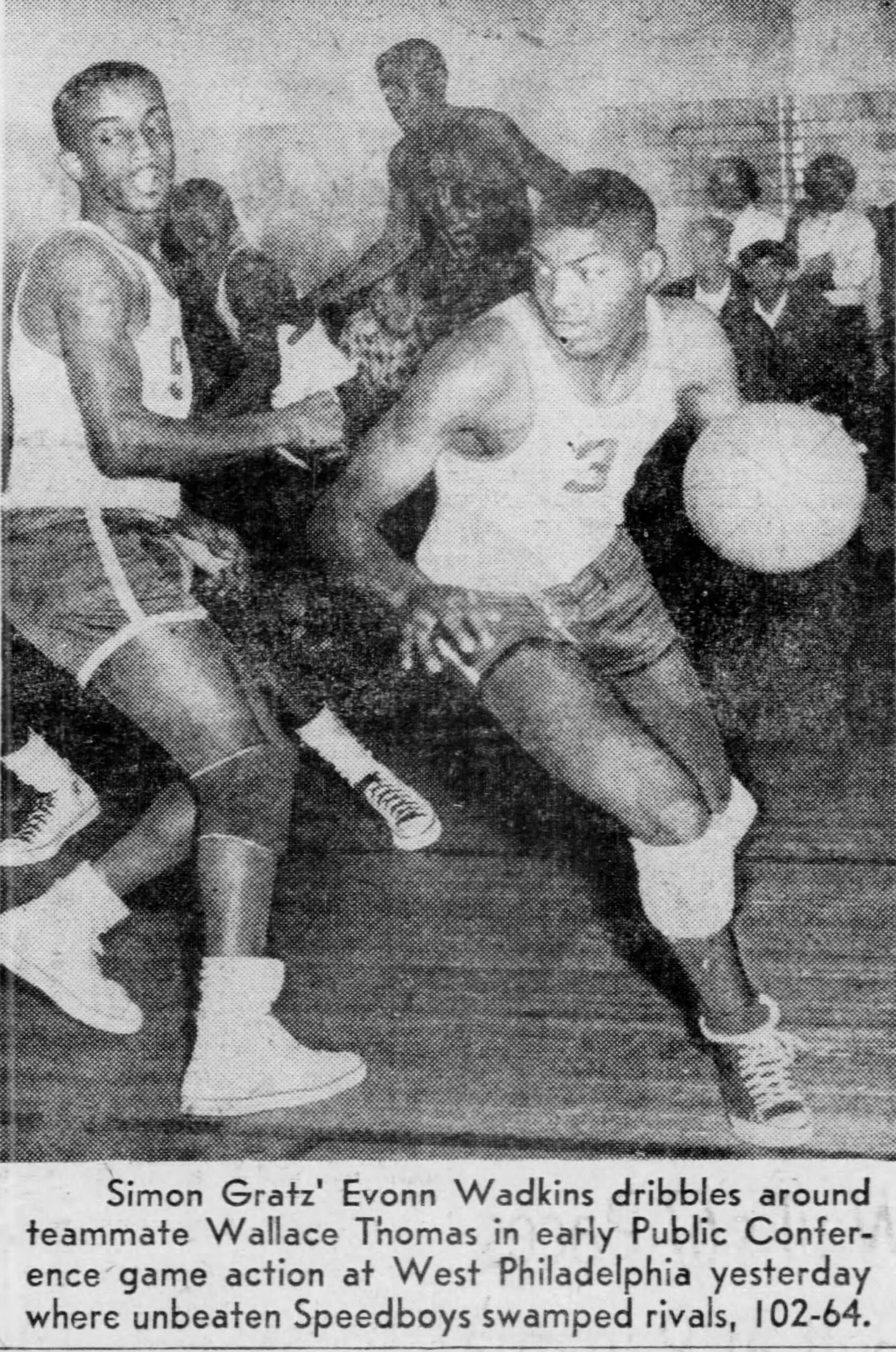
A gifted athlete with an innate desire to help others and be part of a team, Mr. Wadkins played basketball and football on Philadelphia playgrounds, in youth leagues and high school, and later with adults in semipro leagues and the Charles Baker Memorial Basketball League. He usually scored in double digits for the Gratz basketball team and went head-to-head against the legendary Sonny Hill and Wilt Chamberlain.
He overcame a severe ankle injury when he was young and retired from the Baker League years later only after age and ailments forced him off the court. He was a “speedy end” on the football team at Gratz, the Daily Journal in Vineland said in 1955.
His name appeared often in The Inquirer and other local newspapers in 1955 and ‘56, and they noted his 55-yard touchdown catch against Dobbins, 25-yard scoring reception against Vineland, and 44-yard scoring catch-and-run against Northeast in 1955.
Mr. Wadkins (right) drives with the ball in this photo that was published in The Inquirer in 1956.
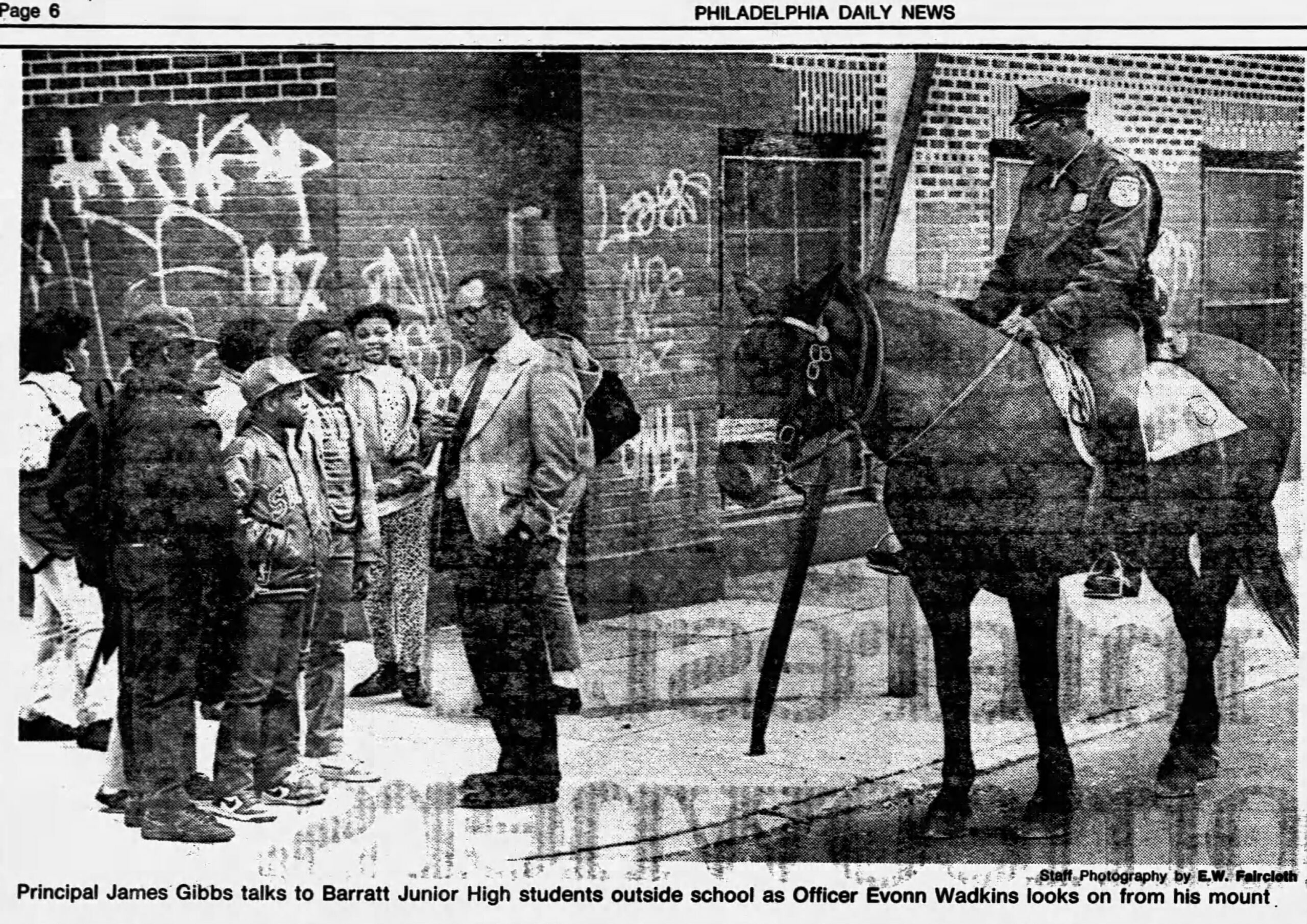
Mr. Wadkins graduated from the Philadelphia Police Training Center in 1963 and spent 11 years patrolling Fairmount Park and elsewhere in the Traffic Division. He transferred to the Mounted Unit — and met Cracker Jack — in 1974, and officer and horse rode the Philly streets together until they both retired in 1988.
“When he went on vacation, nobody could ride Cracker Jack,” said Mr. Wadkins’ wife, Elaine. “They could groom him. But Cracker Jack wouldn’t let anyone else ride him.”
He also worked construction side jobs with neighbors and friends, and learned plumbing, heating, and carpentry skills. “Family and friends are still sleeping comfortably on his one-of-a-kind beds more than 40 years later,” his family said in a tribute.
He drove a school bus for the School District of Philadelphia for 10 years in the 1980s and ’90s, and made friends with many of the students. He moved with his wife to Goochland, Va., 35 miles northwest of Richmond, in 1998.
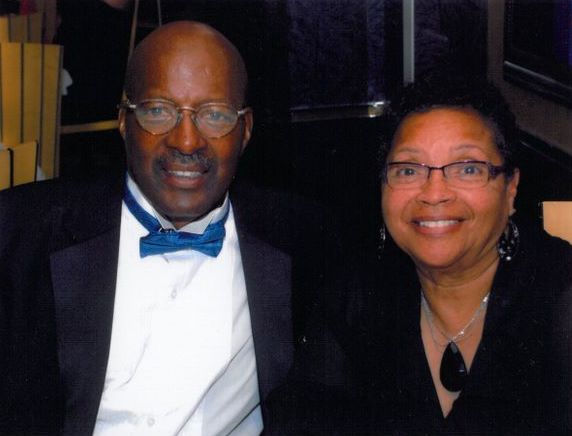
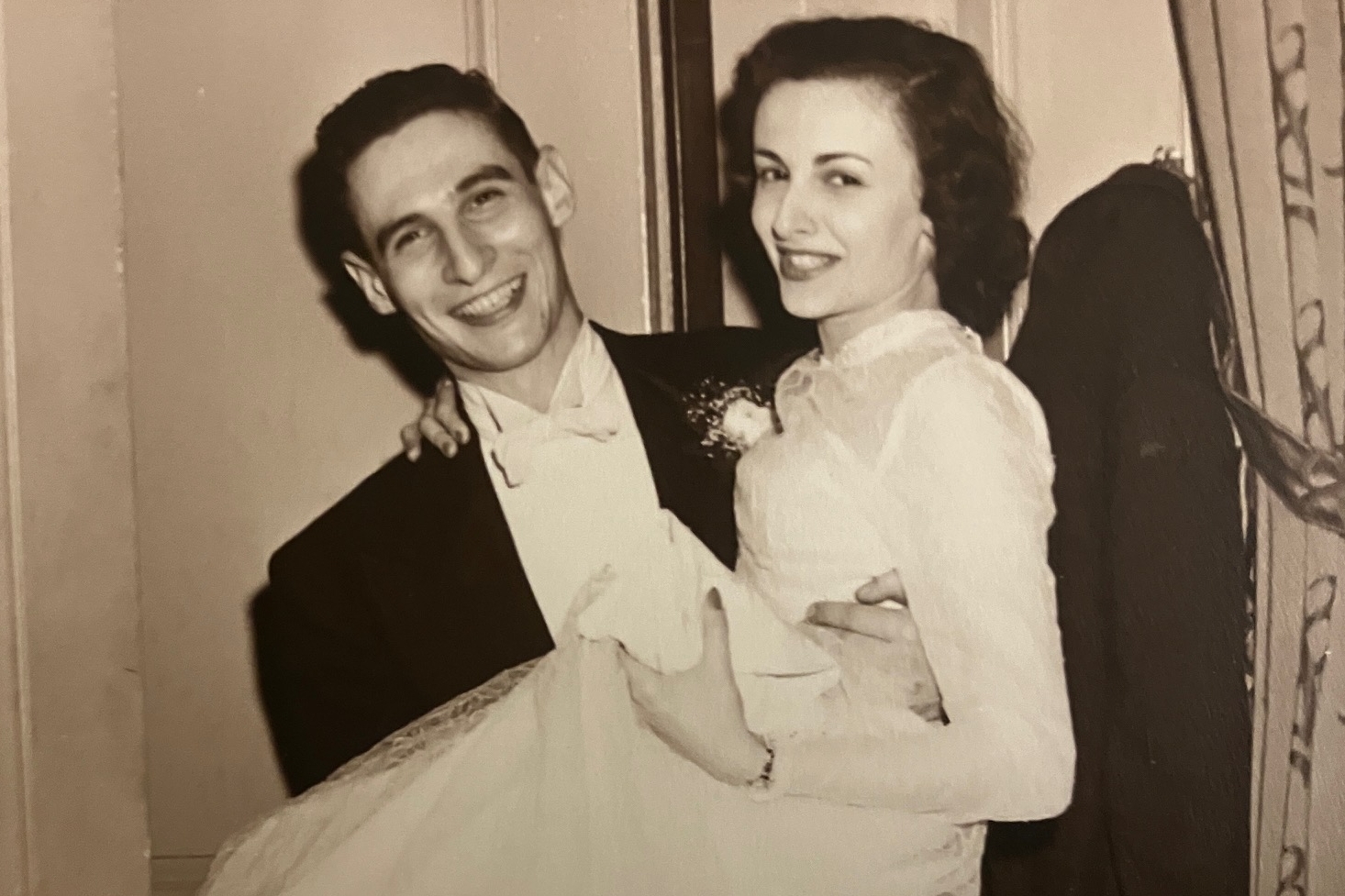
Mr. Wadkins and his wife, Elaine, married in 1959.
He joined the Goochland chapter of the NAACP and volunteered at the Second Union Rosenwald School Museum. At the Second Union Baptist Church, he mentored boys and young men, and supervised the media ministry.
He was serious about community service. “He never met a stranger,” his wife said.
Evonn LeFrancis Wadkins was born June 4, 1937, in Philadelphia. He was the fifth of six children and earned his high school degree at night school after leaving Gratz early.
He met Flora Elaine Poole at Gratz in 1954, and they married in 1959. They set up house in West Philadelphia a few years later and had daughters Evette and Elise, and a son, Evonn.
This photo of Mr. Wadkins on his horse appeared in the Daily News in 1987.
Mr. Wadkins, familiar with Fairmount Park from his time on police patrol, liked to share historical tidbits when the family drove through. He loved cars and traveled to Canada with his wife and to Germany with his brother to shop for several that caught his eye.
He and his family traveled to Florida for a New Year’s party and to South Dakota to fly over Mount Rushmore. He and his wife cruised the Caribbean and toured the United States and Europe.
He even flew with a friend to two Super Bowls. “He was a man on the go,” his family said.
Mr. Wadkins liked McDonald’s pancakes and coached a few youth league basketball teams, one to a championship. When asked how he was doing, his usual response was: “Livin’ slow.”
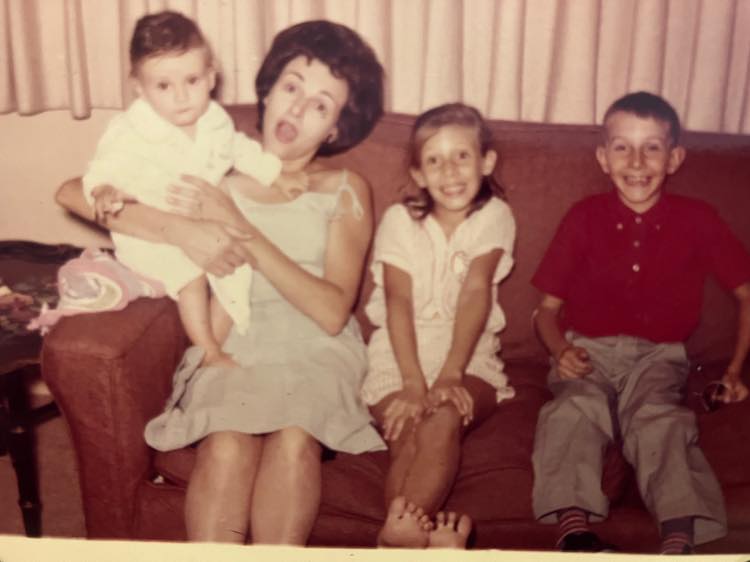
Mr. Wadkins enjoyed time with his family.
His wife said: “He was a good provider. He was a great husband.”
In addition to his wife and children, Mr. Wadkins is survived by five grandchildren, five great-grandchildren, a brother, and other relatives. Two brothers and two sisters died earlier.
Activists with No ICE Philly demonstrated at Target stores in the city on Tuesday evening, attempting to slow business operations at a company that they say wrongly cooperates with federal immigration enforcement.
Stores in South Philadelphia, Rittenhouse, Fairmount, Port Richmond and on Washington Avenue and City Avenue were among those targeted, the group said.
Advocates say the retailer has failed to speak out against U.S. Immigration and Customs Enforcement, to safeguard employees and customers, and has allowed the agency to set up operations in its parking lots.
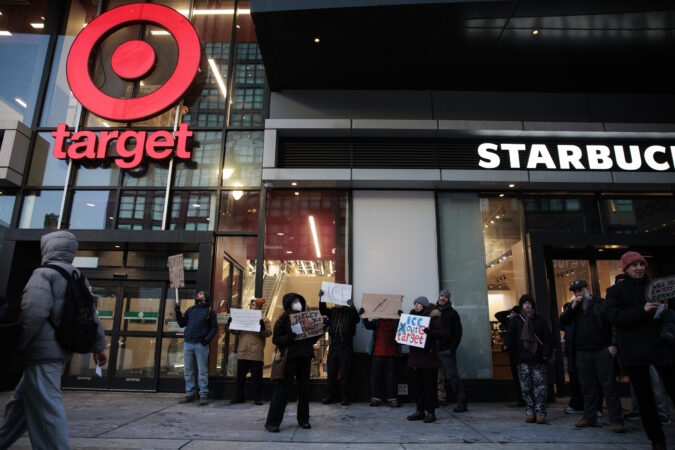
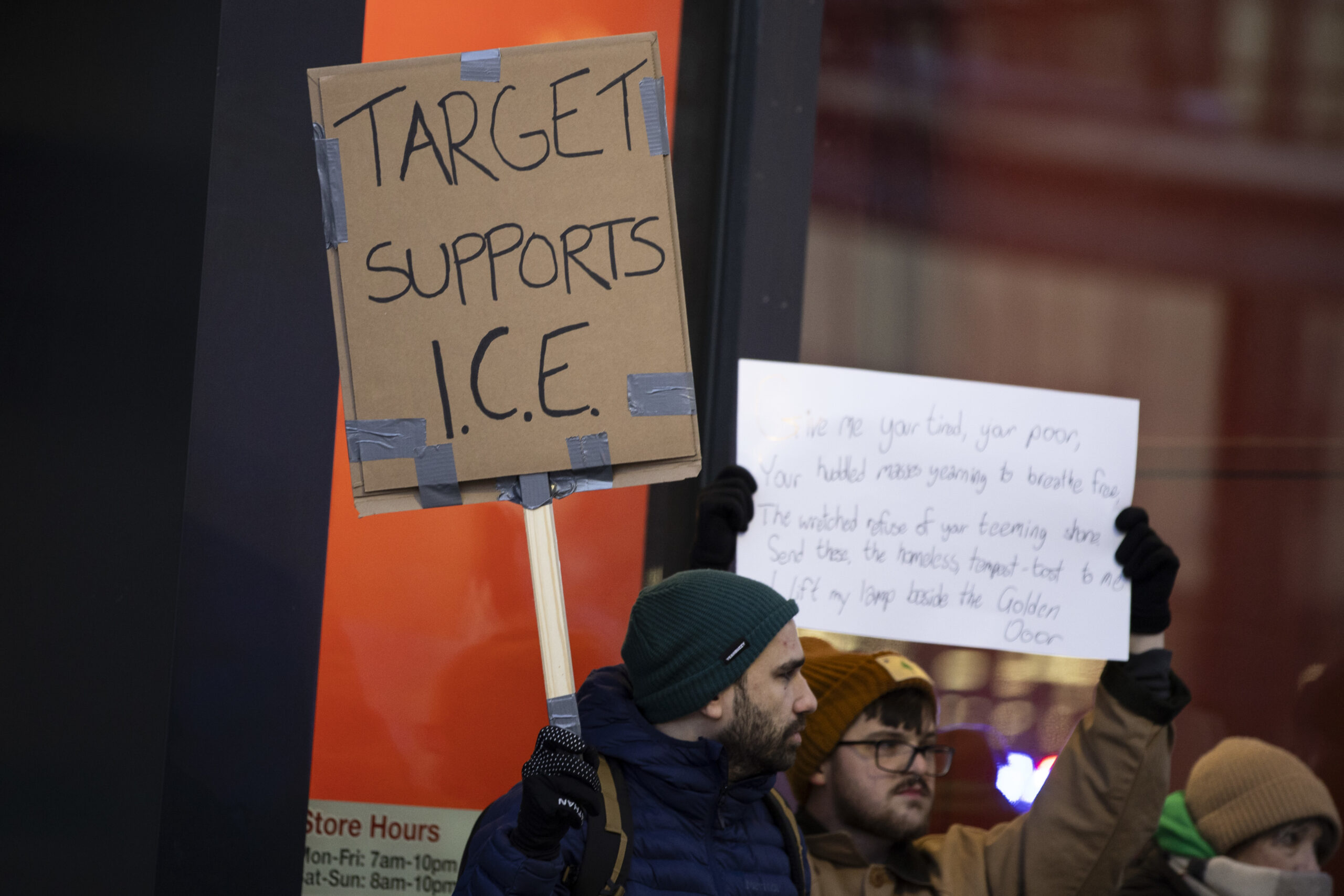
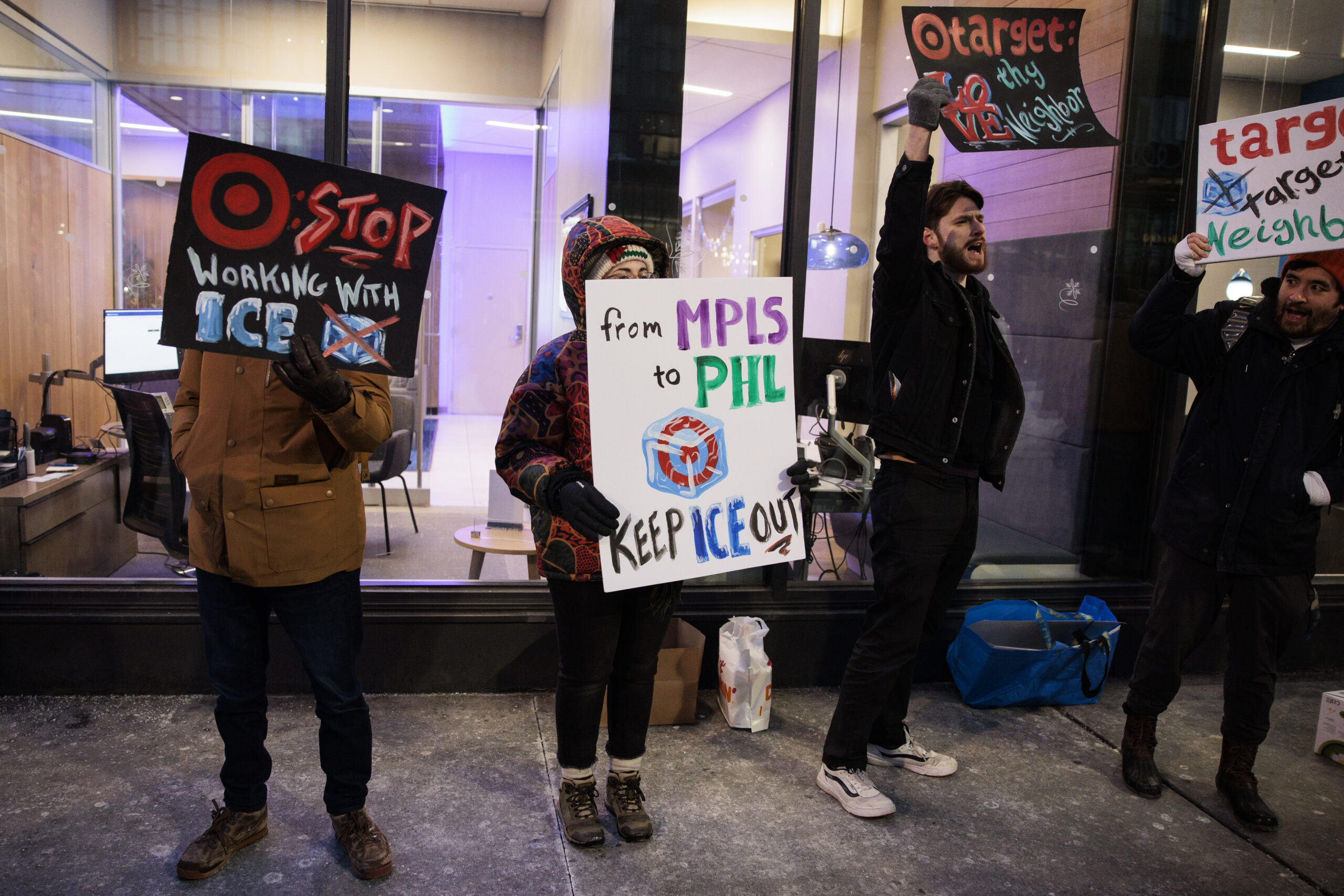
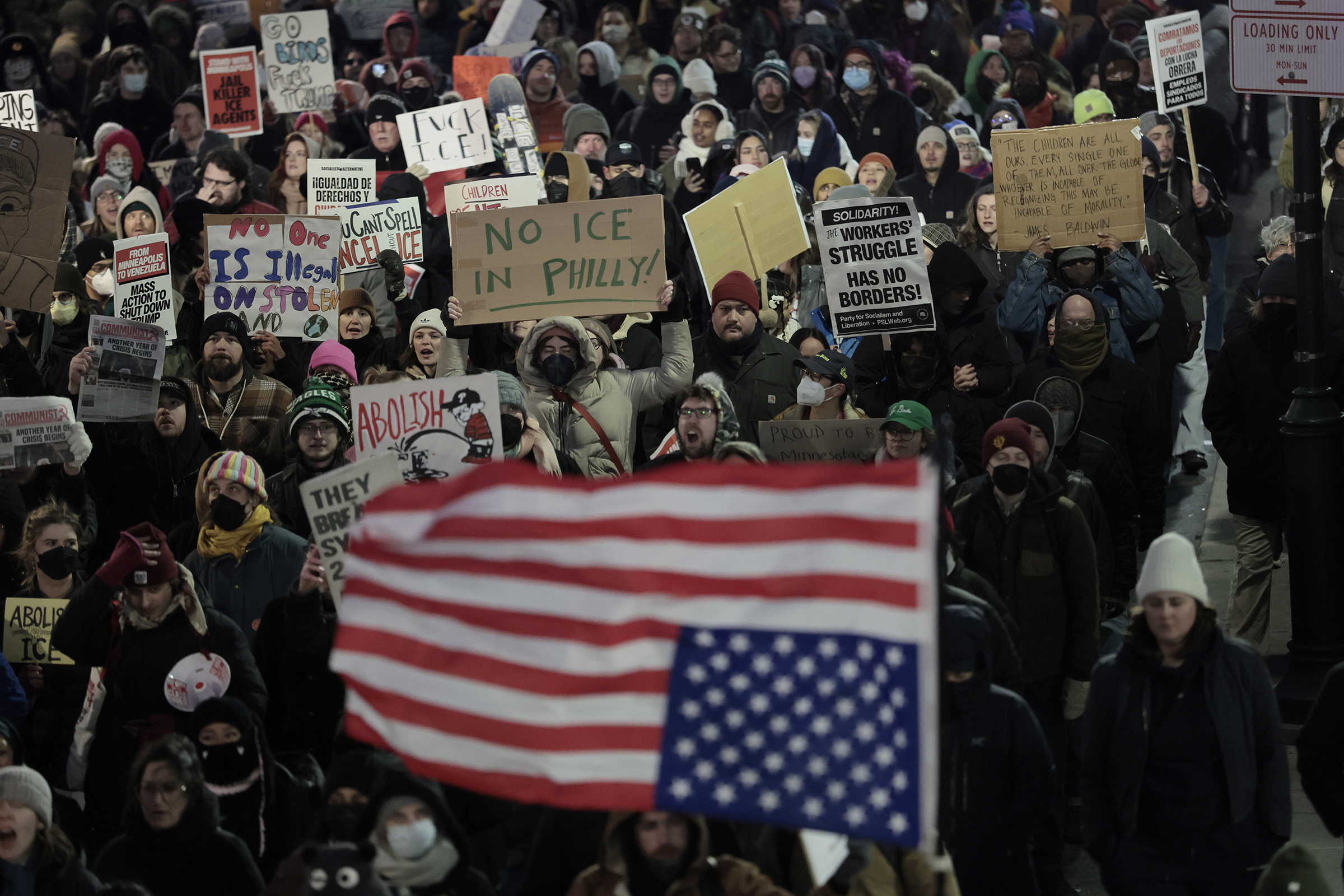
More than 40 people rallied on a frozen, 19-degree night outside the Target at Broad Street and Washington Avenue, holding signs that showed solidarity with Minneapolis residents who have resisted ICE in their community.
“From MPLS to PHL, keep ICE out,” read one sign.
Demonstrators gathered outside of the Target at Broad and Washington on Tuesday in Philadelphia.
Inside, some masked customers bought ice trays and single bottles of table salt. As soon as they paid for the items at the checkout counters, they headed to the “Returns” area to seek refunds.
Items were quickly restocked on store shelves by staff, only to be purchased and returned again.
Demonstrators visited at least seven stores, according to the Rev. Jay Bergen, a leader of No ICE Philly and pastor at the Germantown Mennonite Church.
“Our actions are in solidarity with people across the country responding to the call from Minneapolis communities to pressure Target,” Bergen said Wednesday.
Company spokespeople did not immediately reply to a request for comment on the protests in Philadelphia. Target, founded in 1962, operates 1,989 stores across the United States and has a net revenue of more than $100 billion a year.
At Broad and Washington on Tuesday, members of No ICE Philly handed out pocket-sized fliers that described their goals as they urged shoppers to go elsewhere. Some people turned away after talking to demonstrators. Others who went inside were met with boos.
“Find another store!” the protesters shouted, as a police officer looked on.
Elijah Wald, 66, said the Washington Avenue location was his neighborhood Target.
“Our main hope is that businesses will understand that they need to protect their employees, that they need to not collaborate with a government that right now is targeting everybody,” he said.
Wald, whose mother was a Jewish refugee who fled Nazi Austria, said he has always felt positive about immigration, that the United States was built of “people who are used to moving to find work, moving to find cheaper housing.”
But the discourse over ICE operations in major cities has gone beyond undocumented people, said Wald.
“They’re shooting U.S. citizens now,” he said.
Demonstrators gathered outside of the Target at Broad and Washington Streets on Tuesday.
At the Target at Snyder Plaza, about 20 demonstrators encouraged people to do their shopping elsewhere.
“Protest with your wallet; Acme is right there,” a protester said through a sound system.
Celine Bossart, 34, said boycotts are an effective way to denounce ICE actions.
“As citizens, our power is limited, but a big part of the power that we do have is where we choose to spend our money,” she said, “and at the end of the day, corporations aren’t necessarily going to listen until it hits their bottom line.”
A man in a Flyers jersey stopped to heckle the demonstrators, who responded with words of their own. Bossart said the protest did not aim to make anyone’s day difficult.
“Our neighbors are people who work at Target, people who work at Acme; these are the neighbors who we’re trying to protect,” she said. “So we’re just trying to send a message to upper, upper management.”
Last week, demonstrators held a sit-in at a store in Minneapolis, where the company is headquartered, chanting, “Something ’bout this isn’t right ― why does Target work for ICE?”
At other Minnesota stores, demonstrators formed long lines to buy bags of winter ice melt, then immediately got back in line to return them, slowing the checkout process.
No ICE Philly, which has led demonstrations against the agency, and against the arrests of immigrants outside the city Criminal Justice Center, said Target must:
Publicly call for Immigration and Customs Enforcement to leave Minnesota.
Post signs in its stores that deny entrance to immigration agents, absent a signed judicial warrant.
Train store staff on how to respond if agents arrive.
Publicly call for Congress to end ICE funding.
Chief executives of Target and more than 60 large Minnesota companies issued a public letter on Sunday calling for an “immediate de-escalation of tensions.” It marked the first time, The New York Times reported, that the most recognizable businesses in the state weighed in on the turmoil in Minneapolis.
Critics said the letter offered too little, too late, coming after two local U.S. citizens were shot to death by federal agents.
Two teenage boys, ages 14 and 15, were injured in a shooting Tuesday night in North Philadelphia, police said.
The shooting, which happened shortly after 7 p.m. at the corner of 24th Street and Cecil B. Moore Avenue, was captured on surveillance video, said Chief Inspector Scott Small.
The boys were walking toward a store at the corner when they appeared to get into a verbal altercation with another male, Small said.
The shooter fired at least two times and then ran north on 24th Street, Small said. The 14-year-old was shot in the foot and the 15-year-old was shot in the abdomen.
The teens, who are friends, then ran to a nearby house where one of them lives on the 2400 block of Turner Street, Small said. They were then taken by police to Temple University Hospital, where they were listed in stable condition.
Police found one spent shell casing at the shooting scene, Small said.
It is a sentiment long held by residents across Philadelphia, especially those living on side streets, dating back to when snowfall was a more frequent occurrence than it has been in recent years: Don’t expect the city to do a thorough plowing job.
That belief is one that Philadelphia Mayor Cherelle L. Parker has said she is trying to shake with action.
Two days before a storm that whacked the city with 9.3 inches of snow and sleet, Parker, surrounded by the leaders of various agencies, including the Philadelphia Streets Department, vowed to buck precedent on the plowing issue.
“We will make every effort to get to every primary, secondary, and tertiary street in the city of Philadelphia, and that is our standard,” she said, adding it would take “as long as it takes,” citing worker safety.
“But know that we won’t leave any neighborhood, any block, or any community behind.”
Still, residents across the city Tuesday said they were losing patience as side streets and even some secondary streets remained packed with several inches of snow and ice, locking cars in and making navigating intersections impossible.
Fishtown resident Rohan Khadka, 22, was hoping plowing might happen overnight. Instead he woke up Tuesday to streets that were hard for him to cross even with the proper footwear.
“A lot of our roads down here look exactly the same,” he said. “Most of the cleanup that has happened, to my knowledge, has either been by other residents or just cars happening to clean it because they’re using those roads.”
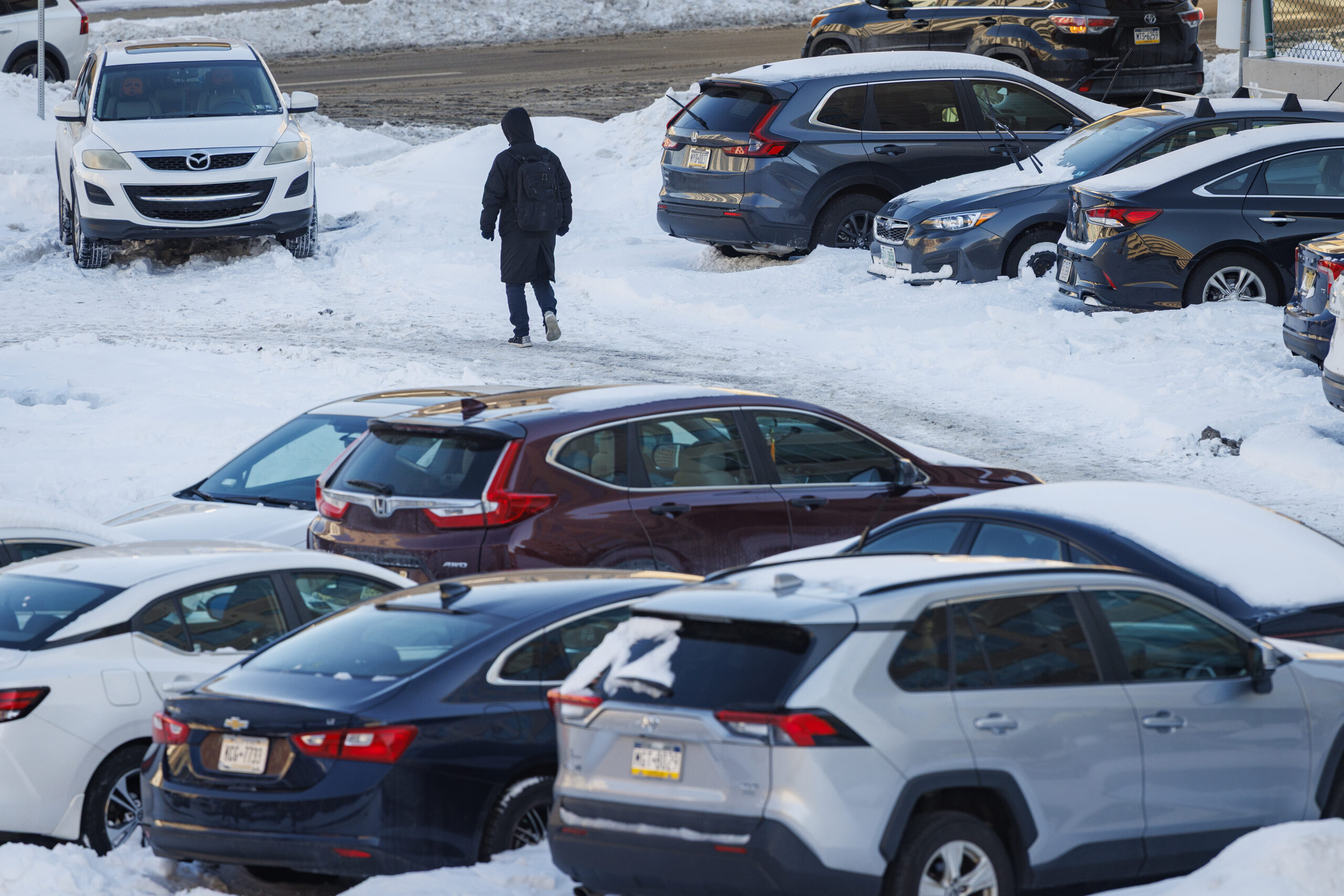
A pedestrian walks through a snow-covered parking lot at Ninth and Arch Streets in Center City Philadelphia, Tuesday, Jan. 27, 2026.
Analysis of the City of Philadelphia’s PlowPHL data, which tracks the movement of plows via GPS data, showed that about a quarter of streets citywide had received no snow treatment at all — including salting or plowing — after the conclusion of the storm Sunday night.
Some areas were worse off than others.
In places like Overbrook and Wynnefield, the city had salted or plowed about 70% of streets by the end of Sunday morning, when the storm began. But the majority of streets in these neighborhoods received no additional plowing or salting since Sunday, according to city data.
The same was true for about a third of streets in South Philadelphia.
The streets department said Tuesday it was deploying over 200 vehicles and excavators as part of a so-called lifting operation. Fourteen teams were fanning across the city to scoop up snow from the narrow roads and load it into dump trucks on nearby primary streets.
The snow hauls were then being taken to storage sites across the city.
Director of Clean and Green Initiatives Carlton Williams drove through parts of South Philadelphia on Tuesday afternoon, as dozens of the side-street-size excavators made their way through the city’s narrowest byways.
“It is the smaller tertiary streets that are challenging,” he said. “There’s more of them. It’s difficult to navigate through those streets.”
As Williams passed a side street with several inches of snow packed, he noted a car illegally parked on the corner, which would make it difficult for machines to get through.
Williams said this storm came with additional challenges. Not only did the snow fall in a condensed period of time, but it was followed by sleet and frozen rain.
“We wouldn’t have many of the challenges that we’re facing today, slowdowns, if those other weather conditions beyond our control did not exist,” he said. “But again, I want to reassure the public that we’re aware. You see us out here today. We’ll be out here tomorrow, and we’ll continue to fight this storm.”
But for Philadelphians waiting for a plow, time is of the essence.
311 ringing off the hook
For Moya Ferenchak, 30, the effectiveness of the operation carries serious health implications. They started pet sitting on the 1500 block of South Capitol, a South Philly side street, for a friend last Tuesday, bringing exactly one week’s worth of food and lifesaving medication — more than they expected to need.
Ferenchak, who lives with a disability that causes limited mobility, cannot shovel. Calling a car not only is expensive but also would require Ferenchak to travel with all their belongings to an intersection that is not blocked by snow.
Adding to frustrations across the city were reports of inundated 311 phone lines.
“I called first thing this morning, and there was a 50-plus-person queue,” Ferenchak said. “Then I called again, and there was like a 70-plus-person queue. I waited for like an hour or so, and then it hung up on me.”
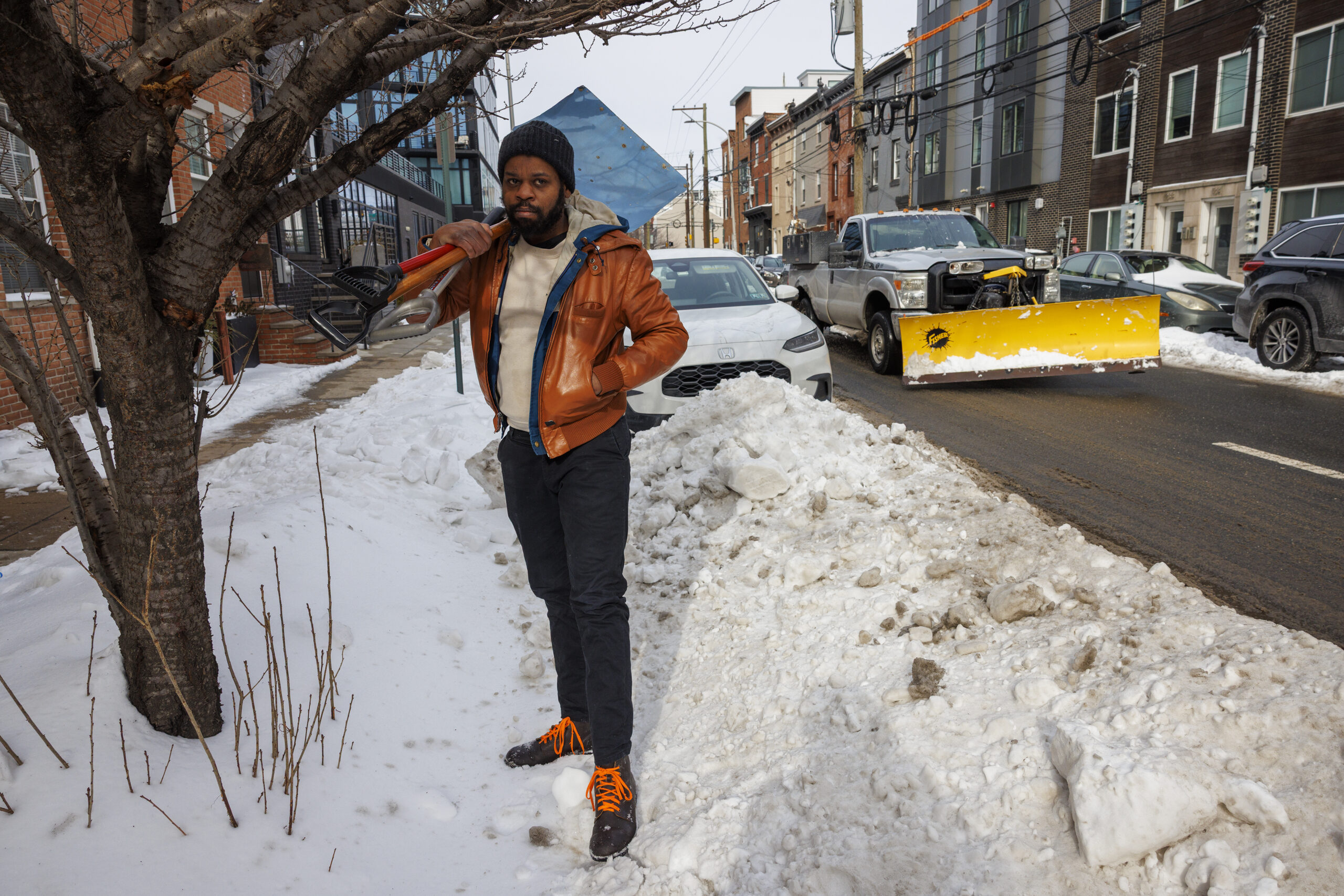
Alex Wiles of Philadelphia has been hustling during the recent snow, shoveling sidewalks and digging out cars. This photograph was taken along North Second Street near his home, Tuesday, Jan. 27, 2026. He was heading to the bus for a trip to his next client.
The processing of online 311 tickets has also been a source of confusion for residents who wonder if they are being paid attention to. Williams said the complaints are populating a map used to direct plows to avoid redundancies.
“We’ll take that data and get it within the operation,” he said.
Some homes feel the impact more than others
On the 4800 block of Regent Street in West Philadelphia, Justin Rothrauff described the road as “treacherous” for the mix of families and older residents who live there.
“One of the big problems, besides the street not being plowed, is that the plowing that they have done on some of those primary roads has blocked the secondary and tertiary roads,” the 43-year-old teacher said, adding even if he could somehow get his car out of his block, he is not sure he would make it back in.
While Rothrauff had heard of people paying to have their roads shoveled, he feels no one should have to.
“I refuse to pay anyone money, I pay enough taxes in the city,” he said.
For some Philadelphians, some information could go a long way. A much-touted live map of plow operations has been reported for mistakenly listing some streets as plowed, according to the residents who live there.
Ken Wong shovels snow on Waverly Street, in Philadelphia, Monday, Jan. 26, 2026.
Krista Dedrick-Lai, 45, a South Philly resident, hopes the city will do more to tell people about plowing statuses, and explain why their streets are still covered in snow days after the storm, even if the answers are not what they are hoping to hear.
“Sometimes context can make everyone feel better,” she said, noting her block on Federal Street got a plow Monday and Tuesday, but the snow banks had blocked cars in.
Fortunately, she said, she and her husband have not needed to leave their house to work or to help their child learn through third-grade virtual learning modules.
Others, however, do not have that flexibility. Making matters worse, more snow may be on the horizon this weekend.
The Streets Department on Tuesday is removing snow that has piled up around City Hall, and the operation requires street closures on nearby blocks, the agency said.
With the region expected to remain in a prolonged deep freeze, there is no chance the snow piles will melt anytime soon. And weather forecasters say the region might be hit with another storm this weekend, so the city is eager to get rid of the existing snow.
The “lifting operation” includes the removal of snow using dozens of vehicles, including excavators and loaders, the department said Tuesday.
The city already has been conducting lifting operations in North Philadelphia, removing snow from Girard Avenue and nearby neighborhoods since Sunday evening, the department said.
In Harrisburg, a top Democrat floated making Pennsylvania a so-called sanctuary state to protect undocumented immigrants.
And in Washington, senators faced mounting pressure to hold up funding for the Department of Homeland Security, an effort that could result in a government shutdown by the end of the week.
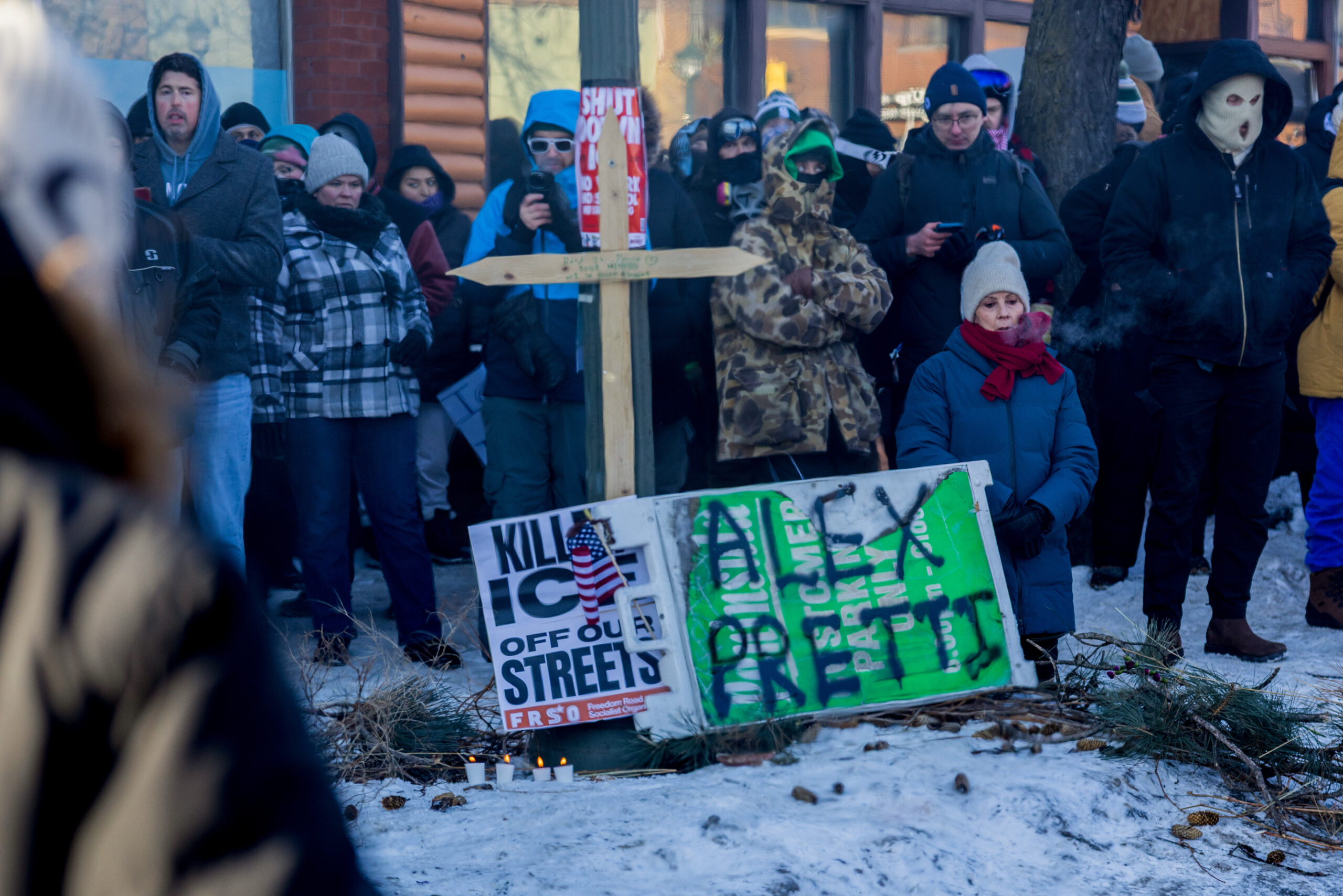
Across the nation, lawmakers are fielding calls to rein in U.S. Immigration and Customs Enforcement after President Donald Trump’s administration surged forces into Minneapolis as part of his aggressive nationwide deportation campaign. Frustration with the agency reached new heights Saturday after agents fatally shot protester Alex Pretti, the second killing of a U.S. citizen there this month.
Democrats nationwide slammed ICE and called on Trump to pull the forces out of Minnesota. Sen. John Fetterman, the Pennsylvania Democrat who has at times sided with Trump on immigration matters, said DHS Secretary Kristi Noem should be fired.
Anti-ICE activists demonstrate outside U.S. Sen. John Fetterman’s Philadelphia office on Monday, calling for an end to federal immigration enforcement policies.
A growing number of Republicans have also signaled their discomfort with the Minneapolis operation, including Trump allies who called on members of the administration to testify before Congress. Sen. Dave McCormick, a Pennsylvania Republican, has called for an independent investigation into Pretti’s killing.
Trump, for his part, showed some willingness to change course, sending border czar Tom Homan to Minneapolis to meet with Democratic leaders there. The president on Tuesday called Pretti’s death a “very sad situation.”
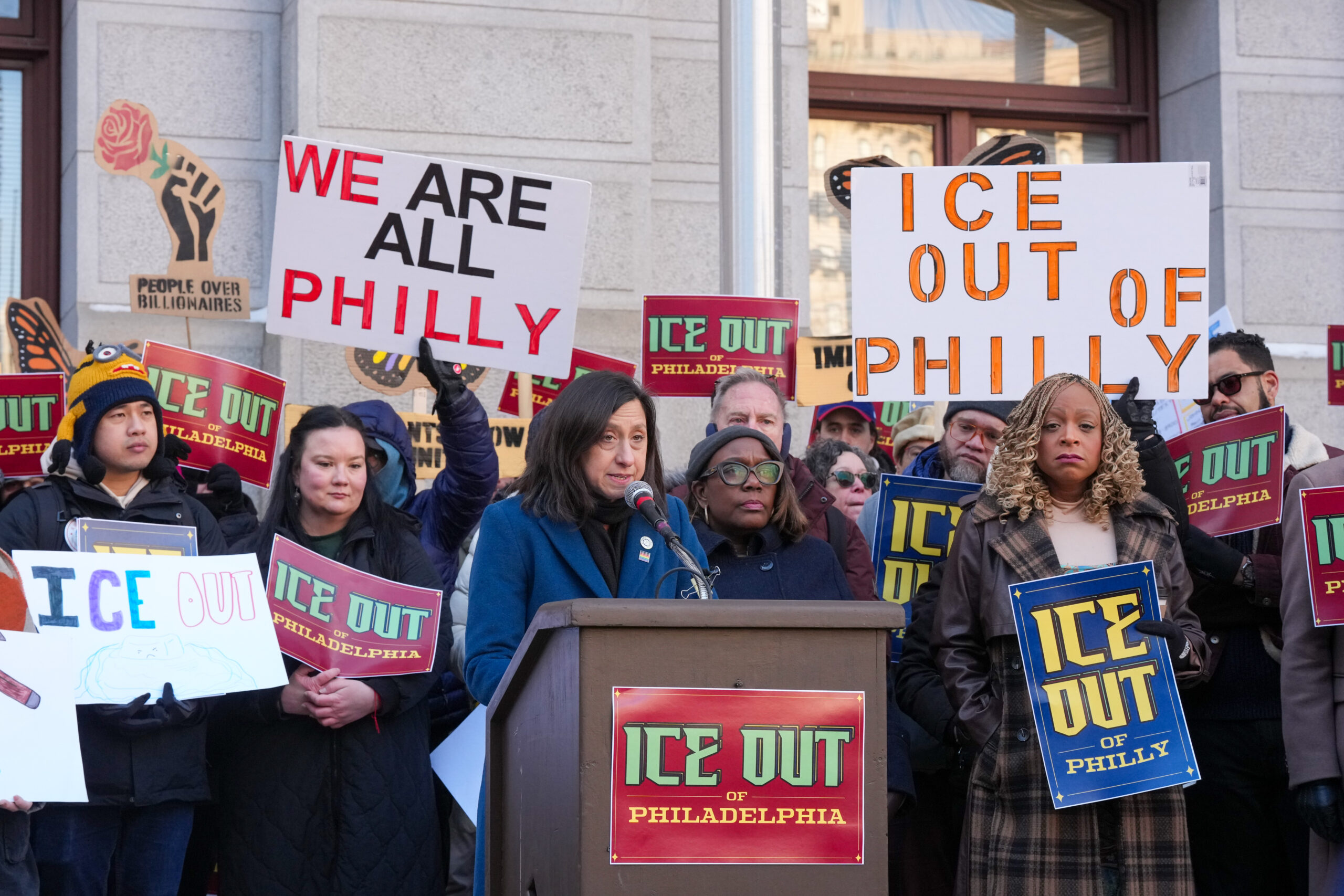
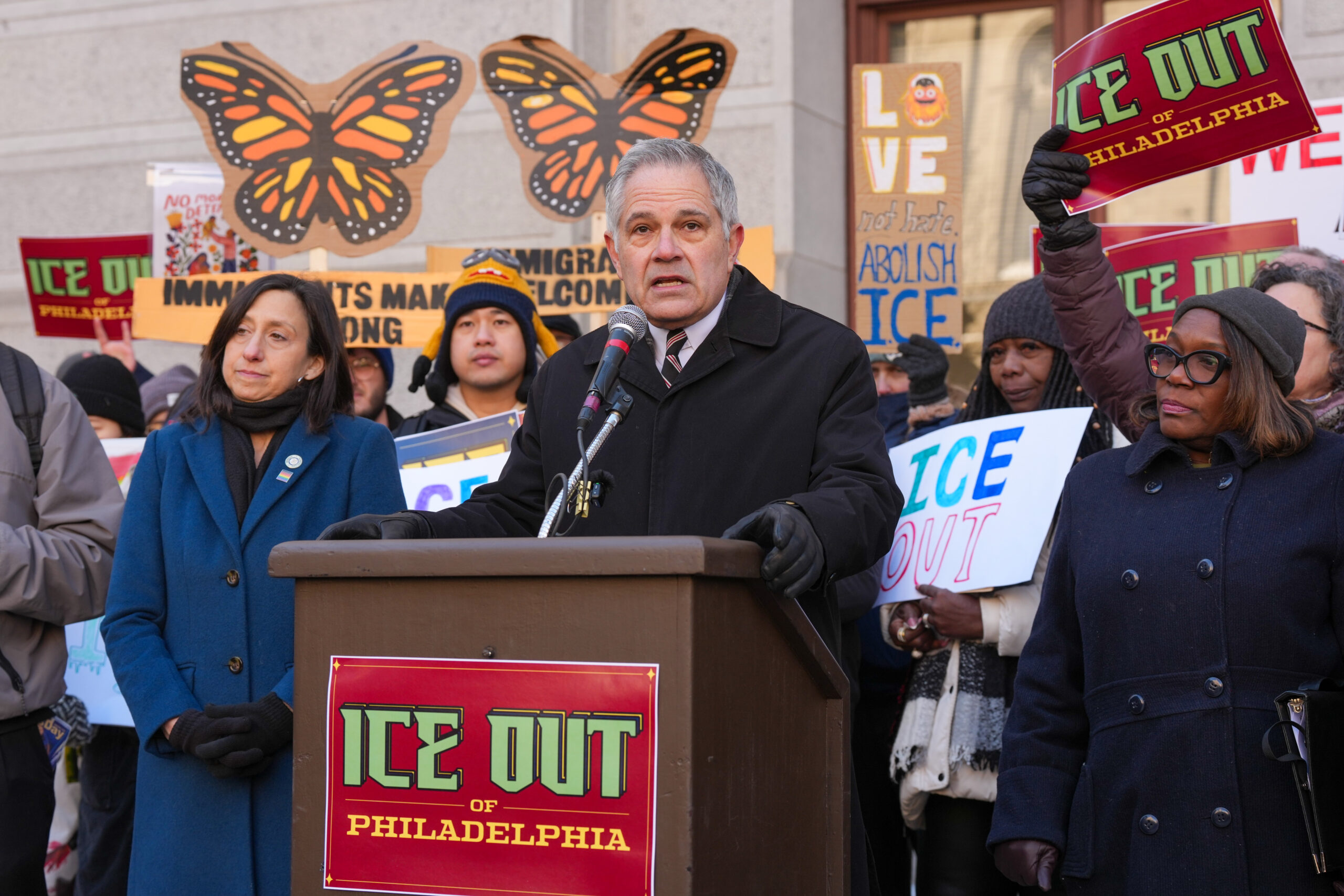
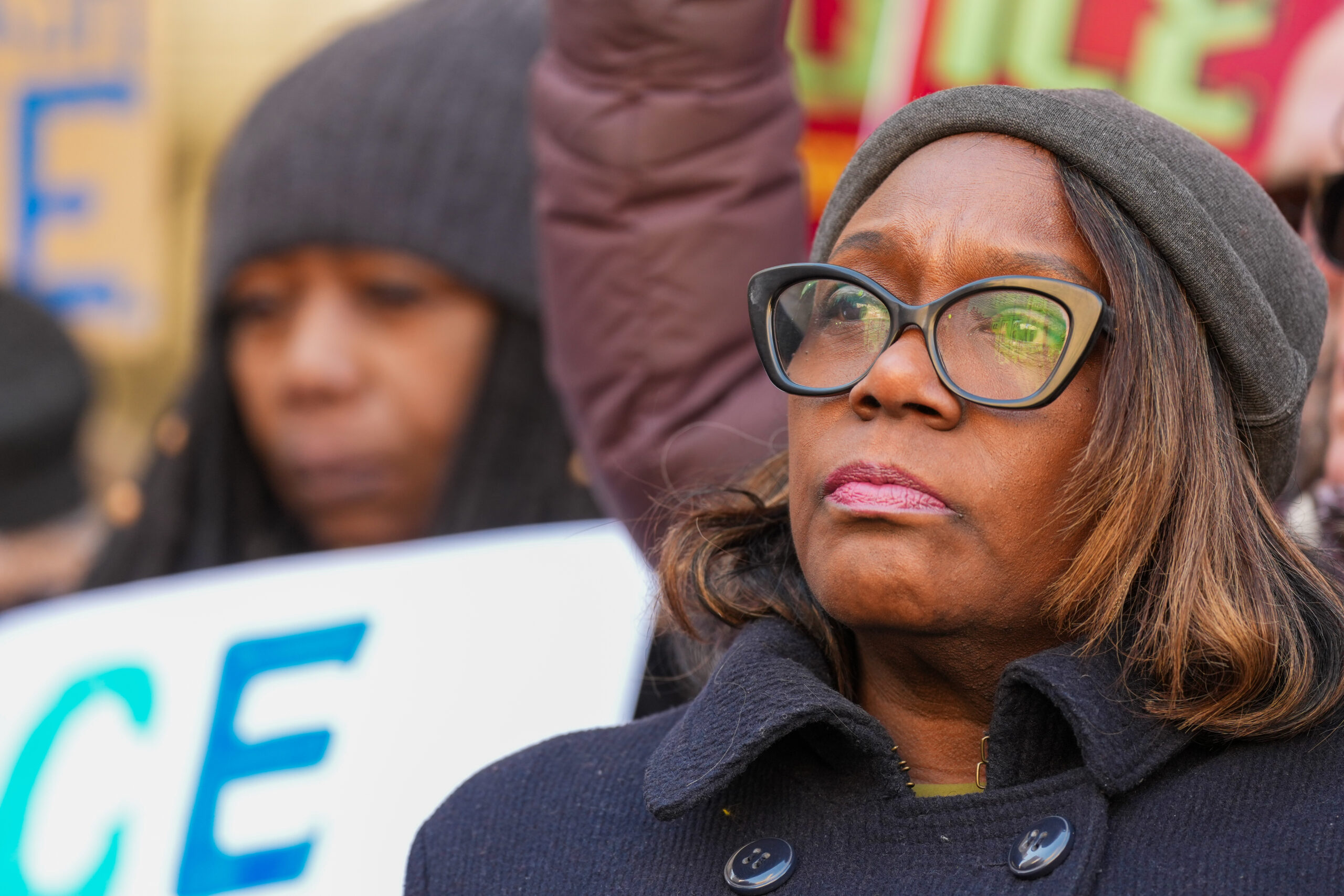
Rue Landau shown here during a press conference at City Hall to announce a package of bills aimed at pushing back against ICE enforcement in Philadelphia on Tuesday.
However, a chorus of Democrats and activists said Tuesday that the agency needs to change its tactics and be held accountable for missteps. And local leaders said they are laying out plans in case a surge of immigration enforcement comes to Philadelphia, home to an estimated 76,000 undocumented immigrants.
“We have spent hours and hours and hours doing tabletop exercises to prepare for it,” Gov. Josh Shapiro, a Democrat, said during a Monday night interview on The Late Show with Stephen Colbert.
Philadelphia officials said the best way they can prepare is by limiting the city’s cooperation with federal immigration enforcement.
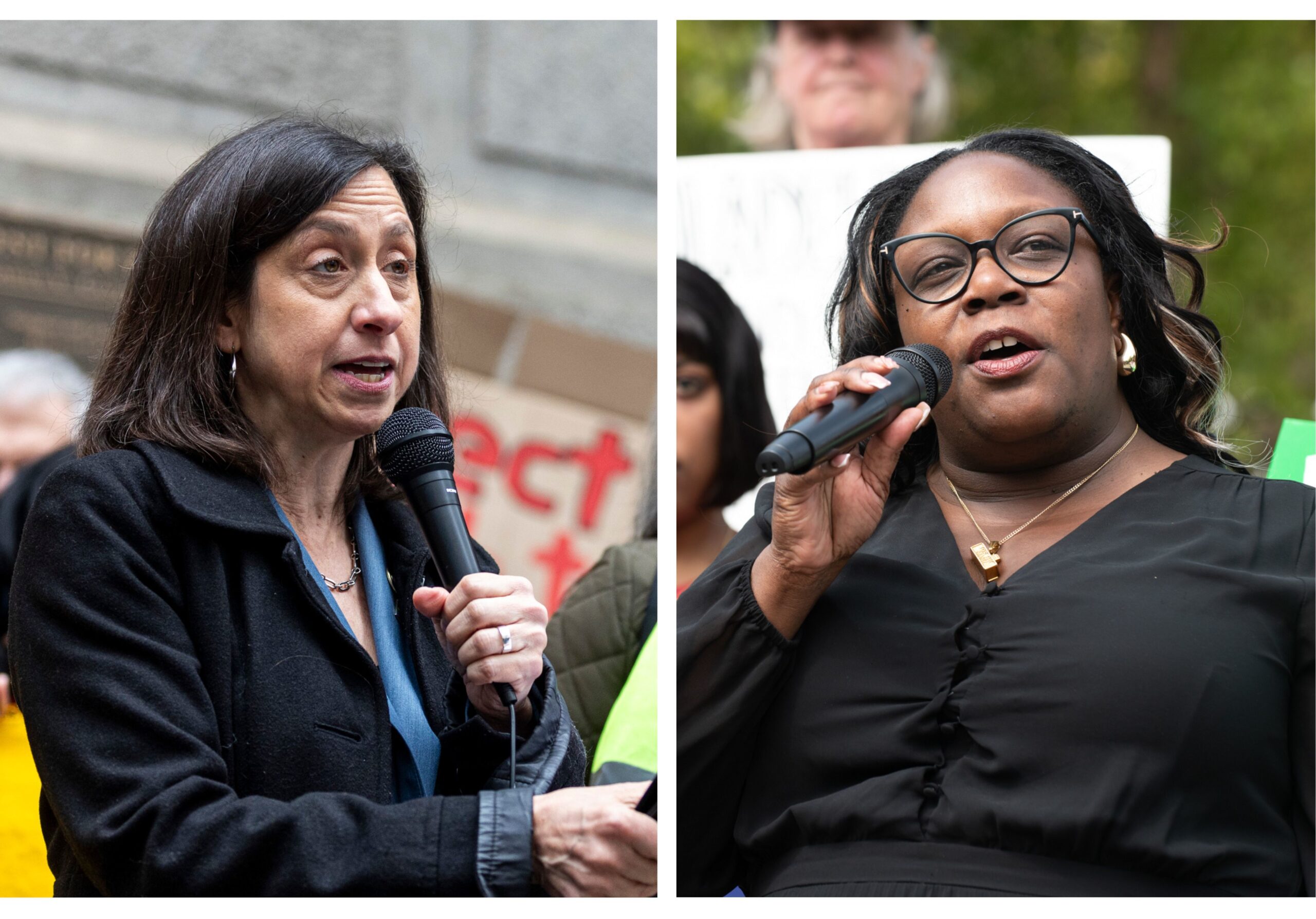
City Councilmember Kendra Brooks, of the progressive Working Families Party, and Councilmember Rue Landau, a Democrat, were joined by dozens of activists and other elected officials during a news conference Tuesday to unveil a package of legislation aimed at codifying into law the city’s existing “sanctuary city” practices.
Those policies, which are currently executive orders, bar city officials from holding undocumented immigrants in custody at ICE’s request without a judicial warrant.
Landau and Brooks’ legislative package, expected to be introduced in Council on Thursday, goes further, preventing ICE agents from wearing masks, using city-owned property for staging raids, or accessing city databases.
Erika Guadalupe Núñez, executive director of immigrant advocacy organization Juntos, said the legislation “goes beyond just ‘We don’t collaborate.’”
Juntos gets regular calls about ICE staging operations at public locations in and around Philadelphia, and people have been worried, despite official assurances, whether personal information held by the city will be secure from government prying.
“We deserve a city that has elected leadership that’s willing to step forward with clear and stronger protections,” Núñez said.
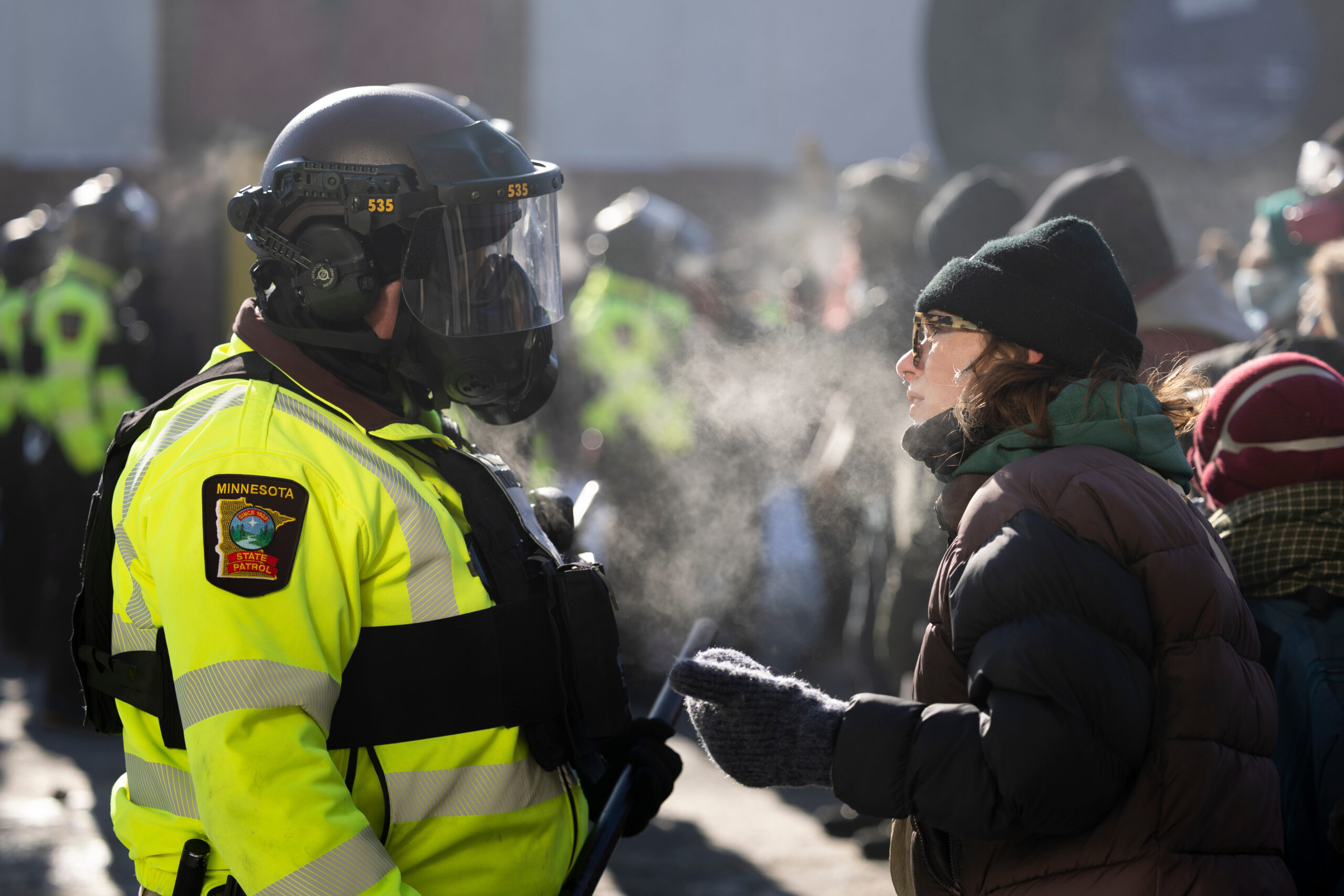
A protester speaks to a Minnesota State Patrol officer near the site of the fatal shooting of 37-year-old Alex Pretti by federal agents in Minneapolis on Saturday.
If the legislation is approved, Philadelphia would have some of the most stringent protections for immigrants in the country.
Oregon has especially strong restrictions against cooperation with federal immigration authorities, including barring local law enforcement from detaining people or collecting information on a person’s immigration status without a judicial warrant.
In Illinois, local officers “may not participate, support, or assist in any capacity with an immigration agent’s enforcement operations.” They are also barred from granting immigration agents access to electronic databases or to anyone in custody.
California, New York, Colorado, Vermont — and individual jurisdictions in those states — also provide strong protections for immigrants.
In New Jersey, Gov. Mikie Sherrill, a Democrat who was sworn in last week, has kept the state’s sanctuary directive in place as lawmakers seek to expand and codify the policy into law. Legislators came close in the final days of former Gov. Phil Murphy’s administration, but he killed a related bill that had won approval in Trenton, saying he worried that enacting a law that included changes to the state’s current policy would invite new lawsuits.
Meanwhile, some conservatives say bolstering sanctuary policies risks community safety.
“If an illegal immigrant breaks the law, they should be dealt with and handed over to federal law enforcement, not be released back into our neighborhoods to terrorize more victims and commit more crime,” said James Markley, a spokesperson for the Pennsylvania Republican Party.
He added: “Sanctuary policies don’t protect communities, they endanger all of us by shielding criminals from accountability for their crimes.”
Democrats are taking varying approaches
The widespread outrage over ICE’s tactics in Minneapolis has exposed sharp divisions in elected Democrats’ responses.
“There will be accountability now. There will be accountability in the future. There will be accountability after [Trump] is out of office,” Krasner said Tuesday. “If we have to hunt you down the way they hunted down Nazis for decades, we will find your identities.”
District Attorney Larry Krasner speaks during a news conference at City Hall on Tuesday to announce a package of bills aimed at pushing back against ICE enforcement in Philadelphia.
Somewhere in the middle is State Sen. Sharif Street, a Philadelphia Democrat and former head of the state party who is running for Congress.
Street does not have Krasner’s bombast, but this week he announced plans to introduce legislation to prevent state dollars from funding federal immigration enforcement. The bill has less of a chance of becoming law in Pennsylvania’s divided state legislature than similar measures would in Philadelphia, where City Council is controlled by a supermajority of Democrats.
“Who knows the amount of money that the state could incur because of Trump’s reckless immigration policies?” Street said in an interview Tuesday. “I don’t think state taxpayers should be paying for Donald Trump’s racist, reckless policies.”
The mayor’s critics have said her approach is not responsive to the city’s overwhelmingly Democratic residents.
“To the people of Philadelphia, I want to say: I hear you. You want ICE out of our city, and you want your local government to take action,” Brooks, the Council member, said Tuesday. “Some people believe that silence is the best policy when dealing with a bully, but that’s never been an option for me.”
Kendra Brooks shown here during a news conference at City Hall on Tuesday to announce a package of bills aimed at pushing back against ICE enforcement in Philadelphia.
Others say Parker’s conflict-averse strategy is appropriate.
“All of us have different roles to play,” Street said. “The mayor has to manage the city. She’s got to command law enforcement forces. … As a state legislator, we make policy.”
Rafael Mangual, a fellow who studies urban crime and justice at the right-leaning Manhattan Institute in New York City, said legislative efforts to erect barriers between federal and local law enforcement could backfire.
“If you don’t engage at all, and you do something that seems to actively frustrate the federal government,” Mangual said, “that would seem to be an invitation for the federal government to prioritize a city like Philadelphia.”
Staff writers Alfred Lubrano, Aliya Schneider, and Gillian McGoldrick contributed to this article.
After having experienced its heaviest snowfall in about a decade, the Philadelphia region now faces frigid temperatures that are expected to barely squeak out of the teens until next week. And all while dealing with cleanup from the 9.3 inches of snow that blanketed the city, a task made more complicated by minimal natural melting due to the cold — plus monitoring another potential winter storm for this coming weekend.
But don’t panic just yet. Forecasters at the National Weather Service office in Mount Holly say it’s too early to tell whether mean old Jack Frost will set his sights on us once again in the coming days, and what level of snowfall we could see if he does.
“There will likely be a system somewhere off the Eastern Seaboard over the weekend,” said weather service meteorologist Joe DeSilva. “But it’s very uncertain at this point.”
Besides, we’ve got enough to worry about already.
It won’t just be cold in the Philadelphia area this week — it will be dangerously so. On Tuesday, temperatures generally stretched only into the low or mid 20s, a good five to 10 degrees lower than what we saw Monday, the weather service said. Lows, meanwhile, stuck stubbornly in the single digits, with wind chills making it feel like zero or below.
That cold, it seems, will refuse to budge until next week. As we move through the final week of January, temps are expected to continue to nosedive, the weather service said.
Daytime highs throughout the week are expected to top out in the mid- or upper teens in the Philadelphia region, with some spots seeing the off chance of making it into the 20s. Lows are likely to stick in the single digits through Friday. As the weather service put it in a Tuesday afternoon update, this is “bone-chilling” cold that has the potential not only to stress the energy grid — as New Jersey and Philadelphia officials alluded to Monday — but also to cause frostbite and hypothermia.
Philadelphia, in fact, has the grim potential of hitting zero degrees for the first time in 32 years sometime in the coming days. We haven’t seen zero at the Philadelphia International Airport since Jan. 19, 1994, but that mercifully long streak could be broken Thursday or Friday, when temperatures are expected to go as low as 2 or 3 degrees, DeSilva said.
“We still have three nights before we get there, so lots could change between now and then,” he added.
A pedestrian walks through a snow-covered parking lot at Ninth and Arch Streets in Center City Philadelphia, Tuesday, Jan. 27, 2026.
These lows arrive as Philadelphia continues to dig out from last weekend’s winter storm, which resulted in a days-long snow emergency in the city that was only lifted Tuesday amid closures for city offices, courts, and schools. Despite a full-court press by the Philadelphia Streets Department, many smaller streets remained unplowed, and the cold weather threatened to institute a deep freeze that could complicate the cleanup, officials have said.
Unfortunately, no break is imminent. Temperatures are not expected to get above freezing until the early or middle part of next week, and even then perhaps barely so. In its Tuesday afternoon forecast, the weather service called the length and magnitude of the arctic air mass descending upon the area “exceedingly rare” and urged caution. Normal low temperatures for Monday’s date, for example, stand at about 25 degrees.
“We are running 15 to 20 degrees below average,” DeSilva said.
And then there is the possibility of even more snow amid our extended bout of cold — though as of Tuesday afternoon, it remained just that. The weather service noted that it remained unclear where precipitation could fall, and in what amounts, though early models indicated that the storm could spare much of the area away from the coast. Still, DeSilva said, it remained too early Tuesday to tell what to expect.
“If lows track further off the coast, we could see less impact here, but if they’re closer, we may have some moderate impacts,” DeSilva said.
Helen Cherry, 101, formerly of Philadelphia, prolific illustrator, artist, and show tunes devotee, died Thursday, Jan. 15, of age-associated decline at her home in the Woodland Pond retirement community in New Paltz, N.Y.
“It was her decision entirely,” said her daughter, Lynne. “She knew her own mind and made the decision that it was time for her to take flight to the Great Beyond.”
A lifelong artist, Mrs. Cherry grew up drawing and painting in West Philadelphia. She earned a scholarship to the old Philadelphia College of Art, sold illustrations to the Jack and Jill children’s magazine, and took a 20-year hiatus in the 1950s and ’60s to rear her three children.
She resumed her career at 50 in 1974 and went on to illustrate 30 books and dozens of magazine stories for Highlights, Cricket, and other publications. Using a combination of her maiden name, Cogan, and her married name, Cherry, she was published under thepseudonym of Helen Cogancherry.
Mrs. Cherry at work illustrating 1991’s “Fourth of July Bear.”
“She was always an artist,” said her daughter, also an illustrator and writer. “Art was her hobby, her passion, her work. She said it was something that she can’t not do.”
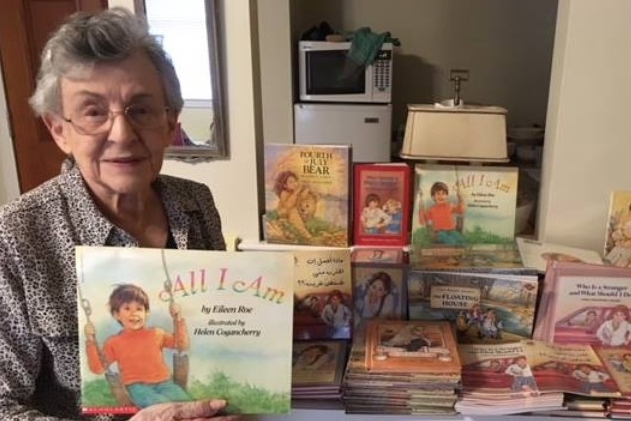
Mrs. Cherry was a keen and imaginative observer of life, adept at creating visuals that reflected the concepts of the writers with whom she worked. She illustrated many children’s books, such as All I Am, Warm as Wool, and The Floating House.
She told The Inquirer in 1986 that a book she illustrated helped a girl she knew address a difficult childhood situation. “That made a profound impression on me,” she said. “I saw how my little books could help children.”
Her career was featured in several publications, and she told The Inquirer that breaking back into the business in the 1970s was “discouraging at first.” She said: “I remember coming home sometimes and telling my husband that it was hopeless. He kept encouraging me to keep at it.”
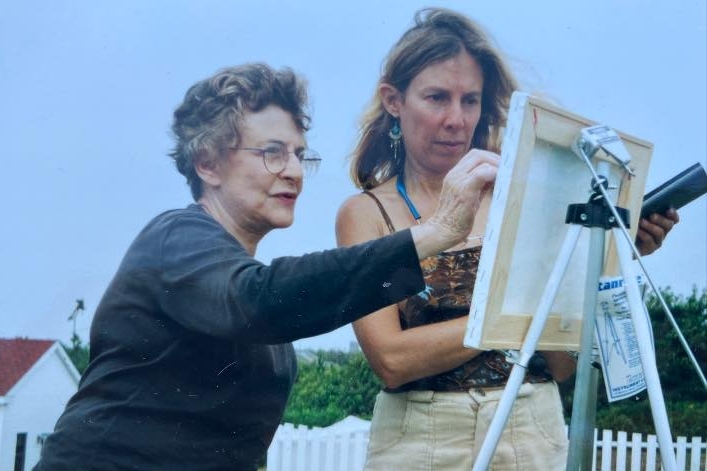
Mrs. Cherry (left) and her daughter, Lynne, work on a project.
Helen Cogan was born July 9, 1924, in a West Philadelphia rowhouse beneath the elevated railroad tracks. The middle of three children, she looked up to her sister, Molly, and cared for her younger brother, Robert, while her parents ran the small grocery store they lived above.
She contributed illustrations to the yearbook and graduated from West Philadelphia High School. She met Herbert Cherry in French class and sent him beautifully illustrated letters while he served overseas during World War II.
They married in 1950 and had a daughter, Lynne, and sons Steven and Michael. She helped her husband operate Cherry’s Pharmacy in Ridley Park for years, and they lived in Milmont Park and Wallingford in Delaware County, and Carlisle, Pa. She moved to New Paltz after her husband died in 2000.
Mrs. Cherry often sang show tunes with family and friends, and while she worked. She whipped up memorable meals, especially on holidays, and enjoyed idyllic summers on family vacations at the Jersey Shore in Ventnor.
Mrs. Cherry grew up in West Philadelphia.
She tutored her children and their friends, and later her grandchildren, in drawing and painting. She showed everybody, her daughter said, “how to be a good human being in this world.”
On Facebook, friends called her “warm,” “beautiful,” and “a talented giver.” One said: “The joy she radiated her whole life long was magical.”
Her daughter said: “She was quiet and understated but strong.”
Her favorite song was “Life is Just a Bowl of Cherries.” It opens with: “Life is just a bowl of cherries. Don’t take it serious. Life’s so mysterious.”
Mrs. Cherry enjoyed time with her children.
In addition to her children, Mrs. Cherry is survived by five grandchildren, a great-granddaughter, her brother, and other relatives. Her sister died earlier.
A memorial service was held Sunday, Jan. 18. A celebration of her life is to be held later.
In the month since Philadelphia Councilmember Jeffery Young introduced a bill banning residential development around the former Hahnemann University Hospital, 824 apartments have been permitted in the area.
The latest zoning permits include 163 units at 1501-11 Race St., which were issued Monday. Brandywine Realty Trust purchased the former Bellet Building office tower in 2021 for $9.7 million.
Brandywine did not immediately respond to a request for comment. It is not clear whether Brandywine is seeking to develop the apartments or to just secure permits to preserve the option for a future buyer.
Last week, zoning permits were issued for 300 units at 300-304 N. Broad St., known as Martinelli Park, the last piece of the former Hahnemann Hospital site that has yet to be sold. The last bid for the site came from the HOW Group, which offered $5.5 million and planned multifamily housing there. But the sale did not go through.
Attempts to reach Hahnemann’s representatives were unsuccessful. It is likely the permits are being secured to preserve the property’s value.
A City Council Rules Committee hearing on Young’s bill is scheduled for Feb. 3.
The rush for permits began on Dec. 24, two weeks after Young introduced his bill, when the Dwight City Group received a zoning permit for 222-48 N. Broad St. to builda 361-unit apartment building.
When “an overlay is placed like this … even though we have our zoning permit already from one of the buildings, the message that it sends is that this area is closed for business,” Judah Angster, CEO of Dwight City Group, said at a January meeting of the Philadelphia Planning Commission.
He said the project now includes 90,000 square feet for commercial use, which would be dedicated to local small businesses.
Why does Young want to ban housing?
Young’s bill would create a new zoning overlay covering the area “bounded by the north side of Race Street, the east side of North 16th Street, the south side of Callowhill Street, and the west side of North Broad Street.”
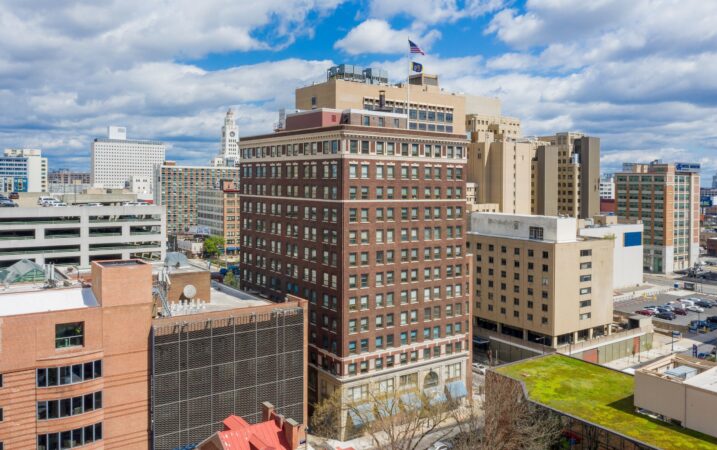
This covers the former Hahnemann campus, which included seven medical buildings, a parking garage, and some surface lots. The hospital dated to the 19th century and had been operating from this location for 90 years before its bankruptcy.
A handful of other buildings are in the proposed overlay as well, including a PHA apartment building and a homeless shelter.
What once was the Hahnemann campus sprawls over nearly six acres, centered on Broad Street along the Vine Street Expressway, comprising seven medical buildings, a parking garage, and surface lots.
Young said that he wanted to ban new homes from the site to preserve job opportunities in the city, hopefully prompting the reuse of the site for office, medical, or educational use.
At the Planning Commission meeting, the bill was largely discussed as Young’s effort to force developers to meet with him over their plans. The Hahnemann site is zoned with Philadelphia’s most flexible land use rules, which means that under normal circumstances, residential conversions would not require neighborhood meetings or political approvals.
“I look forward to continuing dialogue that brings community stakeholders to the table for this important section of Center City,” Young said in an email Tuesday.
Dwight Group has said that it is having productive conversations with Young.
The legislation is considered by some legal experts as a blatant use of spot zoning, when a change in land use rules is targeted to a limited geography. Such legislation is often introduced to help or hurt a particular project.
“In my time as a zoning lawyer for 27 years, I don’t think I’ve seen a greater example of illegal spot zoning,” Matt McClure, head of law firm Ballard Spahr’s land use practice and a lawyer for developer Dwight City, said the January meeting. “It is targeted at a particular property, targeted around a certain transaction that was talked about. It’s just illegal.”
Hahnemann University Hospital has been closed for more than six years, and attempts to preserve medical and educational uses in its former buildings so far have faltered. Most are still vacant.
Philadelphia lawmakers are set to consider legislation that would make it harder for ICE to operate in the city, including limiting information sharing, restricting activity on city-owned property, and prohibiting agents from concealing their identities.
Among the package of bills set to be introduced Thursday is an ordinance that effectively makes permanent Philadelphia’s status as a so-called “sanctuary city” by barring city officials from holding undocumented immigrants at ICE’s request without a court order. Another bans discrimination based on immigration status.
Two City Council members are expected to introduce the legislation as U.S. Immigration and Customs Enforcement is facing mounting national scrutiny over its tactics in Minneapolis, where federal agents fatally shot two U.S. citizens this month.
Councilmembers Rue Landau, a Democrat, and Kendra Brooks, of the progressive Working Families Party, said in an interview that the violence in Minneapolis hardened their resolve to introduce legislation to protect a population that includes an estimated 76,000 undocumented immigrants in Philadelphia.
“It’s been very disheartening and frightening to watch ICE act with such lawlessness,” Landau said. “When they rise to the level of killing innocent civilians, unprecedented murders … this is absolutely the time to stand up and act.”
The package of a half-dozen bills is the most significant legislative effort that Council has undertaken to strengthen protections for immigrants since President Donald Trump took office last year on a promise to carry out a mass deportation campaign nationwide.
Left: City Councilmember Rue Landau. Right: City Councilmember Kendra Brooks. Landau and Brooks are introducing legislation this week to make it harder for ICE to operate in Philadelphia, including by limiting city cooperation with the agency.
ICE spokespeople did not immediately reply to a request for comment.
Jasmine Rivera, executive director of the Pennsylvania Immigration Coalition, said it’s not the job nor the jurisdiction of the city to enforce federal law.
The goal of the legislation, Rivera said, is ensuring that “not a single dime and single second of our local resources is being spent collaborating with agencies that are executing people.”
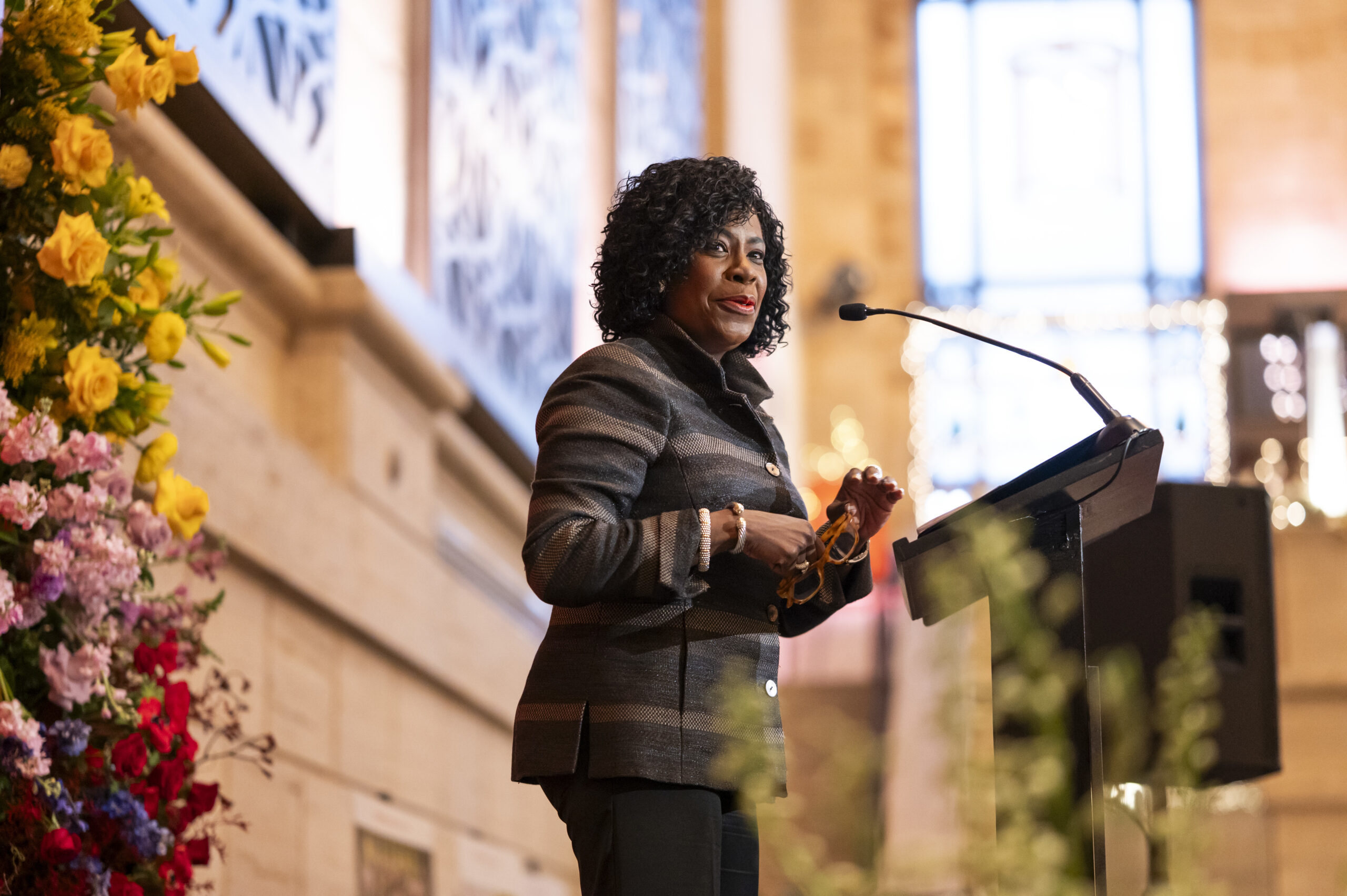
Now, the mayor could be forced to take a side. If City Council passes Landau and Brooks’ legislation this spring, Parker could either sign the bills into law, veto them, or take no action and allow them to lapse into law without her signature. She has never vetoed a bill.
Joe Grace, a spokesperson for Parker, declined to comment on the legislation.
Mayor Cherelle L. Parker speaks at a news conference earlier this month. It is unclear how she will act on upcoming legislation related to ICE operations in Philadelphia.
It’s unclear what fate the ICE legislation could meet in Council. The 17-member body has just one Republican, but Parker holds influence with many of the Democrats in the chamber.
City Council President Kenyatta Johnson, a Democrat who controls the flow of legislation, has not taken a position on the package proposed by Landau and Brooks.
But he said in a statement that “Philadelphia has long positioned itself as a welcoming city that values the contributions of immigrants and strives to protect their rights and safety.”
“I have deep concerns about federal ICE actions directed by President Donald Trump’s administration that sow fear and anxiety in immigrant communities,” Johnson said, “underscoring the belief that enforcement practices should be lawful, humane, and not undermine trust in public safety.”
Making sanctuary status the law
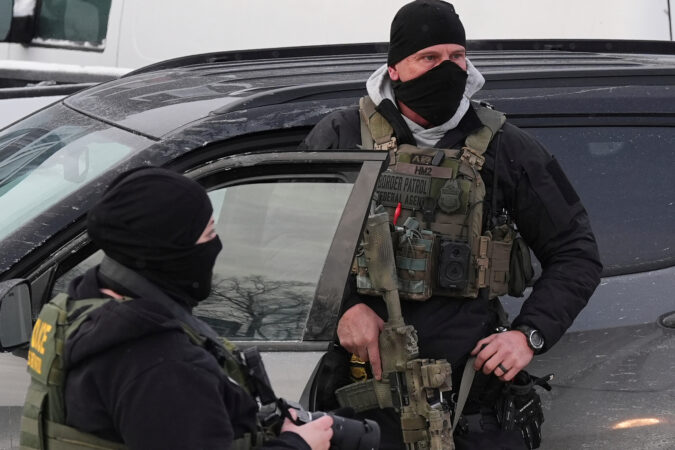
Border Patrol and ICE are both federal immigration agencies, which are legally allowed to operate in public places and subject to federal rules and regulations. Some cities and states —not including Pennsylvania and New Jersey — actively cooperate with ICE through written agreements.
Since 2016, Philadelphia has operated under an executive order signed by former Mayor Jim Kenney, which prohibits city jails from honoring ICE “detainer requests,” in which federal agents ask the city to hold undocumented immigrants in jail for longer than they would have otherwise been in custody to facilitate their arrest by federal authorities.
Undocumented immigrants are not shielded from federal immigration enforcement, nor from being arrested and charged by local police for local offenses.
Some refer to the noncooperation arrangement as “sanctuary.” As the term “sanctuary cities” has become politically toxic, some local officials — including in Philadelphia — have backed away from it, instead declaring their jurisdictions to be “welcoming cities.”
Parker administration officials have said several times over the last year that Philadelphia remains a “welcoming city.”
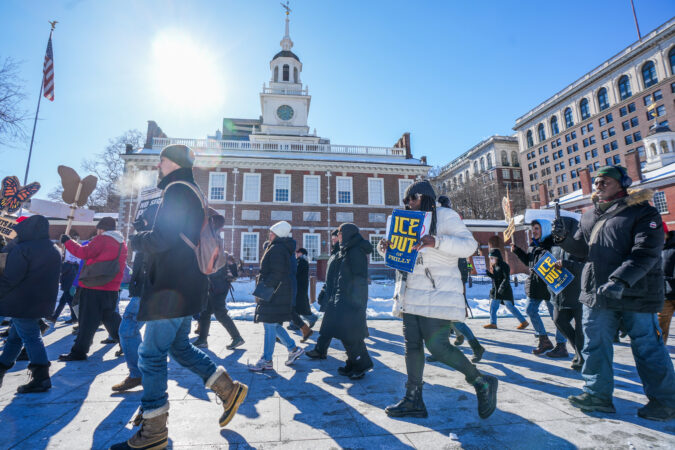
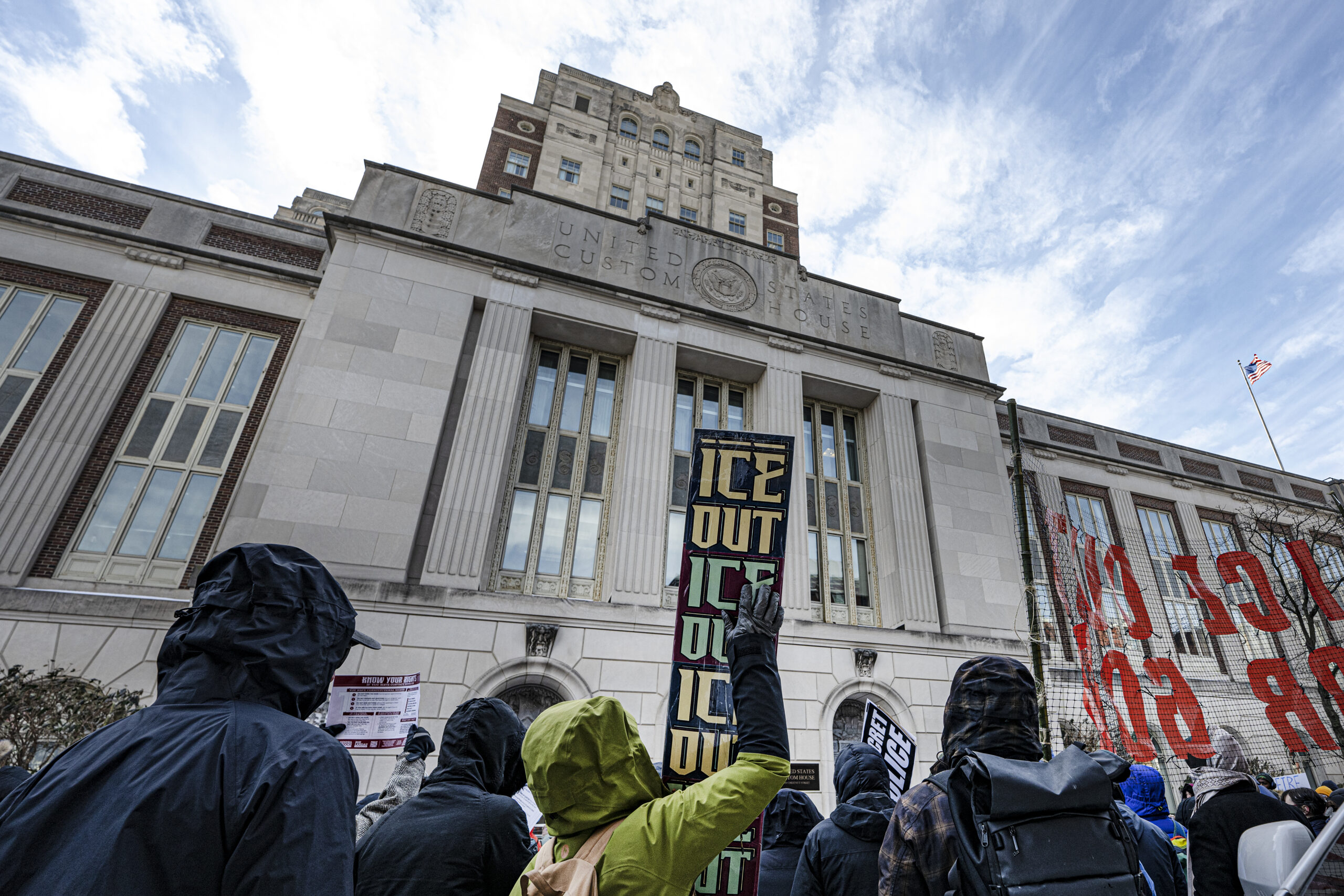
Protesters march up Eighth Street, toward the immigration offices, during the Philly stands with Minneapolis Ice Out For Good protest at Philadelphia’s City Hall on Jan. 23.
But advocates for immigrants have said they want an ironclad city policy that can’t be rescinded by a mayor.
Landau and Brooks’ legislation would be that, codifying the executive order into law and adding new prohibitions on information sharing. The package includes legislation to:
Strengthen restrictions on city workers, including banning local police from carrying out federal immigration enforcement and prohibiting city workers from assisting in enforcement operations.
Prohibiting law enforcement officers from concealing their identities, including by wearing masks or covering up badges with identifying information.
Banning ICE from staging raids on city-owned property and designated community spaces such as schools, parks, libraries, and homeless shelters. (It would not apply to the Criminal Justice Center, where ICE has had a presence. The courthouse is overseen by both city and state agencies.)
Prohibiting city agencies and contractors from providing ICE access to data sets to assist in immigration enforcement.
Restricting city employees from inquiring about individuals’ immigration status unless required by a court order, or state or federal law.
Peter Pedemonti, co-director of New Sanctuary Movement of Philadelphia, an advocacy organization that partnered with the Council members to craft the package of bills, compared ICE to an octopus that has multiple arms reaching into different facets of American life.
The proposed legislation, he said, is a means to bind a few of those arms.
“The whole world can see the violence and brutality,” Pedemonti said. “This is a moment where all of us need to stand up, and Philadelphia can stand up and speak out loud and clear that we don’t want ICE here to pull our families apart, the families that make Philadelphia Philadelphia.”
An impending showdown that Parker hoped to avoid
Homeland Security officials claim that sanctuary jurisdictions protect criminal, undocumented immigrants from facing consequences while putting U.S. citizens and law enforcement officers in peril.
Last year, the Trump administration named Philadelphia as among the jurisdictions impeding federal immigration enforcement. The White House has said the federal government will cut off funding to sanctuary cities by Feb. 1.
Some of Parker’s supporters say the mayor’s conflict-averse strategy has spared Philadelphia as other cities such as Washington, New York, Los Angeles, Chicago, and Minneapolis have seen National Guard troops or waves of ICE agents arrive in force.
Residents near the scene of a shooting by a federal law enforcement agent in Minneapolis on Saturday.
Critics, including the backers of the new legislation, have for months pressed Parker to take a stronger stand.
Brooks said she “would love to have the support of the administration.”
“This should be something that we should be working collaboratively on,” she said. “Philadelphia residents are demanding us do something as elected officials, and this is our time to lead.”
But Parker has not been eager to speak about Philadelphia’s immigration policies.
For example, the city is refusing to release a September letter it sent to the U.S. Department of Justice regarding its immigration-related policies, even after the Pennsylvania Office of Open Records ruled its reasoning for keeping the document secret was invalid. The Inquirer has requested a copy of the letter under the state Right-to-Know Law.
The new Council legislation and the increasing tension over Trump’s deportation push may force Parker to take a clearer position.
Notably, the city sued the federal government last week over its removal of exhibits related to slavery from the President’s House at Independence National Historical Park, potentially signaling a new willingness by Parker to push back against the White House.
But even then, Parker declined to take a jab at Trump.
“In moments like this,” she said last week, “it requires that I be the leader that I need to be for our city, and I can’t allow my pride, ego, or emotions to dictate what my actions will be.”