After the coldest morning of the winter, Philadelphia could experience more snow this weekend than it did during the entire winter of 2024-25, accompanied by a potentially nasty mix of ice.
The National Weather Service on Saturday was holding serve on its call for 8 to 12 inches in and around Philly, and those amounts may be tweaked depending on the best guesses on how much sleet and freezing rain enters the mix. AccuWeather Inc. was going with 6 to 10.
Subtle changes to accumulation forecasts are likely, but that merely would mean, “We’re just getting a different blend of horrors,” said Mike Lee, a meteorologist in the Mount Holly office.
One thing is certain: Whatever falls won’t melt. Temperatures dropped into single digits throughout the region, and got as low as 11 at the Philadelphia International Airport banana belt. . Temperatures won’t get above the mid-20s while anything is falling from the skies Sunday and early Monday.
The weather service has issued a profoundly predictable winter storm warning, in effect from 7 p.m. Saturday until 1 p.m. Monday.
Whatever the outcome, the storm still in its formative stage already has had significant impacts on the region and may have set an unofficial record for pre-storm buildup and preemptive closings.
Philadelphia Mayor Cherelle L. Parker declared a state of emergency for Sunday, as did Pennsylvania Gov. Josh Shapiro and New Jersey Gov. Mikie Sherrill. PennDot is imposing speed restrictions. SEPTA is expecting issues.
Some schools already were planning for multiple-day closings, as the snow and ice will be accompanied by one of the region’s more impressive cold snaps of the last several years.
Were it not for the storm, in fact, the cold might be getting headlines.
Wind chills Saturday morning are expected to drop below zero. Sunday’s high of 25 degrees may make it the warmest day of the week.
It is likely that layers of snow and ice will harden into a frozen mass that the January sun won’t be able to do a whole lot about.
As a public service, for now we will hold off on mentioning another potential storm threat.
The latest on the timing of the storm in Philly
While the weather service warning goes into effect 7 p.m. Saturday, flake sightings could hold off until daybreak Sunday, said Alex Staarmann, a weather service meteorologist.
Snow may accumulate rapidly Sunday morning with temperatures in the teens. Models were suggesting sleet could mix in as soon as early afternoon, said Tom Kines, senior meteorologist with AccuWeather Inc.
Temperatures in the bottom 5,500 feet of the atmosphere are going to remain well below freezing. However, as the coastal storm intensifies, its onshore winds from the northeast are forecast to import warmer air from over the ocean into the upper atmosphere, which would change the snow to sleet and rain.
It’s possible the precipitation will flip back to all snow and accumulate maybe another inch early Monday, Staarmann said. But at that point it would have all the impact of drizzle in the ocean. The mass of snow and ice evidently will be vacationing in Philly for a while.
“It will stick around for a week, maybe two weeks,” Staarmann said.
How much for Philly?
Just how much snow and ice would be on the ground remained unclear Friday. And it’s all but certain the projections are going to change. For the record, a grand total of 8.1 inches fell all of last season in Philly.
Louis Uccellini, former head of the National Weather Service and one of the nation’s most prominent winter-storm experts, said some later modeling was cutting back on the ice in areas west of the city, suggesting the possibility of higher snow amounts.
(function () {window.addEventListener(‘message’, function (e) { var message = e.data; var els = document.querySelectorAll(‘iframe[src*=”‘ + message.id + ‘”]’); els.forEach(function(el) { el.style.height = message.height + ‘px’; }); }, false); })();
“It’s not that we’re getting 2 to 4 [inches],” said Staarmann. “We’re going to get a lot of snow.”
However, some icing was a near certainty throughout the region.
The ice potential for the Philly region
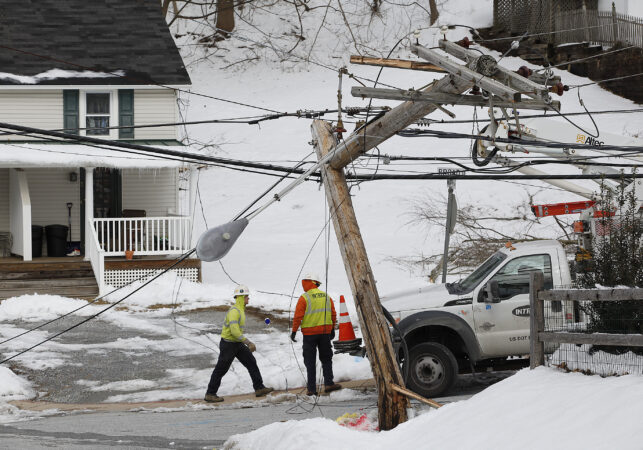
The weather service is predicting a quarter-inch of freezing rain, which is probably about the last thing the people at Peco wanted to hear. Freezing rain is a greater threat to power lines and trees than sleet.
Yes, Peco is well aware of the storm and has crews on standby, said spokesperson Candace Womack.
Sleet develops when a partially melted snowflake or rain drop freezes on the way to the ground. It doesn’t accumulate efficiently like snowflakes. Freezing rain is rain that doesn’t turn to ice until it lands on a surface and freezes on contact.
During a winter storm, both hold down snow accumulations. Typically, an inch of liquid precipitation can yield a foot of snow. A similar amount of liquid would yield about 4 inches of sleet.
(function () {window.addEventListener(‘message’, function (e) { var message = e.data; var els = document.querySelectorAll(‘iframe[src*=”‘ + message.id + ‘”]’); els.forEach(function(el) { el.style.height = message.height + ‘px’; }); }, false); })();
Both can fall when surface temperatures are well below freezing, if the upper air is warm enough.
A big difference is that sleet bounces off surfaces, but ice gloms onto them, a menace to power lines and tree branches.
An ice storm resulted in over 700,000 Peco outages in 2014, a winter record. In that case, freezing rain came 18 hours after a heavy snowfall.
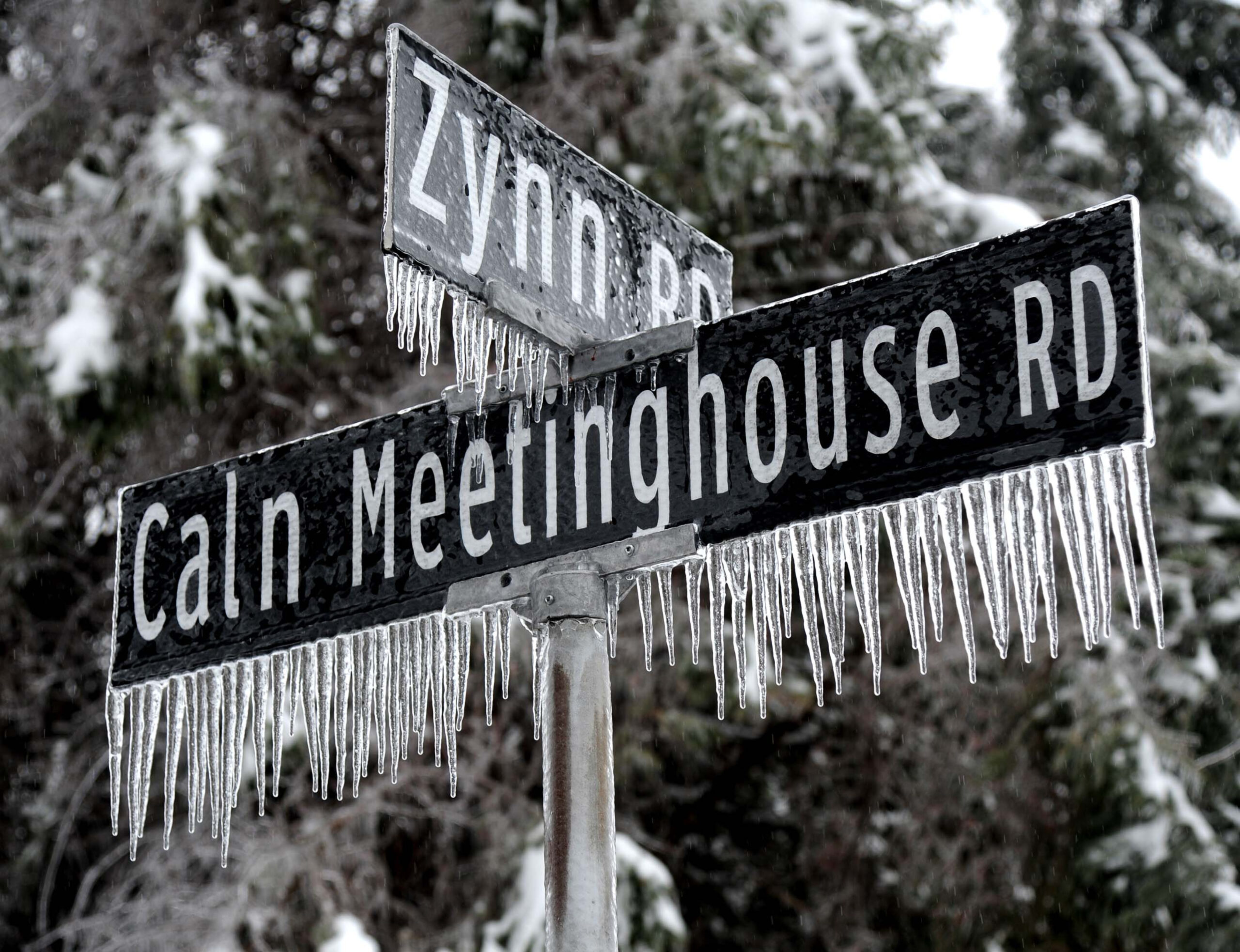
An overnight freezing rain storm swept through the Philadelphia region Feb. 5, 2014, leaving downed trees and power lines in its wake, along with icicles everywhere as evidenced by these streets signs in Downingtown.
When will the snow and ice disappear?
The snow and ice are going to be around for as far as the computer models can see. Temperatures may not get above freezing the rest of the month, as NOAA’s Climate Prediction Center has the odds favoring below normal temperatures through Feb. 6.
The U.S. model was indicating another storm threat for around Groundhog Day, a week from Monday, Uccellini said.
But as large and disruptive as this storm will likely be, it will have a difficult time cracking the list of the top January snowstorms in Philly history.
This storm isn’t that, though thanks to a dangerous component of sleet and ice it will impact a large swath of the country, from West Texas to Maine.
It would take 12.3 inches of snow for this latest storm to make its way on to the list of the snowiest January storms in Philly history. That would match a 1922 event dubbed the “Knickerbocker storm” because snow caused the collapse of the Knickerbocker Theatre in Washington, D.C., killing 98 people, which remains the worst natural disaster in the city’s history.
Here’s the full list of the Philly snowfalls of a foot or more in January history:
30.7 inches: Jan. 7-8, 1996
22.4 inches: Jan. 22-23, 2016
16.7 inches: Jan. 22-23, 1935
15.1 inches: Jan. 26-27, 2011
13.5 inches: Jan. 21-22, 2014
13.2 inches: Jan. 19-20, 1961
13.2 inches: Jan. 19-20, 1978
12.6 inches: Jan. 22-23, 2005
12.3 inches: Jan. 28-29, 1922
Top 10 snowstorms in Philadelphia history
!function(){“use strict”;window.addEventListener(“message”,(function(a){if(void 0!==a.data[“datawrapper-height”]){var e=document.querySelectorAll(“iframe”);for(var t in a.data[“datawrapper-height”])for(var r=0;r<e.length;r++)if(e[r].contentWindow===a.source){var i=a.data["datawrapper-height"][t]+"px";e[r].style.height=i}}}))}();
I have walked through Independence National Historical Park many times looking at the many interpretive panels, exhibits and historical materials after President Donald Trump’s March 27, 2025 Executive Order 14253.
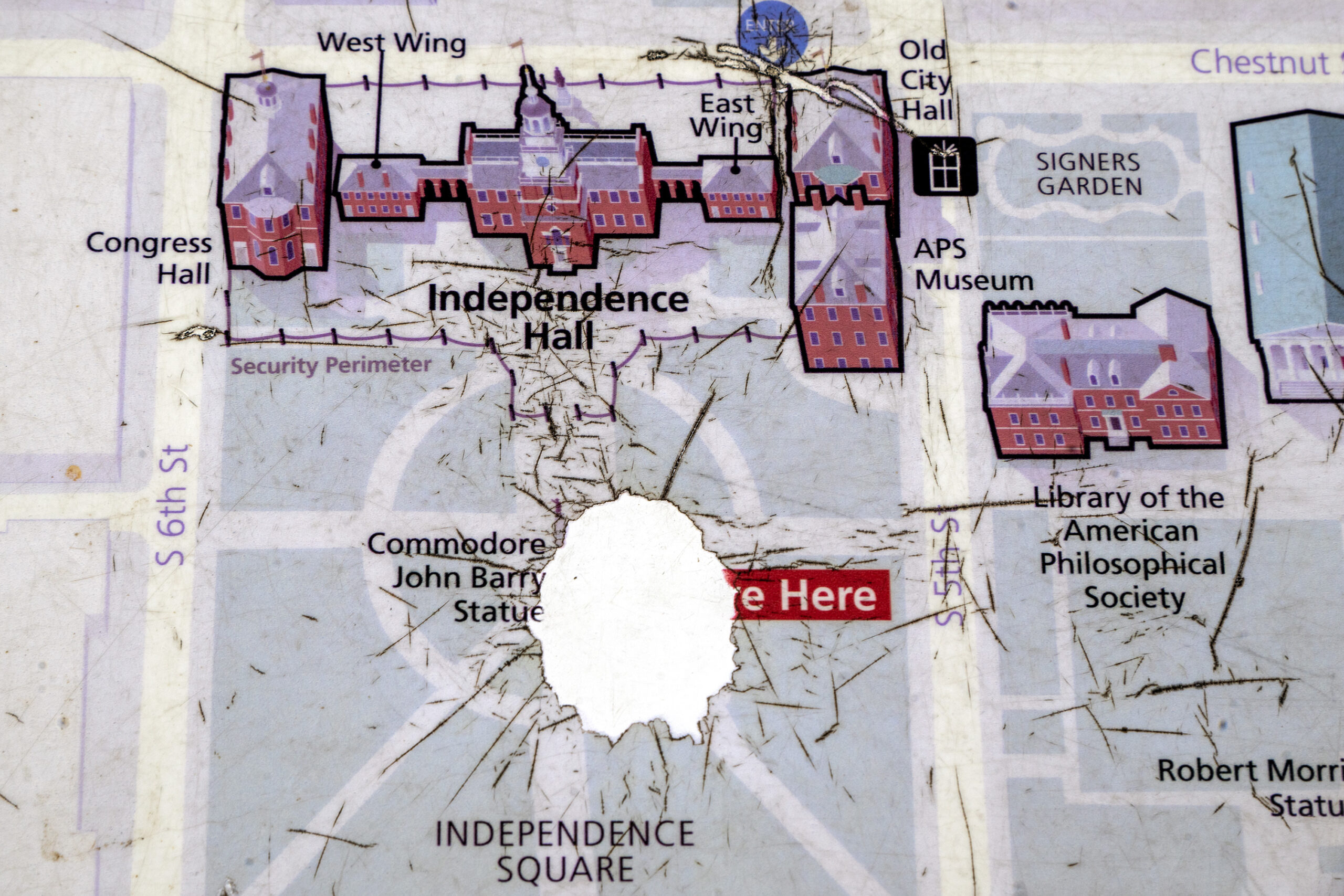
“You Are Here” sign in the square behind Independence Hall July 23, 2025.
Titled “Restoring Truth and Sanity to American History,” the order directed the Department of the Interior, which oversees the National Park Service, to review over 400 national sites to remove or modify interpretive materials that it deems “inappropriately disparage Americans past or living (including persons living in colonial times).” The order aimed to focus on the “greatness of the achievements and progress of the American people.”
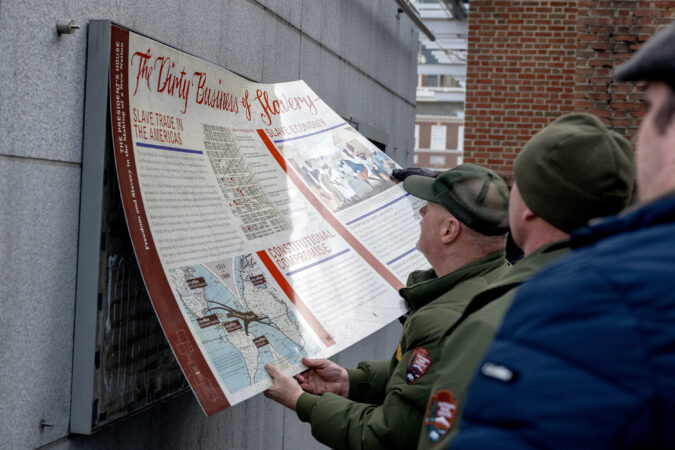
At first I looked at the many interpretive panels, videos, exhibits and historical materials in Independence Hall, Liberty Bell Center, President’s House and Ben Franklin Museum, wondering which ones the Interior Secretary might identify that “perpetuate a false reconstruction of American history, inappropriately minimize the value of certain historical events or figures, or include any other improper partisan ideology.”
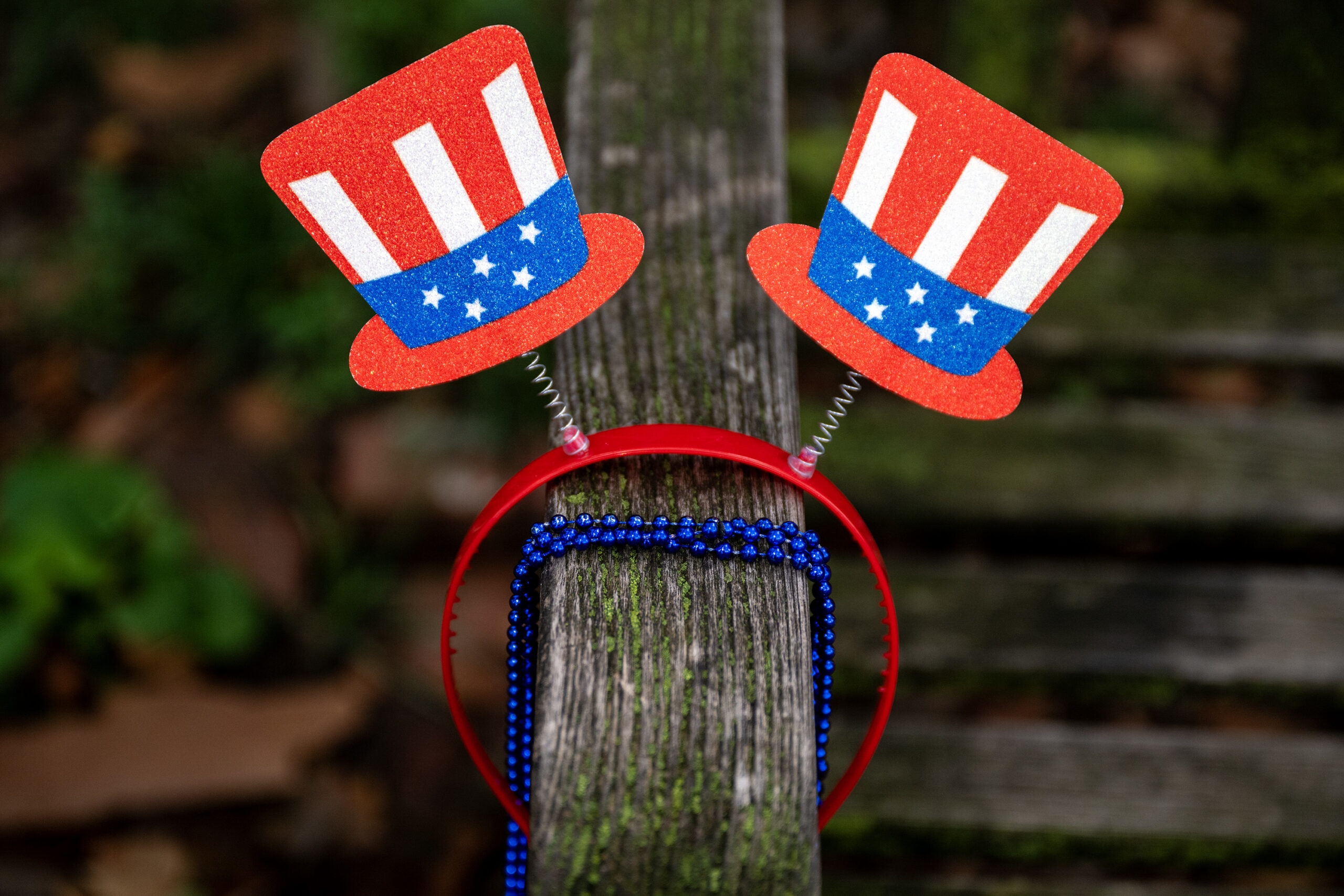
An Uncle Same hatted headband is left on a park bench Philadelphia’s Historic District during the Independence Day weekend celebrations Jul. 2, 2025.
I took a lot of photos, but realized there wasn’t a way I could write a caption reading, “the administration doesn’t like what this panel says about slavery.” So I put any photos I made in a file for later use.
In July, the New York Times broke the story that employees of the National Park Service had been flagging descriptions and displays at scores of parks and historic sites around the country for review — and they had examples of a few here in Philadelphia.
The next day, armed with the specific panels at the Liberty Bell and the President’s House they reported, I went back and re-photographed them all for our own story.
My colleague Fallon Roth obtained and reviewed the internal comments submitted by NPS employees here with many more details so in the following days I made many more photos.
I was even told to re-photograph some panels for a third time, grumbling (to myself) when told “we need higher resolution versions, shot head on, without any distortion,” for an interactive project. Which, I had to admit later (again, to myself) turned out great!
The President’s House came under particular scrutiny, and the removal of noncompliant displays was initially slated to come on Sept. 17.
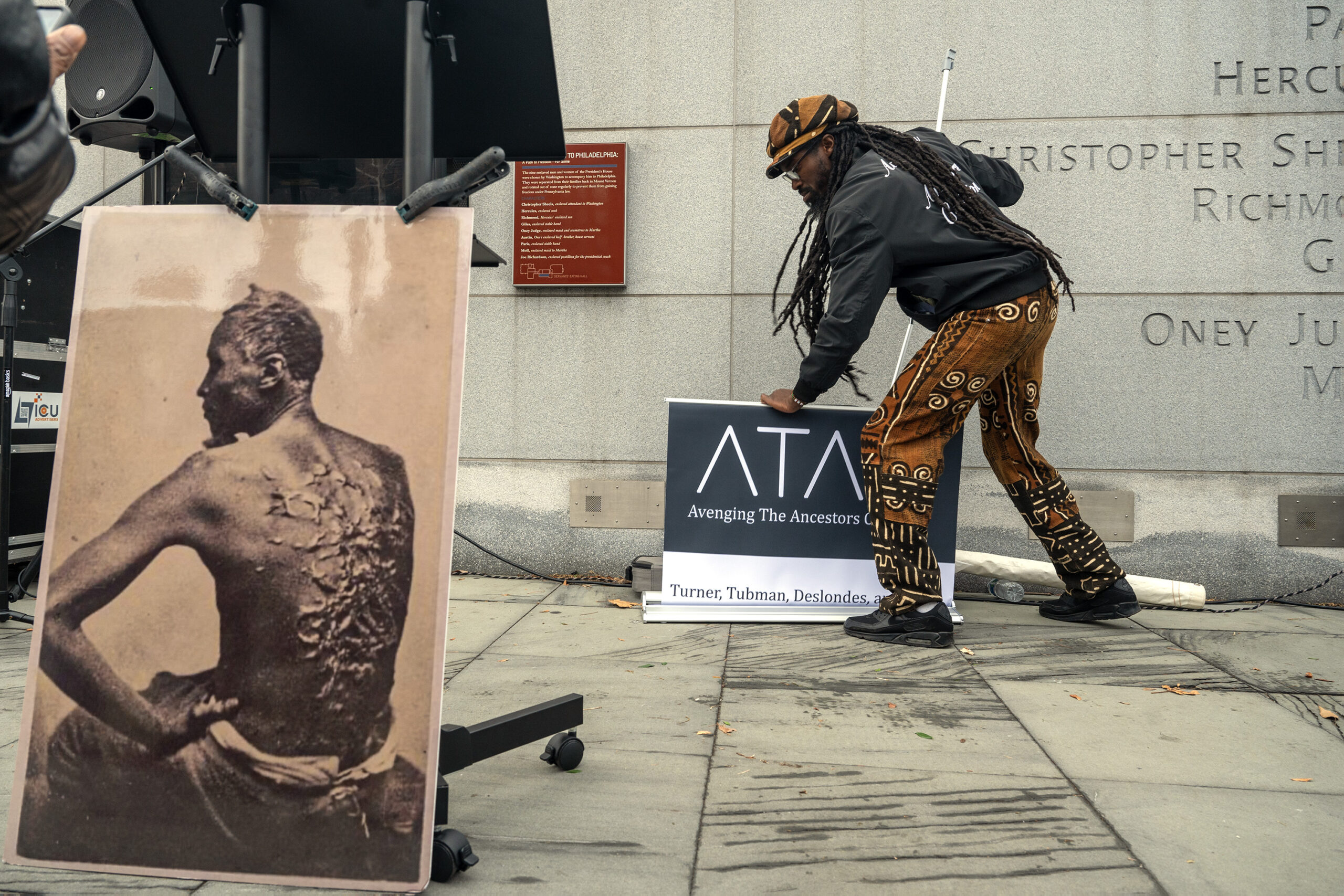
Farugh Maat, with Avenging the Ancestors, Coalition, takes down signs at the President’s House exhibit following a ceremony on the site Dec. 21, 2025 marking the 15th anniversary of its opening. The photo at left, known as “The Scourged Back” is copy of one that was removed from display at Fort Pulaski National Monument in Georgia following an order from President Trump’s “disparaging” executive order.
The administration’s deadline came and went. We got tips that signs had been altered, but I checked, and nothing actually happened. Until Thursday.
I was on assignment near Independence Hall, and as always, walked through the President’s House. It was quiet except for a local TV news crew using Independence Mall as a location for their report on this weekend’s coming winter storm.
Later while editing that assignment, we got a tip that workers with tape measures where looking and poking around “behind the panels” there. I rushed down where my colleague Maggie Prosser was already asking them what they were up to.
I photographed the entire removal, and was joined by photographer Elizabeth Robertson who even made an overall photo from our newsroom overlooking the site.
Finally, I ended up returning after dark, just because.
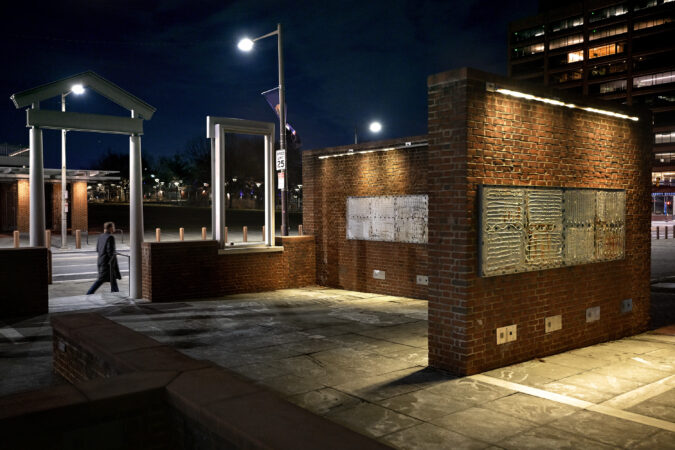
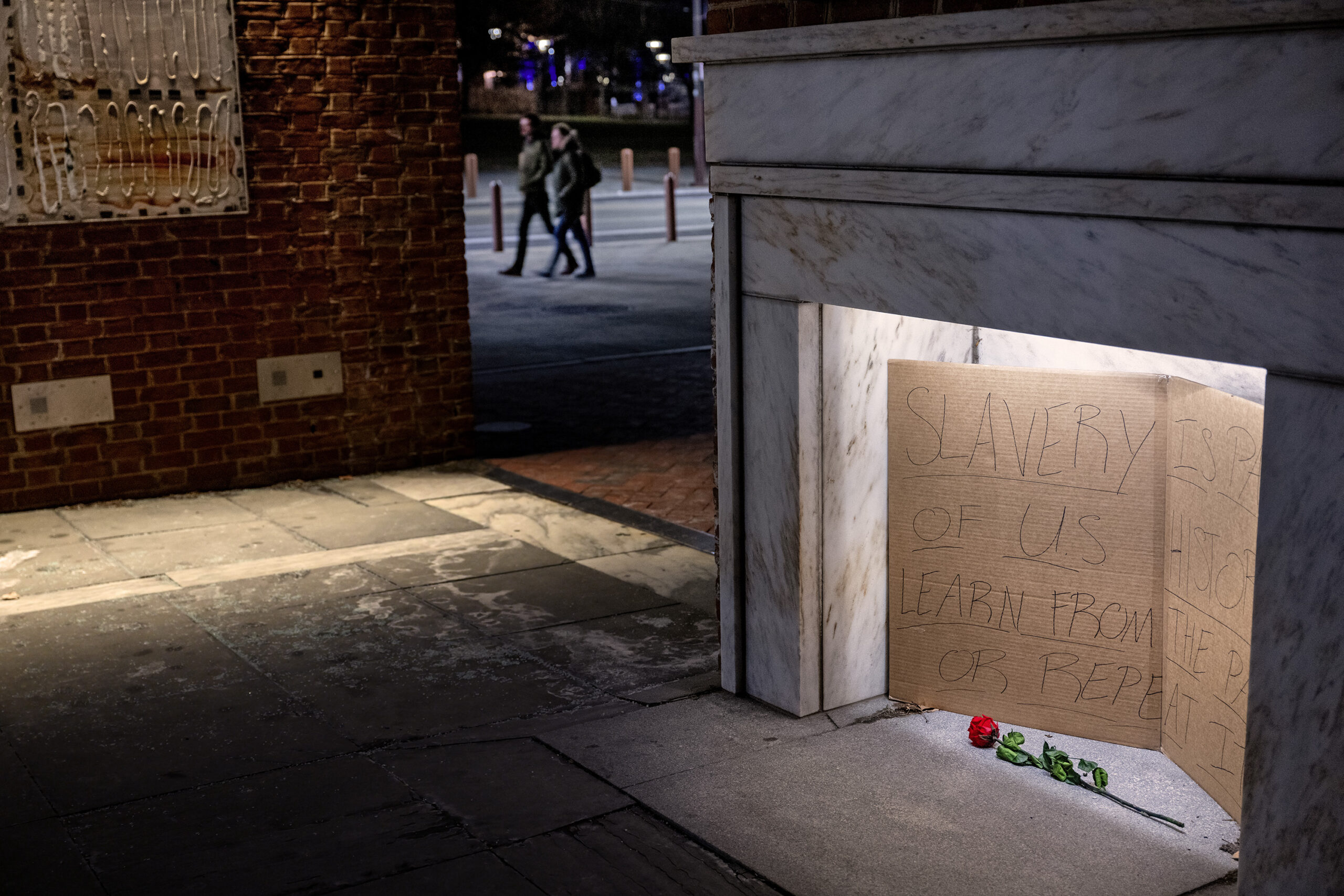
A single rose and a handwritten cardboard sign – “Slavery is part of U.S. history learn from the past of repeat it”- are inside an empty hearth at the President’s House site Thursday night, Jan. 22, 2026 after workers removed display panels.
Since 1998 a black-and-white photo has appeared every Monday in staff photographer Tom Gralish’s “Scene Through the Lens” photo column in the print editions of The Inquirer’s local news section. Here are the most recent, in color:
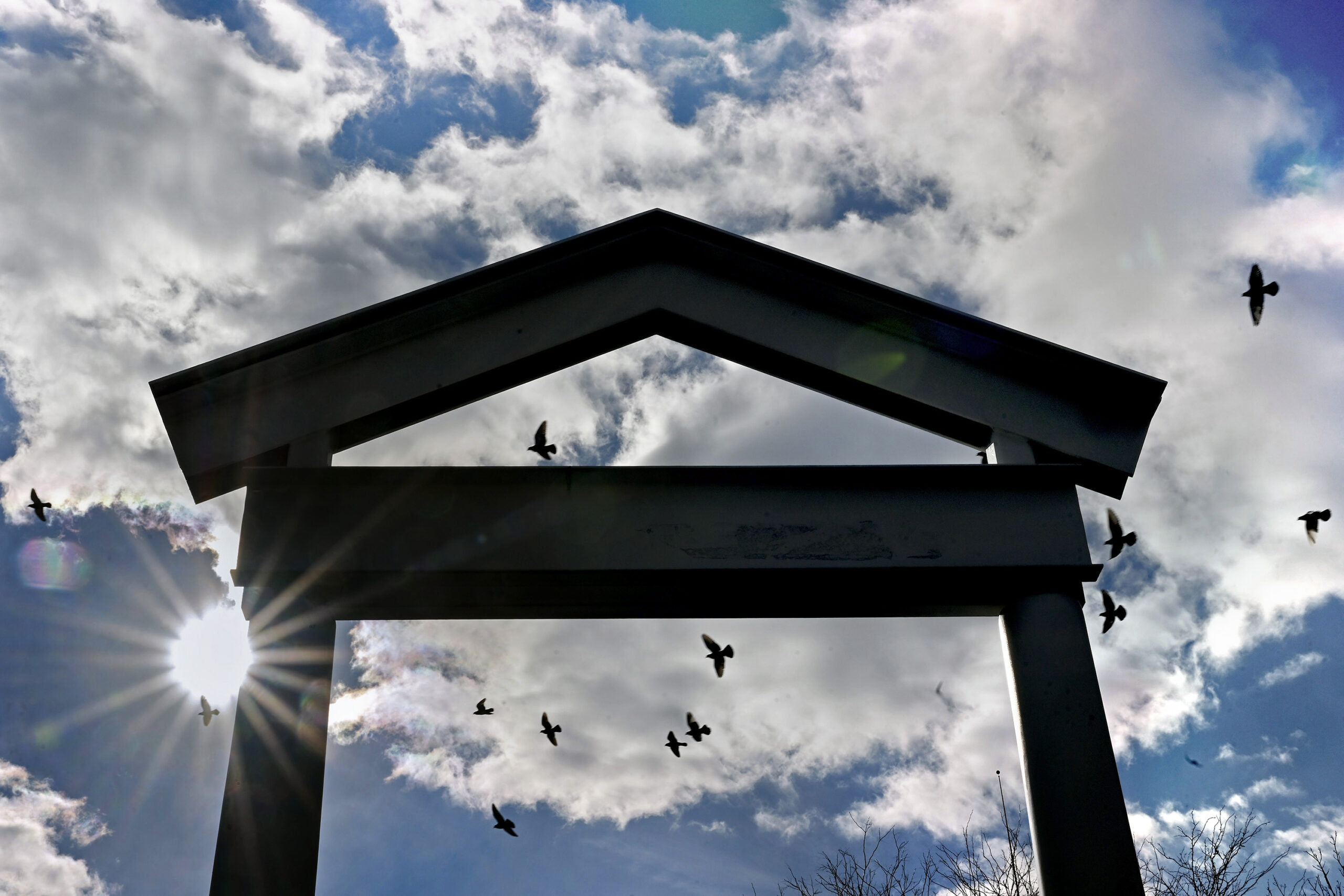
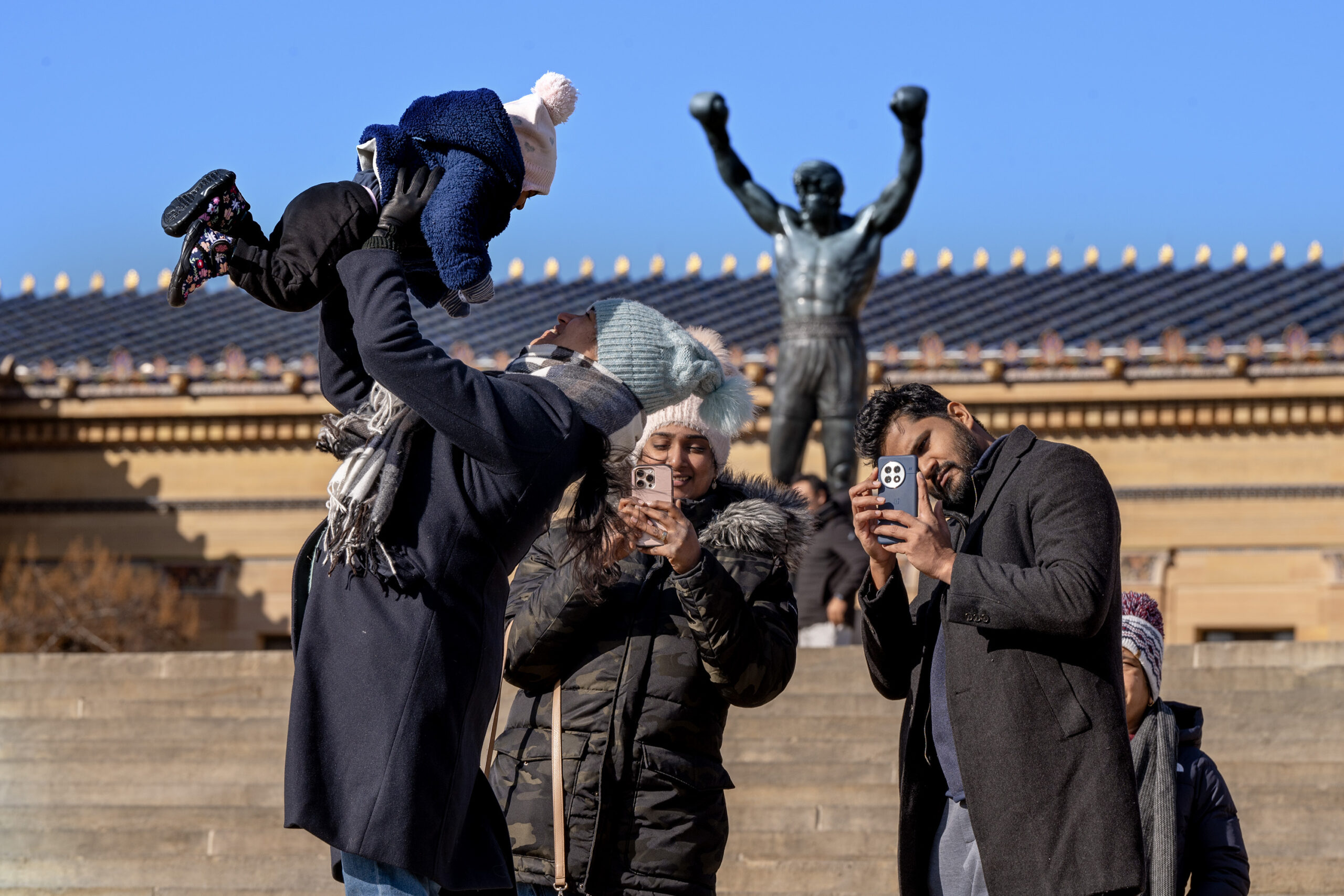
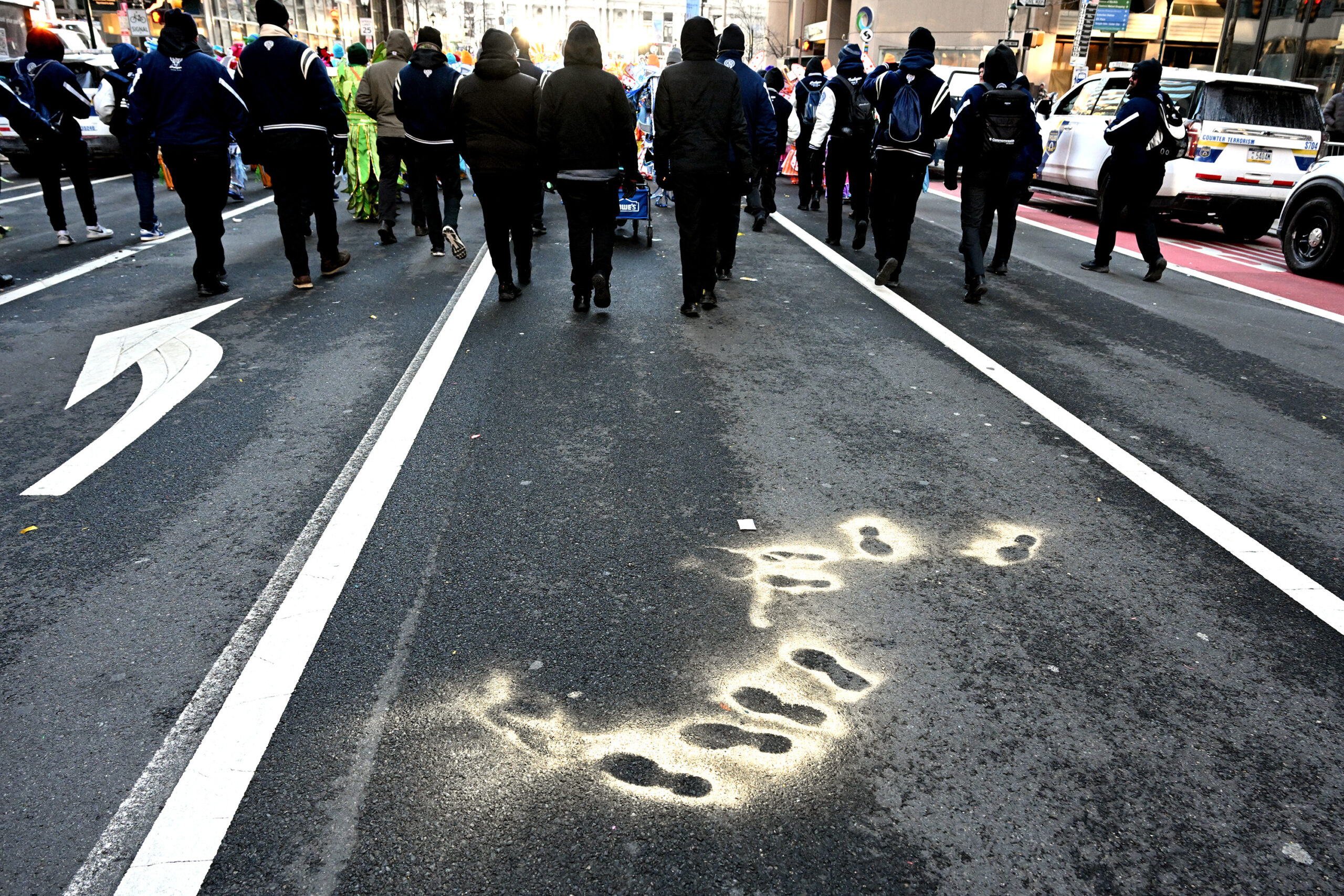
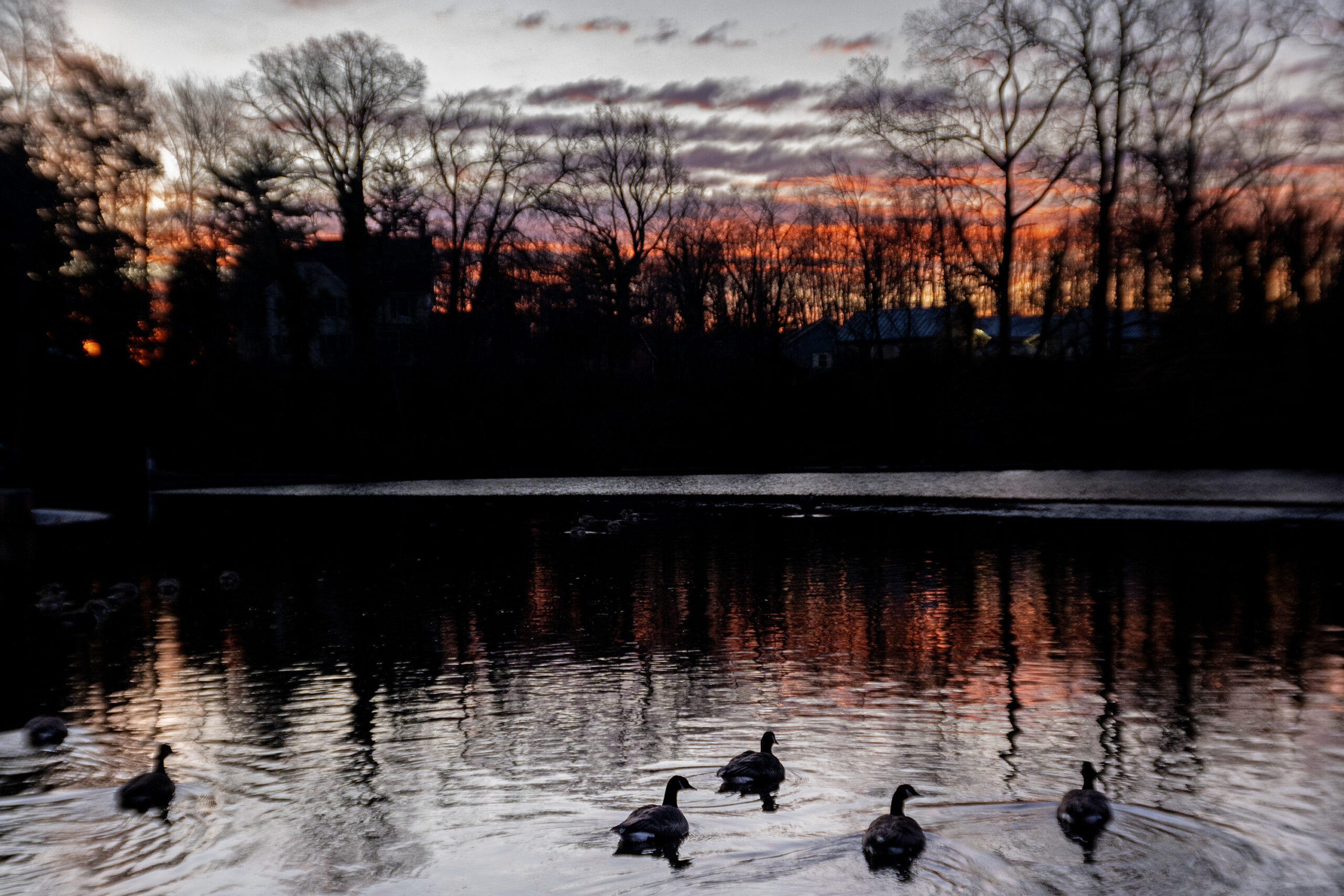
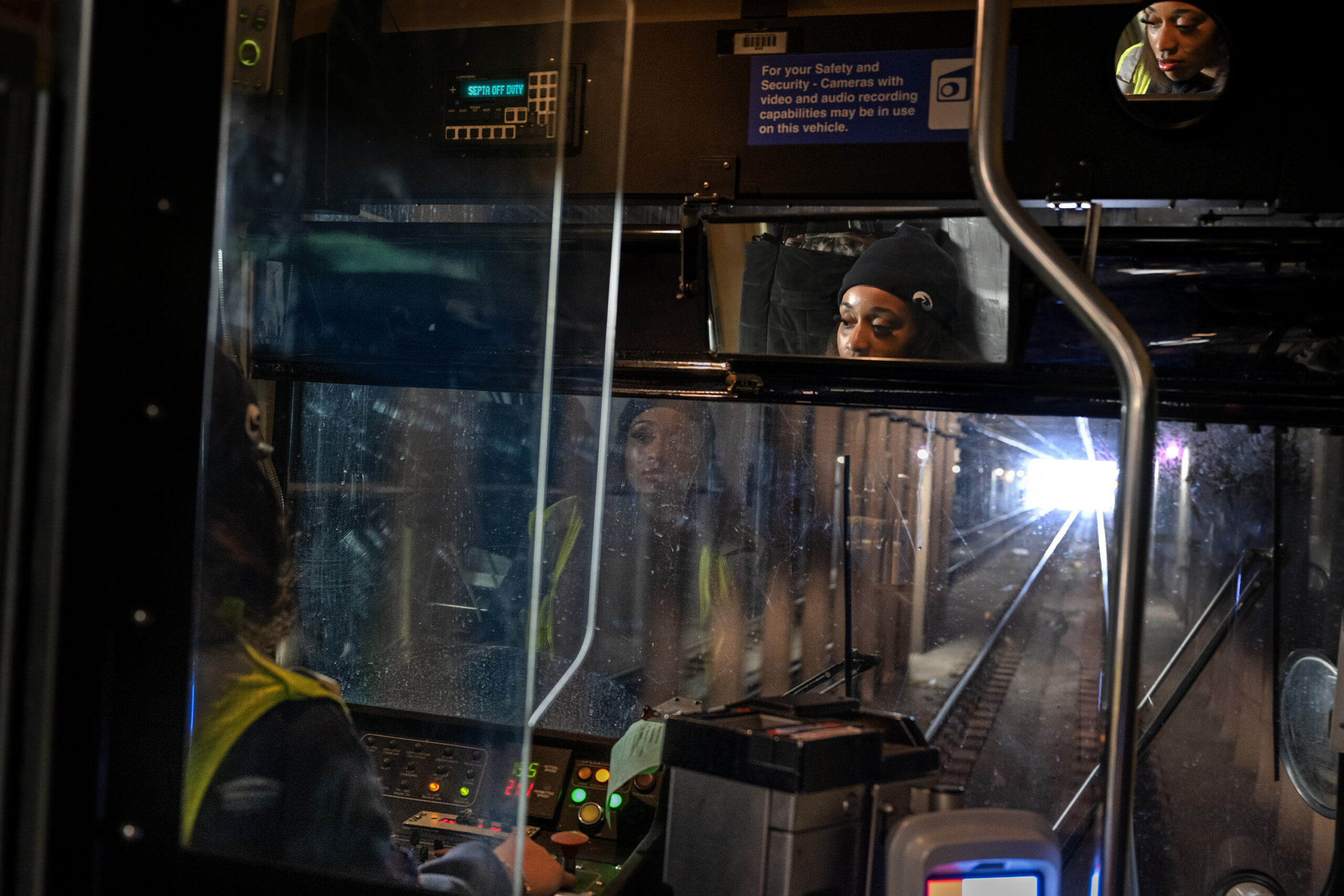
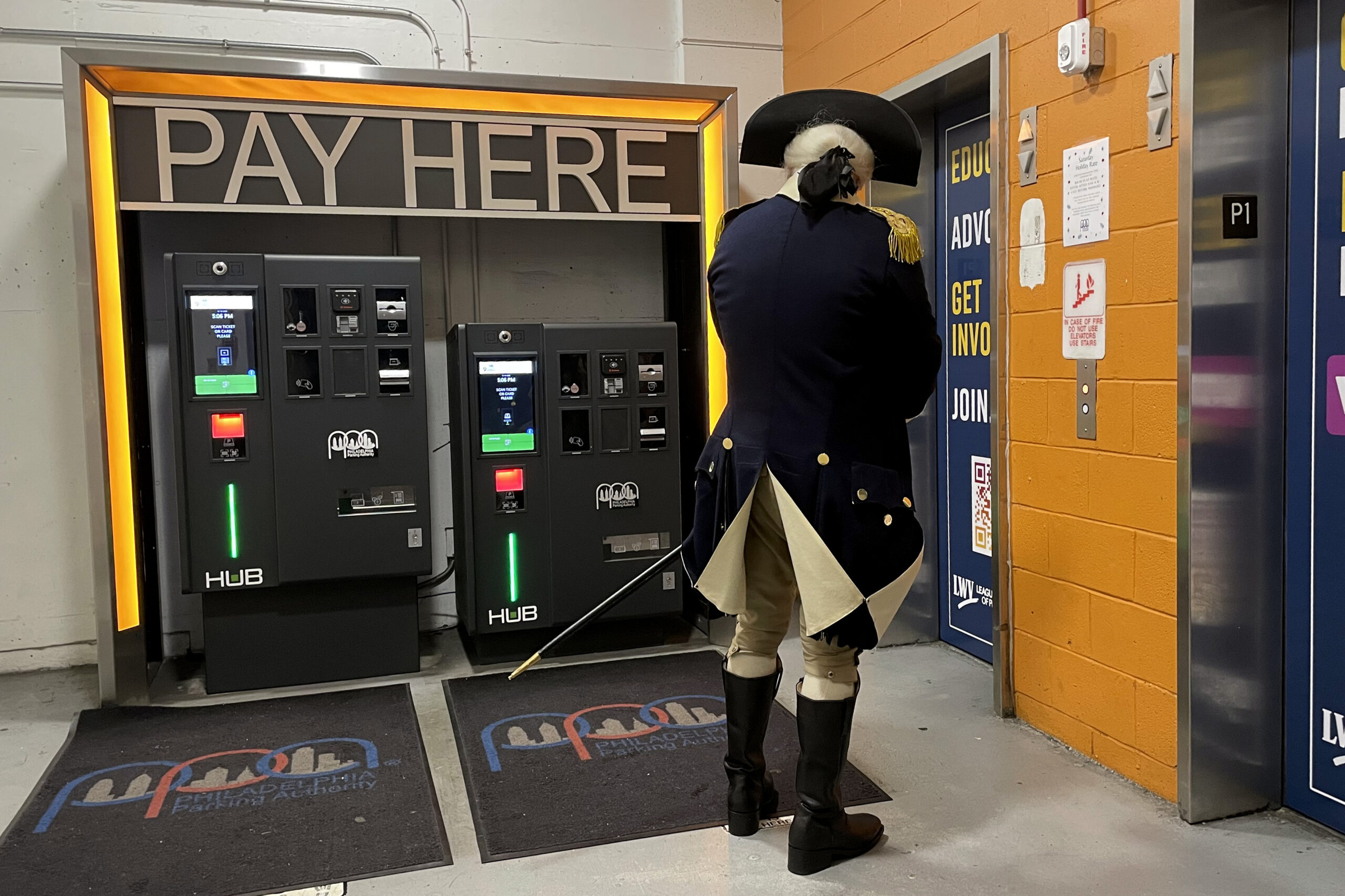
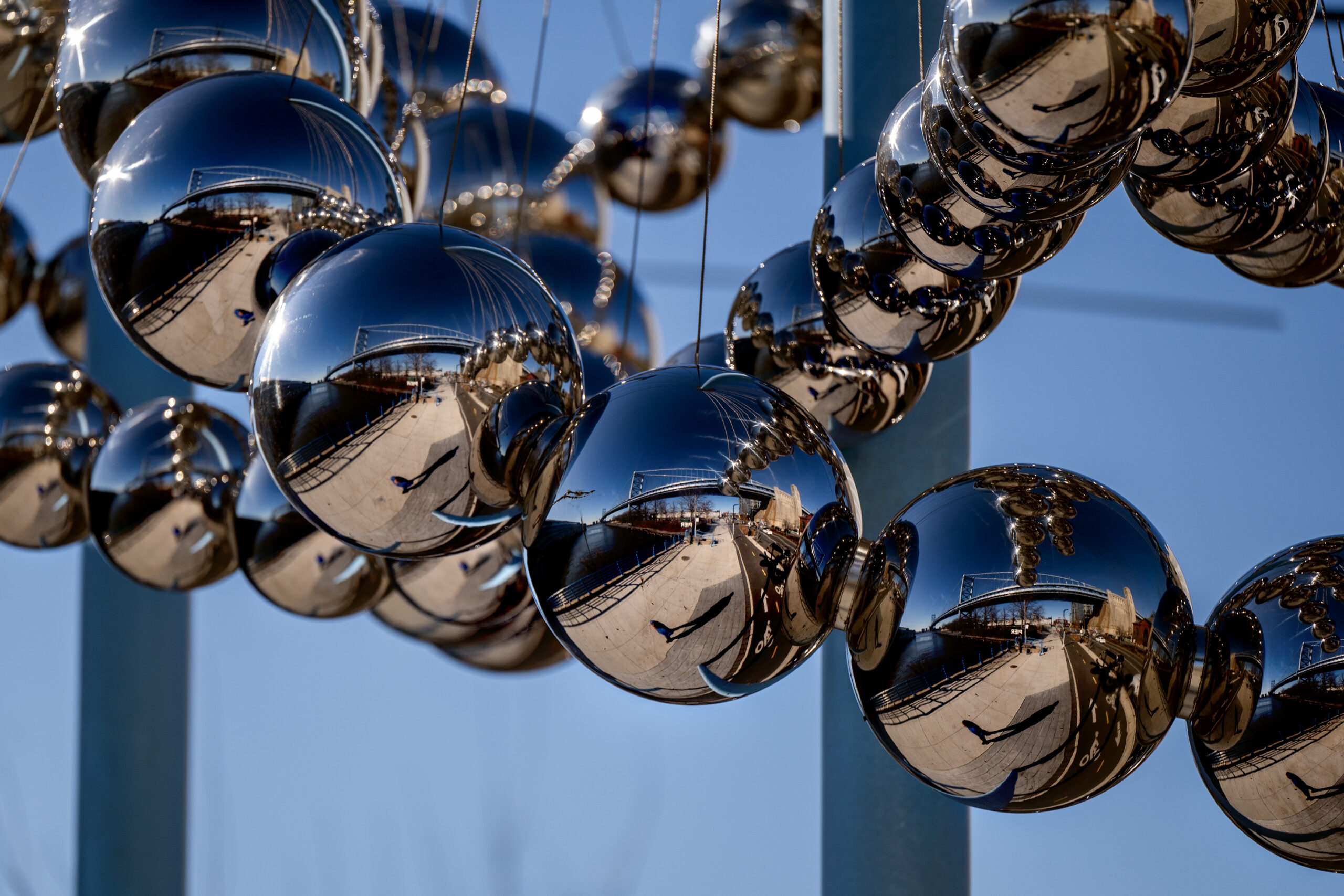
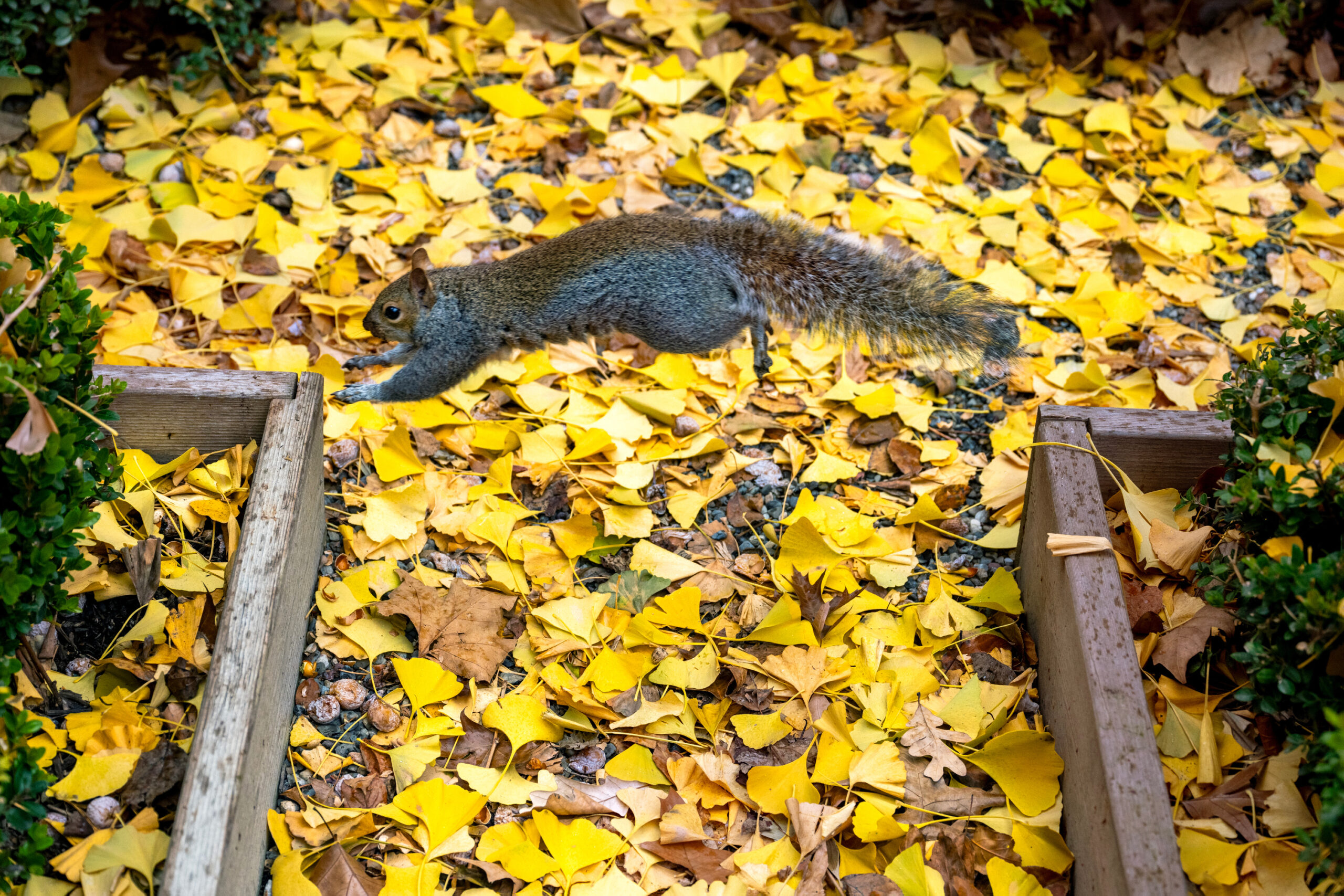
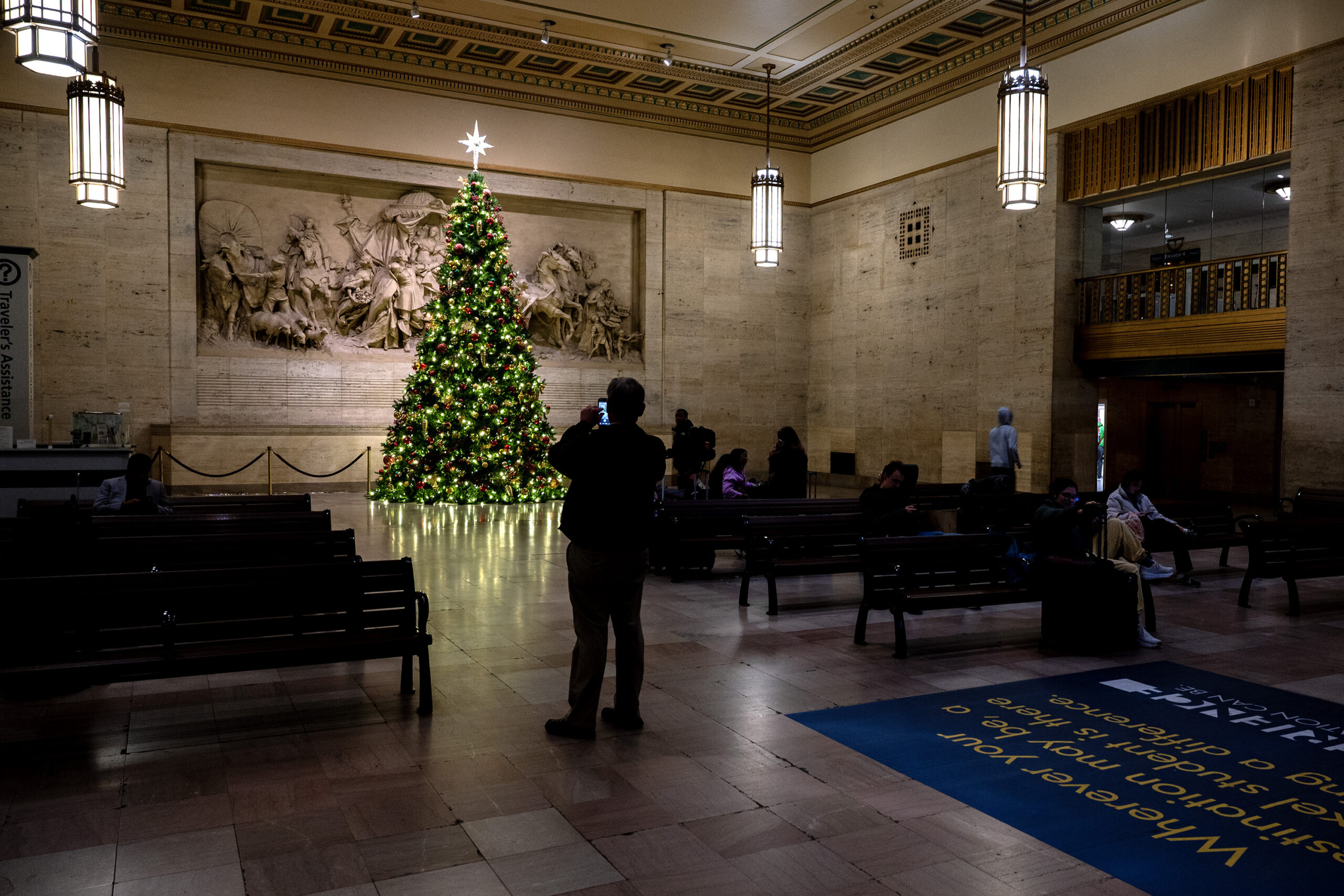
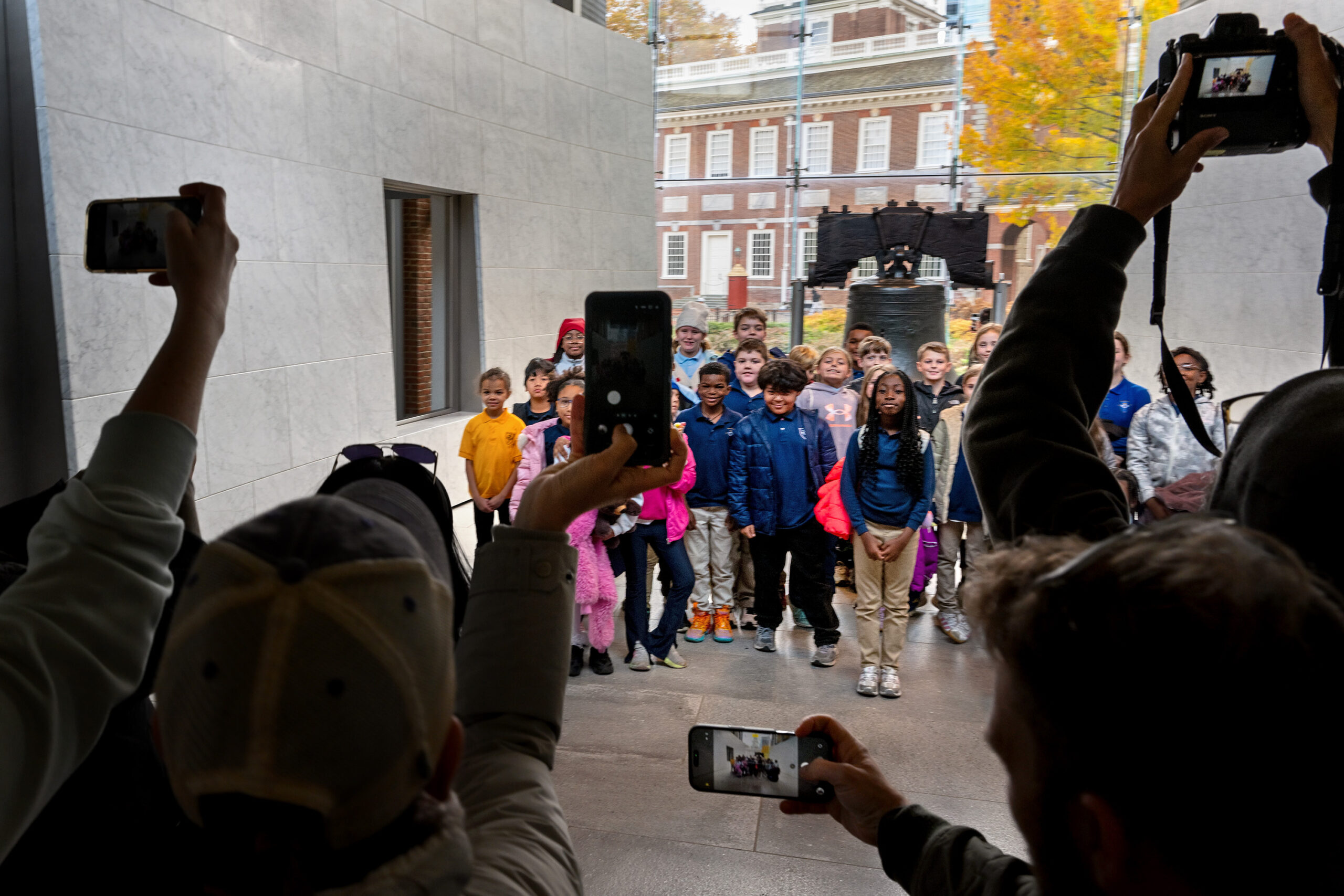
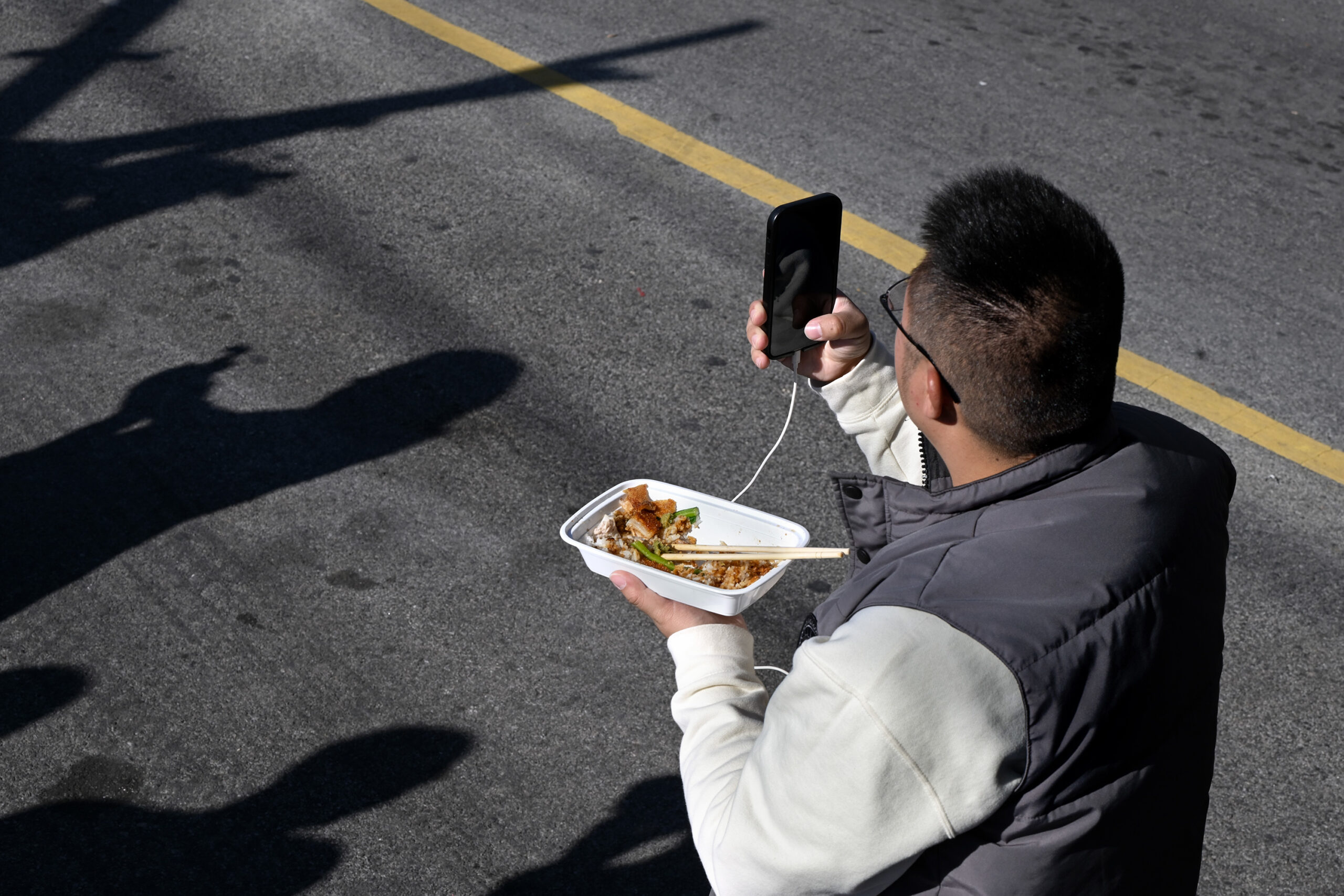
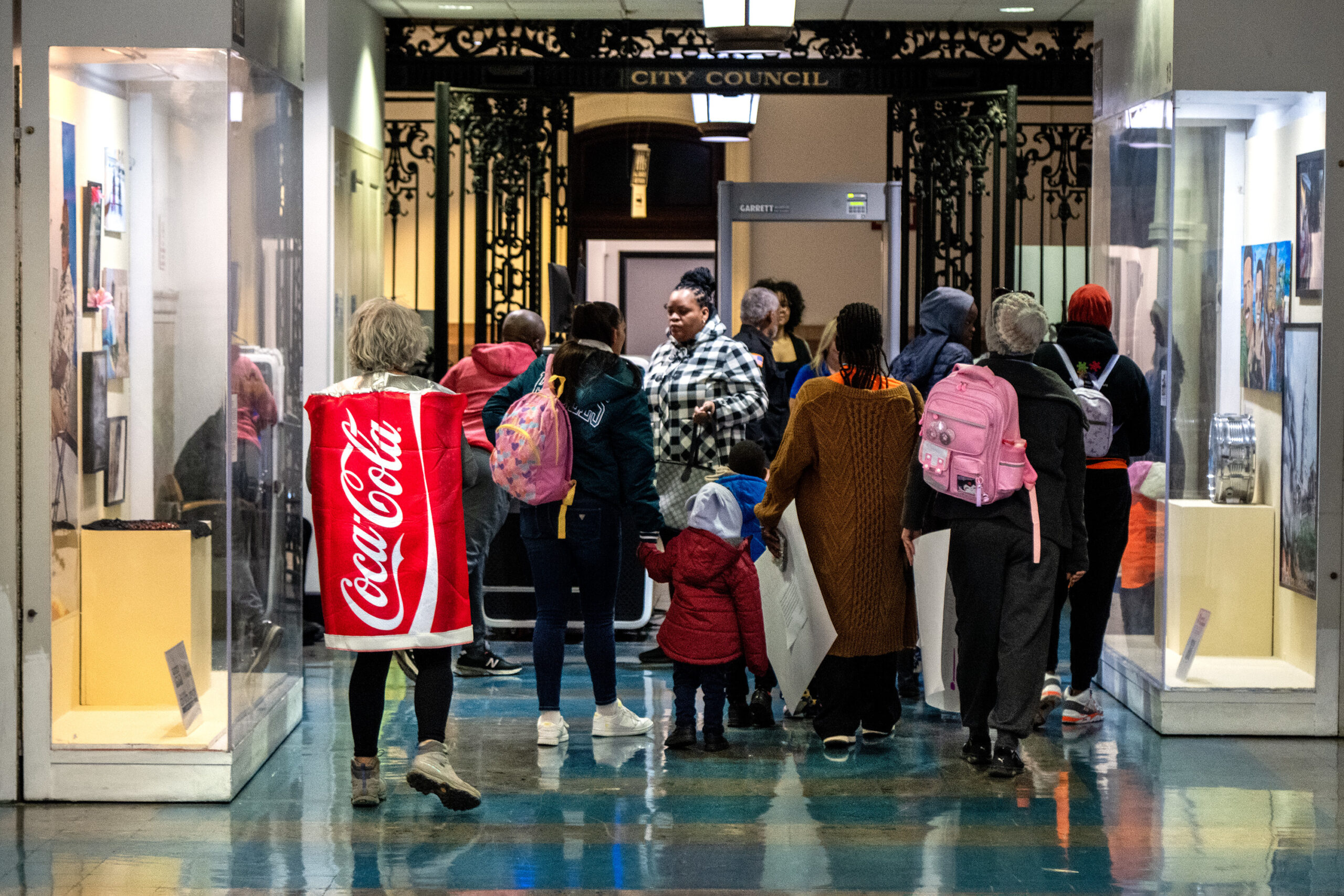
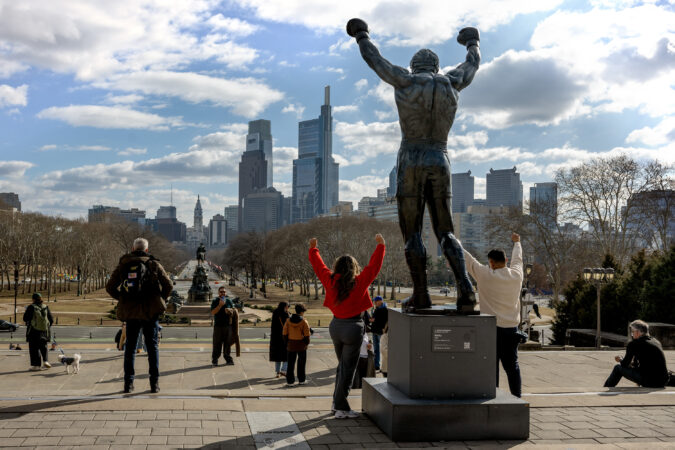
January 19, 2026: A low-in-the-sky winter sun is behind the triangular pediment of the “front door” of the open-air President’s House installation in Independence National Historical Park. The reconstructed “ghost” structure with partial walls and windows of the Georgian home known in the 18th century as 190 High St. is officially titled, “Freedom and Slavery in the Making of a New Nation” (2010). It is designed to give visitors a sense of the house where the first two presidents of the United States, George Washington and John Adams, served their terms of office. The commemorative site designed by Emanuel Kelly, with Kelly/Maiello Architects, pays homage to nine enslaved people of African descent who were part of the Washington household with videos scripted by Lorene Cary and directed by Louis Massiah. Deepika Iyer holds her niece Ira Samudra aloft in a Rockyesque pose, while her parents photograph their 8 month-old daughter, in front of the famous movie prop at the top of the steps at the Philadelphia Art Museum. Iyer lives in Philadelphia and is hosting a visit by her mother Vijayalakshmi Ramachandran (partially hidden); brother Gautham Ramachandran; and her sister-in-law Janani Gautham who all live in Bangalore, India.January 5, 2026: Parade marshals trail behind the musicians of the Greater Kensington String Band heading to their #9 position start in the Mummers Parade. Spray paint by comic wenches earlier in the day left “Oh, Dem Golden Slippers” shadows on the pavement of Market Street. This year marked the 125th anniversary of Philly’s iconic New Year’s Day celebration.Dec. 29, 2025: Canada geese at sunrise in Evans Pond in Haddonfield, during the week of the Winter Solstice for the Northern Hemisphere. December 22, 2025: SEPTA trolley operator Victoria Daniels approaches the end of the Center City Tunnel, heading toward the 40th Street trolley portal after a tour to update the news media on overhead wire repairs in the closed tunnel due to unexpected issues from new slider parts.December 15, 2025: A historical interpreter waits at the parking garage elevators headed not to a December crossing of the Delaware River, but an event at the National Constitution Center. General George Washington was on his way to an unveiling of the U.S. Mint’s new 2026 coins for the Semiquincentennial, December 8, 2025: The Benjamin Franklin Bridge and pedestrians on the Delaware River Trail are reflected in mirrored spheres of the “Weaver’s Knot: Sheet Bend” public artwork on Columbus Boulevard. The site-specific stainless steel piece located between the Cherry Street and Race Street Piers was commissioned by the City’s Public Art Office and the Delaware River Waterfront Corporation and created and installed in 2022 by the design and fabrication group Ball-Nogues Studio. The name recalls a history that dominated the region for hundreds of years. “Weaver’s knot” derives from use in textile mills and the “Sheet bend” or “sheet knot” was used on sailing vessels for bending ropes to sails. November 29, 2025: t’s ginkgo time in our region again when the distinctive fan-shaped leaves turn yellow and then, on one day, lose all their leaves at the same time laying a carpet on city streets and sidewalks. A squirrel leaps over leaves in the 18th Century Garden in Independence National Historical Park Nov. 25, 2025. The ginkgo (Ginkgo biloba) is considered a living fossil as it’s the only surviving species of a group of trees that existed before dinosaurs. Genetically, it has remained unchanged over the past 200 million years. William Hamilton, owner the Woodlands in SW Phila (no relation to Alexander Hamilton) brought the first ginkgo trees to North America in 1785.November 24, 2025: The old waiting room at 30th Street Station that most people only pass through on their way to the restrooms has been spiffed up with benches – and a Christmas tree. It was placed there this year in front of the 30-foot frieze, “The Spirit of Transportation” while the lobby of Amtrak’s $550 million station restoration is underway. The 1895 relief sculpture by Karl Bitter was originally hung in the Broad Street Station by City Hall, but was moved in 1933. It depicts travel from ancient to modern and even futuristic times. November 17, 2025: Students on a field trip from the Christian Academy in Brookhaven, Delaware County, pose for a group photo in front of the Liberty Bell in Independence National Historical Park on Thursday. The trip was planned weeks earlier, before they knew it would be on the day park buildings were reopening after the government shutdown ended. “We got so lucky,” a teacher said. Then corrected herself. “It’s because we prayed for it.” November 8, 2025: Multitasking during the Festival de Día de Muertos – Day of the Dead – in South Philadelphia.November 1, 2025: Marcy Boroff is at City Hall dressed as a Coke can, along with preschoolers and their caregivers, in support of former Mayor Jim Kenney’s 2017 tax on sweetened beverages. City Council is considering repealing the tax, which funds the city’s pre-K programs. October 25, 2025: Austin Gabauer, paint and production assistant at the Johnson Atelier, in Hamilton Twp, N.J. as the finished “O” letter awaits the return to Philadelphia. The “Y” part of the OY/YO sculpture is inside the painting booth. The well-known sculpture outside the Weitzman National Museum of American Jewish History was removed in May while construction continues on Market Street and has been undergoing refurbishment at the Atelier at the Grounds for Sculpture outside of Trenton.October 20, 2025:The yellow shipping container next to City Hall attracted a line of over 300 people that stretched around a corner of Dilworth Park. Bystanders wondered as they watched devotees reaching the front take their selfies inside a retro Philly diner-esque booth tableau. Followers on social media had been invited to “Climb on to immerse yourself in the worlds of Pleasing Fragrance, Big Lip, and exclusive treasures,” including a spin of the “Freebie Wheel,” for products of the unisex lifestyle brand Pleasing, created by former One Direction singer Harry Styles.
Rocky already has a perfectly good spot. People find it. They take photos. They run the steps. They leave happy. The city gets its tourism moment without blocking views, rerouting pedestrians, or turning the top of the Art Museum steps into a permanent selfie bottleneck.
Moving the statue to the top isn’t about improving the experience — it’s about maximizing it. More drama. More branding. More spectacle. And, quietly, more privatization of space that used to just be… there.
That’s the part that grates. The Art Museum grounds have been slowly filling up with things that make sense individually — pop-ups, shops, events, installations — but collectively start to feel like you need a reason, a ticket, or a purchase to exist there. Rocky at the top isn’t just a statue move; it’s another inch taken from a public place that worked fine as-is.
There’s also the price tag. Spending up to a quarter-million dollars to relocate a movie prop in a city that can’t reliably maintain sidewalks or fund its parks feels, at best, tone-deaf. At worst, it sends the message that the view matters more than access.
Rocky is supposed to represent the everyman. Putting him on a pedestal, literally, kind of misses the point.
Leave him where he is. Let the steps belong to everyone.
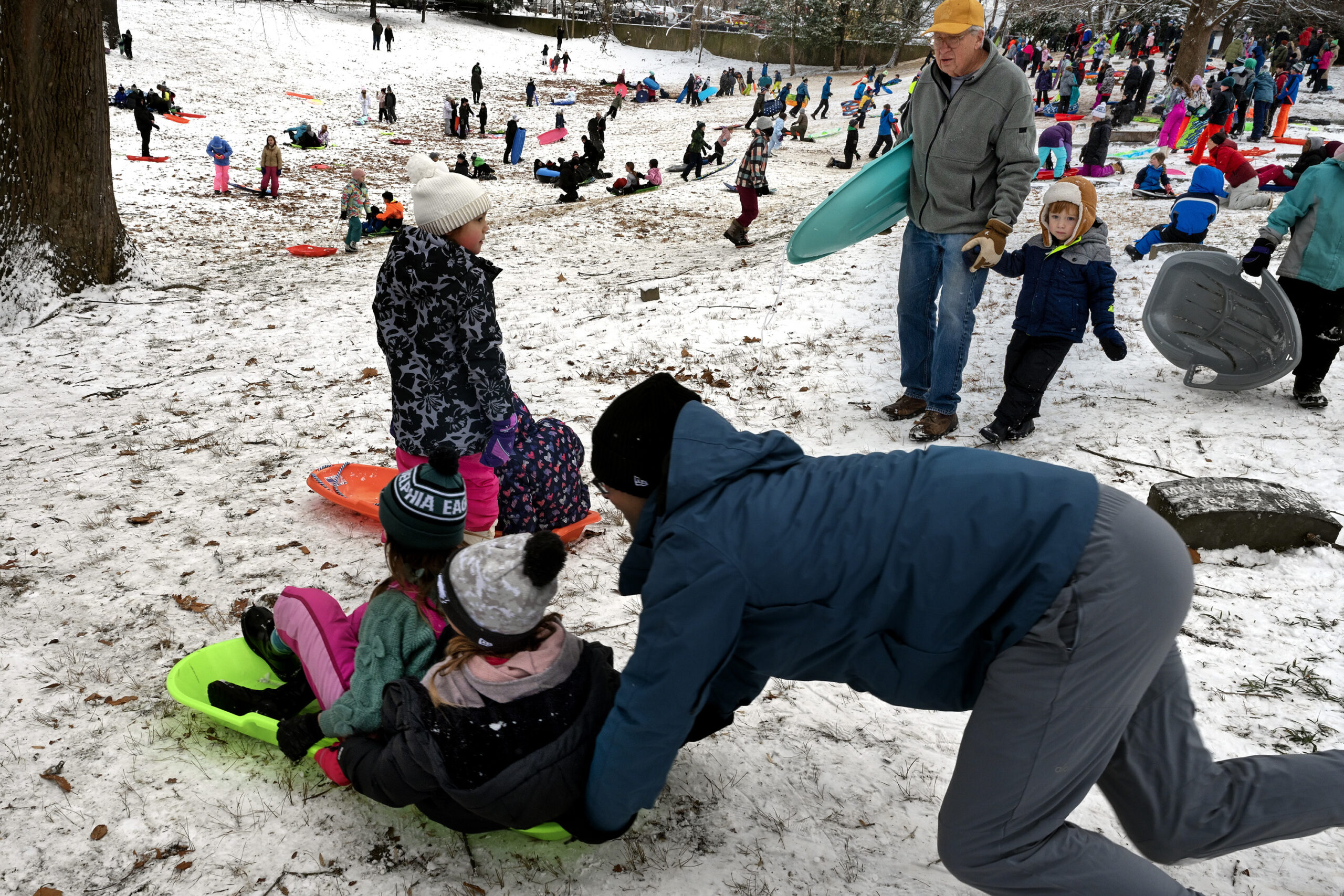
Doug Taylor (center) of Collingswood, sledding with his 3-1/2 year old grandson Will, waits for a space to open up on the crowded hill in the Haddonfield Friends Meeting cemetery on Jan. 6, 2025. “This is the best day ever!” said Will, about his first real experience with snow.
Snow is beautiful. Everything else about it is not: A for the initial excitement and beauty, F for the cleanup
The snow itself? Gorgeous. Magical. Instagrammable. The Wissahickon is about to look like a snow globe and for about 12 minutes, we will all pretend winter is charming.
The problem is everything that comes with it.
The grocery stores are already stripped bare like a snowstorm personally offended them. Bread is gone. Milk is gone. Eggs are gone. Somehow the rotisserie chickens are gone. People who have never once made French toast are suddenly preparing for a weeklong siege.
Then there’s the shoveling. The bending. The freezing. The part where you convince yourself it won’t be that bad and then immediately regret every life choice once your boots hit the sidewalk. And that’s before you remember some forecasts are floating numbers as high as 17 inches.
Group chats will fill with radar screenshots and passive-aggressive optimism. “Let’s see how it looks Sunday morning,” someone will say, knowing full well no one is leaving the house.
And yes, we’re all rooting for the plows. We always do. We say their names like prayers. We lower our expectations just enough to avoid heartbreak, but not enough to stop hoping.
An F because while snow may be pretty, it is also disruptive, exhausting, and a logistical nightmare that turns adults into meteorologists and grocery shoppers into survivalists. Enjoy the view. Then grab a shovel.
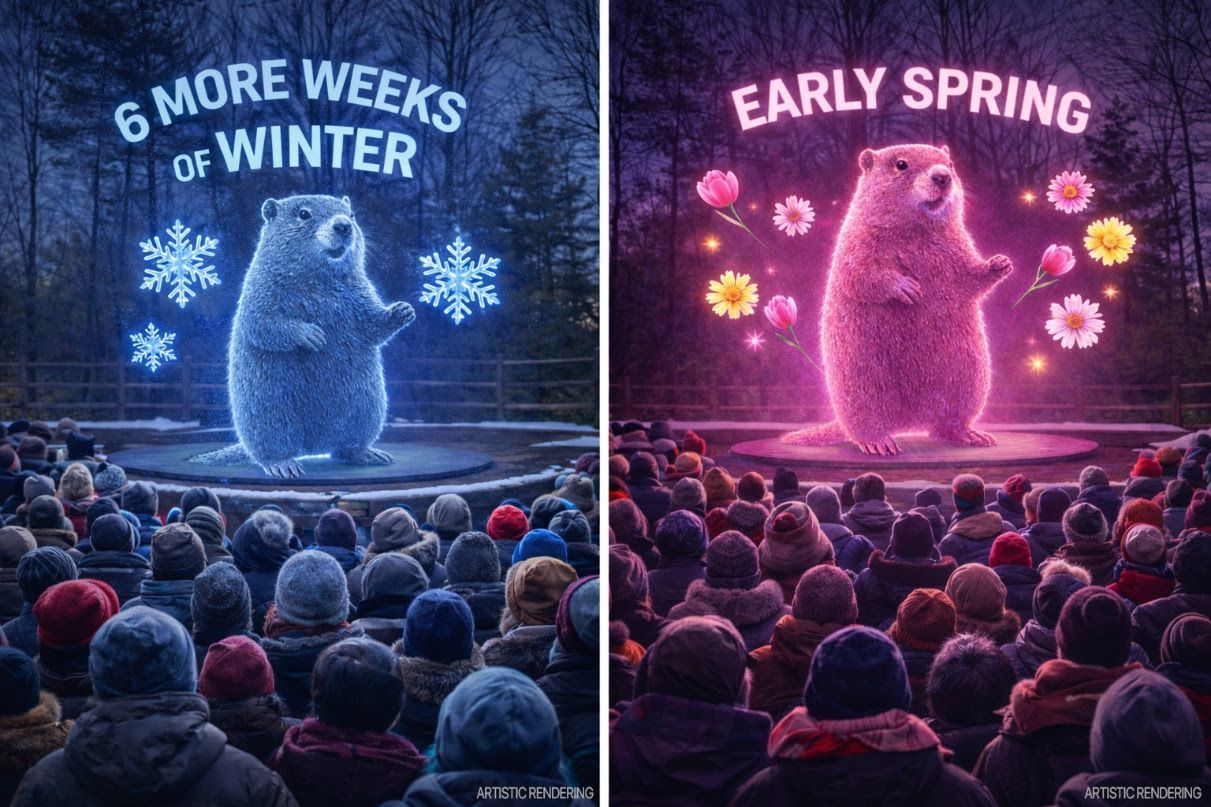
An artistic rendering of the hologram PETA is offering to replace Punxsutawney Phil.
PETA wants Punxsutawney Phil replaced with a hologram. Pennsylvania says absolutely not: A
Every January, right on schedule, PETA shows up with a new proposal to fix Groundhog Day. And every January, Pennsylvania responds with the same energy it reserves for people who suggest putting ketchup on a cheesesteak.
This year’s idea: Retire Punxsutawney Phil to a sanctuary and replace him with a massive, color-changing 3D hologram. A digital marmot. A Bluetooth rodent. Phil, but make it Coachella.
The problem isn’t animal welfare — it’s that Groundhog Day is not a TED Talk. It’s a pre-dawn ritual involving cold fingers, bad coffee, and a collective agreement to believe in something deeply unserious. Turning Phil into a hologram misses the point entirely. If people wanted a clean, efficient, high-tech weather forecast, they would simply look at their phones and go back to bed.
The most Pennsylvania response came from Josh Shapiro, who posted a photo of Phil with “DON’T TREAD ON ME,” effectively summarizing the state constitution in four words. This is not a debate about projections versus puppets. It’s about tradition versus disruption, and Pennsylvania will pick tradition every time, even when it makes no sense.
Phillies pitcher Ranger Suárez throws during the third inning of Game 3 of baseball’s NLDS against the Los Angeles Dodgers Wednesday, Oct. 8, 2025, in Los Angeles.
Wait, we loved Ranger Suárez. How did we get his name wrong?: C
This one landed like finding out you’ve been calling a close friend by the wrong nickname for years… not out of malice, just momentum.
Because Philly didn’t just like Ranger Suárez. Philly loved him. He was homegrown. Trusted. October-tested. His walk-up song was literally “Mr. Rager.” We chanted it. We printed it. We built a whole vibe around it. And somehow, in all that time, nobody stopped to say, “Hey, by the way, is this right?”
The funny part is that this revelation didn’t come with tension or correction. It came with grace. Of course it did. Suárez wasn’t scolding anyone. He wasn’t reclaiming anything. He was just explaining, gently, to a new city, while reassuring the old one that we didn’t need to panic.
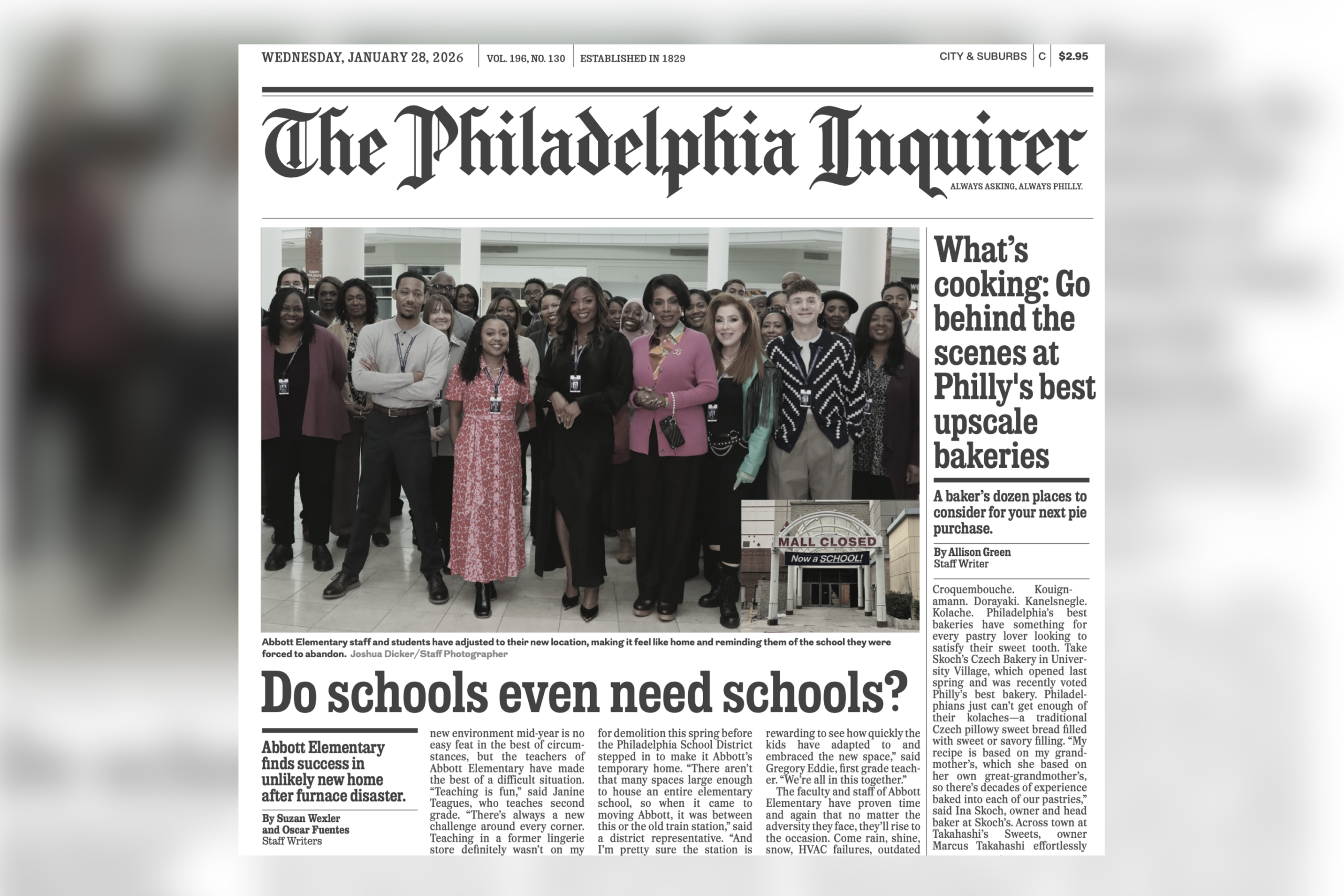
A mock front page of the Philadelphia Inquirer as seen in Season 5 of “Abbott Elementary.”
‘Abbott Elementary’ puts The Inquirer on the front page and nails the vibe: A
This could’ve gone sideways fast. A fictional front page cameo is exactly the kind of thing that can feel smug, indulgent, or weirdly self-important.
In this week’s episode, the paper shows up to cover Abbott’s unexpected success while the school operates out of an abandoned mall. The headline is glowing. The teachers react. Janine beams. Melissa checks whether her quote made it in. Barbara does a victory lap. And then, crucially, the moment passes.
Because in Philly, a front page is not the finish line. It’s a moment.
The district still drags its feet. The construction crew gets reassigned. The attention becomes something administrators can point to instead of acting on. That’s the joke, and it’s a sharp one. Abbott understands that recognition often arrives right before progress stalls, not when it accelerates.
The Four Seasons drops a $25,000-a-night penthouse and Philly blinks twice: B-
Look, nobody is confused about who this is for. It’s still jarring to see the number written down.
For that price, you get 4,000 square feet, sweeping views, curated art, wellness rooms, and menus tied to Vernick Fish and Jean-Georges. Luxury, in other words, is being taken extremely seriously.
And to be fair, this makes sense on paper. Philly is bracing for a monster tourism year with the World Cup, the Semiquincentennial, and a calendar stuffed to the margins. High-end visitors are coming, and the city would like to make sure they don’t stay in New York and commute down like it’s a day trip.
Still, there’s something very Philly about the collective reaction here, which is less awe than quiet disbelief. Not outrage. Not moral panic. Just a pause, followed by: Who is actually booking this?
Because this is a city where luxury tends to coexist awkwardly with reality. A $25,000-a-night penthouse sits a few blocks from potholes, delayed trains, and a whole lot of people who are very proud of finding a good deal.
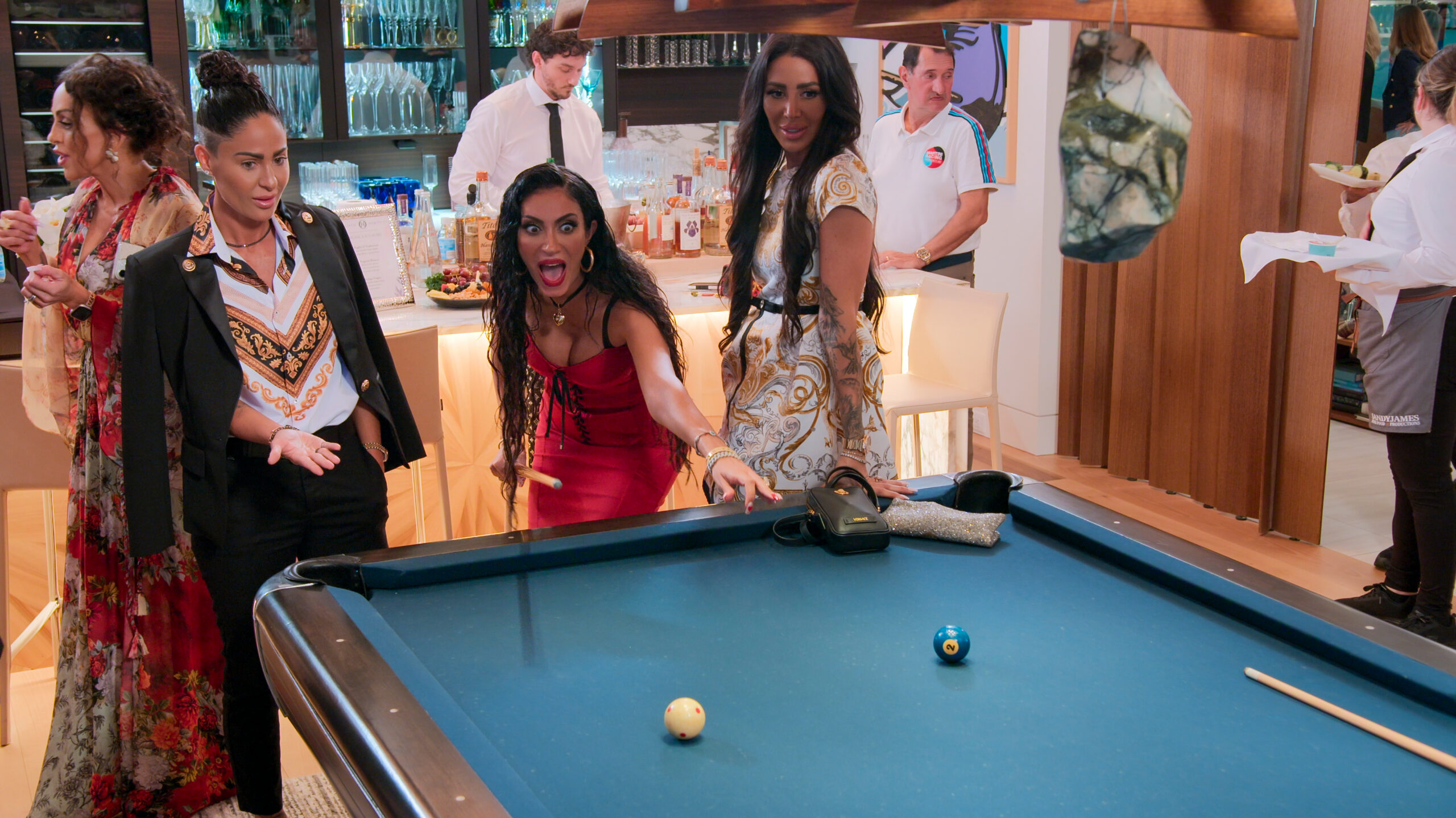
Maria Cozamanis and Romina Ustayev in episode 101 of “Members Only: Palm Beach.”
Philly somehow gets dragged into a Palm Beach reality show: D
This isn’t fun, campy reality TV. It’s stiff, glossy, and deeply invested in rules that feel made up for the sole purpose of excluding someone. The clothes are loud, the behavior is small, and the hierarchy is treated like gospel. Everyone is performing wealth as if it’s a full-time job, and no one seems to be enjoying it.
Set in the orbit of Mar-a-Lago, the show mistakes proximity to power for personality. Conversations revolve around who belongs where, how to dress “properly,” and which customs are acceptable. It’s uncomfortable in a way that feels less accidental than the show probably intends.
The Philly connection only adds to the weirdness. Aside from one recognizable name, these aren’t women who reflect anything most people here recognize as Philly culture. They don’t feel local. They feel imported, like a version of “high society” that got lost on the way to a country club and wandered onto Netflix instead.
And yet, it’s weirdly watchable. Not because it’s good, but because it’s baffling. The kind of show you finish not feeling entertained, just slightly grimy and confused about how this became the vibe.
We’ll show you a photo taken in the Philly-area, you drop a pin where you think it was taken. Closer to the location results in a better score. This week’s theme is all about snow! Good luck!
Round #17
Question 1
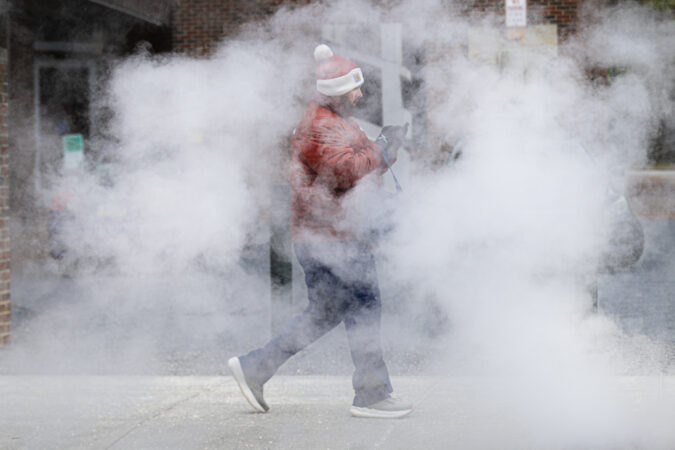
Where is this person waiting for the bus?
Loading…
ClickTap on map to guess the location in the photo
ClickTap again to change your guess and hit submit when you're happy
You will be scored at the end. The closer to the location the better the score
Heather Khalifa / Staff Photographer
Pretty good/Not bad/Way off! Your guess was from the location.Spot on! Your guess was exactly at the location. Here's also where a random selection of Inquirer readers guessed.
Pretty good/Not bad/Way off! Your guess was from the location.Spot on! Your guess was exactly at the location. Here's also where a random selection of Inquirer readers guessed.
This is the Independence Hall hole at the Philly Mini Golf course in Franklin Square Park. Until February 16, the entire course will be Winter themed with lights, seasonal music, and occasional inflatable snowman.
Quiz continues after ad
Question 3
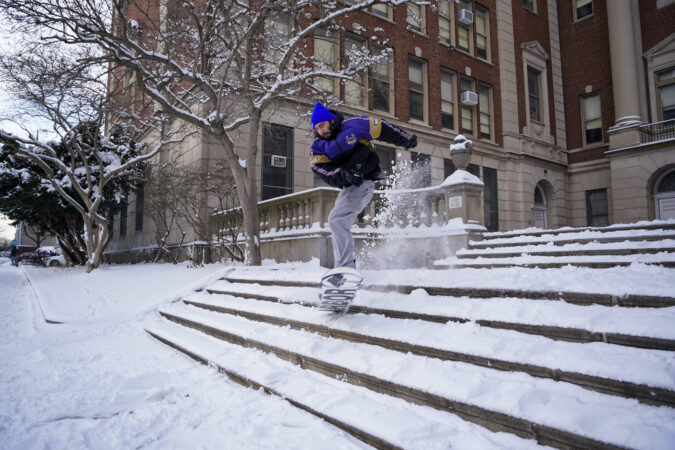
Where are these folks shoveling?
Loading…
Tyger Williams / Staff Photographer
Pretty good/Not bad/Way off! Your guess was from the location.Spot on! Your guess was exactly at the location. Here's also where a random selection of Inquirer readers guessed.
Service workers at the Philadelphia Zoo are shoveling snow on a parking lot near the new “Pherris Wheel.” This new observation wheel that will remain through America’s 250th anniversary celebrations.
Your Score
ARank
Amazing work. A Winter wonderland of knowledge.
BRank
Good stuff. You’re a real snowman.
CRank
C is a passing grade, but you nearly slipped.
DRank
D isn’t great. That was an avalanche of bad answers.
FRank
We don’t want to say you failed, but you didn’t not fail.
You beat % of other Inquirer readers.
We’ll be back next Saturday for another round of Citywide Quest.
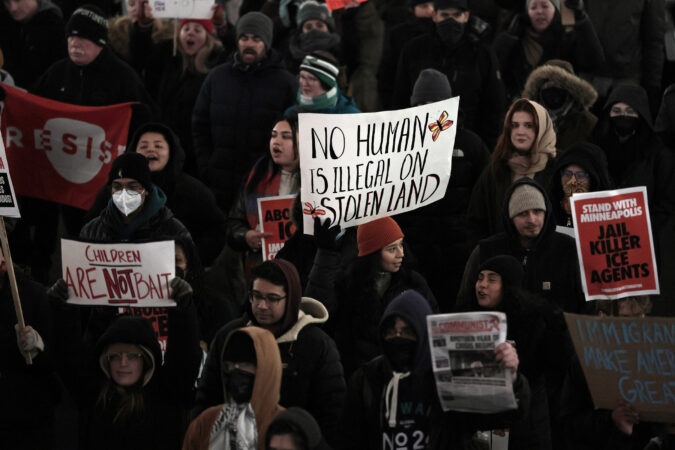
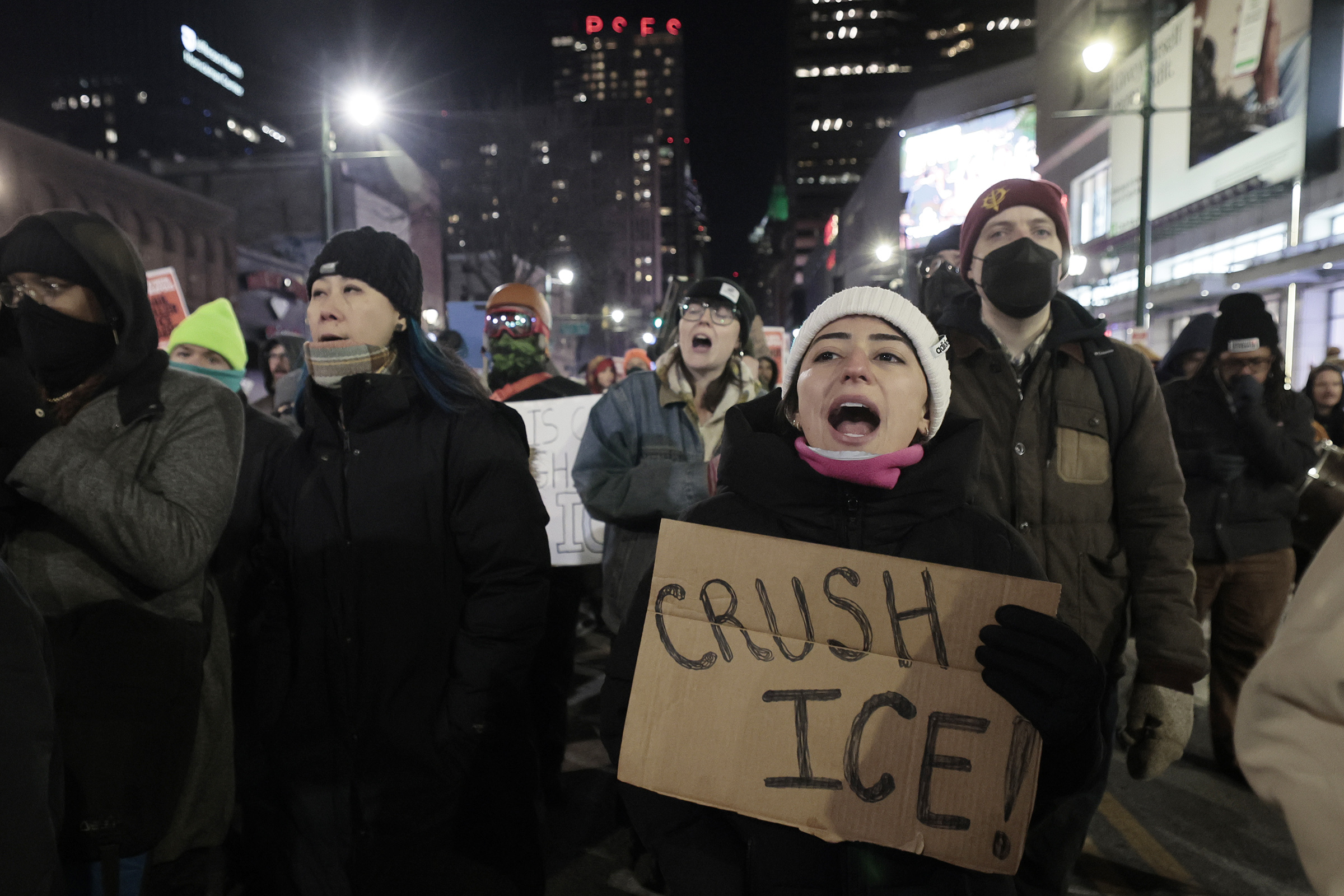
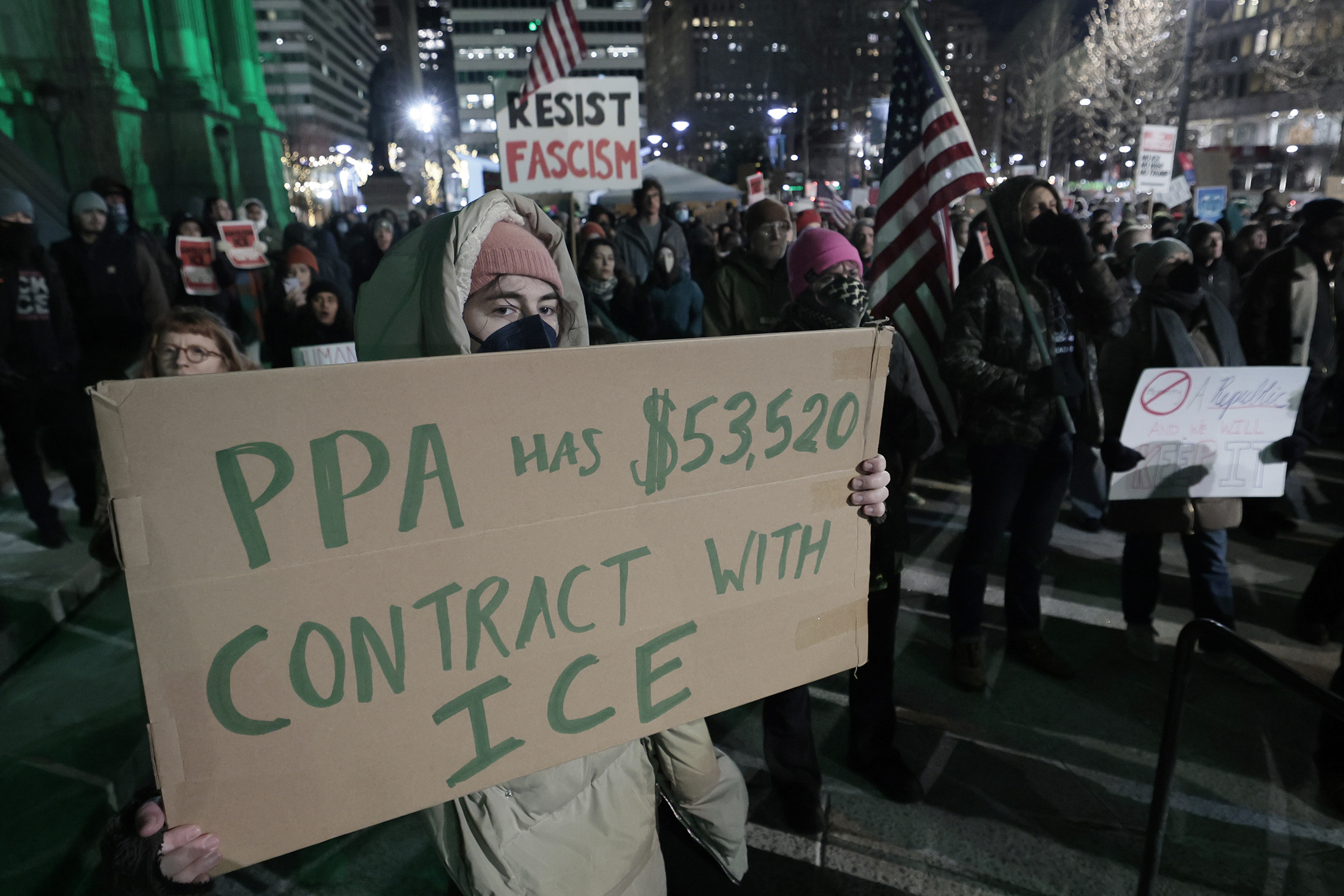
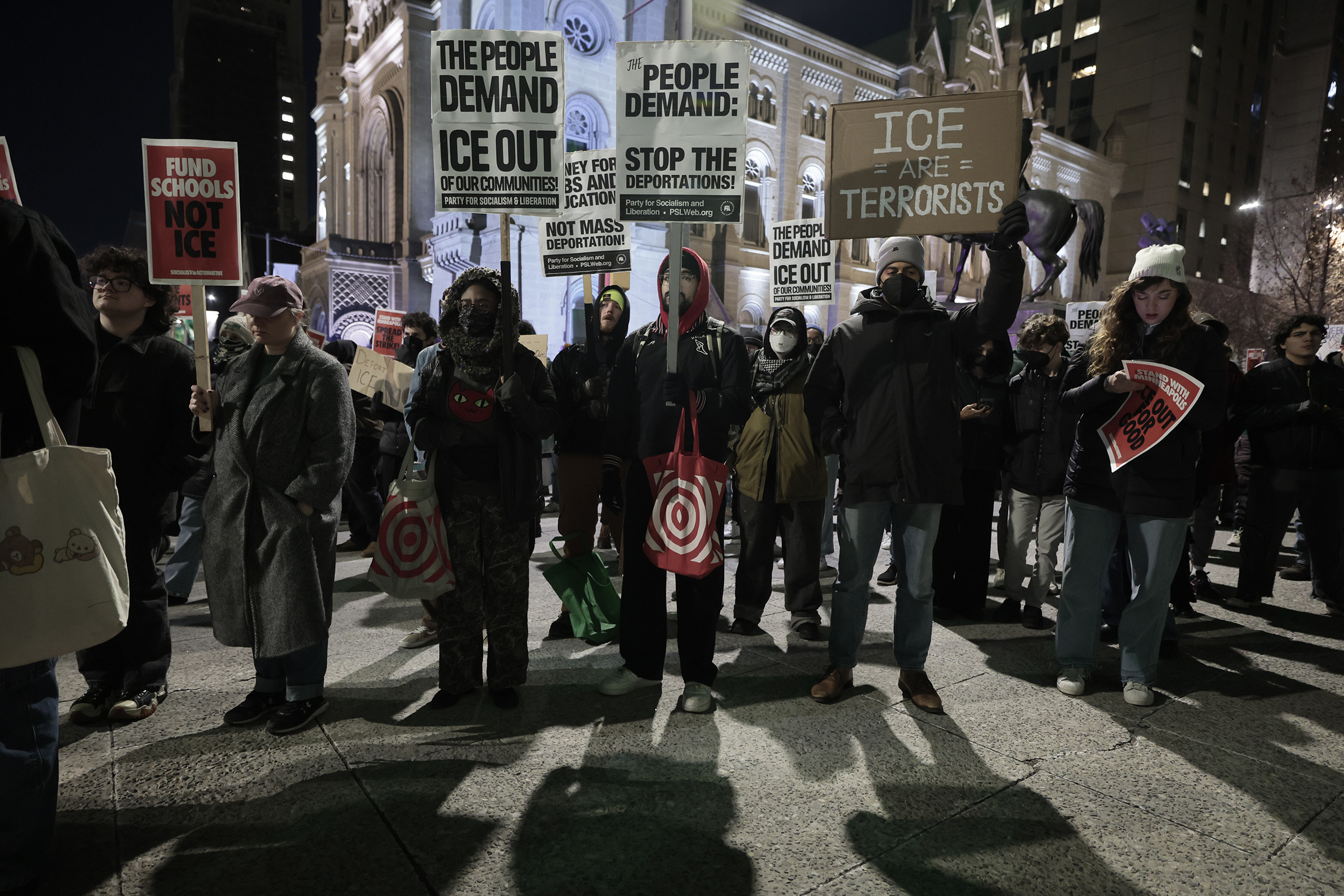
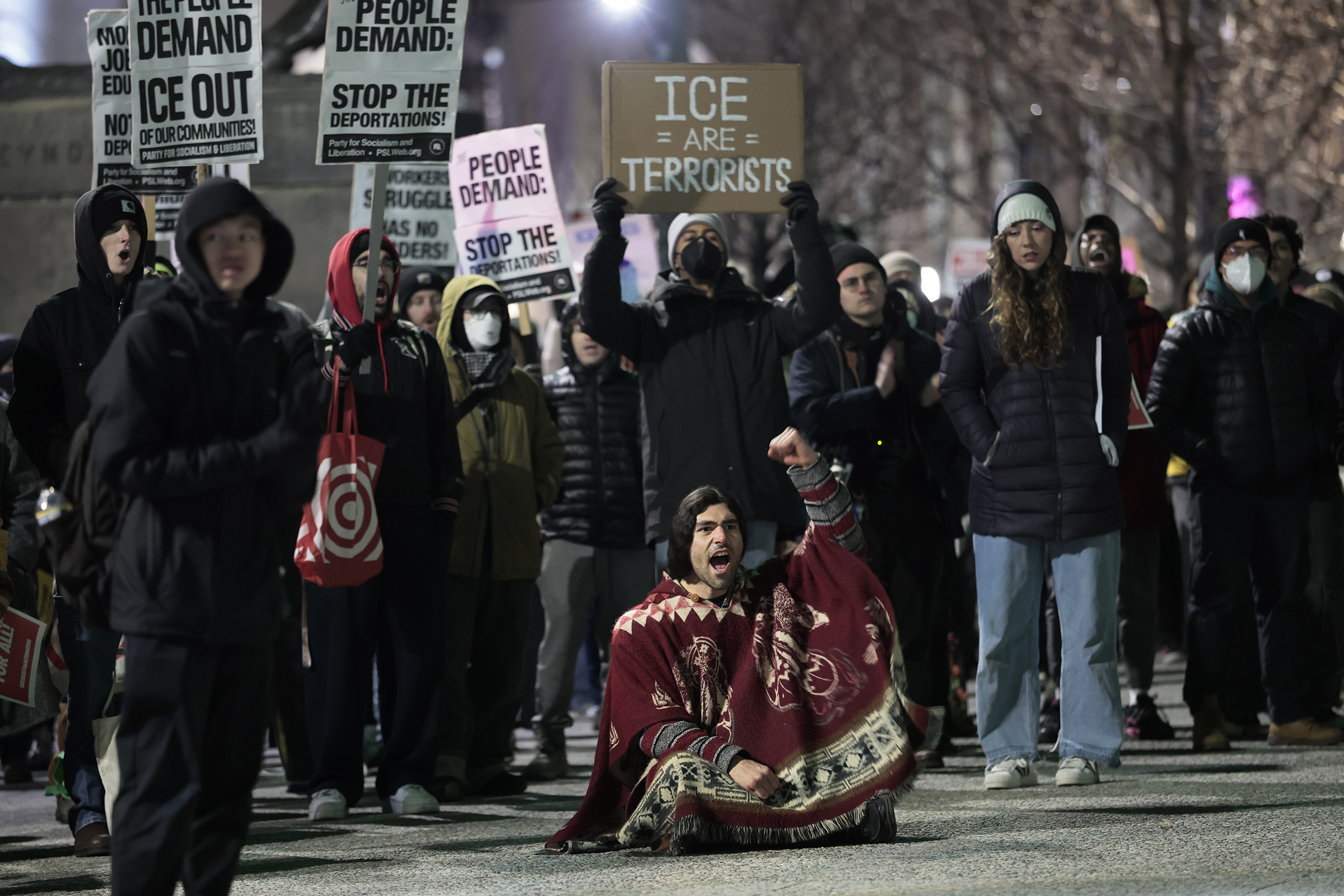
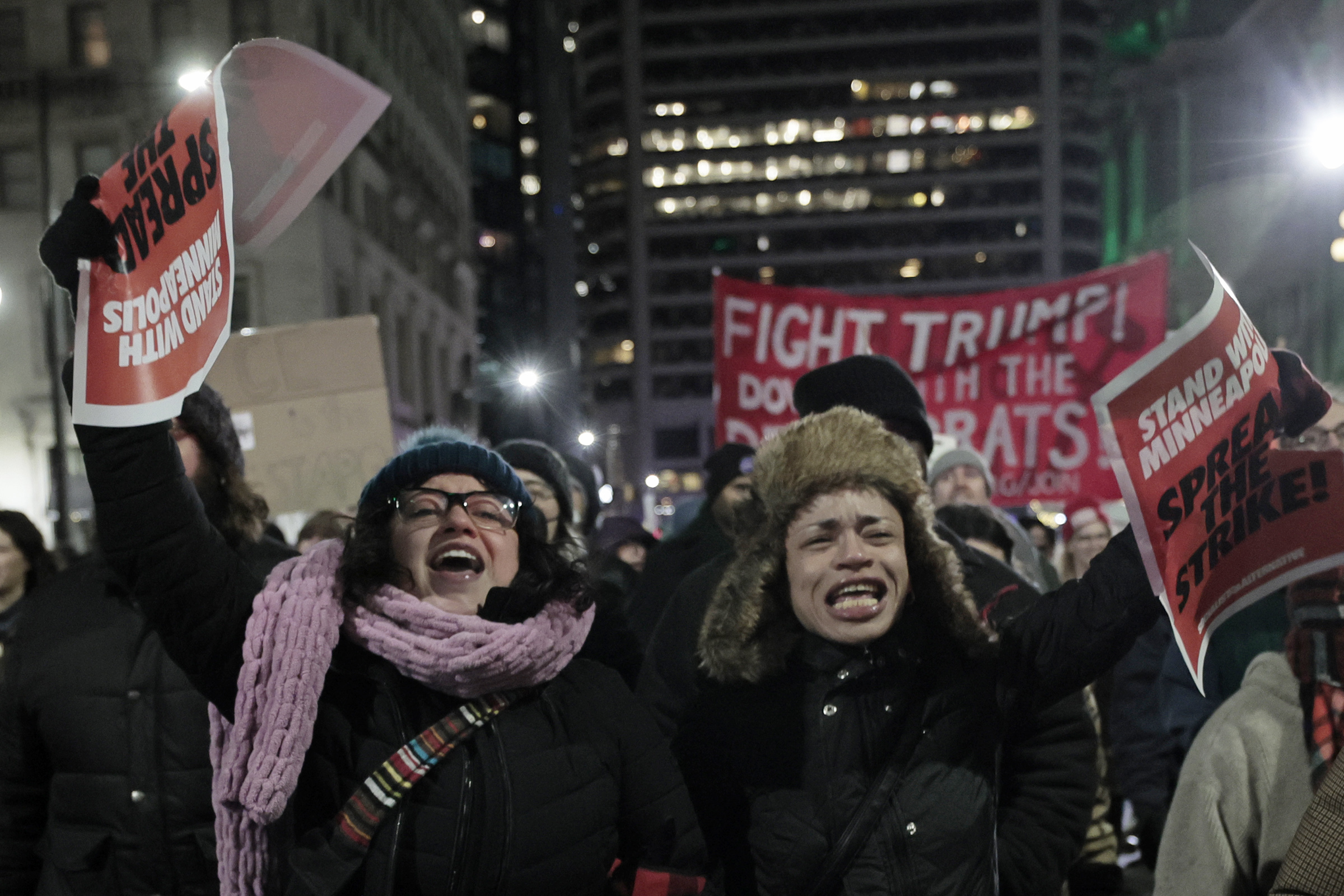
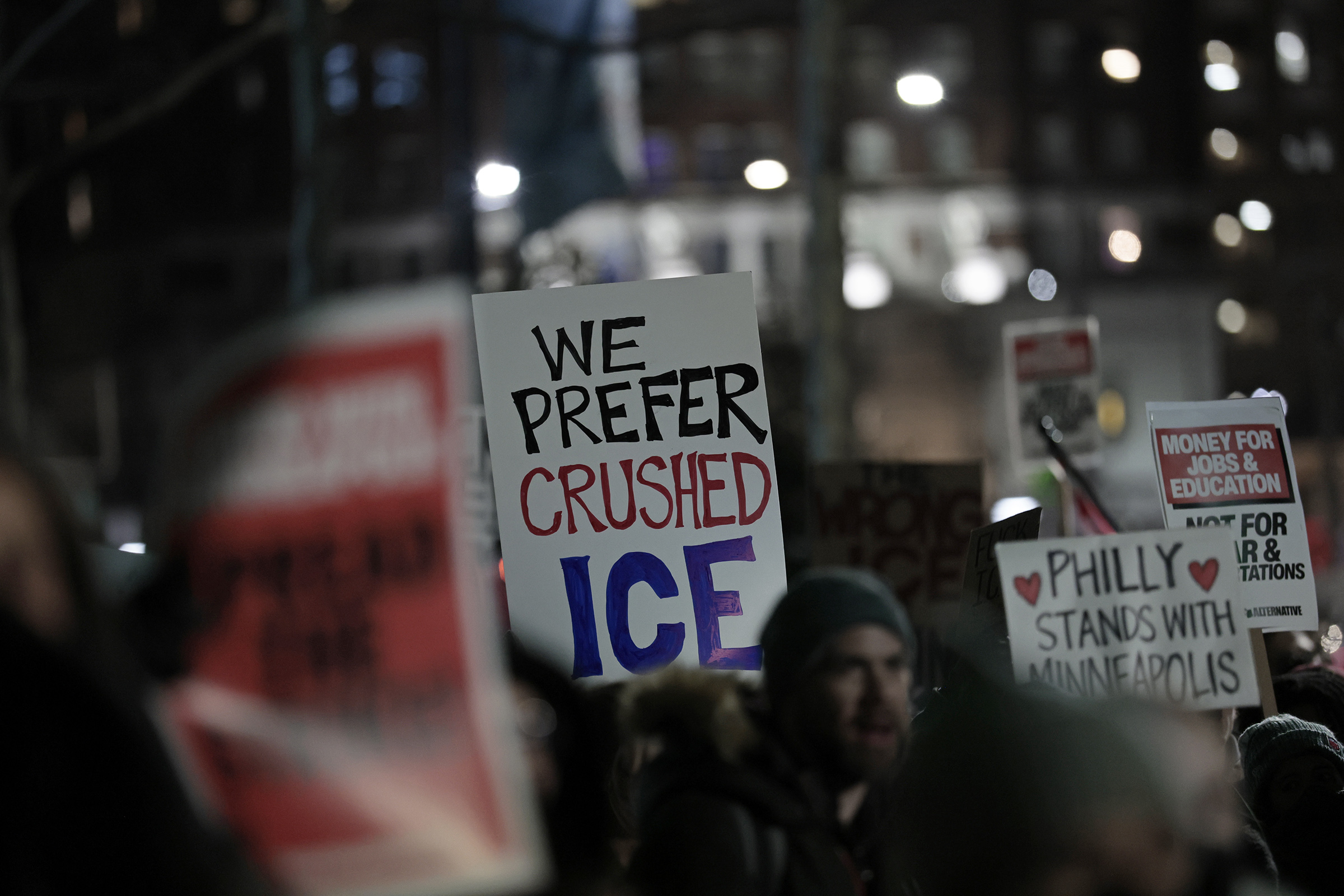
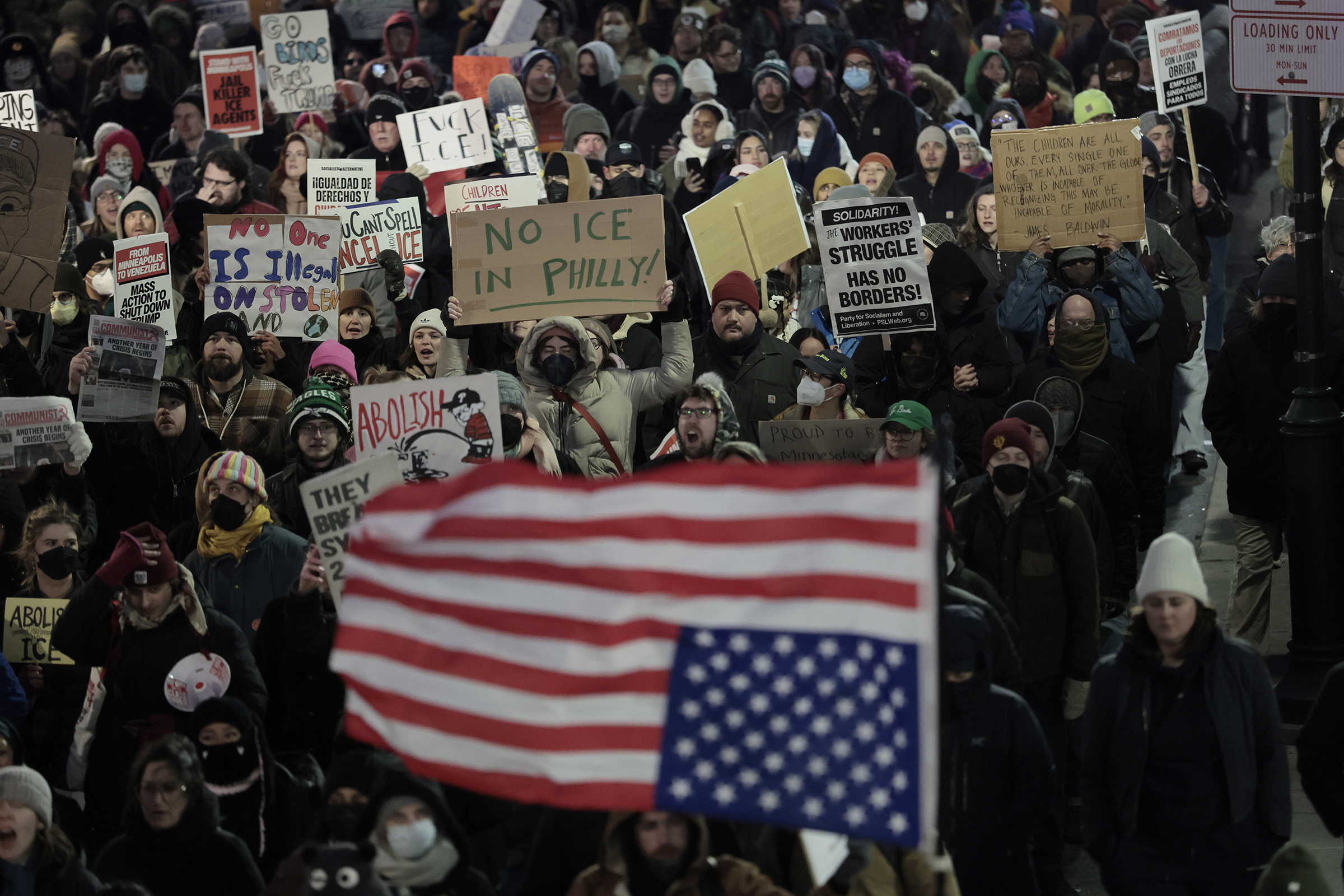
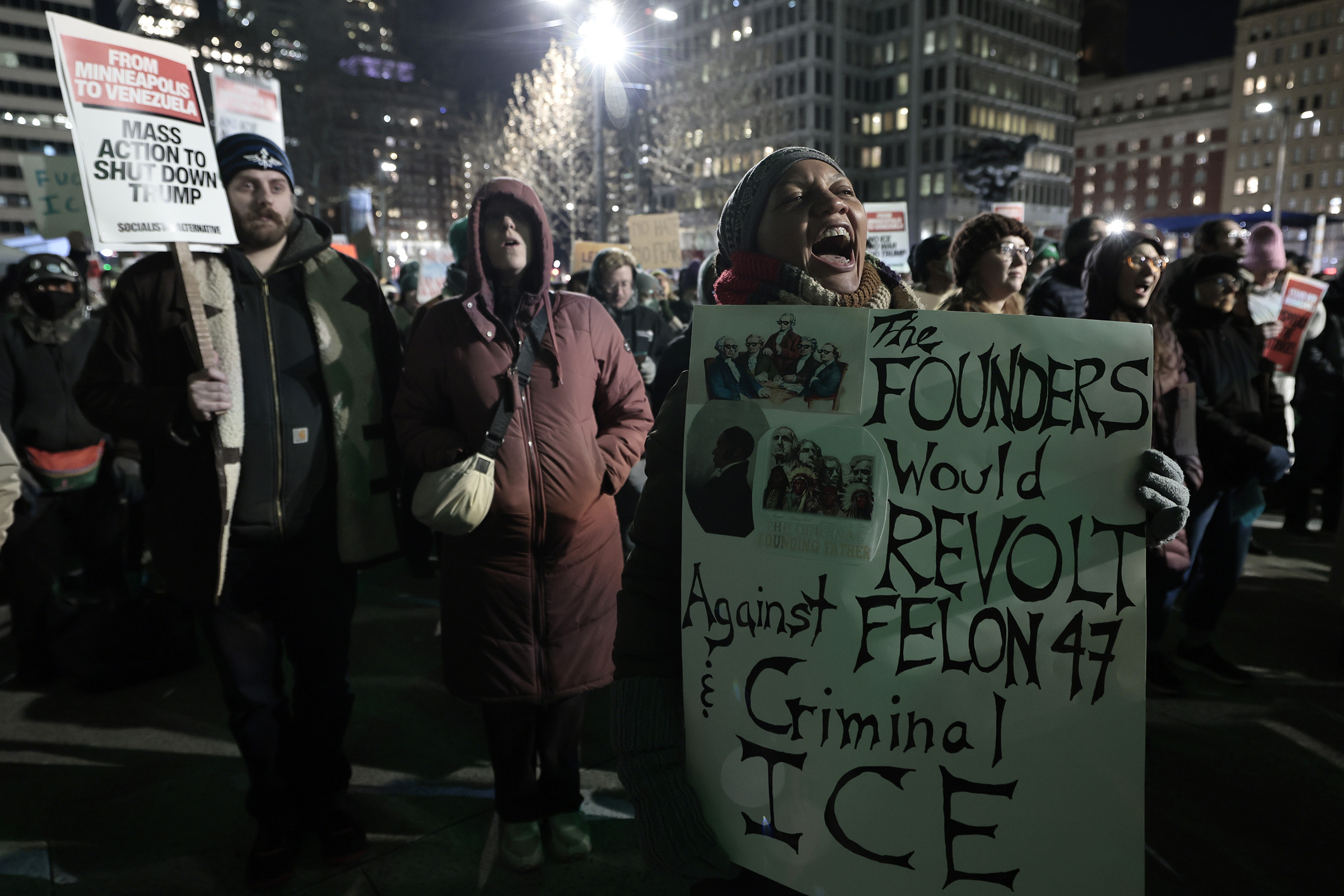
Kelsey Fuentes of Philadelphia (front) chants “No more money for ICE’s crime” as she marches east on Market Street during the Philly stands with Minneapolis Ice Out For Good protest march that began at Philadelphia’s City Hall on Friday, Jan. 23, 2026.A transgender woman from Philadelphia holds up her sign during the Philly stands with Minneapolis Ice Out For Good protest at Philadelphia’s City Hall on Friday, Jan. 23, 2026.Protesters gather during the Philly stands with Minneapolis Ice Out For Good protest at Philadelphia’s City Hall on Friday, Jan. 23, 2026.Alex Kilcullen of King of Prussia (seated) participates during the Philly stands with Minneapolis Ice Out For Good protest at Philadelphia’s City Hall on Friday, Jan. 23, 2026. Kilcullen is from the Deer clan of the Cherokee tribe.Community College of Philadelphia leaders Maritsa Hernandez-Orsini (left) and Maria Baez were vocal during the Philly stands with Minneapolis Ice Out For Good protest at Philadelphia’s City Hall on Friday, Jan. 23, 2026.Protesters gather during the Philly stands with Minneapolis Ice Out For Good protest at Philadelphia’s City Hall on Friday, Jan. 23, 2026.Protesters march up Eighth Street, towards the immigration offices, during the Philly stands with Minneapolis Ice Out For Good protest at Philadelphia’s City Hall on Friday, Jan. 23, 2026.Courtney Mitchell of Philadelphia (right) during the Philly stands with Minneapolis Ice Out For Good protest at Philadelphia’s City Hall on Friday, Jan. 23, 2026.
Brace yourself for the cold, Philadelphians, because the first double-digit snowfall in 10 years is potentially heading our way, followed by sub-freezing temperatures that could last the rest of the month.
Since nowhere is safe from the cold, here are some tips on how to keep yourself from freezing and your property from damage (no burst pipes in sight):
Staying indoors is the best way to keep frostbite and hypothermia at bay, but some must brave the temperature for work, other needs, or emergencies, as even waiting for the bus can take longer if SEPTA experiences storm-related service delays.
With temperatures forecast in the teens and lower 20s, it is important to keep an eye on your core temperature.
When you rapidly lose heat or stay wet for too long, it can cause hypothermia, even indoors. This can affect your brain and body, causing slurred speech, confusion, clumsiness, and extreme tiredness.
Continued exposure to the cold can cause frostbite, as blood stops reaching your fingers, nose, ears, and extremities properly. You can get frostbite even under winter clothing, and it can lead to losing the affected body parts. If you start feeling tingling, numbness, or your skin looks gray or pale, head indoors.
Frostbite can happen without hypothermia symptoms, and vice versa. Children, older adults, and people with circulation issues are especially at risk
To prevent both afflictions, stay dry, covered, and layered up, keeping your skin from being exposed.
Four out of five warming centers reached capacity on Thursday, but the city plans to open more and add beds as needed.
The warming centers remain open at select libraries from 9 a.m. to 9 p.m. And shelter beds have been added under the Code Blue declaration.
Some recreation centers will also serve as warming centers from 9 p.m. to 9 a.m. Find the selected libraries and recreation centers closest to you on the city’s interactive map of warming centers.
Folks in need of a warm place can go to their local police precinct to be transported to the nearest warming center.
Broken bones and head trauma are no fun. Stay grounded by wearing footwear with enough traction (no sneakers or dress shoes), or traction cleats.
You can’t control the city roads, but salting your sidewalk properly can help avoid starting your day on the ground, or worse, in the emergency room. As you walk, make sure to lean slightly forward and take shorter steps. You may look like a penguin, but it’s worth it to avoid the pain and medical bills.
Much like your body, your home also loses heat in the cold, putting pipes at risk for freezing and bursting. Disconnecting garden hoses and shutting off the valve that feeds them, and keeping faucets slightly open and running can prevent expensive repairs.
Pipes will begin to freeze when a thermostat is at 39 degrees and lower. Maintaining the thermostat at 50 degrees or above is ideal.
Though they won’t burst, cars get cold too, reducing battery power and creating a risk of being left stranded, especially if the battery is older than two or three years.
Be ready to jump-start your car. Jumper cables and a portable jumper pack can be helpful. Remember, red clamps to the positive post of the dead battery; black clamps to the negative post of the working battery and to the unpainted metal surface on the engine of the dead car.
For some, the removal of exhibits about slavery at the President’s House Site at Independence National Historical Park on Thursday came as a shock.
For John Garrison Marks, a historian and author who writes and researches about America’s early years, it looked like history repeating itself.
In April, Marks will publish his book Thy Will Be Done: George Washington’s Legacy of Slavery and the Fight for American Memory. The book delves into George Washington’s life, his relationship with slavery, and how that relationship has been manipulated by politicians and activists over the last 2½ centuries to serve various narratives.
Marks talked to The Inquirer about how the removal of the slavery exhibits at the President’s House will become another chapter in the nation’s struggle to reconcile how a man renowned for fighting for freedom forced so many into bondage.
The following interview has been edited for clarity and brevity.
Can you tell me a little about the specific history of this site?
While [Washington] was there, he enslaved at least nine people. He had enslaved people for the entirety of his adult life. He had grown accustomed to being served by enslaved people at his home in Virginia.
So he brought these people from Mount Vernon to the President’s House in Philadelphia while he was serving as president there, and the major complication that came up with this, and this is one of the things that the historic site did a great job of explaining, is that the state of Pennsylvania passed a law to gradually abolish the institution of slavery in 1780.
As part of that law, any enslaved person who remained in residence in Pennsylvania for more than six months would be entitled to their freedom. George Washington discovered this soon after assuming the presidency and relocating to Philadelphia, and he also learned, as many future presidents would learn, that the law also would apply to him. He wanted to keep the labor of these people that he enslaved, and so he devised a scheme he very much wanted to be kept secret to rotate enslaved people in and out of Pennsylvania before they had arrived at that six-month mark and would be entitled to their freedom.
Sometimes he would send people back to Virginia. Sometimes he would just take them across the river to New Jersey for a little while, but he was very aware of this gradual abolition law and worked very hard to make sure that it wouldn’t apply to the people he personally enslaved.
The tragic irony in that is, at the very same time, George Washington was expressing in letters to people, in private correspondence, how much he supported these Northern gradual abolition laws.
Was there some sort of moral struggle that we have evidence of that he was experiencing? How was he reconciling these things?
He writes to people in private, talking about how he recognizes the hypocrisy inherent in him leading a revolution to found a nation dedicated to liberty and equality and his own involvement with slavery.
There were these statements that he made limiting the nature of his involvement, of trying to establish some limits for himself of how he would and would not engage with the institution of slavery, but he also proved flexible on that point.
Hercules Posey, the chef that he enslaved in Philadelphia, escapes from slavery and escapes from the Washingtons.
After that happens, Washington writes in a letter that he’s disappointed because he vowed never to gain another enslaved person by purchase but then says, “Now this is a vow I must break.” So it seems he never even considered the possibility of hiring and paying a free chef.
How has Washington’s experience with slaves, in general but particularly there, been sort of warped over time?
In the months after Washington’s death, almost every American would have known that he freed the people he enslaved in his last will and testament, and yet almost no one talked about it.
There are dozens of biographies of Washington that get published in the decade after his death, and almost none of them acknowledge slavery in any way.
But there have always been people in America who are dedicated to lifting up that history, to resurfacing Washington’s involvement in slavery. So during the 1932 bicentennial [of Washington’s birth] you have Black educators and activists, Black newspapers who say, if this is going to be about getting back to the real George Washington, now is the time that we have to reckon with his involvement in slavery.
It happens again, to varying extents, during the Civil Rights Movement as there’s a greater scholarly attention to the histories of slavery and African Americans. You’ve seen it over the course of the last couple decades about what kinds of things can and can’t be taught in American schools.
Always, the conversation is about Washington, but it’s never just about Washington. It is always about America and what America stands for, and depending on people’s assessment of what the nation is and what it means, that often dictates how they think the story of George Washington and slavery should be treated.
Why do you think it’s important we have the President’s House as a memorial with the plaques that have been removed? What do you make of the removal of them?
Trying to hide the nation’s history of slavery has never worked. We’ve been trying it over and over again throughout American history, but there have always been other people who insist that we reckon with this past, that we face it head on, that we include the full story so we can learn from it.
As we approach the nation’s 250th anniversary, I can’t help but think how many people are going to be visiting Independence Hall, are going to be visiting Independence National Historical Park, who would have had the opportunity to encounter this history of slavery that is so closely tied to our history of the founding and maybe learned it for the first time.
Eliminating the ability for people to learn from that history, to have conversations about that history, to reckon with what that history should mean for us today is only going to set us farther back. It is going to make much more challenging any effort to move the United States to becoming a more just society.
Justice Kevin Dougherty, writing for a unanimous court, said that “protecting the efficiency of justice” including the “independence, integrity, and impartiality of the judiciary” is more important than “Cohen’s interest in posting partisan political content on Facebook where the volume and tone of his posts cast him as little more than a spokesperson for the Democratic Party.”
The former judge was suspended without pay for the remainder of his term in October 2024 by the Pennsylvania Court of Judicial Discipline. The court said Cohen violated the Code of Judicial Conduct when he posted Facebook comments that skewered Republicans and praised Democratic politicians or left-leaning causes.
The Court of Judicial Discipline’s opinion called Cohen’s behavior unprecedented, especially his refusal to stop posting after having been warned by his superiors.
“No other case in the history of the Court of Judicial Discipline has involved such defiance post decision,” the opinion reads. “Judges are not allowed to broadcast their political leanings. People appearing before judges deserve fair, unprejudiced jurists.”
Cohen, 76, is a former member of the statehouse who represented lower Northeast Philadelphia for 42 years. He was elected to the bench in 2017 and was suspended months before the end of his term. Regardless of his suspension, Cohen was ineligible to run for a second term because of Pennsylvania’s judicial mandatory retirement age, which is 75.
The Inquirer was unable to reach Cohen based on publicly available contact information.
Cohen appealed his suspension to the Pennsylvania Supreme Court, telling The Inquirer at the time, “this is a pathbreaking case seeking to severely limit freedom of speech.”
The exact limit on the First Amendment rights of sitting judges is an open question of law that neither the Pennsylvania Supreme Court nor the U.S. Supreme Court hasruled on previously.
Judges have the right to free speech, including some degree of political speech during their ownelections, wrote Dougherty, who campaigned vigorously for his own retention on the state’s highest bench this fall.
The task of the Supreme Court was to balance the right of a sitting judge freedom of speech with the integrity of the courts in Pennsylvania.
Cohen “advocated for legislation,“ ”cheered on Democratic politicians,” and “criticized the policies of predominately Republican legislatures,” Dougherty wrote. The former judge made more than 60 posts that were of concern, all from a Facebook page identifying himself as a judge.
“An ordinary citizen comparing Judge Cohen’s posts with the posts of our state politicians would likely see little distinction,” Dougherty wrote.
The ruling does not intend to muzzle judges or dissuade all social media use, the opinion said. But judges should, like everyone else, make sure that their social media use “comports with the rules of the position they have voluntarily attained or the organization they have voluntarily chosen to join.”
Justice David Wecht also wrote a concurring opinion in which he said it was important to distinguish whether political speech froma judge was made during a retention campaign, in which avoiding politics completely is impossible.
“If the people of this Commonwealth wish to imagine their judiciary to be as pure as the driven snow, and if the people are under some impression that elimination of judicial elections would advance such purity, they are free to alter their Constitution,” Wecht wrote.
Students are going home from school Friday with charged computers, but Watlington, speaking at a city emergency services news conference, said he wanted students to focus on having fun.
“We’re inviting students and staff to enjoy this snowfall, which will be the most I’ve seen during my nearly four years here in Philadelphia,” the superintendent said. “Sledding is appropriate. Snow angels are appropriate, and [Police Commissioner Kevin Bethel] gave us permission to have one or two safe and fun snowball fights.”
If conditions require more days out of school buildings, “every subsequent day will be a remote learning day,” Watlington said.
Philadelphia Achdiocesan high schools and parochial elementary schools also will have a virtual day Monday.
Suburban schools prep
Philadelphia isn’t the only district that has already announced plans or warned that closures were likely.
In Upper Darby, school officials told families Thursday night to prepare for the prospect of virtual instruction on Monday, and possibly Tuesday.
“If the weather is more significant than anticipated, and there are power outages in the area, we will shift to a snow day,” with no virtual school, Superintendent Daniel McGarry said in the message.
In the Cheltenham School District, Superintendent Brian Scriven told families that “if weather conditions require us to close schools and offices,” the district will have a traditional snow day Monday. Tuesday is to be determined — and Wednesday could be virtual instruction, “if conditions are significant enough,” Scriven said.
Colonial School District Superintendent Michael Christian told parents Friday that “if the accumulation is as high as some meteorologists are projecting, we would call for a traditional snow day on Monday and quite possibly Tuesday as well.” And Wednesday could be a virtual instruction day, Christian said.
Meanwhile, the Council Rock School District said that “if school buildings must close on Monday,” students would have virtual instruction.