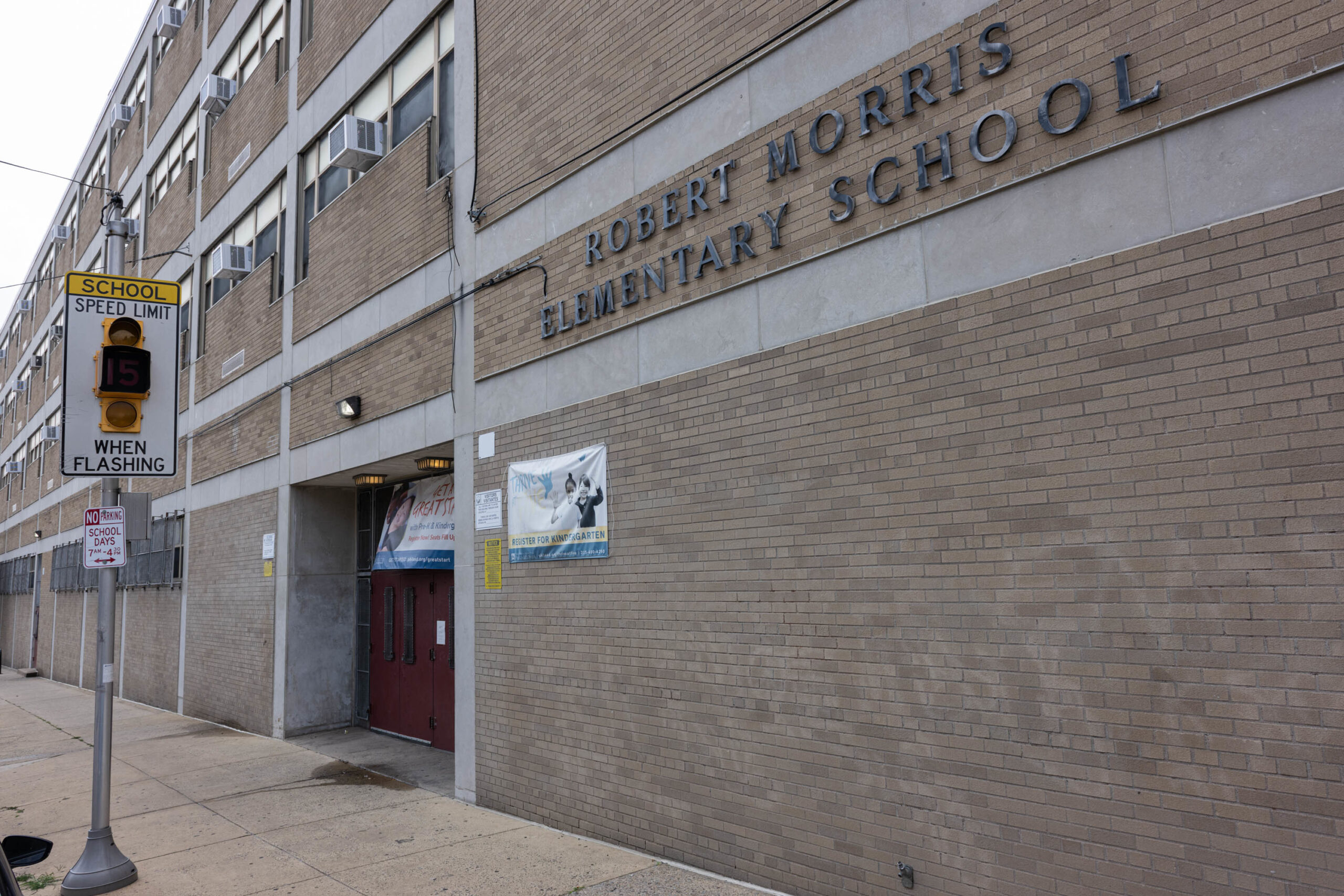
Robert Morris School in North Philadelphia has been lauded for improving test scores, and it isthe last elementary school in its immediate neighborhood.
But the school district says not enough neighborhood children want to attend.
At a community meeting last week, district officials said the school’s“severely underutilized” capacity was the driving factor behind their recommendation to close Morris after the next school year.
But community members have questioned why low enrollment alone was enough reason to cut the school — and have voiced concern that the district is closing a school with a majority-Black student population while keeping open a nearby elementary school that has more white students.
“We want the option for our children to be able to walk a block or two or three and get to their school. And it’s not clear to us the reason why that isn’t a possibility,” said Cierra Freeman, co-lead of culture and strategy for the Brewerytown-Sharswood Neighborhood Coalition.
Morris students would be reassigned to Bache-Martin School or William D. Kelley School for fall 2027 under the plan.
The district plans to repurpose the building at 2600 W. Thompson St., which it has categorized as being in “fair” condition, into a hub for its Office of Diverse Learners. Currently, the office operates within district headquarters and has an evaluation center near Central High School.
District officialsalso said theywant to keep the building so it could be reopened as a school in the future should enrollment interest rise.
Robert Morris Elementary School in Brewerytown.
‘Punished for being so small’
Morris was honored by the district last year at its Accelerate Philly awards for major improvements in test scores across reading and math. Its third-grade class jumped from 7% proficiency in reading and 14% in math to 48% and 59%, respectively. The district has said it did not consider schools’ academic performance in its facilities plan.
“It seems like Robert Morris is being punished for being so small,” Paul Brown, a school psychologist at Roxborough High School a Youth and Education co-lead for the Brewerytown Sharswood Neighborhood Coalition and a member of Stand Up for Philly Schools, said at the community meeting.
Neighbors said the district has not done nearly enough to retain and attract families to Morris, a “neighborhood gem,” according to Siobahn Neitzel, a local resident and youth and education action team co-lead for Brewerytown-Sharswood Neighborhood Coalition.
“The challenges that the district talks about with regards to Morris … really come from a continued lack of investment on the district’s part,” she said.
If there must be change at Robert Morris, some speakers urged the district to consider colocating the Office of Diverse Learners with the school instead of closing it. District officials said that option would be considered —but it was not reflected in a revised plan Superintendent Tony B. Watlington Sr. presented Thursday that spared two schools originally slated for closure. Morris is still on the closure list, but the school board could make changes before votingon the plan in the coming weeks.
A changing area
Brewerytown and adjacent Sharswood are neighborhoods in flux. The area is experiencing rapid gentrification, with new developments and property values shooting up in recent years, including the $750 million Philadelphia Housing Authority project to clear and redevelop the Norman Blumberg Apartments towers.
In the last round of mass closures in 2013, the district shuttered Meade Elementary School, less than a mile from Morris. Residents within the Morris catchment area have opted for other choices in recent years, including charters and other public schools. District officials said about 16% of students in Morris’ catchment already attend Bache-Martin.
Third grade teacher Brendan Yuhas teaches students Trenton Andersen, left, and Serenity Rose Rhoades, right, at Robert Morris Elementary last year.
Freeman said that is, in part, the district’s fault.
“This school has not been marketed to parents and families in the neighborhood. It has not been made attractive. It has not been pushed up,” Freeman said.
Some residents are frustrated with the plan to instead investmore than $50 million in Bache-Martin to handle an infusion of hundreds more students, including from Laura W. Waring School, and $4.7 million into Kelley. They believe Bache-Martin students deserve that kind of investment, but so do Kelley and Morris students. District officials said Kelley has received more funding in recent years, making a similarly large investment unnecessary.
Residents are concerned the consolidation could result in violence, by putting kids from different neighborhoods and rival gangs suddenly under the same roof at Bache-Martin or Kelley. And some at the community meeting worried that even if the district reopens the Morris building as a new school, it would be as a magnet that excludes local students.
Undergirding many of their concerns is the reality of race. Morris’ student body is 82% Black, and its community members said its potential closure was another indicator of the major impact the district’s plan would have on Black families. Bache-Martin in Fairmount, poised for significant financial support, has only about 34% Black students.
“When closures disproportionately affect minority communities, we cannot pretend race is not a part of this story. … What message are we sending to our students, my fifth- and sixth-grade students, when [the] place that nurtured them is going to disappear?” Adrienne Ramsey, a math teacher at Morris, said at the community meeting.
Freeman insisted that there must be a public education option for elementary school students in the neighborhood. She said she is concerned that charter schools, which are privately run and publicly funded, do not have enoughpublic oversight, and public schools are critical tocommunities.
“Schools are one of the places that the real community building and community weaving starts,” she said.
She said shebelieved interest in a public elementary school in the Brewerytown-Sharswood area would return, particularly as incoming residents occupying the new developments look for places to send their childrenand current neighbors reconsider their education options.
“People want to be part of their communities. They want to be part of their neighborhoods. They want their children to have friends whose home they can walk to,” she said.
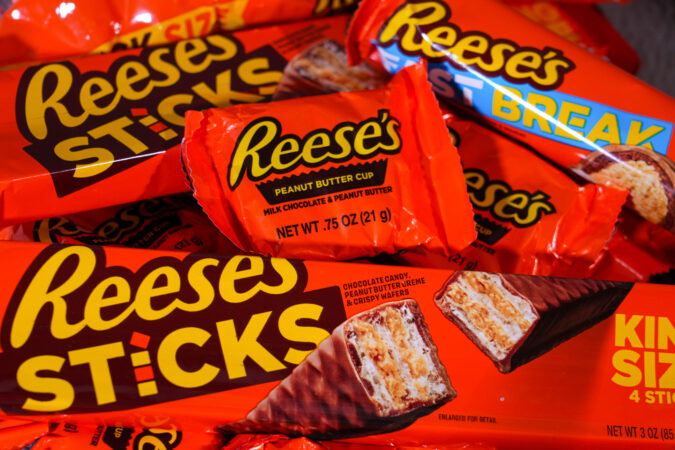
On Reddit, the top comments were ones of vindication. People were comparing batches, debating texture and arguing over when it changed. “They’re waxy, oily, and extra sweet.” “The filling tastes like sawdust.” “I thought maybe my taste buds just changed.”
One user wrote simply: “I KNEW IT.”
Hershey says the original cups haven’t changed, though some holiday shapes use different coatings to allow for new sizes and shapes.
But who are you going to believe: a corporate statement, or your lying taste buds?
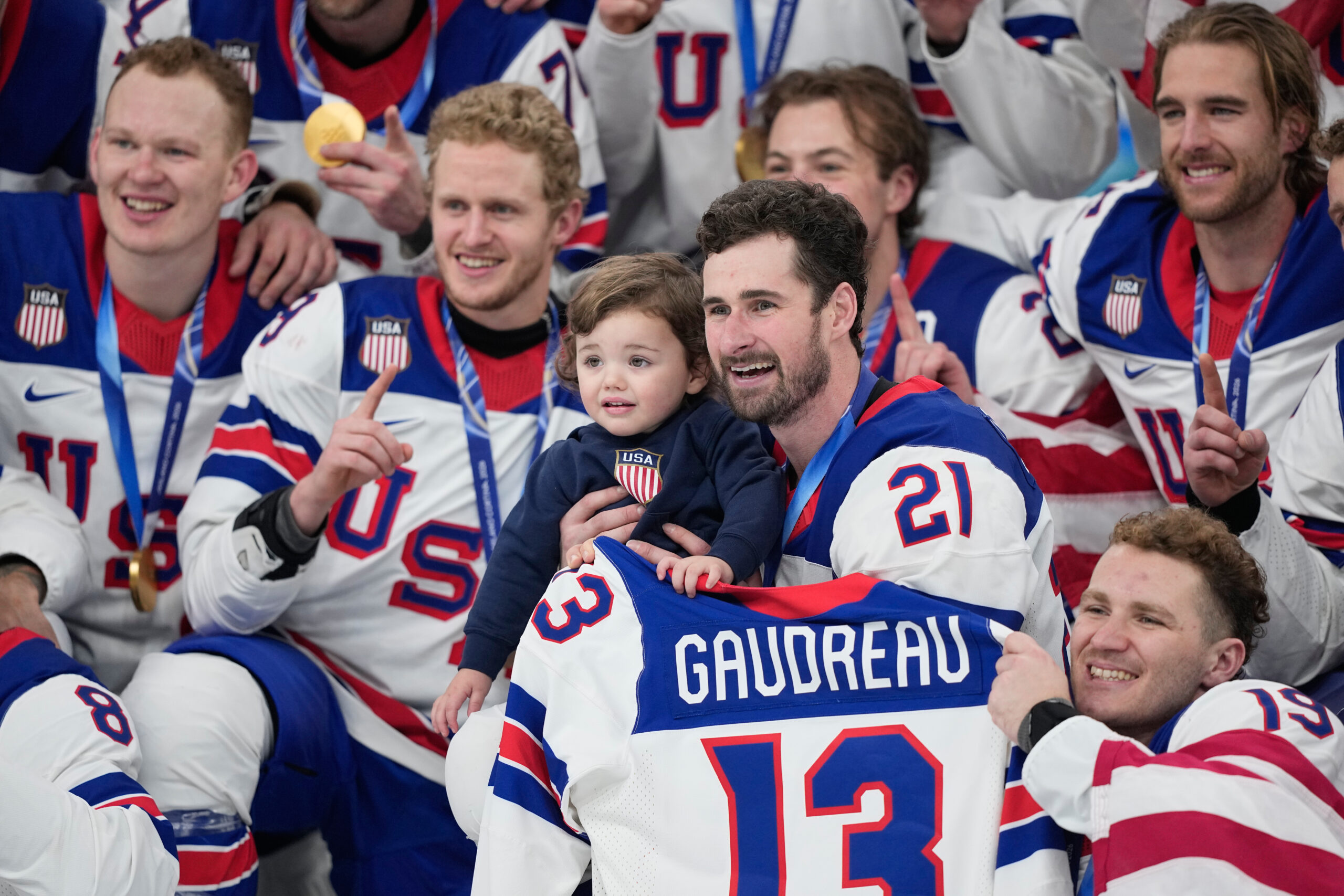
United States’ Dylan Larkin (21) holds Johnny, the son of the late player Johnny Gaudreau while posing with teammates after the men’s ice hockey gold medal game against Canada at the 2026 Winter Olympics, in Milan, Italy, Sunday, Feb. 22, 2026. (AP Photo/Petr David Josek)
The Olympic dream, carried across the ice: A
Johnny Gaudreau wanted to make the Olympics. But like so many other things he was denied after being killed by a suspected drunk driver at age 31, he never got to skate in Milan.
The tribute to Gaudreau, who played for the Columbus Blue Jackets when he died and had been training to make the Olympic team, wasn’t just a quick nod during a ceremony. It happened in the loudest, grandest moment of the tournament. In the biggest moment of these athletes’ own careers, they made sure the person missing was still present.
And for a family that has spent a year and a half worrying the world would eventually move on, that decision said otherwise.
He understands the concerns — that the Phils are “largely the same team,” that the media and unhappy fans are pressing a negative narrative — but inside, he says, they’re “still as hungry as we’ve ever been because we haven’t been able to finish the job.”
That’s the right answer … and the only answer.
“We have the pieces to win a championship,” Realmuto said. “It’s just a matter of putting it together and playing our best baseball at the right time.”
In Philadelphia, “the right time” has a very specific definition.
It is not May. It is not 95 regular-season wins. It is not “a couple plays” in a 3-1 series loss.
This city doesn’t question whether the Phillies are talented. It questions whether this group, THIS EXACT GROUP, can clear the last hurdle. Philly can’t handle another almost.
Hunger is great, chemistry is great, enjoying each other is great. But: banner or it didn’t happen.
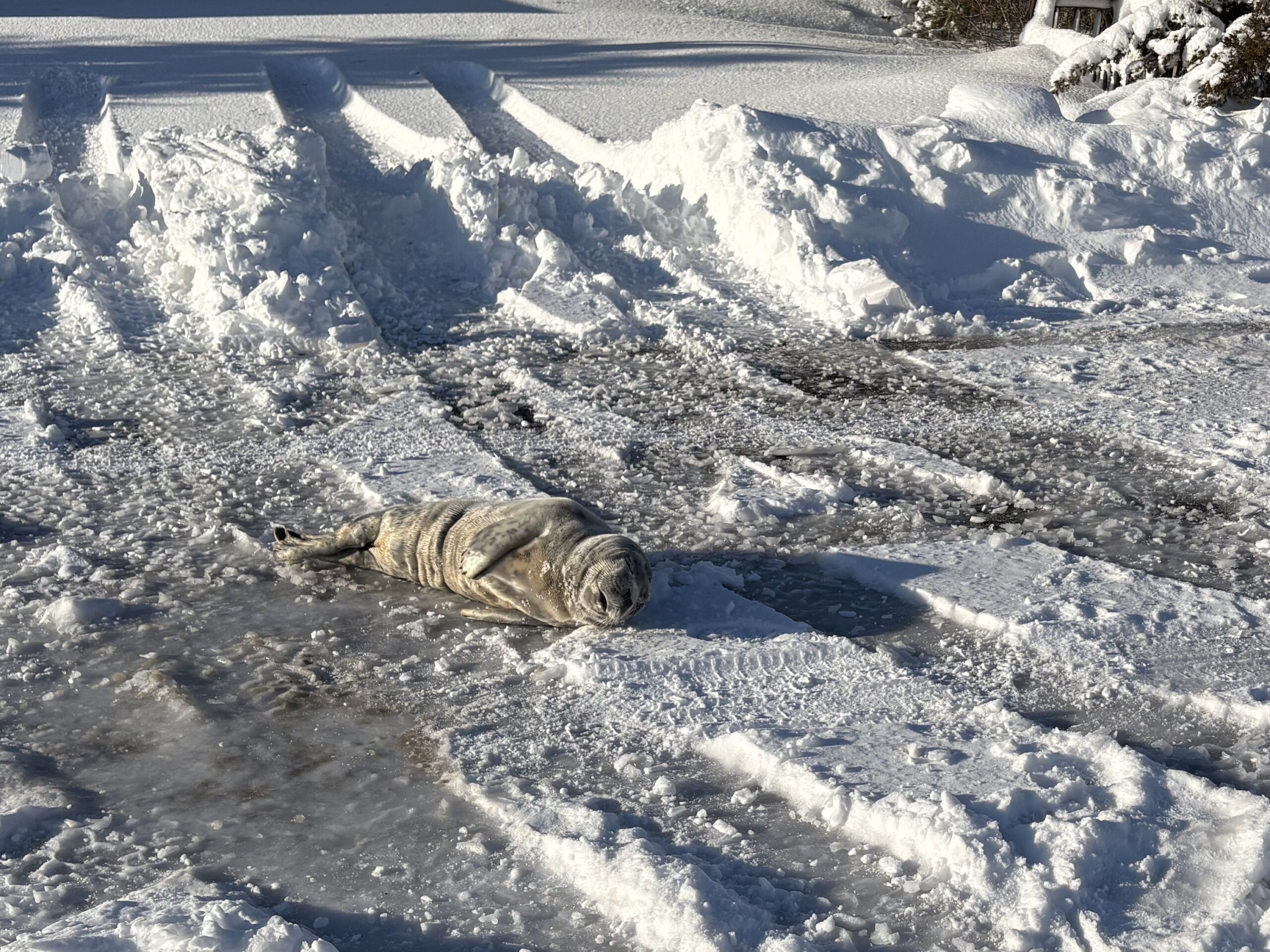
A gray seal pup wandered off the beach in Harvey Cedars and onto the middle of Long Beach Boulevard on Tuesday, Feb. 24, 2026, a day after a snowstorm dropped a foot and a half of snow on the island.
A seal pup shutting down Long Beach Boulevard: A-
Not only did the Jersey Shore get hit hard by what we’ll now remember as the Blizzard of ‘26, they also got a seal napping in the slow lane.
Traffic stalled while a Public Works worker bundled her in his jacket and moved her to safety. The Marine Mammal Stranding Center arrived soon after, captioning the moment: “POV: When your nap shuts down a whole street.”
She wasn’t injured, just thin and apparently tired of the Atlantic.
Seal beachings aren’t rare, but them laying in the slow lane are.
Eighteen inches of snow, plows out, Long Beach Boulevard barely cleared, and marine wildlife is treating it like a sun deck. Welcome to late February at the Shore.
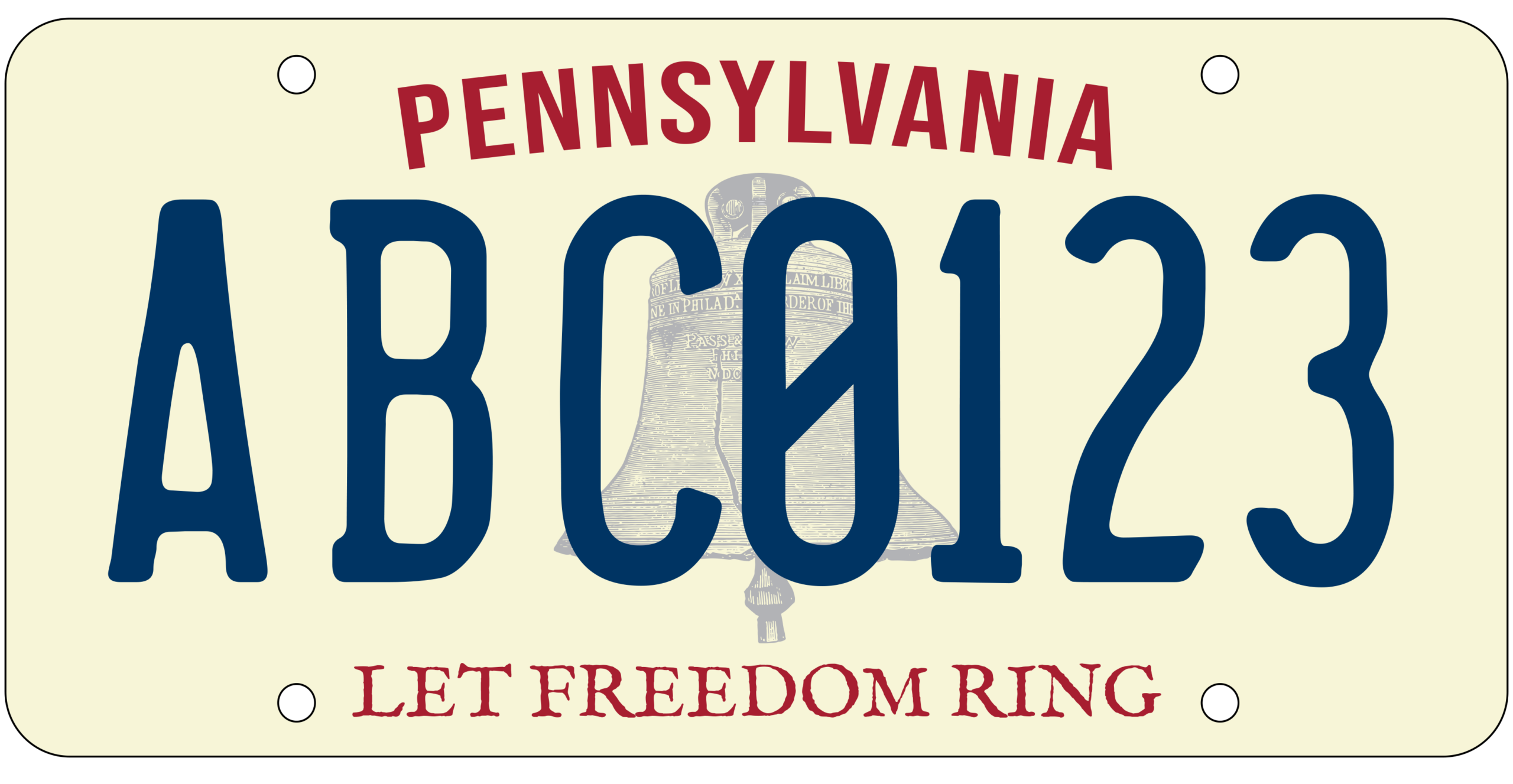
The tiny slash through the number zero, added to distinguish it from the letter O, is confusing automatic license plate readers, which are now struggling to tell the difference between 0 and 8.
So in some cases, drivers are getting tolls that don’t belong to them.
This is deeply on brand.
We added a design tweak to make things clearer. It made things worse. Now the technology needs “time to learn.” It’s a license plate, not Duolingo.
The Turnpike says it’s working on it, but in the meantime, if your patriotic plate racks up charges from roads you’ve never seen, you can call a hotline and sort it out.
Nothing says “Let Freedom Ring” like disputing tolls over a misread zero.
Phillies also released a pic of their Father’s Day hat giveaway (June 21)
The Phillies unveiled their Father’s Day giveaway hat, and it is exactly what you think a Father’s Day hat would be.
Light gray, white logo, mesh back. It’s giving cargo shorts energy. It’s dad sneakers, but make it a hat.
Apparently, dads have earned subtlety.
This is the franchise that leans into powder blue throwbacks and maroon nostalgia, and yet for Father’s Day, we get something that looks like it came free with a new grill.
The internet noticed too. One commenter joked that Bryce Harper must have “used up all the color in Philadelphia for his new cleats.”
It’s not bad, just aggressively dad. Safe and practical. Which, depending on your father, might be the most accurate tribute of all.
Newspapers do many service stories, letting readers know about upcoming events.
The “things to do” pieces are usually illustrated either with pictures provided by the organizations or their public relations partners or, in the case of annual events, our own staff’s file photos from previous years.
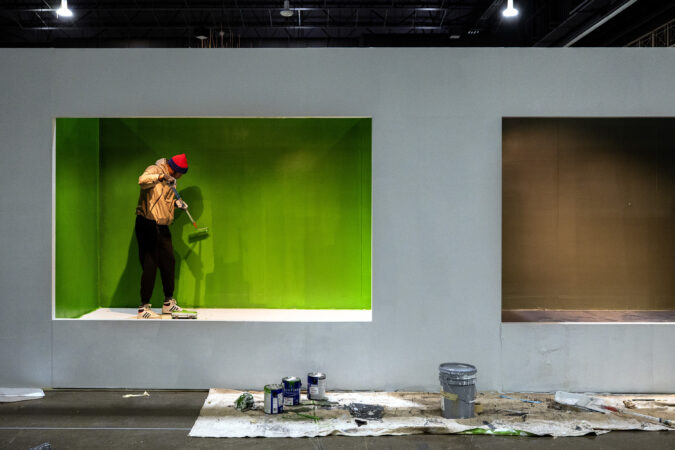
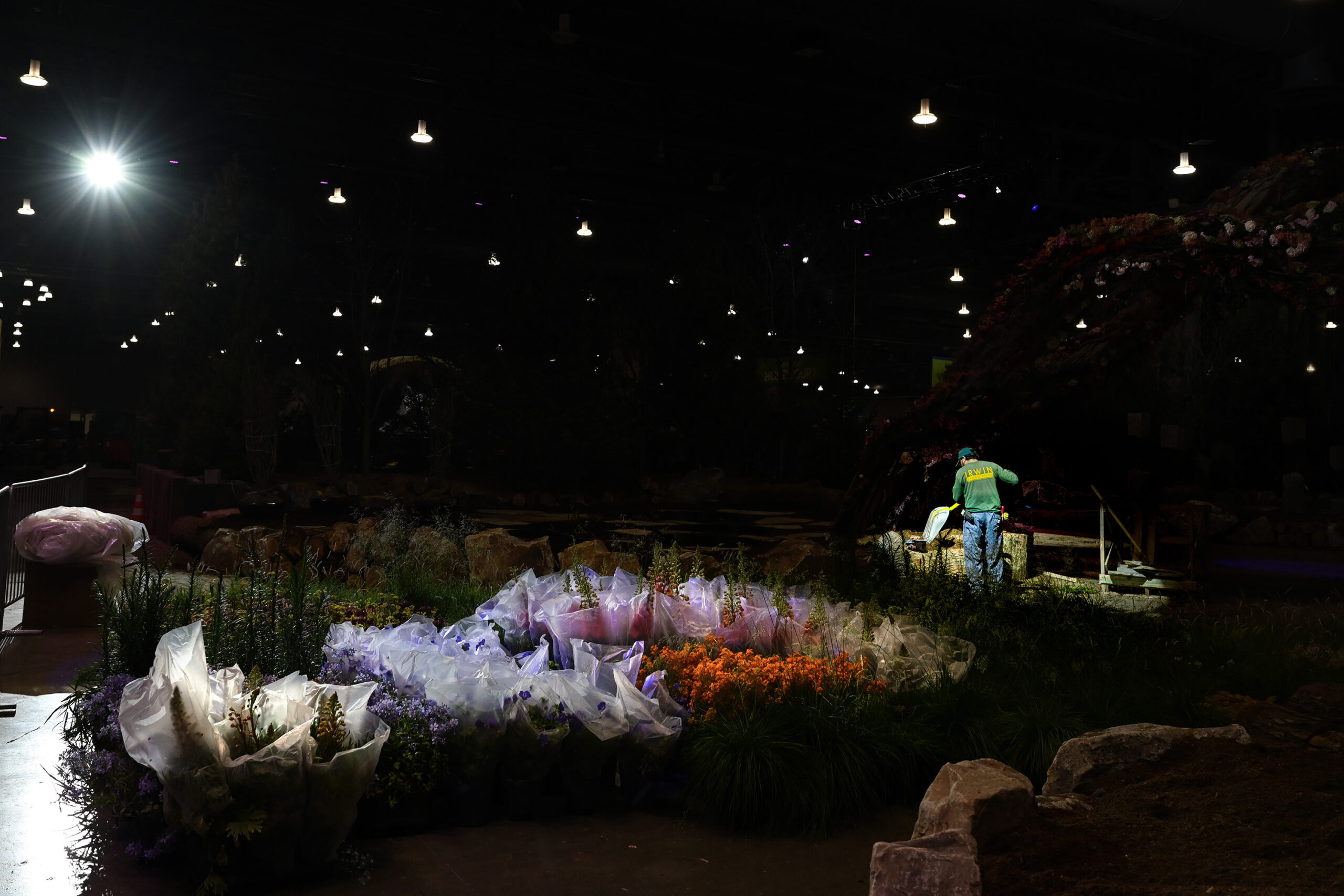
Technicians adjust the lighting as Andres Ceballos with Irwin Landscaping in Hockessin, Delaware is setting up for the PHS Philadelphia Flower Show Tuesday, Feb. 24, 2026.
I was at the Convention Center earlier this week to photograph preparations for the nation’s largest and longest-running horticultural event. As with similar preview assignments, the stars of the show — the flowers in this case — were not quite ready for prime time.
Most of the blooms are waiting to be unloaded from refrigerated trucks, and those inside the Convention Center are still wrapped in plastic. So I rely on close-ups, or take advantage of the play of color and light.
Awaiting placement in the entrance garden, hyacinths are in the spotlight during light testing.
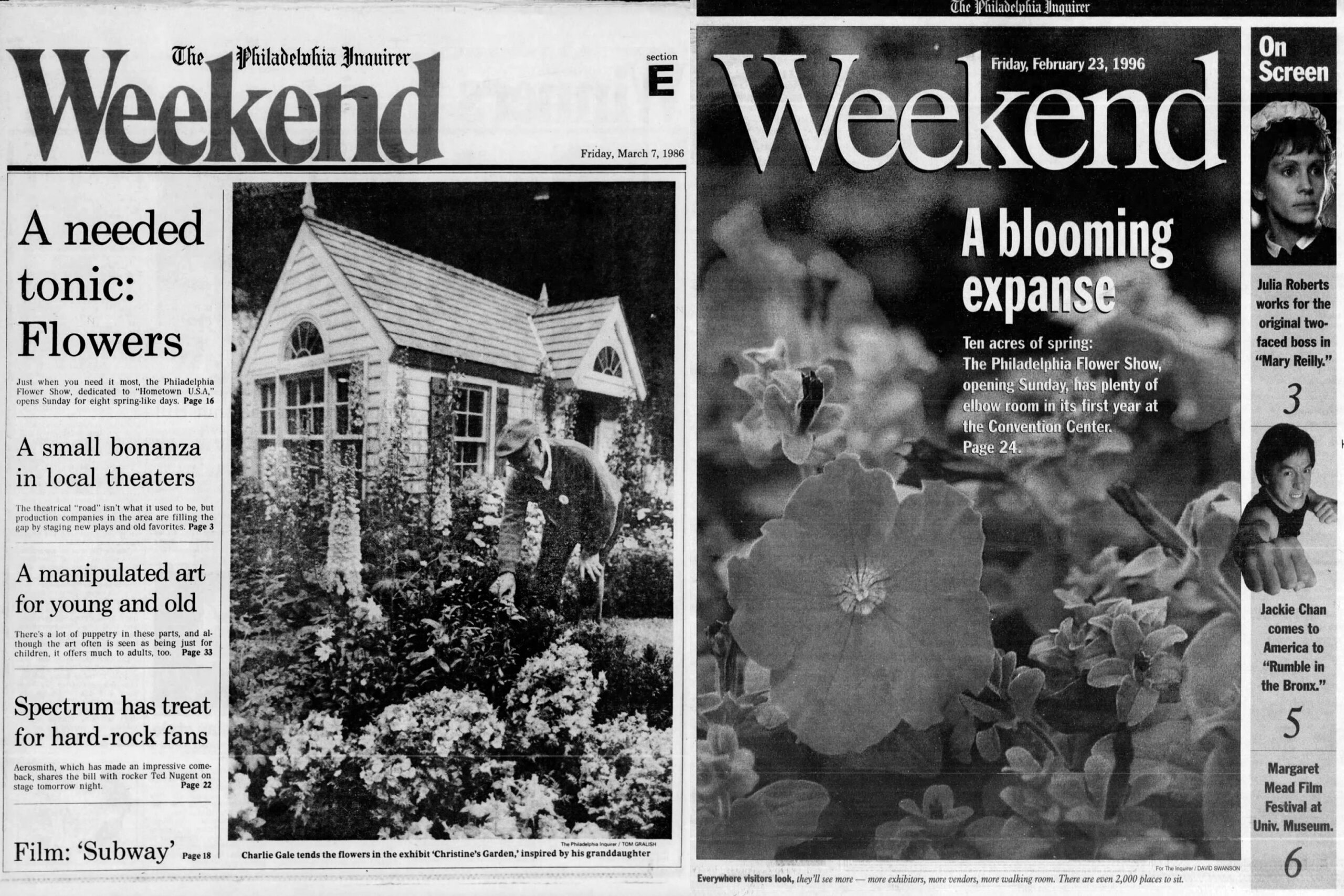
It is hard enough to convey the perfumes of thousands of blooms in the air with mere photos — or the vibrant color of the petals in the meticulously designed displays. Imagine trying to showcase it all in black-and-white.
LEFT: March 7, 1986. RIGHT: February 23, 1996.
That’s my photo on the cover of The Inquirer Weekend section on the left, from 40 years ago when the Flower Show was at the Philadelphia Civic Center in University City. David Swanson made the close up on tje right 30 years ago, the year the show moved to the new Pennsylvania Convention Center.
When The Inquirer and Daily News knew we were switching from black-and-white to color presses a forward-thinking photo editor had us pop in a roll of color negative film while covering some events so we’d have some color photographs in the files when the time came. (That finally happened in March of 1993. In a focus group a few years earlier, loyal readers “were horrified” when they were shown a prototype of a possible color Inquirer.)
I don’t know yet if I’ll be back at the Flower Show this week, or if another photographer will be assigned, but you can count not only on seeing live coverage, but some of the photos again before the 2027 show.
Favorite assignment anniversary
Speaking of anniversaries and black-and-white photography, I am often asked if I have a favorite assignment.
It was 40 years ago this week that I made the Weekend Flower Show cover photo above — days after returning from six weeks in the Philippines. I was there as millions of Filipinos took to the streets in a “People Power” revolution (also known as the EDSA Revolution).
The nonviolent revolution led to the ouster of President Ferdinand Marcos as Corazon “Cory” Aquino became the country’s 11th president. It was seen as a model for similar uprisings that occurred around the world in the following years, from the occupation of Tiananmen Square to the Fall of Communism and the Arab Spring.
These images are the original prints — developed in a hotel bathroom I converted into a darkroom — transmitted back to The Inquirer in January and February of 1986.
Since 1998 a black-and-white photo has appeared every Monday in staff photographer Tom Gralish’s “Scene Through the Lens” photo column in the print editions of The Inquirer’s local news section. Here are the most recent, in color:
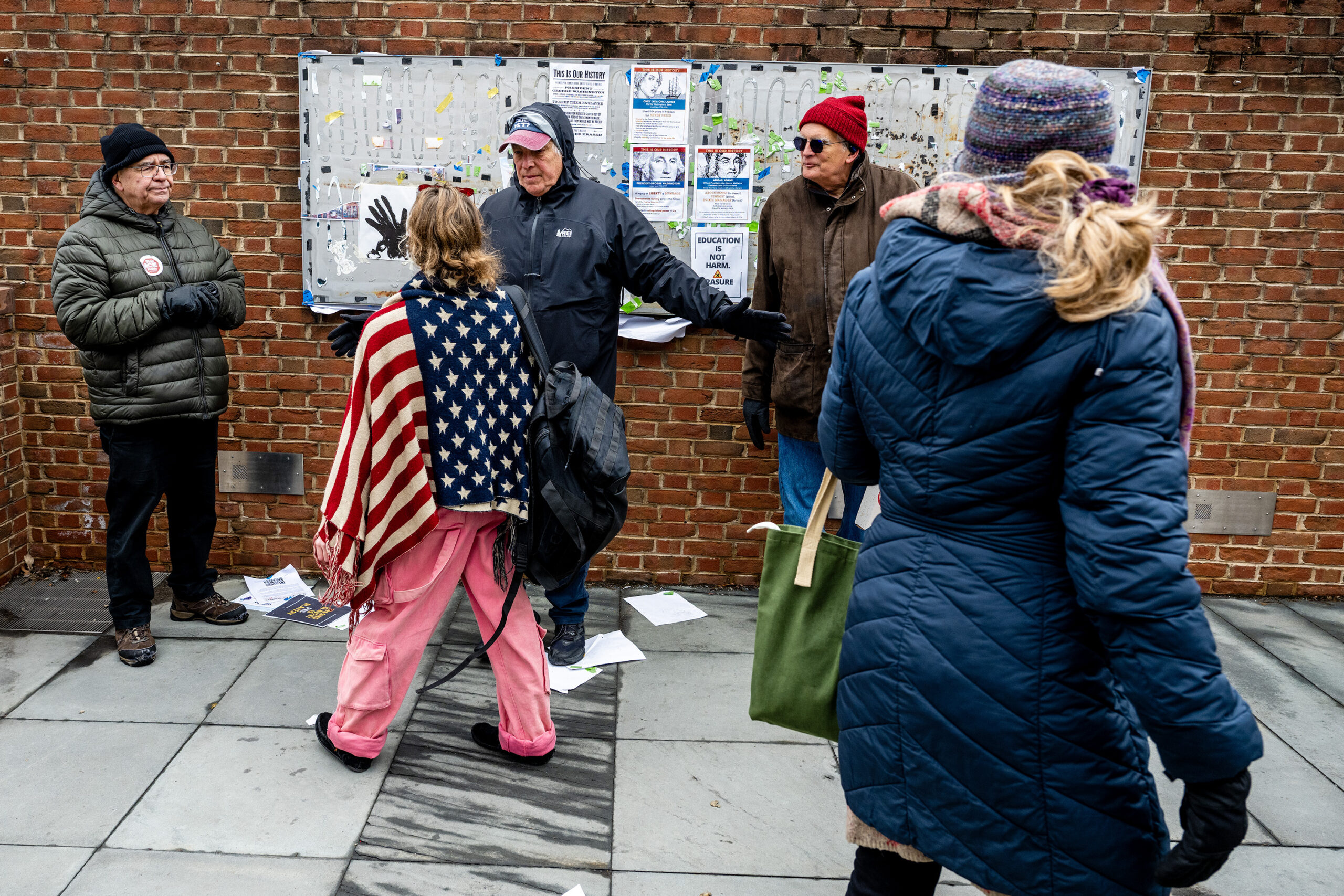
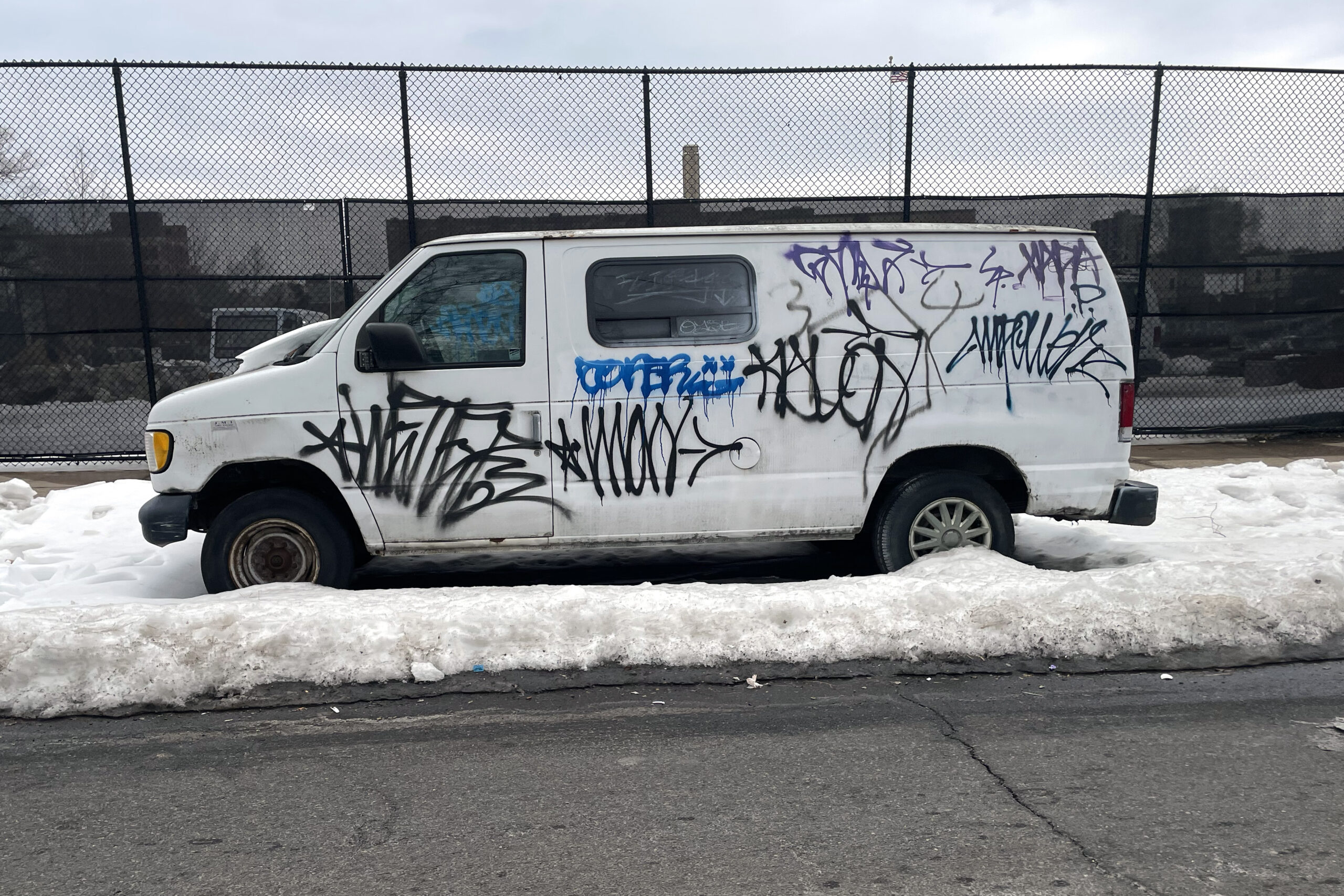
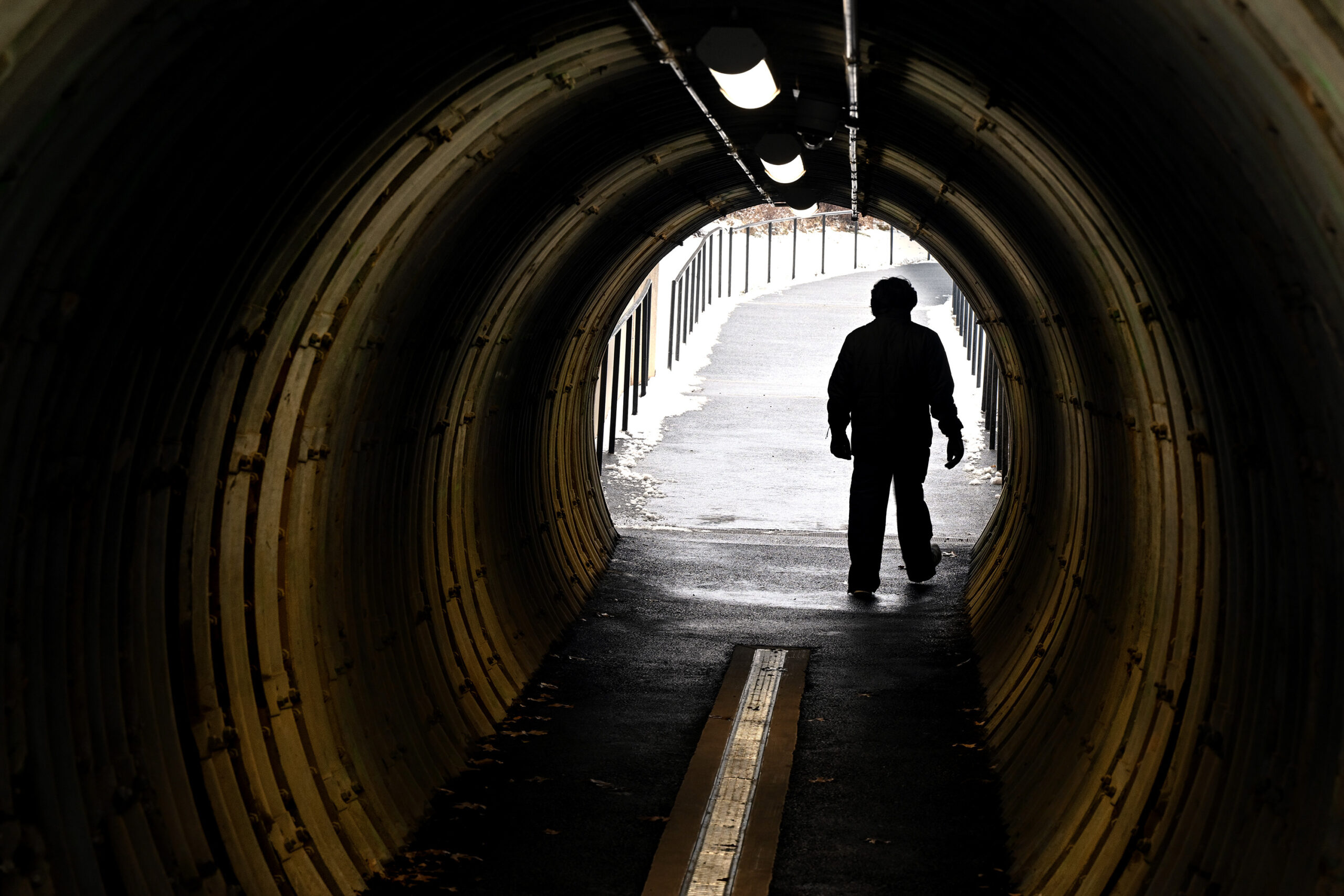
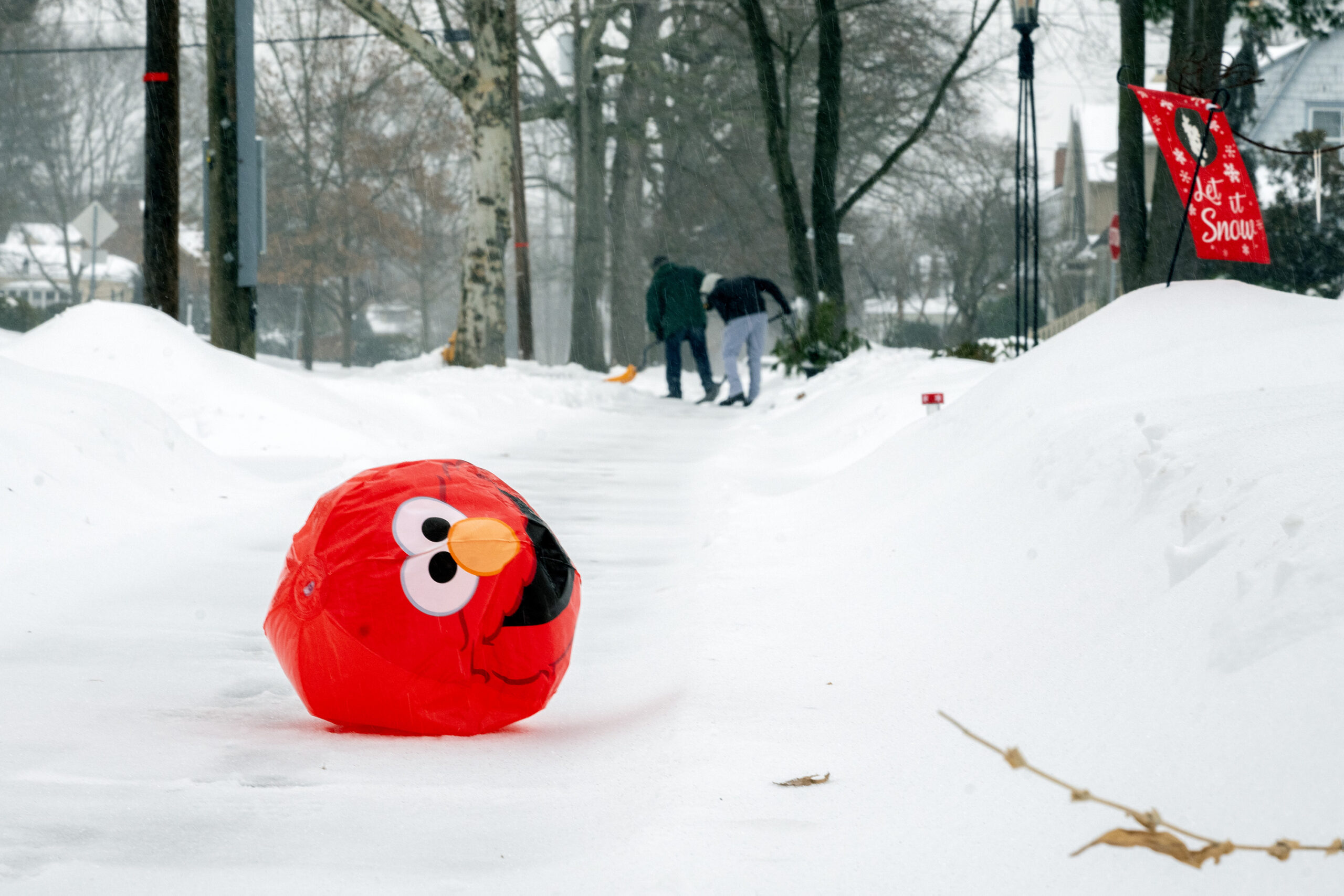
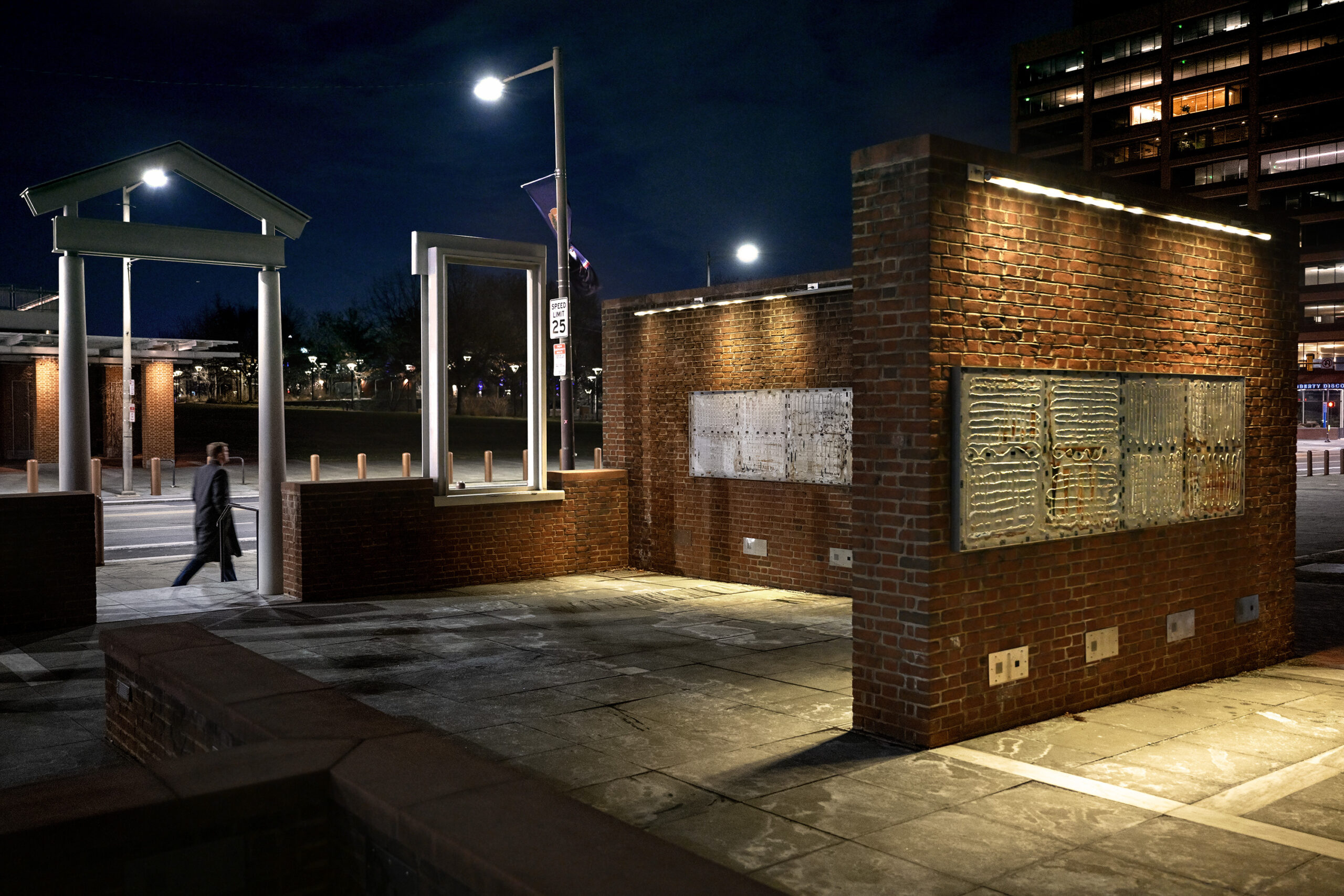
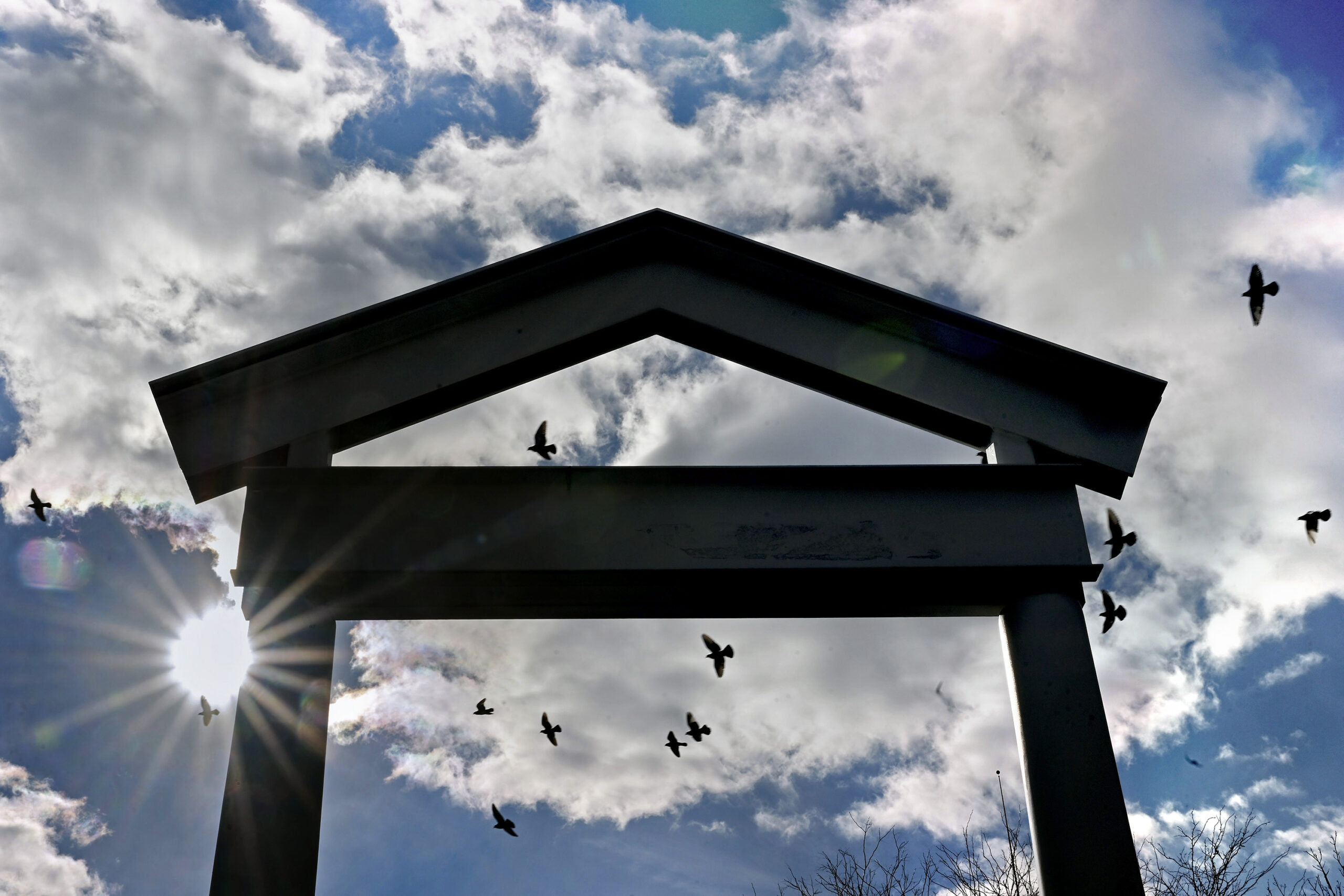
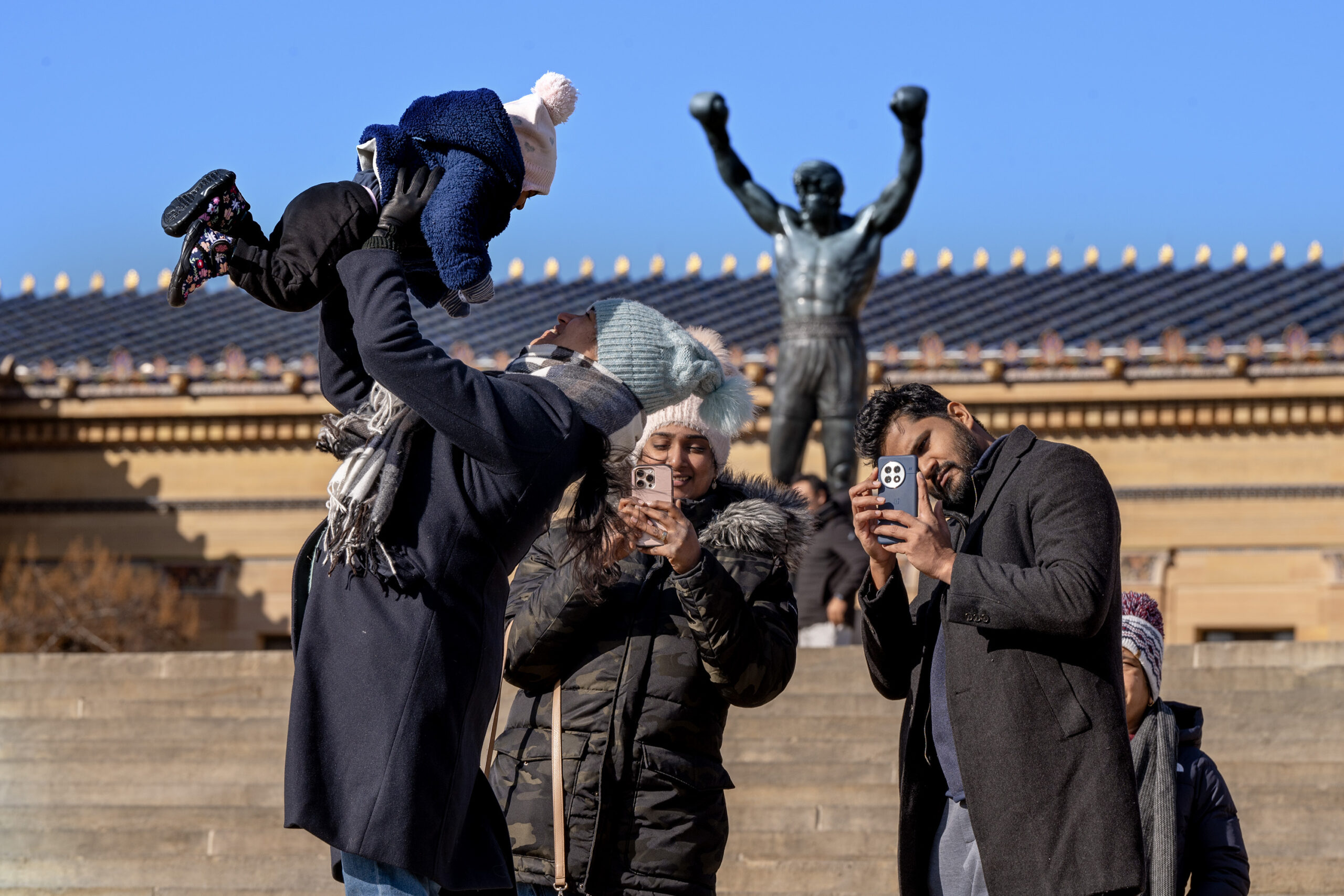
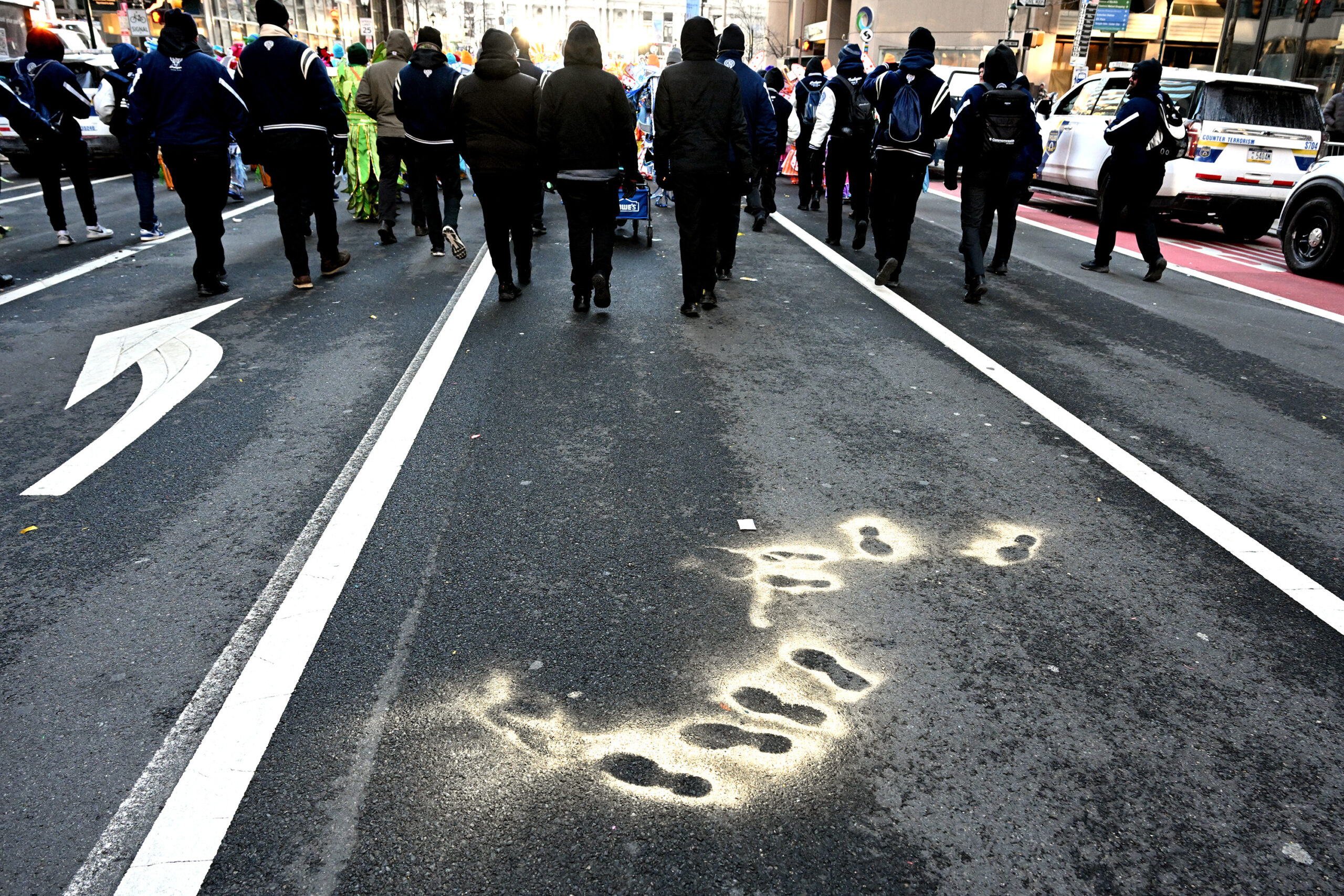
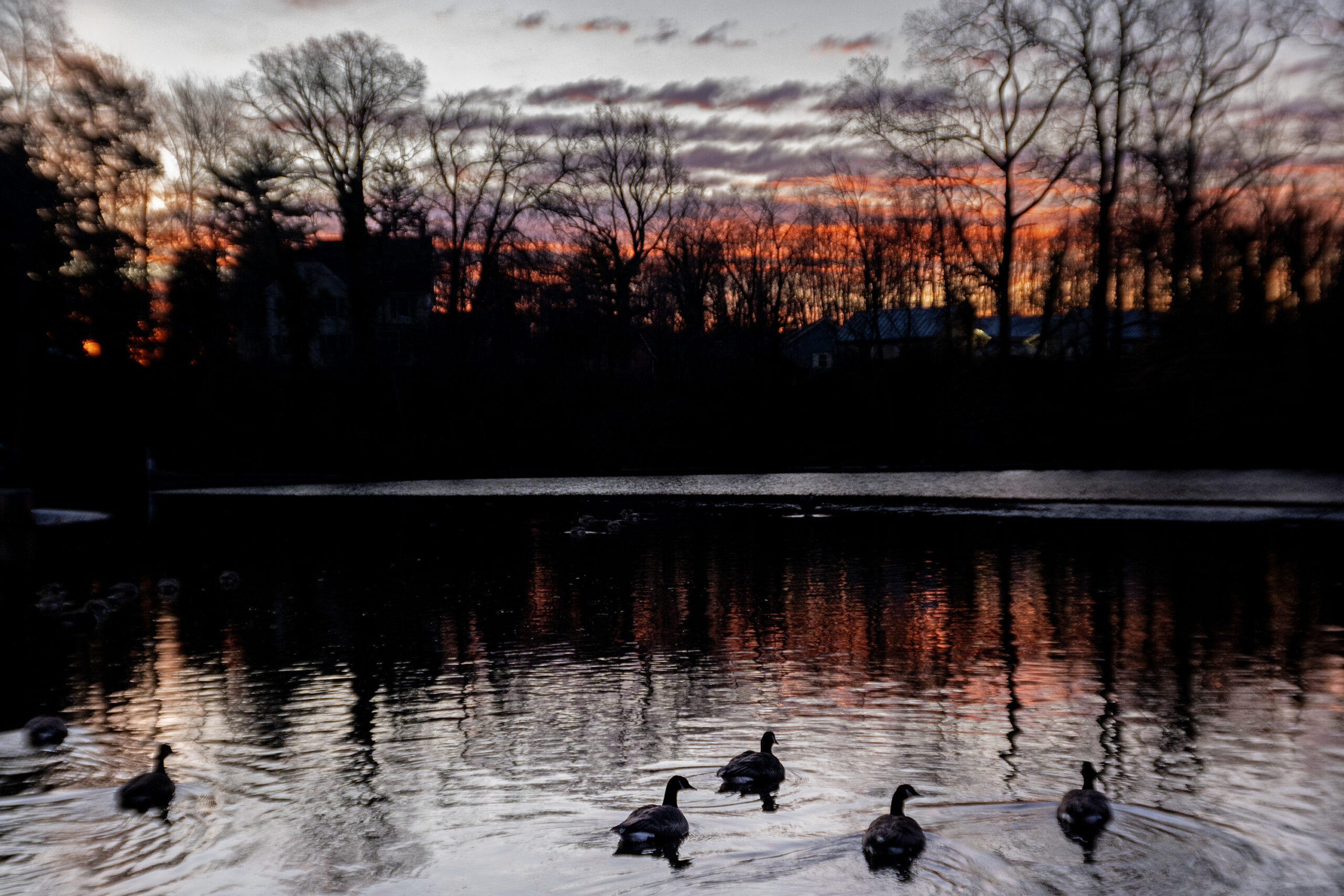
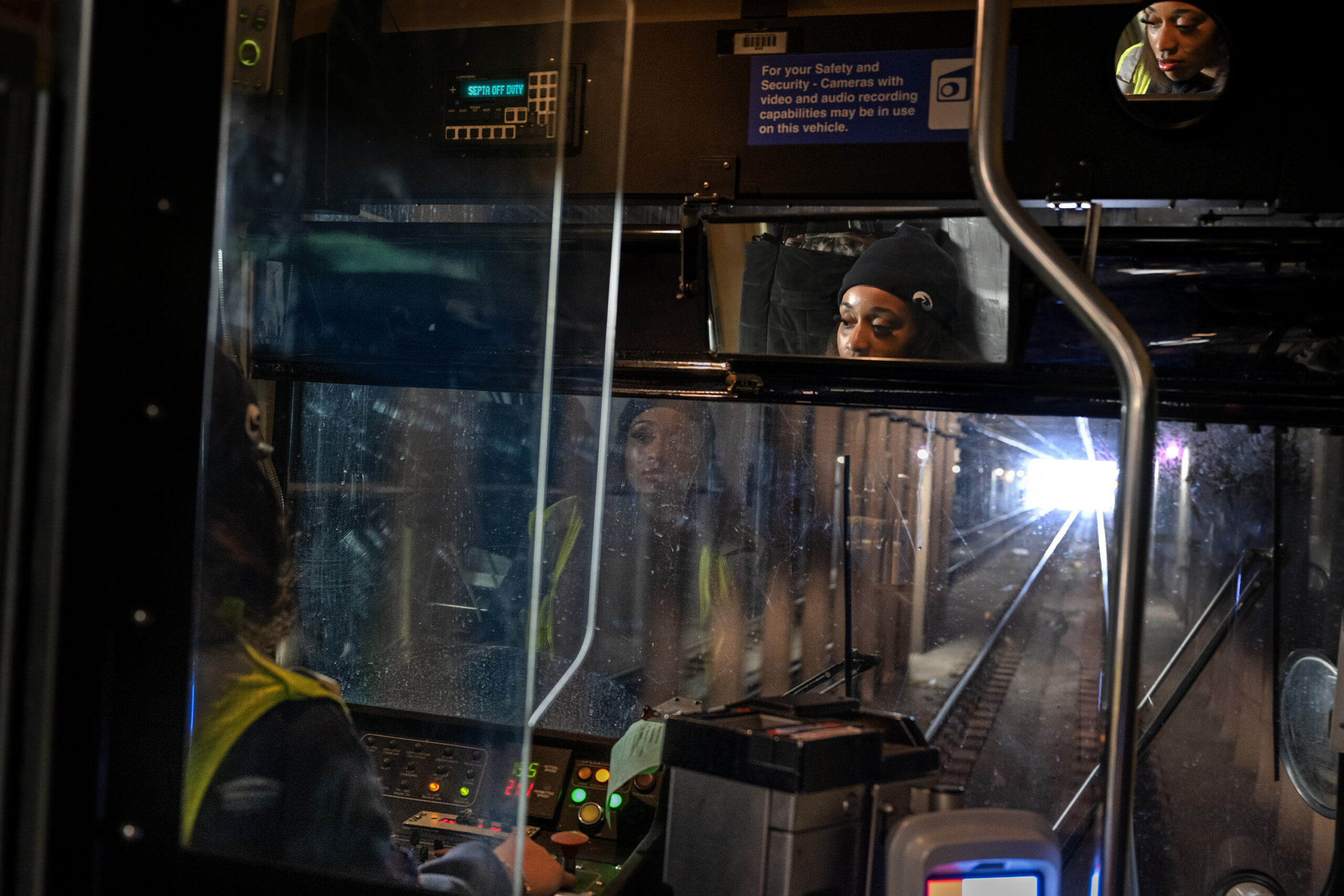
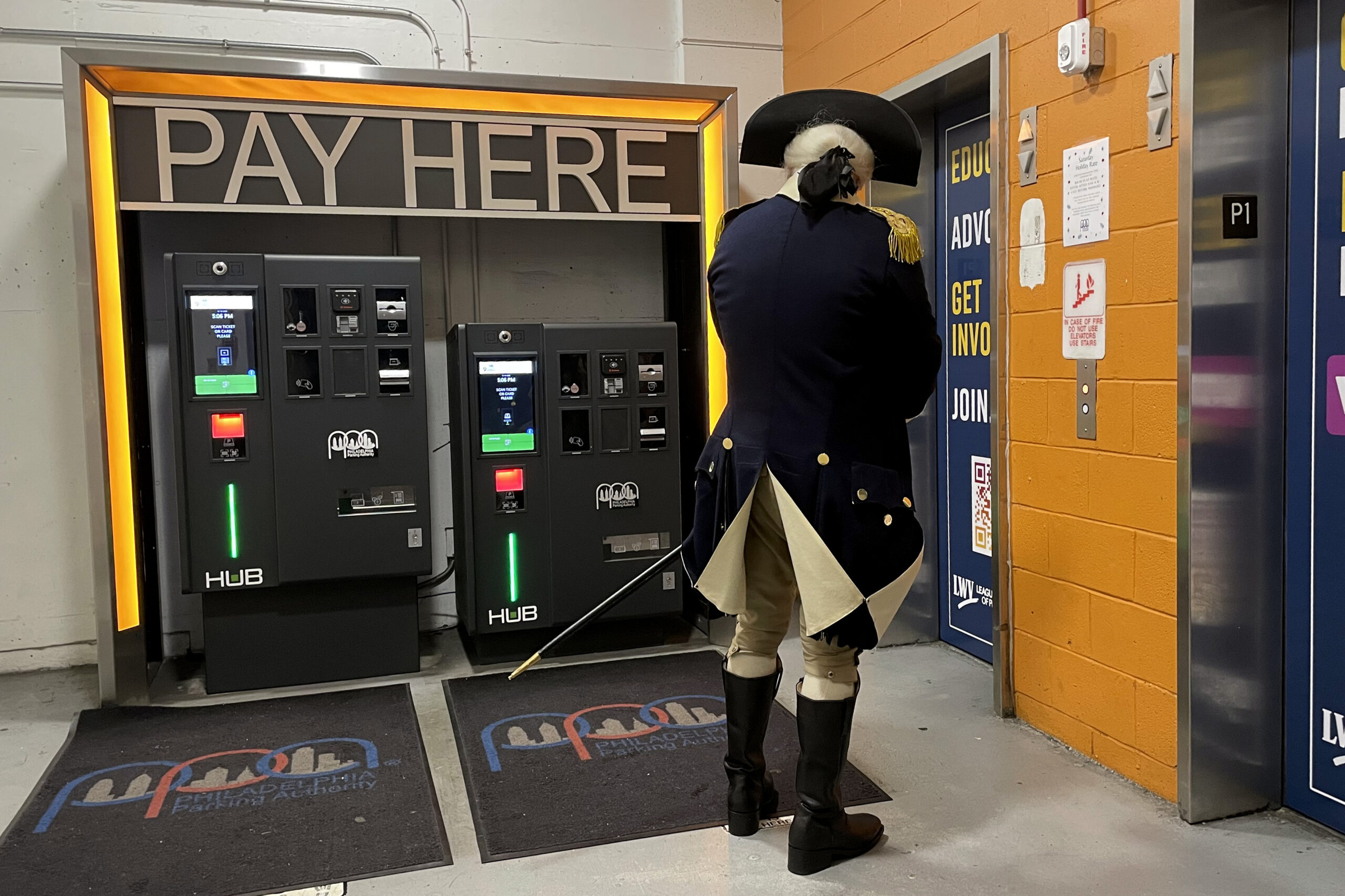
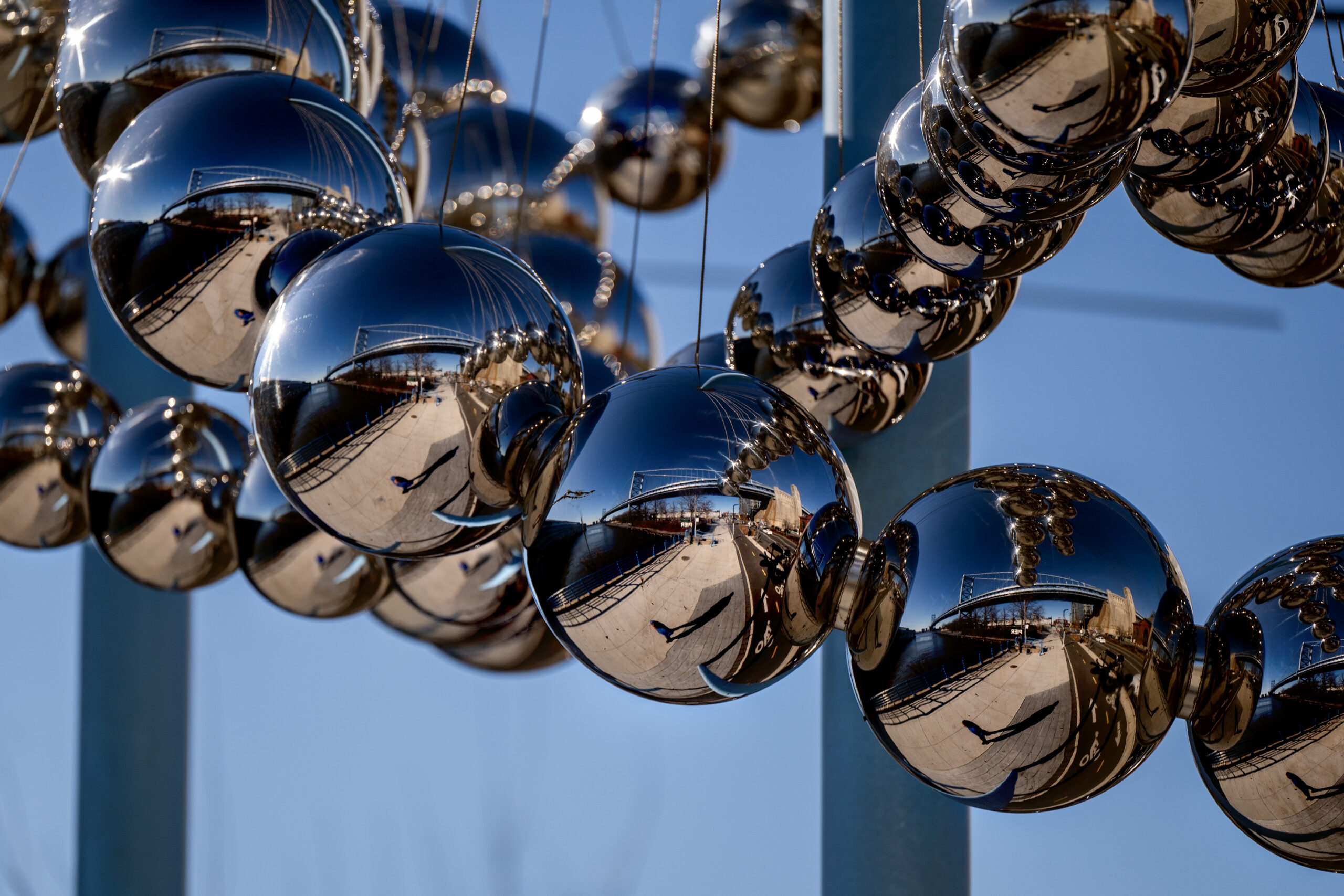
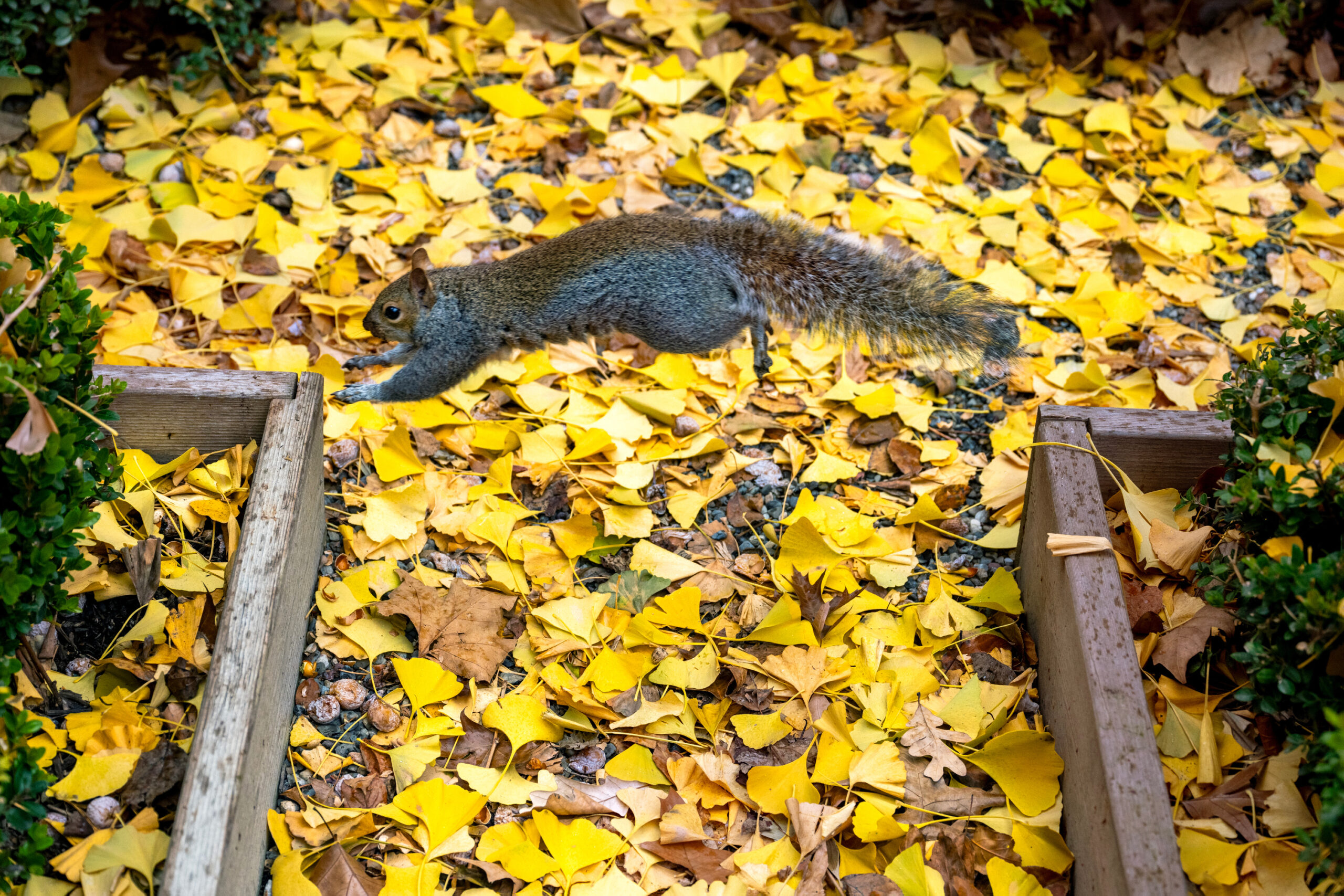
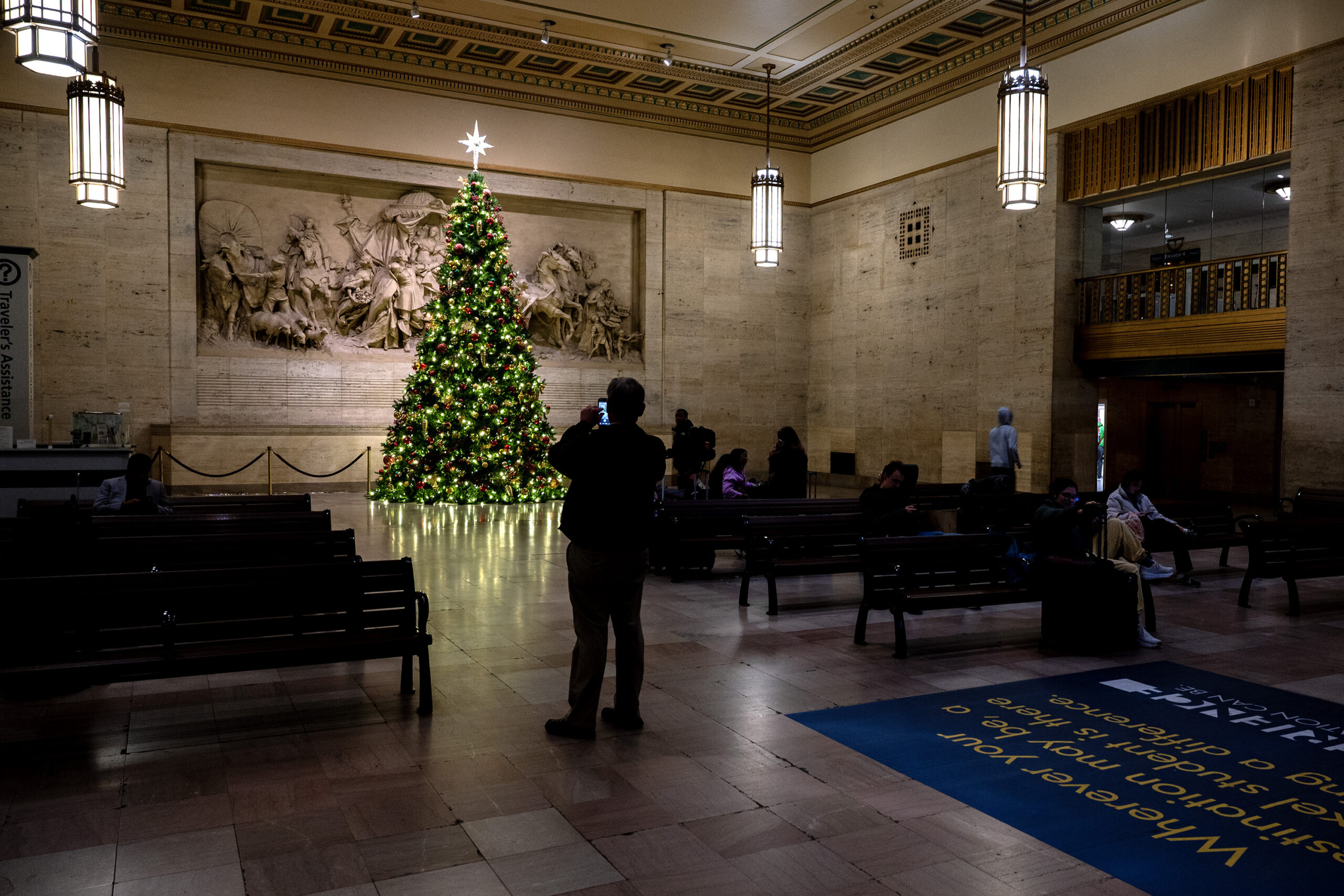
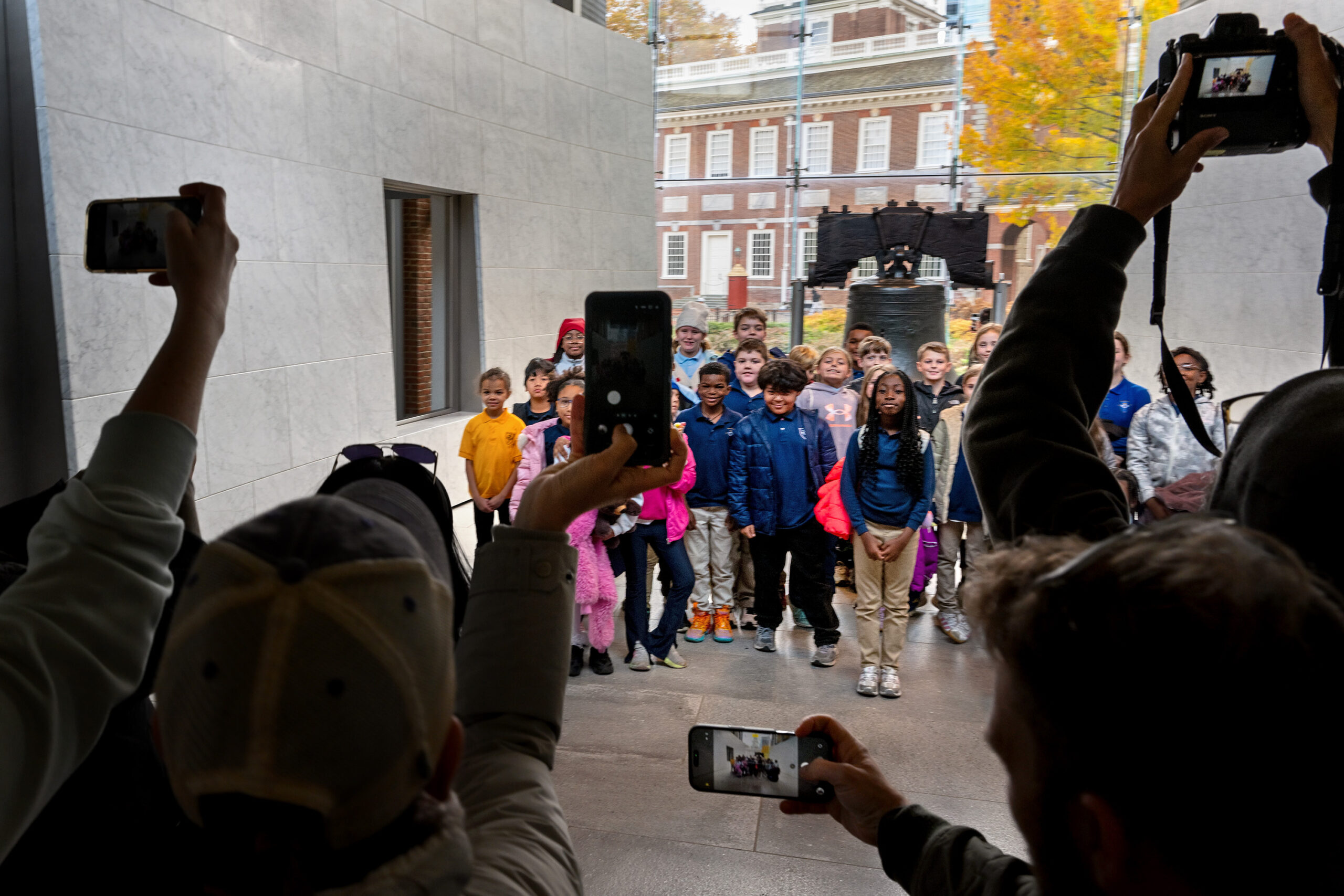
February 23, 2026: Bystanders at the President’s House try to prevent a “counter-protester” from ripping off notes posted by visitors where panels about slavery had been removed by President Donald Trump’s administration.February 16, 2026: What came first? The dirty snowpacked berm of frozen slush or the graffiti? February 9, 2026: Walking through a corrugated metal culvert called the “Duck Tunnel,” a pedestrian navigates the passageway under the SEPTA tracks on the Swarthmore College campus. February 2, 2026: A light-as-air Elmo balloon rolls along a sidewalk in Haddonfield, propelled by the wind as Sunday’s heavy snow starts to turn to ice and sleet. January 26, 2026: The President’s House in Independence National Historical Park hours Jan, 22, after all historical exhibits were removed following President Trump’s Executive Order last March that the content at national parks that “inappropriately disparage” the U.S. be reviewed. The site, a reconstructed “ghost” structure titled “Freedom and Slavery in the Making of a New Nation” (2010), serves as a memorial to the nine people George Washington enslaved there during the founding of America.January 19, 2026: A low-in-the-sky winter sun is behind the triangular pediment of the “front door” of the open-air President’s House installation in Independence National Historical Park. The reconstructed “ghost” structure with partial walls and windows of the Georgian home known in the 18th century as 190 High St. is officially titled, “Freedom and Slavery in the Making of a New Nation” (2010). It is designed to give visitors a sense of the house where the first two presidents of the United States, George Washington and John Adams, served their terms of office. The commemorative site designed by Emanuel Kelly, with Kelly/Maiello Architects, pays homage to nine enslaved people of African descent who were part of the Washington household with videos scripted by Lorene Cary and directed by Louis Massiah. Deepika Iyer holds her niece Ira Samudra aloft in a Rockyesque pose, while her parents photograph their 8 month-old daughter, in front of the famous movie prop at the top of the steps at the Philadelphia Art Museum. Iyer lives in Philadelphia and is hosting a visit by her mother Vijayalakshmi Ramachandran (partially hidden); brother Gautham Ramachandran; and her sister-in-law Janani Gautham who all live in Bangalore, India.January 5, 2026: Parade marshals trail behind the musicians of the Greater Kensington String Band heading to their #9 position start in the Mummers Parade. Spray paint by comic wenches earlier in the day left “Oh, Dem Golden Slippers” shadows on the pavement of Market Street. This year marked the 125th anniversary of Philly’s iconic New Year’s Day celebration.Dec. 29, 2025: Canada geese at sunrise in Evans Pond in Haddonfield, during the week of the Winter Solstice for the Northern Hemisphere. December 22, 2025: SEPTA trolley operator Victoria Daniels approaches the end of the Center City Tunnel, heading toward the 40th Street trolley portal after a tour to update the news media on overhead wire repairs in the closed tunnel due to unexpected issues from new slider parts.December 15, 2025: A historical interpreter waits at the parking garage elevators headed not to a December crossing of the Delaware River, but an event at the National Constitution Center. General George Washington was on his way to an unveiling of the U.S. Mint’s new 2026 coins for the Semiquincentennial, December 8, 2025: The Benjamin Franklin Bridge and pedestrians on the Delaware River Trail are reflected in mirrored spheres of the “Weaver’s Knot: Sheet Bend” public artwork on Columbus Boulevard. The site-specific stainless steel piece located between the Cherry Street and Race Street Piers was commissioned by the City’s Public Art Office and the Delaware River Waterfront Corporation and created and installed in 2022 by the design and fabrication group Ball-Nogues Studio. The name recalls a history that dominated the region for hundreds of years. “Weaver’s knot” derives from use in textile mills and the “Sheet bend” or “sheet knot” was used on sailing vessels for bending ropes to sails. November 29, 2025: t’s ginkgo time in our region again when the distinctive fan-shaped leaves turn yellow and then, on one day, lose all their leaves at the same time laying a carpet on city streets and sidewalks. A squirrel leaps over leaves in the 18th Century Garden in Independence National Historical Park Nov. 25, 2025. The ginkgo (Ginkgo biloba) is considered a living fossil as it’s the only surviving species of a group of trees that existed before dinosaurs. Genetically, it has remained unchanged over the past 200 million years. William Hamilton, owner the Woodlands in SW Phila (no relation to Alexander Hamilton) brought the first ginkgo trees to North America in 1785.November 24, 2025: The old waiting room at 30th Street Station that most people only pass through on their way to the restrooms has been spiffed up with benches – and a Christmas tree. It was placed there this year in front of the 30-foot frieze, “The Spirit of Transportation” while the lobby of Amtrak’s $550 million station restoration is underway. The 1895 relief sculpture by Karl Bitter was originally hung in the Broad Street Station by City Hall, but was moved in 1933. It depicts travel from ancient to modern and even futuristic times. November 17, 2025: Students on a field trip from the Christian Academy in Brookhaven, Delaware County, pose for a group photo in front of the Liberty Bell in Independence National Historical Park on Thursday. The trip was planned weeks earlier, before they knew it would be on the day park buildings were reopening after the government shutdown ended. “We got so lucky,” a teacher said. Then corrected herself. “It’s because we prayed for it.”
We’ll show you a photo taken in the Philly-area, you drop a pin where you think it was taken. Closer to the location results in a better score. This week’s theme is about the art of the late Isaiah Zagar. Good luck!
Round #22
Question 1
Where can you find this mosaic by Isaiah Zagar?
Loading…
ClickTap on map to guess the location in the photo
ClickTap again to change your guess and hit submit when you're happy
You will be scored at the end. The closer to the location the better the score
Jose F. Moreno / Staff Photographer
Pretty good/Not bad/Way off! Your guess was from the location.Spot on! Your guess was exactly at the location. Here's also where a random selection of Inquirer readers guessed.
Isaiah Zagar, the renowned mosaic artist from Philadelphia, died recently at 86.
Located near the Magic Gardens, Zagar’s nonprofit organization and gallery, this 2004 mural “Anthony's Eyes” sits next to another mural, “Julia’s Birthday Card," and is displayed at a private residence on Bainbridge Street.
Quiz continues after ad
Question 2
This mosaic is on the exterior of a former coffee shop. Where is it?
Loading…
Tom Gralish / Staff Photographer
Pretty good/Not bad/Way off! Your guess was from the location.Spot on! Your guess was exactly at the location. Here's also where a random selection of Inquirer readers guessed.
This East Passyunk mural is located on the former Black N Brew building. It was recently announced that Love & Honey Fried Chicken would take over the space.
Quiz continues after ad
Question 3
The mural seen here is controversially being torn down. Do you know its location?
Loading…
Tom Gralish / Staff Photographer
Pretty good/Not bad/Way off! Your guess was from the location.Spot on! Your guess was exactly at the location. Here's also where a random selection of Inquirer readers guessed.
The Painted Bride mural located at the former Painted Bride Art Center building is in the process of being torn down after years of legal battles to save the mosaic.
Your Score
ARank
Amazing work. You know your mosaics.
BRank
Good stuff. You’re almost perfect.
CRank
C is a passing grade, but you could do better.
DRank
D isn’t great. Try again next week!
FRank
We don’t want to say you failed, but you didn’t not fail.
You beat % of other Inquirer readers.
We’ll be back next Saturday for another round of Citywide Quest.
It’s a tale as old as time — or about 3,600 years, anyway.
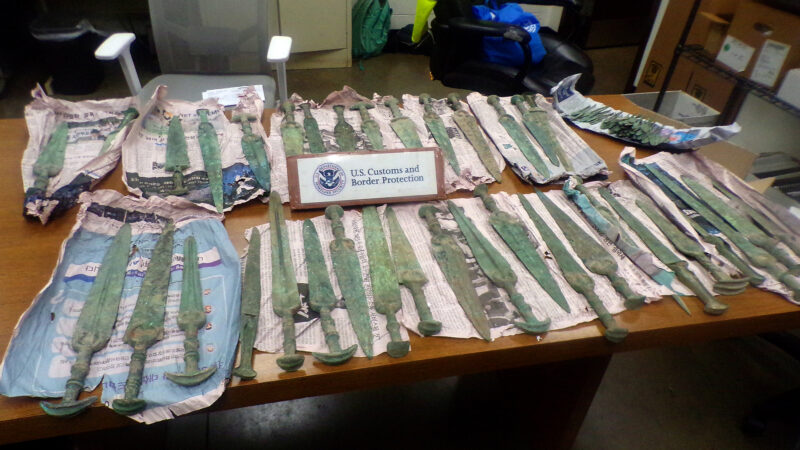
U.S. Customs and Border Protection on Friday announced the seizure of 36 Bronze Age-era short swords and 50 arrowheads following their arrival in Philadelphia in October. Considered cultural artifacts, the items were imported into the United States without proper permitting, and were likely the product of “illicit excavations of burial sites,” federal officials said.
Now, they may soon be returned to Iran, where they are believed to have originated and date from 1600 to 1000 BCE.
CBP tries “to repatriate them to their rightful owners, which in this case would be the country,” said agency spokesperson Stephen Sapp. “So they can retain a piece of their cultural history.”
The Bronze Age is considered to have spanned from 3300 to 1200 BCE, a historical period during which bronze — an alloy of copper and tin — was the prevailing metal used for making weapons and tools. What is today considered Iran was a pivotal area during that time, serving as an important trade route connector and bronze producer.
The items arrived in Philadelphia on Oct. 16 via an express delivery flight from the United Arab Emirates, having been “mis-manifested,” as Sapp put it, as “metal decoration articles.” CBP officers went on to X-ray the shipment, and discovered objects that resembled swords, prompting them to open up the items.
Inside, they saw what appeared to be ancient-looking swords and arrowheads covered in the teal patina of oxidized bronze. Suspecting the items to be of antiquity, the officers detained the shipment for additional investigation.
CBP officers worked with the Antiquities Unit of the department’s National Targeting Center to determine the historical and cultural value of the swords and arrowheads. That unit sought assistance from an archaeologist associated with an unnamed Philadelphia university for more information. The archaeologist later pegged them as hailing from what is today the northeastern area of Iran and dating back as far as 3,600 years.
Being that old, the items were considered to be the historical and cultural property of their origin nation. Many countries, federal officials noted, have laws that require official permission to export such items.
Investigators also reached out to the person who imported the items, and found that they did not have the documentation that would allow them to obtain the objects. As a result, even if the items were legally purchased, they were not able to be lawfully imported into the United States.
“That’s the key thing. If it is considered an artifact, or historical or cultural property of a country, that country has to permit that commodity leaving,” Sapp said. “Generally, you are going to be able find there is a black market — or a market, period — for all things.”
Sapp added that no criminal charges have been filed in the incident. However, he noted that the importer is now known to investigators, and lost the shipment as a result of the investigation.
Elliot N. Ortiz, CBP’s acting area port director in Philadelphia, said in a statement that officers “strive to rescue cultural artifacts from the grips of illicit international traders.” Items are often smuggled into the United States using “deceptive practices” that both violate import laws and “undermine efforts to preserve and protect the integrity of cultural history,” he added.
The investigation lasted about four months — a length of time Sapp said is not unusual in cases like this. Largely, he added, it comes down to investigators doing the due diligence when it comes to seeking the importer’s permitting, as well as allowing archaeologists to properly investigate the items to determine their age and origin.
“We aren’t going to give an archaeologist a day or two to look at this stuff,” Sapp said. “They need to be able to make sure they are accurate to the best of their ability, so when they give their determination, we can trust that to be truthful.”
Now, CBP officers will hold on to the items until the agency issues a disposition order. When that will happen exactly, Sapp said, has not yet been determined.
All charges were dropped against Leonard Hill, a prominent personal injury attorney accused of aggravated assault and related crimes for shooting and injuring a man during an altercation outside a Center City cigar bar in 2023.
Prosecutors dropped the charges Friday morning shortly before Hill, 56, was set to go to a bench trial before Common Pleas Judge J. Scott O’Keefe.
In addition to aggravated assault, Hill will not face charges of possessing an instrument of a crime, simple assault, recklessly endangering another person, and tampering with evidence.
Aggravated assault, a felony and the most serious of those offenses, carries a sentence of up to 20 years in prison if convicted.
Hill’s attorney, Fortunato N. Perri, declined to comment on the decision.
Last year, in a highly unusual move in an aggravated assault case, the District Attorney’s Office offered to admit Hill to the diversion program instead of going to trial.
Had Hill participated, his case would have been expunged after completing a period of probation and community service, surrendering the legally owned firearm police recovered from his Bala Cynwyd home, and donating $25,000 to an anti-violence group.
District Attorney Larry Krasner said in an interview at the time that request was “specifically my decision.” The district attorney called information about the case, some of it revealed after Hill’s arrest, both unique and highly unusual, though he declined to elaborate.
A spokesperson for the District Attorney’s Office declined to comment Friday.
After prosecutors sought diversion last February, Municipal Court Judge William Austin Meehan Jr.denied prosecutors’ request.
The judge said Hill’s case was not appropriate for diversion, which is typically reserved for cases involving relatively minor offenses, and urged prosecutors to resolve the case through different means.
It’s rare for those accused of shootings to be offered diversion, otherwise known as the Accelerated Rehabilitative Disposition. Several nonfatal shooting cases have ended with diversion since 2011: participants usually include those charged with nonviolent offenses such as DUIs, petty theft, or drug possession.
Attorneys for Hill — whose billboards advertising his legal servicesfeature prominently on Philadelphia’s freeway system — maintained their client acted in self-defense when firing twice at a man outside the Ashton Cigar Bar on the 1500 block of Walnut Street.
The episode began when Hill and a bar manager tried to separate a woman and another man she said was intoxicated and accosting her, according to court documents.
The confrontation spilled outside, where Hill and the man began to argue. Hill drew a firearm and fired once during the argument, the court documents said. Hill fired again as the man ran away, striking the 38-year-old in the calf.
Hill left the scene and changed his clothes before returning, and did not tell officers who responded to the bar that he had fired shots, according to the documents. Investigators recovered video of the shooting and interviewed the bar manager, who identified Hill as the shooter but said he had fired in self-defense.
Perri, Hill’s attorney, later said the man who Hill shot had been wielding a knife — a detail not included in his arrest paperwork — and said his client made a “split-second decision” to defend himself and others in a dangerous situation.
Prosecutors’ decision to offer Hill diversion last year did not come without criticism.
Keisha Hudson, head of the Defender Association of Philadelphia, told the Inquirer in February 2025 that she could not recall a single instance in which one of the organization’s clients was offered diversion after shooting someone.
She said the case’s handling was emblematic of a justice system that treats poor defendants and those with money differently. She did not immediately respond to a request for comment Friday.
Staff writer Ellie Rushing contributed to this article.
Aramark will not be the official food, beverage, and hospitality provider at the new South Philadelphia arena where the 76ers, Flyers, and the city’s new WNBA team are expected to play.
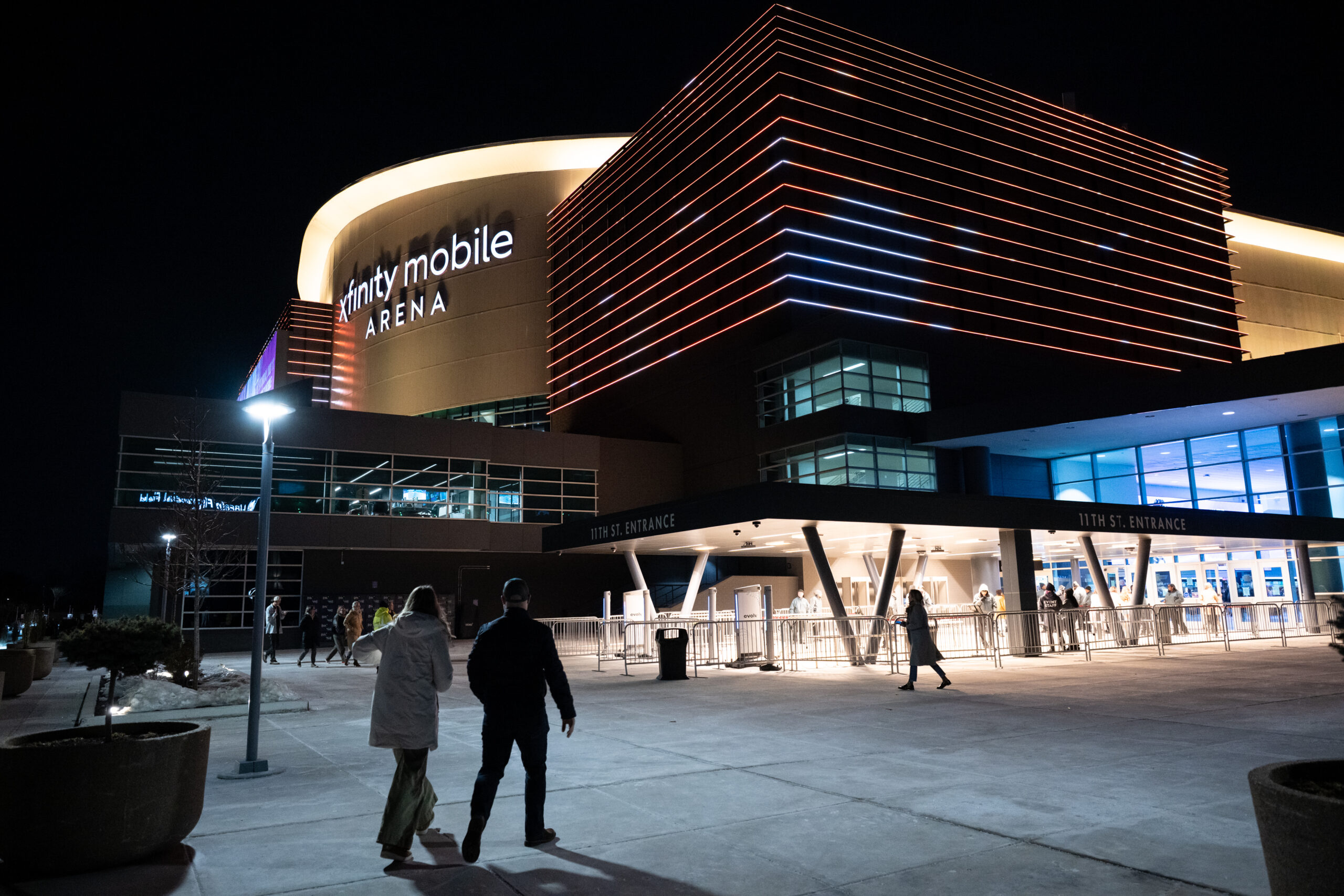
Harris Blitzer Sports & Entertainment, which owns the Sixers, and Comcast Spectacor, which owns the Flyers and Xfinity Mobile Arena, announced that Levy Restaurants will take over food and beverage duties in the new arena, which is slated to open by 2030.
“Very few cities are as devoted to their teams as Philadelphia, the loyalty and passion are part of the DNA that make the community so special. It’s both an honor and an invigorating opportunity to help amplify the best of Philadelphia,” Levy CEO Andy Lansing said in a statement.
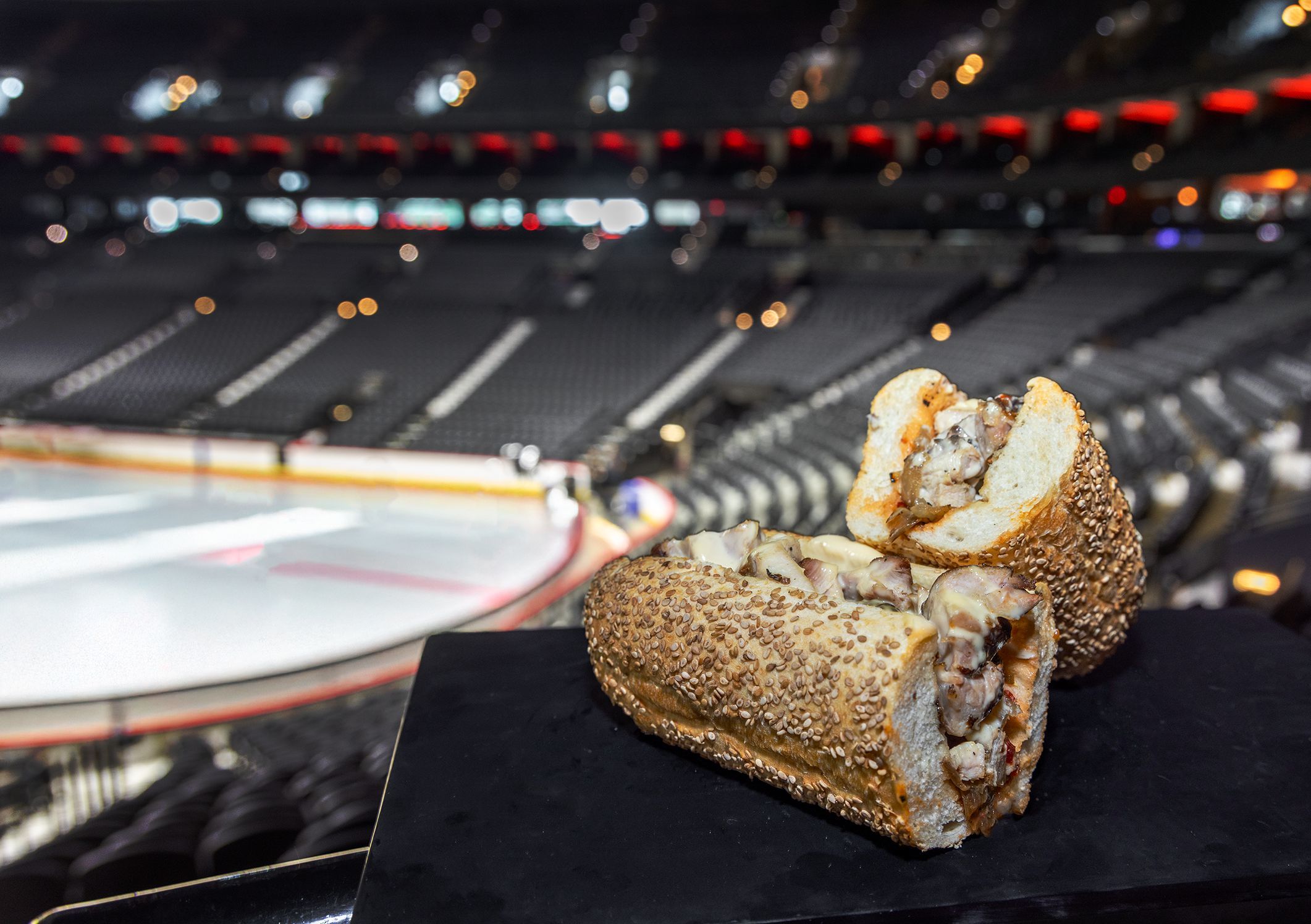
Smoked chicken cheesesteak is on the 2025-26 menu at the Xfinity Mobile Arena.
Aramark has overseen hospitality at the Sixers’ and Flyers’ arena since it opened in 1996. Lincoln Financial Field and Citizens Bank Park hospitality services are still operated by the Philadelphia-based food services provider.
A spokesperson for the arena said that the decision to go with a new provider was not based on Aramark’s performance, but was the result of a standard pitch process.
“We have a great relationship with our friends at Aramark,” Comcast Spectacor chairman and CEO Dan Hilferty told SportsBusinessJournal. “We have, on both sides, committed that while Xfinity Mobile Arena is still in operation, we’re going to deliver the best possible product.”
Aramark will continue its tenure at Xfinity Mobile Arena until the new arena opens. The new arena was announced last year after plans to build a Center City arena for the Sixers were abandoned in favor of a new building at the South Philly sports complex.
Xfinity Mobile Arena used to be known as the Wells Fargo Arena, from 2010 into August 2025.
“Our team is fully committed to delivering memorable game day experiences, and we are grateful for the many decades spent fueling the passion and energy of the fans,” an Aramark spokesperson said in a statement.
The hometown food service provider has come under fire in recent years over labor disputes with the thousands of people who work in the stadiums. Before Unite Here Local 274 won its latest contract, fewer than 100 workers represented by the union had year-round healthcare. The contract, signed last March, increased wages and brought hundreds of workers onto the union healthcare plan.
Levy’s portfolio includes nearly half the NBA/NHL shared arenas, such as Los Angeles’ Crypto.com Arena, according to a Sixers spokesperson. Levy, which has headquarters in Chicago, also provides services for such large events as the Kentucky Derby and the Grammys.
Noel Mayo, 88, formerly of Philadelphia, widely recognized as the first Black owner of an American industrial design firm, first Black American college chair of an industrial design department, first Black industrial design graduate of Philadelphia College of Art, award-winning super mentor, and champion of professional diversity, equity, and inclusion, died Thursday, Jan. 29, of a probable heart attack at an assisted living center in Delaware County.
Rejected for an industrial design job after college because he was Black, Professor Mayo went on to found Noel Mayo Associates Inc.in Philadelphia in 1964. He spent 11 years in the late 1970s and ’80s as a professor and first Black chair of the industrial design department at what became the now-defunct University of the Arts, and 27 years, from 1989 to 2016, as a governor-appointed eminent scholar in art and design technology at Ohio State University.
“Dr. Mayo leaves behind a transformative legacy,” former colleagues at Ohio State said in a tribute,“whose impact shaped generations of students, elevated the field of design, and advanced diversity and inclusion across the profession.”
As the trailblazing owner and president of Noel Mayo Associates for decades, he and his staff designed all kinds of products, interiors, exteriors, graphics, mobile exhibits, and signage systems for companies and private clients around the world. He worked with NASA, IBM, Black & Decker, Philadelphia International Airport, museums, government agencies, and public institutions.
He collaborated with Lutron Electronics for 45 years and is named on hundreds of its design and utility patents. In 1984, he remodeled the mayor’s City Hall office after Wilson Goode replaced Bill Green. In 1988, he advised officials at the old Spectrum on the placement of a Julius Erving statue in South Philadelphia.
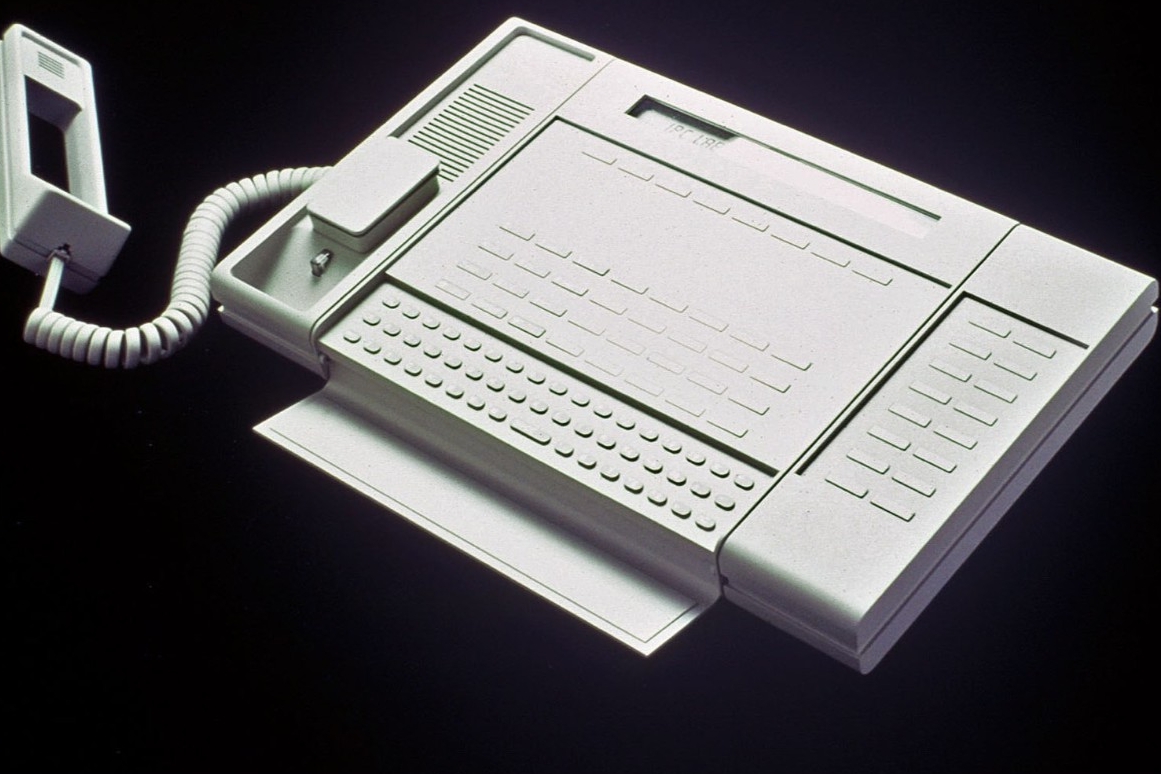
He designed computer-driven telephones in the 1980s that could dial 96 phone numbers automatically and leave messages. “I realize how pressured this is,” he told the Daily News for a 1984 story about design and technology’s effect on modern life. “But people want it.”
Professor Mayo was featured in a 1977 story by Inquirer design critic Ellen Kaye, and she praised the “visual fluidity” he created in a refurbished Bala Cynwyd high-rise condo. She wrote about his work again in 1978, and he said design “revolves around problem-solving from a logical point of view.”
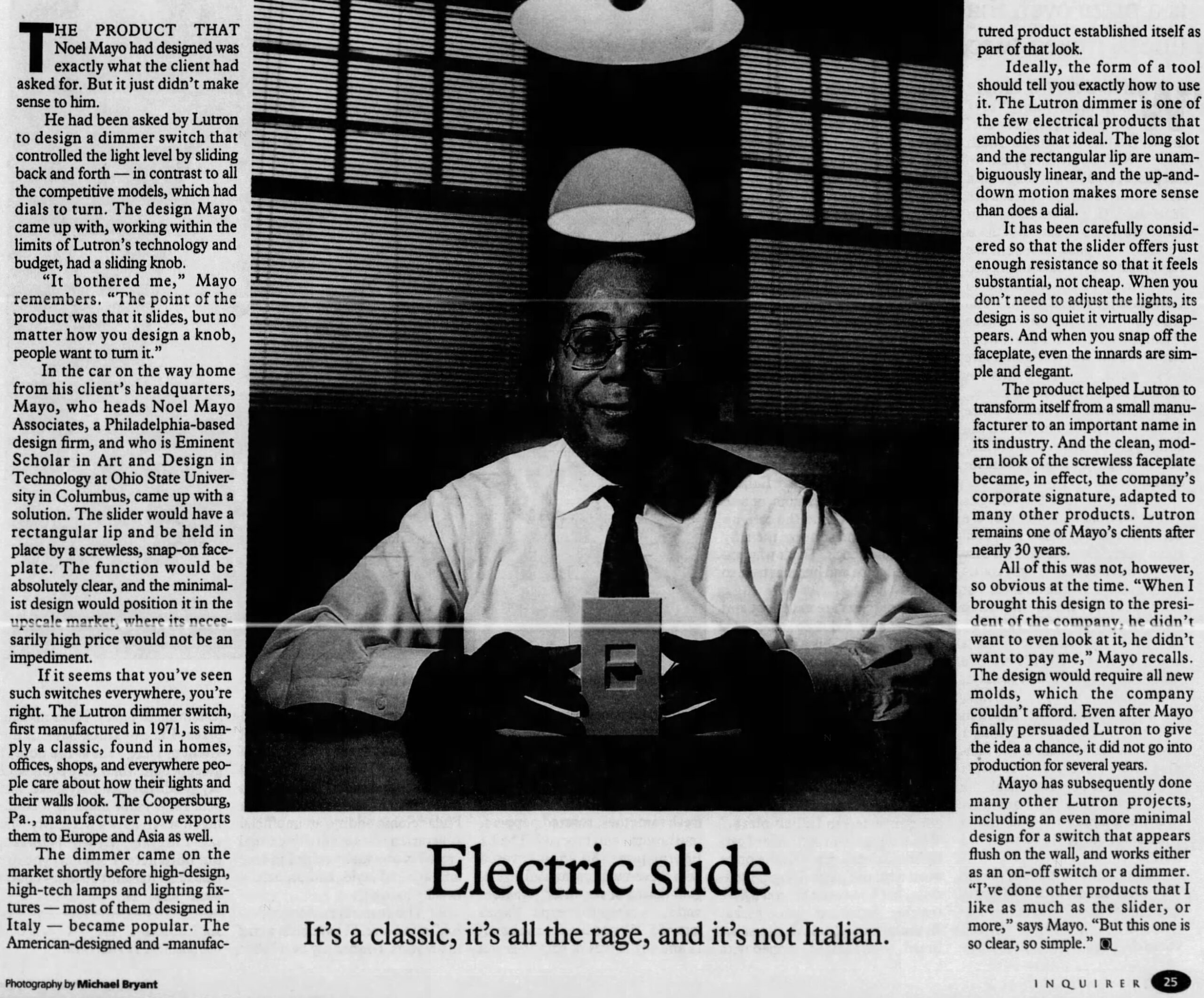
In a 1995 story, Inquirer design critic Thomas Hine noted his commercial success with early light-dimmer switches and said it “helped Lutron to transform itself from a small manufacturer to an important name in its industry.” In a recent video interview, Professor Mayo said: “I see the problems as kind of opportunities that other people didn’t see. … So I look for opportunities for innovation.”
Professor Mayo was featured in The Inquirer in 1995.
As chair at Philadelphia College of Art and its successor, University of the Arts, he grew the industrial design department from the school’s ninth largest to its third largest. In online tributes, former students called him “a true icon” and “a doorway into a world of possibility, dignity, and community.”
He told The Inquirer in 1978: “Something looks good when it looks rational. That is how I work myself, and that is what I try to teach my students.”
At Ohio State, Professor Mayo taught product, interior, and graphic design courses, and researched accelerated learning processes using music, color, relaxation techniques, interactive computers, and video. Former colleagues there praised “his blend of rigor, generosity, calmness, and mentorship” in a tribute.
Professor Mayo worked hard to recruit Black and other minority designers and students to his company and college courses. He created mentoring programs and developed an extensive network of minority business contacts.
He was one-time president of the Philadelphia Economic Council and the Greater Philadelphia Community Development Corp. He wrote articles for many publications and served on boards at University of the Arts, the Society for Environmental Graphic Design, and other groups.
He was a fellow of the Interior Design Council of Philadelphia, a juror for art and design competitions, and a member of the Philadelphia Art Commission. Asked to advise young designers in the recent video interview, he said: “Try to be as innovative as you can. … Ask questions. … Being open is critical.”
Noel Mayo was born Dec. 30, 1937, in Orange, N.J. He attended a boarding school in Chester County and earned a bachelor’s degree in design in 1960 at what became Philadelphia College of Art and then University of the Arts.
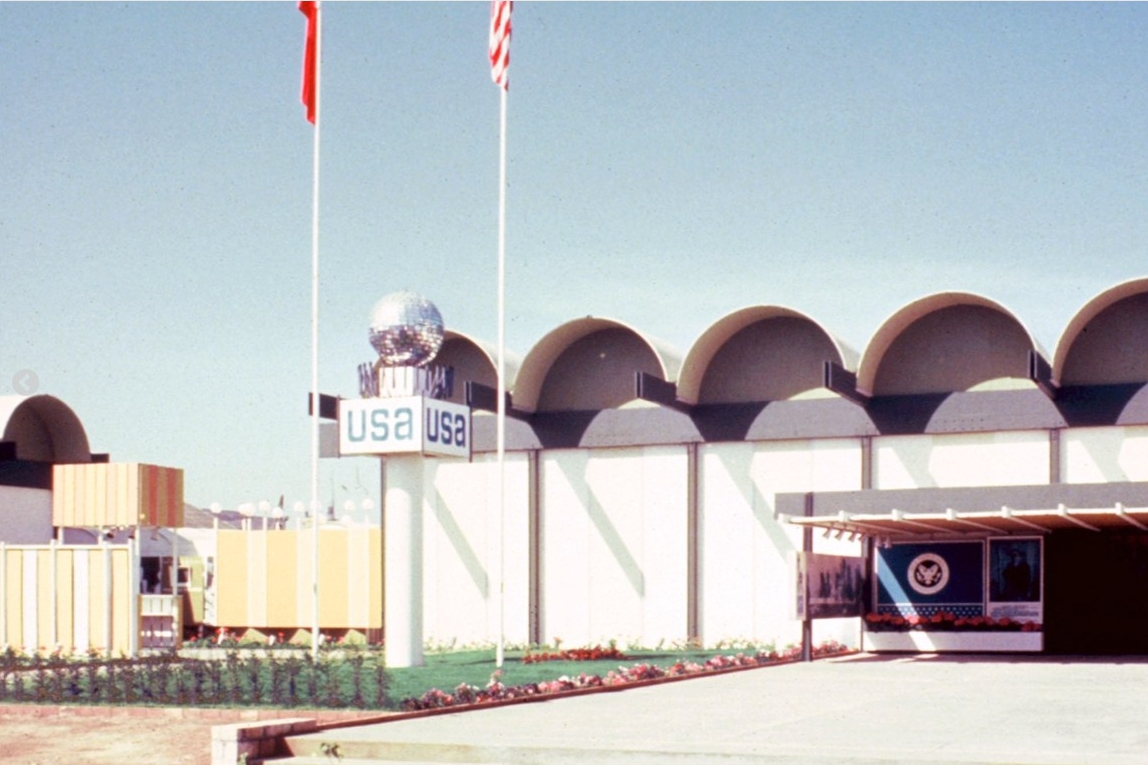
Professor Mayo designed this exterior.
He married, divorced, and later married Leslie Butler.
Professor Mayo enjoyed roller skating, was good at darts, and earned an honorary doctorate from Massachusetts College of Art and Design.
“He was easygoing with a great sense of humor,” said Virginia Gehshan, a design colleague and longtime friend. “He was really an amazing genius. He was ahead of his time.”
In addition to his wife, Professor Mayo is survived by other relatives.
A celebration of his life is to be held later.
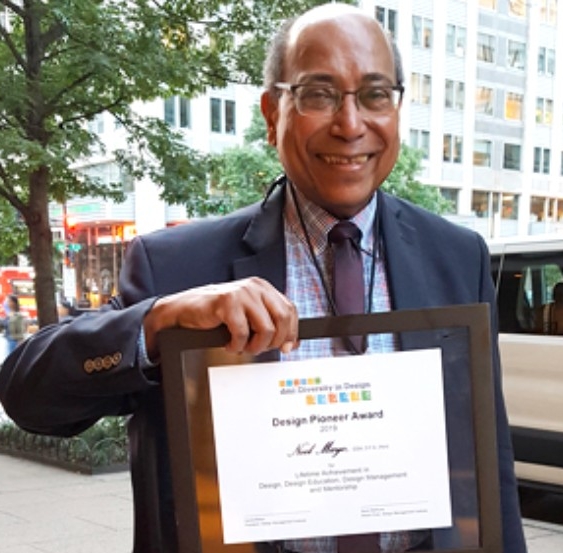
Professor Mayo received the Design Pioneer Award in 2019.
“They are definitely not just sitting there getting dusty in a room,” Hortz Stanton said.
In storage getting dusty?
Hortz Stanton said thousands of non-exhibited items in the Penn Museum’s collections found other purposes last year. And, 5,000 college students were able to use them for classes and research.
“A lot of things happen when objects aren’t on display, everything from conservation to research to documentation,” said Hortz Stanton.
Museums aim to protect their inventory, while still keeping items available.
The Museum of the American Revolution has a collection of 5,000 historical objects, such as archaeological material, documents, paintings, prints, and other items. But only about 300 items are on exhibit.
“They are not buried away and never to be seen again; we store all the collection here at the museum,” said Matthew Skic, director of collections and exhibitions. “Many of our documents are not on display because they are extremely light-sensitive, but we take them on rotations.”
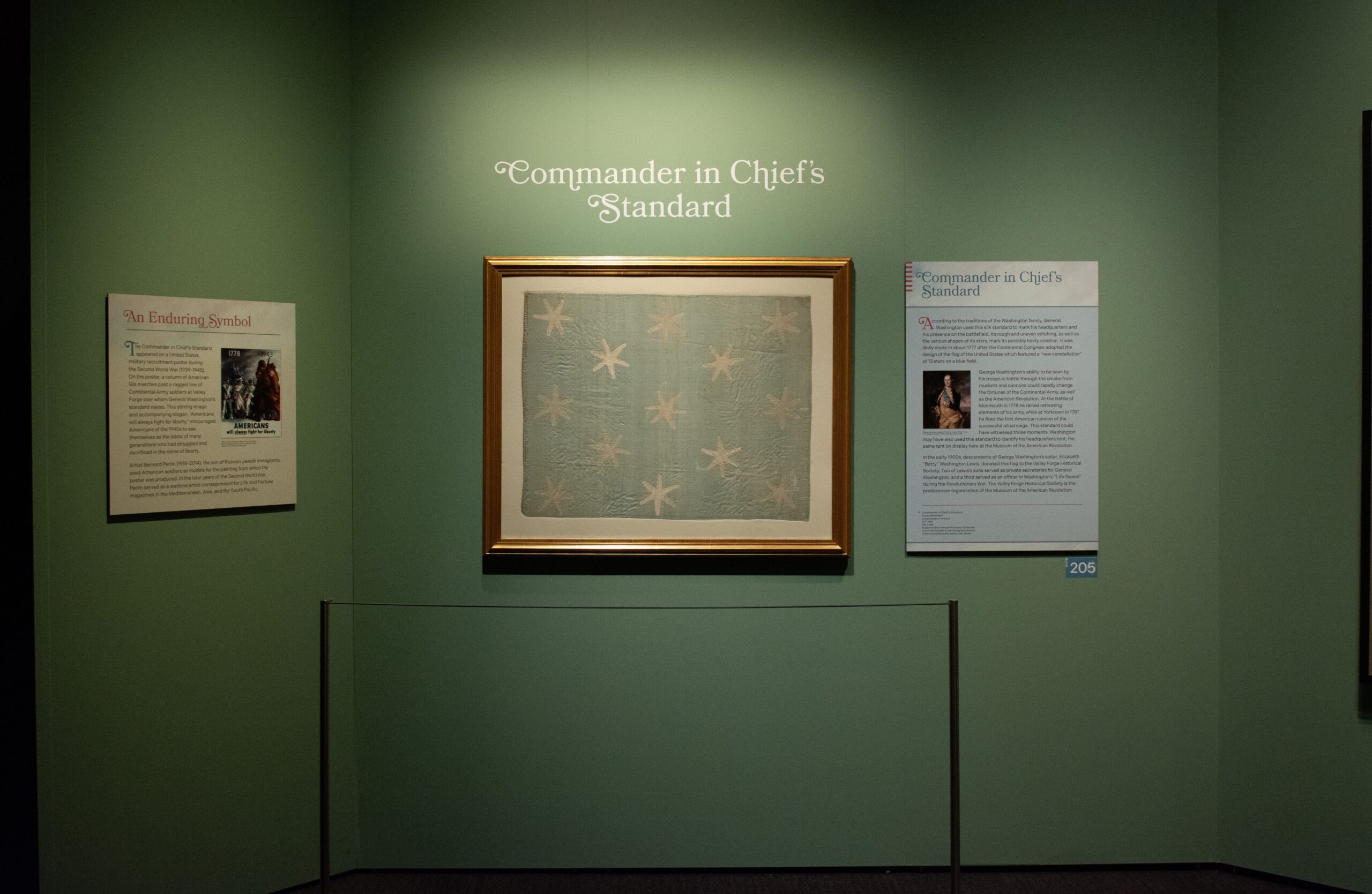
George Washington’s headquarters flag, for example, was put out for a special exhibition in 2025. The display was short-lived due to the brittleness of the silk. It’s now back in storage.
George Washington’s Headquarters Flag (also known as the Commander-in-Chief’s Standard). This flag has been on display only twice at the Museum of the American Revolution.
They are not the only ones keeping a rotation of unexhibited items for preservation. The Independence Seaport Museum keeps 60% to 80% of its 10,000 items in storage throughout the year.
”People often will say: Why are you hoarding all this stuff?” said Peter Seibert, the museum’s president and CEO. “That’s not the case; we want to get them out, it’s just that sometimes that is not always possible.”
His museum has items as small as a thimble and as big as a submarine and the cruiser Olympia. Keeping textiles safe from moths and documents from crumbling requires proper conditions, including acid-free boxes.
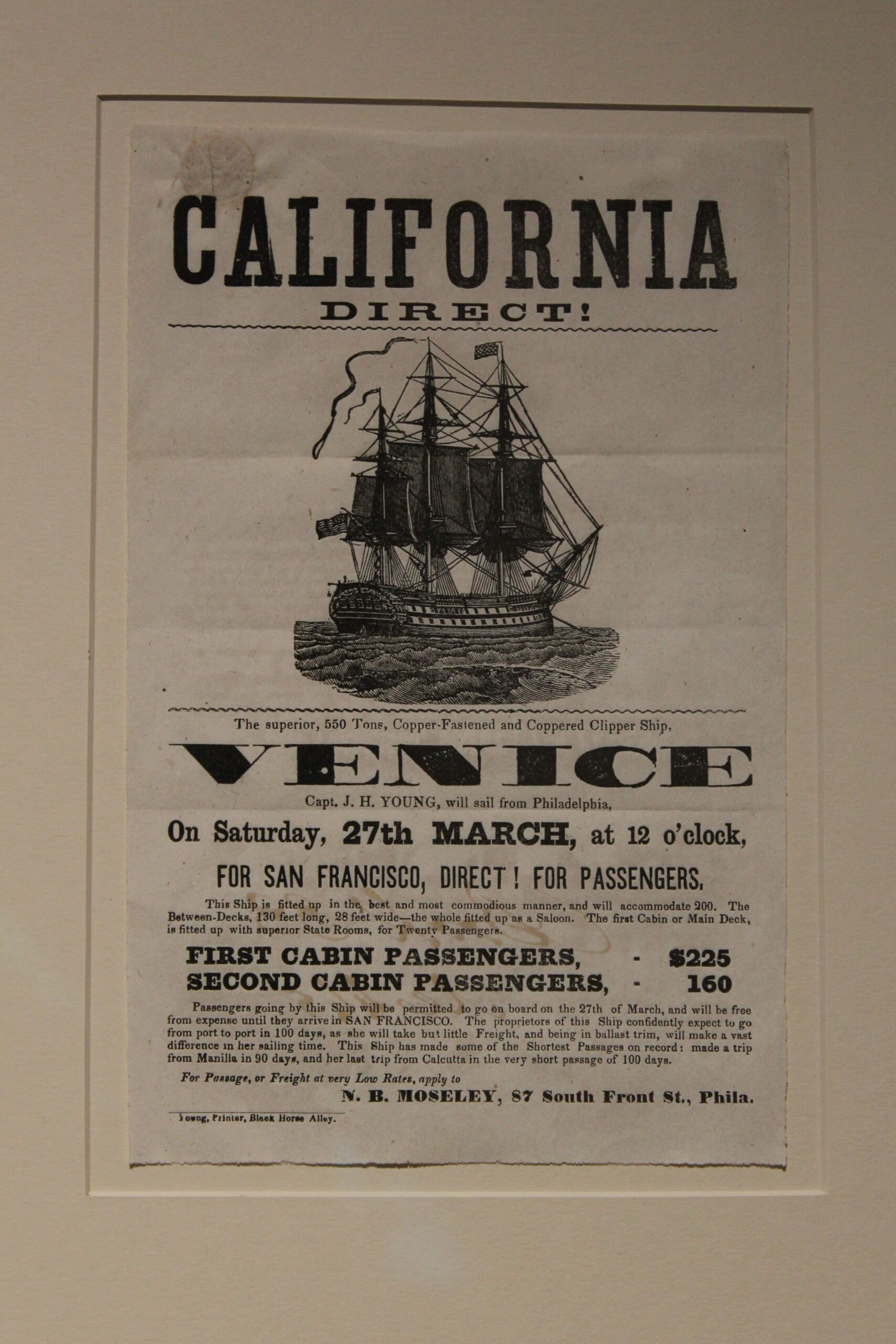
Broadside advertising for Philadelphians to go to California in 1848. Handout: Independence Seaport Museum.
For less-fragile items, life can go places.
Museums often loan storage items to one another. Penn Museum, for example, recently loaned part of its collection to the Zayed National Museum in Abu Dhabi.
This doesn’t mean Philadelphians have lost the chance of seeing those items.Philly museums have benefited from getting items from other institutions — such as the lunar module, which the Smithsonian lent to the Franklin Institute for 49 years. These days, however, lending contracts are much shorter, typically a year or two, Hortz Stanton said.
“Collections are not storage; they are a living resource,” said Paul Callomon, the Academy of Natural Science malacology collections manager.
He views the 21 million items in the academy’s collection as an active resource to scientists all over the world. His department, in particular, has the third-largest shell collection in the world, he said, as well as a variety of fish, plants, and microscopic algae that are not usually available to everyday visitors.
Ornithology collection manager Jason Weckstein sees the non-exhibited items being put to use daily.
”We make study skins, so we actually skin the bird, and we retain the skin and dissect the body,” he said. “We take tissue samples and take data on the internal organs of the body.”
Conservation matters
For years, Penn Museum had two large 14th-century Buddhist murals on display in its rotunda space, but construction forced them to be pulled down for their protection. What began as a precaution turned into a multiyear mural conservation project.
“Over time, things may crack or materials may weaken; our conservationists are able to stabilize this object so they can be stored safely or eventually reinstalled,” Hortz Stanton said.
The conservation process involves documenting the condition of the items, looking at what it needs for long-term care, cleaning, and taking measures to stabilize an object, said Skic.
How to access things in storage
The Academy of Natural Sciences and Penn Museum have many of their items cataloged in an online database. Researchers and students anywhere can request to see materials.
For Hortz Stanton, this conserves resources and protects fragile items.
”We are just one short part of the history of the things we are taking care of, a blip in time,” Hortz Stanton said. “The hope is that these objects are preserved for future generations.”
To make the items more available to the public, the academy holds a members’ night once a year. Animals, field books, photographs, and experimental projects not normally on exhibit become available for a night of knowledge.
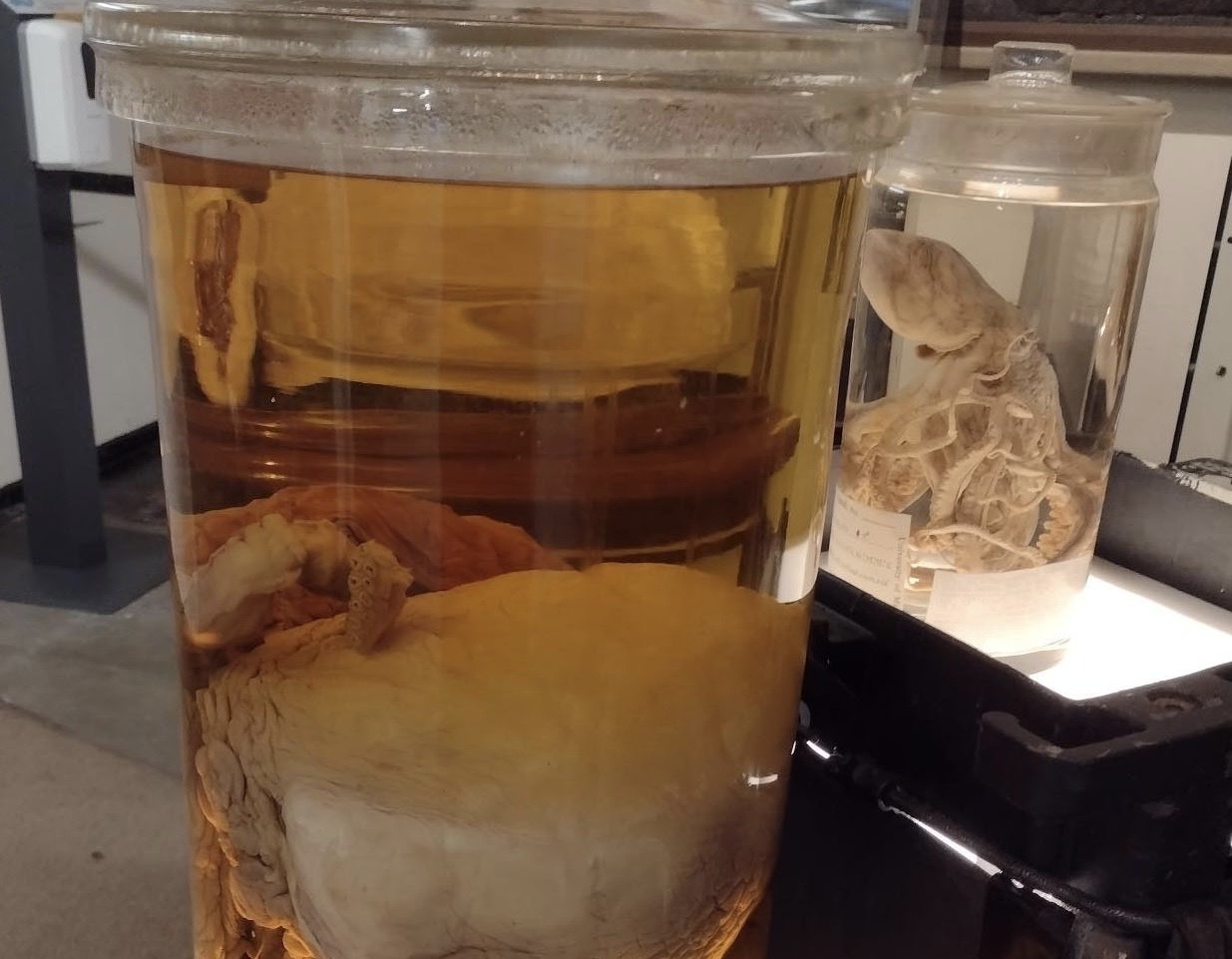
Octopus not normally exhibited at the Academy of Natural Science. People can see it during members’ night.
Not a member? Callomon said anyone can tour the collection if they make arrangements.
“Bird clubs come for behind-the-scenes tours, and artists actually use our collection for bird field guides to study specimens,” Weckstein added.
The Museum of the American Revolution is also a bit more flexible with its collection, even granting access to descendants of Revolutionary War soldiers and people working on historical projects, Skic said.
“These items are tangible connections to America’s founding era,” Skic said. “They serve as a way to learn about those events and make sure people know these are real people, real events, and that those events continue to shape our lives today.”
The nonpartisan Economy League of Greater Philadelphia issued an immigration analysis this week that on the surface might look like a boatload of numbers, but in fact offers fresh insight and a warning about the future.
The organization looked at immigration not just as the coming and going of people but also as a key part of the city’s economic infrastructure.
Immigrants comprise nearly one in five workers and contribute $7.4 billion in consumer spending, filling critical roles in everything from research labs to restaurant kitchens.
Still, the analysis said, without ever mentioning President Donald Trump by name, “the federal policy pressures continue to mount,” and that puts some local gains at risk.
How crucial are immigrants to the city’s population growth?
“It is the only reason we’ve grown,” said league executive director Jeff Hornstein. “It’s the only reason we don’t have population decline.”
The analysis said that without foreign-born residents, Philadelphia would be shrinking.
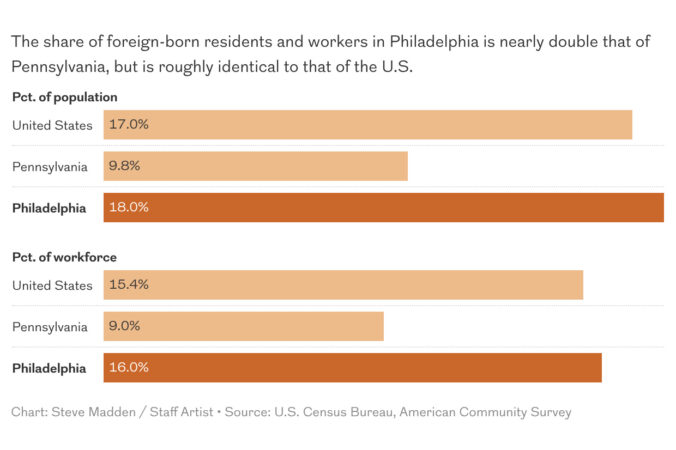
As of 2024, immigrants comprised 16% of the city population, about 251,000 residents, the primary engine of net population growth since 2000. The arrival of newcomers has been enough to offset the loss in native-born residents, which dropped by about 59,700 between 2010 and 2020.
“Philadelphia’s 21st-century demographic stabilization,” the analysis said, “is an immigration story.”
window.addEventListener(“message”,function(a){if(void 0!==a.data[“datawrapper-height”]){var e=document.querySelectorAll(“iframe”);for(var t in a.data[“datawrapper-height”])for(var r,i=0;r=e[i];i++)if(r.contentWindow===a.source){var d=a.data[“datawrapper-height”][t]+”px”;r.style.height=d}}});
How much do immigrants contribute?
A lot. In Philadelphia, immigrants comprised nearly 20% of the workforce in 2024. That’s double the rate of Pennsylvania as a whole, where immigrants were 9% of the workforce. The city’s institutional anchors — its universities and hospitals — as well as established ethnic communities, serve as draws.
That year the city’s foreign-born residents, both documented and undocumented, spent an estimated $7.4 billion on goods and services and paid $2.3 billion in taxes ― including federal income taxes, payroll taxes, state income taxes, sales taxes, and property taxes.
Do some industries depend on immigrants more than others?
Yes. Local healthcare services rely not just on doctors, the analysis showed, but also on immigrants across different jobs and skill levels. About 26% of all Pennsylvania physicians are foreign-born, and nationally the same is true for nearly 40% of nursing aides and home health aides.
In the Philadelphia region, foreign students earn 40% of doctoral degrees, the report said, and research institutions depend heavily on that talent. Traditionally these students transition from F-1 visas, to Optional Practical Training, then compete for H-1B visas that enable long-term employment.
That’s where things have gotten rough for immigrants, as in December the Trump administration halted processing for several groups of people and categories of applications, including those for anyone from any of the 19 countries covered in the spring travel ban.
The administration has also raised the possibility of reopening cases that were already approved by the government.
The city’s hospitality and restaurant trades also depend on foreign-born workers. Immigrants make up 25% to 30% of restaurant workers and 30% to 35% of hotel staff. At some restaurants the foreign-born staff can exceed 40%.
Don’t many immigrants opt to work for themselves, starting their own businesses?
In Philadelphia, foreign-born entrepreneurs own roughly 30% of small businesses ― nearly twice their representation in the population. Those 47,800 businesses include everything from corner stores to tech startups.
So what’s the bad news?
It’s more like a warning. At 16%, Philadelphia’s foreign-born population exceeds the national average, which hovers around 13%. But traditional gateway cities like New York, Houston, Miami, and San Francisco maintain foreign-born populations as high as 35%.
Philadelphia, the analysis said, is “no longer an immigration laggard,” but it’s not yet competing with top-tier global cities for international talent.
Moreover, without sustained immigration, Philadelphia faces the prospect of renewed population decline. Native-born residents are aging, fertility remains below replacement levels, and U.S. domestic migration favors metro areas in the Sunbelt.
“Immigration provides the only plausible mechanism for population stability,” the study said, but federal policies that reduce legal immigration, slow visa processing, and intensify enforcement risk causing the opposite.
The question isn’t whether Philadelphia needs immigration ― the demographic math makes that undeniable, the study said. The question is whether policymakers will embrace supportive policies and investments.
“Given the stakes,” it said, “getting immigration policy right isn’t optional ― it’s existential.”