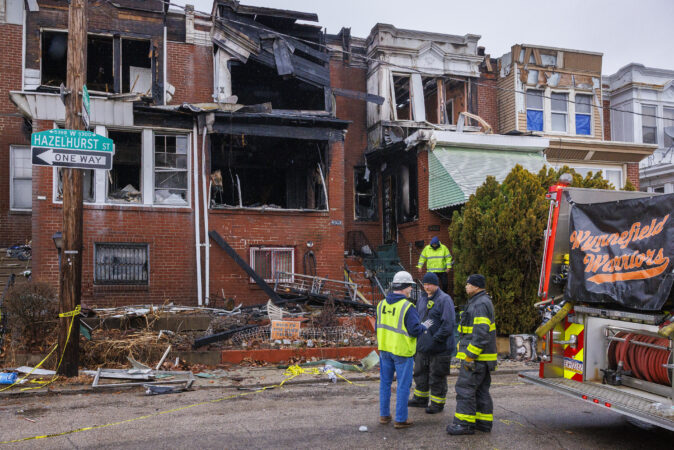
Nine firefighters were injured, including one who needed to be carried away on a stretcher, after the floor collapsed beneath them as they fought a two-alarm fire Monday night in the Wynnefield section of Philadelphia.
Firefighters responded to the blaze on the 5300 block of Hazelhurst Street around 10:20 p.m. to find smoke and flames erupting from the roof of the home. Officials confirmed that five firefighters were treated at local hospitals and released, while four remained hospitalized as of Tuesday morning. All were in stable condition.
“We’re immeasurably grateful for this outcome, as collapses often prove devastating,” a Philadelphia Fire Department spokesperson said.
First responders arrived to heavy fire coming from the first floor of the two-story home, officials said. The situation soon grew, bringing more than 100 firefighters, emergency medical services, and support staff to the scene.
The fire spread to the adjoining properties and was placed under control just moments before the structure collapsed on firefighters. At least six residents were displaced from their homes, officials said.
Crews were still on site Tuesday morning working to clear debris and rubble, officials said. The fire marshal’s office will investigate.
Two families, a total of nine residents, were receiving support services from the American Red Cross.
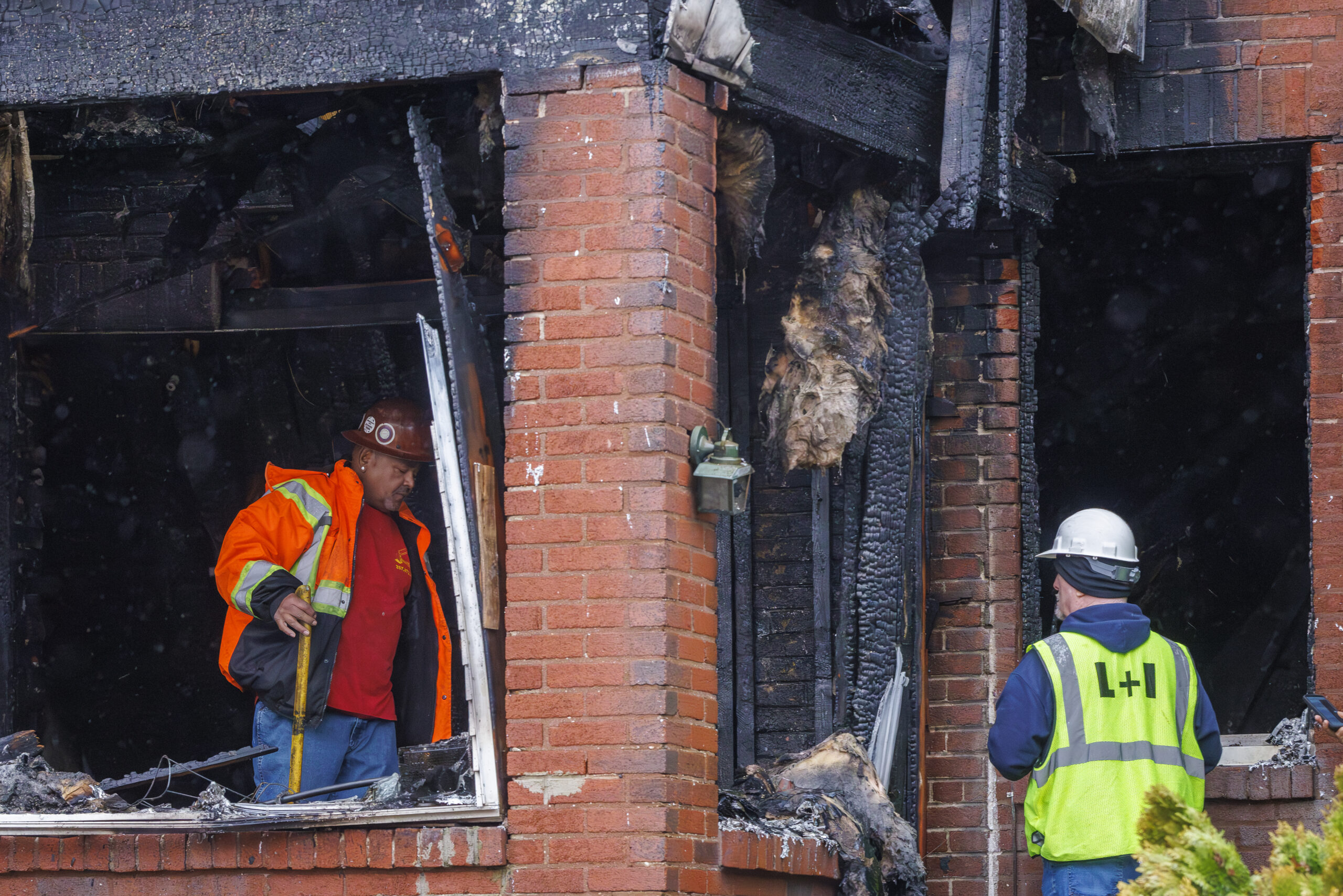
License and Inspection employees inside a fire, 5300 block of Havenhurst Street, Philadelphia, overnight, Tuesday, March 3, 2026. Several fire fighters were injured in this fire.
Before the Wynnefield fire erupted, earlier in the evening in Bristol Borough, a three-alarm fire activated multiple firefighting companies from across the region. One person was killed and another injured in a fire that engulfed several homes.
The Philadelphia Fire Department and the Red Cross urge city and collar county residents to visit soundthealarm.org/philly, where they can sign up for free smoke alarm installations and learn more about preventing fires.
Military officers will see their tuition assistance cut off at 22 schools and institutions, but the University of Pennsylvania is not among them.
The Ivy League institution, which counts President Donald Trump among its alumni, was on an initial list of 34 schools “at risk” of losing Pentagon-funded tuition assistance. But Penn was not part of the 22-university list released by Defense Secretary Pete Hegseth on Friday.
Penn did not immediately respond to a request for comment Tuesday.
Hegseth previously said he intendedto cut off schools where faculty members have “leftist political leanings” and “openly loathe our military,” but he cited no specific examples of bias or misconduct at the 22 schools that will lose tuition assistance beginning with the 2026-27 academic year.
“We will no longer invest in institutions that fail to sharpen our leaders’ warfighting capabilities or that undermine the very values they are sworn to defend,” Hegseth wrote in a letter released Friday with the final list.
It was not immediately clear why Penn and other schools were removed from the initial draft list.
Among the schools still set to lose access to the tuition-assistance program is Princeton University, where Hegseth obtained a bachelor’s degree in 2003. Carnegie Mellon University in Pittsburgh is also on the list, as is Yale University, where Vice President JD Vance obtained a law degree.
The move means members of the military will be banned from using Department of Defense tuition assistance to pay for Senior Service College Fellowship programs at those schools.
The impact will not be large — the Department of Defense said fewer than 100 military students are enrolled in programs at schools that will lose funding. Military personnel currently enrolled may complete their courses of study, Hegseth said, though it is unclear if they will have to change schools to continue receiving financial assistance.
Hegseth’s announcement did not mention several other financial assistance programs for undergraduates, including the GI Bill, which is administered by the Department of Veterans Affairs.
Here is the full list of schools losing tuition assistance from the Pentagon:
Educational institutions
Harvard University
St. Louis University
Massachusetts Institute of Technology
Tufts University
Georgetown University
Carnegie Mellon University
Brown University
Columbia University
Yale University
Middlebury College
Princeton University
George Washington University
College of William and Mary
International institution
Queen’s University (Canada)
Nonprofit institutions
Center for Strategic and International Studies
New America Foundation
Brookings Institution
Atlantic Council
Center for a New American Security
Council on Foreign Relations
Henry L. Stimson Center
Senior Service College
Johns Hopkins University School of Advanced International Studies West Space Scholars Program
The eastern sky is aglow with dawn streaks of orange when the cry of a whistle sounds outside of ICE headquarters in Philadelphia.
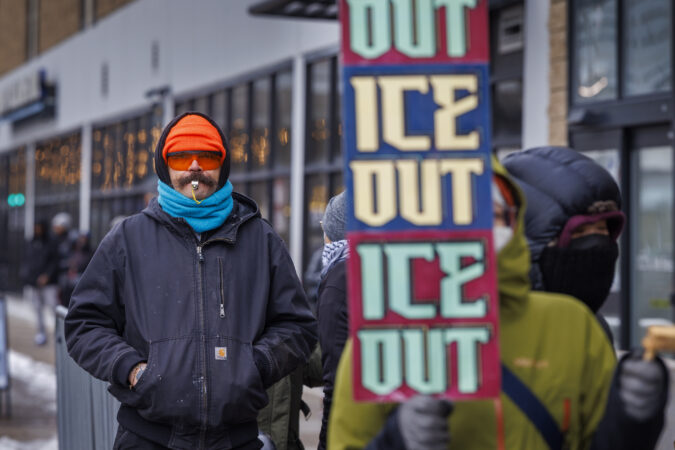
The noise pierces amid an improvised orchestra of protest, as chanting demonstrators shake tambourines, rattle jingle sticks, and beat drums ― one person banged on a kitchen colander ― to create a clamor that makes it challenging to concentrate.
That’s part of the goal of the weekly “Noise Demo” organized by No ICE Philly to raise awareness among morning commuters but also to try to disrupt the work of Immigration and Customs Enforcement agents at the Eighth and Cherry Street office.
“We’re interrupting them,” said a protest leader who asked to be identified only as a member of No ICE Philly out of fear of repercussion from the government.
For advocacy groups here and across the county, the whistle has become both a tool and symbol of the anti-ICE movement.
On the streets, it’s the means to alert neighbors and warn immigrants when ICE arrives on the block, and to try to distract and confuse officers who may already be operating in an unfamiliar neighborhood.
A blast from a standard pea whistle can carry half a mile, and the sound from a specialized emergency whistle can travel a mile or more, depending on conditions.
ICE officials in Philadelphia said last week they had nothing to add on the noise demonstrations or on the use of whistles, beyond what the agency had already said: “Your whistles won’t stop or hinder ICE from arresting criminal illegal alien sex abusers, murderers, gang members, and more,” the agency told Minnesota protesters on social media.
In November, President Donald Trump issued a ban ― so far blocked by the courts ― on creating “loud or unusual noises” at federal facilities in the U.S. That hasn’t slowed No ICE Philly, which gathers to make noise on Mondays, though the snowfall pushed a recent action to Thursday.
“Maybe,” said activist Huston West, who blasted a steady beat on his whistle as ICE officers arrived at work on Thursday, “it makes them think about their life choices.”
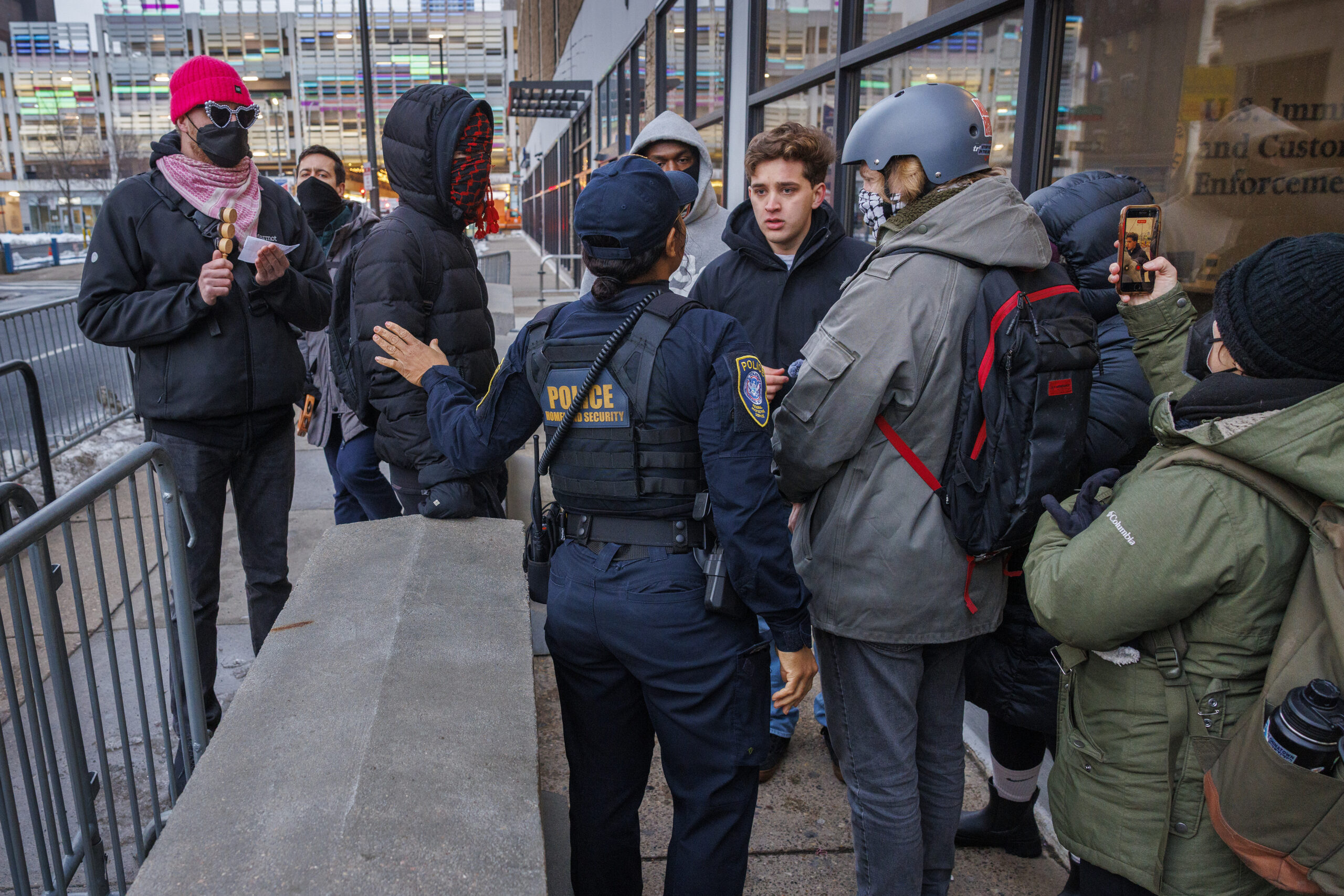
A man who tried to confront demonstrators is engaged by a Homeland Security officer during a No Ice Philly “Noise Demo” outside the U.S. Immigration and Customs Enforcement office at 114 N. Eighth Street in Center City.
Why have whistles become so popular among immigration protesters?
Many reasons.
Whistles are light, portable, reliable ― and cheap, about 20 cents each when bought in bulk. They don’t need batteries or recharging, have no buttons or controls. Everyone knows how to make it work.
To him, protesters’ use of whistles carries symbolism, summoning images of referees calling penalties during sports events. Maybe the activists are saying ICE has broken the rules or needs to stop.
“Like throwing a penalty flag,” he said, “against ICE agents who they deem are acting unlawfully.”
The whistle ranks among the oldest human inventions, the first ones crafted from bone, wood, or clay, used for hunting, signaling, and religious rites.
Englishman Joseph Hudson is considered the inventor of the modern pea whistle ― the tiny ball in the air chamber produces the trill ― in the 1880s. He created the Metropolitan Police whistle for British bobbies and the Acme Thunderer for soccer referees, who to that point had waved handkerchiefs to signal fouls.
Today, hundreds of thousands of whistles have been distributed to ICE protesters around the country ― more than 150,000 sent from Chicago alone, according to the Chicago Sun-Times.
In Minneapolis, activists have used 3D printers to crank out supplies. In Philadelphia, whistles have been given out by the handful at organizing meetings. Temple Beth Zion-Beth Israel ordered 300 whistles for distribution, so neighbors can quickly signal that ICE is present and warn immigrants to seek safety.
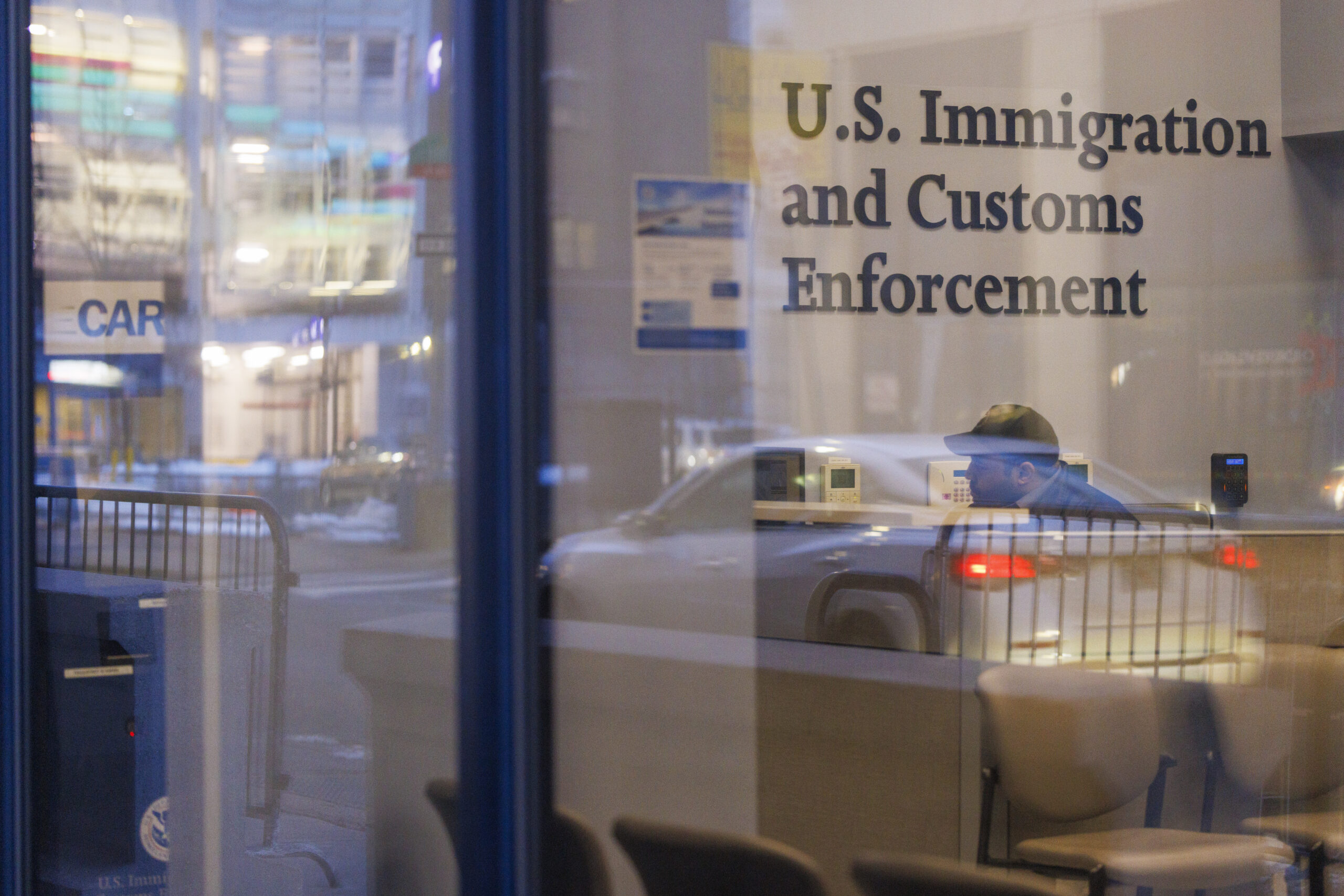
The interior lobby of U.S. Immigration and Customs Enforcement at 114 N. Eighth St. in Center City.
The Trump administration wants to ban loud noises outside federal facilities, a move widely seen as an effort to halt protests at ICE offices. A federal judge in Oregon temporarily blocked the restrictions, saying they said could violate the First Amendment by criminalizing free speech.
But even among pro-immigration activists, not everyone sees whistles as consistently beneficial.
Some think the noise adds to the confusion at the scenes of ICE arrests, increasing fear and anxiety among families during what are already tense and sometimes violent encounters.
New Sanctuary Movement of Philadelphia, a major advocacy organization, has begun talking to other groups about finding alternatives to whistles, said co-director Blanca Pacheco.
Yes, she said, it’s important that arrests not be permitted to be carried out in silence. But “what is the kind of noise that people can come up with that is supportive, instead of adding to the trauma?”
Not all in immigrant communities understand the purpose of the whistles, she said. And for those who have survived war or torture the noise can be triggering.
One option may be that people could shout, “ICE is here!” Perhaps two or three people on a block could be designated to blow whistles, rather than everyone at once. Even singing could work, she said.
“I think that Chicago and Minnesota and other places that have used the whistles had to come up with tactics and strategy very quickly,” said Pacheco, who noted Philadelphia is not in that position. “We can learn from other places what has worked and what has not. I think whistles can be used in some scenarios, not all the scenarios.”
Outside the ICE office on Thursday, two ICE agents heading into the building jawed with demonstrators who yelled at them to quit their jobs. Whistle calls and drum beats continued on, toward an 8 a.m. conclusion.
“ICE operates from the very early morning into early afternoon,” said the demonstration leader who declined to give his name. “We just want to make sure that we’re here when they’re here.”
The remnants of winter are about to go on spring break — or at least yield to a “dirty warm-up” — but they evidently are going to take a messy parting shot at the region Tuesday morning.
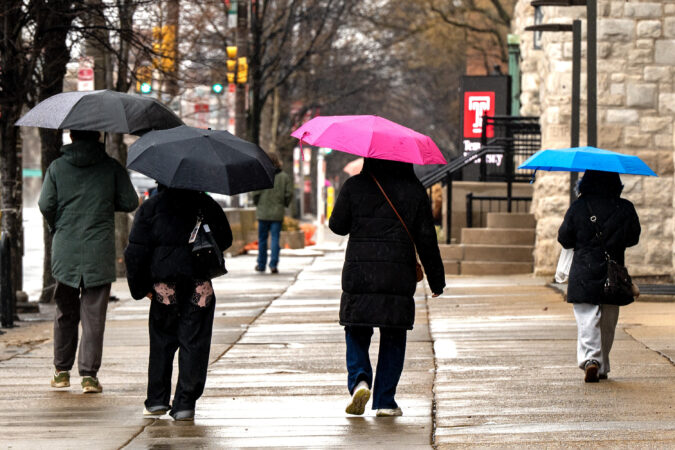
The National Weather Service has posted a winter weather advisory effective at 5 a.m. until 11 a.m. for the entire region for a mix of snow (not much) and ice beginning around daybreak before flipping to just plain rain.
The precipitation is expected to start around daybreak as snow that won’t be plowable, or maybe even visible, but the more significant threat would be a glaze of freezing rain, said Nick Guzzo a meteorologist with the National Weather Service Office in Mount Holly.
At most, snow would accumulate a few tenths of an inch, he said, transitioning to freezing rain and just plain liquid rain throughout the region before the morning is over.
But coinciding with the peak morning commuting period, the timing is a concern, he added.
Temperatures are due to be near freezing when the precipitation gets underway but climb into the mid-30s by midmorning. The March sun should make quick work of melting anything that freezes on the roadways.
Then the temperature might not drop below freezing for the next 10 days, and make it to 70 degrees Sunday.
But don’t expect it to be “bright and beautiful,” said Bob Larsen, senior meteorologist with AccuWeather Inc.
A major pattern change is underway across the nation
“It’s what we like to refer to as a ‘dirty warm-up,’” said Larsen. Here’s the dirt: It is due to be cloudy at least through Friday with rain possible Thursday and Friday and highs in 50s. Normal highs are in the upper 40s.
The sun is due back Saturday with readings in the 60s, and perhaps into the 70s on Sunday, but with another chance of rain. Larsen said at least two days, and maybe four, next week are expected to feature highs in the 70s, before a cool down perhaps next Thursday or Friday.
The surges of mild air are related to a major pattern change in the upper atmosphere. For the last several weeks, the atmosphere has aligned to favor cold, snow, and ice in the East and springlike temperatures in West.
That’s about to reverse, as the West gets its turn with winter and the East gets a spring tease.
But don’t put in the screens just yet, Larsen advises.
“March can be a cruel month,” he said, and winter isn’t prone to go gently. “We’re not going to slam door on it yet.”
He that some signs are pointing to a more-wintry end to the month, which would not be at all unusual.
“In my mind there’s only two seasons, summer and winter,” Larsen said, and spring and fall are when they fight their turf wars.
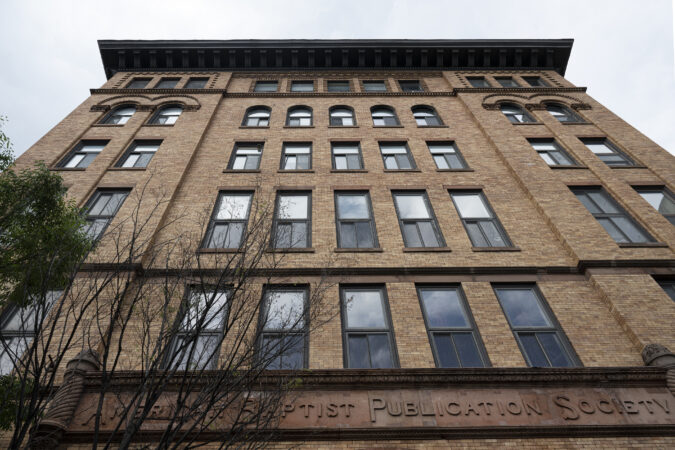
The Washington Square West historic district, which covers 1,441 properties in Center City, has been overturned in a ruling by Court of Common Pleas Judge Christopher Hall.
Approved in 2024, the historic district was the largest in decades, covering a variety of buildings that date between 1740 and 1985. It was supported by the nonprofit Preservation Alliance of Greater Philadelphia and the Washington Square West Civic Association.
Opponents of the district, led by Washington Square West residents Jonathan Hessney, Colin Murphy, and Joshua Zugerman, contended that historic regulations would add cost burdens to property owners. In court, their lawyer, Dan Auerbach, argued against what he described as flaws in the Philadelphia Historical Commission’s consideration of the case.
Auerbach took issue with the involvement of Emily Cooperman, a member of the Historical Commission, in drafting the nomination. He argued that her role in working on the case was improper, even though she recused herself from voting.
Auerbach also argued that the nominators did not present substantial evidence at the commission meeting to support their claims that the large geographic area covered constituted a unified historic district.
“There was literally no evidence to support that,” Auerbach’s legal brief says. “Nobody testified. The nominators seeking designation put no facts or evidence into the record.”
In his one-page ruling, the judge appeared to agree with the challengers of the Washington Square West Historic District on those two arguments.
In a brief footnote, containing the only explanation for his ruling, Hall described the nomination as “not in accordance with the law.”
He cited an ethics provision in the Philadelphia code that no city officer or employee “shall assist another person by representing him directly or indirectly … in any transaction involving the city.”
(function() {
var l2 = function() {
new pym.Parent(‘washwest_rescinded’,
‘https://media.inquirer.com/storage/inquirer/projects/innovation/arcgis_iframe/washwest_rescinded.html’);
};
if (typeof(pym) === ‘undefined’) {
var h = document.getElementsByTagName(‘head’)[0],
s = document.createElement(‘script’);
s.type = ‘text/javascript’;
s.src = ‘https://pym.nprapps.org/pym.v1.min.js’;
s.onload = l2;
h.appendChild(s);
} else {
l2();
}
})();
In a phone interview, Cooperman said that she worked on the nomination largely because she had helped write a version of the case for a Washington Square West historic district that was presented in 2009, long before she sat on the commission.
She said she believed that the small amount of paid work she did on behalf of the Washington Square West Civic Organization in bringing the 2024 nomination up-to-date was legal, as long as she recused herself from the case before the commission.
“There have been other members of the commission that have had work before the commission, so that’s particularly surprising,” Cooperman said about Hall’s ruling. “That’s what the whole recusal aspect of the city’s ethics regulations are for.”
Hall also agreed that the supporters of the historic district had not presented sufficient evidence to make their case.
“The decision to designate the district, moreover, was not supported by ‘substantial evidence,’” Hall wrote.
At the Feb. 19 hearing, Hall persistently questioned the city’s lawyer, Leonard Reuter, to present support for the Historical Commission’s ruling, dismissing his statements as “a conclusion” and not evidence.
“At this time, the Historical Commission staff is working with the city’s Law Department to review the court’s decision and are preparing to evaluate their options,” city spokesperson Bruce Bohri said in an email. “We don’t have further comment beyond that right now.”
Auerbach also argued that the historic merits of the case presented by the nominators to the commission were flawed, but the judge did not appear to rule on that claim.
“Washington Square West was one of the most significant historical district designations in the city’s history,” Auerbach said in an email statement. “There was absolutely no evidence to support it. We are delighted that it has been overturned.”
The appeal of the Washington Square West historic district is one of several recent cases against the Historical Commission.
A judge ruled against a challenge to the Spruce Hill Historic District, a decision that is currently being appealed to Commonwealth Court. Another case against the Northwest Apartments Thematic Historic District — which covers 30 properties from the first half of the 20th century — has not yet been ruled on.
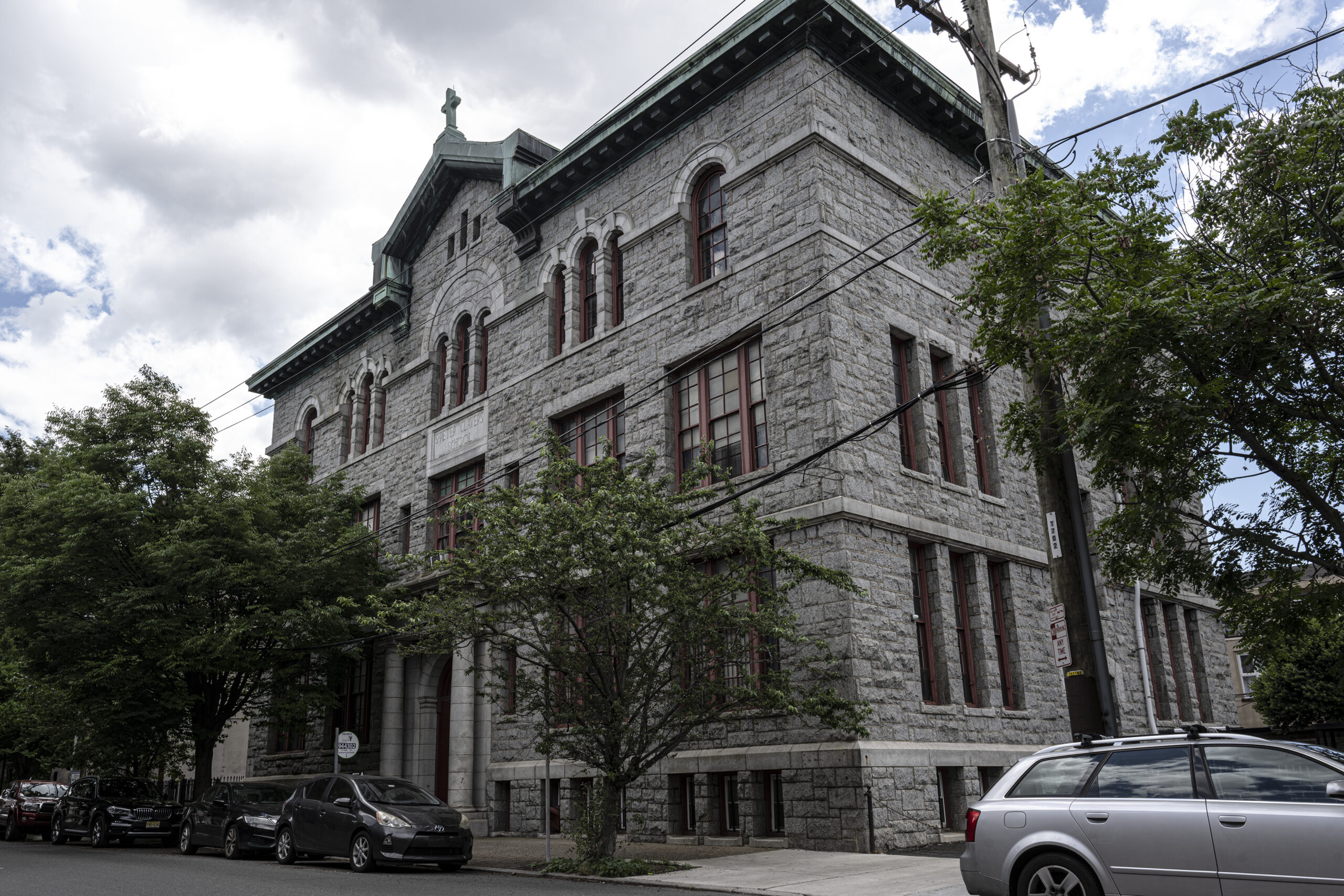
St. Peter Claver’s School, in the Washington Square West historic district.
Hall’s ruling will have no effect on cases that have already been decided.
But Auerbach says it will require preservationists to be more careful in framing their cases: “Future nominations will have to be based on real evidence with procedures that far better protect property owners,” he said in an email.
Historic nominations are frequently challenged, but the courts generally find in favor of the commission, trusting its expertise on historic matters.
“This comes as a surprise and disappointment,” said Paul Steinke, head of the Preservation Alliance. “To our knowledge, the provisions of the city’s historic preservation ordinance with respect to designating historic districts were followed. We are confused as to what aspect of that process did not comply with the law.”
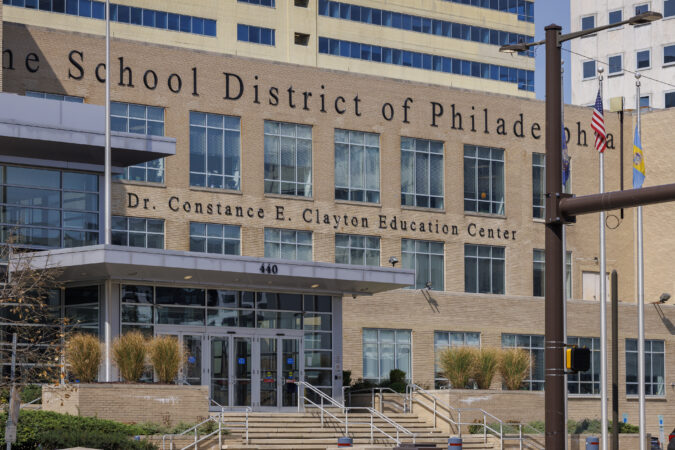
Half days are disappearing in the Philadelphia School District.
Beginning in the 2026-27 school year, the district won’t have a single early dismissal — for teacher planning, report card conferences, or any other purpose.
Student attendance tumbles whenever Philadelphia has a half day, and parents scramble to plan for childcare when they happen, Superintendent Tony B. Watlington Sr. said.
At the superintendent’s request, the board amended the 2026-27 calendar, changing eight previously scheduled half days to zero.
Some days previously scheduled for professional development will now be full days off for students, and report card conferences — previously held over two half days — will now be scheduled on a single day off for students.
“When we have half days in the school district, it significantly impacts our student attendance,” Watlington told the board. “We now have clear data over 3½ years that when we have half days for professional development and the like, it lowers our overall student attendance.“
Watlington has emphasized student attendance as a key driver of academic improvement, and overall, Philadelphia’s student and teacher attendance has risen during his tenure, which began in 2022.
But half days were responsible for the largest single year-over-year drop in attendance in recent years. In December 2025, 54% of district students attended school 90% of the time or more, down from 66% over the same time period in 2024.
In January 2026, regular student attendance was 51%, down from 53% in January 2025, a dip Watlington said was “largely attributed to disruptions in the calendar.”
Controlling for half days, regular student attendance would have been 70% last month — proof, Watlington said, that half days need to disappear.
“This is very important,” the superintendent said, “because we know if we can get student regular attendance up, kids just learn more when they’re in school more.”
Half days planned for March, April, and May this school year will remain on the calendar, but the half day planned for students’ last day of the school year, June 11, is now a full day.
Amid a historic drop in violent crime, homicides have fallen to lows not seen in decades. But in what researchers say is an alarming trend, homicides related to domestic violence are on the rise.
There were 37 such killings in Philadelphia last year, up from 28 the previous year. And even as homicides have fallen sharply overall, domestic killings remain stubbornly intractable. In all, deaths related to domestic violence accounted for about one in six homicides in the city last year, records show.
To address that, the police department is adding specialized training for officers and others who deal with victims of such crimes and adding staff in its Office of Community Advocacy and Engagement. When the unit expands this spring, staffers will be trained to spot signs of domestic abuse and advocate for victims of intimate partner violence, among other crimes.
That work mirrors efforts in cities such as New York, which launched a new police unit last year dedicated to combating the surge in domestic violence as such crimes rise nationwide.
“The numbers are moving in the wrong direction,” said Marian Braccia, a professor at Temple University’s Beasley School of Law and a former prosecutor in the district attorney’s family violence and sexual assault unit. “It’s terrifying.”
In Philadelphia last year, the slaying of Kada Scott drew attention to the issue after The Inquirer reported that her accused killer, Keon King, had previously been accused of stalking and kidnapping another woman. But two criminal cases against him fell apart when the victim failed to appear in court and prosecutors withdrew the charges.
And last month, calls for awareness surrounding domestic violence were renewed when Yuan Yuan Lu, 28, was killed one day after reporting that her ex-boyfriend had sexually assaulted her in his Pennsport home. Police say 32-year-old Yujun Ren followed Lu to her Levittown home and shot her in the head, killing her.
According to prosecutors, Lu told police the day before she was killed that Ren carried a gun and she feared for her safety.
Philadelphia’s new unit would work to support victims in just such circumstances, officials said. The office launched last spring with 10 victim advocates with backgrounds in social work and behavioral health.
In March, those staffers will begin working with victims of sexual assault and domestic violence, said Ayanna Greene-Davis, executive director of the Office of Community Advocacy and Engagement.
And the unit will add 10 more members — sworn police officers with law enforcement experience — who will complete similar victim-oriented training, she said.
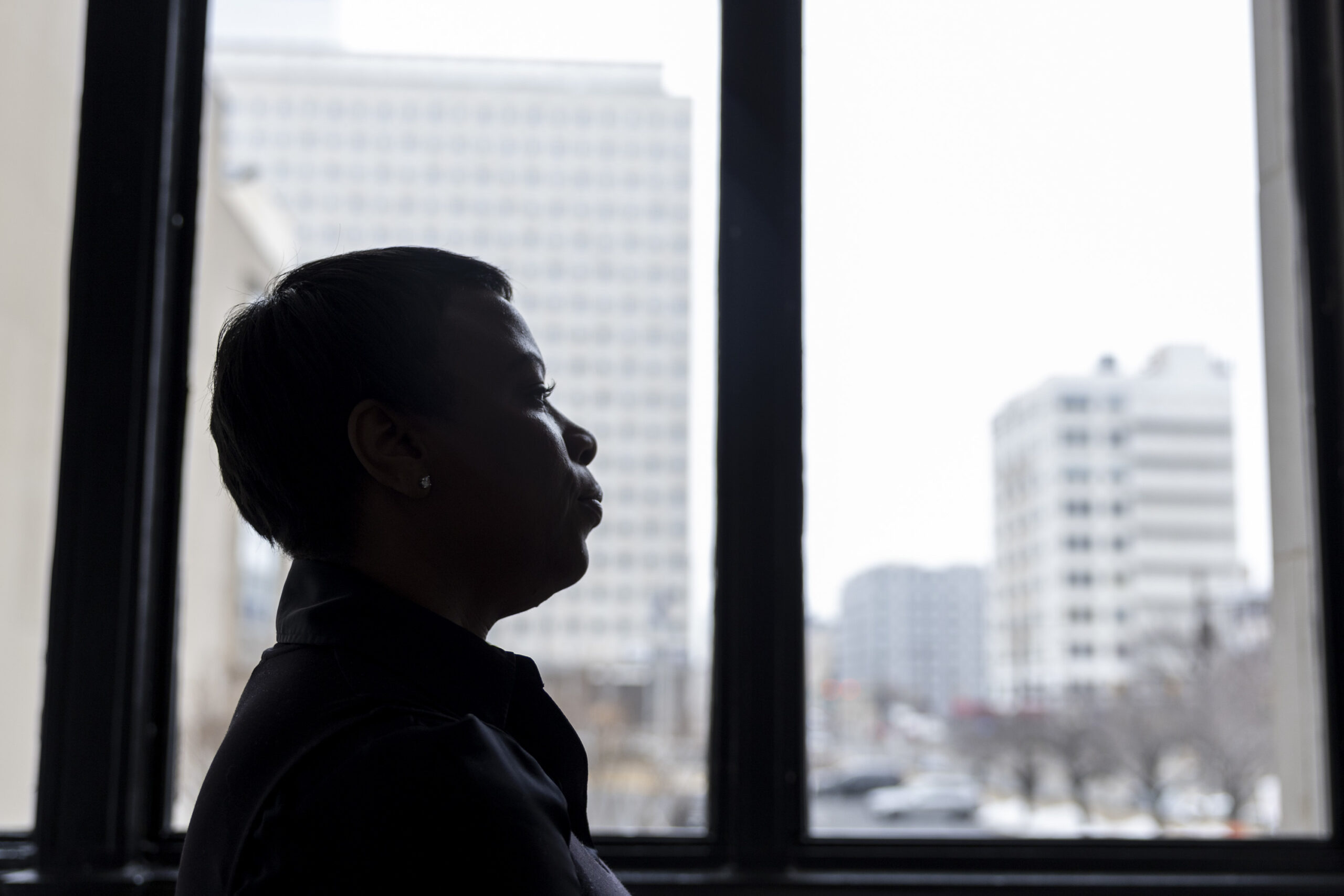
Ayanna Greene-Davis, 47, Executive Director for Office of Community Advocacy and Engagement, of Northwest Philadelphia, Pa., poses for a portrait at the Philadelphia Police Headquarters in Philadelphia, Pa., on Tuesday, Feb. 17, 2026. .
“We’re not going to take days and days and days” to respond to reports of domestic violence, Greene-Davis said. “In the past, that happened.”
Victims of such crimes will be able to call the office’s advocates to voice concerns about their cases as they are investigated, according to Greene-Davis. And advocates will be trained to connect them with resources such as domestic abuse shelters and provide information on ways to remove themselves from dangerous living situations.
The unit will also oversee a broader effort to train patrol officers throughout the department to better assess the dangers victims of domestic violence face and work to keep them safe.
“Every victim is going to be in a different stage, but we can talk to them,” Greene-Davis said. “We can provide a safety plan.”
A motorcyclist from Northeast Philadelphia died Saturday after being struck by a car that detached from a tow truck, police said.
His sister identified the motorcyclist as Jason Harvey, 39, who she said was riding his Harley-Davidson at the time of the crash.
“Jason was an avid motorcycle enthusiast and loved his family,” said his older sister, Christine Harvey of Mantua, N.J. Harvey said her brother, who was born and raised in Northeast Philly, lived simply, “would never hurt a soul, and would never miss your call.”
The crash happened on the 4000 block of Frankford Avenue around 4:15 p.m. Saturday, according to Philadelphia police Inspector D.F. Pace.
File photo of Philadelphia police Inspector D.F. Pace taken in August 2024.
A preliminary investigation found that a tow truck heading south on Frankford Avenue was hauling a silver Dodge Magnum when the car detached from the truck, Pace said.
“The unoccupied vehicle then rolled into the opposing lane of travel and struck an oncoming motorcycle head-on,” he said. The motorcyclist was taken to Temple University Hospital, where he was pronounced dead, he said.
The driver left the scene before police arrived, Pace said. Police used city surveillance cameras to identify the tow truck, which is being held as evidence, and have spoken to the towing company.
Police are still seeking the driver, who as of Sunday afternoon remained at large, Pace said.
Another tow truck driver, Brandon Harling with A. Bob’s Towing, said he removed the vehicles from the scene.
“It was very bad,” said Harling. “The bike was stuck in the driver-side doorway of the car.”
Christine Harvey said the family is still processing what happened. She noted that in 2017, her brother’s 9-year-old daughter, Prudence, died in a house fire in North Philadelphia.
“Although he continued to make everyone else smile, he just never stopped hurting over her loss,” Harvey said. “He gave the best hugs and if there is a heaven, God, I hope there is — he’s up there with his little girl.”
Quakertown Police Chief Scott McElree, a center of controversy for his role in a confrontation with anti-ICE protesters last week, has been placed on leave.
In response to a request for comment, McElree said Saturday he is “out with workman’s comp injuries.” He did not elaborate on what the injuries entailed.
On Friday, the Bucks County District Attorney’s Office said it was continuing its investigation into the Feb. 20 incident that resulted in the arrest of five teenagers on assault charges.
Quakertown’s solicitor said that McElree, who also is the borough manager, was placed on workers’ compensation leave for both positions, according to NBC10 and the Bucks County Courier Times. Efforts to reach other borough officials for comment were unsuccessful.
McElree had no record of alleged police abuses before the incident on Feb. 20, when bystander footage showed him apparently putting a teenage girl in a chokehold on a sidewalk as other youths scuffled with him.
Videos show McElree arriving at the protest, not in uniform, and confronting a group of students. In the footage, teenagers appear to strike McElree as he attempts to grab a student.
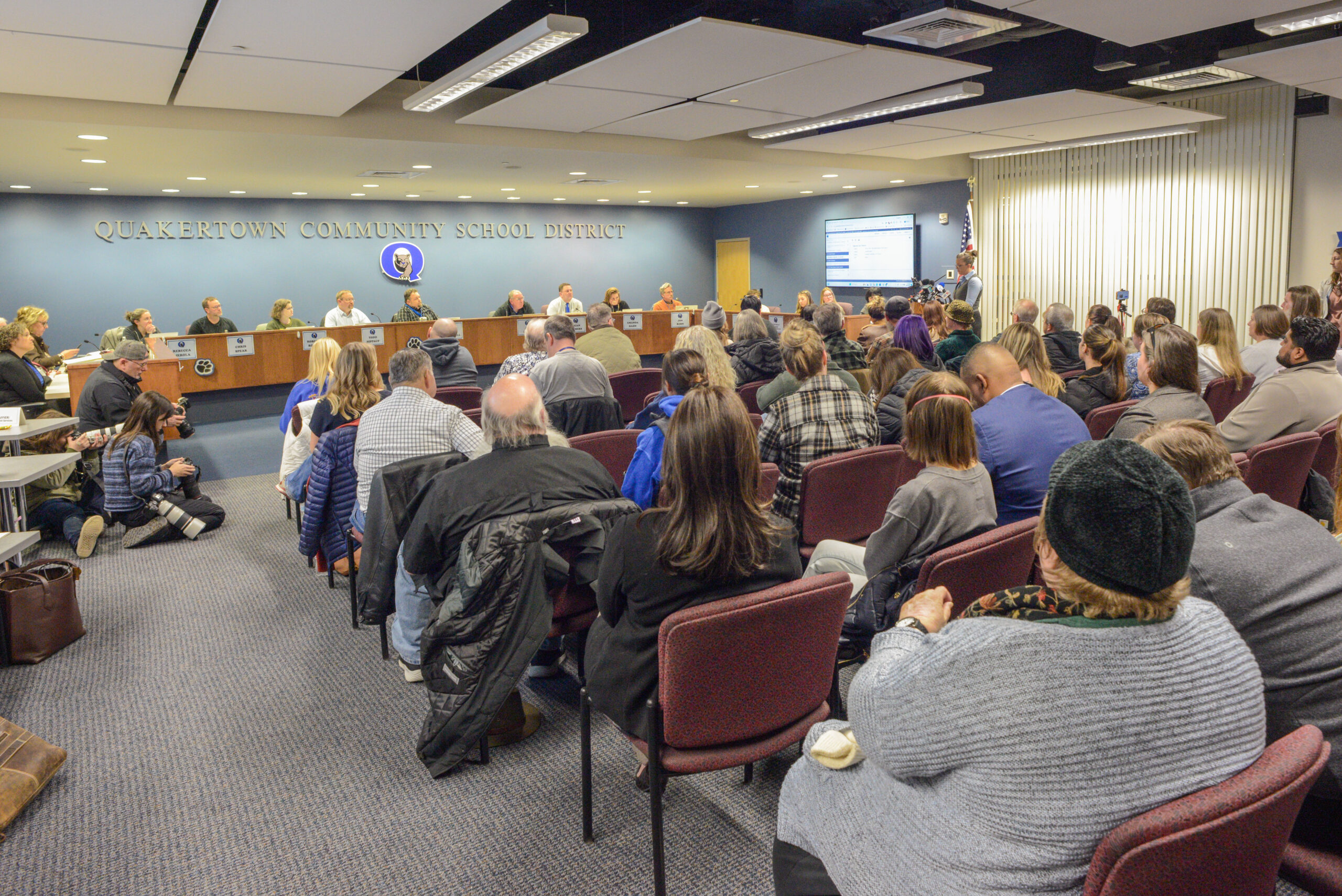
A parent makes remarks to the Quakertown Community School District Board at its meeting Thursday, Feb. 26, 2026, in Quakertown, Pa. Critics who addressed the board accused the district of not doing enough to support the students arrested during last week’s ICE protest.
A GoFundMe campaign was created to raise money for the arrested students’ legal fees, court costs, and medical and other expenses. So far, over $130,000 has been donated.
On Friday, the district attorney’s office encouraged anyone with cell phone footage or photos of the incident to come forward and contact county detectives.
It was unclear who would assume McElree’s duties as chief and borough manager.
Staff writer Brett Sholtis contributedto this article.
Robert Koopmeiners is up to here with this winter and is among the masses more than ready for the atmosphere to flip the switch.
“It’s getting kind of old,” he said. But he wasn’t complaining about Arctic freezes, or winter storms, or black ice, or hideously darkening mountains of plowed snow.
He was talking about the weather in Colorado, where he is a National Weather Service meteorologist, where bone-dry Denver has set nine high-temperature records since Dec. 1, where wildfire alerts were in effect, and water is getting scarce.
Warm West, cold East, and vice versa are standard fares in the great national atmospheric seesaw that hasn’t been doing much seesawing lately, as if a boulder has been placed atop our end of it.
That’s the result of an atmospheric roadblock for the ages in the high latitudes around Greenland, meteorologists say, that has allowed winter to reappear with a ferocity not experienced in several years in the Northeast, and a winterlong spring in parts of the West. The cold in the East may even be related to rising global temperatures.
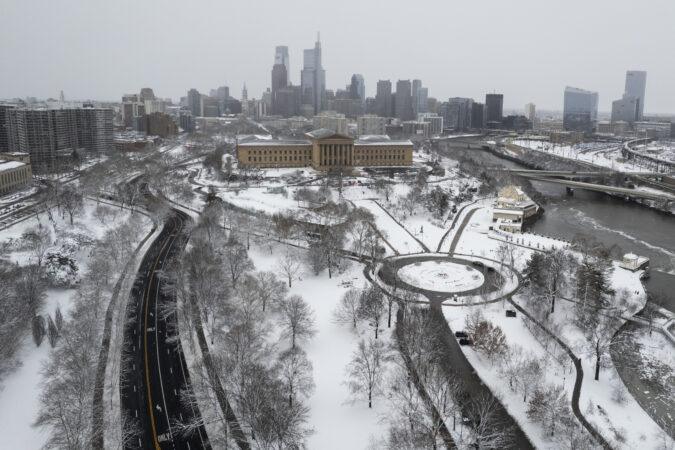
The result for the Philadelphia region has been one of the colder and snowier meteorological winters — the Dec. 1 to Feb. 28 period — on record. Officially Philadelphia has had more days of snow cover of an inch or more than in the five seasons ending with the winter of 2023-24 combined.
After quite a wintry start to the new week, with even some more snow possible, a major warmup is due to begin with a spring teaser possible next weekend. (It may turn colder the second half of the month, but that can wait.)
In the meantime, the atmosphere is enjoying a belly laugh over the preseason outlooks for the winter of 2025-26.
Philadelphia’s winter scorecard
By convention, the weather community divides the seasons into three-month increments. In part that’s in recognition of the fact that weather often has an adversarial relationship with astronomy. For example, it has snowed, and hit 90 degrees, in the astronomical spring, the period between the vernal equinox and summer solstice.
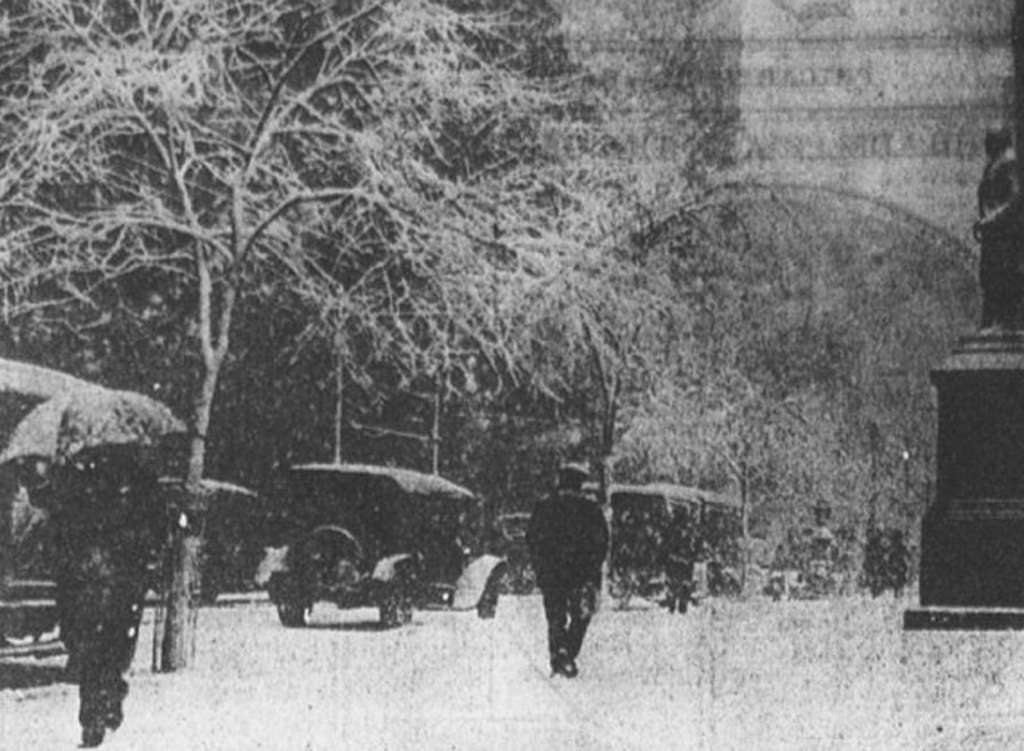
The day before Easter in 1915, Philadelphia was socked with 19 inches of snow, despite a forecast of “Unsettled, rain likely.”
For the three-month 2025-26 winter period, official temperatures at Philadelphia International Airport have averaged a shade over 33 degrees, putting it in the top third for coldest winters in the period of record dating to the late 19th century.
The official snow total is in the top 20% of all winters on record. The normal through February is just under 20 inches.
AccuWeather Inc. and 6abc went with 14 to 18 inches. Fox29 called for16 inches, and 17 days of snow cover. At last count, that snow-cover count was up to at least 35. Other forecast services called for normal — 23.1 inches — or slightly above-normal snowfall.
Regarding temperatures, all the outlooks foresaw normal — thethree-month averageis 36.1 degrees — to above-normal temperatures for the Philly region, save for Arcfield Weather, a private-sector company, which went for below.
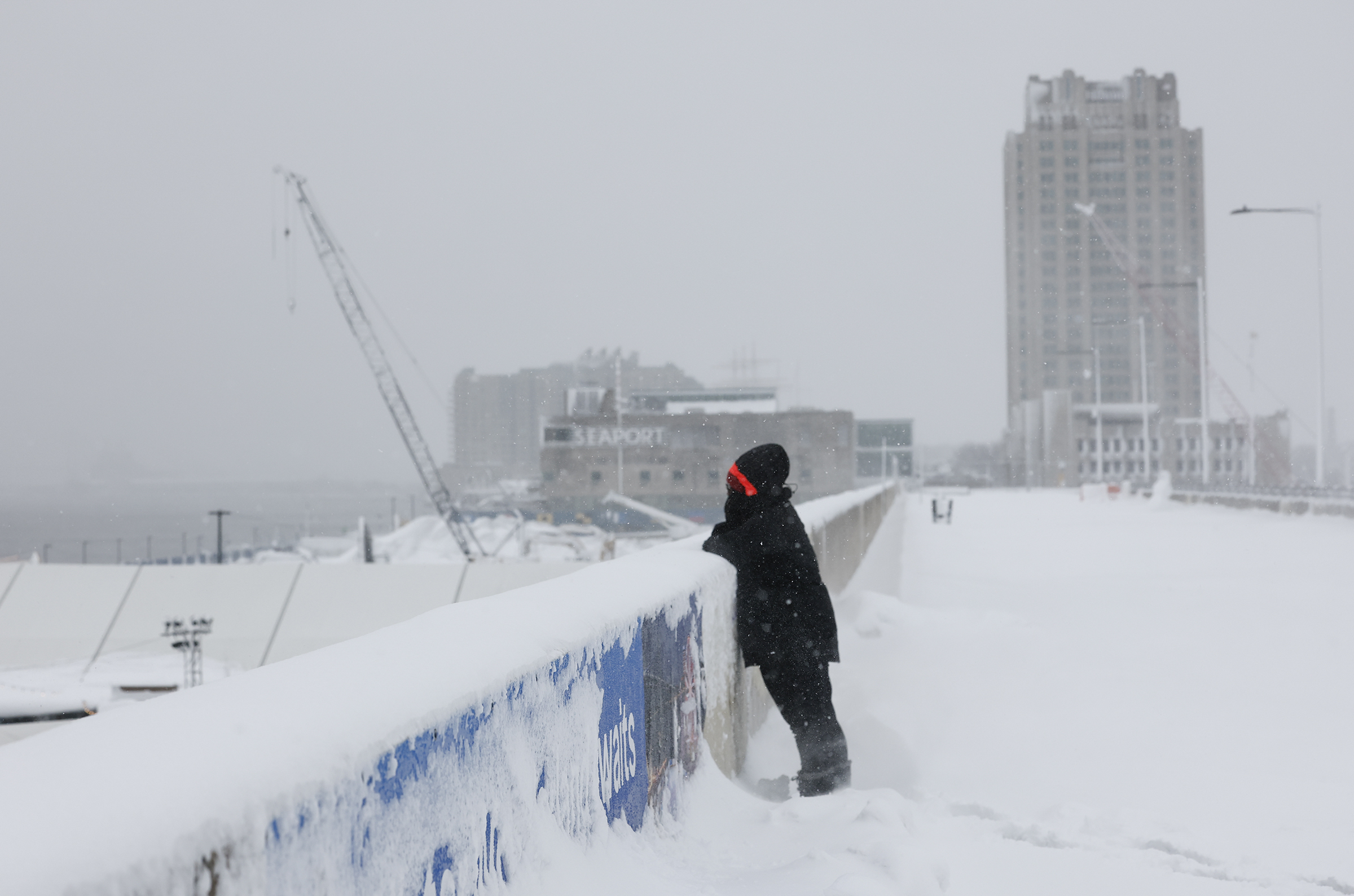
Nicole Swinson looks into Penn’s Landing while standing in the snow on Monday, Feb. 23, 2026.
‘Blocking’ has been the leitmotif of Philly’s winter
If it seemed that what happened kept happening, that was more than perception.
It was the result of particularly vigorous “blocking” in the vicinity of Greenland in which high pressure, or heavier air, persistsin the upper atmosphere. It was a massive obstruction that kept directing cold air and storms toward the East while toasting the West, said Climate Prediction Center branch chief Jon Gottschalck.
The East got stuck under a “trough” of upper-air low pressure that favored storminess and cold, he added. The West, quite the opposite.
“The blocking pulled the storms eastward, and the cold followed,” said Paul Pastelok, Accuweather’s longtime seasonal forecaster. “We should have caught on to that.”
In addition, an upper-air pressure pattern over the Arctic — the Arctic Oscillation — was stuck in its negative phase from December until recently, said climate center meteorologist Laura Ciasto, with negative consequences for local winter-phobes.
When it’s negative, the weather-moving west-to-east jet stream winds can become more active at the midlatitudes where we live, and the conditions colder and stormier. The oscillation has had “an interesting winter,” she said. “Typically,” she said, “we expect the AO to fluctuate.”
Related to the oscillation’s behavior were episodes of “polar vortex stretching,“ said Ciasto. The vortex’s powerful winds usually trap cold air in the Arctic, but on occasion they weaken and ”stretch,“ allowing cold air to spill southward.
Another explanation for why the forecasts went awry may be an obvious one: We’re not used to this level of Arctic cold or prodigious snowfalls like the Sunday-Monday event that creamed parts of the region with 20 inches or more. “We have simply gone many years without experiencing a storm like this,” said Owen Shieh, warning coordination meteorologist at NOAA’s Weather Prediction Center.
Did the world suddenly grow colder?
No, the planet didn’t cool off precipitously. In fact, said Pastelok, the blocking may have been related to warming-related sea-ice reductions near Greenland. The solar energy absorbed by freshly freed waters could have effects on pressure patterns in the high atmosphere, he said, adding that for now, that’s only a hypothesis.
While the world evidently cooled slightly last year after a record 2024, according to NOAA’s database, it’s still about 2 degrees Fahrenheit warmer than the 20th-century average, the supply of Arctic air isn’t quite as it used to be.
As it turns out, Philly’s winters in the 21st century have trended milder, with average temperatures about 2 degrees Fahrenheit above long-term averages.
The overall warming trend has been one reason the climate center has had the odds favoring above-normal winter temperatures for Philly for the last seven consecutive winters. And they indeed were above normal for six straight years — but not seven.
Retired climate center forecaster Mike Halpert once remarked that while sticking with the trend can be a smart bet, “some years you’re going to be woefully wrong.”