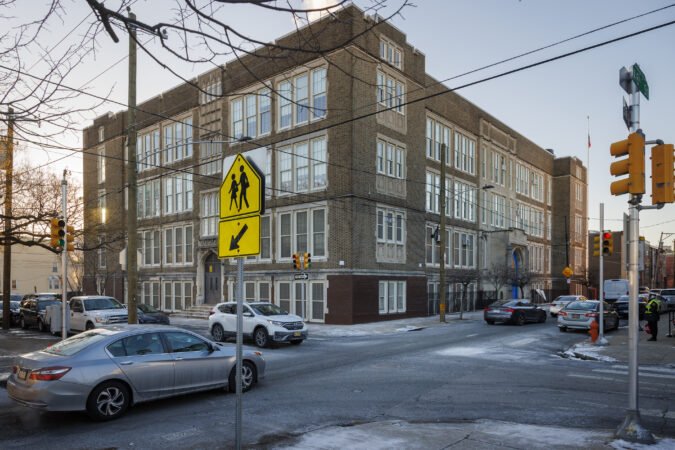
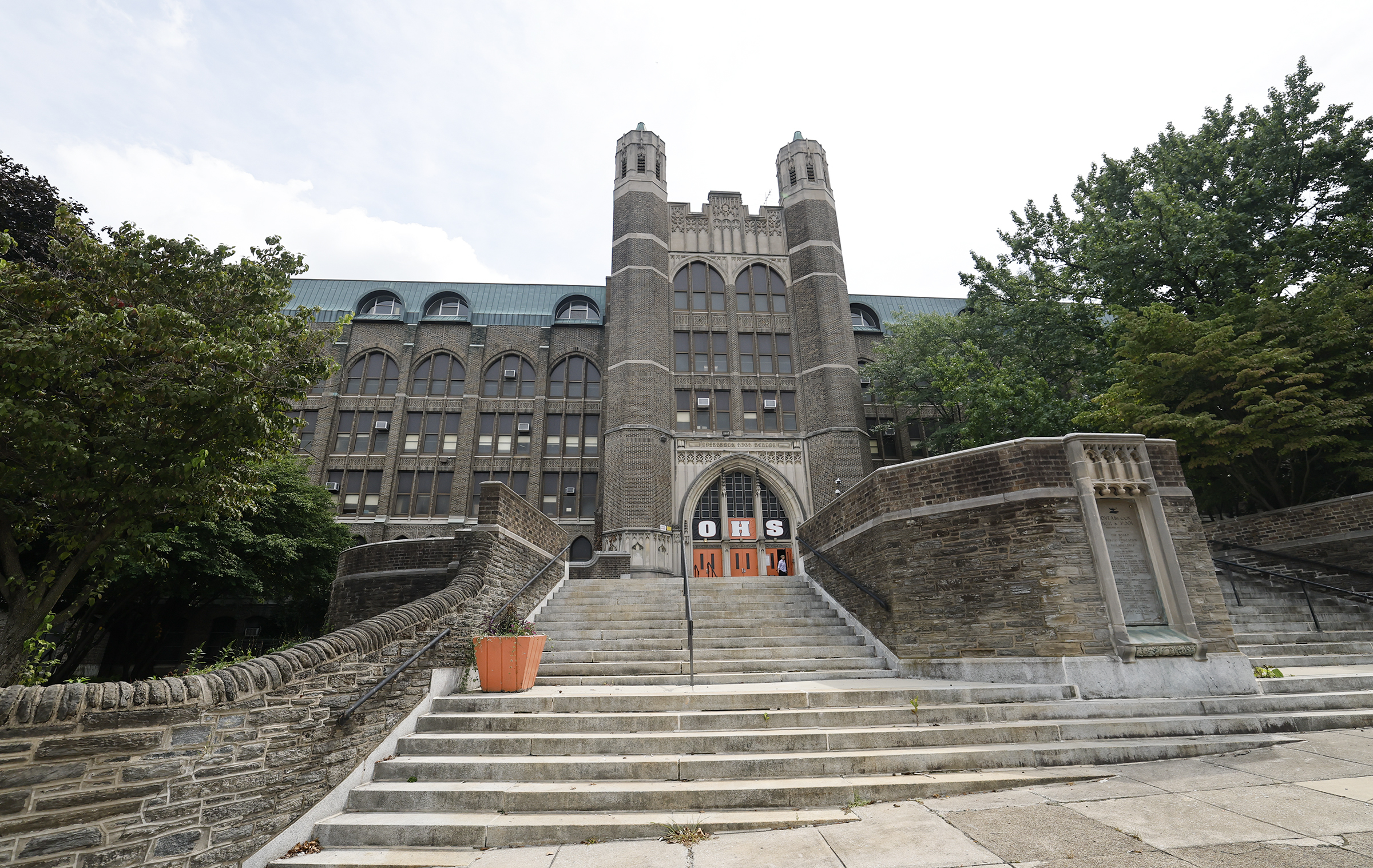
Of the district’s 307 buildings, most schools — 159 in total — would be modernized under the proposed plan. The district pointed to Frankford High, which closed for two years because of asbestos issues and just reopened in the fall with $30 million worth of work to spruce it up, as an example of modernization.
An additional 122 schools would fall into a “maintain” category, meaning they would receive regular upkeep. And six facilities would be co-located, meaning two separate schools would be housed under one roof, each with its own principal and team.
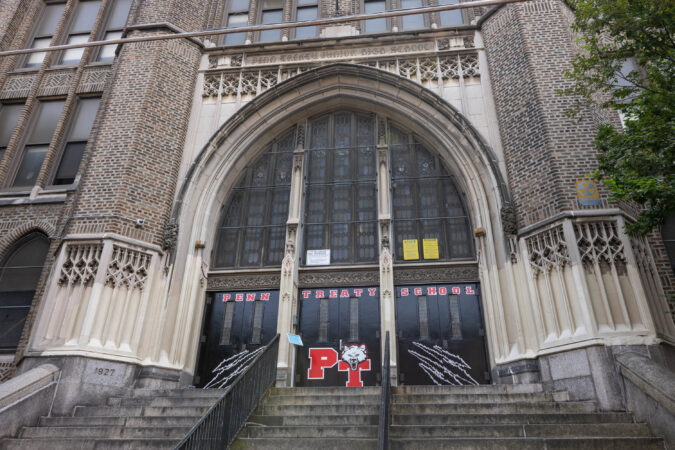
Finally, 20 schools would be recommended for closure. Among them is Penn Treaty, now a 6-12 school, which would close in its current form, but go on to house the current Bodine High School, a magnet in Northern Liberties. Bodine’s building would become the home of Constitution High, which now occupies a rented space in Center City.
As proposed, Watlington’s plan would cost $2.8 billion over 10 years. The district would put up $1 billion via capital borrowing during that time — leaving $1.8 billion unaccounted for that the superintendent said would need to be covered by state money or philanthropic support. If the district doesn’t get all or some of that amount, the plan would have to be amended.
Will some schools definitely close? Which ones?
Right now, the closures are just a proposal, and the school board is slated to have the final say at a vote this winter. They could adopt all, some, or none of Watlington’s recommendations.
If the closures are approved, no school would be shuttered before the 2027-28 school year. And should some schools close, no job losses are expected, Watlington said.
Of the 20 facilities targeted for closure, 12 would be repurposed for district use. Eight would be given to the city for affordable workforce housing, or job creation, both priorities of Mayor Cherelle L. Parker.
We don’t have the full list of proposed modernizations yet, so it’s tough to say the proposed fate of every school.
What will happen to students who attend closing schools?
Every affected student would be routed to a new school. A new transition office would work closely with impacted communities to make sure academics, attendance, and social-emotional needs don’t suffer, Watlington said.
“These families will get gold-standard, red-carpet treatment directly from the superintendent’s office,” he pledged.
Why are these changes necessary?
The district hasn’t had a facilities master plan in more than a decade. It has 70,000 empty seats citywide, with some schools overcrowded and others with entire unused floors. It’s also got a lot of aging buildings — the average district school is nearly 75 years old — and many have environmental and/or significant systems issues.
Officials said they want to solve district-wide disparities: Some schools have art, music, and ample space for physical education, plus extracurricular activities, and some have few of those things.
How were school buildings’ fates determined?
Watlington said there was no formula to determine his recommendations. But four factors entered into the decision: building condition, utilization, the school’s ability to offer robust programming, and neighborhood vulnerability — a new measure that considers things like poverty and whether the area has lived through prior school closings.
The district formally launched the final phase of its facilities master planning process in late 2024. Since then, officials have hosted 47 community conversations and received 13,700 survey responses from people in every zip code in the city. Officials heard from a project team of 30 members and received feedback from nine advisory groups composed of more than 170 members.
The district later launched surveys to gain more input, with the topline result being that Philadelphians didn’t want their local schools closed. Many respondents outlined fears about potential hardships that closing schools could create, such as longer walks to school or tough bus rides in unfamiliar or unsafe areas.
And they flagged worries about merging schools and having large grade spans in a single building.
When did the district last close schools?
Mass school closures last happened in 2012 and 2013, when 30 schools shut.
That process hit economically disadvantaged neighborhoods disproportionately, did not yield substantial savings, and generally led to worse academic outcomes and attendance for students.
The mistakes of 2012 informed this go-round, officials said. They have promised better services for schools, students and families affected by any coming transitions.
In total, 159 buildings would be modernized, while six schools would co-located inside existing buildings
The plan will be presented to the school board Feb. 26, with a board vote expected sometime this winter.
// Timestamp 01/22/26 6:23pm
Philly could close 20 schools, co-locate 6, and modernize 159: Superintendent Watlington shares his facilities plan
****Embargoed until 5pm on Thursday January 22, 2026 ***Superintendent of the School District of Philadelphia Tony B. Watlington at a press conference to announce the plan for the first draft of the Philadelphia facilities master plan during a press conference at the Philadelphia School District Headquarters, in Philadelphia January 20, 2026.
Wholesale changes are coming to the Philadelphia School District, with Superintendent Tony B. Watlington Sr. poised to propose a massive reshaping of the system, including closing 20 schools.
The plan, years in the making, would touch the majority of the district’s buildings and bring change to every part of the city: over a decade, 159 would be modernized, six co-located inside existing schoolbuildings, 12 closed for district use, and eight closed and given to the city.
At least one new building would be constructed.
The 20 closures, which would not begin to take effect until the 2027-28 school year, would be scattered through most of Philadelphia, with North and West Philadelphia hardest hit.
Watlington released some details of the blueprint Thursday — including the list of proposed school closures—and acknowledged that the changes will roil some communities.
Watlington is scheduled to present his proposal to the school board next month, with a board vote on the plan expected this winter.
Mayor Cherelle Parker defends district’s plan: ‘A clear-eyed look at really what matters for our children’
Mayor Cherelle L. Parker on Thursday praised the community engagement process Superintendent Tony B. Watlington Sr. conducted before issuing the facilities plan and defended the school district from critics.
“It is ambitious, it’s thorough, and it’s grounded in what I believe matters most, and that’s achieving the best outcomes for our students,” Parker told reporters. “I’m proud that the district has taken what I would describe as a clear-eyed look at really what matters for our children.”
Watlington’s outreach efforts, she said, stood in stark contrast to the district’s handling of the last round of school closures in the early 2010s, when Parker was a state representative.
“All this communication didn’t happen before, and I know because I was there,” Parker said. Criticism of the plan, she said, is to be expected.
“There are going to be some people who are going to politically try to use this as an anchor, for politics, to raise funding, to just point fingers and say what’s wrong and criticize the district’s leadership,” Parker said. “It’s a part of the process. … But there is no one who can question Dr. Watlington and his exec team.”
The Philadelphia school district’s facilities plan did not go over well in City Council
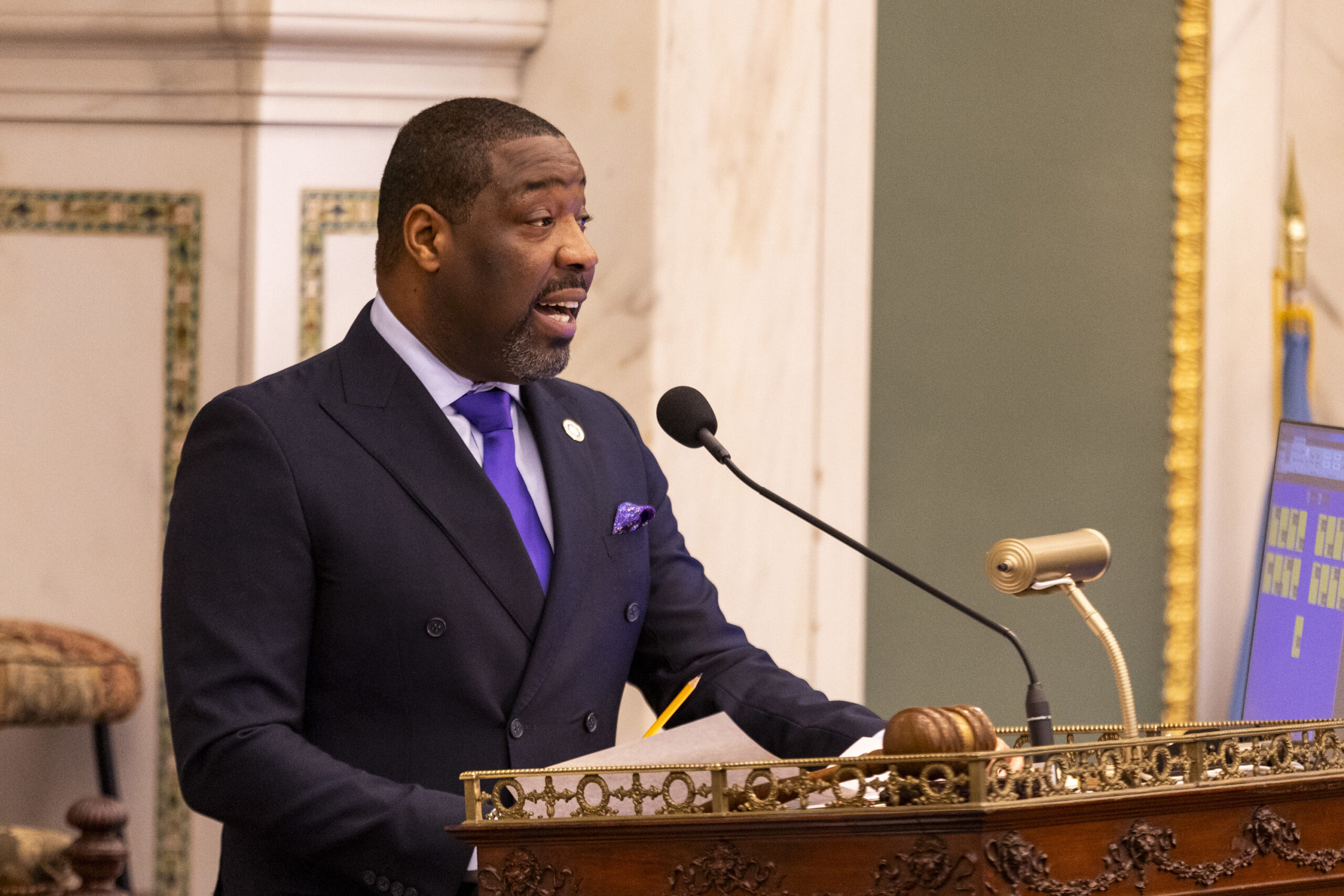
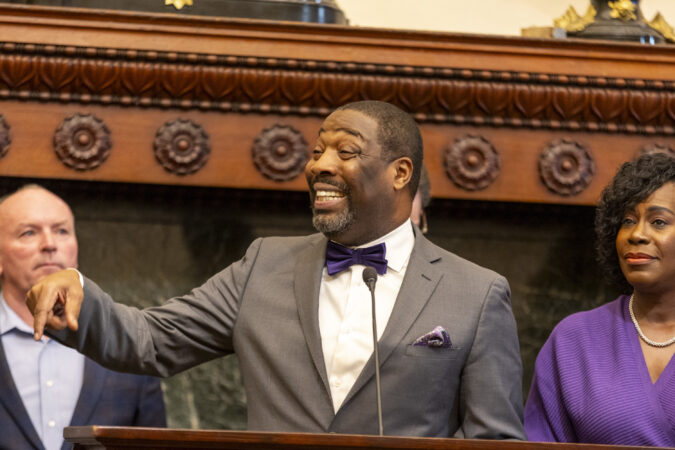
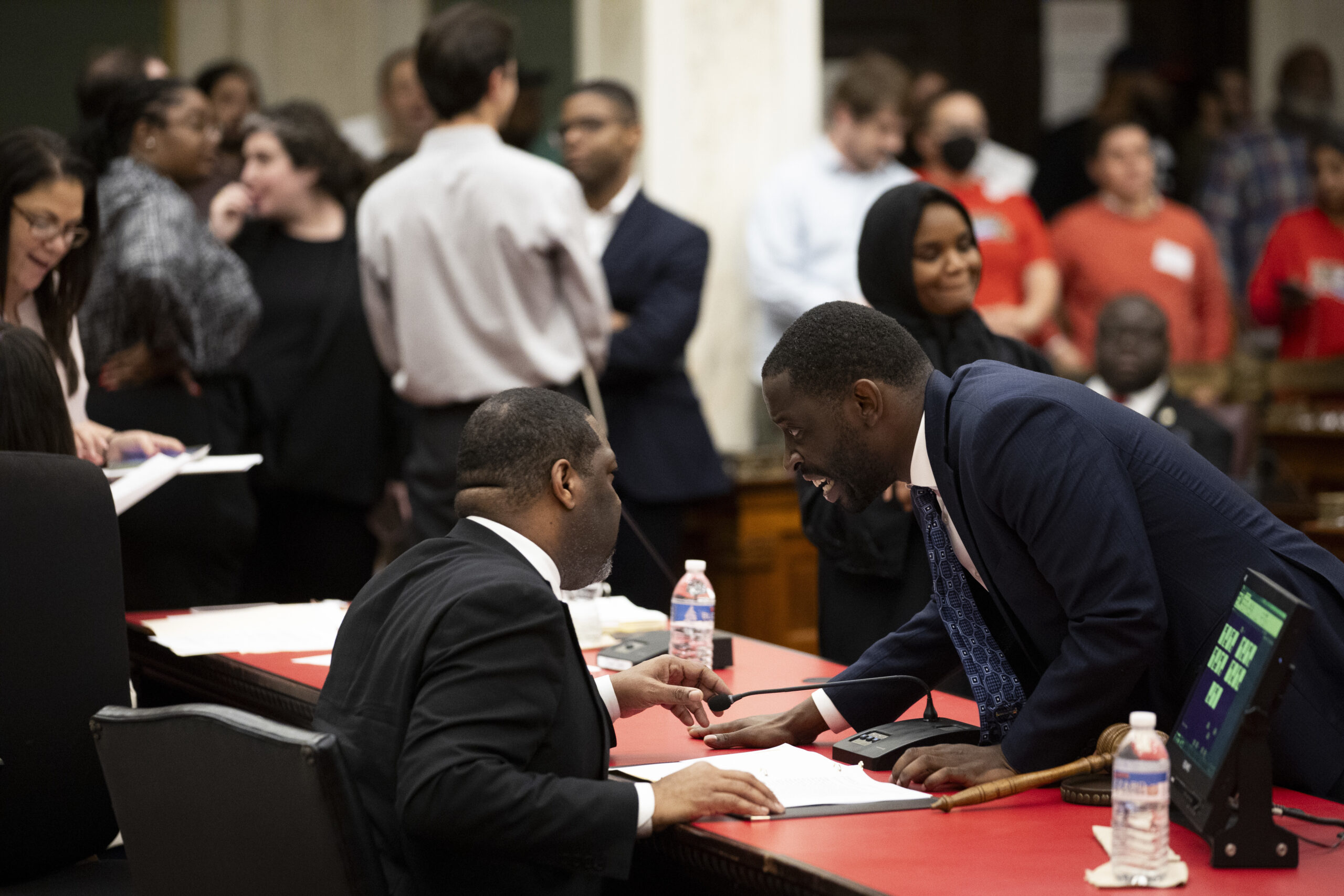
City Council President Kenyatta Johnson speaking at the City Council’s first session of the year in Philadelphia, Pa., on Thursday, Jan. 22, 2026.
City Councilmember Jamie Gauthier said the Philadelphia school district showed “just a complete lack of thought and consideration for really important programs” when crafting its long-anticipated facilities plan, released Thursday.
Council President Kenyatta Johnson said his members had “a lot of concerns.”
And City Councilmember Jeffery “Jay” Young Jr. went so far as to propose amending the city Home Rule Charter to allow Council to remove the school board members who will consider the proposed closures.
“If you are closing schools during a literacy crisis, then you should be held directly accountable to the people you serve,” Young said.
In many ways, it’s unsurprising Council members would speak out against a plan that would close or consolidate schools in their districts. But the pushback from lawmakers Thursday was notably strong, and Young’s proposal to allow Council to remove school board members could dramatically reshape the politics of the district.
Schools plan draws mixed reactions from state lawmakers representing Philly in Harrisburg
The School District of Philadelphia’s plan to close 20 schools through an overhaul of the system received mixed feelings from state lawmakers representing the city in Harrisburg, ranging from careful optimism to concern.
Lawmakers in Harrisburg are responsible for distributing billions of state dollars for public education, including any funding increases. These funds are critically important in Philadelphia, whose tax base alone only meets about a quarter of the needs of its students.
It’s unlikely that any school closures will impact the district’s annual funding from the state, but will likely be a part of conversation as budget talks resume next month for the upcoming fiscal year.
Rep. Andre Carroll, a Democrat who represents parts of Northwest Philadelphia, was driven to run for office by the 2013 closure of his alma mater Germantown High School, which closed during the district’s last round of shutdowns. Now, he has three schools in his district set to close, merge, or co-locate that he worries will negatively impact local students.
“I’m very scarred by that situation and that experience,” Carroll said. “I fear there’s young people in my district that are about to experience the same thing.”
The three schools slated for closure in Carroll’s district are: Building 21 (to be co-located at Martin Luther King High School and building given to the city), General Louis Wagner School (closing but building use is unknown) and Parkway Northwest High School (merging into MLK as an honors program and building used as district swing space).
Carroll said he’s particularly concerned about Wagner’s closure, as it’s the only public middle school in West Oak Lane.
He’s also concerned about the district giving the empty buildings to the city, making the city responsible with their upkeep until they are sold or repurposed. This is especially top of mind to him, he said, because he represents the area where 23-year-old Kada Scott’s body was found last year. Her remains were found on the grounds of the former Ada H.H. Lewis Middle School that’s been closed since 2008 that has over the years become a hotspot for illegal dumping, squatting and other criminal activity. More vacant school properties could attract more crime and community issues in his district, Carroll said.
And if the city sells off the empty properties, he wants to make sure they reach a different fate than that of his alma mater Germantown High, which is now luxury apartments.
“What I fear is that we’re going to continue to see these school buildings turned into unaffordable housing,” Carroll added.
For Rep. Mary Isaacson, a Democrat whose district includes Fishtown, has almost the opposite problem: Schools in her district are often overcrowded due to the area’s population and development boom. One school in her district — Penn Treaty High School currently for students grades 6-12 — will be closed and expanded to become the new site of Bodine High School.
“Right now, I’m taking it as a ‘wait and see,’” Isaacson said. “This has to go through the process with the school board. There probably will be changes. Putting forth the plan doesn’t mean it’s rubber-stamped.”
“I do credit the school district with trying to move forward, modernizing and addressing a lot of the facility issues as part of this plan that have plagued the city of Philadelphia and their aging infrastructure,” she added.
Isaacson said she hopes the district revisits its catchment areas created years earlier to account for her district’s development boom.
“My community schools are bursting in most places,” Isaacson said. “I look forward to having discussions about making room for growth, which may not be the same issues that some others are experiencing in other parts of the city.”
District’s announcement echoes closures from more than a decade ago, Stand Up for Philly Schools coalition member says
For Akira Drake Rodriguez, another member of the Stand Up for Philly Schools coalition, the district’s announcement echoed the highly controversial School Reform Commission closures more than a decade earlier.
“The way this process was presented was trying to not repeat the mistakes of the 2013 closures,” said Rodriguez, an assistant professor of city and regional planning at the University of Pennsylvania who was part of a district advisory group during its planning stages. Yet “the rollout was bumpy,” with some principals of affected schools informing their staffs, and others not, Rodriguez said. “It did not feel like it was done with the care and engagement they knew and were trying to address in this process.”
Rodriguez noted that Tilden Middle School in Southwest Philadelphia was now slated for closure, after absorbing the populations of the Shaw and Tilden middle schools shuttered by the SRC.
“That’s a school you would invest in,” she said. She questioned where students would go instead: “That whole neighborhood of Southwest Philly is charter schools. Do you really think they’re going to stay in traditional public schools when you close Tilden?”
She predicted enrollments at some schools marked for closure would plummet as parents face uncertainty around their futures.
“The district hasn’t really given people a ton of confidence around managing large-scale modernization efforts,” Rodriguez said.
Council President Kenyatta Johnson endorses proposal that would allow city lawmakers to remove school board members
Council President Kenyatta Johnson said Thursday that city lawmakers had “a lot of concerns” about the school district’s facilities plan and would do their “due diligence” to evaluate it.
“I’m sure it’s going to be a very, very robust process,” Johnson told reporters. “These are only recommendations. This isn’t the final product.”
Notably, Johnson immediately endorsed a new proposal by Councilmember Jeffery “Jay” Young Jr. that would allow Council to remove school board members, potentially reshaping the politics of the district. Currently, the mayor appoints the nine-member board, and Council votes to confirm them.
Young’s proposal, an amendment to the city Home Rule Charter, would require voter approval if Council adopted it. Johnson’s endorsement Thursday likely means it has a good choice of at least getting through Council.
“It’s a good check and balance in terms of the process, and also allows us to have the ability and the opportunity to make sure that anything that the school board does is done with transparency,” Johnson said. “I‘m always for, as members of City Council and this body in this institution, having the opportunity to provide accountability.”
‘You’re piling too many kids per classroom. What are the kids learning?’
Letitia Grant, 41, was frustrated to learn that her daughter’s Penn Treaty School was marked for closure in the district’s plan.
“That sucks. That can’t happen,” she said.
Her daughter is in eighth grade at the Fishtown school, and would have stayed at Penn Treaty through her high school graduation. Grant said her daughter loves her teachers and guidance counselor, and has many friends whom she’d miss.
Grant was worried that the district’s consolidation plan could mean larger class sizes and less individual attention for her daughter at a new school. As her daughter and a friend hung out on the sidewalk after dismissal, they stopped their biology teacher to chat. Grant said he was her daughter’s favorite.
“You’re piling too many kids per classroom. What are the kids learning?” she said.
// Timestamp 01/22/26 3:25pm
Councilmember Jamie Gauthier says district’s planning lacked ‘thought and consideration’ for important programs
City Councilmember Jamie Gauthier said the Philadelphia School District showed “just a complete lack of thought and consideration for really important programs” when crafting its long-anticipated facilities plan.
Gauthier said the plan would limit opportunities in her West Philadelphia-based 3rd District. She pointed to changes including Robeson High School and Parkway West ceasing to exist as standalone schools (Robeson would merge into Sayre and Parkway West into SLA Beeber) and The Workshop School co-locating with Overbrook High School.
“What are people supposed to do for good high school options in West Philadelphia?” Gauthier said .
Gauthier added that while Superintendent Tony B. Watlington Sr. has talked at length about avoiding the mistakes of the district’s widely criticized 2012 school closure plan, it appears doomed to repeat that history.
“That’s a great thing to hold up every time we have this conversation, but how are you solving for it?” Gauthier said. “You can’t state all of the things that went wrong and then present a plan that seems to lack care in the same way as the plan in 2012.”
Proposed school closures are ‘deeply troubling,’ Academy at Palumbo parent says
Edwin Mayorga, an Academy at Palumbo parent and member of the Stand Up For Philly Schools coalition, called the planned school closures “deeply troubling.”
“Closing schools straight off is never to me the right answer,” said Mayorga, an associate professor of educational studies at Swarthmore College who said SUPS is planning to rally outside district headquarters next Thursday to oppose the closures. “It’s about asking ourselves, what are the conditions that have produced a school that has declining enrollments, or toxic conditions in the facility, and trying to start from there?”
Mayorga said he was still concerned the district hadn’t adequately engaged with the community. While the district touted 8,000 responses from a citywide survey, Mayorga questioned how extensively it was promoted.
He also expressed skepticism of its findings: When his wife filled it out, Mayorga said, she was asked to choose between options she felt should all be priorities — like a neighborhood high school, and clean facilities.
“How much did that survey really tell us? They’re framing it as a mandate,” said Mayorga, who noted that the Palumbo HSA wasn’t given notice of the plan for a new middle school.
He also said the district’s plan seemed to “bury” the facilities needs of many of its aging buildings — citing Southwark Elementary’s troubles as just one example.
“With all the money involved here … we’re still struggling to ensure all the schools across the city are operating in well-supported ways,” he said.
Search tool: Check how your school could be impacted
window.addEventListener(“message”,function(a){if(void 0!==a.data[“datawrapper-height”]){var e=document.querySelectorAll(“iframe”);for(var t in a.data[“datawrapper-height”])for(var r,i=0;r=e[i];i++)if(r.contentWindow===a.source){var d=a.data[“datawrapper-height”][t]+”px”;r.style.height=d}}});
Newly introduced legislation seeks to allow City Council to remove members of the school board
One lawmaker on Thursday said he planned to oppose some of the closures proposed by the school district and brought legislation that would allow City Council to remove members of the school board.
Councilmember Jeffery “Jay” Young, Jr., a Democrat who represents the North Philadelphia-based fifth district, introduced legislation to amend the city’s Home Rule Charter to give council the authority to remove board members, which it is not currently empowered to do. To become law, Council would need to pass legislation and a majority of voters would have to approve it through a ballot question.
Young said it’s necessary to ensure accountability.
“If you are entrusted with $5 billion in public funds, if you are closing schools during a literacy crisis, then you should be held directly accountable to the people you serve,” Young said. “This moment really demands our leadership.”
He added: “Our children deserve stability. And above all, they deserve leaders who are willing to fight.”
The legislation is also no doubt in response to a 2024 episode involving school board member Joyce Wilkerson, whom Council tried to deny a seat on the board by withdrawing her nomination. But Mayor Cherelle L. Parker took advantage of a loophole in the law and asked Wilkerson to serve on the board indefinitely.
Alliance for Philadelphia Public Schools blasts district’s plan, vows to oppose closings
The Alliance for Philadelphia Public Schools — a group made up mostly of retired district staff who are frequently critical of the district — blasted the district’s plan and the process it used to get there, and vowed to oppose closings.
“Closing public schools that serve as community anchors has been and will again be devastating,” Lisa Haver, group coordinator and a co-founder, said in a statement. “Members of the school communities affected have been given very little time to organize and fight to save their schools before the board’s final vote.”
Watlington is scheduled to present his plan to the school board on Feb. 26, but a vote has not been set. District officials said it was expected sometime this winter.
Group members also questioned why the district “would give away valuable properties to the city, and why the city would not pay for buildings out of its $4.6 billion capital budget.”
Philadelphia Education Fund president is ‘feeling optimistic’ about schools plan
Farah Jimenez, president of the Philadelphia Education Fund, called the plan “incredibly ambitious,” presenting new opportunities for students. For instance: Centralizing many career and technical education offerings, which could help more kids access them, Jimenez said.
But Jimenez, who served on the former state-appointed School Reform Commission after it voted in 2013 to close more than 20 Philadelphia schools, also predicted challenges — including managing expectations.
“With a lot of change comes a lot of anxiety,” Jimenez said, noting schools’ role not just as places of education, but as community hubs.
The district also will have to think about “the brand around some of these community schools,” Jimenez said, and how to co-locate schools with “arguably some differences in culture and make sure people feel like that is a win-win for both student populations.”
The district is planning to give eight school buildings to the city, which Jimenez said reflected a lesson learned from the SRC. When the commission tried to put school buildings on the open market, “it didn’t end up being the win we expected,” she said.
While the SRC’s closure decisions were driven by financial constraints, “it feels like these changes are being made to improve experiences for students and educators,” Jimenez said. She said she was “feeling optimistic about it, because in Philadelphia we have a tendency to not do hard things.” If done well, the plan could be “incredibly exciting.”
Closure plan is ‘a loss for Philadelphia,’ principals union president says
Dr. Robin Cooper, president of CASA, the Philly principals’ union goes to her notes while the principals stream a Facebook live town hall meeting on April 7,2021. Teamsters International Rep. Michael Clark is on left.
Robin Cooper, president of the union that represents district principals, said the effects of Thursday’s announcement will be felt for years.
“It’s a loss of history, a loss for Philadelphia,” said Cooper. “Schools are a family, and some families are breaking up.”
Cooper said she understands the math — the district has a lot of old buildings, many of which are have decades of deferred maintenance. A state court affirmed that the district has been underfunded for generations.
“We know that change is inevitable, but this is difficult because we are talking about our schools,” Cooper said. “My members are in shock. And we’re figuring out how do we continue to provide a stable environment for our school staffs and our students and parents.”
Though no closings would happen until the 2027-28 school year, Watlington said, the announcement was likely to have a destabilizing effect immediately. Site selection — the process by which teachers and other school staffers can apply for new jobs in the district — opens soon, and though they won’t be forced to find new positions immediately, some employees will likely move to jump now, before they’re pushed.
Workshop School founder skeptical of Philly school closure plan
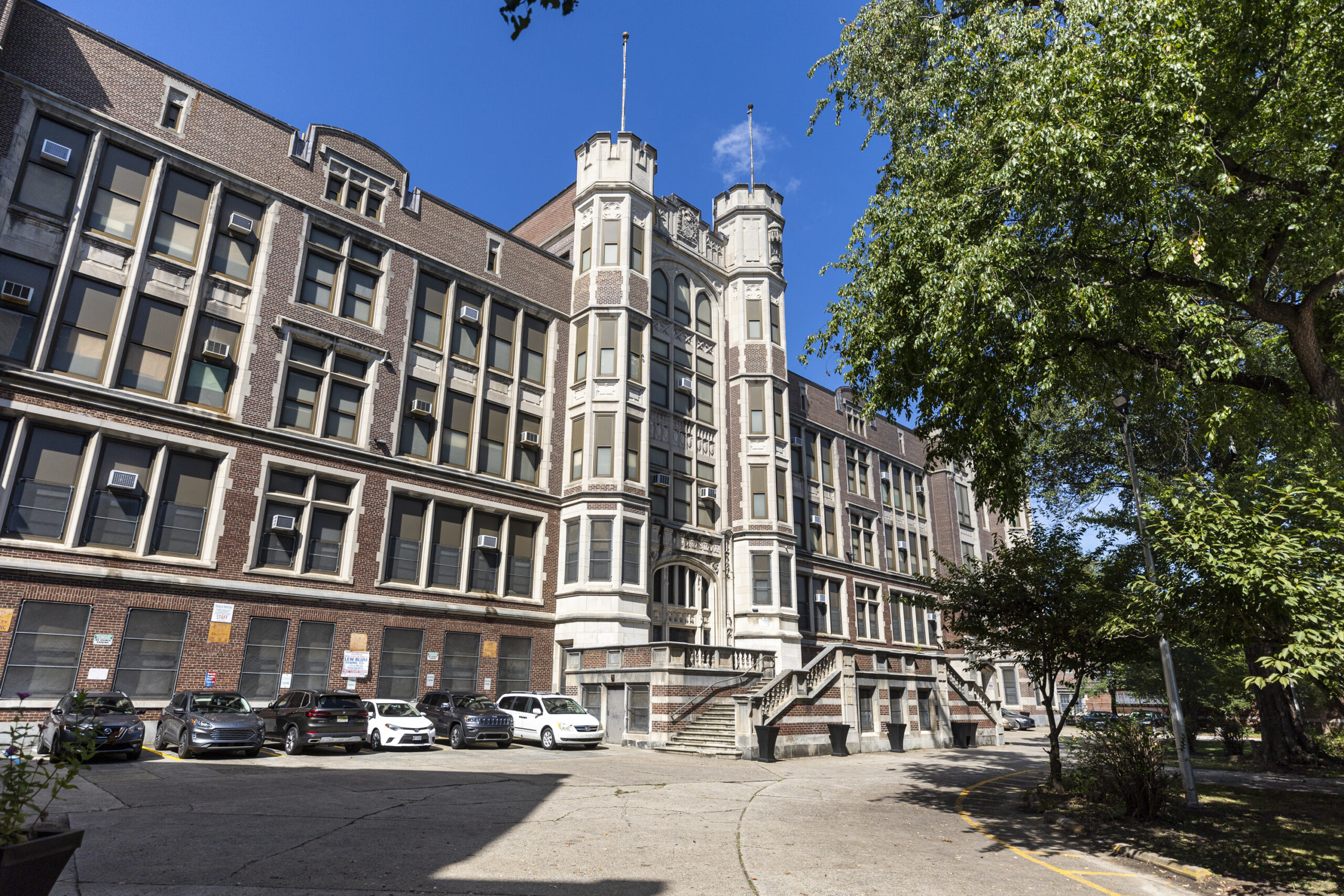
Simon Hauger said closing schools like Overbrook High will be “politically not easy.”
As the district released the school closure plan, Simon Hauger, founder of the Workshop School, was skeptical.
Given the school system’s billions of dollars in deferred maintenance, “the district does not have the talent and capacity to actually solve this problem,” Hauger said. “To me, that’s the part that’s most frustrating … This is not their expertise. The solutions they’re offering are not going to be good solutions.”
Under the plan, Workshop would move into the under-enrolled Overbrook High School in West Philadelphia — which “would be fine,” Hauger said. “There’s good stuff at that building.” But that only makes Overbrook, which Hauger estimated takes millions to run, “slightly more utilized,” he said. “It doesn’t make sense to me.”
The problem, Hauger said, is that closing a school like Overbrook High, which was not slated to shut, is “politically not easy.”
Philly City Council members express concerns about school closure plan
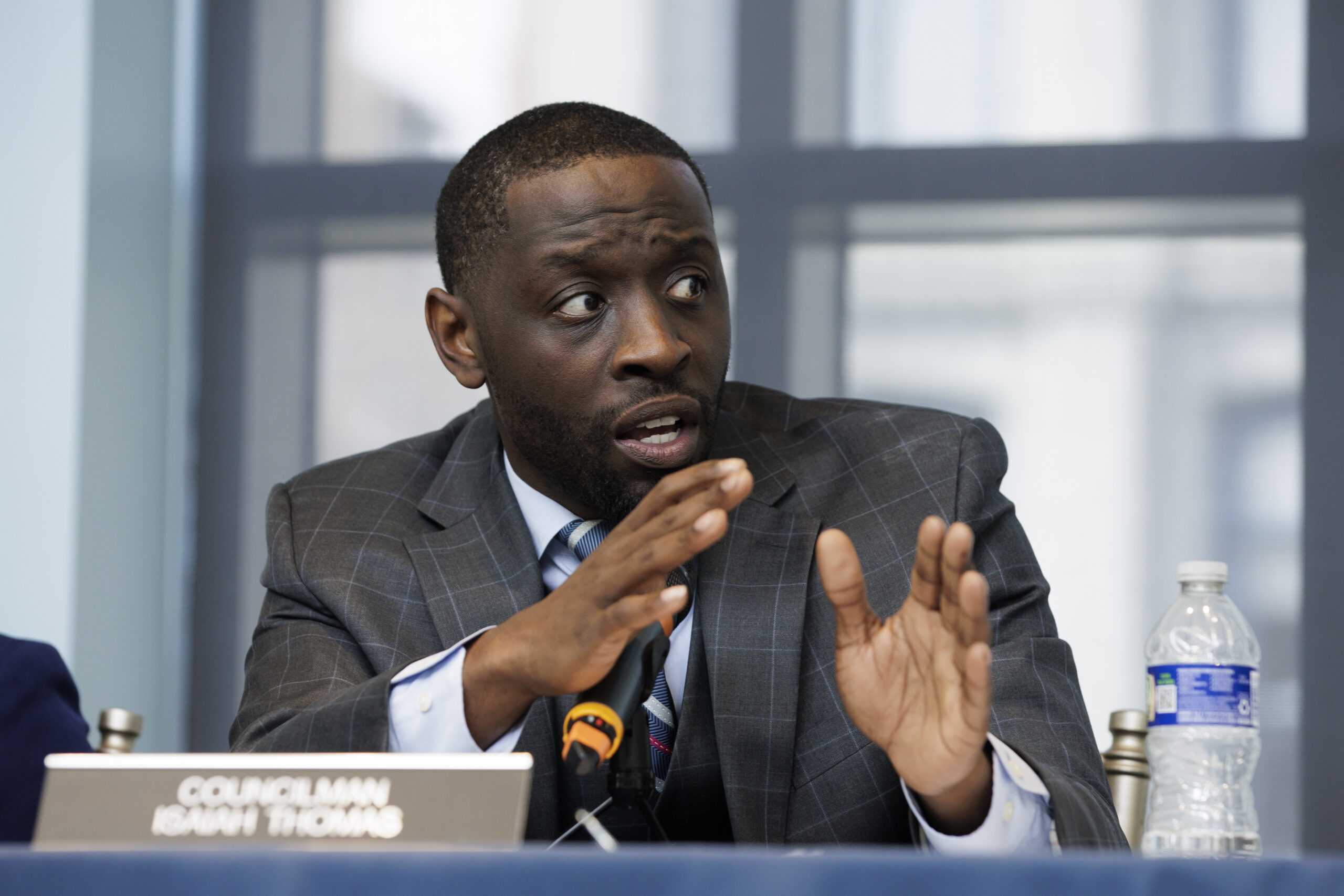
Councilmember Isaiah Thomas, seen here in April, said he would oppose the closure of Russell Conwell Middle School in Kensington.
City Council members were meeting Thursday morning during the first meeting of the year as news of the school district’s facilities plan became public. Several members, who were briefed on the plan earlier this week, said they understood the need to close and consolidate schools but have concerns about how individual closures could impact communities.
“I’m Philly-born and raised, so there’s always like an emotional attachment to schools,” said Councilmember Isaiah Thomas, a Democrat who chairs the Education Committee. “They are a pillar in a lot of neighborhoods. Whenever you step into a conversation like this, you are always going to be super emotional.”
For example, Thomas attended Russell Conwell Middle School in Kensington, which is slated for closure under the facilities plan. He said he will “adamantly” oppose the district shutting Conwell’s doors.
Thomas did praise the district’s process for drafting its plan and said Superintendent Tony Watlington engaged in an open dialogue with lawmakers.
The district, he said, acted with clear “intentionality.”
Councilmember Curtis Jones Jr., whose district includes parts of West and Northwest Philadelphia, said some of the changes are encouraging, including an expansion of career and technical education planned for some schools, including Overbrook High School. Increasing the student body at the school instead of electing to close it, Jones said, is “right on point.”
Jones also said some co-locations make sense — “like a great peanut butter and jelly mix” — but others could combine students who come from different neighborhoods and backgrounds. He said the district must consider what merging those populations means for classroom dynamics.
“The places where the kids come from, that is always a dynamic that is under considered,” Jones said. “If I live in this neighborhood and got to travel to that neighborhood, what are the historical dynamics? That granular detail needs to be discussed.”
Philly teachers union president blames ‘chronic underfunding’ for school closing plan
Philadelphia Federation of Teachers president Arthur Steinberg, seen here in September at Murrell Dobbins Career & Technical Education High School.
Arthur Steinberg, president of the Philadelphia Federation of Teachers, said he’s waiting to see more granular details of the plan, including the list of schools that will be upgraded and what fixes are promised, and hopes information about how much weight was given to every factor that went into the decisions.
But, Steinberg said, “it is devastating for any community to lose their school — the parents, the kids and the staff.”
As for the process that led the district to this moment, Steinberg said it was abundantly clear even to advisory panel members that their viewpoints were just points of information for Watlington’s administration, that no promises about heeding any advice were made.
Either way, the closure of 20 schools and more changes that will have ripples across the city for years to come all lead back to one factor, he said.
“Without the chronic underfunding of the district,” said Steinberg, “we wouldn’t have gotten to this point.”
A copy of the Philadelphia School District’s facilities master plan.
Outrage mounted for some Thursday morning as district officials began quietly notifying affected communities and groups.
“It’s heartbreaking,” said Sharee S. Himmons, a veteran paraprofessional at Fitler Academics Plus, a K-8 in Germantown. “It feels like a family member is dying.”
Himmons is enrolled in the district’s paraprofessional pathways program, taking college courses to earn her degree and teacher certification. She was sitting in her math class at La Salle University when she found out Fitler was slated for closure. She began crying. She failed a test she was taking because her concentration was shot, she said.
“This school is such a staple in the neighborhood,” she said. Fitler is a citywide admissions school, but draws many students from the area. Himmons’ own sons attended Fitler, and she wanted to teach there after her college graduation.
“This isn’t over,” she said. “We’re going to fight — hard.”
Philadelphia School District Superintendent Tony B. Watlington, seen here in September.
Wholesale changes are coming to the Philadelphia School District, with Superintendent Tony B. Watlington Sr. poised to propose a massive reshaping of the system, including closing 20 schools.
The plan, years in the making, would touch the majority of the district’s buildings: over a decade, 159 would be modernized, six co-located inside existing buildings, 12 closed for district use and eight closed and given to the city.
One new building would be constructed.
Change would come to every part of the city, but not until 2027-28. Closures would be scattered through most of Philadelphia, with North and West Philadelphia hardest hit.
Philadelphia, the nation’s eighth largest school system, now has 216 schools in 307 buildings, the oldest of which was built in 1889. It has 70,000 empty seats citywide, though some of its schools, especially those in the Northeast, are overcrowded.
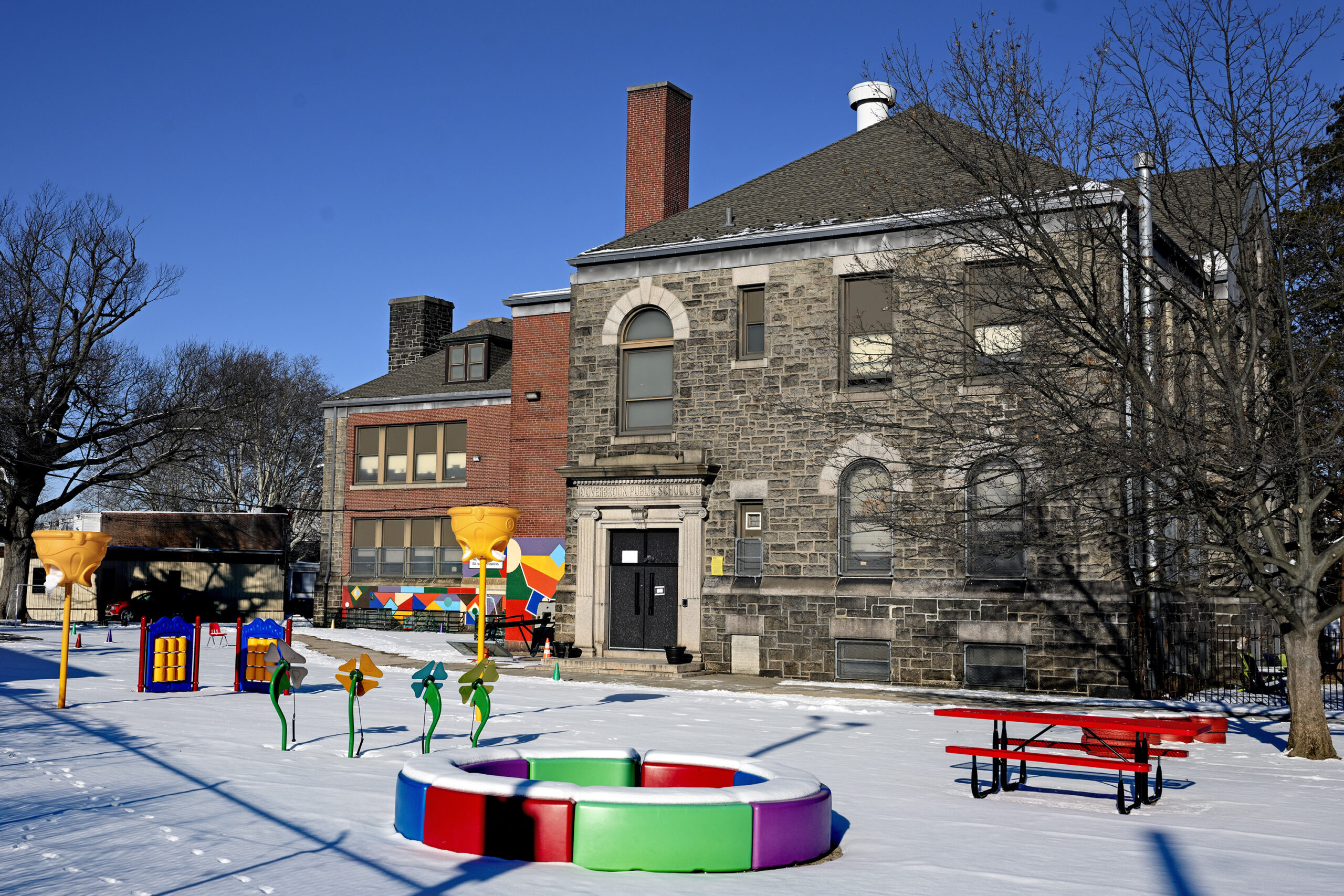
Overbrook Elementary is among the schools that would close.
Here are the 20 schools that would close under Superintendent Tony B. Watlington Sr.’s revitalization plan:
Elementary schools
Blankenburg
Fitler
Ludlow
Overbrook
Pennypacker
Morris
Waring
Welsh
Middle schools
AMY Northwest
Conwell
Harding
Penn Treaty
Stetson
Tilden
Wagner
High schools
Lankenau
Motivation
Parkway Northwest
Parkway West
Robeson
(function() {
var l2 = function() {
new pym.Parent(‘school_closing1’,
‘https://media.inquirer.com/storage/inquirer/projects/innovation/arcgis_iframe/school_closing1.html’);
};
if (typeof(pym) === ‘undefined’) {
var h = document.getElementsByTagName(‘head’)[0],
s = document.createElement(‘script’);
s.type = ‘text/javascript’;
s.src = ‘https://pym.nprapps.org/pym.v1.min.js’;
s.onload = l2;
h.appendChild(s);
} else {
l2();
}
})();
Some of those schools, like Lankenau and Robeson, would become programs inside other schools — Roxborough High for Lankenau, and Sayre for Robeson. Others would close outright, with students assigned elsewhere.
Students at the affected schools would move into schools with similar or better academic outcomes or building conditions, or schools that are better by both measures, Watlington said. Transition resources would be available for schools, students and families from closing schools and for schools that take in new students.
Watlington said he did not anticipate job losses as a result of the closures.
Frankford High School is an example of a Philly school that has been modernized.
Most schools — 159 — would be modernized under the proposed plan. (Frankford High, which closed for two years because of asbestos issues and just re-opened this fall with $30 million of work to spruce it up, is an example the district cited of a modernization.)
An additional 122 fall into the “maintain” category, meaning they’ll just receive regular upkeep.
Six facilities would be co-located, meaning they would be two separate schools housed under one roof, each with its own principal and team.
Twenty schools would be closed.
A lot of shuffling is planned. Penn Treaty, now a 6-12 school in Fishtown, would close in its current form, but the building would stay open, housing the current Bodine High School, a magnet in Northern Liberties. Bodine’s building would become the home of Constitution High, which now occupies a rented space in Center City.
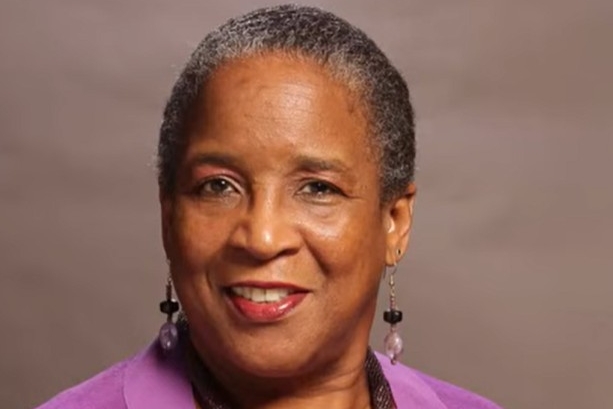
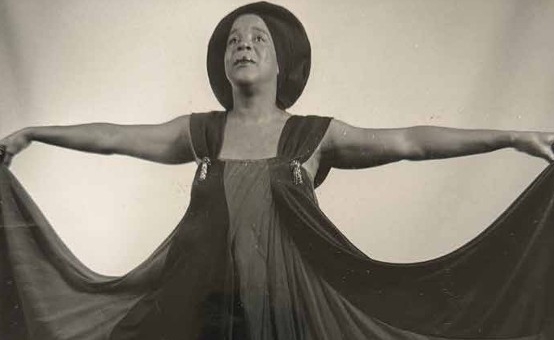
Carla Washington Hines, 72, of Philadelphia, longtime dancer, pioneering choreographer, celebrated teacher, former artistic director, collaborator extraordinaire, and mentor, died Sunday, Nov. 2, of sepsis at Temple University Hospital-Jeanes Campus.
Mrs. Hines came to Philadelphia from Virginia in 1974 after college and spent the next four decades dancing, teaching, lecturing, traveling, and generally advocating for arts in education from kindergarten through college. She danced with the Sun Ra Arkestra, the John Hines Dance Co., and other troupes at all sorts of venues in Philadelphia, New York, Chicago, elsewhere in the United States, and throughout Europe.
She choreographed original performances such as “Montage in Black,” “Reflections,” and “Life Cycle,” and collaborated with notable jazz musicians Herbie Hancock and Alice Coltrane, and other musical stars. She was a guest on TV and radio shows, read poetry at public events, and earned awards from the Pennsylvania Council on the Arts and the Philadelphia-based Bartol Foundation for education.
She was an expert in jazz dance, modern dance, ballet, and posture, and she lectured, organized workshops, and taught the elements of dance and choreographic principles at schools, colleges, art centers, drama guilds, libraries, and elsewhere around the country. Her mother, Thelma, was a dancer and teacher, too, and Mrs. Hines championed the connection between an interest in the arts and academic success.
“In dance, I can be anything I want to be,” she said in an online interview. “That’s the magic of the arts.”
She created an afterschool residency at a Universal charter school and taught dance at E.M. Stanton Elementary School, Strawberry Mansion High School, and other schools. She said in the online interview that her curriculum “is based on the appreciation of dance and movement,” and that it helps students “make sense of their lives using dance as a tool for learning.”
She said: “I want them to be able to understand through movement exploration how dance can change one’s life.”
She was artistic director for the Philadelphia chapter of the Institute for the Arts in Education and at thePoint Breeze Performing Arts Center. “Her creative guidance helped students tell powerful cultural stories through movement,” her family said.
Mrs. Hines performed with the Jones-Haywood Dance School in Washington before moving to Philadelphia.
As longtime community engagement manager for the Philadelphia Clef Club of Jazz and Performing Arts, Mrs. Hines wrote grants and choreographed performances. She was executive director of the John Coltrane Cultural Society and active at the old University of the Arts.
Her family said: “She devoted her life to creativity and to nurturing talent in others.”
Carla Yvette Washington was born Nov. 3, 1952, in Charleston, W.Va. Her family moved to Grambling, La., when she was young, and she graduated from high school in 1970.
She was named Miss Freshman at what is now Grambling State University, joined the Alpha Kappa Alpha Inc. sorority, and earned a bachelor’s degree in recreation in 1973. In 1981, she earned a master’s degree in fine arts and dance at the old Philadelphia College of the Performing Arts.
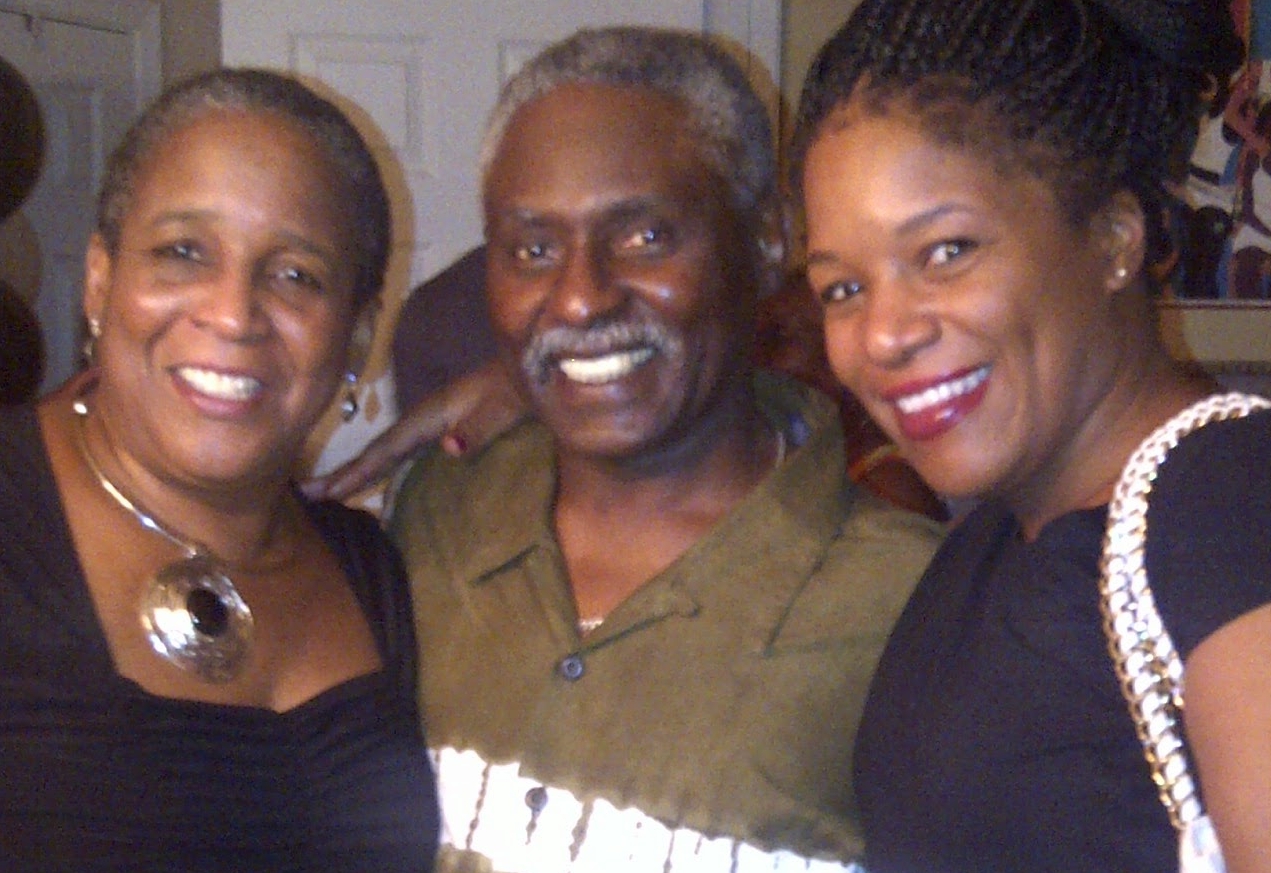
Mrs. Hines (left) smiles with her husband, Lovett, and their daughter, Zara.
She worked as a dance teacher for the Fairfax County Department of Recreation in Virginia after college and performed with the Jones-Haywood Dance School in Washington before moving to Philadelphia.
She met jazz musician Lovett Hines Jr. when they were students at Grambling and they married in 1984 and lived in West Oak Lane. They had a daughter, Zara, and Mrs. Hines welcomed her husband’s son, Lovett III, and his family into her family.
“She introduced many creatives to dance and culture, and sparked their creative careers,” her stepson said. “That is the essence of her legacy.”
Mrs. Hines and her husband, their daughter said, were “a partnership of two geniuses.” He played the saxophone and was artistic director at the Clef Club. She loved the drums, and they collaborated seamlessly on many notable projects.
Friends called her “a sweetheart” and “a beautiful soul” in online tributes. One said she “made an impact on Philadelphia and beyond in countless ways.” Her sister, Alicia Williams, said: “Everyone had a special relationship with her.”
Mrs. Hines graduated from Grambling High School in Louisiana in 1970.
Mrs. Hines was diagnosed with a lung disease in 2024 and Stage 4 cancer in 2025. “She was stern but soft,” her daughter said, “loving but able to tell you like it is.”
Her husband said: “She had special relationships with so many musicians, so many people. It was through insight, understanding, and patience. In them, we see her everyplace, feel her everyplace.”
In addition to her husband, daughter, mother, and stepson, Mrs. Hines is survived by three sisters, two step-grandsons, and other relatives. A brother died earlier.
Services were held Wednesday, Dec. 17.
Mrs. Hines (center) said she adapted her teaching techniques to suit the needs and ages of the students.
The details are likely to remain elusive well into the weekend, but on Wednesday evidence was accumulating that the Philadelphia region could become a winter wonderland for the remainder of January.
“We’re definitely going to get some snow,” said Alex Staarmann, a meteorologist with the National Weather Service in Mount Holly, which probably won’t make a first accumulation guess until Thursday afternoon. Snow could begin as early as Saturday night and continue into Monday.
The weather service Thursday posted a winter-storm watch for the entire region — for all of Delaware and most of Pennsylvania and New Jersey — in effect from 7 p.m. Saturday until 1 p.m. Monday.
At the weather office, “It’s all hands on deck,” said agency hydrologist Ray Kruzdlo Thursday. The “outside chance” that the region would be spared a major storm “is leaving us.”
AccuWeather Inc. is calling for 6 to 10 inches for Philly, very much subject to change, said senior meteorologist Bob Larsen.
Several inches of snow would be all but certain, the weather service said. Philadelphia could have a 75% chance of a foot or more, based on analysis of a blend of computer models, and a 50-50 shot of 18 inches or more. However, the individual models are having their usual squabbles, with the American being the snowiest.
Risk of a big winter storm continues to grow, tho uncertainty remains on how much snow falls, & any poss. mixing with ice &/or rain. Consider your plan of action regarding a large snow storm. Travel may be very difficult Sunday, even Monday. Further clarity as we get it. pic.twitter.com/6FWtwqzoDu
In any event, Staarmann said: “It could be a significant storm for most of the region.”
And that applies to the rest of the Mid-Atlantic and Northeast. AccuWeather Inc. estimated that snow and ice during the weekend could affect half the nation’s population.
Said Stephen Morgan, a meteorologist with Fox Weather: “It’s one of the most sprawling systems we’ve seen in several years.”
Predictably, computer models have been using the map as a Ouija board, moving around the zones of the expected heaviest snows.
Earlier in the week, it appeared that the region would be near the northern edge of the snowfall; on Wednesday, however, the models bumped the snow north, increasing the chances that snow could mix with sleet and freezing rain in Delaware and South Jersey.
The snow could mix with sleet at the height of the storm even in the Philly region, the weather service said. That would hold down accumulations: Sleet is slow to accumulate. Conversely, since it is pure ice, it is slower to melt.
Should any rain get mixed in, it would freeze on contact: The upper air may be warmer, but temperatures at the surface are forecast to be mostly in the teens Sunday.
The amounts of snow and mixing would depend on the track of a storm that is forecast to develop off the Texas Gulf Coast and track through the Tennessee Valley and off the Mid-Atlantic coast on Sunday. That track ultimately will be determined by other moving parts in the atmosphere.
As the storm intensifies, its onshore winds would import warmer air into the upper atmosphere, changing the snow to sleet and/or freezing rain, but the surface layers would remain quite cold, Larsen said.
Despite the potential mixing, it is at least possible that Philly will get its first double-digit snowfall since Jan. 22, 2018, said Paul Dorian, a meteorologist with Arcfield Weather, based in Valley Forge.
In the short term, Thursday may be a day to savor. It’s heading into the mid-40s, with nothing falling from the skies. The cold begins to filter in Friday, and highs will be in the teens Saturday.
After the precipitation shuts off Sunday night or Monday, whatever has fallen won’t be in a hurry to disappear, Staarmann said.
Temperatures might not get above freezing for several days after the snow stops, he said. Wind chills are expected to be in the single digits Monday morning, and below zero Tuesday.
“This overall very cold weather pattern is likely to continue into next weekend, potentially beyond,” the weather service said.
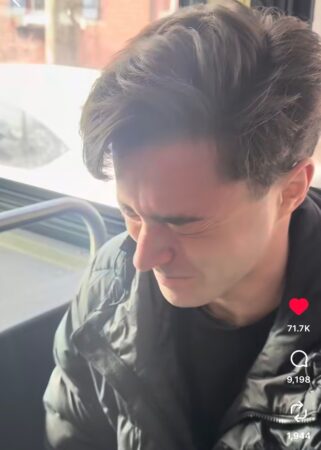
A video of a former WHYY intern yelling expletives and pepper-spraying a local influencer on a SEPTA bus is going viral on conservative media.
During the encounter on Monday afternoon, 22-year-old Paulina Reyes called 22-year-old Francis Scales a “fascist” and “racist.” Reposts of the video capturing the incident have since garnered millions of views on social media.
The video depicts Reyes accusing Scales of insulting Muslim people, Black people, and Latino people in posts on his website. Reyes then proceeds to pepper-spray him in the face while Scales’ friend and colleague films.
Scales runs a website called Surge Philly on which he posts videos of himself interviewing people at protests. He became known for provoking District Attorney Larry Krasner at a town hall and organizing a protest against him.
Social media accounts, including I Meme Therefore I Am, which has more than 842,000 followers on X, and Libs of TikTok, which has 4.5 million X followers, launched the video and its two subjects into the national spotlight in the days following the encounter. Both social media accounts are known for posting and reposting content geared toward conservative audiences.
“BREAKING: Antifa agitator attacked two conservative independent journalists on a Philly bus, pepper spraying them, punching them, and trying to grab their phone. She needs to be identified and arrested!” I Meme Therefore I Am posted on X alongside the video on Monday night.
By Wednesday afternoon the post had 2.3 million views and 8,600 reposts.
Billionaire Elon Musk got involved, commenting “She has violence issues” on Surge Philly’s X post containing the video of the incident. His comment attracted 222,000 views.
Soon, the social media posts were linking Reyes to WHYY. Reyes interned there over the summer but neglected to update her LinkedIn profile to reflect that her internship had ended months ago. The lapse led people on social media to post about her as if she were still employed there and led to criticism of the public radio station.
“Hi @WHYYNews, why are your reporters pepper spraying independent journalists on the bus??” Libs of TikTok posted Tuesday morning.
Scales has capitalized on the attention, reposting several tweets from popular social media accounts containing the video and messages supporting him and condemning Reyes.
Meanwhile, Reyes said she has received “nonstop” phone calls from strangers around the country and has gotten private messages from people threatening to rape or kill her.
Reyes and Scales were peers at Community College of Philadelphia, where Reyes is still a full-time student studying communications and media. Scales was studying biology and got partway through his degree before leaving school and transitioning to full-time content creation, he said. He plans to go back and finish his degree eventually.
The two had crossed paths a few times at school and were familiar with each other at the time of the encounteron the Route 7 bus, they both said.
Reyes said she had an overall positive impression of Scales on their first few meetings, and felt he was trying to do right by the students in his capacity as student government president.
But her attitude changed during his tenure as president. She said she observed him condescend tostudents and staff of color and carried that behavior over to the content on his Surge Philly website once he left school.
When she saw him on the bus in South Philly, her initial intention was to have a civil conversation, she said. She planned on asking him why his videos do not offer multiple viewpoints on the issues discussed.
“I did not want to pepper-spray someone on a public bus,” she said. “This is not something I wanted to do.”
Scales soon started filming the confrontation “for my own safety,” he said, because “she was attacking me.”
Reyes said she asked him to stop filming and felt the anger building as he kept the camera rolling. Especially as it started to dawn on her that he would likely post this video online.
“I got mad and I wanted to defend myself because he wasn’t listening,” Reyes said. “I did what I thought was the safest thing to protect myself. I pepper-sprayed him in the face.”
Scales said he managed to dodge the first spray. Reyes then got off the bus.
Knowing this video was likely to reach Scales’ followers, Reyes returned to the bus and came at Scales again with insults about his videos.
“I wanted to make a message that the content he was making was harmful and it was hurting people,” Reyes said. “It was hurting communities that are trying to feel safe right now.”
She concluded her tirade by pepper-spraying him again, this time getting him in the eyes.
SEPTA is investigating the incident, which took place at 23rd Street and Washington Avenue, according to agency spokesperson Andrew Busch.
Philadelphia police did not respond to a request for comment. Nor did Community College of Philadelphia.
Scales said he posted the video online partly because it was such a shocking incident, but also, in part, because it felt aligned with the rest of the content on his website.
“I thought it was relevant,” Scales said. “She was calling me a racist and a fascist and then she committed violence because of what she thought I was.”
This was not Scales’ first time getting attacked for his interviews and posts, he said. He attributes the attacks to the lines of questioning he often pursues when interviewing people at protests. The protesters seem to sense he’s not “in their circle,” he said.
Some of Scales’ recent videos consist of him interviewing people at protests and on the street. He typically homes in on one question, such as “Do you think people have a right to disrupt ICE operations?” or “Do you believe in the concept of having a border?”
“They react aggressively and violently to anybody who they feel may not have their same worldview,” he said. “I think it’s a sign that what I’m doing is good and that I need to stay on this path.”
As for Reyes’ journalistic aspirations, she said she is nervous.
“My entire life has been feeling like it’s falling down now,” she said. “I’m just worried about how this would affect my future as a journalist.”
WHYY spokesperson Gary Bramnick responded to the incident with a statement clarifying Reyes “has no current affiliation, employment, or contractual relationship with our organization.”
Reyes said she has undergone years of treatment for borderline personality disorder and depression. She has been working on managing her emotions better, she said, but, in this moment, they got the best of her.
“I’m not a perfect person and I’m learning how to self-regulate better,” she said.
For Scales’ part, he said he does not feel safe returning to campus until the college makes a public statement in an effort to “denounce political violence.”
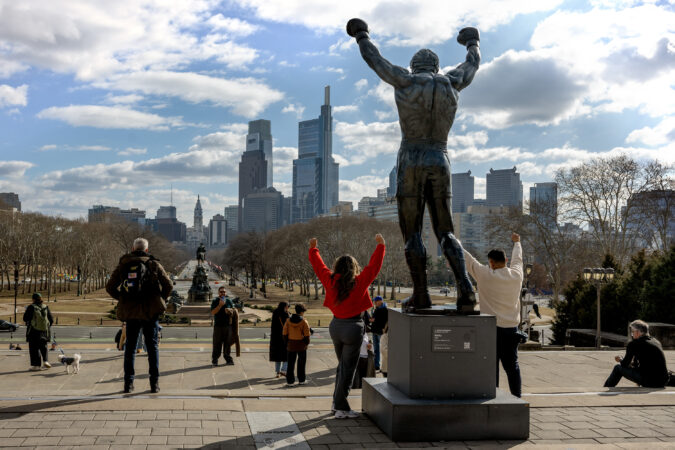
To hear the Parker administration officials tell it, moving the Rocky statue from the bottom of the Philadelphia Art Museum steps to the top is a victory for the underdog.
The new location, which received a green light from the Art Commission on Jan. 14, will certainly create a dramatic, Instagrammable moment for tourists, and further elevate the Rocky brand (and value).
But it’s no victory for Philadelphia residents, who remain the true underdog in this saga. Allowing the old movie prop to dominate the Parkway’s iconic vista is simply the latest in a series of decisions that have privatized the Art Museum’s gorgeous, landscaped grounds.
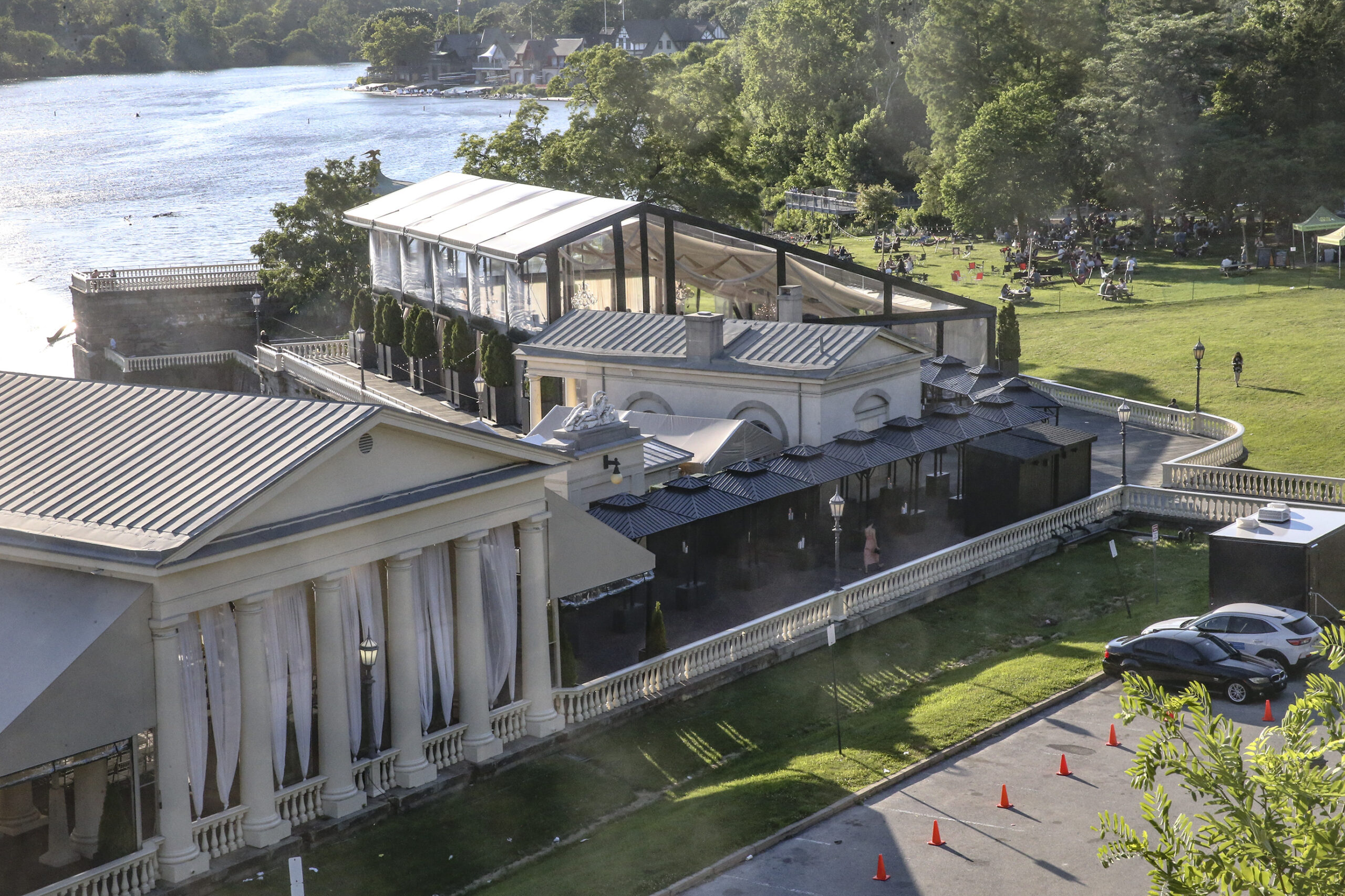
If you walk to the back of the museum, you’ll find the most egregious example of Philadelphia’s zeal for monetizing public space: the sprawling Cescaphe banquet operation at the Fairmount Water Works.
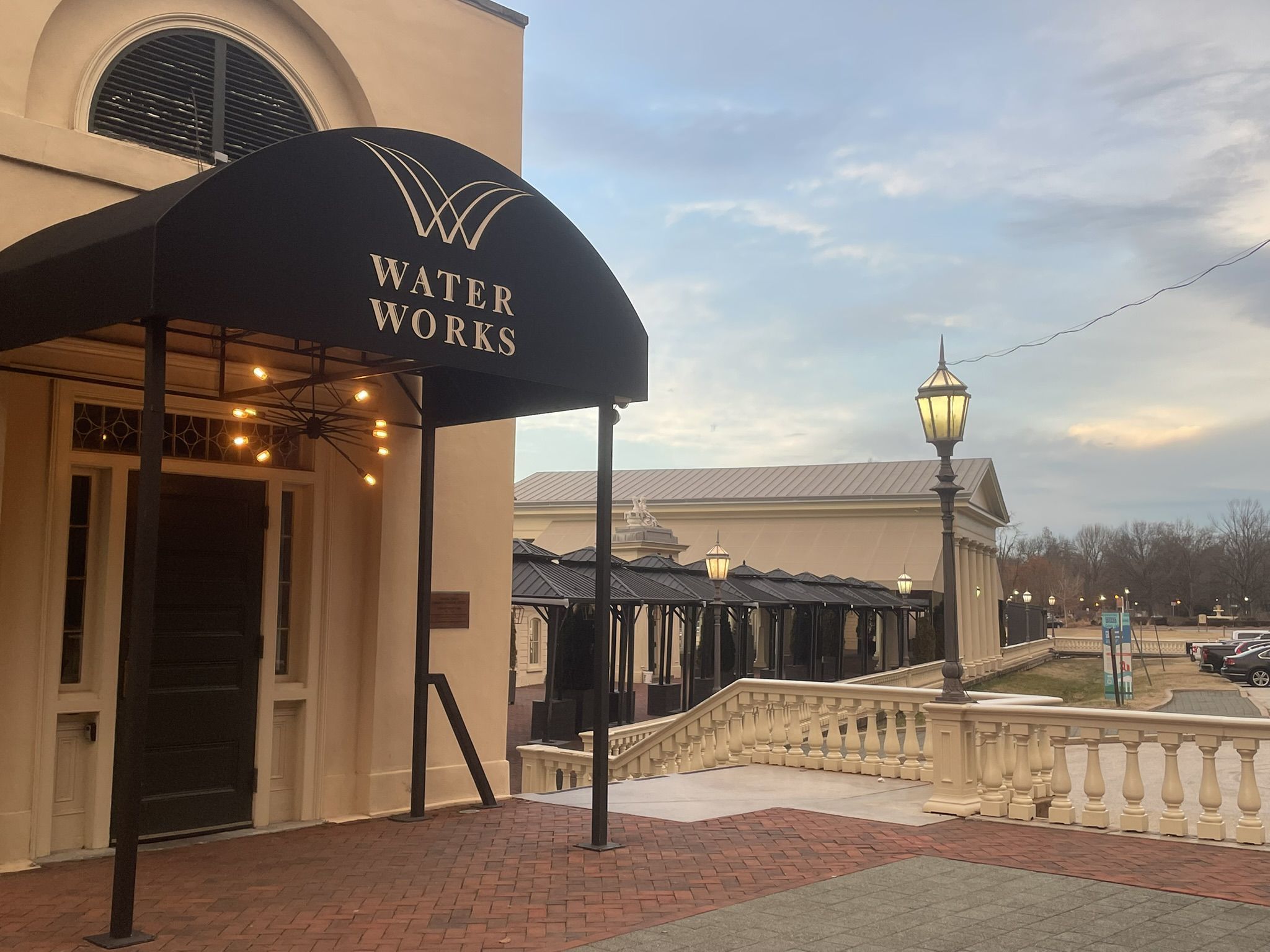
While the main Engine House had been used as a restaurant in the past, the city allowed Cescaphe to take over the entire complex in 2021. Today, the Water Works is surrounded with a cordon of server stations, portable restrooms, and covered walkways.
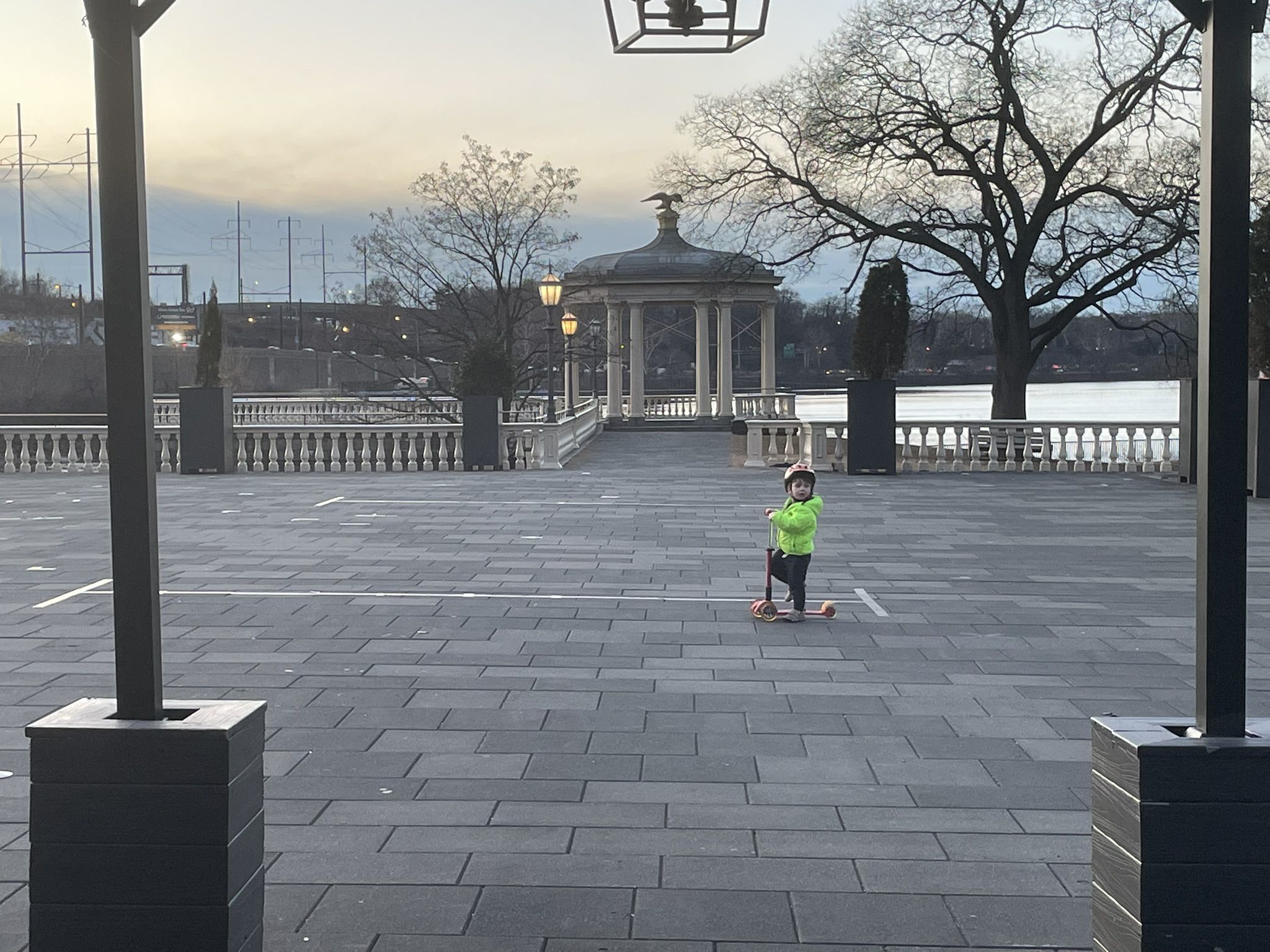
Since 2021, the historic Fairmount Water Works has been surrounded by a cordon of server stations and covered walkways. A glass party room prevents the public from enjoying the Mill House Deck, a pier overlooking the Schuylkill.
Cescaphe’s presence has drastically limited the public’s access to this historic landmark, a scenic spot where generations have come to stroll and take in views of the Schuylkill. Although visitors are permitted to wander though the Water Works’ classically inspired temples and colonnades when no events are going on, who would know that, given the messaging conveyed by Cescaphe’s formidable barricades?
Preparations for evening events often start in the afternoon, further limiting access. Every spring, Cescaphe installs an enormous glass party room on the pier known as the Mill House Deck. It remains in place until late fall, which means the public gets to use the overlook only during the coldest months of the year.
Rocky already has a good spot
Moving the Rocky statue to the top of the steps might seem like a modest imposition by comparison, but the new location will interfere considerably with the public’s enjoyment of the space.
Since people with mobility limitations will have trouble climbing the 72 steps to the top of the museum’s grand staircase, they’ll need transportation. The Philadelphia Visitor Center — the initial advocate for the new location — has offered to run a shuttle bus around the museum apron every 15 minutes. Better watch out when you’re taking that selfie!
During the recent Art Commission hearings, the city’s two top cultural officials, Valerie V. Gay and Marguerite Anglin, argued that the Rocky statue deserves a higher profile perch because it’s a unique tourist attraction. They noted that the statue has been the subject of books and podcasts and will soon be the focus of a major Art Museum exhibition, “Rising Up: Rocky and the Making of Monuments,” curated by Monument Lab’s Paul Farber.
Yet, given the added complications, it’s hard to understand what the city gains by changing the statue’s location.
Rocky’s current home — a shady grove at the bottom of the steps — has been a huge success. The statue was installed there in 2006, after years of shuttling around Philadelphia, from the museum to the sports complex and back. In a typical year, 4 million people make the pilgrimage to see Rocky, the same number who visit the Statue of Liberty annually.
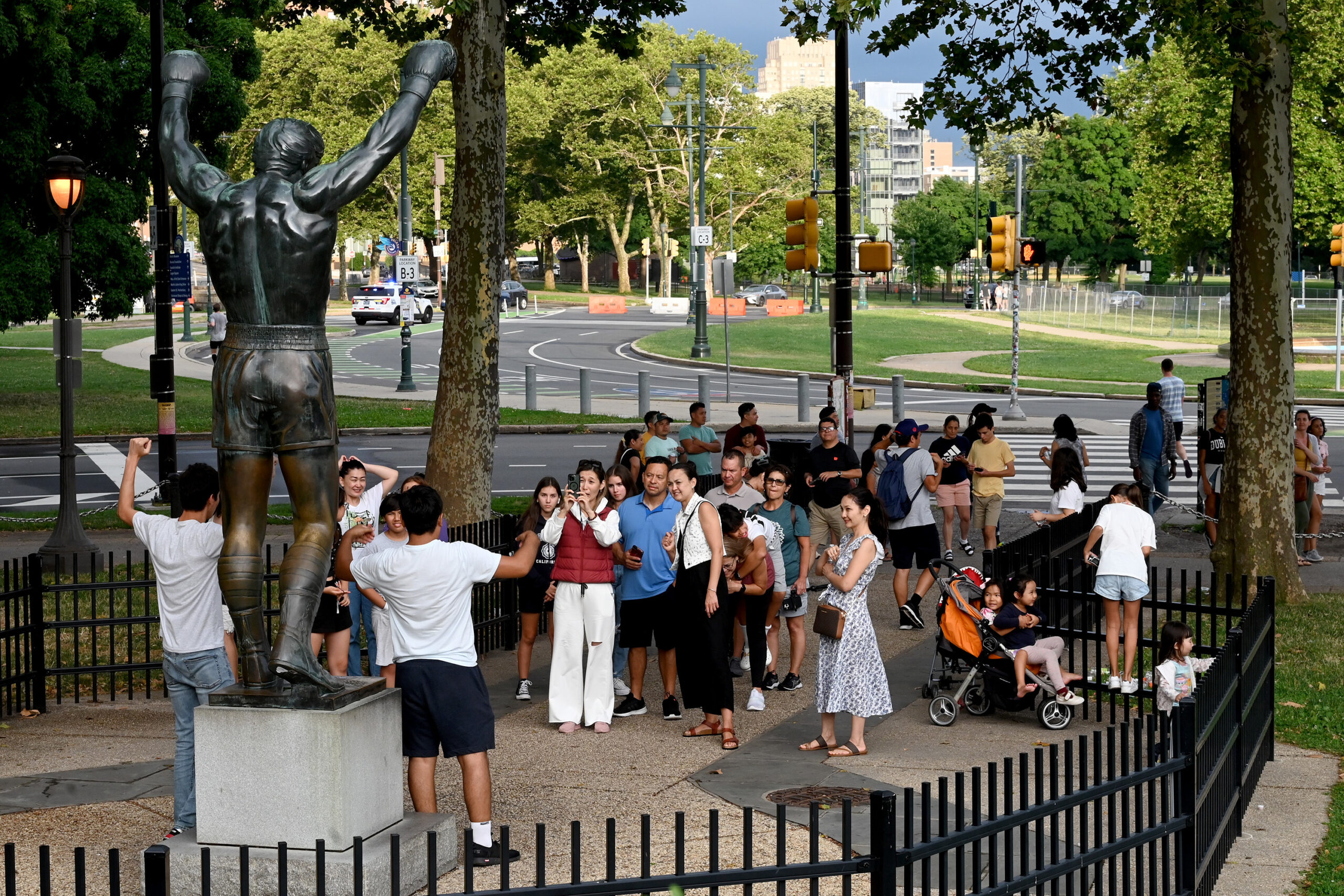
The Rocky statue, currently at the base of the Art Museum steps, is easily accessible to visitors and tour groups.
Because the grove is so close to the street, there are no accessibility issues. Tour buses and cars can pull up to the curb, allowing people to jump out for a quick selfie. Sometimes there’s a line for photos, but the mood is always festive, with visitors and locals mingling along the sidewalk. Anyone who wants to reenact the fictional boxer’s run up the museum stairs can do that, too.
Yes, this site occupies a piece of the museum’s grounds. But the intrusion is relatively discreet. Considering how well this location works, why change it? It’s not like there was a huge public clamor to give Rocky more prominence. When Inquirer columnist Stephanie Farr polled readers in September, most respondents said they were happy to keep the statue in its current location — or get rid of it entirely.
Only a single person testified at the Art Commission’s Jan. 14 hearing — and he argued against the move. Several civic organizations, including the Design Advocacy Group (DAG), sent written statements urging the city to reject the proposal.
“All we’re doing is glorifying Sylvester Stallone, who sells merchandise at bottom of the steps,” complained David Brownlee, a member of the DAG board and a renowned University of Pennsylvania art historian who has written a history of the Art Museum.
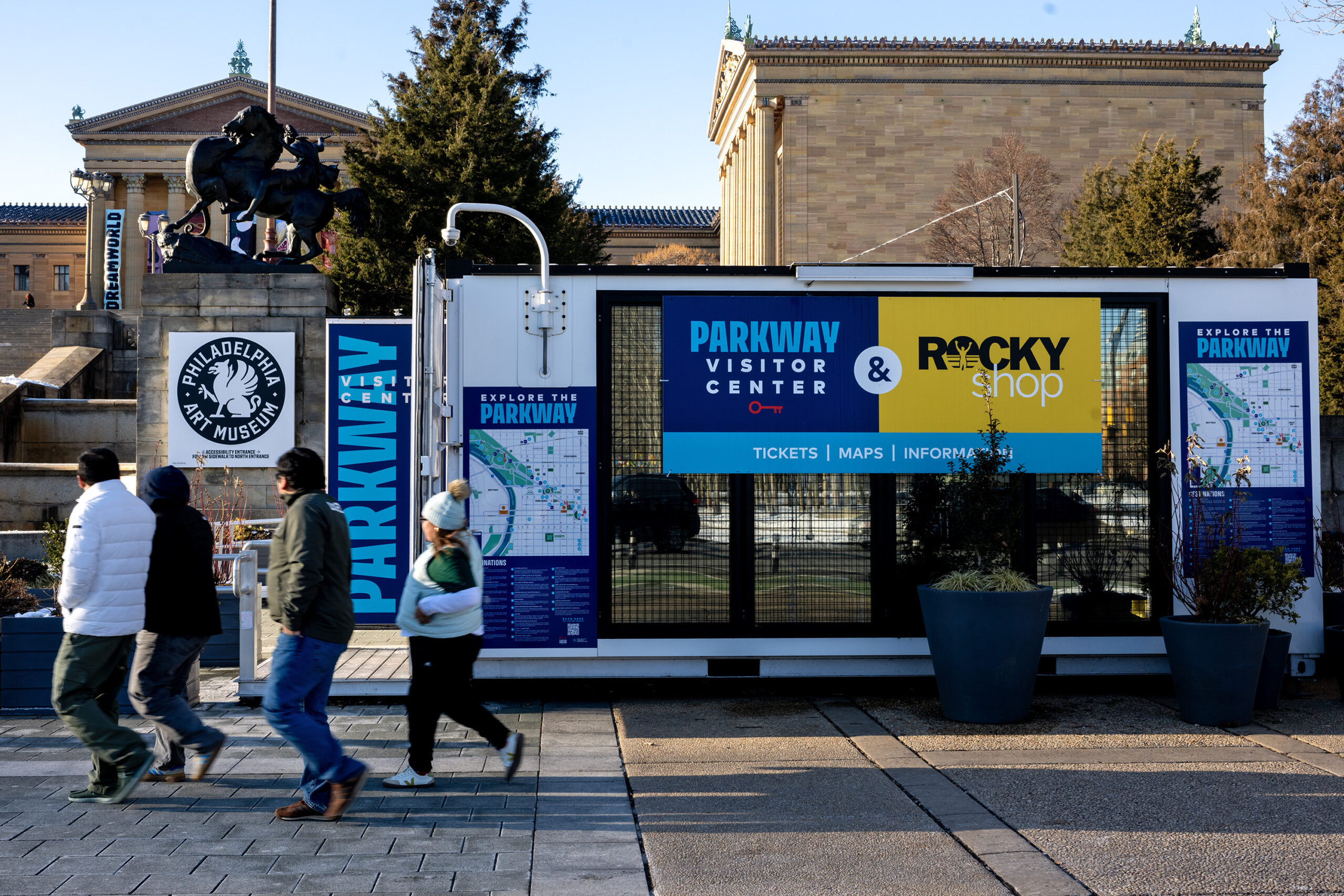
Those Stallone-licensed souvenirs are sold in the “Rocky Shop,” a metal shipping container that was allowed to encroach on the plaza at the base of the museum steps in 2023. Although the metal structure doesn’t take up as much public land as Cescaphe’s banquet operation, it clunks up the approach to the museum’s elegant stone staircase.
The Parkway Visitor Center & Rocky Shop at the base of the Philadelphia Art Museum steps Jan. 20, 2026. In 2023, the city allowed Sylvestor Stallone to set up the metal shipping container at the base of the Philadelphia Art Museum steps.
Initial reports said the Visitor Center, which pushed for the shop, would get a cut of the sales. Yet when I asked how much money that partnership had yielded, a spokesperson for the independent tourism agency declined to answer. The Visitor Center is now run by Kathryn Ott Lovell, who was parks commissioner when the department signed off on Cescaphe’s 2021 expansion at the Water Works.
The exorbitant cost of moving
What jumped out at me during the Art Commission hearing was the cost of moving the bronze sculpture and setting it up on a new base.
Creative Philadelphia, the city department overseeing the move, originally estimated the job would run about $150,000. Now it says the price could rise to $250,000. Those figures don’t include the cost of operating the shuttle, which will be borne by the Visitor Center.
To put those numbers in context, consider the basepayment the city receives from Cescaphe annually for operating a banquet hall at the Water Works: $290,000.
When Cescaphe was given permission to occupy the Water Works complex in 2021, the city said the arrangement was necessary because the parks department could no longer afford to adequately maintain the property. In addition to rent, the agreement generated about $187,000 annually in concession fees between 2015 and 2022 for the city.
That income isn’t peanuts, but is it really worth severely limiting public access to such an iconic Philadelphia landmark? What’s the point of monetizing our parks if the businesses prevent us from enjoying them?
Except for a few months during the winter, the Mill House Deck pier at the Fairmount Water Works is covered with Cescaphe’s glass party room, making it impossible for Philadelphians to enjoy the space.
The privatization of such beloved sites is the direct result of city government’s unwillingness to properly fund its parks. For years, Philadelphia has spent far less than peer cities on green space. Maintenance declined to the point where some parks became unusable.
Rather than devote more money to this basic public amenity, the city has increasingly outsourced its parks to private managers. Enormously popular destinations, such as Dilworth Park and Franklin Square, are run by independent groups.
Cescaphe, a banquet company, has surrounded the Fairmount Water Works with a cordon of arcades, server stations and portable restrooms since it began holding events there in 2021.
But there’s a crucial difference between those private managers and the likes of Cescaphe. First, they’re nonprofits, not businesses. They exist to serve the public. While it’s frustrating when they close their parks for private fundraising events, all the money they raise goes back into improving the parks for the public’s use.
With the Cescaphe deal, the city has crossed a line. Cescaphe is a money-making business that runs the Water Works for its own benefit. In theory, the rent and concession fees are supposed to be invested in the maintenance of the complex, which was considered one of the wonders of the world when it opened in 1815. But it’s Cescaphe, not the public, that benefits from the improvements.
It’s not even clear that Cescaphe is doing the promised maintenance. The Engine House suffered a serious fire in November, and the company still has several outstanding building code violations.
When asked about the citations, a spokesperson for Parks & Recreation described the infractions as minor. “Cescaphe has been a great partner,” Commissioner Sue Slawson said in a statement.
To be clear, there is a big difference between leasing a public building to a restaurant concession and privatizing public space for the sole use of a single business. Restaurants are open to everyone. They also provide services, such as restrooms, that the public can use. It’s a win-win: The city makes a little money on the deal, and the public gets a nice amenity.
The city had the right idea when it leased the Water Works’ Engine House to a restaurateur in the early 2000s. But instead of finding a replacement when that restaurant shut down in 2015, the city turned the complex over to Cescaphe. This April the banquet company’s lease will come up for renewal. It’s time to go back to the original model.
Wouldn’t it be great to grab a sandwich at a Water Works cafe after a long walk or bike ride along the Schuylkill River Trail? The trail, which just completed a spectacular extension, does not have a single cafe between its new Grays Ferry terminus and the museum, apart from a small snack bar at Lloyd Hall. Philadelphia has plenty of great restaurateurs who would jump at the chance to operate in a prime spot like the Water Works.
People have framed the Rocky discussion as a clash between elites, who object to the glorification of a movie prop as art, and the mass of fans who believe the statue embodies their aspirations.
The reality is, there’s nothing less democratic than turning over the public’s land to private companies driven by their own gain.
An earlier version of this column listed FDR Park as one of several city parks that are run by private managers. The Philadelphia Department of Parks & Recreation operates the park and provides workers to staff it.
This story has been updated to remove the Schuylkill River Trail from a list of private managers because the Schuylkill River Development Corp. has a different type of contractual agreement with Philadelphia’s Department of Parks & Recreation and does not lease the land it oversees.
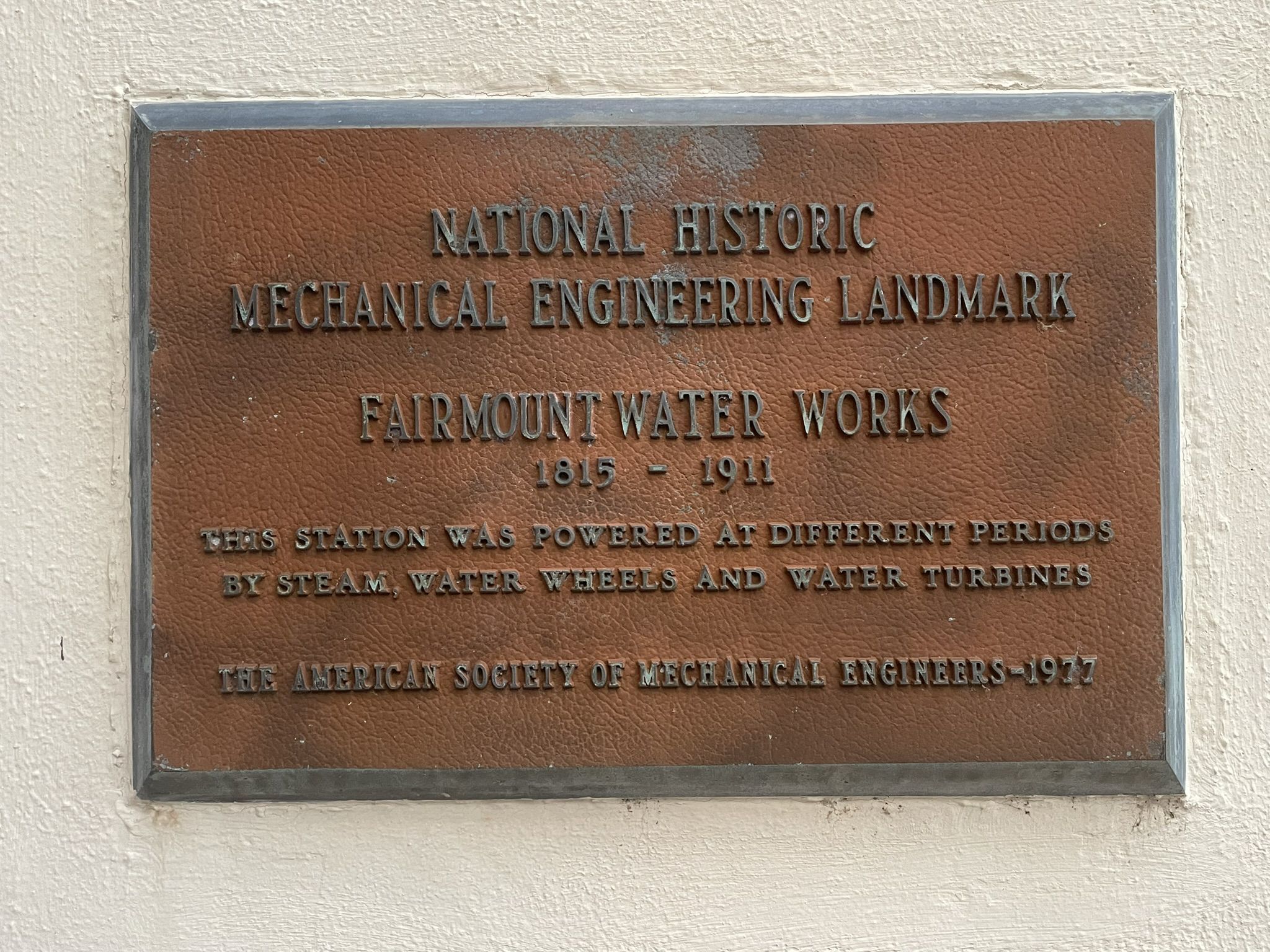
When it opened in 1815 to provide the growing city with a reliable supply of drinking water, the Fairmount Water Works was a major engineering advance and was considered one of the wonders of the world.
Philadelphia City Council’s first meeting of 2026 on Thursday comes as tensions rise over President Donald Trump’s immigration crackdown and as Mayor Cherelle L. Parker continues to sidestep that conversation while focusing on advancing her signature housing initiative.
They will also tackle the city’s waste-disposal practices, a long-standing law requiring Council members to resign before campaigning for higher office, and the city budget.
Meanwhile, events largely outside Council’s control, including potential school closings and Philly’s role in the nation’s 250th birthday, are also expected to prompt responses from lawmakers.
Here’s what you need to know about Council’s 2026 agenda.
‘Stop Trashing Our Air’ bill up for vote
The first meeting of a new Council session rarely features high-profile votes, but this year could be different.
Currently, the city government sends about a third of the trash it collects to the Reworld trash incinerator in Chester, with the rest going to landfills. Those waste-disposal contracts expire June 30, and Gauthier is hoping to take incineration off the table when new deals are reached.
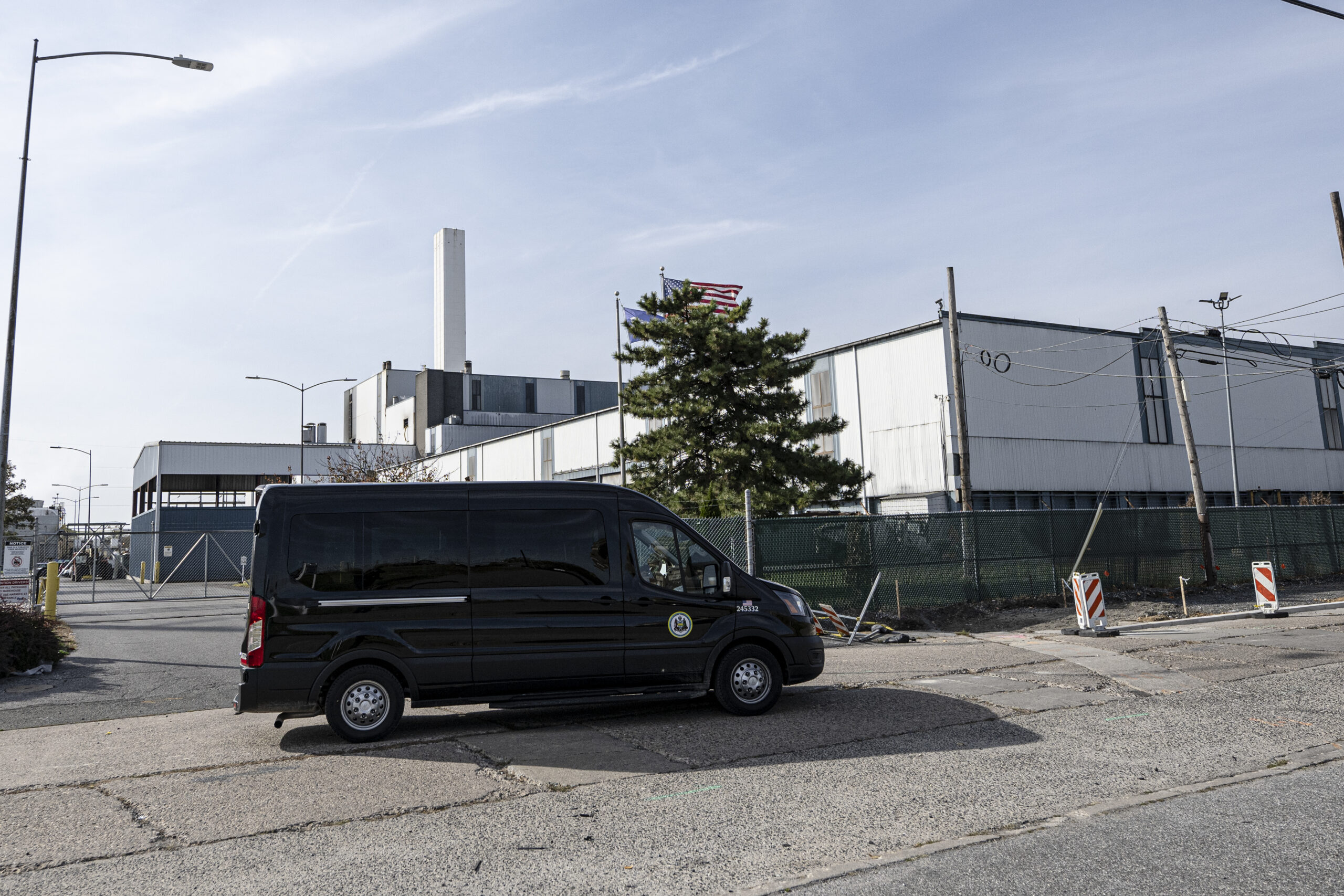
The Reworld incinerator in Chester, Pa., on Friday, Nov. 7, 2025.
“Burning Philadelphia’s trash is making Chester, Philadelphia, and other communities around our region sick,” Gauthier has said, pointing to elevated rates of asthma and other ailments and a legacy of “environmental racism” in Chester. The low-income and majority-Black city downriver from Philly has been home to numerous heavy industrial facilities.
Reworld has said its waste-to-energy facility, which produces some electricity from burning trash, is a “more sustainable alternative to landfilling.”
At a hearing last year, Parker administration officials said the city is including language in its request for proposals for the next contracts that will allow the city to consider environmental impacts. But they asked lawmakers not to vote for a blanket ban on incineration to allow the city to study the issue further.
Parker waiting for Council to reapprove $800 million in bonds for her H.O.M.E. plan
The biggest agenda item left hanging last month when lawmakers adjourned for the winter break was a bill to authorize the Parker administration to issue $800 million in city bonds to fund her H.O.M.E. initiative.
Parker had hoped to sell the bonds last fall, and Council in June initially authorized the administration to take out new debt. But lawmakers made significant changes to the initiative’s first-year budget, especially by lowering income thresholds for some programs funded by the H.O.M.E. bonds to prioritize the lowest-income residents.
Mayor Cherelle L. Parker speaks to the crowd at The Church of Christian Compassion in the Cobbs Creek neighborhood of West Philadelphia on Sunday, Dec. 7, 2025. Parker visited 10 churches in Philadelphia on Sunday to share details about her H.O.M.E. housing plan.
“Council members have always been supportive of the H.O.M.E. initiative,” Johnson said. “H.O.M.E. advances City Council’s goals to expand access to affordable homeownership for Philadelphians … and to ensure that city housing investments deliver long-term benefits for families and neighborhoods alike.”
Currently, Council members and other city employees are required to quit their jobs to run for higher office. Lawmakers have tried several times over the last 20 years to repeal the law, but they have been unsuccessful. Changing the rule requires amending the city’s Home Rule Charter, which a majority of voters would have to approve through a ballot question.
Council President Kenyatta Johnson talks with Councilmember Isaiah Thomas at City Hall on Wednesday, Dec. 11, 2024 in Philadelphia.
The latest attempt, spearheaded by Councilmember Isaiah Thomas, would not entirely repeal the resign-to-run law, but instead would narrow it to allow elected officials to keep their seats only if they are seeking state or federal office, such as in Congress or the state General Assembly. Council members who want to run for mayor would still have to resign.
Thomas, a Democrat who represents the city at-large and is rumored to have ambitions of running for higher office, plans to make minor amendments to the legislation this spring, a spokesperson said, before calling it up for a final vote. The goal, Thomas has said, is to pass the legislation in time for a question to appear on the May primary election ballot.
The mayor, however, cannot control what other local elected officials say about national politics, and Trump’s immigration crackdown appears to be stirring stronger local reaction heading into his second year in office.
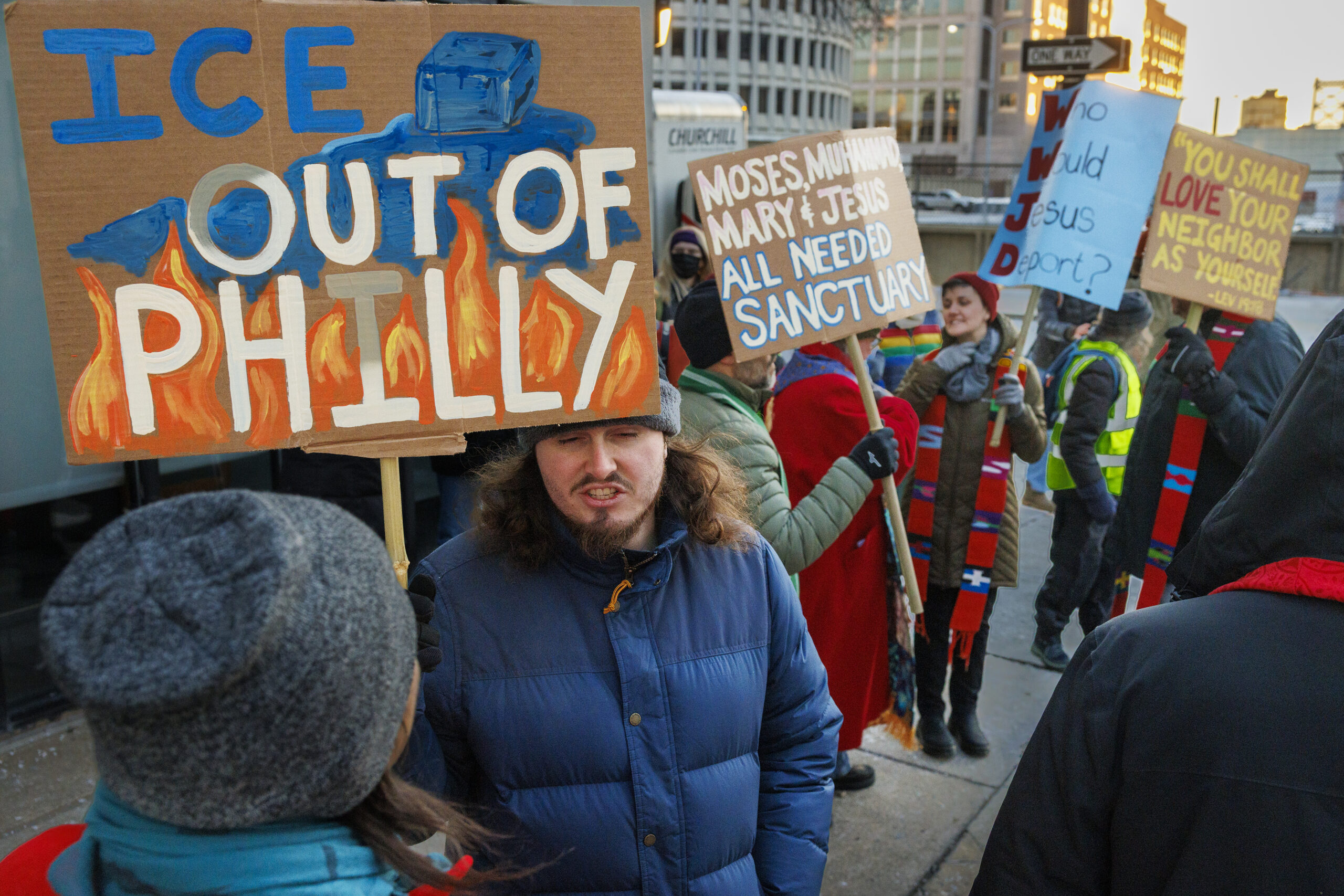
Meanwhile, progressive Councilmembers Rue Landau and Kendra Brooks this year are expected to introduce legislation aimed at constricting ICE operations in Philadelphia.
Demonstrators from No ICE Philly gathered to protests outside the U.S. Immigration and Customs Enforcement, office at 8th and Cherry Street, Philadelphia, Tuesday, Jan. 20, 2026.
It is not yet clear what the lawmakers will propose. But Brooks, who has called on Parker to take a firmer stand against Trump, recently criticized the Philadelphia courts for allowing agents to seize suspects leaving the Criminal Justice Center. She said officials who in her view have failed to stand up to ICE are engaged in “complicity disguised as strategic silence,” and she vowed to force those who “cooperate with ICE in any way” to testify in Council.
“Cities across the country are stepping up and looking at every available option they have to get ICE out,” Brooks said at a news conference earlier this month. “In the coming days, you will hear about what my office is doing about city policy. These demands must be met or face the consequences in Council.”
Landau added Philly cannot allow “some masked, unnamed hooligans from out of town [to] come in here and attack Philadelphians.”
“We are saying, ‘ICE out of Philadelphia,’” she said.
Parker has said her administration has made no changes to the city’s immigrant-friendly policies, but she continues to be tight-lipped about the issue.
The Pennsylvania Office of Open Records last week ruled in favor of an Inquirer appeal seeking to force Parker’s administration to disclose a September letter it sent the U.S. Department of Justice regarding local policies related to immigration.
The administration still has not released the document. It has three more weeks to respond or appeal the decision in court.
South Philly arena proposal still in the works
After the 76ers abandoned their plan to build a new arena in Center City a year ago, the team announced it would partner with Comcast Spectacor, which owns the Flyers, to build a new home for both teams in the South Philadelphia stadium complex.
The teams announced last fall they have selected an architect for the new arena, which is scheduled to replace the Spectacor-owned Xfinity Mobile Arena, formerly the Wells Fargo Center, in 2031.
If the teams are still planning to open the new arena on their previously announced timeline, legislation to green-light the project could surface as soon as this spring. But so far, there has been no sign of movement on that front.
“There is currently no timeline for introducing legislation to build a new Sixers arena in South Philadelphia,” said Johnson, whose 2nd District includes the stadium complex. “At the appropriate time, my legislative team and I will actively collaborate with Mayor Cherelle L. Parker’s administration on drafting any legislation related to the Sixers arena before it is introduced in City Council.”
School closings and 2026 celebrations also on the horizon
In addition to its legislative agenda, Council this year will likely be drawn into discussions over school closings and the high-profile gatherings expected to bring international attention to Philly this summer.
Johnson said his agenda includes “making sure Philadelphia has a very successful celebration of America’s 250th Birthday that results in short and long-term benefits for Philadelphia.”
Staff writers Jake Blumgart, Jeff Gammage, and Kristen A. Graham contributed to this article.
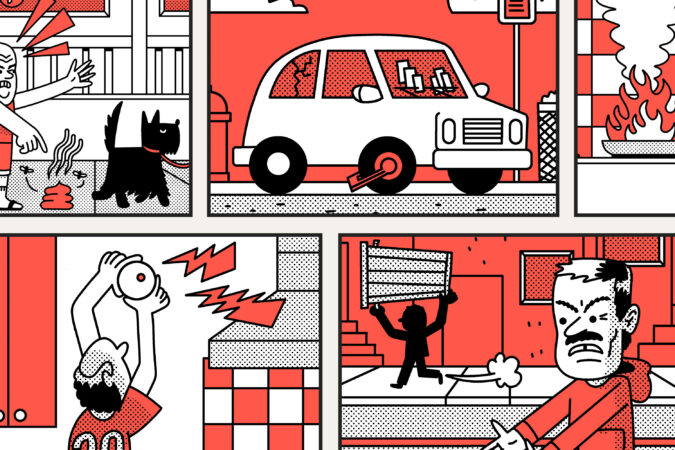
If you see a persistent pothole on your street or a raccoon in your attic, who are you going to call? In 2025, for over half a million requests, the answer was 311.
“311 is your connection to city services,” said Daniel Ramos, who works in community engagement and outreach for the call center. Philly311 helps city residents with non-emergencies by answering questions and transferring inquiries to the appropriate city department or community partner.
But there are some cases where 311 might not be the best number to call. Test your knowledge of whether you can 311 that or not.
Your neighbor is being unbearably loud.
CorrectIncorrect. XX% of other readers got this question right.
You can first try going over and asking them to keep it down, but if that doesn’t stop the awful din, Daniel Ramos says to call 911. Even if you do call 311 first, “noise complaints from an individual or a residential source would be transferred to 911,” he said.
Despite this, 311 received over 1,600 noise complaints in 2025. The Philadelphia Police Department, on the other hand, heard 10 times the number of grievances over loud music.
You just saw someone leave their dog’s poop in front of your stoop.
CorrectIncorrect. XX% of other readers got this question right.
You would hope this never happens, but in 2025, 311 received 66 information requests about dog waste on the curb.
That said, the Animal Care and Control team is the department to contact. ACCT handles local animal ordinance violations. According to a city ordinance on animal control enforcement, the dog’s owner is required to clean up after their pet. An ACCT control officer can follow up with an investigation as long as a location of the animal is included in the complaint.
You accidentally started a small fire in your kitchen.
CorrectIncorrect. XX% of other readers got this question right.
If it is a small stovetop fire and you decide to fight it, the National Fire Protection Agency recommends sliding a lid over the pan and turning off the burner, waiting until the pan has completely cooled before uncovering it.
Otherwise, get out, close the door behind you if you can to contain the fire, and call 911 from outside your home. Even a small fire can spread quickly.
Your smoke alarm needs replacing.
CorrectIncorrect. XX% of other readers got this question right.
You can request a new smoke alarm through 311.
In 2025, 311 processed 3,096 smoke detector requests, so if you live in a one- or two-family home that you own and want a free smoke alarm replacement, submit a request to 311 and the Philadelphia Fire Department can help you. Just know that it might take up to 90 days until PFD does the installation.
On the other hand, if you rent, your landlord is responsible for placing fire alarms on every level of the building. If they’ve failed to do that, you can also file a report with 311 as well.
story continues after advertisement
On your drive home, you get stuck behind a parked car on a single-lane road.
CorrectIncorrect. XX% of other readers got this question right.
A parked car blocking traffic is considered an immediate hazard. “We don’t dispatch,” said Daniel Ramos, so he recommends residents call 911 instead.
311 can help you report other nonemergency parking violations like double-parking or parking on a sidewalk to the Philadelphia Parking Authority or the Philadelphia Police Department. You can also use Laser Vision – an app developed by Philly Bike Action – to send a parking violation report directly to the PPA.
There’s a car on your block that’s been in the same parking spot for months and trash is starting to build up under and around it.
CorrectIncorrect. XX% of other readers got this question right.
311 can help, but it might take some time before you see the car moved. “Up to 120 business days,” said Daniela Ramos (no relation to Daniel Ramos), the city’s 311 contact center manager. “And that doesn't include holidays or weekends.”
In 2025, the center received nearly 28,000 abandoned vehicle complaints – the third most common service request – and over 3,400 questions about abandoned vehicles. According to state legislation, a car is considered abandoned if it has been sitting empty on public property for over 48 hours.
To process the request, Daniela Ramos said residents need to provide details such as the abandoned car’s make, model, color, tag number, and location in their 311 report. The Philadelphia Police Department will then determine if that car is in fact abandoned.
Your trash can went missing after pickup.
CorrectIncorrect. XX% of other readers got this question right.
If the missing trash can was a city-issued and city-owned Philacan, 311 can connect you with the Department of Sanitation to get you a new one.
Even if you start some beef with your neighbor by accusing them of stealing your trash can, 311 can offer resources. “We have the Philadelphia Human Relations Commission,” said Ramos, referencing the city’s free conflict resolution services. “If it's a neighbor dispute, we will give them the contact information for that organization.”
Your Results
You have skipped .
You scored XX out of 7.
The average reader scored XX out of 7
If you want to submit a 311 request, you can use the Philly311 app or website, or send an email to philly311@phila.gov. If you want to call them instead, their call center operates between 8 a.m. and 8 p.m. Monday through Friday.
Staff Contributors
Design, development, data, and reporting: Charmaine Runes
Editing: Sam Morris
Illustration: Brian “Box” Brown
Copy Editing: Brian Leighton
Subscribe to The Philadelphia Inquirer
Our reporting is directly supported by reader subscriptions. If you want more journalism like this story, please subscribe today
The man’s body was found around 5:45 a.m. after police were called to the property, located on the 3900 block of Conshohocken Avenue.
The man, whom police did not identity, was pronounced dead at the scene at 6:40 a.m.
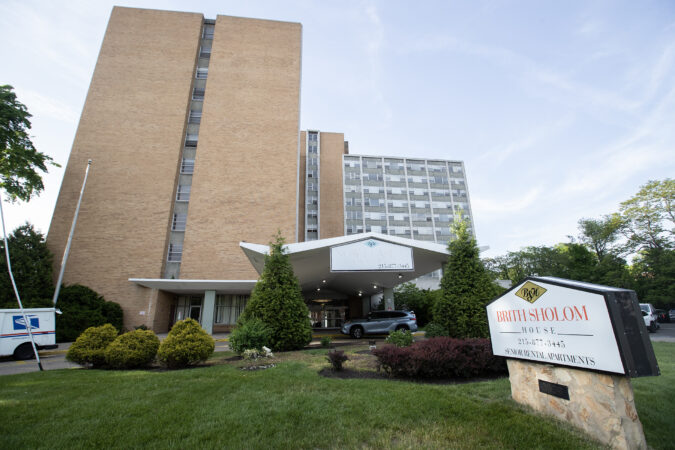
Kelvin A. Jeremiah, president and CEO of the Philadelphia Housing Authority, said the complex’s doors and windows on the lower floors have been sealed since tenants left the property, though there have been several instances in which individuals managed to enter in an attempt to steal copper wiring from within the structure.
Early Wednesday morning, a 911 call was placed from Brith Sholom by a man who told police that a contractor had gotten hurt on the job and needed assistance, Jeremiah said.
But Jeremiah said the housing authority had not authorized any such work, and no one was permitted on the property at the time.
The housing authority later learned that the man was electrocuted and died after he tried to strip copper wire from the complex’s basement. The body was found next to the switch gears, Jeremiah said.
The CEO suspects the person who called 911 was an accomplice in the break-in, though police are still investigating.
The housing authority’s security cameras were not active during the incident because much of the building’s power is off, and other cameras have been destroyed by bad actors, according to Jeremiah.
He said the individuals might have used a ladder to enter the complex through the third floor.
Just a day earlier, Brith Sholom received a much different sort of attention.
On Tuesday, Mayor Cherelle L. Parker announced that the city’s powerful building trades unions would offer PHA a sizable loan to redevelop the complex, which the housing authority purchased from its former owners in 2024 in order to preserve it.
After PHA acquired the property, it initially told its 111 residents they could remain in their units. But upon discovering some units were damaged beyond repair, officials told those residents they would need to move out and return at a later date.
The Brith Sholom project, when completed, is expected to add 336 affordable units for seniors on fixed incomes, Parker said in her announcement Tuesday.
In early January, a giant sinkhole formed at an intersection in the West Oak Lane neighborhood of North Philadelphia after a water main break. Just two weeks earlier, the city reopened a section of the Schuylkill River Trail in Center City that had been shut down for two months due to a sinkhole. Last summer, some residents of Point Breeze in South Philly also waited two months for a sinkhole on their block to be repaired.
Laura Toran is a hydrogeologist and professor emeritus of environmental geology at Temple University. The Conversation U.S. asked her what causes sinkholes, whether Philly is particularly prone to them, and why repairs can take so long.
What are sinkholes and how do they happen?
A sinkhole is a hole that opens up in the ground due to some change in the subsurface.
There are two categories of change that create sinkholes. One type is associated with carbonate rock. This is a type of rock that can develop caves because the rock dissolves when underground water is even slightly acidic. When the bridge over one of these caves collapses, a sinkhole occurs.
The second type is associated with water supply or sewage pipes buried underground. The sediment next to the pipes can erode or wash away when there is a leak in the pipes. That leaves a gap, and if the collapse at the surface becomes big enough, it becomes a sinkhole.
What do we know about the sinkholes in West Oak Lane and on the Schuylkill River Trail?
West Oak Lane experienced two recent water main breaks. Debris from the flowing water made it hard to get to the leak.
Fixing a big leak is a complex job. You have to stop the leak, clear out the debris, get the parts for repair, do the pipe repair, then repair the road. This example also shows that repair teams need to look around to see whether other sections of pipe might be aging and repair them while they have a hole opened up, so you don’t want to rush the job.
The sinkhole on the Schuylkill River Trail late last year, which took two months to fix, was also the result of a pipe leak. The water department had to get involved in the repair, alongside the parks and recreation department. I should point out that the city has a limited budget for pipe repair. As one of the oldest cities in the country, Philadelphia has a lot of work to keep up with.
That said, I would rather try to fix a pipe leak than a carbonate rock sinkhole. With the cavities in carbonate rock, you don’t really know how big they are, and a typical solution is to fill them with concrete. Sometimes you have a much bigger cavity than your supply of concrete.
Is Philly prone to sinkholes?
The Philadelphia region has both types of sinkholes. Within the city, there isn’t carbonate rock present, but just outside the city, such as the King of Prussia area, we see carbonate rock that is subject to sinkholes.
The sinkholes that occur in Philly are where pipes leak and the surrounding soil gets washed away. Because we have the right geology for sinkholes in our region and we have an extensive water network that is aging, sinkholes are somewhat common.
Can nearby residents know when a sinkhole is forming?
We have a map of carbonate rock in the state, but not all carbonate rock develops sinkholes. Where and when in the carbonate rock a sinkhole is likely to develop is unpredictable.
Sinkholes in Philadelphia tend to also be unpredictable because the driving factor is happening underground and out of sight. We don’t know when a pipe leak is going to occur. Sometimes there is a sagging at the surface before a bigger hole opens up. Sometimes we see the leak before the sinkhole occurs. But not all leaks or sagging ground will lead to a sinkhole, and there won’t necessarily be any warning.
That said, it is important to report leaks and sagging ground so that they can be investigated before getting worse. Report leaks to the Philadelphia Water Department by calling their emergency hotline at 215-685-6300.
If we could replace all the aging infrastructure in the city, we would have fewer sinkholes. However, that would be costly and disruptive, so it really isn’t practical. In the meantime, the city just has to fix new sinkholes as they occur.
Laura Toran is a hydrogeologist and professor emeritus of environmental geology at Temple University.
This article is republished from The Conversation. Read the original article here.