Category: Philadelphia News

  • The theft of hundreds of remains from Mount Moriah Cemetery raises a question no one can seem to answer: How did this happen?

    The theft of hundreds of remains from Mount Moriah Cemetery raises a question no one can seem to answer: How did this happen?

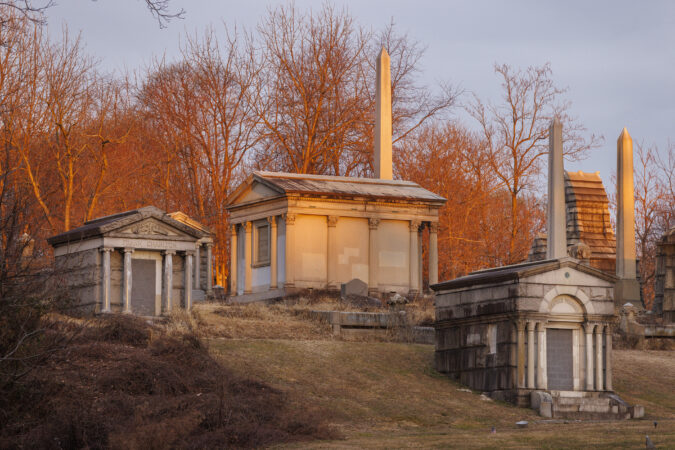
    Past a marble monument for a Civil War hero, down a grass path where toppled headstones disappear into ivy and weeds and faded miniature American flags droop, lies the underground vault of James Campbell, who died in 1913 and whose remains may have been among the dozens stolen in one of the largest grave desecration cases ever uncovered in Pennsylvania.

    Jonathan Christian Gerlach, who was charged with more than 500 offenses earlier this month and is being held in jail in lieu of $1 million bail, is accused of methodically breaking into burial vaults and mausoleums at Mount Moriah Cemetery, prying open caskets and removing human remains from Campbell’s burial ground and at least 25 other sites across the sprawling Philadelphia and Yeadon Borough cemetery.

    Inside Campbell’s vault, where his family members were also entombed 12 feet beneath the cemetery’s surface as early as 1872, investigators said they found three broken caskets, crumbled marble, and a discarded pry bar. Six sets of human remains, they said, were missing.

    Authorities allege that Gerlach moved through the cemetery repeatedly, at all hours, accessing sealed burial sites and removing dozens of remains over several weeks without being detected. Large sections of the cemetery, overgrown and rarely monitored, offered long stretches of isolation — conditions investigators say Gerlach may have exploited. And as law enforcement continues to sort through the evidence, local officials and cemetery advocates are pressing for changes to prevent this from happening again.

    “We were too slow to move,” said Yeadon Mayor Rohan Hepkins. “Nobody thought such a dastardly act — such an inhumane and incomprehensible act — was possible.”

    Hepkins last week joined state and local officials to discuss what can be done to protect the burial grounds, where an estimated 180,000 people are buried.

    He and others expressed cautious resolve that the cemetery could be secured well enough to prevent another violation of this scale.

    “I wish I could tell loved ones that I’m not critically concerned, but I am,” said State Sen. Anthony Williams, who represents the district where Mount Moriah Cemetery is located and was one of the officials who gathered to discuss preventive measures. “But I don’t know that Mount Moriah will ever be restored to the condition that they buried their loved ones in.”

    Mount Moriah Cemetery, a historic landmark abandoned by its last owner and under court receivership, has long been plagued by neglect and limited oversight.

    Investigators say Gerlach’s crimes unfolded over the course of months, starting in the fall and ending on the night of Jan. 6, when Yeadon detectives arrested the Pennsylvania man as he attempted to leave the cemetery.

    License plate readers and cell phone towers place Gerlach near or inside the cemetery during both daylight and darkness. On Christmas Eve, for example, the technologies captured Gerlach’s vehicle or phone at least three times between 12:28 a.m. and 12:54 p.m., court records show.

    The day before, on Dec. 23, a Yeadon investigator working the case saw scratch marks on the heavy stone slab sealing the underground Zeigler family vault, as if, a detective wrote in an affidavit of probable cause for Gerlach’s arrest, it had been “marked” as a target. When the detective returned on Dec. 26, the stone had been broken and nine sets of human remains stolen.

    Yeadon police, who investigated the crimes alongside other authorities, have since been inundated with hundreds of calls and emails from anguished family members seeking answers, Chief Henry Giammarcco said.

    Rescuing Mount Moriah

    Mount Moriah Cemetery opened in 1855. Its owners, the Mount Moriah Cemetery Association, abandoned it in 2011, after years of mismanagement. The Friends of Mount Moriah, a volunteer-driven nonprofit, formed that same year with the goal of rescuing the grounds from vandalism, crime, and decay. In 2014, a Philadelphia judge appointed a receivership, the Mount Moriah Cemetery Preservation Corporation, to temporarily manage the cemetery until a permanent owner could be found.

    More than a decade later, no permanent owner has emerged.

    In 2018, the two groups and other stakeholders commissioned an ambitious strategic plan that called for stabilizing the cemetery’s finances, finding a permanent owner, and remaking Mount Moriah into a viable public space. The plan assumed significant investment and long-term stewardship. Neither materialized.

    “There’s no clear revenue stream, and there’s significant infrastructure improvements and capital improvements that are required, on top of maintenance costs,” said Brian Abernathy, who served as chair of the preservation corporation when the plan was created.

    At the time, Abernathy said, “there was a lot of hope and optimism about what we could accomplish with it. But the plan stalled over obstacles that persist today, he said, including enticing an owner when so many costly repairs are needed.

    Under the court order, the corporation — a board composed of officials from Philadelphia and Yeadon, including Hepkins — is responsible for preserving the cemetery but has delegated day-to-day care to Friends of Mount Moriah.

    Over the years, Friends of Mount Moriah made visible gains. Its 12-person board and volunteers hauled away abandoned cars, tires. and trash, righted toppled headstones, and uncovered burial vaults beneath thick vines, brush, and overgrowth.

    “Until this happened,” said John Schmehl Jr., the group’s president, “security was not our first concern.”

    <div data-analytics-viewport="autotune" data-analytics-label="visor-arcgis" id="bones"
      data-iframe-fallback="https://www.inquirer.com/resizer/ORTQkrqPSCXca2NSc4Uhl9preV8=/1400x932/smart/arc-anglerfish-arc2-prod-pmn.s3.amazonaws.com/public/5FUK4MYNPFH7LD3SAPB6X4O7TQ.jpg"
      style="width: 0; min-width: 100% !important; border: none;" data-iframe-fallback-height="509.789917082823"
      data-iframe="https://media.inquirer.com/storage/inquirer/projects/innovation/arcgis_iframe/bones.html"
      data-iframe-height="509.789917082823" data-iframe-resizable></div>
    <script type="text/javascript">
      (function() {
        var l2 = function() {
          new pym.Parent('bones',
                         'https://media.inquirer.com/storage/inquirer/projects/innovation/arcgis_iframe/bones.html');
        };
        if (typeof(pym) === 'undefined') {
          var h = document.getElementsByTagName('head')[0],
            s = document.createElement('script');
          s.type = 'text/javascript';
          s.src = 'https://pym.nprapps.org/pym.v1.min.js';
          s.onload = l2;
          h.appendChild(s);
        } else {
          l2();
        }
      })();
    </script>

    Yet thieves knew the grounds. Last year, Schmehl said, more than $14,000 worth of lawn equipment — including mowers, weed trimmers, and hand tools — was stolen from the cemetery garage. Friends of Mount Moriah entered the growing season without the equipment needed to keep large sections of the cemetery accessible, he said.

    Now, the group is scrambling to implement security improvements across the cemetery’s more than 100 acres, including repairing dilapidated fencing, launching random patrols, and installing cameras on both the Philadelphia and Yeadon sides of the property. Fencing construction began last week. Schmehl said the group is seeking a private security company to monitor the cameras around the clock.

    Cemetery volunteers dwindle

    The backyard of 60-year-old Robin Pitts’ house overlooks the Springfield Avenue side of Mount Moriah, where her mother, brother, and extended family are buried.

    As a child, Pitts said, she played kickball on an unfenced stretch of the cemetery near where Betsy Ross — the seamstress whose burial helped cement Mount Moriah’s place in American history — rested for more than a century.

    Those memories later drew Pitts to volunteer with Friends of Mount Moriah for nearly two decades, she said. On Saturdays, she said, she grilled hot dogs and hamburgers for volunteers who picked up trash and mowed the grass along Springfield Avenue.

    But during the pandemic, Pitts said, the grounds began to deteriorate beyond what volunteers could manage. “I thought, ‘Enough’s enough. I can’t do this anymore,’” she said. She stopped volunteering.

    Last week, Pitts walked down a path choked with waist-high grass and weeds where she once mowed. She pointed past a tangle of barren hemlock blocking a path to a tree and several headstones — some toppled, others obscured by vines and brush. “We used to clean it all the way past there,” Pitts said. “Now nobody does.”

    A shrinking volunteer base has slowed progress at the cemetery, Schmehl said. Some cleanup events draw just one volunteer. “It’s a struggle, to say the least,” he said, adding that entire sections of the cemetery “have been reclaimed by nature.”
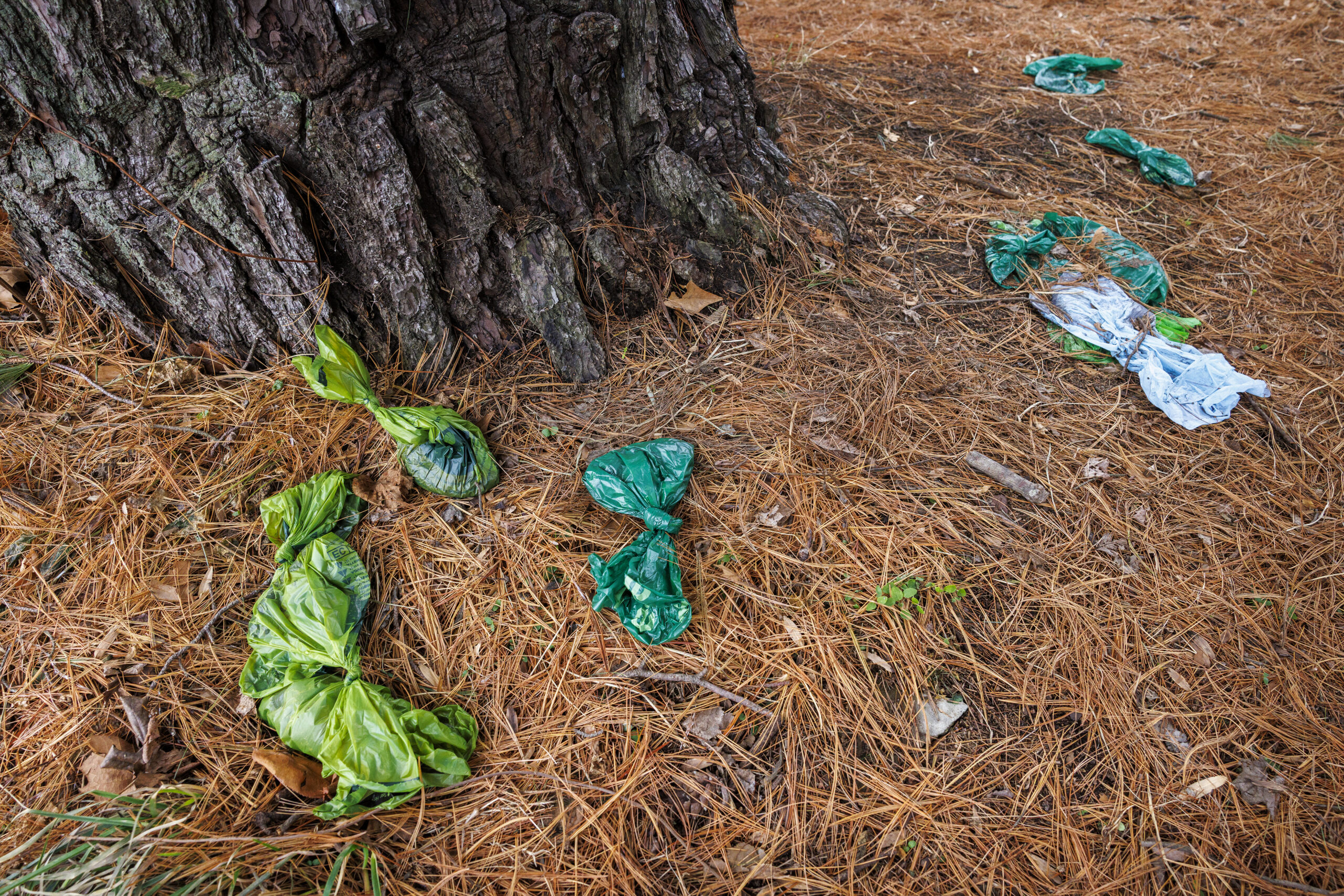
    Picture of dog waste discarded on the grounds of Mount Moriah Cemetery on Wednesday, Jan. 14, 2026.

    The cemetery is now open just two days a week, Saturdays and Sundays.

    The costs of needed improvements are also significant. By Thursday, Friends of Mount Moriah had spent more than $20,000 of its roughly $90,000 annual budget to begin fencing construction and repairs, and secure the mausoleums and vaults that had been desecrated in the recent crimes. Additional donations, Schmehl said, will be needed to sustain the effort.

    As recently as spring 2023, Mount Moriah Cemetery Preservation Corp. held more than $400,000 in its endowment, according to a letter filed in Philadelphia Orphans’ Court. Aubrey Powers, the receivership’s chair, did not respond to questions concerning the receivership’s contributions to the Friends of Mount Moriah or what the corporation will do to help address security or infrastructure needs.

    As a condition of the receivership, the corporation must file semiannual reports to the court. A year ago, the only reference to security was a brief note stating that the receivership “continues to encourage the Philadelphia and Yeadon Police Departments to schedule patrols in and around Mount Moriah Cemetery more frequently to deter criminal activity.”

    Hepkins said increased patrols would be part of a broader strategy to reduce criminal activity and restore oversight to the cemetery. Meanwhile, a spokesperson for the Philadelphia Police Department said officers patrol the cemetery’s perimeter, not its grounds.

    “There has to be some sort of intervention in order to rectify what’s happened at Mount Moriah,” Abernathy said. “And I just don’t know who’s going to provide that intervention.”

    Whose remains are missing?

    Hepkins on Wednesday climbed a steep hill from a small parking lot off Cobbs Creek Parkway to a cluster of mausoleums that Gerlach is accused of breaking into.
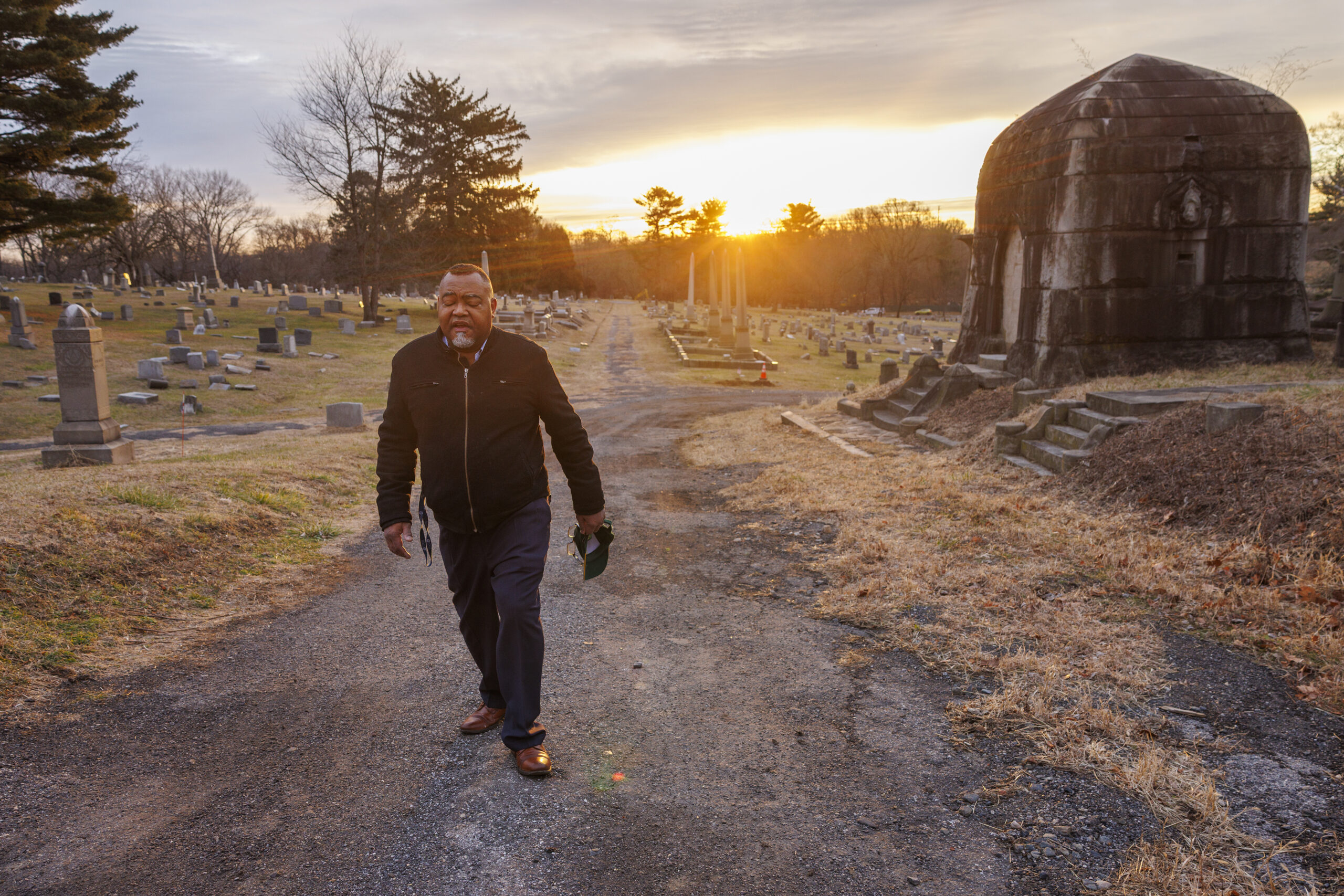
    Yeadon Mayor Rohan Hepkins during a walking tour of Mount Moriah Cemetery, Wednesday, Jan. 14, 2026. Graves at the cemetery were allegedly robbed by Jonathan Christian Gerlach.

    At the family mausoleum of John Hunter, a former president of the Mount Moriah Cemetery Association, authorities allege Gerlach smashed through a sealed cinder-block doorway and shattered the marble floor. He then rappelled 10 feet into the crypt and removed the remains of 15-year-old Martha Hunter, who died in 1869.

    He left behind a length of white rope and a screwdriver, authorities said.

    Just feet away, in the mausoleum of wholesale grocer Jonathan Prichard, Gerlach pulled cinder block from a sealed window and rifled through five of nine caskets inside, investigators allege. The remains of 62-year-old Mary Prichard Steigleman, Prichard’s daughter, are now missing.

    Nearby is the family vault of John McCullough, a Shakespearean actor who died in 1889. Beneath a towering monument etched with a line from Julius Caesar, authorities said they found two caskets disturbed, one tipped onto its side. Both were empty.

    More than a week after Gerlach’s alleged break-in, bricks torn from the vault’s seal lay piled beside the entrance, and a foot-long hole exposed the floor below. Inside, wooden pallets that investigators believe Gerlach used to climb down cluttered the crypt.
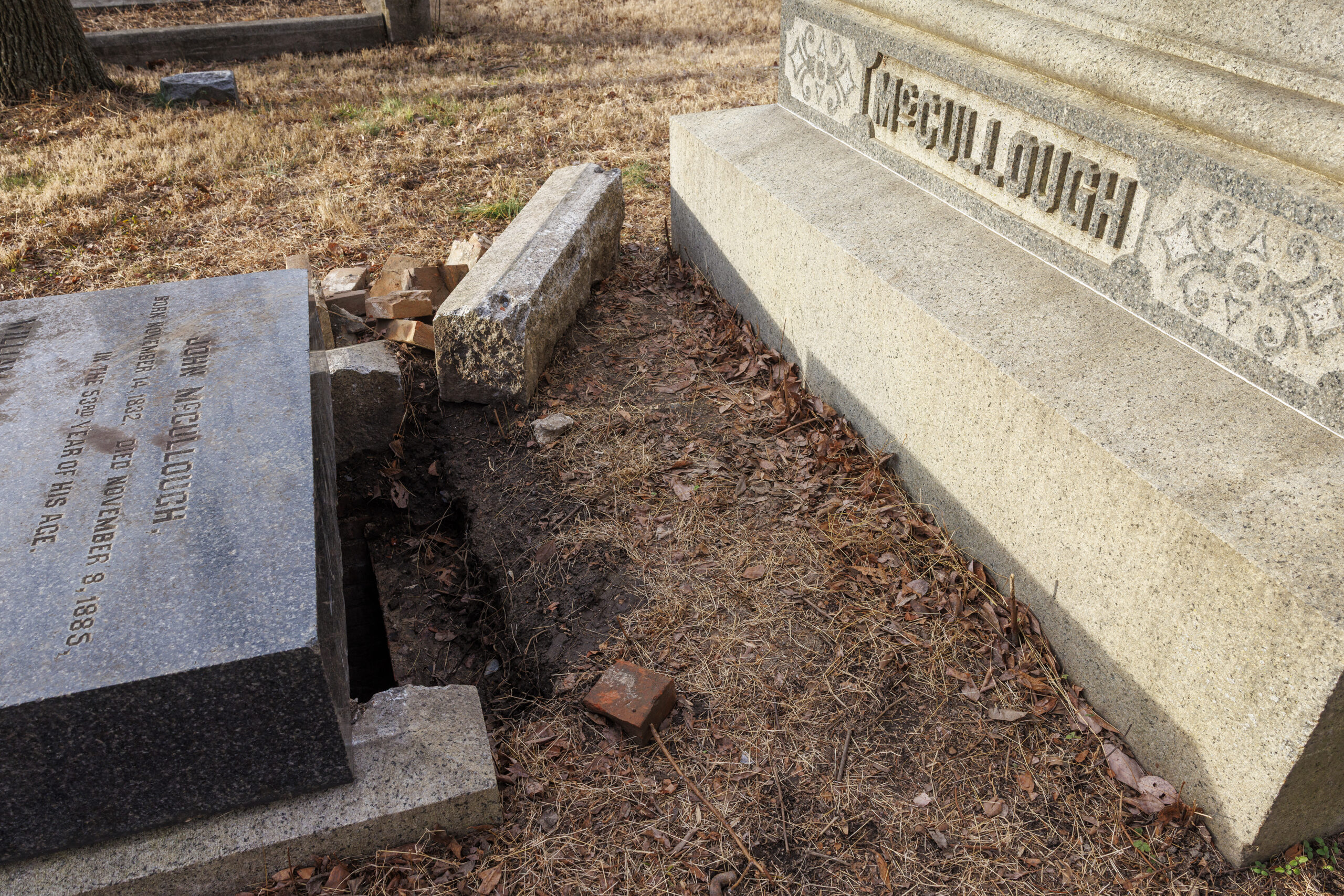
    The McCullough family burial tomb at Mount Moriah Cemetery, Wednesday, Jan. 14, 2026. This and several other graves at this cemetery were allegedly broken into by Jonathan Christian Gerlach.

    A short walk away is the cemetery’s naval plot, where rows of identical white headstones mark the graves of more than 2,000 Navy officers. It’s Hepkins’ favorite part of the cemetery, he said.

    Hepkins once hoped to be buried at Mount Moriah, a place he called “godly.” Now, he said, “I have to reconsider. I want my bones held somewhere in sacred perpetuity.”
  • Season-low temperatures are coming to Philly Monday, after a snowy Sunday

    Season-low temperatures are coming to Philly Monday, after a snowy Sunday

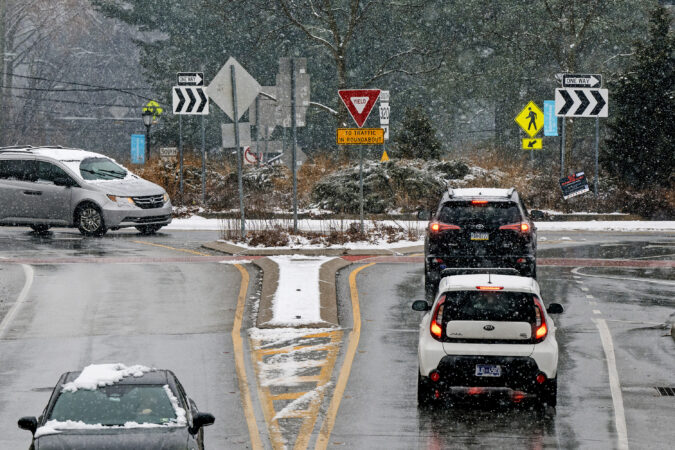
    The Martin Luther King Jr. holiday on Monday will end with the coldest temperatures of the season so far, the National Weather Service has forecast, after a snowy weekend.

    The day was to start with overnight lows in the high teens and a wind chill that would feel like the low teens, said Paul Fitzsimmons, lead meteorologist with the weather service.

    “The roads could still be icy in spots and any slush is going to … freeze,” he said.

    Monday’s highs are forecast to stay in the low to mid-30s.

    “With wind, it’s going to feel more like the 20s, even at the warmest part of the day,” Fitzsimmons said.

    Temperatures are expected to dip into the mid-teens Monday night, which along with a breeze will feel like the mid- to high single digits, he said. In a word: bitter.

    Recent weather patterns have kept things cold.

    “Basically, we just have a pattern where there’s a persistent upper-level trough over the eastern part of North America, and that’s just a favorable pattern to get reoccurring incursions of this Arctic air,” Fitzsimmons said.

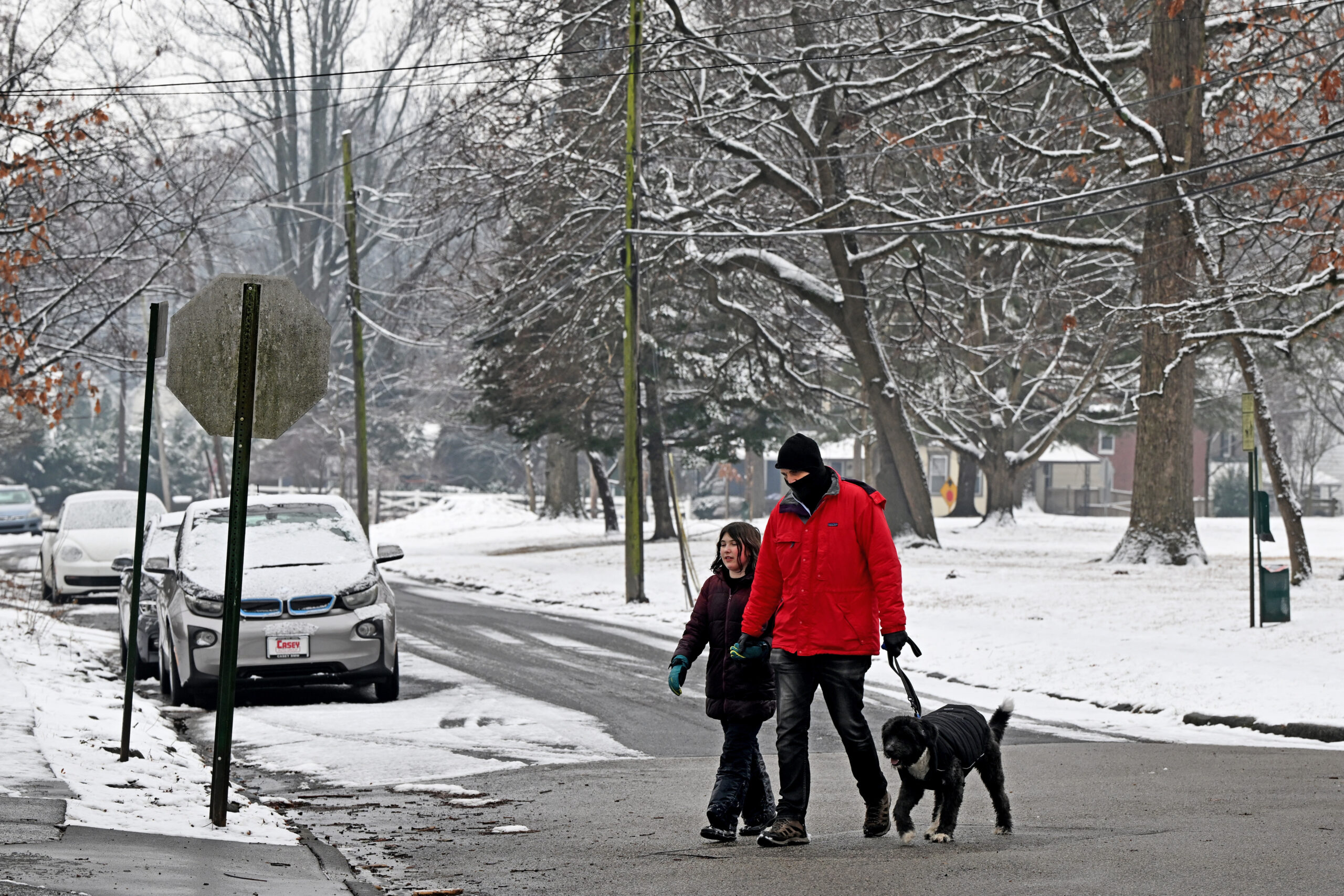
    Lou Kratz and his daughter Jules, 10, walk along Umoja Park in Swarthmore on Sunday, after the second snowfall of the weekend. Cleveland, their half sheepdog, half mutt rescue from Texas, is a “Christmas dog,” Jules said.

    Philadelphia saw less than an inch through Sunday afternoon but was forecast to finish the day with around 2 inches, according to the weather service. Some suburbs saw higher snowfall, with much of Bucks County seeing the highest totals, above 2 inches.

    Things won’t be getting better on Tuesday.

    In fact, the weather service forecast a Tuesday night low of 9 degrees. The good news: “There won’t be as much wind,” Fitzsimmons said. “So in terms of the actual real feel, it may not be quite as bad Wednesday morning.”

  • The National Constitution Center’s head departed after a leadership dispute, The New York Times reported

    The National Constitution Center’s head departed after a leadership dispute, The New York Times reported

    An escalating management dispute and chaotic board meeting preceded Jeffrey Rosen’s departure as head of the National Constitution Center, according to a report from the New York Times.

    The center publicly announced on Jan. 9 that Rosen had stepped down as president and chief executive after more than 12 years leading the private, nonprofit institution at the north end of Independence Mall. Rosen will remain as CEO emeritus; Vince Stango, a 26-year veteran of the center who has served as its executive vice president and chief operating officer, has assumed the role of interim president.

    The Times reported Friday, based on interviews with people who spoke on the condition of anonymity, that friction arose over how Rosen’s and Stango’s roles intersected: Rosen was the center’s public-facing leader, while Stango handled day-to-day operations, according to the Times.

    A spokesperson for the center declined to comment on the Times’ article and referred The Inquirer to a previous news release, which says Rosen’s new position enables him “to devote his full time and energy to his scholarship and public dialogue.” Rosen — a constitutional scholar, law professor, and author — did not respond to a request for comment via email.

    The leadership system was breaking down, the Times reported, when board members Doug DeVos (former president of Amway) and Mike George (former president of QVC) “quietly intervened” in November, hiring an employment lawyer and pushing Rosen to cede the title of president to Stango.

    According to the Times, Rosen reluctantly agreed in mid-December, but by late December, talks of compromise had collapsed. Rosen submitted his resignation, conditional on the full board accepting it, “while making clear he hoped the board would instead reject it,” the Times article says.

    Then-National Constitution Center president Jeffrey Rosen (left) stands by as Ron Chernow (author of the biography on which ‘Hamilton’ the musical is based) shows off the 2025 Liberty Medal he was awarded at the National Constitution Center in Philadelphia on Friday, Oct. 17, 2025.

    Rosen had the backing of board member J. Michael Luttig, a retired federal appeals court judge, who portrayed DeVos and George in emails to the board as trying to unfairly oust the center’s top executive, according to the Times. Luttig threatened to step down if the board accepted Rosen’s resignation, the Times article says.

    The tension boiled over at a board meeting in early January. The Times reported:

    • Rosen wanted to address the board, but George prevented him.
    • Luttig sent an email to the board threatening to file a lawsuit for what he called a violation of Rosen’s due process rights.
    • The meeting then devolved into a debate over Luttig’s involvement and possible conflicts of interest.
    • Luttig continued to participate and withdrew his offer to resign.
    • As of Sunday, the center’s website no longer listed Luttig as a member of its board.

    The center will conduct a national search for its next leader, The Inquirer previously reported.

    The alleged quarrel comes as the center prepares for the nation’s 250th birthday. The nonpartisan museum is known for awarding the annual Liberty Medal to notable figures such as Ukrainian President Volodymyr Zelensky; legendary boxer Muhammad Ali; and then-Supreme Court Justices Ruth Bader Ginsburg and Anthony M. Kennedy.

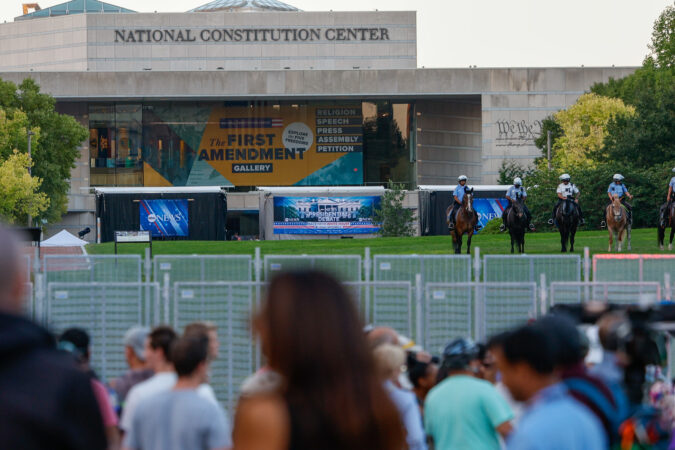
    The center was also the stage for the only 2024 presidential debate between former Vice President Kamala Harris and Donald Trump.

  • A teen couldn’t find her mom’s 30-year-old demo tape. The internet stepped in.

    A teen couldn’t find her mom’s 30-year-old demo tape. The internet stepped in.

    The long-lost demo tape had always held a certain mythos in Charlotte Astor’s imagination.

    For years, the Cherry Hill teen had heard stories about it, recorded about 30 years ago by her mother’s very loud, very short-lived, teenage hardcore band, Seed.

    Shannon Astor, now 47, had been a vocalist for the group, just 14 or 15 years old, at a time when female representation within the genre was rare. Within a year or so, the group had disbanded — but before it did, the group, which typically practiced in a member’s parents’ basement, recorded a single demo. There had been only a few dozen copies produced back then, and they had all sold, scattering out around the South Jersey area.

    For Charlotte, the tape became a kind of white whale — a relic of her mother’s hard-charging past, something the teen occasionally scoured the web for, to no avail.

    She’d never heard her mother’s band. And she wanted to. Badly.

    “Ninety-five percent of what I have about my mother is in the stories she tells me,” says Charlotte, 16, a junior at Cherry Hill High School East.

    But a demo was something tangible. Something concrete.

    “A demo,” she decided, “I can find.”

    And so one night last spring, that’s what she set out to do.

    She had little to go on: A rough estimate of when the demo would have been released (1993-94), a general geographic location (South Jersey), and a single lyric (“In the wind of the AM shadows cling to nearby trees as season shifts to satisfy the light from above”).

    “I have been looking for this tape for 4 years,” she wrote in an appeal to her 1,000 or so Instagram followers, “… and it would mean the absolute world to me to find this tape.”

    But something about her search — this desire to connect with a parent, to bridge a gap three decades wide — resonated. It became, within the tight-knit confines of the hardcore music scene, a united pursuit.

    At an age when most teenagers couldn’t get far enough away from their parents, here was one launching a quixotic quest to better understand hers.

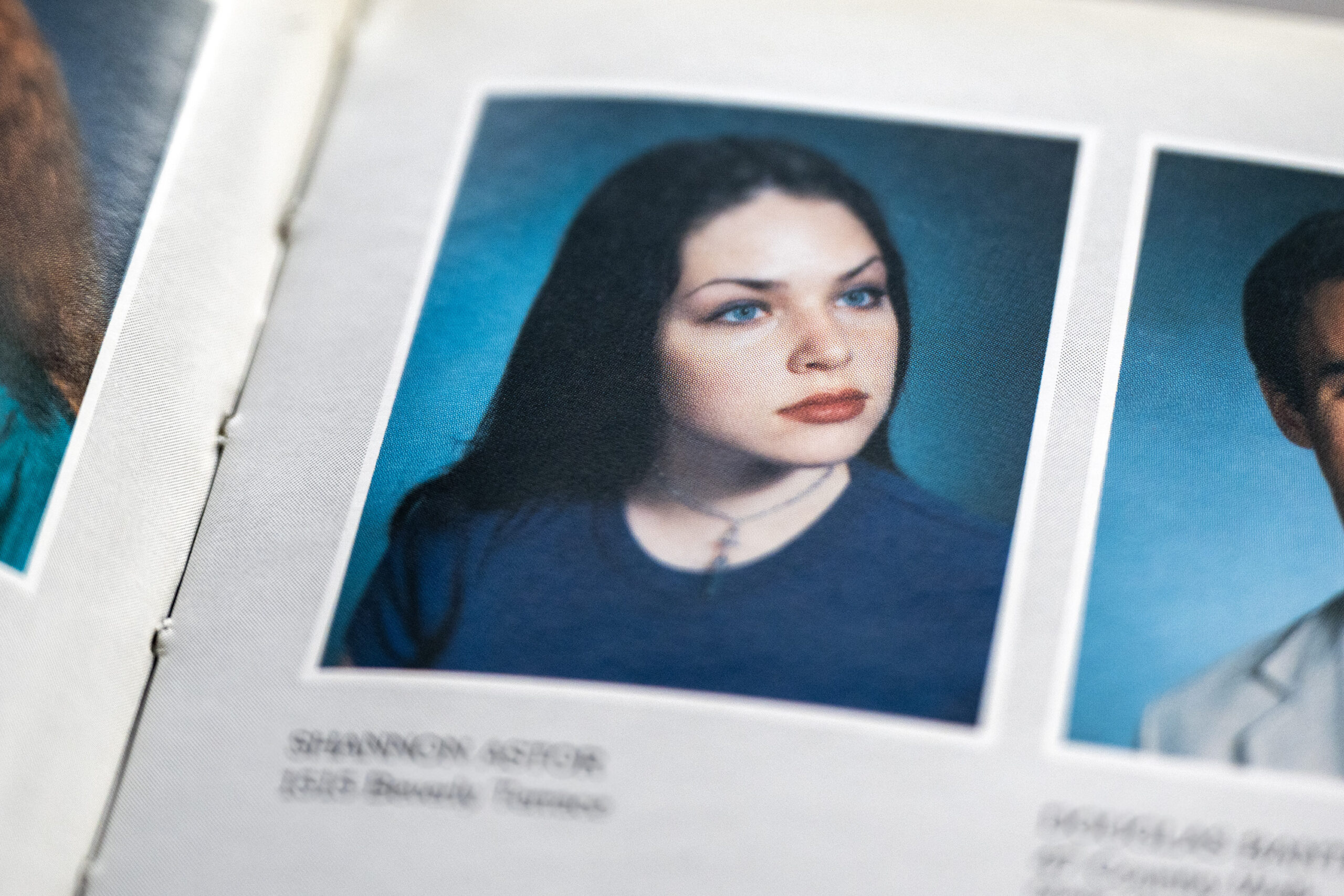
    A senior class photo of Shannon Astor in the 1996 Cherry Hill High School East yearbook. Now 47, Shannon was previously in a hardcore band called Seed.

    Soon, strangers from across the country were digging through old boxes in basements, or tagging old running buddies from Jersey’s 1990s hardcore scene in social media posts. Some reached out to old producers from the area, wondering whether the demo might have made its way into some dusty studio corner.

    Messages poured in, too — hundreds of them — with suggestions ranging from the plausible to the outlandish. Had she tried getting in touch with Bruce Springsteen’s people? You never know what the Boss might have stowed away in some mansion closet.

    “I suddenly had communication with so many people who I thought I would never in my life have any connection with,” Charlotte said. “California to Jersey, and everything in between.”

    The lead singer of a well-known Jersey straight-edge band of the era, Mouthpiece, joined the search, messaging Charlotte after others reached out to him about the tape. (He vaguely remembered her mother, Shannon, but not the band.)

    Much of the outside help, Charlotte notes, has come from the hardcore community.

    Indeed, much of Charlotte’s young life is rooted in the same hardcore music scene that her mother’s once was. Like Shannon before her, Charlotte spends many nights at hardcore shows around the area, photographing the scene for the magazine she self-publishes, “Through Our Eyes.” And like her mother previously, she’s a member of the “straight-edge” hardcore community, a group with a shared collection of ideals that includes abstaining from drinking or drugs. (Her first flirtation with teenage rebellion came when she snuck out of the house one night to go to her favorite record store.)

    And though her mother does not necessarily share Charlotte’s zeal for locating the old tape — “I’m not waiting for some garage band demo to be unearthed,” Shannon joked — she understands what it would mean to her daughter to have it.

    “It’s special to me only because of how much she needed to hear it,” said Shannon. “I’m just so pro-Charli and everything that she does … But this is her journey, and something that was intrinsically important to her.”

    To those in the scene, meanwhile, the response has been very hardcore.

    “A bunch of people banding together to help this random girl find her mom’s thing,” said Quinn Brady, 19, of New York, and a friend of Charlotte’s. “Most people assume that hardcore people are not very nice or friendly. [But] there’s this inherent kinship. It connects people across the nation in a way that not a lot of other genres of music do.”

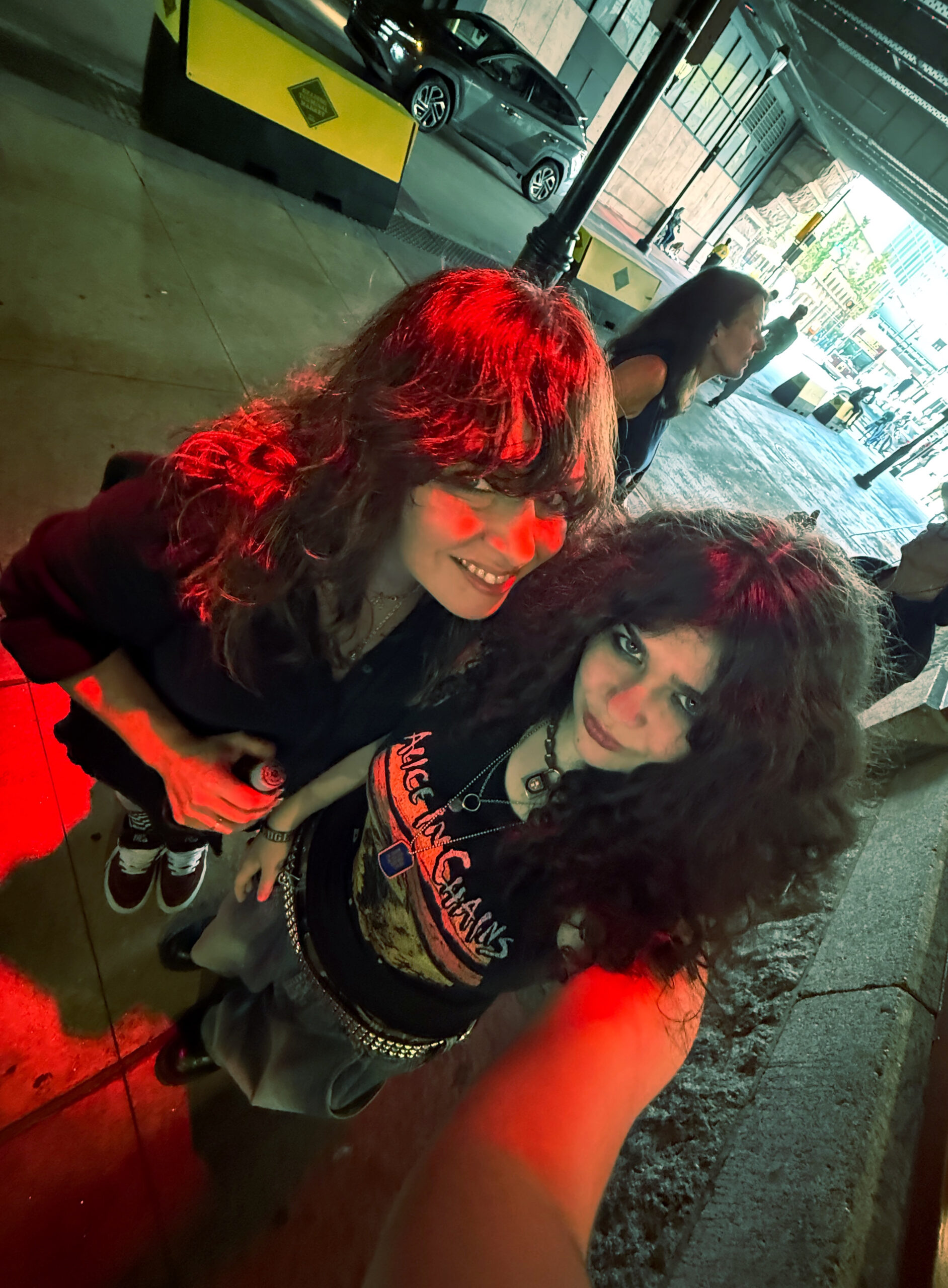
    A recent selfie by Charlotte Astor (right) and her mother, Shannon Astor, taken at Reading Terminal Market.

    Those outside the hardcore scene have been no less enthralled, however.

    In December, after NJ.com picked up the story, further extending its reach, a documentary filmmaker reached out about the possibility of doing a film on her quest.

    Last year, after posting in some “old-head” hardcore Facebook groups about the tape, Shane Reynolds — a member of the Philly-based hardcore band God Instinct — stumbled upon what appeared to be the most promising lead yet.

    “I found the guy who allegedly made the demo,” Reynolds said.

    But when she got the man on the phone, Reynolds says, it proved to be a dead end.

    The closest Charlotte came was last year, not long after she first posted about the demo on Instagram. Her mom’s former bandmate in Seed, convinced he must have kept something from that period, recovered from storage an old cassette that featured a recording of a single Seed practice session.

    Charlotte took it home, pushed it into the stereo in her bedroom. She stared at the ceiling as the tape began to play and 30 years fell away.

    For the first time, she could put a sound to the stories she grew up hearing.

    “The first thing I heard was a few seconds of my mom talking,” Charlotte said. “That’s my mom, when she was 16. I’m listening to a clip of my mother, listening to her at the same age I am.”

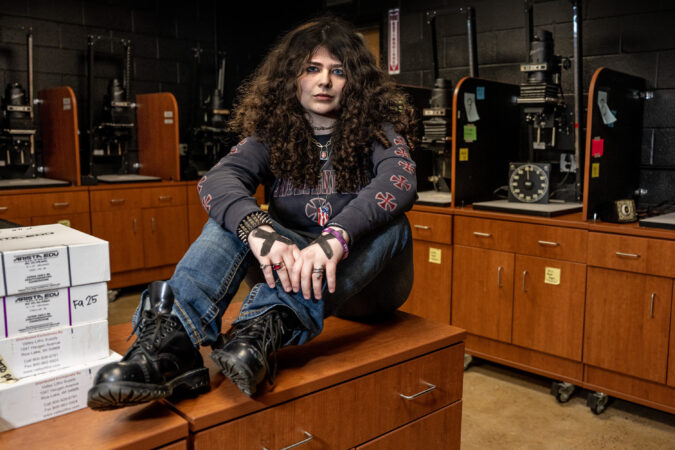
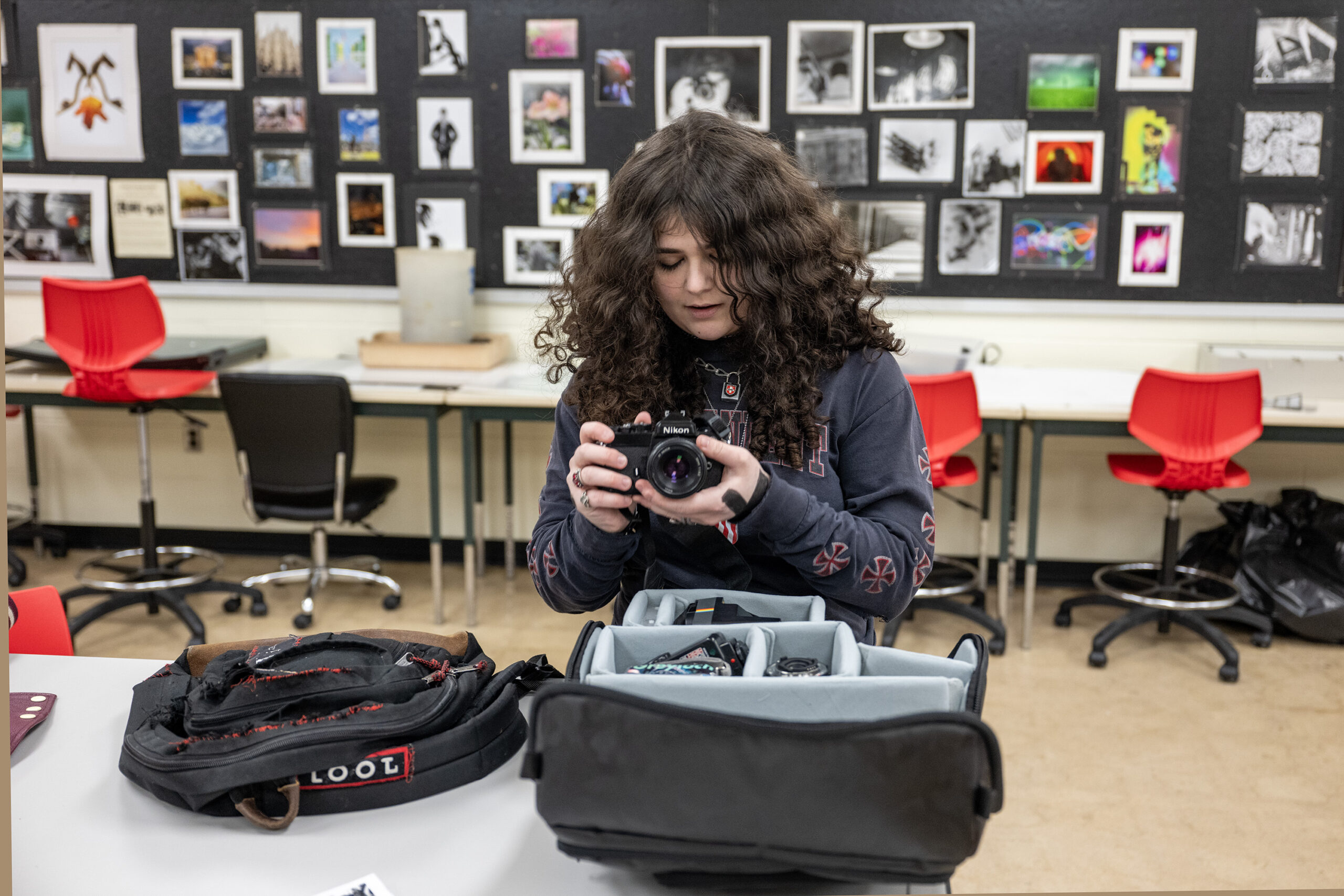
    Charlotte Astor, a junior at Cherry Hill High School East, and her vintage 35mm film Nikon camera in the school’s photography classroom.

    Still, that small taste has only reinforced her devotion to unearthing the actual demo.

    Charlotte remains realistic about her odds of finding it. No, it’s not likely to be found in some radio station’s studio. And no, Bruce Springsteen is almost certainly not in possession of a three-decades old demo tape from her mother’s teenage years.

    But some graying hardcore fan from the ’90s, with a penchant for hoarding and a cluttered garage?

    Stranger things have happened.

    “I have confidence — unwavering confidence — that someone has it,” Charlotte says. “And that I will get my hands on it.”

  • Martin Luther King Jr. spoke to Philly students in 1967. These men say it influenced the rest of their lives.

    Martin Luther King Jr. spoke to Philly students in 1967. These men say it influenced the rest of their lives.

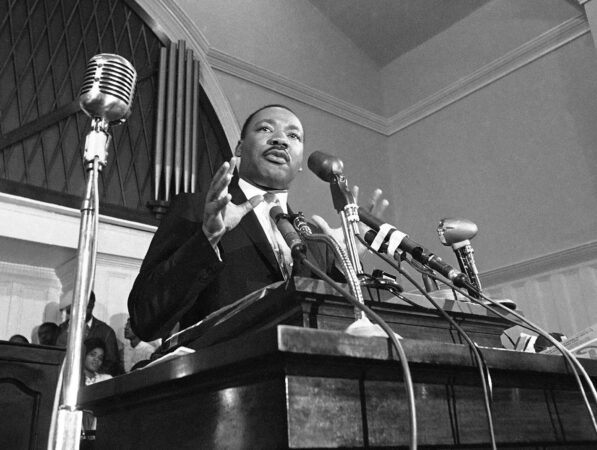
    The limousine door burst open, and the Rev. Dr. Martin Luther King Jr. stepped out onto the sidewalk in front of Dennis Kemp’s South Philadelphia school.

    Kemp was 13 that day in October 1967, a member of the stage crew and the basketball team asked by the principal of Barratt Junior High to greet the school’s surprise special guest.

    “In just about every Black household that I went into those days, there were three pictures hanging: Jesus, John Kennedy, and Dr. King,” said Kemp, now 72. “To actually meet this guy, it just blew me away.”

    King’s historic speech, made six months before he was assassinated, had a profound effect on Kemp and many of the 800 students crowded into the school auditorium.

    “What is your life’s blueprint?” King asked the students. “This is a most important and crucial period of your lives, for what you do now and what you decide now at this age may well determine which way your life shall go.”

    The community will mark the historic moment Monday, on Martin Luther King Jr. Day, with a showing of the speech in the auditorium of the school now known as Childs Elementary, then a day of service projects inside the building. One group hopes to apply to have a historical marker commemorating the visit placed outside the school.

    Kemp is glad that people still view and discuss King’s speech. Although he was a child, he sensed that he was part of something significant.

    Though nearly 1,000 students had packed into the Barratt auditorium, crowding into aisles and leaning over balconies, the room was silent save for King’s voice, Ben Farnese, then the school’s principal, told The Inquirer in 2006. In a nearby overflow room, 450 more students watched King on closed-circuit TV.

    “I took it in,” said Kemp, who was in the auditorium. “I said, ‘I’m going to keep this with me as long as I live.’”

    Charles Carter, a ninth grader who was in the auditorium, remembers the quiet.

    “Just figure — kids can be a little rowdy,” Carter said. “But we were transfixed, we were glued. We weren’t rowdy that day.”

    Jeffrey Miles, another Barratt student, had a good seat that day. He had heard a speaker was coming to school, and he was excited — he thought it might be Georgie Woods, the prominent DJ.

    After he heard King speak, he couldn’t help himself.

    “I had the end seat, and I jumped up out of my seat,” said Miles, who had turned 14 a few weeks before King spoke. “The speech was so exhilarating and so electrifying, I couldn’t control myself. He was walking down the aisle with [DJ] Georgie Woods, and I said, ‘Dr. King, can I shake your hand?’”

    King said yes. Miles grabbed his hand, which was sweaty — a detail that sticks in his mind, along with the sound of the Barratt students clapping thunderously for King.

    A belief in ‘somebodiness’

    King was in town for a “Stars for Freedom” show at the new Spectrum, opened the prior month in South Philadelphia.

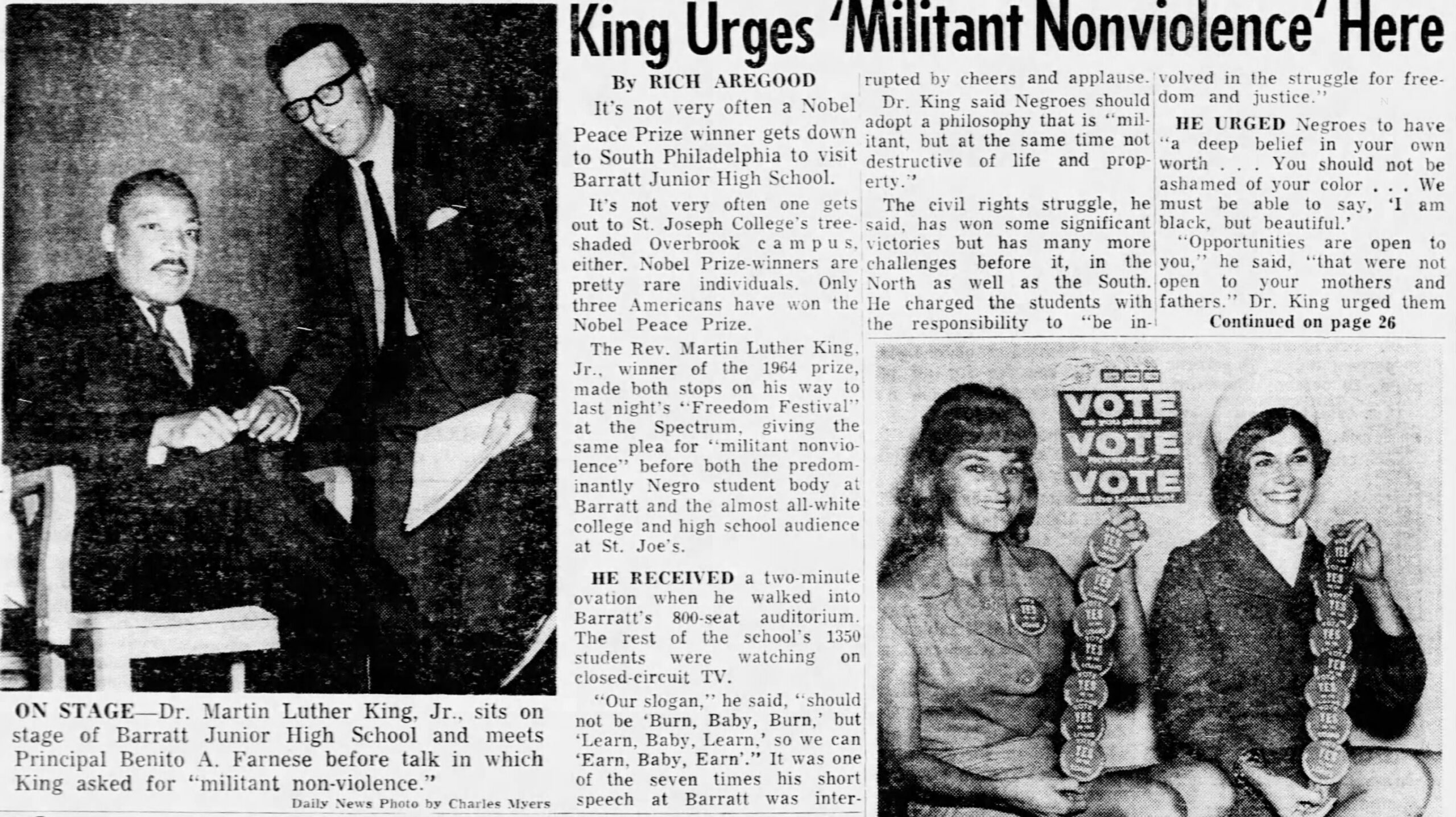
    The Philadelphia Daily News recounted Martin Luther King Jr.’s visit to Barratt Junior High in October, 1967.

    “I know you’ve heard of that new impressive structure called the Spectrum, and I know you’ve heard of Harry Belafonte and Aretha Franklin and Nipsey Russell and Sidney Poitier and all of these other great and outstanding artists,” King said. He told the students to urge their parents to attend. “And I hope you will come also, for it will be a great experience and, by coming, you will be supporting the work of the Civil Rights Movement.”

    King did not use notes, Farnese said. He spoke for 20 minutes, an address that would eventually be known as his “What is Your Life’s Blueprint?” speech.

    The Barratt students, seventh, eighth, and ninth graders, were poised to move into a time that would determine the course of the rest of their lives.

    The great civil rights figure, who had by that time already won the Nobel Peace Prize, told the young people to have “a deep belief in your own dignity, your own worth, and your own somebodiness. Don’t allow anybody to make you feel that you are nobody.”

    Take pride in your color, your natural hair, King told the students, most of whom were Black.

    “You need not be lured into purchasing cosmetics advertised to make you lighter, neither do you need to process your hair to make it appear straight,” King said. “I have good hair and it is as good as anybody else’s in the world. And we’ve got to believe that.”

    ‘Learn, baby, learn’

    King urged the crowd to set upon a path to excellence, whatever that looks like.

    “I say to you, my young friends, that doors are opening to each of you — doors of opportunity are opening to each of you that were not open to your mothers and your fathers,” King said. “And the great challenge facing you is to be ready to enter these doors as they open.”

    Kemp remembers being surprised that King came to South Philadelphia.

    “Our neighborhood was pretty poor,” said Kemp, who grew up as one of nine children in a family that struggled. “There really wasn’t too much to look forward to in our neighborhood.”

    King acknowledged the “intolerable conditions” faced by many of the children he addressed. But, he said, it was incumbent on them to stay in school, to build a good life.

    “Set out to do a good job and do that job so well that the living, the dead, and the unborn couldn’t do it any better,” King said. “If it falls to your lot to be a street sweeper, sweep streets like Michelangelo painted pictures.”

    The civil rights hero told students to commit to “the eternal principles of beauty, love, and justice. Don’t allow anybody to pull you so low as to make you hate them.”

    King, who encouraged peaceful resistance, urged “a method that can be militant, but at the same time does not destroy life or property.”

    “And so our slogan must not be ‘Burn, baby, burn,’” King said, referring to a chant that had become associated with the 1965 Watts riots in Los Angeles. “It must be ‘Build, baby, build. Organize, baby, organize.’ Yes, our slogan must be ‘Learn, baby, learn’ so that we can earn, baby, earn.

    “And with a powerful commitment, I believe that we can transform dark yesterdays of injustice into bright tomorrows of justice and humanity.”
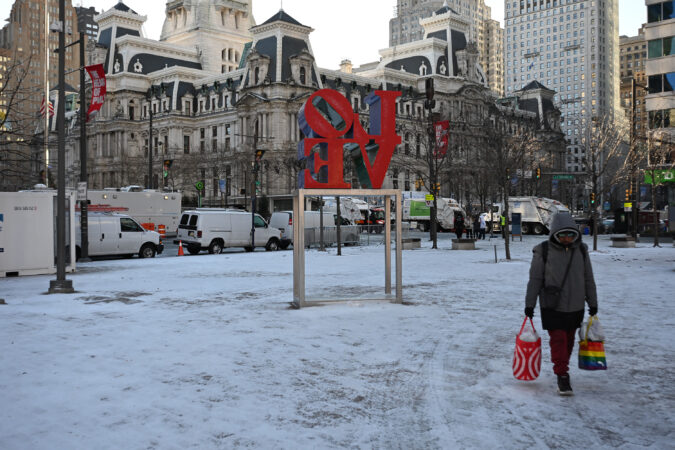
    ‘I’ll never forget it’

    Some of the members of the Barratt class in the room that day soared: Kevin Washington, who was on the basketball team with Kemp, went on to become the first Black president of the national YMCA.

    Kemp was bright, but his family’s economic struggles weighed on him, he said. He dreamed of college, but it wasn’t in reach. He ended up leaving South Philadelphia High without a diploma, eventually earning a GED.

    He raised children, built a life working — often in maintenance. He spent time as a school basketball coach.

    After suffering medical and marital issues, Kemp fell on hard times. He spent four months without a home, sleeping in parks and at 30th Street Station.

    “Dr. King’s speech really helped,” he said. “That used to come to mind when I was on the street. I’ll never forget it.”

    Kemp rallied; he now lives in an apartment in South Philadelphia.

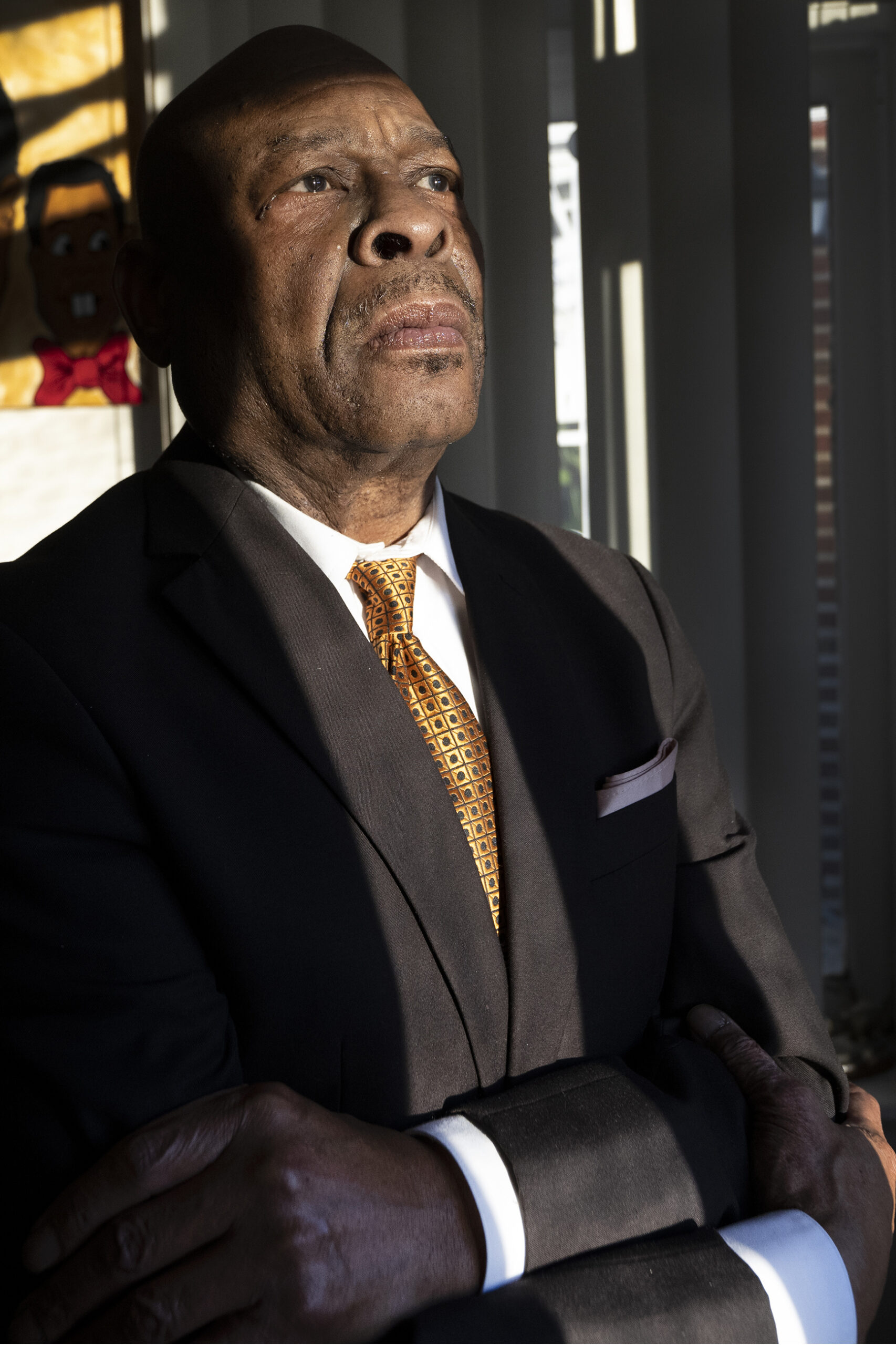
    Jeffrey Miles is photographed at his home in Philadelphia on Friday, Jan. 16, 2026. Miles was 13 in October 1967 when he shook the hand of the Rev. Dr. Martin Luther King Jr. and witnessed a speech that altered the course of his life.

    The speech also altered the course of Miles’ life.

    “I was a member of a gang in South Philly,” said Miles, now 72. “I never paid attention to adults and teachers. But that day I paid attention to Dr. King.”

    King’s words — reach for more, do your best, no matter your struggles — resonated. He buckled down at school, graduated from high school, from college. He became an optician and even taught students at Salus University.

    “When Dr. King said, ‘instead of burn, baby, burn, learn, baby learn,’ that gave me a window,” said Miles, who lives in West Oak Lane. “It gave me hope.”

  • For Ben Franklin’s birthday, Franklin Institute to unveil ‘immersive multimedia show’ as part of America’s 250th celebration

    For Ben Franklin’s birthday, Franklin Institute to unveil ‘immersive multimedia show’ as part of America’s 250th celebration

    America’s favorite multitalented Founding Father is celebrating his — checks parchment — 320th birthday Saturday, and the Franklin Institute wants everyone to join the party.

    On Saturday the science museum will debut a new “immersive multimedia show,” about Franklin, according to Franklin Institute President and CEO Larry Dubinski. The massive audiovisual display will kick off a day of family-friendly learning activities centered on science and creativity.

    The new installation is called “Franklin’s Spark,” Dubinski said, and the theme is curiosity — the kind that led Franklin to fly a kite to learn that lightning is electricity, invent everything from bifocal glasses to a more efficient cast-iron heating stove, and help establish the nation’s first postal system and lending library.

    “The message is: curiosity drives progress,“ Dubinski said. ”Benjamin Franklin showed how important it is to ask questions, try things, learn, fail, and learn from those failures. It’s what drives society.”

    Dubinski declined to say what the project cost, but noted that it was made possible by a donation from entrepreneur Ed Satell and the Satell Family Foundation.

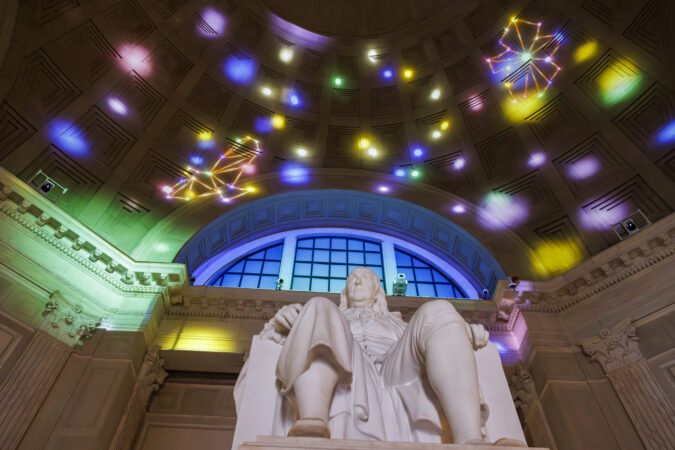
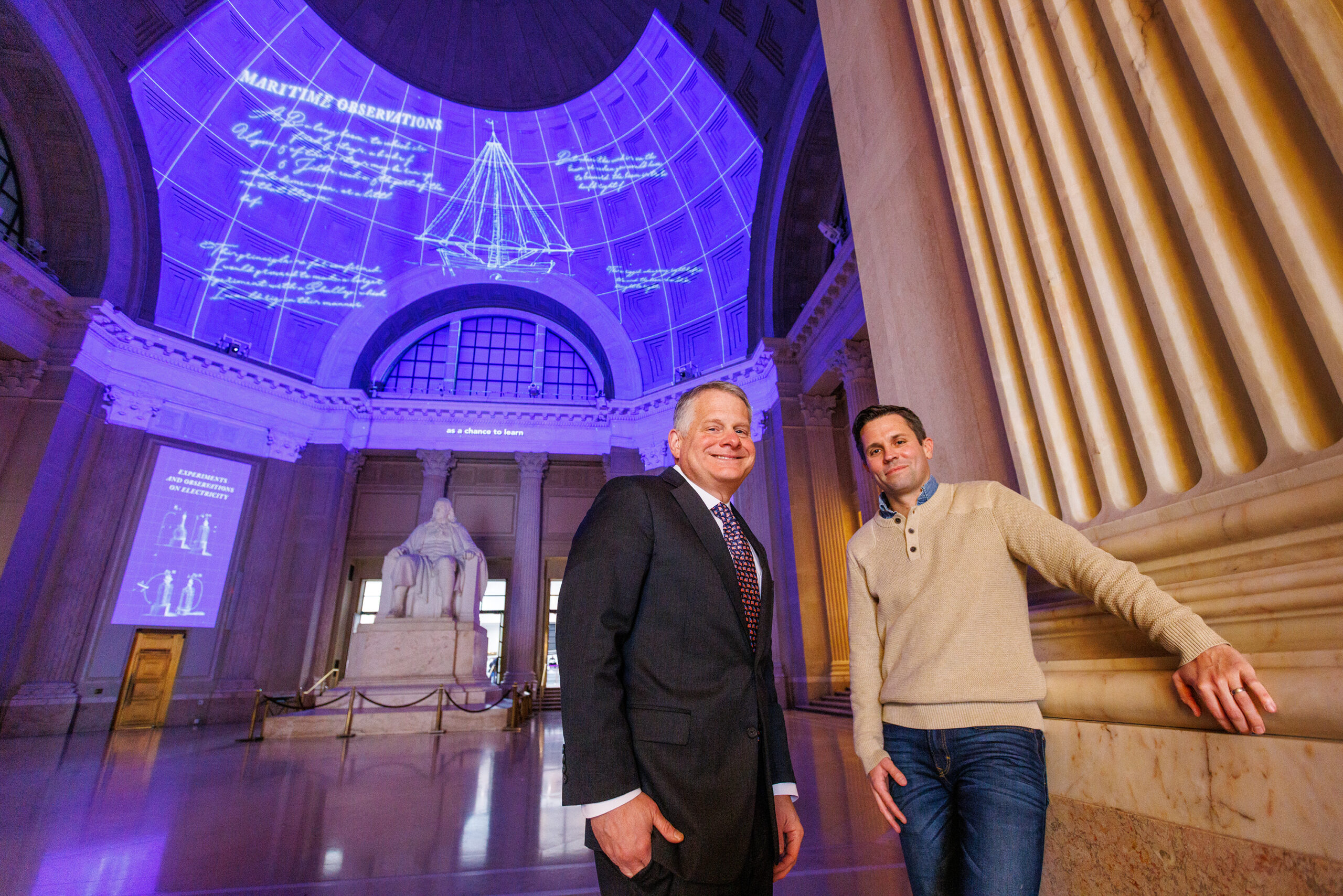
    Friday the Franklin Institute provided a preview of the four-minute presentation at the already impressive Franklin National Memorial, where a 30-ton, 20-foot statue of the former statesman resides under an 82-foot-high domed ceiling.

    Seven high-resolution Panasonic projectors lit up the dome with animations and images detailing Franklin’s life and times.

    “We think he would have liked it a lot,” said Brad Baer, whose design studio, Crafted Action, produced the display. “He was a tinkerer. He was an experimenter.”

    At left is Larry Dubinski, president and CEO, The Franklin Institute. At right is Brad Baer, founder and CEO of Crafted Action, designer of multimedia show.

    To make it work, the Philly-based company had to conduct some experiments of its own. It created Franklin’s silhouette by combining photography with “AI-style transfer techniques,” he said. It developed a 3D rendering of the 1,600-ton dome, and some of the dome’s many square “coffers” were incorporated into the visual display.

    “We wanted to create something that’s equal parts experience and education,” Baer said. “It’s kind of a little gift to the city.”
    Saturday at 11 a.m., the installation will commence “Ben’s Bash,” a birthday celebration tailored toward learning and fun. The event is open to anyone who has purchased a general admission ticket to the museum.

    Other events include demonstrations on a replica of Franklin’s “glass armonica” musical instrument, a museumwide scavenger hunt with prizes, a lesson on electricity, a birthday card-making activity using a printing press, games, and a dance party.

    Dubinski said he’s excited that the new installation will be in place as Philadelphia celebrates the 250th anniversary of the Declaration of Independence, which, of course, Franklin signed.

    “Philadelphia is the place,” he said. “All these institutions are coming together to say, ‘Philadelphia is an amazing city.’”

  • Capturing the sun

    Capturing the sun

    The reconstructed “ghost” structure with partial walls and windows of the building known in the eighteenth-century as 190 High Street is officially titled, “Freedom and Slavery in the Making of a New Nation” (2010).

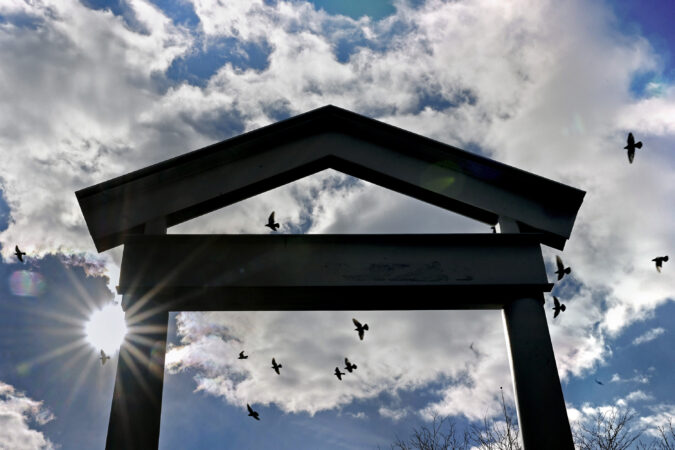
    The open-air President’s House installation in Independence National Historical Park was designed to give visitors a sense of the house where the first two presidents of the United States, George Washington and John Adams, served their terms of office.

    The commemorative site designed by Emanuel Kelly, with Kelly/Maiello Architects, pays homage to nine enslaved people of African descent who were part of the Washington household with videos scripted by Lorene Cary and directed by Louis Massiah.

    Just like the Rocky statue I photographed last week in anticipation of this week’s news, the President’s House was in the news last year so it remains on my radar as I walk around Old City (our newsroom is right across the street).

    The cloud formation in the winter sky was what first caught my attention. Then it was seeing the sun lined up directly behind the triangular pediment above the Georgian home’s “front door.”

    I played with “placement” of the sun peeking through a tiny gap at a bottom corner of the gable. I knew knew that f/22 on my mirrorless camera’s lens would give me a nice starburst. It’s an optical effect that happens because the lens’ aperture blades don’t form a perfect circle. And the narrower the opening — like f/22 — the more pronounced the effect (shooting at f/2.8 is not quite as dramatic).

    Then it was simply a matter of my moving my head ever-so-slightly to align the sun with the little hole — like threading a needle.

    While standing in the thin shadow of the door, I was getting blasted in the eye each time I moved. Then a group of tourists, or a noise, startled a flock of pigeons and as they took flight I was not poised just right, but I liked having the birds there better than a perfect placement of the starburst.

    I tried a similar “trick” a few years ago, when walking around my town photographing with my iPhone. It doesn’t have a mechanical diaphragm so the effect is not the same. Plus, the threading-the-needle part is much more difficult when you are not actually looking through the lens as in a DSLR. And with a backlight sun blasting you directly in the face.

    The optical principle of refraction through a lens diaphragm is the same for both mirrorless and DSLR cameras because light travels through the lens elements and aperture in the same way.

    Since 1998 a black-and-white photo has appeared every Monday in staff photographer Tom Gralish’s “Scene Through the Lens” photo column in the print editions of The Inquirer’s local news section. Here are the most recent, in color:

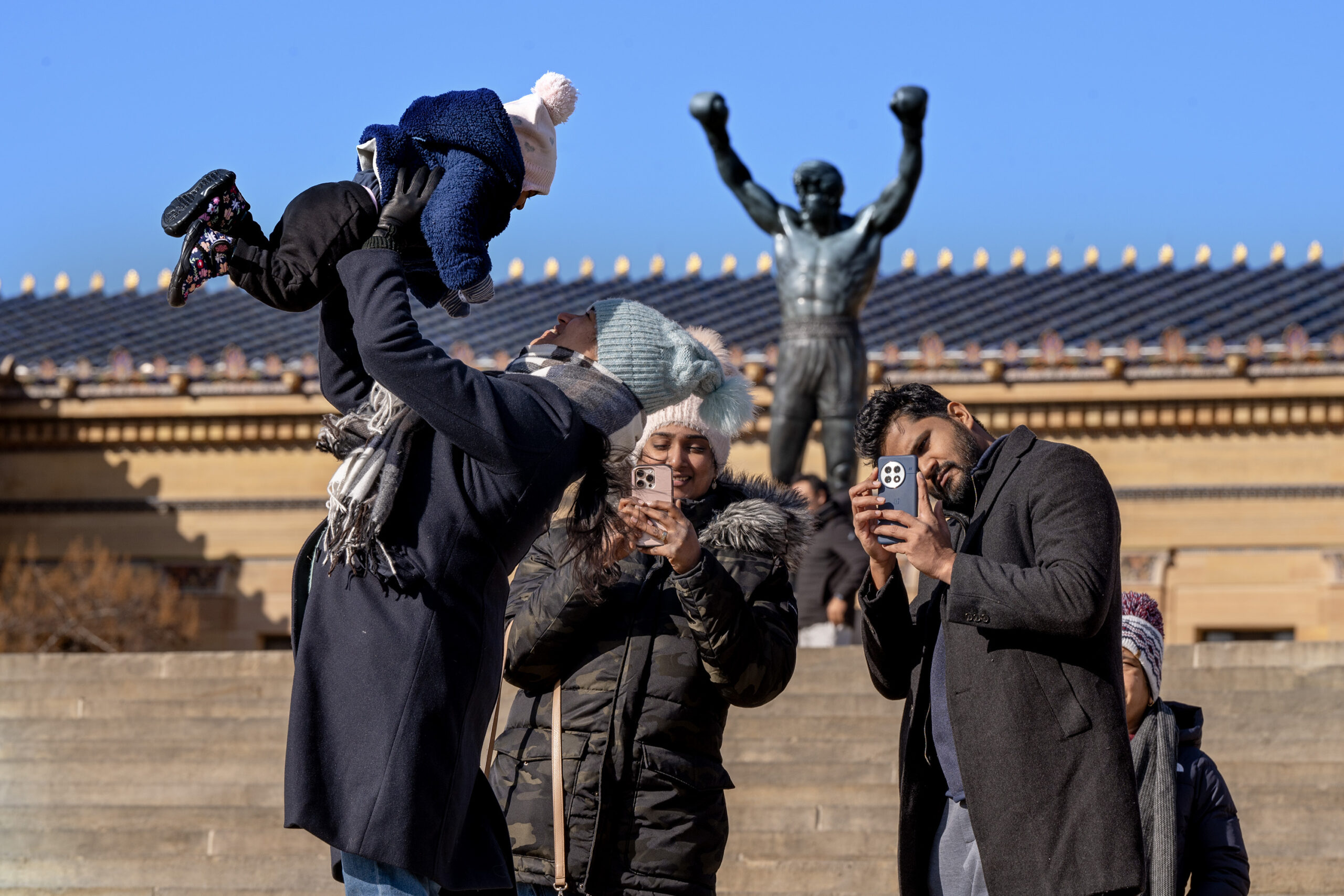
    Deepika Iyer holds her niece Ira Samudra aloft in a Rockyesque pose, while her parents photograph their 8 month-old daughter, in front of the famous movie prop at the top of the steps at the Philadelphia Art Museum. Iyer lives in Philadelphia and is hosting a visit by her mother Vijayalakshmi Ramachandran (partially hidden); brother Gautham Ramachandran; and her sister-in-law Janani Gautham who all live in Bangalore, India.
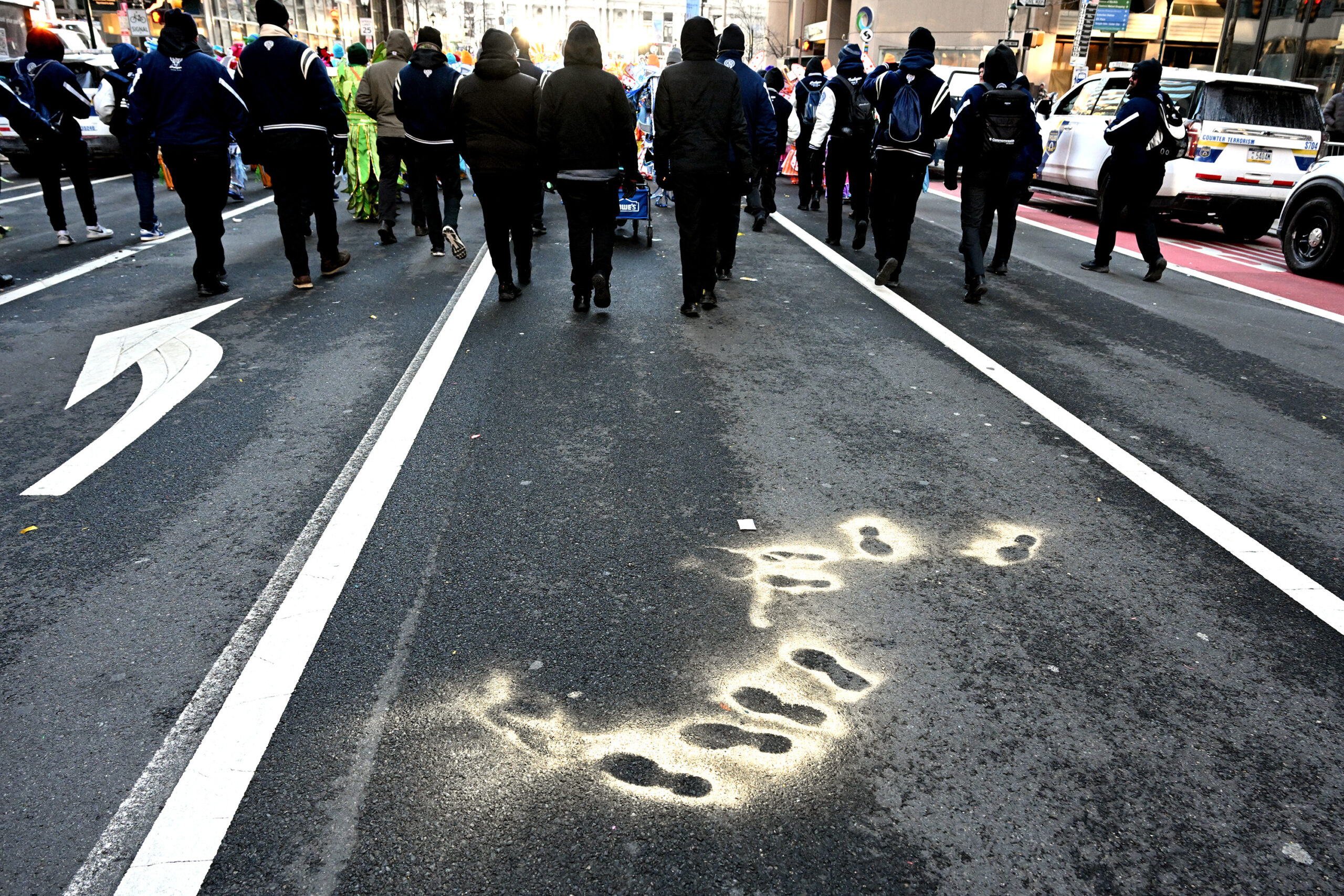
    January 5, 2026: Parade marshals trail behind the musicians of the Greater Kensington String Band heading to their #9 position start in the Mummers Parade. Spray paint by comic wenches earlier in the day left “Oh, Dem Golden Slippers” shadows on the pavement of Market Street. This year marked the 125th anniversary of Philly’s iconic New Year’s Day celebration.
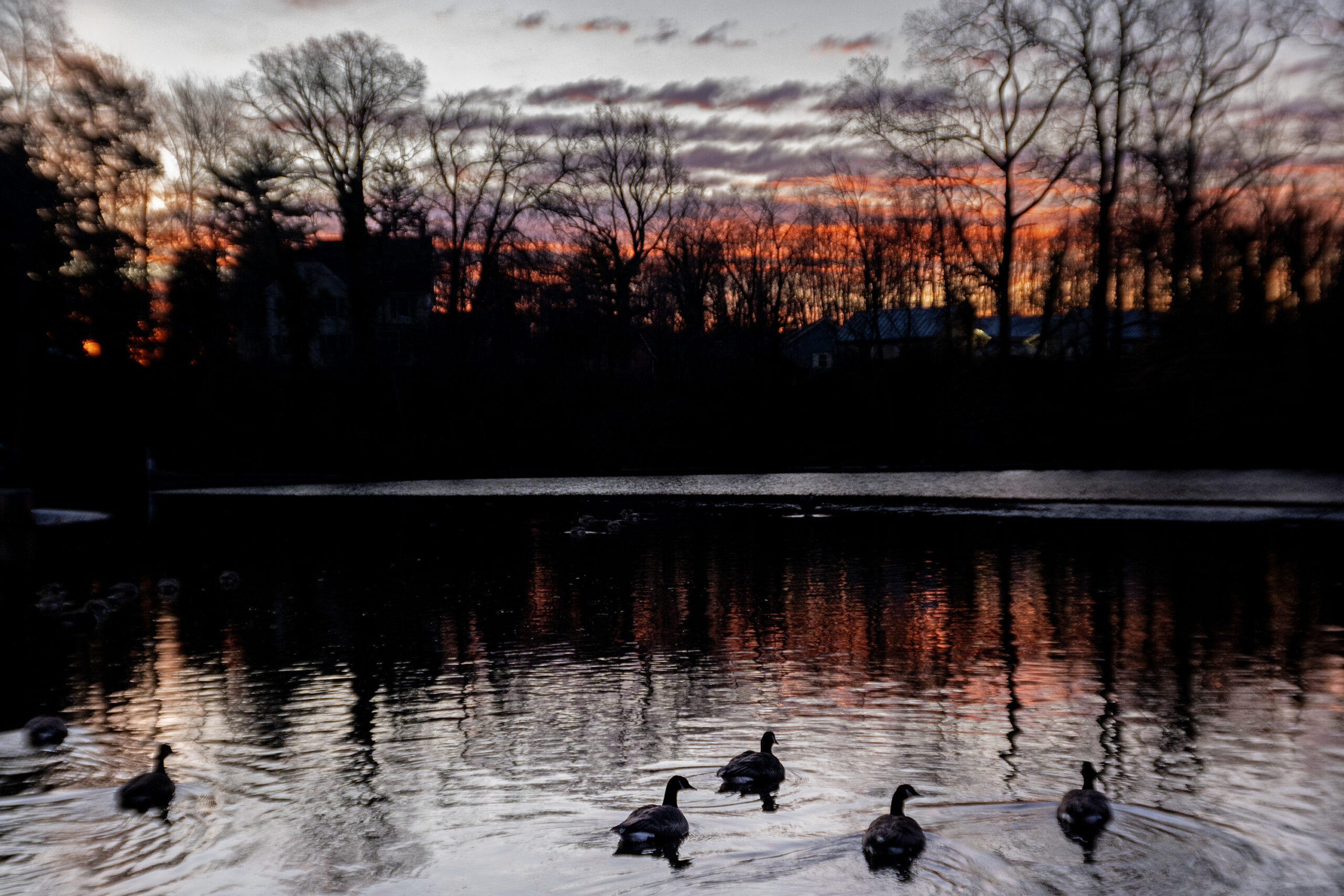
    Dec. 29, 2025: Canada geese at sunrise in Evans Pond in Haddonfield, during the week of the Winter Solstice for the Northern Hemisphere.
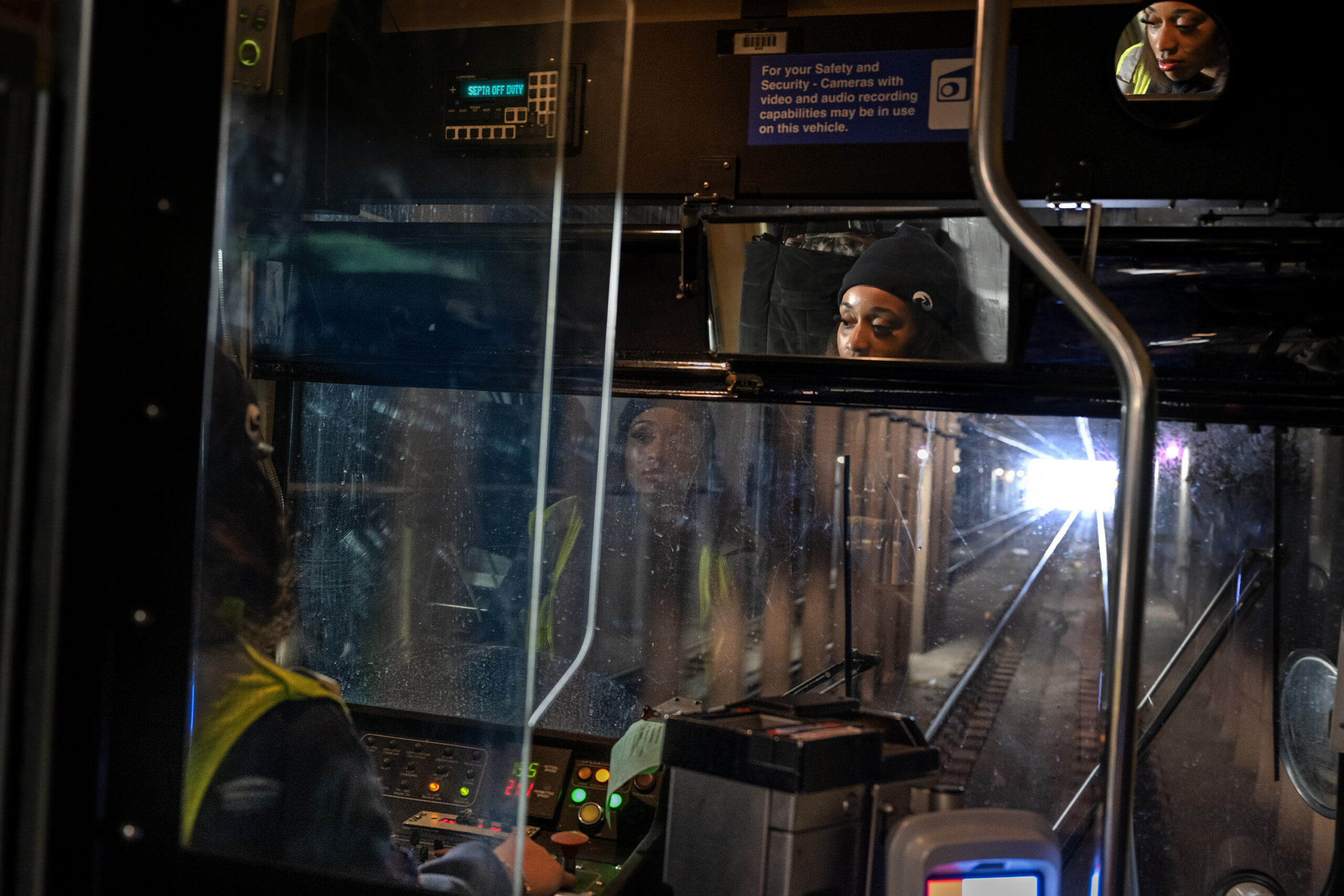
    December 22, 2025: SEPTA trolley operator Victoria Daniels approaches the end of the Center City Tunnel, heading toward the 40th Street trolley portal after a tour to update the news media on overhead wire repairs in the closed tunnel due to unexpected issues from new slider parts.
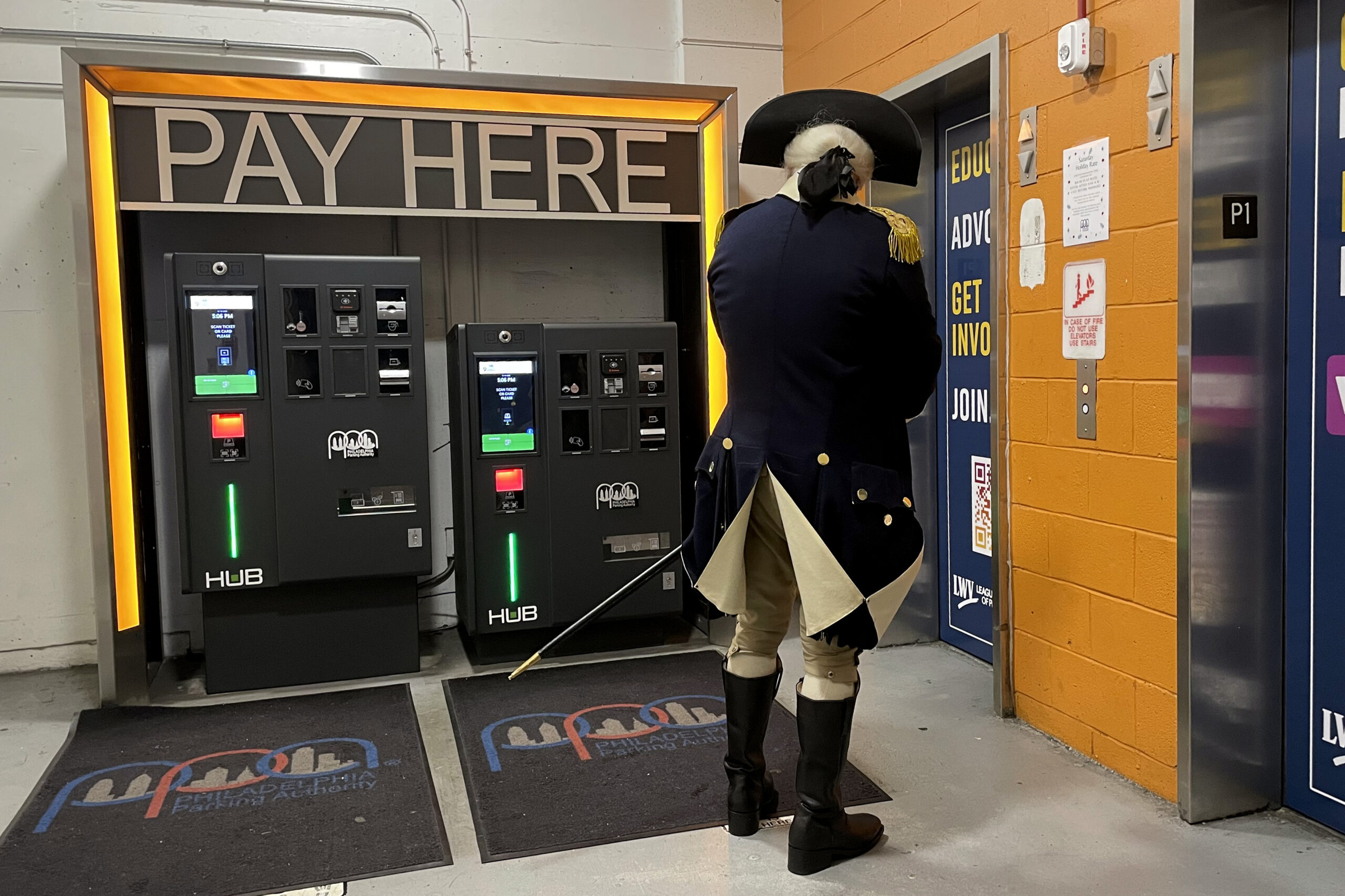
    December 15, 2025: A historical interpreter waits at the parking garage elevators headed not to a December crossing of the Delaware River, but an event at the National Constitution Center. General George Washington was on his way to an unveiling of the U.S. Mint’s new 2026 coins for the Semiquincentennial,
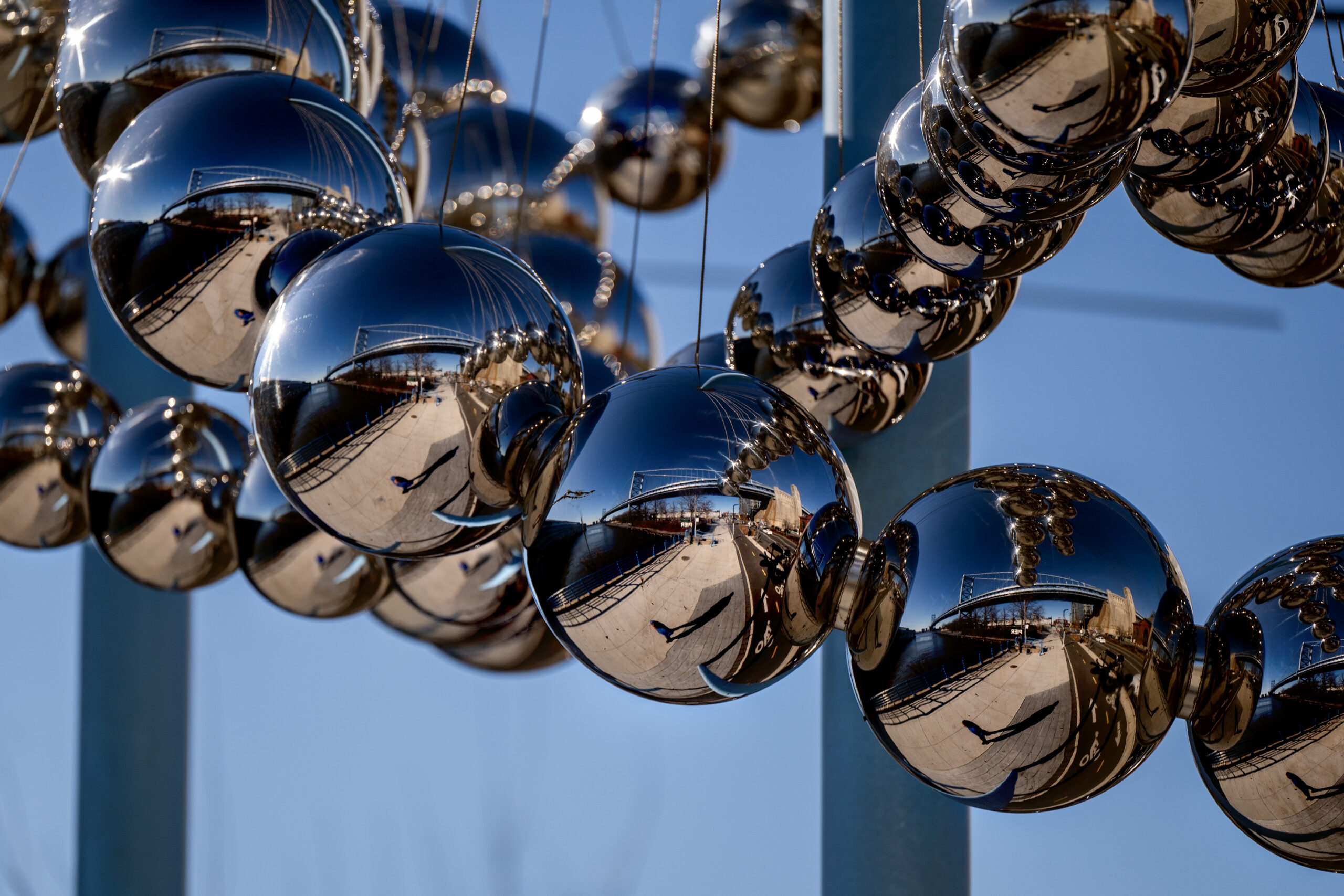
    December 8, 2025: The Benjamin Franklin Bridge and pedestrians on the Delaware River Trail are reflected in mirrored spheres of the “Weaver’s Knot: Sheet Bend” public artwork on Columbus Boulevard. The site-specific stainless steel piece located between the Cherry Street and Race Street Piers was commissioned by the City’s Public Art Office and the Delaware River Waterfront Corporation and created and installed in 2022 by the design and fabrication group Ball-Nogues Studio. The name recalls a history that dominated the region for hundreds of years. “Weaver’s knot” derives from use in textile mills and the “Sheet bend” or “sheet knot” was used on sailing vessels for bending ropes to sails.
    November 29, 2025: t’s ginkgo time in our region again when the distinctive fan-shaped leaves turn yellow and then, on one day, lose all their leaves at the same time laying a carpet on city streets and sidewalks. A squirrel leaps over leaves in the 18th Century Garden in Independence National Historical Park Nov. 25, 2025. The ginkgo (Ginkgo biloba) is considered a living fossil as it’s the only surviving species of a group of trees that existed before dinosaurs. Genetically, it has remained unchanged over the past 200 million years. William Hamilton, owner the Woodlands in SW Phila (no relation to Alexander Hamilton) brought the first ginkgo trees to North America in 1785.
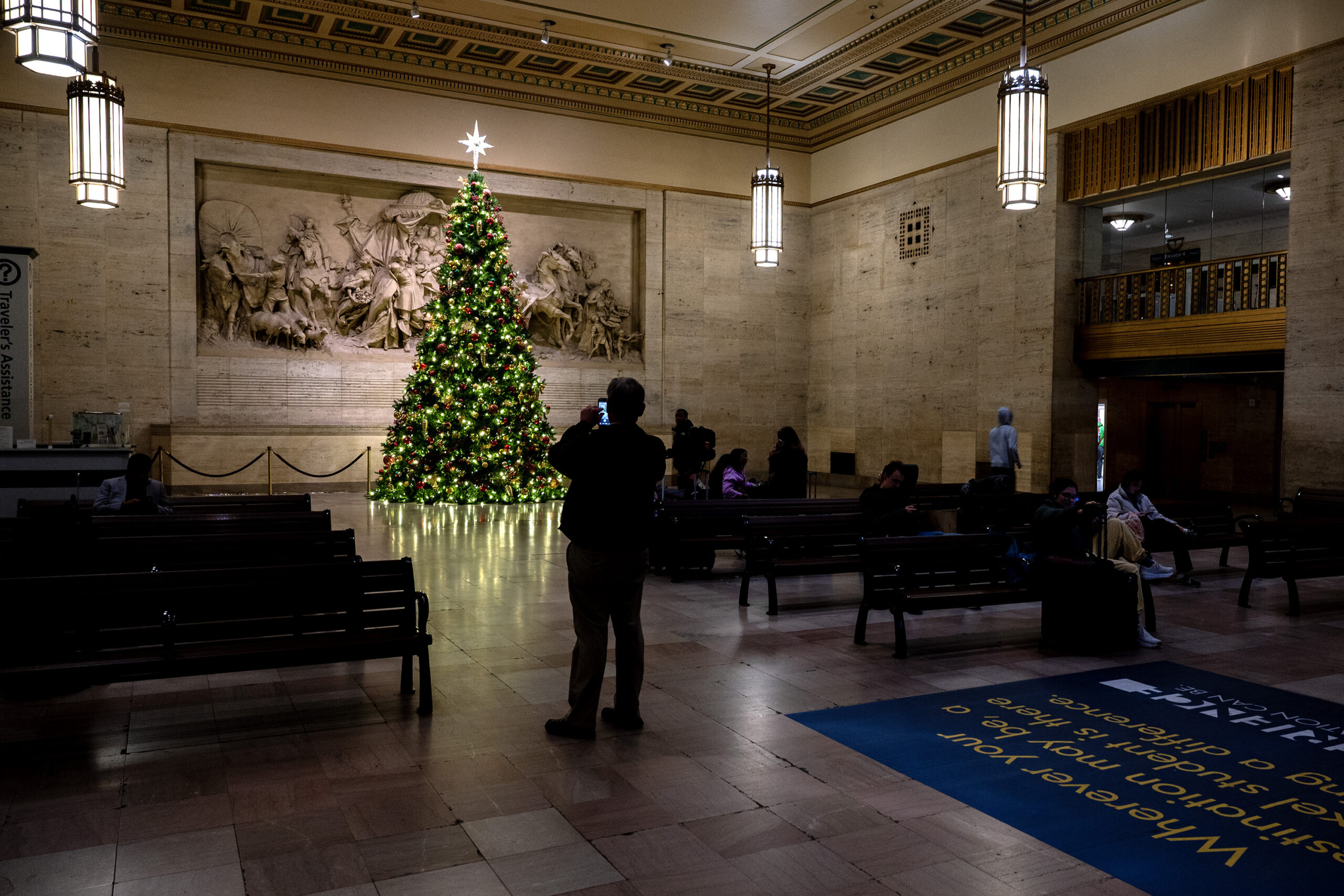
    November 24, 2025: The old waiting room at 30th Street Station that most people only pass through on their way to the restrooms has been spiffed up with benches – and a Christmas tree. It was placed there this year in front of the 30-foot frieze, “The Spirit of Transportation” while the lobby of Amtrak’s $550 million station restoration is underway. The 1895 relief sculpture by Karl Bitter was originally hung in the Broad Street Station by City Hall, but was moved in 1933. It depicts travel from ancient to modern and even futuristic times.
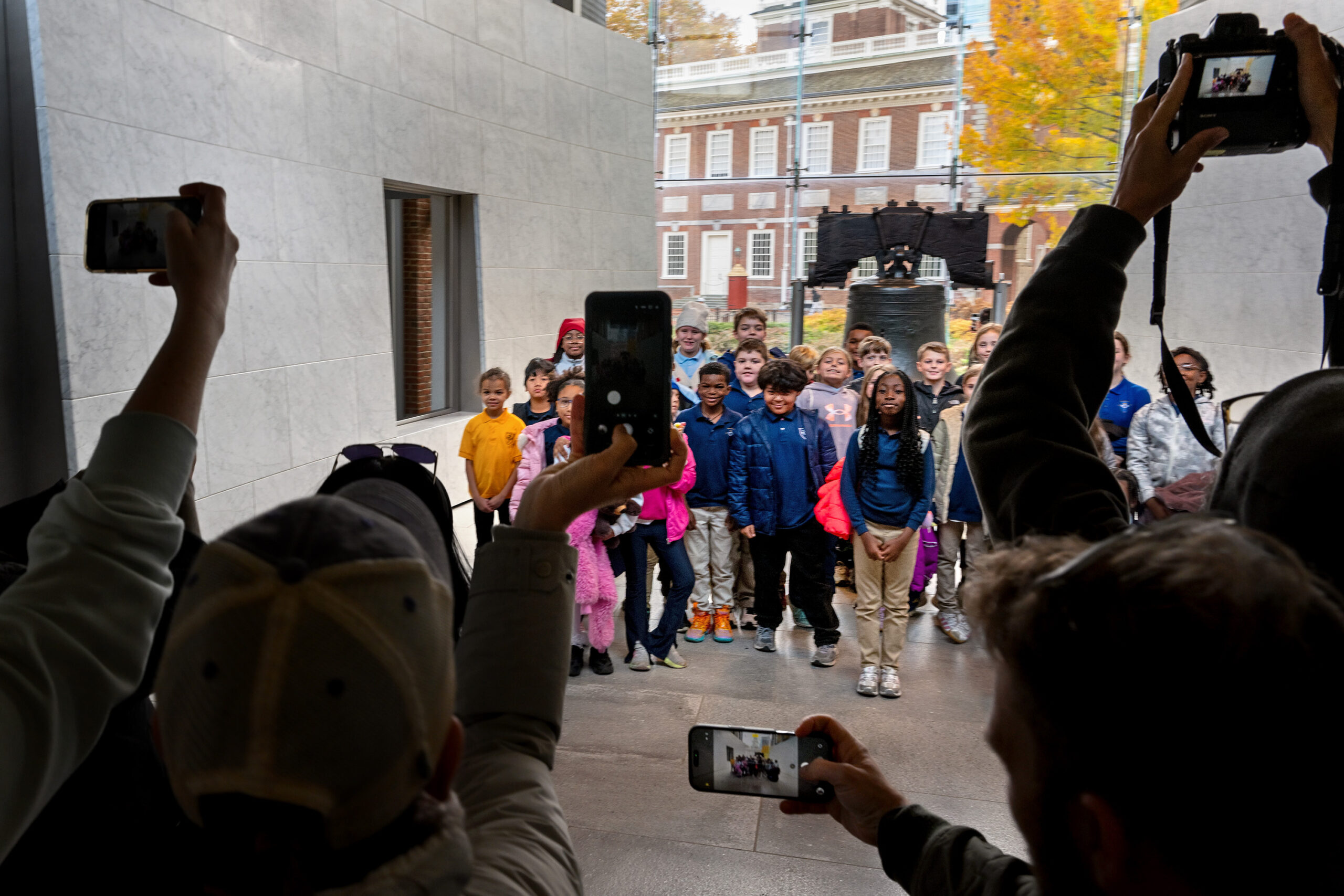
    November 17, 2025: Students on a field trip from the Christian Academy in Brookhaven, Delaware County, pose for a group photo in front of the Liberty Bell in Independence National Historical Park on Thursday. The trip was planned weeks earlier, before they knew it would be on the day park buildings were reopening after the government shutdown ended. “We got so lucky,” a teacher said. Then corrected herself. “It’s because we prayed for it.”
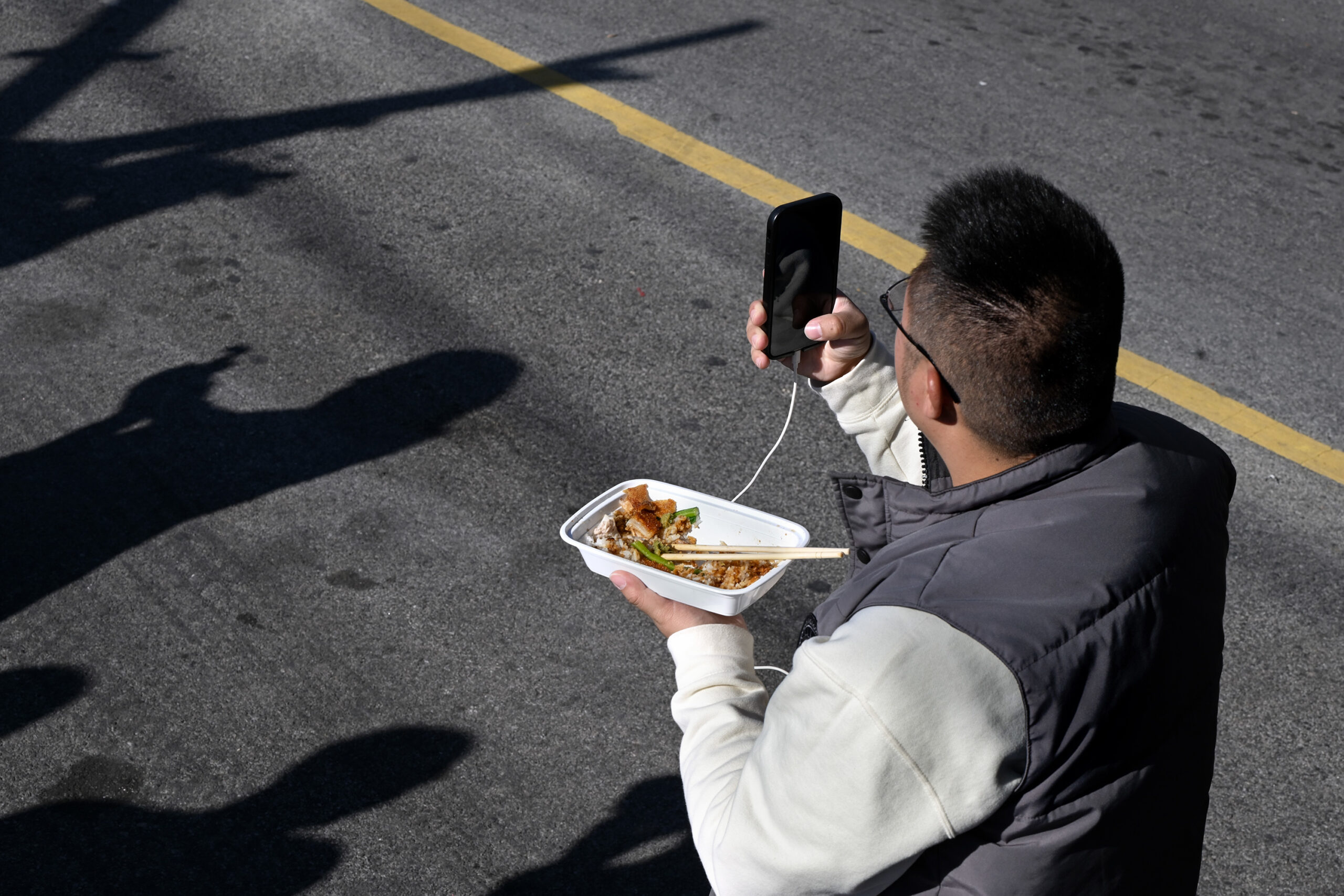
    November 8, 2025: Multitasking during the Festival de Día de Muertos – Day of the Dead – in South Philadelphia.
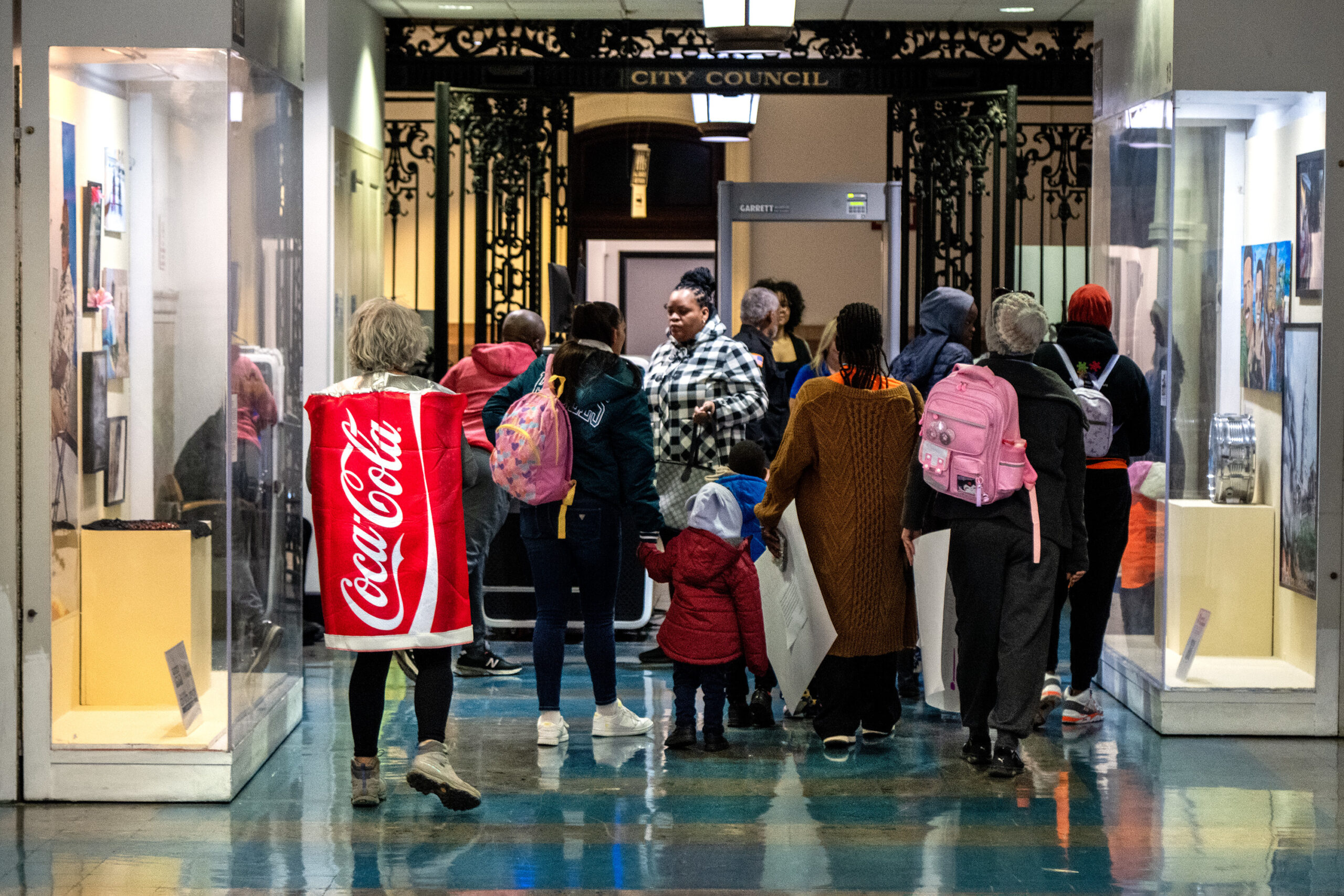
    November 1, 2025: Marcy Boroff is at City Hall dressed as a Coke can, along with preschoolers and their caregivers, in support of former Mayor Jim Kenney’s 2017 tax on sweetened beverages. City Council is considering repealing the tax, which funds the city’s pre-K programs.
    October 25, 2025: Austin Gabauer, paint and production assistant at the Johnson Atelier, in Hamilton Twp, N.J. as the finished “O” letter awaits the return to Philadelphia. The “Y” part of the OY/YO sculpture is inside the painting booth. The well-known sculpture outside the Weitzman National Museum of American Jewish History was removed in May while construction continues on Market Street and has been undergoing refurbishment at the Atelier at the Grounds for Sculpture outside of Trenton.
    October 20, 2025:The yellow shipping container next to City Hall attracted a line of over 300 people that stretched around a corner of Dilworth Park. Bystanders wondered as they watched devotees reaching the front take their selfies inside a retro Philly diner-esque booth tableau. Followers on social media had been invited to “Climb on to immerse yourself in the worlds of Pleasing Fragrance, Big Lip, and exclusive treasures,” including a spin of the “Freebie Wheel,” for products of the unisex lifestyle brand Pleasing, created by former One Direction singer Harry Styles.
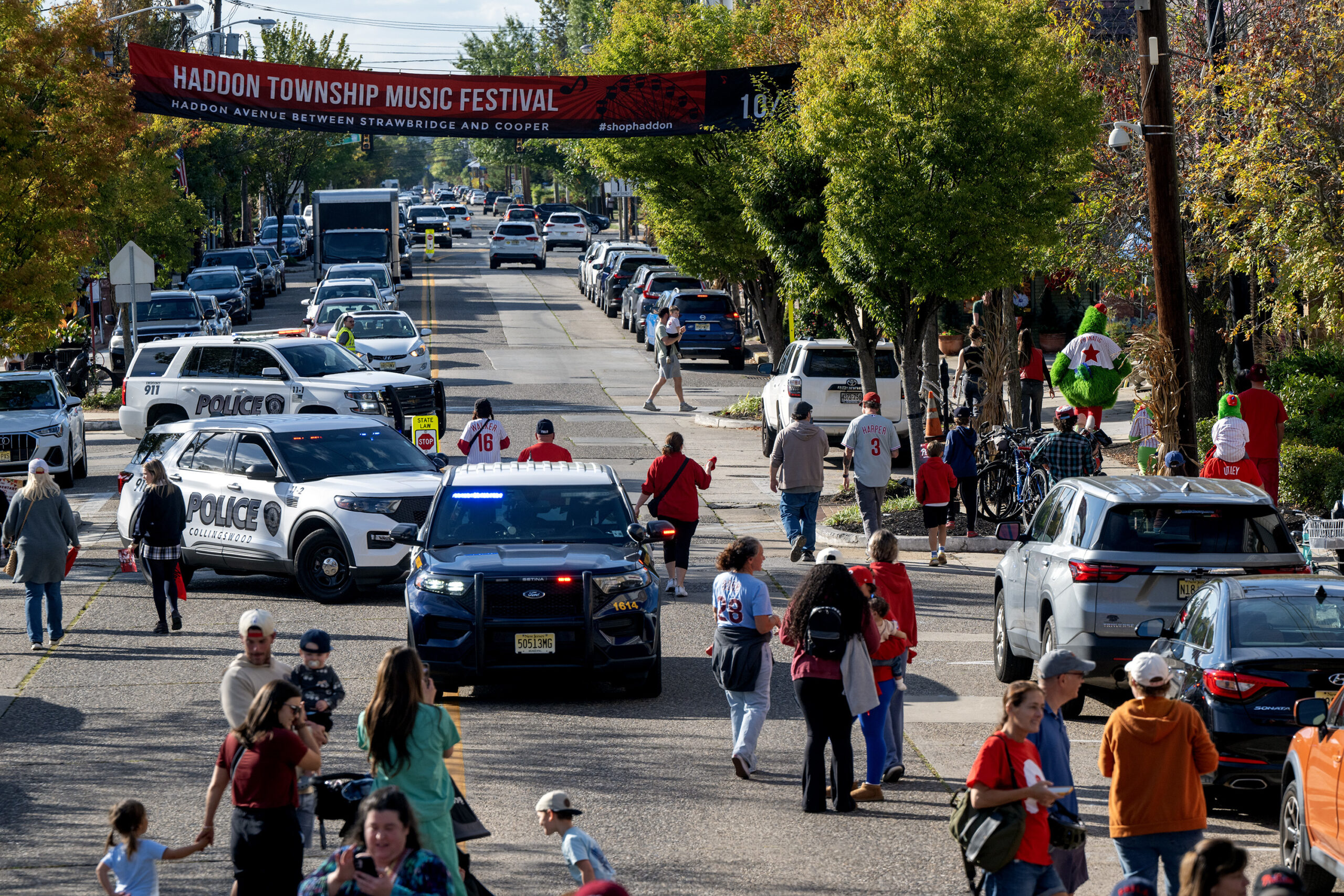
    October 11, 2025: Can you find the Phillie Phanatic, as he leaves a “Rally for Red October Bus Tour” stop in downtown Westmont, N.J. just before the start of the NLDS? There’s always next year and he’ll be back. The 2026 Spring Training schedule has yet to be announced by Major League Baseball, but Phillies pitchers and catchers generally first report to Clearwater, Florida in mid-February.
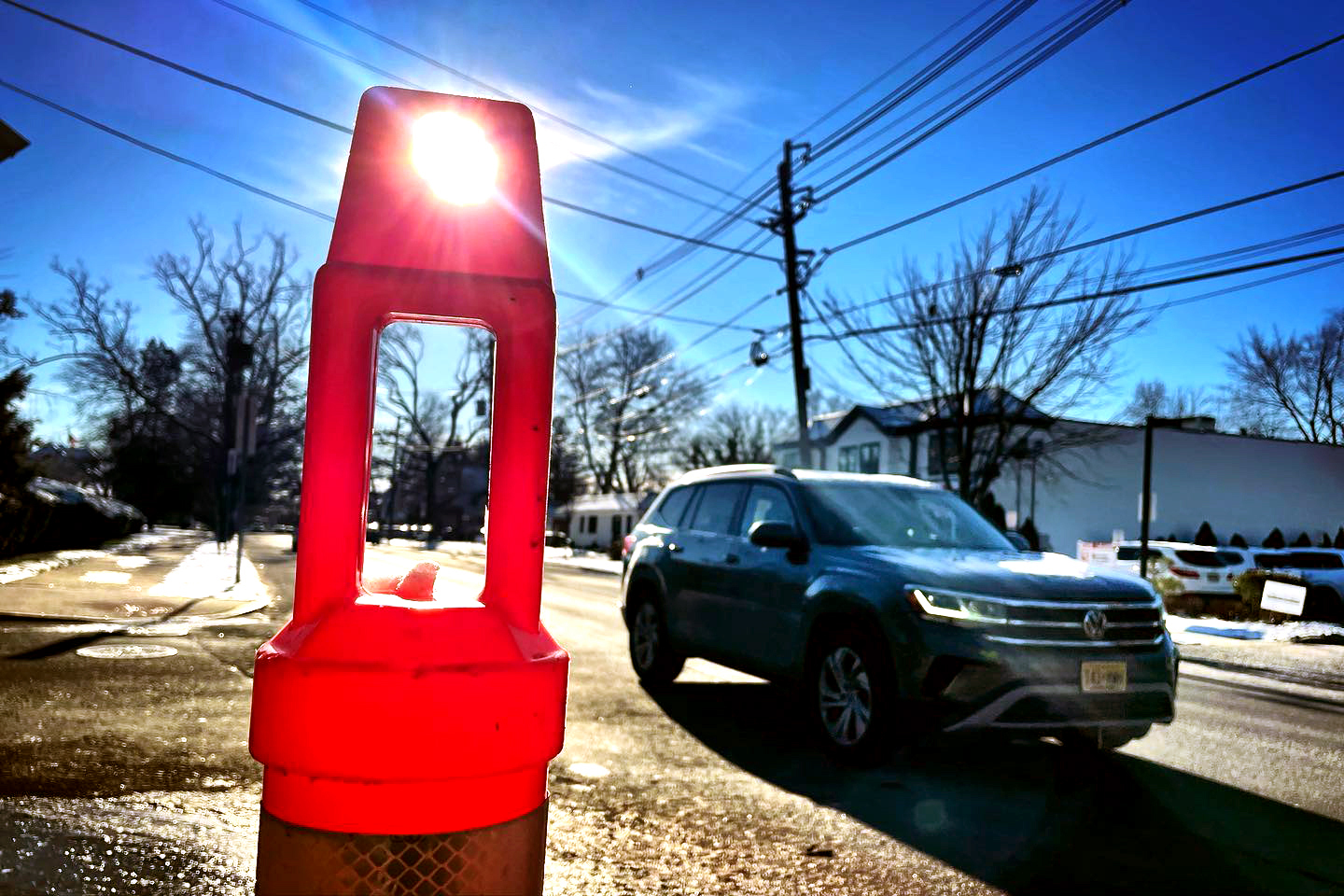
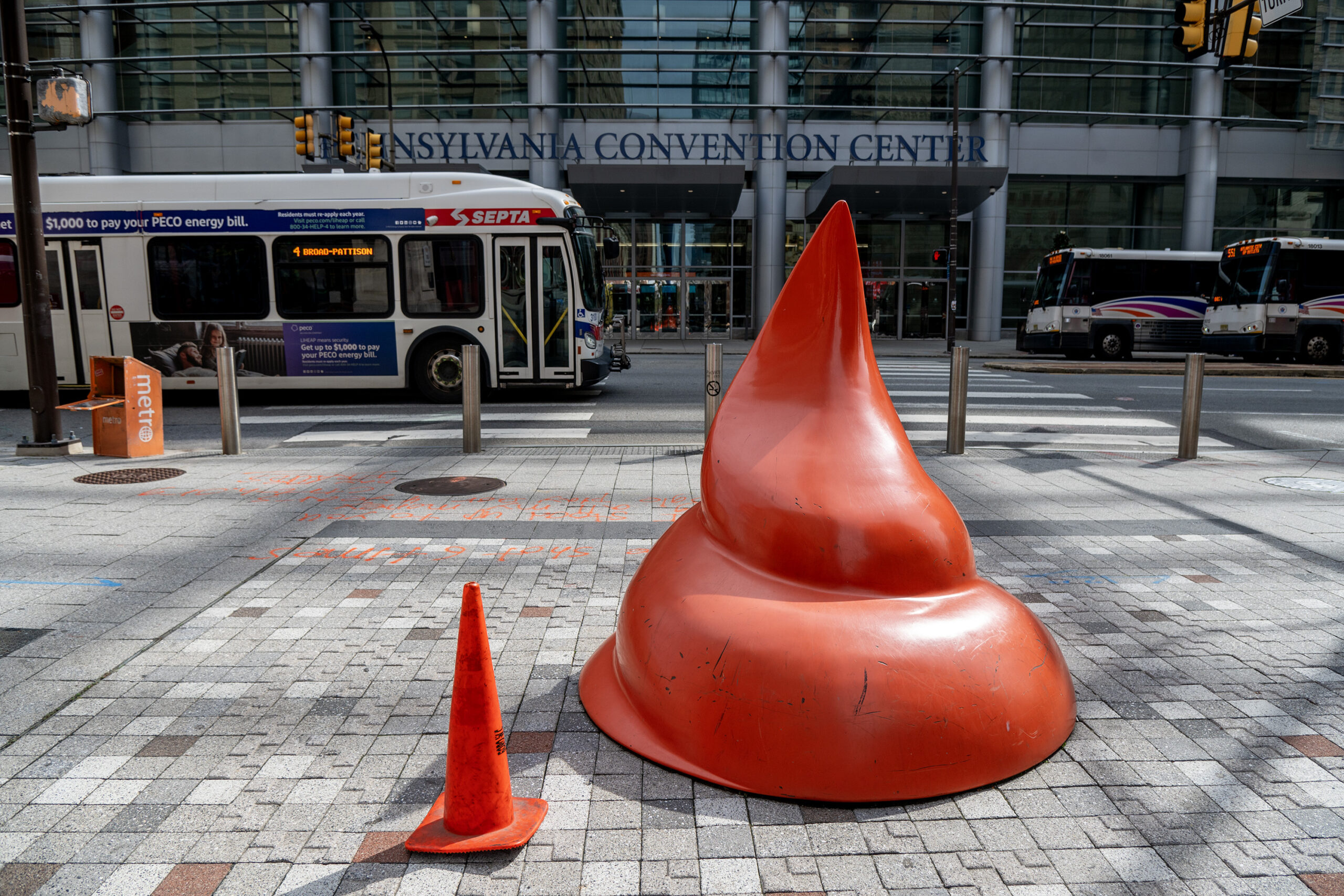
    October 6. 2025: Fluorescent orange safety cone, 28 in, Poly Ethylene. Right: Paint Torch (detail) Claes Oldenburg, 2011, Steel, Fiberglass Reinforced Plastic, Gelcoat and Polyurethane. (Gob of paint, 6 ft. Main sculpture, 51 ft.). Lenfest Plaza at the Pennsylvania Academy of the Fine Arts on North Broad Street, across from the Convention Center.

    » SEE MORE: Archived columns and Twenty years of a photo column.

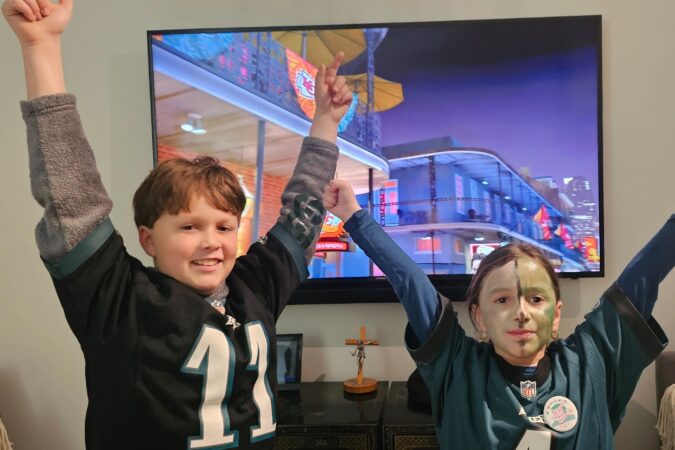
  • An 11-year-old said the Eagles should fire Kevin Patullo. Then they did. Coincidence? | Weekly Report

    An 11-year-old said the Eagles should fire Kevin Patullo. Then they did. Coincidence? | Weekly Report

    An 11-year-old Eagles fan accidentally runs the coaching search: A+

    Philadelphia spent months debating offensive schemes, internal hires, and whether continuity was actually just stubbornness. Then an 11-year-old was handed a microphone and solved it in one sentence.

    Sam Salvo didn’t deliver a nuanced breakdown of route trees or personnel groupings. He didn’t cite EPA or All-22 tape. He simply announced — with the confidence of someone who has never had to answer a follow-up question — that Kevin Patullo should be flipping burgers at McDonald’s. Philly nodded in unison.

    The funniest part isn’t that it went viral. It’s that a day later, Patullo was gone, and the city collectively decided the kid deserved at least partial credit. In a town where people once egged an offensive coordinator’s house (too far), this somehow felt like the healthier outlet.

    Sam’s rant worked because it was pure, unscripted Philly logic: blunt, emotional, metaphor-heavy, and somehow accurate. “One-half cooked, one-half raw” is not just a roast, it’s a season recap. And when he popped back up afterward saying, “I just wanted to say anything that could get him fired. And it worked,” it sounded less like a joke and more like a performance review.

    The follow-up reactions only added to the lore. Fans celebrated. Former players debated scapegoating. Someone somewhere probably floated Big Dom calling plays. And the Eagles, intentionally or not, let the internet believe that an 11-year-old helped nudge a major coaching decision.

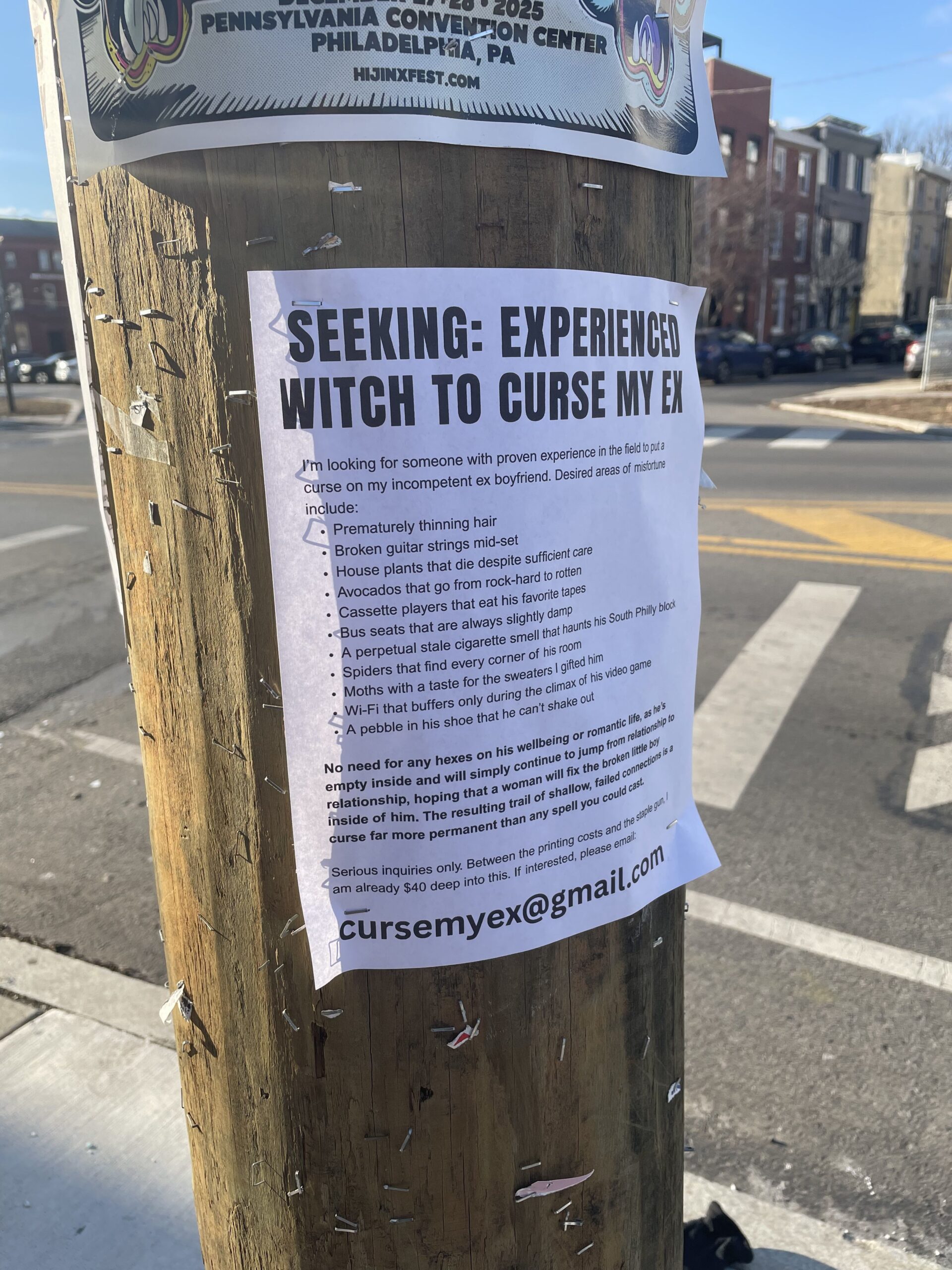
    One of the witch-seeker’s fliers hangs in Fishtown on Sunday, Jan. 4. After ending a two-year relationship, a Philadelphia woman posted the fliers around the city and in Phoenixville as a way to channel her emotions over the breakup.

    Philly collectively supports hexing an ex (with rules): A

    At some point this winter, Philadelphia decided that asking a witch to curse your ex (politely, creatively, and without touching his health or love life) was not only acceptable, but deeply relatable.

    The flier itself did most of the heavy lifting. “Seeking: Experienced Witch to Curse My Ex,” stapled to poles from Phoenixville to Fishtown, with a list of curses so specific and mild they felt less like dark magic and more like emotional Yelp reviews: thinning hair, damp bus seats, buffering Wi-Fi, eternally pebbled shoes. Nothing fatal. Nothing irreversible. Just inconvenience with intention.

    Instead of pearl-clutching, the city leaned in. The flier spread through neighborhood Facebook groups and socials, where strangers did what they do best: offered commentary, solidarity, jokes, and unsolicited advice. Some people cheered her on. Some defended the ex. Others asked how it ended. And plenty of women recognized the feeling immediately: that moment after you’ve done the therapy, the journaling, the “being mature,” and still need somewhere for the anger to go. This wasn’t about actually ruining someone’s life. It was about yelling into the city and having the city yell back, “Yeah, that sucks.”

    The rules mattered, too. No curses on his health. No messing with his love life. Philly rage has boundaries. Even our hexes come with ethics.

    Wawa learns Philly does not want a vibes-only convenience store: C-

    Philadelphia has many hard rules, but one of the hardest is this: If you remove the shelves from a Wawa, you are no longer operating a Wawa.

    The 34th and Market Street location near Drexel didn’t close because people stopped loving hoagies. It closed because Wawa tried to outthink the entire point of its existence. The fully digital, order-only format asked customers to interact with a screen for everything. No wandering, no impulse grabs, no staring at the Tastykake rack while deciding whether you’re hungry or just bored.

    And in Philly, that’s not innovation. That’s friction.

    This was once one of the company’s highest food-service locations before the pandemic, which makes the experiment feel even more puzzling in hindsight. People weren’t avoiding this store because they didn’t want Wawa. They were avoiding it because it stopped functioning like one. A convenience store that requires commitment, planning, and patience defeats the entire concept.

    The grade isn’t lower because this wasn’t malicious or careless. It was a genuine attempt to test something new. But Philly answered clearly, quickly, and repeatedly: We don’t want a Wawa that feels like an airport kiosk. That’s what will get your store closed.

    Phillies pitcher Ranger Suárez throws against the Cincinnati Reds on Saturday, July 5, 2025, in Philadelphia.

    Saying goodbye to Ranger Suárez hurts, even if it makes sense: B+

    This one lands softly and hard at the same time.

    Ranger Suárez leaving Philadelphia was never shocking, just quietly devastating. Signed by the Phillies as a teenager, developed patiently, trusted in big moments, and forever tied to the pitch that sent the city to the World Series in 2022, Suárez felt less like a roster spot and more like a constant. You looked up in October and there he was, calm as ever, getting outs without drama.

    Now he’s on the Red Sox.

    The Phillies weren’t wrong to hesitate on a five-year, $130-million deal for a pitcher with mileage, injury history, and a fastball that succeeds more on craft than velocity. Andrew Painter is coming. The rotation math is real. This is how smart teams stay competitive.

    But Philly doesn’t grade purely on spreadsheets.

    Suárez embodied a certain Phillies ideal: unflashy, durable when it mattered, unfazed by the moment, and always a little underestimated. He wasn’t the loud ace. He was the steady one. The guy you trusted to calm everything down when the season felt like it might tip.

    That’s why this stings. Not because it was reckless to let him go, but because losing someone who felt like a Phillie is different than losing someone who just wore the uniform. Watching him head to Boston is one of those reminders that the version of the team you emotionally commit to is always a few contracts behind the one that actually exists.

    OpenTable adds a 2% fee, and Philly sighs deeply: C

    Philadelphia understands restaurant math. We’ve lived through inflation menus, pandemic pivots, staffing shortages, reservation deposits, and the great “please cancel if you’re not coming” era. What we don’t love is when the bill quietly grows another line item after we thought we were done reading it.

    That’s why OpenTable adding a 2% service fee to certain transactions (no-show penalties, deposits, prepaid dining experiences) landed with more fatigue than outrage. Not rage. Just tired acceptance.

    The logic isn’t wrong. No-shows are brutal for small dining rooms, especially in places like South Philly where a missed table can knock a whole service sideways. Restaurants can absorb the fee or pass it on, and in many cases, the platform is genuinely helping places protect their bottom line.

    But from a diner’s perspective, this is yet another reminder that convenience now comes with micro-costs layered so thin you barely notice them, until you do. The reservation is free … unless you’re late. Or cancel. Or book a special dinner. Or blink wrong. It’s another reminder that each new surcharge chips away at the simple joy of making dinner plans without feeling like you’re navigating airline baggage rules.

    Philly draws the line at selling dinner reservations: A-

    Philadelphia has tolerated a lot in recent years: prix-fixe creep, credit card holds, cancellation windows measured in hours, and now, yes, platform fees (see above). But selling a free dinner reservation for profit? That’s where the city finally says no.

    The attempted resale of coveted tables at Mawn didn’t just irritate the restaurant’s owners, it offended a basic Philly value system. You can love a place. You can hustle for a table. You can brag that you got one. What you can’t do is turn access into a side hustle and expect people to shrug.

    The reaction was swift and very local: public call-out, canceled reservations, and a clear message that this isn’t New York, Miami, or a StubHub-for-dinner experiment. Yes, reservation scalping exists elsewhere, powered by bots and platforms like Appointment Trader. And yes, Philly has passed laws trying to shut that down. But what made this moment resonate wasn’t legislation. It was cultural enforcement. A collective agreement that making money off a free reservation crosses from clever into gross.

    Put simply: Waiting your turn is still the rule here. And if you try to flip your way around it, don’t be surprised when the city flips right back.

    Amanda Seyfried gives Colbert a very real Allentown community calendar: A

    Stephen Colbert has a recurring bit where he asks celebrity guests to promote actual events from their hometowns. When Amanda Seyfried, who grew up in Allentown, took her turn this week, she didn’t try to punch up the material.

    She didn’t have to.

    Seyfried read through a lineup of events that sounded exactly like a Lehigh Valley bulletin board: all-you-can-eat pasta night, speed dating for seniors, board games at a funeral home, a pirate-themed murder mystery, and Fastnacht Day donuts heavy on lard and tradition. No setup. No apology. Just listings.

    That restraint is what made it land. Seyfried treated the segment like she was helping out a neighbor, not auditioning for a tourism campaign.

    For viewers around Philly and the surrounding counties, it was immediately recognizable. This is the kind of stuff you scroll past in a local Facebook group or see taped to a coffee shop door without a second thought. Put it on national TV, though, and suddenly it becomes comedy.

  • Snow is expected during the weekend in Philly, but how much is up in the air

    Snow is expected during the weekend in Philly, but how much is up in the air

    Some snow is possible in the Philly region during the holiday weekend, but about the only thing certain is that schools will be closed until Tuesday.

    Snow — not a whole lot of it — is expected Saturday morning, and possibly again during the day Sunday.

    “Definitely something,” said Ray Martin, a lead meteorologist at the National Weather Service Office in Mount Holly, “maybe not a lot of something.”

    In short, he added, expect a “100% chance of forecast uncertainty.”

    How much for Philly?

    (function () {window.addEventListener(‘message’, function (e) { var message = e.data; var els = document.querySelectorAll(‘iframe[src*=”‘ + message.id + ‘”]’); els.forEach(function(el) { el.style.height = message.height + ‘px’; }); }, false); })();

    Some snow is expected in the early morning hours of Saturday, said Dan Pydynowski, senior meteorologist with AccuWeather Inc., and “sidewalks and streets could be slick for a time” in the Philly region.

    However, temperatures in the afternoon are expected to approach 40 degrees and that should melt any snow. If the precipitation lingers, it likely would turn to rain.

    That snow would be associated with a system from the west, and more significant amounts are expected well north and west of Philly.

    On Sunday when it will be colder, the source would be a coastal storm that has been befuddling computer models the last three days. On Wednesday, the U.S. model was seeing a significant snowstorm for the I-95 corridor. On Thursday, it said never mind and fell in line with other guidance that kept the storm offshore.

    On Friday, models were bringing the storm closer to the coast, but the model consensus was that it would be more of threat at the Shore and perhaps throw back a paltry amount to the immediate Philly region.

    “On the other hand, a slight shift … in the track could bring 1-2 inches into the urban corridor,” the weather service said in its afternoon discussion.

    Said Martin, “It’s always tricky with these offshore lows. It’s also possible that both systems pass us and we get basically nothing.”

    Far more certain is a rather big chill

    A Philadelphia firefighter spreads salt to control icing at a fire scene on Friday.

    That the region was about to experience its coldest weather of the season to date was all but certain.

    High temperatures on Monday, Martin Luther King Jr. Day, probably won’t get out of the 30s, and no higher than the mid 20s Tuesday and Wednesday, forecasters say.

    Overnight lows are due to tumble into the teens, with wind chills approaching zero early Wednesday.

    No more precipitation is forecast at least through Thursday, but with odds favoring continued below-normal temperatures through Jan. 29 and above-normal precipitation, it should be a robust period for virtual snow threats, if not actual snow.

    “Even if nothing really happens this weekend,” said Martin, “there’s always next weekend.”

    Pydynowski said that “some signs” point to a snowfall “late next week or next weekend.”

    But one uncertainty at a time.

  • One person was killed in a 3-car crash on Lincoln Drive

    One person was killed in a 3-car crash on Lincoln Drive

    One person is dead following a three-car collision Thursday night on the 3300 block of Lincoln Drive in East Falls. Police on Friday identified that driver as 65-year-old Eric Sullivan from the East Germantown area.

    Shortly before 9:20 p.m., Sullivan was driving north in a white 1997 Toyota 4Runner and crossed into the southbound lane, hitting a black 2026 Mercedes-Benz C-300 head on before smashing into a third vehicle, a black 2025 Nissan Rogue.

    Sullivan’s car flipped over multiple times and the driver was ejected onto the road. Medics pronounced Sullivan dead about five minutes later, according to police.

    The 45-year-old man driving the second car and the two passengers, a 36-year-old woman and an 8-year-old girl, were all taken to Albert Einstein Medical Center. They’re all in stable condition. As was the driver of the third car who was taken to Lankenau Hospital, said police spokesperson Jasmine Colón-Reilly.

    Police are investigating the cause of the crash.

    Lincoln Drive is listed on the city’s High Injury Network, the 12% of roads where 80% of Philadelphia’s most dangerous and deadly crashes occur. Area residents have long advocated for a safer street design to reduce the number of crashes and bring down speeds.

    In 2023, PennDot and the city announced plans to install four speed tables — structures similar to speed bumps but designed to be less noisy — at both ends of Lincoln Drive’s most dangerous stretch, which is directly northeast of where the crash occurred. Residents argued that and other proposed safety additions to the road wouldn’t be enough to combat the danger of the hairpins turns and other hazards along that street.