Category: Philadelphia News

  • Joe Frazier statue could move to base of Art Museum steps, taking Rocky’s place

    Joe Frazier statue could move to base of Art Museum steps, taking Rocky’s place

    History may not repeat itself, but at least in Philadelphia, it sure does rhyme.

    Twenty years ago, our famed Rocky statue made the move from its former perch at the stadium complex in South Philly to the base of the steps of the Philadelphia Museum of Art, where it has stood since.

    Now, the city’s statue of former world heavyweight champion “Smokin’” Joe Frazier could soon do the same.

    Creative Philadelphia, the city’s office for the creative sector, is slated to present a proposal at a Wednesday Art Commission meeting that would have the Frazier statue take over the Rocky statue’s current home at the base of the Art Museum’s steps. Last month, the commission approved the Rocky statue’s coming move back to the top of the steps, where it supposedly will permanently stay starting in the fall and following its first-time display inside the museum.

    “Relocating the Joe Frazier statue to this prominent civic and cultural space would … create a respectful dialogue between two complementary representations of Philadelphia’s spirit,” chief cultural officer Valerie V. Gay and public art director Marguerite Anglin wrote in a letter to the Art Commission. “Rocky Balboa as a symbol of hard work and aspiration, and Joe Frazier as the embodiment of those values lived out in real life.”

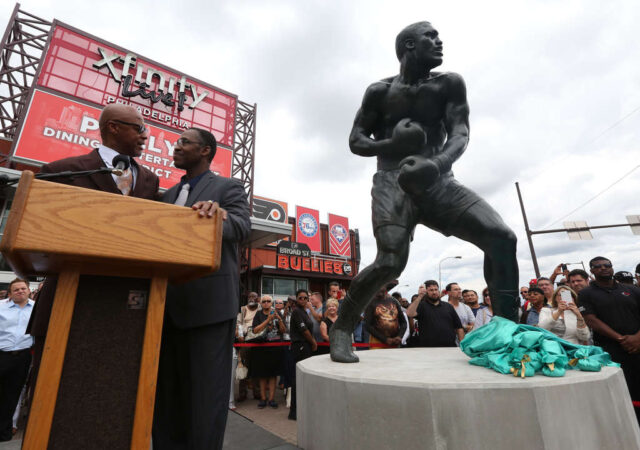
    Created by sculptor Stephen Layne in 2014, the Frazier statue has stood in the sports complex outside what is now Stateside Live! for about a decade, and has been a part of the city’s public art collection since its inception. In an effort led by Joe Hand, the owner of Feasterville’s Joe Hand Boxing Gym and a longtime friend of Frazier’s, the statue’s commission was funded by the boxer’s family and supporters before its donation to the city.

    The statue, standing at about 12 feet tall, depicts Frazier just moments after besting Muhammad Ali in the so-called “Fight of the Century” — the March 1971 bout in which Ali suffered his first professional loss after 15 grueling rounds.

    Frazier, who died in 2011, was a well-accomplished boxer before that matchup, having won an Olympic gold medal in 1964 in Tokyo. He held the heavyweight championship title from 1970 to 1973, when he lost the belt to fellow legend George Foreman following a bout in Kingston, Jamaica, in a matchup referred to as “The Sunshine Showdown.” He retired in 1976, the year following a vicious loss to Ali in the famed “Thrilla in Manila” fight. After returning for a 1981 match against “Jumbo” Floyd Cummings that resulted in a draw, Frazier left the sport for good.

    Relocating the Frazier statue to the Art Museum is expected to cost roughly $150,000 in city funds, and has support from leaders including Mayor Cherelle L. Parker, City Councilmember Katherine Gilmore Richardson, State Sen. Sharif Street, and State Sen. Anthony Hardy Williams, according to Creative Philadelphia’s Art Commission proposal.

    “Placing the Joe Frazier statue at the Art Museum affirms Philadelphia’s commitment to honoring real-life achievement alongside cultural mythology,” Parker wrote in a letter supporting the move. “Together, these figures reflect the city’s spirit, where determination, resilience, and opportunity meet.”

    Friends of Frazier also expressed support in letters included as part of Creative Philadelphia’s proposal — in part, at least, because the Art Museum has higher foot traffic than where the statue currently stands.

    The move “will give the Frazier statue many more eyes on it than at the Xfinity area,” wrote Nicholas L. Depace, the boxer’s friend and former physician.

    Frazier served as a major inspiration for the Rocky Balboa character, with the man and the character sharing several key elements, according to Creative Philadelphia. Like Rocky, Frazier trained for boxing matches by hitting frozen raw meat, ran the Art Museum steps, and faced opponents that closely mirrored those actor Sylvester Stallone’s character faced in the franchise.

    “Stallone made 5 Rocky movies mostly based on the real life humble champion Smokin’ Joe Frazier from Philadelphia,” wrote Smokin’ Frazier Championship Foundation Inc. CEO Pete Lyde in a letter of support for the move. “Joe Frazier’s statue at the Philadelphia Art Museum Steps symbolizes and celebrates the real life human heart and potential within us all worldwide.”

    The Rocky statue, meanwhile, is cleared for installation atop the Art Museum steps following its exhibition in “Rising Up: Rocky and the Making of Monuments,” an Art Museum program slated to run from April to August. After that, the statue now displayed at the top of steps — which Stallone lent to the city for the inaugural RockyFest in December 2024 — will head back to the actor’s collection, and the original, screen-used statue will take its place.

    It was not immediately clear when the Frazier statue could head to the Art Museum. Creative Philadelphia did not immediately respond to a request for comment.

    “Placing the Smokin’ Joe Frazier statue at the Art Museum steps would not only correct a historical imbalance but also serve as an inspirational symbol for residents and visitors alike,” wrote Councilmember at-large Jim Harrity in a letter of support. “It would elevate a true Philadelphia champion whose impact reached far beyond the boxing ring and whose contributions to sports, labor history, and community service continue to resonate today.”
  • Democratic ward leaders endorse Sharif Street for Congress, solidifying him as Philly’s establishment favorite

    Democratic ward leaders endorse Sharif Street for Congress, solidifying him as Philly’s establishment favorite

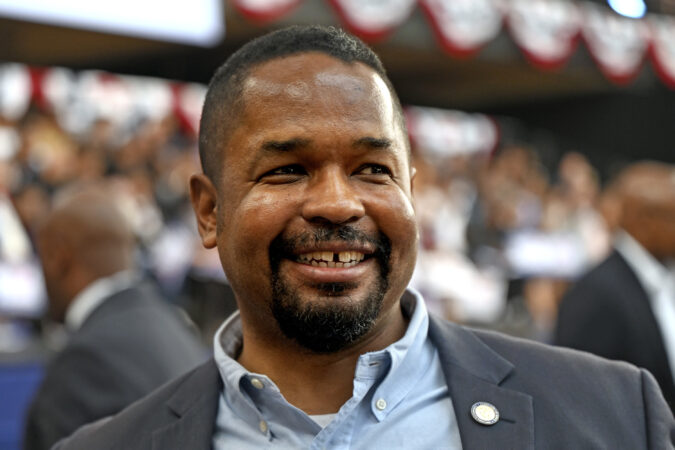
    Philadelphia’s Democratic Party has endorsed State Sen. Sharif Street for the city’s open congressional seat.

    The endorsement Monday came as no surprise, given Street’s insider connections. He previously chaired the Pennsylvania Democratic Party and is close to party leaders in the city. And Bob Brady, who chairs the Democratic City Committee, said last fall that he expected his fellow ward leaders to vote to endorse Street.

    But it nonetheless strengthens Street’s status as the favorite in the race among the local Democratic establishment. Street, the son of former Mayor John F. Street, was endorsed by the politically powerful unions in the Philadelphia Building & Construction Trades Council last year.

    “I am deeply honored to have received the overwhelming support of the grassroots leaders who power our party,” Street, who represents a North Philadelphia district in the state Senate, said in a statement. “This endorsement is more than just a vote of confidence — it is a demonstration that we are building a broad-based coalition.”

    Street is one of about a dozen Democrats vying to succeed retiring U.S. Rep. Dwight Evans in Pennsylvania’s 3rd Congressional District. Other contenders include State Reps. Morgan Cephas and Chris Rabb and physicians Ala Stanford and Dave Oxman.

    Street has also emerged as the front-runner in the financial race. Recently disclosed campaign reports showed he raised $348,000 from donors in the last quarter of 2025, the largest haul among the candidates.

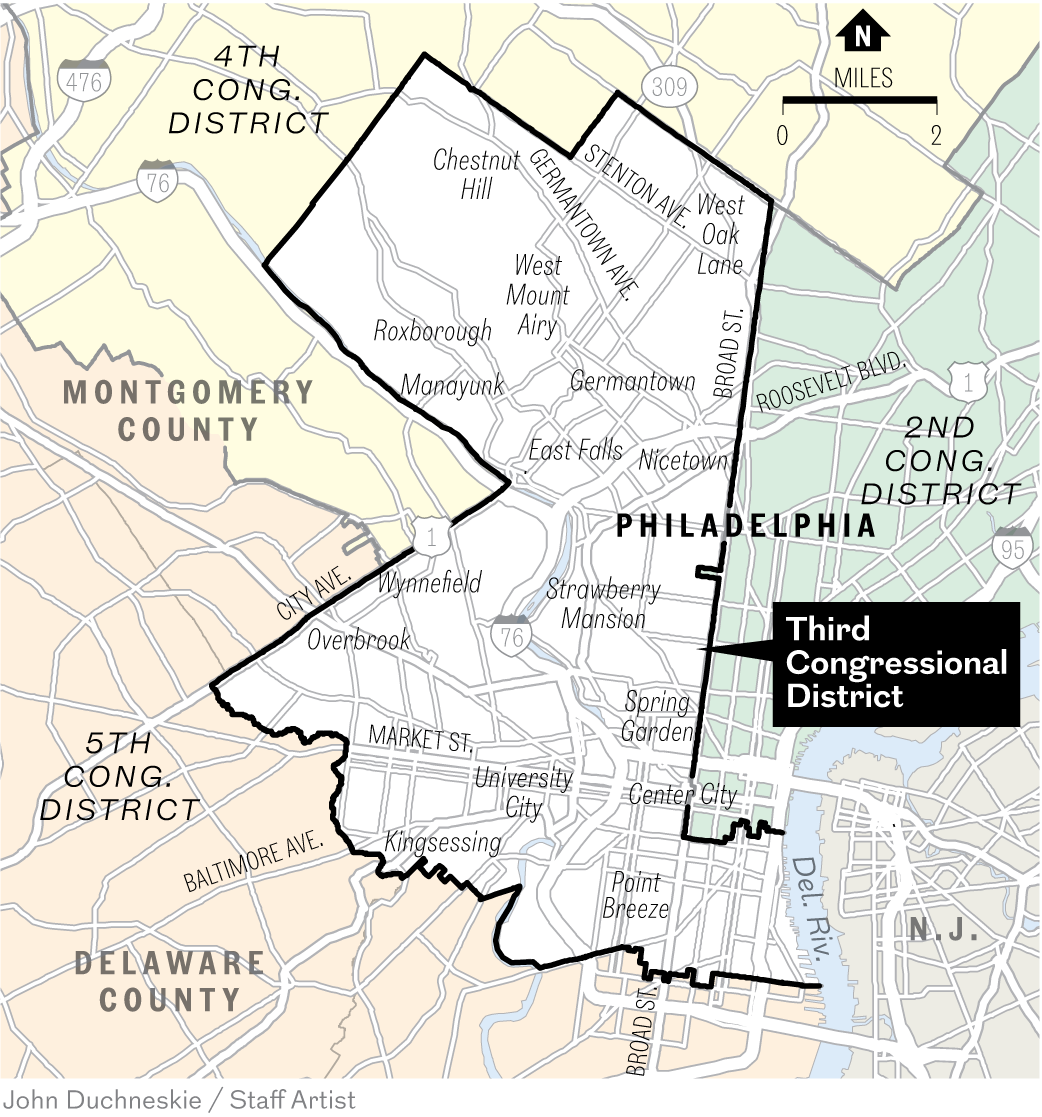
    The 3rd Congressional District is, by some measures, the most heavily Democratic district in the U.S. House, and includes West and Northwest Philadelphia and parts of Center City, Southwest, South, and North Philadelphia.

    The winner of the Democratic primary in May is all but guaranteed victory in November. Democrats hold a 7-to-1 voter registration edge over Republicans in Philadelphia.

    Map of Pennsylvania’s Third Congressional District.

    Earning the party nod may help Street stand out in a crowded field and will bolster his ground game for campaigning, activating the party’s hundreds of committeepeople to get out the vote for him.

    But it doesn’t guarantee victory. Insurgent candidates have defied the party’s dominance several times in recent city elections, and the district includes several progressive pockets that could open the door for a candidate who can coalesce the left against Street.

    The endorsement followed a vote by the Democratic ward leaders in the district. A candidate must receive at least 50% of the vote to win the party endorsement.

    If no candidate reaches that mark, each ward prints its own sample ballots with its preferred candidates, which often happens in open contests like this year’s primary.

    The party’s endorsement of Street means all ward leaders are now encouraged to include him in the literature distributed to voters before and on election day. Some wards, however, choose to print their own slates anyway.

    The party did not immediately disclose the final vote tally at the endorsement meeting.

    Northwest Philadelphia’s 50th Ward, which is led by Mayor Cherelle L. Parker, has not yet made an endorsement in the race, said Aren Platt, executive director of the mayor’s campaign, People for Parker.

    Top candidates in the race, including Street, were scheduled to face off at a candidates forum hosted by the Center City Residents Association on Monday night.

  • Moore College will consider opening undergraduate programs to men

    Moore College will consider opening undergraduate programs to men

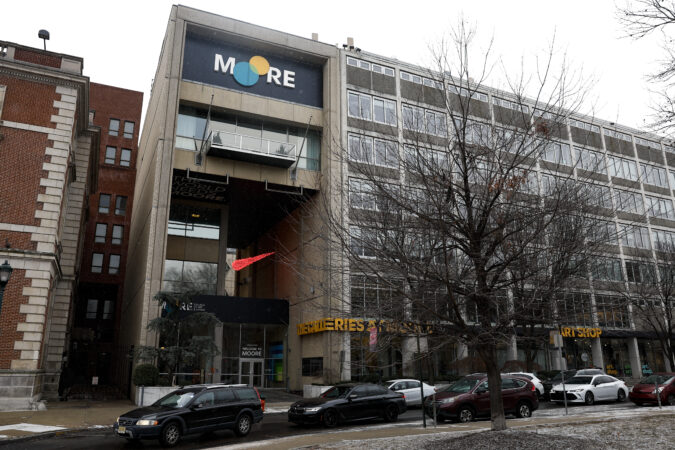
    Moore College of Art and Design will consider opening its undergraduate programs to men for the first time in its 177-year history.

    The Philadelphia school, which touts its role as “the first and only historically visual arts college for women in the nation,” cited the need to make arts programs more accessible in the region and the expected national decline in the available pool of high school graduates.

    The college, which enrolls about 500 students, will study and discuss with its community the prospect of admitting men over the next four months and make a decision by June, the school announced in emails to alumni, faculty, and students Monday. If the school decides to admit all genders, the first class admitted would be for 2027.

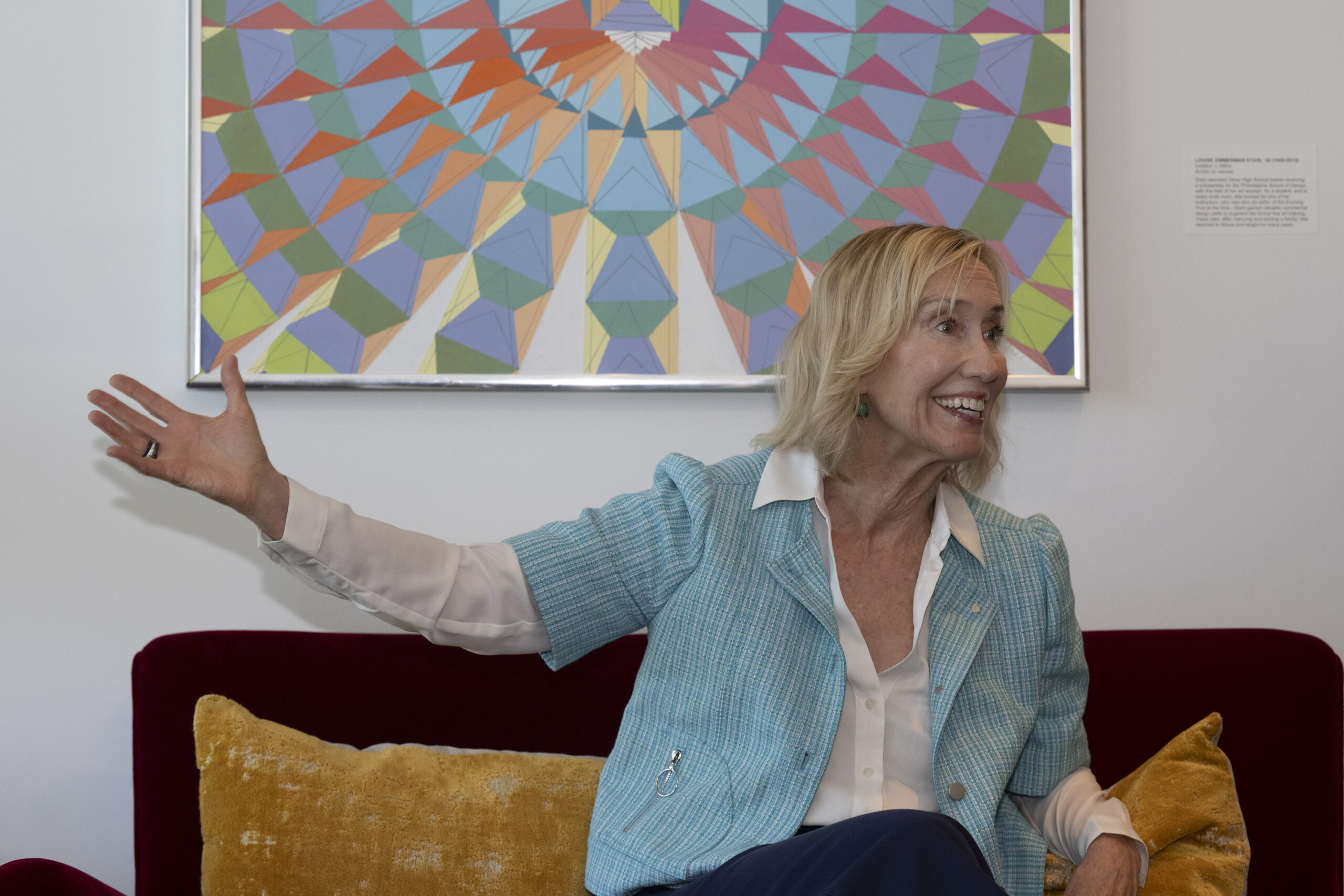
    “We will explore all of this together in an inclusive way for students, faculty, staff, and alumni,” wrote Moore president Cathy Young and Frances Graham and Art Block, chairs of the school’s board of trustees and board of managers, respectively. “Your voices are essential. No decision has been made at this time. The boards want your feedback.”

    Moore College of Art and Design president Cathy Young.

    If Moore goes coed, Bryn Mawr College would be the only remaining women’s school in the Philadelphia region. (In Allentown, Cedar Crest College remains primarily a women’s college.)

    Several other colleges in the region that were formerly for women have gone coed over the last decades, including Rosemont on Philadelphia’s Main Line in 2008, Immaculata University in Chester County in 2005, and Chestnut Hill College in Philadelphia in 2003.

    Nationally, the number of women’s colleges has been declining from a high of over 200 to just 31 as of 2022, according to a 2025 report by the Pew Research Center.

    It wouldn’t be the first change in Moore’s admissions policy in recent years.

    In 2015, Moore began admitting “all qualified students who live as women and who consistently identify as women at the time of application.”

    Then in 2020, Moore also began accepting nonbinary and gender-nonconforming students. Since then, the number of those students has been growing. They made up 6% of the first freshman class under the new policy in 2021. By fall 2022, they accounted for 21%, and by fall 2023, 26%. Last fall, that grew to one-third of the freshman class.

    Moore’s graduate programs and most of its continuing education programs already include men.

    Moore officials said they are making the decision from a position of financial and academic “strength.” The school has had operating surpluses for the last 24 consecutive years, a school spokesperson said. Many small schools have faced financial strain in recent years, but Moore fared among the top small private colleges in the Philadelphia region for financial health in a 2024 Inquirer review.

    Moore’s net tuition climbed from $10.8 million to $12.7 million in fiscal 2024 and to $16.5 million in fiscal 2025, financial records show. The school also saw a big gain in private gifts and grants last year to $2.2 million, up from $885,383 the year before.

    This year’s enrollment is the school’s second highest behind fall 2024, when the college accepted 112 students from the University of the Arts, which abruptly closed in June 2024. The school also took 12 students that year from the Delaware College of Art and Design, which closed that year, too.

    Moore opened a new residence hall in Rittenhouse Square last fall, which is just a seven-minute walk from campus and will allow the school to guarantee students housing for all four years.

    In announcing the possibility of accepting all genders, Moore officials noted UArts’ closure and the end of degree-granting programs at the Pennsylvania Academy of Fine Arts.

    “There is a void in Philadelphia’s higher ed creative landscape, and that begs the question: Shouldn’t all creatives, regardless of gender, have access to Moore …” they wrote. “The answer doesn’t have to be “yes,” but it is our responsibility to explore it.”

    College surveys of applicants have shown that the school’s status as a women’s college isn’t a big draw. Only 6% cited it as important to their decision out of 885 survey respondents over the last dozen years, the school said. Meanwhile, a quarter said it was one of the important reasons they didn’t choose Moore.

    Moore officials also cited the expected drop in the high school graduate population beginning this year because of declining birth rates. A decline of 10% is expected by 2037, they noted.

    “There are simply fewer students,” they wrote. “No responsible institution can ignore factors like these. And we won’t.”

    They said they will discuss ways “to preserve and activate in new ways” Moore’s history and legacy as part of the exploration.

    Between February and April, Moore plans to host about 20 sessions for faculty, staff, and alumni to share their thoughts, as well as providing an opportunity for online comments.

    Staff writer Harold Brubaker contributed to this article.

  • Judge sentences man who decapitated his wife: ‘I don’t think I’ve ever seen a case like this’

    Judge sentences man who decapitated his wife: ‘I don’t think I’ve ever seen a case like this’

    Hours before Ahmad Shareef was arrested for killing his wife, he called his mother and confessed.

    “I cut her head off,” he told her, according to the affidavit of probable cause for his arrest.

    On Monday, Shareef, 37, was sentenced to 16 to 42 years in prison in the decapitation death of Leila Al Raheel inside the couple’s Northeast Philadelphia home. Shareef pleaded guilty to third-degree murder and related crimes in the November 2022 slaying.

    “I don’t think I’ve ever seen a case like this,” said Common Pleas Court Judge Charles Ehrlich.

    New details of the killing also surfaced during the hearing.

    After Shareef confessed to his mother, she asked a neighbor to go to her son’s home in the 300 block of Magee Avenue and check on Al Raheel, according to the affidavit. The neighbor found Al Raheel dead in the dining room, she later told police.

    Officers who responded to the house discovered Al Raheel’s headless body on the kitchen floor, the affidavit said. They found Shareef about four miles away, hiding in bushes in front of a house. His sweatpants, the document said, were stained red with blood.

    Inside a police interview room, Shareef waived his Miranda rights, according to the affidavit. He told detectives he’d argued with Al Raheel after she had called him names.

    Then, he said, he cut off her head with a kitchen knife.

    In court Monday, the neighbor described how discovering Al Raheel’s body upended her life. She said she has been diagnosed with post-traumatic stress disorder. “This isn’t something that time simply erases,” she said.

    No one testified on Shareef’s behalf. His mother, who had been expected to appear, was ill and unable to attend, his defense attorney, Gregg Blender, said.

    Al Raheel, who came to the U.S. with Shareef and his family in 2011, “has no family to speak on her behalf,” said the prosecutor, Maggie McDermott.

    The judge imposed a sentence slightly below the prosecution’s request of 23 to 47 years, after Shareef’s attorney urged him to consider his client’s traumatic childhood and long-standing mental illness, which he said went largely untreated.

    As a child, Shareef moved with his mother from Kuwait to Iraq and later to Syria, fleeing both war and abusive men who, Blender said, subjected them to violence. At the insistence of his family, Shareef later married Al Raheel, a neighbor, Blender said.

    In the U.S., Shareef was treated repeatedly for mental health crises, Blender said. In 2012, he was hospitalized after striking himself and cutting his wrists, and in 2019, Blender said, Shareef stabbed himself in the neck.

    Blender urged the judge to weigh what he described as his client’s “horrific upbringing” against what he acknowledged was “nothing less than a horrific crime.”

    McDermott called the killing the “peak of domestic violence” and “unspeakably awful,” and warned that Shareef posed a continuing danger. If he was capable of such violence toward someone he loved, she argued, then even strangers were at risk.

    Ehrlich said the sentence reflected both Shareef’s traumatic past and the threat he posed going forward.

    “To sever a head with a kitchen knife takes a lot of effort,” he said. “Mr. Shareef, you have lived a life of horrors. I don’t think anyone in this courtroom disputes that.” The question, he added, was what needed to be done to protect others.

    “I’m very concerned about the future — I’m going to be honest with you,” the judge said. “What happened to you as a child was not your fault. But people with this kind of damage can hurt others.”

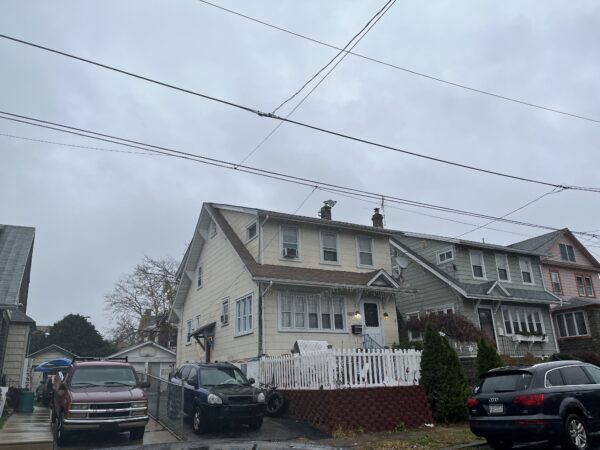
    After the slaying, neighbors told The Inquirer that several people had been living in the house, which had become an eyesore on the block. Shareef, they said, stood out: He behaved aggressively to other residents, and sometimes appeared outside wearing only underwear.

    Since late 2016, police responded to more than 50 calls on the 300 block of Magee Street for domestic disturbances, reports of weapons, and other complaints. However, police would not disclose exact addresses, and it remains unclear how many of those calls — if any — originated from the home Shareef shared with Al Raheel, where she was eventually killed.

    The city’s Department of Licenses and Inspections also confirmed that inspectors visited the house more than a year before Al Raheel was killed, following reports that the house’s garage was being used as a living space. But the inspectors weren’t able to gain access to the property, according to the department. Instead, they issued violations for weeds and combustible storage.

  • Greenberg Elementary students have been relocated as Philly schools continue to face cold-weather issues

    Greenberg Elementary students have been relocated as Philly schools continue to face cold-weather issues

    Building woes triggered by a sustained blast of cold weather continue at some Philadelphia schools.

    Staff at Strawberry Mansion High reported that about half the building was without heat Monday, with some classrooms in the 40s and hallways not much warmer.

    And staff and students at Greenberg Elementary in the Northeast had to relocate to the old Meehan Middle School after nearly a week of virtual school because of heating problems.

    “Due to insufficient heat throughout the building, Greenberg is not able to safely support in-person learning at this time,” district officials wrote to parents this weekend. “Our facilities team is actively working to resolve the heating issue as quickly as possible. At this time, the repair timeline is still being assessed, but we will continue to provide updates as more information becomes available.”

    Meehan is one of the district’s “swing spaces” — it no longer operates as a school, but is used as an alternate location for schools that need it. It recently housed Thomas Holme Elementary while a new building was constructed for that school. It’s unclear how long Greenberg students will need to stay at Meehan.

    The move rankled some Greenberg parents, who had logistical and safety concerns about sending their children to a different location.

    Katy Foley-Gallagher, mom of a Greenberg kindergartener and third grader, said virtual learning was a challenge — on days she had to work, her husband had to take off from his job to manage their daughter and son.

    But moving to Meehan isn’t ideal either, Foley-Gallagher said.

    “Everybody’s getting anxious — this is disrupting their learning,” said Foley-Gallagher. “They district is not taking care of their building, and they don’t keep up with the infrastructure at all.”

    The school system, which a 2023 landmark court ruling acknowledged has been underfunded for decades, has billions in unmet building needs. Superintendent Tony B. Watlington Sr. has proposed a facilities master plan that would cost $2.8 billion and require closing 20 buildings, as well as modernizing 159 others.

    It’s not yet clear whether Greenberg would receive upgrades as part of that process. And that plan, which the school board is expected to vote on this winter, would take years to implement.

    Greenberg, like other district schools in the Northeast, is overcrowded, with over 1,000 students in a building whose capacity is 800. Students can no longer leave their classrooms for art or music; those rooms have been repurposed to accommodate extra classes.

    “They’re going to put them back in these crowded rooms,” said Foley-Gallagher. “Greenberg is such a good school, but I worry that this is going to drive people out of the school, out of the city.”

    She and other parents said they had concerns about their children being on a campus with Lincoln High, another overcrowded school.

    District officials said they were taking steps to ensure “a smooth transition for students and families” as Greenberg relocates to Meehan.

    The district is providing shuttle service for students who normally walk to Greenberg, though the shuttle leaves at 8 a.m., a half hour after classes begin.

    “We understand that unexpected changes can be challenging for families, and we appreciate your patience and partnership as we work to restore normal building operations,” district chief operating officer Teresa Fleming wrote in an email to parents. “The safety and well-being of our school community remain our highest priority.”

  • Philadelphia man charged with killing woman who reported him for sexual assault, officials say

    Philadelphia man charged with killing woman who reported him for sexual assault, officials say

    A Philadelphia man was charged with murder after fatally shooting his girlfriend in Levittown this weekend, shortly after she told police he had sexually assaulted her, authorities said.

    Yujun Ren, 32, turned himself in to police in Middletown Township Sunday and told them he had been trying to scare the woman, Yuan Yuan Lu, when the firearm he carried accidentally discharged, killing her.

    Investigators believe otherwise, according to the affidavit of probable cause for Ren’s arrest.

    In addition to murder, prosecutors charged Ren with stalking and a gun crime. He is being held without bail.

    Bristol Township police discovered Lu’s body shortly after noon Sunday in the driver’s seat of a white Hyundai in a residential neighborhood, according to the affidavit.

    Lu had been shot in the head. Police found that the driver’s side window had been struck by gunfire, and they recovered an expended shell casing from a small caliber handgun.

    In Ren’s interview with investigators, he told them that Lu had said “hurtful things and took their cats and dogs,” the affidavit said, leading him to pull the handgun in an attempt to scare her.

    A day earlier, Lu had told Philadelphia police that Ren had sexually assaulted her at his home on South Orianna Street in Pennsport.

    The assault, which Lu said happened around 1 p.m. Saturday, led her to end the relationship and pack her things to leave while Ren was at work, according to the affidavit. Lu told police she was afraid of Ren and said “he had a firearm he carried everywhere,” the document said.

    Ren legally owned a Mossberg MC20 9mm pistol, investigators found.

    The day Ren turned himself in, a woman who told police that she was Ren’s aunt turned that firearm over to Middletown Township authorities, according to the affidavit.

    Bucks County District Attorney Joe Khan said in a statement that the killing was a “sobering reminder of the lethal nature of domestic violence.”

    “Our investigation revealed a chilling course of conduct,” said Khan, adding that investigators recovered evidence showing Ren stalked Lu in the early morning hours before shooting her.

    Ren is set to appear in district court Tuesday for a preliminary hearing.

  • Ernest P. Richards, lifelong urban cowboy, musician, and contractor, has died at 85

    Ernest P. Richards, lifelong urban cowboy, musician, and contractor, has died at 85

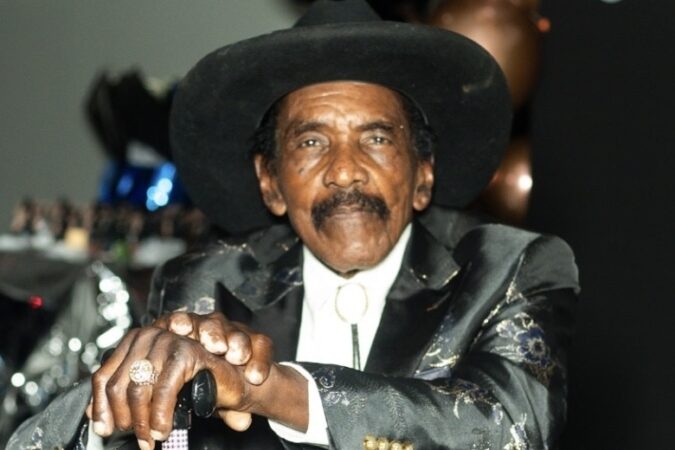
    Ernest P. Richards, 85, of Philadelphia, lifelong urban cowboy, musician, singer, building contractor, mentor, veteran, and volunteer, died Monday, Jan. 12, of cancer at the Philadelphia VA Medical Center.

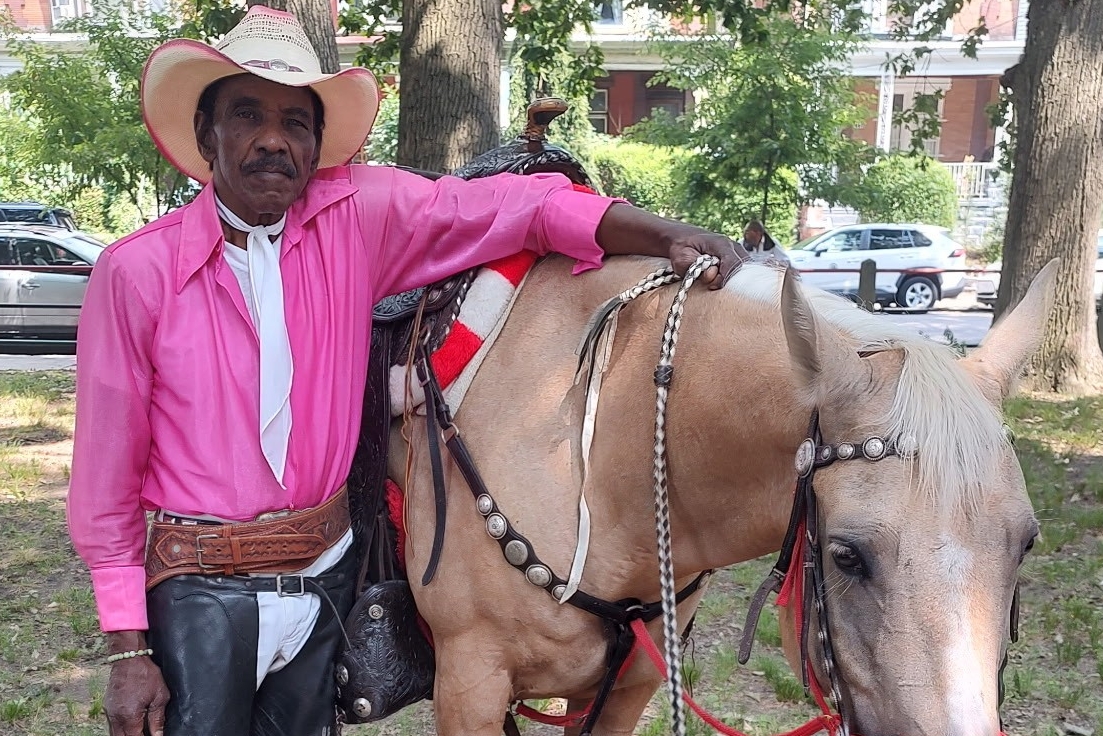
    Mr. Richards fell in love with horses when he was a youth in South Philadelphia and went on to own four of his own: Lucky, Jaheel, Pretty Girl, and Dancer. He became an expert in horsemanship and grooming, and dressed daily in cowboy hats, bolo ties, and western boots. He shined his collection of saddles as brightly as any car in the neighborhood.

    “He loved animals, period,” said his wife, Sheila, “and horses are strong. He liked that.”

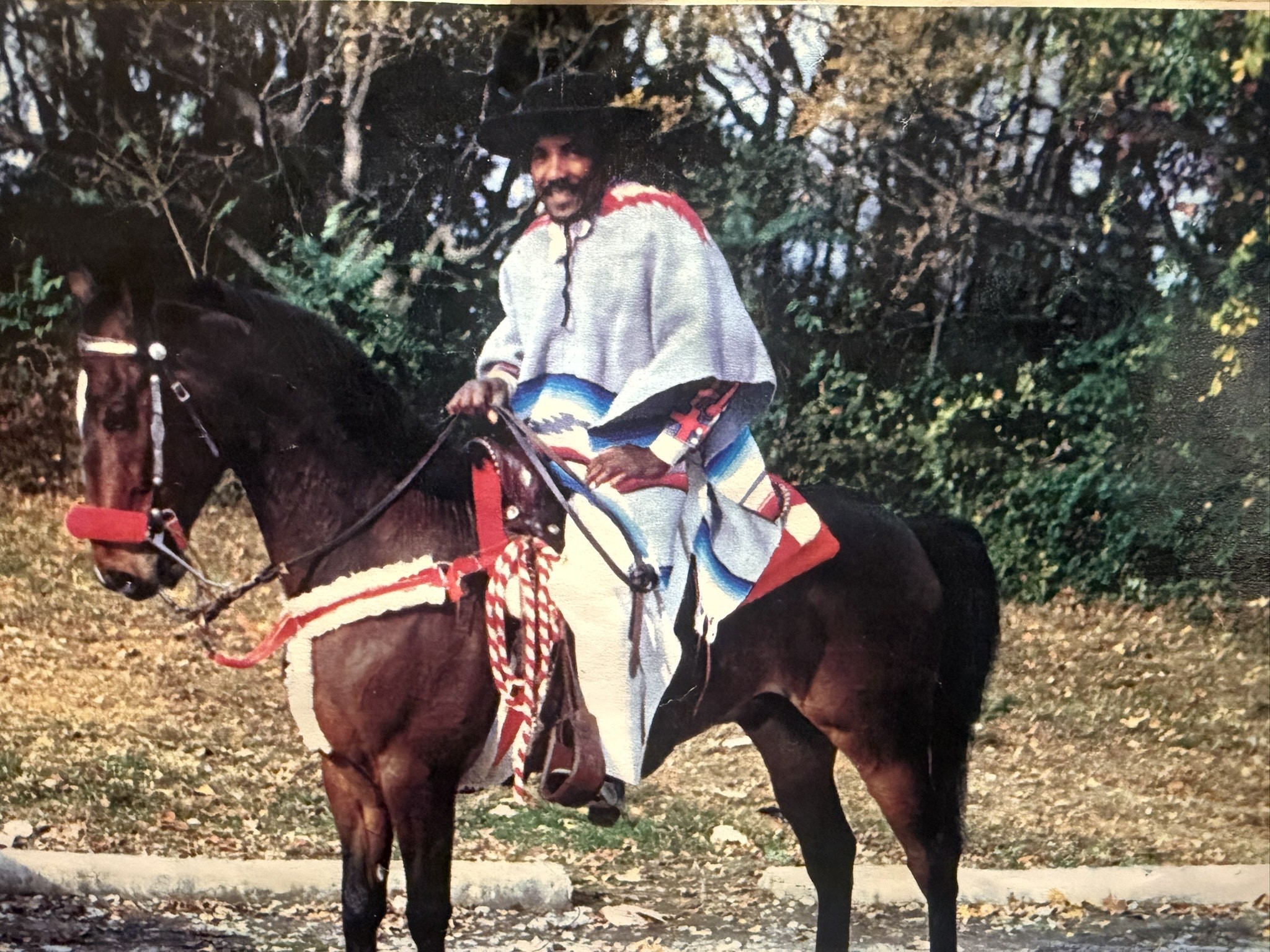
    Over the years, Mr. Richards adorned his mounts in colors that matched his eye-catching outfits and rode in parades, on local trails, and elsewhere around the city and South Jersey. He started out supervising 25-cent pony rides at a farm in South Philadelphia as a teenager and later stabled his horses most often at a farm near the Cowtown Farmers Market in Pilesgrove Township, Salem County.

    Mr. Richards was known for his distinctive western attire.

    He became such a good rider, and his horses were so expressive, his family said, that he often led other concrete cowboys in holiday parades on Broad and 52nd Streets. “He was the star of the show,” said his daughter Passion. “My dad was sharp.”

    Mr. Richards enjoyed watching John Wayne westerns and the TV show Bonanza, and he took his family on a memorable trip to a rodeo in Maryland. He taught his children, grandchildren, and anyone else who was interested how to safely ride and care for horses.

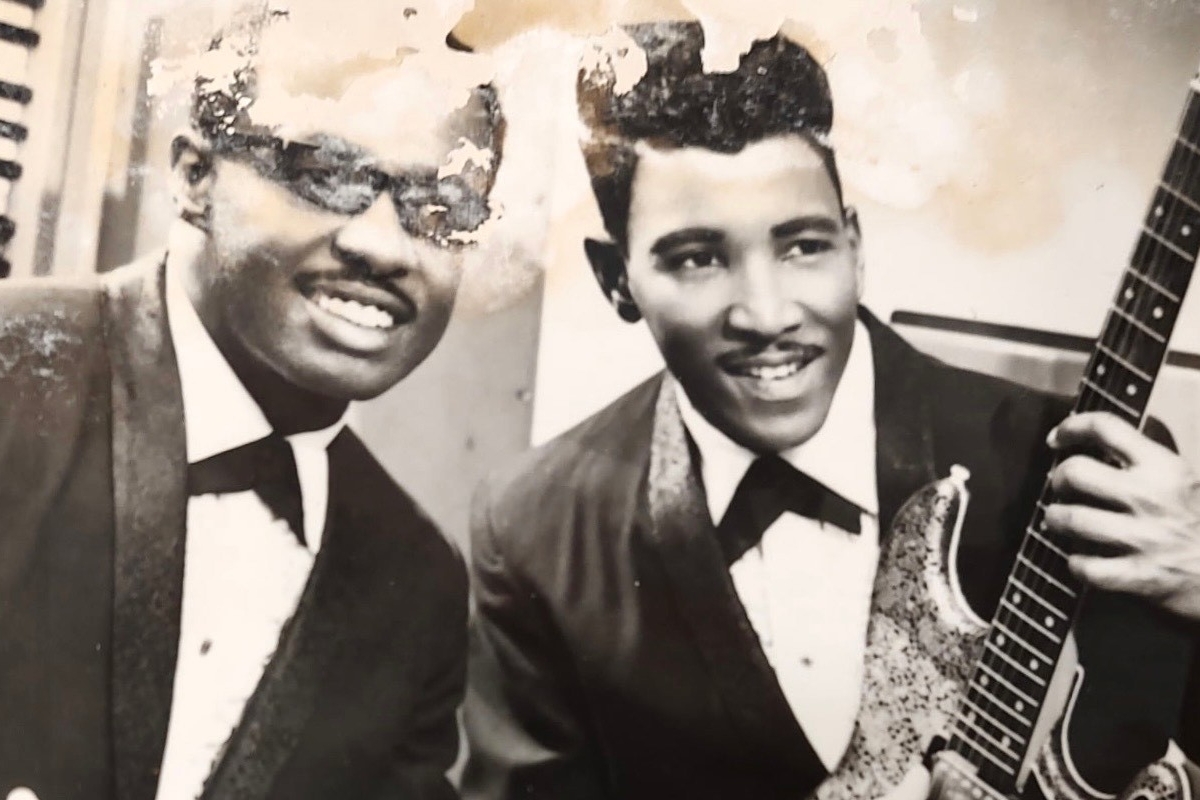
    Out of the saddle, Mr. Richards was a gifted singer and guitar player. He formed a band, Fire and Rain, after he returned to Philadelphia from two years in the Army, and they played at the Apollo Theater in New York and at clubs all over Philadelphia for decades.

    He specialized in love songs and covered many made popular by Teddy Pendergrass and Harold Melvin and the Blue Notes. “He was a romantic,” his wife said.

    Mr. Richards (right) was an accomplished singer and guitar player.

    He also had an eye for design and beauty, and a knack for construction. He built decks, repaired roofs, refurbished basements, and raised other buildings, sometimes from the ground up.

    He constructed a barn and stalls for the horse farm he frequented in Salem County, and mentored young men in West Philadelphia who wanted to learn the construction skills he had picked up from his mentors and while in the Army.

    “He loved to beautify things,” his wife said. “He was a beautiful person.”

    Ernest Patrick Richards was born Feb. 25, 1940, in Philadelphia. He graduated from Edward Bok Technical High School in 1958 and spent two years in the Army.

    Mr. Richards often dressed his horse to match his oufit when they rode in parades.

    He met singer Sheila Sampson when she auditioned to sing with Fire and Rain, and they married in 1985 and had daughters Passion, Keshia, Tammy, and Sparkle. He also had daughters Jackie G., Jackie J., and Crystal. Jackie G. and Crystal died earlier.

    Mr. Richards played basketball for years and whiled away many evenings strumming his guitar and singing songs around the house. He adored his family, they said, and attended the Church of Christian Compassion. “He was inspirational about his love of God,” his wife said. “He was all about family and faith.”

    He had a hearty laugh, his daughters said, and tolerated no nonsense, his wife said. He helped anybody who needed anything at any time, they all said.

    He valued independence and knew how to fix cars and home appliances. A friend said online that he had “a heart of gold” and was “an earth angel.” His nephew and nieces said he kept them “laughing and on our toes, teaching us great life lessons and how to repair anything.”

    Mr. Richards was an expert builder.

    Mr. Richards liked flashy western wear, and his wife nicknamed him Richie Rich because he dressed so snazzy. “He was never judgmental,” said his granddaughter Najzhay. “He was always offering help. He was truly my favorite person and the best cowboy.”

    “He was funny,” said his daughter Passion. “He could light up a room. His presence demanded respect. He was the center of our everything.”

    His daughter Sparkle said: “He was a great teacher and our best friend.”

    On his 85th birthday last year, Mr. Richards told his family: “All my blessings are right here in this room. I’m so grateful, eternally grateful.”

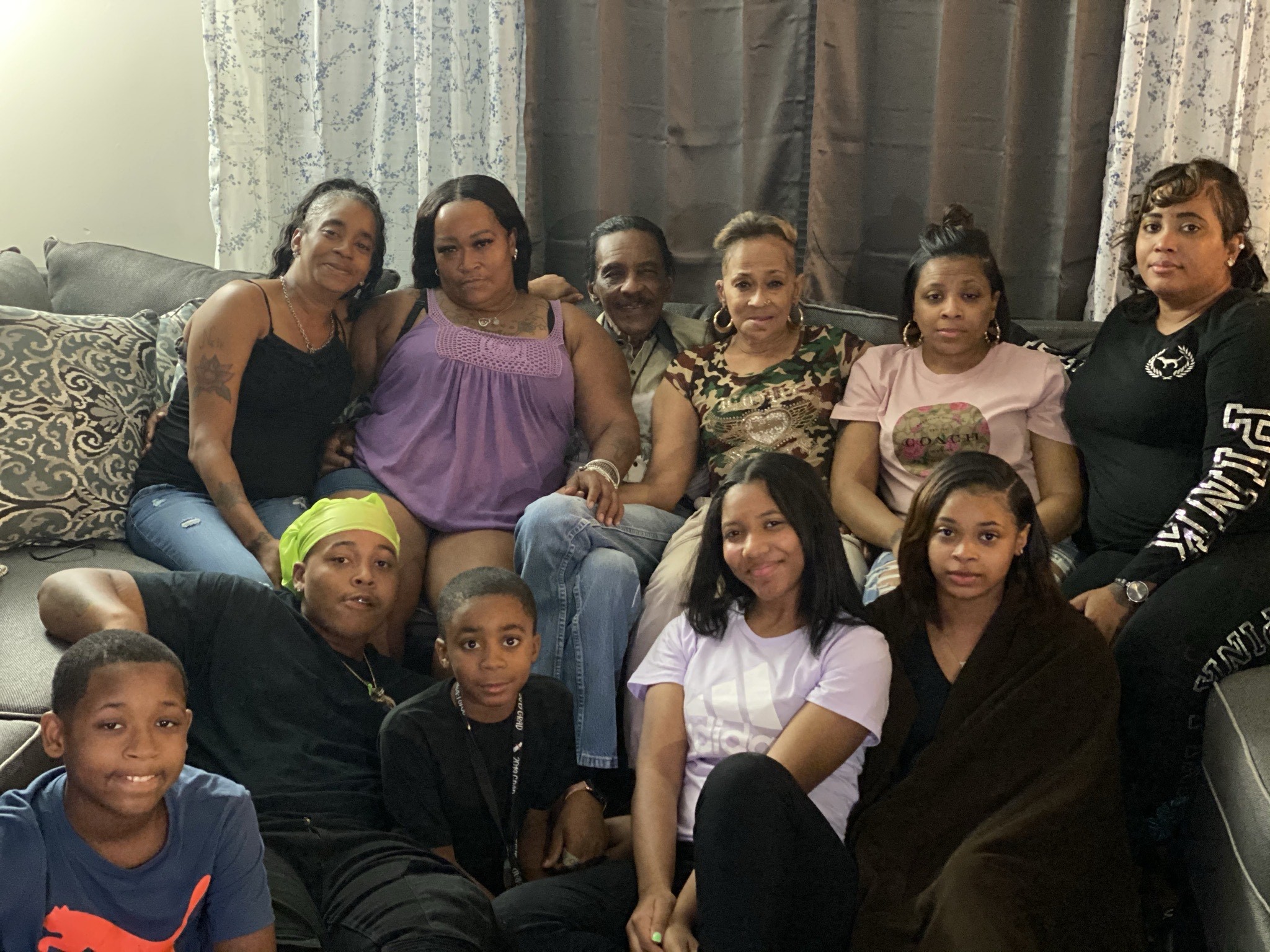
    Mr. Richards (rear, third from left) enjoyed time with his family.

    In addition to his wife, daughters, and granddaughter, Mr. Richards is survived by five other grandchildren, two great-grandsons, and other relatives. A brother and a sister died earlier.

    A celebration of his life was held Thursday, Jan. 22.

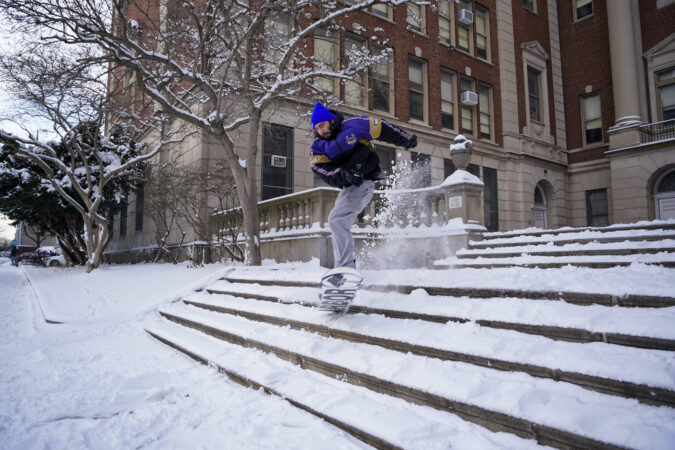
  • Philly residents thought they had a winter parking system. Then the snow stuck around.

    Philly residents thought they had a winter parking system. Then the snow stuck around.

    By the time Taylor Schuler finally freed their car, they were exhausted. It had taken five hours across two days, hacking at the wall of ice encasing their Prius’ bumper, shoveling piles of frozen snow off the tires, to complete the job. As the sun set on their afternoon of labor, they were tempted to put a piece of furniture in their hard-earned spot, a practice sometimes known as “savesies” in Philadelphia.

    But they knew better. Having just moved to Philly from Houston, the 28-year-old academic librarian wasn’t all that familiar with cold-weather etiquette, so they took to the internet ahead of January’s snowstorm to figure out what exactly Philly’s rules are. They gathered that people weren’t all that fond of the “savesies” practice, so, tempted as they were to hold onto their spot, they let it go.

    Once the spot was cleared, they circled the block, a quick trip to make sure their car was still working. Their internet research had also led them to believe no one would just take their spot immediately. As they rounded the corner toward their house, though, they saw another driver lurch into the spot they just spent hours digging out.

    “Oh jeez,” Schuler thought to themselves. “It’s like the Wild West out here.”

    In some snow-burdened cities, saving a shoveled-out parking spot is a deeply ingrained winter habit. Boston even formally acknowledges the practice by allowing residents to mark a spot they dug out for up to 48 hours after a storm. In Chicago, protecting your precious dug-out parking space with a lawn chair is called “dibs,” and it’s been a beloved and widely accepted tradition since the great blizzard of 1967.

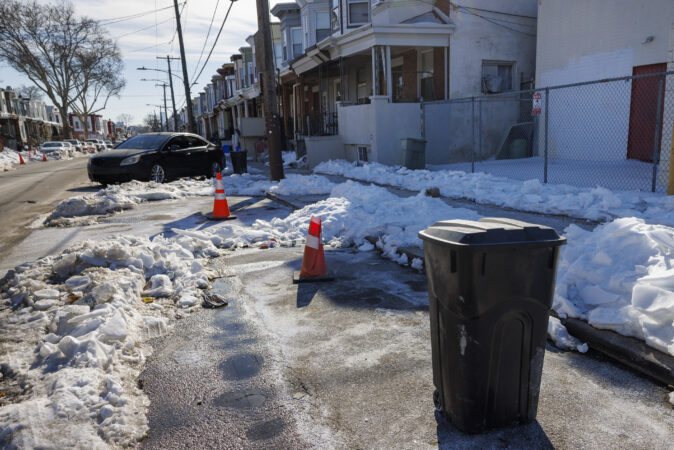
    But Philadelphia exists in a murkier middle ground. Until about two weeks ago, it snowed infrequently enough and melted fast enough that any theory about our collective approach to storm parking was never really put to the test. But the lingering snow has revealed a kind of civic chaos, with neighbors operating under wildly different assumptions and fights breaking out over who is entitled to snow-cleared parking spots.

    The divide is often generational. Older residents, who experienced harsher winters, are more likely to embrace savesies as another classic Philly tradition while younger residents and transplants see it as territorial nonsense, out of step with the values of densely populated city life.

    Schuler finds the entire debate exhausting. “I just want to be able to go to work and come home,” they said. “I didn’t ask for any of this.”

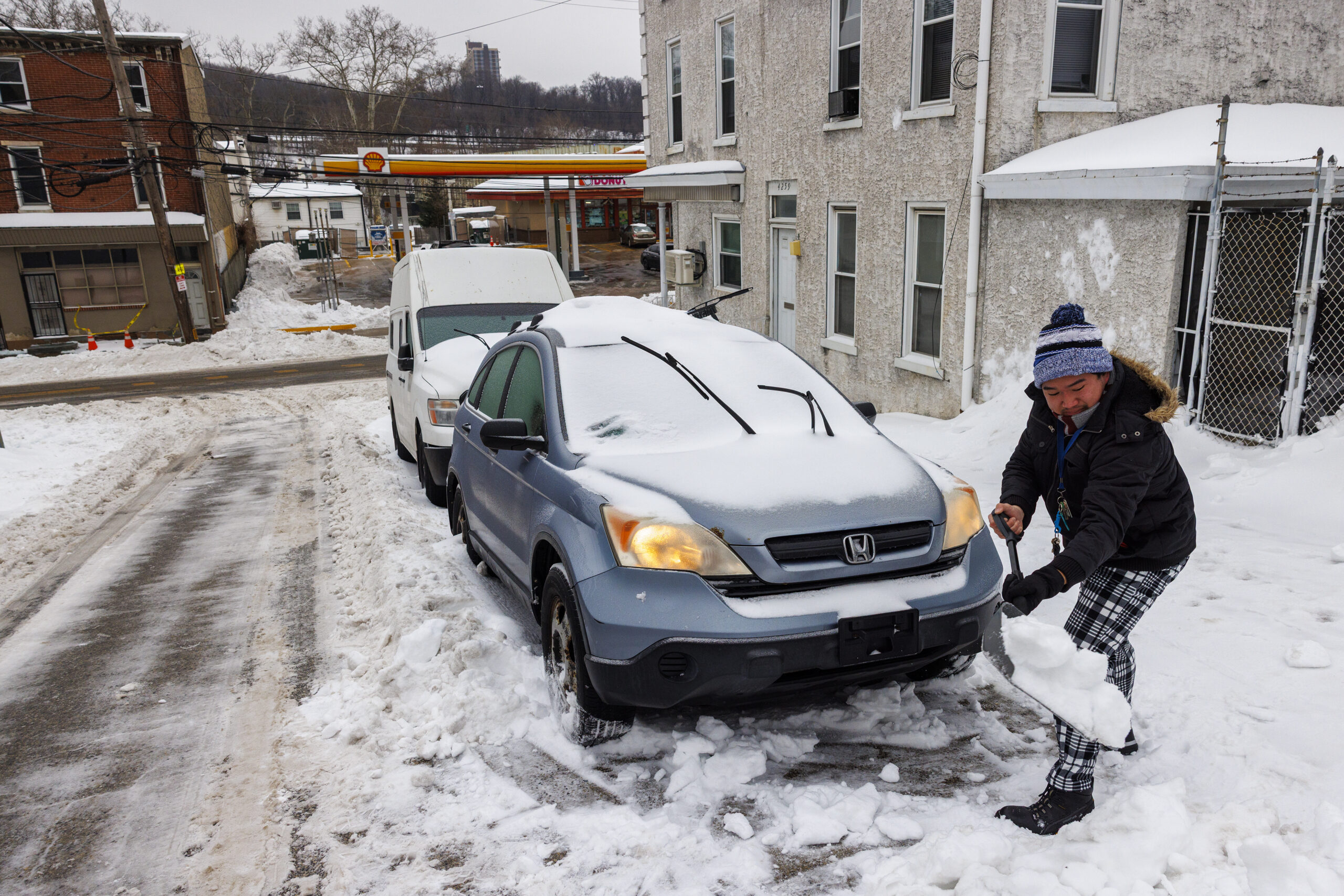
    Connor Phan digs his car out after the recent snowstorm.

    Jeff Martin, 43, who lives in South Philly, describes himself as firmly “no savesies” but with caveats. He won’t put out a chair. He won’t defend one. But he also won’t move someone else’s. “I don’t believe in the chair,” Martin said. “But I’m going to obey the chair.” His reasons are entirely practical. “I don’t want to get keyed,” he said.

    Martin argues Philadelphia’s parking wars are a symptom of the changing climate. “The fact that over the last 20 years, we haven’t gotten as much snow as we did over the previous 20 years has made us forget how to deal with it,” he said, “and the city forget how to deal with it to the point where they don’t properly fund the removal of snow.”

    For the record, the city is firmly in the “#nosavesies” camp, and the police routinely remind Philadelphians that saving parking spots is illegal. Of course, that doesn’t stop people from doing it — and other people complaining about it.

    Lucas Tran didn’t see the cinderblock in the spot he parked in on Tuesday night. It wasn’t until another driver pulled up and told him that he was in her spot that he became aware of it. She said she had dug out the spot herself, saved it with the cinderblock, and that Tran had to move.

    At first, he refused. But he backed down after she called him a liar and a “little b—.” He didn’t want things to escalate. The next day, she left a handwritten apology on his car. “Thank you for moving your car,” it read. “You are NOT a little b—.”

    Tran takes a “special exception” approach to the savesies debate. If the woman had been elderly or a first responder, or if it had been two or three days after the storm rather than a full week later, he might have been more understanding. “But the roads are drivable now, he said. “There are more options to park. You can’t keep claiming a spot that’s public property.”

    Back in West Philly, Schuler spent the week parking wherever they could. The spot they dug out remained occupied until one evening, when they pulled up, excited to reclaim what was once theirs — only to find a folding table balanced on two overturned pots in their way. Someone had “savesied” Schuler’s spot.

    Schuler snapped a photo and uploaded it to Reddit, where the response was nearly unanimous. As one Redditor put it, “that’s diabolical.”

    It was the one version of “savesies” Schuler had never seen defended. “If there’s anything people agree on,” they said, “it’s that you don’t do that.”

  • Philadelphia native Noam Chomsky counseled Jeffrey Epstein on how to handle media scrutiny, DOJ files show

    Philadelphia native Noam Chomsky counseled Jeffrey Epstein on how to handle media scrutiny, DOJ files show

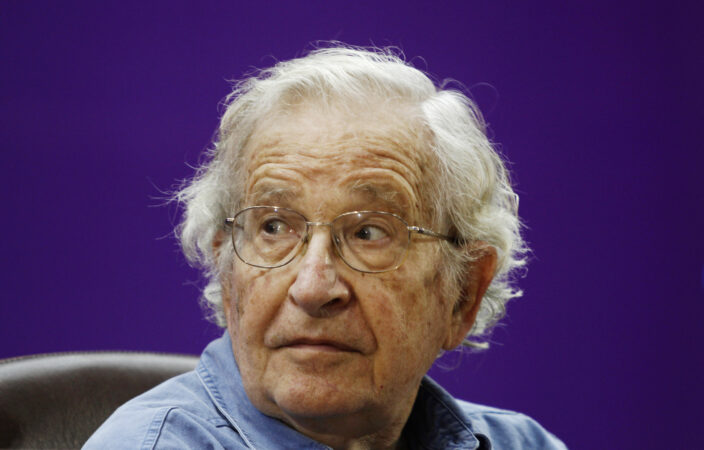
    Noam Chomsky, the Philadelphia-born and educated intellectual, told Jeffrey Epstein to “ignore” negative media attention as the disgraced financier was being accused of abusing women and girls, emails recently released by the U.S. Department of Justice show.

    The exchange occurred in early 2019, after the Miami Herald published a series of investigative reports on Epstein but months before he was arrested and charged with sex trafficking. The latest tranche of Epstein files from January also reveals years-long correspondence between Epstein and Chomsky, discussing topics like Chomsky’s finances and social plans.

    “Noam. I d love your advice on how I handle my putrid press. its is spiraling out of control,” Epstein wrote in an email dated Feb. 23, 2019. Epstein then asked Chomsky if he should “defend myself” or “try to ignore.”

    In a response purportedly from Chomsky, the famed linguistics professor advised Epstein “the best way to proceed is to ignore it” and “not to react unless directly questioned.” Chomsky drew parallels to his own experience with “hysterical accusations of all sorts,” writing, “I pay no attention, unless I’m approached for a comment on a specific matter.”

    “What the vultures dearly want is a public response, which then provides a public opening for an onslaught of venomous attacks, many from just publicity seekers or cranks of all sorts,” the email said. “That’s particularly true now with the hysteria that has developed about abuse of women, which has reached the point that even questioning a charge is a crime worse than murder.”

    Chomsky’s wife and spokesperson, Valeria Chomsky, did not immediately respond to an email from The Inquirer seeking comment.

    In a statement posted on social media, Valeria Chomsky said the couple was “careless in not thoroughly researching [Epstein’s] background,” calling it a “grave mistake.” She apologized for the couple’s “lapse in judgement.” Noam Chomsky, who is 97, suffered a massive stroke in 2023 and is unable to speak, according to the statement.

    The statement said the couple did not know the extent of the allegations against Epstein until his 2019 arrest, and cautioned that the men’s emails should be “read in context.”

    “Epstein created a manipulative narrative about his case, which Noam, in good faith, believed in,” the statement read. “It is now clear that it was all orchestrated, having as, at least, one of Epstein’s intentions to try to have someone like Noam help repair Epstein’s reputation by association.”

    Noam Chomsky has appeared in other batches of the Epstein files. In her statement, Valeria Chomsky — whose name and emails were also among the more than three million documents released — said her husband and Epstein were introduced in 2015. When asked in 2023 about his relationship with Epstein by the Wall Street Journal, Noam Chomsky replied, “First response is that it is none of your business. Or anyone’s. Second is that I knew him and we met occasionally.”

    Noam Chomsky was born in Philadelphia’s East Oak Lane neighborhood, attended Central High School, and earned his undergraduate and graduate degrees from the University of Pennsylvania. Considered the founder of modern linguistics and one of the most cited scholars, he is celebrated for his research and influential political activism.

    Noam Chomsky is not the only prominent person tied to Philadelphia to be tangled with Epstein in the latest trove of documents: Epstein closely followed the sexual assault case against actor and comedian Bill Cosby, maintained a business relationship with Sixers co-owner Josh Harris, and inquired about buying a private plane from Penn megadonor Marc Rowan, The Inquirer previously reported.

  • In ‘Melt the ICE’ wool caps, a red tasseled symbol of resistance comes from Minneapolis to Philadelphia

    In ‘Melt the ICE’ wool caps, a red tasseled symbol of resistance comes from Minneapolis to Philadelphia

    Some yarn shops around Philadelphia are running low on skeins of red wool, as local knitters and crocheters turn out scads of “Melt the ICE” caps in solidarity with protesters in Minnesota.

    The hats don’t feature a patch or logo that says “Melt the ICE.” In fact, they carry no written message at all. What they offer is a deep scarlet hue, a dangling tassel, and a connection to an earlier, dangerous time, when a different people in another land sought to silently signal their unity.

    “The hat is really a symbol and reminder,” said knitter Laura McNamara of Kensington, who is making two caps for friends. “People are looking for a sense of community.”

    She refused her friends’ offers of payment, asking instead that they not let their involvement start and end with a hat ― but find a means to stand up for civil rights in some specific way.

    The original hat was a kind of conical stocking cap, known as a nisselue, worn in Norway during the 1940s as a sign of resistance to the Nazi occupation. The Germans eventually caught on to the symbolism and banned the caps.

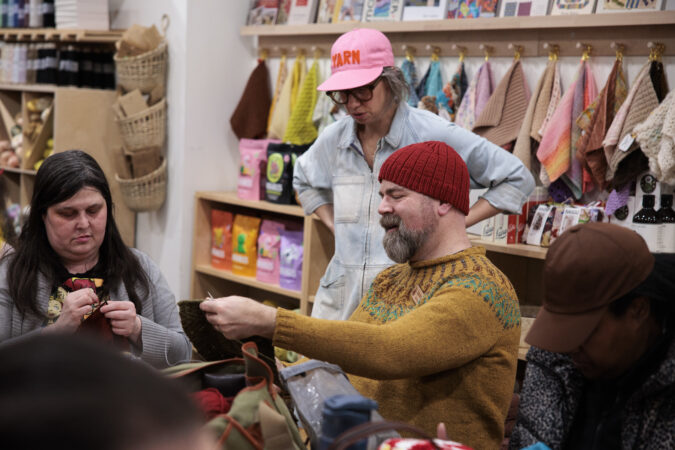
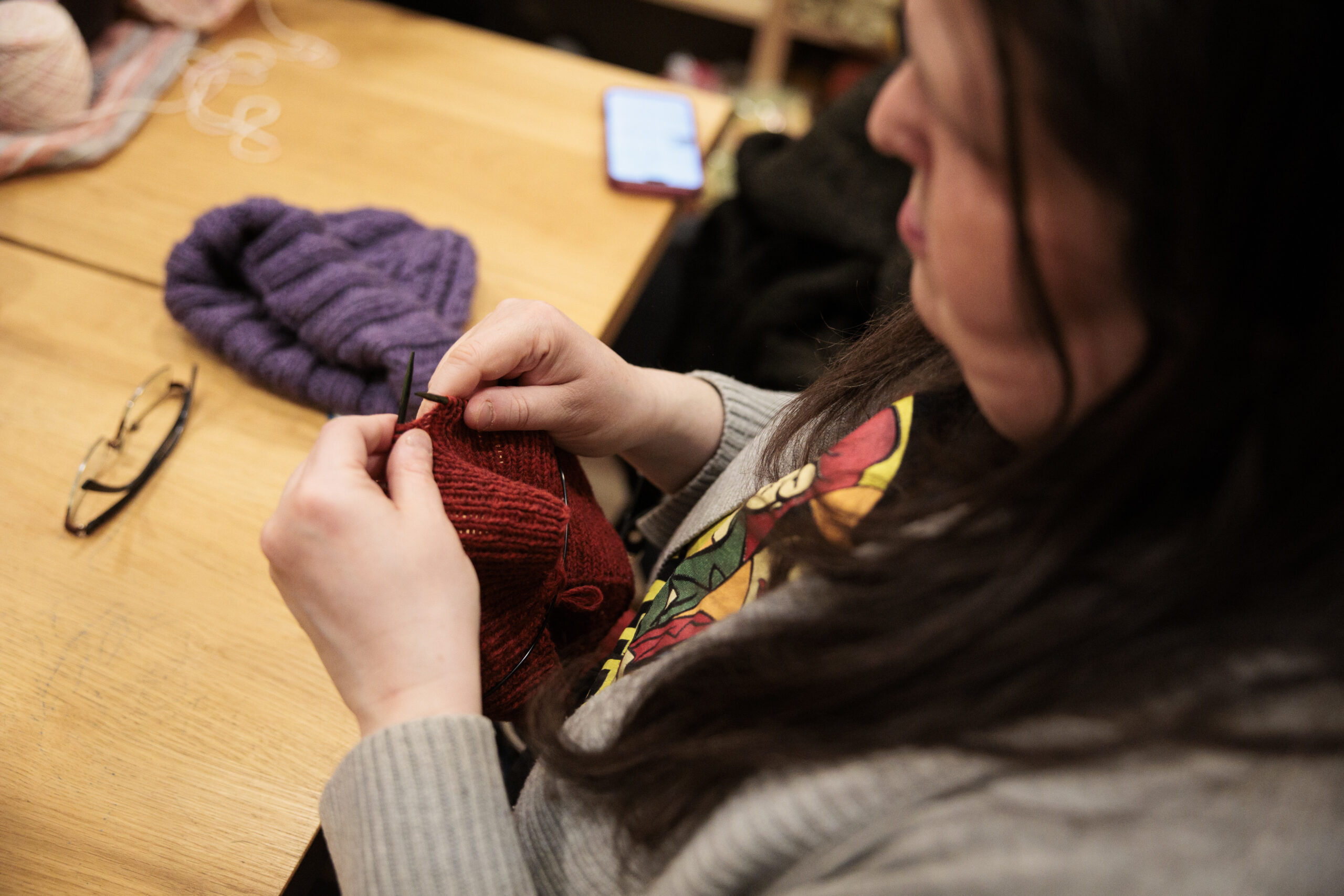
    Amanda Bryman works on a red wool hat known as a “Melt the ICE” hat, during Fiber Folk Night at Wild Hand yarn shop in Philadelphia on Wednesday.

    Now the new version that originated in a suburban Minneapolis yarn shop is spreading across the country. The hats signal opposition to U.S. Immigration and Customs Enforcement, which surged thousands of agents into Minneapolis, and sadness and anger over the deaths of Minnesotans and U.S. citizens Renee Good and Alex Pretti, who were shot to death by federal agents.

    Today, comparisons of ICE agents to Nazis have become both frequent and contentious in American politics, with even some Democrats, including Gov. Josh Shapiro, who is Jewish, rejecting that equivalence as wrong and unacceptable.

    ICE officials did not respond to a request for comment.

    This is not the first time that the Philadelphia region’s craftivist movement, as it is known, has brought its knitting needles and crochet hooks to bear.

    On the eve of Donald Trump’s first inauguration, artisans here turned out scores of cat-eared headgear known as pussy hats, a feline symbol of protest worn at the Women’s March on Washington. The hats aimed to tweak the then-president-elect over his comment about grabbing women by their genitals.

    The Melt the ICE caps carry some controversy within the fiber community, as it calls itself. There have been online complaints that it’s easy to tug a red cap over one’s ears, but unless that is accompanied by action it holds no more significance than clicking a “Like” button on Facebook.

    “It is just preening,” one person wrote in an internet forum.

    Another said that “if your resistance is only this hat, then you have not actually accomplished anything except make a hat.”

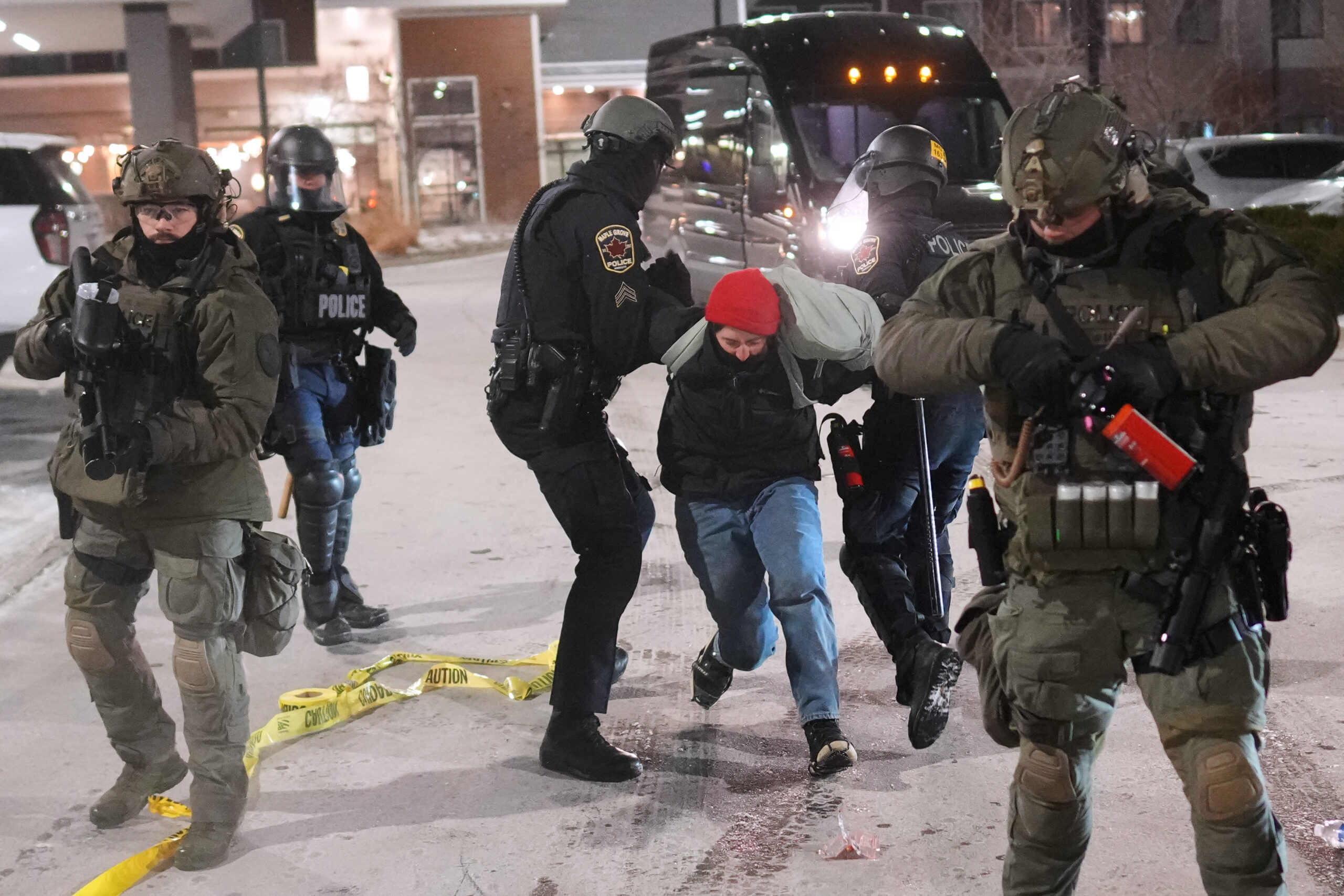
    Law enforcement officers detain a demonstrator during a protest outside SpringHill Suites and Residence Inn by Marriott hotels on Jan. 26 in Maple Grove, Minn.

    Liz Sytsma, owner of Wild Hand in West Mount Airy, has heard the criticism.

    But “the people in our community who are participating in making the hats, this is one of many things they are doing,” she said. That includes taking part in protests, calling elected leaders, and giving money to causes they support.

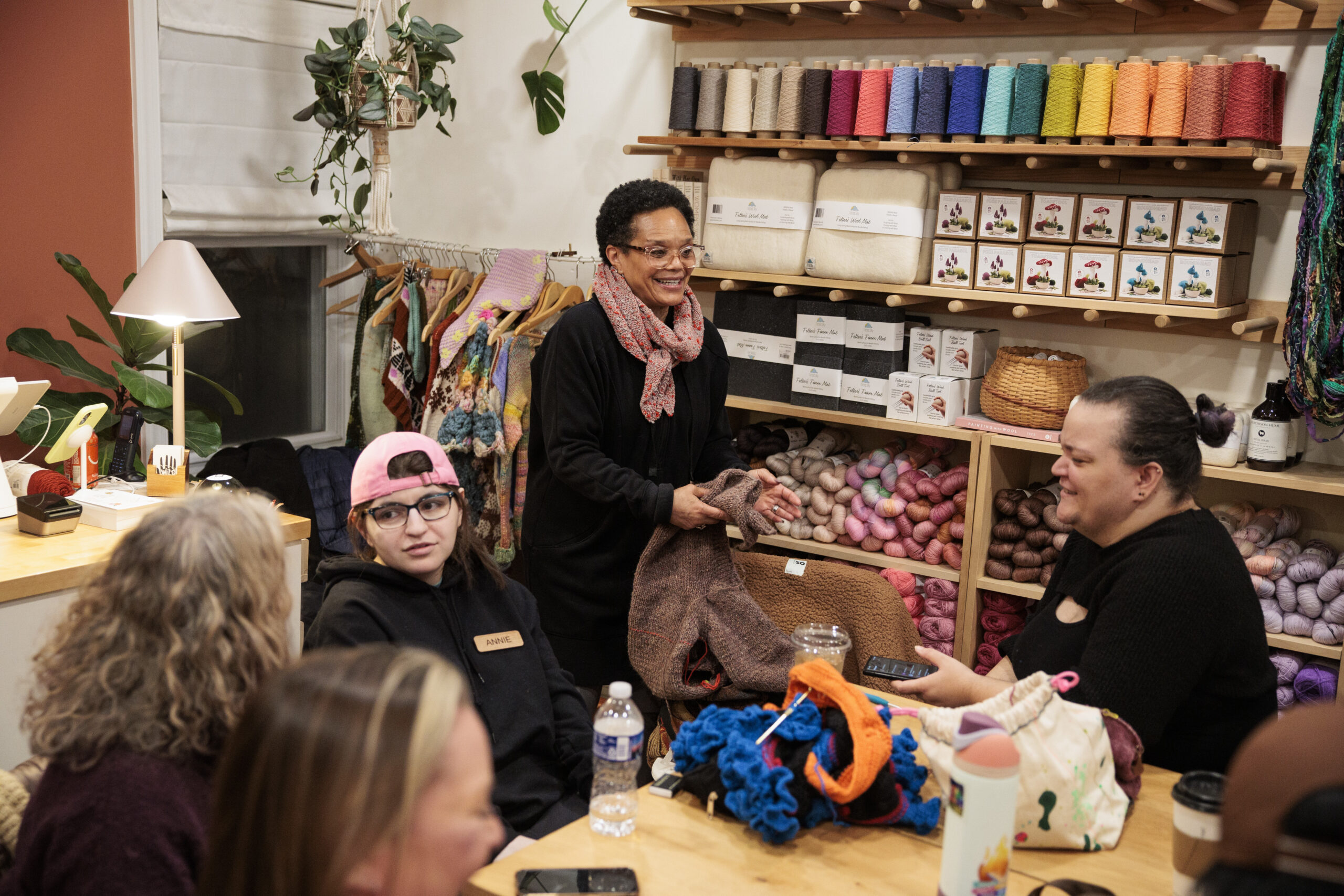
    On Wednesday, more than a dozen people gathered at Wild Hand for the weekly Fiber Folk Night, where crafters gather to knit, crochet, and chat ― and, now, to work on hats.

    Damon Davison traveled from Audubon, Camden County, having developed his own hat pattern, with sale proceeds to go to the activist group Juntos in South Philadelphia.

    He wants to show solidarity with people “who are expressing resistance to what has been happening in Minneapolis, but also what’s happening here in Philly,” he said. “The idea is to make it a little bit more local.”

    The shop has seen a rush on red, sought by about 70% of customers whose purchases have depleted stocks during the last couple of weeks.

    “We’re really low,” said store manager Yolanda Booker, who plans to knit and donate a hat. “I want to do whatever small part I can do to help out.”

    A single hat can take two or three days to make, though the best and fastest knitters can complete one in a couple of hours.

    In Minnesota, the owner of Needle & Skein, which produced the hats’ design, told reporters this month that online sales of the $5 pattern have generated more than $588,000 to be donated to area organizations.

    Store Manager Yolanda Booker, standing, laughs with attendees during Fiber Folk Night at Wild Hand yarn shop in Philadelphia on Wednesday.

    In West Mount Airy, Kelbourne Woolens closed its physical doors during the national “ICE Out” strike in late January and donated its online profits of $4,000 to Asian Americans United, Juntos, and New Sanctuary Movement of Philadelphia, said team member Bailey Spiteri. She estimated the store has sold enough red yarn to retailers to make 500 or 600 hats.

    At Stitch Central in Glenside, customers donated $1,000 during the strike and the store matched it, with the $2,000 going to Nationalities Service Center in Philadelphia.

    “Sometimes people are skeptical. How does wearing a hat or even making a hat make a difference?” asked Allison Covey of Drunken Knit Wits, a local knitting and crocheting organization. “But look at the donations. It does make a difference.”

    Veteran knitter Neeta McColloch of Elkins Park thinks the same. She has ordered enough yarn to make eight hats. And she is curious to see how the phenomenon will develop.

    “This is probably bigger than I think,” she said. “Knitters tend to be the type of people who in my experience have a strong moral compass. If they can combine something they love to do with something in which they can make a statement, that’s important to them.”