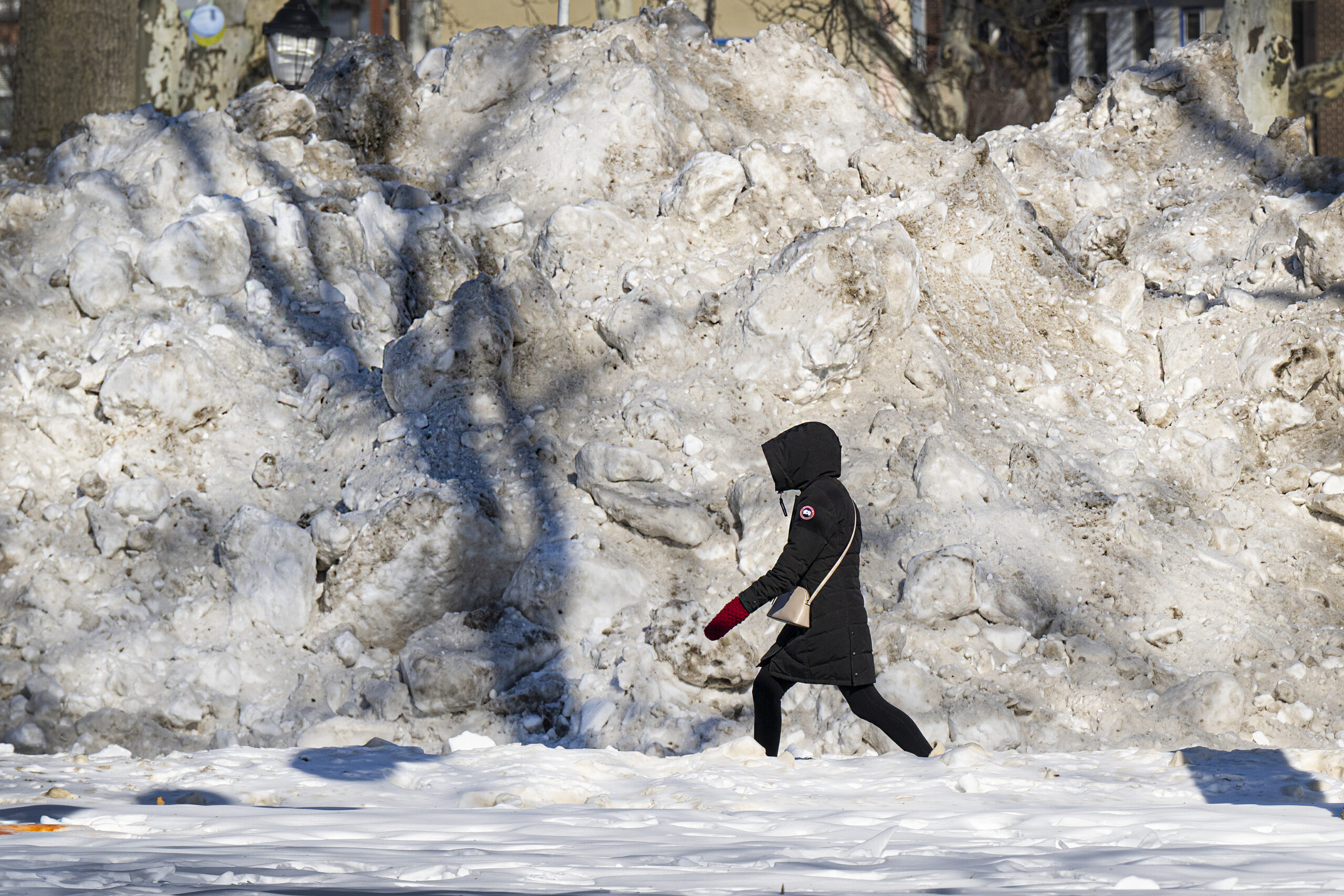
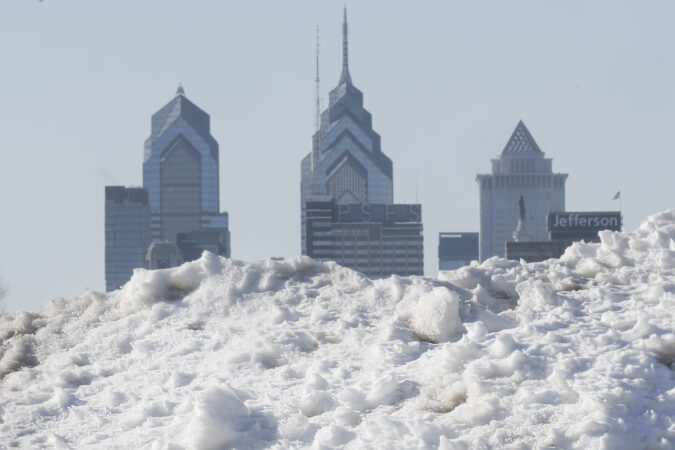
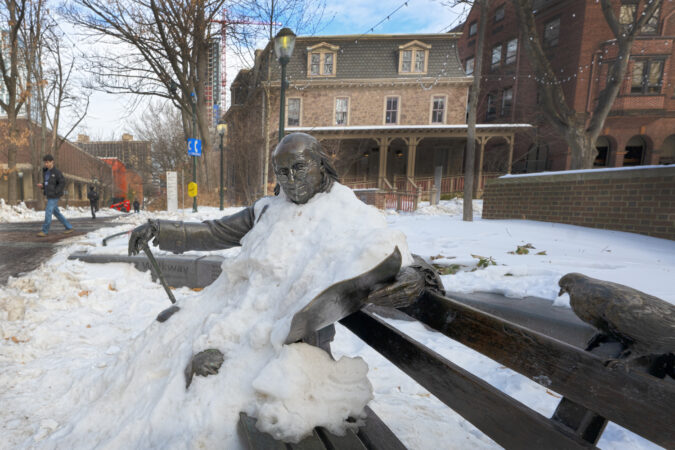
The frigid temperatures, the blocks of ice clogging the Delaware and Schuylkill Rivers, and the mounds of snow piled high in driveways and parking lots across the Philadelphia region are not likely to change much Sunday and Monday, Zack Cooper said Saturday afternoon.
Cooper, a meteorologist at the National Weather Service in Mount Holly, said to expect a high of just 18 degrees on Sunday, a significant drop from Saturday’s high of 28. For Monday’s return to work for many, the weather service predicts a high of 36.
“It’s been a long time since we’ve seen this type of prolonged stretch of cold weather,” Cooper said. “It’s been about 10 years.”
The good news, he said, is that the temperature should peak for the week at near 41 on Wednesday. More good news, he said, is that the daytime highs are expected to reach above freezing for the rest of the week, 36 on Tuesday, Thursday, and Friday, and 38 on Saturday. But the nighttime lows should still dip below the freezing point of 32 degrees.
In that case, Cooper said, some of the ice will melt during the warmer daytime hours but not enough to cause widespread flash flooding near rivers, lakes, and streams. A slow warmup, with warmer days and colder nights, is always best, he said.
It’s been a rough February so far for Philadelphia area residents. Daily average temperatures have been below freezing every day since Jan. 23, and the region went nine days, from Jan. 24 to Feb. 2, without reaching 32 degrees at all.
Last week, a barge heading north got stopped in the ice on the Delaware River, ferry service was halted in the Delaware Bay due to ice, and the Coast Guard had to deploy a 175-foot-long cutter to smash up ice floes in the Delaware all the way up to Trenton.
Cooper said the recent nine-day stretch of temperatures below freezing is likely among the top 10 longest local cold snaps on record. The last period of such frigidity, he said, was an eight-day stretch in 2015.
As for the wind chills, Saturday night could reach minus 13 degrees. Sunday could go to minus 12, and Monday could be minus 3. High wind warnings are expected to be lifted on Sunday. No snow is expected next week.
So what should folks do until Wednesday? Hang in there, Cooper said. “We take weather as it comes,” he said. “It’s ever-changing, and you have to adapt and adjust.”
And if it does reach 41 on Wednesday, Cooper said, “It will feel nice.”
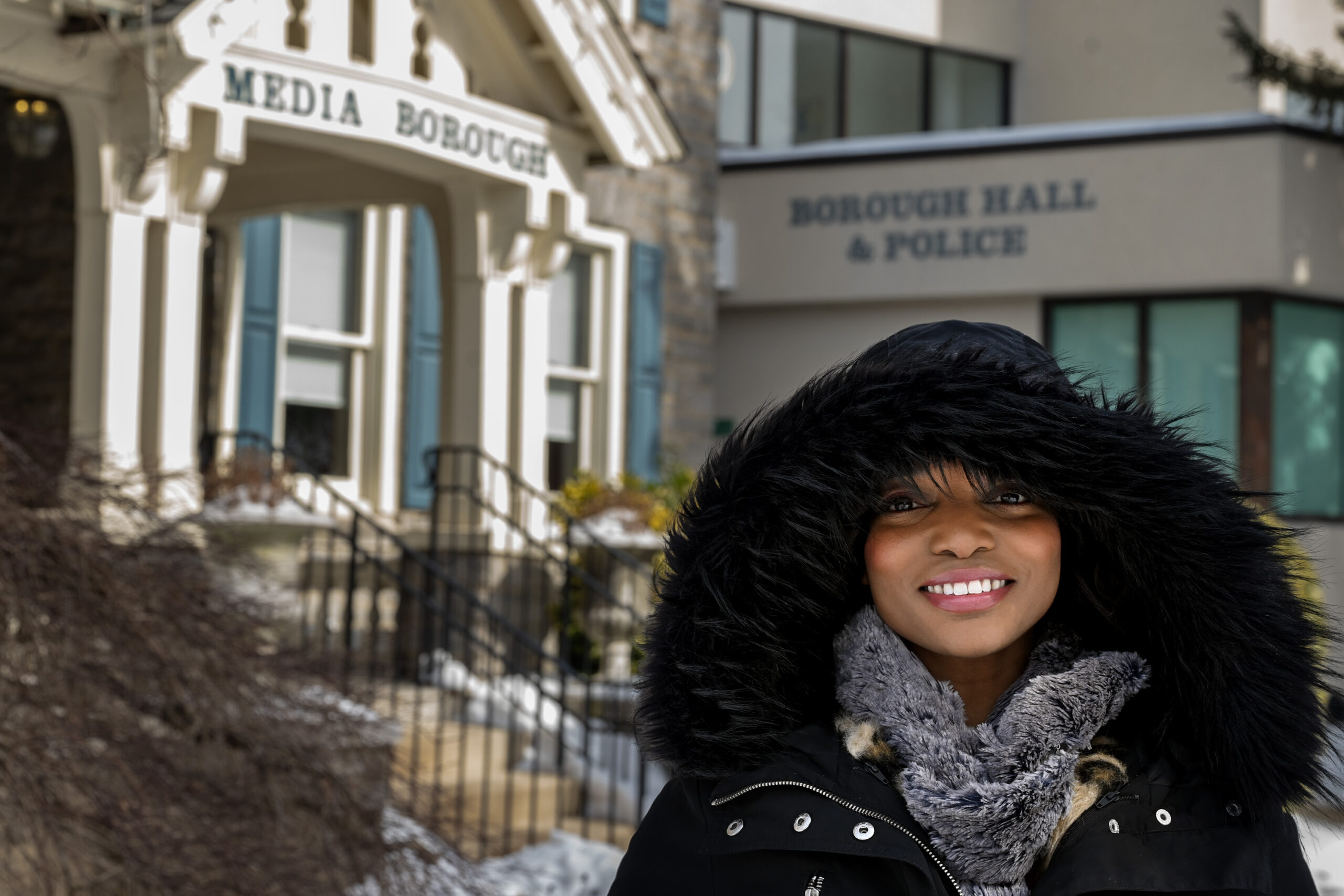
My assignment that day was pretty typical for a newspaper photographer: show the reader what the person a reporter is profiling looks like. And maybe what they do and where they do it.
Newly-inaugurated Mayor Joi Washington at Media Borough Hall.
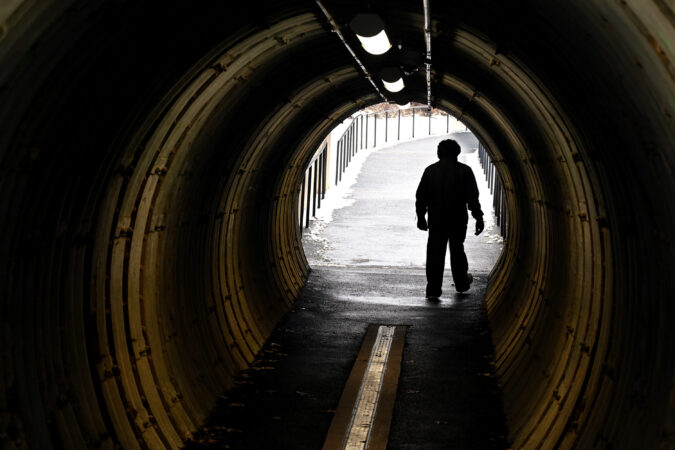
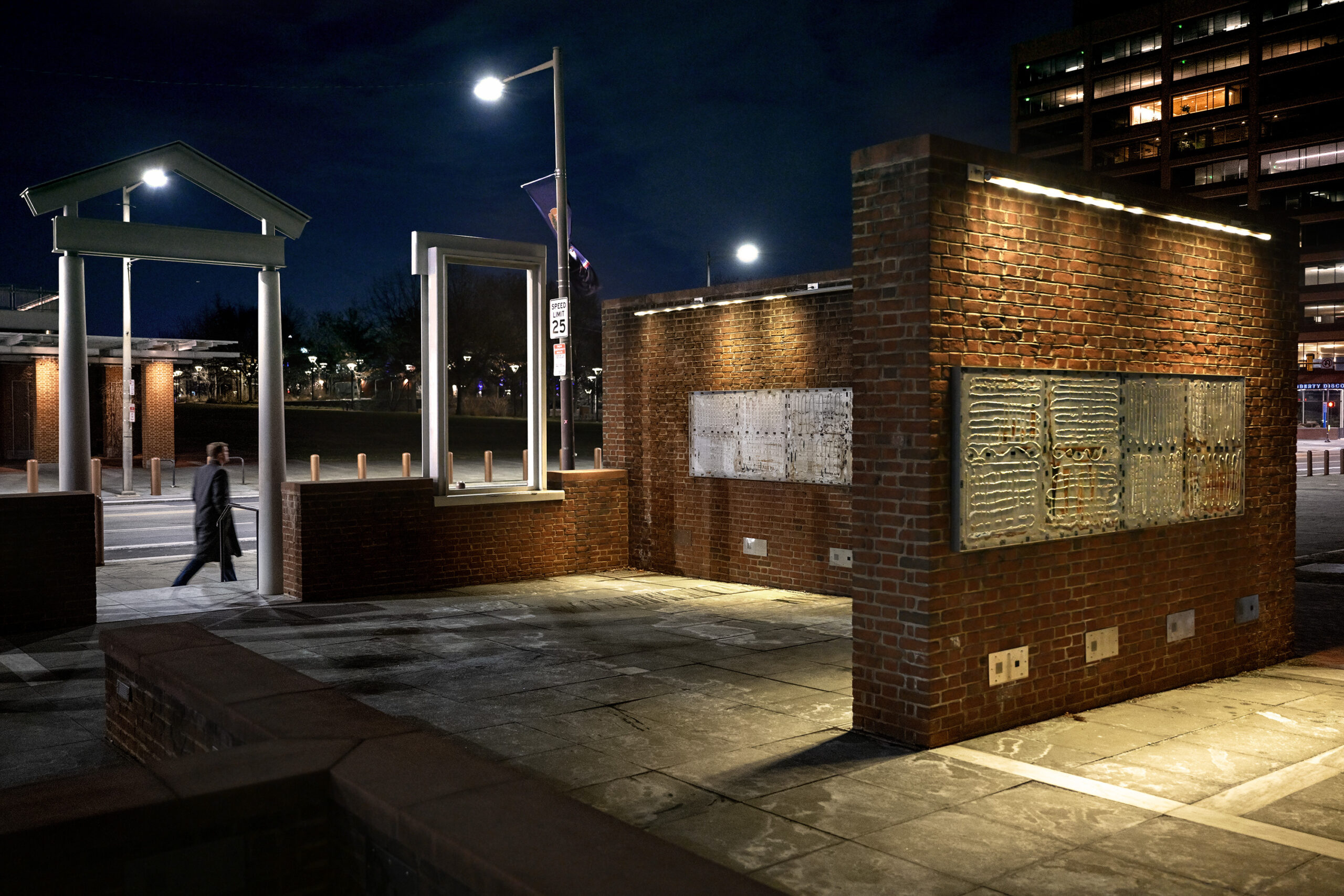
Having accomplished that task, I headed out looking for something else to photograph in the snow, and ended up at a pedestrian passage way.
As I made a picture of a person silhouetted in the corrugated metal culvert, the first thing I thought of was an old friend and photo editor Joe Elbert who famously said there are four categories in the “hierarchy” of newspaper photographs, lowest to highest: informational, graphic, emotional, and intimate.
In just a few hours I had knocked out his “lower” two types.
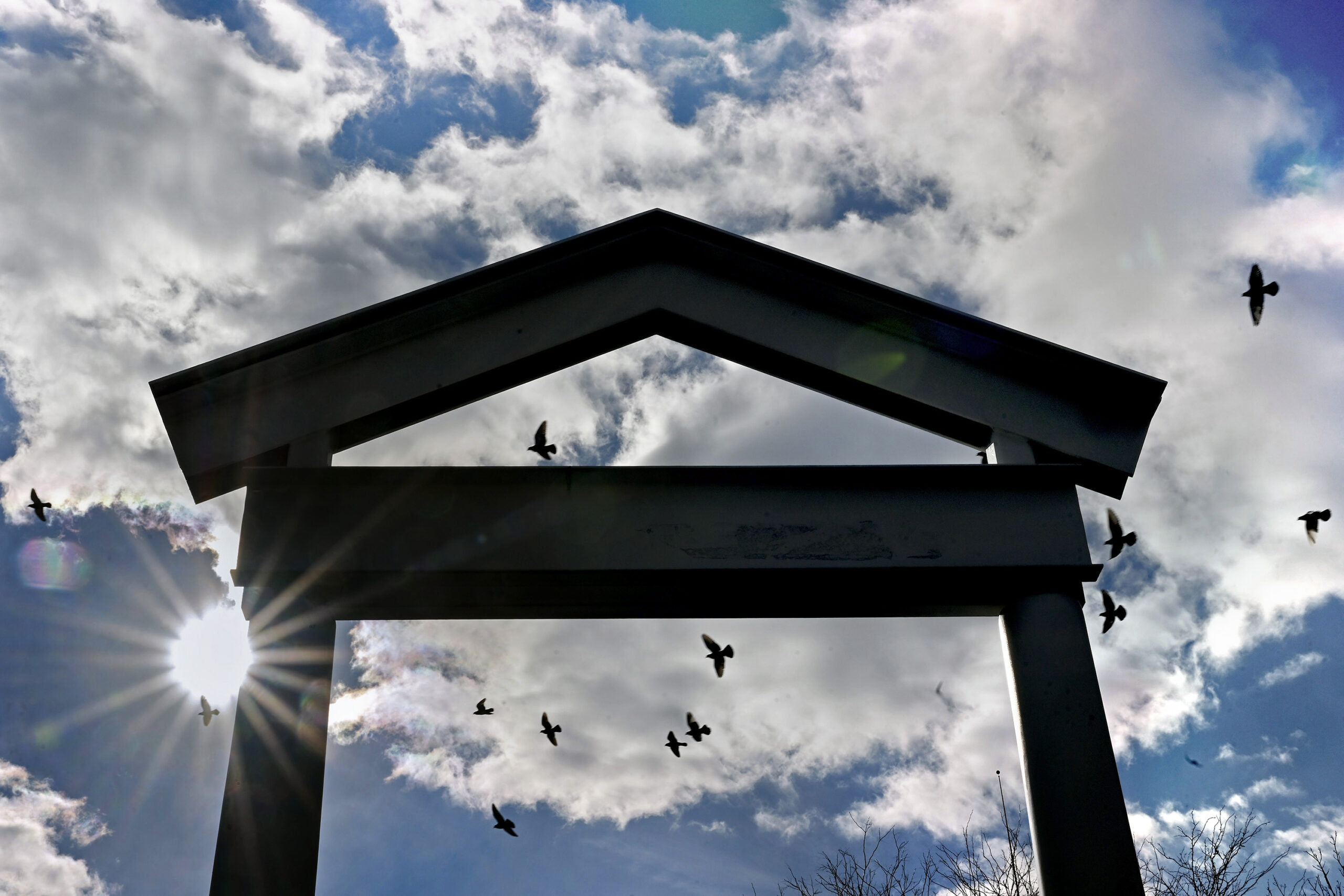
I made a few pictures that report “just the facts” without much flavor or fanfare. Then I found a visually appealing scene and waited until I could turn it into a well composed, interesting image. Graphic, even.
Joe was the photo editor at the Post from 1988 through 2007. Under his direction the paper won four Pulitzer Prizes, and many other awards, all for work that epitomizes that highest category of intimate photographs.
It’s easy to feel nostalgic for those “glory days,” but I mourn that almost an entire section of the newspaper is now gone.
Post photographers were still creating those most intimate images of Joe’s hierarchy. They were still making the reader feel something that allows us to connect with lives beyond our own, to empathize, and to care.
Since 1998 a black-and-white photo has appeared every Monday in staff photographer Tom Gralish’s “Scene Through the Lens” photo column in the print editions of The Inquirer’s local news section. Here are the most recent, in color:
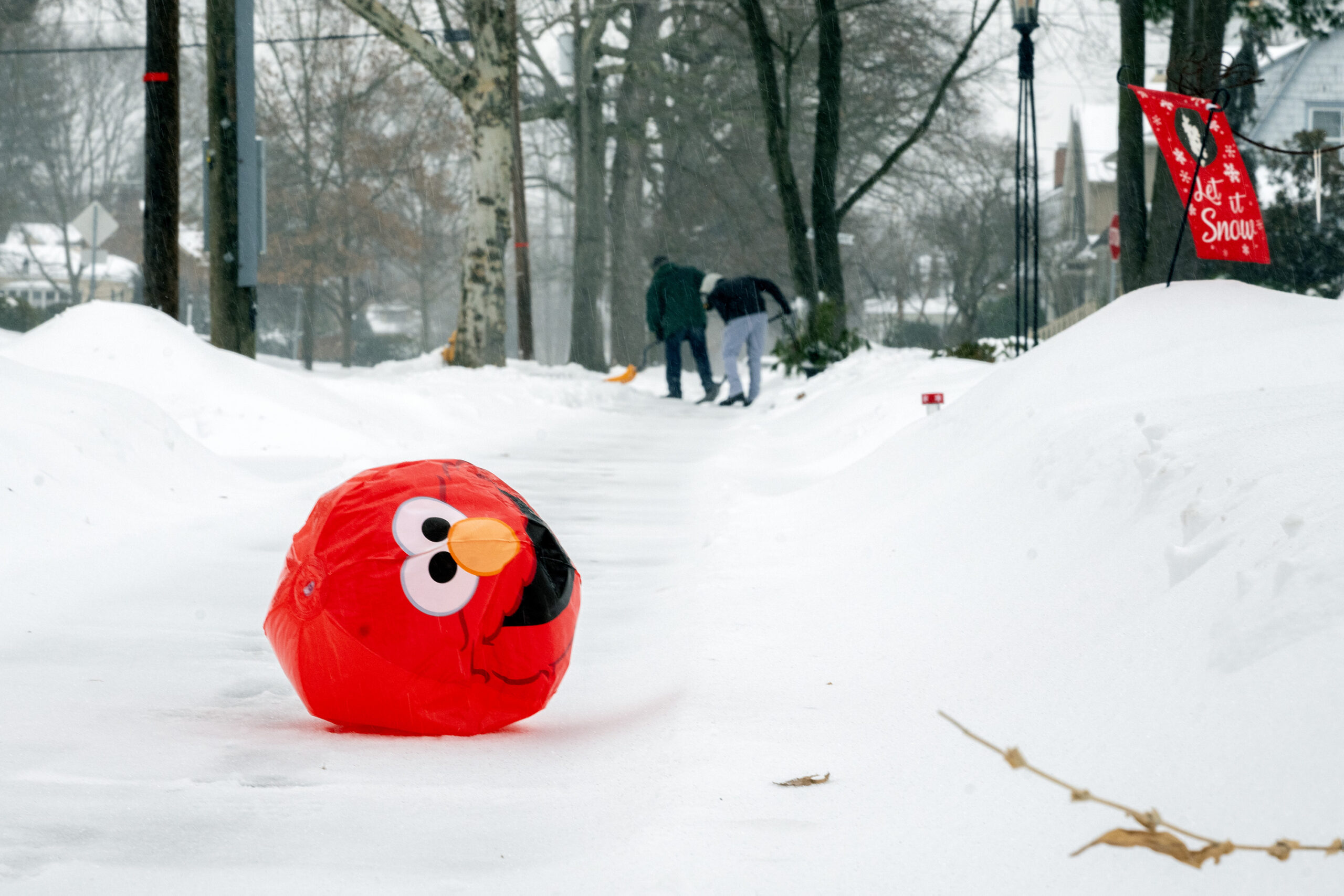
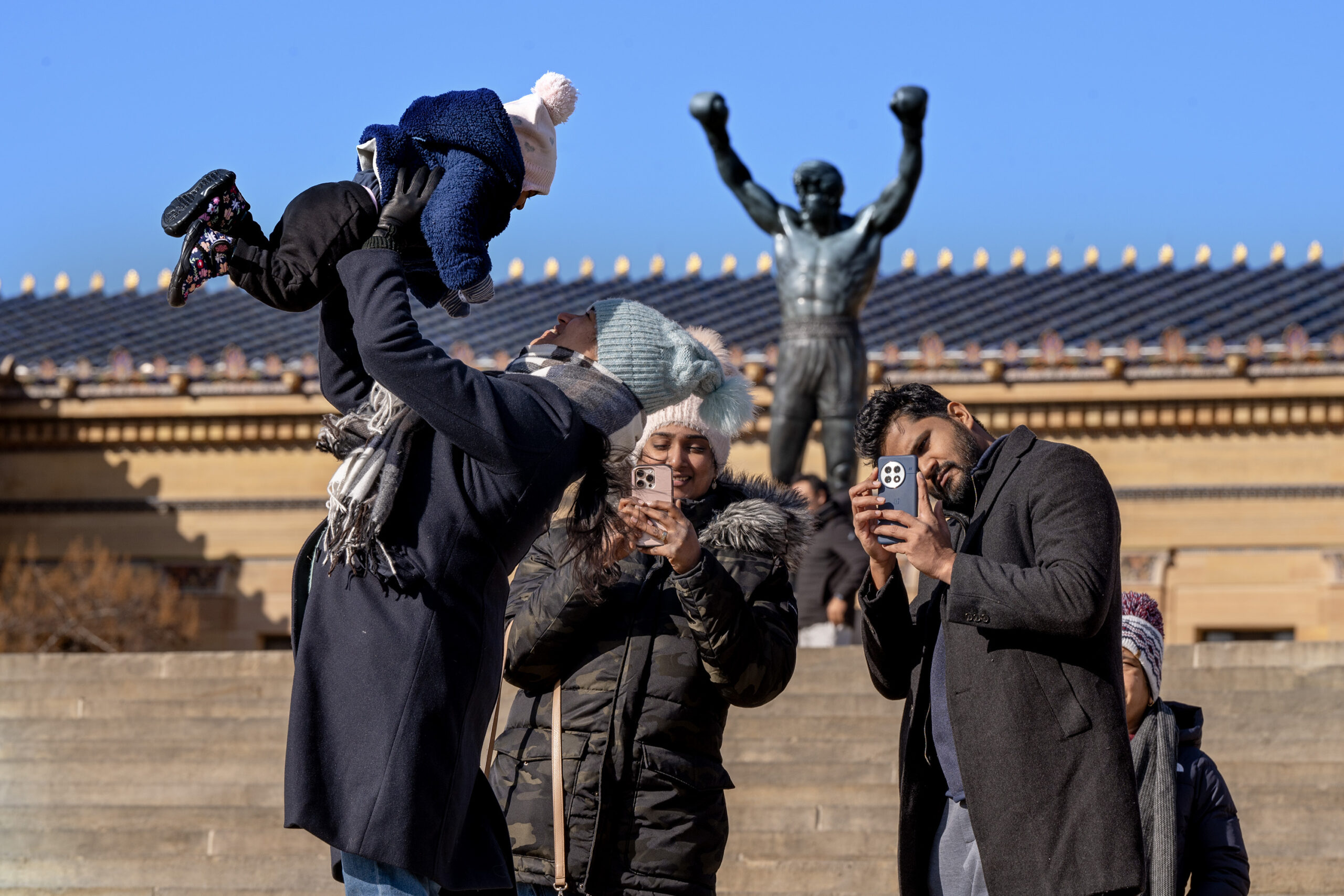
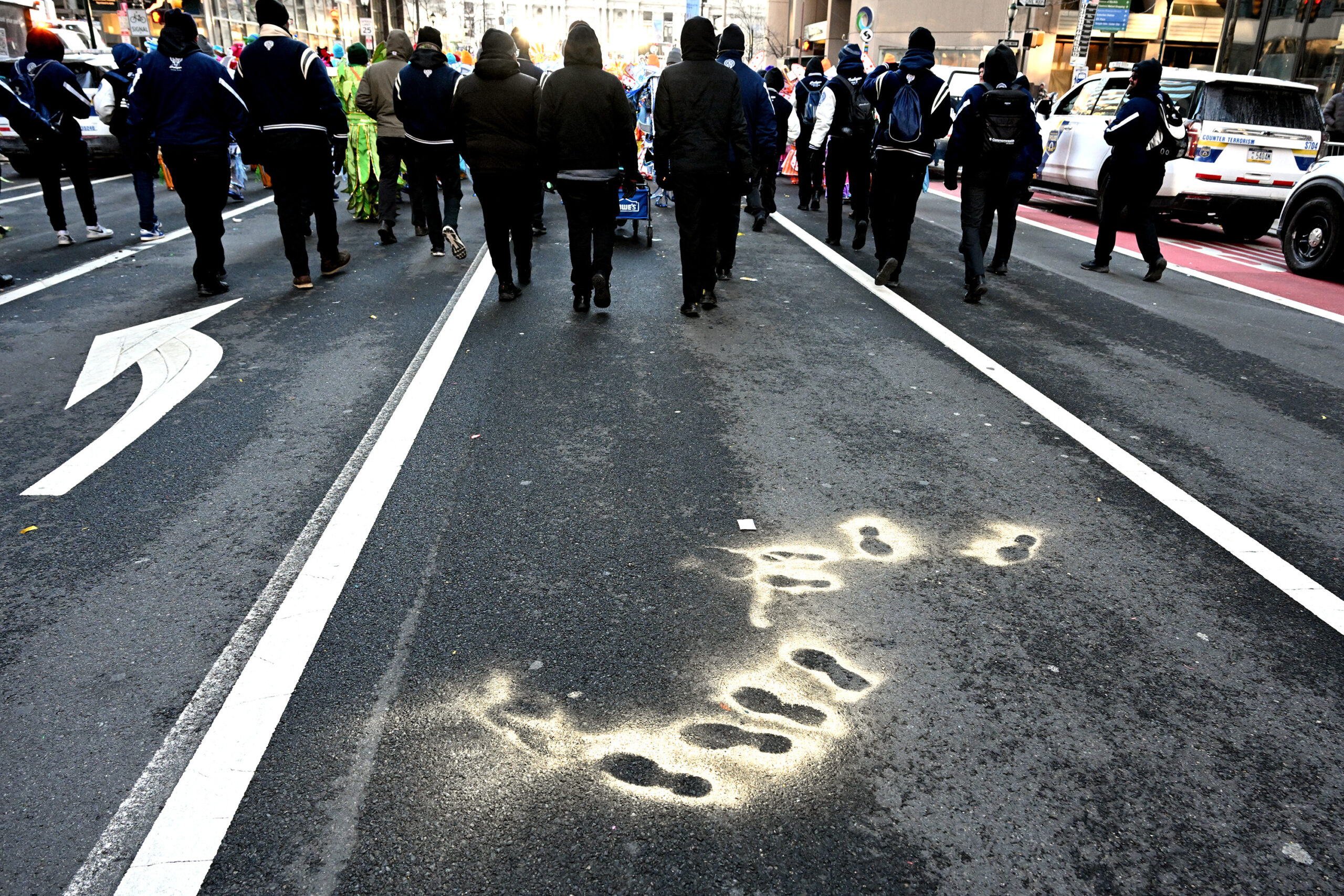
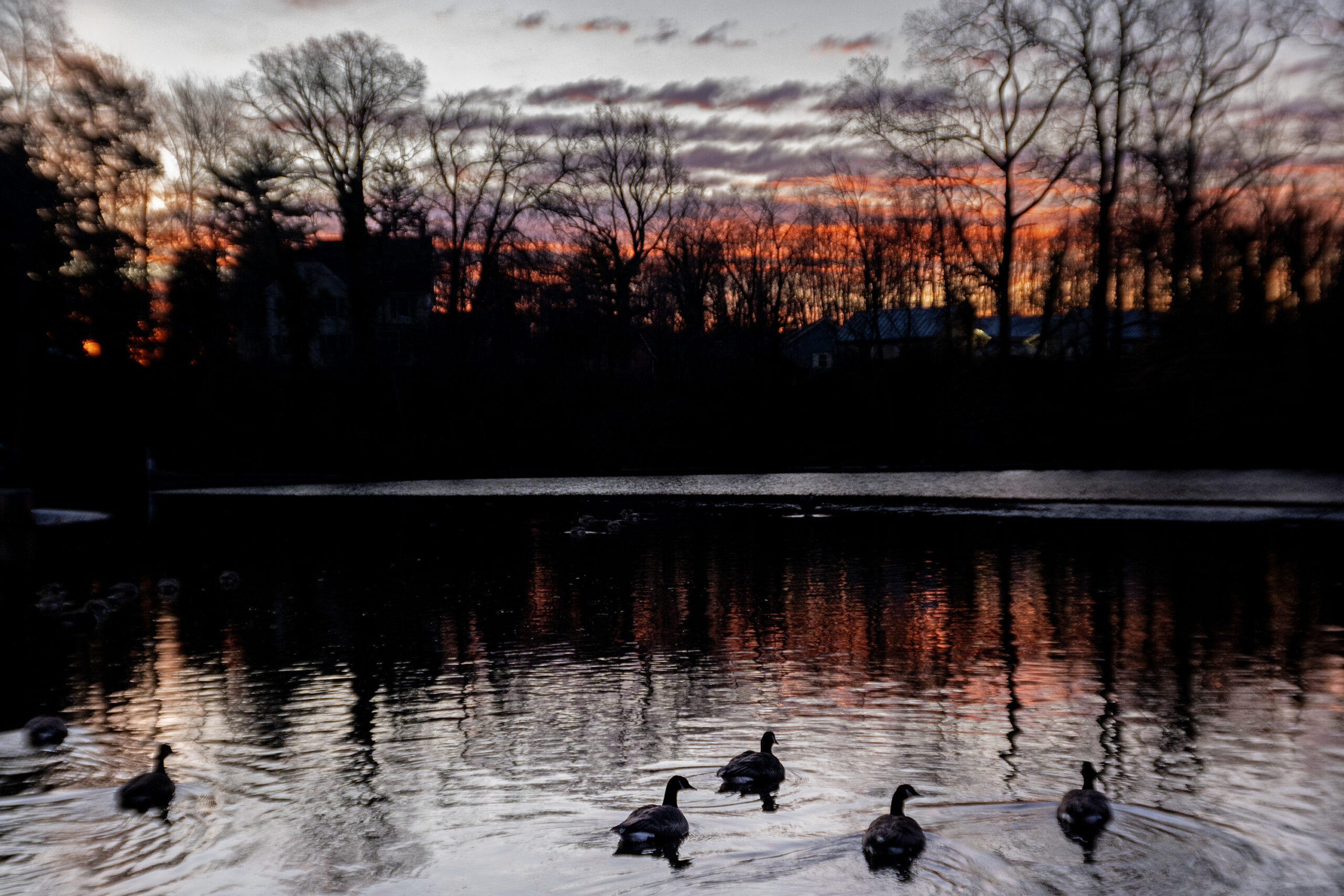
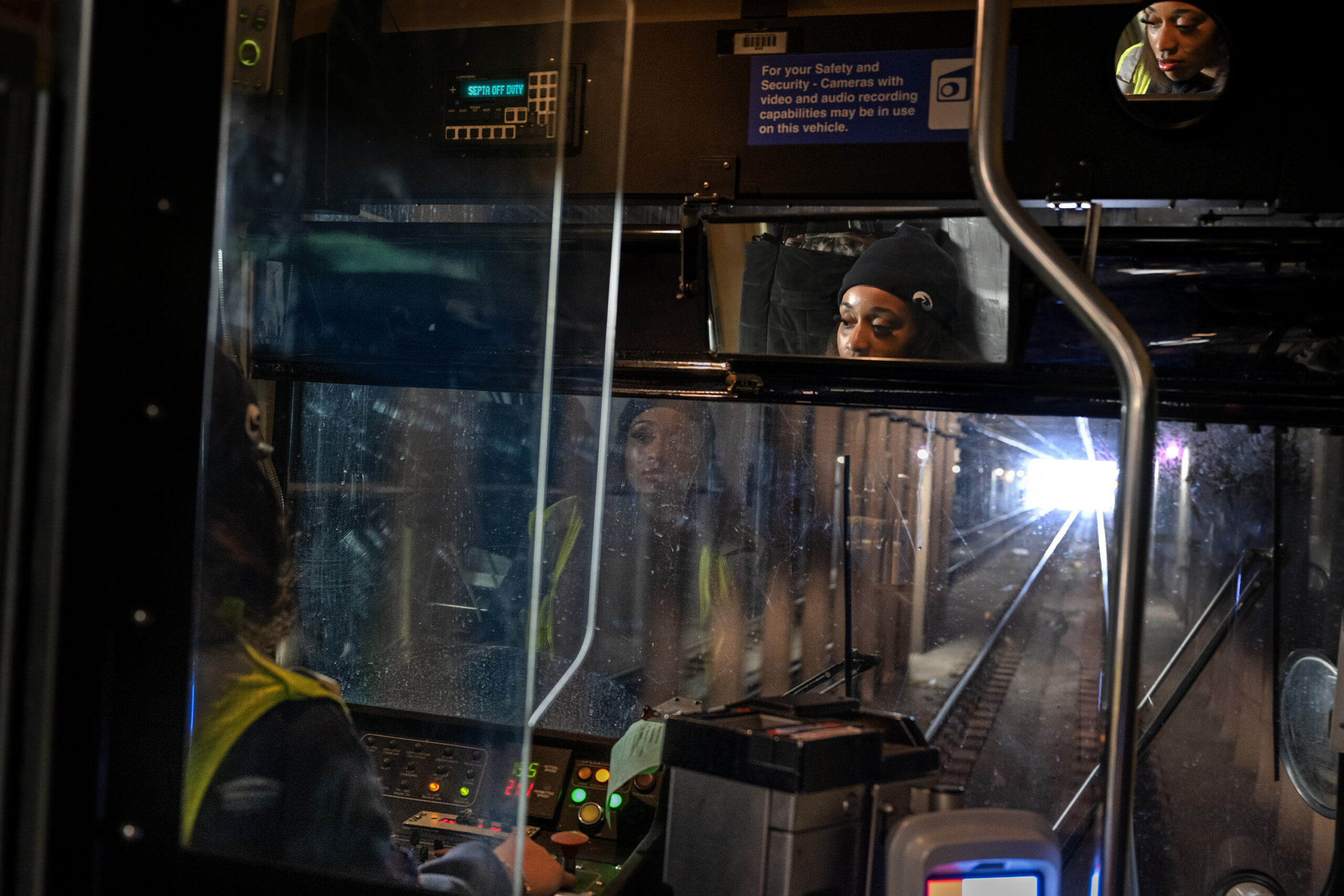
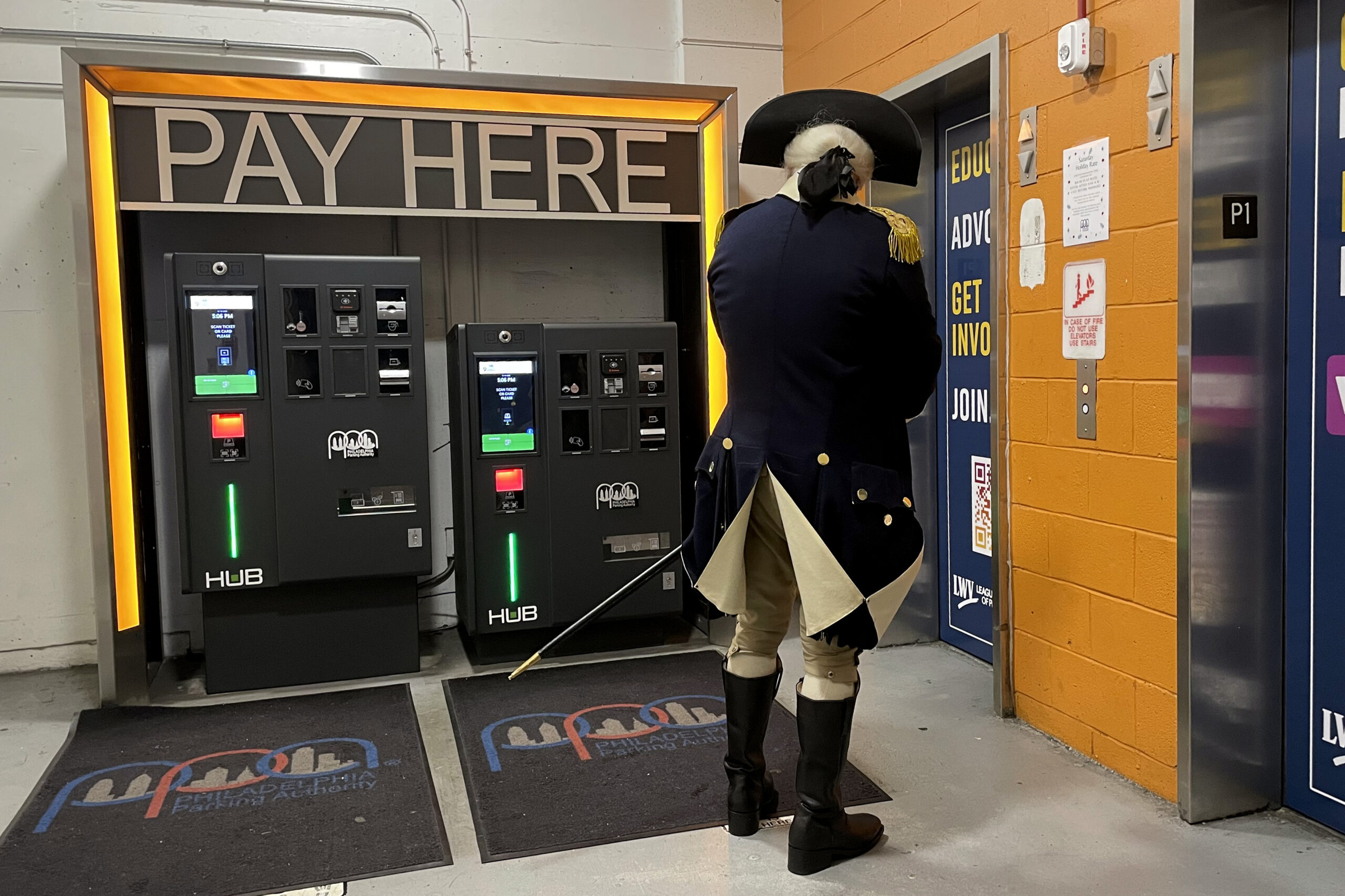
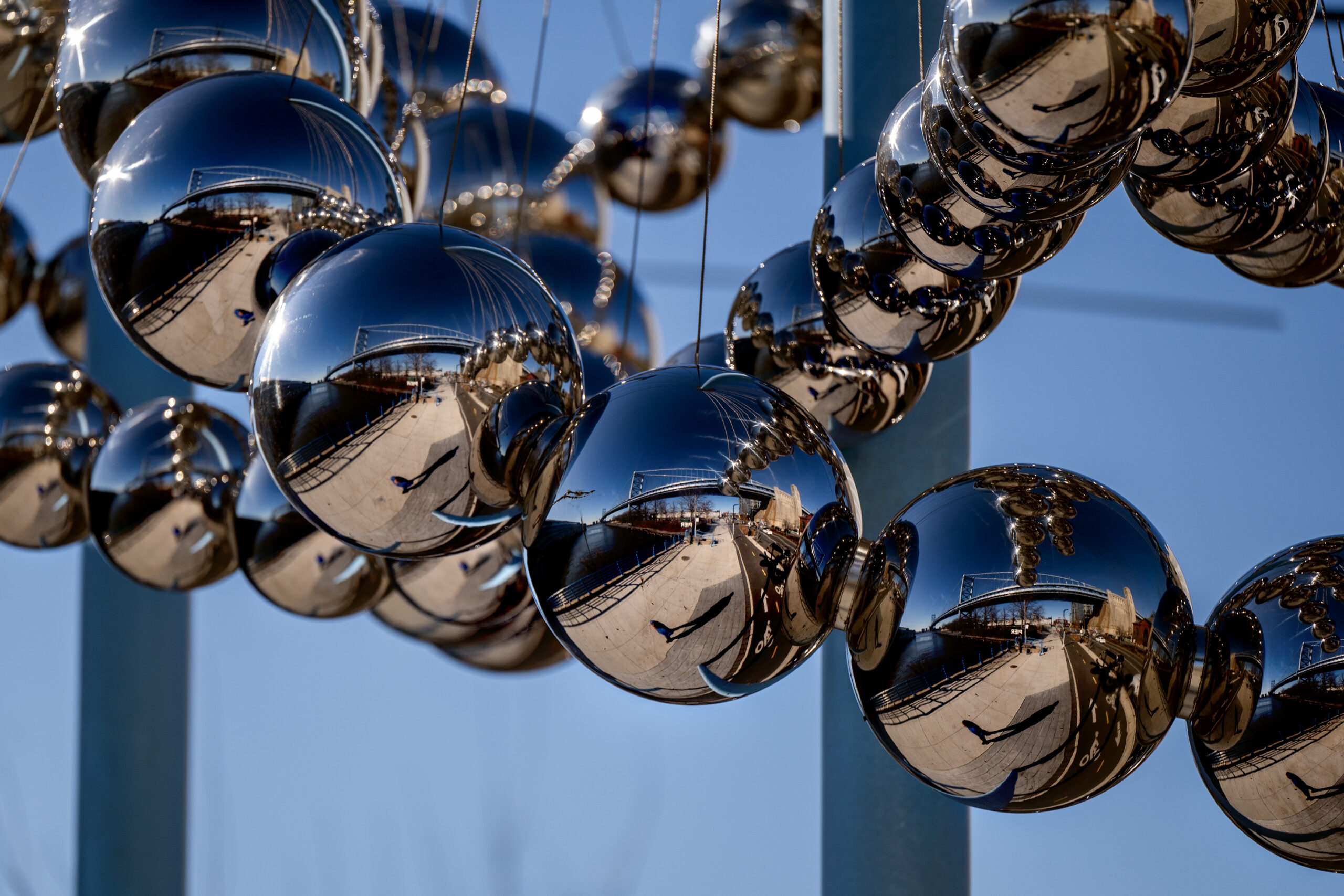
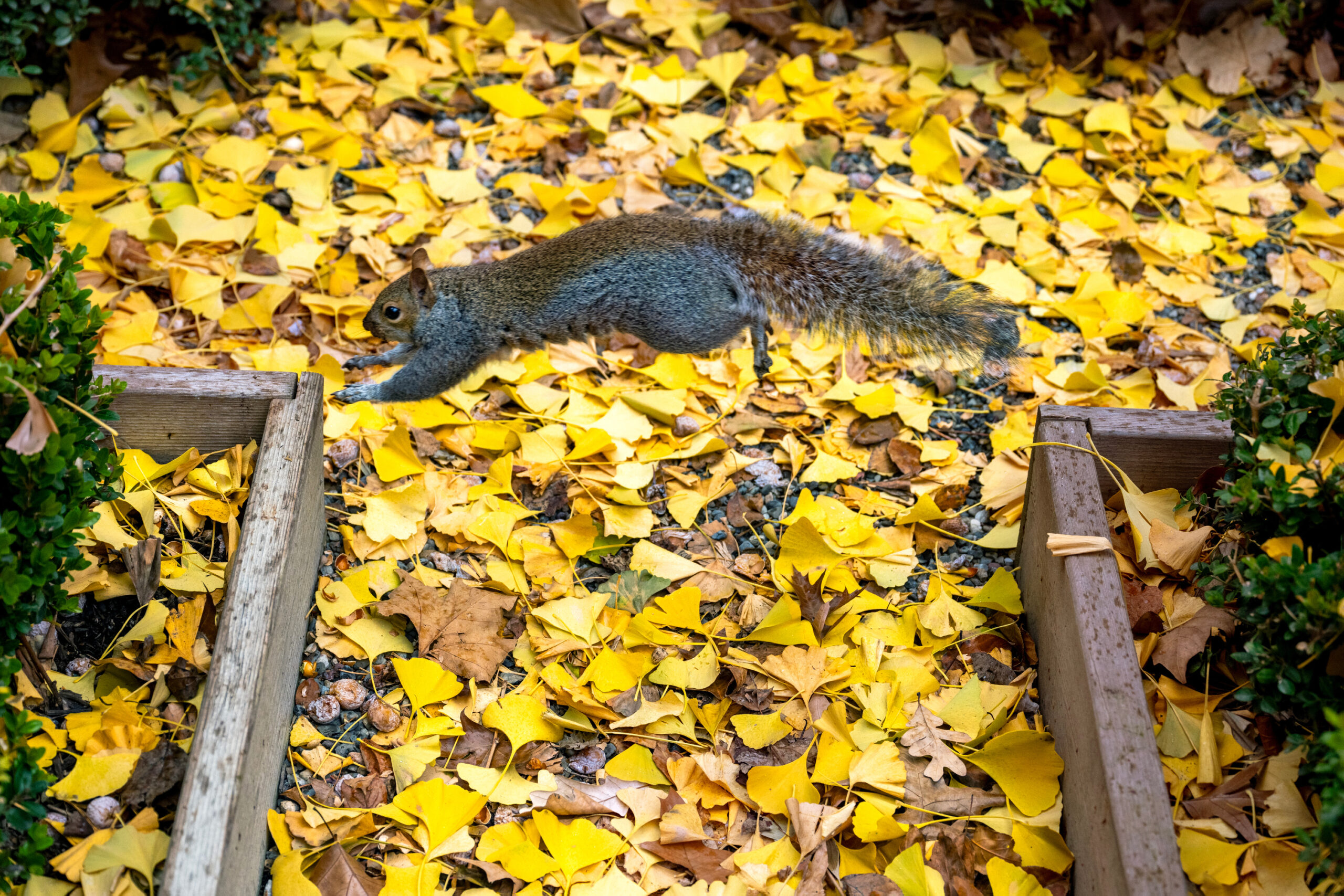
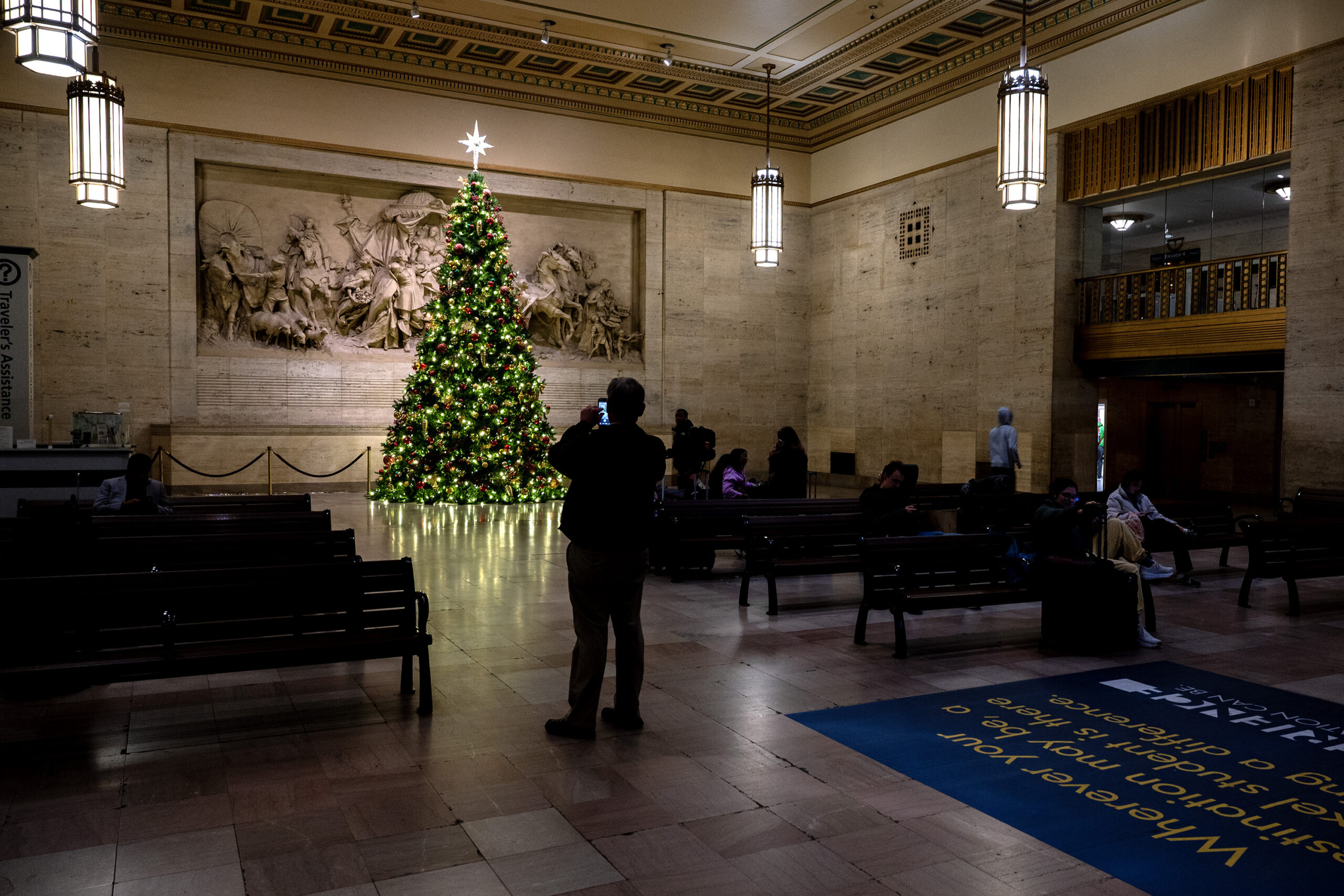
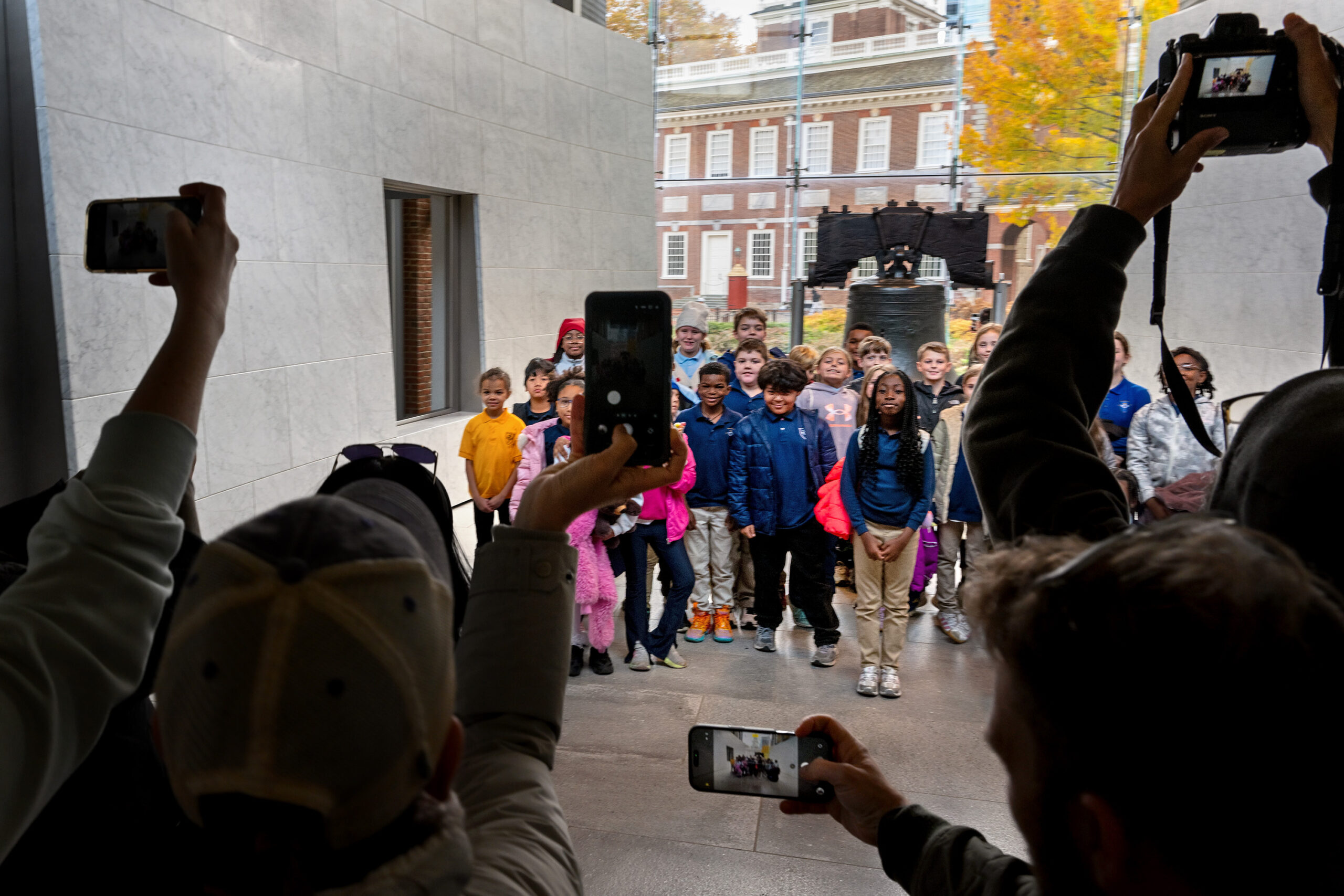
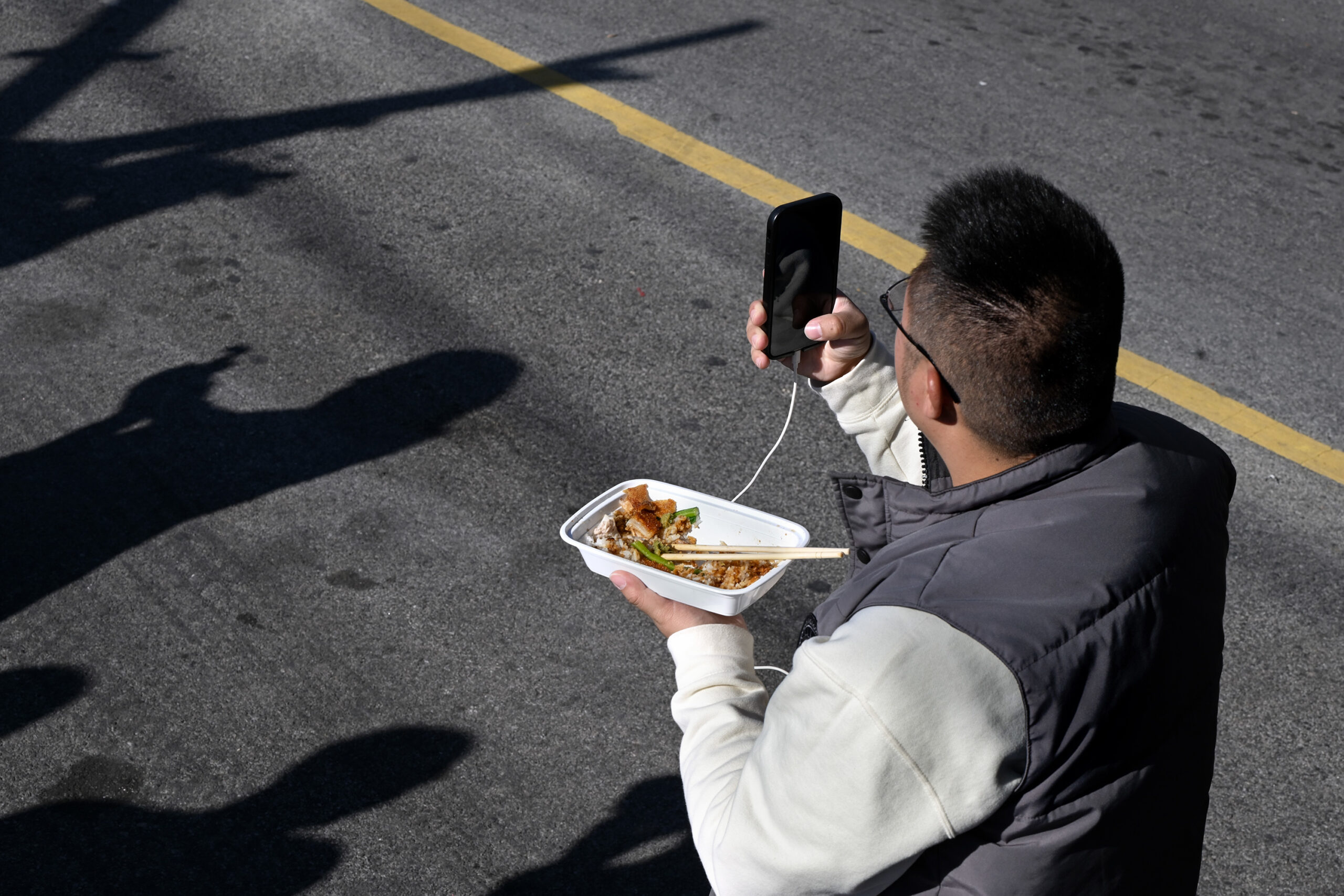
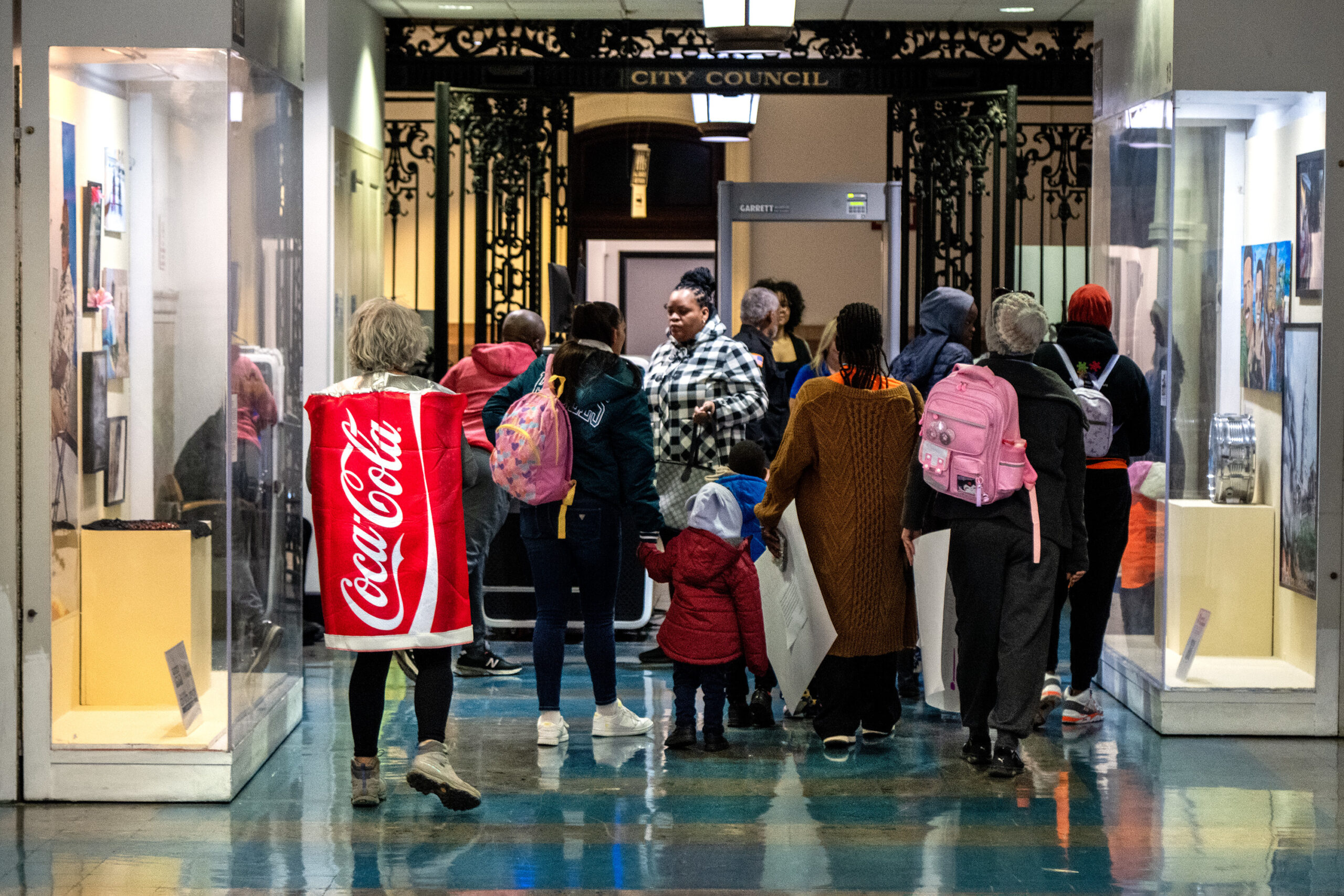
February 2, 2026: A light-as-air Elmo balloon rolls along a sidewalk in Haddonfield, propelled by the wind as Sunday’s heavy snow starts to turn to ice and sleet. January 26, 2026: The President’s House in Independence National Historical Park hours Jan, 22, after all historical exhibits were removed following President Trump’s Executive Order last March that the content at national parks that “inappropriately disparage” the U.S. be reviewed. The site, a reconstructed “ghost” structure titled “Freedom and Slavery in the Making of a New Nation” (2010), serves as a memorial to the nine people George Washington enslaved there during the founding of America.January 19, 2026: A low-in-the-sky winter sun is behind the triangular pediment of the “front door” of the open-air President’s House installation in Independence National Historical Park. The reconstructed “ghost” structure with partial walls and windows of the Georgian home known in the 18th century as 190 High St. is officially titled, “Freedom and Slavery in the Making of a New Nation” (2010). It is designed to give visitors a sense of the house where the first two presidents of the United States, George Washington and John Adams, served their terms of office. The commemorative site designed by Emanuel Kelly, with Kelly/Maiello Architects, pays homage to nine enslaved people of African descent who were part of the Washington household with videos scripted by Lorene Cary and directed by Louis Massiah. Deepika Iyer holds her niece Ira Samudra aloft in a Rockyesque pose, while her parents photograph their 8 month-old daughter, in front of the famous movie prop at the top of the steps at the Philadelphia Art Museum. Iyer lives in Philadelphia and is hosting a visit by her mother Vijayalakshmi Ramachandran (partially hidden); brother Gautham Ramachandran; and her sister-in-law Janani Gautham who all live in Bangalore, India.January 5, 2026: Parade marshals trail behind the musicians of the Greater Kensington String Band heading to their #9 position start in the Mummers Parade. Spray paint by comic wenches earlier in the day left “Oh, Dem Golden Slippers” shadows on the pavement of Market Street. This year marked the 125th anniversary of Philly’s iconic New Year’s Day celebration.Dec. 29, 2025: Canada geese at sunrise in Evans Pond in Haddonfield, during the week of the Winter Solstice for the Northern Hemisphere. December 22, 2025: SEPTA trolley operator Victoria Daniels approaches the end of the Center City Tunnel, heading toward the 40th Street trolley portal after a tour to update the news media on overhead wire repairs in the closed tunnel due to unexpected issues from new slider parts.December 15, 2025: A historical interpreter waits at the parking garage elevators headed not to a December crossing of the Delaware River, but an event at the National Constitution Center. General George Washington was on his way to an unveiling of the U.S. Mint’s new 2026 coins for the Semiquincentennial, December 8, 2025: The Benjamin Franklin Bridge and pedestrians on the Delaware River Trail are reflected in mirrored spheres of the “Weaver’s Knot: Sheet Bend” public artwork on Columbus Boulevard. The site-specific stainless steel piece located between the Cherry Street and Race Street Piers was commissioned by the City’s Public Art Office and the Delaware River Waterfront Corporation and created and installed in 2022 by the design and fabrication group Ball-Nogues Studio. The name recalls a history that dominated the region for hundreds of years. “Weaver’s knot” derives from use in textile mills and the “Sheet bend” or “sheet knot” was used on sailing vessels for bending ropes to sails. November 29, 2025: t’s ginkgo time in our region again when the distinctive fan-shaped leaves turn yellow and then, on one day, lose all their leaves at the same time laying a carpet on city streets and sidewalks. A squirrel leaps over leaves in the 18th Century Garden in Independence National Historical Park Nov. 25, 2025. The ginkgo (Ginkgo biloba) is considered a living fossil as it’s the only surviving species of a group of trees that existed before dinosaurs. Genetically, it has remained unchanged over the past 200 million years. William Hamilton, owner the Woodlands in SW Phila (no relation to Alexander Hamilton) brought the first ginkgo trees to North America in 1785.November 24, 2025: The old waiting room at 30th Street Station that most people only pass through on their way to the restrooms has been spiffed up with benches – and a Christmas tree. It was placed there this year in front of the 30-foot frieze, “The Spirit of Transportation” while the lobby of Amtrak’s $550 million station restoration is underway. The 1895 relief sculpture by Karl Bitter was originally hung in the Broad Street Station by City Hall, but was moved in 1933. It depicts travel from ancient to modern and even futuristic times. November 17, 2025: Students on a field trip from the Christian Academy in Brookhaven, Delaware County, pose for a group photo in front of the Liberty Bell in Independence National Historical Park on Thursday. The trip was planned weeks earlier, before they knew it would be on the day park buildings were reopening after the government shutdown ended. “We got so lucky,” a teacher said. Then corrected herself. “It’s because we prayed for it.” November 8, 2025: Multitasking during the Festival de Día de Muertos – Day of the Dead – in South Philadelphia.November 1, 2025: Marcy Boroff is at City Hall dressed as a Coke can, along with preschoolers and their caregivers, in support of former Mayor Jim Kenney’s 2017 tax on sweetened beverages. City Council is considering repealing the tax, which funds the city’s pre-K programs.
Dirty Franks says ’25 and up’ — and the regulars reclaim the bar: B+
Dirty Franks banning 24-year-olds and under sounds, on paper, like the plot of a generational culture war. In reality, it’s a dive bar doing what dive bars have always done: protecting the room.
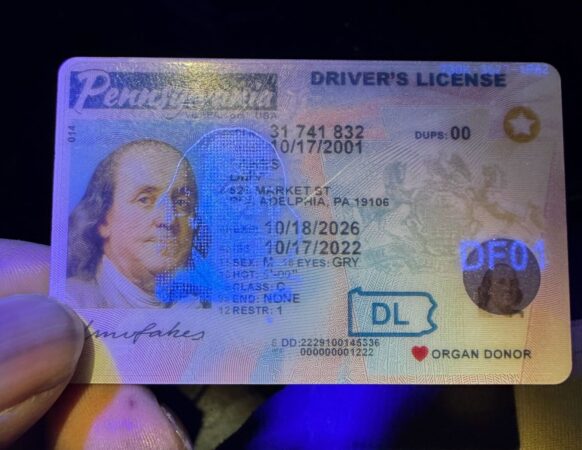
The catalyst? A fake ID featuring Ben Franklin that successfully scanned. Over the past year, Franks has been overrun by increasingly bold fake IDs, TikTok-fueled crowds, and behavior that doesn’t match the unspoken social contract of a place where regulars expect to sit, talk, and not babysit a bar.
This isn’t about hating young people. It’s about a bar that has never been a college bar suddenly being treated like one. Quantity over quality, as owner Jody Sweitzer put it. More bodies, same money, harder nights.
The temporary 25-plus rule is blunt, maybe even unfair to the responsible 22-year-olds who just want a cheap beer and a dart board. But Philly bars have always operated on feel as much as fairness. When something’s off, you fix it first and argue about it later.
And by most accounts, it worked. The room is calmer. Regulars are back. People can sit again. Staff aren’t playing bouncer-scanner-detective every five minutes, trying to outsmart IDs that look like they came straight out of a CIA prop department.
Is it sustainable? Probably not. Is it extremely Philly to say “we’ll relax when the nonsense stops”? Absolutely.
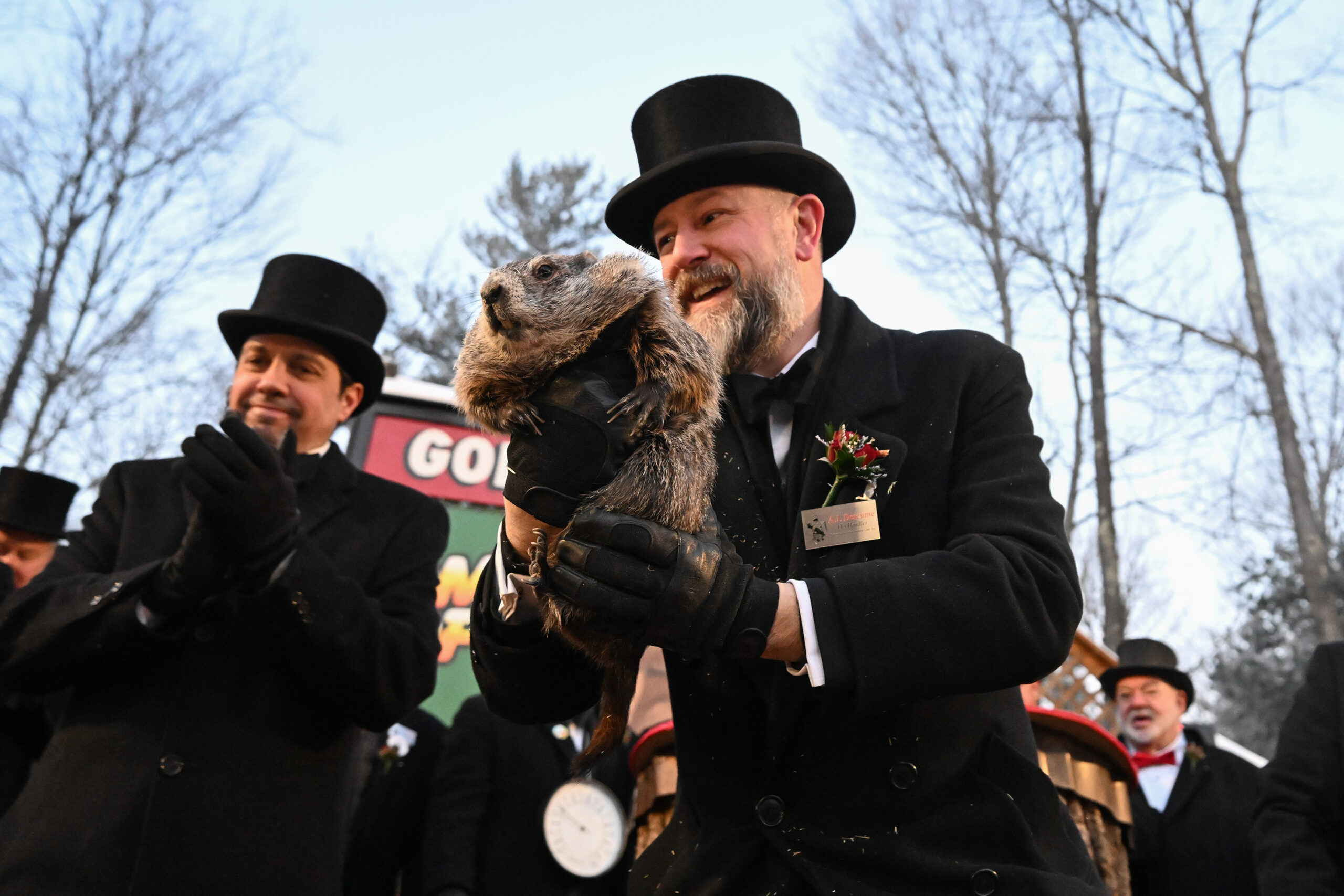
Groundhog Club handler A.J. Dereume holds Punxsutawney Phil, the weather prognosticating groundhog, during the 140th celebration of Groundhog Day on Gobbler’s Knob in Punxsutawney, Pa., Monday, Feb. 2, 2026. Phil’s handlers said that the groundhog has forecast six more weeks of winter. (AP Photo/Barry Reeger)
Punxsutawney Phil sees his shadow, condemning Philly to six more weeks of this: D
Six more weeks of winter doesn’t mean snowflakes and cozy vibes in Philadelphia. It means gray piles of ice that never melt, sidewalks that double as obstacle courses, and that specific kind of cold that seeps through gloves.
Phil seeing his shadow wasn’t news. The snow is still here. The side streets are still a mess. The wind is still disrespectful. And now we’re being told to mentally prepare for another month and a half of bundling up just to take out the trash.
Phil’s track record doesn’t help his case. He’s been wrong more often than right, but somehow still gets the power to set the emotional tone for an entire region. And the tone this year is simple: exhausted, sore, and deeply over it.
We don’t hate Phil. We just resent him for reminding us that winter in Philadelphia isn’t a season: It’s a long, drawn-out test of patience, balance, and civic infrastructure.
Six more weeks? Fine. We’ll survive. But we’re not happy about it.
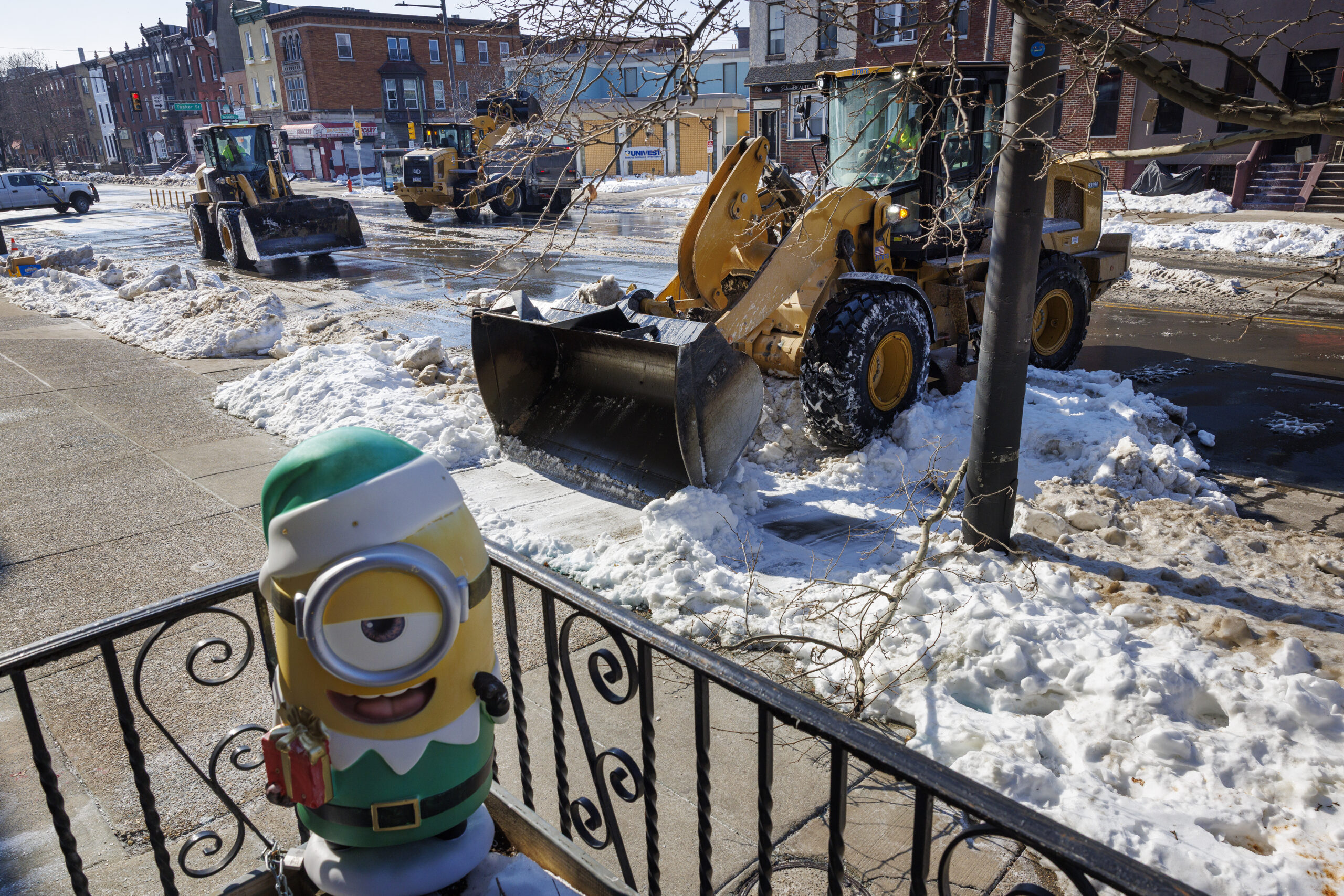
Heavy equipment clears snow and ice from South Broad Street near Tasker Street in South Philadelphia, Tuesday, Feb. 3, 2026.
Philly sends in ‘snow ambassadors’ because the cleanup still isn’t done: C
At this point, the storm itself is old news. What isn’t: frozen crosswalks, ice-packed corners, and a city that still feels stuck in cleanup mode.
So now comes the next phase of winter in Philadelphia: improvisation.
The city is deploying 300 “snow ambassadors” to manually chip away at ice piled up at crosswalks and corners. We’re well past the point where plows and salt were enough, and if the choice is between stubborn ice lingering for weeks or sending people out with tools to break it up, the latter is the only real answer.
But it also says a lot about how this cleanup has gone.
The city is now in hand-to-hand combat with the leftovers of a storm that dropped 9.3 inches and then immediately locked them in place with days of deep cold. The fact that crosswalks still need this level of attention, days later, underscores how uneven the original response was, especially on side streets and pedestrian infrastructure.
Calling them “ambassadors” doesn’t change the reality: This is a workaround. A necessary one but still a sign that the system didn’t fully deliver the first time around.
That said, credit where it’s due. The city didn’t just shrug and tell people to wait for a thaw. It adjusted. It added manpower. It acknowledged that what’s left isn’t just inconvenient but dangerous. And focusing on crosswalks and ADA ramps is exactly where the effort should be right now.
This isn’t a win. It’s a course correction.
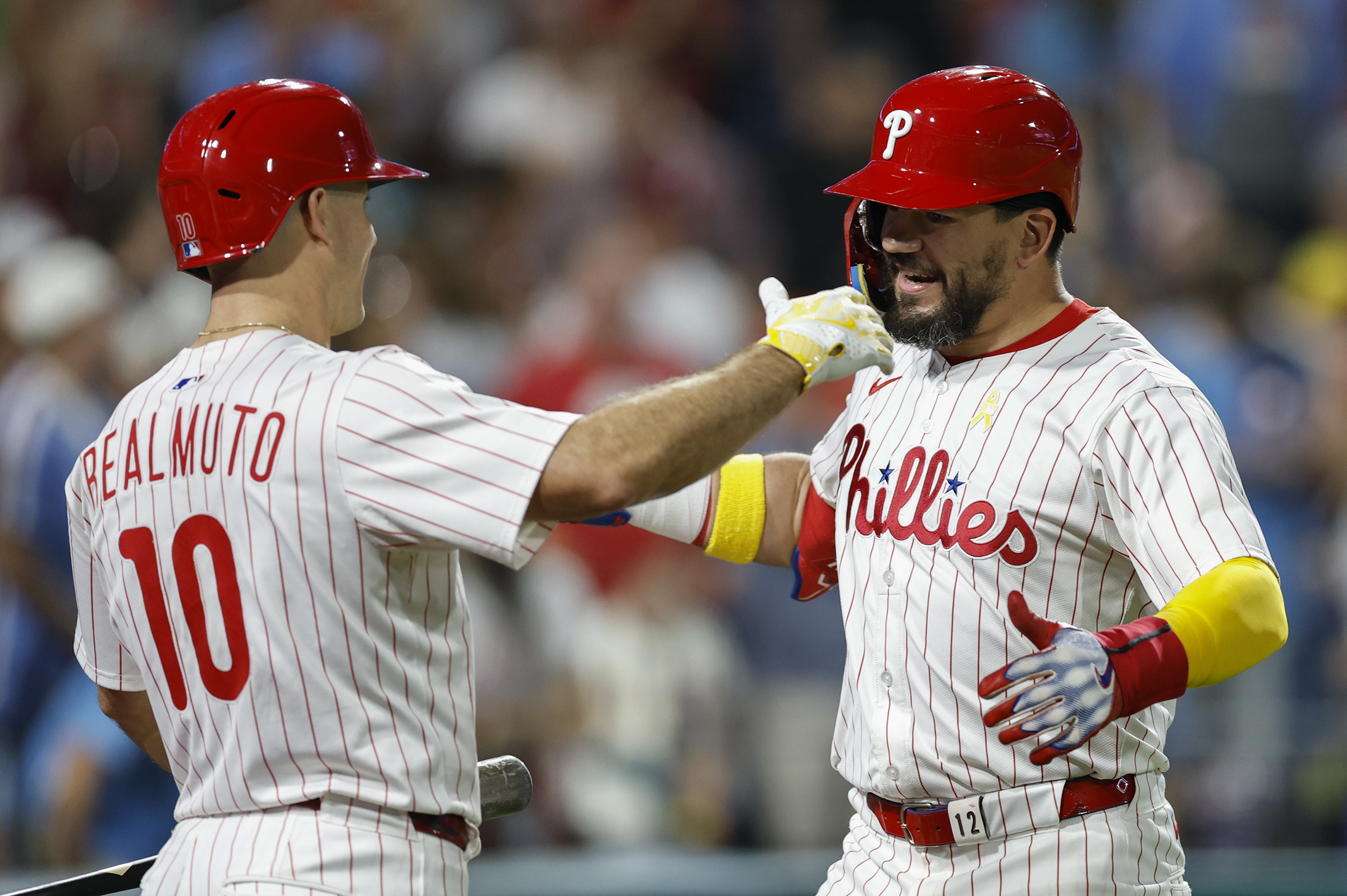
Phillies designated hitter Kyle Schwarber celebrates his solo home run with teammate J.T. Realmuto against the Kansas City Royals on Saturday, Sept. 13, 2025, in Philadelphia.
Phillies spring training hope (and the kids knocking): A
This is the part of the calendar where Philly collectively exhales.
Spring training is just getting started, and already the Phillies feel lighter. Not because anything’s been won. Not because the roster is flawless. But because February baseball is where optimism still gets the benefit of the doubt.
Clearwater represents a reset. New grass. Fresh routines. The annual illusion that this version of the team will be the one where everything clicks at the right time. It doesn’t matter how last season ended, spring training always feels like permission to believe again.
And for the first time in a while, the kids are actually coming. Justin Crawford looks like the opening-day center fielder. Andrew Painter is finally healthy enough to matter again. Aidan Miller is looming. The Phillies’ farm system has spent years as a drip-feed; now it feels like a faucet that might finally turn on.
That matters for a team that’s been built around a veteran core for so long. Bryce Harper and Kyle Schwarber anchoring things in Clearwater feels familiar in the best way, but the real intrigue is whether the next wave can actually stick. Whether this spring is the start of something sustainable, not just another “run it back.”
Spring training is baseball’s softest sell. No standings. No scoreboard pressure. Just story lines, roster battles, and enough sun to trick you into thinking October is guaranteed. Philly knows better than to fully trust it, but we still show up every year.
Because hope is part of the ritual. And for now, it’s earned.
If nothing else, pitchers and catchers reporting means one undeniable thing: Winter is losing leverage, and baseball is back in the conversation. Around here, that’s worth an A all by itself.
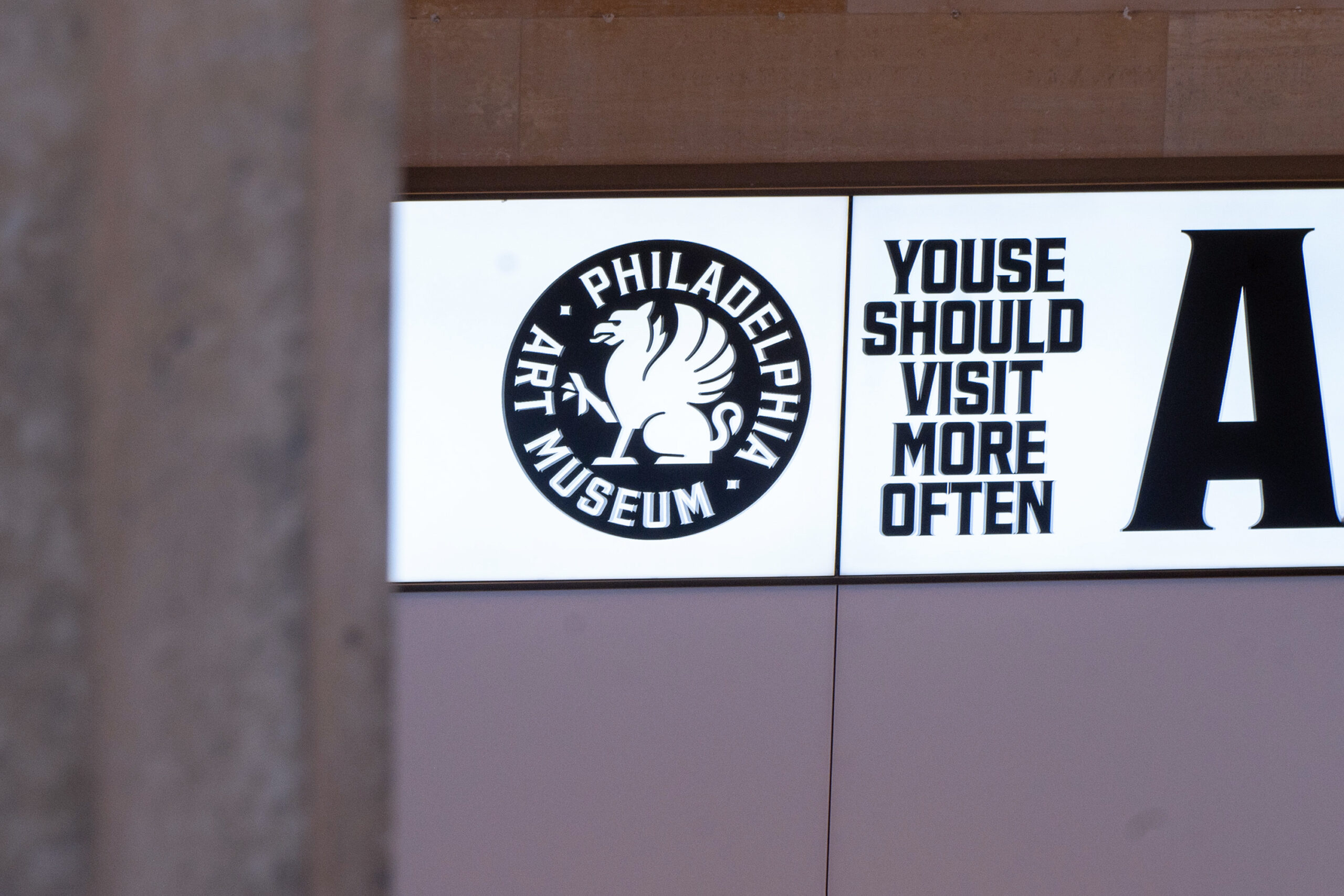
A rolling video screen above the admissions counter at the West Entrance at the Philadelphia Museum of Art Monday, Oct. 6, 2025, features a “youse should visit” slide and a new logo. The name change was eventually reversed back to its original – Philadelphia Museum of Art – but the griffin was kept.
The Art Museum walks it back (somewhat): B+
Four months after trying to rename itself the Philadelphia Art Museum, the Philadelphia Museum of Art has decided to do what Philadelphians do best: Stop pretending and call it what everyone was calling it anyway.
But this wasn’t a full rewind. The museum kept the updated look — the bold fonts, the sharper visual identity, the griffin logo pulled from the building’s roofline. The feedback was clear and consistent: People who know the institution (members, donors, staff) felt alienated by the name change.
The Philadelphia Museum of Art isn’t just branding; it’s muscle memory. You don’t casually swap that out without expecting pushback. But surveys also showed that the broader public didn’t hate the new look itself. So the museum split the difference.
It kept the visual refresh. It dropped the name change, which felt unnecessary and confusing. And it signaled, intentionally or not, that listening matters more than doubling down.
Philly gets its own Monopoly board, and the arguments have already started: A
A Philadelphia edition of Monopoly is coming this fall, and honestly, the game itself almost feels beside the point. The real action is happening now, in the collective act of imagining what would, and absolutely would not, be allowed on a Philly board.
The gaming company behind the project is soliciting public nominations for landmarks, businesses, and nonprofits, which means we’re about two seconds away from the most Philly fight imaginable: not about what belongs on the board, but what deserves Boardwalk money and what gets stuck near Baltic Avenue out of spite.
Picture it. Pass GO at City Hall. Community Chest immediately fines you for blocking a crosswalk. Chance card sends you directly to SEPTA delays — do not collect $200. Jail is the Roundhouse. Free Parking is somehow still under construction.
Some squares feel obvious: the Art Museum steps, LOVE Park, Independence Hall. Others are going to be chaos picks. Wawa utilities. Delco railroads. A corner bar that hasn’t changed since 1987 somehow costing more than Center City. Someone will nominate their neighborhood dive and mean it sincerely. Someone else will nominate their rowhouse just to prove a point.
And that’s where this gets interesting. A Philly Monopoly board isn’t really about the game. It’s about which places people think matter, and which ones they’ll argue should’ve made the cut.
‘We’ll shew ya whereta gew in the snew’: Visit PA leans into accents — and Philly winter energy: B+
If you’re going to tell Philadelphians to leave the house in February, you’d better sound like someone we trust. Preferably someone who says “youse.”
The Pennsylvania Tourism Office seems to get that, according to WHYY. Its new winter “Snow Day Hotline” is staffed by prerecorded Philly and Pittsburgh accents, plus live comedians during select hours.
Call the number and you’re greeted by exaggerated but affectionate regional voices walking you through things to do around the state, from museums to indoor hangs. It’s intentionally old-school, phone only, no app.
The Philly side of the operation is handled by comedian Betsy Kenney, whose accent isn’t natural but feels familiar anyway: a composite of neighbors, aunts, and the person behind you in line at Wawa explaining why something is “not worth it, but also maybe worth it.” The advice isn’t groundbreaking. The delivery is the point.
So when a highly accomplished Jeopardy! champion (16-game winner, nearly half a million dollars in earnings) visibly struggled to pronounce “Schuylkill” on national television this week, Philly collectively leaned forward and went, here we go.
To Scott Riccardi’s credit, he got the answer right. The river that runs through Pottsville, Reading, and Philadelphia? Yes. Correct. No notes. But the pronunciation (Skol-kull) sent Ken Jennings into referee mode, which is never where you want to be when the clue involves Pennsylvania geography.
For the record (again): it’s Skoo-kl. Two syllables. No drama. No extra letters pronounced.
Riccardi walks away with a B: smart, successful, and close enough to get partial credit. But full points are reserved for anyone who can say Schuylkill on the first try without breaking eye contact.
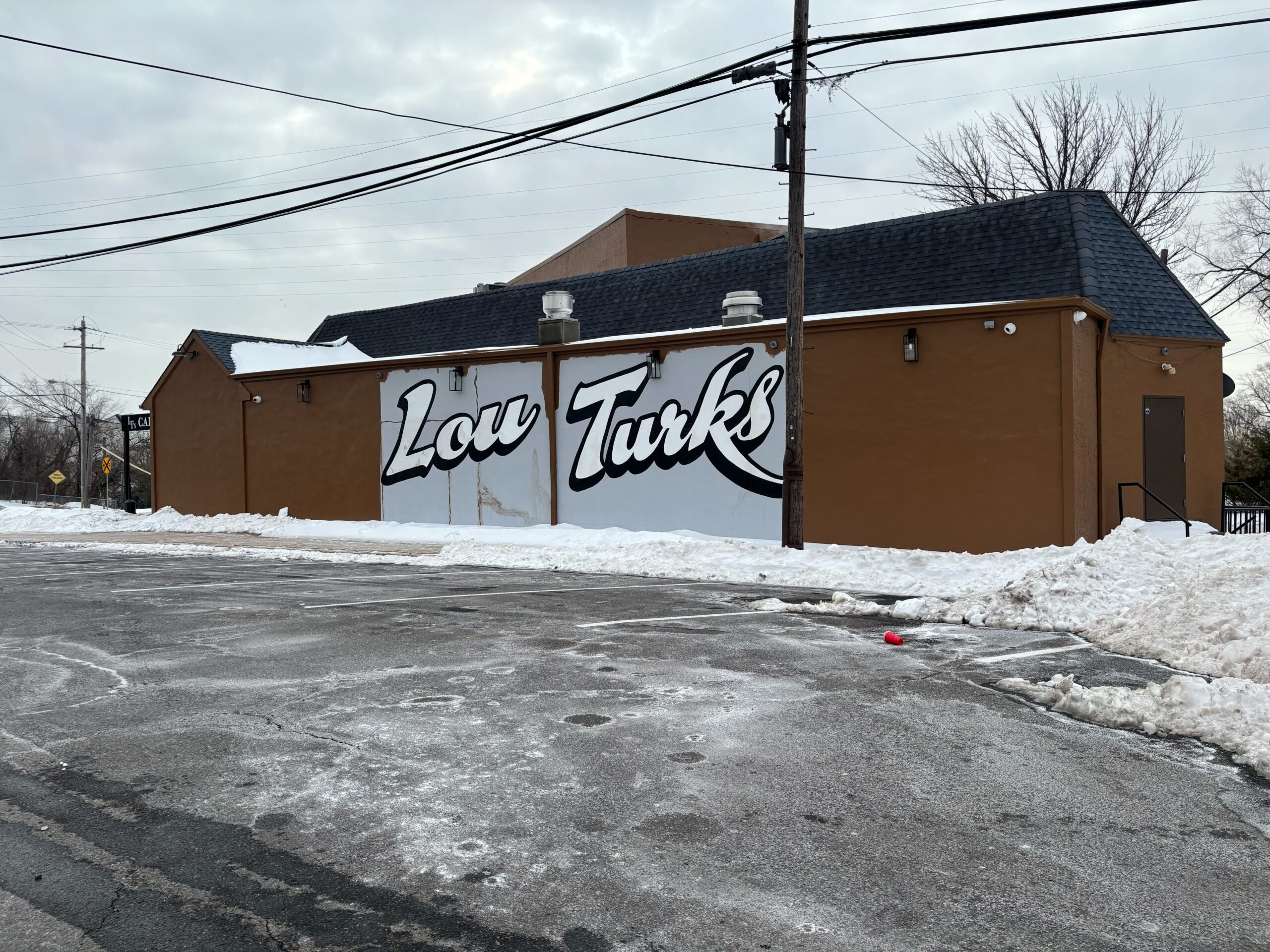
Lou Turk’s, a Delaware County strip club with more than 50 years in business, announced it will change its name to the Carousel Delco.
Lou Turk’s rebrands, Delco shrugs: A
Only in Delco could a strip club rebrand spark genuine cultural concern. Not about the name, but about whether Mother’s Day flower sales would survive.
Lou Turk’s, Delaware County’s lone strip club and one of its most stubborn institutions, announced it’s changing its name to the Carousel Delco. The response was immediate disbelief, light outrage, and a collective understanding that no one is actually calling it that. Ever. This is Gallery/Fashion District math.
Stephanie Farr laid it out perfectly: Lou Turk’s isn’t just a business, it’s a landmark. A place that exists in the Delco imagination as much as it does off Route 291, wedged between a Wawa and an Irish pub like it was placed there by a zoning board with a sense of humor.
The new name raises questions (mostly “why?”), but Delco culture is resilient. The club can swap signage, management, and branding buzzwords all it wants. It will still be Lou Turk’s. And more importantly, it will still sell flowers on Mother’s Day, preserving one of the county’s most unhinged and beloved traditions.
We’ll show you a photo taken in the Philly-area, you drop a pin where you think it was taken. Closer to the location results in a better score. This week is all about shiny, classic, and infamous automobiles! Good luck!
Round #19
Question 1
Where is this show room?
Loading…
ClickTap on map to guess the location in the photo
ClickTap again to change your guess and hit submit when you're happy
You will be scored at the end. The closer to the location the better the score
Jose F. Moreno / Staff Photographer
Pretty good/Not bad/Way off! Your guess was from the location.Spot on! Your guess was exactly at the location. Here's also where a random selection of Inquirer readers guessed.
This photo was taken during the 2022 Philly Auto Show at the Pennsylvania Convention Center. This year’s show runs until February 8, once again at the Convention Center. Organized by the Auto Dealers Association of Greater Philadelphia, it spans nearly 700,000 square feet.
Quiz continues after ad
Question 2
Where is this famously frozen car?
Loading…
Joe Lamberti / For The Inquirer
Pretty good/Not bad/Way off! Your guess was from the location.Spot on! Your guess was exactly at the location. Here's also where a random selection of Inquirer readers guessed.
Pretty good/Not bad/Way off! Your guess was from the location.Spot on! Your guess was exactly at the location. Here's also where a random selection of Inquirer readers guessed.
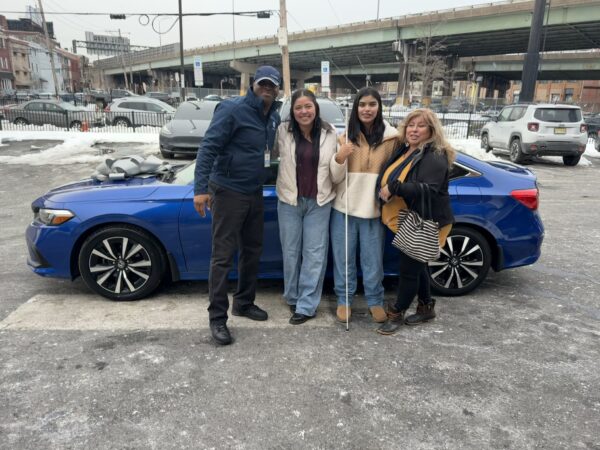
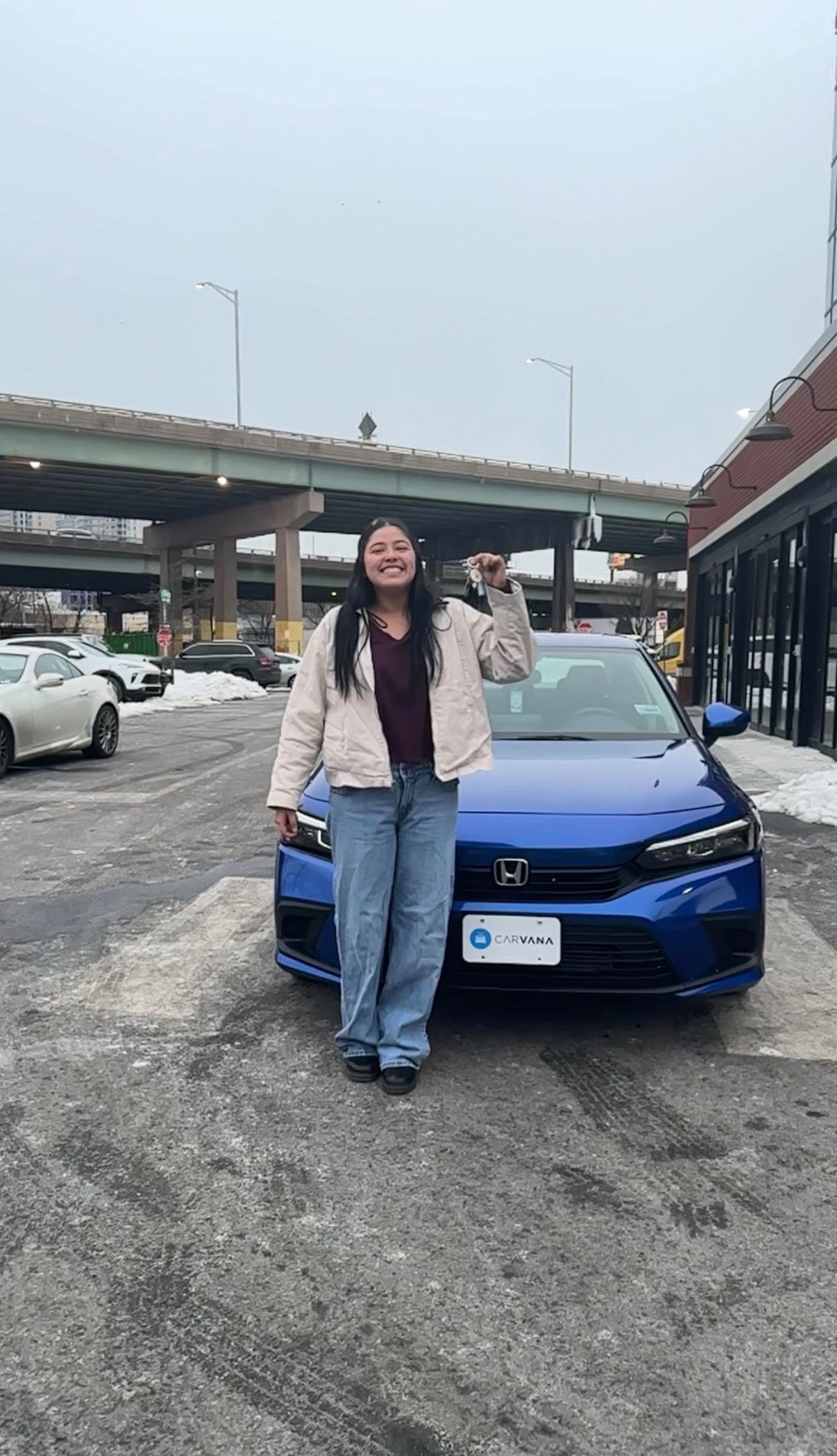
After her frozen car garnered tens of millions of views on TikTok, Tianna Graham is getting a new car for free, gifted to her by Carvana, whose car vending machine tower features prominently in the background of her videos.
Graham, a 24-year-old fifth-grade math teacher at Community Academy of Philadelphia, had a 2016 Honda Civic. The vehicle became thoroughly encased in ice following the snowstorm and arctic temperatures late last month.
On Tuesday, Graham reached out to Carvana, hoping she could leverage the car tower’s inadvertent virality in her videos to get a discount on a new car. Carvana soon responded, eager to help.
When Graham, a Fishtown resident, arrived at the facility on Friday afternoon with her mom and sister, she said, she expected Carvana would offer her some percentage off one of their cars.
Replying to @✨mrs.corby.nails✨ THANK YOU @Carvana MORE COMING SOON!!! I’m so incredibly grateful for this!!!! after all the details get sorted out, i’ll post a full update! and a big thank u to my lovely friends and family who have been helping me through this!
She was stunned to see a bright blue 2022 Honda Civic descend from the car vending machine with a big bow on it, school supplies inside, and an ice pick, “which I guess I do need,” Graham said with a laugh.
Carvana spokesperson Hayley Pollack confirmed Friday the car will be free for Graham once all the paperwork is finalized.
“I was shocked, in disbelief,” Graham said of learning the car would be free. “It’s a beautiful car.”
Tianna Graham in front of the car Carvana is gifting her.
The car is used and has about 28,000 miles on it, Graham said. She expects to have it in her possession next week based on initial conversations with Carvana, she said.
She plans to take it for a spin for the first time next weekend to drive to Ocean City, Md., for a National Federation of the Blind convention, she said. Graham, whose sister is blind, said she is currently pursuing her graduate degree to become an orientation and mobility specialist to help blind people learn to use canes.
“All things do happen for a reason,” Graham said she learned from this experience. “Anything bad that is happening, something good can always come out of it.”
The Delaware Valley Regional Planning Commission is working to help keep alive the city’s project to cap the Vine Street Expressway after Washington last year yanked $150 million in promised federal money.
The project was dependent on a $159 million U.S. Department of Transportation grant covering the entire cost.
Now, DVRPC, at the city’s request, is managing the process of gathering $12.5 million to replace some of the lost money, enough to complete the final design.
“We are taking this administrative action to keep the project moving,” DVRPC spokesperson Elise Turner said.
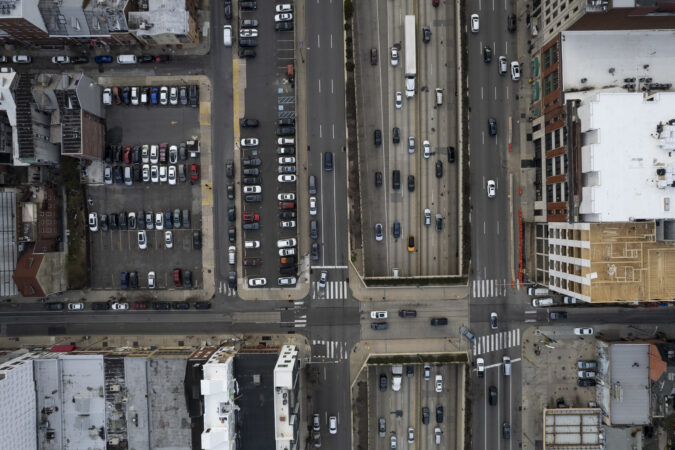
The Chinatown project involves building a cap over I-676 from just east of 10th to 13th Streets, allowing for a park as well as more developable land. It would tie together Chinatown and the neighborhood to the north, which were united until the interstate split them.
Finishing the design will advance the project as officials look for construction funding. It’s possible building the cap will be delayed.
For the design work, $10 million would be obtained from another federal program for improvements on the national highway network. That money is available in the region’s reserve controlled by PennDot, DVRPC staff said.
The city would contribute $2.5 million.
The city’s Office of Transportation and Infrastructure Systems is working to secure the money and is “confident” that will happen, a spokesperson said, while declining to disclose details.
As for construction, “funding will have to be figured out later,” said DVRPC’s Turner.
The agency determines priorities for regional transportation projects.
To receive federal funds, an infrastructure project needs the formal blessing of the DVRPC, the designated metropolitan planning organization for the Philadelphia region.
Meanwhile, preliminary engineering work is continuing, financed by the $8.4 million. The project is expected to receive environmental approvals in the spring, DVRPC said.
President Donald Trump and the GOP congressional majorities have been targeting Biden-era initiatives for elimination, including various transportation-equity programs — to fund projects like the Stitch — that began under the national infrastructure act of 2022.
In late 2023, construction of the cap was projected to begin in 2027, although at other points a groundbreaking was anticipated in 2028.
The timeline is currently unclear.
This story has been updated to clarify DVRPC’s role in the project.
To deal with the snow, the city has deployed roughly 1,000 workers and 800 pieces of snow-removal equipment, and instituted programs to break up ice at crosswalks and streets in residential neighborhoods, among other efforts. But to some Inquirer readers, the solution has been right in front of us all along.
“I know we used to toss snow into the river,” one reader wrote via Curious Philly, The Inquirer’s forum for questions on all things local. “What happens to it now?”
In the past, the city has dumped snow into the Delaware River and the Schuylkill on various occasions. But in recent decades, that practice has been used rarely — if at all — primarily over environmental concerns. Here is what we know:
An old practice
Newspaper archives show references to dumping snow in the Delaware and Schuylkill dating back at least to the late 19th century — during a storm colloquially known as the “Great Arctic Outbreak of 1899.” That storm dumped 19 inches of snow on Philadelphia around Valentine’s Day.
In the aftermath, the city sought permission from its Board of Port Wardens to dump snow in the rivers surrounding Philadelphia, but there were concerns over the “considerable amount of dirt” that would be thrown into the water.
The practice was utilized in the winter of 1909, when 21 inches of snow fell. Initially, snow was dumped into the rivers at three points, but officials later expanded approved dumping sites to be “at any point and from any wharf” along either river.
“It was contended that this was perfectly proper, since snow is not refuse, but will readily melt after it is thrown into the water,” The Inquirer reported at the time.
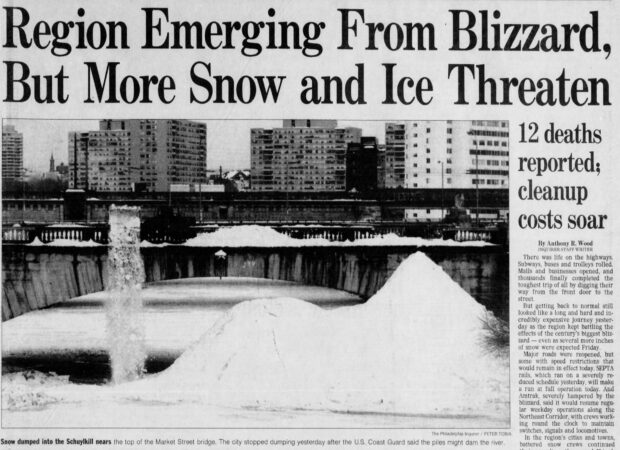
Article from Jan 10, 1996 Philadelphia Daily News (Philadelphia, Pennsylvania) <!— –>
The blizzard of ’96
Perhaps the most well-known modern use of Philadelphia’s rivers as a snow dump came in 1996, when a debilitating 30.7 inches of snow fell in early January. The city was left with few options, and got a permit from state environmental officials to dump snow in the rivers, Inquirer reports from the time indicate.
Within days, roughly 500 tons of snow were dumped into the rivers, and that total would grow into the thousands. Famously, city trucks were spotted dumping snow into the Schuylkill from the Market Street Bridge — until being asked to stop by the U.S. Coast Guard.
“We did advise the city to stop dumping snow into the Schuylkill. Our concern was the accumulation of ice in the river,” a Coast Guard spokesperson said at the time. The piles of snow in the river ran the risk of forming dams that could cause flooding.
The piles became so severe they had to be beaten back down. By mid-January, one Inquirer report noted, wrecking balls were sent in to break up at least one mountain of snow that threatened to clog the Schuylkill.
Article from Feb 22, 2003 The Philadelphia Inquirer (Philadelphia, Pennsylvania) <!— –>
An ‘option of last resort’
The city again in 2003 dumped snow into Philadelphia’s rivers, this time in an attempt to mitigate the impacts from a February storm that left about 19 inches of the white stuff. This time, though, city officials seemed to at least feel bad about it, calling it an “option of last resort.”
For this storm, roughly 400,000 pounds of snow was dumped into the Schuylkill. But along with it went road salt, antifreeze, trash, and other pollutants, prompting concerns from regional environmental groups. That pollution, they said, could harm marine life and devastate the riverbanks.
“All the stuff that’s on the road surface goes into the water,” Delaware Riverkeeper Network head Maya van Rossum told The Inquirer that year. “This is not the appropriate way to deal with the snow. There are plenty of places on the land to put it.”
The dumping, Streets Commissioner Clarena Tolson said, was limited. And the Pennsylvania Department of Environmental Protection said it asked the city to only dump “virgin snow” into the rivers.
“We’re going to take some of that down to the Navy Yard. We will not dump in the river,” Tolson said. “There are environmental concerns with placing snow in the river. The snow accumulates pollutants and salt, and dumping it in the river would be a very extreme measure.”
The Center for Environmental Policy at the Academy of Natural Sciences applauded the Nutter administration’s decision, writing in a letter to The Inquirer that the move would “prevent serious environmental damages to the river.”
“Urban precipitation, including snow, acquires a witch’s brew of contaminants such as oil, grease, litter, road salt, and lawn fertilizer,” director Roland Wall wrote. “We salute the city for making a commonsense decision that will protect one of Philadelphia’s natural treasures.”
A pedestrian walks past a large pile of snow and ice along the Benjamin Franklin Parkway days after a fierce winter storm dropped up to 9 inches of snow and sleet, with freezing temperatures leaving large banks of ice and snow on streets and sidewalks in Philadelphia, Monday, Feb. 2, 2026.
So what do we do now?
On Wednesday, Carlton Williams, the city’s director of clean and green initiatives, said the city does not dump snow in Philadelphia’s rivers, as that practice is “not an EPA standard.” Instead, the city has gravitated toward removing the snow from city streets and placing it at 37 snow dump sites around Philadelphia.
The city did not respond to a request for comment regarding those dump sites’ locations. Some of them contain mounds of snow up to 12 feet high that stretch for blocks, Williams said Wednesday. Officials also brought in a snow-melting machine from Chicago.
Pennsylvania Department of Environmental Protection guidelines, meanwhile, recommend municipalities push snow at least 100 feet away from surface waters, where it will be able to melt with less environmental impact.
“Dumping of snow directly into a stream carries with it the shock of loading de-icing chemicals and anti-skid agents,” the agency said in a recent recommendations document. “Allowing a natural melt provides a slow release of the water, dilutes the chemicals, and provides filtration of the solids through the soil.”
Sonder, the buzzy short-term rental company, is no more. But some of its former properties across Philadelphia are taking on new lives.
At least three of Philly’s last five Sonder properties have new ownership and have already reopened or are about to as boutique short-term rentals.
The former competitor with Airbnb and Vrbo touted modern “apartment-style hotels” nationwide. In November, when Sonder announced that it was closing, citing “severe financial constraints,” it marked a chance for local and national operators to swoop in and snag desirable properties.
As first reported by the Philadelphia Business Journal, Wyndham Hotels & Resorts partnered with the hospitality company Reside to reopen the Sonder property at 325 N. 13th St.in Callowhill in January. The 96-unit building is now called Heid Lofts by Reside.
The Queen Hotel at 628 S. Fifth St.in Queen Village is now being managed by Sosuite, a Philly-based short-term rental company that has taken over other previous PhillySonder properties over the years. The 30-unit property reopened under Sosuite in November.
The Edison at 312 N. Second St. in Old City is working to reopen as a 24-unit rental property in the coming weeks under operator PHL Stays, the Business Journal reported. The company is run by Jake Tovey, who operates a similar business in Pittsburgh called Pittsburgh Furnished Rentals.
As for the remaining former Sonder haunts, The Arco at 1234 Locust St. in Midtown Village is still closed, while the Witherspoon Building at 130 S. Juniper St. in Center City is pivoting to become a traditional apartment building with a mix of 186 studio and multi-family units.
By now Arctic air may qualify for a frequent-visitor pass around here, but the version coming this weekend will be of a different quality and have a particular sting.
“It’s going to be a slap in the face,” said Cody Snell, a meteorologist with the National Oceanic and Atmospheric Administration’s Weather Prediction Center.
After a day in which highs will be around freezing on Friday — a solid 10 degrees below normal — some nuisance snow is possible late in the day or evening and early Saturday, and maybe even squalls. Then temperatures are going to tumble through the teens in the wake of another potent Arctic front.
They might not see 20 degrees in the Philly region until Monday.
Adding bite will be winds that could gust to 55 mph, and the National Weather Service says wind chills of 10 and 15 below are likely Saturday in the immediate Philly area. The agency has issued an “extreme-cold warning” — a relatively new addition to the advisory list — in effect Saturday afternoon through Sunday morning. Wind chills of 17 below zero are possible, and winds could gust to 55 mph, the weather service says.
Said Ray Martin, a lead meteorologist at the weather service office in Mount Holly, “It’s going to be awful.” Among the recent sequence of Arctic invasions, “it looks like the worst.”
What’s more, it’s likely to be a harvest weekend for the ice that is solidifying upon the region’s waterways, a growing concern.
A warm-up is due to begin Monday and pick up steam during the workweek, with highs maybe reaching 40 degrees on Thursday. But it may encounter some resistance, and another storm threat might be brewing for next weekend, forecasters say.
The snowpack already has achieved an elite status
Friday marked the 12h consecutive day in which the official snow cover at Philadelphia International Airport, measured daily at 7 a.m., was at least 5 inches.
With today's snow depth remaining at 5" for Philadelphia, there have now been 10 consecutive days with 5" or more of snow depth. This is the longest such stretch since 2010. If it remains 5" at 7 AM Thursday morning, it'll be nudging into the top 10 longest. #PAwxpic.twitter.com/x4FRHvkg8P
In the 142-year period of record, that ties for seventh place for a snow-cover duration of that depth.
“To hold on to a snowpack like this is unusual,” said Johnathan Kirk, senior hydrologist at NOAA’s Middle Atlantic River Forecast Center, in State College, Pa., which is keeping a close eye on the waterway icing.
The Schuylkill in Philly is ice-covered, as is the Delaware River from Trenton to Washington Crossing.
In addition to an eight-day stretch when temperatures failed to reach 30, the durability is related to the 2 or so inches of sleet that capped the snow on Jan. 25. Sleet is white ice that melts more slowly than snow.
The dry and cold air has been a natural preservative; snow and ice melt more readily when the air is moist.
Another factor was the impressive liquid content of the snow and sleet, Snell said. The frozen mass contained 1.39 inches of liquid, the weather service said, comparable to what is contained in 15 to 18 inches of snow.
As temperatures finally nudged above freezing, some melting did occur this week, which would explain that unsightly slushy porridge at Philly intersections. However, the official snow depth lost only an inch between Jan. 27 and Wednesday.
The snowpack may receive a fresh frosting Friday night into early Saturday with up to an inch of snow, Martin said, but it’s not going to have the same staying power.
What’s different about this Arctic air mass
Any snow that falls is likely to get blown away in a hurry, Martin said, as winds will pick up before daybreak Saturday and gusts howl to 50 mph by late morning.
Typically, cold air pours into the region from the northwest and becomes modified as it passes over land, the Great Lakes, and the mountains.
This is going to be a straight-up Arctic shot. It will come more or less from the north, and the icy lakes are not going to do much to impede it, said Matt Benz, senior meteorologist at AccuWeather Inc.
The weather center’s Snell said a weak storm system moving off the Atlantic coast is forecast to blow up as it interacts with warm Gulf Stream waters. The differences between the cold high pressure with its heavier air over the East and the lighter air of the storm are going to place the Philadelphia region in a frigid sandwich.
Heavier air tends to rush toward lighter air, like air escaping from a punctured tire.
A thaw is coming to Philly, eventually
Just how warm it gets next week remains unclear, AccuWeather’s Benz said.
“Arctic air is hard to dislodge sometimes,” he said, adding that recent model trends suggest the warm-up will not be quite as robust as expected earlier.
A wild card would be a potential storm next weekend. The European forecast model was seeing rain and 60 degrees, Martin said, while the U.S. model was suggesting a blizzard.
On Feb. 5, 2010, 6.6 inches of snow fell upon the airport, the beginning of an unprecedented siege in which 44.3 inches accumulated in a six-day period.
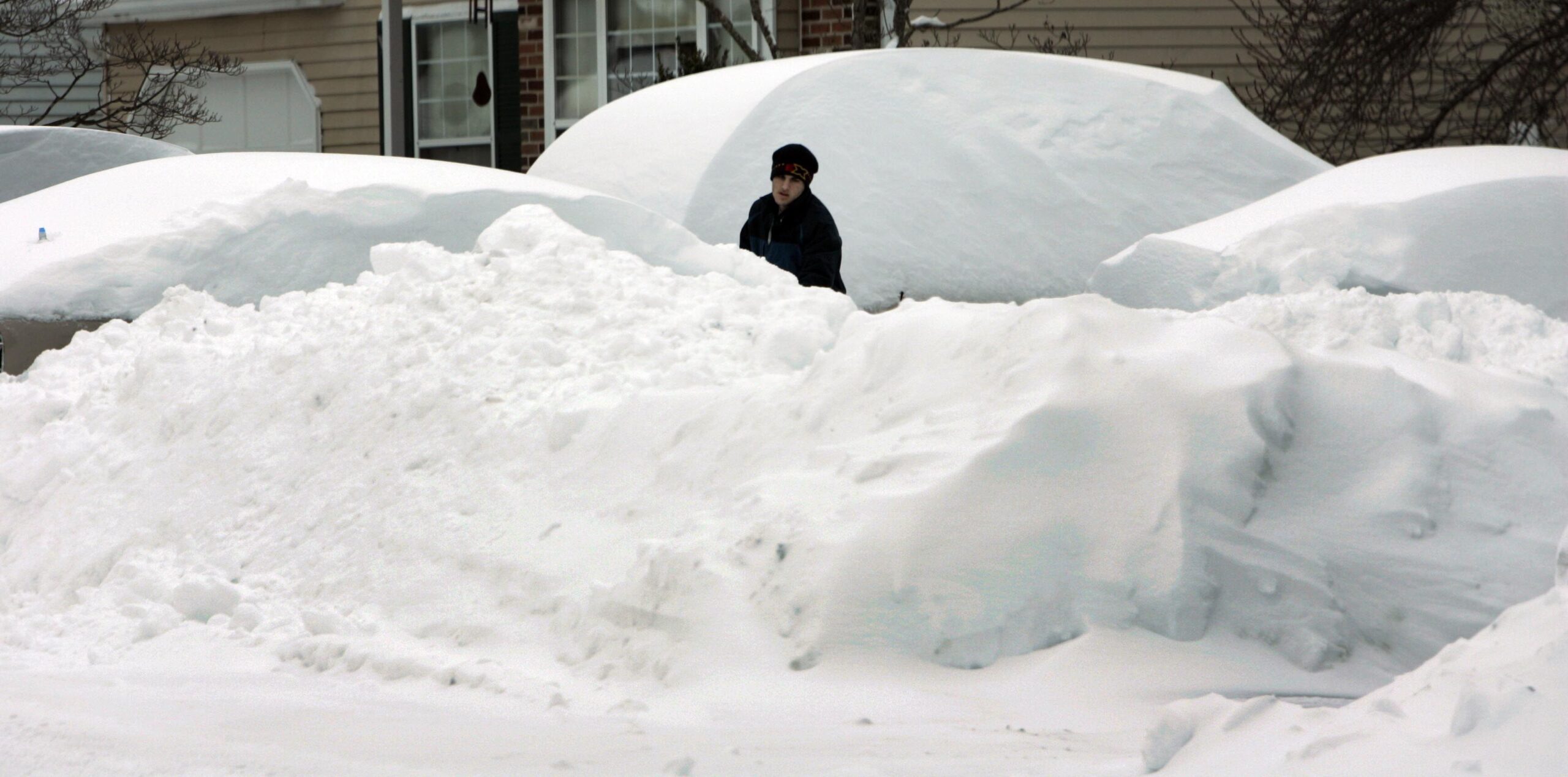
A man shovels cars out under mountains of snow in West Bradford Township, Chester County, during the incredible snow siege of February 2010.
Twelve days after the snow stopped, the official snow depth was down to 4 inches.
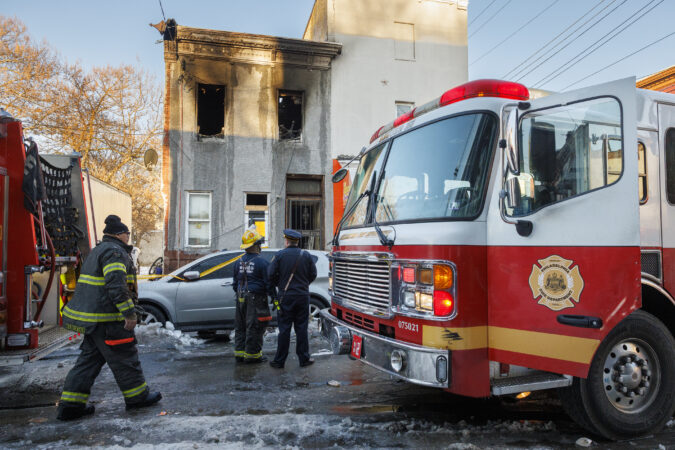
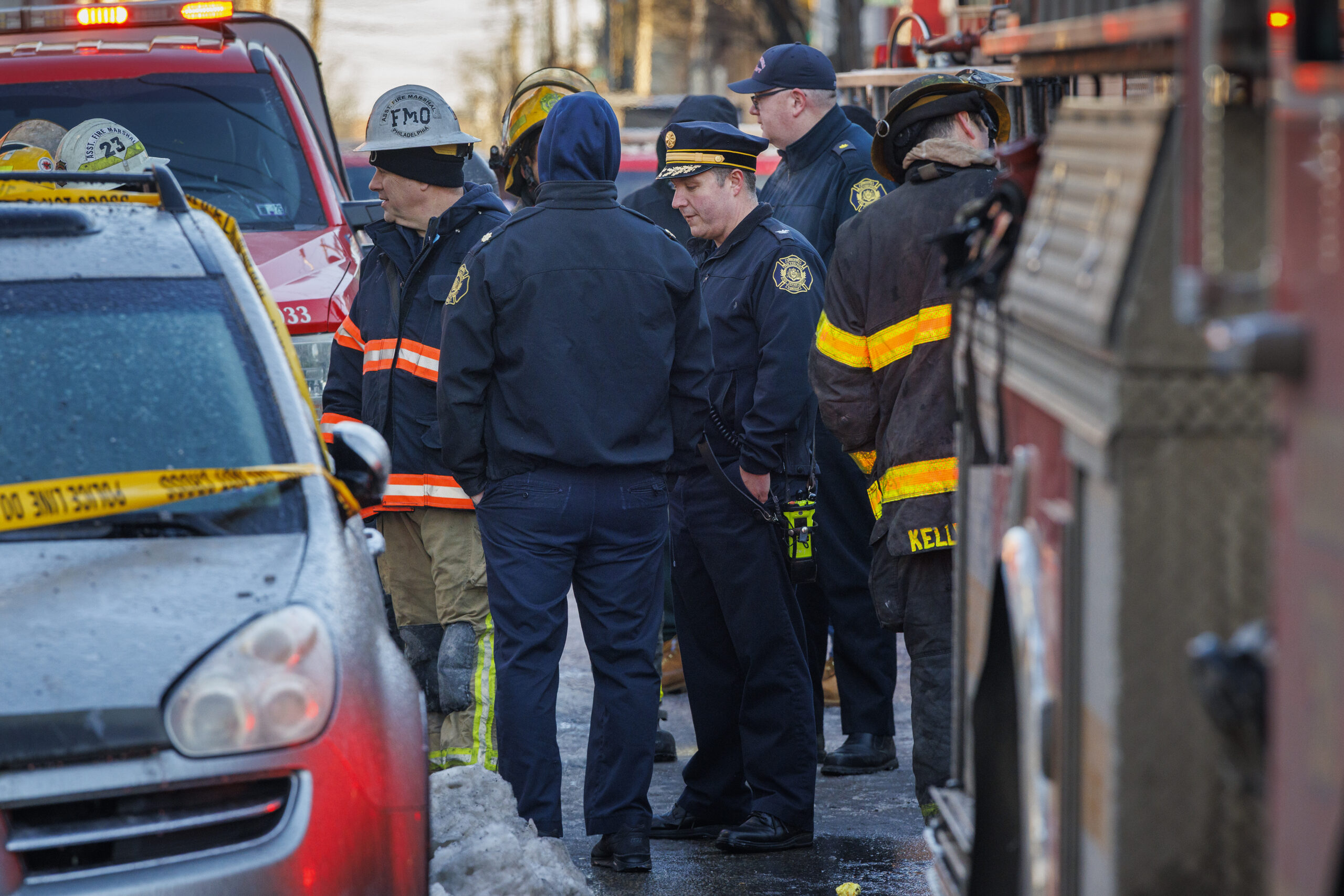
A man died Thursday morning in a fire inside a North Philadelphia home.
The fire started around 5:15 a.m. on the 2500 block of North 12th Street, where crews found heavy smoke and fire coming from the two-story rowhouse, according to the Philadelphia Fire Department. Firefighters witnessed fire coming from the second floor, where they found a person dead inside the home.
Philadelphia fire department personnel at scene of fatal fire 2500 block N. 12th Street, early Thursday, Feb. 5, 2026.
Firefighters placed the fire under control by 5:45 a.m. The cause of the fire remained under investigation.
The Thursday morning blaze followed a fatal house fire in Kingsessing on Wednesday morning, which the fire marshal’s office determined was intentionally set, and another fatal fire in early January that claimed the life of a woman in the Ogontz section.



 –>
–>  –>
–>  –>
–>