A 30-year-old man and 16-year-old boy were killed after a meeting for a possible transaction escalated into gunfire early Tuesday evening in the city’s Germantown section, police said.
Officers responded shortly after 5 p.m. to multiple reports of a shooting at the intersection of West Queen Lane and Laurens Street and found the man and the teen lying on the ground unresponsive with multiple gunshot wounds to their upper bodies, said Chief Inspector Scott Small.
They were both transported by police to Temple University Hospital, where they were pronounced dead around 5:30 p.m. A handgun was found on the body of the man.
At the shooting scene, police found 11 spent shell casings from a handgun and a rifle, Small said.
A Nissan registered to the deceased man was found at the scene with a bullet hole and the driver’s side door still open, Small said.
A witness said the 30-year-old arrived at the location for a transaction that was reportedly not related to drugs, and the teen was with another man who apparently had the rifle, Small said. The man who arrived with the teen fled the scene.
Police were checking for video from cameras in the area that may have recorded what happened, Small said.
The Rocky statue sitting atop of Philadelphia Art Museum’s famed steps could soon be there permanently — and the one at the bottom may be going back to the Italian Stallion himself, Sylvester Stallone.
That’s according to a recent proposal from Creative Philadelphia, the city’s office for the creative sector, which is slated to present its proposal at an Art Commission meeting for a concept review Wednesday. The plan, the proposal notes, is endorsed by Mayor Cherelle L. Parker and Art Museum officials, as well as leaders in the Parks and Recreation department and at the Philadelphia Visitor Center, all of whom filed letters of support.
“This project is about more than relocating a sculpture,” chief cultural officer Valerie V. Gay and public art director Marguerite Anglin wrote in a letter to the Art Commission. “It’s about elevating an artwork that, for decades, has symbolized perseverance, aspiration, and the resilience of the human spirit.”
The statue at the top of the Art Museum’s steps was set there last December as part of the city’s inaugural RockyFest, which celebrates the Rocky franchise. Initially intended to be a temporary installation, that statue — a replica of sculptor A. Thomas Schomberg’s original, made by the artist himself — was lent to the city by Stallone, who purchased it for about $403,000 at an auction in 2017, The Inquirer previously reported.
The statue at the foot of the steps, meanwhile, is owned by the city, and has sat there since 2006, arriving after years of controversy and moves since it appeared in 1982’s Rocky III. Stallone commissioned that statue for the film, and later gave it to the city.
As part of the city’s plan, Philly would swap ownership of the two statues, taking ownership of the statue at the top of the steps, and returning the statue at the bottom “to the original donor’s private collection” following its exhibition inside the Art Museum this spring, the proposal notes.
The city would then “install another City-owned statue at the bottom of the Art Museum steps,” and move the statue at the top back several feet for its permanent installation.
The project would cost an estimated $150,000, the proposal notes. It was not immediately clear what statue would be relocated to the bottom of the steps, or what prompted the exchange of statues.
An Art Commission agenda notes that in its concept review Wednesday, the proposal could receive final approval if it is found to be “sufficiently developed.”
A history of moves
The proposed move marks yet another chapter in the Rocky statue’s storied history in town. It arrived for the filming of Rocky III, but when the shoot wrapped in 1981, a permanent location had not been approved, causing it to be shipped back to Los Angeles. It ultimately came back and was temporarily exhibited again at the top of the Art Museum steps before being moved to an area outside the Spectrum at the stadium complex in South Philly, where it was supposed to permanently stay.
But in 1990, the statue was again temporarily installed at the museum for the filming of Rocky V, reigniting public debate about whether it should remain there. The statue was returned to the stadium complex before being moved in 2006back to the bottom of the museum’s steps, where it has sat ever since.
Gay and Anglin seem to reference the statue’s history in their letter, noting that a permanent installation at the top of the museum’s steps could be an “an opportunity to lean into the evolving conversation about what is considered ‘art’ and what deserves a place in our most treasured civic spaces.”
“The Rocky statue is a clear example of this evolution,” they wrote. “Its artistic significance has not been shaped by institutions, but by the millions of people who engage with it year after year.”
“Rocky is the DNA of this great city of Philadelphia,” Schomberg said in a statement released with the airport statue’s unveiling. “There’s a little bit of Rocky in all of us. Rocky is not just known here in Philadelphia but is known across this country and the world.”
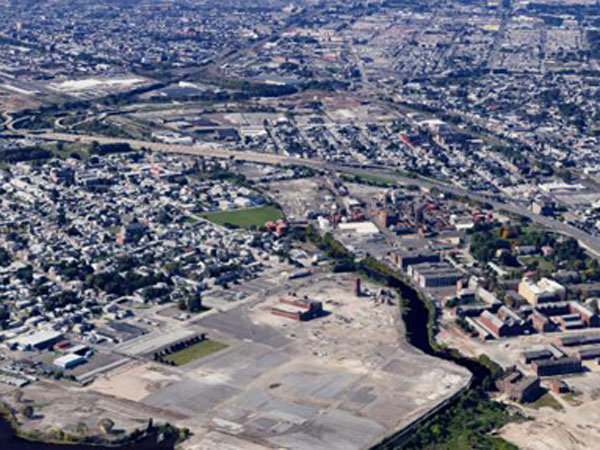
Joseph Cooney joined the Philadelphia Police Department’s narcotics unit in 1998. For eight years, the officer began and finished each workday at the unit’s headquarters on the site of the old Frankford Arsenal in Philadelphia’s Bridesburg section, where munitions were manufactured and tested from the Civil War through the Vietnam War.
Cooney, 53, said he would joke with his colleagues that “we’ll all be glowing in the dark someday” because of the materials left behind in the ground and the chemical plants across the Frankford Creek. In 2024, that joke became a dark reality for Cooney when he was diagnosed with glioblastoma, an aggressive and incurable brain cancer.
In a lawsuit, filed along with lawsuits by the families of two narcotics officers who died of the disease, Cooney links his cancer to radioactive and toxic materials that had not been properly remediated when the munitions factory shut down and the site was converted to a business park.
The lawsuit, filed Monday in Common Pleas Court, accuses the Philadelphia Authority for Industrial Development, developer Mark Hankin, and Hankin’s businesses of having known about risks of exposure but failing to warn those working in the location or properly remediate the harm.
“This type of cancer, at the end of the day, it’s a death sentence,” Cooney said. “When you go to work every day, you don’t expect to be dealing with this.”
The Philadelphia Authority for Industrial Development declined to comment. Hankin did not respond to requests for comment.
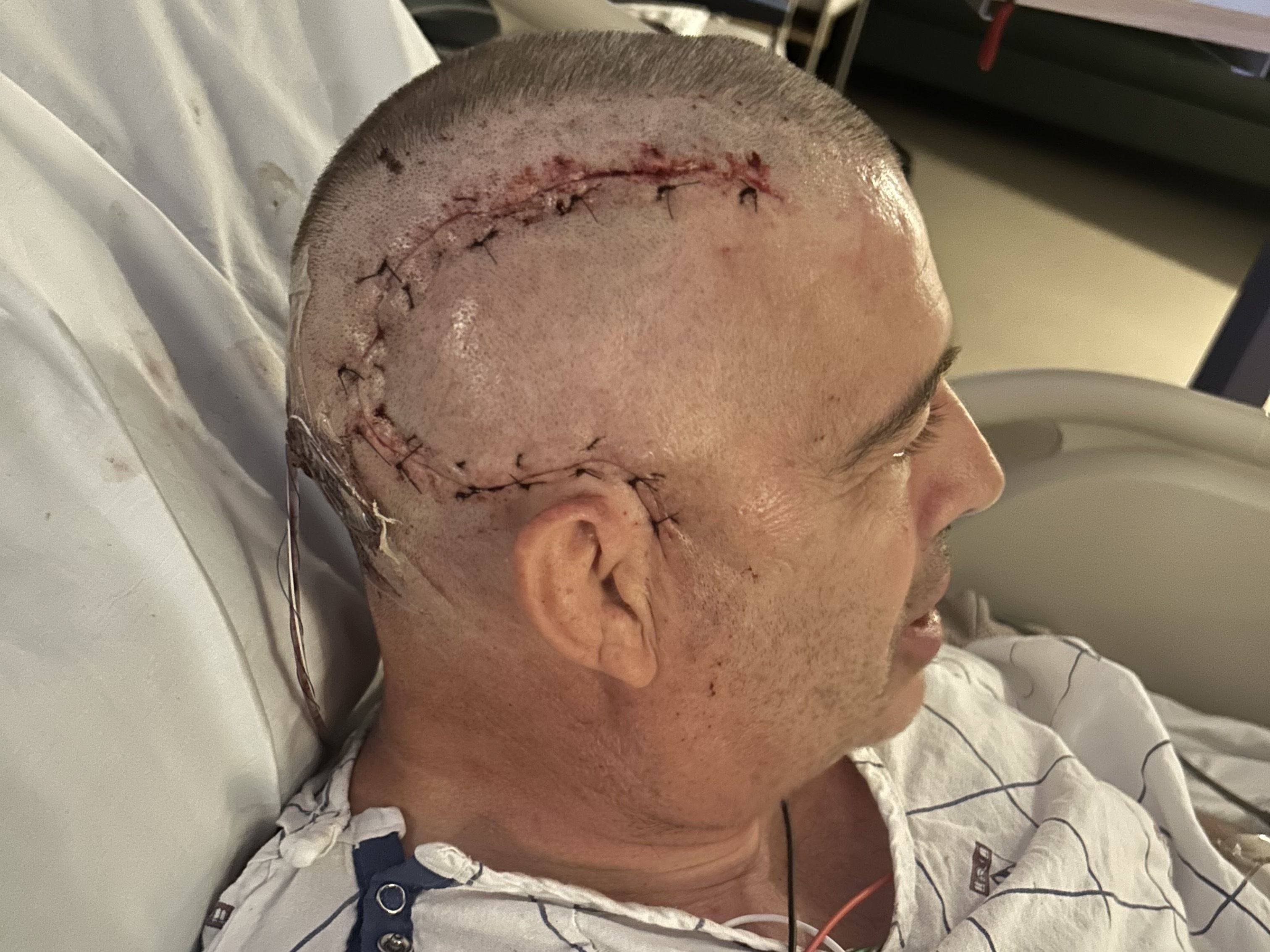
Joseph Cooney, a police officer who was diagnosed with glioblastoma in 2024, seen after his third surgery in July 2025.
‘The street that beat Hitler’
The Frankford Arsenal opened in 1816 as a weapons storage and repair shop for the U.S. Army, and in 1849 became the country’s largest developer and manufacturer of small arms and artillery shells. The arsenal’s campus grew over the years, including a massive expansion during World War II. By the end of the war, workers fondly referred to it as “the street that beat Hitler.”
Each war throughout the century-plus of the arsenal’s existence brought its own challenges, and the complex between Bridge Street, Tacony Street, and the Frankford Creek adapted to support the nation’s military needs.
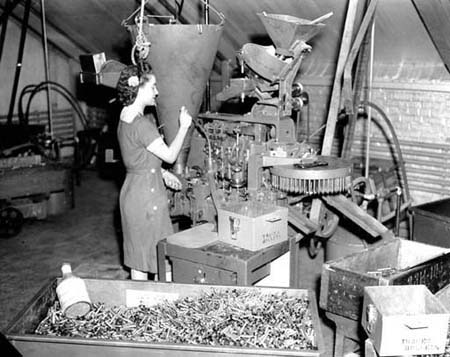
This woman is loading powder into cartridges of .30 caliber tracer bullets in the assembly division of the Frankford Arsenal in Philadelphia, Penn., on July 27, 1940 during World War II. (AP Photo)
The arsenal closed in 1977 and the authority for industrial development, an agency with a mayor-appointed board, became the campus’ steward. Hankin, a Montgomery County developer, bought the campus in the 1980s and transformed it into a business park, which included the narcotics unit headquarters from the early 1990s until 2015.
As soon as the arsenal closed, decontamination needs were discussed, newspaper articles from the time show. An official report found the existence of dangerous materials in buildings in 1981, before the property was converted to civilian use, the lawsuits say.
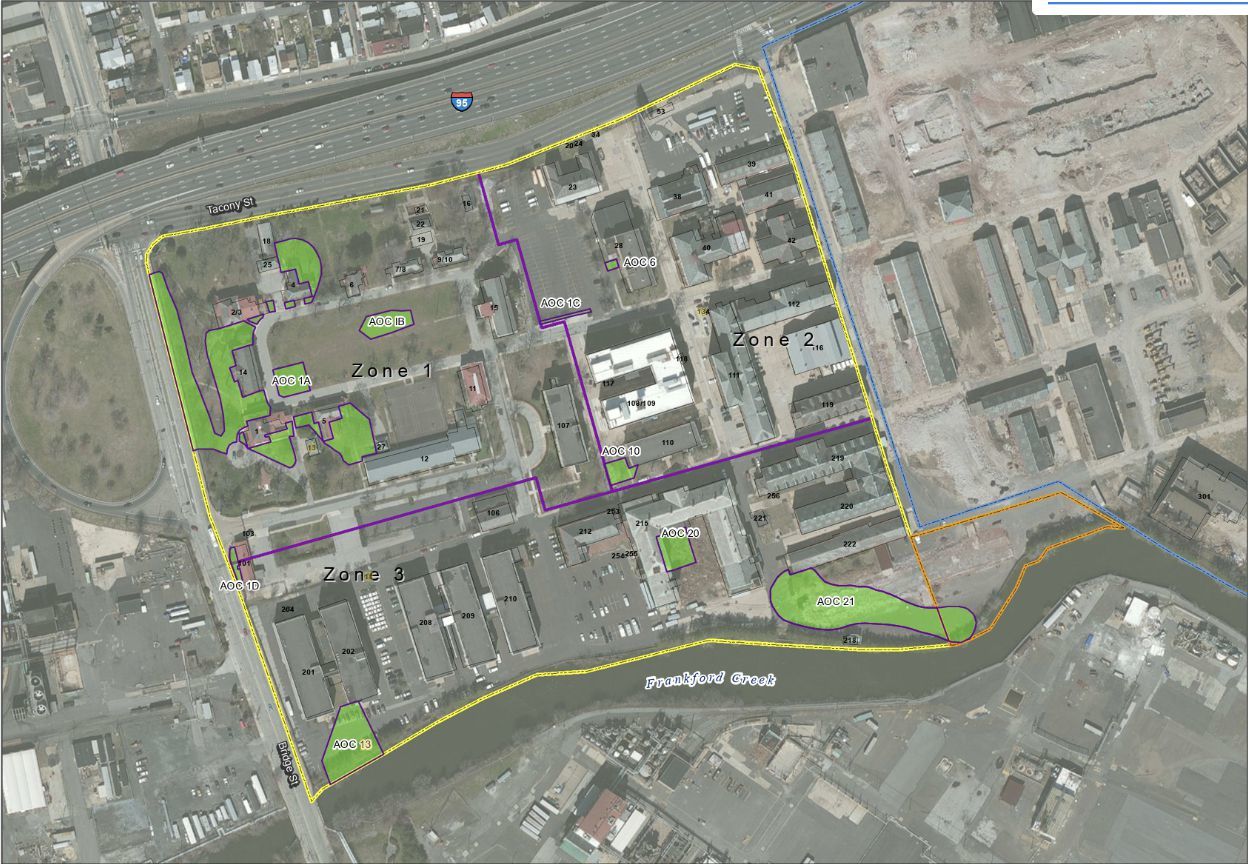
Throughout the 2000s, the U.S. Army Corps of Engineers, in a series of reports, flagged concerns over dangers in the old arsenal’s ground. A 2016 report found elevated concentrations of lead and potentially cancer-causing substances in six areas that posed “unacceptable risk or potential concerns to future human receptors.”
One of the areas of concern noted in the report sits atop building 202 — the narcotics unit’s former home.
A map showing areas of concern for hazardous materials at the Frankford Arsenal site, from a 2016 report on a feasibility study conducted by the U.S. Army Corp of Engineers.
The common denominator
Cooney has been hearing over the past decades about colleagues from his narcotics unit days who have gotten sick.
Michael Deal, who spent 37 years on the police force and joined the narcotics unit in 1994, was diagnosed with glioblastoma in 2018 and died the next year at age 64. Then, in 2023, Andrew Schafer, a 20-year veteran who worked at narcotics from 2002 to 2015, also was diagnosed with the brain cancer. He died in March at age 51.
The families of Deal and Schafer also filed lawsuits similar to Cooney’s.
Cooney heard through the grapevine about other cases. And then he was diagnosed.
“Everyone sat down, started talking,” Cooney said. “The only common denominator was everybody worked in the same building.”
Adding to their concern were the adjacent chemical plants, Cooney said.
Fifty-four employees of the Rohm & Haas chemical plant, right across the Frankford Creek from the arsenal, died of lung cancer in the 1960s and early ’70s, the Philadelphia Daily News reported in 1981.
The current suits allege that the contaminants in the arsenal ground were not properly cleaned up, and that those working at the site were not warned despite a series of reports.
“The remediation was not done to the extent that it eliminated the risk,“ saidWilliam Davis, the attorney who filed the suits. ”Up until now we have no evidence that there was any warning to any tenants.”
Cooney still works as a police officer, with a desk job supporting the city’s SWAT team. He has lost much of his independence to the disease, which can be slowed but not cured. He can no longer drive or coach youth sports, and relies on a cane to walk.
The officer is concerned about who will take care of his wife and their seven children once he is gone, and Cooney is especially worried for the health of one of his daughters— a biology teacher at Franklin Towne Charter High School, which sits on the arsenal’s old site.
The 2026 FIFA World Cup is officially six months away, and Philadelphians’ next chance to buy general admission tickets starts Thursday.
From Dec. 11 to Jan. 13, fans can enter a lottery for the chance to buy World Cup match tickets, like the two previous lottery phases. The “random selection draw” is the third of several ticket sale phases leading up to the World Cup’s first match on June 11, 2026, in Mexico City.
During the first two ticket phases, the United States, Canada, and Mexico (in that order) drove the bulk of ticket sales, according to FIFA. Fans in 212 countries have bought tickets.
However, since the final draw on Friday, the World Cup matchups and schedule have been finalized. This will be the first ticket sale phase in which fans can apply for single-game tickets for exact matchups and teams.
Brazil’s Raphinha (center) celebrates with teammate Vinícius Júnior after scoring his side’s opening goal against Venezuela during a World Cup qualifying match.
How to enter the random selection draw for FIFA World Cup tickets
The lottery application form will become available on FIFA’s website starting at 11 a.m. Thursday and will close at 11 a.m. on Jan. 13.
Log in during the application window and complete the random selection draw application form.
Winners will be selected in a random draw, with notifications starting soon after Jan. 13. Those selected will receive an assigned date and time to purchase tickets, subject to availability.
Single-match tickets to all 104 games, plus venue-specific and team-specific options, will be made available to choose from. That means fans in the Philadelphia area could buy tickets for matches at Lincoln Financial Field — if selected.
Fans who have applied to previous ticket sale lotteries must submit a new application form.
Alternative Middle Years at James Martin, in Port Richmond, is all but finished and ready for students to occupy after winter break.
Community members, district officials, and dignitaries gathered Tuesday to take tours and trumpet the new construction, a bright spot in a district grappling with a large stock of aging and sometimes environmentally troubled buildings.
“This is what growth looks like,” said Paula Furman, AMY at James Martin’s principal. The middle school educates 200 students in grades 6, 7, and 8.
Superintendent Tony B. Watlington Sr. and Debora Carrera, the city’s chief education officer, applaud a student performance Tuesday at AMY at James Martin, a new middle school in Port Richmond.
Sarah-Ashley Andrews, the school board vice president, noted that of the district’s roughly 300 buildings, more than 200 were built before 1978.
“Projects like this underscore why continued investment is essential,” said Andrews.
On time, on budget
Inside, the 88,000-square-foot, four-story structure at Richmond and Westmoreland Streets just off I-95 is a marvel: all light and flexible seating, makerspace, “digital flex lab” (think: computer lab), and “gymnatorium” (spiffy gym and auditorium). It has modern science labs, dedicated spaces for instrumental and vocal music, and a killer view of Center City from its rooftop outdoor classroom.
The outdoor space with a view of the Center City skyline at the new AMY at James Martin school.
The school replaces an 1894 structure razed to make way for new construction. It is the Philadelphia School District’s sixth new building in 10 years.
“It is kind of crazy, just the giant leap forward that students will be taking, just in terms of furniture, not to mention the technology,” said Melanie Lewin, a district school facilities planner who led tours of the new building. AMY at James Martin students, who have been temporarily learning in classrooms at Penn Treaty High School, used to learn in a 19th-century building; they’re relocating to a building with built-in charging outlets and “noodle chairs” that let them fidget securely while in class.
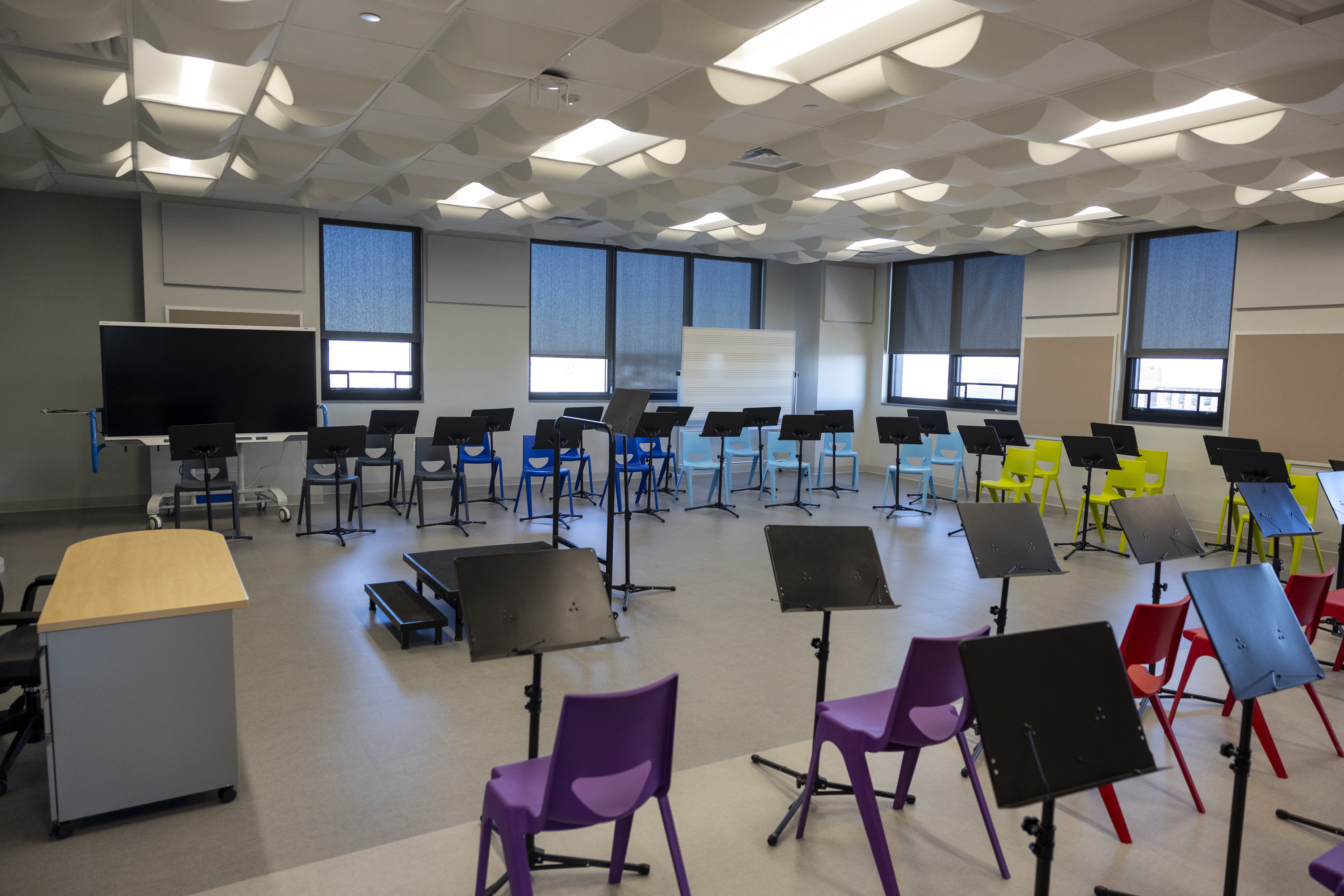
The instrumental music classroom at the new Amy at James Martin School in Philadelphia.
“This school was not just built to look fantastic,” Watlington said. “I want everyone to know that it was built on time and on budget. That is no easy feat when the price of everything is going up — inflation, tariffs, everything.”
Some neighbors showed up at Tuesday’s ribbon-cutting to celebrate. But the process was controversial at first — some protested the loss of the old AMY at James Martin historic site.
City Councilmember Mike Driscoll alluded to the past pain on Tuesday.
“It’s been a struggle, I’ll admit that,” Driscoll said. But, he said, the new school is lovely. “When you see the plans on paper, it doesn’t do it justice.”
A looming facilities master plan
AMY at James Martin’s opening comes with the district approaching a crossroads: Officials are awaiting a years-in-the-making facilities master plan, the first in decades.
While schools in the Northeast and in a few other spots are overcrowded or nearing capacity, schools in many parts of the city are dramatically underenrolled.
Custom cushioned seats in a classroom at the new Amy at James Martin School in Philadelphia.
Officials have said that some schools will likely cease to exist as part of the process, now expected to culminate early next year with Watlington making recommendations to the school board for grade reconfigurations, closures, co-locations, significant renovations, and new construction.
AMY at James Martin, in its current form, is likely to come in under the district’s minimum recommended school size, at 200 students. The school’s capacity is 500, officials said.
But Casey Laine hopes the school count grows by two in January.
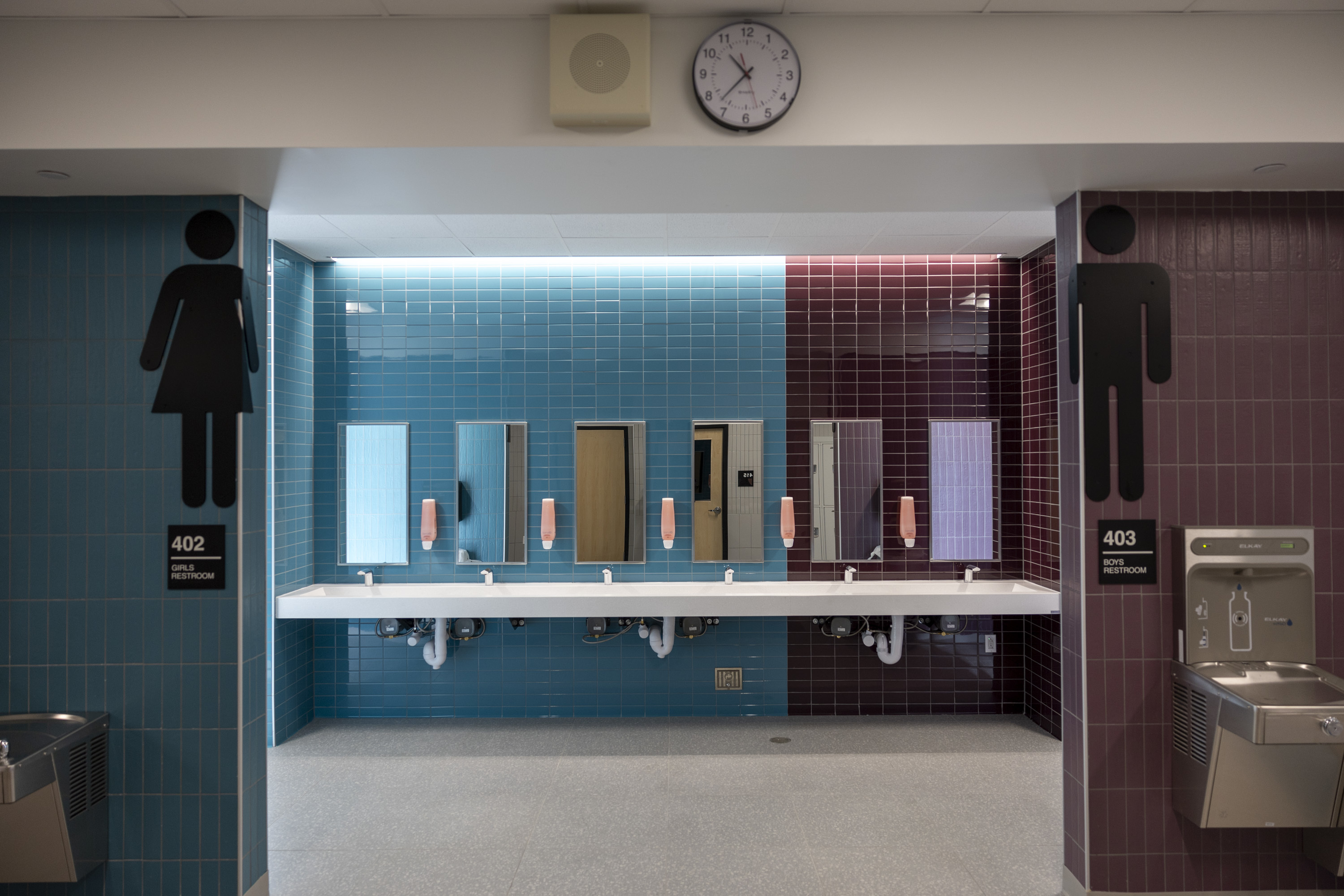
One of the bathrooms for students at the new Amy at James Martin School in Philadelphia.
Laine, who lives around the corner from the new AMY at James Martin and attended Tuesday’s ribbon-cutting, is the mother of a sixth and seventh grader who currently attend Bridesburg Elementary.
She’d like her kids, a son and daughter, to transfer to AMY at James Martin if possible.
“This is beautiful,” Laine said. “I’m so excited.”
The Brown family, which operates a dozen local ShopRites, recently purchased the Shoppes at Wissinoming for $30.8 million, according to JLL real estate, which represented the seller. The nearly 98,000-square-foot complex in Northeast Philadelphia is anchored by one of Brown’s ShopRites.
“We think it’s important to own the real estate where our supermarkets are located, so we can ensure the long-term healthy food access for the local community and the overall sustainability of our stores,” Brown, executive chairman of Brown’s Super Stores, said in a statement. “We are excited to add the Shoppes at Wissinoming shopping center to our real estate properties.”
Brown said he owns the shopping centers surrounding his ShopRites in Cheltenham, Brooklawn, and Roxborough.
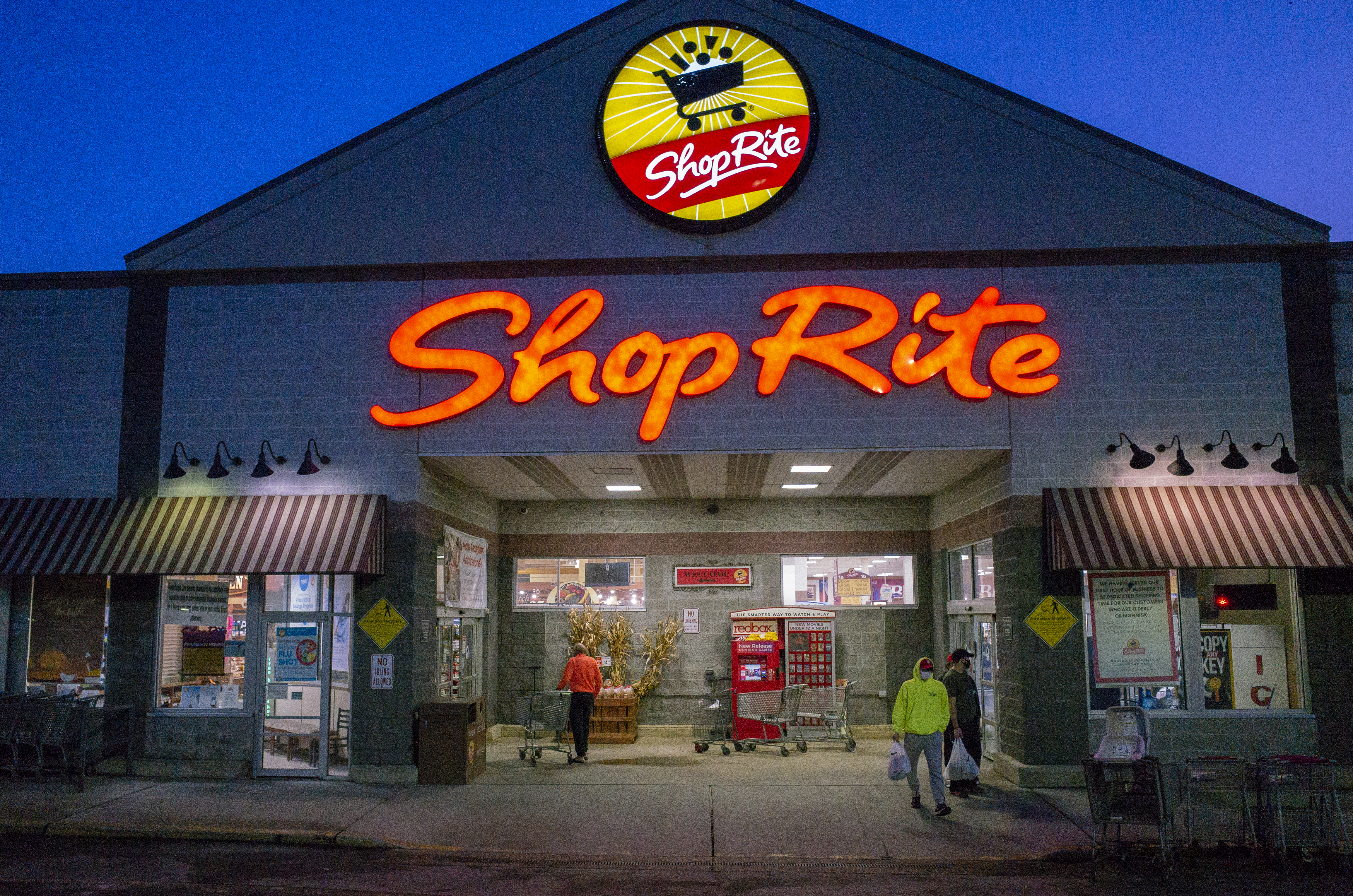
The ShopRite in Roxborough, pictured in 2020, is run by Jeff Brown and located in a complex owned by the longtime grocer.
The family also runs ShopRites in Eastwick, Nicetown, Parkside, Port Richmond, South Philadelphia, Bensalem, Fairless Hills, and Mullica Hill..
The ShopRite at the Shoppes at Wissinoming opened in 2018, and was acquired by Brown earlier this year. The grocery store anchors the center, occupying about 68,000 square feet.
The complex is 98% occupied, according to JLL. Other tenants include Wawa, Popeyes, and AT&T.
“The transaction reflects broader trends in the retail investment market, where investors continue to prioritize grocery-anchored properties with proven tenant performance,” said Jim Galbally, JLL senior managing director. “Shoppes at Wissinoming has an ideal combination of dominant grocery anchor, diverse tenant mix, and strategic location within one of Philadelphia’s most densely populated submarkets.”
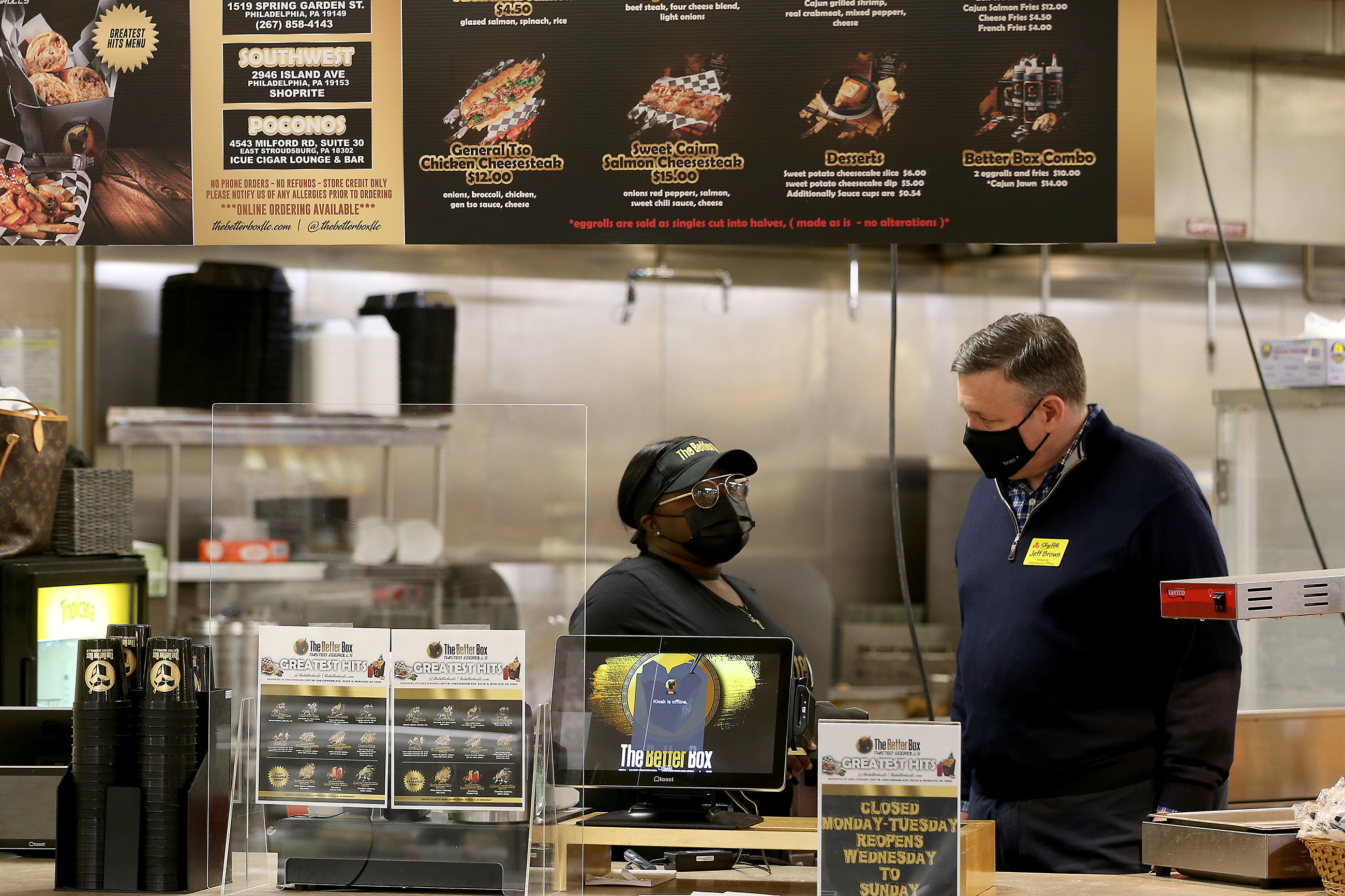
Better Box owner Tamekah Bost (left) talks with ShopRite owner Jeff Brown at the Cheltenham ShopRite in 2021. Brown has brought local restaurateurs into his stores.
Philadelphia native Sheinelle Jones will be taking over Hoda Kotb’s chair on Today.
Jones will join Jenna Bush Hager as a permanent co-host starting Jan. 12, Hager announced on Tuesday morning, after nearly a year of rotating 60 fill-ins, including Jones, to find the perfect person to fill the shoes left by Kotb earlier this year.
During her stint as a fill-in co-host in September, Jones exchanged pleasantries with Hager as if it were a first date.
“Hopefully this will be a date where you walk away and go, ‘OK, hopefully she calls me tomorrow!’” Jones said to Hager on Today.
“You’re coming back,” Hager promised.
Today with Jenna & Sheinelle marks a new chapter for Jones, since she joined the chatty morning show in 2014. Before hitting the national stage, she worked at local station Fox 29 for nine years, including as co-host of Good Day Philadelphia.
Left to Right: Jennaphr Frederick, Sheinelle Jones, and Sue Serio of Fox Good Day Philadelphia backstage preparing for The Career Wardrobe fashion show on Saturday, June 9, 2011, at the Hyatt at the Bellevue.
The announcement comes just months after the death of Jones’ husband, Uche Ojeh, 45, who died in May while battling an aggressive form of brain cancer. After returning to Today in September, she joined Hager live to share her experiences: “My coach was gone, right? My life partner. The days after my first week were tough. Because it’s my new normal,” she said.
The two met as college sweethearts at Northwestern University when Jones, a freshman, showed Ojeh, a high school senior, around campus. Married in 2007 at Rittenhouse Square’s Church of the Holy Trinity, the couple would later have their son Kayin, 15, and twins Clara and Uche, 12.
Jones was on leave since January to care for her family before returning in September to her post at the 9 a.m. show alongside Dylan Dreyer, Al Roker, and Craig Melvin.
NBC News executive vice president Libby Leist and Jenna & Friends executive producer Talia Parkinson-Jones celebrated Jones’ addition to the show.
“Sheinelle has been a cherished member of NBC News for more than 11 years,” the executive said in a joint statement. “From standout interviews with newsmakers and celebrities to her iconic Halloween performances as Beyoncé and Tina Turner, she has captivated audiences time and again.”
The city experienced its coldest morning since at least Feb. 19 with low temperatures in the teens, even at Philadelphia International Airport, as for the second straight year December is off to quite a chilly start.
And also for the second straight year, those looking forward to that first generous coating of white in Philly, or viewing the possibility with a certain trepidation, may be in for a wait.
Readings dropped into single digits in Pottstown and Doylestown, and in the teens elsewhere. As usual, Philadelphia International Airport was the regional hotspot, bottoming out at 18.
Temperatures are due to top out in the mid-30s Tuesday, more than 10 degrees below normal. A midweek warmup is due as rain approaches, followed by a late-week cooldown, and a deeper chill over the weekend into next week as the Arctic continues to share a generous supply of cold air to the central and eastern United States.
Flake sightings are possible this week in Philly, but don’t expect a rash of school closings.
The city and areas to the north and west may see a few snowflakes at the onset of general rainfall Wednesday, said Robert Deal, the science and operations officer at the National Weather Service Office in Mount Holly. And a dusting or less is possible in the region Friday with a cold frontal passage, he said.
So, while folks around Doylestown had to dig out from a whole three-tenths of an inch of snow during the weekend, and the likes of Atglen, Chester County, and Avalon at the Shore were buried under a tenth of an inch, the vigil goes on for Philly’s first ruler-worth snowfall.
With an unusual degree of certainty, in its Monday update, NOAA’s Climate Prediction Center said it was very likely that temperatures in Philadelphia and the rest of the Northeast would be below normal in the Dec. 13-17 period, with odds favoring below-normal readings through the solstice.
Deal pointed out that since the 2019-20 season, Philly’s official snowfall is more than 80 inches below normal — that’s a total of 56.7 inches measured, vs. 139.4 inches that constitute the normal.
The last several winters generally have been mild, but snow doesn’t always correlate well with cold, and atmospheric scientists caution that snow is a lousy climate indictor.
Last season, for example, the Dec. 1-Feb. 28 meteorological winter finished about a degree below normal with plenty of cold air for snow, but snowfall was a paltry 8.1 inches — beating New Orleans by a mere 0.1 inches. The seasonal normal as measured at Philadelphia International Airport is 22.3 inches.
Tuesday officially would be Philadelphia’s 13th consecutive day of below-normal temperatures, and 13th without measurable snow.
Why the absence?
Snow around here typically falls near the battlegrounds of cold, heavy air from the north country and warmer moist air off the Gulf and Atlantic Ocean, which can rout the cold.
“We generally need a high-pressure system anchored to the north so it keeps the cold air locked in place,” Deal said. “Lately, most of the high-pressure systems have been more transient, shifting offshore.”
If they are too strong and persistent, those same cold high-pressure systems can repel moisture.
The climate center outlooks favor below-normal precipitation in the Northeast in the six-to-10-day and eight-to-14-day periods.
The lack of snow to date is by no means unusual,Deal points out. On average Philly doesn’t measure an official inch until Dec. 10.
“Right now,” he said, “normal is next to nothing.”
Brightening prospects
The winter solstice doesn’t occur until Dec. 21, but if you have had it with these early sunsets, your prospects are brightening considerably.
Monday’s sunset, just before 4:37 p.m., was a second later than Sunday’s. Tuesday’s will be 4 seconds later than Monday’s, and the sun will call it a day four whole minutes later on Dec. 21.
That will still be the shortest day, however, since daybreak will be later, but feel free to sleep through it.
Kevin Bean was a frail 125 pounds last February when he entered a brand-new recovery house, a facility where he landed after spending four years in the throes of addiction — at times on the streets of Kensington, the epicenter of the city’s drug crisis.
The Frankford native was one of the first residents to enter the Riverview Wellness Village, the 20-acre recovery facility that Mayor Cherelle L. Parker’s administration opened in Northeast Philadelphia nearly a year ago as part of City Hall’s efforts to address opioid addiction and the Kensington drug market.
Bean, now 46 and boasting a healthier frame, just celebrated one year of sobriety and is preparing to move out of Riverview early next year.
He described his transition simply: “whole new life.”
Much of the mayor’s agenda in Kensington has been visible to the neighborhood’s residents, such as increased law enforcement and a reduction in the homeless population. But the operations and treatment outcomesat Riverview, located down a winding road next to the city’s jail complex, happen largely outside of public view. Last spring, some city lawmakers complained that even they knew little about the facility operations.
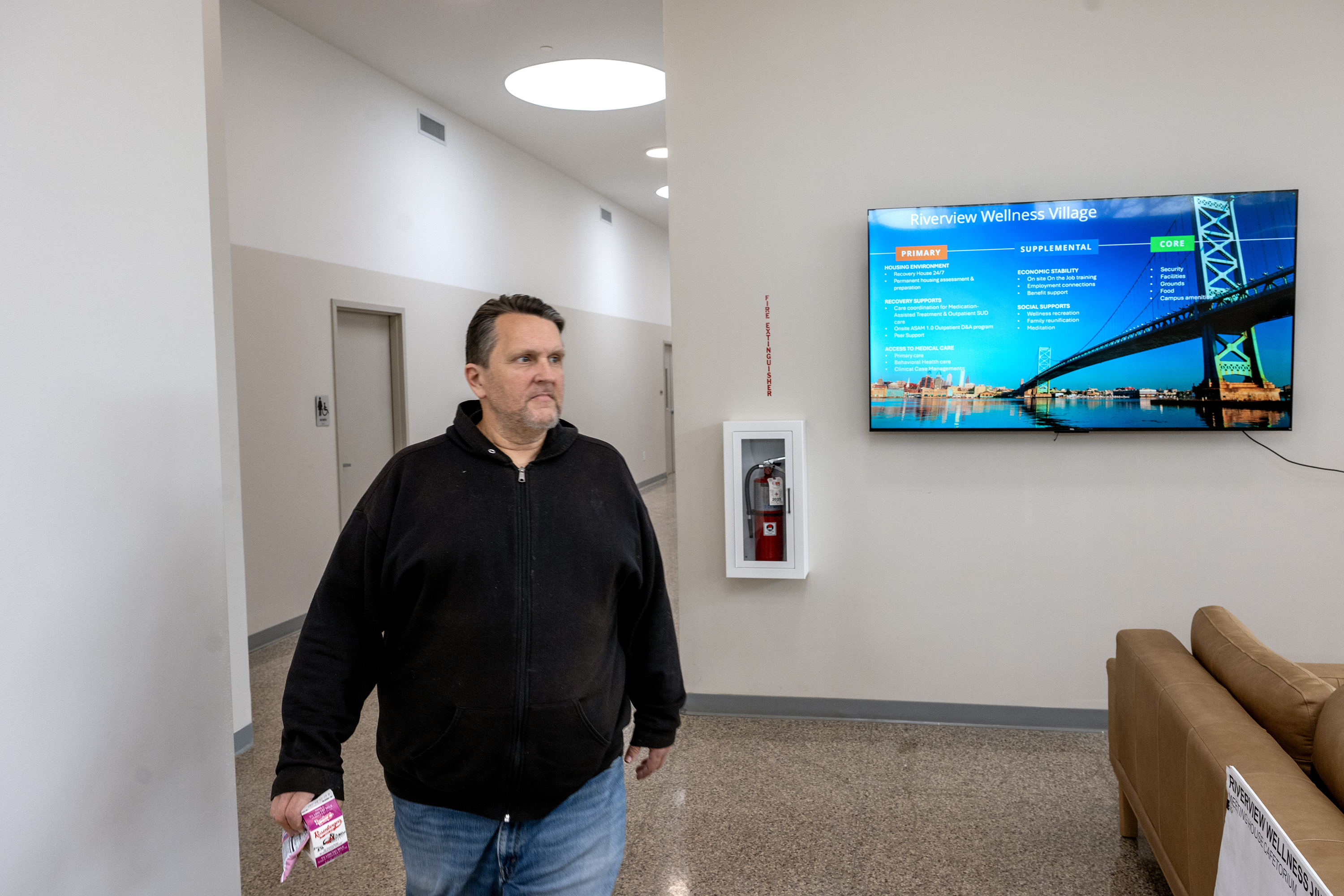
An inside look at the Riverview complex and interviews with more than a dozen residents and employees showed that, over the last year, the city and its third-party healthcare providers have transformed the facility. What was recently a construction zone is now a one-stop health shop with about 75 staff and more than 200 residents, many of whom previously lived on Kensington streets.
Those who live and work at Riverview said the facility is plugging a hole in the city’s substance use treatment landscape. For years, there have not been enough beds in programs that help people transition from hospital-style rehab into long-term stability. The recovery house industry has been plagued with privately run homes that are in poor condition or offer little support.
The grounds and residence buildings at Riverview Wellness Village, a city-owned drug recovery home in Northeast Philadelphia.
At its current capacity, Riverview has singularly increased the total number of recovery house beds in the city by nearly 50%. And residents — who are there voluntarily and may come and go as they please — have much of what they need on the campus: medical care, mental health treatment, job training, and group counseling.
They also, as of last month, have access to medication-assisted treatment, which means residents in recovery no longer need to travel to specialized clinics to get a dose of methadone or other drugs that can prevent relapse.
Arthur Fields, the regional executive director at Gaudenzia, which provides recovery services to more than 100 Riverview residents, said the upstart facility has become a desirable option for some of the city’s most vulnerable. Riverview officials said they aren’t aware of anywhere like it in the country.
“The Riverview Wellness Village is proof of what’s possible,” Fields said, “when we work together as a community and move with urgency to help people rebuild their lives.”
While the facility launched in January with much fanfare, it also faced skepticism, including from advocates who were troubled by its proximity to the jails and feared it would feel like incarceration, not treatment. And neighbors expressed concern that the new Holmesburg facility would bring problems long faced by Kensington residents, like open drug use and petty theft, to their front doors.
But despite some tenets of the mayor’s broader Kensington plan still facing intense scrutiny, the vocal opposition to Riverview has largely quieted. Parker said in an interview that seeing the progress at Riverview and the health of its residents made enduring months of criticism “well worth it.”
“I don’t know a Philadelphian who, in some way, shape, or form, hasn’t been touched by mental and behavioral health challenges or substance use disorder,” said Parker, who has spoken about how addiction shaped parts of her own upbringing. “To know that we created a path forward, to me, I’m extremely proud of this team.”
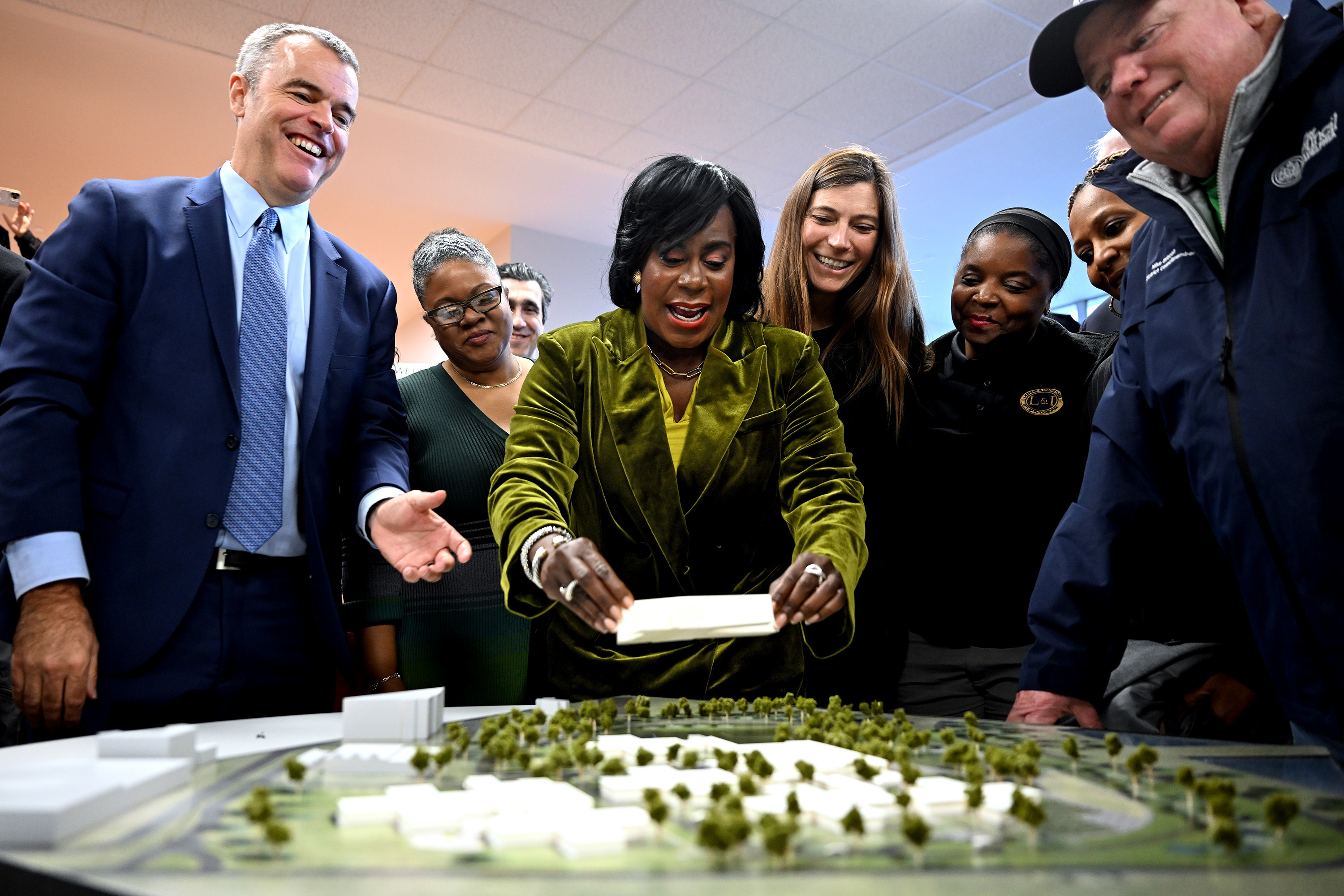
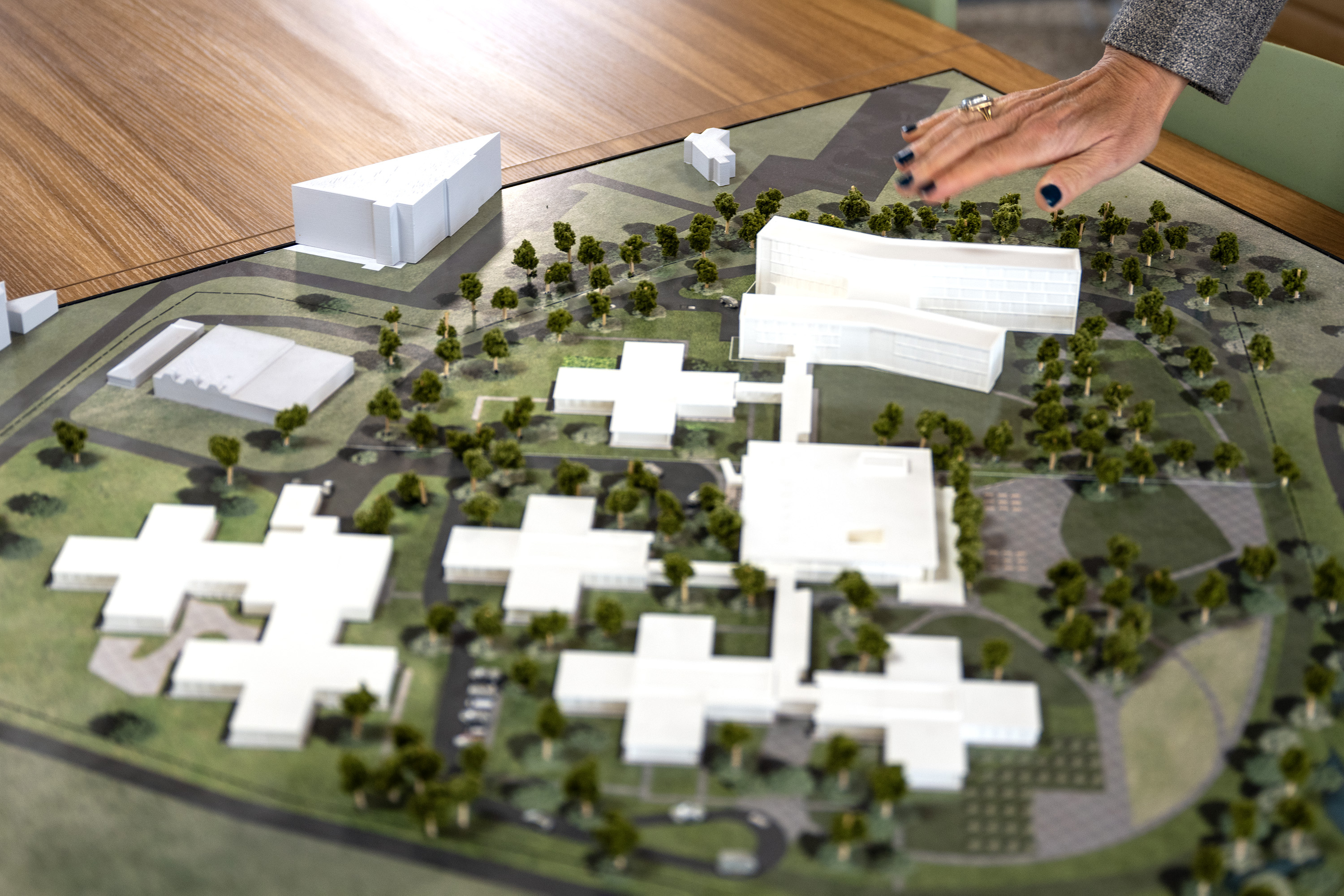
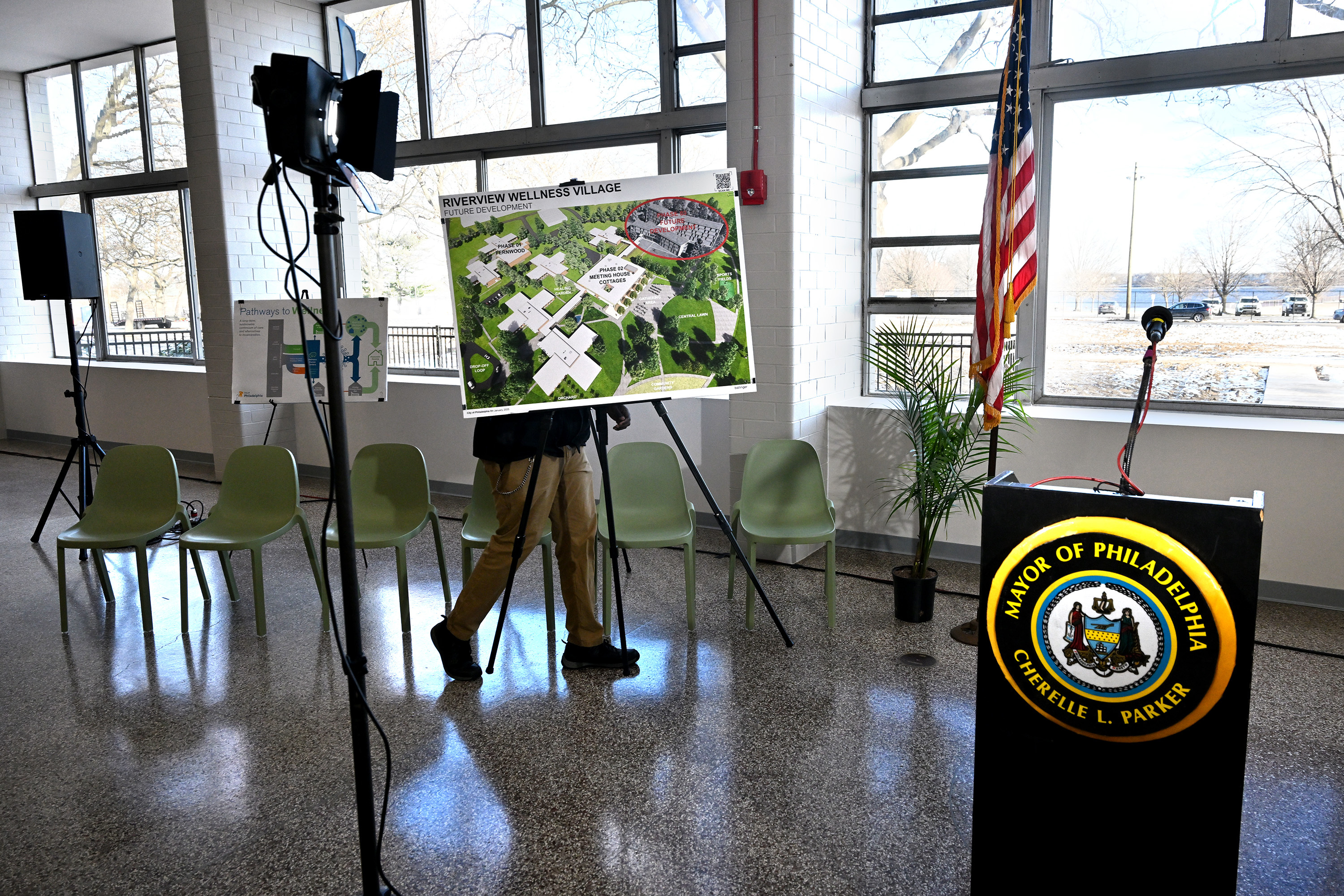
Mayor Cherelle L. Parker places a new block on the scale model of the Riverview Wellness Village on Wednesday, Jan. 8 during the unveiling of Philadelphia’s new city-operated drug treatment facility. At left is Managing Director Adam Thiel. City Councilmember Michael Driscoll is at right.Isabel McDevitt, executive director of the Office of Community Wellness and Recovery, points to a model with upcoming expansion at Riverview Wellness Village, a city-owned drug recovery home in Northeast Philadelphia on Nov. 25.Staffers move photos into place at the Riverview Wellness Village on Jan. 8 before the unveiling of Philadelphia’s new city-operated drug treatment facility.
Meanwhile, neighbors who live nearby say they have been pleasantly surprised. Pete Smith, a civic leader who sits on a council of community members who meet regularly with Riverview officials, said plainly: “There have been no issues.”
“If it’s as successful as it looks like it’s going to be,” he said, “this facility could be a model for other cities throughout the country.”
Smith, like many of his neighbors, wants the city’s project at Riverview to work because he knows the consequences if it doesn’t.
His son, Francis Smith, died in September due to health complications from long-term drug use. He was 38, and he had three children.
Getting a spot at Riverview
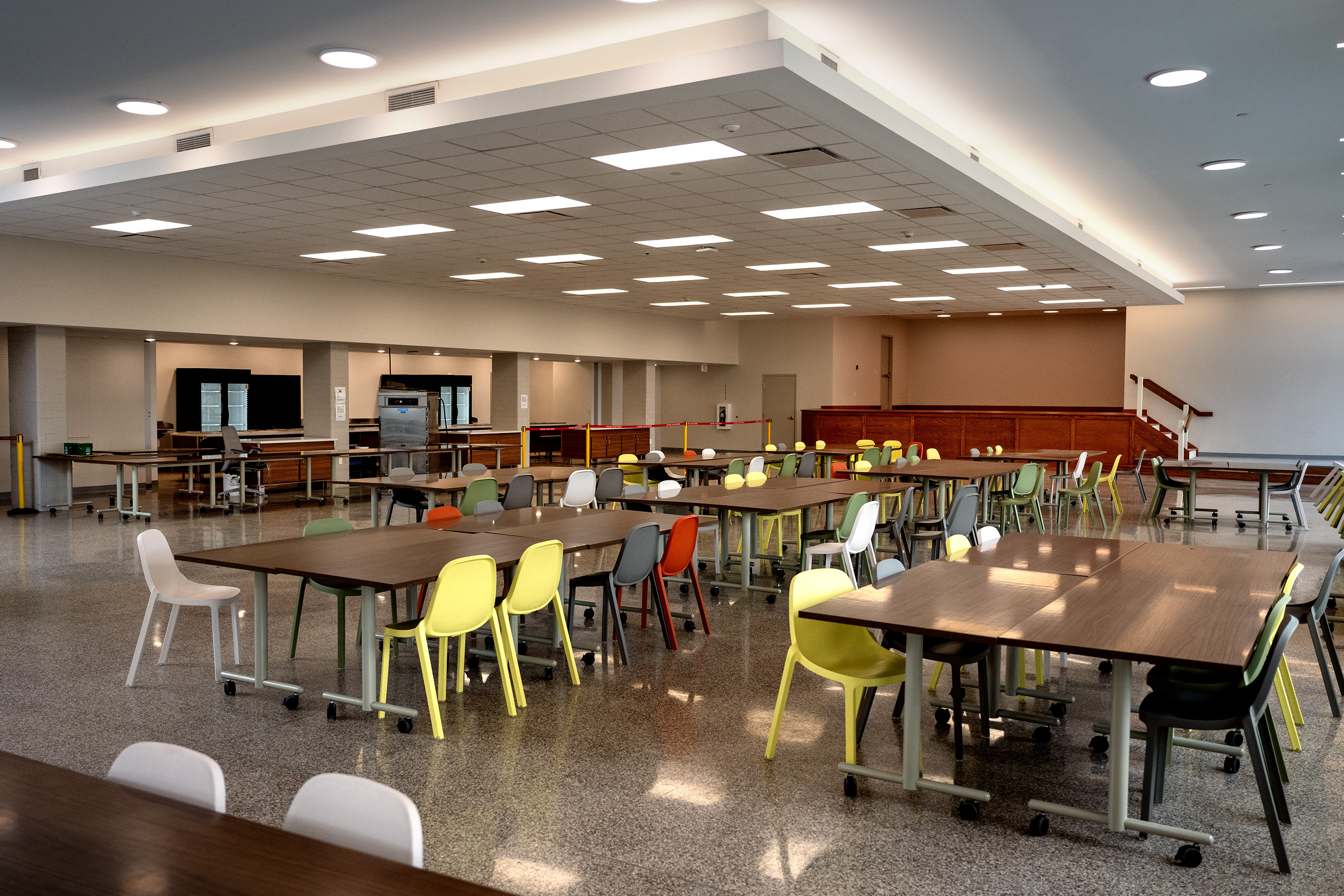
The sprawling campus along the Delaware River feels more like a college dormitory setting than a hospital or homeless shelter. Its main building has a dining room, a commercial kitchen, a gym, and meditation rooms. There are green spaces, walking paths,and plans for massive murals on the interior walls.
Katherine Young, director of Merakey at Riverview Wellness Village, talks with a resident at the city-owned drug recovery home in Northeast Philadelphia on Nov. 25.
Residents live and spend much of their time in smaller buildings on the campus, where nearly 90% of the 234 licensed beds are occupied. The city plans to add 50 more in January.
Their stays are funded through a variety of streams. The city allocated $400 million for five years of construction and operations, a portion of which is settlement dollars from lawsuits against pharmaceutical companies that manufactured the painkillers blamed for the opioid crisis.
(function() {
var l2 = function() {
new pym.Parent(‘RIVERVIEW_MAP2.html’,
‘https://media.inquirer.com/storage/inquirer/projects/innovation/arcgis_iframe/RIVERVIEW_MAP2.html’);
};
if (typeof(pym) === ‘undefined’) {
var h = document.getElementsByTagName(‘head’)[0],
s = document.createElement(‘script’);
s.type = ‘text/javascript’;
s.src = ‘https://pym.nprapps.org/pym.v1.min.js’;
s.onload = l2;
h.appendChild(s);
} else {
l2();
}
})();
To get in to Riverview, a person must complete at least 30 days of inpatient treatment at another, more intensive care facility.
(function() { var l = function() { new pym.Parent( ‘riverview-flowchart__graphic’, ‘https://media.inquirer.com/storage/inquirer/ai2html/riverview-flowchart/index.html’); }; if(typeof(pym) === ‘undefined’) { var h = document.getElementsByTagName(‘head’)[0], s = document.createElement(‘script’); s.type = ‘text/javascript’; s.src = ‘https://pym.nprapps.org/pym.v1.min.js’; s.onload = l; h.appendChild(s); } else { l(); } })();
Still, residents at Riverview have come from more than 25 different providers, according to Isabel McDevitt, the city’s executive director of community wellness and recovery. The bulk were treated at the Kirkbride Center in West Philadelphia, the Behavioral Wellness Center at Girard in North Philadelphia, or Eagleville Hospital in Montgomery County.
They have ranged in age from 28 to 75. And they have complex medical needs: McDevitt said about half of Riverview’s residents have a mental health diagnosis in addition to substance use disorder.
She said offering treatment for multiple health conditions in one place allows residents to focus less on logistics and more on staying healthy.
“Many of the folks that are at Riverview have long histories of substance use disorder, long histories of homelessness,” she said. “So it’s really the first time a lot of people can actually breathe.”
When new residents arrive, they go through an intake process at Riverview that includes acute medical care and an assessment for chronic conditions. Within their first week, every resident receives a total-body physical and a panel of blood work.
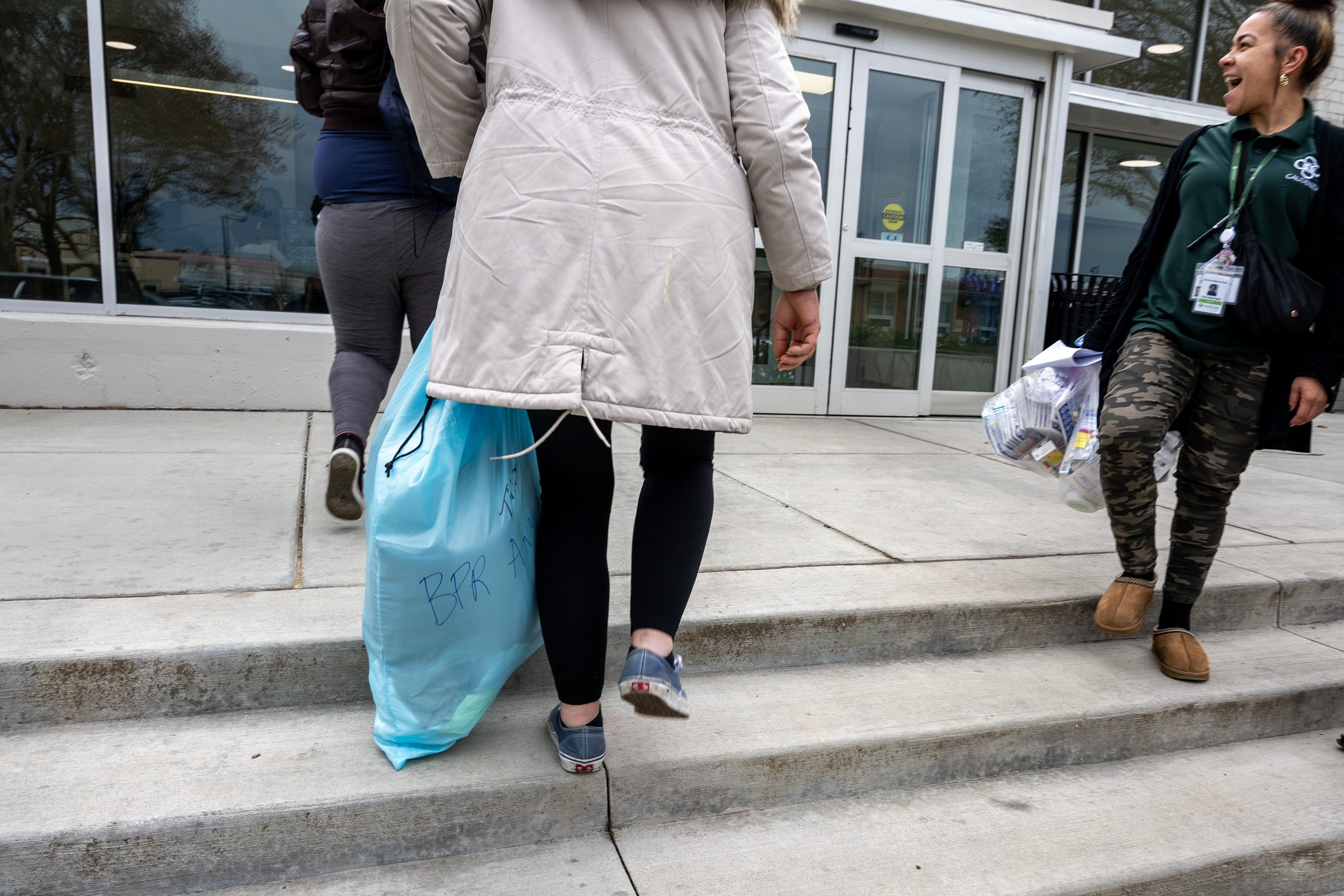
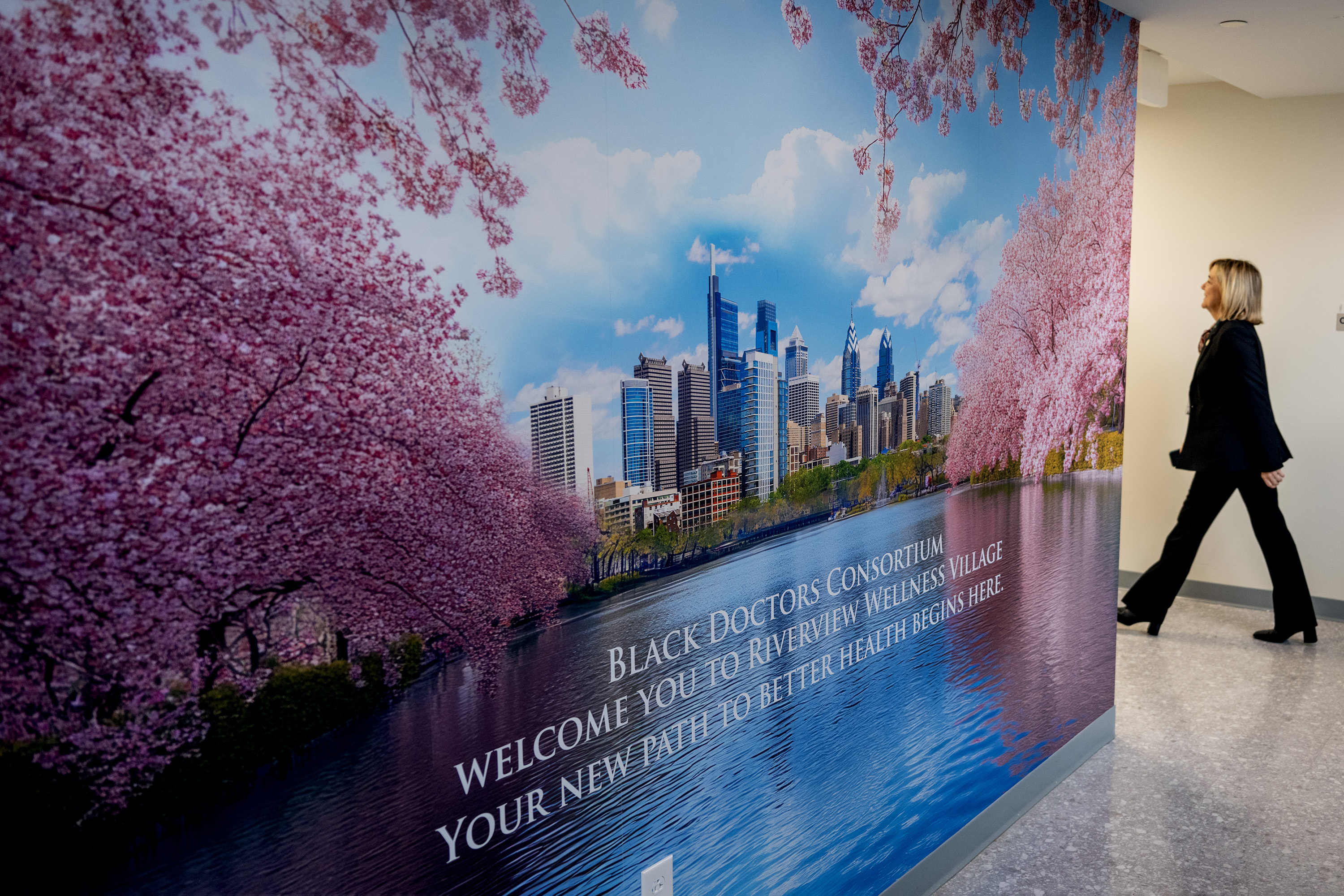
“They literally arrive with all of their belongings in a plastic bag and their medications and some discharge paperwork,” said Ala Stanford, who leads the Black Doctors Consortium, which provides medical services at Riverview. “We are the ones who greet them and help get them acclimated.”
Stanford — who this fall announced a run for Congress — said doctors and nurses at Riverview have diagnosed and treated conditions ranging from drug-related wounds to diabetes to pancreatic cancer. And patients with mental health needs are treated by providers from Warren E. Smith Health Centers, a 30-year-old organization based in North Philadelphia.
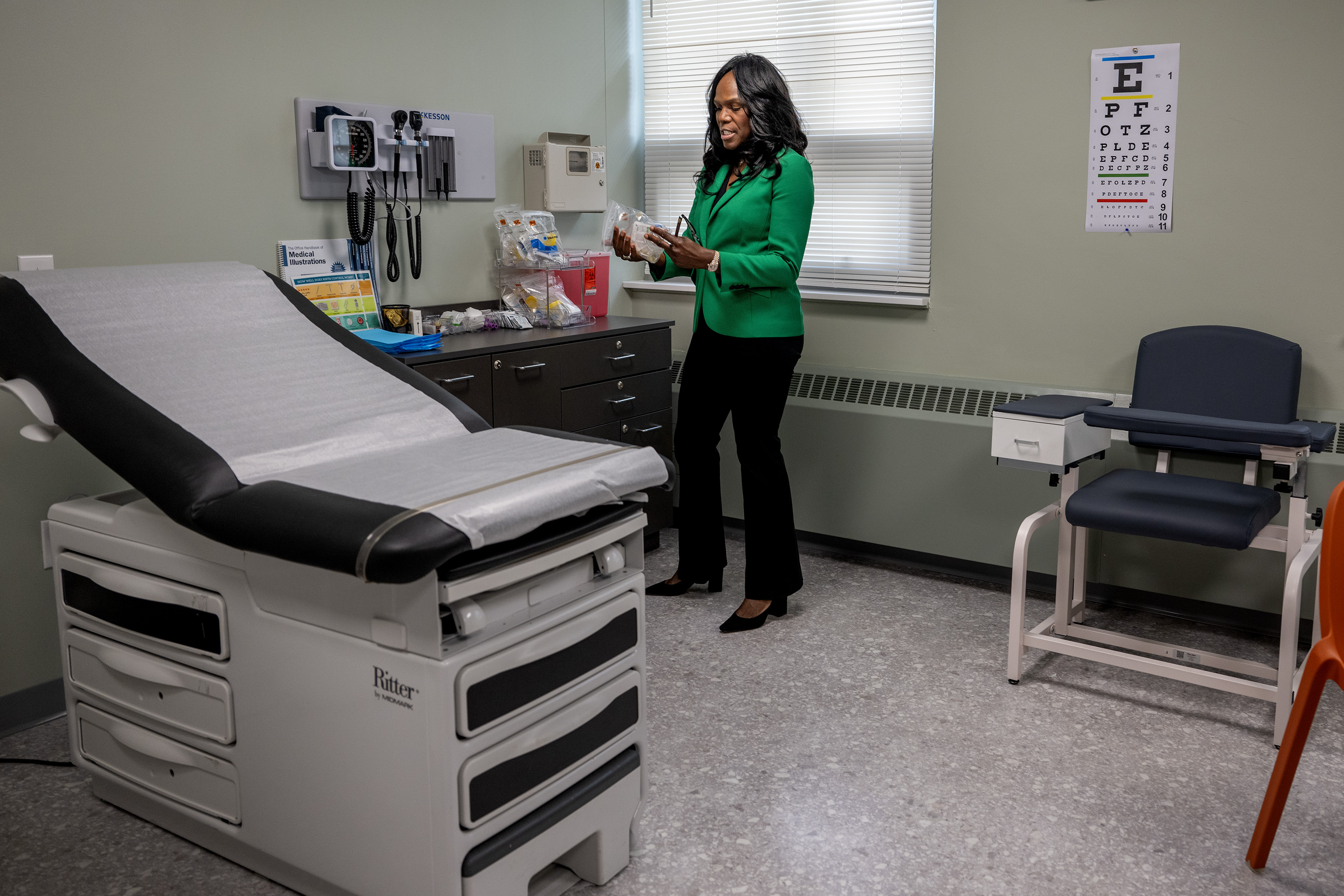
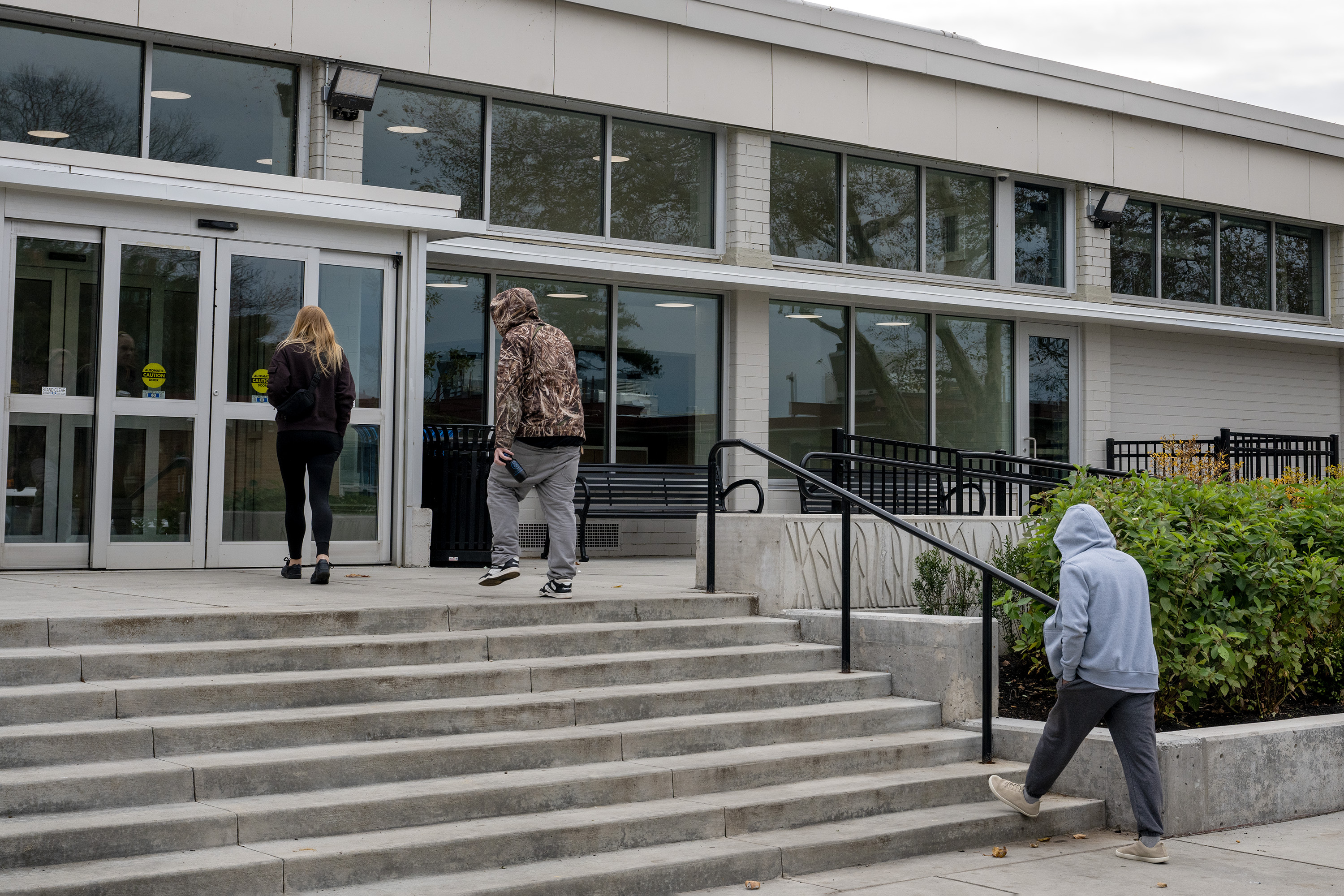
Physician Ala Stanford in an examination room at the primary medical care center run by her Black Doctors Consortium at Riverview Wellness Village, a city-owned drug recovery home in Northeast Philadelphia, on Nov. 25.Francesca Colon (right), a recovery support professional with Gaudenzia, brings people in recovery to the main entrance of the Meetinghouse at Riverview Wellness Village on Nov. 25.
Residents’ schedules are generally free-flowing and can vary depending on their wants and needs. About 20% have jobs outside the campus. Culinary arts training will be available in the next month or so. And residents can meet with visitors or leave to see family at any time.
They also spend much of their time in treatment, including individual, family, and group therapy. On a recent day, there were group sessions available on trauma recovery, managing emotions, and “communicating with confidence.”
Vernon Kostic, a 52-year-old Port Richmond native who said he has previously been homeless, has been in and out of drug treatment facilities for years.
He said he’s been content as a Riverview resident since July, and called it “one of the smartest things that the city has ever done.”
“We have the doctor’s office right over here,” he said. “They’ve got counseling right here. Everything we need. It’s like a one-stop recovery place.”
Resident Vernon Kostic heads to a group meeting at Riverview Wellness Village on Nov. 25.The dining room and meeting room in the Meetinghouse at Riverview Wellness Village. At rear left is a brand-new, industrial, restaurant-quality kitchen that was not operational yet on Nov. 25.
Finding ways to stay at Riverview
Finding success in recovery is notoriously hard. Studies show that people who stay in structured sober housing for at least six months after completing rehab see better long-term outcomes, and Riverview residents may stay there for up to one year.
But reaching that mark can take multiple tries, and some may never attain sobriety. McDevitt said that on a monthly basis, about 35 people move into Riverview, and 20 leave.
Some who move out are reunited with family and want to live at home. Others simply were not ready for recovery, McDevitt said, “and that’s part of working with this population.”
Fields said a resident who relapses can go back to a more intensive care setting for detoxification or withdrawal management, then return to Riverview at a later time if they are interested.
“No one is punished for struggling,” he said. “Recovery is a journey. It takes time.”
Providers are adding new programming they say will help residents extend their stays. Offering medication-assisted treatment is one of the most crucial parts, said Josh Vigderman, the senior executive director of substance use services at Merakey, one of the addiction treatment providers at Riverview.
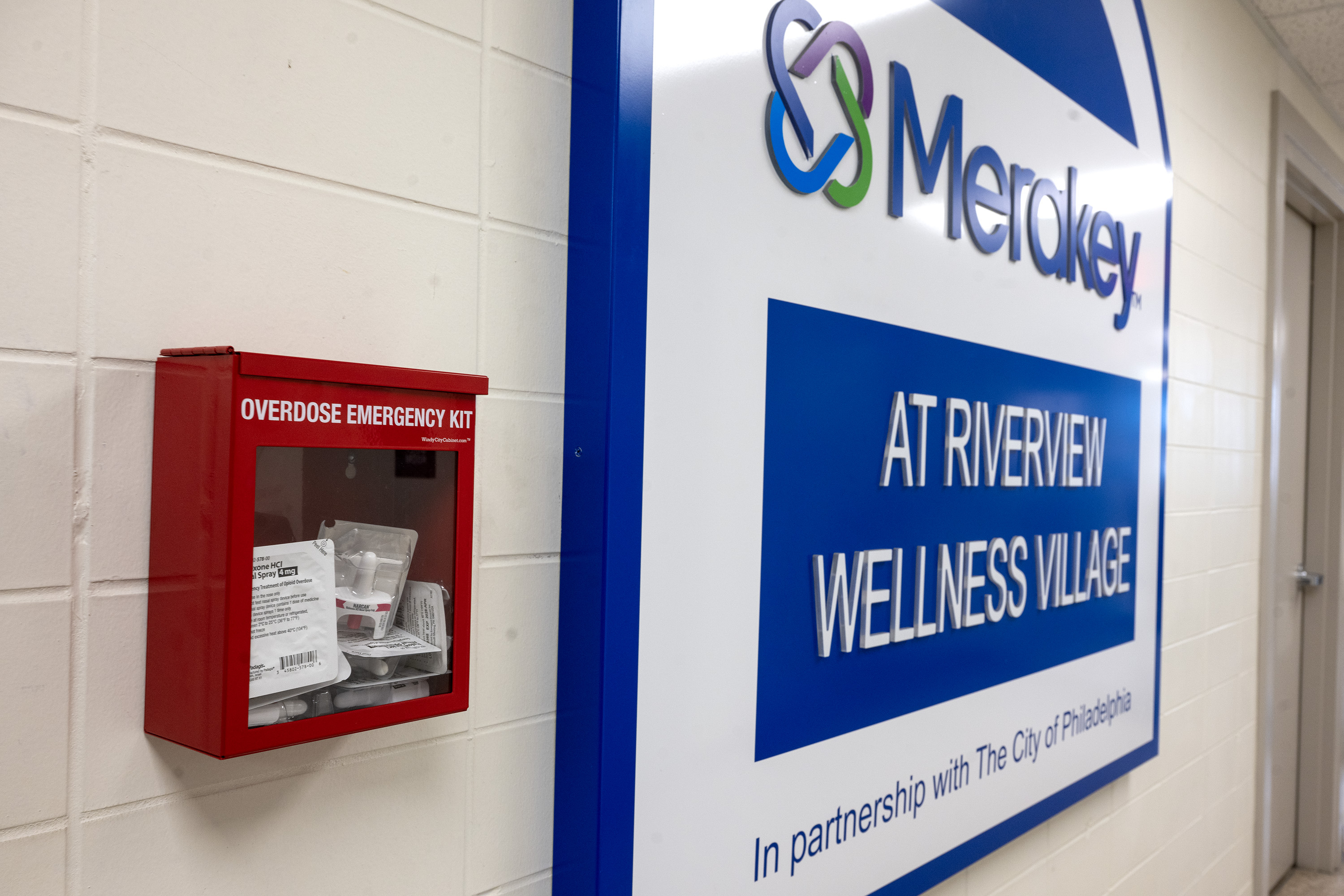
Entry to the primary medical care center run by the Black Doctors Consortium at Riverview Wellness Village.The main entry Meetinghouse at Riverview Wellness Village.Naloxone (Narcan) in an “overdose emergency kit” at Riverview Wellness Village.
In the initial months after Riverview opened its doors, residents had to travel off campus to obtain medication that can prevent relapse, most commonly methadone and buprenorphine, the federally regulated drugs considered among the most effective addiction treatments.
Typically, patients can receive only one dose of the drug at a time and must be supervised by clinicians to ensure they don’t go into withdrawal.
Vigderman said staff suspected some residents relapsed after spending hours outside Riverview, at times on public transportation, to get their medication.
This fall, Merakey — which was already licensed to dispense opioid treatment medications at other locations — began distributing the medications at Riverview, eliminating one potential relapse trigger for residents who no longer had to leave the facility’s grounds every day.
Interest in the program has been strong, Vigderman said, with nearly 80 residents enrolling in medication-assisted treatment in just a few weeks. Merakey is hiring more staff to handle the demand.
What’s next at Riverview
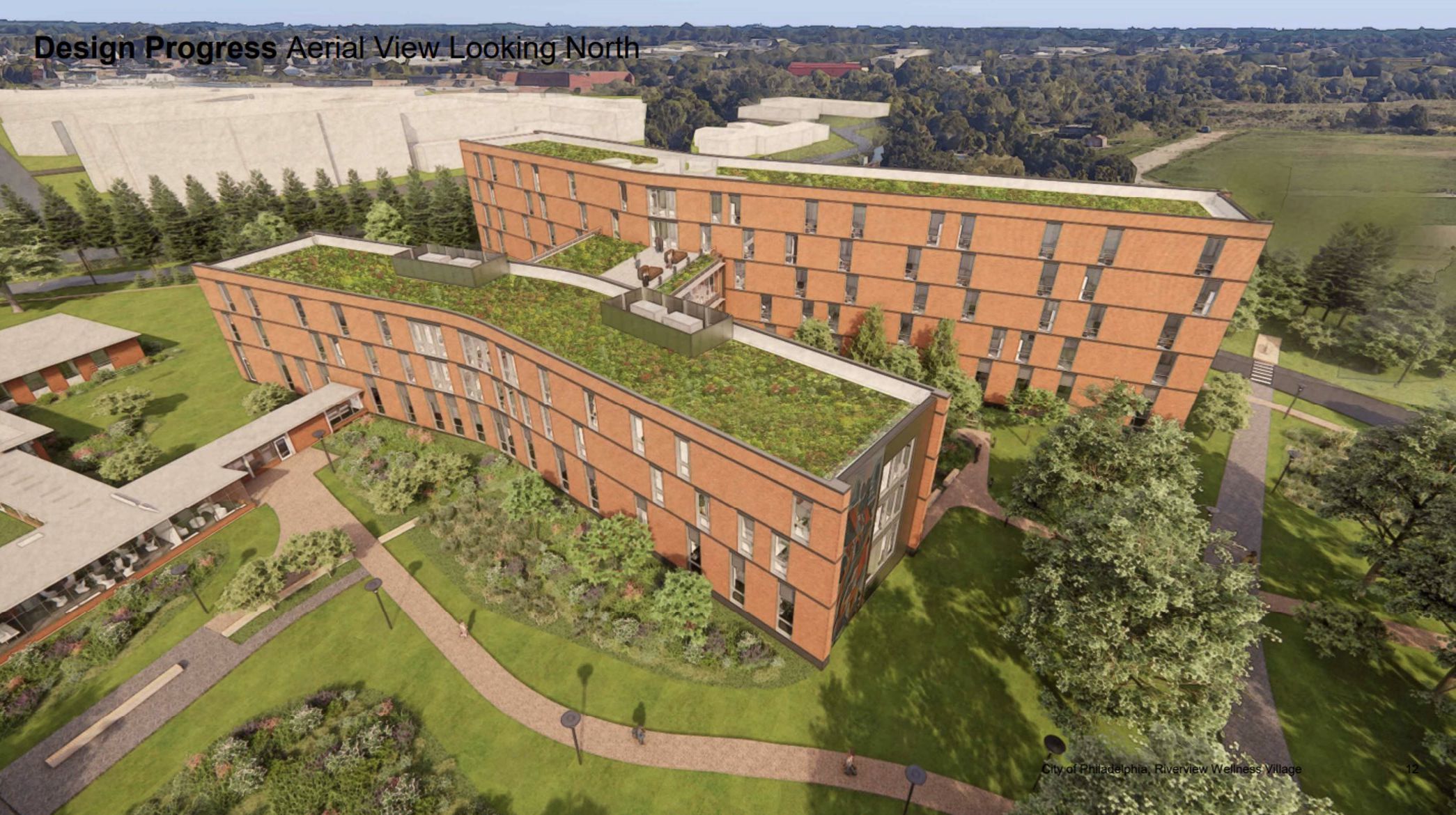
The city is eying a significant physical expansion of the Riverview campus, including a new, $80 million building that could double the number of licensed beds to more than 500. That would mean that about half of the city’s recovery house slots would be located at Riverview.
Parker said the construction is “so important in how we’re going to help families.” She said the process will include “meticulous design and structure.”
“The people who come for help,” she said, “we want them to know that we value them, that we see them, and that we think enough of them to provide that level of quality of support for them.”
In the meantime, staff are working to help the center’s current residents — who were among the first cohort to move in — plot their next steps, like employment and housing.
A rendering of the new, $80 million five-story building to be constructed on the campus of Riverview Wellness Village. It will include residences and medical suites.
That level of support, Vigderman said, doesn’t happen in many smaller recovery houses.
“In another place, they might not create an email address or a resumé,” he said. “At Riverview, whether they do it or not is one thing. But hearing about it is a guarantee.”
Bean is closing in on one year at Riverview. He doesn’t know exactly what’s next, but he does have a job prospect: He’s in the hiring process to work at another recovery house.
“I’m sure I’ll be able to help some people,” he said. “I hope.”
Two Philadelphia police officers who drove after a fleeing drug suspect until the man crashed his car and killed a bystander are not liable under federal law for causing the fatal collision because the officers didn’t intend to harm anyone, an appeals court ruled.
In an opinion issued last week, the three-judge panel from the Third Circuit Court of Appeals said officers Christian Kane and Alexander Hernandez were forced to make a quick decision in 2020 when they sped after a man they’d seen dealing drugs in Kensington.
The pursuit of the suspect, Tahir Ellison, proceeded at a normal speed for a few blocks, court documents said, but became dangerous after Ellison drove through a red light and down a one-way street.
The episode ended in tragedy when Ellison ignored another red light and crashed into Virgen Martinez’s car at the intersection of Allegheny and Frankford Avenues, killing Martinez, a 47-year-old mother of four.
Ellison pleaded guilty in 2023 to charges including third-degree murder and was sentenced to 10 to 20 years in prison, court records show.
But Martinez’s relatives sued Kane and Hernandez, arguing in part that the decision to speed after Ellison — which violated the police department’s policy to avoid most car chases — also violated Martinez’s 14th Amendment due process rights and made the officers liable for her death. Last year, U.S. Magistrate Judge Scott W. Reid agreed that that question should be put before a jury.
The officers appealed. And in the opinion issued last week, Circuit Judge Stephanos Bibas wrote that although Hernandez’s death was a tragedy, the officers made a “snap judgment” to pursue Ellison and did not behave egregiously during the portion of the chase in which Ellison began speeding and ignoring traffic signals.
“We ask not whether in hindsight [the officers] chose rightly, but whether they intended to cause harm,” Bibas wrote.
Philadelphia police directives generally prohibit car chases, which are often dangerous for both citizens and officers. Exceptions are made only if officers are seeking to capture suspects fleeing violent felonies, or to prevent imminent death or serious injuries.
An Inquirer investigation published last year found that about half of all reported chases by Philadelphia police were in violation of department polices and that the city had spent about $20 million since 2020 to settle crash- or chase-related lawsuits involving police.
Earlier this year, the city agreed to pay $2.9 million to settle a lawsuit over a crash in which a man on a dirt bike being pursued by a city police officer struck two bystanders — including a 6-year-old girl — in Upper Darby.
In that case, however, the officer initiated the chase without witnessing any crime, continued driving after the man for nearly 10 miles, and was later accused by the department of providing false statements to a superior and falsifying official documents.
Bibas wrote that Kane and Alexander, by contrast, “had a split second” to decide whether to follow Ellison, whom they’d seen dealing drugs from his car. And the dangerous portion of the pursuit spanned about half a mile and 39 seconds before Ellison crashed into Martinez’s vehicle.
Jim Waldenberger, one of the attorneys who filed suit on behalf of Hernandez’s relatives, said he and his colleagues disagreed with the ruling.
Before the officers’ pursuit turned dangerous, Waldenberger said, they pursued Ellison at a normal speed with their police lights on for several blocks, meaning their decision to continue the chase when he sped up was not a snap judgment made under unavoidable pressure.
The department conducted an internal investigation and found that the officers violated departmental policies regarding pursuits, and each spent at least several months on administrative duty, court documents said. The documents did not specify whether either officer faced additional discipline.
Sgt. Eric Gripp, a police spokesperson, said Monday that Kane is still on the force but that Hernandez left last year. Gripp declined to comment further.
Waldenberger said he and his colleagues were still weighing whether to appeal the Third Circuit’s ruling on the officers’ liability.
The lawsuit can proceed on more limited grounds surrounding whether the city sufficiently trains police officers regarding pursuits, and whether Kane, who was driving the police car, violated state negligence laws.