Category: Philadelphia News

  • Medicare coverage for telehealth suspended as result of government shutdown

    Medicare coverage for telehealth suspended as result of government shutdown

    Steve Hirst relies on virtual visits with his urologist, whose office is an hour away from his Broomall home, to stay on top of his treatment plan and renew medications.

    But earlier this month Hirst, 70, got a notice from his doctor’s office informing him that it could no longer schedule telemedicine visits for patients like him who have Medicare because of new federal policy changes.

    Medicare began covering telemedicine services during the COVID-19 pandemic and has maintained the popular offering through temporary waivers approved by Congress since. But the most recent of those waivers expired at the end of September when Congress failed to reach a budget deal and the government shut down.

    The change specifically affects traditional Medicare, which is administered by the government for people 65 and older and some with disabilities. People with Medicare Advantage plans, which are administered by private insurers, should check with their plan.

    Medicare coverage for virtual visits for mental health was made permanent after the pandemic and are not affected by the shutdown.

    Some of the Philadelphia area’s leading health systems, including Temple Health and Penn Medicine, have said they are continuing to provide telehealth services to people with Medicare and temporarily suspending billing for those services, with hope that coverage will be reinstated when a budget deal is eventually reached.

    But smaller provider practices may not have the luxury of delaying payment for thousands of dollars in services for an indefinite period of time.

    With the government shutdown in its third week, Republicans and Democrats seem no closer to reaching a deal. The next vote is scheduled for Monday evening, though no deal is expected.

    Another health policy issue — tax credits for people who buy insurance through Affordable Care Act marketplaces, including Pennie in Pennsylvania — has been a major sticking point in the ongoing federal budget debate. Democrats want the enhanced subsidies extended permanently as part of the budget deal, and Republicans have refused, arguing that lawmakers could address the issue separately, before the subsidies expire at the end of the year.

    Meanwhile, the waiver’s expiration has left Hirst and others who are covered by Medicare unsure how they will access needed health services.

    Telehealth’s rise

    Telehealth rose in popularity during the COVID-19 pandemic, when people were urged to avoid hospitals unless they were having an emergency and when most routine procedures were canceled.

    The approach was especially helpful to older adults and people with disabilities, who needed to stay in contact with doctors for ongoing treatment and who were considered particularly vulnerable to severe illness from COVID-19.

    After the pandemic ended, many private insurers, Medicaid, and Medicare permanently adopted telehealth coverage for certain services, such as mental health, because of its popularity during the pandemic.

    Medicare has used temporary waivers to continue telehealth coverage for other types of doctors’ visits.

    Beyond patient popularity, research has found that telehealth visits can be as effective as in-person visits for certain types of care, such as palliative care for cancer patients, while improving access to patients with transportation challenges.

    Philadelphia health systems respond

    Philadelphia’s largest health systems said they are optimistic that coverage will be reinstated — either by a new temporary waiver or a permanent change — when Congress reaches a new budget agreement and the shutdown ends.

    Temple Health will continue to provide telehealth services to Medicare patients for the next three weeks, in anticipation of Congress reaching a deal.

    Penn Medicine has not billed Medicare patients for telehealth visits since the shutdown began and has paused its process for filing claims until the government reopens, a spokesperson said.

    “Congress has been vocal in its support of telehealth and its value, and we are hopeful that legislation will be passed to ensure permanent Medicare telehealth coverage and flexibilities once the government reopens,” Penn said in a statement.

    Main Line Health has been reaching out to affected patients to help them change previously scheduled virtual visits into in-person appointments or reschedule virtual visits that can be put off.

    Jefferson Health did not respond to a request for comment in time for publication.

    Patients in limbo

    Hirst drives into Philadelphia to see his urologist in person once a year. Every three months, he has a virtual visit to check in and renew prescriptions.

    Driving to Philadelphia for every appointment would be inconvenient, but Hirst will probably do it “for now,” he said.

    But he worries about older adults and people with disabilities who can’t safely drive to the doctor’s office, and for whom virtual care is a lifeline. They could end up putting themselves or others at risk being on the road when they shouldn’t be. Or they may end up skipping needed care because they don’t have a ride.

    “It makes no sense,” Hirst said.

  • Community College of Philadelphia is poised to select its next president Tuesday

    Community College of Philadelphia is poised to select its next president Tuesday

    The Community College of Philadelphia’s Board of Trustees is preparing to select a new president, possibly as soon as Tuesday morning.

    A special meeting has been scheduled for 8 a.m. on Zoom “to approve an offer of employment to a presidential candidate,” according to the board’s website.

    The selection follows daylong interview sessions with the four finalists, who came to campus earlier this month and met with faculty, staff, students, and board members.

    “Each comes with their strengths and weaknesses,” said Sandra Gonzalez-Torres, CCP’s director of articulation and transfer, who attended meetings to hear all four candidates. “At this time, the college really needs strong leadership that will guide us to a strong future. The college needs strong fundraising and ways to support our students in retention and graduation.”

    Two have limited experience as a college president, including the interim CCP president. Three are candidates of color. One candidate has extensive fundraising experience, and another is a native Philadelphian who once worked at the college and has a background in counseling.

    Candidates addressed the college’s low morale and said they had the skills to help it heal following the forced departure of former president Donald Guy Generals after 11 years in the post.

    Here’s a look at the four candidates:

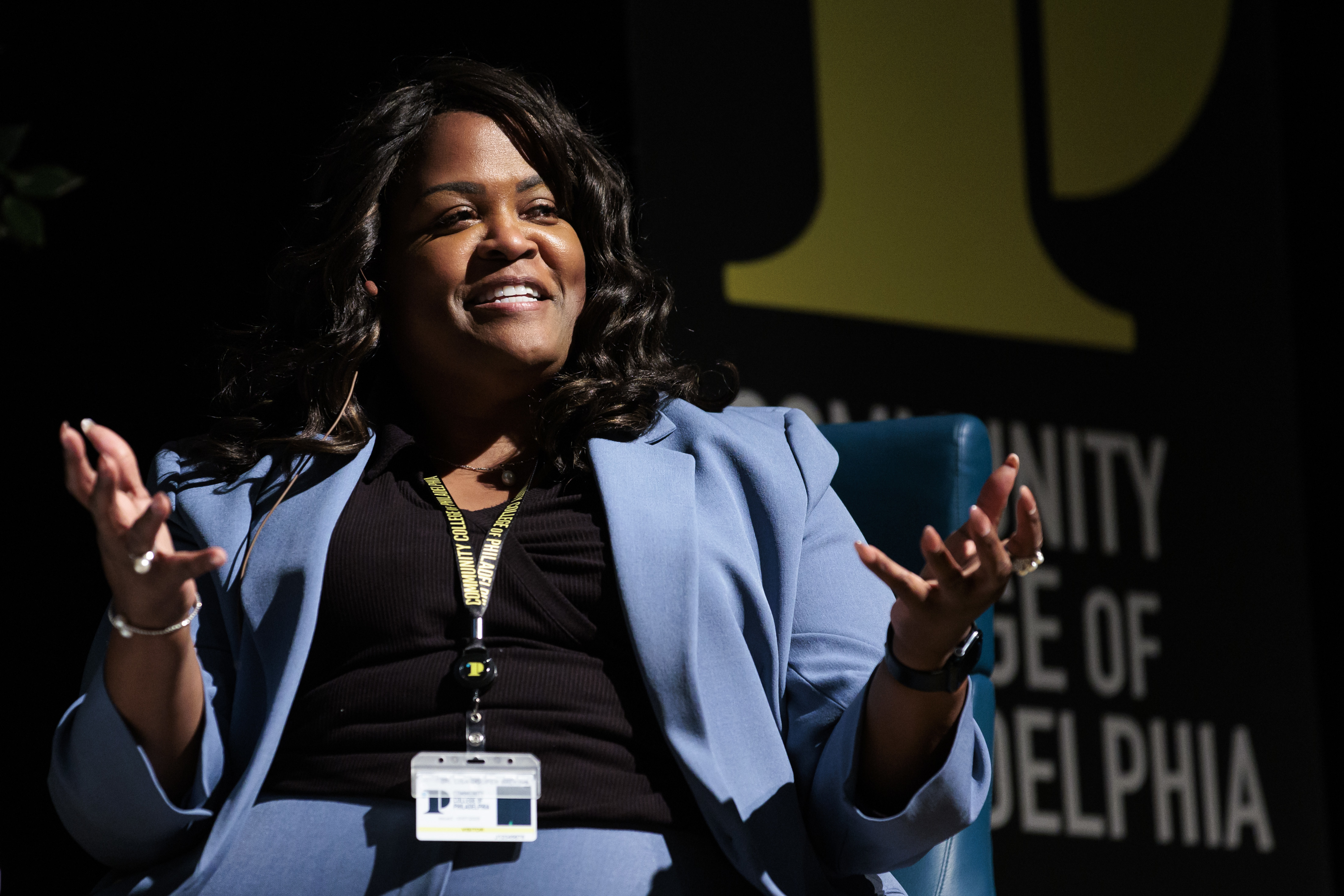
    Lisa Cooper Wilkins

    Lisa Cooper Wilkins, a finalist in the Community College of Philadelphia’s search for a president, speaks at an interview forum last week.

    Lisa Cooper Wilkins touted more than 25 years of higher education experience, from faculty member to dean to her current position as vice chancellor of student affairs at City College of San Francisco — where she has worked since 2020.

    “I consider myself to be a very collaborative leader and one that leans into communication as one of the primary strategies to work effectively across constituencies,” said Cooper Wilkins, a first-generation college student who grew up in a single-parent home.

    Cooper Wilkins, who previously worked at San Joaquin Delta College and the University of the Pacific, cited her background in counseling as a plus. She described herself as a “very calming presence,” which could be helpful in leading CCP out of a tumultuous time.

    She is the only candidate who is a native of the Philadelphia region, having attended the Philadelphia High School for Girls and later CCP.

    Cooper Wilkins also served as a dean at CCP from 2008 to 2010, during which time she said she made a point of visiting the regional centers. She said she would continue to devote time to them if she became president.

    “I’ve worked at institutions where, unfortunately more often than not, they feel like an afterthought,” she said.
    She also was assistant director and senior counselor for student support services at Drexel University in the mid-1990s.

    Cooper Wilkins acknowledged that her fundraising experience has been “limited” but that she had some experience during her time at CCP.

    She received her bachelor’s degree from Goucher College, master’s degrees from Marymount College and Villanova University, and her doctoral degree in higher education administration from George Washington University.

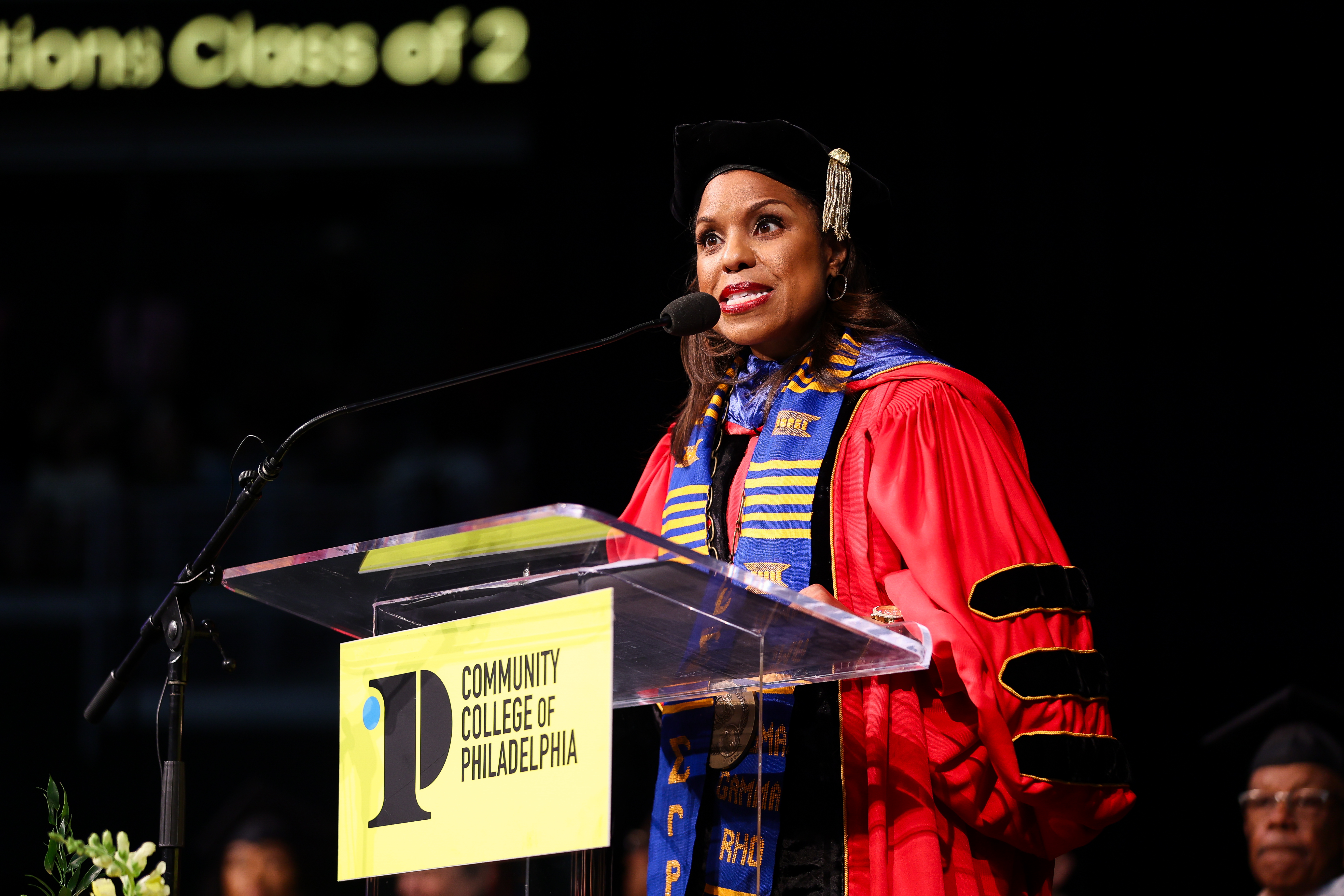
    Alycia Marshall

    Community College of Philadelphia interim President Alycia Marshall speaks at commencement in May.

    Alycia Marshall, who has been serving as interim president since Generals’ departure, leaned heavily on her experience in the role and how she stepped in to keep the college running smoothly just weeks before commencement.

    “Having someone who is understanding about the particular state that the institution is in, who sees where the opportunities are, who is supportive and about ensuring a culture of inclusivity, of collaboration … would be a critical piece” for the next president, she said during an interview session.

    Marshall, who was the college’s provost and vice president for academic and student success for nearly three years before becoming interim president, said she would lead both internally and externally, focusing on faculty and staff satisfaction as well as building relationships with funders and donors.

    She said she has already met more than 20 City Council members and state legislators.

    She acknowledged that an employee satisfaction survey that she commissioned when she became interim president showed low morale and promised to address it.

    “Things that would be a priority to me [are] insuring transparency and frequent communication,” she said.

    A native of Maryland, Marshall started her career as an adjunct professor at Anne Arundel Community College in Maryland, near Annapolis, and later became a full tenured professor and chair of the mathematics department. She was promoted to associate vice president at the Maryland community college, where she spent 23 years and founded the African American Leadership Institute.

    Marshall said that over the last six months she learned to be comfortable not knowing what will happen next. After a board meeting earlier this month, a consultant who is the liaison to the presidential search committee said on a still-active microphone that Marshall had not been well-received on campus.

    Marshall said at the interview session that she did not agree with that and that she has developed relationships with people across the college.

    “If you have worked directly with me, you will know I am here for the students and I am here to support faculty and staff,” she said.
    Marshall received her bachelor’s in mathematics from the University of Maryland, Baltimore County, her master’s in teaching from Bowie State University, and her doctorate in mathematics education from the University of Maryland.

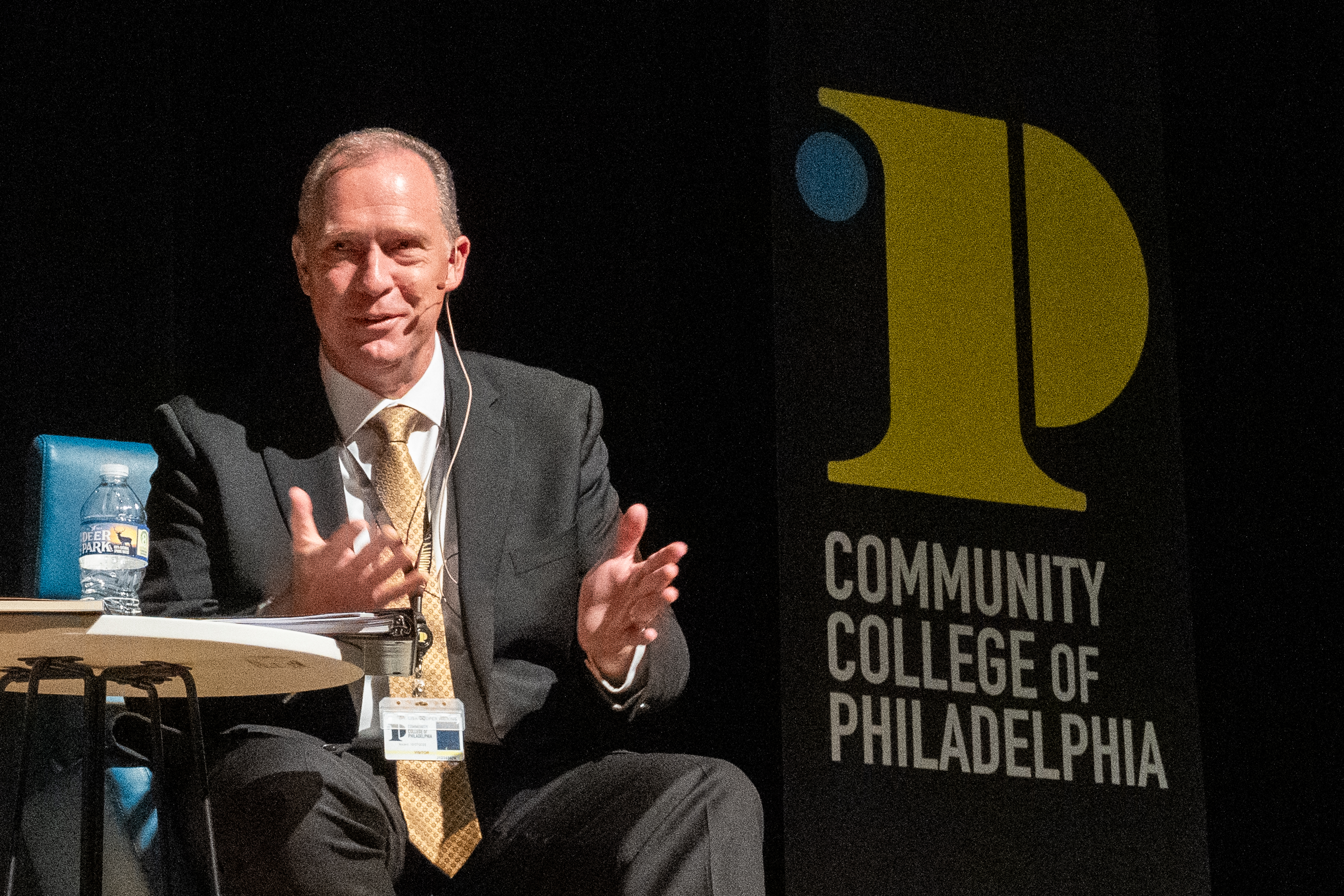
    Jesse Pisors

    Jesse Pisors, a finalist applying to be president of the Community College of Philadelphia, speaks at an interview forum on Oct. 9.

    Jesse Pisors most recently served as president of the 10,000-student Pasco-Hernando State College, a community college in the Tampa Bay area, but resigned after less than 18 months on the job.

    His resignation came after Florida Gov. Ron DeSantis’ Department of Government Efficiency found that the college was doing poorly in student retention and the board accused Pisors of hiding information, according to news reports.

    “The political situation in Florida had devolved to a point where I felt I would not be able to continue to be effective as president,” Pisors told the audience at one campus meeting.

    He acknowledged about a half percentage point drop in retention.

    “That is exactly why one of our top 10 priorities in the strategic plan … had improving retention,” he said. “We were working on that.”

    But he said he’s still proud of his time there, noting the creation of a strategic plan and an increase of more than 8% in full-time equivalent enrollment.

    Citing the need for CCP to bring in more money at a time when public funding is tight, Pisors touted his experience in fundraising and marketing, noting his previous positions as a vice president at Texas A&M University-San Antonio and the University of Houston. He also had served as executive director of development and alumni relations at the University of Pittsburgh.

    Though he is the lone white candidate, he noted that he had served as a principal of a school in Mexico is fluent in Spanish, and is married to a native of Mexico.

    Pisors has 27 years of educational leadership experience, from kindergarten through the college level, which he said gives him “wide exposure” and broad “understanding.”

    “Community colleges kind of live in the middle,” said Pisors, who got his bachelor’s in history from Oral Roberts University, a master’s from Oral Roberts, and his doctoral degree in higher education administration from Texas Tech University. “They reach back into high school. They reach forward into universities.”

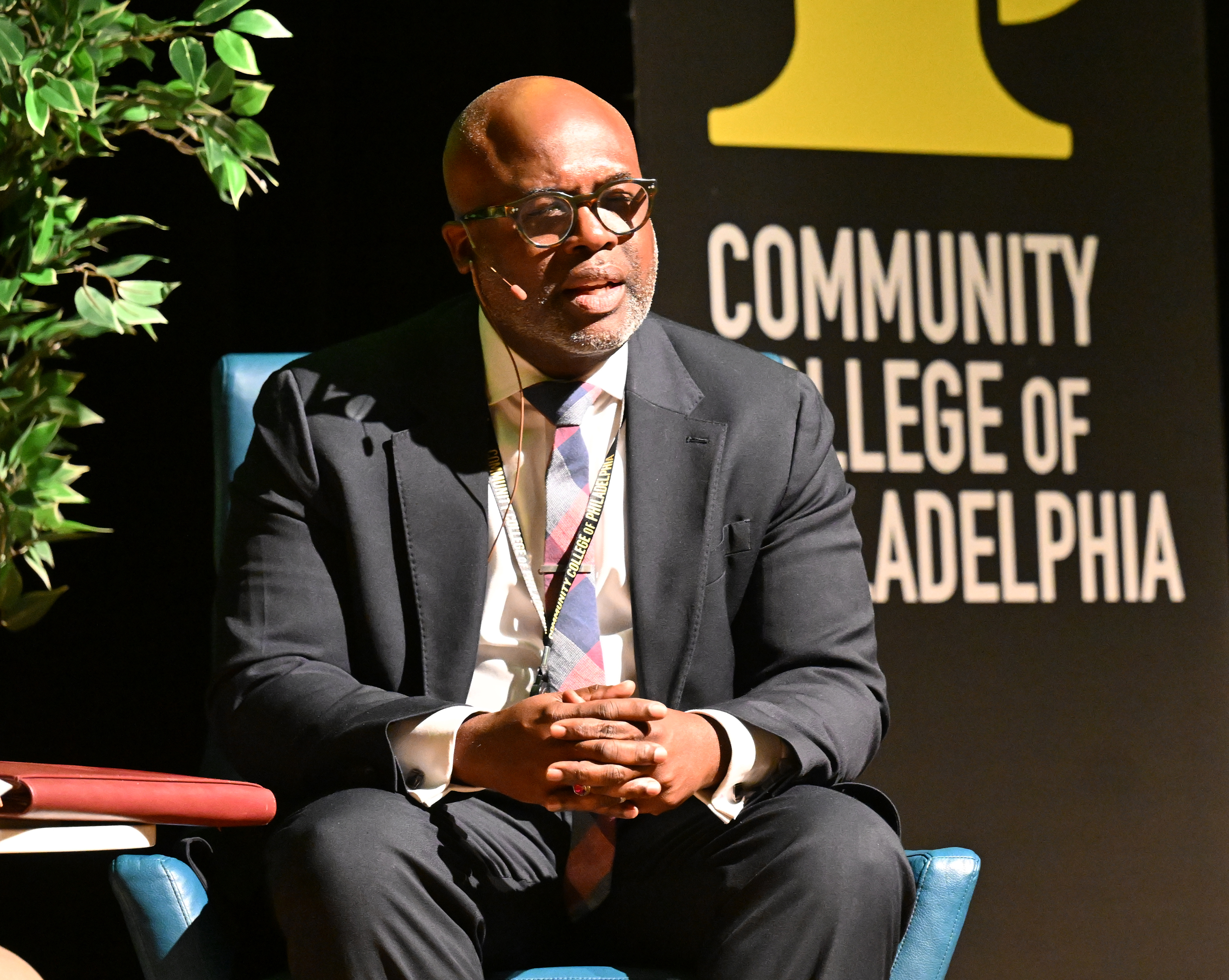
    Jermaine Wright

    Jermaine Wright, a finalist for the presidency of the Community College of Philadelphia, speaks during his interview session with faculty, staff, students, and board members on Oct. 13.

    Jermaine Wright, who is vice president for student affairs at City University of New York-Herbert H. Lehman College, said he was drawn to CCP by its mission and its students who have a similar background to his.

    He said he’s a first-generation college student and an immigrant who became a naturalized citizen. His father worked as a porter. and his mother and grandmother cleaned office buildings.

    “I am CCP,” said Wright, who has worked at Lehman for five years and previously held administrative positions at Southern Connecticut State University and City University of New York. “CCP is me.”

    He cited his experience in workforce development and work in programs that help underrepresented students succeed.
    Asked to describe his vision for the college, he cited increasing enrollment, finding different funding streams, ensuring academic excellence, and creating a more inclusive campus environment.
    But he cautioned that any new vision would have to be developed with faculty and staff to get full support.

    He also cited experience in fundraising and said success can be achieved by knowing where people are and meeting them there.

    “We need to have constant face time,” he said.

    Wright said he wouldn’t mind if members of the board of trustees showed up at the college a lot.

    “That means they care just as much as I do,” he said.

    Once an adjunct lecturer at Rutgers-Newark, Wright got his bachelor’s degree from Binghamton University, a master’s from CUNY, and his doctoral degree in public administration from Rutgers-Newark.

  • Keon King charged with arson for setting car on fire connected to Kada Scott’s kidnapping, prosecutors say

    Keon King charged with arson for setting car on fire connected to Kada Scott’s kidnapping, prosecutors say

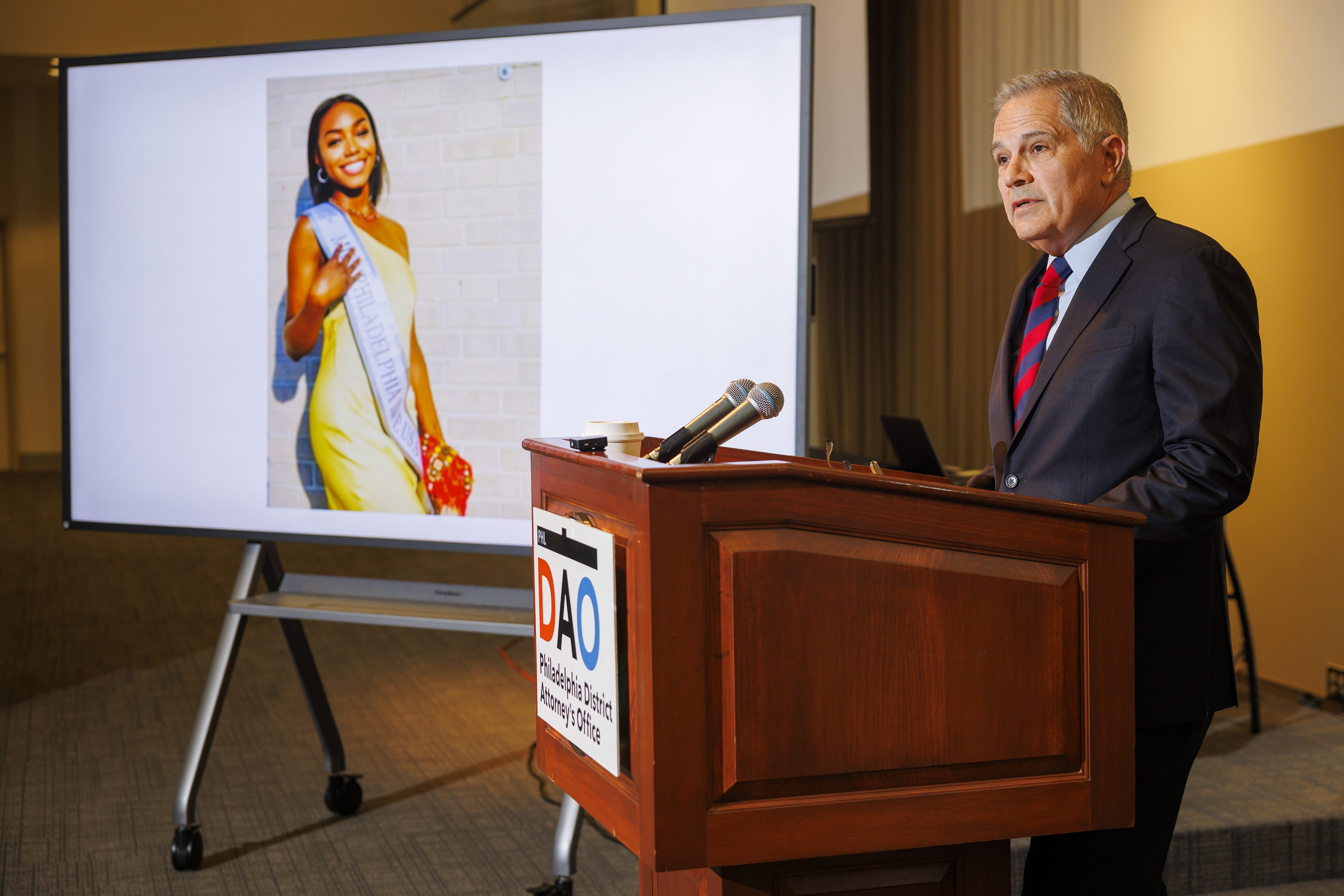
    Prosecutors on Monday charged Keon King, the man accused of kidnapping Kada Scott from her workplace earlier this month, with arson — and said they soon intend to charge him with murder for allegedly killing Scott, then setting on fire the car they say he used to abduct her last week.

    District Attorney Larry Krasner said that he expects to charge King with murder in connection with Scott’s death but that officials are awaiting additional information from the Medical Examiner’s Office and are working to “precisely confirm everything we need” to do that.

    Prosecutors also said that they “have reason to believe that other people may have been involved” or helped King conceal evidence after Scott, 23, was killed and that investigators are working to identify additional suspects.

    Scott’s cause of death remains under investigation.

    Philadelphia District Attorney Larry Krasner said he intends to charge Keon King with murder, but awaits additional information before formally filing the charges.

    King, 21, turned himself in to police last week to face charges of kidnapping, stalking, and related crimes after investigators linked him to the Oct. 4 disappearance of Scott. Cell phone data showed King was the last person in touch with Scott before she walked out of the Chestnut Hill nursing home where she worked and never returned, officials said.

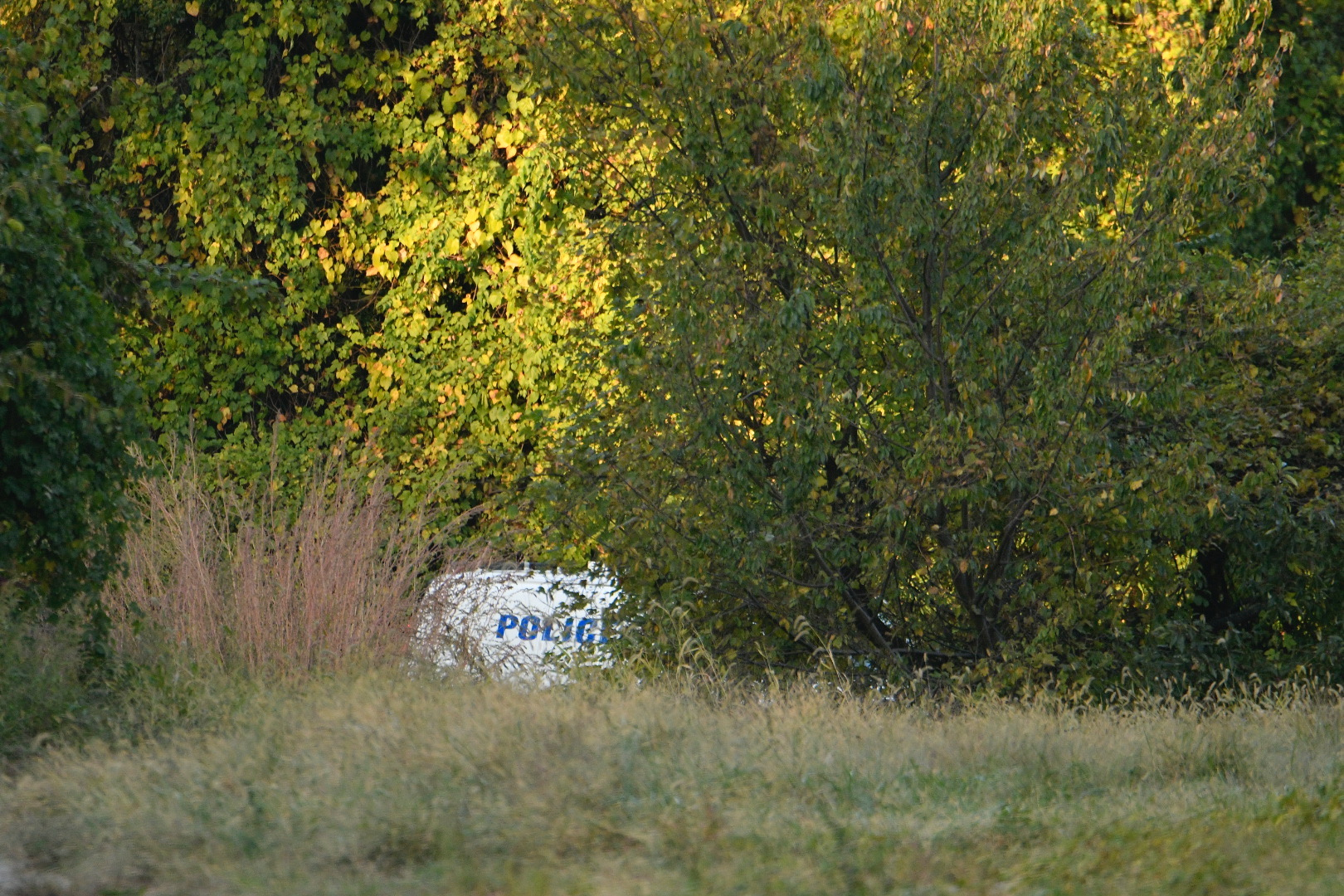
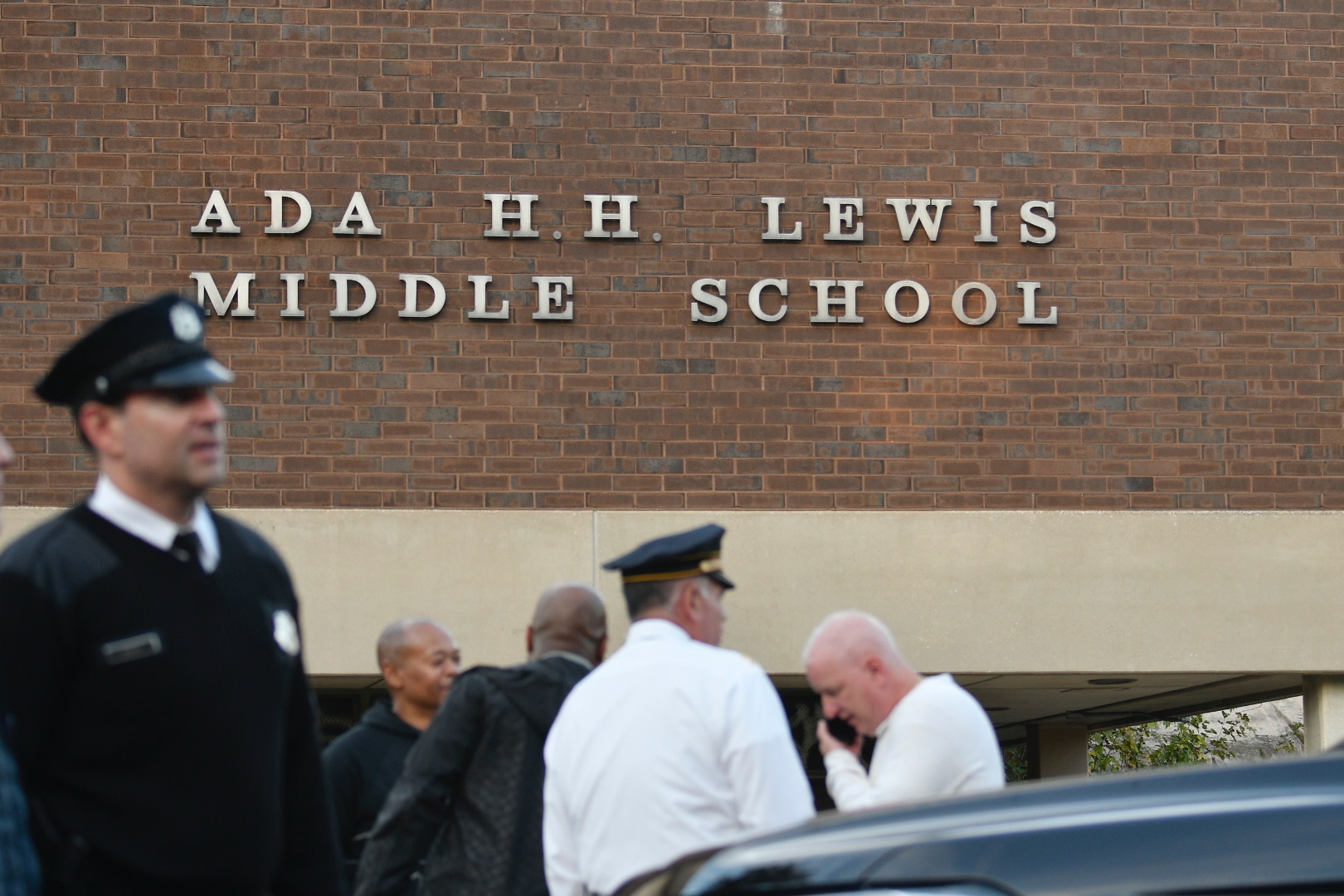
    After a two-week search for the Mount Airy woman, police on Saturday found Scott’s body, buried in a shallow grave in the woods behind the abandoned Ada H.H. Lewis Middle School in East Germantown.

    “There will be additional charges that are coming,” Krasner said at a news conference Monday.

    In the meantime, Krasner said his office would charge King with arson, conspiracy, and related crimes for setting a black Hyundai Accent on fire near 74th Street and Ogontz Avenue on Oct. 7.

    Assistant District Attorney Ashley Toczylowski said investigators believe that King used that car — which had been stolen from the 6600 block of Sprague Street in East Mount Airy on Oct. 3 — to kidnap Scott on the night of Oct. 4.

    Investigators believe Scott was likely killed within about 30 minutes of leaving work and ending up in King’s car, said law enforcement sources who spoke on the condition of anonymity to discuss an ongoing investigation.

    The extent of her relationship with King remains unclear, officials said.

    Surveillance footage recovered late last week showed that the Hyundai Accent arrived at the Awbury Recreation Center around 10:30 p.m. the night Scott disappeared, the sources said.

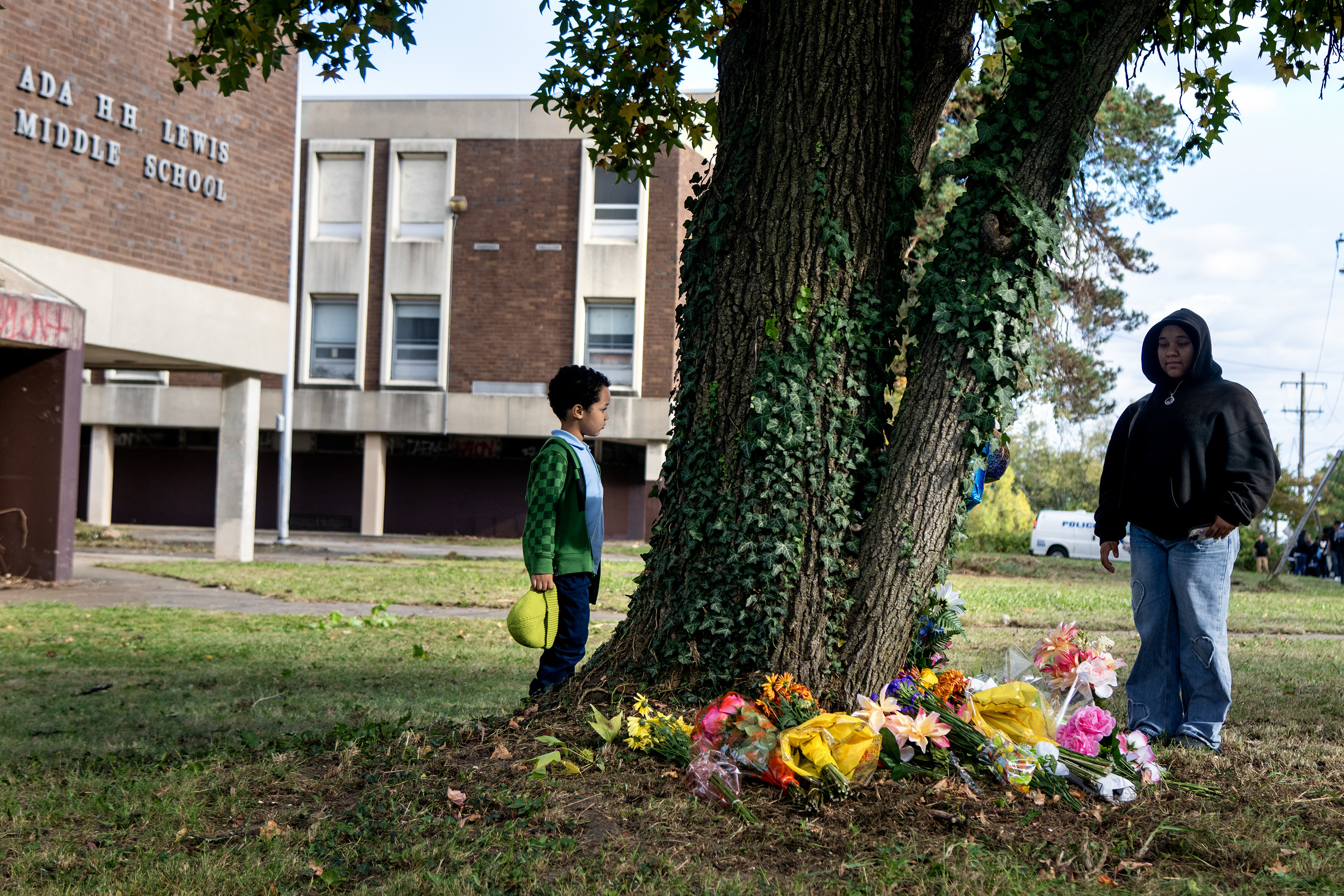
    Julius Peden, 5, and Jaihanna Williams Peden (right), 14, pause at a memorial for Kada Scott at the Ada H. Lewis Middle School on Oct. 20, not far from where her body was found on Saturday. The siblings were brought by their grandmother Deborah Peden who said she felt the need to come. “My heart is broken. I feel like I lost someone in my family,” she said. “My daughter is a young Black woman. They are being targeted.”

    King left the car in the parking lot, the sources said, then returned two days later — when video appears to show him moving what detectives believe was Scott’s body from the vehicle. Her corpse was buried at least 100 yards away in the woods behind the school next door.

    The next day, Toczylowski said, King set the car ablaze.

    Toczylowski said King’s cell phone location data shows he was at the recreation center when the car arrived Oct. 4 and again when he returned two days later. It also shows him in the area where the car was burned three days later, she said.

    Detectives learned of the torched car last week after police received a tip that a car connected to her disappearance had been set on fire on the West Oak Lane block, she said. The car had already been towed, crushed, and sent to a junkyard when authorities learned of it, she said.

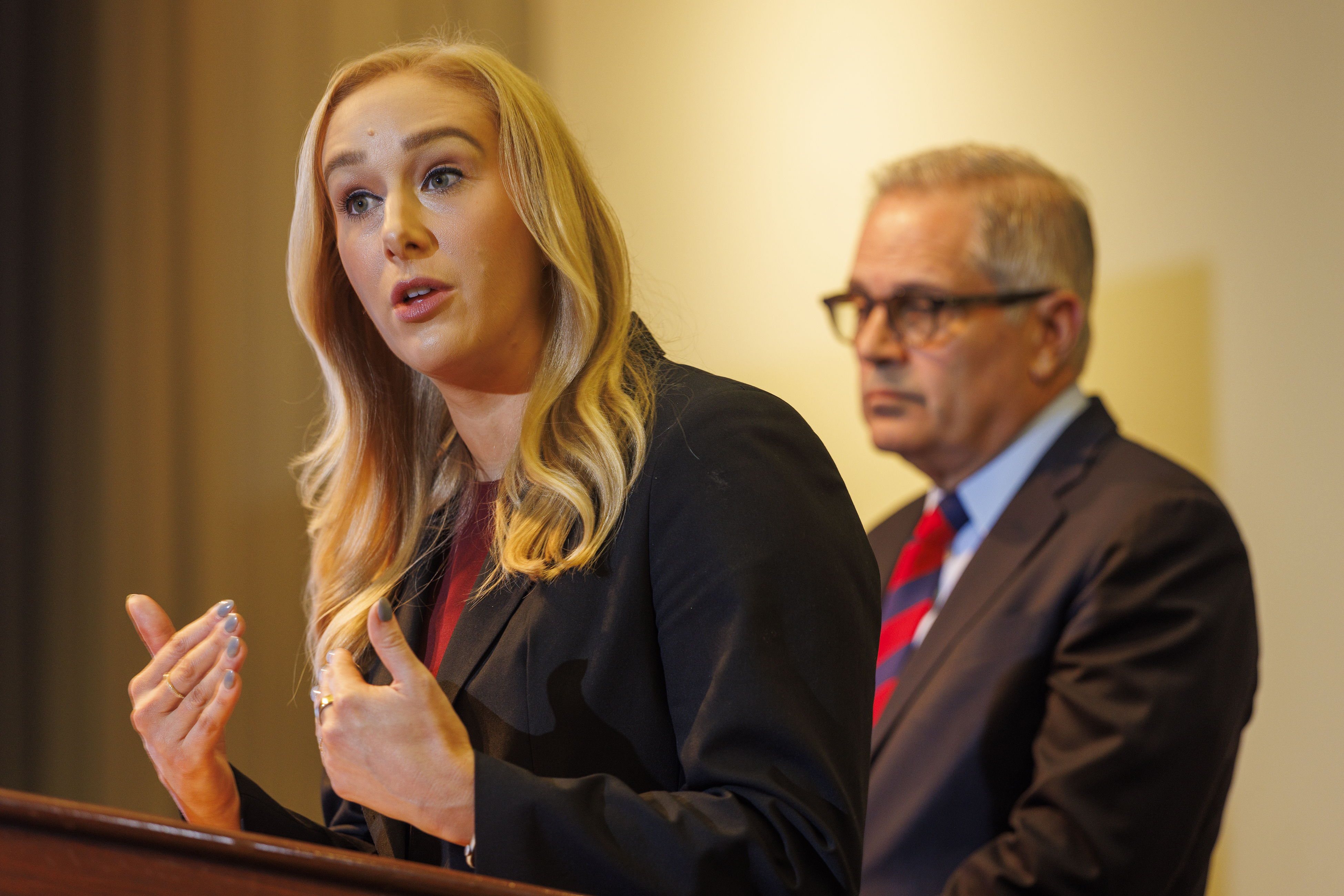
    Assistant District Attorney Ashley Toczylowski will lead the prosecution again Keon King.

    When investigators recovered video from the recreation center, she said, it confirmed that the car was used in the crime.

    Krasner asked for the public’s continued help with the investigation, which he said “is developing almost hourly.”

    “The community has already done tremendous work in aiding progress with this investigation,” he said. “We are simply asking for more.”

    Scott’s family on Monday released their first statement since her body was found, thanking the public for its help in the investigation and asking for privacy as they grieve.

    “Our hearts are shattered, yet we are deeply grateful for the outpouring of love, support, and prayers from people across the nation and around the world,” her parents wrote.

    “Kada was deeply, deeply loved. Her light, kindness, and beautiful spirit will forever remain in our hearts,” they said.

    They said they trust that the police department and district attorney’s office will get justice for their daughter, and that they are thankful for the “unity, leadership, and love” that has surrounded them so far.

    “Please honor Kada’s memory by showing kindness and care to one another,” they wrote, “just as she did every day of her life.”

    City Councilmember Anthony Phillips said his office is collecting donations to support Scott’s family, including toiletries, self-care and comfort products, and gift cards for grocery and meal delivery services.

    Items can be dropped off at his office at 1514 Wadsworth Ave. from Tuesday through Friday, 8:30 a.m. to 4:30 p.m., and Saturday from 9 a.m. to noon. For questions, he said, call 215-686-3454.

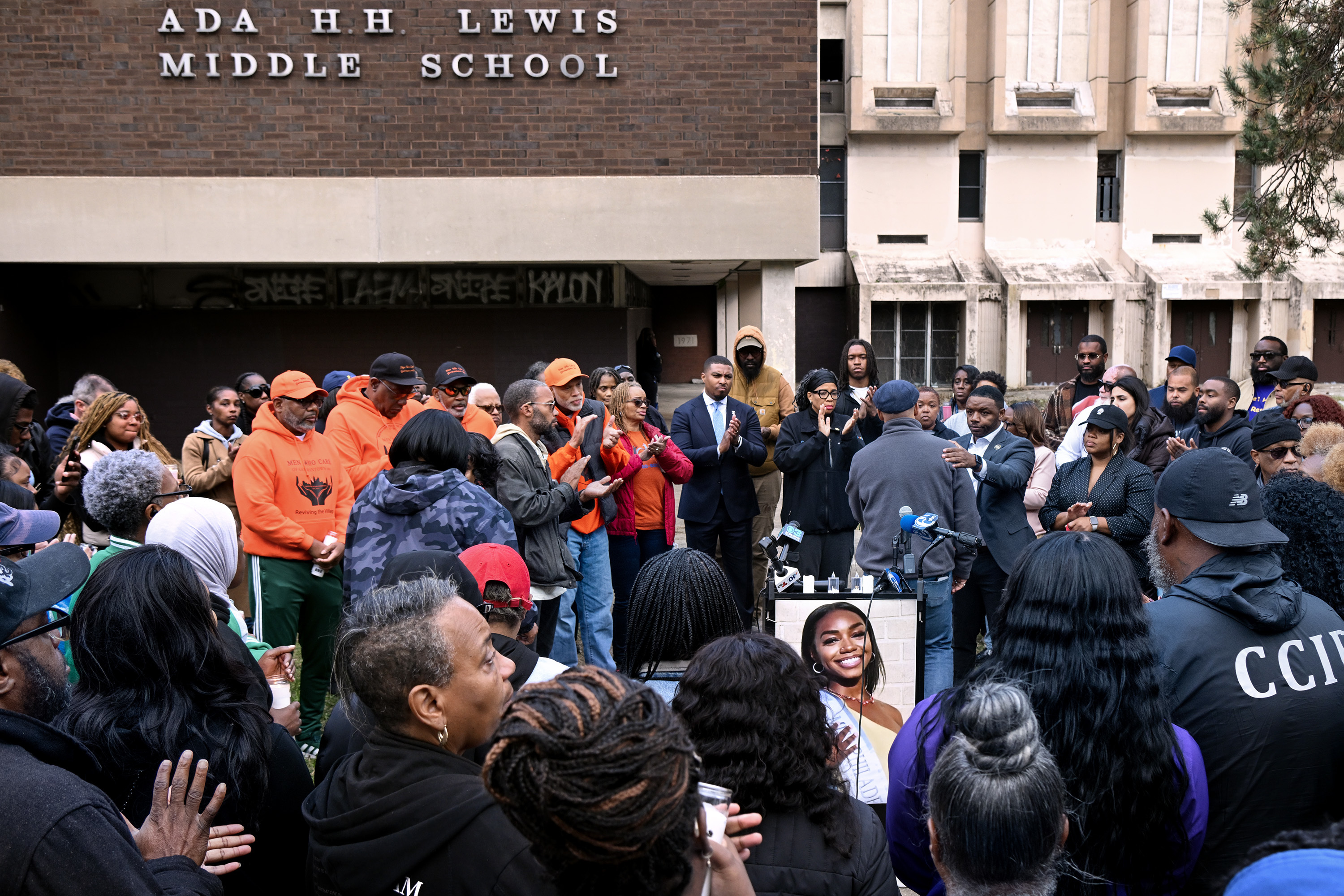
    Community members gather for a candlelight vigil in memory of Kada Scott on Monday. Neighborhood residents said they want the abandoned school torn down.
  • Philly lawmakers want to ‘clamp down’ on smoke shops. Their landlords could be next.

    Philly lawmakers want to ‘clamp down’ on smoke shops. Their landlords could be next.

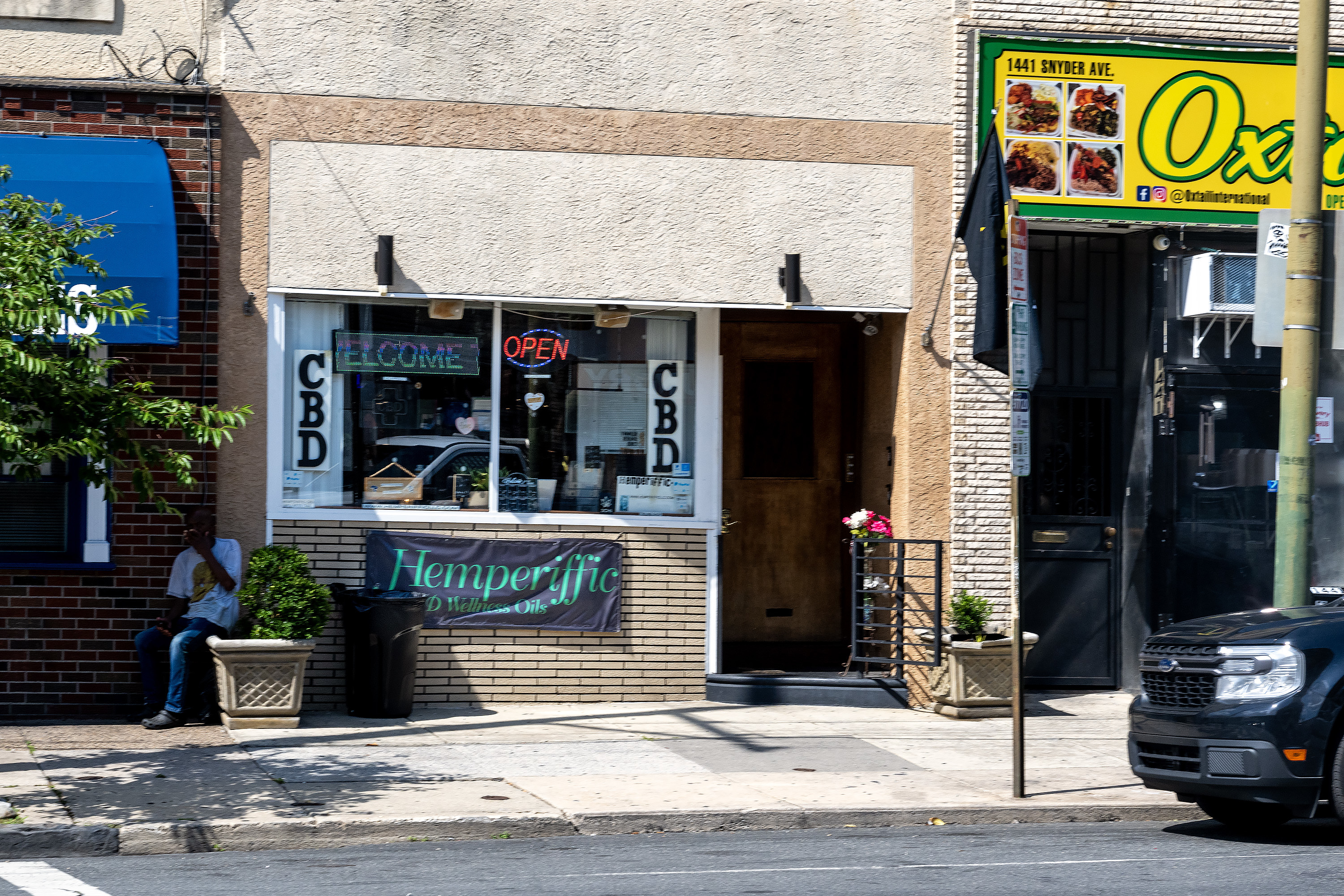
    There’s a smoke shop in North Philly peddling recreational drugs across the street from a daycare. A West Philly storefront that sells loose cigarettes on a residential block. A convenience store in Spring Garden that advertises urine to people looking to pass a drug test.

    These are among the so-called nuisance businesses that City Council members and neighborhood association leaders cited Monday as lawmakers advanced legislation to make it easier for the city to shut down stores that sell cannabis and tobacco products without licenses.

    And legislators said their next target could be the landlords who rent space to those businesses.

    “We have to work with our city departments and our state partners to clamp down on these businesses,” said City Council Majority Leader Katherine Gilmore Richardson, who represents the city at-large. “We’re just being inundated.”

    Members of Council’s Committee on Licenses and Inspections passed two bills Monday that city officials say seek to close loopholes store owners exploit to avoid being cited for failing to obtain proper permits.

    In introducing the legislation earlier this year, Gilmore Richardson cited an Inquirer report about Pennsylvania’s unregulated hemp stores, which sell products advertised as legal hemp that are often black market cannabis or contaminated with illicit toxins.

    One bill makes it easier for the city to shut down nuisance businesses by removing language that classifies some violations as criminal matters, requiring that the police investigate them as crimes rather than civil violations that are quicker to adjudicate.

    The second piece of legislation makes it illegal for businesses to essentially reorganize under a new name but conduct the same operations as a means of evading enforcement.

    Both pieces of legislation could come up for a full vote in the Democratic-dominated City Council in the coming weeks. Members of Mayor Cherelle L. Parker’s administration testified in favor of them, meaning the mayor is likely to sign both.

    A smoke shop in South Philadelphia.

    Neighborhood association leaders also testified Monday in favor of the changes, but several said more aggressive enforcement is needed. They said smoke shops in particular have popped up throughout their commercial corridors, as have convenience stores that don’t even have licenses to operate as businesses, let alone sell recreational drugs.

    “We’ve seen firsthand the selling of illegal drug paraphernalia and [loose cigarettes], many of which children walk past in order to get to the candy bars and seniors walk past to get to the milk,” said Heather Miller, of the Lawncrest Community Association. “We need to address this.”

    Elaine Petrossian, a Democratic ward leader in Center City and a community activist, called for “much” higher fines and penalties for landlords. She cited progress the municipal government has made in New York City, where authorities cracked down on building owners who knowingly rented space to tenants selling cannabis or tobacco without licenses to do so.

    Several lawmakers said they’d support a similar approach. Councilmember Mark Squilla, who represents a district that spans from South Philadelphia to Kensington, said landlords must be held “more accountable.”

    “If they had some skin in the game, maybe they’d think twice about renting to an illegal operation,” he said.

    Councilmember Jamie Gauthier, who represents parts of West Philadelphia, agreed. She said she recently attempted to meet with a building owner who rents space to a problematic smoke shop in her district, but was rebuffed.

    “He was like, ‘These people pay me rent, and that’s the extent to which I basically care,’” Gauthier said. “We need something that forces property owners to be more accountable than that, because neighbors are suffering.”

    Staff writers Max Marin and Ryan W. Briggs contributed to this article.

  • The Louvre heist has us thinking about past art heists in Philly

    The Louvre heist has us thinking about past art heists in Philly

    The world’s most-visited museum was closed Monday following a professional heist that resulted in the theft of priceless jewels. Within minutes, thieves entered and exited the Louvre on Sunday, taking eight treasures.

    The result? One of the highest-profile museum thefts in living memory amid a climate where museum staffs — worldwide, not just at the Louvre — are complaining about crowding, thin staffing, high turnover, and strained security.

    Here’s what we know so far.

    How did the Louvre heist happen?

    Within minutes, thieves rode up a basket lift outside the Louvre’s facade, forced open a window, smashed display cases, and fled with priceless Napoleonic jewels, officials said.

    The heist took place on Sunday, only 30 minutes after opening, with visitors already inside.

    The theft took four minutes inside the building and less than eight in total, according to French Culture Minister Rachida Dati, who called it a “professional” operation.

    “They went straight to the display windows,” Dati said. “They knew exactly what they wanted. They were very efficient.”

    Sunday’s theft focused on the gilded Apollo Gallery, where the crown jewels are displayed. Alarms brought Louvre agents to the room, forcing the intruders to bolt on motorbikes, but the robbery was already over.

    It’s unclear how many people took part in the theft and whether they had inside assistance. French media reported there were four perpetrators, including two dressed as construction workers. Authorities have not commented on the specifics.

    What was taken from the Louvre?

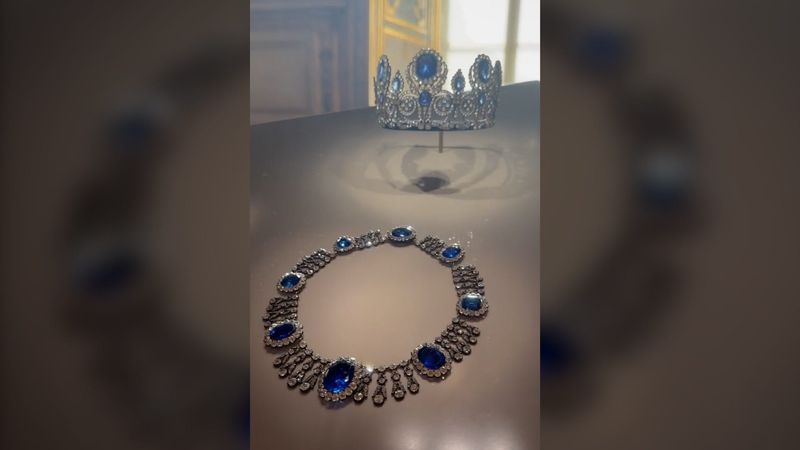
    Eight pieces of “priceless” jewels were stolen from the Louvre in Paris. Here is what they were.

    Eight objects were taken, according to officials:

    • A sapphire diadem, necklace, and single earring from a matching set linked to 19th-century French queens Marie-Amélie and Hortense.
    • An emerald necklace and earrings from the matching set of Empress Marie-Louise, Napoleon Bonaparte’s second wife.
    • A reliquary brooch.
    • Empress Eugénie’s diadem and her large corsage-bow brooch, a prized 19th-century imperial ensemble.

    A ninth object, the emerald-set imperial crown of Napoleon III’s wife, Empress Eugénie, was also taken but apparently dropped by the thieves. The crown, with more than 1,300 diamonds, was damaged but recovered outside the museum.

    All of the items are considered priceless, though officials have not disclosed an overall estimate.

    What will happen to the stolen jewels?

    The Louvre has been closed since the robbery on Sunday morning for the investigation.

    Experts say the initial hours after a heist are critical before the scent grows colder and thieves have more time to dispose of the jewels.

    The big concern is that the thieves are motivated by commodity vs. art, and will scrap the priceless works for sale on the black market, breaking the pieces for their stones and melting down the precious metals. In doing so, the thieves can make more high-ticket sales while remaining undetected.

    Has this ever happened before at the Louvre?

    According to National Geographic, the Louvre has a long history of bold heists — but it’s been a while until now.

    In 1911, the Mona Lisa — then a lesser-known piece by Leonardo da Vinci — was taken by Vincenzo Peruggia, a former employee dressed in his old work uniform. No one noticed it was missing for over 24 hours. The painting was recovered two years later after Peruggia tried to sell it to another museum.

    In 1940, a portion of the Louvre’s collection was looted by occupying Nazis, though the museum’s director had already hidden most of its collection in a safe house off-site.

    There was the 1966 theft of antique jewelry, which was being transported back to France from a loan to a Virginia museum. Those jewels were recovered after being found in New York inside a grocery bag. A decade later, one group of thieves stole a Flemish painting, and months after that, another group stole French King Charles X’s jeweled sword. The sword is still missing.

    The most recent string of heists occurred in the 1990s. In 1990, thieves cut a Renoir painting from its frame in broad daylight and also took ancient Roman jewelry and other paintings. In 1995, two pieces — a painting and a battle ax from a 17th-century bronze sculpture — were stolen. Finally, in 1998, a Camille Corot painting was cut from its frame and taken. It hasn’t been recovered.

    What about in Philly? Any heists?

    Yep. Philly-area museums have seen their fair share of art thefts over the years.

    Dating back to the 1980s, several thefts or alleged thefts have occurred across the Philadelphia Art Museum, Rodin Museum, Penn Museum, and more, according to Inquirer archives.

    Various thefts include a gold saw from Iraq and a 19th-century Chinese crystal ball taken from the Penn Museum in 1981 and 1988, a painting taken during a Philadelphia Art Museum after-hours party in 1984, and a bronze sculpture from the Rodin Museum in 1988 during a gunpoint robbery. The sculpture was recovered shortly afterward, and the alleged robber was arrested and charged. The crystal ball was also recovered.

    There’s also Frank Waxman, the Philly-based doctor who authorities said secretly amassed the largest known private collection of stolen art: about 150 pieces worth more than $2 million. The FBI raided his Rittenhouse condo in 1982 to find Rodins, Picassos, and more. Due to the statute of limitations surrounding his thefts, he was only convicted of taking eight pieces and served eight months in prison.

    In 2003, the Barnes Foundation said hundreds of items were missing from its collection, including a piece by Henri Matisse, a Jean Renoir ceramic vase, a mahogany Steinway piano, and historic recordings. It’s unclear whether the items were stolen or simply unaccounted for. No formal large-scale investigation took place.

    There was also an incident in 2017 where Michael Rohana, who was attending an after-hours ugly sweater party at the Franklin Institute, broke the thumb off a life-size Chinese terracotta warrior statue.

    Rohana described the incident as a “drunken mistake” and returned the thumb, which he had taken home. Still, it caused international turmoil, with Chinese officials accusing the Franklin Institute of carelessness with the artifact. The statue, which is called “The Cavalryman,” is insured for $4.5 million. Rohana went to court in 2019, eventually pleading guilty to a misdemeanor charge in 2023. He was sentenced to five years’ probation, a $5,000 fine, and community service.

    In 2021, six Pennsylvania museums were reunited with an assortment of historic firearms stolen by one man almost 50 years earlier.

    Thomas Gavin admitted to targeting dozens of museums up and down the East Coast, taking valuable artifacts sometimes unnoticed for years. The Hershey Museum and Pennsylvania Farm Museum in Landis, Lancaster County, were among some of the museums impacted. Gavin’s crimes went cold for so long that the statute of limitations expired for many, leading him to only serve a day in prison for trying to sell a historic rifle.

    What does the jewel heist mean for museums’ futures?

    The latest Louvre heist comes amid a tense time for museums worldwide.

    Following the height of the COVID-19 pandemic, museums have been working to balance mass tourism, stretched-thin staff, and security upgrades.

    Locally, the Philadelphia Art Museum and its employees reached a settlement last year after a yearlong dispute over pay raises called for in their 2022 labor contract and a nearly three-week strike.

    At the Louvre, a June staff walkout over frustrations with overcrowding and chronic understaffing led to a delayed opening. Unions say mass tourism leaves too few eyes on too many rooms and creates pressure points where construction zones, freight routes, and visitor flows meet.

    Officials say security updates are underway at the Louvre as part of an $800 million modernization plan. But critics say the measures are too little, too late.

    The Associated Press contributed to this article.

  • DNA confirms police found the body of Kada Scott, sources say, and new details emerge on what led police to her corpse

    DNA confirms police found the body of Kada Scott, sources say, and new details emerge on what led police to her corpse

    DNA analysis confirmed that the body recovered in the woods behind Ada H.H. Lewis Middle School in East Germantown is that of Kada Scott, the young woman who officials say was kidnapped two weeks ago, law enforcement sources said Sunday, and new details emerged about what led investigators to find her corpse.

    An anonymous tipster contacted police Friday night, adamant that Scott’s body was on the grounds of the school.

    Police had missed it in their earlier searches, the tipster said, and they should look along the old wooden fence that divides the school from the recreation center next door, said the sources, who spoke on the condition of anonymity to discuss an ongoing investigation.

    “GO BACK YOU MISSED HER,” the tipster wrote, according to the sources.

    And so, investigators returned to the school on Saturday morning, freshly scouring an area police had focused much of their search efforts on throughout the week after cell phone location data placed Keon King — the man suspected of kidnapping Scott, 23, from her workplace on Oct. 4 — nearby on the night she disappeared.

    Days earlier, they had found Scott’s debit card and pink phone case behind the school, but nothing else.

    Sources say DNA evidence has confirmed that police discovered the body of Kada Scott in a wooded area near Awbury Recreation Center on Saturday.

    Officers were walking through the densely wooded area again on Saturday afternoon, the sources said, when one stepped on a patch of earth that felt softer than the rest — leaves, sticks, and debris scattered loosely on top.

    Police excavated the area, and, a few feet down, they found Scott’s body.

    It’s not yet clear how she died. It could take days or weeks for the Medical Examiner’s Office to determine the cause of death.

    But new video evidence suggests that Scott was likely killed within just 30 minutes of her leaving her workplace the night she went missing, the sources said.

    The discovery of the shallow grave, two weeks after Scott disappeared, came after anonymous tips that grew more detailed with each passing day, the sources said, coupled with location data from Scott’s Apple Watch, and finally, new surveillance footage recovered near the school.

    It was a painful end to a search and story that Scott’s family and people across Philadelphia had prayed would end differently.

    Kada Scott, 23, had been missing since Oct. 4.

    Scott, a vibrant young woman from the Ivy Hill section of Mount Airy, disappeared from her workplace, a nursing home in Chestnut Hill, on the night of Oct. 4.

    Investigators believe she and King, 21, had been texting, and that night, she walked out of work to meet him shortly after 10 p.m. but never returned.

    Police are still investigating the nature and extent of Scott’s relationship with King.

    After detectives identified King as a suspect, they pored over the location data from his and Scott’s phones. It showed that King was the last person in touch with Scott on Oct. 4, that his phone traveled with hers briefly before her phone was turned off, and that he was in the area of Awbury Arboretum later that night, a law enforcement source said.

    Late last week, police learned that Scott had been wearing an Apple Watch on the night she disappeared. Location data showed that, around 1 a.m., the watch was in the parking lot of the Awbury Recreation Center, said the source.

    Police discovered a grave containing female human remains in the area of Ada H. H. Lewis Middle School, a closed school facility near the Awbury Arboretum in Germantown on Saturday.

    Investigators went to the recreation center on Friday and recovered new surveillance footage that showed King pull into the parking lot around 10:30 p.m. on Oct. 4 in a Hyundai Accent that had been reported stolen, two sources said. He left the car there that night — most likely with Scott’s body inside, the sources said.

    The footage appeared to show King return to the car two days later and retrieve and move what they believe to be Scott’s body, the sources said. It’s not clear whether he acted alone.

    The next day, the sources said, the car was set on fire behind homes on the 7400 block of Ogontz Avenue. King’s cell phone data placed him there at the time of the blaze, the source said. (Police had initially been searching for a gold Toyota Camry that King was seen driving but no longer believe that car was used in the crime, the sources said.)

    The district attorney’s office said prosecutors would wait for additional information from police and the medical examiner before determining whether to charge King in connection with Scott’s death.

    King is expected to be charged with arson in the coming days for allegedly setting the car on fire in West Oak Lane, according to the sources.

    Police don’t know the identity of the tipster who steered them to the location of Scott’s body. But if King had help moving it, the sources said, the accomplice may have confided in others, and one of those people may have contacted police.

    The investigation is continuing.

    Staff writer Maggie Prosser contributed to this article.

  • There were no kings, but there was music royalty at the Philly protest this weekend

    There were no kings, but there was music royalty at the Philly protest this weekend

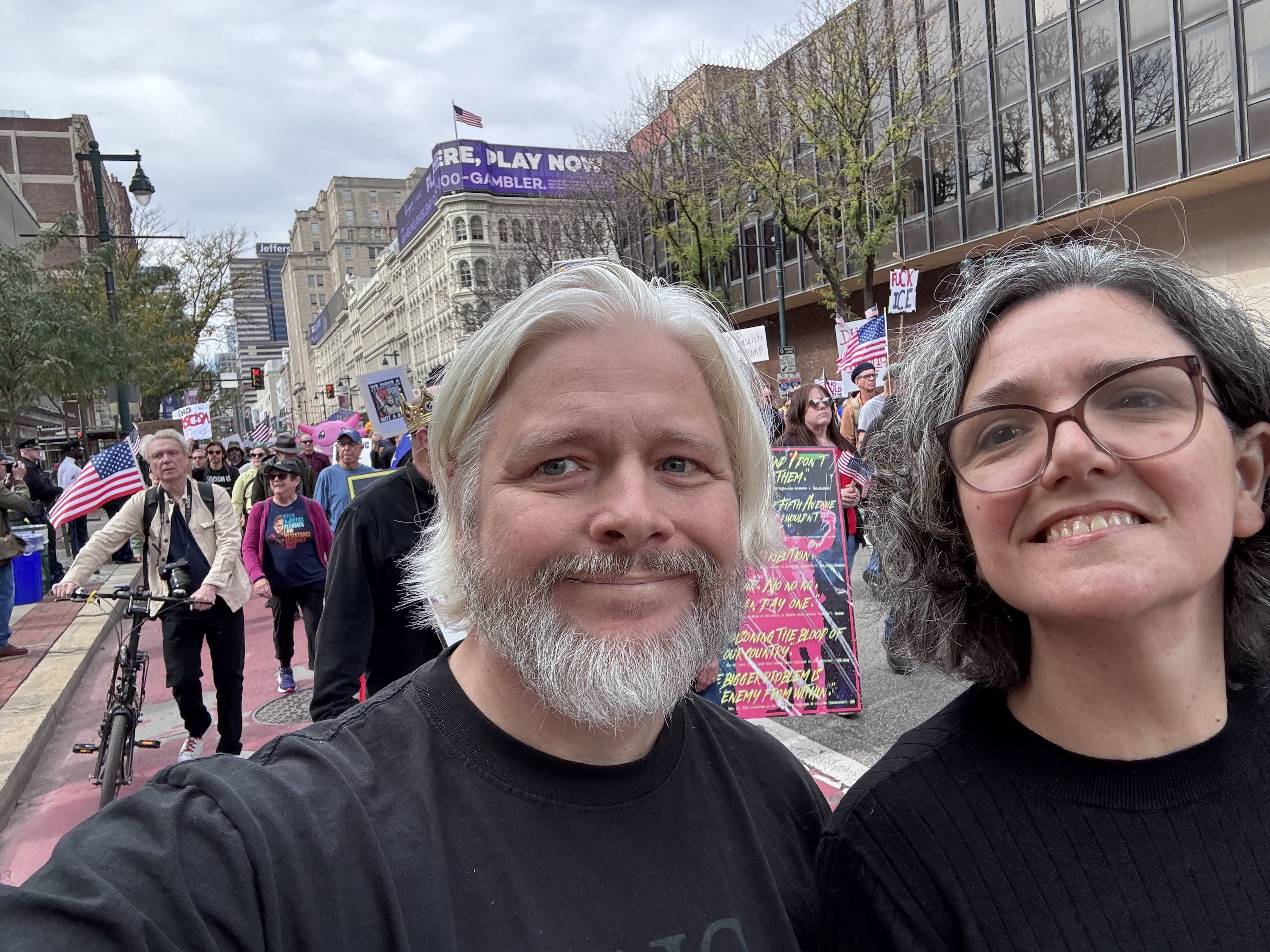
    Former Talking Heads front man David Byrne, in Philadelphia for a three-night stop on his latest tour, joined the “No Kings” protest in Philadelphia on Saturday to show support for the anti-Trump movement and snap a few photos with fans along the way.

    Several marchers posted photos of themselves on social media with Byrne, who rode a bike during the march, which went from City Hall to Independence Mall.

    Ryan Godfrey, a 54-year-old software solutions engineer, was among those who chatted with Byrne, shortly after surreptitiously taking a photo of Byrne behind him.

    Godfrey attended one of Byrne’s concerts on Thursday and recognized the singer when he saw him on his bicycle alongside marchers on Market Street.

    “I knew he was a big bike guy — and we had just seen him on Thursday,” Godfrey said. He decided to introduce himself.

    “I said, ‘Hi, I really appreciated your concert the other night. It was amazing; thank you so much for that.’ He said, ‘Of course, thanks for enjoying it,’ and then I said, ‘And also thank you very much for being here today — this is very important, that you’re doing this,’” Godfrey recalled.

    “And he said, ‘Of course. I wanted to be here for this.’”

    West Philadelphia residents Ryan Godfrey and Jessica Lowenthal pose for a selfie, surreptitiously photographing singer David Byrne in the background on the left, during the “No Kings” march on Oct. 18, 2025, on Market Street in Philadelphia.

    Godfrey regretted not asking Byrne one question: How were the videos at his concert projected around the stage and on the floor without the performers casting shadows on them?

    “It was a kind of magic trick that I don’t really understand,” Godfrey said. Godfrey has been a fan of Byrne’s since the ‘80s, but his interest was renewed when he saw the 1984 Talking Heads concert film Stop Making Sense in a theater last year.

    “I was sorry that I had waited that long because it was almost certainly the greatest concert film I’ve ever seen,” he said.

    He said Byrne was anything but aloof with marchers.

    “He was very genial, very kind and very friendly and open to interactions from everyone around him,” he said

    Another fan quoted Byrne in the sign they carried in the march, then got to hold the sign next to a laughing Byrne. The message? “Love & acceptance are now ‘punk ideologies.’”

    Byrne has been critical of Trump both in his music and in interviews and writings. During Saturday’s show, he mentioned the “No Kings” rally, drawing applause from the crowd, according to social media posts.

    One Bluesky poster said Byrne — who can be seen carrying a camera during the protest — showed photos of himself and his band at the march on the stage backdrop during Saturday night’s concert.

  • Thousands turn out in Philly for the ‘No Kings’ protest

    Thousands turn out in Philly for the ‘No Kings’ protest

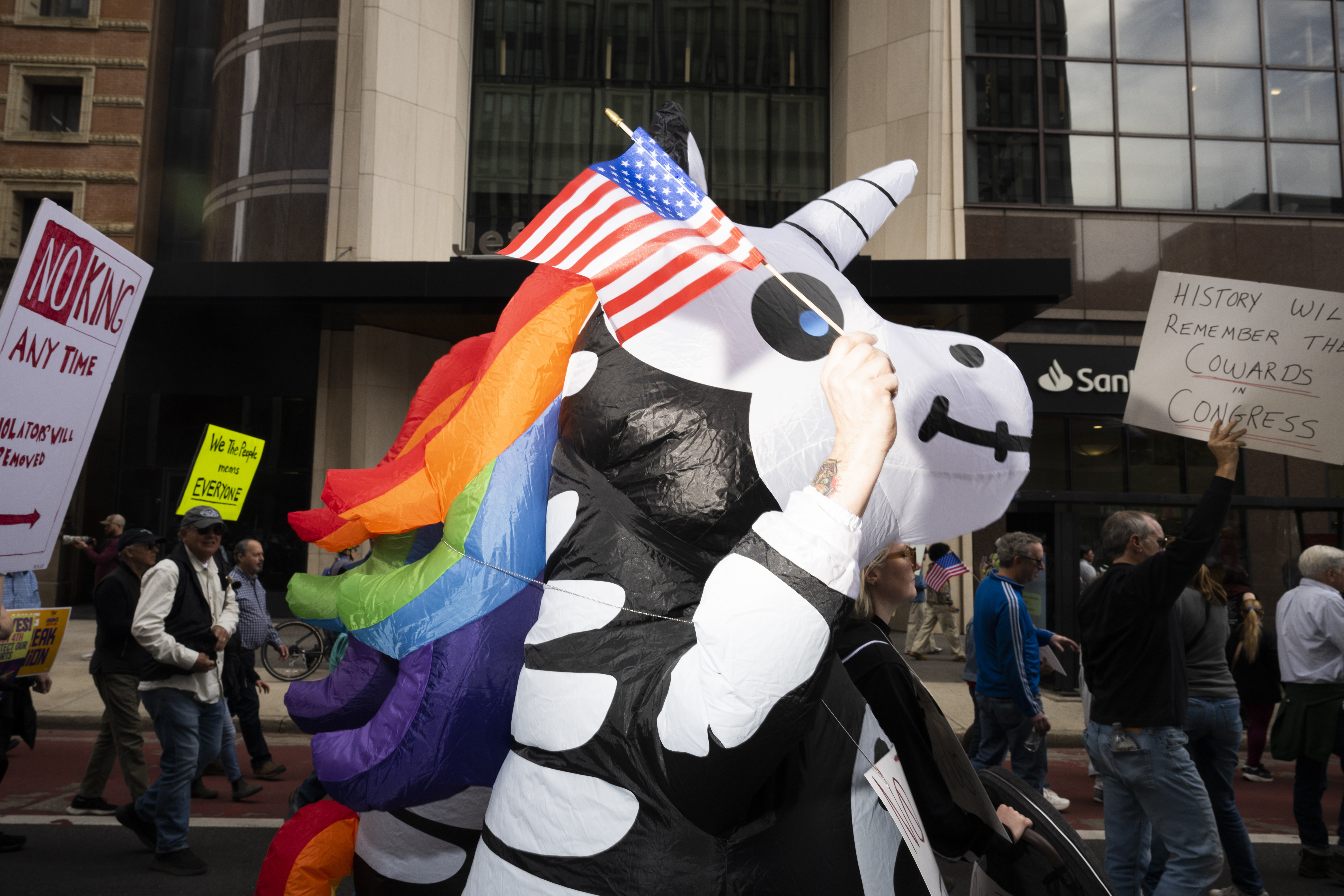
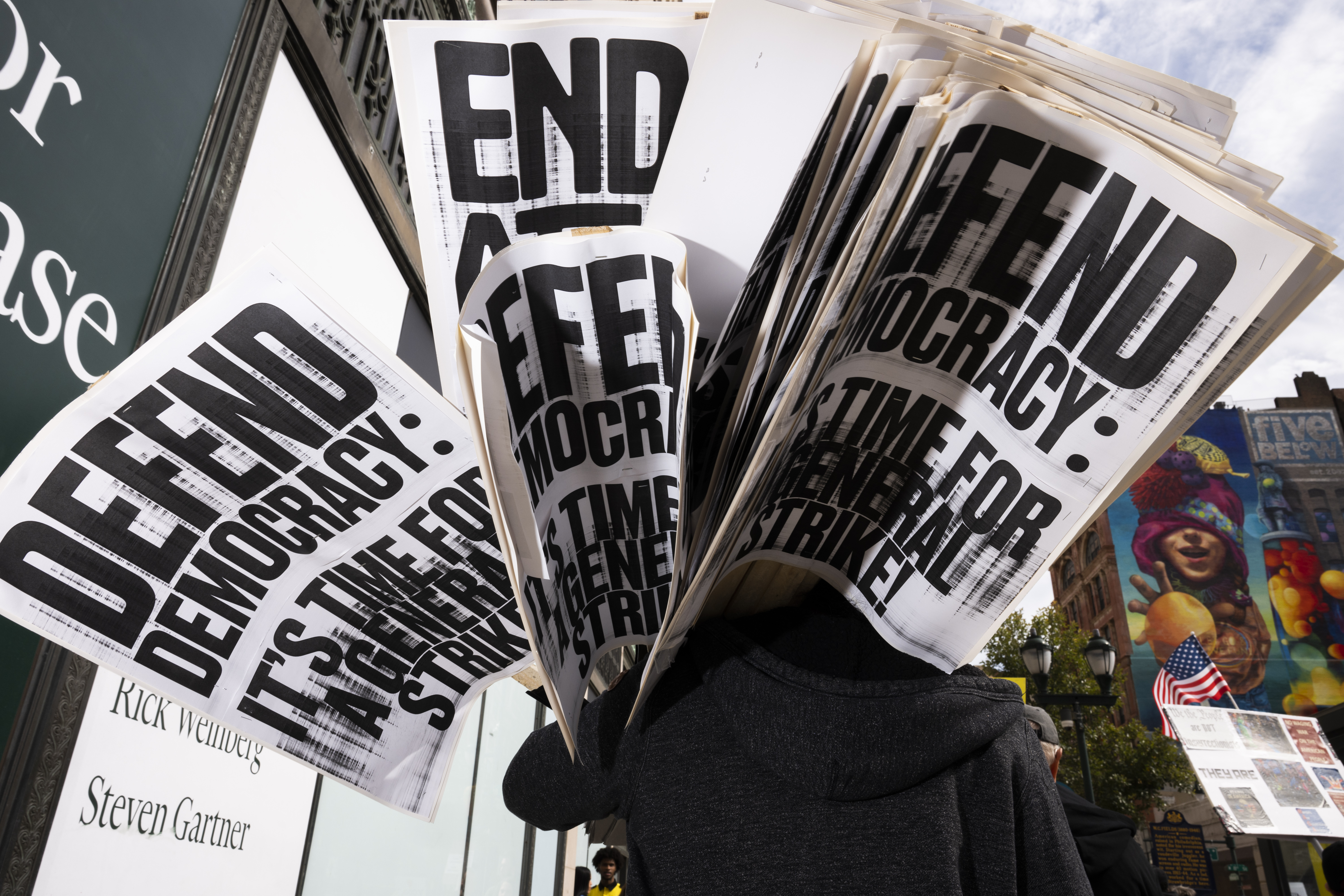
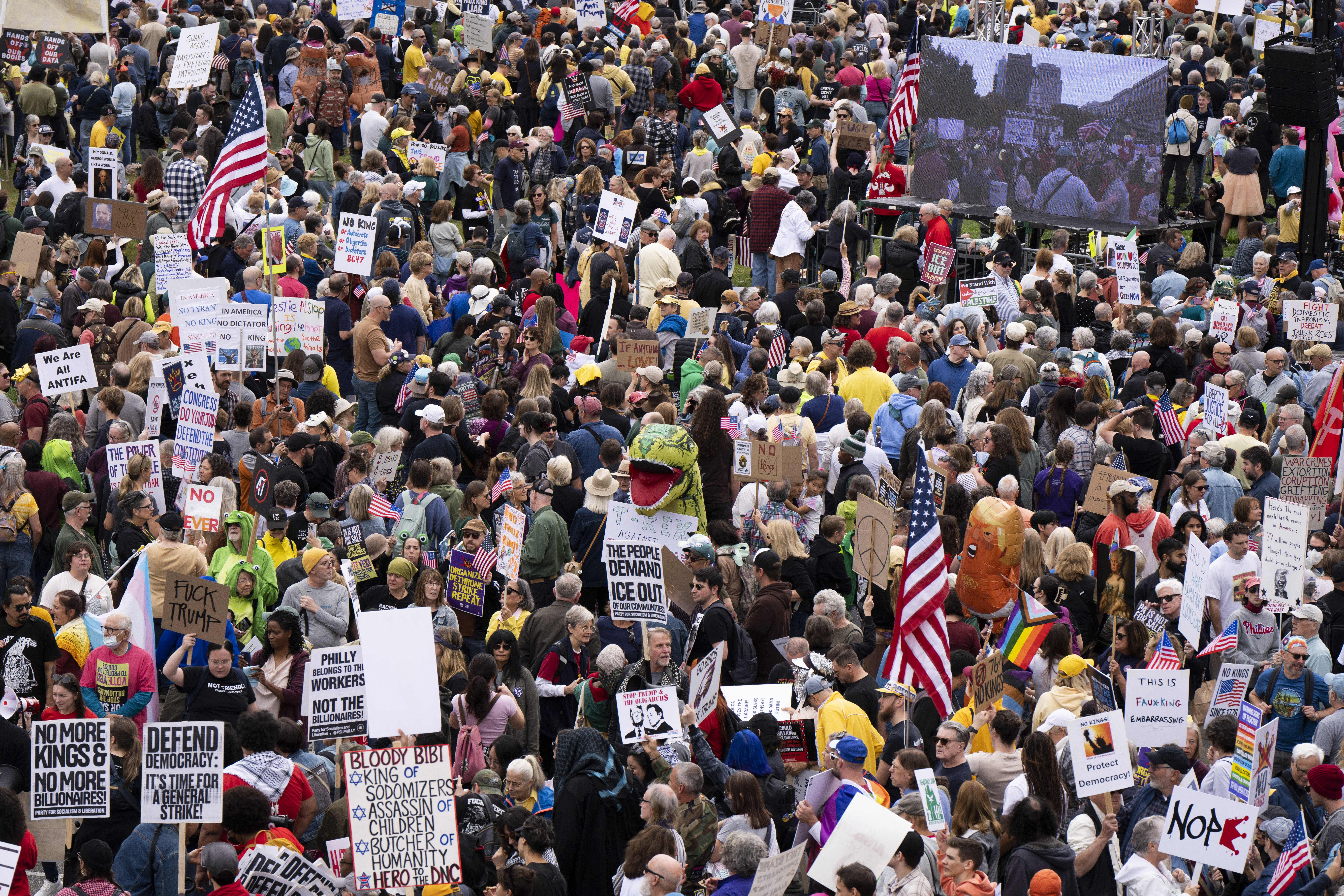
    Joining demonstrators around the country, thousands gathered Saturday in Philadelphia to protest President Donald Trump’s actions that they contend are threatening to undermine 250 years of the nation’s democratic traditions.

    “I think everybody needs to know that we’re not going to just sit back,” said Sherri King, who arrived at the “No Kings” rally in Center City wearing an inflatable chicken costume.

    On a mild October afternoon when the weather was drawing no protests, the event began in a festive atmosphere with the sounds of clanking bells as participants gathered at City Hall — some, like King, wearing pre-Halloween regalia — and marched to Independence Mall.

    Demonstrators gather for a’ No Kings’ rally in Philadelphia on Saturday, Oct. 18, 2025.

    “It’s a very large, orderly crowd,” said Police Capt. Frank Palumbo. The three-hour march and rally, which began at noon, actually ended on time.

    Said Thomas Bacon, a 72-year-old Vietnam veteran from North Philadelphia: “It’s peaceful. No division. Just opposition.”

    Under Trump, he said, “the whole world is turned upside down.”

    In what was the third mass anti-Trump protest this year, several organizers were taking credit, including Indivisible, MoveOn, and the 50501 Movement.

    The demonstrators’ menu of grievances included aggressive raids by Immigration and Customs Enforcement, Trump’s budget and efforts to limit free speech, and the government shutdown that began Oct 1.

    Organizers of the more than 2,500 demonstrations nationwide say the shutdown in particular is a dangerous move toward authoritarianism.

    Trump and congressional Republicans are blaming Democrats for refusing to vote on a reopening.

    For his part, Trump spent the day of what fellow Republicans were calling “Hate America” rallies at his Florida mansion.

    Demonstrators gather for a’ No Kings’ rally in Philadelphia on Saturday, Oct. 18, 2025.

    At the Philadelphia protest, Laura Murphy, a 74-year-old retiree, said she was struggling with the “Hate America” concept. “It’s ridiculous,” she said. “What could be more American than being against kings?”

    Along with demonstrators, Democratic politicians were evident at events in Philly and elsewhere.

    With Democrats hoping to make significant gains in the 2026 election, the presence of party elected officials was evident at rallies in Philly and elsewhere. Among those who showed up in Philadelphia were area U.S. Reps. Mary Gay Scanlon, Madeleine Dean, and Brendan Boyle, along with U.S. Rep. Jamie Raskin of Maryland.

    Rallies were being held all over New Jersey, Pennsylvania, the region, the nation — even Spain, where a few hundred gathered in Madrid. About 5,000 people jammed the streets of West Chester.

    In Philly, Jerry Lopresti, who said he never had attended a protest in his 64 years, said: “There has to be a show of numbers. It’s important to show up.”

    Demonstrators gather for a ’No Kings’ rally in Philadelphia on Saturday, Oct. 18, 2025.

    Among those who showed up conspicuously was Michael Noonan, 48, of Northern Liberties. He was wearing a Tinky-Winky Teletubby costume as he walked off a Market-Frankford Line subway car.

    He said his outfit was a counterpoint to suggestions that the demonstrations might turn violent. “Nobody’s here to fight anyone,” he said, “nobody’s here to kill anyone.”

    Not everyone who showed up had issues with Trump.

    Patrick Ladrie, 20, who lives in Camden County, stood out in his Trump hat and “ultra MAGA” T-shirt that proclaimed “I love our king.”

    He said he crossed the Delaware River to “get a good viewpoint of what the American left is.”

    After engaging in debate with three protesters on matters that included Christianity and conservatism, Ladrie reported that the environment was not so bad.

    In fact, he said, it was one of the “most peaceful” debates he could recall. As one of his adversaries jogged away to meet up with his friends, Ladrie said, “Keep out of trouble.”

    The protest was a decidedly intergenerational affair, with some parents describing the event as a teachable moment, while others said it was their progeny who came up with the idea to attend. Danielle Pisechko, 38, carried her youngest, who wore orange butterfly wings, on her shoulders.

    Their sign read: “The only monarchs we want are butterflies.”

    Demonstrators gather for a’ No Kings’ rally in Philadelphia on Saturday, Oct. 18, 2025.

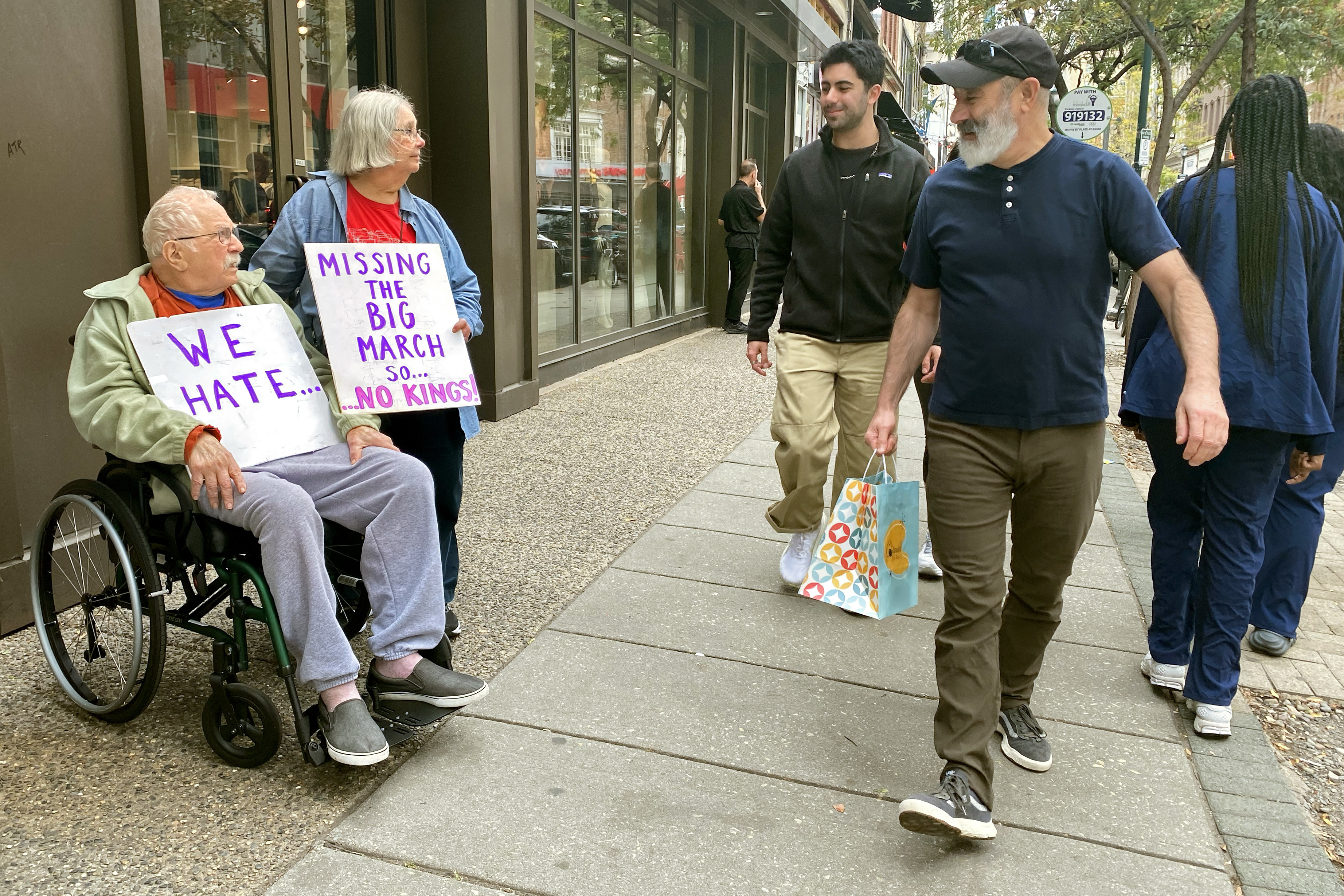
    The participants included Center City resident Reed Oxman, 66. Although his disability limited his movement, he and his husband sat on a ledge near City Hall as evidence of the diversity of the crowd. “It’s [about] representation and clearing all the lies about who is coming to this,” Oxman said.

    Lana Reckeweg, who lives at a North Philly women’s shelter, said her resources were seriously limited, but that didn’t stop her from finding cardboard and getting markers to make signs to give to other demonstrators.

    She said that over the last several months a handful of undocumented women have found sanctuary in the place she calls home, and seeing their struggles made her want to attend the protest on their behalf.

    “I have done a lot of crying. I see how it’s affecting them every day,” said Reckeweg, trying to keep her handwriting steady on a moving bus.

    “I am here because they can’t be. People need to wake up and realize it’s getting a lot more serious more quickly than expected.”

    As for what effect the rallies might have, “I would tend to doubt that the protests will have any immediate direct impact on the administration’s policies,” said David Redlawsk, chair of the political science and international relations department at the University of Delaware, but “they may work to embolden those who are opposed to Trump’s actions to continue to organize and respond.”

    Sam Daveiga, 15, attended her first protest, the Women’s March, when she was 7 years old. This time, she brought along her father, Ed. “Every voice counts,” the Philly teen said.

    “You can have a small voice, but the second you put it with everyone else who’s come out, it amplifies.”

    Staff writers Emily Bloch, Scott Sturgis, and Rob Tornoe contributed to this article, which contains information from the Associated Press.

    Fourteen blocks away from the “No Kings” rally on Independence Mall, Bert and Lynne Strieb stand (and sit) in silent protest Saturday, Oct. 18, 2025 outside their apartment building in the 1900 block of Chestnut Street, vicariously joining thousands of others in Philadelphia and in cities across the country in response to Trump’s masked ICE agents and the deployment of troops in American cities. The Striebs, both in their 80s, could not attend the June “No Kings” march as Bert was in the hospital, and Lynne said they “did not want to miss this one.”

  • Hundreds waited in line for the Pleasing Express | Scene Through the Lens

    Hundreds waited in line for the Pleasing Express | Scene Through the Lens

    There was a time — back when The Inquirer had multiple suburban bureaus — that photographers like myself who were assigned to the main newsroom on North Broad Street worked only in the city. (We’re now more like ride share drivers, going everywhere.)

    So I walked a lot more to cover news and events in Center City, and more often stumbled into things and sights that piqued my curiosity.

    Things like a long line.

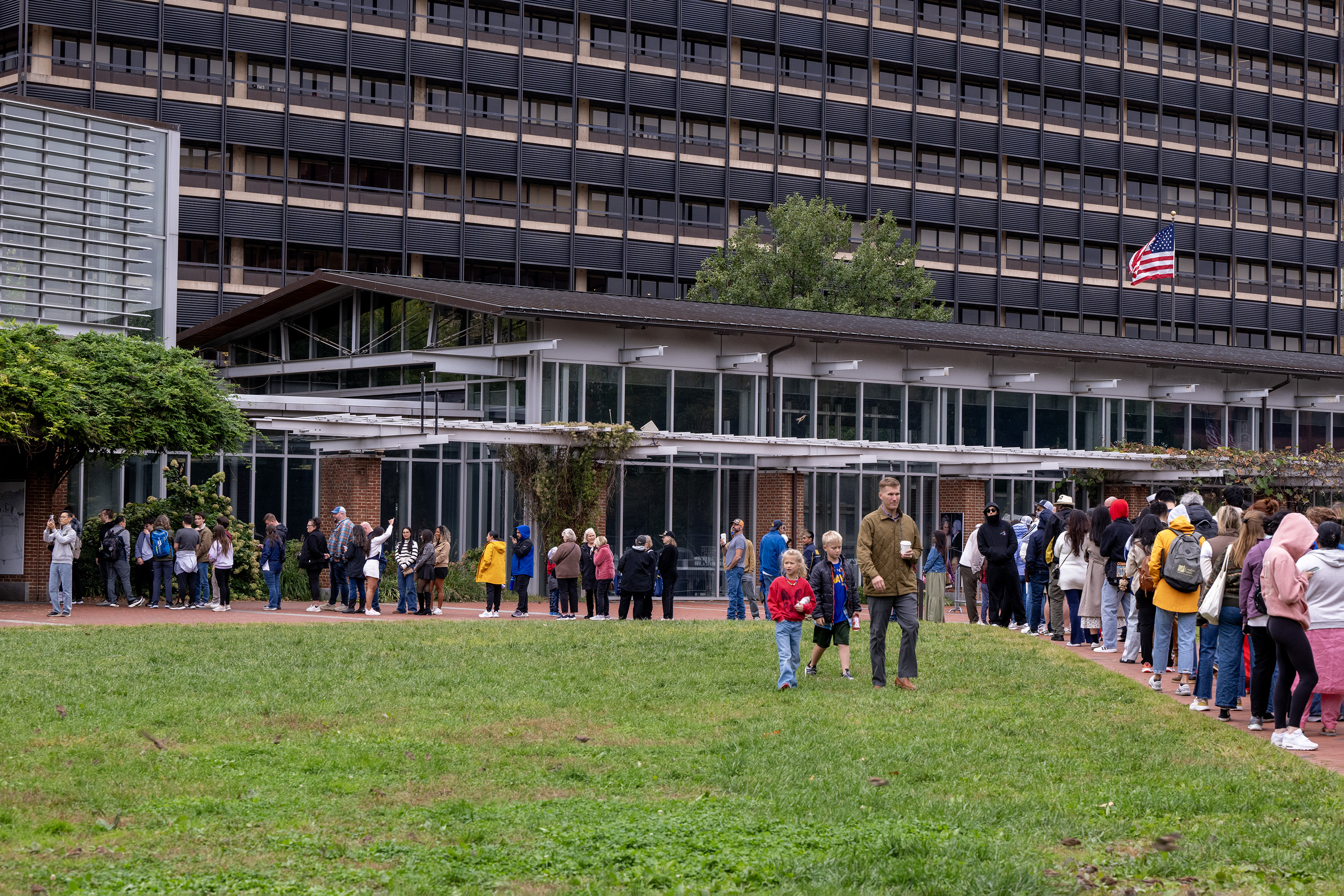
    Visitors queue up to get a glimpse through a single window in the Liberty Bell Center Oct. 12, 2025 while the building is closed due to the federal government shutdown.

    Years ago seeing one likely meant unhoused people were waiting as church folks or outreach advocates served dinner on the street. Or they were waiting for concert tickets or movie premiers (Beanie Babies?).

    I remember once questioning someone standing in a blocks-long line along Walnut Street and was flabbergasted to learn a new sneaker was dropping.

    Or for a device that combined a portable media player, a cell phone, and an internet communicator.

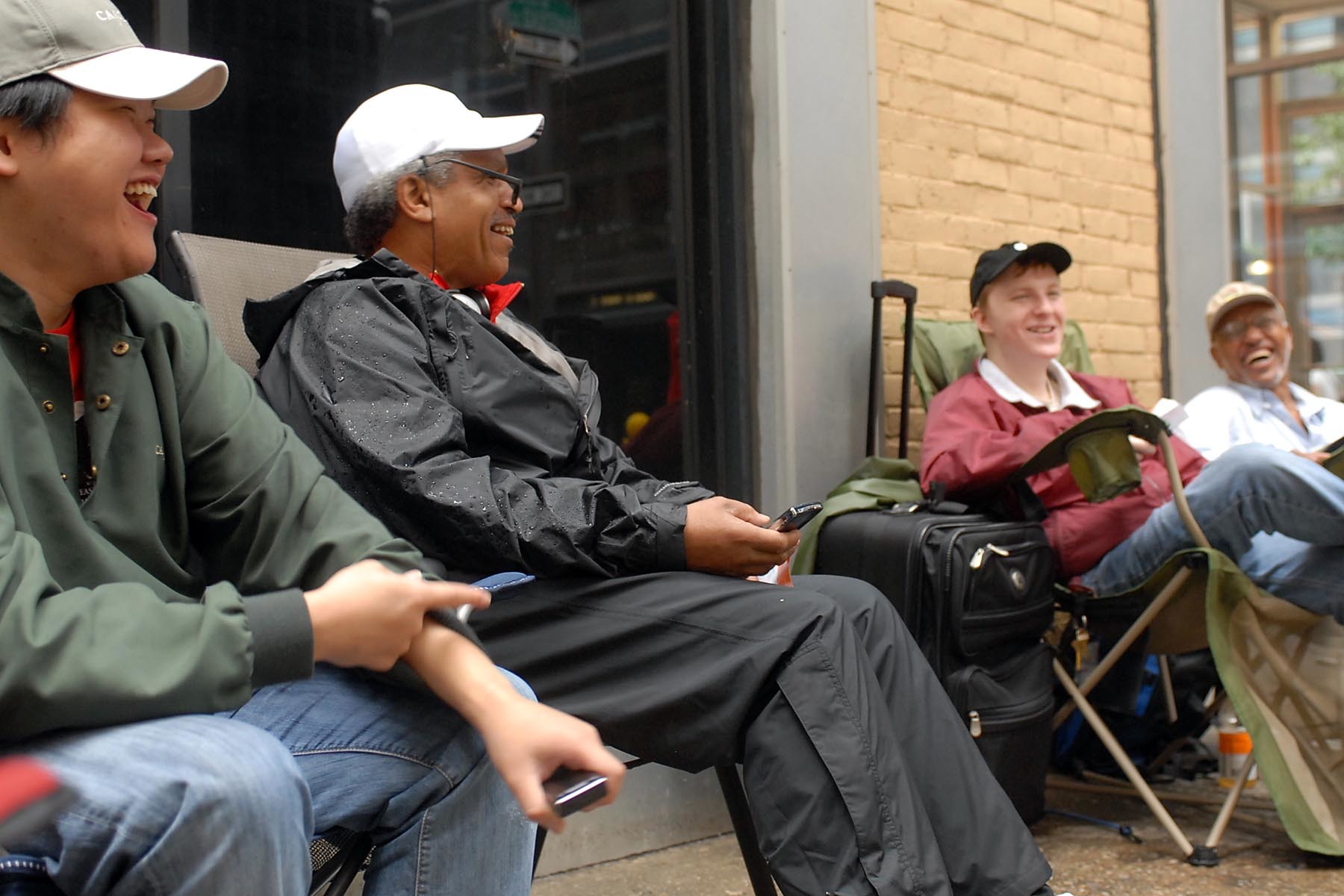
    Mayor John F. Street reads jokes aloud from his Blackberry as he waits with fellow technology enthusiasts in an alley off 16th Street to purchase an iPhone at the At&T store Jun. 29, 2007. There were two models available that day: a 4GB for $499 and the 8GB for $599.

    Mayor Street was the third in line to buy the first-generation iPhone 2G launched that day. He said he arrived around 3:30 a.m. Leonard F. Johnson (far right) at the front of the line, arrived 36 hours ahead of the 6:00 p.m. official release.

    Hizzoner defended the time he spent in line, saying he got work done and kept in touch with city officials on the issues of the day using his Blackberry to send emails and make phone calls.

    I had no idea what the yellow shipping container was when I saw it next to City Hall last weekend. Even after I walked over and watched those at the front of the long line take their selfies inside a retro Philly diner-esque booth tableau.

    I watched it all unfold, along with others, asking ourselves what was going on. Nobody knew. Except those in line.

    It was the last stop on the Pleasing Express Line that ended its nation-wide tour in Philadelphia.

    Followers on social media were invited to, “Climb on to immerse yourself in the worlds of Pleasing Fragrance, Big Lip, and exclusive treasures,” including a spin of the “Freebie Wheel,” for products of the unisex lifestyle brand Pleasing, created by former One Direction singer Harry Styles.

    A spontaneous walk around Center City can build for me the same kind of excitement felt by those waiting in lines. Except they know their eventual reward. Mine comes from the anticipation of not knowing what’s around a corner.

    And that is exactly what makes street photography worth the walk – and sometimes even the wait.

    Since 1998 a black-and-white photo has appeared every Monday in staff photographer Tom Gralish’s “Scene Through the Lens” photo column in the print editions of The Inquirer’s local news section. Here are the most recent, in color:

    » SEE MORE: Archived columns and Twenty years of a photo column.

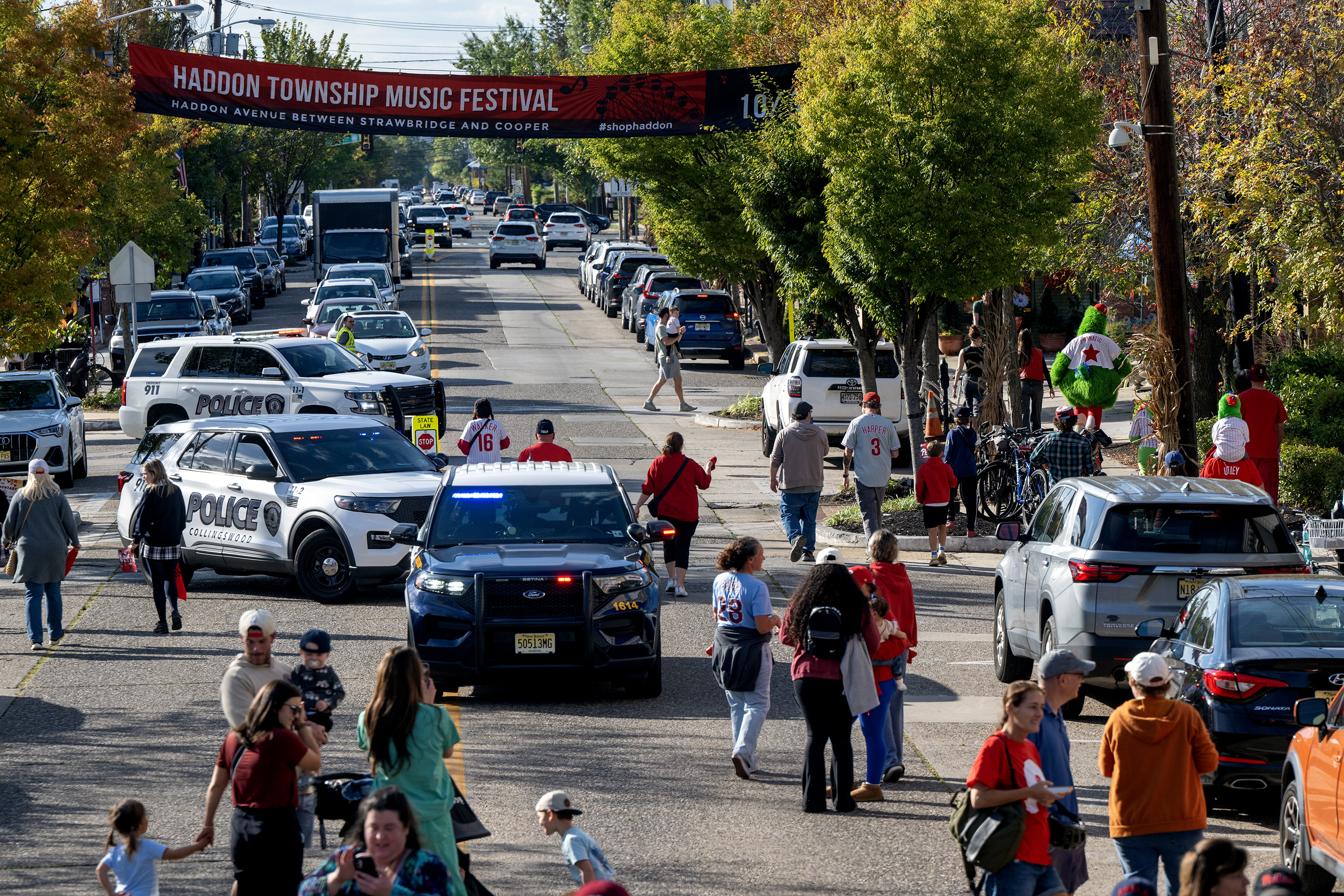
    October 11, 2025: Can you find the Phillie Phanatic, as he leaves a “Rally for Red October Bus Tour” stop in downtown Westmont, N.J. just before the start of the NLDS? There’s always next year and he’ll be back. The 2026 Spring Training schedule has yet to be announced by Major League Baseball, but Phillies pitchers and catchers generally first report to Clearwater, Florida in mid-February.
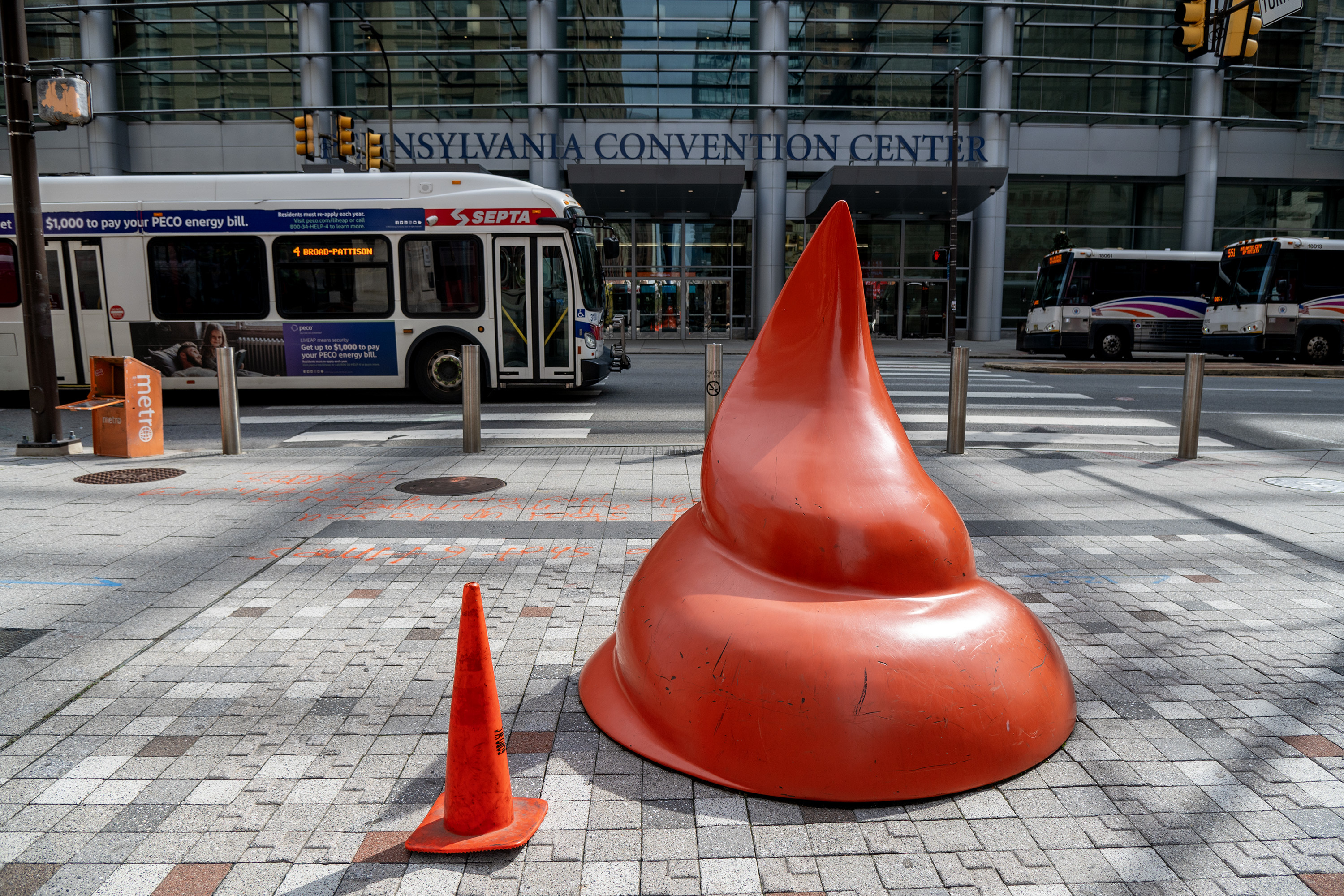
    October 6. 2025: Fluorescent orange safety cone, 28 in, Poly Ethylene. Right: Paint Torch (detail) Claes Oldenburg, 2011, Steel, Fiberglass Reinforced Plastic, Gelcoat and Polyurethane. (Gob of paint, 6 ft. Main sculpture, 51 ft.). Lenfest Plaza at the Pennsylvania Academy of the Fine Arts on North Broad Street, across from the Convention Center.
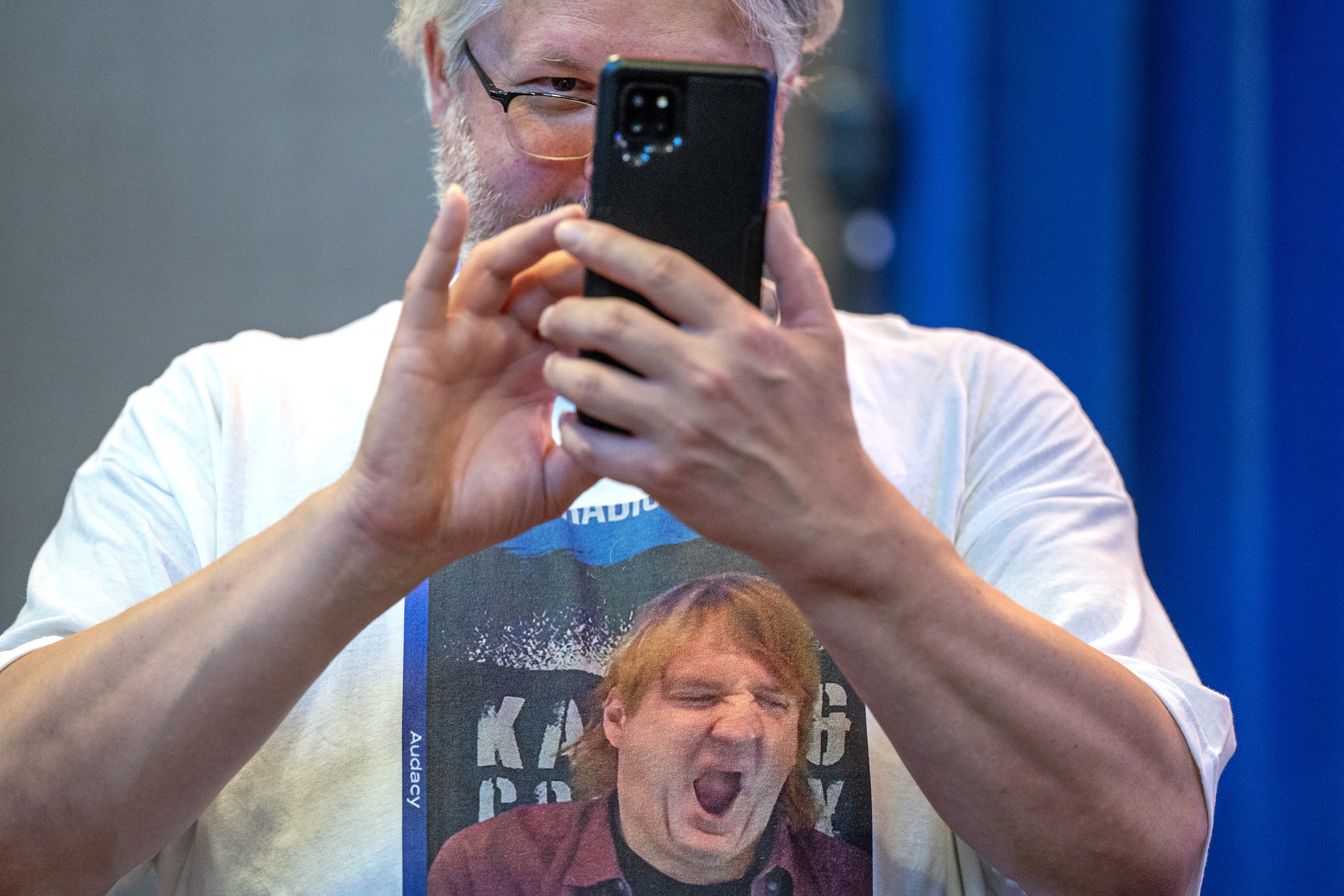
    September 29, 2025: A concerned resident who follows Bucks County politics, Kevin Puls records the scene before a campaign rally for State Treasurer Stacy Garrity, the GOP candidate for governor. His T-shirt is “personal clickbait” with a url to direct people to the website for The Travis Manion Foundation created to empower veterans and families of fallen heroes. The image on the shirts is of Greg Stocker, one of the hosts of Kayal and Company, “A fun and entertaining conservative spin on Politics, News, and Sports,” mornings on Talk Radio 1210 WPHT.
    September 22, 2025: A shadow is cast by “The Cock’s Comb,” created by Alexander “Sandy” Calder in 1960, is the first work seen by visitors arriving at Calder Gardens, the new sanctuary on the Ben Franklin Parkway. The indoor and outdoor spaces feature the mobiles, stabiles, and paintings of Calder, who was born in Philadelphia in 1898, the third generation of the family’s artistic legacy in the city.
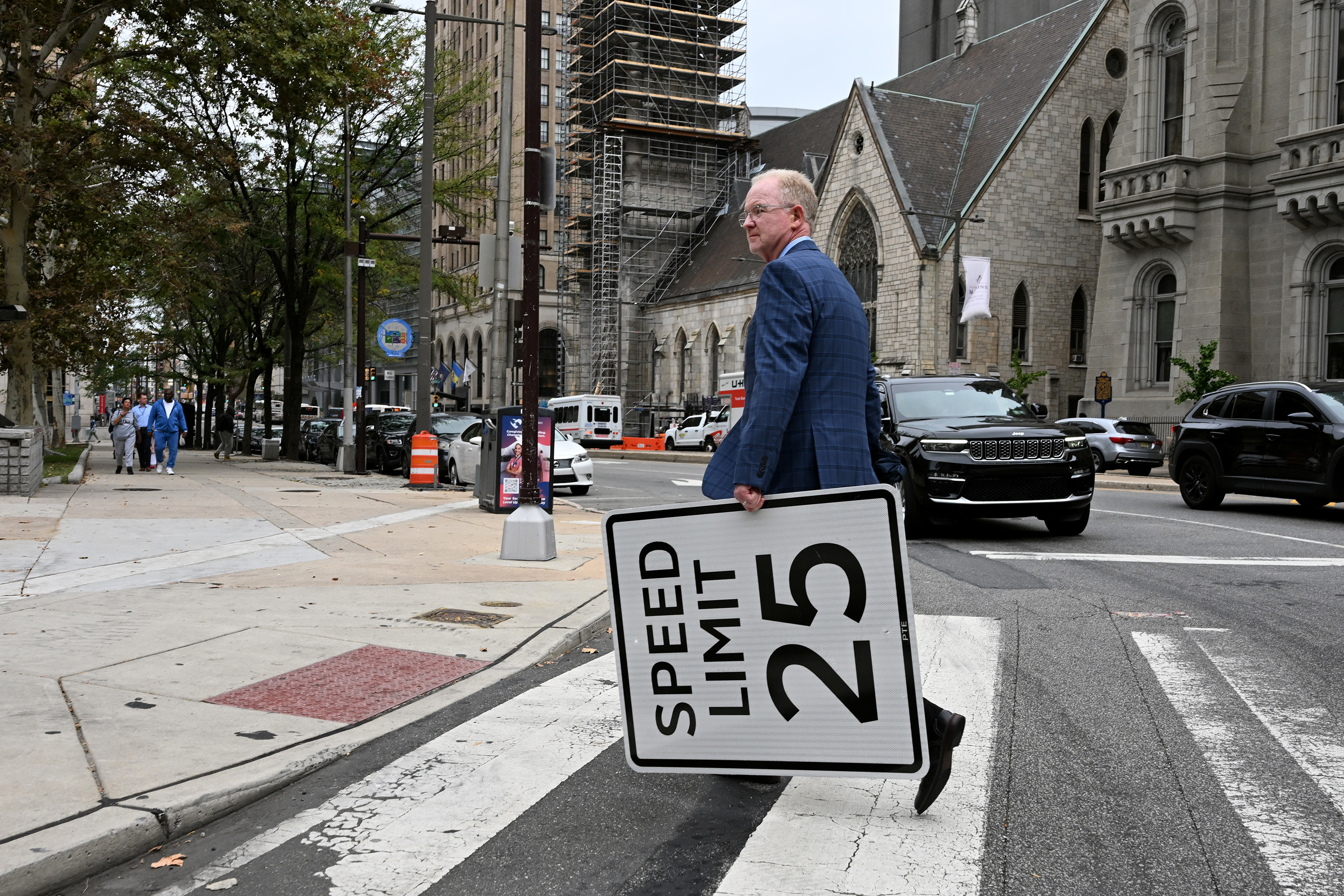
    September 15, 2025: Department of Streets Director of Operations Thomas Buck leaves City Hall following a news conference marking the activation of Automated Speed Enforcement (ASE) cameras on the Broad Street corridor – one the city’s busiest and most dangerous roads. The speed limit on the street, also named PA Route 611, is 25 mph.
    September 8, 2025: Middle schoolers carry a boat to the water during their first outing in a learn-to-row program with the Cooper Junior Rowing Club, at the Camden County Boathouse on the Cooper River in Pennsauken.
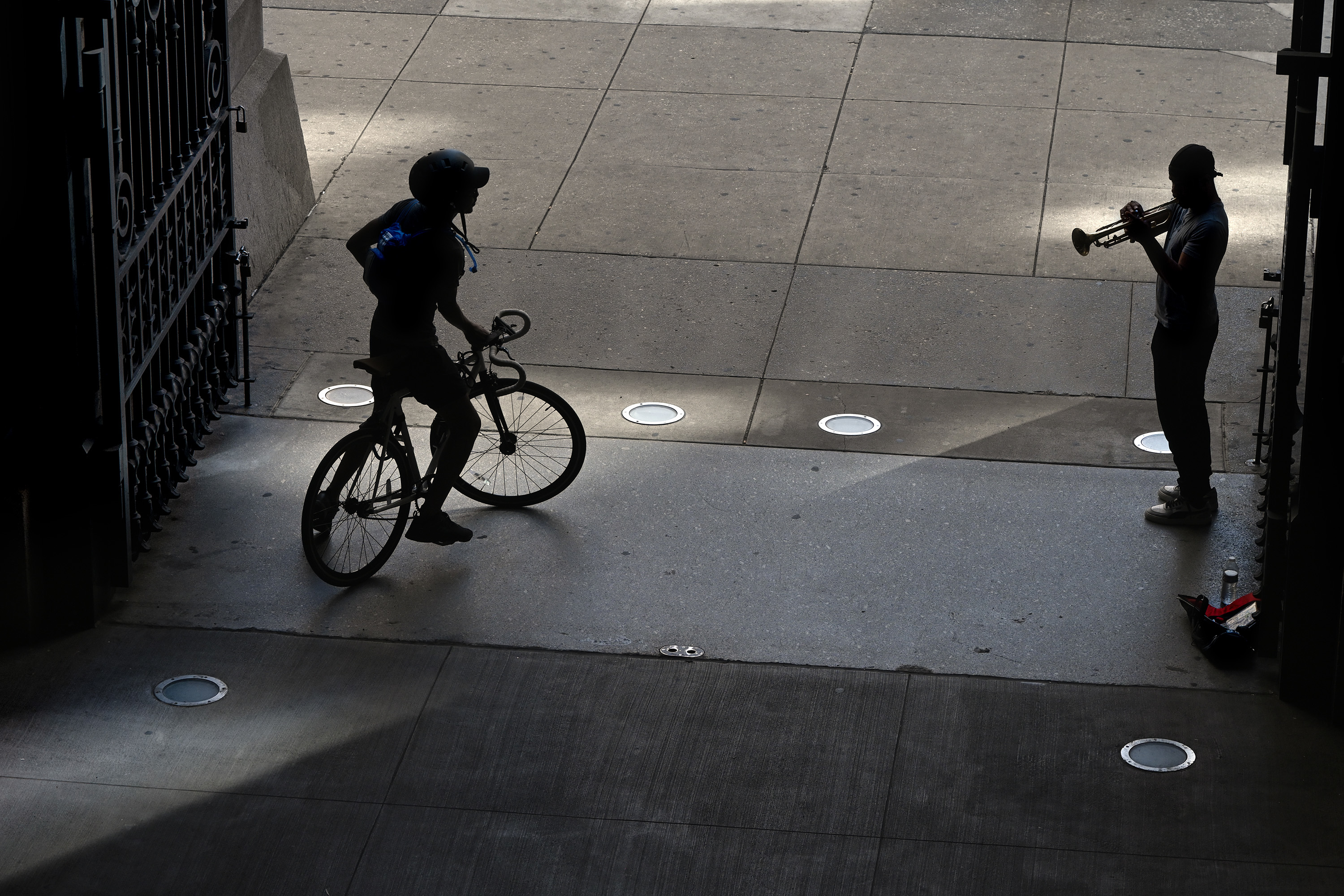
    September 1, 2025: Trumpet player Rome Leone busks at City Hall’s Easr Portal. The Philadelphia native plays many instruments, including violin and piano, which he started playing when he was 3 years old. He tells those who stop to talk that his grandfather played with Billie Holiday, Duke Ellington, Nina Simone, and Dizzy Gillespie.
    August 25, 2025: Bicycling along on East Market Street.
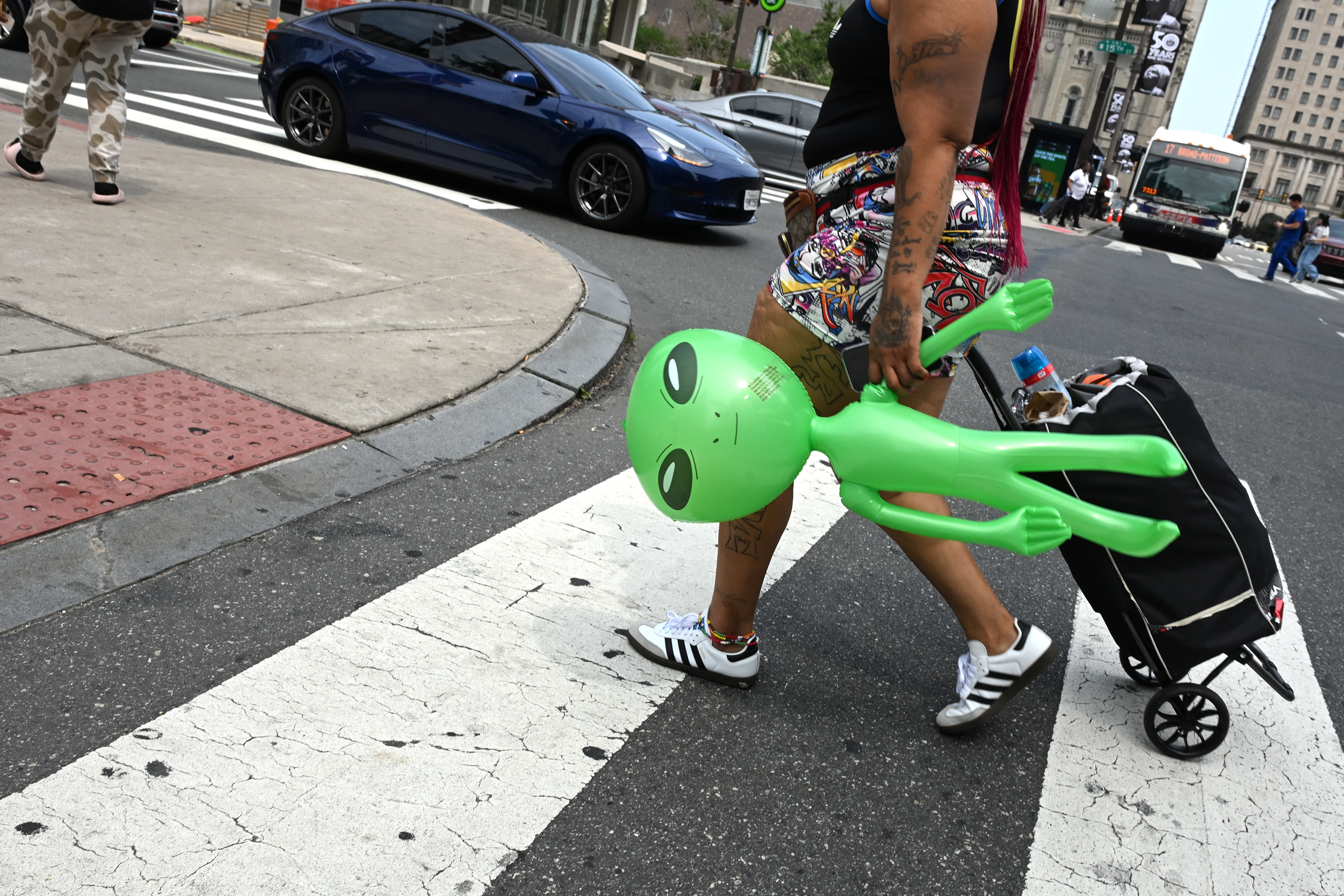
    August 18, 2025: Just passing through Center City; another extraterrestrial among us.
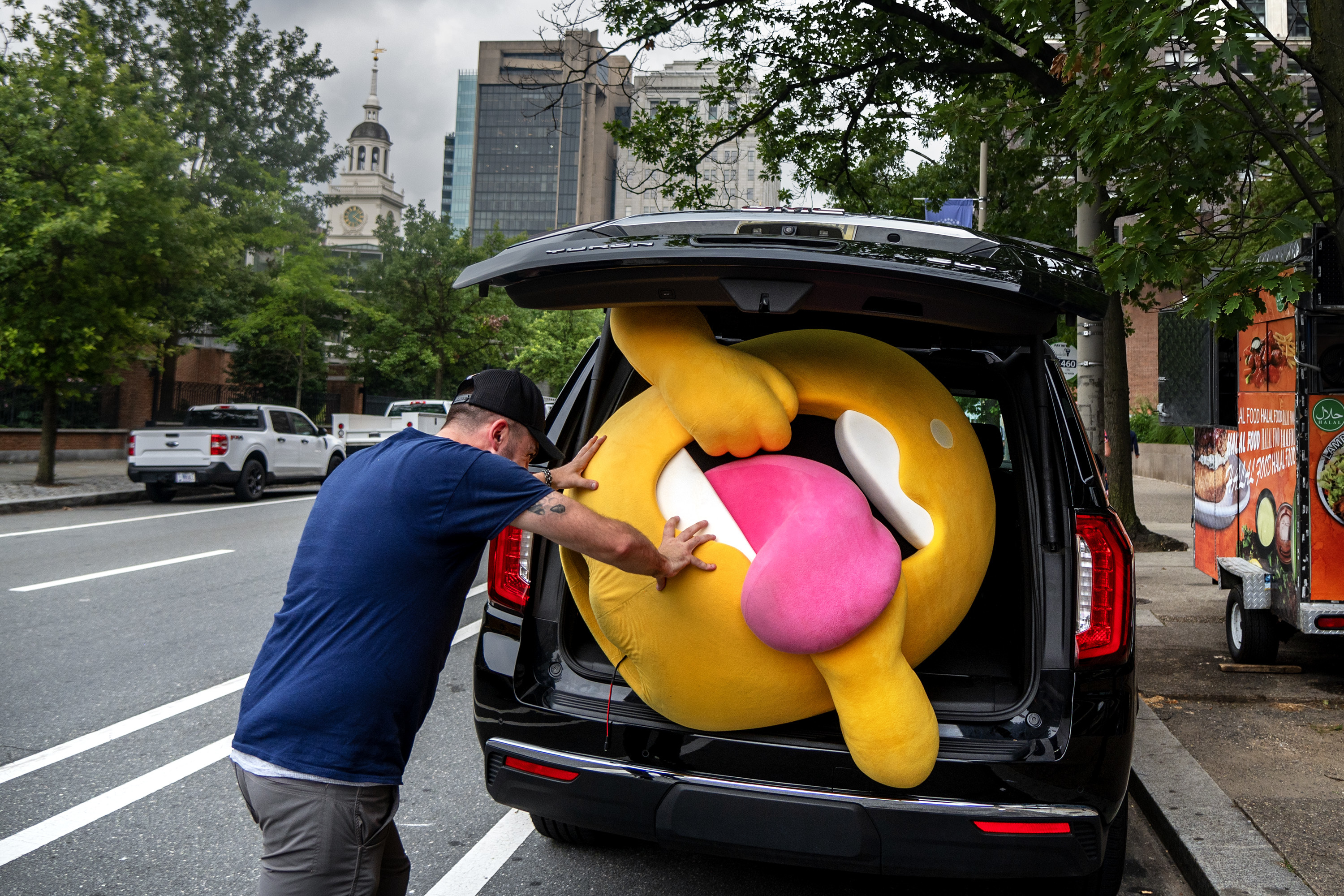
    August 11, 2025: Chris Brown stows away Tongue, the mascot for a new hard iced tea brand, after wearing the lemon costume on a marketing stroll through the Historic District. Trenton-based Crooked Tea is a zero-sugar alcoholic tea brand founded by the creator of Bai, the antioxidant-infused coconut-flavored water, and launched in April with former Eagles defensive end Brandon Graham as a partner.
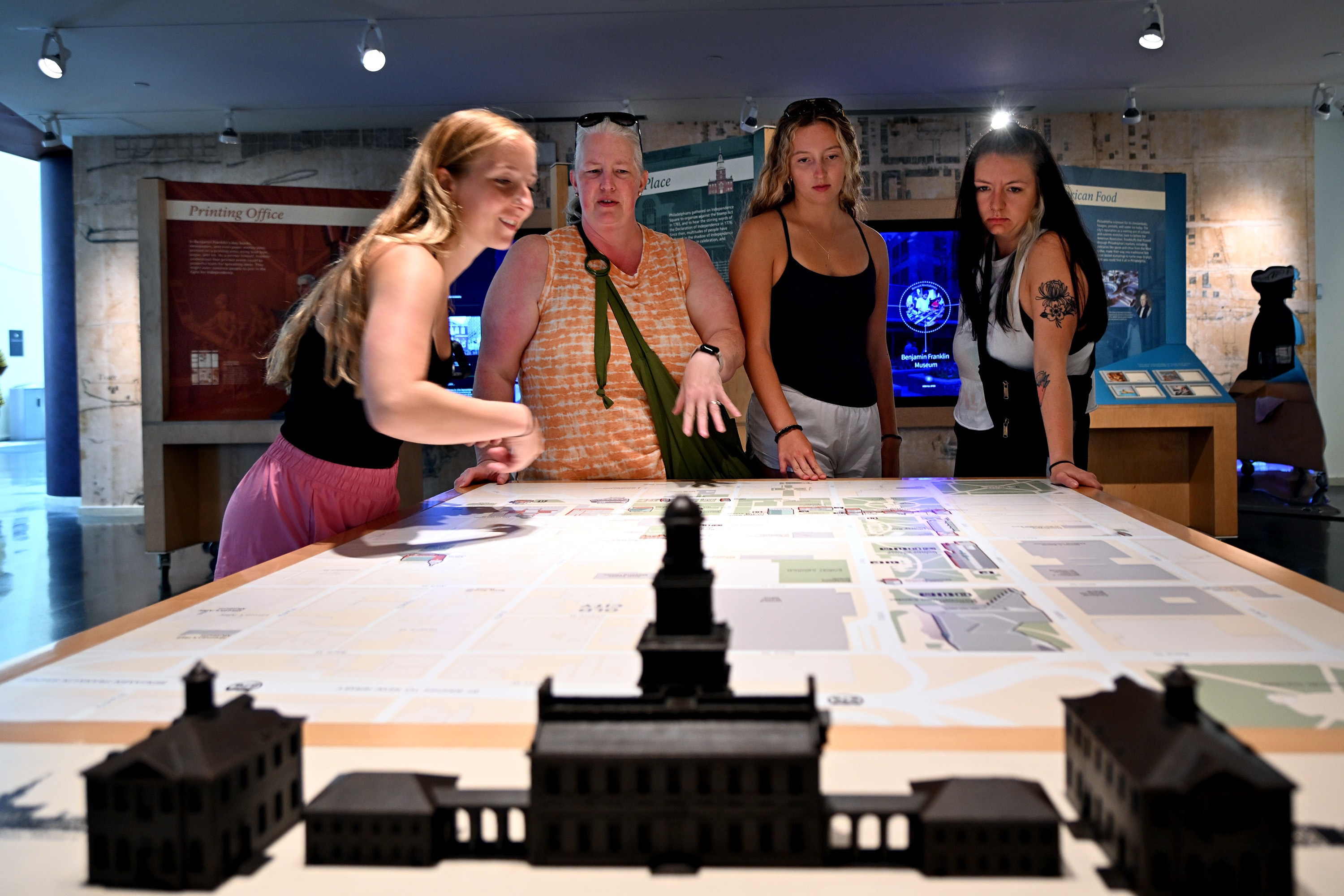
    August 4,2025: Shanna Chandler and her daughters figure out their plans for a morning spent in Independence National Historical Park on the map in the Independence Visitor Center. The women (from left) Lora, 20; Shanna; Lenna, 17; and Indigo, 29, were stopping on their way home to Richmond, Virginia after vacationing in Maine. The last time they were all in Philadelphia Shanna was pregnant with Lenna.
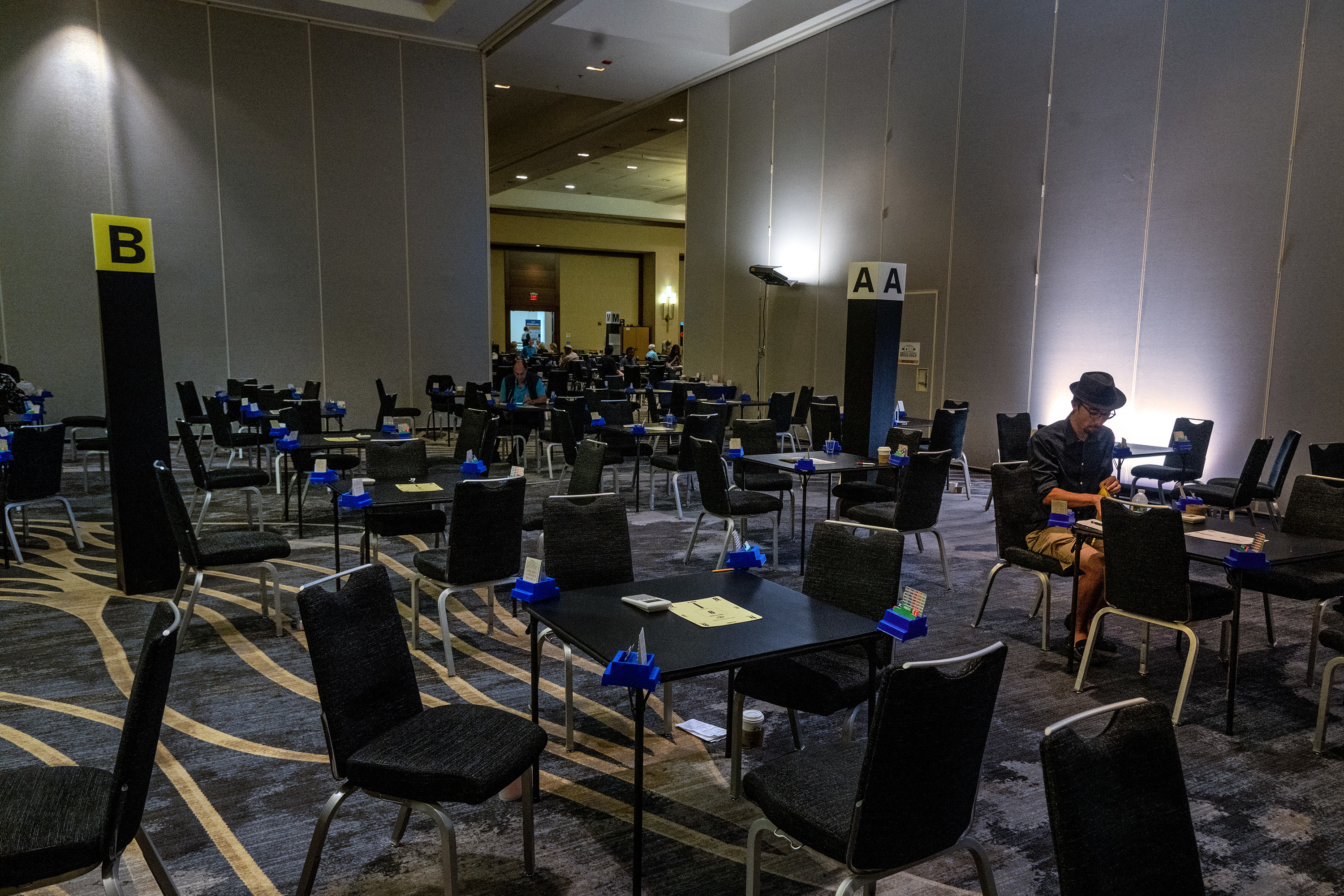
    July 28, 2025: Louis-Amaury Beauchet, a professional bridge player from Brittany, France, takes a break between game sessions in an empty ballroom during the North American Bridge Championships at the Center City Marriott with some 4000 people in town over week of the tournament. The American Contract Bridge League is hosting the week of meetings and tournaments with bridge players from all over the world. The ACBL is the largest bridge organization in North America, with over 120,000 members (down from around 165,000 before COVID). Bridge draws players of all ages and walks of life – fictional characters James Bond and Snoopy both played as do billionaires Bill Gates and Warren Buffett (who sometimes play as partners).
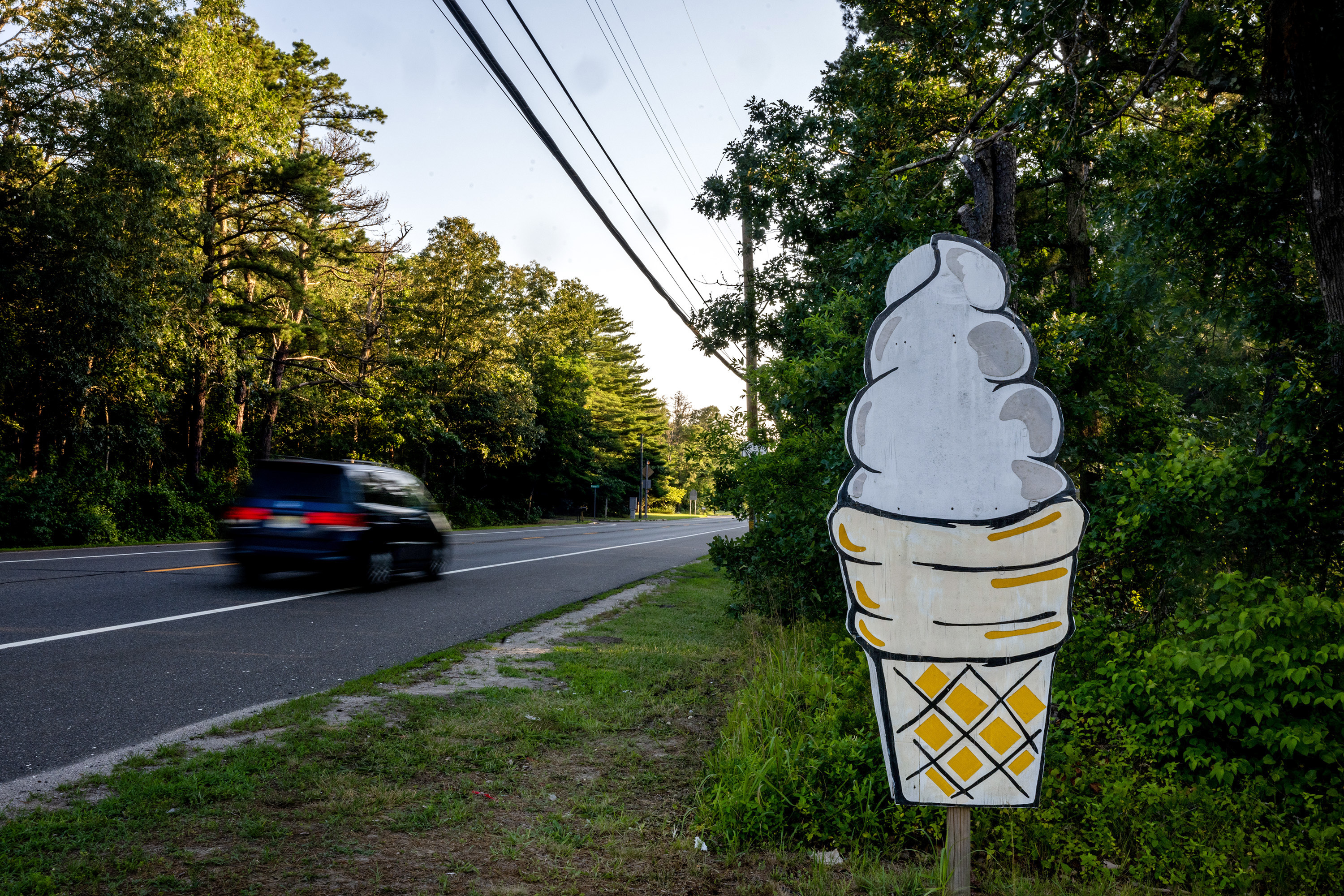
    July 21, 2015: Signage for the Kustard Korner in Egg Harbor City, on the way to the Jersey Shore. President Ronald Reagan designated July as National Ice Cream Month and the third Sunday of the month.
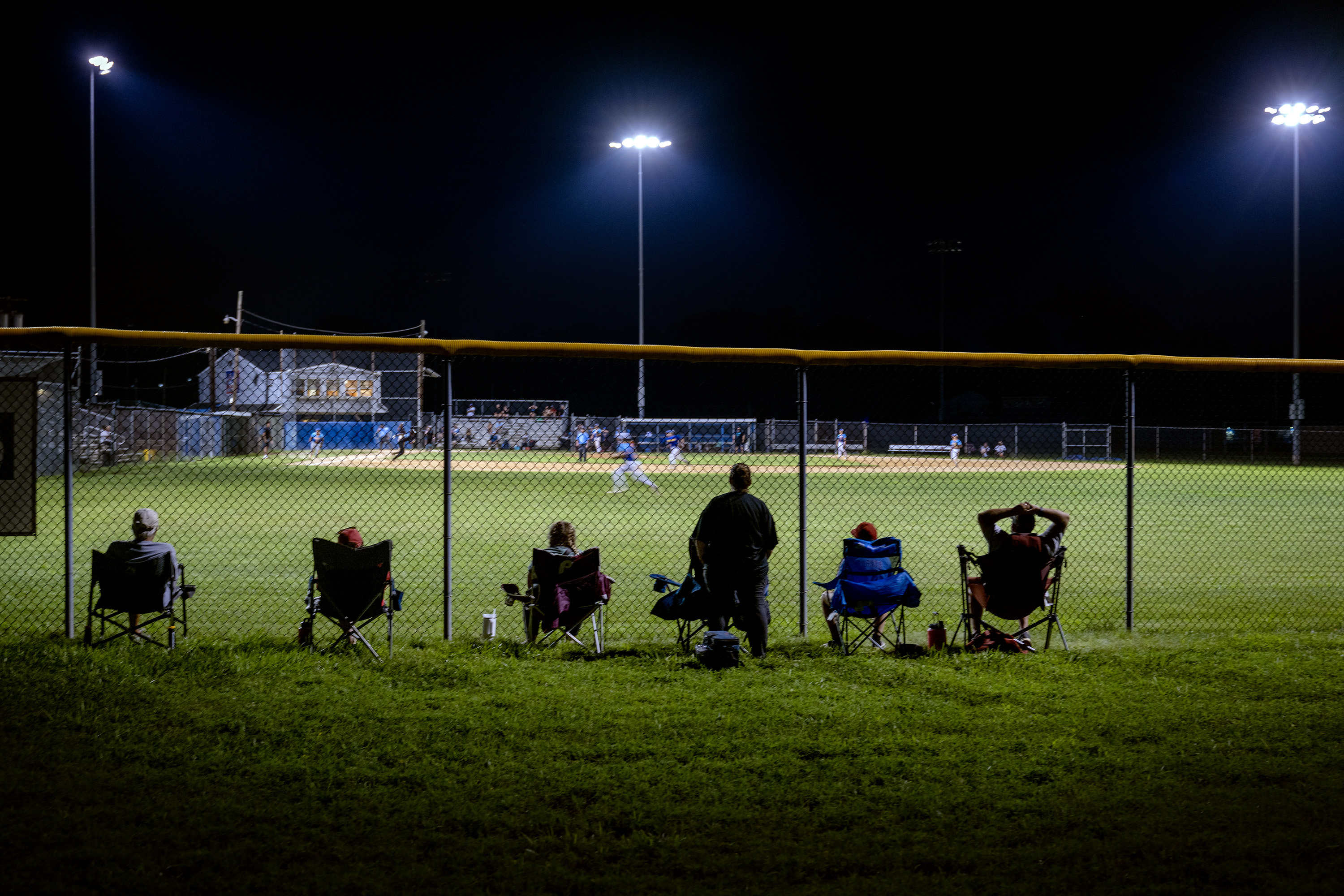
    July 14, 2025: Fans watch a game at the Maple Shade Babe Ruth Field, part of the 20th Annual Franny Friel Summer Classic, on a cool(er) night with a refreshing breeze, the weekend before the MLB All-Star Game (with Kyle Schwarber the lone Phillies representative).
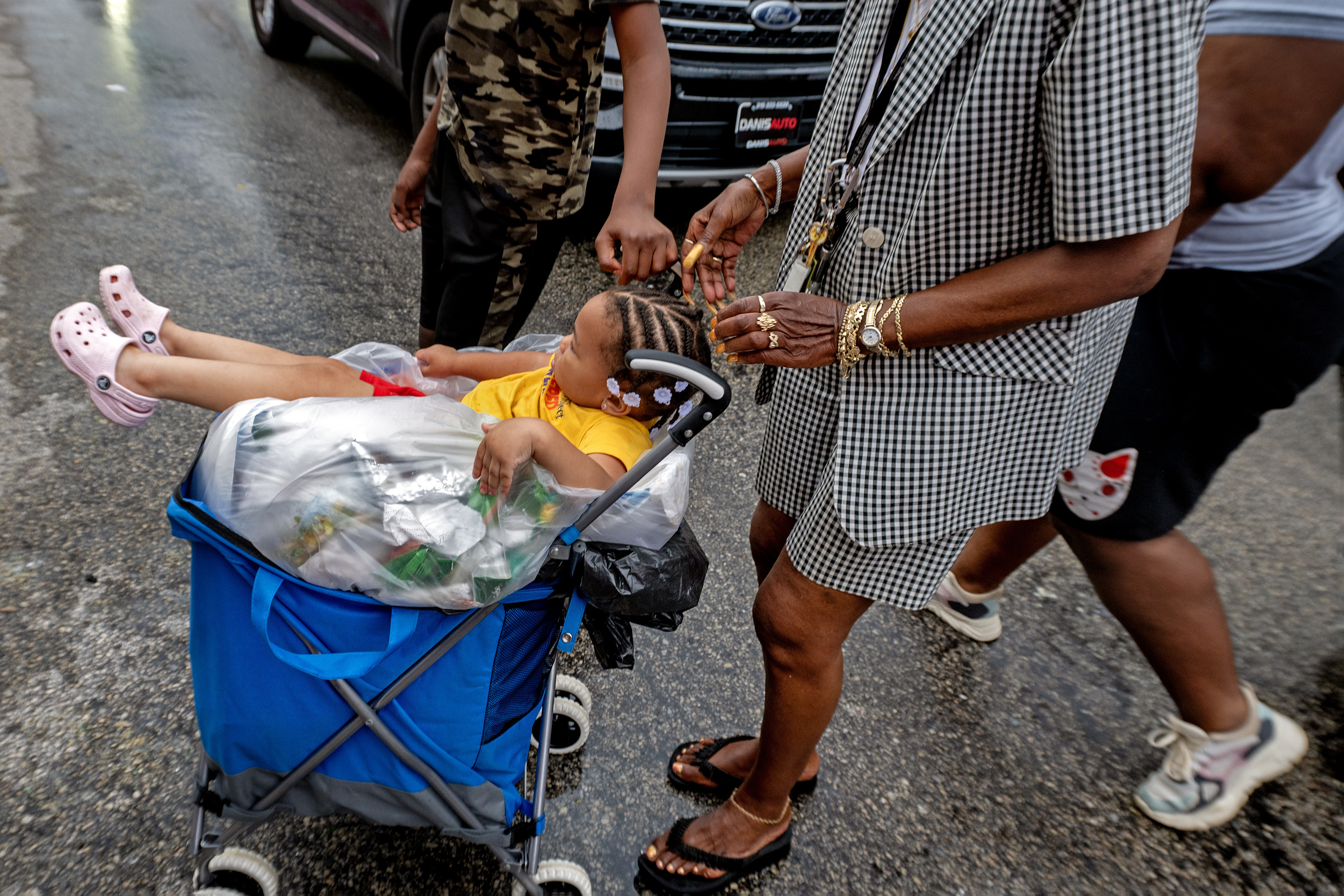
    July 7, 2025: Caroline Small wheels her two year-old great-granddaughter atop a bag of garbage as she carts it to a drop-off site at the Tustin Playground at 60th St. and W Columbia Ave. as residential trash collection stopped when a strike was called by District Council 33. Small lives just around the corner and said of the toddler, “she was just walking too slow.”
  • 2 men charged in attempted robbery of armored truck that led to school lockdowns in Lower Merion

    2 men charged in attempted robbery of armored truck that led to school lockdowns in Lower Merion

    The FBI on Friday announced criminal charges against two men in connection with an attempted robbery of an armored truck on Oct. 3 that led to school lockdowns and a shelter-in-place order in Lower Merion Township.

    Dante Shackleford, 26, also was charged by indictment with two attempted robberies of armored trucks in Philadelphia in July and an armored truck heist in Elkins Park in August in which $119,100 was stolen.

    Mujahid Davis, 24, and Shackleford were charged with the Oct. 3 attempted robbery of an armored truck on the Philadelphia side of City Avenue that led to a pursuit and an hours-long incident. Several suspects were finally arrested in Lower Merion.

    The FBI announcement came just hours after another attempted robbery of an armored truck, this time outside a Wawa store in Philadelphia.

    Shortly before 8 a.m. on the 7700 block of Frankford Avenue, two male suspects attempted to rob a Loomis truck when the driver fired two shots at the suspects, who then fled. Police reported no injuries or arrests.

    The indictment against Shackleford and Davis filed in federal court on Thursday provided few details about the prior armored truck crimes.

    On July 15 and on July 22, Shackleford and others allegedly attempted to rob Brink’s trucks in Philadelphia, according to the indictment.

    On Aug. 12, Shackleford and others allegedly robbed a Brink’s truck in Elkins Park and got away with approximately $119,100 and the Brink’s employee’s gun.

    Then on Oct. 3, Shackleford and Davis allegedly attempted to rob a Brink’s truck in Philadelphia, which reportedly occurred in the area of City Avenue.

    Davis also is charged in Montgomery County Court with multiple counts related to what happened on Oct. 3, including fleeing law enforcement and evading arrest.