Category: Obituaries

  • David Clayton-Thomas, powerhouse lead singer of Blood, Sweat & Tears, has died at 84

    David Clayton-Thomas, powerhouse lead singer of Blood, Sweat & Tears, has died at 84

    NEW YORK — David Clayton-Thomas, the lead singer of Blood, Sweat & Tears, whose husky, high-strung tenor on “Spinning Wheel,” “And When I Die,” and other hits helped make the so-called “brass rock” band among the most popular acts of the late 1960s, has died at age 84.

    Spokesperson Eric Alper said that Mr. Clayton-Thomas died “peacefully” Wednesday at St. Michael’s Hospital in Toronto. Alper did not cite a specific cause.

    Mr. Clayton-Thomas was a onetime street fighter and petty thief from Canada who briefly became a rock superstar, the front man of a nine-member group that sold millions of records and won two Grammys for Blood, Sweat & Tears, which beat out the Beatles’ Abbey Road for best album of 1969. Calling out amid a jazzy parade of horns, keyboards, and percussion, Mr. Clayton-Thomas’ urgent shout was a signature voice of the era, preaching love on the Motown cover “You’ve Made Me So Very Happy,” a lasting legacy on Laura Nyro’s “And When I Die,” and a cool head on his own “Spinning Wheel.” Meanwhile, Blood, Sweat & Tears helped inspire a wave of horn-led bands, among them Chicago, the Electric Flag, and Ten Wheel Drive.

    “A lot of the guys [in Blood, Sweat & Tears] would play a Broadway show matinee, then go up to Harlem and play Latin music or R&B and funk at night, or come down to the Village and play pure jazz the next night,” Mr. Clayton-Thomas told bestclassicbands.com in 2023. “I was just a blues player: give me three chords and I’ve got a song.”

    At its peak, Blood, Sweat & Tears’ appeal was so broad it helped lead to the band’s downfall.

    Hip enough to perform at the 1969 Woodstock festival, where they were among the highest paid acts, they also were known enough to the establishment to tour Eastern Europe the following year on behalf of the State Department. When Mr. Clayton-Thomas and other band members denounced the Communist regimes on the other side of the Cold War, Rolling Stone’s David Felton wrote that “the State Department got its money worth.” Yippies would turn up at a 1970 Blood, Sweat & Tears show at Madison Square Garden, carrying obscene banners outside and dumping manure by the front gate.

    The band had practical reasons for going along with the government: Mr. Clayton-Thomas, who had allegedly wielded a gun at his girlfriend, had been denied a green card and faced deportation. But after topping the charts in 1970 with the album Blood, Sweat & Tears 3, their appeal soon faded. A burned out Mr. Clayton-Thomas left the group in 1972, and neither he nor the remaining musicians ever regained their old stature. Blood, Sweat & Tears would continue recording over the next few years, and even briefly reunited with Mr. Clayton-Thomas, who went on to release more than a dozen solo albums and tour on his own for decades.

    Mr. Clayton-Thomas was inducted into the Canadian Music Hall of Fame in 1996. “Spinning Wheel,” covered by everyone from James Brown to TV star Barbara Eden, was voted into the Canadian Songwriters Hall of Fame a decade later.

    Mr. Clayton-Thomas is survived by his daughters, Ashleigh Clayton-Thomas and Christine Graham.

    Up from the streets

    Born David Henry Thomsett in Surrey, England, and raised near Toronto and Ottawa, he was the son of a Canadian World War II veteran and of a pianist-entertainer who helped inspire her son’s interest in music. Thomsett was lucky to have the chance. He fought violently with his father, was living in the streets by his mid-teens and by age 20 was serving time in a reformatory for vagrancy, assault and other crimes.

    An old guitar, left behind by a fellow inmate, changed his life. He taught himself to play and began spending extensive time in the early 1960s around Toronto’s Yonge Street music “strip,” where peers included the American rockabilly star Ronnie Hawkins, a mentor to Robbie Robertson and other future members of the Band and a guide for Thomsett early in his career.

    Anxious to reinvent himself, he changed his last name to Clayton-Thomas while leading his own groups. In the mid-60s, he released such albums as Sings Like It Is and had a hit single with the anti-war rocker “Brainwashed.” He would also befriend a rising star, Joni Mitchell, whose childlike “Circle Game” helped inspire “Spinning Wheel,” and the venerable John Lee Hooker, who would indirectly contribute to Mr. Clayton-Thomas’ breakthrough in the U.S.

    America beckons

    Hooker had encouraged Mr. Clayton-Thomas to move to New York, where the American bluesman had an engagement at the Cafe Au Go Go in Greenwich Village. When Hooker unexpectedly departed for a tour of Europe, club owner Howard Solomon needed a replacement and recruited Mr. Clayton-Thomas.

    “So I played him a couple songs on the guitar,” Mr. Clayton-Thomas told bestclassicbands.com. “He said, ‘Do you have a band?’ I said, ‘Sure,’ and went out into Greenwich Village looking for anybody carrying a guitar case or even looking like a musician, and we put together a little band and we opened there that night. We ended up staying there for several months.”

    Around the same time, session man-producer Al Kooper was looking to a form jazz-rock group and was joined by such musicians as guitarist Steve Katz, drummer Bobby Colomby, and horn players Randy Brecker and Jerry Weiss. They called themselves Blood, Sweat & Tears, releasing the debut album Child Is Father to the Man early in 1968. Although praised by Rolling Stone publisher Jann Wenner as “a fine, exemplary group,” members were torn between those allied with Kooper and those who thought his vocals too weak to attract a substantial audience.

    By the end of the year, Kooper and others had departed, and the band was seeking a new singer. After Judy Collins saw Mr. Clayton-Thomas perform, she recommended him to Colomby.

    “I got home and just a couple of days later, Bobby Colomby called me up and said, ‘Hey, Kooper’s gone. We got four guys left out of the nine. And we still got a record contract with Columbia. Do you want to come down and try out for the band?”’ Mr. Clayton-Thomas told bestclassicbands.com. ”I said, ‘You’re damn right.’ I knew [bassist] Jim Fielder real well and I knew they were superb musicians. So I was on the next plane. We had a rehearsal that afternoon, an audition, and it was instant magic. We just knew right off the bat.”
  • Clive Davis, recording executive and star-maker, dies at 94

    Clive Davis, recording executive and star-maker, dies at 94

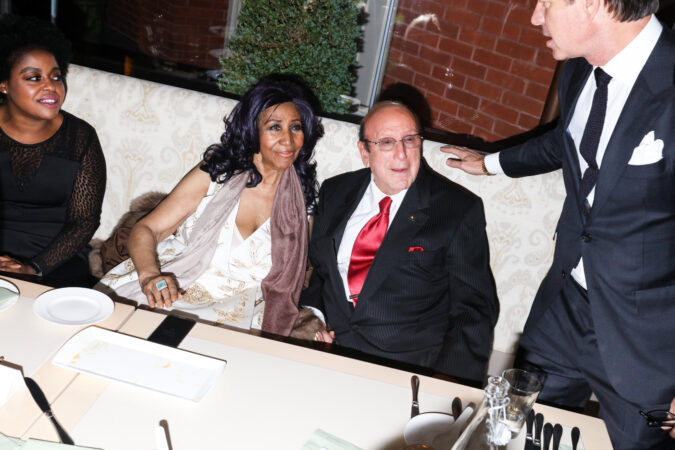
    When Clive Davis showed up at the Monterey Pop Festival in 1967, he was a 35-year-old New York corporate lawyer and the newly appointed head of Columbia Records. Knowing “nothing about music,” he said, had not disqualified him from running the staid record company best known for classical recordings, Mitch Miller sing-along pop novelties, and Broadway cast albums.

    Grainy film footage from the festival shows him in the crowd, with his black glasses, receding hairline, and a white V-neck tennis sweater. Amid the long-haired, tie-dyed “Summer of Love” hippies, “I was the one who looked weird,” Mr. Davis said in a 2017 Netflix documentary about his life. “I was blown away.”

    The second act on the stage that day was Big Brother and the Holding Company, a San Francisco rock band fronted by Janis Joplin. “She was hypnotic,” Mr. Davis recalled of the then little-known singer. “I felt my spine tingle, my arms vibrate. I was overcome with emotion. This wasn’t just a social revolution, this was a musical revolution.”

    Mr. Davis persuaded Joplin to sign a contract with Columbia, then politely declined her offer for a celebratory sexual encounter, he wrote in an autobiography. She became the first of a legion of artists he would launch or rejuvenate into superstardom over a five-decade career in entertainment. The roster included Barry Manilow, Simon & Garfunkel, Bob Dylan, Johnny Cash, Aretha Franklin, Bruce Springsteen, Billy Joel, Aerosmith, Barbra Streisand, Miles Davis, the Grateful Dead, Patti Smith, Whitney Houston, Alicia Keys, and Carlos Santana.

    Mr. Davis, 94, an unlikely tastemaker who stoked the star-making machinery longer and more successfully than most of his rivals and became one of the most powerful executives in the recording industry, died June 22, his family posted on social media.

    “To the world, our father was the iconic music legend whose vision, instincts, and relentless pursuit of excellence shaped the soundtrack of countless lives,” Mr. Davis’ family wrote on Facebook. “He discovered, mentored, and championed the greatest artists in modern music history, leaving an indelible mark on culture that will endure for generations.”

    A winner of multiple Grammy Awards and inductee of the Rock and Roll Hall of Fame, Mr. Davis ran Columbia Records and later Arista Records, the latter a small label he built into an industry powerhouse. During his 25 years at Arista, he guided 200 singles to No. 1 on the Billboard charts. In 2000, his final year at Arista before being pushed aside, the company had more than $1 billion in revenue.

    Eye for musical talent

    Mr. Davis had an uncanny knack for spotting and adopting musical trends and embracing emerging young talent. “He has the mind of a banker and the ears of a teenager,” Manilow once said.

    Jann Wenner, founder of Rolling Stone magazine, said in an interview for this obituary that Mr. Davis “was instrumental in bringing modern white rock of my generation to the forefront” and developed a remarkable ear for music.

    “Clive once told me that he would take all the records in the top 100 home every weekend, and he listened to every single one of them,” Wenner said. “I never heard of anybody doing that so methodically. He kept abreast of everything commercial that was going on. He just loved it.”

    Music was decidedly not in his blood, Mr. Davis readily admitted in his 2013 autobiography, The Soundtrack of My Life, co-authored with Anthony DeCurtis. His taste in high school ran toward Bing Crosby and Frank Sinatra, and rock and roll had no appeal at all. He credited his visit to the Monterey Pop Festival as a turning point. Going there, he wrote, “I didn’t realize at all that I possessed skills that might ultimately distinguish me: the ability to recognize and nurture new artists; to help those artists create their best work; to bring that work to the marketplace and have it make a powerful impact.”

    He was instrumental in turning 19-year-old Houston into an international star after signing her in 1983, and he shepherded her career until her accidental drowning in a hotel bathtub, in 2012, on the day of Mr. Davis’ annual pre-Grammy party in Los Angeles. She had been a close friend — and was his most successful protégé, even though drug addiction and the pressures of fame undermined her career — and her death affected Mr. Davis deeply.

    Mr. Davis’ detractors criticized his obsession with hits and chart-topping singles, which they said he sometimes pursued at the cost of artistic considerations.

    “His energy, his testosterone, all his hormones were ignited by having the biggest No. 1 records,” singer-songwriter Carly Simon, an Arista artist who generally lauded Mr. Davis’s talents, told the New York Times in 2017. “He is on the side of the winner at all costs, and the cost can be very high.”

    At Columbia, Mr. Davis turned the company into a premier rock label and brought millions of dollars in revenue to CBS, the parent company. He was stunned when, in 1973, he was called into the office of Arthur R. Taylor, then CBS president, and fired for allegedly using $94,000 in corporate money to renovate his Central Park West apartment and for his son’s bar mitzvah.

    Mr. Davis denied the allegations. He accused a personal assistant of forging signatures, falsifying invoices, and committing other misdeeds involving his corporate account without his knowledge. His ouster coincided with housecleaning at CBS amid a larger grand-jury probe of payola and drugs — “drugola” — in the record business.

    In 1976, Mr. Davis pleaded guilty in U.S. District Court in Manhattan to one count of tax evasion for having failed to report $8,800 that the record company had paid for non-business-related trips. Other charges were dismissed, and he received a suspended sentence and paid a $10,000 fine. He later called the experience “the most humiliating moment of my life.”

    Mr. Davis staged a comeback by writing (with journalist James Willwerth) Clive: Inside the Record Business (1974), a best-selling account of his time in the music industry. That same year, he was lured to the failing Bell Records division of Columbia Pictures (no relation to Columbia Records).

    He rechristened the company Arista, the name of his Brooklyn high school honor society, and set out to build a top-notch team of industry veterans to grow the label. He signed artists such as Gil Scott-Heron, Lou Rawls, and Melanie, holding on to only two entertainers in Bell’s lineup — Melissa Manchester and the talented but still largely undiscovered Manilow.

    Mr. Davis embarked on an ultimately successful effort to remake Manilow into a defining pop star of the 1970s. This undertaking involved persuading Manilow to record songs that he hadn’t written but that could be propelled into hit singles. Among them was “Brandy” — soon renamed “Mandy” — that charted in 1975.

    In a key moment in their sometimes contentious relationship, Mr. Davis handed Manilow a number called “I Write the Songs.” Manilow, who considered it ludicrous to record a song with such a title when he had not written it, initially refused. His resentment festered and eventually led to an argument that ended with Mr. Davis declaring, “Well, if you were Irving Berlin, we would know it by now!”

    Even Manilow conceded Mr. Davis’s inerrant judgment when it came to matching a voice to music. “Clive believed it would be a number one record for me, that it would be a signature song,” he told Newsday in 1990. “And he was right.”

    Profound loss

    Clive Jay Davis was born in Brooklyn on April 4, 1932. His father was an electrician and, later, a traveling tie salesperson. His mother, with whom Mr. Davis was extremely close, died of a cerebral hemorrhage at 47 when Mr. Davis was 18 and a scholarship student at New York University.

    “It was the most profound loss of my life,” he wrote in his memoir. Eleven months later, his father died at 56 after a heart attack. Mr. Davis later said that losing both parents at such a young age left him with the sense that anything he loved and embraced in life could be taken away in an instant. But those losses also served to propel Mr. Davis’s career, leaving him with a resilient survivor’s instinct to push forward.

    After graduating from NYU in 1953, Mr. Davis received a scholarship that enabled him to attend Harvard Law School. He completed his law degree in 1956 and briefly worked at a New York law firm whose clients included CBS and its then-chairperson, William S. Paley. Mr. Davis joined Columbia Records in 1960 as an in-house counsel.

    In his autobiography, Mr. Davis revealed that he was bisexual and, later in life, had been in a long monogamous relationships with male partners.

    In an industry replete with ego and massive financial rewards, Mr. Davis’ longevity was remarkable. At Arista, he reinvigorated R&B singer Franklin’s stalled career, branched into rap and hip-hop, and launched Patti Smith when she was a young poet. He also survived the uproar that ensued when it was discovered that the German R&B duo Milli Vanilli hadn’t done the singing on its debut album and had lip-synced songs during TV and concert appearances.

    “Clive just seems to be ever-growing,” said Franklin in a 1996 Los Angeles Times interview. “He loves the music and appreciates his artists. He’s not just kicking back somewhere counting his money. He is a consummate record man who is constantly involved.”

    But in 2000, Mr. Davis was unexpectedly replaced by the head of BMG Music, Arista’s parent company, to make room for a younger leader. Mr. Davis refused to take a secondary role and threatened to leave. Startled at the thought of losing him, the head of BMG’s North American operations immediately offered to let Mr. Davis launch his own label with an initial investment from BMG of $150 million.

    Mr. Davis would get 50% of the profits, and he could take five major Arista artists with him. He founded J Records (after his middle name). In 2008, Mr. Davis became chief creative officer for Sony Music Entertainment.

    He liked to point out that he hadn’t dreamed of a career in music, especially one with such an extraordinary outcome. A 2001 Washington Post profile noted that he never stopped feeling “ravenous” for winning singles. “It’s always like the first day,” he said, “and it’s always like the first year. It’s not a chore, it’s just a particular mental attitude. I take none of this for granted.”

  • Alan Greenspan, former Federal Reserve chairman, dies at 100

    Alan Greenspan, former Federal Reserve chairman, dies at 100

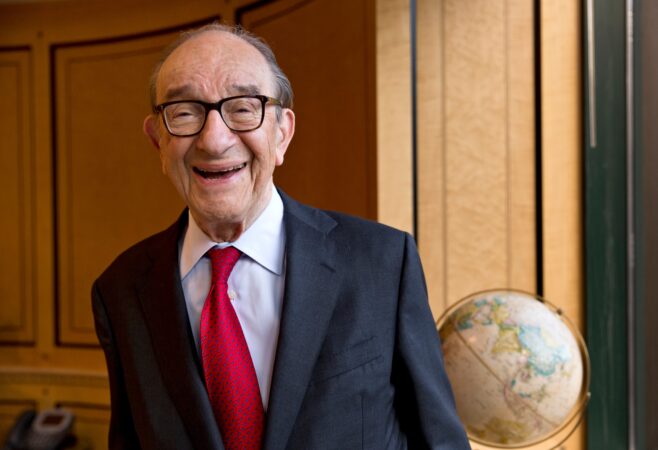
    WASHINGTON — Alan Greenspan, the jazz-playing U.S. Federal Reserve chair who was celebrated for engineering a decade of prosperity but later shared the blame for a devastating financial crisis, died Monday. He was 100.

    Mr. Greenspan died from complications of Parkinson’s disease, said his wife of 29 years, NBC News correspondent Andrea Mitchell.

    “To me he was my husband, who shaped my life from our very first date in 1984,” Mitchell wrote. ”He had ‘irrational exuberance’ for baseball, the Washington Commanders, tennis, golf, and music, especially jazz. He will be remembered for his brilliance and his kindness. Being his life partner was the joy of my life.”

    The Fed said Mr. Greenspan helped to cement trust in the Fed during a time of economic uncertainty.

    “Under his leadership, the Federal Reserve achieved a sustained era of price stability that supported economic growth and helped anchor the public’s confidence in the institution,” the central bank said in a statement Monday.

    Greenspan was hailed as “Maestro’’ — before crisis hit

    In 18½ years at the Fed, Mr. Greenspan presided over a breathtaking surge in stock prices and a 10-year economic boom that started in March 1991. He was celebrated as “Maestro’’ and “Oracle’’ — an economic virtuoso whose every utterance was dissected for clues on where interest rates and the economy were headed.

    The intense scrutiny of Mr. Greenspan’s intentions gave birth to new Fed folklore: the “Briefcase Indicator.” A stuffed briefcase carried into Fed meetings implied changes might be afoot because Mr. Greenspan carried with him charts and research to make his point.

    But his reputation began to suffer almost as soon as he left the Fed in 2006. American housing prices tumbled rapidly, causing huge losses for banks that had repackaged mortgage loans into a dizzying array of complex securities. The growing financial crisis pushed the U.S. economy into the Great Recession of 2007-2009 — the deepest downturn since the 1930s.

    Critics blamed the devastation on Mr. Greenspan’s easy money policies and his support for deregulated financial markets. Mr. Greenspan himself later acknowledged “I made a mistake’’ in assuming that banks could essentially regulate themselves.

    The authoritative voice on the U.S. economy

    For almost two decades, it seemed that Mr. Greenspan could do no wrong. Not only in the United States but across the world, he was regarded with a mixture of reverence and awe. Many openly dreaded the day when he would leave the Fed.

    Investors hung on his sometimes inscrutable observations. In the most well-known such remark, Mr. Greenspan sent financial markets reeling on Dec. 5, 1996, when he suggested with just two words — “irrational exuberance” — that stock prices were too high.

    Mindful of his power to move markets, Mr. Greenspan typically resorted to obfuscation. At times, he even joked about his habit of doing so. “I know you believe you understand what you think I said, but I am not sure you realize that what you heard is not what I meant,” Mr. Greenspan once told a befuddled congressional committee.

    Mr. Greenspan was one of the few Fed chairs that Kevin Warsh, chosen by Trump to lead the Fed, praised at his swearing-in last month. Warsh has said one of his goals is to dial back the Fed’s communications, particularly the guidance it gives financial markets, an approach closer to Mr. Greenspan’s than to Warsh’s immediate predecessors as chair.

    Yet for all his circumspect comments, Mr. Greenspan did make the Fed more transparent. He was the first chair to issue a statement explaining the Fed’s interest-rate decisions. Before Mr. Greenspan, investors had to divine the Fed’s intentions from market changes. Mr. Greenspan also began to release minutes and even full transcripts of meetings, though those changes were in response to pressure from Congress.

    A protégé is born

    Born in the Washington Heights neighborhood of Manhattan, the young Mr. Greenspan was a math whiz who was trotted out by his mother to show off for visitors.

    “I was a prop at parties,’’ he said in a 2007 interview with PBS NewsHour. A Julliard School dropout, he worked as a professional musician in his teens, playing clarinet and saxophone alongside the future jazz great Stan Getz. It was a humbling experience that persuaded the young Mr. Greenspan to seek another line of work.

    He pursued undergraduate and graduate study in economics at New York University, eventually earning a doctorate there. For most of three decades, he ran an economic consulting firm. During the 1950s, he became a disciple of the libertarian philosopher Ayn Rand, who stuck him with the nickname the “Undertaker’’ for his dark clothes and quiet bearing. When Mr. Greenspan was sworn in as President Gerald Ford’s chief economic adviser in 1974, Rand stood beside him.

    An early trial for a new Fed chair

    President Ronald Reagan tapped Mr. Greenspan to run the Fed in 1987. He was tested almost immediately. On Oct. 19, 1987, which came to be known as “Black Monday,” the stock market suffered the worst one-day percentage loss in American history just two months into his term. The Dow Jones Industrial Average plunged 22.6% for reasons that remain opaque to this day.

    Mr. Greenspan was credited for helping restore stability. He assured Wall Street that the Fed would supply as much money to the financial system as was needed to restore calm. Stocks recovered, and the American economy emerged unscathed by the market crash.

    During his tenure at the Fed, Mr. Greenspan drew praise for presiding over what was at the time the longest economic expansion in American history. (It was later surpassed by a 128-month expansion that ran from June 2009 through February 2020.) During Mr. Greenspan’s tenure at the Fed, the nation’s unemployment rate briefly dropped below 4% for the first time since 1970.

    And inflation, which had bedeviled the United States and much of the global economy during the 1970s, was remarkably dormant during Mr. Greenspan’s chairmanship, something many economists thought impossible for so long a period.

    During the long boom, Mr. Greenspan argued that improvements in technology had made the economy so efficient that it could run faster and at lower rates of unemployment, without unleashing inflation. As a consequence, the theory went, the Fed could keep interest rates low even when the economy was roaring.

    The economy soared in the late 1990s, expanding by 4% or more for four straight years, and Mr. Greenspan was credited with holding off on rate hikes and allowing the boom to run.

    Warsh has said that AI could reproduce the 1990s experience of high growth with low inflation, though economists are skeptical it will play out the same way.

    A passion for numbers and life

    As Fed chair, Mr. Greenspan relished poring over obscure economic data, from monthly boxcar loadings to steel production, all in a bid to assess where the economy was going. He would often phone economists at other government agencies to discuss details. He would rise early each morning for a two-hour soak in his bathtub, time that he used to review statistics and Fed staff memos.

    Improbably, Mr. Greenspan also made the gossip pages as an unlikely ladies’ man. He dated the television journalist Barbara Walters and later married Mitchell after a 12-year courtship. They had no children. Mitchell graduated from the University of Pennsylvania and worked for KWY radio and TV. She founded the Andrea Mitchell Center for the Study of Democracy in 2017.

    Mr. Greenspan dated Walters while working as an adviser to President Gerald Ford. According to a biography of Mr. Greenspan, The Man Who Knew by Sebastian Mallaby, when Ford read a newspaper item about the pair, he cut it out and sent it to his chief of staff, Dick Cheney, with a note that said, “I don’t believe it.”

    Faith in self-regulating markets is challenged

    All along, Mr. Greenspan held fast to the belief that financial markets could largely regulate themselves. With officials from President Bill Clinton’s White House, he helped block efforts by Brooksley Born, the nation’s top commodities regulator, to bring federal oversight in the late 1990s to the shadowy market in over-the-counter derivatives. The derivatives allowed speculators to make bets on everything from the price of oil to high-risk mortgages.

    Eventually, history would vindicate Born, not the Maestro.

    The low interest rates Mr. Greenspan had engineered helped swell housing prices into a dangerous bubble. And the financial deregulation he supported allowed banks and other financial firms to pile up huge risks, often hidden from government supervision. Bad derivatives bets helped sink insurance giant American International Group, which required a $180 billion taxpayer bailout. Vaunted investment firms Bear Stearns and Lehman Brothers failed and U.S. financial markets nearly collapsed.

    The Financial Crisis Inquiry Commission, which was assigned to investigate the debacle by Congress, concluded:

    “More than 30 years of deregulation and reliance on self-regulation by financial institutions, championed by former Federal Reserve chairman Alan Greenspan and others … had stripped away key safeguards, which could have helped avoid catastrophe.”

    Life after the Fed

    In the years after stepping down as Fed chairman in 2006 just shy of his 80th birthday, Mr. Greenspan kept busy doing what he loved to do most — following the economic data. He ran his own consulting firm, Greenspan Associates, through which he dispensed advice to Wall Street clients and collected handsome speaking fees.

    He kept up a busy schedule well into his 90s, writing his memoir and two other books on the economy, as well as opining on the latest economic developments on television news shows.

    He also signed onto opinion articles and statements defending the Federal Reserve’s political independence from President Donald Trump’s ongoing attacks. In January 2026 he signed a statement criticizing the Trump administration’s investigation of Fed Chair Jerome Powell. The statement, which was also signed by two other former Fed chairs and five former Treasury secretaries, called the investigation “an unprecedented attempt to use prosecutorial attacks to undermine” the Fed’s independence and warned it would have “highly negative consequences for inflation.”

    In his 2013 book The Map and the Territory, Mr. Greenspan defended himself against critics who assigned him significant blame for the 2008 financial meltdown. He argued that traditional economic forecasting was no match for the irrational risk-taking that can feed catastrophic price bubbles.

    “Bubbles go up very slowly as euphoria builds,” Mr. Greenspan said in a 2013 interview with the Associated Press. “Then fear hits, and it comes down very sharply. When I started to look at that, I was sort of intellectually shocked.”

  • Margaret Kerry, body and soul of Disney’s Tinker Bell, dies at 97

    Margaret Kerry, body and soul of Disney’s Tinker Bell, dies at 97

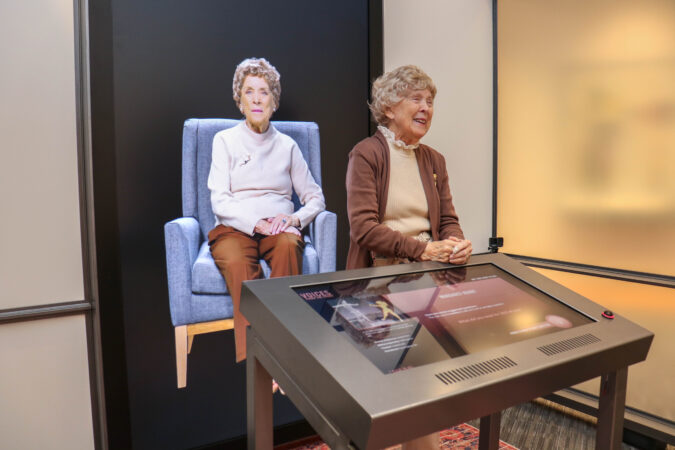
    Margaret Kerry, who through months of graceful and poignant pantomime inspired the portrayal of the Peter Pan fairy Tinker Bell that the world knows best, died on June 11 at her home in Wilmington, N.C. She was 97.

    The cause was lung cancer, her family announced on social media.

    Tinker Bell’s origins lie in Peter Pan, or The Boy Who Wouldn’t Grow Up (1904), a play by the British writer J.M. Barrie later expanded into a novel, Peter and Wendy (1911). Barrie invented “fairy dust” to explain how Tinker Bell could enable children to fly, but in his story, she was “quite a common fairy” who fixes pots and pans. Peter ultimately forgets about her, and in stage performances, she was only a spotlight.

    With Ms. Kerry’s help, Disney’s original animated film adaptation, Peter Pan (1953), produced a version of Tinker Bell that became definitive.

    In the movie, the fairy communicates only through movement and expression; she does not speak.

    To reinvent and animate the character, Marc Davis — the illustrator behind Snow White, Cinderella, and Cruella de Vil — oversaw an industrial equivalent of the modeling demanded by perfectionist painters like Jean-Auguste-Dominique Ingres or Paul Cézanne. Along with a few prop specialists, a camera operator, a makeup artist, and one or more directors, he spent more than six months having an actor act out everything he wanted Tinker Bell to do.

    “Marc Davis is a man’s man — how does he know how a 3½-inch sprite is going to move, get angry, or stamp her foot?” Ms. Kerry said to the Los Angeles Times in 2002. “And how does he know what kind of emotion would go behind that?”

    Ms. Kerry brought a record player to her audition for Davis and director Gerry Geronimi. With musical backing, she did a pantomime of making breakfast: Peering into a refrigerator, juggling eggs, closing the fridge door with her foot — “as much variety of movement as I could do in the context of a little story,” she said in a 2003 interview with historian Jim Korkis.

    She got the job. The first time she stepped onto Disney’s enormous, empty soundstage, she asked Davis who he wanted her to be — ditsy like Betty Boop? Above it all, like the Queen of the Fairies?

    “He said, very quietly, ‘Margaret, we want her to be you,’” Ms. Kerry recalled in an interview with author and YouTube host Jonathan Rosen.

    “At that moment,” she told Parade in 2016, “Tinker Bell and I became one.”

    One day she was asked, What would it look like if Tinker Bell landed on a mirror and saw herself? Ms. Kerry thought perhaps she would never have seen her reflection, so she began a preening once-over — until she reached her hips, got upset and stormed off. That became a scene in Peter Pan.

    She was asked to fall onto a mattress — which, she soon discovered, was rather thin, causing her to thud on impact. Her look of pained surprise also made it into the film.

    She was asked to pout. She demonstrated a whole menu of pouts and asked, What kind do you want?

    She imagined Tinker Bell as a 13-year-old girl. That helped Davis capture one of the character’s most distinctive traits: Barrie’s idea that fairies are so small that they “have room for one feeling only at a time.” Davis’ Tink is consumed by competitiveness with Wendy, or consumed by fear for Peter — always just one feeling, felt to the utmost.

    Margaret Kerry was born Margaret McCarty on May 11, 1929, in Springfield, Ill. Her mother died in childbirth and her father was unable to take care of his five children, Parade reported. She was adopted at 3 by Frederick and Grace (Lynch) Robb, who lived in Los Angeles.

    Robb was a salesperson for Durametallic Corp., an industrial manufacturer. The couple decided their adoptive daughter was “as cute as Shirley Temple,” Kerry later recalled, and by the time she was 4 she was in Central Casting. She found a lot of work in Hollywood, including appearing in eight of the Our Gang short films about the Little Rascals.

    Her stage name was originally Peggy Lynch. In 1948, she played the daughter of Eddie Cantor’s character in the movie If You Knew Susie. She changed her name to Margaret Kerry at Cantor’s suggestion.

    In later years, she did voice-over work and hosted a weekly Christian talk show on Los Angeles radio.

    She married Dick Brown, a television producer and director, in 1951. They divorced in the 1980s. Her marriage to Jack Willcox, in 1987, ended with his death in 1999. She is survived by three children from her first marriage, Eric Norquist, Christina McCarty, and Ellen Seibel, as well as several grandchildren.

    In 2019, a veteran of D-Day, Robert Boeke, visited Europe to mark its 75th anniversary. He passed a store in Amsterdam called Tinker Bell Toys and said to a travel buddy, “I have been in love with Tinker Bell all my life.”

    He was being literal: Boeke and Kerry dated when he was a college student in Los Angeles. A friend of his promptly found her email address and sent her a note. He assumed she had forgotten him.

    But the email, like a bit of fairy dust, caused something to improbably take flight. Ms. Kerry had saved a piece of jewelry that Boeke gave her all those years ago.

    On Valentine’s Day 2020, they married. They got together just in time to keep each other company through the coronavirus pandemic, and Boeke lived until just 2½ weeks before Kerry’s death. She told Rosen, “It was love at second sight.”

    This article originally appeared in the New York Times.

  • Mark Singer, longtime writer for the New Yorker, dies at 75

    Mark Singer, longtime writer for the New Yorker, dies at 75

    Mark Singer, a staff writer at the New Yorker from the age of 23 who extended the magazine’s franchise of rich reporting and witty prose about offbeat, complicated, and quintessentially American characters, died Friday in New York City. He was 75.

    The cause of death, in a hospital, was cancer of the salivary gland, his son Tim said.

    Mr. Singer wrote urbane “Talk of the Town” pieces for the front of the magazine, reflected on serious national matters like the Affordable Care Act, and did a hitch traveling the country as the correspondent for the “U.S. Journal” column.

    But he was best known as a profiler. His subjects included magician Ricky Jay, whom he called “perhaps the most gifted sleight of hand artist alive”; a set of four door attendant brothers in New York; and a braggadocious real estate developer, Donald Trump, years before he ran for office.

    “He came out of the tradition of A.J. Liebling and Joseph Mitchell and Calvin Trillin, which is to say he combined meticulous reporting and a very distinctive comic voice, which is extremely rare,” David Remnick, the magazine’s editor, said in an interview.

    An Oklahoma native, Mr. Singer moved back to the state for an immersive series of articles in 1985 that became a book, Funny Money. It is about a small suburban bank that wildly pumped up its balance sheet during an energy boom, led by a buffoonish cast of executives, including one who wore Mickey Mouse ears to work.

    A 2005 collection of Mr. Singer’s profiles, Character Studies, was subtitled Encounters with the Curiously Obsessed, a description that matched the author himself.

    The book included pieces about a group of Texans searching for the missing skull of Pancho Villa and a family of fanatic California farmers, the Chinos, who grew vegetables for chef Alice Waters of Chez Panisse (who happened to be married to Mr. Singer’s brother Stephen).

    “Singer’s voice is pitched perfectly to the register of The New Yorker: cool and intelligent, with a wry and artful skepticism uncorrupted by cynicism,” Jeff Macgregor wrote in The New York Times Book Review. “Neither aloof nor Olympian, he maintains instead an efficient distance from his subjects. He is a terrific reporter, with a receptive ear for dialogue and a painter’s eye for the salient detail.”

    The collection included Mr. Singer’s 1993 profile of Jay, with accounts of his performing mind-boggling card tricks and memory feats, which Mr. Singer witnessed over a two-year acquaintance.

    “He has small hands — just large enough so that a playing card fits within the plane of his palm,” Mr. Singer observed. “There is a slightly raised pad of flesh on the underside of the first joint of each finger.”

    He was much less stoked to be assigned by Tina Brown, then editor of the New Yorker, to profile Trump in 1997.

    Observing him over several months on construction sites, in his Trump Tower office, and on a private plane, Mr. Singer concluded that Trump, in the period before he became a reality TV star, was a man “who had aspired to and achieved the ultimate luxury, an existence unmolested by the rumbling of a soul.”

    “That profile,” Remnick said, “got everything about Trump 20 years before he ran for president: the vanity, the casual cruelty, the outsized selfishness. It was all there.”

    The profile was included in Character Studies, and after the Times review mentioned it, Trump wrote a letter to the editor attacking Mr. Singer as “not born with great writing ability.”

    Mr. Singer sent a mock thank you to Trump for the publicity, which apparently bumped his book higher on the Amazon book charts. He also enclosed a check for $37.82, “a small token of my enormous gratitude,” he wrote.

    Trump returned the letter with an all-caps note at the bottom, reading, in part, “MARK — YOU ARE A TOTAL LOSER.”

    Trump also cashed the $37.82 check, Mr. Singer later said. Singer framed a photocopy of it for his apartment.

    In 1999, Mr. Singer took on the challenge of solving the mystery of Joseph Mitchell, the magazine’s revered, Joycean profiler of New York eccentrics, who came to the office for 32 years without publishing a piece after 1964. Mr. Singer, who never quite solved the reasons for Mitchell’s epic writer’s block, quoted Philip Hamburger, a friend of Mitchell’s: “Why didn’t he write more? Well, he wrote enough.”

    Mark Jay Singer was born Oct. 19, 1950, in Tulsa, Okla., the middle of five children of Alexander and Marjorie (Teller) Singer. His father ran an oil and gas business, Singer Brothers, which had been founded by his own father and an uncle, whose family members were Jewish immigrants from Russia.

    Mr. Singer attended Yale University, where he found a mentor in William Zinsser, a nonfiction writing teacher whose classic guide, On Writing Well, preaches cutting clutter from sentences and choosing the precise word. (He also first introduced Mr. Singer to Mitchell’s work.)

    Mr. Singer received his bachelor’s degree in English in 1972. Two years later, he was hired by the New Yorker, at a time when the magazine offered an on-ramp to promising but inexperienced young writers, who sank or swam by writing unbylined pieces for “The Talk of the Town.”

    Mr. Singer married Rhonda Klein, a lawyer, in 1972. The marriage ended in divorce, as did a second marriage, to Caroline Mailhot.

    Besides his son Tim, from his first marriage, he is survived by his partner, Lisa Brody; his sons Jeb and Reid, also from his first marriage; a son, Paul Mailhot-Singer, from his second marriage; two grandchildren; and his siblings George, Stephen, and Sandra Anderson.

    Singer is also the author of Citizen K: The Deeply Weird American Journey of Brett Kimberlin (1996), an expanded version of a New Yorker profile of a drug smuggler, murder suspect, and media manipulator that was a finalist for a National Magazine Award; and the collection Somewhere in America: Under the Radar with Chicken Warriors, Left-Wing Patriots, Angry Nudists and Others (2004).

    The New Yorker writer Ian Frazier, who shared an office with Singer when both were tyros, recalled that his colleague and friend once buttonholed William Shawn, the magazine’s famously reserved former editor, at a wedding reception. Singer told Shawn a long-winded anecdote about his own first wedding.

    As the editor seemed to recoil, searching the ceiling, Singer itemized an elaborate menu he had requested from a Jewish caterer — bagels, herring, etc. — after which the caterer said, “So far, you’re giving them nothing.”

    Laughter ensued.

    “Mark and I,” Frazier said, “would talk about, What is writing? That’s writing,” he said of Singer’s lengthy tale delivered with confidence to a defensive audience. “When you can sense a real wind and just keep going with it.”

    This article originally appeared in the New York Times.

  • Jean Houston, ‘midwife of souls’ who advised Hillary Clinton, dies at 89

    Jean Houston, ‘midwife of souls’ who advised Hillary Clinton, dies at 89

    Jean Houston, a spellbinding figure in the human potential movement of the 1960s who used guided imagery to inspire unmoored suburbanites, burned-out executives, and even Hillary Clinton, helping Clinton conduct imaginary conversations at the White House with Eleanor Roosevelt, died on May 16 at her home in Ashland, Ore. She was 89.

    Her death was confirmed by her friend and business partner, Constance Buffalo.

    The daughter of a gag writer for Bob Hope, George Burns, and Henny Youngman, Ms. Houston rejected any association with the word “guru,” viewing it as an intellectual demotion. She called herself an “evocateur of the possible” and a “midwife of souls.”

    “In my definition, guru is spelled ‘Gee, You Are You,’” she said on the Oprah Winfrey television show Super Soul Sunday. “I seem to be a process. I seem to be a verb of becoming, and held by the lure of becoming that keeps us going on.”

    As the founder of numerous organizations, including the Human Capacities Corp., Mystery School, Social Artistry School, and the Possible Society, Ms. Houston led workshops at empowerment retreats, in corporate boardrooms, at her geodesic-domed house in Oregon, and in far-flung countries with the United Nations.

    “She had a remarkable capacity to be present to others,” Robertson Work, a U.N. policy adviser who accompanied her on trips around the world, said in an interview. “You felt like you were being seen. You could discover: ‘What is my greatness? What is my potential?’”

    Ms. Houston synthesized mythology, the psychology of Carl Jung and Joseph Campbell, and the experiential ethos of Esalen, the California retreat that shaped the human potential movement.

    During her multiday workshops, participants engaged in imaginary conversations with historical figures like Mahatma Gandhi and Pablo Picasso, acted out the stages of evolution while pretending to be a fish or a monkey, and translated their dreams into elaborate dances.

    “The idea was that it’s possible to cultivate a higher power within yourself,” Marion Goldman, a professor emeritus of sociology and religious studies at the University of Oregon and the author of The American Soul Rush: Esalen and the Rise of Spiritual Privilege (2012), said in an interview. “By making the self a better place, you make the world a better place.”

    In addition to her workshops, Ms. Houston published more than two dozen books, including The Possible Human: A Course in Enhancing Your Physical, Mental and Creative Abilities (1982), which sold more than 400,000 copies.

    “The imaginal realms of inner space proliferate and spill over into the external world in a phenomenal growth of new science, art, music, literature, politics, and above all in a new vision of mankind and world that is the glory of humanism,” she wrote in the book’s introduction.

    There were dissenters.

    Writing in Skeptical Inquirer magazine, Martin Gardner, a critic of pseudoscience, called Ms. Houston’s workshops “bewildering” and judged her “flowery New Age jargon” to be “so vague and murky that it is often difficult to understand.” (Adding insult to injury, the article’s headline labeled her a guru.)

    Still, her pull was gravitational — even at the White House. In 1994, Ms. Houston was among a group of motivational speakers whom President Bill Clinton and the first lady invited to Camp David for a series of pick-me-up conversations after their universal healthcare initiative failed and Republicans took control of Congress.

    She and Hillary Clinton hit it off.

    “Jean wraps herself in brightly colored capes and caftans and dominates the room with her larger-than-life presence and crackling wit,” Hillary Clinton wrote in her memoir Living History (2003). “She is a walking encyclopedia, reciting poems, passages from great works of literature, historical facts and scientific data all in the same breath.”

    Ms. Houston helped Hillary Clinton prepare for a visit to India, Nepal, and Bangladesh in 1995. That year, the first lady invited her to the White House to brainstorm ideas for It Takes a Village, Hillary Clinton’s book about the well-being of children.

    Hillary Clinton was physically and mentally exhausted. Perhaps, Ms. Houston suggested, she should speak with her hero, Eleanor Roosevelt. The idea was for Clinton to talk as herself and then answer back as Roosevelt — the sort of role-playing exercise that Ms. Houston had conducted thousands of times.

    At some point, she described the sessions with Clinton to the Washington Post reporter Bob Woodward, who recounted the details in his 1996 book, The Choice. After an excerpt appeared in the Post, tabloids and Republican opponents of the Clintons accused the first lady of holding seances at the White House.

    Hillary Clinton released a lengthy statement in her defense. “This was an interesting intellectual exercise to help spark my own thoughts,” she said. “It was a brainstorming session for my book — not a spiritual event.”

    In an appearance on the Today show, Ms. Houston told Katie Couric that she was simply helping the first lady focus her mind by imagining “what she would say to Eleanor Roosevelt should she have the occasion to do so.”

    Houston felt that she had been unfairly maligned.

    “I’m not a psychic,” she said. “I’m not a guru.”

    Jean Houston was born on May 10, 1937, in Brooklyn. Her mother, Mary (Todaro) Houston, was an actor, interior designer, and stock analyst. Her father, Jack Houston, was a comedy writer.

    Growing up, she found inspiration in a dummy. When she was 8, she accompanied her father to deliver a script to the ventriloquist Edgar Bergen. Upon arriving, they found Bergen talking to his plastic-and-wood buddy, Charlie McCarthy.

    “Charlie, what is the meaning of life?” Bergen asked the dummy, as Ms. Houston recalled in her memoir, A Mythic Life (1996). “What is the nature of love? Is there any truth to be found?”

    The dummy mumbled some answers.

    “At that moment,” Ms. Houston wrote, “my skin turned to gooseflesh, an electric hand seemed to touch mine, and a fractal wave of my future activities crashed on the shore of my 8-year-old self. For I suddenly knew that we all contain ‘so much more’ than we think we do.”

    Her epiphanies proliferated. On a school trip, she met Helen Keller and marveled at how happy she seemed despite being blind and deaf. She joined an international pen pal club and corresponded about the scriptures of Sikhs, Hindus, and Buddhists. She had long conversations with an old man in Central Park; later, she discovered that she had been talking to philosopher Pierre Teilhard de Chardin.

    “When you befriend your own brain,” she said, “a great deal becomes possible.”

    At Barnard, she studied religion and theater, acting in off-Broadway plays at night. She attended a doctoral program in religion offered by Columbia University and the Union Theological Seminary, but did not receive a degree. (She later received one in psychology from Union Institute in Cincinnati.)

    During graduate school, while conducting studies on LSD use, she met Robert E.L. Masters Jr., a writer. They married in 1965 and spent their honeymoon writing The Varieties of Psychedelic Experience, which was reviewed on the cover of the New York Times Book Review.

    Also in 1965, the couple founded the Foundation for Mind Research, the first of many organizations that Ms. Houston started to promote and study human potential.

    “We are living at the beginnings of the golden age of brain, mind, and body research,” she told the Washington Post in 1978. “We may well be standing, with regard to these, where Einstein stood in the year 1904 with his discovery of the special theory of relativity.”

    Masters died in 2008. Ms. Houston has no immediate survivors.

    Among her fondest memories was her childhood meeting with Keller, who was then in her late 60s — a story she recounted often.

    Keller put her hand on Jean’s face to read her lips.

    “Why are you so happy?” Jean asked.

    “My child,” Keller responded, “it is because I live my life each day as if it were my last. And life in all its moments is so full of glory.”

    This article originally appeared in the New York Times.

  • James Bradley, co-author of ‘Flags of Our Fathers,’ dies at 72

    James Bradley, co-author of ‘Flags of Our Fathers,’ dies at 72

    James Bradley, who turned his curiosity about his father’s time in the Navy during the Battle of Iwo Jima — and the long-held but ultimately mistaken belief that he was in the iconic photograph of six servicemen raising the American flag on Mount Suribachi — into the bestselling book Flags of Our Fathers (2000), died on June 5. He was 72.

    His daughter Alison Cinnamond confirmed the death but declined to provide further details.

    Flags of Our Fathers, which Mr. Bradley wrote with Ron Powers, a Pulitzer Prize-winning journalist, spent 46 weeks on the New York Times bestseller list, climbing to No. 1, and was adapted into a 2006 film directed by Clint Eastwood. Ryan Phillippe played his father in the movie.

    Flags tells the stories of the six flag-raisers — John (Doc) Bradley and five Marines — through the brutal, five-week-long battle against Japanese forces on Iwo Jima, a tiny volcanic island.

    The battle claimed the lives of some 6,800 American service members, including three of the flag raisers. Bradley’s narrative followed the survivors — his father, Rene Gagnon, and Ira Hayes — on the national war bonds tour that they starred in upon their return to the United States and their sometimes difficult postwar lives.

    Doc Bradley, who became a funeral director in Antigo, Wisc., told his family little about his time in combat, or the fact that he had received the Navy Cross, the branch’s second highest award for valor, for treating and rescuing a wounded Marine while under mortar and machine-gun fire on Iwo Jima.

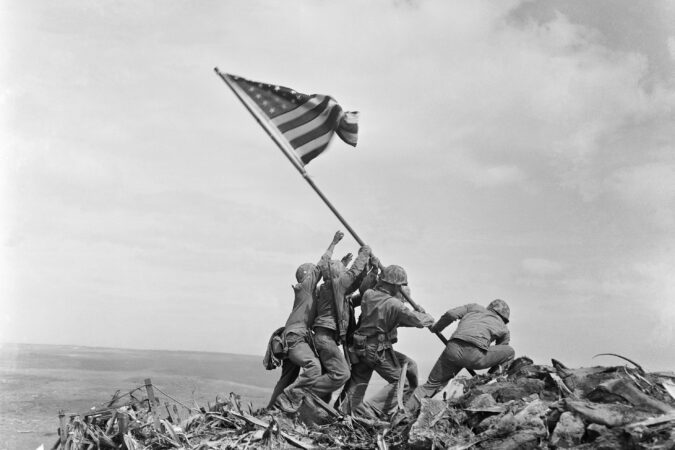
    But after his death in 1994, his family rummaged through boxes he had left behind. One of the items was a letter to his parents, postmarked Feb. 26, 1945, three days after the flag-raising photo was taken by Joe Rosenthal of the Associated Press. An image of the Pulitzer-winning photo appeared on the 3-cent stamp and on millions of war-bond drive posters. The picture also inspired the design of the Marine Corps War Memorial in Arlington, Va.

    In his letter, Doc Bradley wrote, “I had a little thing to do with the raising of the American flag and it was the happiest moment of my life.”

    The letter stunned his family.

    “If that was the happiest moment of his life,” James Bradley told the Times in 2000, “why had he never talked about it?”

    For nearly 70 years, there was little, if any, dispute that Doc Bradley was in Rosenthal’s brilliantly composed picture. The Marine Corps had, after all, named the six participants. James Bradley had no doubt of his father’s role, describing in Flags how he had dropped a handful of bandages before joining the other five men at the flagpole where he “gripped the pole in the cluster’s center.”

    But in 2014, an article in the Omaha World Herald described serious doubts raised by amateur historians that Doc Bradley was in the photograph. James Bradley was, at first, dubious.

    “Listen, I wrote a book based on facts, told to me by guys who had actually been there,” he told the newspaper. “That’s my research. That’s what I trust. At the end of the day, the truth is the truth. Everything is possible. But really?”

    He eventually took a deeper look at the paper’s findings and became convinced that his father had not been in Rosenthal’s picture but had been in a less dramatic one, with a smaller flag, taken earlier in the day on Feb. 23 by a Marine photographer, which the service branch confirmed.

    In 2016, a Marine Corps investigation — prompted by findings in a documentary, The Unknown Flag Raiser of Iwo Jima — concluded that Harold Schultz, a private first class, was the man in the image long identified as Doc Bradley.

    Cinnamond, James Bradley’s daughter, said in an interview that her father didn’t feel that the book was diminished by the finding, but that he wanted the Marine Corps to get its facts straight about who was actually in the photo.

    Indeed, it was not the only misidentification in the photo. In 1947, the Marine Corps said it had credited Henry Hansen for being in the photo when it had actually been Harlon Block. In 2019, the Marines determined that Gagnon, one of the Marines featured in Bradley’s book, had “contributed to the flag-raising,” but that Harold Keller was actually in the photo.

    James Joseph Bradley was born on Feb. 18, 1954, in Antigo. He was one of eight children of John and Elizabeth (Van Gorp) Bradley. James received a bachelor’s degree in East Asian history from the University of Wisconsin-Madison in 1977.

    Mr. Bradley was, at first, a traveling cookware salesperson, then built a career as a corporate events and video producer. Without training as a writer or researcher, he began writing Flags on his own, but his proposal was rejected by 27 publishers, one of whom told Mr. Bradley that “no one wants to read a book about old men weeping into the telephone.”

    One of his agents then brought Powers on as a collaborator; he had won the 1973 Pulitzer for criticism while writing for the Chicago Sun-Times. Bantam Books soon acquired the book.

    The book was one of several successful works during a decade that detailed the bravery of American soldiers during World War II, among them Stephen Ambrose’s D-Day: June 6, 1944 (1994); Tom Brokaw’s The Greatest Generation (1998); Steven Spielberg’s film Saving Private Ryan (1998); and the HBO miniseries Band of Brothers.

    In his review of Flags of Our Fathers in the Times, journalist Richard Bernstein called it “most affecting not because of its graphic portrayal of men at war, although its portrayal rivals Saving Private Ryan in its shocking, unvarnished immediacy.”

    Mr. Bradley continued to write about Asia in three subsequent nonfiction books. In Flyboys: A True Story of Courage (2003), he told the stories of nine American pilots, including the future President George H.W. Bush, who were shot down by the Japanese near the island of Chichijima during World War II. While Bush was rescued by an American submarine, the other eight were captured and executed by the Japanese.

    In The Imperial Cruise: A Secret History of Empire and War (2009), Mr. Bradley wrote critically about what he saw as President Theodore Roosevelt’s diplomatic mistakes in Asia.

    “Bradley explores the racist underpinnings of Roosevelt’s policies and paradoxical embrace of the Japanese as ‘honorary Aryans,’” Publishers Weekly wrote in its review, but added, “Bradley’s critique of Rooseveltian imperialism is compelling but unbalanced.”

    And in The China Mirage: The Hidden History of American Disaster in Asia (2015), Mr. Bradley described what he viewed as America’s long-running misunderstanding of China, dating to the early 1800s.

    He also wrote a novel, Precious Freedom (2025), set during the Vietnam War.

    Mr. Bradley’s three marriages ended in divorce. He is survived by two daughters, Cinnamond and Michelle Bradley, from his marriage to Eileen Heywood; two more children, Jack Bradley and Ava Bradley, from his marriage to Laura Shuler; two sisters, Kathleen and Barbara Bradley; five brothers, Steven, Mark, Patrick, Joseph and Thomas; and two grandchildren. He was also married to Shelley Tupper.

    In 1998, Mr. Bradley, his mother, and three of his brothers traveled to Iwo Jima at the invitation of Gen. Charles C. Krulak, the Marine Corps commandant. After climbing to the spot on Mount Suribachi where the celebrated Rosenthal photo was taken, Mr. Bradley asked that everyone, including the Marines in attendance, sing the only songs that Doc Bradley said he knew: “Home on the Range” and “I’ve Been Working on the Railroad.”

    “I knew, without looking up, that everyone standing on the mountaintop — Marines young and old, women and men; my family — was weeping,” Mr. Bradley wrote in Flags. “Tears were streaming down my own face. Behind me, I could hear the hoarse sobs coming from my brother Joe.”

    This article originally appeared in the New York Times.

  • James Burrows, master of the TV sitcom, dies at 85

    James Burrows, master of the TV sitcom, dies at 85

    James Burrows, the genre-shaping master of the television situation comedy who was a creator of Cheers and directed more than 1,000 episodes of that show and other TV classics like The Mary Tyler Moore Show, The Bob Newhart Show, Taxi, Frasier, Friends, and The Big Bang Theory, died Friday. He was 85.

    His agent, Rick Rosen, confirmed the death but did not say where he died or specify a cause.

    Mr. Burrows earned a reputation as the “Steven Spielberg of sitcoms,” winning 11 Emmy Awards and receiving 47 nominations in a career that spanned five decades. In 1995, Bill Carter, writing in the New York Times, described him as “the man whose visual style and comedic instincts have helped create more comedy hits than anyone else in television.”

    With a unique flair for the multicamera sitcom, Mr. Burrows won audiences by focusing on the laughs.

    “When I direct a television show, I try to reach that sweet spot where the best script meets the best performance and the best chemistry between performers,” Mr. Burrows wrote in his 2022 autobiography, Directed by James Burrows, written with Eddy Friedfeld. “Hitting that exact moment, where these factors land in combination, results in the sweetest and most enduring laugh.”

    Whatever the setting, whether a New York taxi garage or a neighborhood bar in Boston, he sought to nurture his actors into ensembles. “I guess I have a gift for creating families,” he told the Times in 2023.

    Distinctly different from film directors, who control every aspect of a movie’s creative development, television directors often act as traffic cops on a set and toil in relative anonymity. They are part of a creative team led by a writer and executive producer, who also acts as the showrunner.

    Television directors don’t usually exert control ahead of the writers. But Mr. Burrows defied that tradition. He was so skilled that he became the most sought-after and highly paid sitcom director during the golden age of network comedies in the 1980s, ’90s, and early aughts.

    “I’m concerned about believability and the economy of the comedy, the shortest distance between the character and the laughter,” Mr. Burrows wrote in his autobiography. “When I direct an episode, I have lots of notes. I am apt to tell writers: ‘50 percent of what I say is gold and 50 percent is garbage. It’s your job to figure out which is which.’”

    He grew up immersed in the world of New York City theater as the son of Broadway playwright and director Abe Burrows, who helped create such hits as Guys and Dolls and How to Succeed in Business Without Really Trying.

    He even started his career approaching television episodes as if he was directing a stage play, and the ensemble casts, including such stars as Mary Tyler Moore, Bob Newhart, Judd Hirsch, Ted Danson, Jennifer Aniston, Sean Hayes, and Kelsey Grammer, loved working with him.

    “He is without a doubt the person any actor wants calling the shots when the cameras are rolling,” Grammer, who played psychiatrist Frasier Crane on Cheers and Frasier, said in a 2019 episode of Inside the Actors Studio.

    Because of his intuitive understanding of the timing and structure of a successful sitcom episode, Mr. Burrows was in constant demand, often working on more than one series at a time. He directed a staggering 75 pilot episodes that became series.

    “I try to break down those barriers between writer and actor and director, and make everybody feel like they’re all a part of the process, without incurring the wrath of a writer,” Mr. Burrows said in a 2023 interview on the public radio station KCRW.

    In 1994, for example, Mr. Burrows not only directed but also helped cast Friends. Before shooting the pilot, he gathered the group of mostly unknown young actors — Lisa Kudrow, Courteney Cox, Matt LeBlanc, David Schwimmer, Matthew Perry, and Aniston — and flew them on a private plane to Las Vegas for a dinner at Spago at Caesars Palace.

    He wanted to ensure that the cast members bonded. At dinner, he told them, “This is your last shot at anonymity. Once the show comes on the air, you guys will never be able to go anywhere without being hounded.”

    James Edward Burrows was born in Los Angeles on Dec. 30, 1940, to Abe and Ruth (Levinson) Burrows. When he was 5, the family moved to New York City, where he grew up. His mother was a homemaker and social activist who instilled a lifelong sense of social justice in James and her daughter, Laurie.

    His parents divorced when Mr. Burrows was 8, a trauma he said he carried into adulthood. His father’s success exposed him to theater luminaries. Having a famous father, however, was a mixed blessing.

    Mr. Burrows knew he would always be considered “Abe’s kid,” so to avoid his father’s long shadow, he decided he had no interest in a theater career. Nonetheless, he attended New York’s High School of Music and Art and eventually found himself unable to resist show business. Countless visits to his father’s productions and rehearsals left an indelible impression about how to work with actors and crews.

    Mr. Burrows graduated from Oberlin College in 1962 and the Yale School of Drama in 1965. There, he realized he couldn’t sing, dance, or write, but he became intrigued with the idea of directing.

    After graduating, he became an assistant stage manager for Breakfast at Tiffany’s, a short-lived 1966 musical that featured Moore. After working as a stage director at dinner theaters for the next few years, Burrows realized that television situation comedies — which in essence are short stage plays in front of a camera — might be a perfect outlet for his skills.

    In 1974, he wrote to Moore asking for a chance to work for her company, MTM, which produced her hit show. Her husband, Grant Tinker, invited Mr. Burrows to come to Los Angeles, where he was given his first shot at directing a sitcom. There, he met veteran TV director Jay Sandrich, who became a mentor.

    After The Mary Tyler Moore Show, he directed episodes of the spinoffs Rhoda and Phyllis and later The Bob Newhart Show, Laverne & Shirley, and Taxi. In 1982, he teamed up with writer-producer brothers Glen and Les Charles, whom he knew from Taxi, to create Cheers, which changed the trajectory of his career and eventually brought him vast wealth through syndication and residuals.

    Of the 275 episodes of the series over 11 seasons, Burrows directed all but 35. Its finale, in 1993, drew the second-largest audience for a series finale in television history. (Only the finale of M*A*S*H in 1983 drew more viewers.)

    In 1981, he married Linda Solomon, with whom he had three daughters, Kat, Ellie and Maggie. The couple divorced in 1993. Mr. Burrows married Debbie Easton in 1997; she survives him, along with his daughters; a stepdaughter, Paris; and seven grandchildren.

    Working into his 80s, Mr. Burrows maintained unabated enthusiasm for his craft.

    “The laughter behind me is so rewarding for my soul, I would almost do it for free,” he told the Times in 2023. “And it’s nice to be able to go back to what happened to me 50 years ago and still have this feeling of creativity. When pilot season comes this year, I hope there is a pilot that I like.”

    This article originally appeared in The New York Times.

  • Daveigh Chase, ‘Lilo & Stitch’ voice actor and ‘The Ring’ villain, dies at 35

    Daveigh Chase, ‘Lilo & Stitch’ voice actor and ‘The Ring’ villain, dies at 35

    Daveigh Chase, an actor known for voicing the character of Lilo in the hit animated film Lilo & Stitch and for her deeply unnerving turn as the child villain Samara in the horror movie The Ring, died on Tuesday in Los Angeles. She was 35.

    Her death, in a hospital, was confirmed by her father, John David Schwallier, who said the cause was complications of bacterial meningitis and a blood infection. Schwallier said his daughter had been homeless and living in Los Angeles with her boyfriend near the hospital where she died.

    Lilo & Stitch, released in 2002 when Ms. Chase was almost 12, told the story of an orphaned Hawaiian girl, Lilo, who brings home an impish blue space alien, Stitch, from the dog pound. Much wackiness ensues.

    The Disney film was a hit, grossing more than $274 million worldwide, according to Box Office Mojo (roughly $500 million when adjusting for inflation). And Ms. Chase, who had brought the plucky Lilo to life, won a Young Artist Academy Award for best performance in a voice-over role, age 10 or younger.

    Her breakout role, however, was in the live-action thriller The Ring, released in the United States roughly four months later, alongside Naomi Watts. Ms. Chase played Samara, a longhaired mystery girl who terrorized unsuspecting viewers of a certain VHS tape.

    The film, a remake of a Japanese film, Ringu, received mixed reviews, but the image of Samara crawling through a blurry television screen became seared in the cultural memory, and Ms. Chase won the award for best villain at the 2003 MTV Movie Awards.

    That year she returned to Lilo in the sequel Stitch! The Movie and in the Lilo & Stitch TV series, which ran from 2003-06.

    She then transitioned to her biggest TV role yet. In HBO’s Big Love — which chronicled the trials and tribulations of Mormon polygamists — she starred as Rhonda Volmer, a cunning 14-year-old bride in waiting, in 32 episodes between 2006 to 2011.

    Daveigh Elizabeth Schwallier was born July 24, 1990, in Las Vegas. Her father was a cook and helped to build motor homes. Her mother, Cathy Annette (Chase) Schwallier, went to nursing school but did not work a regular job.

    The family moved to Albany, Ore., where Ms. Chase would grow up, a few weeks after her birth. Ms. Chase was homeschooled, and at age 6 she won the Little Miss Oregon beauty pageant.

    She starred in a Campbell’s Soup commercial soon after, and then landed the voice-over role in Lilo & Stitch. She would go on to star as Samantha Darko, the younger sister of Jake Gyllenhaal’s Donnie, in Donnie Darko (2001) and in a little-noted sequel, S. Darko (2009). She also voiced Chihiro Ogino in Hayao Miyazaki’s 2001 animated classic, Spirited Away.

    After 2016, she largely stopped acting, and troubles with the law soon followed. In 2017, she was charged with riding in a stolen BMW, according to TMZ; in 2018, she was charged with possession of a controlled substance, according to the New York Post.

    Schwallier, 61, said in an interview Wednesday that Ms. Chase had struggled with drugs since the age of 13. He said that he hadn’t spoken with her since she was 19 and that she had a terrible falling-out with her mother around the same time. Her parents divorced 32 years ago.

    Schwallier had been in touch with Ms. Chase’s boyfriend, Roy Hernandez, and arrived at Los Angeles General Medical Center, where she was being treated, just before she died.

    “Him and her were destitute,” he said, describing the couple’s living conditions.

    In one of at least three GoFundMe pages set up to support Ms. Chase in recent days, Hernandez described her worsening condition: “The doctors say she may not survive, and when she leaves the hospital, we have nowhere to go. My hope is to raise enough money to find a place where we can be together and make her comfortable during her last days.”

    At the premiere of Lilo & Stitch in 2002, the Honolulu Star-Bulletin asked an 11-year-old Ms. Chase if she thought she could handle all the publicity that was sure to come her away after the movie’s release.

    “Well, it is just my voice,” she demurred. “But some people who worked for Disney have recognized me already. I don’t think people will really know who I am. I guess I’ll have to deal with it!”

    This article originally appeared in the New York Times.

  • Comedy trailblazer Tom Dreesen, Sinatra’s longtime opening act, dies at 86

    Comedy trailblazer Tom Dreesen, Sinatra’s longtime opening act, dies at 86

    LOS ANGELES — Tom Dreesen, who along with partner Tim Reid formed one of America’s first interracial stand-up comedy duos and later spent years as Frank Sinatra’s opening act, died Wednesday. He was 86.

    Dreesen died at his home in Los Angeles, according to publicist Lori De Waal. A cause of death was not provided.

    After meeting in Chicago, Dreesen and Reid, who was Black, formed “Tim and Tom” in 1969. Against a backdrop of simmering racial tension, they used humor to address social issues and promote understanding between audiences of different backgrounds. They worked together until the mid-1970s. Reid went on to solo success playing DJ Venus Flytrap on the popular TV sitcom WKRP in Cincinnati, where Dreesen was a guest star.

    “When I was a kid I found an album he and his comedy partner did called Tim and Tom and took it home and played it and it was one of the albums that changed the course of my life. So great,” comedian and filmmaker Mike Binder wrote on X.

    After splitting with Reid, Dreesen honed a solo comedy act, making over 500 national TV appearances, including 60 visits to The Tonight Show Starring Johnny Carson. He also was a frequent guest and sometime guest host on The Late Show with David Letterman. Their friendship dated to the early 1970s when both worked at the Comedy Store in West Hollywood, Calif.

    Dreesen’s final TV appearance came last week on Comics Unleashed with Byron Allen, which replaced Stephen Colbert’s canceled CBS late-night show.

    Dreesen was Sinatra’s opening act for 14 years and became close with the entertainer.

    “If he loved you, he worshipped the ground you walked on,” Dreesen told the Desert Sun newspaper in 2014. ”In a lot of ways, he was like a father to me. I didn’t have a father that really cared that much where I was and what I did. But Frank would give me advice and counsel, and then he was a buddy in a lot of ways. I thought the world of him.”

    Dressen also toured with Sinatra’s fellow Rat Pack member Sammy Davis Jr., as well as Liza Minnelli, Smokey Robinson, Gladys Knight, and Tony Orlando.

    “He was one of the most brilliant comedians of all time. Tonight, he’ll once again be opening for Dean, Frank and Sammy,” Deana Martin, a daughter of Dean Martin, posted on X.

    In 2008, Dreesen co-wrote the book Tim and Tom: An American Comedy Act in Black and White and in 2020 he authored his memoir.

    Dreesen acted in such TV shows as Columbo, Murder, She Wrote, and Touched by an Angel. His film roles included Spaceballs, Man on the Moon, and Trouble With the Curve, as well as the HBO movies The Rat Pack and Lansky.

    Dreesen was active in charitable work, motivational speaking, and veterans’ causes, including serving as ambassador for the Gary Sinise Foundation.

    “America lost one of our great comedians and patriots, and I lost a dear friend,” Sinise posted on X.

    He was born on Sept. 11, 1939, in Chicago and raised as one of eight children in suburban Harvey. He enlisted in the U.S. Navy at age 17 and after getting out in 1960 he returned home to work a series of jobs, including selling insurance.

    Dreesen is survived by daughters Amy and Jennifer from his marriage to Maryellen Subock, which ended in divorce in 1984, as well as seven grandchildren. He was preceded in death by his son Tommy.