Category: Obituaries

  • Ann Harnwell Ashmead, renowned classical archaeology researcher and writer, has died at 96

    Ann Harnwell Ashmead, renowned classical archaeology researcher and writer, has died at 96

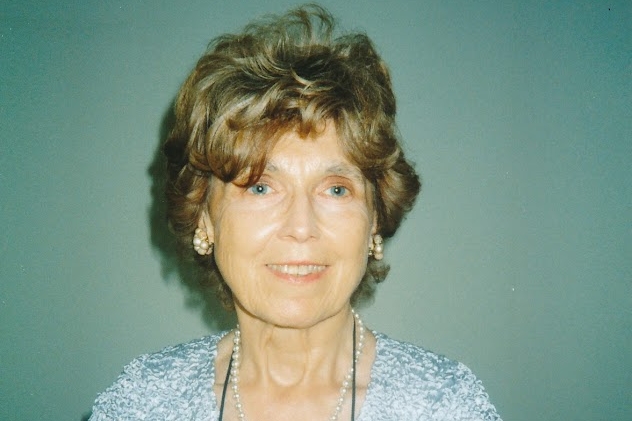
    Ann Harnwell Ashmead, 96, of Haverford, renowned classical archaeology researcher, writer, museum curator, volunteer, and world traveler, died Saturday, Jan. 17, of chronic congestive heart failure at her home.

    Dr. Ashmead was an archaeological specialist in Greek vase painting, the depiction of cats on classical and Near Eastern artifacts, and the history of other ancient ceramics. She traveled to Greece, Italy, Turkey, France, and elsewhere around the world to examine, analyze, and research all kinds of ceramics collections.

    She consulted with hundreds of other archaeologists and curators, and wrote extensively about the ongoing international research project to document ancient ceramics and the extensive collections at Haverford and Bryn Mawr Colleges, the Penn Museum, the Rhode Island School of Design, the Louvre Museum in Paris, and other places. She did archaeological field work in Greece during her college years at Bryn Mawr and served as a classical archaeology graduate teaching assistant.

    She was onetime curator of Bryn Mawr’s 6,000-piece Ella Riegel Memorial Museum and a research associate at the Penn Museum. She partnered for years with Bryn Mawr professor Kyle Meredith Phillips Jr. to research and write articles and books about ancient vases, cups, jars, pots, Etruscan images of cats, and other classical antiquities.
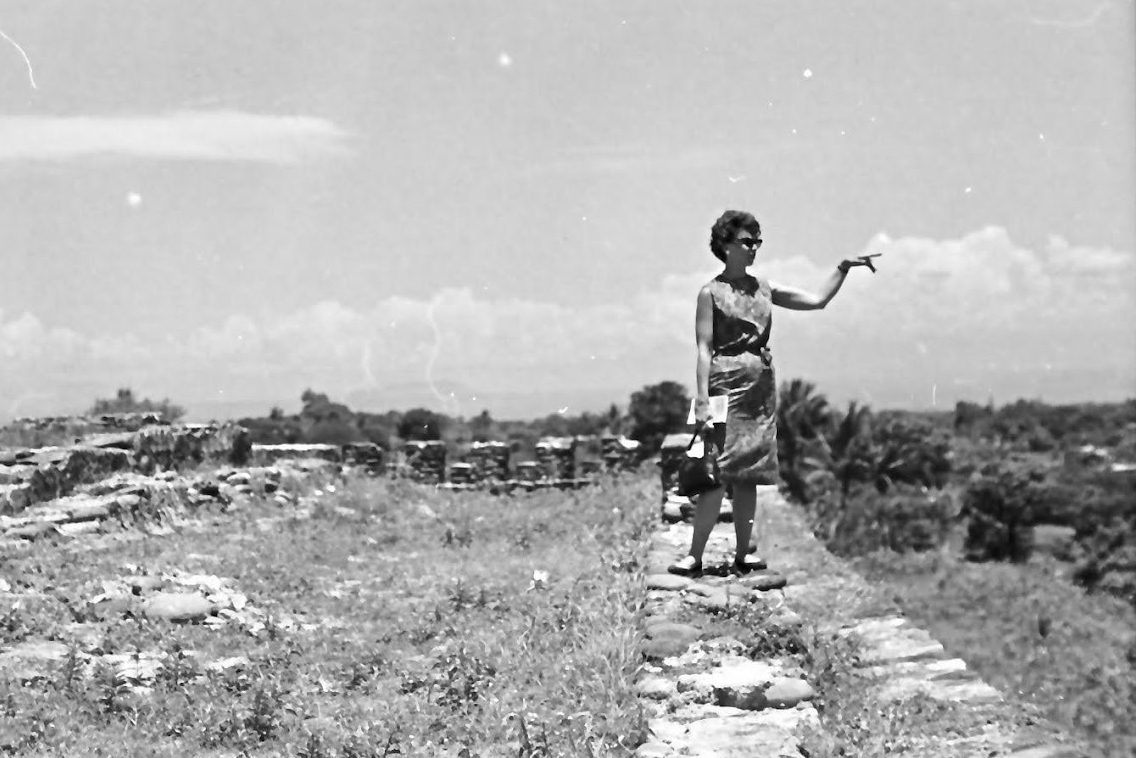
    Dr. Ashmead visited many archaeological sites in Greece and elsewhere.

    Some of her colleagues lovingly called her “the cat lady.”

    Dr. Ashmead often reassembled broken ancient objects for curators and created visual and oral presentations to augment her printed catalogs, articles, and books. “She was indefatigable,“ her family said in a tribute.

    She shared her research at conferences, meetings, and exhibitions around the globe, and most recently collaborated with Ingrid M. Edlund-Berry, professor emerita at the University of Texas at Austin, on a project that scrutinized cats as shield devices on Greek vases.

    “Ann was very modest, humble, and self-deprecating about her publications and academic achievements,” her family said. Her son Graham said: “She was a role model who inspired me with her curiosity on all subjects and issues, and a love of world travel, reading, and lifelong learning.”
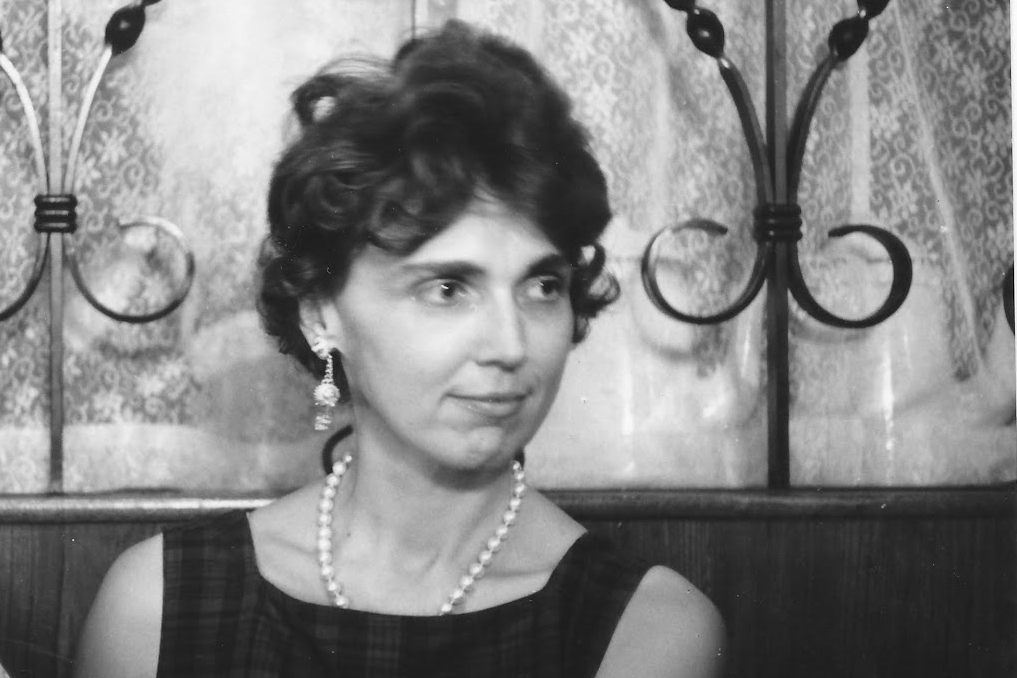
    Dr. Ashmead spoke English, Japanese, Greek, Chinese, French, Danish, and Italian.

    Dr. Ashmead was active with the Archaeological Institute of America, and her research was published by the American Journal of Archaeology, the journal of the American School of Classical Studies at Athens, and other groups.

    She married Haverford College English professor John Ashmead Jr. in 1949, and they spent the next two decades traveling the world while he completed Fulbright Scholar teaching assignments. They lived in Japan, Taiwan, and India, and later in Paris, Athens, and Florida.

    She spoke English, Japanese, Greek, Chinese, French, Danish, and Italian. “Her learning never stopped,” her family said.

    Ann Wheeler Harnwell was born Oct. 7, 1929, in Princeton, N.J. Her family moved to Wynnewood in 1938 after her father, Gaylord P. Harnwell, became chair of the physics department at the University of Pennsylvania. He became president of Penn in 1953.
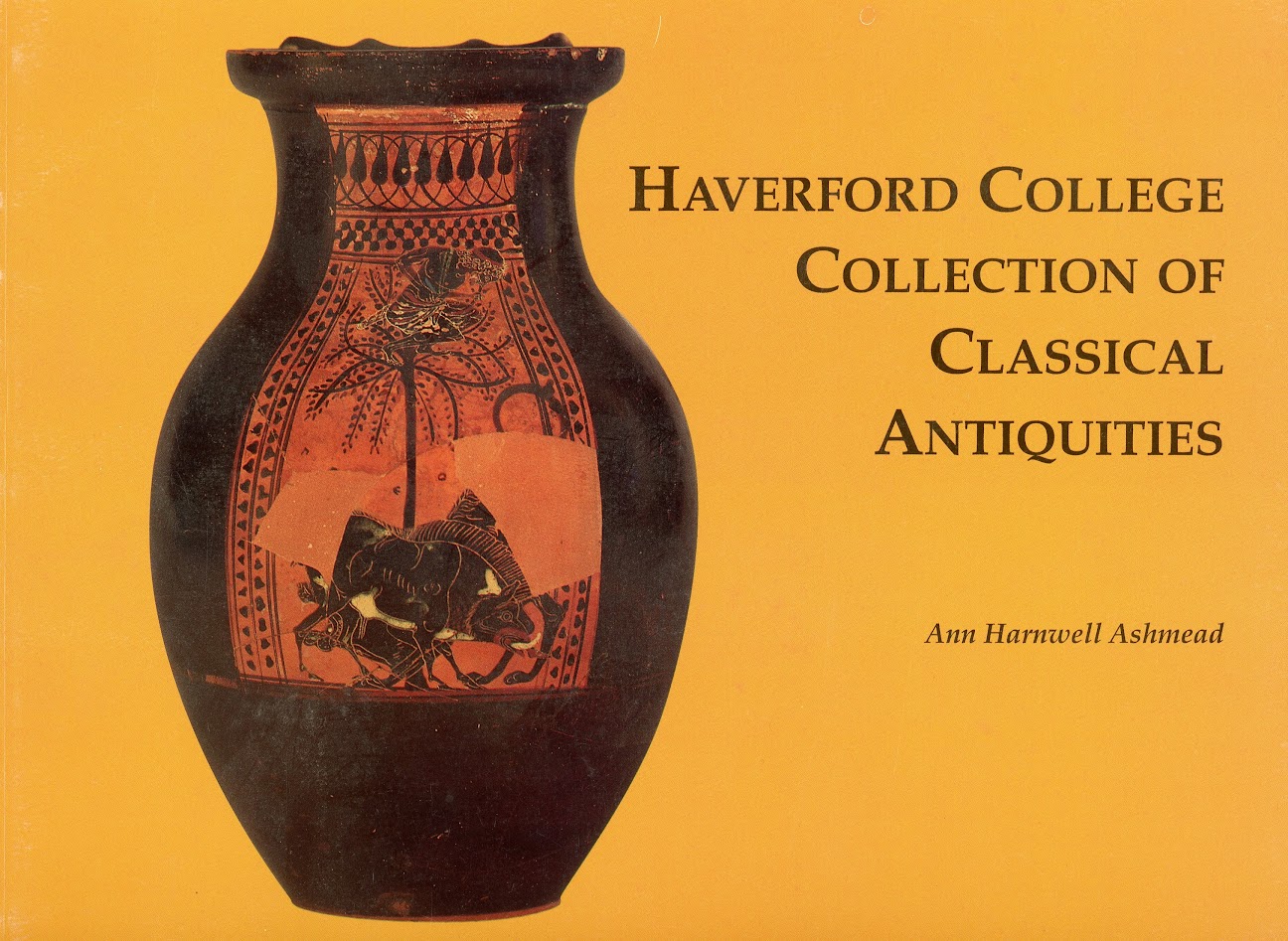
    Dr. Ashmead had many articles, catalogs, and books published over her long career.

    She graduated from Lower Merion High School in 1947 after spending the previous three years with her family in California. She earned bachelor’s and master’s degrees and a doctorate in classical archaeology at Bryn Mawr, and her 1959 doctoral thesis was titled: “A Study of the Style of the Cup Painter Onesimos.”

    On page 2, she wrote: “Such attributions of vases to an artist are a delicate business, the outcome of a long and intricate process of observation and analysis, often of tentative nature.”

    She and her husband had sons John III, Graham, and Gaylord, and daughters Louisa and Theodora. They divorced in 1976 but remained close friends until he died in 1992.

    Having grown up during the stock market crisis in the 1930s, Dr. Ashmead followed the market closely as an adult, and was thrifty and frugal, her family said.
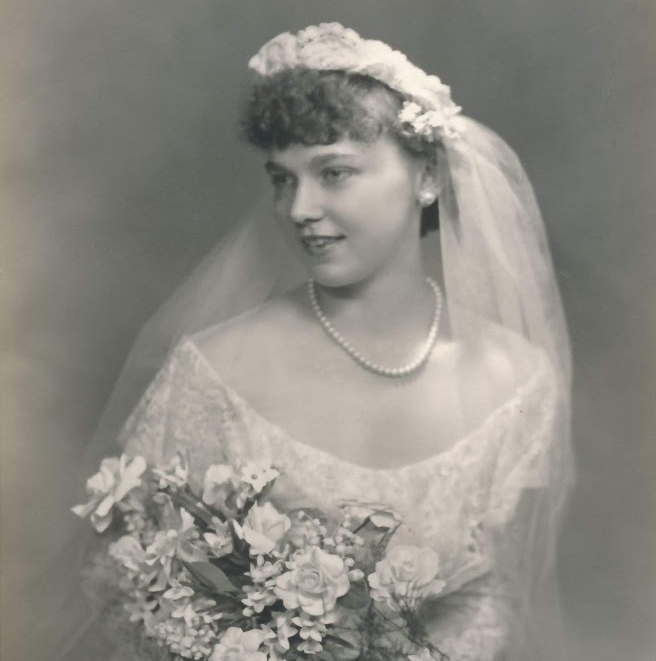
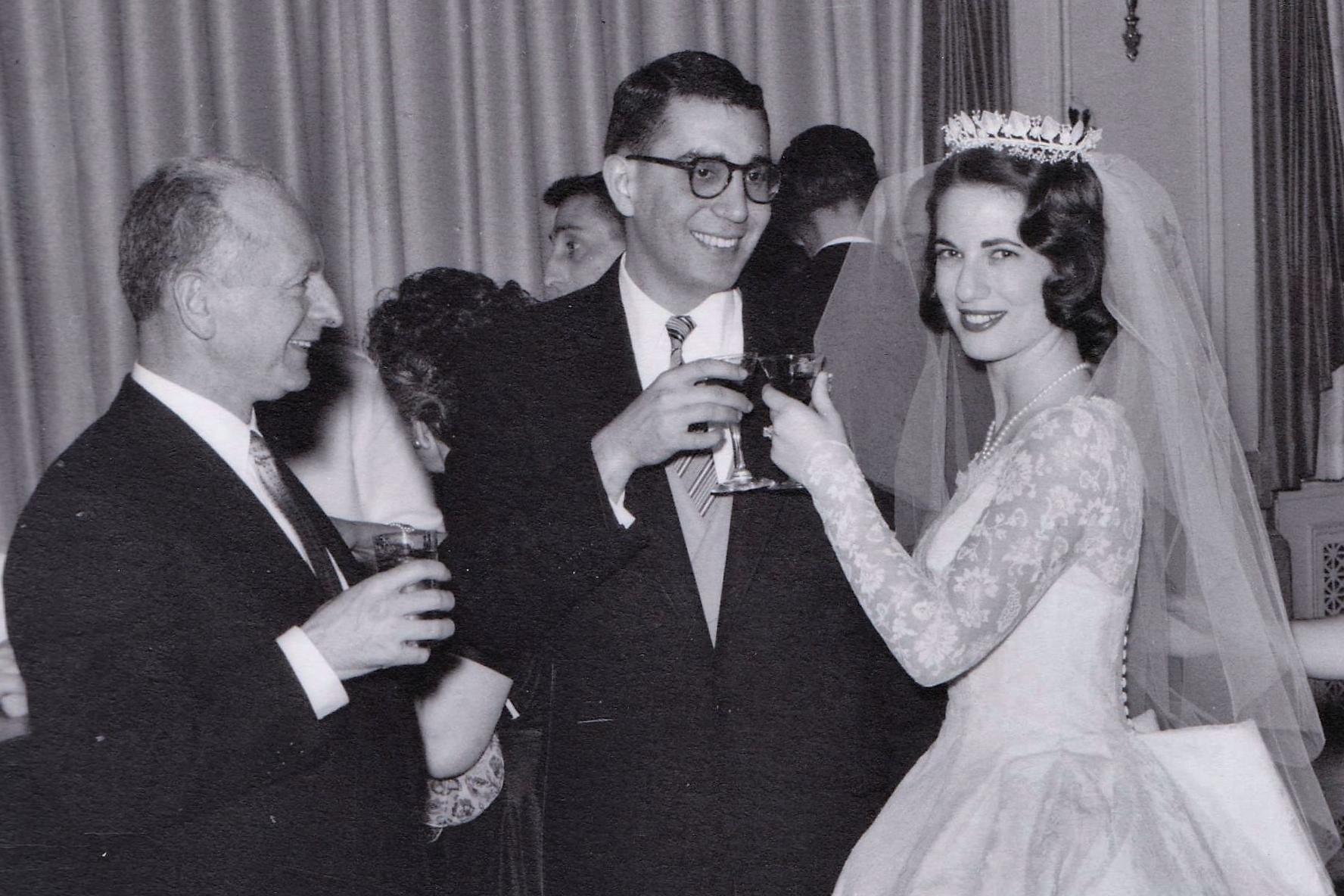
    Dr. Ashmead married English professor John Ashmead Jr. in 1949.

    She was an avid letter writer and reader, and her personal library featured more than 5,000 books. She volunteered for years at Bryn Mawr’s old Owl Bookstore and especially enjoyed reading to her children and grandchildren.

    She was on the board of the Haverford College Arboretum and a member of the Hardy Plant Society, the Henry Foundation for Botanical Research, and the Philadelphia Skating Club. She enjoyed dancing, organizing Easter egg hunts, and hosting birthday parties and family events.

    A fashionista in the 1960s and ’70s, she was adept at needle crafting, quilting, and sewing. She bred cats, painted, collected antiques, and researched her genealogy.

    She always made time for family no matter where in the world they were, and they said: “She was concerned if she was ever separated from a child and distraught if they were distraught.”
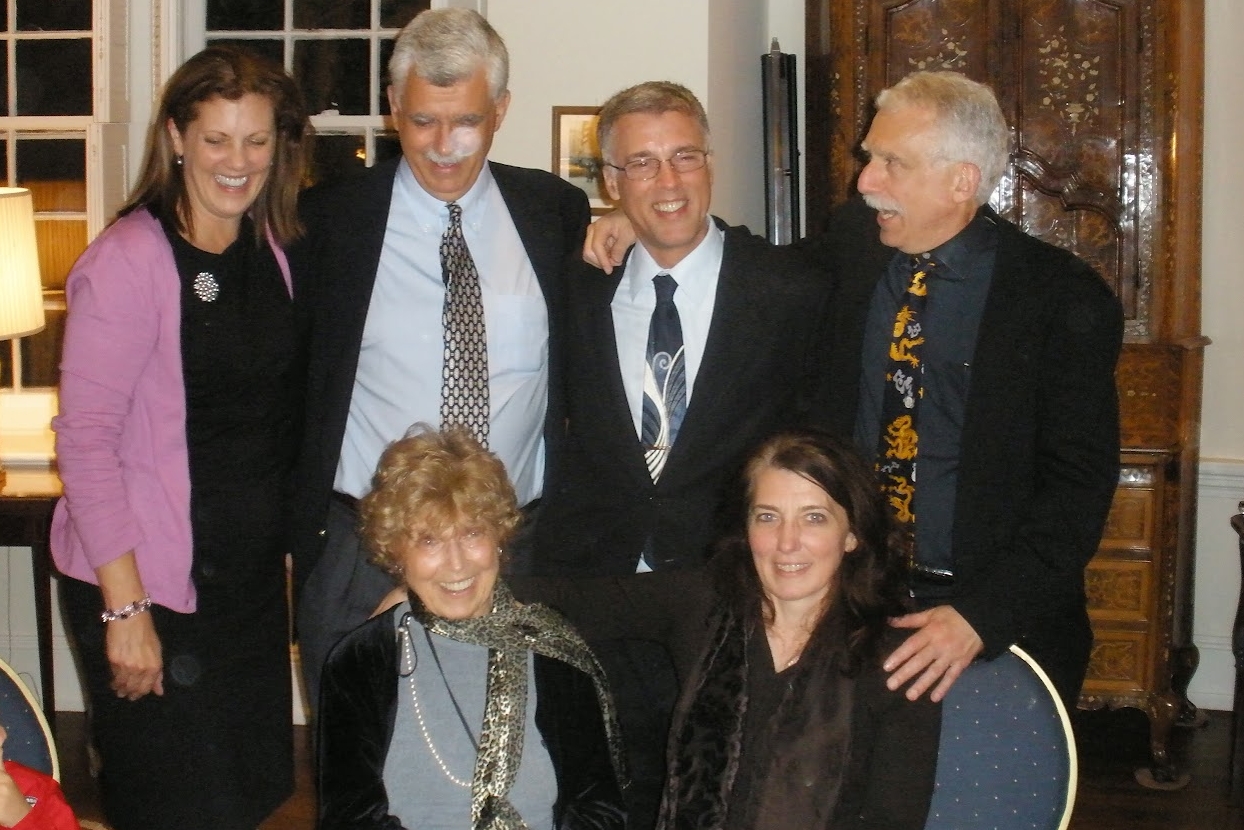
    Dr. Ashmead (front left) always made time for her family.

    She lived in Denmark for a few years and finally settled for good in Haverford in 1983. “She was interesting, smart, capable, strong, articulate, and fun to be around,” her daughter Theodora said. “She was solution-oriented. She sparkled.”

    In addition to her children, Dr. Ashmead is survived by six grandchildren, a sister, and other relatives. A brother died earlier.

    She requested that no services be held and donated her body to the Humanity Gifts Registry through Penn’s Perelman School of Medicine.

    Donations in her name may be made to the Haverford College Arboretum, 370 Lancaster Ave., Haverford, Pa. 19041.
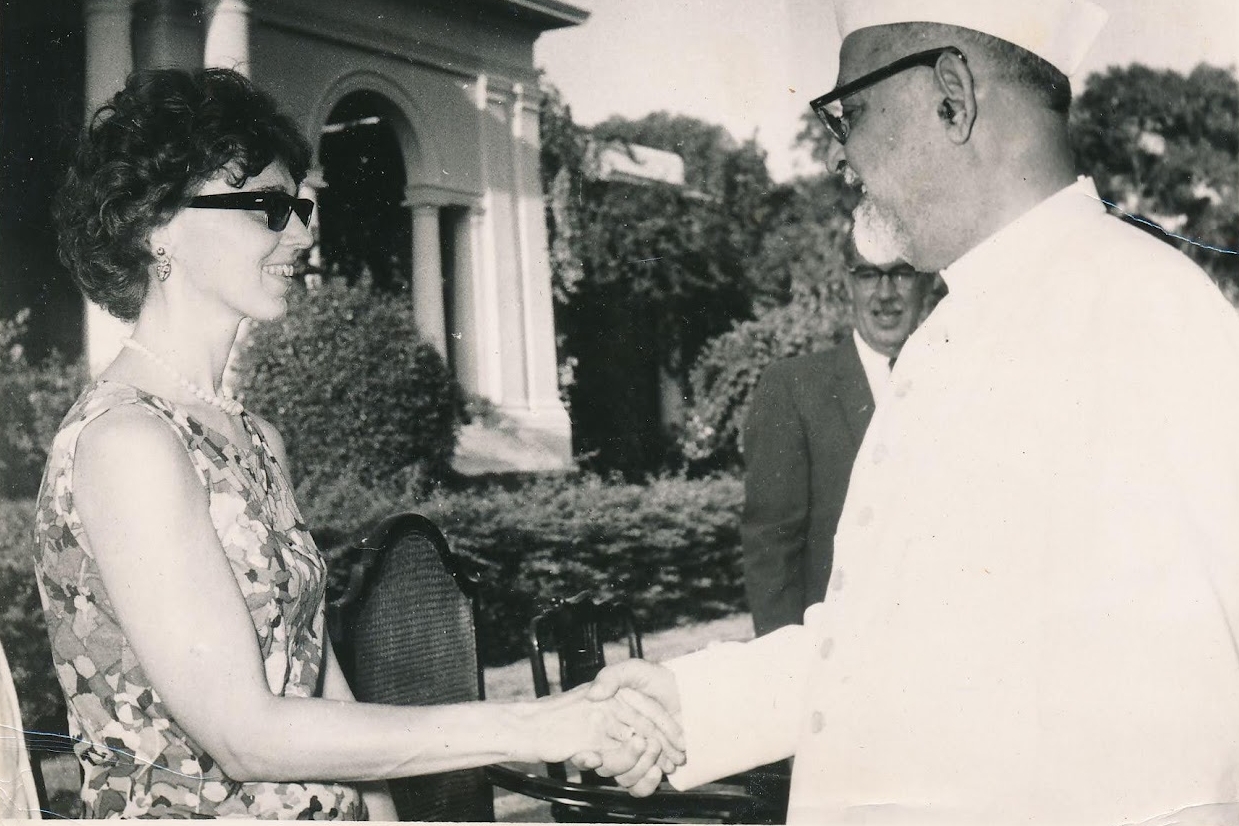
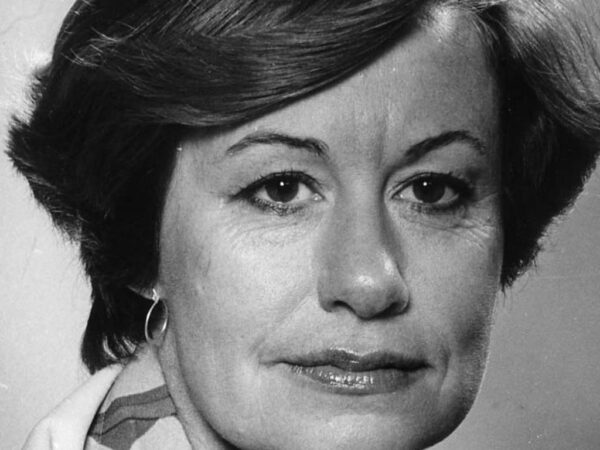
    Dr. Ashmead (left) met many dignitaries during her worldwide travels.
  • Myra MacPherson, trailblazing Washington Post journalist, has died at 91

    Myra MacPherson, trailblazing Washington Post journalist, has died at 91

    Myra MacPherson, a wide-ranging feature writer for the Washington Post’s Style section and an author whose books included a study of the competing demands of politics and marriage among power couples in Washington and a volume on the enduring traumas of the Vietnam War, died Feb. 2 in hospice in Washington. She was 91.

    The cause was congestive heart failure, said her son, Michael Siegel.

    When Ms. MacPherson applied for her first journalism job in 1956, with ambitions to cover major news stories, an editor at the Detroit Free Press informed her that he had no openings on the women’s page.

    “I said I wasn’t considering the women’s department,” she recalled, “and he looked at me as if I had said I just shot my mother or something. He said, ‘We have no women in the city room.’”

    She spent the early 1960s relegated to women’s issues and society coverage at the Washington Star and the New York Times before the Post’s top editor, Ben Bradlee, poached her in 1968 for a new features section called Style. She was promised a freewheeling mandate to cover contemporary affairs and personalities with the irreverent verve of a glossy magazine.

    Assigned to cover the New York Mets in 1969, the year the team won the World Series for the first time, Ms. MacPherson was denied the full access granted to her male colleagues, and she wrote a scathing story about “being treated like a non-eunuch in a harem.”

    As she recounted decades later in a letter to the Times, a columnist griped to her: “The next thing, you girls are going to want to get into the locker room.”

    “We don’t want to use the urinals,” Ms. MacPherson said she replied, “just the typewriters.”

    Her first book, The Power Lovers (1975), was an unblinking look at the pressures of Washington marriages. “I am his mistress,” Marian Javits, the wife of Sen. Jacob K. Javits (R., N.Y.) told her. “His work is his wife.”

    Ms. MacPherson conceived her book about Vietnam after watching the 1979 TV movie Friendly Fire. As a mother, she said, she was deeply moved by Carol Burnett’s performance as the grief-stricken parent of a dead Vietnam War soldier.

    “When I watched the show, I realized that I didn’t know anyone in Washington who had a son in combat,” she recalled in an interview with California’s Riverside Press-Enterprise. “The sons I knew were mostly those who had escaped to college, gone into the National Guard or who had protested the war.”

    The damage done by the Vietnam War was still fresh and in many circles was not a welcome subject for discussion when Ms. MacPherson began writing what became Long Time Passing: Vietnam and the Haunted Generation (1984).

    Long Time Passing examined the war and its aftermath through the lives of hundreds of people profoundly affected by the conflict.

    Ms. MacPherson included the perspectives of nurses, mothers, and wives as well as servicemen — some of whom said they were proud of what they did and some who said they were ashamed of it or traumatized by it. Some said they were deserters.

    She also interviewed historians and psychologists, and she helped bring the concept of posttraumatic stress disorder to wider attention. In its best passages, author Donald Knox wrote in his Times review, the book “sings, soars, explodes with feeling” and “shines a powerful light on the differences that divide this generation.”

    Myra Lea MacPherson was born in Marquette, Mich., on May 31, 1934, and grew up in Belleville, a town of 800 between Detroit and Ann Arbor. Her father worked for the camera company Argus, and her mother was a homemaker.

    Ms. MacPherson was editor in chief of her high school newspaper, and she became night city editor of the student newspaper at Michigan State University in East Lansing. She graduated in 1956 with a degree in journalism.

    After compiling the TV listings at the Free Press, she left for the Detroit News, where her professional experience improved, to a point. Assigned to cover the Indianapolis 500 in 1960, she said, she was the only female reporter at the race. She was denied access to the press box and the speedway’s Gasoline Alley, where drivers and their crews worked, and had to conduct interviews through chain-link fences along the track’s periphery.

    Her first marriage, to Washington sportswriter Morris Siegel, ended in divorce. In 1987, she married Jack Gordon, a liberal Democratic state senator from Miami Beach whom she met years earlier when covering an Equal Rights Amendment convention in Tallahassee. She and Gordon moved to Palm Springs, Calif., in 2001, but maintained a home in Washington. He died four years later after being struck by a car.

    Her daughter, Leah Siegel, a sports producer at ESPN, died of breast cancer in 2010. Survivors include her son, Michael Siegel, and three grandchildren.

    Ms. MacPherson, who left the Post in 1991, spent years contributing articles to Vanity Fair and other publications. Her books included She Came to Live Out Loud (1999), a look at dying and grief from the viewpoint of a woman diagnosed with breast cancer at 37; All Governments Lie (2006), a biography of the left-wing independent journalist I.F. Stone; and The Scarlet Sisters (2014), a dual biography of two fiercely independent 19th-century siblings, Victoria Woodhull and Tennessee Claflin.

    “I would definitely like to think I would have been out blazing a trail in Victorian times, probably in the liberal wing of the suffragist movement and also in journalism,” Ms. MacPherson told the website Edwardian Promenade, reflecting on her last book.

    “When I sought my first newspaper job, there were no women covering anything but society news, fashion,” she added. “I fought my way out of that niche and was one of the few women covering regular news. I don’t know if I could take the pummeling the sisters [Woodhull and Claflin] did, but in a much lesser way, women in the ’60s and ’70s were breaking new ground and I was among them.”

  • Chuck Negron, lead singer on ‘Joy to the World’ and other Three Dog Night hits, has died at 83

    Chuck Negron, lead singer on ‘Joy to the World’ and other Three Dog Night hits, has died at 83

    NEW YORK — Chuck Negron, a founding member of the soul-rock sensations Three Dog Night who sang lead on such hits as “One” and “Just an Old Fashioned Love Song and hollered the immortal opening line “Jeremiah was a bullfrog!” on the chart-topping “Joy to the World,” died Monday. He was 83.

    He died of complications from heart failure and chronic obstructive pulmonary disease at his home in the Studio City neighborhood of Los Angeles, according to publicist Zach Farnum.

    Mr. Negron and fellow vocalists Cory Wells and Danny Hutton were Los Angeles-based performers who began working together in the mid-1960s, originally called themselves Redwood and settled on Three Dog Night, Australian slang for frigid outback weather. Between 1969 and 1974, they were among the world’s most successful acts, with 18 top 20 singles and 12 albums certified gold for selling at least 500,000 copies.

    The group contributed little of its own material, but proved uniquely adept at interpreting others, reworking songs by such rising stars of the time as Randy Newman (“Mama Told Me Not to Come”), Paul Williams (“Just an Old-Fashioned Love Song”), and Laura Nyro (“Eli’s Coming”). No matter the originator, the sound was unmistakably Three Dog Night: The trio of stars worked themselves into a raved-up, free-for-all passion, as if each singer were attempting to vault in front of the others. “The Kings of Oversing,” the Village Voice would call them.

    Three Dog Night was so popular, and so in demand, it released four albums within 18 months. In December 1972, the band hosted and performed on the inaugural edition of Dick Clark’s New Year’s Rockin’ Eve.

    “We were really on a roll and very prolific,” Mr. Negron told smashinginterviews.com in 2013. “We were in the zone so to speak and really putting it out there. Back then, I don’t think it hurt us. It started hurting a little after that when there was just too much product. We were going to towns too many times a year. I remember getting off a plane in Dallas and thinking, ‘Wait a second. Weren’t we just here?’ Just thinking, ‘Oh, God, how are we going to sell out?’”

    Well, hello Jeremiah

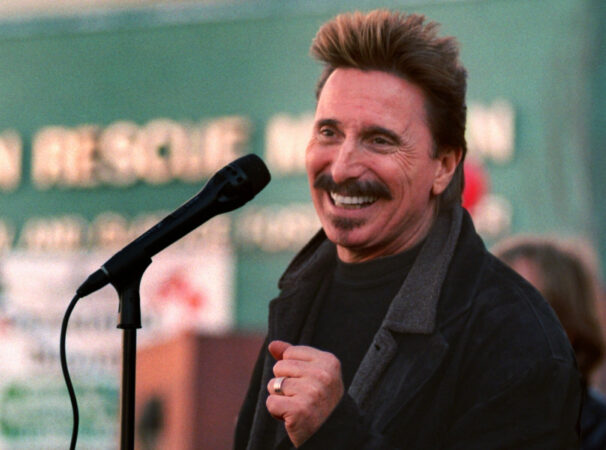
    Mr. Negron himself stood out for his drooping mustache, in contrast to his clean-shaven peers, and for his multioctave tenor. He helped transform “One,” a Harry Nilsson ballad, from a breakup song to a cry of helpless solitude. And he helped convince Wells and Hutton not to pass on what became their most famous song.

    “Joy to the World,” written by Hoyt Axton, shared the title and little else with the 18th century English hymn. Axton’s novelty anthem was a secular blessing — “Joy to the fishes in the deep blue sea, joy to you and me” — with carefree asides about women, rainbow-riding, and the friendship of a wine-guzzling bullfrog named Jeremiah. According to Mr. Negron, the other singers had twice turned down “Joy to the World” in his absence before Axton played him a demo.

    “When he started, I liked it immediately. I thought we could have some fun with it,” Mr. Negron told forbes.com in 2022. “We had some free time later, so we started jamming ‘Joy’ for fun. We didn’t have to be so cool all of the time, right? That opening line had to be screamed. Did that guy just say, ‘Jeremiah was a bullfrog’? I got up the scale to D, which is pretty high, and just screamed it out. When the band heard that, they went, ‘Holy crap, that’s great.‘”

    No one seemed to care what “Jeremiah was a bullfrog!” was supposed to mean; it became a catchphrase of the era. “Joy to the World” outsold all other songs in 1971, received two Grammy nominations and lived on through oldies radio stations and movie soundtracks, notably for The Big Chill and Forrest Gump. The song caught on so fast, and for so long, that Three Dog Night performed it at back-to-back Grammy ceremonies.

    Their other hits included “Black and White,” “Celebrate,” “Shambala,” and “Easy to Be Hard.” But by the mid-1970s, the band was burned out, feuding and self-destructing. They broke up in 1976, attempted the occasional reunion and settled in as an oldies act, with Hutton the only remaining original singer. Wells died in 2015, while Mr. Negron had dropped out for good in the mid-1980s, when his drug problems led to his being fired.

    Mr. Negron would call his memoir, published in 1998 and reissued 20 years later, Three Dog Nightmare. Chapter titles included “Making Millions and Stoned All the Time” and “Threw Up My Guts and Loved It.”

    After decades of estrangement between him and Hutton, the two men reconciled last year.

    Mr. Negron was married four times, most recently to his manager, Ami Albea Negron, and he is survived by five children His previous wives include Julie Densmore, former wife of drummer John Densmore of the Doors.

    Surviving a rock star’s life

    Born Charles Negron II in 1942, he was a New York City native who was still a toddler when his parents broke up: For a time, Negron lived in a foster home because his mother couldn’t afford to raise him and his twin sister, Nancy. He initially dreamed of playing basketball, but his life changed in adolescence when his best friend convinced him to try singing. He won a school talent show, and was soon singing professionally, at the Apollo and other venues around New York.

    After graduating from Hancock, a junior college in Santa Maria, Calif., Mr. Negron performed in clubs in Los Angeles and met Wells and Hutton, whose friends included Brian Wilson of the Beach Boys. They nearly signed with the Beach Boys’ Brothers Records before Wilson’s band mates, worried that their leader was using up his talents elsewhere, intervened. Mr. Negron, Wells and Hutton ended up at ABC-Dunhill, and recruited a backing band, including Floyd Sneed on drums, Joe Schermie on bass and Jimmy Greenspoon on keyboards.

    In his post-Three Dog Night years, Mr. Negron released several solo albums, including Joy to the World and Long Road Back, a companion to his memoir, and otherwise dedicated himself to helping others struggling with substance abuse. Before cleaning up in the 1990s — Sept. 17, 1991 — he had been so addicted to heroin and other drugs that he nearly died numerous times, lost his family and all of his money and descended from a luxurious villa in Hollywood Hills to sleeping on a mattress in a vacant lot.

    “That’s what drugs do. I don’t care if it gives you a hit song. What does it matter?” he told smashinginterviews.com. “The point is not if it helps you create, the point is it kills you! Are you willing to die because you wanted to try drugs to try a new experience? That’s the question. I’m in a town here where there are many who ain’t the same and never will be.”

  • Carl W. Schneider, longtime celebrated attorney and former SEC adviser, has died at 93

    Carl W. Schneider, longtime celebrated attorney and former SEC adviser, has died at 93

    Carl W. Schneider, 93, of Philadelphia, retired longtime attorney at the old Wolf, Block, Schorr, & Solis-Cohen law firm, former special adviser to the Securities and Exchange Commission, visiting associate professor at what is now the University of Pennsylvania Carey Law School, writer, poet, mentor, and volunteer, died Thursday, Dec. 18, of pneumonia at Pennsylvania Hospital.

    Mr. Schneider was an expert on corporate, business, and securities law, and he spent 42 years, from 1958 to his retirement in 2000, at Wolf, Block, Schorr, & Solis-Cohen in Philadelphia. He was adept at handling initial public offerings and analyzing stock exchange machinations, and he became partner in 1965 and chaired the corporate department for years.

    Although he did not plan to specialize in securities law after graduating from Penn’s law school in 1956, Mr. Schneider told the American Bar Association in 1999: “I found this type of work to be challenging, gratifying, stimulating, and educational.”

    He spent most of 1964 on leave from the law firm as a special adviser to the Securities and Exchange Commission’s Division of Corporation Finance in Washington. His recommendations to SEC officials regarding its public-offering process, disclosure system, civil liability rules, and arbitration procedure, many of which were ahead of their time, eventually led to modernization and reforms in the administration of federal securities laws. “I was cast in the role of the constructive critic,” he said in 1999.

    He chaired committees for the Philadelphia and American Bar Associations and was active in leadership roles with the American Law Institute and other groups. He clerked for Supreme Court Justice Harold H. Burton and Judge Herbert F. Goodrich of the U.S. Court of Appeals for the Third Circuit for two years after graduating from law school.

    He also taught classes as a visiting associate professor at Penn’s law school and lectured extensively elsewhere on the continuing legal education circuit. “I am aware of two personality traits that have shaped my career,” he said in 1999, “a need to fix things and a love of teaching.”

    He spent the 1978-79 school year as head of Penn’s Center for Study of Financial Institutions and said in 1999 that he would have taught full time had he not enjoyed his legal work so much. “I was a practitioner,” he said, “and I tried to give my classes useful training to do what most practitioners do.”

    Mr. Schneider wrote, cowrote, and edited dozens of scholarly articles, books, and pamphlets, including the celebrated Pennsylvania Corporate Practice and Forms manual in 1997. He also penned poetry, and used this stanza to open a chapter about boilerplate clauses in the Pennsylvania Corporate Practice and Forms manual:

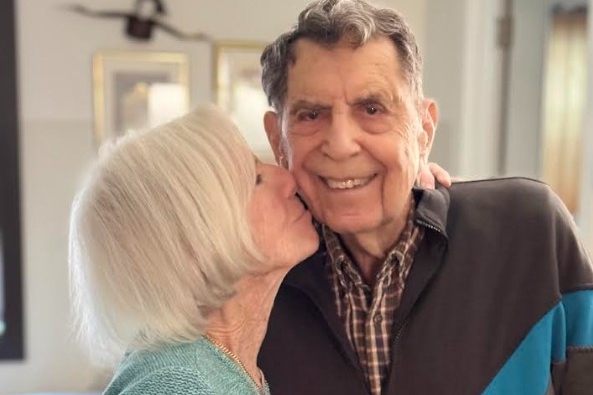
    Mr. Schneider and his wife, Mary Ellen, were inseparable for 68 years.

    “The ending stuff gets little thought/Like notice, gender, choice of laws/If badly done you may get caught/With a provision full of flaws.”

    He volunteered with what is now Jewish Family Service, the Jewish Federation of Greater Philadelphia, Abramson Senior Care, and Congregation Rodeph Shalom. He mentored countless other lawyers and students, and agreed in 1972 to a request by The Inquirer’s Teen-Age Action Line to be interviewed in his office for a high school student’s research project.

    “He was often described as brilliant, humble, a dry wit, and a great listener,” his family said in a tribute. “He gave everyone he spoke to the same time, attention, and respect.”

    He was quoted often in The Inquirer and lectured about legal matters at conferences and panels. He earned several service and achievement awards and said in 1999: “I suppose I am one of those compulsives who cannot see something in the world important to him that is broken without feeling the need to repair it.”

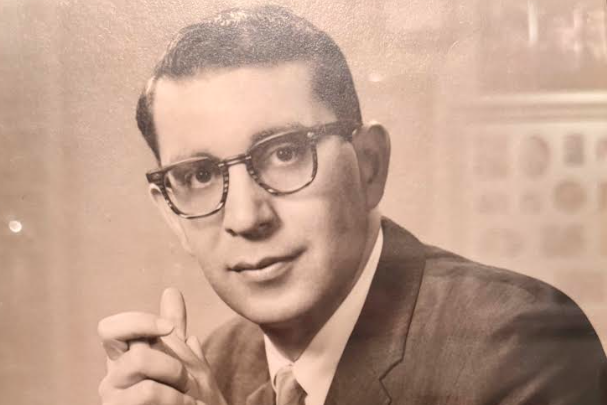
    Mr. Schneider and his wife, Mary Ellen, married in 1957.

    Carl William Schneider was born April 27, 1932, in the Wynnefield section of Philadelphia. His family later moved to Elkins Park, Montgomery County, and he graduated from Cheltenham High School in 1949.

    He knew he wanted to be a lawyer, like his father and grandfather, when he was young and said in a 2014 video interview at Penn that school was his favorite place. He earned a bachelor’s degree at Cornell University in 1953 and served on the law review at Penn.

    He met Mary Ellen Baylinson through a mutual friend, and they married in 1957. They had sons Eric, Mark, and Adam and a daughter, Cara, and lived for years in Elkins Park. He and his wife moved to Center City in 2005.

    Mr. Schneider enjoyed reading, bird-watching, photography, swimming, tennis, and springtime strolls through Rittenhouse Square. His favorite song was “The Gambler” by Kenny Rogers.

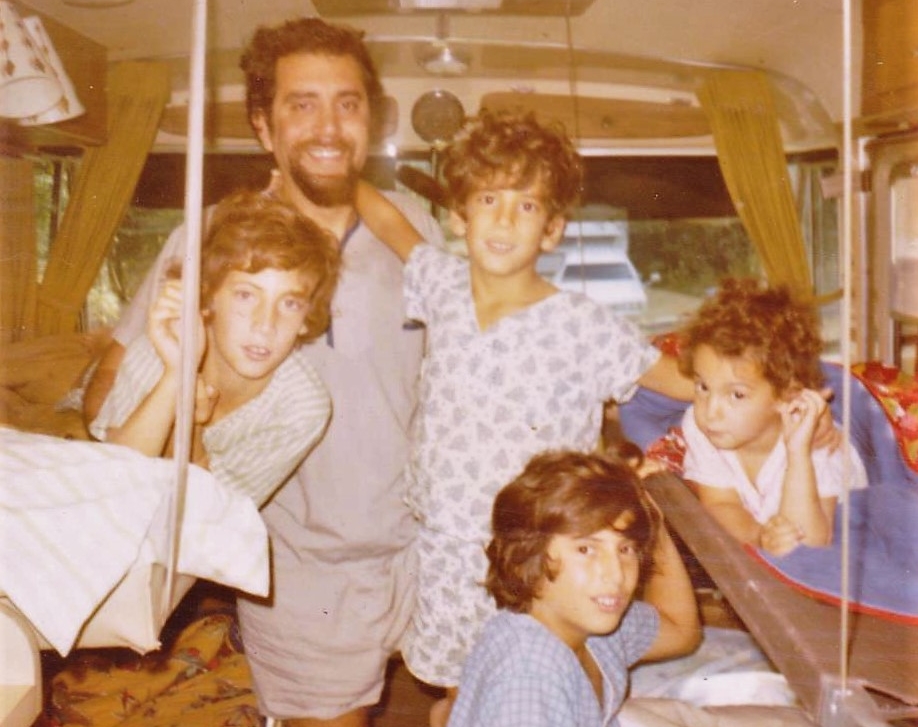
    Mr. Schneider drove his family across the country in a motorhome he nicknamed Herman.

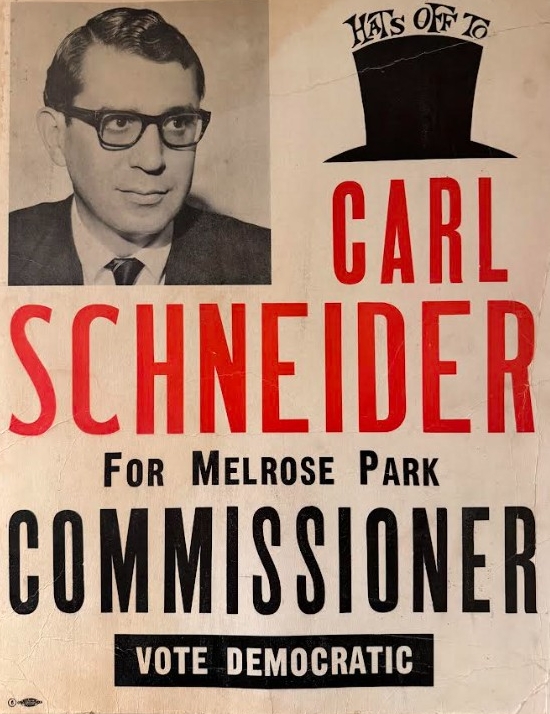
    He collected old-fashioned scales, spent quality time with family and friends on Long Beach Island, N.J., and drove cross-country on a family road trip in a motorhome he nicknamed Herman. He ran unsuccessfully for commissioner in Melrose Park in the 1960s.

    He made sure to be home every night for dinner and drew smiley faces inside the capital C when he signed his name. “He never judged, never overreacted,” his daughter said.

    His son Adam said: “He was a gentle man but forthright and direct.” His son Mark said: “He had a moral code on how to live a life and never deviated from it.”

    His son Eric said: “He left the world a better place.”

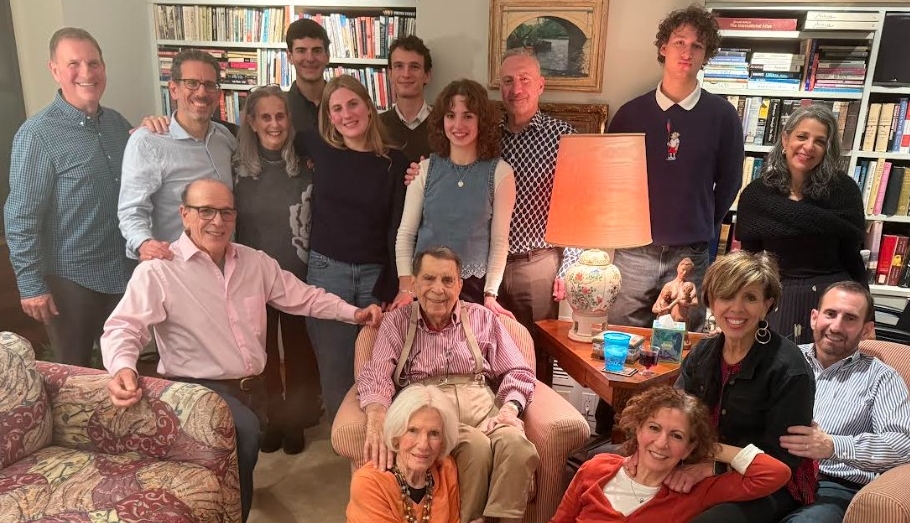
    Mr. Schneider (center) and his family spent many Thanksgivings together.

    In addition to his wife and children, Mr. Schneider is survived by three grandchildren; a sister, Julie; and other relatives.

    Services were held Monday, Dec. 22.

    Donations in his name may be made to Congregation Rodeph Shalom, 615 N. Broad St., Philadelphia, Pa. 19123.

    Mr. Schneider was interested in civic and community issues as well as legal affairs.
  • Woodie King Jr., founder of powerhouse off-Broadway New Federal Theatre, has died at 88

    Woodie King Jr., founder of powerhouse off-Broadway New Federal Theatre, has died at 88

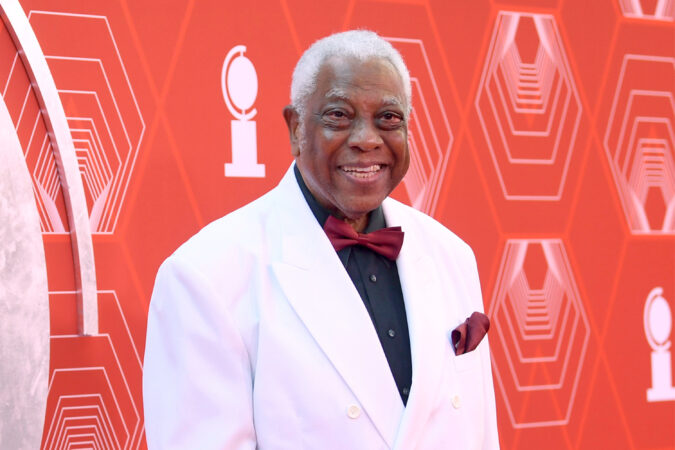
    NEW YORK — Woodie King Jr., an actor, director, and producer who founded the New Federal Theatre to give voice and employment to Black playwrights, actors, directors, designers, and young people entering the American theater, has died. He was 88.

    His off-Broadway theater company said Mr. King died Thursday at Weill Cornell Medical Center in New York City of complications from emergency heart surgery.

    Mr. King was inducted into the American Theatre Hall of Fame in 2012 and received the Tony Honors for Excellence in Theatre in 2020.

    “We have lost a giant,” said Emmy Award-winning actor and educator Erin Cherry on Instagram. “I am here because of Woodie King Jr. My very first introduction to the Black theater scene was the play ‘Knock Me a Kiss’ produced by New Federal Theatre. It changed my life. I’m forever grateful.”

    The New Federal Theatre produced such key works as Black Girl by J.E. Franklin, The Taking of Miss Janie by Ed Bullins — which jumped to Lincoln Center and won the Drama Critics Circle Award — and For Colored Girls Who Considered Suicide When the Rainbow is Enuf by Ntozake Shange, which landed on Broadway in 1976 and was nominated for the best new play Tony Award.

    The New Federal Theatre was a springboard for many playwrights, including Charles Fuller — later to win the Pulitzer Prize for A Soldier’s Play — who premiered two plays — In My Many Names and Days and The Candidate. David Henry Hwang premiered The Dance and the Railroad at the New Federal and would later win the Tony for M. Butterfly.

    Some performers who got early career boosts thanks to the company include Chadwick Boseman, Debbie Allen, Morgan Freeman, Phylicia Rashad, Denzel Washington, LaTanya Richardson Jackson, Samuel L. Jackson, and Issa Rae.

    Mr. King was born in Alabama, raised in Detroit, and earned his bachelor’s degree from Lehman College and later his master’s from Brooklyn College. He served as the cultural director of Mobilization for Youth for five years, before founding New Federal Theatre in 1970.

    Mr. King is survived by his wife, Elizabeth Van Dyke, and his three children, Geoffrey King, Michael King, and Michelle King Huger, whom he shared with ex-wife Willie Mae Washington, as well as five grandchildren.

    Tyler Fauntleroy, an actor who has toured in Hamilton, took to Instagram to recall working at the New Federal in 2019 on a show called Looking for Leroy that would change his career. “His belief in me came at a time when my own was at an all-time low. What a champion he was for Black artists. It was an honor to witness. Thank you, sir and rest easy.”

  • X.J. Kennedy, 96, prize-winning poet and educator

    X.J. Kennedy, 96, prize-winning poet and educator

    NEW YORK — X.J. Kennedy, an award-winning poet, author, translator, and educator who schooled millions of students through The Bedford Reader and other textbooks and engaged voluntary readers with his children’s stories and intricate, witty verse, died Sunday at 96.

    Mr. Kennedy died of natural causes at his home in Peabody, Mass., according to his daughter, Kate Kennedy.

    Born Joseph Charles Kennedy, he chose the professional name X.J. Kennedy as a young man to avoid confusion with Joseph P. Kennedy, the former ambassador to Britain and father of President John F. Kennedy. Starting in the early 1960s, he turned out dozens of poetry and children’s books, contributed to the popular Bedford Reader and collaborated with the poet and onetime National Endowment for the Arts chair Dana Gioia on anthologies of poetry, drama, and fiction.

    “I write for three separate audiences: children, college students (who use textbooks), and that small band of people who still read poetry,” Mr. Kennedy once observed.

    The Bedford Reader, established in the early 1980s, is a widely used composition book for college students that has included everything from the Rev. Martin Luther King Jr.’s “I Have a Dream” speech to the classic Shirley Jackson story “The Lottery.” Mr. Kennedy edited the Reader along with his wife, Dorothy; Jane E. Aaron and Ellen Kuhl Repetto. The goal, they stated, was “to show you how good writers write” and not to feel “glum if at first you find an immense gap” between yourself, and, say, E.B. White.

    Mr. Kennedy’s poems, some published in the New Yorker and the Atlantic, were rhyming vignettes on everyday and macabre matter such as bartending, aging, and the discovery of a severed arm. They were brief, often light-hearted in tone and dark and unsettling in content. In Innocent Times, Mr. Kennedy mocks the idea that the country was better off during the “Mad Man” era, looking back to when doctors “puffed their cigarettes” and “cheap thermometer and thermostat/leaked jets of mercury like poison darts.” The poem Fireflies shifts abruptly from the calm of a twilight lawn to the horrors of the war on terrorism.

    Complacently we watched them glow

    Like kindly lantern lights that sift

    Through palm fronds in Guantánamo

    On the torture squad’s night shift

    His awards included a Los Angeles Times book prize, the Poetry Society of America’s Robert Frost Medal for lifetime achievement, and the Jackson prize from Poets & Writers for an “American poet of exceptional talent who deserves wider recognition.” He taught English at the University of Michigan, the Woman’s College of the University of North Carolina (now UNC-Greensboro), and Tufts University, among other schools. In the 1970s, he served as the Paris Review’s poetry editor.

    A native of Dover, N.J., he was an intrepid young man who wrote and published science fiction and helped found the Spectator Amateur Press Association, a leading science fiction fandom organization whose members have included Harlan Ellison, Robert Silverberg, and Lenny Kaye. After attending Seton Hall and Columbia University, Mr. Kennedy served briefly in the Navy in the 1950s. At the University of Michigan, he worked for several years on a Ph.D. in the 1950s and 1960s and never finished his dissertation. But he did meet his future wife and professional collaborator, Dorothy Mintzlaff, who died in 2018. They had five children and six grandchildren.

    His first book, Nude Descending a Staircase: Poems, Songs, a Ballad, was published in 1961. His children’s books included One Winter Night in August and Other Nonsense Jingles and the novel The Owlstone Crown, while In a Prominent Bar in Secaucus is a compilation of poems from 1955 to 2007 that ends with a bon voyage for the text itself.

    Go, slothful book. Just go

    Fifty years slopping around the house in your sock-feet

    Sucking up to a looking-glass

    Rehearsing your face. Why

    Don’t you get a job?

  • Demond Wilson, who played Lamont on ‘Sanford and Son,’ has died at 79

    Demond Wilson, who played Lamont on ‘Sanford and Son,’ has died at 79

    Demond Wilson, who found fame in the 1970s playing Lamont on Sanford and Son and went on to become a minister, has died. He was 79.

    Mark Goldman, a publicist for Mr. Wilson, confirmed to the Associated Press that he died following complications from cancer on Friday.

    “A devoted father, actor, author, and minister, Demond lived a life rooted in faith, service, and compassion. Through his work on screen, his writing, and his ministry, he sought to uplift others and leave a meaningful impact on the communities he served,” Goldman said in an emailed statement.

    Mr. Wilson was best known as the son of Redd Foxx’s comically cantankerous Fred Sanford character in a sitcom that was among the first to feature a mostly Black cast when it began airing in 1972.

    The thoughtful Lamont had to put up with his junkyard owner father’s schemes, bigotry, and insults — most famously, and repeatedly, “You big dummy!”

    The show was a hit for its six seasons on NBC but ended when ABC offered Foxx a variety show.

    Mr. Wilson was born in Valdosta, Ga., and grew up in the Harlem section of Manhattan, according to the biography on his website.

    He served in the U.S. Army in Vietnam and was wounded there, and he returned to New York and acted on stage before heading to Hollywood.

    A guest appearance on All in the Family in 1971 led to his best-known role. Norman Lear produced both shows.

    Mr. Wilson told AP in 2022 that he got the role over comedian Richard Pryor.

    “I said, ‘C’mon, you can’t put a comedian with a comedian. You’ve got to have a straight man,’” he said he told the producers.

    After Sanford and Son ended, Mr. Wilson starred in the shorter-lived comedies Baby I’m Back and The New Odd Couple. He later appeared in four episodes of the show Girlfriends in the 2000s, along with a handful of movie roles.

    Though he returned to the screen at times, he told the Los Angeles Times in 1986 that the acting life was not for him: “It wasn’t challenging. And it was emotionally exhausting because I had to make it appear that I was excited about what I was doing.”

    Mr. Wilson became a minister in the 1980s.

    He is survived by his wife, Cicely Wilson, and their six children.

  • Catherine O’Hara, Emmy-winning comedian of ‘Schitt’s Creek’ and ‘SCTV’ fame, has died at 71

    Catherine O’Hara, Emmy-winning comedian of ‘Schitt’s Creek’ and ‘SCTV’ fame, has died at 71

    LOS ANGELES — Catherine O’Hara, a gifted Canadian-born comic actor and SCTV alum who starred as Macaulay Culkin’s harried mother in two Home Alone movies and won an Emmy as the dramatically ditzy wealthy matriarch Moira Rose in Schitt’s Creek, died Friday. She was 71.

    Ms. O’Hara died at her home in Los Angeles “following a brief illness,” according to a statement from her representatives at Creative Artists Agency. Further details were not immediately available.

    Ms. O’Hara’s career was launched with the Second City comedy group in Toronto in the 1970s. It was there that she first worked with Eugene Levy, who would become a lifelong collaborator — and her Schitt’s Creek costar. The two would be among the original cast of the sketch show SCTV, short for “Second City Television.” The series, which began on Canadian TV in the 1970s and aired on NBC in the U.S., spawned a legendary group of esoteric comedians that Ms. O’Hara would work with often, including Martin Short, John Candy, Andrea Martin, Rick Moranis, and Joe Flaherty.

    Ms. O’Hara would win her first Emmy for her writing on the show.

    Eugene Levy (from left), Annie Murphy, Daniel Levy, and Catherine O’Hara, cast members in the series “Schitt’s Creek,” pose for a 2018 portrait.

    Her second, for best actress in a comedy series, came four decades later, for Schitt’s Creek, a career-capping triumph and the perfect personification of her comic talents. The small CBC series created by Levy and his son, Dan, about a wealthy family forced to live in a tiny town would dominate the Emmys in its sixth and final season. It brought Ms. O’Hara, always a beloved figure, a new generation of fans and put her at the center of cultural attention.

    She told the Associated Press that she pictured Moira, a former soap opera star, as someone who had married rich and wanted to “remind everyone that (she was) special, too.” With an exaggerated Mid-Atlantic accent and obscure vocabulary, Moira spoke unlike anyone else, using words like “frippet,” “pettifogging” and “unasinous,” to show her desire to be different, Ms. O’Hara said. To perfect Moira’s voice, Ms. O’Hara would pore through old vocabulary books, “Moira-izing” the dialogue even further than what was already written.

    Ms. O’Hara also won a Golden Globe and two SAG Awards for the role.

    At first, Hollywood didn’t entirely know what to do with Ms. O’Hara and her scattershot style. She played oddball supporting characters in Martin Scorsese’s 1985 After Hours and Tim Burton’s 1988 Beetlejuice — a role she would reprise in the 2024 sequel.

    She played it mostly straight as a horrified mother who accidentally abandoned her child in the two Home Alone movies. The films were among the biggest box office earners of the early 1990s and their Christmas setting made them TV perennials. They allowed her moments of unironic warmth that she didn’t get often.

    Her co-star Culkin was among those paying her tribute Friday.

    “Mama, I thought we had time,” Culkin said on Instagram alongside an image from Home Alone and a recent recreation of the same pose. “I wanted more. I wanted to sit in a chair next to you. I heard you. But I had so much more to say. I love you.”

    Meryl Streep, who worked with O’Hara in Heartburn, said in a statement that she “brought love and light to our world, through whipsmart compassion for the collection of eccentrics she portrayed.”

    Roles in big Hollywood films didn’t follow Home Alone, but Ms. O’Hara would find her groove with the crew of improv pros brought together by Christopher Guest for a series of mockumentaries that began with 1996’s Waiting for Guffman and continued with 2000’s Best in Show, 2003’s A Mighty Wind, and 2006’s For Your Consideration.

    Best in Show was the biggest hit and best-remembered film of the series. She and Levy play married couple Gerry and Cookie Fleck, who take their Norwich terrier to a dog show and constantly run into Cookie’s former lovers along the way.

    “I am devastated,” Guest said in a statement to the AP. “We have lost one of the comic giants of our age.”

    Born and raised in Toronto, Ms. O’Hara was the sixth of seven children in a Catholic family of Irish descent. She graduated from Burnhamthorpe Collegiate Institute, an alternative high school. She joined Second City in her early 20s, as an understudy to Gilda Radner before Radner left for Saturday Night Live. (Ms. O’Hara would briefly be hired for “SNL” but quit before appearing on air.)

    Nearly 50 years later, her final roles would be as Seth Rogen’s reluctant executive mentor and freelance fixer on The Studio and a dramatic turn as therapist to Pedro Pascal and other dystopia survivors on HBO’s The Last of Us. Both earned her Emmy nominations. She would get 10 in her career.

    “Oh, genius to be near you,” Pascal said on Instagram. “Eternally grateful. There is less light in my world.”

    Earlier this month, Rogen shared a photo on Instagram of him and Ms. O’Hara shooting the second season of “The Studio.”

    She is survived by her husband, Bo Welch, a production designer and director who was born in Yardley; sons Matthew and Luke; and siblings Michael O’Hara, Mary Margaret O’Hara, Maureen Jolley, Marcus O‘Hara, Tom O’Hara, and Patricia Wallice.

  • Dan McQuade, award-winning writer, tireless community activist, and ‘Philadelphia institution,’ has died at 43

    Dan McQuade, award-winning writer, tireless community activist, and ‘Philadelphia institution,’ has died at 43

    Even as a child, Dan McQuade let his imagination run wild. “What are you doing?” his mother, Denise, would ask if she hadn’t heard any noise from his bedroom for a while. “I’m making stories,” he would reply.

    Later, as a young man about town, his compassion for fellow Philadelphians inspired his father, Drew. Dan volunteered to give blood often, donated brand-new sneakers to other guys in need, and continually reached out to people he saw struggling with drug abuse and homelessness. “His kindness was what I loved about him the most,” his father said.

    Dan McQuade was already an award-winning writer, blogger, and journalist when he met his future wife, Jan Cohen, online in 2014. To her, his jovial humor, wide-ranging intelligence, and shoulder-length hair made him unique in her circle. “I thought he was too cool for me,” she said.

    As it turned out, they were all spot on. Mr. McQuade used his quirky creativity to write memorable blogs and freelance stories about culture and sports for The Inquirer, the Daily News, the New York Times, Sports Illustrated, and other publications. He was a cofounder and visual editor at Defector Media and worked previously for Deadspin, Philadelphia Magazine, Philadelphia Weekly, and other outlets.

    His empathy, likely inspired by his parents, his wife said, led him to toil tirelessly for charitable nonprofits such as the Everywhere Project, Back on My Feet, and Prevention Point. “Service was always part of his life,” his wife said.

    His coolness, as unconventional as it sometimes was, made those he encountered feel cool, too. Molly Eichel, an Inquirer editor and longtime friend, said: “He was annoyingly smart and incredibly kind.”

    Dan McQuade died Wednesday, Jan. 28, of neuroendocrine cancer at his parents’ home in Bensalem. He was 43. His birthday was Jan. 27.

    Mr. McQuade’s annual Wildwood T-shirt report was a favorite of his many readers and fans.

    “It’s incredibly hard for me to imagine living in a Philadelphia without Dan McQuade,” said Erica Palan, an Inquirer editor and another of Mr. McQuade’s many longtime friends. “He understood Philadelphians better than anyone because he was one: quirky and funny, competitive and humble, loyal and kind.”

    A journalism star at the University of Pennsylvania in the early 2000s, Mr. McQuade was a writer, sports editor, and columnist for the school’s Daily Pennsylvanian, and managing editor of its 34th Street Magazine. He earned two Keystone Press awards at Penn, was the Daily Pennsylvanian’s editor of the year in 2002, and won the 2003 college sports writing award from the Philadelphia Sportswriters Association.

    He went on to create Philadelphia Weekly’s first blog, “Philadelphia Will Do,” and was a finalist for the Association of Alternative Newsmedia’s best blogger award. He served an internship at the Bucks County Courier Times in Levittown and worked for a while at the Northeast News Gleaner.

    Often irreverent, always inventive, he filed thousands of notable stories about, among other things, the Wildwood T-shirt scene, the origin of “Go Birds,” sneaker sales, Donald Trump, Wawa hoagies, the Philly accent, parkway rest stops, the Gallery mall, soap box derbies, and Super Bowls. His stories sparkled with research and humor.

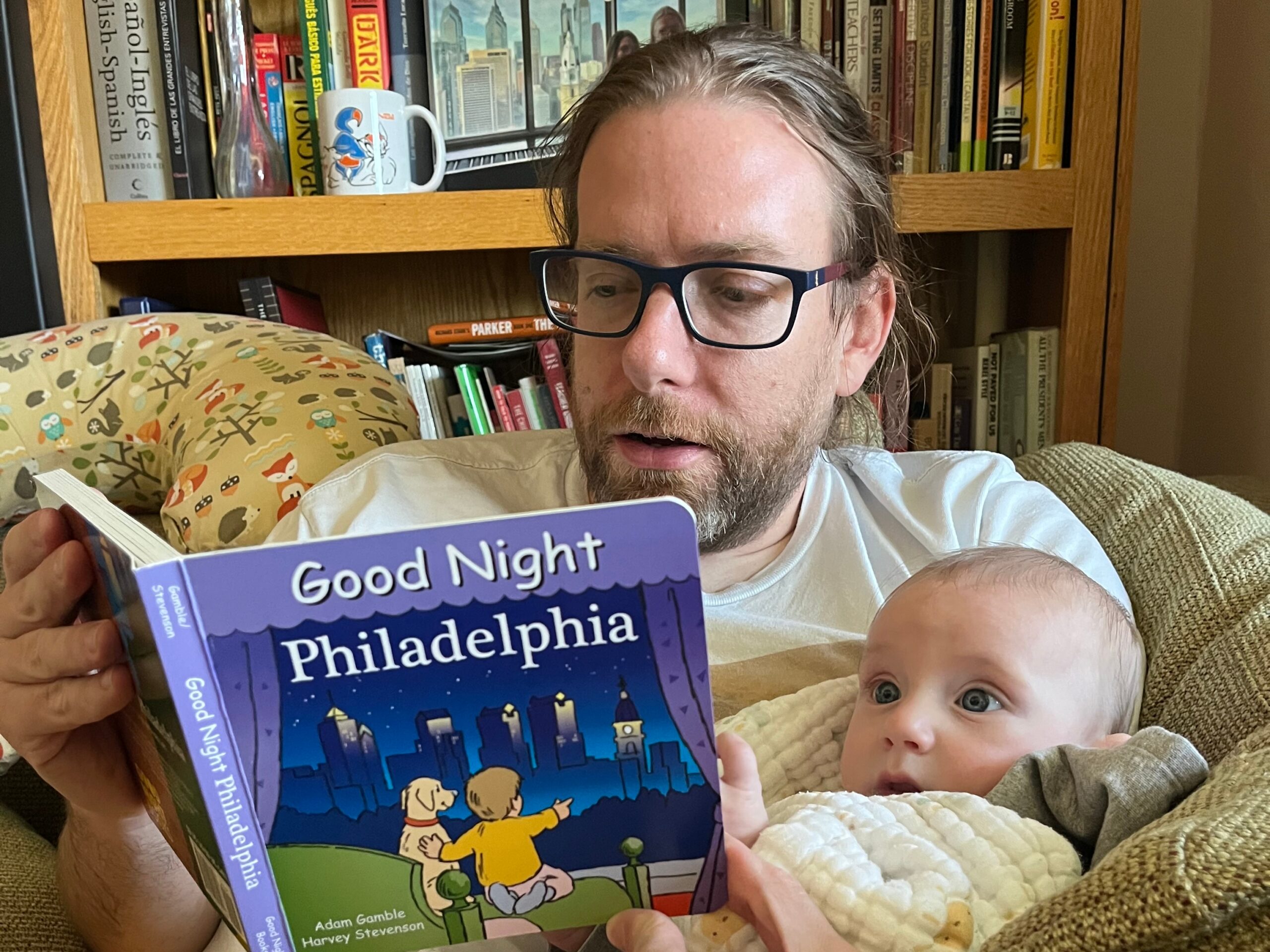
    An avid reader himself, Mr. McQuade enjoyed reading local tales to his son, Simon.

    “Dan was a truly authentic and engaging person,” Tom Ley, editor-in-chief at Defector, said in an online tribute. “His curiosity was relentless, and his interests were varied and idiosyncratic.”

    For example, Mr. McQuade wrote in Philadelphia Magazine in 2013 that Sylvester Stallone’s famous training-run montage in Rocky II — it started in South Philly and ended two minutes of screen time later atop the Art Museum steps — actually showed city scenes that would have had the actor/boxer run more than 30 miles around town. “Rocky almost did a 50K,” Mr. McQuade wrote. “No wonder he won the rematch against Apollo!”

    In 2014, he wrote in Philadelphia Magazine about comedian Hannibal Buress calling Bill Cosby a rapist onstage at the old Trocadero. The story went viral, and the ensuing publicity spurred more accusations and court cases that eventually sent Cosby to jail for a time.

    When he was 13, Mr. McQuade wrote a letter to the editor of the Daily News that suggested combining the Mummers Parade with Spain’s running of the bulls. Crossing Broad’s Kevin Kinkead said he had “an innate gift for turning the most random things into engaging reads.”

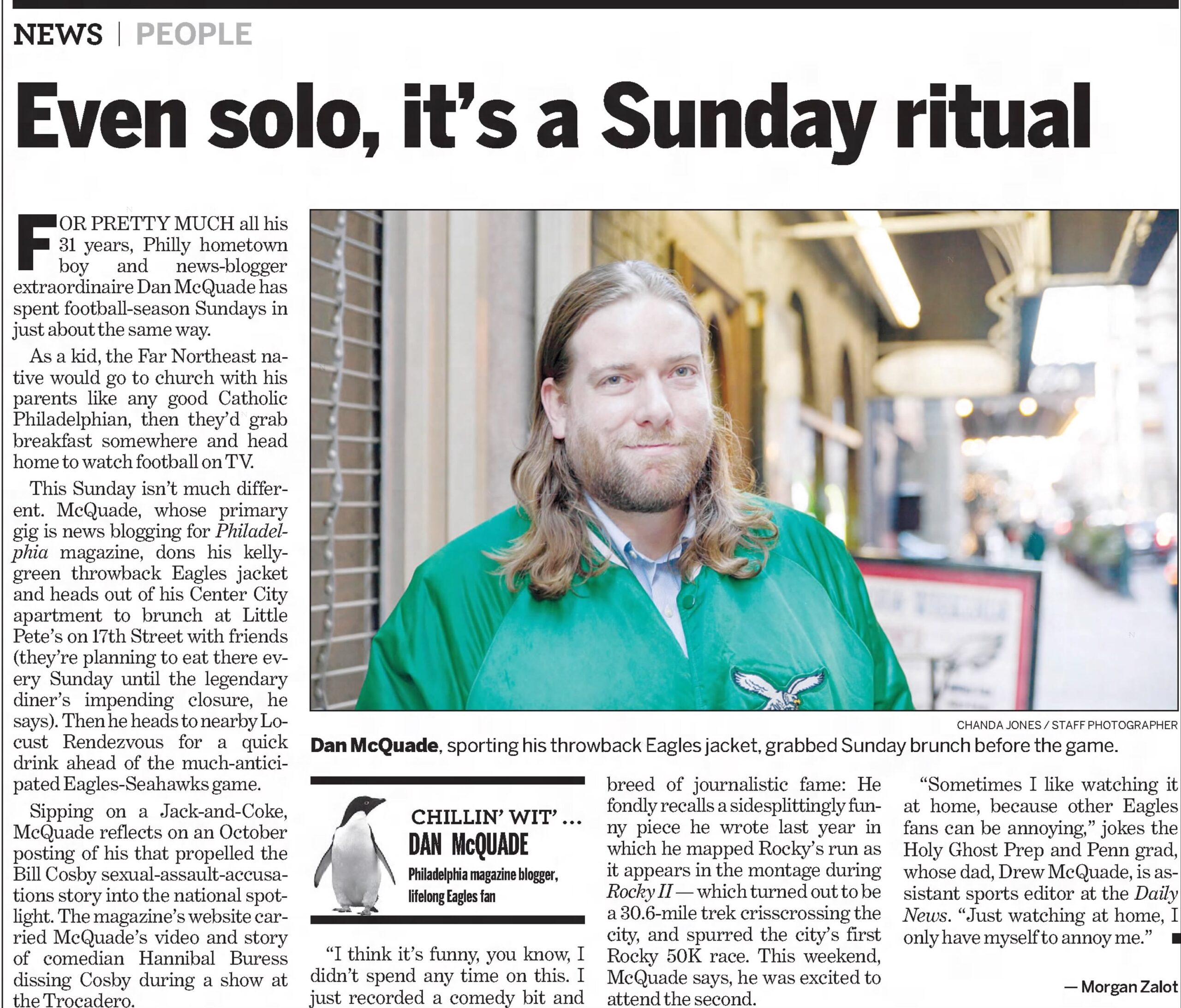
    This story about Mr. McQuade appeared in the Daily News in 2014.

    “Without Dan’s voice, Philly Mag wouldn’t be Philly Mag,” editor and writer Brian Howard said in a tribute on phillymag.com. “And, I’d argue, Philadelphia wouldn’t quite be Philadelphia.”

    Other colleagues called him “a legend,” “a Philadelphia institution,” and “the de facto mayor of Philadelphia” in online tributes. Homages to him were held before recent Flyers and 76ers games.

    “Sometimes,” his wife said, “he inserted himself into stories, so readers had a real sense of who he was because he was so authentic.”

    Daniel Hall McQuade was born Jan. 27, 1983, in Philadelphia. His father worked nights at the Daily News for years, and the two spent many days together when he was young hanging around playgrounds and skipping stones across the creek in Pennypack Park.

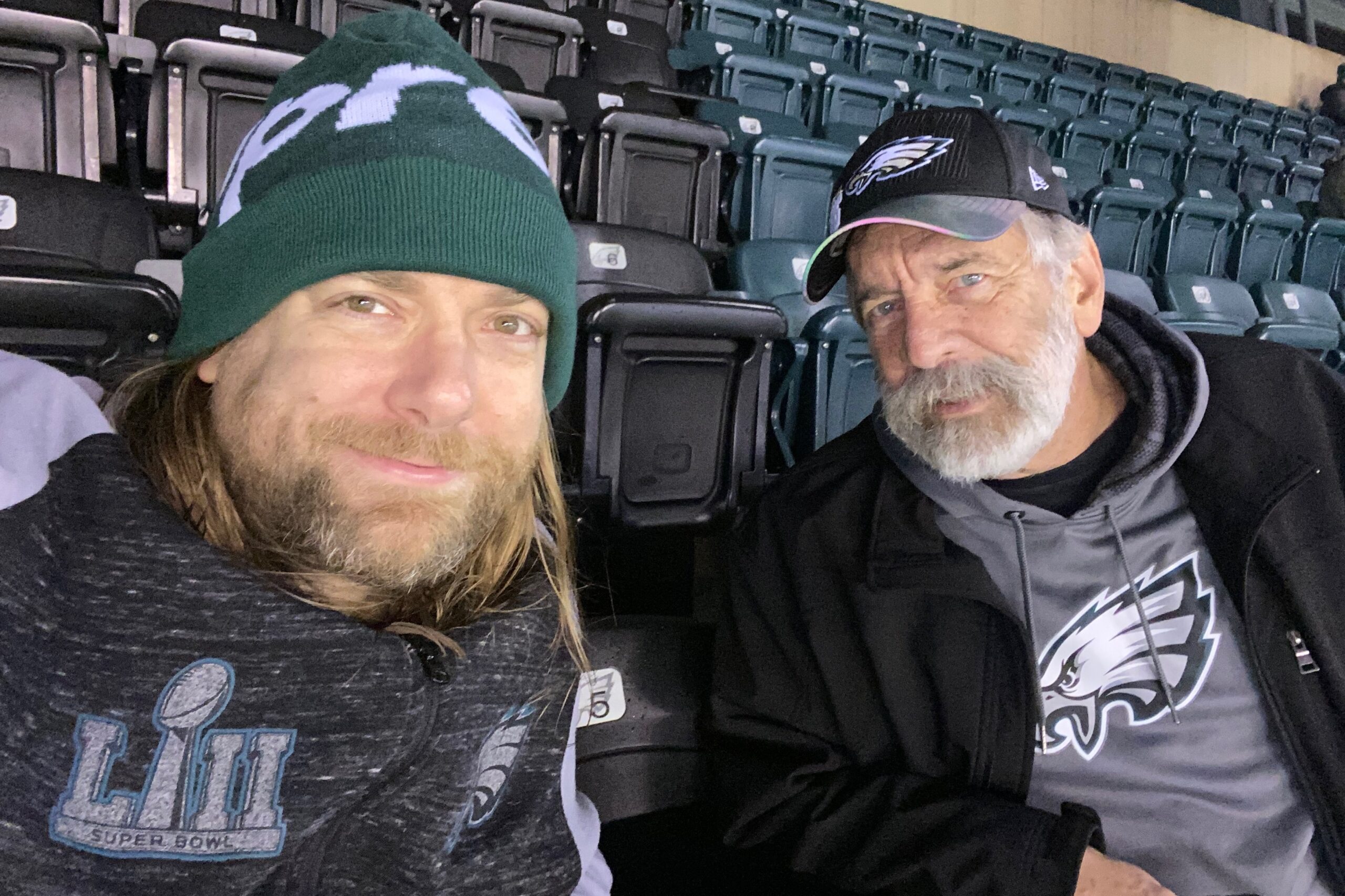
    Mr. McQuade (left) and his father, Drew, shared a love of Philly sports and creative writing.

    Later, they texted daily about whatever came to mind and bonded at concerts, Eagles games, and the Penn Relays. He grew up in the Northeast, graduated with honors from Holy Ghost Preparatory School in Bensalem, and earned a bachelor’s degree in English at Penn in 2004.

    He overcame a serious stutter as a teen and played soccer and basketball, and ran cross-country and track at Holy Ghost. He married Jan Cohen in 2019 and they had a son, Simon, in 2023. They live in Wissahickon.

    Mr. McQuade was a voracious reader and an attentive listener. “He never wanted to stop learning,” his wife said. He enjoyed going to 76ers games with his mother and shopping for things, his father said, “they didn’t need.”

    He was mesmerized by malls, the movie Mannequin, the TV series Baywatch, and his wife’s cat, Detective John Munch. During the pandemic, he and his wife binged all 11 seasons of Baywatch.

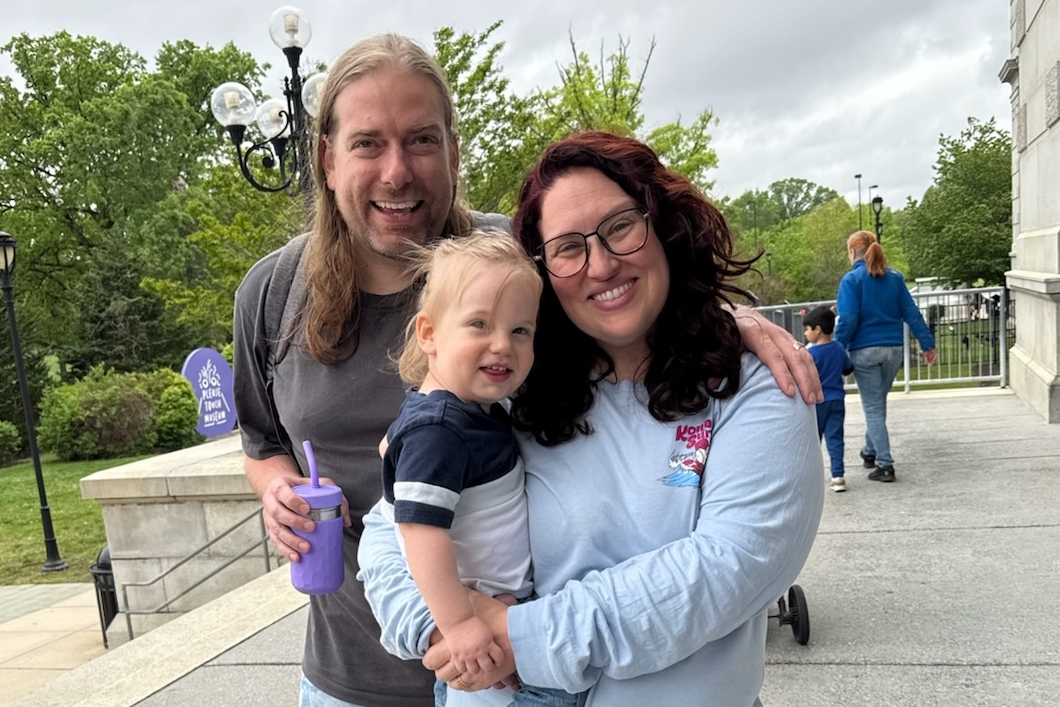
    Mr. McQuade doted on his wife, Jan, and their son, Simon.

    He could be loud, his mother said, and Molly Eichel described his laugh as “kind of a honk.” His friend and colleague Alli Katz said: “In 50 years I’ll forget my own name. But I’ll remember his laugh.”

    He was a vintage bootleg T-shirt fashionista, and his personal collection numbered around 150. He named Oscar’s Tavern on Sansom Street as his favorite bar in a recent podcast interview and said he would reluctantly pick a pretzel over a cheesesteak if that was the choice.

    In September, Mr. McQuade wrote about his illness on Defector.com under the headline “My Life With An Uncommon Cancer.” In that story, he said: “Jan has been everything. My son has been a constant inspiration. My parents are two of my best friends, and I talk to them every day. Jan’s parents have been incredible.”

    He also said: “I believe there are no other people on earth with my condition who are in as fortunate a situation. … For the past thousand words you have been reading about a bad break I got, but if only everyone in my position had it this good.”

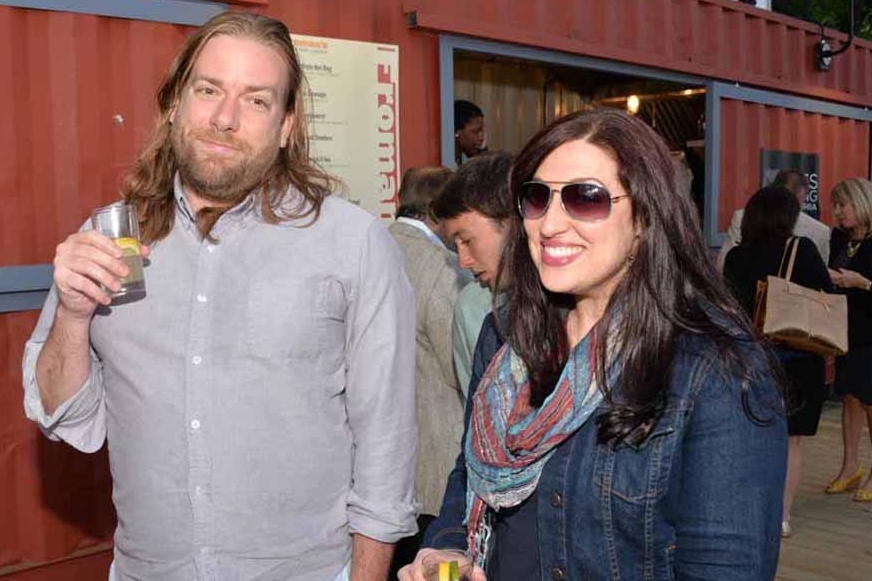
    Mr. McQuade and his wife, Jan Cohen, married in 2019.

    His wife said: “He was truly the best guy.”

    In addition to his wife, son, and parents, Mr. McQuade is survived by his mother-in-law, Cheryl Cohen, and other relatives.

    Visitation with the family is to be from 9 to 10 a.m. Thursday, Feb. 5, at St. Martha Parish, 11301 Academy Rd., Philadelphia, Pa. 19154. Mass is to follow from 10 to 11 a.m.

    Donations in his name may be made to the Everywhere Project, 1733 McKean St., Philadelphia, Pa. 19145.

  • TikTok star Shirley Raines, known for bringing meals and respect to people on Skid Row, dies at 58

    TikTok star Shirley Raines, known for bringing meals and respect to people on Skid Row, dies at 58

    Shirley Raines, a social media creator and nonprofit founder who dedicated her life to caring for people experiencing homelessness, has died, her organization Beauty 2 The Streetz said Wednesday. She was 58.

    Ms. Raines was known as “Ms. Shirley,” to her more than 5 million TikTok followers and to the people who regularly lined up for the food, beauty treatments, and hygiene supplies she brought to Los Angeles’ Skid Row and other homeless communities in California and Nevada.

    Ms. Raines’ life made an “immeasurable impact,” Beauty 2 The Streetz wrote on social media.

    “Through her tireless advocacy, deep compassion, and unwavering commitment, she used her powerful media platform to amplify the voices of those in need and to bring dignity, resources, and hope to some of the most underserved populations,” the organization said.

    Ms. Raines’ cause of death was not released, but the organization said it would share additional information when it is available.

    Ms. Raines had six children. One son died as a toddler — an experience that left her a “very broken woman,” Ms. Raines said in 2021 when she was named CNN’s Hero of the Year.

    “It’s important you know that broken people are still very much useful,” she said during the CNN award ceremony.

    That deep grief led her to begin helping homeless people.

    “I would rather have him back than anything in the world, but I am a mother without a son, and there are a lot of people in the street that are without a mother,” she said. “And I feel like it’s a fair exchange — I’m here for them.”

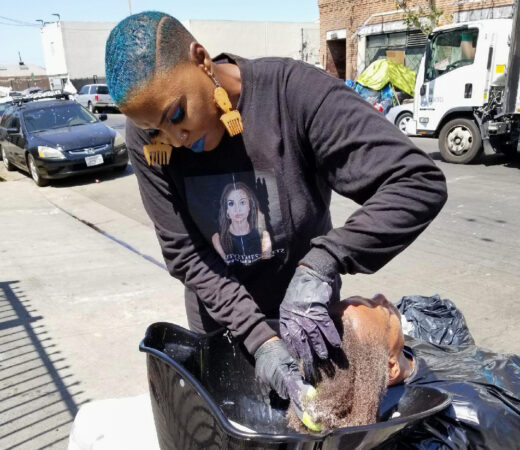
    Ms. Raines began working with homeless communities in 2017. On Monday, Ms. Raines posted a video shot from inside her car as she handed out lunches to a line of people standing outside her passenger window. She greeted her clients with warm enthusiasm and respect, calling them “King,” or “Queen.”

    One man told her he was able to get into an apartment.

    “God is good! Look at you!” Ms. Raines replied, her usual cheerfulness stepping up a notch. In a video posted two weeks earlier, she handed her shoes to a barefoot child who was waiting for a meal, protecting the girl’s feet from the chilly asphalt.

    California’s homelessness crisis is especially visible in downtown Los Angeles, where hundreds of people live in makeshift shanties that line entire blocks in the notorious neighborhood known as Skid Row. Tents regularly pop up on the pavement outside City Hall. Encampments are increasingly found in suburban areas under freeway overpasses. A 2025 survey found that about 72,000 people were homeless on any given night across Los Angeles County.

    Crushow Herring, the art director of the Sidewalk Project, said Ms. Raines was both sentimental and protective of the homeless community. The Sidewalk Project uses art and peer empowerment programs to help people experiencing homelessness in Los Angeles.

    “I’ve been getting calls all morning from people, not just who live in Skid Row but Angelenos who are shocked” by Ms. Raines’ death, Herring said. “To see the work she did, and how people couldn’t wait to see her come out? It was a great mission. What most people need is just feeling dignity about themselves, because if they look better, they feel better.”

    Ms. Raines would often give people on the street a position working with her as she provided haircuts or handed out goods, Herring said.

    “By the time a year or two goes by, they’re part of the organization — they have responsibility, they have something to look forward to,” he said. “She always had people around her that were motivational, and generous and polite to community members.”

    Melissa Acedera, founder of Polo’s Pantry, recalled joining Raines every Saturday to distribute food when Beauty 2 The Streetz was first getting started. Ms. Raines remembered people’s birthdays and took special care to reach out to transgender and queer people who were often on the outskirts of Skid Row, she added.

    “It’s hard not to think of Shirley when I’m there,” Acedera said.

    In 2025, Ms. Raines was named the NAACP Image Award Winner for Outstanding Social Media Personality. Other social media creators lauded her work and shared their own grief online Wednesday.

    “Ms. Shirley was truly the best of us, love incarnate,” wrote Alexis Nikole Nelson, a foraging educator and social media creator known as “blackforager.”