Category: Opinion

  • I can’t shake the feeling that my new car thinks I’m an idiot

    I can’t shake the feeling that my new car thinks I’m an idiot

    My new car thinks I’m an idiot.

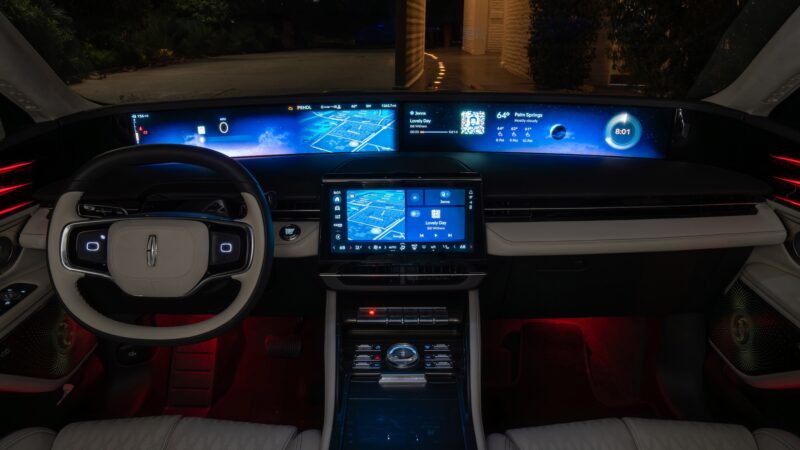
    Through a constant series of beeps, flashes, and messages, it badgers me in a manner that’s a cross between an unrepentant mansplainer and passive-aggressive nanny.

    It comes with all sorts of ways to protect me from being, well, an idiot. It has a “lane sway warning” in case I’m dozing off. It blocks searching for a new Sirius radio station while driving — presumably to prevent distracted driving. (All while displaying postage stamp-sized album cover images of the music being played.)

    “Lane departure!” it warns if I swerve six inches over the center line of a country road to avoid hitting a bicyclist.

    When the salesman started to explain how to work the headlights, he stopped midsentence to pronounce: “Just don’t touch it. The car already knows what to do.”

    In short, my new car yearns to be a driverless car, kind of like those Waymo taxis, which will soon be rolled out in Philly. It deigns to have me as its owner; tolerates — nay, suffers — my ownership of it. I’m surprised the dealer didn’t require my SAT scores in order to buy it.

    Take the day I tossed my yoga mat in the back seat after class, drove home, then spotted this yellow dashboard warning upon alighting: “Reminder, look in rear seat.”

    This was puzzling, until I realized it was a safety feature designed to prevent drivers from absentmindedly leaving their baby (or pet) behind during a heat wave.
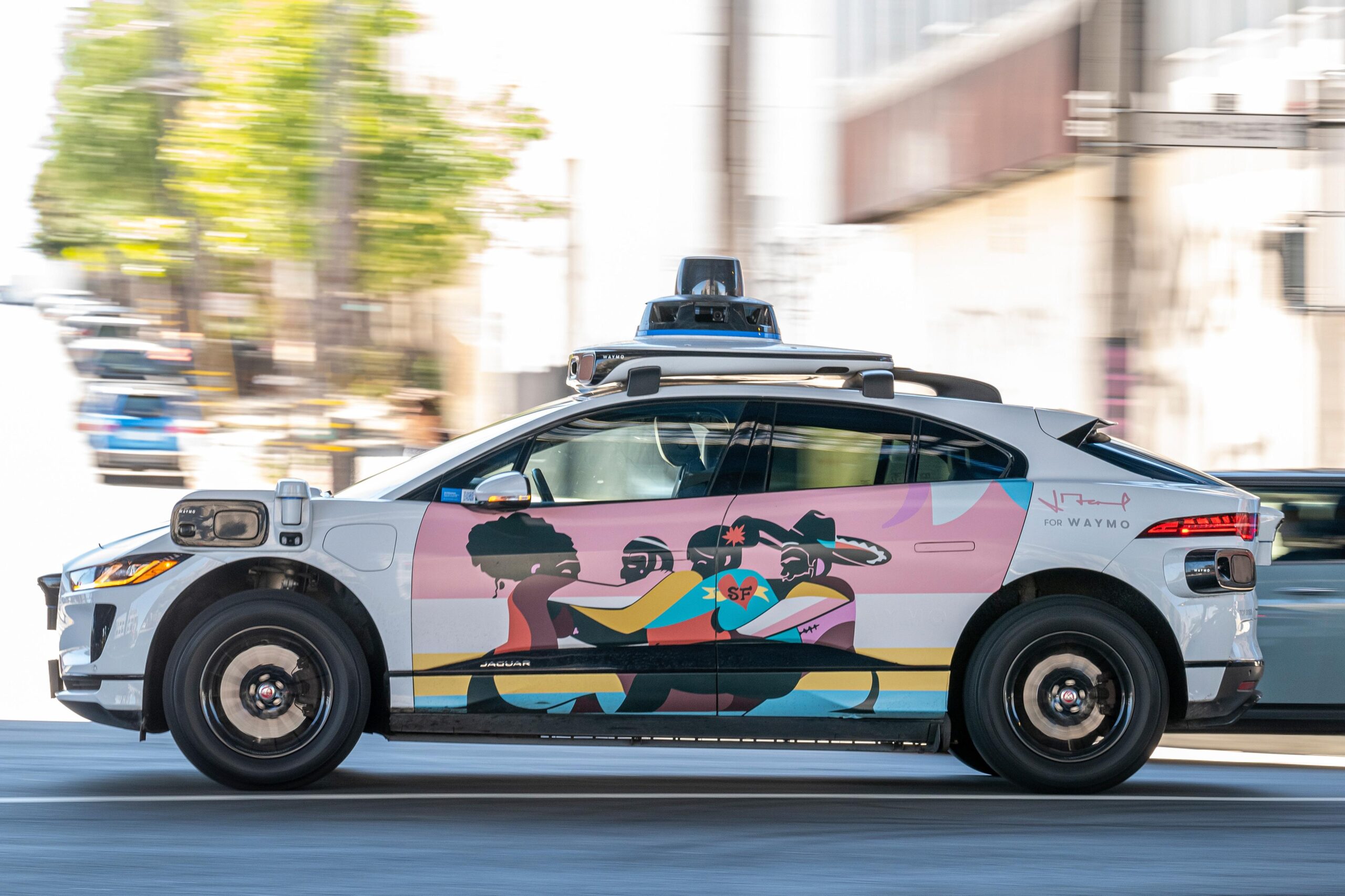
    A Waymo autonomous taxi in San Francisco, in August 2023.

    Well-intentioned, to be sure — yet an ineffectual mixture of condescending and vague. It merely hints at the problem, as if it is too polite to accuse someone of literal child endangerment. Better it should just come out and say, “Hey, don’t forget the baby, ya moron!”

    Or better yet: “I got you here safely. Do you need me to parent for you, too?”

    Whenever the warning flashes, I find myself muttering, “Calm down — it’s a yoga mat.”

    My friend’s Mercedes claims it can detect if she’s “fatigued,” barking a suggestion to take a break, and even flashing an image of a coffee cup. (Is Mercedes in cahoots with Big Coffee?)

    When the outdoor temperature hits 37 degrees, the dashboard flashes a little orange icon that looks like the Imperial fighter plane from Star Wars. It’s to warn me about possible ice — and functions even in bone-dry weather.

    This safety system — which I alternately sense as being either male or female — doesn’t seem to grasp that I just want to run errands, not pilot the Starship Enterprise.

    Fed up with its bewildering collection of multicolored dashboard symbols, I finally decided to read the instruction manual.

    Correction: Manuals. This car comes with three, and like the Harry Potter novels, each one is longer than the last.
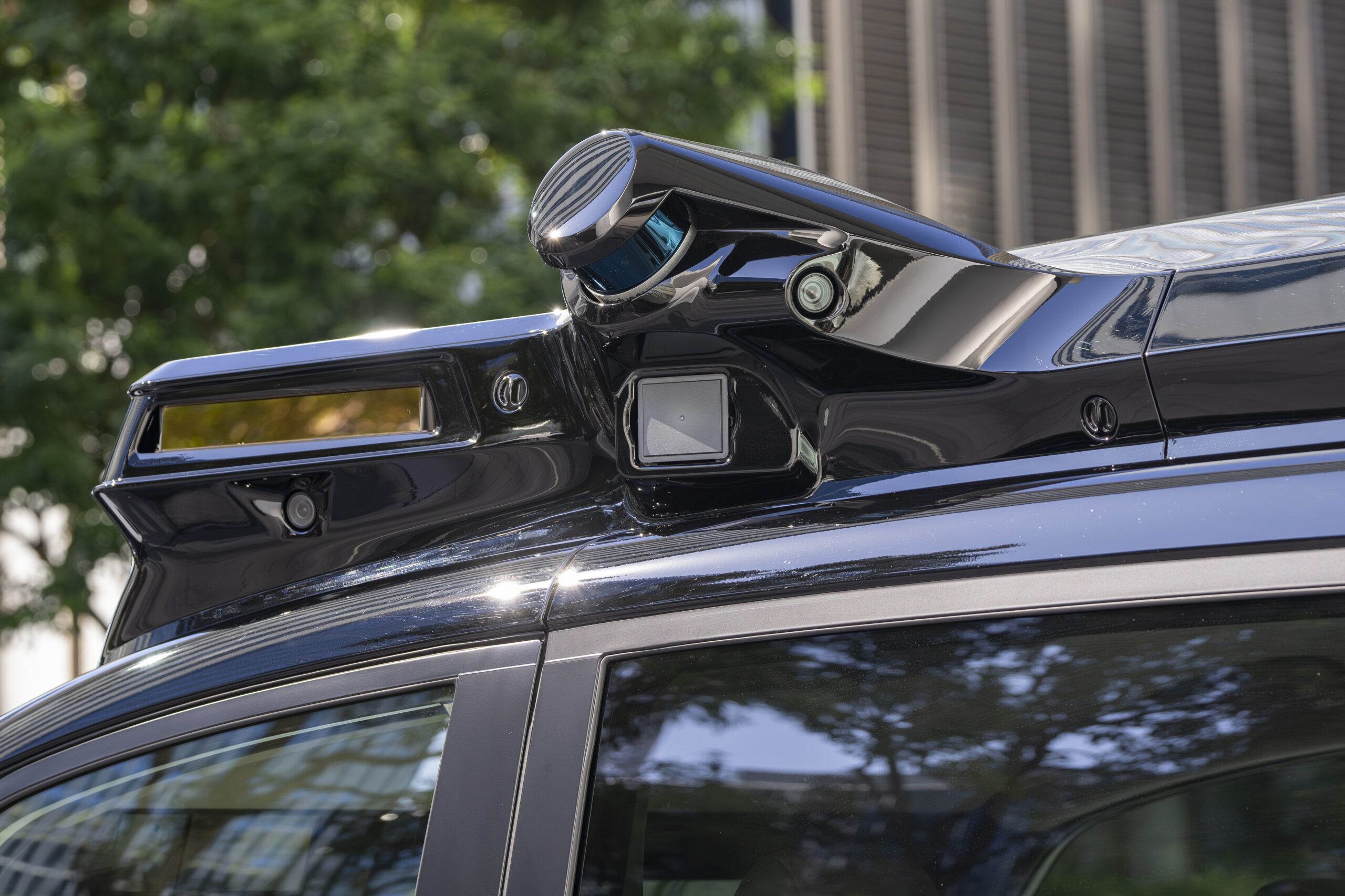
    This photo released by Nissan Motor Corp. shows sensors attached to the top of its car, which assist the Japanese automaker’s self-driving technology with computer functions, radars, and cameras.

    Here I learned the trademarked “Eyesight” driver assistance technology will detect pedestrians … unless they’re carrying an umbrella. Its disclaimer says it can also get confused by: ditches, fog, dirt, dust, strong sunlight, motorcycles, bicycles, animals, rain, and windshield washer fluid.

    The car has automatic braking, should you fail to notice that the car ahead of you has stopped. That feature, along with the rear-seat warning, has triggered the ire of Senate Republicans, who announced hearings on whether such safety features are worth the added cost.

    It also has keyless entry, using just a fob, whose presence the car can sense even when it’s in my purse or pocket.

    Last November, I was a volunteer poll worker on Election Day, which required that I depart in darkness to arrive at my polling place by 5 a.m. When I gathered my belongings to go inside, I couldn’t find my keys. I figured they had to be in the car, because otherwise the car wouldn’t run, right?

    I spent the morning searching my purse and backpack. No keys. I spent my lunch break rummaging around in the car to see if they’d fallen between or under the seats. Nope.

    I tried to start the car, on the premise that if the keys were somewhere in the car, it would start. It didn’t.

    I panicked. Since I was the poll worker assigned to bring the all-important USB stick containing our district’s voting tallies to the town clerk, it was vital that I depart as soon as possible once the polls closed. I shuddered at the prospect of going viral, with CNN announcing, “New Jersey’s machine vote tally is now final — with the exception of a single missing district.”

    Luckily, my husband brought over my spare keys. When the polls closed, I dropped off the voting equipment, then went to a music rehearsal. At its conclusion, as I leaned down to load my music bag into the back seat, I spotted something on the vehicle’s roof: my keys, nestled snugly against the luggage rack.

    Yes, I had driven over five miles, up proverbial hill and dale, with the key fob atop my car.

    And this know-it-all car, which can sense I’ve veered a centimeter across a lane line and barely tolerates my presence, never realized it.

    Hey, Mr./Ms. Smarty-Pants: Who’s the idiot now?

    Kathleen O’Brien is a retired newspaper columnist who lives with her know-it-all car in northwest New Jersey.
  • Trump doesn’t invent resentments — he senses which ones are newly safe to express

    Trump doesn’t invent resentments — he senses which ones are newly safe to express

    There is a particular kind of ugliness that does not merely offend but instructs. It tells us something about who we have been, who we are becoming, and what social permissions are quietly being expanded. Donald Trump’s circulation of an image portraying Barack and Michelle Obama as apes belongs squarely in that category. It is not a one-off lapse. It is a signal flare.

    This was not just racist imagery; it was historically literate racism. The ape trope is among the oldest tools in the dehumanization kit, refined over centuries and deployed whenever Black Americans have come too close to full belonging. One does not stumble into it by accident.

    To understand why this matters — and why it is likely to get worse — we have to situate Trump not just as a provocateur, but as a product of moral inheritance, cultural permission, and a long American tradition of racial degradation repackaged as “joking” or “provocation.”

    Trump has always been less an ideologue than an accelerant. He doesn’t invent resentments; he senses which ones are newly safe to express. His strategy, if we must call it that, is social intuition — an ability to intuit when cruelty will be rewarded rather than punished.

    That intuition was honed in a family and business culture that Mary Trump, his niece, describes in her 2020 memoir, Too Much and Never Enough: How My Family Created the World’s Most Dangerous Man, as emotionally brutal, hierarchical, and relentlessly contemptuous of perceived weakness. Empathy was treated as a liability; dominance as virtue.

    That worldview maps neatly onto racial hierarchy. When Trump rose to political prominence by falsely claiming Barack Obama was not really American, he was not engaging in policy disagreement. He was policing the boundaries of belonging. The ape image is simply that instinct stripped of euphemism.

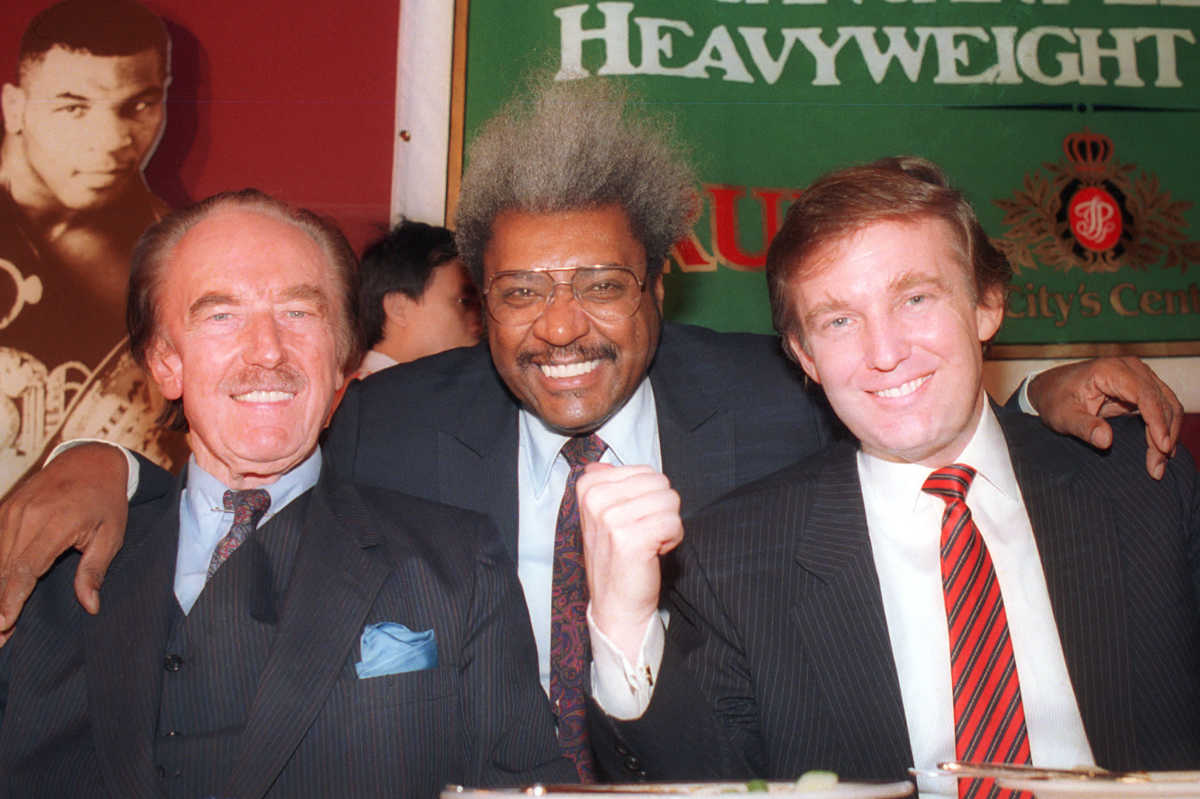
    From left, Fred Trump, boxing promoter Don King, and Donald Trump participate in a 1987 news conference in Atlantic City.

    It is also not untethered from history. Trump’s defenders bristle at any mention of white supremacist lineage, but history is stubborn. His father, Fred Trump, was arrested at a 1927 Ku Klux Klan rally in Queens — an event Trump has long dismissed without serious reckoning.

    Whether Fred Trump was a member or merely present is ultimately less important than what this moment symbolizes: Trumpism did not emerge in a vacuum. It grew in soil long fertilized by segregationist politics, racial grievance, and coded contempt that later became uncoded.

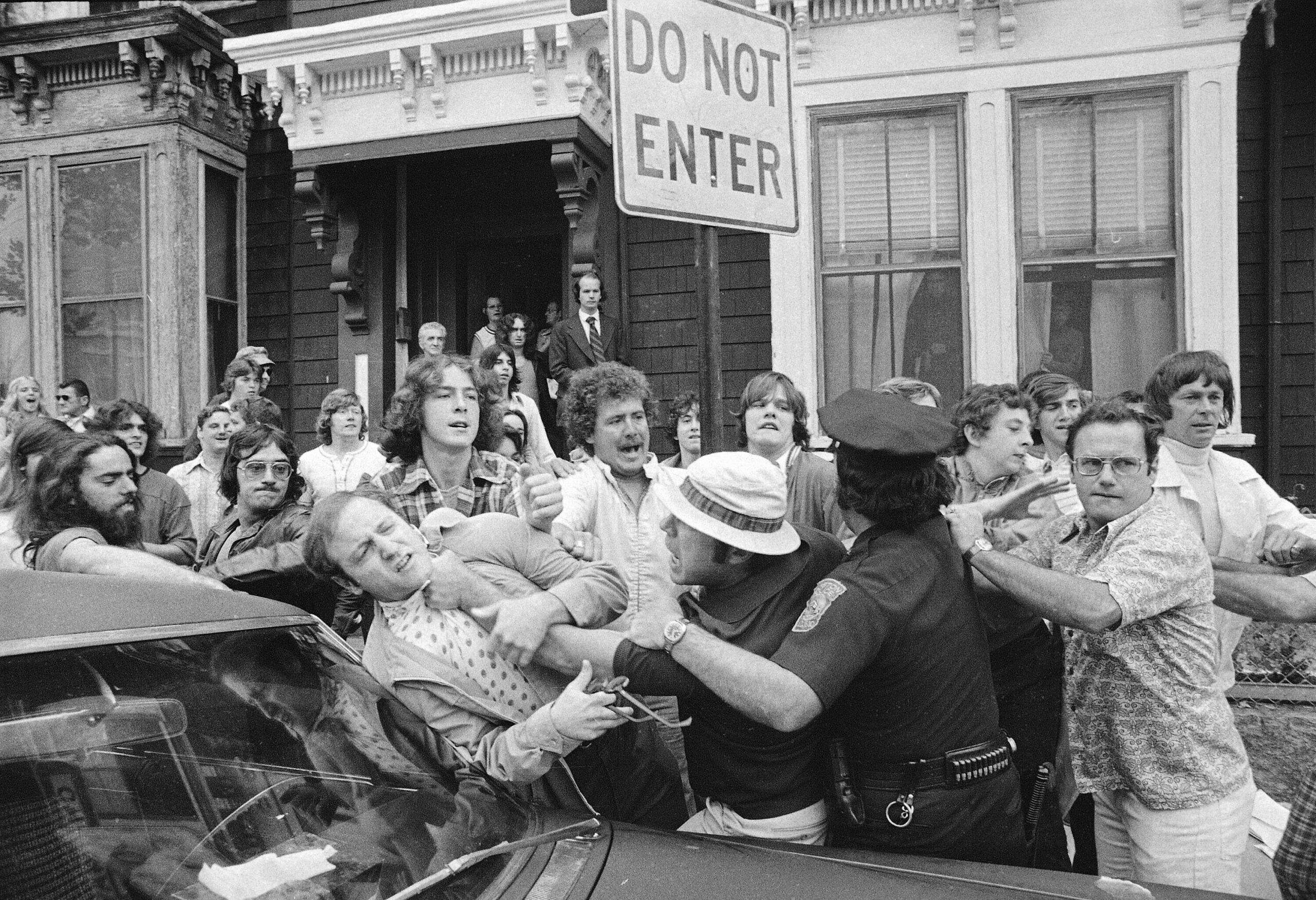
    Police officers break up a scuffle amid demonstrators outside South Boston High School on the first day of a court-ordered busing program to integrate Boston public schools in September 1974.

    Cultural historians like Henry Louis Gates Jr. have shown how the ape trope was central to 19th and early 20th-century pseudoscience, minstrel culture, and colonial propaganda. To depict Black people as simian was to deny them reason, morality, and ultimately rights. It was a way of making cruelty feel natural.

    Scholars from Frantz Fanon to Saidiya Hartman have traced how this imagery did not vanish with Jim Crow; it merely went underground, resurfacing whenever racial hierarchy felt threatened.

    The Obama presidency was precisely such a moment. For some Americans, it symbolized not progress but displacement. Trump rose by giving voice to that panic, laundering it through grievance and mockery. The ape image is not regression; it is escalation.

    Why will it get worse? Because norms erode asymmetrically. Once a president can circulate imagery that would once have ended a public career — and suffer no meaningful consequence — the floor drops out. What was once unsayable becomes debatable. What was once debatable becomes funny. And what was once funny becomes policy.

    What made this episode briefly arresting — before it slid into the familiar churn of outrage — was that condemnation came, at least initially, from both sides of the political aisle. Democrats responded with predictable fury, naming the image for what it was: racist, dehumanizing, indecent. But some Republicans, too, recoiled. A handful of conservative commentators, former officials, and religious leaders expressed a kind of moral embarrassment, as if they had suddenly overheard a family secret spoken aloud at the dinner table.

    That bipartisan outrage matters, but not in the way we might hope. It did not signal a renewed moral consensus so much as a fleeting recognition of how far the ground has shifted.

    Many of the Republican critics framed their objections narrowly — not that the image was wrong in itself, but that it was “unhelpful,” “distracting,” or “beneath the dignity of the office.” This is the language of procedural discomfort, not moral revulsion. It suggests that the line being defended is not the humanity of the Obamas but the decorum of politics.

    On the Democratic side, the outrage was morally clearer but strategically fatigued. There was anger, yes — but also weariness. A sense that we have seen this movie before, named its villain, issued our statements, and then moved on. Moral clarity without moral consequence eventually becomes ritual. It reassures the speaker more than it restrains the offender.

    This asymmetry reveals something crucial. Outrage alone does not halt degradation; it can even normalize it by making it routine. When every transgression is met with the same crescendo of denunciation and the same absence of consequence, the culture learns a quiet lesson: that cruelty is survivable, that it carries no lasting cost. Trump understands this intuitively. He relies on the fact that outrage is loud but short-lived, while the permissions he expands are durable.

    What we witnessed, then, was not a national reckoning, but a brief moral spasm — a reminder that many Americans still know, at least intellectually, that some lines should not be crossed. The tragedy is that knowing is no longer the same as enforcing. In a healthier moral ecosystem, bipartisan outrage would be a stopping force. In ours, it is often just a speed bump.

    Trump’s political project has never been about persuasion in the classical sense. It is about habituation. Repetition dulls outrage. Shock exhausts resistance. Eventually, people stop asking whether something is wrong and start asking whether it “works.”

    This is how democracies corrode — not in grand coups, but in the slow reeducation of moral reflexes. The danger is not only Trump’s blatant racism and cruelty, but the lesson it teaches: that dignity is conditional, and that some people may always be safely reduced.

    If history teaches us anything, it is that dehumanization does not stop where it starts. Once a society relearns how to sneer, it rarely remembers where to stop.

    And that is why this moment deserves more than disgust. It deserves memory.

    Jack Hill is a diversity consultant, child advocate, journalist, and writer.

  • After a year of RFK Jr.’s policies, vaccination rates are down, measles cases are up, and public health hangs in the balance | Editorial

    After a year of RFK Jr.’s policies, vaccination rates are down, measles cases are up, and public health hangs in the balance | Editorial

    Almost 250 years ago, George Washington created America’s first mass immunization mandate, relying on science to protect public health.

    Oh, how times have changed.

    Back then, smallpox had just helped end the Continental Army’s invasion of Canada. Despite making it all the way to Quebec, thousands of soldiers contracted the disease. Washington feared the same would happen to his own troops, fresh from their surprise victories at Trenton and Princeton. As Washington wrote at the time, “Necessity not only authorizes but seems to require the measure, for should the disorder infect the Army, in the natural way, and rage with its usual Virulence, we should have more to dread from it, than from the sword of the enemy.”

    The inoculation methods of Washington’s time were crude. No genuine vaccine existed. Instead, scabs or pus were taken from someone infected with smallpox and then placed into scratches or small wounds. Another option was to inhale it. Either way, those who experienced variolation inevitably developed fevers, rashes, and other symptoms of smallpox. At least 1% of those who received it died. Still, without his tough choice, the Continental Army might have failed entirely, and America with it.

    These days, safe vaccines are available for diseases that ravaged our ancestors. Forms of influenza, hepatitis, chickenpox, polio, rubella, mumps, measles, and many other diseases can now be prevented. The smallpox virus that Washington dreaded has been eradicated.

    The quality and availability of vaccines are a modern miracle, one that all humanity should be proud of.

    Yet, according to data from the Centers for Disease Control and Prevention, vaccination rates for measles in the U.S. are declining, and the number of cases is climbing. More and more parents are opting against vaccination for their children, which gives these diseases room to spread.

    Last year, two children in Texas died of the completely preventable disease. An outbreak in South Carolina has so far sickened almost 1,000 people, most of them children.

    Pennsylvania, New Jersey, and Delaware have all slipped below the 95% vaccination rate the CDC says is necessary to keep measles outbreaks at bay. Despite being nearly eliminated in 2000, rates have reached their highest levels in decades.

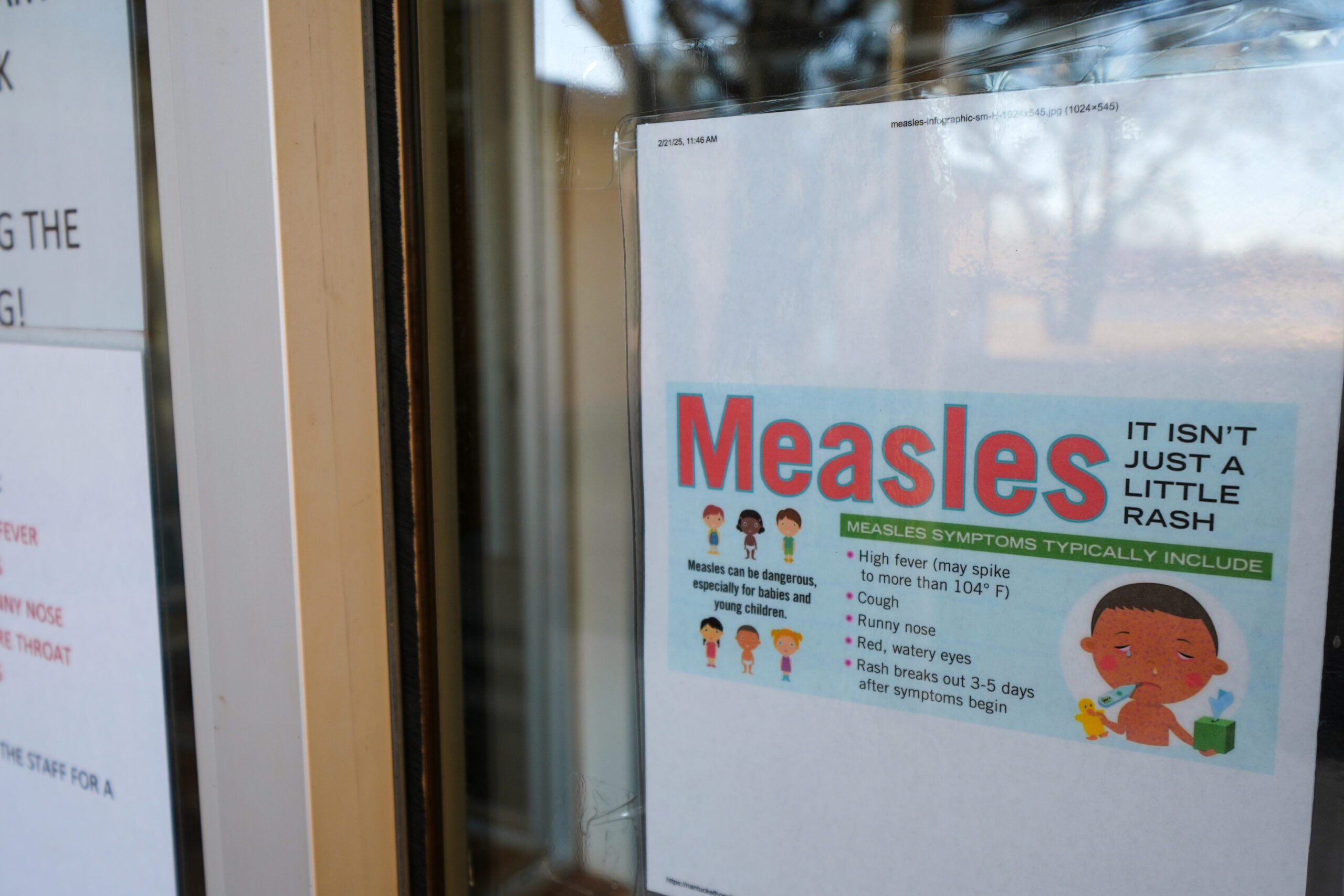
    A sign is seen outside a clinic with the South Plains Public Health District in February 2025, in Brownfield, Texas.

    According to CDC data, more than 90% of infections occur in people who are either unvaccinated or have unknown inoculation status. Given this group makes up less than 10% of the overall population, that’s a staggering concentration of sickness. It also isn’t a surprise — the vaccines work.

    Parents offer a range of justifications for refusing vaccinations. Some cite religious faiths that discourage inoculation. Others feel that the schedule of shots is too concentrated. A number of them mention debunked fears of shots “causing autism.”

    In some cases, existing health issues may lead to medical professionals advising against vaccination. (These children rely on what scientists call herd immunity for protection, and are endangered by rising rates of voluntary refusal.)

    It doesn’t help matters that Health and Human Services Secretary Robert F. Kennedy Jr. is a leading skeptic of both vaccines and modern medicine. Kennedy has strong opinions about public health based on no formal medical training.

    Under RFK Jr., the CDC has reduced the number of recommended vaccinations for children, and groups aligned with the secretary are working to overturn state vaccine mandates.

    This is the kind of privileged ignorance that can only thrive in a post-vaccine world, where mass immunization has dramatically changed life for the better.

    In 1900, 30% of all U.S. deaths occurred in children under the age of 5. In 1915, the infant mortality rate was 100 out of every 1,000 live births. As late as 1952, a polio outbreak killed more than 3,000 people.

    Unfortunately, rising vaccine refusal rates may bring some of this suffering back. While city health officials urge calm in the wake of a possible exposure at Philadelphia International Airport earlier this month, these events will only increase as vaccination rates continue to fall. So will unnecessary deaths among children.

    Instead of turning back the clock, our leaders and parents must learn from Washington’s example. Necessity requires that we vaccinate our children.

  • Yes, the slavery exhibits have been returned to the President’s House — but I’m still waiting for the other shoe to drop

    Yes, the slavery exhibits have been returned to the President’s House — but I’m still waiting for the other shoe to drop

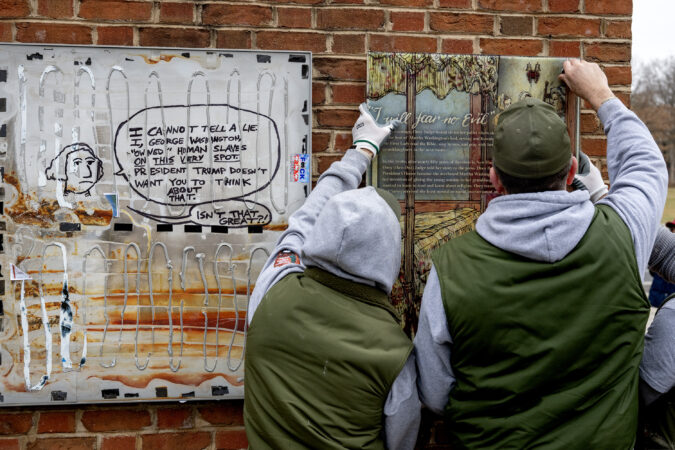
    Late Thursday morning, when the National Park Service began restoring the panels commemorating nine people enslaved by George Washington at the President’s House at Sixth and Market, it should’ve been a time of jubilation.

    Instead, it left many activists waiting for the other shoe to drop.

    The National Park Service, which removed the panels from the site in late January to comply with an executive order by President Donald Trump, was successfully sued by Mayor Cherelle L. Parker’s administration. U.S. District Judge Cynthia Rufe ordered the NPS to restore the display, but the agency appealed.

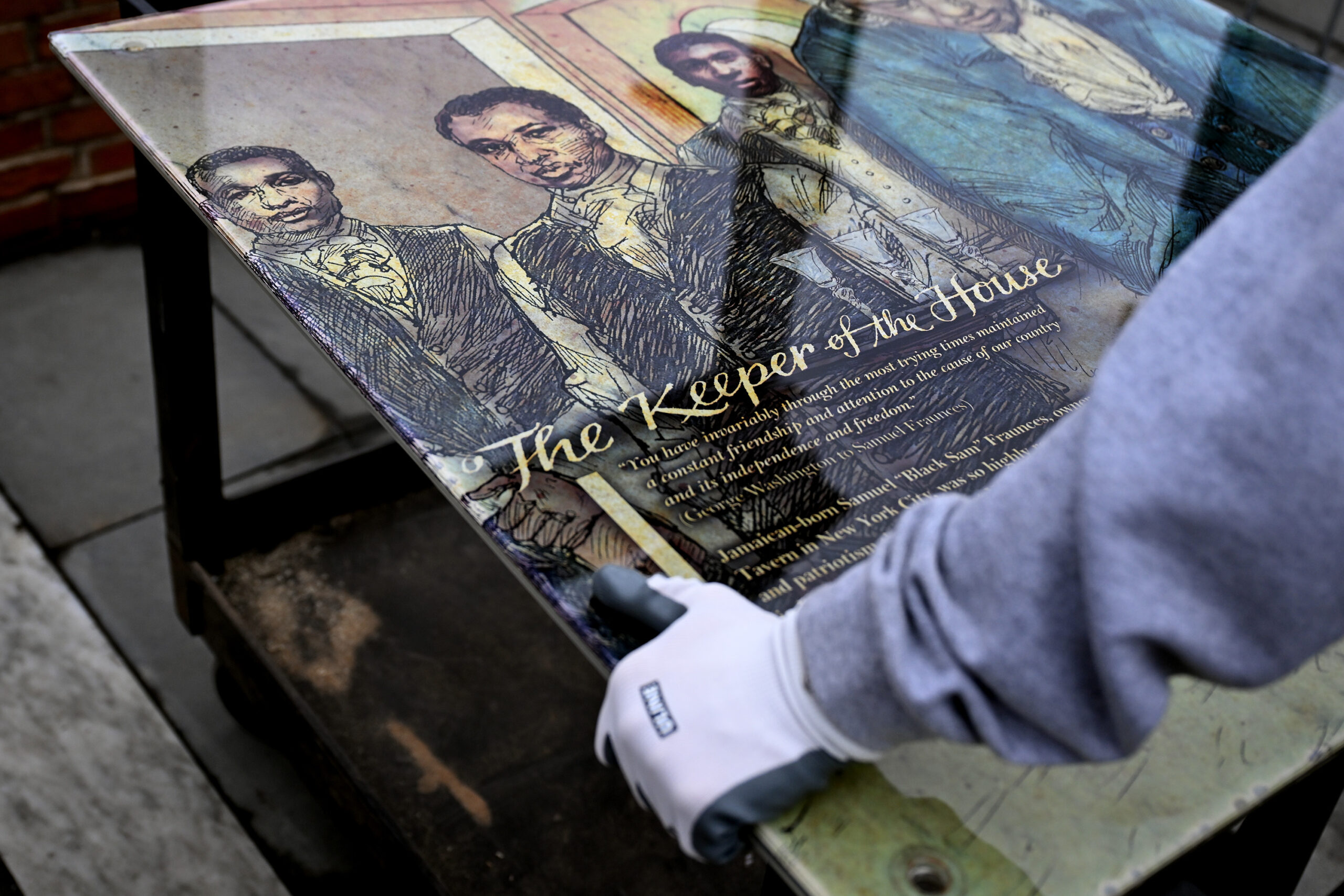
    A worker carries one of the slavery-related exhibits, “The Keeper of the House,” before rehanging it at the President’s House in Independence National Historical Park on Thursday.

    So yes, the federal government complied with the judge’s order, but only for the moment.

    Friday morning, Judge Rufe denied the government’s motion for an emergency stay of the order, but the Trump administration’s appeal is ongoing, thus continuing the fight to remove the panels for good.

    It was yet another dramatic turn in a month in which I’ve lived the joys and pains of Black history.

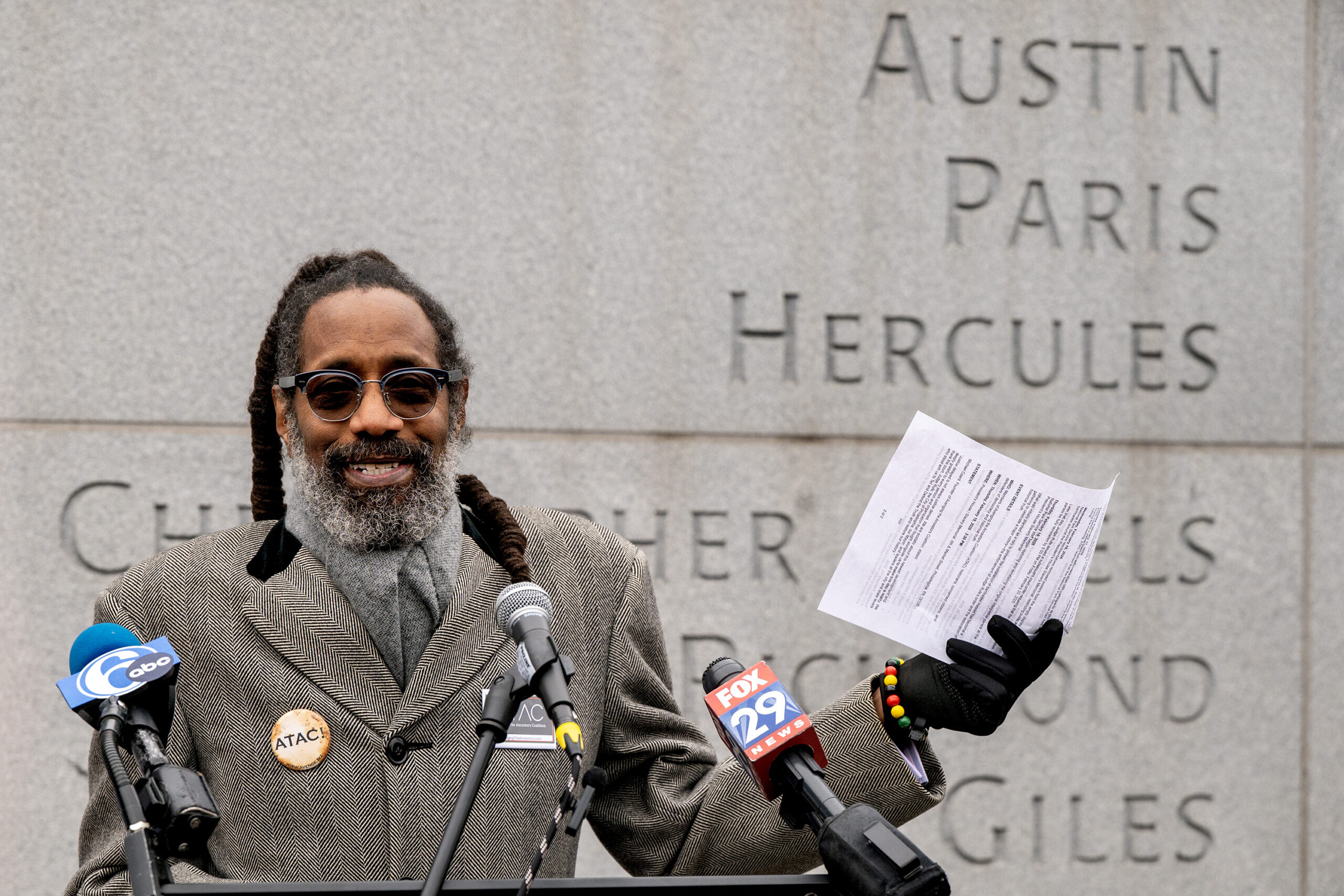
    I was there when Judge Rufe took lawyers into the National Constitution Center to inspect the materials the Trump administration pried from the walls with crowbars. I spoke at a rally where the Avenging the Ancestors Coalition (ATAC) demanded the restoration of the slavery memorial. I listened as ATAC founder Michael Coard announced that Judge Rufe had ordered the panels to be restored.

    Like so many in Philadelphia, I have watched the fight for the President’s House unite people of all stripes. I’ve experienced the emotional victories and defeats.

    Attorney Michael Coard, leader of the Avenging the Ancestors Coalition, speaks during a rally at the President’s House in Independence National Historical Park on Thursday, after the return of some of the slavery exhibits the National Park Service removed last month. The names of nine enslaved people who lived and worked in the household of George Washington, engraved in stone behind him, were not among those removed by the NPS.

    But even with the restoration of the panels, we are all left teetering on the razor-thin edge that separates celebration from grief, and elation from rage. We cannot stay there. We must continue to fight for the truth.

    In Philadelphia, a city that frequently hosted civil rights leader Jesse Jackson, who died this week after a life spent fighting for justice, we fight.

    Here, in the place where the story of enslavement lived side by side with the struggle for freedom, we fight.

    Here, in a place where a new generation of combatants joins a centuries-old battle for the truth, we fight.

    More rallies will come, and in the shadow of Independence Hall, where wealthy white men declared their own freedom while withholding liberty from my ancestors, a new American Revolution will take shape from the same war of ideas Jackson fought. It will be based on the rhetoric of America’s founders.

    If indeed all men are created equal, our history should be equally told. That idea cannot be contained by metal barriers. We’ll see if it can be enforced in the courts.

    Still, truth is not about legalities or displays.

    The truth of slavery in Philadelphia exists in the names of our neighborhoods, our streets, and even our schools. It exists in the very fabric of who we are.

    The neighborhood of Logan is named for James Logan, who served as secretary to William Penn. He also enslaved people.

    Chew Avenue is named for the Chew family, who lived in an estate called Cliveden, which is also the name of a street. The Chews enslaved people at Cliveden.

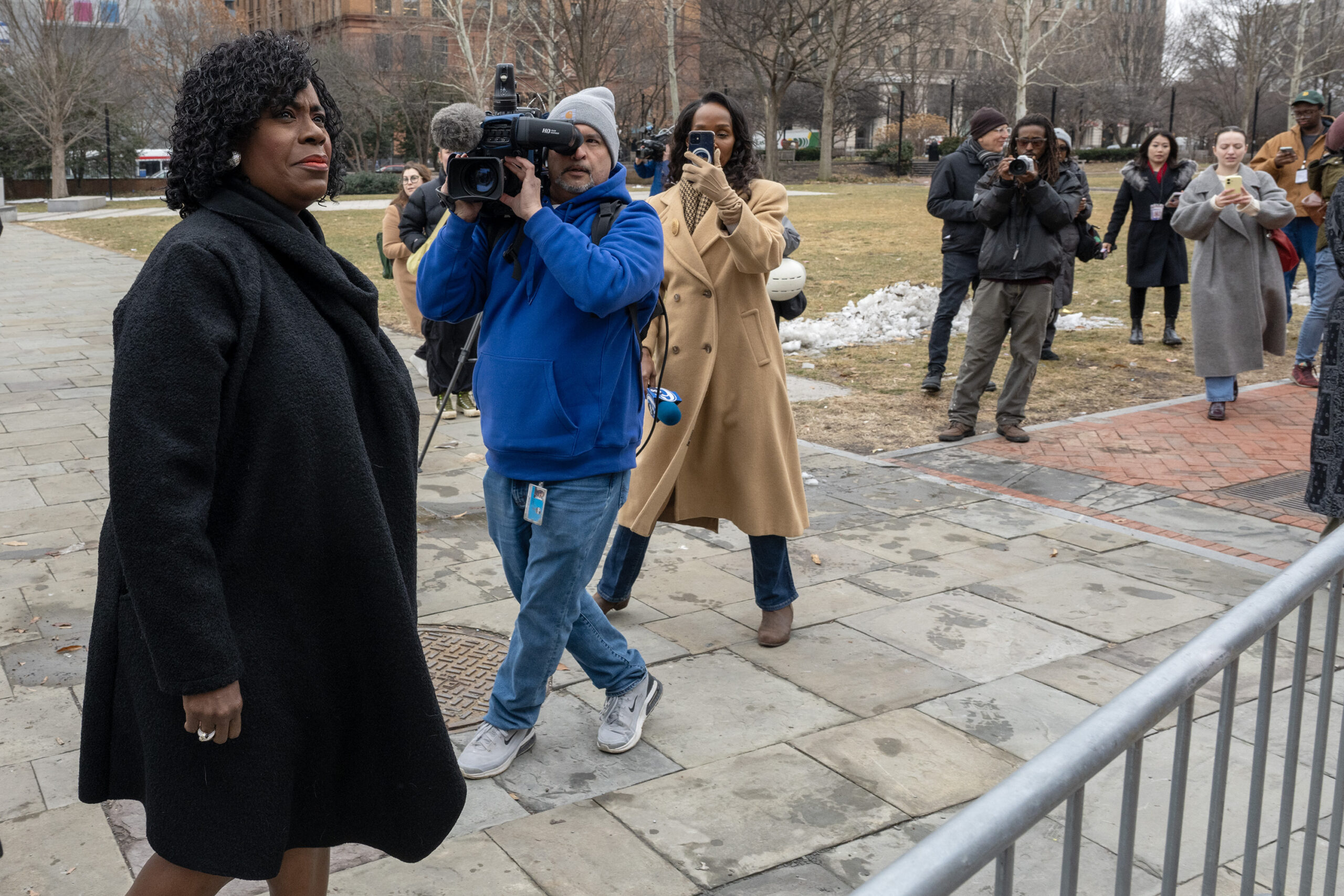
    Mayor Cherelle L. Parker visits the President’s House as workers return the slavery exhibits at the site on Thursday. Parker thanked them, and one replied, “It’s our honor.”

    Front and Market, home to the London Coffee House, once hosted a market of a different kind. People were sold there. It was a key element of the business of slavery.

    Girard Avenue is named for Stephen Girard. He was a very rich man with a very complicated legacy, and yes, he was also an enslaver.

    Perhaps that’s why I was so angry when I went to the President’s House in the days after the Trump administration pried truth from the walls.

    It was almost like someone had taken something that belonged to me, and in truth, they did. They took my history, but as I stood in that barren space on a cold afternoon, it was as if my ancestors were all around me — like the great cloud of witnesses from Scripture — telling me all they had endured.

    Perhaps the Trump administration will ultimately achieve its goal and remove the panels from the site. Or maybe the truth will prevail.

    But our fight is about more than the nine people Washington enslaved. This is about all of us, and it will take all of us to win.

  • Trump officials used AI to distort a photo of an anti-ICE activist. That’s not OK.

    Trump officials used AI to distort a photo of an anti-ICE activist. That’s not OK.

    In the everyday chaos that characterizes President Donald Trump’s America, the news cycle changes faster than most of us can keep up with it.

    But can we please pause for a moment and consider the gravity of what happened to Nekima Levy Armstrong at the hands of the U.S. government? She led a group of activists who interrupted a worship service in Minnesota on Jan. 18. The demonstrators went to Cities Church in St. Paul to stage a protest in support of immigrant rights.

    The choice of venue was very much intentional: One of the leaders at the church is an administrator at a local U.S. Immigration and Customs Enforcement office. Four days later, Levy Armstrong, a half dozen other protesters, and two journalists were arrested.

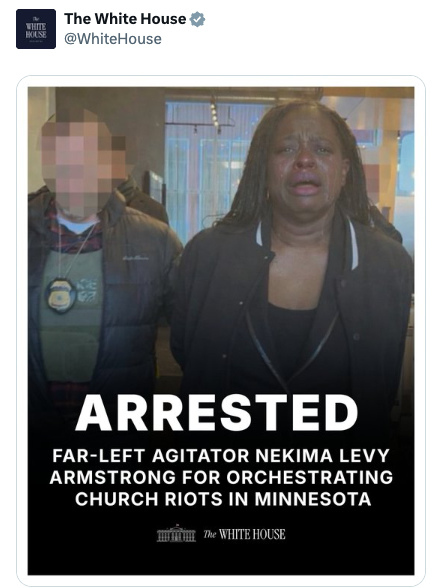
    Afterward, while she was still in custody, Trump administration officials released an AI-manipulated image of her on X, the social media site formerly known as Twitter, on accounts for Homeland Security Secretary Kristi Noem and the White House.

    The doctored image shows Levy Armstrong (no relation) with her mouth open as if she’s sobbing hysterically. Her face also appears to have been darkened. The photo caption reads: “ARRESTED far-left agitator Nekima Levy Armstrong for orchestrating church riots in Minnesota.”

    It wasn’t a riot. Nor was she crying. But all that is beside the point. The Trump administration officials wanted to make her look bad, even if it meant reshaping reality to do so. What’s especially concerning is the dishonest way it went about it. According to photos and video of her arrest, Levy Armstrong maintained a mostly impassive expression on her face throughout the ordeal.

    On Jan. 22, the White House posted an AI-altered image of Nikema Levy Armstrong on the White House’s official X feed. The altered image makes Levy Armstrong appear as crying, the original image shows no such emotion.

    A lot of people might see the digitally altered image of her sobbing and assume that because it was posted on a verified social media channel from the highest levels of government, it is an accurate representation of what happened — when it’s anything but.

    A New York Times analysis concluded that the photo had been manipulated — something the White House admits to doing, and is unrepentant about. The manipulated photo is a meme, according to White House spokesperson Kaelan Dorr, who doubled down on X, saying, in part: “Enforcement of the law will continue. The memes will continue.”

    No one should be surprised at that reaction, considering how many questionable AI images Trump has shared. (And, although it wasn’t artificial intelligence, don’t get me started on his racist post about the Obamas earlier this month.)

    He once posted an AI video of himself — with a crown on his head — flying a plane that dumps feces onto “No Kings” protesters. It was even more disturbing when he released a deepfake video of former President Barack Obama, who seems to live rent-free inside Trump’s head, being arrested in the Oval Office.

    Imagine the uproar if another president had done such a thing. Many people have normalized this kind of corrosive behavior so much that Teflon Don usually gets off with a shrug. But those of us who care about accountability have to keep calling him out.

    Dirty politics are one thing, but when Trump administration officials manipulated the photo of Levy Armstrong, a private citizen, it made my blood boil. It’s another reminder that there’s no bottom with Trump when it comes to how low he will go, and that’s really scary.

    I recently had a chance to speak with Levy Armstrong, and can report that, despite the administration’s efforts, she is unbowed and unbroken.

    She called the government’s use of the fake image “horrifying and deeply disturbing,” and insists “I was cool, calm, and collected” during the arrest.

    “I guess because they didn’t see me broken, they needed to manufacture an image of me broken,” Levy Armstrong told me.

    “This is not unlike what has happened historically to Black people with all of the Sambo imagery and the mammy imagery that’s out there, with exaggerated features and darkened skin,” she said. “That’s the same thing that I went through, and that’s what they did to me. Not to mention making me look hysterical.”

    She added that “I felt caricaturized, just like our people have been during slavery and Jim Crow.”

    While I had her on the phone, I also asked Levy Armstrong about the arrest of former CNN anchor Don Lemon, who covered the protest she organized.

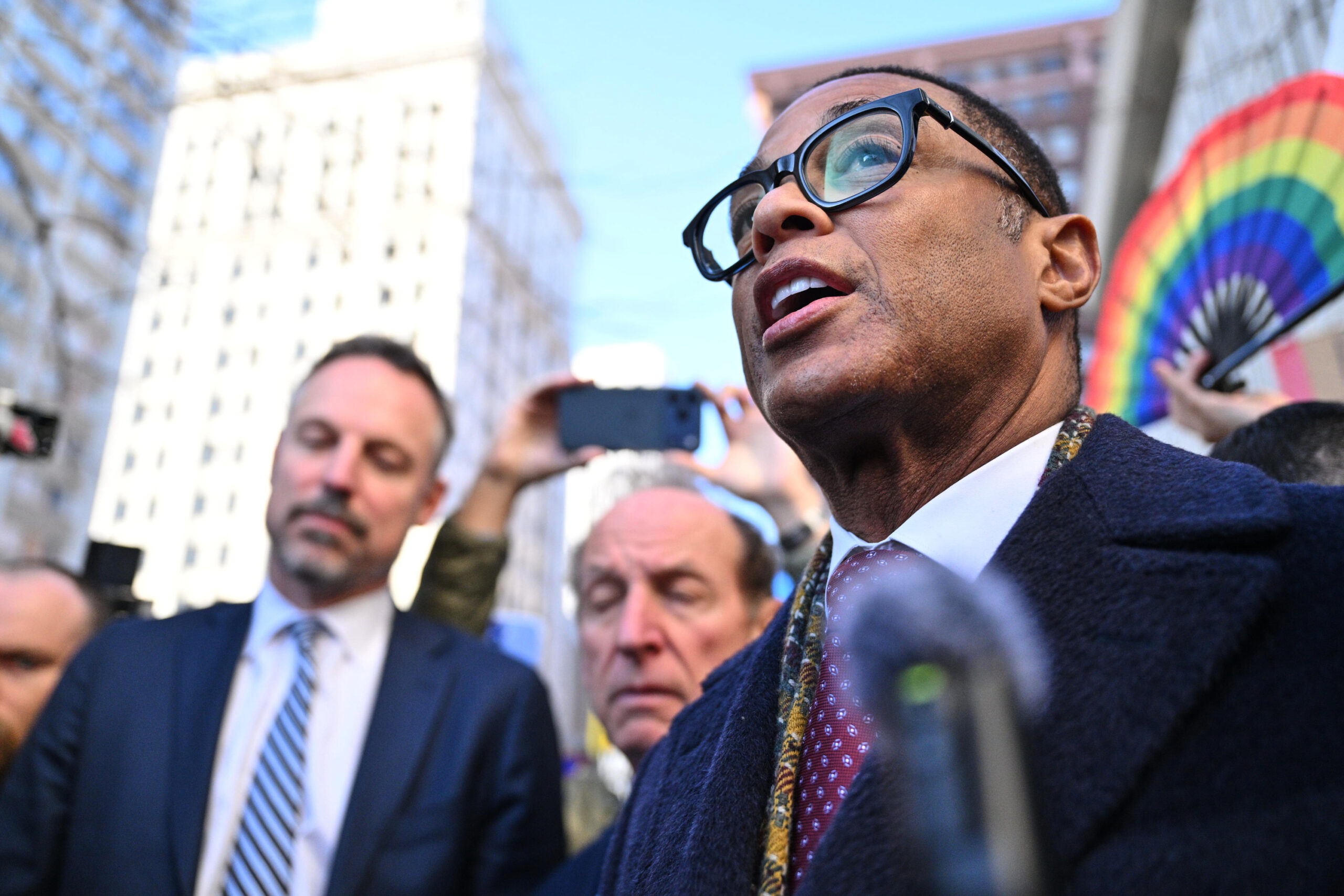
    Journalist Don Lemon speaks to the media outside the U.S. District Courthouse in St. Paul, Minn., on Feb. 13.

    Levy Armstrong disputes MAGA claims that Lemon was a participant in the demonstration, as opposed to being an observer. Levy Armstrong told me, “I just think it’s foolishness that they would try to rope him in as a protest organizer.”

    “He’s not an activist. He’s not an organizer,” she pointed out. “He’s not a protester whatsoever.”

    The former law professor said that referring to Lemon as an organizer was an excuse to attack him, as well as Georgia Fort, an Emmy Award-winning independent Black journalist based in Minnesota, who also faces federal charges after covering the protest.

    Minnesota-based independent journalist Georgia Fort speaks to reporters and supporters outside the federal courthouse in St. Paul, Minn., on Feb. 17, after pleading not guilty over her alleged role in a protest that disrupted a Sunday service at a Southern Baptist church in St. Paul.

    I’ve covered many protests throughout my journalism career, and find what happened particularly upsetting. Republicans talk a good game about upholding the Constitution, but the arrests were clearly an attempt to keep journalists from exercising their First Amendment right to freedom of the press.

    Meanwhile, no arrests have been made in the fatal shootings by Border Patrol and ICE, respectively, last month of Alex Pretti, an intensive care nurse, or Renee Good, a mother of three.

    But Levy Armstrong has been charged for her role in a disruptive but peaceful protest inside a church during which no one was physically harmed. (And, yes, although they are rare, demonstrations in churches happen. During the civil rights movement, demonstrators would hold “kneel-ins” to protest segregated churches in the Jim Crow South.)

    An ordained minister, Levy Armstrong told me she draws strength from such icons of the civil rights movement as Fannie Lou Hamer, Rosa Parks, and the Rev. Dr. Martin Luther King Jr., all of whom had suffered the indignity of being arrested while fighting for their basic human rights.

    “Everybody needs to wake up,” she said. “This is not just about immigration. This is about our constitutional rights. This is about our democracy. This is about our freedoms.”

    Freedoms we stand to lose if we allow the Trump administration to try and silence us the way it has attempted to do with Lemon, Fort, and Levy Armstrong, among so many others.

    Levy Armstrong has nothing but praise for Philadelphia District Attorney Larry Krasner, who is vocal about prosecuting ICE agents who run afoul of the law. Her suggestion for concerned Philadelphians? “Get some whistles,” she said. “Get some people organized. Hold your elected leaders accountable.”

  • On crime, public transit, and the economy, Philadelphia counts the ways | Shackamaxon

    On crime, public transit, and the economy, Philadelphia counts the ways | Shackamaxon

    This week’s Shackamaxon is all about the numbers.

    15

    As I write this column, that’s Philadelphia’s total number of homicides for the year so far. It is a 50% decrease from this time in 2025, and a stunning 79% drop from the pandemic-era spike in violence. While it is much too early to make projections, and snowy and freezing weather the last few weeks undoubtedly played a role in keeping people indoors, the decline is genuinely remarkable. Especially when it is accompanied by a similar decline in shooting victims, and double-digit declines in overall violent and property crimes.

    In fact, on a per-capita basis, Philadelphia’s homicide rate is currently not that different from Bucks County’s.

    Given the city just notched its safest year since the 1960s, this progress is exciting. So far, no one has an explanation for why homicide is declining. It may simply be a national trend back to normalcy. If so, it is time to extend it to more parts of life.

    Killings may be down, but homelessness is rising. SEPTA’s Metro system is still overrun with smokers. And the melting snow has revealed that much of the city is covered in too much everyday grime.

    A Sharon Hill trolley — now known as the D2 — on a low-speed section of track near the 69th Street Transportation Center in Upper Darby. The route, along with its counterpart, the D1, or Media trolley, will have longer trips next week after a safety upgrade to the signal system.

    15

    That’s how many additional minutes trolley trips to Media could take after implementing something called “communications-based train control” at a cost of $75 million. This system takes away discretion from operators, resulting in slower acceleration, longer braking periods, and slower overall speeds. SEPTA says a similar installation on its Regional Rail system also led to initial delays, but those challenges were overcome in time.

    There’s a better solution. SEPTA should restore the gate system that was removed back in 2009. This would eliminate many of the needed slowdowns.

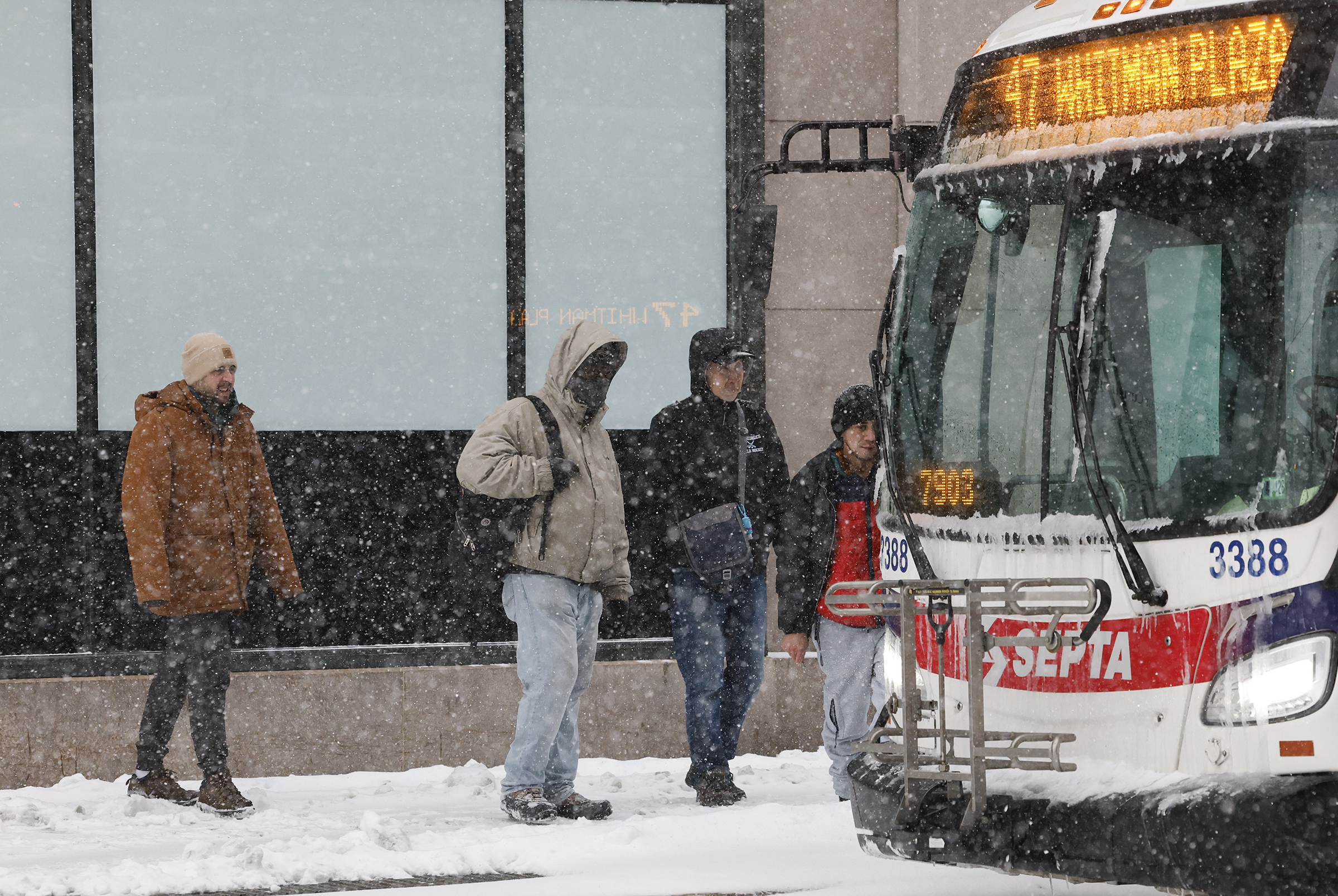
    SEPTA riders board the Route 47 bus at Eighth and Market Streets in January.

    714,475

    That’s how many daily rides SEPTA provided on average last month, an increase of 1% over 2025. Given the struggles the agency went through last year, the fact that ridership continues to grow is remarkable.

    In August, SEPTA scaled back overall service by 20%, before reversing the cuts weeks later under court order — and after a gubernatorial funds transfer. State Senate Majority Leader Joe Pittman essentially called the agency (and our entire region) a bunch of greedy moochers and blocked a plan for sustainable support.

    The Regional Rail network was severely curtailed for months because of aging, exploding train cars. The Center City trolley tunnel was closed for weeks because of maintenance issues. In January, a brutal winter storm made getting to — and on — the bus a struggle. And yet, ridership grew.

    In fact, since the pandemic, SEPTA has routinely been one of America’s strongest transit agencies when it comes to ridership growth. Given there have been zero additional dollars invested in operations for years, the system’s resilience may prove that Philadelphians need mass transit so badly that they’re willing to keep riding through the chaos.

    From left, Joaquin Duato, J&J chairman and CEO, is with Gov. Josh Shapiro and Pennsylvania Department of Community and Economic Development Secretary Rick Siger on Wednesday after Johnson & Johnson announced it will spend $1 billion on a cell therapy plant on its campus in Lower Gwynedd Township.

    5.5

    That’s how much investment, in billions of dollars from pharmaceutical companies, is coming to Eastern Pennsylvania, according to Gov. Josh Shapiro. While this is great news for the Keystone State, it’s hard to avoid noticing that none of these investments are coming to Philadelphia itself. Neither is Merck’s $1 billion new biotech center, which is being built in Delaware. Given our city’s status as a hub for eds and meds — with multiple colleges and medical schools, and a high concentration of skilled workers — this is disappointing.

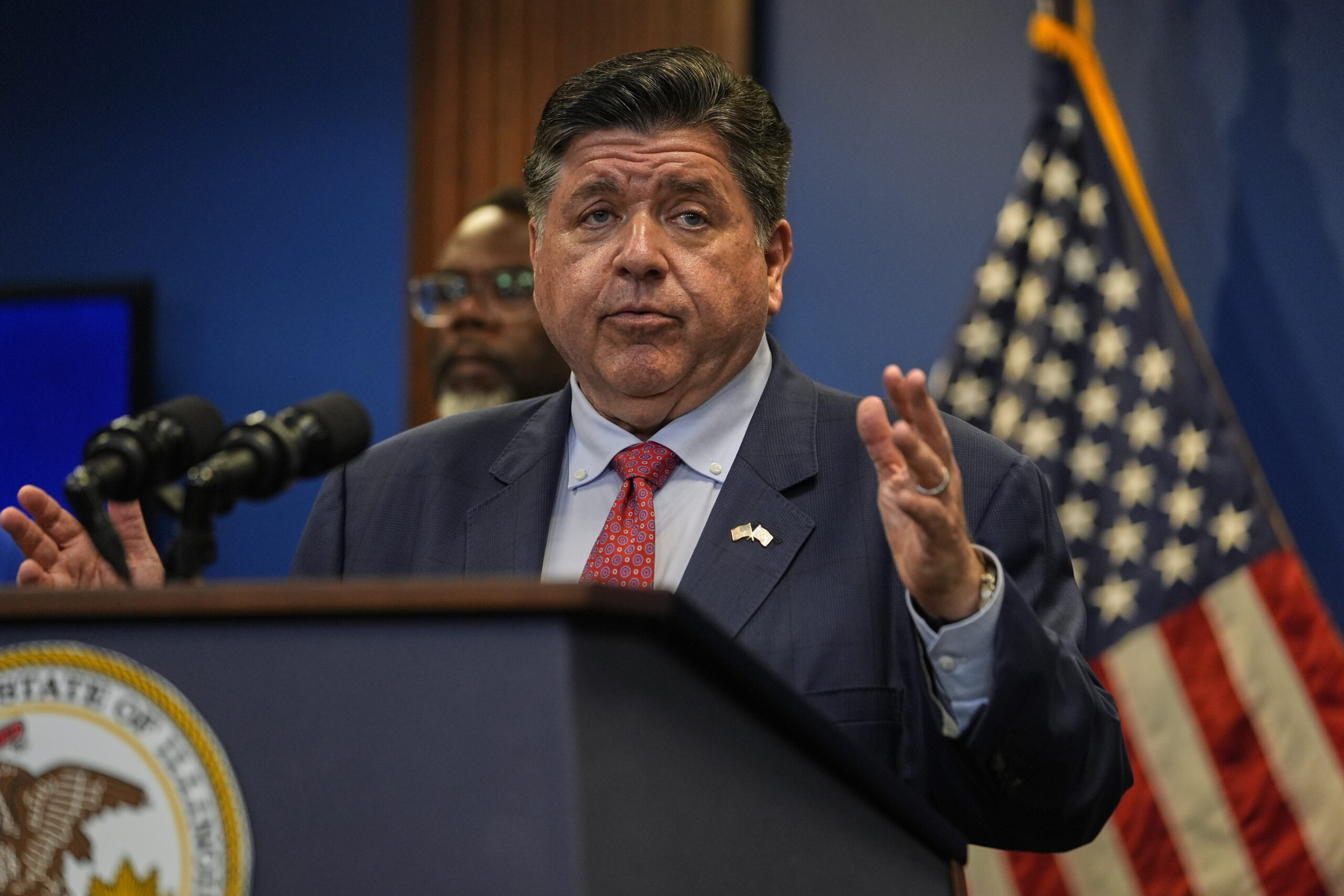
    Illinois Gov. JB Pritzker speaks during a news conference in Chicago in 2025.

    150

    That figure, also in billions of dollars, is how much economic growth Pennsylvania needs in order to bridge the deficit without raising taxes or cutting services, according to an analysis by Athan Koutsiouroumbas, managing director of the Harrisburg-based lobbying and consulting firm Long Nyquist.

    The easiest way to accomplish this is by being bolder on housing policy. As Shapiro has pointed out, Pennsylvania is currently 44th in the nation when it comes to new housing production. Unfortunately, current plans aren’t bold enough to meet the moment. They lack the significant forays into statewide zoning standards that have been embraced by figures like Illinois Gov. JB Pritzker. Shapiro likes to say he’s tired of losing to “frigging Ohio,” but without a more audacious approach to housing policy, he may have to add “frigging Illinois” to the list of states eating our lunch.

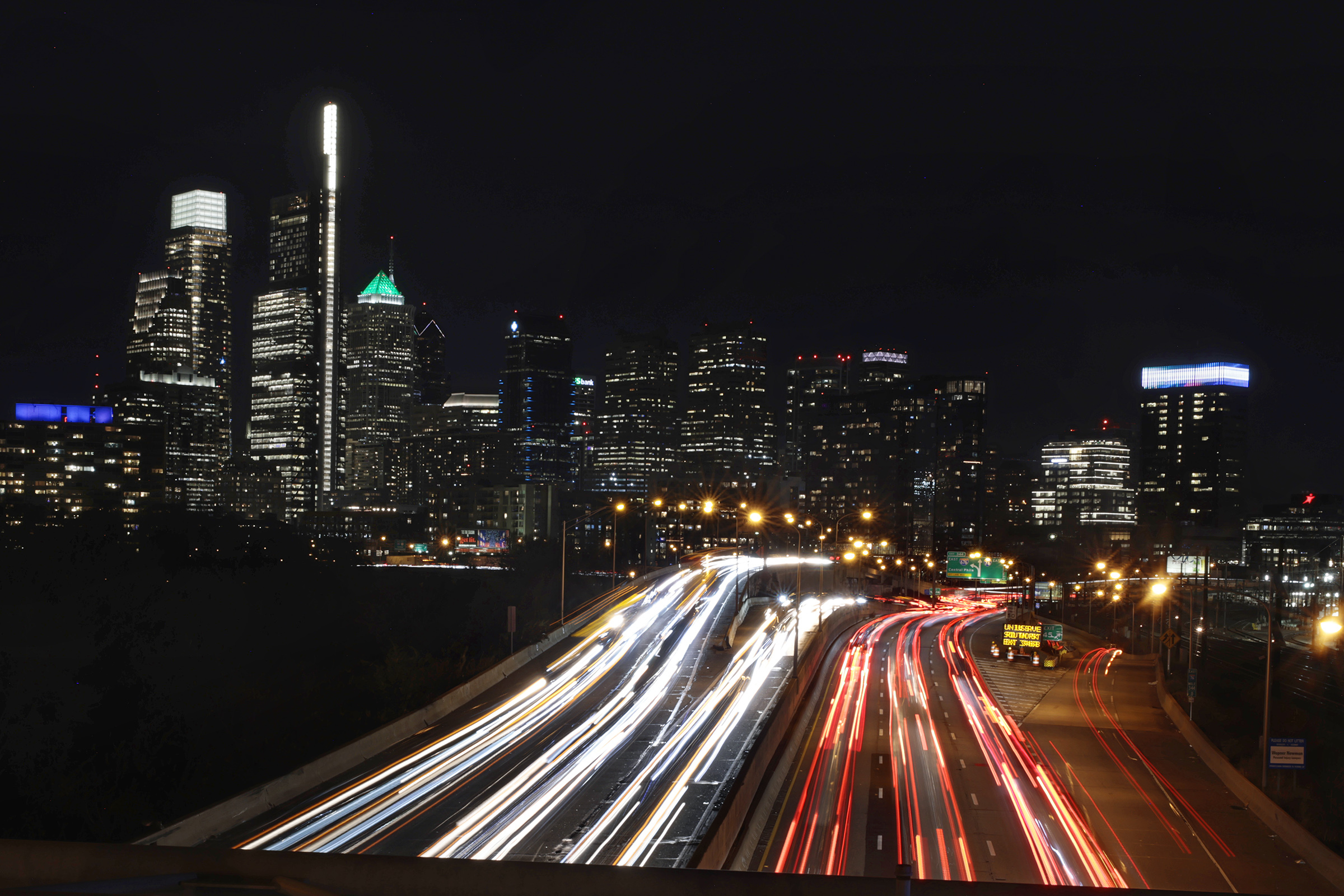
    Philadelphia’s economy grew faster than Atlanta, Dallas, Denver, and Phoenix.

    13.6

    If we’re being optimistic, let’s call it almost 14%. That’s how much job growth Philadelphia has experienced since 2020. That’s better than the 11.7% average for the nation’s 25 most populous counties. It is better than the collar counties, and puts Philadelphia ahead of Montgomery County in office employment for the first time in decades.

    Still, economist Mark Zandi urges caution. In the pages of The Inquirer, he points out that much of this has to do with the fact that the national economy is struggling. Given the city has lagged on growth for decades, even incremental steps forward may look more significant here than elsewhere.

    There’s also the fact that much of this growth is in relatively low-paid work, rather than the high-wage “tradeable industries” the city needs to escape decades of economic stagnation.

    Simply put, while working as a home health aide and working in a drone factory both put food on the table, only the latter helps make the regional economy healthier.

  • Letters to the Editor | Feb. 20, 2026

    Letters to the Editor | Feb. 20, 2026

    National holiday

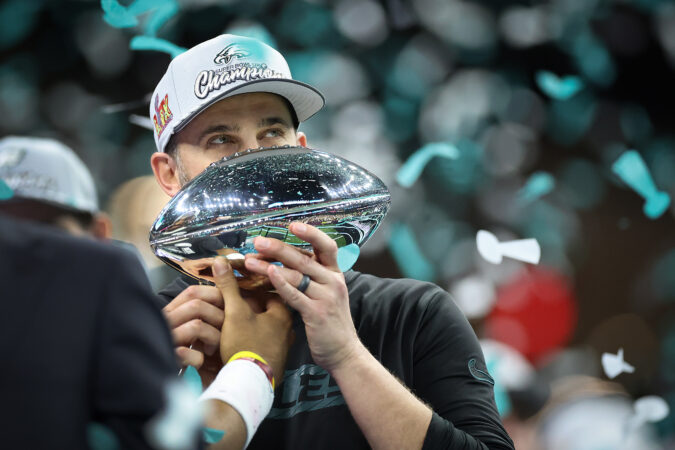
    I am an avid Eagles fan. I was convinced they would be in the Super Bowl this year, but it was not to be. However, I still love to watch the game and did so a couple of weekends ago with friends and family.

    For millions of Americans, Super Bowl Sunday is a welcome day of celebration. This year’s game was watched by about 125 million people. In any given year, many Americans take “sick days” on the Monday after the game, including this year: An estimated 26 million people were expected to miss work, up from 16 million in 2025 when the Birds won.

    Here’s an idea: Instead of holding the Super Bowl on the second Sunday in February, the NFL should move the game to the third Sunday of the month. Why? The following day is Presidents Day, a national holiday, always observed on the third Monday of February — and a day in which millions of Americans don’t have to go to work.

    The number of people taking part in “Super Sick Monday” would be greatly reduced, and it would be a change welcomed by many.

    Ed Vreeswyk, Yardville

    Epstein class

    While the Trump administration continues to fail to keep the Jeffrey Epstein scandal out of the headlines, I keep thinking of my favorite Maya Angelou quote: “When someone shows you who they are, believe them.”

    As director of Sudan and South Sudan Programs at the U.S. Agency for International Development, my firsthand experience of the Epstein class came in the form of Elon Musk’s Department of Government Efficiency. The U.S. Department of Justice’s latest release of the Epstein files featured more than 1,000 mentions of Musk.

    As the president, another one of the Epstein files’ main characters, allowed the unelected billionaire to go about “feeding USAID into the wood chipper,” Marco Rubio promised USAID’s “lifesaving” programming would be spared. My colleagues and I desperately argued that our work saved lives. It wasn’t a hard case to make — Sudan and South Sudan represent two of the world’s largest humanitarian catastrophes.

    By the end of February 2025, DOGE had cut 90% of USAID’s programming. Estimates indicate approximately 762,000 people have died, including more than 500,000 children. One study warns that the dismantling of USAID could lead to more than 14 million deaths by 2030.

    These lives, like the lives of those trafficked by Epstein, were of no consequence to the Epstein class. They have shown us who they are. We need to believe them.

    Maura O’Brien, Ardmore

    War on scientists

    The present administration has worked hard to discredit science and remove scientific researchers from any government positions. They have labeled climate change as a liberal hoax and claimed that children receive too many vaccinations. Measles, all but eradicated, has made a strong resurgence. As a result of this “war on science,” more than 10,000 science workers have left the government. In an effort to profit from these foolish policy decisions, the European Union has created a fund to attract these scientists to Europe. We are driving away the occupations that have created the greatness that was America.

    Edward Hackett, Phoenixville

    Join the conversation: Send letters to letters@inquirer.com. Limit length to 150 words and include home address and day and evening phone number. Letters run in The Inquirer six days a week on the editorial pages and online.

  • Is AI’s authoritarianism a bigger threat than Trump’s?

    Is AI’s authoritarianism a bigger threat than Trump’s?

    Like every other beleaguered top editor in a big-city newsroom these days, Chris Quinn — who leads Cleveland.com and the print Plain Dealer — has to deal with assaults from all sides.

    In March 2024, Quinn briefly became a darling of the online left (not easy for a journalist to pull off these days) with a bold manifesto for how Cleveland.com would deal with one of those many threats: An authoritarian president who despises a free press.

    “We tell the truth, even when it offends some of the people who pay us for information,” Quinn wrote that fateful spring in his “Letter From the Editor” column. “The truth is that Donald Trump undermined faith in our elections in his false bid to retain the presidency. He sparked an insurrection intended to overthrow our government and keep himself in power. No president in our history has done worse.”

    Less than two years later, Quinn has gone viral again. But this time, instead of resisting a powerful force aiming to upend American life as we’ve known it, he’s embracing one: The power of artificial intelligence to transform the workplace … and just about everything else.

    Quinn has said that steep job cuts (more on those later) have left just a skeleton crew covering Cleveland’s far-flung exurban counties, and using an AI tool to write stories based on the downsized staff’s reporting will result in more articles about these potential news deserts. When an anonymous college journalism student withdrew her application to Cleveland.com because she said she couldn’t work in a newsroom using AI to perform what was once a human task, the editor went off in his column.

    “Journalism programs are decades behind,” wrote Quinn in arguing that technology is rendering such degrees as worthless. “Many graduating students have unrealistic expectations. They imagine themselves as long-form magazine storytellers, chasing a romanticized version of journalism that largely never existed.”

    Seriously, how dare those young whippersnappers dream of creating beauty in their lives, instead of welcoming their new robot overlords and embracing their future as a cog in a faceless news machine?

    But the dilemma facing Cleveland, Quinn, and the Unknown Job Applicant is the crisis that’s been thrust in the face of all Americans as the brutal winter of 2026 slowly melts into spring, and, it seems, a reality we’re truly not ready to confront — not practically, nor politically, nor morally.

    People forget, but there was a brief moment in the mid-to-late 1990s when the internet was dismissed as a fad — clunky to use (remember dial-up?) and its abilities overhyped by Silicon Valley. But the internet radically changed how we live, as did the arrival of smartphones in the 2000s — not always for good. Yet, these seem like the warm-up acts for the life-altering conniptions caused by omnipresent AI.

    Suddenly, there’s been a flood of essays trying to warn us that whatever one initially thought about programs like ChatGPT — and, yes, AI is still prone to “hallucinations” and other embarrassing errors — we need to adjust to the news that a new generation of AI tools is much more powerful, and better poised to replace many jobs.

    “I am no longer needed for the actual technical work of my job,” an AI executive named Matt Shumer wrote in the most viral of these hot takes, titled “Something Big Is Happening.”

    In describing how new AI programs rolled out by Anthropic, maker of Claude, and ChatGPT’s parent OpenAI can now perform complex coding tasks from the most simple instructions, Shumer warned the earthquake is coming to “[l]aw, finance, medicine, accounting, consulting, writing, design, analysis, customer service. Not in ten years. The people building these systems say one to five years. Some say less.”

    This jibes with dire predictions from Anthropic’s CEO Dario Amodei, who has warned repeatedly of “painful” white-collar job losses caused by AI, and said in his most recent long-form essay that the new technologies are “acting as a ‘general labor substitute for humans.’”

    Is that bad? It sounds bad.

    The sweeping changes in the labor market are already starting, including a sharp drop in entry-level hiring for coders, who seem to be the canaries in this coal mine. January was the worst month for layoffs since the Great Recession of 2009, and analysts say job losses directly attributable to replacement by AI were a significant slice of that. The idea that wiping out millions of jobs might be bad for the overall economy even caught the ADD-addled attention of Wall Street for a day or two.

    I don’t have space here to go deep on the technology, but everyone should take a moment to learn what “vibe coding” and “agentic AI” are, and read the New Yorker on the rise of Anthropic’s Claude, or listen to a really good podcast explanation of AI and the labor market from the New York Times’ Kevin Roose. But we’re already overdue in addressing what this all means for everyday human existence.

    The idea that eventually “everything you think, do, and say is in the pill you took today” — as Zager and Evans sang so presciently in their 1969 No. 1 smash, “In the Year 2525” — has been with us for decades. But there was also a sense that robots performing the worst drudgery of the workplace might be liberating, creating more leisure time and space for human creativity.

    So far, that’s not what’s happening. Avoiding the poverty and deprivation that would be caused by massive job losses would require a government willing to pay people a universal basic income (UBI), but the current government has instead been dismantling the existing welfare state. And the workers creating AI are sleeping in their cubicles.

    And creativity may become a fever dream, not just for that naive journalism student with her “romanticized” visions of telling stories. Did you read the Times profile of the romance novelist who’s relying on Claude to crank out new tomes in as little as 45 minutes? Did you watch the lifelike short movie of an AI-generated “Brad Pitt” fighting “Tom Cruise”?

    Let me get this straight. AI is taking our jobs and ending artistic struggle to liberate us … for what, exactly?

    I haven’t even discussed the other really bad things about AI, including the drain on electricity from massive data centers likely to unleash yet another form of tyranny, unbridled climate change, and the death of critical thinking as reliance on AI decimates the classroom. At a moment when we’re just coming to terms with the downside of smartphones — such as higher rates of anxiety and depression among teenagers — could we learn to avoid similar mistakes with AI before they start?

    And did I mention the whole “robots take over the world” scenario?

    Dealing with all this would take political will. Yet, leaders in both parties — Trump, for sure, but also top Democrats like Josh Shapiro and Gavin Newsom — have embraced the data center and AI ambitions of their donor class, even though the majority of their voters want strict regulation. A pro-AI super-PAC raised $125 million last year to buy the midterm elections. Who is fighting for the about-to-be-starving artists?

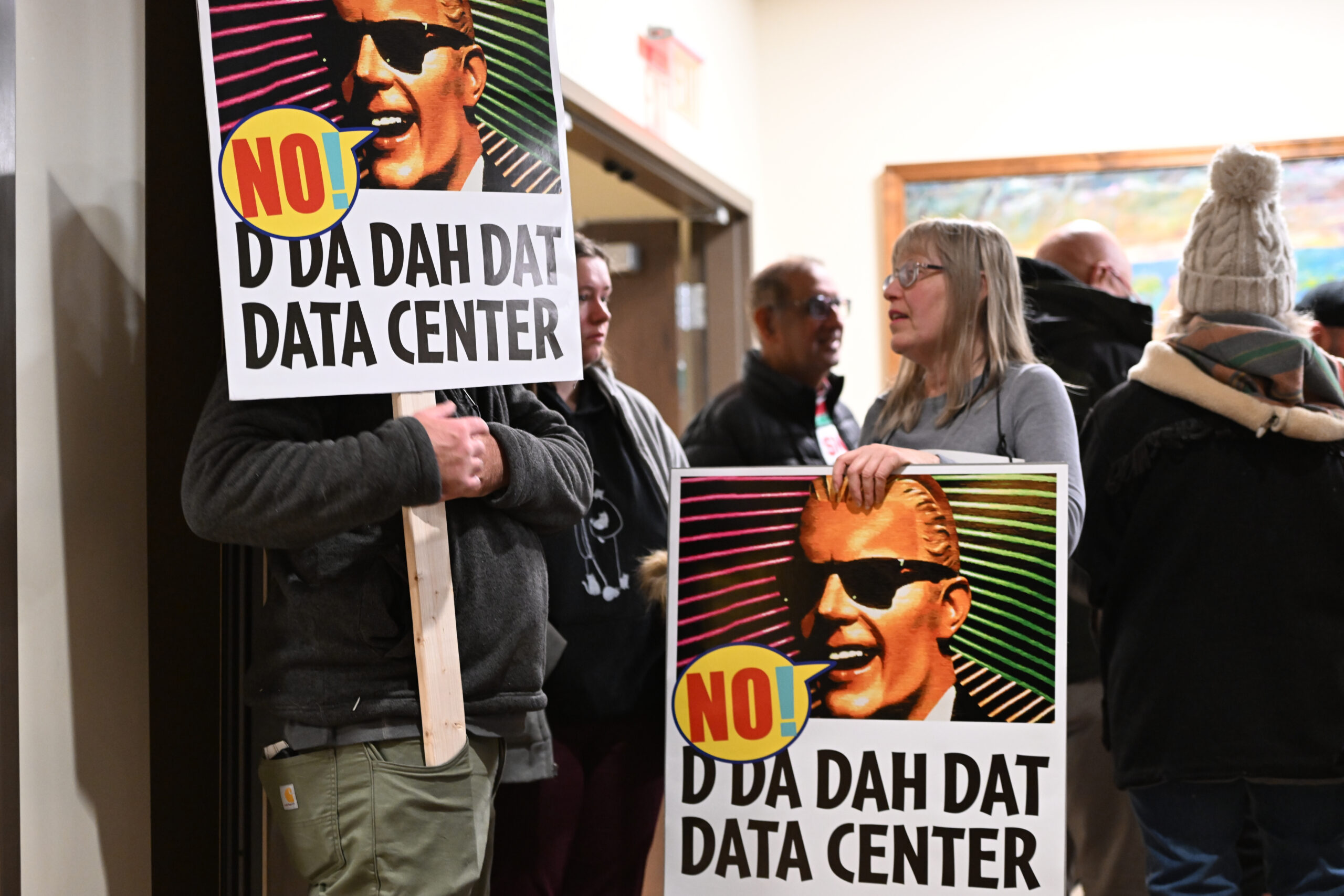
    People opposed to a data center proposal at the former Pennhurst state hospital grounds talk during a break in an East Vincent Township supervisors meeting in December in Spring City, Pa.

    It doesn’t have to be like this. The same better-late-than-never push to remove smartphones from classrooms can be used as a model for eradicating AI in K-12 schools as well as college, to give the next generation at least a fighting chance to learn to think for itself. The politicians don’t have to allow data centers that burn fossil fuels instead of clean energy and consume the lion’s share of water available to the communities where they’re located.

    Nor do we need to embrace the late-stage capitalist ethos that if shareholders make more money employing robots than human beings, some invisible law forces us to do this. Remember Chris Quinn back in Cleveland? The reason he feels he needs AI to write up the news is because, back in 2019, he oversaw the layoff of one-third of his unionized newsroom, at the behest of the paper’s corporate parent.

    Maybe robots are now “agentic,” but humans have always had agency. Here’s the perfect chance to use it: by encouraging the uses of AI that will be good for society — diagnosing sick patients and inventing medicines to cure them, for example — but regulating or banning the aspects of AI that will make life worse.

    That’s partly up to the politicians, but it’s also up to us. Societal trends like the outbreak of “neighborism” — strangers forming new community bonds to beat back the fascism of immigration raids — or a rise in union membership are healthy signs that Americans are finally getting tired of technology driving us apart.

    The fight against the authoritarianism of unchecked and often unwanted AI is the battle of the 21st century that will be waged long after the fight against political authoritarianism in Trump’s United States and elsewhere has been won.

  • John Dunlap’s print shop in Old City deserves a blue historical marker — before this July 4

    John Dunlap’s print shop in Old City deserves a blue historical marker — before this July 4

    The most important printing job in American history took place in Philadelphia, on the corner of Second and High Streets, on the night of July 4, 1776.

    There, in the shop of John Dunlap, the Declaration of Independence was first printed and sent around the new United States. Yet today, no Pennsylvania Historical Marker commemorates the spot on Market Street where the declaration first emerged to tell the world about the birth of a new country.

    On the 250th anniversary of American independence, a marker should be erected as soon as possible by the city or state.

    Dunlap’s job was of the first importance. Congress, led by the Boston merchant John Hancock, knew that getting word of independence out to the rest of the colonies was critical to gaining support at home for a war that was not going well. Since the war started in Lexington and Concord up in Massachusetts in April 1775, the Americans had forced the British out of Boston, but lost ground in New York. Independence was just as crucial for trying to get arms and money from Great Britain’s adversary, France, for George Washington’s poorly equipped Continental Army.

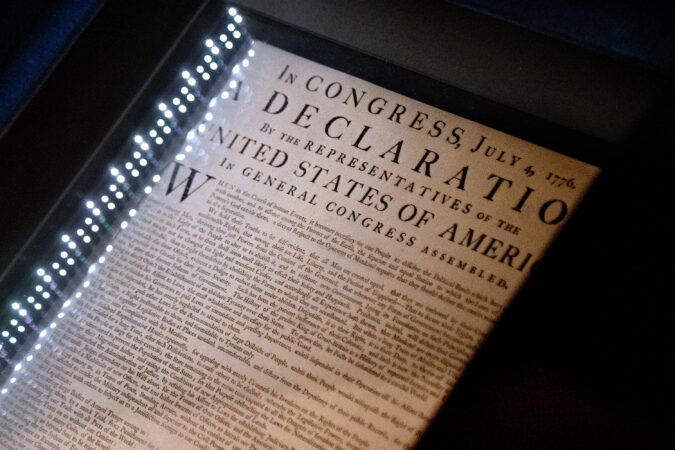
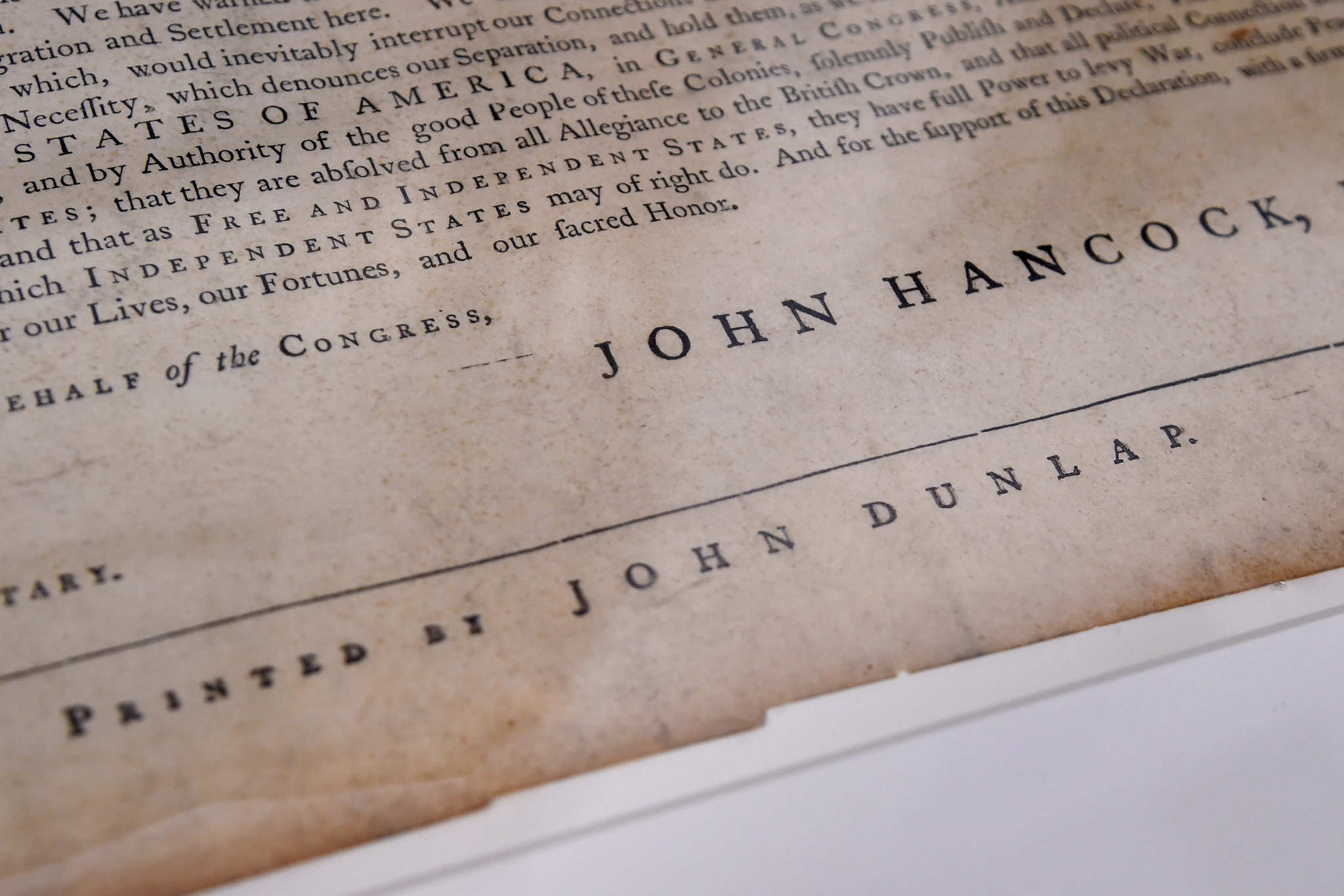
    John Dunlap’s name — along with that of John Hancock, president of the Continental Congress — appears on the oversized declarations Dunlap printed on parchment or vellum.

    Sometime in the afternoon of July 4, Thomas Jefferson walked from the State House on Chestnut Street to the shop of Dunlap, a 29-year-old Irish immigrant and publisher of the Pennsylvania Packet. Jefferson handed Dunlap the original handwritten copy of the Declaration of Independence, adopted just hours earlier by the Continental Congress, and ordered several hundred copies to be printed as soon as possible.

    Working through the night, Dunlap and his assistants printed up at least two batches of “broadsides,” some on paper bearing the watermark of King George III. Dunlap had to rush, and some copies were printed slightly askew, while many were folded while still wet, leaving offset imprints.

    They were rushed back to Congress and given to dispatch riders to distribute to colonial assemblies and the army. Washington received his on July 9 and had it read that day at his headquarters in Manhattan.

    In their library on June 16, 2021, American Philosophical Society reference and digital services specialist Joe DiLullo holds its copy of a rare oversized Declaration of Independence printed by congressional printer John Dunlap on parchment or vellum in July 1776.

    It took weeks for the other Dunlap broadsides to reach their destinations, the last arriving in Savannah, Ga., on Aug. 10.

    One Dunlap broadside was used for the first public reading of the declaration, on July 8, in front of the State House, by Col. John Nixon. The scene was immortalized nearly a century later by Frederick Peter Rothermel, in a painting now hanging in the Union League Club.

    To this day, no one knows how many were printed, but only 26 original Dunlap broadsides are known to exist, making them among the rarest of American artifacts.

    The last one to come up for auction, in 2000, was bought for $8 million ($15 million in 2025 dollars) by the television producer and liberal activist Norman Lear. Most are held by museums or universities, but whenever they are displayed, the Dunlap broadsides draw crowds who are just as fascinated to see the words that declared a sovereign state as were those a quarter millennium ago.

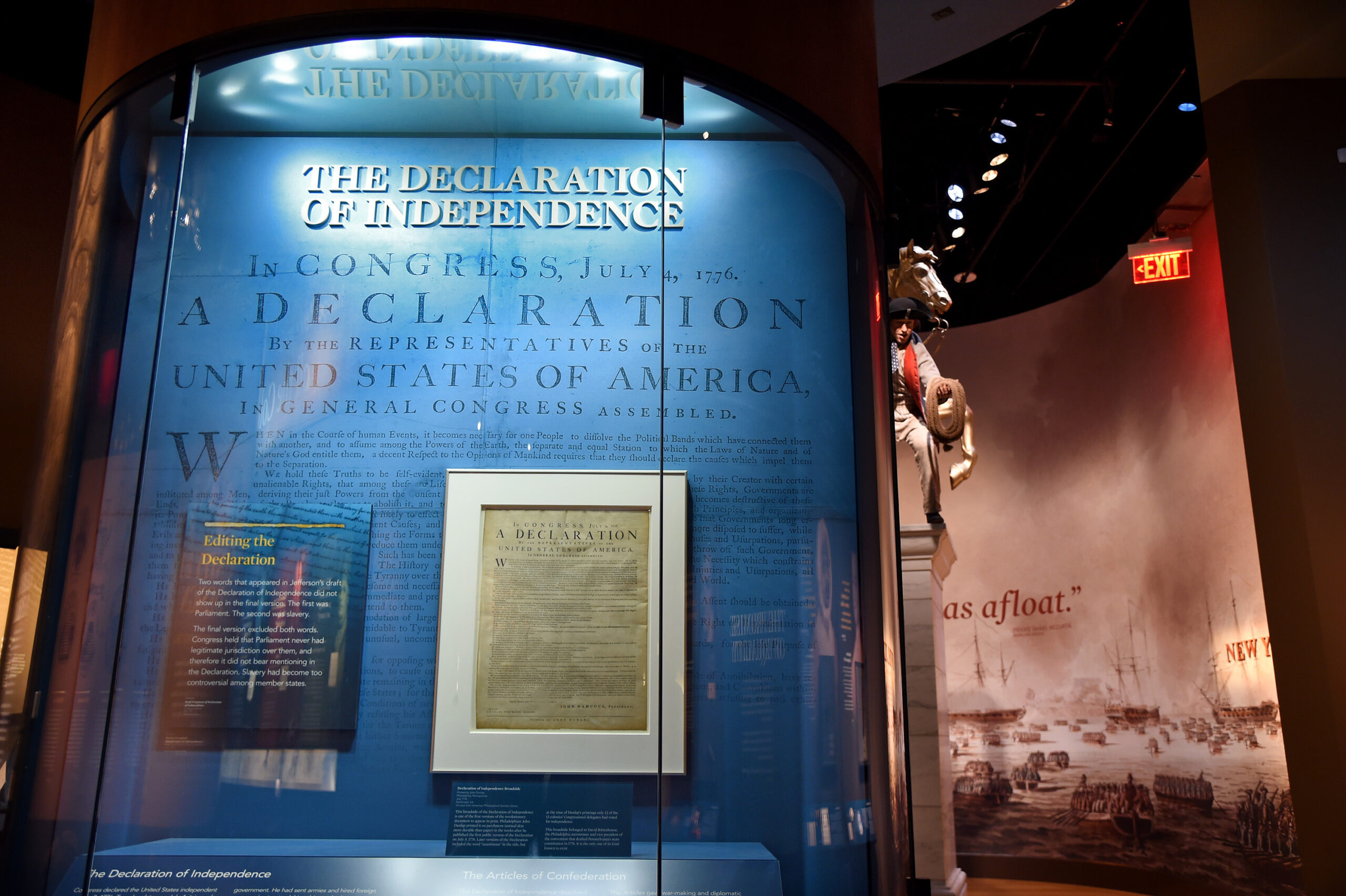
    The only known copy of the Declaration of Independence printed on vellum by John Dunlap is on display at the Museum of the American Revolution.

    Yet, few passersby, if any, stop to look at a tarnished, old plaque affixed to a rundown building at Market and Second. Put there 50 years ago by the Society of Professional Journalists, it is the only acknowledgment of one of the most important sites of the American Revolution.

    Next to a shuttered diner, the plaque is likely all but ignored by any but the most dedicated history buff.

    There is not enough time to go through the formal Pennsylvania State Historic Preservation Office process, but given the historic importance of the site, an ad hoc or special exemption by the city or state should be made, and a proper blue historical marker should be put up before July 4.

    It is the least that can be done to commemorate a site where actions that still reverberate around the world took place.

    Michael Auslin is a historian at Stanford’s Hoover Institution and is the author of the forthcoming “National Treasure: How the Declaration of Independence Made America.”

  • Letters to the Editor | Feb. 19, 2026

    Letters to the Editor | Feb. 19, 2026

    Courage exemplified

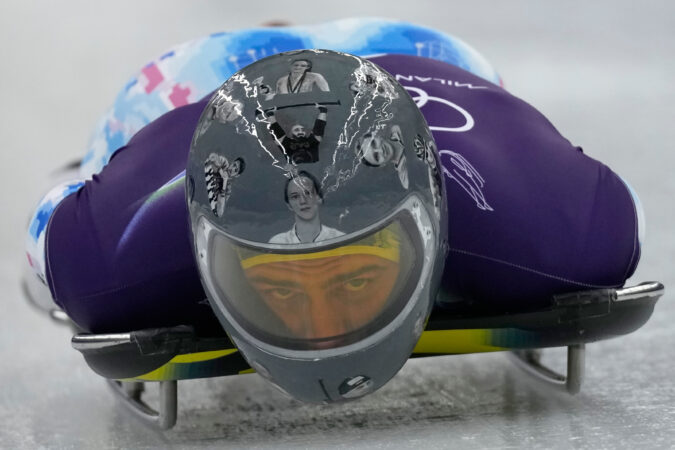
    Ukrainian skeleton athlete Vladyslav Heraskevych was disqualified by the International Olympic Committee at the Winter Olympics for wearing a helmet in remembrance of Ukraine’s war dead. He is considered one of the best in this sport and had a good chance of winning a medal.

    This patriot summarized things precisely by saying that there are things “more important than medals.” As Ukrainian President Volodymyr Zelensky said, “Having courage is worth more than any medal.”

    The IOC should be condemned for failing to realize that remembrance is not political propaganda. Ukrainian Foreign Minister Andrii Sybiha hit the nail on the head by saying that it is “Russians who must be banned, not the commemoration of their victims.”

    Leo Iwaskiw, Philadelphia

    . . .

    The Winter Olympics in Italy are spectacular — as always, a world stage celebrating extraordinary human skill and potential — within the realms of good sportsmanship. How inspiring it is to witness the best athletes not only perform but also encourage and congratulate each other, sometimes despite their own personal ambitions as well as disappointments.

    Yet, how disheartening that, as the fourth anniversary of the unprovoked invasion of Ukraine approaches, an issue has developed. Ukrainian skeleton competitor Vladyslav Heraskevych has been disqualified from the 2026 Winter Olympics by the International Olympic Committee for refusing to remove his “helmet of memory” with images of athletes who have been tragically killed as a direct result of Russia’s war on his nation — even as American men’s figure skating competitor Maxim Naumov continues to show a picture of his parents who were tragically killed in the plane crash over Washington, D.C., a year ago. What a double standard for these young people grieving heavy losses. Shame on the IOC for its blatantly biased ruling and its failure to honor basic humanity in each one of us.

    Christine Fylypovych, Blue Bell

    Ingrained images

    The Vietnam War and U.S. Immigration and Customs Enforcement’s Minneapolis War are forever linked by their utter depravity by three photographs seared in the soul of America.

    Saigon Execution. During the Tet Offensive on a Saigon street, a South Vietnamese police chief standing arm’s length from a handcuffed Viet Cong prisoner pulls the trigger. The photo was snapped simultaneously with the gun firing, showing the prisoner’s head beginning to explode.

    Napalm Girl. A 9-year-old girl is running naked, with third-degree napalm burns on a third of her body, arms outstretched, mouth wide open, a terrorized look on her face as if she were attacked by some unimaginable horror. Four other children are running in the same direction, one crying, all followed by soldiers strolling behind, seemingly unconcerned.

    Lost in America. Liam Conejo Ramos, 5 years old, wears a blue and white bunny hat with a Spider-Man backpack, standing next to a dirty vehicle, looking hopelessly forlorn. A man in black stands directly behind Liam with a hand on his backpack, apparently proud that he captured a hardened criminal.

    The pictures encapsulate how both wars are rotten to the core. The Saigon execution and the napalm girl photos helped stir a nation. Liam’s photo and Renee Good’s and Alex Pretti’s executions, along with the courageous Minnesotans, have done the same.

    Gary Goldman, Newtown

    Join the conversation: Send letters to letters@inquirer.com. Limit length to 150 words and include home address and day and evening phone number. Letters run in The Inquirer six days a week on the editorial pages and online.