May we continue to ensure these fundamental human rights given by our Creator are not taken away.
Mary Beth Rodger,Warwick
. . .
I was stunned and delighted by July 4’s front page. I wish I could buy a poster-sized version. It expresses everything I want our government to strive for.
Anne Slater, Ardmore
. . .
Bravo, Inquirer! Unfolding my morning paper and seeing your outstanding choice for front page text took my breath away. How powerful. How beautiful. How full of hope. Thank you.
Elizabeth Gavula, Philadelphia
Arts funding cut
During the past five weeks, I have attended seven or eight performances presented as part of the ArtsPhilly: What Now 2026 Festival, celebrating the 250th anniversary of our nation’s founding through the work of Philadelphia artists and arts organizations.
What made these events so memorable was their focus on lesser-known community arts groups. The festival showcased theater, storytelling, poetry, dance, music, visual arts, and performance art, and every event I attended drew enthusiastic audiences. They demonstrated both the vitality of Philadelphia’s arts community and the public’s appetite for diverse, neighborhood-based cultural experiences.
That is why I was dismayed to read both your editorial and Peter Dobrin’s article about the city’s decision to reduce funding for the Mural Arts program and the Philadelphia Cultural Fund. The cultural fund provides essential grants to smaller, underresourced organizations — the very groups ArtsPhilly helped bring to wider public attention.
These cuts are a shortsighted response to the city’s budget challenges. The strong attendance at ArtsPhilly events shows Philadelphians value these organizations and the opportunities they create for connection, creativity, and community. Rather than weakening them, the city should invest in them. If these cuts stand, Philadelphia’s cultural life — and all who benefit from it — will be poorer.
Naomi Lokoff,Glenside
Lasting legacy
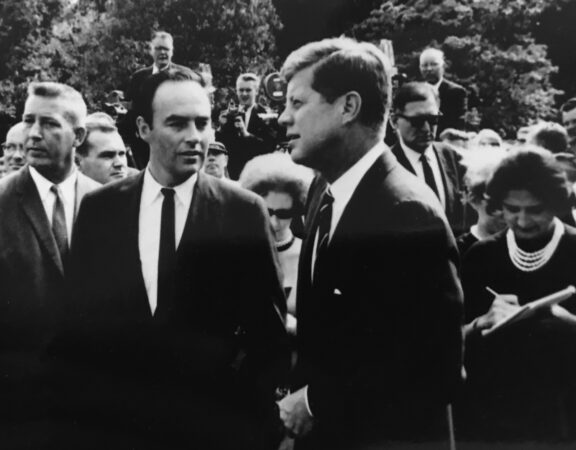
Jonathan Zimmerman’s thoughtful defense of the Peace Corps deserves attention. One of its greatest achievements, however, is often overlooked. When President John F. Kennedy and Sargent Shriver created the Peace Corps, they established three goals. The third — and perhaps the most enduring — was to bring home the knowledge and understanding volunteers gained by living and working alongside people in other countries.
As Returned Peace Corps Volunteers who served in Morocco from 1968 to 1970, we have seen that goal fulfilled. More than 250,000 Returned Peace Corps Volunteers have become teachers, professors, physicians, scientists, diplomats, public servants, business leaders, and community volunteers. The perspective gained during two years of service has shaped careers, classrooms, communities, and public institutions across the United States.
Measured over a lifetime, the return on America’s investment in the Peace Corps is extraordinary. The benefits did not end when volunteers came home; in many ways, they were just beginning.
Zimmerman reminds us that the Peace Corps is one of the smallest items in the federal budget. It is also one of the wisest investments our nation has ever made.
James F. Lawrence, senior executive, U.S. Department of State(retired), andDaniel A. Wagner, professor and UNESCO chair, University of Pennsylvania
Join the conversation: Send letters to letters@inquirer.com. Limit length to 150 words and include home address and day and evening phone number. Letters run in The Inquirer six days a week on the editorial pages and online.
Your reporting on the Bicentennial in Philadelphia reminds readers that then-Mayor Frank Rizzo stoked fears of July Fourth counterprotests, and thereby scared away tens of thousands of visitors. In his efforts to thwart protest, his unsuccessful demand for 15,000 federal troops predicted “disruption and violence by a substantial coalition of leftist radicals.” It was red-baiting rhetoric that sounds eerily like what we hear today.
There were actually a few different protest actions on July Fourth. We were participants in the largest one, a national demonstration held in North Philadelphia and led by Puerto Rican and Native American activists, calling for “a Bicentennial without colonies,” as well as “jobs and a decent standard of living” and “full democracy and equality.” Hundreds of organizations mobilized for the protest. News accounts estimated as many as40,000 people marched and rallied peacefully in Fairmount Park.
While the protest’s goals are yet to be achieved, this massive coalition effort in the face of repression by Mayor Rizzo was a boost to independent progressive politics in Philadelphia and beyond. This year, we are commemorating that protest and noting that milestones like America 250 are opportunities — not only to celebrate America’s birthday, but also to point out the unfulfilled promises of the Declaration of Independence, and to advance truthful, inclusive narratives about U.S. history.
I appreciated the recent article illuminating Mayor Cherelle L. Parker’s decision to spend $15.5 million in taxpayer money on what is now called the “One Philly: A Unity Concert for America.” The price tag for the event seems to be in direct contradiction to what Parker said to striking municipal workers last summer — that meeting their demands for a new contract would put the “fiscal stability” of the city at risk. Moreover, given the fact that the Philadelphia School District is facing a $300 million deficit and narrowly avoided making significant staff cuts, spending $15.5 million on a concert sounds, to be frank, fiscally irresponsible. Simply put, Parker is prioritizing a concert that now bears her slogan over the stability of the city’s budget, which serves Philadelphians — proving, once again, that under the Parker administration, it’s not “One Philly,” it’s “Her Philly” — and we just pay for it.
Jeff Wasch,Philadelphia
Speak up
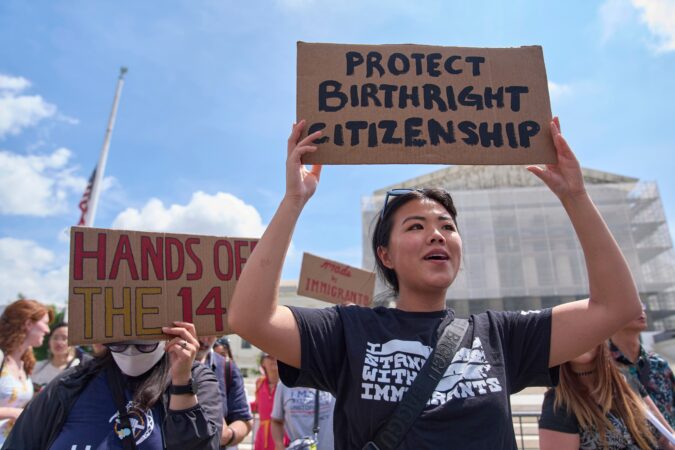
I studied political science in college and constitutional law in law school. In 50 years of law practice, I dealt with the occasional constitutional issue. None of my training or experience has prepared me for what the Trump administration is doing to the delicate balance we have called democracy. Hard to imagine that four justices of the U.S. Supreme Court had doubts about birthright citizenship, impossible to think that massive, unauthorized, and garish changes to the White House could be done by incompetent contractors whose meager qualifications include paying vast sums to the president while the Republican-led Congress does nothing to prevent it. A president who ignores the Constitution, statutory law, and judicial rulings while continuing to line his pockets — and those of his children — with billions of dollars of ill-gotten gain? It’s all happening every minute. The midterms and the November election are our best and last chance to throw these criminals out of office and take back America. In the meantime, speak up, attend rallies, and by all means try to persuade anyone who is on the fence to come over and help repair the harm.
Marc P. Weingarten,Palm Beach Gardens, Fla.
. . .
The elephant in the nine individual judicial chambers of the U.S. Supreme Court for the past three months was Donald Trump’s bogus executive order intended to end the absolute right to U.S. citizenship for every child born within the borders of the United States and its territories (with the ridiculous exception of American Samoa), as mandated by the Constitution and a prior court ruling. Trump has proved to be the most racist president since Theodore Roosevelt (look it up). He claimed, without evidence, that Barack Obama, son of a citizen and born in Hawaii, was an “illegal.” For years, with coaching and encouragement from the odious Steven Miller, he has been on a mission to cleanse America of nonwhite residents and darker-skinned immigrant citizens. Haitians fleeing for their lives from mercenary gangs, poverty, hurricanes, and earthquakes? Trump’s message is get the hell out. Lily-white Afrikaners from South Africa are welcomed with open arms. Need a visa? No problem. Unless Trump is removed from office by impeachment, we will have the cruelest and stupidest chief executive occupying the presidency for an implausible 31 more months — and at least four of nine Supreme Court justices and dozens of Republicans in Congress still ready and willing to defy the Constitution for him. They are a true enemy of America’s constitutional democracy and its creed — “out of many, one.”
David Kahn, Boca Raton, Fla.
Public philosophy
I write regarding a recent article about the draft report issued by President Donald Trump’s Religious Liberty Commission. To solve the problem of a secular public square, the report calls for the elimination of the principle of separation of church and state and the elevation of Christianity. However, the problem of the public square being empty of moral meaning is not a result of the separation of the state from the church. Rather, it is due to the separation of the state from a public philosophy through which moral order can be arrived at through evidence and reason, rather than revelation. Such a public philosophy provided the foundation of our democracy from the Age of Enlightenment of our founders until the latter half of the 20th century, when morality became privatized. The case for revival of this philosophical tradition was first made in 1955 by the political philosopher and journalist Walter Lippmann in his classic book, The Public Philosophy, and more recently by commentators such as David Brooks. A philosophical moral order that underlies our government, social relations, and marketplace — arrived at through reason — avoids the potential oppression of a state-established religion that our founders sought to preclude.
Donald Kelly, Havertown
Art of the Donald
In his book The Art of the Deal, Donald Trump bragged about his negotiating skills. So let’s see how they are faring during his presidency. He awarded a no-bid $14 million contract to his favorite pool maintenance company to correct alleged flaws in the Lincoln Memorial Reflecting Pool after claiming the job would cost less than $2 million. How’s that working out so far? And it was recently revealed that he awarded a no-bid $500 million contract to the company building his wonderful ballroom after claiming the project would cost far less and be covered by donations from his cronies. Way to go, Don. And let’s not overlook his “agreements” with Iran to end his flawed (failed?) war that he promised would replace its authoritarian regime, remove its potential nuclear weapon capabilities, and reopen the Strait of Hormuz, which had never been closed to international shipping until his war began. So far, his war seems to have failed in achieving many of his goals. And the Strait of Hormuz? Its shipping lanes are only partly open and are now subject to fees never before charged by Iran. His next book should rightly be titled The Art of the Fail.
Ben Zuckerman,Philadelphia
Join the conversation: Send letters to letters@inquirer.com. Limit length to 150 words and include home address and day and evening phone number. Letters run in The Inquirer six days a week on the editorial pages and online.
The events over the last several weeks — from the World Cup to the Fourth of July and America250 celebration to the forthcoming Major League Baseball All-Star Game — continue to show us the dedication of our first responders. Not only do Philadelphia’s police officers and firefighters (with a lot of help from outside agencies) continue to do their “day” jobs — patrolling their precincts and battling blazes — but they’ve done yeoman’s work at these community events. To them, I say, thank you.
Make no mistake — they are getting paid for it. Much of the pay is overtime pay — which (thankfully for us taxpayers) is covered by the event organizations — FIFA, MLB, or America250 and supplemental funding from the state. However, the overtime is part of the officers’ final pension calculation, and pensions are covered by me, the taxpayer — and not FIFA or anyone else. I’d love to see how much pensions have been inflated because of the overtime from these events.
Bryan Andersen, Philadelphia
Erased history
As we learned in Donald Trump’s first term, there are facts and alternative facts. Now, we are blessed with alternative history. The biggest blemish in our nation’s history, slavery, is being turned into a footnote so that we do not “disparage Americans past or living.” George Washington, Thomas Jefferson, and, in fact (if I can use the word “fact”), 12 of our presidents were enslavers. Since slavery was legal, I fail to see how this information disparages them. They were acting within the laws of their time, regardless of the morality of their actions. Germany has preserved Dachau and Buchenwald to show the world the horrors of their past and to learn from it. We have Trump’s whitewashed, sanitized version of American history, a Disney on Parade edition of our past. Why not just remove one of the f’s from Jefferson’s name while you’re at it? Facts are stubborn things, said John Adams, and part of Trump’s legacy will be his outlandish attempt to erase our history.
Jim Lynch, Collegeville
. . .
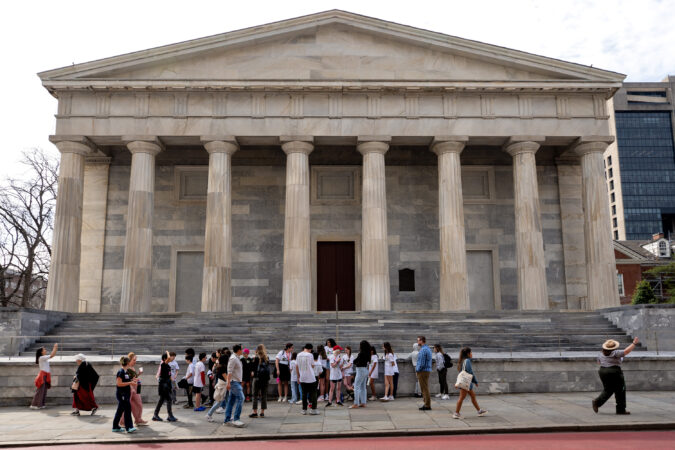
I visited the Second Bank of the United States on opening day. I was eager to see whether Moses Williams was removed from the Peale’s Museum exhibit.
Williams was born into slavery in the household of Charles Willson Peale, who painted the portrait of Thomas Jefferson. It was infuriating that slavery was erased from Jefferson’s history and sanitized in Williams’ story. Williams’ success is not “a testament to perseverance.” It is a testament to the paradox of slavery and liberty. Peale was a member of the Pennsylvania General Assembly. He voted for the 1780 Act for the Gradual Abolition of Slavery.
Peale could have manumitted Williams at any time, but he was not freed until age 27, one year earlier than mandated under the 1780 act.
It should be noted that Williams did not use his earnings to purchase his wife’s freedom. He married Peale’s family cook, a white woman.
Faye M. Anderson,Philadelphia
Join the conversation: Send letters to letters@inquirer.com. Limit length to 150 words and include home address and day and evening phone number. Letters run in The Inquirer six days a week on the editorial pages and online.
Independence Day is one of my favorite holidays. Not for the parades, pageantry, and fireworks, though I love those, too — even more so in the year of the nation’s Semiquincentennial.
I love the day for what it celebrates: the birth of an audacious experiment. The idea that a nation could be built not on shared race, religion, or ancestry, but on a shared belief in human dignity, and the right to pursue a life of your own making. E pluribus unum. Out of many, one.
That idea is how my family became Americans. My parents came to the United States as exchange students from Iran, intending to return home. The Iranian Revolution happened the day my dad was defending his doctoral dissertation. It extinguished the future my parents had imagined, especially for me. His Jewish dissertation advisers wrapped their arms around our young Muslim family, and America took us in.
I have spent my career seeking to be worthy of that welcome, serving my country — the United States — at some of the highest levels of government. My diplomatic counterparts in the Middle East thought I was a unicorn: How could the first-generation daughter of a country that is the sworn enemy of the United States be seen as so American as to represent it? My experience is not unique — just ask the many first-generation troops who serve in our military. I’m not the unicorn. Our country is.
President RonaldReagan said it best, in his final speech as president: “A man wrote me and said: ‘You can go to live in France, but you cannot become a Frenchman. You can go to live in Germany or Turkey or Japan, but you cannot become a German, a Turk, or a Japanese. But anyone, from any corner of the Earth, can come to live in America and become an American.’ … We lead the world because, unique among nations, we draw our people — our strength — from every country and every corner of the world. And by doing so, we continuously renew and enrich our nation.”
Our founders knew that their radical idea would take work from all of us. George Washington spelled out the covenant of citizenship when, writing to a Jewish congregation in 1790, he said that America “gives to bigotry no sanction, to persecution no assistance” — and in return “requires only that they who live under its protection should demean themselves as good citizens, in giving it on all occasions their effectual support.” Welcome extended. Citizenship expected.
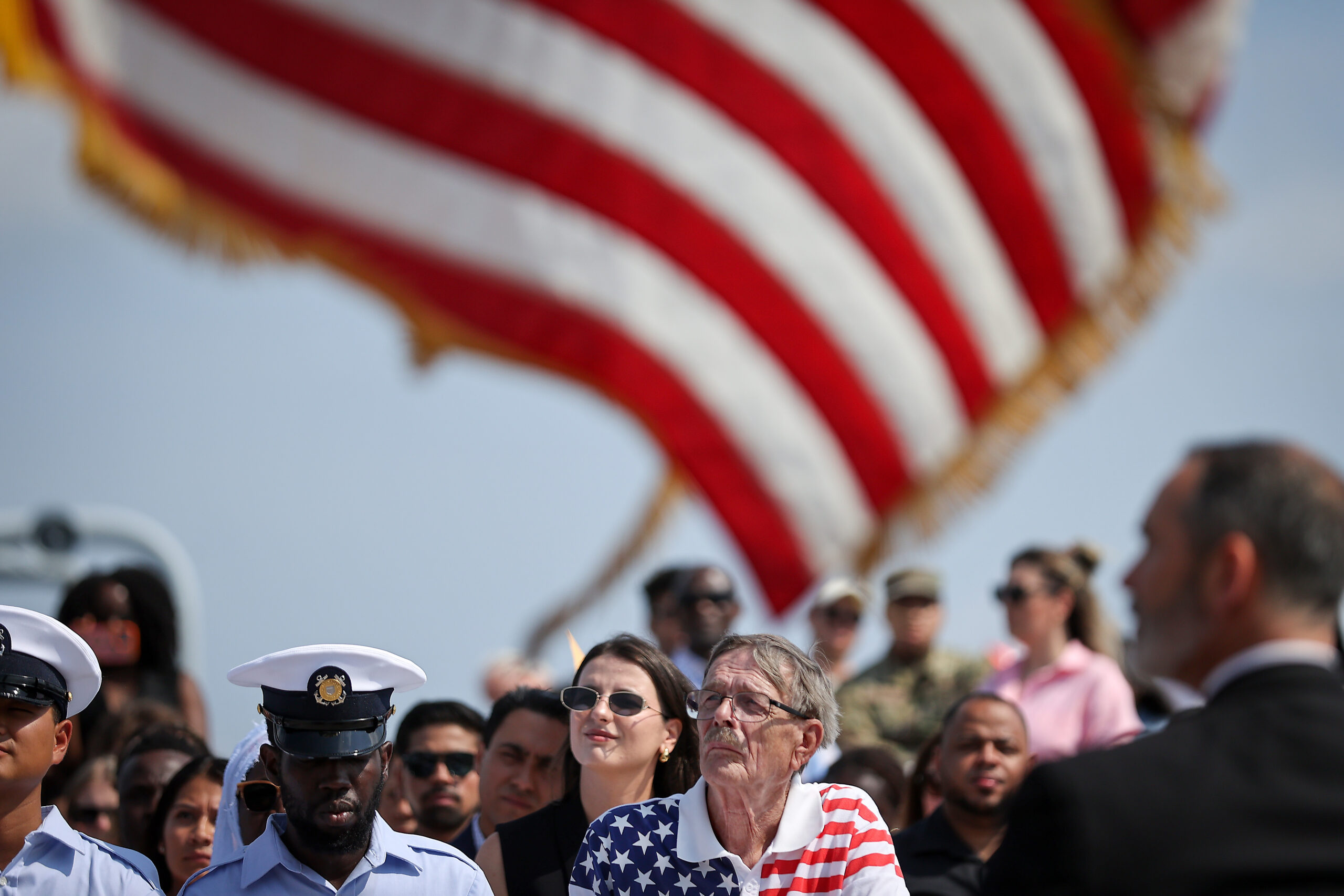
Bjorn Bedersen (right), who was one of the 42 soon-to-be U.S. citizens, listens to a speech during an Independence Day naturalization ceremony on Battleship New Jersey in Camden on July 4, 2024.
So every Fourth of July, I find myself thinking about what citizenship should demand of us today. This year, with our 250th upon us and citizenship debated in courts and in the press, the question is more urgent than ever.
Right now, hundreds of thousands of aspiring Americans are studying for the naturalization exam — 128 questions on the history, values, and structure of the country they have chosen. They are doing it after working long hours, after putting their kids to bed, in their second or third language. They chose this country on purpose, and they are earning their place in it the hard way.
Which raises a humbling question for the rest of us: Could we pass the same test?
Most of us — native-born Americans, myself included — would struggle to keep up with them. Two-thirds of Americans can’t pass the civics test that new citizens are required to pass, and this year, it got twice as hard.
The path these aspiring Americans walk has seldom been more fraught. In recent years, families have been separated by enforcement actions, legal pathways to citizenship are increasingly unclear, and communities that once felt settled now live in a persistent state of uncertainty. The people studying those 128 questions are doing so under a shadow most of us will never know. They wonder: Are they still even welcome here?
That is the full truth of this moment: that the people studying the hardest — who perhaps know the most about our country and what makes it extraordinary, who are perhaps the most committed to it — face an uphill battle for a prize most of us simply inherit and often fail to value.
Citizenship cannot be something we take for granted. It is something we practice by learning our history, contributing to our communities, and strengthening them for the next generation.
That’s why I find so much hope in the many Americans who have stepped forward in recent years to help newcomers build their lives in this country. Veterans who know what civilians suffer in war. Pastors in small towns who organized their congregations. Neighbors who decided that the covenant Washington described was theirs to keep.
Now, many of those people are stepping up again to help newcomers succeed in their dreams of becoming American citizens. I lead a nonprofit, Welcome.US, that has created a new citizen guide program, through which Americans can help aspiring citizens study for the civics exam, practice English, and prepare for the live interview that many newcomers find most daunting. One neighbor and one aspiring American at a time, sitting down together over the questions that define this country.
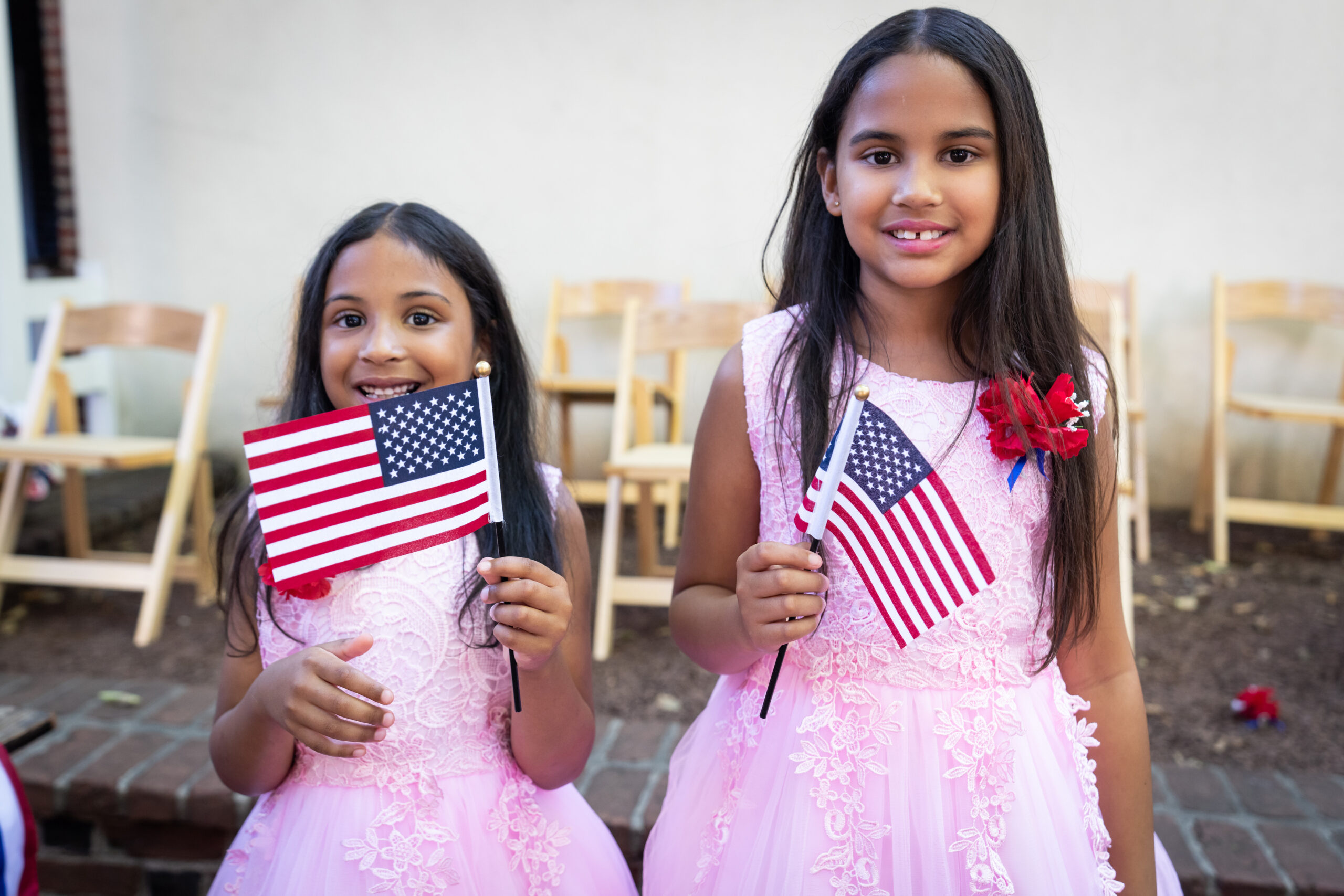
Elianny Torres Rodriguez (left) and Edwanny Torres Rodriguez at the children’s naturalization ceremony at the Betsy Ross House in Center City in July 2024.
Through our organization’s work with more than two million volunteers, I’ve seen that the learning goes both ways.
When Americans help someone prepare for the citizenship test, they don’t just teach. They remember. They are reminded why the First Amendment matters, what the Civil War settled, how generations of Americans — from suffrage to the Civil Rights Movement to American tribes — made our Constitution more real for more people. Welcoming someone into citizenship turns out to be one of the most reliable ways to renew your own.
So here is my invitation on America’s 250th birthday: Take the test.Welcome.US has put the civics questions online. See how you do. Let yourself be surprised by what you know and humbled by what you’ve forgotten.
And if you find that mix of humility and renewed awe that I find every time I try my hand at the test — consider doing something with it. Become a citizen guide and help someone else prepare for it. Spend a few hours with someone who has chosen America on purpose, and let them remind you why it was worth choosing.
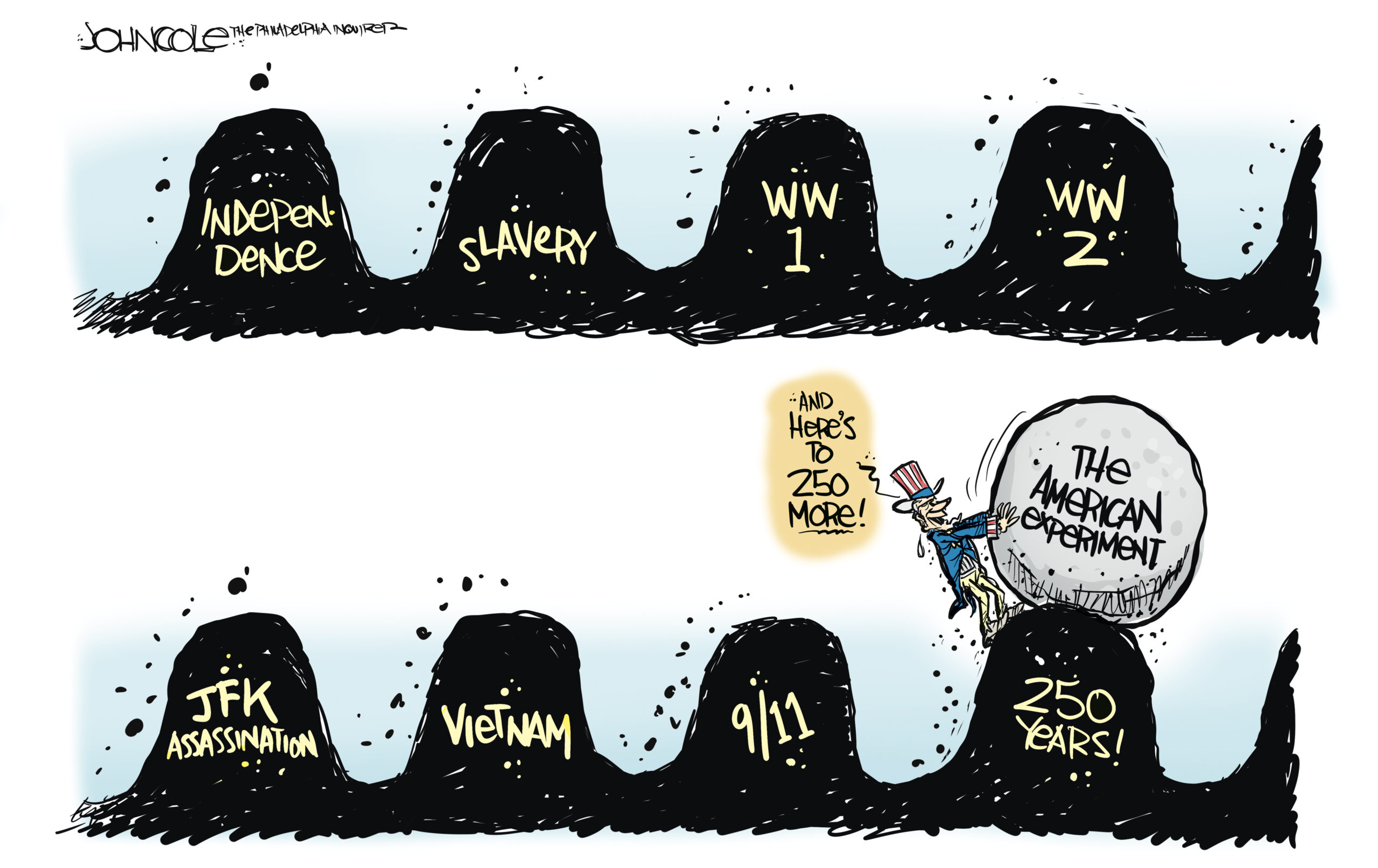
Two hundred and fifty years after our founding, the American Experiment remains unfinished. That’s not a failure; that’s the design. The founders left it to us — all of us, newcomers and native-born alike — to keep working on that ever more perfect union. On this momentous national anniversary, let’s renew that charge.
Nazanin Ash is the CEO of Welcome.US, a nonpartisan nonprofit that has mobilized more than two million American volunteers across 26,000 zip codes to welcome and support newcomers.
Take the test
Here are a few sample questions from the U.S. citizenship test. See more examples at interact.welcome.us/civics:
1. How many voting members are in the House of Representatives?
2. There are four amendments to the U.S. Constitution about who can vote. Describe one of them.
3. How many amendments does the U.S. Constitution have?
4. The Federalist Papers supported the passage of the U.S. Constitution. Name one of the writers.
5. The Nation’s first motto was “E Pluribus Unum.” What does that mean?
Answers
1. Four hundred thirty-five (435).
2. Citizens eighteen (18) and older (can vote). You don’t have to pay (a poll tax) to vote. Any citizen can vote. (Women and men can vote.) A male citizen of any race (can vote).
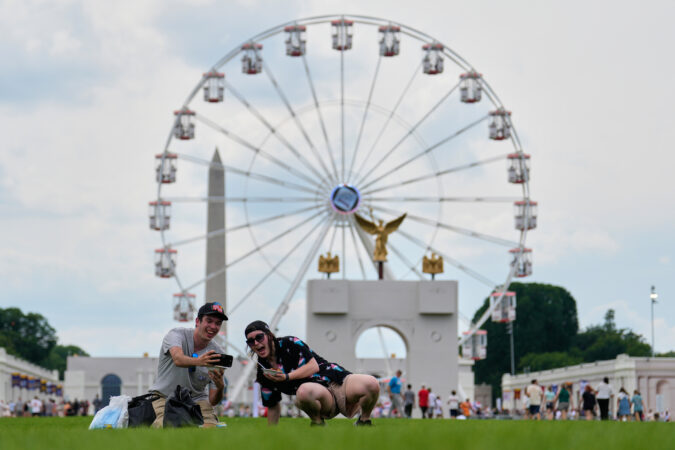
WASHINGTON — It was blisteringly hot when I showed up at President Donald Trump’s much-ballyhooed Great American State Fair on the National Mall in honor of the nation’s 250th birthday.
As I headed off to check in as a member of themedia, a friend who’d accompanied me decided to wait at a lemonade stand.
At first, I was a little concerned, wondering how I was ever going to find her. A lemonade stand on the National Mall in Washington, D.C., was bound to be mobbed on a scorcher of a day like the one we had on Monday.
I needn’t have worried. It wasn’t that kind of party. Crowds were so thin that I quickly spotted her standing alone and eating a snow cone that cost a whopping $8. “Even on a hot day, there was no line at the lemonade stand,” pointed out my friend, Pamela Thomas of Pathfinders Travel, who had taken the train from Philadelphia with me.
That should give you a pretty good idea of how it was at the so-called Great American State Fair, brought to us by Freedom 250, an organization created by President Donald Trump.
The Great American State Fair was downright boring.
Oh, there was an 110-foot Ferris wheel borrowed from the Smithsonian Institution. I watched people stand unsheltered under the blazing sun as they waited for their turn. But that’s the only carnival ride I saw.
This wasn’t like any state fair I’d ever attended. Where was the merry-go-round? Where was the roller coaster? The cotton candy? The local beauty queens? The fair could use a quilting demonstration and band performances. I saw only one cornhole game.
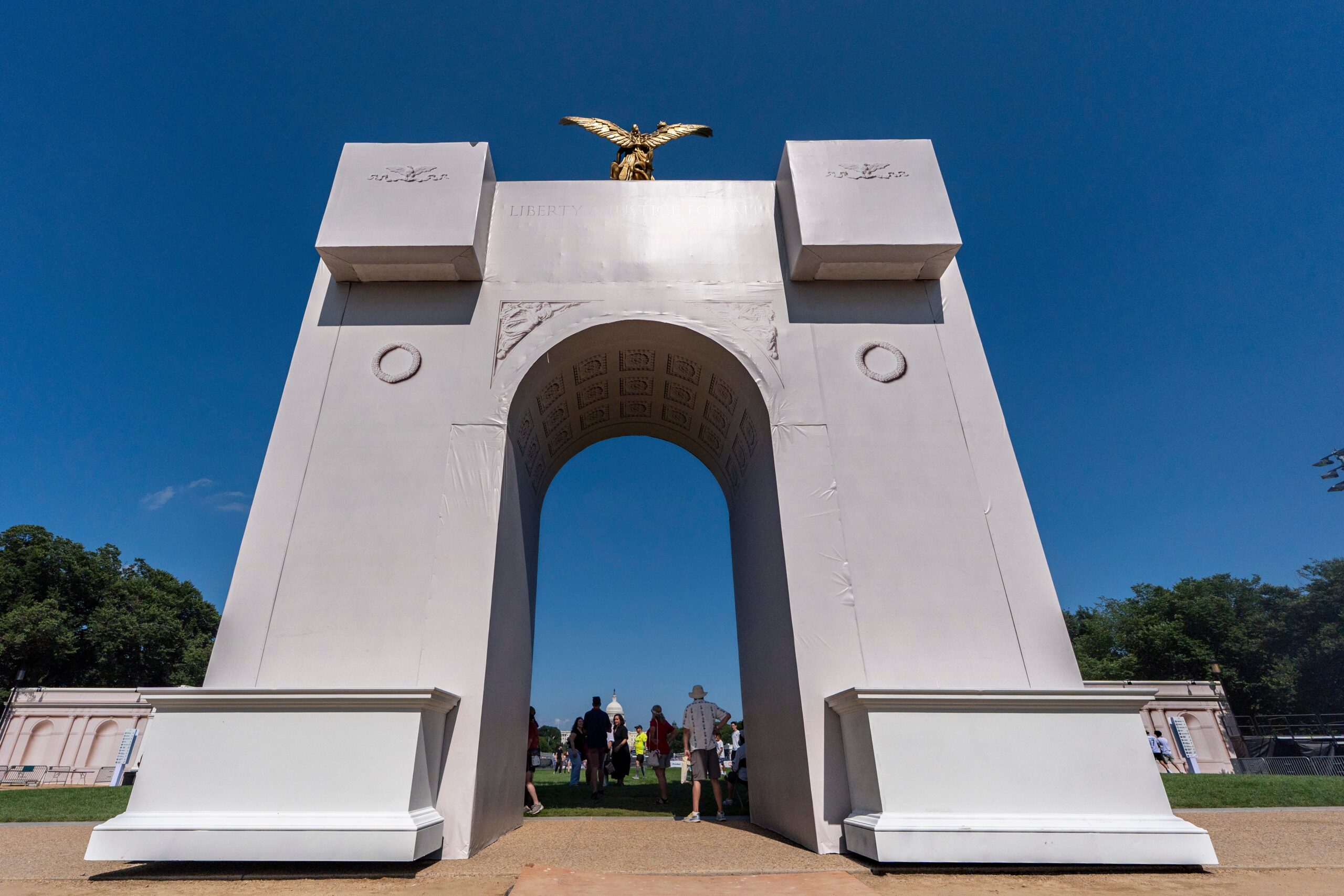
A mockup of President Donald Trump’s proposed Triumphal Arch stands at the Great American State Fair on the National Mall on June 29.
The so-called Great American State Fair needs a whole lot more fun and a whole lot less Trump.
There wasn’t much for children to do besides have souvenir replicas of their new Trump passports stamped.
I managed to findsome shade while sitting on a folding chair inside an area called David’s Tent. As I cooled off, I listened to a woman onstage sing religious songs. Behind me was an aboveground swimming pool set up, ostensibly, for on-the-spot baptisms. In the spirit of inclusivity, there was also a candle-filled menorah positioned in the front of the tent.
At one point, we made our way over to the Hawaii booth. Inside, all we saw was a large mural of the Aloha State that included a picture of former President Barack Obama that someone had defaced.
A smiling woman offered to stamp our “passports.” There was nothing else going on in that booth. Not a flowered lei or macadamia nut in sight. No hula dance demonstration. No ukulele performance.
Same thing with the neighboring Alaska booth.
I made a point of checking out the North Carolina booth, which had been criticized for having images of Confederate flags on display on TV monitors. This one was a bit more inviting, with its colorful NASCAR displays. I didn’t see anything resembling a rebel flag — but I did see a bale of cotton just sitting on the floor, which can be seen as offensive becauseof its slavery connotations. The setup had been organized by private donors. One company, Mt. Olive Pickles, has since pulled out of the fair.
The D.C. booth had some upbeat music playing, a fake cherry blossom tree, and a giant map of the mall that attendees stuck pins into to represent where they lived. “No go-go music?” I asked an attendant, who assured me that some was in the playlist.
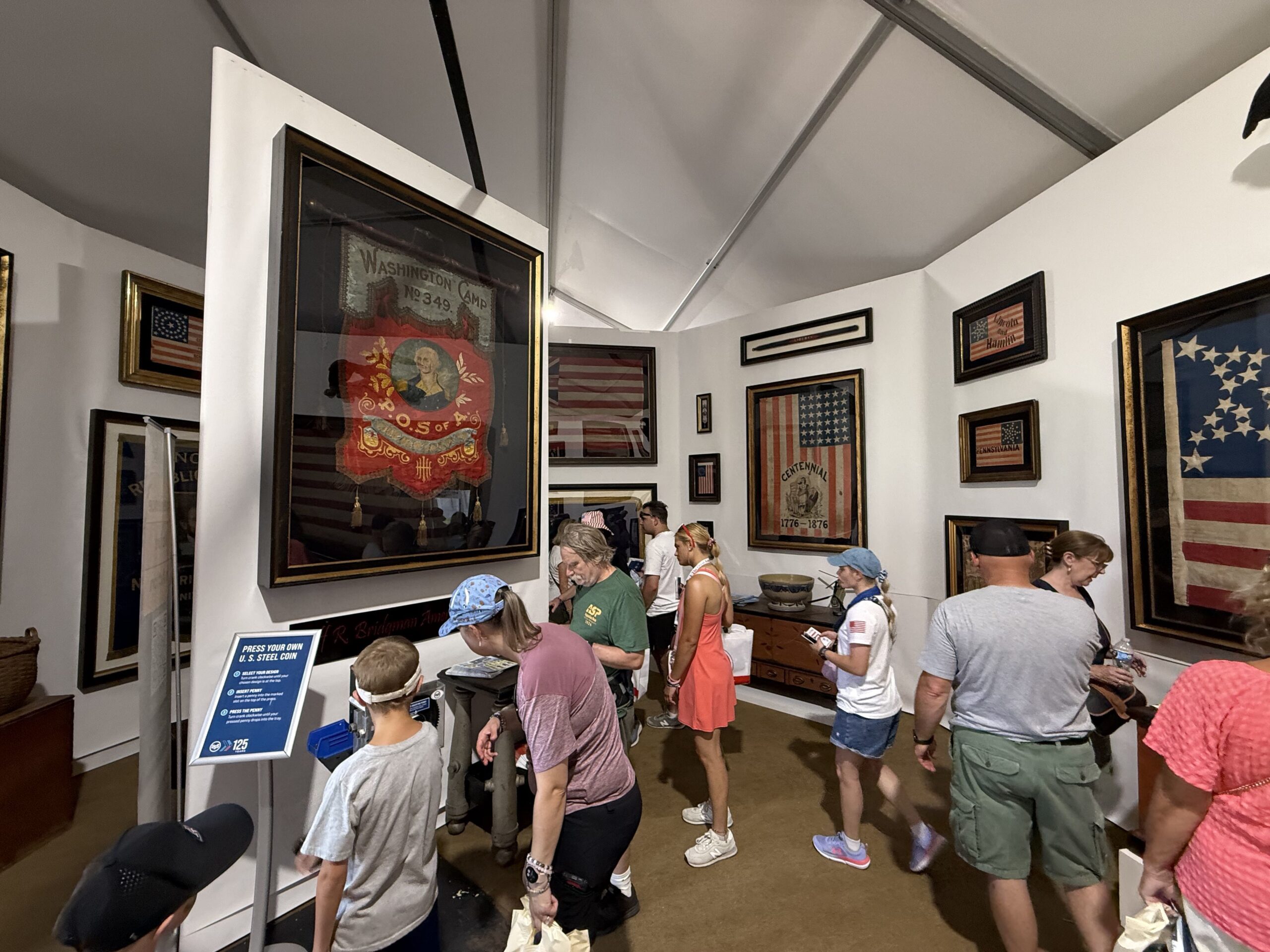
Pennsylvania’s pavilion showcases state history and memorabilia at the Great American State Fair on June 30 in Washington, D.C.
Cape May County, a Republican stronghold, sponsored the New Jersey booth and brought in an impressive-looking eight-foot sand castle. But I noticed one small red plastic bucket of saltwater taffy that a kid was rummaging through. For an area as rich and diverse as the Garden State, the display felt incomplete.
Soon, I had had enough.
We stopped by the media table again on our way out and asked about what was on the schedule for later. The answer? A rodeo demonstration at 7 p.m. That was it.
I was stunned. America deserved more and better for its 250th birthday celebration.
So, if you decide to go experience the Great American State Fair before it is dismantled on July 10, don’t say I didn’t warn you.
In America, one broken-down car can cost someone a job. One medical bill can wipe out a bank account. One missed paycheck can push a family from stability to desperation.
That is not freedom in any real sense.
As the nation marks 250 years of independence, we should say plainly what too many families already know: Freedom requires economic security. And economic security is only achievable when people have resources that exceed the basic cost of living, allowing them to cover their daily needs and build essential wealth — the savings, assets, and financial cushion needed to withstand life’s inevitable shocks.
Pathway to opportunity
Two hundred and fifty years ago, our Founding Fathers made a promise that people would have a right to self-determination. It was a promise that hard work, responsibility, and perseverance would open real pathways to opportunity. As we mark this anniversary, we must ask an honest question: For how many Americans does that promise hold?
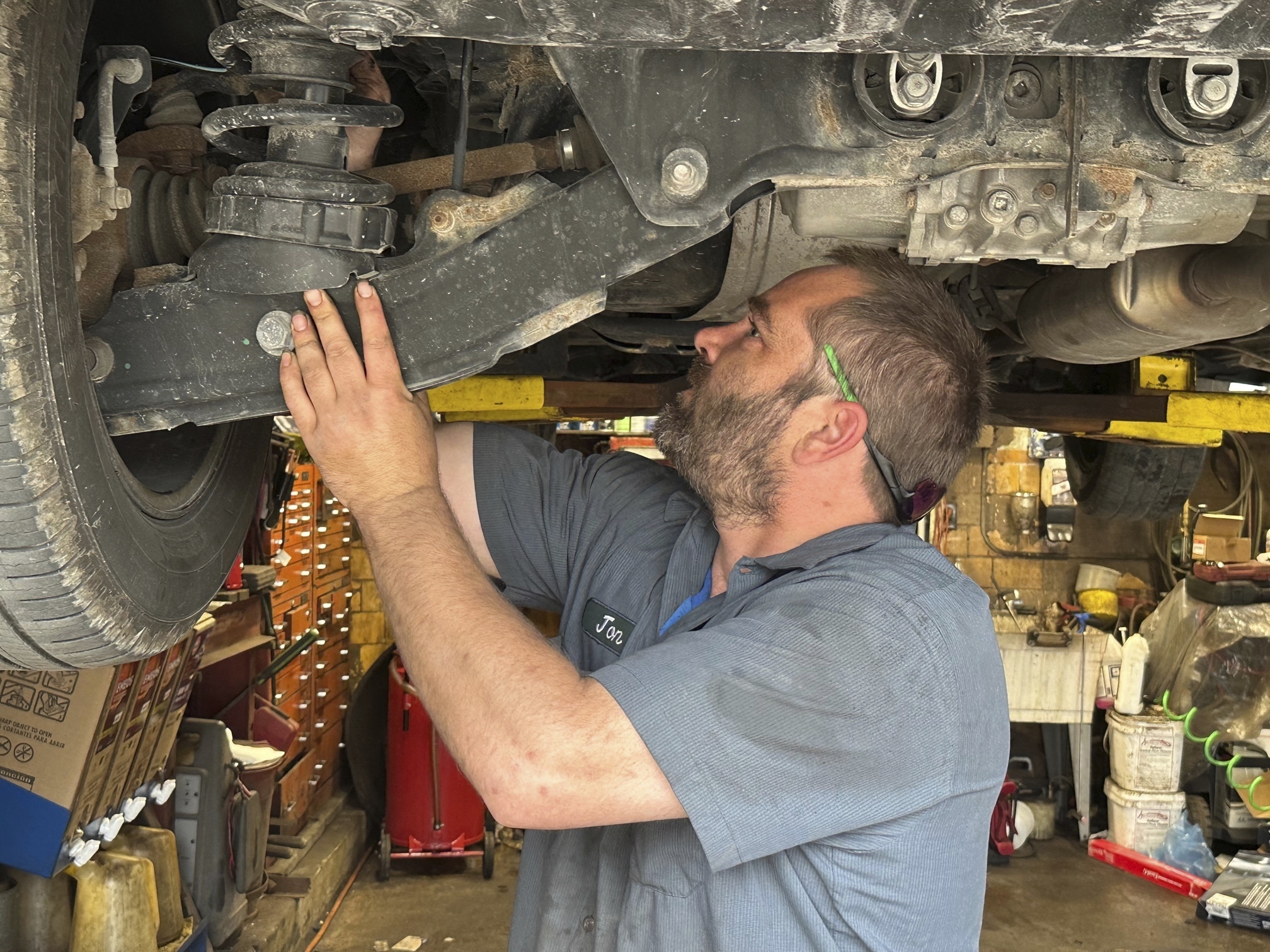
A mechanic works on a pickup truck in Michigan. The expense of a major auto repair bill can mean the difference between stability and ruin for many Americans.
The Constitution guarantees liberty, but circumstances can constrain it. People without the resources to withstand hardship face insurmountable barriers to education, purchasing homes, launching businesses, or saving for retirement. They cannot give their children a running start. They may have rights on paper, but lack the economic security to fully exercise them.
The founders understood at least this much: Liberty could not survive as an abstraction. The Virginia Declaration of Rights, a document that helped supply the moral language of the Declaration of Independence, described the inherent rights of the people as including life and liberty, but also “the means of acquiring and possessing property” and pursuing happiness and safety. That phrase matters.
Today, we understand “the means” less as land than as essential wealth. This is not wealth in the sense of luxury, privilege, or vast accumulation. It is the modest but vital foundation that allows a family to absorb a shock without being knocked flat. It is the money to repair the car that gets someone to work, cover the childcare that keeps a parent employed, pay for medicine before a condition becomes a crisis, or help an aging parent remain safe at home.
Essential wealth is what allows families to plan instead of merely react. It is the difference between recovering from a setback and being defined by it.
The real test comes when life happens. And in those moments, the difference between stability and crisis is not income. It is wealth, or the lack of it.
The cost of ignoring this is written across the country and across Pennsylvania. Tens of millions of American households cannot cover a modest emergency expense, including 48% of households here in the commonwealth, according to the “Measuring the True Cost of Economic Security” report. Wealth gaps yawn across race, geography, and generation, falling hardest on communities long denied the chance to build.
As we celebrate 250 years of American independence, we must think bigger.
We need policies that help families build assets, not just scrape by. Policies that expand pathways to homeownership, invest in children’s futures, widen access to savings and wealth-building, and tear down the barriers that block economic mobility. We need to ensure every child, no matter their zip code or their parents’ income, has the tools to build a secure future.
We must stop managing poverty and start measuring the true cost of living, which includes investing in freedom. Two and a half centuries in, the promise of America was never that people would simply get by. It was that they would have the freedom to get ahead. Living up to it now is the work this anniversary demands.
Michael A. Nutter served as the 98th mayor of Philadelphia from 2008 to 2016 and is currently a senior executive fellow at the Weitzman School of Design at the University of Pennsylvania. Jennifer Jones Austin is the CEO of the Federation of Protestant Welfare Agencies and cochair of the National True Cost of Living Coalition.
When the people drafting the U.S. founding documents got to work in the mid-1700s, they made unprecedented progress on the ills plaguing the preceding era, while failing to meet the fullest expression of their ideals. They would leave those moral aspirations to us — their inheritors.
Their impact is all around us. When any person, anywhere in the world, claims, “I have rights,” they are nodding toward the Enlightenment ideals at the heart of the U.S. founding. Today, it is difficult to appreciate the extent to which those founding principles were revolutionary for simply quelling religious violence.
In the era preceding the founding, millions of Europeans died in warfare couched within differences of faith. On this side of the Atlantic, institutions reflected the certainty of one, true God. Harvard was founded in 1636 to train Puritan clergymen; William and Mary was established six decades later to train Anglican clergy. In the colony of Maryland, Catholics battled Protestants in 1655, leading to the execution of four Catholic leaders.
In this context, 11 years before he would take control of Pennsylvania, William Penn wrote a treatise establishing a rationale for religious toleration. Benjamin Franklin picked up that emphasis when he shared Proposals Relating to the Education of Youth in Pensilvania in 1739. In the document that framed the University of Pennsylvania’s early years, Franklin insisted that students would consider “the Advantage of Civil Orders and Constitutions, how Men and their Properties are protected by joining in Societies and establishing Government.”
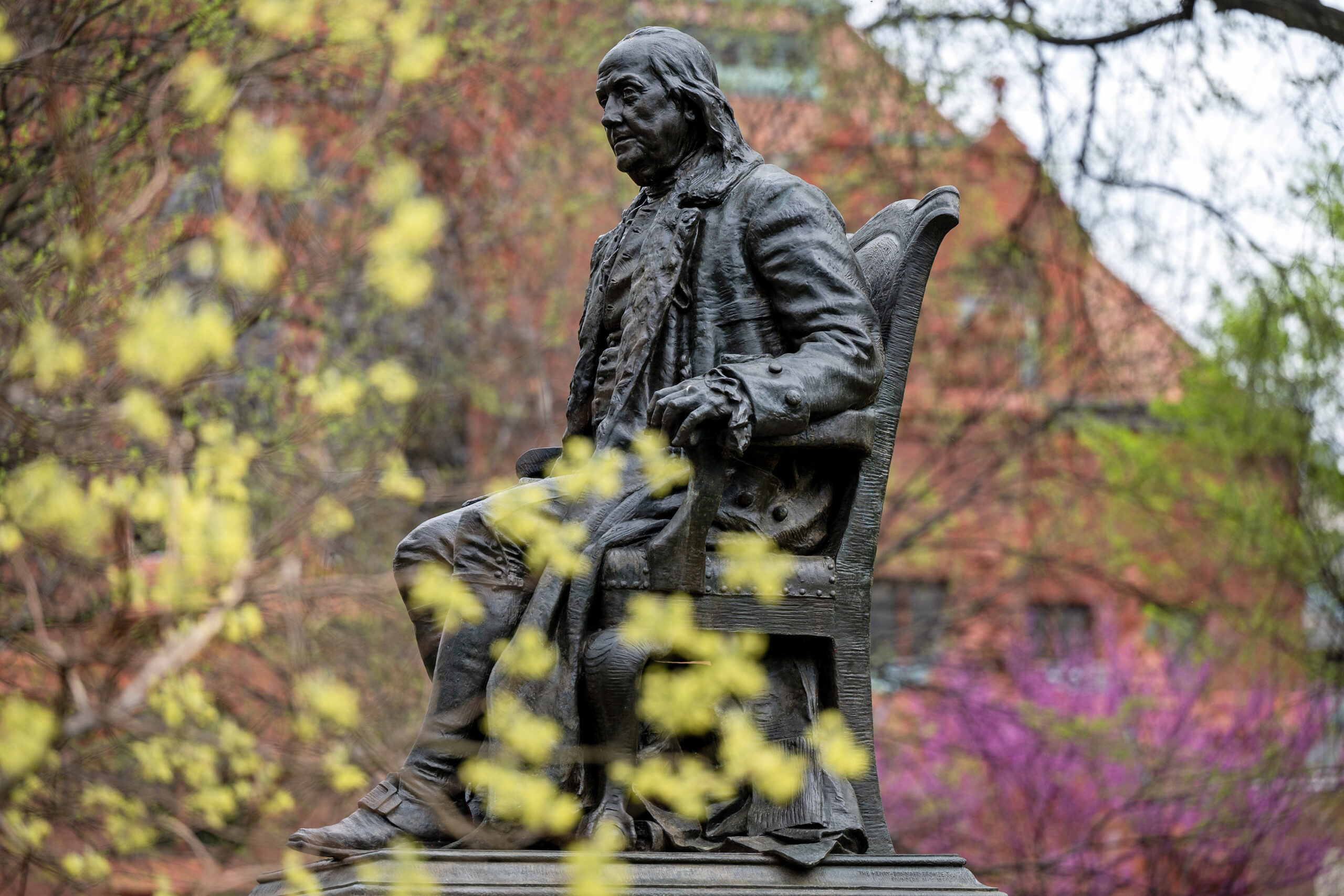
Benjamin Franklin statue on the campus of the University of Pennsylvania in front of College Hall.
Penn’s early, religiously inclusive orientation was at odds with the identity politics of the era, which featured an association between Anglicanism and British loyalty. As tensions grew, the university trustees mandated an Anglican majority on the board, contributing to suspicions of loyalist bias.
A new university was mandated — and the leadership was diverse across Protestant sects, including even Catholic representation. The leaders, however, were uniform in their support for the American revolutionaries.
This creation of, and commitment to, a civic, secular, tolerant institution of higher learning reflected centuries of conflict in arms, persuasion in conversation, and development of ideals. And, like the Declaration of Independence, it was so near in time and space that Penn’s founding was not a crowning achievement but a milestone on a much longer journey.
Indeed, America’s hypocrisies at the founding and struggles since that time are understood in terms of American ideals: enacting in life and in law, through shared governance, a country that embraces the dignity of all people.
A century after William Penn died, Frederick Douglass was born into enslavement — yet he was destined to advance America’s moral imagination.
Douglass self-emancipated by escaping to Philadelphia at the age of 20 in 1838. Only three years later, he rose to fame through his abolitionist speeches, compelling audiences with his message and oratory power.
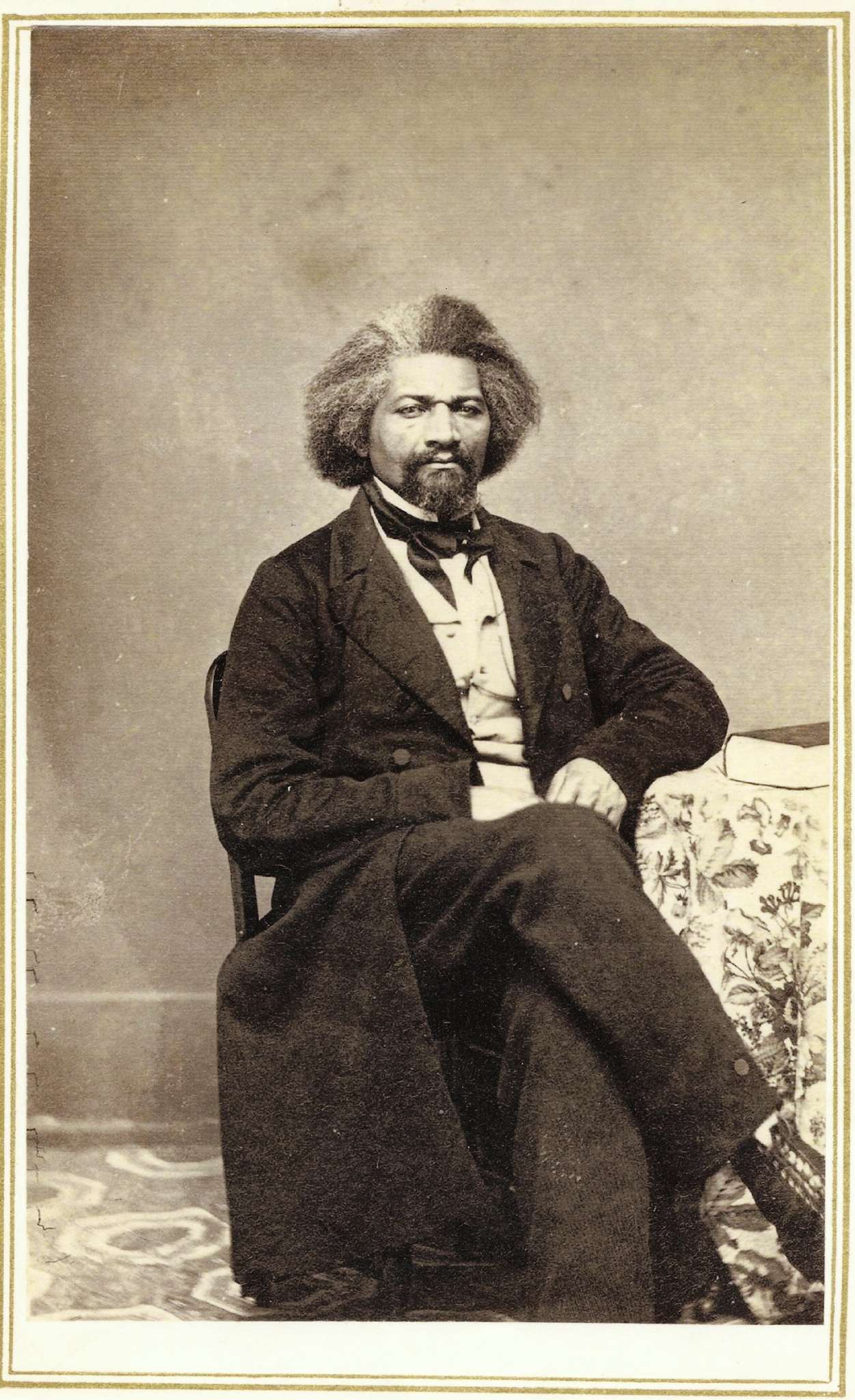
An 1863 photograph (carte-de-visite) of Frederick Douglass, by Edwin Burke Ives and Reuben L. Andrews.
He also grew through international collaboration. His 1840s tour of Ireland and Britain revealed the interdependence of global struggles for freedom.
When Douglass returned to the states in 1847, he joined Elizabeth Cady Stanton and Philadelphian Lucretia Mott in upstate New York at the Seneca Falls Convention for women’s rights. As his reputation grew, he occasionally parted ways with his mentor, the abolitionist William Lloyd Garrison.
One critical difference featured a perennial question: Is it possible to reform the system?
Garrison and many of his followers viewed the U.S. Constitution as a pro-slavery document. He refused to participate in U.S. electoral politics and believed free states should separate from states that permitted slavery. Douglass differed.
The debate extended across the Atlantic. In 1860, Douglass was invited to Glasgow, Scotland, to defend his position. He began by clarifying that “the American government and the American constitution … are as distinct from each other as the compass is from the ship.”
In an extensively argued defense of constitutional principles, textual, and moral clarity, Douglass asserted that if Americans honor the Constitution, “we will have no need of a dissolution of the Union — we will have a dissolution of slavery all over that country.”
In this orientation toward America, emerging ever more aligned with its fullest expression as a birthplace of freedom, Douglass echoed Franklin.
At the age of 81, in 1787, Franklin urged adoption of the U.S. Constitution — specifically recognizing it had faults he disagreed with. He emphasized union over disunion; he offered faith in the possibility of stepping from the rule of a king to the rule of the people, however small that first step was — it was still a spark.
Though Douglass would live most of his life in Massachusetts, New York, and the nation’s capital, he gained his freedom by coming to Philadelphia — a city and region awash in abolitionist organizing. Harriet Tubman also established her freedom in Philadelphia before moving northward. In the same era, the nation’s first historically Black colleges and universities, Lincoln and Cheyney, were founded in Southeast Pennsylvania. They would soon educate numerous pivotal civil rights leaders in the U.S., as well as the young men who would later become the first presidents of Ghana and Nigeria.
Revolutions in human freedom move much more like a river than a straight line. We who work, vote, and struggle for freedom are the water. We hit rocks, cliffs, and eddies — but freedom, like water, finds its path.
That freedom-finding is not merely metaphorical. In the 1700s and early 1800s, enslaved Africans fleeing Georgia fled not north but south, where the Spanish ruled until 1821. Just a bit north of St. Augustine, Fla., is Fort Mose, established as a legally sanctioned free Black community in 1738.
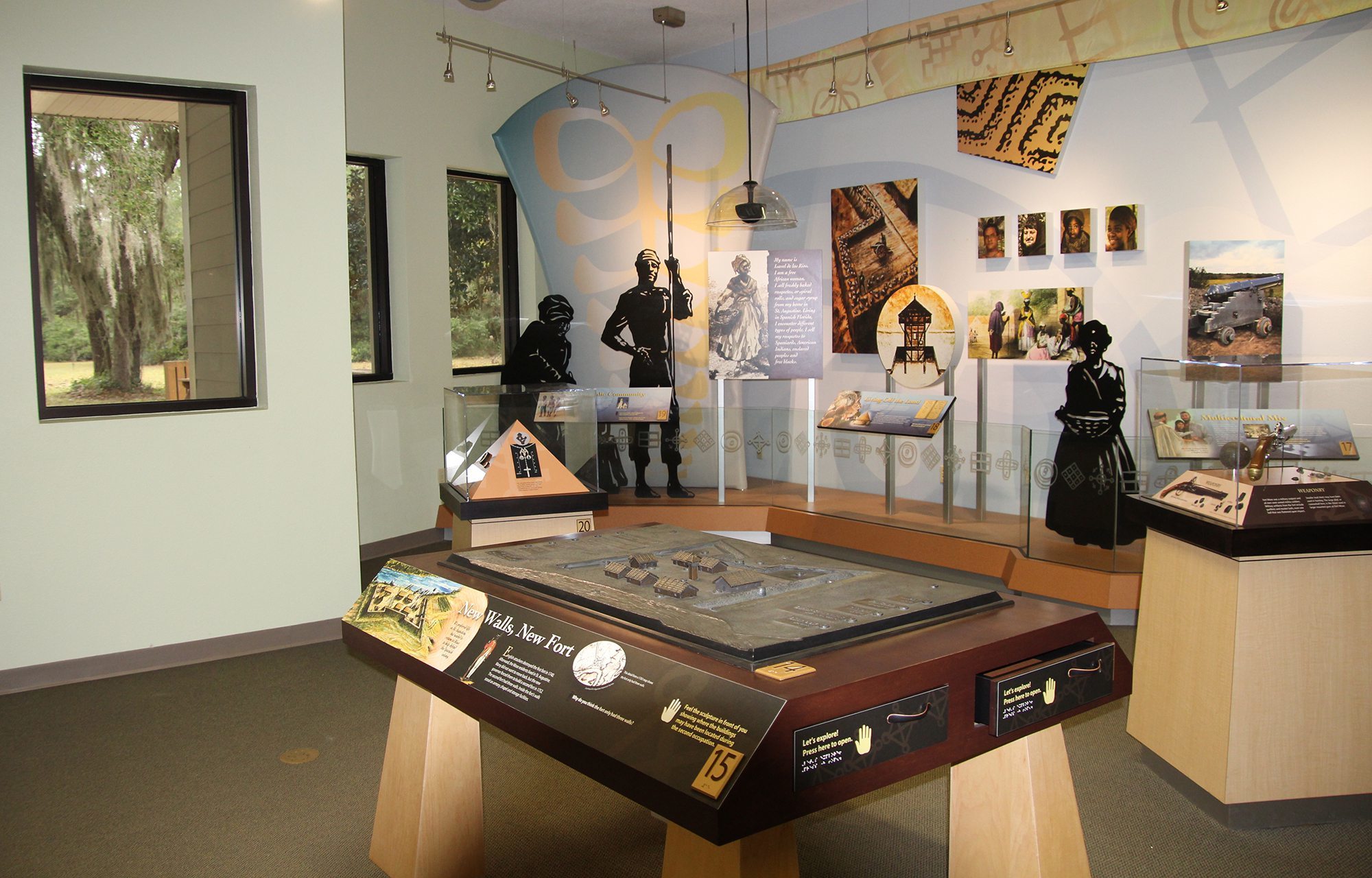
The Visitor Center at Fort Mose Historic State Park includes several exhibits and a detailed timeline that tells the story of the first free Black community in the U.S.
Freedom can be enacted on any soil, by any heritage. And it has been violated — all around the world — by a full range of traditions. Legally sanctioned slavery continued in Brazil through the end of the 1800s; it persisted in the Indian Ocean region well into the 1900s. Religious freedom — and freedom of conscience — remains an ideal that has yet to be fully enacted.
In the U.S., it is better than it is in much of the world, but we, like people anywhere, will always need to challenge ourselves to fully understand and enact our highest ideals.
When we celebrate the founding, we celebrate ideals. When we make American progress, we advance their implementation. The rights underlying democracy are not a given; they are the product of a cocreated moral imagination, grounded in shared values, extended through quality schooling, and in need of restrengthening and improving with every generation.
Eric Hartman recently delivered invited lectures on these topics at Northeastern University and at Flagler College in St. Augustine, Fla. This op-ed is excerpted from a longer article currently under review.
Welcome to Shackamaxon, a weekly politics column focused on what’s happening at City Hall and in Harrisburg. It is named for the place where the Lenape chiefs would meet to conduct the people’s business, which is now known as Penn Treaty Park. This week’s edition looks at the ways Philadelphia has changed for the better since the Bicentennial — and the ways things have stayed the same.
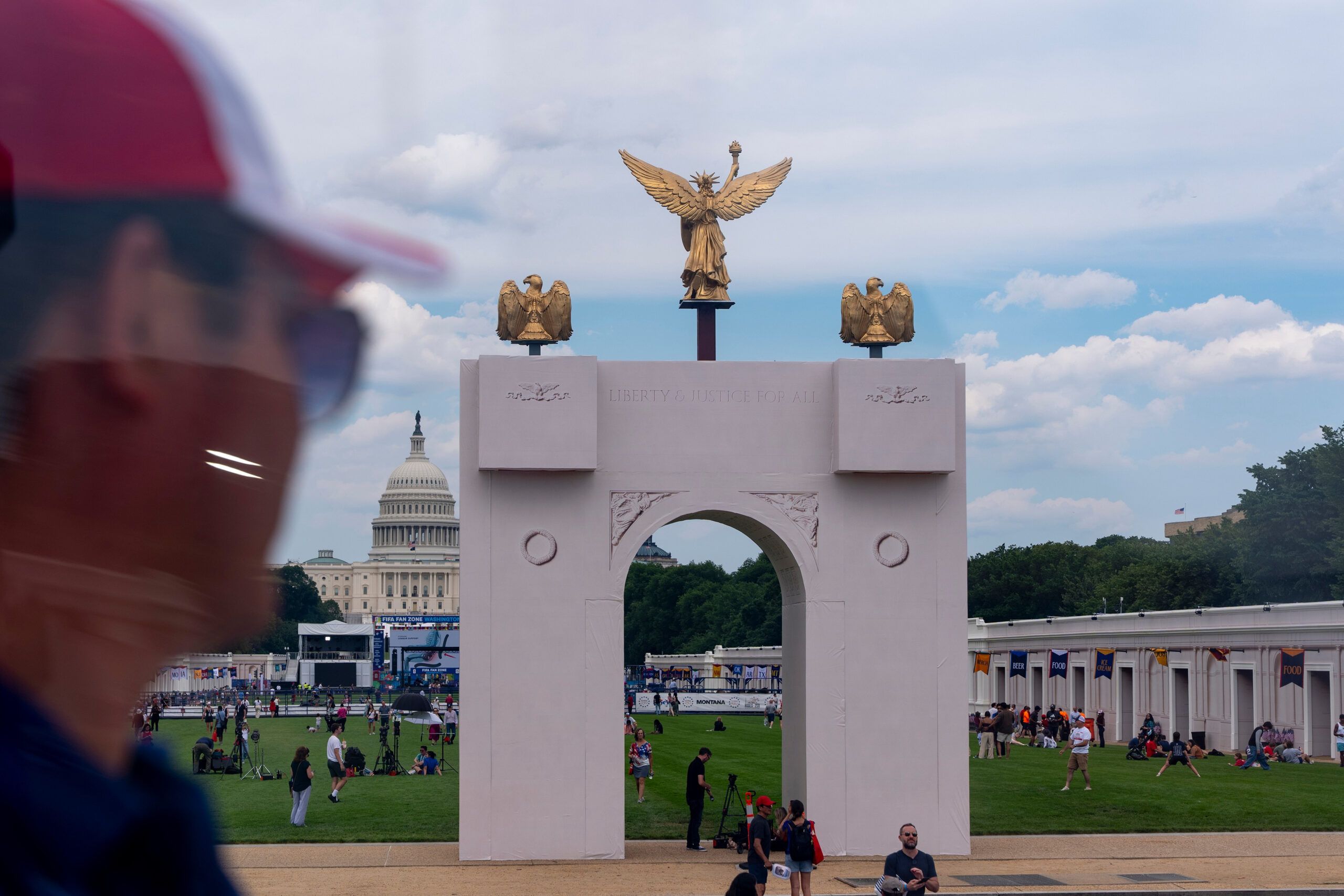
The U.S. Capitol and a mock-up of President Donald Trump’s proposed triumphal arch are seen from the ferris wheel at the Great American State Fair on the National Mall in June.
D.C. dud
My fellow columnists Trudy Rubin and Jenice Armstrong have both pointed out how disappointing Washington’s celebrations for America’s 250th anniversary have been. My advice? Skip the city that didn’t even exist in 1776 and visit Philadelphia instead. Skip Boston, the small town with the tall tales, as well. If you are healthy and hydrated enough to withstand the brutal heat wave, the City of Brotherly Love and Sisterly Affection is the best place to celebrate the Fourth.
Philadelphia embodies the story of America. Our city was founded by William Penn, a Quaker idealist who staunchly defended religious liberty. It was fostered by Ben Franklin, a writer and inventor who embodies our nation’s ingenuity and ambition. Octavius V. Catto, himself a Black man born free, fought for the rights of the enslaved, both before and after the passage of the 13th Amendment.
A century before the Rev. Dr. Martin Luther King Jr., Catto became a martyr when he was shot and killed on Election Day in 1871 as part of a broader campaign of political violence against Black voters. Catto’s fiancée, Caroline LeCount, desegregated this city’s streetcars long before Rosa Parks did the same for buses across the country. Siegmund Lubin started one of the first movie empires, right here in the city. The iconic Stetson hat, long associated with cowboys and the Wild West? Another product from the city known as the “Workshop of the World.”
There’s a case to be made that not only did America start here, but our city is the most American of them all. Everything that our country is known for, both for good and for bad, has happened here, as well.
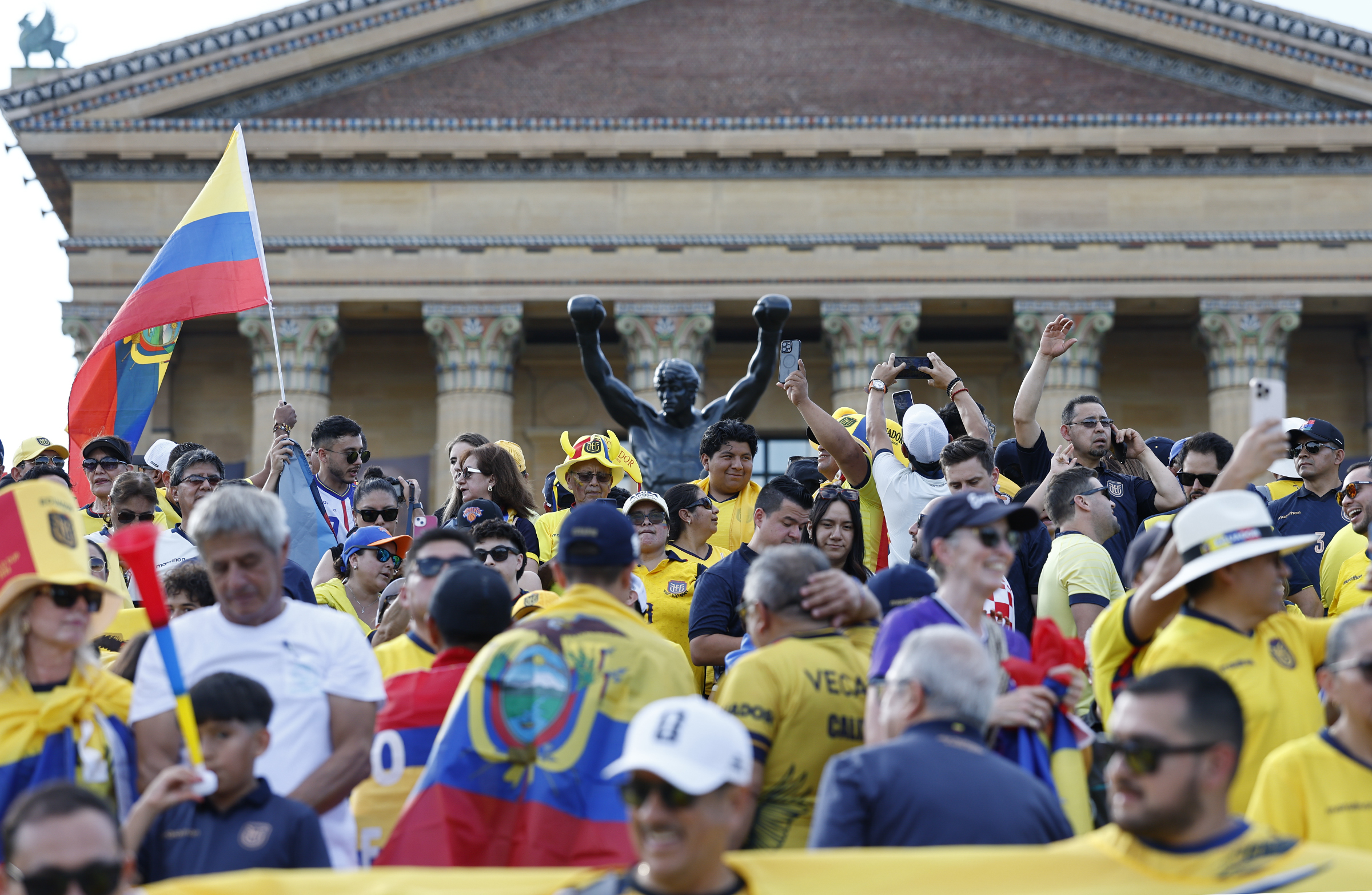
Ecuadorian soccer fans attend a flag waving event at the Philadelphia Museum of Art steps along the Benjamin Franklin Parkway, ahead of their first round World Cup match against the Ivory Coast, on June 13.
New narrative
It always bothered me that our city’s greatest draw seems to be Rocky Balboa, the fictional boxer from the eponymous film. Beyond the fact that this city is where America began, Rocky also memorializes a very specific era of our city’s history, one of decline. The first movie was released in 1976, during a decade when Philadelphia lost over a quarter million residents. Crime, trash, and disorder dominated the city’s streets.
It’s also worth noting that the film was released in the year of America’s Bicentennial. The celebrations that year were largely a misfire. Then-Mayor Frank Rizzo scared many potential visitors away, and there was an outbreak of Legionnaires’ disease.
That’s not to say Rocky, or the city he inhabited, was without charm. Despite the challenges, Philadelphians were still full of heart and grit, qualities Sylvester Stallone’s creation exemplified well. But the place shown in the movie doesn’t capture the full spectrum of what Philadelphia had to offer, even during the tumultuous ’70s. Rocky may have run up the Art Museum steps, but he never stepped inside.
Today’s Philadelphia is a dramatically different city. While the white working-class communities Rocky represented remain an important part of the city, they no longer dominate it. Rizzo would garner very few votes if he were on the ballot today. Philadelphia is now a multicultural, multiracial city on the rise. Rather than repelling visitors and residents, the city welcomes them.
According to Sports Business Journal, the city’s FIFA Fan Festival is a pacesetter, leading the 13 other public World Cup viewing areas in North America in both single-day and overall attendance. Social media feeds are filled with international visitors praising the city’s culture and cuisine. Some Brazilian fans called it the most beautiful city they have ever seen.
Throughout the year, city officials have expressed confidence in Philadelphia’s ability to recoup the investment made in hosting the World Cup and other events. The state tourism office has told The Inquirer that early indicators are positive, with flight bookings, Amtrak arrivals, and Airbnb rentals exceeding expectations. While the initial projections were for 500,000 World Cup visitors, we may end up seeing closer to 800,000.
Beyond the number-crunching, however, there’s a more important goal at stake: changing people’s perceptions of our city.
That’s something impossible to set a price tag on.
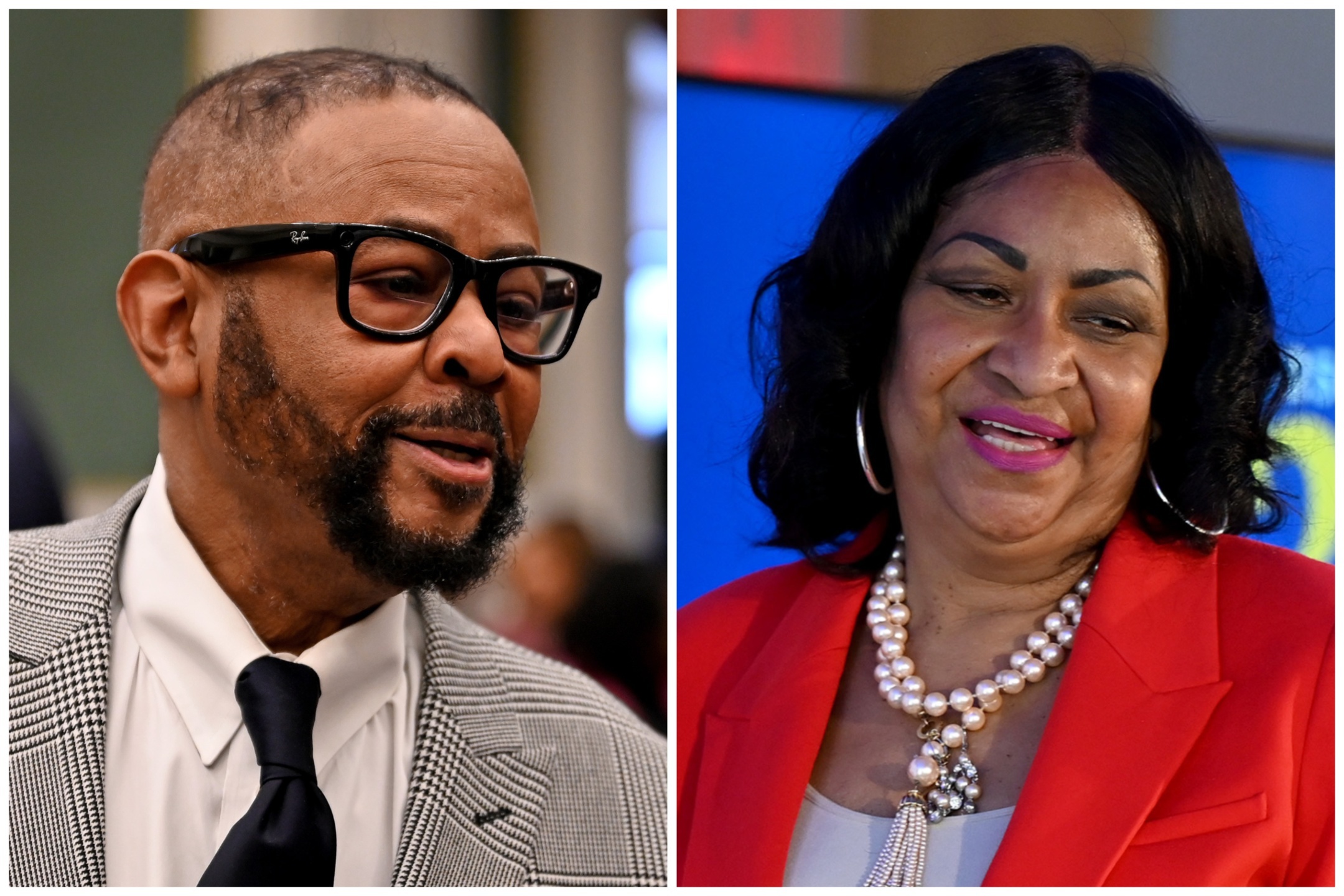
Councilmember Curtis Jones Jr. and his wife, Jazelle Jones. The couple stand to collect up to $752,000 in combined retirement payouts while keeping their six-figure jobs.
Same old problems
So far, one of the biggest reasons to be skeptical about Philadelphia’s future is City Hall. The city’s leaders too often serve their own interests, rather than those of the public.
Take Curtis Jones Jr., who represents the 4th District on City Council. Jones is certainly capable of being an insightful public official. Since his colleagues passed him over as Council president, however, he’s displayed increasingly questionable behavior.
Earlier this year, Jones asked Streets Department officials to consider delaying crucial bridge repairs until after his reelection, citing concerns that the public might blame him for their inconvenience.
Jones, however, ignored the impact of public opinion when it came to his own personal finances. Both he and his wife, Jazelle Jones, who serves as city representative, are planning to take payments through DROP, a retirement program that was never meant to accommodate elected officials. The pair stands to collect up to $750,000 by retiring for a day — and then returning to their six-figure jobs. This may be a rounding error in a city that is planning to spend $7.1 billion in the next fiscal year, but it is also more than 10 times Philadelphia’s median household income.
Asked about Jazelle Jones’ retention, Mayor Cherelle L. Parker cited the need to stay the course as a factor in making an exception for the city representative. Left unspoken was the fact that if Parker had blocked this payday, it would have likely complicated her relationship with Curtis Jones — one of the mayor’s most reliable supporters on City Council.
This kind of cronyism only reinforces negative perceptions of the city. Anyone looking for evidence that Philadelphia is the same old parochial, self-dealing city it was known for being in the past has only to try to keep up with the Joneses.
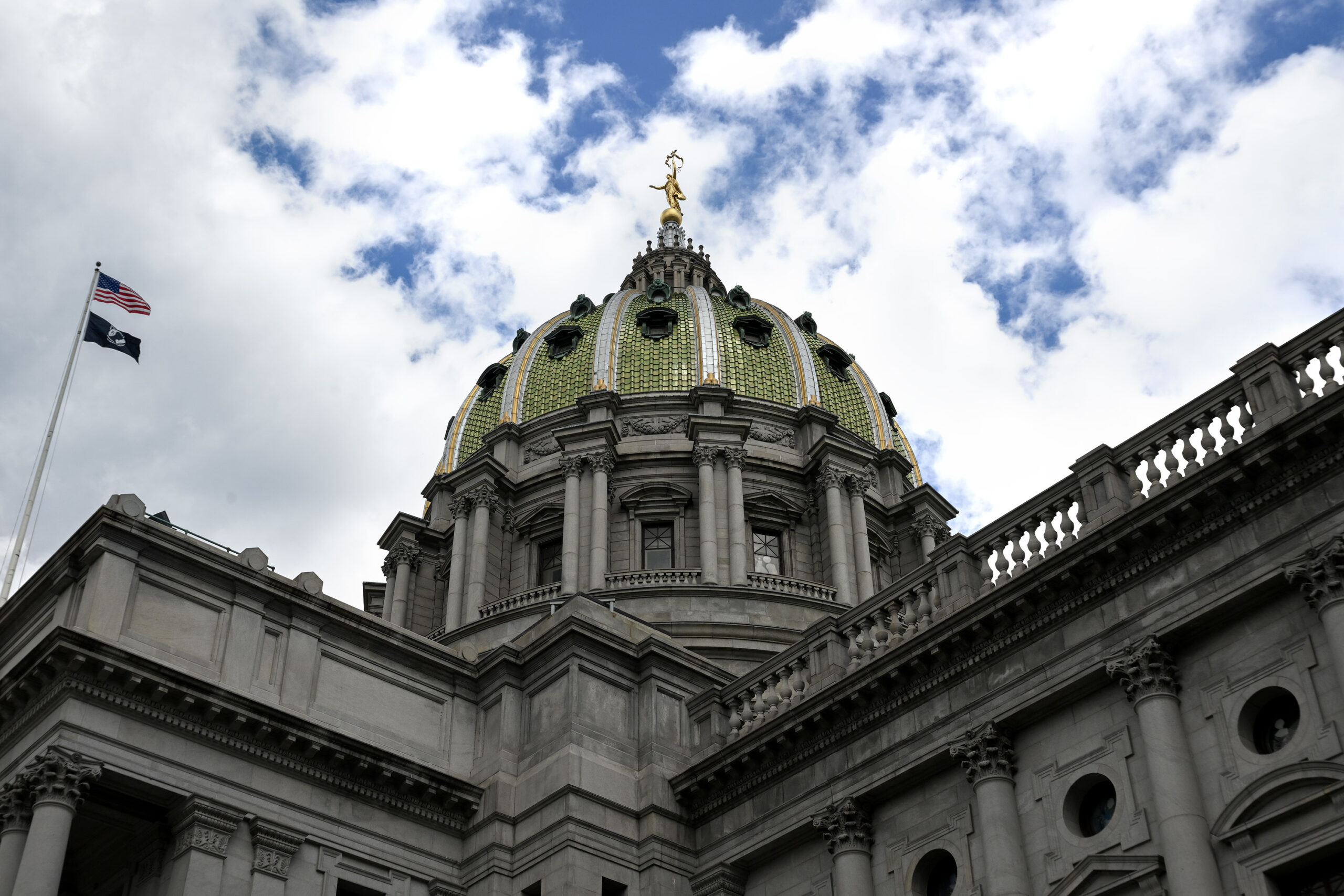
The Pennsylvania State Capitol on Commonwealth Avenue in Harrisburg. Another year, another blown budget deadline by state legislators.
Harrisburg holdups
To be fair, City Hall isn’t the only place that seems like it’s having a hard time getting its act together. Harrisburg has yet again missed its budget deadline.
While local governments, school districts, and SEPTA are expected to submit their own spending plans in a timely manner, legislators have apparently decided that deadlines don’t apply to them. The Pennsylvania Senate went home early rather than finish negotiations that its own leaders have said are productive.
Last year, the impasse went on into the fall, forcing some state services to grind to a halt and schools to take out loans in order to pay their bills. The commonwealth simply can’t afford to do that again.
This year, rising revenues from existing taxes and a potential influx of money from so-called skill games have made the process easier. Still, it is July, and there’s no budget deal.
What we need is a way to hold legislators accountable for failing to do their jobs. In the past, withholding pay was suggested as a leverage point. State Rep. Natalie Mihalek, a Republican from Western Pennsylvania, has said that failing to pass a budget should lead to a special election, a nod to the concept of “confidence votes” in Westminster parliaments.
Maybe that will get the General Assembly to take its job seriously.
Our country has been likened to a mosaic. I compare it to a jigsaw puzzle. The picture is composed of hundreds of millions of individual pieces — all with unique shapes — fit together to form an image. The union, which we revere when we celebrate its birthday and salute the flag, is a result of pieces linked together. From a distance, they form an unbroken, seamless picture, but up close, you can still see the lines of each individual piece. When locked together as intended by the creators of the puzzle we call the United States of America, the union is solid and unbroken despite the lines of individuality that frame each component. A puzzle without each piece is incomplete. Putting the puzzle together requires the diligent effort of everyone who pledges to support the effort. We all — each one of us, native-born, immigrant — are a piece of the puzzle. To exclude anyone is to render the puzzle incomplete. In order to form a more perfect union, all pieces must be welcomed. That is our creed. It is truly what “Makes America Great” — not just “Again,” but always.
Joe Sundeen,Yardley
Drama-free
In honor of our great nation’s 250th birthday, I would like to see all media refrain from any mention or photo of anything DJT-related. Make this day about our country, not him. We need a chance to celebrate without all the drama.
Jerome Hodlofski,Marlton
Join the conversation: Send letters to letters@inquirer.com. Limit length to 150 words and include home address and day and evening phone number. Letters run in The Inquirer six days a week on the editorial pages and online.