Category: Commentary

  • How and why Trump’s Caribbean Sea operation is being conducted has endangered trust

    How and why Trump’s Caribbean Sea operation is being conducted has endangered trust

    There’s a military saying that “piss-poor planning means piss-poor execution.”

    Unfortunately, the execution of how the Trump administration is using America’s military to conduct its counter-drug operations in the Caribbean Sea has had poor planning.

    First, 100% of fentanyl comes across the U.S.-Mexican land border — usually carried by U.S. citizens — while almost three-quarters of U.S.-bound cocaine sails via the Pacific Ocean.

    The residual cocaine begins a Caribbean transit, but only 3% is en route to our water borders. Most sail to Central America or Mexico for land transport to America. The first five small vessels our military has struck, killing 32, were in the transit zone for cocaine destined not to the United States, but for islands that forward it to Europe and West Africa.

    As a result, the administration’s current approach in the Caribbean makes any meaningful interdiction of drugs headed to America unlikely in what is an already tough hunting ground: 100,000 or more vessels — including unregistered or unbeaconed watercraft — are normally at sea in the Caribbean. I experienced this vast challenge while supporting a U.S. Coast Guard Law Enforcement Detachment (LEDET) onboard my ship, understanding why the Coast Guard’s interdiction rate hovers between 7%-15%.

    Moreover, drug cartels recruit vulnerable U.S. citizens to be the primary “mules” for fentanyl because they are less likely to be inspected at legal U.S. border crossings. That is where substantial interdiction must occur if the administration is serious about stopping drugs from coming to the United States.

    Similarly, the cartels elicit the impoverished — such as poor fishermen — to do their seaborne smuggling. Criminals? Yes. “Narco-terrorists”? According to the administration, yes, after President Donald Trump designated eight drug cartels as foreign terrorist organizations (FTOs).

    Just as it did for al-Qaeda and ISIS, an FTO designation makes drug-runners and carriers “unlawful combatants” in a “Non-International Armed Conflict (NIAC).”

    Also, like them, to be legally labeled as an FTO, the drug cartels must: 1) exhibit “politically motivated violence,” 2) execute a combination of frequent and/or severe hostilities, and 3) have an extensive command and control structure.

    However, the administration’s two principal justifications for meeting these three criteria were the number of U.S. drug overdose deaths (80,000 last year) and that the cartels’ violent activities are undermining the stabilization of the Western Hemisphere.

    The appropriateness of these justifications has consequences for military commanding officers: U.S. and international law forbid them to use deadly force against both American and international civilians. Operational officers go through rigorous training regarding this “principle of distinction.”

    Moreover, since the Navy operates on the “public commons” of the seas, it issues the Commander’s Handbook on the Law of Naval Operations that makes it clear it is “manifestly illegal” to comply with “an order directing the murder of a civilian [or] a noncombatant.”

    Adm. Alvin Holsey, commander of U.S. Southern Command overseeing the counter-drug interdictions, recently resigned, reportedly because he deemed the strikes as possibly illegal.

    It’s unquestionably disconcerting to be given a new legal interpretation of “political violence” and “severe hostilities” that suddenly changes who has always been a “civilian” into a “combatant.”

    It’s disquieting because it’s already tough “out there” in terms of ensuring wise judgment. For example, in 1988, a Navy cruiser in the Persian Gulf shot down an Iranian airliner with the loss of 290 civilians because it had mistaken it for a fighter plane in peacetime.

    A few years later, as I entered the Strait of Hormuz, an Iranian warplane took off from a nearby airfield and headed for my ship. My crew was well-trained, with missiles ready if “hostile intent” was determined. It flew low overhead — the first time the Iranian military had done so — then continued on its way, much as Chinese warplanes have done.

    If this is a hemispheric war — and not peacetime — Congress should constitutionally “declare war” rather than an abrupt renaming of civilian drug runners as “narco-terrorists.” Otherwise, the sudden denial of “civilian-ship” after years of legal and moral training places our military leaders’ judgment into its own legal and moral quandary.

    This is especially pertinent coming after Defense Secretary Pete Hegseth’s recent admonition to senior military leadership that there should be “no more politically correct and overbearing rules of engagement, just common sense, maximum lethality and authority for warfighters.”

    This followed the secretary’s removal of the head of each service’s Judge Advocate General’s Corps (the military’s legal branches), as well as his closure of the Civilian Protection Center of Excellence, established to minimize civilian casualties in military operations.

    Finally, with a tenth of all deployed U.S. Navy combatant forces now dedicated to drug interdiction — a nuclear submarine, a three-ship amphibious ready group, and five surface combatants — there is a cost to warfare training. We should be focused on our responses to threats from sophisticated subs, missiles, ships, aircraft, and space — especially as coordination is jammed and cyberattacked within a carrier battle group of ships.

    Losing this type of training has come when warfare readiness is already poor: 40% of the U.S. attack submarine fleet is out of commission for repairs — double the Navy’s target rate, overall amphibious ship readiness for war is just 41%, and while surface combatant readiness has risen, it is only 68%.

    If, as reported, the less adept — although deadly — Caribbean operation is intended as a prelude to force Venezuelan President Nicolás Maduro from office, the American people should know why their military men and women are sailing in harm’s way.

    Trust in a commander — or commander in chief — is the military’s most precious asset. And while trust might be the biggest deficit in politics, it is not in warfare.

    How and why this Caribbean Sea operation is being conducted — either as a professional drug interdiction operation or as a prelude to an intervention in another country — has endangered this trust.

    As the top operational commander’s resignation appears to confirm.

    Joe Sestak is a former Navy vice admiral, a former U.S. representative for Pennsylvania’s 7th Congressional District on the House Armed Services Committee, and director for defense policy of the National Security Council staff.

  • This is what is happening to immigrants and citizens in Chicago right now

    This is what is happening to immigrants and citizens in Chicago right now

    Just before 9 p.m. on Oct. 15, Tracy pulled up outside the townhouse on the west side of Chicago. She ushered Juliana and her 6-year-old, Yori, into the back seat and headed for Union Station — the overnight train to New York City, their best shot at safety.

    For a month, mother and daughter had barely opened the door of their one-room apartment. Yori stopped attending first grade. Juliana stopped cleaning houses. Neighbors left groceries at the threshold.

    In mid-September, during a construction site raid, U.S. Immigration and Customs Enforcement (ICE) agents detained José, Juliana’s husband and Yori’s father, and deported him to Venezuela. He was “lucky”: at least he wasn’t lost in detention purgatory or sent to a prison in El Salvador.

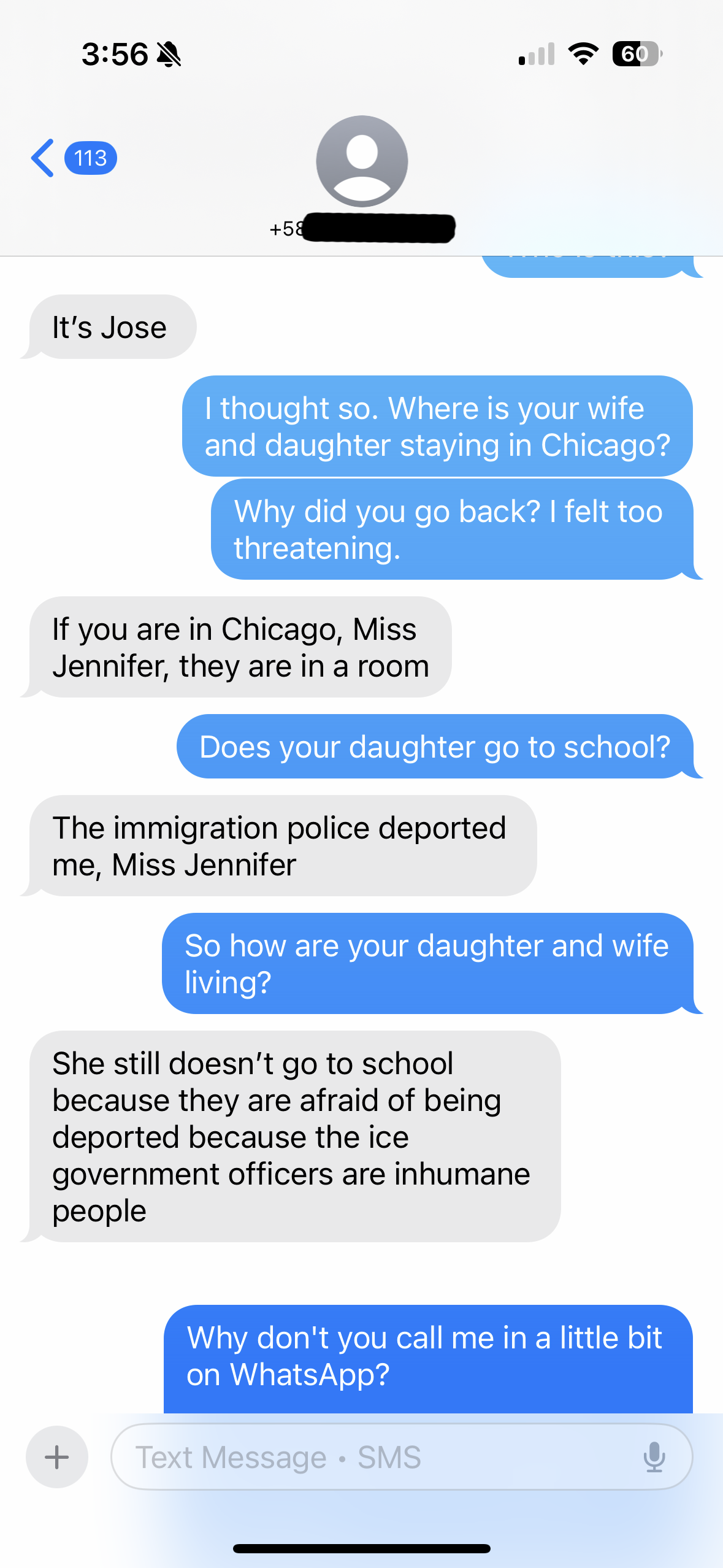
    From Venezuela, José texted me about conditions at the Broadview Detention Center, where he had been held before deportation, calling them inhumane.

    He asked for only one thing: “Please help my family leave Chicago. It’s too dangerous for them there.”

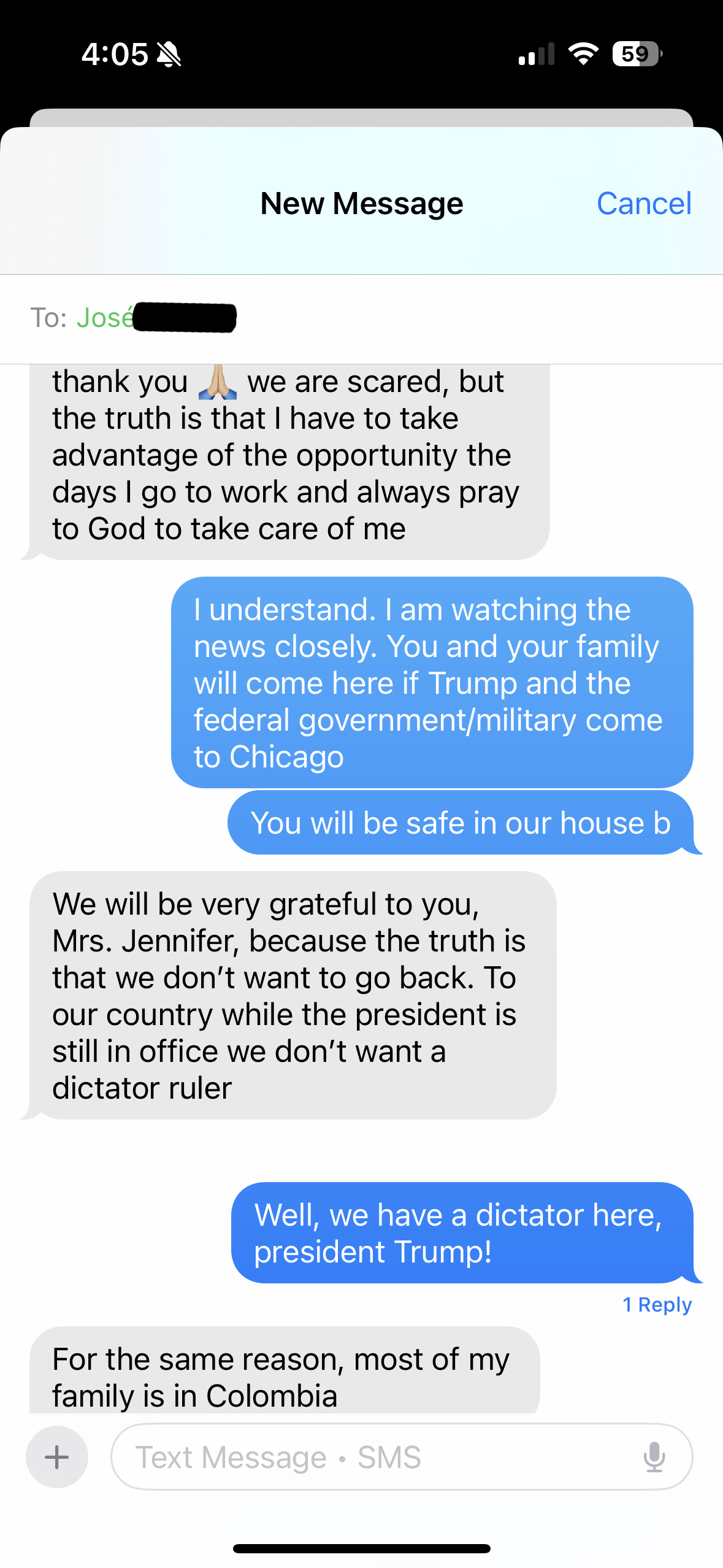
    One of the text messages between José and the author, after José had been deported to Venezuela. His phone number has been obscured by The Inquirer, leaving Venezuela’s international country code as verification of the provenance of the call.

    I first met José outside my local grocery store, Jewel-Osco, in Wilmette, one of Chicago’s North Shore communities. He held up a sign, seeking odd jobs. Many Venezuelan immigrants who congregated around the Jewel ended up there when Texas Gov. Greg Abbott bused them to Wilmette shortly after they crossed the border in late 2023.

    I spoke with José and hired him to do some repairs and painting. He traveled by subway two hours each way for work, Juliana and Yori in tow. While José worked, I drew with Yori.

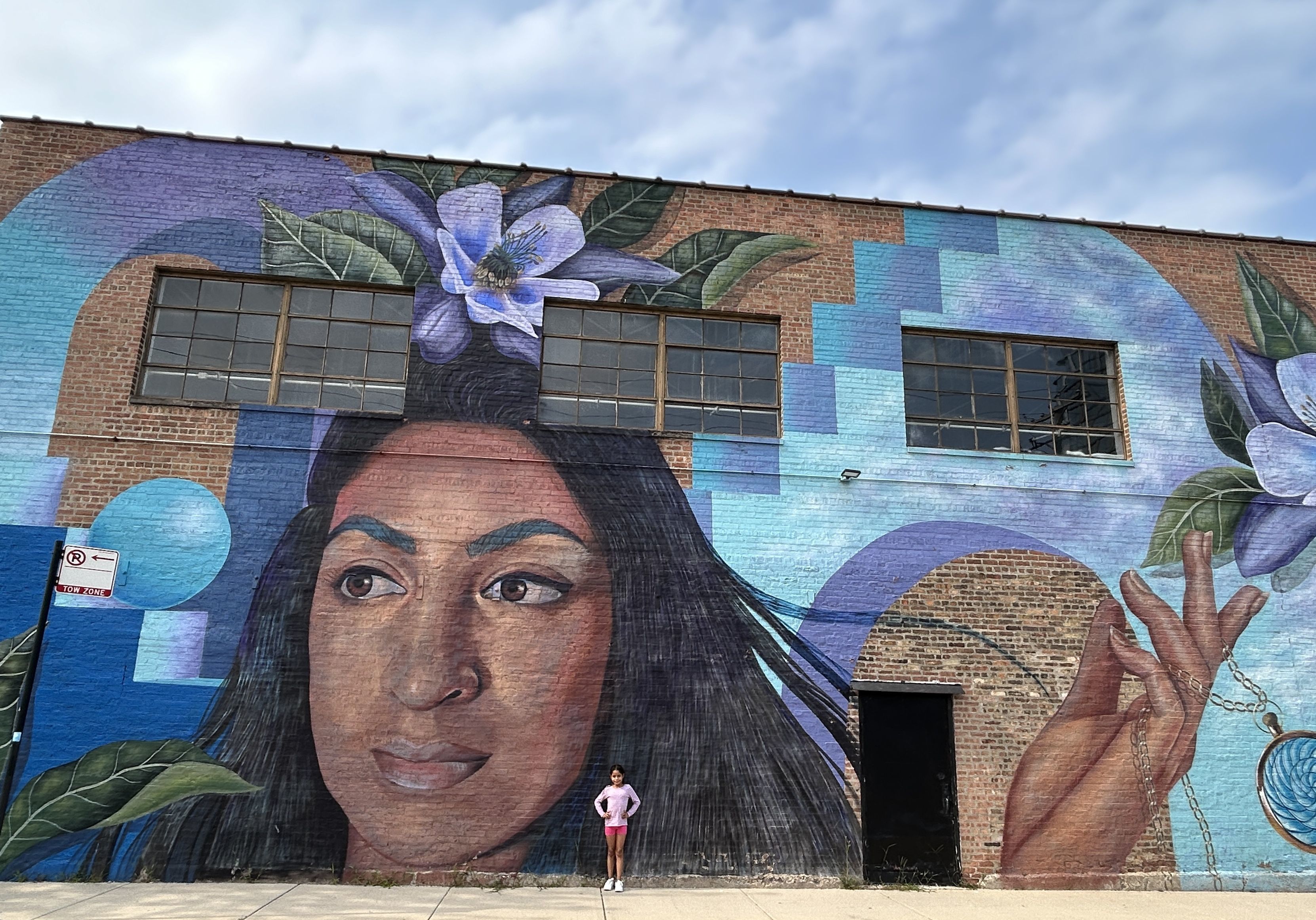
    Yori explored the West Loop of Chicago in July with Tracy, one of the residents of Wilmette. Yori was drawn to the impressive mural of a woman who looked like her and her family. She loved posing in front of it, and the mural made her feel more at home in her new city.

    One warm summer day after José finished working, we all walked to the edge of Lake Michigan, where Yori made sand castles.

    These were good people who faced difficult circumstances. It felt right to help them.

    José was a proud craftsman, and I recommended him to other friends, including Tracy — one of the three of us who would later make sure Juliana and Yori had some money and helped arrange their transportation to New York after José’s deportation.

    What happened last month is not the 1930s. But as a Jewish woman, I can’t ignore the echo of that dark period.

    In Adolf Hitler’s Berlin, families packed by day and moved quietly toward the border by night, clutching papers that might open a path to New York, a city that, for many, meant survival.

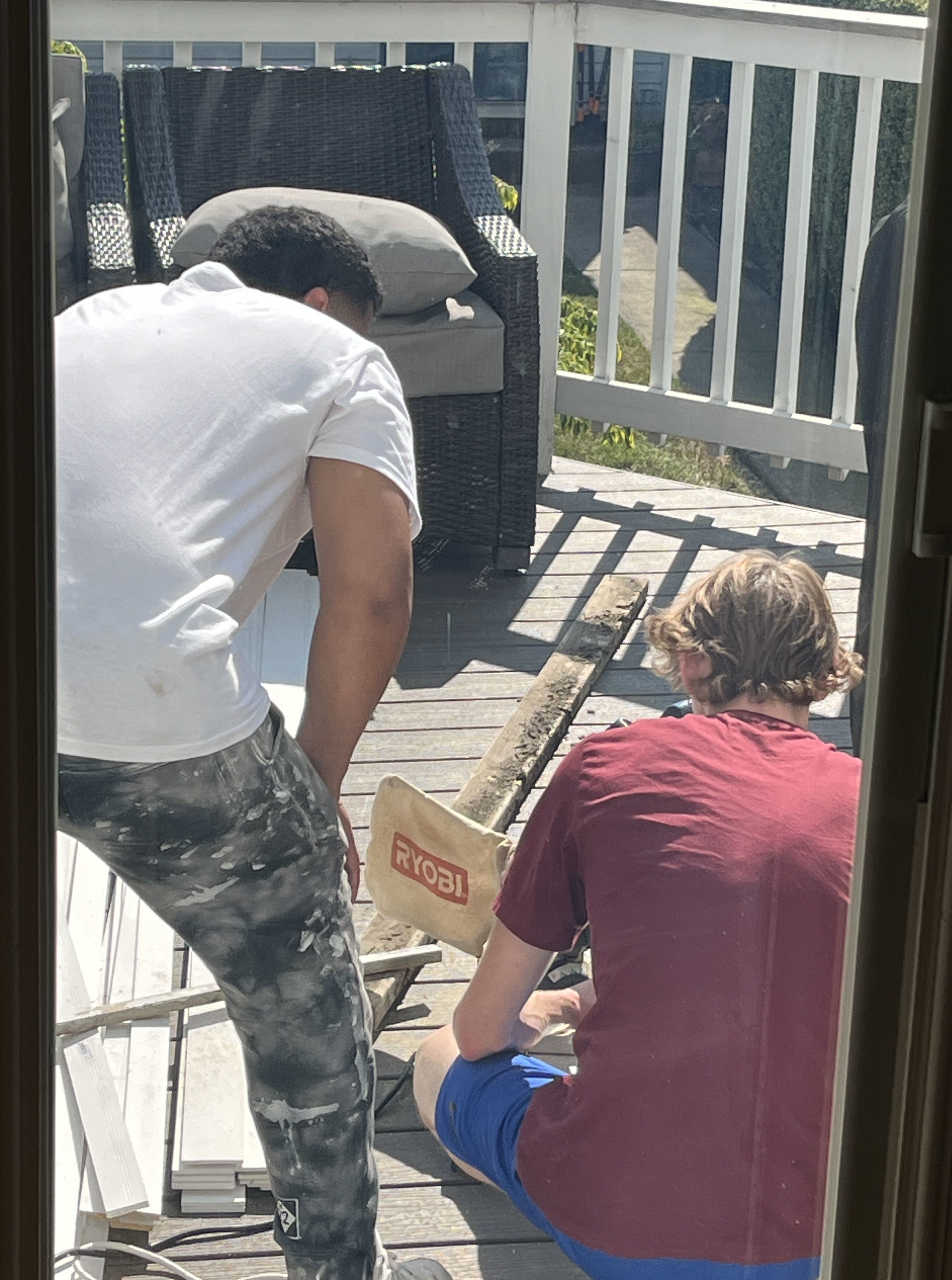
    José helps with a neighborhood construction project.

    They wrote to cousins, begged for affidavits, queued at consulates, and measured hope in stamps and signatures. The promise was simple: make it to New York, and you can gain freedom from terror.

    Our family, led by my great-uncle Max Berg, had settled in New York City after immigrating from Poland. On the eve of World War II, letters began arriving from people in Europe desperate to escape Hitler. They wrote because they shared his last name — Berg — hoping for a connection that might save them.

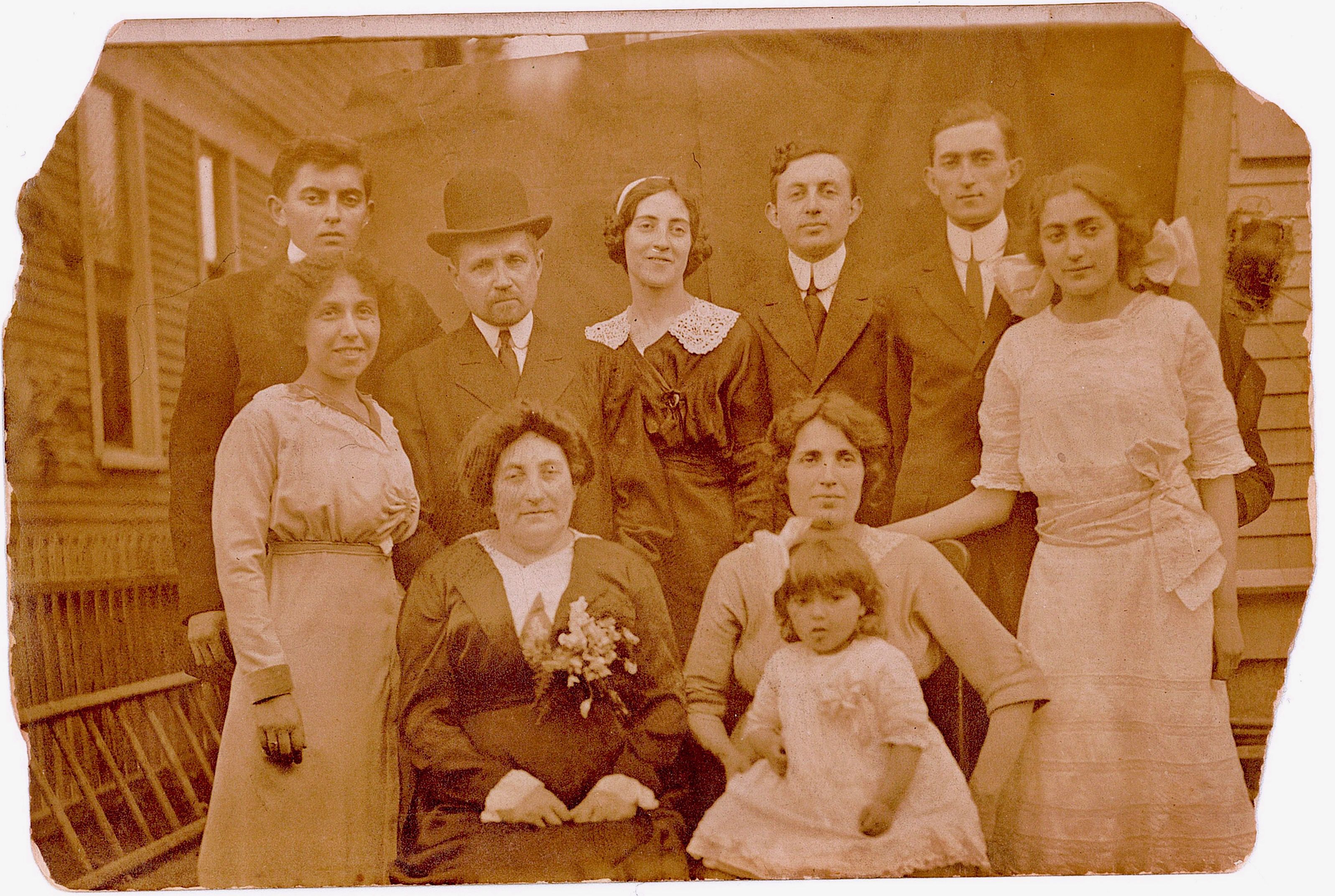
    The author’s great-uncle, Max Berg, standing, third from right, was a Jewish immigrant from Poland, the third of seven children. He became a successful lawyer in New York and, on the eve of World War II, sponsored 49 families to enter the U.S. These individuals wrote to him because they shared a common last name, though it remains unclear whether they were actual relatives. Many of those he sponsored became judges, writers, and leaders in their respective fields.

    Max never knew whether any of the 49 families were actually relatives, but he sponsored them all, buying their passage and covering their first month’s rent so they could begin new lives.

    The differences matter, of course. Hitler engineered annihilation; today’s migrants are not facing that. But the moral test feels painfully familiar.

    When government policy makes ordinary life like work, school, or a doctor’s visit unsafe for families who pose no threat, do we widen the circle of protection or narrow it? In the 1930s, too many Germans hid behind drawn curtains rather than opening their doors.

    As residents of Philadelphia and other American cities steel themselves for the possible deployment of immigration agents, Chicago offers a bleak preview of this chilling and shameful moment in our nation’s history.

    My hometown has faced an onslaught of immigration enforcement as part of Operation Midway Blitz. Chicago has responded to the crisis by widening its circle of protection. Our neighbors are already organizing.

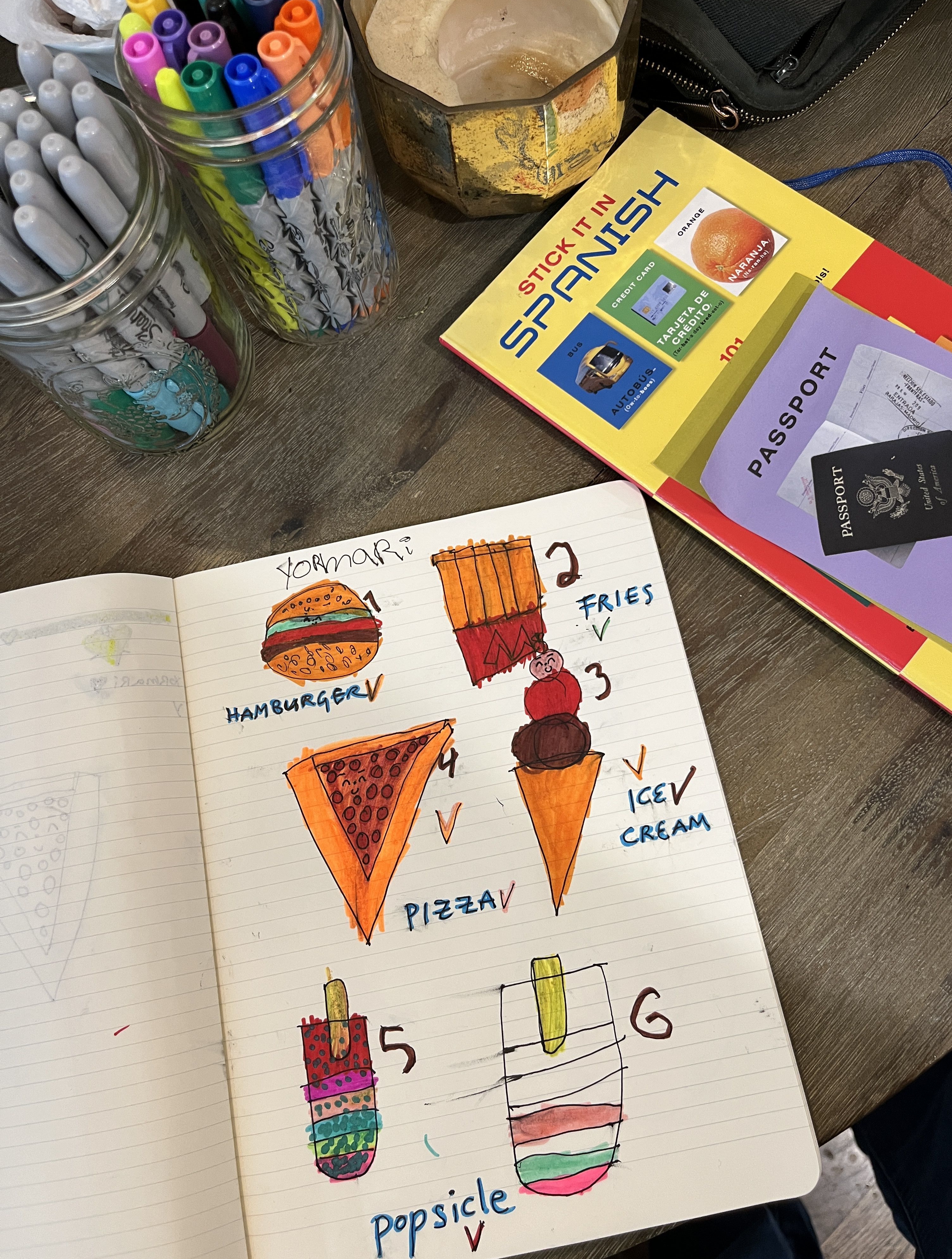
    Yori, who loves to draw, illustrates her spelling lessons.

    Rapid-response networks canvass homes and storefronts, sharing “know your rights” cards and training witnesses to safely document encounters with ICE — even here in the affluent North Shore, where there are few immigrant residents but many immigrant workers.

    We also hold peaceful protests, which include clergy and citizens from across Illinois, to exercise our right of free speech.

    An ICE agent watches protesters as a Lenco BearCat vehicle drives to the scene in the Brighton Park neighborhood of Chicago, on Saturday, Oct. 4, 2025, after protesters learned that U.S. Border Patrol shot a woman Saturday morning on Chicago’s Southwest Side.
    Protesters stand and chant in the Brighton Park neighborhood of Chicago earlier this month, after protesters learned that U.S. Border Patrol agents shot a woman hours earlier on the city’s Southwest Side.

    And we record encounters whenever possible. In some instances, Chicagoans have faced down multiple ICE agents wielding weapons during an attempted arrest. In one such incident, a man, once pinned to the ground, was released because bystanders gathered to document and demand accountability.

    However, ICE agents are using aggressive tactics, often crossing the line into violence directed at protesters and people who document their activities.

    On Sept. 19, federal agents, who appeared like snipers perched on a rooftop at the Broadview Detention Center, shot a local pastor in the head with a pepper ball and then teargassed him.

    A federal agent throws a tear gas canister toward protesters in Chicago earlier this month.

    In recent footage, rows of agents in tactical gear surround protesters and push their faces into the pavement. On Oct. 10, a producer with a local television news program was thrown to the ground, handcuffed, and detained without cause.

    These are not “isolated incidents,” but rather tactics intended to intimidate and provoke. Chicago feels combustible — one itchy trigger finger from our own Kent State massacre.

    The real suffering isn’t confined to the protesters, of course, but to the detainees inside Broadview’s walls. In Lake County, Ill., immigration attorney Kimberly Weiss described the case of her client, Juan — who, like all the immigrants included in this commentary, was willing to be included in this essay only if his surname was withheld. (Likewise, some of the native-born U.S. citizens I interviewed agreed to participate only if their surnames were withheld, for fear of retribution.)

    Juan is a widowed father of four U.S.-born children, ages 12 to 20, detained by ICE outside his home. “His children contacted me terrified,” Weiss said.

    That same night, she filed emergency motions to stop his deportation and request bond, with a hearing set for the next morning. “It would have been a strong case,” she said. “He entered legally, held valid documents, like a work permit, Social Security number, and driver’s license. He’s a union roofer, a widower caring for his U.S. citizen children. He qualified for lawful status under a widower petition.”

    But before the hearing could take place, Juan was gone. Weiss said her client described Broadview Detention Center as so inhumane that he couldn’t endure another night. Detainees had no access to water. The air was so thick and suffocating that Juan witnessed others gasping for breath.

    Officers threatened Juan into signing his deportation papers, using an ICE agent as a “translator” to deceive him. Without his glasses and terrified, he finally signed. By the next afternoon, Juan was across the border.

    “There’s no accountability for what happens inside Broadview,” Weiss said. “It’s overcrowded, filthy, and cruel. There is no oversight, even when the conditions amount to torture.”

    Stories like these ripple far beyond detention centers. Dread doesn’t stop at the gates of Broadview. Anxiety seeps into neighborhoods, workplaces, and schools, touching even those who are U.S. citizens.

    During a recent nighttime raid in a South Shore neighborhood, Blackhawk helicopters dropped armed federal agents on top of an apartment building, as dozens of masked ICE agents arrived in trucks.

    Hundreds of agents moved through the building, kicking in doors, setting off flash-bang grenades, and rounding up residents as they slept. Children were separated from parents, zip-tied, and held in vans for hours.

    Imagine being a child, awakened in the middle of a peaceful slumber, snatched from your parents, and restrained. The U.S. Department of Homeland Security proudly boasts about the raid, but dozens of those arrested were U.S. citizens.

    We’ve now reached the point where friends of mine, Indian American physicians named Shila and Ravi, make sure they and their 14-year-old daughter always leave the house with their driver’s licenses and U.S. passports, in case they are stopped by ICE.

    “Show me your papers” is a demand one might expect from the Gestapo, Hitler’s secret police, but as Americans, we do not expect this, and should never accept it.

    “Being a brown-skinned woman in America means constantly proving my right to belong,” Shila told me recently. “My citizenship and contributions never seem enough to erase the question — ‘Where are you from?’ — that marks me as foreign. I’ve learned to live with this othering, but seeing my child inherit it breaks my heart.”

    “What was once an occasional ‘Go back home’ has become a deeper threat: ‘I’ll make sure you get home,’” she added. “But where is home when this is the only one we’ve ever known? Nothing can shield us from the fear that belonging can be questioned or revoked at any moment.”

    When ICE occupied Los Angeles and the National Guard was deployed, José and I exchanged texts so that I could better understand his asylum case.

    José then called me at the end of August. I could feel his embarrassment reaching through my phone, but he asked: Could he and his family move in with us? He’d heard about the planned ICE buildup and wondered whether his family would be safe in the predominantly Latino neighborhood where they were living.

    I declined. I thought of families in Europe who hid neighbors in attics and back rooms, and felt the weight of closing my door to him. My daughters were still home from college, and there wasn’t space for anyone else. I also wanted time with my girls before they left.

    And truthfully, I wasn’t sure José and his family would be any safer in my predominantly white suburb. I suspected my next-door neighbors were Trump supporters, and worried they would report him.

    One of the text messages between José and the author, before José’s deportation. His last name has been obscured by The Inquirer.

    Still, I told myself that by mid-September, when the girls returned to school, I would offer them refuge.

    But when I finally texted him, it was too late. He had already disappeared.

    When Juliana and Yori finally arrived at Penn Station, they carried two small suitcases with everything they could fit. They left behind their clothes, furniture, toys, traces of a life they built from nothing.

    With the help of an acquaintance, they found a family shelter in New York City, a place that feels more like exile than arrival. The noisy streets outside, thick with strangers and sirens, overwhelm them. Yori cries every day; she misses her father. Juliana leaves the room only to buy food. She had hoped to find work, but even mastering the city’s subway system seems like an impossible task.

    She once dreamed her daughter would breathe freely, run in the open air, play on a jungle gym. Instead, they live in a small room where safety feels borrowed.

    Yori playing in the park in Chicago before her father was deported.

    Watching Juliana and Yori struggle to rebuild their lives, I realize that what failed them wasn’t only my courage, but our collective conscience. The duty to offer refuge doesn’t belong to governments alone; it begins in the smallest places — on our streets, in our homes, within ourselves. Compassion is not a policy, but a choice, a door we decide to open or keep closed. The question is no longer who will offer them refuge, but who we become when we hide behind our curtains.

    I still replay that call, wondering whether borders are drawn only on maps, or instead, inside of us.

    Jennifer Obel is a founding member of the New Trier Rapid Response Team and coleader of Sukkat Shalom’s immigration task force.

  • Trump’s MAGA makeover of the Third Circuit is complete

    Trump’s MAGA makeover of the Third Circuit is complete

    In his first term, Donald Trump appointed four judges to the Philadelphia-based U.S. Court of Appeals for the Third Circuit — flipping the court’s ideological balance firmly to the right.

    The 14-member court, which hears appeals from Pennsylvania, New Jersey, and Delaware, routinely handles disputes of national importance.

    This past summer, it struck down Pennsylvania’s mail-in ballot dating rule, and just last week, it heard arguments over New Jersey’s long-standing assault rifle ban, potentially teeing up the issue for U.S. Supreme Court review.

    President Joe Biden had a chance to tip the balance back.

    His nominee, Adeel Mangi, would have become the first Muslim American to serve on any federal appellate court. But facing bad-faith Republican attacks and tepid Democratic support, Mangi’s nomination was left to die on the Senate floor.

    That failure, and Trump’s return to power, cleared the way for the rapid installation of two MAGA loyalists, Emil Bove and Jennifer Mascott, cementing an 8-6 conservative majority.

    Less than a year into his second term, Trump has finished what he started in his first. His MAGA makeover of the Third Circuit is complete — and the people of Pennsylvania, New Jersey, and Delaware, and perhaps the country as a whole, will be living with its consequences for decades to come.

    Emil Bove: The hatchet man

    Trump’s first pick for the Third Circuit is also his most dangerous: Emil Bove.

    Bove, the president’s former criminal defense attorney, lacks the culture war credentials required of nearly every other Trump judicial nominee. He never sued the Biden administration, or opposed same-sex marriage, or defended a state abortion ban. But he has one quality in spades: loyalty to Donald Trump.

    Once installed in the U.S. Department of Justice, Bove wasted little time proving to Trump that he would do whatever it took to advance Trump’s agenda.

    Donald Trump, flanked by attorneys Todd Blanche and Emil Bove (right), at his criminal trial in Manhattan in 2024.

    He fired the federal prosecutors and FBI agents who pursued cases against the Jan. 6, 2021, insurrectionists. He clumsily sought to dismiss charges against New York City Mayor Eric Adams to coerce him to aid Trump’s immigration crackdown. And, according to multiple credible whistleblower allegations, Bove told other DOJ lawyers that if courts tried to stop the administration’s deportations, they should tell “the courts ‘fuck you.’”

    Now that Bove is on the Third Circuit — he was confirmed in July by a razor-thin 50-49 vote — he is moving with similar speed to show Trump he’s still on his side.

    This week, in what appears to be Bove’s first vote as a circuit judge, he joined four other Trump appointees dissenting from the full court’s decision to deny the request of various Republican organizations to rehear the case holding Pennsylvania’s date requirement for mail-in ballots unconstitutional.

    Of course, there never should have been a vacancy for Bove to fill.

    Back in November 2023, President Biden nominated Mangi to the seat Bove now holds. Mangi had all the sterling credentials you’d expect from an appellate court nominee — degrees from Oxford and Harvard Law, and a long career at a white-shoe law firm.

    But all Republicans could see was that he was Muslim, and they pulled out every Islamophobic trick in their very big book to disingenuously paint him as some antisemitic radical.

    And what’s worse, some Senate Democrats fell for it, sinking Mangi’s nomination and handing this critical vacancy to Trump.

    Jennifer Mascott: Am MAGA, will travel

    Over the summer, Trump also nominated Catholic University law professor Jennifer Mascott to a second Third Circuit vacancy in Delaware.

    Mascott’s résumé is dripping with connections to Trump and the MAGA legal movement. She clerked for then-D.C. Circuit Judge Brett Kavanaugh (one of Trump’s appointees to the Supreme Court) and Justice Clarence Thomas (one of Trump’s favorite justices).

    Before joining Catholic Law last year, she taught at George Mason’s Antonin Scalia Law School, one of the most conservative in the country.

    In the first Trump administration, she worked in Trump’s Justice Department and helped with Justice Amy Coney Barrett’s last-minute confirmation.

    This time, she went to work directly for Trump as senior counselor to the president in the White House Counsel’s Office.

    What Mascott lacks, however, is any genuine connection to Delaware.

    She lives in Maryland and works in Washington, D.C. She is not admitted to the Delaware Bar, and she has little, if any, experience with Delaware’s sophisticated corporate law regime.

    But Mascott admitted in her Senate Judiciary Committee questionnaire that she made clear to Trump that she was willing to take any judgeship in which he “would be interested in having [her] serve,” historical tradition and judicial propriety be damned.

    Even the timing of her confirmation reeks of political gamesmanship.

    Mascott leapfrogged a half dozen other judicial nominees so she could join the Third Circuit in time to participate, and potentially cast the deciding vote, in a major Second Amendment case about New Jersey’s assault weapons ban.

    With Bove and Mascott now seated, the Third Circuit may become the venue of choice for Trump’s allies looking to legitimize his most extreme policies, as right-wing litigants know they’ll find sympathetic ears in Philadelphia.

    What was once a court known for its independence and moderation could soon become a proving ground for Trump’s legal movement — a place where loyalty trumps the law.

    The only question left is how long it will take before the rest of the country starts feeling the consequences of the Third Circuit’s new MAGA majority.

    John P. Collins Jr. is an associate professor at George Washington University Law School, where he researches and writes about federal judicial nominations.

  • Even before the shutdown imperiled SNAP benefits, the federal budget bill did. But we can take action.

    Even before the shutdown imperiled SNAP benefits, the federal budget bill did. But we can take action.

    Nearly two million Pennsylvanians may wake up on the first of the month and discover they don’t have any money for groceries.

    As a result of the federal government shutdown, the Pennsylvania Department of Human Services (DHS) has announced that Supplemental Nutrition Assistance Program (SNAP) benefits will not be paid until the shutdown ends and funds are released to Pennsylvania.

    But SNAP was already in jeopardy before the shutdown.

    Even as families scramble to find a way to keep food on the table right now, many must also take immediate action to protect their SNAP in the long run. The federal budget bill enacted in July threatens to take food away from millions of people with disabilities, caregivers, and older adults who cannot afford food. In fact, tens of thousands of Philadelphians are in danger of losing their SNAP this winter.

    But it’s not too late to ensure families can avoid hunger when SNAP resumes.

    For the first time ever, Philadelphians must satisfy harsh and ineffective work requirements that impose a time limit on SNAP benefits for many adults. People who do not meet an exemption or cannot prove they work at least 20 hours per week will be able to get only three months of SNAP every three years.

    This time limit began on Sept. 1 for adults ages 18-54 who do not receive a disability benefit and who do not live in a SNAP household with a child under 18. On Nov. 1, the clock starts for older adults ages 55-64 and parents of children ages 14 and older.

    Very soon, DHS will issue its first cutoff notices, alerting people ages 18-54 who have not been found exempt or compliant with work requirements that they will lose their SNAP effective Dec. 1.

    Moreover, many humanitarian immigrants who came to the United States seeking safety and prosperity will no longer be able to get SNAP at all. Under the new law, the only groups eligible for SNAP will be United States citizens, some green-card holders, certain Cuban or Haitian entrants, and a very few others. These devastating restrictions also take effect for new applicants on Nov. 1.

    Refugees, people granted asylum, and victims of trafficking and abuse who don’t yet have green cards will be left to worry about where their next meal is coming from, and there are no exceptions to these rules.

    As paralegals at Community Legal Services of Philadelphia (CLS), we have advocated for hundreds of clients who have been wrongfully denied SNAP because of red tape and paperwork errors. Without a citywide effort to protect access to SNAP, work requirements will leave Philadelphians without food on the table.

    DHS has estimated that as many as 65% of Pennsylvanians subject to work requirements will lose SNAP. We cannot accept this fate.

    The best way to protect SNAP is to help eligible people claim an exemption from work requirements. Many adults meet at least one exemption, which will allow them to keep their SNAP until their next annual renewal. Importantly, workers who earn at least $217.50 per week before taxes are exempt as long as the County Assistance Office (CAO) knows about their work. Many others must claim an exemption.

    Our client J.P. (we are using client initials to protect their privacy) was immediately distressed when told about work requirements. J.P. would love to be able to work, but he can’t. A 56-year-old, he gets dialysis three to four times a week to treat chronic kidney disease. He and his 76-year-old mom, V.P., survive on SNAP and her meager retirement benefit.

    Even with food assistance, V.P. has just $49 to her name each month after paying the bills.

    To preserve his SNAP and V.P.’s razor-thin budget, J.P. must ask his doctor to complete Pennsylvania’s SNAP medical exemption form (PA 1921) to prove he has a medical condition that limits his ability to work. Many people, including workers pushing through conditions like pain, fatigue, and depression on the job, will qualify for this exemption. Healthcare providers should readily complete the PA 1921 so that their patients can make healthy decisions without fear of losing access to adequate nutrition.

    DHS has estimated that as many as 65% of Pennsylvanians subject to work requirements will lose SNAP. We cannot accept this fate, write Daryn Forgeron and Anaga Srinivas.

    The medical exemption form is one of many exemptions available to SNAP recipients who cannot satisfy work requirements. Adults are also exempt if they are taking care of a sick family member, pregnant, unable to work because of domestic violence, participating in a drug or alcohol treatment program, receiving unemployment compensation, or are experiencing homelessness.

    CLS has trained thousands of service providers on how to help people claim exemptions and how to ensure eligible green-card holders do not lose their SNAP. We hope many others will join this collective effort.

    Accessing SNAP has never been easy for families like J.P.’s, and for other hardworking Philadelphians we all depend on — restaurant workers with irregular hours, school bus drivers, and dedicated caregivers. Work requirements and the paperwork burden that comes with them punish workers for their lack of stability. If their hours fall below 20 hours per week, they will be required to report this change to their caseworker within 10 days, and the three-month time limitation will begin.

    Most SNAP recipients who can work already do work. But job seekers who have applied for hundreds of jobs to no avail, perhaps because of their age, a suffering job market, or a criminal record, get no credit for their efforts, and are considered not to be complying with work requirements at all. They must meet an exemption to keep their SNAP.

    Without SNAP, families are likely to fall behind on bills, causing collateral consequences like utility shutoff or eviction. Our communities will bear the cost of SNAP cuts through higher healthcare costs and loss of income for local businesses.

    Philadelphia can’t afford to leave anyone behind. From legal advocates and community organizations to city government, medical care teams, and neighbors next door, our city must come together to ensure fellow Philadelphians do not lose SNAP.

    Daryn Forgeron and Anaga Srinivas are paralegals in the Health and Independence Unit at Community Legal Services of Philadelphia.

  • Republicans could end the government shutdown tomorrow

    Republicans could end the government shutdown tomorrow

    The Republican Party controls the federal government. It holds the majority in the House and the Senate, and controls the White House, as well.

    Republicans could end the government shutdown tomorrow. A quick vote by the majority in the House and, after a rules change, by the majority in the Senate, followed by a presidential signature, would pass a budget into law and reopen the government.

    Yet, absurdly, President Donald Trump and his followers are blaming congressional Democrats for the shutdown. This is ridiculous. The Democrats have little power in Washington these days.

    Their only sway comes in the ability to filibuster in the Senate, but that can be easily taken away by a simple majority vote by the Republicans.

    No, as President Trump might say, the Republicans hold all the cards.

    The president, for months, has been openly targeting Democrats as he uses and misuses his presidential powers.

    Threatening Democrats

    He states, on the record, that he will defund what he considers Democratic programs, agencies, and communities. He brags about using federal law enforcement and even the military in American cities, even though their Democratic leaders object.

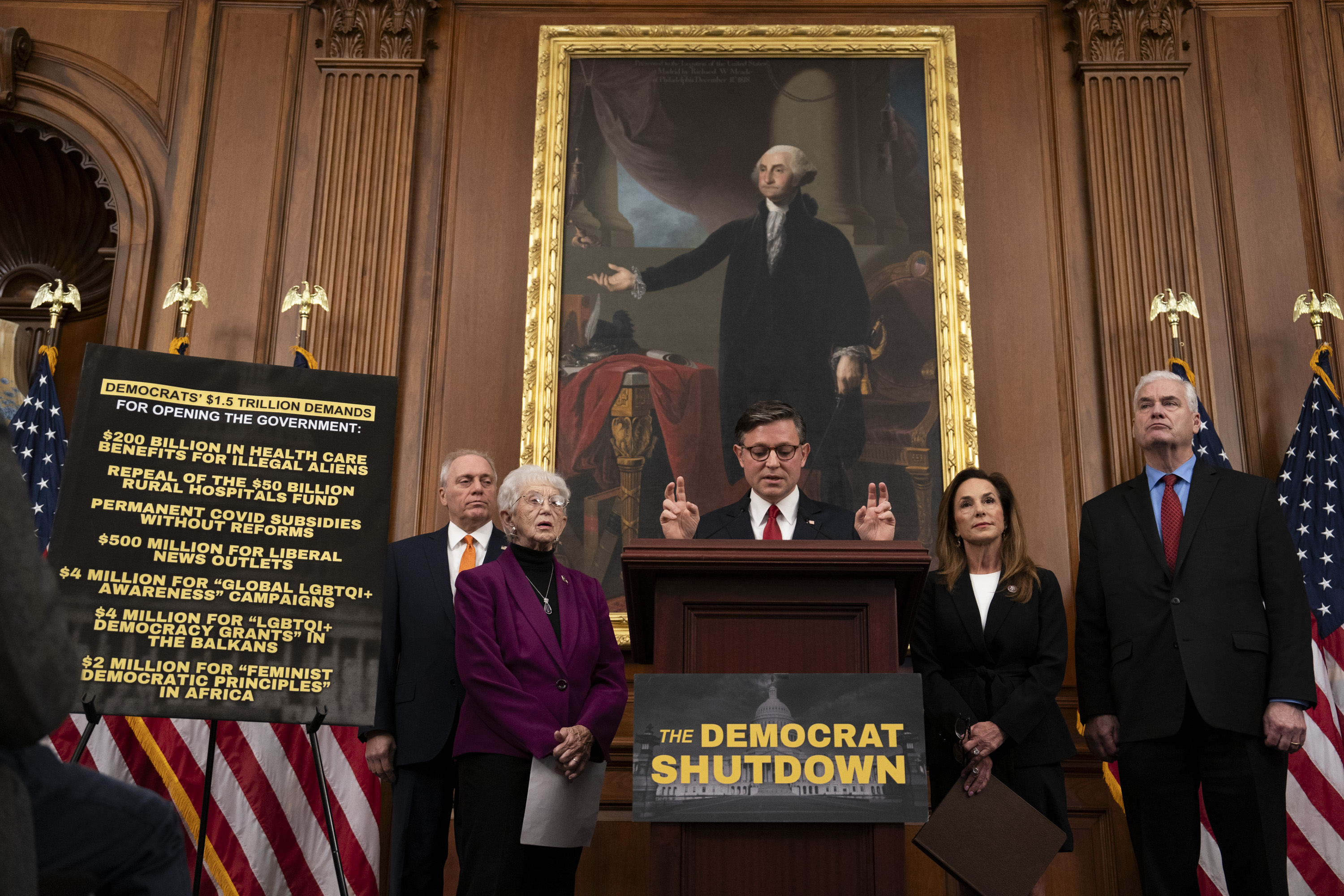
    House Speaker Mike Johnson gathers Republican leaders at a news conference last week to blame Democrats for the government shutdown. That’s ridiculous, writes Joseph Hoeffel.

    The country has never seen such presidential partisanship, overreach, and lawlessness.

    Now, Kristi Noem, the secretary of Homeland Security, is abusing her powers and playing politics regarding the shutdown.

    Last week, she produced a video for the Transportation Security Administration, which she supervises, to show at TSA security checkpoints in airports across the country. In the video, Noem blames congressional Democrats for the government shutdown and any related travel delays.

    She says, in part, “Democrats in Congress refuse to fund the federal government, and because of this, many of our operations are impacted … our hope is that Democrats will soon recognize the importance of opening the government.”

    Congress created the U.S. Department of Homeland Security in 2002 with strong majority votes in each chamber.

    No member suspected that a future secretary would so blatantly engage in partisanship on the job. Petty politics should never infect this particular department and its critical national security responsibilities.

    A number of airports around the country, including Los Angeles, Phoenix, Cleveland, and Charlotte, N.C., are refusing to run the TSA video, citing the political nature of its content.

    Any airport, public or private, that receives federal or state funding could be breaking the laws against political activity by recipients of government money if they show the video.

    I doubt this legal jeopardy Noem is creating through her avid partisanship will give her any pause. Nor will any worries about her job security.

    She is doing exactly what Trump wants her to do: Blame the Democrats at every opportunity for anything that is not working in the federal government.

    But the Republicans could pass a budget and reopen the government tomorrow.

    They need only to suspend the Senate rule that permits the Democrats to filibuster. Any Senate rule can be changed at any time by a simple majority vote.

    Elections have consequences

    In fact, the Senate Republicans just suspended such a rule last month so they could approve a large group of military and civilian appointees by a single en bloc vote, rather than the regular process of individual committee hearings and separate votes on each appointee.

    I am sure I would not like the budget priorities that unfettered congressional GOP majorities and Trump would produce.

    But elections have consequences.

    A single party controls our federal government by the will of the voters. I accept that and will fight it out at the next election.

    Why won’t the Republicans pass a budget and end the government shutdown? Do they think playing the political blame game is more important than governing?

    Let them use the power the voters gave them and accept the responsibility to govern. Let them accept the credit or the blame for the actions they take.

    And stop blaming the Democrats because the Republicans will not do their job.

    Joseph Hoeffel is a former Democratic member of Congress from Montgomery County (13th Congressional District, 1999-2004). He lives in Abington.

  • ‘Conversion therapy’ is antithetical to responsible psychological counseling

    ‘Conversion therapy’ is antithetical to responsible psychological counseling

    As I listened to the recent oral arguments before the U.S. Supreme Court challenging Colorado’s ban on conversion therapy for minors — a pseudoscientific practice that attempts to change or suppress a person’s sexual or gender identity — as a mental health professional, I was confronted with a difficult truth: The Supreme Court debate itself revealed major gaps in the general understanding of what ethical therapy is, and how it differs from malpractice.

    While the decisive action taken in 2024 by the Shapiro administration and five state licensing boards to officially declare conversion therapy professional misconduct and harmful is a major victory affirming our ethical standards here in Pennsylvania, the questions raised by the justices underscore a critical and urgent need. Mental health professionals must clearly communicate to the public, especially to the youth in our commonwealth, what constitutes sound, ethical, and effective treatment.

    To an outside observer, or even a justice who sits on the highest court in the land, psychotherapy might seem like a conversation with someone who is supportive and compassionate.

    But the psychological science confirms that this impression is patently inaccurate. Evidence-based psychotherapy is built on the premise that validation, acceptance, and understanding are the keys to alleviating distress, strengthening relationships, and enabling healthier life choices.

    Becoming a competent and ethical psychotherapist takes years of specialized training, study, and supervision.

    Importance of validation

    Just looking at one of these skills, validation, we can see how complex this is. Validation is the focused act of striving to understand a person’s feelings, thoughts, and behaviors, reflecting the ways their reactions make sense in the context of their lived experience.

    Crucially, and something I stress to my own patients, validation is not agreement or approval. True validation allows for curiosity, paving the way for the self-acceptance that is essential for learning and growth. And, importantly, validation requires the therapist to put aside their own wishes, hopes, and beliefs, also not easy or natural.

    The entire premise of conversion therapy stands in direct opposition to what comprises ethical practice by therapists.

    The U.S. Supreme Court heard oral arguments this month from a lawsuit brought by Kaley Chiles, a licensed counselor, against Colorado’s law prohibiting conversion therapy for minors.

    Conversion therapy asserts that one’s inherent sexuality, a quality that lacks any evidence of malleability, is pathological and must be altered. This lie is deeply shaming and stigmatizing.

    Shame and stigma do not persevere without active promotion from those in power.

    A therapist’s position is not that of a mere “conversation partner,” but a person in an official capacity with specialized training.

    Any professional who promises a client they can alter their core sexual identity is exploiting that power and acting in the face of the overwhelming evidence that their own training is built upon.

    To illustrate, consider a licensed dermatologist consulting with a patient whose natural skin tone is subject to deep societal prejudice. The patient wishes to permanently change their skin color to escape this stigma, and the dermatologist, perhaps due to a shared personal or religious belief, sincerely wishes they could grant this escape.

    Despite this shared wish and personal conviction, if the dermatologist were to accept payment and declare, “I will prescribe a treatment that will permanently and fundamentally rewrite your DNA to give you an entirely different skin color,” that doctor would be committing profound malpractice and fraud.

    Unethical and immoral

    More than just unethical, it is immoral, because it validates and profits from the harmful, prejudiced notion that the patient’s natural, nonpathological trait is a curable defect. Their oath demands they communicate the truth: that such a fundamental alteration is impossible.

    The therapist’s scenario is the direct professional equivalent.

    They might share a client’s faith-based desire to alter their sexual orientation. But this desire does not supersede the scientific consensus of every major national psychological, psychiatric, and medical organization, all of which agree that sexual orientation is not a disease to be cured or a choice to be changed.

    A therapist can ethically help a client manage their feelings or behaviors related to their orientation; they cannot ethically promise to remove the orientation itself.

    To promise this impossible, discredited service is professionally unethical and morally corrosive, as it actively reinforces the lie that a natural variation of human existence is a defect needing a “cure.”

    The distinction is clear: Ethical therapy offers acceptance; malpractice promises an impossible cure.

    The debate before the Supreme Court is not about a professional’s freedom of speech; it is about protecting the public — especially vulnerable minors — from emotional violence perpetrated under the guise of professional care.

    Keren Sofer is a Philadelphia-based clinical psychologist.

  • In a small wedding by a Denver lake, I found the true meaning of celebrating LGBTQ Pride

    In a small wedding by a Denver lake, I found the true meaning of celebrating LGBTQ Pride

    DENVER — Amarilis Marte and Mariangy Delgado Gutiérrez didn’t leave their native Venezuela and spend three months traveling about 5,000 miles to the United States because they were pursuing a “dream.” They yearned for something both more practical and more basic.

    The practical? “I didn’t come here for an American dream,” Mariangy told me in an interview last week. “I came to this country for calmness, stability — to live peacefully without the fear that someone would kill you.”

    It was not an abstract concern. In Venezuela, a nation mostly defined over the last decade by economic and social unrest under the autocratic regime of President Nicolás Maduro, Amarilis, 24, and Mariangy, 31, said they lived with a persistent worry that they would be harmed — not just because of the country’s overall instability, but also because they are a lesbian couple. In Venezuela, as in much of Latin America, there is a widespread intolerance of the LGBTQ community.

    “There was a lot of aggression toward us both,” Mariangy said, adding that the couple had received at least one death threat.

    Then, there was the basic: The two wanted to be wed. With same-sex marriages banned in their home country, and the price of even the simplest ceremony out of reach in their new home in Colorado, it seemed they had few options.

    That’s when Denver’s LGBTQ community rallied around them. A Pennsylvania native organized the wedding, complete with donated photography, a wedding cake, cookies, rainbow flags, and a wedding arch in honor of Pride Month.

    “We are waiting for a favor from God,” Mariangy said.

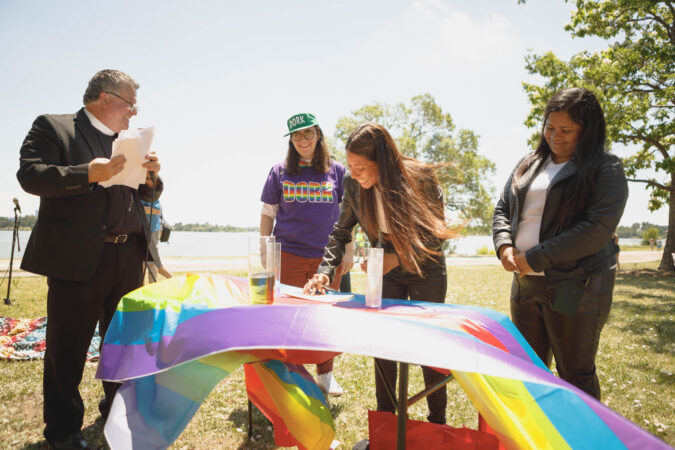
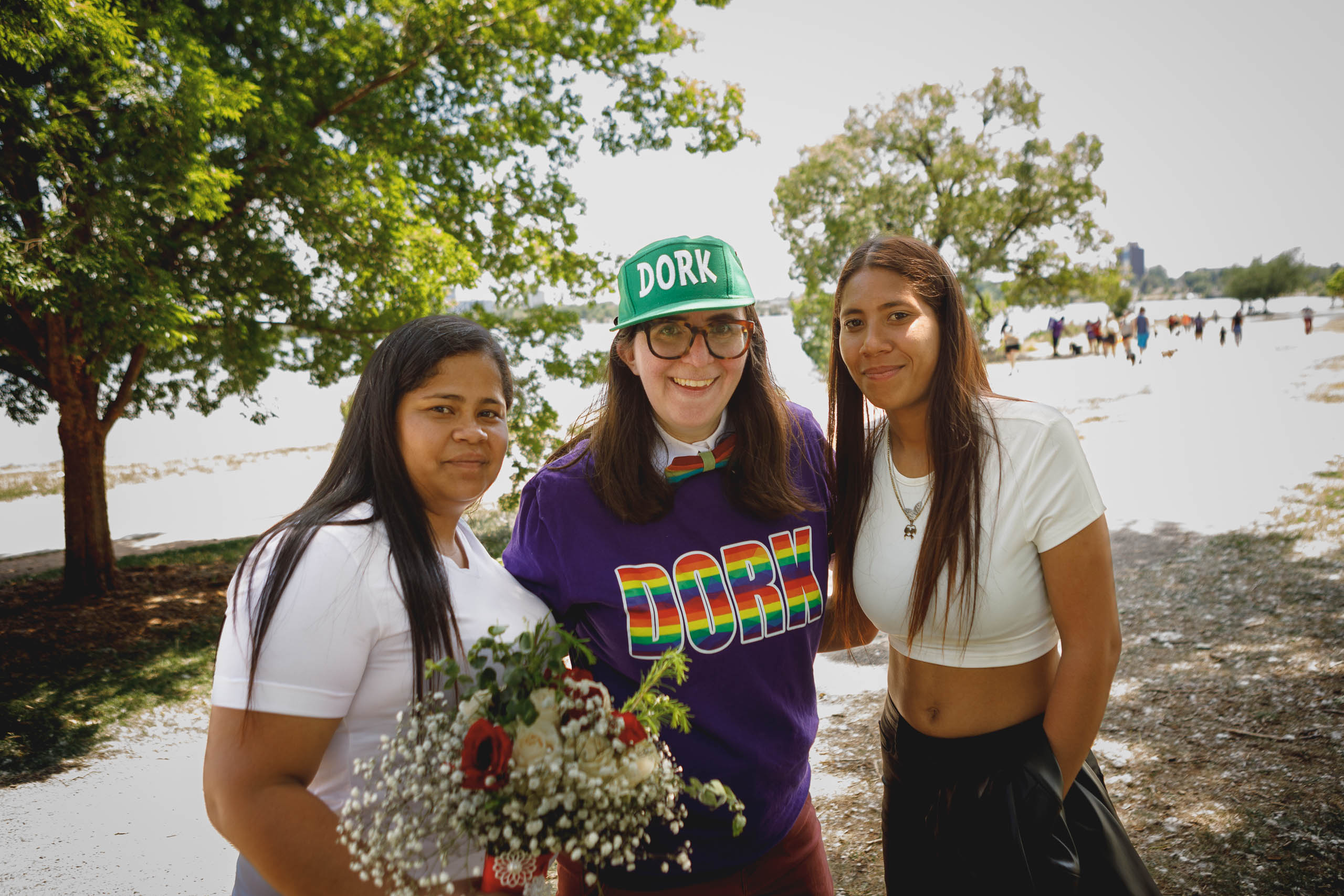
    Susan Law (center) grew up in Murrysville, Pa., and organized a wedding in Denver for Venezuelan asylum-seekers Mariangy Delgado Gutiérrez (left) and Amarilis Marte.

    That favor came in the form of their new neighbors in their new home, including Susan Law, the Pennsylvania woman who put together the weekend’s events.

    Law, the executive director of Dork Dancing, a nonprofit that encourages people to dance as a way to improve their mental health, met Amarilis and Mariangy through her volunteer work with mutual aid and migrant communities.

    In a migrant support group on Facebook, she saw a news clip about the couple and reached out to ask if they were interested in attending the Denver Pride parade with Dork Dancing.

    “I wanted to set aside a certain number of spots for the unhoused and migrant LGBTQ community members,” said Law, who grew up in Murrysville, Pa., a 20-minute drive from Pittsburgh. “They told me what they had been through. They were in serious hardship and needed my help.”

    When she heard the couple couldn’t afford a $30 marriage license, she vowed to throw them a wedding during Pride Month.

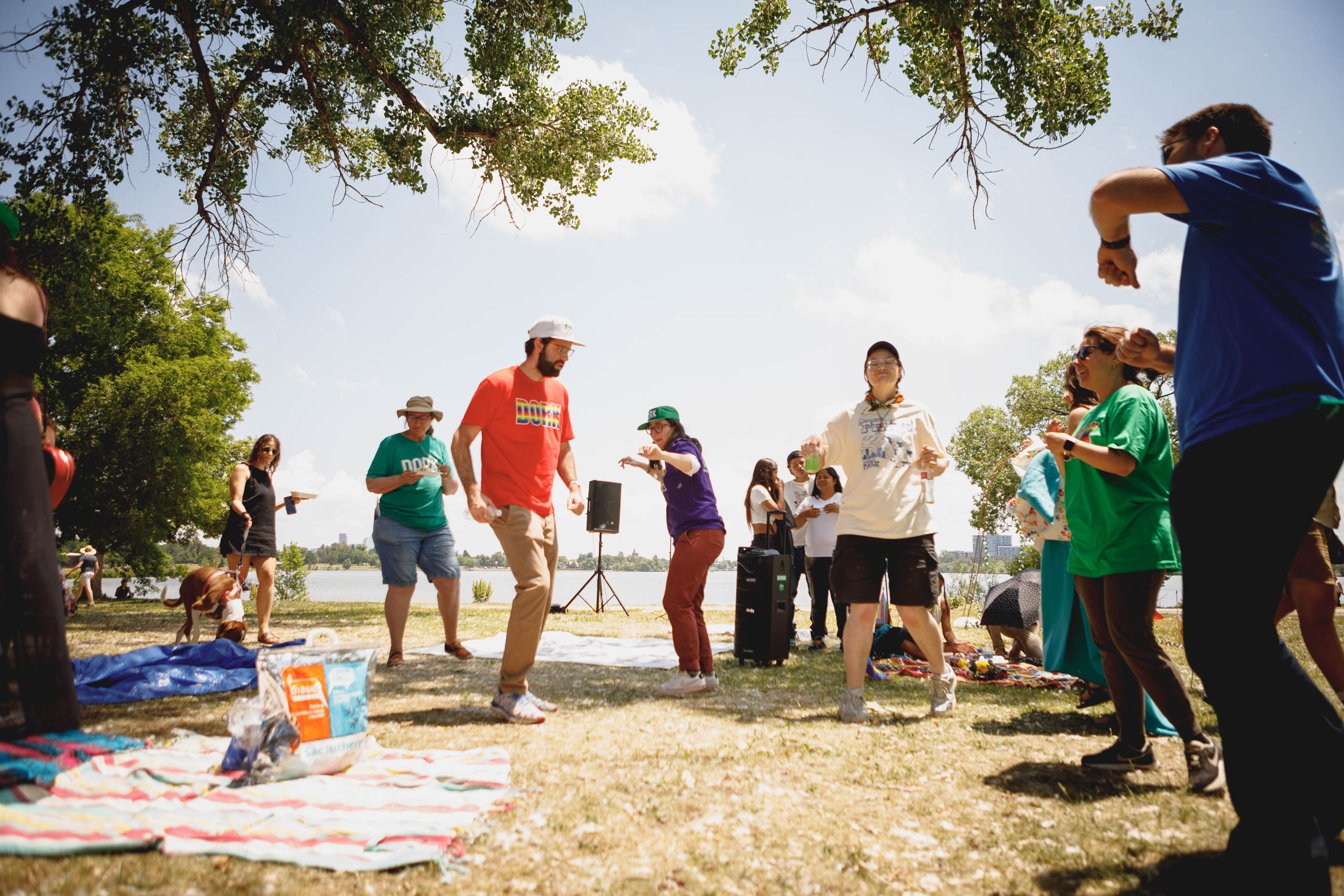
    So last Sunday, a crowd of 70 LGBTQ people and allies gathered to celebrate the couple under the shade of a cottonwood tree at Sloan’s Lake Park, about four miles from the home of Molly Brown, the Denver philanthropist who survived the Titanic sinking.

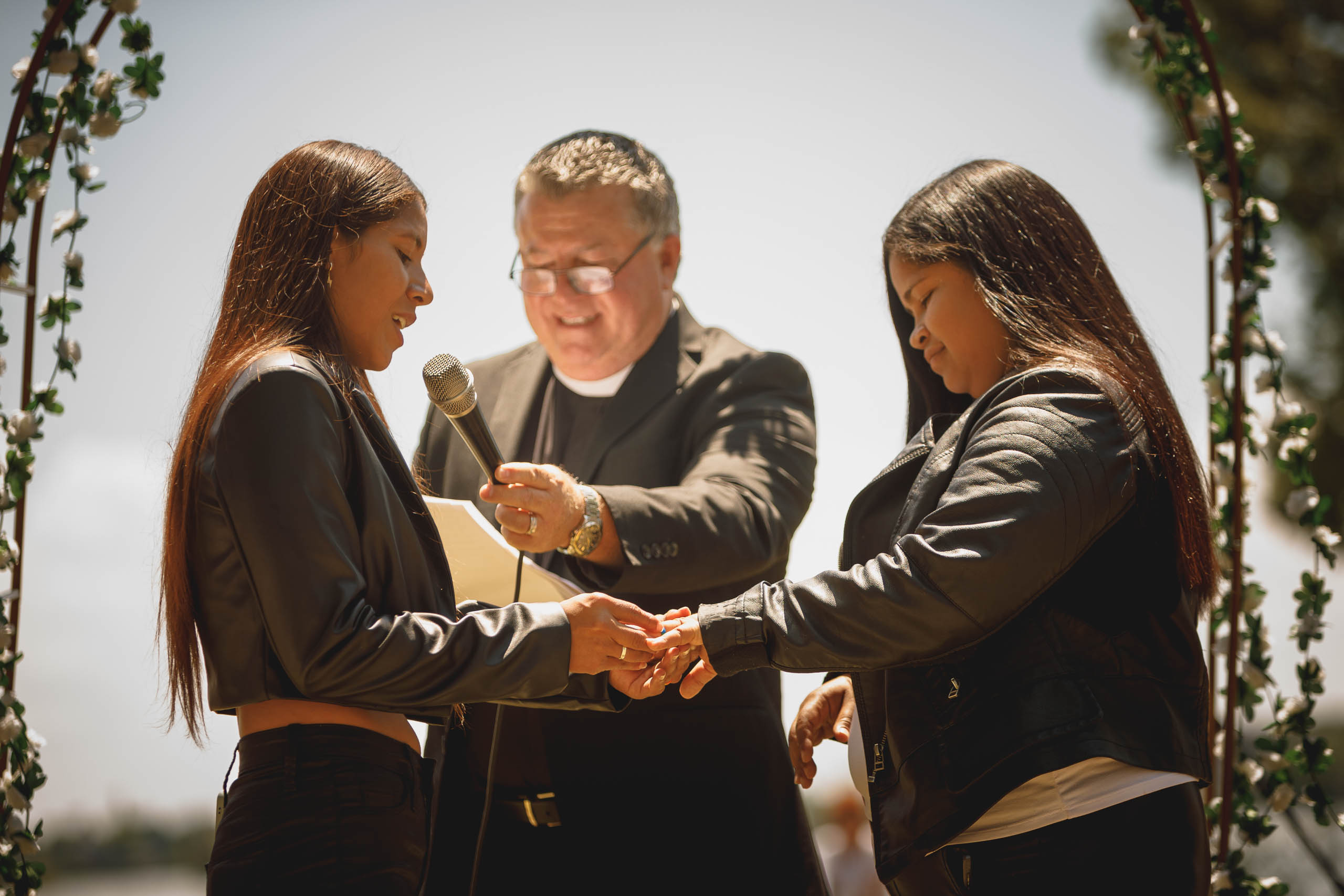
    The Rev. Quirino Cornejo officiated. The couple walked down the aisle lined with Pride flags to the sounds of “The Story” by Brandi Carlile. Many guests brought their children. Others contributed lemon crinkle cookies to the Pittsburgh-style cookie table. And unlike at many weddings, most of the attendees were meeting each other for the first time.

    Before the ceremony started, I spoke with David Hosanna and Jaime Rodriguez, who met a year ago this month at a gay bar. “For anyone who has negative things to say about Pride, I would say you’re missing the big picture,” Rodriguez said. “Who is to say that someone you’ve come to love — a friend, niece, grandchild, nephew — won’t need this in the future? Wouldn’t you feel better and happier knowing that they are entering a more accepting world?”

    After the wedding, the Dork Dancers danced. The founder of Dork Dancing, Ethan Levy, is at center.

    At one point during the ceremony, an orange Jeep sped by, the driver shouting expletives about Pride from a lowered window. Minutes later, a minivan passed in the opposite direction, honking exuberantly and waving a rainbow umbrella out of the passenger-side window.

    The brides poured black-and-white sand into a shared vessel to symbolize their union. They had wanted to be married for years since they were in Venezuela, but it wasn’t safe to do so. Under Venezuelan law, same-sex couples do not have protections or rights. And while same-sex relationships are not explicitly illegal, as they are in 67 countries, frequently, LGBTQ Venezuelans face violence.

    “We feel more free here,” Mariangy said.

    The couple shows off their wedding rings.

    A perilous journey

    Amarilis and Mariangy’s journey to Sloan’s Lake Park began five years ago when they first started dating. In 2020, fearing for their safety, the couple and their two daughters, ages 9 and 13, left their home in Valencia, Venezuela, and fled to Colombia.

    They left Bogotá on July 14 for Medellín, Colombia, and spent almost four months traveling overland to the United States. They crossed the Darién Gap, a 60-mile stretch of dense jungle between Colombia and Panama, over three days without eating; the little food they found in the trash was saved for their children.

    In addition to being perilous, crossing Central America is expensive. In Panama, the family was kidnapped and told to pay $280 per head to continue. When the kidnappers realized Amarilis and Mariangy didn’t have money, nor did their friends and family back home, they let them go.

    The threats continued: In Mexico, on a packed train, a cartel stopped the railcar and took money from the passengers. Mariangy told me she and Amarilis had to protect the kids from assault. They jumped from the top of the train and ran barefoot over mountains until they reached a faraway town.

    After three arduous months, the family of four arrived legally as asylum-seekers at the border in Texas on Oct. 28, where Amarilis was detained by migration. Mariangy and her daughters were given the option of taking a bus to New York, Washington, D.C., or Denver. She chose Denver because she heard that there would be shelters. On Dec. 1, Amarilis rejoined them.

    “We are here,” Mariangy told me. “That’s the most important thing.” They survived.

    Amarilis Marte and Mariangy Delgado Gutiérrez cut into their wedding cake from Eternal Flavors Bakery while their daughters look on. After the couple told Susan Law they couldn’t afford a $30 marriage license, a community of LGBTQ people and allies came together to throw them a wedding.

    A call to action

    When they reached Colorado, Amarilis and Mariagny wanted to marry, but they couldn’t afford the simplest items for a ceremony. The family lives in the 16th most expensive metro area in the country, where they spend $800 a month to sleep on the floor of an apartment with five people they don’t know, all men. The family sleeps in a closet.

    Their dreams are so prosaic as to be beautiful. They want a house for their kids to thrive in, good work to support their family, and to have another child together. They want to get a dog, though they differ in preferences: Mariangy wants a mini schnauzer. Amarilis would prefer a German shepherd.

    The wedding on the shore of Sloan’s Lake was a celebration, but also a call to action. Without Law’s help, they would likely be on the streets. The family is still food insecure. Paying rent is a struggle; Law helped them with a missing $450 a few days before the wedding. Once they get work permits, her hope is to help Amarilis and Mariangy identify a source of income beyond cleaning patios or backyards.

    “Community support can’t stop after one day,” Law wrote in an Instagram story. She started a GoFundMe page for the couple to help cover their food, housing, and other expenses, and a wedding registry to cover other essentials.

    Mariangy Delgado Gutiérrez and Amarilis Marte exchanged vows at Sloan’s Lake Park in Denver on June 9.

    In my life, I have ridden a bicycle in Toronto behind the Dykes on Bikes and learned the hard way not to wear glitter on my eyes in the rain. I’ve marched at Pride in New Hampshire, New Zealand, and watched from the sidelines in New York City.

    None of that was as meaningful as watching Mariangy and Amarilis get married. It was a privilege to witness the true power of the LGBTQ community. Celebrating Pride means uplifting the most vulnerable among us.

  • Ivan Provorov refused to wear Flyers’ Pride Night jerseys because of his religion. He’s getting Christianity all wrong.

    Ivan Provorov refused to wear Flyers’ Pride Night jerseys because of his religion. He’s getting Christianity all wrong.

    On Tuesday, Flyers defenseman Ivan Provorov refused to wear a rainbow warmup jersey during the team’s LGBTQ Pride Night game against the Anaheim Ducks. He was the only player to do so. Provorov, who hails from Yaroslavl, Russia, cited his Russian Orthodox faith as the reason for abstaining from rainbows, telling reporters after the game that he had chosen “to stay true to myself and my religion.”

    As a queer woman, a former hockey player, a Christian, and an NHL fan, I am disappointed at the league and the Flyers’ response. In refusing to wear the Pride Night jersey, Provorov refused to acknowledge the humanity of LGBTQ people. And the league, in defending his stance, went right along with it.

    In a statement released Wednesday, the NHL said: “Clubs decide whom to celebrate, when and how — with league counsel and support. Players are free to decide which initiatives to support, and we continue to encourage their voices and perspectives on social and cultural issues.”

    In other words: There’s no problem with players being vocally antigay. Flyers head coach John Tortorella doubled down on the support of Provorov’s homophobia, telling reporters after the game: “This has to do with his belief and his religion. It’s one thing I respect about Provy, he’s always true to himself. That’s where I’m at with that.”

    Too few people understand that this tacit acceptance of discrimination — especially as it relates to sexuality and religion — is a matter of life or death for members of my community.

    Provorov is entitled to his personal convictions. He can believe that only marriages between a man and a woman can be blessed by God, or that homosexuality is a sin. But I wish he knew this: For other populations, when they adopt the church, the suicide rate decreases. For LGBTQ people, when they adopt the church, the suicide rate increases.

    Provorov should have donned that rainbow jersey and, yes, put rainbow tape on his hockey stick — not because he accepts gay marriage or because he’s eager to march in a Pride parade — but to stand up for LGBTQ people who are suffering. The defenseman had a chance to make a statement against bullying, against hatred, and against violence, without even opening his mouth. Instead, he chose not to step on the ice for warmups. That is shameful.

    I would recommend that Provorov, Tortorella, NHL leadership, and anyone who disagrees with me — take a moment to read the book Heavy Burdens by sociologist Bridget Eileen Rivera. In it, she shows how generations of LGBTQ people have been condemned and alienated by churches. That legacy has caused immeasurable harm to my community. It is a heavy burden to carry.

    Flyers defenseman Ivan Provorov sat out warmups on Tuesday night to avoid wearing the team’s Pride Night jerseys.

    Next, dive into Affirming: A Memoir of Faith, Sexuality, and Staying in the Church by Sally Gary. Gary is the executive director of CenterPeace, a nonprofit organization that helps members of the LGBTQ community feel a sense of belonging in the church — and provides resources for Christian leaders and parents of LGBTQ kids to respond to the queer community as Christ would: with love and acceptance.

    After that, I would recommend that Provorov sit down and spend time with his Bible.

    If Provorov truly wants to follow Jesus, the best thing to do is to stand up for the vulnerable. One of the first things Jesus said in announcing his ministry was: “The Spirit of the Lord is on me, because he has anointed me to proclaim good news to the poor. He has sent me to proclaim freedom for the prisoners and recovery of sight for the blind, to set the oppressed free, to proclaim the year of the Lord’s favor.” (Luke 4:18-19)

    That is how close the vulnerable were to Jesus’ heart. If Provorov’s Christianity does not center on helping the vulnerable — and I mean every vulnerable population — then he’s missing the mark.

    And LGBTQ people are one of the most vulnerable populations here in the United States, and in Russia. In December, Russian President Vladimir Putin signed a law that makes it illegal to spread “propaganda” about “non-traditional sexual relations.” Closer to home, the Central Bucks school board earlier this month banned teachers from hanging Pride flags.

    My heart goes out to Provorov. He’s trying to follow God with the knowledge and resources he has.

    In the Gospel of Matthew, Jesus had some of the strongest warnings for the most religious of his day. He warned his followers to be wary of those who “preach, but do not practice. They tie up heavy burdens, hard to bear, and lay them on people’s shoulders, but they themselves are not willing to move them with their finger.” (Matthew 23:3-4)

    I’m asking Provorov to move his finger. Clear these burdens. Reading the Bible with fresh eyes might open his mind.

    (And at least Gritty isn’t a homophobe. Bless that creature.)

  • After a shooting at an LGBTQ club in Colorado, I’m rethinking what safe spaces mean

    After a shooting at an LGBTQ club in Colorado, I’m rethinking what safe spaces mean

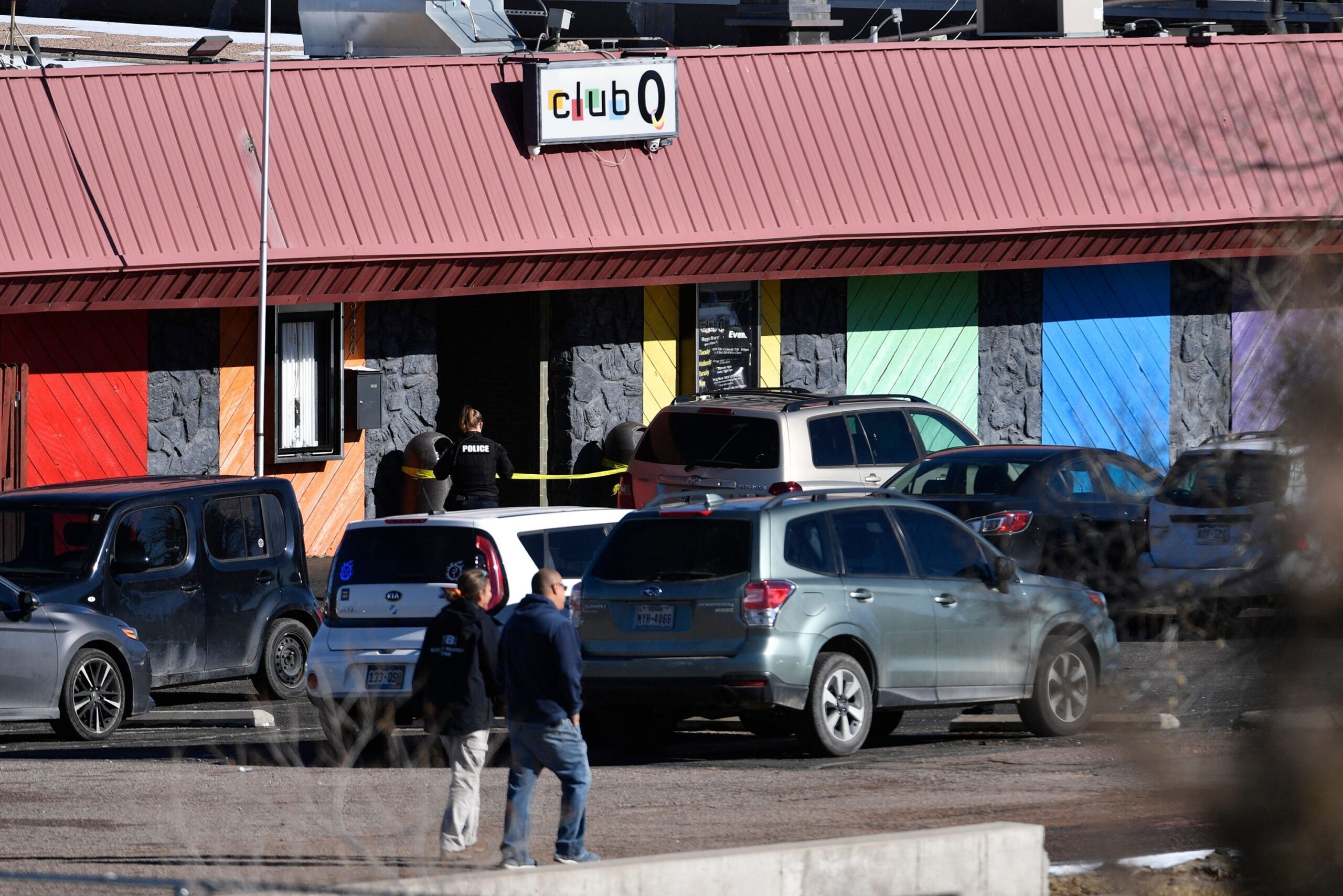
    On Saturday night, a 22-year-old man entered an LGBTQ nightclub in Colorado Springs, Colo., and used a long rifle to kill five people before he was tackled to the ground by patrons. Twenty-five others were injured.

    When I heard the news, I felt nauseated. I thought about a recent night I spent with a date at Tavern on Camac in the Gayborhood. We chose the spot specifically because we would be able to talk, but also be surrounded by some semblance of community. A series of men strutted up to the piano to sing renditions of Disney and Sondheim and Cher. I sipped a lager and asked my date about their childhood.

    Not once did I eye the exit or think about what might happen if a man with a gun entered the room, hellbent on killing us because of our gender identities or the way that we love. But after the shooting at Club Q — and after reflecting on the 49 LGBTQ people who lost their lives at Pulse nightclub in Orlando, Fla., in 2016 — I might start.

    Many people don’t understand that LGBTQ bars and clubs are holy spaces. Too many of us have been rejected by our families or our religious communities, or deal with microaggressions at work that make us feel overly sexualized and less-than-human.

    Too often, the people who we expect to love and accept us unconditionally choose not to respond in that way — and that leads to LGBTQ people seeking out other channels for connection. It’s possible to find safety and support in a bar, or a community center, or a friend’s kitchen. Even if we have the privilege of not dealing with these pains — both large and small — on a daily basis, we have likely loved someone who has.

    Even in a strong circle of support, many LGBTQ people feel a sense of isolation. The suicide rate is astronomically high — nearly half of LGBTQ youth have had suicidal thoughts in the past year, according to a survey by the Trevor Project. The politicians who ban LGBTQ books or enact laws that limit access to gender-affirming health care don’t understand that for many in my community, the ability to be seen and loved as ourselves is a matter of life or death.

    And hate breeds hate. At least 32 trans and gender-noncomforming people across the country have been killed this year. Of those, 81% of known victims were people of color, and 59% were Black. Trans women are disproportionately targeted.

    For adults, an LGBTQ bar is a safe space. But what does safety mean?

    Law enforcement officers walk through the parking lot of Club Q, an LGBTQ nightclub, in Colorado Springs, Colorado, on Sunday.

    Safety means being able to make eye contact. It means not fearing death. It means staring into the eyes of someone who could be a lover — or even holding their hand above the table, or dancing close — and thinking only of them, without being distracted by a straight person’s gaze or judgment.

    That’s not to say that Tavern on Camac is perfect. A lesbian bar would have been preferable by a mile — but Philadelphia doesn’t have one. Toasted Walnut closed in 2021. Sisters closed in 2013. If I had a time machine, I would go to Sisters in 1996, just for one drink.

    But back in Tavern on Camac on Oct. 15, in the year of our Lord, 2022, my date leaned in for a kiss. Soon after, a drunk man leered at us.

    “There’s two straight people kissing in here! Don’t they know this is a gay bar?” he shouted.

    That wouldn’t have happened in a lesbian bar. We left soon after — giddy, yes, but fazed.

    In this Philly experience, I know I am not alone. In his 2015 essay, “Black not fetch enough for Woody’s?” Ernest Owens wrote: “LGBT members of color continue to face a sense of de facto dismissal socially when trying to enjoy the night scene at one of Philly’s more accepting venues.” Owens argued that the city should work with the Gayborhood to “foster more cross-cultural LGBT collaboration to help shake up the social division. Otherwise, there will be more shade to be thrown across the dance floor — something that nobody has time for.”

    Next year, Rue Landau could become Philadelphia’s first openly LGBTQ City Council member. Maybe she can help make this vision a reality. But we can’t rest our hopes on the shoulders of any one person. Change happens in community, in conversation.

    There are vanishingly few lesbian bars across the country. In 1980, there were around 200. Today, there are less than 25. On the podcast Cruising Pod, Sarah Gabrielli, Rachel Karp, and Jen McGinity take a road trip to document the surviving spaces for queer women. The Lesbian Bar Project is a documentary film and fund-raising project that seeks to do the same. These bars are sacred.

    After running the New York City Marathon earlier this month, I decamped with my friends to the Stonewall Inn, the birthplace of Pride, to sip beer under portraits of Marsha P. Johnson and Sylvia Rivera, the two drag queens whose activism launched the LGBTQ rights movement. I felt deeply at home.

    Every queer person’s experience is different. But the unifying theme is a longing for acceptance. Too often we are told that we are less-than-human, or unwelcome, or that the way we love is unholy. When I see a rainbow flag over the door of a bar or a church or a café, I know that I won’t be judged.

    On a road trip this spring, I waited out a tornado warning at the Lipstick Lounge in East Nashville, Tenn., where it was drag queen trivia night. Outside, torrential rains fell. Inside, I was welcomed to a table of queer women who were elated just to share space with each other. I was useless at the trivia, but that didn’t matter. I had a puppy with me, recently adopted, who was a total babe magnet. The bartenders gave her bacon. The night ended with karaoke, and I listened but did not sing. Suffice to say, karaoke in Nashville, where everyone is a would-be musician, is superior to karaoke in any other city.

    For people who don’t have an experience in these LGBTQ spaces — and for the politicians who live at a comfortable distance — imagine that the person in that bar is your daughter, or your son, or your loved one.

    Think of Daniel Aston, a 28-year-old trans man and bartender at Club Q who was shot and killed this weekend. In an interview with Colorado Public Radio, his mother, Sabrina Aston, said that working at Club Q, her son “was the happiest he had ever been.”

    “He was thriving and having fun and having friends. It’s just unbelievable. He had so much more life to give to us and to all his friends and to himself.”

    Everyone deserves a safe space to dance and exist and experience joy. And Philly, if we ever get a lesbian bar again, know that I will show up in my finest blazer and sneakers and dance.