For nearly a decade, city transportation and public safety officials have taken part in Vision Zero, an ambitious, nationwide program designed to help communities reduce the number of lives lost to traffic collisions.
In recent years, City Hall has narrowed lanes, installed red-light cameras, and built speed humps in roadways in an effort to slow traffic and keep pedestrians safe.
According to an analysis by the Bicycle Coalition of Greater Philadelphia, the city has suffered 94 fatalities this year. That’s a 39% decrease from the 155 Philadelphians who lost their lives in 2020.
According to the Bicycle Coalition of Greater Philadelphia’s “Traffic Victims Report,” pedestrian fatalities this year are down 39% compared with 2024.
City officials, including Mayor Cherelle L. Parker, deserve credit for swimming against this national tide. While there is little City Hall can do to regulate vehicle size, officials have used the tools that are available to reduce fatalities.
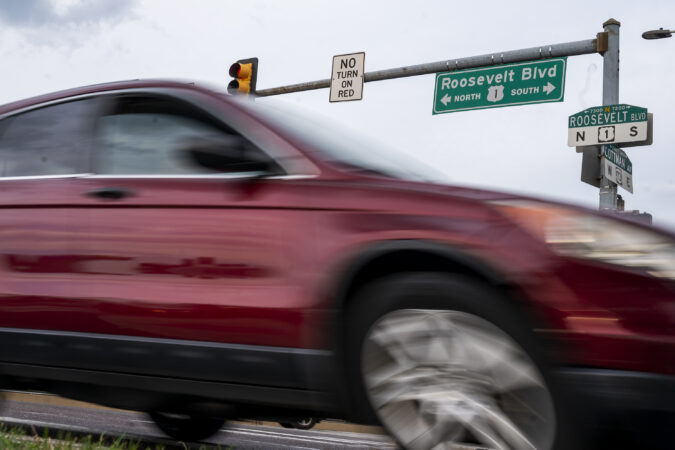
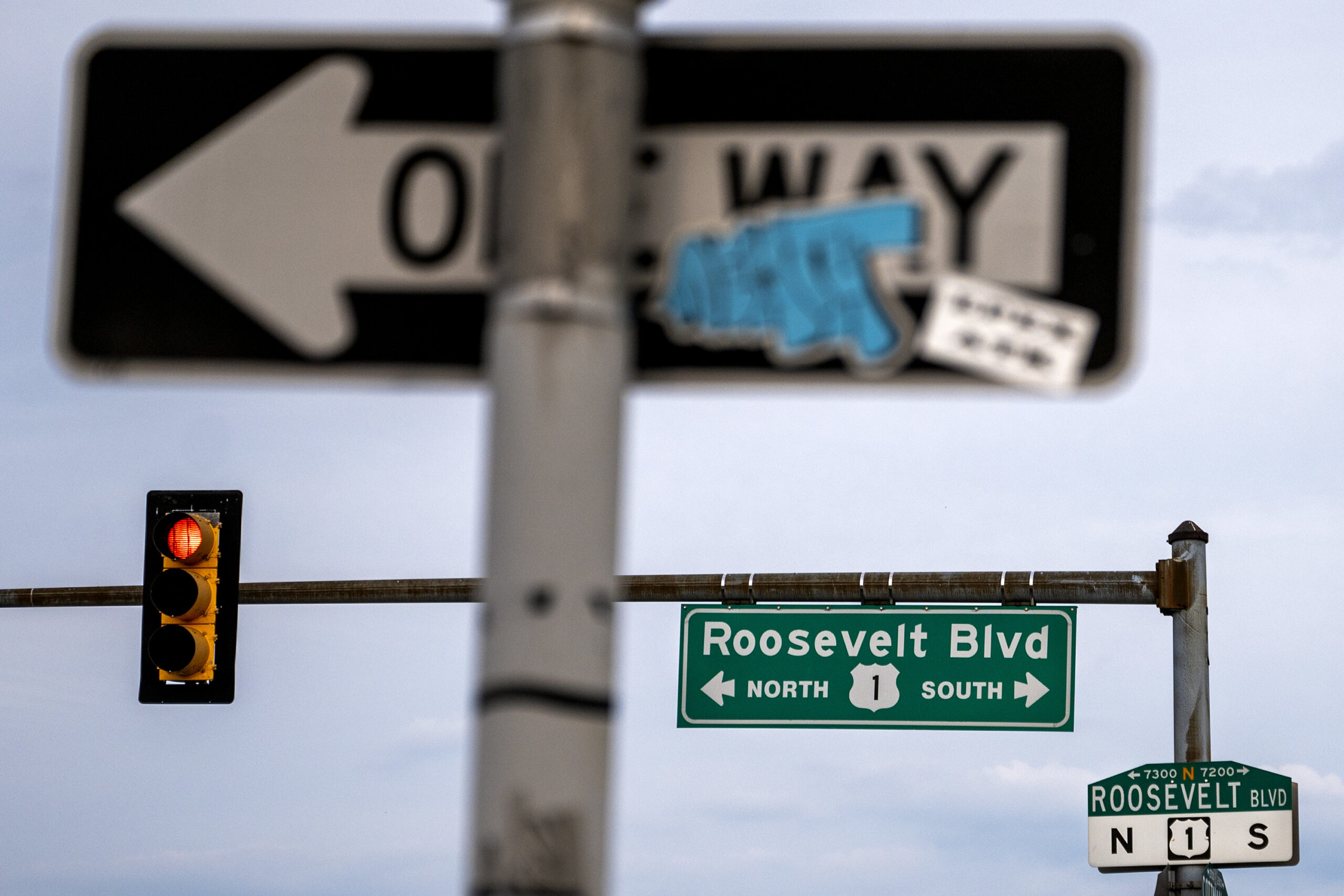
The city’s biggest success story is Roosevelt Boulevard. Once dubbed one of the most dangerous roads in America, the Boulevard is no longer even the most dangerous corridor in Philadelphia (Broad Street now holds that dubious distinction). The change is largely a result of the installation of speed cameras, which officials credit with saving around 50 lives since they were installed in 2020. The cameras have now been installed for Broad Street, as well.
Additionally, the Parker administration has placed a welcome focus on safety around schools and playgrounds. Given that an average of about five Philadelphia children are struck by a vehicle every week, those efforts should be accelerated. After some initial consternation, City Council approved speed cameras for seven school zones this year. If those programs show success, they should be expanded.
An automated speed enforcement camera is mounted on North Broad Street at Arch Street.
So, too, should support from the police. In an interview with Philadelphia Magazine, Police Commissioner Kevin J. Bethel responded to a plea for more traffic enforcement with a reference to ongoing staffing issues, saying that his officers must prioritize the most serious calls. With 100 Philadelphians dying in collisions each year, citations and arrests for traffic violations should remain a point of emphasis.
The plan to reduce traffic fatalities also requires some assistance from Harrisburg. City officials would like to set their own speed limits, arguing that state rules that are designed for rural and suburban communities don’t work in dense, urban areas with heavy pedestrian traffic.
There is still much to be done when it comes to keeping pedestrians in the city safe, but Philadelphians can take comfort in knowing that the tools currently in place are doing what they’re intended to do — save lives.
Donald Trump’s first year back in the White House has brought only one surprise: the speed with which he has upended the American Experiment. This board spent 2024 warning of the dangers a second Trump administration could bring. It was hardly soothsaying.
Sadly, Trump’s 2025 performance has reminded many voters that his undeniable luck, charisma, and bravado may be entertaining, but the reality of governance demands more. The office of the presidency demands more.
For his second term, no longer constrained by the guardrails the conservative establishment placed on his first presidential stint, and surrounded by sycophants and incompetents, Trump has wasted no time trying to live out his authoritarian fantasies while being unable to keep the trains running on time.
Indeed, he is very much the man whose administration helped give the world a COVID-19 vaccine in record time before bowing to anti-vax conspiracy theories that ultimately cost American lives.
Instead of allowing inflation to continue to abate and the U.S. economy to live up to its label as “the envy of the world,” he haphazardly and likely illegallyinstituted tariffs on global trading partners that amount to a tax on American consumers. Rather than sitting back and taking credit for curtailing immigration at the southern border, which concerned a large number of voters, he’s lost public support as masked federal agents abuse, harass, and intimidate immigrants and citizens alike.
Trump’s signature legislation, the One Big Beautiful Bill Act, is set to make the rich richer and the poor poorer, all while a shrinking middle continues to lose faith in America’s institutions — some of which have willingly acquiesced to whatever Trump demands.
But while Trump has failed to make life better for everyday people, he has been successful in enriching himself, his family, and his cronies. He has captured the U.S. Department of Justice and the FBI, pushing them to pursue his perceived political enemies; used the U.S. Department of Homeland Security to implement cruel immigration policies and as a de facto secret police; and devastated America’s standing in the world by destroying the U.S. Agency for International Development, which helped generate enormous goodwill while improving the lives of millions of people around the globe.
The following appraisal of Trump’s presidency so far is not a “we told you so,” because we are all in this together. It is a reminder that those of us who value democracy and the rule of law must continue to stand fast and push back in defense of the ideals that fueled our nation’s founding and the rights and obligations codified in the Constitution.
As 2025 ends and a new year begins, we must not allow the avalanche of outrages to numb us to the fact that Trump remains unfit for office.
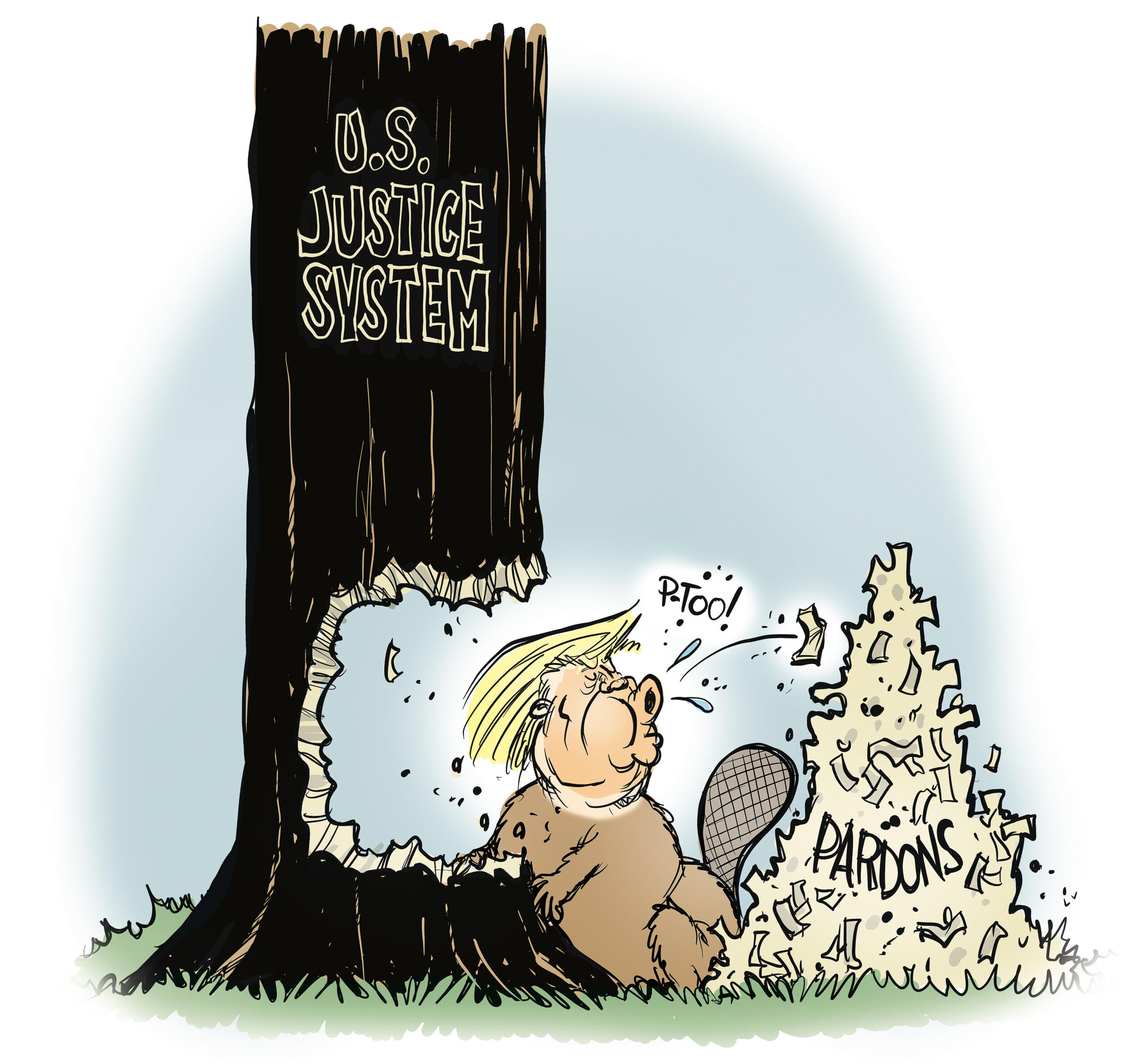
Donald Trump and his administration have attacked judges and maligned the courts, while the president has used his pardon power to eliminate accountability for his political allies and business interests.
Pardoned lawlessness
As far as ominous indicators of dire times ahead, “Abandon hope, all ye who enter here” is difficult to beat. But Trump’s blanket pardon of the roughly1,600 people involved in the attack on the Capitol comes in a close second.
Signed shortly after he took power, among a raft of other troubling executive orders, the clemency shown to the insurrectionists — including those who brutally assaulted law enforcement officers — showed the administration had no interest in accountability for its political allies nor any true concern for the rule of law.
Among Trump’s biggest abuses of presidential power are pardoning Rudy Giuliani and dozens of others accused of trying to overturn the 2020 election, campaign donor and convicted fraudster Trevor Milton, cryptocurrency kingpin Changpeng Zhao, and former Honduran President Juan Orlando Hernández, who had been sentenced to 45 years in prison for drug trafficking.
But why wait for a pardon when the president can simply pressure Justice Department lawyers to drop the corruption case against New York Mayor Eric Adams, or dismiss allegations that Trump border czar Tom Homan took $50,000 from FBI agents posing as business executives.
It is part of the administration’s stifling hypocrisy that while it righteously claims to seek justice by going after people like former FBI Director James Comey or New York Attorney General Letitia James, or labels all undocumented immigrants as criminals, it brazenly ignores due process — a bedrock principle of the American legal system.
If there are bright spots in a U.S. justice system in which the attorney general operates more like the president’s lawyer than a servant to the American people, it’s that grand juries remain independent, refusing to indict on trumped-up charges. And the courts — run by judges appointed by presidents of both parties, including some by Trump himself — are still a bulwark against the administration’s abuses.
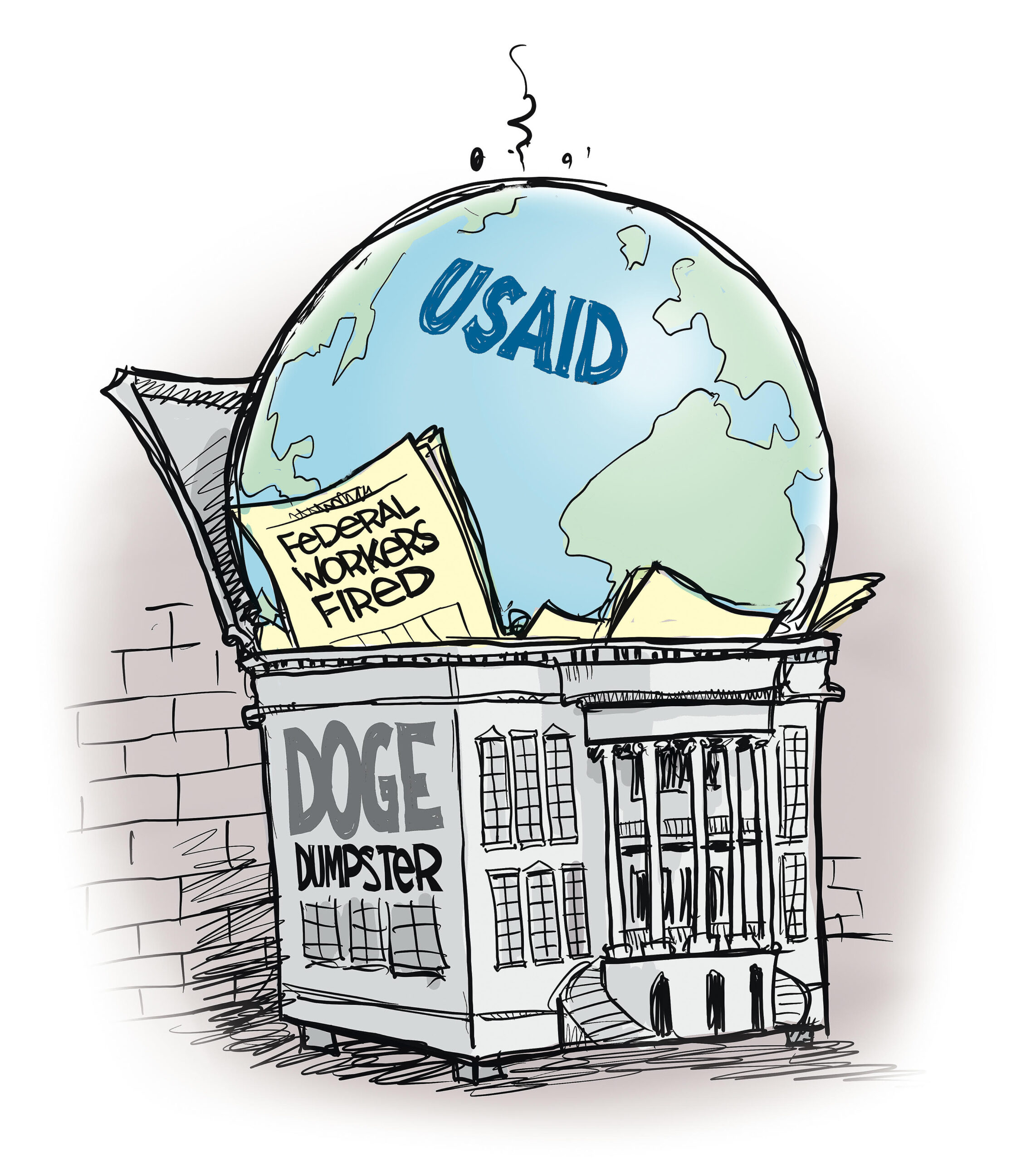
Donald Trump allowed billionaire Elon Musk to fire hundreds of thousands of government workers as head of the so-called Department of Government Efficiency. It is estimated that DOGE’s dismantling of the U.S. Agency for International Development has already led to the deaths of nearly 700,000 people.
Costly savings
The Department of Government Efficiency was Elon Musk’s chance to eliminate the U.S. Agency for International Development, an agency he called a “criminal organization” that needed to die. That the tech billionaire’s passion to eliminate USAID dovetailed with a bullet point in the conservative blueprint for Trump’s second term was likely welcomed by the administration.
Musk, who spent $250 million to help get Trump elected, was the public face of DOGE and promised to eliminate $2 trillion in government spending by identifying and eliminating waste, fraud, and abuse. What he did was bring in a squadron of techies more versed in crunching code than in carefully evaluating government services.
The chaos that followed meant not only the dismantling of USAID — which, as of Dec. 22, was estimated to have led to almost 700,000 deaths, more than half of them children, through the elimination of health and nutrition programs — but the firing or early retirement of nearly 300,000 federal employees.
DOGE also terminated more than $2.6 billion in contracts at the National Institutes of Health tied to medical research and clinical trials, leading to setbacks that may impact Americans’ health for generations.
So what was the result of DOGE’s actions? How much of that promised $2 trillion will show up on the positive side of the government’s ledger? According to an analysis by the libertarian Cato Institute, DOGE had no noticeable effect on the trajectory of government spending.
It did reduce the federal labor force, with savings that may amount to about $40 billion annually. That’s a lot less than it sounds when you consider it’s equal to 0.57% out of around $7 trillion in U.S. spending.
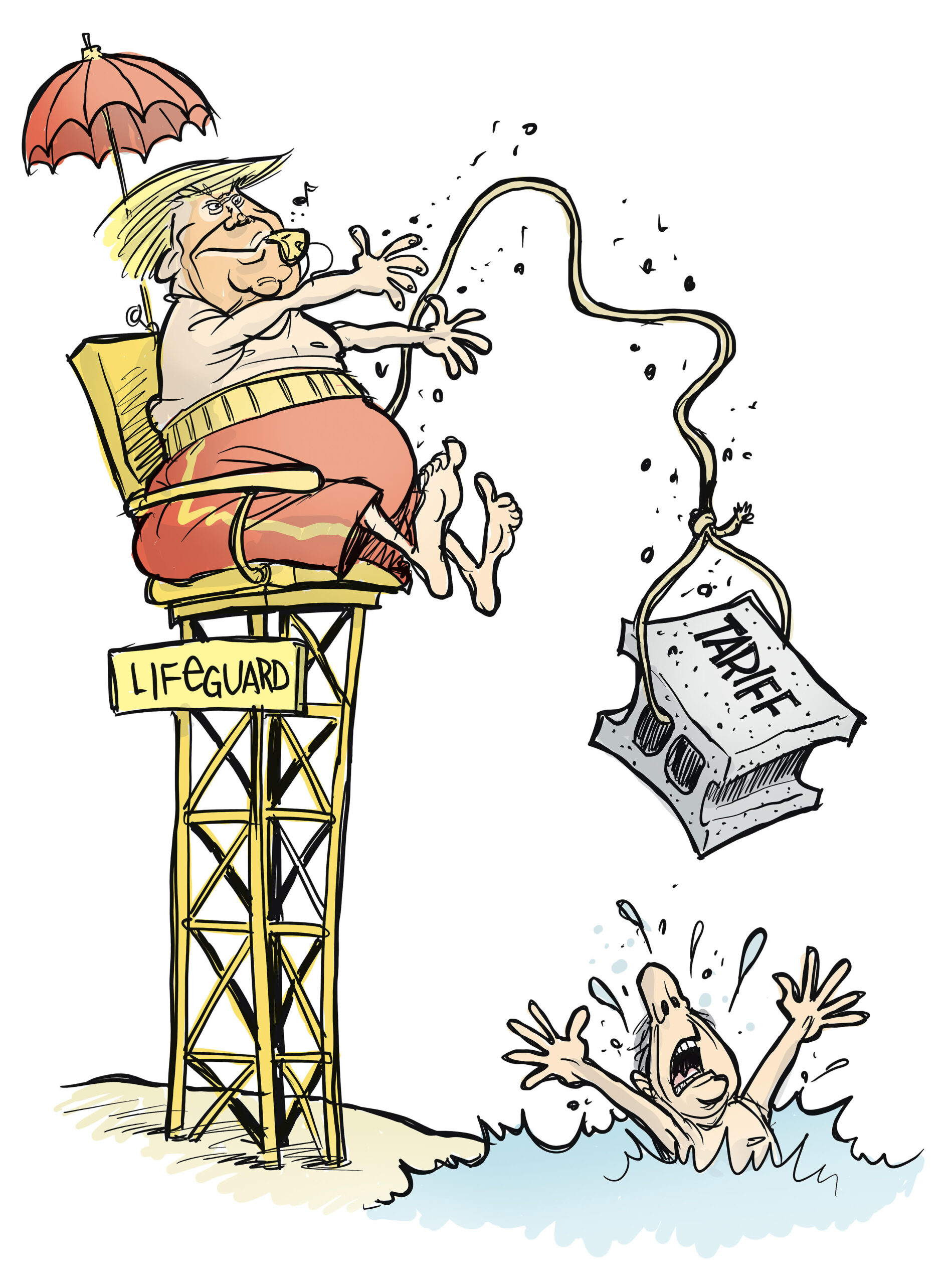
In his campaign for the president, Donald Trump promised he would lower consumer prices. A dubious pledge under most circumstances was made worse by policies, including the chaotic application of tariffs, that threaten the economy as a whole.
Self-inflicted decline
Looking at the data, it was easier to see why Vice President Kamala Harris did not distance herself from President Biden’s economic policies in her 2024 run for the White House. After all, after suffering through the pandemic like the rest of the world, the U.S. economy was bouncing back faster and stronger than that of other developed nations.
Unfortunately for Harris, to many voters, “Bidenomics” did not mean higher wages, lower unemployment, record stock market gains, and that post-pandemic inflation was starting to ease. It certainly didn’t mean billions in investment in infrastructure projects or in domestic production of critical semiconductors through the CHIPS and Science Act.
It meant the high cost of a dozen eggs.
Trump took advantage of the bad economic vibes and pledged to lower prices on Day One if elected. This was a dubious promise under most circumstances. Considering the president’s signature economic policies — indiscriminate tariffs and mass deportations — were destined to actively hurt consumer prices, it was political malpractice.
It is no wonder, then, that people have begun to sour on Trump’s economy, with the latest polling finding 57% of Americans disapprove. People are worried about losing their jobs, as unemployment has increased, and household debt levels are at record highs.
The impact of the president’s tariffs, which are taxes paid by the importer, not the exporter, is gradually being felt on the price of goods. Meanwhile, the administration’s crackdown on immigration, both legal and illegal, is hurting industries that depend on immigrant labor, including construction, agriculture, and health services.
According to the administration, fewer immigrants in jobs means more jobs for native workers, but so far, that result has not materialized. Instead, the projected economic impact of mass deportation on the labor force and consumer market (i.e., fewer people in the country purchasing goods and services) could reduce the U.S. gross domestic product — a common measure of economic growth — by 4.2% to 6.8%, according to the American Immigration Council. On the low end, that would be similar to the impact of the Great Recession on GDP.
Trump also promised to reduce energy prices by half within 18 months of taking office. The growing demand from data centers and the administration’s continued efforts to delay or kill renewable energy projects make it unlikely he will be able to deliver.
Trump infamously said his tariffs meant kids would get “two dolls instead of 30” come Christmas, but even that may have been optimistic, as data find more Americans are relying on installment or buy-now-pay-later plans to cover their holiday shopping.
The president, who had called Americans’ affordability concerns a “fake narrative” and a “con job,” backtracked in a prime-time speech on Dec. 18 in the most Trumpian way possible: He lied.
Trump falsely blamed immigrants for driving up the cost of housing, claimed gasoline is $2.50 a gallon “in much of the country,” and took credit for the mathematically impossible “400, 500, and even 600%” reduction in the cost of some prescription drugs, and for securing $18 trillion in investments in the U.S.
“Inflation has stopped, wages are up, prices are down, our nation is strong,” Trump said.
Donald Trump’s immigration enforcement agencies are seeding terror in communities while his administration’s immigration policies are unashamedly bigoted.
Anti-American sentiment
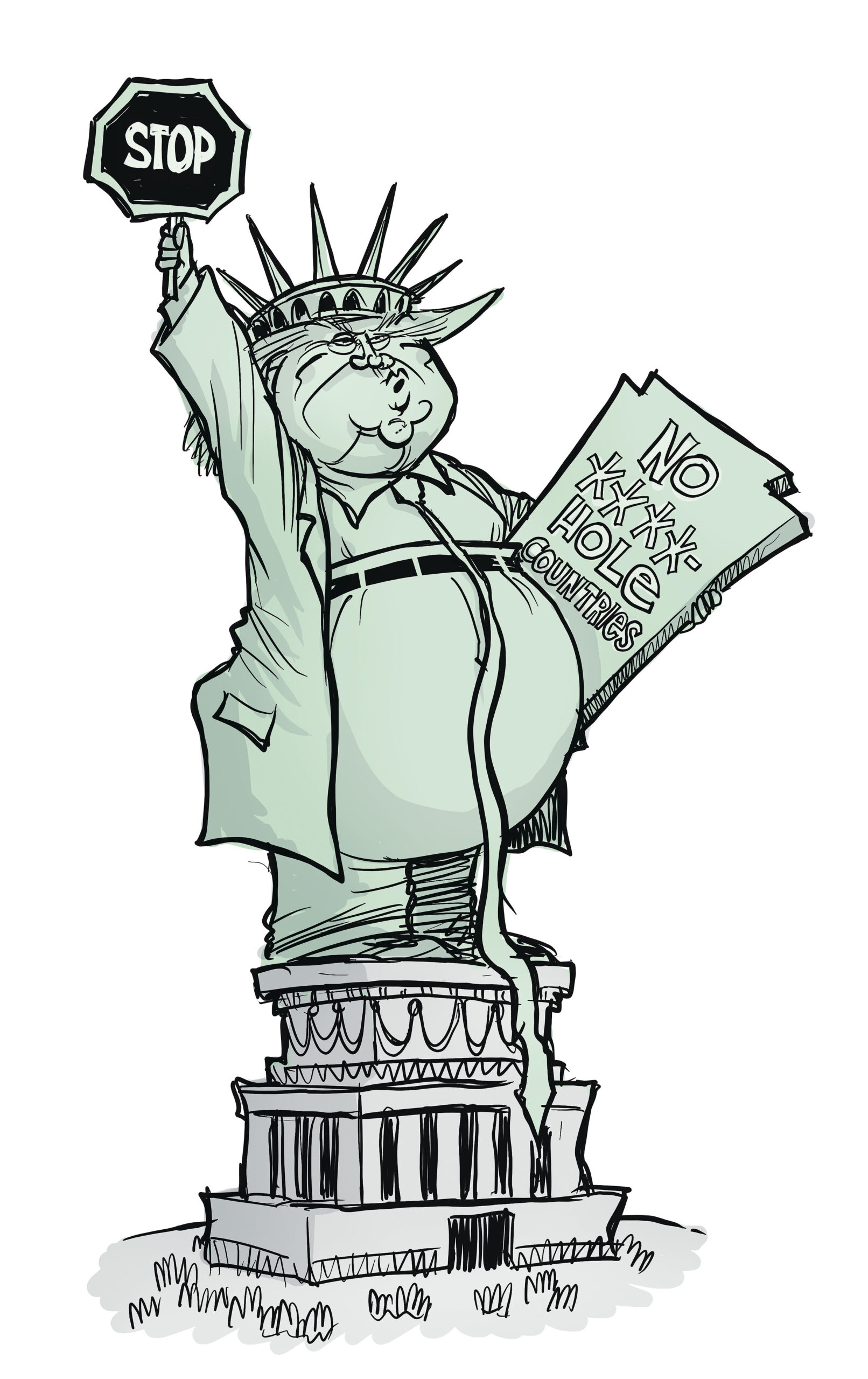
The Trump administration does not like immigrants. Period.
It does not like those who crossed the border illegally in search of a better life, nor those who are fleeing persecution and are seeking asylum in the land of opportunity. It does not like those who come here to study in America’s universities, nor those who want to fill jobs in fields in which there are not enough native-born workers.
The administration is looking for any excuse — any one example it can point to — to paint all immigrants as rapists, as murderers, as garbage. Any excuse to shut the golden door that has welcomed people from across the world to the benefit of a nation that is as dynamic as it is diverse.
What Trump and the ethnonationalists who surround him fail to understand is that the United States is an ideal — one so strong it has held disparate groups of people together for almost 250 years. The secret to America’s success is that everyone has the right to life, liberty, and the pursuit of happiness.
Perhaps that’s why the administration’s immigration enforcement feels so wrong to so many. Why it’s losing support even among those who voted for Trump.
That is why people are standing up against Trump’s tactics. They are organizing and pushing back, peacefully, against people being snatched up off the streets, against neighbors being intimidated, families split apart, cities roiled by chaos of the government’s own making.
Because while the administration may not like immigrants, America does.
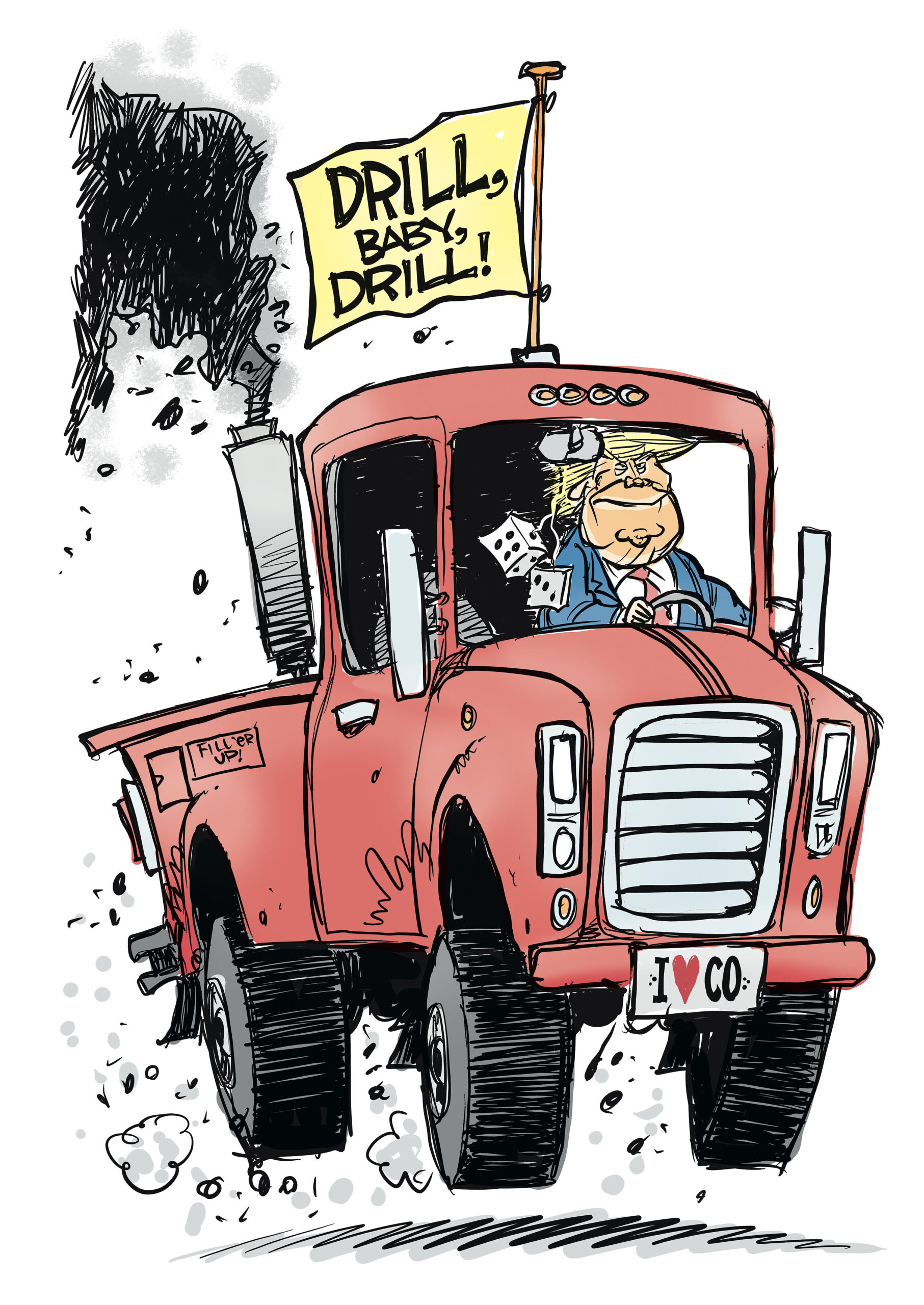
Donald Trump called the very real threat of climate change a “con job.” His administration’s policies not only ignore efforts to mitigate the problem, they actively seek to make it worse.
Climate of denial
The American people’s concern about affordability is at least not the biggest “con job,” according to Trump. That distinction belongs to climate change, humanity’s era-defining challenge that the president has long called “a hoax.”
Speaking to the United Nations in September, Trump said predictions about the impact of a warming planet “were made by stupid people that have cost their countries fortunes and given those same countries no chance for success.”
Never mind that the effects of climate change are already evident in rising sea levels, increasing temperatures, and more frequent extreme weather events such as wildfires and flooding.
Not content with simply ignoring decades of science that prove greenhouse gas emissions caused by human activity are negatively affecting the planet, the Trump administration has swiftly moved to defund climate research, reverse U.S. climate change mitigation efforts, and impede the development of clean energy sources.
On Monday, the government suspended all large offshore wind farms under construction, citing “national security risks.” It was the latest example of Trump using regulatory red tape to hinder these kinds of projects to the detriment of both the environment and clean energy jobs.
Trump and his allies in Congress have also eliminated subsidies for solar panels, wind turbines, and electric vehicles — all while promoting fossil fuel use, including oil, gas, and coal.
While Trump’s climate and energy policies are a danger to the entire world, his administration’s policies also put Americans at risk in their own backyards. The Environmental Protection Agency has rolled back multiple efforts to promote clean air and water, including limits on toxic pollutants from coal-fueled power plants, greenhouse gas emission limits from coal- and gas-fueled power plants, and delayed timelines for water utilities to remove some “forever chemicals” from drinking water.
As Trump tries to leave a legacy by demolishing part of the White House to build a $300 million ballroom or emblazoning his name atop the Kennedy Center, it may be his shortsighted gutting of climate and environmental rules that truly leaves a mark for the ages.
Since retaking the White House, Donald Trump has added billions of dollars to his personal wealth, much of it through crypto and other digital currency schemes.
Shameless enrichment
The man who once couldn’t make money off a casino is $3.4 billion richer since he took office on Jan. 20. He did this, as reported in a comprehensive piece by the New Yorker’s David D. Kirkpatrick, by ignoring conflicts of interest and gauchely trading on the prestige and power of the U.S. presidency for personal gain.
The corruption is so flagrant and transparent that many voters perhaps think this is normal. But while there is likely nothing illegal in what is known about the president’s business ventures, no clear evidence of any quid pro quo, there is nothing ordinary or ethical about what Trump and his associates are doing.
For example, potential access to Trump at his Mar-a-Lago club now comes with a $1 million initiation fee — up from $100,000 in 2016. In May, the president hosted a gala at a Virginia golf club for the biggest buyers of his meme coin, an intrinsically worthless digital token for which the 220 attendees at the event shelled out $148 million. The venture, along with a separate $MELANIA meme coin, reportedly netted the Trumps $385 million.
Cryptocurrency is where Trump and his family are profiting the most.
The digital currency, which can be traded without relying on banks to verify transactions — or regulate or report them — has so far earned the Trump family billions. It is here where some of the most egregious conflicts of interest are made manifest, as individuals and foreign governments with interests before the United States, including government regulation of crypto itself, have made large investments that end up in Trump’s coffers.
Shortly after Trump won the election, a Chinese billionaire accused of fraud invested $30 million in World Liberty Financial, a Trump family cryptocurrency interest. In May, an Abu Dhabi, United Arab Emirates-backed investment firm put $2 billion into the company.
While Trump’s two sons strike lucrative business deals around the world, Trump’s foreign policy seems to be dictated by his drive for fortune. A plan for the “Gaza Riviera” was tied to the end of the war between Israel and Hamas, while either mineral deals from Kyiv or business ventures in Russia have become part of the calculus around the war in Ukraine.
In his short time back in the White House, Trump has shown that the presidency of the United States is open for business.
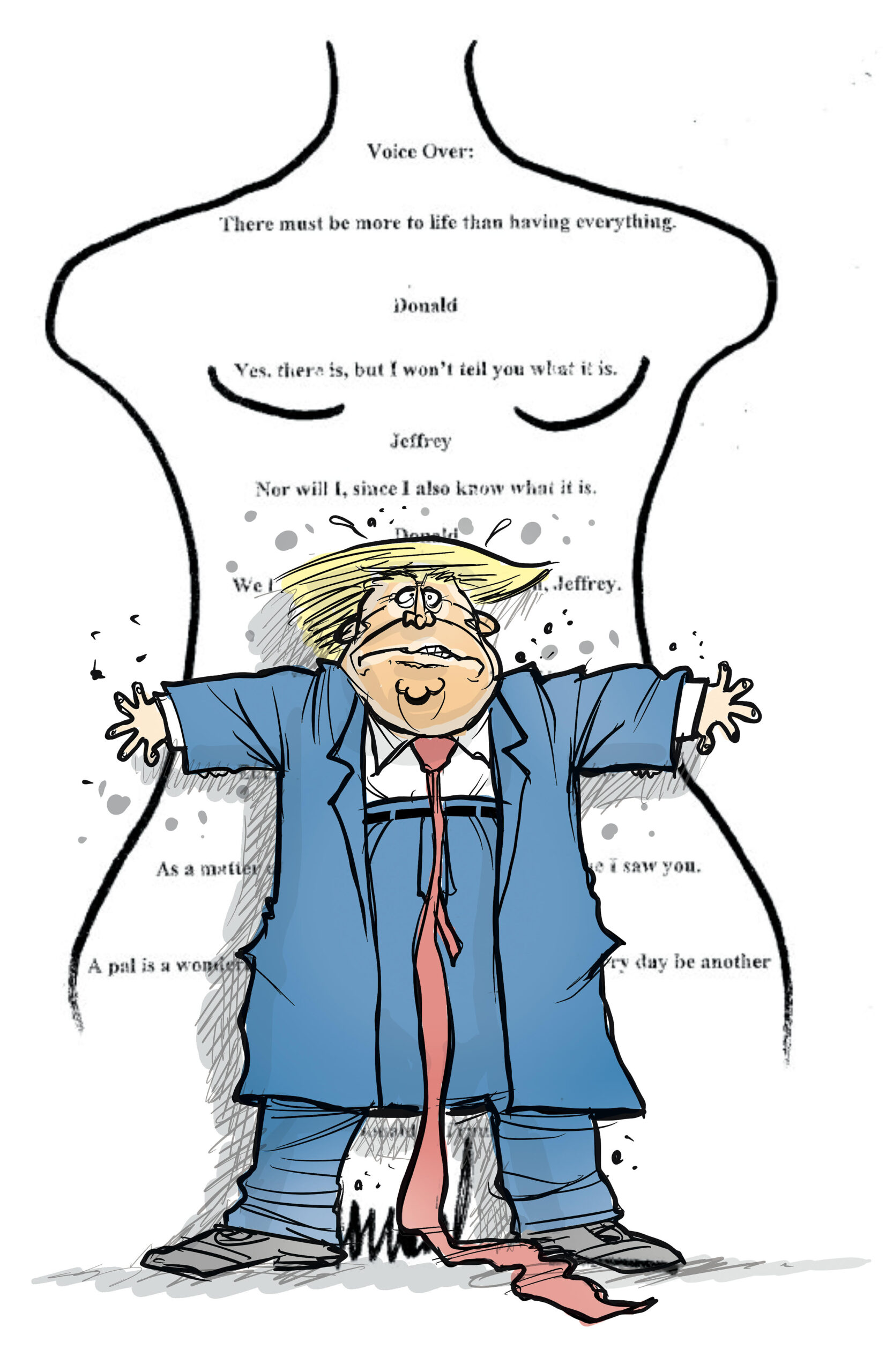
The U.S. Department of Justice, which seems to otherwise have no trouble doing Donald Trump’s bidding under Attorney General Pam Bondi, continues to drag its feet in releasing the Jeffrey Epstein files mandated by Congress.
Protecting the powerful
Among the promises Trump made in his bid for the White House in 2024, releasing the investigation files regarding convicted sex offender Jeffrey Epstein should have been the easiest to fulfill. Yet, more than a year later, it took an act of Congress to force the Department of Justice to release the files — or at least some of them, at least partially.
The documents made available recently were criticized by lawmakers and victims as incomplete and full of heavy redactions, with some of the published material quickly taken down over unspecified administration concerns.
Epstein, who took his own life in 2019 inside a federal jail cell, was accused of exploiting or abusing hundreds of women and girls over decades, procuring them for his famous friends, who included financial titans and political leaders.
Despite the president’s denials, he and Epstein once shared a friendship, reportedly bonding over the pursuit of women. There are videos and photos of them together, and Trump repeatedly flew on Epstein’s plane (known as “the Lolita Express”), though the president claimed he “never had the privilege” to visit Epstein’s notorious island.
The island, Little St. James, was once described by government officials as “the perfect hideaway and haven for trafficking young women and underage girls for sexual servitude, child abuse and sexual assault.”
The Trump administration’s efforts to delay and obfuscate regarding the files remain an affront to justice and decency. Survivors of the horrors perpetrated by Epstein and the rich and powerful he catered to deserve a public accounting of what happened to them, and there must be accountability for those who participated.
If the president has nothing to hide, if the “privilege” was indeed never his, then whose was it? Whom is Trump protecting?
Of course, not all of the Jeffrey Epstein files were released.
Even some files made available late Friday were quickly removed. Large portions were heavily redacted. Some portions contained boldfaced names, but there was little mention of Donald Trump.
As long as Trump keeps his thumb on the scales at the U.S. Department of Justice, no one should ever expect a fair shake — let alone an honest accounting of the yearslong connection between a convicted sex offender and a convicted president who is a congenital liar.
This is life under a brazenly corrupt administration that rewards billionaire cronies, punishes hundreds of political enemies, kills in broad daylight, and tramples the Constitution.
Better to prepare for how to defend against three more years of authoritarian rule mixed with kabuki theater.
In normal times, the Trump administration’s continued cover-up of the Epstein files would be an epic scandal, prompting hearings, investigations, and accountability.
But the Republicans who control the House and Senate have been a profile in cowardice. Until enough voters wake up, Trump and the GOP will continue to provide misdirection, denials, and a flouting of the law.
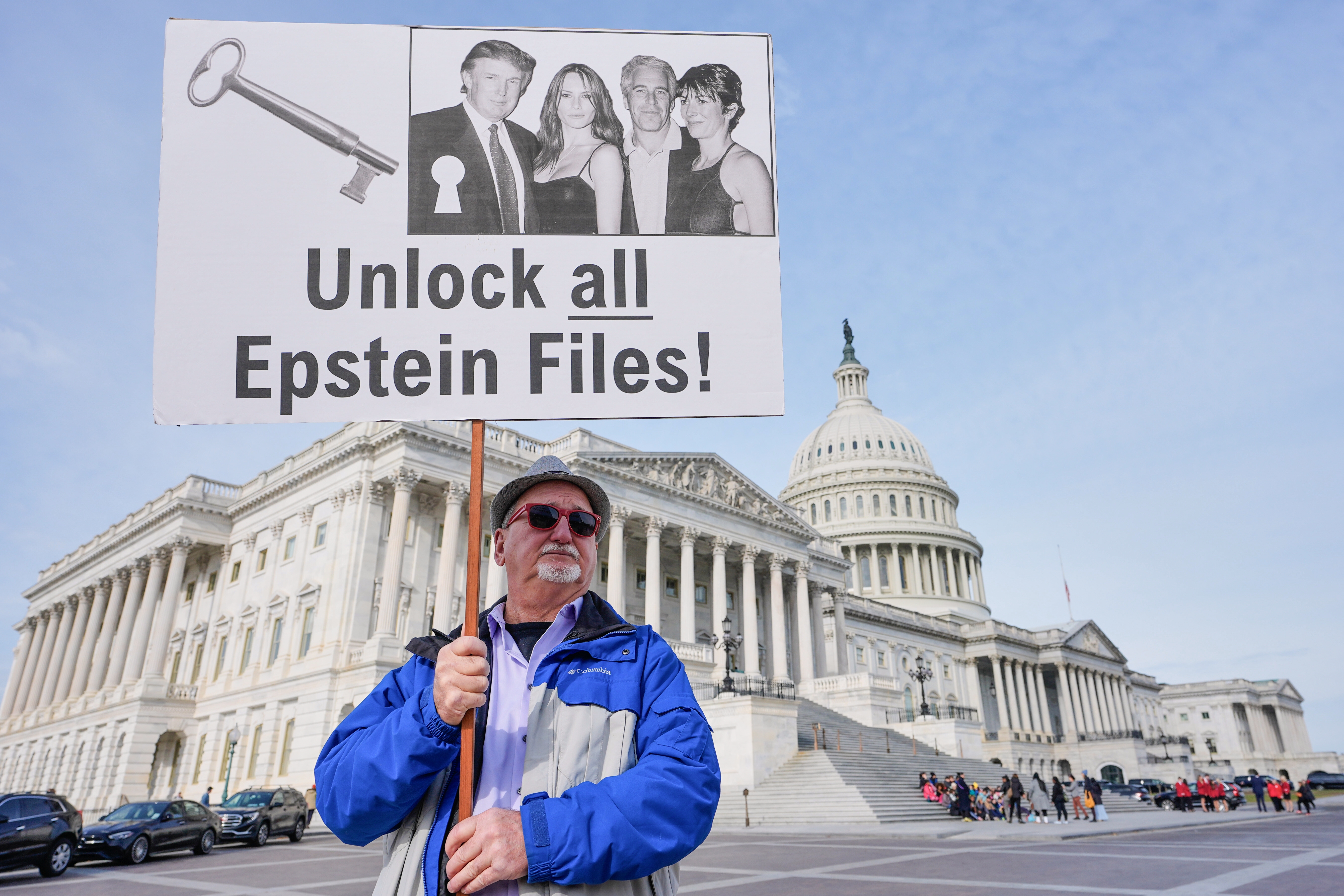
Gary Rush, of College Park, Md., holds a sign outside the U.S. Capitol urging the release of the full Epstein files in November.
Trump has not been implicated in any wrongdoing, but his enablers — including Attorney General Pam Bondi and FBI Director Kash Patel, and most Republicans in Congress — inexplicably continue to protect him.
Doing so obliterates any trust in the justice system and the rule of law.
The main tragedy involves the yearslong sex trafficking, rape, and abuse of hundreds of underage girls, including one alleged 11-year-old, and young, vulnerable women by Epstein and his many rich and powerful friends.
Epstein’s survivors have demanded that the files be released so there can be at least some public accounting of the horror they endured. But instead, the survivors have had to relive the trauma and fear of death threats.
One survivor who Epstein recruited from Trump’s Mar-a-Lago spa when she was a teen took her own life earlier this year. In atelling admission of how Trump views women as objects, he said earlier this year that Epstein “stole” her from him.
A recent story by the New York Times detailed how Trump and Epstein “pursued women in a game of ego and dominance” where “female bodies were currency.”
But the American people have been misled and abused, as well, while other pressing issues have been ignored or made worse.
Trump’s disregard for women has been well documented.
More than two dozen women have accused Trump of sexual abuse. He was caught on tape bragging about grabbing women by their genitals.
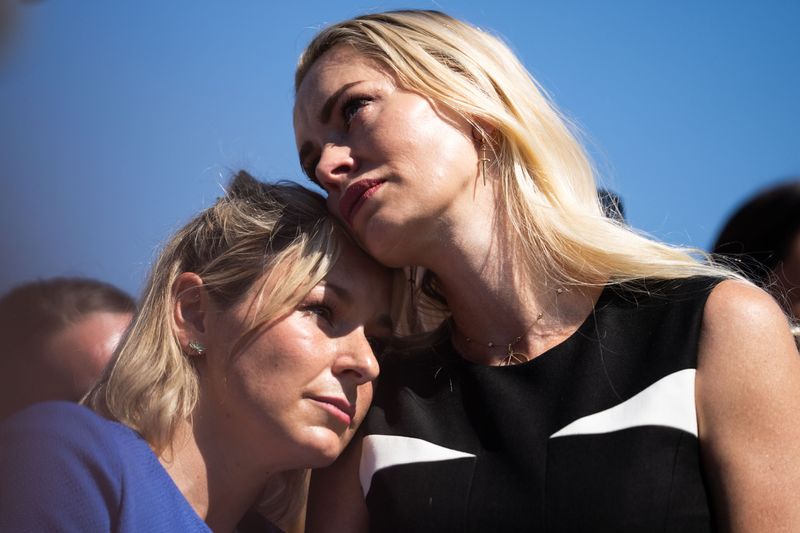
Danielle Bensky (left) and Anouska De Georgiou, victims of convicted sex offender Jeffrey Epstein, embrace during a news conference in Washington, D.C., in September.
A separate video showed Trump and Epstein partying at Mar-a-Lago, while Trump patted a woman on her behind. In 2023, a jury found Trump liable for sexually abusing a woman.
Everyone knew Trump was a lout, but more than 77 million Americans, including millions of women, voted for him anyway. And the Republicans in Congress have dutifully stood by him for years, bringing repeated shame to themselves and the country.
During last year’s election campaign, Trump used the Epstein files to stoke conspiracies and rally his supporters. He promised to release the files if elected, but after returning to the White House, called them a hoax.
(Trump also promised to lower prices, but that is a separate editorial, just as is his promise to end the war in Ukraine in one day.)
After mounting pressure from his base, and a 427-1 House vote last month to release the Epstein files, Trump ultimately signed a bill to make them public by Dec. 19.
The deadline passed, and all the files have yet to come out. Expect more gamesmanship and Truth Social rants.
The Epstein saga is a microcosm of Trump’s modus operandi. Lie, steal, cheat. Deny, deflect, delay, and degrade. Blame, complain, pressure, and sue. Line pockets whenever possible. Always overpromise and underdeliver.
Truth, honesty, humility, compassion, or responsibility are nowhere to be found.
Trump’s sinking poll numbers indicate that many supporters are finally catching on. The midterms loom, but so does three more years of hell.
But could the end of our long national nightmare be near?
By most accounts, the Philadelphia Police Department has had a good year.
Crime is down, a majority of residents feel safer and many give Commissioner Kevin J. Bethel high marks.
But as is often the case with the PPD, the good work of many dedicated officers gets marred by one scandal after another.
In February, former homicide detective James Pitts was sentenced to at least 2½ years in prison for fabricating evidence in a murder investigation and then lying about it on the witness stand.
In May, Officer Mark Dial was convicted of voluntary manslaughter and other crimes after he shot Eddie Irizarry six times, killing him seconds after encountering him in his car with the windows rolled up.
In November, nine current or former police officers, including a former captain, were charged with theft and conspiracy in connection with the misuse of city anti-violence funds surrounding a youth boxing program.
Earlier this month, more than 130 drug cases were tossed out after three narcotics officers repeatedly gave false testimony in court. When all is said and done, nearly 1,000 cases are expected to get dismissed because the officers apparently lied about drug deals that never happened or they did not witness.
The string of scandals is not the case of a few bad apples, as the police often like to claim. It points to a systemic problem that has undermined the department for decades. Stamping out the skullduggery will require a change in recruitment practices, training, culture, and accountability.
The latest scandal resulting in hundreds of dismissed drug cases underscores the disturbing tolerance for corruption that runs through the department.
Common Pleas Court Judge Lillian Ransom vacated the first tranche of 134 drug cases after prosecutors said the testimony of three officers on the Narcotics Strike Force was deemed unreliable.
Hundreds of additional cases built on the officers’ testimony are expected to be voided in the coming months. Amazingly, Officers Jeffrey Holden, Eugene Roher, and Ricardo Rosa remain on the job and assigned to their narcotics squad.
Commissioner Bethel declined to speak with the Editorial Board but issued a statement that said an internal affairs investigation was launched in March 2024 and remains ongoing. That’s good, but what is taking so long?
He added that “thus far we have not identified any evidence that would raise concerns of misconduct or criminal behavior on the part of those officers.”
In other words, move along folks. Nothing to see here. Just about 1,000 criminal cases falling apart because three police officers apparently lied over and over again.
Credit for uncovering the injustice goes to the overworked and underpaid lawyers at the Defenders Association of Philadelphia.
In particular, Paula Sen and Michael Mellon of the Defenders’ Police Accountability Unit uncovered video footage that contradicted the evidence mounted by the officers.
More disturbing, this is not the first time the Defenders Association caught the police cooking cases.
In 2015, Bradley Bridge, a longtime public defender, got more than 950 drug convictions vacated after discovering six narcotics officers robbed and beat drug dealers and then filed bogus paperwork.
Bridge, who came out of retirement to help on the recent cases, estimated he has overturned about 2,500 drug convictions since 1995.
Therein lies the problem. Different day, same corruption.
Bethel said the Police Department takes “potential credibility issues with our officers extremely seriously.” But the department’s history of corruption over the past half century or more indicates otherwise.
To be sure, Philadelphia does not have a monopoly on police corruption. Problems exist in other big cities and small towns.
And despite recent reforms, it is unclear if all have been for the better.
A high-quality police department begins with high quality recruits. But to combat staffing shortages, the department — like many others — eliminated the need for college credits and lowered the requirements for physical training.
There must also be independent accountability. But a Citizens Police Oversight Commission created in 2022 has not conducted a single investigation.
Bad cops reduce morale and must be weeded out. But most corrupt officers not only avoid criminal charges but get to keep their jobs — thanks to a police union that goes to bat for every cop, good or bad. A recent analysis found friendly arbitrators reinstated 85% of fired officers.
Dirty cops undermine community trust and the good work of committed officers who risk their lives to keep the city safe. Even worse, the wrongful prosecutions can take away a person’s liberty and upend lives and families.
Police corruption also costs taxpayers real money. Over a recent 18-month stretch, Philadelphia taxpayers spent more than $60 million to settle cases stemming from police misconduct.
The recent reduction in crime is welcome, but a question remains: Will there ever come a day when the Philadelphia Police Department is not plagued by scandal?
Two horrific mass shootings over the weekend offered a contrasting study in political leadership.
In Australia, after a father and son allegedly killed at least 15 people and injured more than two dozen others who gathered on a Sydney beach to celebrate the start of Hanukkah, Prime Minister Anthony Albanese called an emergency meeting and announced immediate reforms to the country’s already strict gun laws.
In the United States, after a shooter killed two students and injured nine others at Brown University, President Donald Trump essentially shrugged and said, “Things can happen.”
Trump then showed his distinctive lack of empathy by offering the victims and their families his “deepest regards and respects from the United States of America.” For good measure, he lamely added “and we mean it.”
It did not seem as if Trump could get hollower than that. But hours later he showed his bottomless capacity to go lower.
After Hollywood director Rob Reiner and his wife were found stabbed to death in their home, Trump turned the tragedy into a narcissistic social media post that suggested the deaths were all about him.
The Reiners’ son Nick, who battled addiction, was arrested, but any motive for the killings remains unknown.
Yet, Trump claimed without evidence that Reiner, 78, a successful actor and director who was active in Democratic politics and critical of Trump, died because of “the anger he caused others through his massive, unyielding, and incurable affliction with a mind crippling disease known as TRUMP DERANGEMENT SYNDROME, sometimes referred to as TDS.”
Rob Reiner and Michele Singer Reiner arrive on the red carpet at the State Department for the Kennedy Center Honors gala dinner in Washington in December 2023.
Amid a weekend of unspeakable violence, Trump managed to make things worse. So, don’t expect any leadership, let alone efforts to unite or console the country, during times of crisis or tragedy.
If Trump cared about the safety and welfare of others beyond himself, he could offer sympathy rather than solipsism. He would condemn the carnage and vow to crack down on the gun epidemic that continues to kill, maim, and traumatize the United States.
Instead, taxpayers will get zero effort by Trump or any Republican state or federal lawmaker to do a damn thing about the mass shooting or nearly 50,000 annual suicides that have become all too routine. Sorry, “things can happen.”
This year there have been nearly 14,000 gun deaths and more than 25,000 injuries in the United States, according to the Gun Violence Archive, which also counts 392 mass shootings. (Important reminder: Despite Trump’s innuendo about crimes committed by immigrants and Black Americans, the majority of mass shootings are carried out by white males.)
There have also been at least 75 school shootings. The school shootings have become so routine at least two Brown University students had survived previous attacks and trauma when they were in high school.
It does not have to be this way.
A woman kneels in prayer at a memorial to shooting victims outside the Bondi Pavilion at Sydney’s Bondi Beach on Monday, a day after a shooting.
But the powerful gun lobby spends millions to essentially buy off Republican elected officials and prevent the passage of gun measures. So the bloodletting in America continues.
While the mass shooting in Australia was heartbreaking, it was also rare.
In 1996, after a gunman killed 35 people, then-Prime Minister John Howard, a conservative, responded 12 days later with a sweeping overhaul of the country’s gun laws that included banning high-powered automatic weapons.
After gun reform and a massive gun buyback program believed to have taken about a million firearms out of circulation, the country did not have another mass shooting until 2018, when a man killed six members of his own family.
One day after the latest mass shooting, Australia’s elected leaders agreed to bolster gun laws already considered the gold standard by implementing a national registry and limiting the number of guns a person can own.
While Trump rambles on social media, real political leaders in Australia have already acted.
Nothing will change in the U.S. until voters fed up with mass shootings hold elected officials accountable.
By now, it is beyond obvious that Donald Trump is unredeemable.
Trump assumed the Oval Office in 2016 as the most inexperienced, untruthful, and unstable president in modern history, if not ever. He has only grown worse.
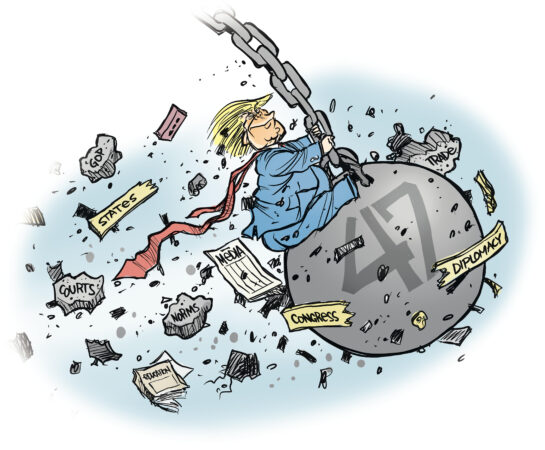
This past year, Trump has been a one-man wrecking ball, attacking norms, institutions, public health, higher education, the rule of law, and the Constitution. Never before has a president led such a relentless assault on the United States and its allies, while cozying up to dictators.
Trump has literally waged war at home and abroad, sending federal troops into cities, deporting thousands of immigrants without due process, and murdering alleged drug runners without providing any evidence.
The list of corrupt and egregious abuses of power is long and growing by the day.
But perhaps more shameful than Trump is how so many who know better have enabled him — including many top officials in Pennsylvania.
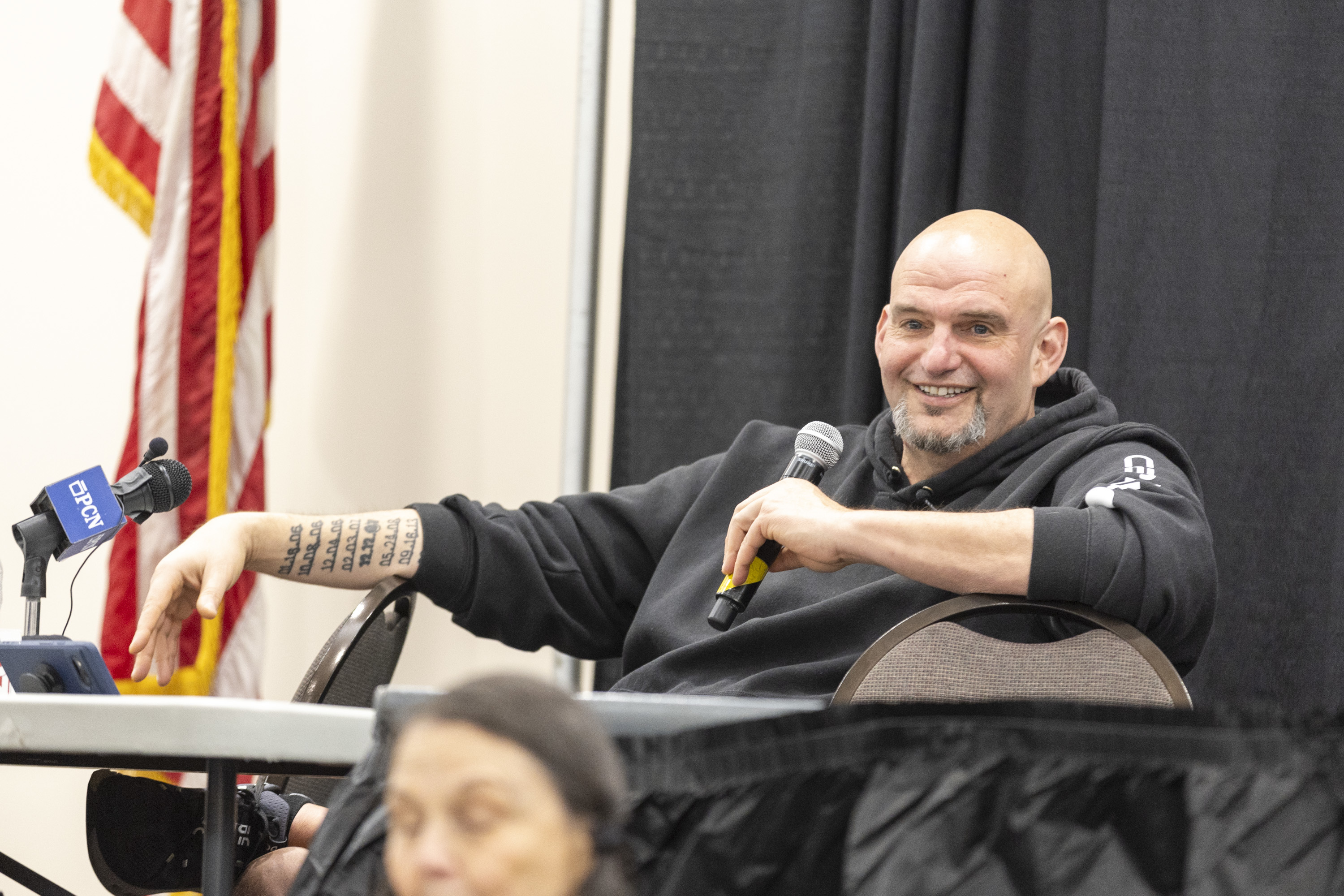
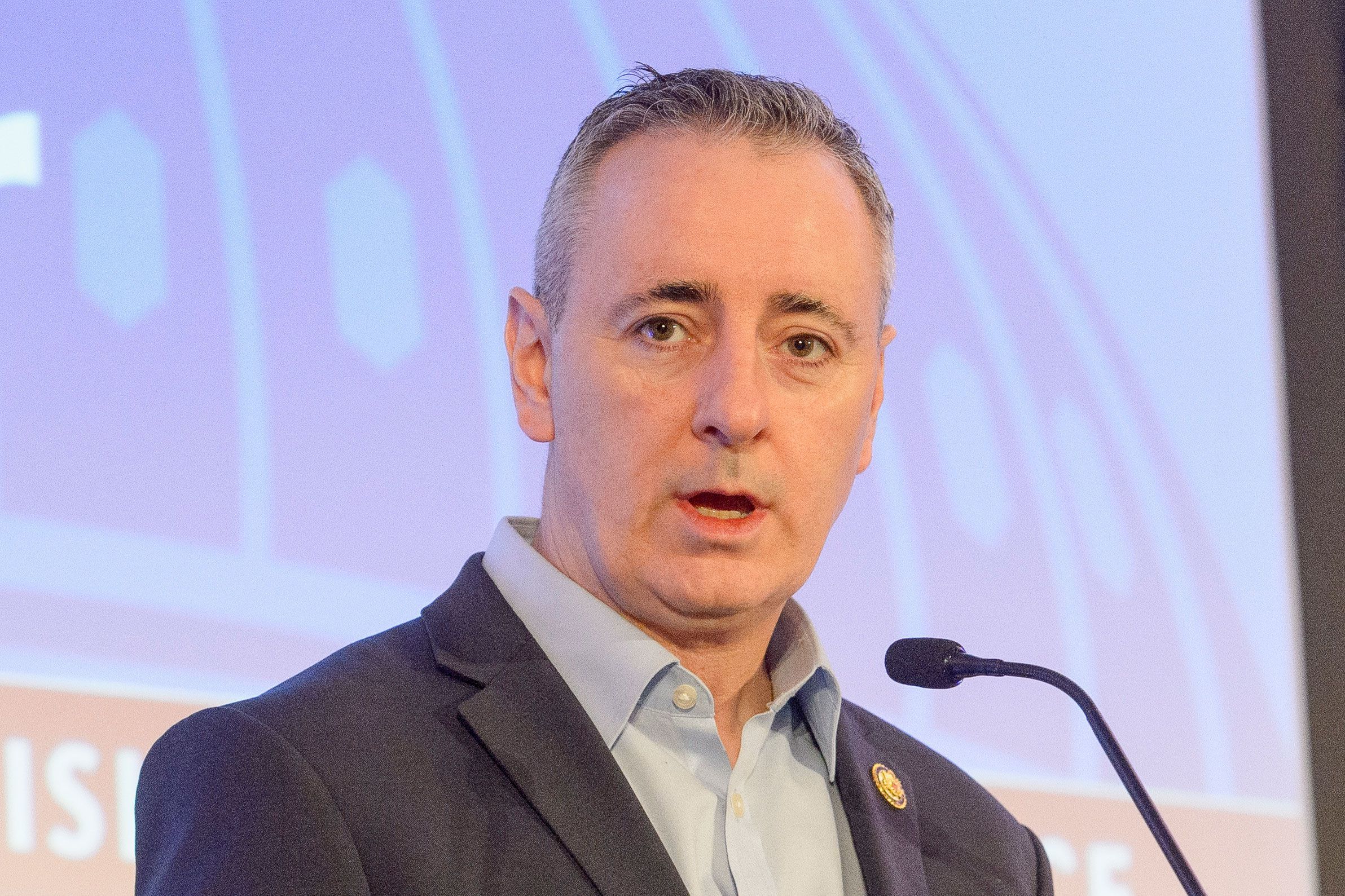
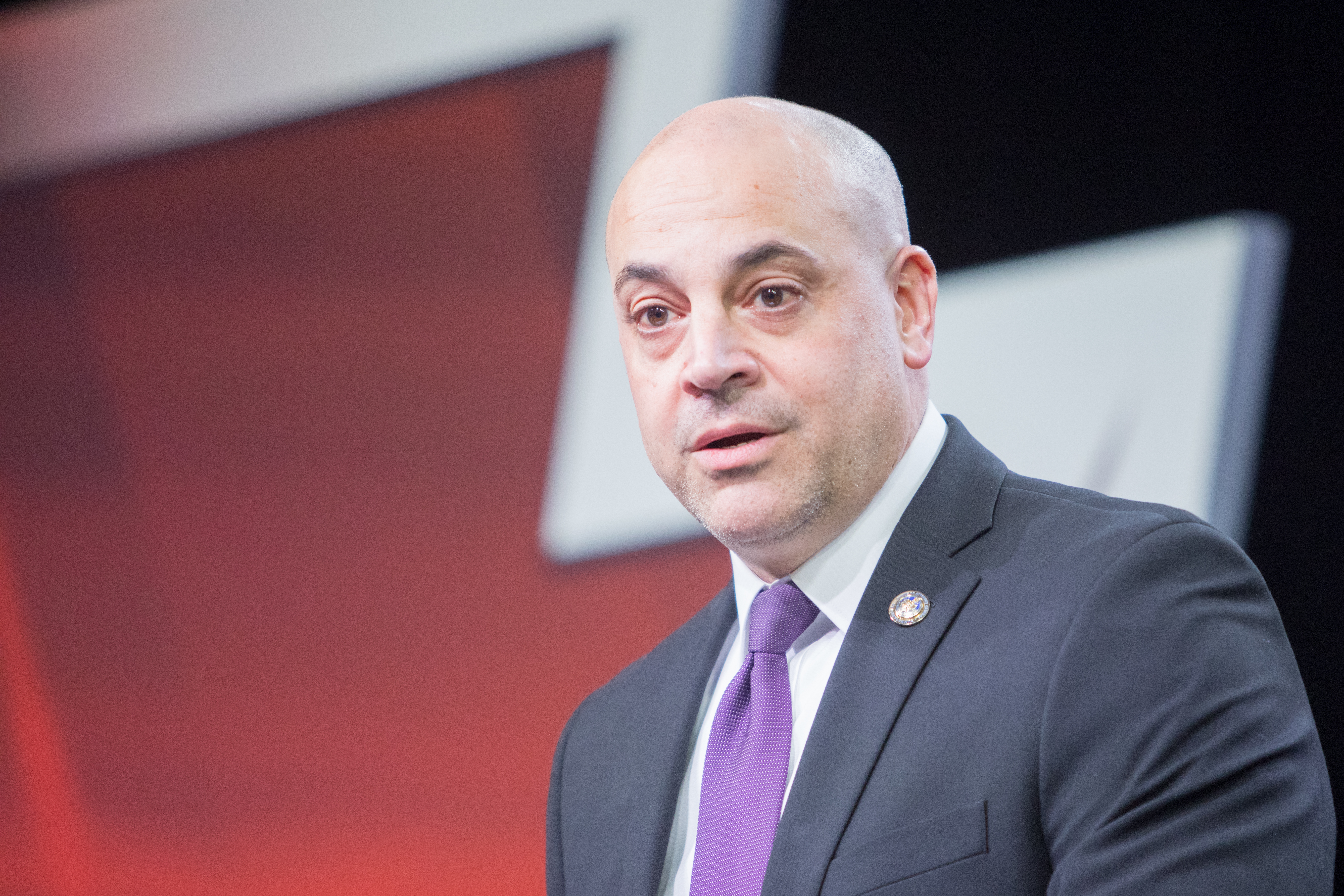
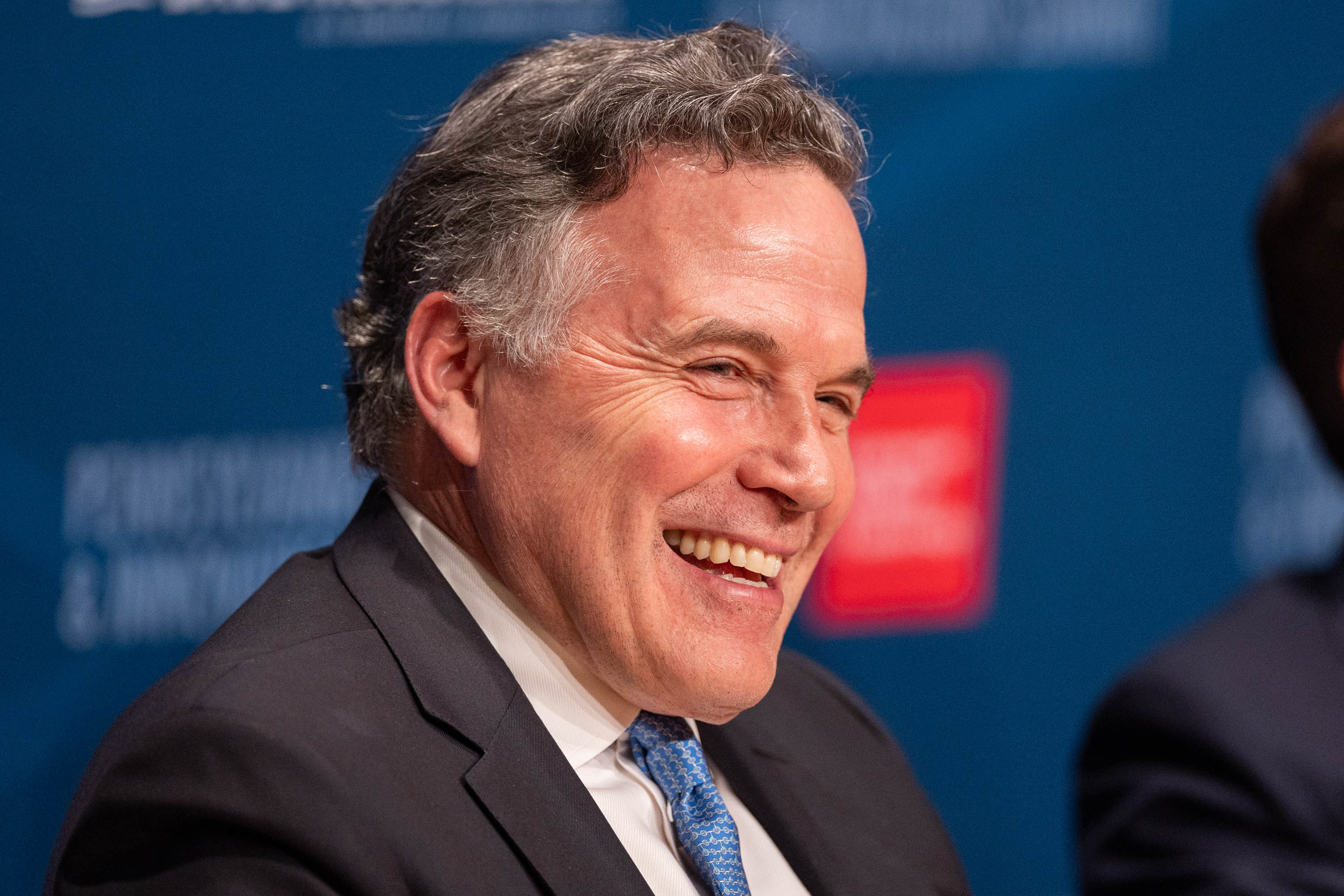
The list includes U.S. Sens. Dave McCormick and John Fetterman, as well as U.S. Rep. Brian Fitzpatrick, Pennsylvania Attorney General Dave Sunday, and dozens of GOP representatives in Harrisburg and Washington.
Each one has played a distinctive role in putting Trump above their constitutional oath. Many other Republican officials across the country, along with the conservatives on the U.S. Supreme Court and right-wing media, have enabled and emboldened Trump’s worst instincts. The collective cowardice has damaged the United States and forever stained each individual’s place in history.
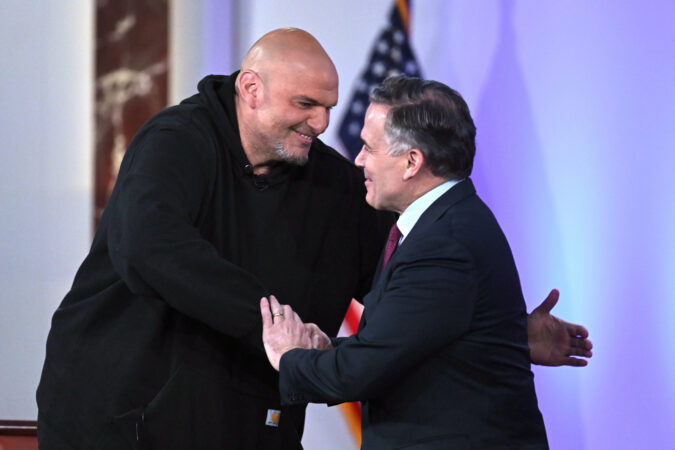
U.S. Sen. John Fetterman speaks at the Penn Ag Democrats Luncheon at the Pennsylvania Farm Show in Harrisburg in January.
Fetterman was the only Democratic senator who voted to confirm Attorney General Pam Bondi, an election denier who represented Trump during his first impeachment.
Bondi is not an independent law enforcement official. She worked to undermine legal proceedings and elections before becoming attorney general.
Bondi promoted conspiracy theories during Trump’s impeachment trial, traveled to New York to criticize the judge and prosecutor overseeing Trump’s criminal trial, and came to Pennsylvania to spread false claims about the 2020 election.
Yet, Fetterman still voted for Bondi.
Since getting confirmed, she has overseen the dismantling of the U.S. Department of Justice. Under Bondi, prosecutors have defied court orders, attacked judges, dropped criminal cases against Trump allies, targeted the president’s perceived enemies, and bungled the Jeffrey Epstein files.
U.S. Rep. Brian Fitzpatrick (R., Pa.) speaks during the opening session of the National Treasury Employees Union Legislative Conference in Washington in March.
Fitzpatrick, a Republican who represents Bucks County, initially voted in favor of Trump’s so-called Big Beautiful Bill that gave tax cuts to the super wealthy, added $3.4 trillion to the deficit, and cut nearly $1 trillion in Medicaid and food stamps spending.
He later voted against the final version — after it was clear it would pass without his support. Fitzpatrick is now scrambling to keep health insurance premiums under the Affordable Care Act, also known as Obamacare, from soaring. But his initial vote set the current course.
Fitzpatrick, who is up for reelection in November, represents a swing district. He tries to appear bipartisan, but votes with Trump on most major issues. He voted against impeaching him and rarely criticizes the president’s abuses of power or corruption.
The rest of the Pennsylvania Republican delegation in Congress has also largely remained unanimous in its support for Trump and his extremism. Dozens of federal and state officials in Pennsylvania, including U.S. Rep. Scott Perry (R., York) and State Sen. Doug Mastriano (R., Franklin), shamed themselves and the country by working with Trump to overturn the 2020 election. Efforts that led to a violent insurrection.
Still, they continue to support Trump’s wayward ways.
Pennsylvania Attorney General Dave Sunday addresses the annual Pennsylvania Leadership Conference in Camp Hill, Pa., in April.
Sunday, the top law enforcement official in Pennsylvania, has been largely missing in action since getting elected 13 months ago. He has failed to stand up to the Trump administration when its actions harm Pennsylvanians.
Instead, Sunday has deferred to Gov. Josh Shapiro to lead legal fights after Trump cut funds for education, public safety, farm aid, and SNAP benefits. Shapiro has filed or joined more than a dozen lawsuits against the Trump administration, while Sunday — a Republican who served two terms as the district attorney in York County — has laid low.
U.S. Sen. Dave McCormick during a panel discussion at the Pennsylvania Energy and Innovation Summit at Carnegie Mellon University in Pittsburgh in July.
Just weeks after taking his Senate office, McCormick cast a key vote to confirm Pete Hegseth as the defense secretary. McCormick, a graduate of the U.S. Military Academy, backed Hegseth despite knowing the Fox & Friends Weekend cohost was utterly unqualified to keep America safe.
Hegseth went from whining about the “woke military” on TV to overseeing a Defense Department with nearly three million military and civilian employees and a budget of $850 billion.
Hegseth’s only military experience was time spent in the National Guard, where he was flagged as an “insider threat” because of tattoos linked to white supremacists.
He was an incompetent manager who was forced to step down from two tiny nonprofits because of financial mismanagement, sexual impropriety, and personal misconduct. Others said Hegseth routinely passed out from excessive drinking, including while on the job at Fox News.
All of that was known to McCormick and the 49 other Republican senators who voted to approve Hegseth despite their duty to ensure cabinet nominees are qualified.
Hegseth quickly demonstrated he is unfit for the job. Just weeks after getting confirmed, he used an unsecure messaging app to text classified war plans to a group that mistakenly included a journalist.
In the wrong hands, the war plans — which included information about weapons packages, targets, and timing — could have endangered the lives of troops. If other military officers shared similar classified information, they could have been court-martialed.
Hegseth’s purging of career military leaders is also making America weaker, as he places loyalty to Trump above competency, distinguished service, and merit.
Hegseth has overseen the bombing of alleged drug boats that violate international law and amount to extrajudicial killings. The legal rationale is dubious at best and may constitute war crimes.
At the very least, the deadly strikes are immoral and violate the Uniform Code of Military Justice.
McCormick did not respond to requests to comment on whether he regrets supporting Hegseth. During McCormick’s Senate campaign, he talked up the West Point motto of “duty, honor, country.”
Like so many other so-called leaders, those ideals have taken a back seat to serving Trump.
One day, Trump will be gone — but his enablers will have to answer for the damage they helped to wreak.
Philadelphia Mayor Cherelle L. Parker is traveling around the city to tout her $2 billion plan to invest in 30,000 new or renovated homes. Yet, one of the key city departments for ensuring her plan is enacted safely is facing questions about transparency and efficiency.
If Parker’s affordable housing initiative is to succeed, it needs clear answers and greater efficacy from the Department of Licenses and Inspections.
In many ways, L&I performs one of the most quintessential duties of local government: regulating local businesses and inspecting property. Despite the essential nature of their work, the department has not always met the standards Philadelphians deserve. For decades, it was known for corruption, with rogue inspectors accused of accepting bribes.
In 2013, these issues metastasized into a catastrophe. A building being improperly demolished on Market Street collapsed onto the Salvation Army store next door, killing six people. An inspector took his own life, blaming his own actions for the disaster, even as city officials strongly defended his integrity.
Mayor Jim Kenney appointed David Perri to lead L&I in 2015 with a mandate to effect transformational change, root out corruption, and embrace new ways of doing things. One of the changes Perri made was to the system of tracking vacant and abandoned properties. In the past, inspectors would verify vacancy by doing a “windshield survey.” This meant driving by homes to look for physical signs of abandonment. The method was inefficient, and the counts were almost certainly inaccurate.
The department partnered with the city’s Office of Innovation and Technology to create a new way of tracking vacancies. They used data from the Water Department, Peco, and other city sources that strongly indicate abandonment.
This information was not only used by the city, but also by groups like Clean and Green Philly, which aims to reduce gun violence by cleaning up empty lots. According to a study led by University of Pennsylvania physician Eugenia South, keeping these lots from becoming sources of blight, trash, and disorder helps reduce shootings.
According to Nissim Liebovits, the founder of Clean and Green Philly, it was down for 16 months before being restored. Even before its disappearance, it had significantly fewer properties listed than expected.
While the data is available again on the city’s Open Data portal, residents still deserve to know what happened. City officials have yet to provide an adequate explanation for the disparity or the gap in publication.
Beyond the missing data sets, L&I also struggles with understaffing and political pressure, particularly from members of City Council. Despite many quality inspectors joining the department in the years following the 2013 collapse, outside pressures often led them to leave city government. Union leaders called it a mass exodus.
The workers themselves said they were often told to ignore violations by bigger developers and contractors, while also being urged to come down harshly on smaller entities.
The U.S. attorney who oversaw the investigation into the Market Street collapse said the remaining inspectors are overworked and have too many buildings to handle. Meanwhile, Council members regularly divert departmental resources away from the backlog and toward their pet issues. They also seek to put their finger on the scales to help or hinder projects.
A city controller report from earlier this year cited insufficient enforcement of the city’s building regulations, with construction crews across the city operating without licenses or work permits. Meanwhile, some contractors with suspended licenses and records of shoddy work have resumed doing business simply by changing their names.
Philadelphia cannot afford further backsliding at L&I, particularly when the city has committed to increasing the rate of construction. Mayor Parker and City Council President Kenyatta Johnson must work together to provide adequate staffing, restore full transparency, and insulate inspectors from the kind of political pressures that routinely interrupt regular business and contribute to the backlog of unfinished work.
The ability to call up an inspector and get immediate results may be politically beneficial for the city’s elected leaders and a few lucky constituents, but the “squeaky wheel” approach must end if the department is ever going to systematically address ongoing concerns.
Parker says she wants Philadelphia to be America’s “cleanest, greenest, and safest city, with economic opportunity for all.” Her One Philly dream can only be achieved if residents feel they can trust L&I to work for all.
Despite years of bipartisan insistence that action is just around the corner, state leaders have yet to agree on a plan to regulate and tax so-called games of skill. While Harrisburg dithers, the machines have proliferated across the commonwealth, with dire consequences for many communities.
Make no mistake, ideally, these machines should be banned. However, courts have so far ruled that these devices — the use of which, proponents argue, involves a modicum of skill — do not run afoul of gambling laws. In reality, though, there seems to be little separating them from slot machines, which are regulated.
While no one knows the exact number of skill games in Pennsylvania, their impact is clearer.
Philadelphia City Council members have described them as a nuisance, attracting crime, and creating what are essentially unlicensed slot machine parlors. The all-cash machines also lend themselves to low-effort money laundering. Meanwhile, supporters claim the money from skill games helps small businesses, VFW halls, and other community anchors to pay their bills.
For Harrisburg, gambling in general has become a crutch to avoid tough decisions about spending and revenue. Taxing skills games is expected to bring in hundreds of millions of dollars to state coffers. That’s on top of the $2.7 billion the commonwealth already earns from existing forms of gambling, like slot machines, interactive virtual casinos, and online sports betting.
Gambling is a predatory, extractive, and addictive industry. Ignoring its negative effects while depending on gambling revenue to avoid broader tax increases is a counterproductive strategy for the Keystone State. Research shows that an incredibly high share of gambling revenue comes from a very small percentage of overall gamblers. People trapped in gambling addiction experience bankruptcy, divorce, and suicide at higher rates.
Yet, a small army of lobbyists, a surge in advertising, sympathetic social media influencers, and a hefty presence by gambling interests on campaign finance reports have made legislators fearful of taking action, even on skill games.
A recent pressure campaign sponsored by the industry led state Senate President Pro Tempore Kim Ward to declare that her caucus doesn’t “do well being bullied,” and that gaming interests “have done nothing but try to bully us. And I don’t think we stand for that.” But for years, that’s exactly what’s happened.
Beyond the million-plus dollars a year advocates have spent on political donations, some legislators report that the gaming industry is also using its cash to build influence in more subtle ways. Sports betting companies FanDuel and DraftKings have taken over from Bud Light as the sponsor of free service on SEPTA’s sports express. Skill games operators and others in the gambling industry are using the prospect of charitable donations to build political influence.
There is still some hope regarding skill games, at least. The Pennsylvania Supreme Court is currently hearing a case that could reinstate the previous ban on the devices. This would be a win for communities across the commonwealth.
If the machines are deemed legal, the state must at the very least ensure they are sufficiently regulated and taxed. Some of the legislation surrounding the games proposes that the Department of Revenue handle regulation. This would be a mistake. Given their similarity to existing gambling, the devices should be regulated by the Pennsylvania Gaming Control Board.
For her part, Mayor Cherelle L. Parker has softened her strong opposition to skill games, in part because Republican leaders in the General Assembly have promised the money could help support public transit, including SEPTA. The transit agency needs an additional, sustainable funding source. Still, politicians should remember there are other ways to raise revenue besides new forms of gambling.
Until the court or Harrisburg acts, skill games will remain in an unregulated, untaxed status quo. That may work for machine operators, but it doesn’t work for Pennsylvania.
Donald Trump had a blunt message for anyone struggling to make ends meet: He does not feel your pain.
During a lengthy cabinet meeting on Tuesday, the president called the issue of affordability a “fake narrative.”
Between nodding off and a racist rant, Trump declared during the gathering that the cost-of-living squeeze felt by millions of Americans “doesn’t mean anything to anybody.”
Polls show affordability is the top issue facing Americans. But Trump claimed all the talk about affordability was a “con job.”
So who is conning whom?
Trump ran for office last year on the promise to lower prices, end the war in Ukraine, and release the Jeffrey Epstein files. He’s done none of it.
“When I win, I will immediately bring prices down, starting on Day One,” he said in August 2024.
Yes, the much-ballyhooed price of eggs has come down, but overall grocery costs have increased.
For example, beef prices are up 14% this year and expected to soar next year because of fewer cattle. Coffee prices are the highest in decades due to drought and Trump’s tariffs.
Companies tried to shield consumers from higher prices brought on by Trump’s erratic trade war. But more prices are starting to rise as tariffs have driven up costs on a wide range of products, including clothes, shoes, toys, electronics, cars, and homes.
Affordability is more than egg prices.
Millions of Americans are struggling to keep up. A Wall Street portfolio manager argued that after factoring in the cost of childcare, housing, healthcare, and other essentials, the real poverty line for a family of four should be $140,000.
While presidents don’t control prices, Trump’s countless chaotic actions have contributed to the growing costs many Americans face.
An employee works at a cash register in a grocery store in Schaumburg, Ill., in September. Donald Trump campaigned on lowering prices, but overall grocery costs have increased, writes the Editorial Board.
Polls show home prices and rental costs are among the top affordability issues. Trump’s tariffs on timber, furniture, and cabinets have fueled the increase in housing affordability.
Trump’s crackdown on immigrants — who account for one-third of construction workers — is leading to a labor shortage and further driving up home prices.
Elevated mortgage rates, property tax hikes, and higher insurance premiums from more intense storms are also adding to housing expenses.
The affordability crisis is so bad that the average first-time home buyer is 40 years old.
Trump also promised to cut energy prices in half, but that has not happened. Many homeowners and businesses have been hit with sharp increases in electricity bills.
The price hikes vary by state. A booming demand by data centers sent prices up 20% in New Jersey, while utility companies in California have passed on the cost to rebuild after devastating wildfires.
Trump has also contributed to the higher utility costs after his One Big Beautiful Bill slashed tax incentives for wind and solar energy projects.
Many Americans are falling behind. Household debt levels — which include mortgages, car loans, credit cards, and student loans — are at a record high, according to the Federal Reserve Bank of New York.
Many are also rightly worried about their jobs. The unemployment rate hit its highest since 2021, and a record number of small businesses have filed for bankruptcy this year, along with several large companies such as Spirit Airlines, Claire’s, and First Brands.
About 300,000 federal workers lost their jobs under Trump. U.S.-based companies have shed more than one million jobs through October of this year, a 65% increase from the period in 2024.
Trump keeps blaming former President Joe Biden for the economic trouble. While inflation spiked under Biden, there was record job growth. Just weeks before the November 2024 election, the Economist magazine said the U.S. economy was “the envy of the world.”
Despite Trump’s effort to dismiss affordability concerns, many Americans now blame him for the higher costs.
Meanwhile, the rich get richer. The wealthiest 10% of Americans added $5 trillion to their fortunes in just the second quarter of 2025. And Trump’s net worth has increased by $3 billion this year.
Donald Trump has been quick to post videos and brag about the heinous boat strikes on suspected drug traffickers by the U.S. military.
But now comes a report by the Washington Post that a live drone feed showed two survivors from the first attack clinging to the wreckage.
Defense Secretary Pete Hegseth, who a year ago was working weekends at Fox News, reportedly gave a spoken directive to “kill everybody.”
To comply with Hegseth’s instructions, the Special Operations commander overseeing the attack ordered a second strike, and the two men were then blown apart in the water, according to the Post.
The initial strikes are barbaric enough and violate international law, according to the United Nations High Commissioner for Human Rights.
The boat strikes have been ghastly from the start. The U.S. military doesn’t even know who is being summarily killed. One man was a fisherman, according to his family. The legality is shaky at best, hinging on a secret U.S. Department of Justice memo that no one in the Trump administration has been willing to publicly defend.
Even if the boats are carrying drugs, those on board should be arrested and prosecuted, not assassinated. The killings are akin to if the Philadelphia police decided to gun down suspected dealers standing on the corner in Kensington.
How does Trump reconcile summarily executing alleged drug runners while pardoning the former president of Honduras, who was convicted last year of taking bribes from drug cartels in return for helping to move hundreds of tons of cocaine to the U.S.?
What do the drone killings have to do with making America great, let alone making it more affordable, as Trump promised last year?
The boat strikes must stop, and Congress should conduct a full investigation before the United States loses whatever is left of its moral authority to lead the free world.
Hegseth should be fired and held accountable for any wrongdoing.
On Nov. 15, the U.S. military conducted the 21st known strike on an alleged drug trafficking boat, killing three men. The latest attack brings the total number of people killed by U.S. strikes on the alleged drug boats to 83.
He was woefully unqualified to oversee the U.S. Department of Defense, given his lack of experience and previous allegations of excessive drinking, carousing, and financial mismanagement.
Hegseth, who called the kill order report “fabricated, inflammatory, and derogatory,” has continued to demonstrate why he remains supremely unfit.
He previously texted classified war plans to a journalist in advance of a separate military strike — a security breach that would get other military personnel court-martialed. Hegseth’s purging of career military leaders without cause is making America weaker.
He initially celebrated the first boat attack. “We smoked a drug boat, and there’s 11 narco-terrorists at the bottom of the ocean, and when other people try to do that, they’re going to meet the same fate,” Hegseth told reporters in September.
Since then, he has overseen more than 20 additional boat strikes, killing more than 80 people. In a social media post, he appeared to call the report fake news before adding, “Biden coddled terrorists, we kill them.”
Trump, who handpicked Hegseth after watching him on TV, said his defense secretary told him he never gave the verbal order.
“He says he didn’t do it,” Trump said.
That may be good enough for Trump, but it falls far short for anyone who values the truth, international law, or the Uniform Code of Military Justice. Recall Trump also shamefully sided with Vladimir Putin, a foreign adversary, who claimed he didn’t interfere in the 2016 election. But a Republican-led Senate review and eight U.S. intelligence agencies found Russia meddled in the election.
At least one top Republican in Congress said American military officials might have committed a war crime in the boat strike. “If that occurred, that would be very serious, and I agree that would be an illegal act,” said Rep. Mike Turner (R., Ohio), who is a former chairman of the House Intelligence Committee.
Republicans and Democrats on two congressional committees promised to increase scrutiny of the boat strikes in the Caribbean and Pacific. Let’s hope that happens soon.
The best way to get to the facts is to have Hegseth, the Special Operations commander, and other military officials involved in the boat strikes testify under oath. One benefit of recording extrajudicial killings is that there are videos and transcripts for all to see and hear.
Let’s get all the facts out and hold any wrongdoers accountable. And let’s end the government-sanctioned killings and return to following the law.


![As long as [REDACTED] has his thumb on the scales of justice, the Epstein files were always going to be [REDACTED] | Editorial](https://wp-brooklyn.enclave.vn/wp-content/uploads/2025/12/56QJ6RRBRHQJHDGZ7NKUDPNTPU-675x450.jpg)