Category: Editorials

  • Trump is unredeemable. What about his enablers? | Editorial

    Trump is unredeemable. What about his enablers? | Editorial

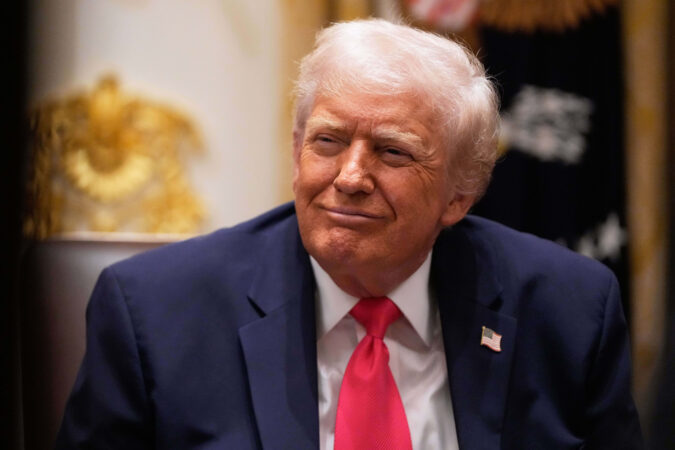
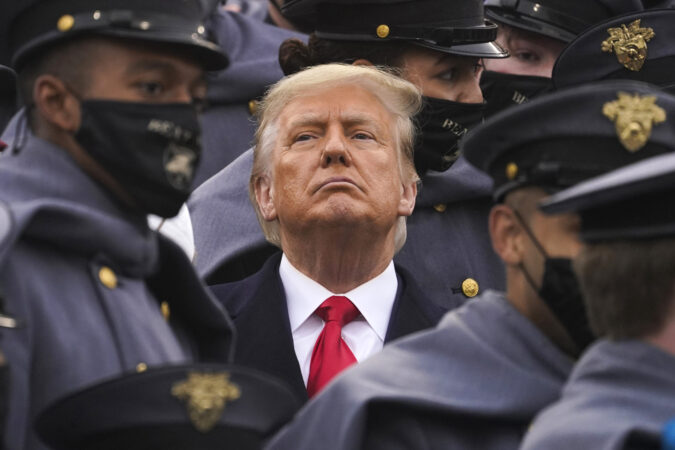
    By now, it is beyond obvious that Donald Trump is unredeemable.

    Trump assumed the Oval Office in 2016 as the most inexperienced, untruthful, and unstable president in modern history, if not ever. He has only grown worse.

    This past year, Trump has been a one-man wrecking ball, attacking norms, institutions, public health, higher education, the rule of law, and the Constitution. Never before has a president led such a relentless assault on the United States and its allies, while cozying up to dictators.

    Trump has literally waged war at home and abroad, sending federal troops into cities, deporting thousands of immigrants without due process, and murdering alleged drug runners without providing any evidence.

    The list of corrupt and egregious abuses of power is long and growing by the day.

    But perhaps more shameful than Trump is how so many who know better have enabled him — including many top officials in Pennsylvania.

    The list includes U.S. Sens. Dave McCormick and John Fetterman, as well as U.S. Rep. Brian Fitzpatrick, Pennsylvania Attorney General Dave Sunday, and dozens of GOP representatives in Harrisburg and Washington.

    Each one has played a distinctive role in putting Trump above their constitutional oath. Many other Republican officials across the country, along with the conservatives on the U.S. Supreme Court and right-wing media, have enabled and emboldened Trump’s worst instincts. The collective cowardice has damaged the United States and forever stained each individual’s place in history.
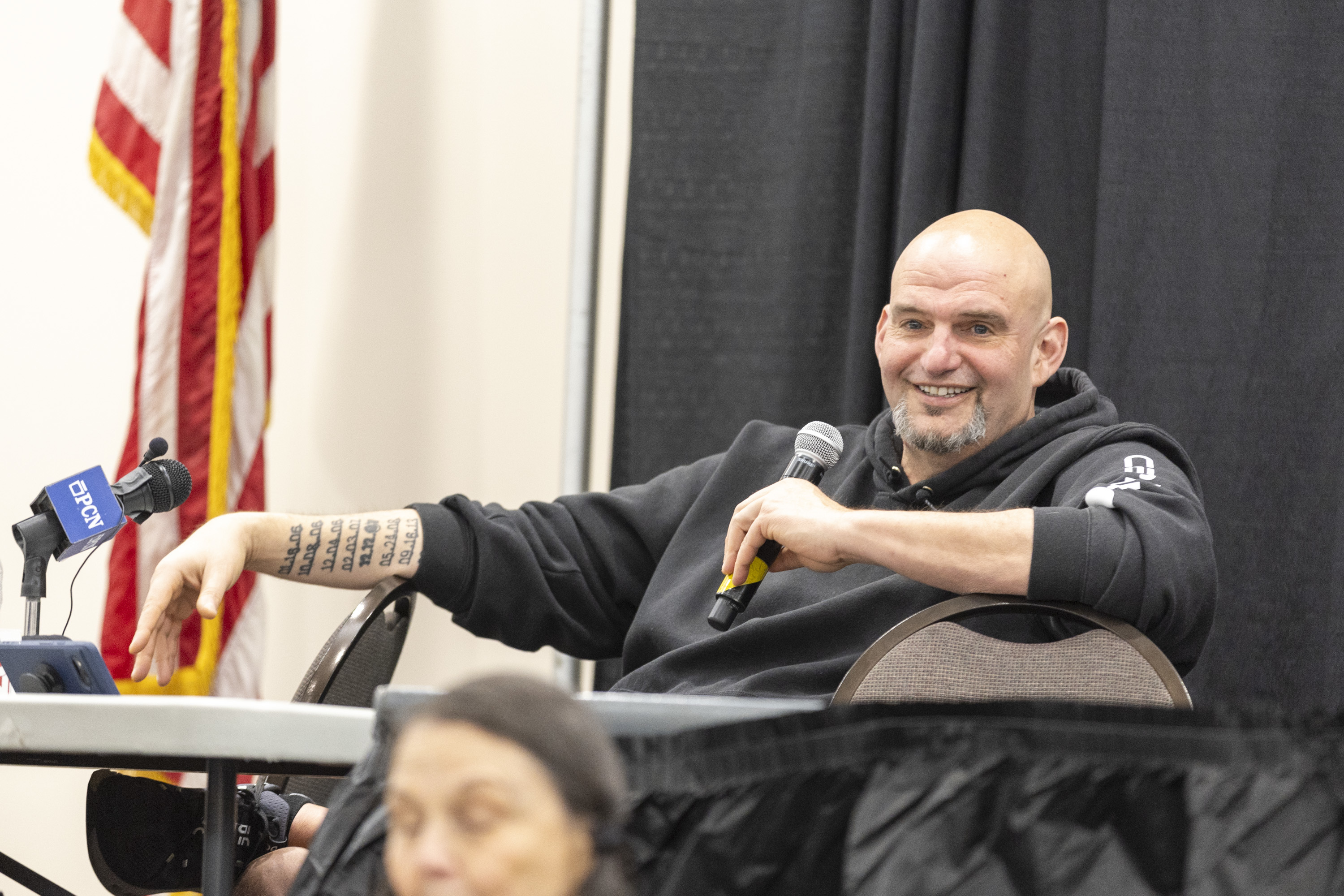
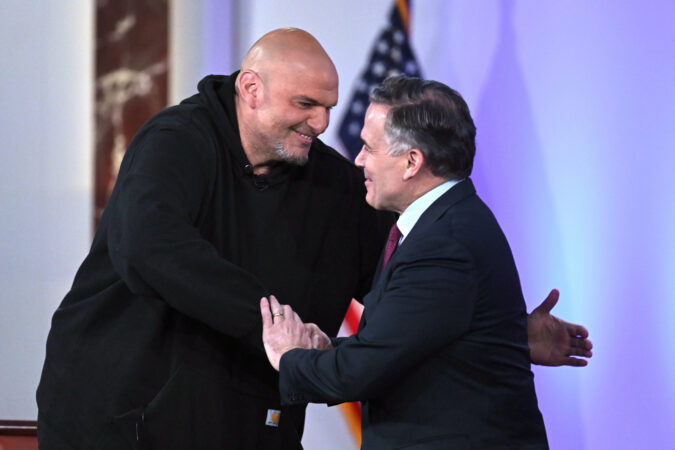
    U.S. Sen. John Fetterman speaks at the Penn Ag Democrats Luncheon at the Pennsylvania Farm Show in Harrisburg in January.

    Fetterman was the only Democratic senator who voted to confirm Attorney General Pam Bondi, an election denier who represented Trump during his first impeachment.

    Bondi is not an independent law enforcement official. She worked to undermine legal proceedings and elections before becoming attorney general.

    Bondi promoted conspiracy theories during Trump’s impeachment trial, traveled to New York to criticize the judge and prosecutor overseeing Trump’s criminal trial, and came to Pennsylvania to spread false claims about the 2020 election.

    Yet, Fetterman still voted for Bondi.

    Since getting confirmed, she has overseen the dismantling of the U.S. Department of Justice. Under Bondi, prosecutors have defied court orders, attacked judges, dropped criminal cases against Trump allies, targeted the president’s perceived enemies, and bungled the Jeffrey Epstein files.
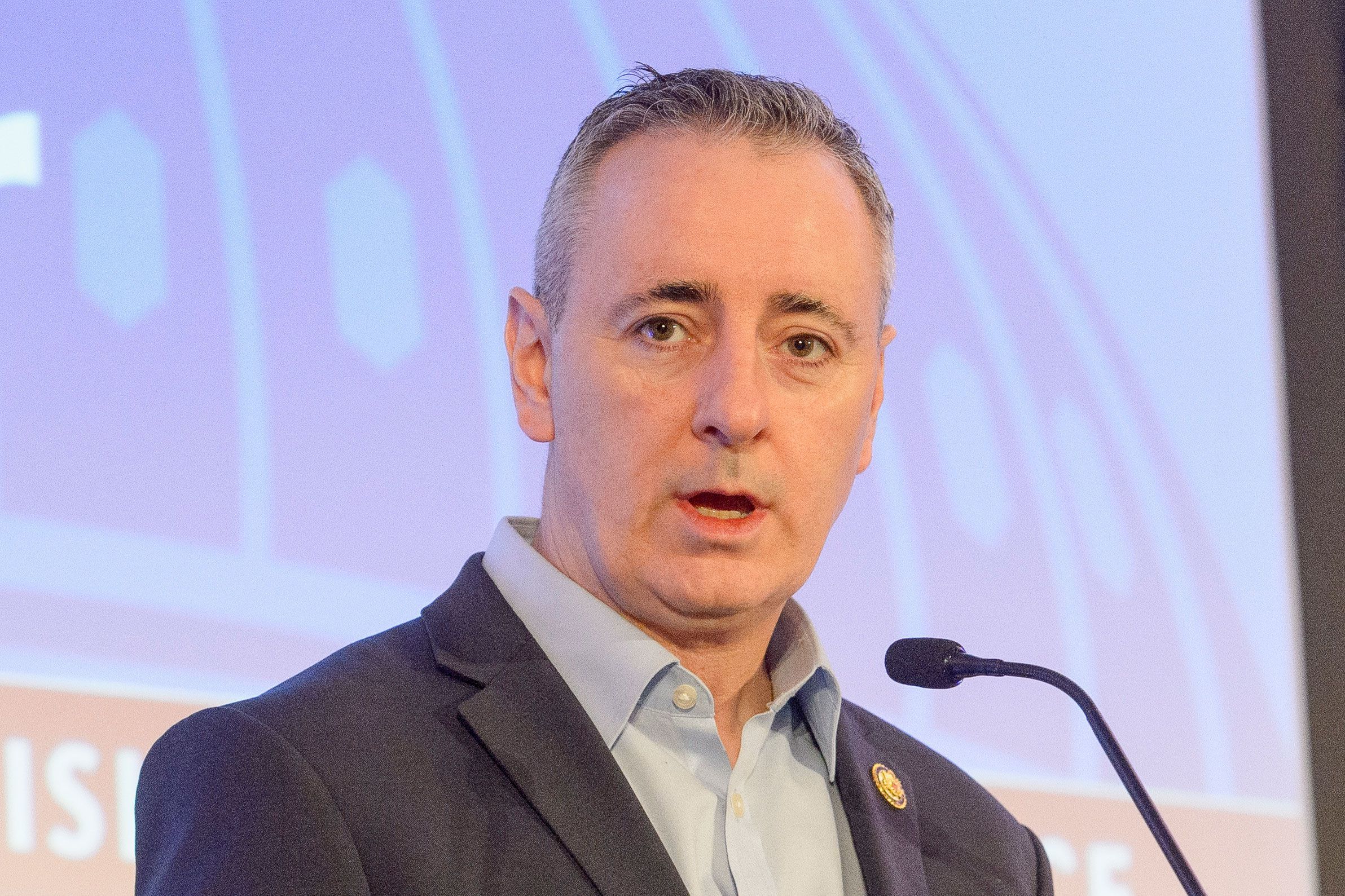
    U.S. Rep. Brian Fitzpatrick (R., Pa.) speaks during the opening session of the National Treasury Employees Union Legislative Conference in Washington in March.

    Fitzpatrick, a Republican who represents Bucks County, initially voted in favor of Trump’s so-called Big Beautiful Bill that gave tax cuts to the super wealthy, added $3.4 trillion to the deficit, and cut nearly $1 trillion in Medicaid and food stamps spending.

    He later voted against the final version — after it was clear it would pass without his support. Fitzpatrick is now scrambling to keep health insurance premiums under the Affordable Care Act, also known as Obamacare, from soaring. But his initial vote set the current course.

    Fitzpatrick, who is up for reelection in November, represents a swing district. He tries to appear bipartisan, but votes with Trump on most major issues. He voted against impeaching him and rarely criticizes the president’s abuses of power or corruption.

    The rest of the Pennsylvania Republican delegation in Congress has also largely remained unanimous in its support for Trump and his extremism. Dozens of federal and state officials in Pennsylvania, including U.S. Rep. Scott Perry (R., York) and State Sen. Doug Mastriano (R., Franklin), shamed themselves and the country by working with Trump to overturn the 2020 election. Efforts that led to a violent insurrection.

    Still, they continue to support Trump’s wayward ways.
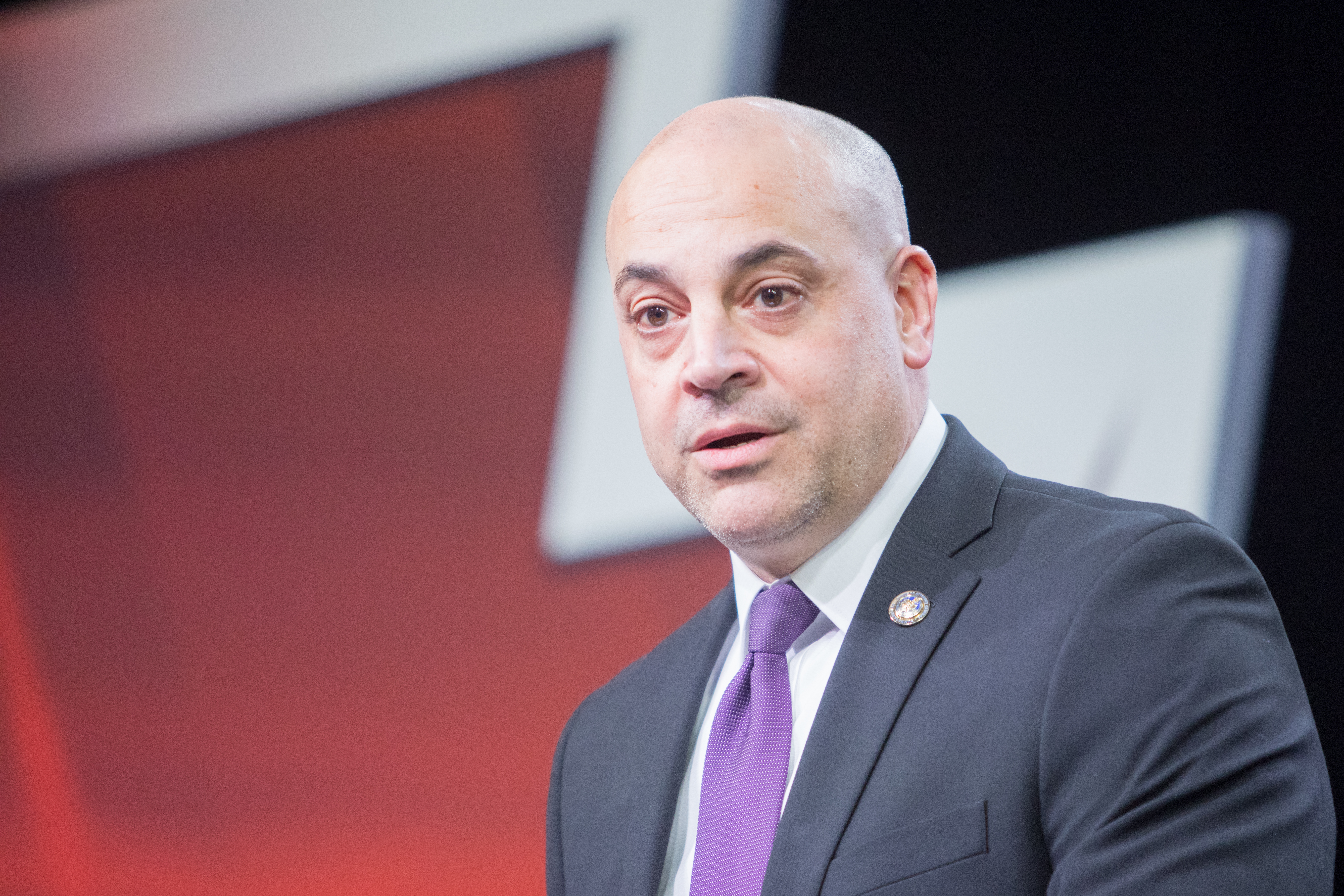
    Pennsylvania Attorney General Dave Sunday addresses the annual Pennsylvania Leadership Conference in Camp Hill, Pa., in April.

    Sunday, the top law enforcement official in Pennsylvania, has been largely missing in action since getting elected 13 months ago. He has failed to stand up to the Trump administration when its actions harm Pennsylvanians.

    Instead, Sunday has deferred to Gov. Josh Shapiro to lead legal fights after Trump cut funds for education, public safety, farm aid, and SNAP benefits. Shapiro has filed or joined more than a dozen lawsuits against the Trump administration, while Sunday — a Republican who served two terms as the district attorney in York County — has laid low.
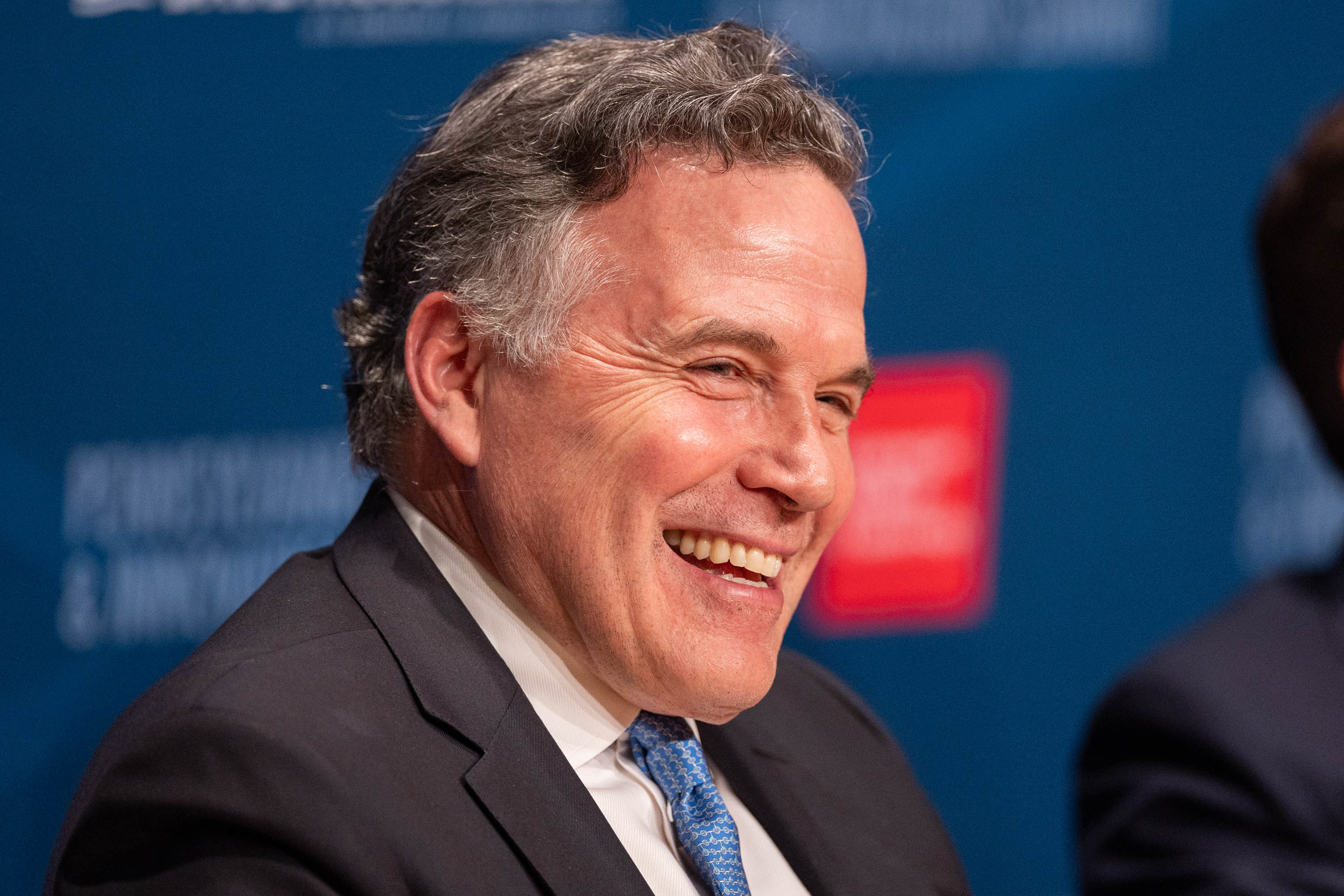
    U.S. Sen. Dave McCormick during a panel discussion at the Pennsylvania Energy and Innovation Summit at Carnegie Mellon University in Pittsburgh in July.

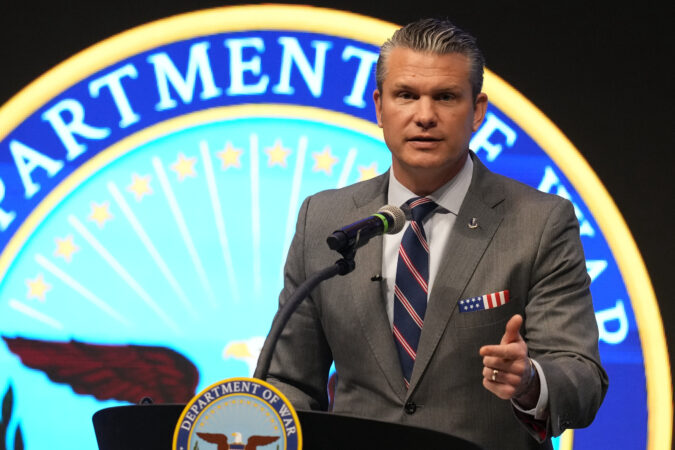
    Just weeks after taking his Senate office, McCormick cast a key vote to confirm Pete Hegseth as the defense secretary. McCormick, a graduate of the U.S. Military Academy, backed Hegseth despite knowing the Fox & Friends Weekend cohost was utterly unqualified to keep America safe.

    Hegseth went from whining about the “woke military” on TV to overseeing a Defense Department with nearly three million military and civilian employees and a budget of $850 billion.

    Hegseth’s only military experience was time spent in the National Guard, where he was flagged as an “insider threat” because of tattoos linked to white supremacists.

    He was an incompetent manager who was forced to step down from two tiny nonprofits because of financial mismanagement, sexual impropriety, and personal misconduct. Others said Hegseth routinely passed out from excessive drinking, including while on the job at Fox News.

    All of that was known to McCormick and the 49 other Republican senators who voted to approve Hegseth despite their duty to ensure cabinet nominees are qualified.

    Hegseth quickly demonstrated he is unfit for the job. Just weeks after getting confirmed, he used an unsecure messaging app to text classified war plans to a group that mistakenly included a journalist.

    In the wrong hands, the war plans — which included information about weapons packages, targets, and timing — could have endangered the lives of troops. If other military officers shared similar classified information, they could have been court-martialed.

    Hegseth’s purging of career military leaders is also making America weaker, as he places loyalty to Trump above competency, distinguished service, and merit.

    Hegseth has overseen the bombing of alleged drug boats that violate international law and amount to extrajudicial killings. The legal rationale is dubious at best and may constitute war crimes.

    At the very least, the deadly strikes are immoral and violate the Uniform Code of Military Justice.

    McCormick did not respond to requests to comment on whether he regrets supporting Hegseth. During McCormick’s Senate campaign, he talked up the West Point motto of “duty, honor, country.”

    Like so many other so-called leaders, those ideals have taken a back seat to serving Trump.

    One day, Trump will be gone — but his enablers will have to answer for the damage they helped to wreak.

  • L&I is underfunded and overworked. It’s also integral to Mayor Parker’s affordable housing plan. | Editorial

    L&I is underfunded and overworked. It’s also integral to Mayor Parker’s affordable housing plan. | Editorial

    Philadelphia Mayor Cherelle L. Parker is traveling around the city to tout her $2 billion plan to invest in 30,000 new or renovated homes. Yet, one of the key city departments for ensuring her plan is enacted safely is facing questions about transparency and efficiency.

    If Parker’s affordable housing initiative is to succeed, it needs clear answers and greater efficacy from the Department of Licenses and Inspections.

    In many ways, L&I performs one of the most quintessential duties of local government: regulating local businesses and inspecting property. Despite the essential nature of their work, the department has not always met the standards Philadelphians deserve. For decades, it was known for corruption, with rogue inspectors accused of accepting bribes.

    In 2013, these issues metastasized into a catastrophe. A building being improperly demolished on Market Street collapsed onto the Salvation Army store next door, killing six people. An inspector took his own life, blaming his own actions for the disaster, even as city officials strongly defended his integrity.

    Mayor Jim Kenney appointed David Perri to lead L&I in 2015 with a mandate to effect transformational change, root out corruption, and embrace new ways of doing things. One of the changes Perri made was to the system of tracking vacant and abandoned properties. In the past, inspectors would verify vacancy by doing a “windshield survey.” This meant driving by homes to look for physical signs of abandonment. The method was inefficient, and the counts were almost certainly inaccurate.

    The department partnered with the city’s Office of Innovation and Technology to create a new way of tracking vacancies. They used data from the Water Department, Peco, and other city sources that strongly indicate abandonment.

    This information was not only used by the city, but also by groups like Clean and Green Philly, which aims to reduce gun violence by cleaning up empty lots. According to a study led by University of Pennsylvania physician Eugenia South, keeping these lots from becoming sources of blight, trash, and disorder helps reduce shootings.

    Then, without warning, the database disappeared.

    According to Nissim Liebovits, the founder of Clean and Green Philly, it was down for 16 months before being restored. Even before its disappearance, it had significantly fewer properties listed than expected.

    While the data is available again on the city’s Open Data portal, residents still deserve to know what happened. City officials have yet to provide an adequate explanation for the disparity or the gap in publication.

    Beyond the missing data sets, L&I also struggles with understaffing and political pressure, particularly from members of City Council. Despite many quality inspectors joining the department in the years following the 2013 collapse, outside pressures often led them to leave city government. Union leaders called it a mass exodus.

    The workers themselves said they were often told to ignore violations by bigger developers and contractors, while also being urged to come down harshly on smaller entities.

    The U.S. attorney who oversaw the investigation into the Market Street collapse said the remaining inspectors are overworked and have too many buildings to handle. Meanwhile, Council members regularly divert departmental resources away from the backlog and toward their pet issues. They also seek to put their finger on the scales to help or hinder projects.

    A city controller report from earlier this year cited insufficient enforcement of the city’s building regulations, with construction crews across the city operating without licenses or work permits. Meanwhile, some contractors with suspended licenses and records of shoddy work have resumed doing business simply by changing their names.

    Philadelphia cannot afford further backsliding at L&I, particularly when the city has committed to increasing the rate of construction. Mayor Parker and City Council President Kenyatta Johnson must work together to provide adequate staffing, restore full transparency, and insulate inspectors from the kind of political pressures that routinely interrupt regular business and contribute to the backlog of unfinished work.

    The ability to call up an inspector and get immediate results may be politically beneficial for the city’s elected leaders and a few lucky constituents, but the “squeaky wheel” approach must end if the department is ever going to systematically address ongoing concerns.

    Parker says she wants Philadelphia to be America’s “cleanest, greenest, and safest city, with economic opportunity for all.” Her One Philly dream can only be achieved if residents feel they can trust L&I to work for all.

  • If ‘skill games’ cannot be banned, Harrisburg must act to regulate and tax | Editorial

    If ‘skill games’ cannot be banned, Harrisburg must act to regulate and tax | Editorial

    Despite years of bipartisan insistence that action is just around the corner, state leaders have yet to agree on a plan to regulate and tax so-called games of skill. While Harrisburg dithers, the machines have proliferated across the commonwealth, with dire consequences for many communities.

    Make no mistake, ideally, these machines should be banned. However, courts have so far ruled that these devices — the use of which, proponents argue, involves a modicum of skill — do not run afoul of gambling laws. In reality, though, there seems to be little separating them from slot machines, which are regulated.

    While no one knows the exact number of skill games in Pennsylvania, their impact is clearer.

    Philadelphia City Council members have described them as a nuisance, attracting crime, and creating what are essentially unlicensed slot machine parlors. The all-cash machines also lend themselves to low-effort money laundering. Meanwhile, supporters claim the money from skill games helps small businesses, VFW halls, and other community anchors to pay their bills.

    For Harrisburg, gambling in general has become a crutch to avoid tough decisions about spending and revenue. Taxing skills games is expected to bring in hundreds of millions of dollars to state coffers. That’s on top of the $2.7 billion the commonwealth already earns from existing forms of gambling, like slot machines, interactive virtual casinos, and online sports betting.

    Gambling is a predatory, extractive, and addictive industry. Ignoring its negative effects while depending on gambling revenue to avoid broader tax increases is a counterproductive strategy for the Keystone State. Research shows that an incredibly high share of gambling revenue comes from a very small percentage of overall gamblers. People trapped in gambling addiction experience bankruptcy, divorce, and suicide at higher rates.

    Yet, a small army of lobbyists, a surge in advertising, sympathetic social media influencers, and a hefty presence by gambling interests on campaign finance reports have made legislators fearful of taking action, even on skill games.

    A recent pressure campaign sponsored by the industry led state Senate President Pro Tempore Kim Ward to declare that her caucus doesn’t “do well being bullied,” and that gaming interests “have done nothing but try to bully us. And I don’t think we stand for that.” But for years, that’s exactly what’s happened.

    Beyond the million-plus dollars a year advocates have spent on political donations, some legislators report that the gaming industry is also using its cash to build influence in more subtle ways. Sports betting companies FanDuel and DraftKings have taken over from Bud Light as the sponsor of free service on SEPTA’s sports express. Skill games operators and others in the gambling industry are using the prospect of charitable donations to build political influence.

    There is still some hope regarding skill games, at least. The Pennsylvania Supreme Court is currently hearing a case that could reinstate the previous ban on the devices. This would be a win for communities across the commonwealth.

    If the machines are deemed legal, the state must at the very least ensure they are sufficiently regulated and taxed. Some of the legislation surrounding the games proposes that the Department of Revenue handle regulation. This would be a mistake. Given their similarity to existing gambling, the devices should be regulated by the Pennsylvania Gaming Control Board.

    For her part, Mayor Cherelle L. Parker has softened her strong opposition to skill games, in part because Republican leaders in the General Assembly have promised the money could help support public transit, including SEPTA. The transit agency needs an additional, sustainable funding source. Still, politicians should remember there are other ways to raise revenue besides new forms of gambling.

    Until the court or Harrisburg acts, skill games will remain in an unregulated, untaxed status quo. That may work for machine operators, but it doesn’t work for Pennsylvania.

  • Trump dismisses affordability concerns as he rakes in billions. Most Americans aren’t that lucky. | Editorial

    Trump dismisses affordability concerns as he rakes in billions. Most Americans aren’t that lucky. | Editorial

    Donald Trump had a blunt message for anyone struggling to make ends meet: He does not feel your pain.

    During a lengthy cabinet meeting on Tuesday, the president called the issue of affordability a “fake narrative.”

    Between nodding off and a racist rant, Trump declared during the gathering that the cost-of-living squeeze felt by millions of Americans “doesn’t mean anything to anybody.”

    Polls show affordability is the top issue facing Americans. But Trump claimed all the talk about affordability was a “con job.”

    So who is conning whom?

    Trump ran for office last year on the promise to lower prices, end the war in Ukraine, and release the Jeffrey Epstein files. He’s done none of it.

    “When I win, I will immediately bring prices down, starting on Day One,” he said in August 2024.

    Yes, the much-ballyhooed price of eggs has come down, but overall grocery costs have increased.

    For example, beef prices are up 14% this year and expected to soar next year because of fewer cattle. Coffee prices are the highest in decades due to drought and Trump’s tariffs.

    Companies tried to shield consumers from higher prices brought on by Trump’s erratic trade war. But more prices are starting to rise as tariffs have driven up costs on a wide range of products, including clothes, shoes, toys, electronics, cars, and homes.

    Affordability is more than egg prices.

    Millions of Americans are struggling to keep up. A Wall Street portfolio manager argued that after factoring in the cost of childcare, housing, healthcare, and other essentials, the real poverty line for a family of four should be $140,000.

    The median household income in the U.S. is about $84,000. In Philadelphia, it is $60,000.

    While presidents don’t control prices, Trump’s countless chaotic actions have contributed to the growing costs many Americans face.

    An employee works at a cash register in a grocery store in Schaumburg, Ill., in September. Donald Trump campaigned on lowering prices, but overall grocery costs have increased, writes the Editorial Board.

    Polls show home prices and rental costs are among the top affordability issues. Trump’s tariffs on timber, furniture, and cabinets have fueled the increase in housing affordability.

    Trump’s crackdown on immigrants — who account for one-third of construction workers — is leading to a labor shortage and further driving up home prices.

    Elevated mortgage rates, property tax hikes, and higher insurance premiums from more intense storms are also adding to housing expenses.

    The affordability crisis is so bad that the average first-time home buyer is 40 years old.

    Trump also promised to cut energy prices in half, but that has not happened. Many homeowners and businesses have been hit with sharp increases in electricity bills.

    The price hikes vary by state. A booming demand by data centers sent prices up 20% in New Jersey, while utility companies in California have passed on the cost to rebuild after devastating wildfires.

    Trump has also contributed to the higher utility costs after his One Big Beautiful Bill slashed tax incentives for wind and solar energy projects.

    Many Americans are falling behind. Household debt levels — which include mortgages, car loans, credit cards, and student loans — are at a record high, according to the Federal Reserve Bank of New York.

    Many are also rightly worried about their jobs. The unemployment rate hit its highest since 2021, and a record number of small businesses have filed for bankruptcy this year, along with several large companies such as Spirit Airlines, Claire’s, and First Brands.

    About 300,000 federal workers lost their jobs under Trump. U.S.-based companies have shed more than one million jobs through October of this year, a 65% increase from the period in 2024.

    Trump keeps blaming former President Joe Biden for the economic trouble. While inflation spiked under Biden, there was record job growth. Just weeks before the November 2024 election, the Economist magazine said the U.S. economy was “the envy of the world.”

    Despite Trump’s effort to dismiss affordability concerns, many Americans now blame him for the higher costs.

    Meanwhile, the rich get richer. The wealthiest 10% of Americans added $5 trillion to their fortunes in just the second quarter of 2025. And Trump’s net worth has increased by $3 billion this year.

    Now there is the real con job.

  • Killing of suspected traffickers at sea was already abhorrent. Hegseth may have made it a war crime. | Editorial

    Killing of suspected traffickers at sea was already abhorrent. Hegseth may have made it a war crime. | Editorial

    Donald Trump has been quick to post videos and brag about the heinous boat strikes on suspected drug traffickers by the U.S. military.

    But now comes a report by the Washington Post that a live drone feed showed two survivors from the first attack clinging to the wreckage.

    Defense Secretary Pete Hegseth, who a year ago was working weekends at Fox News, reportedly gave a spoken directive to “kill everybody.”

    To comply with Hegseth’s instructions, the Special Operations commander overseeing the attack ordered a second strike, and the two men were then blown apart in the water, according to the Post.

    The initial strikes are barbaric enough and violate international law, according to the United Nations High Commissioner for Human Rights.

    The second strike appears to be a war crime.

    The boat strikes have been ghastly from the start. The U.S. military doesn’t even know who is being summarily killed. One man was a fisherman, according to his family. The legality is shaky at best, hinging on a secret U.S. Department of Justice memo that no one in the Trump administration has been willing to publicly defend.

    Even if the boats are carrying drugs, those on board should be arrested and prosecuted, not assassinated. The killings are akin to if the Philadelphia police decided to gun down suspected dealers standing on the corner in Kensington.

    How does Trump reconcile summarily executing alleged drug runners while pardoning the former president of Honduras, who was convicted last year of taking bribes from drug cartels in return for helping to move hundreds of tons of cocaine to the U.S.?

    What do the drone killings have to do with making America great, let alone making it more affordable, as Trump promised last year?

    The boat strikes must stop, and Congress should conduct a full investigation before the United States loses whatever is left of its moral authority to lead the free world.

    Hegseth should be fired and held accountable for any wrongdoing.

    On Nov. 15, the U.S. military conducted the 21st known strike on an alleged drug trafficking boat, killing three men. The latest attack brings the total number of people killed by U.S. strikes on the alleged drug boats to 83.

    He was woefully unqualified to oversee the U.S. Department of Defense, given his lack of experience and previous allegations of excessive drinking, carousing, and financial mismanagement.

    Hegseth, who called the kill order report “fabricated, inflammatory, and derogatory,” has continued to demonstrate why he remains supremely unfit.

    He previously texted classified war plans to a journalist in advance of a separate military strike — a security breach that would get other military personnel court-martialed. Hegseth’s purging of career military leaders without cause is making America weaker.

    He initially celebrated the first boat attack. “We smoked a drug boat, and there’s 11 narco-terrorists at the bottom of the ocean, and when other people try to do that, they’re going to meet the same fate,” Hegseth told reporters in September.

    Since then, he has overseen more than 20 additional boat strikes, killing more than 80 people. In a social media post, he appeared to call the report fake news before adding, “Biden coddled terrorists, we kill them.”

    To underscore how unserious he is, Hegseth made light of the boat strikes by posting a mock cover of a Franklin the Turtle children’s book with a made-up title, Franklin Targets Narco Terrorists.

    Trump, who handpicked Hegseth after watching him on TV, said his defense secretary told him he never gave the verbal order.

    “He says he didn’t do it,” Trump said.

    That may be good enough for Trump, but it falls far short for anyone who values the truth, international law, or the Uniform Code of Military Justice. Recall Trump also shamefully sided with Vladimir Putin, a foreign adversary, who claimed he didn’t interfere in the 2016 election. But a Republican-led Senate review and eight U.S. intelligence agencies found Russia meddled in the election.

    At least one top Republican in Congress said American military officials might have committed a war crime in the boat strike. “If that occurred, that would be very serious, and I agree that would be an illegal act,” said Rep. Mike Turner (R., Ohio), who is a former chairman of the House Intelligence Committee.

    Republicans and Democrats on two congressional committees promised to increase scrutiny of the boat strikes in the Caribbean and Pacific. Let’s hope that happens soon.

    The best way to get to the facts is to have Hegseth, the Special Operations commander, and other military officials involved in the boat strikes testify under oath. One benefit of recording extrajudicial killings is that there are videos and transcripts for all to see and hear.

    Let’s get all the facts out and hold any wrongdoers accountable. And let’s end the government-sanctioned killings and return to following the law.

  • It’s Trump — not service members — who could benefit from a reminder about following the law | Editorial

    It’s Trump — not service members — who could benefit from a reminder about following the law | Editorial

    Six lawmakers, including two from Pennsylvania, had good reason to remind military members not to follow unlawful orders, given Donald Trump’s illicit history and recent actions, such as sending federal troops into cities and boat strikes that violate international law.

    The six Democrats, who either served in the military or the intelligence community, posted a short video telling their former counterparts that “no one has to carry out orders that violate the law or our Constitution.”

    Right on cue, Trump responded with a fury of unhinged social media posts calling for the lawmakers to be jailed or executed.

    “Each one of these traitors to our Country should be ARRESTED AND PUT ON TRIAL,” Trump wrote. He followed that with: “SEDITIOUS BEHAVIOR FROM TRAITORS!!! LOCK THEM UP???” He escalated in yet another post: “SEDITIOUS BEHAVIOR, punishable by DEATH!”

    Trump later claimed he was not calling for members of Congress to be put to death — though his words plainly suggested otherwise.

    When he isn’t lying, Trump’s abhorrent rhetoric over the past decade has become so routine that it barely causes a stir. (See: his recent outburst telling a reporter, “Quiet, piggy!” and shameful defense of Saudi Crown Prince Mohammed bin Salman, who authorized the vile murder of a journalist.)

    Given Trump’s record of abusing his power, the members of Congress were right to sound the alarm.

    In his previous term, Trump incited a violent insurrection at the U.S. Capitol. Let’s not forget he is a convicted felon who was criminally indicted three other times.

    Trump was also impeached twice in his first term. Since his return, he has committed as many as eight impeachable offenses, according to legal scholars.

    Trump’s first year back in office has been marked by relentless abuses. A federal judge said his attempt to eliminate birthright citizenship was “blatantly unconstitutional.” (The U.S. Supreme Court is weighing whether to take it up.)

    Trump’s pardon of more than 1,500 insurrectionists, including nearly 200 who assaulted police officers, rewarded lawbreakers. Other steps to freeze foreign aid, fire federal workers, send troops into cities, and deport migrants have faced more than 100 legal challenges and strong rebukes from judges.

    The Republicans who control Congress have done nothing to stop Trump’s abuses, let alone investigate whether he has used the presidency to enrich himself.

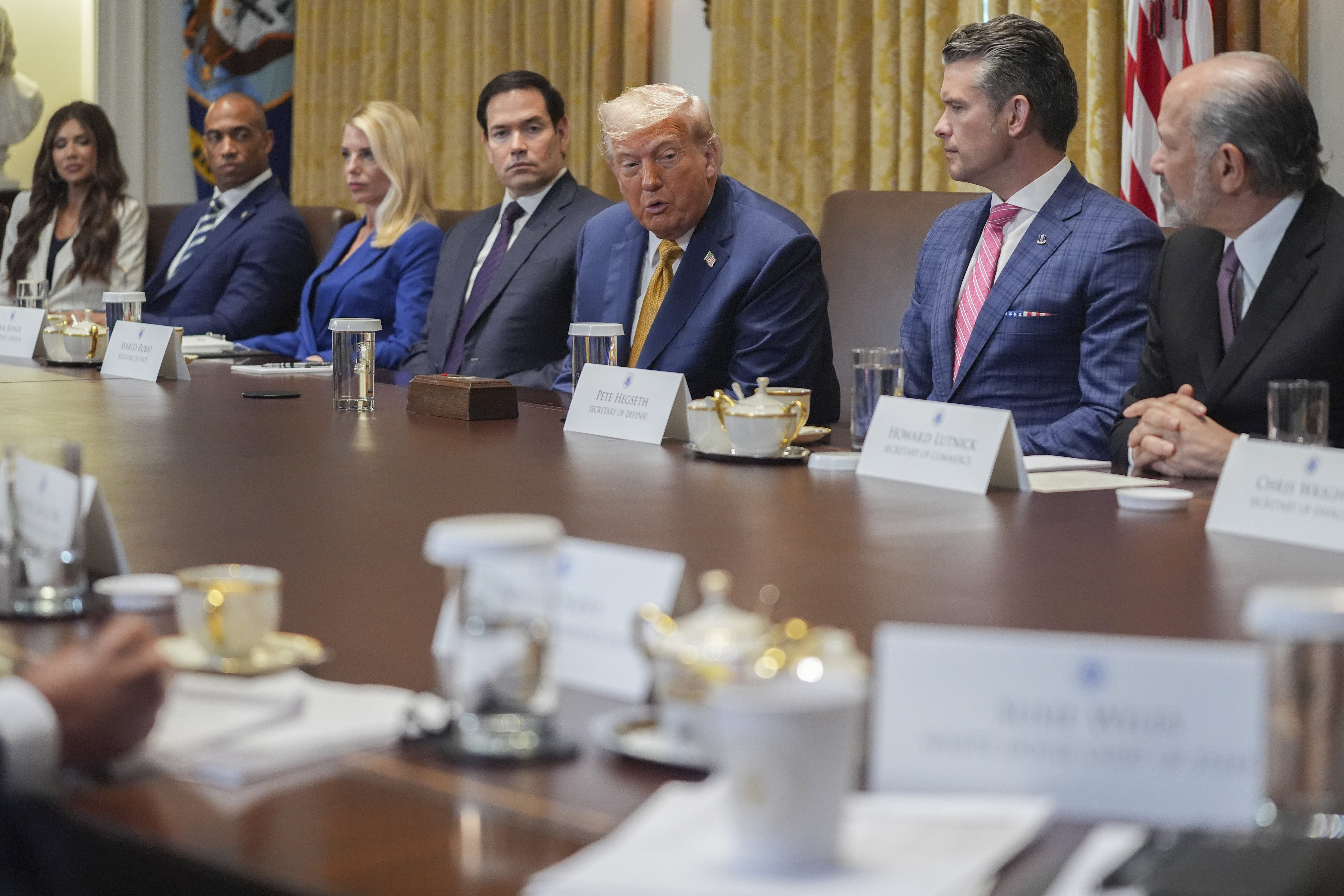
    President Donald Trump speaks during a cabinet meeting at the White House in July.

    Likewise, the unqualified loyalists overseeing the various government departments do whatever Trump demands. See: Attorney General Pam Bondi’s willingness to fire career prosecutors and go after Trump’s perceived political enemies.

    Former Defense Secretary Mark Esper ignored Trump’s suggestion to shoot demonstrators following the death of George Floyd. Does anyone trust Pete Hegseth — a former weekend Fox News host who has faced allegations of financial mismanagement, sexist behavior, and excessive drinking — to show similar restraint?

    That explains why the members of Congress urged service members to follow their constitutional oath — and not any unlawful orders.

    Trump’s response to jail and kill elected officials is especially irresponsible given the rise in political violence, including murders of state lawmakers, a judge, and far-right podcaster Charlie Kirk. Not to mention the attack on former House Speaker Nancy Pelosi’s husband, the firebombing of the Pennsylvania governor’s mansion, and the attack on Trump’s own life.

    After the president targeted the six Democrats, Pennsylvania Reps. Chrissy Houlahan and Chris Deluzio received bomb threats at their offices. Michigan Sen. Elissa Slotkin received a similar threat at her home.

    Meanwhile, House Speaker Mike Johnson (R., La.) deflected Trump’s outrageous behavior by claiming it was “wildly inappropriate” for Democrats to urge troops not to follow the chain of command.

    But that was not what the six legislators did. They reminded military members not to follow unlawful orders in accordance with Article 92 of the Uniform Code of Military Justice.

    For example, the legality of Trump’s boat strikes — which have killed more than 80 people — is dubious.

    A secret U.S. Department of Justice memo reportedly blessed the strikes by claiming the U.S. is in an armed conflict with drug cartels. But members of Congress from both parties argue it is illegal to target civilians — even suspected criminals — who do not pose an imminent threat. The United Nations’ human rights chief said the strikes violated international law.

    As such, legal experts said if the strikes are found to be illegal, a defense by military officials of “just following orders” may not hold up in court.

    Of course, Trump is shielded from prosecution thanks to a Supreme Court ruling last year that placed presidents above the law.

    The same cannot be said for those who do Trump’s bidding.

  • The U.S. must support Ukraine in peace deal, not help fulfill Putin’s wish list | Editorial

    The U.S. must support Ukraine in peace deal, not help fulfill Putin’s wish list | Editorial

    As families across America prepare to settle in for turkey, stuffing, and football, the Trump administration is imposing a brutal choice on the people of Ukraine: capitulate by Thanksgiving, or lose U.S. support.

    If the bloodiest fighting in Europe since World War II is to come to an end, any peace plan must be fair and hold Russia accountable for invading its neighbor. The 28-point plan released last week and endorsed by the White House would enshrine injustice instead.

    Perhaps the only surprise about the lopsided peace proposal is that it took so long. Ever since Donald Trump returned to the Oval Office, it has often felt like an all-out push for Kyiv’s surrender is just around the corner.

    The president has repeatedly praised Russia’s Vladimir Putin, threatened and removed existing U.S. aid to Ukraine’s military, and reinforced Russian talking points about the conflict, including blaming Ukrainian President Volodymyr Zelensky for starting the war.

    Meanwhile, the situation on the ground has deteriorated.

    Ukrainians have taken to covering their streets and homes with anti-drone nets due to the Russian military’s “human safari” tactics. Russian drone operators have terrorized civilians and aid workers by attacking them indiscriminately, making simple errands dangerous in cities close to the front lines.

    Russia’s military, fueled by the conscription of ethnic minorities, convicted criminals, and Ukrainians from Russian-occupied territories, has made incremental gains. Meanwhile, the Ukrainian military has suffered from increasing rates of desertion and low morale. While most Ukrainians do not want to give up territory to end the fighting, this position has become more popular over time because of the suffering and devastation the war has unleashed.

    American support for Ukraine has reached new lows under Trump, but President Joe Biden bears much of the blame for what’s happening today. The past administration never supplied Ukraine with anything close to the kinds of weapons it needed to succeed in the war’s early stages. Instead of rushing F-16 fighter jets into the country, Biden held off on delivering them for years. Long-range missiles, which would have allowed Ukraine to strike deeper into Russian territory, were also delayed.

    Imagine how much stronger a position Ukraine might be in if the Biden administration had approved the transfer of these weapons systems back in 2022, before the country suffered hundreds of thousands of casualties against brutal Russian invaders.

    The Trump administration seems prepared to compound this betrayal by forcing Ukrainians to accept a peace plan that some U.S. senators have suggested was written by Moscow.

    As released last week, the plan would force Ukraine to cede territory, abandon hopes of joining NATO, and cap the size of its military. It would create a blanket amnesty for war crimes and allow Russia to rejoin the G8 and reintegrate into the global economy.

    Given the scale of the suffering in Ukraine’s towns and cities and along the front lines, peace is a crucial goal. Beyond the direct human toll, the war has also led to the destruction of the Khakhovka Dam on the Dnieper River, a major environmental disaster. Russian recklessness has also repeatedly endangered nuclear plants.

    Zelensky and European leaders have countered the plan with one of their own, which was immediately criticized by the Kremlin. Ukrainian negotiators are keen to avoid formally handing over territory, remove or raise the cap on the size of their military, and allow for eventual NATO membership, even if it is off the table in the foreseeable future.

    U.S. efforts to end the war should be more in line with its allies’ proposal, instead of fulfilling Putin’s wish list. If Trump sides with Russia, it will send a clear message to other authoritarians that the West will not stand together against illegal aggression.

    If America sells out Ukraine, the world will be watching.

  • Congress should renew Affordable Care Act subsidies — regardless of whether Trump cares | Editorial

    Congress should renew Affordable Care Act subsidies — regardless of whether Trump cares | Editorial

    The longest shutdown of the federal government in this nation’s history ended after Republicans finally agreed to consider Democrats’ appeal for an extension of expiring Affordable Care Act subsidies that help families buy health insurance.

    What action Republicans will ultimately take is anyone’s guess before the subsidies expire in January. As for President Donald Trump, he treats healthcare like every other issue: mostly making nebulous, politically calculated statements that are counterproductive when leadership from the White House is needed.

    For years, Trump has derisively called “Obamacare” bad legislation that never should have been passed, but he has never offered a better alternative.

    “My first day in office, I am going to ask Congress to put a bill on my desk getting rid of this disastrous law and replacing it with reforms that expand choice, freedom, affordability,” Trump said on the campaign trail in 2016. Several proposed replacements to the ACA were subsequently introduced after his election, but each was defeated in the Senate, with even some Republicans voting against the inadequate alternatives.

    Trump never produced anything better than Obamacare during his first administration, but that didn’t stop him from again making the healthcare law a major talking point during his reelection campaign. “We’re signing a healthcare plan within two weeks, a full and complete healthcare plan,” Trump said in July 2020. “We’re going to be doing a very inclusive healthcare plan. I’ll be signing it sometime very soon.”

    But the plan never came, and Trump lost the election.

    He stewed during Joe Biden’s four years as president, but promised voters during his 2024 campaign that he was ready to replace Obamacare. Pressed by reporters to reveal his alternative, Trump had to admit he had only “concepts of a plan.” Nearly a year has passed since his second inauguration, but Trump’s concepts of a better plan to make sure health insurance is affordable are still a mystery.

    Unless that changes before the increased ACA subsidies expire, Congress should vote to extend them.

    The subsidies help Americans who earn up to 400% of the federal poverty level — $15,650 annually for an individual and $32,150 for a family of four — pay for insurance. Without those subsidies, a person now paying $325 a year for health insurance might have to pay as much as $1,562 annually.

    Many whose insurance costs will go up may decide to rejoin the ranks of the uninsured. That would be a travesty. The medically uninsured rate in America almost halved from 17.8% when the ACA became law in 2010 to 9.5% in 2023. Studies show uninsured adults have less access to medical care, receive poorer quality of care, and experience worse health outcomes than insured adults.

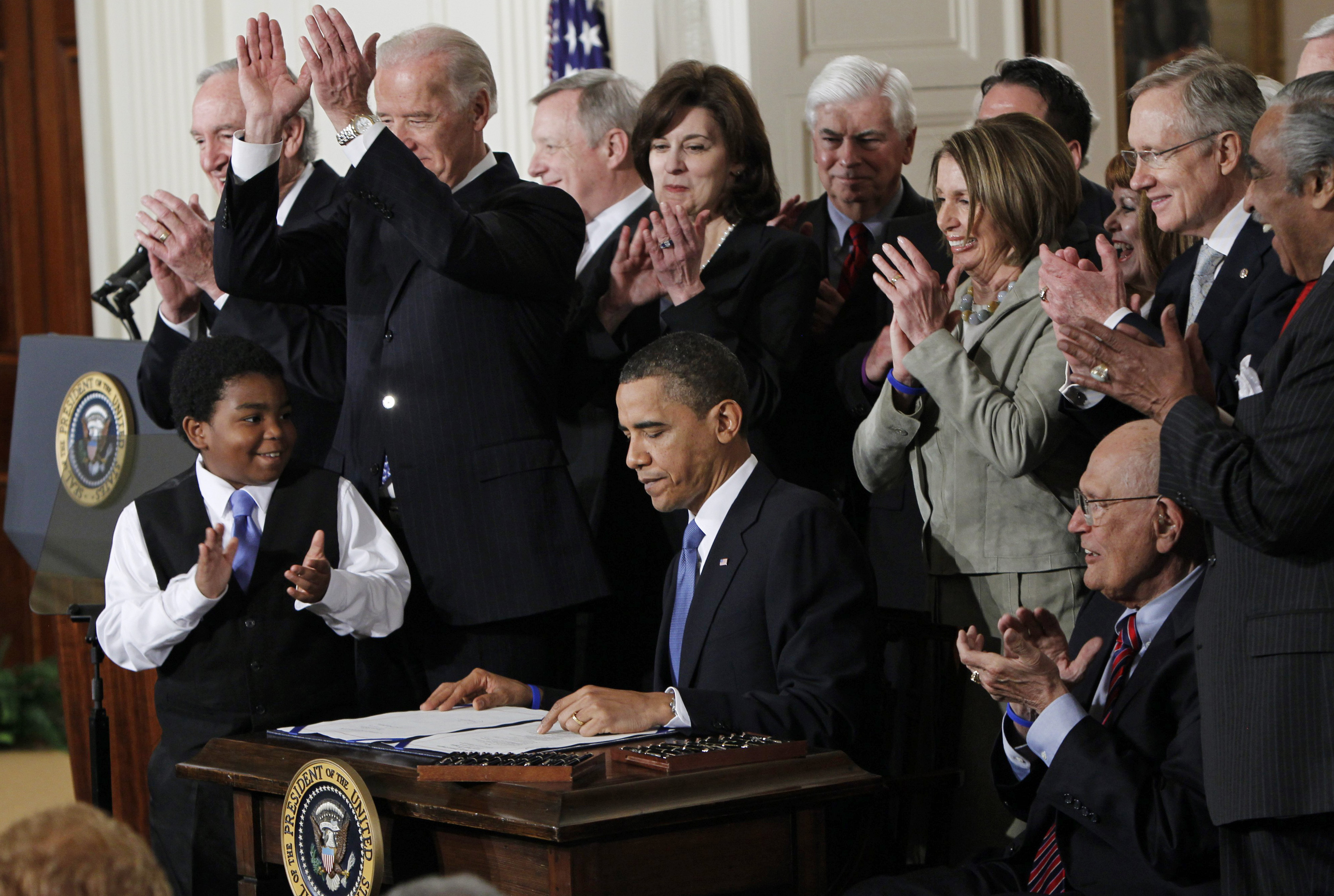
    President Barack Obama is applauded after signing the Affordable Care Act into law in the East Room of the White House in 2010.

    Ending the subsidies will turn back the clock. That doesn’t mean Obamacare shouldn’t be touched. Adjustments should be made based on how much healthcare in America has changed since the law was signed in 2010 and fully implemented in 2014.

    The ACA was this country’s alternative to installing a “single-payer” healthcare system, such as Canada’s, where most funding and payments for medical treatment come directly from the government via taxes paid by the public. The ACA system in America instead retains the third-party role of private medical insurance companies such as Blue Cross, Aetna, and Cigna, whose revenue has increased greatly under Obamacare.

    Most Canadians also have private insurance to pay costs not included in their government coverage, so even they don’t consider a taxpayer-funded, single-payer system the best way to provide healthcare. In fact, a survey of 11 healthcare systems provided by the world’s highest-income nations ranked Canada 10th and the United States last.

    Despite spending far more of our gross domestic product on healthcare, America is at the bottom in terms of access to patient care, administrative efficiency, equity, and healthcare outcomes. In other words, we’re spending a lot of money and getting sicker in return.

    The study by the Commonwealth Fund said the highest-ranked nations, including Norway and the Netherlands, which topped the list, shared four distinguishing features:

    1. They provide universal coverage and remove cost barriers.
    2. They invest in primary care systems that provide high-value services to all people in all communities.
    3. They reduce administrative burdens that divert time and spending from health improvement efforts.
    4. They invest in social services, especially for children and working-age adults.

    That last point brings up another issue regarding healthcare and Trump. The omnibus legislation passed in July, which he dubbed the “One Big Beautiful Bill,” made drastic cuts to Medicaid to help pay for tax cuts expected to reduce federal revenue by $4 trillion between 2025 and 2034. Why should Medicaid, which helps cover medical costs for low-income families, older adults, and people with disabilities, be sacrificed so that Trump can boast he cut taxes?

    Trump’s minions falsely said the cuts were needed to combat fraud and abuse, including a bogus claim that undocumented immigrants were receiving Medicaid benefits.

    Why is this president always finding some perceived wrong among the most vulnerable Americans while lavishing praise and largess on the wealthy? Certainly, he’s more familiar with the latter, having grown up rich and being more comfortable among his people. But so many less fortunate Americans voted for him, including more than a few who depend on Medicaid.

    Shouldn’t he at least occasionally seem to care for their health?

  • A vote to release the Epstein files should only be Congress’ first step toward ensuring justice for victims | Editorial

    A vote to release the Epstein files should only be Congress’ first step toward ensuring justice for victims | Editorial

    For months, Donald Trump has tried to insult, bully, and intimidate his way to keeping the House from voting on the release of files related to convicted sex offender Jeffrey Epstein.

    On Sunday night, fearing that more than a handful of Republicans would break ranks and support the measure in a vote scheduled as soon as Tuesday, the president tried to keep the word humiliating from preceding a description of his defeat.

    “The House Oversight Committee can have whatever they are legally entitled to, I DON’T CARE,” Trump posted on Truth Social.

    The abrupt about-face clears the way for Republicans to join Democrats and steadfast GOP Reps. Thomas Massie, Marjorie Taylor Greene, Lauren Boebert, and Nancy Mace in compelling the U.S. Department of Justice to release the files.

    This is an important win for the many alleged victims — around 200 women and underage girls — of the late disgraced financier, whose ties to the rich and powerful (including Trump and former President Bill Clinton) have sparked conspiracy theories about a mass cover-up and suspicion around Epstein’s 2019 suicide in a federal jail cell in Manhattan.

    Once the House clears the way, the Senate should quickly follow suit and send the bill to the president’s desk. Transparency, accountability, and justice for Epstein’s victims have been delayed long enough.

    Of course, even if Congress and Trump approve the measure, the fight will likely continue.

    The president’s capitulation may only be a strategic retreat. His persistent unwillingness to release the information — which he had promised to make public if elected — forecasts further obstruction.

    It is not difficult to wonder why.

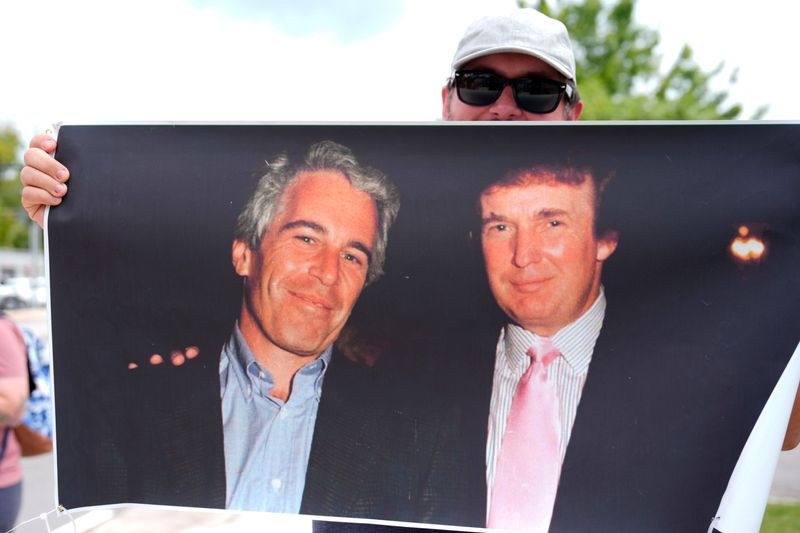
    A protester holds up a photo of Donald Trump with financier Jeffrey Epstein at a rally in Augusta, Ga., in August.

    Despite Trump’s denials, he and Epstein were once good friends, part of an elite cadre that included financial titans and political leaders. There are videos and photos of them together, and Trump repeatedly flew on Epstein’s plane (known as “the Lolita Express”).

    Trump himself has faced sexual misconduct allegations by dozens of women and was found liable for sexual abuse in 2023. His appearance in published Epstein documents, which have so far included a salacious birthday card and email allegations that he “knew about the girls,” indicates there could be worse to come.

    Even as he told Republicans to vote to release the files, Trump nonsensically railed that this was all a “Democrat Hoax perpetrated by Radical Left Lunatics.” He argued in the same breath that Republicans shouldn’t fall into the “Epstein trap,” which was “actually a curse on the Democrats, not us.”

    Only the full release of the files may reveal why the president has been so reluctant to act on a promise he made to his supporters. Why he has pressured his party so effectively that a vote on the House bill had to be forced upon Republican leadership. As this board has asked before: What are they hiding? Who are they protecting?

    Unfortunately, the American people cannot fully trust those in charge of the files. Attorney General Pam Bondi and FBI Director Kash Patel have shown that they value loyalty to Trump above all else, including going after the president’s political enemies regardless of any evidence.

    Congress must ensure that both fully discharge their duties and release all required information, regardless of who is embarrassed or implicated.

    Justice — and, at least for now, the president — demands it.

  • Voters should consider their choices carefully in judicial retention races | Editorial

    Voters should consider their choices carefully in judicial retention races | Editorial

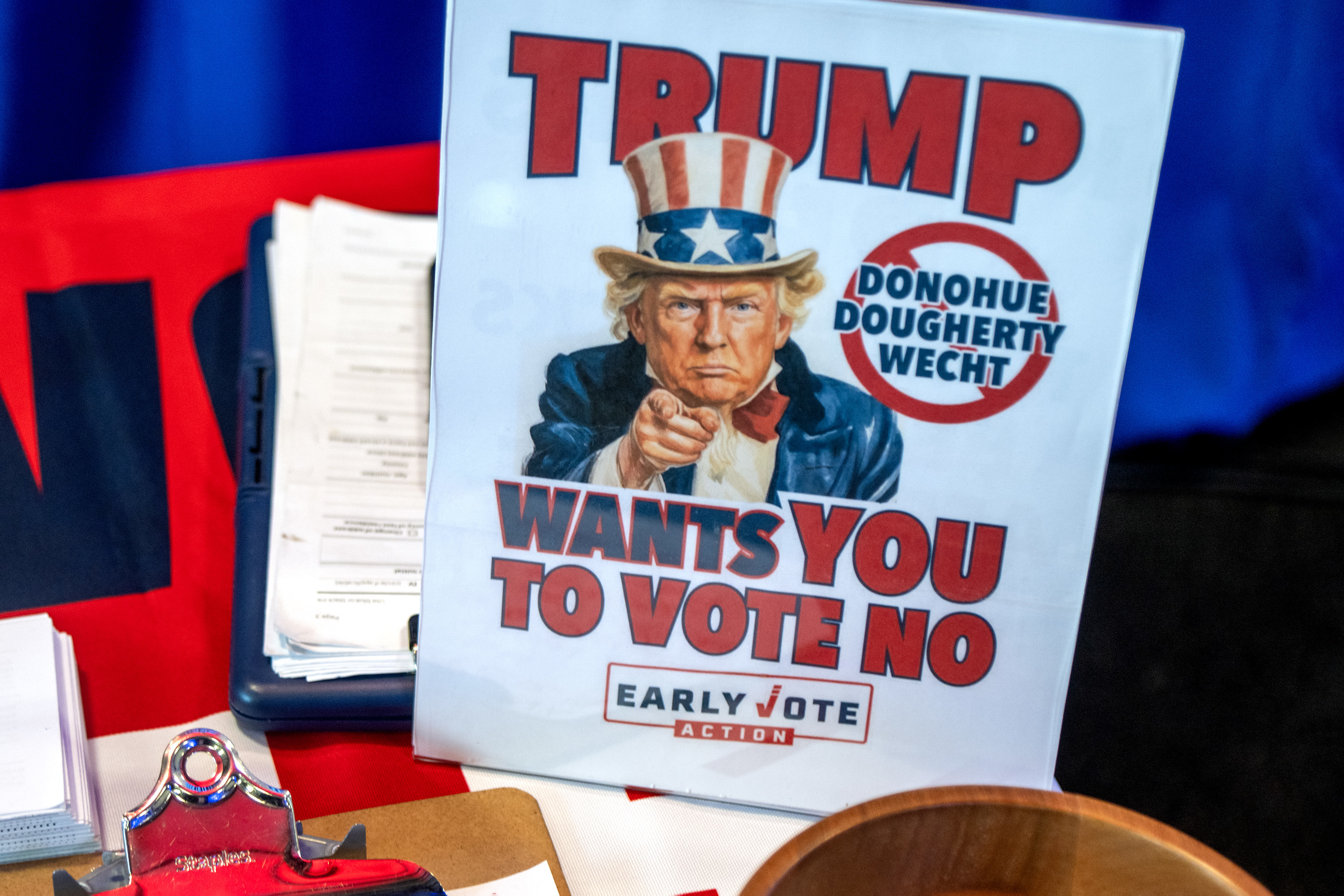
    The most important election facing Pennsylvania voters on Nov. 4 involves whether to retain state Supreme Court Justices Christine Donohue, Kevin Dougherty, and David Wecht.

    While voters should vote yes to retain the three justices, there are some lower court judges who do not deserve another term.

    Millions of dollars have been spent on the Supreme Court race, which will impact residents in cities and towns across the commonwealth. In recent years, the state Supreme Court has ruled on a variety of high-profile issues, including elections, redistricting, reproductive health, and education.

    Going forward, the court is likely to continue to confront many of the same hot-button issues — especially if Republicans gain control of the state House, the governor’s mansion, or replace the three well-qualified justices on the high court with extreme partisans.

    Voters need only look to Washington, D.C., to see the danger of a politicized, conservative majority on the bench, as the U.S. Supreme Court continues to ignore precedent and rubber-stamps Donald Trump’s abuses of the rule of law.

    Republican control of the White House, Congress, and the U.S. Supreme Court has resulted in a rapid erosion of the system of checks and balances created by the founders.

    In just a few short months, the GOP has deferred all power to Trump, who has shuttered the government, demolished part of the White House, sicced the U.S. Department of Justice on political enemies while pardoning cronies, celebrities, and insurrectionists, summarily killed alleged drug traffickers without any evidence, and deported people living in America without any legal due process.

    He has forced out tens of thousands of career civil servants, imposed tariffs that have roiled the economy, slashed environmental, health, and worker safety regulations, appointed incompetent hacks throughout the government, pressured red state lawmakers to take steps to rig elections, and sent federal troops into cities for no legitimate reason — all while evading previous criminal indictments and embarking on dubious personal enrichment schemes.

    Much of Trump’s unchecked power emanates from the ruling last year by the conservative majority on the U.S. Supreme Court that effectively said presidents are above the law.

    Voting rights activists gather outside the U.S. Supreme Court Building on Oct. 15 as the justices prepared to take up a major Republican-led challenge to the Voting Rights Act, the centerpiece legislation of the civil rights movement.

    What does all of that have to do with the retention election of three Pennsylvania Supreme Court justices? Plenty.

    The state is evenly divided between Republicans and Democrats. Yet, the GOP controls the state Senate and all three row offices: attorney general, treasurer, and auditor general.

    The Democrats have a narrow edge in the House, while Gov. Josh Shapiro, a Democrat, is up for reelection next year.

    Essentially, Shapiro and the Supreme Court, which has a 5-2 Democratic majority, are the only bulwarks keeping Trump’s MAGA-fueled zealots from seizing total control of Pennsylvania.

    If the GOP were to control the governor’s mansion and the high court, voting maps would get even more gerrymandered, voting rights, including mail-in balloting, would likely get curtailed, abortion rights would get dramatically rolled back, and pro-business groups — and polluters like gas drillers — would enjoy even less regulation. Funding for public education and transit would likely also be slashed.

    Other inane red state laws could get enacted that attack science, limit teaching about race, or make it harder to get a divorce. More to the point, Pennsylvania doesn’t need a radicalized state Supreme Court like the Roberts Court, which has squandered its credibility.

    Judicial retention voter material at a Republican candidate’s rally in Bucks County in September.

    Donohue, Dougherty, and Wecht have demonstrated that they are fair, open-minded, and follow the law. They have restored respect to a high court that was plagued by scandals a decade ago.

    But don’t just take this Editorial Board’s word for it.

    The nonpartisan Pennsylvania Bar Association has a rigorous process for evaluating judges based on criteria like legal ability, integrity, and temperament. The process includes investigative panels that review the judge’s records, interview candidates, and gather input from attorneys.

    After all that, both the Pennsylvania and Philadelphia Bar Associations recommended voting yes to retain Justices Donohue, Dougherty, and Wecht.

    The Philadelphia Bar Association recommended voting no to retain five lower court judges. They are Common Pleas Judges Scott DiClaudio, Daine Grey, Frank Palumbo Jr., and Lyris F. Younge. The association also recommended not retaining Municipal Court Judge Jacquelyn Frazier-Lyde, the daughter of the late boxing champion Joe Frazier.

    The association does not disclose the reasons for the recommendation, other than noting that three of the five judges did not participate in the review process, which includes surveying more than 500 lawyers to assess the judges for things like integrity, legal ability, temperament, and diligence.

    Another 100 volunteer investigators interview the candidates, other judges, and lawyers, as well as scrutinize the judges’ written opinions, social media posts, and financial disclosures.

    The Inquirer obtained the confidential surveys, which shed more light on how lawyers view the jurists. Inquirer reporter Samantha Melamed also reviewed opinions, interviewed some of the judges, and spent time in the courtroom.

    It is not always easy for voters to be well-informed when it comes to selecting judges. But the intense focus (and misinformation) on the state Supreme Court election, combined with the nonpartisan work of the bar associations, other good government groups, and The Inquirer’s reporting, has framed the stakes.

    Voters will now decide the fate of Pennsylvania’s courts — and of Pennsylvanians’ freedoms.