Category: Opinion

  • Trump’s imperial Venezuela policy based on lies and delusions

    Trump’s imperial Venezuela policy based on lies and delusions

    No one should mourn for Nicolás Maduro, and the U.S. military extraction of the Venezuelan dictator was a military tour de force.

    Those are the only two positive things to be said about President Donald Trump’s latest made-for-TV foreign operation, which has squandered American guns and taxpayer money on a lunatic venture based entirely on lies.

    Contrary to prior White House claims, the removal of Maduro had nothing to do with drug cartels, terrorism, or threats to U.S. security. Nor was it meant to restore democracy to Venezuela (as Trump stiffs exiled opposition leaders and stifles talk of future elections).

    Instead, based on the president’s own words, this monthslong exercise was aimed at taking control of Venezuela’s oil. It was also aimed at reinforcing Trump’s personal role as virtual emperor of the Western Hemisphere (and expediting the collapse of Cuba).

    Trump’s emperor complex has also renewed threats to seize Greenland or bludgeon longtime NATO ally Denmark into selling the autonomous island.

    In truth, the administration’s Venezuelan adventure threatens to drag America into another foreign quagmire and undermine U.S. security around the world.

    Smoke rises from Fort Tiuna, the main military garrison in Caracas, Venezuela, after multiple explosions were heard and U.S. aircraft swept through the area Saturday.

    After years of denouncing GOP hawks and Democrats over regime change gone bad in Baghdad and Kabul, Trump now says he intends to “run” Venezuela and manage its oil — indefinitely. While he fixates on the derring-do of the Maduro extraction, the president’s proposals for follow-up are incoherent and contradictory. His intense focus on our hemisphere distracts U.S. attention from the growing Russian and Chinese threats in Europe and the Indo-Pacific.

    As Anne Patterson, a former U.S. ambassador to Colombia and Ecuador who also served as assistant secretary of state for International Narcotics and Law Enforcement Affairs, asked, in frustration: “What is a carrier strike group doing in the Caribbean?

    “We’ve been fighting this drug war for decades,” she recounted, “but it is a huge public health problem, not a security threat. It is nothing like China circling around Taiwan” with warships and planes.

    Instead of facing reality, the White House is trying to sell Trump’s fantasies to the public with an endless stream of falsehoods and fake facts.

    For starters, the Venezuelan regime change will hardly affect the U.S. drug problem. Fentanyl is the drug that has killed hundreds of thousands of Americans and Venezuela neither makes nor exports fentanyl. That drug is manufactured in Mexico using precursor chemicals from China. (Some cocaine passes through Venezuela, but it goes mainly to Europe.)
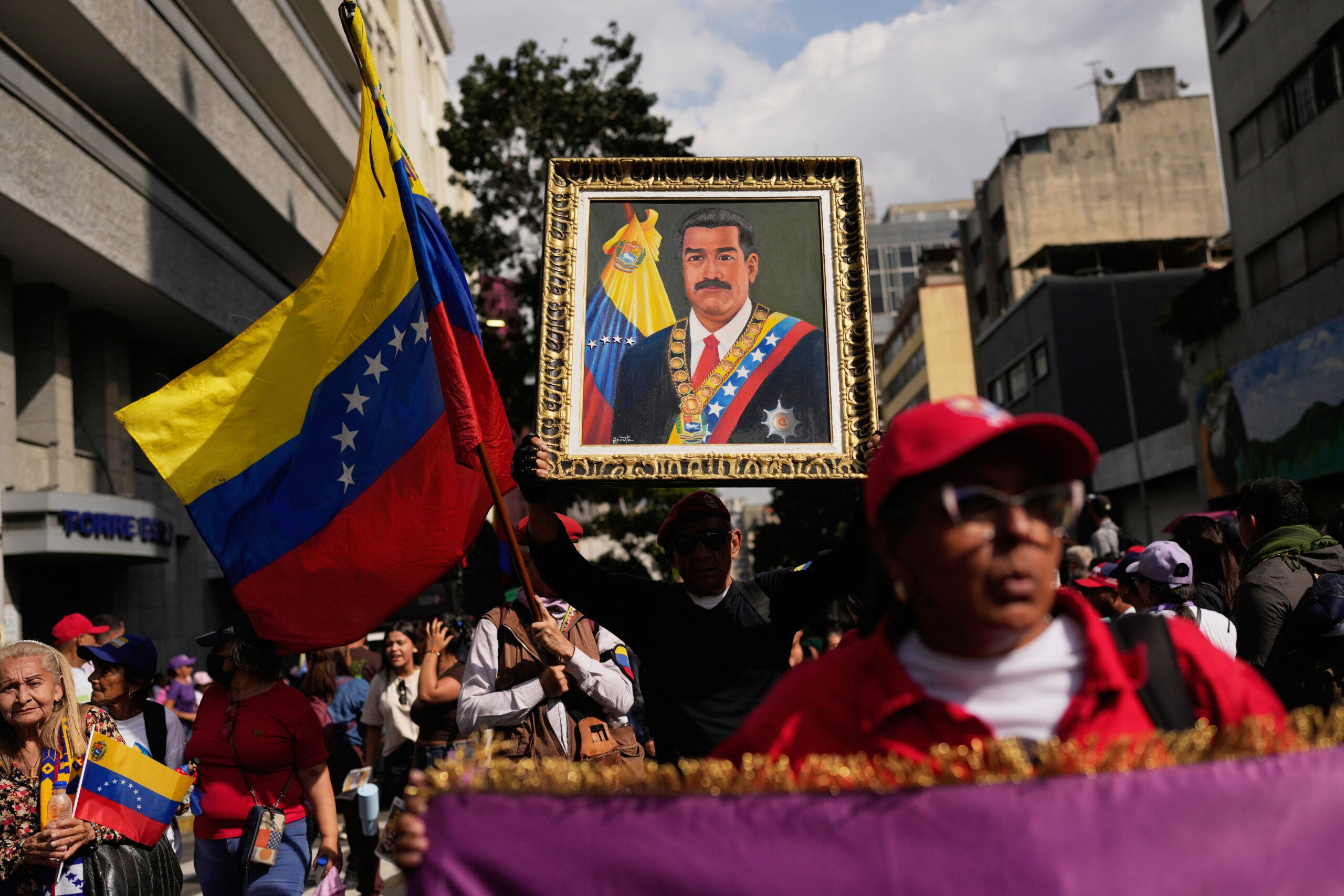
    A government supporter holds an image of President Nicolás Maduro during a women’s march to demand his return in Caracas, Venezuela, on Jan. 6, three days after U.S. forces captured him and his wife.

    In other words, the fentanyl problem Trump claims to be addressing can only be resolved via negotiations with Mexico and China.

    Moreover, the U.S. Department of Justice has just dropped criminal charges that Maduro led a drug cartel. The reason for this shift? As Latin America experts have long contended, the so-called Cartel de los Soles — cited by Trump officials as a terrorist threat — was not a real organization at all. It is a Venezuelan slang term used for officials corrupted by drug money, including the Maduro regime.

    Now that the Justice Department plans to bring Maduro to trial, perhaps Attorney General Pam Bondi realized she could not present fake facts about cartels under oath. Maduro is a corrupt thug who no doubt made money off drug dealers, but he did not lead a terrorist cartel.

    Again, a distinct downgrade from the monster threat the White House has painted as justification for its raid.

    The Trump team has also put forward no plan for a transition from Maduro’s corrupt, repressive government to one that might curb what drug dealing does go on. He has not even spoken to opposition leaders in exile who won the 2024 election before Maduro stole it.
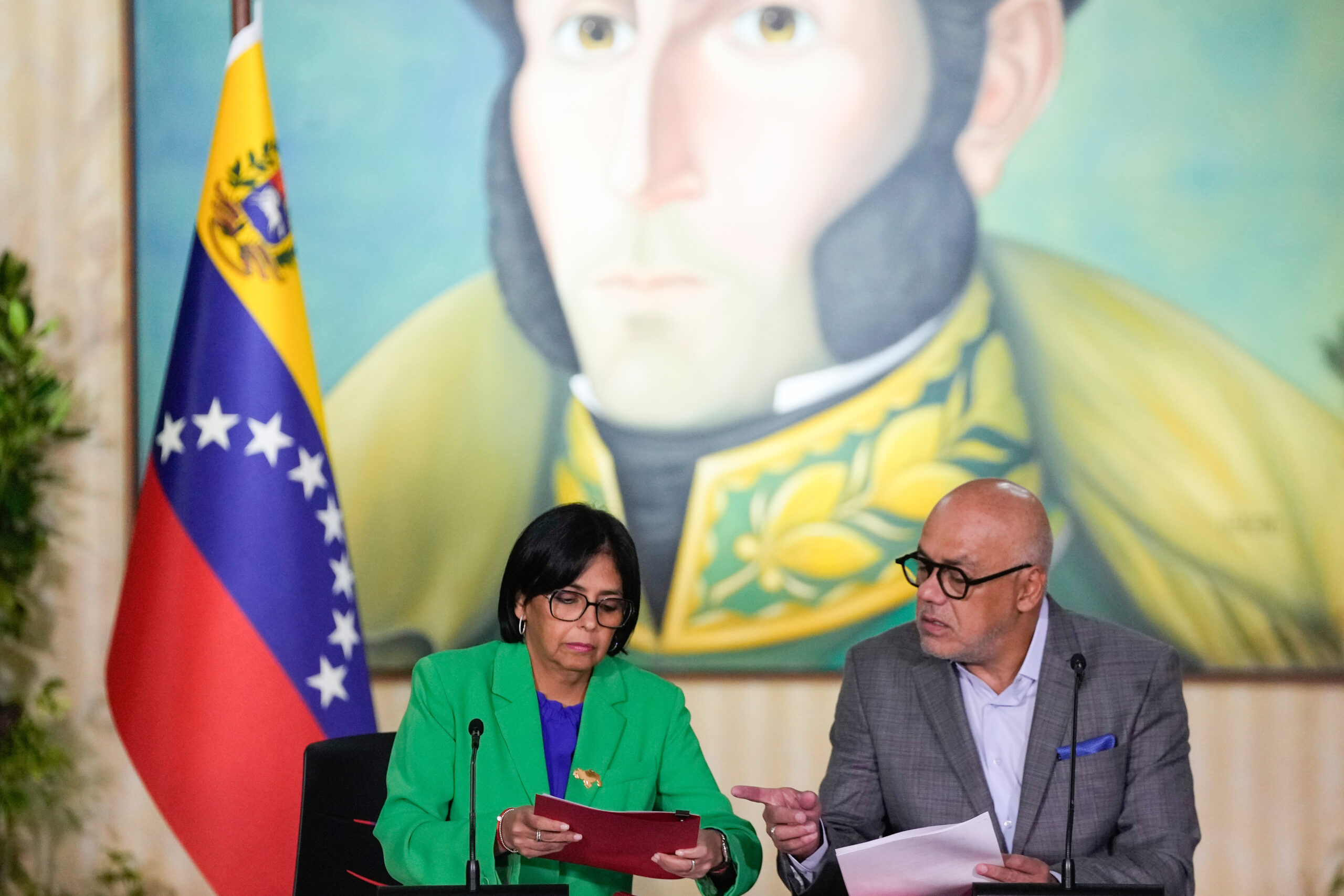
    Delcy Rodríguez meets with her brother, National Assembly President Jorge Rodríguez, at the Foreign Ministry in Caracas, Venezuela, in 2023. Delcy Rodríguez, Maduro’s vice president, has been sworn in as the leader of Venezuela.

    Instead, the president has chosen to recognize Maduro’s vice president, Delcy Rodríguez, and her brutal interior and defense ministers, who have increased repression against political opponents since Maduro was taken.

    “In fact, the government remains the same,” I was told by Venezuelan native Carolina Jiménez Sandoval, the head of the Washington Office on Latin America. “Are we seeing a transition without a transition for another strongman more conducive to American interests? Venezuelans want an answer.”

    In truth, Trump is himself acting like a strongman, insisting he will “run” Venezuela indefinitely. He seems to believe that by enforcing U.S. (and his personal) control of all Venezuelan oil sales and revenues, in a cockamamie scheme that appears both illegal and unmanageable, the repressive regime in Caracas can be forced to do U.S. bidding.

    When asked by the New York Times whether the U.S. would “remain Venezuela’s overlord” for more than a year, the president replied, “I would say much longer.”

    Why? What possible reason is there for Trump to expend U.S. resources on running Venezuela? Even the lure of oil money makes little sense.
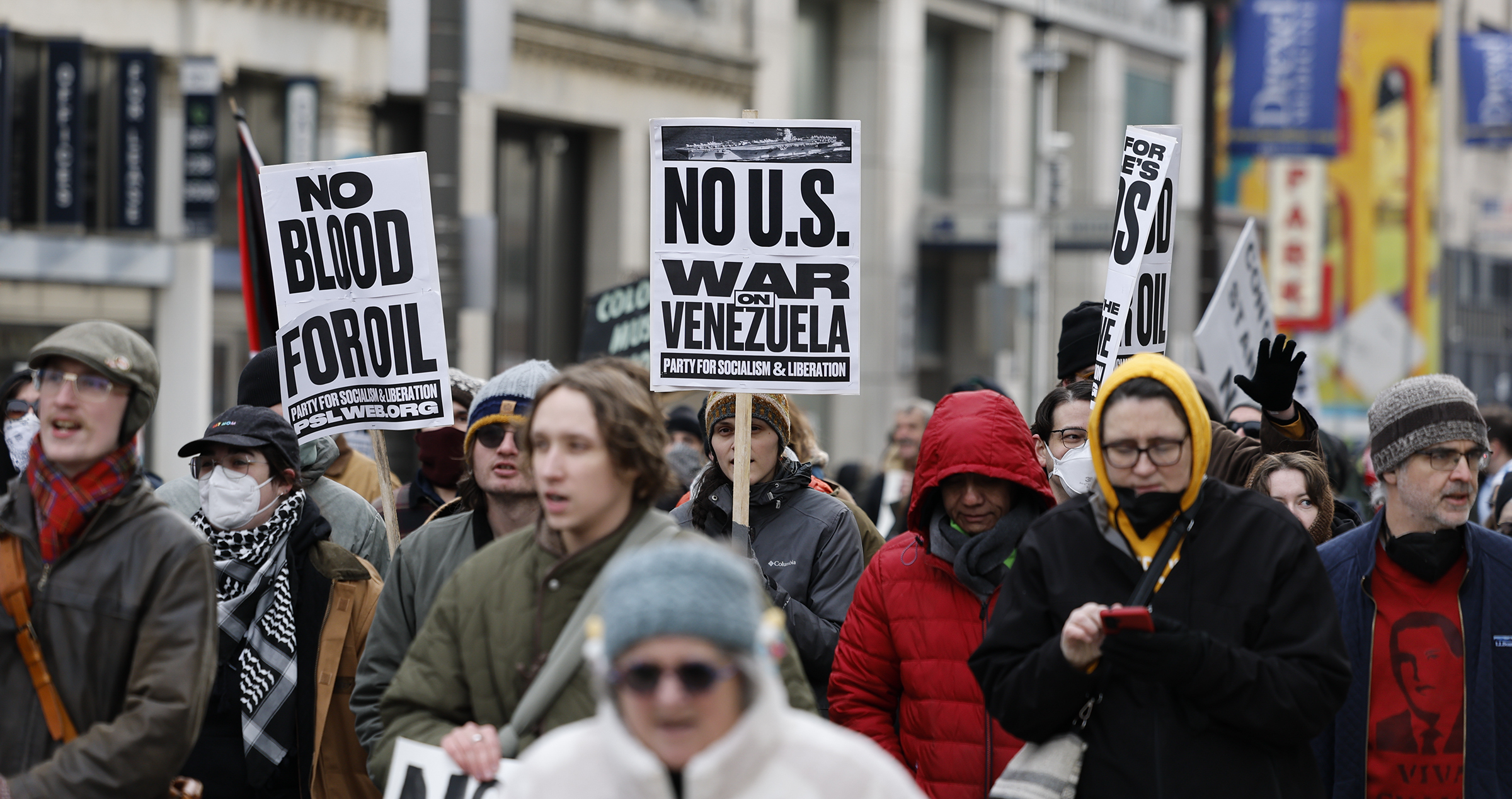
    Demonstrators march along North Broad Street reacting to U.S strikes on Venezuela on Saturday.

    The president insists there are fortunes to be made if U.S. oil firms return to develop its enormous oil reserves. But apart from Chevron, which has remained in the country, large U.S. companies are reluctant. That’s because it will take tens of billions of dollars in investment to make the country’s neglected fields viable, global oil is abundant, prices are low, and Venezuela’s future is uncertain.

    If Venezuela pumps more oil and drives global prices down further — as Trump is demanding — it will negatively affect the interests of oil producers on the U.S. mainland. In fact, large producers’ interest in Venezuela is so tepid that Trump is actually offering to use taxpayer money to subsidize the return of U.S. companies to the country.

    To sum up, neither drugs, nor cartels, nor terrorism, nor oil are valid or legitimate reasons for taking out Maduro, especially as we are leaving his thuggish government in place.

    What’s worse, his Venezuelan venture appears to be inspiring Trump to fantasize about other snatch operations or military takeovers — in tragic imitation of a Vladimir Putin or Xi Jinping.

    Asked in the Times interview if there were any limits on his global powers, Trump said: “Yeah, there is one thing. My own morality. My own mind. It’s the only thing that can stop me.”

    These are the words of a wannabe dictator.

    If they don’t awaken more GOP legislators to vote to curb his future use of military force in Venezuela — via a bipartisan bill now under Senate debate — then they will be complicit in the trashing of U.S. security by an egomaniac who believes his own lies.

  • Good intentions don’t build housing in Philly, and mediocre campaigns don’t win races in Pa. | Shackamaxon

    Good intentions don’t build housing in Philly, and mediocre campaigns don’t win races in Pa. | Shackamaxon

    This week’s column looks into what happens when City Council members try to use a bad practice to serve the public good, and the beginning of Pennsylvania’s gubernatorial race.

    Good intentions

    In the first few months of this column, much of the toughest criticism has been leveled at Councilmembers Jeffrey “Jay” Young and Cindy Bass. While every district legislator participates in the tradition to some degree, these two have been the most egregious practitioners of councilmanic prerogative, which gives district Council members absolute discretion over land use and transportation questions within their districts.

    Even worse, Young and Bass often struggle to offer coherent explanations for their actions. Over the past few years, I have spoken with a range of community members, local politicos, and development experts who have expressed total bewilderment about what exactly it is the pair is seeking to accomplish.

    That’s not the case with 3rd District Councilmember Jamie Gauthier. Her values are clear. When Gauthier leans into prerogative, she’s not seeking to micromanage minor decisions. She even went as far as creating an exemption for her entire district that removes the need to secure a city ordinance for outdoor dining. Gauthier legislates because she wants to produce more affordable housing and prevent displacement. In many ways, it is a bold and admirable approach.

    Still, when it comes to public policy, good intentions are not enough.

    University Place Associates is planning a 495-spot parking garage in Councilmember Jamie Gauthier’s district in West Philadelphia.

    Middling MIN

    Gauthier’s signature policy is her push for what she’s called the Mixed Income Neighborhoods overlay, or MIN. The policy, enacted in parts of both Gauthier and Councilmember Quetcy Lozada’s 7th District, builds off an existing city program, the Mixed Income Housing Bonus. Under the bonus program, developers could exceed current zoning limits in exchange for supporting affordable housing. This could be done either by building affordable units or by making a payment to the city’s housing trust fund.

    MIN, however, is mandatory. It also does not come with any bonuses. For larger development projects (10 or more units), builders are required to set aside 20% of the units for low-income households. The idea is to increase the city’s stock of statutorily affordable housing, promote income integration, and allow poorer households to move to and remain in high-opportunity areas, all without costing the city a dime.

    All of that sounds wonderful … in theory.

    In practice, things have not panned out the way advocates had hoped. Instead of producing significant amounts of affordable housing, the zoning requirements have stifled development overall. Of the 18 major projects considered by the city’s Civic Design Review Board, only two are located within the boundaries restricted by the policy. One of those projects doesn’t include any housing at all, instead supplying nearly 500 parking spots adjacent to the Market-Frankford Line.

    In an interview with Gauthier last fall, she told me she would stand by the results of MIN against the voluntary program or any other zoning program in the city of Philadelphia. Planning Commission data, however, tells a different story. In 2024, the most recent year studied, the MIN resulted in the completion of just five affordable units. The bonus program, on the other hand, created 63 affordable units and generates millions of dollars in bonus payments.

    This, of course, only looks at one factor, which is the impact on affordable housing programs. It doesn’t answer the question of how many market-rate units would have been built without the requirement. Housing costs no longer affect just the poorest, as 90% of Americans live in counties where home prices and rents rose faster than income. For most people, whether they are University of Pennsylvania students or longtime residents, this private market is where they will find housing. Without enough construction to meet demand, prices will continue to rise.

    The experience of cities like Austin, Texas, where rents are falling despite a surging population, demonstrates that new construction can help alleviate that pressure.

    There’s also the economic impact. Development projects employ skilled workers and provide money for the city’s affordable housing programs. Without more research, we have no idea how much MIN has impacted city coffers. Before Gauthier’s program expands to more communities, the city should undertake a comprehensive investigation.

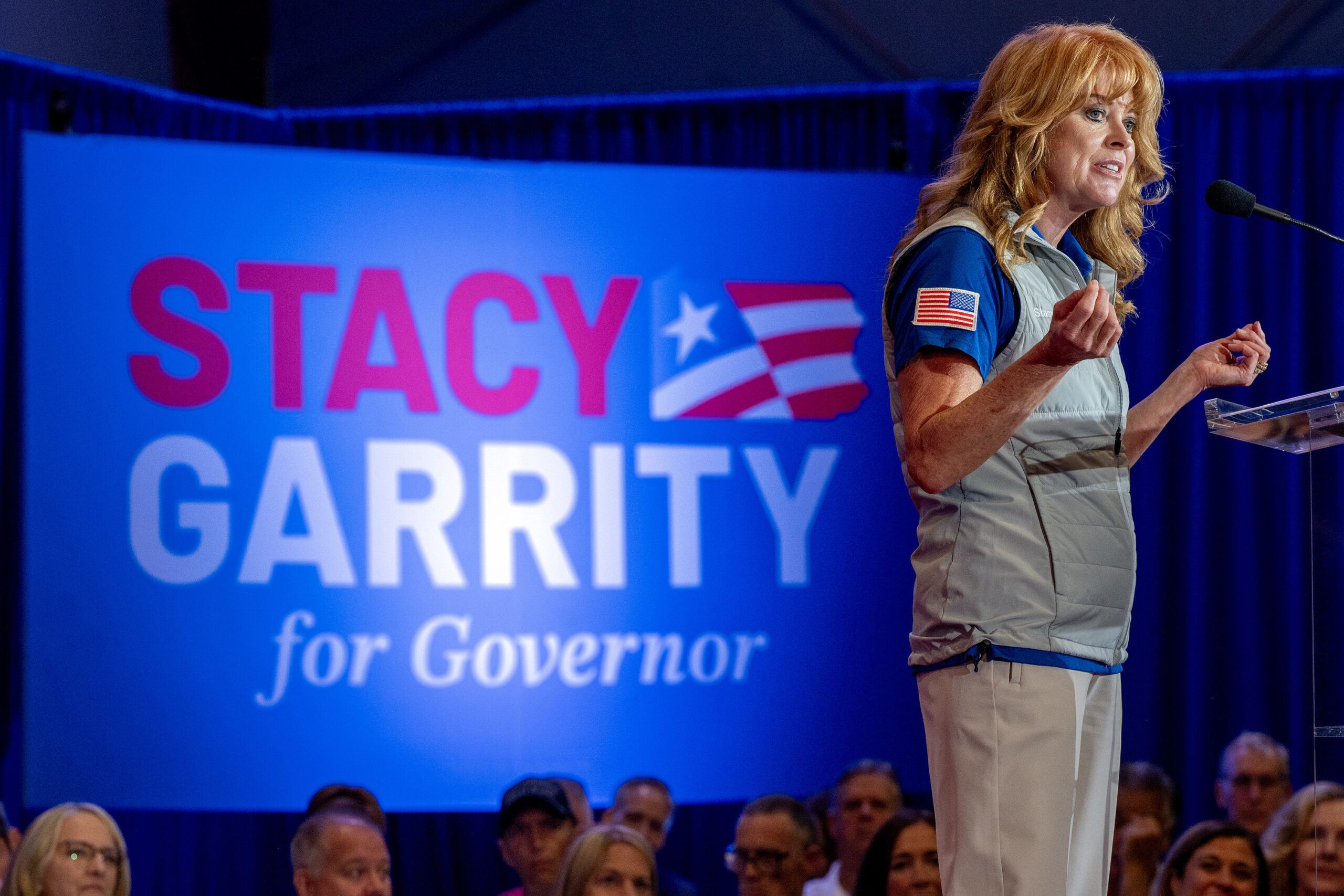
    State Treasurer and Republican candidate for governor Stacy Garrity holds a rally in Bucks County at the Newtown Sports and Events Center in September.

    Maximum meh

    With State Sen. Doug Mastriano officially out and Gov. Josh Shapiro officially in, the Pennsylvania governor’s race has begun. With no other Republicans or Democrats expressing an interest in the position, a November matchup between Shapiro and State Treasurer Stacy Garrity looks certain.

    Shapiro’s campaign launch video begins as you’d expect, with the rapid reconstruction of I-95 after a fire damaged several lanes in 2023 — a reminder of how the governor gets, uh, stuff done.

    Garrity, who announced all the way back in August, has a steep challenge on her hands. Besides Tom Corbett, no Pennsylvania governor has lost a reelection bid since the ban on consecutive terms was dropped from the state constitution in 1967. Shapiro has a record $30 million on hand for his reelection bid, three times more than what he started with four years ago, the previous record. He also has a 3-0 record in statewide elections and a 60% approval rating.

    This means Garrity will need to sell voters on her own ideas, rather than just banking on people souring on Shapiro. So far, it is worth asking what those ideas are.

    As treasurer, Garrity’s main job is to manage the commonwealth’s bank accounts, not exactly the kind of thing that stirs the electorate. Garrity’s campaign video focuses on her biography, which notes her service in Iraq. It also lines up multiple hits on Shapiro, including on his not-entirely subtle pining for the presidency. But when it comes to the biggest issues facing Pennsylvanians, Garrity has yet to supply any answers.

    Instead, the challenger used an interview with CBS 21 in Harrisburg to declare that Pennsylvania is “mediocre.” So far, that label seems more appropriate for Garrity’s campaign consultants than the commonwealth.

  • Letters to the Editor | Jan. 9, 2026

    Letters to the Editor | Jan. 9, 2026

    ICE fatal shooting

    As a former city councilwoman in Easton, Pa., I believe moments of national crisis require serious reflection on how policy choices at every level of government contribute to real-world outcomes.

    The killing of a woman, who was a U.S. citizen, during a U.S. Immigration and Customs Enforcement operation in Minneapolis has prompted renewed scrutiny of the White House’s policies toward migrants nationwide. That scrutiny should extend to state legislatures that expanded ICE’s authority without sufficient accountability.

    In Pennsylvania, this expansion was not limited to one vote or one year. In 2018, lawmakers advanced bills aimed at penalizing municipalities labeled as “sanctuary cities” by withholding state funding unless they cooperated with ICE. Despite warnings from civil rights advocates and law enforcement leaders that such measures would erode public safety, State Sen. Lisa Boscola was among a small number of Democrats who voted with Republicans to support them.

    That pattern persisted. In 2024 and again in 2025, the legislature passed bills expanding cooperation with federal immigration authorities, including a measure requiring district attorneys to notify ICE when they encounter someone without legal status, even in nonviolent cases. Only four Democrats supported the 2025 bill. State Sen. Boscola was one of them.

    These decisions matter. Expanded enforcement fuels detention systems now planning warehouse-style facilities in Pennsylvania, while public investment in wages, housing, and healthcare lags behind.

    Public safety should be rooted in accountability, dignity, and community trust, not unchecked enforcement.

    Taiba Sultana, former city councilwoman, Easton, Pa.

    Share the wealth

    So the Affordable Care Act subsidies have officially expired. Here’s what I don’t understand: Congress gets subsidies from the federal government (in other words, you and me) up to 75% of the cost of their “gold” plan health insurance. Why won’t Republican lawmakers provide the same for their fellow Americans?

    Penny Stanger, Phoenixville

    Join the conversation: Send letters to letters@inquirer.com. Limit length to 150 words and include home address and day and evening phone number. Letters run in The Inquirer six days a week on the editorial pages and online.

  • The killing of Renee Nicole Good and the moral rot of Trump’s reckless immigration enforcement plan | Editorial

    The killing of Renee Nicole Good and the moral rot of Trump’s reckless immigration enforcement plan | Editorial

    Renee Nicole Good, 37, was shot and killed by U.S. Immigration and Customs Enforcement agents on Wednesday in Minneapolis. She is the second person killed after the Trump administration unleashed masked, armed, and increasingly unaccountable federal forces upon U.S. cities.

    Unless the government immediately changes course, she will not be the last.

    Several videos posted to social media show the deadly encounter. If you believe your eyes, Good was fatally shot as she attempted to drive away from agents who were yelling obscenities at her and violently trying to open her vehicle’s door.

    If you believe the U.S. Department of Homeland Security, Good was part of a group of “violent rioters” who “weaponized her vehicle” and tried to “run over our law enforcement officers in an attempt to kill them.” Good, according to DHS spokesperson Tricia McLaughlin, was engaged in an act of “domestic terrorism.”

    The stark disconnect is telling. The administration’s reflexive lying is emblematic of the moral rot at the heart of President Donald Trump’s militarized mass deportation efforts. It reflects a worldview where all immigrants are criminals, and all dissenters are rioters or terrorists.

    By all accounts, Good was neither. She was a mother, a neighbor, a self-described poet, writer, and poor guitar player. In death, she joins Silverio Villegas-Gonzalez, a 38-year-old Chicago resident who was killed by ICE in September during a similar incident. The Mexican immigrant was shot in the neck shortly after he dropped off one of his children at school and another at daycare.

    These deaths were as preventable as they were foreseeable.

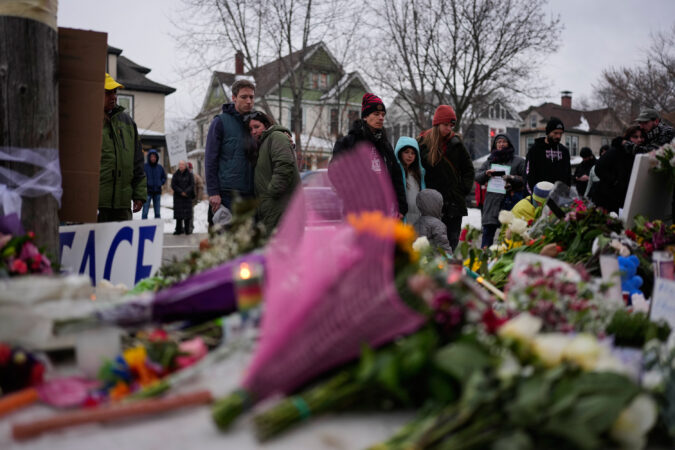
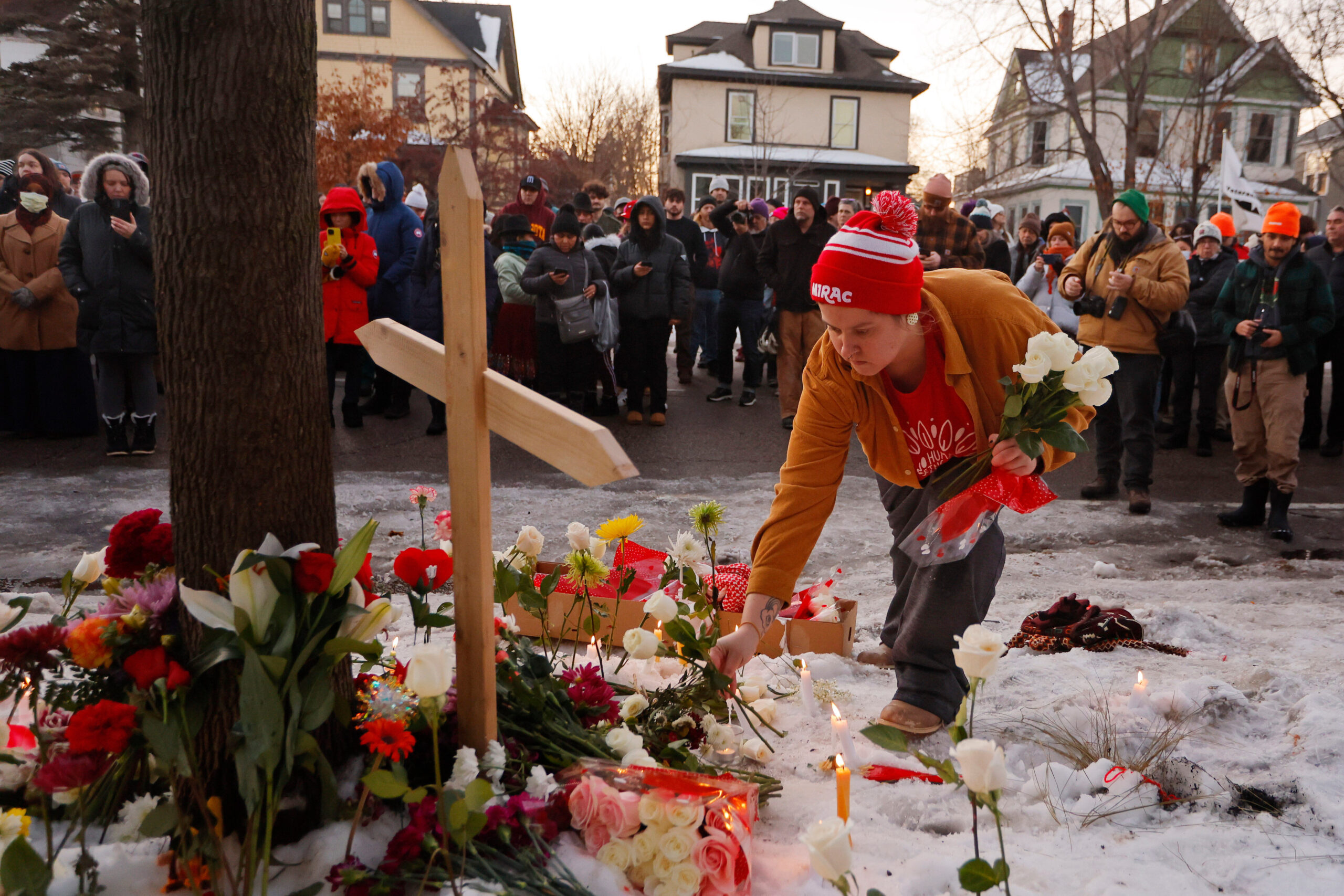
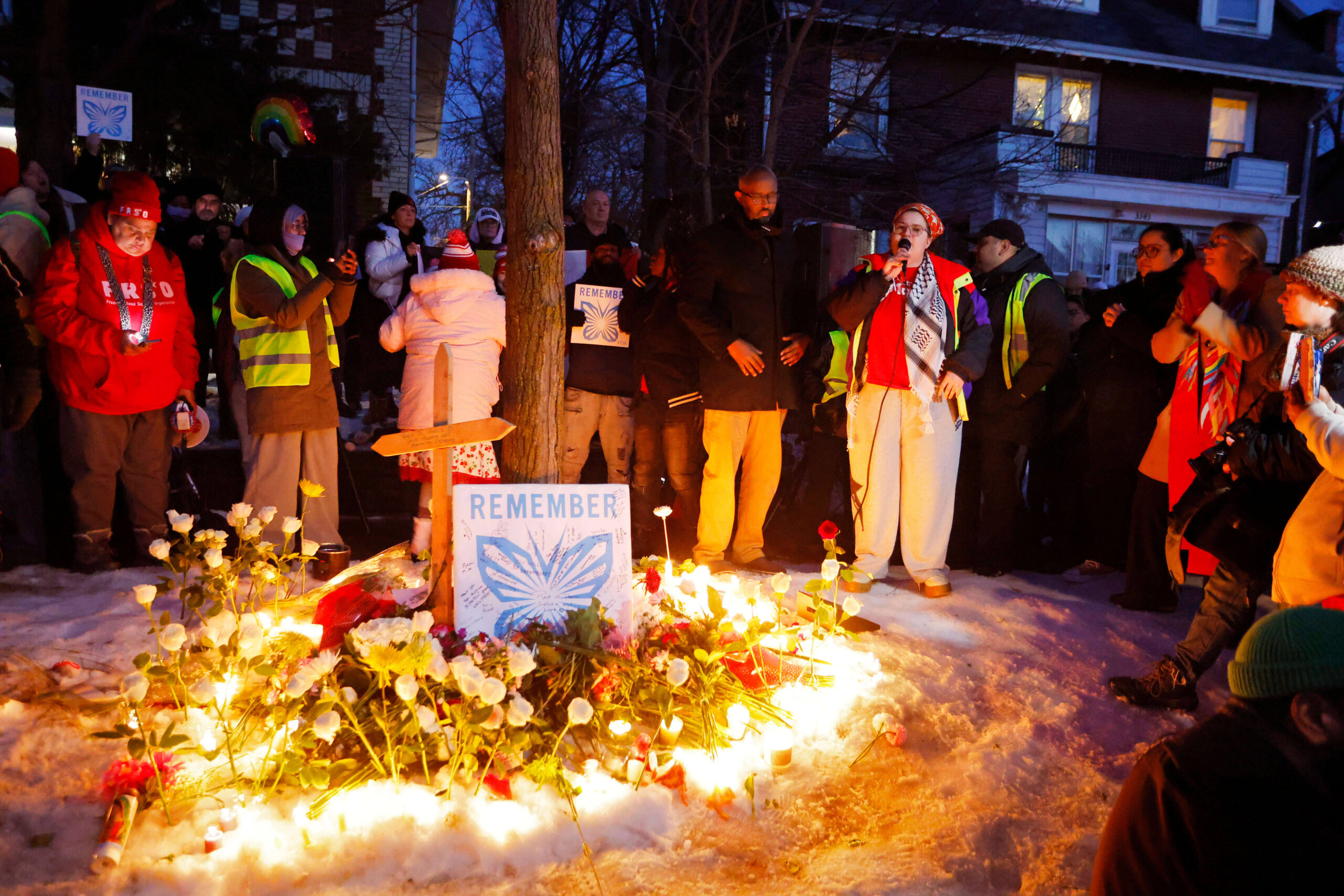
    People gather for a vigil after a U.S. Immigration and Customs Enforcement agent shot and killed a motorist earlier in the day.

    In her Nov. 20 ruling ordering federal agents to limit aggressive tactics in Chicago, U.S. District Judge Sara Ellis wrote that “agents have used excessive force in response to protesters’ and journalists’ exercise of their First Amendment rights, without justification, often without warning, and even at those who had begun to comply with agents’ orders.”

    Dozens of videos, from cities around the nation, have shown federal agents engaging in violent behavior during their enforcement duties. Any one of those incidents could have turned deadly. That more people have not been killed in the administration’s reckless and ill-advised efforts can best be attributed to providence.

    Reported close calls in California include Border Patrol agents smashing windows and firing on a truck as it drove away during a traffic stop, a man who claimed he wanted to warn agents there were children nearby was shot in the back by an ICE agent, and a TikTok streamer was shot as ICE agents smashed his car window.

    In Chicago, a woman was shot multiple times after she allegedly rammed the vehicle of a U.S. Customs and Border Protection agent. The charges against her were dismissed in the face of glaring inconsistencies in the government’s story.

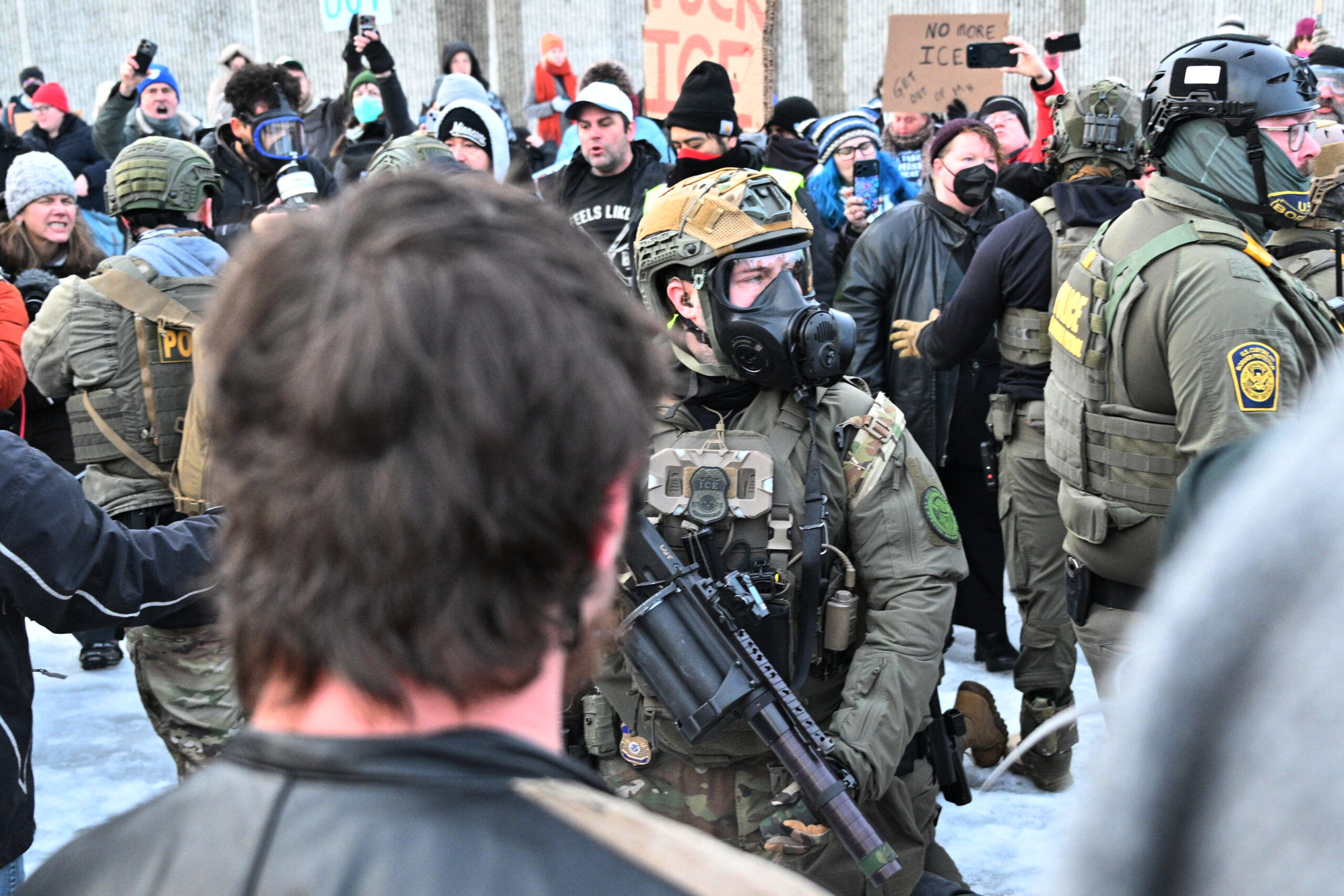
    Federal agents confront protesters outside the Bishop Henry Whipple Federal Building on Thursday in Minneapolis.

    On Thursday, a day after Good’s killing, two people were reportedly shot by Border Patrol agents in Portland, Ore., after a vehicle stop. DHS once again claimed the driver “weaponized his vehicle” and attempted to run over the agents.

    The conduct of too many federal agents involved in immigration enforcement not only violates the norms of decency and order but also goes against the various agencies’ use-of-force policies and rights enshrined in the Constitution.

    All of that is meaningless, however, to an administration that has repeatedly shown disdain for the law and which has overtly condoned violence as an acceptable response to nonviolent behavior.

    It may be too late for Congress to use its power of the purse to rein in these out-of-control agencies. Republicans have already given the president $30 billion to recruit thousands more ICE agents, even as hiring requirements are lowered and training time is reduced — a recipe for disaster.

    Legislators not in thrall to the Trump administration must use every oversight opportunity they can muster to shine the spotlight on abuse and hold rogue officials accountable.

    Local and state governments must lawfully push back and protect their residents — including investigating and charging federal law enforcement with crimes. In the Good case, the former is already proving to be a challenge, as Minnesota’s attorney general notes that state law enforcement officials are being pushed aside, and that the investigation will be conducted solely by the FBI.

    Even as the president puts his thumb on the scales, the courts must stand firm and uphold the law.

    And in communities across the country, everyday Americans like Renee Nicole Good must continue to peacefully exercise and defend our civil rights against those who would use fear and intimidation to gain control. The risk has never been greater, but the stakes have never been higher.

  • Minneapolis ICE murder is Trump’s Waterloo in America’s war for the truth

    Minneapolis ICE murder is Trump’s Waterloo in America’s war for the truth

    “You might murder a freedom fighter … but you can’t murder the freedom fight.”

    Fred Hampton shortly before his own assassination by the U.S. government in 1969

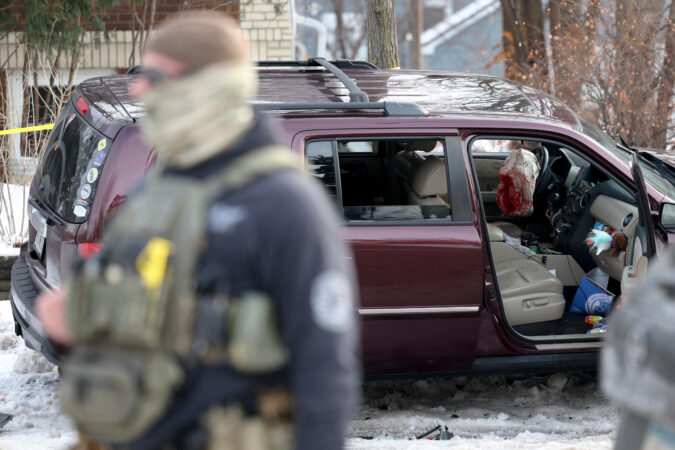
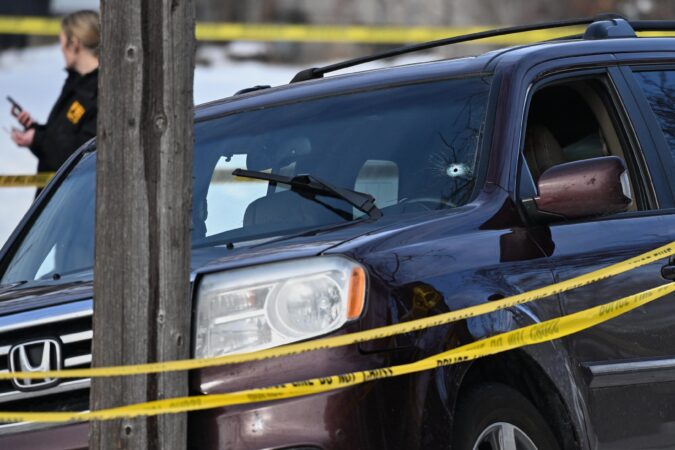
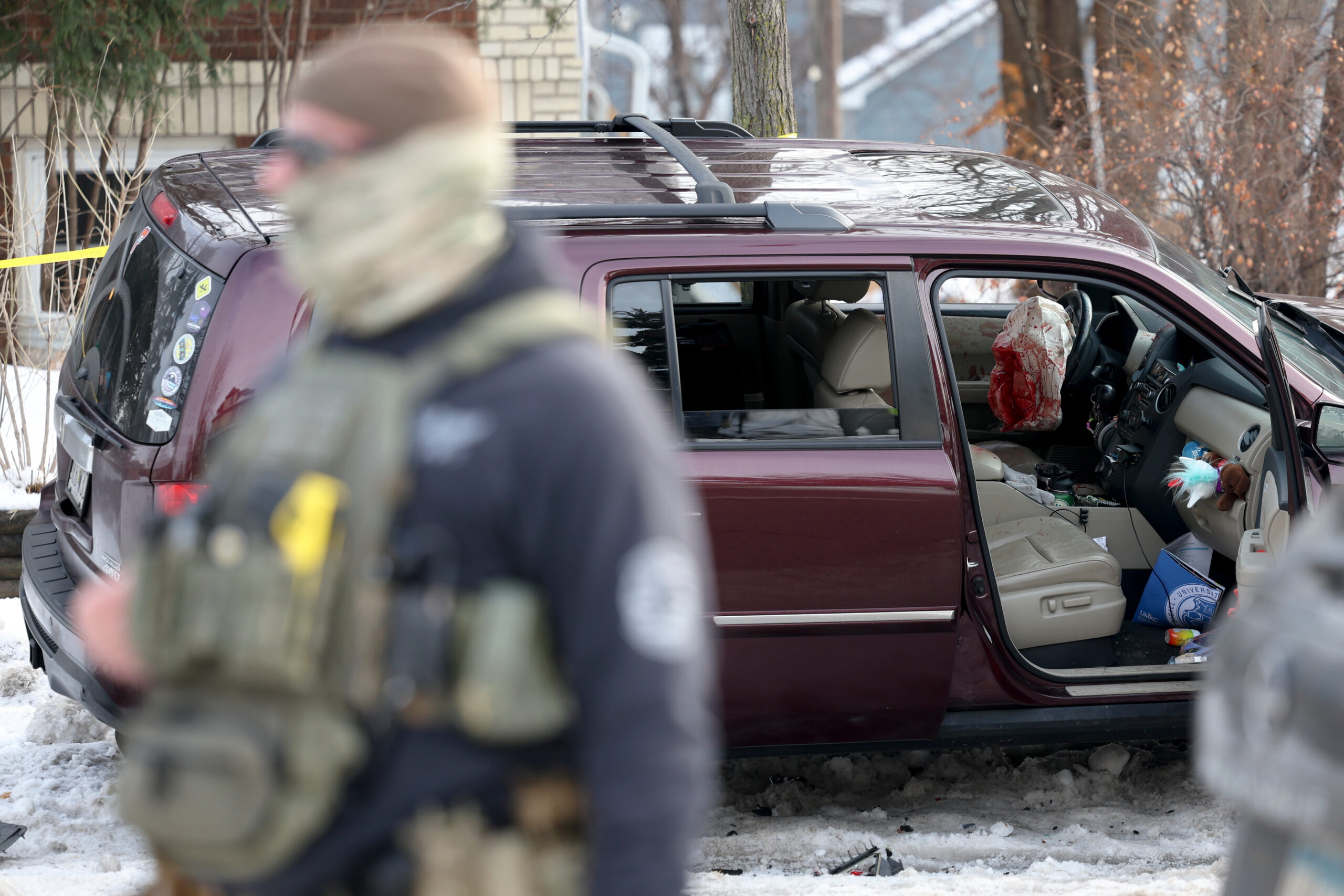
    The Honda Pilot family SUV with the glove compartment crammed with a 6-year-old’s adorable stuffed toys and its deployed airbag and headrest drenched in fresh red blood hadn’t even been towed from the Minneapolis murder scene on Wednesday before the full force of the U.S. government attacked Renee Nicole Good a second time.

    After the three deadly bullets came a fusillade of outrageous and morally reprehensible lies.

    Tricia McLaughlin, the already notoriously fact-averse spokesperson for the U.S. Department of Homeland Security, didn’t even know the identity of the 37-year-old Colorado native — let alone any details of her intricate life or her beautiful, award-winning poetry — when the DHS flack smeared Good as “one of the violent rioters” who’d “weaponized” her SUV against the U.S. Immigration and Customs Enforcement (ICE) agent who shot and killed her, and called it “an act of domestic terrorism.”

    Just moments later, DHS Secretary Kristi Noem — the absurdity of her words only ratcheted up by her ridiculously oversized cowboy hat at a Texas border press hit — joined the verbal pile on and amplified the “domestic terrorism” angle, even though the investigation of what had actually happened on snowy Portland Avenue had barely begun. This was all just a warm-up for America’s prevaricator-in-chief.

    President Donald Trump took to his so-called Truth Social to offer his own, further-embellished version — insisting to the nation that the still-at-that-moment unidentified woman had “violently, willfully, and viciously ran over” ICE officers, blaming “the Radical Left,” and even claiming that the ICE gunman was recovering in the hospital.

    A deployed airbag and blood stains are seen in a crashed vehicle on at the scene of a shooting in Minneapolis on Wednesday.

    In reality, the violent, reckless actions by masked agents of an American secret police were nothing new, and neither was the government’s massive assault on the truth of what happened in Minneapolis, ripped from the pages of a fascist playbook.

    But this time, millions of Americans could see what really happened to Good, thanks to multiple videos taken on that south Minneapolis street by everyday citizens with a righteous distrust of their own government. It’s the deep skepticism that began with three gunshots and a blurry home movie in Dallas’ Dealey Plaza on Nov. 22, 1963. Now, the digital clarity of three gunshots at 9:30 a.m. on Jan. 7, 2026, may have marked a kind of Waterloo, a righteous turning point in our existential war over the truth.

    Americans could believe their elected president, or the completely different reality they could see with their own eyes.

    The citizen videos showed Good — it’s unclear whether she was a volunteer observer of the amped-up ICE raids in Minneapolis, or just filming the agents on a whim — parked at an angle across Portland Avenue when an ICE SUV approached. Two agents hopped out and approached Good’s Honda while a third — the soon-to-be shooter — moved in from the opposite side. One agent screamed, “Get out of the f— car,” but Good, with her window now open and her partner in the passenger seat, slowly backed up and then started a sharp right turn, seeking to leave the scene.

    But the third federal officer, seen adjacent to the left front fender, had already drawn his gun and fired a shot through the windshield as Good turned her Honda away from him. The videos then show the agent — now a few feet from the vehicle and clearly not in danger — firing two more times into the open window, as the vehicle and the mortally wounded Good traveled halfway down the block and into a parked car.

    The shooter — the agent the president claimed had been run over and hospitalized — was filmed walking around the murder scene, apparently unharmed. Meanwhile, the government’s crusade to dehumanize Good was already well underway, as agents were shown blocking a physician who pleaded to aid the dying woman before they finally dragged her away by her limbs.

    The senseless killing of Good was exactly the tragedy that state and city officials had feared when DHS declared at the start of the new year that it was flooding Minnesota — whose large community of Somali American refugees had been viciously slurred by Trump as “garbage” — with some 2,000 armed, masked immigration agents.

    The national spotlight ensured wall-to-wall cable news coverage when agents killed a white U.S. citizen and a mother of three on the second day of the surge in and around Minneapolis, but all of this has happened before. In the last four months, according to the New York Times, federal agents have fired their weapons in nine separate incidents — each time into a vehicle. And often the initial story from DHS collapses under the weight of truth.

    In October, U.S. Customs and Border Protection agents involved in Chicago’s “Operation Midway Blitz” claimed they were boxed in by as many as 10 cars — again, not supported by video — and fired at least five shots at Mirimar Martinez, who was not seriously injured, but was then indicted, along with her passenger, on assault and attempted murder charges. Martinez was not charged with a gun crime — despite an initial DHS claim that she’d brandished a semiautomatic weapon — and soon the entire case crumbled, and now all charges have been dismissed.

    Federal agents are only allowed to fire into a moving car when they believe the driver is trying to kill or maim them or other bystanders. As videos of Good’s killing circulated Wednesday afternoon, an unnamed DHS official told NBC News that the agents’ actions — from approaching the vehicle from the front to firing the fatal shots — went against their training. But how can the public expect sound decision-making from a surge of inexperienced new hires that ICE recruits on social media, or in slick ads during NFL games, with plans to target gun shows and military enthusiasts?

    People gather for a vigil on Wednesday evening after a U.S. Immigration and Customs Enforcement officer shot and killed a woman hours earlier in Minneapolis.

    What’s more, why would the Trump regime tell the truth about killing Good when its entire Minnesota operation — along with everything else about its immoral mass deportation drive — is built atop a foundation of despicable lies, from the White House racist slander of Somali refugees seeking a better life in Minnesota to the gross exaggerations (spiked by a dishonest viral video) about a childcare fraud scandal?

    GOOD MORNING MINNEAPOLIS,” DHS tweeted from its official account Monday as it began an unwarranted, unwelcome operation that is making no one safer, especially not the children of Minnesota. A local coalition of childcare operators called Kids Count on Us reported Wednesday that ICE agents have been swarming their facilities as operators report that little kids are frightened, adding, “We are terrified.” After Good’s death, protesting students at nearby Roosevelt High School were pepper-sprayed by federal agents. And now a 6-year-old child, whose military veteran father had already died in 2023, is an orphan.

    Exactly who are the violent rioters committing acts of domestic terrorism here?

    Minneapolis is a great American city that has been bombarded with needless tragedies throughout the 2020s, beginning on May 25, 2020, when George Floyd was murdered under the knee of police officer Derek Chauvin, just 0.7 miles from where Good was killed. That homicide also began with official lies that were absurdly false, until a brave citizen’s video showed America what really happened.

    Wednesday’s ICE murder carried the grim echoes of past government killing across the upper Midwest — an icy wind that blows from the massacre at Wounded Knee through the 1969 assassination of Black Panther Fred Hampton and over Floyd’s senseless demise. Yet, there is also reason to feel that, this time, a change is in the air.

    For one thing, true leaders like Minneapolis Mayor Jacob Frey — who stunned a national TV audience when he bluntly told ICE, “Get the f— out of Minneapolis” — and Minnesota Gov. Tim Walz made it clear they are fed up with the performative violence and the blatant lies. “Maybe we’re at their McCarthy moment,” Walz told a news conference. “Do you have no decency? Do you have no decency? We have someone dead in their car for no reason whatsoever. Enough. Enough is enough.”

    But there was something even more critical on this frigid prairie morning: brave everyday citizens willing to put their lives on the line for neighbors they don’t even know, and to risk everything in pursuit of the truth. America knows what really happened to Good because courageous people ran toward the scene with their phones aloft to bear witness, not knowing if ICE would kill again.

    It’s the revolutionary spirit we’ve been seeing all across America for months — regular folks from the community blowing whistles, filming ICE raids, and telling the world that our citizens will defend their communities even when all the big institutions and their overpaid leaders will not. Authoritarian governments only thrive in their own manufactured reality, gaslighting the masses that their hardworking, brown-skinned neighbor is a rapist, or that an uninjured federal agent is instead in the emergency room.

    Mark down Jan. 7, 2026, as the day America started turning off the gas, and the masks came off. No wonder it came out Thursday morning that the FBI is not cooperating with Minnesota state authorities on the investigation, in a pathetic, too-late effort at covering this mess up.

    I was one of many on Wednesday who couldn’t stop thinking about another unprovoked government killing: the Kent State Massacre and the murder of four college students on May 4, 1970. That moment caused Neil Young to write these words that still feel so relevant: “What if you knew her and found her dead on the ground?/ How can you run when you know?”

    Good Americans who still believe in truth and justice ran into the danger on Portland Avenue, and we are a better place for that. Some day, and probably soon, there will be a statue on that spot in honor of Renee Nicole Good, an American hero whose bigger freedom fight could not be murdered by tyrants.

  • Lies feed pervasive attacks on transgender and nonbinary people

    Lies feed pervasive attacks on transgender and nonbinary people

    Roughly two out of every 100 people in the U.S. identify as transgender or nonbinary.

    As 2026 opens, it is a fitting time to consider how disproportionately small that number is when viewed in light of the proliferation of news about anti-transgender talking points and policy initiatives, lethal anti-transgender violence, and recent years’ epidemic of transgender youth suicidality.

    The disinformation campaign launched by prominent Republicans against transgender and nonbinary people has become pervasive in public discourse. By repeatedly casting aspersions upon the tiny fraction of competitive athletes who are transgender, a moral panic about “fair play” and locker rooms has been amplified in the absence of scientific evidence to support the validity of the histrionic claims being made.

    The U.S. Department of Health and Human Services is threatening to shutter hospitals providing medically approved care for transgender youth endorsed by the American Medical Association and the American Academy of Pediatrics. The recently passed House bill criminalizing gender-affirming healthcare for minors is making its way to the Senate for a vote. The Food and Drug Administration is targeting private companies that market body positive products for gender affirming self-presentation with legal threats.

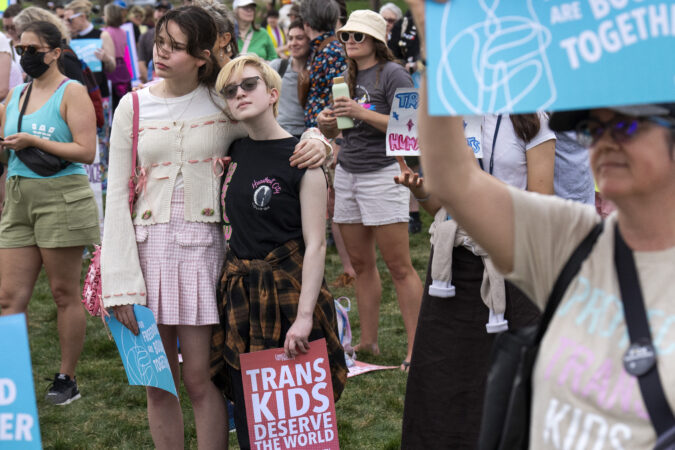
    A protest at an event honoring Florida Gov. Ron DeSantis over his antigay policies. The right has targeted trans people, in particular.

    Meanwhile, the abundance of research demonstrating that transgender people suffer disproportionate violent victimization, homelessness, and suicide has remained largely unaddressed.

    Moderate politicians’ concern with appealing to wider audiences in these divisive times exacts a cost: to trans kids’ health, safety, and dignity in their schools and communities.

    Ambivalent Democrats

    Rather than forging alliances to protect the safety and constitutional rights of transgender citizens, some of the most influential members of the Democratic Party — from Kamala Harris to Pete Buttigieg to Rahm Emanuel to Gavin Newsom — have at least partially capitulated before the political tidal wave of anti-transgender disinformation, complete with all of the red herrings it washes ashore.

    When powerful Dems take the bait, they brand the abandonment of their platform’s core values as political pragmatism. In doing so, they weaken the alliances that could bolster the very ground upon which they wish to reestablish their standing.

    Yet, despite the political caution that fuels the Democratic Party’s lack of moral courage on trans issues, passive complicity in response to the right’s virulent anti-trans rhetoric has actually not proven to be a winning strategy for them — as last November’s election results reillustrated.

    More importantly, by keeping to the intentionally distorted discourse about transgender people — rather than countering sensationalized falsehoods and vitriolic rhetoric with integrity and conviction — politicians end up appealing to and emboldening constituencies who lean into disinformation out of fear. This isn’t only cynical, it’s dangerous. FBI hate crime statistics tell a bleak story of the rise in vigilante violence against transgender Americans, coinciding with a steep rise in political antagonism and targeted scapegoating.

    A recent effort led by U.S. Reps. Sarah McBride (D., Del.), Mark Takano (D., Calif.), and members of the Congressional Equality Caucus calls upon House Speaker Mike Johnson (R., La.) to enforce the rules of decorum in Congress by holding those who defame and denigrate the trans community to account. As of this writing, no response has been issued.

    A path forward

    The only ethical and effective path forward demands that we fundamentally reframe the political conversation about transgender people in factual terms that are grounded in foundational democratic principles, credible science, and a commitment to the protection of civil rights and civil liberties of all Americans.

    There is some hope to be found in the lawsuit filed this week by 19 Democratic states to block the federal government’s efforts to ban gender-affirming care nationally.

    Ideally, we would see more leadership on both sides of the aisle to protect the safety, freedom, and human dignity of all LGBTQ+ people, as demonstrated in the introduction of the bipartisan Global Respect Act by McBride and U.S. Rep. Brian Fitzpatrick (R., Pa.) to protect LGBTQ+ people around the world from identity-based violence, torture, and persecution.

    Regressive political forces have always sought to isolate and villainize minoritized groups, to paint them as threats to the majority by virtue of whatever marks them as somehow “different” from those in power — and therefore less deserving of the same rights and protections.

    Consider that during the civil rights movement in the 1960s, boycotts of segregated lunch counters and department stores were underway in Southern communities when New York U.S. Rep. Adam Clayton Powell famously corrected a reporter who queried if he was advocating for “Negroes” to stay out of segregated national chain stores in solidarity with the boycotts.

    “Oh no, that’s not true,” Powell countered. “I’m advocating that American citizens interested in democracy stay out of chain stores.” With that sentence, he turned the conversation inside out to reveal its core: Civil rights and civil liberties are the central pillars of a democratic society — not exclusive privileges to be hoarded by any one set of citizens so as to dehumanize and disadvantage another.

    A genuine commitment to our democracy demands that we shift our discursive paradigm from one that impugns the existence of transgender people to one that impugns the de jure and de facto denial of transgender people’s humanity, dignity, civil rights, and personal safety.

    It is long past time to reset the terms and reclaim the narrative on the equal protections and constitutional rights of transgender Americans. The political leadership we need in this moment requires the clarity, intentionality, and fortitude to do just that.

    Ashley C. Rondini is an associate professor of sociology at Franklin and Marshall College.

  • Pennsylvania’s leaders are losing Gen Z

    Pennsylvania’s leaders are losing Gen Z

    In Pennsylvania, just over 2% of Gen Z students believe elected officials act in their best interests. Three-quarters say they don’t.

    These findings come from more than 2,800 conversations across 16 colleges and universities in the state. Project 26 Pennsylvania collected them without a script, giving students space to speak freely.

    Young Pennsylvanians believe the commonwealth’s institutions are slow to respond and are detached from daily realities. They pointed to artificial intelligence and its workforce implications, social polarization, and global issues that feel increasingly vital to confront on a local and regional level.

    In my role with the United Nations Association of the USA, I meet regularly with young Americans across the country. They’re not apathetic — far from it. They know what it looks like when institutions function — and when they drift.

    A few weeks ago, I visited a campus in Bethlehem and heard from students who were deeply engaged and informed. They focused on conservation, economic growth, healthcare access, and local governance. But when the conversation turned to institutional performance, their confidence plummeted.

    They described government bodies that move slowly, communicate inconsistently, and prioritize politics over problem-solving.

    There is a clear contrast between what they see at home and what I see globally.

    The U.N. has expanded youth engagement at a historic pace. It created a dedicated Youth Office and invited young people into negotiations. Leaders expect a direct report on the concerns and ideas of young Americans.

    Pennsylvania’s institutions should view this as a model if they want to start restoring trust.

    That’s because the risk of inaction is more than disengagement; it’s dislocation. Young adults are moving to places that do pay attention to and meet their needs.

    A Pennsylvania State Data Center analysis found that almost half of Pennsylvanians moving out of state were between the ages of 18-34. Many of them are opting for faster-growing places like Florida, North Carolina, and Texas.

    If a global system of 193 member states that agree on little else can coalesce around the need to build structured pathways for youth involvement, then Pennsylvania’s agencies and local governments can do the same.

    This shift does not require a redesign of government — just consistency and intention. There are steps the Keystone State can take now.

    Several Pennsylvania cities already show what youth engagement can look like.

    Allentown created a Council of Youth by resolution, though all 16 seats appear vacant. Pittsburgh has a youth coordinator who runs its Youth Commission, and Philadelphia operates a Youth Commission of its own. These are promising starts, and all townships and boroughs should follow. But they are often tucked deep into municipal websites rather than positioned as visible civic priorities.

    Gov. Josh Shapiro should create a statewide youth advisory cabinet with a direct line to major agencies. States like Iowa, North Carolina, and Massachusetts already run strong statewide youth councils.

    In fact, Pennsylvania does have a strong model already in the NextGen Advisory Council, which brings young leaders into decision-making on conservation and public lands. That same approach should be extended across agencies.

    These steps are practical. They also reflect respect for young people, who are not the “next” generation, but are active contributors shaping our commonwealth.

    They organize events, testify at meetings, vote in local elections, and devote time to issues that affect their communities. They have shaped mental health advocacy, launched small businesses, and pushed for housing initiatives in cities across the state.

    If institutions want to restore trust, they need to match that level of seriousness.

    Trust does not return through campaign outreach or social media posts. It grows when young people see their work is taken seriously and leads to outcomes — and when institutions welcome their involvement with regularity and purpose.

    Pennsylvania has a window to rebuild confidence. The Project 26 findings should not be dismissed as youth discontent, but read as a statement of expectations — and an opportunity.

    Half of the students surveyed said they would be motivated to take political action “if they felt it would make a difference.” They are engaged, ready, and eager to help build a stronger Pennsylvania.

    The question is whether the commonwealth’s leaders will invite them into the process.

    Jarrett James Lash serves as the 14th UNA-USA youth observer to the United Nations and is a municipal planner in Montgomery County.

  • Letters to the Editor | Jan. 8, 2026

    Letters to the Editor | Jan. 8, 2026

    What is Congress waiting for?

    It is now time for our representatives in Congress to discuss when, by whom, and how they will proceed with a motion to remove the president from his position. The 25th Amendment explains exactly how to do this. The vice president is supposed to initiate this process, but we know in this case that won’t be happening.

    Donald Trump’s reckless and delusional words and actions are not only endangering the safety of millions of U.S. troops stationed around the globe, but they also threaten the sense of peace and security that the entire world has enjoyed since the end of World War II.

    Let’s look at what Trump has done in the past seven days alone:

    1. He took over Venezuela without any congressional approval — then said the U.S. will come in and send our companies to take over the oil drilling, which is worth billions in annual revenue.
    2. He threatened Iran, Colombia, Mexico, and Cuba with similar actions in their countries when they criticized his invasion of Venezuela.
    3. He stated that the U.S. needs to own Greenland for reasons of “national security.” What kind of “national security” threat does he think exists in Greenland? Polar bears?

    When the emperor not only has no clothes but also seems unhinged, it’s time for our representatives to do what our Constitution has given them the power to do.

    Write to your members of Congress today and ask them to insist on rational leadership for our wonderful country by starting this process.

    Francine Mulligan, Philadelphia

    Anything but Epstein

    I will do anything to stop the release of the Jeffrey Epstein files. I have subverted the work of the FBI and compelled officials in the U.S. Department of Justice to perjure themselves on my behalf. But don’t worry — if Congress ever indicts them, I will pardon them.

    I will blow up boats and kill civilians in international waters and claim they are smuggling drugs, but I won’t provide any proof. My word is enough.

    I will seize oil tankers in international waters and claim they are running illegal oil.

    I will start a war with a sovereign country, depose its leader, destabilize the government, and claim its oil riches for the United States.

    I’ll do just about anything to prevent, slow down, or redact any information that may reference me in those Epstein files.

    Where is Congress? Donald Trump has defied the deadline to release the Epstein files, committed war crimes in the Caribbean Sea and the Pacific against unknown suspects, seized ships at sea, and is now starting a war. All because of the Epstein files? What could be in those files?

    Susan Thompson, Media

    On this day

    An interesting coincidence, perhaps. It’s curious that Manuel Noriega was taken into custody in Panama by U.S. forces in 1990 on the same date as Nicolás Maduro: Jan. 3. Any political symmetry intended?

    Richard Wertime, Merion Station

    Join the conversation: Send letters to letters@inquirer.com. Limit length to 150 words and include home address and day and evening phone number. Letters run in The Inquirer six days a week on the editorial pages and online.

  • Letters to the Editor | Jan. 7, 2026

    Letters to the Editor | Jan. 7, 2026

    True intention

    Why doesn’t Donald Trump direct his boat strike/invasion show toward Colombia, Bolivia, and Peru, where most of the cocaine is manufactured, or China and Mexico, where the majority of fentanyl comes from, if his intention to rid the U.S. of illegal drugs killing Americans were true?

    K. Mayes, Philadelphia

    . . .

    Donald Trump’s “special military operation” in Venezuela puts him squarely in the same category as Russia’s Vladimir Putin, who used the same phrase to describe his invasion of Ukraine, and China’s Xi Jinping. It was all about oil from the beginning. Bombing boats in the name of “narco-terrorism” was just a cover and a distraction. And he intends to “run” Venezuela? Trump has injected himself and the United States into a big mess in which I don’t believe he has any idea how to actually “run” the country, or any idea of the enormous cost involved. This adventure is simply another episode of self-glorification and probably self-enrichment somewhere down the line, as well. It’s all about himself as usual, not for the good of the United States and our people or our standing in the world. This is hardly making America great again.

    Elsbeth Wrigley, Wyndmoor

    . . .

    Your recent editorial on Donald Trump’s illegal invasion raises many valid objections to our president’s headlong rush to remove Venezuelan President Nicolás Maduro without any advice or consent from Congress, let alone the United Nations. I never voted for Trump, and I agree in general with most of your points about where we are with Venezuela. But I was gravely disappointed in your statement that “[f]ormer President George W. Bush at least sold a phony story about weapons of mass destruction to get Congress to go along with his reckless invasion of Iraq.”

    Authorities with more expertise on the Iraq War than The Inquirer Editorial Board beg to differ. I refer you to a 2015 op-ed from the Wall Street Journal headlined, “The Dangerous Lie That Bush Lied.” It was written by Laurence H. Silberman, who served as cochairman of the Commission on the Intelligence Capabilities of the United States Regarding Weapons of Mass Destruction, a bipartisan body. The gist of what Judge Silberman and others have written is that the motivations for the invasion were much broader than WMDs, and that Mr. Bush’s decision was unduly colored by woefully inadequate intelligence. Hindsight is always 20/20.

    While your concerns about how the invasion of Venezuela might affect Ukraine and even Taiwan are also worth stating, the Editorial Board needs to remember that even the noninterventionist Biden administration had put a substantial price on the head of Mr. Maduro. So there is little doubt he is just as bad a character as Mr. Trump portrays him to be. Thus, in the end, though we have probably (to paraphrase former Secretary of State Colin Powell) bought something because we broke it, the invasion may, after a long struggle, advance democracy in the Western Hemisphere.

    John Baxter, Toano, Va.

    Illegal invasion

    Without the consent of Congress, the invasion of Venezuela was both illegal and unconstitutional. Without a follow-up plan, it was also incredibly reckless. It clearly was not about drugs or democracy, but about wealth, power, and greed. It was about oil. This disaster not only negatively affects the U.S. but has the potential to change the world order. It gives other countries permission to do the same. Do we want China to take over Taiwan? Do we want to legitimize Vladimir Putin’s invasion of Ukraine? I think not. Now, more than ever, we need Congress to step up to the plate and put a stop to this insanity. And it is the job of We the People to make sure that happens. Each and every voice needs to be heard. We are in a mess.

    Anne B. Zehner, Palm City, Fla.

    Abortion protesters

    Having observed the behaviors of protesters at Planned Parenthood’s location at 11th and Locust Streets over the past year, I would encourage the people and/or organizations that pay or otherwise support some or all of the repeat protesters to evaluate their performance and outcomes. Weekday protesters are usually a small number of older men whose dress and loud manner are difficult to ignore. They approach most patients with a brochure and candy, and most often call out loudly to not kill the baby, followed by offers to “help.” Their appearance and boisterous behaviors appear counterproductive. The Planned Parenthood facility provides a variety of healthcare services, so not every woman who arrives is seeking an abortion. I have yet to observe a single woman turn away from an appointment. We should respect the right of the protesters to express their beliefs. But if they hope to influence patients, they could be more respectful. Supporters of the protesters should more carefully monitor conduct and results.

    L. David Wise, Philadelphia

    Protect clean water

    As children learn in grade school, “We all live downstream.” That premise is at the heart of the federal Clean Water Act. If you want clean water for fishing, swimming, and drinking, you need to protect from pollution not just lakes and rivers, but the upstream waters that feed them. Environmental Protection Agency Administrator Lee Zeldin is currently pushing new, polluter-friendly rules that would exclude 80% of the nation’s headwater streams and wetlands from pollution protection. The proposal would go beyond recent U.S. Supreme Court decision-making in narrowing the scope of federally protected waters. Even in Pennsylvania, with its own state-level protections, this cutback in the Clean Water Act would make it harder for an already stretched state Department of Environmental Protection to hold the line against more pollution dumping. Americans must tell the EPA to abandon this assault on our nation’s waters.

    Robin Mann, Rosemont

    The troops are coming?

    A recent article in The Inquirer poses an intriguing question: Why has Philly, an overwhelmingly Democratic city, so far been spared the federal troop deployments President Donald Trump has inflicted on several other Democratic-led cities?

    To the list of possibilities explored in the article, I’d add one more: the central role of Philadelphia in the ongoing celebrations of our nation’s 250th birthday. President Trump, ever hungry for the media spotlight, has sought to make himself a focus of these celebrations. (A “fact sheet” on the official White House website is titled, “President Donald J. Trump previews plans for the Grandest Celebration of America’s Birthday.”)

    Even though the U.S. Supreme Court ruled against Trump’s National Guard deployment in Chicago, the president has suggested that troops could return “in a much different and stronger form.”

    If so — and if they show up in Philly — how will it play across the nation, and to the increasing number of Americans disenchanted with the president, if federal troops occupy the city where our grand experiment in democracy began? Does the Trump administration really want viral videos of National Guard troops carrying weapons, or anonymous masked immigration agents bundling people into unmarked vans, with Independence Hall as a backdrop?

    Shobhana Kanal, Bala Cynwyd

    Safeguard digital environment

    As a pediatrician, I see every day how social media is shaping our children’s and adolescents’ lives long before their brains are ready to handle it. My patients tell me about sleepless nights, bullying that doesn’t end when the school day does, and algorithmic “rabbit holes” that amplify their anxiety and depression. I see the toll in headaches, weight changes, panic attacks, and exhaustion. These aren’t isolated cases; they’re part of a public health crisis affecting young people across Pennsylvania.

    Families and doctors can provide support, but we can’t prescribe much for an algorithm or a billion-dollar company taking advantage of kids. Other states have already passed Kids Code legislation that requires tech platforms to design their products with children’s well-being in mind. Pennsylvania can and should do the same.

    Our kids deserve digital environments that are as carefully protected as the homes, classrooms, playgrounds, and pediatric clinics where they spend the rest of their lives. Lawmakers must step up and pass a Kids Code now.

    Joey Whelihan, Philadelphia

    Join the conversation: Send letters to letters@inquirer.com. Limit length to 150 words and include home address and day and evening phone number. Letters run in The Inquirer six days a week on the editorial pages and online.

  • Between Grok, Trump, and RFK Jr., it’s a dangerous time to be a child in America

    Between Grok, Trump, and RFK Jr., it’s a dangerous time to be a child in America

    It is a terrible time to be a child in America.

    From removing protections from newly resurgent communicable diseases to investing good money after bad into industries that will make the planet more inhospitable during their lifetimes, we adults have wholly abdicated our responsibilities to Gen Alpha (and the infant Gen Beta). We’ve especially failed them by ceding to our own most juvenile inclinations — we elect the irresponsible and reward the feckless — and abandoning them to what we’ve wrought.

    You grok? Yeah, that used to mean “to understand profoundly and intuitively,” but thanks to the sots that run the social media site X, it now refers to the artificial intelligence assistant that is, as we speak, actively degrading children by allowing users to take any innocently posted photo and, via prompt, have Grok edit and return the same image with the children stripped of their clothing, sometimes with other sexually suggestive details added.

    When first called out, the AI assistant itself claimed the offending, nonconsensual, manipulated images were isolated cases.

    But after outcry from ordinary folks and from officials from France, the United Kingdom, India, and others globally, Elon Musk — the CEO of X’s holding company, who initially posted laughing emojis about some of the more innocuous manipulated images — has now, according to the Guardian, posted that “anyone using Grok to make illegal content will suffer the same consequences as if they upload illegal content.”

    Nevertheless, as of yesterday, the degrading images were still being generated and posted, the Guardian noted.

    It’s not only children. The majority of the nonconsensual AI manipulated images created this way between Dec. 25 and Jan. 1, according to an analysis by a French forensic nonprofit, are of women under the age of 30, with only 2% involving minors under the age of 18. Still, it is particularly troubling that some of the minors subjected to this kind of image editing are allegedly as young as 5 years old.

    The creation of these deepfakes isn’t, unfortunately, limited to X. According to a recent article by Wired, Google’s and OpenAI’s chatbots also enable users to manipulate existing images nonconsensually this way.

    As the adults in the room, our gravest fault in all this isn’t that we’ve given puerile middle-aged tech leaders like Musk the space to ply generative products that retcon our children’s images in gross and nonconsensual ways, though that’s certainly bad enough. No, it’s the cumulative harms to our children we’re enabling across the board and right under our noses.

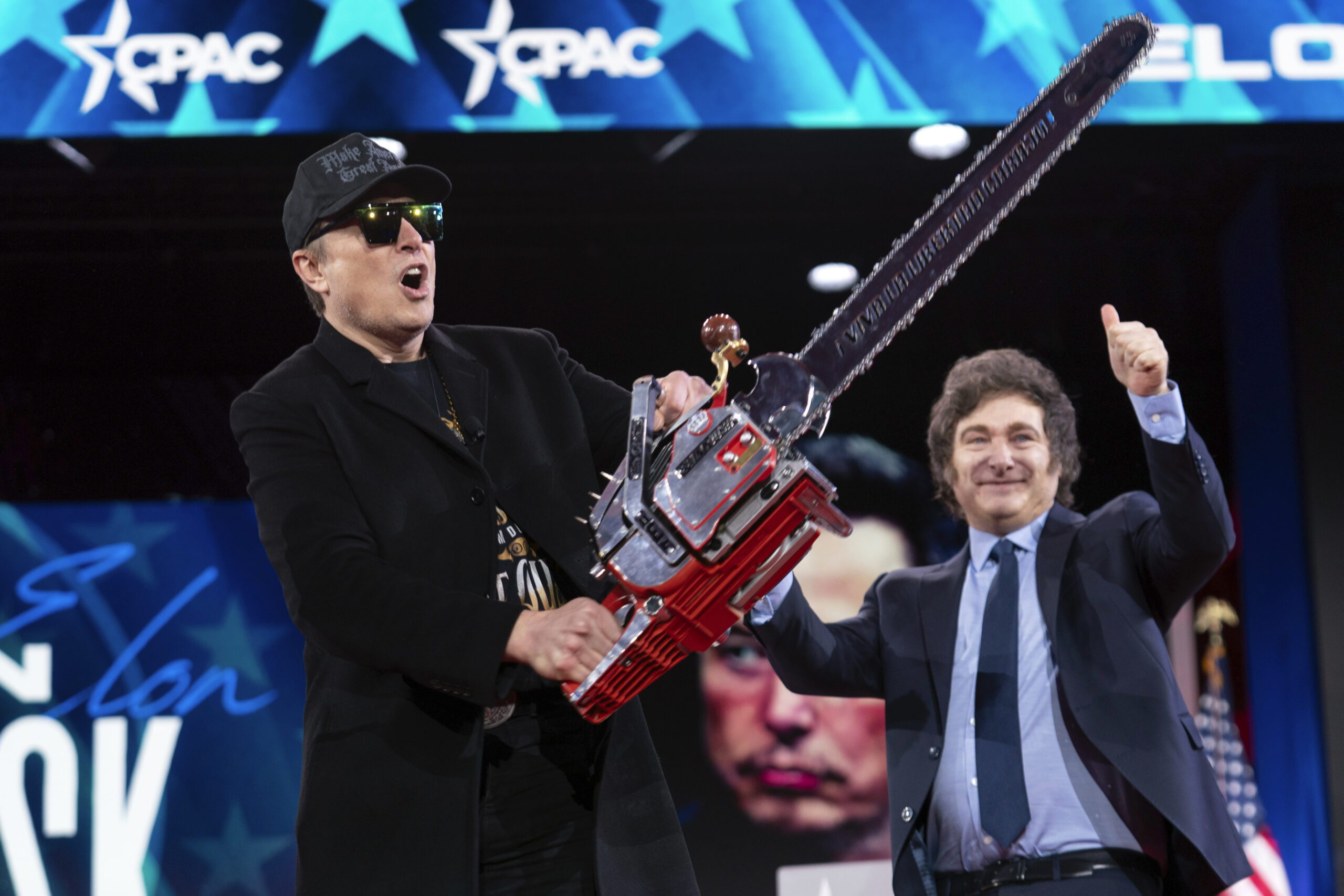
    Elon Musk holds up a chain saw he received from Argentina’s President Javier Milei (right) as they arrive to speak at the Conservative Political Action Conference (CPAC) at the Gaylord National Resort and Convention Center in Oxon Hill, Md., in February.

    The generative AI that fuels the nonconsensual pornification of our children’s visages for entertainment purposes is part of what empowers Big Tech funding support of the Trump administration. An administration that is working mightily to restrict the image our children themselves can choose to present in the world, and to deny the bodily autonomy of anyone younger than 19.

    It’s an administration that has thwarted the release of the Jeffrey Epstein files, despite the calls to do so from the women who were preyed upon and victimized when they were young girls. The same administration that has cut the SNAP benefits that feed millions of young people, and has dismantled educational resources for disabled students. An administration that, under Robert F. Kennedy Jr.’s direction, has narrowed access to healthcare, blamed Tylenol for autism, and curtailed gold-standard vaccines for children rather than expanded them.

    In the longer term, the same Big Tech responsible for the development of generative AI is responsible for the explosion of data centers, which we adults welcome because, sure, they create jobs for us now. But since each one consumes up to five million gallons of freshwater per day, the world we are shaping for Gen Alpha and Gen Beta children to inhabit will have drastically diminished, or contested, capacity to support human life.

    There are so many other examples of how we, the adults in the room, are choosing to be callow and cavalier about the future. So can we really bristle when we hear members of Gen Alpha (or even Gen Z) say we’ve ruined the world?

    If we want the younger generations to be mistaken about that, we must change course now. And the opportunity to flex on the Grok grotesquerie is staring us in the face. Let’s push to close it down altogether until the coding is modified, and no one can prompt the AI assistant to strip our children of their clothes, their dignity, and their agency. We owe them that.

    Then we can get started on fixing all the rest.