Category: Opinion

  • Trump officials used AI to distort a photo of an anti-ICE activist. That’s not OK.

    Trump officials used AI to distort a photo of an anti-ICE activist. That’s not OK.

    In the everyday chaos that characterizes President Donald Trump’s America, the news cycle changes faster than most of us can keep up with it.

    But can we please pause for a moment and consider the gravity of what happened to Nekima Levy Armstrong at the hands of the U.S. government? She led a group of activists who interrupted a worship service in Minnesota on Jan. 18. The demonstrators went to Cities Church in St. Paul to stage a protest in support of immigrant rights.

    The choice of venue was very much intentional: One of the leaders at the church is an administrator at a local U.S. Immigration and Customs Enforcement office. Four days later, Levy Armstrong, a half dozen other protesters, and two journalists were arrested.

    Afterward, while she was still in custody, Trump administration officials released an AI-manipulated image of her on X, the social media site formerly known as Twitter, on accounts for Homeland Security Secretary Kristi Noem and the White House.

    The doctored image shows Levy Armstrong (no relation) with her mouth open as if she’s sobbing hysterically. Her face also appears to have been darkened. The photo caption reads: “ARRESTED far-left agitator Nekima Levy Armstrong for orchestrating church riots in Minnesota.”

    It wasn’t a riot. Nor was she crying. But all that is beside the point. The Trump administration officials wanted to make her look bad, even if it meant reshaping reality to do so. What’s especially concerning is the dishonest way it went about it. According to photos and video of her arrest, Levy Armstrong maintained a mostly impassive expression on her face throughout the ordeal.
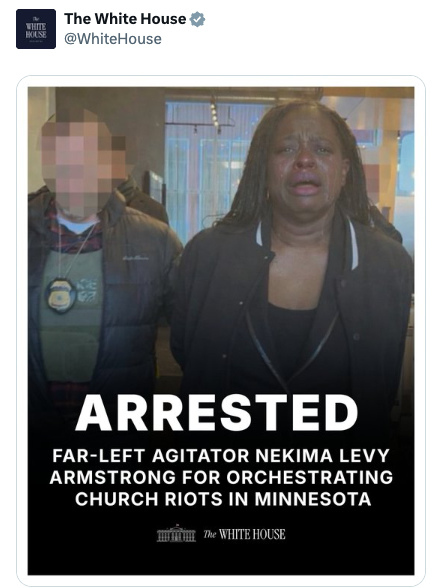
    On Jan. 22, the White House posted an AI-altered image of Nikema Levy Armstrong on the White House’s official X feed. The altered image makes Levy Armstrong appear as crying, the original image shows no such emotion.

    A lot of people might see the digitally altered image of her sobbing and assume that because it was posted on a verified social media channel from the highest levels of government, it is an accurate representation of what happened — when it’s anything but.

    A New York Times analysis concluded that the photo had been manipulated — something the White House admits to doing, and is unrepentant about. The manipulated photo is a meme, according to White House spokesperson Kaelan Dorr, who doubled down on X, saying, in part: “Enforcement of the law will continue. The memes will continue.”

    No one should be surprised at that reaction, considering how many questionable AI images Trump has shared. (And, although it wasn’t artificial intelligence, don’t get me started on his racist post about the Obamas earlier this month.)

    He once posted an AI video of himself — with a crown on his head — flying a plane that dumps feces onto “No Kings” protesters. It was even more disturbing when he released a deepfake video of former President Barack Obama, who seems to live rent-free inside Trump’s head, being arrested in the Oval Office.

    Imagine the uproar if another president had done such a thing. Many people have normalized this kind of corrosive behavior so much that Teflon Don usually gets off with a shrug. But those of us who care about accountability have to keep calling him out.

    Dirty politics are one thing, but when Trump administration officials manipulated the photo of Levy Armstrong, a private citizen, it made my blood boil. It’s another reminder that there’s no bottom with Trump when it comes to how low he will go, and that’s really scary.

    I recently had a chance to speak with Levy Armstrong, and can report that, despite the administration’s efforts, she is unbowed and unbroken.

    She called the government’s use of the fake image “horrifying and deeply disturbing,” and insists “I was cool, calm, and collected” during the arrest.

    “I guess because they didn’t see me broken, they needed to manufacture an image of me broken,” Levy Armstrong told me.

    “This is not unlike what has happened historically to Black people with all of the Sambo imagery and the mammy imagery that’s out there, with exaggerated features and darkened skin,” she said. “That’s the same thing that I went through, and that’s what they did to me. Not to mention making me look hysterical.”

    She added that “I felt caricaturized, just like our people have been during slavery and Jim Crow.”

    While I had her on the phone, I also asked Levy Armstrong about the arrest of former CNN anchor Don Lemon, who covered the protest she organized.
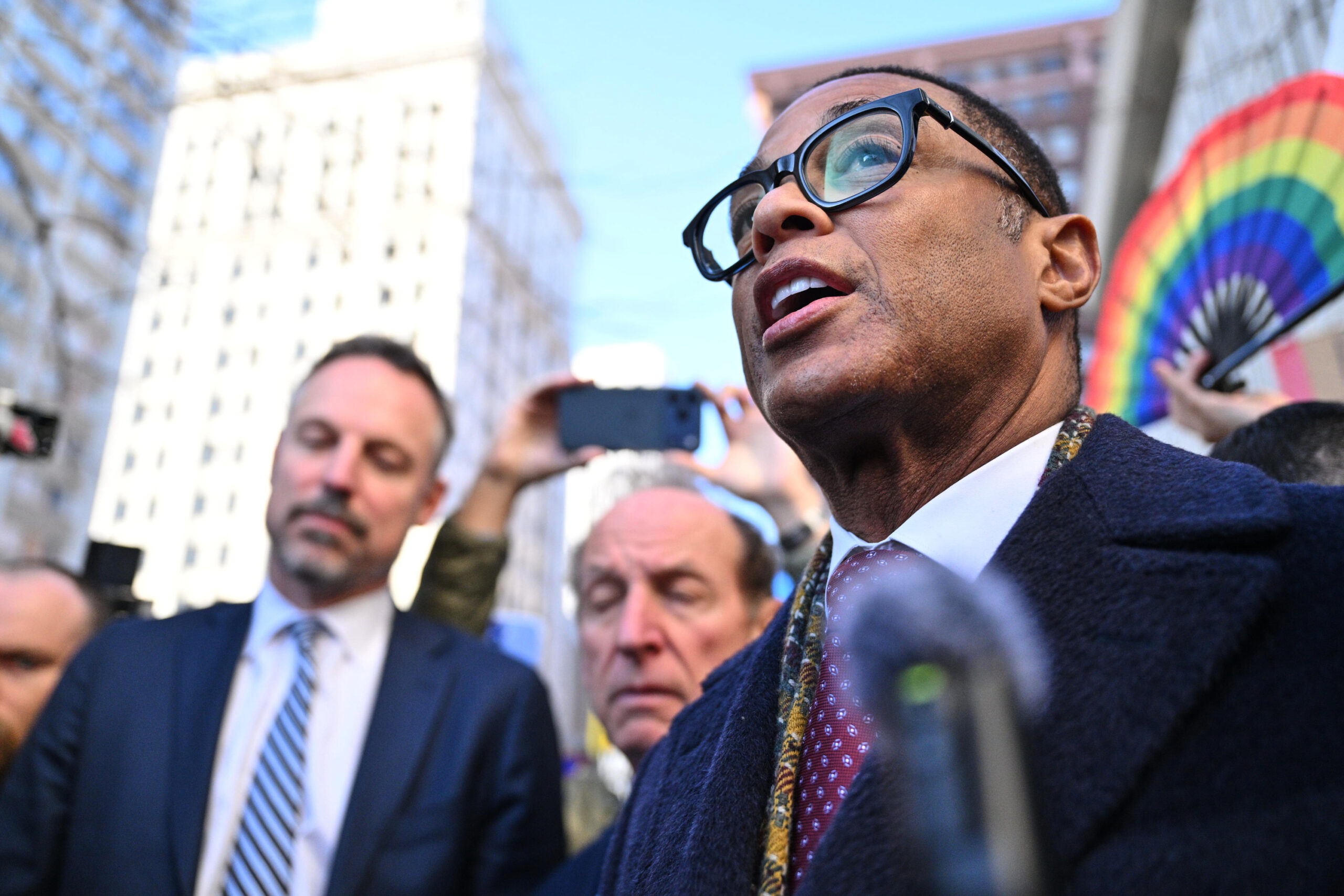
    Journalist Don Lemon speaks to the media outside the U.S. District Courthouse in St. Paul, Minn., on Feb. 13.

    Levy Armstrong disputes MAGA claims that Lemon was a participant in the demonstration, as opposed to being an observer. Levy Armstrong told me, “I just think it’s foolishness that they would try to rope him in as a protest organizer.”

    “He’s not an activist. He’s not an organizer,” she pointed out. “He’s not a protester whatsoever.”

    The former law professor said that referring to Lemon as an organizer was an excuse to attack him, as well as Georgia Fort, an Emmy Award-winning independent Black journalist based in Minnesota, who also faces federal charges after covering the protest.
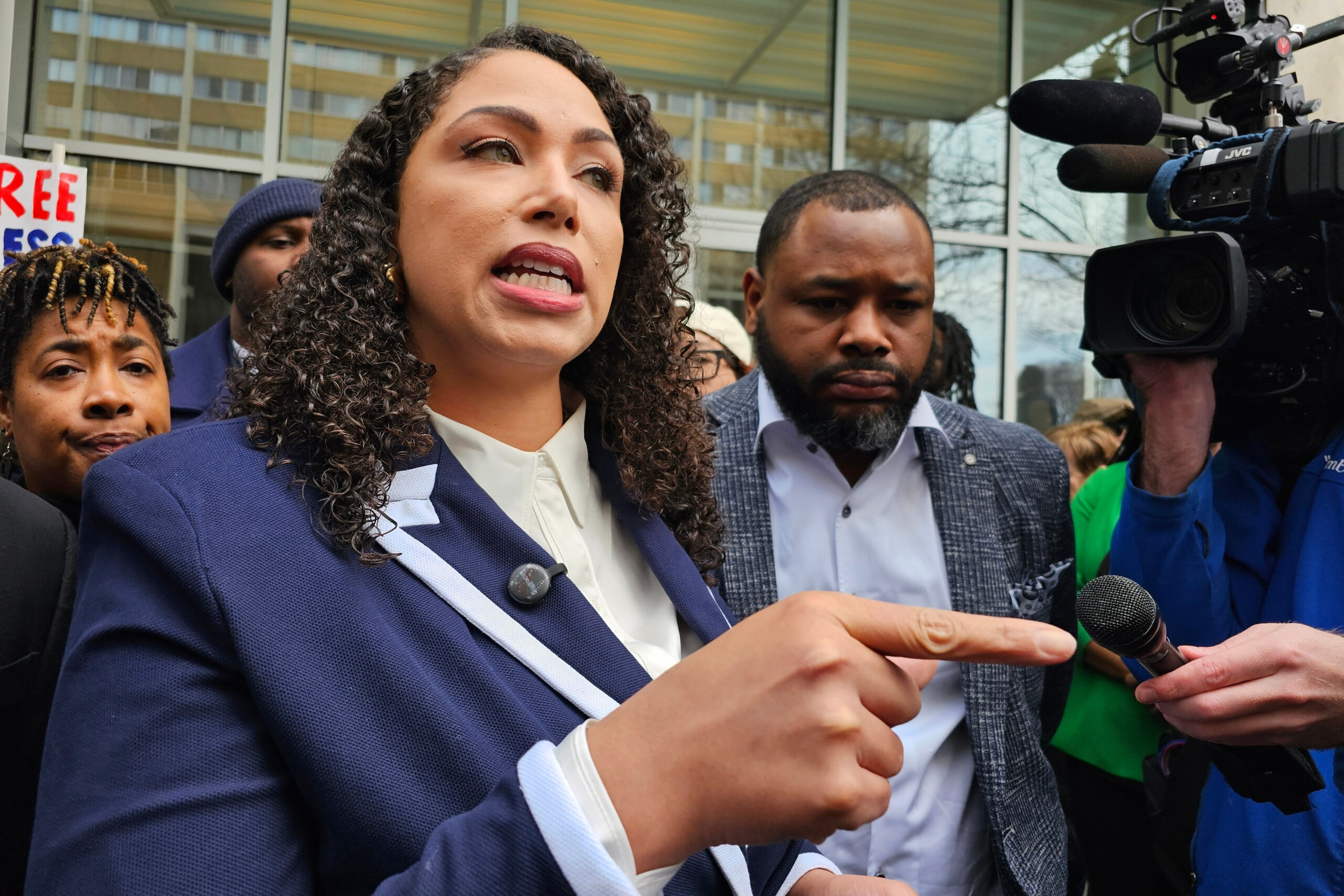
    Minnesota-based independent journalist Georgia Fort speaks to reporters and supporters outside the federal courthouse in St. Paul, Minn., on Feb. 17, after pleading not guilty over her alleged role in a protest that disrupted a Sunday service at a Southern Baptist church in St. Paul.

    I’ve covered many protests throughout my journalism career, and find what happened particularly upsetting. Republicans talk a good game about upholding the Constitution, but the arrests were clearly an attempt to keep journalists from exercising their First Amendment right to freedom of the press.

    Meanwhile, no arrests have been made in the fatal shootings by Border Patrol and ICE, respectively, last month of Alex Pretti, an intensive care nurse, or Renee Good, a mother of three.

    But Levy Armstrong has been charged for her role in a disruptive but peaceful protest inside a church during which no one was physically harmed. (And, yes, although they are rare, demonstrations in churches happen. During the civil rights movement, demonstrators would hold “kneel-ins” to protest segregated churches in the Jim Crow South.)

    An ordained minister, Levy Armstrong told me she draws strength from such icons of the civil rights movement as Fannie Lou Hamer, Rosa Parks, and the Rev. Dr. Martin Luther King Jr., all of whom had suffered the indignity of being arrested while fighting for their basic human rights.

    “Everybody needs to wake up,” she said. “This is not just about immigration. This is about our constitutional rights. This is about our democracy. This is about our freedoms.”

    Freedoms we stand to lose if we allow the Trump administration to try and silence us the way it has attempted to do with Lemon, Fort, and Levy Armstrong, among so many others.

    Levy Armstrong has nothing but praise for Philadelphia District Attorney Larry Krasner, who is vocal about prosecuting ICE agents who run afoul of the law. Her suggestion for concerned Philadelphians? “Get some whistles,” she said. “Get some people organized. Hold your elected leaders accountable.”

  • On crime, public transit, and the economy, Philadelphia counts the ways | Shackamaxon

    On crime, public transit, and the economy, Philadelphia counts the ways | Shackamaxon

    This week’s Shackamaxon is all about the numbers.

    15

    As I write this column, that’s Philadelphia’s total number of homicides for the year so far. It is a 50% decrease from this time in 2025, and a stunning 79% drop from the pandemic-era spike in violence. While it is much too early to make projections, and snowy and freezing weather the last few weeks undoubtedly played a role in keeping people indoors, the decline is genuinely remarkable. Especially when it is accompanied by a similar decline in shooting victims, and double-digit declines in overall violent and property crimes.

    In fact, on a per-capita basis, Philadelphia’s homicide rate is currently not that different from Bucks County’s.

    Given the city just notched its safest year since the 1960s, this progress is exciting. So far, no one has an explanation for why homicide is declining. It may simply be a national trend back to normalcy. If so, it is time to extend it to more parts of life.

    Killings may be down, but homelessness is rising. SEPTA’s Metro system is still overrun with smokers. And the melting snow has revealed that much of the city is covered in too much everyday grime.

    A Sharon Hill trolley — now known as the D2 — on a low-speed section of track near the 69th Street Transportation Center in Upper Darby. The route, along with its counterpart, the D1, or Media trolley, will have longer trips next week after a safety upgrade to the signal system.

    15

    That’s how many additional minutes trolley trips to Media could take after implementing something called “communications-based train control” at a cost of $75 million. This system takes away discretion from operators, resulting in slower acceleration, longer braking periods, and slower overall speeds. SEPTA says a similar installation on its Regional Rail system also led to initial delays, but those challenges were overcome in time.

    There’s a better solution. SEPTA should restore the gate system that was removed back in 2009. This would eliminate many of the needed slowdowns.

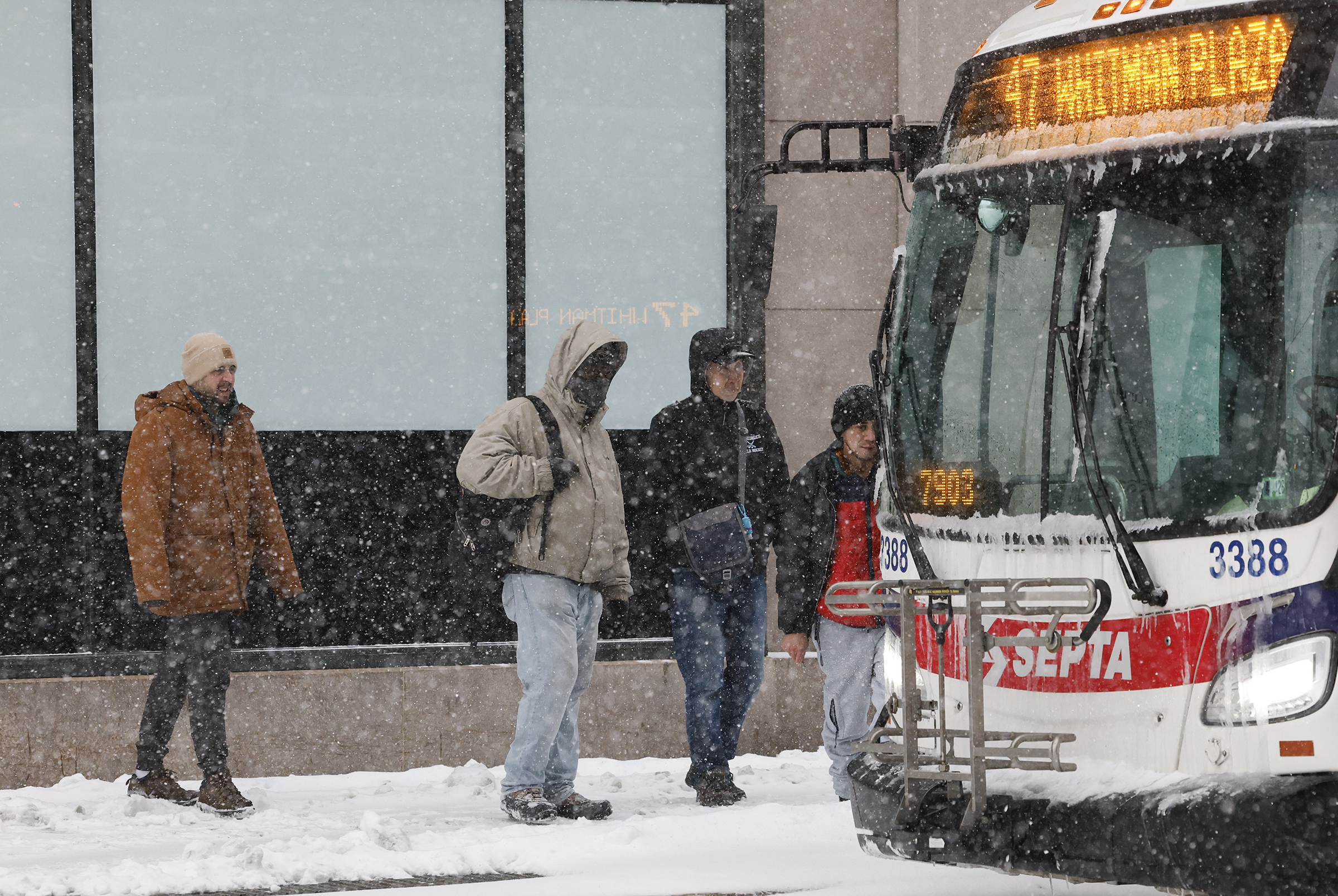
    SEPTA riders board the Route 47 bus at Eighth and Market Streets in January.

    714,475

    That’s how many daily rides SEPTA provided on average last month, an increase of 1% over 2025. Given the struggles the agency went through last year, the fact that ridership continues to grow is remarkable.

    In August, SEPTA scaled back overall service by 20%, before reversing the cuts weeks later under court order — and after a gubernatorial funds transfer. State Senate Majority Leader Joe Pittman essentially called the agency (and our entire region) a bunch of greedy moochers and blocked a plan for sustainable support.

    The Regional Rail network was severely curtailed for months because of aging, exploding train cars. The Center City trolley tunnel was closed for weeks because of maintenance issues. In January, a brutal winter storm made getting to — and on — the bus a struggle. And yet, ridership grew.

    In fact, since the pandemic, SEPTA has routinely been one of America’s strongest transit agencies when it comes to ridership growth. Given there have been zero additional dollars invested in operations for years, the system’s resilience may prove that Philadelphians need mass transit so badly that they’re willing to keep riding through the chaos.

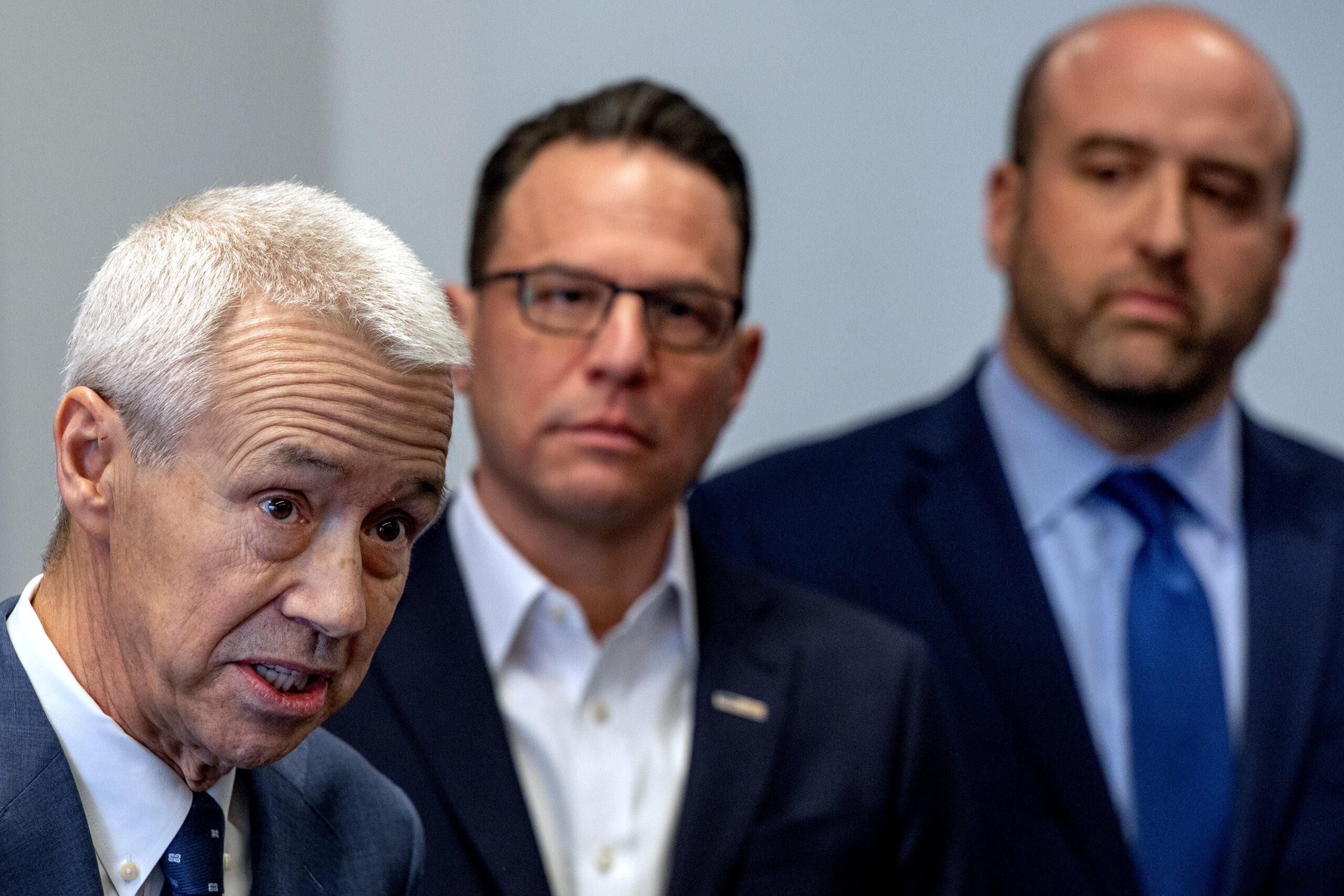
    From left, Joaquin Duato, J&J chairman and CEO, is with Gov. Josh Shapiro and Pennsylvania Department of Community and Economic Development Secretary Rick Siger on Wednesday after Johnson & Johnson announced it will spend $1 billion on a cell therapy plant on its campus in Lower Gwynedd Township.

    5.5

    That’s how much investment, in billions of dollars from pharmaceutical companies, is coming to Eastern Pennsylvania, according to Gov. Josh Shapiro. While this is great news for the Keystone State, it’s hard to avoid noticing that none of these investments are coming to Philadelphia itself. Neither is Merck’s $1 billion new biotech center, which is being built in Delaware. Given our city’s status as a hub for eds and meds — with multiple colleges and medical schools, and a high concentration of skilled workers — this is disappointing.

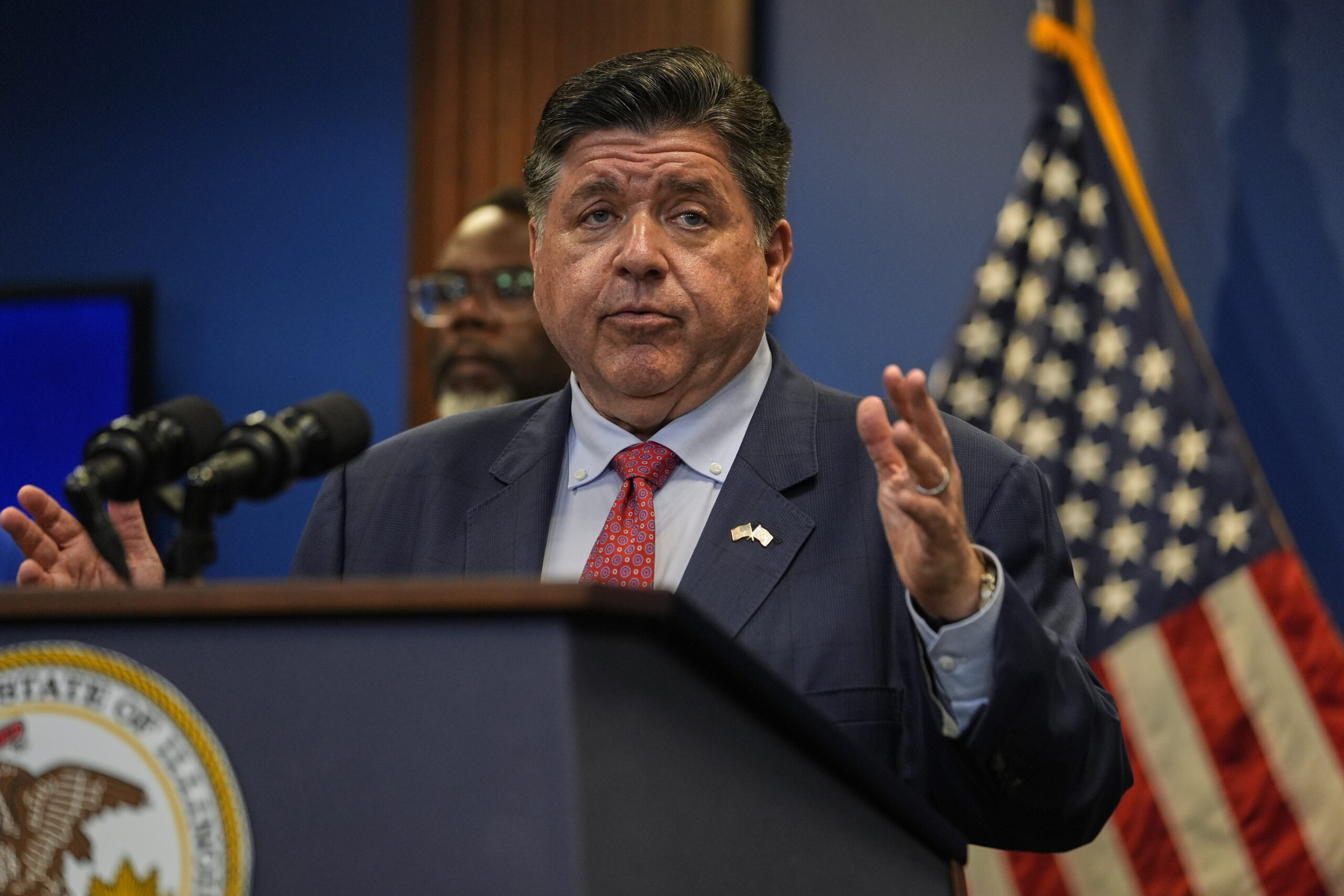
    Illinois Gov. JB Pritzker speaks during a news conference in Chicago in 2025.

    150

    That figure, also in billions of dollars, is how much economic growth Pennsylvania needs in order to bridge the deficit without raising taxes or cutting services, according to an analysis by Athan Koutsiouroumbas, managing director of the Harrisburg-based lobbying and consulting firm Long Nyquist.

    The easiest way to accomplish this is by being bolder on housing policy. As Shapiro has pointed out, Pennsylvania is currently 44th in the nation when it comes to new housing production. Unfortunately, current plans aren’t bold enough to meet the moment. They lack the significant forays into statewide zoning standards that have been embraced by figures like Illinois Gov. JB Pritzker. Shapiro likes to say he’s tired of losing to “frigging Ohio,” but without a more audacious approach to housing policy, he may have to add “frigging Illinois” to the list of states eating our lunch.

    Philadelphia’s economy grew faster than Atlanta, Dallas, Denver, and Phoenix.

    13.6

    If we’re being optimistic, let’s call it almost 14%. That’s how much job growth Philadelphia has experienced since 2020. That’s better than the 11.7% average for the nation’s 25 most populous counties. It is better than the collar counties, and puts Philadelphia ahead of Montgomery County in office employment for the first time in decades.

    Still, economist Mark Zandi urges caution. In the pages of The Inquirer, he points out that much of this has to do with the fact that the national economy is struggling. Given the city has lagged on growth for decades, even incremental steps forward may look more significant here than elsewhere.

    There’s also the fact that much of this growth is in relatively low-paid work, rather than the high-wage “tradeable industries” the city needs to escape decades of economic stagnation.

    Simply put, while working as a home health aide and working in a drone factory both put food on the table, only the latter helps make the regional economy healthier.

  • Letters to the Editor | Feb. 20, 2026

    Letters to the Editor | Feb. 20, 2026

    National holiday

    I am an avid Eagles fan. I was convinced they would be in the Super Bowl this year, but it was not to be. However, I still love to watch the game and did so a couple of weekends ago with friends and family.

    For millions of Americans, Super Bowl Sunday is a welcome day of celebration. This year’s game was watched by about 125 million people. In any given year, many Americans take “sick days” on the Monday after the game, including this year: An estimated 26 million people were expected to miss work, up from 16 million in 2025 when the Birds won.

    Here’s an idea: Instead of holding the Super Bowl on the second Sunday in February, the NFL should move the game to the third Sunday of the month. Why? The following day is Presidents Day, a national holiday, always observed on the third Monday of February — and a day in which millions of Americans don’t have to go to work.

    The number of people taking part in “Super Sick Monday” would be greatly reduced, and it would be a change welcomed by many.

    Ed Vreeswyk, Yardville

    Epstein class

    While the Trump administration continues to fail to keep the Jeffrey Epstein scandal out of the headlines, I keep thinking of my favorite Maya Angelou quote: “When someone shows you who they are, believe them.”

    As director of Sudan and South Sudan Programs at the U.S. Agency for International Development, my firsthand experience of the Epstein class came in the form of Elon Musk’s Department of Government Efficiency. The U.S. Department of Justice’s latest release of the Epstein files featured more than 1,000 mentions of Musk.

    As the president, another one of the Epstein files’ main characters, allowed the unelected billionaire to go about “feeding USAID into the wood chipper,” Marco Rubio promised USAID’s “lifesaving” programming would be spared. My colleagues and I desperately argued that our work saved lives. It wasn’t a hard case to make — Sudan and South Sudan represent two of the world’s largest humanitarian catastrophes.

    By the end of February 2025, DOGE had cut 90% of USAID’s programming. Estimates indicate approximately 762,000 people have died, including more than 500,000 children. One study warns that the dismantling of USAID could lead to more than 14 million deaths by 2030.

    These lives, like the lives of those trafficked by Epstein, were of no consequence to the Epstein class. They have shown us who they are. We need to believe them.

    Maura O’Brien, Ardmore

    War on scientists

    The present administration has worked hard to discredit science and remove scientific researchers from any government positions. They have labeled climate change as a liberal hoax and claimed that children receive too many vaccinations. Measles, all but eradicated, has made a strong resurgence. As a result of this “war on science,” more than 10,000 science workers have left the government. In an effort to profit from these foolish policy decisions, the European Union has created a fund to attract these scientists to Europe. We are driving away the occupations that have created the greatness that was America.

    Edward Hackett, Phoenixville

    Join the conversation: Send letters to letters@inquirer.com. Limit length to 150 words and include home address and day and evening phone number. Letters run in The Inquirer six days a week on the editorial pages and online.

  • Is AI’s authoritarianism a bigger threat than Trump’s?

    Is AI’s authoritarianism a bigger threat than Trump’s?

    Like every other beleaguered top editor in a big-city newsroom these days, Chris Quinn — who leads Cleveland.com and the print Plain Dealer — has to deal with assaults from all sides.

    In March 2024, Quinn briefly became a darling of the online left (not easy for a journalist to pull off these days) with a bold manifesto for how Cleveland.com would deal with one of those many threats: An authoritarian president who despises a free press.

    “We tell the truth, even when it offends some of the people who pay us for information,” Quinn wrote that fateful spring in his “Letter From the Editor” column. “The truth is that Donald Trump undermined faith in our elections in his false bid to retain the presidency. He sparked an insurrection intended to overthrow our government and keep himself in power. No president in our history has done worse.”

    Less than two years later, Quinn has gone viral again. But this time, instead of resisting a powerful force aiming to upend American life as we’ve known it, he’s embracing one: The power of artificial intelligence to transform the workplace … and just about everything else.

    Quinn has said that steep job cuts (more on those later) have left just a skeleton crew covering Cleveland’s far-flung exurban counties, and using an AI tool to write stories based on the downsized staff’s reporting will result in more articles about these potential news deserts. When an anonymous college journalism student withdrew her application to Cleveland.com because she said she couldn’t work in a newsroom using AI to perform what was once a human task, the editor went off in his column.

    “Journalism programs are decades behind,” wrote Quinn in arguing that technology is rendering such degrees as worthless. “Many graduating students have unrealistic expectations. They imagine themselves as long-form magazine storytellers, chasing a romanticized version of journalism that largely never existed.”

    Seriously, how dare those young whippersnappers dream of creating beauty in their lives, instead of welcoming their new robot overlords and embracing their future as a cog in a faceless news machine?

    But the dilemma facing Cleveland, Quinn, and the Unknown Job Applicant is the crisis that’s been thrust in the face of all Americans as the brutal winter of 2026 slowly melts into spring, and, it seems, a reality we’re truly not ready to confront — not practically, nor politically, nor morally.

    People forget, but there was a brief moment in the mid-to-late 1990s when the internet was dismissed as a fad — clunky to use (remember dial-up?) and its abilities overhyped by Silicon Valley. But the internet radically changed how we live, as did the arrival of smartphones in the 2000s — not always for good. Yet, these seem like the warm-up acts for the life-altering conniptions caused by omnipresent AI.

    Suddenly, there’s been a flood of essays trying to warn us that whatever one initially thought about programs like ChatGPT — and, yes, AI is still prone to “hallucinations” and other embarrassing errors — we need to adjust to the news that a new generation of AI tools is much more powerful, and better poised to replace many jobs.

    “I am no longer needed for the actual technical work of my job,” an AI executive named Matt Shumer wrote in the most viral of these hot takes, titled “Something Big Is Happening.”

    In describing how new AI programs rolled out by Anthropic, maker of Claude, and ChatGPT’s parent OpenAI can now perform complex coding tasks from the most simple instructions, Shumer warned the earthquake is coming to “[l]aw, finance, medicine, accounting, consulting, writing, design, analysis, customer service. Not in ten years. The people building these systems say one to five years. Some say less.”

    This jibes with dire predictions from Anthropic’s CEO Dario Amodei, who has warned repeatedly of “painful” white-collar job losses caused by AI, and said in his most recent long-form essay that the new technologies are “acting as a ‘general labor substitute for humans.’”

    Is that bad? It sounds bad.

    The sweeping changes in the labor market are already starting, including a sharp drop in entry-level hiring for coders, who seem to be the canaries in this coal mine. January was the worst month for layoffs since the Great Recession of 2009, and analysts say job losses directly attributable to replacement by AI were a significant slice of that. The idea that wiping out millions of jobs might be bad for the overall economy even caught the ADD-addled attention of Wall Street for a day or two.

    I don’t have space here to go deep on the technology, but everyone should take a moment to learn what “vibe coding” and “agentic AI” are, and read the New Yorker on the rise of Anthropic’s Claude, or listen to a really good podcast explanation of AI and the labor market from the New York Times’ Kevin Roose. But we’re already overdue in addressing what this all means for everyday human existence.

    The idea that eventually “everything you think, do, and say is in the pill you took today” — as Zager and Evans sang so presciently in their 1969 No. 1 smash, “In the Year 2525” — has been with us for decades. But there was also a sense that robots performing the worst drudgery of the workplace might be liberating, creating more leisure time and space for human creativity.

    So far, that’s not what’s happening. Avoiding the poverty and deprivation that would be caused by massive job losses would require a government willing to pay people a universal basic income (UBI), but the current government has instead been dismantling the existing welfare state. And the workers creating AI are sleeping in their cubicles.

    And creativity may become a fever dream, not just for that naive journalism student with her “romanticized” visions of telling stories. Did you read the Times profile of the romance novelist who’s relying on Claude to crank out new tomes in as little as 45 minutes? Did you watch the lifelike short movie of an AI-generated “Brad Pitt” fighting “Tom Cruise”?

    Let me get this straight. AI is taking our jobs and ending artistic struggle to liberate us … for what, exactly?

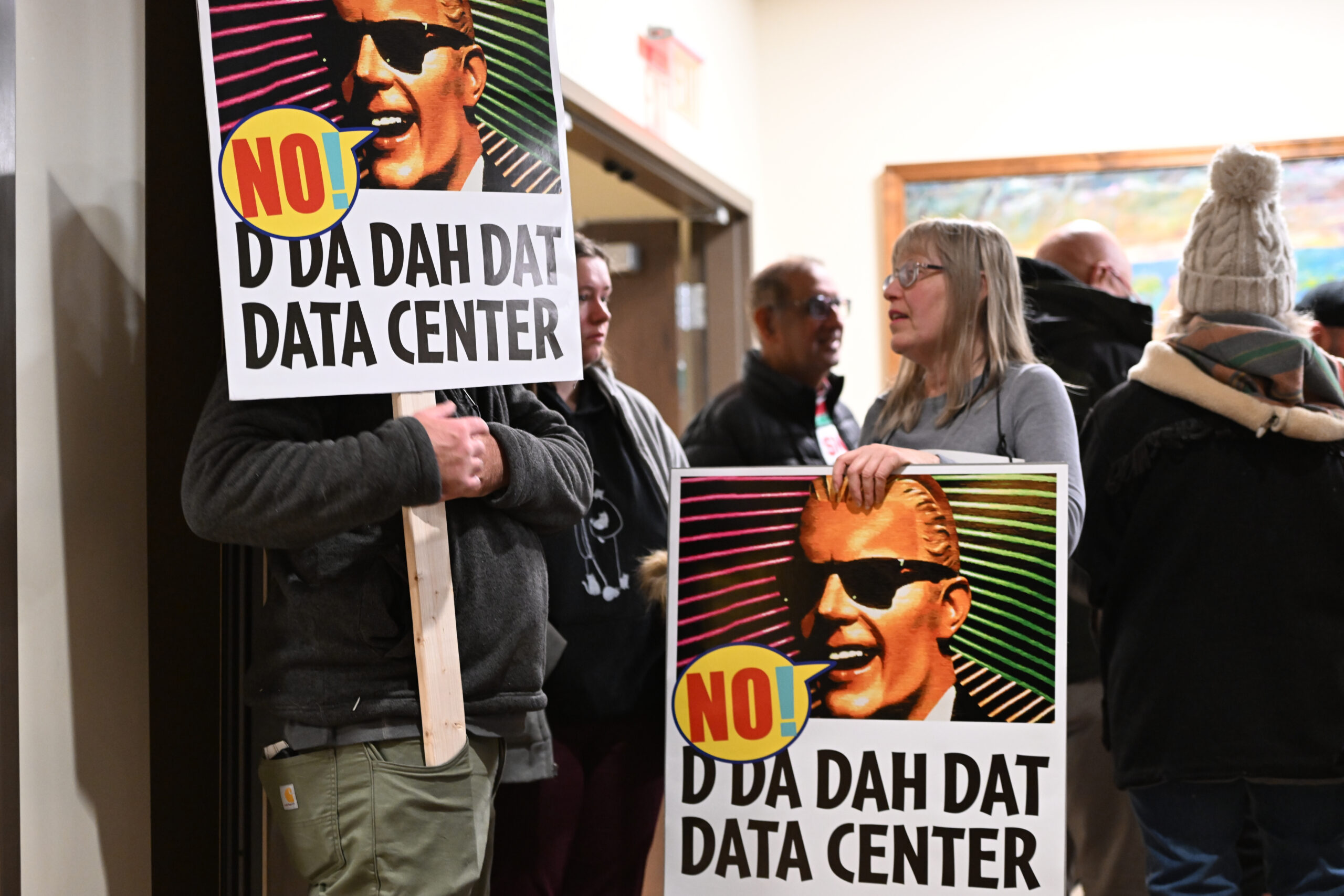
    I haven’t even discussed the other really bad things about AI, including the drain on electricity from massive data centers likely to unleash yet another form of tyranny, unbridled climate change, and the death of critical thinking as reliance on AI decimates the classroom. At a moment when we’re just coming to terms with the downside of smartphones — such as higher rates of anxiety and depression among teenagers — could we learn to avoid similar mistakes with AI before they start?

    And did I mention the whole “robots take over the world” scenario?

    Dealing with all this would take political will. Yet, leaders in both parties — Trump, for sure, but also top Democrats like Josh Shapiro and Gavin Newsom — have embraced the data center and AI ambitions of their donor class, even though the majority of their voters want strict regulation. A pro-AI super-PAC raised $125 million last year to buy the midterm elections. Who is fighting for the about-to-be-starving artists?

    People opposed to a data center proposal at the former Pennhurst state hospital grounds talk during a break in an East Vincent Township supervisors meeting in December in Spring City, Pa.

    It doesn’t have to be like this. The same better-late-than-never push to remove smartphones from classrooms can be used as a model for eradicating AI in K-12 schools as well as college, to give the next generation at least a fighting chance to learn to think for itself. The politicians don’t have to allow data centers that burn fossil fuels instead of clean energy and consume the lion’s share of water available to the communities where they’re located.

    Nor do we need to embrace the late-stage capitalist ethos that if shareholders make more money employing robots than human beings, some invisible law forces us to do this. Remember Chris Quinn back in Cleveland? The reason he feels he needs AI to write up the news is because, back in 2019, he oversaw the layoff of one-third of his unionized newsroom, at the behest of the paper’s corporate parent.

    Maybe robots are now “agentic,” but humans have always had agency. Here’s the perfect chance to use it: by encouraging the uses of AI that will be good for society — diagnosing sick patients and inventing medicines to cure them, for example — but regulating or banning the aspects of AI that will make life worse.

    That’s partly up to the politicians, but it’s also up to us. Societal trends like the outbreak of “neighborism” — strangers forming new community bonds to beat back the fascism of immigration raids — or a rise in union membership are healthy signs that Americans are finally getting tired of technology driving us apart.

    The fight against the authoritarianism of unchecked and often unwanted AI is the battle of the 21st century that will be waged long after the fight against political authoritarianism in Trump’s United States and elsewhere has been won.

  • John Dunlap’s print shop in Old City deserves a blue historical marker — before this July 4

    John Dunlap’s print shop in Old City deserves a blue historical marker — before this July 4

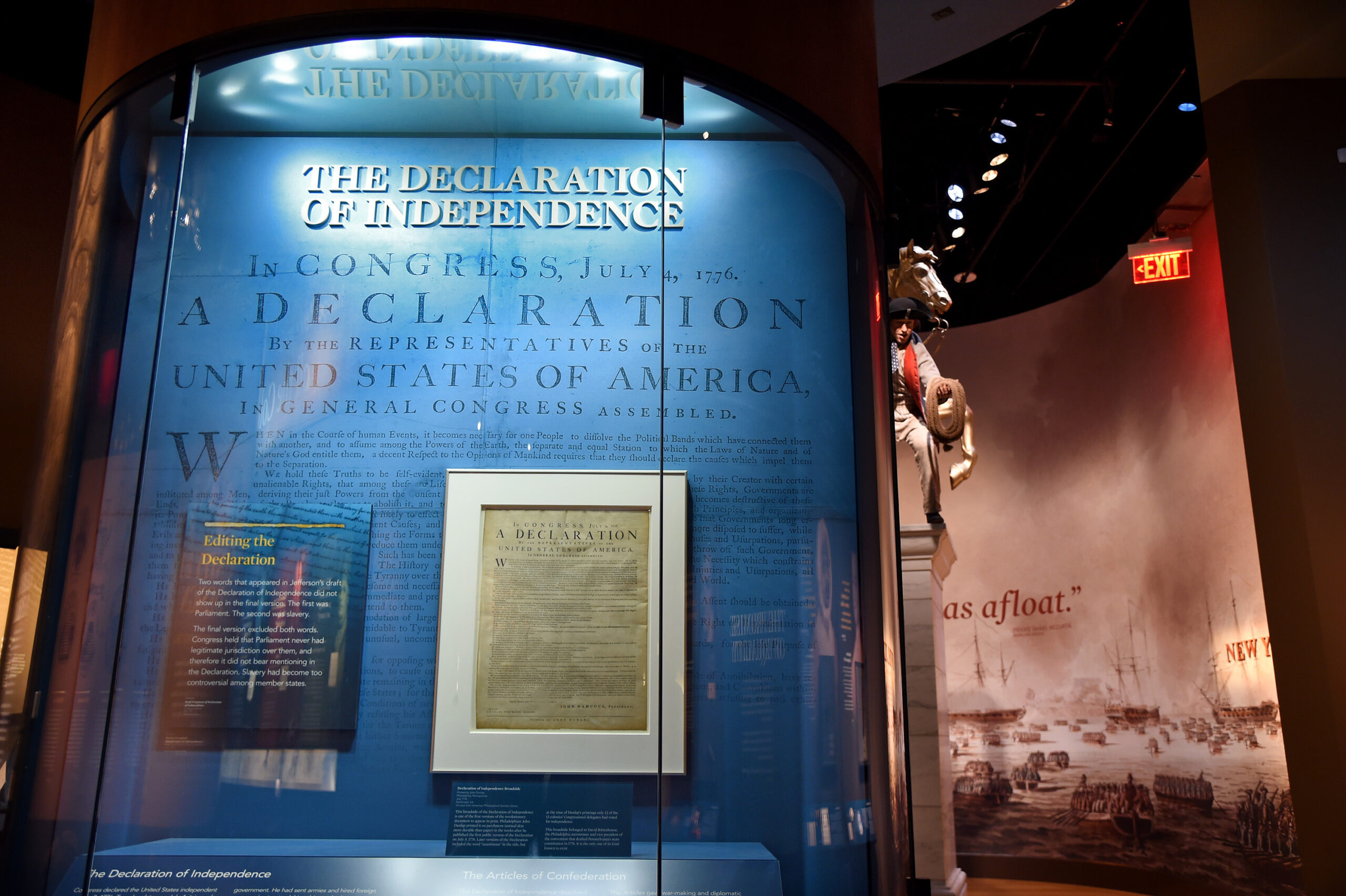
    The most important printing job in American history took place in Philadelphia, on the corner of Second and High Streets, on the night of July 4, 1776.

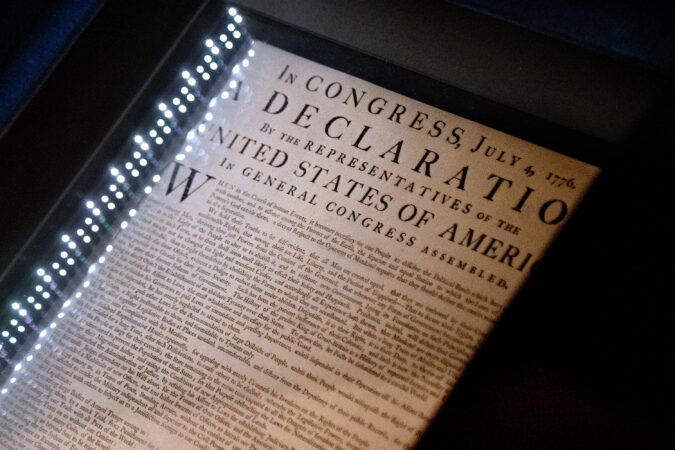
    There, in the shop of John Dunlap, the Declaration of Independence was first printed and sent around the new United States. Yet today, no Pennsylvania Historical Marker commemorates the spot on Market Street where the declaration first emerged to tell the world about the birth of a new country.

    On the 250th anniversary of American independence, a marker should be erected as soon as possible by the city or state.

    Dunlap’s job was of the first importance. Congress, led by the Boston merchant John Hancock, knew that getting word of independence out to the rest of the colonies was critical to gaining support at home for a war that was not going well. Since the war started in Lexington and Concord up in Massachusetts in April 1775, the Americans had forced the British out of Boston, but lost ground in New York. Independence was just as crucial for trying to get arms and money from Great Britain’s adversary, France, for George Washington’s poorly equipped Continental Army.

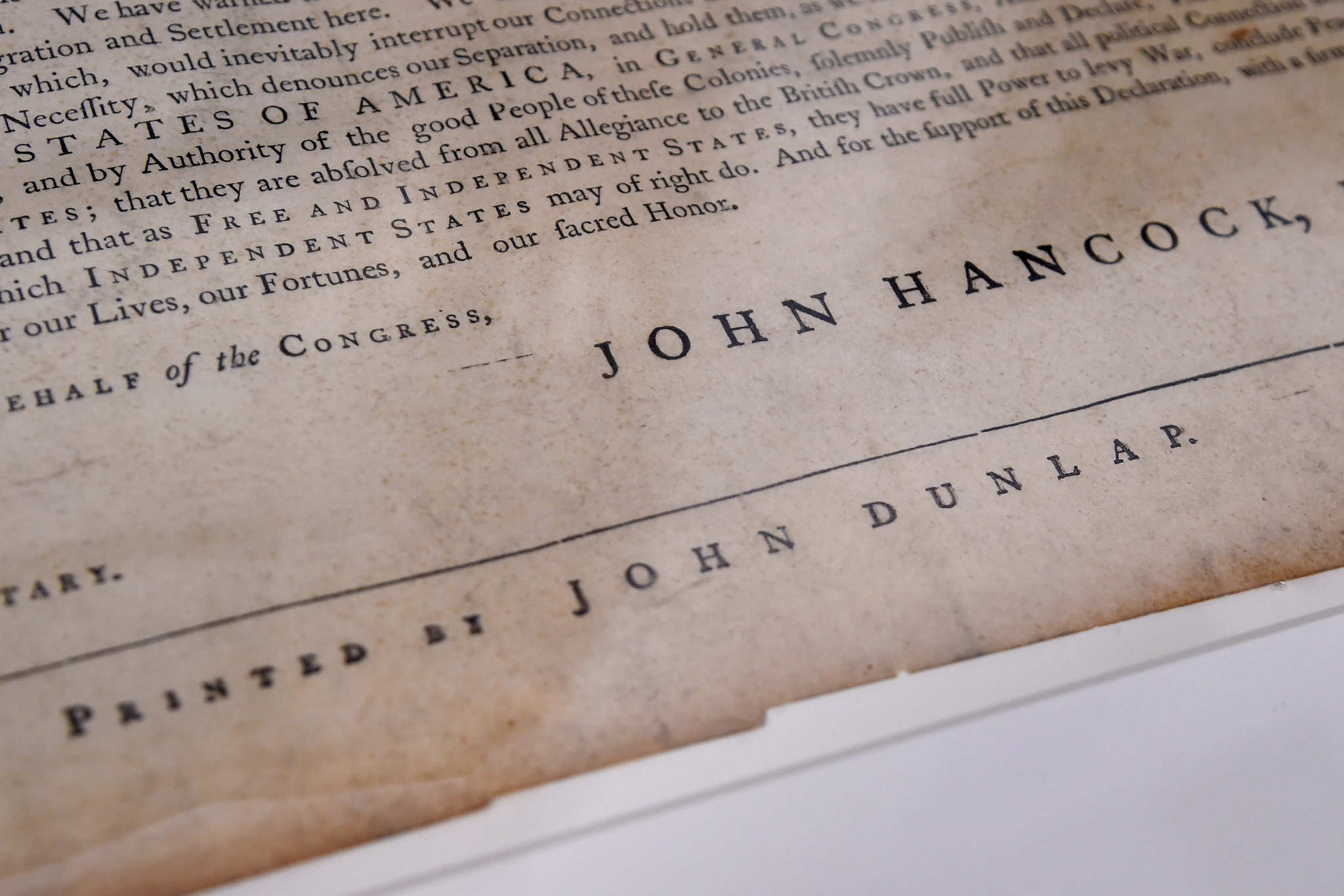
    John Dunlap’s name — along with that of John Hancock, president of the Continental Congress — appears on the oversized declarations Dunlap printed on parchment or vellum.

    Sometime in the afternoon of July 4, Thomas Jefferson walked from the State House on Chestnut Street to the shop of Dunlap, a 29-year-old Irish immigrant and publisher of the Pennsylvania Packet. Jefferson handed Dunlap the original handwritten copy of the Declaration of Independence, adopted just hours earlier by the Continental Congress, and ordered several hundred copies to be printed as soon as possible.

    Working through the night, Dunlap and his assistants printed up at least two batches of “broadsides,” some on paper bearing the watermark of King George III. Dunlap had to rush, and some copies were printed slightly askew, while many were folded while still wet, leaving offset imprints.

    They were rushed back to Congress and given to dispatch riders to distribute to colonial assemblies and the army. Washington received his on July 9 and had it read that day at his headquarters in Manhattan.

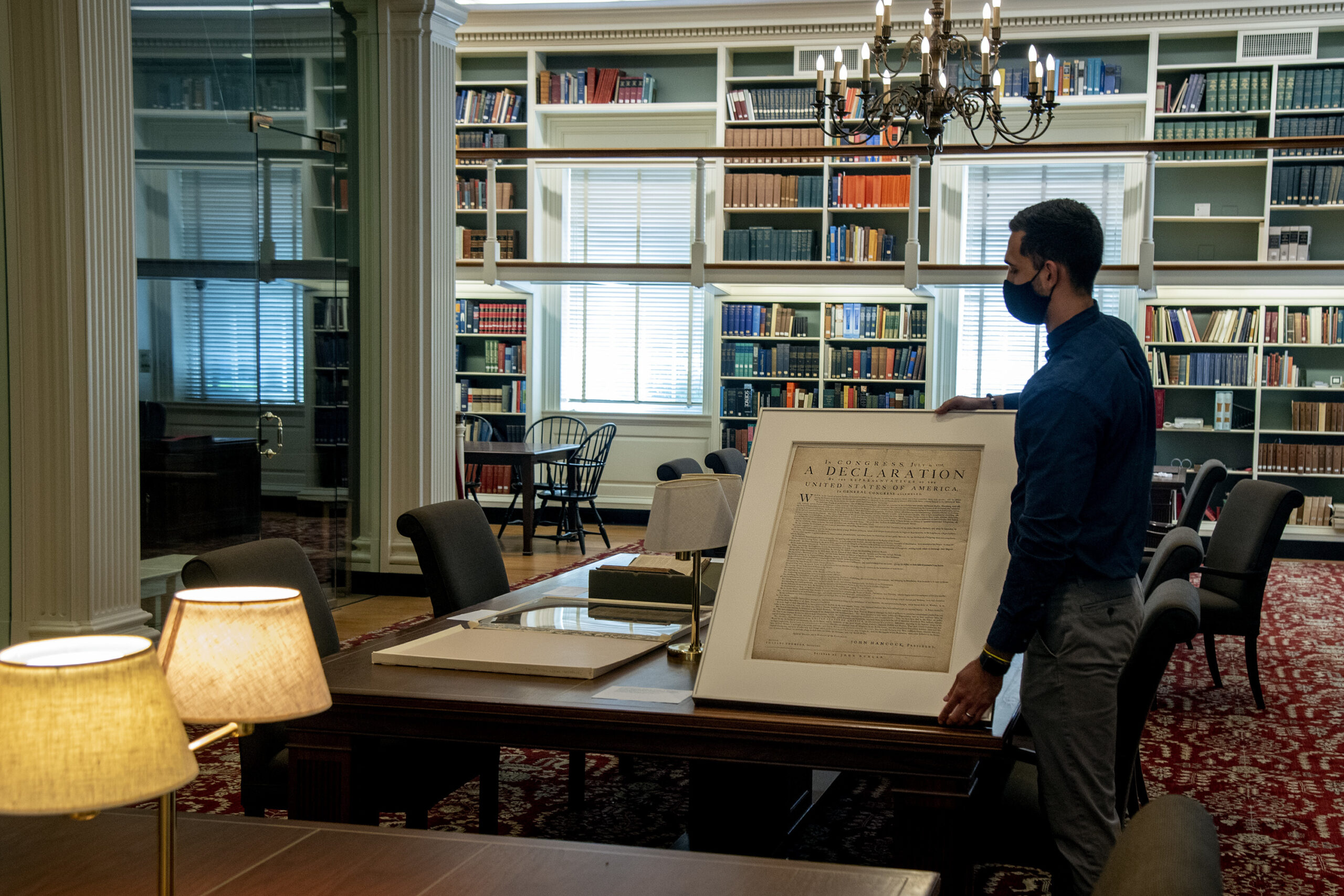
    In their library on June 16, 2021, American Philosophical Society reference and digital services specialist Joe DiLullo holds its copy of a rare oversized Declaration of Independence printed by congressional printer John Dunlap on parchment or vellum in July 1776.

    It took weeks for the other Dunlap broadsides to reach their destinations, the last arriving in Savannah, Ga., on Aug. 10.

    One Dunlap broadside was used for the first public reading of the declaration, on July 8, in front of the State House, by Col. John Nixon. The scene was immortalized nearly a century later by Frederick Peter Rothermel, in a painting now hanging in the Union League Club.

    To this day, no one knows how many were printed, but only 26 original Dunlap broadsides are known to exist, making them among the rarest of American artifacts.

    The last one to come up for auction, in 2000, was bought for $8 million ($15 million in 2025 dollars) by the television producer and liberal activist Norman Lear. Most are held by museums or universities, but whenever they are displayed, the Dunlap broadsides draw crowds who are just as fascinated to see the words that declared a sovereign state as were those a quarter millennium ago.

    The only known copy of the Declaration of Independence printed on vellum by John Dunlap is on display at the Museum of the American Revolution.

    Yet, few passersby, if any, stop to look at a tarnished, old plaque affixed to a rundown building at Market and Second. Put there 50 years ago by the Society of Professional Journalists, it is the only acknowledgment of one of the most important sites of the American Revolution.

    Next to a shuttered diner, the plaque is likely all but ignored by any but the most dedicated history buff.

    There is not enough time to go through the formal Pennsylvania State Historic Preservation Office process, but given the historic importance of the site, an ad hoc or special exemption by the city or state should be made, and a proper blue historical marker should be put up before July 4.

    It is the least that can be done to commemorate a site where actions that still reverberate around the world took place.

    Michael Auslin is a historian at Stanford’s Hoover Institution and is the author of the forthcoming “National Treasure: How the Declaration of Independence Made America.”

  • Letters to the Editor | Feb. 19, 2026

    Letters to the Editor | Feb. 19, 2026

    Courage exemplified

    Ukrainian skeleton athlete Vladyslav Heraskevych was disqualified by the International Olympic Committee at the Winter Olympics for wearing a helmet in remembrance of Ukraine’s war dead. He is considered one of the best in this sport and had a good chance of winning a medal.

    This patriot summarized things precisely by saying that there are things “more important than medals.” As Ukrainian President Volodymyr Zelensky said, “Having courage is worth more than any medal.”

    The IOC should be condemned for failing to realize that remembrance is not political propaganda. Ukrainian Foreign Minister Andrii Sybiha hit the nail on the head by saying that it is “Russians who must be banned, not the commemoration of their victims.”

    Leo Iwaskiw, Philadelphia

    . . .

    The Winter Olympics in Italy are spectacular — as always, a world stage celebrating extraordinary human skill and potential — within the realms of good sportsmanship. How inspiring it is to witness the best athletes not only perform but also encourage and congratulate each other, sometimes despite their own personal ambitions as well as disappointments.

    Yet, how disheartening that, as the fourth anniversary of the unprovoked invasion of Ukraine approaches, an issue has developed. Ukrainian skeleton competitor Vladyslav Heraskevych has been disqualified from the 2026 Winter Olympics by the International Olympic Committee for refusing to remove his “helmet of memory” with images of athletes who have been tragically killed as a direct result of Russia’s war on his nation — even as American men’s figure skating competitor Maxim Naumov continues to show a picture of his parents who were tragically killed in the plane crash over Washington, D.C., a year ago. What a double standard for these young people grieving heavy losses. Shame on the IOC for its blatantly biased ruling and its failure to honor basic humanity in each one of us.

    Christine Fylypovych, Blue Bell

    Ingrained images

    The Vietnam War and U.S. Immigration and Customs Enforcement’s Minneapolis War are forever linked by their utter depravity by three photographs seared in the soul of America.

    Saigon Execution. During the Tet Offensive on a Saigon street, a South Vietnamese police chief standing arm’s length from a handcuffed Viet Cong prisoner pulls the trigger. The photo was snapped simultaneously with the gun firing, showing the prisoner’s head beginning to explode.

    Napalm Girl. A 9-year-old girl is running naked, with third-degree napalm burns on a third of her body, arms outstretched, mouth wide open, a terrorized look on her face as if she were attacked by some unimaginable horror. Four other children are running in the same direction, one crying, all followed by soldiers strolling behind, seemingly unconcerned.

    Lost in America. Liam Conejo Ramos, 5 years old, wears a blue and white bunny hat with a Spider-Man backpack, standing next to a dirty vehicle, looking hopelessly forlorn. A man in black stands directly behind Liam with a hand on his backpack, apparently proud that he captured a hardened criminal.

    The pictures encapsulate how both wars are rotten to the core. The Saigon execution and the napalm girl photos helped stir a nation. Liam’s photo and Renee Good’s and Alex Pretti’s executions, along with the courageous Minnesotans, have done the same.

    Gary Goldman, Newtown

    Join the conversation: Send letters to letters@inquirer.com. Limit length to 150 words and include home address and day and evening phone number. Letters run in The Inquirer six days a week on the editorial pages and online.

  • Savannah Guthrie’s mother is missing. But let’s not forget many others are, too.

    Savannah Guthrie’s mother is missing. But let’s not forget many others are, too.

    I like to visit Tucson, Ariz., this time of year to get away from the cold. Winters are mild, and it hardly ever rains in the Sonoran desert there, averaging roughly 300 days of sunshine.

    But when I was there last week, it felt as if a dark cloud were hovering. I kept being reminded about the disappearance of Nancy Guthrie, the mother of NBC’s Today show cohost Savannah Guthrie, who is a longtime resident. I checked for updates multiple times a day. Then, one overcast and rainy afternoon, I grabbed a notebook and went to Nancy’s home in the Catalina Foothills.

    TV is a medium that creates false intimacy, making it feel as if we actually know the on-screen performers. I’ve watched Savannah Guthrie coanchor the Today show for years, but I have never met her. When I learned her mother had gone missing, my blood ran as cold as if she had been a close friend.

    I wondered if her family was targeted because of her work as a high-profile journalist. A Today show segment featuring Guthrie giving a tour of her hometown aired in November. It includes footage of the host’s mother and sister sipping tequila from teacups at a popular Mexican restaurant.

    This image provided by the Pima County Sheriff’s Department shows a missing person alert for Nancy Guthrie.

    The day I showed up outside the Guthrie residence, there were no law enforcement officials to interview about the status of the investigation. A lone sheriff’s vehicle was parked in the driveway, near Nancy’s front door, where a masked gunman had been caught on doorbell camera footage around the time investigators say she’s believed to have disappeared on Feb. 1. Blood splatters have been found outside.

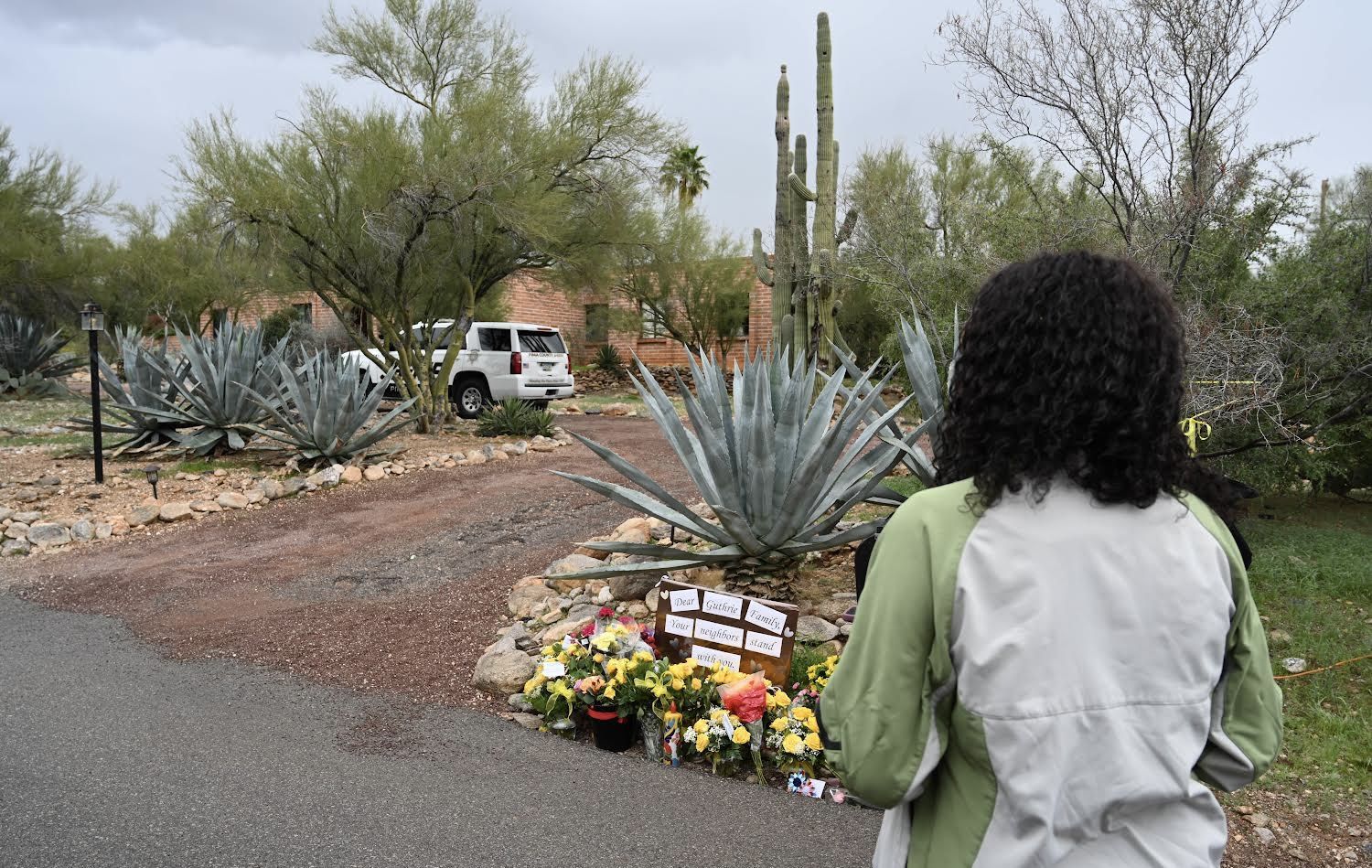
    A handful of spiky agave plants flanked a red gravel driveway. People had dropped off yellow roses, potted plants, and other offerings at a makeshift memorial out front. A sign reads, “Dear Guthrie Family, your neighbors stand with you.” Saguaro cacti tower over the scene.

    Meanwhile, reporters and social media influencers milled about on the street, waiting for answers that never came.

    If this had been a targeted kidnapping, Guthrie had said on video, “We will pay.” Why hasn’t Nancy been released? And is she even still alive?

    Inquirer columnist Jenice Armstrong stands next to the Tucson, Ariz., memorial honoring Nancy Guthrie — the mother of the NBC “Today” show cohost Savannah Guthrie — who went missing Feb. 1.

    Two things can be true simultaneously: As much as I felt my heart ache for the Guthrie family, I also spared a thought for other families who are waiting for their missing loved ones to come home, too.

    I also couldn’t help but think that if Nancy Guthrie weren’t related to a celebrity, or if she were a person of color, it’s doubtful we’d even know her name, much less that she was missing.

    It’s also unlikely President Donald Trump would have bothered to offer his condolences and as many resources as he has, posting on Truth Social, “ALL Federal Law Enforcement to be at the family’s, and Local Law Enforcement’s, complete disposal, IMMEDIATELY.”

    He has since threatened to impose the death penalty on the perpetrators.

    Meanwhile, there are so many other missing people whose cases could benefit from just a fraction of the attention Nancy’s case has attracted.

    An estimated 2,300 children are reported missing every day in America. The National Missing and Unidentified Persons Systems database currently lists 134 people — ranging from infants to 85 years old — missing in Philadelphia County alone. U.S. Immigration and Customs Enforcement also snatches up countless undocumented immigrants whose loved ones frequently know only that they’ve suddenly gone missing.

    Roz Pichardo, who runs the Missing in Philly page on Facebook, pointed out that when local people disappear, it often escapes the notice of the media or public officials. “No one is hardly looking at that page other than families who are searching for someone,” she told me.

    Natalie Wilson, cofounder of the Black and Missing Foundation, agreed that not enough is done to find those who have disappeared. “Your observation about the media cycle is exactly why we stay so focused on our mission.”

    None of this takes away from the Guthrie family’s nightmare. But their situation can help us understand how familiar the horror and accompanying heartache might be for people standing in line or sitting on the bus next to us.

    What resources should we allocate locally to help those who are experiencing something similar to what the Guthrie family is going through? What ways can we make sure others who have disappeared get more attention and a share of our concern, as well?

    My prayer is that any family with a missing loved one finds peace, including the Guthries. I hope my friend-in-my-head Savannah will wake up from this bad dream soon — and that Nancy will be safely returned to her beloved home in the Sonoran desert with her agave plants, cacti, spiny ocotillo, and some fresh yellow roses.

  • Letters to the Editor | Feb. 18, 2026

    Letters to the Editor | Feb. 18, 2026

    Are new voting rules needed?

    Regardless of frequently repeated claims, voter fraud is exceptionally rare, and the Safeguard American Voter Eligibility, or SAVE America Act, would only prevent an extremely small number of ineligible votes. While the GOP claims the SAVE Act is an attempt to preserve voter integrity, they know statistically that this will create difficulties for certain classes of voters who often vote for Democrats. Studies have shown, for example, that documentation requirements will place a disproportionate burden on communities of color and those with low incomes. Restrictions on vote by mail are likely to suppress the vote from hourly and shift workers, the elderly, those with disabilities, and people who do not have easy access to transportation to the polls. In this same vein, not allowing people to vote by mail forces them to vote in person, where in some places they may have to deal with voter intimidation and harassment (threats from others, long lines without water, etc.). For years, Republicans have pursued harsh penalties for poll workers — a move that may discourage participation by volunteers and slow down voting on Election Day, which may deter some folks from voting (again, long election lines).

    Let’s call it what it is: This is intentional voter suppression and an attack on our democracy.

    Kent Kingan, Malvern

    . . .

    The League of Women Voters is absolutely correct in stating that the SAVE America Act, just passed by the U.S. House of Representatives, would add a burden on voters to present documentary proof of citizenship and voter eligibility, a burden that could be substantial for many, to solve a problem that does not meaningfully exist. However, the organization goes too far in stating that Pennsylvania already has safeguards to ensure only eligible citizens vote, because federal law requires voters to attest to their citizenship when they register and “[e]lection officials verify identity and eligibility.” I have been a judge of elections in Philadelphia for more than a decade. With the exception of voters who must present identification because they have not previously voted in my election division, the only means election officials have to verify the identity and eligibility of someone seeking to vote is to ask for their name and address, confirm that that name and address is in our poll book of eligible voters, and then compare their signature with the signature that appears in the poll book, which is a copy of a signature recorded at the time the person with that name and address registered to vote. For some people, the two signatures are an easy match. But for others — indeed, the majority — not so much. This is especially the case with respect to people who registered years ago. And the problem has compounded since we started using electronic poll books, and voters are signing what is essentially an iPad, usually using a finger. Should I prohibit a person from voting because their signature on Election Day does not match the signature they recorded at the time they registered? Should I tell them they can only vote by provisional ballot? If I do not, can I honestly say I have verified the identity and eligibility of that person?

    Jeff Braff, Philadelphia

    Join the conversation: Send letters to letters@inquirer.com. Limit length to 150 words and include home address and day and evening phone number. Letters run in The Inquirer six days a week on the editorial pages and online.

  • Words have consequences, especially when you are Jewish

    Words have consequences, especially when you are Jewish

    Last month, a Pittsburgh-area man admitted in federal court that he made an online antisemitic threat to a public official.

    “Go back to Israel or better yet, exterminate yourself and save us the trouble,” Edward Owens Jr. wrote on Facebook Messenger, adding, “we will not stop until your kind is nonexistent.”

    This was not some random act — it is part of a larger issue of rising political violence, and an example of what many Jews encounter when they turn on their phones or scroll through their feeds.

    The American Jewish Committee’s just-released “State of Antisemitism in America 2025 Report” lays bare the scope of the problem. Online is where American Jews experience antisemitism the most, with 73% seeing or hearing antisemitic content or being personally targeted.

    Of those who experienced online antisemitism, 54% found it on Facebook — up 7 points from 2024 — while 38% experienced it on YouTube. That is an especially alarming number, given that it demonstrates an 11-point jump from the year before. Instagram and TikTok also saw concerning increases in reported antisemitic content.

    What were once quiet murmurings are now getting very loud. Words matter. AJC’s report found that 55% of American Jews are altering their behavior out of fear of antisemitism. That includes the 39% who are not posting content online that could identify them as Jewish or reveal their views on Jewish issues.

    It’s self-censorship as a means of self-preservation. You don’t know who is reading or who may be triggered by what you post. The Pittsburgh Jewish Chronicle reported that the FBI examined Owens’ phone and found searches tied to antisemitism and “Pittsburgh Jews.”

    Owens also texted a friend that he was “ready to hunt down Jews for extermination.” Those may have just been the words of a bitter man who felt Jews were to blame for everything lacking in his life. But Owens also owned several guns, including a 9 mm pistol FBI agents found in his truck with hundreds of rounds of ammunition.

    Noah Rubin, a Penn engineering student, during a “No hate on campus” rally at the University of Pennsylvania in 2024.

    We don’t know whether Owens’ words would have turned into violence — the online threats and gun charges were handled separately in this case. However, we also don’t have the luxury of parsing whether someone is merely spewing venom to put a scare into people or is contemplating something more sinister.

    Either way, it has an impact. AJC’s report found that 21% of American Jews who experienced antisemitism online felt physically threatened by these incidents.

    Put yourself in the shoes of the official who received Owens’ message. Chances are you’ll be rattled by what you read and contact the authorities, who are better equipped to hunt down cowards like Owens who use online aliases. Then you’ll have a better idea of what it’s like to be an American Jew in 2026.

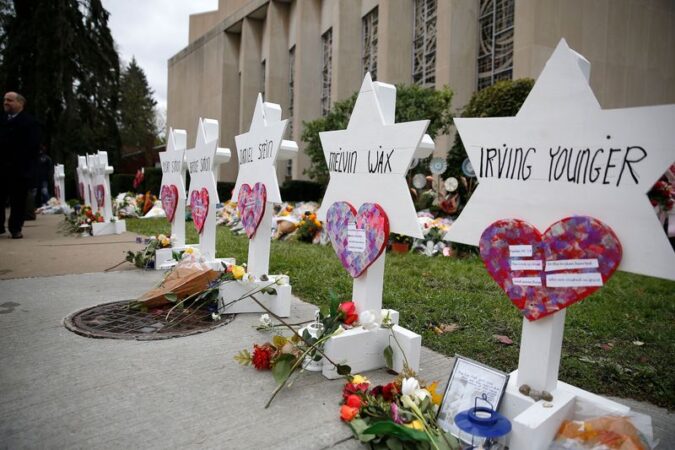
    Jews in America had long been insulated from violent antisemitism. It was something that happened elsewhere. Then, the 2018 Tree of Life synagogue massacre in Pittsburgh, where 11 people were murdered, changed that and precipitated hundreds of incidents in which Jews have been targeted simply for being Jewish.

    Last April, Gov. Josh Shapiro’s residence was torched on the second night of Passover. As with the Owens case, this is what public officials who are also publicly Jewish are currently facing.

    Owens is a sorry footnote in this spasm of hate. He will rightfully be forgotten after he is sentenced in April. But what we can’t forget is that he has plenty of company. Jewish or not, that should worry us all.

    Marcia Bronstein is the director of the American Jewish Committee’s Philadelphia/Southern New Jersey regional office.

  • Charged with carrying on Dr. King’s legacy, Jesse Jackson proved to be a titan of civil rights on his own accord | Editorial

    Charged with carrying on Dr. King’s legacy, Jesse Jackson proved to be a titan of civil rights on his own accord | Editorial

    There’s an old saying that “only the good die young.” Not true, of course, but the sentiment is understandable given the complex twists and turns of any life, including that of the Rev. Jesse Jackson, the civil rights titan and noteworthy presidential candidate, who at age 84 died Tuesday at his home in Chicago.

    The Rev. Jackson’s rise into America’s awareness was itself triggered by a death. He was with the Rev. Dr. Martin Luther King Jr. on the balcony of a Memphis hotel in 1968 when an assassin’s bullet killed his mentor. Who knew then that the Rev. Jackson would become as forceful a voice for equality as King, and later, a credible though unsuccessful political candidate for the nation’s highest office?

    Both the Rev. Jackson and King were gifted with voices that moved people to action, not just with their words, but with how they expressed them. King’s cadence perfected in sermons from pulpits across the South stirred the souls of folks who were cautioned to peaceably place their bodies in harm’s way to achieve dignity.

    The Rev. Jackson more so appealed to people’s outrage as he urged protesters to let their oppressors know, “I am somebody!” Hearing the Rev. Jackson speak, you got the feeling that those three words meant more to him than the disparate treatment Black people were afforded in then-segregated America. It was true that some aspects of the Rev. Jackson’s life had also been a struggle.

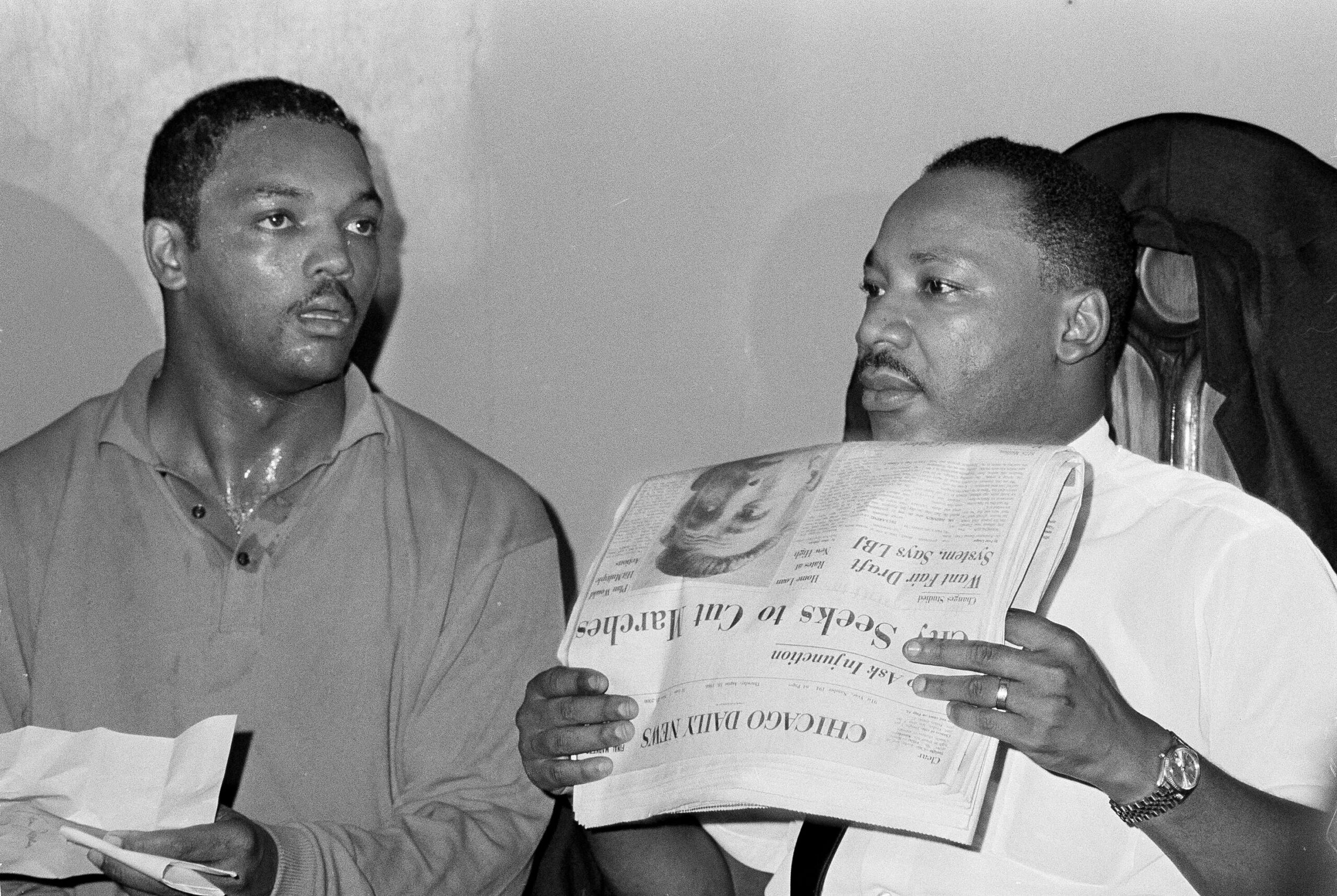
    Civil rights leader the Rev. Dr. Martin Luther King, Jr. (right) and his aide, the Rev. Jesse Jackson, are seen in Chicago in August 1966.

    Born in 1941 in Greenville, S.C., the mother of Jesse Louis Burns was a 16-year-old high school majorette who had been impregnated by a 33-year-old married man who lived next door, but denied his paternity. Two years later, Jesse’s mother married Charles Jackson, whom she met when he was a barbershop shoeshine man. Jackson sent the boy to live with his grandmother and didn’t adopt Jesse until he was 16 years old.

    After high school, the Rev. Jackson enrolled at the University of Illinois Urbana-Champaign on a football scholarship. After his freshman year, he transferred to North Carolina A&T University, a historically Black institution in Greensboro, N.C., where he became a leader in his Omega Psi Phi fraternity chapter and president of the student body. In those roles, the seeds of the Rev. Jackson’s dynamic activism were sown.

    Earlier, the Rev. Jackson had been a member of the “Greenville Eight,” the eight African American students arrested for refusing to leave the then-segregated Greenville County Public Library. By 1965, he was marching with King in Selma, Ala., and in 1967 was named head of Operation Breadbasket, the Southern Christian Leadership Conference program developed to help poor Black communities across the nation.

    The Rev. Jackson eventually left the SCLC after King’s death and, in 1971, created his own organization, Operation PUSH, and later the Rainbow Push Coalition, which became as involved in politics as it was with social justice. That political involvement is credited with being a factor in the 1983 election of Chicago’s first Black mayor, Harold Washington.

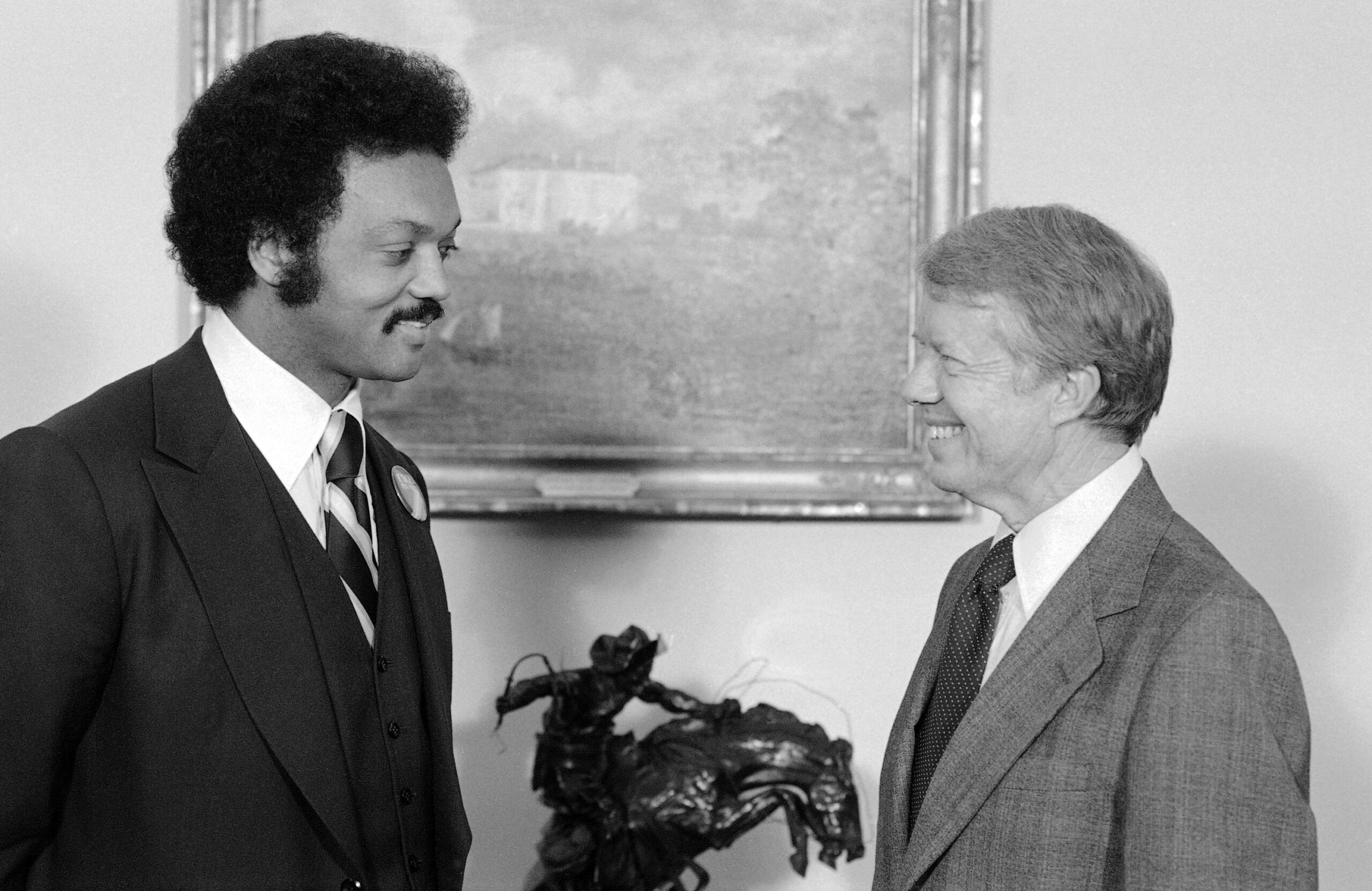
    President Jimmy Carter speaks with the Rev. Jesse Jackson at the White House in Washington, April 4, 1979.

    The Rev. Jackson’s subsequent 1984 presidential campaign resonated with voters of all colors and backgrounds who agreed with him that America wasn’t doing enough “to clothe the naked, to house the homeless, to teach the illiterate, to provide jobs for the jobless, and to choose the human race over the nuclear race.”

    The Rev. Jackson won 465 delegates to the 1984 Democratic National Convention and 1,218 delegates in 1988, both times far exceeding Shirley Chisholm’s 151 delegates when the New York member of Congress ran for president in 1972. But the Rev. Jackson never gave it a third shot. He instead spoke out for justice not just in this country but around the world, and, in 2000, was awarded the Presidential Medal of Freedom by President Bill Clinton.

    Those were good times, but life isn’t always good.

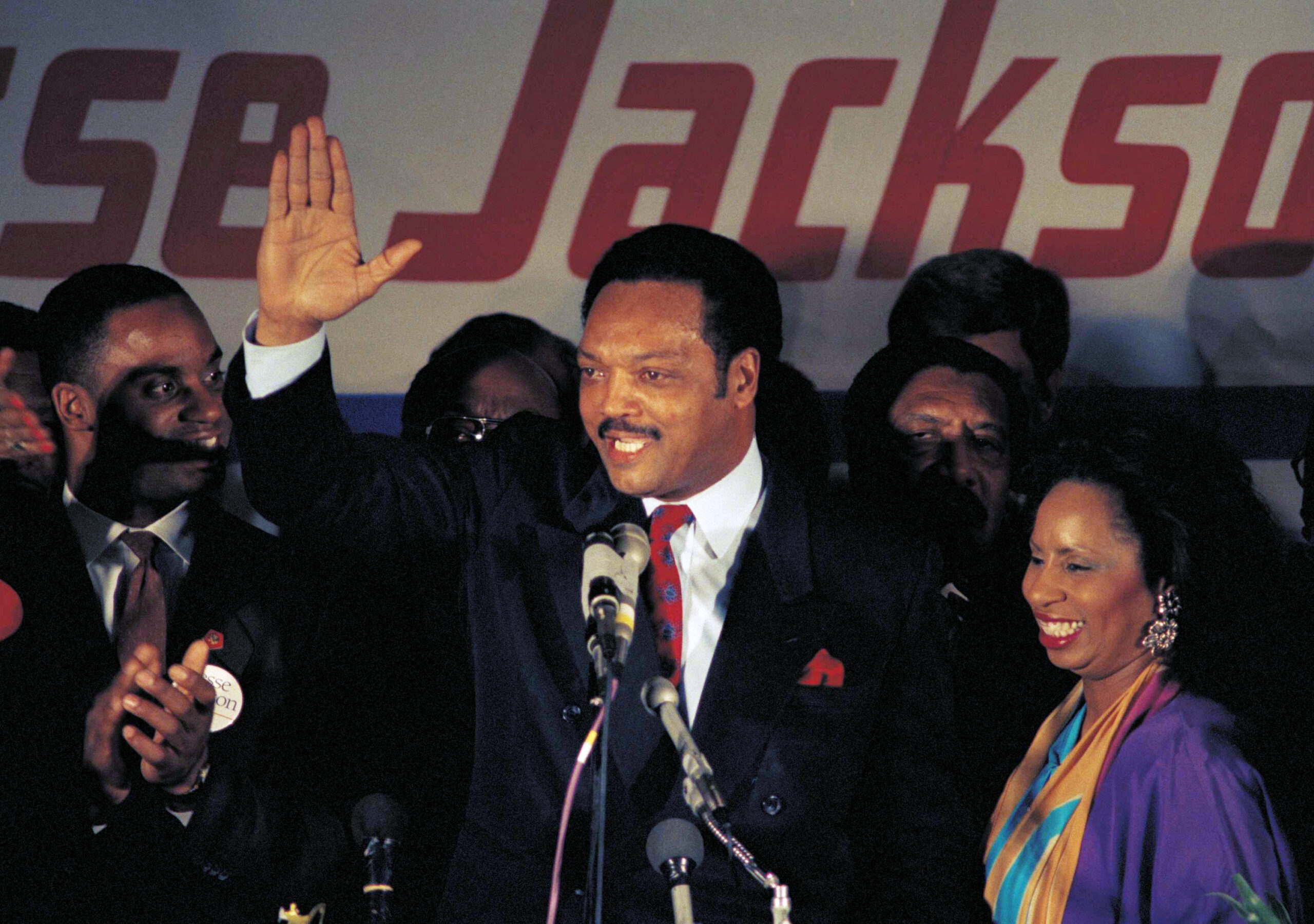
    The Rev. Jesse Jackson, with his wife, Jacqueline, concedes defeat in the Illinois Democratic primary on March 16, 1988, in Chicago.

    There was the revelation in 2001 that the Rev. Jackson had fathered a child with a woman other than his wife. There was the pain of seeing his son, Jesse Jackson Jr., a former congressman, plead guilty in 2013 to misspending $750,000 in campaign funds for personal use and being sentenced to 30 months in prison. Then, there were health issues. In 2017, the Rev. Jackson was diagnosed with Parkinson’s disease, a neurological disorder in which mobility and speech decline over time.

    Watching the Rev. Jackson in his final years, attending public events but barely able to move or speak, made you wish for a better summation of a life once so full of zest and vigor. But the Rev. Jackson has left behind vivid memories captured in print, video, and downloads of a man history should not forget. Memories of crowds screaming, “Run, Jesse, Run,” as the Rev. Jackson tried to fulfill a political dream left to be carried out by someone else. Thank God, Jesse did live to see that.

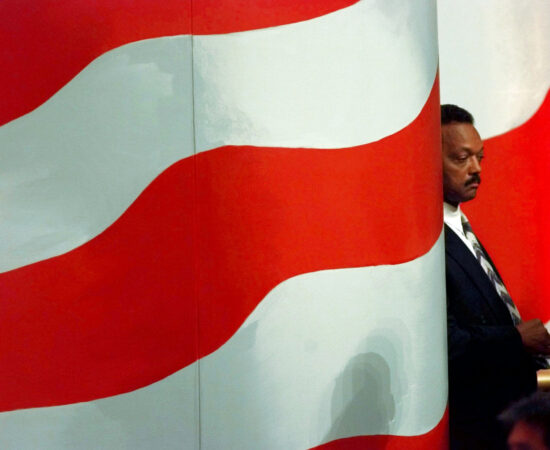
    Jackson speaks at a Chicago news conference in February 2015.