Category: Opinion

  • Republicans continue to sow distrust in elections. The SAVE America Act won’t change that.

    Republicans continue to sow distrust in elections. The SAVE America Act won’t change that.

    It is not unreasonable for people to be concerned about voter fraud or noncitizens voting. Not because it happens at a scale that could swing an election — researchers say it is so rare as to be statistically insignificant — but because Republican leaders have been pounding on that drum for so long that some can’t help but sway to the beat.

    As U.S. Sen. Dave McCormick recently reminded, more than half of Americans worry about fraud at the polls.

    “We have a duty to root out the source of this distrust and restore the integrity of our democratic process,” McCormick said, speaking on the Senate floor in defense of the SAVE America Act, the GOP’s latest effort to restrict voting.

    If Pennsylvania’s junior senator will allow me, I think I’ve cracked the case.

    Casting doubt on election security did not begin with Donald Trump and his bombastically false claims of hacked voting machines and millions of illegal immigrants voting. It started long before that, with “traditional” Republicans like McCormick legitimizing allegations of widespread fraud.

    Under President George W. Bush, Attorney General John Ashcroft warned that “votes have been bought, voters intimidated and ballot boxes stuffed” at a 2002 Voting Integrity Symposium. Yet, bringing the power of the U.S. Department of Justice to investigate these allegations resulted in few prosecutions by the time Bush left office.

    After 2013, when the U.S. Supreme Court removed a provision of the Voting Rights Act, thereby ending federal supervision of nine states with a history of racial discrimination, there was a slew of voting restrictions pushed by Republicans under the guise of voter integrity.

    By the time Trump came along, GOP voters were more than primed to believe that an election could be stolen, with the nadir being the Jan. 6, 2021, attack on the U.S. Capitol.

    Having learned no lessons from what happened, Republicans continue to stoke doubt about elections.

    McCormick shamelessly used a November incident in Chester County, where independent and unaffiliated voters were left off the county’s poll books, to allege that “registered voters were turned away at the polls. And an unknown number of unverified voters cast regular ballots.”

    There is no evidence that either of those claims is true.

    What happened in Chester County was human error that was corrected later that day. In the meantime, anyone who wanted to vote but was not in the poll books was asked to fill out a provisional ballot that would later be verified for eligibility.

    Elections are run by people, and mistakes happen. There are 3,069 counties in the U.S. in charge of administering elections. It’s a testament to the dedication of local officials that voting is as smooth and secure a process as it is.

    McCormick is a smart man. He likely knows the facts. He also knows that nothing included in the SAVE America Act would have prevented what happened in Chester County.

    What is included in the legislation requires people to show proof of citizenship when registering to vote and produce ID when casting a ballot. It stiffens penalties against election officials for registering voters without proof of citizenship, and forces states to submit their voter rolls to the U.S. Department of Homeland Security to ensure only citizens are registered.

    All of that seems reasonable, but seeing as how folks like McCormick are using deception in its promotion, you will forgive me for being skeptical. I don’t buy the catastrophism coming from Democrats, either, but there are valid objections.

    For example, some people who could otherwise vote do not have ready access to the documents required in the law — that’s about 20 million Americans, according to some estimates. That the proposal would take effect immediately, just in time for the midterm elections, guarantees that millions would be disenfranchised.

    Information sharing with DHS is also problematic, as the tool used to identify potential noncitizen voting registration “keeps making mistakes,” according to a ProPublica/Texas Tribune investigation.

    None of these issues is insurmountable. Instead of blocking legislation like the SAVE America Act, Democrats should fight to improve it.

    For example, if you need documentation to exercise your rights, then that documentation should be free, and requirements should be implemented after a reasonable grace period. Any mandate should come with the funding to ensure every American has access to their birth certificate, or that every citizen can easily obtain a passport. Congress should also make Election Day a holiday, while they’re at it.

    Ironically, voter suppression efforts, which traditionally fall hardest on communities of color, come from the idea that the changing face of America would turn away from Republicans. Put another way, this line of thinking suggests that as the U.S. barrels toward becoming a majority-minority nation, the GOP would be at a disadvantage.

    But some high-turnout elections, including the 2024 contest that put Trump back in the White House, have shown that less frequent voters — i.e., those least likely to jump through the hoops put up by something like the SAVE America Act — back Republicans.

    Instead of making up stories and assuring the long-term erosion of democracy for short-term political gain, McCormick and his GOP colleagues should partner with Democrats to make elections secure and voting easy.


  • Letters to the Editor | Feb. 23, 2026

    Letters to the Editor | Feb. 23, 2026

    From foes to allies

    Philadelphia, the birthplace of America’s independence, is perhaps the most important place to reflect on how far the U.K. and the U.S. have come since 1776. As the British minister for North America, I’m struck by the memorials and museums across the City of Brotherly Love that demonstrate just how rocky our relationship once was.

    But it’s the sense of distance we feel from that time that is truly remarkable. The 250th anniversary of American independence reminds us that our countries, once at odds, have since built the closest alliance between any two nations on earth. Today, the U.K. and the U.S. are firmly rooted in our shared values, history, and purpose.

    My own family heritage reflects this deep and abiding bond: My American grandfather, a decorated veteran from the Bronx, fought in the liberation of Europe from the Nazis on the same side as my British grandfather, who fought alongside American servicemen as part of the Allied forces in World War II. My two grandfathers never met — yet they stood on the same side in the fight for freedom. Their parallel service mirrors the paths our nations have taken.

    Today, our partnership matters more than ever because we face a world defined by new threats. No two allies integrate their military, intelligence, and security capabilities more deeply than the U.K. and the U.S. British Ministry of Defence personnel serve across the United States — including at Carlisle Barracks here in Pennsylvania — ensuring our armed forces can work seamlessly together.

    As King Charles III said, while our bond was “forged in the fire of conflict,” it is strengthened by the shared endeavor and mutual affection of today.

    This year, we celebrate 250 years of American independence on both sides of the Atlantic, because the U.K.-U.S. relationship stands as one of the world’s great success stories.

    Our alliance endures because generations of our people understand the lesson that even though, like any family, we occasionally have differences, when the U.K. and the U.S. stand together, we solve the world’s greatest challenges and defeat our greatest enemies.

    Stephen Doughty, British minister of state for North America and Europe, and member of Parliament

    Row offices

    The Inquirer Editorial Board makes a compelling argument for eliminating the register of wills and other row offices. The question is, how do the voters “demand change”?

    City Council can do this by proposing a charter change to be voted on by the people in a general election. To get this question on the ballot, a majority of City Council must agree. Former Mayor Michael Nutter tried, but Council wouldn’t go along with him.

    The only way the voters can demand change is to elect city officials who would support the elimination of row offices. The Inquirer has a role to play in this regard. When vetting candidates for local office, the Editorial Board must ask — and publish — where they stand on the question of abolishing row offices. If no one questions the candidates and puts them on the record, voters have no way to demand change by electing those who support the change.

    Tom Elsasser, Chestnut Hill, elsasser64@aol.com

    Join the conversation: Send letters to letters@inquirer.com. Limit length to 150 words and include home address and day and evening phone number. Letters run in The Inquirer six days a week on the editorial pages and online.

  • The hidden ICE blueprint that should horrify every American

    The hidden ICE blueprint that should horrify every American

    So often in the iPhone Age, the whole world is watching the ugly side of humanity as captured on video, from murder in the snowy streets of Minneapolis to a plainclothes Pennsylvania police chief appearing to place a protesting teen girl in a choke hold.

    But sometimes evil is buried deep in the black-and-white paperwork of government bureaucracy.

    A once sleepy rural town named Social Circle, Ga. — just over 40 miles east of Atlanta off Interstate 20 — has become the epicenter of the stealthy plan by U.S. Immigration and Customs Enforcement (ICE) to rapidly create an American gulag archipelago of massive former warehouses adapted into detainment camps for arrested immigrants.

    The plan to convert a newly built 1.2 million-square-foot warehouse into a concentration camp where as many as 8,500 humans — double the size of the current largest federal prison — would be housed for as long as 60 days (or likely more) has riled up both residents and public officials in a place where 75% voted for Donald Trump in 2024.

    The frustrated city manager of Social Circle, which was offered no input as a cash-flush ICE recently bought the spec warehouse for a whopping $128 million, told the Guardian that he’s denying the feds’ request to turn on the public water as they race to open their detention camp there as early as April.

    “I told them I’m not going to do it,” Eric Taylor said. “Not until they come and talk to me.”

    But officials in the small town of just 5,000 also did something else that probably raised some hackles at Kristi Noem’s ultrasecretive U.S. Department of Homeland Security. They made public what few documents DHS has so far been willing to share with Social Circle, including its blueprint for what the innards of an American gulag will look like.

    Close to two-thirds of the massive, rectangular floor plan is divided into 80 squares separated by narrow corridors, each box with dozens of strike marks. The thousands of marks presumably represent bunk beds, but what they truly signify is human beings.

    Based on the most recent statistics, as many as 70% of these arrested and handcuffed immigrants will have committed no crime after entering the United States — day laborers, restaurant workers, or Uber drivers now crammed into a prison camp unlike anything seen on U.S. soil since World War II’s immoral Japanese internment.

    The new floor plan raises more questions than it answers. It’s not clear whether the small boxy rooms surrounding the rectangular detention space would be used for recreation, as no recreation space is explicitly marked. There are three cafeteria rooms and a medical space — a necessity in an instant town of 8,500 — yet still room for an indoor gun range where hundreds of guards will hone their shooting skills. Eight rooms are marked as handicap accessible, so there’s that.

    This banal blueprint for inhumanity is the embodiment of the notorious words last April from ICE’s acting director, Todd Lyons, who said the Trump regime wants to make deportation “like [Amazon] Prime, but with human beings.” Indeed, the ultimate goal of stacking desperate people in dingy, dehumanizing concrete caverns built for bath mats or pet treats is to force them to abandon their legal right to fight for U.S. asylum and agree to leave the country, bringing Trump closer to his goal of one million deportations every year.

    John Miller, an organizer with One Circle Community Coalition, shows a variance request while describing plans to oppose converting a warehouse into an ICE detention facility last month.

    “The focus on speed is extremely concerning,” Sari Arvey of Human Rights First’s ICE Flight Monitor told Georgia Public Broadcasting, referring to the goals of getting detainees in and out in 60 days. “If they’re trying to speed up this process even further, it’s only going to extremely exacerbate the due process violations, the separation of families, [and] also conditions in detention centers.”

    Online, the blueprint of detainees forced to live in such crammed conditions — a necessity to house 8,500 people in one building, even a warehouse the size of roughly 20 football fields — prompted comparisons to some of the worst of human history. Some on Bluesky linked the Social Circle blueprint to diagrams of tightly packed ships that brought enslaved Africans to America in the 18th century, while others wondered if the boxy quarters would look just like the rows of bunk beds inside Auschwitz, the Nazi death camp.

    No one is suggesting ICE is planning anything close to mass extermination, but experts do say floor plans like this are more evidence that what the Trump regime, with its ambitions for a national network of as many as 24 converted warehouses, is racing to create is clearly comparable to history’s worst concentration camps.

    In a conversation this weekend with New York Times columnist Jamelle Bouie, author Andrea Pitzer of One Long Night: A Global History of Concentration Camps called it “the purging of anyone that’s deemed the outsider or the foreigner. It has been weaponized into this much, much more dangerous state. And with the number of detention beds in terms of expansions and the warehousing, the potential for this, we’re really looking at stuff on the scale of the concentration camp systems that most people have heard of.”

    As the existence of the ICE detention scheme has become a coast-to-coast controversy, Homeland Security has insisted these sites will be modern, well-run, and humane. “These will not be warehouses — they will be very well-structured detention facilities meeting our regular detention standards,” DHS said earlier this month.

    The problem is that the recent history of ICE has shown its current “modern” detention sites are plagued by squalid conditions and rising rates of infectious disease and premature death. The idea that these same bad actors could achieve humane conditions in much larger, hastily assembled warehouses seems utterly ludicrous.

    Earlier this year, Democratic U.S. Rep. April McClain Delaney visited an ICE detention center at a Baltimore federal building and reported “horrendous” conditions, with 50 people in a room with “concrete floors, a bench around the perimeter, and a makeshift bathroom in the middle that has minimal privacy.” Detainees recounted sleeping under foil blankets and experiencing hunger and thirst.

    “Our patients are more frightened and sicker than ever,” three Philadelphia physicians who primarily treat immigrant communities wrote in a recent Times guest essay that described a variety of dire problems, including substandard treatment in ICE detention.

    One case they described involved a stroke recovery patient who was arrested and detained by ICE for several weeks at the Moshannon Valley Processing Center in Central Pennsylvania before family members won his release.

    “In detention he had missed weeks of medication, and he continues to deal with the undertreated effects of his stroke, which make walking difficult and returning to work impossible,” they wrote. “He told us he struggles to sleep through the night and often feels exhausted and depressed.” Meanwhile, large ICE detention camps in Texas have reported outbreaks of measles and tuberculosis.

    The reality of the concentration camps that are planned for Social Circle or Tremont, Pa. — in a site that used to move cheap consumer goods for the now-bankrupt Big Lots — is that they are much more likely to breed disease and human misery than to alleviate them.

    It’s not clear how far ICE can get with this scheme. Were ICE successful in its initial $38 billion plan to buy 24 facilities that could house as many as 76,500 detainees, it would need to arrest people in multiple cities on the scale that recently generated a national uproar in just one, Minneapolis. But the exposure of the detention proposal has also caused several planned purchases to collapse. This week, for example, officials in New York state claimed that a large, controversial site in the Hudson Valley town of Chester won’t be happening.

    The irony is that what might be described as NIMBY (“not in my backyard”) issues — like not having enough drinking water or sewage treatment capacity for thousands of new arrivals, or the loss of tax revenue from warehouses meant for economic development — are giving permission to weak-kneed politicians afraid of the immigration issue to still oppose these sites without addressing the bigger human rights crisis.

    To echo Malcolm X, these monstrosities should be stopped by any means necessary, even if it takes just turning off the water spigot. Still, the biggest reason to be outraged about this scheme for American concentration camps should not be infrastructure, but the rank immorality spelled out in the cold ink of the DHS floor plan.

    It’s our challenge as the neighbors and allies of our nation’s immigrant communities to make sure those black marks on a page are never turned into the suffering of actual humans.

  • Moving the needle | Editorial

    John Cole spent 18 years as editorial cartoonist for The (Scranton) Times-Tribune, and now draws for various statesnewsroom.com sites.

  • On 4th anniversary of Ukraine war, Kyiv refuses to cave to Putin’s terror or Trump’s pro-Russia demands

    On 4th anniversary of Ukraine war, Kyiv refuses to cave to Putin’s terror or Trump’s pro-Russia demands

    MUNICH — When Russia invaded Ukraine on Feb. 24, 2022, no one imagined Moscow would be enmeshed in a quagmire four years later, having lost nearly 1.2 million killed, wounded, or missing soldiers to an army a fraction of its size.

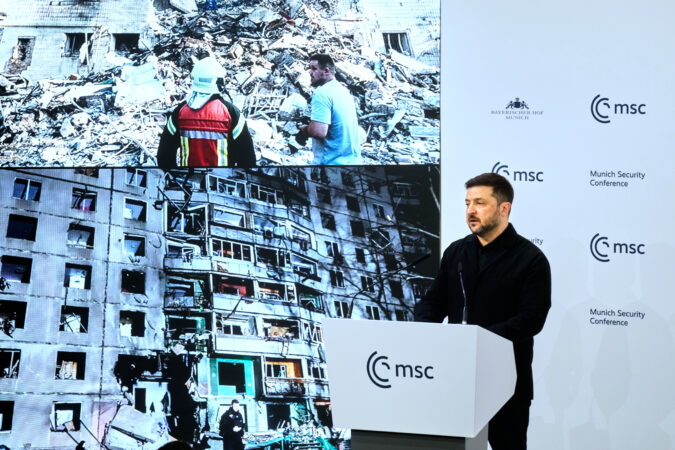
    The price Ukraine has paid for its defiance was written on Volodymyr Zelensky’s face — weary, puffy, aged dramatically beyond his 48 years — as he took the stage at the Munich Security Conference last weekend.

    “I want you to understand the real scale of these attacks on Ukraine,” he told an attentive audience, bluntly detailing the 6,000 attack drones, 150-plus missiles, and more than 5,000 multiton glide bombs Russia had dropped on civilian targets in January alone.

    “Imagine this over your own city,” Zelensky demanded. “Shattered streets, destroyed homes, schools built underground, not a single power plant in the country that has not been damaged by Russian attacks.”

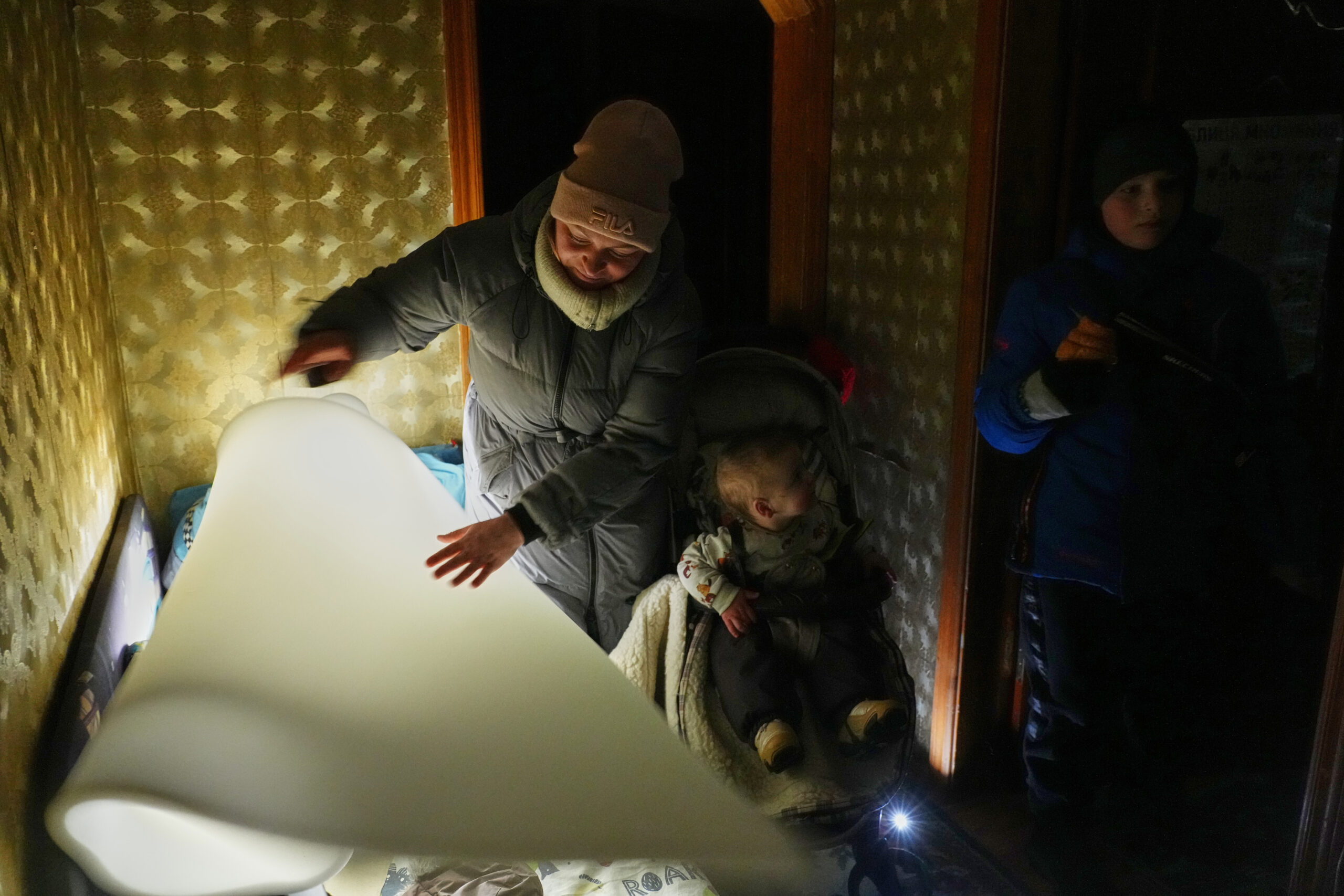
    Yes, imagine those bombs dropping on Temple University and Jefferson Hospital, on apartment towers on Broad Street, and on William Penn atop City Hall. Imagine living under mounds of quilts in your home because power infrastructure had been deliberately destroyed.

    And yet, as Zelensky made clear, Ukraine won’t surrender to Vladimir Putin — nor to Donald Trump.

    Kyiv will not bow to shameful White House demands that it cede critical, fortified territory in the Donbas region to Russia, with no solid U.S. security guarantees to stop Putin from swallowing this gift and attacking again.

    Based on Zelensky’s words, and what I heard from other European leaders, tech executives, Ukrainian military officers, poets, and tech innovators in Munich, here are my takeaways on what to expect in Ukraine as the fifth year of war begins.

    Yuliia Dolotova, 37, uses foam rubber to insulate her children’s bed in her apartment during a power outage caused by Russia’s repeated air strikes on the country’s power grid, in Kyiv, Ukraine, Feb. 2.

    No end in sight

    The war will not end in 2026. Putin isn’t winning, and Ukraine is holding on. Kyiv’s current strategy — as its army eliminates more Russian troops each month than the number of fresh recruits Moscow can send to the battlefield — is to increase that kill ratio, and to batter Russia’s military and economy until the Kremlin is finally forced to negotiate seriously.

    But U.S.-brokered peace talks, whose second round in Geneva broke up abruptly on Wednesday, are headed nowhere so long as Trump only pressures Ukraine.

    Russia hasn’t changed its hard-line demands one iota, still demanding Ukraine slash the size of its army, get rid of Zelensky, and forgo Western security guarantees. In other words, commit suicide.

    Equally absurd, as Zelensky pointedly noted, is that Putin has rejected any European participation in peace talks, with Trump’s acquiescence. Never mind that the European Union and member countries now pay 98% of the cost of military and economic aid to Kyiv, including payments to Washington for limited amounts of U.S. weapons. Meantime, Trump cut off 99% of U.S. aid to Kyiv in 2025.

    “We don’t hear any compromises from Russia,” Zelensky said, citing Moscow’s “strange” demand that Kyiv hold elections amid Russian bombing — a demand that received buy-in from U.S. negotiators.

    “Give us a two-month ceasefire before elections,” Zelensky proposed. “Or we can also give Russia a ceasefire if they will have [free] elections in Russia.”

    The Munich audience cheered.

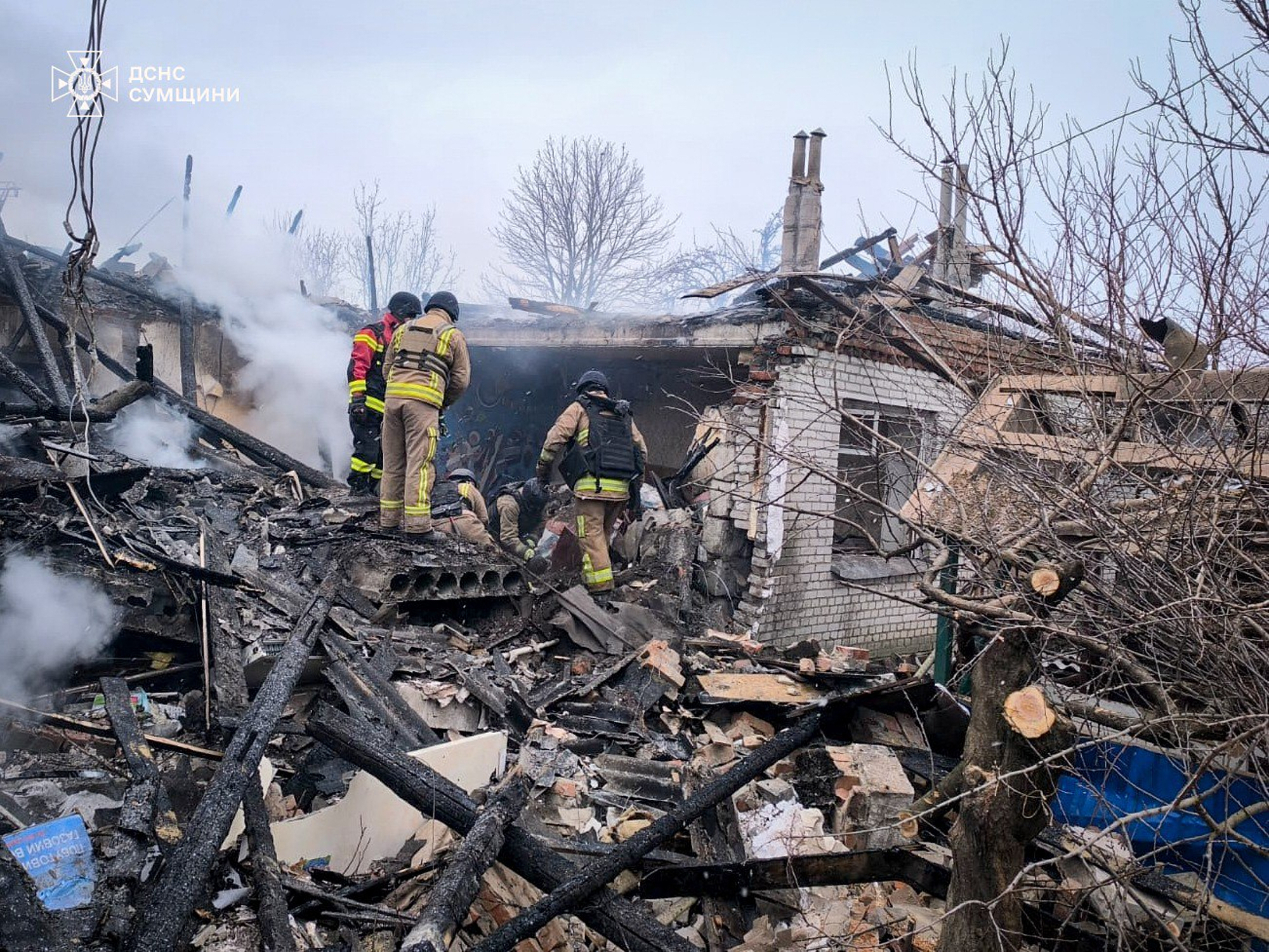
    In this photo provided by the Ukrainian Emergency Service, firefighters put out the fire in private houses following a Russian air attack in Sumy region, Ukraine, Tuesday.

    “Peace can only be built on real security guarantees,” Zelensky rightly insisted on stage, given that Putin has broken every previous accord Russia has made with independent Ukraine over the past three decades.

    Since NATO membership is not on the table, Ukraine requires a legal commitment, not just verbal “assurances” that it will continue to receive European weapons and support for a strong army — along with expedited admission to the European Union. Kyiv also needs a firm U.S. commitment to back up European support before Ukraine makes any compromises on territory.

    When I asked Ukrainian Foreign Minister Andrii Sybiha whether such security guarantees should include the presence of allied troops in Ukraine, he said sharply, “Boots on the ground are essential” in order to encourage investors in a postwar nation.

    Yet, it is still unclear whether any European countries will agree to base military forces on Ukrainian soil, rather than just send “peace monitors.” Moreover, Russia rejects any security guarantees at all, and the White House still won’t spell out what kind of security backstop it will provide for the Europeans, and when.

    Ukrainian President Volodymyr Zelensky (right) and German Defense Minister Boris Pistorius visit a drone-producing company, Quantum Frontline Industries, near Munich, on Feb. 13.

    High-tech weapons

    Ukraine will press forward with its efforts to promote joint weapons production with European — and American — firms to advance its amazing innovations in unmanned drone warfare. This tech savvy has enabled Kyiv to push back against Russia’s superior number of troops and increasing number of drones. But Kyiv badly needs more long range missiles (way past time for Germany’s Taurus and U.S. Tomahawks) and more air defenses to take out Russian missiles.

    Representatives of Ukrainian and European military production companies swarmed the sidelines of the conference. Ukrainian officers from specialized drone units displayed their products’ prowess on video screens at side conferences organized by Ukrainian companies and think tanks.

    The annual Munich Ukraine lunch sponsored by the Victor Pinchuk Foundation included attendees such as former Google CEO Eric Schmidt, whose Swift Beat company is working with Ukrainian partners to produce hundreds of thousands of AI-enabled long-range drones and drone interceptors that are the new weapons of modern war.

    Schmidt expressed the opinion heard throughout the conference: When it comes to these weapons, Ukraine “will be the primary producer for all Europe.”

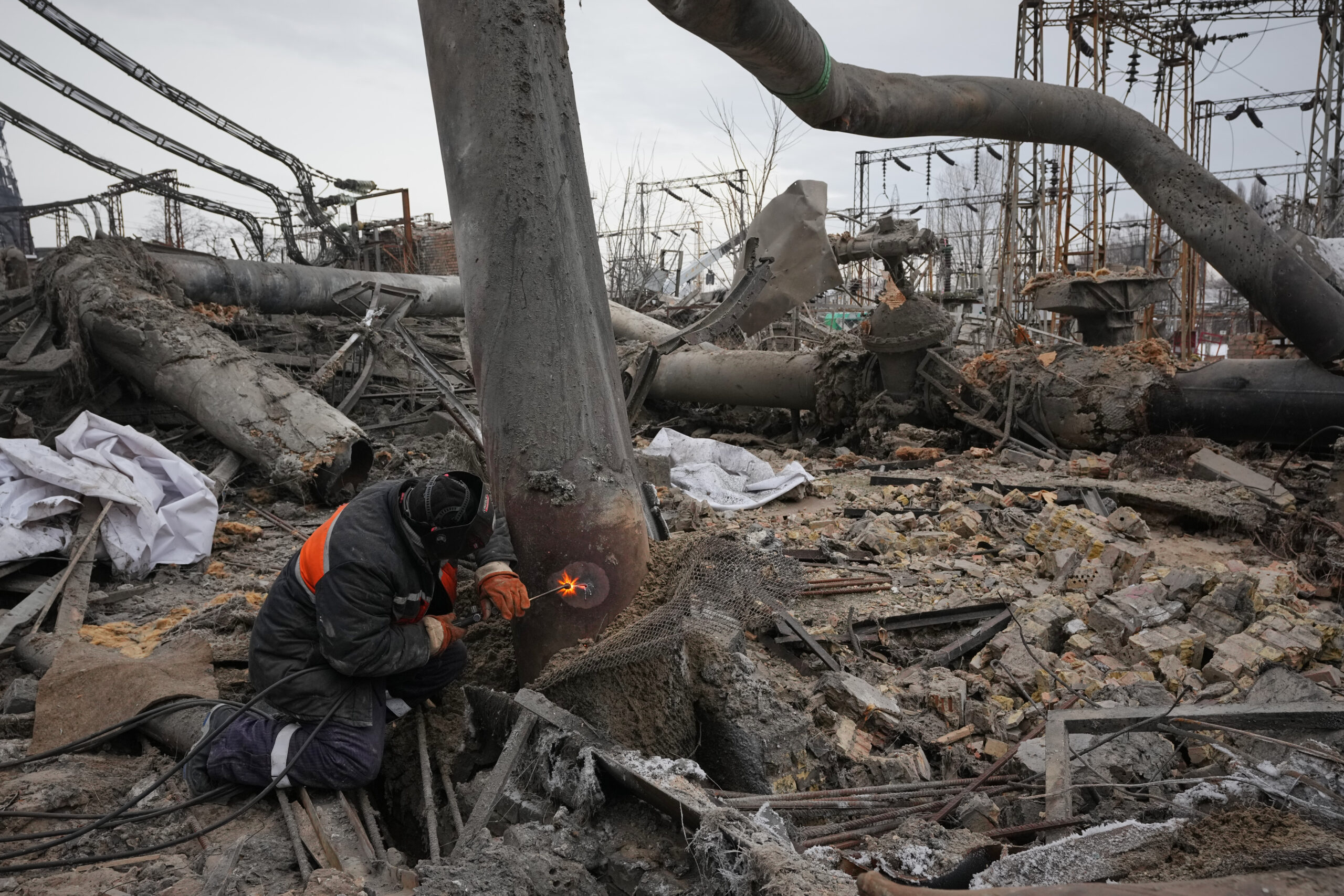
    Workers clean up damage at Darnytsia Thermal Power Plant after a Russian attack in Kyiv, Ukraine, Wednesday, Feb. 4, 2026.

    The will to go on

    The Ukrainian public is demonstrating amazing fortitude, despite the Russian onslaught, and despite Trump’s refusal to support a tough new secondary sanctions package on Russia that a bipartisan Senate majority has had ready for months.

    Zelensky paid tribute to the thousands of energy workers, repair crews, and rescue teams who have been working around the clock to restore heat and electricity each time Russia hits another power plant.

    “Ukraine still has power because of our people,” he said with emotion. “Many politicians could learn how to act immediately … from ordinary electricians.”

    The conference recognized ordinary Ukrainians’ heroism by awarding its annual Ewald von Kleist Award to the people of Ukraine for their “unwavering determination to defend their freedom and all of Europe.” The award is named after the Munich conference’s founder — who participated in the failed 1944 German plot to assassinate Adolf Hitler — and honors outstanding contributions to international peace and conflict resolution.

    What sticks in my mind are the words of Ukraine’s premier poet, songwriter, and novelist Serhiy Zhadan, whose Kharkiv home I visited early in the war, and who spoke to a rapt audience at a Munich cultural center about his beloved city. Kharkiv’s citizens, he said, “reject the Russian goal to make them despair of life.”

    “There is still a huge cultural life in Kharkiv,” he said, “and people refuse to let themselves be scared. At every cultural event, money is collected for kids and soldiers. But the whole society is tired. We want to go back to a normalcy where kids can return to school.”

    The world’s double standards are painful, he continued, citing the ban by the International Olympic Committee on participation by a Ukrainian athlete because he wanted to memorialize his fellow athletes killed by Russia by putting their pictures on his helmet. “This is not a local war,” Zhadan insisted, “this war is about us all.”

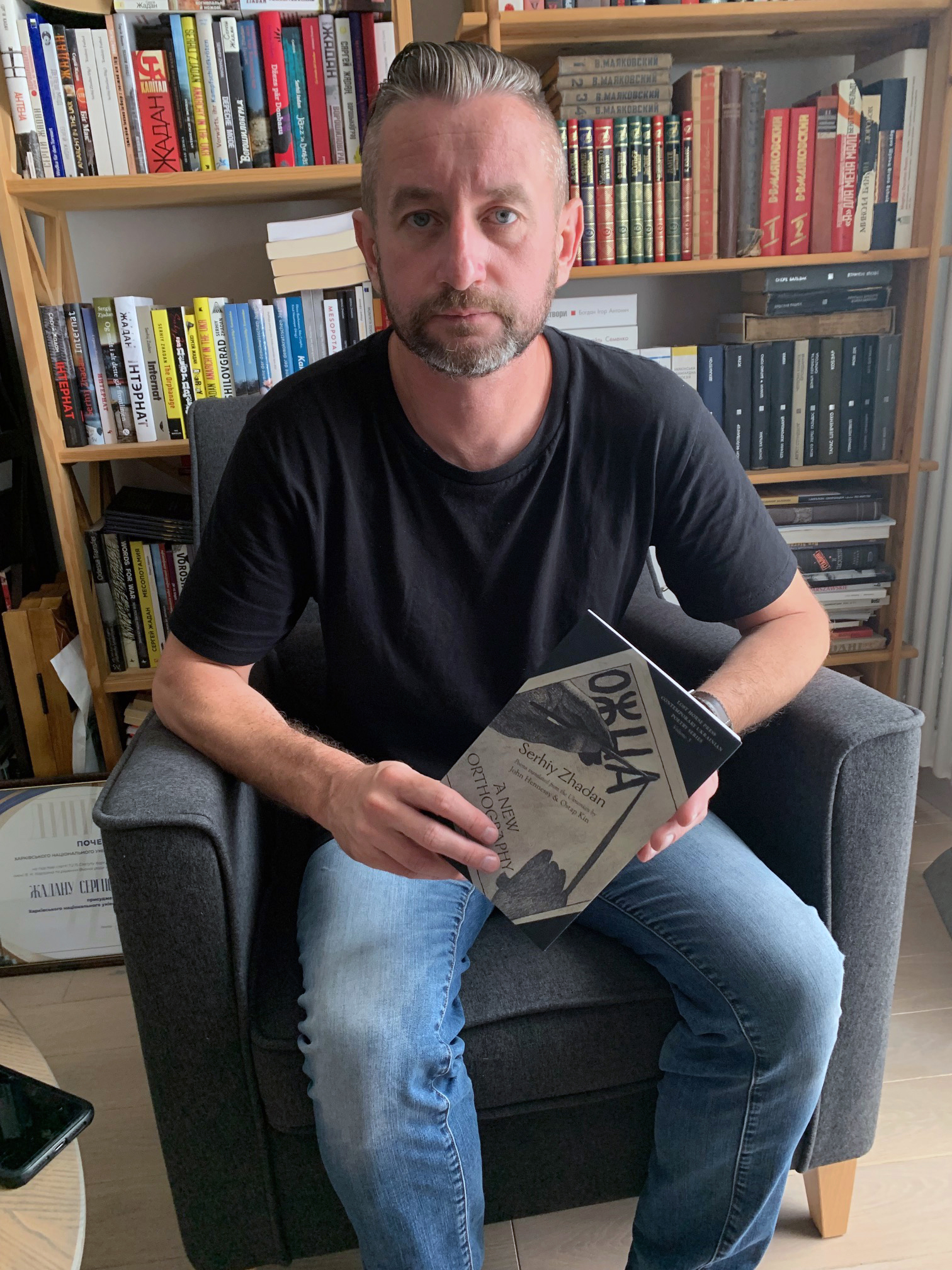
    Serhiy Zhadan sits inside his home in Kharkiv, Ukraine, in 2022.

    “We try to cling to the moments we live in, and not to think of the future,” he explained, in speaking of survival strategies. “If you think of the future, you become vulnerable. If you focus on the need to survive, you might get through.” Yet, he added, “We will enter the future from [this] darkness. This is part of our Ukrainian history. We will marvel at how beautiful the world will be if we only manage to endure this little bit of darkness.”

    Zelensky translated Zhadan’s poetry into hard reality when he reminded a main stage audience that “Putin hopes to repeat 1938, when a previous Putin [Hitler] began dividing Europe.”

    As Zelensky reminds us, it was a historic tragedy for Britain’s Neville Chamberlain to acquiesce to Hitler’s demand to seize part of Czechoslovakia. Far from bringing “peace in our time” Chamberlain’s blindness brought on World War II.

    It is an error of far greater magnitude for Trump to press Zelensky to cave to Putin’s demand that he be handed key Ukrainian territory Russia hasn’t been able to conquer. Unlike Hitler in 1938, Putin has already begun his wider military attack on Europe.

    Such signs of Trumpian weakness only encourage further Putin aggression as well as Xi Jinping’s plans to subdue Taiwan.

    The ultimate message of Munich this year was that Europe needs to step up, and the White House needs to wake up and stop denying the importance of Ukraine. The Russia-China-North Korea axis is already feeding off of Trump’s misunderstanding of Putin in order to undermine U.S. power.

    “Our world of drones is your world of drones,” Zelensky offered. “Our ability to stop [Russian] sabotage is yours. Please pay attention to Ukraine. If this [attention] had happened before this war started, the war would never have begun.”

    The first sign of an American awakening will emerge if GOP members of the large bipartisan congressional delegation at Munich finally blast past Trump’s objections and bring a tough new package of secondary sanctions on Russian energy exports to a floor vote — soon.

  • Letters to the Editor | Feb. 22, 2026

    Letters to the Editor | Feb. 22, 2026

    A fear unfounded

    A recent letter writer, Jeff Braff, proposes a flaw in the election system based on the difficulty in comparing signatures on electronic poll books vs. the signature made at the time of voting. I agree that many signatures do not look similar. However, to suggest potential voter fraud is ludicrous.

    I have been an elected poll worker, including a judge of elections in Delaware County, for more than a decade. I work in a polling place with four precincts servicing about 4,000 registered voters.

    If people were coming in to vote fraudulently, they would have to claim to be someone else. For the electronic poll book to accept their claim, they would have had to get to the polling place before the actual voter, as once the voter is accepted by the electronic poll book, it won’t accept it again for the same election. On the other hand, if someone fraudulently voted and the actual voter comes in later, we would recognize the issue immediately, as the true voter would assure us they had not voted, which would cause a major investigation.

    If this were an ongoing problem in the polls, we would know. In helping my neighbors vote for more than 10 years, with thousands of votes cast, I have never had a voter denied voting due to a previous vote — never.

    Our voting system is the safest, most secure, honest system in the world. Republican thoughts to the contrary are simply nonsense, and any attempts to make voting more secure are, in fact, simply attempts to deny the vote to groups that commonly don’t vote Republican.

    Michael Mayer, Wallingford

    Not-so-distant future

    If the Trump administration continues unchecked, this is what we have to look forward to: smog and heavy pollution over our cities, large concentration camps appearing all over the country. Everyone will have a friend, family member, or acquaintance who disappears into the night. U.S. Immigration and Customs Enforcement agents will spread out everywhere and do whatever they want. The middle class will all but disappear, and we will see a lot more poverty. We will all be carrying “papers” that can be randomly checked by our secret police at any time. The list goes on and on. This cannot be allowed to happen. Let’s make sure it doesn’t.

    Catherine Freimiller, Philadelphia

    Ballots, not burdens

    I just spent $212.55 on a passport — not to travel, but in case I need it to keep voting.

    If the SAVE America Act becomes law, that passport could become the price of participation. When exercising a constitutional right requires a document costing over $200, that looks like a poll tax. The 24th Amendment was meant to end that.

    Supporters point to voter fraud. Yet, even the Heritage Foundation’s own database documents roughly 1,400 proven cases nationwide over decades. Out of billions of ballots cast, that’s about 0.0001% — not a crisis, a rounding error.

    Still, U.S. Rep. Ryan Mackenzie and Sens. John Fetterman and Dave McCormick support measures built around this “threat.”

    When participation rises, some politicians lose. Making voting harder before midterms doesn’t protect elections — it protects incumbents who fear the electorate.

    Election integrity matters. But adding cost and bureaucracy to address 0.0001% looks less like security and more like strategy. Voting is a right — not a purchase.

    Sara Emerle, Albrightsville

    Join the conversation: Send letters to letters@inquirer.com. Limit length to 150 words and include home address and day and evening phone number. Letters run in The Inquirer six days a week on the editorial pages and online.

  • I can’t shake the feeling that my new car thinks I’m an idiot

    I can’t shake the feeling that my new car thinks I’m an idiot

    My new car thinks I’m an idiot.

    Through a constant series of beeps, flashes, and messages, it badgers me in a manner that’s a cross between an unrepentant mansplainer and passive-aggressive nanny.

    It comes with all sorts of ways to protect me from being, well, an idiot. It has a “lane sway warning” in case I’m dozing off. It blocks searching for a new Sirius radio station while driving — presumably to prevent distracted driving. (All while displaying postage stamp-sized album cover images of the music being played.)

    “Lane departure!” it warns if I swerve six inches over the center line of a country road to avoid hitting a bicyclist.

    When the salesman started to explain how to work the headlights, he stopped midsentence to pronounce: “Just don’t touch it. The car already knows what to do.”

    In short, my new car yearns to be a driverless car, kind of like those Waymo taxis, which will soon be rolled out in Philly. It deigns to have me as its owner; tolerates — nay, suffers — my ownership of it. I’m surprised the dealer didn’t require my SAT scores in order to buy it.

    Take the day I tossed my yoga mat in the back seat after class, drove home, then spotted this yellow dashboard warning upon alighting: “Reminder, look in rear seat.”

    This was puzzling, until I realized it was a safety feature designed to prevent drivers from absentmindedly leaving their baby (or pet) behind during a heat wave.

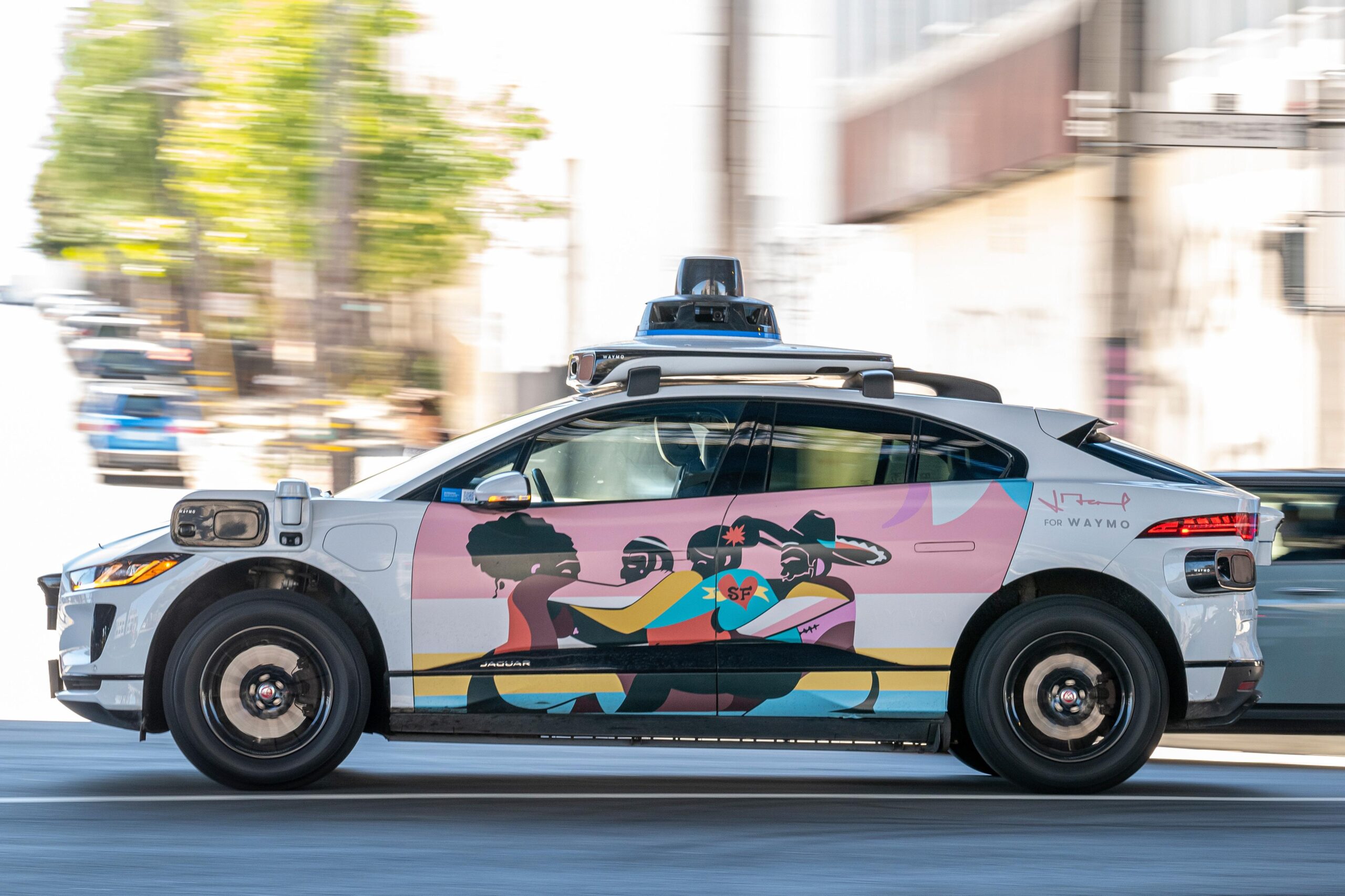
    A Waymo autonomous taxi in San Francisco, in August 2023.

    Well-intentioned, to be sure — yet an ineffectual mixture of condescending and vague. It merely hints at the problem, as if it is too polite to accuse someone of literal child endangerment. Better it should just come out and say, “Hey, don’t forget the baby, ya moron!”

    Or better yet: “I got you here safely. Do you need me to parent for you, too?”

    Whenever the warning flashes, I find myself muttering, “Calm down — it’s a yoga mat.”

    My friend’s Mercedes claims it can detect if she’s “fatigued,” barking a suggestion to take a break, and even flashing an image of a coffee cup. (Is Mercedes in cahoots with Big Coffee?)

    When the outdoor temperature hits 37 degrees, the dashboard flashes a little orange icon that looks like the Imperial fighter plane from Star Wars. It’s to warn me about possible ice — and functions even in bone-dry weather.

    This safety system — which I alternately sense as being either male or female — doesn’t seem to grasp that I just want to run errands, not pilot the Starship Enterprise.

    Fed up with its bewildering collection of multicolored dashboard symbols, I finally decided to read the instruction manual.

    Correction: Manuals. This car comes with three, and like the Harry Potter novels, each one is longer than the last.

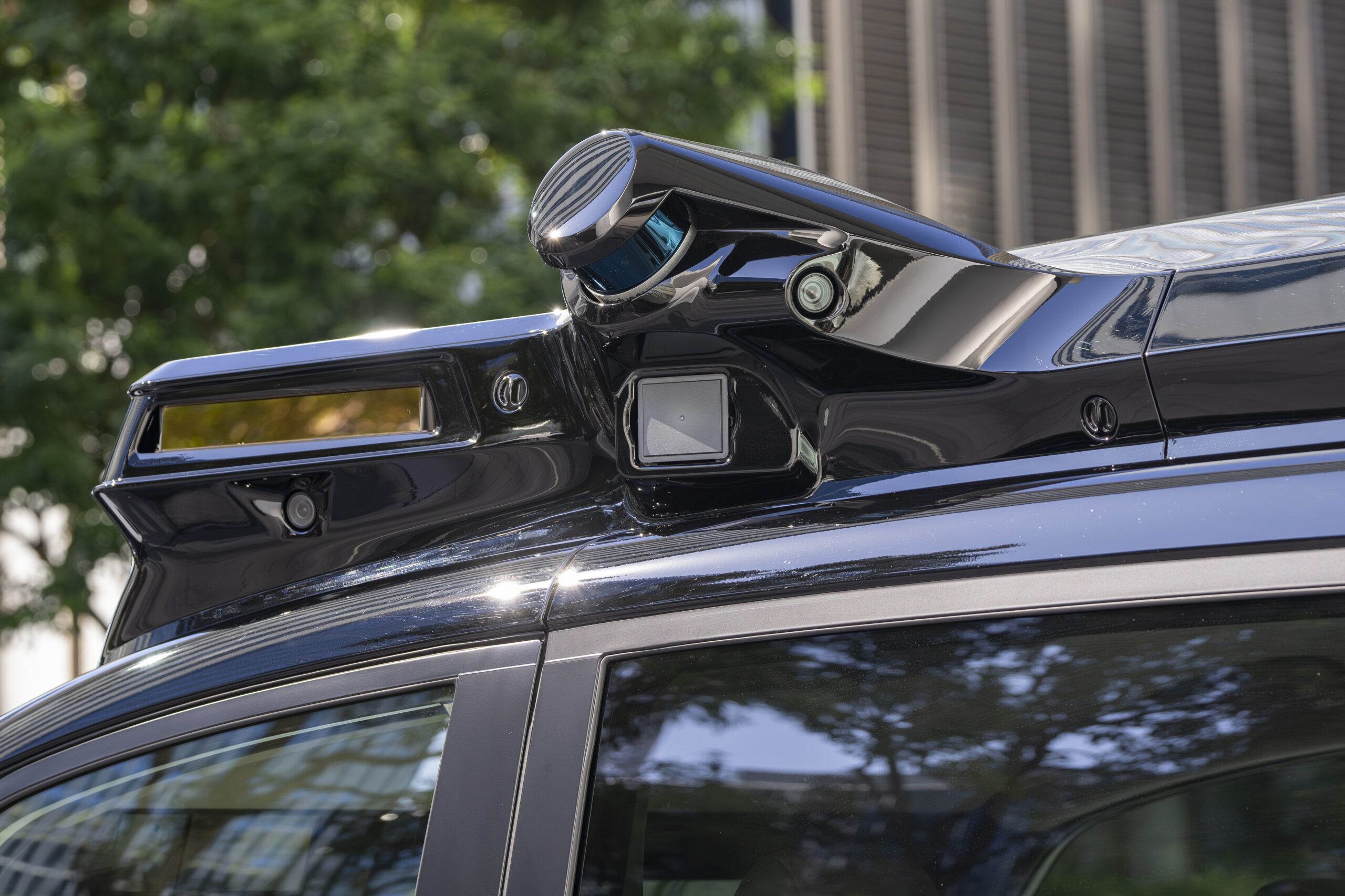
    This photo released by Nissan Motor Corp. shows sensors attached to the top of its car, which assist the Japanese automaker’s self-driving technology with computer functions, radars, and cameras.

    Here I learned the trademarked “Eyesight” driver assistance technology will detect pedestrians … unless they’re carrying an umbrella. Its disclaimer says it can also get confused by: ditches, fog, dirt, dust, strong sunlight, motorcycles, bicycles, animals, rain, and windshield washer fluid.

    The car has automatic braking, should you fail to notice that the car ahead of you has stopped. That feature, along with the rear-seat warning, has triggered the ire of Senate Republicans, who announced hearings on whether such safety features are worth the added cost.

    It also has keyless entry, using just a fob, whose presence the car can sense even when it’s in my purse or pocket.

    Last November, I was a volunteer poll worker on Election Day, which required that I depart in darkness to arrive at my polling place by 5 a.m. When I gathered my belongings to go inside, I couldn’t find my keys. I figured they had to be in the car, because otherwise the car wouldn’t run, right?

    I spent the morning searching my purse and backpack. No keys. I spent my lunch break rummaging around in the car to see if they’d fallen between or under the seats. Nope.

    I tried to start the car, on the premise that if the keys were somewhere in the car, it would start. It didn’t.

    I panicked. Since I was the poll worker assigned to bring the all-important USB stick containing our district’s voting tallies to the town clerk, it was vital that I depart as soon as possible once the polls closed. I shuddered at the prospect of going viral, with CNN announcing, “New Jersey’s machine vote tally is now final — with the exception of a single missing district.”

    Luckily, my husband brought over my spare keys. When the polls closed, I dropped off the voting equipment, then went to a music rehearsal. At its conclusion, as I leaned down to load my music bag into the back seat, I spotted something on the vehicle’s roof: my keys, nestled snugly against the luggage rack.

    Yes, I had driven over five miles, up proverbial hill and dale, with the key fob atop my car.

    And this know-it-all car, which can sense I’ve veered a centimeter across a lane line and barely tolerates my presence, never realized it.

    Hey, Mr./Ms. Smarty-Pants: Who’s the idiot now?

    Kathleen O’Brien is a retired newspaper columnist who lives with her know-it-all car in northwest New Jersey.

  • Trump doesn’t invent resentments — he senses which ones are newly safe to express

    Trump doesn’t invent resentments — he senses which ones are newly safe to express

    There is a particular kind of ugliness that does not merely offend but instructs. It tells us something about who we have been, who we are becoming, and what social permissions are quietly being expanded. Donald Trump’s circulation of an image portraying Barack and Michelle Obama as apes belongs squarely in that category. It is not a one-off lapse. It is a signal flare.

    This was not just racist imagery; it was historically literate racism. The ape trope is among the oldest tools in the dehumanization kit, refined over centuries and deployed whenever Black Americans have come too close to full belonging. One does not stumble into it by accident.

    To understand why this matters — and why it is likely to get worse — we have to situate Trump not just as a provocateur, but as a product of moral inheritance, cultural permission, and a long American tradition of racial degradation repackaged as “joking” or “provocation.”

    Trump has always been less an ideologue than an accelerant. He doesn’t invent resentments; he senses which ones are newly safe to express. His strategy, if we must call it that, is social intuition — an ability to intuit when cruelty will be rewarded rather than punished.

    That intuition was honed in a family and business culture that Mary Trump, his niece, describes in her 2020 memoir, Too Much and Never Enough: How My Family Created the World’s Most Dangerous Man, as emotionally brutal, hierarchical, and relentlessly contemptuous of perceived weakness. Empathy was treated as a liability; dominance as virtue.

    That worldview maps neatly onto racial hierarchy. When Trump rose to political prominence by falsely claiming Barack Obama was not really American, he was not engaging in policy disagreement. He was policing the boundaries of belonging. The ape image is simply that instinct stripped of euphemism.

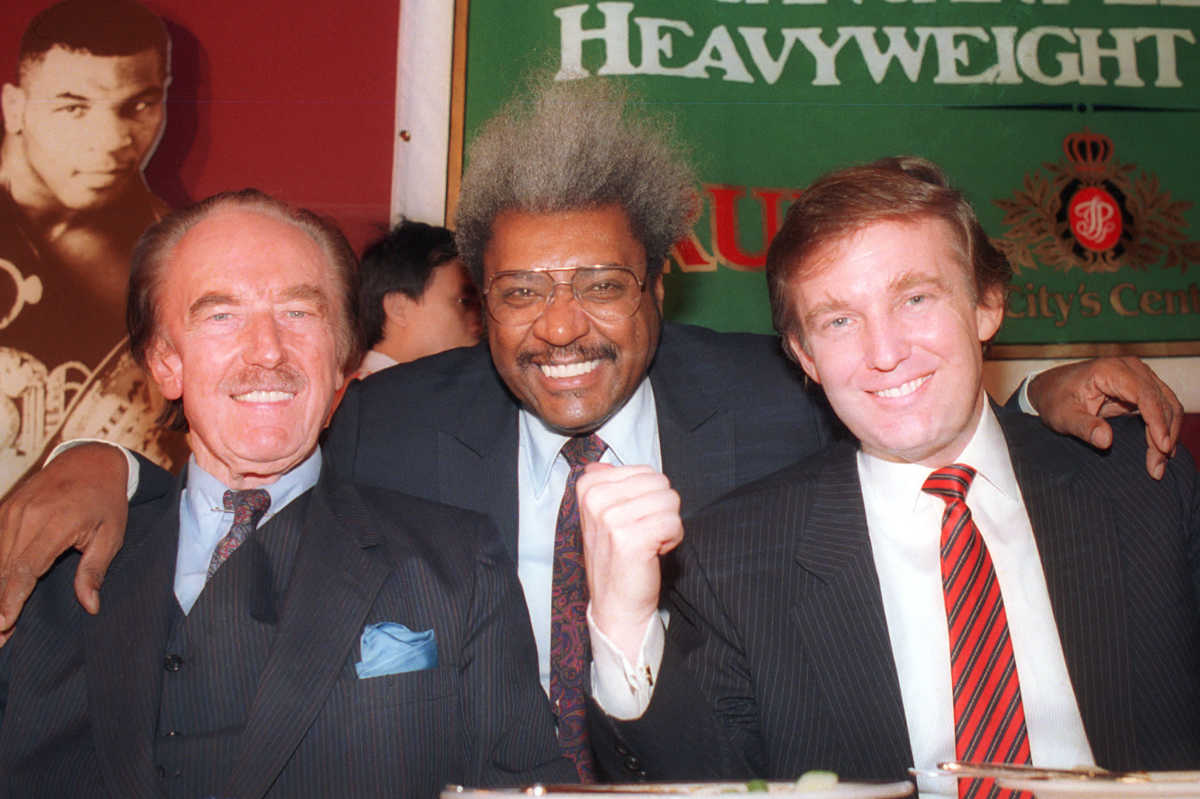
    From left, Fred Trump, boxing promoter Don King, and Donald Trump participate in a 1987 news conference in Atlantic City.

    It is also not untethered from history. Trump’s defenders bristle at any mention of white supremacist lineage, but history is stubborn. His father, Fred Trump, was arrested at a 1927 Ku Klux Klan rally in Queens — an event Trump has long dismissed without serious reckoning.

    Whether Fred Trump was a member or merely present is ultimately less important than what this moment symbolizes: Trumpism did not emerge in a vacuum. It grew in soil long fertilized by segregationist politics, racial grievance, and coded contempt that later became uncoded.

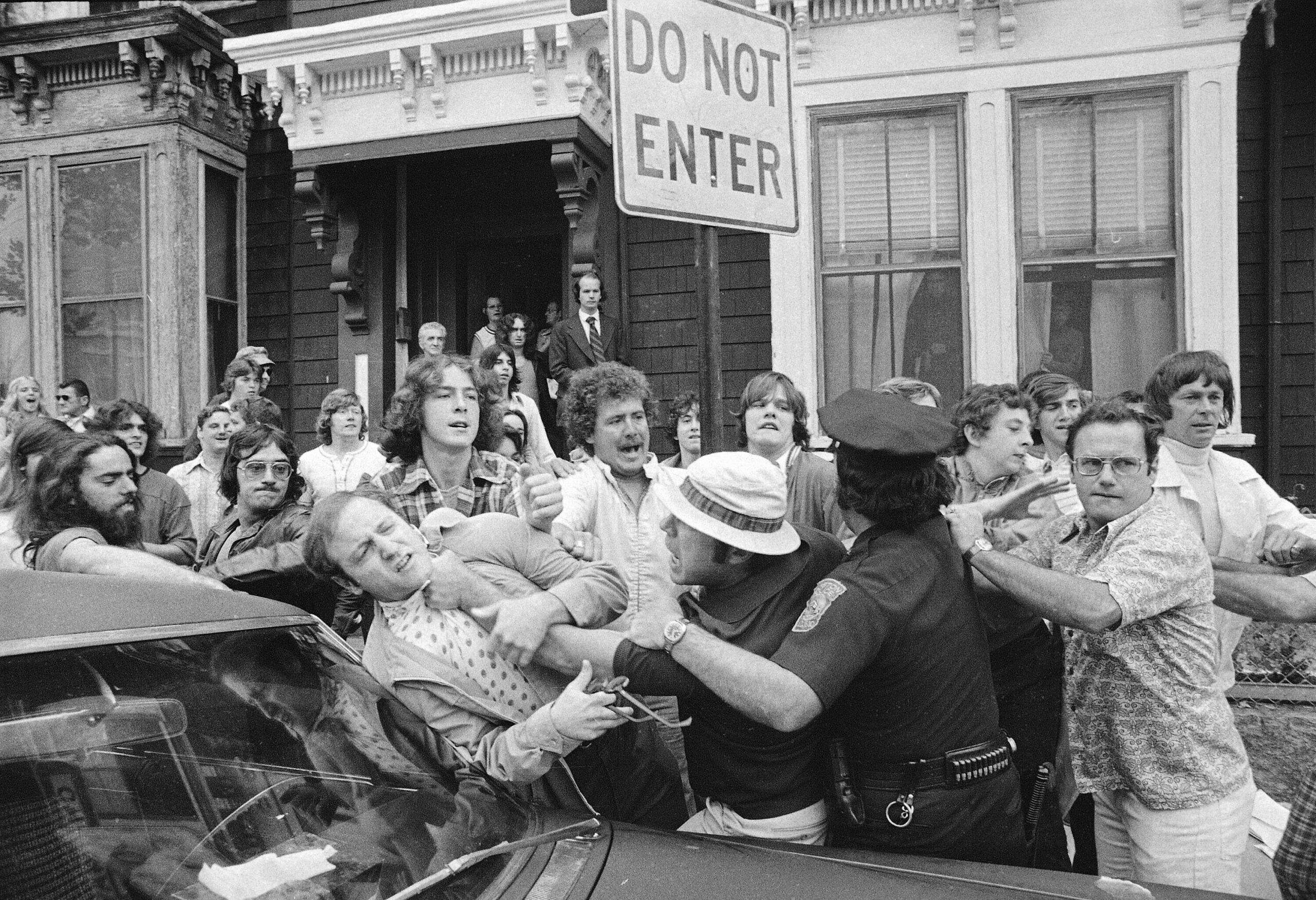
    Police officers break up a scuffle amid demonstrators outside South Boston High School on the first day of a court-ordered busing program to integrate Boston public schools in September 1974.

    Cultural historians like Henry Louis Gates Jr. have shown how the ape trope was central to 19th and early 20th-century pseudoscience, minstrel culture, and colonial propaganda. To depict Black people as simian was to deny them reason, morality, and ultimately rights. It was a way of making cruelty feel natural.

    Scholars from Frantz Fanon to Saidiya Hartman have traced how this imagery did not vanish with Jim Crow; it merely went underground, resurfacing whenever racial hierarchy felt threatened.

    The Obama presidency was precisely such a moment. For some Americans, it symbolized not progress but displacement. Trump rose by giving voice to that panic, laundering it through grievance and mockery. The ape image is not regression; it is escalation.

    Why will it get worse? Because norms erode asymmetrically. Once a president can circulate imagery that would once have ended a public career — and suffer no meaningful consequence — the floor drops out. What was once unsayable becomes debatable. What was once debatable becomes funny. And what was once funny becomes policy.

    What made this episode briefly arresting — before it slid into the familiar churn of outrage — was that condemnation came, at least initially, from both sides of the political aisle. Democrats responded with predictable fury, naming the image for what it was: racist, dehumanizing, indecent. But some Republicans, too, recoiled. A handful of conservative commentators, former officials, and religious leaders expressed a kind of moral embarrassment, as if they had suddenly overheard a family secret spoken aloud at the dinner table.

    That bipartisan outrage matters, but not in the way we might hope. It did not signal a renewed moral consensus so much as a fleeting recognition of how far the ground has shifted.

    Many of the Republican critics framed their objections narrowly — not that the image was wrong in itself, but that it was “unhelpful,” “distracting,” or “beneath the dignity of the office.” This is the language of procedural discomfort, not moral revulsion. It suggests that the line being defended is not the humanity of the Obamas but the decorum of politics.

    On the Democratic side, the outrage was morally clearer but strategically fatigued. There was anger, yes — but also weariness. A sense that we have seen this movie before, named its villain, issued our statements, and then moved on. Moral clarity without moral consequence eventually becomes ritual. It reassures the speaker more than it restrains the offender.

    This asymmetry reveals something crucial. Outrage alone does not halt degradation; it can even normalize it by making it routine. When every transgression is met with the same crescendo of denunciation and the same absence of consequence, the culture learns a quiet lesson: that cruelty is survivable, that it carries no lasting cost. Trump understands this intuitively. He relies on the fact that outrage is loud but short-lived, while the permissions he expands are durable.

    What we witnessed, then, was not a national reckoning, but a brief moral spasm — a reminder that many Americans still know, at least intellectually, that some lines should not be crossed. The tragedy is that knowing is no longer the same as enforcing. In a healthier moral ecosystem, bipartisan outrage would be a stopping force. In ours, it is often just a speed bump.

    Trump’s political project has never been about persuasion in the classical sense. It is about habituation. Repetition dulls outrage. Shock exhausts resistance. Eventually, people stop asking whether something is wrong and start asking whether it “works.”

    This is how democracies corrode — not in grand coups, but in the slow reeducation of moral reflexes. The danger is not only Trump’s blatant racism and cruelty, but the lesson it teaches: that dignity is conditional, and that some people may always be safely reduced.

    If history teaches us anything, it is that dehumanization does not stop where it starts. Once a society relearns how to sneer, it rarely remembers where to stop.

    And that is why this moment deserves more than disgust. It deserves memory.

    Jack Hill is a diversity consultant, child advocate, journalist, and writer.

  • After a year of RFK Jr.’s policies, vaccination rates are down, measles cases are up, and public health hangs in the balance | Editorial

    After a year of RFK Jr.’s policies, vaccination rates are down, measles cases are up, and public health hangs in the balance | Editorial

    Almost 250 years ago, George Washington created America’s first mass immunization mandate, relying on science to protect public health.

    Oh, how times have changed.

    Back then, smallpox had just helped end the Continental Army’s invasion of Canada. Despite making it all the way to Quebec, thousands of soldiers contracted the disease. Washington feared the same would happen to his own troops, fresh from their surprise victories at Trenton and Princeton. As Washington wrote at the time, “Necessity not only authorizes but seems to require the measure, for should the disorder infect the Army, in the natural way, and rage with its usual Virulence, we should have more to dread from it, than from the sword of the enemy.”

    The inoculation methods of Washington’s time were crude. No genuine vaccine existed. Instead, scabs or pus were taken from someone infected with smallpox and then placed into scratches or small wounds. Another option was to inhale it. Either way, those who experienced variolation inevitably developed fevers, rashes, and other symptoms of smallpox. At least 1% of those who received it died. Still, without his tough choice, the Continental Army might have failed entirely, and America with it.

    These days, safe vaccines are available for diseases that ravaged our ancestors. Forms of influenza, hepatitis, chickenpox, polio, rubella, mumps, measles, and many other diseases can now be prevented. The smallpox virus that Washington dreaded has been eradicated.

    The quality and availability of vaccines are a modern miracle, one that all humanity should be proud of.

    Yet, according to data from the Centers for Disease Control and Prevention, vaccination rates for measles in the U.S. are declining, and the number of cases is climbing. More and more parents are opting against vaccination for their children, which gives these diseases room to spread.

    Last year, two children in Texas died of the completely preventable disease. An outbreak in South Carolina has so far sickened almost 1,000 people, most of them children.

    Pennsylvania, New Jersey, and Delaware have all slipped below the 95% vaccination rate the CDC says is necessary to keep measles outbreaks at bay. Despite being nearly eliminated in 2000, rates have reached their highest levels in decades.

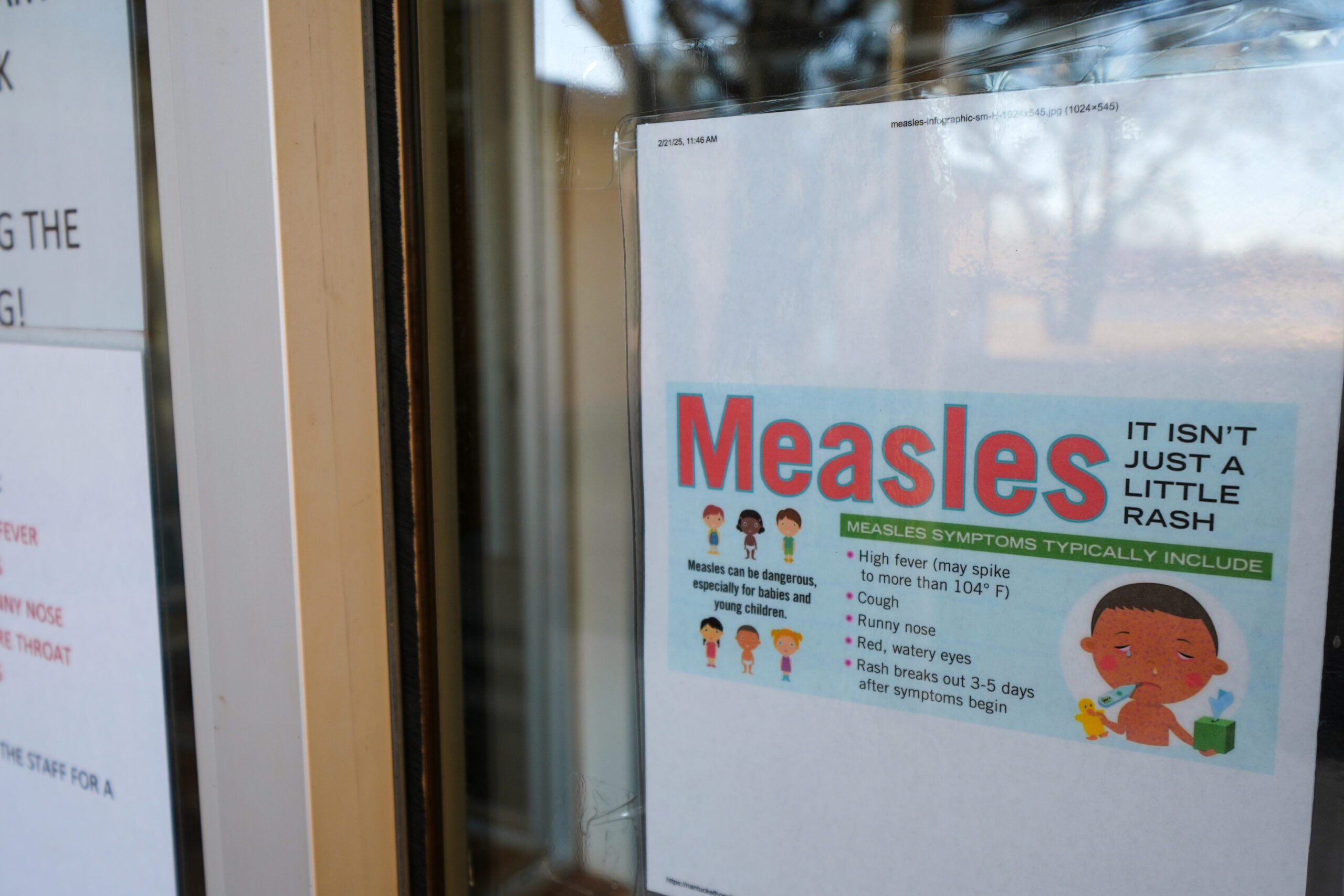
    A sign is seen outside a clinic with the South Plains Public Health District in February 2025, in Brownfield, Texas.

    According to CDC data, more than 90% of infections occur in people who are either unvaccinated or have unknown inoculation status. Given this group makes up less than 10% of the overall population, that’s a staggering concentration of sickness. It also isn’t a surprise — the vaccines work.

    Parents offer a range of justifications for refusing vaccinations. Some cite religious faiths that discourage inoculation. Others feel that the schedule of shots is too concentrated. A number of them mention debunked fears of shots “causing autism.”

    In some cases, existing health issues may lead to medical professionals advising against vaccination. (These children rely on what scientists call herd immunity for protection, and are endangered by rising rates of voluntary refusal.)

    It doesn’t help matters that Health and Human Services Secretary Robert F. Kennedy Jr. is a leading skeptic of both vaccines and modern medicine. Kennedy has strong opinions about public health based on no formal medical training.

    Under RFK Jr., the CDC has reduced the number of recommended vaccinations for children, and groups aligned with the secretary are working to overturn state vaccine mandates.

    This is the kind of privileged ignorance that can only thrive in a post-vaccine world, where mass immunization has dramatically changed life for the better.

    In 1900, 30% of all U.S. deaths occurred in children under the age of 5. In 1915, the infant mortality rate was 100 out of every 1,000 live births. As late as 1952, a polio outbreak killed more than 3,000 people.

    Unfortunately, rising vaccine refusal rates may bring some of this suffering back. While city health officials urge calm in the wake of a possible exposure at Philadelphia International Airport earlier this month, these events will only increase as vaccination rates continue to fall. So will unnecessary deaths among children.

    Instead of turning back the clock, our leaders and parents must learn from Washington’s example. Necessity requires that we vaccinate our children.

  • Yes, the slavery exhibits have been returned to the President’s House — but I’m still waiting for the other shoe to drop

    Yes, the slavery exhibits have been returned to the President’s House — but I’m still waiting for the other shoe to drop

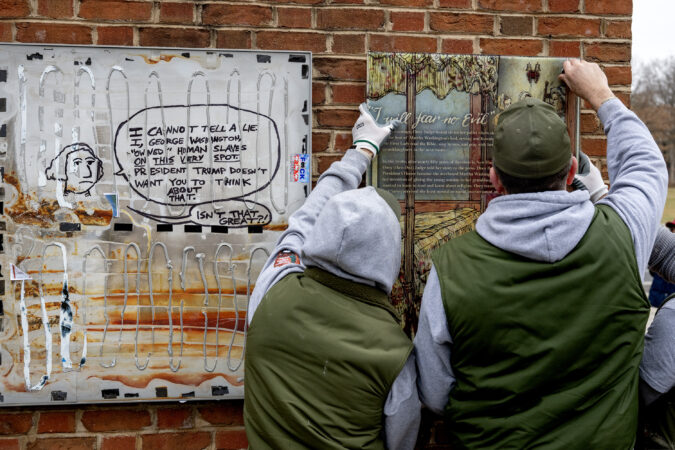
    Late Thursday morning, when the National Park Service began restoring the panels commemorating nine people enslaved by George Washington at the President’s House at Sixth and Market, it should’ve been a time of jubilation.

    Instead, it left many activists waiting for the other shoe to drop.

    The National Park Service, which removed the panels from the site in late January to comply with an executive order by President Donald Trump, was successfully sued by Mayor Cherelle L. Parker’s administration. U.S. District Judge Cynthia Rufe ordered the NPS to restore the display, but the agency appealed.

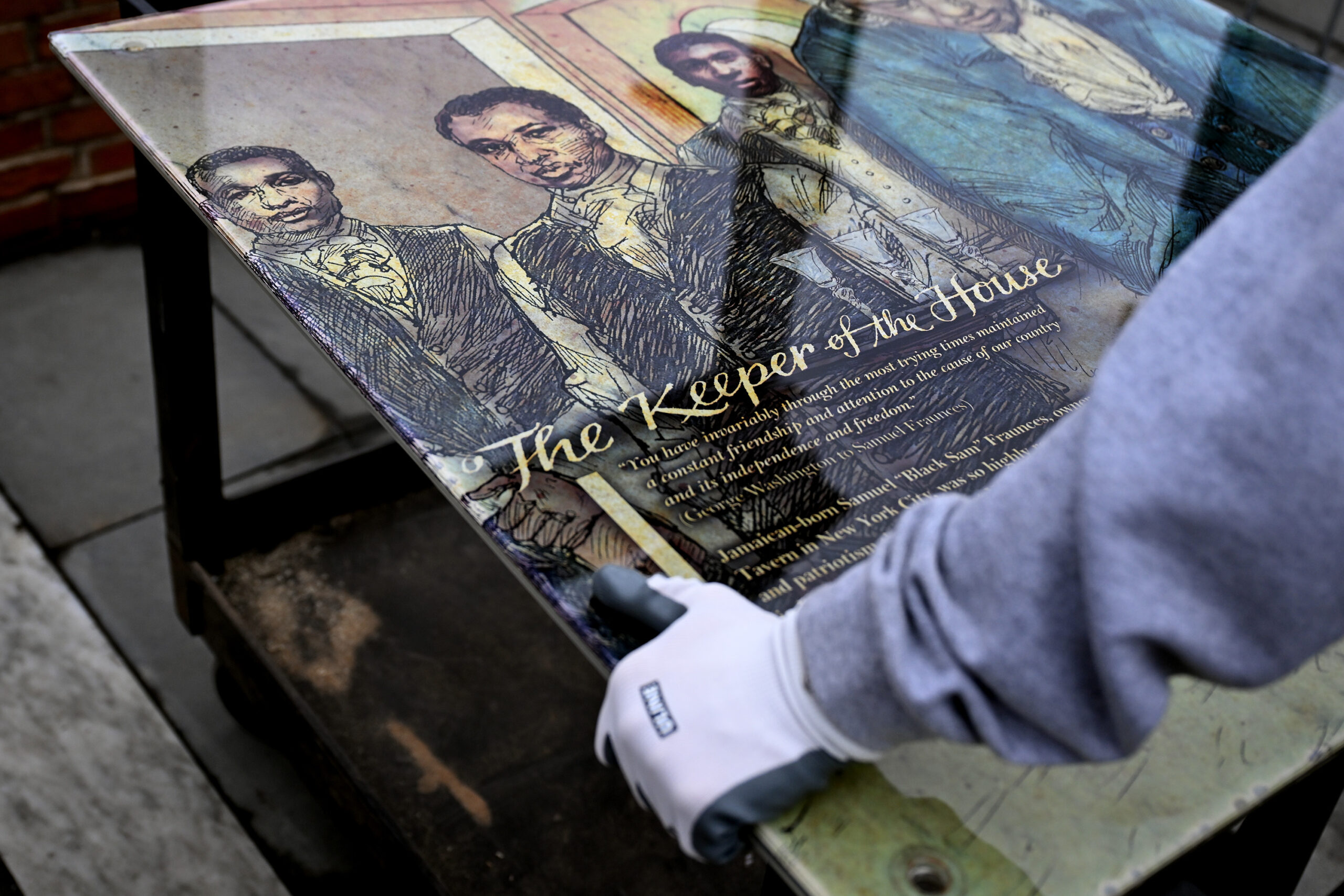
    A worker carries one of the slavery-related exhibits, “The Keeper of the House,” before rehanging it at the President’s House in Independence National Historical Park on Thursday.

    So yes, the federal government complied with the judge’s order, but only for the moment.

    Friday morning, Judge Rufe denied the government’s motion for an emergency stay of the order, but the Trump administration’s appeal is ongoing, thus continuing the fight to remove the panels for good.

    It was yet another dramatic turn in a month in which I’ve lived the joys and pains of Black history.

    I was there when Judge Rufe took lawyers into the National Constitution Center to inspect the materials the Trump administration pried from the walls with crowbars. I spoke at a rally where the Avenging the Ancestors Coalition (ATAC) demanded the restoration of the slavery memorial. I listened as ATAC founder Michael Coard announced that Judge Rufe had ordered the panels to be restored.

    Like so many in Philadelphia, I have watched the fight for the President’s House unite people of all stripes. I’ve experienced the emotional victories and defeats.

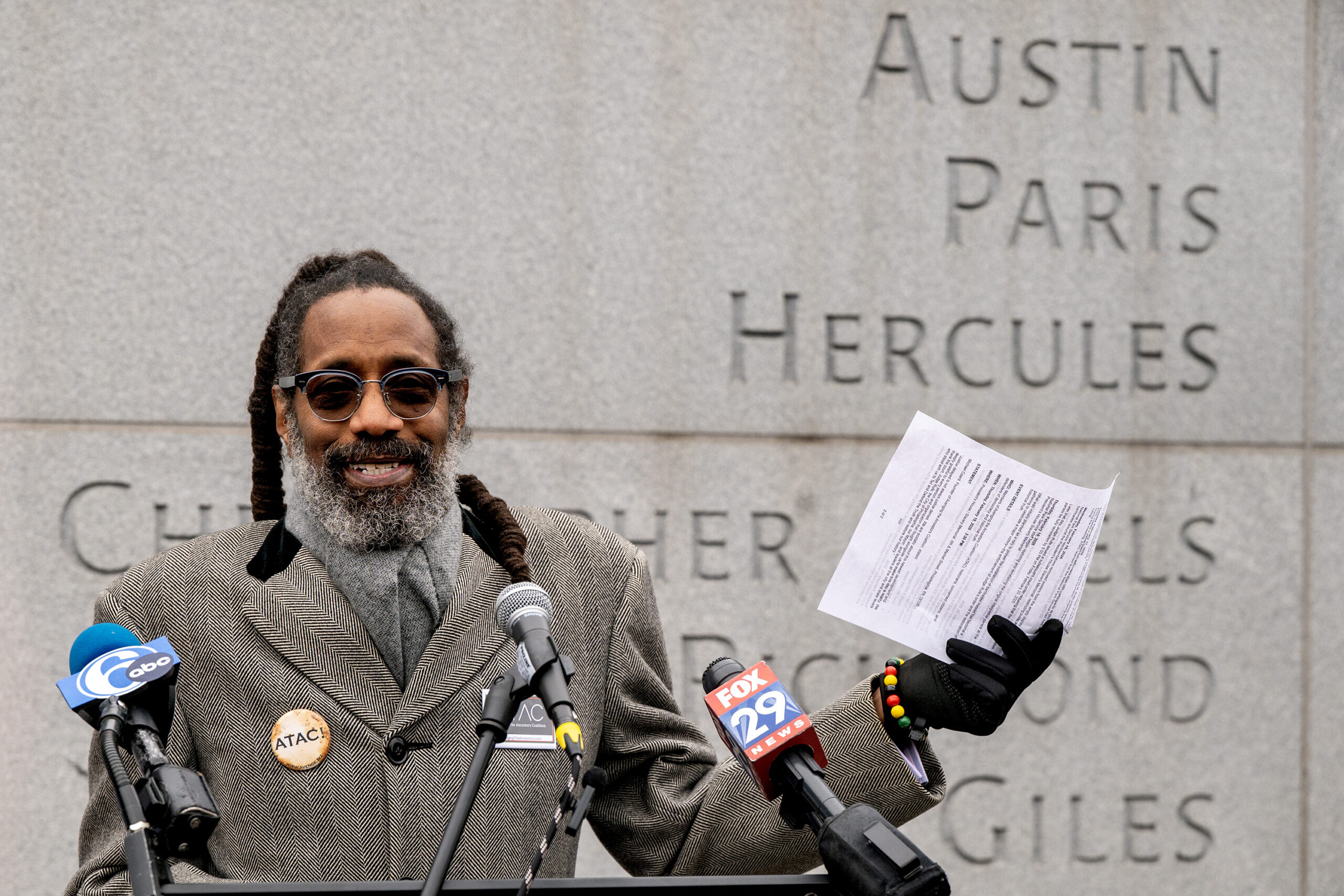
    Attorney Michael Coard, leader of the Avenging the Ancestors Coalition, speaks during a rally at the President’s House in Independence National Historical Park on Thursday, after the return of some of the slavery exhibits the National Park Service removed last month. The names of nine enslaved people who lived and worked in the household of George Washington, engraved in stone behind him, were not among those removed by the NPS.

    But even with the restoration of the panels, we are all left teetering on the razor-thin edge that separates celebration from grief, and elation from rage. We cannot stay there. We must continue to fight for the truth.

    In Philadelphia, a city that frequently hosted civil rights leader Jesse Jackson, who died this week after a life spent fighting for justice, we fight.

    Here, in the place where the story of enslavement lived side by side with the struggle for freedom, we fight.

    Here, in a place where a new generation of combatants joins a centuries-old battle for the truth, we fight.

    More rallies will come, and in the shadow of Independence Hall, where wealthy white men declared their own freedom while withholding liberty from my ancestors, a new American Revolution will take shape from the same war of ideas Jackson fought. It will be based on the rhetoric of America’s founders.

    If indeed all men are created equal, our history should be equally told. That idea cannot be contained by metal barriers. We’ll see if it can be enforced in the courts.

    Still, truth is not about legalities or displays.

    The truth of slavery in Philadelphia exists in the names of our neighborhoods, our streets, and even our schools. It exists in the very fabric of who we are.

    The neighborhood of Logan is named for James Logan, who served as secretary to William Penn. He also enslaved people.

    Chew Avenue is named for the Chew family, who lived in an estate called Cliveden, which is also the name of a street. The Chews enslaved people at Cliveden.

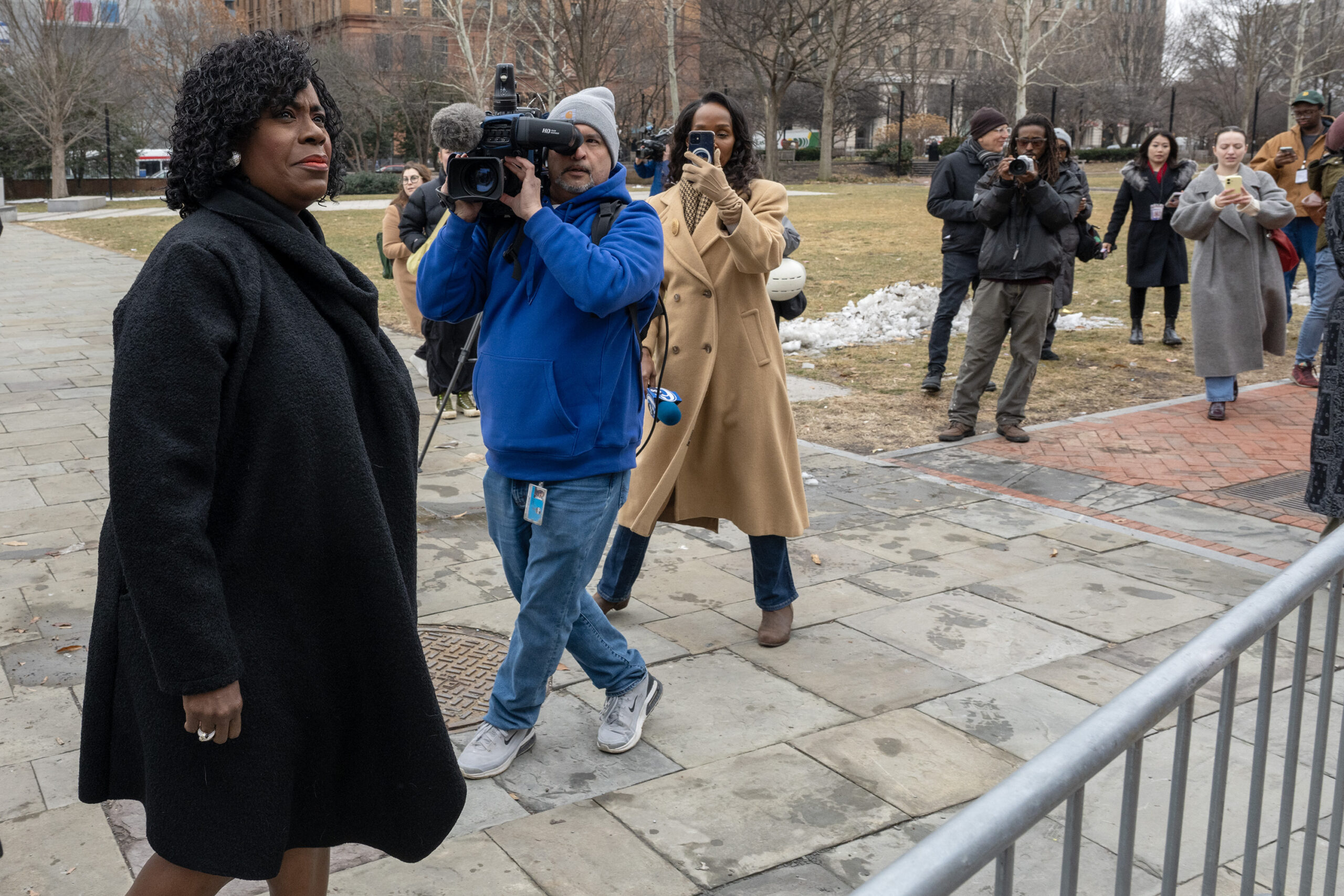
    Mayor Cherelle L. Parker visits the President’s House as workers return the slavery exhibits at the site on Thursday. Parker thanked them, and one replied, “It’s our honor.”

    Front and Market, home to the London Coffee House, once hosted a market of a different kind. People were sold there. It was a key element of the business of slavery.

    Girard Avenue is named for Stephen Girard. He was a very rich man with a very complicated legacy, and yes, he was also an enslaver.

    Perhaps that’s why I was so angry when I went to the President’s House in the days after the Trump administration pried truth from the walls.

    It was almost like someone had taken something that belonged to me, and in truth, they did. They took my history, but as I stood in that barren space on a cold afternoon, it was as if my ancestors were all around me — like the great cloud of witnesses from Scripture — telling me all they had endured.

    Perhaps the Trump administration will ultimately achieve its goal and remove the panels from the site. Or maybe the truth will prevail.

    But our fight is about more than the nine people Washington enslaved. This is about all of us, and it will take all of us to win.