After reading “Jesse and Matt Ito’s big Japan adventure,” I will never refer to writer Craig LaBan as just a restaurant critic. This essay — concise and cogent, but also expansive and even emotional — is one of the best I’ve ever read in The Inquirer, or anywhere else. I’m a sushi fan who relies on the menu translations when I order, and although LaBan’s piece is full of details about sushi styles, dishes, ingredients, and sources, he fed me a lot of information in digestible form. The same is true of his account of touring remote Japan with the Itos (though I did appreciate the map). Best of all, he wove three generations of Ito family history into the narrative, including some of the tough stuff families endure, evoking the real importance of their trip to their lives together. A must-read for anyone who must work, likes to eat, or has a family.
Joe Jones,Mount Holly
Political malpractice
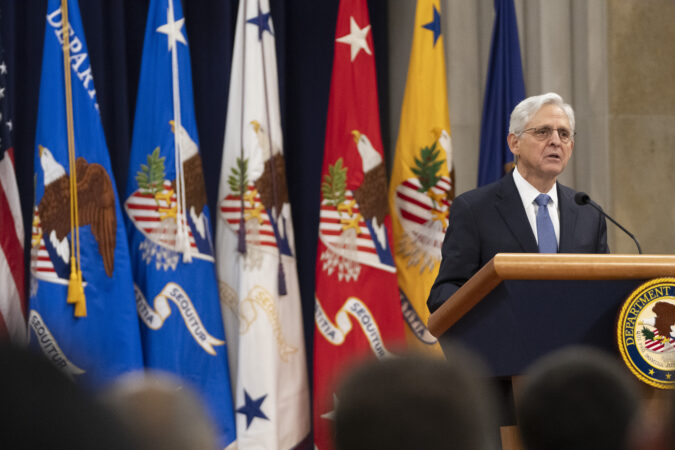
Many concerned and worried Americans are calling out and condemning the transparent total politicization and weaponization of the U.S. Department of Justice, and deservedly so. But let’s not forget that it was a totally apolitical attorney general, Merrick Garland, whose extreme lack of political sensibility — combined with extreme and debilitating timidity — can rightfully be called out as a primary factor that allowed Donald Trump to run for and subsequently win the presidency. Garland’s interminable two years of foot-dragging before he appointed special counsel Jack Smith to investigate the president were unconscionable.
Smith, in recent testimony before Congress, stated with categorical certainty that the evidence he compiled could have proved, beyond a shadow of a doubt, that Trump was guilty of crimes, and that he quite likely would have obtained a conviction if he’d had an opportunity to present his evidence. Maybe a modest touch of political awareness would have spared us from enduring and suffering through a second Trump presidency, with consequences whose outline can be seen but have yet to fully unfold.
Ken Derow,Swarthmore
West Bank killing
The Feb. 19 Associated Press story “Israeli settlers kill 19-year-old Palestinian American” included multiple other issues, including Israeli “ethnic cleansing” of Palestinians in the West Bank, Israeli torture of Palestinians journalists, and the basic needs for Palestinians in Gaza. While each subhead in the report deserved a full article, the headline story certainly should receive more attention in a Philadelphia newspaper. The young man killed by Israeli settlers, Nasrallah Abu Siyam, was born here. According to news reports, he was shot while trying to stop settlers from stealing dozens of sheep. The AP story included some context but not all, such as the Israeli government’s de facto approval of the annexation of Palestinian land. Philadelphians should demand that the U.S. Department of State not only “condemn the violence,” but also cease military funding of Israel.
Donna Sharer, Philadelphia
Join the conversation: Send letters to letters@inquirer.com. Limit length to 150 words and include home address and day and evening phone number. Letters run in The Inquirer six days a week on the editorial pages and online.
Like Congress, many Americans — only 27% of whom, according to a poll last week, have great confidence in Donald Trump’s ability to make the right decisions about using military force — were likelysound asleep when the war started, perhaps dreaming of the normality of brunch or the dog park on an unseasonably warm Saturday.
Trump was not even in the White House Situation Room — the multimillion-dollar mancave that exists for a commander in chief to run our too-frequent military ops — but was instead ensconcedat his gilded Florida palace at Mar-a-Lago, addressing the nation in an eight-minute video after a Friday night of partying. His wild, uncoiffed midnight hair was crammed under a hat hailing the country whose founding principles he’d just demolished, “USA.”
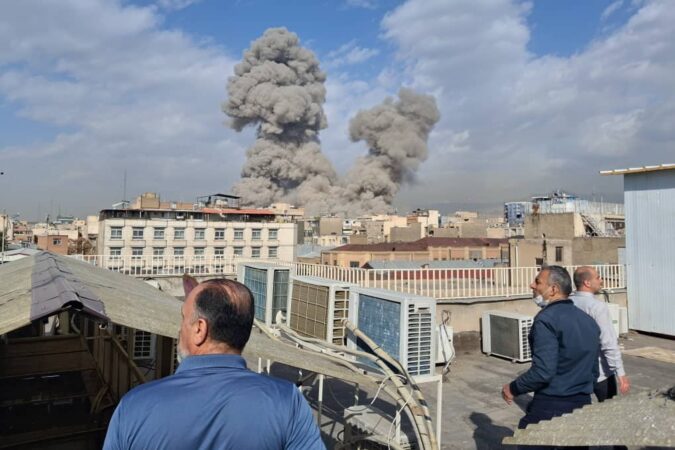
It’s normal for invaders to attack under the cover of darkness, yet Saturday’s massive attack on Iran — launched jointly with our sister 2020s global pariah, Israel — occurred in bright morning sunshine in downtown Tehran, its streets packed with commuters and school buses at the start of the Arab world’s workweek.
It seems that this time, the dead-of-night deception was aimed at the American people, in an assault on everything the United States was intended to stand for.
While many words will be written or uttered in the coming days about who is winning this U.S.-Israel war of choice, the next military targets, the inevitable spike in the price of oil, and the fate of Iran’s tottering regime, there is one fact that matters more than any other.
This war — and, yes, it is a “war,” with an expected loss of American blood, as Trump himself acknowledged from Mar-a-Lago — is illegal.
Full stop.
Article 1, Section 8 of the U.S. Constitution, hashed out here in Philadelphia, could not be more explicit on that point, stating in plain 18th-century English that only Congress has the power “To declare War, grant Letters of Marque and Reprisal, and make Rules concerning Captures on Land and Water.”
America’s founders knew exactly what they were doing — seeking to prevent one unchecked or unhinged president from arbitrarily launching a lethal conflict that might be in his own best interest, but not the nation’s. “The constitution supposes,” James Madison wrote in 1798, “what the History of all Governments demonstrates, that the Executive is the branch of power most interested in war, and most prone to it.”
Trump has launched an illegal regime change war in Iran with American lives at risk. Congress must convene on Monday to vote on @RepThomasMassie & my WPR to stop this. Every member of Congress should go on record this weekend on how they will vote. pic.twitter.com/tlRi3Vz849
David Janovsky, acting director of the Constitution Project at the Project on Government Oversight, told Time magazine last week that any attack on Iran ordered by White House fiat would be flat-out unconstitutional.
“There’s no indication that there’s any sort of circumstance that would give the president the unilateral authority to order military action,” Janovsky said. “It’s true that presidents have some inherent authority to deploy the military as commander in chief, but that’s really limited to true emergency circumstances where there is an attack underway that needs to be repelled, or maybe an extremely clear imminent attack. But there’s no suggestion that that’s the case today — that would make the strikes illegal.”
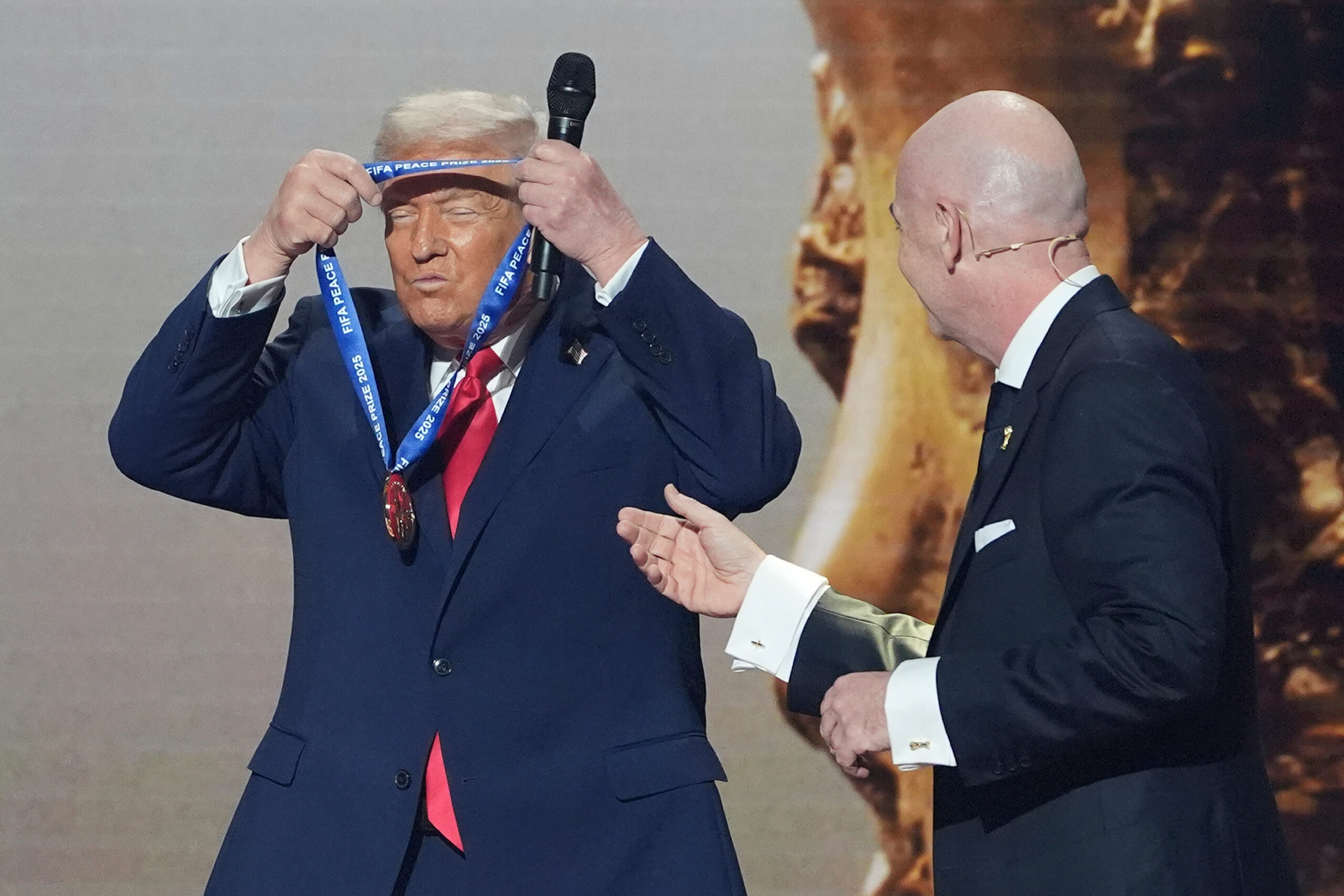
And it’s not only unconstitutional. An aggressive and unprovoked war — which this unambiguously is — is also a blatant violation of international law and the post-World War II global order that we once encouraged with the United Nations, in the hope of preventing the emergence of some future tyrant. Who knew that the greatest threat to world security in the 21st century would come from the current holder of the coveted FIFA Peace Prize™ and the chairman of his own much-ballyhooed Board of Peace?
When the rise of our Cold War national security state after 1945 led to prolonged, unpopular, and undeclared wars in Korea and Vietnam, Congress passed the 1973 War Powers Act that meant to require consultation and its mandated involvement, a seeming solution that is now increasingly honored in the breach.
It’s worth noting that when the George W. Bush regime decided to launch a war of choice against Saddam Hussein’s Iraq in the early 2000s, its case was larded with lies, including a 16-word whopper that the president uncorked during his 2003 State of the Union address. But a generation ago, Bush, Dick Cheney, and their merry band of war criminals at least felt it was necessary to get a congressional authorization, and to spend months wooing the public and the pundits.
BREAKING:
51 Iranian children killed, 60 students wounded after joint US-Israel strikes hit girls' school in Iran. pic.twitter.com/p6134kaXvS
Trump had a similar chance to lobby the American people and the world in his State of the Union address last week, and he largely whiffed. He included only a brief and perfunctory recitation of the long-standing and, in fairness, justifiable grievances against Iran’s brutal repression of its own people, its nuclear ambition, and its backing of violent proxy groups.
To be sure, we should be alarmed about the destructive threat of nuclear bombs in the hands of unconstrained strongmen backed by religious fanatics — whether that’s in Tehran, Jerusalem, or Washington. And most of the world wants freedom for Iran’s long-repressed masses, but U.S. and Israeli bombs might be the worst possible way to make that happen.
Already, as I write this in the very early hours of the war, there are reports that the bombing of a girls’ school in southern Iran has killed as many as 85 people, most of them innocent children. We are spilling the blood of the very people we are promising to liberate. Are we really expecting to be someday greeted with rose petals?
Again?
Indeed, there are many painful echoes of Bush 43’s disastrous conflict with Iraq, including shameless lying by the commander in chief. Trump’s 3 a.m. claims that Iran poses an “imminent” threat to the United States and is close to developing ballistic missiles that can reach our shores are almost as ludicrous as his Big Lie about the 2020 election.
Just like early 2003, when Iraq opened up to outside weapons inspectors, but we invaded them anyway, Trump’s all-out attack came in spite of reports that Iran was making “significant” concessions at the bargaining table in Geneva, regarding both the nuclear program and the kind of big-money stuff like oil and minerals that warm the heart of our corrupt kleptocracy. All this after Barack Obama had a successful deal, negotiated with years of hard work, to halt Iran’s nuclear enrichment that Trump 45 came in and scuttled because ¯_(ツ)_/¯.
Trump seems to be bored with peace. For whom? For what?
President Donald Trump is presented with the inaugural FIFA Peace Prize by FIFA President Gianni Infantino during the 2026 FIFA World Cup draw at the Kennedy Center in December.
Sure, the Iran war is a massive distraction from Trump’s cratering poll numbers at home, but aggressive war is also just a thing strutting strongmen do to consolidate their illegitimate powers. Bush’s Iraq War was the last throes of a decaying democracy, while Trump’s actions are those of an unrestrained dictator — exactly the mad king that Madison sought to warn us about 228 years ago.
So now what?
“Trump has launched an illegal regime change war in Iran with American lives at risk,” Democratic Rep. Ro Khanna of California, a Bucks County native and atop critic of unchecked militarism, posted on X after the attack. He said he and his GOP renegade ally, Rep. Thomas Massie of Kentucky, plan to go ahead Monday with a vote to invoke the War Powers Act — even as the prospect of that vote may be why Trump pushed the button now.
Not only do the odds of success for Khanna and Massie seem dim, but the War Powers Act seems too late, yet also too little. In a nation that has pressed impeachment or resignation on four presidents, including Trump 45, Trump 47’s unlawful and murderous war on Iran already seems the worst abuse of presidential power in American history.
A cruise-missile assault aiming to change the government in Iran is, in reality, a desperate plea for regime change in Washington, D.C. Democrats, who could gain power in the House as early as this year thanks to GOP scandals and illness, must make clear that Trump’s impeachment and an end to American autocracy are their main priority.
For now, we have unnecessarily injected ourselves into a long-troubled corner of the world where there are almost no good guys, where theocratic dictators are unceasingly slaughtering the citizens of other theocratic dictators. Maybe that’s because, over the course of 250 increasingly tragic years, the United States has finally become exactly like them.
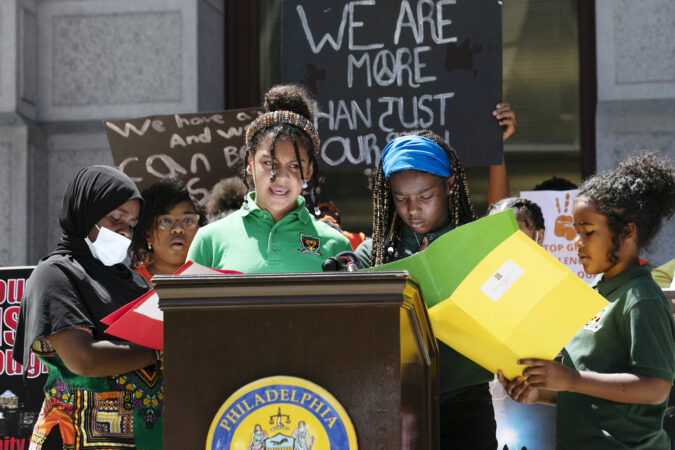
Nearly 5,000 Philadelphia students face a tough decision after the recent announcement of school closures in the district. As they begin searching for a new school, many will find the process overly fraught and needlessly complicated due to bad policies that have limited their choices.
Charter schools are one popular option. About 41% of Philadelphia’s public school students have chosen these kinds of schools — including both cyber and brick-and-mortar charters.
But transferring to a charter school isn’t a sure thing. In fact, charter schools host lotteries for interested students. For the 2025-26 school year, nearly 26,000 students applied, but only about 10,000 across the district were lucky enough to win a seat. The rest went on a waiting list.
Philadelphia School District officials created this bottleneck. Despite the high demand for these schools, the school board has denied new charter school applications year after year. Even after approving its first charter school in nearly a decade, the board negated this progress by proposing to close several more charters.
Harrisburg isn’t helping, either.
Pennsylvania lawmakers continue to gut another popular alternative: cyber charters. This year’s budget robbed cyber charters of almost $178 million, which many bad-faith partisans euphemistically called “savings.” And as if those cuts weren’t enough, Gov. Josh Shapiro offered more doublespeak in his recent budget address, proposing to “redirect” another $250 million away from cyber charters.
So, how about transferring to a private school?
Last year, Pennsylvania awarded more than 101,000 tax credit scholarships to students seeking private alternatives to their neighborhood schools. Almost one-third of those scholarships went to Philadelphia students. Locally, the Children’s Scholarship Fund Philadelphia (CSFP) provides more than 6,800 scholarships to low-income K-8 students in the city. In December, CSFP held its own lottery day, calling hundreds of parents to tell them the good news.
But many more families weren’t so lucky — all thanks to bad politics.
Scholarships needed
Statewide, nearly 70,000 tax credit scholarship applicants were turned away due to program caps. Demand for these scholarships has outpaced supply, leaving far too many students stuck in schools that don’t work for them.
Lifeline Scholarships could have filled this gap. This transformative program would have awarded $100 million in scholarships to students attending Pennsylvania’s lowest-achieving schools — 35% of whom live in Philadelphia.
This program nearly became a law. But Shapiro, who promised that “every child — no matter their zip code — has the opportunity to succeed,” unceremoniously vetoed the program.
The governor has also fumbled a new federal opportunity: the Education Freedom Tax Credit (EFTC). He has yet to commit to participating in this new program, which enables donors to contribute dollar-for-dollar tax-deductible scholarships up to $1,700. Projections estimate the EFTC could provide $483 million in scholarships for Pennsylvania students.
So far, 27 states have indicated they will opt into the EFTC. Even Shapiro’s Democratic colleague, Colorado Gov. Jared Polis, officially opted in, calling the decision a “no-brainer.”
The exterior of the Esperanza Academy Charter School at 201 W. Hunting Park Ave. in Philadelphia.
Time after time, public officials have denied educational opportunities for students who need them the most. Moreover, these policymakers have painted themselves into a corner: After decades of forcing students to attend schools based entirely on their zip code, the powers that be seem unprepared when those schools disappear.
Families need genuine options. Parents should be empowered to choose the learning environment that best meets their needs — whether that’s a local district school, a charter school, a private school, a cyber school, a microschool, or homeschooling.
Lawmakers must reverse course and empower families with educational opportunity. This means expanding the commonwealth’s successful scholarship programs, enacting new ones like Lifeline Scholarships, opting in to the federal tax credit, and ending the ongoing war against charter schools.
School choice recognizes that a one-size-fits-all system isn’t realistic. And judging by the declining enrollment of public schools and the rising popularity of their alternatives, Pennsylvania families have already sent an unambiguous message to policymakers: They want more educational choices.
It is incumbent upon us to give it to them.
Andrew Lewis is president and CEO of the Commonwealth Foundation, a free-market think tank. David P. Hardy is the president of Girard College and a distinguished fellow at the Commonwealth Foundation.
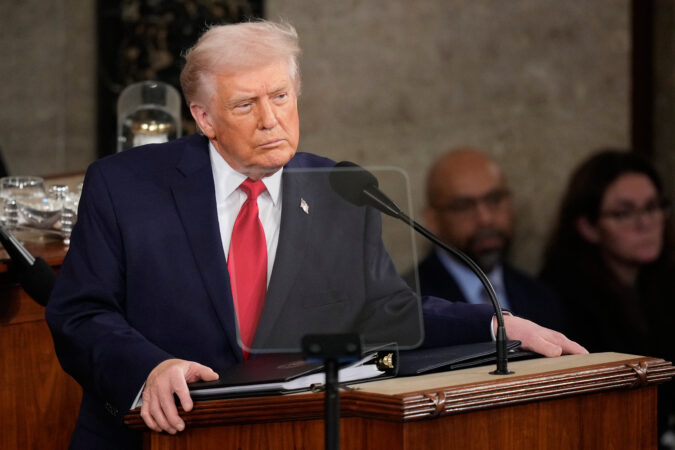
The State of the Union is supposed to be a ritual of reassurance. The president enters the chamber of the United States Congress, lawmakers rise and applaud, and for one choreographed evening, we tell ourselves a story about who we are. We are strong. We are resilient. We are advancing.
However, on Tuesday night, President Donald Trump delivered a sprawling, raucous narrative about economic revival, border tightening, partisan battles, and a vision of America in a “golden age.”
As I watched the speech’s cadence — the applause lines, the assaults on political opponents, the relentless assertion of national triumph — a question kept rising in me, a question that is rarely spoken but always present: What does this mean for our children? As I listened, I found myself thinking less about gross domestic product and more about their interior lives.
For adults accustomed to political combat, this is familiar terrain. But for children — particularly those in immigrant families, children of color, or children whose identities have been politicized — the message can register differently.
When leaders describe certain groups as dangerous or burdensome, children who see themselves reflected in those groups internalize subtle but corrosive questions: Am I safe here? Do I belong?
Research on childhood trauma and adverse childhood experiences tells us that chronic exposure to fear — even secondhand fear — can activate the body’s stress systems. Elevated cortisol, persistent hypervigilance, difficulty concentrating: These are not ideological reactions. They are biological responses.
A child who hears repeated warnings of danger in their community, or who worries that a parent could be detained or deported, does not experience politics as theater.
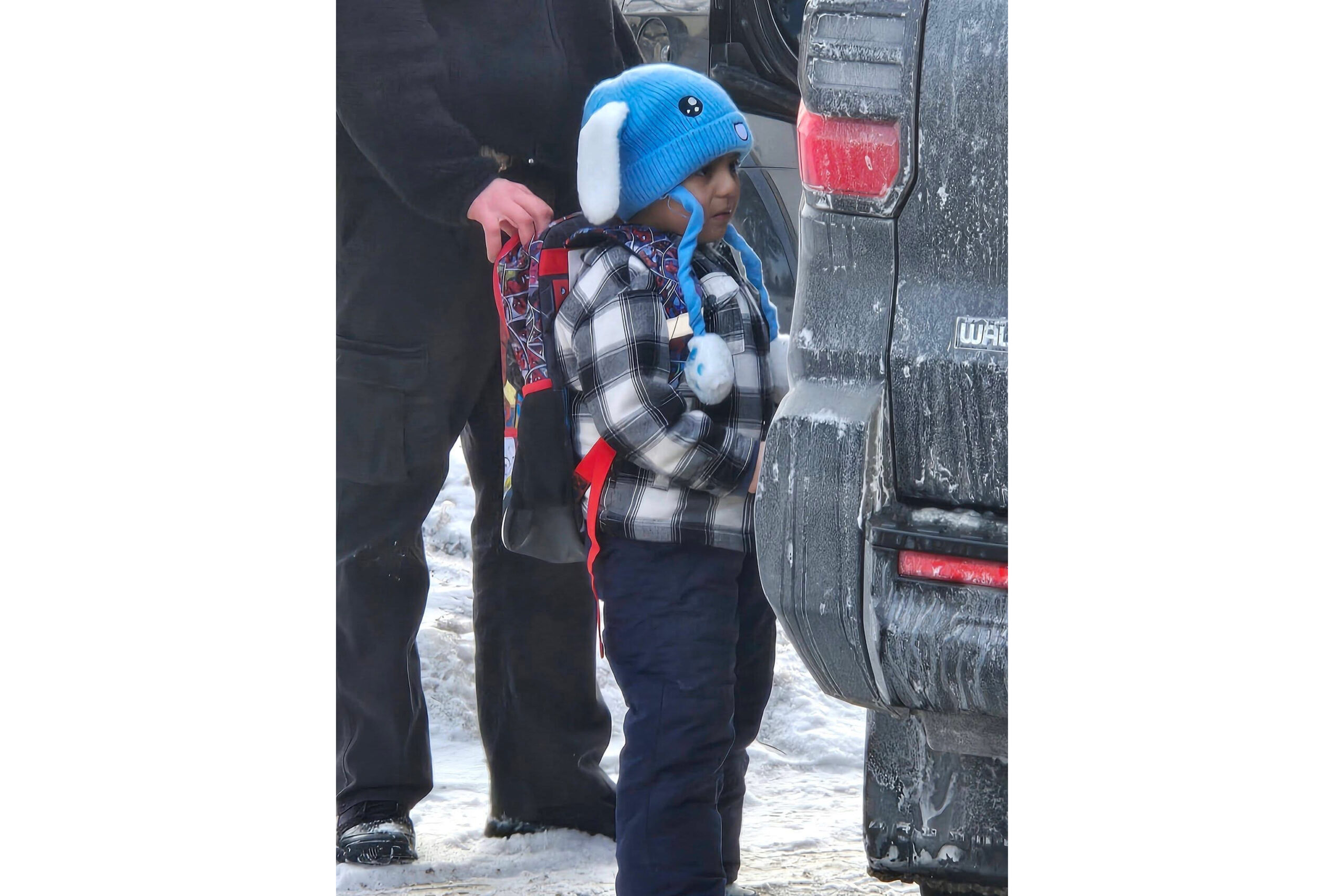
Five-year-old Liam Conejo Ramos is taken into custody by federal immigration officers as he returns home from preschool in Columbia Heights, Minn.
In her landmark book Trauma and Recovery, psychiatrist Judith Lewis Herman writes that trauma is “an affliction of the powerless.” It arises when people are subjected to overwhelming forces and deprived of control. Trauma is not merely a bad experience; it is an experience that shatters the basic assumptions of safety, trust, and meaning. It reorganizes the brain around vigilance and fear.
Herman was writing about survivors of war, domestic violence, and political terror. But the framework she provides is disturbingly relevant to our civic culture. Trauma flourishes in conditions of sustained unpredictability, humiliation, and threat. And for many children in America over the past several years, unpredictability and threat have not been abstractions. They have been ambient conditions.
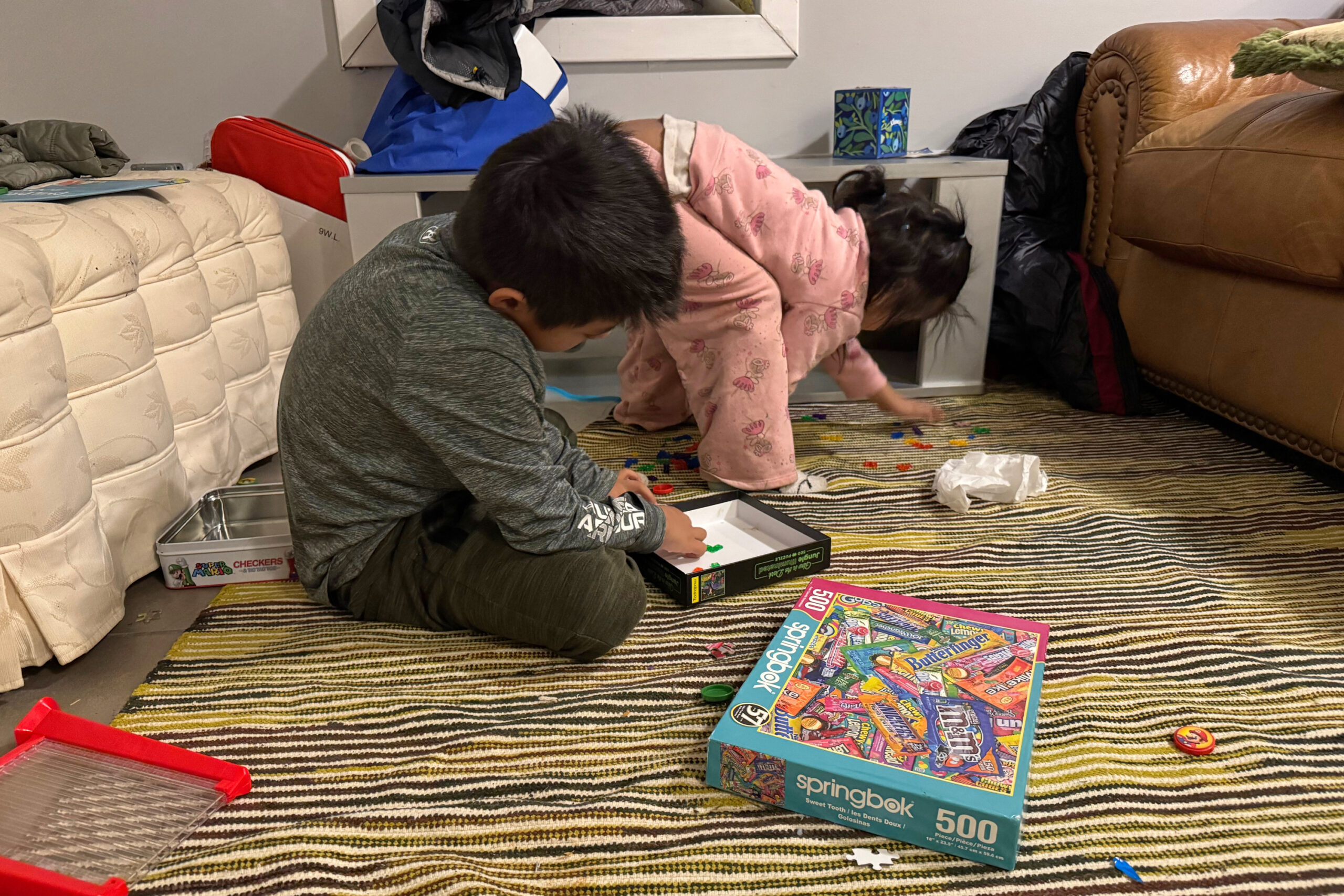
Two immigrant children play in a safe house in Minneapolis in January, after volunteers relocated them from their home to protect them from federal agents.
Consider the moments in the speech when the president highlighted crimes committed by undocumented immigrants to justify harsher enforcement. Or the policy of family separation at the southern border — a decision that, whatever one’s views on immigration enforcement, resulted in children being forcibly separated from their parents. Developmental psychologists have been unequivocal: abrupt separation from primary caregivers activates the body’s stress response at extreme levels. Prolonged activation can alter brain architecture. The child does not interpret the experience as a policy dispute.
The child experiences terror.
Or consider the speech’s emphasis on rooting out ideological enemies within institutions — universities, federal agencies, the press. When authority figures repeatedly signal that institutions are corrupt or hostile, children can lose faith in the very structures meant to protect them.
Herman writes that trauma often involves a “betrayal of trust” by systems that are supposed to provide safety. When public discourse paints schools, courts, or civic bodies as fundamentally illegitimate, children absorb that distrust.
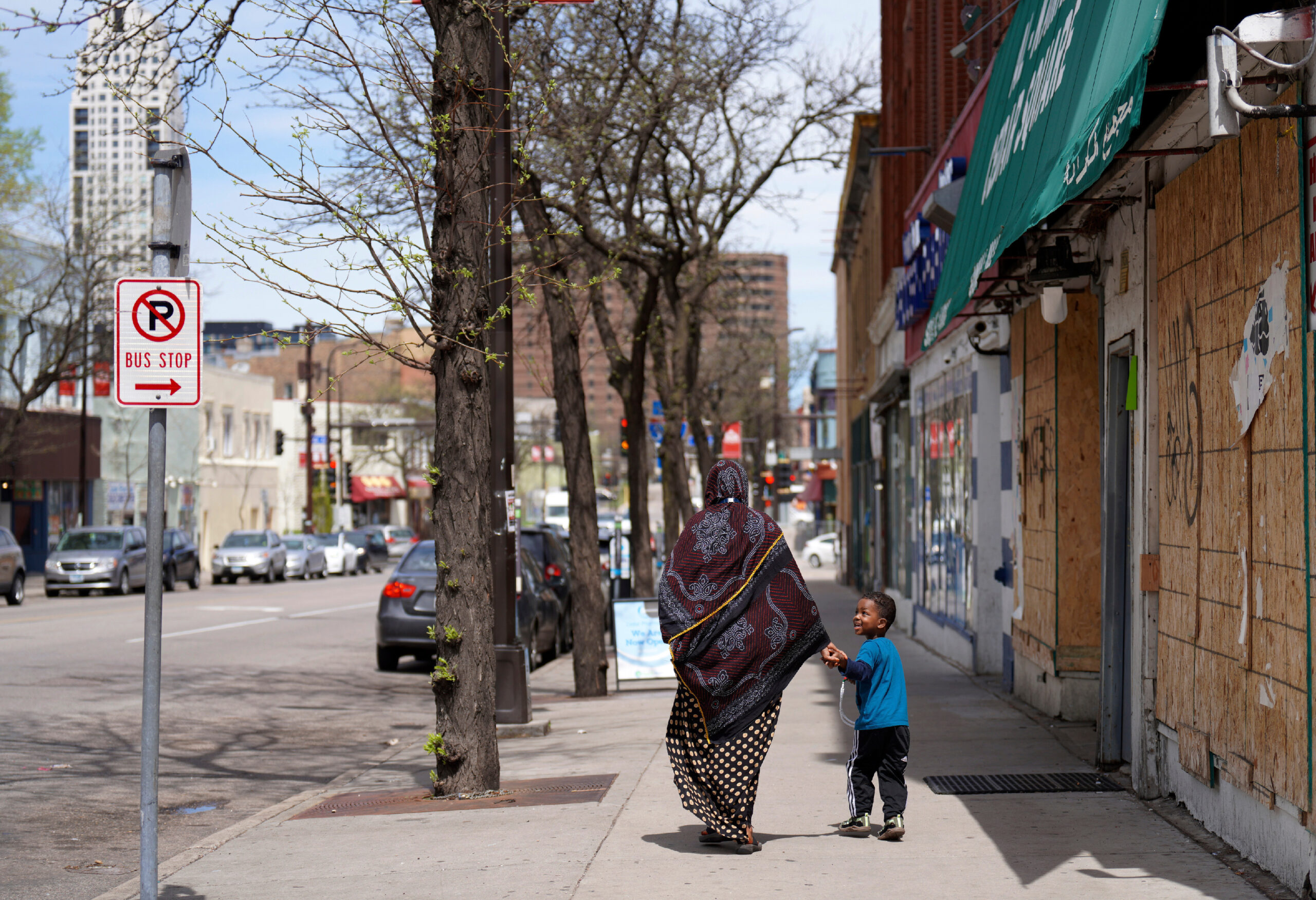
A woman and a child hold hands as they walk down a street in the predominantly Somali neighborhood of Cedar-Riverside in Minneapolis in 2022.
When leaders speak in ways that categorize certain groups as threats or burdens, children who identify with those groups absorb the message. Even children who do not belong to those groups learn something about how power operates: that dignity is conditional.
For some viewers, Trump’s anecdotes reinforced the case for stronger borders. For others — including children in mixed-status families — they reinforced a sense of collective suspicion. Trauma researchers note that when individuals feel stigmatized or collectively blamed, it can produce what psychologists call “identity-based stress,” a chronic strain associated with anxiety and depression.
None of this is to deny the president’s right to advocate his policies. Nor is it to suggest that only one party’s rhetoric carries emotional consequences. But the tone and themes of this particular address — siege, dominance, humiliation reversed through force — echo dynamics that trauma science has long identified as destabilizing when internalized by the powerless.
A child who hears repeated warnings of danger in their community, or who worries that a parent could be detained or deported, does not experience politics as theater, writes Jack Hill.
Children are, by definition, powerless in the civic sphere. They do not vote. They do not shape policy. They rely on adults and institutions for stability. When those adults present the world as perpetually on the brink, the child’s sense of baseline safety erodes.
There is also the matter of modeling. Children learn not only from what leaders say but how they say it. When applause lines are built on mockery or derision of opponents, when strength is defined primarily as crushing adversaries, children receive lessons about conflict resolution. If politics is portrayed as a zero-sum battle between good and evil, compromise looks like betrayal. Empathy looks like weakness.
Herman’s framework suggests that healing from trauma requires three stages: safety, remembrance and mourning, and reconnection. Safety comes first. And safety, at its core, is relational. It is built through consistent, attuned caregiving and through trustworthy institutions. This is where parents face an immense challenge.
How do you cultivate a child’s sense of security in a culture that often amplifies alarm? The first task is to build a counter climate at home. When children hear rhetoric about invasions or enemies, parents can contextualize without dismissing. “The president believes these policies will make the country safer,” one might say. “There are different views. What matters here is that you are safe, and we are together.” Research on co-regulation shows that children borrow calm from steady adults. The parent’s tone becomes a neurological anchor.
Second, parents can help children develop narrative competence. Trauma fragments experience; it turns events into isolated flashes of fear. By inviting children to talk about what they heard in the speech — what confused them, what worried them — parents help integrate those fragments into a coherent story. “What did you notice?” “How did that make you feel?” Such questions restore a sense of agency.
It is vital that children experience inclusive communities. Faith groups, sports teams, neighborhood networks — these are not luxuries. They are buffers, writes Jack Hill.
Third, parents can double down on belonging. In a speech that emphasized insiders vs. outsiders, strength vs. weakness, it is vital that children experience inclusive communities. Faith groups, sports teams, neighborhood networks — these are not luxuries. They are buffers. Studies consistently show that a single stable, supportive relationship can dramatically reduce the long-term impact of stress.
Fourth, parents can model moral steadiness. If adults respond to polarizing rhetoric with rage and contempt, children learn that the world truly is at war. If adults respond with firm but measured disagreement, children learn that conflict can be navigated without annihilation. Moral clarity does not require hysteria.
The deeper issue, however, extends beyond individual households. When a president frames national life primarily through threat and triumph, he shapes the emotional climate of the country. Emotional climates matter. They influence how children perceive their future, their neighbors, and themselves.
The State of the Union is often measured by applause, polling bumps, or market reactions. But there is another metric — harder to capture, yet profoundly consequential: the degree to which our public discourse expands or contracts a child’s sense of safety.
A nation can declare itself strong. But if its children are chronically anxious, if they feel stigmatized or uncertain of belonging, that strength is brittle.
Herman reminds us that trauma is not destiny. Recovery is possible. Human beings are resilient, especially when supported by love and connection. The same is true for societies. We can choose rhetoric that rallies without terrorizing, that fortifies without dehumanizing, that inspires without humiliating.
The real state of our union is written not only in economic reports but in the bedtime questions children ask. “Will we be OK?” “Do we belong?” “Is this place safe?”
If our politics cannot answer those questions with a steady yes, then all the declarations of greatness ring hollow.
The task before us is not simply to win arguments, but to cultivate a civic culture in which children can grow without chronic fear. That is not a partisan project. It is a moral one.
Jack Hill is a diversity consultant, child advocate, journalist, and writer.
This week’s column analyzes the city’s camera surge, the need for political challengers, and calls for some basic sense about security.
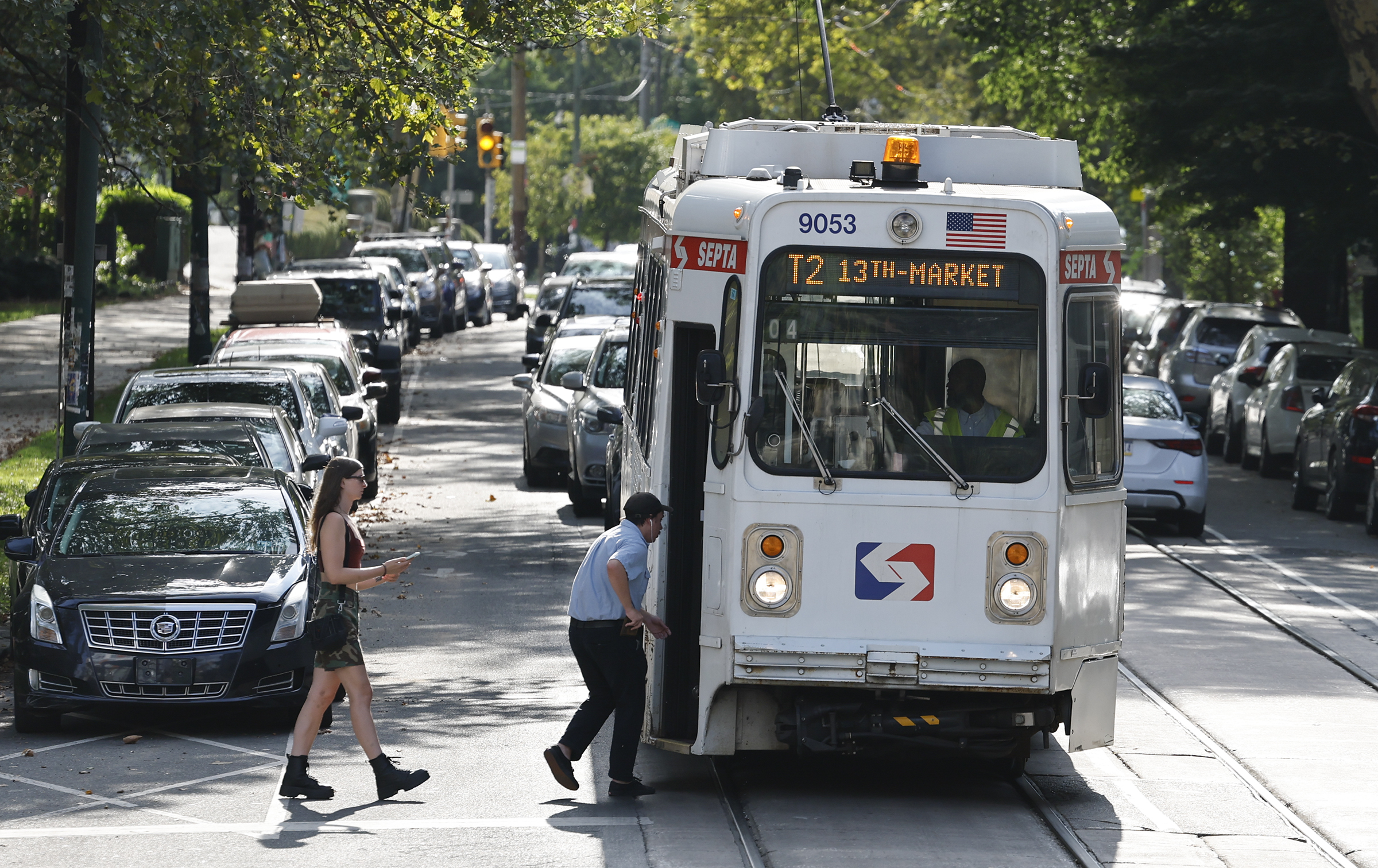
Passengers board a SEPTA trolley along Baltimore Avenue in West Philadelphia.
Trolley cams
Over the last few years, Philadelphians have increasingly come under surveillance. Cameras enforce bus lane violations, issue speeding tickets, and help prevent and solve violent crime. Just this week, the Philadelphia Parking Authority announced it is now adding cameras to the city’s trolleys.
This surge in surveillance has led to some residents bemoaning what they view as a cash grab. These worries were echoed last year by City Councilmember Jeffery “Jay” Young during a committee meeting in which he held up authorization for school zone cameras. Fortunately, these concerns are unwarranted.
Our speed and red-light cameras are not designed to raise revenue. While camera systems in states like Illinois are used to pay for regular local government expenses, Pennsylvania’s are earmarked for traffic safety projects. Philadelphia is getting $13 million from the most recent distribution. This leaves politicians with little incentive other than to focus on safety and efficiency when choosing where and why to place the cameras. The system isn’t designed to take advantage of sudden speed traps, a problem that occurs with both automated and traditional traffic enforcement systems.
Per a PPA spokesperson, 63% of vehicle owners who get a bus camera ticket don’t get a second one.
In the case of the trolley cameras, it is also a question of basic fairness. If you ride the trolleys enough, you’ll eventually end up stuck. Almost always, it is because someone decided to inconvenience 20 to 40 people to avoid parallel parking or walking a short distance. While no one likes getting a ticket, motorists who opt to block trolleys should be happy with the fact that they aren’t being immediately towed.
Candidates in the Democratic primary for Philadelphia’s 3rd Congressional District include, clockwise from upper left: State Sen. Sharif Street, State Rep. Chris Rabb, Ala Stanford, and State Rep. Morgan Cephas.
Marquee matchup
The race to replace U.S. Rep. Dwight Evans was always going to be close-fought. With the youthful Brendan Boyle occupying the city’s other congressional seat, this could be the best chance to represent Philadelphia in Washington, D.C., for decades. State Sen. Sharif Street (the son of former Mayor John F. Street) and State Rep. Morgan Cephas (who chairs the Philadelphia delegation in the state House) are both long-expected candidates for the job. They’ve been joined by progressive firebrand Chris Rabb, surgeon Ala Stanford, and a handful of other candidates with less funding and political support. For Southeast Pennsylvania politicos, it’ll have to do. There simply aren’t a lot of competitive races this year.
In state Senate District 34, Towamencin Township Supervisor Kofi Osei is running against party-endorsed candidate Chris Thomas. There are also a couple of contested primaries for state House seats. That’s all, folks.
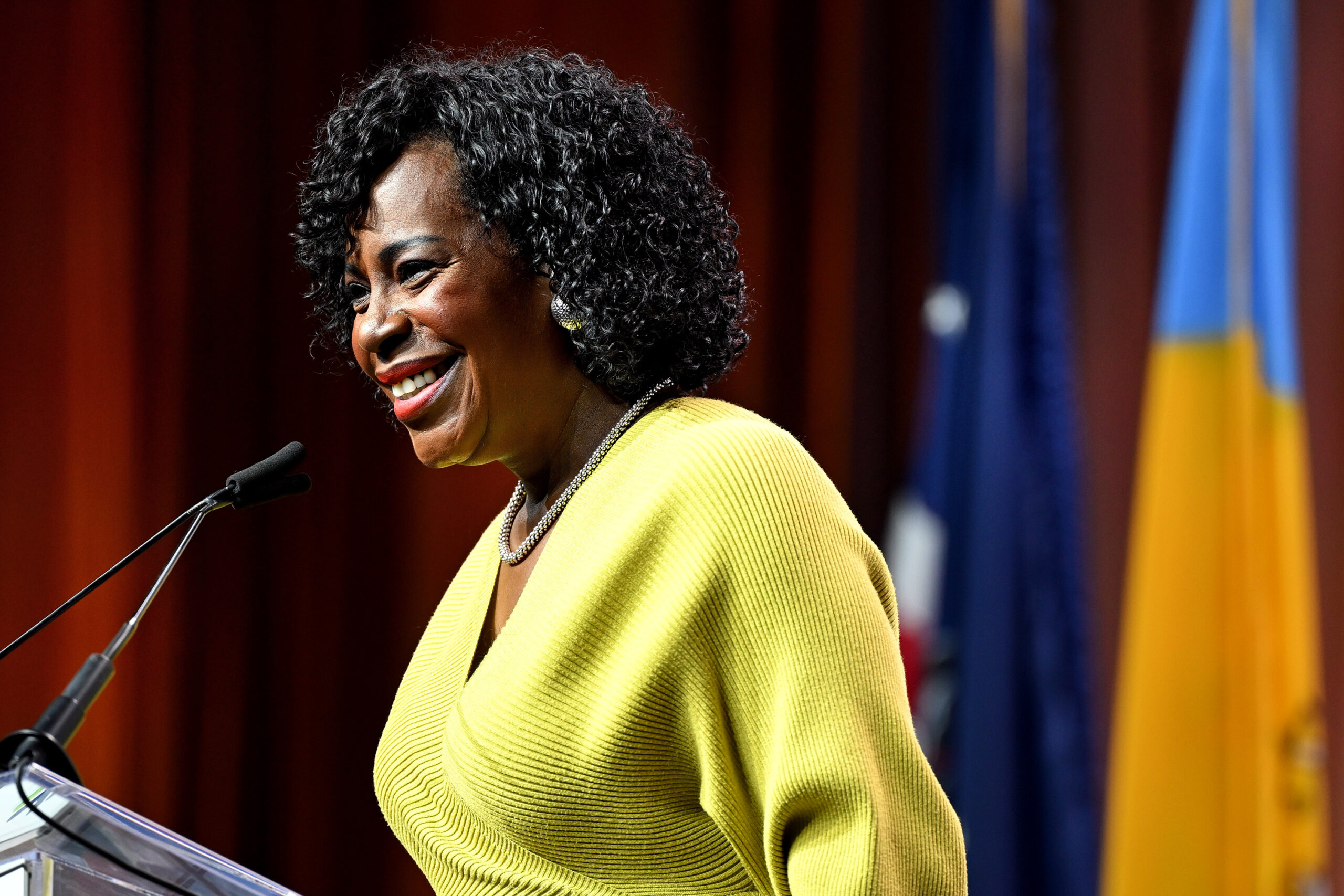
Mayor Cherelle L. Parker delivers her keynote address at the Chamber of Commerce for Greater Philadelphia’s Annual Mayoral Luncheon, in February.
Challengers needed
Next year also looks fairly empty. While some progressive groups have polled residents to gauge the viability of defeating Mayor Cherelle L. Parker, few potential candidates appear eager to take her on. That’s perhaps not surprising. Only one Philadelphia mayor has failed to be reelected in the last 70 years. That includes W. Wilson Goode Sr., who bombed a city block during his first term, and Frank Rizzo, who failed a lie-detector test he himself had suggested.
What the city really could use are more challengers for City Council seats. So far, I am aware of just one candidate, Jalon Alexander, who has put his hat in the ring. Alexander plans to challenge Young in the 5th District, citing capricious decision-making. But Young, while he may be the most egregious example, is not the only Council member who could use some competition.
I expect the city’s progressive groups, like Reclaim Philadelphia and the Working Families Party, will eventually find candidates to challenge some of the weaker members, including Young, Cindy Bass, Nina Ahmad, and Jim Harrity. Last cycle, these groups organized around ideas, like rent control, that simply aren’t viable in Philadelphia.
Despite being mostly frozen out by Council President Kenyatta Johnson and their colleagues, the current progressive delegation has been somewhat unwilling to challenge that body’s status quo. While Councilmember Kendra Brooks voted against a ban on safe injection sites, and Rue Landau voted against one of Young’s ill-considered moves, the city could use at least one councilmember who is willing to consistently challenge their colleagues’ bad decisions.
Pennsylvania Gov. Josh Shapiro is seen after a B’nai B’rith Youth Organization International Convention on Feb. 12 in Philadelphia.
Security snafu
We call Gov. Josh Shapiro the Ambitious Abingtonian here for a reason. The governor is a hard-charging, elbows-up politician who has turned many friends into enemies over the years. Republicans seem to believe they have finally found a weakness in Shapiro’s political armor: the decision to spend taxpayer money to secure his home in Abington, and the seizure of a small strip of adjoining land that accompanied it. State Sen. Tracy Pennycuick, who represents western Montgomery County and eastern Berks County, even opined that Shapiro “put his family at a higher level of risk” by moving them home instead of to a bunker after the April arson attack at the governor’s mansion.
Of course, the Shapiros just survived an attempted assassination. Let’s be human beings for one second. Shapiro’s shell-shocked children deserved to sleep in familiar settings.
If Republicans want spending decisions to critique, they should start with Shapiro’s reliance on an opaque group called Team PA to pay for everything from travel to sporting events instead.
Fifty-six years ago, President Richard Nixon sent a letter to Congress proposing the formation of a new federal regulator: the Environmental Protection Agency. Back then, big city skylines were shrouded in smog, chemicals and waste had spoiled the nation’s waterways, and Americans across the political spectrum recognized the need to safeguard the planet.
The government’s efforts worked. While disagreements over the details and near-constant pushback from industry over regulations persisted over the decades, the EPA was long considered a genuine bipartisan American success story — at least until President Donald Trump and EPA Administrator Lee Zeldin arrived.
So far, the pair have taken a flamethrower to environmental policy.
The two most egregious moves are the rollback of mercury emission limits at coal plants and the repeal of the legal basis for regulating greenhouse gases. Americans — and the world at large — will be paying for the administration’s shortsightedness for years to come.
A contaminant that is present in coal and released when it is burned, mercury can have devastating effects on human health. Just ask Health and Human Services Secretary Robert F. Kennedy Jr., who blamed mercury exposure for contributing to his memory loss and brain fog while running for president. He’s campaigned to remove mercury from fish and vaccines, while his colleagues in the administration plan to release more mercury into the atmosphere.
The emissions rollback also affects restrictions on arsenic, nickel, and lead — all of which are released when coal is burned. A Harvard analysis suggested that repealing the mercury restriction could lead to $200 million in additional annual health costs for Americans, including heart and lung issues.
It’s bad enough that Trump wants to promote continued coal use; his administration is also standing in the way of renewable energy sources, putting up regulatory roadblocks for the development of wind and solar power. While America needs more energy generation to tamp down rising electricity costs, a diversified approach makes a lot more sense than using a 19th-century answer to a 21st-century problem.
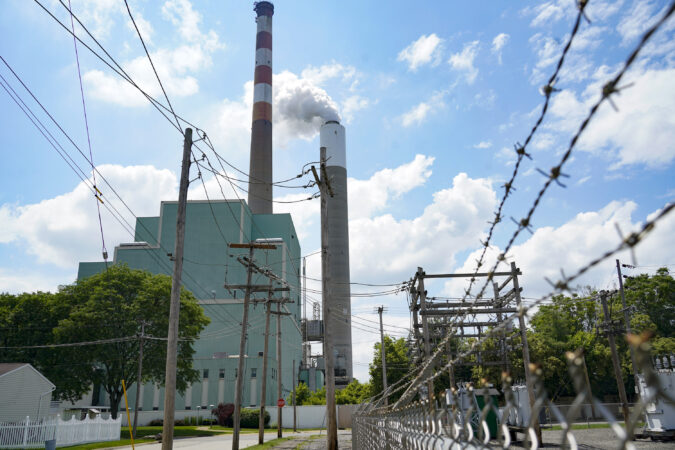
The former coal-fired Peco power plant next to Penn Treaty Park.
By turning its back on the EPA’s “endangerment finding,” the Trump administration has eliminated the government’s power to limit greenhouse gas emissions. The 2009 finding, which recognized that carbon dioxide and other greenhouse gases produced by fossil fuels endanger public health, has been the cornerstone of U.S. climate policy.
Beyond the damage to the environment and long-term impact on an already dangerously warming planet, lifting restrictions will also result in higher costs for American motorists and bigger profits for oil barons at home and abroad.
In Pennsylvania alone, the toll would be significant. According to an analysis by the nonprofit Environmental Defense Fund, repealing the endangerment finding would result in $57 billion worth of additional fuel costs and over $12 billion in additional health costs by 2055 for Keystone State residents. Other costs include tens of thousands of additional premature births, millions of asthma attacks, and billions of metric tons worth of pollution.
The EDF, alongside a coalition of environmental groups, is currently suing the EPA to preserve emissions standards. The Trump administration’s backsliding puts America out of step with most of the world, where governments are embracing clean energy and electrification not only for health benefits but economic ones, as well.
In France, clean energy production has been so successful that supply temporarily eclipsed demand briefly last year. While American ratepayers are dealing with rising electricity costs, France is seeing prices drop to their lowest level in years.
China has established itself as a hub for electric vehicles. While the Trump administration has gutted incentives meant to help the American auto industry compete, Chinese firms have recorded a 1,016% increase in electric vehicle exports, with the total value rising from $295 million in 2018 to $36.7 billion in 2023. Thanks to the president, American automakers are likely to miss out on this bonanza.
Instead, America’s energy policy seems aimed at recreating the economy of the 1960s, the very same conditions that led to the environmental movement in the first place. Trump has talked about “clean, beautiful coal,” said wind power is for “stupid people,” and defunded tax programs that help homeowners reduce their energy usage through heat pumps and weatherization.
Americans deserve better than higher bills and dirtier air. Unfortunately, under Trump’s policies, that’s all we’ll get.
It is clear by now that Donald Trump does not consider himself to be the president for all Americans, but only for his MAGA supporters. He has sown division, not unity, which serves only to make our country weaker. Some Democrats have criticized U.S. Sen. John Fetterman for not always voting along party lines. However, the senator recognizes that Pennsylvania is a purple state, and his charge is to represent the interests of all Pennsylvanians, not just those who voted for him. In contrast, U.S. Sen. Dave McCormick, who won the 2024 election by less than 0.5%, votes according to the MAGA agenda, ignoring the preferences of the 48% of Pennsylvanians who voted for his opponent.
Joseph Micucci, Philadelphia
Memory keeping
For Jews, Feb. 27 is Shabbat Zachor, the Sabbath of Remembrance. On that day, we are commanded to remember how the tribe of Amalek mercilessly attacked the most vulnerable Israelites following their exodus from Egypt thousands of years ago. Memory is central to Jewish identity. During the first year of the Trump administration, we are witnesses to a relentless assault on memory.
Perhaps the most egregious example is the White House webpage on Jan. 6, 2021, which proudly hails the president’s decision to grant a sweeping pardon to some 1,600 rioters. The people who battered law enforcement officers and took over the U.S. Capitol by force that dark day are described as peaceful and patriotic Americans rightfully protesting a stolen election.
Donald Trump’s lies about the results of the 2020 election, which fueled the tragic events of Jan. 6, continue unabated. The brazen historical revisionism of what Republican U.S. Rep. Brian Fitzpatrick called an “attempted coup,” sadly, is deceiving more and more Republicans. As America approaches its 250th anniversary, we all have a sacred obligation to remember the reality of Jan. 6 that we saw with our own eyes, only a little over five years ago. Zachor.
Martin J. Raffel,Langhorne
Plan for success
If Mayor Cherelle L. Parker wants to succeed, and not merely “hope to boost new business and job creation” by offering “white glove treatment to companies who need help navigating the city’s regulatory labyrinth,” as she claimed in her recent Chamber of Commerce of Greater Philadelphia speech, there are several fundamentals that need to change.
1) Let the minimum wage float. This allows entry-level employees to learn on the job, then earn a raise, vs. not even being offered a job. 2) Require that every job and contract, especially those supported with taxes, be bid between union and nonunion suppliers. This boosts confidence for all new businesses and creates great competitive jobs. 3) On the first day of kindergarten, start inculcating a Philadelphia school culture that instills good behavior, manners, language, and respect for classmates, adults, and teachers. For the separate $4.6 billion in taxpayer money, our mayor must declare as her mission that 100% of our students will graduate as very well prepared for whatever the next step is in their lives. 4) Do not add yet another committee, which would simply add more employees to the 100-plus existing city departments, agencies, and committees, half of which are obsolete, meander in circles, and waste taxes. Eliminate the half-dragging anchor against the great progress our mayor wants, without adding yet another one.
These are the fundamentals we must change for our city’s improvement and for Parker to succeed. And, yes, we want our mayor to succeed beyond her wildest dreams.
Gardner A. Cadwalader,Philadelphia
ICE whistleblower
On Feb. 23, Ryan Schwank, a former U.S. Immigration and Customs Enforcement lawyer, testified as a whistleblower before a Senate Democratic forum about the egregious lack of required training for all new ICE agents. He testified that Homeland Security has eliminated the most important policing training in the use of firearms, use of force, the proper arrest and detention techniques, the limits on an agent’s authority, and the Constitution — including that they could violate the Fourth Amendment to enter a home without a judicial warrant. Schwank stated that the training curriculum has been reduced from 584 hours by nearly half to fulfill Donald Trump’s order to get an additional 12,000 agents on the streets of America by year’s end. He testified that DHS lied when it asserted that no critical instruction had been eliminated. Is it any wonder people have been, and will be, murdered, beaten, and illegally detained? This testimony must be given before the whole Senate and the House of Representatives, as well as a more public airing.
Morrie Wiener, Cherry Hill
History as guide
The recent report regarding U.S. Customs and Immigration Enforcement’s plan to warehouse detained immigrants is another bellwether in Donald Trump’s assault on human decency. ICE’s plans should be viewed in the context of the Holocaust Memorial Museum’s key facts about Nazi concentration camps: “Officials established the first concentration camp in Dachau … for political prisoners. It was later used as a model for an expanded and centralized concentration camp system. What distinguishes a concentration camp system from a prison (in the modern sense) is that it functions outside of a judicial system. The prisoners are not indicted or convicted of any crime by a judicial process.” The museum’s website further notes that such camps are ones in which “people are detained … usually under harsh conditions and without regard to legal norms of arrest and imprisonment that are acceptable in a constitutional democracy.”
The majority of detained immigrants have not been indicted for or convicted of a criminal offense. Most were employed at the time of their seizure, paying their way. Many of their jobs then went unfilled. Rather than being productive, they are confined in squalid conditions where healthcare is frequently insufficient. Spending an additional $45 billion to expand detention centers, with additional staffing costs, in pursuit of an inhumane policy that is being inhumanely implemented, will no more make America great than the town’s eponymous camp made Dachau great.
Stewart Speck,Wynnewood, speckstewart@gmail.com
Missed importance
I respectfully object to the front-page headline on Saturday’s Inquirer (“Trump slams Supreme Court after stinging defeat on tariffs”). Learning Resources v. Trump is a case of constitutional and historic significance, yet the headline highlights Donald Trump’s reaction. If the U.S. Supreme Court had affirmed the Trump tariffs despite clear language in the Constitution that only Congress can impose a tax, then who knows what other presidential powers would be exercised at the expense of Congress. The media has largely ignored the case’s significance. A reader could infer that Trump’s reaction is more important than the court’s decision. Democrats have said that if they take control of the House and Senate, then they will initiate impeachment proceedings against the president. If there is an impeachment trial, the presiding officer will be Chief Justice John Roberts (who wrote the court’s majority opinion).
Jim McErlane, Malvern
Join the conversation: Send letters to letters@inquirer.com. Limit length to 150 words and include home address and day and evening phone number. Letters run in The Inquirer six days a week on the editorial pages and online.
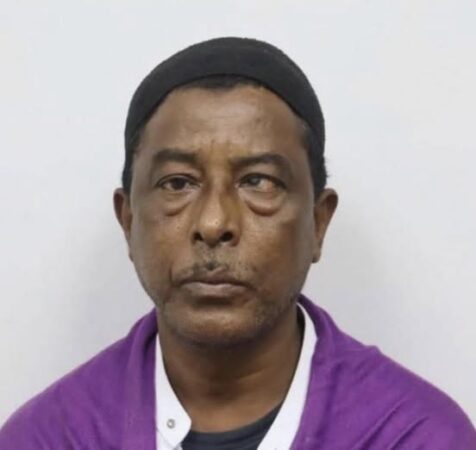
Like most of his Rohingya people — stripped of citizenship by Myanmar’s ruling junta and targeted by a brutal 2017 genocide — Nurul Amin Shah Alam and his family spent the last decade yearning to breathe free.
A nomadic quest for liberty took Shah Alam, his wife, and the two youngest of his six children through the crowded camps of Bangladesh, on a boat escape to Malaysia, and finally to apparent refuge in the United States on Christmas Eve 2024.
But the 56-year-old immigrant was almost never free on American soil.
In February 2025, just 53 days after his family arrived in the refugee hub of Buffalo, Shah Alam — nearly blind, apparently lost, and using a curtain rod as a walking stick — found himself in an encounter with Buffalo police. He was tased during a scuffle that ended with the refugee charged with felony assault.
After one year behind bars and a plea deal, relatives paid his bail on Feb. 19, and then waited for hours at the Erie County, N.Y., lockup, only to learn he’d instead been handed over to U.S. Customs and Border Protection (CBP) on an immigration detainer.
During a frantic, five-day search on the streets of one of America’s coldest big cities, Shah Alam’s family and supporters were stunned to learn that Border Patrol agents — apparently after learning the stateless refugee could not be legally deported — drove this disabled and nearly sightless man with no phone to a Tim Horton’s doughnut shop and dumped him there, five miles from his family’s home.
As reactions and questions continue to surface over the death of Nurul Amin Shah Alam, a visually impaired man who spent time in Border Patrol custody and was found dead Tuesday night, directions from the reported drop-off spot and where he was found place the two locations more…
“He never had freedom in his life,” Imran Fazal, a leader of the Rohingya diaspora in Buffalo who knows his family, told me by phone Wednesday night. “He came to this country because he wanted to experience freedom. He didn’t have that chance … He came to this nation that was supposed to save his life — and that nation destroyed his life.”
And now, abandoned on the subfreezing February streets of the snow capital of America. Because there is really only one point to the ethnic cleansing crusade that began with rabid Trump partisans waving their “Mass Deportation Now!” placards in a Milwaukee arena and ended with a cold, lonely corpse on Perry Street.
Somehow, in this downward spiral that has seen Americans grow accustomed to masked, heavily armed goons in tactical gear snatching day laborers or Uber drivers off once-placid urban streets, the abandonment and death of Shah Alam still hits like a gut punch to the soul of a once-welcoming nation. Yet, it somehow feels even more inhumane when viewed through the tortured prism of the Rohingya people, among the most persecuted ethnic minorities on earth.
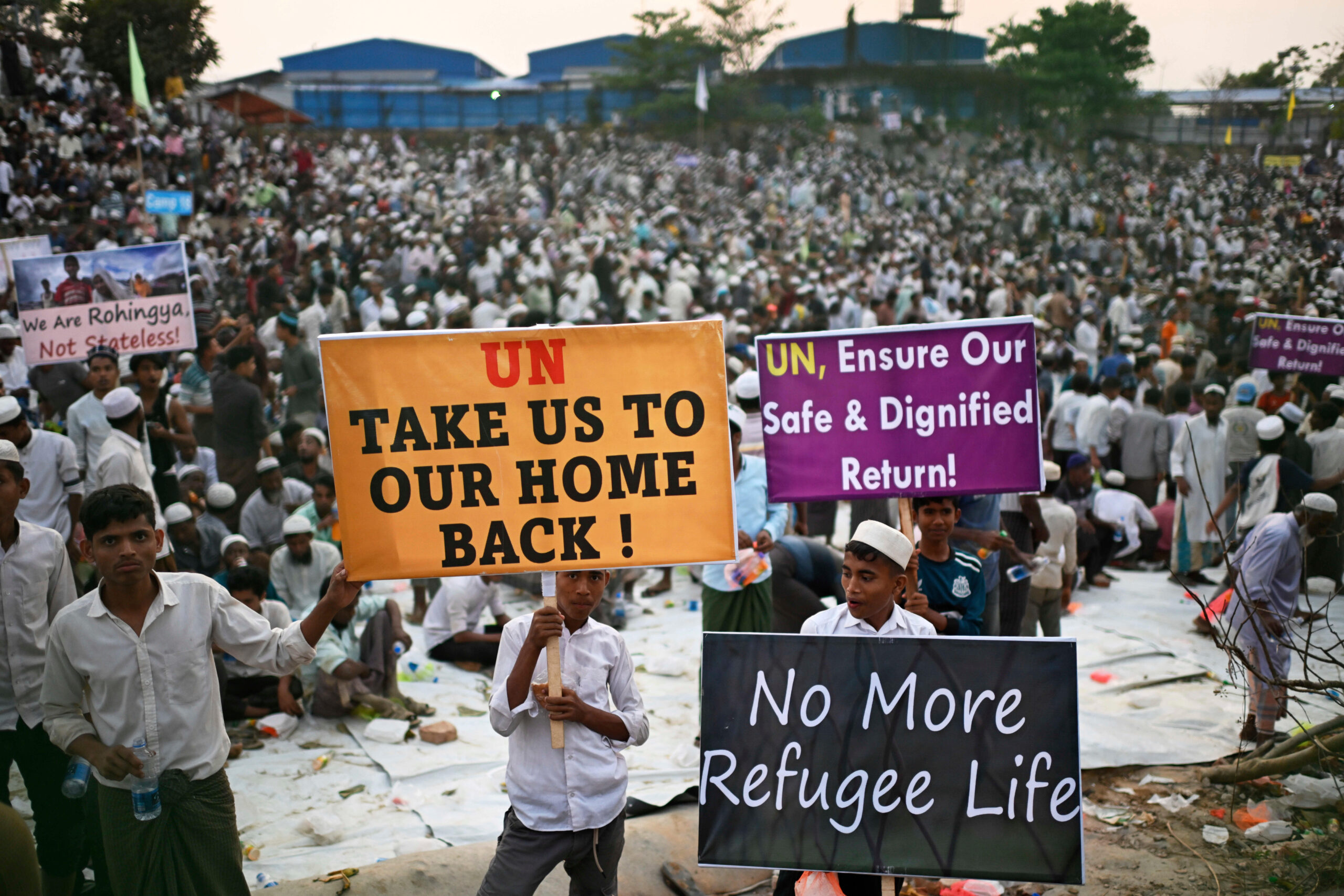
Rohingya refugee children carry banners during a visit by U.N. Secretary-General António Guterres at the Ukhiya camp in Cox’s Bazar, in Bangladesh, in March 2025.
The roughly 1.4 million, mostly Muslim, Rohingya people in Myanmar, formerly Burma, have been targeted for repression by that nation’s Buddhist majority for decades, culminating in the stripping of their citizenship in 1982 and its military rulers driving hundreds of thousands across the border into Bangladesh during 2017’s brutal campaign.
In March 2022, during the Joe Biden administration, which was a brief window between the anti-refugee xenophobia of the two Trump presidencies, the U.S. government recognized the Rohingya as victims of genocide and, among other moves, expanded their resettlement opportunities in America. It’s estimated that at least 12,000 came to the United States during that short opening, and as many as 2,000 of them — perhaps lured by lower housing costs — have moved to Buffalo in the last couple of years.
It has not been an easy journey. Denied schooling in their native Myanmar and lacking a formal written script for their language, the majority of Rohingya who arrive in the United States are illiterate and unable to speak English.
The short, tragic American experience of Shah Alam reads like an allegory for the Rohingya plight on U.S. soil.
The version of what happened to him on the night of Feb. 15, 2025, as told to me by Fazal and also recounted by his family and lawyers in the media, is that Shah Alam, walking in his new neighborhood with the aid of that curtain rod and likely getting lost, took shelter under a porch perhaps without realizing he was on private property.
The woman who owned the property called the Buffalo police, who viewed the rod as a weapon and — when the non-English speaking Shah Alam failed to follow their commands — tased him and aggressively tried to arrest him. In a fight with the nearly blind immigrant whose awareness of the situation is in question, police said two officers suffered minor injuries. The ensuing criminal charges against Shah Alam — assault, trespassing, and possession of a weapon — were just the start of his Kafkaesque journey through American injustice.
Trump had just become the 47th president, and family members didn’t post bail at first, mainly because of fears the new regime would seek to deport him. Fazal said the already ailing Shah Alam lost considerable weight in his year behind bars, as much of the food didn’t meet his Muslim dietary restrictions.
Supported by the Rohingya diaspora community — Fazal said about 50 people attended one of his hearings — Shah Alam’s legal-aid attorneys eventually struck a misdemeanor plea deal. Then, on Feb. 19, family members arrived at the Erie County detention center expecting to take him home for a warm meal.
Breaking: A blind Burmese refugee named Nurul Shah Alam has been missing since Thurs. after Border Patrol agents dropped him off at a Tim Hortons, leaving him to walk home.
After a number of hours, Fazal said, the family called the police and said, “‘He was supposed to come here. He’s not coming.’ And they said, ‘You know, he was taken by the [U.S.] Customs and Border [Protection].’ And they said, ‘What?!’”
A CBP spokesperson told People magazine that Shah Alam was offered a “courtesy ride” from Border Patrol agents, “which he chose to accept to a coffee shop, determined to be a warm, safe location near his last known address, rather than be released directly from the Border Patrol station. … He showed no signs of distress, mobility issues, or disabilities requiring special assistance.”
In fact, Shah Alam — completely blind in one eye and with limited sight in the other, according to family members, who didn’t have a cell phone and had never used one — was five miles from his family’s current home. When his relatives and attorneys learned belatedly of the Tim Horton’s drop-off and could not find him, they filed a missing persons report that — in one final injustice — was, for a time, accidentally listed as resolved by an officer who mistakenly thought he was at an immigration detention site.
Instead, his body was found Tuesday night. The preliminary finding after an autopsy by the Erie County medical examiner is that Shah Alam died from medical causes and not from either exposure to the cold or intentional homicide. Nonetheless, his death is under investigation — yes, by the same Buffalo police who initiated this nightmare — and has sparked justifiable outrage from local officials like Buffalo Mayor Sean M. Ryan, who called the CBP actions “unprofessional and inhumane.”
That’s a gross understatement. It’s not just that Shah Alam’s abandonment and death is a new twist on the roughly 40 immigrants who’ve died in federal detention since the start of 2025 from a mix of medical neglect, suicidal despair, and at least one homicide, along with the eight people fatally shot by CBP or U.S. Immigration and Customs Enforcement (ICE). All of it is proof that Trump’s immigration policy is written with the blood of innocents.
We also need to ask ourselves how and why a nation that so blithely uses the Statue of Liberty for everything from car insurance ads to a morally empty 250th birthday party is now repressing some of the most mistreated humans on earth — people who honestly believed America would offer the freedom they were denied in their nation of birth.
It’s a moral abomination to see the Hmong people who risked everything to side with the United States in Southeast Asia now dragged from their homes in Minnesota, or the Venezuelans who fled a strongman dictator only to be branded as criminal gang members, or the Haitians who escaped relentless violence only to now huddle in fear in heartland Ohio.
And now the Rohingya, who were able to survive a genocide and inhumane refugee camps some 8,000 miles away, only to now find themselves in a country that is building concentration camps and forging a 21st-century Trail of Tears.
Fazal — a 30-year-old recent Buffalo State grad whose seven-year stateless flight to freedom passed through Bangladesh, Malaysia, Indonesia (where he was detained for 17 months in an immigration prison), Australia, and Papua New Guinea — told me he feels anger over Shah Alam’s death, but also guilt, because he has gained U.S. citizenship while Shah Alam did not.
“The system and the police should be accountable,” he said. “We need justice to be served.”
When this newest stain on human existence is finally over, there won’t be enough courtrooms to try every masked idiot who shot an unarmed protester, or beat up an immigrant and swore he “ran into a wall,” or slammed a brain-injured woman to the asphalt.
But years in prison would be too good for the soulless monsters who went on a doughnut run and left a good man to die. If there is any justice under God’s universe, they will be consigned for all ofeternity to a snowdrift as large as Lake Erie in an unending and fruitless quest for the warmth and liberty they deprived Nurul Amin Shah Alam.
When I studied American history in 11th grade, African American history was barely discussed, except for slavery. I took it upon myself to read about Black history to learn what my class hadn’t included.
Since then, I’ve always looked forward to Black History Month, as scholars of African American history and culture present new research on what had been an understudied aspect of American history.
After the Civil War ended, Confederate diehards, in a successful effort to memorialize “the lost cause,” reframed America’s deadliest conflict as the War of Northern Aggression. For over a century, this falsehood included textbooks that claimed plantation owners treated their slaves decently, and that the North’s interference in the South’s internal affairs caused the Civil War.
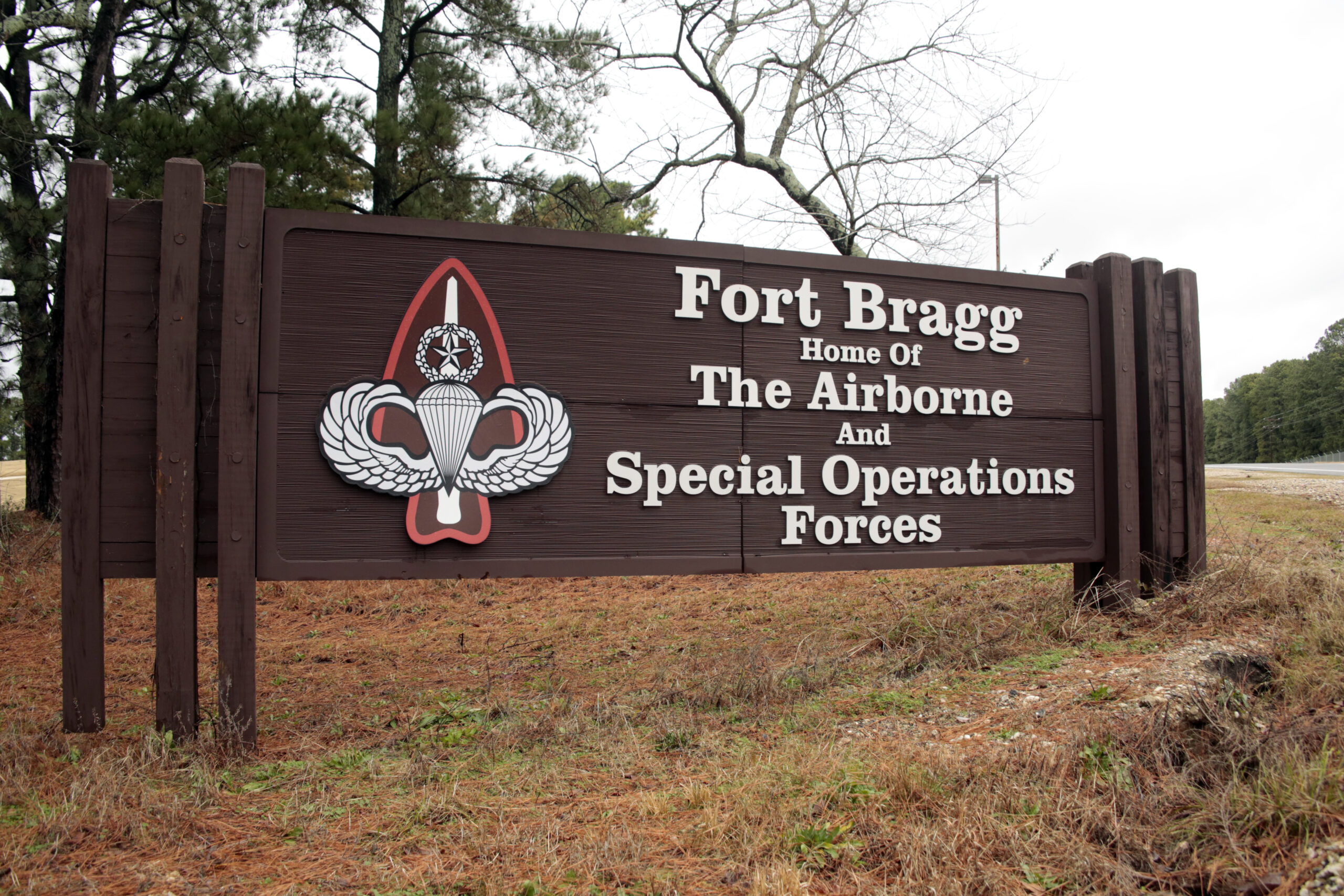
This Jan. 4, 2020, file photo shows a sign for Fort Bragg, N.C., which was named for a Confederate general who fought against the United States of America. The Confederate name was changed during Joe Biden’s presidency, but has been restored during Donald Trump’s second term.
With the increase in the Army’s man power during both world wars, new forts were established. The War Department named 10 of them to honor Confederate generals. Mind you, these generals led their forces in a rebellion against the United States that killed American servicemen.
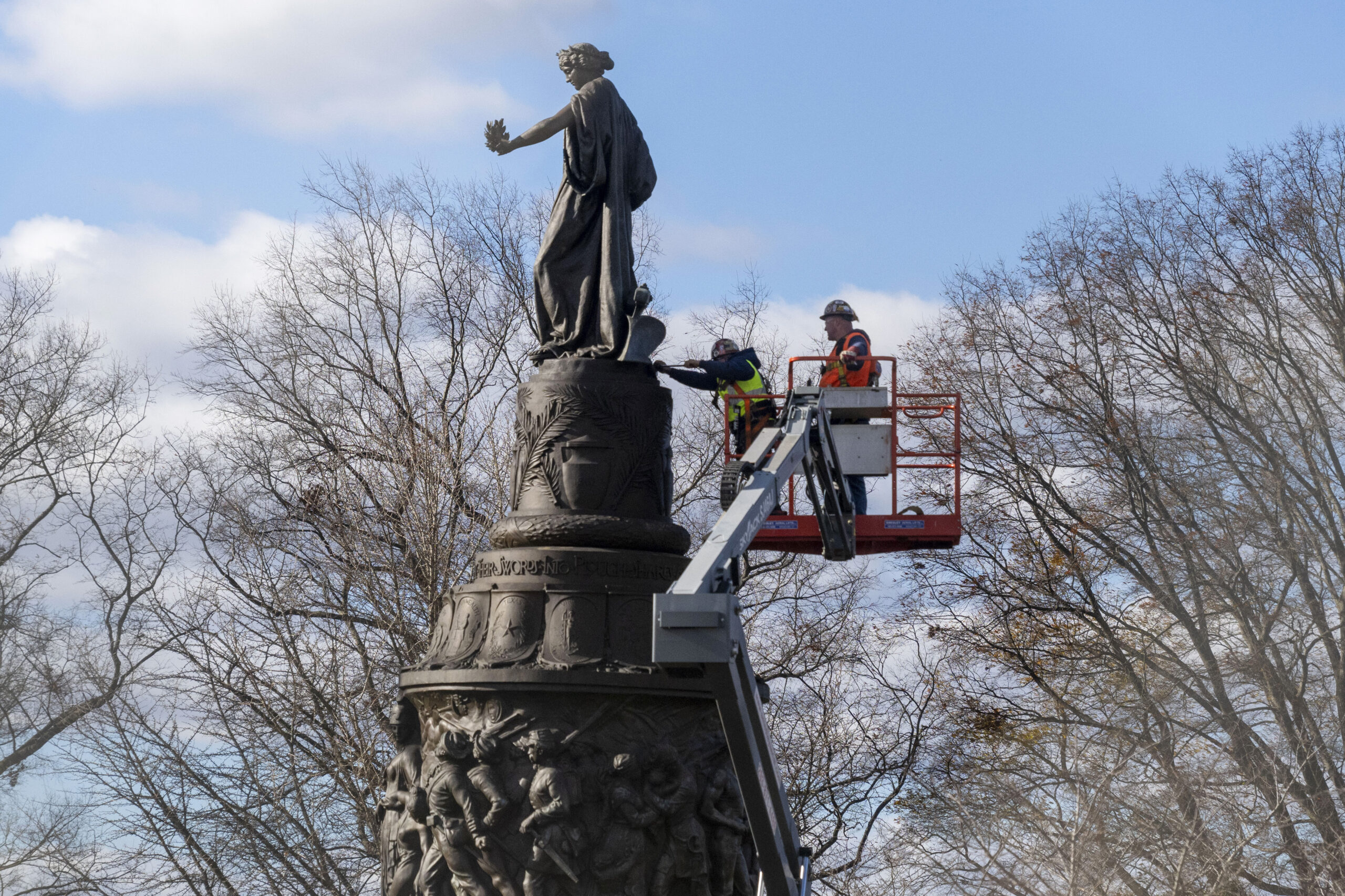
Workers prepare the Confederate Memorial for removal in Arlington National Cemetery on Monday, Dec. 18, 2023, in Arlington, Va.
More importantly, federal and state governments were willing to acknowledge past mistakes in the treatment of America’s Black citizens.
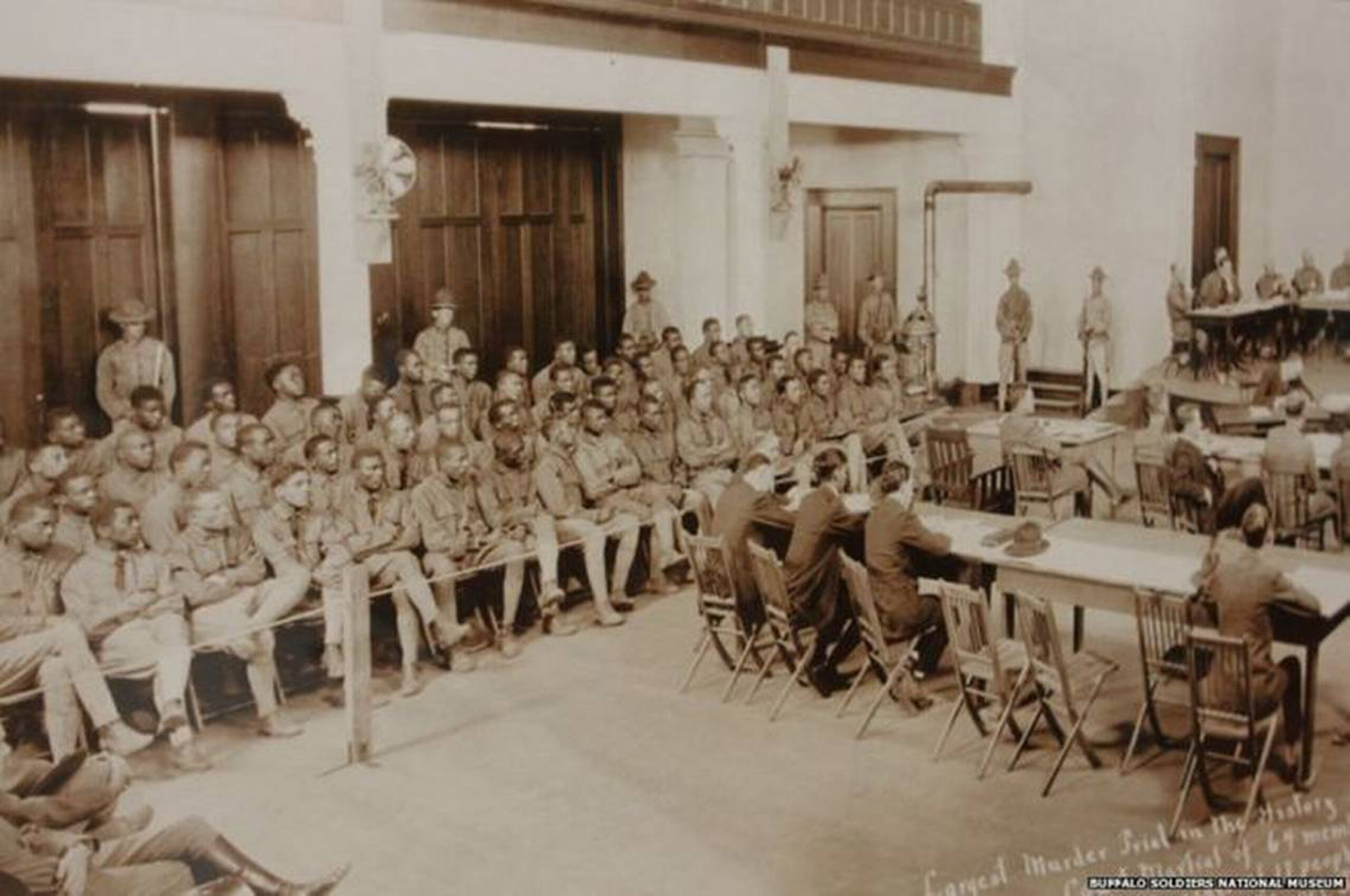
During Biden’s administration, the unjust treatment of Black soldiers following the 1917 Houston Riot and of Black sailors convicted in the 1944 Port Chicago Mutiny was recognized. Although these men were dead, awarding them posthumous honorable discharges was an acknowledgment that they had been unfairly treated.
A photograph of the courtroom where 63 Buffalo Soldiers from the predominantly Black 24th Infantry Regiment stood trial in 1917 for the Houston riot.
These were signs of progress in race relations.
In early 2025, I marveled at the changes in relaying America’s history, including its unpleasant truths, to students. State and federal governments now emphasize the multiple contributions of Black Americans in all fields of endeavor.
The greatest aid in elucidating these contributions was the requirement to teach African American history in schools.
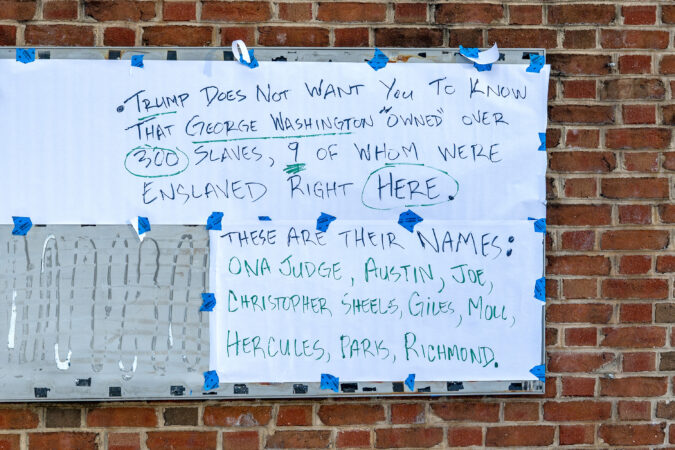
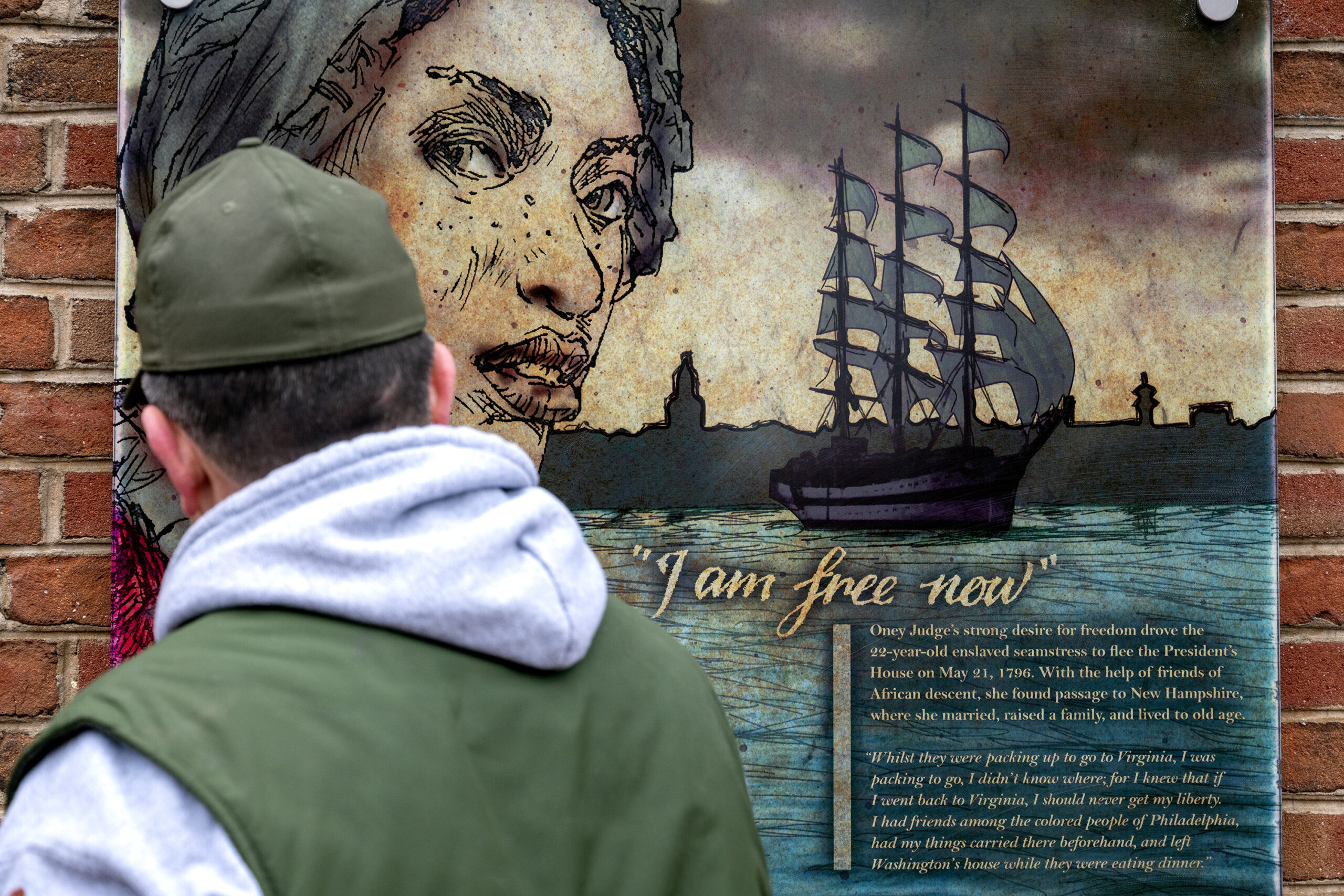
A worker pauses while rehanging a panel of Oney Judge at the President’s House in Independence National Historical Park on Feb. 19, 2026. Judge was a woman enslaved by George Washington. A federal judge earlier in the week ordered the Trump administration to restore the slavery exhibits that the National Park Service removed in January.
Having visited this site multiple times, I never saw any falsehoods on its signage. Instead, I saw an inconvenient truth. America’s first president — as well as the majority of our first 18 — owned human beings despite living 100 yards from where “all men are created equal” was adopted in our country’s founding document.
Mount Vernon, the Washingtons’ Virginia plantation, doesn’t hide their enslavement of hundreds. Nor do Thomas Jefferson’s plantation at Monticello, James Madison’s at Montpelier, James Monroe’s at Highland, and Andrew Jackson’s at Hermitage.
We cannot obfuscate the fact that slavery didn’t end in 1865, as throughout the South, convict leasing and debt peonage reigned for decades after the Civil War.
We cannot forget that federal and state governments failed to protect the voting rights of Black citizens for 100 years.
Germany doesn’t hide its horrific past. Instead, it has erected monuments memorializing victims of an earlier German government. Germany’s past is not buried, forgotten, or ignored.
America is not Nazi Germany, but if we start to hide our flaws, we risk repeating history. Black History Month teaches us to learn from our past, flaws and all, and ensure they aren’t repeated.
Paul L. Newman is an amateur historian of African American history. He’s working on a miniseries docudrama on the African American civil rights movement of the first half of the 20th century.
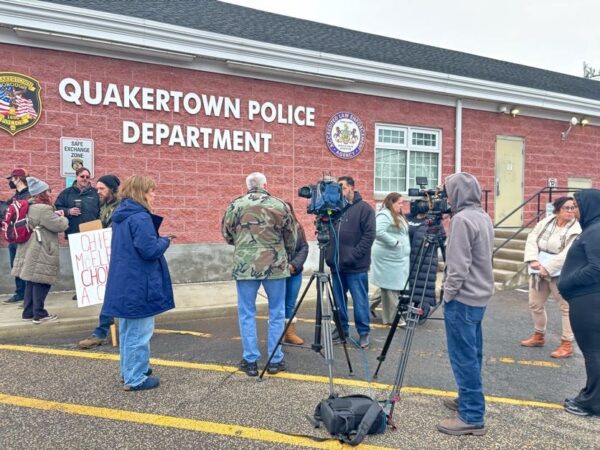
Students speaking out against abuses by federal immigration agents and the kind of heavy-handed tactics that have led to clashes between protesters and law enforcement across the country were met with excessive force by Quakertown police, who slammed children to the ground and put one in a choke hold.
The irony is not lost. Neither should the outrage.
While some of the facts are in dispute, the picture that emerges from several bystander videos is that it was police — primarily Quakertown Police Chief Scott McElree — who seemingly escalated the confrontation.
Five teenagers arrested during the protest have reportedly been charged with aggravated assault. Those are serious felony charges. Bucks County District Attorney Joe Khan must also bring that level of accountability to McElree and his officers.
It all began on Friday, when students planned a walkout to protest the actions of U.S. Immigration and Customs Enforcement. According to Inquirer reporting, initial approval from Quakertown Community High School officials changed to opposition over safety concerns. At least 35 students walked out anyway.
The diverse group headed downtown, holding signs and flags and chanting. Some passing drivers honked and shouted approval, or disapproval, from behind the wheel. A letter to parents by Lisa Hoffman, the acting superintendent of the Quakertown Community School District, said they received reports that students were “engaging in unsafe and disruptive behavior.”
A police statement said students entered traffic, threw snowballs, and damaged property, including a car’s side-view mirror. Available video footage shows students arguing with police about being off the sidewalk to shouts of “this is a peaceful protest,” shortly before McElree — out of uniform and not wearing any clearly visible identification — barrels into the crowd.
McElree engages physically with the students, placing a teenage girl in a choke hold as punches from other protesters rain down. According to students, many believed McElree to be an aggressive counterprotester. A reasonable assumption considering the police chief’s wardrobe and other similar incidents, including one in Texas where a 45-year-old man ended up in a melee with student protesters.
“It’s a grown man. It’s a grown man and a kid! He’s on a child! Why is no one stopping this?” distressed onlookers are heard saying in one of the videos. McElree then throws a teenage girl to the ground, while another Quakertown officer tosses a student onto a planter.
Further compounding the shameful behavior by the authorities, the teens arrested were held in jail until a detention hearing on Tuesday. That’s over 72 hours. This would be unfair for adults; to treat children this way is unconscionable.
The Quakertown community has been justifiably incensed over what happened.
At a borough council meeting on Monday, borough officials said they were “disturbed” by the incident, but declined additional comment. Residents wanted their elected leaders to go much further, demanding McElree’s resignation or termination.
Evan Smith, from nearby Richlandtown, reminded officials that “Jesus told us to suffer the little children, not to make them suffer.” Colin Hancock, a student who attended the protest, described being afraid to go back to his own home due to the actions of the police. Many seemed shocked that something like this could happen in their small suburban town.
The American Civil Liberties Union of Pennsylvania accused McElree of acting as a counterprotester, rather than as law enforcement. In a statement, the group said the chief “abandoned his job and his mission” and said he must be held accountable.
Khan said his office is investigating. Hopefully, the results of the district attorney’s inquiry will give the community a thorough understanding of the incident and whether McElree or any of his officers merit dismissal. At the very least, changes to the Quakertown Borough Police Department must be implemented so this never happens again.
Students exercising their First Amendment rights and engaging in civil disobedience may yet face disciplinary action from their school, but they should not have to deal with brutal treatment by law enforcement, who ought to know better.