Category: Opinion

  • What happened to the Big 5? The decline of Philly basketball’s one-time legendary alliance began a long time ago.

    What happened to the Big 5? The decline of Philly basketball’s one-time legendary alliance began a long time ago.

    One afternoon in early December, Bill Raftery and Tim Legler, both La Salle alumni, returned to campus for an hourlong panel discussion about their careers in sports media, only to have the conversation shift to a topic with broader implications.

    It was a point of pride for the university to welcome back Raftery, who has been college basketball’s preeminent analyst for more than a quarter-century, and Legler, who has reached a comparable status at ESPN with his insights into the NBA. But 33 minutes into the event, the first question from an audience member wasn’t about the origins of Raftery’s trademark catchphrases (The kiss! … Onions! … Laundry on the deck!) or Legler’s game-film breakdowns.

    Bill Raftery, now broadcaster, graduated from La Salle and was inducted into the Big 5 Hall of Fame.

    “Can we bring the Big 5 back to its glory?” a man in the auditorium asked. “Because it was a national thing, right? It wasn’t just a Philly thing.”

    These days, most people who follow college basketball, if they’re being honest, have to acknowledge that the Big 5 isn’t much of anything anymore. The round-robin rivalries among La Salle, Penn, St. Joe’s, Temple, Villanova, and more recently Drexel have lost most of their juice.

    That white-hot competition, fueled by the benign hatred that only proximity and familiarity can ignite, used to define Philadelphia hoops. It has cooled. Now, just one school, Villanova, enters each season with the baseline expectation that it will qualify for the NCAA Tournament, and the pipeline of local recruits that once sustained these programs has all but dried up.

    window.addEventListener(“message”,function(a){if(void 0!==a.data[“datawrapper-height”]){var e=document.querySelectorAll(“iframe”);for(var t in a.data[“datawrapper-height”])for(var r,i=0;r=e[i];i++)if(r.contentWindow===a.source){var d=a.data[“datawrapper-height”][t]+”px”;r.style.height=d}}});

    Three of the six schools — Drexel, La Salle, and Penn — don’t have a Philadelphia native on their rosters. Interest in the city series has plummeted. A 2022 doubleheader at the Palestra drew an official attendance of just 3,300 people. And the Big 5 Classic, conjured in the aftermath of that alarming display of indifference, hasn’t revitalized the rivalries or restored any prestige to them.

    While this season has seen an uptick in the programs’ quality of play — Villanova is virtually assured of an at-large bid, and Penn, St. Joe’s, and perhaps Drexel could be strong enough to win their conference tournaments — that improvement hasn’t been enough to stem the dismal tide.
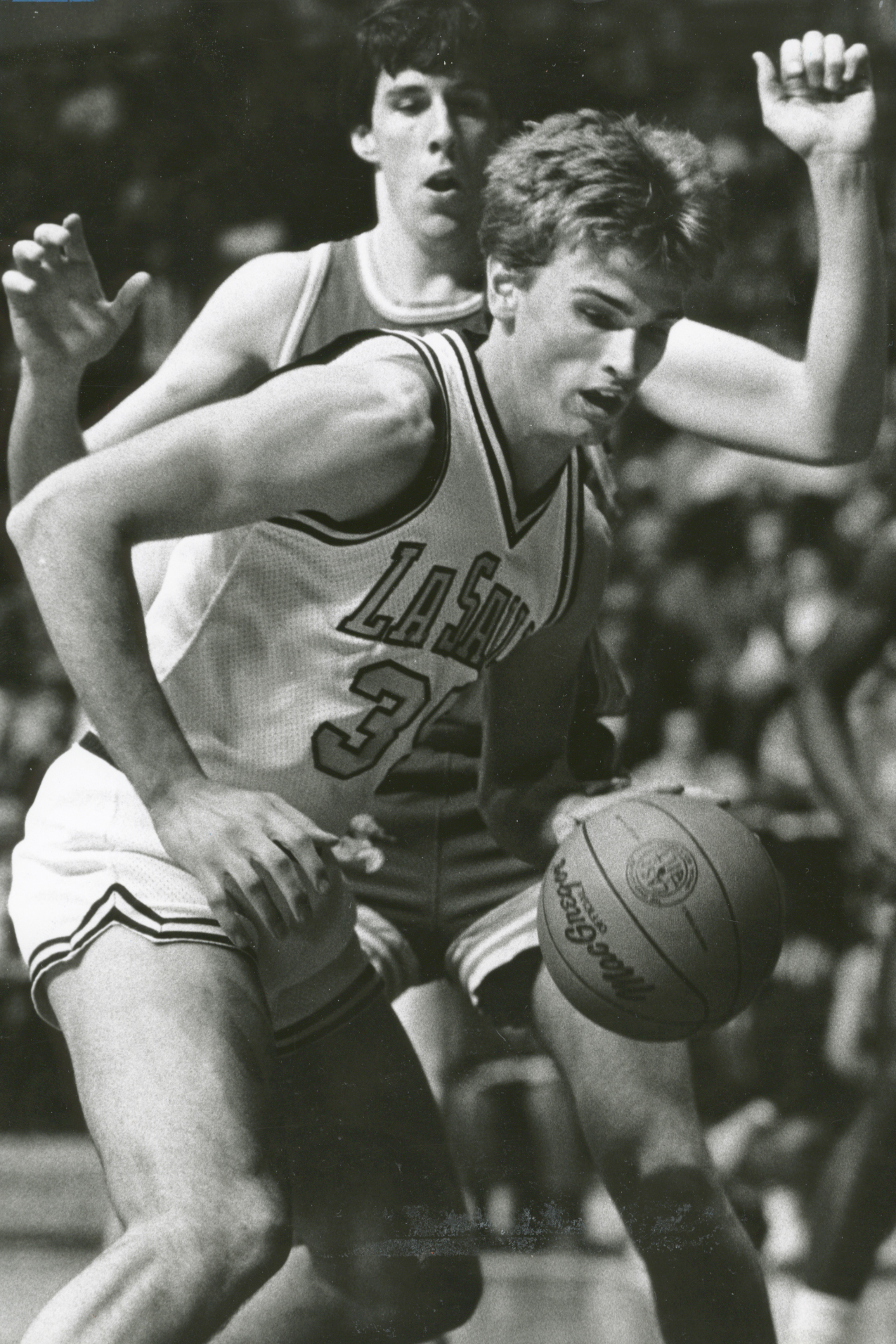
    Tim Legler, who led La Salle to the 1988 NCAA Tournament, said the Big 5 was once a “transformative” environment to play in.

    For their part, the panelists at La Salle mustered some nostalgia but weren’t optimistic. Legler, who grew up in Richmond, Va., remembered attending a Palestra doubleheader on a recruiting trip and marveling at the atmosphere: the streamers, the cheering, the chanting.

    “I turned to my parents and said, ‘This is the environment I want to play college basketball in,’” he said. “It was literally that transformative.”

    Still, he had no solution for salvaging the Big 5, and neither did Raftery, who suggested that smaller programs throughout the NCAA would soon be casualties of this new era of college basketball.

    “They’re trying to freeze [out] a lot of programs and leagues,” he said, “and I can envision maybe two or three conferences. They’ll run the whole thing, and the networks will pay for it. That’s the way it is.”

    It’s convenient to point to the sport’s lurch into modernity — into the era of Name, Image, and Likeness; of pay-for-play; of the permeable membrane of the transfer portal — as the cause of the decline. And it’s true: With the exception of Villanova, which is ensconced in the Big East and supported by engaged donors with deep pockets, college hoops’ evolution has made everything more difficult for the other, more vulnerable programs in the city. But this train has been rumbling down the tracks for a while, and its arrival should compel a reevaluation of the Big 5’s history, of the decisions and unstoppable forces that led it here, to the brink.

    To those Baby Boomers and GenXers weaned on the Big 5’s traditions, it’s surely incomprehensible and saddening to hear Raftery contemplate a world without it. But if the institution as Philadelphia knew it is fading away — and it appears to be, if it hasn’t already — the proper question isn’t Can it be saved? That one has been asked and is on its way to being answered.

    No, the better questions to chew on are these: How did the Big 5 survive, and at times thrive, as long as it did? And did any of the attempts over the years to preserve it and its identity actually contribute to its downfall?
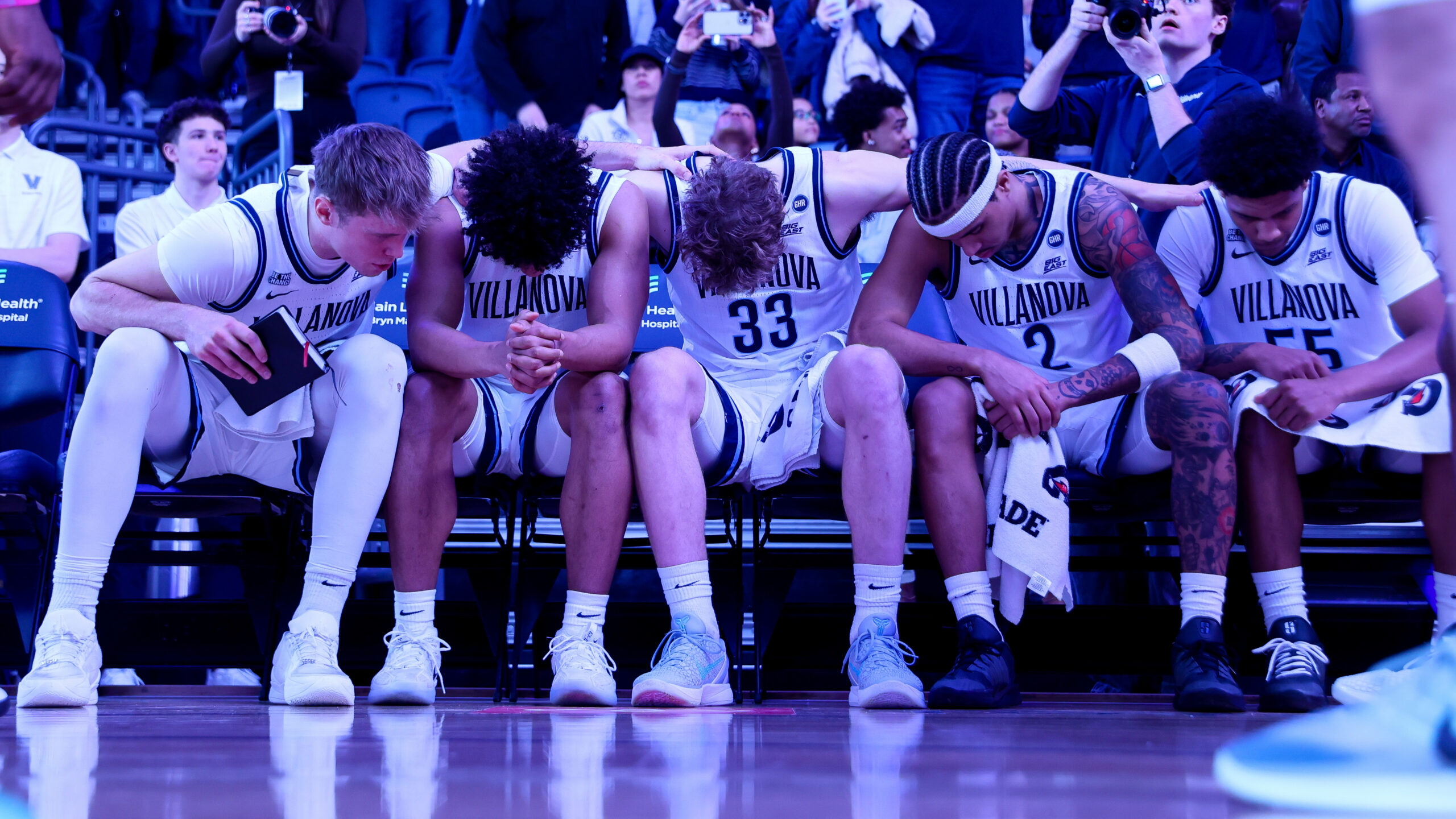
    Villanova has become the only school in the Big 5 that enters each season with the baseline expectation that it will qualify for the NCAA Tournament.

    The seeds of rebirth and decline

    It’s tempting to picture the Big 5’s history as an unbroken string of unforgettable nights at the Palestra, great teams playing great games inside a gym packed to its uppermost corners with 9,000 people, give or take a few rascals who managed to sneak in for free. There were hundreds of such nights, to be sure. But it’s striking to put that past into a wider context and see how much certain changes and trends fostered and then jeopardized everything that made the Big 5 wonderful and unique.

    Those fond memories often gloss over a relatively fallow period for the Big 5 during the 1970s. Villanova had three consecutive losing seasons from 1972 to 1975. Temple went 16-37 over the ’74-75 and ’75-76 seasons and qualified for the NCAA Tournament once in an 11-year span from 1972 to 1983. St. Joe’s went 8-17 in ’74-75, the first of six straight seasons in which the Hawks missed the NCAAs. Penn was the exception, and La Salle held its own, but a Daily News back-page photo captured the overall listlessness perfectly: Harry “Yo-Yo” Shiffern, the lovable vagrant who was the city series’ unofficial mascot, fast asleep during a Palestra doubleheader.

    The Big 5 was in a collective funk, and it took a few pivotal developments to snap it back to prominence and position it to flourish further.
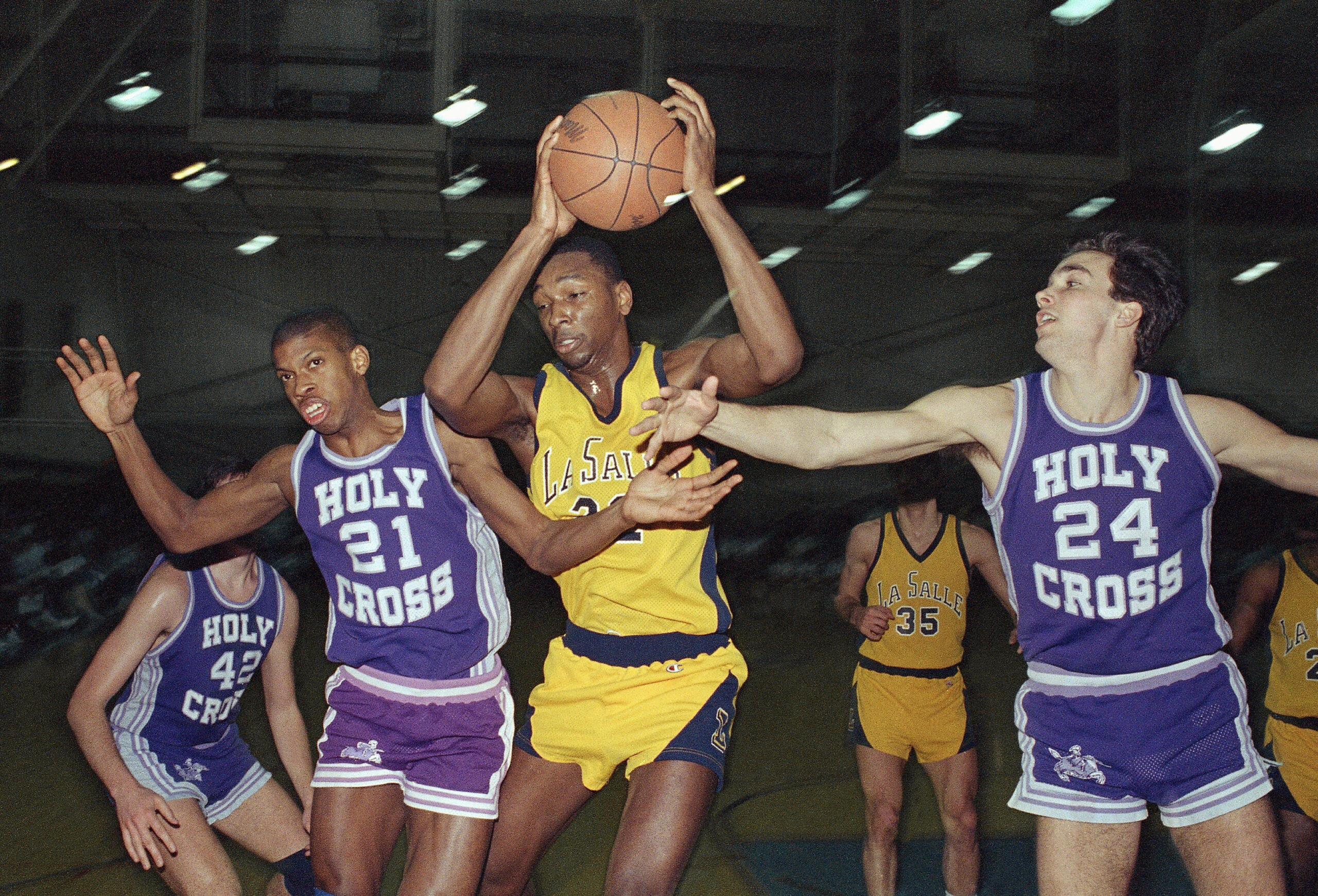
    Lionel Simmons (center) is the Big 5’s all-time leading scorer and fifth in NCAA history with 3,217 career points.

    College basketball’s landscape was flatter then. The NCAA Tournament went to 32 participants in 1975 and to 40 in 1979, and many of the qualifying programs were mid-majors. During the ’70s, each of these teams reached the Final Four: Jacksonville, St. Bonaventure, New Mexico State, Western Kentucky, Marquette, UNC Charlotte — and, in ’79, Penn. The Quakers upset North Carolina, Syracuse, and St. John’s before Magic Johnson and Michigan State pulverized them in the national semis. But their run was the most improbable of the decade, and their timing was impeccable.

    The following season, after a star turn at the Pan-American Games in Puerto Rico, La Salle’s Michael Brooks was named the Kodak National Player of the Year. As terrific as Brooks’ senior campaign was — he averaged more than 24 points and 11 rebounds, scoring 51 points in a triple-overtime loss at BYU — his candidacy for the honor was buoyed by Indiana’s Bob Knight, who had coached him at the Pan-Am Games and touted him to reporters.

    “If I were allowed to start my own team tomorrow,” Knight said in January 1980, “the first person I would pick would be Michael Brooks.”

    Such praise from the best, the most famous, and the most temperamental coach in the country carried weight, and Knight’s words elevated the reputations of both Brooks and Philadelphia basketball. That ascendance continued in March 1981, when St. Joe’s, under Jim Lynam, won the East Coast Conference tournament, knocked off top-ranked DePaul in the second round of the NCAAs, and advanced to the regional final before losing to the eventual national champs: Knight, Isiah Thomas, and the Hoosiers.
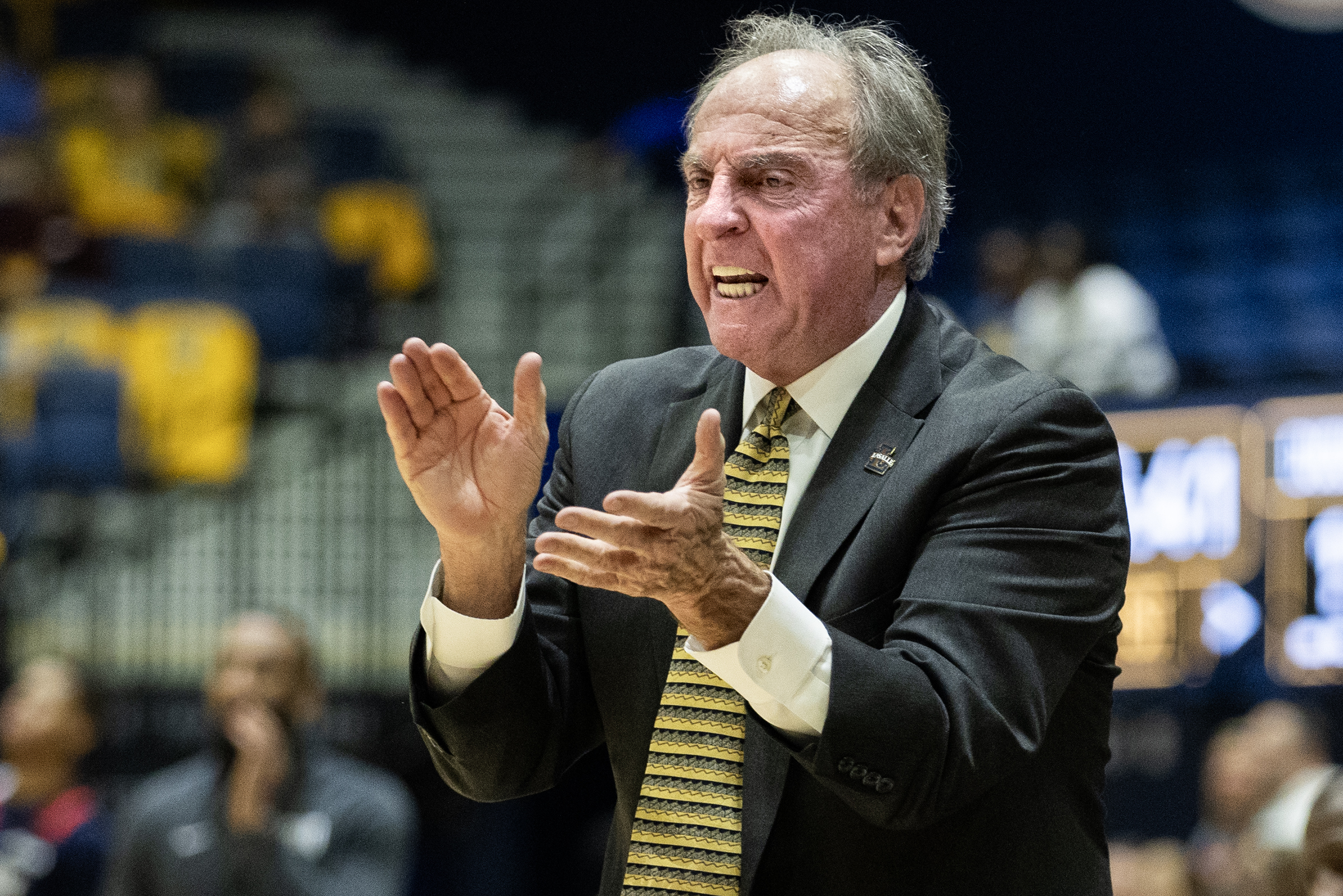
    Fran Dunphy coached more than 1,000 games as a Division I head coach.
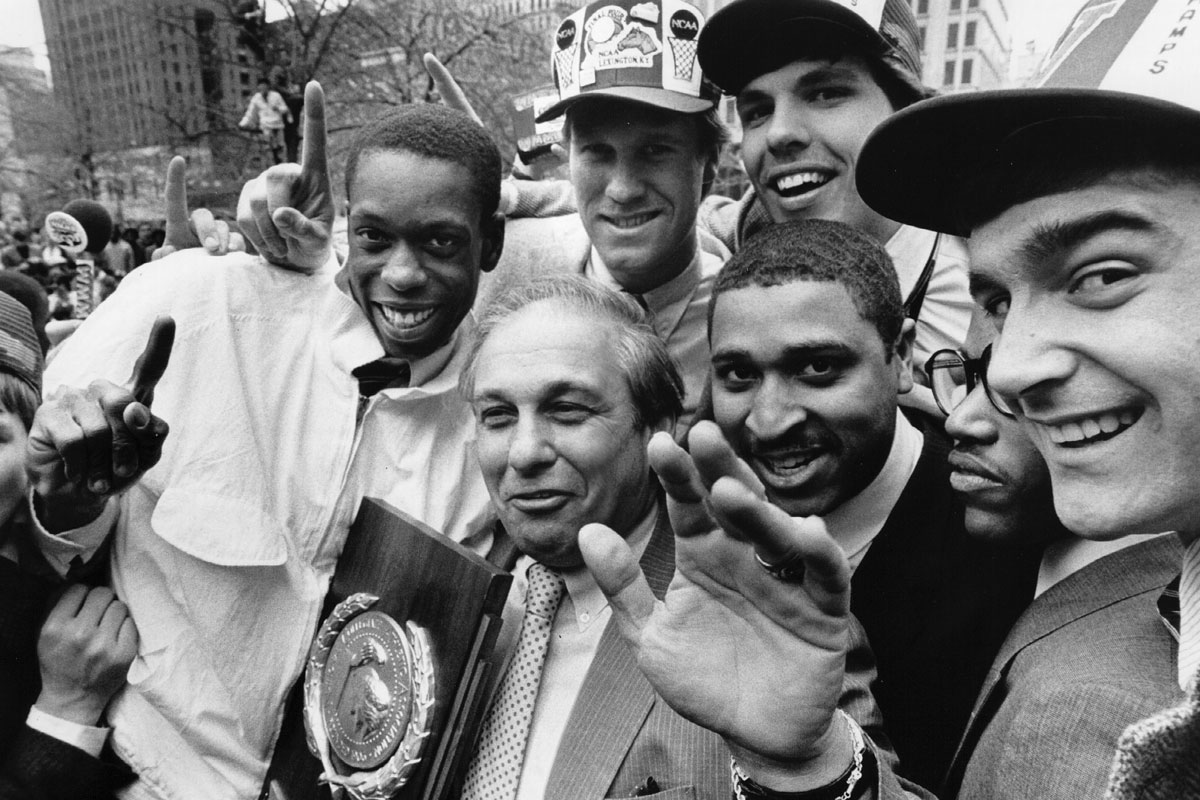
    Villanova coach Rollie Massimino gathers in Center City with players Ed Pinckney, Wyatt Maker, Chuck Everson, Dwight Wilbur, Veltra Dawson, and Brian Harrington in 1985 after winning the national title.

    So the Big 5 was on its way back, regaining relevance among casual college hoops fans and among the sport’s cognoscenti. The two most significant factors in its renaissance, though, happened off the court. In March 1980, Villanova left the Eastern Eight and jumped to the Big East. And in August 1982, Temple hired John Chaney as its head coach.

    Those moves and the rewards they wrought thrust those two programs, and in turn the entire Big 5, into a higher realm. Villanova won the national championship in 1985 — an underdog triumphant, a marvelous story enhanced by the Wildcats’ status as a program in a major conference in a sport whose vast national reach was still expanding: Magic vs. Larry Bird in ’79, North Carolina State surviving and advancing in ’83, Dick Vitale, CBS, ESPN, Big Monday, Selection Sunday, March Madness consuming a month’s worth of America’s attention.

    Chaney was this wild-eyed, lesson-teaching, justice-preaching wizard, confounding opponents with his matchup-zone defense, crafting the hardest schedule in the nation every year to battle-test his teams, leading the Owls to a No. 1 ranking in 1988 and three Elite Eight appearances in a six-year span.

    Fran Dunphy led Penn to a 69-14 record and three NCAA Tournament appearances from 1992 to 1995.

    Nestled in the Metro Atlantic Athletic Conference (MAAC) with schools of similar profiles, La Salle went to the NCAA Tournament four times and the NIT twice in Speedy Morris’s first six years as head coach and had another national player of the year: Lionel Simmons. From 1992 to 1995, Penn dominated the Ivy League under Fran Dunphy: a 69-14 record, three NCAA Tournament appearances and a first-round victory over Nebraska, Jerome Allen and Matt Maloney forming one of the best backcourts in the country. St. Joe’s went 26-7 and advanced to the Sweet 16 in 1996-97, the season that introduced that notorious wallflower Phil Martelli to the rest of the country.

    Those were high times. They wouldn’t last. In fact, by the time St. Joe’s enjoyed its remarkable 2003-04 season and Jay Wright was restoring Villanova to national-title contention, the seeds of the Big 5’s diminishment had already been planted.
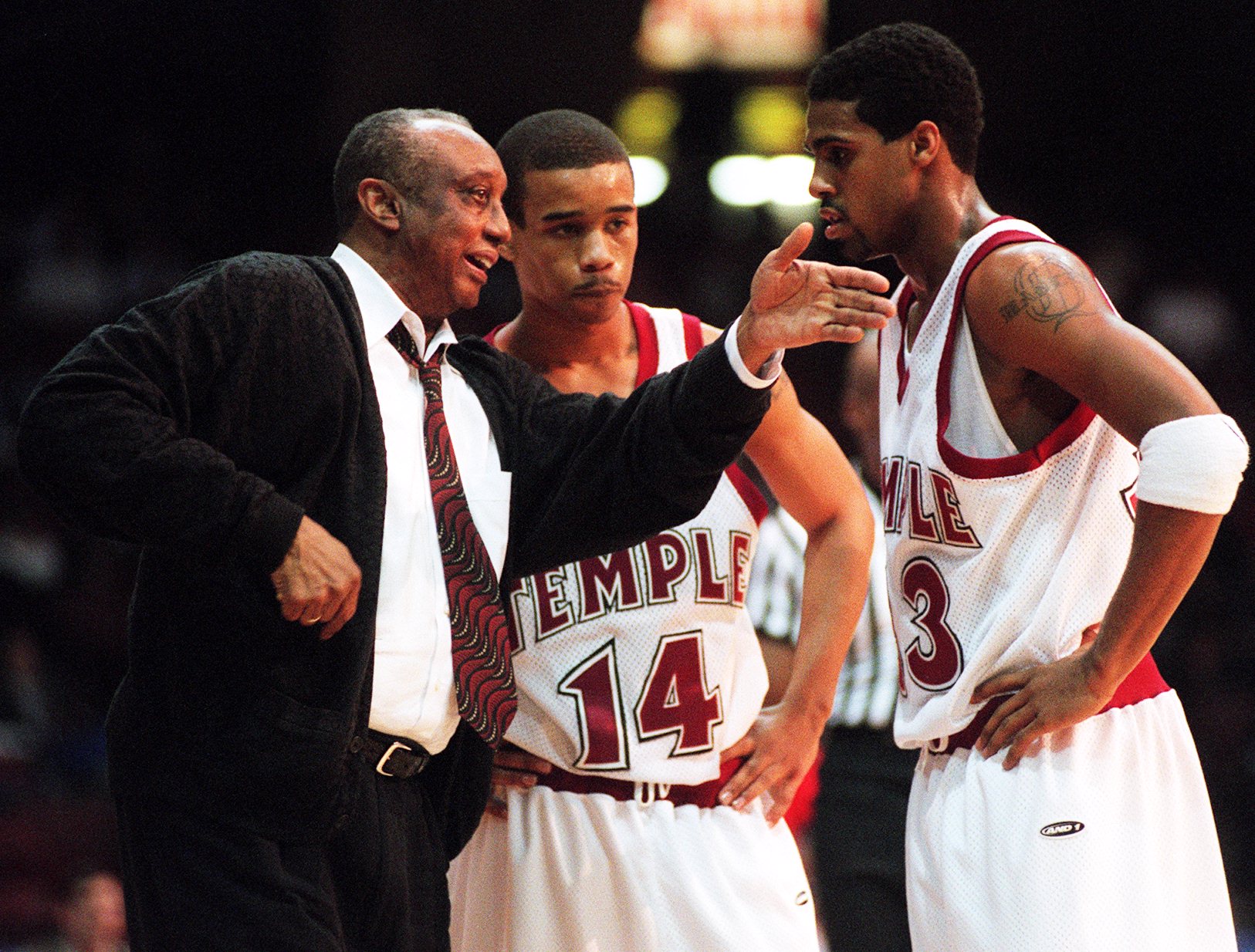
    Former Temple coach John Chaney with players Lynn Greer and Quincy Wadley.

    Hard circumstances and poor decisions

    The factors that damaged the Big 5 were legion. Some applied to just one or two programs. Some applied to all of them. Some were mistakes, bad choices. Some were unavoidable and beyond the programs’ control.

    Start with La Salle. Given an opportunity in 1990 to build an 8,000-seat on-campus basketball arena — Tom Gola offered to raise the funding for it — the university said no. Then its leadership made what is commonly considered the disastrous decision to relocate from the MAAC to the Midwestern Collegiate Conference. The program has never recovered.

    Look at Temple. Chaney, a singular presence and attraction, retired in 2006. Though Dunphy, his successor, guided the Owls to six consecutive NCAA Tournament appearances, the university’s quest for football dollars led it to leave the Atlantic 10 for the American Athletic Conference — and abandon its basketball-first identity.

    Again: individual schools, individual issues. But those problems were byproducts of college basketball’s overall reshaping during the 1980s and ’90s. In retrospect, the most infamous moment in Big 5 history — the dissolution of the round-robin, at the insistence of Villanova and coach Rollie Massimino, after the 1990-91 season — was an acknowledgment of those changes, and the attempts to preserve the Big 5 as it had always been would inevitably fail.
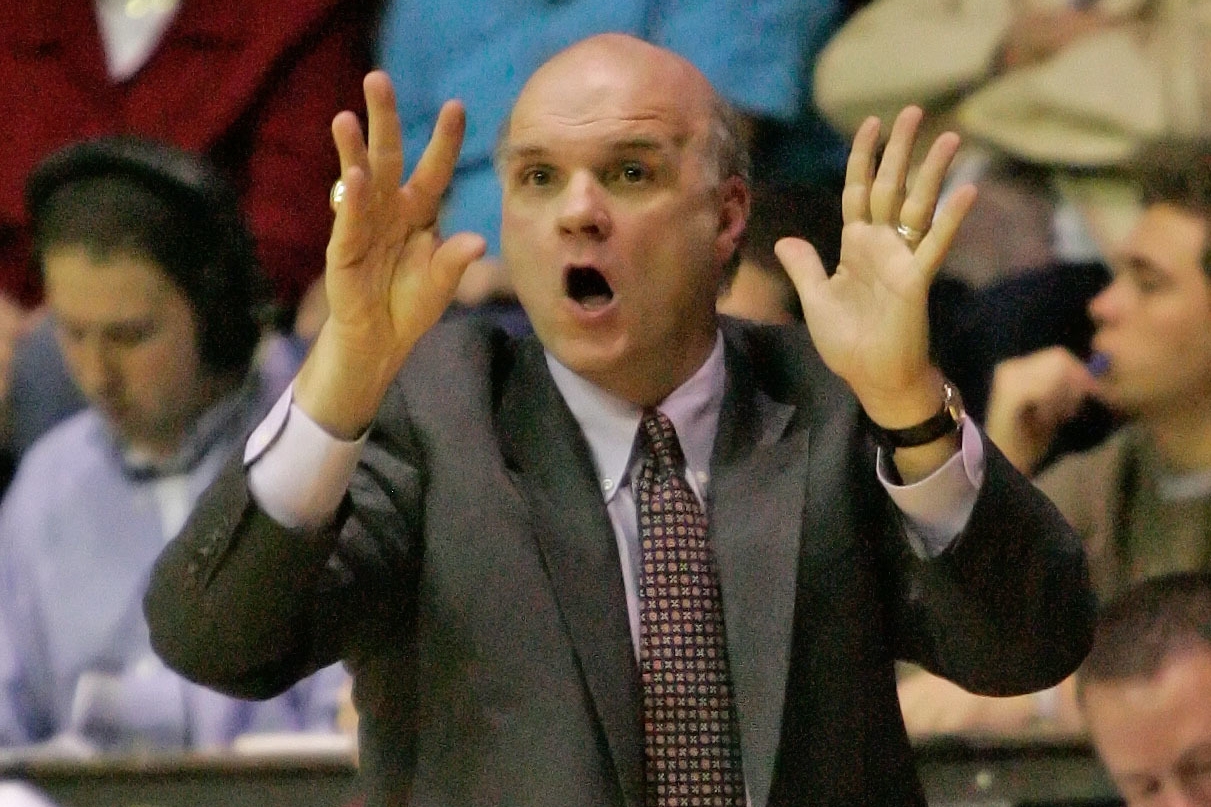
    Phil Martelli led St. Joe’s to go 26-7 and advanced to the Sweet 16 in 1996-97.
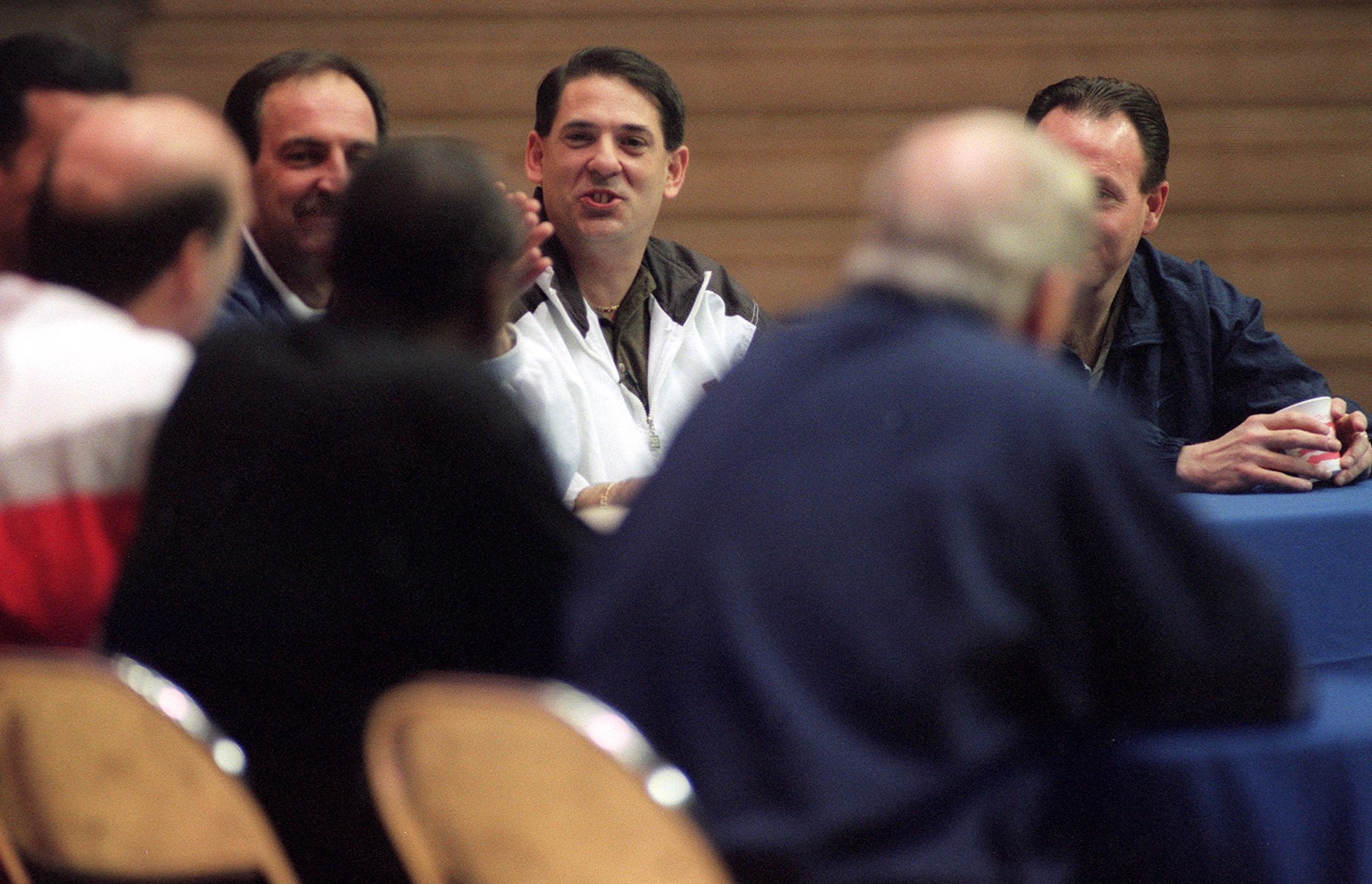
    Former Villanova coach Steve Lappas jokes with the other Big 5 coaches during a taping of the Comcast basketball show in 1997.

    When Villanova pushed to cut back on city series games and Temple pushed for more of those matchups to be played at campus sites other than the Palestra, they weren’t merely trying to make things easier for themselves. They were responding and reacting to college basketball’s new conditions for success.

    Sneaker companies had begun financing all-star camps, AAU programs, and college programs. Now coaches didn’t have to rely on local high school teams to find players, and great Philly players were no longer making their names solely in the Public League, the Philadelphia Catholic League, or the Sonny Hill League. They were traveling to play AAU. They were seeing other cities, meeting other coaches. They weren’t as likely to stay home to play college ball.

    “The most important recruiting device is recognition,” Chaney told author Bob Lyons in Palestra Pandemonium: A History of the Big Five, “and recognition comes from national TV. … They don’t know what the Big 5 is outside of this area. They knew who Villanova was when they won the national championship, so you could always attach yourself to them. But it wasn’t going to get you very far because no one knew the history and tradition of the Big 5.”

    In that way and others, the inherent parochialism of the Big 5 worked against it. For instance, Dave Gavitt, the founding commissioner of the Big East, struck a deal in 1980 with ESPN, then a fledgling sports network hungry for programming, for the exclusive rights to televise the conference’s games. That arrangement made it difficult, if not impossible, for Villanova and any other Big East school to be involved in a 7 p.m./9 p.m. Palestra doubleheader and for a national television audience to watch that doubleheader.

    “We needed the game between Villanova and Georgetown at 8 p.m. to go on our network,” Gavitt told Lyons. “We couldn’t clear games at 7 p.m. because of the game shows that all the local stations carried.”
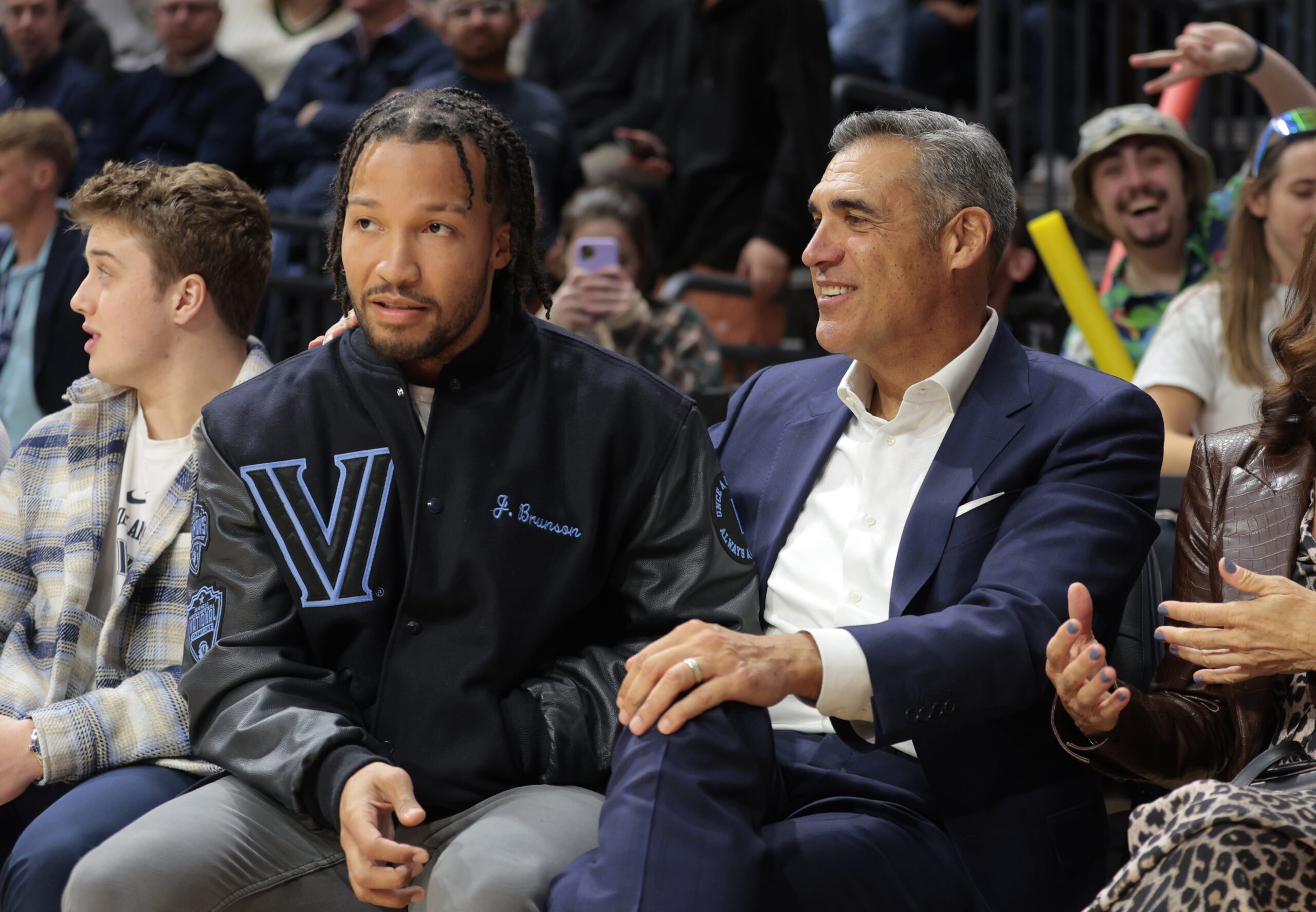
    Jalen Brunson and former Villanova coach Jay Wright at the Finneran Pavilion on Feb. 8, 2023.

    As it was, the Big 5 had a TV deal of its own, with the Philly-based premium cable channel PRISM, starting in 1978. Yet the PRISM commitment actually limited the exposure of some of the Big 5’s schools.

    During the 1989-90 season, as one example, the Atlantic 10 wanted to place a Temple-La Salle game on ESPN so that it would be telecast nationally. “ESPN,” Lyons wrote, “subsequently refused to carry it, however, because it did not want to black it out in PRISM’s trading area.”

    So hoops fans in the Delaware Valley could watch the game at home, but no one else could. At a time when college basketball was becoming more accessible, the Big 5 was cutting itself off from everyone who wasn’t already familiar with it.

    That history might seem ancient. It’s not. Wright’s tenure and the economics of the sport have placed Villanova on a separate tier from the other programs. And now that he, Chaney, Dunphy, Martelli, and Morris — the local legends who were the backbone of the Big 5 — aren’t coaching anymore, the remaining infrastructure hasn’t been strong enough to restore the teams to excellence and maintain the intensity of the rivalries.

    It’s a shame, but it was only a matter of time. Yes, the Big 5 was a Philly thing. Yes, it was a national thing. Yes, it was a glorious thing. And now it’s gone, and all the wistfulness and wishful thinking in the world won’t change the hard and inescapable truth: That glory isn’t coming back.

  • McCormick, Fetterman: Here’s why we’re behind a bipartisan plan to help first-time home buyers

    McCormick, Fetterman: Here’s why we’re behind a bipartisan plan to help first-time home buyers

    When we were teenagers growing up in rural Pennsylvania, Americans typically bought their first home at the age of 29. Now, first-time home buyers tend to be in their 40s.

    As U.S. senators from different parties, we don’t agree on everything. But as friends, parents of nine children between us, and representatives of working families across Pennsylvania, we cannot accept this terrible trend.

    The American dream — the promise that if you work hard and play by the rules, you can build a good life and financial security in a home that you own — must not fall out of reach of young Pennsylvanians.

    That’s why we support the ROAD to Housing Act. This bipartisan bill, which the U.S. Senate is expected to vote on this week, will help address Pennsylvania’s housing crisis by making it easier to build more homes, more affordably, while also preserving and repairing the housing stock we already have.

    The commonwealth has 100,000 fewer homes than it needs today and is on track to be short 185,000 by 2035.

    As a result of this shortage, home prices have increased 75% in the last five years. More than one million Pennsylvania households spend over 30% of their income on housing, and more than half of our housing stock is over 50 years old, driving up repair costs and straining family budgets.

    Sens. John Fetterman (D., Pa.) (left) and Dave McCormick (R., Pa.) greet before participating in a debate in Boston moderated by Fox News in June.

    That combination — too few and too many aging homes — creates a squeeze felt from Erie to Philly: young families delaying having kids, seniors stuck in homes they can’t afford to fix, workers turning down jobs because they can’t find a place to live nearby.

    The shortage will get even more acute as new investments in Pennsylvania’s energy and artificial intelligence, defense, and life-science industries generate great new jobs across the commonwealth.

    We have celebrated these transformative investments, from U.S. Steel to the Philly Shipyard, but more jobs mean more workers, and workers need homes.

    The ROAD Act delivers by taking three commonsense approaches. First, it tackles affordability at the source — supply — by reducing delays and lowering construction costs.

    Second, it strengthens accountability and modernizes federal programs to ensure they work for the people they’re meant to serve.

    Third, it empowers Pennsylvanians to build what fits local needs.

    We’re proud that the bill includes provisions to protect Pennsylvania workers, veterans, and homeowners, which we championed together. Our Whole-Home Repairs legislation, for example, supports homeowners, especially in markets like ours with many historic residences, by offering grants and forgivable loans for repairs and upgrades of aging homes, keeping families in their homes and stabilizing neighborhoods.

    This isn’t a Republican problem or a Democratic problem. It’s an American one, and it demands bipartisan action.

    For these reasons, we stand united, as we have on many other issues, in voting yes for the ROAD to Housing Act.

    Dave McCormick and John Fetterman represent Pennsylvania in the U.S. Senate.

  • Letters to the Editor | March 5, 2026

    Letters to the Editor | March 5, 2026

    A study in contradictions

    You can’t have it both ways. In June: I completely obliterated Iran’s nuclear capabilities. Last week: We need to go to war with Iran because its nuclear capabilities are a threat to us. Not to mention an alternative reason — an Epstein diversion that has already taken the lives of U.S. troops and the deaths of innocent Iranian citizens, schoolgirls among them.

    Carol Otis, Drexel Hill

    Addressing healthcare disparities

    As a physician with more than 50 years of experience, I read with great interest a recent op-ed noting that doctors are paid less by insurance companies for treating Black and Latino patients than white ones.

    Inequality in healthcare delivery affects many American households, either directly or indirectly. But the causes described by the authors of the op-ed are multifactorial in origin and may not be the result of discrimination. Most doctors do not reject patients based on their insurance plans, but rather see anyone who’s scheduled.

    One way to address the disparity cited by the authors might be by increasing the use of physician associates. I estimate that a third of the patients I saw over the course of my career could have been treated by a well-trained clinician without a medical degree. They are often called “physician extenders,” and they have considerable training — and often direct care experience — before being licensed to practice in a state. They work in conjunction with a medical professional for backup and oversight to protect the people we serve.

    There are many benefits to using physician associates: They allow patients into the system of providers that would not occur because of overwhelmed schedules, they are able to operate without the prolonged and costly medical training and education that doctors endure, and they are reimbursed at a lower level consistent with the lesser illness risk that patients have during visits.

    When the Affordable Care Act was passed in 2010, millions were allowed access to our healthcare system, which overwhelmed existing medical providers. Funding for physician extenders was part of that bill. It was a start, but not nearly enough. We must increase funds for physician associates to address our nation’s growing need for more healthcare providers.

    Donald Petroski, Medford

    Where’s the money?

    Superintendent Tony B. Watlington Sr. is trying to come up with new money and new ways to create a positive and powerful way to teach our students. He seems to plan on closing, moving, and combining schools. I wish him luck — and he is going to need it to make this plan work. The parents rightly ask, “Where is the money?” My long and winding journey with the Philadelphia School District began with me in kindergarten in 1951 and ended when I retired from teaching first grade in 2003. After all those years with the district, I think I can answer the question from those who ask, “Where is the money?” There isn’t any money. There never was any money, and there probably will not be any money. Why? Ask the legislature in Harrisburg.

    Sheryl Kalick, Philadelphia

    Join the conversation: Send letters to letters@inquirer.com. Limit length to 150 words and include home address and day and evening phone number. Letters run in The Inquirer six days a week on the editorial pages and online.

  • Beware the similarities between the wars in Iraq and Trump’s Iran war

    Beware the similarities between the wars in Iraq and Trump’s Iran war

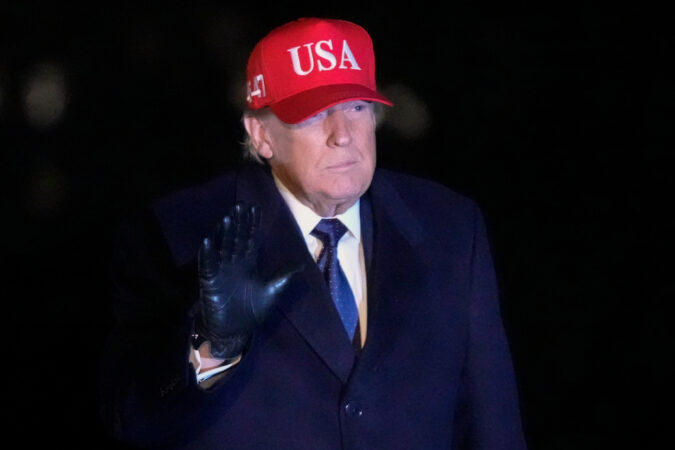
    President Donald Trump and his administration insist their war of choice in Iran bears zero similarity to the bitter Iraq War the U.S. plunged into 23 years ago.

    I disagree.

    Both wars were based on lies about imminent threats from nuclear weapons to justify wars of choice.

    In 2003, the intelligence on Saddam Hussein’s nuclear program was cherry-picked and false. In 2026, Trump told Americans in June that Iran’s nuclear program had been “obliterated” by U.S. and Israeli airstrikes. There is no evidence Tehran will be able to reconstitute the program in the foreseeable, or even the long term — so there was no “imminent threat” from Iran.

    Today, as in 2003, the U.S. president has trouble clarifying the strategic goals of this war, or any plans for “the day after” the war stops. Trump’s aides say the aim is to destroy Iran’s military capacity with airstrikes, without sending in ground troops or conducting “regime change.”

    Yet, POTUS is nurturing fantasies of regime change on the cheap. One day, he urges Iranian civilians to rise up and overthrow the regime, although they are likely to get slaughtered. The next, he demands the right to personally choose Iran’s next leader.

    Such self-delusion propelled Americans to disaster in Iraq. As Trump directs policy solo, based on whim and ill-informed whispers from Jared Kushner and Steve Witkoff, it’s hard to see a happy ending in Iran.

    Few Iranians will mourn the demise of the cruel and murderous Ayatollah Ali Khamenei or his cohorts, and a large segment of Iranians wants the corrupt religious regime gone. But Trump’s treacly protestations of sympathy with brave Iranian civilian protesters ring hollow.

    All signs point to his willingness to abandon them if he needs a quick exit from his war as the U.S. supply of missile and drone interceptors runs short in the next few weeks.

    This potential betrayal of Iranian hopes hits my gut hard because I watched similar scenarios play out when I covered the 1991 and 2003 wars in Iraq.

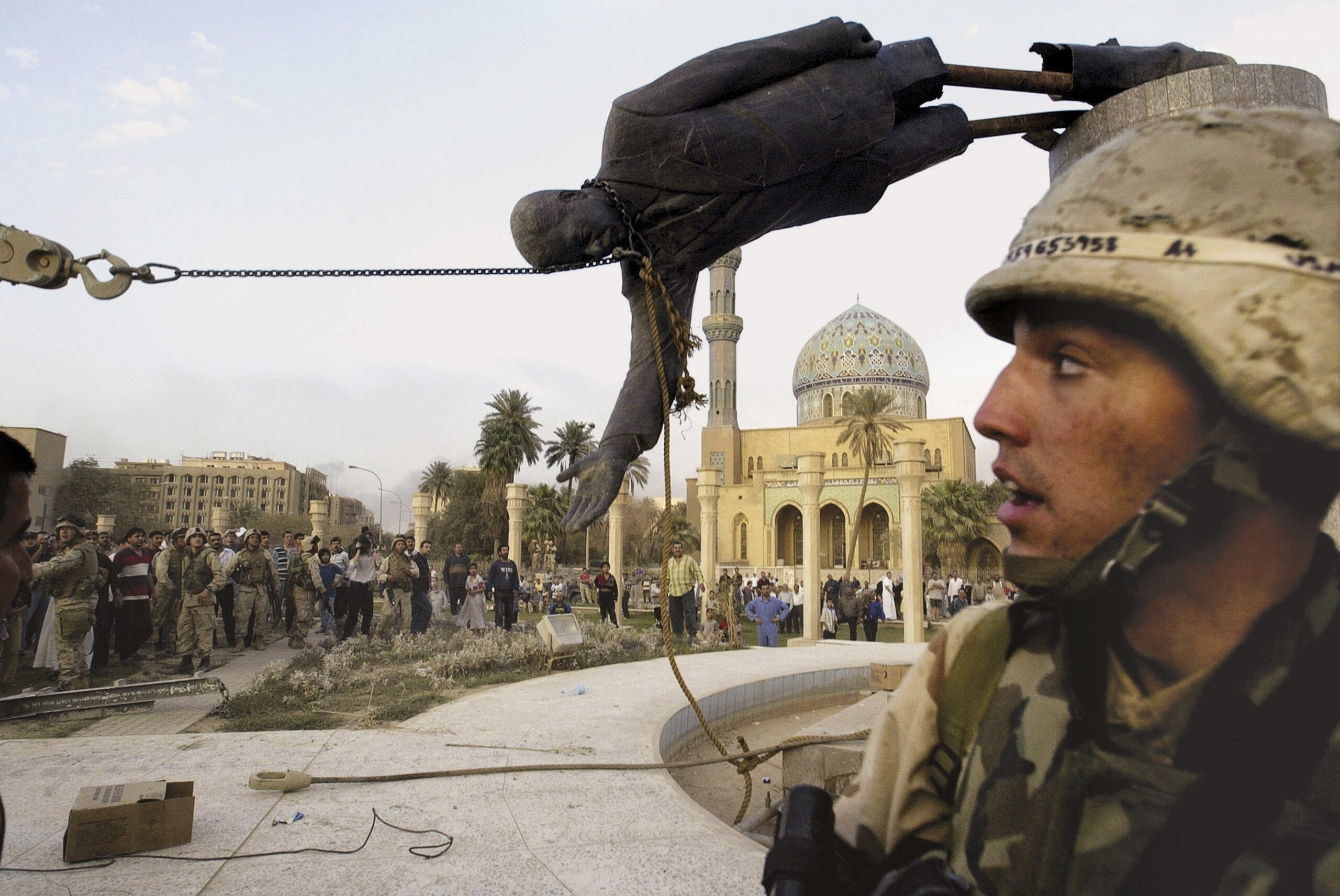
    Iraqi civilians and U.S. soldiers pull down a statue of Saddam Hussein in downtown Baghdad, April 9, 2003.

    In 1991, President George H.W. Bush called for Iraqi Kurds and Shiites to revolt against Hussein (whose mainly Sunni followers controlled Iraq). As the United States pushed into southern Iraq from liberated Kuwait, those Iraqis followed his call.

    But Bush 41 chose not to continue on to Baghdad and depose the Iraqi regime; his advisers (rightly) warned this would spark an Iraqi civil war in which the U.S. would become entangled. When U.S. forces left, Hussein’s army slaughtered around 10,000 Shiites; several hundred thousand Kurds in Iraq’s north fled into the freezing mountains in winter, until the U.S. Air Force established a no-fly zone over Iraqi Kurdistan, and they could return home.

    In February 2003, I crossed from Iran into Iraqi Kurdistan to await the invasion of Iraq by Bush 43, who claimed he had to destroy the (no-longer-existent) Iraqi nuclear program — and bring democracy to the country.

    It was hard not to get swept up in the enthusiasm of Iraqi Kurds for the regime change the Americans were finally promising.

    America’s regional allies, especially Israel, urged Bush to decapitate the Baghdad regime. White House hawks insisted “regime change” would quickly bring peace and democracy to the entire Mideast. So did exiled members of multiple Iraqi opposition groups, with whom I had been in contact since covering the 1991 Gulf War.

    Bush 43 disbanded Iraq’s military and fired much of its government. But the White House had no grasp of the complex ethnic and religious politics of Iraq, which engulfed U.S. forces and ignited an internal Iraqi civil war between Shiite and Sunni Muslims. U.S. troops were caught in the middle, as Bush 41 had feared.

    President George W. Bush speaks aboard the aircraft carrier USS Abraham Lincoln off the California coast on May 1, 2003.

    Fast-forward to Trump. He says he won’t put U.S. boots on the ground but also says he’s not ruling them out “if they were necessary.” (“I don’t have the yips with respect to boots on the ground,” he said Monday. Figure that one out.)

    However, the president has made clear, for now, that he won’t send U.S. troops to help unarmed Iranians retake their country, even as he keeps urging them to overthrow their leaders.

    That may prevent the 2003-style quagmire Bush 43 blundered into. Yet, POTUS appears even blinder than Bush in Iraq about his ability to bend Iran’s future to his will.

    Even though Iran’s 86-year-old supreme leader, Ayatollah Khamenei, was killed by an Israeli airstrike, along with dozens of other Iranian leaders, that’s not likely to end the regime.

    The president has shown little interest — and advanced no concrete plans — for the future of Iran after the U.S. and Israel stop bombing. Trump has upturned the famous doctrine that the late Secretary of State Colin Powell applied to 2003 Iraq, namely, “If you break it, you own it.” The Trump Doctrine posits: “We break it, you own it. Goodbye and good luck.”

    POTUS has stressed it is up to Iran’s people to rise and take over their country, even though civilians are bereft of leaders, organization, guns, or even internet connections (and Reza Pahlavi, the exiled son of the last shah, who hasn’t set foot in Iran for decades, has no armed forces of his own).

    Squeezed by the MAGA faithful and partial to quick hits, Trump insists there will be no long-term U.S. involvement. This may avoid U.S. military casualties, but will probably leave Iran in chaos, ruled by regime holdouts who still retain the guns.

    Indeed, the strongest remaining military force in Iran is the hard-line Islamic Revolutionary Guard Corps (IRGC), which is deeply rooted throughout the country. Behind them are hundreds of thousands of Basij militiamen, who have already killed thousands of unarmed regime opponents.

    Iran’s Revolutionary Guard members stand in front of a Shahab-3 missile, which is displayed during the annual pro-Palestinian Al-Quds, or Jerusalem, Day rally in Tehran, Iran, April 29, 2022.

    Perhaps Trump has devised a magical formula to profit from any such bleak denouement for the Iranian people: Iran will become Venezuela.

    Trump has told journalists he wants to model his Iran venture on the U.S. intervention in Caracas, where the top leader, Nicolás Maduro, was kidnapped, and U.S. officials then made a deal with his vice president. Trump eliminated a dictator he disliked, but left in place the previous regime, which, in turn, handed him control over Venezuelan oil.

    Sorry, even the most ill-informed observer can grasp that Iran bears no resemblance to Venezuela: The Islamic regime retains deep roots, many hard-line generals, hundreds of thousands of ideological purists, and many religious followers; it isn’t a one-man show.

    Yet, POTUS insisted again Thursday that “what we did in Venezuela is the perfect scenario.” In an Axios interview, he said that he, personally, had “to be involved in the appointment [of Khamenei’s replacement] like with Delcy [Rodríguez] in Venezuela.”

    In a godlike pronouncement, Trump expects Iran’s hard-line Shiite religious clerics to pick a new supreme leader who pleases him. Or what? He’ll send them to heaven as martyrs?

    The president has already noted that “most people” he had considered for Iran’s top job “are dead” from the recent U.S.- Israel bombing. He speculated that Iran’s future leader could be “as bad” as the last.

    More likely, Trump will try to cook a deal with a senior Iranian official, perhaps an IRGC general, to eliminate the remnants of Iran’s nuclear weapons program and its missile production. Perhaps he dreams of U.S. control of Iranian oil revenue as arranged with Venezuela’s new leader. Perhaps visions of “great U.S. deals” for Iranian oil dance like dollar signs in his head.

    However, hard-line IRGC generals are more likely to fight to the end to hold power at home, even as Iran’s proxy militias in surrounding Arab countries are crushed. IRGC generals who were willing to gun down tens of thousands of Iranian civilians during recent Iranian protests would surely do so again to survive.

    I worry that Trump’s continued call for a civilian uprising holds out the prospect that Iranian civilians will once again be mowed down — even as the president declares victory and sends the U.S. fleet home when his MAGA followers grow antsy. Israel may continue bombing, but that won’t help Iranian protesters topple the regime.

    In a further sign of how the administration may use and abuse Iranians, news reports claim the CIA is arming Iranian Kurds to spark a wider uprising. This is cynicism to the max! Encouraging Iran’s ethnic minorities — Kurds, Azeris, Baluch, and Sunni Arabs — to fight will foment internal civil wars without changing the central regime or delivering a better one. Only a unified Iranian opposition can ultimately achieve that.

    For POTUS, the Iran war is an exhibition of Trumpian power designed to bolster his strongman image, as the GOP faces dicey midterms and the Jeffrey Epstein hangover at home. For Iran’s people, Trump’s reality show is a life-threatening matter. His “we break it, you fix it” doctrine could consign many of them to death as he celebrates U.S. bomb strikes back home.

  • Letters to the Editor | March 4, 2026

    Letters to the Editor | March 4, 2026

    Separation of powers

    Doesn’t our Constitution state that the power of declaring or starting a war is in the hands of the legislative branch of our government? How can an attack ordered by only the president be allowed to bring our nation into a war against Iran? Congress is the only branch of government with the power to send our troops to war. And the act of bombing another country is essentially a declaration of war. Please, Congress, do your job — the president does not have the legal authority to do this. Stand up for yourselves — and stand up for all of us.

    Mary A. McKenna, Philadelphia

    . . .

    As diplomacy gave way to war, as U.S. and Israeli forces attacked Iran, how much concern was given to those on military bases in the region? With the current administration saying it wants to avoid “boots on the ground,” what does it classify the roughly 40,000 to 50,000 service members currently stationed across at least 19 sites in the Middle East? Due to impulsive decision-making (the Trump administration never made its case before Congress or the American people before entering the conflict), these forces are currently operating amid heightened tensions and threats, putting their lives at risk from Iranian-aligned forces. Service members, along with innocent civilians, have been placed in the middle of an unwise war; a war without a strategy, a war with deadly consequences.

    On Saturday morning, I ran across a post on social media from Kathy Fulmer of Saylorsburg, Pa. It read: “I just received a message from my son who is deployed over there. Currently he’s OK, this is not what I wanted to wake up to. For all the other parents with children over there, my heart is with you! May our children all come home safe and uninjured.”

    Peter Tobia, Philadelphia

    The writer is a former photojournalist at The Inquirer.

    . . .

    In 2003, George W. Bush — with the approval of Congress — took us to war based on faulty (some would say contrived) intelligence. The information that Iraq had weapons of mass destruction, which was the state’s reason for our attack, was eventually proven to be false. Colin Powell, who was then secretary of state, later apologized for making the case for war using bad information.

    Donald Trump is repeating that scenario, but for different reasons. As the Jeffrey Epstein noose tightens around his neck, he is in desperate need of a big distraction. What could be more distracting than a war? Add that to his desire to “declare an emergency” so he can take over elections. Does he think we are blind? His statement that he wants to free Iran from an evil dictator is hypocritical, as he strives to be a dictator himself. Trump has betrayed the American people and, most of all, his supporters. His promises to reduce the cost of living and stay out of foreign wars are outright lies. He is not putting the needs of Americans first because he does not care about the American people or the Iranian people. He cares about himself, his family, and his billionaire friends who will profit from a war.

    It’s long past time for Congress to do the right thing and remove him from office before he causes any further damage to us and the rest of the world.

    Kathleen Clements, Philadelphia

    Join the conversation: Send letters to letters@inquirer.com. Limit length to 150 words and include home address and day and evening phone number. Letters run in The Inquirer six days a week on the editorial pages and online.

  • Liberals erase history, too

    Liberals erase history, too

    Suppose you’re the kind of liberal who — like me — was outraged by the Trump administration’s removal of an exhibit at the President’s House about nine people whom George Washington enslaved. It’s a whitewash of history, you might say, and an insult to democracy.

    Well, are you also denouncing the removal of the Caesar Rodney statue from a plaza in downtown Wilmington? You should.

    The statue of Rodney — a signer of the Declaration of Independence who enslaved about 200 people — was taken down by city officials during the racial reckoning of 2020. And last month, the Trump administration said it would be displayed in Washington, D.C., as part of the nation’s 250th anniversary celebrations.

    Cue the culture wars: One side says the statue symbolizes racism, and the other says it embodies patriotism.

    They’re both right. And that’s why the statue of Rodney belongs back in Delaware, surrounded by displays about his past as an enslaver. We can’t make sense of the past unless we address its complexities. And we can’t condemn the erasure of history if we’re erasing it ourselves.

    That’s what my fellow liberals have been doing since 2020, by demanding the removal of monuments to those who were enslavers. We should instead seek to add information to the memorials, so Americans receive a fuller picture of slavery and its role in our founding.

    The Trump administration doesn’t want that, of course, which is why it removed the panels about the enslaved people who labored at the President’s House Site at Independence National Historical Park. Last month, a federal district court judge ordered the panels be reinstalled. Sixteen of the 34 panels were returned to the site before a circuit court judge placed a stay on that order. The other panels will remain in storage until the courts issue a full ruling on the matter.

    Meanwhile, protesters have converged upon the President’s House to demand that we “tell the complex stories,” as one leader said. She’s right. We need to face the fact that many people who fought for American freedom also endorsed slavery.

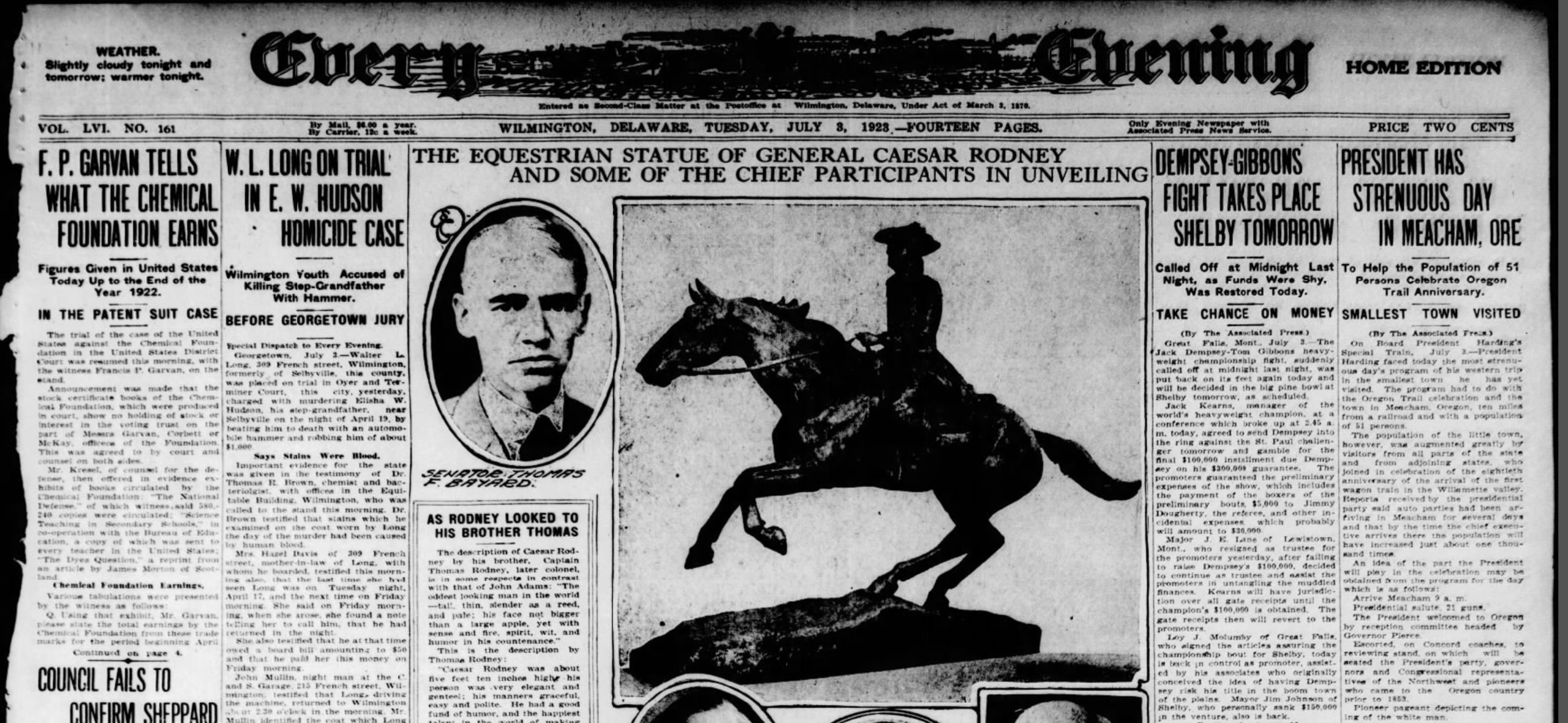
    Rodney was one of them. He raced on horseback from Dover, Del., to Philadelphia on July 2, 1776, to cast his state’s decisive vote in favor of the Declaration of Independence, which was adopted two days later. The town fathers of Wilmington erected a statue in his honor in 1923, shortly before the 150th anniversary of the declaration.

    An image of the front page of the July 3, 1923, edition of the News Journal of Wilmington, which notes the dedication of the Caesar Rodney statue on the following day.

    But Rodney also enslaved roughly 200 African Americans at his family plantation. That’s why protesters demanded his statue’s removal in 2020, when the police murder of George Floyd led many communities around the country to reconsider their connections to slavery.

    In agreeing to remove the statue, Mike Purzycki — the mayor of Wilmington at the time — pledged to conduct a discussion about it. But it’s hard to talk about something when you have hidden it. It’s out of sight, out of mind.

    And that’s where some liberals want it to remain. “You can have him, D.C.,” said Wilmington Councilwoman Shané N. Darby, reacting to the news that the statue of Rodney would be moved to Washington. “I do not think he needs to have a statue in his honor at all.”

    But giving the statue to Washington concedes way too much to President Donald Trump, who issued a proclamation in October 2020 condemning its removal from Wilmington as “part of an ongoing, radical purge of America’s founding generation.”

    The proclamation made no mention of Rodney’s past as an enslaver, because the Trump administration doesn’t want us to address that. All we need to know is that Rodney was a “patriot,” and that the people who denounced the Wilmington statue are engaged in “extreme anti-American historical revisionism,” Trump declared.

    But the real revisionists are Trump and his disciples, who want to erase slavery from public memory. And that’s precisely what will happen if the Rodney statue disappears from Delaware.

    Like the display at the President’s House, Rodney’s statue should include signage describing his complex relationship to slavery. Although he held human beings captive, Rodney introduced a bill to prohibit the importation of enslaved people into Delaware. And his will directed that the people he enslaved should be freed after he died.

    Fewer people will know that history if the statue is gone. Even at Caesar Rodney High School in Camden, Del., students and recent graduates said they weren’t aware of Rodney’s past until the controversy flared over his statue in Wilmington.

    So let’s bring it back, perhaps paired with a monument to enslaved people in Delaware. That’s what University of Delaware political scientist Theodore Davis Jr. proposed back in 2020, as the campaign to remove Rodney’s statue gained momentum. Davis, who is Black, understood that we should always be adding to history. Leave the subtracting to Trump.

    Jonathan Zimmerman teaches history and education at the University of Pennsylvania. He is the author of “Whose America?: Culture Wars in the Public Schools.”

  • Trump’s reckless war proves his Board of Peace is a farce

    Trump’s reckless war proves his Board of Peace is a farce

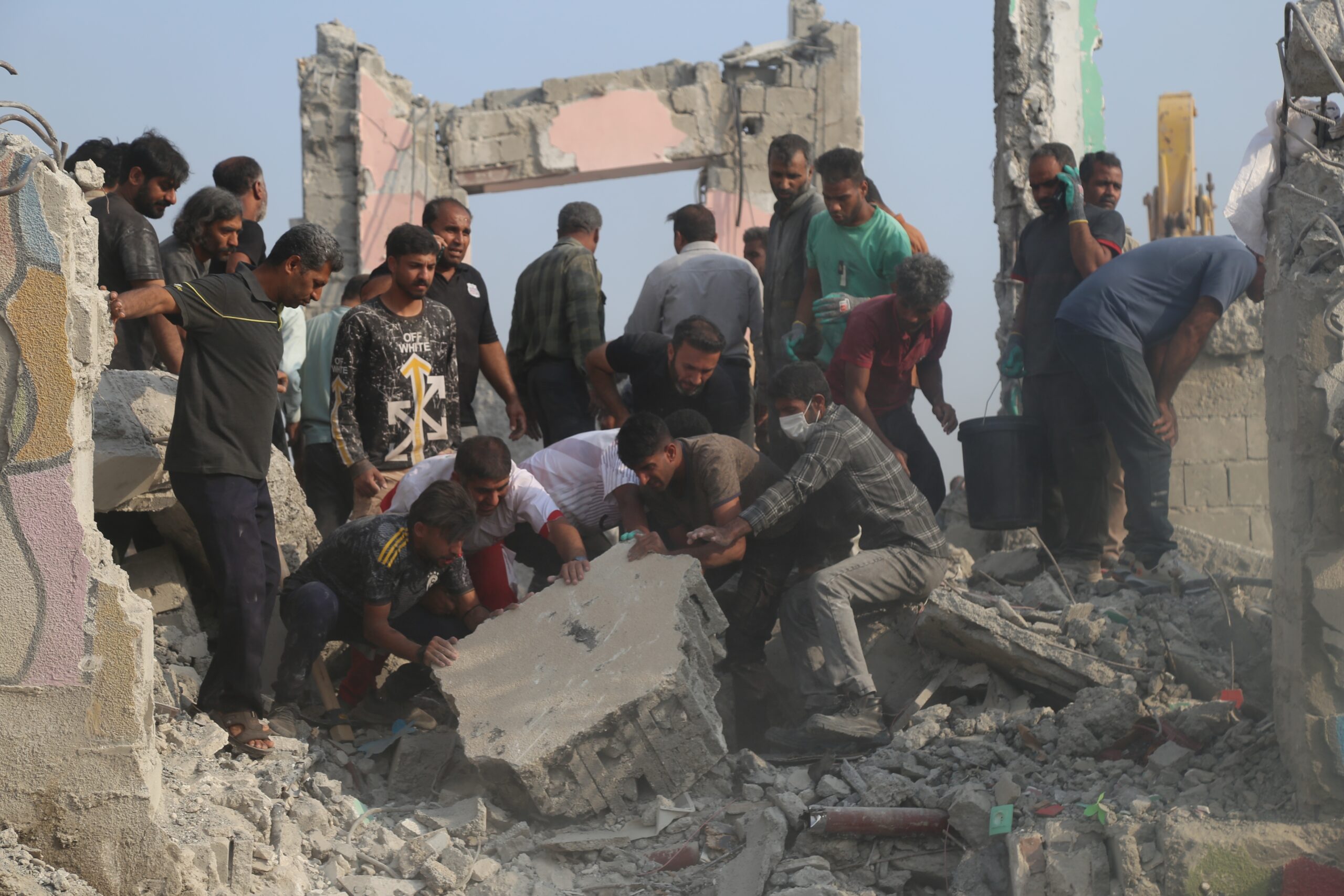
    New York Times-verified images from a scene in southern Iran are horrific. A severed arm of a child lying in the rubble. Backpacks covered in ashes. The dead in body bags. Video of rescue workers digging through the remains of what had been a modest, two-story school near a military installation in southern Iran.

    Please stop for a moment and think about the babies who died over the weekend. I call them that because that’s really what they were: elementary-age schoolchildren learning their lessons on what had started as a typical school day during their holy month of Ramadan, before turning into a nightmare.

    Regardless of what you think about the joint U.S.-Israeli strikes against Iran, these girls were innocents. Students ages 7-12, they didn’t deserve this. Even growing up under the horribly repressive thumb of the late Iranian Supreme Leader Ayatollah Ali Khamenei, they had hopes and dreams for their lives that sadly now will never be realized. Their families must be out of their minds with grief.

    It’s tempting to turn away from such a devastating tragedy, but America needs to bear witness to what has happened. President Donald Trump says the U.S. joined with Israel to bring about regime change and stop the production of nuclear weapons. Iranian security forces have reportedly killed thousands of their own people.

    It’s still unclear exactly how many schoolgirls were killed, and which nation is responsible for the strike. The Times is reporting that at least 175 people altogether perished during the attack on the school, located in the city of Minab in southern Iran.

    Rescue workers and residents search through the rubble in the aftermath of an Israeli-U.S. strike on a girls’ elementary school in Minab, Iran, Feb. 28.

    According to the Times, the school is near a naval base where the Iranian Revolutionary Guards Corps is stationed. Reportedly, it was also struck that day. Various news sources reported that a spokesperson for U.S. Central Command said military officials are “aware of reports concerning civilian harm resulting from ongoing military operations” and are “looking into them.”

    Meanwhile, the reports have sparked worldwide outrage. Nobel Peace Prize laureate and education activist Malala Yousafzai wrote on X, the social media site formerly known as Twitter, “I stand firmly against violence and the targeting of schools and civilians.” She was a child herself when she was shot while returning home from school in Pakistan in 2012.

    Imagine the blanket news coverage that would have taken place if something even remotely like this had taken place at a school on American soil. It would have made the front page of every newspaper. But because it happened in a Muslim country thousands of miles away, it’s easier to act as if it never happened.

    We can’t allow this kind of violence to be normalized.

    Former Vice President Kamala Harris spoke for many of us over the weekend when she said, “Trump has dragged us into a war that we do not want.” The former Democratic presidential candidate added, “I unequivocally oppose this war of choice, and everyone should.”

    Polls show most agree with Harris. Only one in four Americans approves of this war in the Middle East. I get it. We don’t want another drawn-out situation. We didn’t agree to this, and only Congress has the authority to authorize war.

    We don’t even know what Trump’s endgame is, but he has let us know that the U.S. can expect more military casualties. More war means more airstrikes and more civilian fatalities — possibly even devastation like what happened at the girls’ school — where, as Yousafzai said on X, “every child deserves to live and learn in peace.”

    Given the administration’s reluctance to share more about the planned scope and scale of our military engagement, there is little we can say with certainty. Except that Trump’s reckless war proves his “Board of Peace” is a farce.

  • Death to prediction markets profiting on war | Will Bunch Newsletter

    Iranian schoolgirls, U.S. troops, Israeli villagers, random Emiratis, Pakistani rioters, and maybe a couple of folks in a bar in Texas. The deadly fallout from Donald Trump’s war of choice in Iran has spread halfway around the globe and back again. With each passing hour, it feels like more of the entire world is sucked into this war. If only there were a name for something like that.

    If someone forwarded you this email, sign up for free here.

    Why are Americans allowed to place bets on death and destruction?

    An advertisement by the American company Polymarket shows Zohran Mamdani and Andrew Cuomo ahead of the New York City mayoral election on Nov. 4, 2025, in New York.

    Donald Trump’s splendid and not-so-little war that started during a Saturday rush hour in Tehran and has spread like a coronavirus to numerous other countries is entering its fourth day on Tuesday — far too early for one of journalism’s oldest clichés: the “winners and losers” piece.

    Except for these winners: a few “lucky” — if that word can even apply to such a ghoulish enterprise — gamblers who woke up Saturday morning and learned that the first deadly explosions across Iran had already made them a lot richer, regardless of who wins or loses on the battlefield.

    The initial weekend of war wasn’t even over before we learned that Polymarket, one of the two leading prediction markets that are the inevitable next downward spiral of our national sports gambling addiction, was hit by suspicious trading by six individuals who showed up to bet big on when the war would commence.

    One trader up for particular attention earned a reported $553,000 over the weekend by placing large bets on when Iran’s supreme leader, Ayatollah Ali Khamenei — killed in the war’s initial minutes, reportedly — would be deposed. The handle on that well-timed, if macabre, gambler? “magamyman.”

    My man, you aren’t even trying to hide it.

    Polymarket’s brush with possible insider trading on predictive bets over the Iran war that is now a reality came as its customers bet a stunning half a billion dollars on the long-rumored conflict.

    Many of them, presumably, are just regular schlubs desperate to get ahead in a dog-eat-dog economy. But it’s also hard not to contemplate that some may have had real advance knowledge of Pentagon war planning that loose-lipped insiders were audibly discussing in Joe’s Stone Crab just hours before the first cruise missile was fired.

    I know … it’s shocking that something in America’s death spiral of late-stage capitalism is actually a rigged game, right? Still, it’s hard to decide which is worse about this new low of predictive betting on a war that’s already killed scores of innocent schoolgirls and hospital patients, and at least six U.S. service members: the rank immorality of wagering on death and destruction, or the insider trading that corrupts this already unholy process even further?

    Over the weekend, even with the main focus on the latest missile attacks and changing Trump regime explanations for this undeclared war, there was growing outrage over the popularity of predictive betting on the news, especially when the news is deadly. Or, there’s the word the chief U.S. government official tasked with regulating Polymarket, Kalshi, or their rival firms has used to describe what’s happening.

    Exciting.”

    Michael Selig, the lawyer tapped by Trump last year to head the U.S. Commodity Futures Trading Commission (CFTC), which — controversially — regulates these prediction markets, seems less a regulator and more of a cheerleader, maybe as much as “magamyman.” As several states have pushed to regulate or ban predictive markets as akin to sports betting sites, also under its purview, Selig has worked hard to override them with a claim of federal supremacy.

    “The CFTC will no longer sit idly by while overzealous state governments undermine the agency’s exclusive jurisdiction over these markets by seeking to establish statewide prohibitions on these exciting products,” Selig wrote in a Wall Street Journal op-ed.

    It’s worth noting Selig’s moves came at the same time that six Democratic senators wrote the CFTC chair to urge him to ban gambling on outcomes that result in death or physical harm — inspired by outrage that people were betting on whether a NASA spacecraft would fail to launch, as well as predictions around the fate of the former Venezuelan strongman Nicolás Maduro, seized in January by U.S. troops. Not surprisingly, the high volume of Iran war betting has sparked fresh calls to ban predictive market betting altogether.

    “Life stops being something we live, but something we sell and trade,” Connecticut Democratic Sen. Chris Murphy posted on X, before saying he is studying legislation to ban prediction markets. “It will breed both corruption [and] emptiness.”

    Unlike sporting events, betting on political or social developments whose occurrence and timing are controlled and known by humans is incredibly prone to insider trading. In a case that seems to typify the fundamental flaw of non-sports prediction markets, and which Kalshi was forced to acknowledge in an internal investigation, an editor for the wildly popular YouTube star Jimmy Donaldson, better known as MrBeast, was caught betting $4,000 on predictions about what MrBeast would say in his next video.

    Because betting on influencer video topics is how far off the deep end we are going here. The addictive nature of online sports betting, which was once mostly banned until elite schemers realized how much money was to be made from increasingly desperate people, was always pointing American society in this warped direction.

    Zoom out and there’s a much bigger picture here: A society where the traditional pathways to prosperity are rigged for the Epstein class has created an entire ethos that seeks to match that level of wealth through unconventional not-40-hour-workweek paths, like online influencers, or by hitting the big one, whether that’s through buying a meme stock, betting on college basketball, loading up on the right crypto, or — now — gambling on stuff like when Israel is going to bomb women and children in Gaza.

    It seems no one near the top of the American kleptocracy is immune to cashing in, including — sigh — Big Media. It was bad enough that CNN partnered with Kalshi to promote predictive odds on events like Tuesday’s Texas primary, but now the venerable Associated Press picked Monday — amid all the negative publicity about the Iran war wagers — to announce its own deal with the site.

    Meanwhile, the only safe bet would be a prediction that no one in Washington, D.C., will be able to successfully stop this in the near future. It’s not only that reckless and potentially corrupt get-rich-quick maneuvers like crypto, artificial intelligence, and now these “exciting” predictive markets are simply in the Trump regime’s toxic money-grubbing DNA.

    To seal the deal, Donald Trump Jr. joined the advisory board of Polymarket last August, and his venture capital firm, called 1789 Capital, has reportedly invested tens of millions of dollars in the firm, as well. In a remarkable coincidence, two federal investigations into predictive markets that began during the Joe Biden presidency were shut down around the same time.

    Today’s dollars stained with blood from the Middle East are the, dare I say it, predictable result. Why merely wage war when you can also wager on it? Our leaders, whether in D.C. or our 50 statehouses, can’t shut down Polymarket, Kalshi, and all their imitators fast enough.

    Yo, do this!

    • Escaping from a global crisis is always a good time to get back to the basics, and for boomers of a certain age, nothing is more fundamental than the power chords and pounding drums of Led Zeppelin. Listening to and thoroughly enjoying Andrew Hickey’s A History of Rock Music in 500 Songstwo-part episode on how the most classic of all classic rock bands came together at the end of the 1960s made me discover that there’s also an acclaimed 2025 documentary, Becoming Led Zeppelin, streaming on Netflix. Let’s watch it together.
    • The rising thermometer this week should serve as your reminder that the arrival of March means it’s also time for some baseball that actually counts. The World Baseball Classic, the sport’s World Cup knockoff that comes every three years, starts Thursday and runs through the March 17 final in Miami — site of 2023’s thrilling conclusion in which Japan’s Shohei Ohtani struck out the USA’s (and South Jersey’s) Mike Trout. Some 10 Phillies are competing, including Bryce Harper, Kyle Schwarber, and Brad Keller — on this year’s Team USA — and Dominican Republic ace Cristopher Sánchez, so let the games begin.

    Ask me anything

    Question: So one school of thought is that they are already trying to steal the midterms; another is that they really can’t. Where are you on the spectrum from mildly worried to totally anxious about this? Especially with Pa. being rather swingy. — Penthesilea (@hansklocker.bsky.social) via Bluesky

    Answer: Yes, this is something I’ve already thought about quite a bit, and my answer — for now, anyway — is pretty much smack in the middle of the spectrum. It’s clear Donald Trump intends to use every implement in the voter suppression toolbox — extreme gerrymandering, executive orders aiming to require voter ID, or banning mail-in ballots — that would warp the voting outcomes, without going full Mussolini and canceling the election altogether. But I don’t think that can work for him — partly because any orders will almost certainly be struck down in the courts, but mainly because it looks like a Democratic landslide too large to easily suppress is building momentum. Just look at Texas, where the scheme to gerrymander five new GOP seats depended heavily on Latinos continuing to shift Republican, when polls show the exact opposite happening. Of course, in 2020-2021, few folks thought he would go so far as an attempted coup (I did). Who knows how far he’ll go to maintain power this time around?

    What you’re saying about …

    Last week’s question about how to handle the new prediction markets — anticipating the mess that occurred with the wagers on the start of the Iran war — and the surge in sports betting drew a tepid response. But it was pretty unanimous that sites like Polymarket and Kalshi should, at the bare minimum, be regulated under state gambling laws, and not as commodities trades — if not banned altogether. Wrote Mary Clare Gumbleton, who would ban Polymarket and Kalshi: “It’s just unregulated corruption and an incredibly awful incentive to both lose your shirt (as it were) and game the system where a handful of corrupt people can make a lot of money.”

    📮 This week’s question: There’s only one thing on everyone’s mind: That crazy war in the Middle East. Now that Donald Trump and Benjamin Netanyahu have started it, how on earth do we end it? Please email me your answer and put the exact phrase “Iran war end” in the subject line.

    History lesson on when the Iran thing really started

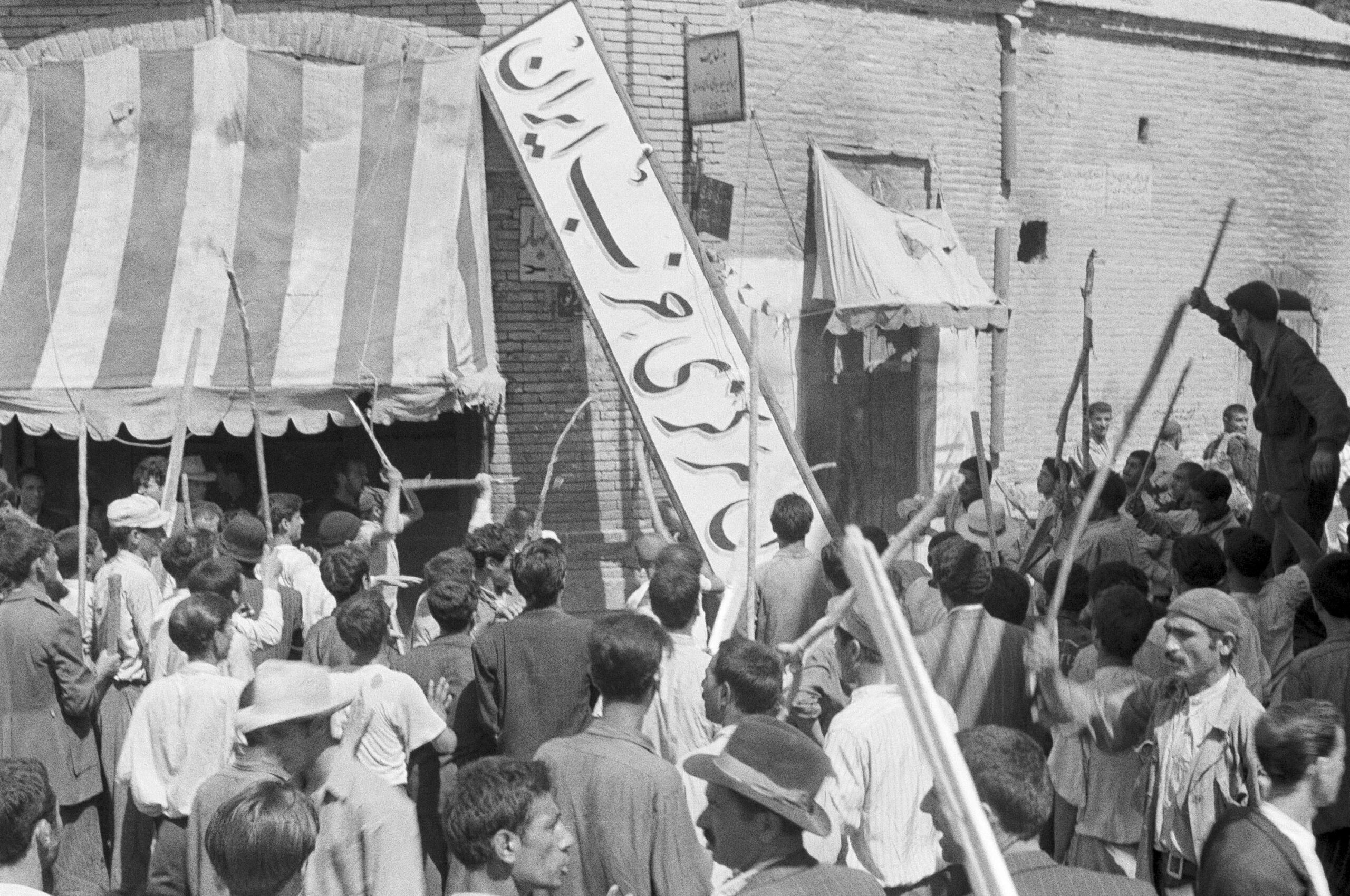
    A crowd of demonstrators tear down the Iran Party’s sign from the front of its headquarters in Tehran on Aug. 19, 1953, during the CIA-backed coup that ousted Prime Minister Mohammad Mosaddegh and his government. The operation cemented the rule of Shah Mohammad Reza Pahlavi for more than 25 years before the 1979 Islamic Revolution.

    It’s been a while since the last history lesson in this space, but the poor quality of the TV punditry about the four-day-and-counting Iran war screams out for better information. A lot of the folks advocating for this war of choice in the Middle East argue that we didn’t start the fire, that the roots go all the way back to the 1979 Iranian Revolution. That’s the year when Americans who never paid much mind to foreign affairs were shocked to see huge throngs in the streets of Tehran chanting “Death to America” and taking 52 hostages at the U.S. Embassy.

    What did we do to deserve this? Well …

    For most historians, and for many Iranians, the year that matters is not so much 1979, but 1953. In a post-World War II geopolitical environment where many nations sought to break free of imperialism, Iran in 1951 democratically elected a surprisingly left-leaning prime minister, Mohammad Mosaddegh, whose main project was to nationalize the then-British-controlled oil industry. This sparked great alarm in London, where U.K. leaders spent months lobbying Washington to join them in an effort to depose Mosaddegh in a coup that would advance Western oil interests.

    It’s a messy story. The United States wavered and even flirted with backing Mosaddegh for a time, according to histories of the period, but ultimately British leaders leaned on the Eisenhower administration and America’s ongoing anti-left “Red Scare” of that era to get the relatively new CIA and its man in Tehran — Kermit Roosevelt Jr., grandson of Teddy Roosevelt — on board with the plot. The Americans threw around money and anti-Mosaddegh propaganda, and eventually organized street protests ahead of the government’s ouster.

    To be sure, there is a never-ending debate over whether the U.S. involvement was central or just a subplot to the coup that gave power to the shah of Iran, Mohammad Reza Pahlavi, who ruled the nation with ruthless brutality for the next 26 years. Certainly, the nation’s Islamic clerics — powerful then, as now — played a key part in ousting a secular government. But the American role was so great that Barack Obama apologized in his 2009 Cairo speech, stating as fact that the CIA played a key role in the “overthrow of a democratically elected Iranian government.”

    Whether the U.S. led the coup or was a bit player, the Iranian people have never forgotten our involvement or our close ties to the eventually despised shah. “The rancor has never melted,” a 24-year-old Iranian woman told the Associated Press in 2023, on the 70th anniversary of the coup, as she compared the American meddling to being “like wishing for an earthquake to get rid of a bad neighbor.”

    So did a state of war between the United States and Iran start in 1979, as some GOP lawmakers insist, or in 1953, or on Feb. 28 of this year? In arguably the world’s most violent neighborhood, the cycles of violence often seem to have no beginning and no end. An imperial America chose to jump into the middle of this mess 73 years ago, and now getting out feels more impossible than ever.

    What I wrote on this date in 2016

    He’s all but forgotten now, but up until his mysterious death 10 years ago, the flamboyant Oklahoma natural gas mogul Aubrey McClendon had reshaped the Pennsylvania landscape as king of the commonwealth’s fracking boom. The company that McClendon (known to sports fans as an owner of the NBA’s Oklahoma City Thunder) cofounded, Chesapeake Energy, promised riches to Pennsylvania landowners, but left a trail of lawsuits and pollution. Less than 24 hours after his indictment by a federal grand jury, McClendon drove at full speed into a bridge embankment and was killed instantly. I wrote: “In Pennsylvania, Aubrey McClendon is survived by a legacy mostly of conflict, of thick lawsuits, of protesters facing off against armed marshals, of lawmakers and a governor at war over the taxes that gas drillers never had to pay, of brackish water and leaking methane adding to the greenhouse gases that may someday strangle the planet — of a promise of buried treasure that wasn’t really all it was cracked up to be.”

    Read the rest:The Greek tragedy of the billionaire who fracked up Pa.

    Recommended Inquirer reading

    • America is now at war on two fronts. In one column, I tackled the ongoing conflict in the streets of America, and looked at the tragic death on a frigid Buffalo street of the Rohingya refugee, Nurul Amin Shah Alam — a disabled and nearly blind man who was arrested by Border Patrol agents, and then dumped at a closed coffee shop five miles from his family’s home. It was a low point that spotlighted the unrelenting cruelty of a xenophobic mass deportation crusade by the Trump regime that has brought a mounting death toll. On Saturday morning, I knocked out my instant reaction to the news that the Trump regime had joined Israel in an all-out attack on Iran, which was that the war is both unconstitutional without the consent of Congress and also a clear violation of international law.
    • In moments of national and global crisis such as this, it’s easy to forget that many of the political decisions that shape people’s everyday lives occur on the local level. Here in Philadelphia, the school district’s plan to modernize its schools while closing 20 older buildings came as a shock to city parents, and The Inquirer’s coverage, anchored by our Pulitzer Prize-winning city public schools reporter, Kristen A. Graham, has been all over this story. The newsroom has explained the plan in detail, and covered the community protests and the fights over individual buildings, as well as Philly’s move away from middle schools. One advocate told me The Inquirer’s aggressive coverage of the story is why two schools have now been removed from the plan. A healthy community is one that has a vibrant news media. You nurture a better Philadelphia when you support The Inquirer by subscribing.

    By submitting your written, visual, and/or audio contributions, you agree to The Inquirer’s Terms of Use, including the grant of rights in Section 10.

  • What today’s American churches can learn from Germany’s past theologians

    What today’s American churches can learn from Germany’s past theologians

    In moments of political crisis, societies often look to their religious leaders for moral clarity.

    During the rise of Adolf Hitler, a small but courageous group of German theologians — Martin Niemöller, Karl Barth, and Dietrich Bonhoeffer — refused to let the church become an instrument of the state. They spoke out when silence meant complicity. Their resistance was not partisan. It was theological, moral, and rooted in the conviction that the dignity of human beings cannot be subordinated to political power.

    Today, as the United States wrestles with deep political division and troubling scenes at its borders, the contrast is hard to ignore. Children held in detention facilities, families separated, deaths involving immigration enforcement. These are not abstract policy debates; they are moral questions that cut to the heart of what religious traditions claim to value. And yet, despite the outcry from some theologians and advocacy groups, the nation has not seen a united response.

    Why?

    Part of the answer lies in history. The German church struggle was triggered by a direct attempt to reshape Christian doctrine. Hitler’s government sought to absorb the Protestant churches into a state‑controlled Reich Church, replacing the Gospel with nationalist ideology. For Niemöller and others, this was a line that could not be crossed. Their resistance began not with politics, but with the defense of their own faith.

    Demonstrators and clergy block vehicles outside a U.S. Immigration and Customs Enforcement office near Eighth and Cherry Streets in Center City in January.

    The American situation is different. No administration — Donald Trump’s included — has attempted to dictate theology or restructure the church. Religious institutions remain free, protected by the Constitution. Without a direct threat to ecclesial identity, many clergy do not perceive an existential crisis that demands collective resistance.

    But that explanation only goes so far. The deeper issue is fragmentation. American Christianity is not a single institution, but a sprawling landscape of denominations, traditions, and political loyalties. What one group sees as a moral emergency, another interprets as a defense of religious liberty or national sovereignty. The result is paralysis: a theologically moral confusion instead of a theologically moral chorus.

    And yet, the absence of unified condemnation does not mean the absence of moral responsibility. The images from detention centers, the stories of families torn apart, the deaths that occur in immigration enforcement — these are precisely the kinds of injustices that once stirred theologians like Niemöller to action.

    They understood that a church’s credibility depends not on its proximity to power, but on its willingness to speak when human dignity is at stake.

    The lesson from the German theologians is not that today’s political moment is identical to theirs. It isn’t. But their example does remind us that moral clarity rarely emerges from comfort. It comes from the willingness to name what is wrong, even when doing so risks alienating congregants, donors, or political allies.

    Some American clergy have taken that risk. Many have not. And in the silence, something essential is lost: The sense that faith can still serve as a compass when the nation drifts. The question now is whether religious leaders will reclaim that role. This comes about not by mimicking the past or predicting the future, but by recognizing that moral courage is timeless. The German churches, although a minority, did not wait for consensus. They spoke because the alternative was complicity.

    Today’s churches face their own decision. History will remember whether they found their voice — or whether they chose, once again, to fall silent.

    Robert Bruce Ellis earned his doctorate in 20th-century German history from Rutgers University and studied theology at Christ Church College, University of Oxford.

  • When schools close, families deserve real choices

    When schools close, families deserve real choices

    The announcement that the Philadelphia School District will close additional schools because of budget shortfalls is devastating, but sadly not surprising.

    For years, many Philadelphia parents have watched neighborhood schools struggle with declining enrollment, financial strain, safety concerns, and disappointing academic outcomes. Now, families are told their children must move again, often with little say in where they go.

    We can — and must — do better.

    When schools close, students who have already faced instability pay the highest price. Parents scramble to rearrange transportation and childcare. Children lose trusted teachers and friendships. Communities lose institutions that once anchored them. Families deserve more than reassignment letters and uncertainty. They deserve meaningful options.

    Two solutions are within reach: Lifeline Scholarships for Pennsylvania and the federal program, the Educational Choice for Children Act (ECCA). These programs would allow funding to follow Pennsylvania students to schools that meet their needs. These scholarships would give parents — not bureaucracies — the ability to choose a safe, effective learning environment, whether that is a public charter school, private school, faith-based school, or specialized program tailored to a child’s needs.

    Students get off the bus at Laura W. Waring elementary school in Spring Garden last month. The school is set to close in 2027.

    Gov. Josh Shapiro has the opportunity to act, and he needs to opt in now. By supporting Lifeline Scholarships and opting Pennsylvania into federal education choice programs like ECCA, the state could help families immediately. These are education dollars intended for children. Allowing them to follow students would give parents real leverage and real hope.

    Other states are already moving forward. In Texas and Florida, tens of thousands of families are applying for scholarships that open doors to schools better suited to their children. Reports from Texas show more than 80,000 applications from families seeking alternatives. These parents are not abandoning public education; they are seeking opportunity where it exists.

    Critics argue that school choice harms public schools. But forcing families to remain in schools that are unsafe or chronically underperforming harms children. Choice introduces accountability. When families have options, schools must improve to keep students. Competition can spark innovation, encourage responsiveness, and reward excellence.

    This is not about politics or ideology. It is about fairness.

    Every parent wants the same basic things: a safe school, strong teachers, and a chance for their child to succeed. For too many Philadelphia families, those expectations remain unmet. School closures make that reality even more urgent. Lifeline Scholarships and federal education choice programs like ECCA could offer stability in a time of upheaval.

    Philadelphia parents and community leaders should make their voices heard. Contact your legislators. Write to Gov. Shapiro. Ask Pennsylvania to adopt policies that put students first and give families the freedom to choose schools that work for their children.

    Our children cannot wait another decade for incremental change. When schools close, families need solutions — not promises. These solutions are already working for families in many states across the country; why not in Pennsylvania?

    Janine Yass is an education philanthropist and founder of the Yass Prize for Sustainable, Transformational, Outstanding and Permissionless Education.