Category: Opinion

  • Objections to the public school closure plan are plentiful. Alternative proposals? Not so much.

    Objections to the public school closure plan are plentiful. Alternative proposals? Not so much.

    It seems the Philadelphia School District can’t win.

    For years, folks complained about the poor quality of the school buildings. But the district’s ambitious plan to renovate, close, and merge schools, was met with swift pushback.

    On paper, the $2.8 billion plan to revamp the schools makes good sense. But then there is the reality that closing a school leaves a void in a neighborhood. Moving students could result in longer commutes and impact learning.

    So, what is the district to do?

    Philly is infamous for resisting change, but the status quo is not a solution.

    Many of the district’s 307 buildings were built more than 70 years ago and contain asbestos and lead and don’t have air-conditioning. Many schools lack teachers, libraries, playgrounds, STEM facilities, and music and art programs as well.

    At the same time, the city has more space than it needs. Twenty schools are less than 30% occupied. For example, Overbrook High, where Wilt Chamberlain went, has capacity for 2,330 students but an enrollment of just 441. Operating mostly empty buildings is inefficient, unsafe, and unsustainable.

    But Superintendent Tony B. Watlington Sr.’s initial plan to modernize 159 schools, close 20, merge six, and build one new facility over the next decade has been met with fierce opposition.

    Two schools, Russell Conwell Middle School and Motivation High School, have already been removed from the closure list and will merge with other schools instead.

    Last week, nearly 100 parents, teachers, and students turned out for a highly charged meeting to pressure the school board to reject the plan — or at least save their school.
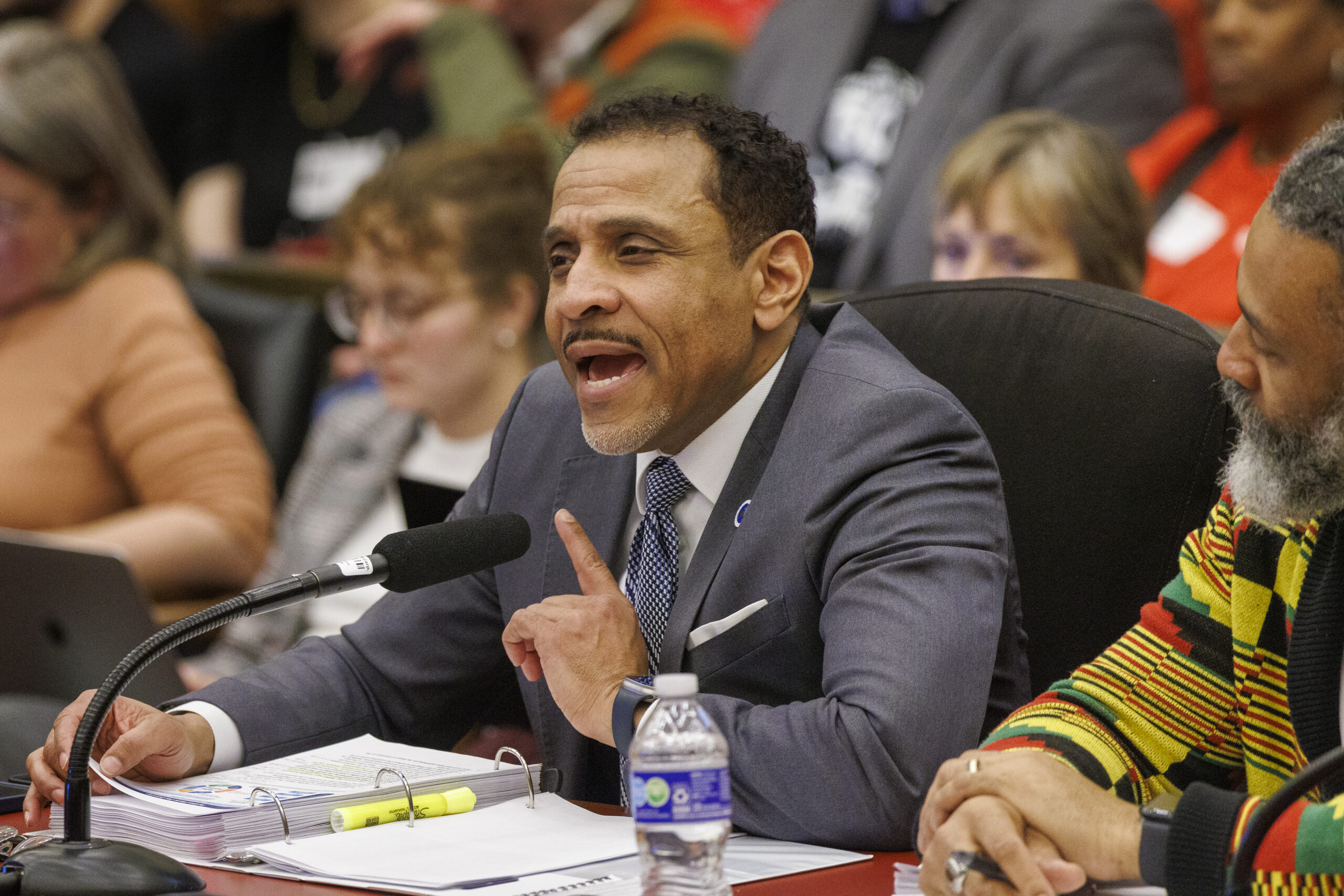
    Superintendent Tony B. Watlington Sr. has attended roughly 90 listening sessions — attended by about 4,000 people — about the closure plan in recent months.

    “I don’t see nothing wrong with our school,” said Layla Hernandez, a third grader who attends Ludlow Elementary, a school in North Philadelphia slated to close.

    It’s hard to say no to a precocious third grader. Or a parent like Darlene Abner, whose six children have attended the school. “I stay in this neighborhood because of Ludlow,” she said at a different meeting earlier this month.

    The impact of students and parents is real, but Ludlow’s numbers tell a different story. The K-8 school has just 237 students — less than half of its capacity. The school opened almost 100 years ago and serves a number of special education students.

    Ludlow’s performance is considered below average. Just 11% of students tested proficient on the state math exam and 24% in English.

    It is expensive to staff and operate an old building that is more than half empty and delivering poor results. Indeed, the district faces billions in deferred maintenance and repairs to its aging infrastructure.

    Operating buildings where enrollments are under 50% of capacity makes little sense. The problem will only get worse.

    Over the past decade, the district’s enrollment declined by more than 17,000 students to around 117,000 students. Over the next decade, enrollment is expected to drop by another 10%.

    At the same time, schools in some neighborhoods are filled to capacity, thanks largely to the influx of new immigrants. The explosion of charter schools in Philadelphia also contributed to the drop in enrollment and financial resources.

    As a result, the district needs to rightsize to adjust for the enrollment declines in some areas and the increases in others. It also needs to modernize, so buildings have basics like heat, air- conditioning, and bathrooms as well as labs and tech spaces.

    But renovating the schools takes time and money — two things the district lacks. The problem has been many years in the making. State lawmakers in Harrisburg contributed to the disrepair of schools by not adequately funding public education for decades — an issue a court found unconstitutional.

    It is also unconscionable since investing in public education will go a long way to solving many of the city’s (and country’s problems), including poverty, crime, and workforce development.

    This is where charter school advocates argue for more choice, but the hard reality is the test scores at most charters are no better. So, more charters is an empty promise and an argument for a different day.

    The goal should be to replace or renovate obsolete and mostly empty schools with safe, clean, and modern facilities featuring all the necessary staffing and resources. Anything less impacts the entire city, whether you have kids in public school or not.

    So far, a number of City Council members would prefer to scuttle the plan then find a positive solution. Same for the many state representatives who have voiced their opposition. This is not the time for political grandstanding.
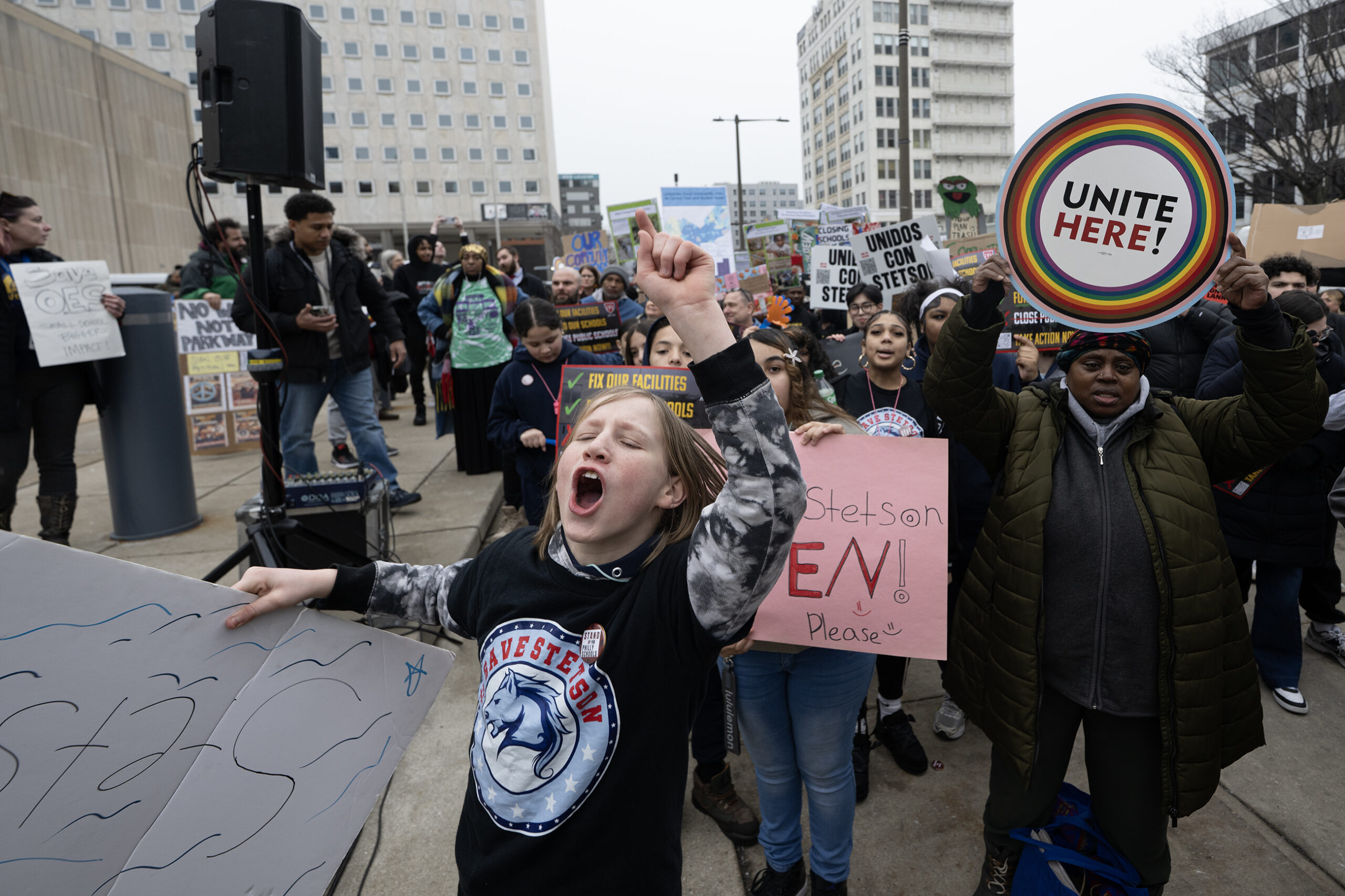
    A Feb. 26 demonstration outside the School District of Philadelphia’s Center City headquarters opposed the planned closure of 18 schools.

    Philadelphia Federation of Teachers president Arthur Steinberg said the plan lacked transparency and detail on how the changes will impact students.

    Perhaps Watlington and Mayor Cherelle L. Parker could do a better job selling the plan. But Watlington told me the district has held 90 listening sessions attended by 4,000 residents and received more than 14,000 surveys from every zip code in the city.

    “There’s no perfect master facilities plan,” he conceded, adding the district tried “to do the greatest good for the greatest number.”

    The school district tried to be fair by ensuring closures and investments would be spread across all 10 Council districts.

    At the same time, the critics have not offered any better solutions.

    In 2012 and 2013, the district closed 10% of its school buildings. At the time, many feared the upheaval would undermine learning.

    But a study by two University of Pennsylvania professors found the impact was mixed. Students who moved to higher-achieving schools saw their test scores go up. However, the displaced students had more absences and received more suspensions. The farther students had to travel to get to their new schools, the more they struggled.

    This time, the district plans to create a one-stop shop to ensure students get all the help they need from transportation to social, emotional, and mental health support.

    “We’re gonna wrap our arms around the children to make sure that performance increases and doesn’t decrease,” Watlington told me.

    He added that there are no plans to lay off any principals or teachers at the schools slated to close. Instead, the rightsizing will enable the district to “push more resources into the remaining schools.”

    In a perfect world, Watlington said, he would never close schools. But he is trying to position the district to do the best it can with the resources it is given.

    “We can either use our resources more efficiently by driving more high quality, academic, and extracurricular resources into a smaller number of schools,” he said. “Or we could continue to spread our resources around less strategically.”

    Sounds like the best plan on the table.

  • St. Patrick’s Day reminds Philadelphia of its immigrant roots, and its responsibility today

    St. Patrick’s Day reminds Philadelphia of its immigrant roots, and its responsibility today

    Every year, St. Patrick’s Day turns Philadelphia green.

    Crowds gather along the Parkway. Families celebrate in neighborhoods shaped by generations of Irish Americans. We honor a heritage that is now inseparable from the city’s identity — a story of resilience, faith, and hard work that helped build Philadelphia into what it is today.

    For me, that story is personal.

    My parents were Irish immigrants who settled in Philadelphia in search of opportunity and stability. By the time they arrived, earlier waves of Irish families had established strong neighborhoods, parishes, and institutions. My parents found jobs, community, and a sense of belonging. They raised their children here and became part of the fabric of the city.

    But the welcome Irish immigrants eventually experienced was not always guaranteed.

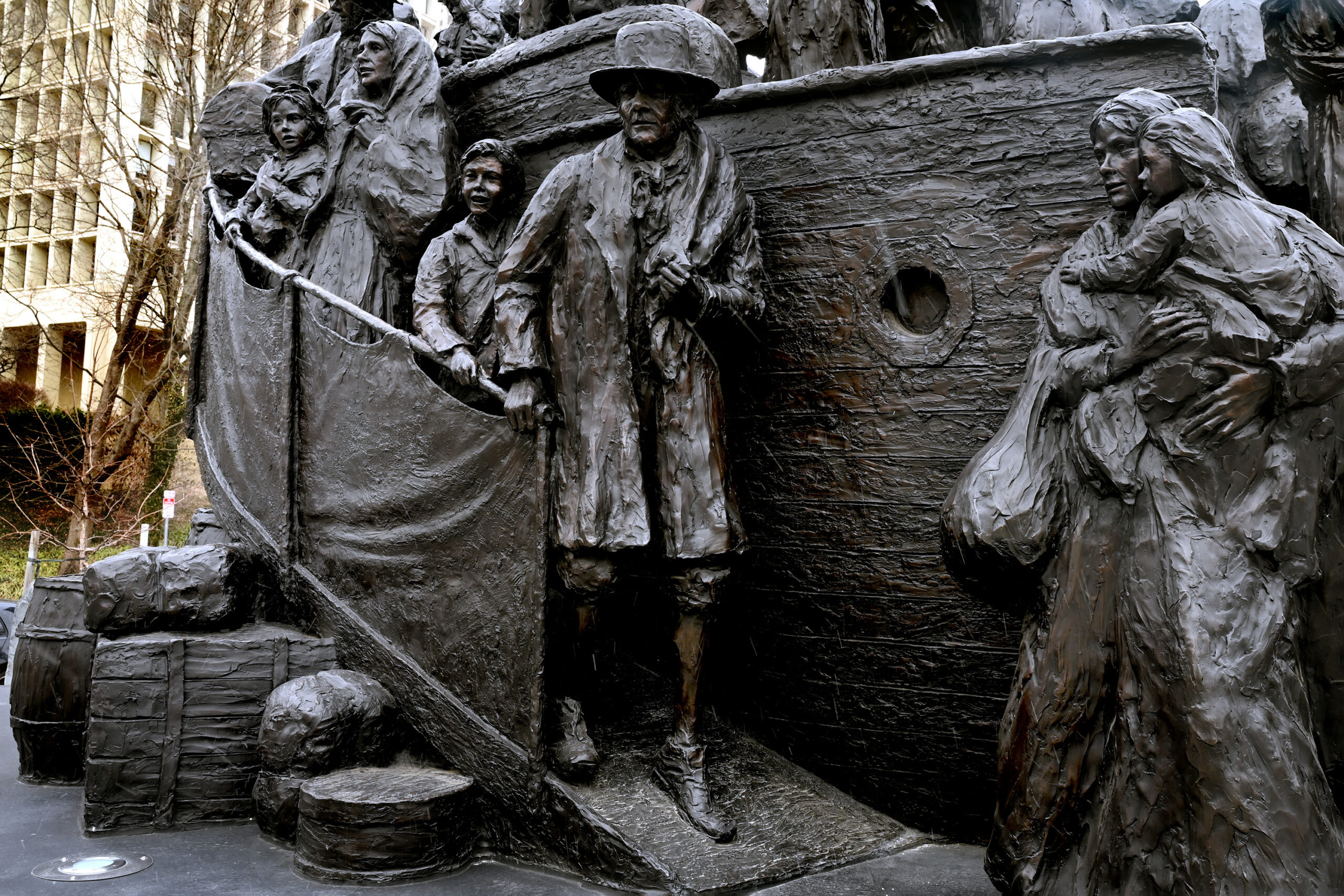
    A detail of the “Irish Memorial An Gorta Mor (The Great Hunger)” in Foglietta Park. The aspirations of immigrants today are not so different from those of the Irish families who once arrived at the port of Philadelphia with little more than determination and hope, writes Anna Gallagher.

    In the 19th and early 20th centuries, Irish newcomers often faced suspicion and discrimination. They were portrayed as outsiders and told they did not belong. Over time, through perseverance and the support of local communities, they became integral to Philadelphia’s civic and economic life. Today, their story is celebrated as part of the American immigrant narrative.

    That history is worth remembering, especially now.

    Across the country and here in Pennsylvania, immigrant families are navigating an increasingly complex and uncertain landscape. Many are longtime residents who work, pay taxes, and contribute to their communities. Others are seeking refuge from violence or instability abroad. All are striving for the same things previous generations sought: safety, opportunity, and the chance to build a future for their children.

    The Irish immigrant experience is often remembered as a story of eventual success. But that success was not inevitable, writes Anna Gallagher.

    Yet many face significant barriers. Access to legal representation remains limited. Immigration policies shift quickly, creating confusion and instability. Families live with the fear that a routine encounter could separate parents from children. Employers struggle to retain valued workers. Entire neighborhoods feel the ripple effects of uncertainty.

    As executive director of the Catholic Legal Immigration Network Inc., the nation’s largest network of nonprofit immigration legal services providers, I see both the challenges and the promise every day. I see mothers seeking asylum, fathers working multiple jobs to support their families, and young people who have grown up in this country hoping to fully belong. I also see the extraordinary contributions immigrants continue to make to cities like Philadelphia.

    Immigrants start businesses, work in hospitals and construction sites, care for the elderly, and teach in classrooms. They strengthen the local economy and revitalize neighborhoods. Their aspirations are not so different from those of the Irish families who once arrived at the port of Philadelphia with little more than determination and hope.

    St. Patrick’s Day offers a moment to reflect on that continuity.

    The Irish immigrant experience is often remembered as a story of eventual success. But that success was not inevitable. It was made possible by communities willing to open doors, institutions willing to offer support, and policies that allowed families to put down roots.

    Philadelphia has long been renewed by newcomers. From South Philadelphia to Northeast neighborhoods and beyond, immigrants have shaped the city’s culture, economy, and civic life. That pattern continues today, if we choose to sustain it.

    This is not simply about honoring heritage. It is about shared prosperity. Cities thrive when families feel secure enough to invest in their neighborhoods, pursue education, and contribute fully to community life. They thrive when longtime residents and newcomers alike see themselves as part of a shared story.

    Green-wearing Mayor Cherelle L. Parker is with State Sen. Sharif Street (right) during the annual Philadelphia St. Patrick’s Day Parade in 2025.

    As we celebrate St. Patrick’s Day, Philadelphia has an opportunity to honor its immigrant roots in a meaningful way. That means supporting policies that keep families together and create fair, orderly pathways through our immigration system. It means expanding access to legal representation so individuals can navigate that system effectively. And it means fostering a civic culture that recognizes immigrants not as outsiders, but as neighbors and fellow Philadelphians.

    My parents’ journey from Ireland to Philadelphia is one story among many. It is a story of welcome, hard work, and belonging. The question before us now is whether we will help ensure that today’s immigrant families have the same chance to contribute, to build, and to call this city home.

    Immigration is not just part of Philadelphia’s past. It is central to its present, and vital to its future.

    Anna Gallagher is executive director of the Catholic Legal Immigration Network Inc. (CLINIC). Born in Philadelphia to Irish immigrant parents, she is a nationally recognized expert on immigration and refugee policy and a longtime advocate for the rights and dignity of migrants.

  • Letters to the Editor | March 17, 2026

    Letters to the Editor | March 17, 2026

    A senseless war

    In Sunday’s Opinion section, Joe Sestak, Trudy Rubin, and Will Bunch laid out a very convincing accounting of the senselessness of another “endless” war in the Middle East. They also highlighted the lack of understanding that President Donald Trump and his administration have of the history and culture of that part of the world. Given this, why has Congress failed to exercise its constitutional responsibility to end this unlawful war? About 13% of our tax dollars go to funding a military that blindly obeys the orders of a bully president. War is not the answer. Sincere, peaceful, intelligent negotiations, and sensitivity to the needs of the people through community building initiatives are ways to avoid war. Resources spent on military actions could be redirected to address pressing social issues in the U.S., such as poverty, housing, and education.

    Bruce Charlick, Jenkintown

    The Inquirer has performed an outstanding public service by publishing three first-rate opinion pieces about the misguided war in Iran. Joe Sestak provides detail and context about issues such as access to rare earth minerals that hardly ever get attention in news coverage. He chillingly highlights the dominant position that China has achieved while the president’s been out playing golf.

    Inquirer regulars Will Bunch and Trudy Rubin once again offer insights and perspective that all of us really need if we are to respond intelligently to the madness of our deranged president.

    Thank you for your journalistic excellence.

    Laslo Boyd, Philadelphia

    In her most recent column, Trudy Rubin expressed outrage at reports that Russia may be providing Iran with intelligence on locations of U.S. troops. If true, we should all be furious — Russian collusion with Iran puts American service members directly in harm’s way.

    Yet instead of imposing tougher penalties on Russia or strengthening U.S. support for Ukraine, Donald Trump has eased sanctions.

    Meanwhile, lives have already been lost and Americans face the risk of retaliation from a war of choice launched without an imminent threat from Iran.

    Politically, economically, and morally, this “little excursion” is already proving to be a grave mistake.

    Maria Duca, Philadelphia

    Special measures

    As a pediatric rheumatologist in Philadelphia, I care for children living with complex, chronic autoimmune diseases, like juvenile arthritis and lupus, which can cause lifelong pain and disability without timely treatment. But across Pennsylvania, Delaware, and New Jersey, too many families are waiting months or being forced to travel across state lines to get their child the care they need.

    That’s because there are only a handful of pediatric rheumatologists in our state, with some regions having none at all. The shortage is growing worse still as a result of inflation, administrative burdens, and outdated physician reimbursement rates. We have created a system that discourages physicians from entering or staying in fields like pediatric rheumatology — and it’s children who are paying the price.

    It’s time for our leaders in Washington to modernize physician payment to ensure updates that reflect the true cost of care and support the next generation of pediatric specialists. Without reform, families in Pennsylvania and beyond will face longer waits, longer drives, and worsening outcomes for children who deserve better.

    Jay Mehta, Philadelphia

    Join the conversation: Send letters to letters@inquirer.com. Limit length to 150 words and include home address and day and evening phone number. Letters run in The Inquirer six days a week on the editorial pages and online.

  • Preserving Philly’s history is important, but historic districts do tend to exclude | Shackamaxon

    Preserving Philly’s history is important, but historic districts do tend to exclude | Shackamaxon

    This week’s column covers an unproductive conversation about public transit in Harrisburg, historic preservation, and what to do with the city’s incoming fiscal windfall.

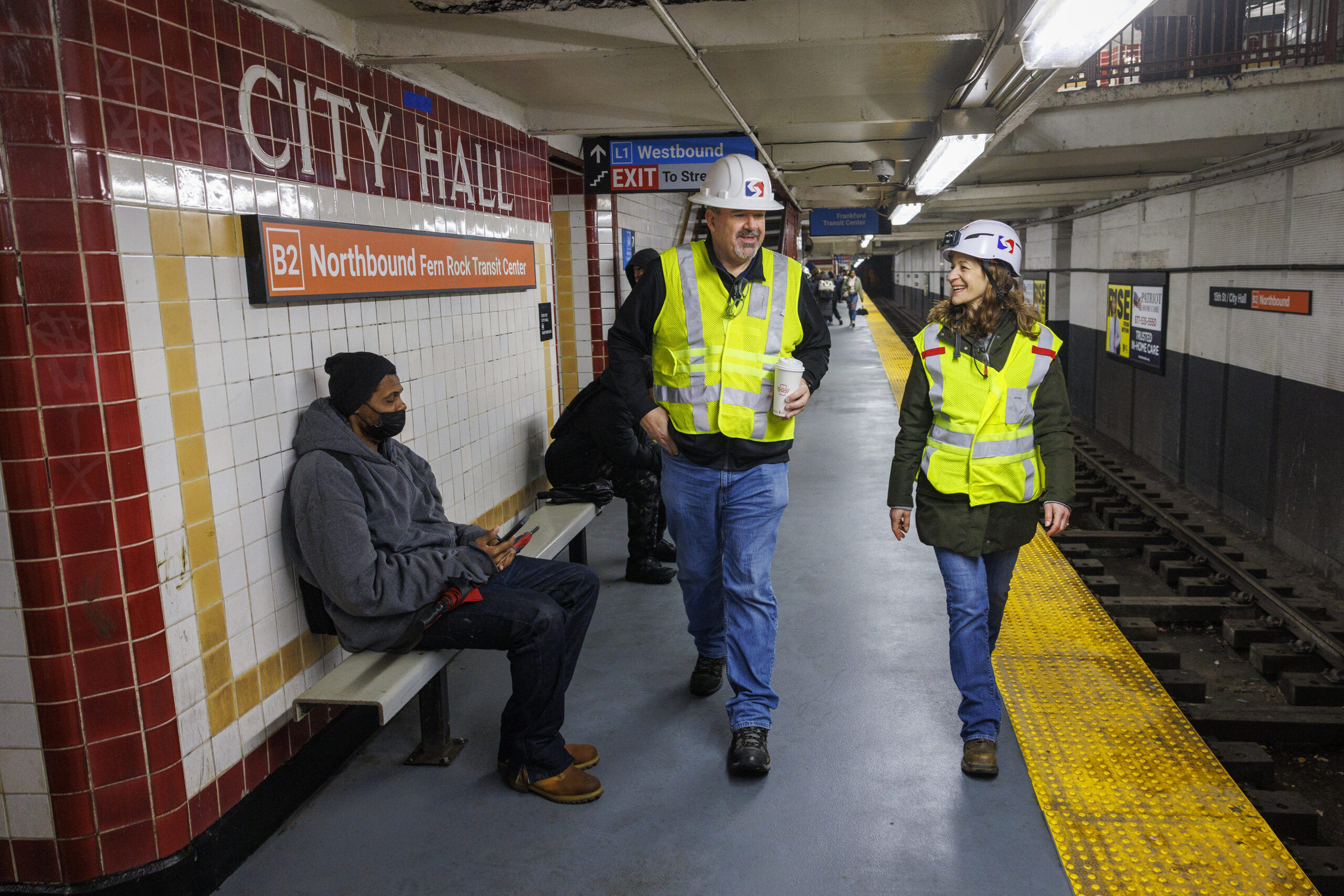
    SEPTA General Manager Scott Sauer and Kate O’Connor, assistant general manager of engineer maintenance construction, make their way through City Hall Station in February.

    Transit takeover

    PennDot’s budget hearings are usually focused on the things the department has direct control over, i.e., Pennsylvania’s state-owned roads and bridges. On Monday, however, the hearing turned into a transit-bashing fest. Senate Republicans used the meeting to push their own plan to exhaust the state’s transportation reserves rather than adequately fund operations.

    There’s just one big problem: The senators frequently did not know what they were talking about.

    Republican State Sen. Tracy Pennycuick asked about the status of the King of Prussia rail project, which has been canceled for almost three years. Her fellow GOP State Sen. Jarrett Coleman asked if SEPTA considered raising fares, which climbed from $2 in November 2024 to $2.90 last year in September, a near 50% increase.

    PennDot’s leaders could have done a stronger job defending themselves. In particular, their inability to produce a list of projects was mystifying. Many of the volunteer transit advocates I know could do so on the spot. It was clear to me that the most knowledgeable person in the room was Delaware County’s Democratic State Sen. Tim Kearney, himself a regular SEPTA rider. At one point, Harrisburg’s State Sen. Patty Kim, a Democrat, suggested that PennDot bring charts next time to help explain complicated financial maneuvers.

    There’s a role Republicans in the General Assembly could play in ensuring SEPTA’s fiscal health, if they were willing to do their homework instead of grandstanding. While SEPTA is more efficient with its use of revenue than critics have claimed, there are still ways to save money and bring down the capital deficit. They are just politically difficult. It would be a lot easier for SEPTA’s board to tell the good people of Eddystone, Angora, or Eddington they are losing their low-ridership Regional Rail stops if they could add “because Harrisburg made us.”

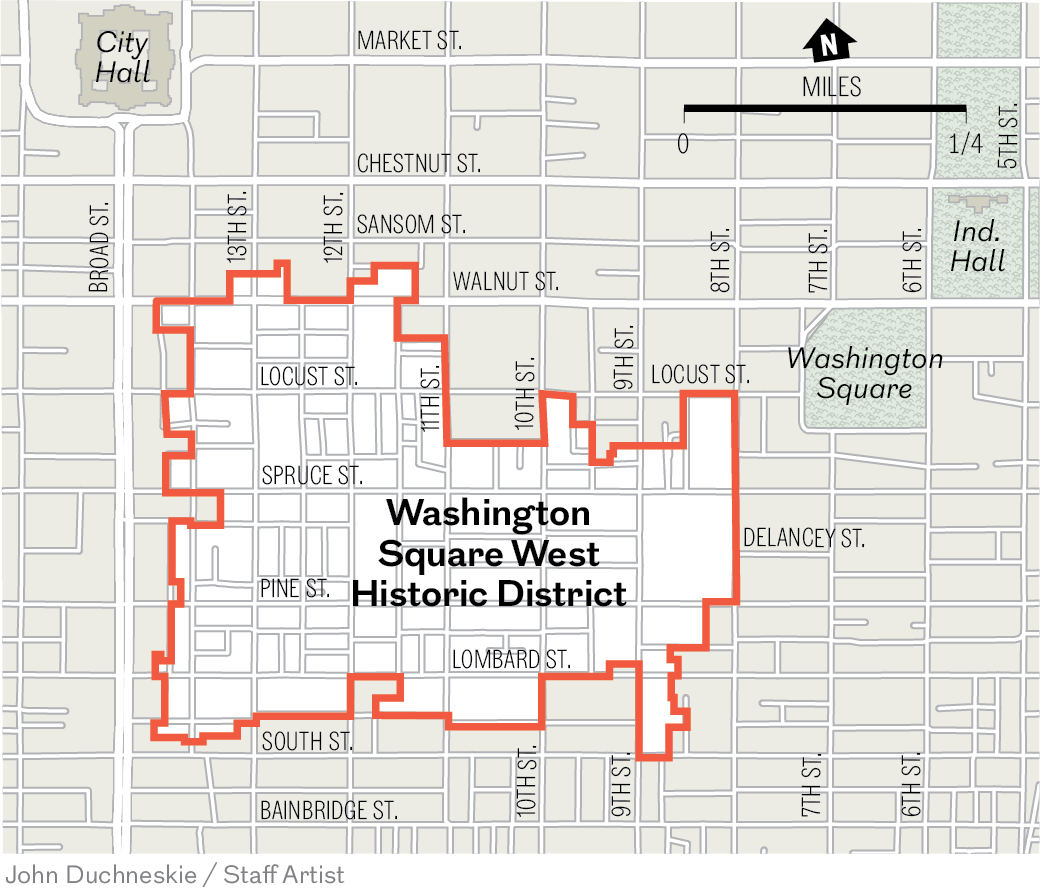
    Map of the Washington Square West Historic District. After some neighbors sued, the district designation was recently revoked in court.

    Historic revocation

    Regular Shackamaxon readers know that while I love our city’s history, that doesn’t mean I expect everyone else to love it, too. After a coalition of neighbors challenged the Washington Square West Historic District, Common Pleas Court Judge Christopher Hall revoked the district, granting a major victory to homeowners who resented their inclusion in the city’s largest and most nebulous historic zone.

    Some residents objected to being part of the district because of the high costs usually associated with making the necessary modifications required to bring their properties in line with the city’s strict codes for historic properties.

    Preservationists, to put it mildly, are miffed. They feel the ruling is deeply unfair and should be overturned.

    Instead, they should treat this as a learning opportunity. The Washington Square West district really was a step too far. While historic districts typically focus on specific architectural styles and eras, this district covered more than a thousand buildings from before the Revolutionary War until after the Second World War. While advocates describe working with the historic commission as painless, everyday homeowners often disagree.

    Additionally, covering the city in preservation districts will have an impact on overall housing supply and, as a result, costs. A recent analysis by CityLab shows how New York’s preservation rules have led to many smaller, more affordable apartment buildings being converted into urban mansions. This means exchanging multiple working- or middle-class residents for one extraordinarily wealthy household.

    While local preservationists commissioned a study they claim debunks this concern, the document’s results fall into the category of correlation, rather than causation. If density and population are growing in historic districts, it is probably because people tend to put historic districts where development is most lucrative. If people truly believed that designation brought only benefits with no drawbacks, we may as well designate the entire city.

    A more exhaustive and balanced report, for the Journal of the American Planning Association, is clear: Historic districts make neighborhoods wealthier, whiter, and more educated than the cities that host them. Many other studies agree.

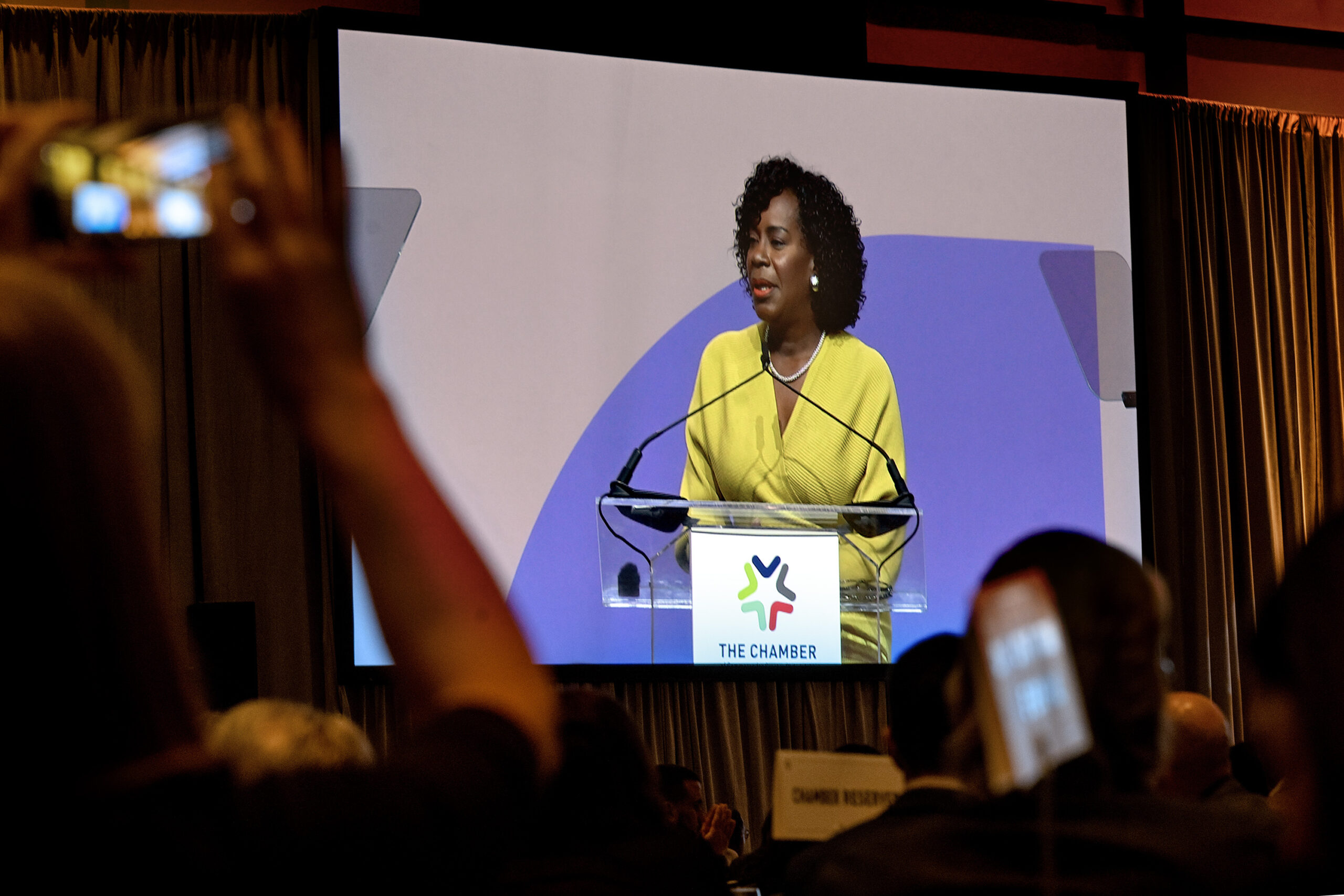
    Attendees record Mayor Cherelle L. Parker as she delivers her keynote address at the Chamber of Commerce for Greater Philadelphia’s Annual Mayoral Luncheon in February.

    Future flush

    According to reporting by my Inquirer colleague Sean Collins Walsh, Philadelphians may soon experience a new reality in civic finance: extra cash.

    For decades, City Hall struggled to pay the bills, as pension costs and low wages sapped the public purse. Now, the city is looking at the prospect of having a budget surplus of $400 million and a fully funded pension system by 2032.

    It is important we begin the discussion now on what to do with that money.

    There is no shortage of need in this city. The school district, affordable housing, SEPTA, parks and recreation, the libraries, and the city’s workforce all have strong arguments to make when it comes to which agencies should receive that money. The boldest course of action, however, might be to set the city on a new economic course entirely by reforming our local tax code.

    Despite Philadelphia’s high tax rates, the city generates relatively little income. Boston spends just over $7,000 per resident, New York City spends over $13,000, and even Baltimore spends over $8,000. Philadelphia spends just $4,250. This gap can’t be fixed by raising our taxes even higher. It requires growing our economy.

    Alongside tax reform — which should attract new businesses — the city should eliminate the restrictive zoning overlays that add significant costs for entrepreneurs in Philadelphia.

    If the City of Brotherly Love could generate as much tax revenue per resident as Charm City or the Hub, City Hall would have more than $12 billion to spend each year. That’s enough money to make a major difference.

  • The ‘secretary of war’ and a tech CEO shouldn’t be the only ones debating ethical use of AI | Editorial

    The ‘secretary of war’ and a tech CEO shouldn’t be the only ones debating ethical use of AI | Editorial

    Since the dawn of modern computing, there has been speculation that technology would someday outpace humanity’s ability to control it. Yet, for all those concerns, technology kept advancing, and such a scenario often felt far away. At least until artificial intelligence came onto the scene.

    Now, the Trump administration is using AI to assist the war in Iran, and Defense Secretary Pete Hegseth has demanded that tech companies agree to collaborate with the military without guardrails. Swarms of autonomous killer drones are within reach, and President Donald Trump wants to control them without restriction.

    What could possibly go wrong?

    Last week, Hegseth unilaterally terminated the Pentagon’s partnership with Anthropic, the creator of Claude, considered the most highly regarded AI system available. The government asked for unfettered use of Claude, including for mass domestic surveillance, or to create weapons that kill without human input. CEO Dario Amodei refused.

    The Trump-anointed secretary of war responded by designating Anthropic as a supply-chain risk to national security. A move that would ban all defense contractors from using Anthropic products. In effect, Hegseth is trying to force an American company to do work it did not agree to take on; work that can potentially be used to violate the law and Americans’ constitutional rights.

    Defense Secretary Pete Hegseth stands outside the Pentagon during a welcome ceremony for the Japanese defense minister in January.

    The move comes not long after public acknowledgment that the military used Claude to help plan the capture of Venezuelan President Nicolás Maduro. The AI technology is also being used in the bombing campaign against Iran. One of the stated uses is “target identification.” During U.S. and Israeli strikes against Iran, an elementary school that neighbors an Iranian naval base was struck, resulting in the deaths of dozens of children. While the U.S. has yet to confirm responsibility, the incident is a clear sign to exercise caution, not to forge ahead recklessly.

    Anthropic has benefited from the clash with the administration, as many people who oppose the president’s policies look to reward anyone who stands up against Trump. Claude overtook competitor ChatGPT for the first time in user downloads, hitting No. 1 on Apple’s App Store. But Anthropic is no clear-cut hero.

    In a statement, the company rightly underlined that “mass domestic surveillance of Americans constitutes a violation of fundamental rights.” But it also said it was willing to help the Pentagon in the future. It just doesn’t believe that today’s AI systems “are reliable enough to be used in fully autonomous weapons.”

    Meanwhile, the United States is hardly the only country likely to develop the capacity to deploy autonomous lethal weapons. China’s leading AI firm, DeepSeek, is working with the People’s Liberation Army to create its own autonomous battle systems. Under Hegseth’s punitive order, DeepSeek is now treated more favorably than Anthropic.

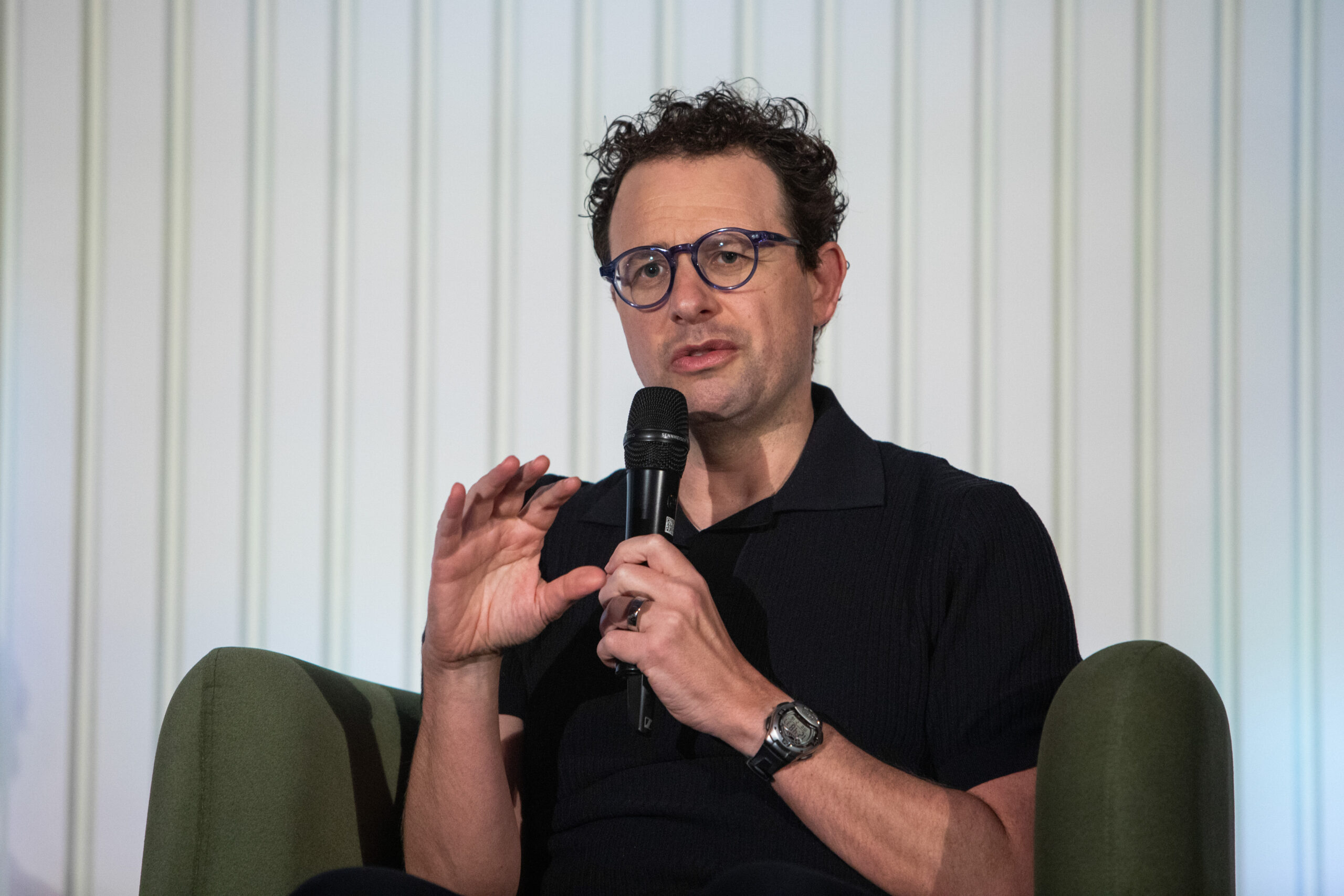
    Anthropic CEO Dario Amodei.

    Like nuclear weapons, artificial intelligence has become the subject of an international arms race. Both have the power to cause unprecedented death and destruction. Nations have reason to fear being left behind, and it may be too late to close Pandora’s box.

    The debate is one of many around the growth of artificial intelligence. Americans are as concerned about the potential for job losses through creative destruction, the proliferation of data centers, and the potential for a less human future as they are excited about the possibility of widespread self-driving cars. Newsrooms, college campuses, and businesses are all grappling with how to use AI technology ethically and productively.

    It is time for more lawmakers to join this complicated conversation.

    Instead of leaving matters to a negotiation between Hegseth and a tech CEO, Congress should issue legally binding guidelines for the use of artificial intelligence in war — including restrictions on mass surveillance and autonomous weapons. Congress could also debate the usage of AI in other areas, like healthcare and education.

    It is distinctly possible that the systems will improve outcomes for some people. AI has detected cancers that human doctors missed, research has shown that Waymo is significantly safer than human drivers, and AI has enabled newsrooms to restore coverage to smaller cities and towns that have struggled to sustain their own outlets.

    At the same time, even the best AI assistants can still hallucinate facts and make mistakes. That’s embarrassing when it happens on a term paper or a court filing; it can be deadly on the battlefield.

    Above all, human control over lethal weapons is essential. Echoing the nuclear proliferation treaties that benefited humanity in the 20th century, the United States should lead the way in assembling a broad coalition of powerful nations that agree to ban fully autonomous weapons.

    In the meantime, Trump and Hegseth’s decision to spurn Anthropic points the way toward a 21st-century disaster.

  • Letters to the Editor | March 6, 2026

    Letters to the Editor | March 6, 2026

    Louder than words

    In the last presidential election, this lifelong conservative voted for Kamala Harris, not because I supported her positions on matters foreign or domestic, but because I believed her opponent was seriously deranged and would lead us into war. Now, little more than a year into the second Trump administration, here we are at war. If people wonder how the dictators of the 20th century gained power, they need only look at our 2024 presidential election. How could an allegedly sane, reasonable, and informed electorate have put such a lunatic into the most powerful position on earth?

    Up until now, the United States had been an example to the world on how to manage power. We tried to show our neighbors that our primary focus was avoiding conflict, even though we had the power to bend the world to our will. Avoiding conflict is what rational, thinking, 21st-century people do.

    But now we kidnap and murder foreign leaders and commence hostilities that could lead to a world war — all while members of Congress sit on their hindquarters twiddling their thumbs. What do these kinds of actions tell our neighbors around the world?

    Mike Egan, Plymouth Meeting

    This is us?

    After seeing our nation’s leadership — from Donald Trump to Pete Hegseth to the entire Republican Party — I can’t stop asking myself: Is this what our country has become?

    This administration — including its GOP enablers in Congress and Democratic Sen. John Fetterman — has endorsed the outright murder of people in other countries. They try to justify the bombing of children in elementary schools in Iran. They pay lip service to diplomacy. They ignore international law. Is this what our country has become?

    This is certainly not what I believe or want, and I don’t think most Americans want it, either. We need to do something about this. It’s time for regime change of our own through safe and secure elections, which we’ve demonstrated we can execute with the systems we have in place.

    In the meantime, contact your senators and call your representatives and tell them this has to stop. That this is not who we are as a country. We cannot sit back and do nothing. It’s time to act.

    Jeffrey Plaut, Elkins Park

    Needless sacrifice

    President Bone Spurs initiated a war in Iran without consulting Congress, leaving our young soldiers solely at the mercy of his erratic behavior. We have already seen at least a half dozen service members killed. Donald Trump coldly states that some soldiers will die. How dare he diminish the ultimate sacrifice made by our troops when he wasn’t even willing to serve? His Iranian adventure is illegal and immoral. My heart breaks for the families who’ve lost their young sons and daughters — and those who still might before this unnecessary war is over.

    Barbara Schwartz, Lafayette Hill

    See something?

    The phrase, “If you see something, say something,” was popularized after the 9/11 attacks. For 25 years, the U.S. Department of Homeland Security (DHS), the police, the FBI, and the transportation authorities told us, “If we see something, say something.” In 1943, Anne Frank wrote: “Terrible things are happening outside … poor helpless people are being dragged out of their homes. Families are torn apart; men, women and children are separated. Children come home from school to find that their parents have disappeared.” But then, as now, government officials, community leaders, and everyday citizens choose to look away, mumble in weak protest, or collaborate.

    We have seen horrific videos of DHS actions. To find out what happened to someone taken by U.S. Immigration and Customs Enforcement, we are told to use the ICE Online Detainee Locator System and enter their name, country of birth, and birth date, or alien registration number. How can we know this about someone taken at the Wawa or Home Depot? In all these hundreds of thousands of ICE arrests, has anyone been picked up by ICE impersonators and kidnapped, raped, or trafficked? When we see masked, unidentifiable, gun-toting people stuffing someone in an unmarked vehicle, should we call the police? Is it time to consider that immigrants might be the first target? Martin Niemöller, originally a Nazi supporter, was imprisoned in Nazi concentration camps from 1938 to 1945. After the war, he explained his complicity in his poem, “First They Came.” “First when they came for the Socialists. I did not speak out, because I was not a Socialist.” And he ended, “Then they came for me — and there was nobody left to speak for me.”

    Lynn Strauss, West Chester

    Lifesaving aid

    The administration is currently considering a plan to end all humanitarian aid to seven African nations: Burkina Faso, Cameroon, Malawi, Mali, Niger, Somalia, and Zimbabwe. These programs survived the initial U.S. Agency for International Development (USAID) cuts due to the fact that they were judged to be lifesaving by the administration’s standards. An internal State Department email states that these cuts are happening because “there is no strong nexus between the humanitarian response and U.S. national interests.”

    Foreign assistance accounts for less than 1% of the federal budget, but is critical for meeting the most basic survival needs of people in danger of starving to death. A former senior State Department official, who left the administration in the fall, said, “If we don’t deliver this, people die immediately.” Cutting off aid also presents serious national security risks. When humanitarian support vanishes, terrorist groups rush to fill the vacuum — distributing food to bolster their local legitimacy.

    The members of Pennsylvania’s congressional delegation should ask State Department officials to provide a more detailed explanation of these potential aid cuts and clarify their impact on U.S. national interests in these countries.

    Jackson Duncan, Philadelphia

    False choices

    A recent op-ed touting the virtues of school choice was yet another example of the conservative mindset transparently attempting to convince us that they alone know what’s best for the schoolchildren of Pennsylvania. This current iteration of feigned concern is prompted by the recent announcement of pending public school closures in Philly.

    Not surprisingly, the authors of the opinion piece are the president and CEO of the ultraright Commonwealth Foundation, along with one of the group’s distinguished fellows. While lamely using the proposed closures to energize their agenda, the truth behind all the artificial hand-wringing is simply economic. They want more, if not all, taxpayer education dollars to go to private hands.

    They innocuously incorporate the value and necessity of expanding cyber schools into the mix. While these schools are a needed venue for students with challenges attending brick-and-mortar buildings, they are also a windfall for the operators: minimal start-up costs, limited overhead, and so on. Think of the fortunes being made with virtual casino gambling on a phone.

    Cyber schools should not be expanded, but used as a last resort — all children need in-person learning, where they gain the ability to interact with other kids and teachers and pick up valuable life skills.

    So let’s not succumb to the hackneyed statistics that charter and cyber school students achieve higher test scores — that is overwhelmingly a result of the reality that those schools can (and do) cherry-pick their students.

    When the uber-wealthy and their conservative think tank messengers tell us they know what’s best for your children, ask yourself why they are so “concerned.”

    J. Savage, Philadelphia

    Full disclosure

    I agree with the quote used by Andrew Lewis and David Hardy in their recent op-ed describing participation in the Education Freedom Tax Credit (EFTC) as a “no-brainer” — because no intelligent politician should allow such a program into their state.

    There are some parents who do want a different school option from the one in their neighborhood, but educational tax credits and vouchers are not the answer, because these programs offer little or no obligation to the public about how successful they are in providing a proper education. Those programs and their advocates may claim families don’t need the type of hard data that can be found on public education websites because they can rely on recommendations from participating families. But isn’t that the type of approach that bankrupted those businesses and households that relied on unresearched endorsements about Bernard L. Madoff Investment Securities LLC?

    If Messrs. Lewis and Hardy are truly interested in school choice, then families should be provided with the full information needed to make the right decisions for their children. Otherwise, there is not much of a difference between school choice and any other form of gambling.

    Barbara McDowell Dowdall, Philadelphia

    Join the conversation: Send letters to letters@inquirer.com. Limit length to 150 words and include home address and day and evening phone number. Letters run in The Inquirer six days a week on the editorial pages and online.

  • Texas primary exposed GOP scheme to rig the 2026 midterms

    Texas primary exposed GOP scheme to rig the 2026 midterms

    A man named Juston Marine had arguably the toughest job in America on Tuesday: “election navigator” in Dallas County, Texas, where a confusing, Republican-engineered change in voting rules for 2026 left many voters dazed, confused, and miles from the place where they were supposed to be casting ballots.

    “There are a lot of infuriated voters,” Marine told a reporter for the Votebeat website as he struggled to do his job outside the Anita Martinez Recreation Center in West Dallas, where he encountered voters as they arrived at the large polling center. It seems this election worker heard a lot of words that aren’t found in the Bible, as he told every second or third voter that they were supposed to be somewhere else.

    “I walked up here because I want to vote so, so bad,” Veronica Anderson told a reporter after traveling two and a half miles on foot to Dallas’ Martin Luther King Jr. Community Center, only to be told she could only cast a ballot at some other location she’d never heard of. She added that the rejection felt like “your self-esteem and everything is torn down.”

    That level of despair is exactly what Donald Trump’s Republican Party is going for, as America this week kicked off an eight-month mad dash to a November midterm election that will be pivotal for the nation’s barely breathing democracy.

    We’ll never know exactly how many intended votes weren’t cast on Tuesday at the site named for the civil rights legend credited for the 1965 Voting Rights Act, or other Dallas County polling places where scores of voters — primarily Democrats — were turned away from highly competitive primaries for a U.S. Senate seat and other key races.

    It may have looked like chaos, but in many ways it all went down according to a Republican plan that will likely inspire further scheming from Trump and his MAGA minions as the general election draws closer.

    With polls showing that an election held today — with the two-term president’s unpopularity at an all-time low — would result in a Democratic takeover of the U.S. House and possibly the Senate, perhaps in a landslide, Team Trump has spent months looking for any and every way to put its finger on the scale of democracy.

    No one, other than some online Chicken Littles, believes Trump would go full banana republic and send in troops to cancel the 2026 midterms. But his attempted coup on Jan. 6, 2021, aiming to undo his 2020 loss, is an indication of how far this autocrat will go to retain power.

    The Trump-led Republican scheme to make the 2026 elections less free and less fair started with a push for red states to do extreme gerrymandering, ripping up the maps drawn after the 2020 Census to make new districts crafted to maximize GOP power. (Texas was Ground Zero for this effort — more on this later.)

    As the calendar flips toward the midterms and Republican popularity wanes, the push is likely to get more extreme. A legislative push for the so-called SAVE America Act, which would make voting harder with harsh ID requirements, has stalled, so Trump is now weighing an executive order to get the same results — which would surely trigger a legal fight — and possibly try to curb mail-in ballots, as well.

    What just happened in Texas’ second-most populous county proved a case study in today’s brand of Republican voter suppression, so let’s unpack it.

    Like much of what happens in a political party that still clings to the Big Lie of nonexistent voter fraud in that 2020 election that Trump lost, the problems in Dallas County all began with a conspiracy theory.

    In this September 2021 file photo, Texas gubernatorial hopeful Allen West speaks at the Cameron County Conservatives anniversary celebration in Harlingen, Texas.

    The county GOP leader in Dallas is a well-known conspiracy theorist, Allen West, an ex-congressman from Florida who moved to Texas and, for a time, ran the state Republican Party, where he adopted a slogan and a style from QAnon and seemed to favor secession, among other extreme views.

    In 2024, West became chair of the Dallas County GOP and made election and voting machine conspiracy theories his prime focus, in a state where parties have a lot of say over how primaries are conducted.

    What the local GOP pushed was for the county to count all of its paper ballots by hand — a laborious process that would also require abandoning the large countywide voting centers and a return to smaller neighborhood precincts. Ultimately, the ballot-counting idea proved not practical, but the switch back to local precinct voting stuck and was in effect Tuesday for both parties — even as Democrats struggled to inform their voters. (A similar change occurred in smaller Williamson County.)

    Election experts note that the GOP generally opposes large centers where anyone in a jurisdiction can vote — much as it opposes early voting, mail-in ballots, or anything else that makes voting easier instead of harder, in an increasingly fragile democracy.

    Voter suppression that unravels the gains from the 1965 Voting Rights Act — weakened and perhaps about to be gutted further by a right-wing U.S. Supreme Court — has been a Republican strategy for decades, but the Dallas debacle was a new low.

    “The confusion is the point,” a Democratic Texas state lawmaker, Ana-María Rodríguez Ramos, posted on social media, noting further, “This is the GOP voter suppression that Dems must come together to overcome in November.”

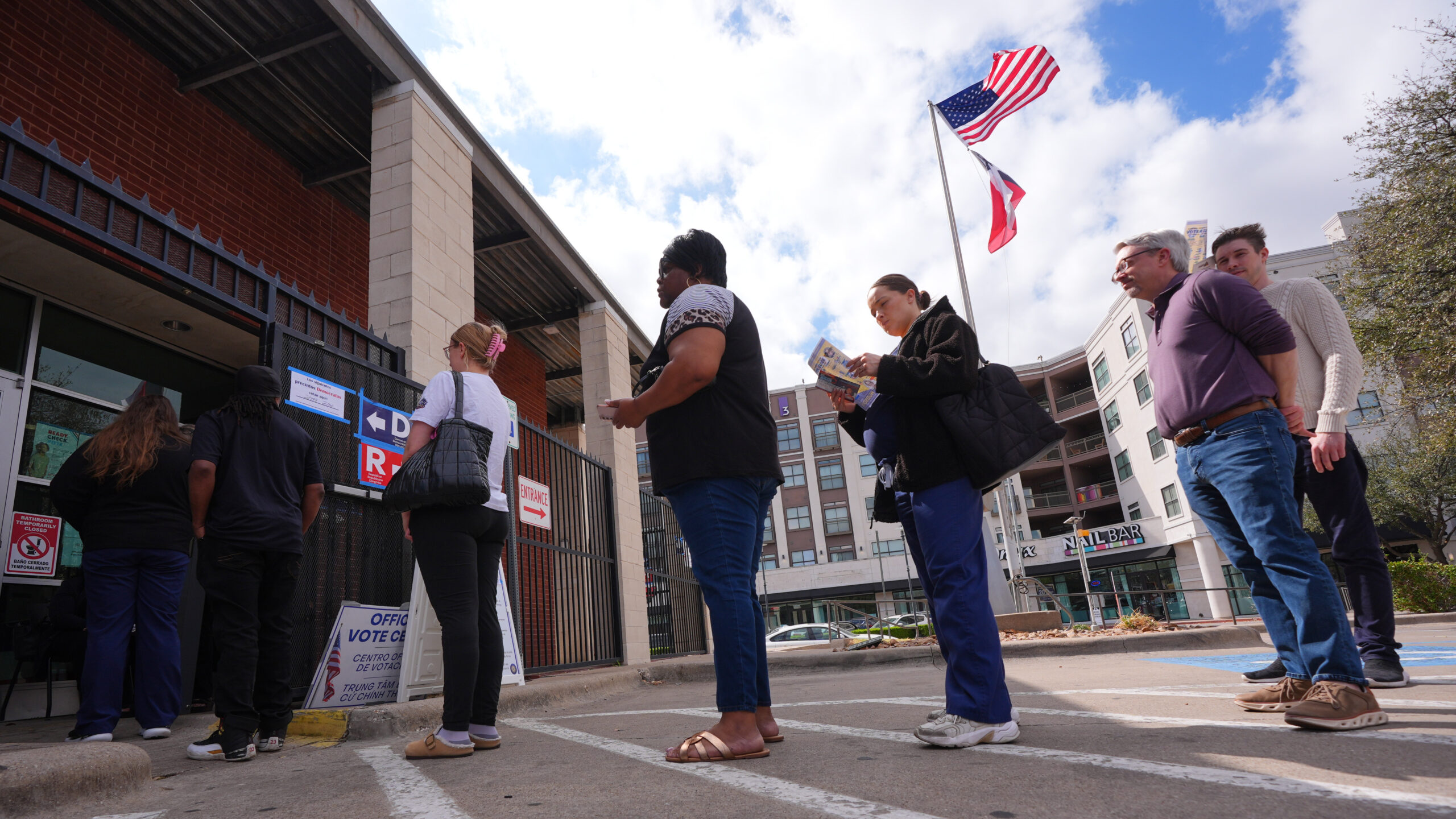
    Primary voters line up to cast ballots at a voting center in Dallas on Tuesday, March 3.

    Ramos also noted one other wrinkle that happened Tuesday. Democrats and fair-voting advocates in both Dallas and Williamson Counties went to court during the day, seeking an emergency order to extend voting hours. That push initially succeeded, and in Dallas County, a judge ordered the polls open for two additional hours.

    But Texas’ right-wing extremist Attorney General Ken Paxton — also a leading candidate in Tuesday’s GOP Senate primary — appealed the ruling and got the state’s conservative Supreme Court to rule in his favor. Votes that were cast after the original 7 p.m. closing time were segregated and may or may not ultimately be counted.

    Not surprisingly, West actually bragged about what looked to many folks like a voting fiasco, blaming the Democrats for not being informed about the confusing rules change. “It’s apparent that Democrats struggled with grasping basic civics and their usual attempt at lawfare backfired,” the GOP leader said in a statement.

    It’s clear that what we saw in Dallas — balloting drenched in conspiracy theories from start to finish, new rules with the sole purpose of making it harder to vote, and an increasingly conservative judiciary making the final call — was clearly a test case for the national election in November.

    It’s not hard to imagine a scenario in which Republicans will manufacture conspiratorial doubt about some of the ballots cast in the fall — as just happened with those post-7 p.m. votes in Dallas — as a pretext for some grander and potentially cataclysmic effort to nullify Democratic victories in Congress.

    But Texas also provided a window into how this MAGA scheme might not work.

    Remember that extreme gerrymander the Lone Star State enacted last year, which aimed to create five additional Republican seats in Congress? Much of the plan aimed to capitalize on a dramatic shift toward the GOP among Texas’ large Latino population during Trump’s last two runs in 2020 and 2024.

    But polls and now early voting have shown the Hispanic vote swinging back toward Democrats since Trump returned to office, thanks to the sluggish economy and the brutal manner of his immigration raids. On Tuesday, Democratic turnout in Texas soared to levels not seen since the high-profile 2008 battle between Barack Obama and Hillary Clinton, in what was a very good year for their party. Voter suppression can be swamped by voter enthusiasm.

    But it shouldn’t have to be that way. The right to vote is the fundamental building block of the American Experiment in democracy, and folks shouldn’t have to walk clear across town or stay up all night to exercise it. Dallas was a warning shot for every citizen: Do not let this nightmare go national in November.

  • State and local officials are right to stand against expanding ICE detention centers | Editorial

    State and local officials are right to stand against expanding ICE detention centers | Editorial

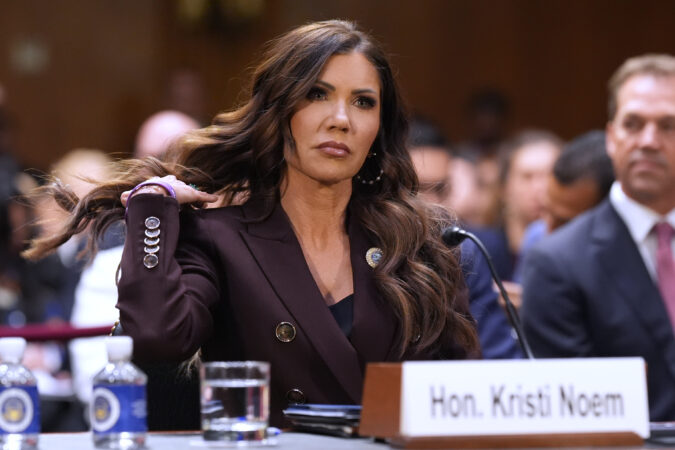
    Immigrants in custody under the Trump administration have been denied medical care, face dangerous detention conditions, and have died in the highest numbers in two decades, according to a letter sent to Secretary of Homeland Security Kristi Noem by a group of Democratic senators.

    As more and more immigrants are arrested, and U.S. Immigration and Customs Enforcement looks to vastly expand its detention capabilities — including in Pennsylvania and New Jersey — cases of abuse and death will only grow.

    This is a moral wrong that violates America’s constitutional protections.

    State and local leaders should vigorously push back against new detention facilities proposed by a federal government that has shown open contempt for the law in pursuit of the president’s cruel and inhumane mass deportation policies.

    Contrary to what Donald Trump promised, most of the immigrants being detained are not hardened criminals or the “worst of the worst.” Fewer than 14% of people arrested by ICE in 2025 had any charges or convictions for violent offenses. Immigrants with no criminal record at all now make up the largest group in detention.

    To be sure, immigration detention has a long history of abuse, with complaints about difficult living conditions, substandard medical care, and an opaque system leading to limited accountability when immigrants die in custody.

    Even when changes are promised, the problem has persisted.

    “Detention centers are not safe, abuses are widespread and detention facilities consistently fail to meet basic minimum standards,” wrote Mary Small, policy director for the Detention Watch Network, in 2015. “The Obama administration’s attempts at reforming the immigration detention system have failed.”

    More than a decade later, that failure will likely compound as ICE, flush with $45 billion from the GOP-controlled Congress and zero accountability from the White House, ramps up not only the scale, but also the callousness of its operations.

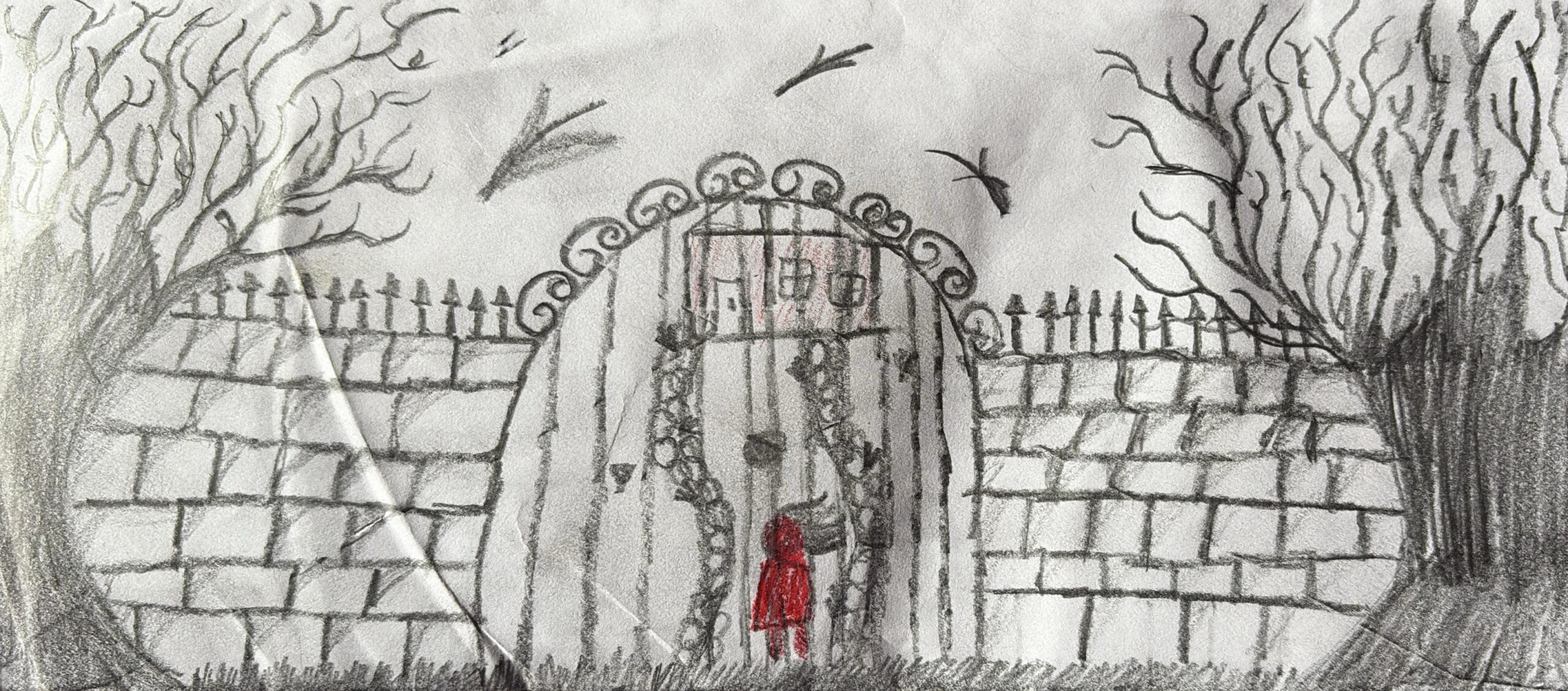
    The conditions inside detention centers are bleak, even more so for the most vulnerable populations. ProPublica recently told the stories of children being held at the ICE facility in Dilley, Texas. Their testimony is heartbreaking.

    A drawing made by a 13-year-old Colombian girl when she was detained at South Texas Family Residential Center in Dilley, Texas, where the Trump administration is holding immigrant families.

    “Since I got to this Center all you will feel is sadness and mostly depression,” one child wrote. Another said that “the workers treat the residents unhumanly, verbally and I don’t want to imging how they would act if they where unsupervised.”

    A 9-year-old put it plainly, writing, “I am not happy, please get me out of here.”

    Governors are rightfully objecting to the growth of ICE detention centers in their states. Both Gov. Josh Shapiro and New Jersey Gov. Mikie Sherrill have taken a strong stance in opposition. Local communities and officials are also fighting back.

    ICE plans to convert warehouses to detention centers in Upper Bern Township in Berks County, Tremont Township in Schuylkill County, and in Roxbury, a municipality in New Jersey’s Sussex County. Bucks County commissioners, who approved a bipartisan resolution against the detention centers, said the federal government may be looking to buy properties in Bensalem Township and Middletown Township.

    Shapiro has pledged to use every tool at his disposal to block the plans in Pennsylvania. Roxbury’s mayor, Republican Shawn Potillo, has also vowed to work against the proposed facility. Sherrill has promised to explore new state taxes in her own efforts to discourage the growth of detention centers.

    These statements are a step in the right direction. If officials are seeking examples of effective action, they can look to New Hampshire, where local opposition helped kill a plan for a new ICE facility, or to the small conservative town of Social Circle, Ga., which refused to turn on water access for an ICE detention center.

    In a letter to Homeland Security’s Noem, Sherrill laid out the case against ICE in no uncertain terms.

    “DHS’ treatment of human beings — citizen and noncitizen alike — reflects a chilling disregard for both human life and the rule of law,” Sherill wrote. “New Jersey will not be complicit in this.”

    No one who values human rights should.

  • After a visit to the Philadelphia Flower Show, Nick Elizalde’s mom issues a plea to the school district: ‘Don’t close Lankenau’

    After a visit to the Philadelphia Flower Show, Nick Elizalde’s mom issues a plea to the school district: ‘Don’t close Lankenau’

    For the last three years, my life has been defined by the tragedy of my son’s murder and the management of the indescribable pain I feel every moment. For everyone else, time continues normally. For me, time simultaneously stands still, moves like molasses, or flies by in a blur.

    I’ve been dreading 2026 for a while — it would have been Nick’s senior year at W.B. Saul High School. He’d have turned 18 last October. He’d have a driver’s license. He’d be looking forward to senior prom and graduation. But instead, this June, we’ll attend the trial for his murder, nearly four years later, and after constant delays.

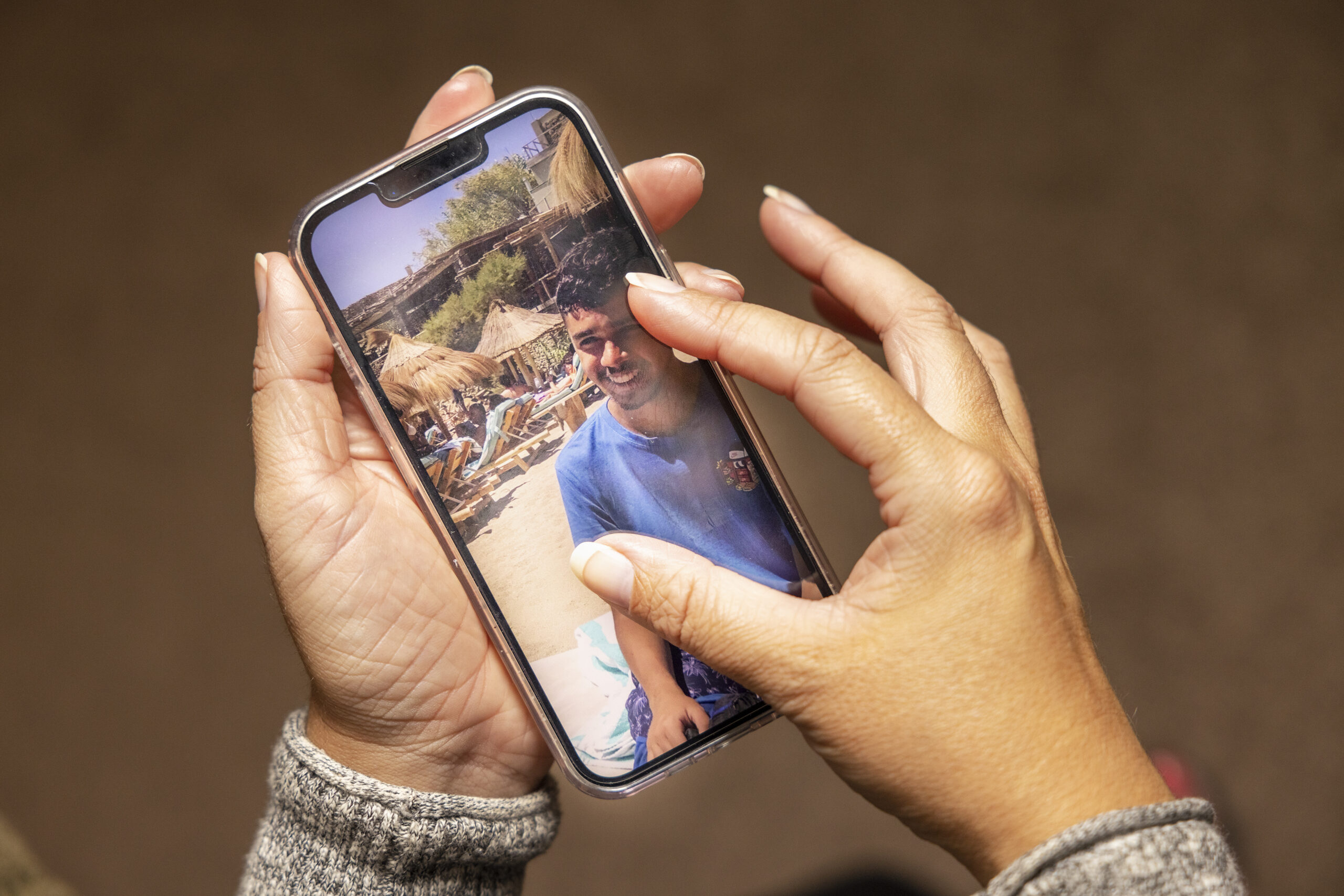
    Meredith Elizalde holds a photograph of her son, Nicolas, who was fatally shot after his football scrimmage in 2022 outside of Roxborough High School.

    For all this time, I’ve been able to picture Nick with his classmates at Saul, having the time of his life. But once June comes, where will I picture him? His life, as it was when he was killed, will be over. I cannot explain the level of distress this causes me. Who and where would my son be?

    In an effort to manage this pain, I made the decision to attend the Philadelphia Flower Show this year, so that I could see what Nick’s classmates had on display before they graduate. It’s hard for me to watch the Saul kids continue on without Nick, but it also provides me a brief, albeit painful, respite and sense of pride to watch them shine — and to imagine him with them.

    Visitors look at W.B Saul High School of Agricultural Sciences’ “Up-Rooted, Re-Planted” display at the Philadelphia Flower Showon Feb. 27.

    I was impressed and deeply moved by the homage to the Lenni Lenape. I could feel Nick’s Indigenous pride as I marveled at what his classmates had created.

    A man and woman were next to me, very engaged in the Saul exhibit, reading all of the signs. The man said, “The two high school exhibits”— Saul and Lankenau — “are the best ones here.” As a Saul mother and a former Philadelphia high school teacher, I felt a surge of maternal pride upon hearing that.

    I had just walked over from the Lankenau Environmental Science Magnet High School display, which was phenomenal. It was colorful and intimate. I especially loved the border of flowers in cinderblocks. It reminded me of how beauty pushes through hardness and barriers that are meant to suppress.

    A display by students from Lankenau Environmental Science Magnet High School, “Bloom Where You Are Planted,” is shown Feb. 28 at the Philadelphia Flower Show.

    Standing in front of the display, I saw three Lankenau students handing out fliers, which broke my heart. What a surreal feeling it was to stand in front of such a marvelous, artistic display of the natural world, next to some of its creators, as they asked people for help to save their school from closure. What a shortsighted decision to close Lankenau — a treasure in the “green lung” of the city.

    I am now an environmental graduate student at the University of Montana. My research was born from Nick’s deep love of Mother Earth, his exemplary stewardship of nature, his murder, and my experience of teaching high school in Philadelphia. Why would we close a school in one of what feels like extremely limited green spaces in a densely populated, urban area?

    Students in the botany club ant their teacher at Lankenau Environmental Science Magnet High School build a compost pile in this file photo from 2018.

    Scientific literature is saturated with the physical and mental health benefits of green and blue space exposure. The literature also details the correlation between tree canopy and lower crime rates. Nature deficit is real, and it has detrimental consequences, especially for our youth. The built environment and the omnipresence of screens have affected our youth in ways most people who do not interact with kids in an educational setting cannot understand.

    It therefore baffles me that a school in such an idyllic setting for place-based learning — where socioemotional learning can have greater impact because of the healing effect of natural settings on our nervous systems — is considered expendable.

    Last year, I taught undergraduate classes in Montana. We took a field trip to Yellowstone National Park for three days, and I was amazed at the level of comfort the students had with wilderness, teamwork, wayfinding, and so much more.

    Overall, they had knowledge about so many things that completely bewilder me — it was simultaneously embarrassing and inspirational. I wondered what our Philadelphia youth might feel like if more of them had greater access to the natural world, and, in turn, what would our society look like when they come of age and contribute to the community.

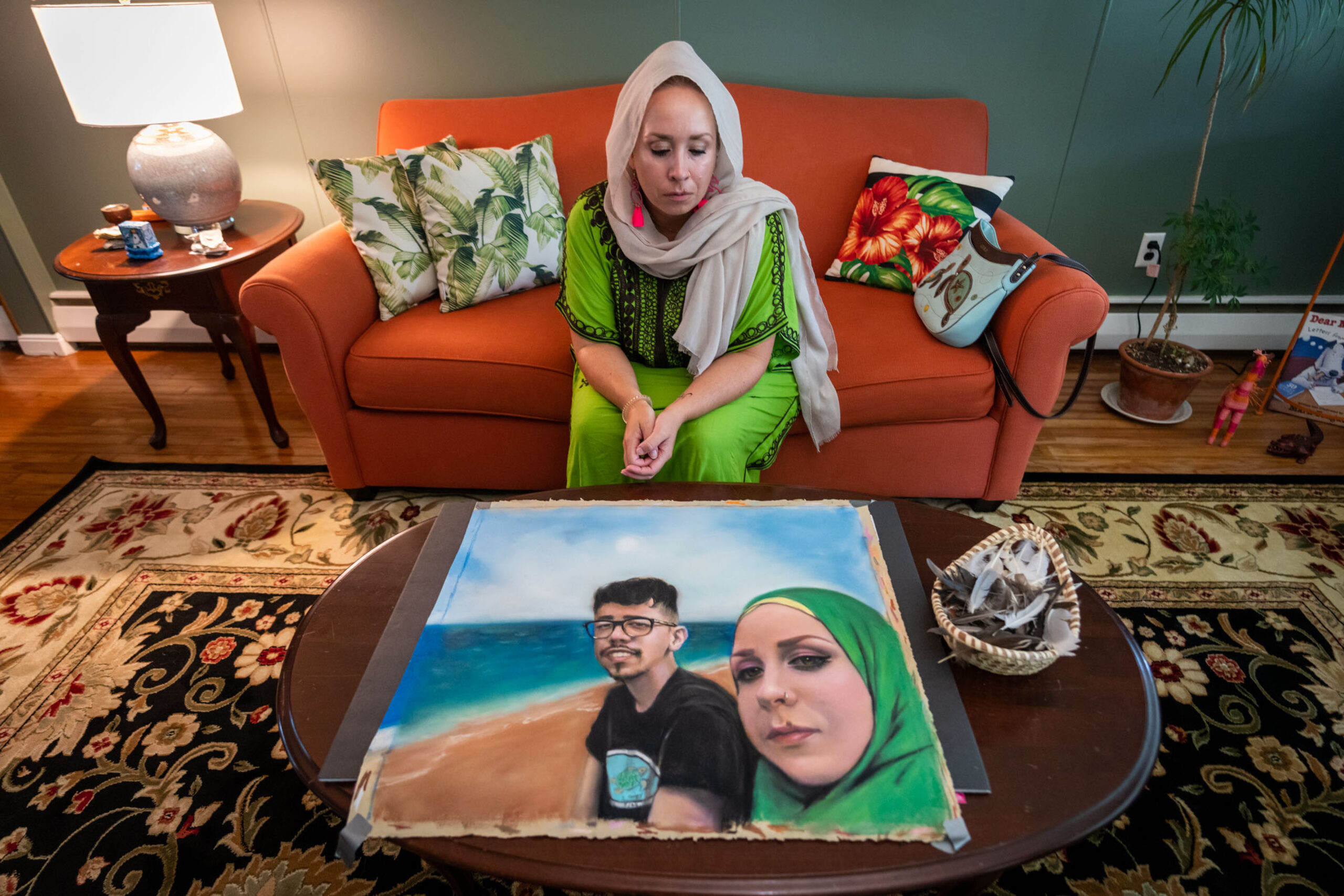
    Meredith Elizalde with a painting of her and her son, Nicolas, in Aston in July 2024.

    There are so few places like Lankenau; it is a travesty that we are even thinking about closing such a distinctive institution.

    We have lost so many young lives to gun violence. And those left behind are in a state of collective yet disenfranchised grief that permeates daily life in unseen but troubling ways. After Nick was killed, students posted wishes for themselves, each other, and society on the wall of Roxborough High School. So many wished for an end to gun violence and living in fear. One wished he would live to see age 25.

    When we lost Nick, our city lost a true conservationist and a pure soul. Lankenau graduates students who can help to fill that gap, left by all of our murdered loved ones and their stolen potential.

    I urge everyone, Philadelphia resident or not, to join the fight for Lankenau and all the schools slated to close. If you believe that every child deserves a chance, now is the time to act on that belief.

    One of the Lankenau students at the Flower Show told me they are “trying to make noise.” Let’s not put that burden on our youth, or solely on the shoulders of those most affected. Whoever you are — show up, make noise.

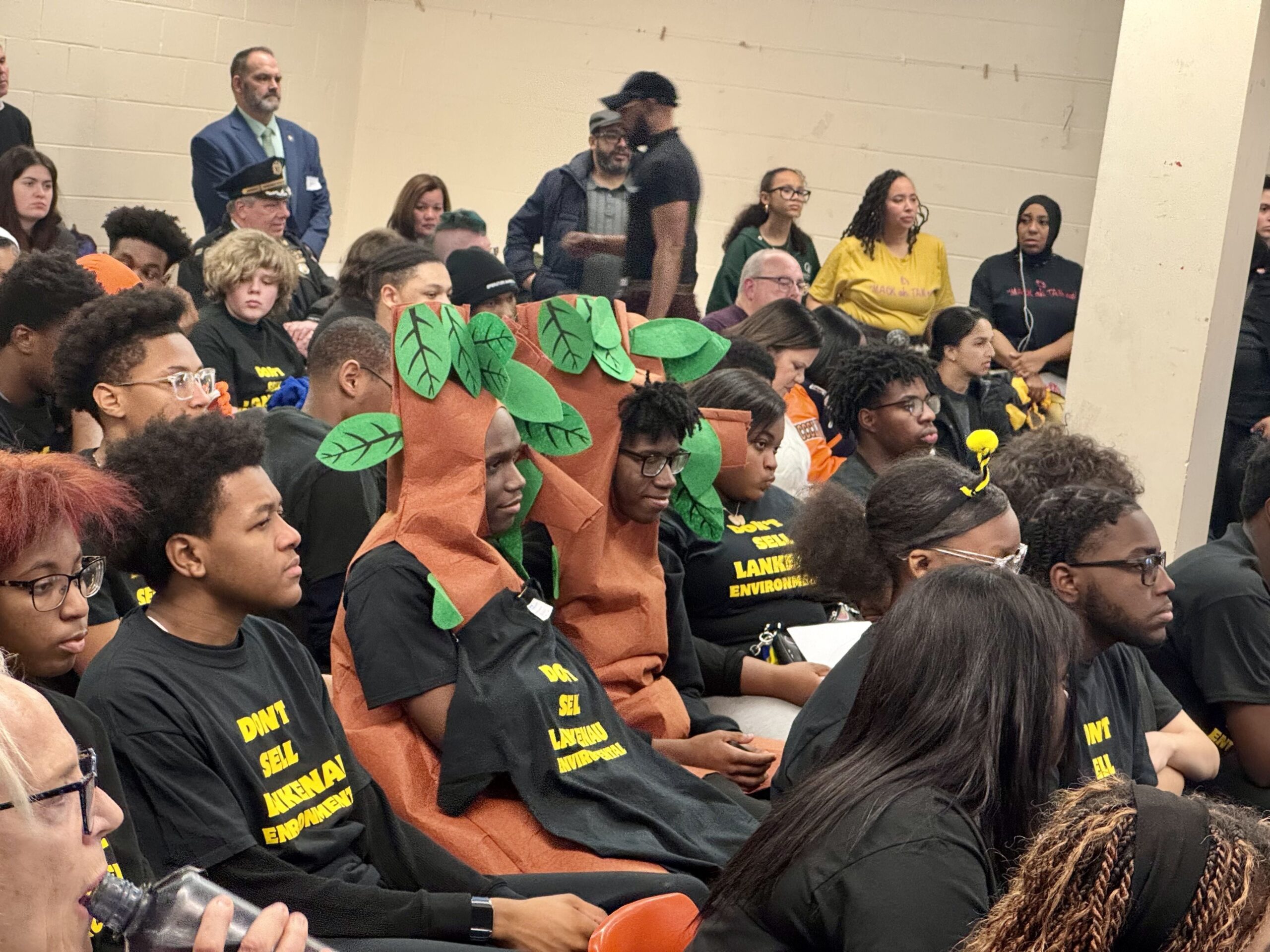
    Students, staff, and community members who support Lankenau High School — including some dressed as trees — packed a community meeting at the school Feb. 4. The Philadelphia School District proposes closing the city’s only environmental sciences magnet, citing issues including low enrollment. But the school system had a hand in limiting enrollment.

    A magnet school in a beautiful, natural setting is violence prevention, a soothing balm, and a safe haven from the chaos of life. The imam at Nick’s janaza read an African proverb: “The child who is not embraced by the village will burn it down to feel its warmth.”

    We are the village, and we must embrace our children.

    Meredith Elizalde is Nick’s mom. A former Philadelphia high school teacher, she is currently a graduate student at the University of Montana.

  • When it comes to accountability for Epstein’s wealthy associates, what’s the real price tag for justice?

    When it comes to accountability for Epstein’s wealthy associates, what’s the real price tag for justice?

    Hearing that the highest tiers of European royalty and government officials have been toppled for their association with Jeffrey Epstein, I can’t help but look closer at home and abroad. It’s hard to avoid uncomfortable comparisons.

    In the U.S., we’ve seen a lower tier of elite face consequences, such as Peter Attia and Larry Summers, who were spared termination but were able to resign. For the rest, it’s been a familiar playbook. When powerful people are accused of misconduct or even abuse, institutions move to containment — not transparency.

    The piecemeal release of the Epstein files reflects a familiar pattern: complaints and claims are made, evidence exists, but access is controlled. Accountability stalls.

    While the Constitution promises equal protection under the law, that protection comes through the courts and via its agents — attorneys. Juries decide on innocence or guilt, and then determine financial damages.

    In America, harm is monetized.

    It follows, then, that those who wield money and power can buy protection within the legal system. How can we forget OJ Simpson’s stable of lawyers, the best money could buy, nicknamed the “Dream Team.”

    Convicted sex offender Jeffrey Epstein owned islands and properties around the world. The files that the U.S. Department of Justice has selected for release show he cultivated a network of wealthy, high-profile friends and associates across the world.

    With financial resources and access to elite legal representation, those accused of wrongdoing are able to turn the pursuit of justice into a negotiation. Civil settlements, nondisclosure agreements (NDAs), and confidential arbitration dominate. As such, judgment and public accountability can be avoided or deferred.

    Examples abound. Roger Ailes was well known for his prolific use of NDAs at Fox News, and Harvey Weinstein avoided consequences of his actions for years, showing how money and power can make even the most egregious allegations against him disappear.

    Left unaddressed in those cases in which perpetrators are not brought to justice is the magnitude of the impact on victims.

    My career as an emergency physician and public health expert has centered on the vulnerable and at-risk. I have seen the long arc of trauma — through physical, mental, and behavioral health manifestations in my patients, most especially those who suffered adverse childhood events (ACE).

    Ranging from anxiety and depression to sleep disturbances, neurologic impact, chronic illness, and substance use, the consequences are long-standing and pervasive. This doesn’t include the depth of impact on what are known as the social determinants of health — job stability, housing stability, economic possibilities, and other nonmedical factors that can shape a patient’s well-being. The damages of trauma are not measurable in simple dollars.

    Power is often leveraged through coerced silence.

    Studies have shown that more than one-third of the U.S. workforce has been subjected to NDAs for workplace-related harassment, sexual misconduct, and employment discrimination. The National Women’s Law Center found NDAs isolate victims, shield serial predators, and allow harassment to persist.

    The Equal Employment Opportunity Commission (EEOC) notes significant underreporting in the workplace, where research suggests as many as 85% don’t report sexual harassment, and 94% of people don’t report discrimination.

    Years ago, a woman I was treating for opioid use disorder confided in me after holding me at reticent arms’ length for weeks. I noted a subtle change, where her steely gaze was replaced by downcast eyes. She whispered, “I want to tell you something.” She went on to recount how she had been sexually assaulted on more than one occasion by someone who was supposed to help her.

    She hadn’t told anyone out of fear. She felt trapped. After our session, I immediately sprang into action to alert authorities as a mandatory reporter and put mechanisms in place to keep her safe — especially for possible retaliation.

    Days later, when I saw her next, she was sobbing uncontrollably. I feared the worst until she finally whispered, “Thank you for believing me.”

    For the minority who do speak up, the consequences can be overwhelming. Speaking truth to power is fraught with danger that is rarely just legal. A victim’s credibility is often structurally discounted — framed as financially motivated, vindictive, or selfish.

    That skepticism is unevenly applied. Institutions often require overwhelming proof of undeniable and well-documented harm, while at the same time, extend presumption and patience to those with power. Countless examples illustrate how anchor institutions often circle the wagons to protect an accused, but leave the person harmed to fend for themselves.

    Lawyers and others are often forthcoming with victims about the risks of pursuing legal action. The list is long: litigation costs, reputational damage, professional blacklisting, social ostracism, and family exposure.

    The most common EEOC complaint is for retaliation, often in response to reporting harassment or discrimination internally within the workplace. People who report transgressions have faced career derailment and other penalties, perhaps most famously demonstrated by Lilly Ledbetter, whose landmark U.S. Supreme Court case prompted new standards for fair wages.

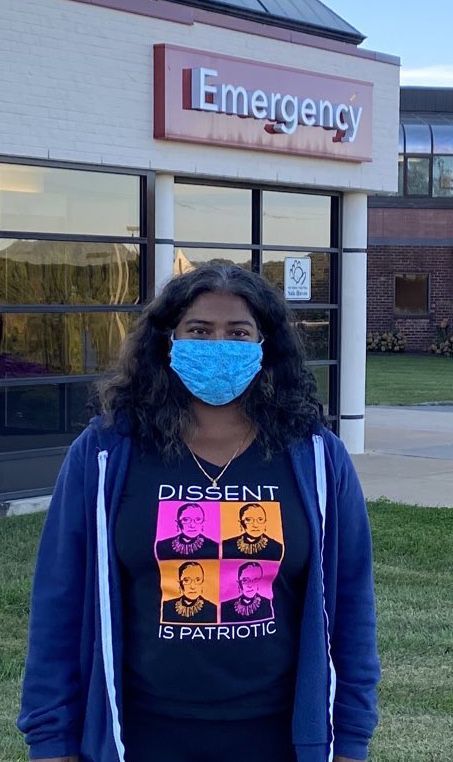
    The author photographed at Jennersville Hospital on Sept. 19, 2020. It was the day after Ruth Bader Ginsburg died, so Mammen wore a T-shirt to honor the late U.S. Supreme Court justice’s urging to challenge gender inequality in court.

    Despite Ruth Bader Ginsburg’s encouragement to challenge laws in court, it seems difficult for many to understand why someone might invoke the protections of our laws or work to establish safety and fairness for others. For the many who don’t have wealth or power as buffers, silence is survival — not consent.

    Europe does not always operate in a way Americans would consider fair or just. But in the last few weeks, we’ve seen that government officials and the highest-ranking citizens seem to be held to a higher standard than their counterparts in the U.S.

    Police officers stand in front of Buckingham Palace in London, Feb. 20, after Andrew Mountbatten-Windsor, formerly known as Prince Andrew, was arrested and held for hours by British police on suspicion of misconduct in public office related to his links to Jeffrey Epstein.

    There is a cultural expectation that power increases responsibility.

    The British monarchy and government have repeatedly centered the survivors in their response to questions and probes: “Our thoughts are with the victims.”

    Cynically, this could be a convenient deflection, but practically, it keeps the focus on those who have been hurt and wronged. It sets the tone from the top and normalizes compassion and empathy for victims over perpetrators.

    In America, power often confers insulation. In Europe, there is instead greater reputational consequence. That kind of accountability conveys justice precisely because it cannot be insured against. It changes the incentives.

    In Europe, they have fired the men who were involved with Epstein. In America, we have allowed them to step down, resign, or retire quietly.

    Will we allow power to protect itself more reliably than it protects the vulnerable — especially children?

    The enduring failure we are seeing play out is a collective nonconsequence for those who sit the highest among us. Accountability collapses where power concentrates.

    At the same time, lest we forget, it was the demands from everyday Americans that led to the release of the Epstein files. The public brought this issue to the forefront.

    We can use this moment to force change.

    If we demand extraordinary proof from victims, we must demand extraordinary transparency from power. If we believe authority confers responsibility, then ethical standards must be enforced. Boards, professional societies, and institutions cannot simply issue statements of values; they must act when those values are breached.

    Accountability cannot remain optional for the powerful. As voters, donors, consumers, and leaders, we decide what we will reward. We can insist that reputation reflect conduct. We can demand that rules travel upward, not only downward. We can see justice as an integral part of our democracy, and each of us equally deserving.

    As a society, we can be clear on whose harm matters. That choice is ours.

    Priya E. Mammen is an emergency physician, healthcare executive, and public health specialist who helps the nation’s most impactful companies integrate clinical integrity at scale.