Category: Opinion

  • No more gambling with public health: Pa. must ban skill games | Editorial

    No more gambling with public health: Pa. must ban skill games | Editorial

    The Pennsylvania Supreme Court finally made clear what has been obvious to every other commonsense observer: Skill games are slot machines.

    The question now is what will the General Assembly do about the estimated 70,000 skill games that it irresponsibly allowed to proliferate across the commonwealth?

    If Gov. Josh Shapiro and state lawmakers place public health and safety above raking in more tax revenue, they will follow Kentucky’s lead and ban skill games.

    But don’t expect Harrisburg to do the right thing when it comes to gambling. Governors and state legislators here have been hooked on gambling for two decades.

    They view the billions in tax revenue that comes from gambling as easy money that helps avoid raising taxes or operating the government more efficiently. But they ignore the hard truth that much of that tax revenue comes from billions of dollars in losses from repeat and problem gamblers.

    Research has found that slot machines are designed to addict users. Indeed, some Pennsylvania casino operators boasted early on that many customers came as often as six times a week.

    The explosion of online gambling apps — especially on sports — via smartphones, is even more addictive. One Pennsylvania man said he sometimes placed 500 bets a day.

    Unregulated gaming devices known as “skill games” inside a convenience store in Philadelphia. The State Supreme Court recently ruled the devices are slot machines.

    Studies have linked problem gambling to job loss, depression, suicide, domestic violence, and divorce. But lawmakers continue to ignore the growing public health crisis that impacts broader society. That’s because the same lawmakers are also in the vise grip of the influential gambling lobby that pours millions into their campaign coffers.

    Recall that the gambling lobby helped write the law that legalized slot machines in Pennsylvania back in 2004. Then-Gov. Ed Rendell and former State Sen. Vince Fumo (D., Philadelphia) pushed through the measure with little debate. They morphed a 33-line document about background checks at horse racetracks into a 145-page bill known as Act 71, which cleared the way for up to 61,000 slot machines in 14 locations.

    In the ensuing years, Harrisburg lawmakers have legalized more and more gambling, adding table games, online betting, and sports betting.

    Pennsylvania now leads the country in gambling revenues it takes in, thanks to a surge in online betting that is reaching teens and kids as young as 11.

    The commonwealth also has one of the highest addiction rates.

    Casino backers argue that problem gambling only affects around 3% of the population. But that includes most people who do not gamble.

    Advertisements for sports betting apps are seen in downtown Kansas City, Mo., in November.

    Studies found 60% to 90% of casino revenues come from problem or at-risk gamblers. When it comes to sports betting, 86% of the revenues come from just 5% of the gamblers. So, the business model essentially depends on problem gamblers.

    But as Harrisburg lawmakers rushed to legalize additional gambling options, they looked the other way as thousands of skill games popped up in local taverns, gas stations, laundromats, convenience stores, and social clubs, like VFW halls.

    In the gambling industry food chain that preys on the most vulnerable, skill games are among the bottom-feeders.

    But skill games have been allowed to operate for years with no regulation or taxation. Many machines are in poor neighborhoods in Philadelphia and small towns.

    Some small business owners — such as the corner taverns and social clubs — argue that skill games help attract customers. But if a business is dependent on repeat gamblers mindlessly pumping money into a machine, it is time to innovate.

    In addition, skill games have been linked to increased crime, including armed robbery and murder.

    Last year, a Philadelphia jury ordered Pace-O-Matic, the leading skill game maker, to pay $15.3 million to the estate of a Hazleton store clerk killed during a 2020 robbery.

    A convenience store clerk in Frankford who was shot during an armed robbery recently sued Banilla Gaming, a North Carolina-based skill games manufacturer, alleging it enticed the robbery because of the large amounts of cash the store maintained to pay gamblers.

    Skill game devices inside Philly Market in the city’s Frankford section.

    In 2024, the Philadelphia City Council voted to ban skill games because they attracted crime, but the Commonwealth Court quickly lifted the ban.

    Now, it is up to the General Assembly’s lawmakers to fix what they have long ignored.

    Shapiro has proposed regulating and taxing skill games at 52% — the same rate as slot machines in casinos. Before becoming governor, he expressed disdain for gambling, but now he is all in. Shapiro estimated skill games could bring in $2 billion in revenue for the state — glossing over that the money comes from individual gambling losses. (The state doesn’t even use the word gambling; they call it “gaming” as if it is all good, clean fun.)

    Pace-O-Matic, the most influential skill game player, wants a much lower tax rate of around 16%. Its army of lobbyists — and lawmakers willing to do their bidding — will surely have a lot to say about what comes next. So will the lawmakers on the side of the casino lobby, which wants an even playing field.

    Average citizens don’t have a voice in this fight.

    The state Supreme Court gave the General Assembly 120 days to figure out what to do next. If the legislature fails to act within that period, the skill games will be deemed illegal and could be subject to seizure.

    During the 2023-2024 session, three state Senate Democrats introduced a bill that called for banning skill games. That remains the best path forward.

    But expecting Harrisburg to protect citizens from gambling ills is a long shot.

  • For Haitians in Pa. facing deportation, the World Cup is a rare source of hope

    For Haitians in Pa. facing deportation, the World Cup is a rare source of hope

    Haiti’s June 19 World Cup match against soccer’s most decorated nation, Brazil, held at Philadelphia’s Lincoln Financial Field, encapsulates the contradictions at the heart of FIFA’s flagship event this summer.

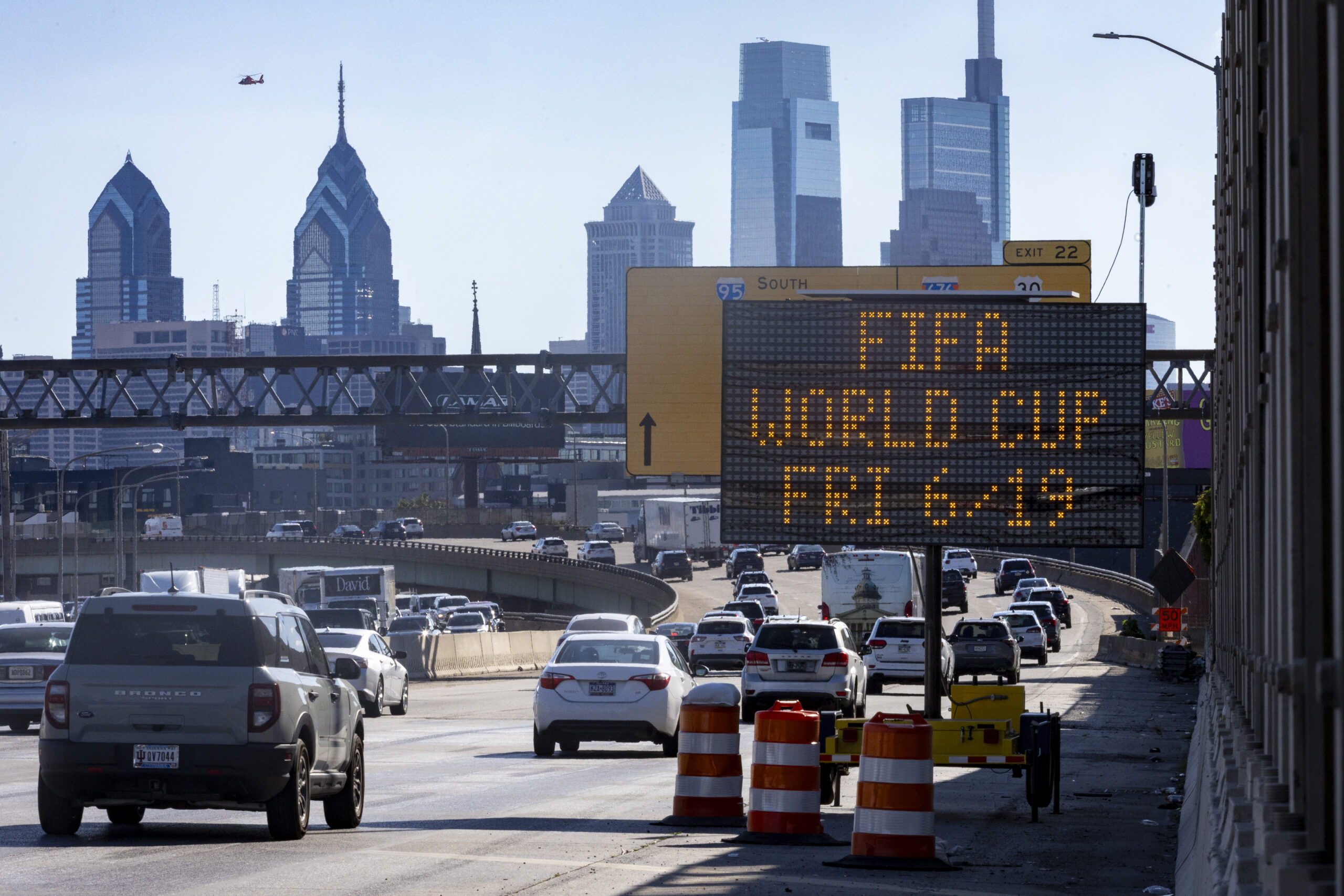
    A traffic sign on I-95 informs drivers of expected traffic delays to occur because of the World Cup match — Brazil is set to face Haiti — on Friday at Lincoln Financial Field in Philadelphia.

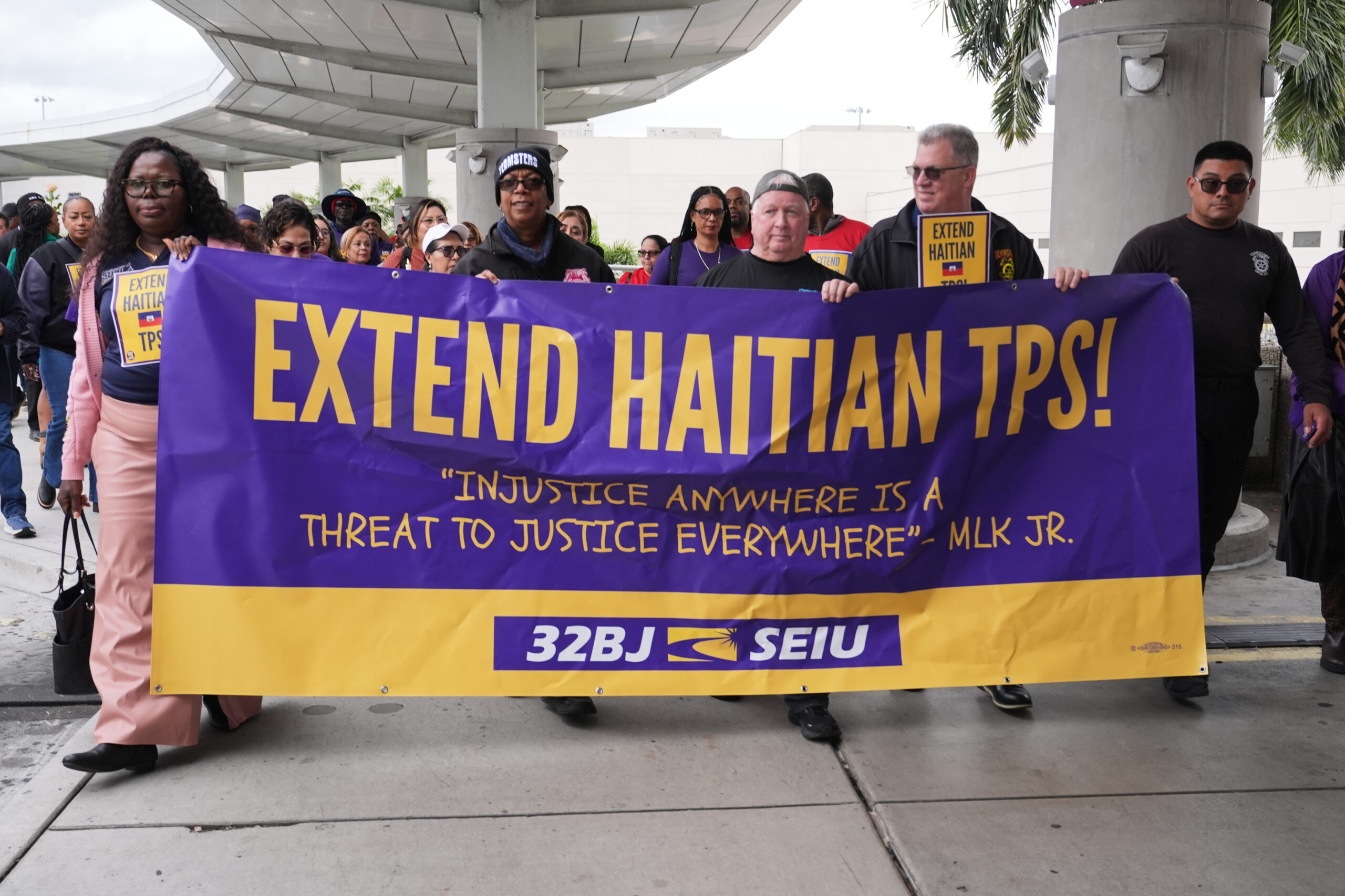
    The World Cup — and Haiti’s first appearance in it since 1974 — is a welcome distraction from the humanitarian and security crisis at home. For many Haitians, however, the Trump administration’s cruel immigration policies, including its effort to terminate this Caribbean country’s temporary protected status (TPS) — a form of protection against deportation to dangerous situations — casts a shadow over the tournament.

    Since a catastrophic 2010 earthquake, Haitians have dealt with one disaster after another, including a cholera epidemic, devastating hurricanes, increasing violence, and chronic political instability.

    The current crisis, during which criminal groups have consolidated control over most of the capital, Port-au-Prince, and expanded to at least four more of Haiti’s 10 regions, has killed thousands, displaced more than 1.5 million people, and led to widespread sexual violence.

    Even before the World Cup began, the odds were stacked against Haiti’s “Grenadiers” — a nickname that pays homage to the revolutionary soldiers who fought for Haiti’s independence in 1804. The squad managed to top their regional qualifying group for the tournament despite not being able to play a single game on home soil; their national stadium is in an area controlled by criminal groups. It was a remarkable feat — one that ended Haiti’s 52-year wait to participate in another World Cup, and became a source of immense pride for Haitian soccer fans around the world.

    Haiti fans cheer during the World Cup Group C soccer match between Haiti and Scotland in Foxborough, Mass., near Boston, on June 13.

    For the coming weeks, Haitians will be celebrated on the world stage and their players welcomed with open arms, but their fans may find their paths to the stadiums — or to the United States itself — inaccessible.

    In Philadelphia, many by now will have already seen proud Haitian fans sporting their team’s blue and red jerseys. But while the World Cup inspires hope and pride for Haitians living in the U.S., the Trump administration’s immigration policies, including the possibility of U.S. Immigration and Customs Enforcement presence at or near World Cup venues, may elicit anxiety, fear, and exclusion.

    Haiti is one of 39 countries affected by U.S. government travel restrictions that prevent fans from supporting their countries in person this summer. Although the ban includes an exception for athletes, Woodensky Pierre, the only Haitian player based in the country, missed a vital pre-tournament match after his U.S. visa wasn’t approved in time. He landed at Miami airport shortly after the game began and was later embraced by his teammates on the pitch at the final whistle.

    It is the attempts to terminate Haitians’ temporary protected status, however, that pose the most serious human rights concerns for Haitians who are already in Philadelphia and other cities.

    Under U.S. law, the Department of Homeland Security can designate a country for this status when conflict, environmental disasters, or other circumstances temporarily prevent its nationals from returning safely, or when the country cannot adequately handle their return.

    TPS protects beneficiaries from removal, allows them to apply for work and travel authorization, and prevents Homeland Security officials from detaining them solely based on their immigration status.

    Haiti first received this designation after the 2010 earthquake. Since then, and because conditions in Haiti itself have not improved, hundreds of thousands of Haitians in the U.S. have built lives, raised families, and become essential contributors to local communities, including in Philadelphia. Approximately 330,000 Haitians now have TPS in the United States.

    Haitian TPS holders in the U.S. need stability, protection, and a durable path forward, writes Robbie Newton.

    The Trump administration is now trying to strip Haitians of this protection.

    Despite clear evidence that the human rights crisis in Haiti is worsening, the Department of Homeland Security insists that “country conditions have improved to the point where Haitians can return home safely.” A Supreme Court decision on the legality of ending this protection is expected this summer.

    Residents flee their homes to escape clashes between armed gangs in Port-au-Prince, Haiti, in May.

    Terminating the protection would have devastating consequences, exposing hundreds of thousands of Haitians to detention and possible return to the “cataclysmic” situation unfolding at home, where they would face serious risks of kidnapping, extortion, and other abuses by criminal groups.

    For the 15,000 Haitians protected by TPS in the state of Pennsylvania, making it to the World Cup and cheering on their team represents a powerful symbol of hope and unity at a precarious time for the community.

    Other soccer fans who root for the underdog will very likely cheer on Haiti as it makes its way through all of its Group C matches (and, hopefully, into the knockout stage). But support for Haiti should extend beyond the World Cup. The U.S. government should renew temporary protected status for Haitians.

    Haiti’s Grenadiers deserve their place at the World Cup. For Haitian TPS holders in the U.S., the stakes go far beyond the tournament.

    Robbie Newton is a senior coordinator and in the sport and human rights team at Human Rights Watch.

  • Letters to the Editor | June 19, 2026

    Letters to the Editor | June 19, 2026

    Birthday spectacle

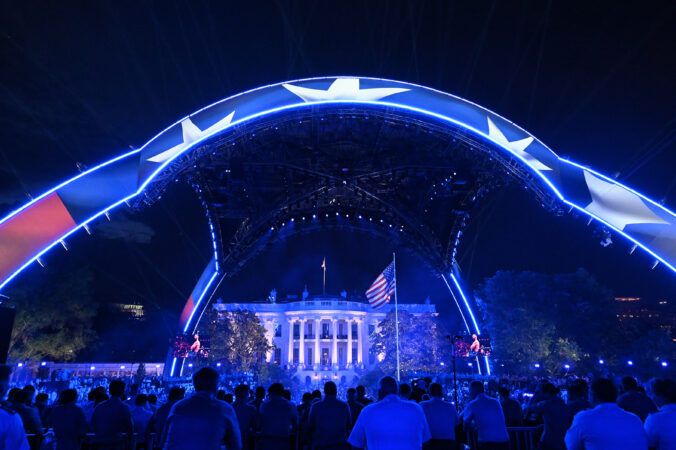
    Donald Trump built an arena at the White House to stage a UFC fight on his birthday. It is an abomination, which means it is loathsome and disgusting. Not only is it disgusting to look at but also detestable for the violence and greed it displays and promotes. The “fight scape” should be revolting to those who appreciate American constitutional values.

    I want to point out that the arena is an abomination in the matter of religious faith, too. Biblically speaking, an abomination was (and is) something ritually and ethically repugnant to God and to those who follow a religious path. Called “detestable things,” abominations were objects associated with idolatry and heathen deities, unclean or prohibited foods, and offensive violation of religious customs. A revolting example of this was the attempt by the Roman emperor Caligula, in 40 A.D., to have his statue erected in the temple in Jerusalem.

    The arena is another effort by President Trump to spread his name, image, and likeness in areas of American public life, so he can stand foremost in the eyes of our nation’s people. His face is on banners, and his name is on buildings. He has his (blessed) statue. He’s looking for approval and idolization, but these attempts strike me more like a meandering dog profanely marking his territory.

    His birthday festival usurped Flag Day. Trump appeared as the main attraction for his birthday — and he will also make July Fourth all about himself as well. His UFC fights happened. He hinted that the arena may stay up beyond that date. What for? Maybe he will try to establish new gladiatorial games holding matches between UFC champions and Mr. Trump’s “enemies.” What could be more detestable? That’s a big “thumbs down.” We already have enough bloodshed, corruption, and violence. One abomination at the White House is already too many.

    The Rev. Jack McAnlis, Langhorne

    Water weaponized

    A reported U.S. attack on two water reservoirs in southern Iran shortly before the ceasefire was announced left 20,000 people without access to drinking water, according to the Mizan news agency in Iran. In a statement, the local Iranian water utility company said the reservoirs were “targeted and completely destroyed” in the U.S. strikes in the Bemani area of Sirik in Iran. If true, it would be a crime against humanity, something no American would want our country to do.

    Andrew Mills, Lower Gwynedd

    Join the conversation: Send letters to letters@inquirer.com. Limit length to 150 words and include home address and day and evening phone number. Letters run in The Inquirer six days a week on the editorial pages and online.

  • What to the oppressed is the Semiquincentennial?

    What to the oppressed is the Semiquincentennial?

    I’ve been thinking a lot about the speech Frederick Douglass gave on the 76th anniversary of the signing of the Declaration of Independence. Posed as a question, “What to the Slave is the Fourth of July?” the answer written in commentary form hasn’t lost its power or relevance in Philadelphia in 2026: “What, to the American slave, is your Fourth of July? I answer: a day that reveals to him, more than all other days in the year, the gross injustice and cruelty to which he is the constant victim.”

    This summer will place Philadelphia in the spotlight not only with the celebration of America’s Semiquincentennial, but also as a host city for the FIFA World Cup, the PGA Championship, and the MLB All-Star Game.

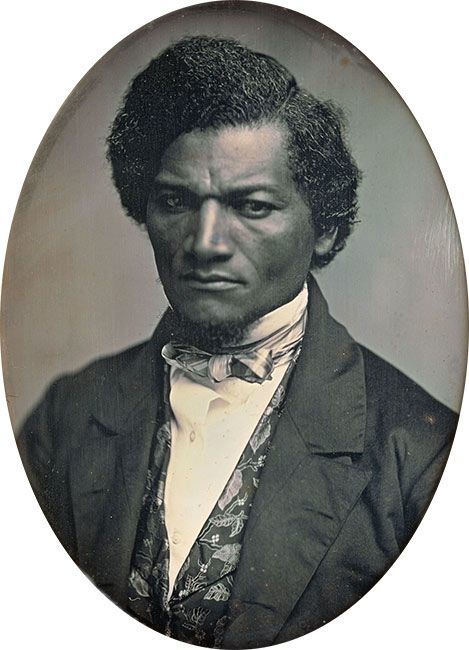
    Frederick Douglass, ca. 1847-1852.

    Just as Douglass decried our delusions of progress and challenged why victims of a broken system would celebrate their own oppression, we see that patterns repeat.

    Philadelphia will be center stage, celebrated as having birthed the nation, while the federal government wages war on its own cities, defunds basic services for its people, whitewashes and rewrites history in spaces such as the President’s House at Independence National Historical Park, and, despite describing itself as an avatar of freedom, bombs sovereign nations.

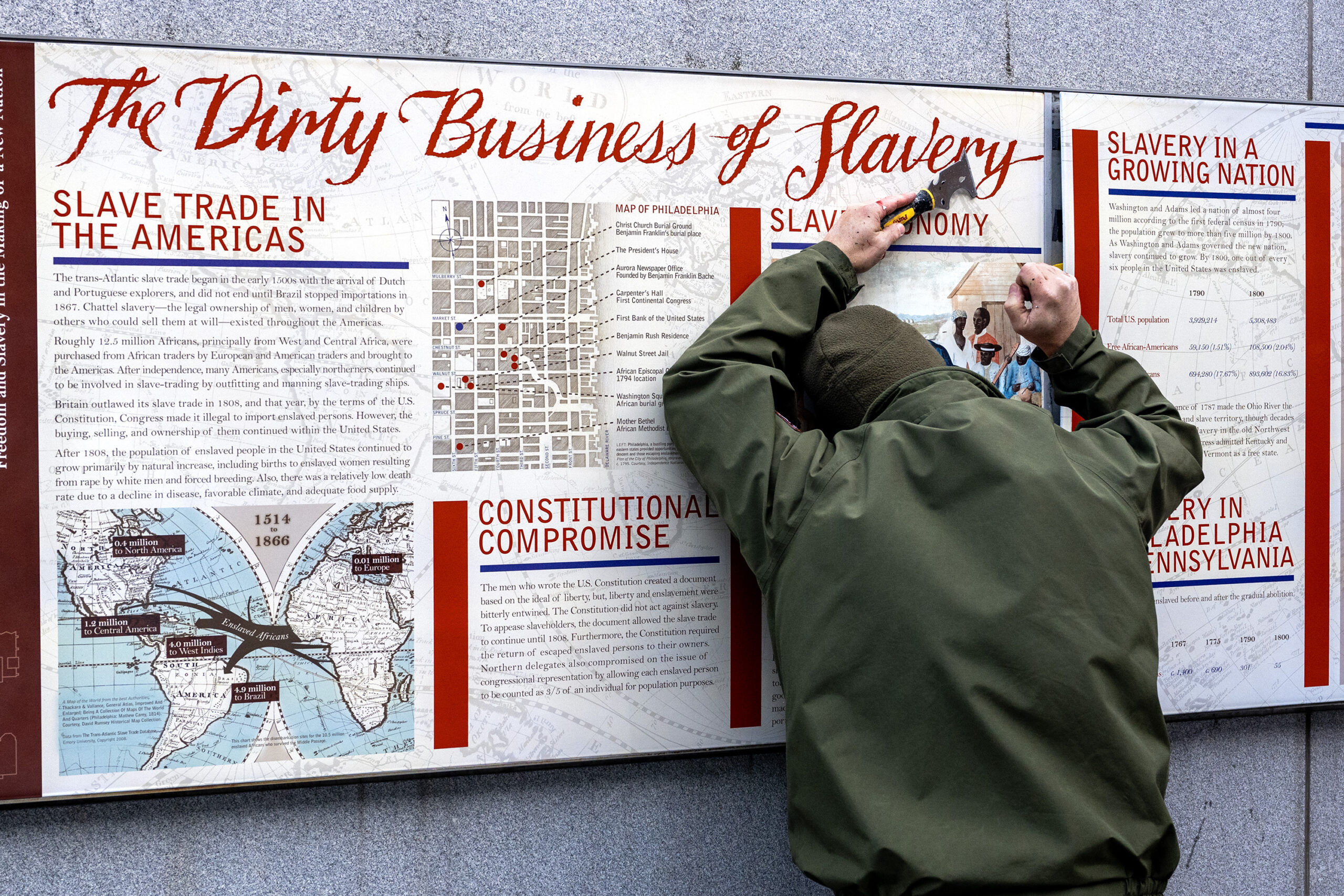
    A National Park Service worker removes an interpretive panel at the President’s House Site.

    As we invite the world to celebrate the World Cup with us, we have banned residents of some of the participating countries and unleashed a year of domestic terrorism by agents of U.S. Immigration and Customs Enforcement and the U.S. Department of Homeland Security, which will make it unsafe for people of color from throughout the world to attend.

    Soccer jerseys on exhibit at at the National Liberty Museum.

    The events themselves will serve as an excuse for an influx of federal security agents — and there is nothing that makes me feel safe about them coming to Philadelphia this summer to keep us “safe.”

    In Philadelphia, while we want to accentuate the positive and celebrate our standing as a great city, we continue to see an increase in the unhoused population, a lack of affordable housing, underfunded and ineffective education and transportation, and a lack of economic opportunity for our residents.

    And we continue to ignore our broken carceral system, which hungrily awaits the failures of everything listed above.

    As Douglass wrote in his famous speech: “I say it with a sad sense of the disparity between us. I am not included within the pale of this glorious anniversary! Your high independence only reveals the immeasurable distance between us. The blessings in which you, this day, rejoice, are not enjoyed in common.”

    We hold these truths …

    This summer is not just about the nation, but about Philadelphia trying to put its best foot forward to show the few gleaming spots in our house, while keeping visitors from seeing the dirt inside the closet or under the couch.

    As Douglass likely experienced in 1852, I can already see the faces of some reading this and thinking, This is not the time for all your talk. We cannot allow Philadelphia to be disparaged.

    I am not disparaging Philadelphia — I am holding onto the city’s multiple truths.

    This is a great city and is the birthplace of independence for some — but instead of serving as the cheerleaders for despots and a city that submits to our nation’s current “king,” we should be the city that serves as the vanguard of resistance. Our city cannot stand on both sides of history and hold hands with our oppressors simply because we are desperate to be noticed.

    As it was with Douglass 175 years ago, where we stand today will be remembered tomorrow.

    The need for plain speaking

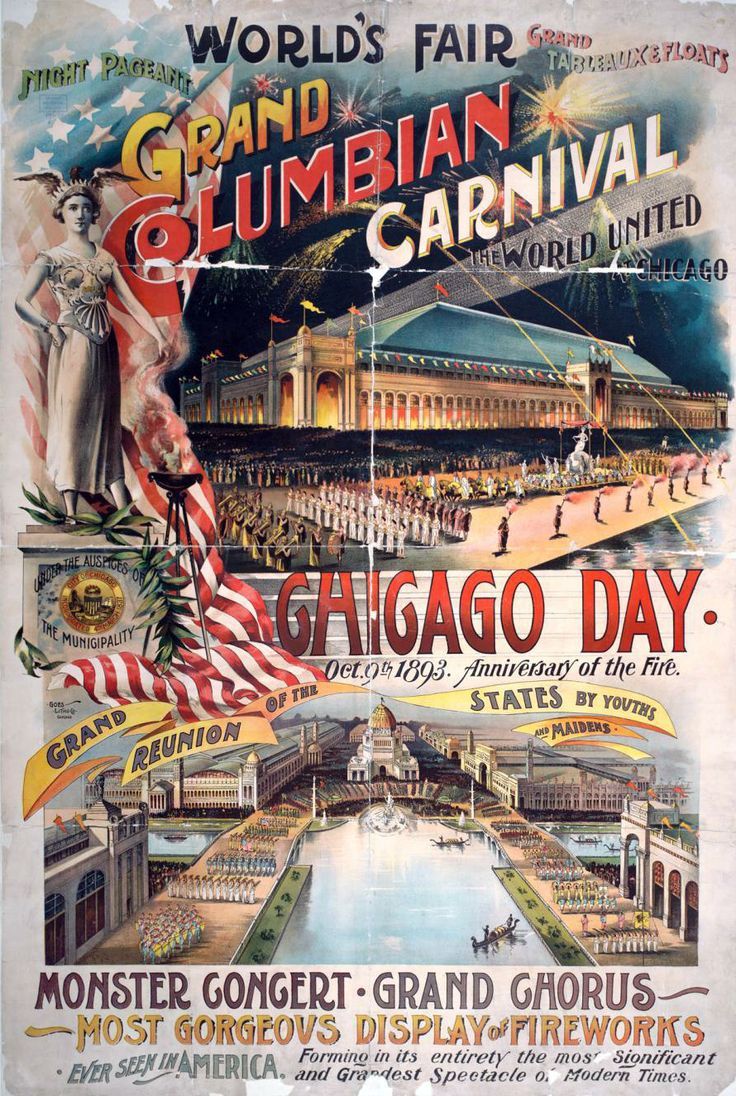
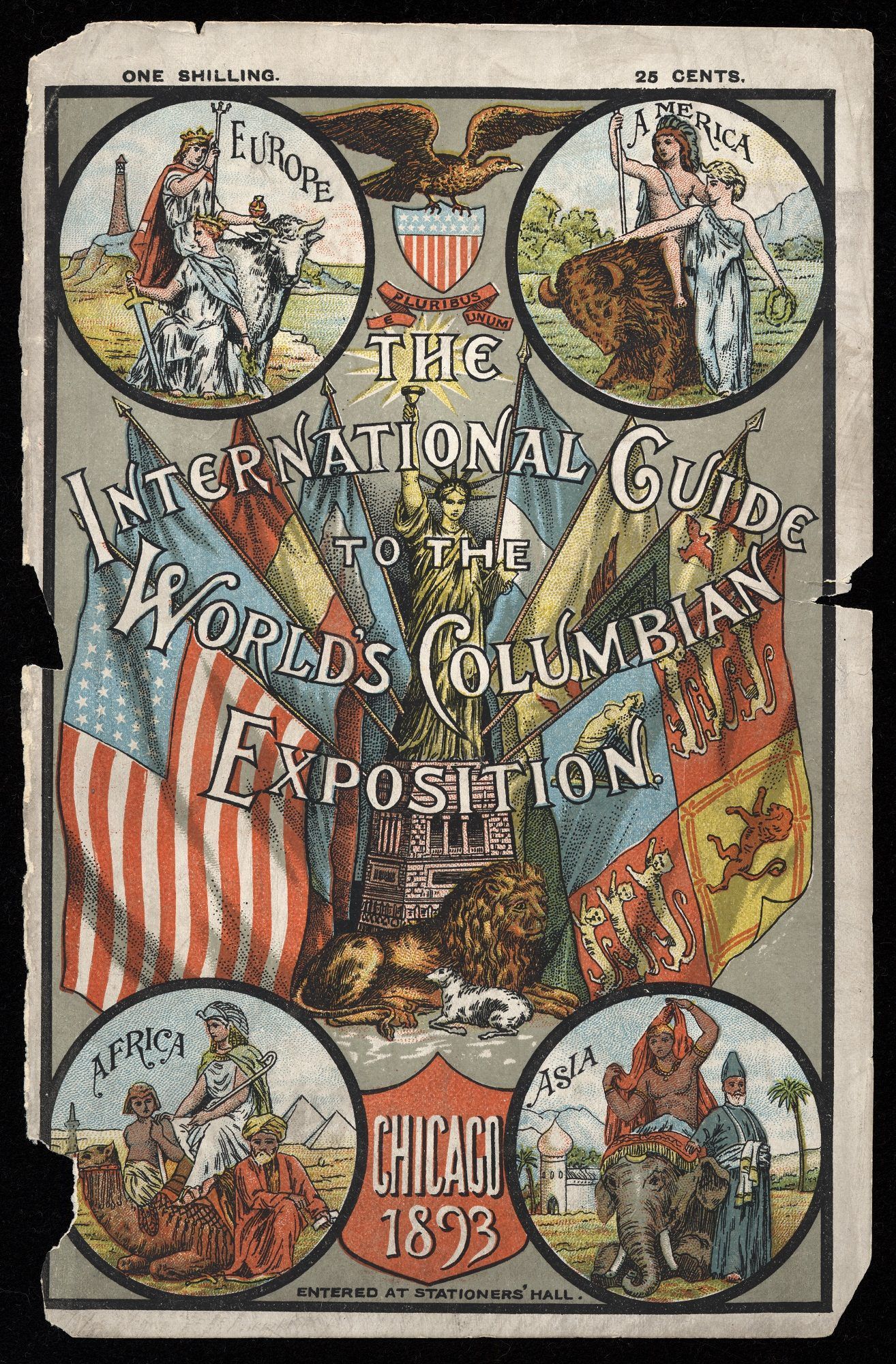
    Forty years after Douglass shared his words about the Fourth of July, America had once again chosen to celebrate its history and place in the world — this time through the 1893 World’s Fair in Chicago, which marked the 400th anniversary of Christopher Columbus’ landing in the Americas.

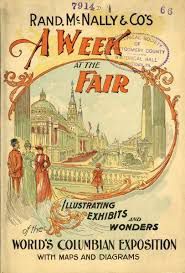
    Program from the 1893 World’s Fair in Chicago.
    Program from the 1893 World’s Fair in Chicago.

    Just four years earlier, the event had been held in Paris, and marvels such as the Eiffel Tower were shared with the world, showing the importance and ingenuity of the host nation.

    This era is often referred to as the “Gilded Age,” a time our current president fondly looks back on and wishes we would return to. “We were at our richest from 1870 to 1913. That’s when we were a tariff country,” President Donald Trump said in March. But it was also a time defined by government corruption, inequality, and exploitation, and it took place only 28 years after the end of slavery in America.

    While Paris gave the world the Eiffel Tower, the 1893 World’s Fair in Chicago introduced the world to Cracker Jack, the first dishwasher, and the first Ferris wheel — which stood 264 feet tall and carried 2,000 passengers — a monument to America’s greatness!

    While the fair was about all of America, the only space for Indigenous peoples was in the exotic exhibits of peoples from around the world. While the fair was about all of America, white women asked for their place within the fair and, after initially being denied a role, were eventually granted one through the creation of the World’s Congress of Representative Women.

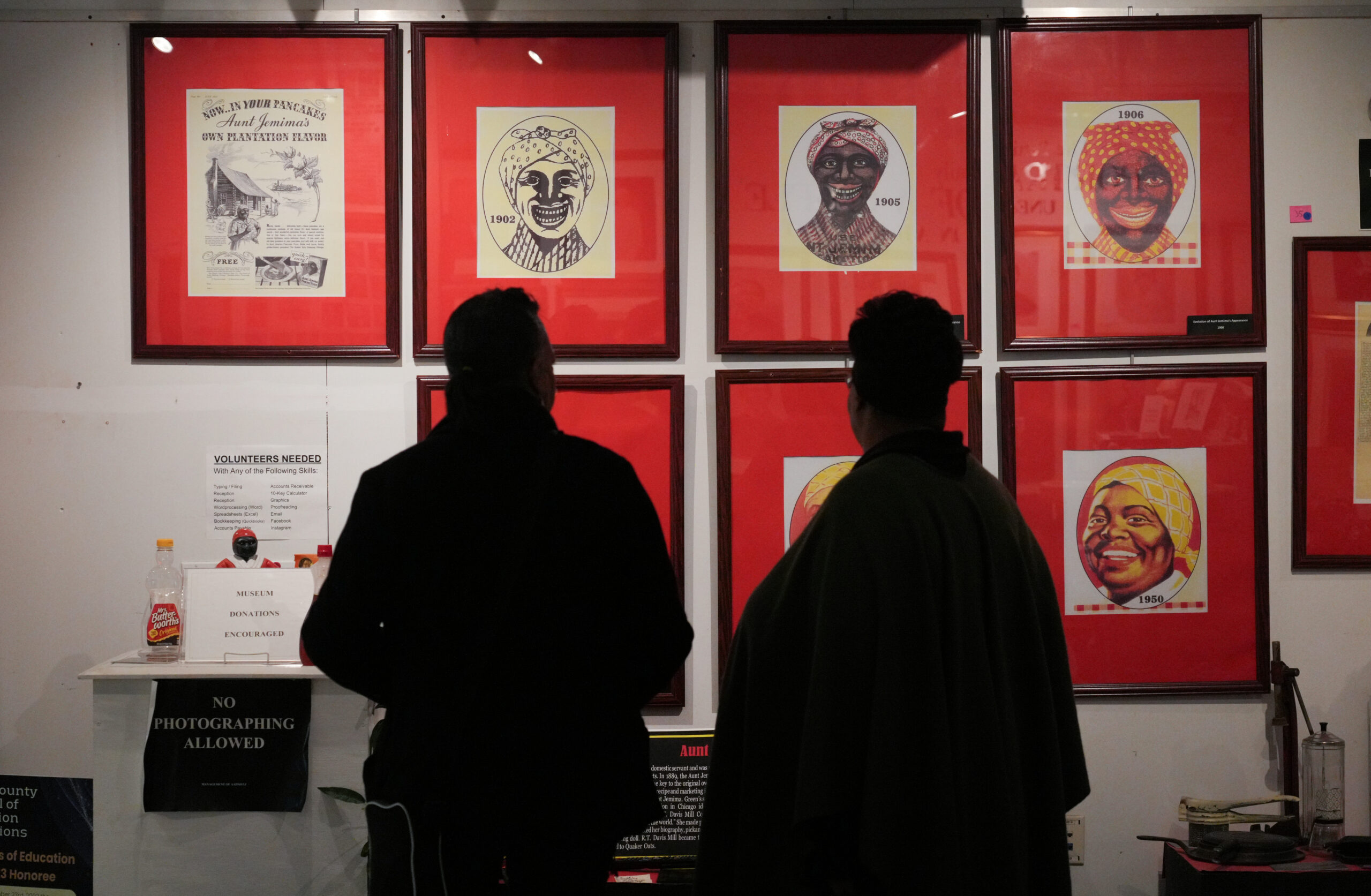
    Aunt Jemima in ads at the African American Heritage Museum of Southern New Jersey.

    While the fair was about all of America, African American luminaries such as Douglass and Ida B. Wells were denied any formal space or role. Instead, it was determined by organizers that participation of African Americans would be marked by introduction to the character Aunt Jemima — a fictional depiction playing to all fantasies of the happy slave and the way of life lost after emancipation — and through Negro Day, during which the organizers of the fair gave away 2,000 free watermelons to visitors.

    After being denied any real role within the fair, African American leaders appealed for sponsorship to the newly recognized World’s Congress of Representative Women, and that group said no — foreshadowing the next 150 years of American politics. With that denial, African American leadership turned to the Haitian delegation and received support from the only country that successfully established a new government from a slave revolt.

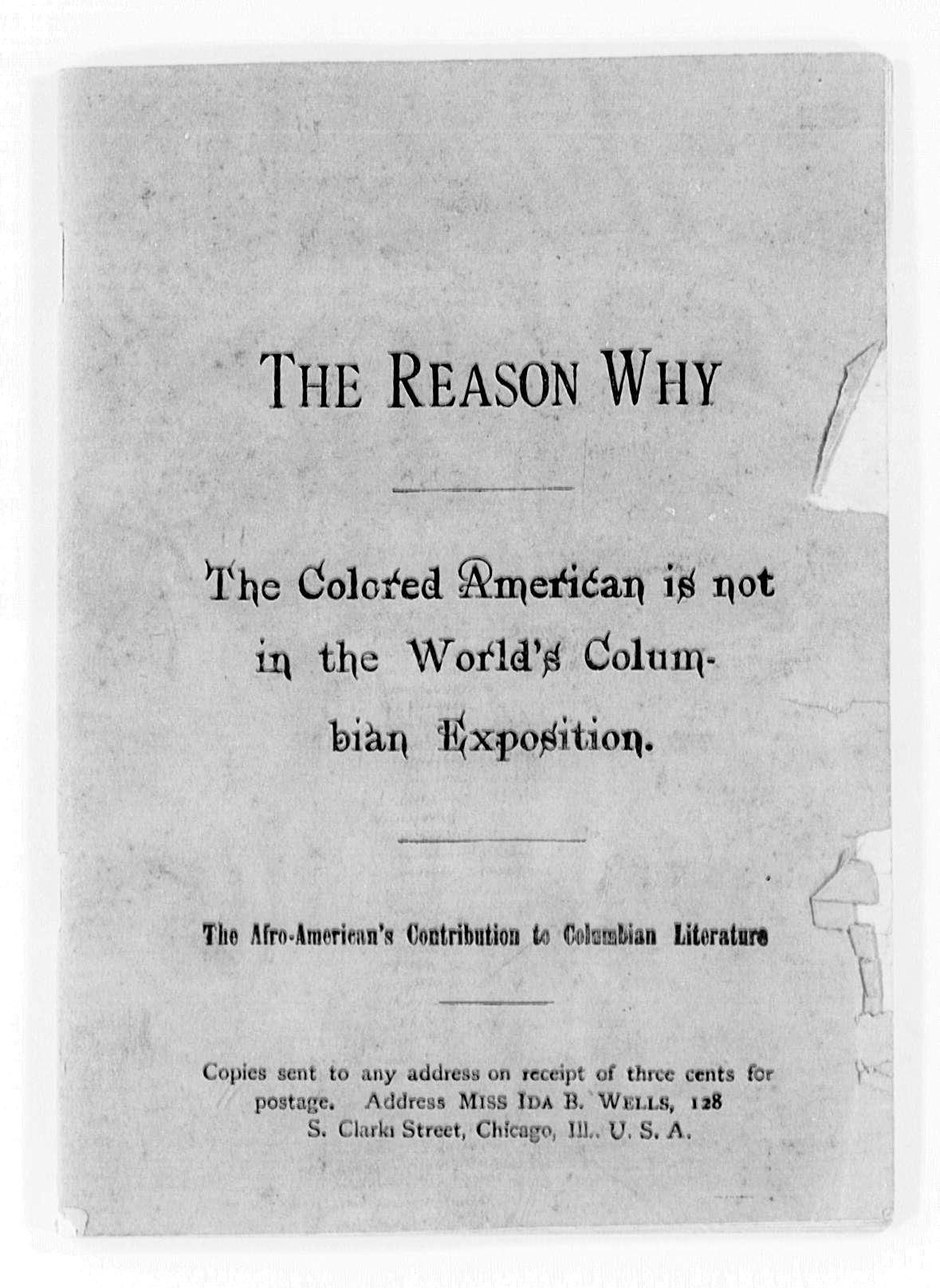
    The pamphlet distributed from the Haitian exhibition space at the 1893 World’s Fair in Chicago.
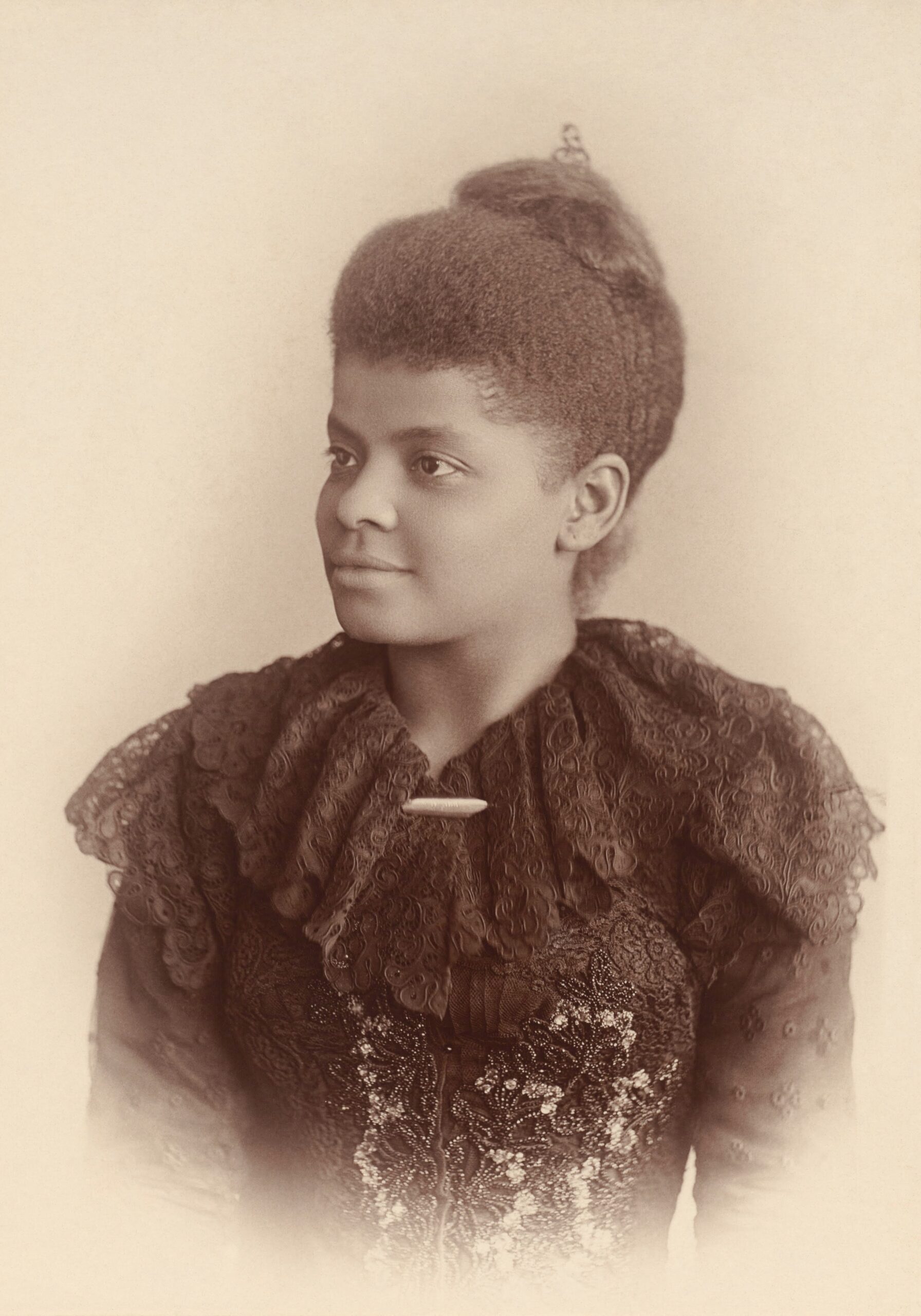
    Ida B. Wells Barnett, c. 1893.

    It was from the Haitian exhibition space that an alternative conversation took place, one that started with “The Reason Why: The Colored American is not in the World’s Columbia Exhibition,” a pamphlet which explained the current condition of the American Negro, but also spoke to the history, the successes, and a vision for the future.

    In it, Douglass wrote that “it involves the necessity of plain speaking of wrongs and outrages endured, and of rights withheld, and withheld in flagrant contradiction to boasted American Republican liberty and civilization. It is always more agreeable to speak well of one’s country and its institutions than to speak otherwise; to tell of their good qualities rather than of their evil ones.”

    I live and work in Kensington, an area of Philadelphia built during the Gilded Age to create wealth for a few. Our community is literally still trying to recover from that era; we have no interest in bringing it back or celebrating the destruction it caused.

    Just as during the Gilded Age — when a false history was celebrated in order to justify and whitewash the failures of America — we are walking into the trap of reproducing our mistakes without recognizing the current conditions, or centering the voices of those most affected by them.

    The 1893 World’s Fair in Chicago promotional flier.
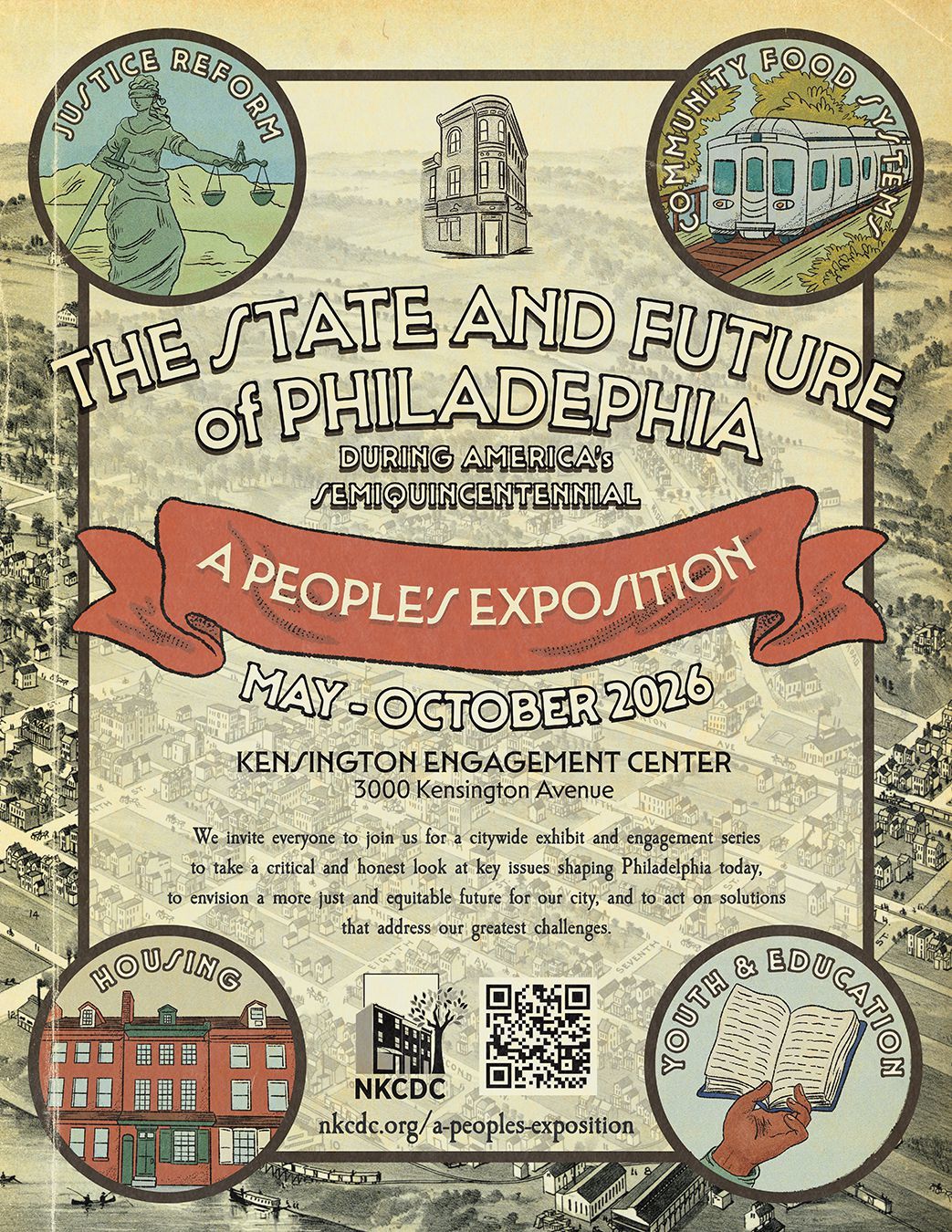
    “A People’s Exposition” 2026 promotional flier.

    Welcome to ‘A People’s Exposition’

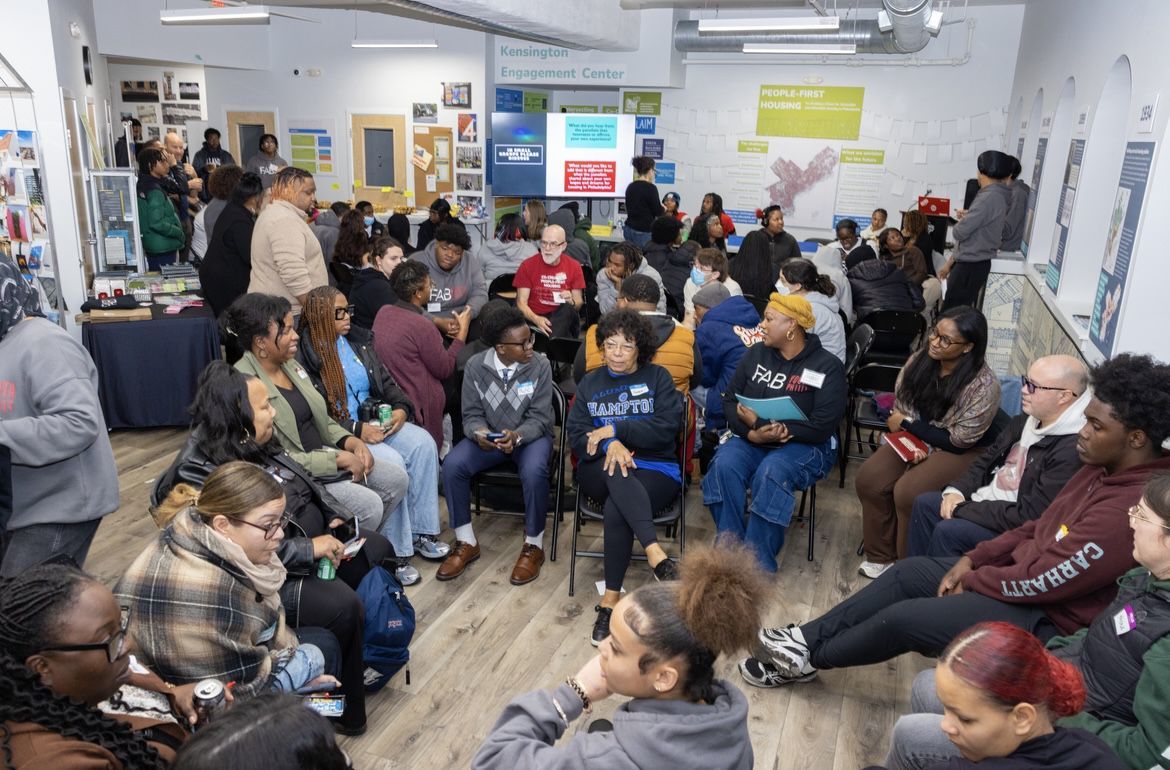
    In the spirit of Douglass and Wells, and the ways they challenged “the celebration of oppression,” New Kensington Community Development Corp., along with partners throughout the city, invite you to participate in “A People’s Exposition” at the Kensington Engagement Center — to take a critical and honest look at our city’s challenges, to envision a just and equitable future, and to act on cocreated solutions.

    Opening on May 20 and running through October, partners from across the city will collectively create a welcoming space where we can learn about the status of Philadelphia’s most pressing issues, including the housing crisis, poverty and workforce development, the criminal justice system, youth and education, and community food systems and transportation.

    We invite you into a space of the curious and the committed, to learn and connect to current efforts and campaigns that are working toward addressing our city’s greatest needs.

    Leaving off with hope

    We all need and deserve celebration and joy. Philly has many things to be proud of — be it housing wins, Chinatown wins, or the daily wins of just making it another day on the right side of the grass — but we can and should hold two truths at once.

    While many in our city will only want to take part in performative displays of national and civic pride without facing the true underbelly of our nation and city, I encourage us all to resist whitewashing and to support participatory processes to fight the oppressive and exploitative machine that continues to be built and executed 250 years after independence. As a true patriot would.

    Participants in a teen town hall at the Kensington Engagement Center.

    And as Frederick Douglass did on the Fourth of July.

    He challenged us to remember that for many, there is very little, if anything, to celebrate, and we should instead be engaged in reflection and organizing to put into action what is necessary to create a just society for all.

    “I do not despair of this country,” he wrote. “There are forces in operation, which must inevitably, work the downfall of slavery … I, therefore, leave off where I began, with hope.”

    Bill McKinney is a Kensington resident and the executive director of the New Kensington Community Development Corp.


    All images courtesy of the New Kensington Community Development Corp., except where noted.

  • Letters to the Editor | May 17, 2026

    Letters to the Editor | May 17, 2026

    Prayers for Nick Nurse

    I am a Roman Catholic priest and a lifelong New York Knicks fan. I am a pastor of a church that is less than one block away from Madison Square Garden. We welcome fans from all different teams from the NBA, the NHL, and the Big East basketball conference to worship in our church before and after games. It does not matter what religion you are — we are all brothers and sisters of the same God.

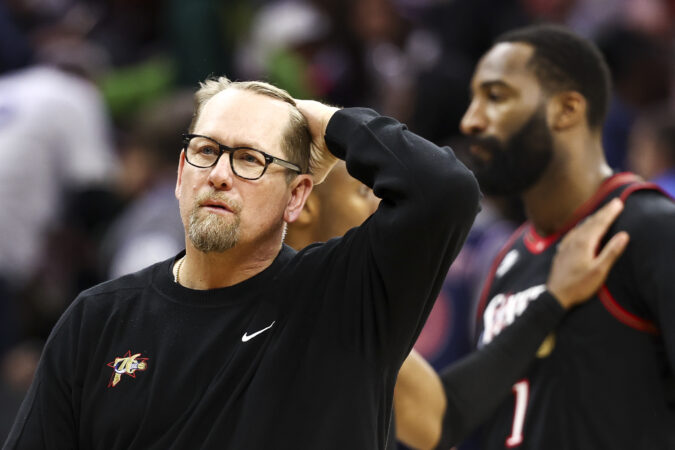
    I would like to publicly praise Nick Nurse, the coach of the Philadelphia 76ers. I met him after a weekday Mass before Game 2, and we had a brief chat. First of all, we Knick fans never expected the 76ers in the second round. We expected a tough playoff against the Boston Celtics, who were up 3-1 in the first round. Nurse motivated the 76ers to an outstanding comeback. The same Nurse motivated an amazing performance by the 76ers players who were without Joel Embiid in Game 2. Nick led this valiant effort while grieving for his older brother, Steve, who recently died. I am truly moved by Nurse’s leadership skills. You have a great coach.

    The Knicks are playing at a level of confidence I have not seen since 1973, when they won their last NBA championship. I cannot guarantee a championship this year. What I can guarantee is that the city of Philadelphia is a great sports town, and I predict the 76ers will come back strong next season with Nick Nurse as their coach.

    The Rev. Brian Jordan, pastor, Church of St. Francis of Assisi, New York

    Great disappointment

    I watched the Benjamin Netanyahu interview on 60 Minutes and came away with a lot of questions. The Israeli prime minister said Donald Trump had expressed to him a desire to have U.S. ground troops extract Iran’s enriched Uranium. Hmm, what happened to Trump’s promise to put America first in our foreign policy?

    Other than Trump securing our country’s borders and trying to dismantle DEI, what else is there to like about the Trump presidency? I didn’t like computer geeks firing thousands of federal employees and canceling vital research grants to colleges and universities. I don’t like the Big Beautiful Bill tax cuts. I don’t like Trump’s proclivity for bypassing Congress and governing by executive order. And, sorry, but Trump’s braggadocious, demeaning, and insulting manner of speech doesn’t befit the leader of the free world. Sadly, the Trump presidency has been a great disappointment.

    Fred Hearn, Turnersville

    Oceans rise, empires fall

    Recently, my local newspaper, the Santa Rosa (Calif.) Press Democrat, printed a column by Trudy Rubin regarding the recent visit to the U.S. by Britain’s King Charles III. Although I’ve never been that impressed by Charles, I was pleasantly surprised by his demeanor during the visit, and Rubin captured the essence of his speech to Congress exceptionally well. After the visit, one cartoonist — when comparing our president’s temperament and behavior to the king’s subtle performance — asked: Do you think England would take us back? Please extend my thanks and admiration to Rubin for her fine journalism. I do hope her piece has been widely circulated and widely read.

    Norine Moses, Calistoga, Calif.

    Join the conversation: Send letters to letters@inquirer.com. Limit length to 150 words and include home address and day and evening phone number. Letters run in The Inquirer six days a week on the editorial pages and online.

  • Hungary’s Viktor Orbán was called ‘Trump before Trump.’ Will the president also follow him in defeat? | Editorial

    Hungary’s Viktor Orbán was called ‘Trump before Trump.’ Will the president also follow him in defeat? | Editorial

    Hungarian Prime Minister Viktor Orbán, whose illiberal right-wing policies have served as a template for Donald Trump’s second term, was roundly defeated Sunday. His electoral loss, after 16 years in power, offers a lesson for those seeking to safeguard the American experiment from the president’s autocratic bent.

    Perhaps the biggest takeaway from challenger Péter Magyar’s victory is that if the will of the voters is strong enough, even a hollowed-out democracy can still speak for the people. This bodes ill for Republicans in upcoming elections, as the United States is nowhere near the level of institutional degradation achieved by Orbán and his party.

    It has not been for lack of trying, though.

    Guided by the Project 2025 blueprint — a plan Trump disavowed during his campaign but which he has followed since his return to the White House — the president has attempted to dismantle constitutional checks and balances, undermine elections, and bully and dominate business and civil society.

    Trump adviser Steve Bannon once called Orbán “Trump before Trump” and Hungary under his leadership offered a grim preview of what a successfully MAGA-fied America would look like: Government control of universities and the media, courts and federal jobs occupied by loyalists, extreme gerrymandering limiting political opposition, and curbed press freedoms.

    But just as Trump and his enablers moved much more swiftly in trying to undercut democratic institutions and weaken the rule of law than their Eastern European counterparts, the cracks in the foundation that ultimately led to Orbán’s overwhelming loss are already visible in Washington.

    Magyar and his Tisza party were expected to hold a two-thirds parliamentary majority on the strength of focusing on corruption and a poor economy. While Trump has been busy enriching himself, his family, and his cronies to the tune of billions of dollars, everyday Americans are struggling.

    Peter Magyar, the leader of the opposition Tisza party waves a national flag after claiming victory in a parliamentary election in Budapest, Hungary, Sunday.

    Although the U.S. is not Hungary, Democrats still looking to find a winning message can’t do much better than what Magyar promised in his victory speech, a country “where citizens can count on their government, where everyone is entitled to proper healthcare, a carefree childhood, and a dignified old age.”

    Contrast that with a president who claims that citizens of the richest nation in the world who want a better life, better look elsewhere. “It’s not possible for us to take care of daycare, Medicaid, Medicare, all these individual things,” Trump said at an April 2 Easter luncheon. “They can do it on a state basis. You can’t do it on a federal. We have to take care of one thing: military protection.”

    Yes, having a strong military is important, but even more so is the responsible stewardship of America’s armed forces. By some estimates, Trump’s war of choice in Iran costs taxpayers $2 billion a day, with a long term price tag coming in at $1 trillion over the next decade on military-related spending alone. That doesn’t even consider the pain at the pump and the checkout lane as the still unresolved conflict hikes up prices on everything from gas to groceries.

    Trump’s blinkered priorities are not limited to the economy.

    While the president and his secretary of state watched a mixed martial arts match in Miami Saturday, peace talks with Iran were falling apart. On Sunday, Trump attacked Pope Leo XIV on social media, claiming the U.S.-born pontiff should “stop catering to the radical left” and “get his act together as pope” before posting an AI-generated image of himself as Jesus healing the sick.

    As far as we know, Viktor Orbán never publicly compared himself to Christ, but other parallels with Trump remain strong, including the use of the autocratic playbook, and the graft and incompetence of their administrations.

    After Sunday, supporters of democracy can hope the similarities don’t end there.

  • Letters to the Editor | March 31, 2026

    Letters to the Editor | March 31, 2026

    Protest with purpose

    There are people questioning the purpose of the “No Kings” protests, saying they don’t think there is anything to be accomplished. The answer is right under their noses. When Donald Trump wants to take the process of conducting elections away from the states so he can control who votes, that’s a king. When he wants to erase the histories of Black people and women from museums and memorials, that’s a king. When he bars journalists from press briefings because they won’t slant coverage his way, that’s a king. When he wants to control what is taught in schools and how it is taught, that’s a king. When he has people arrested or demands that talk show hosts be fired because he doesn’t like what they say, that’s a king. When he wants to discard constitutionally legal citizenship so he can pick and choose who gets to be American, that’s a king. When he declares that he plans to “terminate the Constitution” and sets about doing it, in violation of his oath, that’s a king. The protesters are standing up for the Constitution, the foundation that makes this country great. If we allow the Constitution and our rights to be dismantled by a power-hungry wannabe monarch and his willing accomplices, our freedoms and greatness are lost.

    Jean A. Kozel, West Norriton

    . . .

    If you think showing up to express your anger doesn’t make a difference, remember how the Vietnam War protests helped change things, the civil rights protests helped change things, and the women’s suffrage protests helped change things.

    If you have any faith whatsoever in this country, remember when a critical mass of Americans shows up, things happen. We make a difference whenever we’ve united behind a purpose.

    Those millions of Americans who showed up, and even those who didn’t — but who still express their anger — are demonstrating their patriotism and faith in our country. Blindly accepting the obvious lies told by this president and his administration, without questioning or seeking the truth, is just the opposite.

    Joseph Goldberg, Philadelphia

    . . .

    Service members’ lives, and their families, should be protected at all costs and not put in unnecessary danger by a president who didn’t even bother to explain to the American people the reason for going to war — or as he put it, “a little excursion.” Nor did he seek congressional approval. To him, it’s a game. In addition, the Pentagon wants a $200 billion budget supplement to further fund the war.

    Prayers to keep service members safe are powerful, but what is also needed are tens of thousands of people across the country to take to the streets and pray with their feet, and say no to war and no to authoritarian rule. That’s what we did on Saturday at the “No Kings” march. Wars don’t decide who wins; they decide who’s left. The loss of life is final.

    Peter Tobia, Philadelphia

    The writer is a former visual journalist at The Inquirer.

    Join the conversation: Send letters to letters@inquirer.com. Limit length to 150 words and include home address and day and evening phone number. Letters run in The Inquirer six days a week on the editorial pages and online.

  • What naysayers don’t get about ‘No Kings,’ the biggest protest in U.S. history

    What naysayers don’t get about ‘No Kings,’ the biggest protest in U.S. history

    It was a career-defining moment for young Marlon Brando in The Wild One when a dancing girl asked his 1950s bongo-pounding biker-gang character, “What are you rebelling against?”

    “Whaddya got?”

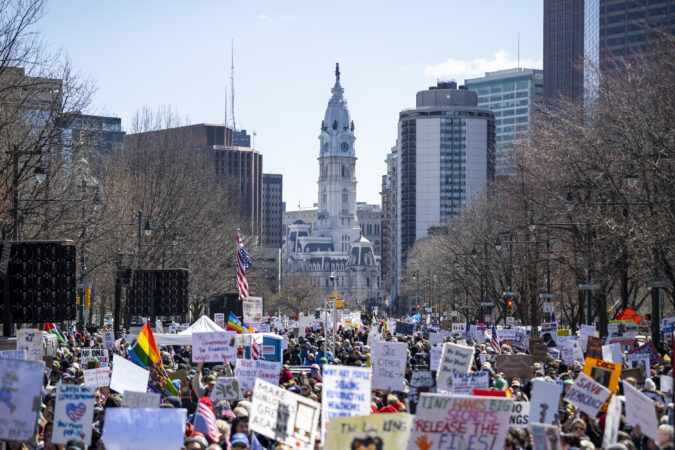
    Brando’s Johnny Strabler would have felt right at home Saturday afternoon with about 300 rebellious souls who lined the busy shopping stretch of Baltimore Pike in front of the Springfield Mall — just one of the more than 3,300 protests from coast-to-coast and around the world that marked the third “No Kings” day since last June.

    Whaddya got? What isn’t there in the second coming of Donald Trump for today’s rebels with way too many causes, as an American president flexing dictatorial powers bounces from his illegal, undeclared war on Iran one minute to trashing the Kennedy Center the next?

    There were loud echoes from the 1960s in the peace signs and “No War” placards carried by marchers who’d been a tad too young for Vietnam, yet one also waved the “Gen Z revolution” flag of the straw-hatted pirate from the popular anime, One Piece. Not to mention the matching-costumed 8-foot “Dinosaurs for Democracy” with their campaign sign, “Giant Meteor 2026.”

    Sure, the demonstration was primarily about the war in the Middle East that costs nearly $2 billion a day and yet lacks congressional approval, and the secret-police brutality of the regime’s immigration raiders, and the big spike in healthcare costs, and the coverup of the Epstein files, and the massive grift. But for a few hours on a sunny yet bitterly cold Pennsylvania Saturday in late March, it was about more than the sum of its parts — it was something spiritual.

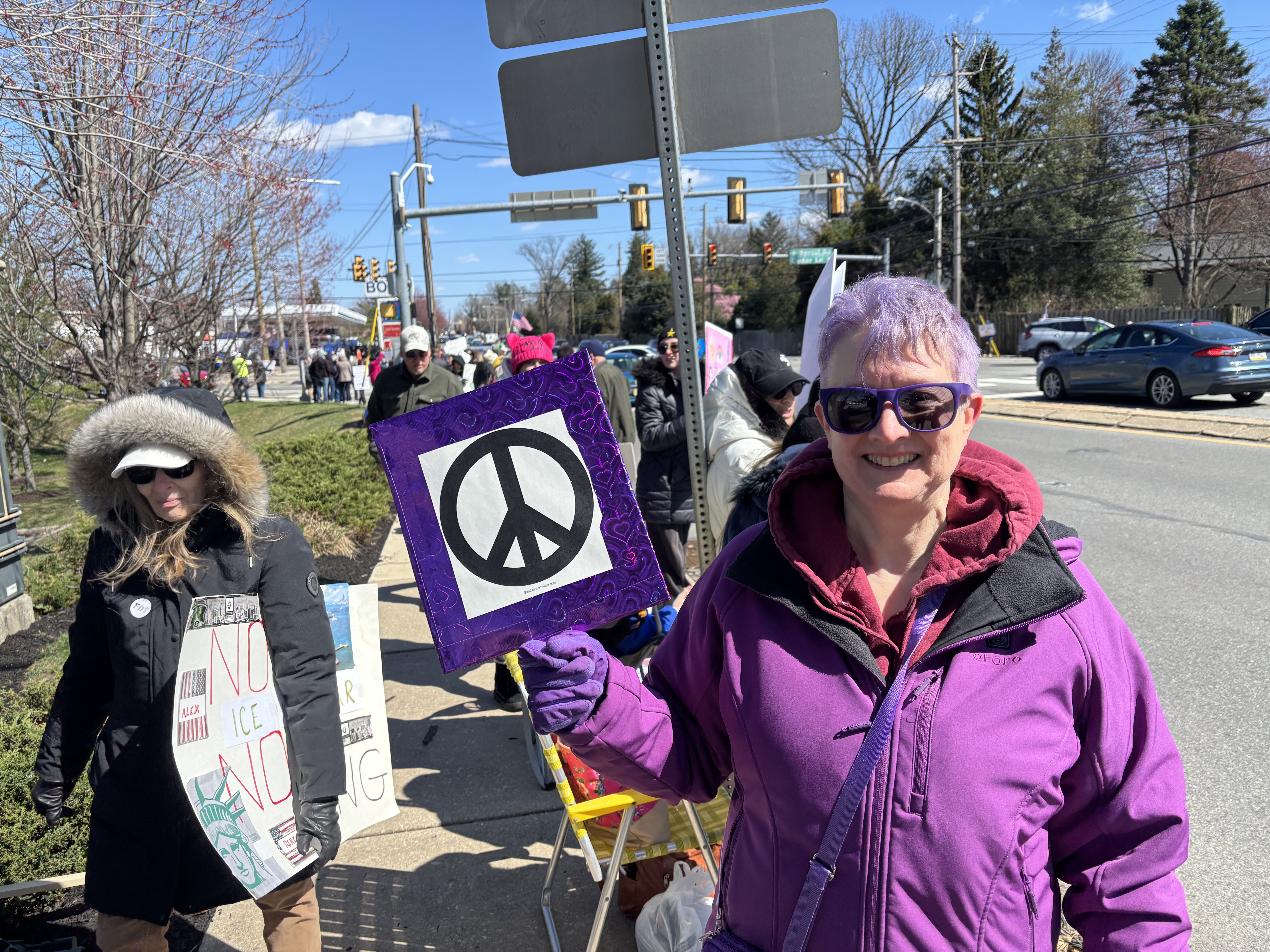
    Nancy Harris, a 72-year-old crisis counselor from Prospect Park, joined the “No Kings” protest along Baltimore Pike in Springfield on Saturday.

    “You feel less isolated when you see everybody here, and then they feel less isolated,” Nancy Harris, a 62-year-old retired mental-health crisis counselor from Prospect Park, told me over the steady car honks from supportive motorists. “And I think it just motivates people in general…just putting good vibes out into the universe.” Her purple-framed peace sign read “All you need is love” on the flip side.

    Harris was one of what organizers estimated was an incredible 8 million Americans who took to the streets to register their utter disgust with the authoritarian bent and the increasing violence of the Donald Trump regime. It was arguably the biggest one-day protest in just under 250 years of American history (unless you count the first Earth Day in 1970, which was more of a teach-in.)

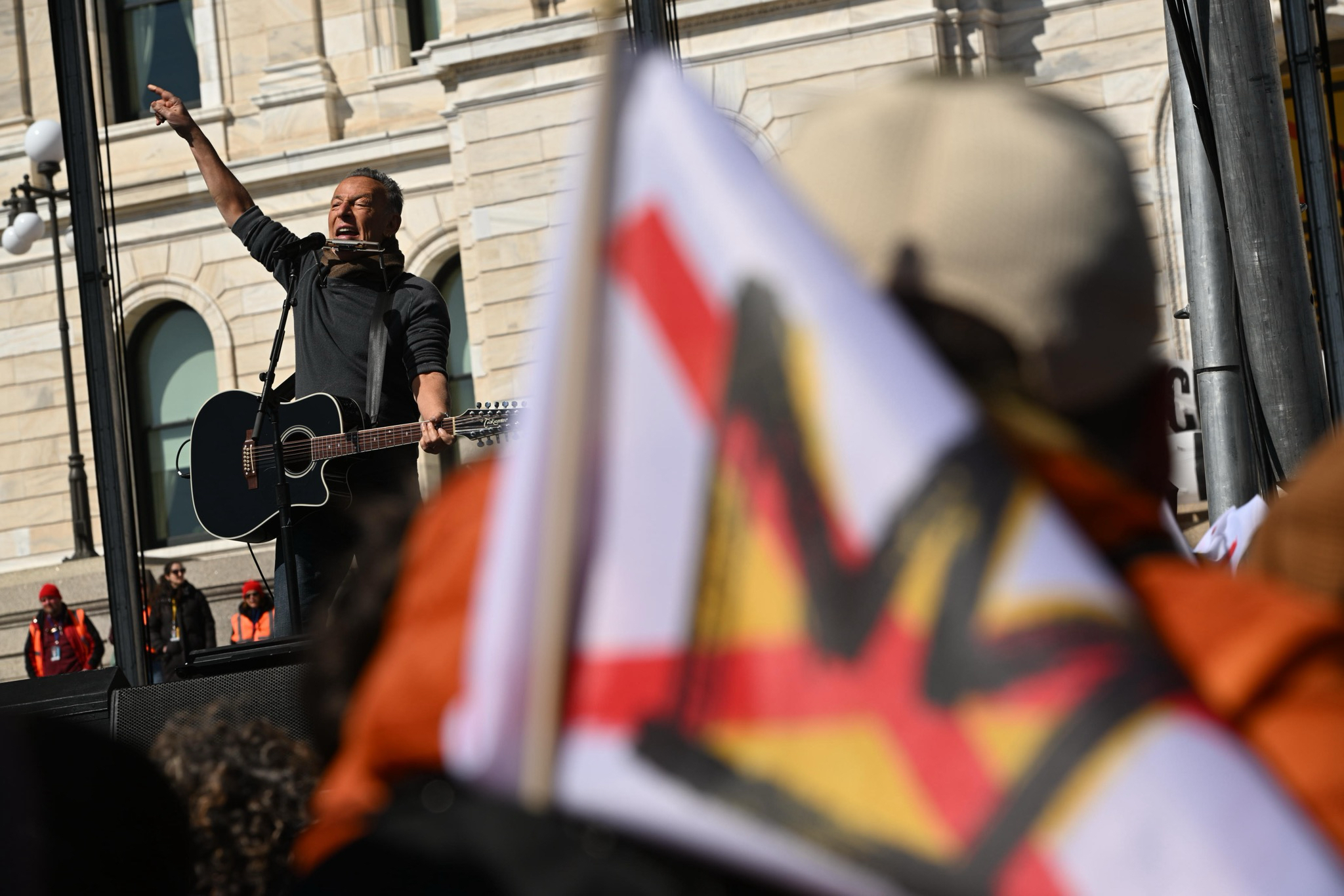
    The size of the third “No Kings” event was remarkable, yet that was matched by the passion of the marchers, and by a movement with a growing sense of style. That was epitomized by Bruce Springsteen singing his protest anthem “The Streets of Minneapolis” before a massive Twin Cities crowd that also included Sen. Bernie Sanders and folk singer Joan Baez, who were both on the National Mall to hear the Rev. Dr. Martin Luther King’s “I Have a Dream Speech” in 1963. The reverb of history was deafening.

    Yet again, much of the mainstream media seemed not to hear it. For part of the weekend, America’s largest newsroom, the New York Times, buried news of the protests on its homepage below six articles about the Iran War, and paired with a cynical news analysis questioning whether the “No Kings” movement has the right focus to be successful.

    Never mind that the sense of unity and shared community that I saw Saturday in my home Delaware County or the prior two “No Kings” protests is what has offered hope to the everyday citizens who resisted ICE raids in Minnesota and elsewhere, or to the voters in 30 consecutive jurisdictions who flipped seats away from Trump’s GOP.

    True, the “No Kings” movement shouldn’t be above criticism. The protest’s mission can seem vague when compared to the pointed 1960s marches to end the war in Vietnam or racial segregation in the South, although allowing demonstrators to paint on its blank canvass is what creates such a large turnout against autocracy.

    Bruce Springsteen performs during the “No Kings” protest Saturday in St. Paul, Minn.

    As Trump’s crimes against humanity worsen from Minneapolis to Minab, it’s fair to question whether “No Kings” needs to consider more assertive forms of nonviolent civil disobedience, even as that would risk conflict with America’s militarized police.

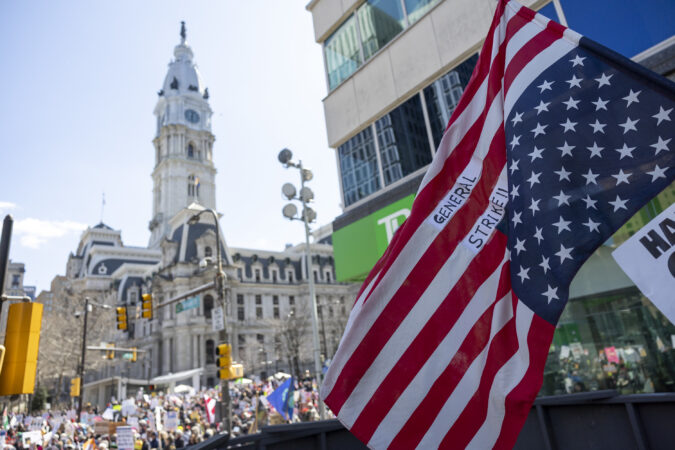
    But leaders with the most prominent Trump-resistance group organizing “No Kings” answered that complaint Saturday when Indivisible’s Ezra Levin took to the stage in Minneapolis and announced that a nationwide general strike is planned for May 1, modeled after a successful local action that shut down much of that region in January.

    Calling the plan “a tactical escalation,” Levin said that the May Day strike would be “saying, ‘No business as usual.’ No work, no school, no shopping. We’re going to show up and say we’re putting workers over billionaires and kings.”

    And yet what the small but growing chorus of naysayers — especially jaded pundits at some of the bigger media outlets — doesn’t understand is that the impact of “No Kings” isn’t so much political, in the realpolitik sense, as it is psychological.

    It’s a hope-building exercise that reminds the citizens who want America to remain a democracy that we are the majority. That matters because dictatorship only succeeds with a demoralized public.

    “I feel better when I leave [”No Kings”], because I’ve been down the last two weeks,” Kristina Shickley, a 72-year-old speech pathologist from Ridley Park, told me. She was standing on the sidewalk in front of Springfield Mall with a gaggle of white female boomers, the group that has anchored the Trump resistance since his first term.

    Her fellow protesters chimed in with similar reasons for coming out with their hopes that even some Republicans in Congress might pull back from Trump-flavored extremism because of the growing wave of unrest, and their belief in a political science theory that a regime can fall if just 3.5% of the public takes to the streets (that would be about 11 million, so…almost there).

    “All these people coming out,” Shickley said. “It gives you hope.”

    Especially in Springfield, an old-school, mostly working-class suburb that’s about as all-American as its fictional counterpart on TV’s The Simpsons. For decades, Springfield was Ground Zero for a Republican political machine that ran Delaware County and helped carry Pennsylvania for the likes of Ronald Reagan and George H.W. Bush.

    Times have changed. In recent months, as many as 100 or more local residents have stood on the corner of Baltimore Pike and Route 320 every Saturday, waving signs like “No Kings, No Wanna-Be Dictators, No ICE Raids” and “When Injustice Becomes Law, Resistance Becomes Duty.”

    It’s hard to imagine a more appropriate spot than in front of a Target store, whose rejection of diversity policies has sparked nationwide boycotts, and a mall that witnessed one of America’s first mass shootings — the 1985 rampage by Sylvia Seegrist that left three dead and now feels like a harbinger of darker times ahead.

    Most of the demonstrators were old enough to remember that day, but not all. I met the guy with the anime pirate flag — Andrew Snyder, a 37-year-old software engineer from Swarthmore and a self-described democratic socialist who served during peacetime with the U.S. Navy in the Persian Gulf. He agreed that not as many Millennials are out marching now, but predicted that “it’s going to ramp up with AI [artificial intelligence], as AI starts taking jobs.”

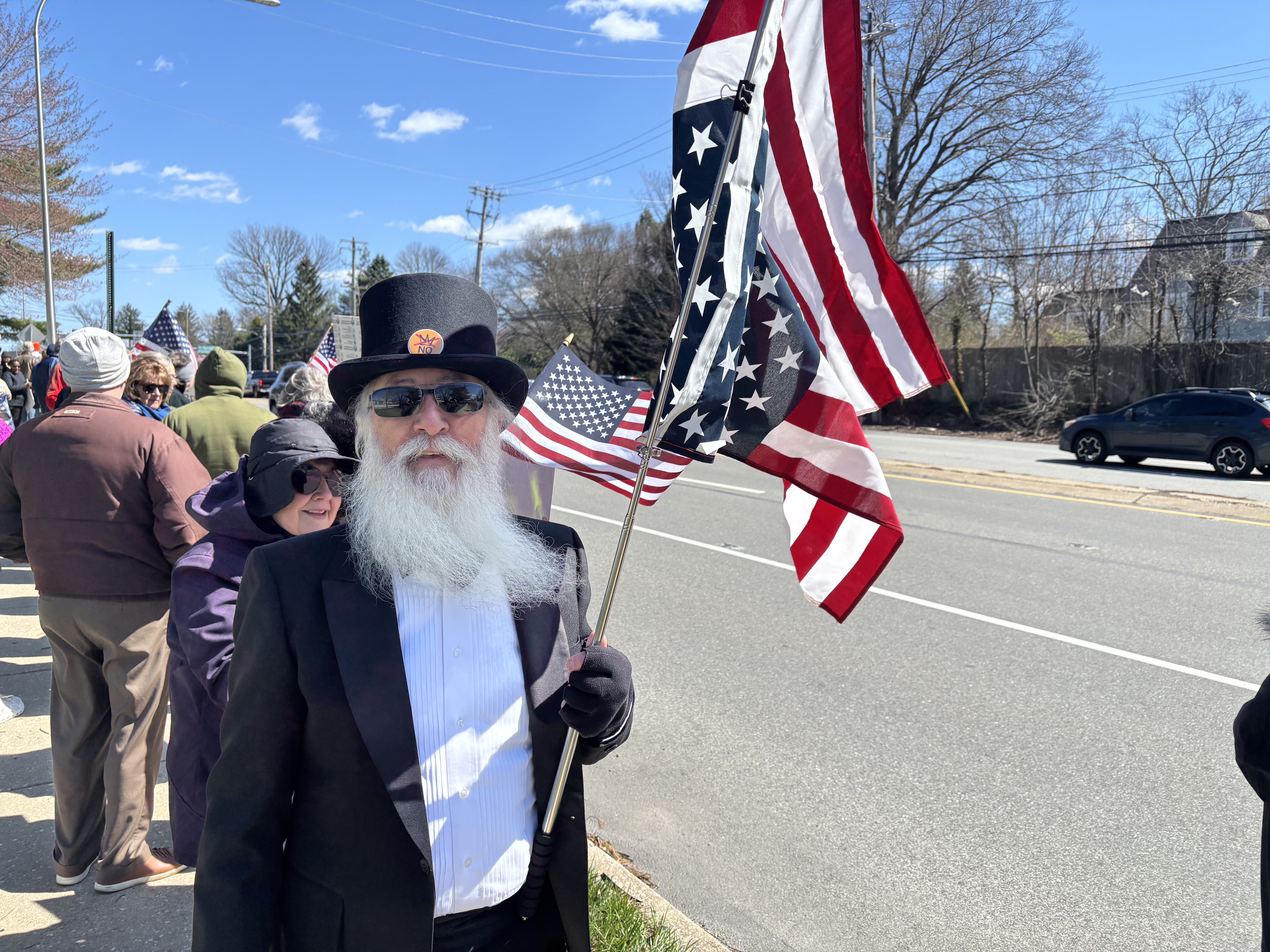
    John Coia, a 75-year-old retired airline worker from Aston, Pa., waves an upside-down American flag at a “No Kings” protest on Baltimore Pike in Springfield on Saturday.

    For now, however, the heart and soul of “No Kings” may be people like 75-year-old John Coia, a Springfield native now living in Aston who once sued his former employer USAir over his right to wear long hear and an earring. Now sporting an Abraham Lincoln-esque grey beard he amplified with a top hat, Coia waved an upside-down American flag.

    “I’ve been going up against the establishment my whole life,” said Coia, speaking for a generation that grew up exercising its all-American right of free speech and, now in old age, is determined to keep using it while they still can. I asked him what was the last straw with Trump that convinced him to join “No Kings.”

    “There is no last straw,” he said over the car honks. “It just keeps going. There’s a new straw every day.”

  • The partial shutdown forcing TSA agents to work without pay could not have come at a worse time | Editorial

    The partial shutdown forcing TSA agents to work without pay could not have come at a worse time | Editorial

    Lost in the economic and political fallout from Donald Trump’s war in Iran is the growing chaos at airports and an increased terrorist threat inside the United States.

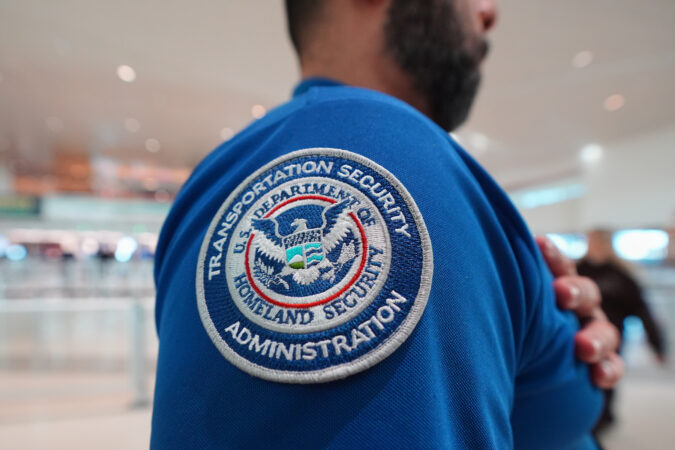
    More than 60,000 Transportation Security Administration employees have been working without pay because of the partial government shutdown that began on Feb. 14. More than 300 TSA agents have quit and thousands more have been calling out from work, prompting long lines at many airports.

    TSA temporarily closed the security checkpoint at Terminal C in the Philadelphia International Airport last week.

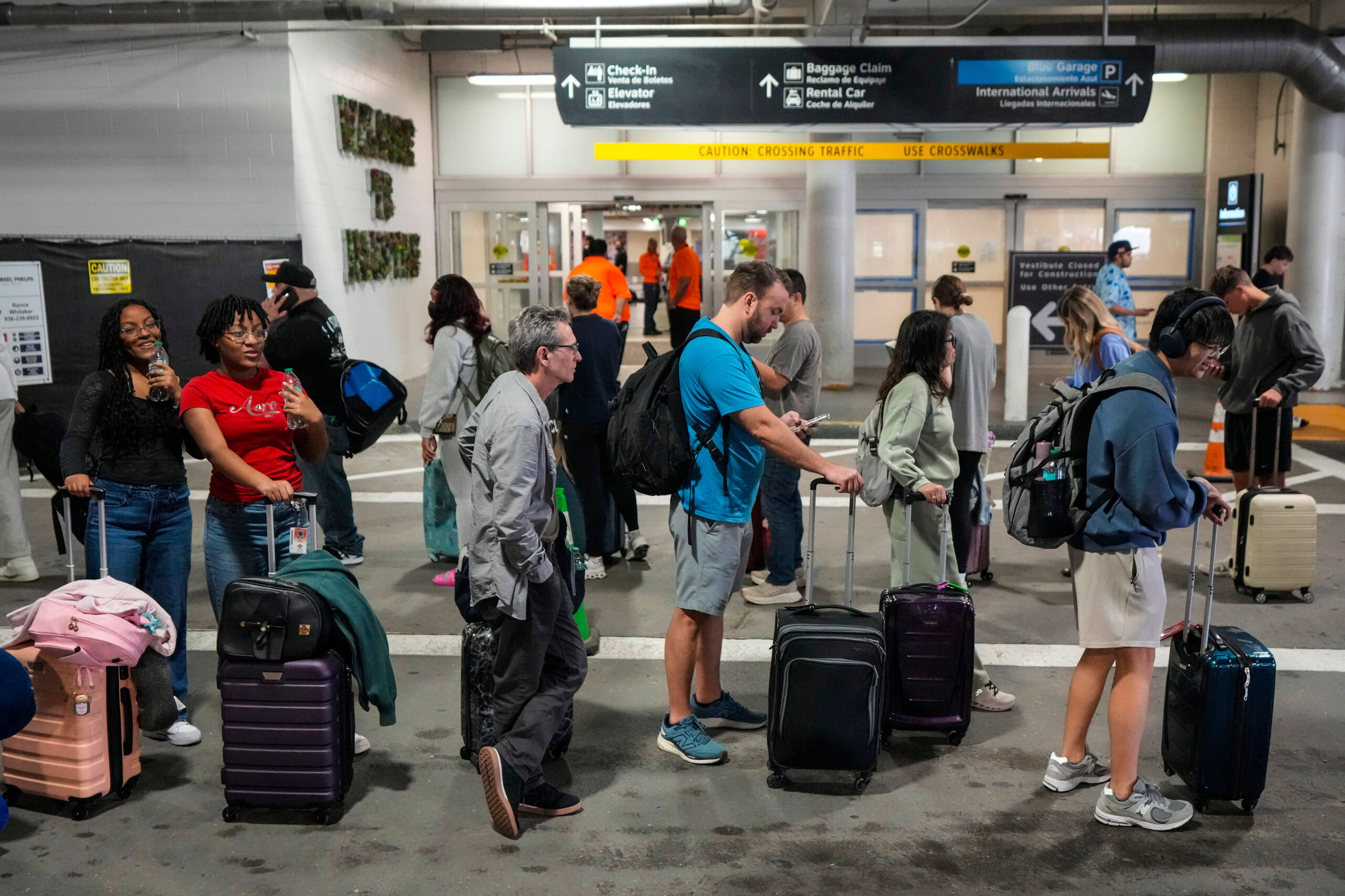
    Despite staffing shortages, the wait times for travelers in Philadelphia remained manageable for now. But travelers at other airports waited more than three hours to get through security.

    The partial shutdown that resulted in funding lapses for the Department of Homeland Security could not come at a more dangerous time. Federal law enforcement agencies remain on high alert following threats to the United States after Trump and Israel began bombing Iran.

    Airline passengers wait in long lines outside the terminal to get through the TSA security screening at William P. Hobby Airport in Houston on March 8.

    Indeed, Trump’s war has apparently already spurred several terror attacks on U.S. soil.

    • Two teens from Bucks County who said they were inspired by ISIS were charged with trying to set off homemade bombs during a protest outside the residence of New York Mayor Zohran Mamdani.
    • Iran-linked hackers claimed responsibility for a cyberattack on Stryker, a Michigan-based company that makes a range of medical equipment and technology.
    • A U.S. citizen born in Lebanon drove a truck into a synagogue in Michigan last week after four of his relatives were killed in an Israeli airstrike.
    • A naturalized citizen from Sierra Leone accused of killing an ROTC instructor at Old Dominion University was previously convicted of supporting ISIS.
    • A U.S. citizen from Senegal who was wearing a T-shirt with the colors of the Iranian flag was accused of killing three people and injuring a dozen more outside of a bar in Austin, Texas, the day after the initial attack on Iran.

    The motives for the attacks are still being investigated but law enforcement officials urged people to report suspicious activity, and police have increased patrols around synagogues and public transit hubs.

    The growing threats come as the Trump administration spent the past year decimating national security.

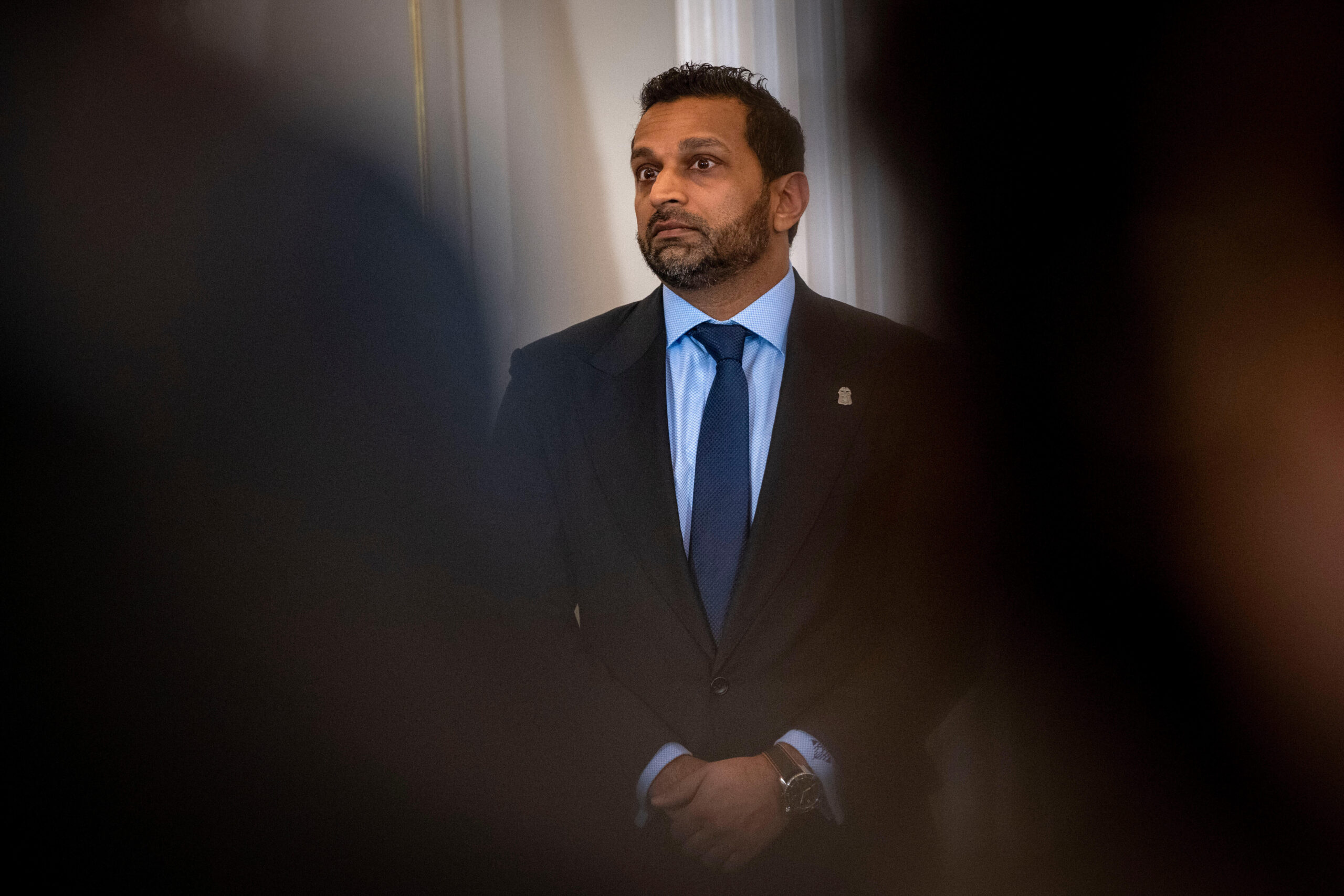
    FBI Director Kash Patel fired counterterrorism agents because they were involved in the investigation that led to Trump’s criminal indictment in 2023 on charges of mishandling classified documents.

    At the same time, the FBI and Homeland Security have shifted thousands of agents to focus on immigration enforcement, while the Justice Department’s elite national security division has faced mass firings, resignations, and forced retirements.

    FBI Director Kash Patel fired counterterrorism agents because they were involved in the investigation that led to President Trump’s criminal indictment in 2023 on charges of mishandling classified documents.

    More unsettling, the person now overseeing Homeland Security’s terrorism prevention programs is a 22-year-old former Trump campaign worker fresh out of college with no apparent national security expertise.

    Meanwhile, thousands of TSA agents — who are charged with screening customer baggage and cargo for weapons and explosives — are overworked and not getting paid.

    TSA agents, who make an average of $35,000, endured a 43-day government shutdown last fall, making this the second time in six months they have been forced to work without pay.

    A TSA union representative said several employees reported lacking money for daycare and food. “They just want to know why the hell they can’t get paid when we have money to shoot missiles into other countries,” Johnny Jones, secretary-treasurer of American Federation of Government Employees TSA Council 100 and a Dallas-based TSA worker, told USA Today.

    Republican and Democratic lawmakers blamed each other for the shutdown underscoring the deep political divide and dysfunction in Washington.

    Airline chief executives demanded Congress find a way to pay the TSA workers as the shutdown disrupts travel and undermines safety.

    Trump, who took a break from his war to play golf over the weekend, offered cold comfort when asked if Americans should worry about terror attacks in the United States: “I guess,” he responded. “Some people will die.”

    Trump, quite literally, to America: Drop dead.

  • Meta on trial: ‘We’re basically pushers.’ Lawmakers must require social media platforms to prioritize children’s safety

    Meta on trial: ‘We’re basically pushers.’ Lawmakers must require social media platforms to prioritize children’s safety

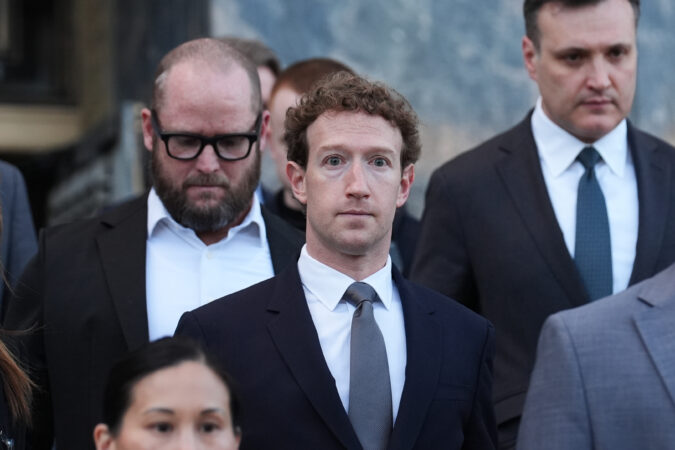
    One block from the Los Angeles courthouse where Mark Zuckerberg testified in February, families gathered around the Lost Screen Memorial: 50 illuminated phones, each bearing the face of a child their families say social media killed.

    Inside the courtroom, the unsealed documents were unsparing: “We’re basically pushers,” one Meta employee wrote. A 2018 internal memo laid out the strategy: “If we wanna win big with teens, we must bring them in as tweens.”

    Internal research found that teens described Instagram in terms of what the documents called an “addict’s narrative” — compulsive behavior they knew was harmful but felt powerless to stop. Meta’s own engineers proposed fixes, warning internally that “our product exploits weaknesses in human psychology to promote product engagement and time spent.”

    Executives chose profits instead.

    Nylah Anderson, 10, in Chester, liked TikTok videos and she accepted the “blackout challenge” in personal TikTok feed last December as a fun dare. She asphyxiated herself. Her mother has sued TikTok in Philadelphia federal court.

    In December 2021, 10-year-old Nylah Anderson of Chester died after TikTok’s algorithm recommended a “Blackout Challenge” on her “For You” page. In August 2024, the U.S. Third Circuit Court of Appeals ruled that this was not protected speech. The court determined that TikTok’s act of serving that video to a 10-year-old was an expressive act. That ruling cracked Section 230, the legal shield platforms had used for two decades to avoid accountability.

    Thirteen-year-old Levi Maciejewski of Cumberland County never made it to a courtroom. He died by suicide in August 2024, two days after opening an Instagram account and being extorted by a predator through Instagram’s “Accounts You May Follow” feature.

    Internal Meta audits from 2022, cited in his family’s wrongful death lawsuit, found that same feature was recommending accounts engaged in “inappropriate interactions” to 1.4 million minors. Meta’s own documents from 2015 estimated that approximately 4 million users under the age of 13 were already on Instagram — roughly 30% of all 10- to 12-year-olds in the U.S. — despite that age being prohibited.

    Anyone who worked with children during the adoption of the smartphone watched their minds deteriorate. When I started teaching in 2009, students socialized, made eye contact, were able to focus. By the end of that decade, they arrived sleep-deprived and anxious, reaching for their phones at every opportunity.

    Lunch rooms and hallways were quieter, earbuds in, eyes locked on screens. Teachers, like parents, were being asked to compete against a billion-dollar engineering operation. We weren’t losing because of personal failings. We were losing because we were outmatched by a trillion-dollar campaign to harvest attention.

    Big Tech is making the same argument the tobacco industry made for 50 years about smokers who couldn’t quit. Plaintiff KGM — known in court as Kaley — testified this month that she began using YouTube at age 6 and Instagram at age 9, with no barriers to stop her. Instagram was the first thing she opened every morning and the last thing she looked at before sleep. Not getting enough likes left her feeling “insecure” or “ugly.” Asked whether she felt that way before social media, she said: “No, I didn’t.” By age 10, she was cutting herself.

    Meta’s lawyers argued her struggles came from a difficult home life. Kaley answered them directly: most of the arguments with her mother were about the phone. She is 20 now. She told the jury her life would have been “unequivocally better” without these platforms.

    Kaley is not an outlier. For an entire generation, physical activity, academic performance, and time spent with friends are all down. Depression, self-harm, and suicide are all up. The average teen spends nearly five hours a day on social media alone. Three-quarters of U.K. children spend less time outdoors than prison inmates.

    In the years that social media became ubiquitous, the suicide rate for 10- to 14-year-olds tripled. We don’t stand at the edge of a lake watching children drown and demand more longitudinal studies to figure out the cause. We see the harm. We act.

    The tobacco parallel is more than rhetorical; it provides the applicable legal and moral framework for addressing Big Tech. We do not let tobacco companies advertise to children. We do not allow stores to sell to them. We require warning labels. None of that required settling every clinical debate. It required a political decision that some harms to children are unacceptable regardless of whether we can precisely quantify them.

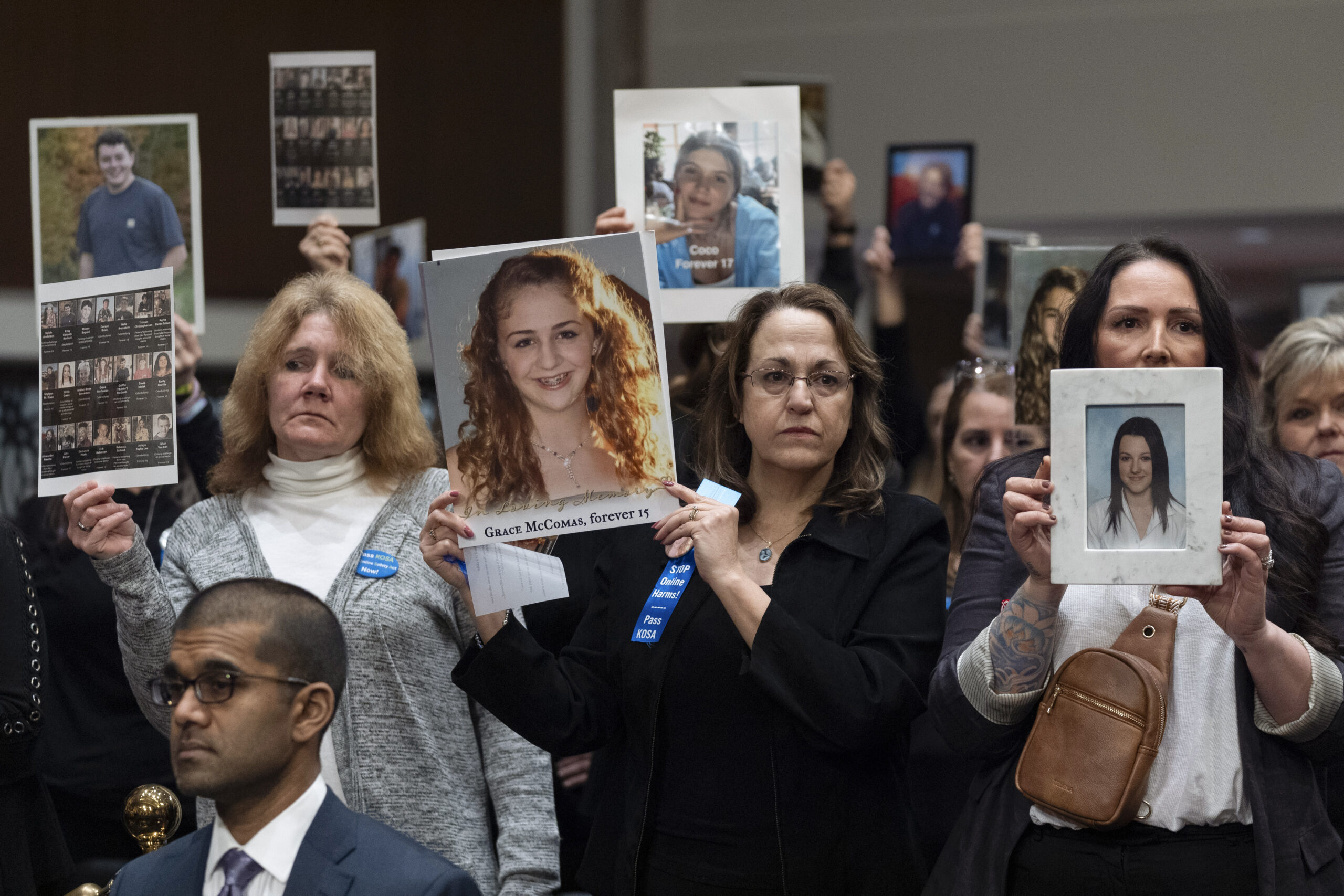
    People in the audience hold up photos of their loved ones during a Senate Judiciary Committee hearing on online child safety on Capitol Hill in January 2024.

    In February, West Virginia’s attorney general sued Apple after the company’s own internal communications described iCloud as “the greatest platform for distributing child porn.” Meta is on trial in Los Angeles. For the first time, tech executives are producing documents under court order, with legal penalties attached. For the first time, the “we didn’t know” defense is colliding with internal evidence that they did. The legal reckoning is not coming. It is here.

    The Kids Online Safety Act, which would require platforms to prioritize children’s safety over engagement, passed the Senate 91-3 in 2024. Last week, the House Energy and Commerce Committee responded — not with that bill, but with a weakened substitute called the KIDS Act, advancing it to the House floor 28-24, along party lines.

    The House substitute is a retreat dressed as progress: It omits the “duty of care” language that would require companies to design products with children’s safety in mind, sets a federal safety floor lower than existing state protections, and, most damaging, would preempt stronger state laws — potentially nullifying thousands of pending lawsuits, including the cases in Los Angeles that are finally forcing these documents into the open.

    Big Tech spent over $60 million on federal lobbying in 2024. The bill tells you exactly where that money went.

    In Pennsylvania, legislators have made progress. Senate Bill 1014 — a bell-to-bell cell phone ban in public and private schools — passed the state Senate 46-1 last month, with Gov. Josh Shapiro’s endorsement already secured. As one parent leading the effort put it: “Teachers, kids, and parents have been tasked with managing the unmanageable. It’s time to recognize that our current approach isn’t working.”

    The House should finish the job. But even a unanimous phone ban is a seven-hour policy competing against platforms that spend billions optimizing addiction across the other 17 hours of a child’s day. Keeping phones out of classrooms is a start.

    Keeping companies from engineering compulsion in the first place is the actual problem — and that requires a federal duty of care with teeth, and political leaders who care about children more than cashing their checks.

    Nylah Anderson was 10 years old. Levi Maciejewski was 13. Their tragedies helped start the battle against these companies. The House has a bill on its desk.

    Act — before another Pennsylvania child’s face joins those 50 phones outside the courthouse.

    AJ Ernst worked as a teacher and administrator in Philadelphia for 13 years and holds a doctoral degree in educational leadership from the University of Pennsylvania’s Graduate School of Education.