Category: Opinion

  • The en(bleep)ification of the Epstein Files | Will Bunch Newsletter

    In the beginning, God created the 12 days of Christmas and the bacchanalia of New Year’s Eve to get us through the dark and frigid endless nights of winter. That wasn’t nearly enough for us shivering and depressed humans, so God sent us the NFL playoffs. The hope is that the Eagles last long enough to get us to the balmy breezes of baseball’s spring training.

    If someone forwarded you this email, sign up for free here.

    Delay, deny, distract, divert attention: Inside the Epstein Files coverup

    Pages from a totally redacted New York grand jury file into Jeffrey Epstein and Ghislaine Maxwell, released by the U.S. Justice Department, are photographed last month in Washington.

    I want you all to stonewall it, let them plead the Fifth Amendment, cover up or anything else if it’ll save it — save the plan.

    Richard Nixon, White House tapes, March 22, 1973

    The newish word that best captures the 2020s is one that I’m not allowed to use in a family newspaper like The Inquirer. In 2022, the social critic Cory Doctorow coined this scatological term that I’m calling “en(bleep)ification” (it won’t take much imagination) to describe the way that products, but especially consumer-facing websites, gradually degrade themselves in pursuit of the bigger goal, higher profits.

    For example, writer Kyle Chayka wrote a popular New Yorker essay in 2024 about what he called the, um, en(bleep)ification of the music site Spotify as it devolved, in his opinion, from a place for the songs and albums you want to hear to pushing playlists that they want you to hear.

    In the political world, no product rollout had been more anticipated than the December release, forced by law upon the Donald Trump regime’s Department of Justice, of the Jeffrey Epstein Files — the investigative trail of documents about the late financier and indicted sex trafficker who also palled around with Trump in the 1990s and early 2000s.

    No one with any familiarity of Trump’s modus operandi should have been shocked by what happened when the congressionally mandated deadline for release of all of this massive cache of paperwork finally arrived on Dec. 19 — or by what has happened in the two-and-a-half weeks since then.

    Needless to say, the Epstein Files have not offered the seamless user experience that its readers — especially those hoping for bombshells that would expose the tawdry secrets of Trump’s friendship with a man who allegedly abused more than 1,000 young and sometimes underaged women — had anticipated. In the hands of the president’s minions at Justice, the Epstein Files have been en(bleep)ified.

    How so? Here’s the diabolical part. The MAGA Gang that normally can’t shoot straight managed to hit the coverup bullseye this time, not with one dramatic act to rile people up — like Nixon during Watergate with his notorious Saturday Night Massacre — but with a blend of tactics and dodges designed to frustrate and exhaust truth-seekers.

    Delay. The law, which Trump signed to avoid an embarrassing defeat on Capitol Hill, required the release of every single document — with appropriate blacked-out redactions to protect things like the names of Epstein’s victims — by that December deadline. But suddenly the Justice Department — which once had as many as 200 staffers combing the papers last spring before its original botched plan to squelch the files — lacked energy and manpower, claiming it was working as fast as it could in an initial release of just about 40,000 pages, which would seem to be a tiny fraction of more than 5 million pages believed to exist.

    The DOJ’s small-batch cooking came in two small servings right before Christmas, when most Americans consume the least news, and information about any new releases in the new year has suddenly dried up, with maybe 99% of the files still outstanding.

    Deny. The papers that have been released have included major redactions — including the completely blacked-out pages of Manhattan grand jury testimony pictured above — that violate the spirit if not the letter of the law, which demanded that any hidden passages only protect victims and not Epstein’s powerful associates and clients.

    Stunningly, DOJ actually took back and attempted to bury some 16 files from the first release, including a photo of a photo that included Trump, before a public outcry led to that file’s republishing. Meanwhile, the department also claimed that 1 million additional Epstein files were discovered in New York after the legal deadline — an incredible claim that was immediately punctured by experts.

    Deflect. The initial batch was also larded with photos of Epstein with celebrities like Michael Jackson, Diana Ross, and Walter Cronkite as well as several of a Trump predecessor and longtime enemy, Bill Clinton. The pictures were dumped without any explanation and seemed to prove only that there’s a good reason the government normally doesn’t release raw investigatory files, especially about those not charged with any crime.

    The second batch also included a lurid and bizarre apparent letter from Epstein to a fellow famed accused sex offender, the gymnastic coach Larry Nassar, penned right around the time of his August 2019 jail-cell death. It seemed unbelievable, and just hours later the FBI said: Oh yeah, we looked at this and it’s a fake. The not-subtle subtext was essentially: “We don’t know what to believe in these files, and neither should you.”

    Nearly 53 years ago, Nixon’s plan to cover up Watergate with a mix of denials, delays, purchased silence and outright lies didn’t work. But Team Trump’s efforts to “save it — save the plan” by stonewalling the Epstein files is going just swell so far.

    If this moment feels familiar, it is very much like 2018 and the long-awaited Robert Mueller report on Russian influence in the 2016 presidential campaign and potential links to Moscow’s preferred candidate, Trump. There was a Mueller Report — much like there has been a “release” of the Epstein Files — that contained damning evidence, especially about potential obstruction of justice. But the information was dribbled out, downplayed, denied, and ultimately went nowhere.

    The Epstein Files have been destined to fail from Day One. It was always what Trump himself might call a “rigged deal” — with the papers in the possession of those with the most to lose, with many ways to make sure the worst stuff stays buried until at least 2029, if it hasn’t already been shredded. But the biggest truth has already been revealed.

    The outright defiance of the law demanding full release of the Epstein Files has exposed the utter brokenness of our democracy.

    The reason that Nixon’s coverup plan failed is because America had institutions stronger than his lies, including a Congress that cared more about its strength and independence than party ID, newspapers that were not just widely read but believed, and Supreme Court justices with an allegiance to the law and not the man who appointed them.

    Trump and his DOJ are daring a comatose Congress, a cowed news media, and a judiciary already in their back pocket to do something, but so far there is no indication that the en(bleep)ification of the Epstein Files can be undone. For now, they are more like the X Files, because the truth about Trump and his Palm Beach pal is out there…but beyond our weakened grasp.

    Yo, do this!

    • These days I find “vacation” is often just another word for catching up on household chores, but during my long December break I did watch a slew of movies, including some of the ones I’d recommended previously like One Battle After Another (very good, but flawed) and Eddington (meh). I ventured to an actual theater on New Year’s Eve and saw probably my favorite movie of 2025: Song Sung Blue, the bittersweet, based-on-a-true-story saga of a Neil Diamond cover band at the end of the 20th century. As the title implies, the movie is more than just a rousing feel-good pop musical, despite cathartic moments of exactly that. Kate Hudson deserves an Oscar for her Wisconsin Nice accent.
    • If you miss the glory days of not-formulaic-or-cartoonish movies — in the spirit of Song Sung Blue or One Battle After Another, only better — you should check out a new documentary on Netflix called Breakdown: 1975, by filmmaker Morgan Neville. The film spotlights an all-too-brief golden age of the mid-1970s with clips from the era’s classics like Taxi Driver, Dog Day Afternoon, and Network, and interviews with the likes of Martin Scorsese and Albert Brooks. They could have done much more with this, but I’d still recommend it.

    Ask me anything

    Question: Do you think that there is enough of a media firestorm over Grok’s nude filter to kill it? — BCooper (@bcooper82.bsky.social) via Bluesky

    Answer: The recent, shocking news about the artificial-intelligence tool called Grok that was created for Elon Musk-owned X (formerly Twitter) is a classic example of an important story that so far has befuddled and fallen through the cracks of the mainstream media. In recent days, X users have been asking Grok to create partially clothed and sexualized AI photos of real, everyday people, including images of underage adolescents. And Grok has complied, in what would seem to be a violation of laws regarding child pornography, among other legal and ethical problems. Musk needs to shut down Grok immediately — arguably for good — but that is not enough for the harm that’s already been caused. In a nation that routinely prosecutes citizens for having this kind of material on their computers, Musk, his co-creators of Grok, and X as a corporation need to be hauled before a judge.

    What you’re saying about…

    The half-dozen or so of you who responded to December’s open-ended call for 2026 predictions had one big thing in common: Boundless pessimism. Readers of this newsletter expect the new year to bring economic collapse and a disastrous midterm election in November, either from Donald Trump stealing it to Democrats somehow blowing it in the ways that only Democrats can. Stephen R. Rourke predicted: “I believe that the American economy, and perhaps the world economy, will slide into a second Great Depression, the almost inevitable consequence of an over leveraged economy, and a lack of willingness across the board to make tough choices about how to address the American addiction to borrowed money…” Oof. Nonetheless, Kim Root stole my heart with this: “I think the Philadelphia Union will rise even with the personnel changes because they are a developer of young talent. DOOP.”

    📮 This week’s question: A no-brainer: Donald Trump’s lethal assault on Venezuela and his seizure of that country’s strongman leader, in defiance of U.S. and international law, marks a turning point in American foreign policy. Are you OK with Trump’s actions because a bad guy has been removed from power, or are you alarmed by a military assault with the stated goal of pumping more oil? Please email me your answer and put the exact phrase “Venezuela attack” in the subject line.

    Backstory on the growing crisis of ICE custody deaths
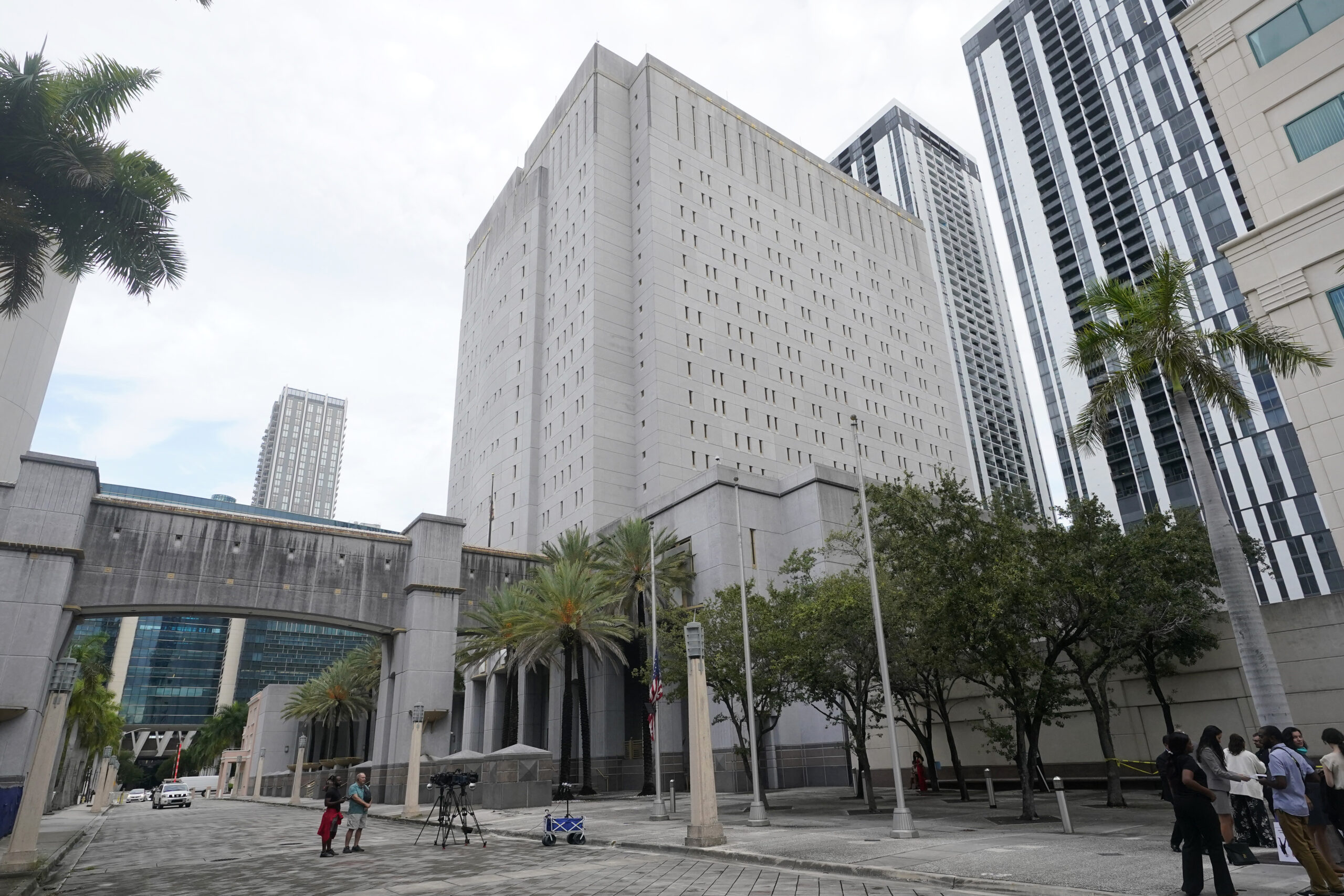
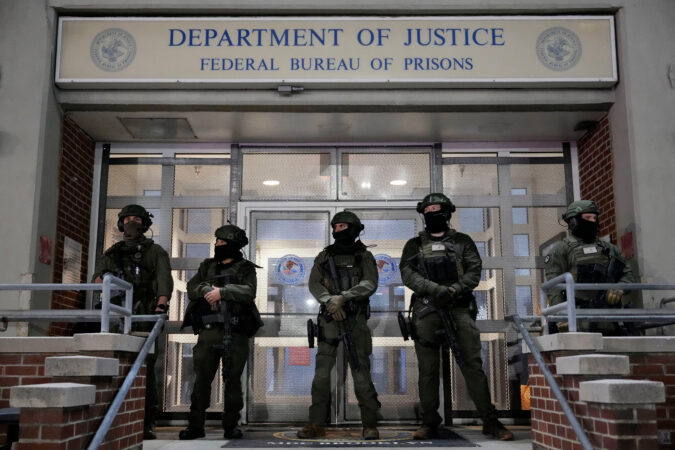
    The Federal Detention Center in Miami.

    Marie Ange Blaise, a citizen of Haiti, was 44 years old when she was arrested last February by Customs and Border Patrol officers as she attempted to board a commercial flight in Charlotte — one of the thousands swept up during 2025 amid the mass deportation drive of the Donald Trump regime.

    Just 10 weeks later, Blaise died inside a federal immigration detention center in Broward County, Fla. A South Florida public radio station reported that the Haitian woman had spoken to her son, who later told the medical examiner that “she complained of having chest pains and abdominal cramps, and when she asked the detention staff to see a physician, they refused her.” Another detainee reported Blaise’s care was “severely delayed,” even as Immigration and Customs Enforcement (ICE) insisted she’d been offered blood-pressure medication but refused.

    Blaise’s death was not an isolated incident. There was a sharp spike in ICE custody deaths during 2025, with the final tally of 31 fatalities nearly triple the 11 deaths posted during 2024, the last year of the Biden administration. Given the surge in immigration arrests after Trump took office last January, some increase was inevitable. Two of the 31 were killed by the gunman who fired on an ICE facility in Dallas. But immigration advocates say the crisis has been greatly exacerbated by inadequate medical care, bad food, and unsanitary conditions at detention centers.

    “This is a result of the deteriorating conditions inside of ICE detention,” Setareh Ghandehari, advocacy director at Detention Watch Network, told the Guardian, which recently published a comprehensive rundown of all 31 custody deaths. Many died from heart attacks or respiratory failure, with a few apparent suicides — although, in a number of cases, family members are disputing the official account. Only a few of those who died were senior citizens.

    There’s a bigger picture here. History has shown that authoritarian regimes can be hazardous to your health, and there is no American Exceptionalism. The MAGA movement’s low regard for the sanctity of human life is breaking through on multiple fronts, from the more than 100 deaths of South Americans on boats blown up by U.S. drones to the global crisis caused by the decimation of foreign aid through USAID (blamed for as many as 600,000 deaths by health experts) to the rising concern about fewer vaccinations and shrinking health insurance. A new generation is witnessing a grim reality: Dictatorship can be deadly.

    What I wrote on this date in 2021

    Jan. 6, much like Dec. 7 or Sept. 11, is a date which will live in infamy for most Americans. I had some health concerns five years ago that kept me from traveling to Washington to report on the insurrection — which I’ll always regret — but I did dash off an instant column before the smoke from Donald Trump’s failed coup had dissipated. I wrote, “When the future 45th president of the United States egged on the most violent thugs at his Nuremberg-style campaign rallies, when he yelled “get him the hell out of here” as white supporters roughed up a Black man in Birmingham, when he promised to pay the legal fees of brownshirts who beat up anti-Trump demonstrators, and when he said “I’d like to punch him in the face” to one rally insurrectionist, why are people still shocked when a riled-up mob takes Trump up on his own toxic words?” Read the rest: “Trump told us he would wreck America. Why didn’t we believe him the first time?”

    Recommended Inquirer reading

    • I returned from a long Christmas break this weekend with something brand new to write about: the Trump regime’s illegal attack on Venezuela, which killed as many as 80 people, including civilians, and resulted in the capture of that nation’s strongman leader, Nicolás Maduro, and his wife. I wrote that Trump’s war without the required constitutional approval or public support, in violation of international law against unprovoked military aggression, fulfills his ambitions to rule as a dictator. And a new world order based not on the rule of law but brute force makes all of us less safe.
    • Last June, the partially unclothed body of a young woman was discovered by police under a pallet in an overgrown lot in Philadelphia’s Frankford neighborhood. For weeks, the identity of this murder victim was unknown, which didn’t deter one determined homicide detective, the missing woman’s anguished family who’d been initially told not to file a missing-person report — or The Inquirer’s Ellie Rushing, who has written a moving account of the life and death of the woman eventually learned to be Anastasiya Sangret. This kind of essential local reporting takes time and resources, which means it needs your support. You do exactly that, and unlock all the journalism of one of America’s best newsrooms, when you start 2026 with a subscription to The Inquirer.

    By submitting your written, visual, and/or audio contributions, you agree to The Inquirer‘s Terms of Use, including the grant of rights in Section 10.
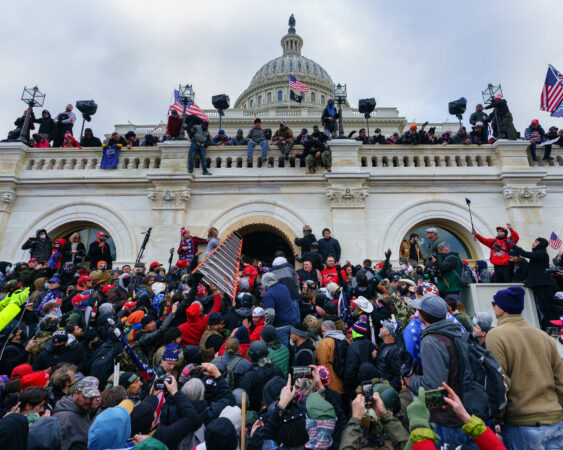
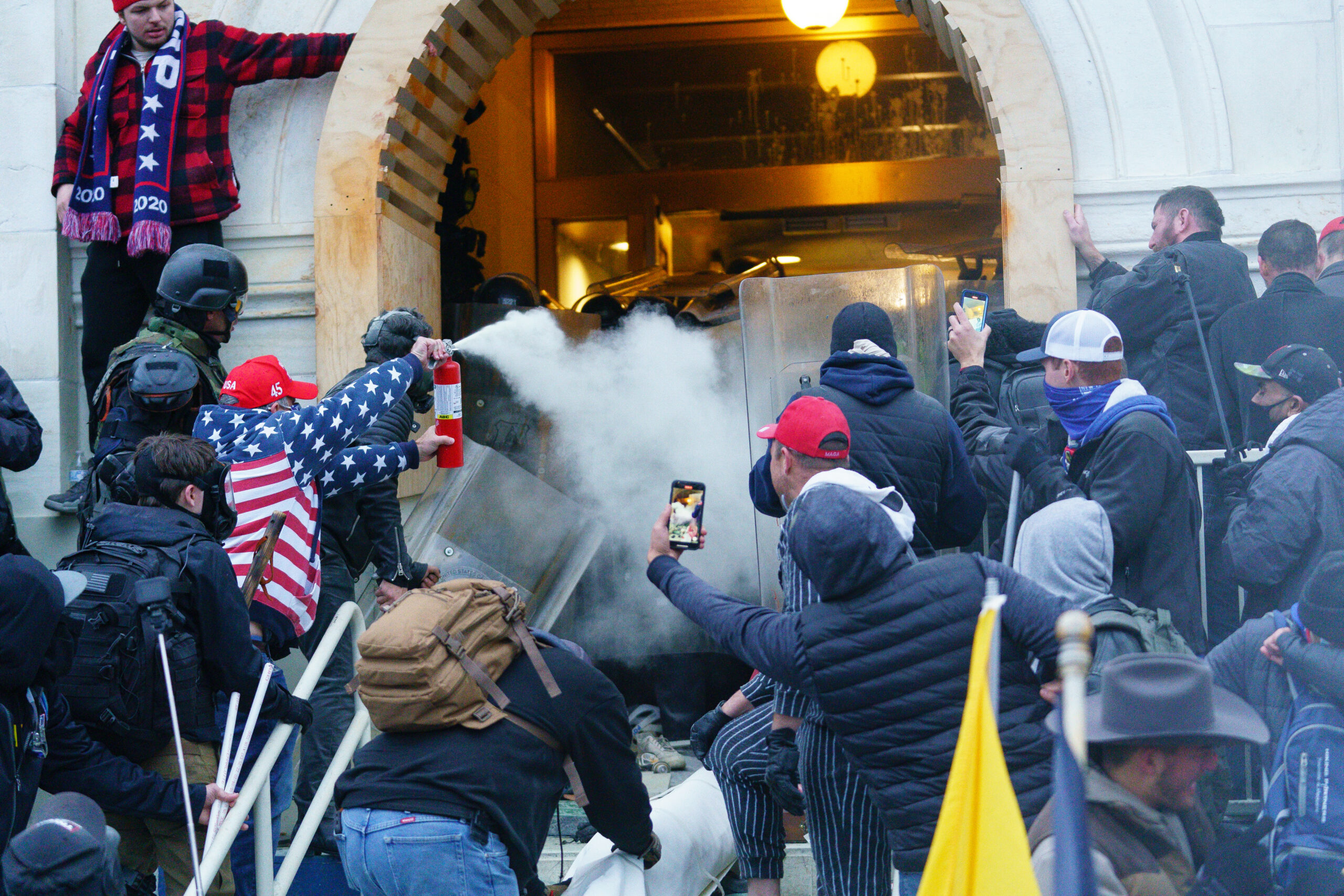
  • Five years on, a day that should live in infamy has instead propelled Trump’s grotesque return | Editorial

    Five years on, a day that should live in infamy has instead propelled Trump’s grotesque return | Editorial

    Jan. 6, 2021, should be a date that lives in infamy, like Dec. 7, 1941, and Sept. 11, 2001.

    But five years after an angry mob stormed the U.S. Capitol, Donald Trump’s insurrection marches on.

    Instead of accountability, Trump parlayed the grotesque events that unfolded on Jan. 6 into an incomprehensible return to power and profiteering.

    And ever since, Americans have been forced to endure one battle after another.

    It began with Trump rewarding the Jan. 6 insurrectionists by pardoning more than 1,500 attackers who were convicted or charged with crimes, including many who beat police officers and some who have since been charged with new crimes.

    The blitzkrieg continued from there.

    National Guard troops stormed into cities, creating virtual police states and accomplishing little else. Masked U.S. Immigration and Customs Enforcement agents have arrested tens of thousands of immigrants — many with no criminal records — while detaining and beating some legal residents.

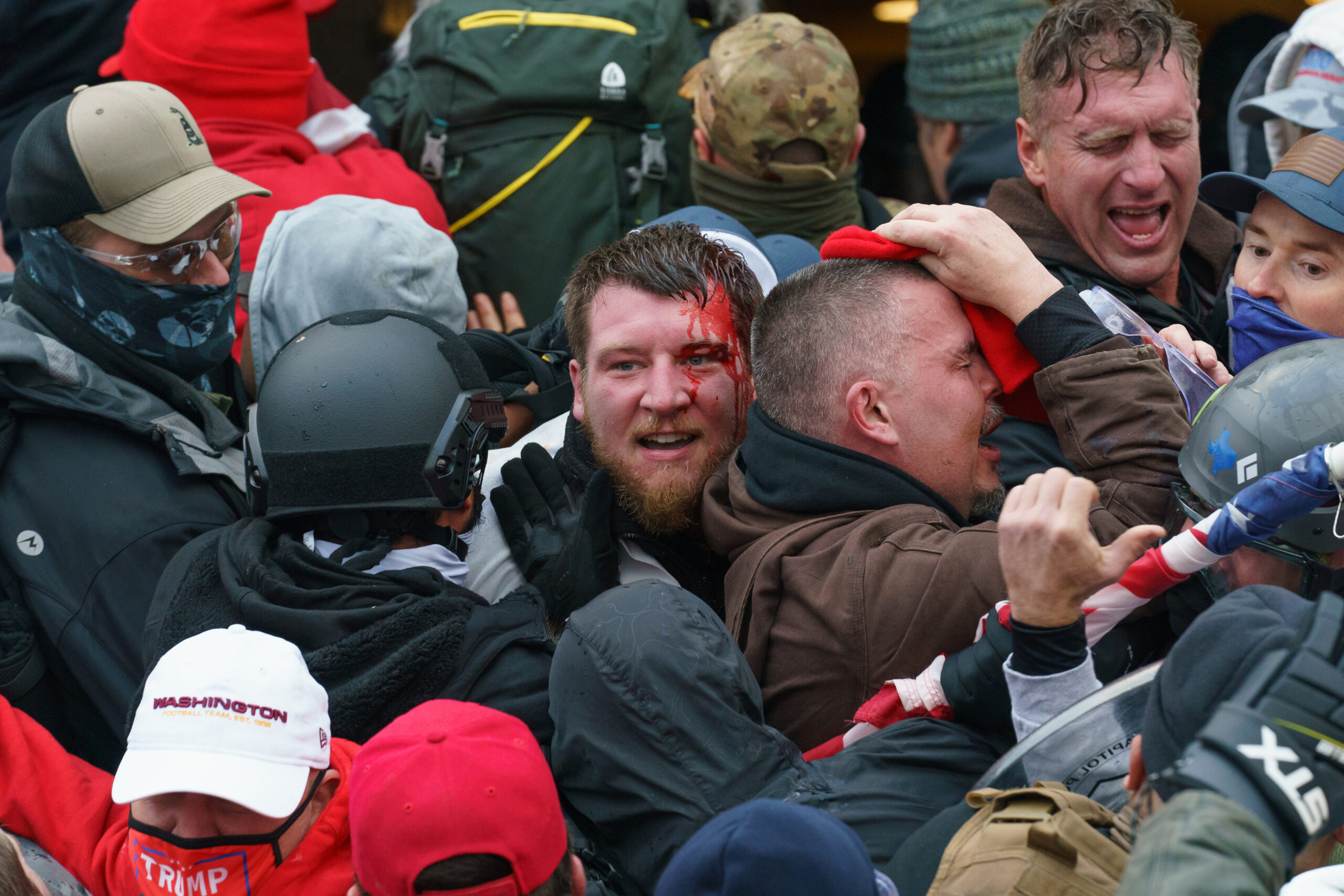
    Rioters clash with police to try to gain entry to the U.S. Capitol building during the insurrection on Jan. 6, 2021.

    Trump has continued to attack the government he swore an oath to protect, causing grave and lasting damage.

    Elon Musk’s chain saw-wielding assault on federal agencies failed to root out much fraud or waste, but it did cause massive disruptions to many departments while upending the lives of more than 300,000 workers who lost their jobs.

    Trump sicced the U.S. Department of Justice on political enemies, marshaling flimsy criminal cases against them while pardoning cronies. The rule of law — a cornerstone of American democracy — remains under assault.

    Meanwhile, the FBI shifted away from investigating terrorist groups and is now said to jokingly stand for Foolish, Belligerent, and Incompetent.

    Trump unleashed Robert F. Kennedy Jr. to “go wild” on health, medicine, and food. Since taking over the U.S. Department of Health and Human Services, Kennedy, who has no medical training, has canceled billions of dollars in contracts for medical research, fired thousands of workers, upended vaccine policies that saved millions of lives, and embraced discredited and fringe theories.

    Pro-Trump protestors grapple with police outside the U.S. Capitol on Jan. 6, 2021.

    Trump has also launched unprovoked attacks overseas, increasing tensions with allies and adversaries while likely inspiring future terrorists.

    He ambushed Ukrainian President Volodymyr Zelensky, an ally, in the Oval Office, while rolling out the red carpet for Russian leader Vladimir Putin, a wanted war criminal. Instead of aiding Ukraine, Trump is abetting Russia — an epic blunder that risks the peace in Europe that American soldiers helped to secure in World War II.

    Trump endorsed Israel’s demolition of Gaza and bombed Iran’s nuclear facilities, a move U.N. Secretary-General António Guterres called a “dangerous escalation in a region already on the edge — and a direct threat to international peace and security.”

    Trump has illegally bombed small boats in Central and South America, summarily killing more than 100 alleged drug smugglers without presenting any evidence or trials.

    Over the weekend, Trump approved a plan to snatch Venezuelan President Nicolás Maduro and his wife and bring them to the U.S. to face criminal charges.

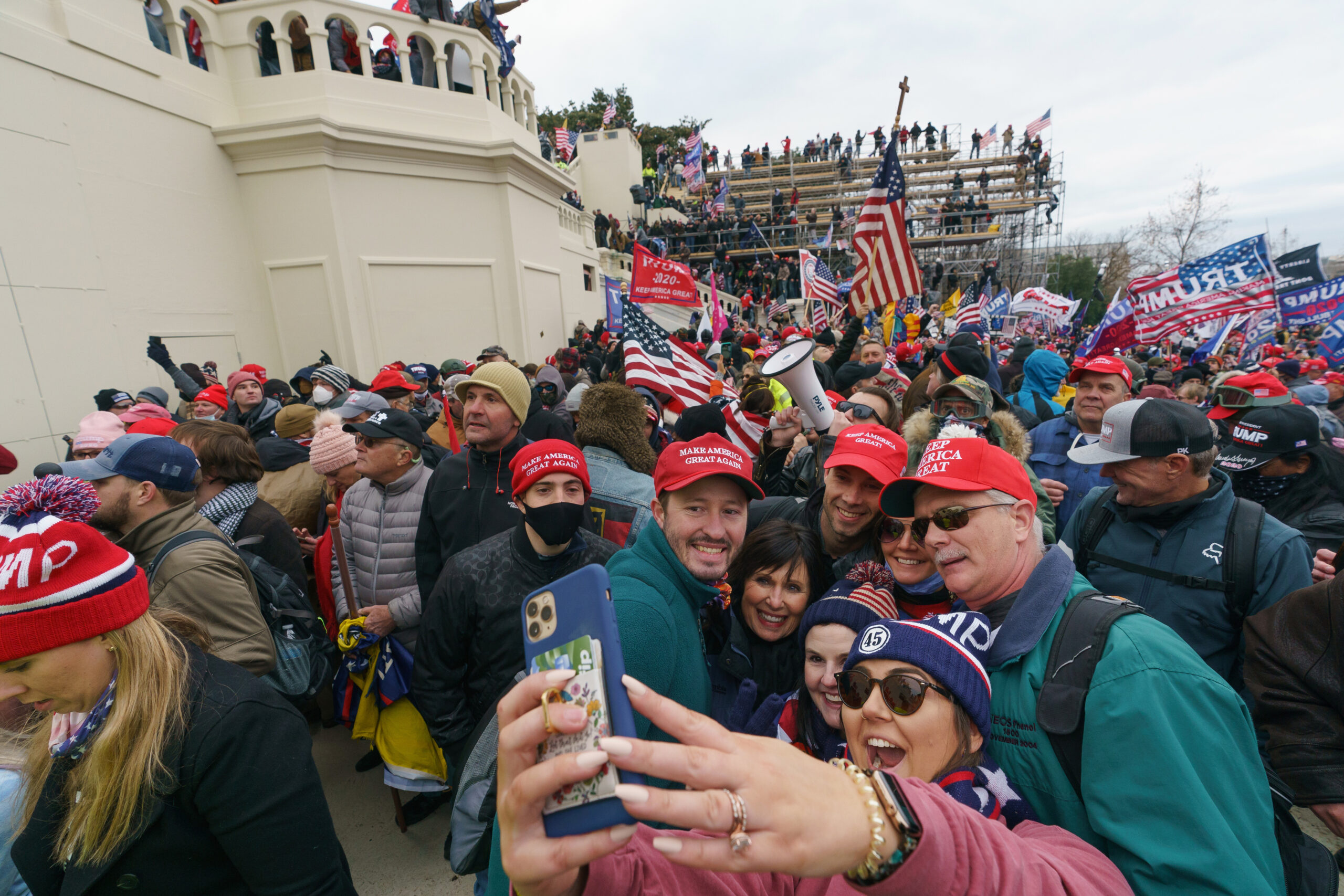
    Trump supporters take a selfie at the U.S. Capitol during the insurrection on Jan. 6, 2021.

    While no one is shedding tears for Maduro, Trump has no clear plan — or total control — for what comes next. Trump claims the U.S. is going to run Venezuela and take charge of its oil, while spouting loose talk about invading Cuba, Colombia, Mexico, and Greenland.

    That sounds like imperialism run amok.

    The U.S. is headed into dangerous and uncharted territory because of the failure of Congress, the courts, and voters to hold Trump accountable. The upshot has been to breed further lawlessness.

    Trump was impeached for inciting the Jan. 6 riot. But then-Senate Leader Mitch McConnell and most other Republicans in Congress — in a gross dereliction of their sworn duty — voted against convicting him even though many said he was liable.

    Trump was also criminally indicted for his role in attempting to overturn the 2020 election, which led to the Jan. 6 insurrection. The case was dropped after he was reelected, but special prosecutor Jack Smith recently told the House Judiciary Committee that a conviction was likely since there was “proof beyond a reasonable doubt.”

    Trump brought out the worst in America on Jan. 6. Five years later, the damage continues to grow.

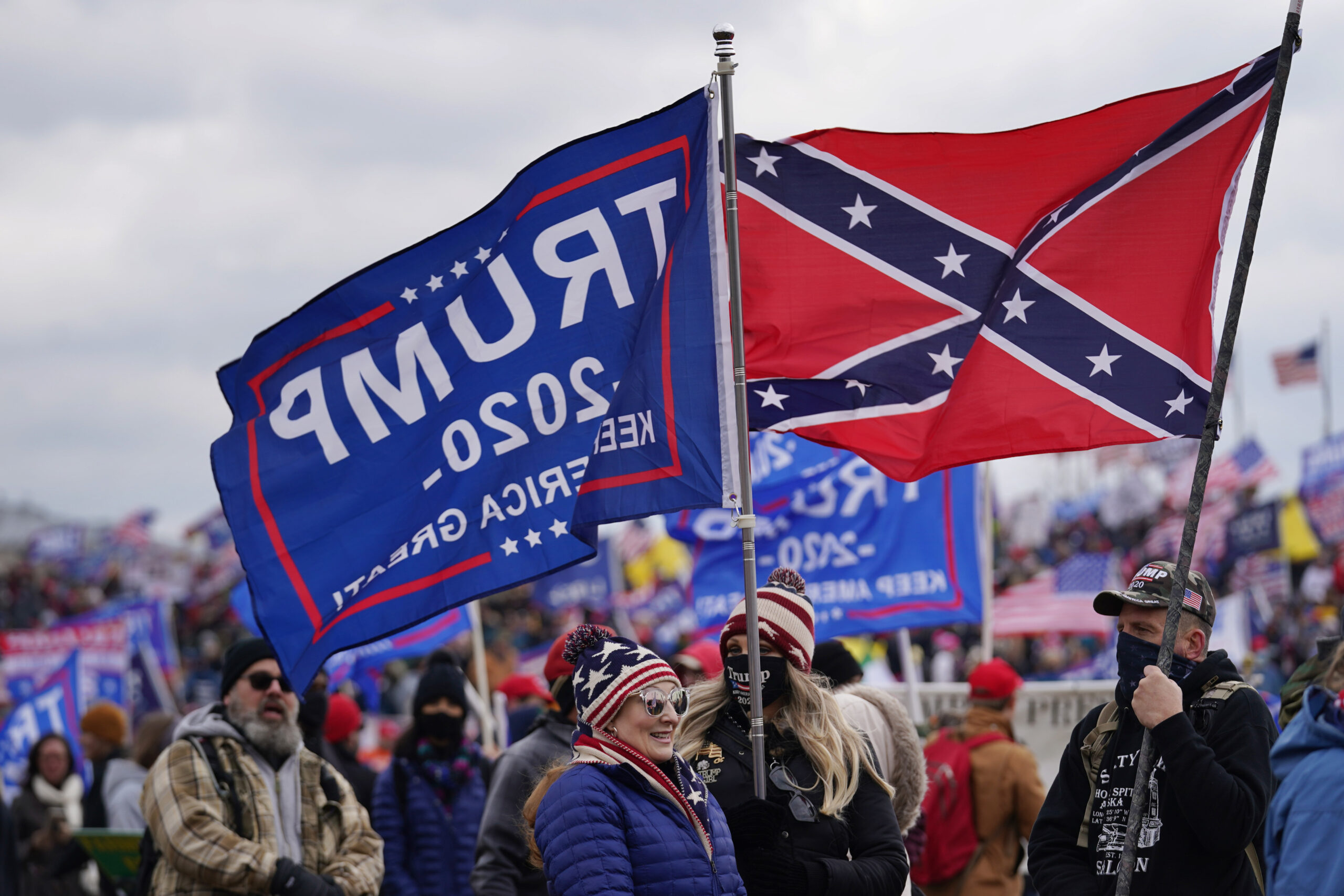
    Candria (with sunglasses) and Cynthia Crisp speak with another Trump supporter holding a Confederate flag near the Washington Monument, on Jan. 6, 2021.
  • Letters to the Editor | Jan. 6, 2026

    Letters to the Editor | Jan. 6, 2026

    Attacking Venezuela

    What possible reason could justify the attack on Venezuela and the kidnapping of its president? Does Venezuela represent any threat to the United States? No. Is Venezuela under Nicolás Maduro an oppressive regime? Yes. But then why revoke asylum status for fleeing Venezuelans? Is the Maduro regime not bad enough to provide asylum, but bad enough to invade and oust the government? Is Maduro a bad man? Many would say yes — but many also would say the same about Donald Trump. Should a foreign country kidnap him? What is it that makes Honduran drug dealers eligible for a presidential pardon, but not Venezuelan drug dealers? Adolf Hitler and Benito Mussolini invaded Czechoslovakia and Ethiopia, respectively, for colonial expansion — a flimsy reason, but at least a reason. Perhaps our wannabe dictator wants to convict Maduro and then pardon him upon payment of a large bribe. That would at least make some sense.

    Barry Lurie, Philadelphia

    Wrong message

    With regard to the Trump administration’s invasion of Venezuela, what message does that send to China and its desire to control Taiwan? Also, it goes far to legitimize Vladimir Putin’s rationale for invading Ukraine. Once again, an impulsive, poorly thought-out action by this incompetent administration.

    Michael Walsh, Elkins Park

    Right message

    The pearl-clutching and bedwetting the Democratic Party devolves into when President Donald Trump says or does anything is predictably laughable. Venezuelan dictator Nicolás Maduro is arguably responsible for magnitudes more American deaths than Osama bin Laden, yet when he was tracked down and killed under the Obama regime, it was roundly celebrated and applauded. Spare us your pious and self-righteous moral indignation and get with the program.

    Daniel J. Gribben, retired, Steamfitters Local 420, Philadelphia

    Remembering Jan. 6

    Today marks the fifth anniversary of that fateful day, Jan. 6, 2021, when there was an attack on the U.S. Capitol, a day when our democracy might have fallen. To use Franklin Delano Roosevelt’s words about Dec. 7, 1941, the attack on Pearl Harbor, Jan. 6, 2021, is a date that will — or at least should — “live in infamy.” It’s a day when our democratic republic buckled but did not break. It’s also a day President Donald Trump has tried to, if not erase from our history, at least whitewash into being viewed as something it demonstrably does not represent. Mr. Trump views it as “a day of love” when his supporters rose in glorious defiance of authority to pay homage to him. One concrete indicator of how Mr. Trump feels about that day, and those who perpetrated the attack, is that he granted clemency to virtually everyone who participated in that act of insurrection.

    How Mr. Trump interprets Jan. 6 further demonstrates that he views adhering to the rule of law and the spirit of our Constitution as merely inconvenient obstacles for him to circumvent when it furthers his personal or political agenda. So, today, Tuesday, Jan. 6, is a day we, the American people, must never forget. It should serve as a vivid reminder that the preservation of our democratic republic is not ordained by God to continue forever. Rather, it’s the responsibility of the citizenry — that’s you and me — to feed it, nourish it, and actively seek to keep it alive.

    Ken Derow, Swarthmore

    Join the conversation: Send letters to letters@inquirer.com. Limit length to 150 words and include home address and day and evening phone number. Letters run in The Inquirer six days a week on the editorial pages and online.

  • In capturing and prosecuting Maduro, Trump is modeling ‘might makes right’

    In capturing and prosecuting Maduro, Trump is modeling ‘might makes right’

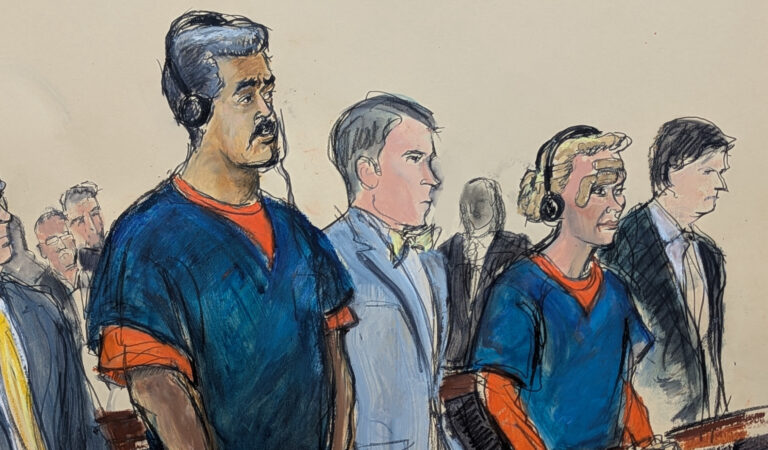
    The images are historic and alarming: Nicolás Maduro, the president of Venezuela, captured and transported by a U.S. warship to stand trial in a New York federal court. President Donald Trump hails this as justice, promising Maduro will face the “full might of American justice.”

    But this is not justice. It is its opposite.

    Maduro is an autocrat. I do not support his rule. Yet, the spectacle of President Trump — a man who has pardoned convicted insurrectionists, who relentlessly attacks U.S. courts as corrupt, and whose lawyers’ arguments, in the words of a federal judge, sought to grant Trump “the divine right of kings” to avoid criminal prosecution — now acting as a global sheriff is the height of hypocrisy.

    It reveals a belief that law is not a universal principle, but a weapon the powerful use against others while exempting themselves.

    This double standard extends to the world stage. The United States fiercely rejects the jurisdiction of respected judicial bodies like the International Criminal Court, even restricting its prosecutors in order to protect Americans. Yet, it now unilaterally extends its own domestic courts to sit in judgment over a foreign leader, echoing the 1989 capture of Panama’s Manuel Noriega.

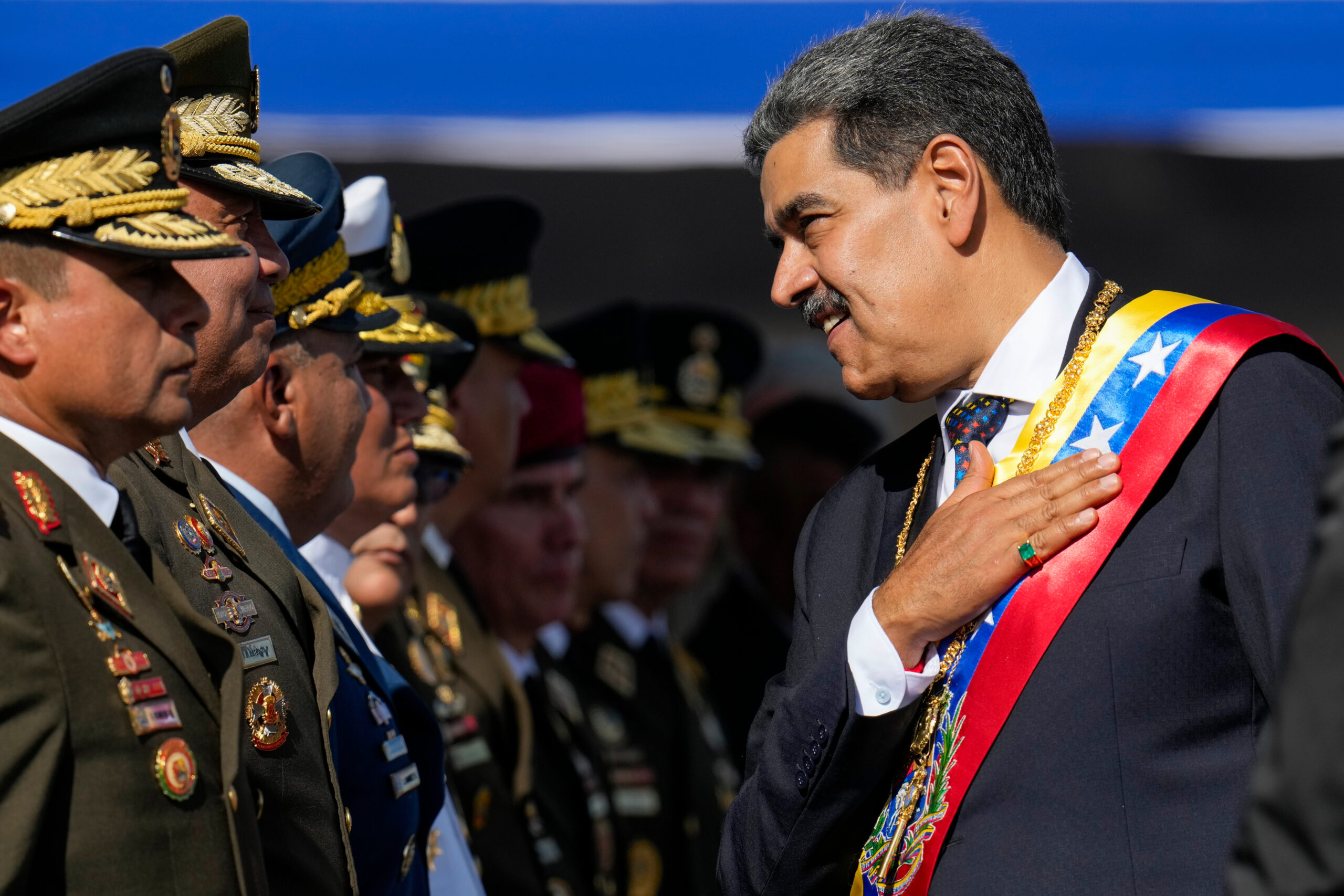
    Venezuelan President Nicolás Maduro places his hand over his heart while talking to high-ranking officers during a military ceremony on his inauguration day for a third term, in Caracas, Venezuela, in January 2025.

    The charges of “narco-terrorism” may be serious, but the process is purely an assertion of power through legal theater.

    This action shatters global order; it does not uphold it.

    What principle will stop China from arresting a Taiwanese leader for “secessionist terrorism” to face a court in Beijing? What stops Russia from charging a Ukrainian president with “Nazi conspiracy” in Moscow? By normalizing this model — where powerful nations kidnap and try the leaders of weaker states — the U.S. is inviting a world of legalized vendettas.

    It replaces a fragile system of rules with raw power.

    For Americans, this is a direct threat to our security. It makes every U.S. official, diplomat, and service member abroad a potential target for retaliatory arrests by rival powers who will cite this case as their precedent.

    We have just handed our adversaries a blueprint for political kidnappings disguised as “law enforcement.”

    The acting president of Venezuela, Delcy Rodríguez, is right to call this a mortal threat to sovereignty. True democrats in Venezuela, who seek a future free from Maduro, now face an impossible dilemma: Their cause has been co-opted by a foreign power’s invasion of their nation’s self-determination.

    This act will not foster democracy; it will fuel nationalism and anti-American resentment for a generation, making a genuine, Venezuelan-led transition harder.

    We cannot defend democracy by obliterating its foundations.

    If we believe in any kind of justice, it must be a justice that respects the equality of nations before the law, not a justice delivered at gunpoint by the world’s most powerful navy to a courtroom in Manhattan.

    The capture of Maduro and his wife by Trump may seem like victory for the U.S. administration today, but its legacy will be a more lawless, dangerous, and unstable world for all of us tomorrow.

    He is not enforcing the law; he is proving that, in his view, only might is right.

    Januarius Asongu is a scholar and the author of more than 20 books on political philosophy and international conflict. A resident of Townsend, Del., he is the founder and chancellor of Saint Monica University in Cameroon and of the American Institute of Technology in Sierra Leone.

  • Nurses should be supported, not undercut and disparaged

    Nurses should be supported, not undercut and disparaged

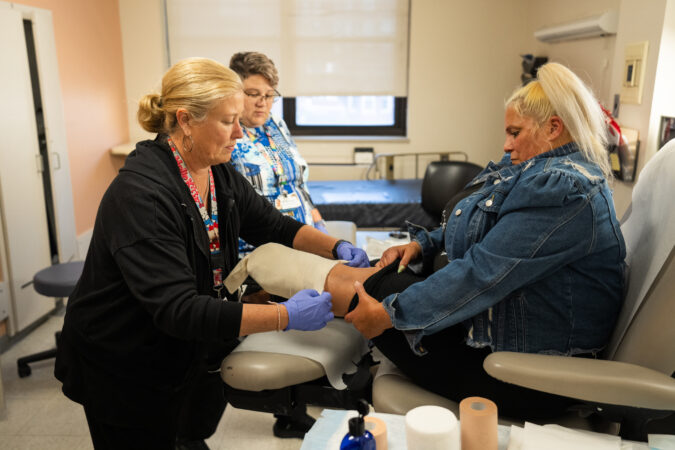
    The more than four million registered nurses practicing in the United States and the patients and families who relied on their care found themselves unexpectedly challenged by the federal government in 2025.

    Among those challenges were a threat of closure to the National Institute of Nursing Research, placing nursing science at risk; a question as to whether nursing was a “profession,” limiting nurses’ capacity to fund the advanced education required to further develop their skills and teach future nurses; and a pullback in the minimal staffing rule for nursing homes, which deprives the growing population of vulnerable patients with registered nurse expertise.

    These multiple assaults on nursing inspired us to take stock and unify around our profession’s need to collectively speak up and help federal decision-makers better understand the work of nursing and what it contributes to society.

    Most trusted

    For years, the public has consistently identified nursing as the most trusted profession. Patients and families have invariably called attention to how nurses helped them get through the worst possible times in their lives.

    In hospitals, nurses keep patients safe. They work to get to know patients and families as individual people so they can better align their care with what is specifically important to them.

    Nurses are watchful 24/7, anticipating and preventing potential problems in patients at risk. They manage patient symptoms to give comfort and alleviate suffering. Nurses provide hands-on physical, therapeutic, and, when necessary, end-of-life care. They collaborate with interprofessional teams, coordinating the work of many.

    They also help people understand what they need to know about their care, enabling them to better manage it at home. Nurses and patients alike thrive within the caring relationships that facilitate patient and family health and healing.

    What’s more important than that? What else does the nursing profession need to do?

    Looking forward to 2026, nurses need to let everyone in on their best-kept secret. Registered nurses provide the glue in our fractured healthcare system and are crucial to helping keep Americans healthy.

    In 2026, we need a bold, united campaign that delivers evidence, action, and impact. To share what nurses know about their profession, and what patients and families know after experiencing their care.

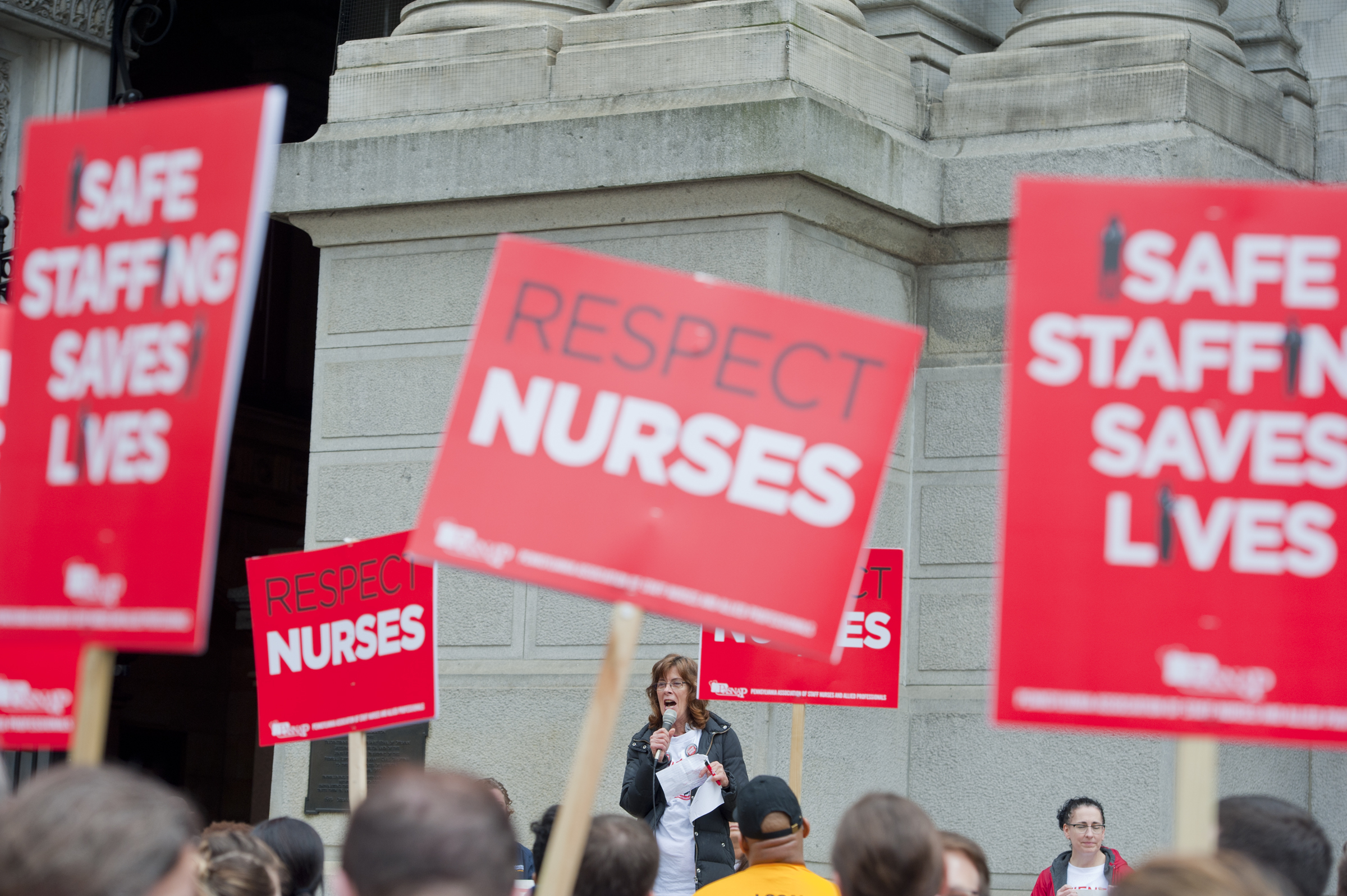
    Nurses demonstrate for better staffing levels and patient care in Philadelphia in 2019. Nursing today faces dire new challenges.

    Nursing must focus on developing health-centered metrics that matter to patients and families, and that clearly demonstrate nursing’s value to society and to the payers, accreditors, and credentialing bodies that fund or evaluate the work of nursing.

    Developing better patient-centered outcomes through our work in hospitals will allow us to provide more informed care to the right patients at the right time. While current Centers for Medicare and Medicaid Services (CMS) measures aligned with nursing, like rates of hospital-acquired infections, are important, they are narrow in scope and only call attention to the absence, not the presence, of stellar bedside nursing.

    Challenges of AI

    In 2026, nursing needs to lead in the thoughtful implementation of artificial intelligence to optimize patient and family care. AI can unburden healthcare professionals from tasks that can — and should be — automated so nurses can better focus on the empathy and experience that inform quality care. AI can be used to help predict untoward events, keeping patients safer while freeing nurses to provide the one-to-one human interaction that technology simply cannot.

    In primary care, the U.S. healthcare system faces a shortage of providers, rising healthcare costs, and an increasing number of people with chronic health conditions like obesity, diabetes, asthma, and heart disease. Imagine a healthcare system in which nurse practitioners provide the majority, not just 20%, of primary care, better helping patients and families stay healthy.

    To make this a reality, we must remove restrictive practice barriers and allow nurse practitioners to directly bill for their services. Nurse practitioners already help guide patients through complex transitions from acute care to palliative care and end-of-life. Nurse-run virtual clinics have successfully provided just-in-time consults that replace more costly emergency room visits. Nurse-run specialty clinics help manage long-term illnesses, such as diabetes and asthma, by coordinating care with specialists to prevent exacerbations.

    Registered nurses, working in primary care, can help mitigate these challenges and strengthen America’s healthcare system by providing care, education, and support to all people, regardless of their level of health.

    In the community, nurses partner with local leaders to design safety nets like vaccination clinics and disaster relief programs. They run urban community clinics, providing care to people who need help, including the homeless, the uninsured, and the marginalized. Imagine school-based registered nurses not only helping educate children about health, but also managing their chronic illnesses like asthma and mental health needs.

    The future will require bold and collaborative action from nurses to combat the oncoming healthcare crisis. Millions of Americans will suffer the consequences of our government’s inaction to pass a comprehensive health bill in 2024 or shore up the Affordable Care Act in 2025.

    As America approaches its 250th anniversary, registered nurses have been — and remain — a vital national asset. In 2026, nurses are the solution for delivering compassionate and evidence-based healthcare in America, and a driving force for the well-being of the public they serve.

    Our healthcare system is stressed, but it can be sustained with empathetic leadership, investing in nursing research, expanding practice authority, and designing innovative models of care that recognize the value of nurses and their critical, myriad contributions to the nation’s health.

    Martha A.Q. Curley is a registered nurse and professor of pediatric nursing at the University of Pennsylvania School of Nursing. Connie M. Ulrich is a registered nurse and professor of nursing and of medical ethics and health policy, and Mary D. Naylor is a registered nurse and professor of gerontology and nursing, both also at Penn’s School of Nursing.

  • Pa. has a human trafficking problem. That’s why Because exists.

    Pa. has a human trafficking problem. That’s why Because exists.

    Earlier this year, a statewide task force arrested more than a dozen men in a Central Pennsylvania sting operation targeting human trafficking and the sexual exploitation of minors. The headlines came and went: another bust, another news release.

    But for every trafficker caught, there are countless survivors unseen, still struggling to rebuild their lives in the shadows of our communities. These operations are heroic and necessary, yet they reveal something deeper: Human trafficking is not a distant problem. It is a Pennsylvania problem.

    As the CEO of the Because Organization, based in Delaware County, I see how this crime takes root in unexpected places.

    In plain sight

    It hides in plain sight along transit routes in Philadelphia and the highways connecting our suburbs and rural towns. It lurks in hotels, nail salons, warehouses, and online chat rooms, amid the overlapping crises of poverty, addiction, mental illness, and homelessness.

    Traffickers prey on vulnerability; they exploit housing instability, the lack of family support, and the constant need to survive. They do this right here in Delaware County, and in Berks, Dauphin, Philadelphia, and Allegheny Counties.

    January is National Human Trafficking Prevention Month. This is a time for education, awareness, and action. But awareness alone is never enough. Pennsylvania has made significant legislative progress in recent years. Act 105 strengthened our laws and enabled law enforcement to respond more effectively to trafficking crimes.

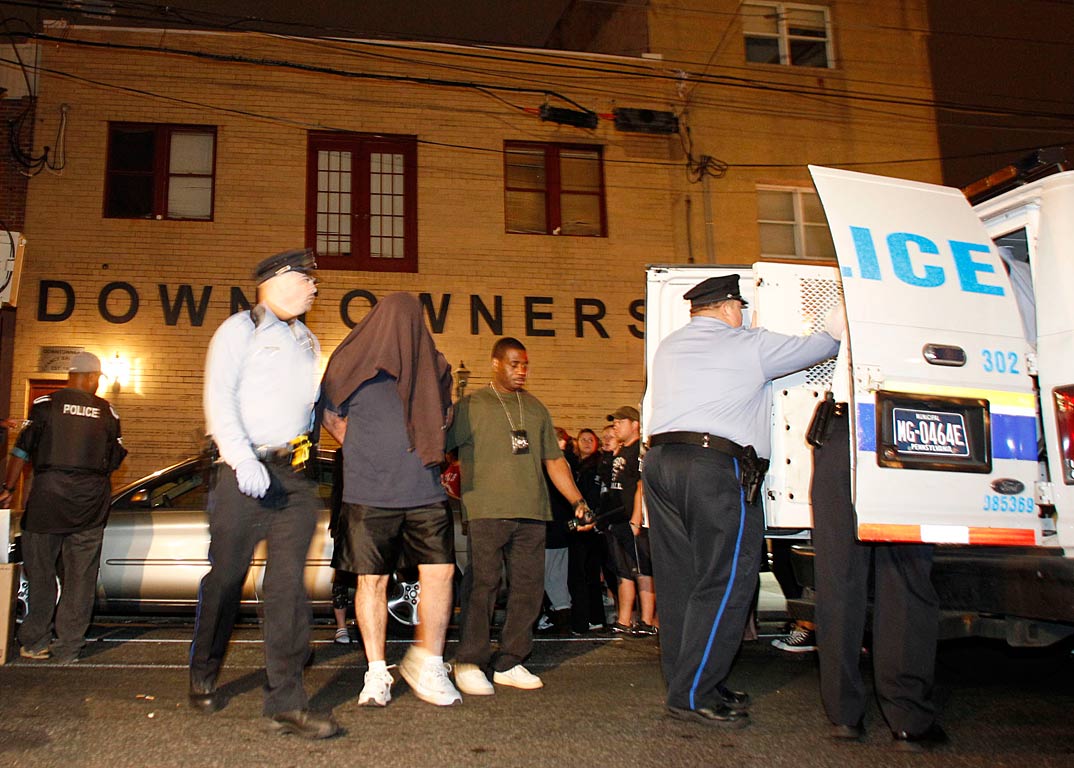
    Police lead men from the Mummers Downtowners Fancy Brigade clubhouse at Second Street and Snyder Avenue in South Philadelphia at about 11 p.m. in 2011. Ten women and one man face prostitution charges. Two other men face liquor violations.

    Local task forces have increased collaboration between police, advocacy groups, and community agencies. The Pennsylvania Office of the Attorney General’s human trafficking section conducts proactive investigations, including a recent sting that uncovered networks of coercion and exploitation across the state. However, laws and arrests address only the supply side of a crime rooted in unmet human needs.

    That is why Because exists: Because no one should be left invisible or unsupported after escaping exploitation.

    The Because Organization works to stop human trafficking through education, advocacy, and survivor empowerment. We teach young people how to spot red flags of grooming and coercion before they find themselves at risk.

    We help survivors access housing, healthcare, therapy, and job training, not just for a few weeks, but for as long as they need to regain control of their lives. We teach communities to recognize the subtle warning signs that often go unnoticed: sudden changes in behavior, lack of personal identification, excessive isolation, or fearfulness.

    Human trafficking is often misunderstood.

    It is not limited to big cities or border crossings. It can occur anywhere there’s a profit to be made from another person’s body or labor.

    In Pennsylvania’s agricultural centers, undocumented workers and refugees are being manipulated into servitude. In college towns, young women are coerced by online predators posing as friends or romantic partners. In suburban areas, minors are lured into sex trafficking via social media.

    Combating these crimes requires active engagement from all parts of our communities.

    A call to action

    Community awareness can change outcomes. When neighbors, teachers, coaches, or healthcare workers recognize warning signs, such as a young person struggling with identity, frequent absences, exhaustion, unexplained injuries, or being afraid to speak up, intervention becomes possible.

    The call to action belongs to all of us. Local businesses can join the fight by offering training and safe ways to report concerns. Faith communities and civic groups can create judgment-free spaces. Additionally, journalists can continue shining a light into the corners where exploitation hides.

    At Because, our message is clear but urgent. Because every person has worth. Because education prevents exploitation. Because our communities are stronger when compassion replaces indifference. Because survivors deserve more.

    This Jan. 11, on National Human Trafficking Awareness Day, we will wear blue to show our solidarity with victims and survivors.

    But more importantly, we will continue doing this work every day of the year, engaging in the challenging, hopeful, human effort of prevention and recovery. You can join us by donating, volunteering, partnering with local organizations, or simply choosing to see what too many still overlook.

    Human trafficking steals people’s freedom and dignity. Our collective duty is to restore both. Let us not wait for the next sting operation to remind us that this fight belongs to all of us.

    Because awareness without action keeps people trapped, but awareness combined with compassion can transform everything.

    Marcia Holt is CEO of the nonprofit Because Organization, based in Delaware County. Because is dedicated to providing a safe and supportive environment for survivors of human trafficking, offering trauma-informed care, and advocating for their rights and well-being.

  • Letters to the Editor | Jan. 5, 2026

    Letters to the Editor | Jan. 5, 2026

    The cost of ‘free’ money

    So, what would you do if you received a phone call from someone claiming a way for you to receive “free money”? You’d hang up, knowing full well there is no such thing as “free money” and that the claimant is no doubt a scammer. Better to hang up.

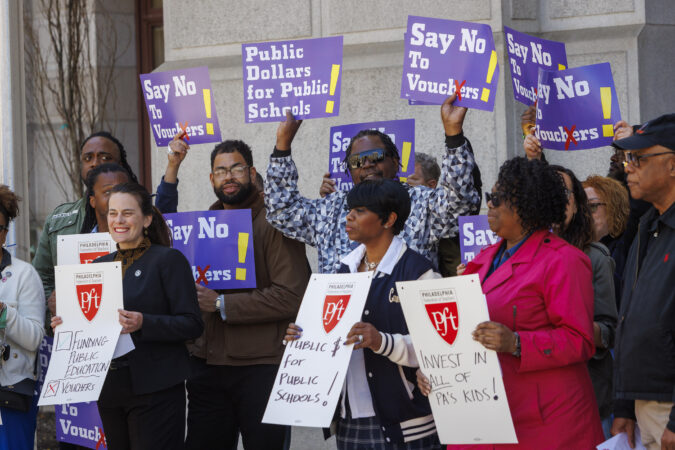
    Well, our always smiling U.S. Sen. David McCormick used the “free money” come-on in a recent Inquirer op-ed to call on readers to buy his and his billionaire friends’ nonsense to support so-called school choice in Pennsylvania. “Free”? There’s nothing free about school choice tax credits to be supplied by the so-called Working Families Tax Cut Act. Guess who pays for these “tax credits”? Not billionaires like McCormick. Taxpayers like you and me.

    Free money, my foot.

    Bryan Miller, Philadelphia

    . . .

    Sen. Dave McCormick’s claim that the school choice tax credit will improve education while delivering “free money to families” is a con job. While he accurately articulates the downsides of educational inequality and the serious harm done by inadequate schools, the “solution” he’s peddling, a $1,700 tax break for private education, will only make the problem worse, giving families who can afford the $10,000 to $50,000 tuition for private school extra cash while keeping it out of reach for the most vulnerable. The net effect will be removing the least vulnerable from challenged schools while leaving behind those who cannot afford the remaining $8,300 in tuition. If Sen. McCormick really wanted to improve education for all, he’d focus on funding early childhood education and creating policy to attract the best teachers to the most challenging schools, rather than attempting to pass off another tax break as good policy.

    Jenny Williams, Havertown

    My siblings and I are products of Catholic schools. Our elementary school was located in a working-class neighborhood of Philadelphia. The classrooms were large, numbering 60 students or so. Books were well-worn and many decades old. The maps on the classroom walls were frayed and outdated, as well, showing countries that no longer existed. And the nuns and young lay teachers who instructed us did not have advanced college degrees other than a bachelor’s degree, I’m sure. These dedicated folks chose to teach in Catholic schools not for money, but out of love for children and the Catholic faith. But in spite of these deficiencies, I received an excellent education that not only emphasized the three R’s, but discipline, love, and charity. And currently, I’m sure conditions are much improved now that tuition is required. When I attended, the parish paid for school expenses; all that was required of the students was to pay a nominal fee — $5 — for use of the textbooks. In the end, my siblings and I went on to college and successful and rewarding careers. My mother and father, having to discontinue their education early — mom in the sixth grade, dad as a junior in high school — to work and help their families during the Great Depression, could not have been more proud to have children who attended college. So please, enough of how more money, smaller class sizes, and better compensated teachers will improve test scores in low-performing, urban public schools. How unfair is it that parents of children in these urban public schools cannot have a portion of their tax dollars refunded to them so they can choose a better option for their children’s education? It’s time for school choice.

    Fred Hearn, Turnersville

    Join the conversation: Send letters to letters@inquirer.com. Limit length to 150 words and include home address and day and evening phone number. Letters run in The Inquirer six days a week on the editorial pages and online.

  • America launches its 250th birthday year by becoming a rogue state

    America launches its 250th birthday year by becoming a rogue state

    Technically, the United States won’t turn 250 until July 4. But Donald Trump dictated this weekend that before the dawn’s early light of only the third day of America’s Semiquincentennial was soon enough for the bombs to begin bursting in air.

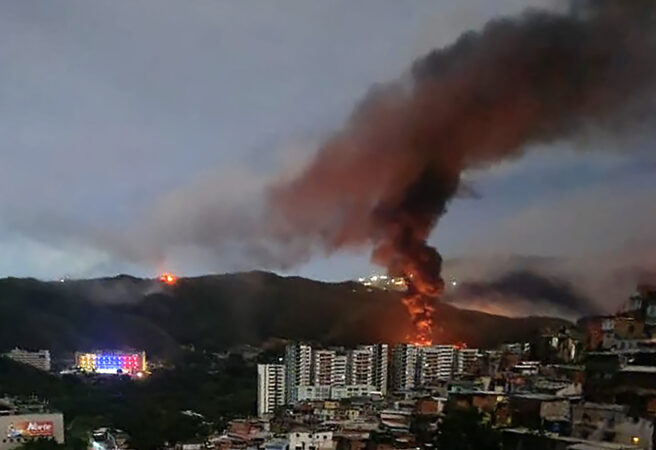
    At 1 a.m. Saturday, guided by a luminous full moon, a U.S. air armada of more than 150 planes roared over the Venezuelan capital of Caracas and far-flung military bases across the South American nation, waking up a metropolis of three million people with massive explosions.

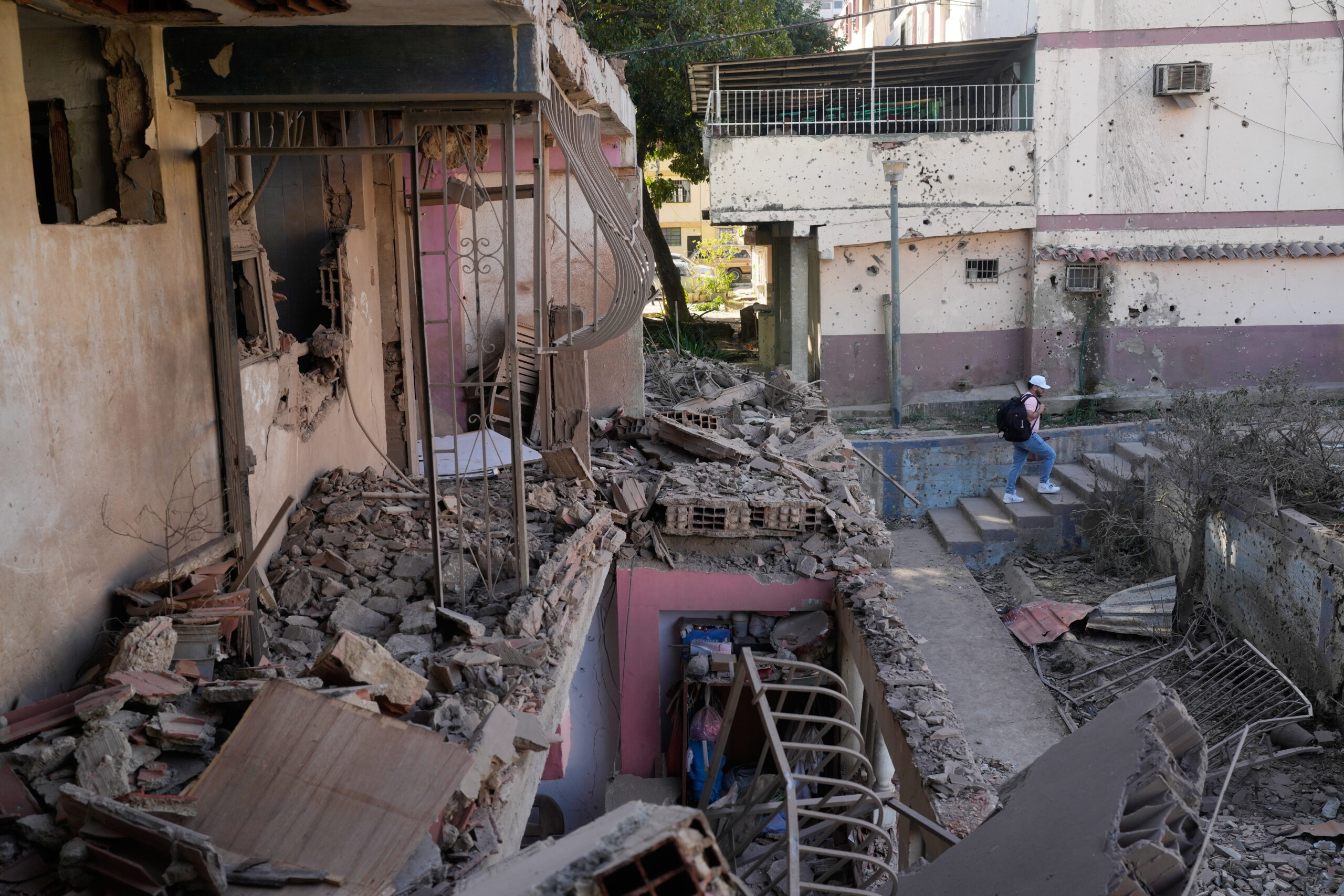
    An 80-year-old woman, Rosa González, was killed when a U.S. bomb slammed into her three-story apartment complex in a coastal neighborhood near the Caracas airport, according to the New York Times. The dead-of-night strike wounded several of her neighbors, tore a massive hole in the side of the apartment building, and even riddled with shrapnel a family’s portrait of Simón Bolívar, the leader who liberated Venezuela from colonialism — for a time, anyway — in 1820.

    González was one of about 80 people, both security forces and civilians, killed Saturday in the first U.S. land strike in what by Trump’s own admission is “a war” — America’s latest and maybe its strangest yet. With more than 100 civilian sailors blown up in a running series of U.S. drone attacks on boats off South America, which the Trump regime claims, without offering proof, are smuggling drugs, American imperialism is growing more deadly by the day.

    It’s hard here not to echo a notorious quote from Philadelphia sports history: For who? For what?

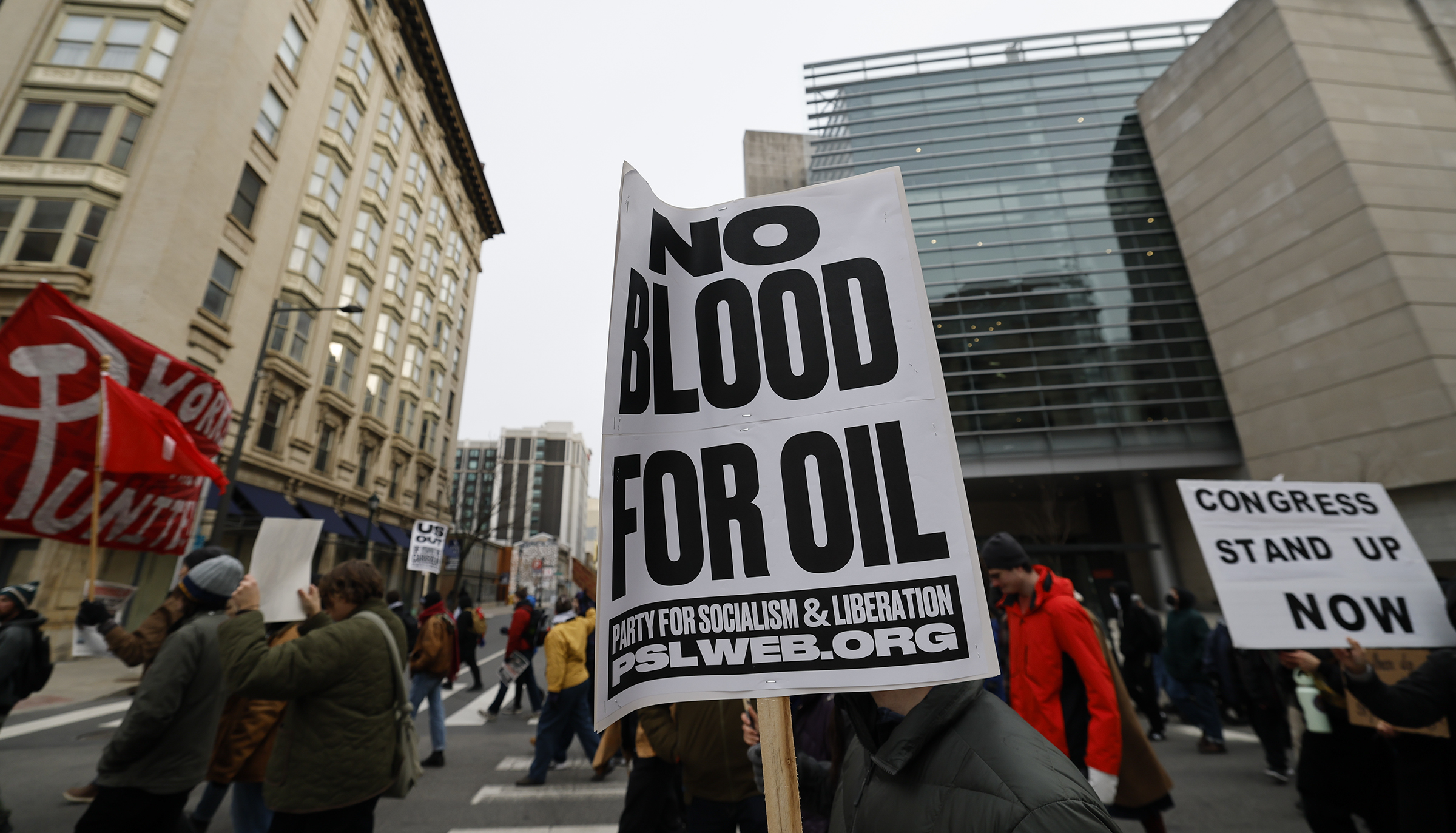
    Demonstrators march along North Broad Street reacting to U.S. strikes on Venezuela on Saturday.

    Trump’s splendid little war in Venezuela comes drenched in so many lies, buried under layers of justifications that change almost hourly, and so far outside the boundaries of both U.S. and international law that it makes George W. Bush’s dishonest and disastrous misadventure in Iraq feel like Gettysburg by comparison.

    That Venezuela’s former ruthless strongman leader, Nicolás Maduro, and his wife are currently sitting in Brooklyn’s federal lockup, captured by Delta Force soldiers amid the bombing and facing a U.S. indictment that asserts they were also drug lords, is pretty much the only certainty in a military crusade with a future rife with unknown unknowns.

    In a stunning news conference at Trump’s Mar-a-Lago mansion in Florida — where just 59 hours earlier, guests dined from a caviar bar as the president auctioned off a painting for $2.75 million — Trump told the world that the United States now “runs” Venezuela, despite no American personnel being posted inside the country, twice the size of California. And he made it clear that the blood of González and the others was spilled for oil, as POTUS 47 talked at length about U.S. hegemony over 17% of the world’s known oil reserves, but made no mention of restoring democracy in Venezuela.

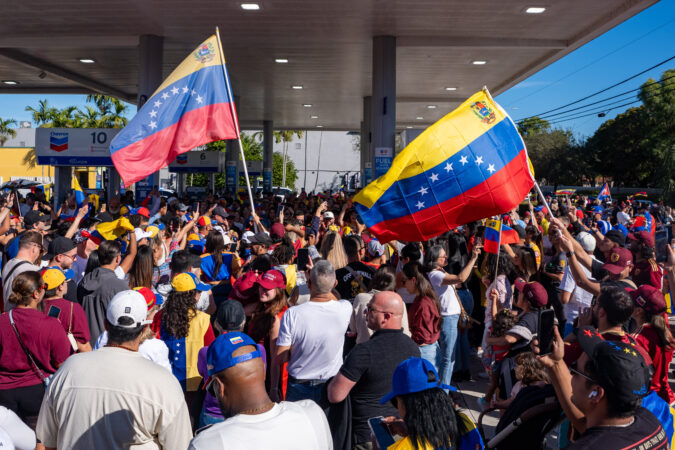
    None of this stopped a parade of retired generals from flooding cable TV news networks — even the alleged liberal one, MS Now — to talk about the tactical success in seizing Maduro and pummeling Venezuela’s defenses with no U.S. deaths, even as the bigger strategy remains a black hole. That level of commentary, backdropped by images of cheering Maduro-hating refugees in Miami and elsewhere, belied the fact that invading Venezuela was wildly unpopular with the American people.

    Just last month, a Quinnipiac University poll found that 63% of U.S. voters opposed “U.S. military action inside Venezuela,” while just 25% supported such a move. Polling questions explicitly about removing Maduro have seen similar results. This matters a lot, but then other U.S. wars that history remembers as pretty terrible polled well at first. The much bigger problem with invading Venezuela is that it’s illegal. Incredibly illegal.

    To be sure, the imperial U.S. presidency has been simmering since 1945, but Trump has utterly abandoned one of the most cherished principles of America’s founders — that the power to declare war rests with Congress. Not only did the Trump regime not seek approval on Capitol Hill — where its beyond-flimsy casus belli could have been debated in front of the American people — but the president didn’t even deem it necessary to inform key congressional leaders.

    The attack was also a blatant international law violation of the charter of the United Nations — the organization that the U.S. spearheaded in 1945 to prevent future wars and unwind colonialism — which aimed to end unprovoked aggression. Geoffrey Robertson, who once led a U.N. war-crimes tribunal in Sierra Leone, told the Guardian that the Trump regime “has committed the crime of aggression, which the court at Nuremberg described as the supreme crime — it’s the worst crime of all.”

    To repeat: For who? For what? Is Trump eager for a bombastic military op to distract voters’ attention from the ongoing cover-up of the Jeffrey Epstein files, the explosive testimony of prosecutor Jack Smith about the president’s complicity in an attempted coup on Jan. 6, 2021, and skyrocketing prices for healthcare and at the grocery store? Is this the big payback to Big Oil CEOs who responded to Trump’s demand for $1 billion in campaign cash? Is he satisfying the vain psychoses of Silicon Valley billionaires who want a warm tropical paradise for high-tech “networked cities” outside any laws? Is this all just a narcissistic power trip?

    Yes.

    A neighbor walks through an apartment building that residents say was damaged during U.S. military operations to capture Venezuelan President Nicolás Maduro, in Catia La Mar, Venezuela, Sunday, Jan. 4, 2026.

    Yes, this lethal disaster is a perfect storm of all of those things. But we can’t allow the blather of talking-head ex-generals or the cowardly passivity of the supposed opposition Democrats to blind us to the harsh reality of what just happened here. I didn’t think it could get worse than the utterly unwarranted 2003 Iraq War that inspired me to become an opinion journalist, but this is arguably worse, more akin to Vladimir Putin’s Russia invading Ukraine. On the 250th anniversary of America’s founding as a grand experiment in democracy, we are now a rogue state, a global pariah.

    We Are The Bad Guys,” the brilliant independent journalist Hamilton Nolan headlined his essay on Saturday, writing with painful accuracy that “the United States government under Donald Trump is the most dangerous force on earth, and a serious potential threat to every other nation, and the leading cause of geopolitical instability.”

    I noted above that this Venezuelan operation is largely shrouded in uncertainty and ambiguity, yet we need to acknowledge two bitter truths that can no longer be denied in the rocket’s red glare over Caracas.

    First, Donald Trump is a dictator now. To be sure, this has seemed an aspiration from the moment he stepped onto the Trump Tower escalator over a decade ago, with very mixed results, but now it’s a reality. The strike on Venezuela was a dictate, nothing more. There was zero effort to rally the American people behind him, zero effort to seek congressional input, and zero concern over the illegality of this operation, let alone its rank immorality. And if there is no meaningful opposition to his murders in Latin America, he will only consolidate his tyrannical power.

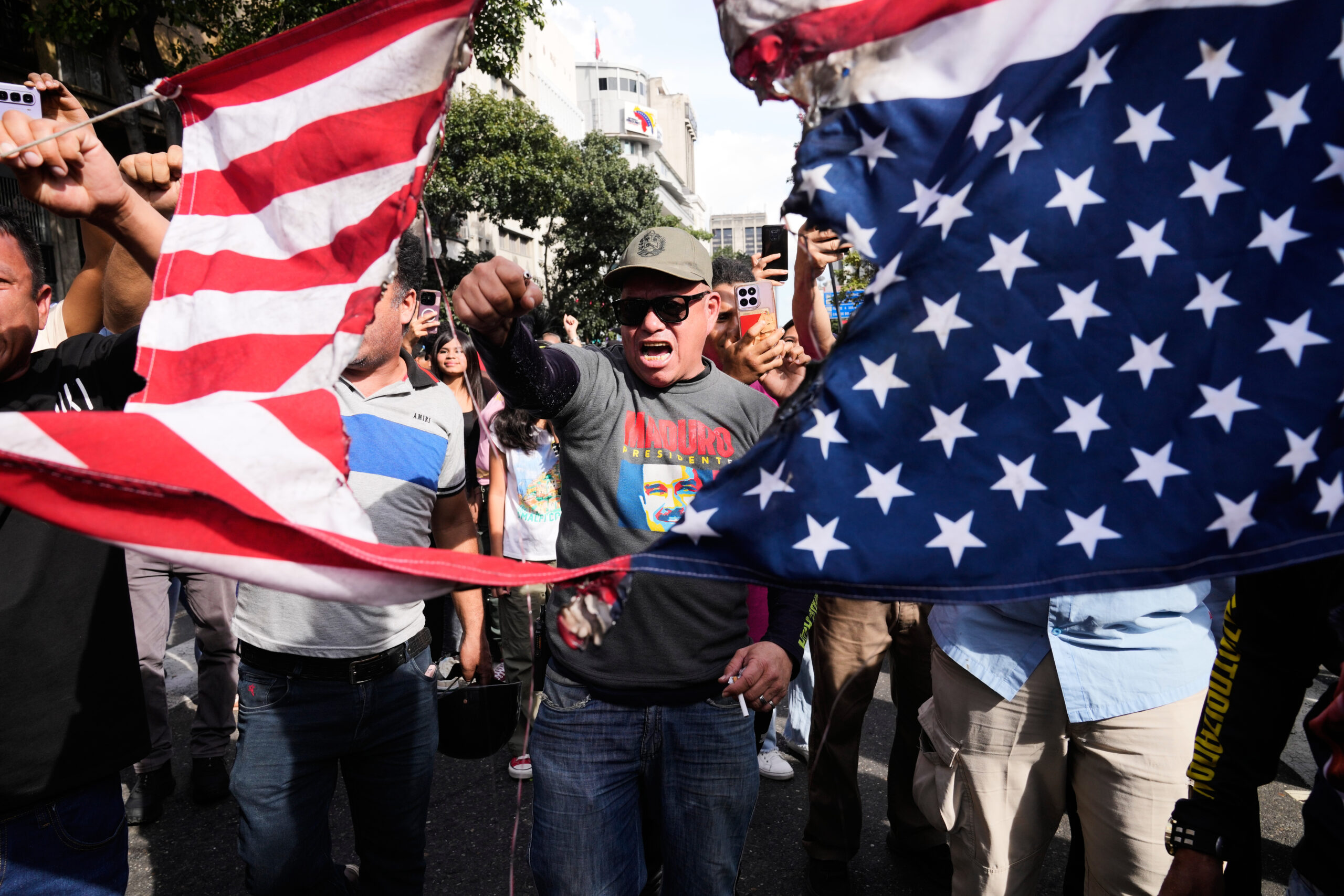
    Government supporters rip an American flag in half during a protest in Caracas, Venezuela, on Saturday, after U.S. President Donald Trump announced that U.S. forces had captured President Nicolás Maduro and first lady Cilia Flores.

    Second, the world is a much more dangerous place right now than we want to admit. As a boomer born in the aftermath of World War II, I’ve always worried that I’d live to see World War III — and I still do. But now I’m equally worried that there won’t be a global conflagration, but just a silent abandonment of the dream of a planet governed by the rule of law, with peace as its No. 1 priority.

    The real significance of what just happened in Latin America is that the world — and the disappearing liberty of its denizens — is getting carved up by amoral strongmen into “spheres of influence,” just as in Trump’s beloved Gilded Age of the 19th century. After Saturday, what is to stop China from seizing control of Taiwan, or Russia from looking beyond Ukraine to wider territorial ambition in Europe, or the Trump regime from seizing Greenland and the Panama Canal?

    Absolutely nothing. Except us.

    A dictatorial United States isn’t preordained, nor is a world where smaller nations are swallowed up by a real axis of evil. After all, 2025 ended on a surprisingly hopeful note of resistance, led by everyday folks from Minneapolis to New Orleans with their whistles and their gumption to get in the face of masked, armed goon squads.

    Let’s turn those flares of hope into a raging fire of opposition. If you’re mad today, show it in the streets, then call your member of Congress and let them know that a sternly worded letter won’t cut it. Trump’s illegal war demands nothing less than his impeachment, if not now, then after November, after the righteous flood.

    Let’s send a 250th birthday card to the diminished but still-beating heart of the true America and sign it with two words: No kings.

  • Trump attacks Venezuela, drops drug war excuse, and focuses on oil

    Trump attacks Venezuela, drops drug war excuse, and focuses on oil

    BOGOTÁ, Colombia — Even after a headlong U.S. military assault on Venezuela to topple strongman President Nicolás Maduro, President Donald Trump, in his news conference Saturday morning, offered few details about how U.S. leaders would stop drugs coming from Venezuela.

    For more than four months, that has been the justification for the U.S. armada in the Caribbean and the extrajudicial killing, without evidence of wrongdoing, of 115 people in boat strikes.

    The invasion of Venezuela this weekend is the largest U.S. military operation in Latin America since the 1989 invasion of Panama, when the U.S. seized that nation’s leader, Manuel Noriega. Noriega was convicted in U.S. courts of drug trafficking in 1992 and, after facing additional charges in France and Panama, died in 2017.

    As with Noriega, the justification now is the war on drugs, which, since the 1980s, has cost over a trillion dollars with virtually no effect on stopping the flow of illicit drugs.

    The “narco-terrorist” charge against Maduro has been a shaky pretext for his ouster, measured by the naked assertion that drugs from Venezuela pose a threat to the U.S. and its citizens. Venezuela isn’t mentioned as a source of cocaine in reports by the United Nations Office on Drugs and Crime. And deadly fentanyl isn’t produced in Venezuela.

    It’s noteworthy that protecting democracy has hardly been mentioned as an issue.

    Front and center, President Trump’s focus, post-Maduro, is on the U.S. winning the easy-to-describe prize: U.S. control of Venezuela’s oil reserves, the largest in the world. And that is why Trump’s imperial declaration was straightforward: “We are going to run the country until such time as we can do a safe, proper, and judicious transition.”

    No matter who the next president of Venezuela is, it’s already clear that Trump will choose someone willing to hand over petroleum to U.S. oil companies.

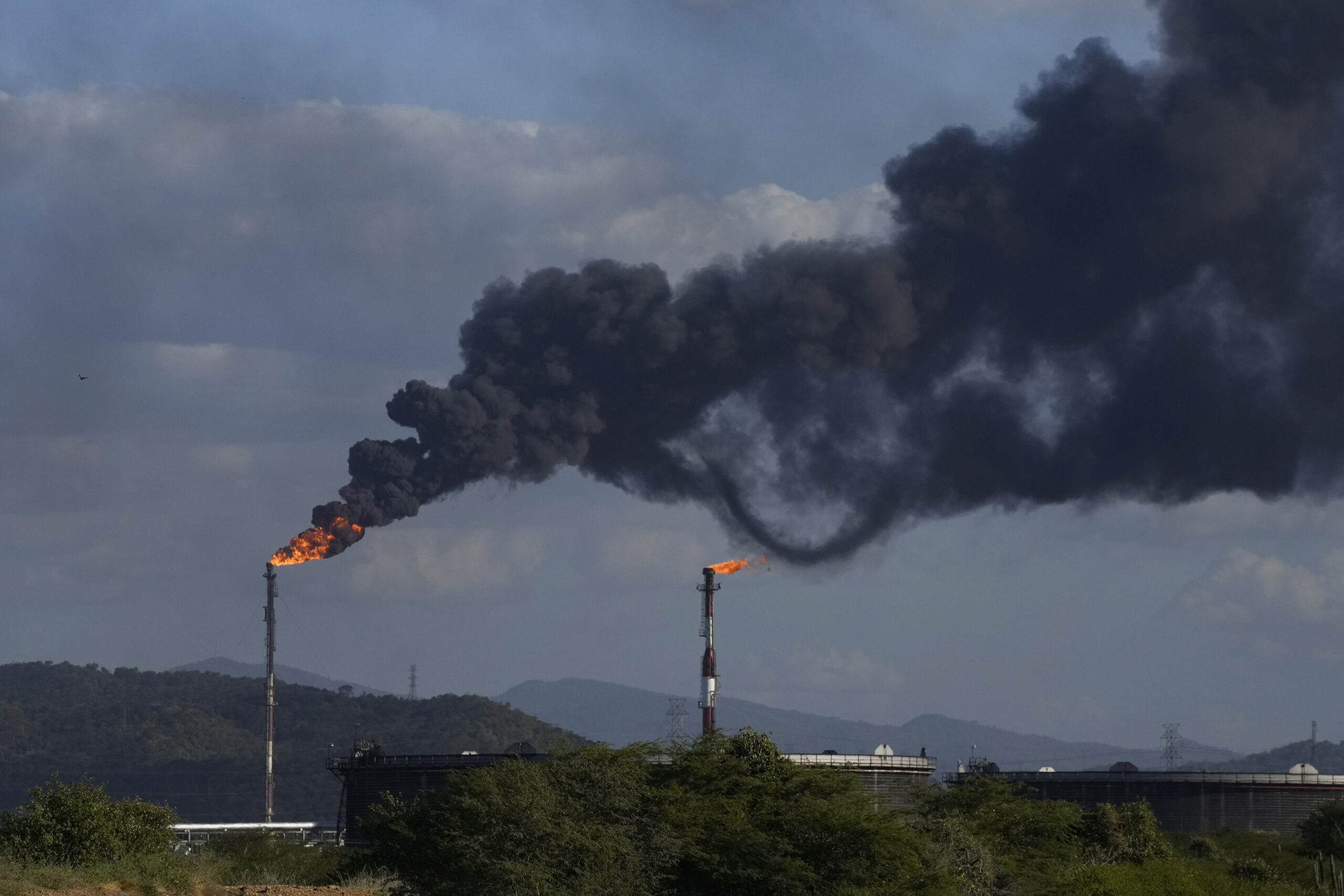
    Flare stacks release gases at the Jose Antonio Anzoategui oil complex in Barcelona, Venezuela, in January 2024.

    Current estimates are that Venezuela has around 300 billion barrels of oil in reserves. By comparison, the U.S. has the equivalent of about 55 billion barrels in reserve. Most U.S. refineries, especially Gulf Coast refineries built years ago, are designed to process Venezuela’s heavy, high-sulfur sour-quality feedstock, which makes them more efficient, with better profit margins than when running lighter, domestic crude.

    And Venezuela, in fact, is not an underdeveloped commodities country, but sits on a wellspring for both today’s energy markets and tomorrow’s green-tech supply chains — with plenty of bauxite, aluminum, gold, copper, nickel, coltan, and cassiterite — all of it too valuable in Trump’s transactional view to be locked out by growing Russian and Chinese influence.

    All of Latin America is now watching to see how the invasion and ongoing transition strategy will play out. Early condemnations have come from Brazil, Mexico, Chile, and especially neighboring Colombia, whose president, Gustavo Petro, has often been critical of President Trump.

    On Saturday, President Trump was asked about U.S. relations with Colombia. And the president — who charged in early December that, after Maduro, Petro “might be next” — stated that Petro “has cocaine mills. He has factories where he makes cocaine. So he does have to watch his ass.”

    Facts about Latin America, in this case Colombia, don’t interest Trump. While the country contends with coca harvesting and with a decades-long internal conflict, pitting government forces against a variety of criminal networks, there is no evidence of Petro’s involvement in the cocaine trade.

    There are arguments among analysts about hectares of coca under harvest and cocaine production potential from various species, and even total hectares under cultivation, but interdictions disrupting cocaine production and trafficking are at record levels. And Petro has said he can offer evidence that as many as 18,000 narcotics laboratories have been dismantled during his time in office.

    In early December, Petro invited Trump to come witness the destruction of cocaine laboratories “to prevent cocaine from reaching the U.S.”

    Trump should also come here to witness, as I have, Colombia’s innovative efforts with modern chemistry detection of illicit drugs at seaports, which is beyond easy description.

    T. Nelson Thompson was a Woodrow Wilson Fellow in international relations at Johns Hopkins University. Before recently retiring, he was a senior adviser in the Office of International Activities at the U.S. Maritime Administration (MARAD) in Washington.

  • True change in Venezuela requires more than Maduro’s exit

    True change in Venezuela requires more than Maduro’s exit

    As events continue to unfold in my native Venezuela, many members of the expat community are experiencing a complex mix of emotions: relief, hope, concern, and caution.

    For many Venezuelans, the removal of Nicolás Maduro represents a long-awaited moment of accountability. His rule, following that of Hugo Chávez, was marked by repression, corruption, and the systematic destruction of a once-prosperous nation.

    Millions were forced into exile, a quarter of the population fled the country, families were separated, and basic human rights were violated. The end of that chapter brings real relief.

    But relief alone does not guarantee confidence in what comes next.

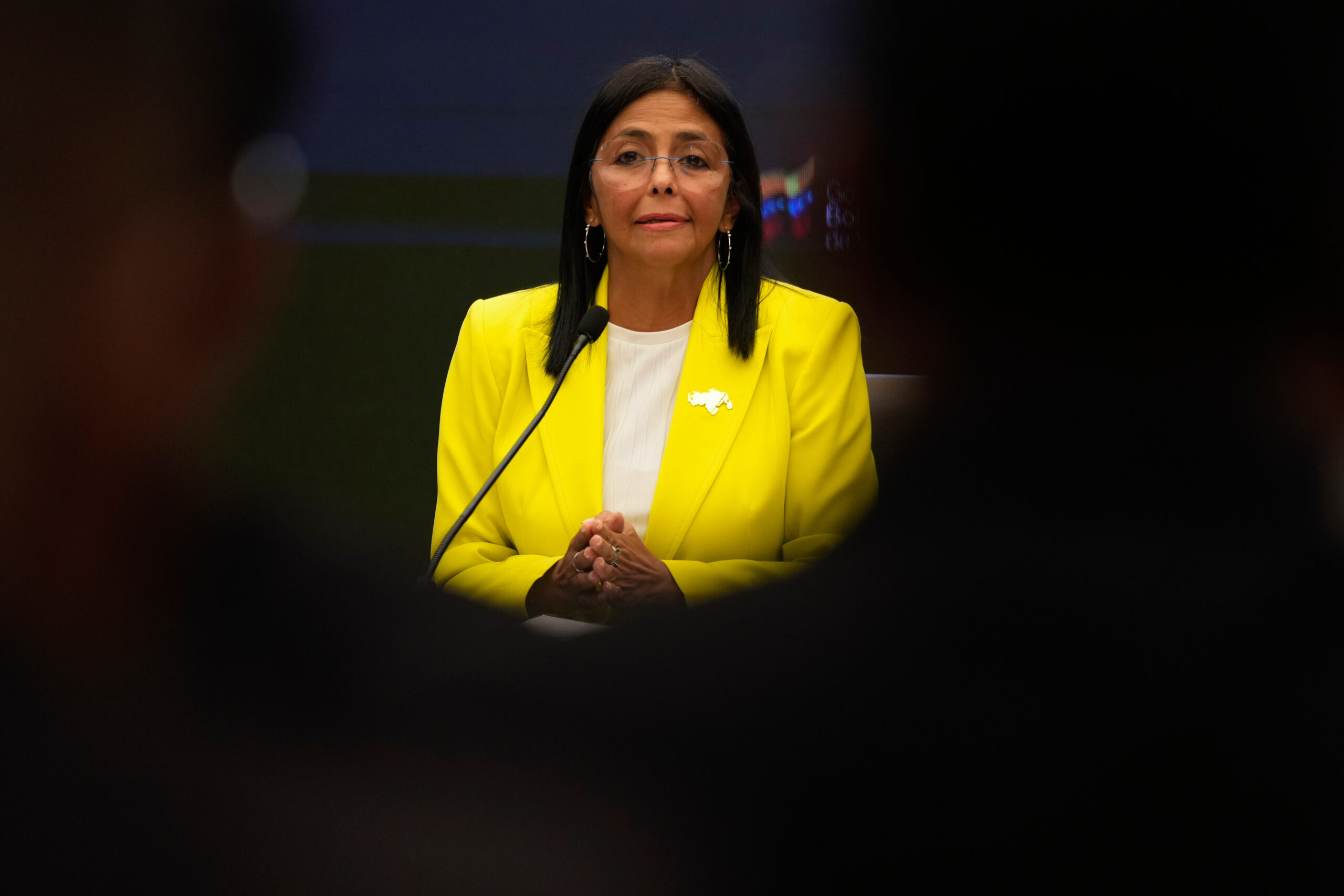
    The announcement during President Donald Trump’s news conference that Venezuelan Vice President Delcy Rodríguez has assumed control is deeply troubling to most Venezuelans.

    Venezuelan Vice President and Oil Minister Delcy Rodríguez gives a news conference at the Miraflores presidential palace in Caracas, Venezuela, in March.

    Rodríguez has been one of the architects of the system that caused Venezuela’s humanitarian, economic, and institutional collapse. She is not a neutral caretaker, but part of the inner circle that enabled abuses and dismantled democratic institutions. Replacing one figure while leaving the rest of the structure intact is not meaningful change.

    It is also important to be clear about Venezuela’s resources. Venezuela’s oil belongs to the Venezuelan people.

    While it is legitimate for the United States to seek restitution for assets unlawfully expropriated during Chávez’s presidency, including those taken from companies such as ExxonMobil and ConocoPhillips, any resolution must respect Venezuelan sovereignty and ensure future revenues benefit the population, not another authoritarian elite.

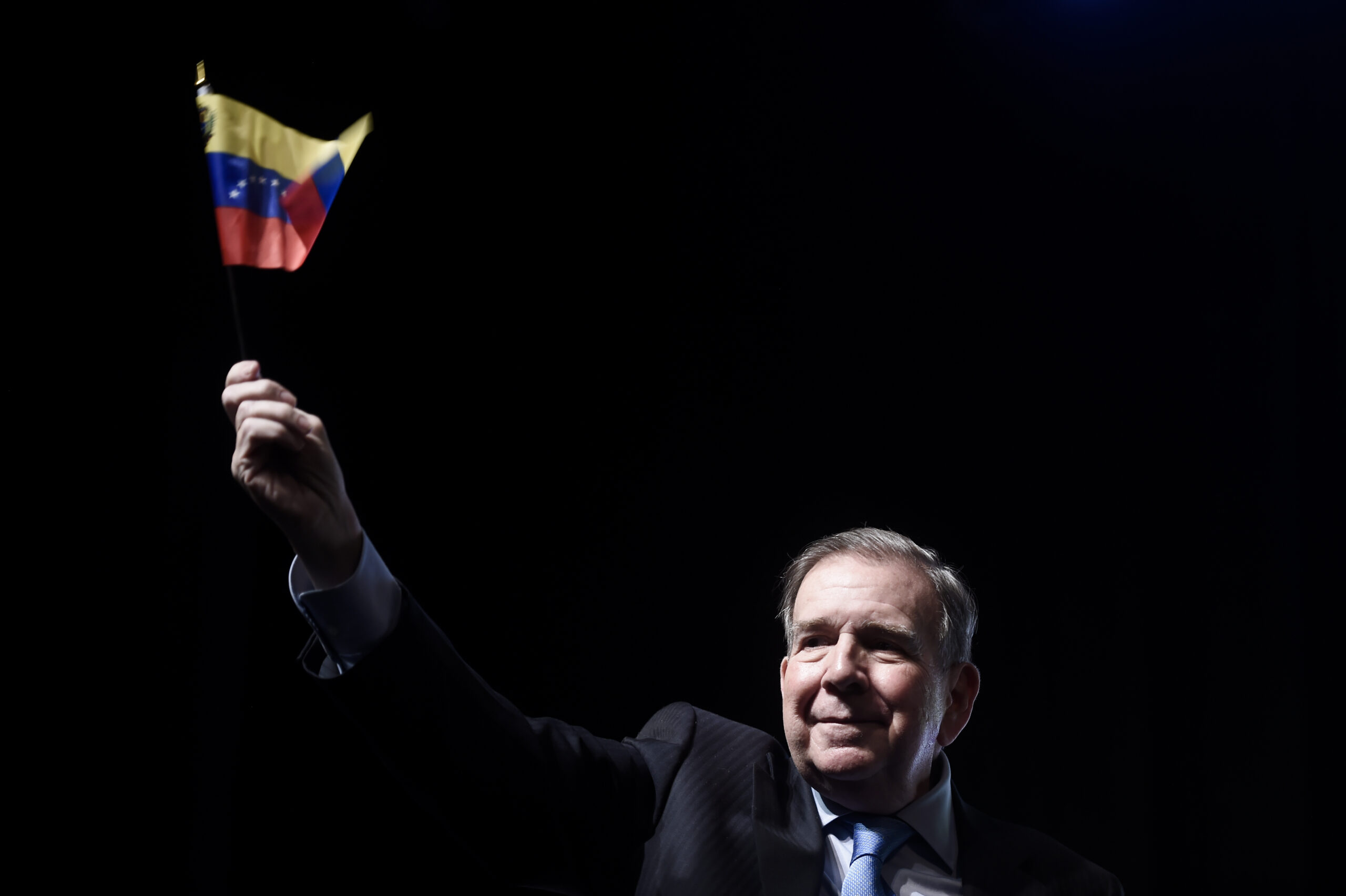
    Venezuela’s opposition leader Edmundo González, who has been recognized by several governments, including the U.S., as Venezuela’s president-elect, waves a Venezuelan flag during a meeting with supporters in Panama City in January 2025.

    Most importantly, Venezuela has already chosen change. In July 2024, voters chose to send Edmundo González to the Miraflores Palace — Venezuela’s White House — in a historic election. Despite efforts by the democratic opposition to expose and counter electoral manipulation, the regime-controlled National Electoral Council ignored the will of the people. That denial of a democratic mandate lies at the heart of today’s crisis.

    What Venezuelans at home and abroad are asking for is not chaos or vengeance, but a protected and legitimate transition — one that respects the 2024 election results and seats González as president. Without safeguards, accountability, and international oversight, Venezuela risks repeating a painful cycle or sliding into further instability.

    Many Venezuelans are also concerned by statements suggesting the United States would “run Venezuela” during a transition. International pressure and support matter, but prolonged foreign administration raises serious questions about sovereignty and accountability.

    Venezuela’s recovery must be led by Venezuelans chosen by their people.

    We welcome the possibility of change, but remain vigilant. Venezuela has suffered too much to endure another false transition. Our hope is for peace, unity, and a democratic future that finally honors the will and dignity of its people.

    Emilio Buitrago is the cofounder and former president of Casa de Venezuela Philadelphia, where he continues to serve as an advisory board member. An engineer and project manager, he also serves as an advisory board member of the Venezuelan American Caucus.