Category: Opinion

  • In 2026, America needs an anti-AI party | Will Bunch Newsletter

    Sometimes a terrible year can end with a moment of uplift. This actually happened in the last days of 1968, when Apollo 8 took the first humans in orbit around the moon and sent wonder back to a planet struggling with assassinations and riots. Alas, 2025 seems not such a year. A world already reeling from two mass shootings half a world apart learned Sunday night that Hollywood icon Rob Reiner and his wife Michele had been murdered in their home, allegedly by their own son. Boomers like me saw our own journey in that of Reiner — playing a young campus liberal, then taking down the pomposity of classic rock before both an unprecedented streak of classic movies and unparalleled social and political activism. He had more to give, and leaves a void that can’t truly be filled.

    If someone forwarded you this email, sign up for free here.

    Americans fear AI and loathe its billionaires. Why do both parties suck up to them?

    Time’s 2025 person of the year are the architects of AI, depicted in this painting by Jason Seiler. The painting, with nods to the iconic 1932 “Lunch atop a Skyscraper” photograph, depicts tech leaders Mark Zuckerberg, Lisa Su, Elon Musk, Jensen Huang, Sam Altman, Demis Hassabis, Dario Amodei, and Fei-Fei Li.

    “This is the West, sir. When the facts become legend, print the legend.”journalist in the 1962 film, The Man Who Shot Liberty Valance

    The top editors at Time (yes, it still exists) looked west to Silicon Valley and decided to print the legend last week when picking their Person of the Year for the tumultuous 12 months of 2025. It seemed all too fitting that its cover hailing “The Architects of AI” was the kind of artistic rip-off that’s a hallmark of artificial intelligence: 1932’s iconic newspaper shot, “Lunch Atop a Skyscraper,” “reimagined” with the billionaires — including Elon Musk and OpenAI’s Sam Altman — and lesser-known engineers behind the rapid growth of their technology in everyday life.

    Time’s writers strived to outdo the hype of AI itself, writing that these architects of artificial intelligence “reoriented government policy, altered geopolitical rivalries, and brought robots into homes. AI emerged as arguably the most consequential tool in great-power competition since the advent of nuclear weapons.”

    OK, but it’s a tool that’s clearly going to need a lot more work, or architecting, or whatever it is those folks out on the beam do. That was apparent on the same day as Time’s celebration when it was reported that Washington Post editors got a little too close to the edge when they decided they were ready to roll out an ambitious scheme for personalized, AI-driven podcasts based on factors like your personal interests or your schedule.

    The news site Semafor reported that the many gaffes ranged from minor mistakes in pronunciation to major goofs like inventing quotes — the kind of thing that would get a human journalist fired on the spot. “Never would I have imagined that the Washington Post would deliberately warp its own journalism and then push these errors out to our audience at scale,” a dismayed, unnamed editor reported.

    The same-day contrast between the Tomorrowland swooning over the promise of AI and its glitchy, real-world reality felt like a metaphor for an invention that, as Time wasn’t wrong in reporting, is so rapidly reshaping our world. Warts and all.

    Like it or not.

    And for most people (myself included), it’s mostly “or not.” The vast majority understands that it’s too late to put this 21st-century genie back in the bottle, and like any new technology there are going to be positives from AI, from performing mundane organizing tasks that free up time for actual work, to researching cures for diseases.

    But each new wave of technology — atomic power, the internet, and definitely AI — increasingly threatens more risk than reward. And it’s not just the sci-fi notion of sentient robots taking over the planet, although that is a concern. It’s everyday stuff. Schoolkids not learning to think for themselves. Corporations replacing salaried humans with machines. Sky-high electric bills and a worsening climate crisis because AI runs on data centers with an insatiable need for energy and water

    The most recent major Pew Research Center survey of Americans found that 50% of us are more concerned than excited about the growing presence of AI, while only 10% are more excited than concerned. Drill down and you’ll see that a majority believes AI will worsen humans’ ability to think creatively, and, by a whopping 50-to-5% percent margin, also believes it will worsen our ability to form relationships rather than improve it. These, by the way, are two things that weren’t going well before AI.

    So naturally our political leaders are racing to see who can place the tightest curbs on artificial intelligence and thus carry out the will of the peop…ha, you did know this time that I was kidding, didn’t you?

    It’s no secret that Donald Trump and his regime were in the tank from Day One for those folks out on Time’s steel beam, and not just Musk, who — and this feels like it was seven years ago — donated a whopping $144 million to the Republican’s 2024 campaign. Just last week, the president signed an executive order aiming to press the full weight of the federal government, including Justice Department lawsuits and regulatory actions, against any state that dares to regulate AI. He said that’s necessary to ensure U.S. “global AI dominance.”

    This is a problem when his constituents clearly want AI to be regulated. But it’s just as big a problem — perhaps bigger — that the opposition party isn’t offering much opposition. Democrats seem just as awed by the billionaire grand poobahs of AI as Trump. Or the editors of Time.

    Also last week, New York Democratic Gov. Kathy Hochul — leader of the second-largest blue state, and seeking reelection in 2026 — used her gubernatorial pen to gut the more-stringent AI regulations that were sent to her desk by state lawmakers. Watchdogs said Hochul replaced the hardest-hitting rules with language drafted by lobbyists for Big Tech.

    As the American Prospect noted, Hochul’s pro-Silicon Valley maneuvers came after her campaign coffers were boosted by fundraisers held by venture capitalist Ron Conway, who has been seeking a veto, and the industry group Tech:NYC, which wants the bill watered down.

    It was a similar story in the biggest blue state, California, where Gov. Gavin Newsom in 2024 vetoed the first effort by state lawmakers to impose tough regulations on AI, and where a second measure did pass but only after substantial input from lobbyists for OpenAI and other tech firms. Silicon Valley billionaires raised $5 million to help Newsom — a 2028 White House front-runner — beat back a 2021 recall.

    Like other top Democrats, Pennsylvania Gov. Josh Shapiro favors some light regulation for AI but is generally a booster, insisting the new technology is a “job enhancer, not a job replacer.” He’s all-in on the Keystone State building massive data centers, despite their tendency to drive up electric bills and their unpopularity in the communities where they are proposed.

    Money talks, democracy walks — an appalling fact of life in 2025 America. In a functioning democracy, we would have at least one political party that would fly the banner of the 53% of us who are wary of unchecked AI, and even take that idea to the next level.

    A Harris Poll found that, for the first time, a majority of Americans also see billionaires — many of them fueled by the AI bubble — as a threat to democracy, with 71% supporting a wealth tax. Yet few of the Democrats hoping to retake Congress in 2027 are advocating such a levy. This is a dangerous disconnect.

    Time magazine got one thing right. Just as its editors understood in 1938 that Adolf Hitler was its Man of the Year because he’d influenced the world more than anyone else, albeit for evil, history will likely look back at 2025 and agree that AI posed an even bigger threat to humanity than Trump’s brand of fascism. The fight to save the American Experiment must be fought on both fronts.

    Yo, do this!

    • I haven’t tackled much new culture this month because I’ve been doing something I so rarely do anymore: Watching a scripted series from start to finish. That would be Apple TV’s Pluribus, the new sci-fi-but-more-than-sci-fi drama from television genius Vince Gilligan. True, one has to look past some logistical flaws in its dystopia-of-global-happiness premise, but the core narrative about the fight for individualism is truly a story of our time. The last two episodes come out on Dec. 19 and Dec. 26, so there’s time to catch up!
    • The shock and sorrow of Rob Reiner’s murder at age 78 has, not surprisingly, sparked a surge of interest in his remarkable, and remarkably diverse, canon of classic movies. His much-awaited sequel Spinal Tap II: The End Continues began streaming on HBO Max just two days before his death. Check it out, or just re-watch the 1984 original, which is one of the funniest flicks ever made, and which is also streaming on HBO Max and can be rented on other popular sites. Crank it up to 11.

    Ask me anything

    Question: What news value, not advertising value, is accomplished by publicizing every one of Trump’s insane rantings daily? — @bizbodeity.bsky.social via Bluesky

    Answer: This is a great question, and the most recent and blatant example which I assume inspired it — Trump’s stunningly heartless online attack against a critic, Hollywood icon Rob Reiner, just hours after his violent murder — proves why this is a painful dilemma for journalists. I’d argue that Trump’s hateful and pathologically narcissistic post was a deliberate troll for media attention, to make every national moment about him. In a perfect world, it would indeed be ignored. But it was highly newsworthy that his Truth Social post was so offensive that it drew unusual criticism from Republicans, Evangelicals, and other normal supporters. We may remember this is as a political turning point. Trump’s outbursts demand sensitivity, but that Americans elected such a grotesque man as our president can’t easily be ignored.

    What you’re saying about…

    It’s been two weeks since I asked about Donald Trump’s health, but the questions have not gone away. There was not a robust response from readers — probably because I’d posed basically the same question once before. Several of you pointed to expert commentary that suggests the president is experiencing significant cognitive decline, perhaps suffering from frontotemporal dementia. Roberta Jacobs Meadway spoke for many when she lambasted “the refusal if not the utter failure of the once-major news outlets to ask the questions and push for answers.”

    📮 This week’s question: We are going to try an open-ended one to wrap up 2025: What is your big prediction for 2026 — could be anything from elections to impeachment to the Eagles repeating as Super Bowl champs — and why. Please email me your answer and put the exact phrase “2026 prediction” in the subject line.

    Backstory on how I covered an unforgettable year
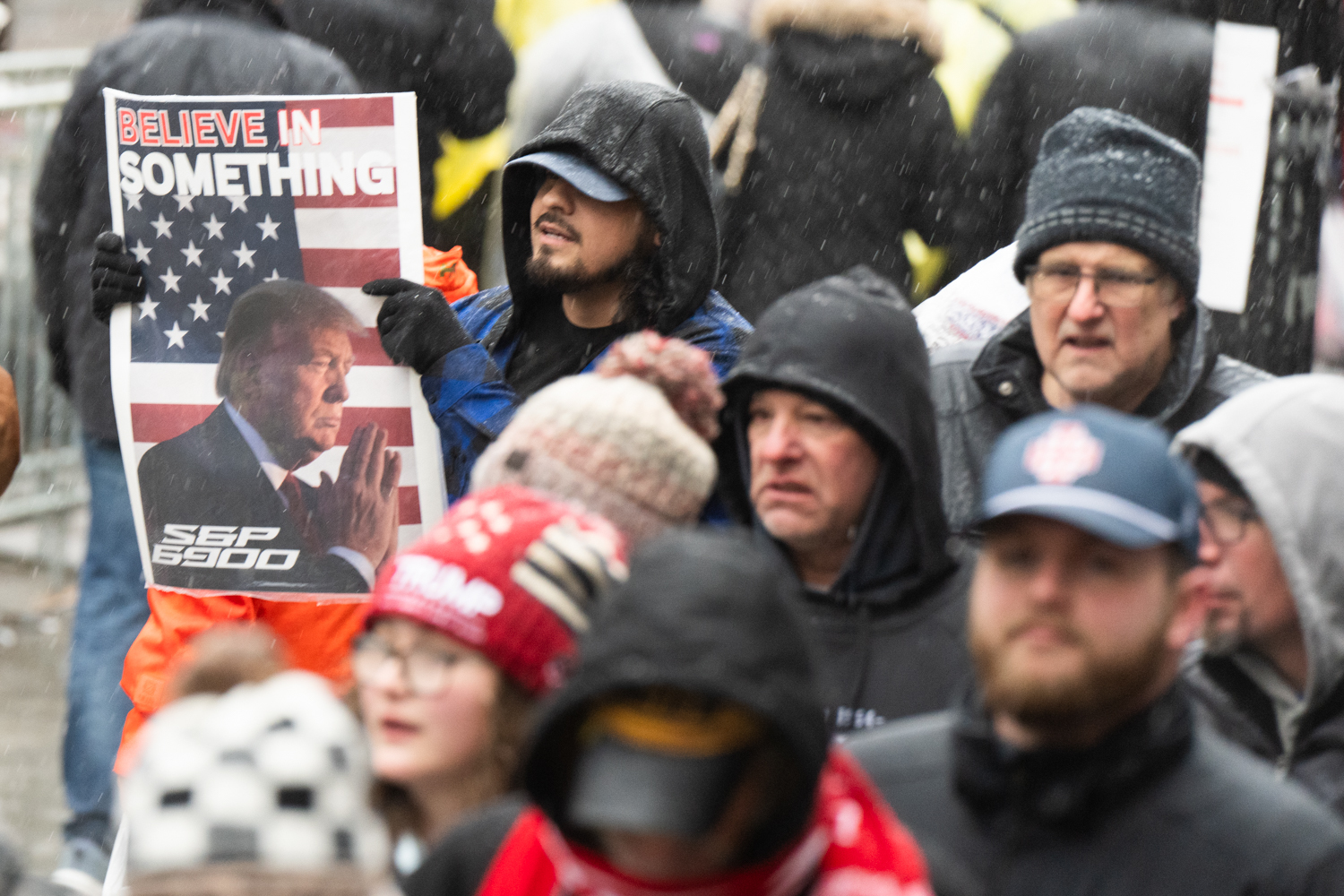
    Rick Gomez, who travelled 65 hours by bus from Phoenix, Ariz., holds an AI photo composite poster of Donald Trump, in Washington, the day before Trump took the Oath of Office to become the 47th president of the United States.

    Barring the outbreak of World War III — something you always need to say these days — this is my final newsletter, or column, of 2025, as I use up my old-man plethora of vacation days. To look back on America’s annus horribilis, I thought I’d revive a feature from my Attytood blogging days: a recap of the year with the five most memorable columns, not numbered in order of significance. Here goes:

    1. A year that many of us dreaded when the votes were counted in November 2024 began for me with a sad reminder that the personal still trumps the political, when my 88-year-old father fell ill in the dead of winter and passed away on March 11. I wrote about his life, but also what his passion for science and knowledge said about a world that, at the end of his life, was slipping away: Bryan H. Bunch (1936-2025) and the vanishing American century of knowledge.
    2. Still, Donald J. Trump could not be ignored. On Jan. 19, I put on my most comfortable shoes (it didn’t really help) and traipsed around a snowy, chilly Washington, D.C. as the about-to-be 47th president made his “forgotten American” supporters wait on a soggy, endless line for a nothingburger rally while the architects of AI and other rich donors partied in heated luxury, setting the tone for a year of gross inequality: American oligarchy begins as Trump makes billions while MAGA gets left out in the rain.
    3. One of the year’s biggest stories was Trump’s demonizing of people of color, from calling Somali immigrants “garbage” to his all out war on DEI programs that encouraged racial diversity, when the truth was always far different. In February, I wrote about the American dream of a young man from Brooklyn of Puerto Rican descent and his ambition to become an airline pilot, who perished in the D.C. jet-helicopter crash. His remarkable life demolished the MAGA lie about “DEI pilots.” Read: “Short, remarkable life of D.C. pilot Jonathan Campos so much more than Trump’s hateful words.”
    4. If you grew up during the 1960s and ‘70s, as I did, then you understand the story of our lifetimes as a battle for the individual rights of every American — for people to live their best lives regardless of race or gender, or whether they might be transgender, or on the autism spectrum. I wrote in October about the Trump regime’s consuming drive to reverse this, to make it a crime to be different: From autism to beards, the Trump regime wages war on ‘the different
    5. A grim year did end on one hopeful note. Trump’s push for an authoritarian America is faltering, thanks in good measure to the gumption of everyday people. This month, I traveled to New Orleans to chronicle the growing and increasingly brave public resistance to federal immigration raids, as citizens blow whistles, form crowds and protest efforts to deport hard-working migrants: In New Orleans and across U.S., anger over ICE raids sparks a 2nd American Revolution

    What I wrote on this date in 2021

    On this date four years ago, some of us were still treating Donald Trump’s attempted Capitol Hill coup of Jan. 6, 2021 like a crime that could be solved so that the bad guys could be put away. On Dec. 16, 2021, I published my own theory of the case: that Team MAGA’s true goal was provoking a war between its supporters and left-wing counterdemonstrators, as a pretext for sending in troops and stopping Congress from finishing its certification of Joe Biden’s victory. That didn’t happen because the leftists stayed home. More than 1,000 pardons later, check out my grand argument: “A theory: How Trump’s Jan. 6 coup plan worked, how close it came, why it failed.”

    Recommended Inquirer reading

    • Only one column this week, as this senior citizen was still recovering from that grueling trip to New Orleans. On Sunday, I reacted with the shock and sadness of seeing a mass shooting at my alma mater, Brown University. I wrote that in a nation with 500 million guns, it’s a virtual lock that some day our families — nuclear or extended, like the close-knit Brown community — will be struck by senseless violence. And I took sharp issue with Trump’s comment that “all you can do is pray.” There is much that can and should be done about gun safety.
    • Sometimes the big stories are the ones that play out over decades, not days. When I first started coming regularly to Philadelphia at the end of the 1980s, the dominant vibe was urban decline. The comeback of cities in the 21st century has altered our world, for good — but a lot of us old-timers have wondered: Just who, exactly, is moving into all these new apartments from Center City to Kensington and beyond? Last week, The Inquirer’s ace development reporter Jake Blumgart took a deep dive into exactly that — highlighting survey results that large numbers are under 45, don’t own a car, and moved here from elsewhere, and telling some of their stories. Local journalism is the backbone of a local community, and you are part of something bigger when you subscribe to The Inquirer. Plus, it’s a great Christmas gift, and you’ll get to read all my columns in 2026. See you then!

    By submitting your written, visual, and/or audio contributions, you agree to The Inquirer‘s Terms of Use, including the grant of rights in Section 10.
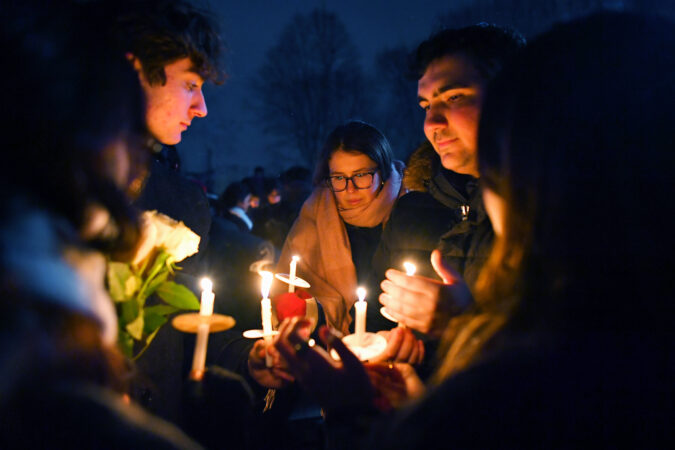
  • After a weekend of mass shootings, Australia’s leaders bolster gun laws while their U.S. counterparts shrug | Editorial

    After a weekend of mass shootings, Australia’s leaders bolster gun laws while their U.S. counterparts shrug | Editorial

    Two horrific mass shootings over the weekend offered a contrasting study in political leadership.

    In Australia, after a father and son allegedly killed at least 15 people and injured more than two dozen others who gathered on a Sydney beach to celebrate the start of Hanukkah, Prime Minister Anthony Albanese called an emergency meeting and announced immediate reforms to the country’s already strict gun laws.

    In the United States, after a shooter killed two students and injured nine others at Brown University, President Donald Trump essentially shrugged and said, “Things can happen.”

    Trump then showed his distinctive lack of empathy by offering the victims and their families his “deepest regards and respects from the United States of America.” For good measure, he lamely added “and we mean it.”

    It did not seem as if Trump could get hollower than that. But hours later he showed his bottomless capacity to go lower.

    After Hollywood director Rob Reiner and his wife were found stabbed to death in their home, Trump turned the tragedy into a narcissistic social media post that suggested the deaths were all about him.

    The Reiners’ son Nick, who battled addiction, was arrested, but any motive for the killings remains unknown.

    Yet, Trump claimed without evidence that Reiner, 78, a successful actor and director who was active in Democratic politics and critical of Trump, died because of “the anger he caused others through his massive, unyielding, and incurable affliction with a mind crippling disease known as TRUMP DERANGEMENT SYNDROME, sometimes referred to as TDS.”

    Rob Reiner and Michele Singer Reiner arrive on the red carpet at the State Department for the Kennedy Center Honors gala dinner in Washington in December 2023.

    Amid a weekend of unspeakable violence, Trump managed to make things worse. So, don’t expect any leadership, let alone efforts to unite or console the country, during times of crisis or tragedy.

    If Trump cared about the safety and welfare of others beyond himself, he could offer sympathy rather than solipsism. He would condemn the carnage and vow to crack down on the gun epidemic that continues to kill, maim, and traumatize the United States.

    Instead, taxpayers will get zero effort by Trump or any Republican state or federal lawmaker to do a damn thing about the mass shooting or nearly 50,000 annual suicides that have become all too routine. Sorry, “things can happen.”

    This year there have been nearly 14,000 gun deaths and more than 25,000 injuries in the United States, according to the Gun Violence Archive, which also counts 392 mass shootings. (Important reminder: Despite Trump’s innuendo about crimes committed by immigrants and Black Americans, the majority of mass shootings are carried out by white males.)

    There have also been at least 75 school shootings. The school shootings have become so routine at least two Brown University students had survived previous attacks and trauma when they were in high school.

    It does not have to be this way.

    A woman kneels in prayer at a memorial to shooting victims outside the Bondi Pavilion at Sydney’s Bondi Beach on Monday, a day after a shooting.

    A large majority of Americans — including many gun owners — support commonsense gun laws like universal background checks, mandatory waiting periods to buy a gun, and a ban on assault weapons.

    But the powerful gun lobby spends millions to essentially buy off Republican elected officials and prevent the passage of gun measures. So the bloodletting in America continues.

    While the mass shooting in Australia was heartbreaking, it was also rare.

    In 1996, after a gunman killed 35 people, then-Prime Minister John Howard, a conservative, responded 12 days later with a sweeping overhaul of the country’s gun laws that included banning high-powered automatic weapons.

    After gun reform and a massive gun buyback program believed to have taken about a million firearms out of circulation, the country did not have another mass shooting until 2018, when a man killed six members of his own family.

    One day after the latest mass shooting, Australia’s elected leaders agreed to bolster gun laws already considered the gold standard by implementing a national registry and limiting the number of guns a person can own.

    While Trump rambles on social media, real political leaders in Australia have already acted.

    Nothing will change in the U.S. until voters fed up with mass shootings hold elected officials accountable.

  • As we search for autism’s cause, we ignore those living with it

    As we search for autism’s cause, we ignore those living with it

    Top federal officials talk about finding a cause for autism, generating more buzz by the day. More substantively, the owner of the Philadelphia Eagles gave an extraordinary sum — $50 million — to a local hospital to discover its cause and develop new treatments.

    While such gifts deserve praise, another urgent crisis goes largely unnoticed: how to care for the millions of adults already living with autism.

    Each year, more than 120,000 young people with autism turn 18 and “age out” of pediatric medicine. They enter an adult system that is unprepared to help them. They enter a world with no standardized guidelines for care, no specialized training for physicians, and far less support. Families must navigate a cliff, not a bridge. More than five million adults now push past herculean obstacles for what is often worse care.

    I view this crisis as a pediatric emergency medicine doctor and as the mother of a transition-age autistic son.

    Fear for the future

    We parents are terrified by what will happen to our adult children when we are no longer around to care for them. Parents weep — and sometimes wail — when I refer them to an alternate site for adult care. Our system can no longer remove an appendix or mount a crisis intervention once these children cross over.

    As a doctor, I know how this change can cause unnecessary admissions and a loss of social work and case management. Caregivers must suddenly educate the provider on the patient’s basic needs. As a parent, I watch my son Alexander and others hop from one tiny island of support to another.

    When Alexander broke his arm at age 6, surgeons were called in to pin his shattered bone and clean the wound where the disrupted muscle had burst through the skin. Alexander was ridiculously compliant and poised; I was less so.

    His surgeons accidentally cut one of the three main motor nerves in the arm when they tried to stabilize his floppy elbow. It took many visits over eight weeks to get proper attention. By then, his arm was floppy from a medical error.

    In our home, we work hard to protect him: Trampolines are forbidden, helmets always on, seat belts firmly buckled. Yet, I failed to anticipate how Alexander’s autism could hurt him. This label — his scarlet letter “A” — kept his surgeons at a dangerous distance.

    Could it happen again when I am no longer around?

    We know autistic adults suffer more illness and death compared to their peers. They are more likely to be misunderstood, dismissed, or undertreated. The data are abundant — and damning. We fail these people.

    Deserve tailored care

    I continue to teach Alexander to be responsible for his care so he will thrive when I cannot be beside him. In 2023, the National Institutes of Health formally designated people with disabilities as disadvantaged. I am relieved to see a growing acknowledgment of autistic people as a vulnerable group, at risk for health disparities, deserving of tailored care.

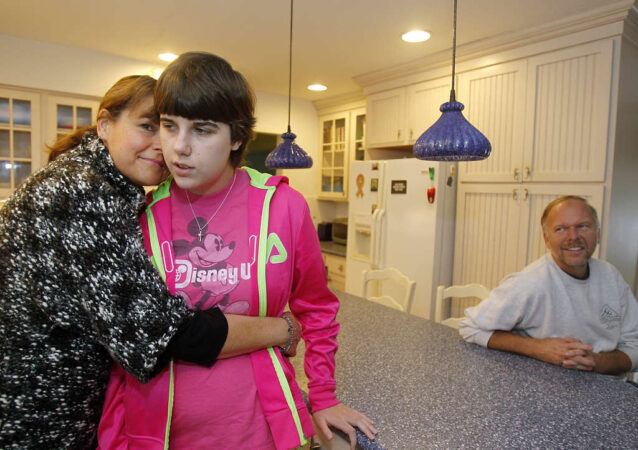
    Justin Pierce (center), who has autism and is an account support associate, meets with his team at Ernst & Young offices in Chicago.

    I have also gained confidence in my voice as an advocate for Alexander. I’ve become a “gang member.”

    Senior staffers for Gov. Josh Shapiro respectfully dubbed my fellow autism advocates as “the mom gang.” It is reassuring only in this context that I present as intimidating. Our band of six wants to make sure that half-baked federal plans to create a national autism registry never happen in Pennsylvania without privacy safeguards.

    Meanwhile, the autism community holds diverse opinions on what to do. Should profound autism be classified separately from other presentations? Is “cure” the right goal? Is Tylenol a risk factor?

    While these conversations pull us in different directions, we must not lose sight of a common purpose to create a better system.

    Autistic adults deserve accessible and affirming change. There are models, tools, and innovations in which to invest:

    • Training emergency, inpatient, and outpatient teams to recognize how autism presents in adults
    • Designing calming public environments that ease communication
    • Creating dedicated consult services — including behaviorists, communication specialists, and caregivers — available in person and via telehealth
    • Prioritizing prevention and de-escalation over restraint
    • Highlighting the voices of autistic individuals in policy decisions that affect them
    • And, critically, funding and scaling programs that treat autism across the lifespan

    Lack of resources

    Resources are scarce. Historic gifts fill some gaps from interrupted government funds pulled from disability and diversity programming. Casualties include the Department of Education’s “Charting My Path for Future Success” transition program, a research-based effort to help high school students with disabilities enter the workforce or higher education.

    We may all agree there is an immediate need to build better supports for adults with autism.

    I worry for my son. I need to know I have pushed every edge of possibility to smooth his way forward. I do this for my daughters, too, who learned from their earliest days their brother needs the same supports they are accustomed to, but he is often denied.

    One day, they will take my place slaying this dragon.

    Eron Friedlaender is a public health investigator, an emergency medicine physician at Children’s Hospital of Philadelphia, and a board member of the Institute for Human Centered Design.

  • Letters to the Editor | Dec. 16, 2025

    Letters to the Editor | Dec. 16, 2025

    Check and balances

    When any one branch of our federal government gains power, another loses some. For several years, the Supreme Court has expanded the power of the executive branch to the detriment of the legislative. President Donald Trump’s implementation of tariffs and his refusal to provide information to Congress about the military operations in the Caribbean, the Pacific, and off the Venezuelan coast are recent examples in which the White House has pushed the limits of its authority and sidestepped lawmakers.

    The Supreme Court seems poised to expand the president’s power even further early next year by giving the Oval Office control over government agencies that have always been independent.

    A 90-year-old Supreme Court decision in Humphrey’s Executor v. United States upheld the independence of these executive branch agencies, the justices seem to be signaling that they intend to reverse this long-standing precedent.

    Our founders wanted governing and decision-making to be done collaboratively with Congress, where the three branches work together, and no single individual wields too much control. We need to resist this ongoing shift in power and demand a return to a balance that best serves our ability to self-govern.

    Joseph Goldberg, Philadelphia

    Questionable buzzwords

    There are many flaws in Rabbi Linda Holtzman’s op-ed which advocates limiting military aid to Israel, but the overriding flaw in this piece is its dishonesty. By using the buzzwords “Palestinian liberation” and “anti-Zionist,” she is cleverly avoiding stating the real aim of her organization and its allies, namely, the destruction of the state of Israel as a homeland for the Jewish people.

    She recognizes, of course, that saying this out loud would not fly with most readers of the Inquirer, Jewish and non-Jewish alike. The fact that the author is a rabbi and teacher at a Jewish institution gives no special credence to this extreme position, but may fool some readers to think that she speaks for mainstream Jewish opinion.

    And speaking of liberation, my hope is that the Palestinian people will be liberated from the corrupt and hateful leaders whose rejectionist position over the years has denied them the opportunity to have a state of their own.

    Henry Maurer, Cherry Hill

    The stories of our neighbors

    Thank you for your continuing commitment to publishing news reports and op-eds about what is happening to our immigrant communities locally and across the nation. Your news articles, such as the one about activists in Montgomery County, as well as your broad-based Opinion coverage — with Will Bunch covering ICE raids in Louisiana and Luis Carrasco writing from the border — are very much appreciated.

    In the face of a fractured Congress and a seemingly complicit Supreme Court, it’s up to the free press to inform and empower everyday people to step up and denounce the inhuman and unjust treatment of our immigrant neighbors. Citizens have an important role to play in defending neighbors who contribute so much to our communities and our economy. Let us hope our fellow Americans will become as concerned with the deplorable treatment of other human beings as they are about the economy.

    Sister Veronica Roche, Westmont

    Join the conversation: Send letters to letters@inquirer.com. Limit length to 150 words and include home address and day and evening phone number. Letters run in The Inquirer six days a week on the editorial pages and online.

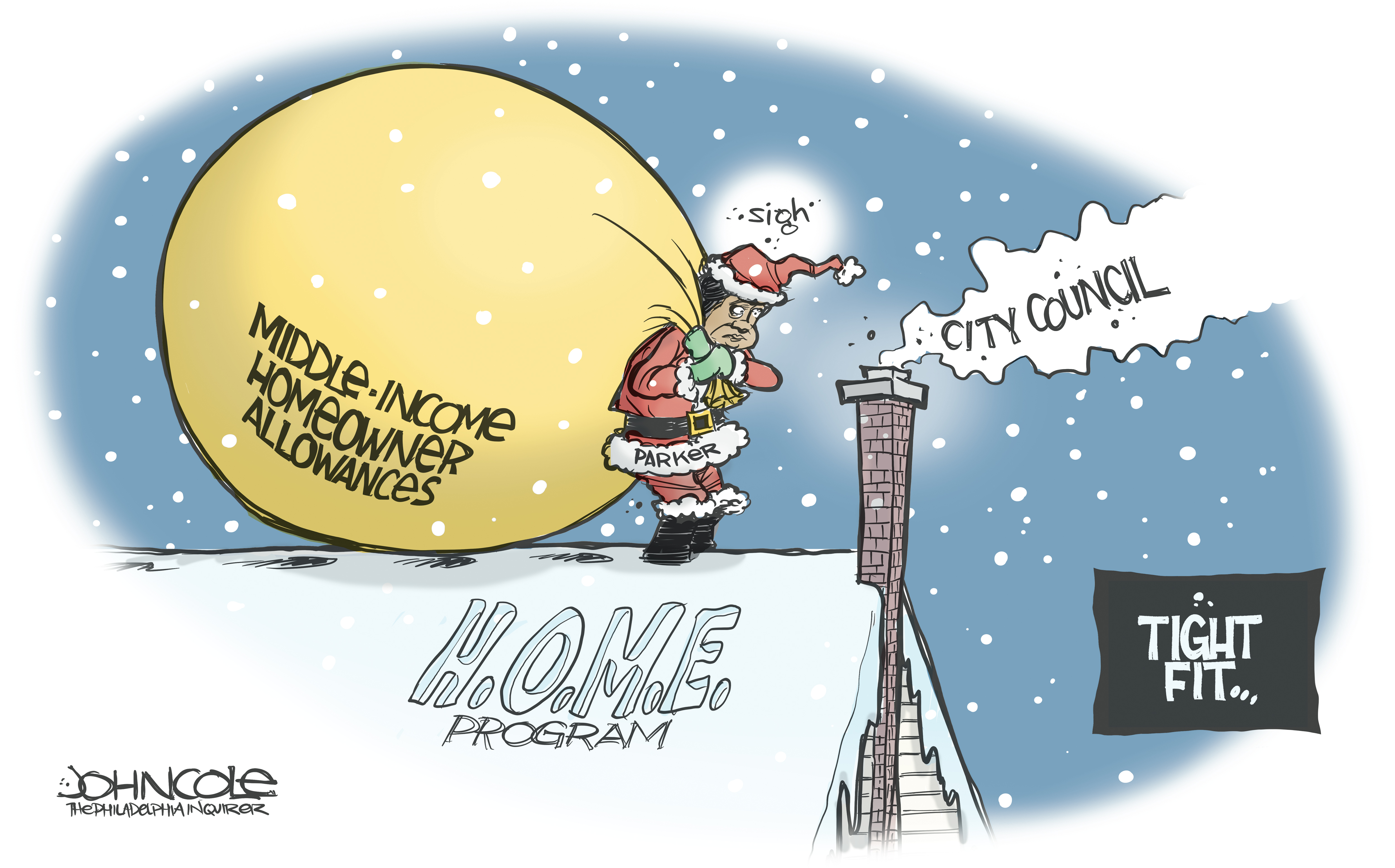
  • Tough sledding | Editorial Cartoon

    John Cole spent 18 years as editorial cartoonist for The (Scranton) Times-Tribune, and now draws for various statesnewsroom.com sites.

  • If Philadelphia wants to be the best sports city, it must fund its student-athletes

    If Philadelphia wants to be the best sports city, it must fund its student-athletes

    The Washington Post recently sparked a familiar debate by ranking the top sports cities in the country — and left Philadelphia off the list. While local journalists rushed to defend our passionate fandom, they missed the most important question: Does our city truly deserve the title of “Best Sports City” if we systematically deny our own children the chance to participate?

    If we believe in the power of Philadelphia sports, it’s time for our professional teams and our famous citizens to commit to making every child a winner by funding athletics in the Philadelphia School District.

    The moral compass of the budget

    My moral compass, forged during my time on the Philadelphia school board (2018-2021), was guided by a simple question: “Who do I believe our students are, and what do I believe they deserve?”

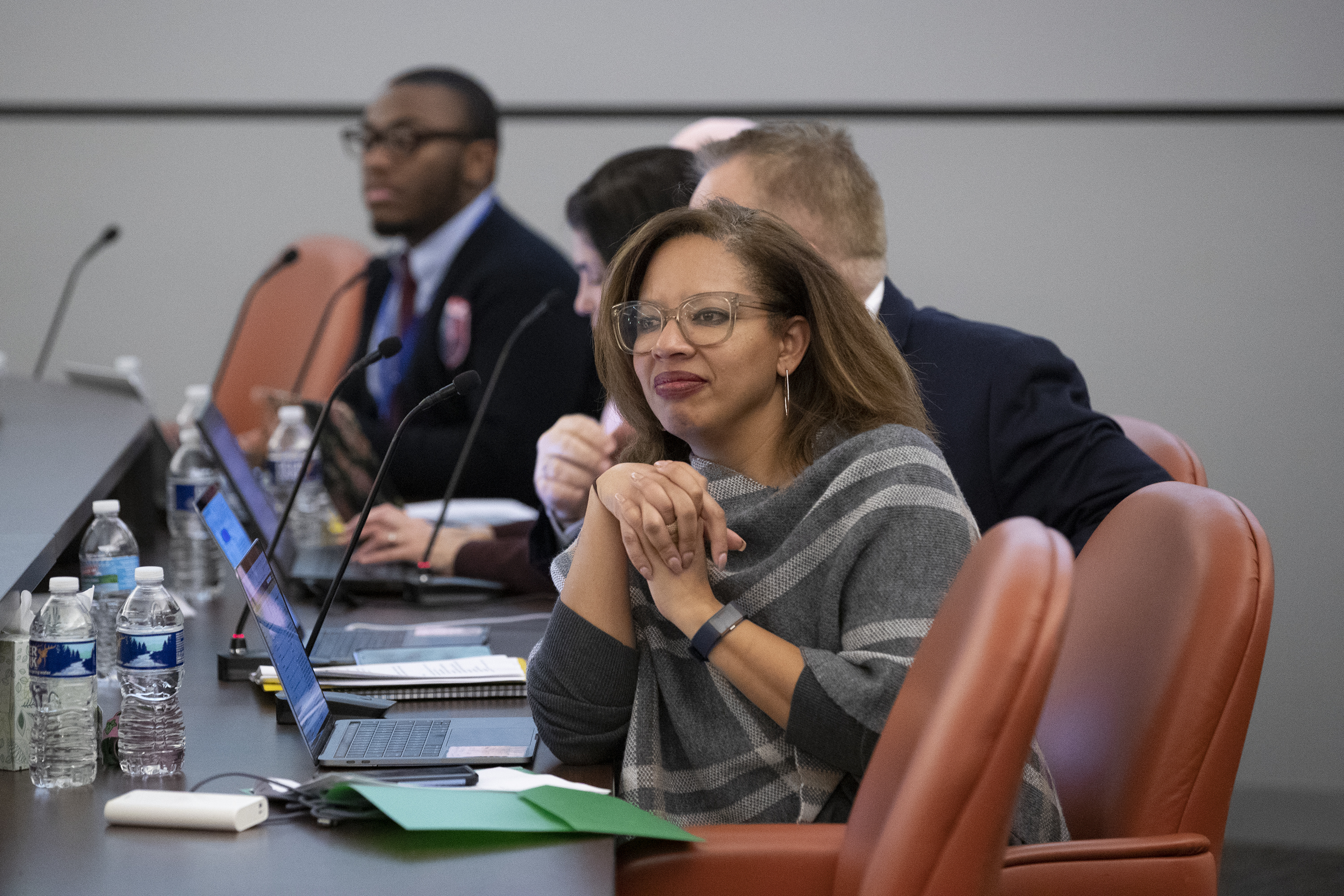
    Angela McIver at the meeting of the Phiadelphia Board of Education in 2020.

    I could not, in good conscience, vote for a budget that answered that question by allocating four times the amount of money for school police than it did for athletics programming.

    I believe funding decisions like these are an indictment of our priorities.

    For our students, the impact of this financial neglect is not abstract — it is a daily indignity. For example, while my children were on the Central High School swim team, the team routinely had to scramble for practice facilities. One of their regular practice pools was a therapeutic pool for children with disabilities, which kept the water temperature above 80 degrees — a condition dangerous for intense athletic training.

    A swim team practices at the Marian Anderson Recreation Center, in South Philadelphia in 2022.

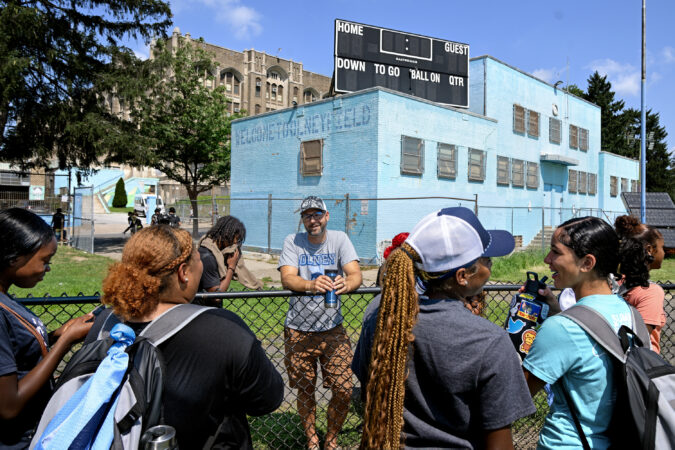
    Across the district, our track teams often have no actual track, forcing students to run laps in crowded school hallways. Our baseball teams must clear rocks and debris off their own fields just to hold a practice session.

    While school districts across this region consistently allocate between 1% and 1.5% of their budget to athletics, Philadelphia allocates a mere two-tenths of 1% (0.2%). Consider the scale: In 2023, when I wrote an op-ed about school budgets for The Inquirer, Lower Merion spent nearly $4 million on athletics for two high schools and three middle schools. Philadelphia spent a mere $9 million for 57 high schools and more than 150 middle schools.

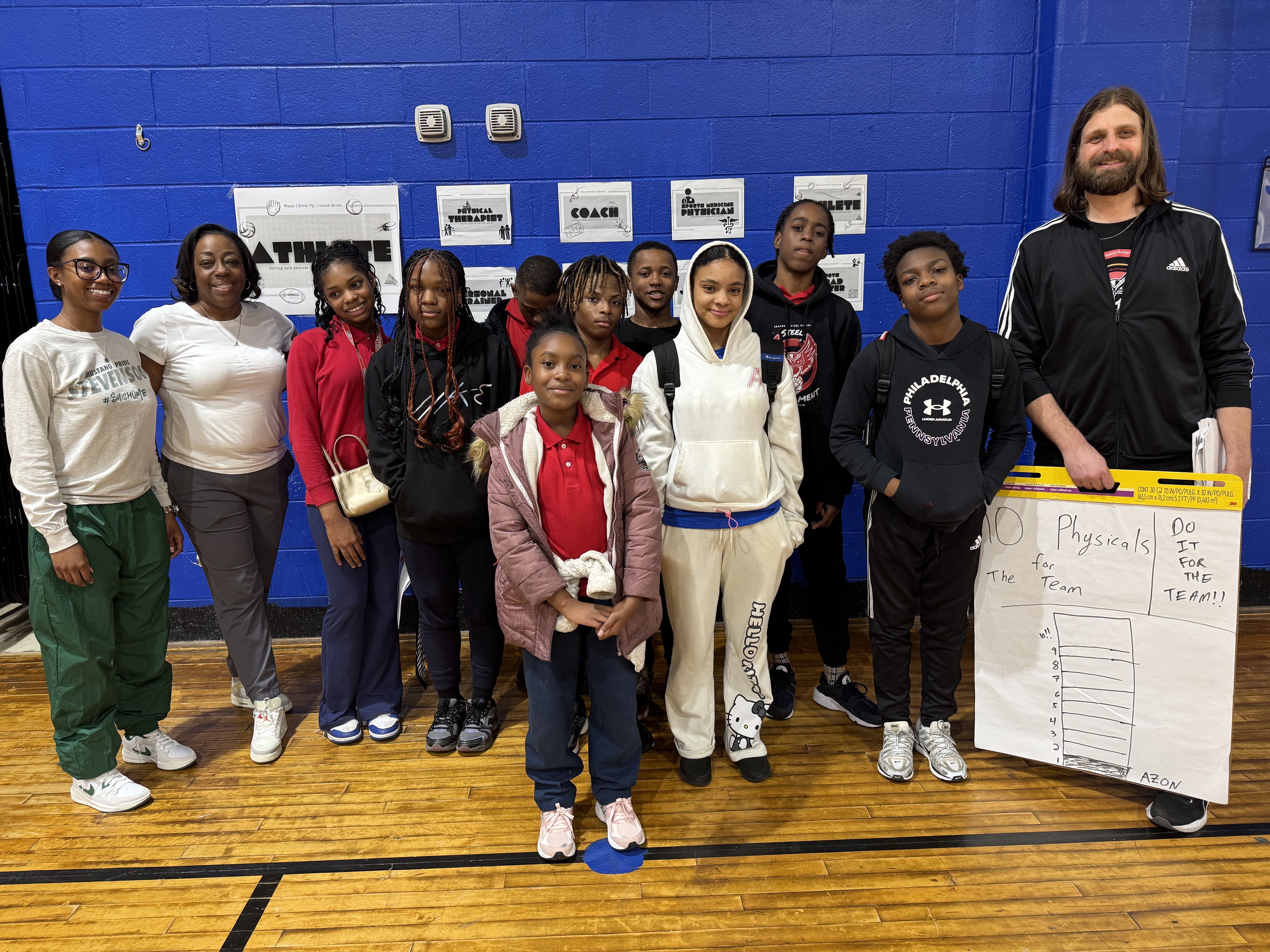
    Students and coaches from Steel Elementary, pictured here in March, were hoping to establish a track team —its first Philadelphia School District-sponsored extracurricular activity.

    If the Philadelphia School District could allocate funding according to the formula used by our neighboring districts, we could transform thousands of students’ lives. Unfortunately, competing financial realities (like the cessation of COVID-19 funding and the critical need to address deteriorating facilities) relegate athletics to the bottom of the priority list.

    A challenge to Philadelphia’s champions

    We know the benefits of participation in sports are profound: lower rates of depression, better mental health, stronger self-regulation, and increased confidence. Investing in athletics develops students’ passions and talents.

    Moreover, in a city grappling with gun violence, the impact is immediate and tangible: it keeps thousands of our students off the streets during the times when they are most likely to become victims of, or engage in, disruptive behavior.

    Unfortunately, the reality is that this funding gap reflects a systemic financial disparity facing our city. I recognize the immense difficulty the current administration faces in allocating dollars while working with far less funding per student than wealthier suburban districts. If Philadelphia truly values its sports identity, it’s time for those who embody that spirit to step up.

    My challenge goes out directly to:

    1. Our professional sports teams (Eagles, Sixers, Phillies, Flyers, Union): If our city’s identity is tied to your success, then your success must be tied to our children. Commit a percentage of your organization’s substantial revenues to help close the school district’s athletics funding gap to finally bring parity with suburban districts.
    2. Our celebrities and ambassadors: Every time Kevin Hart, Quinta Brunson, Hannah Einbinder, or Bradley Cooper says, “Go Birds!” on the red carpet, they use their platform to amplify Philadelphia pride. Now, we need them to use their wallets and voices to amplify opportunity. Commit to a sustained, philanthropic effort to fully fund athletics across our public schools.

    We have amazing, talented children with gifts to share. A true “Best Sports City” doesn’t just celebrate its pros; it gives every child the chance to become one.

    Let’s turn our fanatical passion into foundational funding.

    Angela McIver served as a member of the Philadelphia school board from 2018-2021.

  • The street of the future isn’t just for cars — it’s designed for life

    The street of the future isn’t just for cars — it’s designed for life

    We are standing at the crosswalk of a bold new era in street design and management.

    Streets make up roughly 30% of a Philadelphia’s land. Yet, most are locked into a single use: moving and storing cars. What if, instead, we treated them as dynamic public spaces capable of changing function and meaning depending on the time of day, the season, or the needs of the neighborhood?

    That question guided a recent pilot project I helped lead in Chinatown, which will be unveiled next month. As part of “the Chinatown Stitch” — an ambitious effort led by the city’s Office of Transportation and Infrastructure Systems, with state and federal partners, meant to heal a neighborhood long divided by transportation infrastructure. Our team designed a movable market stall, a piece of street furniture that serves as both a vendor kiosk and a community gathering space.

    During Chinese New Year or other festivals, when the streets overflow with people and energy, the stall slides into the roadway, transforming asphalt into a festive plaza. When the celebration ends, it retreats, making way for traffic once again.

    For a neighborhood starved of public space, this small, movable structure has become a powerful symbol: The street itself can flex, adapt, and respond. It embodies what planners and landscape architects call the Flexible Street Strategy — a vision for cities that recognizes streets as living systems, not fixed infrastructures.

    Open Streets

    For more than a century, street planning has been governed by rigid right-of-way definitions. Sidewalks for walking. Lanes for driving. Curbs for parking. These rules answer only one question: what belongs where? The flexible street concept asks another: when? When should a street prioritize cars, and when should it belong to people?

    We’ve already seen glimpses of this transformation elsewhere in my hometown. Consider Philadelphia’s Open Streets: West Walnut, hosted by Center City District. Every Sunday from 10 a.m. to 5 p.m. in summer, several downtown blocks are closed to vehicles and opened to people.

    Based on research my team completed last summer, the results have been stunning. Foot traffic soars. Businesses thrive. And, perhaps most tellingly, children return. On a normal day, we counted two kids passing through a block in 15 minutes. During one Open Streets event, that number jumped to 39.

    It’s not just a statistic; it’s a story of safety, belonging, and joy. For once, the street was everyone’s.

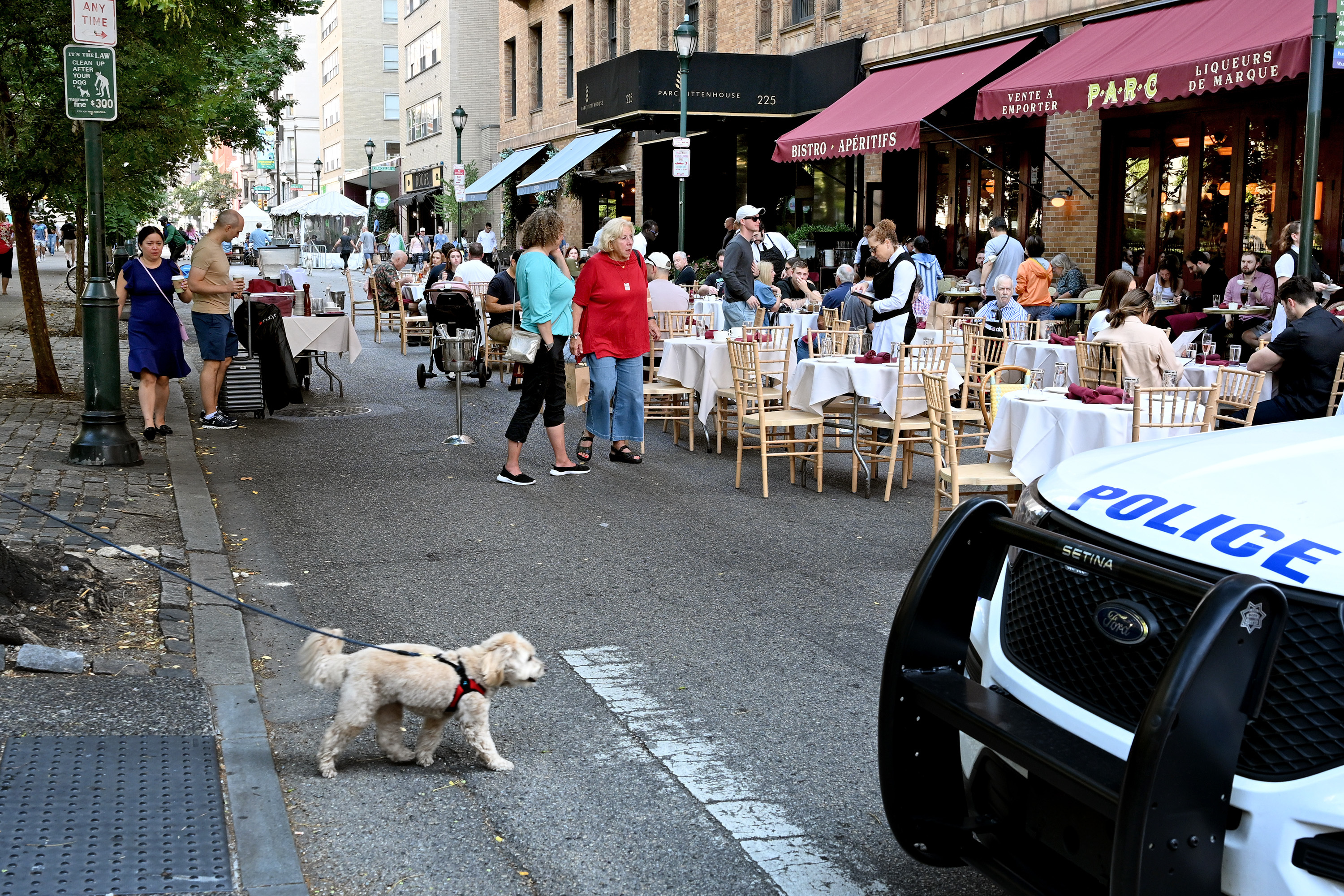
    Restaurants take over 18th Street as the streets around Rittenhouse Square are closed to vehicular traffic for pedestrian-only zones for the city’s Open Streets program.

    When the Open Streets program began, its organizers expected bureaucratic hurdles — clashes between departments, debates over lost parking revenue. Instead, city agencies from streets to parking embraced it. Post-pandemic, there’s a new understanding: Streets are no longer merely conduits for cars. They are the connective tissue of civic life.

    The success of the program, first launched in 2024 and revived last summer, has inspired plans to expand across downtown. But as encouraging as such pilots are, they still exist as exceptions to the rule. But the Flexible Street Strategy holds that flexibility should not require special permission. It should be baked into the DNA of how cities plan, design, and manage their streets.

    This means rewriting the system itself. Instead of rigid right-of-way codes, cities need regulatory frameworks that acknowledge streets as time-based spaces — spaces whose use shifts dynamically according to demand, culture, and context.

    To move from philosophy to practice, flexibility can now be managed with precision through technology.

    Using digital twin models, IoT sensors, and AI-driven analytics, our team is building a data platform that identifies “flex windows” — hours when converting a street from traffic to pedestrian use offers the greatest benefit with the least disruption. The system integrates live data on street anchor activities (schools, restaurants, parks, etc.), traffic volumes, safety, and equity to recommend optimal transformation times.

    A community stage

    Still, the real power of the flexible street idea lies in its simplicity. It doesn’t require new infrastructure — just imagination, data, and a willingness to test. Its nonpermanent, pilot-friendly nature allows cities to experiment at low cost and low risk. Just like the market stall installed in Chinatown, which amplified existing street events and vividly showed how a street can transform into a stage for community life.

    If the official Chinatown Stitch aims to reconnect neighborhoods divided by a sunken highway through large-scale infrastructure, our market stall serves as a micro-stitch — achieving the same goal on the scale of the city block by redefining the street as public space and reconnecting residents, shops, and everyday social life.

    Although the Chinatown Stitch funding was cut by the Trump administration’s One Big Beautiful Bill Act, the project has still secured planning funds. Led by OTIS and PennDot, the whole design team is actively finalizing the design. The market stall pilot project is part of this work and serves as an important advocacy and outreach tool for the overall project, supported strongly by Philadelphia Chinatown Development Corporation.

    At the end of the day, whether they recognize it or not, our cities no longer have the luxury of static infrastructure. Between climate change, social fragmentation, and changing mobility patterns, flexibility is not a design preference — it’s survival. The street of the future isn’t just paved for movement; it’s programmed for life.

    If we want streets that truly belong to everyone, we must give them the freedom to change.

    Yadan Luo is a landscape architect, lecturer in the Department of Landscape Architecture at the University of Pennsylvania Stuart Weitzman School of Design, and the creative director of YH LAB.

  • Letters to the Editor | Dec. 15, 2025

    Letters to the Editor | Dec. 15, 2025

    The Gaza ceasefire

    Thank you for publishing Rabbi Linda Holtzman’s op-ed about why a ceasefire in Gaza isn’t enough, we must also stop arming Israel.

    Today, we got news of the first Gazan child — in this case, a baby — dying of hypothermia. She froze to death because there is no adequate shelter in Gaza, it’s winter, and it’s freezing at night. With its relentless bombing, shelling, and deliberate destruction of housing, hospitals, universities, and schools in Gaza, Israel reduced 90% of Gaza’s homes to rubble.

    The ceasefire agreement required Israel to send in desperately needed humanitarian aid to Gaza, 600 trucks a day of tents, tarps, bedding, blankets, food, infant formula, and potable water, medicines, and medical supplies. Israel has at most sent in 100 trucks a day. The tents Gazans have been living in for months are torn apart by winter storms; they need new tents, tarps, and blankets to keep them as warm as possible.

    Israeli troops occupy most of Gaza and have killed unarmed civilians, including children who are searching for wood to burn or looking for the remnants of their homes in the increasingly occupied eastern part of Gaza. Israeli army Chief Eyal Zamir said a few days ago that the “Yellow Line” in Gaza, which demarcates Gazan land occupied by Israel, is Israel’s new border, meaning Israel will almost certainly never give back the portion of Gaza it’s supposed to be only temporarily occupying.

    There is no ceasefire, no food or shelter or medicines for the Gazans. Given that Donald Trump gave birth to this “ceasefire” and so-called peace plan, he needs to hold Israel accountable. Palestinian children are just as precious and deserving of life as Israeli children.

    Genie Silver, Wynnewood

    It is both astonishing and appalling that Rabbi Linda Holtzman fails to grasp the irony — and hypocrisy — of her invoking the holiday of Hanukkah to support her efforts to block certain defense aid to Israel. The Maccabees, the heroes of the Hanukkah story, not only successfully revolted against the oppressive Syrian Greek empire, but they zealously fought against the assimilation of the Jews of that time. And where did these historic events in the second century BCE take place? In the land of Israel!

    As an anti-Zionist, Holtzman does not believe the Jews have a right to live in a Jewish state in the land of Israel. Despite the attempts of so many of Holtzman’s allies to distort what Zionism is (with many even despicably comparing Zionists to Nazis), the definition of Zionism is actually quite simple: it is the movement for self-determination of the Jewish people in its ancestral homeland. And an overwhelming percentage of Jews identify as Zionists.

    On several occasions, Holtzman describes Israel’s response to the horrific slaughter of Oct. 7, 2023, as genocide, as if that’s a given. Never does she even mention Hamas, a terrorist organization which perpetrated brutal killings, burning of babies, and rapes and sexual mutilations (and glorified it all). No, Rabbi Holtzman, fighting back against an organization whose entire cynical strategy is based on hiding behind Gazan civilians in order to generate more casualties is not genocide. It’s a war against a truly genocidal enemy, a war that the Maccabees would have supported and led.

    Richard Lowe, Oreland

    Join the conversation: Send letters to letters@inquirer.com. Limit length to 150 words and include home address and day and evening phone number. Letters run in The Inquirer six days a week on the editorial pages and online.

  • Mass shooting at Brown U.: When gun heartbreak comes home

    Mass shooting at Brown U.: When gun heartbreak comes home

    There are roughly 343 million of us in America — a nation where diversity runs from Alaska’s frigid glaciers to the sweaty honky-tonks of Key West, and where the political divides run even deeper. And yet there is one thing that unites all of us.

    One day, one way or another, in a land with more firearms than people, gun violence is going to come home.

    At about 5:45 p.m. Saturday, after spending an afternoon offline untangling strings of lights and, finally, admiring the glow of a lit Christmas tree, I looked back at my phone and a brief moment of holiday joy in what has been a very rough 2025 vanished into the void. There had been a mass shooting at Brown University, my alma mater.

    What unfolded over the next few hours on national TV was both stunning and a numbingly familiar ritual: the news conference where the mayor announces that two students have been killed and nine others seriously wounded; the phone interviews with terrified undergrads locked down in darkened dorm rooms, furniture pushed hard against the door; the grainy video of a male gunman clad in black.

    The only real difference from Uvalde or Leland, Miss., was a personal one: Picturing mentally the moments of horror inside the building where college friends like my junior and senior-year roommate and my girlfriend learned to build everything from artificial limbs to nuclear power plants, just blocks from the newsroom where I’d toiled until 2 a.m. putting out the Brown Daily Herald, and the hockey rink where I’d go early with my history book to save seats right behind the penalty box.

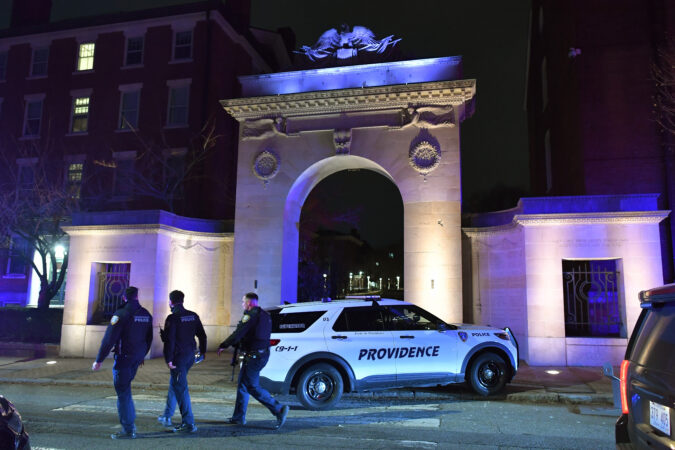
    Police gather on Waterman Street in Providence, R.I., on Saturday, during the investigation of a shooting.

    As I write this on a snowy and overcast Sunday morning, we still don’t know the names of the two students who were murdered during a finals-week study group inside the Barus and Holley engineering building, let alone the twisted motives of whoever killed them. Yet, to anyone who’s been part of the Brown community, as I’ve been since I studied in Providence from 1977-81, it feels as if relatives have been senselessly taken from us.

    That’s because the Brown community is a family — a large, messy one where people fight and bicker all the time (as I myself did back in August, when I ripped the current administration for a compromise with the Trump regime), a trait which tends to make students and alums love it even more. There’s a reason that some folks call Brown “the happy Ivy” — a communal bond that one lunatic with one of as many as 500 million guns in America tried to shatter in a few horrifying minutes.

    But that’s what every mass shooting is, in one way or another: an attack on community, the very essence of being human, committed by one atomized individual who’s lost that connection and who has easy access to a weapon that lets him shatter it for everyone else.

    I understand what some of you are thinking. Brown may be a happy place but it is also an elite one, which rejects nearly 95% of the hopeful young people who apply there. Is a shooting on an Ivy League campus bound to get more media attention than one at an HBCU homecoming, let alone a working-class community? Sure, but a mass shooting at Brown is also a grim reminder of a cross that we all bear — every class, race, and religion — in a nation that’s jumped onto the wrong track.

    Brown University is a messy, happy family, but so was the Church of Jesus Christ of Latter-day Saints near Flint, Mich., where a gunman killed four people in September before setting the place on fire, and so was the birthday party in Stockton, Calif., where three children were gunned down in August, or October’s alumni celebration at a bar on Saint Helena Island, S.C., where four people were senselessly murdered.

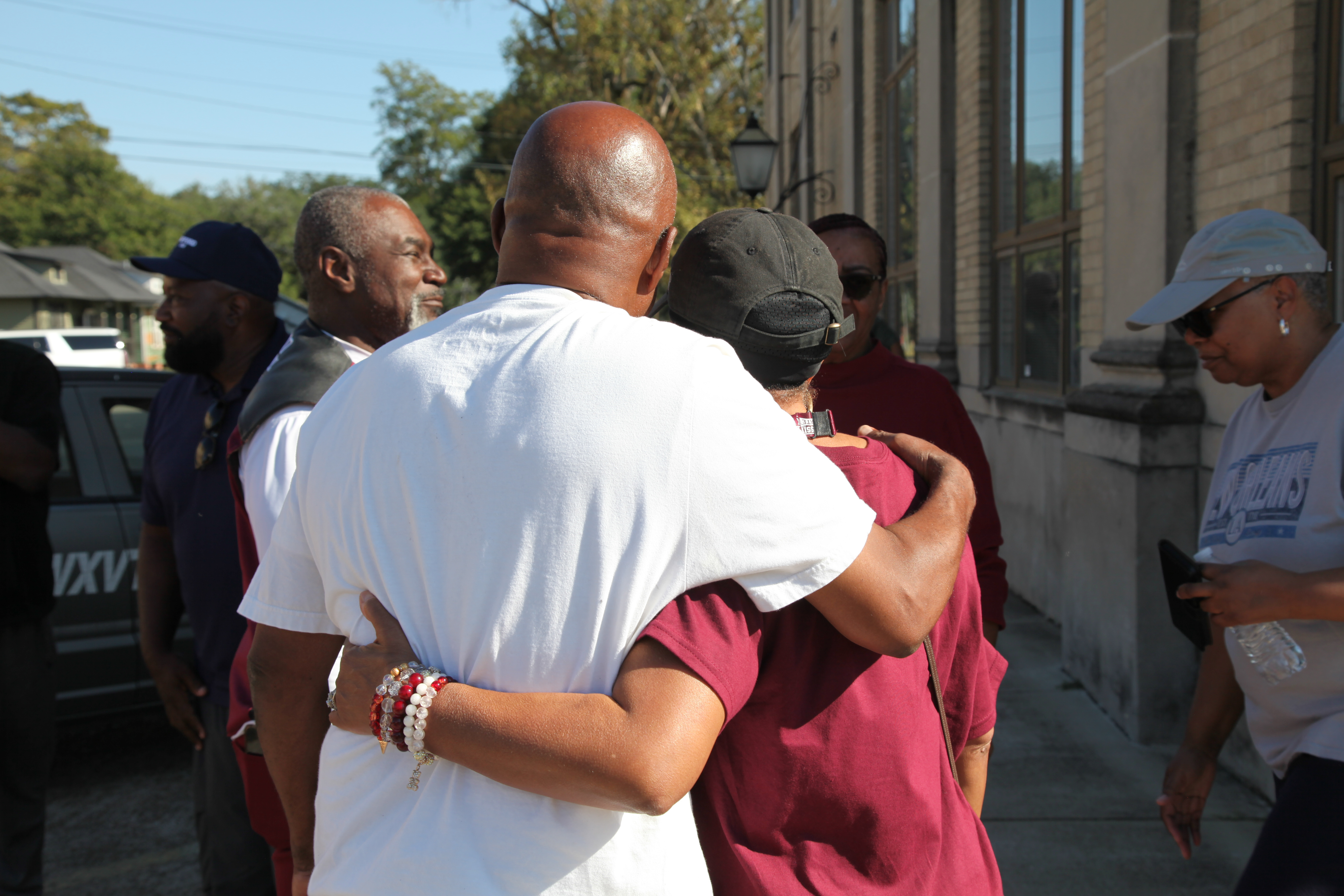
    Friends and family of victims of a shooting at a high school homecoming celebration embrace in downtown Leland, Miss., on Oct. 11.

    No family is safe in the United States as long as we continue to lead the world in manufacturing two things: weapons of mass murder, and the unvarnished rage and alienation that pulls the trigger. Or as long as our so-called leaders pretend there is nothing that can be done, aside from muttering empty prayers as blood dries on a sidewalk.

    A mass shooting at an Ivy League university is something that even gets the attention of our president as he shuttles between weekend golf outings. Donald Trump, after honing his uncanny knack for making things worse by posting and un-posting incorrect information on Truth Social, told reporters on a tarmac that “all we can do right now is pray for the victims, and for those that were very badly hurt.”

    No, Mr. President, that is not all you can do.

    You could, for starters, ask Congress to ban the kinds of assault weapons that aren’t used to hunt deer yet are all too effective at mowing down college students or grade-schoolers — something that actually happened, imperfectly but with positive results, in this country from 1994 until 2004.

    But a POTUS who’s very busy micromanaging his obscenity of a new White House ballroom has no time or interest in curbing the uniquely American curse of gun violence. To the contrary, Trump has — nearly 11 months into his second term — taken a series of actions to ensure it’s easier for fugitives or people with severe mental illness to purchase firearms, and for gun buyers to avoid child-safety devices.

    That does seem par for the course for our golfing president. Why would a man who wantonly murders people on Caribbean boats and is OK with foreign-aid cuts that have already killed hundreds of thousands of sick or starving children in Africa or Asia get worked up about some inconvenient carnage at a college engineering lab?

    Trump’s mini-me, Vice President JD Vance, also weighed in as he always does (as caught by menswear guru and internet sage Derek Guy) after an American mass shooting — with thoughts and prayers and assurance that he is “monitoring” a situation that, by implication, he is helpless to do anything to prevent.

    Still, the vice president’s thoughts and prayers for the Brown shooting seemed especially galling since this — unless I’m mistaken — is the very same JD Vance who in 2021, boosting his pro-Trump bona fides, told a right-wing gathering that “universities are the enemy.”

    Look, let’s be clear: We have no idea yet who the Brown University shooter is, although a “person of interest” has now been taken into custody. The shooter could be a student angry over a grade or perceived disrespect, or someone with deranged thoughts that don’t neatly fit into our tribal politics. Or, it could be someone who buys into the Trump/Vance hate speech that elite universities are “woke” enemies of the people. Either way, in a better world, a true leader might wake up rethinking his despicable past words toward a community that is deeply suffering.

    Looking back on my own experience, I think the reason that Brown is “the happy Ivy” is because — more than its rival schools — the university has since the 1960s walked the walk on the best and truest mission of higher education. That is teaching young people to think for themselves, with a curriculum that encourages engineers to study poetry and poets to study oceanography. It’s what makes Brown great, and what authoritarians like Trump and Vance can’t stand.

    There’s never been a Brown alumni president, but if there was — and maybe this is a little boosterism — I’d like to think they’d been taught that it’s wrong to lie to America that there is nothing you can do to curb violence. And that they’d understand that a true leader is the one who builds up our communities, not tear them down.

    I mourn today for my Brown family, but until we find the moral courage to do something about gun violence in America, no family can feel safe.

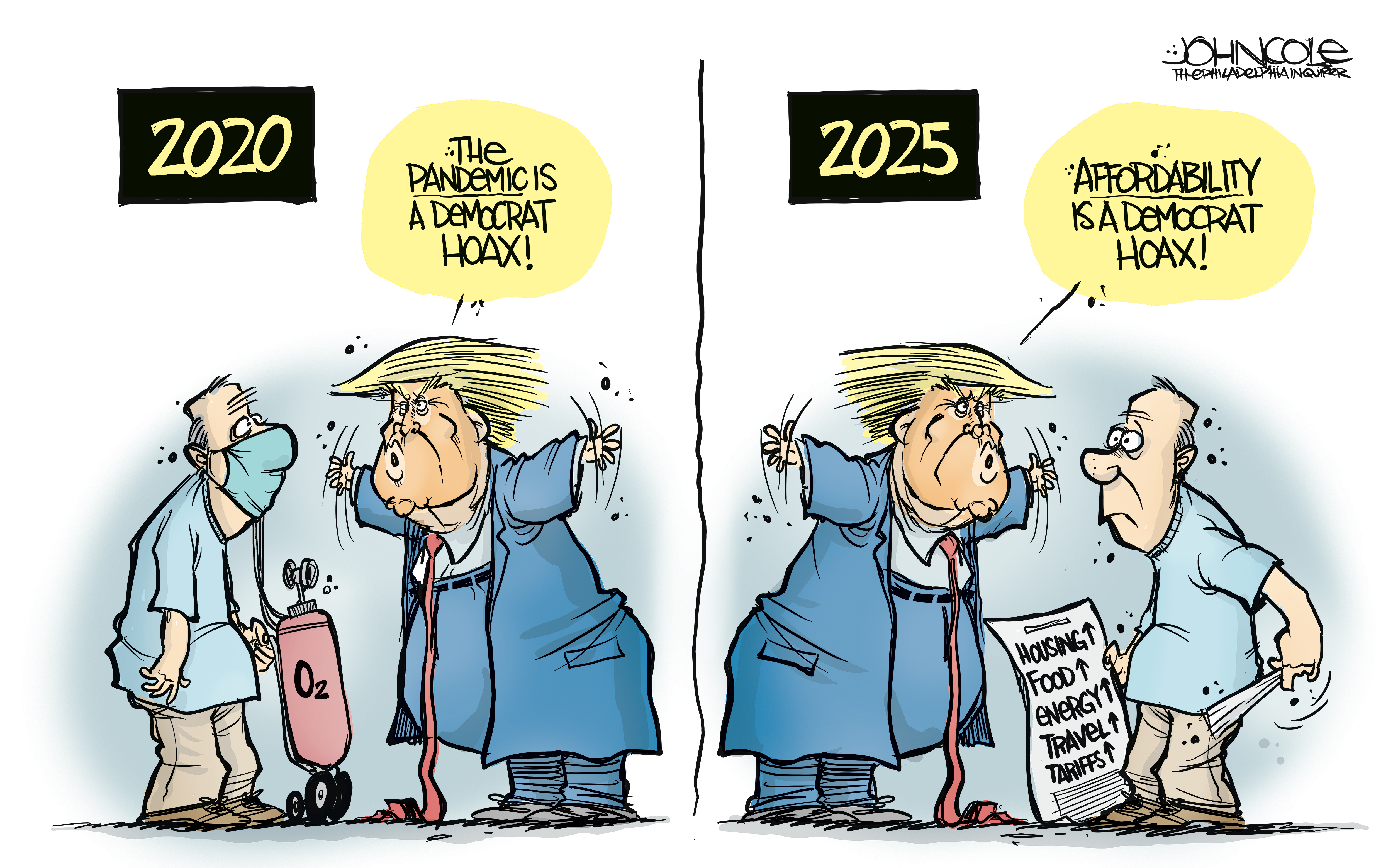
  • Won’t get fooled again | Editorial Cartoon

    John Cole spent 18 years as editorial cartoonist for The (Scranton) Times-Tribune, and now draws for various statesnewsroom.com sites.