When President Donald Trump and Secretary of State Marco Rubio gutted the U.S. Department of State last year, they said they were doing it to make America “safer, stronger, and more prosperous.” Yet, Trump’s nominee to be assistant secretary of state for international organization affairs, Jeremy Carl, is a white supremacist conspiracy theorist who would undermine the United States’ standing at the United Nations and destroy our relationships with countries around the world.
As former American diplomats, we’ve worked to promote human rights globally. We know the inner workings of this world and can say unequivocally that Carl would be a grave threat in this post, and his nomination must be resoundingly rejected.
The assistant secretary of state for international organization affairs is the architect of U.S. policy at the United Nations and across a wide range of multilateral arenas. Few outside diplomatic circles have heard of this position, but it’s one of the central posts through which the U.S. interacts with the world.
For example, when we stop defending fair labor standards in places like Bangladesh or Vietnam, American workers pay the price as competitors in those countries cut corners and flood markets with cheaper goods. When we look away from corruption and repression in energy-rich regions, instability follows — driving up oil prices and hitting Americans at the pump. When we ignore humanitarian crises until they explode, we spend far more on aid and crisis response than it would have cost to prevent them.
These aren’t far-off problems. In an interconnected world, they’re immediate issues that impact American jobs, consumer prices, and national security. That’s why this role is so crucial.
Carl is moving quietly ahead in the Senate Foreign Relations Committee, on which Pennsylvania Sen. Dave McCormick serves, and his nomination hearing is slated for Thursday. The Senate should stand up for American values and the interests of the American people by rejecting this dangerous nominee.
Carl is not just unqualified for the role — he has no experience working with the U.N. — he represents a dangerous rejection of the ideals of the Universal Declaration of Human Rights: that all humans are born with equal dignity and rights.
Carl has promoted the racist and antisemitic “great replacement” conspiracy theory — claiming that there is a covert effort led by elites to replace white people in Western countries through mass migration and high birth rates of people of color, Muslims, Jews, and immigrants.
He has promoted political violence, including calling for the execution of the president of the American Federation of Teachers, a Jewish lesbian. He claimed that identifying as transgender is “somewhere between demonic and laughable.”
Though he has deleted thousands of his inflammatory tweets, these views are memorialized in his book, The Unprotected Class: How Anti-White Racism is Tearing America Apart. He gave a speech last year titled, “On the Persecution of Whites in America.”
These are not stray remarks. They reflect who Carl is, and the message the U.S. would send by giving him a senior diplomatic post. They are so alarming that the Global Project Against Hate and Extremism wrote an entire article about his work to champion “anti-white racism.”
If Carl becomes the face the U.S. presents to the world, we’ll be telling the world that we care about only one group of people. We also will undermine our interests, because in our racially, religiously diverse world, other countries will rightly see Carl’s views as abhorrent.
A world where human rights are optional and the United States fails to hold abusers accountable is a world where corruption grows, conflicts fester, and authoritarian regimes operate unchecked. The result: increased human suffering at home and abroad, higher prices for Americans, fewer protections for American workers, and greater instability that threatens our own security.
Last month, the Trump administration issued an executive order withdrawing the U.S. from 66 organizations, including 31 U.N. mechanisms. The U.S. was not a significant political or financial supporter of all of them, so the substantive consequences of withdrawal are debatable.
Yet, the symbolism is clear: The U.S. is disproportionately targeting mechanisms that serve the most vulnerable and marginalized, like U.N. Women and the Permanent Forum for People of African Descent, or those tackling the climate crisis, like the U.N. Framework Convention on Climate Change. In other words, being unqualified, opposed to universal human rights, and seeking to undermine global governance is the point of Carl’s nomination.
We know what effective diplomacy looks like. It is steady, principled, and grounded in the belief that America’s power is greatest when guided by its conscience. It also treats the rights and dignity of the most vulnerable as a priority, not an afterthought.
When we lead with our values, we build coalitions that prevent wars and foster prosperity. When we abandon them, chaos fills the vacuum — and history shows that chaos never stays overseas.
Desirée Cormier Smith was the inaugural special representative for racial equity and justice. Jessica Stern was the special envoy for the advancement of the human rights of LGBTQI+ persons at the U.S. Department of State. They are now both cofounders and copresidents of the Alliance for Diplomacy and Justice, promoting human rights as a central pillar of U.S. foreign policy.
At 73, I’ve lived through winters in nearly every corner of Pennsylvania — growing up in Erie, studying in State College, spending years in Western Pennsylvania, and now living in Philadelphia. Those regions routinely delivered winters far harsher than what we’re experiencing today: weeks of subzero wind chills, heavy lake‑effect snow, and ice storms that shut down entire towns. Yet, those events came and went with far less fanfare than the coverage we see now.
What concerns me is not the weather, but the framing. Routine cold snaps are now described as “extreme” or “historic,” often without any historical context. When every dip in temperature becomes a headline, the public loses perspective. Discomfort is being redefined, and it’s hard to see who benefits from that beyond media outlets competing for attention.
Weather deserves accurate reporting, but it also deserves proportion. A little historical grounding would help readers understand what is truly unusual — and what is simply winter behaving the way winter always has across Pennsylvania.
Today, a complacent majority of Americans is ignoring a different kind of storm on the horizon — the germinating threat by the Trump administration to interfere in the 2026 midterms. The warning signals for this brewing electoral disaster are as clear as any satellite image and must not be dismissed.
Families across the country are shouldering the strain of unaffordable energy bills. The growing hunger for power from data centers being built in or planned for Pennsylvania is only going to drive costs higher. But data centers are coming. We are going to need more power.
What is the president doing about this problem? What is the president doing to help lower our electric bills?
In December, his Interior Department issued stop-work orders for five offshore wind farms along the Atlantic coast, putting thousands of workers out of a job just days before Christmas. Those five projects, which were already under construction or about to begin, were creating thousands of local jobs, and, when completed, would have provided enough power for 2.5 million homes and businesses — or data centers.
Offshore wind is a reliable and inexpensive energy source that helps communities save money and keep the lights on. In fact, offshore wind is strongest in the winter and at night — right when we need it most. Thankfully, after less than two months, federal judges have ordered all the projects to move forward, putting workers back on the job.
I am calling on the president to stop his senseless attacks on offshore wind. Do something positive to lower our energy costs. Let the workers finish the job.
Peter Furcht,Philadelphia
Join the conversation: Send letters to letters@inquirer.com. Limit length to 150 words and include home address and day and evening phone number. Letters run in The Inquirer six days a week on the editorial pages and online.
Maybe it’s because I’ve watched every blessed one of them, starting as a curious, nearly 8-year-old boy in 1967, but the Super Bowl has always felt like the ultimate barometer of where the American Experiment is at. Super Bowl LX (that’s 60, for those of you smart enough not to take four years of Latin in high school) was no exception. The actual game was something of a snoozefest, but the tsunami of commercials revealed us as a nation obsessed with artificial intelligence, sports betting, weight loss, and anything that can lift us from middle-class peonage without having to do any actual work. As Bad Bunny said, God bless America.
Bad Bunny’s real message: From P.R. to Minnesota, we are neighbors
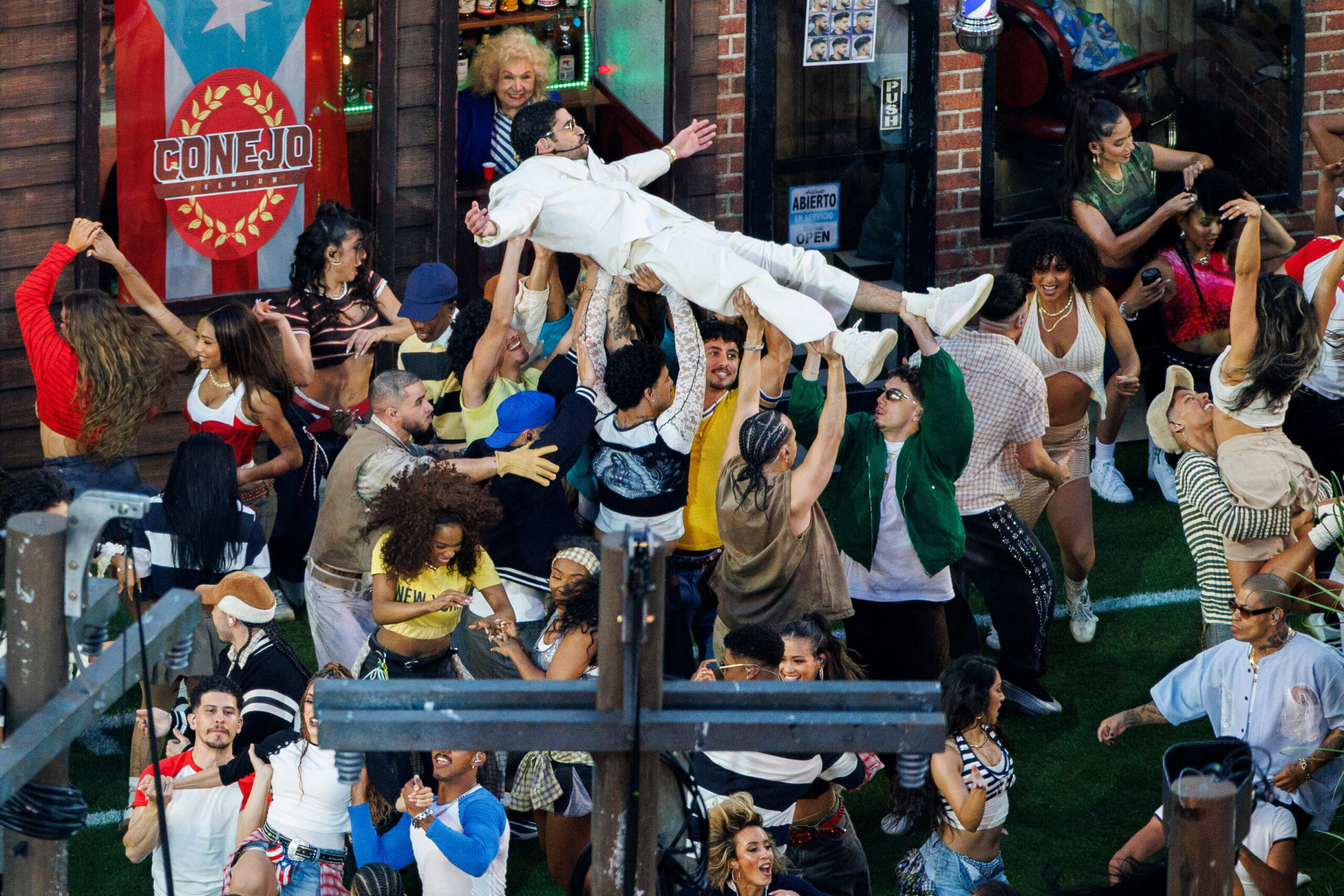
Bad Bunny (center top) performs Sunday during the halftime show of the NFL Super Bowl XL football game between the Seattle Seahawks and the New England Patriots in Santa Clara, Calif.
Right-wing media prattled on for months about how Bad Bunny, the Puerto Rican reggaeton superstar who is the world’s most streamed artist, would politicize and thus ruin the NFL’s halftime extravaganza at Super Bowl LX in Santa Clara, Calif.
The babble became a scream seven days before the Big Game kicked off, when Bad Bunny won the record of the year Grammy Award and began his acceptance speech with the exhortation “ICE out!” adding, “We’re not savages, we’re not animals, we’re not aliens — we are humans, and we are Americans.”
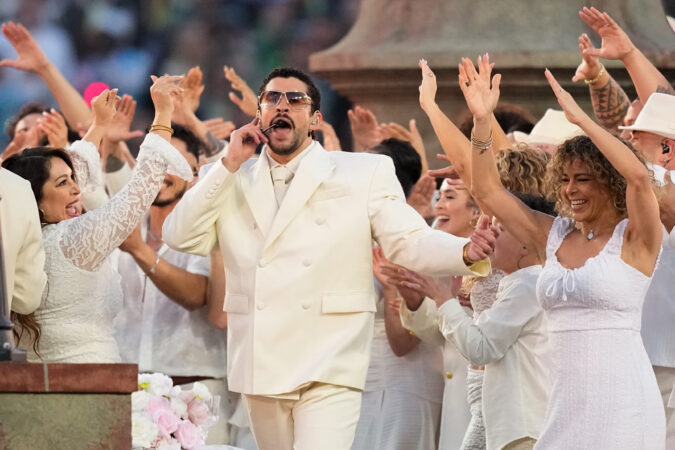
But on the world’s biggest stage Sunday night — seen by 135 million in the United States, a Super Bowl record — Bad Bunny sang not one word about Donald Trump, not that MAGA fans even bothered to hold up a translation app. The white-suited Benito Antonio Martínez Ocasio danced his way through the history of Puerto Rico and the Americas writ large, from the plantations of yore to the exploding power lines of the hurricane-wracked 21st century. He whirled past an actual wedding, stopped for a shaved ice, and for 13 spellbinding minutes turned a cast of 400 into what his transfixed TV audience craved at home.
BadBunny built his own community — a place not torn asunder by politics, but bonded by love and music.
Without uttering one word — in Spanish or English — about the dire situation in a nation drifting from flawed democracy into wrenching authoritarianism, the planet’s reigning king of pop delivered the most powerful message of America’s six decades of Super Bowl fever. Shrouded in sugar cane and shaded by a plantain tree, Bad Bunny sang nothing about the frigid chaos 2,000 miles east in Minnesota, and yet the show was somehow very much about Minneapolis.
Bad Bunny finally gave voice to what thousands of everyday folks in the Twin Cities have been trying to say with their incessant whistles.
We are all neighbors. The undocumented Venezuelan next door who toils in the back of a restaurant and sends his kids to your kids’ school is a neighbor. But Haiti is also a neighbor, as is Cuba. We are all in this together.
The word I kept thinking about as I watched Bad Bunny’s joyous performance is a term that didn’t really exist on New Year’s Day 2026, yet has instantly provided a name to the current zeitgeist.
The great writer Adam Serwer — already up for the wordsmithing Hall of Fame after he nailed the MAGA movement in 2018 in five words: “The cruelty is the point” — leaned hard into the concept of “neighborism” after he traveled to Minneapolis last month. His goal was to understand an almost revolutionary resistance to Trump’s mass deportation raids that had residents — many of whom had not been especially political — in the streets, blowing those warning whistles, confronting armed federal agents, and tracking their movements across the city.
Serwer visited churches where volunteers packed thousands of boxes of food for immigrant families afraid to leave their homes during the U.S. Immigration and Customs Enforcement raids, and talked to stay-at-home moms, retirees, and blue-collar workers who give rides or money to those at risk, or who engaged in the riskier business of tracking the deportation raiders.
“If the Minnesota resistance has an overarching ideology,” Serwer wrote, “you could call it ‘neighborism’ — a commitment to protecting the people around you, no matter who they are or where they came from.” He contrasted the reality on the ground in Minneapolis to the twisted depictions by Trump and his vice president, JD Vance, who’ve insisted refugees are a threat to community and cohesion.
Of course, it’s not just Minneapolis, and it’s not just the many, liberal-leaning cities — from Los Angeles to Chicago to New Orleans and more — that were the incubators of the notion that concerned citizens — immigrant and nonimmigrant alike — could prevent their neighbors from getting kidnapped. Even small towns like rural Sackets Harbor, N.Y., the hometown of Trump’s border czar Tom Homan, rose up in protest to successfully block the dairy farm deportation of a mom and her three kids. It’s been like this everywhere regular folks — even the ones who narrowly elected Trump to a second term in 2024 — realize mass deportation doesn’t mean only “the worst of the worst,” but often the nice mom or dad in the house, or church pew, next to theirs.
Only now that it’s arrived is it possible to see “neighborism” as the thing Americans were looking for all along, even if we didn’t know it. It is, in every way, the opposite vibe from the things that have always fueled fascism — atomization and alienation that’s easy for a demagogue to mold into rank suspicion of The Other.
I’m pretty sure Bad Bunny wasn’t using the word neighborism when the NFL awarded him the coveted halftime gig last fall. But the concept was deeply embedded in his show. He mapped his native Puerto Rico as a place where oppression has long loomed — from the cruelty of the sugar plantations to the capitalist exploitation of the failed power grid — but where community is stronger.
Then Benito broadened the whole concept. Reclaiming the word America for its original meaning as all of the Western Hemisphere, Bad Bunny name-checked “Chile, Argentina, Uruguay, Paraguay, Bolivia, Peru, Ecuador, Brazil,” and Canada, as well as the United States. These, too, are our neighbors. “God bless America,” he shouted — his only message of the night delivered in English.
So, no, Bad Bunny never mentioned Minneapolis, but a tender moment when he seemingly handed the Grammy he’d won just aweek ago to a small Latino boy had to remind viewers of the communal fight to save children like the 5-year-old, blue bunny hat-wearing (yes, ironic) Liam Conejo Ramos, who was just arrested, detained, and released by ICE. (A false rumor that the Super Bowl boy was Ramos went viral.)
But arguably, this super performance had peaked a few moments earlier, when the singer exited the wedding scene stage with a backward trust dive, caught and held aloft by his makeshift community in the crowd below. Bad Bunny had no fear that his neighbors would not be there for him. Viva Puerto Rico. Viva Minneapolis. Viva our neighbors.
Yo, do this!
Some 63 years after he was gunned down by a white racist in his own driveway, the Mississippi civil rights icon Medgar Evers has been having a moment. A fearless World War II vet whose bold stands for civil rights as local leader of the NAACP in America’s most segregated state triggered his 1963 assassination, Evers’ fight has become the subject of a best-selling book, a controversy over how his story is told at the Jackson, Miss., home where he was killed, and now a two-hour documentary streaming on PBS.com. I’m looking forward to watching the widely praised Everlasting: Life & Legacy of Medgar Evers.
After the Super Bowl, February is the worst month for sports — three out of every four years. In 2026, we have the Winter Olympics to bridge the frigid gap while we wait for baseball’s spring training (and its own World Baseball Classic) to warm us up. Personally, I try and sometimes fail to get too jacked up around sleds careening down an icy track, but hockey is a different story. At 2:10 p.m. on Tuesday (that’s today if you read this early enough), the puck drops on USA Network for the highly anticipated match between the world’s two top women’s teams: the United States and its heated rival Canada. Look for these two border frenemies to meet again for the gold medal.
Ask me anything
Question: How is it that some towns have been able to prevent ICE from buying warehouses and turning them into concentration camps, while others say they are helpless against the federal government? What does it mean that several are planned for within a couple of hours of Philly? — @idaroo.bsky.social via Bluesky
Answer: Great question. It seems ICE and its $45 billion wad of cash are racing in near-secrecy to make this national gulag archipelago of 23 or so concentration camps a done deal. The places where they’ve been stopped, like one planned for Virginia, happened because locals were able to pressure the developer before a sale to ICE was concluded. That’s no longer an option at the two already purchased Pennsylvania sites in Schuylkill and Berks Counties. The last hope is pressure from high-ranking Republicans, which may (we’ll see) have stopped a Mississippi site. Pennsylvanians might want to focus, then, on GOP Sen. Dave McCormick. Good luck with that.
What you’re saying about …
It’s conventional wisdom that the best argument for a Gov. Josh Shapiro 2028 presidential campaign is his popularity in his home state of Pennsylvania, the battleground with the most electoral votes. So it’s fascinating that none of the dozen or so of you who responded to this Philadelphia-based newsletter wants Shapiro to seek the White House, although folks seem divided into two camps. Some of you just don’t like Josh or his mostly centrist politics. “I think he’s all ambition, all consumed with reaching that top pedestal, not as a public servant, but because he thinks he deserves it,” wrote Linda Mitala, who once campaigned for Shapiro, but soured on his views over Gaza protesters, New York Mayor Zohran Mamdani, and other issues. Yet, others think he’s an excellent governor who should remain in the job through 2030. “Stay governor of Pa. when good governance and ability to stand up to federal (authoritarian) overreach is dire,” wrote Kim Root, who’d prefer Kentucky Gov. Andy Beshear for the White House.
📮 This week’s question: A shocking, likely (though still not declared) Democratic primary win for Analilia Mejia, the Bernie Sanders-aligned left-wing candidate, in suburban North Jersey’s 11th Congressional District raises new questions for the Dems about the 2026 midterms. Should the party run more progressive candidates like Mejia, who promise a more aggressive response to Trump, or will they lose by veering too far left? Please email me your answer and put the exact phrase “Dems 2026” in the subject line.
Backstory on how the F-bomb became the word of the year
Billie Joe Armstrong of Green Day performs Sunday before the start of Super Bowl XL in Santa Clara, Calif.
I’m old enough to remember when the world’s most famous comedy riff was the late George Carlin’s “Seven Words You Can Never Say on Television” — its point driven home by Carlin’s 1972 arrest on obscenity charges that went all the way to the U.S. Supreme Court. A half century later, you still can’t say dirty words on broadcast TV — cable and streaming is a different story — but that fortress is under assault. In 2026, America is under seemingly constant attack from the F-bomb.
It is freakin’ everywhere. When the top elected Democrat in Washington, House Minority Leader Hakeem Jeffries, cut a short video to respond to the president’s shocking post of a racist video that depicted Barack and Michelle Obama as apes, he said, “[F-word] Donald Trump!” If uttered in, say, 1972, Jeffries’ attack would have been a top story for days, but this barely broke through. Maybe because that word is in the lexicon of so many of his fellow Democrats, like Mayor Jacob Frey, who famously told ICE agents to “get the [F-word] out of Minneapolis,” or Minnesota Sen. Tina Smith, who begged federal agents to “leave us the (bleep) alone.” (Smith is retiring at year’s end and seems to no longer give a you-know-what.)
The poor guys with their finger on the silence button at the TV networks, where you still can’t say Carlin’s seven words, can barely keep up. The F-bomb was dropped at this year’s Grammys, where award-winner Billie Eilish declared “(Bleep) ICE!” as she brandished her prize. The F-bomb was dropped, of course, at the Super Bowl, when the only true moment of silence during 10-plus hours of nonstop bombast came during Green Day’s pregame performance of “American Idiot,” when NBC shielded America’s tender ears from hearing Billie Joe Armstrong sing about “the subliminal mind(bleep) America.”
We’re only about six weeks into the new year, but it’s hard not to think that Merriam-Webster or the other dictionary pooh-bahs won’t declare the F-bomb as word of the year for 2026, even if I’m still not allowed to use it in The Inquirer, family newspaper that we are. So what the … heck is going on here? One study found the F-word was 28 times more likely to appear in literature nowthan in the 1950s, so in one sense it’s not surprising this would eventually break through on Capitol Hill or on the world’s biggest stages.
But the bigger problem is that America’s descent into authoritarianism and daily political outrage has devolved to such a point where, every day, permissible words no longer seem close to adequate for capturing our shock and awe at how bad things are. Only the F-bomb, it turns out, contains enough dynamite to blow out our rage over masked goons kidnapping people on America’s streets, or a racist, megalomaniac president who still has 35 months left in his term. Yet, even this (sort of) banned expletive is losing its power to express how we really feel. I have no idea what the $%&# comes next.
What I wrote on this date in 2019
What a long, strange trip for Amazon founder Jeff Bezos, one of the four richest people on the planet. Today, Bezos is in the headlines for his horrific stewardship of the Washington Post, which has bowed down on its editorial pages to the Trump regime, lost hundreds of thousands of subscribers, and laid off 300 journalists. It’s hard to recall that seven years ago, Bezos and Trump were at war, and there was evidence Team MAGA had enlisted its allies from Saudi Arabia to the National Enquirer to take down the billionaire. I wrote that “a nation founded in the ideals of democracy has increasingly fallen prey to a new dystopian regime that melds the new 21st century dark arts of illegal hacking and media manipulation with the oldest tricks in the book: blackmail and extortion.”
My first and hopefully not last journalistic road trip of 2026 took me to Pennsylvania coal country, where ICE has spent $119.5 million to buy an abandoned Big Lots warehouse on the outskirts of tiny Tremont in Schuylkill County. I spoke with both locals and a historical expert on concentration camps about their fears and the deeper meaning of a gulag archipelago for detained immigrants that is suddenly looming on U.S. soil. It can happen here. Over the weekend, I looked at the stark contrast between Europe’s reaction to the Jeffrey Epstein scandal — where ties to the late multimillionaire sex trafficker are ending careers and even threatening to topple the British government — and the United States, where truth has not led to consequences so far. The Epstein fallout shows how the utter lack of elite accountability is driving the crisis of American democracy.
One last Super Bowl reference: Now that football is over, are you ready for some FOOTBALL? Now just four months out, it’s hard to know what to make of the 2026 World Cup returning to America and coming to Philadelphia for the very first time, and whether the increasing vibe that Donald Trump’s United States is a global pariah will mar the world’s greatest sporting event (sorry, NFL). Whatever happens, The Inquirer is ready, and this past week we published our guide to soccer’s biggest-ever moment in Philly. Anchored by our world-class soccer writer Jonathan Tannenwald and Kerith Gabriel, who worked for the Philadelphia Union between his stints at the paper, the package provides not only an overview of the World Cup in Philly, but previews the dozen teams who will (or might) take the pitch at Lincoln Financial Field, with in-depth looks at the powerhouses (France) as well as the massive underdogs (Curaçao). June is just around the corner, so don’t let the paywall become your goalkeeper. Subscribe to The Inquirer before the first ball drops.
By submitting your written, visual, and/or audio contributions, you agree to The Inquirer’s Terms of Use, including the grant of rights in Section 10.
Many Americans were shocked by the killings of Renee Good and Alex Pretti at the hands of federal immigration agents. Many more were repulsed by the federal government’s lack of transparency, victim blaming, and obfuscation of the facts regarding the shootings.
But as border residents can tell you, what’s playing out in places like Chicago and Minneapolis is, in many ways, nothing new.
Although the administration has taken that lack of accountability to a nauseating low — interfering in federal and local investigations — impunity around immigration enforcement did not begin when Donald Trump took office.
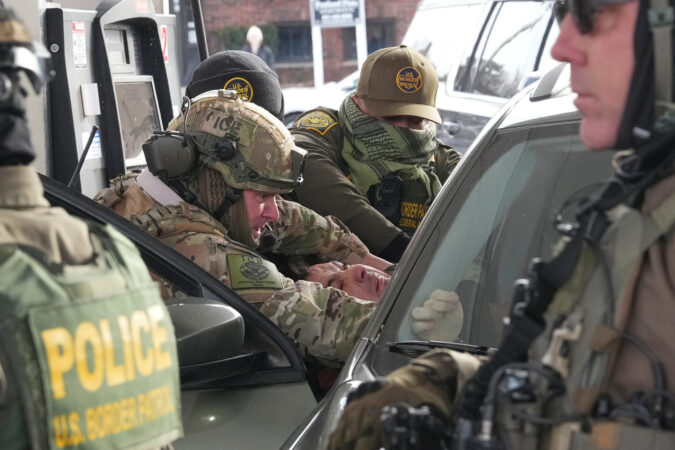
Since 2010, more than 300 people have been killed in incidents involving on-duty Border Patrol agents, according to a tally kept by the Southern Border Communities Coalition. Out of that number, 74 have been killed by agents using force.
Those figures are likely an undercount, as the agency has a history of failing to report deaths its agents are involved in. It also consistently fails to seriously discipline agents who face abuse complaints. A 2017 report by the American Immigration Council found a host of problems with the complaint system and investigation process, resulting in little accountability.
Focusing on the use-of-force killings, I am not saying that all 74 were unjustified. As Gil Kerlikowske, who led U.S. Customs and Border Protection from 2014 to 2017, told me, agents often work by themselves in rural border stretches and can run into dangerous smugglers.
But as Kerlikowske also told me, when he arrived at CBP, the agency had an outdated use-of-force policy that wasn’t available publicly, had no internal affairs division, and the only tools available to agents were firearms.
“They’ve always had a culture that’s distinct, you know, going back to their early days,” he said. “They did have that kind of Wild West kind of culture.”
That’s putting it mildly. While Kerlikowske instituted a series of important reforms around use of force, which he said his successors continued and improved upon, deep lasting change is slow and difficult.
As a 2021 report detailed, the agency “has been steeped in institutional racism and has committed violent acts with near impunity” since its creation in 1924. Lest you think that attitude got left behind last century, in 2019, a Facebook group that included around 9,500 current and former agents was found to be littered with racism and misogyny.
While I’ve known Border Patrol agents who zealously enforce the law while never losing sight of their humanity, who would hand over their lunch to a hungry migrant they just detained, current and former CBP agents were involved in the killings in Minnesota.
This file photo taken in 2017 shows the boundary in Nogales, Mexico, with the United States and a poster of Juan Antonio Elena Rodriguez, a teen who was shot and killed across the line by a Border Patrol agent in 2012.
The men who shot Pretti were identified by ProPublica as Border Patrol agent Jesus Ochoa and CBP officer Raymundo Gutierrez. Jonathan Ross, the U.S. Immigration and Customs Enforcement agent who killed Good, began his law enforcement career in 2007 as part of the Border Patrol.
I hate to be cynical, but if past is prologue, President Trump and administration officials needn’t have bothered putting their thumb on the scale after the shootings. The few times agents are held to account, the result is rarely justice.
In the last 35 years, only three Border Patrol agents have been charged and tried for killing someone in the line of duty. In all three cases, juries failed to convict.
Michael Elmer was charged with second-degree murder after the 1992 shooting of Dario Miranda Valenzuela in Nogales, Ariz. Elmer fired 12 shots, hitting Valenzuela twice in the back. He then moved the body and didn’t immediately report the incident, according to the Arizona Daily Star. He was acquitted.
Nicholas Corbett was charged with murder for killing Francisco Javier Domingo Rivera near Douglas, Ariz., in 2007. The agent’s account did not match up with eyewitness testimony or the physical evidence. The Cochise County Attorney’s Office eventually declined to prosecute after two trials ended in hung juries.
Lonnie Swartz was tried twice, once for second-degree murder and later for involuntary manslaughter, in the 2012 shooting death of 16-year-old Jose Antonio Elena Rodriguez. I was an opinion writer at the Daily Star in Tucson, Ariz., when this case went to trial in 2018. The facts were undeniable: Swartz shot across the Nogales border fence into Mexico a total of 16 times. He stopped and reloaded. He hit the unarmed Elena Rodriguez eight times in the back and twice in the head from an elevation of around 14 feet.
Taken in total, the message that federal immigration agents keep receiving — from the government and from juries — is that they can continue to operate with impunity.
Those who have long advocated for reform in these agencies say perhaps things will begin to change as a result of the deaths of Good and Pretti because they were white Americans. But this isn’t about race or immigration status, it’s about unchecked power.
Kerlikowske, at least, is optimistic about what happens once Trump is out of the White House.
“The Border Patrol isn’t trained to work in cities. That’s not why they hired on. They didn’t hire on to go work in Chicago or Minneapolis,” he said. “I think the vast majority of these folks will be happy to be back doing what they were doing.”
Let’s hope that when they do, they do so with a renewed commitment by the government to transparency and accountability. Otherwise, it may be back to business as usual.
As GOP lawmakers trip over themselves condemning President Donald Trump’s vile post of the Obamas, Republican voters need to remember that it did not occur in a vacuum. Ever since Richard Nixon’s “Southern strategy” peeled white supremacists away from the Democrats in 1968, through Ronald Reagan’s “welfare queen” era, the party has been largely defined by racism. These same GOP voices, including Pennsylvania’s Republican senator and our 10 Republican House representatives, have remained silent through Trump’s racist comments about Somalis, Haitians, and so many others, including members of Congress. At the state level, gerrymandering by governors and legislatures has diligently worked to dilute the voting power of people of color. Essentially, anyone who voted Republican anywhere along the line has abetted and been complicit in enabling Trump’s disgusting displays. There is plenty of blame to go around and ample need for true believers in American democracy to examine their consciences for the support they continue to give to Republicans’ voices.
Stephen E. Phillips, St. Petersburg, Fla.
. . .
I was thrilled that huge nationwide protests erupted in frigid winter weather after the killing by armed, masked federal agents of two innocent people in Minneapolis, Renee Good and Alex Pretti. Suddenly, Democrats in Congress quickly acted to threaten a government shutdown and demand reforms of U.S. Immigration and Customs Enforcement, including banning its outlaw methods and reestablishing adherence to the rule of law. Even some Republican leaders finally grew a spine and condemned the killings. And this whitewashing administration born in birtherism, usually unfettered by truth, empathy, or shame, made some noises about changing its ruthless roundup and detention of innocent people.
But I wondered why this amazing and inspiring reaction to the obviously racist-based attacks on nonwhite immigrants, which have been going on for months and were visible for all to see, took so long to erupt. Was it because two white people had finally died?
If we ever have a chance to measure up to the ideals of freedom and equality of our beautiful American dream, America needs to confront its racist sickness directly and honestly as an ugly and omnipresent aspect of our national soul that must be exorcised through education and love. Or we and our nation will be torn apart over and over and over again.
Steve Cickay, Newtown
Slanted viewpoints
“The Inquirer offers news, which strives to present unbiased, factual reporting, and opinion, which showcases viewpoints.” These words appear on The Inquirer’s editorial page several times each week. If you actually read these pages on a daily basis, it is clear this is not the case.
Viewpoints may be showcased, but 95% are slanted to the left. The Inquirer’s obsession with opposing everything Donald Trump has resulted in the abandonment of attempts to provide unbiased editorial content.
Where are the news articles, editorial pieces, and political cartoons highlighting the tens of thousands of violent, criminal, illegal immigrants whom U.S. Immigration and Customs Enforcement and U.S. Customs and Border Protection have removed from our streets? The same question can be asked about radical ICE protesters impeding law enforcement or disrupting a St. Paul, Minn., church service. And where is the outrage about the massive fraud situations in Minnesota and California?
The political cartoon in the Feb. 3 edition, which refers to the “slaughtering” of American citizens, was the most egregious to date. The word slaughtering is defined as “the killing of large amounts of people: massacre.” Two people were killed in Minneapolis (unfortunately, both chose to put themselves in danger), but does The Inquirer believe that cartoon is a fair depiction of the current enforcement of federal law? Words matter — particularly inflammatory ones like that. This is especially true for a journalistic organization like The Inquirer. Your readers deserve better.
Join the conversation: Send letters to letters@inquirer.com. Limit length to 150 words and include home address and day and evening phone number. Letters run in The Inquirer six days a week on the editorial pages and online.
It says a lot about the state of affairs when a Puerto Rican singer and rapper does more to unify the country in about 13 minutes than the president of the United States has done in the past 13 months.
Bad Bunny’s halftime performance at Super Bowl XL was all about love, while Donald Trump’s return to the Oval Office is focused on hate.
Bad Bunny’s joyful celebration of unity, diversity, and togetherness was a needed respite from Trump’s cruelty, retribution, and division.
Even though many of the more than 135 million viewers may not have understood the words Bad Bunny sang in Spanish, just about everyone could feel the positive vibe and communal celebration that showcased dancing, hard work, urban street life, family — and a wedding.
Bad Bunny’s ode to Puerto Rico was a reminder that we are neighbors, not enemies. More broadly, the United States is part of the American continent that includes Canada, Mexico, Central America, South America, the Caribbean, and Greenland.
We are all stronger when we work together than when we are at each other’s throats.
Bad Bunny’s positive message stood in stark contrast to the president’s relentless serving of hate that is dividing and weakening the country.
Just last week, Trump posted a racist video on his social media account that depicted former president and first lady Barack and Michelle Obama as apes.
Eventually, he removed the post after several — but not many — GOP officials called out the blatant racism. The bipartisan backlash is a reminder that it will only take a few good Republican men and women to stop Trump’s attack on America’s institutions and its people.
Trump’s racist meme about the Obamas came on the heels of a racist and misleading move by the White House that posted a digitally altered image of a Black woman who was arrested while demonstrating against the unlawful actions of U.S. Immigration and Customs Enforcement agents in Minneapolis.
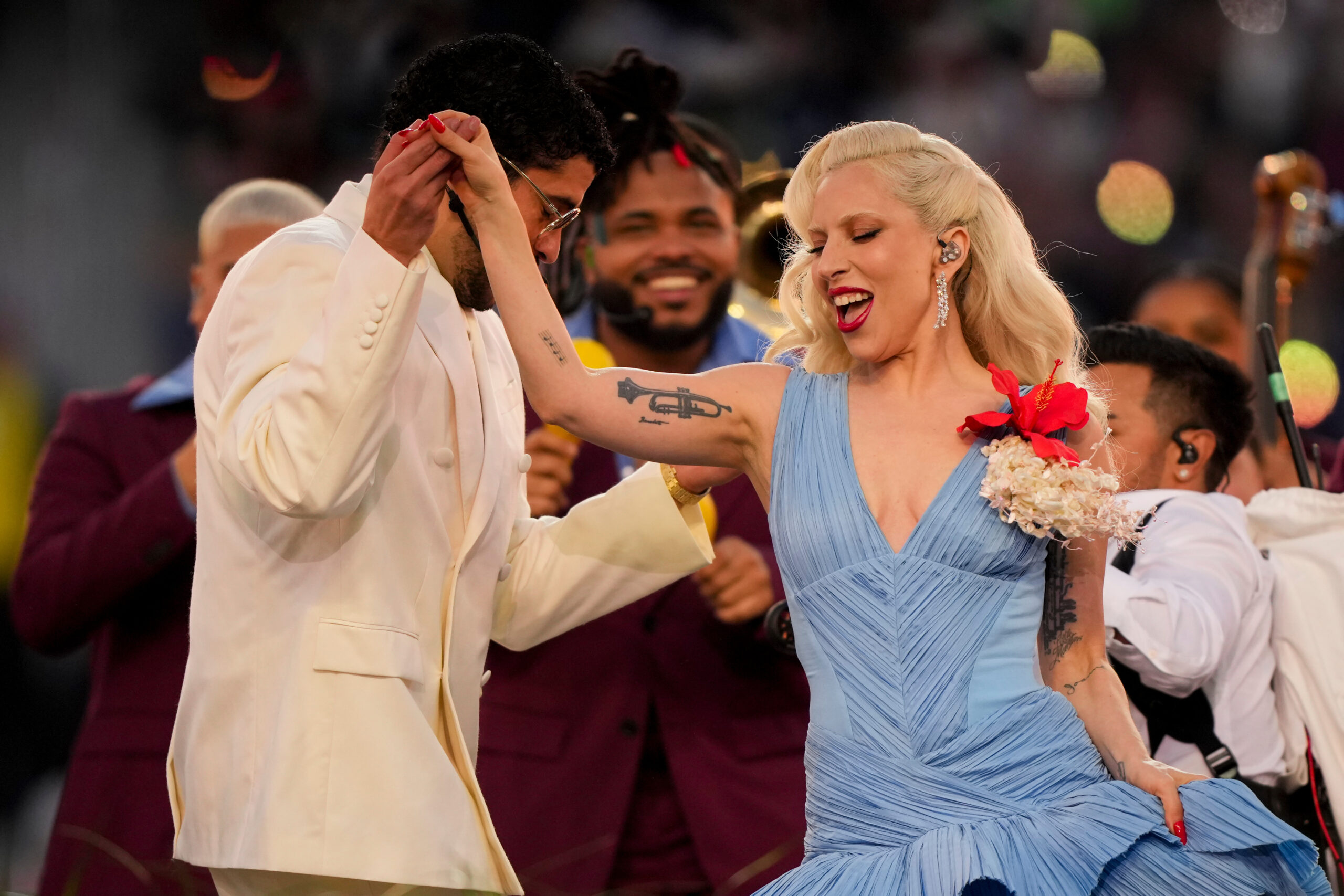
Bad Bunny and Lady Gaga perform during the Super Bowl halftime show Sunday.
The image released darkened Nekima Levy Armstrong’s skin and showed her sobbing, though the real picture depicted her as composed. Such detestable propaganda is how the Trump administration spends your tax dollars.
Trump is not a serious president.
As much of the country remained in a deep freeze, he spent his 20th weekend at his estate in Palm Beach, Fla., since returning to office last year.
He played golf with lackey Sen. Lindsey Graham (R., S.C.), and fired off more than 50 social media posts whining about rigged elections (still), the halftime show, and a U.S. Olympic skier he called a “loser” after the athlete expressed “mixed emotions” about representing the country amid Trump’s politics of upheaval.
The only thing Trump is serious about is enriching himself while many Americans struggle to make ends meet.
An updated accounting by the New Yorker magazine found Trump and his family leveraged his return to the White House to increase their wealth by $4 billion.
Lost in all the recent outrages from the Jeffrey Epstein files to Greenland to shooting citizens in Minneapolis was a Wall Street Journal story that detailed how a member of the United Arab Emirates royal family known as the “spy sheikh” invested $500 million to buy 49% of a crypto start-up founded by the Trump family.
The crypto deal came together as the Trump administration agreed to give the Emirati government hundreds of thousands of advanced computer chips to power artificial intelligence technology — a deal the Biden administration rejected out of national security concerns that the chips could be shared to help China advance its military weapons systems.
About 70% of Americans believe the country is “out of control” under Trump.
Many are fed up with his mismanagement of the economy that has resulted in higher prices and fewer jobs — in addition to defying courts, prosecuting political opponents, arresting citizens, deporting immigrants, and stifling free speech.
The landslide special election victory of a Democrat in a deep-red district in Texas shows voters are putting community before party.
Then along came Bad Bunny to remind America that love trumps hate.
One cannot truly claim to understand American history without knowing African American history, and without understanding America’s complete history, we’re condemned to repeat past mistakes.
With that recent obfuscation in mind — and in celebration of Black History Month — I’d like to introduce readers to some little-known history from Philadelphia during World War II.
Philadelphia’s newspapers legally listed nonfederal defense job openings and apartment rentals by race.
Newsreels and movies about the iconic battles of Guadalcanal, Saipan, the Bulge, Iwo Jima, and Okinawa almost never featured any Black servicemen, but they were there.
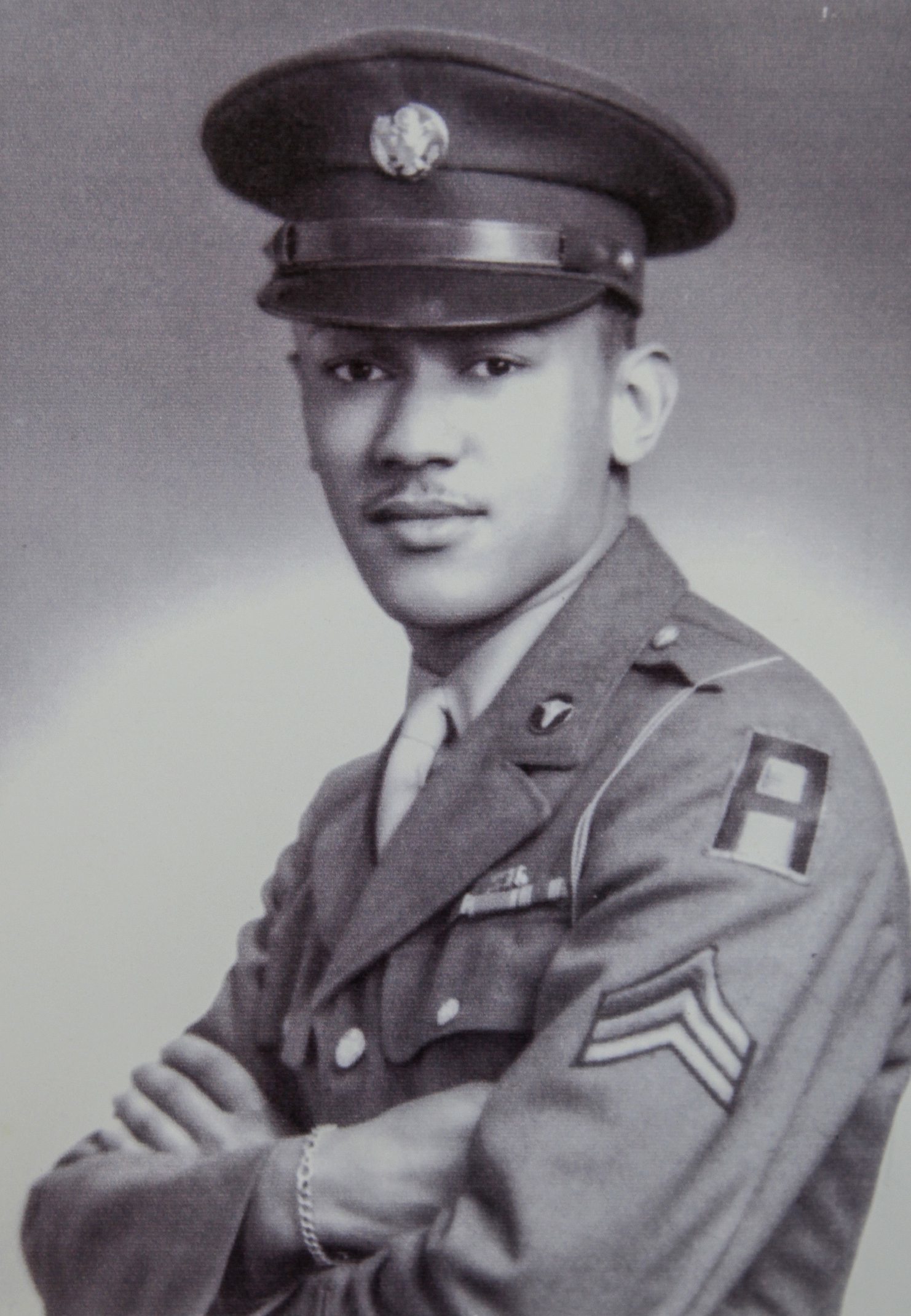
Cpl. Waverly B. Woodson Jr. was an army medic assigned to the 320th Barrage Balloon Battalion. The battalion’s job was to set up explosive-rigged balloons to deter German planes. At a time when the military was still segregated by race, the balloon battalion was the only African American combat unit to land on Normandy on June 6, 1944.
On D-Day, Overbrook High grad Waverly B. Woodson Jr., a Black combat medic who, despite being wounded, treated over 200 soldiers at an Omaha Beach field dressing station. After toiling for over 30 straight hours and being completely exhausted, he resuscitated three soldiers who had nearly drowned in the frigid waters off the English Channel.
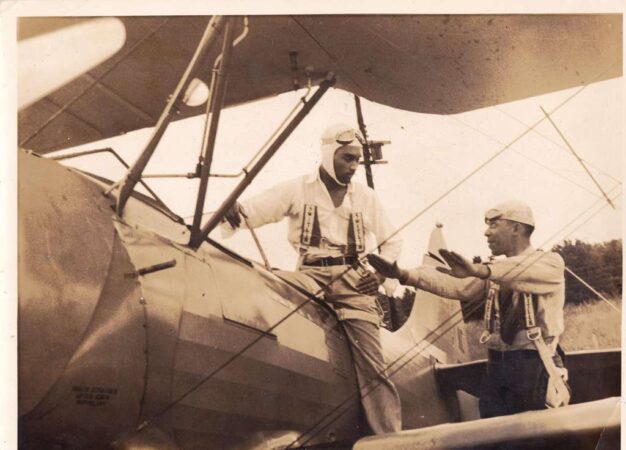
In 1943, Milton R. Henry, a Philadelphia Tuskegee pilot, got into a confrontation with an armed white Montgomery, Ala., bus driver over being forced to sit in the back of a bus. Henry might have been murdered if not for the quick intervention of several white English pilots.
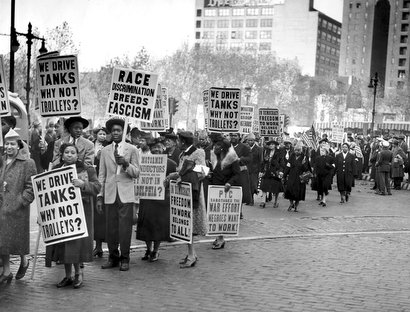
A Philadelphia Transit Co. (which would eventually become SEPTA) protest supporting Black trolley drivers enters Reyburn Plaza across from City Hall on Nov. 8, 1943.
In 1944, racists struck the Philadelphia Transit Co., SEPTA’s predecessor, and prevented workers from using trolleys, buses, and subways for several days. Worker absenteeism caused the loss of a million war matériel production hours. President Franklin Delano Roosevelt ordered 5,000 troops to Philadelphia — instead of to Europe or the Pacific — to restart and guard its transit system.
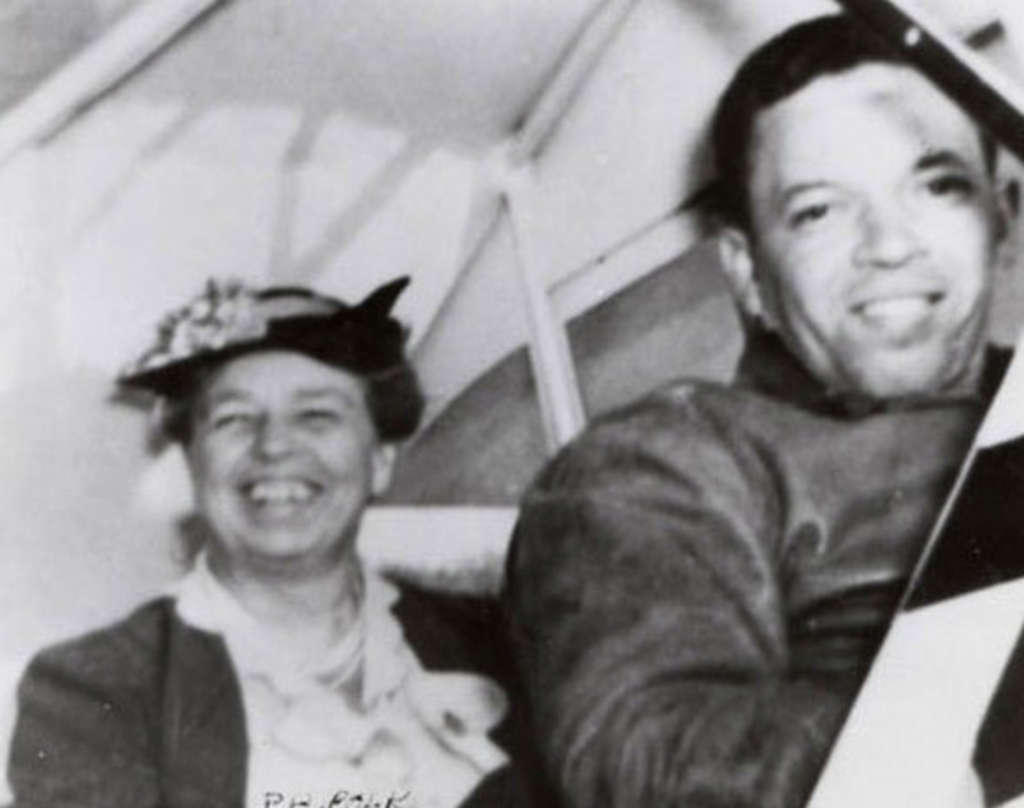
First lady Eleanor Roosevelt got a flight over the Tuskegee Institute with C. Alfred Anderson at the controls.
Irrespective of the Tuskegee Airmen’s flying skills, after the war, none was hired by a commercial airline. Some pilots had received their initial training from Bryn Mawr native C. Alfred “Chief” Anderson. In March 1941, Anderson flew Eleanor Roosevelt around Tuskegee, Ala., which caused some War Department skeptics to reevaluate their initial hesitancy with Black pilot training.
In April 1945, 101 Tuskegee Airmen, including several Philadelphians, were arrested for disobeying an unlawful discriminatory order. The charges were quickly dropped, but administrative reprimands were placed in these officers’ 201 files.
Philadelphia native William T. Coleman, a summa cum laude University of Pennsylvania graduate, interrupted his Harvard Law School studies to serve as an Army Air Force officer. Honorably discharged, he returned to Harvard, graduated first in his class, and clerked for a federal appeals court judge and a U.S. Supreme Court justice. Armed with his very substantial résumé and glowing recommendations, he initially moved to New York — as no white Philadelphia firm would hire him.
Throughout the war, while Philadelphia-based Whitman’s Chocolates was producing millions of pounds of “Samplers,” it was also producing “Pickaninny Peppermints,” despite protests by the NAACP to remove the offensive slur from the product’s name.
The Woodside Amusement Park. The Fairmount Park Transit Co.’s trolley stopped at the park until the line closed in 1946.
Paul L. Newman is an amateur historian specializing in African American history of the first half of the 20th century. He has created a mini-series docudrama that highlights the events in this essay.
MAGA Republican Speaker of the House Mike Johnson, an attorney, practiced constitutional law before getting elected as a congressman from Louisiana. Constitutional law! And yet he doesn’t seem to give a flip about the U.S. Constitution.
The Fourth Amendment says, “The right of the people to be secure in their persons, houses, papers, and effects, against unreasonable searches and seizures, shall not be violated, and no Warrants shall issue, but upon probable cause, supported by Oath or affirmation, and particularly describing the place to be searched, and the persons or things to be seized.” Johnson says: “[I]f someone is, you know, they’re going to be apprehended, and they run behind a closed door and lock the door, I mean, what is Immigration and Customs Enforcement supposed to do at that point? ‘Oh, gee whiz, a locked door.’” Yes, exactly. U.S. Immigration and Customs Enforcement is supposed to say, ‘Oh, gee whiz, a locked door,’ not kick in the door, and get a signed judicial warrant for a legal search by describing the place to be searched and the person sought. It’s that simple. Please read the Constitution, people, and every day, after each new outrage, ask yourself: Is this constitutional?
Ann Burruss,Newark, Del.
. . .
The Trump administration’s deportation policies are a disgrace. U.S. Department of Homeland Security Secretary Kristi Noem said that 70% of those detained have criminal records, ranging from speeding tickets to murder. The real figure, according to her own agency’s statistics, is about 47%. Legal immigrants, those going to court hearings about their status, those with Temporary Protected Status, and U.S. citizens who are Black or brown, are now targets for detention and deportation. The U.S. Supreme Court has ruled that racial profiling is acceptable in these cases. Rather than targeted efforts to identify the worst of the worst, Stephen Miller has given agents quotas of 3,000 a day to be met. The result is indiscriminate roundups. And these agents are using brutal force, not asking for ID, pushing people to the ground, brutalizing them, and — in the case of Renee Good and Alex Pretti — killing them because they dared to protest. If you protest, you may be detained, beaten, or shot, as well. Donald Trump’s claims that he is de-escalating are lies. Warehouses are now being bought to house detainees in poor conditions without legal representation, which will become incubators for the spread of disease. There has already been a measles outbreak at a U.S. Immigration and Customs Enforcement detention facility in Texas. Protesting against these un-American policies is one of the most effective ways of fighting for the soul of our nation.
George Magakis Jr.,Norristown
. . .
As a practicing attorney for more than 50 years, I have read with great trepidation the stories about U.S. Immigration and Customs Enforcement’s crackdown on illegal immigration. It often appears to be an end run around the basic Fourth Amendment protections against unreasonable searches and seizures, which I presumed applied to all people. Agents drag people out of cars and homes without search warrants that traditionally require judicial review and approval. They are then often quickly deported to foreign countries, occasionally not even their country of origin. Apparently, ICE is permitted to operate outside the traditional constitutional guarantees the rest of us enjoy.
Now, I am astonished to read a more clandestine effort to subvert our First Amendment protections of free speech via administrative subpoenas. Are we throwing away our Constitution in the insane quest to rid a country of immigrants — a group that includes myself — of recent immigrants from developing countries? As Ben Franklin said years ago, this is a republic, if we can keep it. It’s time to speak up and stop this madness.
Angus Love,Narberth
Join the conversation: Send letters to letters@inquirer.com. Limit length to 150 words and include home address and day and evening phone number. Letters run in The Inquirer six days a week on the editorial pages and online.
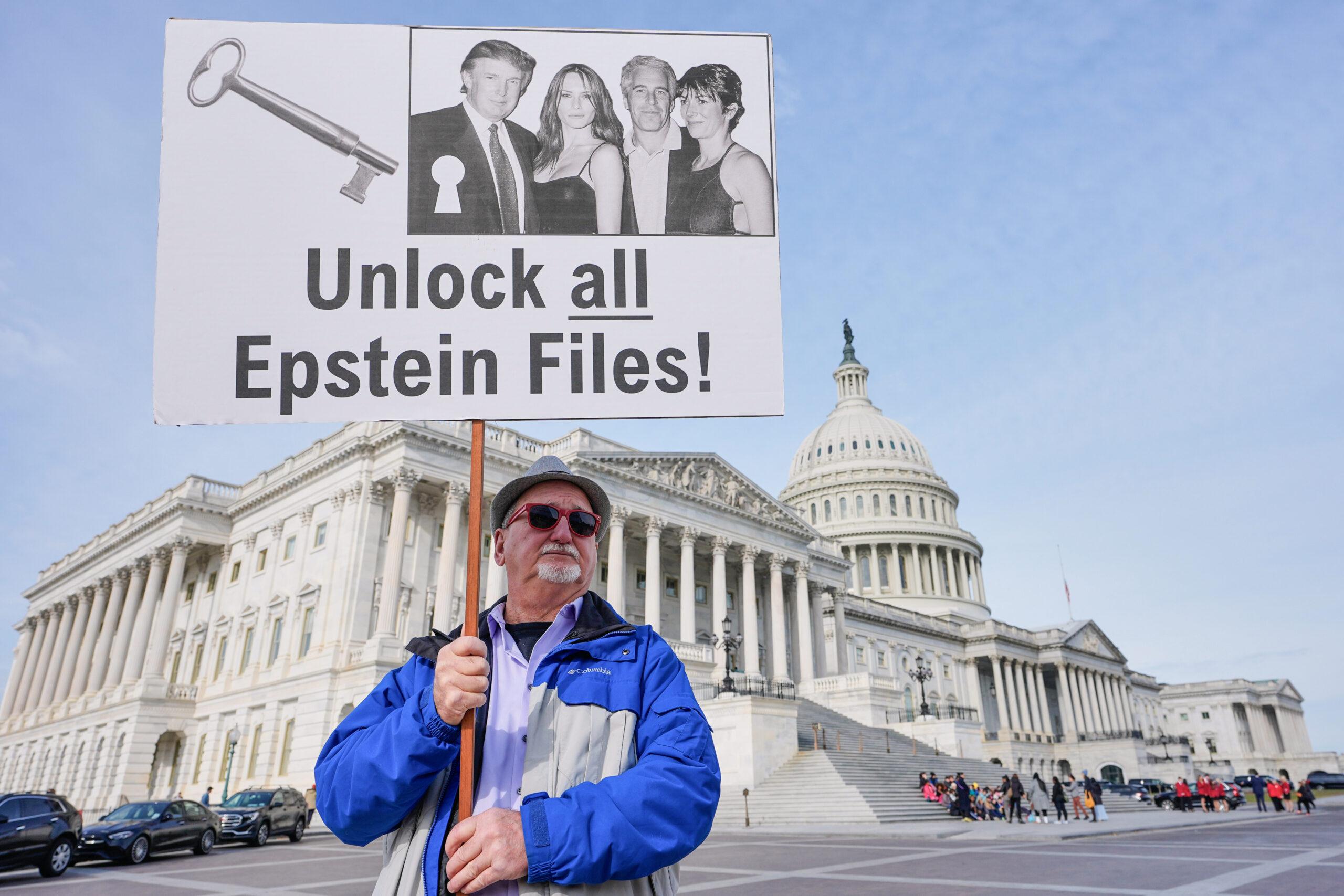
The slow drip of the U.S. government’s still grossly incomplete release of its files on late financier and sex trafficker Jeffrey Epstein has nonetheless become a who’s who of Planet Earth’s rich and famous — from billionaires like Bill Gates and Elon Musk to cultural icons like filmmaker Woody Allen and, of course, two presidents.
The average American paying any attention to this global bonfire of the vanities probably barely noticed this name: longtime British politico Peter Mandelson, who most recently served as the U.K.’s ambassador to the United States.
Across the pond, it was another story. The Fleet Street tabloid press went wild over revelations that Mandelson — a key insider in the ruling Labour Party, long known to have been one of Epstein’s globe-trotting pals — maintained his close ties even after the American’s 2008 child prostitution conviction, writing Epstein in 2009 to hail his release from jail as “liberation day.”
But unlike the fallout in the United States, Mandelson’s Epstein problem didn’t end with some embarrassing headlines. Back in September, when an initial batch of Epstein’s emails went public, Prime Minister Keir Starmer — Mandelson’s longtime ally — immediately fired his friend from his ambassador’s post in Washington, D.C., and the scandal has only intensified.
Last week, Scotland Yard investigators raided Mandelson’s two U.K. homes in a reported criminal investigation into whether the government official leaked secret and sensitive financial information to Epstein around the time of the Great Recession in2008. (Headline in the tabloid Sun: “Police rummage through Mandy’s drawers.”)
Meanwhile, Americans watching Britain’s rush to hold a powerful man to account for his unconscionable relationship with modern history’s most notorious sex creep are probably all asking the same thing.
Wait, you can do that?
Paris prosecutors raid the French offices of Elon Musk’s X as part of an investigation into spreading child pornography and deepfakes. https://t.co/YdCYxI8FLA
Here in the land where Epstein sex trafficked scores of underage girls — including the U.S. Virgin Islands hideaway now known as “Rape Island” — the sound of any type of justice or accountability for the financier’s powerful confederates has been an ear-splitting silence.
Since Epstein’s mysterious August 2019 death in a Manhattan federal jail cell, only his longtime companion and procurer of young women, Ghislaine Maxwell, has been criminally charged and convicted, and she has been moved by her longtime friend Donald Trump’s Justice Department to a low-security prison where she reportedly gets special perks.
Most of the corporate CEOs, company or university board members, NFL team owners, scientists, etc., etc., etc., who maintained close Epstein ties even after his 2008 state conviction on lurid crimes with minors have faced no sanctions, or just minor ones. Last week’s news that Brad Karp — chair of the powerful law firm Paul Weiss, already under fire for a controversial deal with Trump to head off a lawsuit with pro bono legal aid — is stepping down over revelations of his Epstein contacts stood out because it was such a rare nod toward accountability among U.S. elites.
This is why the reaction in Europe to Epstein’s close ties with some of its top leaders ought to be a wake-up call for the United States and our own rotten system of justice.
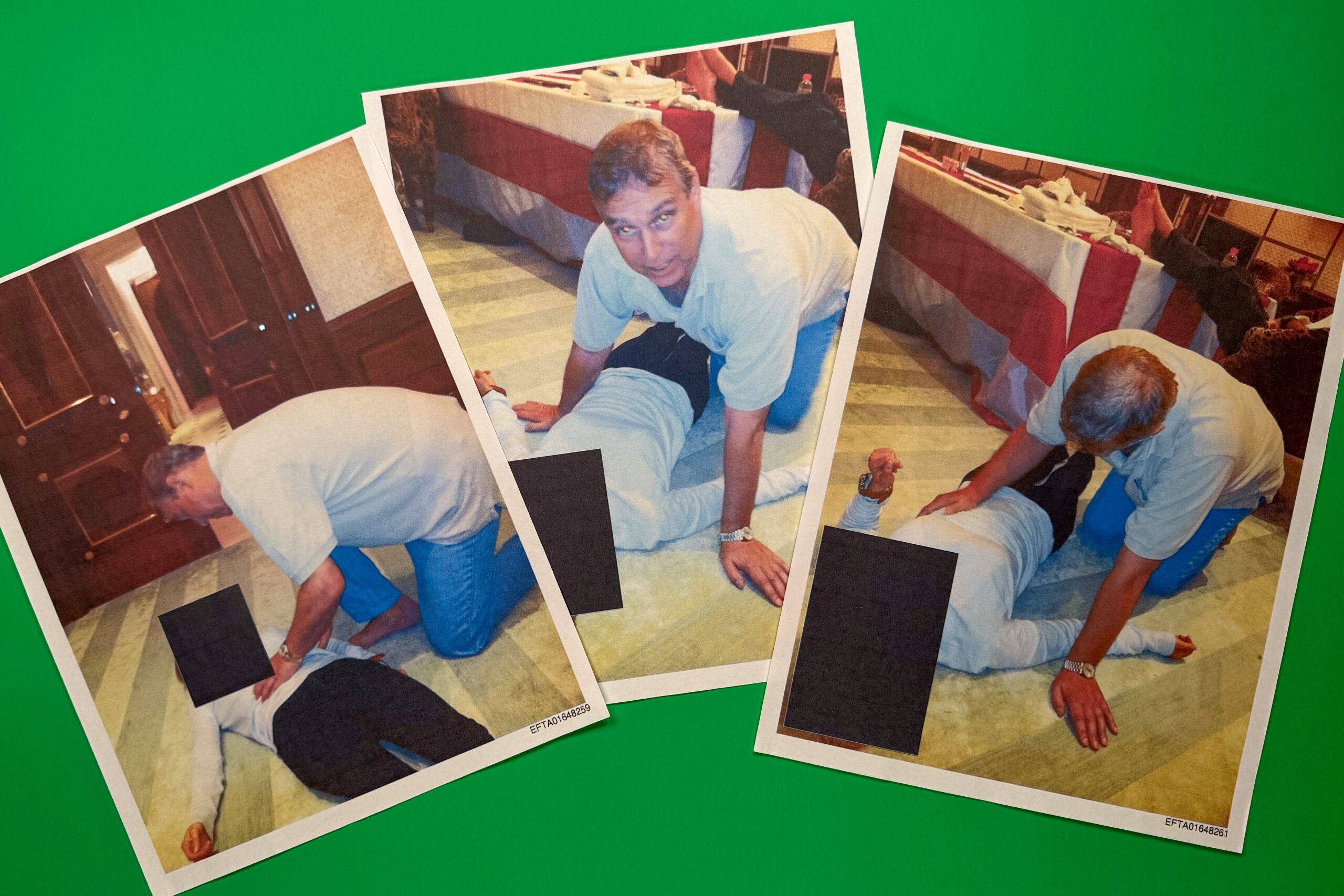
The Epstein accountability party isn’t just breaking out in Great Britain, although our cross-Atlantic ally has led the way ever since the artist formerly known as Prince Andrew was booted from the royal family as allegations mounted that he took part in some of the illegal sexual activities on Epstein’s island.
Images from an undated and redacted document released by the U.S. Department of Justice, show Andrew Mountbatten-Windsor, formerly known as Prince Andrew, leaning over an unidentified person.
Despite the aggressive moves against Mandelson and the ex-royal now called Andrew Mountbatten-Windsor, some observers think Starmer’s already tottering Labour government could collapse amid questions over what it did know about Mandelson’s Epstein connection, and when it did know it. A pointed headline in the Guardian newspaper bluntly summed up an increasingly prevalent U.K. viewpoint: “Deceit, betrayal and a scandal that demands historic change.”
But the fallout has spread well beyond the British Isles. When it came out that Joanna Rubinstein, a Swedish U.N. official, visited Epstein’s island in 2012, and that Miroslav Lajčák, national security adviser to Slovakia’s prime minister, discussed “gorgeous” girls in emails with the financier, both of them quit their jobs.
Imagine that.
Norway, much like the U.K., has been rocked to its core by revelations that so many of the nation’s elite leaders had Epstein ties. That even includes the nation’s crown princess, Mette-Marit, who had a running, jovial email conversation with Epstein that included such mundane matters as teeth whitening. More seriously, Norway’s economic crimes unit — yes, some countries actually have such a thing — has opened a corruption investigation into former Prime Minister Thorbjørn Jagland’s relationship with the disgraced U.S. moneyman.
There’s more. Latvia, Lithuania, and Poland have also announced their own investigations. In particular, Poland is digging into mounting evidence over associations between Epstein and Russian intelligence — an existential matter for a nation that’s been overrun and dominated by its eastern neighbor in the past.
In the United States, officials seem more likely to investigate chemtrails or what happened to Amelia Earhart than conduct a serious probe of whether Trump’s former friend was with the Russians, too.
Norwegian Crown Prince Haakon, Princess Ingrid Alexandra, and Crown Princess Mette-Marit applaud during the Nobel Peace Prize award ceremony in Oslo, Norway, in December.
Rob Ford, a professor at the U.K.’s University of Manchester, told the Associated Press that Europe has “a more functional media, we have a more functional accountability structure, that there is still a degree of shame in politics, in terms of people will say: ‘This is just not acceptable, this is just not done.’”
And that goes beyond Epstein. Also last week, French authorities raided the Paris office of U.S. citizen and world’s richest person Elon Musk’s social media giant X (formerly Twitter) as part of a sweeping probe into the site’s allegedly unlawful data extraction, as well as the recent scandal involving its artificial intelligence platform Grok spreading child sexual abuse material. The U.K. is also investigating Grok.
Musk’s X is, of course, headquartered in San Francisco, but no one expects the FBI to burst into his office — not after the electric vehicle magnate donated a staggering $288 million in 2024 to push Trump back into the White House. (Although California’s Democratic attorney general has begun an investigation.)
The time-lapsed release of the Epstein files hasn’t yet produced a smoking gun concerning his close friendship with Trump, but the fact that lurid tips to federal authorities about the two-time president don’t seem to have been really investigated speaks volumes about the utter lack of elite accountability on this side of the Atlantic.
The true meaning of the Epstein files may be less what it says about any specific sex crime — horrific as those may be — and more what they show about how the most powerful men in this country understood that they can get away with anything.
Indeed, it now feels like the 1970s Watergate scandal that looked at the time like the height of accountability — Richard Nixon was forced to resign the presidency, while 48 of his allies were convicted of crimes — was actually the end. Nixon’s subsequent pardon by Gerald Ford — which emboldened the disgraced ex-POTUS to declare that “when the president does it, that means it is not illegal” — was like a bat signal for elites that their brief moment of responsibility for their actions was over.
There were virtually no criminal charges for the economic crime of the 21st century: the Wall Street-driven collapse of the global economic system in 2008. And the lack of justice is bipartisan. Prosecution of white-collar criminals in the United States hit an all-time low under Joe Biden, even before Trump began his obscene spree of pardoning the wealthiest crooks.
Gary Rush, of College Park, Md., holds a sign before a news conference on the Epstein files in front of the Capitol in November.
It was grotesque when the U.S. Supreme Court ruled in 2024 that presidents can’t be prosecuted for crimes that are “official acts,” yet that seemed pretty obvious after George W. Bush and Dick Cheney got away with their illegal torture regime. Who do you think we are, Europe?
If the Epstein scandal “demands historic change,” as the Brits put it, then that change has to be a newfound drive to somehow renew the spirit of ‘74 — as in 1974. The assault on the foundation of American democracy that is the Trump regime — with its billion-dollar White House corruption, brutal and murderous immigration raids, perversions of criminal justice, and much more — won’t be cured just by Republicans losing a couple of elections, assuming free and fair balloting can even take place.
The small-d democratic government that finally ends this nightmare must do the hard work Biden and his miserably failed attorney general, Merrick Garland, did not do the last time. Immigration agents who maim and kill, government officials enriching themselves, and all other crooks — especially those now being exposed in the Epstein files — must be prosecuted, convicted, and sent to prison.
Maybe that’s not the American way. But there’s a whole wide world out there that is doing things a lot better.
James Baldwin liked to remind us: “History is not the past. It is the present. We carry our history with us. We are our history. If we pretend otherwise, we are literally criminals.”
Any teaching of our collective story that erases the genius, the contributions, the struggles, and the successes of Black people isn’t history at all. It is indoctrination. Propaganda. The criminal theft of an entire people’s existence.
Ours is a story that should not — cannot — be confined. Nor segregated within a designated month, select classrooms, or special curricula.
To build on the words of Malcolm X, America has tried to destroy Black people by denying and obliterating the nation’s collective understanding of Black history through lies and gross omissions, or by flattening the full contours of our story into one of only oppression and resistance. The renewed burial of the previously buried history of the President’s House that the Avenging the Ancestors Coalition and others worked so hard to have mounted is a prime and recent example of these attempts to erase.
Through multiple generations (up to this very day), students of all backgrounds have missed out on learning and benefiting from the full humanity of the Black experience where they rightfully should have expected it: in their schools.
That our history has survived and even been enriched over the years is itself a testament to the power of our intergenerational communities. In our grandparents’ living rooms, through family lore and handed-down traditions, photos and treasures, we have resisted the robbing of our past and appropriation of our identity.
But despite this resistance, there have been lasting impacts of this ongoing, systemic exclusion. One of them is that our teaching force (including Black educators) feels ill-equipped to share the story of Black people, continuing the cycle of misinformation and diminished returns not just for students, but for us all.
We can change this. As Makinya Sibeko-Kouate once said, “Education should be a maker of a virgin future rather than a slave to an unjust and shopworn past.”
Living up to this requires not only the creation of temporal and physical space for Black inclusion throughout the school year and across all disciplines, but also the adoption of a new mentality.
And educators, it starts with us.
To realize Black history’s potential of shaping the academic experience as a praxis in liberation — where the American story includes everyone and excludes nothing, from the soul-searing to the inspirational — we must be willing to learn along with our students. Embarking on this journey together with our students, however, requires seeing ourselves as students, the lead learners in the classroom.
Share with your students what you’re curious about. What you’re thinking, feeling, and learning — including what they are teaching you.
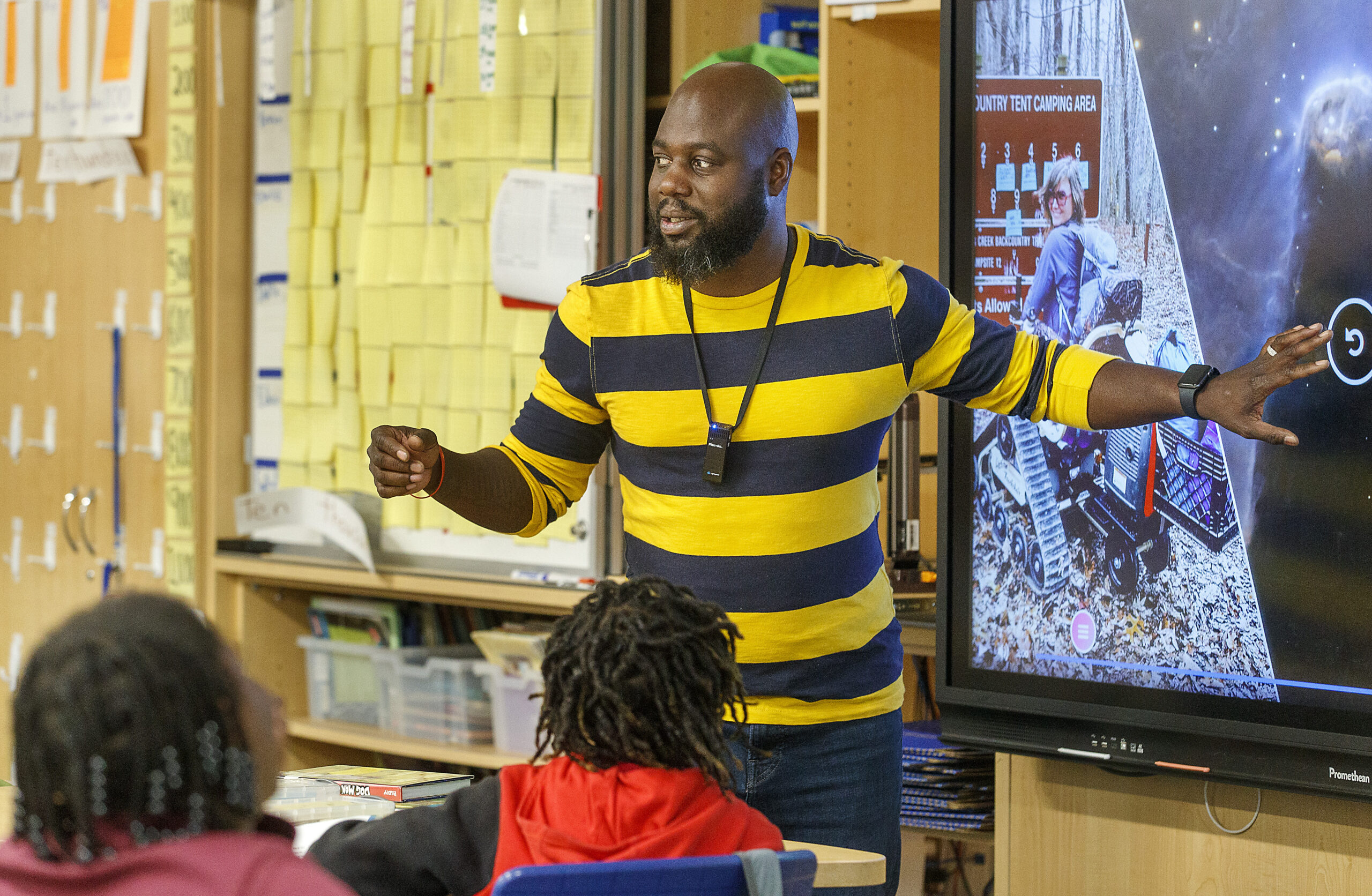
Tyler Wright teaches fourth grade in Charleston, S.C. Teachers must be willing to learn along with their students, writes Sharif El-Mekki.
With this kind of demonstrated humility, we educators can present not just windows but mirrors to brighter futures, reflecting for our students the change and growth possible in the learning enterprise that is so essential to a liberatory education.
Beyond abstractions and idealisms, here is more practical guidance for all educators who strive for excellence.
Honor your students. Let them know you’re eager to learn about them, where they come from, their intergenerational stories, and their neighborhood champions, along with their dreams and aspirations.
Jennifer LaSure teaches a Black history course at Cherry Hill High School East in 2024. Learning the full humanity of the Black experience begins in the classroom with inspiring teachers, writes the educator Sharif El-Mekki.
Are they multigenerational Philadelphians or recent arrivals? Who was the first to migrate from the South or immigrate from overseas? How did they overcome unjust challenges? What were their contributions to community and society? How did they bring joy and love? What broke their hearts, but not their spirits? What type of ancestors and descendants do they strive to be?
That our students are here is proof that those who came before them persevered. Do more than just tell them that. Expand the idea and reality of history through student agency. The impact is immeasurable, as are the consequences for not doing this.
Show them images of the Ishango bone, a 25,000-year-old Paleolithic artifact discovered in Congo, considered to be one of humanity’s oldest mathematical tools, carefully engraved for tallying, doubling, prime numbers, even calendaring — giving lie once and for all to the blasphemy that scientific advancement is somehow the province of only one culture or continent.
By allowing for the learning of Black history in shaping the academic experience as a praxis in liberation for students and educators alike, we can imagine a very different future.
One where every student would gain the critical thinking skills necessary to avoid the repetition of unjust history. Armed with a more complete context and meaningful perspectives, each of us is better able to recognize patterns and make better decisions for our society.
All that’s required is for us all to have the humanity to realize that history isn’t truly history unless everyone’s history is included. And for the rest of society not to criminally pretend otherwise.
Sharif El-Mekki, a former principal and teacher, is the founder/CEO of the Center for Black Educator Development and a co-organizer of the upcoming “Still We Teach. Still We Rise.” summit, a national convening for advancing Black history and the Black teacher pipeline.