I don’t believe the Trump administration removed the slavery memorial at the President’s House at Sixth and Market Streets to protect the reputations of the dead. I believe they did it to crush the spirits of the living.
Perhaps, for those too demoralized by Donald Trump’s chaotic presidency, the instinct to resist has faded. But Trump doesn’t know Philadelphians. We are a stubborn sort, reared in well-worn streets that are older than America itself. You cannot take crowbars to our history and pry it from the walls. Nor can you silence us when we rise up to tell the story of what you’ve done.
That’s why Friday’s arrest of Don Lemon, a journalist who toiled in Philadelphia before moving to the national stage, will only sharpen the focus on the Trump administration’s push to deport Black and brown immigrants. It’s why the arrest of Georgia Fort, a vice president of the National Association of Black Journalists, which has its roots in Philadelphia, will only shed light on this administration’s troubling strain of anti-Blackness.
Pretending that Lemon and Fort committed a crime by covering a protest in a mostly white Minnesota church is ludicrous. Yet, that’s what the Trump administration would have us believe. They want us to think that reporting on protesters who were seeking to confront a pastor said to have ties to U.S. Immigration and Customs Enforcement is a criminal act. That interviewing people is enough to be charged with conspiracy against the rights of religious freedom and an attempt to injure while exercising religious freedom.
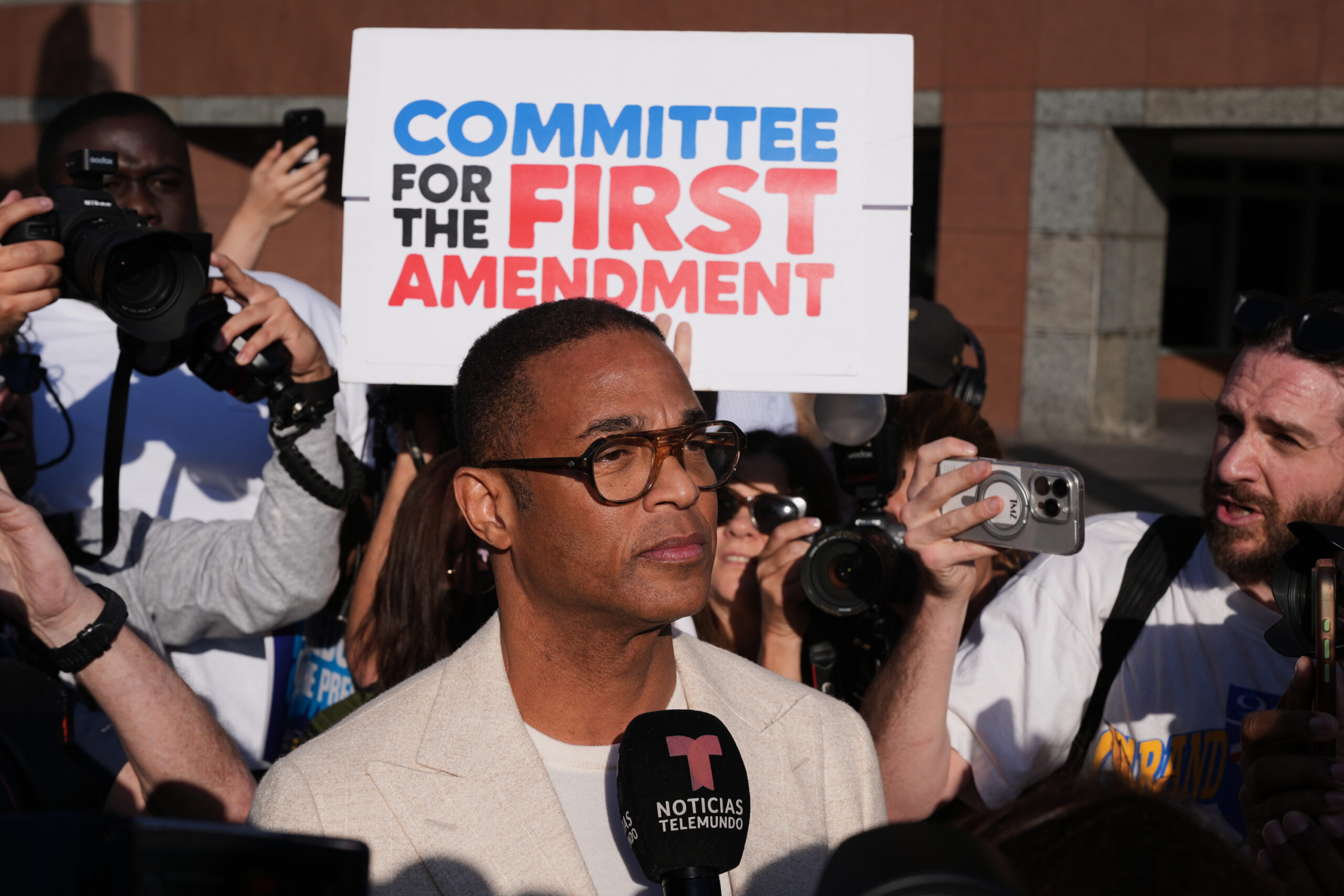
The journalist Don Lemon addresses reporters outside the Edward R. Roybal Federal Building in Los Angeles on Friday.
Don’t bother to try to make sense of it. You can’t, because the Trump administration is not seeking fairness. Nor is it seeking truth. Instead, it is attempting to reshape reality in the image of Donald Trump.
I doubt that it’ll succeed, because there’s a strange thing about truth. No matter what you do to it, truth does not cease to exist. It simply waits to be uncovered.
Prying Black history from the walls at Sixth and Market Streets will never erase truth. Instead, the truth will be amplified. Not only by Michael Coard and the Avenging the Ancestors Coalition, the activists fighting to preserve our history. This truth will be told by all of us.
George Washington enslaved nine Africans in Philadelphia. He returned them to Virginia nearly every six months, thus avoiding the requirement to free them under Pennsylvania law. One of the enslaved, Oney Judge, managed to escape from Washington and his wife, and America’s first president spent years trying to return her to slavery.
That is the truth of what happened here in Philadelphia, and on Friday, when I went to the site of the exhibit and saw the rusted, glue-stained frames that once held depictions of that history, I was angry. But the tale of the President’s House is not the only truth the Trump administration is trying to obscure.
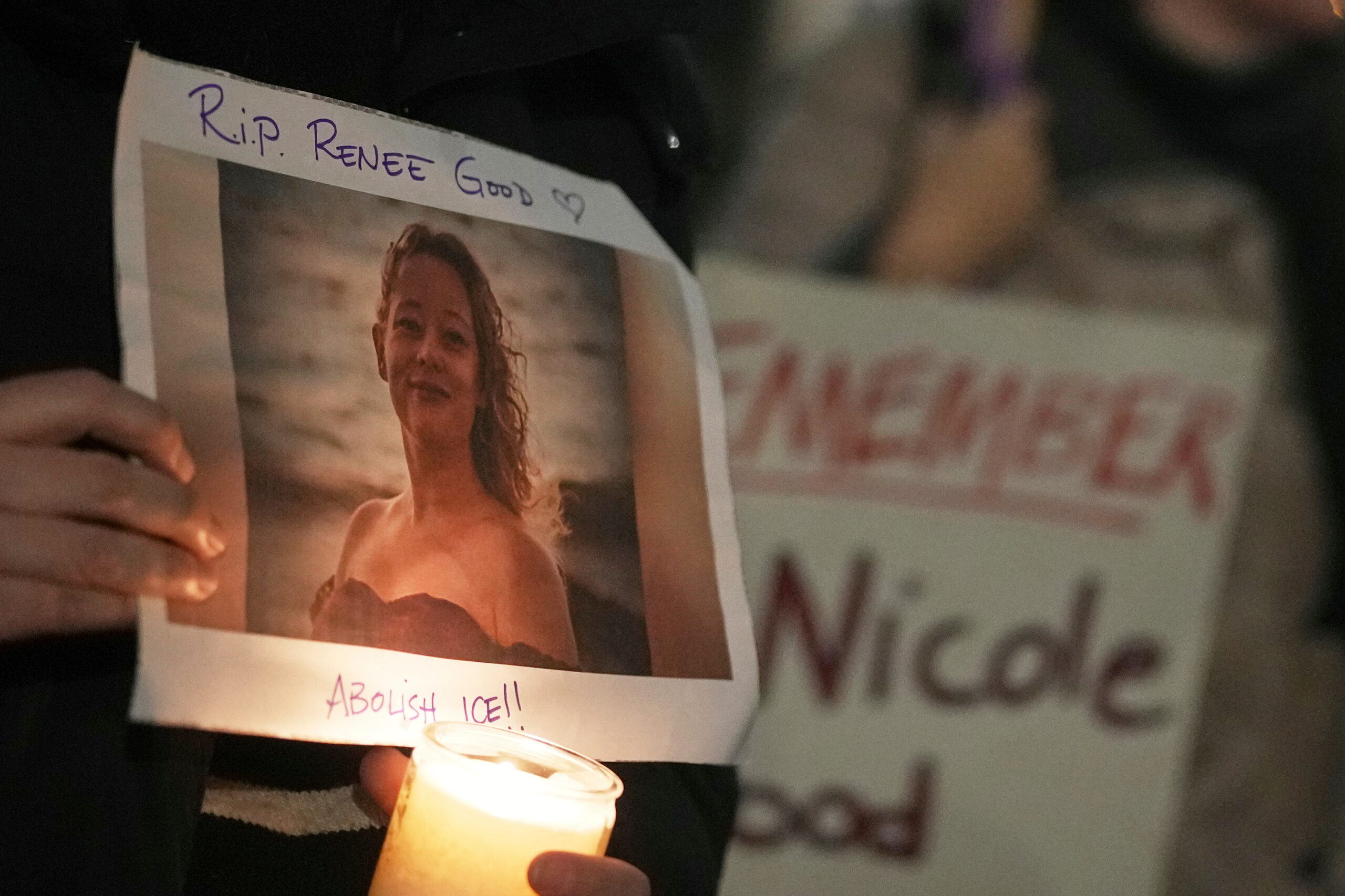
Shootings by federal immigration agents in Minnesota cost Renee Good and Alex Pretti their lives. We know their names and mourn their deaths, not just because they were American citizens, but also because they were white. However, they aren’t the only ones to fall victim to the violence linked to the president’s anti-immigrant push.
In total, at least four people have been killed and eight others wounded by gunfire during immigration enforcement operations since Trump returned to office a year ago. Most of the other victims appear to be people of color. But when state-sanctioned violence hides behind the darkness of masks, the only thing that can expose it is light.
Journalism is that light, and quite often, when journalists begin to look for one truth, another is exposed. That’s what happened when Don Lemon and Georgia Fort walked into that mostly white church to report on a protest in St. Paul, Minn.
Lemon and Fort discovered that in America, where history is pried from walls and Black journalists are arrested, truth does not play out in color. Too often, it’s in Black and White.
In a bid to see what all the commotion was about, I attended a matinee in a classic New Jersey swing county.
I worried the audience would reflect the country’s polarization and be at each other’s throats by the time the closing credits rolled.
I needn’t have worried. At my weekend show, the audience of about 80 people laughed appreciatively at every word the president uttered. Those closing credits were met with robust applause.
First, however, a bit of housekeeping: I admit to having what the president’s supporters would contemptuously describe as “Trump Derangement Syndrome.” I’m a cancer survivor who literally burst into tears when he appointed Robert F. Kennedy Jr. because I knew they would kneecap cancer research.
As for Melania, my pre-movie impression was that she’s savvy, very guarded, and focused on being a good mother. Having read a biography of her and learned almost nothing from it, I was looking forward to gaining insights about our first lady.
An hour and 44 minutes later, I know she’s savvy, very guarded, and her favorite singer is Michael Jackson. And that you can see the George Washington Bridge from their Trump Tower penthouse.
Beyond that, it’s as riveting as one of those videos you get stuck watching at a Florida time-share. Sappy music. Happy people. Everything is awesome.
The director made not the slightest attempt to find drama when chronicling the 20 days Melania Trump has to prepare for her husband’s second term. There is a lot of focus on clothes and table settings, but armed with the heft of the U.S. government and the deep pockets of corporate donors, there is almost zero chance of anything going wrong.
First lady Melania Trump stands for a benediction during the presidential inauguration in January 2025. Her new film documents the 20 days preceding the ceremony.
That makes for a beautiful inaugural ball, but a lousy story arc.
As a result, the TikTok laments of your cousin Bethany planning her wedding would be more compelling.
Nothing in this documentary has a true “behind the scenes” feeling to it. Melania is never shown getting ready for her day. On camera, she appears only in full makeup, with not a hair out of place.
As a result, the movie is as meticulously curated as she is.
This all makes perfect sense when you watch Melania at the fitting for the coat she will wear to the swearing-in ceremony. She critiques the lapel with the eye of both a dressmaker’s daughter and a fashion model. Her requests are precise: the collar should be a quarter inch lower; the hat band a half inch narrower.
There is a funny exchange when Donald Trump is shown practicing his inaugural address. He says he wants to be a peacemaker, and she interjects, “And a unifier.” He orders his aides to ignore the suggestion. She tells them to keep it.
The movie then cuts to his speech on the U.S. Capitol steps. He includes her phrase, then pointedly turns to her with a look that says: “You win. You were right.” It’s a look every married person understands.
Toward the movie’s close, when Melania moves back into the White House, her voice-over mentions the historic importance of the mansion. In this, she joins previous first ladies who gave the public an inside look at the White House: Jackie Kennedy’s groundbreaking tour was televised in prime time, and Nancy Reagan’s massive renovation was featured in Architectural Digest.
The key difference is that those two weren’t paid a reported $28 million by Amazon — more than twice the paycheck Margot Robbie earned as the star of Barbie, by the way — for their participation. By contrast, Melania is a thinly disguised pay-to-play vehicle.
The movie shows a White House untouched by the changes yet to come. My audience laughed when the official portrait of Barack Obama briefly appeared in the background; it has since been relegated to an off-limits stairwell.
In fact, the main problem with the movie is that it’s already out of date: It depicts the calm before the storm. It’s from a simpler time that now seems a long, long time ago — before the National Guard troops, before the DOGE cuts, before the whole Tylenol-autism thing, the demolition of the East Wing, the U.S. Immigration and Customs Enforcement raids, the measles outbreaks, the tariffs, and Greenland.
All of that has happened, yet 80 of my neighbors chose to give up two precious hours of daylight on a short winter’s day to see this movie. And then applaud. It was a discouraging reminder of how deeply divided we remain.
Kathleen O’Brien is a retired newspaper columnist who lives in northwest New Jersey.
The racism in education worked through politics. After all, schools were run by the government and funded by tax dollars, and while the students were segregated by race, the lessons were unified in their promotion of white supremacy.
As Woodson would later write in his book, The Mis-Education Of The Negro: “It is strange, then, that the friends of truth and the promoters of freedom have not risen up against the present propaganda in the schools and crushed it. This crusade is much more important than the anti-lynching movement, because there would be no lynching if it did not start in the schoolroom. Why not exploit, enslave, or exterminate a class that everybody is taught to regard as inferior?”
Woodson had a point. The politics of American education meant the stories of America’s wars were told from a Eurocentric perspective. America’s economic rise ignored the role of racism. The country’s cultural norms formed a tapestry of whiteness, and at the root of it all was an underlying theme that Black people were something less than human.
That was the prevailing attitude, but Black Americans kept proving their own nation wrong.
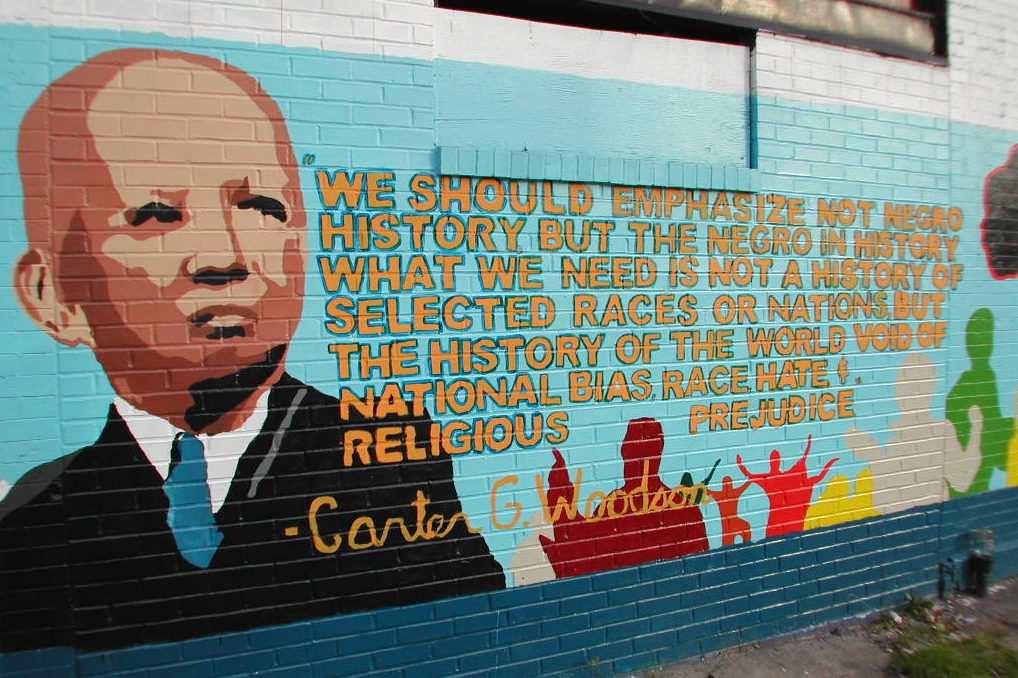
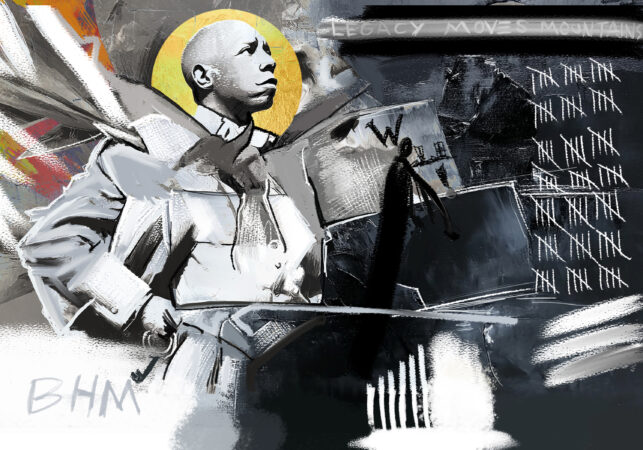
A mural in Washington, D.C., pays tribute to historian Carter G. Woodson, who in 1926 created what became Black History Month.
Sharing such history is inconvenient because it unravels the narrative that white America acquired everything through hard work and sacrifice, while Black America lost everything through laziness and incompetence.
Maintaining such historical lies requires political will and a story people want to believe. In 1915, America got both.
D.W. Griffith released a film called The Birth of a Nation. Its racist narrative portrayed Black men as savages, while depicting the Ku Klux Klan as heroes.
President Woodrow Wilson, who screened the film in the White House, said The Birth of a Nation was “like writing history with lightning.”
In truth, the film was not history. It was racist propaganda, and it helped to fuel the resurgence of the Ku Klux Klan. By 1921, African Americans were facing a full-on assault. In Tulsa, Okla., they endured what the U.S. Department of Justice later called a “coordinated, military-style attack” on a prosperous Black community. It was an assault that destroyed property worth millions of dollars, and it happened with the cooperation of the police and National Guard.
In 1923, the political leadership changed. Republican President Calvin Coolidge, in his first congressional address, said that under the Constitution, Black people’s rights “are just as sacred as those of any other citizen,” while calling on Congress “to exercise all its powers of prevention and punishment against the hideous crime of lynching.”
However, the president was only willing to go so far. He said racial issues should be worked out locally, and ultimately chose not to endorse an anti-lynching bill because he feared that in doing so, he would jeopardize tax legislation he was trying to push through the Senate. Black people weren’t his priority.
Carter G. Woodson created Negro History Week in 1926 largely because he believed the nation’s educational system sought to enslave Black minds, Solomon Jones writes.
It was against that political backdrop that Woodson founded Negro History Week — a celebration that wasn’t officially sanctioned by the federal government until 1976, when President Gerald Ford recognized Black History Month. A decade later, Congress passed it into law.
Between then and now, as political winds have shifted, we are once again facing backlash against Black progress.
In this moment, when the weight of Black history both strengthens and comforts us, I am reminded that Woodson, in his seminal work, The Mis-Education of the Negro, warned Black people against staking our hopes solely on politics.
“History does not show that any race, especially a minority group, has ever solved an important problem by relying altogether on one thing, certainly not by parking its political strength on one side of the fence because of empty promises,” he wrote.
In other words, if the past has taught Black people anything, it has shown us how to look beyond the rhetoric of politics and seek out each other for strength.
Five and a half years ago, I was 41 weeks pregnant and in active labor with my second child, trying to breathe through the pain as my husband sped us to the Bryn Mawr birth center.
Hobbling up to the birth center door, my husband in tow, I was greeted by the on-call midwife whom I had spoken to right before leaving home. She showed us to a yellow room, a beautiful birthing suite with a queen bed and window shutters that could’ve been in any home, where 15 minutes later, my healthy baby boy came screaming into the world.
Relief flooded my body. Only days earlier, COVID-19-related policies had locked down maternity and postpartum floors. My heart ached reading stories of mothers laboring alone and being separated from their new babies. Pregnant women around me felt scared and powerless.
Instead of pandemic-forced isolation, my husband, newborn, and I spent a peaceful night together in that yellow room, quietly being cared for by the nurse and midwife. It’s a night I’ll always cherish as the calm in the storm of an otherwise scary and painful time.
And it’s that night I thought of when I learned that, after 47 years and over 16,000 deliveries, the Bryn Mawr birth center, also known as the Lifecycle Wellness and Birth Center, will close its doors early this year. The reason is simple and stark: It can no longer afford the rising cost of insurance.
As a woman, I feel devastated that this choice will no longer be accessible to Philadelphia mothers. As a physician, I am angry at the continued erosion of patient care by a healthcare model that values money over people — an insurance system in which a successful, hugely impactful clinical practice nearly half a century old could dissolve under the threat of massive insurance premium hikes.
I’ve been practicing medicine for eight years at three different hospitals in the Philadelphia region, first within general internal medicine and now within the subspecialty of cardiology. Despite my decision to work at large academic centers, I’ve come to see the birth center as the gold standard — an antidote to healthcare systems that are so large that patients feel invisible.
At every stop of my career, I have been mentored by brilliant, dedicated health professionals. But what I’ve learned from the midwives and nurses at the Bryn Mawr birth center has profoundly impacted who I am as a doctor, and what I believe medicine should and can look like.
In medical training, we’re rewarded for memorizing guidelines, drug mechanisms, trial names, and dates. We are taught to apply a rigid standard of care that too often ignores patient realities. The truth of medicine is that there is a lot that is not under our control.
We miss the boat as doctors when we focus too much on medications, testing, and interventions, and fail to see the human in front of us who is suffering. Patients suffer alone, confused, bouncing around providers who don’t look up from computers to see the person in front of them for who they are.
The Bryn Mawr birth center was different: A place where people, including me, felt seen and cared for.
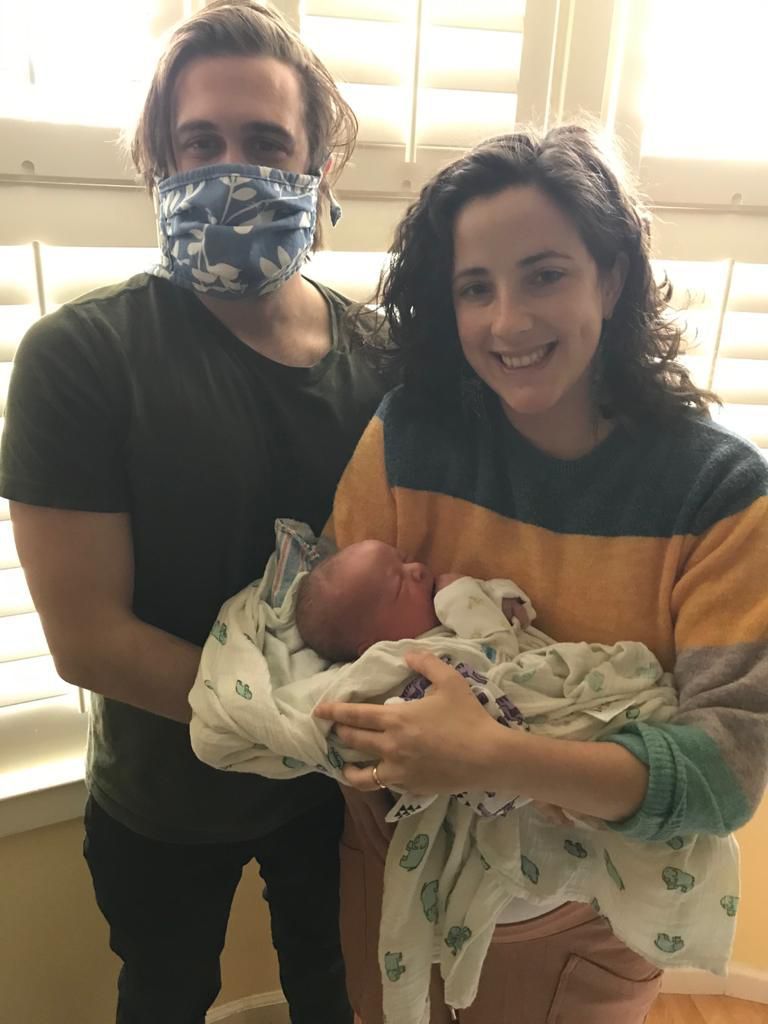
The author, a physician at Cooper University Hospital, gave birth to her second child at the Bryn Mawr birth center. She is devastated by the anticipated closure of the birth center, slated to happen early this year.
With the loss of the birth center, Philly mothers are losing that intimate, personalized care I received in the yellow room.
There has been an outpouring of grief from women and providers who see what a profound loss this is for our larger community. It feels devastating to me that, in a time when so many people feel disappointed by their experiences with healthcare, one of the few clinical models that actually succeeded in making patients feel cared for would be the one to close.
And still, the birth center will close its doors. My heart is full of sadness for this inconceivable loss. But I’ll hold that alongside gratitude: for the midwives, nurse practitioners, and nurses who have taught this doctor so much about seeing patients for who they are, and respecting our bodies for what they can do.
Cara Lea Smith is a physician at a local hospital, who was born and raised in West Philadelphia and continues to live there now with her husband and two children.
Some city officials are reportedly upset with District Attorney Larry Krasner for saying he would prosecute federal immigration agents if they commit crimes here. Mayor Cherelle L. Parker’s concern with avoiding confrontation has been reinforced by Police Commissioner Kevin J. Bethel, who recently said, “Who benefits when you’re putting out things and trying to … poke the bear?”
I’ll tell you who benefits — the bear. Or, in this case, our federal government: “We the people of the United States.” And when the residents of one city fear for their lives and livelihood under the yoke of a violent federal occupation, it concerns all of the states, all of the cities. We all benefit by standing up to tyranny, or we all lose our freedom.
Barry George,Philadelphia
. . .
Some folks have suggested that protesting the operations of U.S. Immigration and Customs Enforcement should be done at a distance and with respect. This opinion infers that getting close enough to help someone who has been pushed to the ground only serves to promote violence.
The violence initiated by some government agents may not be a characteristic of all of them, but it is a direct result of the words and actions coming from the president and his enforcers, which appeal to the “bad actors” being actively recruited, rewarded, and pardoned. Psychological tests have proven time and time again that cruel behavior by otherwise normal people is facilitated when their identities are hidden.
The cover for the actions of ICE is “the removal of people who are here illegally,” but even these folk have rights and protection under the law, as do we all. Now it is the “illegals” who are the targets of removal. Will “protesters” be the next target?
The world has been witness to what happens when too few people protest an authoritarian government’s self-sanctioned actions. In America right now, most protests are happening in “blue” states. God bless the people in these states. When will “red” states folks finally step up and be counted? The world is watching.
Joe Sundeen,Yardley
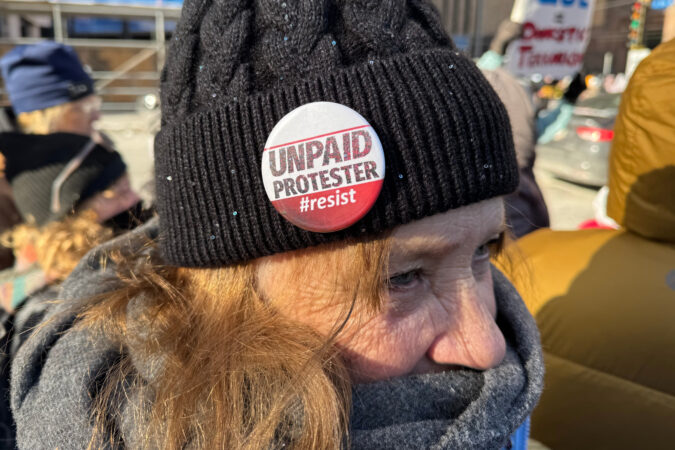
Paid protester trope
Letter writer Carl Marchi noted recently that today’s “… protesting mobs … have no morals and no credibility.” He contrasts this with activists from the social justice and anti-war movements of the 1960s and 1970s, who he says “… had some moral character.” As someone whose activism started in 1966 and who remains very active to this day, I can tell Mr. Marchi he has no idea what he is talking about. As an active member of Indivisible and supporter of other current groups, I assure him that the moral character of today’s activists matches that of the ’60s and ’70s. I was heavily engaged in Philadelphia and later in Wisconsin in those days. Moral character was abundant then, and it is just as abundant now.
He also says about today’s protesters that he “sincerely” believes they are “being paid.” It is a truly sad and completely false accusation. As a regular demonstrator, among other activities with Indivisible, I can assure him that no paychecks have been received since I started involvement in 2018. Our only “pay” is the moral support of hanging together and working together to free this country of Donald Trump’s fascism as he threatens the very survival of our democracy. I invite Mr. Marchi to check out Indivisible, but he shouldn’t expect to get paid.
Bob Groves, Philadelphia
Moral conviction
I am a 79-year-old retired attorney and former teacher who took part in the 1963 civil rights march because I was strongly and emotionally outraged by the racism and inequality I saw in my own country. For similar reasons, I participated with my Marine vet son in four large protests last year in opposition to the illegal and unconstitutional actions we’ve seen from the current administration. Not only do I love my country, but I am still committed to the rule of law, which was my occupational cornerstone for almost 40 years. In addition, my 15 years as a high school teacher imbued in me the importance of truth-telling and fostering cognitive thinking skills, so the next generation can rationally analyze news events. Therefore, I must take extreme umbrage at the assertion by Carl Marchi in his letter that we protesters “have no morals and no credibility,” and, in fact, he believes we are being paid. He’s not the lone voice with the latter claim (including from a relative and former friend), and I usually laugh at something so nonsensical. But with the vast amount of disinformation circulating these days, I just can’t let this one pass. Every single person with whom I interacted at the protests (comprised of tens of thousands) voiced similar strongly fearful reactions to the horrors they were witnessing as the separation of powers embodied in the Constitution was being dismantled. How that makes them — and me — immoral and not credible is another example of the statements made by the president et al. that have no basis in fact. Many of us have jokingly asked others at the protests if they had gotten their checks from George Soros yet, as the pro-Trump minions have routinely asserted. Ridiculously false statements like that are dangerous, as they serve only to incite more hatred.
Diane C. Lucente,Delran
Official inaction
We’ve known for a while now that Philadelphia has a mayor who repeatedly sits on her hands when it comes to crucial issues such as U.S. Immigration and Customs Enforcement, SEPTA, immigration, and “sanctuary cities.” The latest example of her inaction involves the removal of the historical panels about slavery from the President’s House. The mayor should take a good look in the mirror and see herself as the enabler of the removal.
The city has known for months that Donald Trump was planning to get rid of the panels, but there was an easy way to stop him. The city could have relied upon a cooperative agreement drafted in 1950 by the U.S. Department of the Interior and the City of Philadelphia. That agreement prohibits either the city or the federal government from making changes to the buildings or grounds at the Independence National Historical Park site “except by mutual agreement.”
Given Trump’s stated plans to change the President’s House site, the mayor and/or City Council could have declared the Department of the Interior in breach of that agreement. Further, given the city’s continued ownership of historic parcels, it could have threatened to declare that the portions of the historic district the city owns are off limits to Trump and Co. Instead, by choosing to sit on her hands and not go to court after the fact, the mayor has an uphill battle.
Our founders would have acted thus against the king, but not so for Philadelphia’s current leadership. They clearly prefer planning a 250th anniversary party to protecting our collective heritage.
Mark D. Schwartz, Bryn Mawr
. . .
Mayor Cherelle L. Parker has now presided over two municipal disasters in less than a year. The city workers’ strike of summer 2025 left heaps of steaming garbage strewn across our neighborhoods. Now, the city is barely functioning days after a snowstorm. Traversing a crosswalk is now a privilege for the fit and able-bodied, and our beloved SEPTA drivers are still navigating sheets of ice on arterial streets.
It does not have to be this way. Philadelphians should remember this next year when we go to the polls for the 2027 mayoral election.
Brian Elmore, Philadelphia
Dueling branches
Minnesota’s intentional disregard for federal immigration law is the mirror opposite of former Arizona Gov. Jan Brewer’s attempt in 2010 to enforce immigration laws in her state during Barack Obama’s presidency. In an attempt to stem the flood of illegal immigrants into Arizona, she signed into law a statute that authorized state and local police officers to enforce federal immigration laws. The Obama administration challenged in the U.S. Supreme Court Arizona’s sovereign authority to enforce the federal government’s immigration laws. Justice Anthony Kennedy and Chief Justice John Roberts joined the majority in holding that federal immigration authority supersedes Arizona from establishing any immigration rules of its own.
Gov. Brewer tried to defend her state from drug cartels and other criminal organizations that used America’s open borders to further their interests. Now, Minnesota Gov. Tim Walz and Minneapolis Mayor Jacob Frey are actively subverting federal immigration law and a contingent of activist judges, obstructionist politicians, and intentionally misleading members of the press to pretend that Minnesota can do what Arizona could not: establish its own immigration rules. Fifteen years ago, the Obama team argued that “we can’t have 50 different immigration policies.” Today, Obama’s friends act as if Minnesota can do whatever it wants, the consequences to federal authority and national sovereignty be damned. Either the federal government exercises authority over immigration enforcement or the state of Minnesota does.
Richard Colucci,Pennsauken
Join the conversation: Send letters to letters@inquirer.com. Limit length to 150 words and include home address and day and evening phone number. Letters run in The Inquirer six days a week on the editorial pages and online.
The headline was catnip to a Washington press corps that has spent much of the last decade desperately trying to normalize the mad, mad, mad, mad world of Donald Trump. With his poll numbers reeling after two Minneapolis killings by federal agents, the 47th president was “toning down” his mass deportation drive — perhaps pulling back.
There were symbolic gestures, for sure. The Nazi-style trench-coated unmasked face of Trump’s secret police force in Minnesota, Border Patrol commander Greg Bovino, was dismissed and slinked home to California in a convoy of shame. His replacement, the alleged Cava bagman Tom Homan, talked of a drawdown of federal forces in the Gopher State, even as no one except Bovino and his inner circle of goons left town. There was an abrupt end to immigration raids in Maine, where the White House finally realized the wildly unpopular arrests might be dooming the GOP’s most vulnerable incumbent, Sen. Susan Collins.
But you see, there’s just one thing. Just as Ike and Tina Turner used to say that theynever, ever did nothing nice and easy, the Trump regime never, ever does nothing nice and “toned down.” What America saw last week was what Richard Nixon’s Watergate coconspirators called a “modified limited hangout” — minor concessions to reality aimed at keeping the larger, diabolical enterprise afloat.
Toned down? Tell that to a few thousand marchers in a union-led “ICE Out” demonstration on Saturday in Portland, Ore. They were merely exercising their First Amendment protest rights — chanting “ICE out!” as they calmly marched past the federal building — when agents abruptly fired volleys of tear gas, pepper balls, and flashbang grenades into the crowd, which included young children brought by their parents to what had been a peaceful rally.
“Just experienced the most intense tear gassing of my life …,” journalist Alex Baumhardt of the Oregon Capital Chronicle posted. “There was no fast exit as they indiscriminately threw loads of gas and flash bangs. Children were in the crowd screaming.”
It sure didn’t look like any kind of “toning down” on a snow-draped road outside rural St. Peter, Minn., where a woman who was legally filming federal agents was blocked off by a car as three masked men brandishing high-powered firearms emerged, screaming, “Get out of the car!” before violently removing her, slamming her to the icy ground, and arresting her.
That the police chief of St. Peter — a friend of the woman’s husband, it turned out — made a phone call to U.S. Immigration and Customs Enforcement (ICE) that got her promptly returned to town and released was the essence of last week’s modified limited hangout. The main message to would-be citizen ICE observers was unmistakable: There is no major pullback in Minnesota.
The idea that the irrepressible forward momentum of a historically inhumane mass deportation campaign — powered by more than $170 billion allocated last year to hire more masked goons and convert abandoned warehouses into modern concentration camps — could be so easily reversed was laughable. Even the alleged toner-down-in-chief, Trump, told reporters when he was asked about a Minnesota pullback: “No, no, not at all.”
Advocates for the large Haitian diaspora are fighting Trump’s revocation in court, so there is a chance the move can be forestalled. However, top officials, including Ohio Gov. Mike DeWine, have said the U.S. Department of Homeland Security has plans in place to immediately swarm the industrial epicenter of Haitian migration — Springfield, Ohio — with a massive force of federal agents to begin deportation raids.
You probably remember Springfield from its prominence in the 2024 presidential campaign. Over the last decade, a surge of Haitian migrants into a once nearly comatose factory town — some 12,000 to 15,000 people, or now a quarter of the small city’s population — revitalized Springfield, yet triggered a moral panic among some white neighbors who shared utterly unfounded rumors of animal abuse.
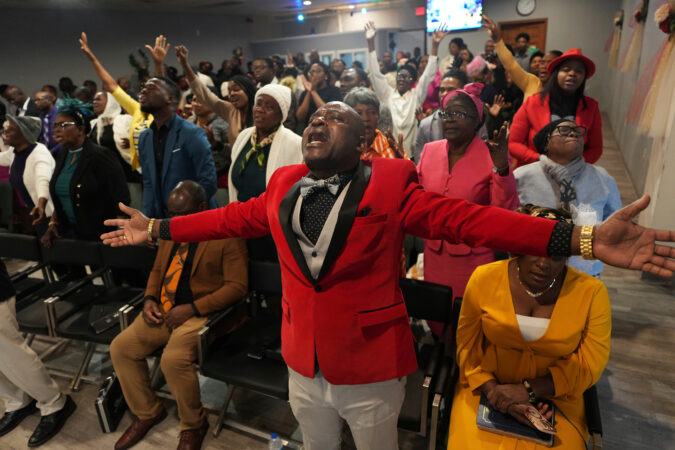
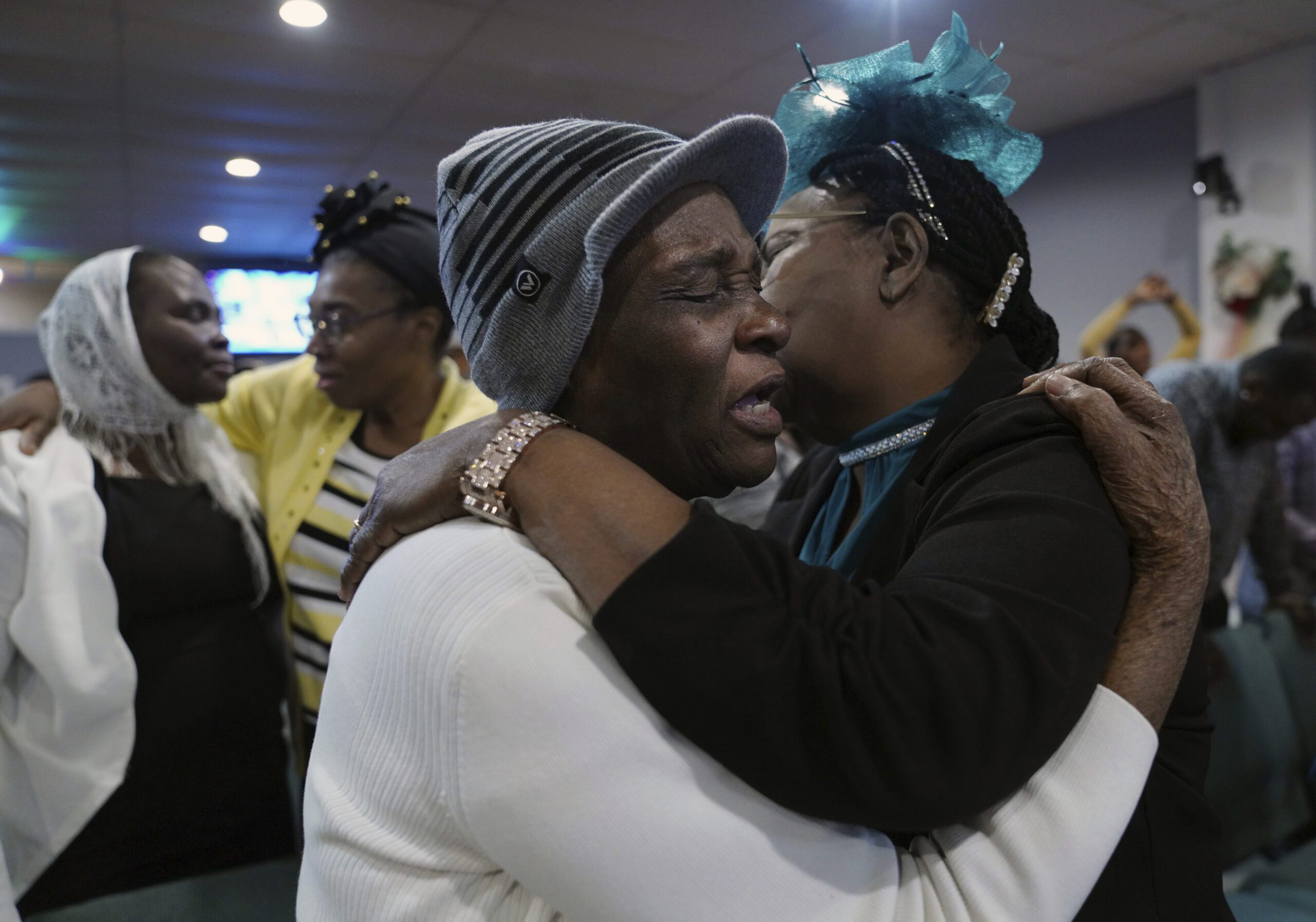
Marie Guillou (front left) hugs and worships with a fellow congregant at the First Haitian Evangelical Church in Springfield, Ohio, on Jan. 26.
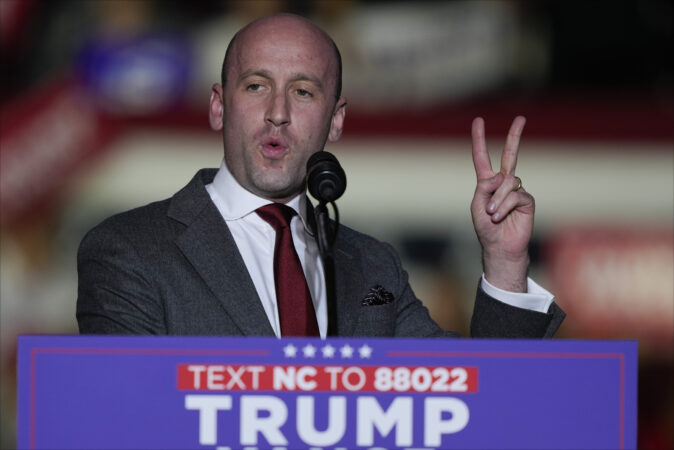
In that fall’s nationally televised debate, opponent Kamala Harris and some in the Philadelphia audience giggled when Trump blurted out, “In Springfield, they’re eating the dogs.” This week, the president and his totally not toned-down minions, like top aide Stephen Miller and DHS Secretary Kristi Noem, want to have the last laugh.
“The fear has been there” ever since Trump’s debate lies about Springfield, Viles Dorsainvil, executive director of Springfield’s Haitian Community Help and Support Center, told a local TV station. Now, with TPS likely to expire, he predicts the local community “not being able to leave their house, not being able to go to work.” Many are terrified they won’t survive gang violence if deported back to Haiti.
The giant question hanging over the looming Springfield raids — and, yes, it is largely a rhetorical one at this point — is simply: Why? In every city that’s been flooded with masked secret police, from Los Angeles to Minnesota, over-the-top DHS rhetoric about removing “the worst of the worst” murderers and rapists from America has been undercut by arrests of law-abiding day laborers or restaurant workers. That’s not to mention all of the detainments and the killing of two people.
In Springfield, Haitian refugees responded to a 2014 plea from business leaders to save a shrinking Rust Belt city, and the majority came here legally during the Joe Biden years — doing everything the right way, and getting a fleeting vision of the American dream. If anything, the crime rate in this hardworking and often deeply religious community is lower than in other areas that are predominantly made up of native-born Americans.
It’s hard to imagine any reason — economic, legal, or moral — for the mass removal of Haitians to their unsafe and unstable native country other than the color of their skin. And it’s hard to call this proposed operation anything else besides an ethnic cleansing on U.S. soil.
This is no surprise. It’s been the distinguishing feature of Trump’s mass deportation scheme since the early months of the regime, nowhere more so than most recently in Minnesota.
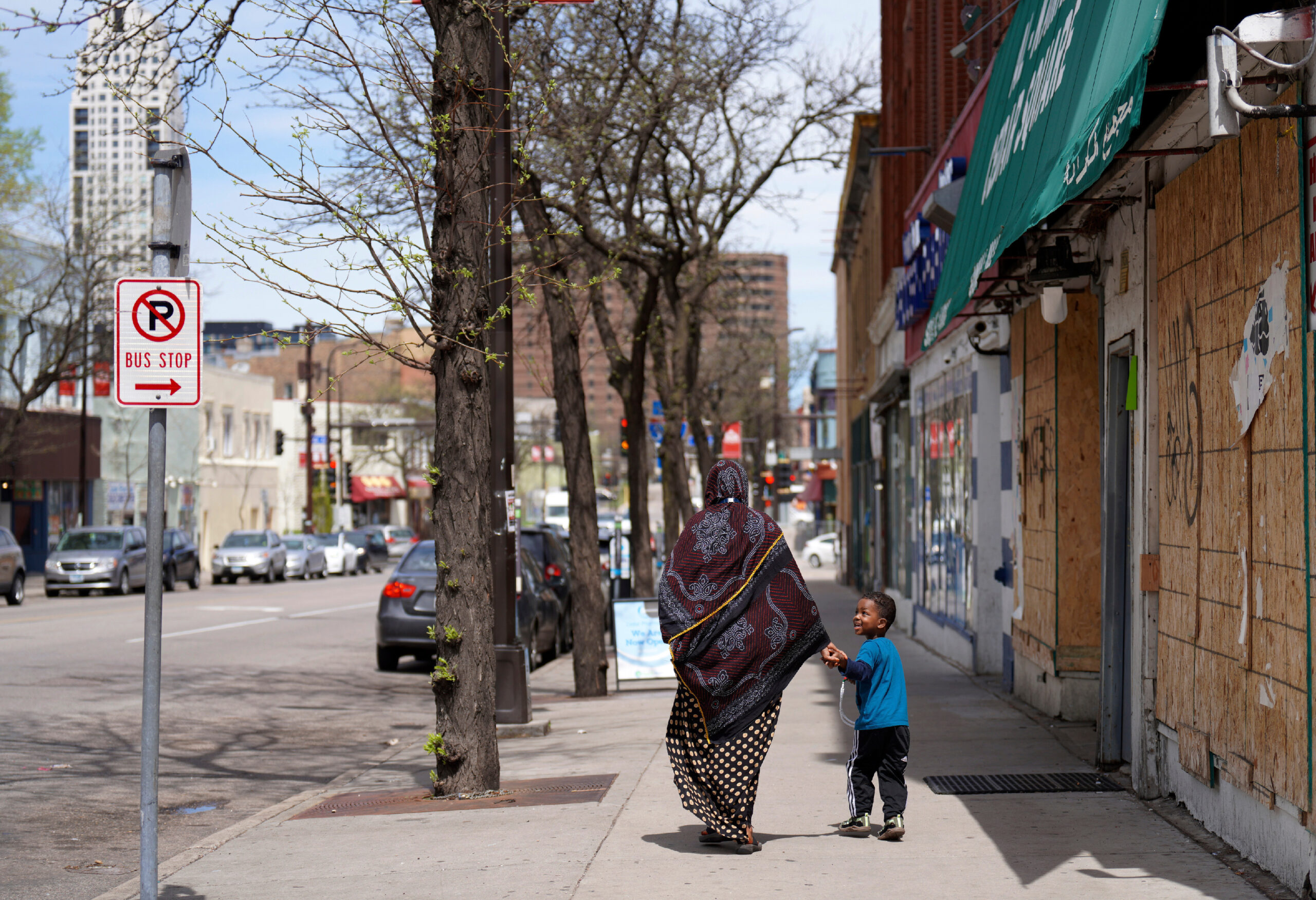
A woman and a child hold hands as they walk down a street in the predominantly Somali neighborhood of Cedar-Riverside in Minneapolis in May 2022.
The DHS “Operation Metro Surge” has heavily targeted two ethnic groups. Are Somali Americans — refugees from a war-ravaged nation that, in a much different time, was the subject of what was supposed to be a humanitarian U.S. intervention in the 1990s — the focus of the raids because of a fraud scheme local authorities seemed to have a handle on? Or is it because Trump called the Somali people “garbage”?
And even if you buy the seemingly ridiculous argument that the immigration raids are connected to a mid-level fraud scam, what is the explanation for Bovino’s goon squads cruising the Asian American neighborhoods of Minneapolis asking, “Where the Hmong at?” The Hmong people of Laos aided the misguided U.S. war in Southeast Asia and fled communist reprisals to come to America with encouragement from both the federal government and faith leaders. Why target them now, decades later, after Hmong Americans have planted deep roots here?
Not only is Trump’s mass deportation not nabbing many violent criminals, but his unholy war is undoing the very foundation of the story America tells itself to live: that our willingness to accept the huddled masses fleeing political violence or persecution made us an exceptional nation. It was always an uneven narrative, but the regime’s masked men are now erasing it in service of unapologetic white supremacy.
In Florida, which has also been a migration magnet for Haitians, Jewish residents of the Sinai Residences senior complex in Boca Raton — including many who survived the Nazi Holocaust — are so alarmed that some have volunteered to hide Haitian staff members in their units. The center’s CEO said the crisis “reminds me of Anne Frank.”
This does not have to happen. Springfield isn’t nearly the size of Minneapolis, and all of us — not just Ohioans — need to begin thinking about what we can do to help avert a humanitarian disaster in the U.S. heartland. More importantly, Congress — which has slowly shown signs of life in response to the January killings of Alex Pretti and Renee Good — needs to fight by any means necessary to make sure ethnic cleansing is prevented in Springfield, and ended everywhere else.
Then they came for the Haitians. What happens next is up to us.
“Oohhh Loorrrd, they sent me the one that don’t speak no English.”
I was a young doctor in a North Philadelphia emergency department, and I had just stepped into a patient’s room. I had not even had the opportunity to introduce myself with my usual preamble and open-ended questions.
Instead, I started with: “I speak English. And I’m your doctor. How can I help you today?”
I am an emergency physician, public health expert, healthcare executive, associate professor, and a South Philly neighbor. I’m also the daughter of naturalized United States citizens from India, was born in Delaware, and have lived in Philadelphia for 25 years — longer than anywhere else in my life.
The author poses for a portrait near her home in Philadelphia on Thursday, Nov. 11, 2021.
My whole life is here. I was born in the U.S. I studied and earned several degrees here. I built my career in this country. I created my family here. I am American in every way.
Yet, I often have to answer the questions:
Do you speak English?
Yes, very well.
Where are you from?
Philly.
No, I mean originally?
Delaware.
What do they do in your country?
This is my country.
My husband is from Italy. He left the Tuscan sun for me — or us — when I was in the midst of my medical education and training in Philadelphia. Every time we went to the immigration office for him to do interviews or paperwork, I was the one who was questioned.
The underlying question is clear in every instance: Do you belong here?
In most cases, I shake it off. Disregarding the subtext, I feign a smile in place of rolling my eyes or shaking my head. My inner dialogue is usually a bit more sharp-edged.
But until the last few months, the questions never really evoked fear or a lack of safety.
In the America I have known my whole life, belonging wasn’t something you had to prove in real time. Citizenship carried a presumption: that you could move through your day without interrogation and without having to explain your existence to strangers or the state.
Times are different.
What changed was not the question itself, but what it now implies. Instead of innocent until proven guilty, the questions precede evidence. Instead of being governed by laws, we are ruled by suspicions. Everything feels backward.
We are living in the era of the U.S. Immigration and Customs Enforcement militia, where enforcement and fear trump everything. These are the days when a 5-year-old, standing alone with a blue bunny snow hat and Spider-Man backpack, faces the consequences of not being able to prove he belongs.
Five-year-old Liam Conejo Ramos is taken into custody by federal immigration officers as he returns home from preschool on Tuesday in Columbia Heights, Minn.
When an intensive care unit nurse, who cares for the sickest veterans, offering critical care to heal them back to life, is attacked and shot while trying to help someone else. When merely voicing dissent and disagreement, or being called a b—, is enough to risk being shot to death.
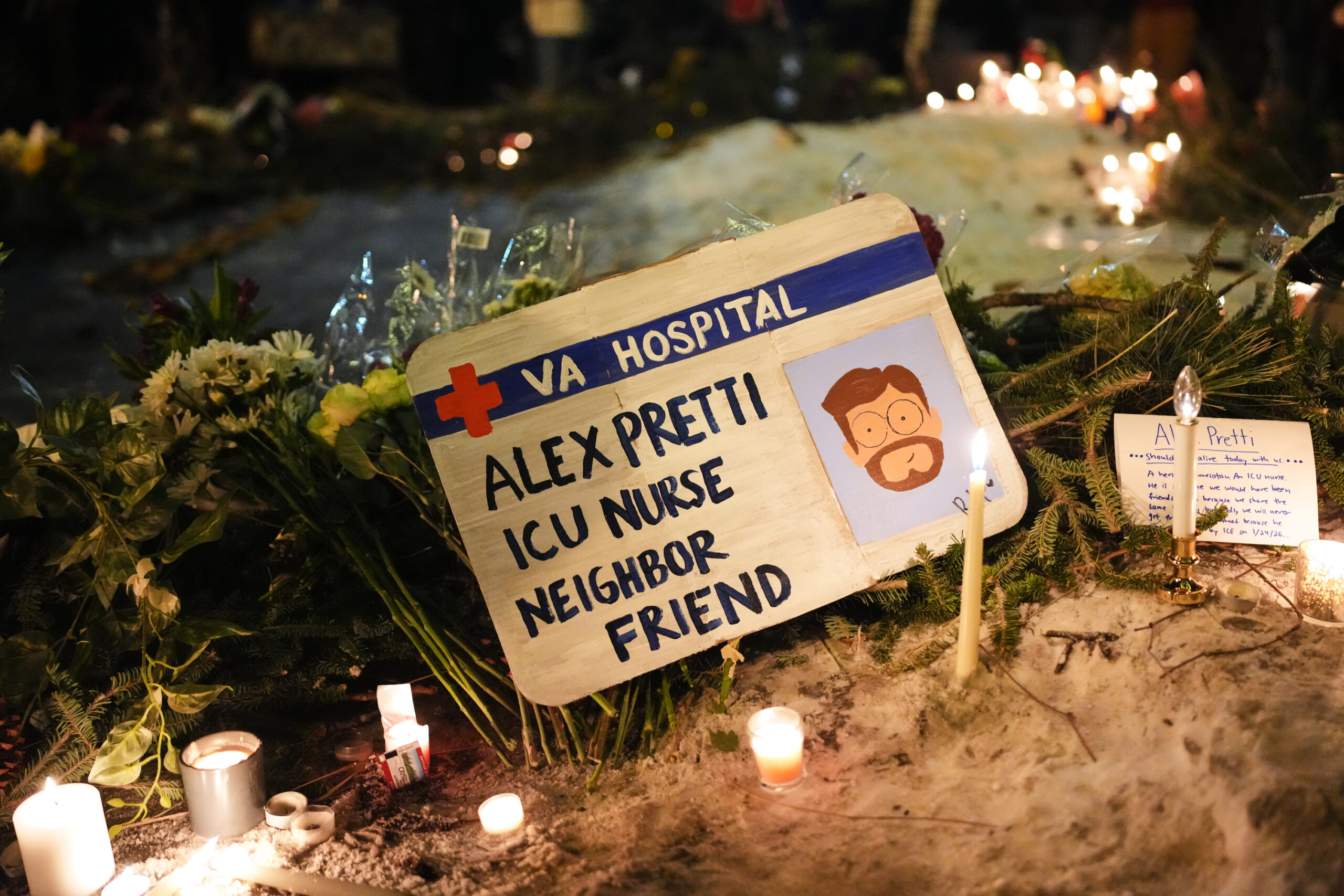
A sign for 37-year-old Alex Pretti, who was fatally shot by a U.S. Border Patrol officer earlier in the day, is displayed during a vigil Saturday, Jan. 24, 2026, in Minneapolis.
If service, citizenship, and care do not protect you, then it seems we are accepting a hierarchy of who deserves safety — and who does not.
In movies or on the news, people in other parts of the world or other times in history had to carry their identification documents at all times, but not here. Here, my Americanness was something I carried in my saunter or stroll — the confidence that I can exist in public space without explanation.
But maybe that was until now.
I live on the same street where the U.S. Constitution was signed. In my hometown, I am reminded daily about how this country came to be — through determination, courage, intention, and a defiant line in the sand of what would be tolerated.
I believe in “We the People,” in civil liberties, and in the rule of law. I believe that we all deserve equal protections, regardless of race, origin, or religion. I do not believe power should go unchecked or that authority can reign in isolation or concentration.
And despite being incessantly fed a narrative of how deeply divided the United States of America has become, I believe in civilian supremacy — that force exists to serve the people, not silence them.
Being American was never about how you look or sound. It’s about how you demonstrate your beliefs through your actions. We speak, write, protest, and make our voices heard through every avenue.
People attend a candlelight vigil at the U.S. Embassy in London, Monday, Jan. 12, 2026, for U.S. citizen Renee Good, who was shot by ICE in Minneapolis.
We vote and hold our elected officials accountable for their actions — including their silence and complicity. We show up, socially and morally, for our neighbors. I spend my money in businesses whose owners share my values and beliefs.
I believe in and honor those who have fought for the freedoms I have always enjoyed. And I am prepared — as I think my city around me is — to defend that freedom and the principles that make us Americans, even when fear might tempt us to look away or cede our power.
I was born in the land of the free and the home of the brave. And I’m ready to prove it.
Priya E. Mammen is an emergency physician, healthcare executive, and public health specialist who helps the nation’s most impactful companies integrate clinical integrity at scale.
Regardless of how you feel about immigration, President Donald Trump has made a mess of his promise to deport the estimated 13 million people who are in the U.S. illegally. A vow that more than half the country supported last year, and which undoubtedly (along with the high cost of eggs) helped him take back the White House.
But let’s step back for a moment and imagine a world where Trump’s agenda was not being implemented by a white supremacist like homeland security adviser Stephen Miller or run by incompetents like Homeland Security chief Kristi Noem.
In that world, members of the administration would still have their work cut out for them, and protests would surely erupt. But ICE methodically engaging in workplace raids, for example, would prove a much more palatable (and effective) strategy than having masked federal agents arrest people using weapons and tactics that scream invasion, not law enforcement.
Still, at the end of a year or two of those more restrained efforts, we would likely be where we are now — with most Americans realizing mass deportations and limiting legal immigration don’t make much sense.
It wouldn’t even be about the human cost of blanket immigration enforcement; it would be about the expense.
No, not just the $170 billion devoted to detention and deportation in Trump’s Big Beautiful Bill Act. Under the president’s immigration policies, American families will end up paying an additional $2,150 a year for goods and services by 2028.
That’s a 14.5% increase on food, 6.1% on housing, and almost 4% on leisure and hospitality services, according to a study by FWD.us discussed at a panel Tuesday, hosted by the nonpartisan policy group and the Economy League of Greater Philadelphia.
Researchers say that one of the most striking long-term impacts will be the tens of thousands of first-generation American children who are forced to become breadwinners as foreign-born members of their families are deported. There’s also the matter of billions of dollars in lifelong earning contributions to the U.S. economy lost, as well as the unquantifiable innovation and economic growth that will go missing as immigrants take their entrepreneurial spirit elsewhere. Remember that nearly half of Fortune 500 companies were founded or cofounded by immigrants or their children.
Like the United States as a whole, the Keystone State and the Philadelphia area reap the benefits of immigration.
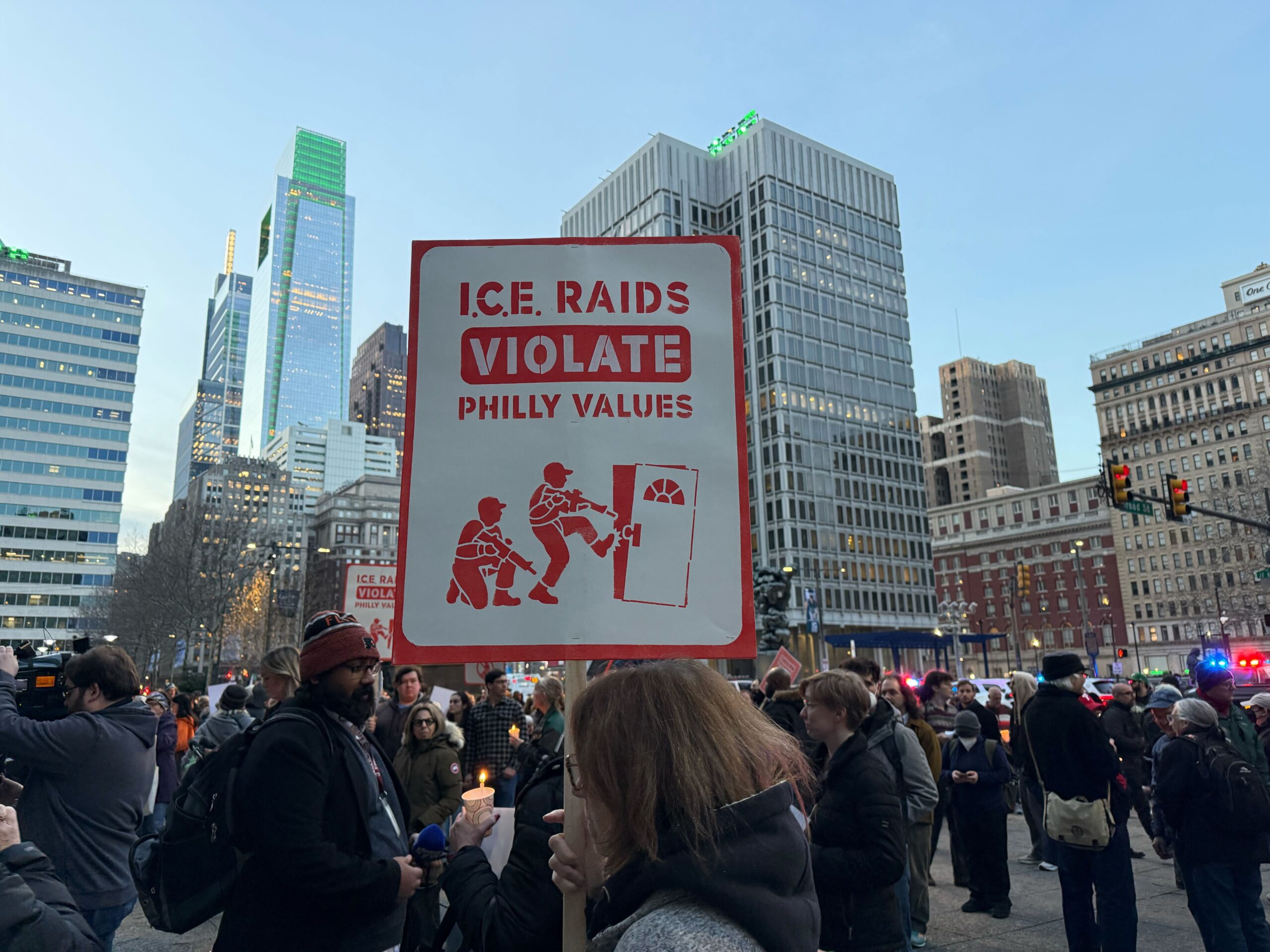
Demonstrators gathered in Center City to protest the death of Renee Good, a 37-year-old mother of three who was shot and killed by a U.S. Immigration and Customs Enforcement agent in Minneapolis in January.
More than a million immigrants live in Pennsylvania — about 80% of them in the Philadelphia area. They possess almost $40 billion in annual spending power and pay about $13 billion in taxes. In Greater Philadelphia, immigrants make up an estimated 21% of the construction industry, 48% of agricultural work, 18% of manufacturing, 16% of business services, and 15% of leisure and hospitality.
About 367,000 immigrants in Philadelphia are U.S. citizens, 202,000 are legal permanent residents, and 64,000 are foreign nationals here on a work visa or as international students. Immigrants protected from deportation through policies implemented by past administrations that are now in jeopardy — including Temporary Protected Status, Deferred Action for Childhood Arrivals, and those waiting on asylum decisions — number about 84,000.
If you think it’s unfair to include legal immigrants in a discussion about the president’s immigration crackdown, then you haven’t been paying attention to the Trump administration’s broader plans.
Immigration visa processing has been indefinitely shut down for 75 countries, including Brazil, Colombia, Egypt, Pakistan, and Thailand. The administration has frozen refugee resettlement, placed exorbitant fees on new H-1B visas for skilled workers, made international students feel unwelcome, and instituted new restrictions on family-based immigration.
A recent study by the nonpartisan National Foundation for American Policy found that Trump’s proposals will reduce legal immigration by as much as 50% through 2028. New numbers released by the Census Bureau on Tuesday already show a sharp slowdown in the U.S. population, as immigration of all kinds is curtailed.
As the nation’s birthrate continues to decline, reducing immigration will stunt economic growth and further endanger Social Security as fewer young workers contribute to that crucial program, which helps keep many older Americans from slipping into poverty.
I’ll refrain from using whataboutism regarding an administration that has shown open contempt for the rule of law and say that the appeal of Trump’s promise to deport those who entered the country illegally is understandable. In black-and-white terms, these people broke the law, and they should be held accountable.
But reality is somewhere in the middle. The truth is that we depend on and greatly benefit from immigration — of all kinds — and we should work to make legally coming to the U.S. easier, not harder.
As Trump’s reaction to the backlash prompted by the ICE killings in Minneapolis shows, the president responds to political pressure and can change tack. He should realize that much like immigration and the high cost of groceries helped him win the 2024 election, it may be the same issues that cost his party the 2026 midterms and beyond.
I am not a huge fan of comic books and superheroes, but I appreciate the storytelling. In comics, the origin story is just as important as the hero saving the day. The same is true for Black History Month, which originated as Negro History Week.
Negro History Week was created by Carter G. Woodson, the child of two formerly enslaved parents. According to Harvard historian Jarvis R. Givens, Woodson was taught by his two uncles, John and James Riddle, his mother Anne Riddle’s brothers, who had also been enslaved. Both had been educated in a Freedmen School toward the end of Reconstruction, and they became Woodson’s first teachers.
“As a student, [Woodson] witnessed the shared vulnerability of Black people through the story of his teachers and family,” writes Givens. “These first encounters taught Woodson more than just reading, writing, and arithmetic. He also inherited a political orientation to schooling informed by the lived history of the teachers standing before him … Here, Woodson encountered the project of Black education.”
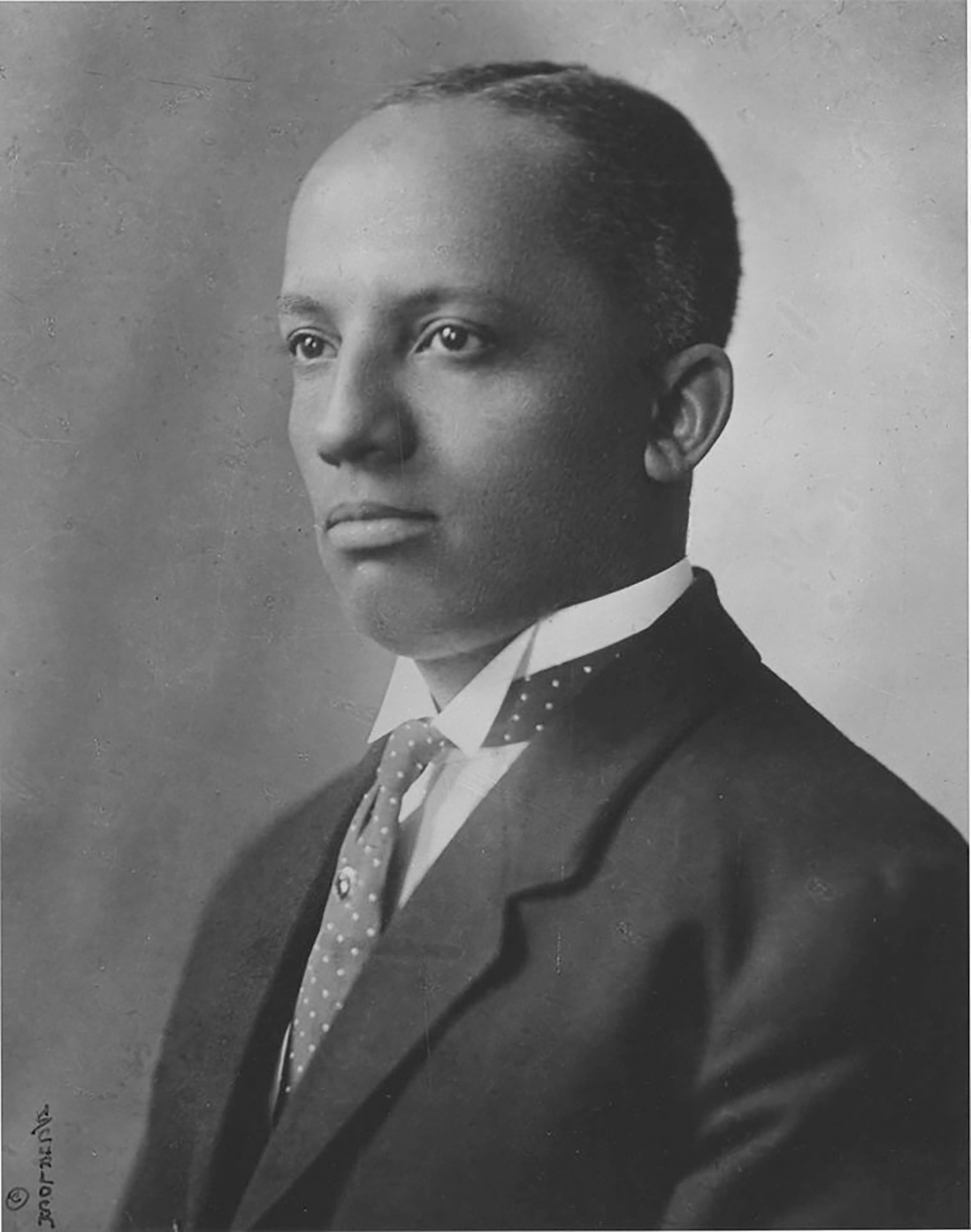
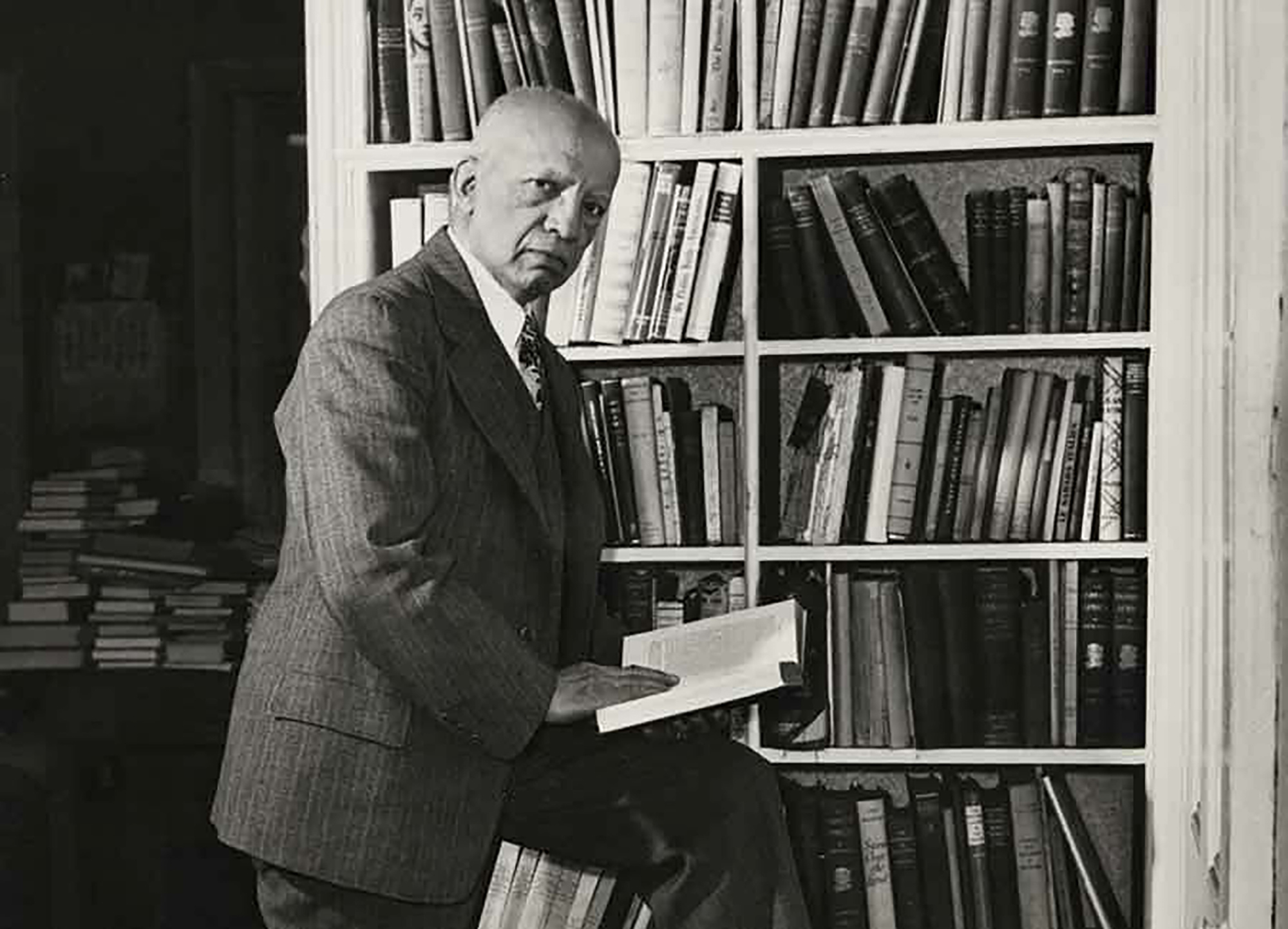
The historian and author Carter G. Woodson is widely regarded as the father of what has become Black History Month. Much of the observance’s origin can be traced to Philadelphia, writes Rann Miller.
That project, which continues to this day, was the equipping of Black people with the practical knowledge to do a thing, and the historical memory to understand why they do it. This was the basis with which Woodson founded the Association for the Study of Negro Life and History (ASNLH) in 1915 and created Negro History Week in 1926, as a time for Black people to not only learn about Black history, but to take the time to reflect on it.
In Woodson’s words: “It is evident from the numerous calls for orators during Negro History Week that schools and their administrators do not take the study of the Negro seriously enough to use Negro History Week as a short period for demonstrating what the students have learned in their study of the Negro during the whole school year.”
A mural honoring W.E.B. Du Bois on a firehouse at Sixth and South Streets in Philadelphia. He was an early advocate of Black history events.
The first Negro History Week took place from Feb. 7 to 13, 1926. The Philadelphia Tribune, in an article published Feb. 6, 1926, said: “It is essential to the future growth of the Negro race that we become acquainted with our past … We have passed the point in our advancement where we can afford to disregard our history.” That sentiment remains true today.
In April 1928, the Germantown YMCA hosted an event called Negro Achievement Week for the Germantown community, featuring such prominent African Americans as Alain Locke, W.E.B. Du Bois, and James Weldon Johnson. The week’s events received little media attention but were robust, including a mass community meeting, a music night, an art night, and a history lecture, held in both Germantown and Center City, according to David Young, director of the Historical Society of Montgomery County.
The events were aimed at educating white people, as well, with Du Bois’ pointedly noting that “he reminded the whites too often of their injustice to the Negro.”
Planning for Negro Achievement Week in Philadelphia began in 1923 at the “Black Branch” of the Germantown YMCA, known as the “Colored Y,” under the guidance of Olivia Yancey Taylor and Eva del Vakia Bowles.
Members of the Colored Y formed an interracial committee to plan the week’s activities, including a variety of African American heritage events.
The first Negro Achievement Week, which became Negro History Week, happened in 1925, influenced by a partnership between Woodson and members of the Black fraternity Omega Psi Phi, who created Negro History and Literature Week, first celebrated in April of 1921.
“Celebrations took the form of public programs in churches, schools, and events partnering with literary societies,” according to Givens. “Given the success of the program, a committee was established in 1923 to outline a strategic plan: to develop plans for fostering the study of Negro History in the schools and colleges of the country.”
The week subsequently became a shared project between Woodson and Black schoolteachers.
While Negro Achievement Week in Philadelphia didn’t take place after 1928, Negro History Week continued nationwide because Black people understood that they were past “the point in our advancement where we can afford to disregard our history.”
Although President Gerald Ford officially expanded Negro History Week to become Black History Month in 1976, Black communities had already done so on their own, believing one week was not sufficient to contain their history.
Philadelphia stands proudly in that tradition — from the Colored Y to educator Nellie Bright. Thanks to Carter G. Woodson and countless Black educators, their vision endures a century later.
Rann Miller is an educator and freelance writer based in southern New Jersey. His “Urban Education Mixtape” blog supports urban educators and parents of children attending urban schools. urbanedmixtape.com@RealRannMiller