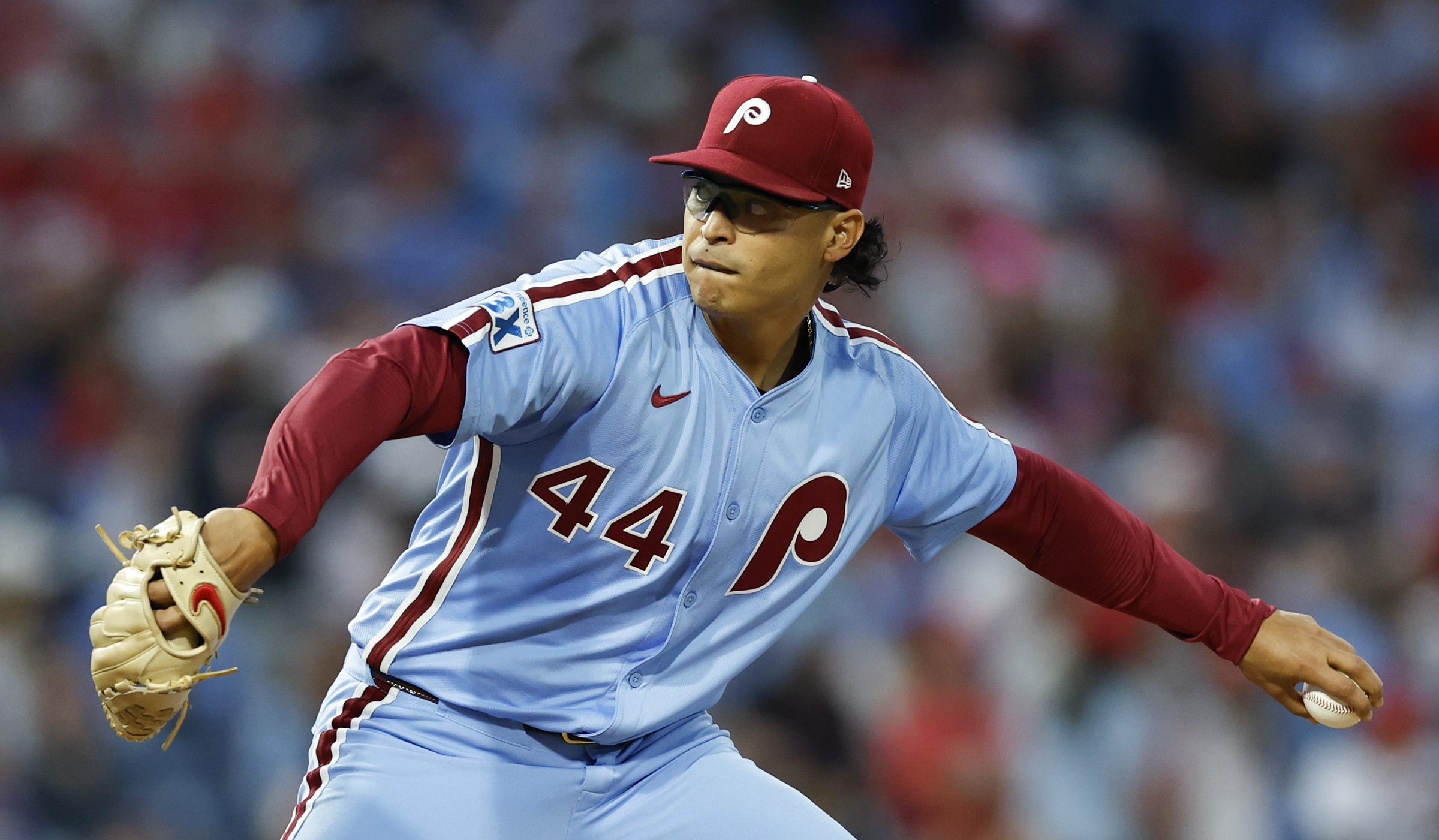
The Phillies re-signed reliever Tim Mayza to a minor-league contract, his agency Covenant Sports Group announced Thursday.
Mayza, 34, posted a 3.78 ERA and 1.320 WHIP in 15 regular-season appearances last season between the Pirates and Phillies. The left-hander landed on the injured list in April with a muscle strain in his left shoulder, and the Pirates placed him on waivers in August.
After the Phillies claimed him as relief depth, Mayza was included on the National League Division Series roster but did not make an appearance. He is originally from Allentown, attended Upper Perkiomen High, and was drafted out of Division II Millersville in 2013.
The Phillies also announced Thursday that the Baltimore Orioles had claimed utility man Weston Wilson off waivers. He had been placed on waivers to clear a spot on the 40-man roster for catcher J.T. Realmuto, who officially re-signed on Tuesday.
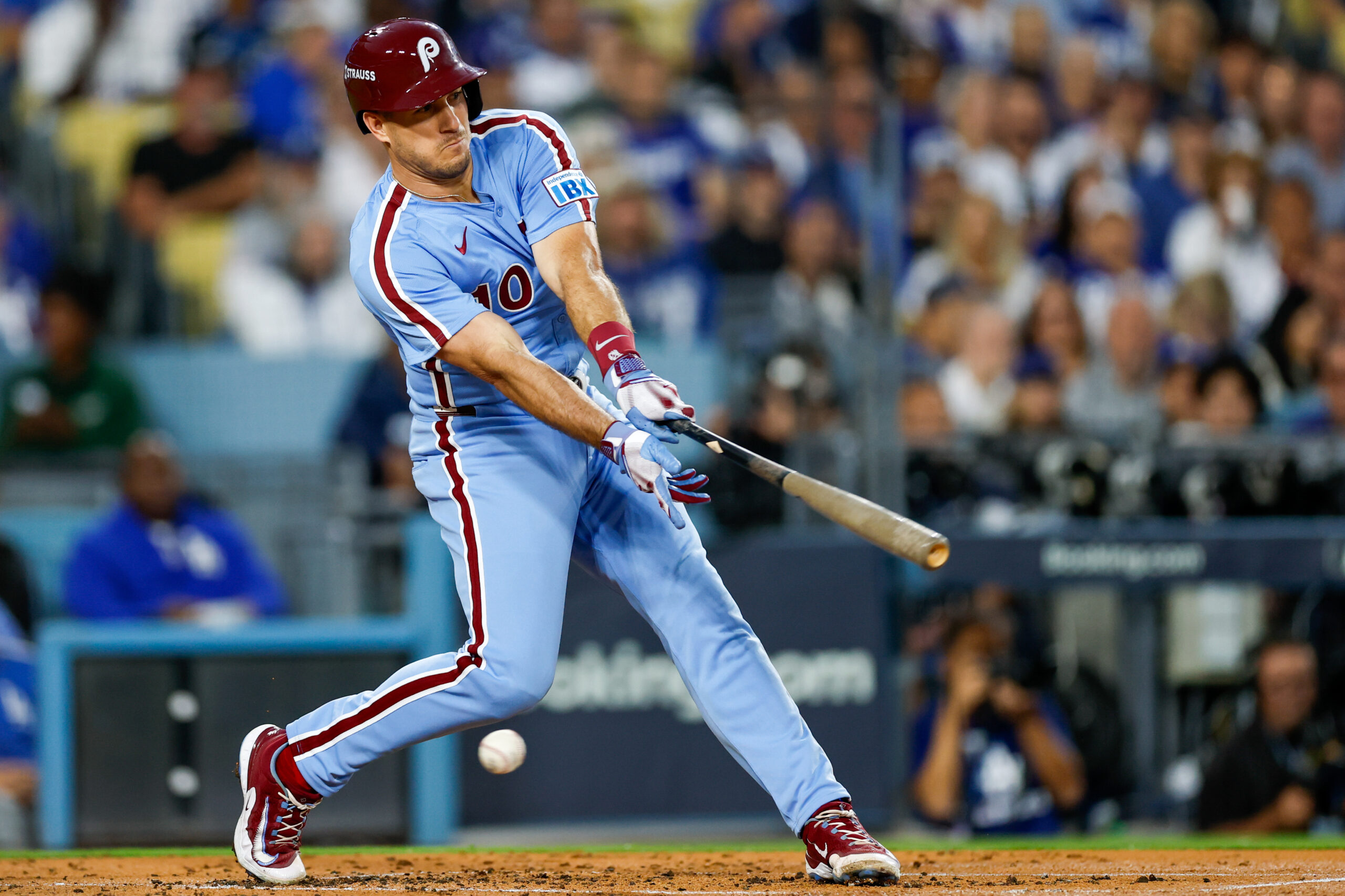
Wilson made his major league debut with the Phillies in 2023. In 2024, Wilson hit for the 10th cycle in Phillies history.
Wilson slashed .198/.282/.369 over 52 games last season as a right-handed bench option. He primarily played first base, second base, and left field for the Phillies.
In less than three weeks, Phillies pitchers and catchers will hold their first spring-training workout. It’s a good time, then, to sit down with manager Rob Thomson, who discussed the roster in the aftermath of not signing Bo Bichette, the potential impact of rookies Justin Crawford and Andrew Painter, the value of J.T. Realmuto, and whether the Phillies are better now than at the end of last season. Watch here.
NEW YORK — The active New York Mets acquired ace pitcher Freddy Peralta and right-hander Tobias Myers from Milwaukee on Wednesday night in a trade that sent two prized young players to the Brewers.
Milwaukee received pitcher Brandon Sproat and minor league infielder/outfielder Jett Williams. Both were rated among the game’s top 100 prospects by Baseball America.
“Acquiring Freddy adds another established starter to help lead our rotation,” Mets president of baseball operations David Stearns said in a statement. “Throughout the offseason, we sought to complement our rotation with another front-end pitcher, and we’re thrilled we are able to bring Freddy to the Mets.”
Peralta went 17-6 with a 2.70 ERA in 33 starts last season, when he led the National League in wins and finished fifth in Cy Young Award voting. He struck out 204 batters in 176⅔ innings and earned his second All-Star selection.
The 29-year-old Peralta hasn’t been on the injured list since 2022, when the right-hander was sidelined by a strained lat and later elbow inflammation. He is set to make $8 million this season and can become a free agent following the World Series. He is the latest former Brewers player acquired by Stearns, who ran Milwaukee’s front office from 2015-23.
“He obviously knows the players well. Look, he and I have worked very well together for many, many years. I obviously care about him a lot,” Brewers president of baseball operations Matt Arnold said. ”Today’s his anniversary and I was at his wedding. We go back a long way. I think I might have ruined his anniversary dinner. Look, he’s a dear friend. Hopefully, again, these are the types of trades that work out for both guys.”
Myers, 27, was 9-6 with a 3.00 ERA in 25 starts and two relief appearances as a rookie in 2024 before going 1-2 with a 3.55 ERA in six starts and 16 relief outings last year as Milwaukee won its third consecutive division title and advanced to the NL Championship Series.
“Over the past two seasons, Tobias has become an extremely valuable major league pitcher,” Stearns said. “His ability to pitch out of both the rotation and bullpen allows him to help our team in multiple ways.”
Peralta’s departure marks the third straight offseason in which the cost-conscious Brewers have traded a star pitcher entering the final year of his contract.
Two years ago, they dealt 2021 NL Cy Young Award winner Corbin Burnes to Baltimore for infielder Joey Ortiz and left-hander DL Hall. Last winter, the Brewers sent two-time All-Star reliever Devin Williams to the New York Yankees for left-hander Nestor Cortes and third baseman Caleb Durbin.
“These decisions are always tough,” Arnold said. ”We loved having Freddy Peralta here and everything he meant to this franchise. I just had an emotional call with him.”
Although the Brewers won’t have Peralta to anchor their rotation, they do bring back two-time All-Star Brandon Woodruff, who accepted the team’s $22,025,000 qualifying offer. Woodruff went 7-2 with a 3.20 ERA last year after missing the 2024 season with a shoulder injury.
Hard-throwing right-hander Jacob Misiorowski got called up last June and was quickly picked for the All-Star team as a rookie. He finished 5-3 with a 4.36 ERA and 87 strikeouts in 66 innings.
“We feel we have a really good core of starters to deal from,” Arnold said. “I still feel like we’ll have a very strong rotation.”
Arnold said Sproat and Williams will compete for spots on the opening-day roster.
The 25-year-old Sproat made his major league debut in September and went 0-2 with a 4.79 ERA in four starts for the Mets, who selected him in the second round of the 2023 amateur draft from the University of Florida. He was rated the fifth-best prospect in New York’s system by MLB.com.
“He’s a guy we’ve liked going back to the draft. He’s major league ready. He’s going to compete for a spot in our rotation,” Arnold said. “This guy has incredible stuff. Very high octane, really good movement on his four-seamer and two-seamer. Really good secondary weapons and a really good changeup.”
The 5-foot-7 Williams, 22, batted .261 with 17 homers, 34 doubles and 52 RBIs in 130 games combined at Double-A Binghamton and Triple-A Syracuse last year. He was drafted No. 14 overall by the Mets in 2022 out of high school in Texas and was their third-rated prospect, according to MLB.com.
“This kid’s a gamer. He’s not that big, but I can tell you he plays with a ton of heart and he’s got incredible tools,” Arnold said. “He’s one of the fastest players in the minor leagues. I think his versatility is something that’s going to fit very, very well for this team.”
Peralta is 70-42 with a 3.59 ERA and 1,153 strikeouts in 931 innings over eight major league seasons, all with Milwaukee. He joins a Mets rotation that also includes Nolan McLean, Clay Holmes, David Peterson, Sean Manaea and Kodai Senga.
Peralta ranks second in the majors with 40 wins since 2023. He and Dylan Cease are the only two pitchers with at least 200 strikeouts in each of the past three years.
To open space on their 40-man roster, the Mets designated right-hander Cooper Criswell for assignment.
Jesús Luzardo trains in the offseason with dozens of major leaguers at a South Florida gym where the televisions are always tuned to MLB Network.
Even so, his father keeps him apprised of all baseball news.
“He makes sure to send me all the latest rumors,” Luzardo said in a guest appearance on Phillies Extra, The Inquirer’s baseball podcast. “I feel like I’m pretty connected.”
You can be sure, then, that Luzardo was paying attention last week when former Phillies teammate Ranger Suárez agreed to a five-year, $130 million contract with the Red Sox.
Because Luzardo could be in line for a similar deal a year from now — if not sooner.
Luzardo, a 28-year-old lefty, is eligible for free agency after this season. In a wide-ranging conversation on the podcast, he said he’s interested in discussing a contract extension with the Phillies during spring training. He also discussed his impressive first season with the team, J.T. Realmuto’s impact behind the plate, and more.
Watch the full interview below and subscribe to the Phillies Extra podcaston Spotify or Apple Podcasts.
Q: What was your takeaway from your first year with the Phillies?
A: I feel like I wasn’t sure what to expect, getting traded over to the Phillies, obviously coming to a new team, new organization, a little bit different from the places that I had been. I loved my time in Oakland and Miami. But obviously [the Phillies are] a little different organization. A lot more expectation, a lot more fans in the stands, the firepower in the clubhouse. But it was just great. The team was great, the organization was great, the fans are great. They obviously will let you know when you’re not doing well, [and] that’s not something that has ever bothered me. And I’ll let myself know before they let me know. So, I had a great time from top to bottom every day going to the field. I was looking forward to it.
I had a great time [with] the guys I worked with, the guys I spent time with. I had a great time going into the playoffs and making the run that we did, just building that camaraderie. And, yeah, I couldn’t have asked for a better first year in my eyes. Obviously, some up and down, obviously some tough moments throughout the year. But it’s a long season, and it’s a marathon, and you’re not going to be your best the whole time. So, I think it’s just a matter of weathering the storm. And I like to go by that saying of ‘bend, don’t break.’ So, I think I learned that about myself in the sense that, when times get tough, it’s just a matter of grinding through it and finding the way out, as opposed to kind of just withering away and being like, it’s over. So, I think that was something that I take away from this year.
Jesus Luzardo had a 3.92 ERA in a career-high 183⅔ innings in his first season with the Phillies.
Q: Can you describe or give an example of how J.T. Realmuto has such a big impact on the pitching staff?
A: There’s really not one specific thing. I think it’s just J.T. as a whole. I really respect the way he goes about his business. He’s a no-B.S. guy. He’s a family man. He is a hard worker. You see him, works hard in the weight room, works hard on the field; always is like, the first one to be out there ready to go. He’s not one to take a day off. They kind of have to pull his teeth out to take the day off. And you show up to the field, he’s already there, doing homework, going over scouting reports, watching video. So, when he goes up back there [behind the plate] and he tells us, ‘This is the plan that we’re going to do throughout the game,’ you have confidence that he knows what he’s talking about and that it’s not he’s just winging it. He has a plan. He understands what his plan is.
And he takes very good care of his body. He’s very mentally aware of the situations, and he’s got a lot of baseball IQ. So, in that sense, I think he’s a full, full-bodied catcher in the sense that he has all his bases covered. And I think that’s something I really respect. And not only me, obviously the whole rotation, bullpen, all these guys. And when he’s hitting, it’s the same way. You could just see all the work he puts in and how smart he is at the plate. And that’s something that we all appreciate.
Q: Your parents live in South Florida, where you grew up, but they’re from Venezuela. Do you have family there? Does everyone know that everyone’s OK after everything that’s happened down there? And are you interested in pitching for Venezuela again in the World Baseball Classic, like you did in 2023?
A: I have family down there, and thankfully everyone’s OK so far. And yeah, it’s been a scary situation down there at times, but thankfully everyone’s all right. And in terms of pitching in the Classic, yeah, I threw in there three years ago. Last year talking to [Team Venezuela], I promised that I would go and pitch. And did get a call from the U.S., and got offered to pitch [for them] as well.
But just this year, I think it’s going to be tough for me, going into a free-agency year [and] made the decision that, unfortunately, [I’m] not going to be able to pitch in the Classic and want to take my time. Take a slow spring training, fully get ready with the team, make sure my body bounced back after a career-high innings. And [it’s] a tough decision for me and my family, because it’s very important for my family, for me, to represent Venezuela. But just in terms of intelligent decision-making and a hard decision after a long last year and looking forward to a long this year, going into the playoffs, hopefully again pitching into maybe November, I think the correct decision would be to take a slow spring training and make sure everything’s along the right line to be prepared for the year.
Former Phillies pitcher Ranger Suárez took the podium in a Red Sox jersey for the first time Wednesday when he was officially introduced at Fenway Park.
The 30-year-old Suárez, who signed with the Phillies as a 16-year-old from Venezuela and developed into an All-Star and key rotation piece, departed in free agency this winter. His five-year, $130 million contract with the Red Sox became official Wednesday.
When prompted by a reporter at his introductory news conference, Suárez clarified the traditional Spanish pronunciation of his first name.
“My name is actually [Rahn-HER], but however you guys want to address me, [RAYN-jurr] is how most people do, so I’m comfortable with either,” he said through an interpreter.
Throughout his tenure with the Phillies, Suárez was typically referred to with an Anglicized pronunciation of his first name. His walk-out song, “Mr. Rager” by Kid Cudi, was even a nod to it.
The left-hander also expressed excitement about joining the Red Sox-Yankees rivalry. He said he rooted for Boston as a child in Venezuela.
“Since I was a little kid, when we would watch baseball on TV, what would be on was Red Sox-Yankees,” Suárez said. “And everyone was going for the Yankees and I asked, ‘Why is no one going for Boston?’ And that’s where the interest started.”
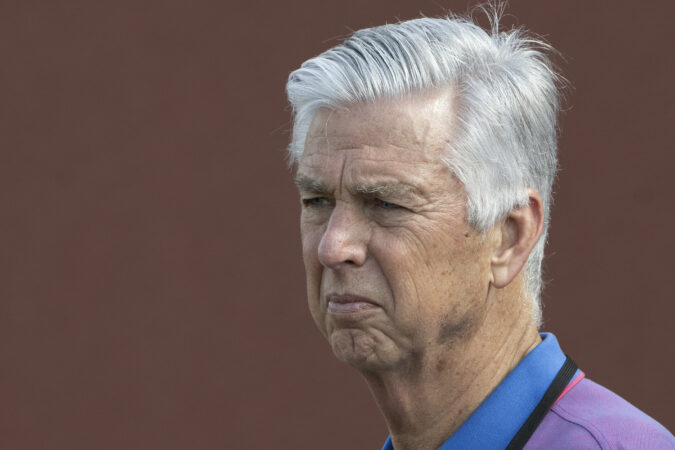
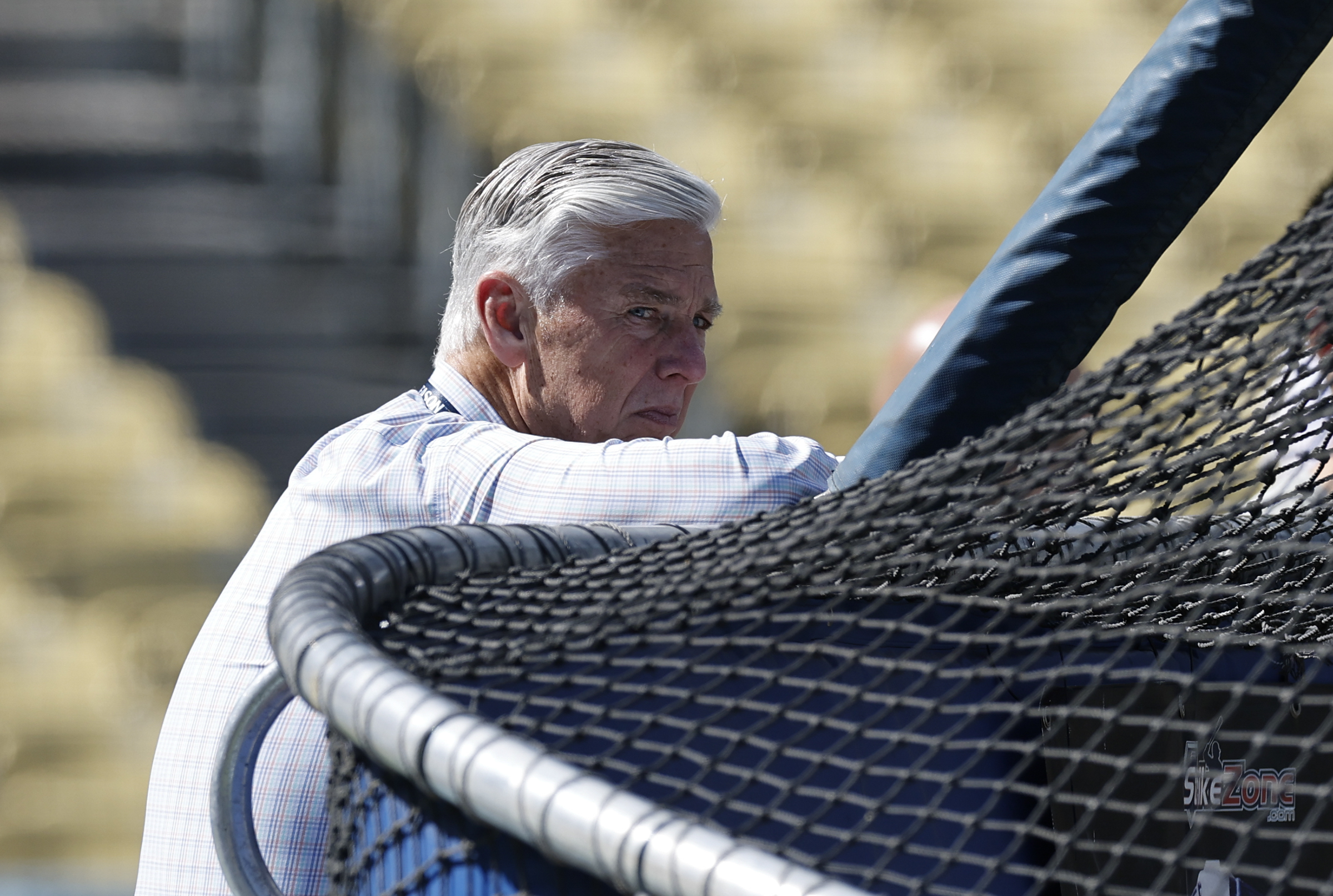
In October, in his season-ending news conference following a third consecutive playoff collapse, Phillies president Dave Dombrowski observed, correctly if not wisely, that Bryce Harper did not “have an elite season like he did in the past.”
Harper took offense. Phillies fans generally sided with Harper, who, on the day after Christmas, posted a video of himself on TikTok taking swings in a batting cage wearing a sweatshirt that said, “NOT ELITE.”
On Tuesday, in a hot-stove news conference after whiffing on top-level free agent Bo Bichette and instead re-signing J.T. Realmuto, Dombrowski observed, correctly if not wisely, “I think we’re content where we are at this point.”
This time, every Phillies fan took offense.
Dave Dombrowski on the potential of signing another marquee free agent: "We're content where we are.''
For days, the Phillies had the baseball world on their side. From Thursday at about 4 p.m. until midday Friday, they believed they’d come to a verbal agreement to land Bichette for seven years and $200 million. After Bichette backed out and signed with the New York Mets, the sports world sympathized with Dombrowski, who, in the middle of that same Zoom news conference Tuesday, said:
“It’s a gut punch. You feel it. You are very upset.” Another top Phillies official said he was “furious.” They were justified, and baseball commiserated.
But then, with free agents like Cody Bellinger and Framber Valdez still available, Dombrowski dropped “content” … and, well, Phillies nation, still stinging from playoff disasters, was not pleased.
With one simple sentence, Dombrowski and the Phillies went from being the victims of Bichette’s treachery to being the club that sat on its hands while its chief rivals, the Los Angeles Dodgers and Mets, spent ever more lavishly to pursue winning.
That’s mostly true. Still, context is important.
First, as it regards trade targets, Dombrowski can’t say he’s pursuing another team’s player. That’s tampering. Second, tipping his hand regarding any remaining free agents would be poor strategy. Third, he said, “I think.” The phone could ring at any time, be it a general manager proposing a trade or an agent proposing a deal.
Still, what Dombrowski said imparts a certain finality.
Or, if you’re a hopeful fan, a certain fatalism.
Which is fair.
The Phillies brought back Kyle Schwarber with a five-year, $150 million contract, their biggest move of the offseason to date.
By no stretch of the imagination are they better than they were this time last year, when Zack Wheeler was healthy and Ranger Suárez was on the team.
And no, they’re not better than they were after they lost Game 4 of the NLDS, when they had Suárez and center fielder Harrison Bader.
They’re not better. They’re different, but not better.
They will gamble on outfielder Adolis García, whom they gave a one-year, $10 million deal in the hopes that, at 33, he will improve his .675 OPS and 44 home runs over the last two seasons. Those numbers are chillingly similar to those of the player he will replace, Nick Castellanos, who is one year older (he will be 34 in March), and managed an OPS of .719 and 40 homers in the same time span.
They will gamble that speedy rookie Justin Crawford can handle center field after acknowledging last year that Crawford might be better served playing in left. They will gamble that hard-throwing rookie Andrew Painter will relocate the command he lost in the minors in 2025 after elbow surgery in 2023 cost him two full seasons.
Prospects don’t necessarily make teams better; several studies reveal that more than half of the top 100 bust, and of the other half, only a handful make a significant impact. That’s fine. Unless you’re the Dodgers, with their unlimited budget, homegrown talent is the most efficient method to fill the roster.
The Phillies’ bullpen might be the one unit that is better than it was at the beginning and end of 2025. José Alvarado, who lost time to a PED suspension and an injury, will be back, paired with 100-mph closer Jhoan Duran, Dombrowski’s best deadline addition in years.
But the Phillies’ starters? Hardly.
Wheeler is the best Phillies pitcher since Steve Carlton. Since 2021, Suárez ranks seventh in Wins Above Replacement, at 17.7, ahead of Gerrit Cole and Valdez, but still almost 10 behind Wheeler, the leader. Wheeler and Suárez will be replaced by Painter and Taijuan Walker.
The lineup won’t be better, just older. The principals — Realmuto, Trea Turner, Schwarber, and Harper — will all be at least 33 by the end of the season. Thirtysomethings seldom improve with age. They just age.
Would Bichette have made the Phillies elite? No. Not elite like the Dodgers, who signed Kyle Tucker to a four-year, $240 million deal. That deal is what spurred Bichette to back out of his agreement with the Phillies, who, in turn, refused to even consider the opt-out years the Mets gave Bichette — a structure that puts all the risk on the team and none on the player. Dombrowski did the right thing, even if he said the wrong thing.
Bichette wouldn’t have made the Phillies elite. But he would have made the Phillies better, and he’d have made Dombrowski’s offseason “elite.”
Now batting in Cooperstown … Carlos Beltrán and Andruw Jones.
On deck … Chase Utley?
Beltrán and Jones were elected Tuesday to the National Baseball Hall of Fame, an anticipated outcome after the center fielders fell short last year by 19 and 35 votes, respectively. Beltrán’s name was checked on 84.2% and Jones’ on 78.4% of ballots cast by 425 members of the Baseball Writers’ Association of America.
Despite its status as a glamour position, center field has been underrepresented in the Hall of Fame for nearly a half-century. Since 1981, only two full-time center fielders received the three-quarter majority needed for election by the writers: Kirby Puckett in 2001 and Ken Griffey Jr. in 2016.
Beltrán and Jones will join slugging former second baseman Jeff Kent, elected last month by a special committee, at the July 26 induction ceremony in Cooperstown, N.Y. And as soon as the Class of 2026 was set, the focus shifted to next year’s voting cycle.
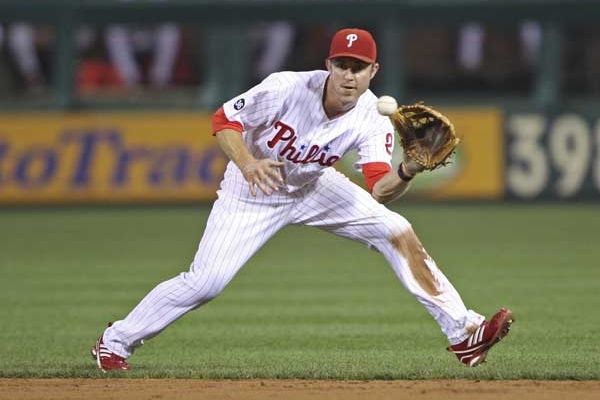
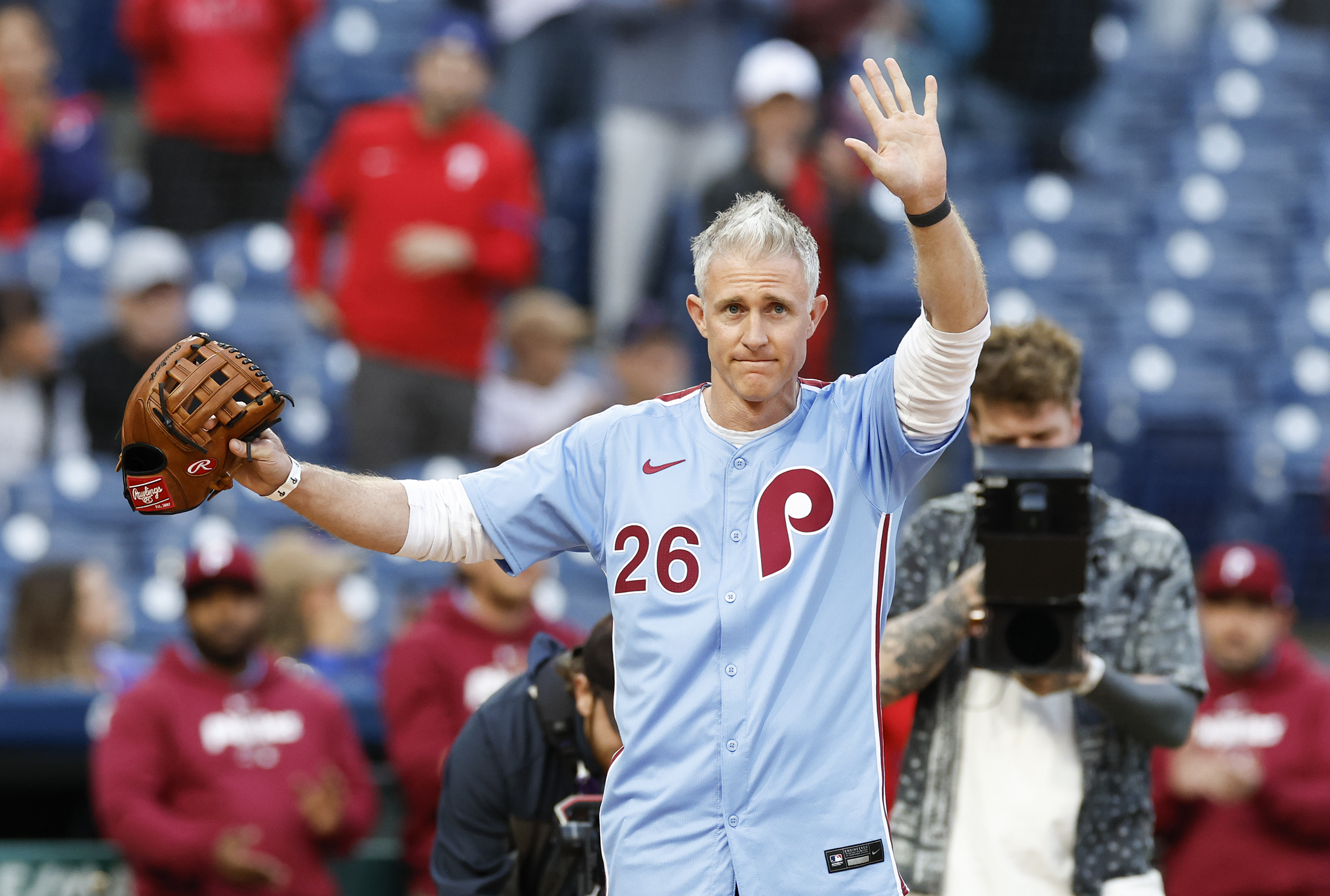
Will it be Utley’s turn?
In his third year on the ballot, the Phillies’ iconic second baseman made another leap in the vote totals, climbing to 59.1% from 39.8% last year and 28.8% in 2024. Utley picked up 94 votes from last year, the third-largest gain after pitchers Félix Hernández (plus-115) and Andy Pettitte (plus-96).
Based on those trends, Utley could be positioned to rise above the 75% threshold next year, though 2028 might be more realistic. Utley’s surge is similar to, but slightly ahead of former Phillies third baseman Scott Rolen, who went from 35.3% in 2020 to 52.9% in 2021, 63.2% in 2022, and finally 76.3% in 2023.
Chase Utley picked up 94 votes from last year, the third-largest gain after pitchers Félix Hernández (plus-115) and Andy Pettitte (plus-96).
Utley was among four prominent ex-Phillies on the ballot, including two teammates from the 2008 World Series champions.
Jimmy Rollins made his biggest jump in five voting cycles but still has a long way to go. Rollins reached 25.4%, up from 18% last year.
Cole Hamels made a strong debut on the ballot at 23.8% at a time when many voters are considering adjusting their standards for contemporary starting pitchers. Hernández, for example, vaulted to 46.1%, more than double his first-year result (20.6%).
Bobby Abreu bounced to 30.8% in his seventh year on the ballot, up from 19.5% last year. But with only three more voting cycles remaining, he’s still far from 75%.
Although Utley’s candidacy already built momentum, it’s possible it got a tail wind from the election of Kent, who failed to reach 75% in 10 tries on the writers’ ballot. Utley could get another boost next year from Buster Posey’s first appearance on the ballot.
Posey, a seven-time All-Star catcher and three-time World Series champion, figures to receive strong consideration despite getting only 1,500 career hits. The writers hadn’t elected a player with fewer than 2,000 career hits since Ralph Kiner in 1975 until Jones got in with 1,933. Utley finished with 1,885.
Otherwise, Utley’s candidacy is rooted in a peak that lasted at least six seasons and as many as 10, depending on the voter’s perspective. From 2005 to 2014, he had a 127 OPS-plus and ranked second among second basemen in extra-base hits behind Robinson Canó, who was suspended twice for failing a drug test. Utley also had the second-most wins above replacement of any player, trailing only Albert Pujols.
It took four years for Beltrán to clear the 75% mark. The delay was a referendum on neither his two-way greatness nor his postseason brilliance but rather his role in the illegal sign-stealing scheme that aided the Astros’ 2017 World Series title in Beltrán’s 20th and final season.
But Beltran was a nine-time All-Star and three-time Gold Glove winner. He was among four players to reach 2,700 hits, 400 homers, and 300 steals, joining Willie Mays, Barry Bonds, and Alex Rodríguez.
Jones waited nine years to get elected, largely because of his sharp decline after his age-30 season and domestic violence charges filed against him in 2012. His candidacy appeared to stall over the last two years, but he made the jump from 66.2% last year.
A 10-time Gold Glove winner, Jones hit 434 career homers in 17 major league seasons.
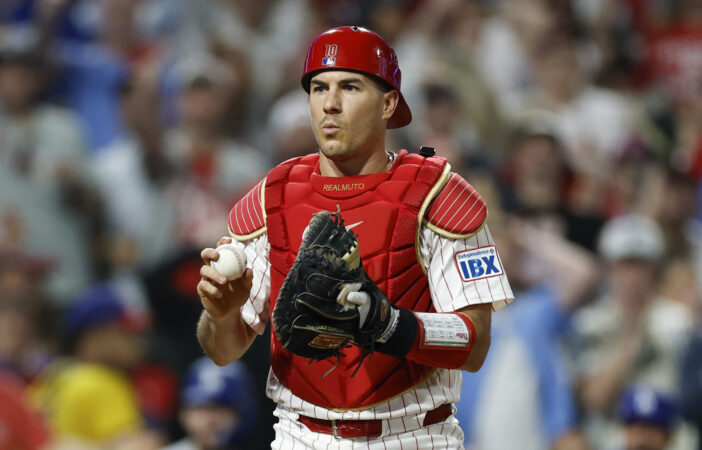
Just a few hours after J.T. Realmuto’s new contract became official Tuesday morning, he was at the Phillies’ facilities in Clearwater, Fla.
Pitchers and catchers don’t report until Feb. 11, but Realmuto’s family typically heads to Florida in mid-January. Not only does it offer a reprieve from chilly weather of his offseason home in Oklahoma, it also gives him a head start on his preparation for the year.
The routine seems like it will hold for the next few years after Realmuto re-signed with the Phillies for three years and $45 million. The new deal will take Realmuto, who turns 35 in March, through his age-37 season. To clear a spot on the 40-man roster for Realmuto, the Phillies designated utility man Weston Wilson for assignment.
“I’m glad we’re back here, and this is where we wanted to be the whole time,” Realmuto said. “My focus was just on my legacy here and being able to finish my career with the Phillies and not having to uproot my family and start over.”
But the veteran catcher conceded Tuesday that there were points during his free agency when it felt like an agreement wouldn’t come together. While both parties had been interested in a reunion from the beginning, they disagreed on the dollar amount.
“In my opinion, catchers are just undervalued in this game, as far as contracts and dollars go,” Realmuto said. “I truly believe it’s one of, if not the most important position on the field.”
Phillies catcher J.T. Realmuto struggled at the plate last season but believes he can get back on track with a few tweaks.
The Phillies were prepared to move on from Realmuto last week as discussions intensified with free-agent shortstop Bo Bichette and had contingency plans in place at catcher. President of baseball operations Dave Dombrowski said they had other targets they could have added to their mix of Rafael Marchán and Garrett Stubbs.
But when the New York Mets swooped in with a shorter-term, higher-dollar offer for Bichette — which Dombrowski described as a “gut punch” — the Phillies then called Realmuto back with an improved offer.
“We’re thrilled that J.T. is back because that was always a priority for us over the wintertime,” Dombrowski said. “We think he was the best catcher out there, as far as free agency was concerned.”
Realmuto posted one of his worst offensive seasons in 2025, hitting .257 with a .700 OPS over 134 games. But he remained elite defensively at catching runners stealing, catching plus-6 runners above average, according to Statcast.
For his pitching staff, most of Realmuto’s value comes from the work he does behind the plate and behind the scenes.
“Every time that I walk in, J.T. is already in the kitchen. He has a laptop in his hands. He’s looking at the opposing team, coming up with the report, helping us out,” Cristopher Sánchez said through a team interpreter. “And I just think that’s a testament to him and the preparation that he puts [in] for us to go out there and [be] able to thrive.”
Added reliever Tanner Banks: “After games, [he’s] doing workouts when guys are showering to go home. He’s a bulldog behind the dish.”
Realmuto said he was “self-aware” about his offensive decline over the last few seasons, but he believes he can turn it around.
“I know that I haven’t had my best years [the] last couple years, but I do believe that it’s not, like, age or physically related,” he said. “It’s something that I can improve on and work on and be better for the years to come.”
His training regimen is a big part of that, and it has evolved over the years. Rather than lifting as heavily as possible and bulking up, as he did when he was younger, Realmuto now focuses on training for mobility and longevity.
The aging curve typically is unforgiving for catchers. Yadier Molina is the only other catcher in baseball history to start more than 130 games behind the plate in his age-33 season or beyond.
Realmuto played 132 games behind the plate last season, at age 34, and stayed healthy. With a multiyear deal, the Phillies are betting that Realmuto can continue to defy the odds.
“He’s a great athlete. I mean, a lot of times you don’t see catchers in that same type of situation,” Dombrowski said. “… It wouldn’t shock me if you’re sitting here in another three years, and J.T. is talking about a multiyear contract beyond that. He’s that type of individual. You look at historical aspects, but I also think you’re talking about a unique individual that will continue to perform very well.”
Extra bases
Zack Wheeler continues to progress in his rehab from thoracic outlet decompression surgery and has thrown up to 90 feet. “He looks good, but there’s no guarantees when he’s going to get up on the mound. He eventually will,” manager Rob Thomson said. … There is mutual interest between Sánchez and the Dominican Republic national team for the World Baseball Classic, but Sánchez said he still is discussing it with the Phillies and has not made a decision on his participation.
Late Thursday, within the hallways of One Citizens Bank Way, Phillies officials believed they were close to signing Bo Bichette.
How close?
“We were very close to having a deal done,” president of baseball operations Dave Dombrowski said Tuesday without divulging details. “We thought it was going to happen.”
Bichette, through his agent, informed the Phillies that he would sign if they met his seven-year, $200 million asking price, two major league sources confirmed. The team agreed. All that was left, according to a source with knowledge of the situation, was “crossing the T’s and dotting the I’s” on the Phillies’ offer to the star infielder.
That process was underway Friday when Bichette changed course, agreeing shortly before noon to a shorter-term (three years), higher-salary ($42 million per year) contract with two opt-outs from the Mets, who lost in their attempt to sign free-agent outfielder Kyle Tucker.
Most Phillies officials found out about it like the public did — through reports in the media.
“It’s a gut punch,” Dombrowski said. “I mean, you feel it.”
Bichette didn’t give the Phillies the chance to outbid New York. Even so, they wouldn’t have sprung for the fourth-highest annual salary in the sport or included opt-out provisions.
And that’s how the Phillies and J.T. Realmuto found their way back to each other.
Because the Phillies “almost certainly” were going to sign Bichette or Realmuto, not both, a major league source said. And if things had gone as they anticipated Thursday night, their longtime iron-man catcher would be meeting the media from a different city this week.
Yet here were Realmuto and Dombrowski, narrowly spared from divorce, trying to avoid sounding like staying together was more than a consolation prize for either side.
“Things got a little hairy there at the end, but I’m glad we’re back here,” Realmuto said. “This is where we wanted to be the whole time.”
Said Dombrowski: “We always wanted to bring J.T. back. That was always a priority for us. They knew it. We also knew that he wanted to come back. Just there was a disagreement as far as dollars were concerned.”
Indeed, Realmuto made a catcher-record $23.1 million per year since 2021. At age 35, amid a three-year decline at the plate, he conceded he would have to take a pay cut.
But Realmuto also believed a team should pay a premium for his strengths behind the plate, notably game-calling and handling a pitching staff, among the last intangibles that can’t be measured by metrics. The Phillies appreciate his skills in those areas, but valued it differently.
“We couldn’t bridge that gap,” Dombrowski said.
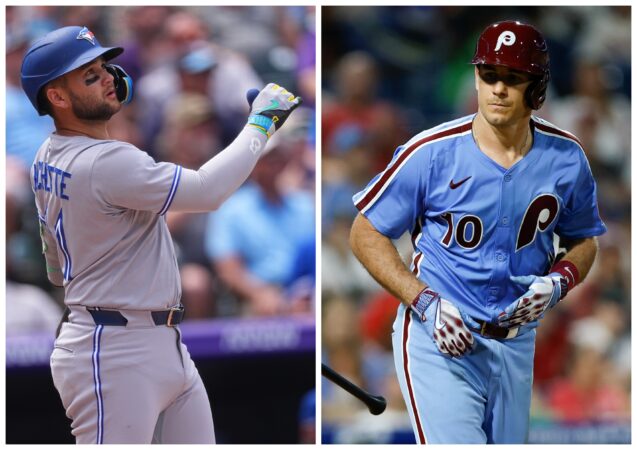
It led the Phillies to Bichette, with whom they met over a Zoom call on Jan. 12. The positional fit didn’t seem obvious earlier in the offseason. Bichette has only ever played shortstop. But as talks with Realmuto stalled, the Phillies began thinking about improving the roster in other ways.
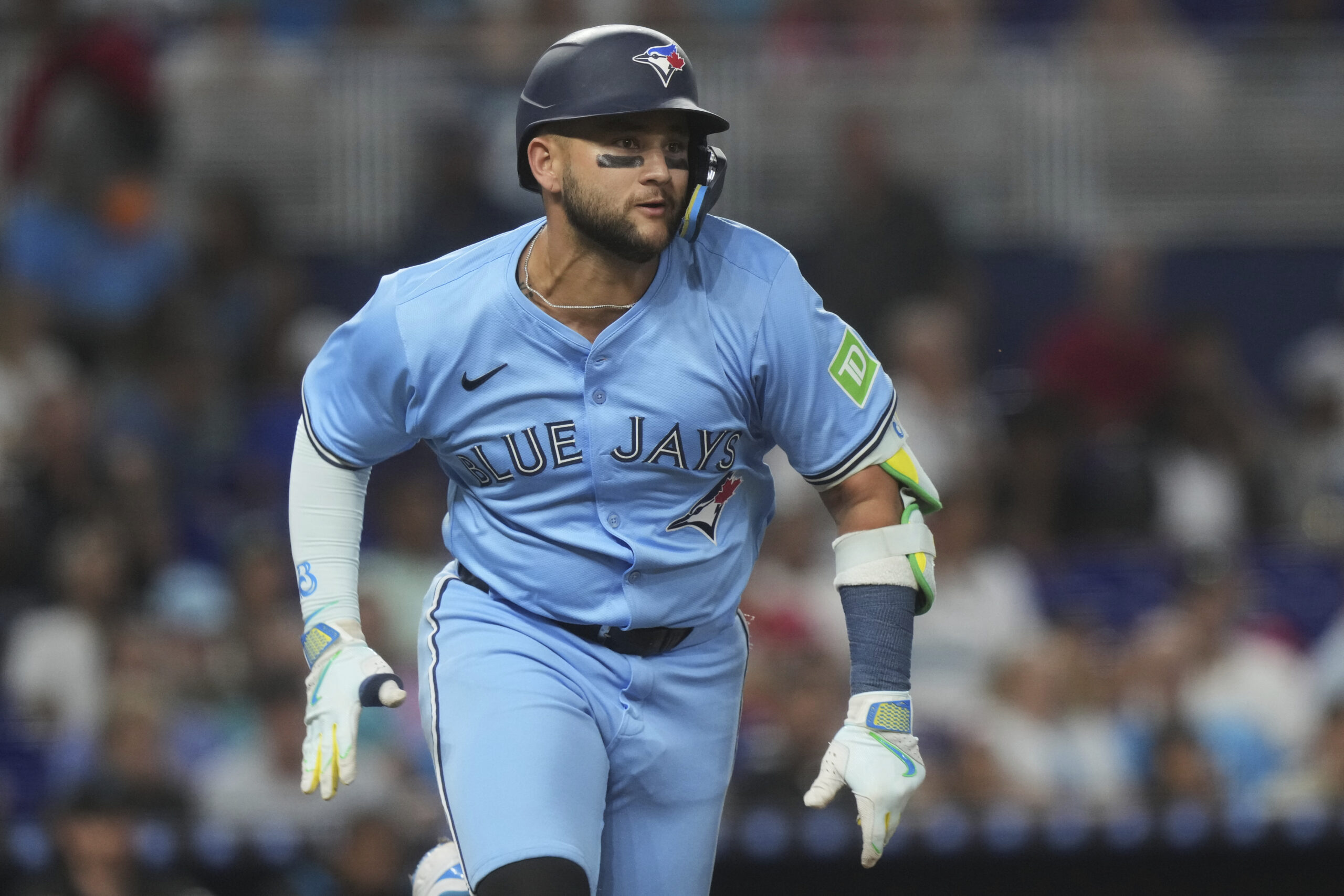
A shortstop with the Blue Jays, Bo Bichette would have played third base with the Phillies.
The Phillies would have played Bichette at third base and displaced Alec Bohm, who likely would’ve been traded. And Bichette was open to switching positions. The Zoom meeting went well enough that Dombrowski called Realmuto’s agent to inform him the Phillies might be going in another direction. Things began to get more serious.
Or did they? Given how it all turned out, did Bichette use the Phillies as a stalking horse to get the deal he wanted from the Mets?
“I can’t [say that] because you never know 100% what’s going on from their perspective,” Dombrowski said. “I do think he was sincere about thinking about coming to Philadelphia. Yes, I do. I think he was. We were at the numbers that they really asked us to match. [The Mets] jumped in at the last minute and made him a short-term offer that was very appealing to him.”
Some within the Phillies’ front office were furious. But Dombrowski said Bichette’s camp didn’t renege on a deal or negotiate out of bounds because the sides never reached the point of signing a “memo of understanding,” a document that would have preceded a completed deal.
“It wasn’t that we weren’t moving toward that direction,” Dombrowski said. “I did think that we were going to get there based upon our conversations. But we did not get to that point, so I can’t say that I ever thought we had it done.”
The Phillies thought their willingness to stretch the term of the contract to seven years with more guaranteed money would be an advantage over the Mets (or potentially the Dodgers if they hadn’t signed Tucker). It’s a tactic they used to help land other marquee free agents: Bryce Harper (13 years), Trea Turner (11 years), and Aaron Nola (seven years).
Instead, the Phillies missed out on a coveted free agent, a rarity since they signed Harper in 2019. They pivoted back to Realmuto within an hour of Bichette’s agreement with the Mets — “It was very quickly,” Dombrowski said — and bumped up their offer. They aren’t considering a run at any other big-ticket free agents, including Cody Bellinger.
Phillies president of baseball operations Dave Dombrowski said he was “upset” after finding out Bo Bichette picked the Mets, “but you have to pick yourself up and shake it off.”
They might actually be better off with Realmuto at the controls of the pitching staff than with Bichette’s right-handed bat in the lineup. Pitching, after all, remains the strength of the roster, and Zack Wheeler, Cristopher Sánchez, and others swear by Realmuto’s guidance.
Still, four days after Bichette slipped through the Phillies’ fingers, it was impossible to not hear the disappointment in Dombrowski’s voice.
“That day you are very … upset, I guess is the way to say it,” he said. “But you have to pick yourself up and shake it off. Because you can’t just wallow in what took place. So, after a day of feeling that way, or a time period, you need to move forward. That’s how you handle it.
“We did rebound in the sense that we signed J.T. right away. We’re very fortunate he didn’t sign somewhere else.”
In time, maybe it will start to feel more like it.
Compared with the rest of the tribe of baseball writers, my criteria for Hall of Fame inclusion are undemanding. The most controversial element: I do not discriminate against the PED crowd.
I consistently have voted for Barry Bonds, Alex Rodriguez, and Manny Ramirez, titanic talents of their era who are shunned by a voting bloc — us writers — that ignored and profited from rampant steroid use. Further, I know there are plenty of players who juiced and didn’t get caught, so banning the BALCO boys never made sense.
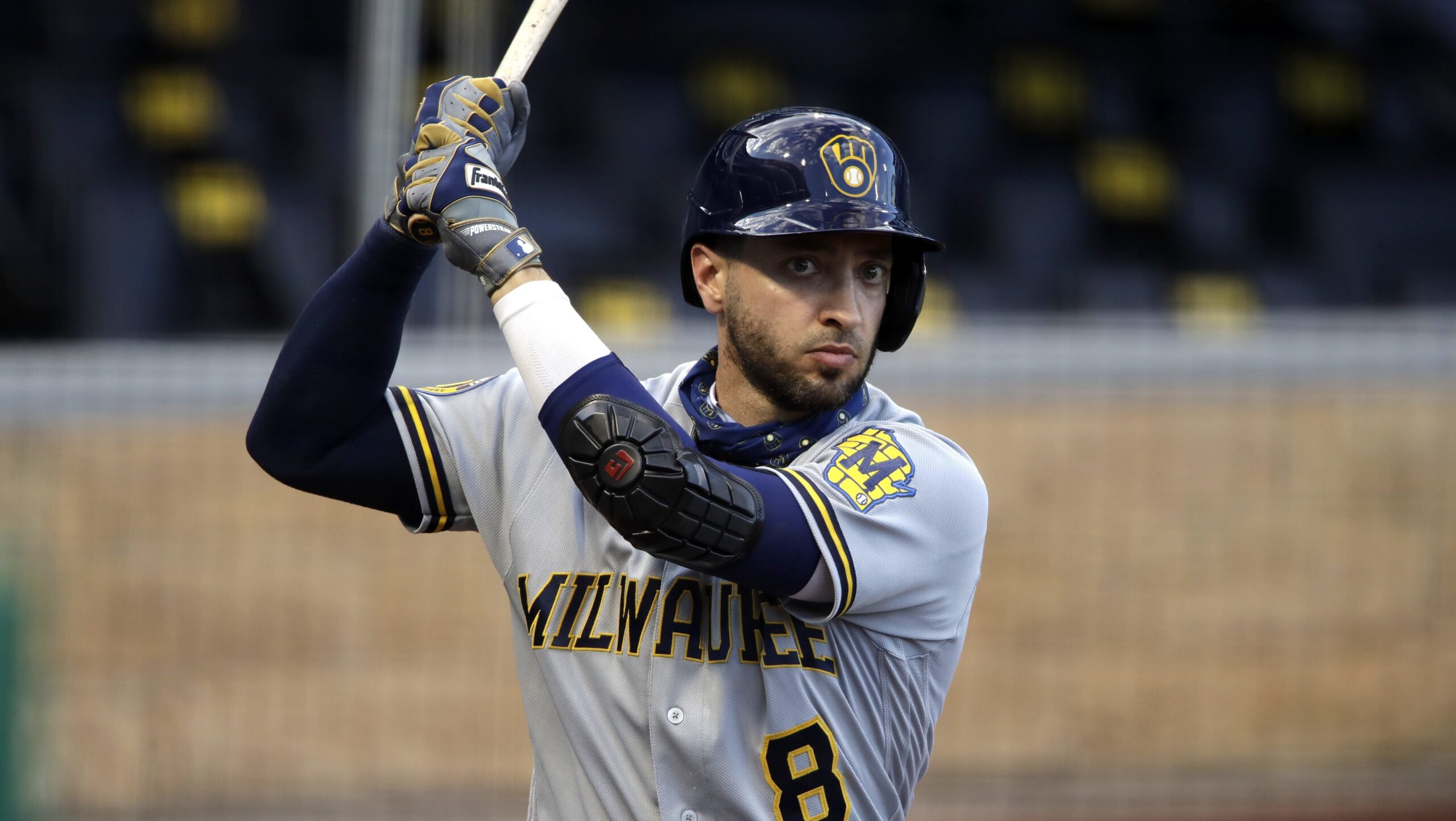
Which brings us to Ryan Braun, the best of a weak first-year class of Hall of Fame candidates — no offense, Cole Hamels. Inductees will be announced Tuesday. Don’t expect either to be on the list.
Between 2008 and 2016, a nine-season span, Braun was, without question, one of baseball’s best players. He was a five-tool player. He twice hit at least 30 home runs and stole at least 30 bases. His .902 OPS ranks fifth in that period among players with at least 4,000 plate appearances. Ahead of him: future Hall of Fame locks Miguel Cabrera and Albert Pujols, Hall of Famer David Ortiz, and, at No. 2, Joey Votto.
Braun was Rookie of the Year in 2007 and National League MVP in 2011.
From 2008 to 2016, Ryan Braun was one of baseball’s best players with a .902 OPS that ranks fifth in that period among players with at least 4,000 plate appearances.
You know what else happened in 2011? Braun tested positive for synthetic testosterone, and ruined his reputation in the aftermath. He challenged the test, smeared one of the testers as being antisemitic (Braun is Jewish), and had his record cleared on a technicality involving the handling of the sample.
Then, in 2013, later, Braun tested positive again. That invalidated all of his protestations.
This time, he served a 65-day suspension. Despite excellent production over the next three seasons and despite an effort to rehabilitate his image through varied good works, he never recovered.
There’s no way Braun will get the 75% of the vote he needs to qualify for induction; not this year, and probably not for five years or so. He’ll be the next Carlos Beltrán, the scapegoat for the Astros’ signal-stealing scandal in 2017 who should have been inducted years ago.
Braun certainly belongs in the Hall of Shame, right next to Rodriguez, who once indignantly denied that he’d ever taken steroids then later admitted to juicing as a younger player. A-Rod’s image has never recovered, either. Both belong in the Hall of Fame, too.
I vote for A-Rod every year. In fact, this is the third consecutive year he’s my No. 1 pick. The only time he wasn’t No. 1 was in 2022, when he was No. 2. Bonds was No. 1.
Braun’s situation is different. For one thing, he tested positive twice. For another, he was an absolute tool about it. For a third, PED use had plummeted by the time Braun arrived on the scene, so it’s not as if he needed to cheat to keep up. Finally, Braun tested positive in an era in which players knew the likely penalty for testing positive. Mark McGwire, who was first eligible in 2007, was being blackballed every year of Braun’s Hall of Fame run.
It is a penalty with which I always have disagreed. And, while I acknowledge that Braun’s candidacy is tainted more than any other PED user, I would be as hypocritical as my colleagues if I excluded him purely on the basis of PED use.
I will vote for him, but, more so than with A-Rod or Bonds or Roger Clemens, I will hold my nose as I check his box.
And I will think slightly less of myself for doing so.
The criteria
I not only divulge my votes, as I believe every writer should do, I also rank my votes and defend them.
I don’t vote for designated hitters because they don’t play the whole game. That included Ortiz in 2022, and it would have included Harold Baines and Edgar Martinez if I’d had a vote in 2019. Kyle Schwarber one day might make me eat those words.
I don’t vote for relievers. Traditionally, they’ve been failed starters. I backslid on that criterion in 2025 because I didn’t want to be the reason Billy Wagner didn’t get enough votes in his final year of eligibility. Thankfully, I didn’t have a vote in 2019, when Mariano Rivera was a unanimous selection. I don’t exactly know what I’d have done that year, when two designated hitters also made it. I probably would have abstained. My antireliever stance will further soften as more players who were drafted and groomed as relievers become eligible.
I use all 10 ballot slots, which means I’ve helped keep Omar Vizquel on the ballot.
I vote for players nearing the end of their 10-year candidacy limit over players who still have time left.
The last few players are usually interchangeable: This year, that interchangeability begins at No. 7, with Chase Utley.
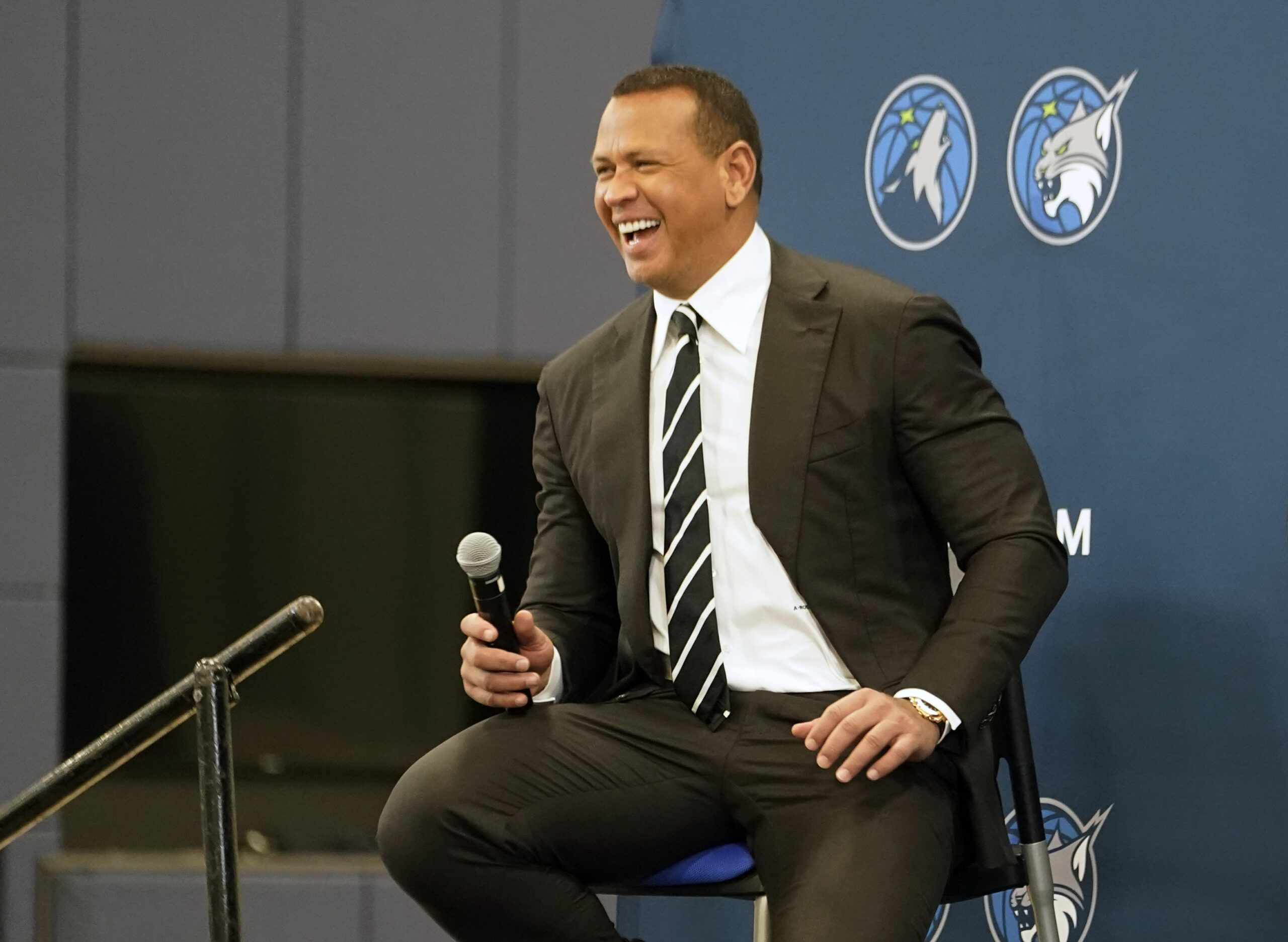
Alex Rodriguez, here in a 2021 event as co-owner of the Minnesota Timberwolves, was one of the great players of his era.
The vote
1. Alex Rodriguez, fifth year
Hit .302 with 642 home runs from 1996 to 2012, the most homers by a margin of 85 (Jim Thome had 557). Hot or cold in his postseasons. Elite fielder. Smug, condescending, weirdo, Yankee. But still.
2. Manny Ramirez, 10th year
In his final HOF run, Ramirez will be remembered less as the most important player on the Red Sox teams that broke the Curse of the Bambino than as a juicer. He led baseball with 1,660 RBIs from 1995 to 2008. He led Cleveland in aggregate OPS from 1995 to 2000 and was fourth in baseball behind McGwire, Bonds, and Martinez among players with at least 3,000 plate appearances. He led Boston in OPS from 2001 to 2006 and was third in baseball behind Pujols and Todd Helton, again among players with 3,000 or more plate appearances. He was the best hitter on loaded teams in Cleveland, Boston, and Los Angeles. He might have been juicing the whole time — he tested positive three times — but, again, PED use was rampant during his prime years.
3. Carlos Beltrán, fourth year
In a game rife with cheating, it astounds me that so many people hold the sign-stealing scandal against him, a scandal perpetrated when he was 40, in his final season, after an 18-year run of excellence. That included the 1999 AL Rookie of the Year as a Royal; nine All-Star Game appearances, his ninth at the age of 39; three Gold Glove awards; and incredible playoff production: a 1.021 OPS, a .307 batting average, 16 home runs, 42 RBIs, and 11 steals (never caught) in 65 playoff games.
That said, he got 70.3% of the vote last year, 57.1% in 2024, and 46.5% in his first year of eligibility. Independent preannouncement polling indicates that Beltrán will cruise into the Hall this year as effortlessly as he played the game itself.
4. Ryan Braun, first year
See above.
5. Jimmy Rollins, fifth year
I understand why, independent of their controversies, Beltrán and Braun aren’t slam-dunk Hall of Famers. I understand why Rollins isn’t, either. J-Roll is my best example of why defense, baserunning, and availability don’t get enough respect from voters. His 2007 MVP season was the best of an eight-year run in which his most consistent contributions involved superb shortstop play, base stealing, and baserunning, which helped account for his 292 stolen bases and the 395 combined doubles and triples he hit from 2001 to 2008, a league high among players with at least 5,000 plate appearances.
Rollins also played in 1,237 games in that span, second-most among shortstops (Miguel Tejada) and seventh-most among all players, including the next guy on this list, one of Rollins’ best friends.
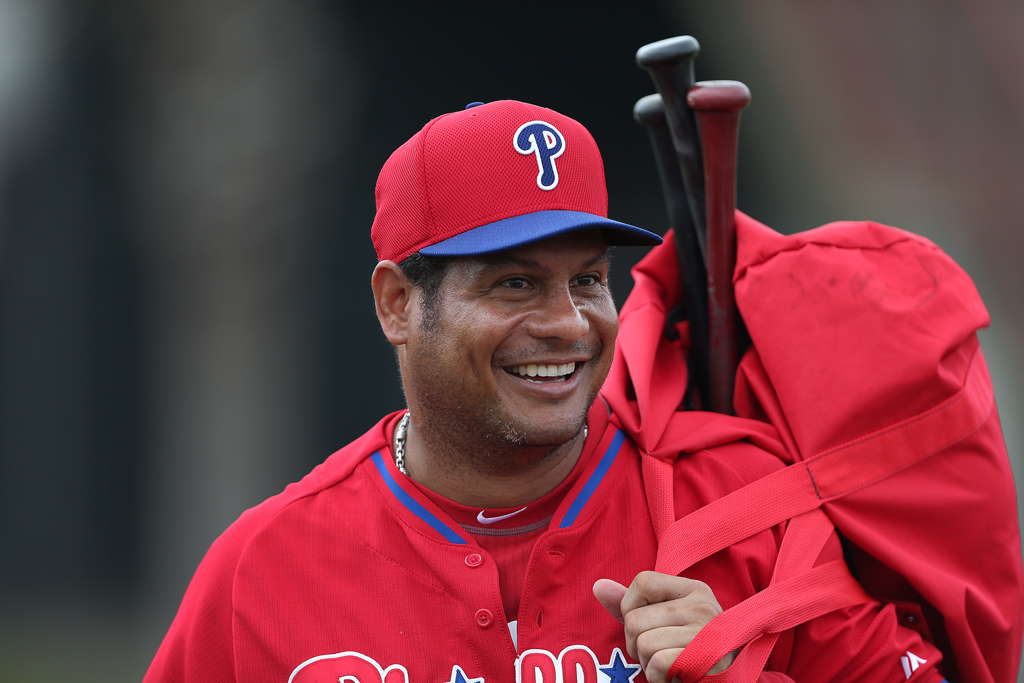
Bobby Abreu had a great career offensively, and he was a good outfielder, but his chances of making the Hall of Fame aren’t good.
6. Bobby Abreu, seventh year
Abreu was one of baseball’s best hitters from 1998 to 2009; his .902 OPS is third among players with at least 7,500 plate appearances, behind Helton and A-Rod. He averaged more than 28 stolen bases with a .301 batting average. He was an elite offensive player with one Gold Glove and a golden arm to boot. He got 19.5% last season, but he’s a lost cause.
Chase Utley is expected to get closer than last year to the needed 75% of Hall of Fame votes.
7. Chase Utley, third year
He was a profoundly productive second baseman from 2005 to 2013, so why isn’t “Ut” higher? Because he was a profoundly poor second baseman who played out of position. He should have been at first base. Yes, his .881 OPS in that span ranks 11th among players who played at least 1,000 games, but he missed an average of 30 games per season in that span. He’s compared to Jeff Kent, who peaked at 46.5% in his final year of eligibility, though the new Contemporary Baseball Era Committee wrongmindedly slid him in instead of PED poster children Bonds and Clemens. However, Utley’s current popularity campaign as MLB’s ambassador to Europe — the most unlikely ambassadorship this side of Woody Johnson’s former gig in the United Kingdom — will surely help Utley blast past his 39.8% mark from last year.
8. Torii Hunter, sixth year
Hunter’s 5.1% last year barely met the 5% minimum for ballot retention, and he probably won’t be on the ballot after this year, but he was the best center fielder in baseball from 2001 to 2013 and a better player than Dustin Pedroia, Andy Pettitte, Hamels, and maybe even Utley.
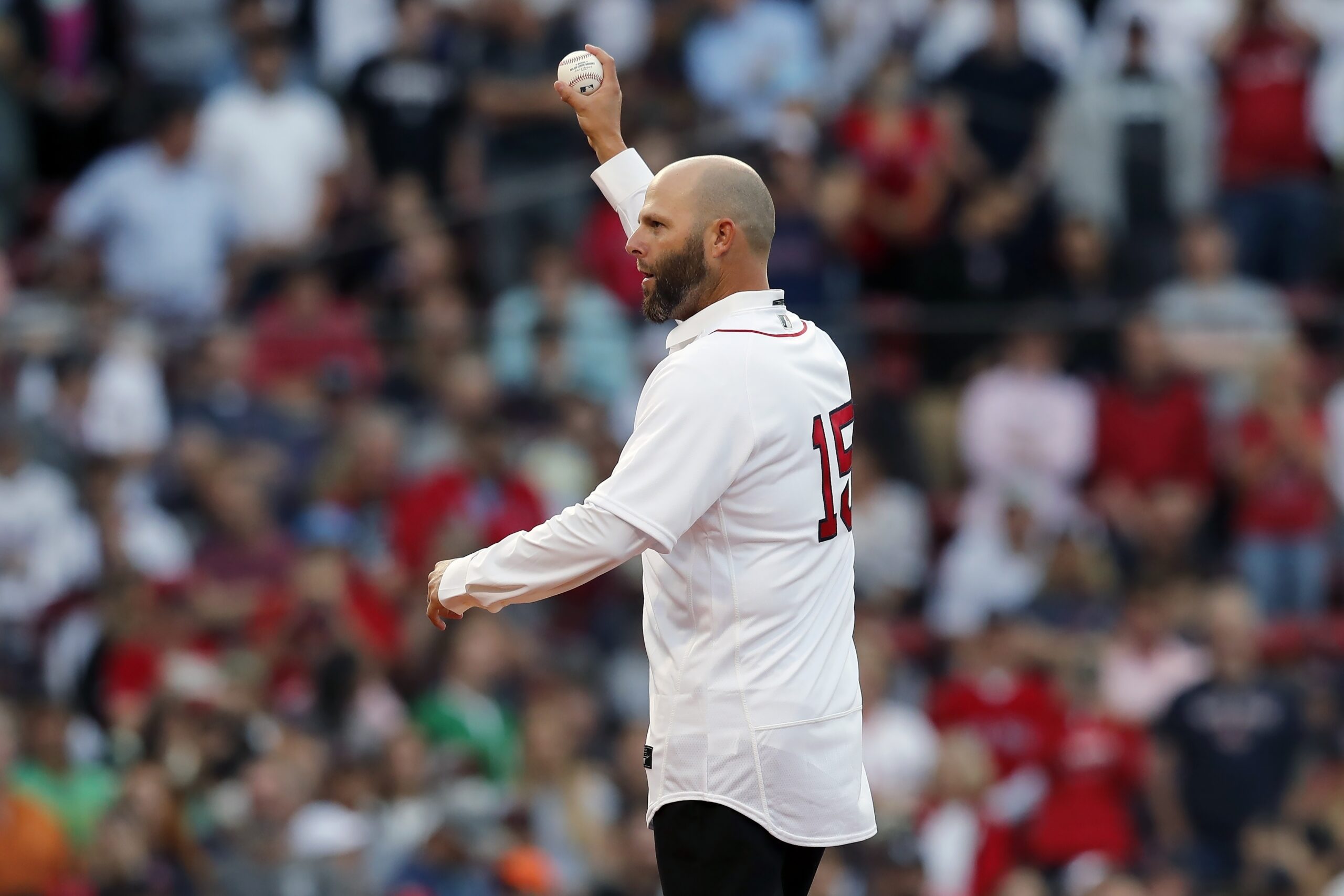
Dustin Pedroia’s career compared favorable to Chase Utley’s, except in home run power.
9. Dustin Pedroia, second year
There’s an excellent argument that, if you’re in on Utley, you should be in on Pedroia. His 10-year peak was slightly less homer-heavy than Utley’s, but his overall play probably was better, considering his four Gold Gloves. He also won AL Rookie of the Year in 2007 and was AL MVP in 2008. He won two World Series with the Red Sox, but after his first playoff run in 2007 he hit .212 with a .628 OPS in his next 37 playoff games.
10. Omar Vizquel, ninth year
He’s the best defensive shortstop of the modern era after Ozzie Smith. However, his candidacy cratered when, in 2021, he was sued and accused of sexually harassing an autistic adult batboy while managing the White Sox’s double-A affiliate in 2019. No charges were brought, and the sides settled in 2022, but the incident, combined with previous, unproven accusations of domestic violence accusations by an ex-wife, effectively ended Vizquel’s Hall of Fame campaign.
He peaked at 52.6% in 2020, his third year of eligibility, but hasn’t broken 25% in the past four years, and almost certainly won’t again this year.
Honorably mentioned
If I had an 11th vote, I would throw Hamels, Pettitte, and Félix Hernández in a barrel, pick one out, and he would get that vote. None is especially Hall of Fame unworthy, and all were very good long enough to warrant consideration. Pettitte won’t make it this year, his eighth, so, in the spirit of my expiring candidacy criterion, I might vote for him in a couple of years, after some candidates drop off and after Buster Posey gets in next year as a first-ballot candidate.