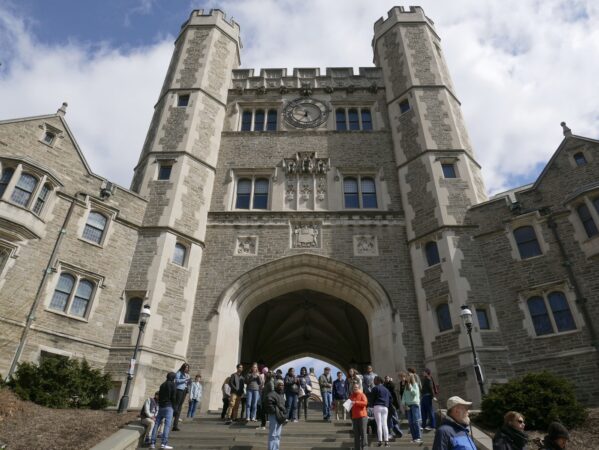
Princeton University’s president, in a message to campus, said the school will take the unusual move of consolidation and cuts, given federal policy changes and “political threats” to its financial model, as well as lowered expectations about future endowment returns.
“Changed political and economic circumstances require that we transition from a period of exceptional growth to one defined by steadfast focus on core priorities,” Christopher Eisgruber wrote Monday in his annual message to campus. “That shift is necessary for multiple reasons, including because it will help Princeton to stand strong for its defining principles and against rising threats to academic freedom.”
The Ivy League university, he wrote, “will have to look for areas where we can consolidate or cut, both to offset rising costs (including salaries and benefits) and to support the investments required for teaching and research excellence.”
Eisgruber’s announcement came days after the University of Pennsylvaniaannounced it would instituteanother round of budgetcutsin response to actions by President Donald Trump’s administration that threaten future funding and revenues, and because of rising legal and insurance expenses. The Trump administration has placed new caps on loans that graduate students can take out, temporarily paused student visa interviews, and sought to cut research funding to universities. Some colleges, including Penn and Princeton, also will see their endowment taxes rise.
Penn’s schools and centers were directed to cut 4% from certain expenses in the next fiscal year and keep in place financial cutbacks instituted last year, including a staff hiring freeze and freezes on midyear adjustments in staff salaries. Schools and centers also were asked last year to cut 5% of certain expenses, and the new 4% reduction would be on top of that.
The new Penn cuts come even though university officials said finances look better than they anticipated a year ago.
At Princeton, university officials also asked units across the school to make 5% to 7% cuts to their budgets over the last year, given an increase in the endowment tax that Princeton faces and federal threats to research funding. Eisgruber noted that the proceeds from its $36.4 billion endowment and sponsored research grants make up 83% of Princeton’s revenue.
The university’s endowment tax is scheduled to rise from 1.4% to 8% in 2026-27. (Penn’s tax on its $24.8 billion endowment is rising from 1.4% to 4%.)
Now, “more targeted, and in some cases deeper, reductions over a multiyear period” are likely required, Eisgruber wrote.
Last year, things were different.
In his 2025 message, Eisgruber noted that the school was “in the midst of an 18-month period in which the University will open more than a dozen substantial new facilities and spaces that enhance the University’s mission.”
Those include a new health center, a commons with a library, an art museum, student housing, and buildings that house an environmental institute and science and engineering programs.
“Princeton will continue to build, but more slowly in the years to come,” Eisgruber said in this week’s message. “Princeton will continue to evolve, but in the future it will more often have to do so through efficiency and substitution rather than addition. That will be a major change for most Princetonians, in comparison to not only the past five years but the last three decades.”
Princeton’s long-term endowment return assumptions have been lowered to 8% from 10.2% three years ago, Eisgruber wrote.
The university’s endowment returns in the three years following 2021 were “the second worst in more than four decades, better only than the returns in the years surrounding the Global Financial Crisis in 2008-09,” Eisgruber wrote. Two of those years saw negative returns.
Princeton spends about 5% of its endowment each year to support operations.
“An 8 percent return rate will require us to get the payout rate down below 5 percent even to cover payout plus inflation,” Eisgruber wrote.
The U.S. House of Representatives Tuesday voted 217-214 to end the partial government shutdown on its fourth day, avoiding a repeat of last year’s 43-day standoff.
The House passed a five-bill package that includes funding the Departments of Defense, State, Transportation, Education, Labor, Treasury, Health and Human Services, and Housing and Urban Development.
Every House Democrat from Pennsylvania opposed the package. U.S. Rep. Scott Perry (R., York) was the lone Republican from the delegation to vote against it.
Among New Jersey Democrats, U.S. Rep. Josh Gottheimer (D., N.J.) was among the 21 members of the party who crossed the aisle to support the bill.
As part of the deal, the House also passed 10 days of funding for the Department of Homeland Security as negotiations for longer-term will continue amid national uproar over President Donald Trump’s immigration crackdown.
Funding for DHS has been the core reason behind the government shutdown after Democrats said they would not vote for an allocation to the department without reforms to federal immigration agents’ conduct after agents fatally shot two Americans in Minnesota last month.
U.S. Rep. Ryan Mackenzie (R., Lehigh), who voted for the deal, said he will participate in “ongoing conversations about achieving commonsense, bipartisan reforms of DHS operations.”
In the House, only a handful of Republicans voted against the package, providing House Speaker Mike Johnson with the support he needed from the party to pass the package in the narrowly divided chamber.
Meanwhile, the vast majority of Democrats voted against the bill, with immigration enforcement remaining a top issue.
"We are in a dangerous and deadly place," U.S. Rep. Madeleine Dean (D, Montgomery) said in a statement. Adding that with DHS receiving funding until Feb. 13, "ICE agents can continue their grotesque and thuggish behavior. Meaning Congress has only ten days to agree on reform,” she said.
Now that Trump has signed the bill, Republicans and Democrats still need to hammer out a long-term deal on DHS, which oversees ICE and the Border Patrol.
Retiring U.S. Rep. Dwight Evans (D., Philadelphia) said in a statement that he would “need to see much-needed guardrails and protections being put into law” before he can support more funding for the agencies.
DHS also oversees TSA and an extended funding lapse could affect air travel.
U.S. Rep. Brian Fitzpatrick, a moderate Republican from Bucks County, voted for the government funding package Tuesday and plans to work with Democrats in the bipartisan Problem Solvers Caucus on reforms to ICE, his spokesperson said.
Staff Contributors
Design, Development and Data: Sam Morris
Reporting: Fallon Roth
Editing: Bryan Lowry
(()=>{var te=(e,t)=>()=>(t||e((t={exports:{}}).exports,t),t.exports);var I=te(r=>{var ue={0:”Jan.”,1:”Feb.”,2:”March”,3:”April”,4:”May”,5:”June”,6:”July”,7:”Aug.”,8:”Sept.”,9:”Oct.”,10:”Nov.”,11:”Dec.”};function E(e){return e===void 0&&(e=new Date),ue[e.getMonth()]}var pe={0:”Jan”,1:”Feb”,2:”Mar”,3:”Apr”,4:”May”,5:”Jun”,6:”Jul”,7:”Aug”,8:”Sep”,9:”Oct”,10:”Nov”,11:”Dec”};function N(e){return e===void 0&&(e=new Date),pe[e.getMonth()]}function s(e){return e==null}function D(e){return typeof e==”number”&&isFinite(e)}function m(e){return D(e)&&Math.floor(e)===e}var fe=[“one”,”two”,”three”,”four”,”five”,”six”,”seven”,”eight”,”nine”],me=[“million”,”billion”,”trillion”,”quadrillion”,”quintillion”,”sextillion”,”septillion”,”octillion”,”nonillion”,”decillion”],$=[“th”,”st”,”nd”,”rd”,”th”,”th”,”th”,”th”,”th”,”th”],he=[11,12,13];function H(e){if(s(e))return””;var t=+e;return m(t)?he.indexOf(t%100)>-1?$[0]:$[t%10]:””}var ve=[“first”,”second”,”third”,”fourth”,”fifth”,”sixth”,”seventh”,”eighth”,”ninth”],ge=new RegExp(/s+([^s]*)s*$/);r.apdate=function(e){return e===void 0&&(e=new Date),E(e)+” “+e.getDate()+”, “+e.getFullYear()},r.apdatetab=function(e){return e===void 0&&(e=new Date),N(e)+” “+e.getDate()+”, “+e.getFullYear()},r.apmonth=E,r.apmonthtab=N,r.apnumber=function(e){if(s(e))return””;var t=+e;return m(t)?t=10?e.toString():fe[t-1]:e.toString()},r.aptime=function(e){e===void 0&&(e=new Date);var t,o,n=e.getHours(),i=e.getMinutes(),l=i===0;if(l){if(n===0)return”midnight”;if(n===12)return”noon”}return n0?n:12):(t=”p.m.”,o=n===12?n:n-12),l?o+” “+t:o+”:”+(i<10?"0"+i:i)+" "+t},r.capfirst=function(e){if(s(e))return"";var t=String(e);return""+t.charAt(0).toUpperCase()+t.slice(1)},r.intcomma=function(e){if(s(e))return"";var t,o=+e;return D(o)?((t=o.toString().split("."))[0]=t[0].replace(/B(?=(d{3})+(?!d))/g,","),t.join(".")):e.toString()},r.intword=function(e){if(s(e))return"";var t=+e;if(!m(t))return e.toString();var o=Math.abs(t);if(o<1e6)return e.toString();var n=Math.ceil(Math.log(o+1)/Math.LN10)-1,i=n-n%3,l=t/Math.pow(10,i);return(l=Math.round(10*l)/10)+" "+me[Math.floor(i/3)-2]},r.ordinal=function(e,t){if(t===void 0&&(t=!1),s(e))return"";var o=+e;return m(o)?t&&o{document.querySelectorAll(“.js-hover”).forEach(e=>{e.addEventListener(“click”,()=>{A(e)}),e.addEventListener(“mouseenter”,()=>{A(e)}),e.addEventListener(“mouseout”,()=>{M(e)})}),window.addEventListener(“scroll”,()=>{u!==null&&ne()})},ne=()=>{(u>window.scrollY+100||u{M(e)})},A=e=>{e.classList.add(“is-visible”),u=window.scrollY},M=e=>{e.classList.remove(“is-visible”),u=null},j={init:()=>{oe()}};var p,ie=(e,t)=>{p=p||window.PMNdataLayer,p?p.push({event:”misc_event”,eventAction:e,eventLabel:t}):window.location.hostname.includes(“localhost”)?console.log(“Analytics event:”,e,t,”(not actually being sent due to localhost)”):console.log(“Failed to push analytics event”,e,t)},f={event:(e,t)=>{ie(e,t)}};var re=!1,se=()=>{document.querySelectorAll(“.js-location”).forEach(e=>{e.querySelector(“.js-location-form”).addEventListener(“submit”,t=>{t.preventDefault(),ae(e)}),e.querySelector(“.js-location-street”).addEventListener(“keyup”,t=>{x(e)}),e.querySelector(“.js-location-street”).addEventListener(“change”,()=>{x(e)})})},ae=e=>{let t=new URLSearchParams;t.set(“street”,e.querySelector(“.js-location-street”).value),t.set(“city”,e.querySelector(“.js-location-city”).value||”Philadelphia”),t.set(“state”,e.querySelector(“.js-location-state”).value||”PA”),f.event(“search”,`submit | ${t.get(“street”)} ${t.get(“city”)}`),e.classList.remove(“is-inactive”,”is-error”,”is-found”),e.classList.add(“is-loading”),fetch(`https://inq-holme.herokuapp.com/geocode?${t.toString()}&fields=cd`).then(o=>{if(o.status>=200&&o.status{console.log(o),o.error?g(“Something has gone wrong. Please try again.”):ce(e,o)})},ce=(e,t)=>{let o=t.results[0].fields.congressional_districts,n=t.results[0].address_components;if(re=!0,t.results[0]&&t.results[0].accuracy>.9&&typeof o!==null&&n.number&&n.formatted_street){e.querySelector(“.js-location-street”).value=`${n.number} ${n.formatted_street}`,e.querySelector(“.js-location-city”).value=n.city;let K=t.results[0].fields.congressional_districts[0].district_number,Q=`${n.state.toLowerCase()}-${K}`,L=document.querySelector(`.js-politicans-member[data-id=”${Q}”]`),v=document.querySelector(“.js-politicans-with-location”),X=v.querySelector(`.js-politicians-members[data-id=”${L.dataset.voteCast.toLowerCase()}”]`),q=v.querySelectorAll(“.js-politicans-member”);q.length>0&&q.forEach(ee=>{ee.remove()}),X.append(L.cloneNode(!0)),v.classList.remove(“is-hidden”),T()}else g(“Address not found. Please try a different one.”)},x=e=>{e.querySelector(“.js-location-street”).value.length>3?e.classList.add(“is-valid”):e.classList.remove(“is-valid”)},T=()=>{document.querySelector(“.js-location”).classList.remove(“is-loading”)},g=e=>{let t=document.querySelector(“.js-location”);t.classList.remove(“is-loading”),t.classList.add(“is-error”),t.querySelector(“.js-error”).textContent=e,document.querySelector(“.js-politicans-with-location”).classList.add(“is-hidden”),T()},k={init:()=>{se()}};var le=()=>{document.querySelectorAll(“.js-politicans-expand”).forEach(e=>{e.addEventListener(“click”,()=>{de(e)})})},de=e=>{f.event(“click”,”open group”),e.closest(“.js-politicans-content”).classList.remove(“is-collapsed”),setTimeout(()=>{e.closest(“.js-politicans-content”).classList.add(“is-open”)},1e3)},P={init:()=>{le()}};var Ve=I();var C=()=>/Android|webOS|iPhone|iPad|iPod|BlackBerry|IEMobile|Opera Mini/i.test(navigator.userAgent);var y=(e,t=null,o=null)=>{o||(o=document.querySelector(“head”));let n=document.createElement(“script”);n.type=”text/javascript”,n.src=e,t&&(n.onload=t),o.appendChild(n)},F=()=>(window.PMNdataLayer?.[0]!==void 0&&window.PMNdataLayer[0])?.analytics?.user?.state===”Subscribed”,O=()=>{let t=(window.PMNdataLayer?.[0]!==void 0&&window.PMNdataLayer[0])?.analytics?.user?.state;return window.location.host.includes(“zzz-systest”)||window.location.host.includes(“pmn.arcpublishing.com”)||window.location.host.includes(“stage.fusion.inquirer.com”)||typeof t>”u”},z=()=>{let t=(window.PMNdataLayer?.[0]!==void 0&&window.PMNdataLayer[0])?.analytics?.user?.hasAdsFreeReading;return!!(t&&t==1)},w=()=>window.location.host.includes(“localhost”);var ye=()=>{z()&&document.querySelectorAll(“.js-ad”).forEach(t=>{t.classList.add(“is-hidden”)})},B={init:()=>{ye()}};var a,_,we=()=>{a=document.getElementById(“js-inno-toast”)},Se=e=>{if(!a)return;a.innerHTML=e,a.classList.add(“inno-toast–active”);let t=()=>{a.addEventListener(“transitionend”,be,{once:!0}),a.classList.remove(“inno-toast–active”)};clearTimeout(_),_=setTimeout(t,5e3)},be=()=>{a.innerHTML=””},c={init:()=>{we()},showToast:Se};var h,Le=async()=>new Promise(e=>{setTimeout(()=>{console.log(“simulating createShareLink for localhost”),e(“https://inquirer.com/interactives”),qe()},100)}),qe=()=>{let e=document.querySelector(“.js-gift-toast-receiver”);!e||!(e instanceof HTMLElement)||setTimeout(()=>{let t=e?.querySelector(“span”);t&&(t.innerHTML=”Gift link copied to clipboard“)},20)},Ae=()=>{let e=window.services?.createShareLink;e&&(h=e),w()&&(h=Le),h&&je()},Me=async e=>{let t=”text/plain”,o=async()=>{try{return await h(window.location.pathname)}catch{e.dataset.state=”error”,c.showToast(“Hmm, we couldn’t generate a gift link…”)}},n=new ClipboardItem({[t]:o()});await navigator.clipboard.write([n]).catch(i=>{console.log(i),c.showToast(“Couldn’t copy to clipboard, try again?”),e.dataset.state=”error”}),c.showToast(“Gift link copied to clipboard!”),e.dataset.state=”complete”},je=()=>{document.querySelectorAll(“.js-gift”).forEach(t=>{(F()||w()||O())&&t.classList.add(“is-available”)}),document.querySelectorAll(“.js-gift-button”).forEach(t=>{t instanceof HTMLButtonElement&&t.addEventListener(“click”,()=>{t.classList.contains(“disabled”)||(t.dataset.state=”loading”,Me(t),setTimeout(()=>{t.dataset.state=”ready”},2e3))})});let e=document.querySelector(“.js-gift-toast-receiver”);!e||!(e instanceof HTMLElement)||xe(e)},xe=e=>{new MutationObserver(o=>{for(let n of o){let i=[…n.addedNodes].at(0);if(!(i instanceof HTMLElement))return;c.showToast(i.outerHTML)}}).observe(e,{subtree:!0,childList:!0})},G={init:()=>{Ae()}};var Te=()=>{window.addEventListener(“message”,e=>{if(e.data[“datawrapper-height”]){let t=e.data[“datawrapper-height”];for(let o in t)document.querySelector(`#datawrapper-chart-${o}`).setAttribute(“height”,t[o])}})},ke=()=>{document.querySelectorAll(“.js-datawrapper-graphic”).forEach(e=>{y(`https://datawrapper.dwcdn.net/${e.dataset.id}/embed.js`,null,e)})},Pe=()=>{window.addEventListener(“message”,e=>{let t=e.data;document.querySelectorAll(`iframe[src*=”${t.id}”]`).forEach(n=>{n.style.height=`${t.height}px`})},!1)},Ee=()=>{document.querySelectorAll(“.js-pym-graphic”).forEach(e=>{if(typeof window{new window.pym.Parent(e.id,e.dataset.iframe)};typeof window.pym>”u”?y(“https://pym.nprapps.org/pym.v1.min.js”,t):t()}})},R={init:()=>{Te(),ke(),Ee(),Pe()}};var Ne=()=>{},J={init:()=>{Ne()}};var d,S,b=!0,$e=()=>{d=document.querySelectorAll(“.js-video-autoplay”)},He=()=>{window.addEventListener(“resize”,()=>{V()}),window.addEventListener(“scroll”,()=>{V()}),d.forEach(e=>{e.addEventListener(“volumechange”,t=>{e.muted!==b&&!C()&&(b=e.muted,De())})})},V=()=>{let e;d.forEach((t,o)=>{let n=t.getBoundingClientRect(),i=n.height/2;n.y-i&&(e=t)}),e!==S&&(S=e,d.forEach(t=>{t.pause()}),e?e.play():S=null)},De=()=>{d.forEach(e=>{e.muted=b})},W={init:()=>{$e(),d&&He()}};var Y={init:()=>{j.init?.(),k.init?.(),P.init?.(),B.init?.(),G.init?.(),R.init?.(),J.init?.(),W.init?.(),c.init?.()}};var Ie=()=>{},U={init:()=>{Ie()}};var Ce=document.querySelector(“.js-inno”),Z=()=>{Y.init(),U.init()};Ce?Z():new MutationObserver((t,o)=>{if(document.querySelector(“.js-inno”)){o.disconnect(),Z();return}}).observe(document,{attributes:!0,childList:!0,subtree:!0});})();
UPPER BERN, Pa. — The Trump administration has quietly purchased a nearly 520,000-square-foot warehouse in Berks County as it plans to convert such facilities into immigration detention centers across the U.S.
The warehouse, located at 3501 Mountain Rd. in Upper Bern Township, was sold to the U.S. government on behalf of the Department of Homeland Security and Immigration and Customs Enforcement for $87.4 million, deed records show. The purchase was recorded on Feb. 2.
Spotlight PA visited the warehouse, which is located about a mile from I-78, on Jan. 15 and witnessed about two dozen individuals touring the exterior of the building. One man who arrived early to the site that day identified himself to a reporter as ICE.
The property was most recently called the Hamburg Logistics Center, and before that was the site of the Mountain Springs Arena, a county landmark known for rodeos and demolition derbies. It neighbors an Amazon warehouse and the Mountain Springs Camping Resort.
The building is one of at least 23 that ICE plans to convert into immigration detention facilities, Bloomberg reports. The Berks County warehouse could house up to 1,500 beds.
ICE also finalized the purchase of a warehouse in nearby Tremont Township, in Schuylkill County, on Monday, according to a deed. The Tremont property is located less than 300 yards from a daycare center and has already faced fierce resident opposition.
A spokesperson for ICE did not answer any questions about the Berks County warehouse purchase and instead lauded the agency’s targeting of “vicious criminals.”
“Thanks to the One Big Beautiful Bill, ICE has new funding to expand detention space to keep these criminals off American streets before they are removed for good from our communities,” the spokesperson said.
Upper Bern Township’s solicitor said in an emailed statement that community leaders learned about the sale on Monday. They declined to answer questions.
“The township was not involved in this transfer and has not received any applications from either the prior or new owners regarding the future use of the property,” the statement reads. “The township has no further comment on this matter at this time.”
State Sen. Chris Gebhard and State Rep. Jamie Barton, Republicans who represent the area, said they have reached out to federal contacts to gather more information on how the Department of Homeland Security plans to use the warehouse.
“Our immediate concerns include the potential loss of property tax revenue for the host municipality, county, and school district, as well as security and perimeter considerations,” the lawmakers said in a joint statement. “We look forward to engaging directly with the appropriate federal officials to address these issues. Once additional information is available, we will provide an update.”
The property is assessed at $22 million and currently pays $198,286 annually in county property taxes under the current tax rate of 9.013 mills. Combined with Hamburg Area School District and township taxes, the loss of tax revenue from the federal government’s purchase would be about $624,000.
State Sen. Judy Schwank (D., Berks) declined to comment on the warehouse purchase on Monday. In an earlier interview with Spotlight PA, she called the then-potential sale “deeply concerning,” especially given the reports of mistreatment of people detained in ICE facilities. She released a statement about “ICE’s action in Minneapolis” on Jan. 27, shortly after federal agents killed Alex Pretti.
“My concern is, knowing the track record of some of these other facilities located throughout the country, it’s not good,” she said. “I don’t necessarily want to see something like that being housed in our county.”
The deed finalized on Monday shows the property was sold to ICE by an LLC connected to PCCP, a national commercial real estate equity firm. The firm purchased the warehouse in 2024 for $57.5 million, deed records show.
Reached by phone Monday afternoon, PCCP partner Greg Eberhardt — who is the authorized signatory for 3501 Mountain Road Owner LLC on the latest deed — denied knowledge of the property and its sale, and refused to comment further.
“I have no idea what you’re talking about,” Eberhardt said before hanging up on a Spotlight PA reporter. “I’m not making company comments.”
Upper Bern Township is situated on the edge of Berks and Schuylkill Counties, with a population of roughly 1,600 people. The community is mostly white, with only 2.8% of residents identifying as another race, according to the 2020 Census.
Bridget Cambria, an attorney with Aldea, a nonprofit that provides pro bono immigration legal services, said the detention center would have a “disruptive” and “chilling” impact on Berks County’s immigrant community.
“If there are people that live freely and at peace knowing that they do the right thing, they can do their immigration process or stay with their family or figure out a way to legalize their status, they’re going to be more afraid to do that with a giant detention center in their backyard,” Cambria said.
A 2022 study by the Detention Watch Center and the Immigrant Legal Resource Center found that immigrants were more likely to be arrested by ICE in counties with more detention bed space.
BEFORE YOU GO … If you learned something from this article, pay it forward and contribute to Spotlight PA at spotlightpa.org/donate. Spotlight PA is funded by foundations and readers like you who are committed to accountability journalism that gets results.
WASHINGTON — President Donald Trump signed a roughly $1.2 trillion government funding bill Tuesday that ends the partial federal shutdown that began over the weekend and sets the stage for an intense debate in Congress over Homeland Security funding.
The president moved quickly to sign the bill after the House approved it with a 217-214 vote.
“This bill is a great victory for the American people,” Trump said.
The vote Tuesday wrapped up congressional work on 11 annual appropriations bills that fund government agencies and programs through Sept. 30.
Passage of the legislation marked the end point for one funding fight, but the start of another. That’s because the package only funds the Department of Homeland Security for two weeks, through Feb 13, at the behest of Democrats who are demanding more restrictions on immigration enforcement after the shooting deaths of Alex Pretti and Renee Good by federal officers in Minneapolis.
House Democratic Leader Hakeem Jeffries quickly warned Democrats would not support any further temporary funding for Homeland Security without substantial changes to its immigration operations., raising the potential of another shutdown for the department and its agencies.
“We need dramatic change in order to make sure that ICE and other agencies within the department of Homeland Security are conducting themselves like every other law enforcement organization in the country,” Jeffries said.
Speaker Mike Johnson said he expects the two sides will be able to reach an agreement by the deadline.
“This is no time to play games with that funding. We hope that they will operate in good faith over the next 10 days as we negotiate this,” said Johnson. “The president, again, has reached out.”
But Johnson’s counterpart across the Capitol, Senate Majority Leader John Thune, (R., S.D.), sounded less optimistic of a deal. “There’s always miracles, right?” Thune told reporters.
Voting with no margin for error
The funding bill that cleared Congress Tuesday had provisions that appealed to both parties.
Republicans avoided a massive, catchall funding bill known as an omnibus as part of this year’s appropriations process. Such bills, often taken up before the holiday season with lawmakers anxious to return home, have contributed to greater federal spending, they say.
Democrats were able to fend off some of Trump’s most draconian proposed cuts while adding language that helps ensure funds are spent as stipulated by Congress.
Still, Johnson needed near-unanimous support from his Republican conference to proceed to a final vote on the bill. He narrowly got it during a roll call that was held open for nearly an hour as leaders worked to gain support from a handful of GOP lawmakers who were trying to advance other priorities unrelated to the funding measure.
The final vote wasn’t much easier for GOP leaders. In the end, 21 Republicans sided with the vast majority of Democrats in voting against the funding bill, while that exact same number of Democrats sided with the vast majority of Republicans in voting yes.
Trump had weighed in Monday in a social media post, calling on Republicans to stay united and telling holdouts, “There can be NO CHANGES at this time.”
Key differences from the last shutdown
The current partial shutdown that is coming to a close differed in many ways from the fall impasse, which affected more agencies and lasted a record 43 days.
Then, the debate was over extending temporary coronavirus pandemic-era subsidies for those who get health coverage through the Affordable Care Act. Democrats were unsuccessful in getting those subsidies included as part of a package to end the shutdown.
Congress made important progress since then. Some of the six appropriations bills it passed prior to Tuesday ensured the current shutdown had less sting. For example, important programs such as nutrition assistance and fully operating national parks and historic sites were already funded through Sept. 30.
The remaining bills passed Tuesday mean that the vast majority of the federal government has been funded.
“You might say that now that 96% of the government is funded, it’s just 4% what’s out there?” Johnson said. ”But it’s a very important 4%”
President Donald Trump said Monday that Republican lawmakers should nationalize voting — claiming a power explicitly granted to states in the U.S. Constitution.
Speaking to right-wing podcaster Dan Bongino, who recently stepped down from his role as the FBI’s deputy director, Trump again falsely alleged that the 2020 election was stolen from him, and he urged Republicans to “take over” elections and nationalize the process.
“We should take over the voting, the voting, in at least 15 places,” Trump told Bongino. “The Republicans ought to nationalize the voting.”
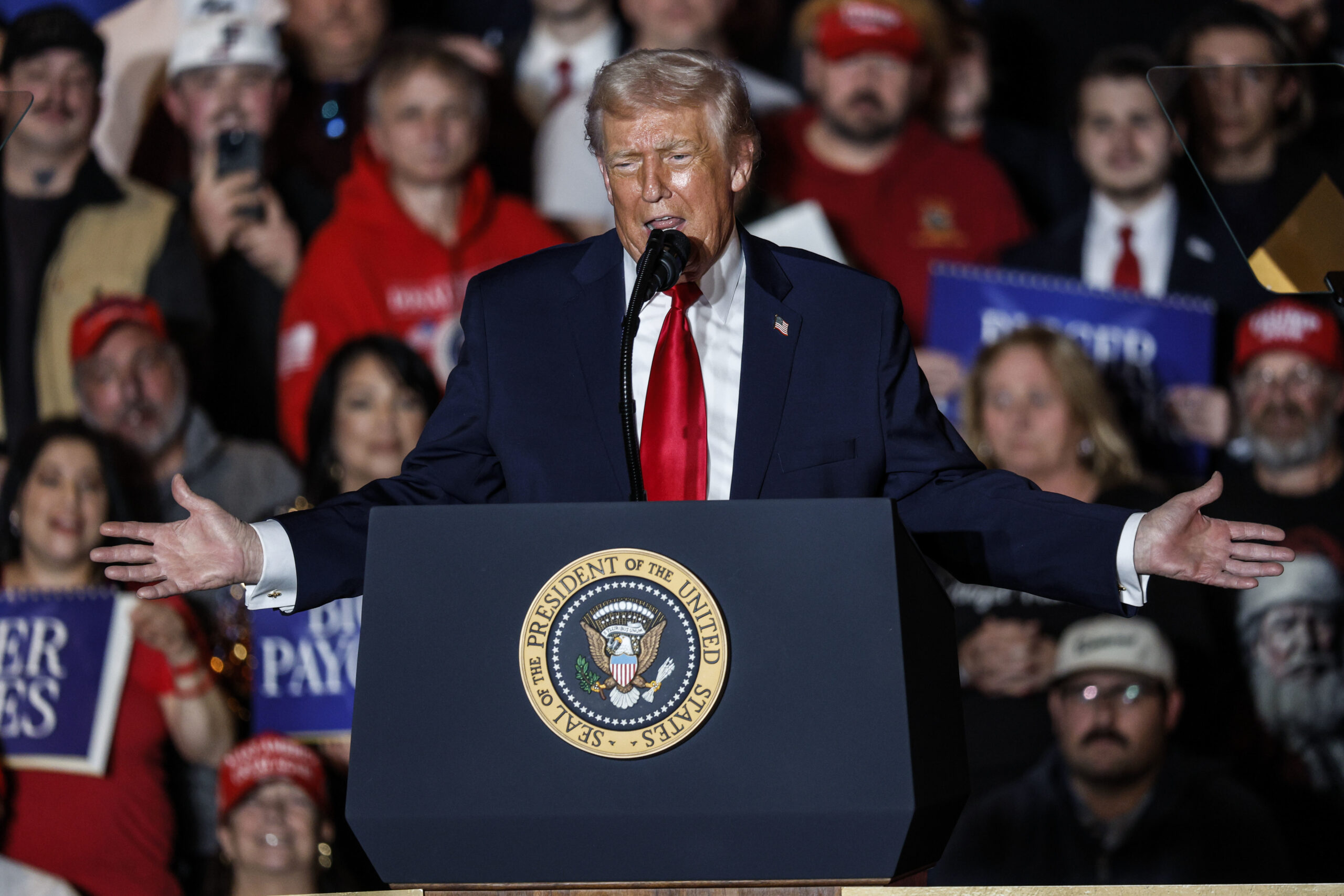
President Donald Trump speaks in Mt. Pocono, Pa., on Tuesday, Dec. 9, 2025.
Under the Constitution, the “Times, Places and Manner” of holding elections are determined by each state, not the federal government. Congress has the power to set election rules, but the Constitution does not give the president any role on that subject. Republicans in recent decades have often argued in favor of states’ rights and against a powerful federal government.
Trump’s demand comes less than a week after the FBI executed a search warrant at a warehouse in Fulton County, Georgia, which is at the heart of right-wing conspiracy theories about the 2020 election. The unusual warrant authorized agents to seize all physical ballots from the 2020 election, voting machine tabulator tapes, images produced during the ballot count and voter rolls from that year. Days before the search, Trump claimed in a speech at the Davos World Economic Forum that the 2020 election was rigged.
On Monday, while speaking to Bongino, Trump said without offering evidence that there are “states that are so crooked” and that there are “states that I won that show I didn’t win.” He also baselessly claimed that undocumented immigrants were allowed to vote illegally in 2020.
He then teased that there will be “some interesting things come out” of Georgia, but did not discuss the FBI warrant or its findings.
While Trump has repeatedly and baselessly accused states such as Georgia of running fraudulent elections, U.S. national security officials have said they found no evidence of widespread fraud in the 2020 election, and numerous courts rejected claims of election irregularities as unfounded.
This is not the first time Trump has tried to minimize states’ roles in the running of elections. In August, while complaining in a Truth Social post about mail-in voting, Trump said he would sign an executive order that would “help bring HONESTY” to this year’s midterm elections, arguing that states are meant to follow federal instructions when it comes to voting.
“Remember, the states are merely an ‘agent’ for the Federal Government in counting and tabulating the votes,” Trump wrote then. “They must do what the Federal Government, as represented by the President of the United States, tells them, FOR THE GOOD OF OUR COUNTRY, to do.”
It is not clear what Republicans in Congress could do if they were to “take over” elections, as Trump suggested. While Congress has exercised its power on elections rules throughout history by, for example, creating a national Election Day, or by requiring states to ensure that their voter rolls are accurate, lawmakers have historically allowed states to run elections under their own laws and procedures.
Democrat Janelle Stelson outraised U.S. Rep. Scott Perry for the second quarter in a row in her bid to flip the Central Pennsylvania district, which could determine control of the House in November.
Stelson, who lost by a little more than 1 percentage point to Perry in 2024, has raised more than $2.2 million since launching her rematch campaign in July. She has outraised Perry in both quarters since her kickoff and has more cash on hand than the incumbent Republican when taking his campaign debt into consideration.
Perry, a close ally of President Donald Trump, appears to be in the toughest fight of his political career. The seven-term lawmaker continues to be a Trump loyalist even as other swing-district Republicans in the state increasingly look to distance themselves from the president.
“I think the story of Scott Perry just keeps getting worse,” Stelson, 65, said in an interview. “He’s somebody who I covered for years on the news, and people have just really had enough. After more than a decade in Washington, he’s caused a lot of problems.”
Perry, 63, a member of the conservative House Freedom Caucus, voted last month against a Democratic-led bill to restore recently expired healthcare subsidies amid a national spike in insurancepremiums, a vote Stelson has seized upon. Three other Pennsylvania Republicans who represent swing districts — U.S. Reps. Brian Fitzpatrick, Rob Bresnahan, and Ryan Mackenzie — voted for the measure.
Stelson would need to win the Democratic primaryin May to set up the November rematch. She is facingDauphin County Commissioner Justin Douglas, a progressive pastor,who has raised under $85,000 this year. Perry also has his first primary challenge, from Karen Dalton, a retired attorney for Harrisburg Republicans, who reported raising a little more than $11,000 since launching her campaign.
Perry raised more than $2.9 million in 2025, and Stelson has raised $2.2 million since she launched her campaign in July. Stelson raised more than $946,000 from October through December,beating Perry’s haul for the quarter of $780,031.
Stelson ended the year with $1.52 million cash on hand, while Perry had $1.66 million. But Perry’s campaign also has nearly $280,000 in debt, which would put Stelson ahead when factored into the totals.
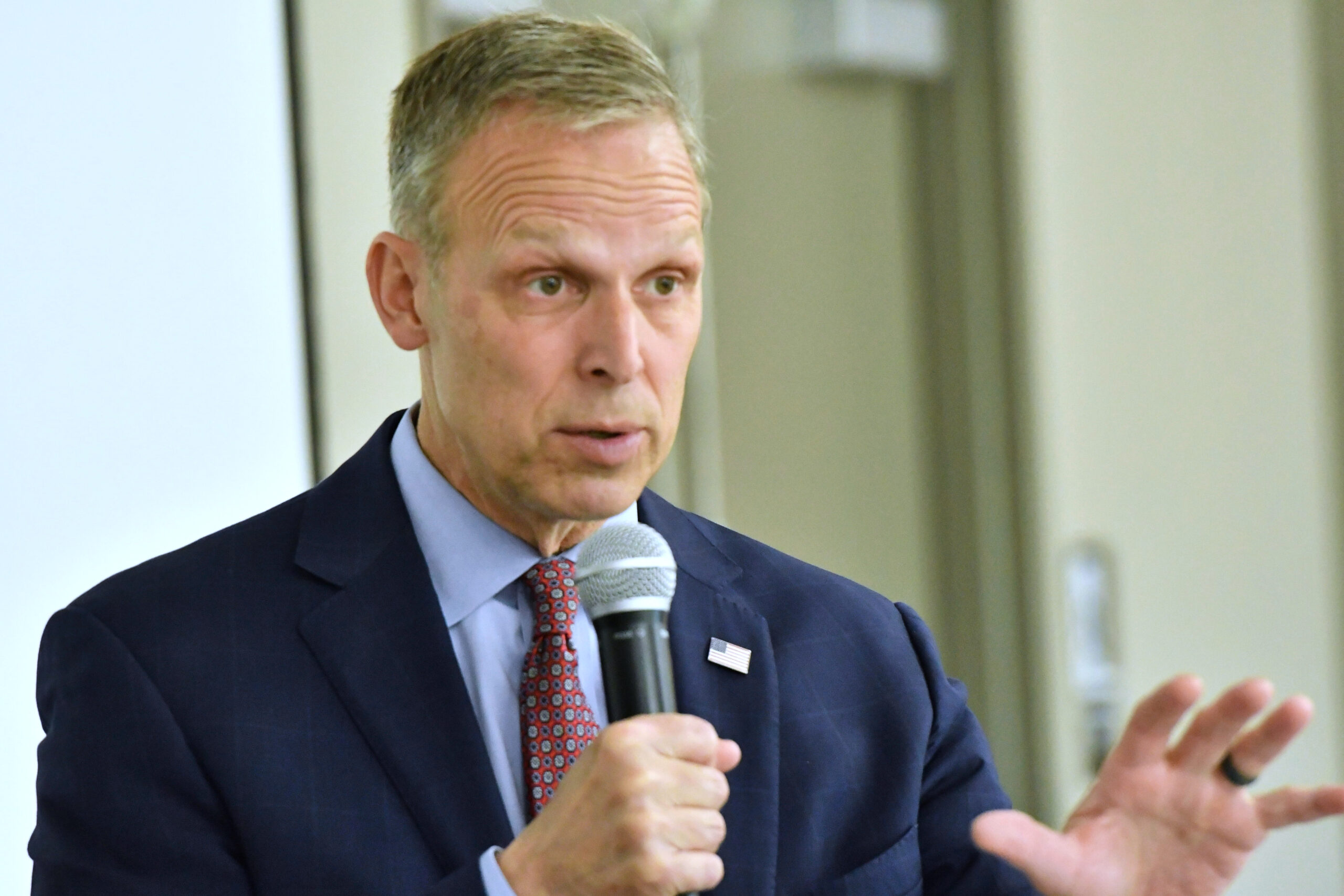
FILE – U.S. Rep. Scott Perry, R-Pa., speaks during a campaign event in front of employees at an insurance marketing firm, Oct. 17, 2024, in Harrisburg, Pa.
The nonpartisan Cook Political Report rated the district as a toss-up alongside Mackenzie’s Lehigh Valley district, marking them as among the most competitive races in the country.
Perry campaign spokesperson Matt Beynon said Perry’s fundraising last quarter was “incredibly strong” and pointed to how he outraised fellow swing district Republicans Bresnahan and Mackenzie during that stretch.
Beynon said Perry is in a better position to ward off a Democratic challenge this year because his district has emerged as a priority for national Republicans, landing on the National Republican Congressional Committee’s Patriots Program — a list of priority races that he was not on in 2024.
“Seeing the results last go-around, and seeing how hard we fought to make sure that the congressman was reelected, I think did open some eyes, and the congressman has been able to make the case that he needs support, too,” Beynon said in an interview.
He said it has been “a learning experience for folks to understand” that the district has become increasingly blue in recent years. The 10th Congressional Districtincludes Dauphin County and parts of York and Cumberland Counties, and is home to Harrisburg and Hershey.
Perry declined to be interviewed for this article.
Stelson said Republican voters in the district who have historically voted along party lines are “really waking up” and are beginning to view Perry as more of an “extremist” than a Republican.
She criticized Perry for urging his colleagues to throw out Pennsylvania’s votes hours after the Jan. 6, 2021, attack on the Capitol. She also pointed to his vote against awarding the Congressional Gold Medal to Capitol Policeofficers, as well as his support for Trump’s One Big Beautiful Bill Act, which made cuts to Medicaid and SNAP in order to help fund Trump’s tax cuts and immigration crackdown.
“He’s always putting his far-right politics ahead of the needs of people in this area,” Stelson said. “They can’t pay their bills. … His defeat actually would be a defeat for extremism in our politics.”
Democrats are optimistic that having Gov. Josh Shapiro, who won the district in 2022, at the top of the ticket will boost Stelson’s chances and build on last year’s momentum in local races.
Perry’s campaign has called Stelson a “carpetbagger,” since she lived outside district lines in nearby Lancaster last time she ran. Stelson has argued that she knows the district well because of her decades-long career as a local journalist, and that she used to live in it.
Stelson campaign spokesperson Alma Baker confirmed Stelson now rents a home in the district in Camp Hill while still owning her Lancaster residence, noting she lives in the district full-time.
Stelson pointed to what she described as “national problems” when asked about unique issues in the district, such as the economy. Her campaign soon after unveiled an agenda aimed at supporting farmers and other rural residents.
Beynon said that Perry will speak about his support for provisions in Trump’s One Big Beautiful Bill Act like ending tax on tips and extending tax benefits for overtime. He will also point to his long-held position sponsoring a bill to ban stock trading in Congress, on which he has collaborated with Democrats.
Both candidates plan to talk about affordability, which has emerged as a successful message for both sides of the aisle.
“It’s just getting worse when you have to worry about whether you’re going to put groceries on the table or pay your skyrocketing utility premiums, that’s a real problem,” Stelson said. “You can’t send kids to school without something in their tummies, otherwise they’re going to be thinking about that all day instead of learning.”
As a broadcast journalist for decades, the second-time candidate said, she listened to and highlighted concerns from people in the district.
“And I feel like now they can teach me what I need to be doing in Congress when I carry their voices there,” she added.
State Sen. Sharif Street maintained his financial advantage. Physicians Ala Stanford and David Oxman have turned to self-funding their campaigns. And State Reps. Chris Rabb and Morgan Cephas are low on cash — but one might be getting help soon.
The crowded Democratic primary for Pennsylvania’s 3rd Congressional District is beginning to come into focus after the candidates this weekend filed new campaign finance reports. The filings cover the last three months of 2025, providing insights into the candidates’ resources as the campaign heats up.
window.addEventListener(“message”,function(a){if(void 0!==a.data[“datawrapper-height”]){var e=document.querySelectorAll(“iframe”);for(var t in a.data[“datawrapper-height”])for(var r,i=0;r=e[i];i++)if(r.contentWindow===a.source){var d=a.data[“datawrapper-height”][t]+”px”;r.style.height=d}}});
Fundraising will not be the only factor that determines the outcome of the May primary election, which will ultimately be decided by voters. But the 3rd District candidates need money to pay staff and buy advertisements to spread their message, and the beginning of an election year is often a pivotal time for campaigns to prove their viability.
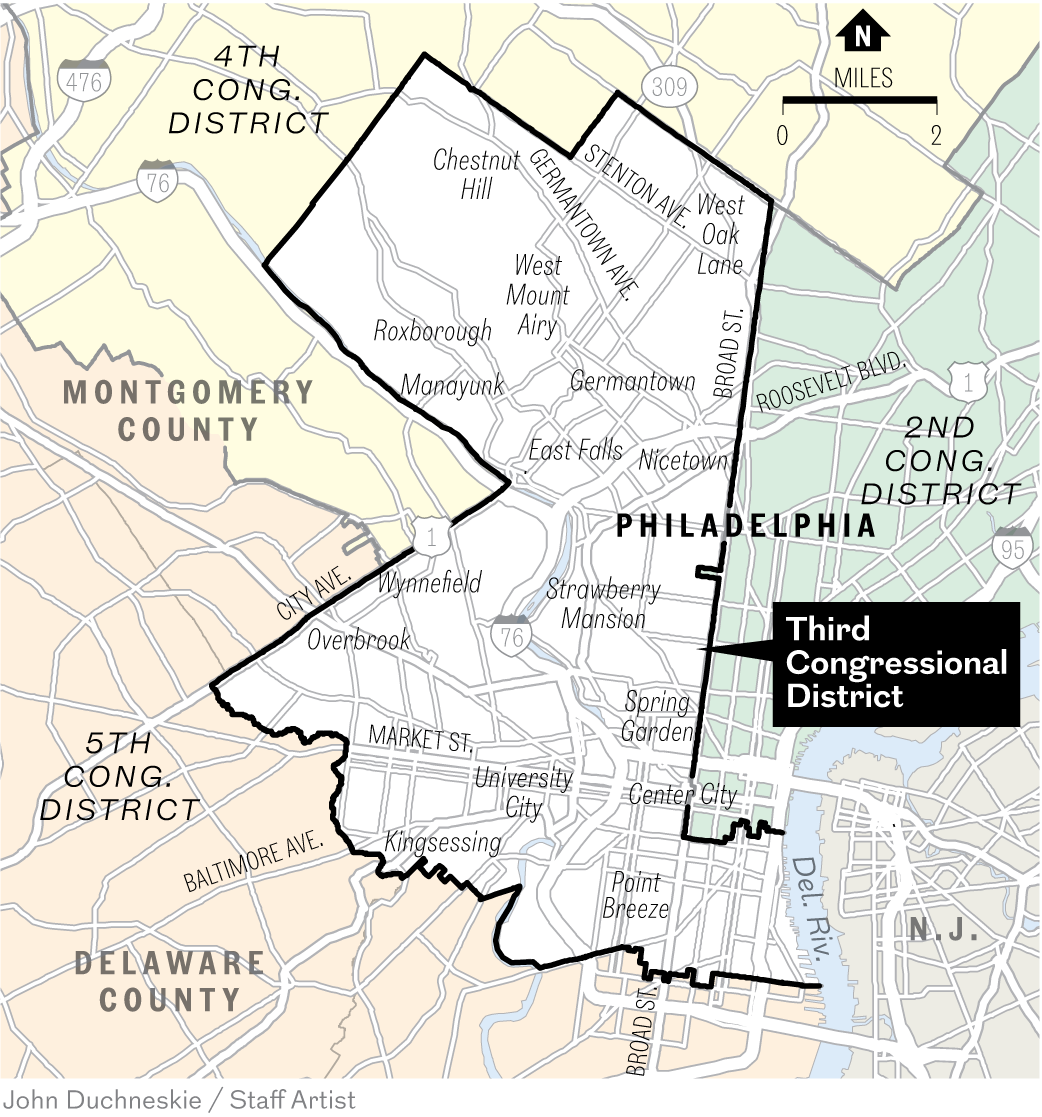
Map of Pennsylvania’s 3rd Congressional District.
After U.S. Rep. Dwight Evans (D., Philadelphia) last year announced he would not seek reelection to the nation’s bluest district, more than a dozen candidates tossed their hats in the ring. It’s likely some will not stay in the race long enough to appear on the May 19 primary ballot.
The 3rd District includes all of Northwest and West Philadelphia, as well as parts of Center City and North, South, and Southwest Philadelphia.
Street led the field by raising about $347,000 from Oct. 1 to Dec. 31 of last year, according to his report. His campaign spent $193,000 during that period, and he had $527,000 in cash on hand at the start of 2026.
window.addEventListener(“message”,function(a){if(void 0!==a.data[“datawrapper-height”]){var e=document.querySelectorAll(“iframe”);for(var t in a.data[“datawrapper-height”])for(var r,i=0;r=e[i];i++)if(r.contentWindow===a.source){var d=a.data[“datawrapper-height”][t]+”px”;r.style.height=d}}});
Campaign manager Josh Uretsky said Street’s fundraising totals “demonstrate that our strong track record of progressive leadership — from lowering health care costs to leading the fight to legalize recreational cannabis and reform our justice system — is resonating in every corner of the district.”
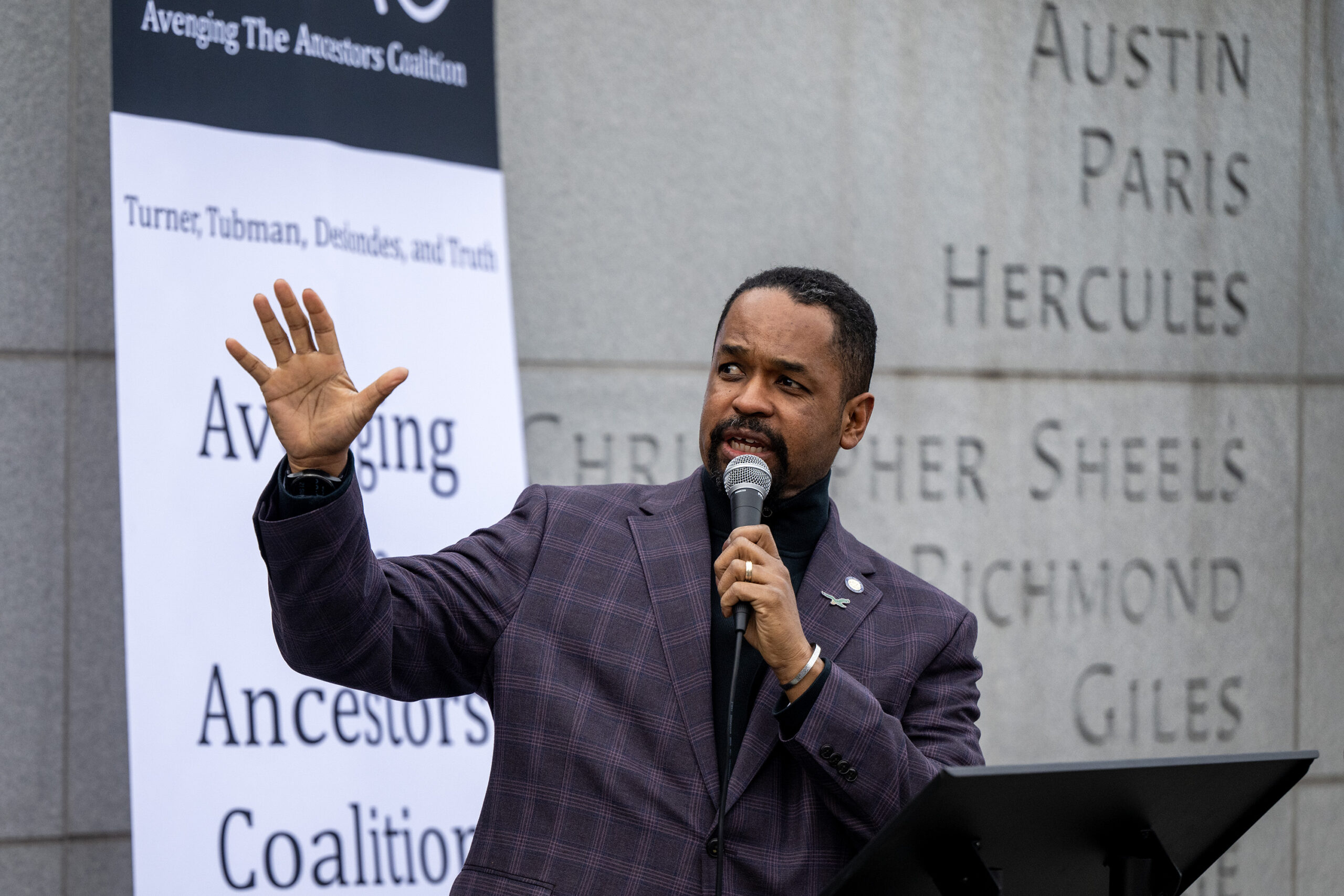
State Sen. Sharif Street speaks in front ofthe engraved names of nine enslaved people who lived and worked at President George Washington’s home, as the 15th anniversary of the President’s House exhibit in Independence National Historical Park is celebrated Sunday, Dec. 21, 2025.
Street has benefited from contributions from the deep-pocketed building trades unions, which endorsed him last fall. In the past, those unions have also funded outside spending committees, or super PACs, to support their preferred candidates, and it’s likely they’ll do the same for Street this spring.
Street collected more than $40,000 from labor groups in the most recent reporting period.
First-time candidates Ala Stanford and David Oxman turn to self-funding
Last month, it appeared that Stanford,a pediatric surgeon, was raking in cash when her campaign released a statement saying she had raised more than $467,000, a significant haul for a first-time candidate. The campaign said at the time that her fundraising prowess “solidifies [her] leading role” in the race.
But it turns out that more than half of the money the campaign brought in came from Stanford herself. The new report showed that Stanford lent her campaign $250,000 on Dec. 31, the last day of the reporting period, bringing her total cash on hand to about $392,000 at the end of the year.
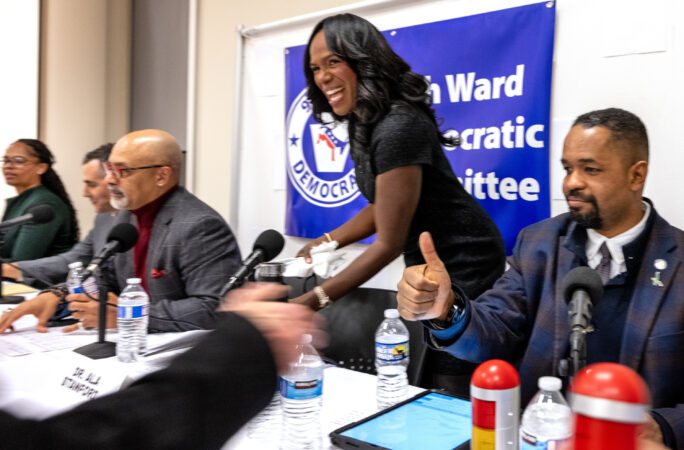
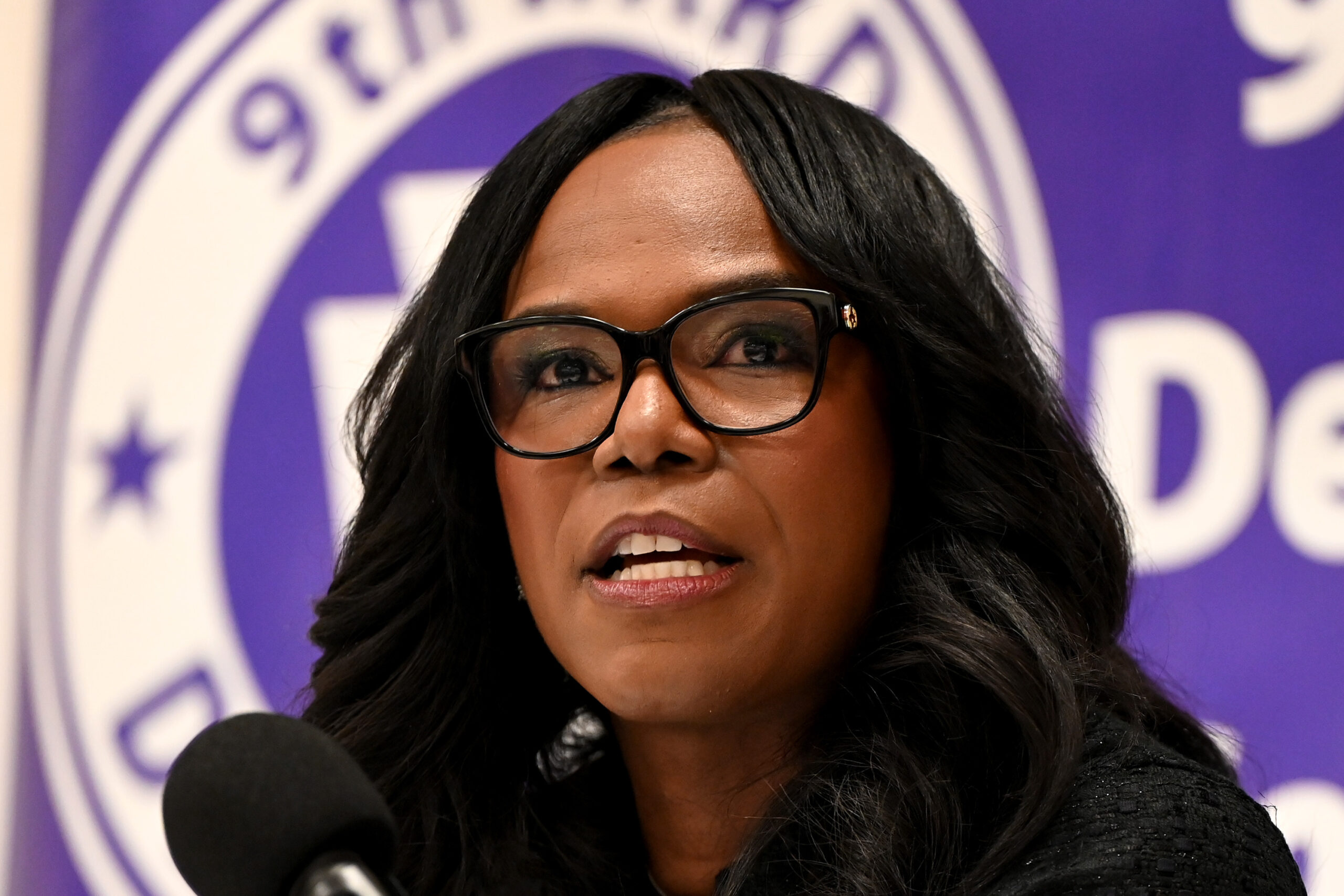
Physician Ala Stanford at a forum hosted by the 9th Ward Democratic Committee Dec. 4, 2025.
In a statement Monday, Stanford emphasized her humble upbringing in North Philadelphia public housing, saying she “never imagined being in this position, but this city has given me so much.”
Her campaign noted that she also invested her own money in her nonprofit organization, the Black Doctors Consortium, to bolster the city’s COVID-19 testing and vaccination programs during the height of the pandemic.
“I’ve stood up and led during a crisis before — and spent my own money to do it — so I’m going do whatever it takes to fight for our city,” Stanford said. “I’m incredibly grateful that in just the first few months of our campaign, that commitment has been matched with amazing grassroots financial support, too, and we’re just getting started.”
Stanford is not the only doctor self-funding their congressional campaign. Oxman, another political outsider and physician, brought in just over $107,000 between October and December — including $75,000 that he lent to his own campaign.
Oxman, an intensive-care physician and professor at Thomas Jefferson University, has lent his campaign $175,000. At the end of the year, he had $357,000 in the bank.
Physician David Oxman at a forum hosted by the 9th Ward Democratic Committee Dec. 4, 2025.
In a press release Sunday, Oxman emphasized that he was not accepting corporate PAC donations.
“You cannot fight for the health of the people of the 3rd district while you are taking money from nursing home companies and health insurance PACs,” Oxman said. “The corporatization of medicine is just a piece of a larger corporatization of American life that is hollowing out our economy as well as our democracy.”
Chris Rabb and Morgan Cephas enter 2026 low on cash
Both Cephas and Rabb raised less money in the fourth quarter of 2025 than in the opening months of their campaigns, and they both closed the year with roughly $100,000 in cash on hand.
Cephas, who represents a West Philadelphia district and chairs the city’s delegation to the Pennsylvania House, entered the year with about $109,000 in cash on hand.
State Rep. Morgan Cephas at a news conference Sept. 3, 2025.
“The residents of the 3rd Congressional District are more concerned with the skyrocketing cost of living, fewer health care options, and making sure their communities are safe than who raised the most money,” Cephas campaign manager Salvatore Colleluori said. “Rep. Cephas has only one priority in this race, the residents of Philadelphia’s 3rd Congressional District.”
“I’m incredibly proud of the thousands of people in Philly and across the country fueled by a movement so much bigger than electoral politics,” Rabb said. “Our momentum is undeniable. We always knew we wouldn’t outraise the corporate-backed and self-funded campaigns — and we don’t need to.”
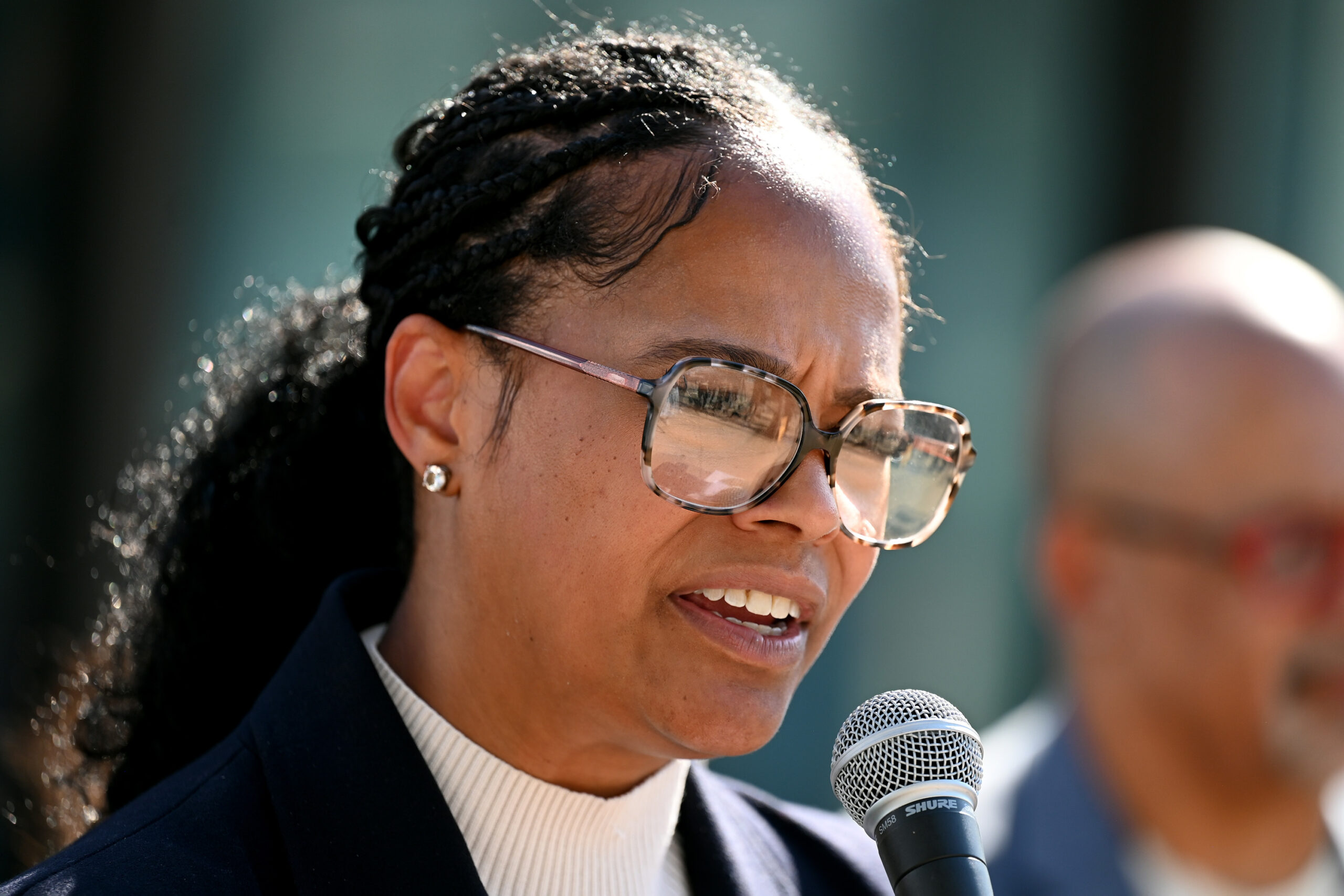
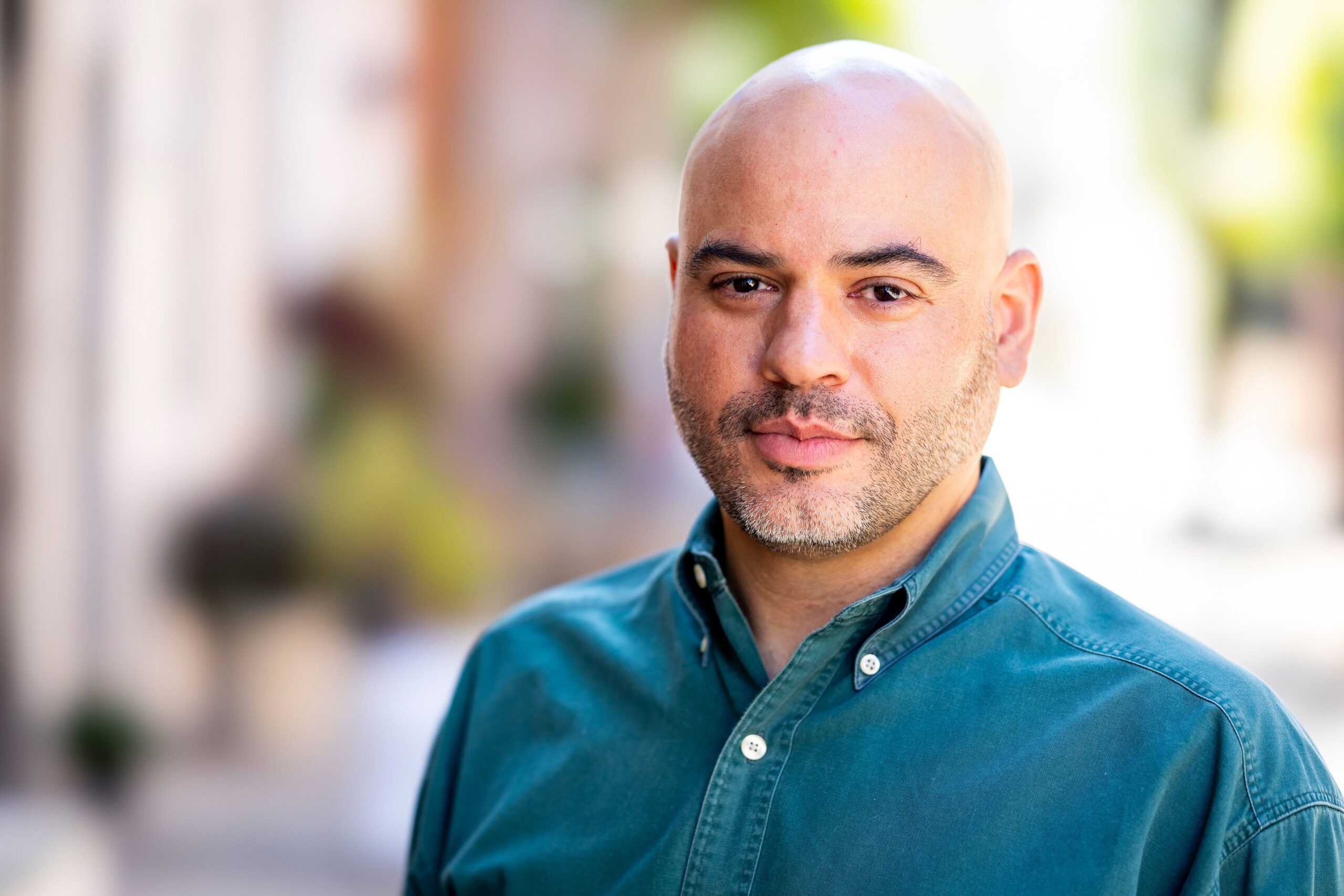
Pablo McConnie-Saad, a 39-year-old South Philly resident who worked in Biden’s administration, entered the race to represent Pennsylvania’s 3rd Congressional District.
Meanwhile, Pablo Iván McConnie-Saad — a Bella Vista resident who worked in Delaware politics before serving in the Treasury Department under former President Joe Biden — brought in a fundraising haul similar to the sitting state representatives last quarter despite his campaign largely flying under the radar.
McConnie-Saad collected $119,000 in contributions last quarter, and he had $69,000 on hand at the start of the year.
In a statement, campaign field director Matt Cárdenas said McConnie-Saad offered voters a “different choice.”
“This campaign is entirely people-powered,” he said. “No corporate PAC money, no AIPAC, just everyday people investing in a different kind of politics. We’re proud of what we’ve built so far. Politicians have failed us, and Washington won’t change unless we challenge it.”
The Democratic Socialists of America’s Philadelphia chapter recently endorsed him, as did two liberal wards in South Philadelphia. And Reclaim Philadelphia leaders are recommending that its members back Rabb in the progressive group’s internal endorsement process.
The Working Families Party of Pennsylvania, which often funds super PACs to back left-leaning candidates, has not yet weighed in.
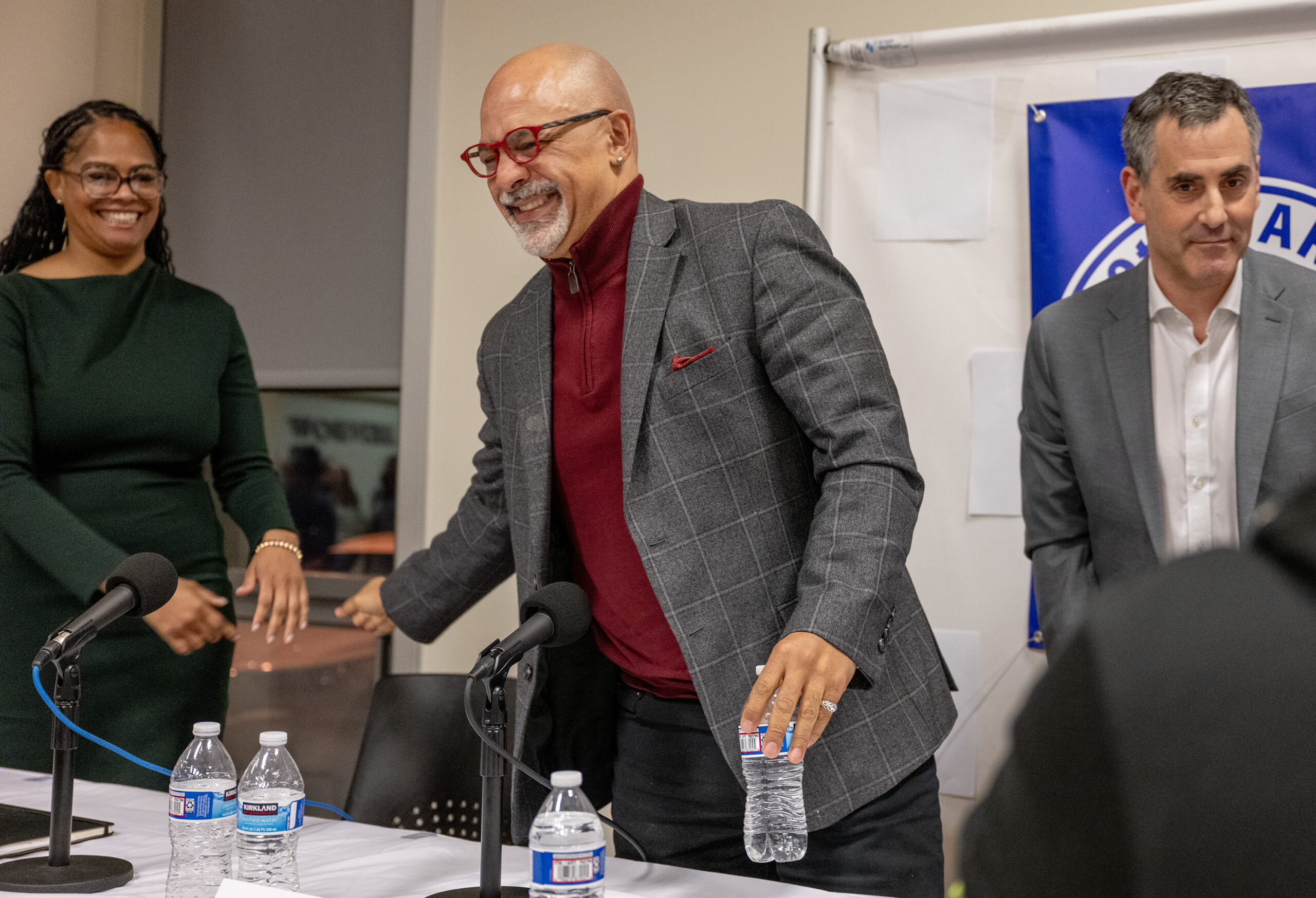
Candidates (from left) State Reps. Morgan Cephas, and Chris Rabb; and physician David Oxman appear at a forum hosted by the 9th Ward Democratic Committee in Mt. Airy Thursday, Dec. 4, 2025.
“We’re still going through an active endorsement process, but we’re confident that we will land on a progressive who will fight for working people, not billionaire donors, big corporations, or special interests,” said Nick Gavio, a spokesperson for the party.
Additionally, the Justice Democrats, a national group founded by operatives from Bernie Sanders’ presidential campaign, may also get involved. In the past, the PAC has backed candidates with similar platforms to Rabb’s.
Justice Democrats “will likely come to a decision with news to share in the very near future in support of a candidate we can be confident will represent the values of the everyday people in this district,” spokesperson Usamah Andrabi said.
Data reporter Joe Yerardi contributed to this article.
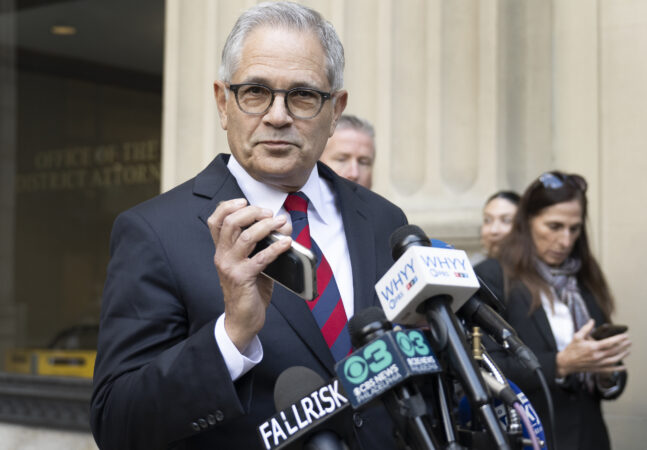
Philadelphia’s bombastic district attorney, Larry Krasner, is no stranger to opposition from within his own party, but the anger directed at him last week after he said ICE agents are “wannabe Nazis” was more pronounced than usual.
After making the comparison, Krasner faced a wave of criticism, including from Pennsylvania Gov. Josh Shapiro, a Democrat, who called the comments “abhorrent” and said the rhetoric doesn’t help “bring down the temperature.”
But the progressive district attorney said Monday that he would not back down, saying “these are people who have taken their moves from a Nazi playbook and a fascist playbook.”
“Governor Shapiro is not meeting the moment,” Krasner said in an interview. “The moment requires that we call a subgroup of people within federal law enforcement — who are killing innocent people, physically assaulting innocent people, threatening and punishing the use of video — what they are. … Just say it. Don’t be a wimp.”
Krasner pointed to a speech by Rabbi Joachim Prinz at the March on Washington in 1963: “Bigotry and hatred are not the most urgent problem. The most urgent, the most disgraceful, the most shameful, and the most tragic problem is silence.”
In invoking that speech, Krasner said: “A reminder, Mr. Governor: Silence equals death.”
Krasner’s defense came after days of criticism from across the political spectrum, ranging from the White House press secretary to Democratic members of Congress. And it punctuated a yearslong history of conflict with Shapiro.
The governor and Philadelphia’s top law enforcement official have feuded politically,sparred in court, and disagreed on policy. In 2019 — when lawyers from Krasner’s office decamped to work for then-Attorney General Shapiro — DA’s office staffers referred to Shapiro’s office as “Paraguay,” a reference to the country where Nazis took refuge after the war.
Last week, during a news conference about proposed restrictions on immigration enforcement in Philadelphia, the district attorney said he would “hunt down” and prosecute U.S. Immigration and Customs Enforcement agents who commit crimes in the city.
“There will be accountability now. There will be accountability in the future. There will be accountability after [Trump] is out of office,” Krasner said. “If we have to hunt you down the way they hunted down Nazis for decades, we will find your identities.”
During an interview Thursday on Fox News’ Special Report with Bret Baier, Shapiro was asked about Krasner’s comparison of ICE agents to Nazis and called the comments “unacceptable.”
“It is abhorrent and it is wrong, period, hard stop, end of sentence,” Shapiro said.
Several other Democrats in political and media circles weighed in. U.S. Sen. John Fetterman, a Pennsylvania Democrat who has at times sided with Trump on immigration matters, appeared on Fox News and said he “strongly” condemned Krasner’s language.
He said that “members of ICE are not Nazis.”
“That’s gross,” Fetterman said. “Do not compare anyone to Nazis. Don’t use that kind of rhetoric. That can incite violence.”
U.S. Rep. Chris Deluzio, a Democrat who represents parts of Western Pennsylvania, in an interview with the Washington Examiner contrasted his own approach with Krasner’s, saying: “I reserve throwing the phrase Nazis at actual Nazis. I don’t just throw that around.”
And State Rep. Manuel Guzman Jr., a Democrat who represents a significant Latino population in Berks County, wrote on social media Friday: “I really, really want Krasner to chill tf out.”
“I get it. We want to protect our immigrant community,” Guzman wrote, “but I question if constantly poking the bear is the right strategy. At the end of the day it’s my community that is under siege.”
And U.S. Rep. Dan Meuser, a Republican who represents parts of Northeast Pennsylvania, appeared on Newsmax and called Krasner a “psychopath with a badge.”
Meuser — who considered challenging Shapiro for governor with Trump’s backing but ultimately decided not to run — also on social media decried “the Left’s silence and, in many cases, encouragement of this rhetoric.”
Krasner doubled down. In an interview on CNN on Thursday, he criticized Fetterman as “not a real Democrat” and also said, “There are some people who are all in on the fascist takeover of this country who do not like the comparison to Nazi Germany.”
He said that when he promised to “hunt down” federal agents who kill someone in his jurisdiction, he was attempting to make a point that there is no statute of limitations on homicide.
The interviewer, Kaitlan Collins, asked Krasner whether he could have made that point without comparing agents to Nazis.
“Why would I do that?” Krasner responded. “They’re taking almost everything they do out of the Nazi playbook.”
“I did not see anything that concerned me about the condition, because there are some marks, but I can’t portray where they are from, and I do not believe that they’re in a worsened condition now,” Judge Cynthia M.Rufe told reporters after spending about 30 minutes in the storage facility, which is controlled by the National Park Service even though the center is not part of the agency.
After the inspection, Rufe ordered the government to safeguard the removed exhibits and mitigate any potential harm to them.
The suit came after National Park Service employees took down educational panels about slavery from the President’s House at Independence National Historical Park on Jan. 22.
It also follows a hearing in federal court Friday in which city attorneys and U.S. attorneys sparred over the removal of the exhibits. During the hearing, Rufe, a George W. Bush appointee, chastised a U.S. attorney representing President Donald Trump‘s administration for talking out of “both sides of his mouth” and making “dangerous” arguments.
Rufe issued an order Monday preventing further removals or changes to the President’s House until further notice. The judge also instructed the city to file a new injunction request to clarify what it is seeking, and gave the U.S. attorney’s office another week to respond.
Michael Coard, leader of advocacy group Avenging the Ancestors Coalition, which helped develop the President’s House in the early 2000s and is providing legal backing to the city’s suit, told reporters that he didn’t see any damage to the panels, but “there was desecration.”
What he saw was“completely disrespectful, demoralizing, defiling, and desecration,” Coard said, noting that the signs, many of which are fragile, were not cushioned and that some were against the wall on a cement floor.
Coard joined the judge and attorneys in the storage facility as a representative for the coalition’s legal support of the lawsuit.Members of the press were not allowed to review the exhibits.
Before going to the storage facility Monday, Rufe and the attorneys gathered in the lobby of the Constitution Center, which has a direct view to Independence Hall from Arch Street to Chestnut.
Rufe invoked the iconic building Friday to set the stakes for the city’s suit against Interior Secretary Doug Burgum, acting National Park Service Director Jessica Bowron, and their respective agencies.
“It’s threatening to think that that could happen to Independence Hall tomorrow,” Rufe said during the hearing. “It’s frightening to think that the citizenry would not be involved in such an important change.”
After having been in limbo for months, the informational panels were removed by Park Service employees using wrenches and crowbars onorders from the Trump administration, provoking outrage from Philadelphians. The displays were then piled into the back of a pickup truck and transported to the storage facility.
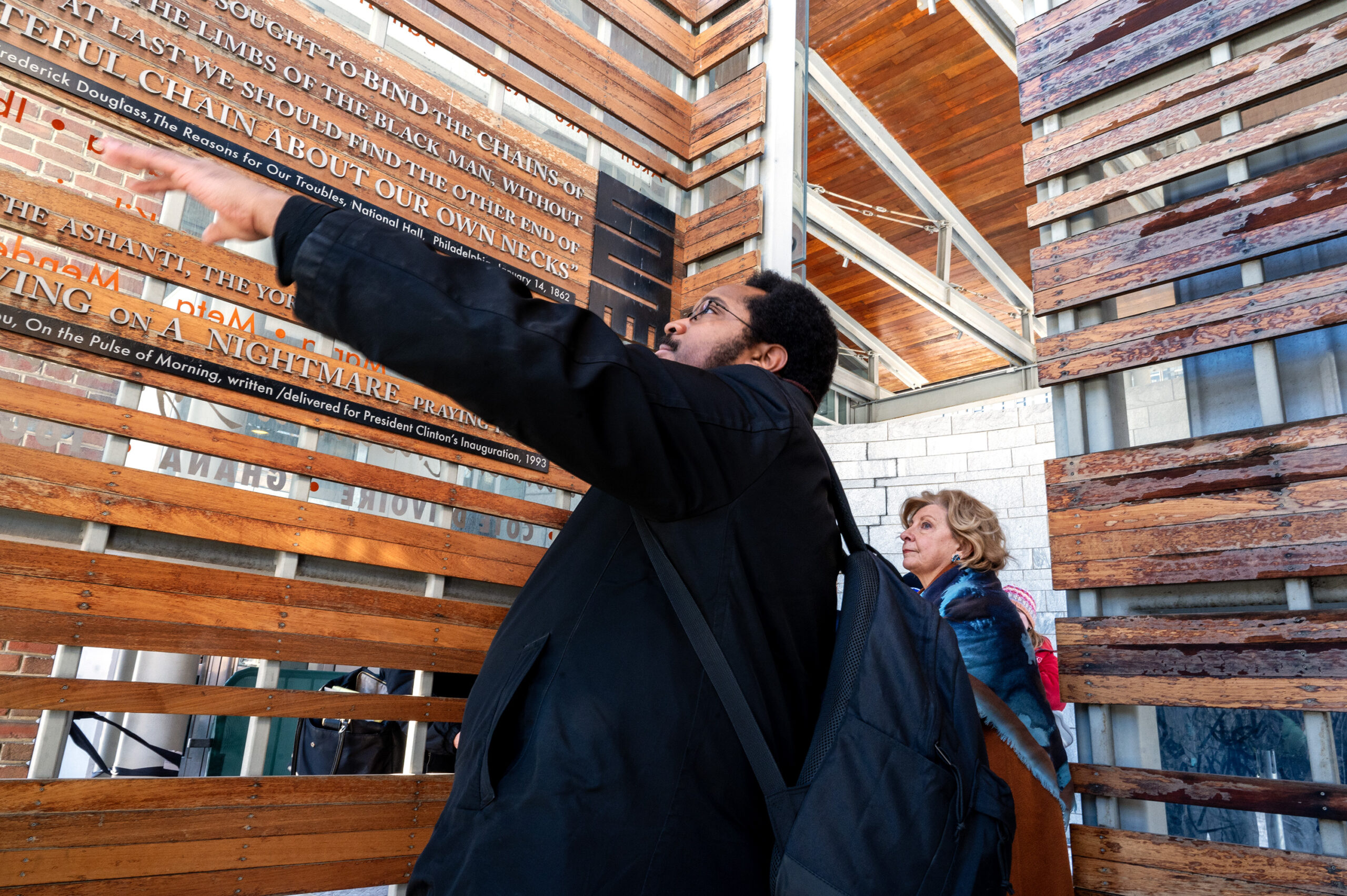
Mijuel Johnson (left), a guide with The Black Journey: African-American Walking Tour of Philadelphia, shows Judge Cynthia Rufe (right) around the President’s House in Independence National Historical Park on Monday.
The exhibits are stored by the National Parks Service in a room accessible through the National Constitution Center, but the civics-nonprofit “does not oversee that space, and Center staff have no knowledge of what materials may be stored there,” a spokesperson said in a statement.
After reviewing the removed exhibits for roughly 30 minutes, Rufe and her law clerks walked across Independence Mall toward the President’s House, a block away at Market Street. The judge stood at the site of the former home of Presidents George Washington and John Adams, as a guide from The Black Journey explained the historical significance of the slavery exhibit.
“This is the first of its kind memorial on federal property to the enslaved people of the United States,” said Mijuel Johnson, who led the tour.
Johnson directed the judge’s attention to panels telling the story of the presidency and the enslaved Africans who lived on the property, part of the routine tour script, but the walls were bare.
Rufe asked questions about the removed panels and what exhibits could be further removed. She walked around the site, still not cleared of the previous weekend’s snow, to review a wall in which the names of the President’s House enslaved residents are etched into the stone.
Judge Cynthia Rufe views the “Memorial to Enslaved People of African Descent in the United States of America,” during a visit to the President’s House in Independence National Historical Park on Monday. This exhibit was not removed with other panels at the site on Jan. 22. The judge visited the site while hearing the Parker administration’s suit to have President Trump’s administration restore the panels.
Outside the location that served as the slaves’ quarters, adjacent to the Liberty Bell, Rufe paused and took out her glasses to read a memorial panel.
“This enclosed space is dedicated to millions of men, women and children of African descent who lived, worked and died as enslaved people in the United States of America,” the panel read. “They should never again be forgotten”
Relevant to the core disagreement in the lawsuit, about who has the right to change the site, the bottom of the memorial panel bears the names of two entities: the National Park Service and the City of Philadelphia.
President Donald Trump has said the “only thing” he worries about is losing Republican control of Congress in the November elections. The latest campaign finance filings show he’s built an unprecedented war chest to help keep that from happening.
Trump’s political committees and the Republican National Committee amassed $483 million through the end of December, according to documents filed with the Federal Election Commission. That’s nearly triple the $167 million collectively held by the Democratic National Committee and its Senate and House party committees and super PACs.
The haul comes from tapping Trump’s wealthiest donors with events like “MAGA Inc. dinners” at his Florida and New Jersey resorts as well as relentless appeals via text and email to small-dollar contributors who constitute the Make America Great Again base.
Since returning to the White House, MAGA Inc. has gotten eight-figure contributions from pipeline billionaire Kelcy Warren and his company Energy Transfer LP; quant trader Jeff Yass; OpenAI co-founder Greg Brockman; and Crypto.com exchange operator Foris DAX Inc. In total, MAGA Inc. alone has raked in $313 million since Trump’s 2024 election victory.
Targeting the other end of the donor spectrum, Trump’s Never Surrender leadership PAC recently asked potential contributors to make a “small, sustaining contribution so we can complete the MAGA agenda.” It asked for as little as $33.
Whether all that financial armor is enough to buck history – incumbent presidents almost always lose ground in midterms – isn’t so clear, and Trump knows it.
“Even presidents, whether it’s Republican or Democrat, when they win, it doesn’t make any difference – they seem to lose the midterms,” Trump said in a Jan. 27 interview on Fox News. “So, that’s the only thing I worry about.”
Only twice since 1938 has the party in control of the White House gained House seats in a midterm election. During Trump’s first presidency, in 2018, Republicans lost 40 seats. In the two midterms that took place during Barack Obama’s presidency, in 2010 and 2014, Republicans netted 63 seats and 13 seats, respectively.
– – –
Growing Frustration
This year, momentum and history seem to be on the Democrats’ side – they only need to swing a handful of seats to take control of the House.
Working in their favor, national polls show a majority of voters disapprove of Trump’s handling of the economy, as well as growing frustration with the administration’s approach to deportations and foreign policy. Parts of the coalition that swept him back to office – including independents and young voters as well as Black and Hispanic males – are fraying.
That handicap for Republicans has been evident in elections over the past three months in which Democrats have outperformed expectations, in part by tapping into voter frustration over cost-of-living concerns.
“House Republicans are running scared,” said Viet Shelton, a spokesman for the Democratic Congressional Campaign Committee. He added that “with better candidates, a better message, and the public souring on Republicans, Democrats are poised to take back the majority.”
Reflecting the shifting mood, the non-partisan Cook Political Report last month moved 18 House races toward Democrats, bringing the number of seats considered solidly blue to 189, compared to 186 for Republicans. A party needs 218 seats to win the majority.
In the latest example of the headwinds Republicans face, this past weekend in Texas a Democratic candidate for a state Senate seat, Taylor Rehmet, defeated a Republican in a district Trump won in 2024 by 17 percentage points over Kamala Harris.
As the GOP’s fund raiser-in-chief, Trump isn’t waiting until November to put his cash to work. The president intends to use the money he’s amassed to play the role of kingmaker in the midterms, according to people familiar with the strategy.
That involves doling out money to loyalists, or chosen candidates in competitive primaries or congressional races and punishing lawmakers who’ve crossed him over the past year on everything from the passage of his signature tax bill to the release of the Epstein files.
Trump allies also expect to tap their stockpile for specific districts in the final two months in the states and races where it’s most needed, flooding the zone to try to ensure victory.
“MAGA Inc. will have the resources to help candidates who support President Trump’s America First agenda,” Alex Pfeiffer, a spokesperson for the super-PAC, said.
MAGA Inc. has already intervened in one election: it spent $1.7 million backing Tennessee Republican Matt Van Epps in a special election to fill a vacant House seat. Van Epps won by about 9 points – but that margin was narrower than the cushion of more than 21 points his Republican predecessor enjoyed in 2024.
Privately, many Trump allies are resigned to the idea the party could lose control of the House. Trump has warned he could be impeached for a third time if that happens, and his signaled he thinks his party’s lawmakers would be to blame.
House Speaker Mike Johnson, a perennial optimist in his public remarks, said on Sunday that he remains “very bullish on the midterms” and cited the party’s fund-raising prowess as one reason.
“We’re going to have a war chest to run on,” Johnson said on Fox News Sunday. “I think we’re going to defy history.”
Trump says his first year as president shows he deserves reelection. Pressed in Iowa last week about why voters may perennially pick the opposition party in midterms, Trump mused about the electorate wanting “fences” or “guardrails” on presidents.
But, he quickly added, “I don’t need guardrails. I don’t want guardrails.”