Category: National Politics

  • Washington Post seeks court order for government to return electronics seized from reporter’s home

    Washington Post seeks court order for government to return electronics seized from reporter’s home

    WASHINGTON — The Washington Post asked a federal court on Wednesday for an order requiring federal authorities to return electronic devices that they seized from a Post reporter’s Virginia home last week, accusing the government of trampling on the reporter’s free speech rights and legal safeguards for journalists.

    A magistrate judge in Alexandria, Va., temporarily barred the government from reviewing any material from the devices seized from Post reporter Hannah Natanson’s home. The judge also scheduled a Feb. 6 hearing on the newspaper’s request.

    Federal agents seized a phone, two laptops, a recorder, a portable hard drive, and a Garmin smart watch when they searched Natanson’s home last Wednesday, according to a court filing. The search was part of an investigation of a Pentagon contractor accused of illegally handling classified information.

    “The outrageous seizure of our reporter’s confidential newsgathering materials chills speech, cripples reporting, and inflicts irreparable harm every day the government keeps its hands on these materials,” the Post said in a statement.

    The seized material spanned years of Natanson’s reporting across hundreds of stories, including communications with confidential sources, the Post said. The newspaper asked the court in Virginia to order the immediate return of all seized materials and to bar the government from using any of it.

    “Anything less would license future newsroom raids and normalize censorship by search warrant,” the Post’s court filing says.

    The Pentagon contractor, Aurelio Luis Perez-Lugones, was arrested earlier this month on a charge of unauthorized removal and retention of classified documents. A warrant said the search of Natanson’s home was related to the investigation of Perez-Lugones, the Post reported.

    Natanson has been covering Republican President Donald Trump’s transformation of the federal government, The Post recently published a piece in which she described gaining hundreds of new sources from the federal workforce, leading one colleague to call her “the federal government whisperer.”

    Attorney General Pam Bondi said that the search was done at the request of the Defense Department and that the journalist was “obtaining and reporting classified and illegally leaked information from a Pentagon contractor.”

    Perez-Lugones, a U.S. Navy veteran who resides in Laurel, Md., has not been charged with sharing classified information or accused in court papers of leaking.

    The Justice Department has internal guidelines governing its response to news media leaks. In April, Bondi issued new guidelines restoring prosecutors’ authority to use subpoenas, court orders and search warrants to hunt for government officials who make “unauthorized disclosures” to journalists.

    The new guidelines rescinded a policy from Democratic President Joe Biden’s administration that protected journalists from having their phone records secretly seized during leak investigations.

    Reporters Committee for Freedom of the Press president Bruce Brown said the unprecedented search of the reporter’s home, “imperils public interest reporting and will have ramifications far beyond this specific case.”

    “It is critical that the court blocks the government from searching through this material until it can address the profound threat to the First Amendment posed by the raid,” Brown said in a statement Wednesday.

  • Immigration officers assert sweeping power to enter homes without a judge’s warrant, memo says

    Immigration officers assert sweeping power to enter homes without a judge’s warrant, memo says

    WASHINGTON — Federal immigration officers are asserting sweeping power to forcibly enter people’s homes without a judge’s warrant, according to an internal Immigration and Customs Enforcement memo obtained by The Associated Press, marking a sharp reversal of longstanding guidance meant to respect constitutional limits on government searches.

    The memo authorizes ICE officers to use force to enter a residence based solely on a more narrow administrative warrant to arrest someone with a final order of removal, a move that advocates say collides with Fourth Amendment protections and upends years of advice given to immigrant communities.

    The shift comes as the Trump administration dramatically expands immigration arrests nationwide, deploying thousands of officers under a mass deportation campaign that is already reshaping enforcement tactics in cities such as Minneapolis.

    For years, immigrant advocates, legal aid groups and local governments have urged people not to open their doors to immigration agents unless they are shown a warrant signed by a judge. That guidance is rooted in Supreme Court rulings that generally prohibit law enforcement from entering a home without judicial approval. The ICE directive directly undercuts that advice at a time when arrests are accelerating under the administration’s immigration crackdown.

    The memo itself has not been widely shared within the agency, according to a whistleblower complaint, but its contents have been used to train new ICE officers who are being deployed into cities and towns to implement the president’s immigration crackdown. New ICE hires and those still in training are being told to follow the memo’s guidance instead of written training materials that actually contradict the memo, according to the whistleblower disclosure.

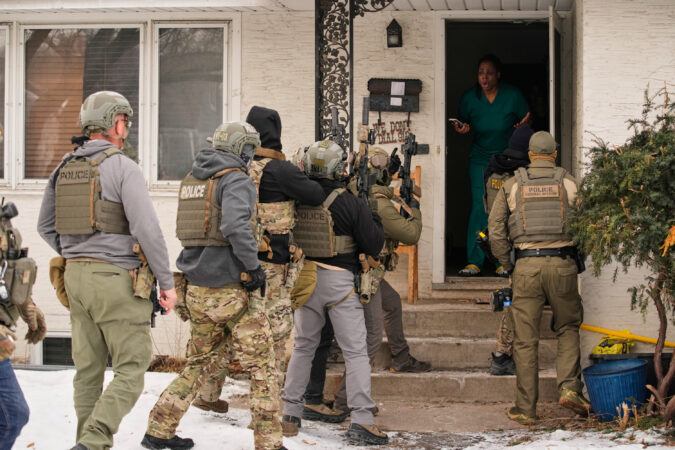
    It is unclear how broadly the directive has been applied in immigration enforcement operations. The Associated Press witnessed ICE officers ramming through the front door of the home of a Liberian man in Minneapolis on Jan. 11 with only an administrative warrant, wearing heavy tactical gear and with their rifles drawn.

    The change is almost certain to meet legal challenges and stiff criticism from advocacy groups and immigrant-friendly state and local governments that have spent years successfully urging people not to open their doors unless ICE shows them a warrant signed by a judge.

    The Associated Press obtained the memo and whistleblower complaint from an official in Congress, who shared it on condition of anonymity to discuss sensitive documents. The AP verified the authenticity of the accounts in the complaint.

    The memo, signed by the acting director of ICE, Todd Lyons, and dated May 12, 2025, says: “Although the U.S. Department of Homeland Security (DHS) has not historically relied on administrative warrants alone to arrest aliens subject to final orders of removal in their place of residence, the DHS Office of the General Counsel has recently determined that the U.S. Constitution, the Immigration and Nationality Act, and the immigration regulations do not prohibit relying on administrative warrants for this purpose.”

    The memo does not detail how that determination was made nor what its legal repercussions might be.

    When asked about the memo, Homeland Security spokeswoman Tricia McLaughlin said in an emailed statement to the AP that everyone the department serves with an administrative warrant has already had “full due process and a final order of removal.”

    She said the officers issuing those warrants have also found probable cause for the person’s arrest. She said the Supreme Court and Congress have “recognized the propriety of administrative warrants in cases of immigration enforcement,” without elaborating. McLaughlin did not respond to questions about whether ICE officers entered a person’s home since the memo was issued relying solely on an administrative warrant and if so, how often.

    Recent arrests shine a light on tactics

    Whistleblower Aid, a nonprofit legal organization that assists workers exposing wrongdoings, said in the whistleblower complaint obtained by The Associated Press that it represents two anonymous U.S. government officials “disclosing a secretive — and seemingly unconstitutional – policy directive.”

    A wave of recent high-profile arrests, many unfolding at private homes and businesses and captured on video, has shined a spotlight on immigration arrest tactics, including officers’ use of proper warrants.

    Most immigration arrests are carried out under administrative warrants, internal documents issued by immigration authorities that authorize the arrest of a specific individual but do not permit officers to forcibly enter private homes or other non-public spaces without consent. Only warrants signed by judges carry that authority.

    All law enforcement operations — including those conducted by ICE and Customs and Border Protection — are governed by the Fourth Amendment of the Constitution, which protects all people in the country from unreasonable searches and seizures.

    People can legally refuse federal immigration agents entry into private property if the agents only have an administrative warrant, with some limited exceptions.

    Federal agents this month rammed the door of the Minneapolis home of a Liberian man with a deportation order from 2023, who was then arrested. Documents reviewed by The AP revealed that the agents only had an administrative warrant — meaning there was no judge who authorized the raid on private property.

    Memo shown to ‘select’ officials

    The memo says ICE officers can forcibly enter homes and arrest immigrants using just a signed administrative warrant known as an I-205 if they have a final order of removal issued by an immigration judge, the Board of Immigration Appeals or a district judge or magistrate judge.

    The memo says officers must first knock on the door and share who they are and why they’re at the residence. They’re limited in the hours they can go into the home — after 6 a.m. and before 10 p.m. The people inside must be given a “reasonable chance to act lawfully.” But if that doesn’t work, the memo says, they can use force to go in.

    “Should the alien refuse admittance, ICE officers and agents should use only a necessary and reasonable amount of force to enter the alien’s residence, following proper notification of the officer or agent’s authority and intent to enter,” the memo reads.

    The memo is addressed to all ICE personnel. But it has been shown only to “select DHS officials” who then shared it with some employees who were told to read it and return it, Whistleblower Aid wrote in the disclosure.

    One of the two whistleblowers was allowed to view the memo only in the presence of a supervisor and then had to give it back. That person was not allowed to take notes. A whistleblower was able to access the document and lawfully disclose to Congress, Whistleblower Aid said.

    Although the memo was issued in May, David Kligerman, senior vice president and special counsel at Whistleblower Aid, said it took time for its clients to find a “safe and legal path to disclose it to lawmakers and the American people.”

    ICE told to rely on administrative warrants, memo says

    ICE has been rapidly hiring thousands of new deportation officers to carry out the president’s mass deportation agenda. They’re trained at the Federal Law Enforcement Training Center in Brunswick, Georgia.

    During a visit there by The Associated Press in August, ICE officials said repeatedly that new officers were being trained to follow the Fourth Amendment.

    But according to the whistleblowers’ account, newly hired ICE officers are being told they can rely solely on administrative warrants to enter homes to make arrests even though that conflicts with written Homeland Security training materials.

    ICE officers often wait for hours for the person they’re hoping to arrest to come outside so they can make the arrest on the sidewalk or at the person’s work — public places where they are allowed to operate without the risk of infringing on the person’s Fourth Amendment rights.

    Whistleblower Aid called the new policy a “complete break from the law” and said it undercuts the “Fourth Amendment and the rights it protects.”

  • Trump cancels tariff threat over Greenland, says NATO agreed to ‘framework’ of future Arctic deal

    Trump cancels tariff threat over Greenland, says NATO agreed to ‘framework’ of future Arctic deal

    DAVOS, Switzerland — DAVOS, Switzerland — President Donald Trump on Wednesday scrapped the tariffs that he threatened to impose on eight European nations to press for U.S. control over Greenland, pulling a dramatic reversal shortly after insisting he wanted to get the island “including right, title and ownership.”

    In a post on his social media site, Trump said he had agreed with the head of NATO on a “framework of a future deal” on Arctic security, potentially defusing tension that had far-reaching geopolitical implications.

    He said “additional discussions” on Greenland were being held concerning the Golden Dome missile defense program, a multilayered, $175 billion system that for the first time will put U.S. weapons in space.

    Trump offered few details, saying they were still being worked out. But one idea NATO members have discussed as part of a compromise with Trump was that Denmark and the alliance would work with the U.S. to build more U.S. military bases on Greenland.

    That’s according to a European official familiar with the matter but not authorized to comment publicly. The official, who spoke on condition of anonymity, said it was not immediately clear if that idea was included in the framework Trump announced.

    Trump has backed off tariffs before

    The president has threatened tariffs before only to back away. In April, after first saying he would slap massive import levies on nations from around the world, which prompted a sharp negative market reaction, Trump eased off.

    But his change of heart this time came only after he used his speech at the World Economic Forum in the Swiss Alps to focus on Greenland and threatened to upend NATO, an alliance that has been among the globe’s most unshakable since the early days of the Cold War.

    In his address, Trump said he was asking for territory that was “cold and poorly located” and that the U.S. had effectively saved Europe during World War II while declaring of NATO: “It’s a very small ask compared to what we have given them for many, many decades.”

    “We probably won’t get anything unless I decide to use excessive strength and force, where we would be frankly unstoppable. But I won’t do that, OK?” Trump said.

    But Trump has also said repeatedly that, while the U.S. will defend NATO, he wasn’t convinced the alliance will backup Washington, if needed, and suggested that was at least part of the reason for his aggressive stance toward Greenland. That prompted NATO Secretary General Mark Rutte, in a post-speech event with Trump, to say that the alliance would stand with the U.S. if it is attacked.

    “You can be assured, absolutely,” Rutte said. A short time later came Trump’s post canceling the tariffs.

    Danish Foreign Minister Lars Løkke Rasmussen said he welcomed Trump ruling out taking “Greenland by force” and pausing ”the trade war with Europe.”

    “Now, let’s sit down and find out how we can address the American security concerns in the Arctic while respecting the red lines of the Kingdom of Denmark,” he said in a statement.

    President cites national security

    Trump argues that the U.S. needs Greenland for national security and to counter threats from Russia and China in the Arctic region, despite America already having a large military base there. He threatened to impose steep U.S. import taxes on Denmark and seven other allies unless they negotiate a transfer of the semi-autonomous territory.

    The tariffs were to have started at 10% next month and climb to 25% in June.

    Trump often tries to increase pressure on the other side when he believes it can lead to a favorable agreement. His threats at Davos appeared on the verge of rupturing NATO, which was founded by leading European nations, the U.S. and Canada to counter the Soviet Union.

    The alliance’s other members were steadfast in saying Greenland is not for sale and cannot be wrested from Denmark, while angrily rejecting Trump’s promised tariffs.

    A Danish government official told The Associated Press after Trump’s speech that Copenhagen was ready to discuss U.S. security concerns. But the official, who was not authorized to comment publicly and spoke on condition of anonymity, underscored the government’s position that “red lines”— namely Denmark’s sovereignty — must be respected.

    It was not immediately clear how Trump’s canceling of tariffs might change such calculations.

    Greenland tells citizens to prepare

    In the meantime, Greenland’s government responded by telling its citizens to be prepared. It has published a handbook in English and Greenlandic on what to do in a crisis that urges residents to ensure they have sufficient food, water, fuel and supplies at home to survive for five days.

    “We just went to the grocery store and bought the supplies,” said Tony Jakobsen in Greenland’s capital Nuuk said, showing off the contents of bags that included candles, snacks and toilet paper.

    Jakobsen said he thought Trump’s rhetoric toward Greenland was “just threats… but it’s better to be ready than not ready.”

    Before backing down, Trump had urged Denmark and the rest of NATO to stand aside, adding an ominous warning.

    “We want a piece of ice for world protection, and they won’t give it,” Trump said. “You can say yes, and we will be very appreciative. Or you can say no, and we will remember.”

    He also called for opening “immediate negotiations” for the U.S. to acquire Greenland. In subsequent comments to reporters, he declined to name a price that might be paid, saying only, “There’s a bigger price, and that’s the price of safety and security and national security and international security.”

    His arrival in Davos was delayed after a minor electrical problem on Air Force One forced a return to Washington to switch aircraft. As Trump’s motorcade headed down a narrow road to the speech site, onlookers — including some skiers — lined the route, some making obscene gestures.

    Financial markets that had fallen sharply on Trump’s threatened tariffs bounced back Wednesday. Also breathing a sigh of relief were a number of U.S. officials who had also been concerned that Trump’s hard-line stance and bellicose rhetoric toward Greenland, Denmark and other NATO allies could harm other foreign policy goals.

    Trump’s Davos speech was originally supposed to focus on how to lower U.S. housing prices — part of a larger effort to bring down the cost of living. Greenland instead carried the day, though Trump mistakenly referred to it as Iceland four times during his speech.

    “This enormous unsecured island is actually part of North America,” Trump said. “That’s our territory.”

    When he finally did mention housing, Trump suggested he did not support a measure to encourage affordability. He said bringing down rising home prices hurts property values and makes homeowners who once felt wealthy because of the equity in their houses feel poorer.

    ‘Now there’s another threat’

    Before Trump announced that he was abandoning the tariffs and potentially easing international pressure, his speech left people in Nuuk preparing for the worst.

    Resident Johnny Hedemann said it was “insulting” that Trump “talks about the Greenlandic people and the Greenlandic nation as just an ice cube.” He spoke while heading out to buy a camping stove and instant mashed potatoes.

    “Living in this nature, you have to be prepared for almost anything. And now there’s another threat — and that’s Trump,” Hedemann said.

  • Trump to meet with Zelensky as Ukraine endures a bitter winter after Russian attacks

    Trump to meet with Zelensky as Ukraine endures a bitter winter after Russian attacks

    KYIV, Ukraine — About 4,000 buildings in Kyiv remained without heating Wednesday, and nearly 60% of the Ukrainian capital was without power, Ukraine’s President Volodymyr Zelensky said, after days of Russian bombardment of Ukraine’s power grid and as President Donald Trump prepared to hold talks with the Ukrainian leader.

    With temperatures falling as low as minus-4 F in Kyiv, Ukraine is seeing one of the coldest winters in years, deepening the hardship of Ukrainians almost four years after Russia launched a full-scale invasion.

    A yearlong push by the Trump administration to stop the fighting hasn’t yielded any breakthrough, despite the American president issuing a series of deadlines, though efforts were set to continue.

    Trump said at the World Economic Forum in Davos, Switzerland that he would meet Thursday with Zelensky.

    “I want to stop it,” Trump said of the fighting Wednesday. “It’s a horrible war.”

    U.S. special envoy Steve Witkoff told The Associated Press on Wednesday that he plans to discuss peace proposals with Putin as well as hold talks with a Ukrainian delegation.

    “We need a peace,” Witkoff said at Davos.

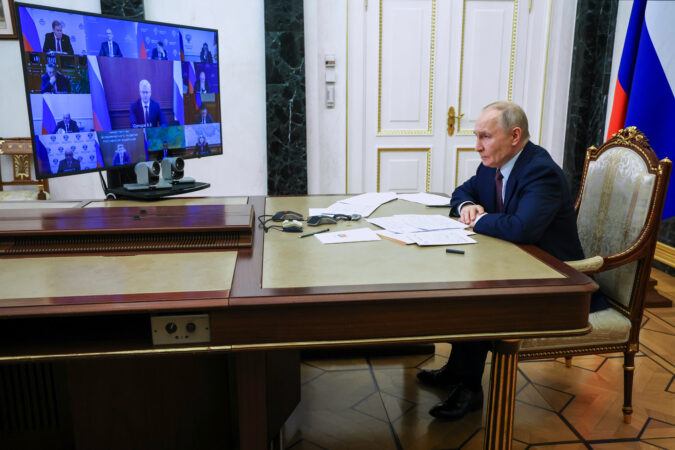
    Putin confirmed late on Wednesday that Witkoff and Trump’s son-in-law Jared Kushner are expected in Moscow on Thursday for talks. The Russian leader said that Moscow and Washington, among other things, are discussing the possibility of using Russian assets frozen in the U.S. for rebuilding “territories damaged by the hostilities” after a peace agreement is reached.

    But with a dispute over Greenland’s future largely eclipsing other transatlantic issues at Davos, discussions about Ukraine’s defense looked likely to be sidelined.

    Zelensky said last week his envoys would try to finalize with U.S. officials documents for a proposed peace settlement that relate to postwar security guarantees and economic recovery.

    He added that the U.S. and Ukraine could sign the documents in Davos this week, but on Tuesday he said he wouldn’t be traveling to Switzerland and would focus on restoring power in Ukraine.

    Ukraine’s Cabinet of Ministers is allocating 2.56 billion hryvnias (almost $60 million) from a reserve fund to purchase generators, Prime Minister Yuliia Svyrydenko said Wednesday.

    NATO Secretary-General Mark Rutte on Wednesday urged the 32-nation alliance’s military chiefs to press their national governments to supply desperately needed air defense systems to Ukraine, helping it fend off Russia’s aerial attacks.

    “Please use your influence to help your political masters to do even more,” Rutte said in a video message to top brass as they met at NATO’s Brussels headquarters.

    “Look deep into your stockpiles to see what more you can give to Ukraine, particularly air defense interceptors. The time really is now,” he said.

    Russia launched 97 drones and a ballistic missile at Ukraine overnight, the Ukrainian air force said.

    In the central Dnipropetrovsk region, attacks killed a 77-year-old man and a 72-year-old woman, according to Oleksandr Hanzha, head of the regional military administration.

    Russia’s Defense Ministry said that air defenses downed 75 Ukrainian drones over several regions.

    The international airports of Krasnodar, Sochi, Gelendzhik and Saratov briefly suspended flights overnight because of the drones.

    In Adygea, more than 120 miles from the Ukrainian border, a Ukrainian drone caused a fire at an apartment building that injured 11 people, including two children, according to Gov. Murat Kumpilov.

  • Immigration enforcement arrives in Maine as a court freezes restrictions on tactics in Minnesota

    Immigration enforcement arrives in Maine as a court freezes restrictions on tactics in Minnesota

    MINNEAPOLIS — Maine became the latest target of the Trump administration’s immigration enforcement crackdown, while a federal appeals court on Wednesday suspended a decision that prohibited federal officers from using tear gas or pepper spray against peaceful protesters in Minnesota.

    The 8th U.S. Circuit Court of Appeals was persuaded to freeze a judge’s ruling that bars retaliation against the public in Minnesota, including detaining people who follow agents in cars, while the government pursues an appeal. Operation Metro Surge, an immigration enforcement operation in Minnesota’s Twin Cities, has been underway for weeks.

    Attorney General Pam Bondi praised the appeals court on X, saying the Justice Department “will protect federal law enforcement agents from criminals in the streets AND activist judges in the courtroom.”

    Minnesota is a major focus of immigration sweeps by agencies under the Department of Homeland Security. State and local officials who oppose the effort were served with federal grand jury subpoenas Tuesday for records that might suggest they were trying to stifle enforcement.

    A political action committee founded by former Vice President Kamala Harris is urging donors to contribute to a defense fund in aid of Gov. Tim Walz, her 2024 running mate.

    “The Justice Department is going after Trump’s enemies,” Harris’ email said, referring to President Donald Trump.

    Feds turn to Maine as next target

    In Maine, the Department of Homeland Security named the enforcement operation Catch of the Day in an apparent play on the state’s seafood industry. Maine has relatively few residents who are in the United States illegally but has a notable presence of refugees in its largest cities, particularly from Africa.

    Secretary of State Shenna Bellows, a Democrat, said she won’t grant a request for confidential license plates sought by Customs and Border Protection, a decision that reflects her disgust over “abuses of power” by immigration enforcers. Renee Good was fatally shot by an ICE officer in Minneapolis on Jan. 7.

    “We have not revoked existing plates but have paused issuance of new plates. We want to be assured that Maine plates will not be used for lawless purposes,” Bellows said.

    A message seeking comment from CBP was not immediately returned.

    Portland City Council member Pious Ali, a native of Ghana, said there’s much anxiety about ICE’s presence in Maine’s largest city.

    “There are immigrants who live here who work in our hospitals, they work in our schools, they work in our hotels, they are part of the economic engine of our community,” Ali said.

    Conflicts emerge in shooting incident

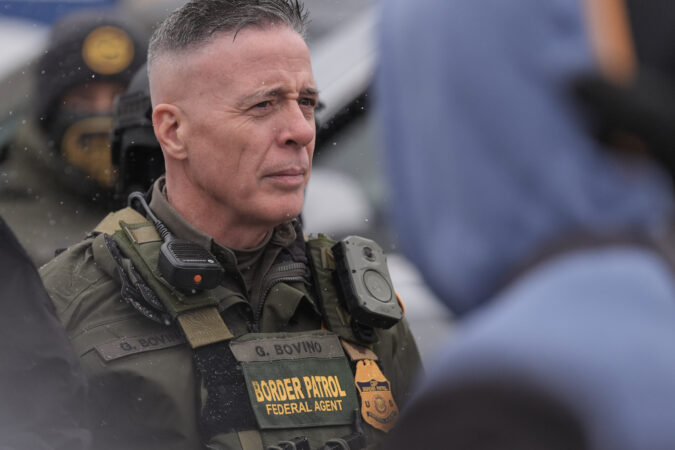
    Greg Bovino of U.S. Border Patrol, who has commanded the Trump administration’s big-city immigration crackdown, said more than 10,000 people in the U.S. illegally have been arrested in Minnesota in the past year, including 3,000 “of some of the most dangerous offenders” in the last six weeks during Operation Metro Surge.

    Bovino defended his “troops” and said their actions are “legal, ethical and moral.”

    Julia Decker, policy director at the Immigrant Law Center of Minnesota, said advocates have no way of knowing whether the government’s arrest numbers and descriptions of the people in custody are accurate.

    Separately, a federal judge said he’s prepared to grant bond and release two men after hearing conflicting testimony about an alleged assault on an immigration officer. Prosecutors are appealing. One of the men was shot in the thigh by the officer during the encounter last week.

    The officer said he was repeatedly struck with a broom and with snow shovels while trying to subdue and arrest Alfredo Alejandro Aljorna following a car crash and foot chase.

    Aljorna and Julio Cesar Sosa-Celis denied assaulting the officer. Neither video evidence nor three eyewitnesses supported the officer’s account about the broom and shovels or that there had been a third person involved.

    Aljorna and Sosa-Celis do not have violent criminal records, their attorneys said, and both had been working as DoorDash drivers at night to avoid encounters with federal agents.

    U.S. Magistrate Judge Douglas Micko said they still could be detained by ICE even if released from custody in the assault case.

  • Trump’s Board of Peace is dividing countries in Europe and the Middle East

    Trump’s Board of Peace is dividing countries in Europe and the Middle East

    JERUSALEM — Divisions emerged Wednesday over President Donald Trump’s Board of Peace as its ambitions have grown beyond Gaza, with some Western European countries declining to join, others remaining noncommittal and a group of Muslim countries agreeing to sign on.

    The developments underscored European concerns over the expanded and divisive scope of the project — which some say may seek to rival the U.N. Security Council’s role in mediating global conflicts. Trump is looking to form the board officially this week on the sidelines of the World Economic Forum meeting in Davos, Switzerland.

    Norway and Sweden said they won’t accept their invitations, after France also said no, while a bloc of Muslim-majority nations — Egypt, Indonesia, Jordan, Pakistan, Qatar, Saudi Arabia and the United Arab Emirates — said in a joint statement that their leaders would join.

    It was not immediately clear how many countries would accept. A White House official said about 30 countries were expected to join, and about 50 had been invited. Two other U.S. officials, who similiarly spoke on condition of anonymity to describe internal plans not yet made public, said roughly 60 countries had been invited but only 18 had so far confirmed their participation.

    Trump was sunny about the prospects ahead of an event Thursday tied to the board, saying of the countries that were invited that “some need parliamentary approval but for the most part, everybody wants to be on.”

    Chaired by Trump, the board was originally conceived as a small group of world leaders overseeing the Gaza ceasefire plan. But the Trump administration’s ambitions have since expanded into a more sprawling concept, with Trump hinting at the board’s role as mediator for other global conflicts.

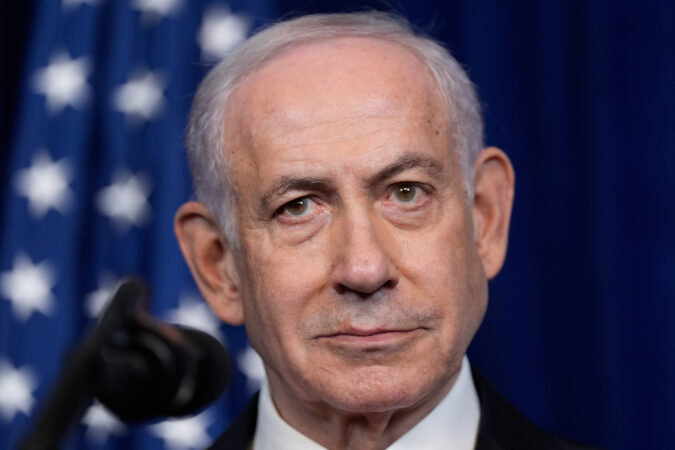
    Israel’s Prime Minister Benjamin Netanyahu said he’s agreed to join the board — a departure from an earlier stance when his office criticized the makeup of another committee tasked with overseeing Gaza.

    Norway and Sweden say no, following in France’s footsteps

    Norway’s state secretary, Kristoffer Thoner, said the Scandinavian country would not join the board because it “raises a number of questions that requires further dialogue with the United States.”

    Swedish Prime Minister Ulf Kristersson said on the sidelines of Davos that his country wouldn’t sign up for the board as the text currently stands, Swedish news agency TT reported, though the country hasn’t formally responded.

    Slovenian Prime Minister Robert Golob said “the time has not yet come to accept the invitation,” according to the STA news agency. The main concern is the board’s mandate is too broad and could seriously undermine international order based on the U.N. Charter, Golob said.

    France declined the invitation earlier in the week. French Foreign Minister Jean-Noel Barrot said, “Yes to implementing the peace plan presented by the president of the United States, which we wholeheartedly support, but no to creating an organization as it has been presented, which would replace the United Nations.”

    The United Kingdom, the European Union’s executive arm, Canada, Russia, Ukraine and China also have not yet indicated their response to Trump’s invitations.

    Several in the Middle East and beyond say they will join

    Parties key to the Gaza ceasefire — Egypt and Israel — have said they would join the board, as have Argentina, Armenia, Azerbaijan, Bahrain, Belarus, Hungary, Kazakhstan, Kosovo, Morocco, Uzbekistan and Vietnam.

    Netanyahu’s decision was significant because his office had previously said the composition of a Gaza executive committee — which includes Turkey, Israel’s key regional rival, and will work with those governing the territory day to day — was not coordinated with the Israeli government and ran “contrary to its policy,” without clarifying its objections.

    The move could now put Netanyahu in conflict with some of the far-right allies in his coalition, such as Israel’s Finance Minister Bezalel Smotrich, who has criticized the board and called for Israel to take unilateral responsibility for Gaza’s future.

    Many questions remain about the board. When asked by a reporter on Tuesday if the board would replace the U.N., Trump said: “It might.”

    White House names some officials to oversight boards

    The White House said an executive board will work to carry out the vision of the Board of Peace.

    The executive board’s members include U.S. Secretary of State Marco Rubio, Trump envoy Steve Witkoff, Trump’s son-in-law Jared Kushner, former British Prime Minister Tony Blair, Apollo Global Management CEO Marc Rowan, World Bank President Ajay Banga, and Trump’s deputy national security adviser Robert Gabriel.

    Rowan is a co-founder Apollo Global Management, a U.S. asset-management firm. The billionaire businessman is also a philanthropist who has supported projects in Israel, the U.S. Jewish community, and the University of Pennsylvania, where he and Trump both studied.

    Nickolay Mladenov, a former Bulgarian politician and U.N. Mideast envoy, is to serve as the executive board’s representative overseeing day-to-day matters.

  • Russia watches U.S.-European tensions over Greenland with some glee, gloating and wariness

    Russia watches U.S.-European tensions over Greenland with some glee, gloating and wariness

    As tensions simmered between the United States and Europe this week over President Donald Trump’s push to acquire Greenland, Russian officials, state-backed media and pro-Kremlin bloggers responded with a mixture of glee, gloating and wariness.

    Some touted Trump’s move as historic, while others said it weakens the European Union and NATO — something that Moscow would seem to welcome — and that it takes some of the West’s attention away from Russia’s war in Ukraine.

    There was wariness, too, with commentators noting the possible acquisition of the self-governed, mineral-rich island by the U.S. from Denmark held security and economic concerns for Russia, which has sought to assert its influence over wide areas of the Arctic and has moved to boost its military presence in the region, home to its Northern Fleet and a site where the Soviet Union tested nuclear weapons.

    In a speech at the World Economic Forum in Davos, Switzerland, on Wednesday, Trump insisted he wants to “get Greenland,” but said he would not use force to do so while repeatedly deriding European allies and vowing that NATO should not try to block U.S. expansionism.

    Making ‘world history’

    The Kremlin has neither criticized nor supported Trump on the issue, but pointed out the far-reaching impact if the U.S. took Greenland from Denmark. Such measured praise appears in line with Moscow’s public rhetoric toward the current U.S. administration, as Russia tries to win concessions in the Trump-led effort to end its nearly four-year war in Ukraine and revive relations with Washington that had plunged to Cold War lows.

    “Regardless of whether it’s good or bad and whether it complies with international law or not, there are international experts who believe that if Trump takes control of Greenland he will go down in history, and not only the U.S. history but world history,” Kremlin spokesman Dmitry Peskov said Monday.

    “Without discussing whether it’s good or bad, it’s hard not to agree with these experts,” he added.

    President Vladimir Putin said last year that Trump’s push for control over Greenland wasn’t surprising, given longtime U.S. interest in the territory. Putin noted that the United States first considered plans to win control over Greenland in the 19th century, and then offered to buy it from Denmark after World War II.

    “It’s obvious that the United States will continue to systematically advance its geostrategic, military-political and economic interests in the Arctic,” Putin said.

    The government newspaper Rossiyskaya Gazeta on Sunday compared it to “such ‘planetary’ events as Abraham Lincoln’s abolition of slavery … or the territorial conquests of the Napoleonic Wars.”

    “If Trump secures the annexation of Greenland by July 4, 2026, when America celebrates the 250th anniversary of the Declaration of Independence, he will undoubtedly join the ranks of historical figures who affirmed the greatness of the United States,” the newspaper noted.

    A statement that appeared favorable to Trump came from Foreign Minister Sergey Lavrov, who said at a news conference Tuesday that Denmark’s control over Greenland was a vestige of the colonial past

    “In principle, Greenland isn’t a natural part of Denmark,” he said.

    Lavrov also drew parallels between Trump’s bid for Greenland and Putin’s annexation of Ukraine’s Crimean Peninsula. The 2014 illegal seizure of the peninsula is not recognized by most of the world.

    “Crimea isn’t less important for the security of the Russian Federation than Greenland is for the United States,” he said.

    A blow for longtime allies

    Others focused on the potential rift between the U.S. and its European allies in NATO, a bloc that has held firm since the dawn of the Cold War and that Russia has long viewed as an adversary.

    “Transatlantic unity is over. Leftist, globalist EU/UK elites failed,” wrote Kirill Dmitriev, a presidential envoy involved in talks with the U.S. on ending the war in Ukraine, in a post Saturday on X.

    Lavrov echoed his sentiment, saying Trump’s bid for Greenland heralds a “deep crisis” for NATO and raises questions about the alliance’s preservation as a single military-political bloc.

    In a series of columns this week, Russian state news agency RIA Novosti touted Trump’s push for Greenland as “opening the door to world history before our very eyes” and mocked European countries for sending small military contingents to Greenland in a show of support for Denmark.

    “Europeans can only watch this in impotent rage — they have neither economic nor military leverage against Washington,” one column said.

    Another column said it was “amusing and didactical” that the World Economic Forum once “was at the pinnacle of power and might, a place everyone aspired to, and today they’re burying ‘Atlantic solidarity’ here.”

    Pushing aside the war in Ukraine

    Russian state and pro-Kremlin media also argued Greenland was diverting attention from Ukrainian President Volodymyr Zelensky’s effort to negotiate a favorable peace settlement to end Russia’s invasion of his country, painting it as a positive for Moscow.

    “The world seemed to have forgotten about Ukraine and Zelensky. And in this silence, U.S. negotiators (Steve) Witkoff and (Jared) Kushner were preparing to travel to Moscow,” the pro-Kremlin tabloid Moskovsky Komsomolets said Sunday.

    RIA Novosti echoed that Wednesday in a column titled “Greenland knocked out Zelensky,” that “this uproar stirred up by Donald Trump has knocked Zelensky out cold,” and that “Ukraine’s importance will never return to its previous levels.”

    But Trump said in Davos that he would meet with Zelensky on Thursday. “I want to stop it,” Trump said of the fighting. “It’s a horrible war.”

    Seeking Arctic supremacy

    Dmitry Medvedev, Russia’s former president who is deputy chairman of the Security Council, drew parallels between Trump’s bid for Greenland and Putin’s seizure of territory in Ukraine – but said the American’s actions were “completely different.”

    Greenland “was never directly connected to the States, even though they tried to acquire it several times,” Medvedev said, questioning what price Trump “is willing to pay to achieve this goal” and whether he is up to the task of “eliminating NATO”.

    Popular pro-Kremlin military blogger and correspondent Aleksander Kots said in a recent Telegram post that by taking Greenland, Trump “wants to seize the Russian Arctic” and get to the natural resources that Moscow covets there.

    The Moskovsky Komsomolets tabloid on Sunday called Trump’s bid for Greenland a “turning point,” arguing that the Arctic “turns from a zone of cooperation into a zone of confrontation.”

    “The Northern Fleet will be under threat. The economic projects will face hurdles. The nuclear deterrence will lose effectiveness. Russia will end up in strategic isolation,” the article said. “Greenland is not just Trump’s coveted 2 million square kilometer island. It is an icy noose around Russia’s throat. And Trump has already begun to tighten it.”

    These concerns stand somewhat in contrast with the Kremlin publicly touting the prospects of cooperating with Washington in the Arctic. Putin has said, however, that Russia is worried about NATO’s activities in the polar region and will respond by strengthening its military capability there.

  • Iranian state TV issues first official death toll from recent protests, saying 3,117 were killed

    Iranian state TV issues first official death toll from recent protests, saying 3,117 were killed

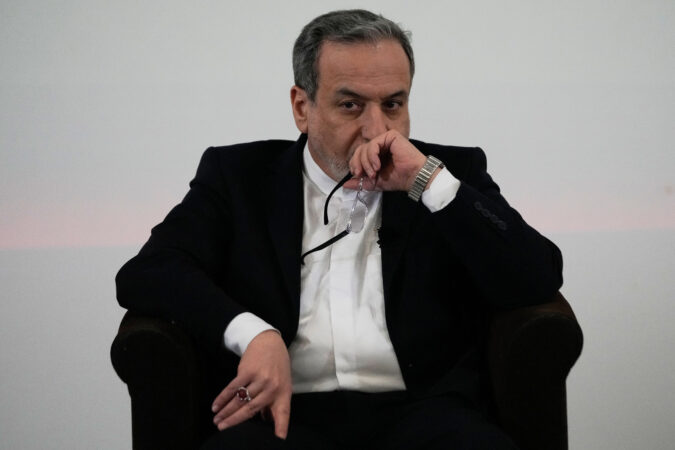
    DUBAI, United Arab Emirates — Iranian state TV on Wednesday issued the first official death toll from recent protests, saying 3,117 people were killed, while the foreign minister issued the most direct threat yet against the United States after Tehran’s bloody crackdown, warning the Islamic Republic will be “firing back with everything we have if we come under renewed attack.”

    State television carried statements by the Interior Ministry and the Martyrs Foundation, an official body providing services to families of those killed in wars, stating the toll and saying 2,427 of the dead in the demonstrations that began Dec. 28 were civilians and security forces. It did not elaborate on the rest.

    The U.S.-based Human Rights Activists News Agency said the death toll was at least 4,560. The agency has been accurate throughout the years on demonstrations and unrest in Iran, relying on a network of activists inside the country that confirms all reported fatalities. The Associated Press has been unable to independently assess the death toll.

    The comments by Foreign Minister Abbas Araghchi, who saw his invitation to the World Economic Forum in Davos rescinded over the killings, came as a U.S. aircraft carrier group moved west toward the Middle East from Asia. U.S. fighter jets and other equipment appeared to be moving in the Mideast after a major U.S. military deployment in the Caribbean saw troops seize Venezuela’s Nicolás Maduro.

    Araghchi makes threat in column

    Araghchi made the threat in an opinion article published by The Wall Street Journal. The foreign minister contended “the violent phase of the unrest lasted less than 72 hours” and sought again to blame armed demonstrators for the violence. Videos that made it out of Iran despite an internet shutdown appear to show security forces repeatedly using live fire to target apparently unarmed protesters, something unaddressed by Araghchi.

    “Unlike the restraint Iran showed in June 2025, our powerful armed forces have no qualms about firing back with everything we have if we come under renewed attack,” Araghchi wrote, referring to the 12-day war launched by Israel on Iran in June. “This isn’t a threat, but a reality I feel I need to convey explicitly, because as a diplomat and a veteran, I abhor war.”

    He added: “An all-out confrontation will certainly be ferocious and drag on far, far longer than the fantasy timelines that Israel and its proxies are trying to peddle to the White House. It will certainly engulf the wider region and have an impact on ordinary people around the globe.”

    Araghchi’s comments likely refer to Iran’s short- and medium-range missiles. The Islamic Republic relied on ballistic missiles to target Israel in the war and left its stockpile of the shorter-range missiles unused, something that could be fired to target U.S. bases and interests in the Persian Gulf. Already, there have been some restrictions on U.S. diplomats traveling to bases in Kuwait and Qatar.

    Mideast nations, particularly diplomats from Gulf Arab countries, had lobbied U.S. President Donald Trump not to attack Iran after he threatened to act in response to the killing of demonstrators. Last week, Iran shut its airspace, likely in anticipation of a strike.

    The USS Abraham Lincoln, which had been in the South China Sea in recent days, had passed through the Strait of Malacca, a key waterway connecting the sea and Indian Ocean, by Tuesday, ship-tracking data showed.

    A U.S. Navy official, speaking on condition of anonymity, said the aircraft carrier and three accompanying destroyers were heading west.

    While naval and other defense officials stopped short of saying the carrier strike group was headed to the Middle East, its current heading and location in the Indian Ocean means it is only days away from moving into the region. Meanwhile, U.S. military images released in recent days showed F-15E Strike Eagles arriving in the Mideast and forces in the region moving a HIMARS missile system, the type used with great success by Ukraine after Russia’s full-scale invasion in the country in 2022.

    Protest death toll rises

    The death toll exceeds that of any other round of protest or unrest in Iran in decades, and recalls the chaos surrounding the 1979 revolution that brought the Islamic Republic into being. Although there have been no protests for days, there are fears the toll could increase significantly as information gradually emerges from a country still under a government-imposed shutdown of the internet since Jan. 8.

    The first indication from authorities of the extent of casualties came Saturday from Iran’s Supreme Leader Ayatollah Ali Khamenei, who said the protests had left “several thousand” people dead and blamed the United States. The protests began over economic pressures but quickly broadened to take on the theocracy.

    The Interior Ministry statement Wednesday asserted that “terrorists used live ammunition that led to the deaths of 2,427 people and security forces.”

    The Martyrs Foundation said Iran would pursue what it called “terrorists” who it claimed were tied to Israel and “supported, equipped and armed” by the U.S.

    Nearly 26,500 people have been arrested, according to the Human Rights Activists News Agency. Comments from officials have led to fears of some of those detained being put to death in Iran, one of the world’s top executioners.

    That and the killing of peaceful protesters have been two red lines laid down by Trump in the tensions.

    Kurdish exiles claim Iranian attack in Iraq

    The National Army of Kurdistan, the armed wing of the Kurdistan Freedom Party, or PAK, claimed Iran launched an attack against one of its bases near Irbil, some 200 miles north of Baghdad. It said one fighter had been killed, and released mobile phone footage of a fire in the predawn darkness.

    Iran did not immediately acknowledge the attack, which would be the first foreign operation Tehran has launched since the protests started.

    A handful of Iranian Kurdish dissident or separatist groups — some with armed wings — have long found a safe haven in northern Iraq’s semiautonomous Kurdish region, where their presence has been a point of friction between the central government in Baghdad and Tehran. The PAK has claimed it launched attacks in Iran as a crackdown on the demonstrations took place, something reported by semiofficial Iranian news agencies as well.

  • Democrats seek to block Homeland Security funding over ICE concerns

    Democrats seek to block Homeland Security funding over ICE concerns

    House Democrats plan to vote against a negotiated funding bill for the Department of Homeland Security on Thursday to protest Immigrations and Customs Enforcement’s aggressive actions against U.S. citizens in Minneapolis and other cities.

    Thousands of ICE agents have been sent to Minnesota since December as part of a crackdown that DHS has described as the largest immigration enforcement effort in the agency’s history. An ICE agent shot and killed 37-year-old Renee Good this month, prompting mass demonstrations in the Twin Cities. A week later, another ICE officer shot an undocumented Venezuelan man in the leg during an arrest. ICE also began an operation in Maine on Wednesday.

    ICE agents have increased their presence across the country over the past year, which President Donald Trump and Homeland Security Secretary Kristi Noem have said is necessary to deport undocumented immigrants with criminal records. But agents have been taped on camera aggressively detaining individuals, including many U.S. citizens or undocumented immigrants without violent criminal records.

    House Democrats were initially poised to support the DHS funding bill because congressional appropriators worked in a bipartisan manner to cobble together the dozen individual pieces of spending legislation necessary to pass before the Jan. 30 deadline to fund the government and prevent another shutdown. But Good’s death incensed many Democrats and became a red line for the caucus, forcing Republican leaders to delay the measure’s consideration and put the bill on the floor for a stand-alone vote.

    Officials from the White House and Homeland Security did not immediately return a request for comment on the Democrats’ decision.

    Bipartisan members of the House and Senate appropriations committees negotiated the bill as part of a broader package of spending legislation before Democratic opposition became apparent. The bill would allocate $64.4 billion to Homeland Security, including $10 billion for ICE — on par with existing funding levels — and fund the Federal Emergency Management Agency, the Transportation Security Administration, the Coast Guard, and Customs and Border Protection.

    It would reduce funding for ICE’s enforcement and removal operations by $115 million, reduce the number of detention beds by 5,500, fund body cameras for agents, and reduce funding for Border Patrol. It does not include other changes Democrats pushed for, including prohibitions on ICE agents shooting at moving vehicles or detaining U.S. citizens.

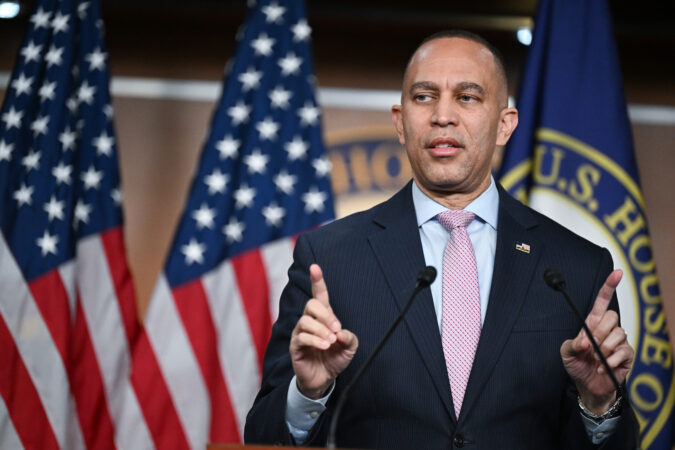
    During a Democratic caucus meeting Wednesday morning, House Minority Leader Hakeem Jeffries (D., N.Y.) and his lieutenants announced they would vote against the bill because, they said, ICE is running rampant across the country and the proposal does not include any significant steps to rein in agents.

    “These reforms aren’t enough. [ICE’s] lawlessness has to stop. And they’re only doing this because they can. They’re only doing this because the president of the United States wants to use them to terrorize communities,” Democratic Caucus Chair Pete Aguilar (Calif.) told reporters Wednesday.

    Democrats will introduce several amendments to the bill during a GOP-led House Rules Committee meeting Wednesday, their final hope to change the measure enough to back it. The amendments would block ICE agents from detaining and deporting U.S. citizens and bar agents from covering their faces during enforcement operations. It isn’t clear whether Republicans will vote against those proposals in the committee.

    “This is a time when so many people across the country, in every district, are saying, ‘What the hell is going on here?’” said Rep. Pramila Jayapal (D., Wash.), who introduced an amendment in the Rules Committee to bar ICE from using federal money to detain and deport U.S. citizens. “We’re just at this place where it is so serious. Where the First Amendment rights, Fourth Amendment rights, and Fifth Amendment rights are being so clearly violated every day — and that’s for U.S. citizens. Imagine what’s happening to people who are not U.S. citizens.”

    Republicans are aware they cannot rely on Democratic support to pass the legislation, and leaders have implored that all GOP lawmakers be present for Thursday’s vote to ensure its passage. If every member of the House is present and voting, Republicans can only afford to lose two votes to send the last of 12 appropriation bills to the Senate if all Democrats oppose it.

    The House is expected to hold separate votes on the DHS funding bill and a three-bill package of the other remaining appropriations bills on Thursday. Government funding expires on Jan. 30, and without an appropriations bill or a funding extension known as a continuing resolution, any agency that hasn’t had a spending bill enacted into law would shut down.

    Besides the outrage from Good’s death, Democrats are also feeling pressure from their electoral base to fight back against the Trump administration more broadly on immigration. Some lawmakers have begun to resurrect a demand leaders in the party have tried to tamp down for years: “Abolish ICE.” The slogan became a rallying cry during Trump’s first term, and many strategists say it ultimately cost the Democratic Party in subsequent elections as voters considered Republicans tougher on crime and border security.

    “Hey Democrats, if you have a problem with ICE — which many of them do, irrationally — you should not take down the appropriations bill because there are all these other areas of Homeland Security that are essential,” said Speaker Mike Johnson (R., La.), who noted that not funding DHS would impact preparations for America’s 250th celebration and the World Cup. “This is not a game.”

    Notably, House Democratic leaders are not whipping lawmakers to vote against the legislation, though most are expected to join them in opposing it. Several moderate Democrats who represent swing districts are weighing whether to support to bill rather than be targeted for voting against the border security agency.

    Others, including Rep. Henry Cuellar (D., Texas), who crafted the bill, argue that Republicans already locked in the bulk of DHS funding for ICE through their massive tax and immigration law, known as the “One Big Beautiful Bill.” That measure sent $75 billion for immigration enforcement to ICE, money which would continue uninterrupted even if the annual spending bill doesn’t pass.

    The top Democrats on the House and Senate appropriations committees, Rep. Rosa DeLauro (Conn.) and Sen. Patty Murray (Wash.) have also argued that denying funding for the agency would impact other key government services, such as TSA and FEMA, and that a short-term funding law would give the Trump administration wider latitude to make spending decisions at DHS.

    Aguilar said that the caucus is aware of those risks, but they will be voting against the package without “substantive” changes.

    “It’s unfortunate that the behavior of ICE is jeopardizing the Homeland Security bill,” he said.

  • RFK Jr. holds a Harrisburg rally to promote health agenda

    RFK Jr. holds a Harrisburg rally to promote health agenda

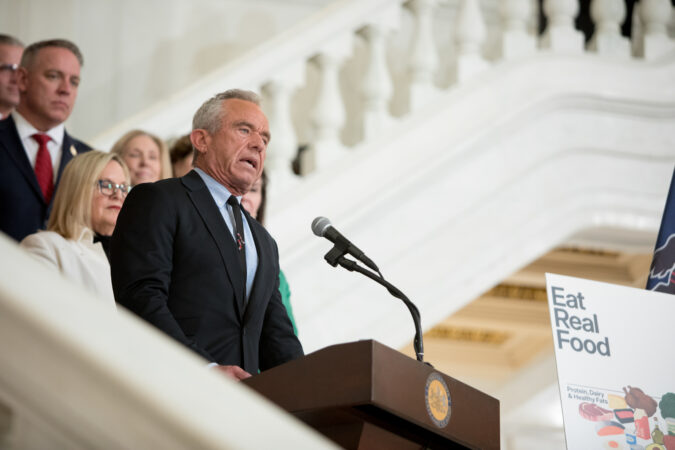
    Health and Human Services Secretary Robert F. Kennedy Jr. touted his new nutritional guidelines and pushed back against criticism of his vaccine policy Wednesday at a rally in Harrisburg.

    Speaking from the rotunda of the state Capitol, Kennedy declared that Americans are sicker than their European counterparts and blamed “bad policy choices” by his predecessors for turning a “once-exemplary healthcare system into a sick care system.”

    Doctors, hospitals, insurers, and pharmaceutical companies, he said, are incentivized to keep Americans ill instead of preventing diseases.

    It was an echo of remarks Kennedy has made over the last year advancing his “Make America Healthy Again” agenda. A longtime anti-vaccine activist before his appointment as top health leader under President Donald Trump, Kennedy has overhauled major aspects of U.S. health policy, including the long-standing childhood vaccine schedule, drawing intense criticism from public health officials who say the move will increase preventable illnesses and death.

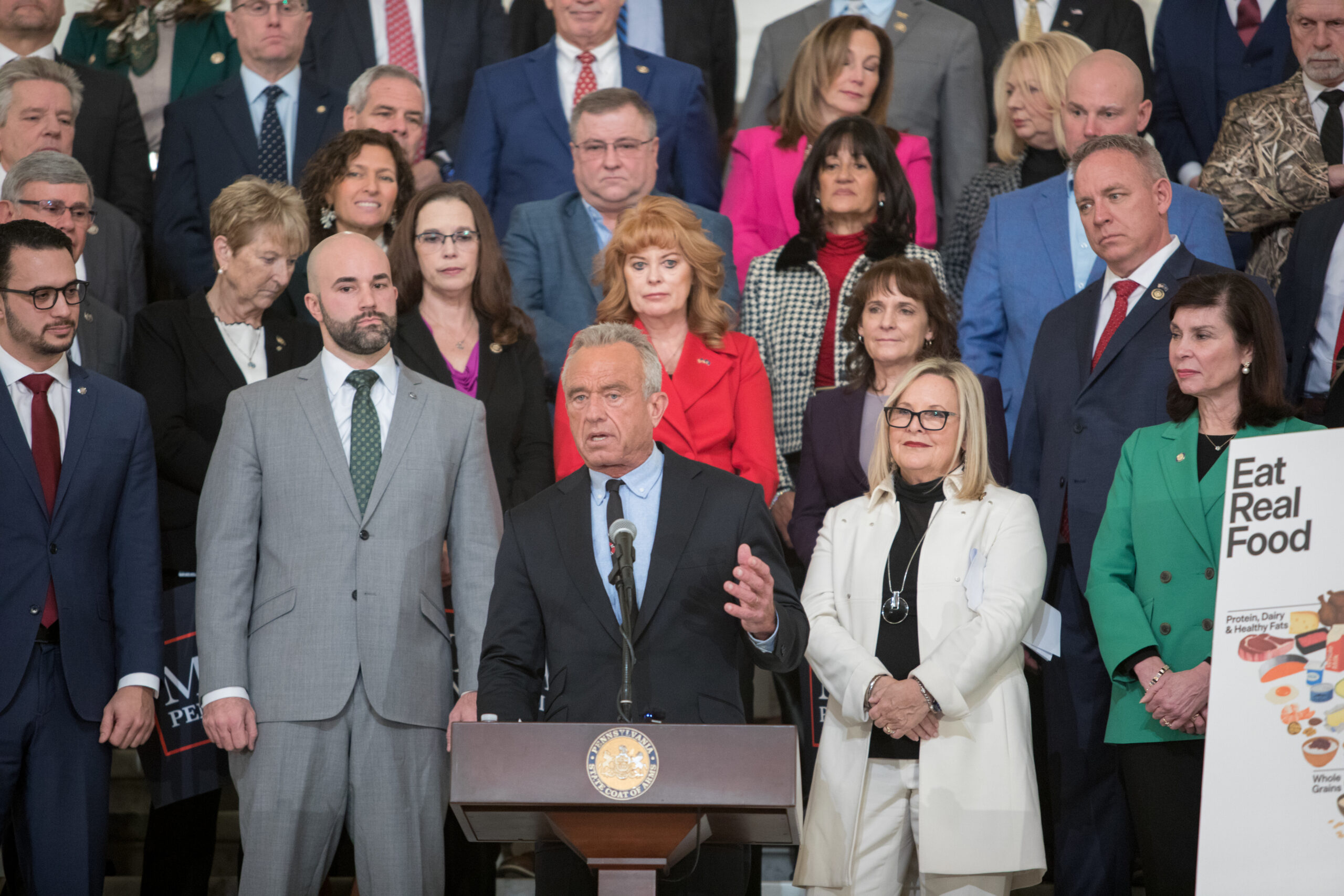
    In Harrisburg, Kennedy was joined by a crowd of nearly 200, as well as two dozen Republican lawmakers. Some spoke in praise of his efforts to overhaul dietary recommendations and decried what they described as waste and fraud in the state’s Medicaid and food assistance systems.

    State Treasurer Stacy Garrity, a Republican who hopes to challenge Gov. Josh Shapiro in this year’s gubernatorial election, stood near Kennedy at the rally but did not deliver remarks.

    Kennedy touted his new dietary guidelines, announced earlier this month, that flipped the traditional food pyramid on its head to promote consumption of whole foods, proteins, and some fats.

    He is encouraging Americans to prioritize eating proteins and vegetables and reduce eating “highly processed foods” with “refined carbohydrates.” This marks the first time U.S. dietary guidelines have explicitly called out what are also known as ultra-processed foods, a move supported by the American Medical Association and some other medical societies.

    “Big food processing companies” influenced American dietary guidelines “for too long,” Kennedy told the crowd.

    “They told us, for the last 40 years, to eat as much as we could of refined carbohydrates, of ultra-processed foods, to stuff ourselves with sugar and salt,” he said. “We are now cutting through the red tape, and we’re telling Americans it’s time to start eating real food.”

    But his dietary plan’s emphasis on foods high in saturated fats and its vague guidance on alcohol consumption have received pushback.

    HHS’s newest food guidelines recommend limiting saturated fats, but also encourage Americans to eat food with high levels of such fats, including red meat and beef tallow, a New York Times reporter noted at a news conference after his speech.

    The revised recommendations are “not perfect,” Kennedy replied.

    “They give guidelines. They’re going to be very useful to people, and they are going to be much, much better for public health than what we were working with,” he said.

    Health and Human Services Secretary Robert F. Kennedy, Jr. was flanked by state lawmakers at a rally in the Pennsylvania State Capitol Wednesday.

    Upending vaccine policy

    Nechel Shoff of Middletown, Dauphin County, came to the Capitol to advocate on behalf of her son, Squale, 24, who has autism. She said she believes her son’s autism was due to vaccinations he had as a 9-month-old baby that led to encephalitis and a high fever for six weeks. (There is no evidence that vaccinations cause autism.)

    She supports Kennedy’s efforts to change federal vaccine recommendations and said his efforts have not resulted in changes at the state level.

    “We need him desperately,” Shoff said of Kennedy.

    Kennedy’s comments about vaccines were the highlight for many in the crowd, who vigorously nodded their heads in agreement and cheered.

    But critics were also in attendance, after staging a protest prior to Kennedy’s appearance outside the Capitol in support of vaccine access.

    One interrupted Kennedy’s speech by yelling “Restore Medicaid!” before being escorted away.

    Federal officials announced in December that they will decrease the number of recommended childhood immunizations from 17 to 11. Some vaccines that protect against serious illnesses like rotavirus and hepatitis B are now recommended only for children at higher risk of health complications.

    Several states, including Pennsylvania, have changed their own policies around vaccine distribution to ensure continued access to vaccines no longer recommended by the Centers for Disease Control and Prevention.

    In a statement posted on X before the rally, Shapiro said that Kennedy has “made our country less healthy and less informed.”

    “He’s spent his entire time as Secretary causing chaos and spreading misinformation. Every step of the way, we’ve stood up to his efforts to endanger public health — protecting vaccine access and families’ freedom to make their own health care decisions,” the Democratic governor wrote.

    Kennedy told reporters at a news conference that he is not limiting access to vaccines and that people who want certain vaccines can still get them. “Some states may take a different pathway, and I think we envisioned that different people would be doing different things, but it ends the coercion,” he said.

    Decades of evidence show vaccination itself presents little risk of harm to patients, and forgoing them carries high risks of spreading preventable diseases.

    Naomi Whittaker, an obstetrics and gynecology doctor, attended Wednesday’s rally with her children, all sporting “Make America Healthy Again” hats.

    She’s a UPMC-affiliated ob-gyn who specializes in “restorative reproductive medicine” to help women with fertility issues.

    Her practice often includes diet changes, lifestyle changes, hormone support, and endometriosis surgery. She sees Kennedy’s work to change the food pyramid and question big pharmaceutical companies as critical dialogues the public should have.

    “I really want to balance the public health and individual health,” Whittaker said. “There’s some middle ground of vaccines.”

    Secretary of Health and Human Services Robert F. Kennedy Jr. speaks at a Harrisburg rally Wednesday.

    State Rep. Tarik Khan (D., Philadelphia), who attended the event, said it was what went unsaid by Kennedy that stood out to him the most: that the Trump administration is making it harder for some people to access food assistance and healthcare, creating barriers to the healthy lifestyles that Kennedy touts.

    “We’ve known for years that we need to eliminate processed foods,” said Khan, a nurse practitioner. “We know that you need to eat more fruits and vegetables. We know that proteins are critical. We know that refined carbohydrates, you should try to avoid as much as possible.”

    “This is not groundbreaking information,” Khan added.