Category: National Politics

  • More ‘No Kings’ protests planned for March 28 as outrage spreads over Minneapolis deaths

    More ‘No Kings’ protests planned for March 28 as outrage spreads over Minneapolis deaths

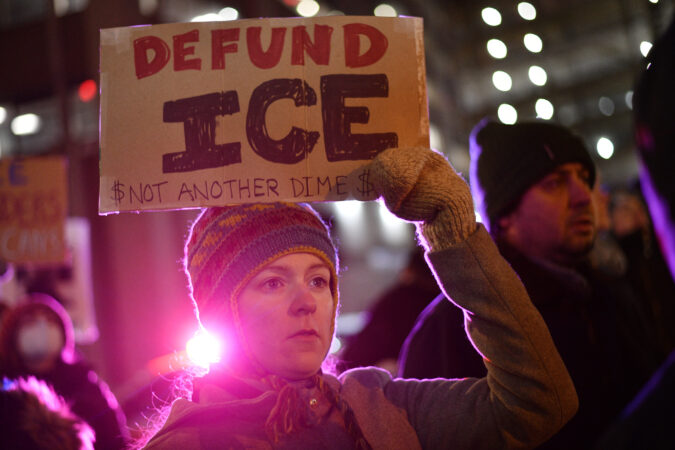
    A third round of “No Kings” protests is coming this spring, with organizers saying they are planning their largest demonstrations yet across the United States to oppose what they describe as authoritarianism under President Donald Trump.

    Previous rallies have drawn millions of people, and organizers said they expect even greater numbers on March 28 in the wake of Trump’s immigration crackdown in Minneapolis, where violent clashes have led to the death of two people.

    “We expect this to be the largest protest in American history,” Ezra Levin, co-executive director of the nonprofit Indivisible, told the Associated Press ahead of Wednesday’s announcement. He predicted that as many as 9 million people will turn out.

    “No Kings” protests, which are organized by a constellation of groups around the country, have been a focal point for outrage over Trump’s attempts to consolidate and expand his power.

    “This is in large part a response to a combination of the heinous attacks on our democracy and communities coming from the regime, and a sense that nobody’s coming to save us,” Levin said.

    Last year, Trump said he felt attendees were “not representative of the people of our country,” and he insisted that “I’m not a king.”

    ‘No Kings’ shifts focus after Minneapolis deaths

    The latest round of protests had been in the works before the crackdown in Minneapolis. However, the killing of two people by federal agents in recent weeks has refocused plans.

    Levin said they want to show “support for Minnesota and immigrant communities all over” and oppose “the secret police force that is murdering Americans and infringing on their basic constitutional rights.”

    “And what we know is, the only way to defend those rights is to exercise them, and you do that in nonviolent but forceful ways, and that’s what I expect to see in ‘No Kings’ three,” Levin said.

    Trump has broadly defended his aggressive deportation campaign and blamed local officials for refusing to cooperate. However, he’s more recently signaled a shift in response to bipartisan concern over the killing of Alex Pretti in Minneapolis on Saturday.

    Previous ‘No Kings’ protests have drawn millions across the U.S.

    In June, the first “No Kings” rallies were organized in nearly 2,000 locations nationwide, including cities, towns and community spaces. Those protests followed unrest over federal immigration raids and Trump’s deployment of the National Guard and Marines to Los Angeles, where tensions escalated with protesters blocking a freeway and setting vehicles on fire.

    They were organized also in large part to protest a military parade in the nation’s capital that marked the Army’s 250th anniversary and coincided with Trump’s birthday. “No Kings” organizers at the time called the parade a “coronation” that was symbolic of what they characterized as Trump’s growing authoritarian overreach.

    In response, some conservative politicians condemned the protests as “Hate America” rallies.

    During a second round of protests in October, organizers said demonstrations were held in about 2,700 cities and towns across the country. At the time, Levin pointed to Trump’s sweeping immigration crackdown, his unprecedented promises to use federal power to influence midterm elections, restrictions on press freedom and retribution against political opponents, steps he said cumulatively represented a direct threat to constitutionally protected rights.

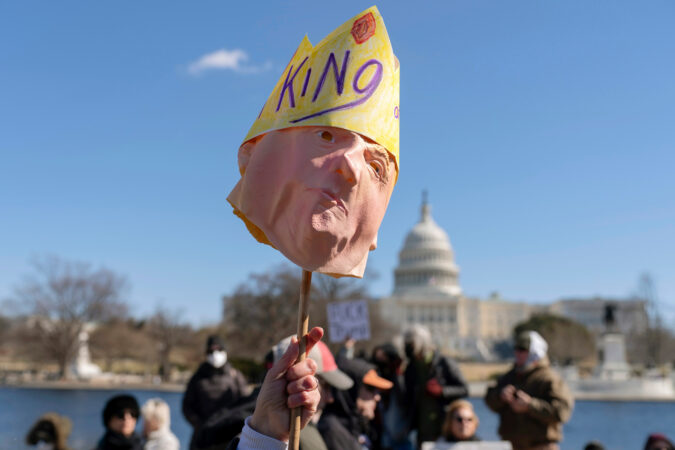
    On social media, both Trump and the official White House account mocked the protests, posting computer-generated images of the president wearing a crown.

    The big protest days are headline-grabbing moments, but Levin said groups like his are determined to keep up steady trainings and intermediate-level organizing in hopes of growing sustainable resistance to the Trump administration’s actions.

    “This isn’t about Democrats versus Republicans. This is about do we have a democracy at all, and what are we going to tell our kids and our grandkids about what we did in this moment?” Levin said. ”I think that demands the kind of persistent engagement. ”

  • Trump administration reveals location of dismantled slavery exhibits from the President’s House in new legal filing

    Trump administration reveals location of dismantled slavery exhibits from the President’s House in new legal filing

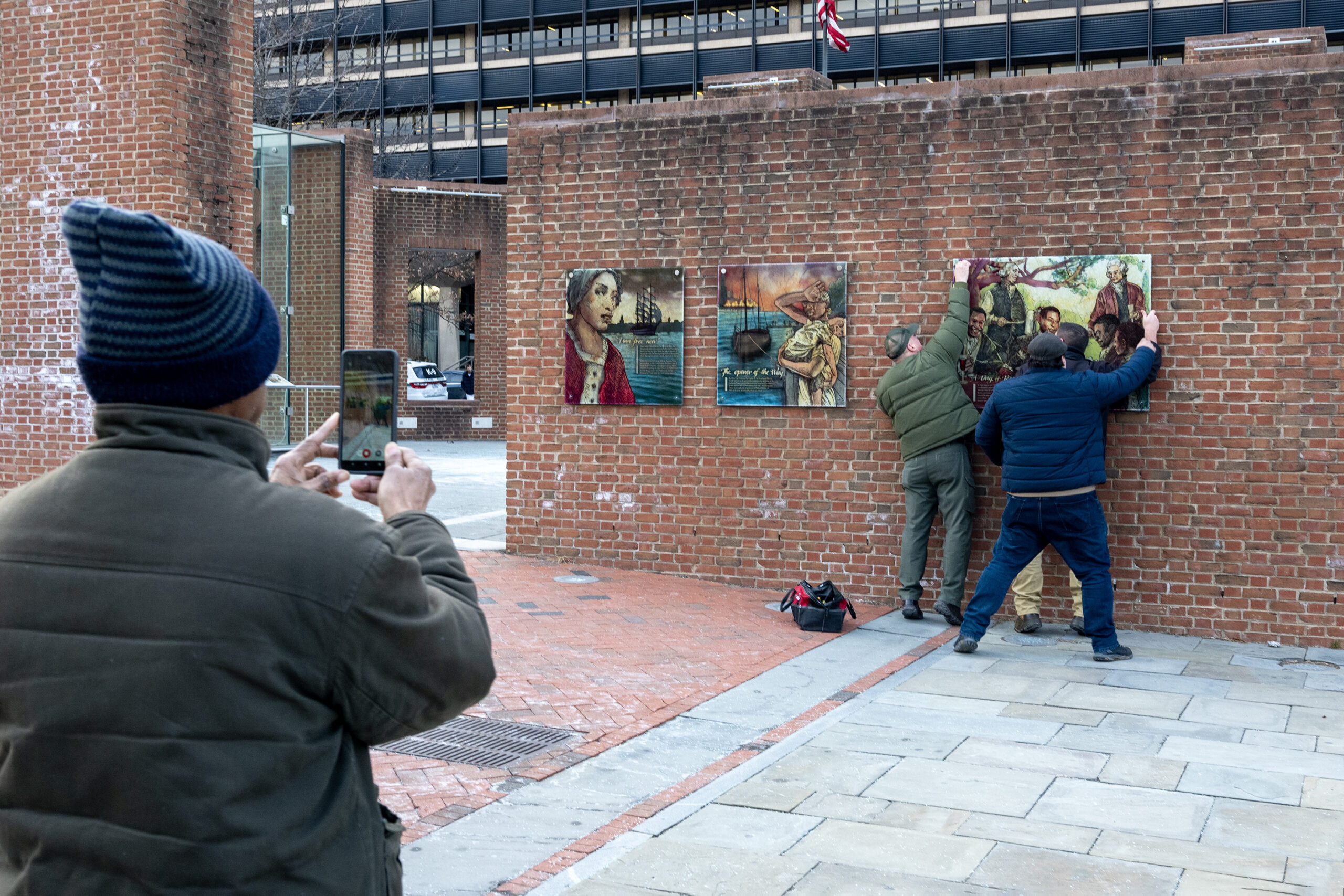
    Informational exhibits about slavery removed by the National Park Service from the President’s House Site last week are being kept in storage at a facility adjacent to the National Constitution Center, according to a legal filing from the Trump administration.

    The exhibits will remain in the park service’s custody at the center, down the street from the President’s House, pending the outcome of the City of Philadelphia’s federal lawsuit against the Department of Interior and the National Park Service for taking down the exhibits.

    But the center said it has no role in storing the exhibits.

    “The storage facility [where the exhibits are being kept] is entirely under control and operation of the Park Service,” said a spokesperson for the Constitution Center, adding that the center does not have possession of or access to the space.

    Mayor Cherelle L. Parker’s administration is seeking an injunction to return the exhibits to the President’s House, which aims to educate visitors on the horrors of slavery and memorializes the nine people George Washington enslaved at the site during the founding of the United States.

    Jali Wicker records NPS workers remove interpretive panels at the President’s House site in Independence National Historical Park Thursday, Jan. 22, 2026. More than a dozen educational displays and illustrations about slavery were removed from the site, which serves as a memorial to the nine people George Washington enslaved there during the founding of America.

    The location of the removed exhibits was revealed Wednesday in a motion objecting to the city’s injunction. The motion was filed by U.S. attorneys and assistant Attorney General Brett Shumate, representing Interior Secretary Doug Burgum, acting National Park Service Director Jessica Bowron, and their respective agencies.

    The legal filing also provides further details into what transpired last Thursday when park service employees removed exhibits about slavery at the President’s House.

    Park service employees dismantled the exhibit after Bowron ordered Steve Sims, the park service’s acting regional director, to have workers remove the panels and turn off video displays at the site, according to the filing. Sims said the takedown was carried out the same day that Bowron requested it.

    There is also a remaining sign made of wood in a metal structure that was not removed last week because additional tools were needed.

    “When and if NPS removes the sign, it will be stored with the other panels,” Sims said in a declaration included in the legal filing.

    The footprints embedded in the site and the Memorial Wall featuring the names of the nine people Washington enslaved will stay at the President’s House, he said.

    Last year, Burgum and President Donald Trump ordered content at national parks that could “inappropriately disparage Americans past or living” to be reviewed and potentially removed.

    In addition to the actions in Philadelphia, the National Park Service has reportedly removed signage about the mistreatment of Native Americans from the Grand Canyon, among other changes implemented under the orders.

    Tuesday’s filing previews the Trump administration’s legal argument for a hearing scheduled Friday on Philadelphia’s suit, which could be used in other cases around the country.

    The attorneys claim in the filing that this case is “fundamentally a question of Government speech,” and they accuse the city of trying to “censor” the federal government.

    “Such interests are especially weighty where, as here, the City effectively seeks to compel the Federal government to engage in speech that it does not wish to convey,” the attorneys wrote.

    The city’s suit has received legal backing from Gov. Josh Shapiro and the Avenging the Ancestors Coalition, an advocacy group that helped establish the President’s House in the early 2000s.

    The exhibit takedown has been a heartbreak for those who helped develop the site and for Philadelphians who have left artwork memorializing what the site used to be.

    In a video posted to social media Tuesday, Parker said that her administration would keep “fighting” to have the panels restored to the site as the city prepares to play a central role in the nation’s 250th anniversary celebrations in July.

    “This history is a critical part of our nation’s origins, and it deserves to be seen and heard, not just by the people of Philadelphia, but by every person who comes to Philadelphia from around our nation and the world to see and learn from, especially as we celebrate our Semiquincentennial 250th birthday, I want the world to know you cannot erase our history,” she said.

    This story has been updated to include a comment from the National Constitution Center.

  • Search warrant FBI served at elections office near Atlanta seeks records tied to the 2020 elections

    Search warrant FBI served at elections office near Atlanta seeks records tied to the 2020 elections

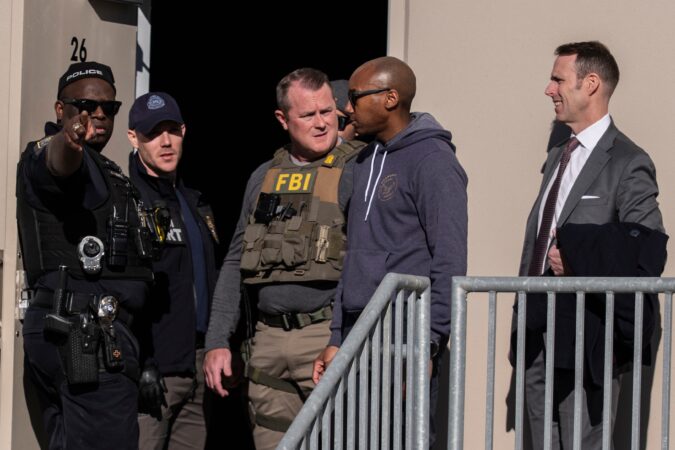
    ATLANTA — The FBI on Wednesday searched the election office of a Georgia county that has been central to right-wing conspiracy theories over President Donald Trump’s 2020 election loss, acting just one week after the Republican leader predicted prosecutions over a contest he has baselessly insisted was tainted by widespread fraud.

    The search at Fulton County’s main election facility in Union City sought records related to the 2020 election, county spokesperson Jessica Corbitt-Dominguez said. It appeared to be the most public step by law enforcement to pursue Trump’s claims of a stolen election, grievances rejected time and again by courts and state and federal officials, who found no evidence of fraud that would have altered the outcome.

    It also unfolds against the backdrop of FBI and Justice Department efforts to investigate perceived political enemies of Trump, including former FBI Director James Comey and New York Attorney General Letitia James.

    Trump has for years focused on Fulton, Georgia’s most populous county and a Democratic stronghold, as a key example of what he claims went wrong in the 2020 election. His pressure campaign there culminated in a sweeping state indictment accusing him and 18 others of illegally trying to overturn the vote.

    An FBI spokesperson said agents were “executing a court authorized law enforcement action” at the county’s main election office in Union City, just south of Atlanta. The spokesperson declined to provide any further information, citing an ongoing matter.

    Corbitt-Dominguez said a warrant “sought a number of records related to 2020 elections,” but declined to comment further because the search was still underway.

    The Justice Department had no immediate comment.

    Trump has long insisted that the 2020 election was stolen even though judges across the country and his own attorney general said they found no evidence of widespread fault that tipped the contest in Democrat Joe Biden’s favor.

    The president has made Georgia, one of the battleground states he lost in 2020, a central target for his complaints about the election and memorably pushed its secretary of state to help “find” enough votes to overturn the contest.

    Last week, in reference to the 2020 election, he asserted that “people will soon be prosecuted for what they did.” It was not clear what in particular he was referring to.

    Fulton County District Attorney Fani Willis in August 2023 obtained an indictment against Trump and 18 others, accusing them of participating in a wide-ranging scheme to illegally try to overturn the results of the 2020 presidential election. That case was dismissed in November after courts barred Willis and her office from pursuing it because of an “appearance of impropriety” stemming from a romantic relationship she had with a prosecutor she had hired to lead the case.

    The FBI last week moved to replace its top agent in Atlanta, Paul W. Brown, according to people familiar with the matter who spoke on condition of anonymity to discuss a nonpublic personnel decision. It was not immediately clear why the move, which was not publicized by the FBI, was made.

    The Department of Justice last month sued the clerk of the Fulton County superior and magistrate courts in federal court seeking access to documents from the 2020 election in the county. The lawsuit said the department sent a letter to the clerk, Che Alexander, but that she had failed to produce the requested documents.

    Alexander has filed a motion to dismiss the suit. The Justice Department complaint says that the purpose of its request was “ascertaining Georgia’s compliance with various federal election laws.” It also says the attorney general is trying to help the State Election Board with its “transparency efforts under Georgia law.”

    A three-person conservative majority on the State Election Board has repeatedly sought to reopen a case alleging wrongdoing by Fulton County during the 2020 election. It passed a resolution in July seeking assistance from the U.S. attorney general to access voting materials.

    The state board sent subpoenas to the county board for various election documents last year and again on Oct. 6. The October subpoena requested “all used and void ballots, stubs of all ballots, signature envelopes, and corresponding envelope digital files from the 2020 General Election in Fulton County.” A fight over the state board’s efforts to enforce the 2024 subpoena is currently tied up in court.

    The Justice Department sent a letter to the county election board Oct. 30 citing the federal Civil Rights Act and asking for all records responsive to the October subpoena from the State Election Board. Lawyers for the county election board responded about two weeks later, saying that the records are held by the county court clerk. They also attached a letter the clerk sent to the State Election Board saying that the records are under seal in accordance with state law and can’t be released without a court order.

    The Justice Department said it then sent a letter to Alexander, the clerk, on Nov. 21 requesting the documents and that she failed to respond.

    The department is asking a judge to declare that the clerk’s “refusal to provide the election records upon a demand by the Attorney General” violates the Civil Rights Act. It is also asking the judge to order Alexander to produce the requested records within five days of a court order.

    The State Election Board in May 2024 heard a case that alleged documentation was missing for thousands of votes in the recount of the presidential contest in the 2020 election. After a presentation by a lawyer and an investigator for the secretary of state’s office, a response from the county and a lengthy discussion among the board members, the board voted to issue a letter of reprimand to the county.

    Shortly after that vote, there was a shift in power on the board, and the newly cemented conservative majority sought to reopen the case. The lone Democrat on the board and the chair have repeatedly objected, arguing the case is closed and citing multiple reviews that have found that while the county’s 2020 elections were sloppy and poorly managed there was no evidence of intentional wrongdoing.

  • DA Larry Krasner forms coalition of progressive prosecutors committed to charging federal agents who commit crimes

    DA Larry Krasner forms coalition of progressive prosecutors committed to charging federal agents who commit crimes

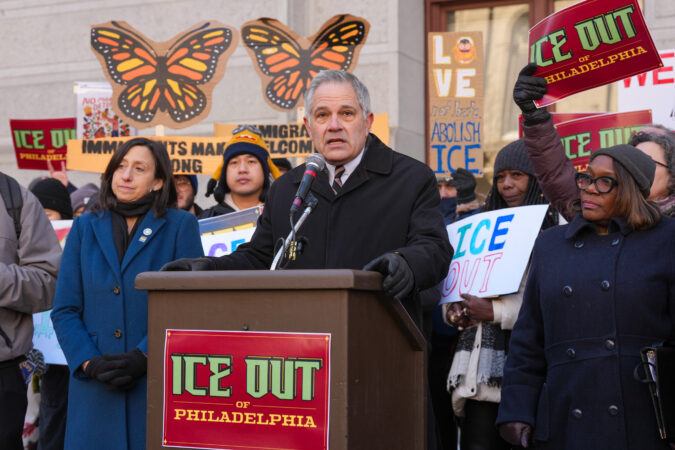
    District Attorney Larry Krasner on Wednesday announced the formation of a new coalition of progressive prosecutors committed to charging federal agents who violate state laws.

    Krasner joined eight other prosecutors from U.S. cities to create the Project for the Fight Against Federal Overreach, a legal fund that local prosecutors can tap if they pursue charges against federal agents.

    The abbreviation for the group, FAFO, is a nod to what has become one of Krasner’s frequent slogans: “F— around and find out.”

    The move places Krasner at the center of a growing national clash between Democrats and the Trump administration over federal immigration enforcement and whether local law enforcement can — or should — charge federal agents for actions they take while carrying out official duties.

    It is also the latest instance in which Krasner, one of the nation’s most prominent progressive prosecutors, has positioned himself as Philadelphia’s most vocal critic of President Donald Trump. He has made opposing the president core to his political identity for a decade, and he said often as he was running for reelection last year that he sees himself as much as a “democracy advocate” as a prosecutor.

    Krasner has used provocative rhetoric to describe the president and his allies, often comparing their agenda to World War II-era fascism. During a news conference Tuesday, he said federal immigration-enforcement agencies are made up of “a small bunch of wannabe Nazis.”

    The coalition announced Wednesday includes prosecutors from Minneapolis; Tucson, Ariz.; and several cities in Texas and Virginia. It was formed to amass resources after two shootings of U.S. citizens by federal law enforcement officials in Minnesota this month.

    Renee Good, 37, was shot and killed in her car by an ICE officer on Jan. 7 as she appeared to attempt to drive away during a confrontation with agents. The FBI said it would not investigate her killing.

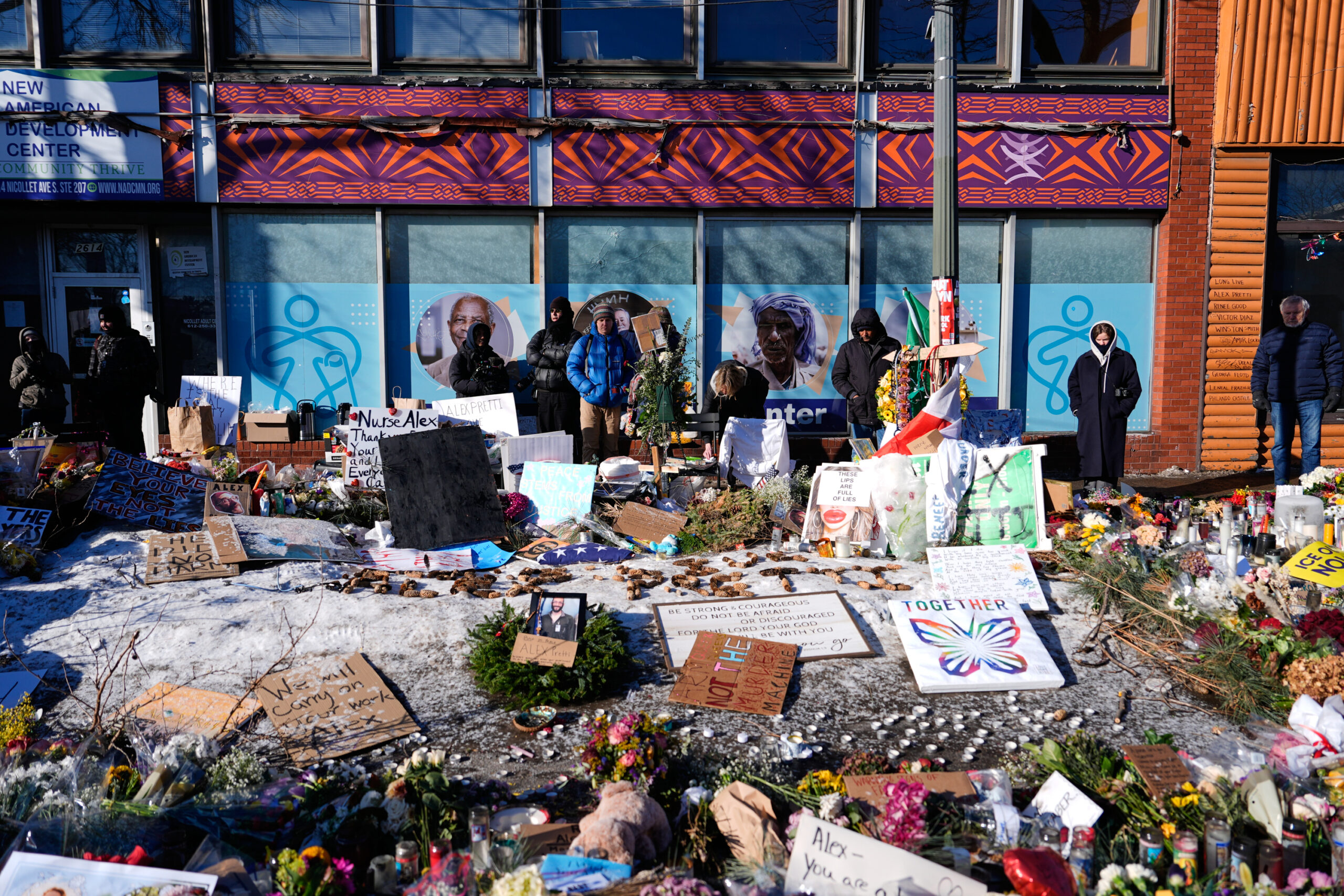
    People visit a memorial for Alex Pretti at the scene in Minneapolis where the 37-year-old was fatally shot by a U.S. Border Patrol officer.

    Then, on Saturday, Alex Pretti, 37, was killed after similarly confronting agents on a Minneapolis street. Video of the shooting, which contradicted federal officials’ accounts, appeared to show Border Patrol agents disarming Pretti, who was carrying a legally owned handgun in a holster. They then shot him multiple times. Federal authorities have attempted to block local law enforcement from investigating the shooting.

    Krasner said that, despite Vice President JD Vance’s recent statement that ICE officers had “absolute immunity” — an assertion the Philadelphia DA called “complete nonsense” — prosecutors in FAFO are prepared to bring charges including murder, obstructing the administration of justice, tampering with evidence, assault, and perjury against agents who commit similar acts in their cities.

    “There is a sliver of immunity that is not going to save people who disarm a suspect and then repeatedly shoot him in the back from facing criminal charges,” Krasner said during a virtual news conference Wednesday. “There is a sliver of immunity that is not going to save people who are shooting young mothers with no criminal record and no weapon in the side or back of the head when it’s very clear the circumstances didn’t require any of that, that it was not reasonable.”

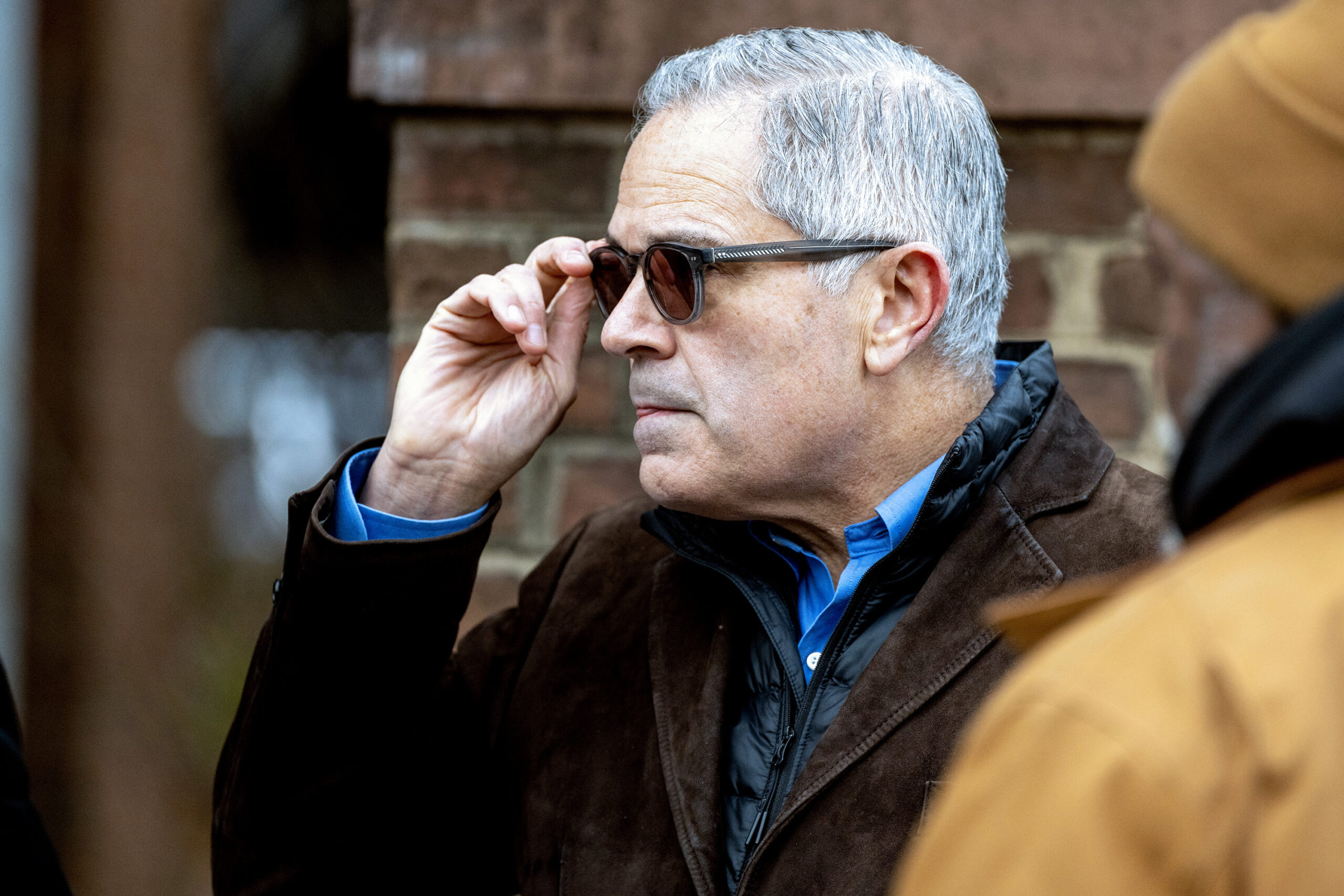
    Philadelphia District Attorney Larry Krasner attends an event at Independence National Historical Park on Dec. 21, 2025.

    How will FAFO work?

    The coalition has created a website, federaloverreach.org, and is soliciting donations.

    Prosecutors who spoke during the news conference said those donations would be toward a legal fund that would allow prosecutors to hire outside litigators, experts, and forensic investigators as they pursue high-profile cases against federal agents.

    “This will function as a common fund,” said Ramin Fatehi, the top prosecutor in Norfolk, Va., “where those of us who find ourselves in the tragic but necessary position of having to indict a federal law enforcement officer will be able to bring on the firepower necessary to make sure that the federal government doesn’t roll us simply through greater resources.”

    The money raised through the organization will not go to the individual prosecutors or their political campaigns, they said Wednesday.

    Scott Goodstein, a spokesperson for the coalition, said the money will be held by a “nonpartisan, nonprofit entity that is to be stood up in the coming days.” He said the prosecutors are “still working through” how the fund will be structured.

    Krasner said it would operate similarly to how district attorneys offices receive grant funding for certain initiatives.

    Most legal defense funds are nonprofit organizations that can receive tax-deductible donations. Those groups are barred from engaging in certain political activities, such as explicitly endorsing or opposing candidates for office.

    Goodstein said the group is also being assisted in its fundraising efforts by Defiance.org, a national clearinghouse for anti-Trump activism. One of that group’s founders is Miles Taylor, a former national security official who, during the first Trump administration, wrote under a pseudonym about being part of the “resistance.”

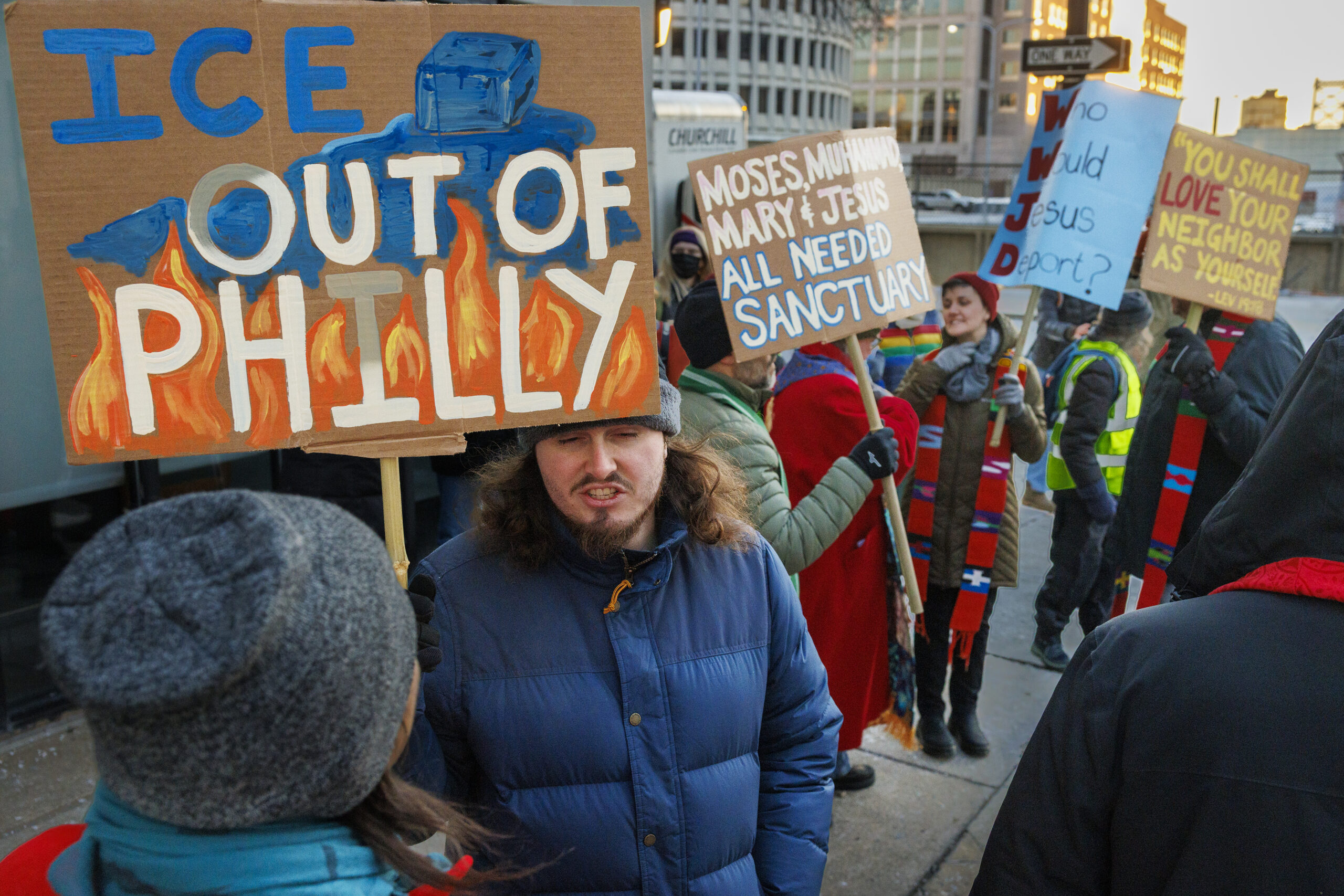
    Demonstrators from No ICE Philly gathered to protests outside the U.S. Immigration and Customs Enforcement, office at 8th and Cherry Streets, on Jan. 20.

    ‘Who benefits?’

    In forming the coalition, Krasner inserted himself into a national controversy that other city leaders have tried to avoid.

    His approach is starkly different from that of Mayor Cherelle L. Parker, a centrist Democrat who has largely avoided criticizing Trump. She says she is focused on her own agenda, and has not weighed in on the president’s deportation campaign.

    Members of the mayor’s administration say they believe her restraint has kept the city safe. While Philadelphia has policies in place that prohibit local officials from some forms of cooperation with federal immigration enforcement, the Trump administration has not targeted the city with surges of ICE agents as it has in other jurisdictions — such as Chicago and Los Angeles — where Democratic leaders have been more outspoken.

    Parker and Police Commissioner Kevin Bethel have at times been frustrated with Krasner’s rhetoric, according to a source familiar with their thinking who spoke on the condition of anonymity to discuss internal communications.

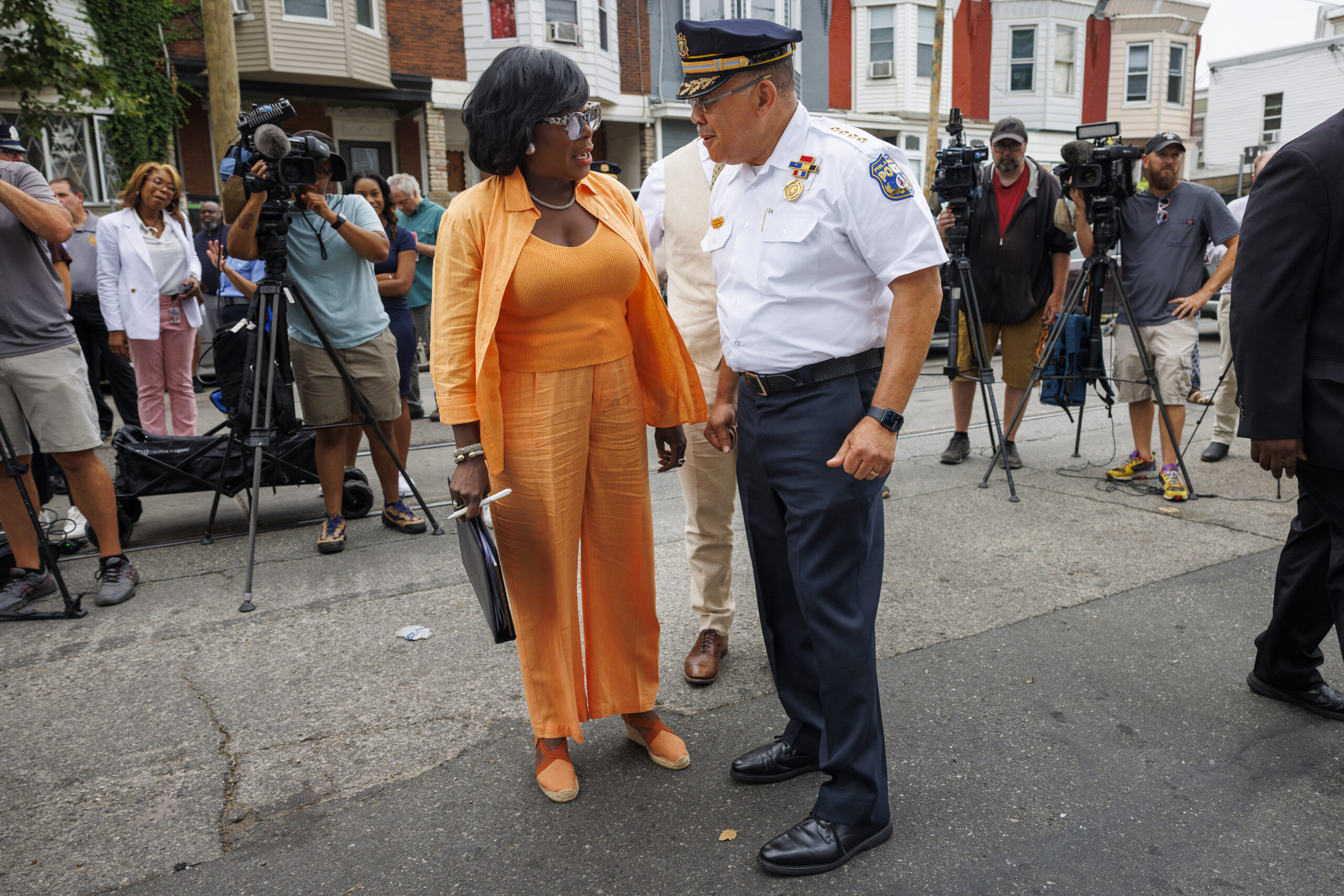
    Philadelphia Mayor Cherelle Parker and Police Commissioner Kevin Bethel speaking ahead of a July 2024 press conference.

    That was especially true this month when Krasner hosted a news conference alongside Sheriff Rochelle Bilal. The pair made national headlines after Krasner threatened to prosecute federal agents — something he has vowed to do several times — and Bilal called ICE a “fake” law enforcement agency.

    Bethel later released a statement to distance the Police Department from the Sheriff’s Office, saying Bilal’s deputies do not conduct criminal investigations or direct municipal policing.

    The police commissioner recently alluded to Parker’s strategy of avoiding confrontation with the federal government, saying in an interview on the podcast City Cast Philly that the mayor has given the Police Department instruction to “stay focused on the work.”

    “It is not trying to, at times, potentially draw folks to the city,” Bethel said. “Who benefits from that? Who benefits when you’re putting out things and trying to… poke the bear?”

    As for Krasner’s latest strategy, the DA said he has received “zero indication or communication from the mayor or the police commissioner that they’re in a different place.”

    “I feel pretty confident that our mayor and our police commissioner, who are doing a heck of a lot of things right,” he said, “will step up as needed to make sure that this country is not invaded by a bunch of people behaving like the Gestapo.”

  • Rubio defends Trump on Venezuela while trying to allay fears about Greenland and NATO

    Rubio defends Trump on Venezuela while trying to allay fears about Greenland and NATO

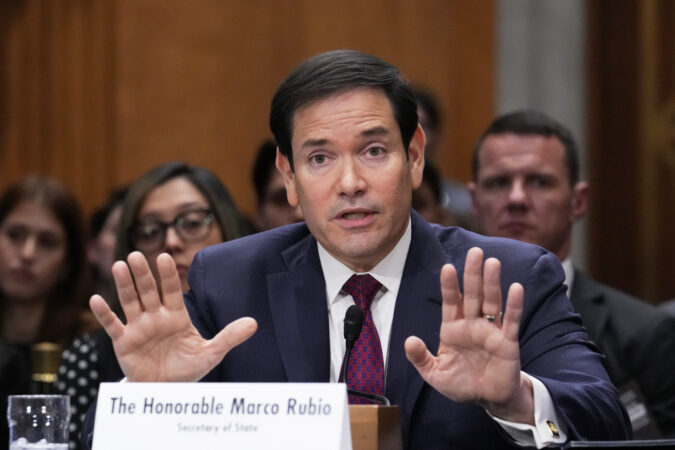
    WASHINGTON — Secretary of State Marco Rubio gave a full-throated defense Wednesday of President Donald Trump’s military operation to capture then-Venezuelan President Nicolás Maduro, while explaining to U.S. lawmakers the administration’s approach to Greenland, NATO, Iran, and China.

    As Republican and Democratic members of the Senate Foreign Relations Committee offered starkly different readings of the administration’s foreign policy, Rubio addressed Trump’s intentions and his often bellicose rhetoric that has alarmed U.S. allies in Europe and elsewhere, including demands to take over Greenland.

    In the first public hearing since the Jan. 3 raid to depose Maduro, Rubio said Trump had acted to take out a major U.S. national security threat in the Western Hemisphere. Trump’s top diplomat said America was safer and more secure as a result and that the administration would work with interim authorities to stabilize the South American country.

    “We’re not going to have this thing turn around overnight, but I think we’re making good and decent progress,” Rubio said. “We are certainly better off today in Venezuela than we were four weeks ago, and I think and hope and expect that we’ll be better off in three months and six months and nine months than we would have been had Maduro still been there.”

    The former Florida senator said Venezuela’s current leaders are cooperating and would soon begin to see benefits. But he backed away from remarks prepared for the hearing that Washington would not hesitate to take further military action should those leaders not fully accept Trump’s demands.

    “I can tell you right now with full certainty, we are not postured to nor do we intend or expect to have to take any military action in Venezuela at any time,” Rubio said. “I think it would require the emergence of an imminent threat of the kind that we do not anticipate at this time.”

    He said Venezuela soon will be allowed to sell oil that is now subject to U.S. sanctions, and the revenue would be set aside to pay for basic government services such as policing and healthealthcare proceeds will be deposited in a U.S. Treasury-controlled account and released after the U.S. approves monthly budgets to be submitted by Venezuela, he said.

    Pushback against skepticism from Democrats

    Republican senators, with few exceptions, praised the operation in Venezuela. Among Democrats, there was deep skepticism.

    They questioned Trump’s policies in Venezuela and their potential for encouraging moves by China against Taiwan and Russia even more so in Ukraine, as well as his threats to take Greenland from NATO ally Denmark and his insults about the alliance’s contributions to U.S. security.

    Rubio played them all down.

    He said the uproar over Greenland within NATO is calming and that talks are underway about how to deal with Trump’s demands. The Republican president insists the U.S. needs Greenland to counter threats from Russia and China, but he recently backed away from a pledge to impose tariffs on several European countries that sent troops to the semiautonomous Danish territory in a show of solidarity.

    “I think we’re going to get something positive done,” Rubio said.

    Rubio dismissed criticism that Trump was undermining the alliance, while repeating the long-running American complaint that member nations need to boost their defense budgets.

    “NATO needs to be reimagined,” Rubio said. “I just think this president complains about it louder than other presidents.”

    He said China’s stated goal to reunify Taiwan with the mainland would not be affected by any other world event, including the Maduro operation.

    “The situation on Taiwan is a legacy project” that Chinese President Xi Jinping has made ”very clear that that’s what he intends to do and that’s going to be irrespective anything that happens in the world,” Rubio said.

    As Trump once more threatens Iran with military action, Rubio said there was no current plan to attack. Asked about the potential for a change of government in Tehran, Rubio said that would require “a lot of careful thinking” because it would be “far more complex” than ousting Maduro.

    He noted that the increased military presence in the Middle East — an aircraft carrier and accompanying warships arrived this week — is “to defend against what could be an Iranian threat against our personnel.”

    More details about the raid in Caracas

    The Republican committee chairman, Idaho Sen. Jim Risch, offered new details on the operation in the Venezuelan capital, saying it involved “only about 200 troops” and a “firefight that lasted less than 27 minutes.”

    “This military action was incredibly brief, targeted and successful,” Risch said, adding that the U.S. and other nations may have to assist Venezuela when it seeks to restore democratic elections.

    ”Venezuela may require U.S. and international oversight to ensure these elections are indeed free and fair,” he said.

    Sen. Jeanne Shaheen of New Hampshire, the committee’s top Democrat, questioned whether that operation was worth it, considering most of Maduro’s top aides and lieutenants still run the Venezuela and the economic situation there remains bleak.

    “We’ve traded one dictator for another, so it’s no wonder that so many of my constituents are asking, why is the president spending so much time focused on Venezuela instead of the cost of living and their kitchen table economic concerns?” she asked. “From Venezuela to Europe, the United States is spending more, risking more and achieving less.”

    Call for eventual democratic elections in Venezuela

    Rubio delivered his strongest statement yet of support for democracy in Venezuela, while concerns persist that the administration’s stabilization efforts are narrowly focused on oil and U.S. national security interests.

    “What’s the end state? We want a Venezuela that has legitimate democratic elections,” said Rubio, who met Venezuelan opposition leader María Corina Machado at the State Department after the hearing.

    Machado reiterated her intention to return to Venezuela. “Dear Venezuelans, we are moving forward with firm steps,” she posted on X. “I will return to Venezuela very soon to work together on the transition and the building of an exceptional country.”

    Before that, Rubio faced tough questioning from Sen. Cory Booker (D., N.J.) about cooperating with interim leaders who had been part of Maduro’s authoritarian government. Maduro’s vice president, Delcy Rodríguez, is now the acting president.

    The U.S. has said its demands for Rodriguez include opening Venezuela’s energy sector to U.S. companies, providing preferential access to production, using oil revenue to purchase American goods, and ending subsidized oil exports to Cuba.

    Neither Rodríguez nor her government’s press office immediately commented on Rubio’s remarks. She said Tuesday that her government and the U.S. “have established respectful and courteous channels of communication.” So far, she has appeared to acquiesce to Trump’s demands and to release prisoners jailed by the government under Maduro and his predecessor, Hugo Chávez.

    In a key step to the restoration of diplomatic relations, the State Department said it intends to begin sending additional diplomatic and support personnel to Caracas to prepare for the possible reopening of the U.S. Embassy, which shuttered in 2019.

    Fully normalizing ties, however, would require the U.S. to revoke its decision recognizing the Venezuelan parliament elected in 2015 as the country’s legitimate government.

  • Homeland Security Secretary Kristi Noem faces rising calls for her firing or impeachment

    Homeland Security Secretary Kristi Noem faces rising calls for her firing or impeachment

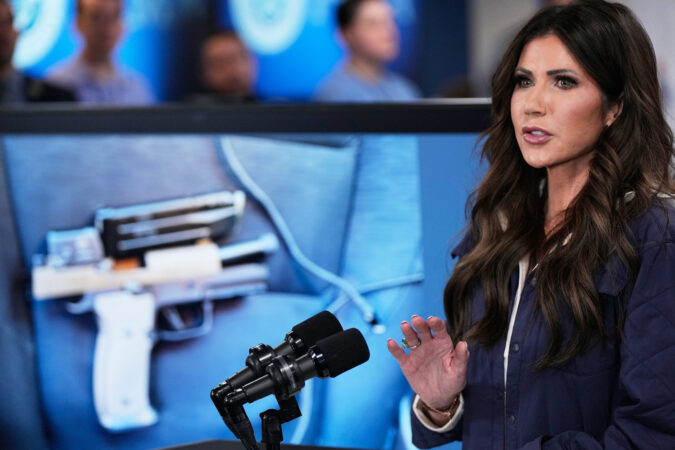
    WASHINGTON — A groundswell of voices have come to the same conclusion: Kristi Noem must go.

    From Democratic Party leaders to the nation’s leading advocacy organizations to even the most centrist lawmakers in Congress, the calls are mounting for the Homeland Security secretary to step aside after the shooting deaths in Minneapolis of two people who protested deportation policy. At a defining moment in her tenure, few Republicans are rising to Noem’s defense.

    “The country is disgusted by what the Department of Homeland Security has done,” top House Democratic Reps. Hakeem Jeffries of New York, Katherine Clark of Massachusetts, and Pete Aguilar of California said in a joint statement.

    “Kristi Noem should be fired immediately,” the Democrats said, “or we will commence impeachment proceedings in the House of Representatives.”

    Republicans and Democrats call for Noem to step down

    What started as sharp criticism of the Homeland Security secretary, and a longshot move by Democratic lawmakers signing onto impeachment legislation in the Republican-controlled House, has morphed into an inflection point for Noem, who has been the high-profile face of the Trump administration’s immigration enforcement regime.

    Noem’s brash leadership style and remarks in the aftermath of the shooting deaths of Alex Pretti and Renee Good — in which she suggested Pretti “attacked” officers and portrayed the events leading up to Good’s shooting an “act of domestic terrorism” — have been seen as doing irreparable damage, as events on the ground disputed her account. Her alliance with Border Patrol chief Greg Bovino, who was recalled from the Minnesota operation Monday as border czar Tom Homan took the lead, has left her isolated on Capitol Hill.

    “What she’s done in Minnesota should be disqualifying. She should be out of a job,” Sen. Thom Tillis (R., N.C.) said.

    “I think the President needs to look at who he has in place as a secretary of Homeland Security,” Sen. Lisa Murkowski (R., Alaska) said. ”It probably is time for her to step down.”

    Trump stands by Noem and praises her work

    President Donald Trump defended Noem on Wednesday at multiple junctures, strongly indicating her job does not appear to be in immediate jeopardy.

    Asked by reporters as he left the White House on Tuesday for a trip to Iowa whether Noem is going to step down, Trump had a one-word answer: “No.”

    Pressed later during an interview on Fox News if he had confidence in Noem, the president said, “I do.”

    “Who closed up the border? She did,” Trump said, “with Tom Homan, with the whole group. I mean, they’ve closed up the border. The border is a tremendous success.”

    As Democrats in Congress threaten to shut down the government as they demand restrictions on Trump’s mass deportation agenda, Noem’s future at the department faces serious questions and concerns.

    The Republican leadership of the House and Senate committees that oversee Homeland Security have demanded that department officials appear before their panels to answer for the operations that have stunned the nation with their sheer force — including images of children, including a 5-year-old, being plucked from families.

    “Obviously this is an inflection point and an opportunity to evaluate and to really assess the policies and procedures and how they are being implemented and put into practice,” said Senate Majority Leader John Thune, a Republican from South Dakota, where Noem had been the state’s House representative and governor before joining the administration.

    Asked about his own confidence in Noem’s leadership, Thune said, “That’s the president’s judgment call to make.”

    Senate Democratic Leader Chuck Schumer called Noem a “liar” and said she must be fired.

    The fight over funding

    Assistant Secretary Tricia McLaughlin said in a statement that DHS enforces the laws from Congress, and if lawmakers don’t like those laws, they should change them.

    “Too many politicians would rather defend criminals and attack the men and women who are enforcing our laws,” McLaughlin said. “It’s time they focus on protecting the American people, the work this Department is doing every day under Secretary Noem’s leadership.”

    The ability of Congress to restrict Homeland Security funding is limited, in large part because the GOP majority already essentially doubled department funding under Trump’s big tax breaks and spending cuts law.

    Instead, Democrats are seeking to impose restraints on Border Patrol and U.S. Immigration and Customs Enforcement operations as part of a routine annual funding package for Homeland, Defense, Health, and other departments. Without action this week, those agencies would head toward a shutdown.

    To be sure, Homeland Security still has strong defenders in the Congress.

    The conservative House Freedom Caucus said Tuesday in a letter to Trump that he should invoke the Insurrection Act, if needed, to quell protests. The group said it would be “ready to take all steps necessary” to keep funds flowing for Trump’s immigration enforcement and removal operations.

    On the job for a year, Noem has clashed at times with lawmakers on Capitol Hill, as Republicans and Democrats have sought greater oversight and accounting of the department’s spending and operations.

    Noem has kept a low profile since the Saturday news conference following Pretti’s death, though she appeared Sunday on Fox News. She doubled down in that interview on criticism of Minnesota officials, but also expressed compassion for Pretti’s family.

    “It grieves me to think about what his family is going through but it also grieves me what’s happening to these law enforcement officers every day out in the streets with the violence they face,” she said.

    Once rare, impeachments now more common

    Impeachment, once a far-flung tool brandished against administration officials, has become increasingly commonplace.

    Two years ago, the Republican-led House impeached another Homeland Security secretary, Alejandro Mayorkas, in protest over the then-Biden administration’s border security and immigration policies that allowed millions of immigrants and asylum seekers to enter the U.S. The Senate dismissed the charges.

    On Tuesday, Maryland Rep. Jamie Raskin, the top Democrat on the House Judiciary Committee, said if the Republican chairman of the panel, Rep. Jim Jordan of Ohio, does not launch an impeachment probe, he would.

    Raskin said he would work with the top Democrats on the Homeland Security and Oversight committees to immediately launch an impeachment inquiry related to the Minnesota deaths and other “lawlessness and corruption that may involve treason, bribery or other high crimes and misdemeanors.”

    More than 160 House Democrats have signed on to an impeachment resolution from Rep. Robin Kelly (D., Ill.).

  • Why John Fetterman won’t shut the government down over ICE, even after calling for Kristi Noem’s ouster

    Why John Fetterman won’t shut the government down over ICE, even after calling for Kristi Noem’s ouster

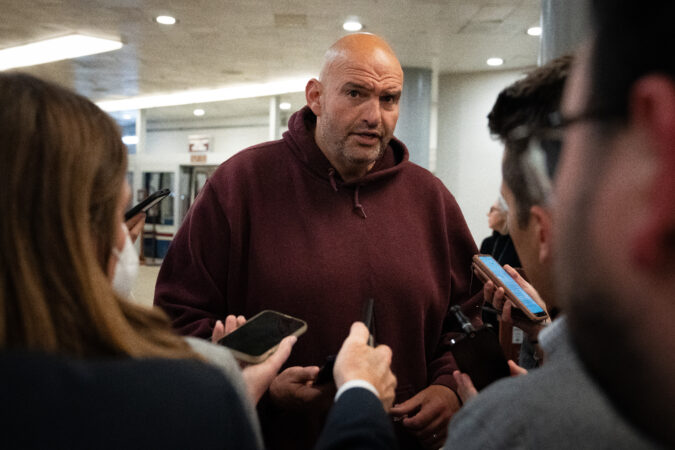
    Sen. John Fetterman hates government shutdowns.

    The Pennsylvania Democrat has never backed a lapse in government funding since he took office in 2023.

    And this aversion does not appear to be changing anytime soon as the country is staring down the possibility of a second shutdown in roughly four months starting at the end of this week. Fetterman is facing public pressure from constituents and fellow Pennsylvania Democrats to join the party’s effort to block funding for the Department of Homeland Security from a government appropriations package in the wake of federal immigration agents shooting and killing two 37-year-olds in Minneapolis this month.

    Blocking the package would set off a partial government shutdown.

    “I will never vote to shut our government down, especially our Defense Department,” Fetterman said in a statement on Monday, which is one of the agencies that is relying on the pending appropriations package.

    Even so, Fetterman thinks that changes are needed to President Donald Trump’s immigration strategy. He urged Trump to fire Homeland Security Secretary Kristi Noem, and he said immigration agents’ presence in Minneapolis needs to “immediately end,” after federal agents shot and killed two Americans this month.

    Fetterman has suggested removing DHS funding from the package under consideration as a compromise, but Senate Republican leaders are unlikely to do that.

    In October, ahead of the longest shutdown in history, he voted for both Democratic and Republican plans to keep the government open.

    If a partial government shutdown kicks off Friday, impacted agencies include the Departments of State, Treasury, Health and Human Services, Transportation, and Housing and Urban Development.

    With a partial government shutdown potentially just days away, here’s what to know about Fetterman’s stance.

    Why won’t Fetterman join Democrats in blocking funding for DHS?

    Senate Democrats have said they won’t support funding for DHS in the wake of the killings of Renee Nicole Good and Alex Pretti this month by federal immigration agents in Minneapolis. DHS oversees U.S. Immigration and Customs Enforcement and the Border Patrol, the two agencies involved in the fatal shootings.

    Democrats have also signaled that they want major reforms to federal agents’ conduct as they carry out Trump’s immigration enforcement agenda.

    Fetterman said this week that he spent “significant time hearing many different positions on the funding bills,” but will still never vote to shut the government down.

    Further, he thinks shutting down the government over U.S. Immigration and Customs Enforcement won’t have much of an impact at all.

    U.S. Immigration and Customs Enforcement and border enforcement operations are still likely to be operational even during a shutdown, CBS News reported. Agents have typically been considered essential employees.

    “A vote to shut our government down will not defund U.S. Immigration and Customs Enforcement,” Fetterman wrote in a statement this week, noting that DHS received $178 billion in funding from the One Big Beautiful Bill Act, which Fetterman opposed.

    Homeland Security Secretary Kristi Noem speaks during a news conference at Federal Emergency Management Agency headquarters, Saturday, Jan. 24, 2026, in Washington.

    Why did Fetterman call for Kristi Noem to be fired?

    On Tuesday, Fetterman made a direct plea to Trump: Fire Noem.

    “Americans have died,“ Fetterman wrote in a post on X. ”She is betraying DHS’s core mission and trashing your border security legacy.”

    The Pennsylvania Democrat also tried to appeal to Trump by criticizing former President Joe Biden’s DHS secretary, Alejandro Mayorkas, saying: “DO NOT make the mistake President Biden made for not firing a grossly incompetent DHS Secretary.”

    An increasing number of lawmakers and advocacy groups have called for Noem’s ouster, including Republican U.S. Sens. Thom Tillis, of North Carolina, and Lisa Murkowski, of Alaska.

    Fetterman had previously joined six other Democrats in voting to confirm Noem’s nomination for DHS secretary last year, including Sen. Andy Kim of New Jersey. (Kim has also called for Noem to be fired).

    What constituents and elected officials are saying

    The pressure on Fetterman from colleagues and constituents appears to be growing.

    Every Democratic member of Pennsylvania’s U.S. House delegation cosigned a letter on Tuesday calling for Fetterman and Sen. Dave McCormick (R, Pa.) to vote against DHS funding, The Inquirer reported.

    Anti-ICE activists demonstrate outside U.S. Sen. John Fetterman’s Philadelphia office, Jan. 27, 2026, calling for the Pennsylvania Democrat to vote against DHS funding.

    “We urge you to stand with us in opposing any DHS funding bill that does not include critical reforms,” the lawmakers said in the letter, delivered Tuesday. “We look forward to working together to advance legislation that both keeps our nation secure and upholds our fundamental values.”

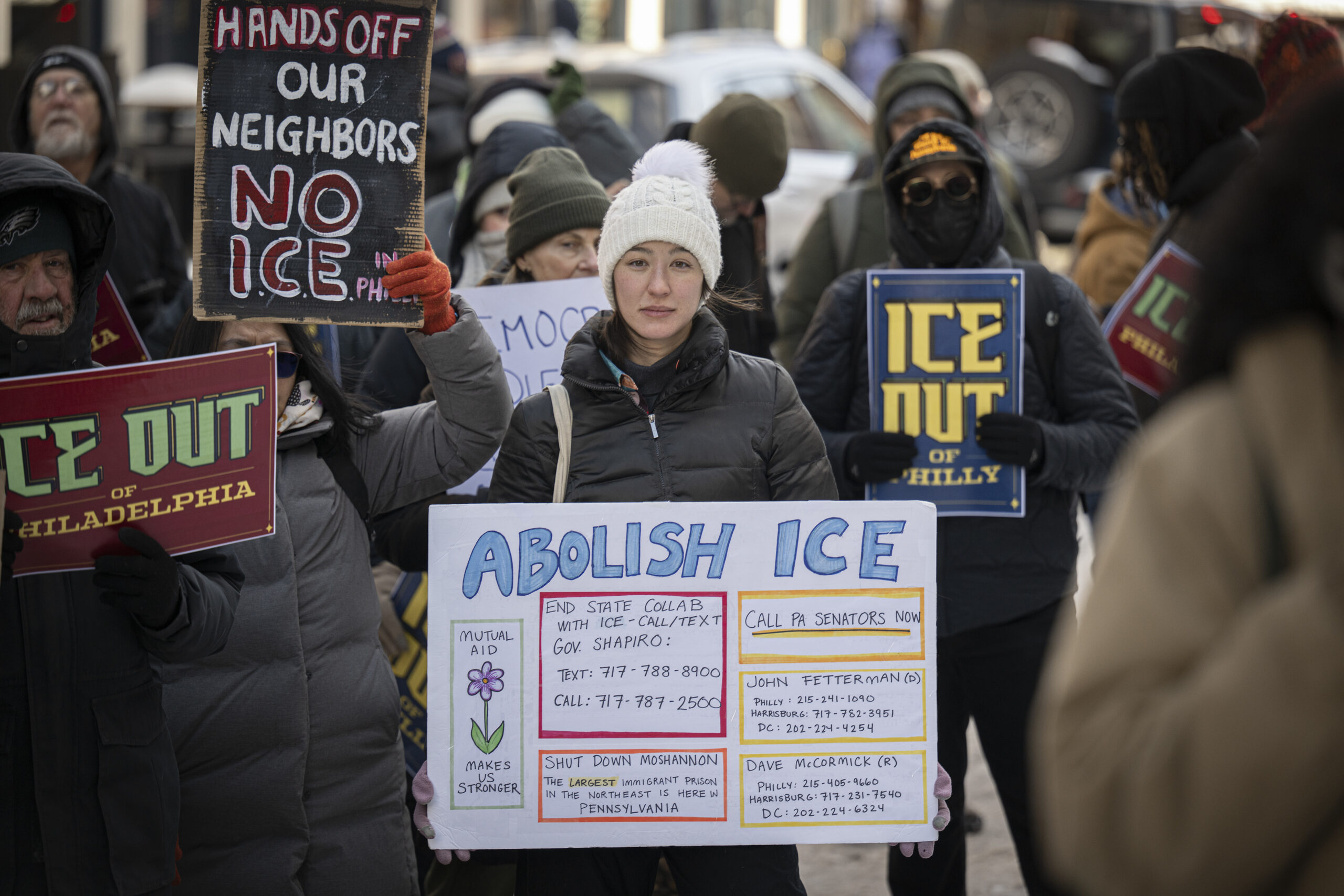
    Meanwhile, around 150 protesters gathered in front of Fetterman’s Philadelphia office in freezing temperatures on Tuesday to urge him to vote against the funding.

    “What do we want? U.S. Immigration and Customs Enforcement out,” the crowd chanted.

  • The rise and fall of Border Patrol ‘commander at large’ Greg Bovino

    The rise and fall of Border Patrol ‘commander at large’ Greg Bovino

    One year ago, Gregory Bovino was a low-profile Border Patrol chief overseeing a relatively small stretch of the U.S.-Mexico border in California. Just months into President Donald Trump’s second term, however, Bovino emerged as the face of one of the most aggressive immigration crackdowns in U.S. history, leading federal agents as they flooded one predominantly Democratic city after another, making thousands of arrests.

    Now that approach has turned into a political liability for Trump. And Bovino, 55, has been dispatched back to California, days after he declared — despite video evidence to the contrary — that the intensive care nurse fatally shot in Minneapolis on Saturday by federal immigration personnel wanted to “massacre law enforcement.”

    Bovino’s rapid rise and fall reflects the arc of the Trump administration’s combative immigration enforcement tactics and the mounting public backlash it has generated.

    The administration’s enforcement operations in multiple metropolitan areas formed the capstone of Bovino’s three-decade career in U.S. Customs and Border Protection, the nation’s biggest federal law enforcement agency. His visibility also demonstrated the more prominent role that Trump and Homeland Security Secretary Kristi L. Noem has given to the Border Patrol in urban areas, mostly far from its traditional purview over the U.S.-Mexico border.

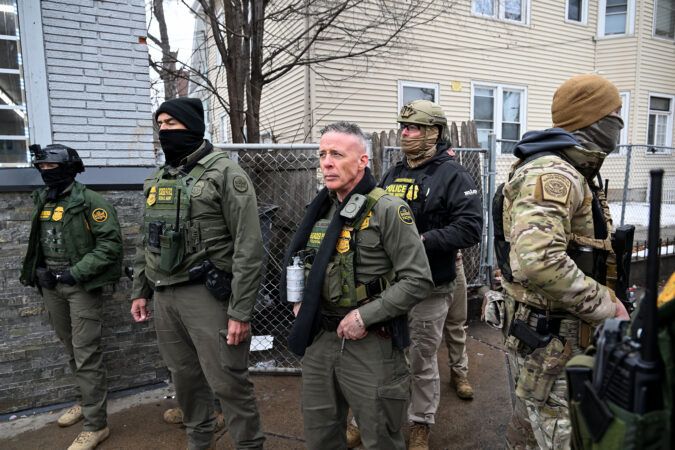
    Dressed in his signature olive-green uniform and sporting a buzz cut, Bovino led masked agents into American cities like a military commander directing troops into battle. Bovino relished trading insults with critics on social media, posting action videos of his agents’ maneuvers and appearing on the front lines of tear-gas-laced clashes with protesters.

    His leadership drew criticism over time, including an admonishment from a federal judge in Illinois, who said the use of force by federal agents “shocks the conscience.” That criticism mounted this month amid Bovino’s forceful defense of the fatal shootings by federal immigration personnel of two American citizens in Minneapolis, Renée Good and Alex Pretti.

    Even Trump, who has touted the blue-city operations, seemed to acknowledge that in Minneapolis, Bovino had pushed past the boundaries of traditional law enforcement tactics.

    “You know, Bovino is very good, but he’s a pretty out-there kind of a guy,” Trump said in a Fox News interview Tuesday. “And in some cases, that’s good. Maybe it wasn’t good here.”

    Some former officials of the Department of Homeland Security, which oversees CBP, said they welcomed Bovino’s departure from Minneapolis out of concern for the agency’s credibility.

    “I hope it’s a sign that perhaps there is a recalibration going on about how to approach the enforcement of immigration laws,” said Tim Quinn, a longtime CBP official who resigned last year. “I don’t think agents were well represented by his actions, and I fear that the country’s view of the Border Patrol is going to be negatively affected, but hopefully not irreparably damaged.”

    Bovino’s elevated status within the agency was unusual because he didn’t appear to operate within the chain of command, which would require him to answer to senior CBP officials. Instead, he was in direct contact with Noem, said Robert Danley, who retired as CBP head of professional responsibility in December.

    “He has a more direct line to the secretary, and he’s able to do what she wants and what he wants,” Danley said.

    DHS and Bovino did not respond to multiple requests for comment this week. Tricia McLaughlin, a DHS spokesperson, said Monday evening on X that Bovino “has NOT been relieved of his duties” and called him a “key part of the President’s team and a great American.”

    Nick Sortor, a conservative influencer whose arrest at an anti-Immigration and Customs Enforcement protest in Portland won admiration from Trump, has championed Bovino’s leadership and said he hopes the administration keeps him at the center of its crackdown on illegal immigration.

    “His presence on the front lines was a huge morale booster for the Border Patrol, which is obviously under heavy scrutiny,” Sortor said. “Him being there and risking his life beside them every day was sort of like fuel for them … He was becoming a figurehead for the mass deportation effort, somebody who was hell-bent on fulfilling what he believed was a mandate from the 2024 election.”

    Days before Trump took office, Bovino oversaw a Border Patrol raid in Kern County, at the southern end of California’s Central Valley, some 250 miles from the border. Although the agency described the operation as targeted, Border Patrol agents had no knowledge of the criminal or immigration history for 77 of the 78 people arrested, according to CalMatters, a nonprofit news organization.

    The American Civil Liberties Union alleged in a lawsuit that agents were conducting arrests indiscriminately of people of color “who appeared to be farmworkers or day laborers, regardless of their actual immigration status.” A federal judge issued a preliminary injunction last spring barring Border Patrol agents from stopping people in that region without reasonable suspicion that they were violating U.S. immigration law.

    “Looking back on last year, the operation looks like an audition for Greg Bovino, and he got the part,” said Bree Bernwanger, senior staff attorney at the ACLU of Northern California. “That raid was a precursor to the policies and practices that DHS would adopt writ large across the country. … We’ve seen them ignoring proof of immigration status and an utter disregard for the laws on the books that restrict immigration arrests without a warrant.”

    Bovino remained little known nationally until June, when Border Patrol agents began making arrests in Los Angeles. After agents descended on a park in an immigrant-rich neighborhood on horseback and in military vehicles, Bovino told Fox News, “Better get used to us now, because this is going to be normal very soon.”

    Several weeks later, in Chicago, Bovino’s aggressive tactics became more visible, as federal agents deployed tear gas and protesters clashed with law enforcement outside an ICE processing facility west of downtown. The nonprofit Chicago Headline Club filed a lawsuit against administration officials, alleging that the use of rubber bullets and tear gas against reporters and protesters violated their First Amendment rights.

    Bovino, who was among multiple defendants in the lawsuit, claimed in a deposition that the agents’ conduct was “more than exemplary.” But U.S. District Judge Sara Ellis concluded that Bovino’s testimony was “not credible” and wrote in a court opinion that Bovino admitted “he lied multiple times” about the events that led up to his throwing a tear-gas canister toward a crowd. Bovino and DHS said that a rock hit him in the head before he threw the canister, and he said that he was “mistaken” in his deposition.

    “I see little reason for the use of force that the federal agents are currently using,” Ellis said when she issued a preliminary injunction prohibiting immigration officers from using tear gas and pepper spray on those who do not pose a threat. “I would find the use of force shocks the conscience.”

    From Chicago, Bovino continued on to shorter-term operations in New Orleans and Charlotte. Then came his posting to Minneapolis, which has turned out to be an inflection point for his career and, perhaps, for the administration’s immigration crackdown in urban areas.

    On the morning of Jan. 7, an ICE officer, Jonathan Ross, shot and killed 37-year-old Good while she drove her SUV near her home in Minneapolis. A Washington Post analysis of video footage found Good’s car did move toward Ross but that he was able to move out of the way and fire at least two of three shots from the side of the vehicle as it veered past him.

    Bovino, however, did not hesitate to condemn Good’s actions and praise the shooter, saying, “Hats off to that ICE agent” in a Fox News interview.

    Seventeen days later, Bovino would once again defend the use of fatal force as the news broke that Pretti had been shot and killed in an encounter with federal immigration personnel.

    At a news conference just hours after Pretti’s death, Bovino claimed that agents tried to disarm Pretti, but he “violently resisted.” An agent fired “defensive shots,” he said.

    “This looks like a situation where an individual wanted to do maximum damage and massacre law enforcement,” Bovino added.

    Analysis of videos of the scene by several media organizations does not support Bovino’s claims. Federal immigration personnel had already secured Pretti’s handgun by the time they fatally shot him, according to a Post analysis of videos that captured the incident from several angles. As many as eight officers and agents were attempting to detain the 37-year-old ICU nurse, videos show. Federal officials now say that a Border Patrol agent and a CBP officer both shot Pretti, and they no longer claim that he had menaced law enforcement with his gun.

    By Sunday, some Republican members of Congress had begun raising concerns about the shooting and pressing for an independent investigation. And by the following day, both Trump and White House spokeswoman Karoline Leavitt signaled a change, saying that Trump’s border czar, Tom Homan, would be taking over the operation in Minneapolis.

    “Mr. Bovino is a wonderful man, and he is a great professional,” Leavitt said. “He is going to very much continue to lead [Customs and Border Protection] throughout and across the country. Mr. Homan will be the main point of contact on the ground in Minneapolis.”

    The news drew praise from Bovino’s critics.

    “This move by the administration is a political recognition that the violence we’re seeing across our communities, from Minneapolis to cities nationwide, is deeply unpopular, unacceptable, and politically toxic,” said Todd Schulte, president of the immigration advocacy group FWD.us.

    Bovino allies like Sortor registered their disappointment. “Bovino put his life on the line EVERY SINGLE DAY pushing for mass deportations across the country, going head to head with leftists and reminding THEM who’s boss,” he said on X: “DO NOT COWER TO THE DEMOCRATS, PRESIDENT TRUMP! BACK BOVINO!”

    Bovino’s typically busy social media feed has been quiet since then. His most recent post on X came Monday morning before news of his departure spread. “Finding and arresting criminal illegal aliens,” he wrote, “this is why we are deployed across the country.”

  • An ‘America First Patriot’: President Donald Trump endorses Stacy Garrity for Pennsylvania governor

    An ‘America First Patriot’: President Donald Trump endorses Stacy Garrity for Pennsylvania governor

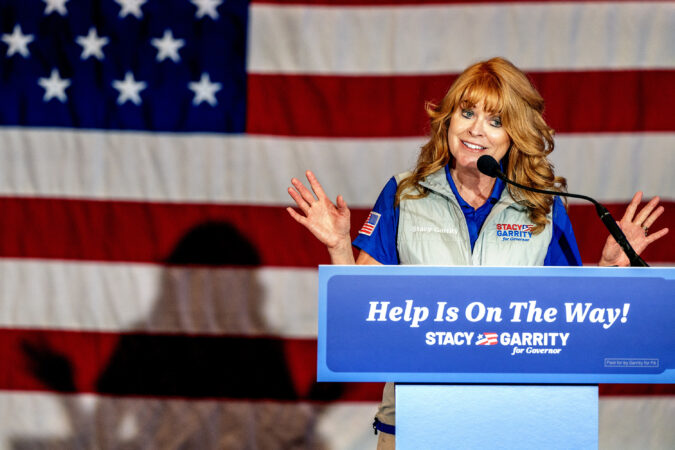
    President Donald Trump endorsed Pennsylvania Treasurer Stacy Garrity for governor Tuesday evening, awarding her the coveted nod from the leader of the Republican Party as she tries to unseat the popular Democratic incumbent Gov. Josh Shapiro in November.

    The Trump endorsement comes as Shapiro is on a national media blitz to advertise his memoir, released this week — and as he seeks to broaden his national reach amid his rumored 2028 presidential aspirations.

    The nod also comes as Trump faces declining approval ratings and increased scrutiny over his administration’s use of U.S. Immigration and Customs Enforcement in Minneapolis following a second killing of an American citizen by federal immigration agents. Shapiro, during his media appearances, has been an outspoken critic of Trump over ICE’s presence in Minneapolis, saying the agency’s mission is “broken” and “must be terminated.”

    In a post on his Truth Social platform, Trump declared Garrity “WILL NOT LET YOU DOWN” and stated that as governor, she would work to grow the economy, strengthen the military, keep borders secure, and safeguard elections, among other priorities.

    “Stacy is a true America First Patriot, who has been with me from the beginning,” Trump wrote.

    Garrity, the state’s second-term treasurer, has led the low-profile office without controversy and boasts that her staff has blocked nearly $2 billion in improper payments. The retired U.S. Army colonel in 2024 broke the record for highest number of votes received in a state-level race in Pennsylvania, and she quickly earned the support of the state party establishment last year.

    In a statement Tuesday, Garrity said she was honored to receive Trump’s endorsement, adding that the president has “been a voice for hardworking Americans who have been left behind.”

    “Josh Shapiro is President Trump’s number one adversary, and I am looking forward to working with President Trump and his team to defeat Josh Shapiro this November,” Garrity said.

    At right is Pennsylvania Governor Josh Shapiro listening to Stacy Garrity, 78th State Treasurer, Forum Auditorium, Harrisburg, Pa., Tuesday, Jan. 21, 2025.

    Garrity is a longtime Trump supporter from rural Bradford County, who in 2022 at a Trump rally repeated his false claim that he won the 2020 presidential election — a position she has since walked back, telling reporters earlier this month that she had gotten carried away in the moment when she said that.

    Last summer, Trump said he would support another potential candidate — U.S. Rep. Dan Meuser (R., Pa.) — if he ran. Weeks later, the Northeast Pennsylvania Republican declined to run and announced he would seek a fourth term in Congress instead. Meuser quickly endorsed Garrity once she formally joined the race, and she continues to capture more GOP officials’ endorsements as Pennsylvania’s May 19 primary election inches closer.

    Garrity is currently running unopposed as the Republican candidate for governor, after State Sen. Doug Mastriano announced he would not run again this year after losing by nearly 15 percentage points to Shapiro in 2022. However, Garrity has yet to announce who she wants as her running mate for lieutenant governor, with largely far-right conservatives — including Mastriano — interested in the job.

    Still, Trump’s endorsement of Garrity could draw needed eyes and checkbooks to her campaign, as her fundraising in the early months of the race has lagged far behind the $30 million war chest Shapiro has amassed over the last few years. Earlier this month, Garrity announced that her campaign had raised nearly $1.5 million from August through December.

    Republicans are hopeful that Garrity can drive enough enthusiasm at the top of the state ticket to motivate GOP voters to come out to vote throughout Pennsylvania, boosting candidates up and down the ballot in a year where control of Pennsylvania’s General Assembly and the U.S. House of Representatives is on the line.

    Meanwhile Democrats, hopeful to build on anti-Trump sentiment that drove their wins last year, quickly seized on Trump’s endorsement as an opportunity to tie Garrity to the president.

    “Pennsylvanians deserve better than a Governor who is nothing more than a rubber stamp for Trump’s chaos and higher costs, and that’s why she will be soundly rejected this November,” Pennsylvania Democratic Party chair Eugene DePasquale said in a statement.

  • ICE would still operate in a partial government shutdown

    ICE would still operate in a partial government shutdown

    U.S. Immigration and Customs Enforcement and other immigration enforcement agencies would keep operating even if broad swaths of the federal government close this weekend.

    Lawmakers face a Friday deadline for a partial government shutdown, 80 days after they reopened federal agencies after the longest shutdown ever in November. Congress has approved half of its annual spending bills since then and was poised to approve the other the bills late last week in one combined measure.

    But the killing of Alex Pretti in Minneapolis by immigration authorities on Saturday — just weeks after an ICE officer killed Renée Good in the same city — outraged congressional Democrats, who say they’ll block the spending bill unless it includes more oversight of ICE. Republicans so far have rebuffed that demand, setting up a likely partial shutdown that would close agencies whose funding hasn’t been enacted.

    ICE largely doesn’t need the spending bill to pass, however, even though its operations are at the heart of the standoff. That’s because the massive tax and immigration policy law the GOP passed last summer at President Donald Trump’s urging included $75 billion for the enforcement agency over the next four years.

    The one-time bonus was nearly eight times as much as the agency received in 2020, its highest-funded year to date, and the largest investment in immigration enforcement since the creation of the Department of Homeland Security in 2003. Including the ICE funds, DHS overall received $170 billion for immigration enforcement in the GOP law, the $3.4 trillion One Big Beautiful Bill.

    The law put $45 billion toward immigration detention facilities and nearly $30 billion for hiring and training ICE agents. It also included $3.5 billion for Justice Department grants to reimburse local law enforcement agencies that help with immigration operations; $6.2 billion for Customs and Border Protection personnel hiring and bonuses; and $6.2. billion for border security technology and screening. Last summer, the influx landed right as ICE appeared close to burning through its annual appropriations.

    It’s not clear how much of the money the agency has already spent, said Jennifer Ibáñez Whitlock, senior policy counsel at the National Immigration Law Center.

    “It’s our best guess … that they still have significant amounts of that $170 billion to spend,” she said. “DHS doesn’t need any more money through the regular appropriation process because they received such a significant windfall under the One Big Beautiful Bill.”

    DHS spokesperson Tricia McLaughlin said in a statement that Senate Democrats are “blocking vital DHS funding that keeps our country secure and its people safe,” including Transportation Security Administration, the Federal Emergency Management Agency, the Coast Guard and Border Patrol.

    “This funding supports national security and critical national emergency operations, including FEMA responses to a historic snowstorm that is affecting 250 million Americans. Washington may stall, but the safety of the American people will not wait,” she said.

    Republican leaders have rejected calls to separate this year’s Homeland Security spending from the measure to fund the rest of the government, but Senate Appropriations chair Susan Collins (R., Maine) and Homeland Security Appropriations subcommittee chair Sen. Katie Boyd Britt (R., Ala.) say they’re exploring options that could satisfy both sides.

    Senate Majority Leader John Thune (R., S.D.) said on the Senate floor Tuesday that “productive talks are ongoing” and encouraged Democrats to remain engaged to find a solution to avoid a “needless shutdown.”

    The extra money from last summer means Trump would have even more leeway than usual to keep his priorities going in a partial shutdown.

    Presidents generally have broad discretion over which agencies should close and which should stay open with unpaid workers during shutdowns. Traditionally, the White House budget office has preserved functions crucial to national security, public safety, and protecting government property, even if the agencies responsible for those activities aren’t funded.

    But outside funding streams — from other legislation or fees collected from government activities — give administrations room to move money around to their most favored agencies, even outside the bounds of spending laws.

    Other federal functions without new appropriations would grind to a halt, and Trump and White House budget director Russell Vought leveraged the 2025 shutdown to marginalize agencies they felt mostly served Democratic-controlled constituencies.

    In a potential shutdown this weekend, the IRS would shutter just days into tax season. Money for housing assistance programs would be at risk in the aftermath of a winter storm that sent temperatures plummeting to historic lows. Government-backed scientific research would halt overnight.

    “The Trump administration knows that if there isn’t an appropriations bill, they can still do a lot of things. Many of the chains come off of them,” said Richard Stern, who studies the federal budget at Advancing American Freedom, a conservative think tank founded by former Vice President Mike Pence. “They showed in the last shutdown that they’ll use full executive authority if Congress won’t do its job, and in that sense, they called the Democrats’ bluff. This time, the precise thing Democrats are fighting over is the thing Trump already has permanent funding for.”

    The prolonged government closure in November — forced by disagreements over extending enhanced Affordable Care Act subsidies that expired last year — concluded with an agreement to approve three of 12 appropriations bills through September and set a deadline of Jan. 30 for the remaining bills.

    Three more passed earlier this month, leaving six of the largest and most controversial funding bills to be negotiated between Republicans and Democrats. That bipartisan agreement was announced last week and initially appeared on track to pass.

    But the Trump administration also flooded Minneapolis with federal immigration officials as part of Operation Metro Surge, which it called the largest enforcement operation in the agency’s history. Democrats began raising concerns with agents’ aggressive actions against U.S. citizens and undocumented immigrants with no criminal history.

    Top Democrats on the House and Senate Appropriations committees at first backed the funding agreement they helped negotiate, which would send $64.4 billion to Homeland Security, including $10 billion for ICE — similar to its existing funding levels.

    They touted the changes they secured in the bill — including a decrease in detention beds, lowered funding for Border Patrol and for ICE’s enforcement and removal operations, and money for body cameras — and argued that denying funding for Homeland Security would also affect FEMA, the TSA and the Coast Guard. The measure did not include other changes Democrats pushed for, including prohibitions on ICE agents shooting at moving vehicles or detaining U.S. citizens.

    Last week, top Democrats also noted that the 2025 GOP law meant ICE could continue to operate in a shutdown. The bill narrowly passed the House, primarily along party lines.

    After federal officers shot and killed Pretti on Saturday, though, Democratic outrage boiled over. In the Senate — where at least seven Democrats would have to vote with Republicans to overcome a filibuster — the party’s leaders pledged to block the Homeland Security funding bill until Republicans agree to new accountability measures for ICE.

    Now Democrats want Republicans to strip the Homeland Security funding bill from the rest of the package, which has wider bipartisan support. They acknowledge that it would do little to shut down ICE’s operations, but argue it’s necessary to force changes.

    “Americans must be eyes wide open that blocking the DHS funding bill will not shut down ICE. ICE is now sitting on a massive slush fund it can tap, whether or not we pass a funding bill,” Sen. Patty Murray (D., Wash.), the lead Democrat on the Senate Appropriations Committee, said in a statement. “But we all saw another American shot and killed in broad daylight. There must be accountability, and we must keep pushing Republicans to work with us to rein in DHS.”