Category: National Politics

  • They helped design the President’s House. Now part of the site’s ‘heart has been ripped out’ after orders from Trump administration.

    They helped design the President’s House. Now part of the site’s ‘heart has been ripped out’ after orders from Trump administration.

    When the National Park Service dismantled educational exhibits about slavery at the President’s House Site last week, it required wrenches, crowbars, and the drudgery of four men.

    In the span of a roughly an hour and a half, years of hard work from a group of artists, architects, historians, attorneys, and writers who helped create the President’s House in the early 2000s were ripped off the walls and hauled into the back of a pickup truck to be dropped off who-knows-where.

    This brazen demise of the exhibits, which memorialized the nine people George Washington enslaved at the site, was never supposed to happen, said Troy C. Leonard, partner and principal at the Philadelphia-based Kelly Maiello Architects, who helped design the President’s House almost two decades ago.

    During the project, the firm, which describes itself as minority-owned, was led by the esteemed Emanuel Kelly, who died in 2024.

    “Because the panels were not meant to be removed, they were very violently taken down, you know, ripped from their backgrounds,” Leonard said in an interview Monday.

    “I would suspect that they did a lot of damage, physical damage, to the site in taking those panels down,” he added.
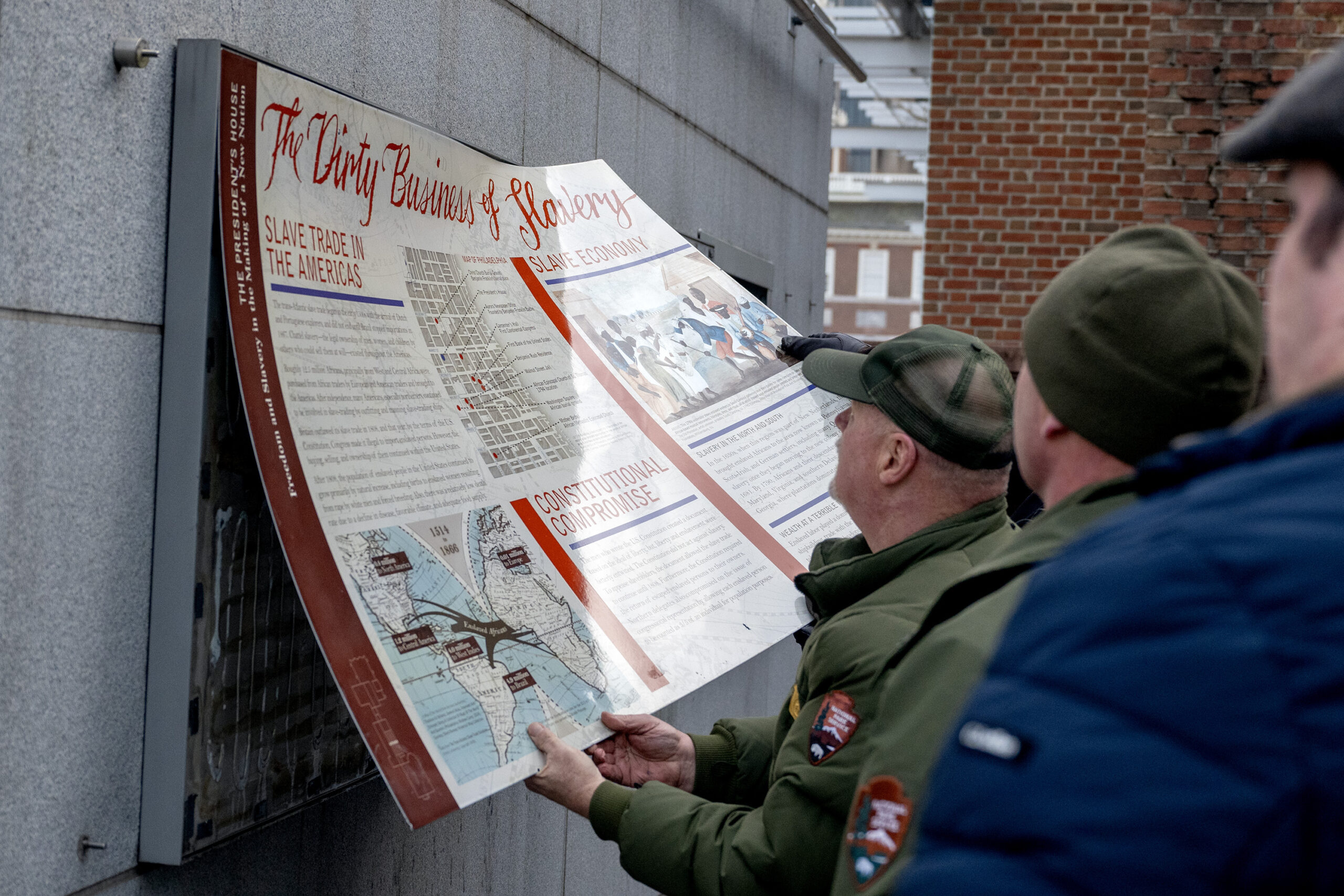
    Workers remove the displays at the President’s House site in Independence National Historical Park Thursday, Jan. 22, 2026.

    Leonard is one of many stakeholders who helped create the President’s House and are now grappling with its sudden removal last week after a monthslong review by President Donald Trump’s administration.

    In the early 2000s, the site was developed at Independence National Historical Park as a memorial intended to highlight the horrors of slavery that took place during the founding of a nation based on liberty. It featured numerous educational exhibits. Everything at the site was historically accurate.

    “Just sort of slithering onto the site was a very cowardly way of doing it without any mention that it was going to happen, notifying anyone, just coming in and starting to take the panels down,” Leonard said.

    The Trump administration also ordered the takedown of exhibits from other national parks. Signs about the mistreatment of Native Americans and climate change were removed from parks including the Grand Canyon and Glacier National Park, according to the Washington Post.

    It’s all in connection with orders from Trump and Interior Secretary Doug Burgum, who called for the review and potential removal of content at national parks that could “inappropriately disparage Americans past or living.”

    Independence Park employees were also given talking points that evade visitors’ questions about the site.

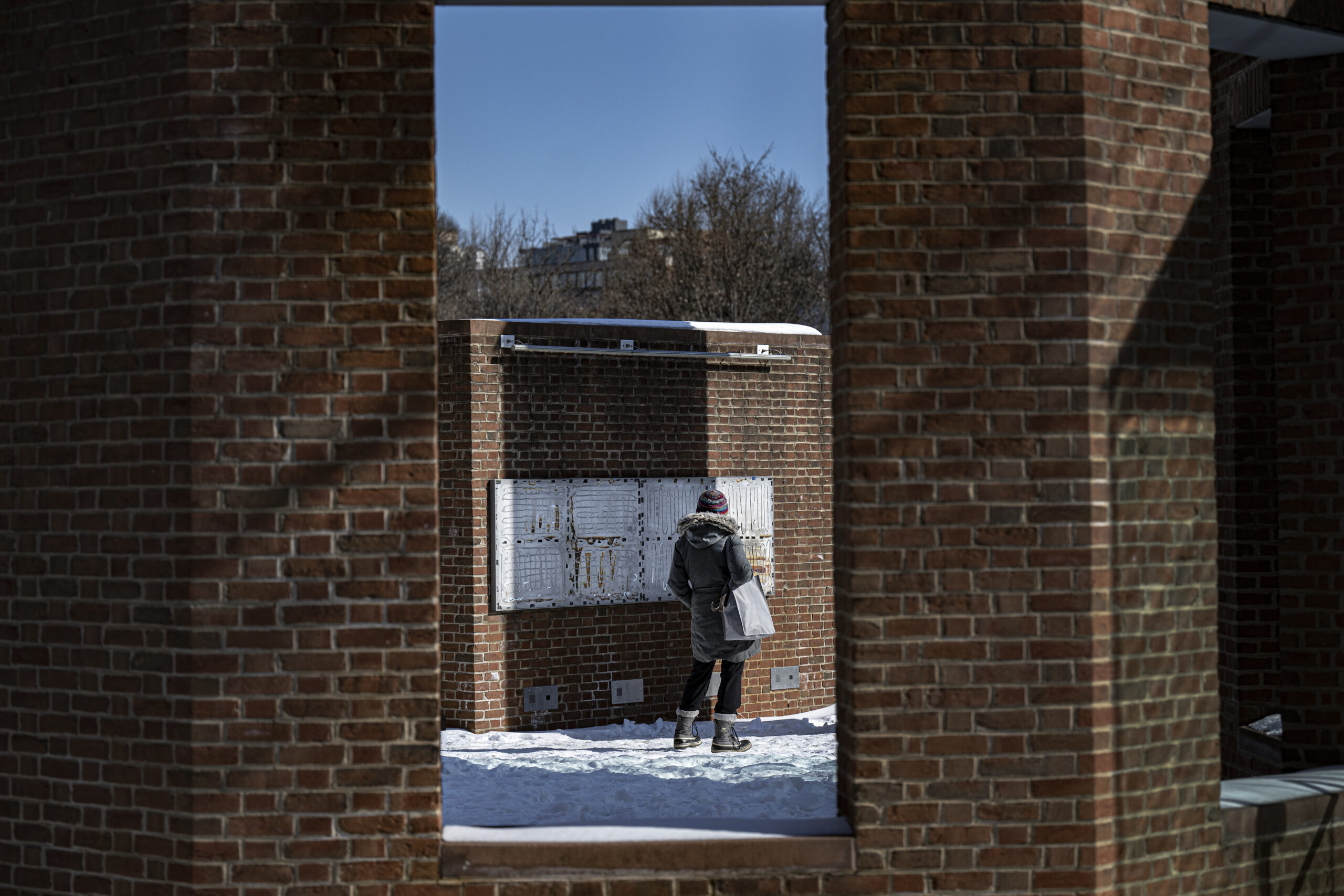
    At Independence Park, Leonard said he is concerned about the future of the site. After last week’s takedown, the open-air exhibit is now a bunch of blank, faded brick walls. All that is left of the memorial is the site’s original archaeological dig from the 2000s and a wall with the engravings of the names of the nine people Washington enslaved.

    The City of Philadelphia has sued Burgum, acting National Park Service Director Jessica Bowron, and their respective agencies to restore the panels. Gov. Josh Shapiro’s office filed an amicus brief in support of the city’s suit Tuesday.

    “To leave it the way that it is, I mean, to me, it’s sort of now a memorial to the death of democracy and truth,” Leonard said. “That’s what it is now. It’s sort of just these blank walls that are just sitting there. It’s sort of a ruin, but it’s a pathetic ruin because part of its heart has been ripped out.”
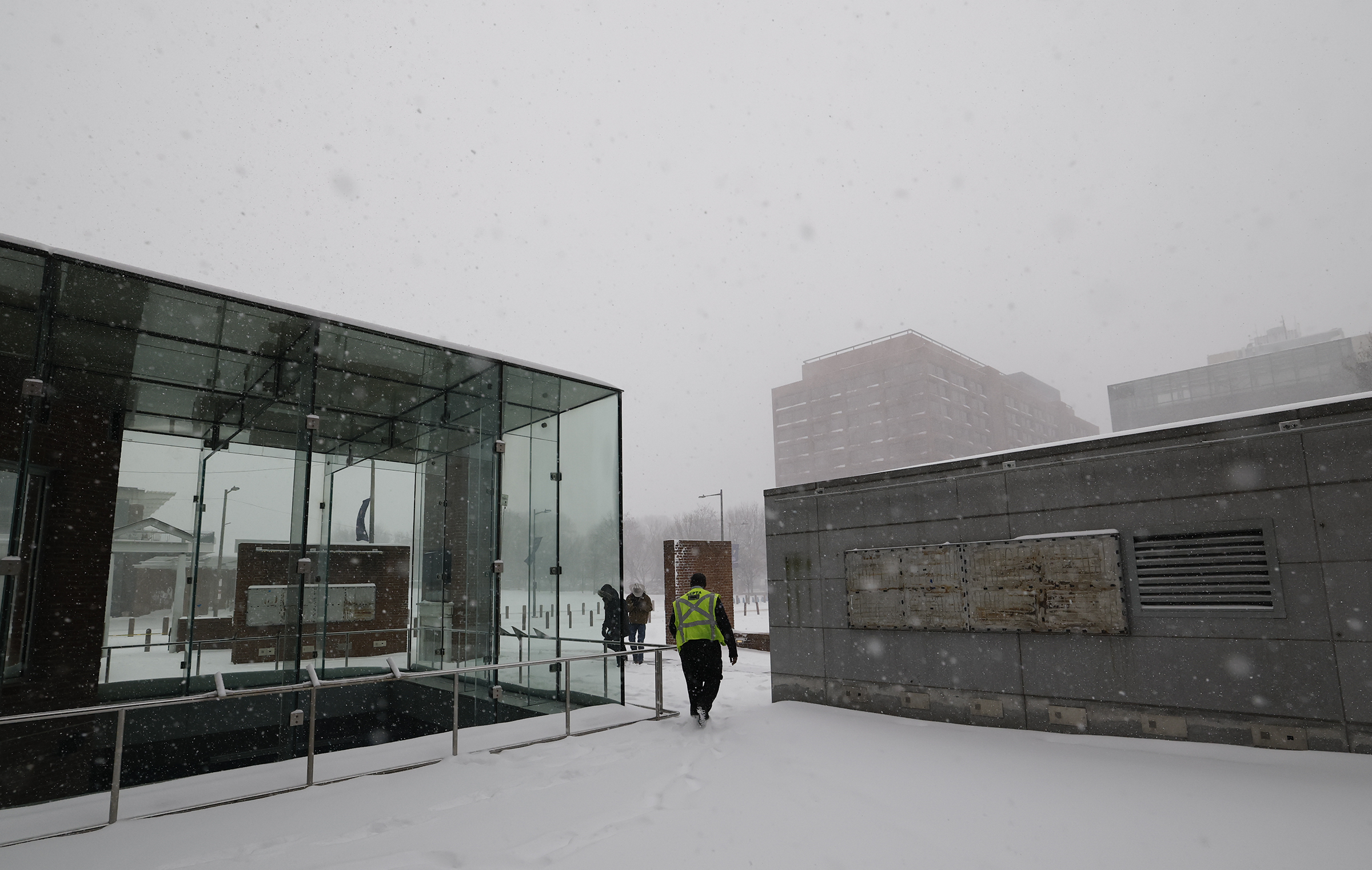
    Snow falls at the Presidents House on Sunday, January 25, 2026, after the National Park Service took down slavery exhibits several days earlier.

    History is ‘lost and found’

    Around two decades ago, more than 1,000 miles away from the Sixth and Market home of the President’s House, a Kansas City-based exhibit design firm crafted the illustrations and graphics seen throughout the site.

    All of which were torn down last week.

    Gerard Eisterhold, president of the firm, Eisterhold Associates Inc., said in an interview that he got a slew of texts and emails when the exhibits were taken down. He said this incident proves a “thesis” that designers were trying to portray to the public through the President’s House — that history goes through cycles of being lost and then found.

    His firm has worked on historical exhibits throughout the country, including at the African American Museum in Philadelphia, the International Civil Rights Center and Museum in North Carolina at the site of the Greensboro sit-ins, and the National Civil Rights Museum in Memphis.

    “There were the history of the enslaved that was sort of forgotten for a long, long, long, long time, and that’s a conscious thing that people do. … There’s a heck of a lot more people that are aware of the history of President’s House this week than there was last week,” Eisterhold said.

    In fact, there was a sign at the President’s House called “History Lost + Found,” which outlined the juxtaposition of liberty and slavery during the early days of the United States.

    Washington would rotate out people he enslaved at his Philadelphia residence to evade Pennsylvania’s 1780 emancipation law, according to the website for Mount Vernon, Washington’s estate in Virginia.

    “History is not neat,” the History Lost + Found panel at Independence Park read. “It is complicated and messy.”

    This panel was one of dozens that were taken down last Thursday. Others were titled “Life Under Slavery” and “The Dirty Business of Slavery.” And there were illustrations of important figures, like Oney Judge, who was enslaved as Martha Washington’s personal maid before she escaped. Hercules Posey, who was enslaved as a cook, also later self-emancipated.

    “But here we are. Because how dare we write their names, the nine enslaved Africans at the first American presidential residence. … How dare we encode instructions to the future by writing about the two who escaped?” author Lorene Cary, who helped with storytelling at the President’s House along with documentary filmmaker Louis Massiah, wrote on her Substack last week. “The names are still there, carved into stone.”
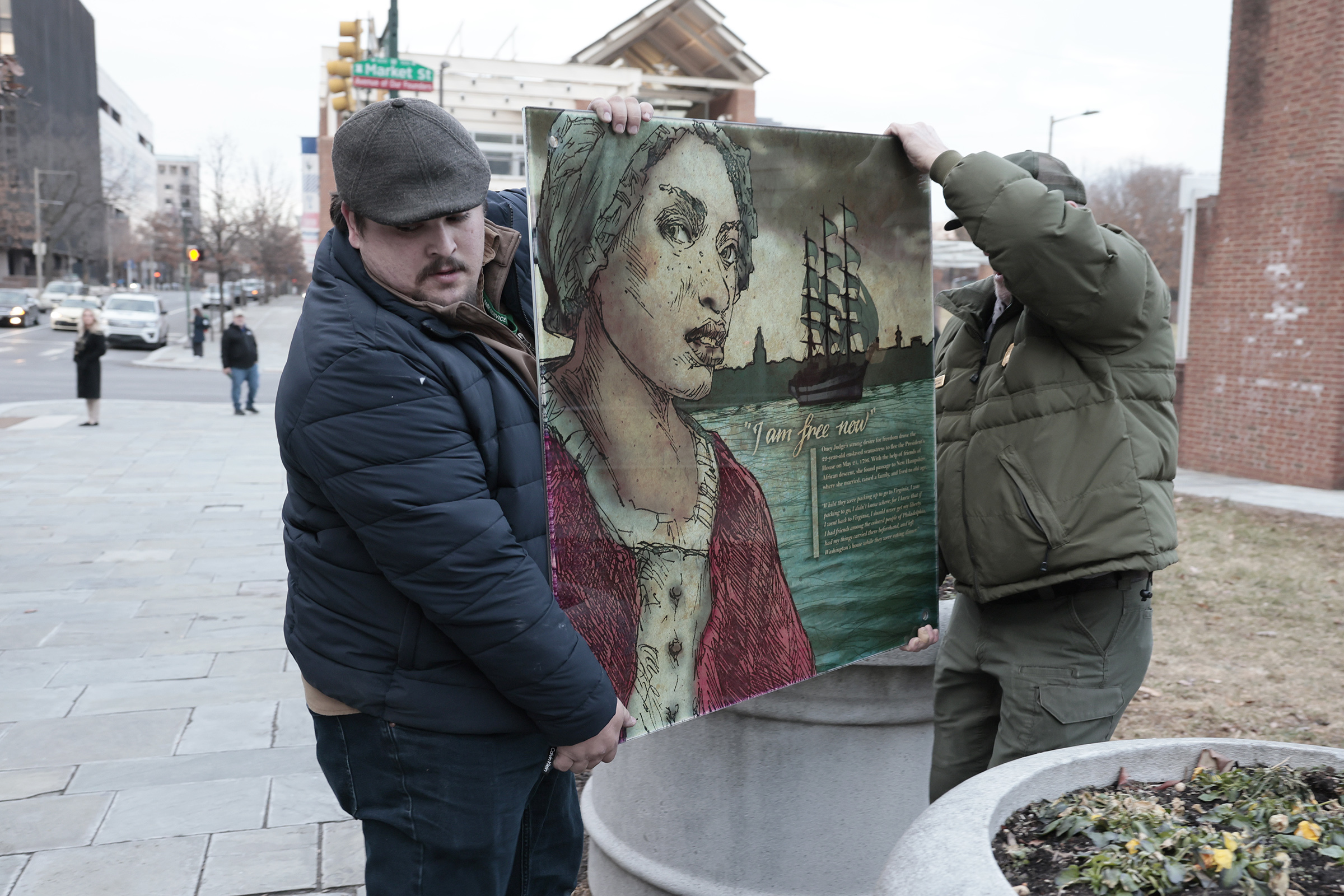
    National Park Service workers remove the displays at the President’s House site in Independence National Historical Park in Philadelphia on Thursday, Jan. 22, 2026.

    The creation and display of these panels were the product of collaboration across disciplines, Cary wrote.

    “So many people — scholars and passionate non-scholars — worked, argued, met, studied, wrote, agitated, and created art for this unique and necessary American project.”

    Leonard said his firm has been working with Michael Coard, attorney and leader of the Avenging the Ancestors Coalition, which has been helping lead efforts to defend the President’s House from the Trump administration. The coalition, through its advocacy, helped shape the President’s House roughly 20 years ago.

    If the city wins its lawsuit and the panels are restored, the site will likely need a refurbishment and stakeholders will need to ensure that the panels are still in good condition.
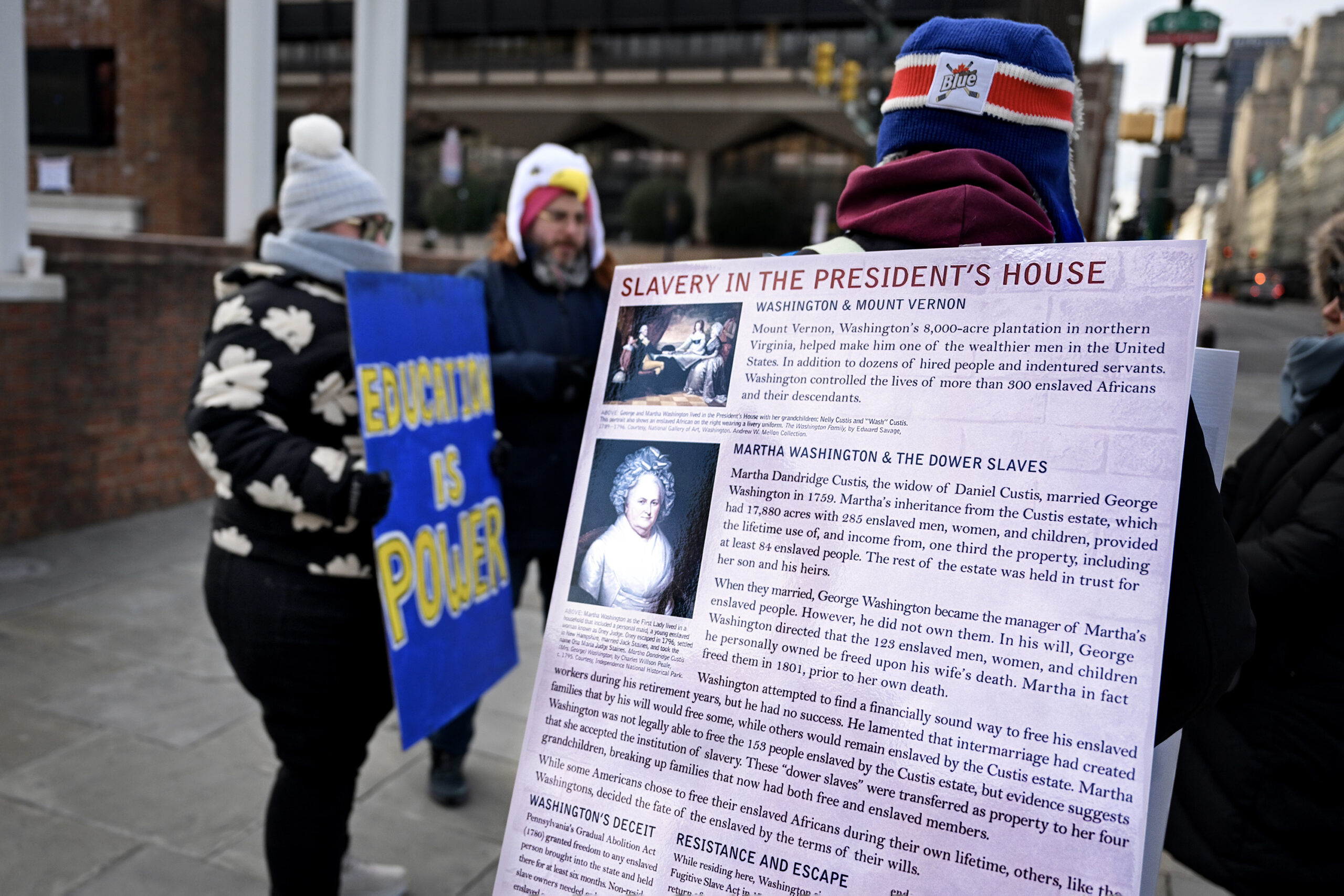
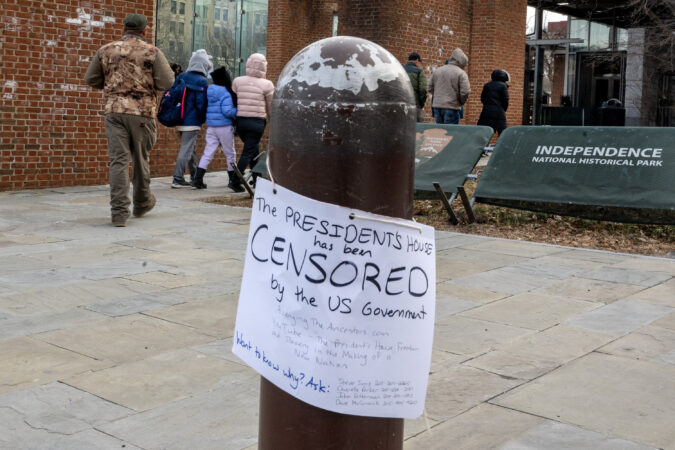
    Ted Zellers (right) wears a sandwich board with a replica of one of the removed slavery panels as people visit and protest at the President’s House site in Independence National Historical Park Saturday, Jan. 24, 2026.

    Some Philadelphians have floated the idea of moving the displaced panels to another location if the site faced the ire of the Trump administration. But for Leonard, Sixth and Market is the rightful, historically important home for the exhibits.

    “The place is equally important,” Leonard said. “It is not complete without being located at that site. So it’s important to the fight to make sure that that memorial is restored at that location. It cannot be relocated.”
  • Man arrested after spraying unknown substance on Rep. Ilhan Omar at Minneapolis town hall

    Man arrested after spraying unknown substance on Rep. Ilhan Omar at Minneapolis town hall

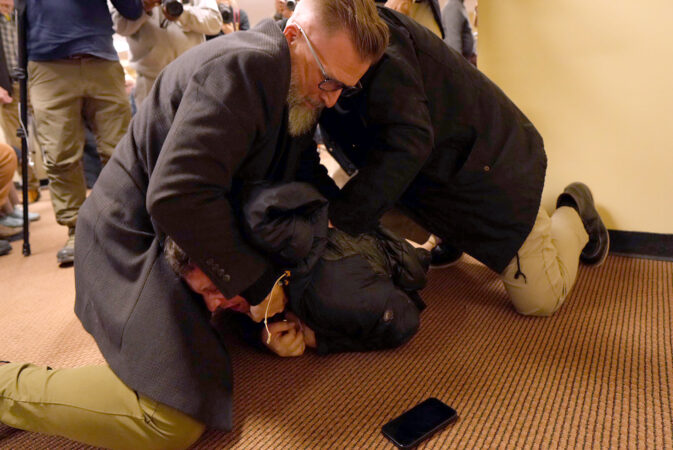
    MINNEAPOLIS — A man sprayed an unknown substance on Democratic U.S. Rep. Ilhan Omar and was tackled to the ground Tuesday during a town hall in Minneapolis, where tensions over federal immigration enforcement have come to a head after agents fatally shot an intensive care nurse and a mother of three this month.

    The audience cheered as the man was pinned down and his arms were tied behind his back. In video of the incident, someone in the crowd can be heard saying, “Oh my god, he sprayed something on her.”

    Just before that Omar had called for the abolishment of U.S. Immigration and Customs Enforcement and for Homeland Security Secretary Kristi Noem to resign or face impeachment. Calls are mounting on Capitol Hill for Noem to step down after the shooting deaths in Minneapolis of two people who protested deportations. Few Republicans have risen to her defense.

    “ICE cannot be reformed,” Omar said, seconds before the attack.

    Minneapolis police said officers saw the man use a syringe to spray an unknown liquid at Omar. They immediately arrested him and booked him at the county jail for third-degree assault, spokesperson Trevor Folke said. Forensic scientists responded to the scene.

    Police identified the man as 55-year-old Anthony Kazmierczak. It was not immediately clear if Kazmierczak had an attorney. The county public defenders’ office could not immediately be reached.

    Omar continued speaking for about 25 more minutes after the man was ushered out by security, saying she would not be intimidated.

    There was a strong, vinegarlike smell after the man pushed on the syringe, according to an Associated Press journalist who was there. Photos of the device, which fell to the ground when he was tackled, showed what appeared to be a light-brown liquid inside. There was no immediate word from officials on what it was.

    Minneapolis Council Member LaTrisha Vetaw said some of the substance also came into contact with her and state Sen. Bobby Joe Champion. She called it a deeply unsettling experience.

    No one in the crowd of about 100 people had a noticeable physical reaction to the substance.

    Omar says she is OK and ‘a survivor’

    Walking out afterward, Omar said she felt a little flustered but was not hurt. She was going to be screened by a medical team.

    She later posted on the social platform X: “I’m ok. I’m a survivor so this small agitator isn’t going to intimidate me from doing my work. I don’t let bullies win.”

    The White House did not immediately respond to a message seeking comment Tuesday night.

    President Donald Trump has frequently criticized the congresswoman and has stepped up verbal attacks on her in recent months as he turned his focus on Minneapolis. During a Cabinet meeting in December, he referred to her as “garbage.”

    Hours earlier on Tuesday, the president criticized Omar as he spoke to a crowd in Iowa, saying his administration would only let in immigrants who “can show that they love our country.”

    “They have to be proud, not like Ilhan Omar,” he said, drawing loud boos at the mention of her name.

    He added: “She comes from a country that’s a disaster. So probably, it’s considered, I think — it’s not even a country.”

    Omar is a U.S. citizen who fled her birthplace, Somalia, with her family at age 8 as a civil war tore apart the country.

    The Minneapolis-St. Paul area is home to about 84,000 people of Somali descent — nearly a third of Somalis living in the U.S.

    Officials condemn the attack

    Democratic Minnesota Gov. Tim Walz expressed gratitude that Omar was safe, adding in a post on X: “Our state has been shattered by political violence in the last year. The cruel, inflammatory, dehumanizing rhetoric by our nation’s leaders needs to stop immediately.”

    U.S. Rep. Nancy Mace, a South Carolina Republican, also denounced the assault.

    “I am deeply disturbed to learn that Rep. Ilhan Omar was attacked at a town hall today” Mace said. “Regardless of how vehemently I disagree with her rhetoric — and I do — no elected official should face physical attacks. This is not who we are.”

    Minneapolis Mayor Jacob Frey, a Democrat, called the attack “unacceptable.” He said he was relieved that Omar “is OK” and thanked police for their quick response, concluding: “This kind of behavior will not be tolerated in our city.”

    The city has been reeling from the fatal shootings of two residents by federal immigration agents this month during Trump’s massive immigration enforcement surge. Intensive care unit nurse Alex Pretti was killed Saturday, less than three weeks after Renee Good was fatally shot behind the wheel of her vehicle.

    Lawmakers face rising threats

    The attack came days after a man was arrested in Utah for allegedly punching U.S. Rep. Maxwell Frost, a Democrat from Florida, in the face during the Sundance Film Festival and saying Trump was going to deport him.

    Threats against members of Congress have increased in recent years, peaking in 2021 in the aftermath of that year’s Jan. 6 attack on the U.S. Capitol, before dipping slightly only to climb again, according to the most recent figures from the U.S. Capitol Police.

    Lawmakers have discussed the impact on their ability to hold town halls and public events, with some even citing the threat environment in their decisions not to seek reelection.

    Following the assault on Omar, U.S. Capitol Police said in a statement that the agency was “working with our federal partners to see this man faces the most serious charges possible to deter this kind of violence in our society.”

    It also released updated numbers detailing threats to members of Congress: 14,938 “concerning statements, behaviors, and communications directed against lawmakers, their families, staff and the Capitol Complex” in 2025.

    That is a sharp increase from 2024, when the number of cases was 9,474, according to USCP. It is the third year in a row that the number of threats has increased.

    Capitol Police have beefed up security measures across all fronts since Jan. 6, 2021, and the department has seen increased reporting after a new center was launched two years ago to process reports of threats.

  • Josh Shapiro backs Philadelphia’s legal fight to restore exhibits about slavery at the President’s House

    Josh Shapiro backs Philadelphia’s legal fight to restore exhibits about slavery at the President’s House

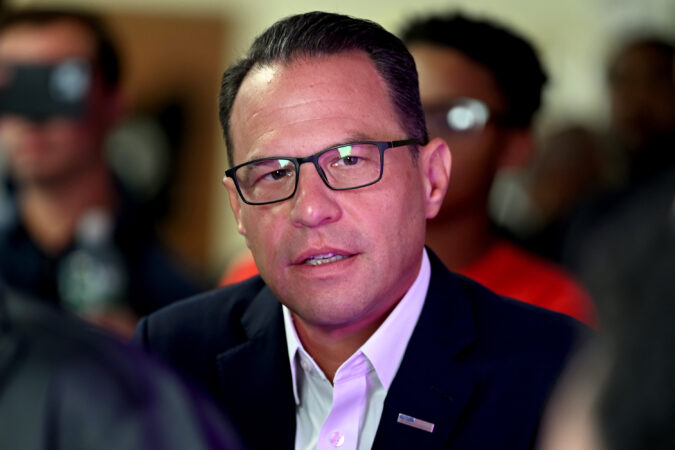
    Pennsylvania Gov. Josh Shapiro is backing the City of Philadelphia’s federal lawsuit against President Donald Trump’s administration after exhibits about slavery were taken down from the President’s House last week.

    Shapiro said in a news release Tuesday that Trump “picked the wrong city and the wrong Commonwealth” when dismantling exhibits at the President’s House.

    “Those displays aren’t just signs — they represent our shared history, and if we want to move forward as a nation, we have to be willing to tell the full story of where we came from,” Shapiro said after his office filed an amicus brief in support of a lawsuit from the city seeking to restore the exhibits to the President’s House.

    The city filed a suit against the Department of Interior, the National Park Service, Interior Secretary Doug Burgum, and acting National Park Service Director Jessica Bowron last week while the exhibits were being dismantled by the Park Service.

    “There is no virtue in refusing to acknowledge certain aspects of our history because it is painful to do so,” according to an amicus brief filed by the governor’s counsel Tuesday evening. “The removal of the slavery exhibit from the President’s House undermines this commitment and denies Pennsylvanians and others the opportunity to learn more about a part of our history that cannot be ignored.”

    Shapiro’s support comes as stakeholders across the country are voicing their outrage against the Trump administration’s efforts to sanitize United States history.

    Mayor Cherelle L. Parker has emphasized the importance of a 2006 cooperative agreement between the city and the federal government.

    Parker issued some of her most forceful comments yet against the Trump administration Tuesday night in a video posted to social media, saying that the federal government “breached” this cooperative agreement.

    Parker said her administration will continue “fighting” for the panels to be restored.

    “This history is a critical part of our nation’s origins, and it deserves to be seen and heard, not just by the people of Philadelphia, but by every person who comes to Philadelphia from around our nation and the world to see and learn from, especially as we celebrate our Semiquincentennial 250th birthday, I want the world to know you cannot erase our history,” Parker said.

    “Yes, it is flawed, yes it is imperfect, and yes includes the real life, lived experiences and stories of people who endured a great deal of pain so that America could realize its promise,” she added.

    The removal of content from national parks comes after Trump and Burgum issued orders that call for the review and potential removal of content at national parks that “inappropriately disparage Americans past or living.”

    In addition to the actions in Philadelphia, signs about the mistreatment of Native Americans and climate change were removed from other parks including the Grand Canyon and Glacier National Park, according to the Washington Post.

    In Shapiro’s filing Tuesday, his counsel states that the governor wanted to step in to ensure that important parts of U.S. history are continuing to be told and that he has “a compelling interest in protecting the role of state and local governments within Pennsylvania from the abuses of federal executive power,” such as the Trump administration carrying out the removal without notifying the city.

    A hearing on the suit is expected to be held Friday morning.

    In her video Tuesday, Parker thanked the governor and other elected officials for their support.

    “Philadelphia, we are on the right side of history,” she said.

    Staff Writer Abraham Gutman contributed reporting.

  • John Fetterman said he won’t vote against DHS funding. Every House Democrat from Pa. is urging him to change his mind

    John Fetterman said he won’t vote against DHS funding. Every House Democrat from Pa. is urging him to change his mind

    All seven Democratic members of the U.S. House representing Pennsylvania cosigned a letter to Sens. John Fetterman and Dave McCormick on Tuesday calling on them to vote against funding for the Department of Homeland Security, which oversees both ICE and the Border Patrol.

    The letter, which was first obtained by The Inquirer, comes a day after Fetterman, their Democratic colleague, said he would not vote against funding the agency, which could trigger a partial government shutdown.

    “We urge you to stand with us in opposing any DHS funding bill that does not include critical reforms,” the lawmakers said in the letter, delivered Tuesday. “We look forward to working together to advance legislation that both keeps our nation secure and upholds our fundamental values.”

    The effort was led by U.S. Rep. Chris Deluzio, whose Western Pennsylvania district includes parts of Allegheny County. Deluzio has been floated in Democratic circles as a potential primary challenger to Fetterman in 2028.

    Deluzio was joined by Democratic U.S. Reps. Brendan Boyle and Dwight Evans, who represent Philadelphia, as well as U.S. Reps. Madeleine Dean, Mary Gay Scanlon, and Chrissy Houlahan, whose districts include the Philadelphia suburbs. U.S. Rep. Summer Lee, a progressive Democrat whose district includes Pittsburgh, also signed the letter.

    Boyle, another potential contender for Fetterman’s seat and the dean of the delegation, said in a statement that “ICE is currently operating like a lawless, out-of-control agency.”

    “We cannot send it another blank check,” he added.

    Anti-ICE activists demonstrate outside U.S. Sen. John Fetterman’s Philadelphia office, Jan. 27, 2026, calling for the senator to vote against DHS funding.

    The House Democrats urged the senators to vote against any bill that funds the department “without first securing meaningful, enforceable reforms to U.S. Immigration and Customs Enforcement (ICE) and related DHS agency activity.”

    Fetterman spoke out against ICE’s operation in Minneapolis and called for DHS Secretary Kristi Noem’s firing on Tuesday but said he “will never vote to shut our government down, especially our Defense Department.” He said that allowing a partial shutdown would not defund ICE, since the agency was granted $178 billion in funding from the One Big Beautiful Bill Act, which he did not support.

    “I reject the calls to defund or abolish ICE,” Fetterman said Monday. “I strongly disagree with many strategies and practices ICE deployed in Minneapolis, and believe that must change.”

    He said he wants “a conversation” about the DHS appropriations bill and supports taking it out of the spending package, but said “it is unlikely that will happen.”

    McCormick, a Republican, affirmed his support for Border Patrol and ICE on Sunday while also calling for “a full investigation into the tragedy in Minneapolis.”

    Only a handful of House Democrats — none of whom represent Pennsylvania — joined Republicans last week in passing a bill to fund DHS. It was sent to the Senate as a package with other appropriations bills.

    “We voted against this bill last week and ask that you do the same,” the lawmakers say in the letter. “Funding without adequate reform risks endorsing current approaches that undermine public safety and due process, erode American liberties, and weaken public trust.”

    After a second U.S. citizen was fatally shot by ICE in Minneapolis over the weekend, Senate Minority Leader Chuck Schumer (D., N.Y.) said Democrats would not vote for the forthcoming appropriations legislation if funding for DHS is part of it.

    Democrats have pushed for provisions in the spending bill to increase training for ICE agents, to require warrants for immigration arrests, to require agents to identify themselves, and for Border Patrol to stay on the border instead of helping ICE elsewhere.

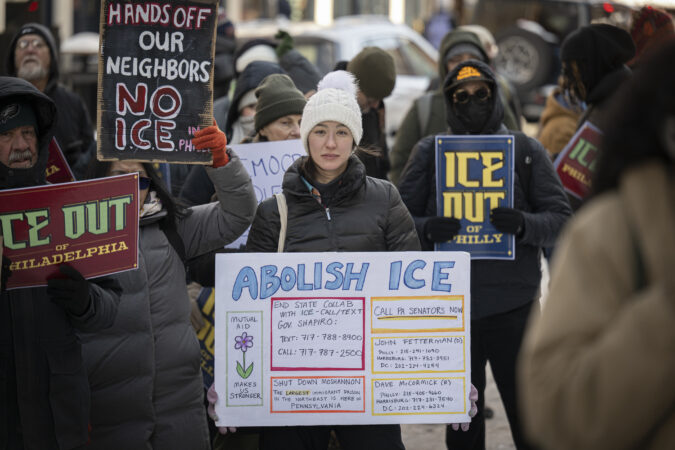
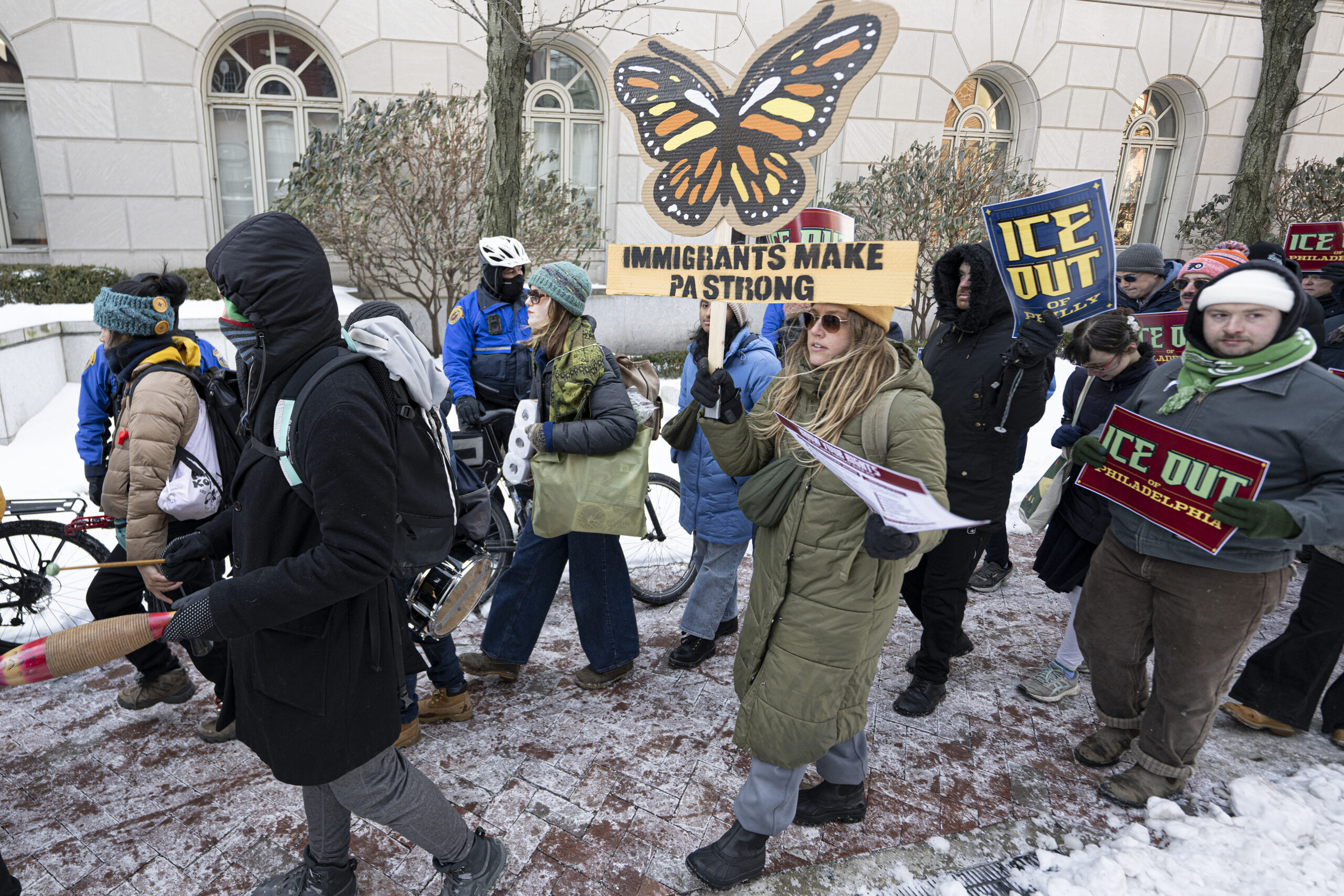
    Upward of 150 protesters gathered in front of Fetterman’s Philadelphia office in the cold on Tuesday to urge him to vote against the funding. One protester held a sign saying “listen to your wife,” referencing Gisele Fetterman, who was undocumented as a child before becoming a citizen and posted on X for the first time in nearly a year on Sunday to speak against ICE.

    “Sen. Fetterman, we’re here to remind you: You work for us in Philadelphia. We don’t want ICE in Pennsylvania,” Tiffany Chang, an Asian and Pacific Islander Political Alliance activist, said into a microphone.

    “We want ICE out of the government spending bill,” Chang added. “So today, we need everyone listening to tell Sen. Fetterman: ‘Vote no on funding an agency that kills with impunity.’”

    After the protest, participants said they did not feel that Fetterman was listening to his constituents.

    “I thought a show of people in front of his building might actually get some attention,” said Stefanie Nicolosi, 39, a Phoenixville resident and member of Indivisible Chester County.

  • Trump visits Iowa trying to focus on affordability during fallout over nurse’s Minneapolis shooting

    Trump visits Iowa trying to focus on affordability during fallout over nurse’s Minneapolis shooting

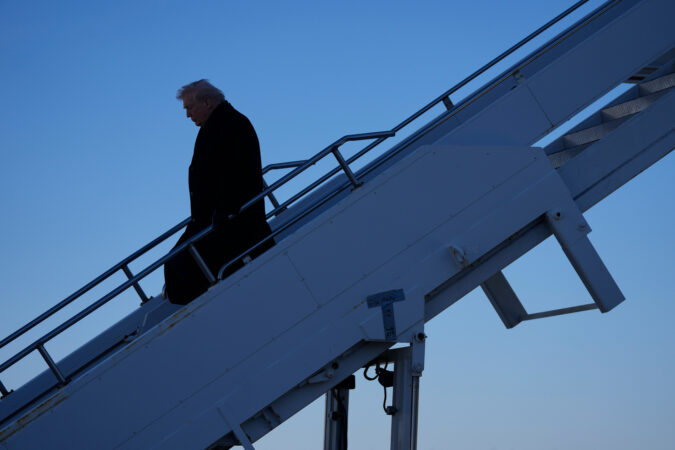
    CLIVE, Iowa — President Donald Trump arrived in Iowa on Tuesday as part of the White House’s midterm-year pivot toward affordability, even as his administration remains mired in the fallout in Minneapolis over a second fatal shooting by federal immigration officers this month.

    The Republican president first made a stop at a local restaurant, where he met some locals and sat for an interview with Fox News Channel — in which he said he was attempting to “de-escalate a little bit” in Minnesota. Afterwards, he was scheduled to deliver a speech on affordability at the Horizon Events Center in Clive, a suburb of Des Moines.

    The trip is expected to also highlight energy policy, White House chief of staff Susie Wiles said last week. It’s part of the White House’s strategy to have Trump travel out of Washington once a week ahead of the midterm elections to focus on affordability issues facing everyday Americans — an effort that keeps getting diverted by crisis.

    The latest comes as the Trump administration is grappling with the weekend shooting death of Alex Pretti, an ICU nurse killed by federal agents in the neighboring state of Minnesota. Pretti had participated in protests following the Jan. 7 killing of Renee Good by an Immigration and Customs Enforcement officer. Even as some top administration officials moved quickly to malign Pretti, Trump said he was waiting until an investigation into the shooting was complete.

    Trump calls Pretti killing ‘sad situation’

    As Trump left the White House on Tuesday to head to Iowa, he was repeatedly questioned by reporters about Pretti’s killing. Trump disputed language used by his own deputy chief of staff, Stephen Miller, who on social media described Pretti as an “assassin” who “tried to murder federal agents.” Vice President JD Vance shared the post.

    Trump, when asked Tuesday if he believed Pretti was an assassin, said, “No.”

    When asked if he thought Pretti’s killing was justified, Trump called it “a very sad situation” and said a “big investigation” was underway.

    “I’m going to be watching over it, and I want a very honorable and honest investigation. I have to see it myself,” he said.

    He also said Homeland Security Secretary Kristi Noem, who was quick to cast Pretti as a violent instigator, would not be resigning.

    Later, as he greeted diners at an Iowa restaurant, Trump weighed in further with comments that were likely to exacerbate frustration among some of his backers who are also strong Second Amendment proponents.

    “He certainly shouldn’t have been carrying a gun,” Trump said of Pretti.

    He called it a “very, very unfortunate incident but said, ”I don’t like that he had a gun. I don’t like that he had two fully loaded magazines. That’s a lot of bad stuff.”

    Republicans want to switch the subject to affordability

    Trump was last in Iowa ahead of the July 4 holiday to kick off the United States’ upcoming 250th anniversary, which morphed largely into a celebration of his major spending and tax cut package hours after Congress had approved it.

    Republicans are hoping that Trump’s visit to the state on Tuesday draws focus back to that tax bill, which will be a key part of their pitch as they ask voters to keep them in power in November.

    “I invited President Trump back to Iowa to highlight the real progress we’ve made: delivering tax relief for working families, securing the border, and growing our economy,” Rep. Zach Nunn, R-Iowa, said in a statement in advance of his trip. “Now we’ve got to keep that momentum going and pass my affordable housing bill, deliver for Iowa’s energy producers, and bring down costs for working families.”

    Trump’s affordability tour has taken him to Michigan, Pennsylvania and North Carolina as the White House tries to marshal the president’s political power to appeal to voters in key swing states.

    But Trump’s penchant for going off-script has sometimes taken the focus off cost-of-living issues and his administration’s plans for how to combat it. In Mount Pocono, Pennsylvania, Trump insisted that inflation was no longer a problem and that Democrats were using the term affordability as a “hoax” to hurt him. At that event, Trump also griped that immigrants arriving to the U.S. from “filthy” countries got more attention than his pledges to fight inflation.

    Competitive races in Iowa

    Although it was a swing state just a little more than a decade ago, Iowa in recent years has been reliably Republican in national and statewide elections. Trump won Iowa by 13 percentage points in 2024 against Democrat Kamala Harris.

    Still, two of Iowa’s four congressional districts have been among the most competitive in the country and are expected to be again in this year’s midterm elections. Trump already has endorsed Republican Reps. Nunn and Mariannette Miller-Meeks. Democrats, who landed three of Iowa’s four House seats in the 2018 midterm elections during Trump’s first term, see a prime opportunity to unseat Iowa incumbents.

    This election will be the first since 1968 with open seats for both governor and U.S. senator at the top of the ticket after Republican Gov. Kim Reynolds and Republican U.S. Sen. Joni Ernst opted out of reelection bids. The political shake-ups have rippled throughout the state, with Republican Reps. Randy Feenstra and Ashley Hinson seeking new offices for governor and for U.S. senator, respectively.

    Democrats hope Rob Sand, the lone Democrat in statewide office who is running for governor, will make the entire state more competitive with his appeal to moderate and conservative voters and his $13 million in cash on hand.

  • Federal Reserve cuts rates again, signals one more cut amid uncertain outlook

    Federal Reserve cuts rates again, signals one more cut amid uncertain outlook

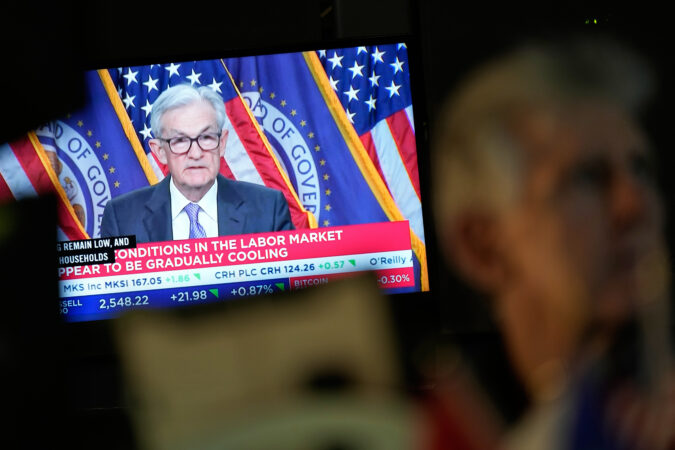
    The Federal Reserve cut interest rates by a quarter of a percentage point on Wednesday for the third time this year, seeking to shore up a softening labor market even as inflation builds and leaving the prospect of more cuts next year unclear.

    “It’s a labor market that seems to have significant downside risks,” Fed Chair Jerome Powell said at a news conference following the meeting.

    Although Fed officials tentatively penciled in at least one more rate cut before the end of next year, estimates about where the economy is heading varied significantly and Powell suggested the central bank might wait before returning to any additional cuts.

    “We are well positioned to wait and see how the economy evolves from here,” he said.

    Wednesday’s widely expected move lowers the Fed’s benchmark rate to a range of 3.5 to 3.75 percent, the lowest level in about three years. But officials remain sharply divided over how to respond to an economy sending mixed signals: Inflation remains above the Fed’s target, which would typically argue for holding rates steady, while slower hiring and a modest uptick in unemployment suggest a case for easing.

    Investors cheered the news, with major financial indexes ending the day higher on Wednesday afternoon.

    Nine Federal Reserve officials backed Wednesday’s cut while three dissented. Two officials — Chicago Fed President Austan Goolsbee and Kansas City Fed President Jeffrey Schmid — favored no rate reduction, while Fed governor Stephen Miran preferred a larger, half-point cut. It was the most dissent since September 2019.

    In another sign of division among top Fed officials, the latest economic projections also released on Wednesday showed seven officials penciled in no additional cuts next year, while 12 favored at least one or more.

    Fed policies influence what households and businesses pay for mortgages, credit cards and other loans, and investors are watching closely for guidance on the central bank’s next steps.

    The Fed’s job is to keep prices stable and to maximize employment, but it is split on how to navigate what some describe as a light version of stagflation — elevated inflation alongside a labor market that is slowing but far from collapsing. Those divides were exposed at the Fed’s last gathering in October, where officials expressed “strongly differing views about what policy decision would most likely be appropriate,” according to the meeting minutes.

    Further complicating the decision, the Fed received far less official data about the health of the economy, because of the government shutdown that delayed or canceled the release of reports on the jobs market and consumer prices. Some Fed officials, relying on alternative data or surveys of the business community, argued that progress on inflation had stalled and warned that cuts risked undermining hard-won gains. Others countered that rising unemployment and weakening consumer demand suggested a need for action.

    Powell defended cutting rates now rather than waiting for the Fed’s next meeting in late January, when officials will finally have a better sense of the status of economy thanks to a trove of upcoming official reports. Wednesday’s call reflected mounting evidence of a cooling job market, he noted, saying that after readjustments and revisions, job growth may have been slightly negative since spring.

    “I think you can say that the labor market has continued to cool gradually, maybe just a touch more gradually than we thought,” Powell said.

    With unemployment rising to 4.4 percent in September, the Fed no longer characterized that rate as “low,” in a statement announcing the rate cut.

    Former Philadelphia Fed president Patrick Harker said this week that Wednesday’s move is shaping up to be a “hawkish cut” — a rate reduction paired with a signal that policymakers may soon pause further easing. Harker said the Fed’s internal divergence reflects an unusual degree of economic “fog,” with inflation not worsening as much as feared, unemployment claims relatively stable, and labor-market signals increasingly difficult to interpret. He noted that monthly job gains below 100,000 would normally be a red flag, but demographic trends and uncertain immigration patterns complicate the baseline.

    Those disagreements are unfolding amid unprecedented political pressure from President Donald Trump, who has repeatedly criticized the Fed for not moving quickly enough to lower rates and has threatened to fire Powell. Trump renewed those attacks ahead of this week’s meeting, telling Politico that support for aggressive rate cuts is a litmus test for whoever he taps to succeed Powell, whose term as chair expires in May. The president plans to nominate a successor early next year, though he has already signaled he knows who he is likely to pick.

    Former Pennsylvania Sen. Pat Toomey, who was top Republican on the Senate Banking Committee, said he is perplexed by Trump’s push for cuts, because inflation remains above target and the broader economy continues to expand. The data shows cooling — not collapsing — labor conditions, which wouldn’t normally justify an urgent push for easing rates, Toomey said.

    Toomey warned that the president is taking a much bigger political gamble than he appears to realize. If inflation were to spike again, he said, Trump would “completely own” the fallout after pressuring the Fed when “there’s no obvious need to ease.” That makes the campaign for faster rate cuts “surprising,” Toomey said.

    Although Powell secured enough board support to approve Wednesday’s cut, future easing would depend on keeping that alliance.

    The split appears to pit a “hawkish” coalition of regional Fed presidents focused on preventing inflation from resurging against a group of governors in Washington who see the greater risk in a softening economy. Officials such as Cleveland Fed President Beth Hammack, who said she would have preferred not to cut rates in October, have argued that inflation remains stubbornly above the bank’s 2 percent target and warned that reducing rates too soon could keep prices rising.

    Meanwhile, other officials continue to emphasize that a cooling labor market and softening consumer demand call for cuts, to ensure the economy does not slip further.

  • John Fetterman urges Trump to fire Kristi Noem as DHS secretary: ‘Americans have died’

    John Fetterman urges Trump to fire Kristi Noem as DHS secretary: ‘Americans have died’

    Sen. John Fetterman on Tuesday urged President Donald Trump “to immediately fire” Homeland Security Secretary Kristi Noem after federal agents killed two citizens in Minneapolis this month during an immigration enforcement operation.

    “Americans have died,” Fetterman (D., Pa.) said in a statement. “She is betraying DHS’s core mission and trashing your border security legacy.”

    The senator’s call for Noem’s firing comes after federal agents killed two Americans during the Minneapolis operation. On Saturday, a Border Patrol agent shot and killed Alex Pretti, an intensive care nurse at a VA hospital. An ICE agent shot and killed Renee Nicole Good, a 37-year-old poet and mother, on Jan. 7.

    Both shootings were caught on video, provoking protests nationwide.

    Fetterman referenced Noem’s predecessor, Alejandro Mayorkas, who served under former President Joe Biden and faced impeachment by the Republican-led House in 2024 amid a backlash over increased border crossings under Biden.

    “DO NOT make the mistake President Biden made for not firing a grossly incompetent DHS Secretary,” said Fetterman, who was one of seven Democrats who voted for Noem’s confirmation last year.

    Sen. Andy Kim (D., N.J.), who also voted for Noem, joined the growing chorus of Democrats calling for Noem to step down on Tuesday. The South Jersey lawmaker has previously called the vote a mistake.

    Fetterman’s plea to fire Noem comes a day after he called for the withdrawal of federal agents from Minneapolis. And it comes as the U.S. Senate is poised to vote this week on funding for the Department of Homeland Security, which oversees both ICE and the Border Patrol.

    Senate Minority Leader Chuck Schumer said Democrats would vote against it, which could trigger a partial federal government shutdown.

    About 150 protesters gathered outside Fetterman’s office in Philadelphia in the snow on Tuesday to urge him to join the effort, but the senator said on Monday that he will never vote to shut down the government. He also argued that doing so would not pull the $178 billion dedicated to DHS through the One Big Beautiful Bill Act, which he did not support.

    “I would like him to listen and actually represent us, because that’s his job,” said James Pierson, 42, an Exton resident attending the demonstration.

    Fetterman suggested pulling the DHS bill from the package of bills under consideration by the Senate this week rather than another shutdown vote.

    “I reject the calls to defund or abolish ICE,” he said. “I strongly disagree with many strategies and practices ICE deployed in Minneapolis, and believe that must change.”

  • More history exhibits pulled from national parks, including Grand Canyon

    More history exhibits pulled from national parks, including Grand Canyon

    Trump officials have ordered national parks to remove dozens of signs and displays related to climate change, environmental protection, and settlers’ mistreatment of Native Americans in a renewed push to implement President Donald Trump’s executive order on “restoring truth and sanity to American history.”

    Park staff have interpreted Trump’s directive — which seeks to scrub federal institutions of what it calls “partisan ideology” and remove any content deemed to “disparage Americans past or living” — to include any references to historic racism and sexism, as well as climate change and LGBTQ+ rights. Last week, that included the removal of an exhibit at the President’s House in Philadelphia that focused on George Washington’s ownership of enslaved people.

    A visitor on Thursday looks at the site where explanatory panels from an exhibit on slavery were removed from the President’s House in Philadelphia.

    In a new wave of orders this month, Trump officials instructed staff to remove or edit signs and other informational materials in at least 17 additional parks in Arizona, Texas, Colorado, Utah, Montana, and Wyoming, according to documents reviewed by the Washington Post. The documents also listed some removals ordered in August and September.

    The Interior Department said in a statement it was implementing Trump’s executive order.

    “All federal agencies are to review interpretive materials to ensure accuracy, honesty, and alignment with shared national values,” the statement said. “Following completion of the required review, the National Park Service is now taking appropriate action in accordance with the Order.”

    Among the national parks targeted in the new removal orders are some of the country’s most iconic: Grand Canyon, Glacier, Big Bend, and Zion.

    The removal orders include descriptions of how climate change is driving the disappearance of the glaciers at Glacier National Park and a wayside display at the Grand Canyon referring to the forced removal of Native Americans.

    The administration’s broad attempt to suppress true stories “should offend every American,” said Kristen Brengel, senior vice president of government affairs for the National Parks Conservation Association.

    Brengel emphasized that Park Service staffers are acting on administration orders. “Everyone understands this history,” she said. “It’s not debatable, but they’re being forced to select stories because they think the administration will threaten their jobs if they don’t.”

    Here are details on some of the changes being ordered at national parks.

    Grand Canyon National Park

    Staff at a Grand Canyon visitor center in Arizona removed part of an exhibit after flagging potentially problematic passages to the national park system’s leadership in D.C., according to documentation reviewed by the Post.

    The passages included text stating that settlers “exploited land for mining and grazing” and that federal officials “pushed tribes off their land” to establish the park.

    The park also removed references to cattle ranchers “carelessly overgrazing” the land, tourists “foolishly” leaving trash in the park and entrepreneurs who “profited excessively” from tourism.

    Trump officials have yet to take action on several other items, including a video about Native American history.

    Park staff suggested fixes that would remove a reference to a federal policy that prevented Native Americans from using body and face paint, as well as references to their ancestors’ “misery, suffering,” and “loss.”

    Roadside displays on climate change, pollution and mining were also flagged for possible removal.

    Glacier National Park

    In response to frequent inquiries from visitors about the potential disappearance of the famous glaciers at Montana’s Glacier National Park, staff created signs and other resources to answer those questions, said Jeff Mow, who retired as superintendent of the park in 2022.

    The administration flagged one brochure for removal or changes that shows images of glaciers retreating and explains that human-caused climate change is a factor in their likely future disappearance. A video that refers to the disappearance of the glaciers was also ordered removed or changed.

    Also flagged was a sign at the park’s gift shop that says: “Climate Change Affects National Parks and the Treasures They Protect.”

    “We’re whitewashing or we’re taking out all those sort of not-so-nice stories that have occurred in our nation’s history,” Mow said.

    Another informational display to be removed or changed describes the park’s issues with air pollution. The administration paused air-quality monitoring at national parks last year.

    Other signs talk about the increasing fire risk at the park, as well as a nearby dam that “flooded two lakes within the park.”

    “As the nation’s storyteller of natural and cultural history, the National Park Service takes great pride” in telling these stories, Mow said. “This process of being edited — it’s like taking a torpedo in the bow.

    Big Bend National Park

    The signs slated for removal at Big Bend National Park along the Texas-Mexico border do not reference the topics, such as climate or Native American history, that have typically attracted the attention of Trump officials.

    Instead, of the nearly 20 signs flagged for not conforming with the new policy, many deal with geology, prehistoric history, fossils and other seemingly uncontroversial scientific or historical topics. The removal orders do not spell out what’s wrong with the signs.

    Some of the displays are in Spanish and English, while others talk about cooperating with Mexico on modern preservation efforts.

    Big Bend’s submission for the administration’s review says, “These wayside exhibits describe natural features, but emphasize ‘matters unrelated to the beauty, abundance, or grandeur of said natural feature.’” Although it flagged the materials for review, the park said it did “not advocate changing these wayside exhibits.”

    Even so, Trump officials decided the displays did not conform with administration policy and ordered them changed or removed.

    “This is not something that the National Park Service should be blamed for,” said Bob Krumenaker, superintendent of Big Bend until 2023. “They are being told they have to do these things. And my hope is they’re saving these exhibits for when things change so they can put them back up.

    Other parks

    The administration also targeted less famous parks. One sign slated for removal at Bent’s Old Fort National Historic Site in Colorado described key figures in the site’s history and included references to the forced removal of a Native tribe, a family’s slave ownership and another historic figure who had a miscarriage.

    At Hubbell Trading Post National Historic Site in Arizona, a panel on Ganado Mucho, a Navajo leader known for settling disputes with ranchers, is also listed for changes or removal.

    The documentation reviewed by the Post also included new details on removals and changes that were ordered last year.

    At Arizona’s Organ Pipe Cactus National Monument, descriptions of destructive grazing practices and the accelerating rate of warming since 1850, as well as a booklet that talks about endangered turtles and Sonoran pronghorn, were ordered changed or removed.

    Grand Teton National Park in Wyoming was ordered to remove or change a panel about Gustavus Cheyney Doane that said he participated in the U.S. Army massacre of Piegan Blackfeet Native Americans, including women, children and the elderly.

    At Little Bighorn Battlefield National Monument in Montana, exhibit text that described the United States being “hungry for gold and land” and breaking promises to Native Americans was ordered changed or removed.

    Another text describing how U.S.-run boarding schools for Indigenous children “violently erased cultural identities and language” was also deemed not to comply with Trump’s policy.

    Brengel of the National Parks Conservation Association said the Trump administration’s efforts to sanitize American history runs counter to the mission of the park system.

    “We are capable of hearing about our tragedies and our victories, and this systematic erasure should concern everyone in our country,” she said.

  • Minneapolis shooting scrambles Second Amendment politics for Trump

    Minneapolis shooting scrambles Second Amendment politics for Trump

    Prominent Republicans and gun rights advocates helped elicit a White House turnabout this week after bristling over the administration’s characterization of Alex Pretti, the second person killed this month by a federal officer in Minneapolis, as responsible for his own death because he lawfully possessed a weapon.

    The death produced no clear shifts in U.S. gun politics or policies, even as President Donald Trump shuffles the lieutenants in charge of his militarized immigration crackdown. But important voices in Trump’s coalition have called for a thorough investigation of Pretti’s death while also criticizing inconsistencies in some Republicans’ Second Amendment stances.

    If the dynamic persists, it could give Republicans problems as Trump heads into a midterm election year with voters already growing skeptical of his overall immigration approach. The concern is acute enough that Trump’s top spokeswoman sought Monday to reassert his brand as a staunch gun rights supporter.

    “The president supports the Second Amendment rights of law-abiding American citizens, absolutely,” White House press secretary Karoline Leavitt told reporters.

    Leavitt qualified that “when you are bearing arms and confronted by law enforcement, you are raising … the risk of force being used against you.”

    Videos contradict early statements from administration

    That still marked a retreat from the administration’s previous messages about the shooting of Pretti. It came the same day the president dispatched border czar Tom Homan to Minnesota, seemingly elevating him over Homeland Security Secretary Kristi Noem and Border Patrol chief Greg Bovino, who had been in charge in Minneapolis.

    Within hours of Pretti’s death on Saturday, Bovino suggested Pretti “wanted to … massacre law enforcement,” and Noem said Pretti was “brandishing” a weapon and acted “violently” toward officers.

    “I don’t know of any peaceful protester that shows up with a gun and ammunition rather than a sign,” Noem said.

    White House deputy chief of staff Stephen Miller, an architect of Trump’s mass deportation effort, went further on X, declaring Pretti “an assassin.”

    Bystander videos contradicted each claim, instead showing Pretti holding a cellphone and helping a woman who had been pepper sprayed by a federal officer. Within seconds, Pretti was sprayed, too, and taken to the ground by multiple officers. No video disclosed thus far has shown him unholstering his concealed weapon -– which he had a Minnesota permit to carry. It appeared that one officer took Pretti’s gun and walked away with it just before shots began.

    As multiple videos went viral online and on television, Vice President JD Vance reposted Miller’s assessment, while Trump shared an alleged photo of “the gunman’s gun, loaded (with two additional full magazines!).”

    On Tuesday, Trump was asked if he agreed with Miller’s comment describing Pretti as an “assassin” and answered “no.” But he added that protesters “can’t have guns” and said he wants the death investigated.

    “You can’t walk in with guns, you just can’t,” Trump told reporters on the White House lawn before departing for a trip to Iowa.

    Swift reactions from gun rights advocates

    The National Rifle Association, which has backed Trump three times, released a statement that began by casting blame on Minnesota Democrats it accused of stoking protests. But the group lashed out after a federal prosecutor in California said on X that, “If you approach law enforcement with a gun, there is a high likelihood they will be legally justified in shooting you.”

    That analysis, the NRA said, is “dangerous and wrong.”

    FBI Director Kash Patel magnified the blowback Sunday on Fox News’ “Sunday Morning Futures With Maria Bartiromo.” No one, Patel said, can “bring a firearm, loaded, with multiple magazines to any sort of protest that you want. It’s that simple.”

    Erich Pratt, vice president of Gun Owners of America, was incredulous.

    “I have attended protest rallies while armed, and no one got injured,” he said on CNN.

    Conservative officials around the country made the same connection between the First and Second amendments.

    “Showing up at a protest is very American. Showing up with a weapon is very American,” state Rep. Jeremy Faison, who leads the GOP caucus in Tennessee, said on X.

    Trump’s first-term vice president, Mike Pence, called for “full and transparent investigation of this officer involved shooting.”

    A different response from the past

    Liberals, conservatives and nonpartisan experts noted how the administration’s response differed from past conservative positions involving protests and weapons.

    Multiple Trump supporters were found to have weapons during the Jan. 6, 2021, attack on the U.S. Capitol. Trump issued blanket pardons to all of them.

    Republicans were critical in 2020 when Mark and Patricia McCloskey had to pay fines after pointing guns at protesters who marched through their St. Louis neighborhood after the police killing of George Floyd in Minneapolis. And then there’s Kyle Rittenhouse, a counter-protester acquitted after fatally shooting two men and injuring another in Kenosha, Wisconsin, during the post-Floyd protests.

    “You remember Kyle Rittenhouse and how he was made a hero on the right,” Trey Gowdy, a Republican former congressman and attorney for Trump during one of his first-term impeachments. “Alex Pretti’s firearm was being lawfully carried. … He never brandished it.”

    Adam Winkler, a UCLA law professor who has studied the history of the gun debate, said the fallout “shows how tribal we’ve become.” Republicans spent years talking about the Second Amendment as a means to fight government tyranny, he said.

    “The moment someone who’s thought to be from the left, they abandon that principled stance,” Winkler said.

    Meanwhile, Democrats who have criticized open and concealed carry laws for years, Winkler added, are not amplifying that position after Pretti’s death.

    Uncertain effects in an election year

    The blowback against the administration from core Trump supporters comes as Republicans are trying to protect their threadbare majority in the U.S. House and face several competitive Senate races.

    Perhaps reflecting the stakes, GOP staff and campaign aides were reticent Monday to talk about the issue at all.

    The House Republican campaign chairman, Rep. Richard Hudson of North Carolina, is sponsoring the GOP’s most significant gun legislation of this congressional term, a proposal to make state concealed-carry permits reciprocal across all states.

    The bill cleared the House Judiciary Committee last fall. Asked Monday whether Pretti’s death and the Minneapolis protests might affect debate, an aide to Speaker Mike Johnson did not offer any update on the bill’s prospects.

    Gun rights advocates have notched many legislative victories in Republican-controlled statehouses in recent decades, from rolling back gun-free zones around schools and churches to expanding gun possession rights in schools, on university campuses and in other public spaces.

    William Sack, legal director of the Second Amendment Foundation, said he was surprised and disappointed by the administration’s initial statements following the Pretti shooting. Trump’s vacillating, he said, is “very likely to cost them dearly with the core of a constituency they count on.”

  • Trump’s use of AI images pushes new boundaries, further eroding public trust, experts say

    Trump’s use of AI images pushes new boundaries, further eroding public trust, experts say

    LOS ANGELES — The Trump administration has not shied away from sharing AI-generated imagery online, embracing cartoonlike visuals and memes and promoting them on official White House channels.

    But an edited — and realistic — image of civil rights attorney Nekima Levy Armstrong in tears after being arrested is raising new alarms about how the administration is blurring the lines between what is real and what is fake.

    Homeland Security Secretary Kristi Noem’s account posted the original image from Levy Armstrong’s arrest before the official White House account posted an altered image that showed her crying. The doctored picture is part of a deluge of AI-edited imagery that has been shared across the political spectrum since the fatal shootings of Renee Good and Alex Pretti by U.S. Border Patrol officers in Minneapolis

    However, the White House’s use of artificial intelligence has troubled misinformation experts who fear the spreading of AI-generated or edited images erodes public perception of the truth and sows distrust.

    In response to criticism of the edited image of Levy Armstrong, White House officials doubled down on the post, with deputy communications director Kaelan Dorr writing on X that the “memes will continue.” White House Deputy Press Secretary Abigail Jackson also shared a post mocking the criticism.

    David Rand, a professor of information science at Cornell University, says calling the altered image a meme “certainly seems like an attempt to cast it as a joke or humorous post, like their prior cartoons. This presumably aims to shield them from criticism for posting manipulated media.” He said the purpose of sharing the altered arrest image seems “much more ambiguous” than the cartoonish images the administration has shared in the past.

    Memes have always carried layered messages that are funny or informative to people who understand them, but indecipherable to outsiders. AI-enhanced or edited imagery is just the latest tool the White House uses to engage the segment of Trump’s base that spends a lot of time online, said Zach Henry, a Republican communications consultant who founded Total Virality, an influencer marketing firm.

    “People who are terminally online will see it and instantly recognize it as a meme,” he said. “Your grandparents may see it and not understand the meme, but because it looks real, it leads them to ask their kids or grandkids about it.”

    All the better if it prompts a fierce reaction, which helps it go viral, said Henry, who generally praised the work of the White House’s social media team.

    The creation and dissemination of altered images, especially when they are shared by credible sources, “crystallizes an idea of what’s happening, instead of showing what is actually happening,” said Michael A. Spikes, a professor at Northwestern University and news media literacy researcher.

    “The government should be a place where you can trust the information, where you can say it’s accurate, because they have a responsibility to do so,” he said. ”By sharing this kind of content, and creating this kind of content … it is eroding the trust — even though I’m always kind of skeptical of the term trust — but the trust we should have in our federal government to give us accurate, verified information. It’s a real loss, and it really worries me a lot.”

    Spikes said he already sees the “institutional crises” around distrust in news organizations and higher education, and feels this behavior from official channels inflames those issues.

    Ramesh Srinivasan, a professor at UCLA and the host of the Utopias podcast, said many people are now questioning where they can turn to for “trustable information.” “AI systems are only going to exacerbate, amplify and accelerate these problems of an absence of trust, an absence of even understanding what might be considered reality or truth or evidence,” he said.

    Srinivasan said he feels the White House and other officials sharing AI-generated content not only invites everyday people to continue to post similar content but also grants permission to others who are in positions of credibility and power, like policymakers, to share unlabeled synthetic content. He added that given that social media platforms tend to “algorithmically privilege” extreme and conspiratorial content — which AI generation tools can create with ease — “we’ve got a big, big set of challenges on our hands.”

    An influx of AI-generated videos related to Immigration and Customs Enforcement action, protests and interactions with citizens has already been proliferating on social media. After Renee Good was shot by an ICE officer while she was in her car, several AI-generated videos began circulating of women driving away from ICE officers who told them to stop. There are also many fabricated videos circulating of immigration raids and of people confronting ICE officers, often yelling at them or throwing food in their faces.

    Jeremy Carrasco, a content creator who specializes in media literacy and debunking viral AI videos, said the bulk of these videos are likely coming from accounts that are “engagement farming,” or looking to capitalize on clicks by generating content with popular keywords and search terms like ICE. But he also said the videos are getting views from people who oppose ICE and DHS and could be watching them as “fan fiction,” or engaging in “wishful thinking,” hoping that they’re seeing real pushback against the organizations and their officers.

    Still, Carrasco also believes that most viewers can’t tell if what they’re watching is fake, and questions whether they would know “what’s real or not when it actually matters, like when the stakes are a lot higher.”

    Even when there are blatant signs of AI generation, like street signs with gibberish on them or other obvious errors, only in the “best-case scenario” would a viewer be savvy enough or be paying enough attention to register the use of AI.

    This issue is, of course, not limited to news surrounding immigration enforcement and protests. Fabricated and misrepresented images following the capture of deposed Venezuelan leader Nicolás Maduro exploded online earlier this month. Experts, including Carrasco, think the spread of AI-generated political content will only become more commonplace.

    Carrasco believes that the widespread implementation of a watermarking system that embeds information about the origin of a piece of media into its metadata layer could be a step toward a solution. The Coalition for Content Provenance and Authenticity has developed such a system, but Carrasco doesn’t think that will become extensively adopted for at least another year.

    “It’s going to be an issue forever now,” he said. I don’t think people understand how bad this is.”