Category: National Politics

  • Trump picks his White House assistant for panel reviewing ballroom

    Trump picks his White House assistant for panel reviewing ballroom

    When Congress created the Commission of Fine Arts more than a century ago, its members were intended to be “well-qualified judges of the fine arts” who would review and advise on major design projects in the nation’s capital, lawmakers wrote. The initial slate of commissioners included Daniel Burnham and Frederick Law Olmsted Jr., architects and urban planners who designed much of Washington.

    Now, the 116-year-old commission is set to include its newest, youngest member: Chamberlain Harris, a 26-year-old White House aide and a longtime executive assistant for President Donald Trump, who is slated to be sworn in at the panel’s next public meeting on Thursday.

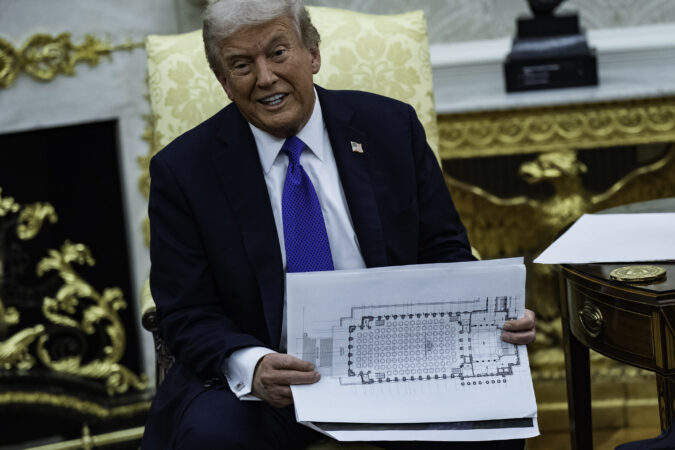
    Trump’s selection of Harris — who was known as the “receptionist of the United States” during the president’s first term and has no notable arts expertise — comes amid the president’s push to install allies on the arts commission and another panel, the National Capital Planning Commission. Both commissions are reviewing Trump’s planned White House ballroom and are expected to review his other Washington-area construction projects, such as his desired 250-foot triumphal arch.

    Trump has said he hopes to complete the projects as quickly as possible, despite complaints about their size, design, and potential impact on Washington. A historical preservation group has sued the administration over the ballroom project, saying that Trump should have consulted with the federal review panels before tearing down the White House’s East Wing annex and beginning construction on his planned 90,000-square-foot, $400 million ballroom.

    A federal judge weighing whether to halt the ballroom project in December had instructed the White House to go through the commissions before beginning construction.

    Asked about Harris’s qualifications to serve on the fine arts commission, the White House on Tuesday touted her as a “loyal, trusted, and highly respected adviser” to the president.

    “She understands the President’s vision and appreciation of the arts like very few others, and brings a unique perspective that will serve the Commission well,” Steven Cheung, the White House communications director, said in a statement. “She will be a tremendous asset to the Commission of Fine Arts and continue to honorably serve our country well.”

    Harris, who holds the title of deputy director of Oval Office operations, received a bachelor’s degree in political science in 2019 from the University at Albany, SUNY, with minors in communications and economics, according to an archived copy of her resumé on LinkedIn. She continued working for Trump as an executive assistant when he was out of office.

    Harris was one of seven fine arts commissioners Trump appointed during a 19-day spree in January. The president had left the commission empty for months after firing all six members in October but raced to restock the panel ahead of the agency’s January meeting when the ballroom project was first added to the agenda.

    Former fine arts commissioners said they could not recall a commissioner in the panel’s history with as little prior arts experience as Harris. Several former commissioners also noted that Trump has installed multiple appointees with minimal arts and urban planning expertise on both panels set to review his construction projects remaking Washington.

    “It’s disastrous,” said Alex Krieger, an architect and professor at the Harvard Graduate School of Design, who was chosen for the commission in 2012 by President Barack Obama and served a second term in the first Trump administration. “Some of these people just have no qualifications to evaluate matters of design, architecture, or urban planning.”

    Past commissioners have included Billie Tsien, an architect currently working on Obama’s library, and Perry Guillot, a landscape architect who redesigned the White House Rose Garden during Trump’s first term.

    Witold Rybczynski, an architect who was chosen for the Commission of Fine Arts by President George W. Bush and served a second term under Obama, wrote in an email that President Joe Biden also reshaped the panel by firing Trump appointees before their terms had concluded. He also noted that past presidents installed some political appointees and lesser-known experts to the panel, too.

    “The degree of expertise … has varied,” Rybczynski wrote in an email. He is the Martin and Margy Meyerson Professor Emeritus of Urbanism at the University of Pennsylvania.

    The fine arts commission on Thursday is slated to review the latest ballroom designs and may vote to advance the project. The White House has said it hopes to win formal approval from both review panels by March and begin aboveground construction of the ballroom as early as April.
  • New subpoenas issued in inquiry on response to 2016 Russian election interference, AP sources say

    New subpoenas issued in inquiry on response to 2016 Russian election interference, AP sources say

    WASHINGTON — The Justice Department has issued new subpoenas in a Florida-based investigation into perceived adversaries of President Donald Trump and the U.S. government response to Russian interference in the 2016 presidential election, according to multiple people familiar with the matter.

    An initial wave of subpoenas in November asked recipients for documents related to the preparation of a U.S. intelligence community assessment that detailed a sweeping, multiprong effort by Moscow to help Trump defeat Democratic nominee Hillary Clinton in the 2016 election.

    Though the first subpoenas requested documents from the months surrounding the January 2017 publication of the Obama administration intelligence assessment, the latest subpoenas seek any records from the years since then, said the people, who spoke on condition of anonymity to the Associated Press to discuss a nonpublic demand from investigators.

    The Justice Department declined to comment Tuesday.

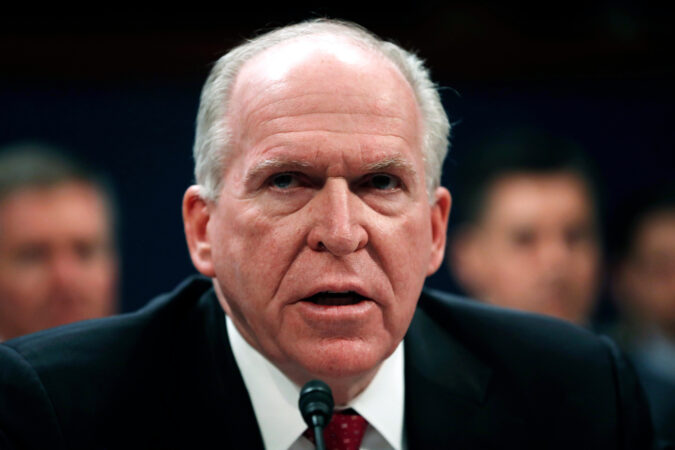
    The subpoenas reflect continued investigative activity in one of several criminal inquiries the Justice Department has undertaken into Trump’s political opponents. An array of former intelligence and law enforcement officials have received subpoenas in the investigation. Lawyers for former CIA Director John Brennan, who helped oversee the drafting of the assessment and who has been called “crooked as hell” by Trump, have said they have been informed he is a target but have not been told of any “legally justifiable basis for undertaking this investigation.”

    The intelligence community assessment, published in the final days of the Obama administration, found that Russia had developed a “clear preference” for Trump in the 2016 election and that Russian President Vladimir Putin had ordered an influence campaign with goals of undermining confidence in American democracy and harming Clinton’s chance for victory.

    That conclusion, and a related investigation into whether the 2016 Trump campaign colluded with Russia to sway the outcome of the election, have long been among the Republican president’s chief grievances and he has vowed retribution against the government officials involved in the inquiries. Former FBI Director James Comey was indicted by the Trump administration Justice Department last year on false statement and obstruction charges, but the case was later dismissed.

    Multiple government reports, including bipartisan congressional reviews and a criminal investigation by former special counsel Robert Mueller, have found that Russia interfered in Trump’s favor through a hack-and-leak operation of Democratic emails as well as a covert social media campaign aimed at sowing discord and swaying American public opinion. Mueller’s report found that the Trump campaign actively welcomed the Russian help, but it did not establish that Russian operatives and Trump or his associates conspired to tip the election in his favor.

    The Trump administration has freshly scrutinized the intelligence community assessment in part because a classified version of it incorporated in its annex a summary of the “Steele dossier,” a compilation of Democratic-funded opposition research that was assembled by former British spy Christopher Steele and was later turned over to the FBI. That research into Trump’s potential links to Russia included uncorroborated rumors and salacious gossip, and Trump has long held up its weaknesses in an effort to discredit the entire Russia investigation.

    A declassified CIA tradecraft review ordered by current Director John Ratcliffe and released last July faults Brennan’s oversight of the assessment.

    The review does not challenge the conclusion of Russian election interference but chides Brennan for the fact that the classified version referenced the Steele dossier.

    Brennan testified to Congress, and also wrote in his memoir, that he was opposed to citing the dossier in the intelligence assessment since neither its substance nor sources had been validated, and he has said the dossier did not inform the judgments of the assessment. He maintains the FBI pushed for its inclusion.

    The new CIA review seeks to cast Brennan’s views in a different light, asserting that he “showed a preference for narrative consistency over analytical soundness” and brushed aside concerns over the dossier because he believed it conformed “with existing theories.” It quotes him, without context, as having stated in writing that “my bottom line is that I believe that the information warrants inclusion in the report.”

    In a letter last December addressed to the chief judge of the Southern District of Florida, where the investigation is based, Brennan’s lawyers challenged the underpinnings of the investigation, questioning what basis prosecutors had for opening the inquiry in Florida and saying they had received no clarity from prosecutors about what potential crimes were even being investigated.

    “While it is mystifying how the prosecutors could possibly believe there is any legally justifiable basis for undertaking this investigation, they have done nothing to explain that mystery,” the lawyers said.

  • Mitch McConnell is taking a beating in the race to replace him

    Mitch McConnell is taking a beating in the race to replace him

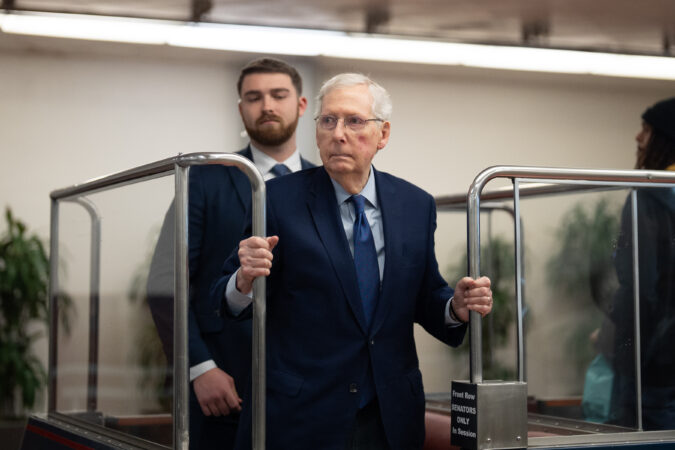
    One Republican candidate to succeed Sen. Mitch McConnell introduced himself with an ad that shows a cardboard cutout of the longtime Senate majority leader in the trash.

    Allies for a rival hit back with ads that noted the first candidate gave McConnell money.

    And Daniel Cameron, the former Kentucky attorney general once considered a McConnell protégé, is now keeping his distance.

    “I’m my own man,” Cameron said in an interview, later suggesting McConnell donors prefer one of his opponents.

    The Senate primary to replace 83-year-old McConnell shows how profoundly the GOP base in his home state has soured on one of the most powerful and significant political figures in Kentucky history. McConnell drew low approval ratings for years but fended off challengers by flexing his raw clout and ability to deliver for his state.

    While he at times expressed frustration or anger with President Donald Trump, McConnell used his political muscle to cement much of the president’s first-term legacy, including a 6-3 conservative majority on the Supreme Court that has helped pave the way for an even more disruptive second term.

    But many in the MAGA movement still view him as the embodiment of the GOP establishment that sought to hold Trump back. Three former interns for McConnell have distanced themselves while running to succeed him, pitching themselves as “America First” Republicans in Trump’s mold.

    Cameron says voters don’t want a candidate who is “just bashing an old man” — a rebuke of his opponent Nate Morris, a businessman backed by national MAGA stars whose vociferous attacks on McConnell have alienated some Republicans in the state. Many operatives argued his initial assault went too far.

    Still, it’s clear that ambitious Republicans have diverged from the towering conservative figure, who is set to retire next year after four decades in Congress.

    “This is a fight for the future of the Republican Party … Donald Trump’s Republican Party,” said Morris, a friend of Vice President JD Vance, in an interview. “And certainly, if you’re with Mitch McConnell, you’re not part of that future.”

    Terry Carmack, McConnell’s chief of staff, said the senator has secured more than $65 billion in extra federal funding for Kentucky over his career — for military bases, hospitals, law enforcement and more — and added that the state “deserves a Senator who will fill those shoes.”

    “As Kentucky’s longest-serving Senator and the nation’s longest-serving Senate leader, Senator McConnell’s job stayed the same: ensuring Kentucky always punched above its weight,” Carmack said in a statement.

    The primary is effectively a three-way race between Morris, Cameron and Rep. Andy Barr, who touts that he was the Kentucky chairman of Trump’s 2024 campaign. Whoever wins the May 19 GOP contest is likely to represent the solidly red state.

    The fact that all three have ties to McConnell reflects how much in Kentucky GOP politics traces back to the senator. The state Republican Party headquarters bears his name, and he has helped many other GOP officeholders over the years.

    “I challenge anybody who takes this seat to do what he’s done,” said Frank Amaro, the GOP vice chair for Kentucky’s 1st Congressional District.

    The campaign jabs at McConnell have been frustrating to many who have worked with him over the years and say he deserves respect, pointing to his hardball tactics that pushed the courts nationwide to the right and the money he has steered toward Kentucky. The state got nearly $2.6 billion in extra federal funding this fiscal year, according to McConnell’s office.

    “You don’t have to like someone for them to be your go-to to deliver results,” said Iris Wilbur Glick, a former political director for McConnell who called candidates’ positioning on the senator “very disappointing.”

    But many Republicans are critical — especially of his relationship with Trump. Trump has repeatedly attacked him. McConnell held Trump “practically and morally responsible” for the mob that stormed the U.S. Capitol on Jan. 6, 2021, though his vote against impeachment helped enable Trump’s comeback.

    After Trump won in 2024 and McConnell stepped down as majority leader, he opposed some of Trump’s most controversial Cabinet picks — casting the only GOP vote against Robert F. Kennedy Jr. for secretary of health and human services.

    A December Economist-YouGov poll found that 21 percent of Republicans nationally had a favorable view of McConnell, while 55 percent had an unfavorable view. In interviews, Kentucky voters often knew little about the Senate race or the candidates — but knew they didn’t like McConnell.

    “I want him out of there,” said Julie Jackson, a 56-year-old Republican.

    Cameron, who once worked as McConnell’s legal counsel and rose in politics with his mentorship, launched his Senate campaign last year with an attempt to separate himself. Days after announcing, he put out a video rebuking McConnell for opposing Trump’s Cabinet picks.

    “What we saw from Mitch McConnell in voting against Pete Hegseth, Tulsi Gabbard and RFK was just flat-out wrong,” Cameron said in the video. “You should expect a senator from Kentucky to vote for those nominees to advance the America First agenda.”

    A year later, one of Cameron’s biggest challenges is raising money — a struggle some Republicans in the state attribute in part to his break with McConnell.

    “Daniel Cameron relied heavily on his connections to McConnell-world in his previous races for fundraising, and that’s simply not an avenue that’s available to him for this race, and it shows in his fundraising reports,” said Tres Watson, a Republican strategist in Kentucky.

    Cameron notes that some McConnell donors have backed Barr — who leads the pack on fundraising. Attack ads on Barr from a group affiliated with the conservative Club for Growth featured old footage of Barr calling McConnell a “mentor.”

    Barr has kept his distance from McConnell, too, however, tying himself to Trump.

    “Thank you for giving me a chance to work with this president to make America great again,” he said to close his speech at recent GOP dinner. His team declined an interview request.

    Trump has stayed out of the Senate race and often avoids weighing in on primaries absent a personal grudge or clear polling leader. But prominent Trump allies have lined up behind Morris, the businessman and friend of Vance. Morris said the vice president called him last year encouraging him to jump into the Senate race, saying that “we’re going to need somebody in that seat that’s not going to stab our president in the back.” Vance allies work on Morris’s campaign and a supportive super PAC.

    Charlie Kirk, the late conservative activist, endorsed Morris before he was killed in September. Morris “is not going to be beholden to the McConnell machine,” said Andrew Kolvet, a spokesman for Kirk’s group Turning Point, who called McConnell a “relic.”

    Elon Musk, the billionaire tech CEO who has become a major force in GOP politics, rocked the primary by putting $10 million behind Morris this year after a meeting where he came away impressed in part by Morris’s anti-McConnell message, according to a person familiar with the matter who spoke on the condition of anonymity to discuss private conversations.

    “[McConnell] has had a stranglehold on Kentucky for 40 years, and it is not the easiest thing to challenge the McConnell mafia right here in the Bluegrass State,” Morris said last month on the podcast of Trump’s eldest son, Donald Trump Jr. — where he also launched his campaign. “But we’ve done it and we’ve gone straight for the jugular of Mitch and his cronies.”

    The message hasn’t always gone over well. Morris was roundly booed last year at an annual Kentucky political picnic where the former garbage company CEO declared he would “trash Mitch McConnell’s legacy.”

    “A lot has changed in politics, but you still have to introduce yourself, and he started out just attacking people,” said Adam Koenig, a former GOP state lawmaker.

    Morris dialed back his attacks at a recent event in northern Kentucky, mentioning McConnell only in passing. But he made his antipathy clear.

    “We cannot go back to what we’ve had the last 40 years,” he said.

  • Another partial government shutdown has started. Why is this one different? Here’s what we know.

    Another partial government shutdown has started. Why is this one different? Here’s what we know.

    Another partial government shutdown began Saturday, with lawmakers at an impasse. But this one is different.

    With congressional Democrats refusing to approve funding for the Department of Homeland Security, the last of that agency’s funding has run out.

    It all stems from party-line disagreements surrounding ICE and immigration enforcement.

    When a funding lapse triggered a partial government shutdown on Jan. 31, Congress made a compromise: It approved spending bills for all agencies, except for DHS.

    DHS received two weeks of funding to give Congress more time to negotiate Immigration and Customs Enforcement changes, a push Senate Democrats have repeatedly made after federal immigration and border agents fatally shot two U.S. citizens in Minneapolis last month.

    Now those two weeks are up and Congress is still in a standoff. Democrats want to see more guardrails regarding how ICE agents identify themselves, barring them from wearing masks, and requiring name badges. But Republicans say those practices would add too much risk to the job.

    Since all other government agencies have already been funded, DHS is the only one affected by the shutdown.

    Here’s what that means.

    What’s a partial government shutdown?

    A partial government shutdown happens when Congress has funded only certain federal agencies, leaving others in limbo. Some parts of the government close while others keep operating.

    In this case, it comes down to who has funding and who doesn’t. DHS is the only agency without approved funding. The agency’s fiscal year ends Sept. 30, meaning it currently stands without funding for seven months or until Congress reaches an agreement.

    When did government funding expire?

    Funding for DHS expired Friday at midnight. A shutdown began Saturday at 12:01 a.m. after Congress and President Donald Trump’s administration failed to reach an agreement.

    What changes with the partial shutdown?

    Not much in the eyes of the general public, according to CNN.

    Nearly all DHS workers remain on the job, but many won’t get paid until the shutdown ends.

    But DHS officials who testified before a House panel on Wednesday warned that a funding disruption could mean delays to states seeking reimbursements for disaster relief costs, delays in cybersecurity response, and missed paychecks for agents who screen bags at airports, which could lead to unplanned absences and longer wait times.

    DHS is home to agencies including the Transportation Security Aadministration, Coast Guard, and Federal Emergency Management Agency, which are all affected.

    What have Pennsylvania politicians said?

    Sen. John Fetterman (D., Pa.) said he “absolutely” expected a shutdown. He broke with most Senate Democrats, voting to approve funding and avoid a shutdown in a measure that failed, and arguing that delaying funding DHS won’t impact ICE since the agency has received separate funding.

    Earlier this month, some members of the Pennsylvania delegation to the U.S. House of Representatives, including Chris Deluzio, Chrissy Houlahan, Brendan Boyle, Madeleine Dean, Mary Gay Scanlon, Dwight Evans, and Summer Lee, penned a letter to Fetterman and Sen. Dave McCormick (R., Pa.) asking them to vote against passing the spending bill unless ICE reform is secured. (Both senators voted in favor, but it failed.)

    Houlahan, a Democrat from Chester County, criticized ICE last week and emphasized a need for immigration reform.

    “We are a nation of immigrants, but ICE is clearly not reform. ICE is undertrained. ICE is vastly, vastly overfunded,” she said. “They have a budget that is larger than many countries’ entire defense budgets.”

    Where does Congress stand right now?

    The House had already done its part and approved funding. The chamber is in recess until Feb. 17. But Senate Democrats are pushing back on its approval without immigration reforms. That leaves the Senate with few options if it cannot pass the current measures.

    The Senate adjourned Thursday for a Presidents’ Day recess after a motion to advance DHS funding failed 52-47, mostly along party lines. Democrats also blocked an attempt to extend funding for another two weeks.

    Lawmakers left town, some traveling to the Munich Security Conference in Germany, others to meetings nationwide and overseas.

    The chambers are not scheduled to return until Feb. 23, though that could change if a deal is reached in the meantime. But senators on each side say bipartisanship during an election year seems unlikely.

    So in short: We could be here for a while.

  • Josh Shapiro tells Kristi Noem he’ll ‘aggressively pursue every option’ to block new ICE detention centers in Pa., in letter to DHS

    Josh Shapiro tells Kristi Noem he’ll ‘aggressively pursue every option’ to block new ICE detention centers in Pa., in letter to DHS

    Gov. Josh Shapiro implored Homeland Security Secretary Kristi Noem this week to reconsider converting warehouses in Berks and Schuylkill counties into mass immigration detention centers, citing “real harms” to the communities.

    In a Thursday letter to Noem obtained by The Inquirer, Shapiro questioned the legality of the facilities, which the governor said could hold up to 9,000 people in total.

    Hinting at a possible lawsuit, Shapiro said if DHS goes through with converting the sites, his administration will “aggressively pursue every option to prevent these facilities from opening and needlessly harming the good people of Pennsylvania.”

    As part of President Donald Trump’s expanding deportation agenda, the federal government has started purchasing warehouses across the country to flip into U.S. Immigration and Customs Enforcement detention centers. ICE is planning to spend $38.3 billion turning warehouses into detention centers, The Washington Post reported.

    So far, two have been bought in Pennsylvania — a nearly 520,000-square-foot facility in Upper Bern Township and another in Tremont Township, where the purchase has drawn the ire of concerned residents.

    Shapiro slammed the department’s escalating immigration enforcement strategy, saying that ICE and other federal immigration agents “resort to unnecessary and excessive force, leading to innocent people being injured or tragically killed.”

    “Your Department’s record is reason enough to oppose your plan to use warehouses in Schuylkill and Berks Counties as detention centers,” Shapiro wrote, adding that the warehouses would also negatively impact residents’ health and safety, deplete tax revenue, and put extra stress on local communities and emergency response.

    Tricia McLaughlin, DHS assistant secretary for public affairs, confirmed ICE’s purchase of these two warehouses and the department’s plans to use them as detention facilities in a statement to The Inquirer Friday.

    She said that the sites will “undergo community impact studies and a rigorous due diligence process to make sure there is no hardship on local utilities or infrastructure prior to purchase” and that the facilities would create economic benefits, including bringing more than 11,000 jobs to the two Pennsylvania communities in total.

    “Thanks to the One Big Beautiful Bill, ICE has new funding to expand detention space to keep these criminals off American streets before they are removed for good from our communities,” McLaughlin said.

    At an unrelated event last week, the Democratic governor blasted the agency’s “secretive” purchase of the Berks County warehouse, saying he was not alerted of the decision ahead of time.

    At the time, Shapiro said the state was exploring “what legal options we may have to stop” the ICE purchase but said those options were slim.

    Shapiro has become more forceful in his opposition to federal immigration enforcement activities in recent weeks, especially since federal agents fatally shot Alex Pretti in Minneapolis last month.

    He’s said the Trump administration’s strategies in American cities make communities less safe, violate constitutional rights, and erode trust in law enforcement.

    Shapiro, who is seen as a likely contender for the White House in 2028, is up for reelection this year. His likely November opponent is Treasurer Stacy Garrity, a Trump-endorsed Republican who has urged cooperation with ICE.

    In his letter to Noem, Shapiro said that DHS has not engaged local leaders to discuss the warehouse purchases and that both Democratic and Republican state and local officials have objected to the department’s “plans to interfere with our communities because of the chaos and harm your actions will bring.”

    Some of Shapiro’s cabinet secretaries also penned an additional letter to Noem where they stressed that the facilities would be detrimental to the communities’ environment and public health and safety.

    “The stress each facility will place on local infrastructure will, among other things, jeopardize Pennsylvanians’ access to safe water, deplete resources and infrastructure needed for emergencies, and overextend already strained emergency response personnel,” wrote Pennsylvania Health Secretary Debra L. Bogen, Fire Commissioner Thomas Cook, Emergency Management Director Randy Padfield, Environmental Protection Secretary Jessica Shirley, and Labor Secretary Nancy A. Walker.

    In addition to the warehouses, DHS is also leasing new office space throughout the country, including in the Philadelphia area. The department said back-office staff, including lawyers and analysts, will be moving into a building in Berwyn, and the department will also share space with the Department of Motor Vehicles at Eighth and Arch Streets in Center City, WIRED reported.

    Despite the governor’s vocal opposition to Trump’s enforcement strategies, Pennsylvania still cooperates with ICE. Shapiro’s administration honors some ICE detainers in state prisons and provides ICE with access to state databases that include personal identifying information for immigrants.

    Immigrant rights groups have for months called on Shapiro to take more decisive action against federal immigration enforcement in Pennsylvania and end all cooperation with the agency.

    Staff writer Gillian McGoldrick contributed reporting.

  • Justice Department sues Harvard for data as it investigates how race factors into admissions

    Justice Department sues Harvard for data as it investigates how race factors into admissions

    WASHINGTON — The Trump administration is suing Harvard University, saying it has refused to provide admissions records that the Justice Department demanded to ensure the Ivy League school stopped using affirmative action in admissions.

    In a lawsuit filed Friday in federal court in Massachusetts, the Justice Department said Harvard has “thwarted” efforts to investigate potential discrimination. It accused Harvard of refusing to comply with a federal investigation and asked a judge to order the university to turn over the records.

    Harmeet Dhillon, who leads the department’s Civil Rights Division, said Harvard’s refusal is a red flag. “If Harvard has stopped discriminating, it should happily share the data necessary to prove it,” Dhillon said in a statement.

    A statement from Harvard said the university has been responding to the government’s requests. It said Harvard is in compliance with the Supreme Court decision barring affirmative action in admissions.

    “The University will continue to defend itself against these retaliatory actions which have been initiated simply because Harvard refused to surrender its independence or relinquish its constitutional rights in response to unlawful government overreach,” the university said.

    The suit is the latest salvo in President Donald Trump’s standoff with Harvard, which has faced billions of dollars in funding cuts and other sanctions after it rejected a list of demands from the administration last year.

    Trump officials have said they’re taking action against Harvard over allegations of anti-Jewish bias on campus. Harvard officials say they’re facing unconstitutional retaliation for refusing to adopt the administration’s ideological views. The administration is appealing a judge’s orders that sided with Harvard in two lawsuits.

    The Justice Department opened a compliance review into Harvard’s admissions practices last April on the same day the White House issued a series of sweeping demands aligned with Trump’s priorities. The agency told Harvard to hand over five years of admissions data for undergraduate applicants along with Harvard’s medical and law schools.

    It asked for a trove of data including applicants’ grades, test scores, essays, extracurricular activities and admissions outcomes, along with their race and ethnicity. It asked for the data by April 25, 2025. The lawsuit said Harvard has not provided that data.

    Justice Department officials said they need the data to determine whether Harvard has continued considering applicants’ race in admissions decisions. The Supreme Court barred affirmative action in admissions in 2023 after lawsuits challenged it at Harvard and the University of North Carolina.

    Trump officials have accused colleges of continuing the practice, which the administration says discriminates against white and Asian American students.

    The White House is separately pressing universities across the U.S. to providing similar data to determine whether they have continued to factor race into admissions decisions. The Education Department plans to collect more detailed admissions data from colleges after Trump signed an action suggesting schools were ignoring the Supreme Court decision.

    Trump’s dispute with Harvard had appeared to be winding down last summer after the president repeatedly said they were finalizing a deal to restore Harvard’s federal funding. The deal never materialized, and Trump rekindled the conflict this month when he said Harvard must pay $1 billion as part of any deal, double what he previously demanded.

  • DOJ’s targeting of Trump critics ramps up with attempt to indict lawmakers

    DOJ’s targeting of Trump critics ramps up with attempt to indict lawmakers

    The Justice Department’s efforts to prosecute President Donald Trump’s critics entered a new phase this week, when federal prosecutors failed to indict six Democratic lawmakers who recorded a video reminding military service members of their duty to refuse illegal orders.

    Department lawyers, under pressure from the president, previously targeted several of Trump’s most outspoken foes, including former FBI director James B. Comey and New York Attorney General Letitia James. Both faced since-dismissed charges last year over alleged conduct unrelated to their political views.

    But the case federal prosecutors put before a grand jury Tuesday — seeking to charge Sens. Mark Kelly (D., Ariz.), Elissa Slotkin (D., Mich.) and four others over their 90-second video message — marked the first time the department has directly sought to classify critical speech from prominent Trump detractors as a crime.

    The other lawmakers who participated in the video included Reps. Jason Crow, a former Army ranger from Colorado, and Maggie Goodlander, a Navy veteran from New Hampshire, as well as Chrissy Houlahan, a former Air Force officer, and Chris Deluzio, a former Navy officer, both from Pennsylvania.

    Grand jurors roundly rejected the effort, the Washington Post reported. But legal observers and the lawmakers at the center of the probe have argued in the days since that the panel’s decision is almost beside the point.

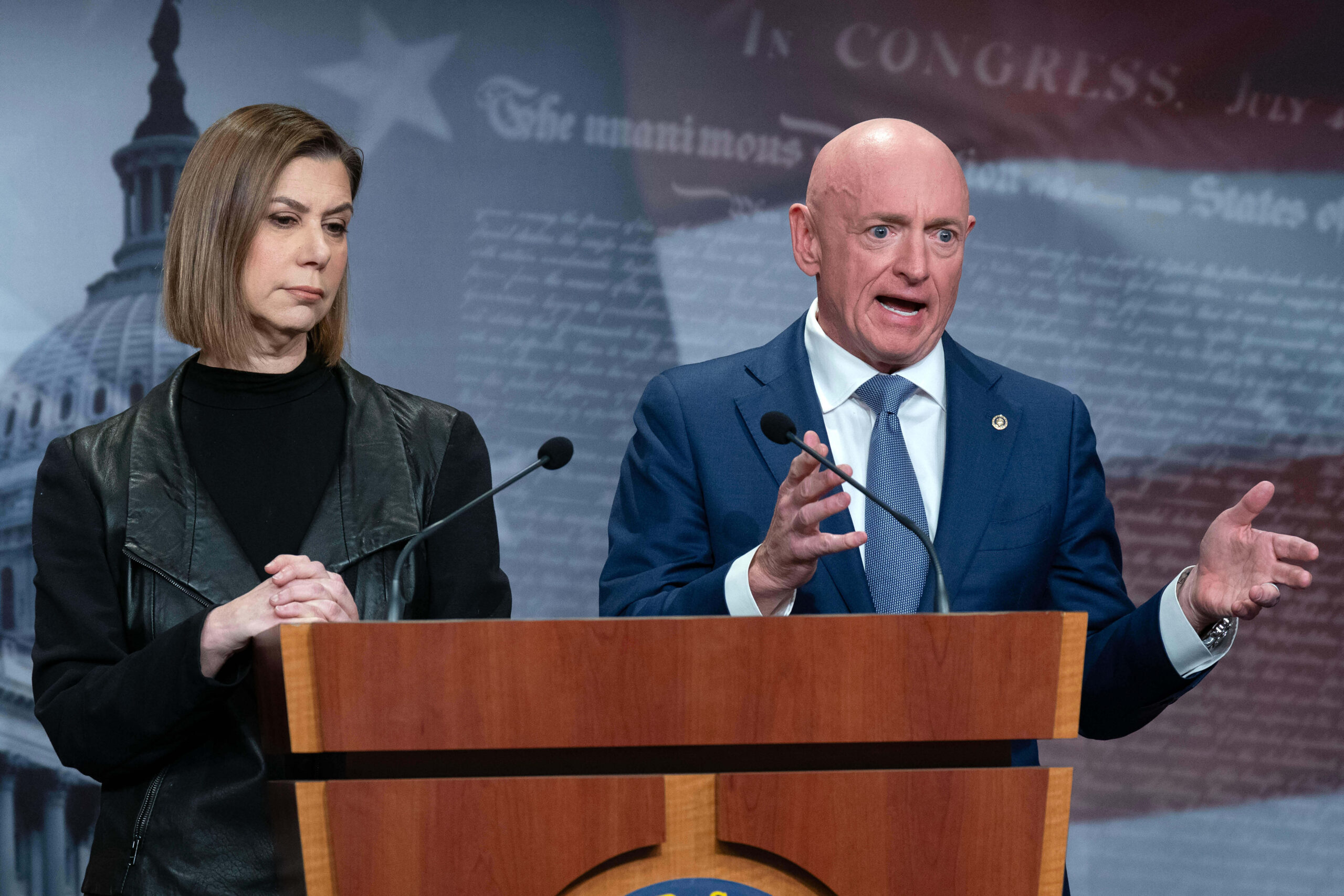
    Rep. Elissa Slotkin (D., Mich.) and Sen. Mark Kelly (D., Ariz.) speak during a news conference Wednesday on Capitol Hill.

    “This is not a good news story,” Kelly, a retired Navy captain and astronaut, told reporters during a news conference this week. “This is a story about how Donald Trump and his cronies are trying to break our system to silence anyone who lawfully speaks out against them.”

    The attempt to charge the lawmakers represents an evolution of the campaign that began last year with cases against James and Comey, said Brendan Nyhan, a professor of government at Dartmouth College.

    “Prosecuting people for speech criticizing the president is in some ways even more dangerous,” Nyhan said, “especially given these are legislators acting in their public role and especially given that they were calling for the military and national security state to follow the law.”

    Still, some Trump allies in Congress, including House Speaker Mike Johnson (R., La.), defended the administration’s efforts. He told reporters that Slotkin, Kelly, and the others “probably should be indicted.”

    “Any time you’re obstructing law enforcement and getting in the way of these sensitive operations, it’s a very serious thing, and it probably is a crime,” he said.

    The Justice Department’s criminal investigation into the lawmakers began after the video organized by Slotkin, a former CIA analyst, was posted online in November. In it, she and the others, all of whom served in the military or with intelligence agencies, reminded service members of their duty, spelled out in the Uniform Code of Military Justice, to resist unlawful directives.

    “This administration is pitting our uniformed military and intelligence community professionals against American citizens,” the lawmakers said. “Our laws are clear. You can refuse illegal orders.”

    The video did not single out any specific Trump administration policies. But Slotkin and Kelly, both of whom serve on the Senate Armed Services Committee, have sharply criticized the president for military strikes he authorized on alleged drug trafficking boats in the Caribbean Sea and Pacific Ocean and his decision to deploy the National Guard to cities run by Democratic officials.

    Their video drew an immediate reaction from Trump, who demanded on social media that the lawmakers face prosecution for sedition and suggested they should even, perhaps, be punished with execution.

    “SEDITIOUS BEHAVIOR, punishable by DEATH!” Trump wrote in one social media post soon after the video was posted. He said in another: “IT WAS SEDITION AT THE HIGHEST LEVEL, AND SEDITION IS A MAJOR CRIME.”

    Rep. Chrissy Houlahan, a former Air Force officer and a Democrat who represents Chester County, was one of six lawmakers targeted over a 90-second video message.

    The messages echoed another Trump post from last year in which he, in a missive addressed to “Pam,” an apparent reference to Attorney General Pam Bondi, insisted the Justice Department move swiftly to prosecute Comey, James, and others.

    “We can’t delay any longer, it’s killing our reputation and credibility,” he wrote then, adding, “JUSTICE MUST BE SERVED, NOW!!!”

    Within months, James was indicted on counts of mortgage fraud, while Comey was charged with lying to Congress. Both denied the accusations and their cases were later dismissed by a federal judge over technical issues with the appointment of the prosecutor who had charged them.

    Slotkin, Kelly, and the other lawmakers have maintained they did nothing wrong — even as top administration officials have accused them of using the video to encourage service members to take actions tantamount to mutiny.

    Earlier this month, four of the lawmakers in the video disclosed that they had been approached by FBI agents and declined to give voluntary interviews to prosecutors.

    “It was clearly, when our lawyers sat down with them, just about checking a box and doing what the president wanted them to do,” Slotkin said Wednesday. “Their heart wasn’t even in it.”

    It is not clear whether the FBI took other steps to investigate. But on Tuesday, prosecutors under the supervision of D.C.’s U.S. Attorney Jeanine Pirro, a former Fox News host and staunch Trump ally, presented a case against the lawmakers to the grand jury.

    Two political appointees led that presentation, according to two people familiar with the matter who spoke on the condition of anonymity to describe sealed court proceedings.

    The prosecutors — Steven Vandervelden, a former colleague of Pirro’s in the district attorney’s office in Westchester, New York, and Carlton Davis, a former staffer for House Oversight Committee Chairman Rep. James Comer (R., Ky.) — sought to charge the lawmakers with a felony crime that makes it illegal to “interfere with, impair, or influence the loyalty, morale, or discipline of the military or naval forces of the United States,” the people said.

    But when it came time to vote, none of the grand jurors agreed there was sufficient probable cause to charge any of the lawmakers with a crime, one of the people familiar said.

    Spokespeople for the Justice Department and for Pirro have declined to comment on the matter in the days since. Amid that silence, the effort has drawn an impassioned response from Capitol Hill.

    “The fact that they failed to incarcerate a United States senator should not obviate our outrage,” Sen. Brian Schatz (D., Hawaii) said during a heated session Wednesday in which Democratic senators implored their Republican colleagues to openly condemn the Justice Department’s actions. Senate Democrats held a special caucus meeting Thursday morning to further discuss the situation.

    “They tried to incarcerate two of us,” Schatz said. “I am not entirely sure the United States Senate can survive this if we do not have Republicans standing up.”

    Sen. Thom Tillis (North Carolina) has emerged as one of the few Republicans to publicly rebuke the department. He described the failed attempt to prosecute as exactly the type of weaponization of the justice system that the Trump administration has said it is fighting against.

    “Political lawfare is not normal, not acceptable, and needs to stop,” Tillis wrote in a post to X.

    At their news conference Wednesday, Kelly told reporters that he and Slotkin learned about the attempt to indict them Tuesday through media reports.

    “If things had gone a different way, we’d be preparing for arrest,” Slotkin said.

    Since then, lawyers for several of the targeted lawmakers have sent letters to Pirro and Bondi seeking assurances that the investigation is over and that prosecutors will not seek to indict them again. They’ve also instructed the department to retain all records of the investigation threatening potential legal action for violating the lawmakers’ free-speech rights.

    In a separate suit filed by Kelly, a federal judge Thursday halted Defense Department efforts to formally censure the senator over his video remarks, saying the effort to do so “trampled on Senator Kelly’s First Amendment freedoms and threatened the constitutional liberties of millions of military retirees.”

    “The intimidation was the point — to get other people beyond us to think twice about speaking out,” Slotkin said Wednesday. “But the real question is if the president can do this to us — sitting senators — who else can he do it to?”

  • U.S. spending millions to send migrants to third countries, report says

    U.S. spending millions to send migrants to third countries, report says

    The Trump administration spent more than $40 million last year to send hundreds of migrants to at least two-dozen countries that are not their own, a tactic Senate Democrats described in a report Friday as a costly strategy aimed at sowing fear and intimidation in the president’s mass deportation campaign.

    The 30-page analysis from the minority members of the Senate Foreign Relations Committee accuses the administration of entering into opaque financial agreements with foreign governments — including some with poor records on corruption and human rights — to rapidly expand a program for “third country” removals that once had been reserved for exceptional circumstances.

    Its authors contend that the State Department has failed to conduct sufficient oversight to ensure that payments to those countries are not being misspent and that migrants transferred to their custody are not being abused or mistreated.

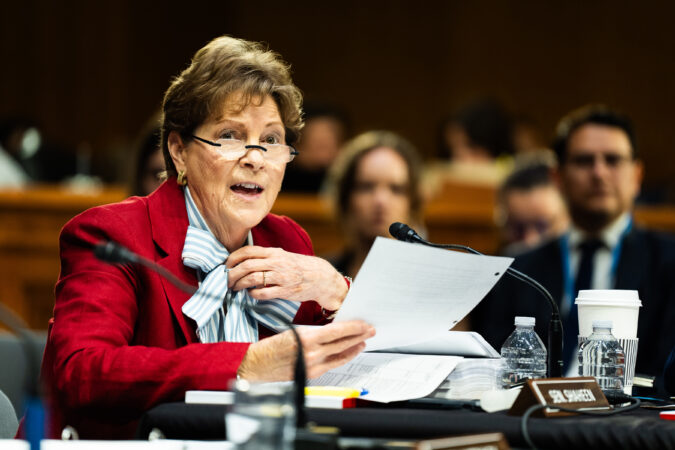
    The administration “has expanded and institutionalized a system in which the United States urges or coerces countries to accept migrants who are not their citizens, often through arrangements that are costly, inefficient and poorly monitored,” Sen. Jeanne Shaheen of New Hampshire, the top Democrat on the committee, wrote in a letter to colleagues. “Deporting migrants to countries they have no connection to … has become a routine instrument of diplomacy.”

    Administration officials have said they have no choice but to partner with foreign governments that are willing to accept undocumented immigrants whose native nations are not willing to take them back. In most cases, the migrants have criminal records, authorities said, though public records have shown that some have not been convicted of crimes in the United States.

    The report from Senate Democrats, which provides the most comprehensive look at the administration’s third-country removal program, found that the U.S. government has sent migrants to two-dozen third countries. The analysis focused primarily on five nations — El Salvador, Equatorial Guinea, Rwanda, Eswatini, and Palau — with which the Trump administration has entered into direct financial payments totaling $32 million, a committee member involved in the report said. The person spoke on the condition of anonymity to discuss the analysis ahead of its release.

    Under those agreements, U.S. authorities sent about 250 Venezuelan migrants to a maximum-security prison in El Salvador last spring, while 29 migrants have been deported to Equatorial Guinea, 15 to Eswatini, and seven to Rwanda, the report said. None has been sent to Palau.

    The report also estimated that the administration has spent more than $7 million in costs related to deportation flights to 10 of the third countries.

    “Millions of taxpayer dollars are being spent without meaningful oversight or accountability,” Shaheen wrote in her letter. “And speed and deterrence are being prioritized over due process and respect for human rights.”

    Tommy Pigott, a State Department spokesman, said the report shows the “unprecedented” work the administration has undertaken in its first year to enforce immigration laws.

    “Astonishingly, some in Congress still want to go back to a time just 14 months ago when cartels had free rein to poison Americans and our border was open,” Pigott said in a statement. “Make no mistake, President Trump has brought Biden’s era of mass illegal immigration to an end, and we are all safer for it.”

    The third-country strategy has provoked public blowback and legal challenges that have slowed the administration’s efforts and, in some instances, forced it to change course.

    Last spring, President Donald Trump invoked the Alien Enemies Act, a rarely used law targeting enemy combatants, which provided the administration’s legal rationale to send the Venezuelan migrants to El Salvador. Administration officials accused many of being members of the Tren de Aragua transnational gang, though some of their families and attorneys disputed that contention.

    The men were later transferred from El Salvador to Venezuela under a prisoner swap. On Thursday, a federal judge in Washington ruled that the administration must bring some of the Venezuelan deportees back to the United States as they pursue legal challenges to their removals.

    “It is worth emphasizing that this situation would never have arisen had the Government simply afforded Plaintiffs their constitutional rights before initially deporting them,” Chief U.S. District Judge James E. Boasberg wrote in his ruling.

    The analysis from the Senate Foreign Relations Committee minority was put together over a period of more than eight months, based on conversations with foreign government and U.S. government officials, attorneys for deportees and immigrant rights organizations, according to the committee staffer.

    The staffer said the goal of the report is to highlight the costs of the administration’s approach at a time when Democrats are concerned that the U.S. government is “entering a new phase” of speeding up the number of third-country agreements, along with the pace of deportations.

    The report faults the administration for pursuing its deportation policies at the expense of other U.S. interests, including promoting human rights and punishing corrupt foreign regimes.

    The authors said the Trump administration’s payment of $7.5 million to Equatorial Guinea to accept immigrants was more than the amount of foreign assistance the United States provided to that country in the previous eight years. They cited a 2025 State Department report on human trafficking that cited U.S. concerns about “corruption and official complicity in trafficking crimes” in that country.

    The report also said the Trump administration was moving hastily to carry out third-country removals without trying to negotiate with the home countries of some deportees. In one case, a man initially deported to Eswatini was later sent to his home nation of Jamaica, where government officials said they had never told the United States that they were unwilling to accept him.

    “As a result, the Trump Administration has, in some cases, paid twice for migrants’ travel — once to remove them to a third country and then again to fly them to their home country,” the report says.

  • A Homeland Security shutdown seems certain as funding talks between White House and Democrats stall

    A Homeland Security shutdown seems certain as funding talks between White House and Democrats stall

    WASHINGTON — A shutdown for the Department of Homeland Security appeared certain Thursday as lawmakers in the House and Senate were set to leave Washington for a 10-day break and negotiations with the White House over Democrats’ demands for new restrictions had stalled.

    Democrats and the White House have traded offers in recent days as the Democrats have said they want curbs on President Donald Trump’s broad campaign of immigration enforcement. They have demanded better identification for U.S. Immigration and Customs Enforcement and other federal law enforcement officers, a new code of conduct for those agencies and more use of judicial warrants, among other requests.

    The White House sent its latest proposal late Wednesday, but Trump told reporters on Thursday that some of the Democratic demands would be “very, very hard to approve.”

    Democrats said the White House offer, which was not made public, did not include sufficient curbs on ICE after two protesters were fatally shot last month. The offer was “not serious,” Senate Democratic Leader Chuck Schumer of New York said Thursday, after the Senate rejected a bill to fund the department.

    Americans want accountability and “an end to the chaos,” Schumer said. “The White House and congressional Republicans must listen and deliver.”

    Lawmakers in both chambers were on notice to return to Washington if the two sides struck a deal to end the expected shutdown. Sen. Patty Murray, the top Democrat on the Senate Appropriations Committee, told reporters that Democrats would send the White House a counterproposal over the weekend.

    Impact of a shutdown

    Senate Majority Leader John Thune, R-S.D., said after the vote that a shutdown appeared likely and “the people who are not going to be getting paychecks” will pay the price.

    The impact of a DHS shutdown is likely to be minimal at first. It would not likely block any of the immigration enforcement operations, as Trump’s tax and spending cut bill passed last year gave ICE about $75 billion to expand detention capacity and bolster enforcement operations.

    But the other agencies in the department — including the Transportation Security Administration, the Federal Emergency Management Agency, the Secret Service and the Coast Guard — could take a bigger hit over time.

    Gregg Phillips, an associate administrator at FEMA, said at a hearing this week that its disaster relief fund has sufficient balances to continue emergency response activities during a shutdown, but would become seriously strained in the event of a catastrophic disaster.

    Phillips said that while the agency continues to respond to threats like flooding and winter storms, long-term planning and coordination with state and local partners will be “irrevocably impacted.”

    Trump defends officer masking

    Trump, who has remained largely silent during the bipartisan talks, noted Thursday that a recent court ruling rejected a ban on masks for federal law enforcement officers.

    “We have to protect our law enforcement,” Trump told reporters.

    Democrats made the demands for new restrictions on ICE and other federal law enforcement after ICU nurse Alex Pretti was shot and killed by a U.S. Border Patrol officer in Minneapolis on Jan. 24. Renee Good was shot by ICE agents on Jan. 7.

    Trump agreed to a Democratic request that the Homeland Security bill be separated from a larger spending measure that became law last week. That package extended Homeland Security funding at current levels only through Friday.

    Schumer and House Democratic leader Hakeem Jeffries of New York have said they want immigration officers to remove their masks, to show identification and to better coordinate with local authorities. They have also demanded a stricter use-of-force policy for the federal officers, legal safeguards at detention centers and a prohibition on tracking protesters with body-worn cameras.

    Democrats also say Congress should end indiscriminate arrests and require that before a person can be detained, authorities have verified that the person is not a U.S. citizen.

    Thune suggested there were potential areas of compromise, including on masks. There could be contingencies “that these folks aren’t being doxed,” Thune said. “I think they could find a landing place.”

    But Republicans have been largely opposed to most of the items on the Democrats’ list, including a prohibition on masks.

    Sen. Eric Schmitt, R-Mo., said Republicans who have pushed for stronger immigration enforcement would benefit politically from the Democratic demands.

    “So if they want to have that debate, we’ll have that debate all they want,” said Schmitt.

    Judicial warrants a sticking point

    Thune, who has urged Democrats and the White House to work together, indicated that another sticking point is judicial warrants.

    “The issue of warrants is going to be very hard for the White House or for Republicans,” Thune said of the White House’s most recent offer. “But I think there are a lot of other areas where there has been give, and progress.”

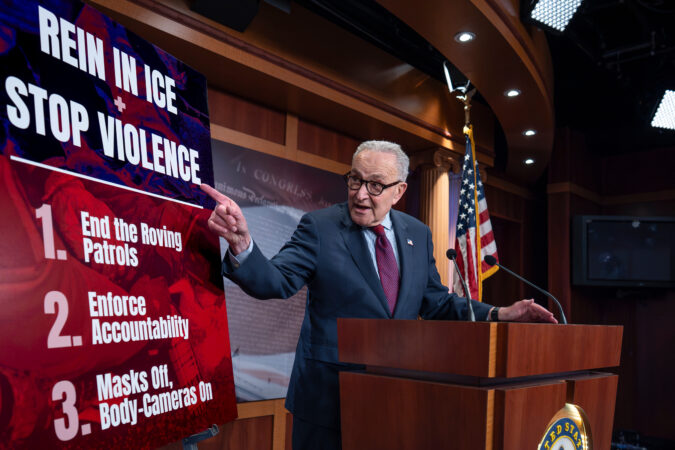
    Schumer and Jeffries have said DHS officers should not be able to enter private property without a judicial warrant and that warrant procedures and standards should be improved. They have said they want an end to “roving patrols” of agents who are targeting people in the streets and in their homes.

    Most immigration arrests are carried out under administrative warrants. Those are internal documents issued by immigration authorities that authorize the arrest of a specific person but do not permit officers to forcibly enter private homes or other nonpublic spaces without consent. Traditionally, only warrants signed by judges carry that authority.

    But an internal ICE memo obtained by The Associated Press last month authorizes ICE officers to use force to enter a residence based solely on a more narrow administrative warrant to arrest someone with a final order of removal, a move that advocates say collides with Fourth Amendment protections.

    Far from agreement

    Thune, R-S.D., said were “concessions” in the White House offer. He would not say what those concessions were, though, and he acknowledged the sides were “a long ways toward a solution.”

    Schumer said it was not enough that the administration had announced an end to the immigration crackdown in Minnesota that led to thousands of arrests and the fatal shootings of two protesters.

    “We need legislation to rein in ICE and end the violence,” Schumer said, or the actions of the administration “could be reversed tomorrow on a whim.”

    Simmering partisan tensions played out on the Senate floor immediately after the vote, as Alabama Sen. Katie Britt, the chairwoman of the Senate Appropriations subcommittee that oversees Homeland Security funding, tried to pass a two-week extension of Homeland Security funding and Democrats objected.

    Britt said Democrats were “posturing” and that federal employees would suffer for it. “I’m over it!” she yelled.

    Connecticut Sen. Chris Murphy, the top Democrat on the Homeland spending subcommittee, responded that Democrats “want to fund the Department of Homeland Security, but only a department that is obeying the law.”

    “This is an exceptional moment in this country’s history,” Murphy said.

  • Palestinian protester, detained for nearly a year, says ‘inhumane’ jail conditions prompted seizure

    Palestinian protester, detained for nearly a year, says ‘inhumane’ jail conditions prompted seizure

    A Palestinian woman who has been held in an immigration jail for nearly a year after she attended a protest in New York City said she suffered a seizure after fainting and hitting her head last week, an episode she linked to “filthy” and “inhumane” conditions inside the privately run detention facility.

    Leqaa Kordia, 33, was hospitalized for three days following the seizure, which she said was the first of her life. She has since returned to the Prairieland Detention Facility in Texas, where she has been held since March.

    In a statement released through her lawyers on Thursday, Kordia said she was shackled the entire time she was hospitalized and prevented from calling family or meeting with her lawyers.

    “For three days in the emergency room, my hands and legs were weighed down by heavy chains as they drew my blood and gave me medications,” Kordia said. “I felt like an animal. My hands are still full of marks from the heavy metal.”

    Her doctors, she said, told her the seizure may have been the result of poor sleep, inadequate nutrition and stress. Her lawyers previously warned that Kordia, a devout Muslim, had lost 49 pounds and fainted in the shower, in part because the jail had denied her meals that comply with religious requirements.

    “I’ve been here for 11 months, and the food is so bad it makes me sick,” the statement continued. “At Prairieland, your daily life — whether you can have access to the food or medicine you need or even a good night’s sleep — is controlled by the private, for-profit business that runs this facility.”

    Department of Homeland Security spokesperson Tricia McLaughlin didn’t immediately respond to a request for comment from The Associated Press, but said in a statement to The New York Times that Kordia wasn’t being mistreated and was receiving proper medical care.

    A resident of New Jersey who grew up in the West Bank, Kordia was among about 100 people arrested outside Columbia University during protests at the school in 2024.

    The charges against her were dismissed and sealed. But information about her arrest was later given to the Trump administration by the New York City police department, which said it was told the records were needed as part of a money laundering investigation.

    Last year, Kordia was among the first pro-Palestinian protesters arrested in the Trump administration’s crackdown on noncitizens who had criticized Israel’s military actions in Gaza. She is the only one who remains jailed.

    She has not been accused of a crime and has twice been ordered released on bond by an immigration judge. The government has challenged both rulings, an unusual step in cases that don’t involve serious crimes, which triggers a lengthy appeals process.

    Kordia was taken into custody during a March 13 check-in with U.S. Immigrations and Customs Enforcement. At the time, federal officials touted her arrest as part of the sweeping crackdown on pro-Palestinian campus activists, pointing to her 2024 arrest outside of Columbia as proof of “pro-Hamas” activities.

    Kordia said she joined the demonstration after Israel killed scores of her relatives in Gaza, where she maintains deep personal ties. “My way of helping my family and my people was to go to the streets,” she told The Associated Press in October.

    Federal officials have accused Kordia of overstaying her visa, while casting scrutiny on payments she sent to relatives in the Middle East. Kordia said the money was meant to help family members whose homes were destroyed in the war or were otherwise suffering.

    An immigration judge later found “overwhelming evidence” that Kordia was telling the truth about the payments. Attorneys for Kordia say she was previously in the U.S. on a student visa, but mistakenly surrendered that status after applying to remain in the country as the relative of a U.S. citizen.

    In her statement on Thursday, Kordia said the detention facility was “built to break people and destroy their health and hope.”

    “The best medicine for me and everyone else here is our freedom,” she added.