Category: National Politics

  • The FBI wants to question the lawmakers who called on troops to refuse unlawful orders, including Chester County’s Chrissy Houlahan

    The FBI wants to question the lawmakers who called on troops to refuse unlawful orders, including Chester County’s Chrissy Houlahan

    The FBI is seeking interviews with the six Democratic members of Congress, including two from Pennsylvania, who released a video calling on members of the military and intelligence community to “refuse illegal orders.”

    A U.S. Justice Department official said the FBI has requested interviews with the six Democratic lawmakers, who are all veterans or members of the intelligence community.

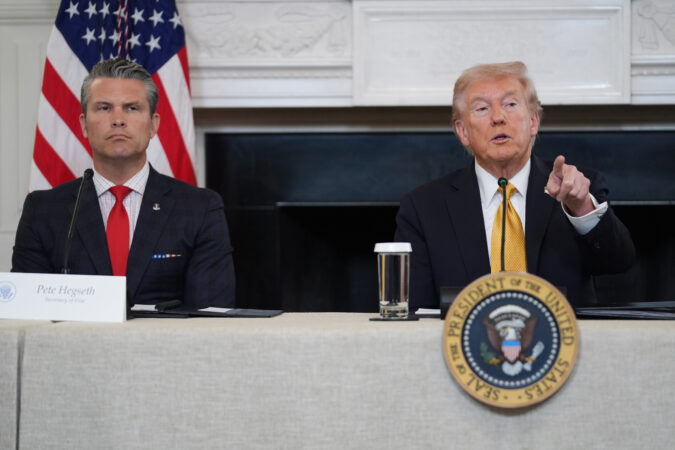
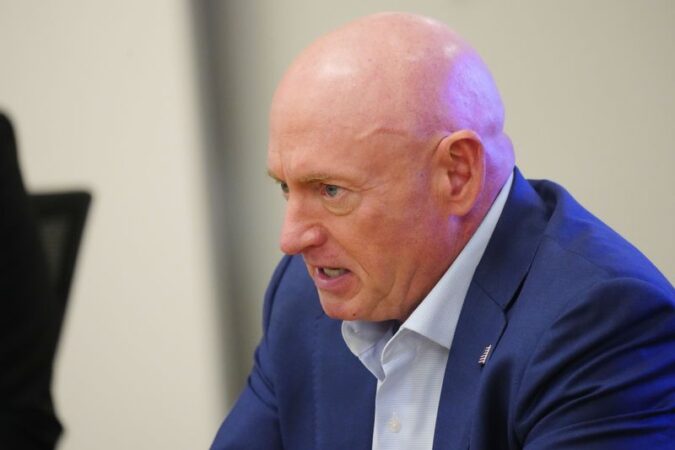
    The move came a day after the Pentagon threatened to recall Sen. Mark Kelly (D., Ariz.), a Navy veteran and one of the six lawmakers, to active duty potentially to face military charges. Defense Secretary Pete Hegseth on Monday described the video as “seditious” and “despicable, reckless, and false” after President Donald Trump went on a social media rant against the lawmakers last week.

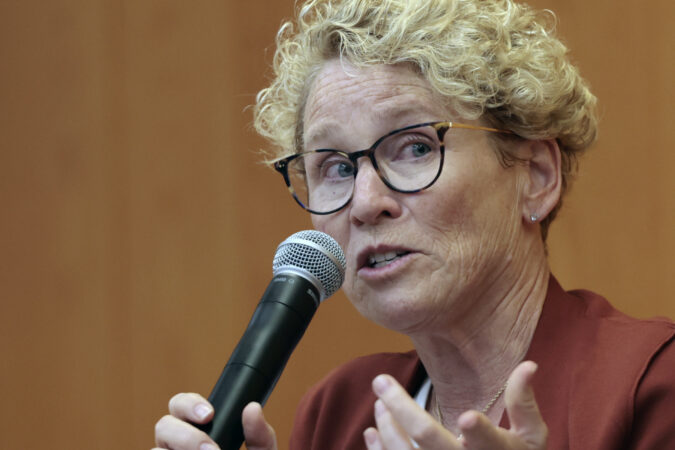
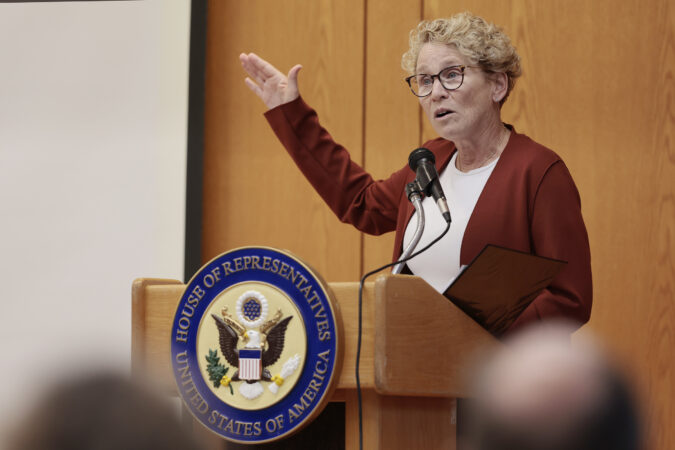
    U.S. Reps. Chrissy Houlahan of Chester County, an Air Force veteran, and Chris Deluzio of Allegheny County, a Navy vet, both took part in the video.

    Houlahan said in a statement Tuesday that Trump “is using the FBI as a tool to intimidate and harass Members of Congress.”

    She said the FBI contacted the House and Senate sergeants at arms on Monday to request the interviews.

    “No amount of intimidation or harassment will ever stop us from doing our jobs and honoring our Constitution,” Houlahan said.

    The lawmaker said that members of Congress took an oath to the Constitution that “lasts a lifetime, and we intend to keep it.”

    “We will not be bullied. We will never give up the ship,” she added.

    The six members of Congress urged service members not to “give up the ship” in their video released last week, which drew fierce attacks from Trump. They did not refer to specific orders as illegal in the video, but some have cited military strikes against boats in the Caribbean that experts have questioned as well as Trump’s efforts to deploy the National Guard in U.S. cities.

    In a string of posts last week on his social media platform, Truth Social, Trump called the Democrats “traitors” who committed sedition “punishable by DEATH.” He reshared similarly aggressive posts from supporters, including one calling for the lawmakers to be hanged.

    Houlahan and Deluzio both reported bomb threats at their district offices on Friday following the president’s attacks.

    The Department of Defense announced Monday that it “has received serious allegations of misconduct” against Kelly, a retired Navy captain, and that “a thorough review of these allegations has been initiated.”

    Kelly is subject to military rules while the other veterans who partook in the video are not because he retired from the military. That means he earns a pension and can be recalled to active duty.

    His colleagues in the video did not serve long enough to qualify for retirement, so they are not subject to military laws, as he is.

    This article contains information from Reuters.

  • U.S. states sue over Trump’s $3 billion cut to homelessness program

    U.S. states sue over Trump’s $3 billion cut to homelessness program

    A group of U.S. states filed a lawsuit on Tuesday to compel President Donald Trump’s administration to reinstate more than $3 billion in grant funding used to provide permanent housing and other services to homeless people.

    The 20 mostly Democratic-led states and Washington, D.C., said changes the U.S. Department of Housing and Urban Development announced to its Continuum of Care program this month violate federal law and are illegally targeted at LGBTQ people and other communities that are not aligned with the Trump administration’s policy priorities, in the lawsuit in Rhode Island federal court.

    The lawsuit seeks to block the funding cuts and new conditions HUD has placed on receiving the grants.

    Program created in 1987

    New York Attorney General Letitia James, a Democrat, said in a statement that communities across the country depend on the program to provide housing and other resources to their most vulnerable members.

    “These funds help keep tens of thousands of people from sleeping on the streets every night,” James said.

    The states that joined New York in the lawsuit include California, Illinois, Pennsylvania, Arizona and Kentucky.

    “For decades, these housing programs have helped vulnerable people — families, seniors, veterans, people with disabilities, and LGTBQ+ Pennsylvanians — have access to safe, affordable housing,” Pennsylvania Gov. Josh Shapiro said in a statement released Tuesday. “Now, the Trump Administration is trying to abruptly dismantle the very system Congress created to fight homelessness. Pennsylvanians depend on this funding and the Trump Administration’s decision will force people out of their homes, defund organizations doing critical work, and leave state taxpayers on the hook. I’m taking action to ensure the federal government keeps its promise — because no Pennsylvanian should be thrown back into homelessness because of political games in Washington.”

    Congress created the Continuum of Care program in 1987 to provide resources for states, local governments and nonprofits to deliver support services to homeless people, with a focus on veterans, families, and people with disabilities.

    The program has long been based on the “housing first” approach to combating homelessness, which prioritizes placing people into permanent housing without preconditions such as sobriety and employment. Along with housing, the grants fund childcare, job training, mental health counseling and transportation services. The Trump administration has criticized the housing-first approach, and HUD this month said it was overhauling the grant program to focus on transitional housing initiatives with work requirements and other conditions. HUD has also barred grant recipients from using the funding for activities that promote diversity, equity, and inclusion, elective abortions, or “gender ideology,” or interfere with the administration’s immigration enforcement agenda. Trump, a Republican, has also urged states and cities to clear out homeless encampments and direct people to substance abuse and mental health treatment facilities.

    The changes could cause more than 170,000 people to lose their housing, according to the states’ lawsuit. The states claim the Trump administration cannot impose its own conditions on funds that Congress said should be distributed based solely on need. (Reporting by Daniel Wiessner in Albany, New York, Editing by Alexia Garamfalvi and Rod Nickel)

  • The FBI is seeking interviews with congressional Democrats who warned the military about illegal orders, official says

    The FBI is seeking interviews with congressional Democrats who warned the military about illegal orders, official says

    WASHINGTON – The FBI has requested interviews with six Democrats from the U.S. Congress who told members of the military they must refuse any illegal orders, a Justice Department official told Reuters on Tuesday.

    The move, reported earlier by Fox News, comes a day after the Pentagon threatened to recall Senator Mark Kelly, a Navy veteran and one of the six lawmakers, to active duty potentially to face military charges over what Secretary of Defense Pete Hegseth described as “seditious” acts on social media.

    The other lawmakers, who made the comments in a video released last week, include Senator Elissa Slotkin, a former CIA analyst and Iraq war veteran, and Representatives Jason Crow, Maggie Goodlander, Chris Deluzio and Chrissy Houlahan, all military veterans.

    The legislators created the video amid concerns from Democrats — echoed privately by some U.S. military commanders — that the Trump administration is violating the law by ordering strikes on vessels purportedly carrying suspected drug traffickers in Latin American waters.

    The Pentagon has argued the strikes are justified because the drug smugglers are considered terrorists.

    Trump accused Democratic lawmakers of sedition

    President Donald Trump accused the six Democrats of sedition, saying in a social media post that the crime was punishable by death.

    His administration has shattered longstanding norms by using law enforcement, including the Justice Department, to pursue his perceived enemies.

    The Justice Department official, who spoke on condition of anonymity, said the interviews were to determine “if there’s any wrongdoing and then go from there.”

    The FBI did not immediately respond to a request for comment.

    In a statement on Monday, Kelly dismissed the Pentagon’s threat as an intimidation tactic.

  • U.S. judge tosses cases against ex-FBI chief James Comey, New York Attorney General Letitia James

    U.S. judge tosses cases against ex-FBI chief James Comey, New York Attorney General Letitia James

    WASHINGTON — A federal judge on Monday dismissed criminal charges against two perceived adversaries of President Donald Trump, FBI Director James Comey and New York Attorney General Letitia James, ruling the U.S. attorney he hand picked to prosecute them was unlawfully appointed.

    The ruling throws out two cases Trump had publicly called for as he pressured Justice Department leaders to move against high-profile figures who had criticized him and led investigations into his conduct.

    Lindsey Halligan, a former personal lawyer to Trump, was named interim U.S. Attorney for the Eastern District of Virginia in September to take over both investigations despite having no previous prosecutorial experience. The findings by U.S. District Judge Cameron McGowan Currie came after both Comey and James accused the Trump Justice Department of violating the U.S. Constitution’s Appointments Clause and federal law by appointing Halligan in September.

    New York Attorney General, Letitia James, speaks after pleading not guilty outside the United States District Court in October in Norfolk, Va.

    ‘No legal authority’

    Currie found that Halligan “had no legal authority” to bring indictments against either Comey or James. But Currie dismissed the cases “without prejudice,” giving the Justice Department an opportunity to seek new indictments with a different prosecutor at the helm.

    “All actions flowing from Ms. Halligan’s defective appointment,” Currie wrote, were “unlawful exercises of executive power and are hereby set aside.”

    After the decision, Attorney General Pam Bondi told reporters the Justice Department would “be taking all available legal action, including an immediate appeal to hold Letitia James and James Comey accountable for their unlawful conduct.”

    Bondi said that because Halligan was made a special U.S. attorney, she can continue to prosecute cases.

    “She can fight in court just like she was and we believe we will be successful on appeal,” Bondi said.

    James and Comey separately said they were grateful for the ruling. James’ attorney, Abbe Lowell, said she would “continue to challenge any further politically motivated charges through every lawful means available.”

    In an Instagram video, Comey said the case against him “was a prosecution based on malevolence and incompetence and a reflection of what the Department of Justice has become under Donald Trump.”

    It is unclear if prosecutors could seek to bring a new case against Comey over the same conduct. The five-year statute of limitations on the charges expired on September 30, and Comey’s lawyers have already indicated in court filings that they do not believe prosecutors have more time to refile the charges.

    Both Comey and James have been longtime targets of Trump’s ire. Comey as FBI director oversaw an investigation into alleged ties between Trump’s 2016 election campaign and the Russian government and later called Trump unfit for office.

    James, an elected Democrat, successfully sued Trump and his family real estate company for fraud. Trump ordered Bondi to install Halligan to the post after her predecessor Erik Siebert declined to pursue charges against Comey or James, citing a lack of credible evidence in both cases.

    Halligan moved swiftly

    Shortly after her appointment, Halligan alone secured indictments against Comey and James after other career prosecutors in the office refused to participate. Comey pleaded not guilty to charges of making false statements and obstructing Congress after he was accused of lying about authorizing leaks to the news media. James pleaded not guilty to charges of bank fraud and lying to a financial institution for allegedly misleading on mortgage documents to secure more favorable loan terms.

    Attorneys for Comey and James argued that Halligan’s appointment violated a federal law they said limits the appointment of an interim U.S. attorney to one 120-day stint.

    Repeated interim appointments would bypass the U.S. Senate confirmation process and let a prosecutor serve indefinitely, they said. Siebert previously had been appointed by Bondi for 120 days and was then re-appointed by the U.S. District Court for the Eastern District of Virginia, since the Senate had not yet confirmed him in the role.

    Lawyers for the Justice Department argued the law allows the attorney general to make multiple interim appointments of U.S. Attorneys. Still, Bondi sought to shore up the cases by separately installing Halligan as a special attorney assigned to both prosecutions. In that same document, she also said she ratified the indictments.

    Currie found that Bondi’s attempts to retroactively secure the cases were invalid. Currie, who is based in South Carolina and was appointed by former Democratic President Bill Clinton, was assigned to rule on Halligan’s appointment because federal judges in Virginia had played a role in appointing her predecessor.

    The challenge to Halligan’s appointment was one of several efforts lawyers for Comey and James have made to have the cases against them thrown out before trials. Both also argued that the cases are “vindictive” prosecutions motivated by Trump’s animosity.

    Halligan has come under intense scrutiny by courts, particularly over her handling of the Comey case. A federal magistrate judge found she may have made significant legal errors in presenting evidence and instructing the grand jury that indicted Comey. The trial judge repeatedly questioned whether the full grand jury had seen the final version of the Comey indictment.

  • A year after Trump’s inroads with Latinos in Pennsylvania, a majority nationwide disapprove of his job performance and policies

    A year after Trump’s inroads with Latinos in Pennsylvania, a majority nationwide disapprove of his job performance and policies

    A majority of Latino adults disapprove of President Donald Trump’s job performance and his policies on immigration and the economy, according to a new Pew Research Center report that offers insight on the shifting opinions of a key voter demographic that Trump made inroads with in 2024.

    The study, published Monday, offers a glimpse into how a majority of Latino adults nationwide have a negative view of Trump’s performance and policies that were important to them during the 2024 election. However, a majority of Latinos who voted for Trump in 2024 remain supportive of the president.

    Pew Research Center based its analysis on two nationwide surveys conducted this fall. The center surveyed almost 5,000 Latino adults from Oct. 6 to Oct. 16 as part of its National Survey of Latinos. A prior survey of U.S. adults, including 629 Hispanic respondents, was conducted from Sept. 22 to 28.

    The report includes the opinions of Latino residents in the United States, including people both eligible and ineligible to vote. A strong majority of Latino voters who supported former Vice President Kamala Harris in 2024 are critical of Trump’s performance, according to the report.

    Among the highlights of the survey, 70% of Latino adults disapprove of Trump’s handling of the presidency, 65% disapprove of the Trump administration’s immigration policies, and 61% say the president’s economic initiatives “have made economic conditions worse,” according to the report.

    Additionally, approximately four in five Latinos say that Trump’s policies “harm Hispanics, a higher share than during his first term.”

    Latinos are among the fastest growing demographic groups in the United States and were a key voting bloc during the 2024 presidential election. Though Trump significantly improved his support among Latino voters in 2024, he did not win the demographic overall. In Pennsylvania, some Latino voters set aside his incendiary rhetoric about their community in favor of his promises to help the economy.

    (function() { var l = function() { new pym.Parent( ‘pew-latino__graphic’, ‘https://media.inquirer.com/storage/inquirer/ai2html/pew-latino/index.html’); }; if(typeof(pym) === ‘undefined’) { var h = document.getElementsByTagName(‘head’)[0], s = document.createElement(‘script’); s.type = ‘text/javascript’; s.src = ‘https://pym.nprapps.org/pym.v1.min.js’; s.onload = l; h.appendChild(s); } else { l(); } })();

    In Philadelphia, Trump won nearly 22% of the vote in majority Latino precincts, compared to more than 6% in 2016 and more than 15% in 2020.

    It remains to be seen how the pessimism with Trump reflected in the report will impact the 2026 midterms, said Luis Noé-Bustamante, a research associate at the Pew Research Center and an author of the report.

    But Latino voters swung back to Democrats during the elections earlier this month, including for Democratic Gov.-elect Mikie Sherrill, whose margins over Republican Jack Ciattarelli ranged from 57 to 71 percentage points in majority Latino municipalities, according to data from Nov. 5.

    Her campaign made efforts to reengage Black and Latino voters, including those who were turned off by Trump’s immigration and economic policies. Sherrill’s campaign was largely focused on affordability and combating Trump.

    “Similar to how the economy and affordability was a top issue among Latinos in the lead up to the 2024 election, it continues to be a priority among them and something in which they continue to have generally pessimistic views,” Noé-Bustamante said. “But that could change. Conditions on the ground could change and of course that could shift opinions of the president and his administration.”

    In the Pew Research Center survey, about two-thirds of Latinos say their situation in the United States is worse today than it was a year ago, the first time in nearly two decades of the Pew Research Center Hispanic surveys.

    Latinos have become increasingly concerned about their belonging in the United States, increasing from 48% in 2019 to 55% in 2025, according to the report. And when it comes to their personal finances, approximately one-in-three Latinos have struggled to pay for groceries, medical care, or their rent or mortgage in the last year. However, half believe their financial situation will improve over the next year and some have had beneficial financial experiences in the last year.

    On immigration, slightly more than half — 52% — of Latino adults say they worry constantly about the prospect that they, or someone they are close to, could be deported amid the Trump administration’s surge of immigration enforcement. About 71% say the administration is “doing too much” when it comes to deporting immigrants who have not legally entered the U.S, according to the report.

    U.S. Immigration and Customs Enforcement has aggressively targeted immigrants in the Philadelphia area, raiding communities and carrying out arrests, which members and allies of the Latino community continue to protest.

    Though a vast majority of Latinos have a critical perspective of Trump, Latinos who voted for Trump in 2024 have largely remained loyal to the president and his ideals, while Latino Republicans who did not vote for him have less favorable views of the president.

    As an example, Trump has an 81% job approval rating among Latinos who voted for him, though this has declined from 93% at the beginning of his term.

    Similarly, a smaller share of Latino Trump voters say their situation has worsened in the United States, that Trump’s policies are harmful to Hispanics, and that they’re worried about their belonging in the U.S.

    That loyalty to Trump has remained among some in places, like Hazleton, the only one of Pennsylvania’s three largest majority-Latino cities to vote for Trump in 2024. Hazleton residents told The Inquirer in August that there was some skepticism around Trump’s economic and immigration policies even as some continued to support him.

    Staff writer Julia Terruso contributed to this article.

  • Pentagon threatens to prosecute Senator Mark Kelly by recalling him to Navy service

    Pentagon threatens to prosecute Senator Mark Kelly by recalling him to Navy service

    WASHINGTON — The Pentagon on Monday threatened to recall Senator Mark Kelly, a retired Navy captain, to active duty status in order to prosecute him after saying it received “serious allegations of misconduct.”

    The statement did not say what charges Kelly could face if it took such a step. But President Donald Trump last week accused Kelly and other Democratic lawmakers of seditious behavior for urging U.S. troops to refuse any illegal orders. Trump, in a social media post, said the crime was “punishable by DEATH!”

    “All servicemembers are reminded that they have a legal obligation under the UCMJ (Uniform Code of Military Justice) to obey lawful orders and that orders are presumed to be lawful. A servicemember’s personal philosophy does not justify or excuse the disobedience of an otherwise lawful order,” the Pentagon said.

  • Rep. Marjorie Taylor Greene of Georgia, former Trump loyalist, says she is resigning from Congress

    Rep. Marjorie Taylor Greene of Georgia, former Trump loyalist, says she is resigning from Congress

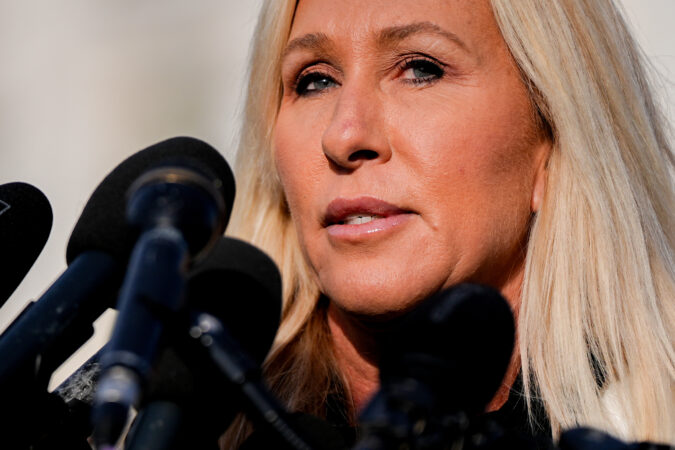
    WASHINGTON — Rep. Marjorie Taylor Greene of Georgia, a loyal supporter-turned-critic of President Donald Trump who faced his political retribution if she sought reelection, said Friday she is resigning from Congress in January.

    Greene, in a more than 10-minute video posted online, explained her decision and said she didn’t want her congressional district “to have to endure a hurtful and hateful primary against me by the president we all fought for,” she said.

    Greene’s resignation followed a public fallout with Trump in recent months, as the congresswoman criticized him for his stance on files related to Jeffrey Epstein, along with foreign policy and health care.

    Trump branded her a “traitor” and “wacky” and said he would endorse a challenger against her when she ran for reelection next year.

    She said her last day would be Jan. 5, 2026.

    The White House did not immediately respond to a message seeking comment Friday night.

    Greene was one of the most vocal and visible supporters of Trump’s Make America Great Again politics, and she embraced some of his unapologetic political style.

    Her break with him was a notable fissure in his grip over conservatives, particularly his most ardent base. But her decision to step down in the face of his opposition put her on the same track as many of the more moderate establishment Republicans before her who went crosswise with Trump.

    The congresswoman, who recorded the video announcing her resignation while sitting in her living room wearing a cross necklace and with a Christmas tree and a peace lily plant behind her, said, “My life is filled with happiness, and my true convictions remain unchanged, because my self-worth is not defined by a man, but instead by God.”

    A crack in the MAGA movement

    Greene had been closely tied to the Republican president since she launched her political career five years ago.

    In her video Friday, she underscored her longtime loyalty to Trump except on a few issues, and said it was “unfair and wrong” that he attacked her for disagreeing.

    “Loyalty should be a two-way street and we should be able to vote our conscience and represent our district’s interest, because our job title is literally ‘representative,’” she said.

    Greene swept to office at the forefront of Trump’s MAGA movement and quickly became a lightning rod on Capitol Hill for her often beyond-mainstream views. In her video Friday, Greene said she had “always been despised in Washington, D.C., and just never fit in.”

    As she embraced the QAnon conspiracy theory and appeared with white supremacists, Greene was initially opposed by party leaders but welcomed by Trump. He called her “a real WINNER!”

    Yet over time she proved a deft legislator, having aligned herself with then-GOP leader Kevin McCarthy, who would go on to become House speaker. She was a trusted voice on the right flank, until McCarthy was ousted in 2023.

    While there has been an onslaught of lawmakers from both parties heading for the exits ahead of next fall’s midterm elections, as the House struggles through an often chaotic session, Greene’s announced retirement will ripple throughout the ranks — and raise questions about her next moves.

    Greene was first elected to the House in 2020. She initially planned to run in a competitive district in northern Atlanta’s suburbs, but relocated to the much more conservative 14th District in Georgia’s northwest corner.

    The opening in her district means Republican Gov. Brian Kemp will have to set a special election date within 10 days of Greene’s resignation. Such a special election would fill out the remainder of Greene’s term through January 2027. Those elections could take place before the party primaries in May for the next two-year term.

    Conspiracy-minded

    Even before her election, Greene showed a penchant for harsh rhetoric and conspiracy theories, suggesting a 2017 mass shooting in Las Vegas was a coordinated attack to spur support for new gun restrictions. In 2018, she endorsed the idea that the U.S. government perpetrated the attacks on Sept. 11, 2001, and mused that a “so-called” plane had hit the Pentagon.

    Greene argued in 2019 that Reps. Ilhan Omar, D-Minn., and Rashida Tlaib, D-Mich., both Muslim women, weren’t “official” members of Congress because they used Qurans rather than Bibles in their swearing-in ceremonies.

    She was once a sympathizer with QAnon, an online network that believes a global cabal of Satan-worshipping cannibals, including U.S. government leaders, operates a child sex trafficking ring. She eventually distanced herself, saying she got “sucked into some of the things I had seen on the internet.”

    During the pandemic, she drew backlash and apologized for comparing the wearing of safety masks to the horrors of the Holocaust.

    She also drew ridicule and condemnation after a conspiracy she speculated about on Facebook in 2018, in which she suggested a California wildfire may have been caused by “lasers or blue beams of light” controlled by a left-wing cabal tied to a prominent Jewish family.

    When Trump was out of power between his first and second terms, Greene was often a surrogate for his views and brash style in Washington.

    While then-President Joe Biden delivered his State of the Union address in 2022, Greene stood up and began chanting “Build the wall,” referring to the U.S.-Mexico border wall that Trump began in his first term.

    Last year, when Biden gave his last State of the Union address, Greene again drew attention as she confronted him over border security and the killing of a nursing student from Georgia, Laken Riley, by an immigrant in the country illegally.

    Greene, wearing a red MAGA hat and a T-shirt about Riley, handed the president a button that said “Say Her Name.” The congresswoman then shouted that at the president midway through his speech.

    Frustration with the GOP

    But this year, her first serving with Trump in the White House, cracks began to appear slowly in her steadfast support — before it broke wide open.

    Greene’s discontent dates back at least to May, when she announced she wouldn’t run for the Senate against Democratic incumbent Jon Ossoff, while attacking GOP donors and consultants who feared she couldn’t win.

    Greene’s restlessness only intensified in July, when she announced she wouldn’t run for Georgia governor, either.

    She was also frustrated with the Republican leadership on Capitol Hill, which worked in lockstep with the president.

    Greene said in her video that “the legislature has been mostly sidelined” since Republicans took unified control of Washington in January and her bills “just sit collecting dust.”

    “That’s how it is for most members of Congress’ bills,” she said. “The speaker never brings them to the floor for a vote.”

    Messages left with House Speaker Mike Johnson’s office were not immediately returned.

    Republicans will likely lose the midterms elections next year, Greene said, and then she’d “be expected to defend the president against impeachment after he hatefully dumped tens of millions of dollars against me and tried to destroy me.”

    “It’s all so absurd and completely unserious,” she said. “I refuse to be a battered wife hoping it all goes away and gets better.”
  • Trump and Mamdani go from adversaries to allies after White House meeting

    Trump and Mamdani go from adversaries to allies after White House meeting

    WASHINGTON — President Donald Trump on Friday met the man who had proudly proclaimed himself “Donald Trump’s worst nightmare,” but he seemed to find the opposite.

    The Republican president and New York City’s Mayor-elect Zohran Mamdani were warm and friendly, speaking repeatedly of their shared goals to help Trump’s hometown rather than their combustible differences.

    Trump, who had in the past called Mamdani a “100% Communist Lunatic” and a “total nut job,” spoke openly of how impressed he was with the man who had called his administration “authoritarian.”

    “I think he is going to surprise some conservative people, actually,” Trump said of the democratic socialist as Mamdani stood next to him in the Oval Office.

    The meeting offered political opportunities for both men. For Mamdani, a sit-down offered the state lawmaker — who until recently was relatively unknown — the chance to go head-to-head with the most powerful person in the world.

    For Trump, it was a high-profile chance to talk about affordability at a time when he’s under increasing political pressure to show he’s addressing voter concerns about the cost of living.

    Until now, the men have been political foils who galvanized their supporters by taking on each other, and it’s unclear how those backers will react to their genial get-together and complimentary words.

    “We’re going to be helping him, to make everybody’s dream come true, having a strong and very safe New York,” the president said.

    “What I really appreciate about the president is that the meeting that we had focused not on places of disagreement, which there are many, and also focused on the shared purpose that we have in serving New Yorkers,” Mamdani said.

    ‘I’ll stick up for you’

    Mamdani and Trump said they discussed housing affordability and the cost of groceries and utilities, as Mamdani successfully used frustration over inflation to get elected, just as the president did in the 2024 election.

    “Some of his ideas are really the same ideas that I have,” the president said of Mamdani about inflationary issues.

    The president brushed aside Mamdani’s criticisms of him over his administration’s deportation raids and claims that Trump was behaving like a despot. Instead, Trump said the responsibility of holding an executive position in the government causes a person to change, saying that had been the case for him.

    He seemed at times even protective of Mamdani, jumping in on his behalf at several points. For example, when reporters asked Mamdani to clarify his past statements indicating that he thought the president was acting like a fascist, Trump said, “I’ve been called much worse than a despot.”

    When a reporter asked if Mamdani stood by his comments that Trump is a fascist, Trump interjected before the mayor-elect could fully answer the question.

    “That’s OK. You can just say yes. OK?” Trump said. “It’s easier. It’s easier than explaining it. I don’t mind.”

    Trump stepped in again when a reporter asked Mamdani why he flew to Washington instead of taking transportation that used less fossil fuels.

    “I’ll stick up for you,” Trump said.

    All about affordability

    Mamdani, who takes office in January, said he sought the meeting with Trump to talk about ways to make New York City more affordable. Trump has said he may want to help him out — although he has also falsely labeled Mamdani as a “communist” and threatened to yank federal funds from the city.

    But Trump on Friday didn’t sling that at the mayor. He acknowledged that he had said he had been prepared to cut off funding or make it harder for New York City to access federal resources if the two had failed to “get along,” only to pull back from those threats during the meeting.

    “We don’t want that to happen,” Trump said. ”I don’t think that’s going to happen.”

    Afterward, Mamdani’s former campaign manager and incoming chief of staff Elle Bisgaard-Church told NY1 that the pair clearly disagreed on some issues but were able to find common ground on things like reducing crime.

    “We discussed that we share a mutual goal of having a safe city where everyone can move around in comfort and ease,” she said, before later adding, “We know that there have been labels thrown all around that are just simply not fair and we kept it, again, at where we could find agreement on making the city affordable.”

    Trump loomed large over the mayoral race this year, and on the eve of the election, he endorsed independent candidate and former Democratic Gov. Andrew Cuomo, predicting the city has “ZERO chance of success, or even survival” if Mamdani won. He also questioned the citizenship of Mamdani, who was born in Uganda and became a naturalized American citizen after graduating from college, and said he’d have him arrested if he followed through on threats not to cooperate with immigration agents in the city.

    Mamdani beat back a challenge from Cuomo, painting him as a “puppet” for the president, and promised to be “a mayor who can stand up to Donald Trump and actually deliver.” He declared during one primary debate, “I am Donald Trump’s worst nightmare, as a progressive Muslim immigrant who actually fights for the things that I believe in.”

    The president, who has long used political opponents to fire up his backers, predicted Mamdani “will prove to be one of the best things to ever happen to our great Republican Party.” As Mamdani upended the Democratic establishment by defeating Cuomo and his far-left progressive policies provoked infighting, Trump repeatedly has cast Mamdani as the face of Democratic Party.

    Some had expected fireworks in the Oval Office meeting

    The president has had some dramatic public Oval Office faceoffs this year, including an infamously heated exchange with Ukrainian President Volodymyr Zelenskyy in March. In May, Trump dimmed the lights while meeting with South African President Cyril Ramaphosa and played a four-minute video making widely rejected claims that South Africa is violently persecuting the country’s white Afrikaner minority farmers.

    A senior Trump administration official who spoke on condition of anonymity to describe internal discussions said Trump had not put a lot of thought into planning the meeting with the incoming mayor — but said Trump’s threats to block federal dollars from flowing to New York remained on the table.

    Mamdani said Thursday that he was not concerned about the president potentially trying to use the meeting to publicly embarrass him and said he saw it as a chance to make his case, even while acknowledging “many disagreements with the president.”

    Instead, both men avoided a public confrontation in a remarkably calm and cordial series of comments in front of news reporters.

    Mamdani, who lives in Queens — where Trump was raised — has shown a cutthroat streak just as Trump has as a candidate. During his campaign, he appeared to borrow from Trump’s playbook when he noted during a televised debate with Cuomo that one of the women who had accused the former governor of sexual harassment was in the audience. Cuomo has denied wrongdoing.

    But the tensions were subdued Friday as Trump seemed sympathetic to Mamdani’s policies to want to build more housing.

    “People would be shocked, but I want to see the same thing,” the president said.

  • Chrissy Houlahan says she is ‘profoundly disappointed’ in lack of support from GOP colleagues after Trump’s sedition accusation

    Chrissy Houlahan says she is ‘profoundly disappointed’ in lack of support from GOP colleagues after Trump’s sedition accusation

    U.S. Rep. Chrissy Houlahan, a Chester County Democrat, said Friday she is “profoundly disappointed” in her Republican colleagues for not speaking up after President Donald Trump accused her and five other Democratic lawmakers of sedition.

    Houlahan was one of six Democrats in Congress — all military veterans or members of the intelligence community — featured in a video urging members of the military and intelligence community to “refuse illegal orders.”

    In response, Trump went after the Democrats in a string of posts on Truth Social Thursday, accusing them of sedition that he said is “punishable by DEATH.”

    Early Friday evening, a spokesperson for Houlahan posted on the representative’s X account that her district office in West Chester was the target of a bomb threat.

    “Thankfully, the staff there, as well as the office in Washington, D.C., are safe. We are grateful for our local law enforcement agencies who reacted quickly and are investigating,” the post said.

    A spokesperson for Rep. Chris Deluzio, a western Pennsylvania Democrat also on the video, posted on X late Friday afternoon that the representative’s district offices were targeted with bomb threats as well.

    Houlahan lamented at a Friday news conference in Washington that “not a single” Republican in Congress “has reached out to me, either publicly or privately” since Trump’s post.

    “And with this, I am profoundly disappointed in my colleagues,” she added.

    In addition to calling for the lawmakers to be arrested and tried for sedition, Trump shared posts from supporters calling for retribution against the Democrats, including one that said “HANG THEM GEORGE WASHINGTON WOULD !!” and another calling them domestic terrorists.

    “This is not normal political discourse,” Houlahan said Friday alongside other veteran members of Congress. “Indeed, it is, in fact, a explicit embrace of political violence against the opposition.”

    “As a member who has spent my entire career calling for civility and decency and building relationships with the other side of the aisle, I’m dumbfounded by the silence,” added the Air Force veteran.

    Beyond not reaching out to her specifically, Houlahan broadly said that “not a single Republican member has condemned this call for violence, not publicly, not privately.”

    When reached by The Inquirer on Thursday, U.S. Rep. Brian Fitzpatrick (R., Bucks), a former FBI agent, condemned Trump’s rhetoric, but he did so without naming the president

    “This exchange is part of a deeper issue of corrosive divisiveness that helps no one and puts our entire nation at risk,” he said. “Such unnecessary incidents and incendiary rhetoric heighten volatility, erode public trust, and have no place in a constitutional republic, least of all in our great nation.”

    When asked for clarification, his spokesperson added that “He is 100% opposed to the president’s comments and 100% stands with all men and women who wear the uniform.”

    Sen. Dave McCormick (R., Pa.) said, “There is no place in either party for violent rhetoric and everyone needs to dial it down a notch,” in a follow-up statement to The Inquirer after initially placing blame solely on the Democrats.

    Some Republicans justified Trump’s response by saying the Democrats who made the video were in the wrong — even if the president’s rhetoric was over the top.

    House Speaker Mike Johnson (R., La.) said that he did not think the six Democrats committed “crimes punishable by death or any of that,” but criticized the Democrats’ video as irresponsible, Politico reported.

    “The point we need to emphasize here is that members of Congress in the Senate [and] House should not be telling troops to disobey orders,” Johnson said. “It is dangerous.”

    Karoline Leavitt, the White House press secretary, responded to a reporter asking if Trump wanted to “execute” members of Congress by saying “no,” and criticized the video put out by the veterans.

    The video that inspired Trump’s ire did not point to any specific order from Trump as illegal, despite urging troops to resist such an order.

    However, the video follows high-profile debates about the legality of Trump’s deployment of National Guard troops in U.S. cities and his ordering of strikes on boats in the Caribbean. Trump alleges that the boats are carrying drugs from Venezuela, but experts have said his claims about them are misleading.

    “He has shown time and time again that when he threatens to abuse his power, he acts on it,” Houlahan said Friday at the news conference announcing a bill that would prohibit funds for military force in or against Venezuela without congressional approval.

    Houlahan said Congress has not received intelligence on the strikes. She said that Trump’s administration has “repeatedly shown disregard for the military process.”

    U.S. Rep. Seth Moulton (D., Mass.), one of the bill’s sponsors, said military leaders who have expressed concern about the legality of the strikes have been “sidelined.” He also pointed out that threatening a member of Congress is against the law.

    “So put yourselves in the shoes of a young lieutenant or sergeant who’s in uniform right now watching the commander-in-chief threaten members of Congress to death for telling you to follow the law,” he said. “You’re watching him orchestrate legally dubious military strikes while sidelining military lawyers and commanders who say that those actions may be illegal and could therefore get you prosecuted for following those orders.”

    Moulton was not one of the six lawmakers featured in the video, but he shares a similar background, having served four tours in Iraq as a Marine.

    He said Congress should learn from its failure to question that war as it confronts the legality of Trump’s strikes in the Caribbean.

    “I’ve seen what being in a moral and legal gray area means in war,” he said.

    Staff writers Julia Terruso and Robert Moran contributed to this article.

  • The Supreme Court meets to weigh Trump’s birthright citizenship restrictions, which have been blocked by lower courts

    The Supreme Court meets to weigh Trump’s birthright citizenship restrictions, which have been blocked by lower courts

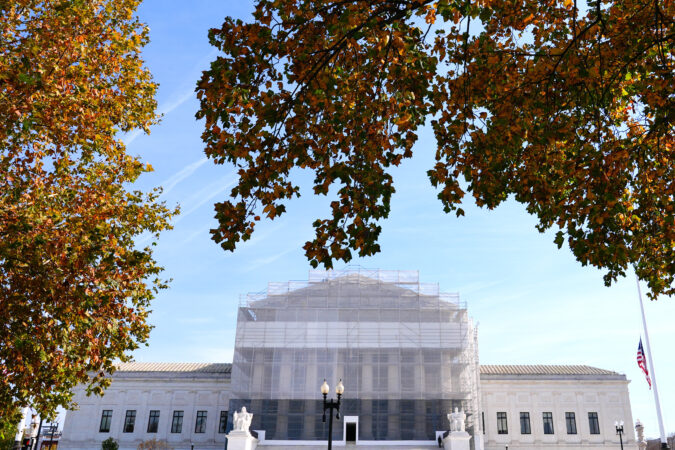
    WASHINGTON — The Supreme Court is meeting in private Friday with a key issue on its agenda — President Donald Trump’s birthright citizenship order declaring that children born to parents who are in the United States illegally or temporarily are not American citizens.

    The justices could say as soon as Monday whether they will hear Trump’s appeal of lower court rulings that have uniformly struck down the citizenship restrictions. They have not taken effect anywhere in the United States.

    If the court steps in now, the case would be argued in the spring, with a definitive ruling expected by early summer.

    The birthright citizenship order, which Trump signed on the first day of his second term in the White House, is part of his administration’s broad immigration crackdown. Other actions include immigration enforcement surges in several cities and the first peacetime invocation of the 18th century Alien Enemies Act.

    The administration is facing multiple court challenges, and the high court has sent mixed signals in emergency orders it has issued. The justices effectively stopped the use of the Alien Enemies Act to rapidly deport alleged Venezuelan gang members without court hearings, while they allowed the resumption of sweeping immigration stops in the Los Angeles area after a lower court blocked the practice of stopping people solely based on their race, language, job or location.

    The justices also are weighing the administration’s emergency appeal to be allowed to deploy National Guard troops in the Chicago area for immigration enforcement actions. A lower court has indefinitely prevented the deployment.

    Birthright citizenship is the first Trump immigration-related policy to reach the court for a final ruling. Trump’s order would upend more than 125 years of understanding that the Constitution’s 14th Amendment confers citizenship on everyone born on American soil, with narrow exceptions for the children of foreign diplomats and those born to a foreign occupying force.

    In a series of decisions, lower courts have struck down the executive order as unconstitutional, or likely so, even after a Supreme Court ruling in late June that limited judges’ use of nationwide injunctions.

    While the Supreme Court curbed the use of nationwide injunctions, it did not rule out other court orders that could have nationwide effects, including in class-action lawsuits and those brought by states. The justices did not decide at that time whether the underlying citizenship order is constitutional.

    But every lower court that has looked at the issue has concluded that Trump’s order violates or most likely violates the 14th Amendment, which was intended to ensure that Black people, including former slaves, had citizenship.

    The administration is appealing two cases.

    The U.S. Court of Appeals for the 9th Circuit in San Francisco ruled in July that a group of states that sued over the order needed a nationwide injunction to prevent the problems that would be caused by birthright citizenship being in effect in some states and not others.

    Also in July, a federal judge in New Hampshire blocked the citizenship order in a class-action lawsuit including all children who would be affected.

    The American Civil Liberties Union, leading the legal team in the New Hampshire case, urged the court to reject the appeal because the administration’s “arguments are so flimsy,” ACLU lawyer Cody Wofsy said. ”But if the court decides to hear the case, we’re more than ready to take Trump on and win.”

    Birthright citizenship automatically makes anyone born in the United States an American citizen, including children born to mothers who are in the country illegally, under long-standing rules. The right was enshrined soon after the Civil War in the first sentence of the 14th Amendment.

    The administration has asserted that children of noncitizens are not “subject to the jurisdiction” of the United States and therefore not entitled to citizenship.

    “The lower court’s decisions invalidated a policy of prime importance to the president and his administration in a manner that undermines our border security,” Solicitor General D. John Sauer wrote in urging the high court’s review. “Those decisions confer, without lawful justification, the privilege of American citizenship on hundreds of thousands of unqualified people.”