Category: Politics

Political news and coverage

  • A Montgomery County office that’s ‘outlived DOGE’ has helped save the suburb $14 million

    A Montgomery County office that’s ‘outlived DOGE’ has helped save the suburb $14 million

    A Montgomery County office — which one county commissioner described as a far less controversial version of Elon Musk’s Department of Government Efficiency — has helped the county find $14 million in savings within the past year and reduce the deficit by half.

    Montgomery County’s Office of Innovation, Strategy, and Performance (OISP), announced in February 2025, spent the last year meeting with department heads to identify areas for cost cutting and streamlining services, such as eliminating almost a dozen vacant positions worth hundreds of thousands of dollars, saving $1.5 million on a prescription benefits provider, and conserving half a million dollars by bringing some county legal services in house.

    In 2026, the office could consider integrating artificial intelligence into county services, with the support of all three commissioners, aimed at cutting red tape for residents and county employees.

    “It’s kind of like DOGE,” said Commissioner Vice Chair Neil Makhija, a Democrat, noting that the office has “outlived” DOGE’s period of high activity when Musk was in charge before he stepped away last spring.

    “We didn’t just take the richest person in the county and tell them to cut, you know, benefits for poor people, which is what the federal DOGE was,” Makhija said.

    Also unlike DOGE — which under Musk’s leadership was responsible for the haphazard slashing of thousands of federal workers’ jobs during the first year of President Donald Trump’s second term — the office does not envision layoffs becoming part of its mission.

    The office’s work comes on the heels of the county’s $632.7 million operating budget and a roughly $25.5 million deficit, resulting in a 4% property tax increase for residents.

    Republicans have made looking for inefficiencies in government part of their brand. But Democratic leaders in Pennsylvania have also started taking on streamlining government. Gov. Josh Shapiro has touted how he’s cut processing time for licenses and accelerated the permitting process for building projects.

    And in blue Montgomery County, a bipartisan group of leaders says that responsible government efficiency should be a pillar of good government, regardless of political party.

    “What happened with DOGE at the federal level was hard to watch and certainly not the approach that we’re going to take in Montgomery County, but, any leader … has to go through this exercise of are we optimizing our resources?
Are we leaving money on the table? Are there opportunities to improve the performance of our people?” said County Commissioner Chair Jamila Winder, a Democrat.


    “Like all of those are just disciplines that are industry agnostic, and so I don’t think it’s a Republican or a Democrat thing,” Winder added.

    Commissioner Tom DiBello, the only Republican on the board, agrees, saying that he has high expectations for the office and its ability to oversee the adequate spending of taxpayer dollars.

    “I mean, that’s our job. It has nothing to do with Republican or Democrat. My feeling, it has to do with taxpayer money,” DiBello said. “We’re supposed to be stewards of taxpayer money.”
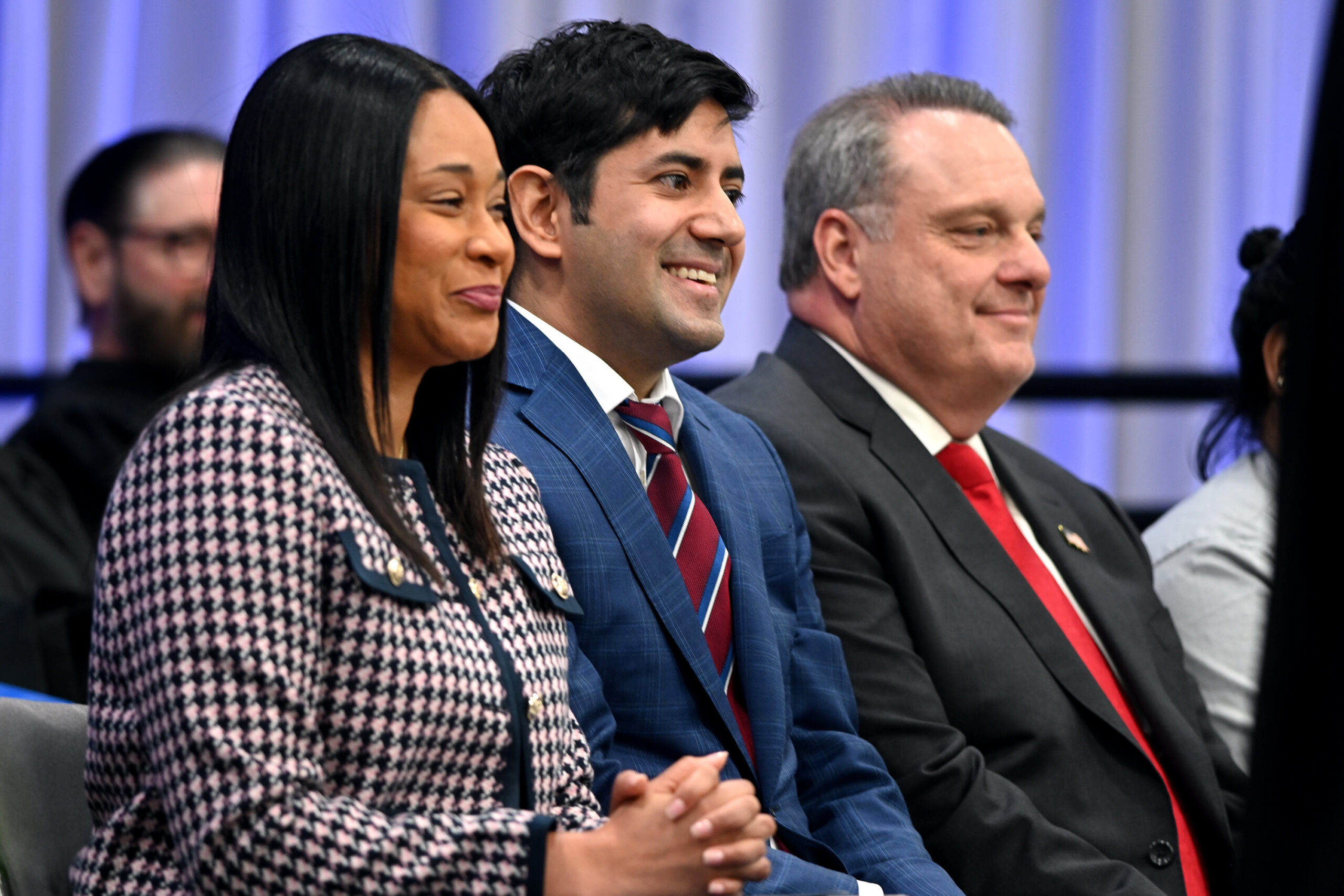
    Jamila H. Winder (from left), Neil Makhija, and Thomas DiBello are seated together on stage at the Montgomery County Community College gymnasium Wednesday, Jan. 3, 2024, during ceremonies before they were sworn in as Montgomery County’s new Board of Commissioners.

    Is artificial intelligence the next step?

    The OISP was launched in February 2025 after the office previously served as the county COVID-19 pandemic “Recovery Office,” ensuring approximately $161 million in funds from the American Rescue Plan Act were being used appropriately.

    When Stephanie Tipton, deputy chief operating officer, was hired in Montgomery County in September 2024 after more than 16 years in leadership in Philadelphia, county officials started discussing how to translate that oversight practice at the “Recovery Office” to every facet of county spending and performance.

    That mentality helped the OISP cut the county deficit in half and focus on ways to reduce it in the long term, such as eliminating longstanding vacant positions around the county, including on the board of assessment, which does real estate evaluations. The office also helped develop performance management standards for departments.

    “What we were really interested in is finding things that we could make repeatable year after year, and that would move forward, whether that was restructuring positions and eliminating vacancies that we don’t carry forward” to doing a trend analysis on spending, said Eli Gilman, project director of the 11-person office. He noted that the team was “kind of building a plane while we were flying.”

    County governments are always trying to be efficient with taxpayer dollars, said Kyle Kopko, executive director of the County Commissioners Association of Pennsylvania, especially in the aftermath of last year’s state budget impasse. But Montgomery County’s decision to have a dedicated office for efficiency is fairly unique, he said.

    “This is something that has become more and more of a focus of counties everywhere just because we’re not sure if we’re going to have the consistency of on-time state funds,” Kopko said.

    The next phase for the office? Cutting red tape for residents. And part of that may be through enlisting artificial intelligence, something the county has been examining through the commissioners’ “Advisory Council on Artificial Intelligence for Public Good” established in April 2025.

    “The goal here is like, how can we leverage this new and emerging technology to help us make it easier for residents to access services,” Tipton said. “Make it easier, reduce the burden on our frontline staff, so they can spend more time in sort of customer-facing, client-facing activities.”

    AI will be something that many counties across Pennsylvania will be grappling with moving forward, Kopko said. Though some counties are wary of using it for sensitive information.

    Everyone has a different idea as to what they would want to see AI used for in Montgomery County.

    Makhija wants to make court documents accessible by chatbot. Winder says she wants to see AI help county employees be more efficient in their roles. And DiBello, who worked in tech software, said as long as accuracy is prioritized, AI could one day be used in situations where residents don’t have to speak directly to someone.

    But first, Tipton said, the county wants to internally test AI tools to “make sure that we have the right sort of governance and guardrails” before launching it to the public.

    When Tipton joined Montgomery County she said she had a “clear mandate from the commissioners” to look at department spending. She also wants it to be a transparent process for residents and the office plans to launch an open data site to the public in the second half of 2026.

    “We want to make sure that moving forward, when we are making investments in the budget we can really understand more clearly how that is impacting service delivery, so we can tie that more directly to work that we’re doing,” Tipton said.


  • Young Americans are increasingly rejecting Democratic and Republican parties, a new poll shows

    Young Americans are increasingly rejecting Democratic and Republican parties, a new poll shows

    WASHINGTON — Americans are increasingly rejecting the two major political parties, according to new polling.

    Just under half, 45%, of U.S. adults now identify as independents, a new Gallup survey found. That’s a substantial shift from 20 years ago, when closer to one-third of Americans said they didn’t identify with the Democrats or Republicans.

    This group appears, increasingly, to be driven by their unhappiness with the party in power, according to Gallup’s analysis. That’s a dynamic that could be good for Democrats in this year’s midterm elections, but doesn’t promise lasting loyalty. Independents have gravitated toward the Democrats over the past year when asked which party they lean toward, Gallup found, but attitudes toward the party haven’t gotten warmer. That suggests that the Democrats’ gains are probably more related to independents’ increasingly sour views of President Donald Trump.

    Younger people, in particular, are rejecting the parties at much higher rates than older generations. More than half of Generation Z and Millennials identify as political independents, while a majority of older generations side with a party. That’s different from the past, when more young adults identified with the Democrats or the Republicans. And it’s part of the reason why frequent, dramatic swings in political power may become increasingly normal.

    Democrats regain the edge with independents

    Independents have long been the largest political group in the U.S., and their numbers have increased over the last 15 years. But often, they’re more inclined to side with one of the parties over the other.

    This year, the Democratic Party gained the partisanship edge when independents were asked whether they lean more toward the Democratic or Republican Party. Nearly half, 47%, of U.S. adults now identify as Democrats or lean toward the Democratic Party, while 42% are Republicans or lean Republican. This is an indication of how Americans are feeling about their political affiliations, and it may not be reflected in voters’ actual registration.

    This shifted the 3-year party affiliation advantage that the Republican Party held while President Joe Biden was in office, reverting to where the Democrats stood during Trump’s first term.

    While that’s certainly not bad news for Democrats as they look to regain one or both houses of Congress in November, it’s likelier that they’re benefiting from independents’ unhappiness with Trump, rather than building lasting goodwill for themselves. Trump’s approval among independents has fallen steadily over the year, while Democrats’ favorability remains historically low.

    Young people drive independents’ strength

    Younger Americans are driving the recent rise in U.S. adults identifying as independents.

    The Gallup polling found majorities of Gen Z and Millennial adults — who were born between 1981 and 2007 — now identify as independents. Independent identity is softer in older generations, where only about 4 in 10 in Gen X currently call themselves independents and roughly 3 in 10 older adults do.

    Young adults today are more likely than previous generations to identify outside of the Democratic and Republican Party. While 56% of Gen Z adults call themselves independents, that’s higher than in 2012, when 47% of Millennials said they were independents, and 1992, when 40% of Gen X adults identified that way, according to the Gallup analysis.

    That means that this trend isn’t likely to shift, unless the parties are able to change the way younger people see them.

    Independent Americans are increasingly the moderates

    Americans who identify as moderates increasingly don’t see themselves in either party, Gallup’s polling shows.

    More independents have described their political views as “moderate” over the last decade, while Democrats and Republicans have grown less likely to identity as moderates.

    About half of independents, 47%, called themselves moderates in 2025, compared to about 3 in 10 Democrats and about 2 in 10 Republicans.

    At the same time, Democrats and Republicans have become increasingly polarized in their ideology. About 6 in 10 Democrats now call themselves liberal, while the share that consider themselves moderate is among the lowest it’s ever been. Among Republicans, 77% consider themselves conservative, and moderate identity is also at a low point.

    That creates another challenge for the parties to contend with, since appeals to the center to win the growing pool of independents could risk alienating the most committed people in their base.

  • Judge is asked for emergency hearing after Congress members blocked from ICE facility in Minneapolis

    Judge is asked for emergency hearing after Congress members blocked from ICE facility in Minneapolis

    WASHINGTON — The Trump administration secretly reimposed a policy limiting Congress members’ access to immigration detention facilities a day after a federal immigration officer fatally shot a woman in Minneapolis, attorneys for several congressional Democrats said Monday in asking a federal judge to intervene.

    Three Democratic members of Congress from Minnesota were blocked from visiting an Immigration and Customs Enforcement facility near Minneapolis on Saturday, three days after an ICE officer shot and killed U.S. citizen Renee Good in the city.

    Last month, U.S. District Judge Jia Cobb in Washington, D.C., temporarily blocked ICE from enforcing policies limiting Congress members’ access to immigration detention facilities. In a court filing on Monday, plaintiffs’ lawyers asked Cobb to hold an emergency hearing and decide if the duplicate notice policy violates her order.

    Cobb ruled on Dec. 17 that it is likely illegal for ICE to demand a week’s notice from members of Congress seeking to visit and observe conditions in ICE facilities. The judge said the seven-day notice requirement likely exceeds the Department of Homeland Security’s statutory authority.

    The attorneys asking Cobb for an emergency hearing say the matter is urgent because members of Congress are negotiating funding for DHS and ICE for the next fiscal year with DHS’ annual appropriations due to expire on Jan. 30.

    “This is a critical moment for oversight, and members of Congress must be able to conduct oversight at ICE detention facilities, without notice, to obtain urgent and essential information for ongoing funding negotiations,” the lawyers wrote.

    Cobb didn’t immediately rule on the plaintiffs’ hearing request. Government attorneys also didn’t immediately respond in writing to it.

    On Saturday, U.S. Reps. Ilhan Omar, Kelly Morrison, and Angie Craig attempted to tour the ICE facility in the Minneapolis federal building. They initially were allowed to enter but then told they had to leave about 10 minutes later.

    Officials who turned them away cited a newly imposed seven-day-notice policy for congressional oversight visits. Last Thursday, a day after Good’s death, U.S. Department of Homeland Security Secretary Kristi Noem secretly signed a new memorandum reinstating the same seven-day notice requirement, according to the plaintiffs’ lawyers.

    Cobb, who was nominated to the bench by Democratic President Joe Biden, ruled last month in favor of 12 other members of Congress who sued to challenge ICE’s amended visitor policies after they were denied entry to detention facilities. Their lawsuit accused Republican President Donald Trump’s administration of obstructing congressional oversight of the centers during its nationwide surge in immigration enforcement operations.

    Government attorneys had argued that the plaintiffs didn’t have legal standing to bring their claims. They also said it’s merely speculative for the legislators to be concerned that conditions in ICE facilities change over the course of a week. But the judge rejected those arguments.

    “The changing conditions within ICE facilities means that it is likely impossible for a Member of Congress to reconstruct the conditions at a facility on the day that they initially sought to enter,” Cobb wrote.

    A law bars DHS from using appropriated general funds to prevent members of Congress from entering DHS facilities for oversight purposes. Plaintiffs’ attorneys from the Democracy Forward Foundation said the administration hasn’t shown that none of those funds are being used to implement the latest notice policy.

  • Dina Powell McCormick, former Trump official and Dave McCormick’s wife, will be president of Facebook’s parent company

    Dina Powell McCormick, former Trump official and Dave McCormick’s wife, will be president of Facebook’s parent company

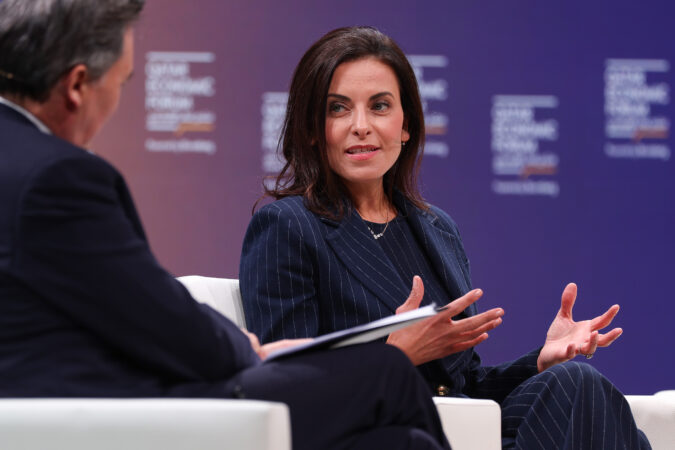
    Dina Powell McCormick, a former Trump official and former member of Meta’s board, has been hired as the company’s new president and vice chair, CEO Mark Zuckerberg announced Monday morning.

    “Dina has been a valuable member of our board and will be an even more critical player as she joins our management team,“ Zuckerberg wrote on Threads, one of Meta’s platforms alongside Facebook and Instagram. ”She brings deep experience in finance, economic development, and government.“

    He also noted that she will be involved in all of Meta’s endeavors, but will particularly focused on ”partnering with governments and sovereigns to build, deploy, invest in, and finance Meta’s AI and infrastructure.”

    Powell McCormick has extensive business leadership and government experience. She spent 16 years in different leadership roles at Goldman Sachs, according to her LinkedIn page. Powell McCormick was most recently the vice chair, president, and head of global client services at BDT & MSD Partners, a banking company.

    She worked in the White House and the U.S. Department of State under former President George W. Bush and was deputy national security adviser during President Donald Trump’s first term.

    The move also signifies what appears to be Meta’s intention to create stronger ties with the federal government as it develops artificial intelligence tools. Trump praised Zuckerberg’s decision Monday.

    “A great choice by Mark Z!!! She is a fantastic, and very talented, person, who served the Trump Administration with strength and distinction!” Trump said on Truth Social, his social media platform.

    U.S. Sen. Dave McCormick (R., Pa.), Powell McCormick’s husband, has been heavily involved with AI and tech policy. For instance, he convened an AI summit in Pittsburgh in July 2025 where billions of dollars in planned projects for Pennsylvania were announced.

    The senator is also a member of the Senate Banking Committee and the Subcommittee on Digital Assets, which, among other things, oversees cryptocurrency and stablecoins. Last spring, Fortune reported that Meta could return to the crypto space after scrapping its initial foray, Diem, in 2022.

    McCormick, in a post on X Monday, said he is “incredibly proud” of his wife.

    Asked about how he would mitigate potential conflicts of interest that arose from Powell McCormick’s position, a spokesperson for the senator said: “As he has from day one, Senator McCormick will continue to comply with all U.S. Senate ethics rules and honorably and enthusiastically serve the great citizens of Pennsylvania.”

    Powell McCormick is also the second former Trump official to be hired by Meta in recent weeks, CNBC reported. Earlier this month, Meta said that it had hired Curtis Joseph Mahoney, a former deputy U.S. trade representative, to be its chief legal officer.

  • ‘A turning point’: Anti-ICE protests reach the Philadelphia suburbs

    ‘A turning point’: Anti-ICE protests reach the Philadelphia suburbs

    Legions of suburbanites decried federal ICE actions on Sunday in a series of vigils and protests across the Philadelphia area, signaling the breadth of opposition to a central part of President Donald Trump’s agenda.

    Expressions of anger, sadness, and resistance poured out into the streets of major cities nationwide this weekend in response to the killing of 37-year-old Renee Good by an ICE officer in Minnesota. But that dysphoria also spilled into small towns — including in places like Gloucester County, New Jersey, where voters favored Trump in 2024.

    “I’ve been quiet and timid my whole life, and now I’m just trying to speak up,” said Cristen Beukers, one of more than 100 people who attended a demonstration in Gloucester’s county seat, Woodbury, a city of about 10,000. Gathered along North Broad Street, near the Gloucester County Courthouse, participants’ signs, whistles, and bullhorn-led protest chants were met with beeping car horns and the supportive shouts of drivers.

    Beukers, 40, of nearby Paulsboro, called for a proper investigation into the shooting death of Good, a mother and poet, on Wednesday.

    Mi Casa Woodbury and Cooper River Indivisible hold a “roadside rally” in downtown Woodbury, N.J., in support of immigrants and to protest ICE on Sunday, Jan. 11, 2026, as protests against Trump administration actions spread in the suburbs.

    Thousands of ICE agents and federal troops have swarmed blue American cities as part of Trump’s unprecedented campaign to arrest and deport millions of immigrants. Good was shot three times in the driver’s seat of her SUV after a brief confrontation with ICE agents on a residential Minneapolis street. Trump administration officials insist ICE agent Jonathan Ross fired out of self-defense; video footage appears to show he was not in the vehicle’s path when he fired.

    “It’s an S.O.S.,” said Alex Baji, 31, of Woodbury, who said he’s a former IRS auditor laid off last year by the Department of Government Efficiency, overseen by billionaire Elon Musk. “Masked goons murdering U.S. citizens — and the vice president says it’s perfectly justified.”

    The turnout in Woodbury suggested a new level of urgency for the tight-knit suburban community, said Kaitlin Rattigan. Rattigan is a community organizer with Mi Casa Woodbury, a group that formed in response to ICE activity in their neighborhoods. Mi Casa has held a demonstration every Sunday since mid-November, even if just a few people attended.

    “I think it’s a turning point for many people — and frankly for white people,” Rattigan, who is white, said.

    According to a recent poll conducted by Pew Research Center, 50% of American adults surveyed in October disapproved of the Trump administration’s approach to immigration, while 39% approve. (Some participants responded “neither.”) While 53% of respondents said the country is doing “too much” when it comes to immigration enforcement, a large majority continue to say at least some people living in the United States should be deported.

    Trump has derided and propagandized protesters as “paid insurrectionists,” “domestic terrorists,” or radical leftists — people who are not representative of mainstream Americans, Steve McGovern, a political science professor at Haverford College, said in an interview. Anti-ICE rhetoric in the suburbs threatens Trump’s narrative, according to McGovern. Trump’s 2024 win was fueled by key gains in Philadelphia’s suburbs, an Inquirer analysis found.

    “The popular image of suburbia continues to be a place where lots of middle-class, mainstream people live and work,” he said. “If suburbanites take to the streets and in large numbers, that would send — I think — a powerful message that a strong majority of the country is increasingly fed up with the outrageous, lawless, and even murderous behavior of ICE agents.”

    At least one Republican observer was skeptical. Guy Ciarrocchi, a GOP analyst, said in a statement these protests no longer influence independent voters, nor intimidate Republicans.

    “Unfortunately, these ‘rallies’ are political theatre — plug [and] play crowds with professional signs for any ‘cause.’ Tools to rally extremist Democrat voters,” he said. “Ms. Good’s death was a tragedy. And, ICE’s work is important and necessary. No ‘rent a rally’ will change either of those truths.”

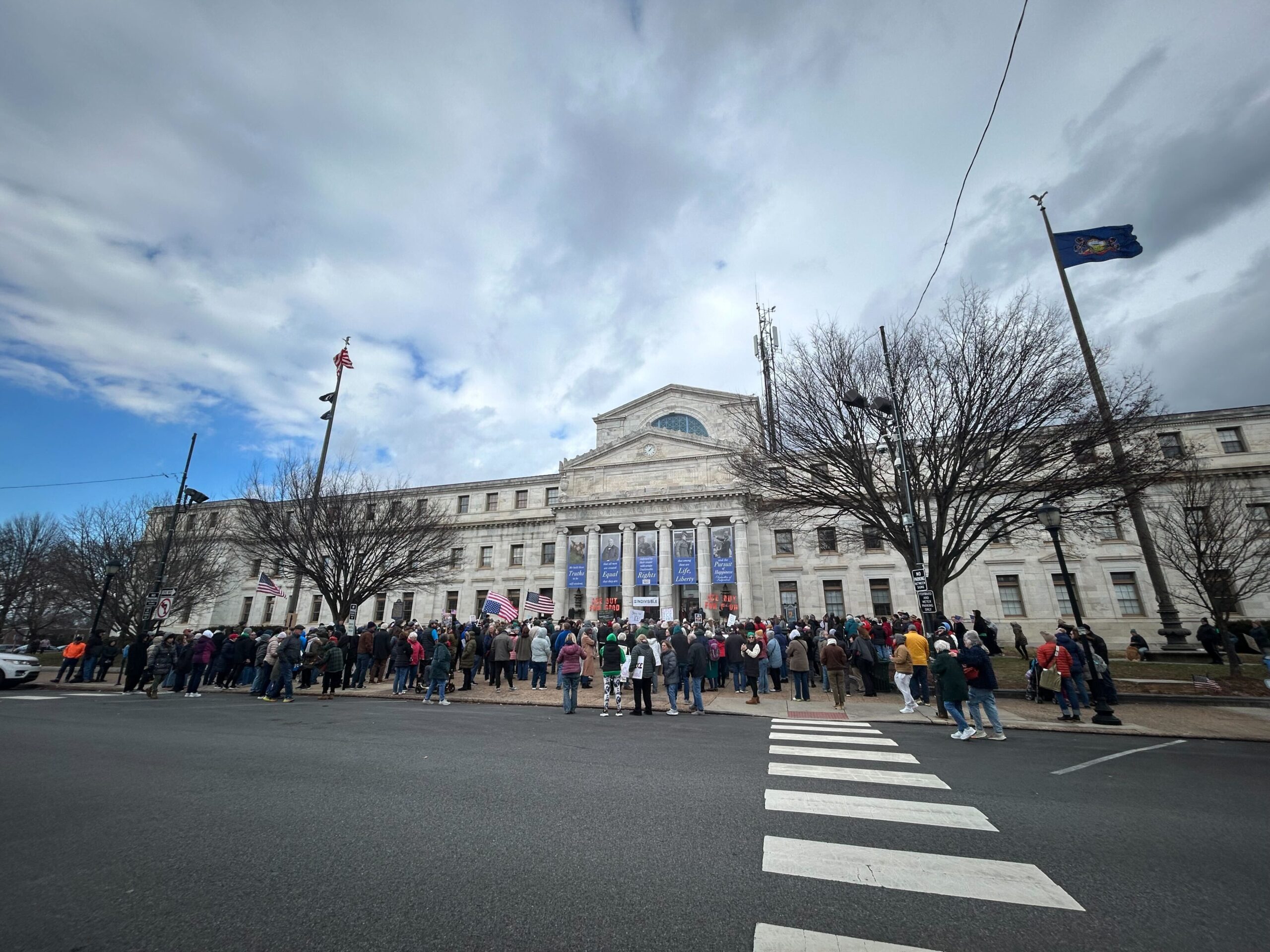
    Outside the Delaware County Courthouse in Media, hundreds shouted into the bitter wind: “United we stand, divided we fall.” The voices came from attendees of all ages — older people in wheelchairs, young parents pushing babies in strollers, and children holding crayon-drawn signs etched with messages like “ICE Cream, not ICE” and “NO ICE because it’s cruel.”

    “The entire nation is watching Pennsylvania,” said U.S. Rep. Mary Gay Scanlon, a Delaware County Democrat. “We can reject Trumpism at the state and federal levels this year. … We will not be bullied out of the future that we and all our children deserve.”

    Area residents hold what organizers called a “vigil for peace on our communities” on Jan. 11, 2026, in Media, Pa.

    In the increasingly blue suburban county — that not long ago was solidly red — the vocal opposition to Trump has grown louder in recent years, said Cathy Spahr, coleader of Delco Indivisible, which organized Sunday’s vigil for Good.

    “We didn’t have this during the first [Trump] administration,” she said of the event’s turnout. Spahr said she was especially heartened by the attendance given that the vigil was announced only days before — and ended an hour before the Eagles’ first playoff game of the year.

    But Spahr and several attendees said there’s something special about coming together closer to home. And logistically, it’s easier.

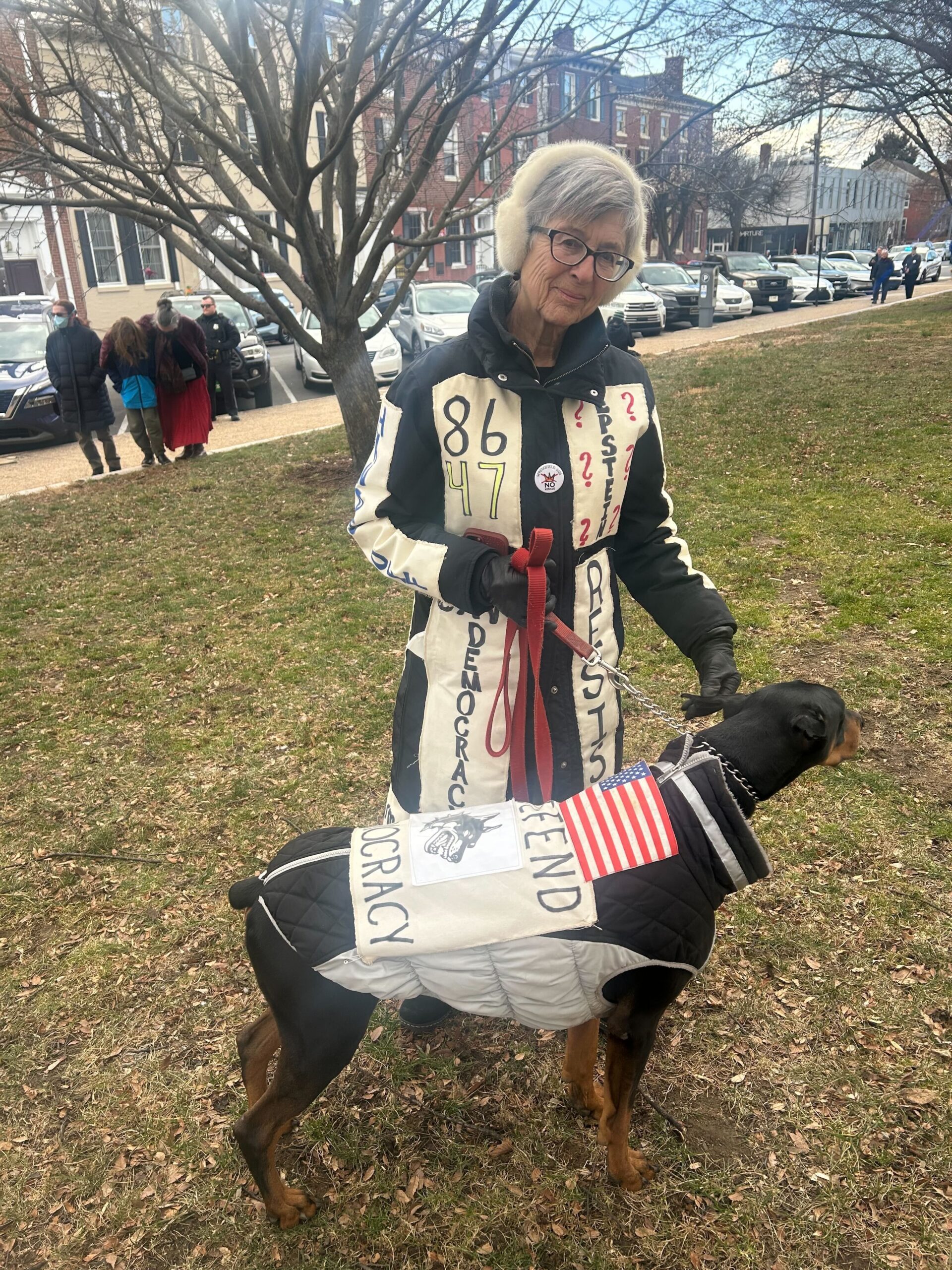
    Corinne Fiore, 75, of Media, and her 4-year-old Doberman, Laser, cherish the opportunity to be involved in the anti-Trump movement in Delaware County.

    Corinne Fiore, 75, of Media, poses with her 4-year-old Doberman, Laser, who wears a “Defend Democracy” vest to local rallies and events, on Jan. 11, 2026, outside of the Delaware County Courthouse in Media, Pa.

    “I just can’t get in a car and go for 10 hours somewhere,” she said. She’s thankful she doesn’t have to. “Delaware County has a lot of responsible people in it. They’re good and kind people. Patriotic people.”

    For families with young children, the Media vigil also presented a convenient opportunity to teach their children the importance of standing up for their neighbors.

    “I want to show them it’s important to stand up to a bully,” said Candice Carbone Bainbridge, 42, of Wallingford. Nearby, her 8-year-old daughter, Cora, held a sign with pink and purple lettering that read: “Be a good human. It’s not that hard!”

    Sixteen miles southeast, in Bellmawr, N.J., dozens gathered along Black Horse Pike, hoisting signs, cheering on supportive honks from passing commercial trucks, and dancing to the Rascals’ 1968 anthem, “People Got to Be Free.” One poster read, “American foundations are being destroyed, no one is safe, stand up now.”

    Karen Kelly, 72, who drove 40 minutes and DJed the demonstration, said she’s frustrated by apathy and disengagement.

    “All the people staying home — doing nothing — have to get the heck up,” Kelly said.

    Residents in the outskirts of Philadelphia expressed similar sentiments to their suburban counterparts.

    “This is not law enforcement, this is brutality,” said Susan MacBride, 84, at a protest in Roxborough, which was largely attended by residents of Cathedral Village, a retirement community in Northwest Philadelphia. Tired of what she described as the Trump administration’s cruelty and disrespect, MacBride felt compelled to put a pause on her retirement and join the 160-person rally at Ridge Avenue and Cathedral Road.

    “Kids need to know this isn’t normal; it’s a period of disruption, but we can’t let them get used to this,” she said.

    Nearby neighbor Lorraine Webb, 73, agreed with MacBride.

    “This isn’t what we are about, we need to do better,” Webb said. “We need to show up because this isn’t just a Center City issue; it’s a Philadelphia issue.”

  • Iraq War critic, Venezuela mission defender: Vance’s foreign policy journey

    Iraq War critic, Venezuela mission defender: Vance’s foreign policy journey

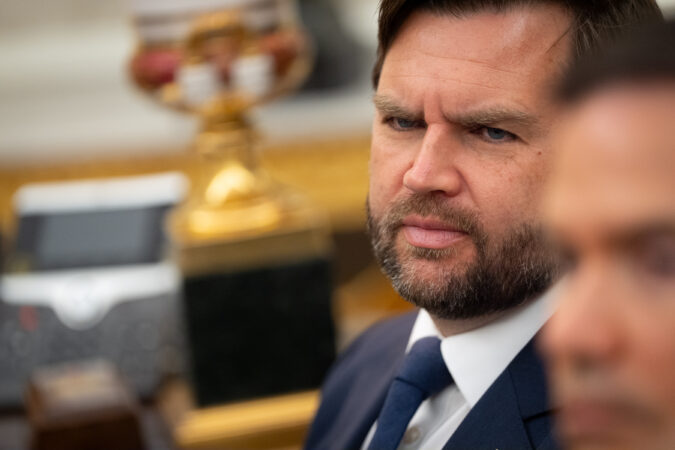
    Vice President JD Vance served in the Iraq War and came home a sharp critic of foreign military interventions, saying that too often Washington policymakers lose sight of American interests when they entangle themselves in faraway wars.

    Now he is defending President Donald Trump’s decision to conduct a daring raid this month in a country closer to home — to depose Venezuelan President Nicolás Maduro. The White House said that a more pro-U.S. government in Venezuela will stop drug and migrant flows, and open the country’s vast oil reserves to U.S. companies. But there are also major risks that armed conflict in the country could escalate, sucking in the United States and making the venture harder to defend as an “America First” endeavor.

    Vance’s defense of Maduro’s seizure appears discordant with his far more skeptical stance toward strikes on the Houthi militia in Yemen — a position revealed in a Signal group chat that was accidentally made public in March. Many prominent advocates of military restraint who have boosted Vance’s foreign policy views in the past now oppose the decision to oust Maduro.

    But as the vice president eyes his 2028 presidential prospects while also wanting to appear in lockstep with the president, Vance has claimed no contradiction at all.

    Going back to his time in the Senate, Vance has been an advocate for a robust U.S. presence in the Western Hemisphere, co-sponsoring a 2023 resolution reaffirming the Monroe Doctrine, which warns foreign powers against challenging U.S. predominance in the Americas.

    Now, he is defending the Venezuela operation as an America First decision.

    “As a Marine Corps veteran, for my entire lifetime, presidents — and let’s be honest, they were Democrats and Republicans — would send the American military to far-off places,” Vance said Friday at a Venezuela-focused White House event for oil executives. “They would get us involved in these endless quagmires. They would lose hundreds or thousands of American lives. And the American people would get nothing out of these misadventures.

    “And now you have an American president who’s empowered the American military to stop the flow of drugs into our country and to ensure that we, as opposed to our adversaries, control one of the great energy reserves that exist anywhere in the entire world. And he did it without losing a single American life in the process,” Vance said.

    Even some of Vance’s allies see the vice president struggling to thread the needle as he tries to stand by Trump while not alienating the GOP’s anti-interventionist wing.

    “If JD Vance himself were president, would Venezuela have happened? Would we have captured Maduro? To me, without a doubt, the answer is no. I cannot fathom a scenario,” said Ben Freeman, a senior fellow at the Quincy Institute, a Washington-based think tank that has hosted Vance in the past.

    Vance is “not interested in militarism,” Freeman said. “He is seeking out diplomacy-first solutions and keeping the U.S. out of foreign adventurism.”

    Vance says there is no daylight between himself, Trump, and Secretary of State Marco Rubio. But Rubio, a Cuban-American from Florida and another potential 2028 contender, has long advocated for aggressive action in Venezuela as a larger strategy to bolster U.S. ties to Latin America and weaken Cuba’s Communist leaders.

    In recent days, Vance has repeatedly felt the need to explain to his followers why the administration decided to go after Maduro.

    “I understand the anxiety over the use of military force, but are we just supposed to allow a communist to steal our stuff in our hemisphere and do nothing? Great powers don’t act like that,” Vance wrote on X on Jan. 4, a day after the president announced Maduro’s capture. Trump was at Mar-a-Lago during the raid, surrounded by his senior-most aides — but not the vice president.

    Two administration officials, who spoke on the condition of anonymity to discuss sensitive considerations, said political optics did not play a role in the decision for Vance to stay away from Mar-a-Lago.

    For safety reasons, Vance rarely joins Trump outside of Washington. Additionally, officials were worried that a vice-presidential motorcade to Mar-a-Lago the evening of the operation could have tipped off Venezuela. As a result, Vance and other White House officials determined it wasn’t necessary for him to attend the news conference, according to the officials.

    Vance and White House officials also said he played a key role in the lead-up to the operation.

    In mid-December, Vance and Rubio led a meeting of Trump’s top advisers and Cabinet officials to plan the operation, including the decision to move forward with an economic quarantine using U.S. military vessels to block sanctioned Venezuelan oil shipments, according to a person with knowledge of the meeting who spoke on the condition of anonymity to discuss sensitive details.

    At the end of the month, Vance also spoke with Qatari intermediaries about whether Maduro was willing to accept any of the United States’ exit offers, the person said. When it was clear Maduro wasn’t prepared to accept the negotiations, Vance and Rubio jointly concluded Maduro was “not a credible interlocutor” and that the U.S. couldn’t conduct business with Venezuela under his leadership, the person said.

    As the operation took place, Vance was “on the same systems as the president,” the person said, monitoring it in real time and “on a line watching the operation with the president.” A spokesperson has previously said that Vance was monitoring events from elsewhere in Palm Beach and departed Florida before Trump spoke to the media.

    Vance has not always been so enthusiastic about taking U.S. military action. He was a sharp voice of dissent in the Signal group chat about strikes on Houthi militants in Yemen threatening shipping traffic in the Red Sea. The Signal chat included Trump’s top national security officials — and the editor of the Atlantic.

    “There is a real risk that the public doesn’t understand this or why it’s necessary,” Vance wrote, noting that militants were threatening more European than American trade.

    “I am willing to support the consensus of the team and keep these concerns to myself,” he said. “I just hate bailing Europe out again.”

    Although Vance never intended for his comments to become public, his sharply independent voice — especially since another top Trump aide on the thread, deputy chief of staff Stephen Miller, said the president had already made a “clear” decision — jumped out to some.

    “The president had decided and Vance was still relitigating,” said Rebecca Lissner, who was former vice president Kamala Harris’ principal deputy national security adviser. “I thought it was really informative about how he operates as the vice president, and how different it is. The fact that instead of JD Vance being the one being like, ‘Guys, the president has decided. We’re moving out,’ he was the one questioning the decision.”

    Vice presidents are often faced with thorny questions about how to influence their administration’s policies. Without a clear portfolio, an agency to run, or a defined responsibility, the vice president has to own actions without always helping decide them.

    That became a struggle for Harris on Gaza policy during the 2024 campaign, when President Joe Biden’s decisions on Israel became unpopular with the Democratic base.

    With Trump and Vance, there may be more room for input, Lissner said.

    “Trump does like to be presented with options, and that means that there’s space for different people to advocate for different options,” she said.

    Vance has leaned into some of the administration’s domestic initiatives with gusto, as was clear last week when he came to the White House briefing room to deliver a sharp defense of the ICE agent who fatally shot a protester in Minneapolis and announce a new Justice Department initiative to uncover fraud in federal programs.

    Allies of Vance say his support for Trump’s foreign policy decisions over the last year should come as no surprise.

    “Vance is never going to break with Trump, and he authentically likes him, and he seems to authentically like Rubio,” said Curt Mills, the executive director of the American Conservative, a magazine that formed in opposition to the Iraq War. “He’s a nationalist and a realist, but he’s also the vice president and not the president, so he’s not ultimately the decision-maker.”

    Sen. Jim Banks (R., Ind.), a friend of Vance’s, said the two have talked about their time serving overseas — Banks in Afghanistan — and how it shaped their view of the U.S.’s role abroad. He too described Vance’s foreign policy as “rooted in realism,” and said that “JD believes that America has a strong role to play around the world.”

    “We served in wars that were poorly run and managed by the military leaders of the prior administrations, and we don’t want to see our country send troops to 20-year forever wars with little purpose and fail in the same way that the previous administrations did,” Banks said. “President Trump doesn’t want that either. He ran against that.”

    Advocates for Trump’s use of force over the past year said he has been careful about not getting pulled deeply into ongoing conflicts.

    The decision not to seek more dramatic change in Venezuela, and instead to work with Maduro’s deputy, Delcy Rodríguez, may be part of that pattern, analysts said — but it also may not work.

    “This isn’t about regime change. This definitely does have that harder-nosed realpolitik flavor, and I think that’s why folks like Vance or others find themselves able to at least try and defend this,” said Emma Ashford, a senior fellow at the foreign police think tank the Stimson Center, who has argued for a more restrained approach to the use of military force.

    Governmental collapse in Venezuela, a military coup, or other unrest could lead to greater migration and larger drug trafficking issues, Ashford said — the opposite of what Vance said he hopes will come.

    “If this spirals into something more, it’s going to be much harder to defend,” she said. “For folks like me, I would say that’s the reason you shouldn’t do it in the first place.”

  • Gen Z has entered city hall. Meet 4 young Pa. mayors who want to bring new ideas to local government.

    Gen Z has entered city hall. Meet 4 young Pa. mayors who want to bring new ideas to local government.

    This story first appeared in PA Local, a weekly newsletter by Spotlight PA taking a fresh, positive look at the incredible people, beautiful places, and delicious food of Pennsylvania. Sign up for free here.

    Last fall, communities across Pennsylvania elected officials who have yet to turn 30 to one of the most visible local roles: mayor.

    This month, those mayors begin their first terms and their political careers, bringing new perspectives and concerns to local government.

    Spotlight PA spoke to four incoming young mayors — all of them members of Generation Z, by Pew Research Center’s definition (though some noted they feel culturally closer to millennials) — about their ambitions, their platforms, and what drew them to the position.

    While they span the ideological spectrum and have jobs as disparate as coffee roaster and political operative, all want to improve their local governments, and share optimism about the future of their communities.

    Although it’s not unheard of for Pennsylvanians to elect young local leaders, it’s rare. Just 3% of the 866 local elected officials who answered a 2021 Pennsylvania Local Government Commission survey were under 35. The average age of a respondent was about 61.

    Cassandra Coleman, the former mayor of Exeter in Luzerne County who was appointed to her first term at 20, recommended the latest crop make sure they’re “listening and learning” and not coming in too “forceful.”

    “But also,” Coleman added, “I think you have to also weigh that with not being overshadowed and not being kind of pushed to the side because of your age.”

    New perspectives

    Now is an important time to get involved in government and run for office, said Sam Bigham, the new Democratic mayor of Carnegie in Allegheny County.

    “We’re seeing a lot of leaders at different levels not really delivering on their promises or keeping their constituents’ best interest at heart, especially not for young people like me,” he said, pointing to issues like unaffordability and climate change.

    In Pennsylvania, the roles and responsibilities of mayors vary by municipality type. In some cities, the job is powerful and wide-reaching. In boroughs, the mayor’s primary responsibilities are to “preserve order” (i.e., oversee police and respond to emergencies) and enforce local ordinances. They can also break ties among council members.

    It’s often a part-time job, and state law caps salaries based on the size of the borough, though individual municipalities may set pay well below the mandated maximums.

    The mayors who spoke to PA Local all represent boroughs, and acknowledged the limited powers that come with their office. But they hope to lean into the position’s more ceremonial role as a representative of their community — and use it to bring fresh points of view to government.

    Matt Zechman, a Libertarian who was sworn in as mayor of Cleona Borough in Lebanon County this week, said it’s vital for young people to start running for local office and working their way up so they can “change their own future.”

    “It’s a much different time than it was 20, 30, 40, 50 years ago,” he said. “And if we have the same mindset that today’s problems are the same as they were 50 years ago, and we treat them the same way, we’re just going to keep spiraling downward even more.”

    Winning support

    As Bigham went door to door during his campaign, he found “a whole lot of people were actually excited about a young person running for office,” he told PA Local.

    While some were skeptical of his age and experience level, he said he responded by “running a very serious campaign,” listening to people, speaking intelligently about local issues, and making sure all his paperwork was in order.

    Joar F. K. Dahn, the new mayor of the borough of Darby in Delaware County, also said he ran into a “a handful of people that were kind of very against a young person running,” and insisted he “wait his turn.”

    But he stressed that those folks were a vocal minority, and thanked the older adults who’ve guided him and made it “their mission to to mentor the next generation,” which he sees as “contributing to our future.”

    “The young people are going to come, you just got to invite them to the table,” Dahn said. “You got to make them feel like they also belong here, and you got to make sure they understand that their opinions [are] valid.”

    Several of the mayors hope to motivate their peers to run for office or get civically involved in another way.

    “I just want to let everybody know regardless of their background, age, or affiliation, or anything like that, that they do matter,” said Dylan Stevens, a member of the Liberal Party who was elected mayor of the borough of Westover in Clearfield County by a one-vote margin. “If they want to make a difference, just go for it.”

    And it’s “really not as difficult as some people might think” to run for local office, Carnegie’s Bigham pointed out. He collected 10 signatures to secure his place on the ballot, and raised a few thousand dollars — “probably more than what you need in a lot of places,” he said.

    “Obviously, you have to be comfortable putting yourself out there and talking to all different kinds of people,” Bigham said. “I’m a bit more introverted, so sometimes it can get really tiring to have to do that, but it can also be really rewarding.”

    Meet the mayors

    Joar F. K. Dahn of Darby

    Dahn, 28, calls himself Darby’s “biggest cheerleader.” When he was at college, the Bloomsburg University alumnus didn’t tell people he was “from Philly,” like other students from Delaware County would, he told PA Local. He’d say “Darby.”

    Dahn, whose family fled the Liberian Civil War when he was a child, has called Darby home for 20 years. He describes the small borough of 10,749 as a “very close-knit community,” but one that “has its struggles.”

    His dissatisfaction with local leadership motivated him to run for mayor. Working as a political operative for several years, he was inspired by the campaigns he was hired by and felt the officials in Darby weren’t as committed.

    He started looking for someone to throw his support behind — and that person turned out to be himself, Dahn told PA Local. Several residents encouraged him. So he challenged the incumbent mayor in the Democratic primary and ended up winning by 20 points. Dahn ran unopposed in November.

    In his first 100 days, he wants to motivate community members to get more involved in local government and “feel like they’re part of the process.”

    “Sometimes, we’ll have council meetings, and I’m the only resident in the room,” Dahn said. “We have council meetings and there’s literally nobody there. … I want people to understand now that this is a new leadership.”

    Public safety is a big priority for Dahn, who on the campaign trail heard from concerned grandmothers. He hopes to promote a positive relationship between residents and police, and work to reduce gun violence.

    “I need every single grandmom to feel comfortable to walk any single street in Darby,” Dahn said.

    Sam Bigham of Carnegie

    Carnegie’s “old-style” Main Street and strong community connections drew Bigham — a resident since age 10 with deep family roots in the area — back to the borough of about 8,000 after he graduated from Indiana University of Pennsylvania in 2024.

    Now the commonwealth’s youngest active mayor, the 23-year-old had known for years that he wanted to work in government or public service, and his resumé proves it. A former junior councilperson, Bigham also interned for a state representative and a congressman, and worked as a Democratic organizer ahead of last year’s election.

    Early last year, Bigham landed the position of executive director of the Carnegie Community Development Corporation, a nonprofit that aims to support local businesses and boost the area’s attractiveness. He plans to continue in that role alongside his part-time mayoral duties.

    He told PA Local he decided to run after talking with the incumbent, who was planning to step down. A friend from college helped Bigham campaign, and after lots of door-knocking and securing endorsements from several local politicians, he won the Democratic primary with 661 primary votes to his opponent’s 204. (He also won enough write-in Republican votes to be listed under both parties on the November ballot.)

    “I wanted to run on a message of community development and optimism and looking forward to the future,” he told PA Local.

    Bigham’s first-term goals include revitalizing Main Street, improving local infrastructure, updating the borough’s branding, facilitating events between police and residents, and working on sustainability initiatives.

    Matt Zechman of Cleona

    Zechman has worn many hats in his 27 years: volunteer firefighter, EMT, combat medic in Afghanistan, coffee roaster, and father. His latest is mayor of Cleona, a 2,000-person borough he describes as a quiet place with “two traffic lights,” a “really nice playground,” and “a lot of hometown spirit.”

    Although he didn’t see a glaring need for major changes in his community, the lifelong resident ran to bring his skills and a “new perspective” to the role.

    Zechman did much of his campaigning via social media, he told PA Local. Running on the Libertarian ticket, he beat the Republican incumbent by a nearly 2-to-1 margin in the November election.

    As mayor, Zechman wants to implement what he calls “windows-down policing,” a practice he said remembers from his childhood.

    “We would see the police chief and the mayor — they would drive in their vehicle, windows down, going slow, talking to residents, engaging,” Zechman explained. “I knew their names, they knew my name, they knew everyone’s name. And in a town this small, that is very well possible.”

    And even though it’s not part of his job description on paper, he said he also wants to use his bully pulpit to find local business sponsors, seek grant funding, or crowdfund to install flashing pedestrian crossing signs, which he called an “absolute must” for local road safety.

    Dylan Stevens of Westover

    Stevens made a “spontaneous decision” to run for mayor of Westover, a roughly 350-person borough in Clearfield County, just four days before the November election, he told PA Local.

    Raised in a conservative Republican household, Stevens began exploring third parties when he “became disillusioned with the whole political situation” in 2020. He landed on the Liberal Party of Pennsylvania, which was formed as the “Keystone Party” in 2022 by a group of people who believed the Libertarian Party was moving too far right.

    When Stevens, a 26-year-old who’s lived in Westover for 11 years and works at a gas station in another town, realized there wasn’t anyone on the ballot for mayor, he decided to give it a go. He wanted to “do more” in his community and bring more exposure to the Liberal Party, he said.

    Stevens had mostly kept to himself before, so he took a “kids’-lemonade-stand-type-of-approach” to drum up support, he told PA Local. With help from Liberal Party members from out of town, he introduced himself to people outside a general store a few days before the election and did the same on Election Day outside Westover’s polling place. He said reactions ranged from neutral to “OK, well, good luck.”

    Stevens ended up getting 13 write-in votes, a single vote more than the next most popular write-in. According to a Liberal Party news release, his election marked the party’s first mayoral victory in Pennsylvania.

    “Even though I was kind of an unknown, I guess I had the gift of the gab enough to let people know that I wanted to make a difference in my community and I wanted to give it my best effort,” Stevens said. “And for a lot of them, it seemed to be enough.”

    Stevens hopes to work with the borough council to attract businesses and explore alternative water sources. He also wants to poll residents on local issues, revive the borough’s Facebook page, and livestream public meetings to improve access for people who aren’t able to attend in person.

  • Rioter convicted for carrying Pelosi’s podium seeks Florida county office

    Rioter convicted for carrying Pelosi’s podium seeks Florida county office

    BRADENTON, Fla. — A Florida man who grabbed then-House Speaker Nancy Pelosi’s podium and posed for photographs with it during the U.S. Capitol riot is running for county office.

    Adam Johnson filed to run as a Republican for an at-large seat on the Manatee County Commission on Tuesday. That was the fifth anniversary of the Jan. 6 riot, where he was photographed smiling and waving as he carried Pelosi’s podium after the pro-Trump mob’s attack on Jan. 6, 2021.

    Johnson told WWSB-TV that it was “not a coincidence” that he filed for office on Jan. 6, saying “it’s definitely good for getting the buzz out there.” His campaign logo is an outline of the viral photograph of him carrying the podium.

    He’s far from the first person implicated in the Jan. 6 riot to run for office. At least three ran unsuccessfully for Congress in 2024 as Republicans. And there are signs that the Republican Party is welcoming back more people who were convicted of Jan. 6 offenses after Trump pardoned them.

    Jake Lang, who was charged with assaulting an officer, civil disorder, and other crimes before he was pardoned, recently announced he is running for Secretary of State Marco Rubio’s vacant U.S. Senate seat in Florida.

    Johnson placed the podium in the center of the Capitol Rotunda, posed for pictures and pretended to make a speech, prosecutors said. He pleaded guilty in 2021 of entering and remaining in a restricted building or ground, a misdemeanor that he equated to “jaywalking” in the interview.

    “I think I exercised my First Amendment right to speak and protest,” Johnson said.

    After driving home, Johnson bragged that he “broke the internet” and was “finally famous,” prosecutors said.

    Johnson served 75 days in prison followed by one year of supervised release. The judge also ordered Johnson to pay a $5,000 fine and perform 200 hours of community service.

    Johnson told U.S. District Judge Reggie Walton at sentencing that posing with Pelosi’s podium was a “very stupid idea,” but now says he only regrets his action because of the prison sentence.

    “I walked into a building, I took a picture with a piece of furniture, and I left,” he now says.

    Four other Republicans have filed to run so far in the Aug. 18 primary in what’s a deeply Republican county. The incumbent isn’t seeking reelection.

    In March 2025, Johnson filed a lawsuit against Manatee County and six of its commissioners, objecting to the county’s decision not to seek attorney’s fees from someone who sued the county and dropped the lawsuit. The county has called Johnson’s claims “ completely meritless and unsupported by law.”

    Johnson said he objects to high property taxes and overdevelopment in the county south of Tampa, claiming current county leaders are wasteful.

    “I will be more heavily scrutinized than any other candidate who is running in this race,” Johnson said. ”This is a positive and a good takeaway for every single citizen, because for once in our life, we will know our local politicians who are doing things.”

  • Congress is debating possible consequences for ICE and Noem after Renee Good’s killing

    Congress is debating possible consequences for ICE and Noem after Renee Good’s killing

    WASHINGTON — The killing of a Minnesota woman by an Immigration and Customs Enforcement officer is reverberating across Capitol Hill where Democrats, and certain Republicans, are vowing an assertive response as President Donald Trump’s aggressive deportation operations spark protests nationwide.

    Lawmakers are demanding a range of actions, from a full investigation into Renee Good’s shooting death and policy changes over law enforcement raids to the defunding of ICE operations and the impeachment of Homeland Security Secretary Kristi Noem, in what is fast becoming an inflection point.

    “The situation that took place in Minnesota is a complete and total disgrace,” House Democratic leader Hakeem Jeffries of New York said as details emerged. “And in the next few days, we will be having conversations about a strong and forceful and appropriate response by House Democrats.”

    Yet there is almost no consensus among the political parties in the aftermath of the death of Good, who was behind the wheel of an SUV after dropping off her 6-year-old at school when she was shot and killed by an ICE officer.

    The killing immediately drew dueling narratives. Trump and Noem said the ICE officer acted in self-defense, while Democratic officials said the Trump administration was lying, and they urged the public to see the viral videos of the shooting for themselves.

    Vice President JD Vance blamed Good, calling it “a tragedy of her own making,” and said the ICE officer may have been “sensitive” from having been injured during an unrelated altercation last year.

    But Good’s killing, at least the fifth known death since the administration launched its mass deportation campaign, could change the political dynamic.

    “The videos I’ve seen from Minneapolis yesterday are deeply disturbing,” said Sen. Lisa Murkowski (R., Alaska) in a statement.

    “As we mourn this loss of life, we need a thorough and objective investigation into how and why this happened,” she said. As part of the investigation, she said she is calling for policy changes, saying the situation “was devastating, and cannot happen again.”

    Homeland Security funding is up for debate

    The push in Congress for more oversight and accountability of the administration’s immigration operations comes as lawmakers are in the midst of the annual appropriations process to fund agencies, including the Department of Homeland Security, to prevent another federal government shutdown when money expires at the end of January.

    As anti-ICE demonstrations erupt in cities in the aftermath of Good’s death, Democrats have pledged to use any available legislative lever to apply pressure on the administration to change the conduct of ICE officers.

    “We’ve been warning about this for an entire year,” said Rep. Maxwell Frost (D., Fla.).

    The ICE officer “needs to be held accountable,” Frost said, “but not just them, but ICE as a whole, the president and this entire administration.”

    Congressional Democrats saw Good’s killing as a sign of the need for aggressive action to restrain the administration’s tactics.

    Several Democrats joined calls to impeach Noem, who has been under fire from both parties for her lack of transparency at the department, though that step is highly unlikely with Republicans in control of Congress.

    Other Democrats want to restrict the funding for her department, whose budget was vastly increased as part of Republicans’ sweeping tax and spending bill passed last summer.

    Connecticut Sen. Chris Murphy, the top Democrat on the subcommittee that handles Homeland Security funding, plans to introduce legislation to rein in the agency with constraints on federal agents’ authority, including a requirement that the Border Patrol stick to the border and that DHS enforcement officers be unmasked.

    “More Democrats are saying today the thing that a number of us have been saying since April and May: Kristi Noem is dangerous. She should not be in office, and she should be impeached,” said Democratic Rep. Delia Ramirez, who represents parts of Chicago where ICE launched an enhanced immigration enforcement action last year that resulted in two deaths.

    Immigration debates have long divided Congress and the parties. Democrats splinter between more liberal and stricter attitudes toward newcomers to the United States. Republicans have embraced Trump’s hard-line approach to portray Democrats as radicals.

    The Republican administration had launched the enforcement operation in Minnesota in response to an investigation of the nonprofit Feeding Our Future. Prosecutors said the organization was at the center of the country’s largest COVID-19-related fraud scams, when defendants exploited a state-run, federally funded program intended to provide food for children.

    Heading into the November midterm election, which Democrats believe will hinge on issues such as affordability and healthcare, national outcry over ICE’s conduct has pressured lawmakers to speak out.

    “I’m not completely against deportations, but the way they’re handling it is a real disgrace,” said Rep. Vicente Gonzalez (D., Texas), who represents a district along the U.S.-Mexico border

    “Right now, you’re seeing humans treated like animals,” he said.

    Other ICE shootings have rattled lawmakers

    In September, a federal immigration enforcement agent in Chicago fatally shot Silverio Villegas Gonzalez during a brief altercation after Gonzalez had dropped off his children at school.

    In October, a Customs and Border Protection agent also in Chicago shot Marimar Martinez, a teacher and U.S. citizen, five times during a dispute with officers. The charges against Martinez brought by the administration were dismissed by a federal judge.

    To Rep. Chuy Garcia (D., Ill.), Good’s death “brought back heart-wrenching memories of those two shootings in my district.”

    “It looks like the fact that a US citizen, who is a white woman, may be opening the eyes of the American public, certainly of members of Congress, that what’s going on is out of control,” he said, “that this isn’t about apprehending or pursuing the most dangerous immigrants.”

    Republicans expressed some concern at the shooting but stood by the administration’s policy, defended the officer’s actions, and largely blamed Good for the standoff.

    “Nobody wants to see people get shot,” said Rep. Rich McCormick (R., Ga.).

    “Let’s do the right thing and just be reasonable. And the reasonable thing is not to obstruct ICE officers and then accelerate while they’re standing in front of your car,” he said. “She made a mistake. I’m sure she didn’t mean for that to happen, nor did he mean for that to happen.”

  • Venezuelan politics are a ‘blood sport.’ The U.S. is entering the ring.

    Venezuelan politics are a ‘blood sport.’ The U.S. is entering the ring.

    The day after U.S. special operations forces swept into Caracas, the new Venezuelan president assembled her cabinet members around a large wooden table at the Miraflores Palace. Behind Delcy Rodríguez were large pictures of the country’s fallen leaders: Hugo Chávez, dead of cancer in 2013, and Nicolás Maduro and his wife, Cilia Flores, now jailed in New York on drug-trafficking charges.

    Seated on either side of Rodríguez, at the head of the table, were the powers that remained. One was Vladimir Padrino López, the defense minister, dressed in military camouflage. The other was Diosdado Cabello, the interior minister. He wore a scowl and a hat that said, “To doubt is treason.”

    Both men hold far more power than their titles suggest, analysts say. Stalwarts of the Maduro regime — one U.S. investigators say is built on patronage and fueled by criminal proceeds — they control Venezuela’s expansive security state and much of its commercial activity.

    Since Maduro’s capture and arrest Saturday, public attention has focused on Rodríguez and whether she will accede to White House demands to open up Venezuela’s vast natural resources to American industry. But the newly installed president — alongside her brother Jorge, president of the Venezuelan National Assembly — represents only the political sphere.

    The country’s other power centers, according to scholars, Venezuelan researchers, and current and former U.S. officials, are commanded by Padrino López and Cabello — hard-line, old-school Chavistas who came of ideological age in the socialist movement and accrued significant power and wealth through continued loyalty to the cause.

    Using connections and intimidation, researchers say, the men have repeatedly helped Maduro survive periods of crisis and tighten his authoritarian grip. First in 2019, when much of the world united behind opposition leader Juan Guaidó’s bid to supplant Maduro. And then again in summer 2024, when electoral tallies made clear that Maduro had lost the presidential election.

    Now Padrino López and Cabello, both of whom are wanted by U.S. authorities on drug-trafficking allegations, will help to decide the future of Chavismo — and the nation. Their continued presence magnifies the complexity of the challenge faced by American negotiators as they seek to bypass war and regime change and find common ground with members of a besieged government riven by internal divisions.

    Venezuelan President Nicolás Maduro (left) listens to Defense Minister Vladimir Padrino López during a government-organized civic-military march on Nov. 25, 2025, in Caracas.

    “There are three centers of power,” said a former senior official with the U.S. State Department, who like others in this story spoke on the condition of anonymity to discuss sensitive matters. “And Delcy is going to find out pretty quickly that she can’t provide everything that the Americans want.”

    The Washington Post was unable to reach Padrino López and Cabello for comment. The communications office of the Venezuelan government did not respond to a request for comment.

    President Donald Trump has said the United States is “in charge” of Venezuela, while Secretary of State Marco Rubio has suggested a less direct role, saying the U.S. will use its ongoing oil blockade and other economic measures to make Caracas do its bidding.

    Venezuelan Interior Minister Diosdado Cabello attends the arrival of migrants deported from the United States at Simon Bolivar International Airport in Maiquetia, Venezuela, on Feb. 10, 2025.

    Analysts expressed concern that Washington doesn’t fully understand the factional, internecine political system it now seeks to control — a maze of overlapping loyalties, family ties and competing interests. Several pointed to Cabello — a feared figure who hosts a weekly talk show called Bringing the Hammer — as the wild card.

    One Venezuelan adviser close to Rodríguez’s government said he was central to maintaining unity. “In times of crisis, his role is not conciliatory, but rather one of maintaining order,” the adviser said. “Delcy governs; Diosdado ensures that power does not slip away.”

    But others worry about what he was capable of. At his disposal, according to researchers and U.S. officials, were not only the police and intelligence services, but also the “colectivos,” a pro-government militia embedded throughout society, whose members speed around the streets on motorcycles, armed and masked.

    “Cabello is a brutal, repressive figure in the regime, but he’s not stupid,” said Geoff Ramsey of the Atlantic Council. “He knows his survival depends on threatening to burn down the country, unless his interests are taken care of.”

    “Politics in Venezuela,” he added, “is a ruthless blood sport.”

    Power at all costs

    How the state built by Chávez went from a hierarchal system built around a single charismatic leader to a hotbed of competing factions is, to some degree, a story of Maduro’s own political failings.

    “Chávez was a leftist military man and very charismatic and happened to rule Venezuela during an oil boom, so he had a lot of resources to do a lot of things,” said David Smilde, a sociologist at Tulane University who researches Chavismo. “And with the exception of being a leftist, Maduro is none of those things — not charismatic, not a military man, and he has no oil boom.”

    After narrowly winning the presidential election to succeed Chávez in 2013, Maduro appeared to recognize what he lacked and set out to defend his hold on power not through political persuasion, but by restricting freedoms and empowering — and enriching — the armed forces.

    In February 2016, he put the mining sector in the hands of the military. A few months later, he gave it control over the distribution of basic goods. Another decree shortly afterward put the nation’s ports under its purview. Padrino López, who rose to defense minister in October 2014, became more powerful with each move, researchers said, pioneering new kickback schemes that kept the military loyal to him and indebted to the regime.

    “The military became its own branch of power,” said Carolina Jiménez Sandoval, the Venezuelan president of the Washington Office on Latin America. “I don’t think the United States understands the extent to which the military is ingrained into the politics and economy, both formally and informally.”

    The military also began to profit from illicit revenue streams, American authorities contend. In March 2020, federal prosecutors in the U.S. District Court of the Southern District of Florida filed charges against Padrino López and Cabello for using their roles to facilitate and abet Venezuelan drug trafficking and “flood” the United States with cocaine.

    The U.S. government announced significant bounties for both men — $15 million for Padrino López and $25 million for Cabello.

    Over time, Maduro came to be seen less as the ultimate authority in the country and more as an arbiter between competing powers that had little in common, said Roberto Deniz, a Venezuelan investigative journalist.

    “It’s not just an authoritarian regime,” he said. “It’s an authoritarian regime with a kleptocratic structure in which there are numerous heads, and each one acts as its own fiefdom.”

    “It doesn’t matter if the economy is good or bad, if human rights are respected or not,” he added. “The goal is to preserve power.”

    ‘The black sheep’

    Cabello, who describes himself online as a “revolutionary” and “radical Chavista,” is seen by observers as a particularly unpredictable figure. He participated in Chávez’s failed coup attempt in 1992 and spent the next two years in prison. After Chávez won the presidency through the ballot box, Cabello served as vice president, helping him stave off an attempted coup in 2002, and then as interior minister, a role where he developed deeper ties with the internal security and intelligence forces.

    At the time of Chávez’s cancer diagnosis, he was seen as the second most important revolutionary and a direct rival to Maduro, then the vice president, in the line of succession. After Chávez selected Maduro as his heir, he moved to sideline Cabello, only bringing him back into his cabinet shortly after his apparent electoral loss in 2024.

    “Cabello has been the black sheep in the ruling party,” Ramsey said. “But Maduro found it impossible to rule without his knack for repression and his proximity to the intelligence apparatus.”

    His family’s influence spans the nation. Alexis Rodríguez Cabello, a first cousin, is in charge of the Venezuelan intelligence service and posts frequent homages to Cabello on social media. His brother, José David Cabello, is in charge of the powerful customs and taxation ministry, granting him control over duties at borders and ports. His wife Marleny Contreras, a current member of the national assembly, has been the minister of both tourism and public works.

    The Post was unable to reach Cabello’s family members for comment.

    “Diosdado never stopped being a powerful actor, even when he seemed demoted,” Deniz said.

    And he has “ascended rapidly” since his formal return to government, added Rafael Uzcátegui, the former director of Provea, a prominent Caracas nongovernmental organization — “at the cost of Rodríguez.”

    Uzcátegui saw a narrow path forward for brokering an agreement between Venezuela’s rival power centers that would enable cooperation with U.S. officials and avert a wider conflict.

    “It’s much easier to negotiate with a malandro than a religious fanatic,” he said, using a word that most closely translates to “hustler.” “And the Diosdado Cabello and Padrino López factions are most motivated by material incentive.”

    But there have been worrying early signs, most notably from the informal militias that answer to Cabello.

    The colectivos have fanned out across Caracas. Ordinarily, they carry small arms to intimidate dissenters, but they have been seen with larger weapons in recent days, including assault rifles. They have set up checkpoints, forcing residents to turn over their phones and searching them for messages that could be seen as supportive of the U.S.

    Security forces also have arrested civilians and detained members of the media.

    “Diosdado Cabello could be the spoiler,” said the former senior U.S. diplomat. “It’s a pretty rough start for what is the same regime, but a different management.”