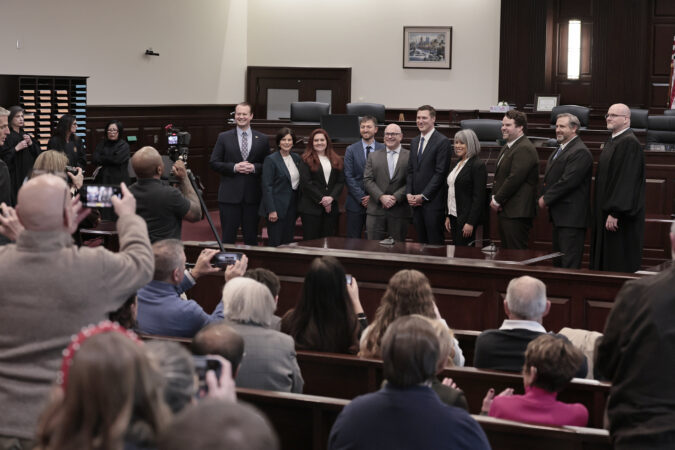
A new slate of Chester County elected officials are taking office after they were officially sworn in at a ceremony over the weekend surrounded by friends and family.
Four officials in the county’s row offices — clerk of courts, controller, coroner, prothonotary — and three magisterial district justices took their oath of office Saturday at the Chester County Justice Center.
“I’ve found, in this line of work, when you’re finding people to run for office, it’s quite difficult to get the good people to do it,” county commissioner Josh Maxwell told the incoming officials. “It sometimes attracts maybe the wrong people. I’m so excited to be here today because we have a lot of good people who rose their hands — maybe a higher bar than we typically have in the county.”
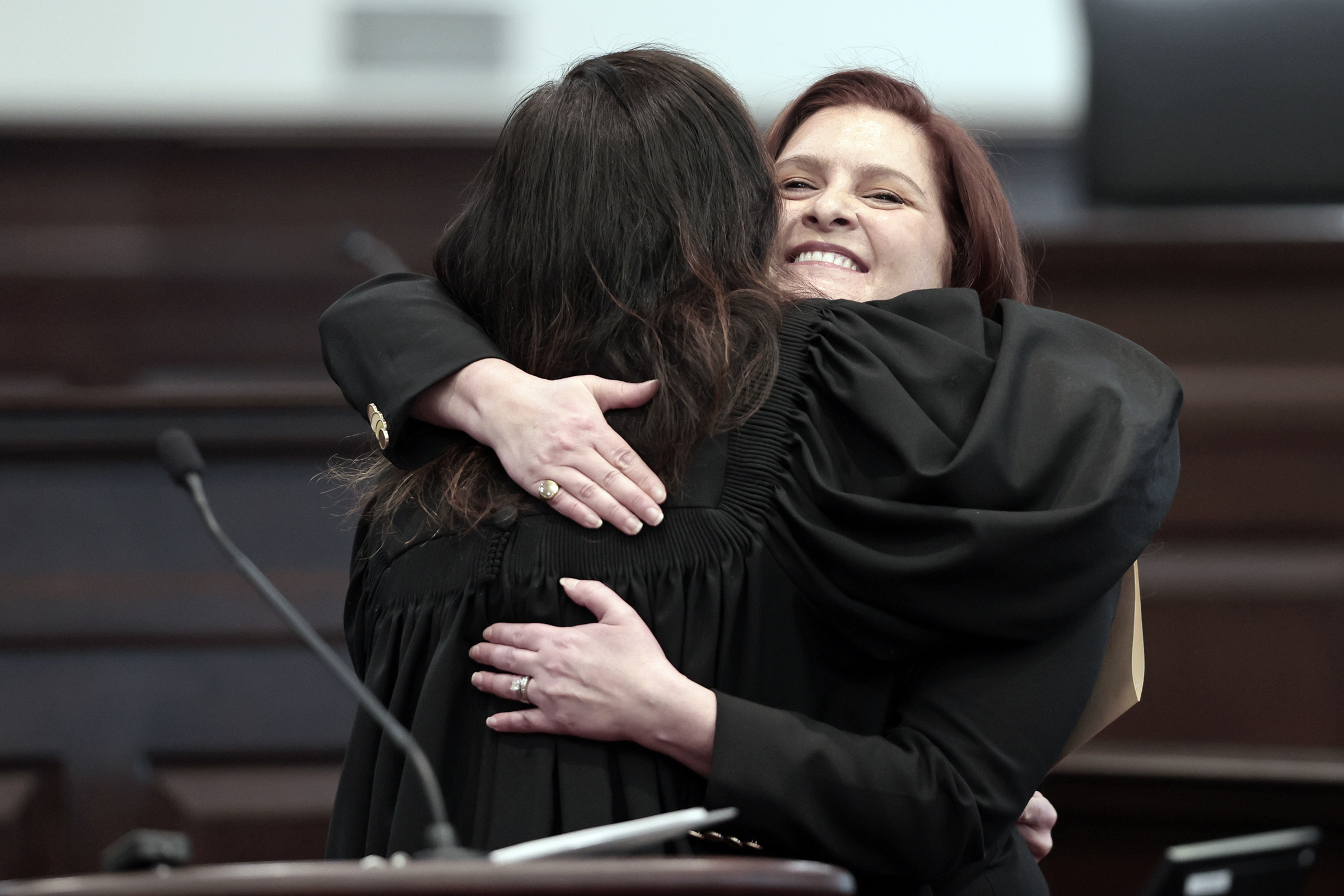
Sophia Garcia-Jackson (facing camera) hugs the Honorable Alita Rovito after being sworn in as the coroner during the ceremonial administration of oaths, for elected officials and magisterial district judges, at the Chester County Justice Center on Saturday, Jan. 3, 2026.
The row offices oversee essential government services residents regularly interface with — from maintaining criminal and civil court records, to monitoring the county’s financial contracts, to investigating the circumstances of sudden deaths — andoperate under four-year terms. Magisterial district judges handle traffic cases, and minor criminal and civil cases, for six-year terms.
The slate of row officials includes:
Clerk of Courts: Caroline Bradley
Controller: Nick Cherubino
Coroner: Sophia Garcia-Jackson
Prothonotary: Alex Christy
And the county’s new magisterial judges are:
Anthony diFrancesca
Joe Heffern
James C. Kovaleski
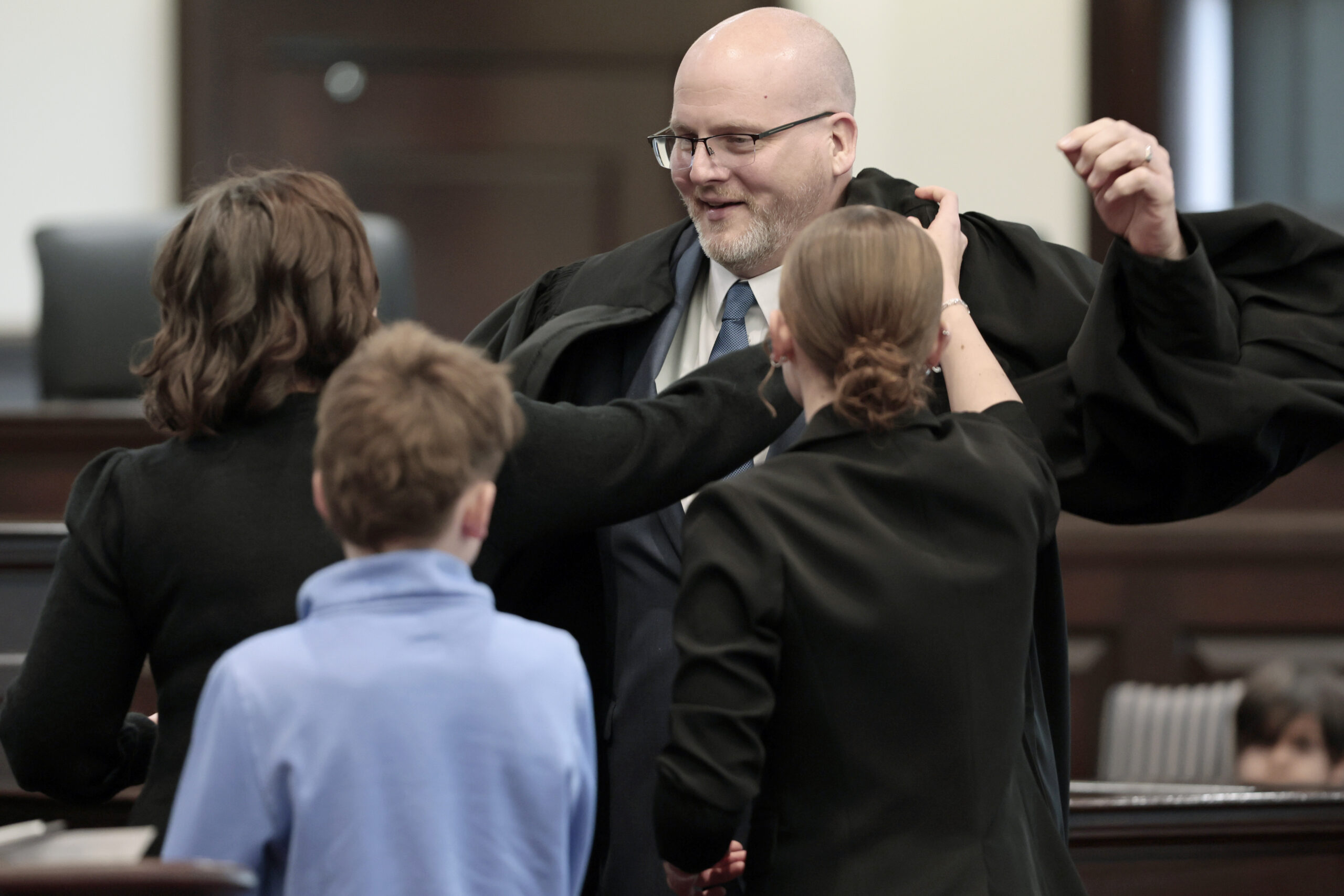
James C. Kovalski’s family helps him don the judges robe after he was sworn in as a magisterial district judge during the ceremonial administration of oaths, for elected officials and magisterial district judges, at the Chester County Justice Center on Saturday, Jan. 3, 2026.
“Those of you taking the oaths … are amongst the people who will help Chester County continue to be a place where so many want to live, work, and raise their family,” Moskowitz told the officials.
During the ceremony, the judges donned their robes and the row officers took their oaths with their partners, parents, and children nearby. Dozens of supporters lined the benches in the courtroom, and elected officials received a standing ovation when all the oaths had been administered. (Those supporters got a nod, too, with Maxwell noting that public service comes with long hours, personal sacrifice, and difficult decisions. “No one serves alone,” he said.)
The oaths of office were administered by Commonwealth Court Judge Stella Tsai, Court of Common Pleas Judge Alita Rovito, and Magisterial District Judge Nancy Gill.
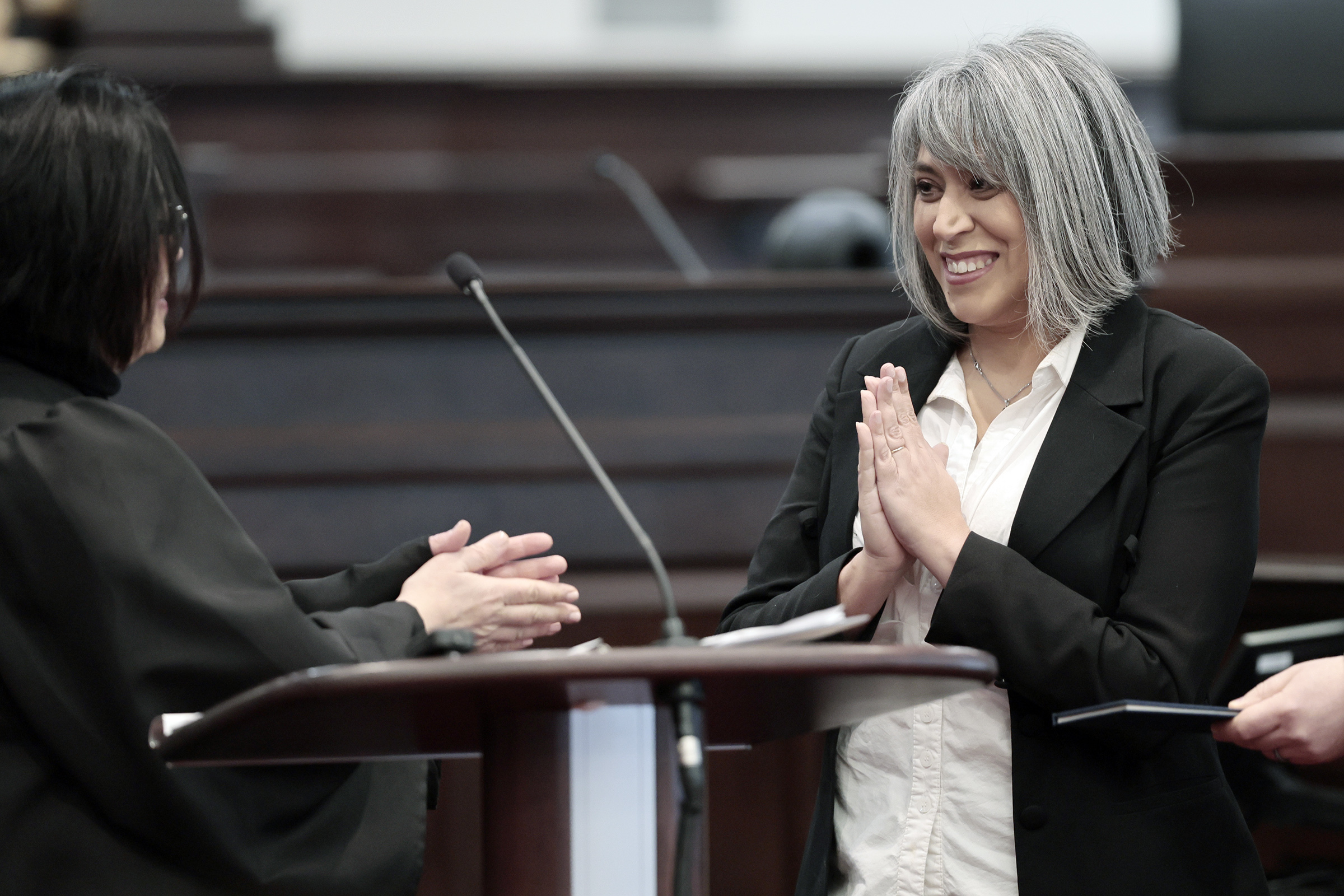
Caroline Bradley (right) has just been sworn in as clerk of courts by the Honorable Stella Tsai (left) during the ceremonial administration of oaths, for elected officials and magisterial district judges, at the Chester County Justice Center on Saturday, Jan. 3, 2026.
“The oath you have taken is more than a formality, it is a promise to the people of Chester County, a promise to uphold the law, to treat every resident with fairness and dignity, and to carry out your duties with independence, integrity and care,” Maxwell said. “Those values matter deeply, especially at the local level, where government has its most direct impact on all our lives.”
This suburban content is produced with support from the Leslie Miller and Richard Worley Foundation and The Lenfest Institute for Journalism. Editorial content is created independently of the project donors. Gifts to support The Inquirer’s high-impact journalism can be made at inquirer.com/donate. A list of Lenfest Institute donors can be found at lenfestinstitute.org/supporters.
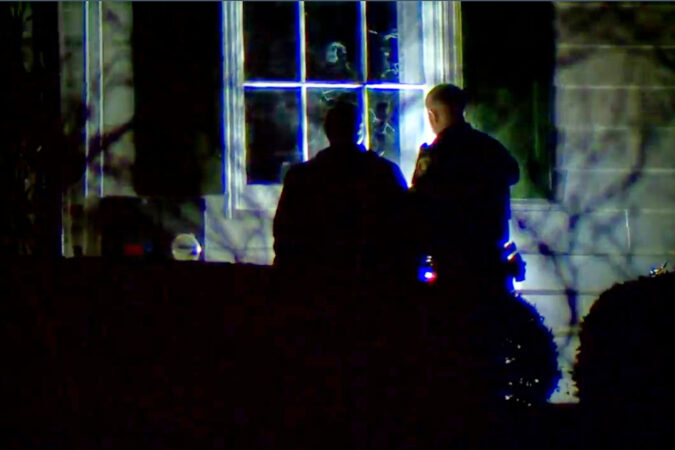
A man who broke windows at Vice President JD Vance’s Ohio home and caused other property damage was detained early Monday, the U.S. Secret Service said.
The man was detained shortly after midnight by Secret Service agents assigned to Vance’s home, east of downtown Cincinnati, agency spokesperson Anthony Guglielmi said in a statement emailed to The Associated Press. He has not been named.
The Secret Service heard a loud noise at the home around midnight and found a person who had broken a window with a hammer and was trying to get into the house, according to two law enforcement officials who were not publicly authorized to discuss the investigation into what happened and spoke on the condition of anonymity. The man had also vandalized a Secret Service vehicle on his way up the home’s driveway, one of the officials said.
The home, in the Walnut Hills neighborhood, on hills overlooking the city, was unoccupied at the time, and Vance and his family were not in Ohio, Guglielmi said.
The Secret Service is coordinating with the Cincinnati Police Department and the U.S. attorney’s office as charging decisions are reviewed, he said.
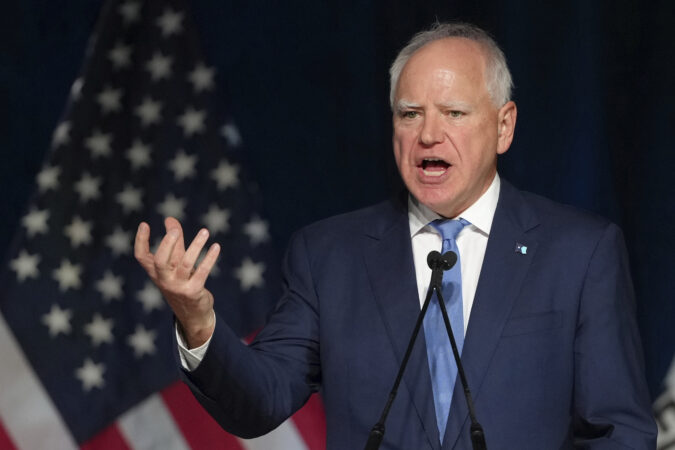
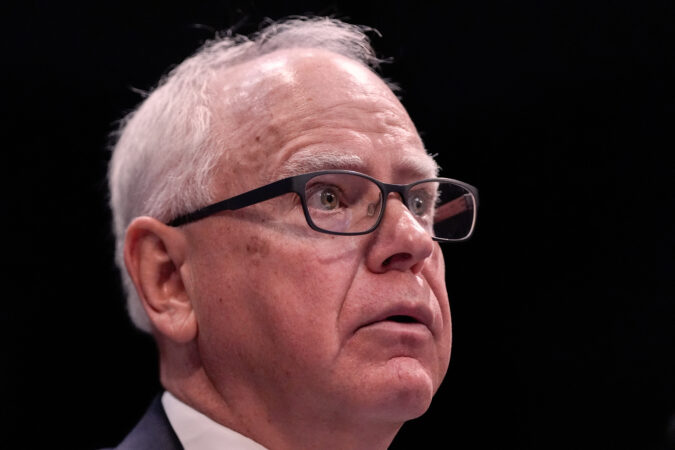
ST PAUL, Minn. — Minnesota Gov. Tim Walz, Democrats’ 2024 candidate for vice president, is ending his bid for a third term as governor amid President Donald Trump’s relentless focus on a fraud investigation into child care programs in the state.
Less than four months after announcing his reelection campaign, Walz said Monday that he could no longer devote the energy necessary to win another term, even as he expressed confidence that he could win.
Walz said in a statement Monday that he “can’t give a political campaign my all” after what he described as an “extraordinarily difficult year for our state.”
“Donald Trump and his allies – in Washington, in St. Paul, and online – want to make our state a colder, meaner place,” Walz said, referring to the Trump administration withholding funds for the programs. “They want to poison our people against each other by attacking our neighbors. And, ultimately, they want to take away much of what makes Minnesota the best place in America to raise a family.”
Democratic Sen. Amy Klobuchar of Minnesota is considering running for governor, according to a person close to her. The person, who wasn’t authorized to speak publicly and spoke on the condition of anonymity, said Klobuchar has not made a final decision.
Around a dozen Republicans are already in the race. They include MyPillow founder and chief executive Mike Lindell, an election denier who is close to Trump. They also include Minnesota House Speaker Lisa Demuth, of Cold Spring; Dr. Scott Jensen, a former state senator from Chaska who was the party’s 2022 candidate; state Rep. Kristin Robbins, of Maple Grove; defense lawyer and former federal prosecutor Chris Madel; former executive Kendall Qualls; and former Minnesota GOP Chair David Hann.
Walz is a military veteran and union supporter who helped enact an ambitious Democratic agenda for his state, including sweeping protections for abortion rights and generous aid to families.
Vice President Kamala Harris picked Walz as her running mate after his attack line against Trump and his running mate, then-Ohio Sen. JD Vance — “These guys are just weird” — spread widely.
Walz had been building up his national profile since his and Harris’ defeat in November. He was a sharp critic of Trump as he toured early caucus and primary states. In May, he called on Democrats in South Carolina to stand up to the Republican president, saying, “Maybe it’s time for us to be a little meaner.”
Venezuelans in the Philadelphia region had mixed reactions to the U.S. strike against their home country over the weekend, which removed Nicolás Maduro from power and left the future of the South American country unclear.
But some Ukrainian Americans in the region felt an uneasy sense of déjà vu as they watched events in Venezuela unfold — and are concerned about what it could mean for relatives and compatriots 6,000 miles away from Caracas, in Ukraine.
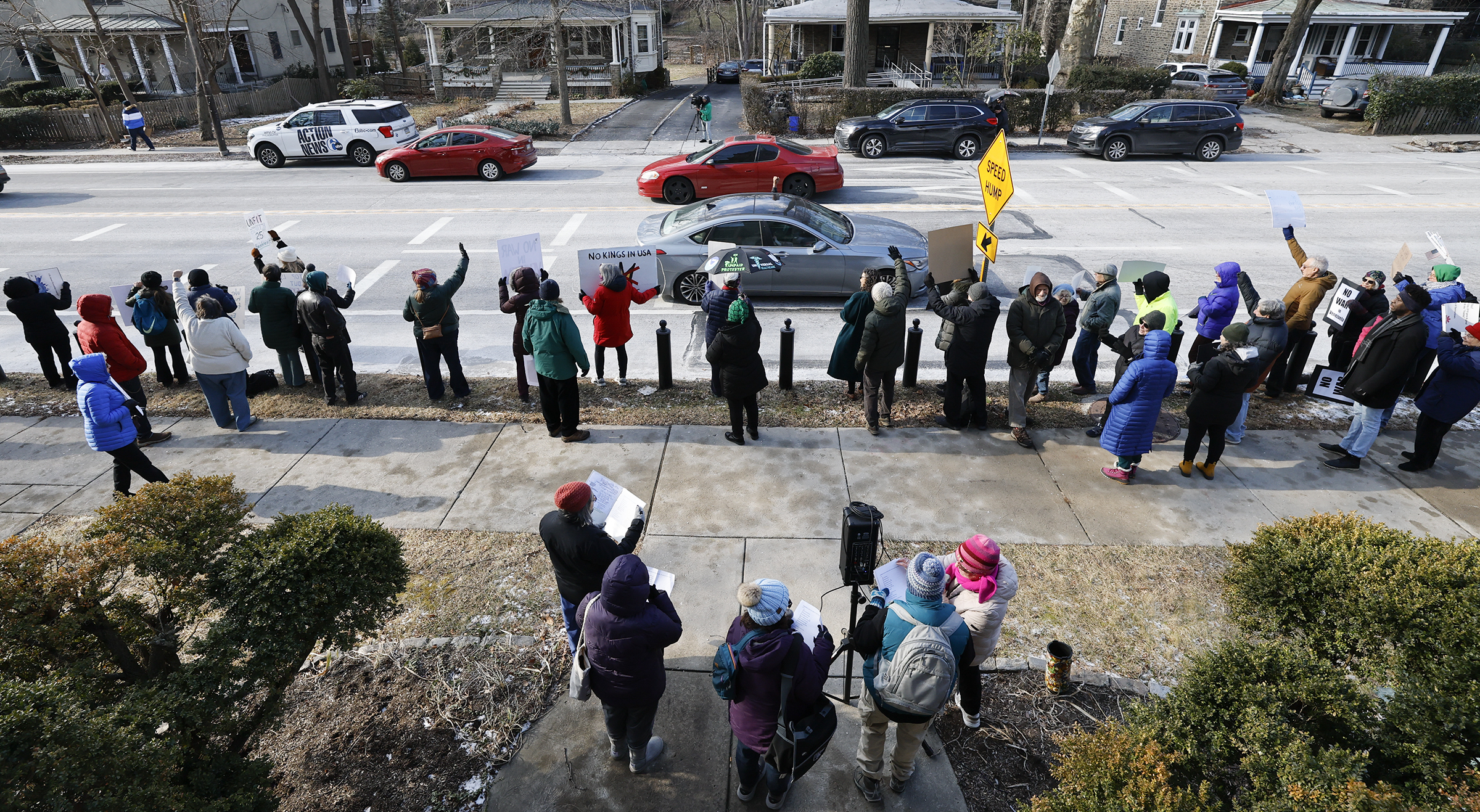
“This action, which is an illegal action, gives the light to people like [Russian President Vladimir Putin] and other dictators to do whatever they like,” Ukrainian American activist Mary Kalyna said Sunday amid a 60-person anti-war rally outside the Unitarian Society of Germantown in West Mount Airy. “Why should he not invade Ukraine or Poland or Lithuania, when the U.S. is invading Venezuela?”
The Trump administration’s unilateral action sends a message to other countries, like Russia, that the United States may no oppose a larger nation meddling in a smaller country’s political affairs, said Paula Holoviak, a political science professor at Kutztown University, in an interview.
“It just doesn’t set a good precedent,” said Holoviak, who is a Ukrainian American.
‘We have been waiting for this for 26 years’
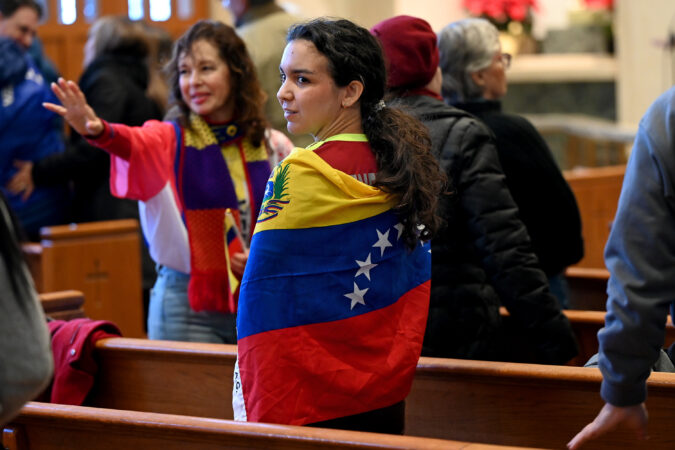
Venezuelan flag in hand, Diana Corao Uribe, 53, and her family drove from Media to the Cathedral Basilica of SS. Peter and Paul to attend a Sunday vigil for the future of Venezuela, organized by local groups Casa de Venezuela Philadelphia, Casa de Venezuela Delaware, and Gente de Venezuela Philadelphia.
Hundreds of people hugged, cried, and prayed as they waited inside with flags and apparel, brightening the basilica with yellow, red, and blue. Members of the crowd were largely critical of the rule of Maduro and his predecessor, Hugo Chávez.
“We have been waiting for this for 26 years; you cannot imagine the feeling, the joy, the happiness, the hope that we feel right now,” Corao Uribe said.
But Corao Uribe said that as the hours passed, her feelings have grown more complicated. Until President Donald Trump announced the U.S.’s intentions to “run” Venezuela until a “safe, proper and judicious transition” could be completed, Corao Uribe had hoped Edmundo González Urrutia, who faced Maduro at the polls in the 2024 Venezuelan presidential election, would become the next president.
The announcement was unexpected and a bit concerning, she said, but it wasn’t enough to shake her sense of happiness.
Philadelphia resident Astrid Da Silva, 32, said it felt bittersweet.
“The amount of joy that seeing the dictator out of Venezuela brings — it’s immeasurable; it’s normal when there has been torture and pain for so long,” Da Silva said. “But without a democratic transition of power, fear starts slipping in.”
Hearing Trump say that opposition leader Maria Corina Machado lacked support in Venezuela clouded her feelings.
“People don’t want the U.S. there; we want the opposition or at least a free election,” Da Silva said, adding that the country’s political turmoil forced her to emigrate to the U.S. at age 7.
Ongoing power struggles have at times made her feel like people view Venezuela as a pawn, forgetting there are real lives at stake, she said.
‘It could be very destabilizing’
The U.S. has a long history of intervening in other countries, Holoviak noted, but that hasn’t always gone well. “We do have an extremely powerful military, but we might not want the aftermath of this,” Holoviak said. “It could be very destabilizing.”
Residents of Northwest Philadelphia voice their opposition to the Trump administration’s strike against Venezuela in a vigil outside the Unitarian Society of Germantown on Sunday, Jan. 4, 2026.
Ukrainian leaders have largely welcomed the liberation of Venezuelans from Russian-allied Maduro’s regime. Speaking with reporters in Kyiv, President Volodymyr Zelensky said, “Well, what can I say? If dictators can be dealt with in this way, then the United States of America knows what it should do next.”
Eugene Luciw, a Ukrainian American who lives in Montgomery County, said in an interview that he interpreted Zelensky’s comments to mean that he believes the U.S. should arrest Putin — and Luciw agrees.
Luciw said that he has no problem with Trump removing Maduro, whom he called “a dictator who slaughters people.”
However, Luciw questioned Trump’s motives and said his actions were inconsistent.
“If we want to do away with a real dictator, with absolute evidence that he’s a genocidal maniac,” then the U.S. should be tougher on Putin, he said.
At the Cathedral Basilica, Fernando Torres, 45, said he has struggled with what the future may hold for Venezuela after Trump’s actions.
“Even if we don’t like Trump, we have to separate things. It’s like if you were drowning and someone threw you a life buoy,” Torres said. “You don’t care who threw it or what their intentions were; you just care about saving your life. What people don’t understand is that Venezuelans needed their life buoy and now for the first time we have hope.”
As political decision-making continues to unfold, Corao Uribe, Da Silva, and Torres agree on one thing: the importance of listening to what Venezuelans want for their future.
“Venezuelans have suffered for so long, don’t try to understand our pain; this isn’t about politics, it’s about the suffering of the Venezuelan people,” Corao Uribe said.
This article contains information from the Associated Press.
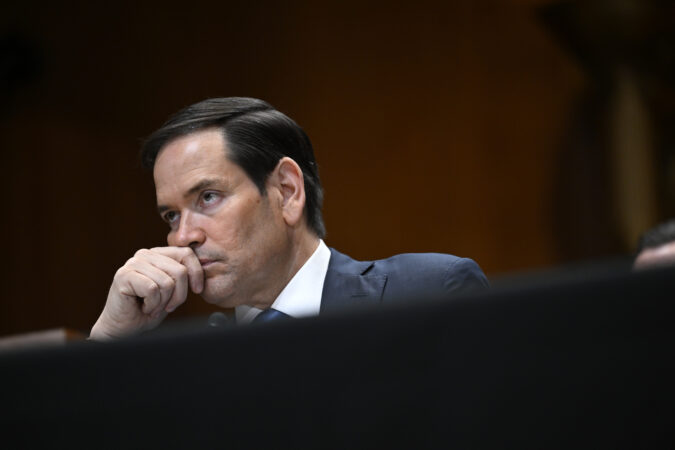
In early November, hours before the Republican-led Senate rejected bipartisan legislation to block the Trump administration from conducting a military attack on Venezuela, Secretary of State Marco Rubio sought to reassure lawmakers it didn’t intend to.
He told them that the U.S. lacked legal authority to invade the South American country and oust its president, Nicolás Maduro, and said that doing so would carry major risks, according to two people who attended the classified briefing.
In the aftermath of Saturday’s raid to capture Maduro and his wife at a fortified military compound in Caracas, top Democrats are accusing Rubio of deliberately misleading Congress.
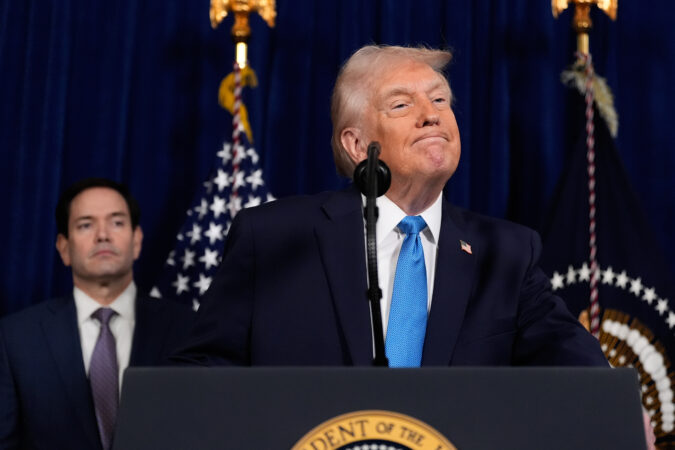
During a news conference at President Donald Trump’s Mar-a-Lago Club in Florida, Rubio, who also serves as White House national security adviser, told reporters that he and other top officials had planned the Maduro operation for months. The acknowledgment led some on Capitol Hill to conclude that the administration was readying assets for the assault while having told lawmakers that the military buildup in the region was not meant to force a regime change.
“Rubio said that there were not any intentions to invade Venezuela,” Rep. Gregory W. Meeks of New York, the House Foreign Affairs Committee’s top Democrat, told the Washington Post. “He absolutely lied to Congress.”
In an interview with the Post later Saturday, Rubio rejected the assertion. He argued that Maduro is under indictment from a U.S. court, and neither the United States nor the European Union recognized him as the legitimate leader of Venezuela. So rather than an invasion, he cast the attack as a “law enforcement operation” that required military assets to conduct.
Lawmakers previously asked whether the administration “would be invading Venezuela,” Rubio said. “This was not that,” he added.
Democrats were incredulous at the argument.
“It absolutely is one hundred percent regime change,” said Rep. Adam Smith of Washington state, the senior Democrat on the House Armed Services Committee.
Smith said that he had asked Rubio directly whether the administration’s military buildup in the region would result in attacks on Venezuelan territory and that the secretary had said no.
The Trump administration did not notify key members of Congress of the operation until late Saturday morning, sending a short notice that said the president had approved a “military operation in Venezuela to address national security threats posed by the illegitimate Maduro regime.”
The operation, the notice said, came in response to the Justice Department’s warrant against Maduro, who was transported to New York to await trial.
Sen. Mark R. Warner of Virginia, the top Democrat on the Senate Intelligence Committee, said that Rubio tried to reach him after the raid had begun in the early morning hours but that they were unable to connect.
Warner, who has had multiple briefings with Rubio over the past few months, declined to say whether he felt the administration had misled Congress but noted that the timing for the operation — with lawmakers days away from returning to Washington after a holiday break — was not “idle chance.”
“Doing this during a congressional break raises huge questions,” he said in an interview.
Senior Republicans called on the administration to brief lawmakers even while expressing near-unified support for the operation. Senate Majority Leader John Thune (R., S.D.) and House Speaker Mike Johnson (R., La.) said in separate statements that they had spoken with senior officials early Saturday and wanted the administration to brief Congress in the coming week.
Senate Minority Leader Charles E. Schumer (D., N.Y.) and House Minority Leader Hakeem Jeffries (D., N.Y.) demanded far more information.
“We want to know the administration’s objectives, its plans to prevent a humanitarian and geopolitical disaster that plunges us into another endless war — or one that trades one corrupt dictator for another,” Schumer told reporters.
The Senate is set to vote this week on another war powers resolution that, if passed, would block the administration from conducting further military action in Venezuela. Trump said Saturday that the U.S. could carry out a larger “second wave” of attacks but that he did not think doing so would be necessary because Venezuela’s interim leader was cooperating with U.S. demands.
Sen. Tim Kaine (D., Va.) said he hoped the new measurewould get more Republican support. He, too, accused the administration of lying to lawmakers and the public.
At least two of the Republicans who considered supporting the measure that was narrowly defeated in November received calls from Rubio on Saturday, according to their public statements.
“Congress should have been informed about the operation earlier and needs to be involved as this situation evolves,” said Susan Collins (R., Maine), one of the lawmakers who signaled that they might support the last resolution but ultimately opposed it.
Shortly after news of the attack broke Saturday morning, Sen. Mike Lee (R., Utah), a skeptic of expansive U.S. military commitments abroad, posted on social media that he wanted to know “what, if anything, might constitutionally justify this action in the absence of a declaration of war or authorization for the use of military force” from Congress.
Hours later, Lee posted again that he had spoken with Rubio and was satisfied that the attack “likely” was within the president’s authority.
President Donald Trump’s intervention in Venezuela will test Americans’ appetite for regime change, inserting a new and unpredictable element ahead of midterm elections this year that have so far been dominated by domestic issues.
Democrats immediately began arguing that overnight action on Saturday was an abandonment of Trump’s promise to focus on improving lives at home, while manyRepublicans insisted it was an expansion, rather than a shift, in Trump’s “America First” mantra.
Trump on Saturday said the United States had captured Venezuelan President Nicolás Maduro and his wife and planned to “run the country” during a transition period, an action Trump cast as part of a new era of “American dominance in the Western Hemisphere.” The president touted the operation as a boost to U.S. interests: a blow to the drug trade, an opportunity for American oil companies, and a show of strength.
But his argument drew skepticism on both the right and the left, as critics warned against dragging the U.S. into regime change and costly wars. Recent polls suggest there is significant political risk for Trump, who is already facing discord within his base. A CBS News poll in November found that 70% of Americans opposed U.S. military action in Venezuela and that the vast majority did not view the South American country as a major threat to national security. Americans in both parties have grown increasingly skeptical of foreign intervention in recent decades.
Republican leaders mostly backed the president, but some expressed doubts as Trump outlined a potentially expansive U.S. role in Venezuela and said he is “not afraid of boots on the ground.” Many Democrats framed the attack as a violation of Trump’s campaign promises to “get rid of all these wars starting all over the place” and toavoid the type of foreign entanglements that bedeviled many of his predecessors and bred cynicism within his base.
While foreign policy does not always play a central role in domestic elections, it often informs broader opinions about competence and focus. President Joe Biden’s botched withdrawal from Afghanistan undermined his argument that he was restoring faith and effectiveness in government that had been hampered by the COVID-19 epidemic. President George W. Bush’s decision to invade Iraq with faulty intelligence claims, and the attempts at nation-building that followed, damaged his party’s credibility and helped pave the way for Trump’s takeover of the GOP.
“What Americans want is an American president that’s going to care about them … and I think what this shows is the president’s more concerned about what’s going on in Venezuela, what’s going on in Argentina than he is on what’s going on in Pennsylvania and Ohio,” said Rep. Ro Khanna (D., Calif.) in an interview.
The politics of the intervention are hard to assess immediately, some strategists said, as details of the U.S.’s plans remain unclear and the situation in Venezuela is still unfolding. The issue’s relevance to voters could change based on the ultimate extent of the U.S.’s involvement and Venezuela’s stability in the months to come. Trump on Saturday said Venezuela’s vice president, Delcy Rodríguez, appeared “willing to do what we think is necessary to make Venezuela great,” but she later criticized the U.S.’s actions as “barbarity.”
Trump had been ramping up pressure on Maduro for months, but the action in Venezuela probably caught many Americans off guard, given that it did not follow a provocation like the Sept. 11, 2001, terrorist attacks.
Republicans embracing his latest action in Venezuela are betting that the fallout there will be limited, and even some staunch critics of foreign intervention on the right declined to criticize Trump on Saturday. But a few echoed the concerns from Democrats.
Rep. Marjorie Taylor Greene (R., Ga.), a proponent of America First policies who has become one of Trump’s biggest critics from the right, questioned his justifications for the attack — noting that the fentanyl responsible for most U.S. drug deaths comes primarilyfrom places other than Venezuela — and reiterated her worry that he is veering from principles on which he campaigned.
“This is what many in MAGA thought they voted to end,” she wrote on X. “Boy were we wrong.”
Rep. Thomas Massie (R., Ky.), who has long been at odds with Trump,said the president, at his news conference, had undercut earlier suggestions from administration officials that the action in Venezuela was a limited effort to apprehend Maduro. Stephen K. Bannon, the former Trump adviser turned MAGA commentator, initially hailed Maduro’s capture as a “stunning overnight achievement” on his show — but after Trump’s news conference expanding on the U.S. role in Venezuela, he wondered if the plan would “hark back to our fiasco in Iraq under Bush.”
Sen. Todd Young (R., Ind.) called the Venezuela operation “successful” but added in a statement online, “We still need more answers, especially to questions regarding the next steps in Venezuela’s transition.”
Other Republicans echoed Trump’s points about U.S. interests in the region. Raheem Kassam, a political strategist who is editor of the conservative National Pulse, suggested Trump’s MAGA base will “warm” to the idea that the Venezuela action is America First and noted that many supporters also embraced Trump’s long-shot ambitions to annex Greenland.
Kassam doesn’t see the issue playing into the midterms much yet — but “if it turns into a disaster, certainly.”
“These things are very risky,” he acknowledged.Trump “willknow what risk he’s taking and people know what it means if Caracas suddenly overnight turns into a complete powder keg.”
Some Republicans were skeptical that the U.S. would be as involved as Trump suggested Saturday was possible. “The president gets a lot of leeway up to a certain point,” said GOP strategist David Urban, “and I think that point would be, having U.S. soldiers in some meaningful capacity in Venezuela. I don’t think you’ll see that.”
Democrats, meanwhile, questioned the legality of the military action in Venezuela. Some also sought to use it to build their longtime case that Trump is distracted from the issues that matter most to voters.
“The American people don’t want to ‘run’ a foreign country while our leaders fail to improve life in this one,” wrote Pete Buttigieg, the former transportation secretary and potential Democratic 2028 presidential candidate, on social media, arguing that Trump was “failing on the economy and losing his grip on power at home.”
Buoyed by victories in November’s elections in New Jersey and Virginia, Democrats are focusing intensely on the issue of affordability heading into the 2026 midterms. Trump’s advisers signaled after those elections that they would be refocusing on the economy, and Trump began to tout his economic achievements at rallies. Now, many Democrats say the operation in Venezuela could undercutthat effort.
“His biggest problem is that costs are continuing to go up, and he promised people they would go down, and whenever people see him creating some other kind of a problem, rather than buckling down and trying to un-break that key promise, they turn against him more,” argued Andrew Bates, a Democratic strategist and former White House communications official under Biden.
Whit Ayres, a longtime GOP pollster, emphasized that it’s hard to predict the politics of Trump’s actions in Venezuela without more data.
“What I can say based upon polling is that one of Trump’s strengths in public opinion polls is that he’s viewed as strong, and not indecisive or weak, and in that sense this plays to his strength,” he said of the Venezuela operation.
MINNEAPOLIS — Just a few months ago,Larissa Laramee would have encouraged Minnesota Gov. Tim Walz to run for president. She admired the man who helped lead the Democratic presidential ticket in 2024 — and who once taught her social studies.
But Laramee’s feelings have changed as a yearslong welfare fraud probe in Minnesota becomes a national maelstrom. Prosecutors say scammers stole brazenly from safety net programs,taking hundreds of millions of dollars in government funding — potentially billions — for services they never provided while Walz led the state.
“I like him as a person. He’s fantastic,” said Laramee, 40, who works at a Minnesota nonprofit for people with disabilities. Walz, as her high school teacher, helped inspire her career, she said. “But with all of this that’s happened, I’m struggling with seeing a path forward for him.”
Laramee’s doubts show how the sprawling fraud cases in Minnesota now hang over Walz — even as it’s too soon to tell how they will ultimately affect his political future. A year and a half after he vaulted onto the national stage as Kamala Harris’ running mate, Walz is back in the spotlight, this time for acontroversy that Republicans around the country view as political gold.
Republicans are betting the fraud saga will hurt Walz, a staunch liberal and potential 2028 presidential candidate who is seeking a third term as governor this year. GOP officials say it will be one of their top campaign issues in Minnesota as they try to reverse many years of statewide losses and navigate through tough national headwinds in the midterms.
But many of the attacks on Walz are geared just as much toward riling the GOP’s national base, using the issue and Walz’s prominence to validate broader anger within the party over immigration and a social welfare system that President DonaldTrump and others have long argued is out of control.
How much blame Walz should bear forthe state’s response to the fraud is a matter of a debate. He has said that, as state executive, he takes ultimate responsibility. Walz has said officials have “made systematic changes to state government” over the past few years as prosecutions were underway. The governor’s critics say the changes were insufficient and came too late.
Democrats say Republicans are risking a backlash by fixating on the fraudsters’ nationality — most people charged in the schemes are of Somali descent — and by freezing some federal childcare funding in response. Trump has lobbed broad attacks on Somali immigrants that Walz denounced as “racist lies,” and many on the right have called for deportations, even though officials say most of the fraud defendants are U.S. citizens.
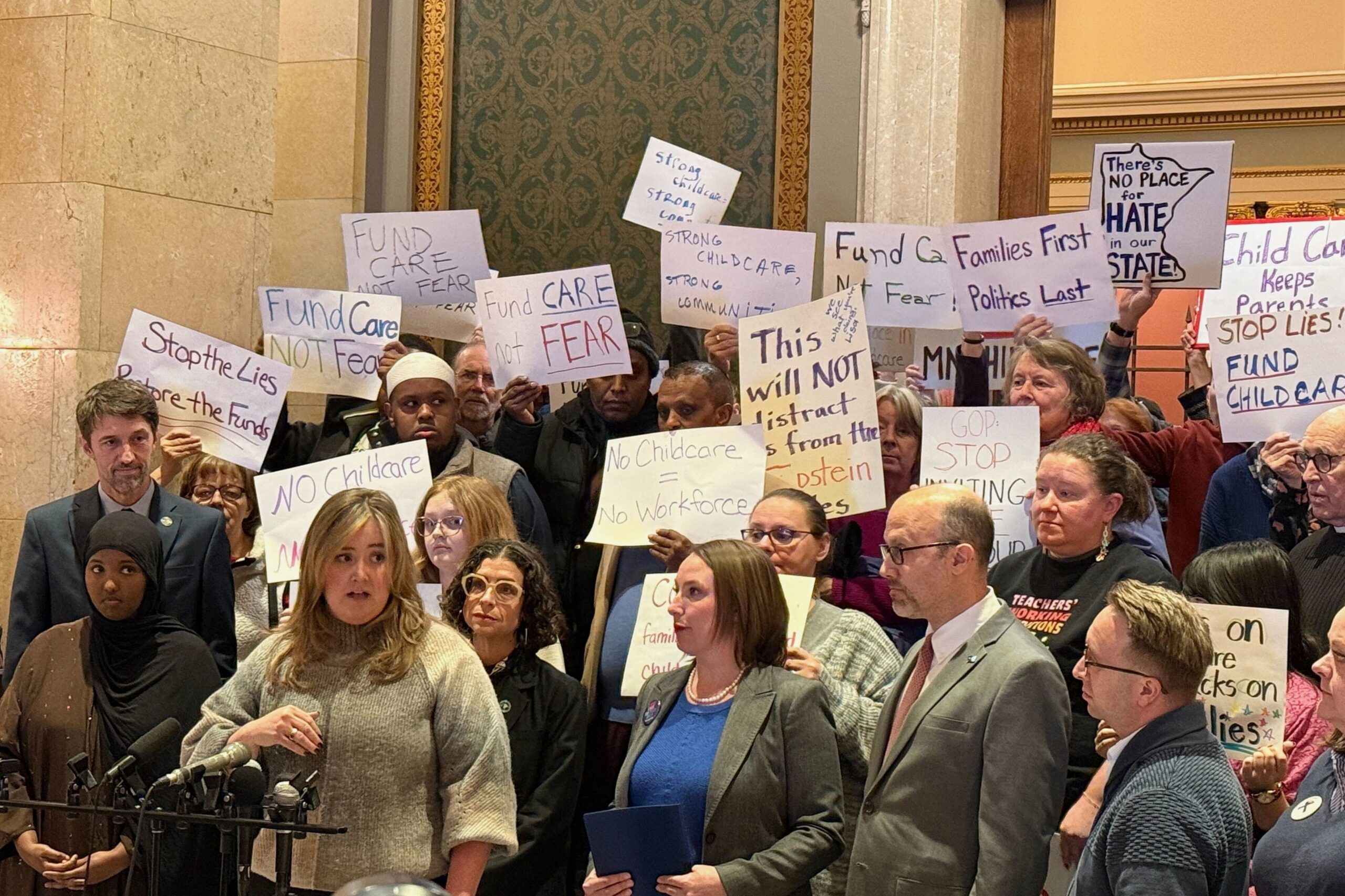
Maria Snider, director of the Rainbow Development Center and vice president of advocacy group Minnesota Child Care Association, speaks as people gather for a news conference at the state Capitol on Wednesday in St. Paul.
Democrats are favored to win the governor’s race in 2026; Republicans have not won a statewide election in Minnesota since 2006. Walz won reelection by about 8 percentage points in 2022, when some of the fraud cases had already surfaced, and it’s not clear that the new attention to the issue has affected his approval in the state. There are no clear recent shifts in available surveys.
Some Democrats remain worried the falloutthreatens to blunt Walz’s attacks on Trump, as well as the economic issues the party has sought to highlight.
“The anti-fraud message is going to be very strong. …I fear that message will dominate or drown out the affordability message,” said Ember Reichgott Junge, a former Minnesota state senator who is now a Democratic political analyst.
Junge said she’s heard many Democrats express concern about Walz’s reelection campaign and noted thathis performance couldaffect lower-profile races on the ballot. Democrats are defending a one-vote majority in the state Senate and trying to retake the House, where Republicans hold a two-seat advantage amid two vacancies.
“He is a riskier candidate than any other Democrat” would have been, she said of Walz, who has not drawn primary challengers so far.
Walz has accused Trump of politicizing the probes. Walz appointed a statewide “director of program integrity” to prevent fraud in mid-December, among other changes, and the state shut down one fraud-plagued housing program this fall.
“We have made significant progress. We have much more to do. And it’s my responsibility to fix it,” Walz wrote in a recent op-ed for the Minnesota Star Tribune.
His office did not make him available for an interview.
Other Democrats dismissed Republicans’ chances in the governor’s race, said the GOP response to the fraud has overreached and accused Trump — who has pardoned people convicted on fraud charges — of hypocrisy. Trump and others on the right have also attacked Walz in highly personal terms that many call cruel; Trump recently called Walz “seriously retarded,” and videos of people yelling “retard” outside Walz’s house have circulated online. (Walz has spoken about his son’s learning disability).
“Republicans are overplaying their hand, and this is what’s going to turn off a lot of voters,” said Abou Amara, a former adviser to Democratic leadership in the state legislature. “They have made this not just about fraud, but they’ve made it about xenophobia.”
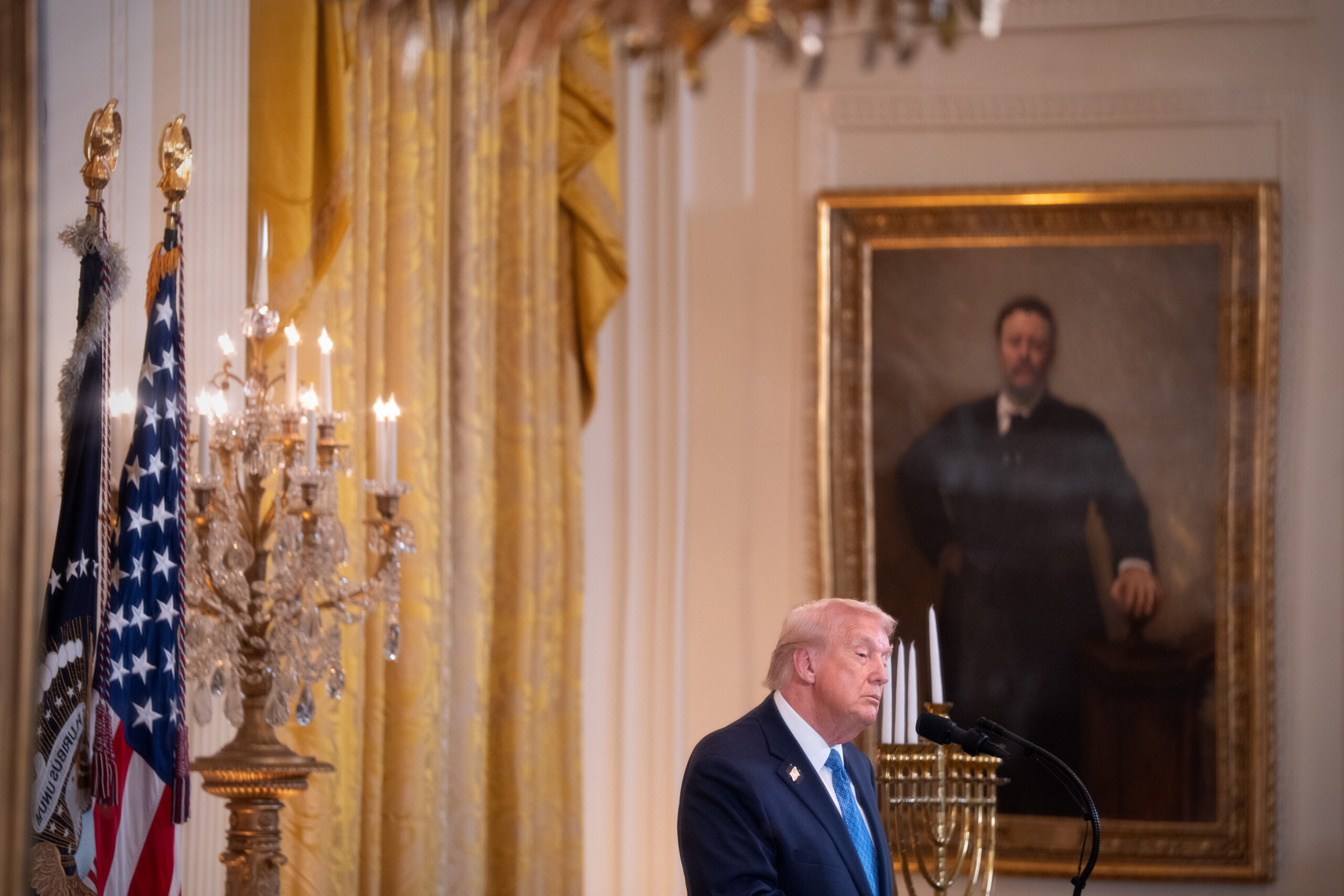
President Donald Trump on Dec. 16 at the White House.
Federal authoritiesin Minnesota have been investigating the sweeping abuse of safety net programs for years and brought many of the charges in 2022, accusing 47 people of misusing $250 million — meant to feed children during the pandemic — on luxury cars and property as far away as Kenya and Turkey.
News reports, a viral video and a flood of criticism from right-wing influencers and politicians have drawn new national attention to the issue in recent weeks. Federal investigators also suggested last month that the problem could be much bigger than previously known.
Joe Thompson, a prosecutor with the U.S. Attorney’s Office in Minnesota, said at a news conference last month that authorities have identified “significant fraud” in14 state Medicaid programs — and said fraud may account for more than half of the $18 billion that went to those programs since 2018.
“Every day we look under a rock and find a new $50 million fraud scheme,” Thompson said.
Republican leaders including Vice President JD Vance and House Speaker Mike Johnson (R., La.) have weighed in this past week, sharing a video posted on social media on Dec. 26 by a 23-year-old YouTuber, Nick Shirley, who joined a roundtable with Trump last year. In the 42-minute video, Shirley claimed daycare centers were not caring for children because he could not see them on-site. Regulators, however, saw children on their visits within the last 10 months, according to officials and records.
Shirley’s video has accumulated more than 130 million views on X and triggered a flood of GOP interest — and criticism of Walz. House Republicans said they would call Walz to testify before Congress next month. Right-leaning billionaire Elon Musk, who owns X, suggested Walz should go to prison.
“Minnesotans are finally much more aware of the extent of the fraud and how deep it is and how it’s gone unchecked, and it is going to play favorably for Republicans on every level of government in the ’26 election,” said state House speaker Lisa Demuth, one of many candidates seeking the GOP nomination to challenge Walz.
Another GOP gubernatorial candidate, Minnesota Rep. Kristin Robbins — who chairs a House committee on fraud — called it the top issue in the race. “We are still, sadly, at the tip of the iceberg,” she said.
A 2024 report from the nonpartisan Minnesota LegislativeAuditor found that the state education department, which administered nutrition programs at the center of many fraud cases, “failed to act on warning signs” and “created opportunities for fraud.”It did not point specifically at Walz.
Michael Brodkorb, a former deputy chair of the Minnesota GOP who has crossed the aisle in the past to vote for Walz, said he isn’t sure how he’ll vote in the coming gubernatorial race, and argued that the Walz administration could have been more responsive. Voters, he said, will have to decide if state officials “have the credibility to be a part of the solution when maybe a lot of Minnesotans think they’re part of the problem.”
But he also warned that Trump’s rhetoric isn’t helping local Republicans. The president railed against Somali immigrants in a cabinet meeting last month, saying “they contribute nothing” and declaring, “Their country stinks, and we don’t want them in our country.”
Some Republicans in Minnesota want to leave race out of the debate — though they argue sensitivities about racism helped enable the fraud. (A nonprofit behind much of the fraud once accused a state agency of racial discrimination while pushing back on skepticism).
“We want to stay focused on the fraud and just the act itself, not on the culture or the people behind it,” Minnesota GOP chair Alex Plechash said in an interview, adding later, “I’m not at all into dividing the people by race or by socioeconomic status or any other way.”
At a Somali mall in Minneapolis, Kadar Abdi, a student at a nearby mosque, said he believes Trump is trying to turn attention away from his own political challenges. “Because of these failures, as a distraction tactic, you want to blame a marginalized group” he said. “It’s as old as American society.”
An hour away in Owatonna, an exurb of the Twin Cities, diners at the Kernel represented the full gamut of opinions. Trump voter Michael Haag, 54, said Walz “should be in prison” and that he plans to leave the state if Walz is reelected.
He “should resign, and I also think he should be charged, because he’s for the Somalis,” Haag said. “He should have been looking out for us, vs. them.”
Another patron wearing a pink Carhartt hat and sipping coffee disagreed.
“I find him honest,” said Joan Trandem, who is retired. “He cares about the small guy.”
Given the drama that’s surrounded Walz, Trandem said she’s surprised he wants to run fora third term. But if he continues with the campaign, she plans to vote for him. In the rural part of Minnesota where Trandem lives, the fraud probe doesn’t get much play anymore, she said. “I’m tired of talking about it.”
Venezuela native Gil Arends was unwinding at his South Philadelphia apartment Saturday when an X notification came through: “There’s no power in Caracas and we are hearing some explosions.” A panoramic video showed smoke rising from the capital city.
“I was immediately scared; even with all the military, I did not think Caracas was going to get bombed,” Arends, 40, said. Then, the news came through: Venezuelan President Nicolás Maduro was in custody.
A U.S.military operation ousted Maduro from power early Saturday, capturing him and his wife, Cilia Flores. The couple were extracted from their home on a military base and taken to New York, where they face prosecution for their alleged participation in a narco-terrorism conspiracy. The dramatic ground offensive capped a monthslong pressure campaign by President Donald Trump against the Venezuelan leader.
Arends, who owns Puyero Venezuelan Flavor with locations in Center City and University City, left Venezuela 15 years ago. He woke up his mother, sister, and wife when he learned the news. No one could believe it.
“Some people just began noticing the bombings in the Caribbean, but we have been living this our entire lives,” Arends said. “No one wants to see their country getting bombed, but they gave us no alternative. I am grateful for the help.”
In the wake of the raid, Trump said the United States would “run Venezuela” until a transition of power could be arranged. Speaking from Mar-a-Lago, Trump offered few details on what American intervention would look like — or how long it could take — but revealed he plans to “fix” the country’s oil infrastructure and sell “large amounts” of oil to other countries.
The military operation and takeover Saturday elicited reactions from Philadelphia’s Venezuelan community and a cohort of area politicians who denounced Trump’s plan to run the country and capitalize off its oil reserves.
Philadelphia Democrat U.S. Rep. Brendan Boyle took to X, writing, “The American people want affordable housing and health care. The last thing they want is another costly forever war.”
U.S. Rep. Brian Fitzpatrick said in a statement that Venezuela’s future “belongs to the Venezuelan people alone.”
“The only country that the United States of America should be ‘running’ is the United States of America,” the Bucks County Republican said.
The legal authority for the raid on Maduro and airstrikes in Caracas were not immediately known, but area lawmakers said Trump did not seek congressional authorization to capture Maduro. Decrying the attack, a spokesperson for U.S. Rep. Dwight Evans of Philadelphia noted that the president’s chief of staff Susie Wiles told Vanity Fair in November that ground operations in Venezuela would require the approval of Congress.
In a social media post, Sen. Andy Kim accused Secretary of State Marco Rubio and Defense Secretary Pete Hegseth of “blatantly” lying when the administration told congressional leaders its objective was not a regime change. Kim — a New Jersey Democrat and former national security official in the Obama administration — argued the raid may further isolate the U.S. from its allies.
“This strike doesn’t represent strength. It’s not sound foreign policy,” Kim wrote. “It puts Americans at risk in Venezuela and the region, and it sends a horrible and disturbing signal to other powerful leaders across the globe that targeting a head of state is an acceptable policy for the U.S. government.”
Delaware Democratic U.S. Sen. Chris Coons echoed Kim in a news release: According to Coons, senior Trump administration officials said in briefings to Congress that they were focused on combating drug trafficking.
“President Trump put American service members in harm’s way to capture Maduro, but the president lacks a clear plan for what comes next,” Coons said. “This raid risks creating more instability in the region, putting U.S. service members and civilians in the hemisphere at risk, and dividing us further from our regional partners.”
While condemning Trump, Sen. Cory Booker, a New Jersey Democrat, also upbraided the Republican-led Congress for its “ongoing abdication of its constitutional duty” and choosing “spineless complicity over its sworn responsibilities.”
“Again and again, the president has exceeded his authority, defied congressional intent, trampled the separation of powers, and broken the law — while Congress looked away in cowardice and submission,” Booker said in a news release. “Congress must act now. It must reassert its constitutional authority, restore the rule of law, and stop this president before further injury is done to our democracy and our republic.”
State Sen. Nikil Saval (D., Philadelphia) called for his federal counterparts to impeach Trump.
“Trump’s attack on Venezuela and abduction of its President are criminal acts of terror. They follow in the darkest traditions of American history: a violent, reckless flex of military power to gain control over foreign resources,” Saval posted on Instagram. “It is incumbent on every American of conscience to rise against these actions.”
Bill Burke-White, an international lawyer and law professor at the University of Pennsylvania Carey Law School, said the United States’ unsanctioned attack on another sovereign state opens the doors for other military superpowers to oust opposing heads of states.
“Many countries in the world are going to look at this and say … that the United States has fundamentally abandoned the basic principles that kept us safe for the last 70 years. We’re going to be reverting to a world that looks more like regional powers that can do whatever they want,” he said, “a world governed, not by law, but by the whims of powerful autocrats in countries with nuclear weapons.”
The U.S. government does not recognize Maduro as a legitimate leader of Venezuela, and Trump repeated rhetoric Saturday that Maduro had effectively exploited the nation for cocaine trafficking and criminal enterprises. American presence in waters off South America has swelled in recent months as the U.S. attacked boats allegedly carrying drugs.
The number of known boat strikes was 35 and the number of people killed at least 115 as of Friday, according to the Trump administration. Trump has said that the U.S. is engaged in an “armed conflict” with drug cartels and has justified the boat strikes as necessary to curb the flow of drugs.
In social media posts, Pennsylvania U.S. Sens. Dave McCormick , a Republican, and Democrat John Fetterman applauded American military personnel who carried out the mission under the cover of darkness.
“For years Maduro’s regime killed our children by flooding America’s streets with poison, threatened our borders, and undermined U.S. national security,” McCormick wrote. “I urge what’s left of the Maduro regime to honor the will of the Venezuelan people and transition peacefully to rightfully elected leadership.”
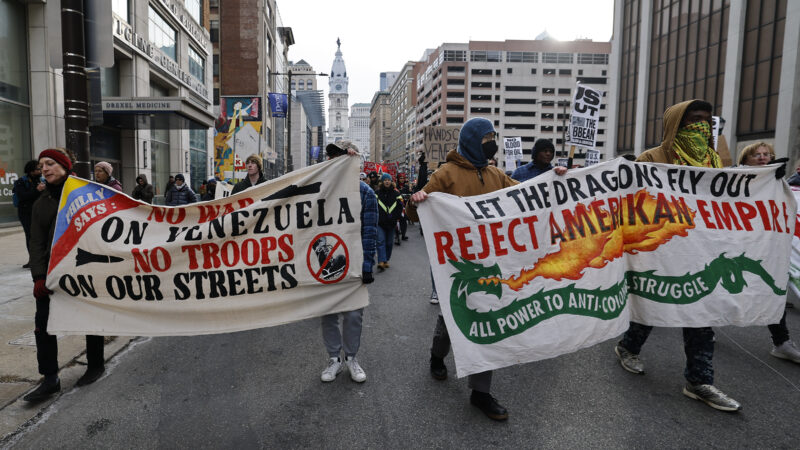
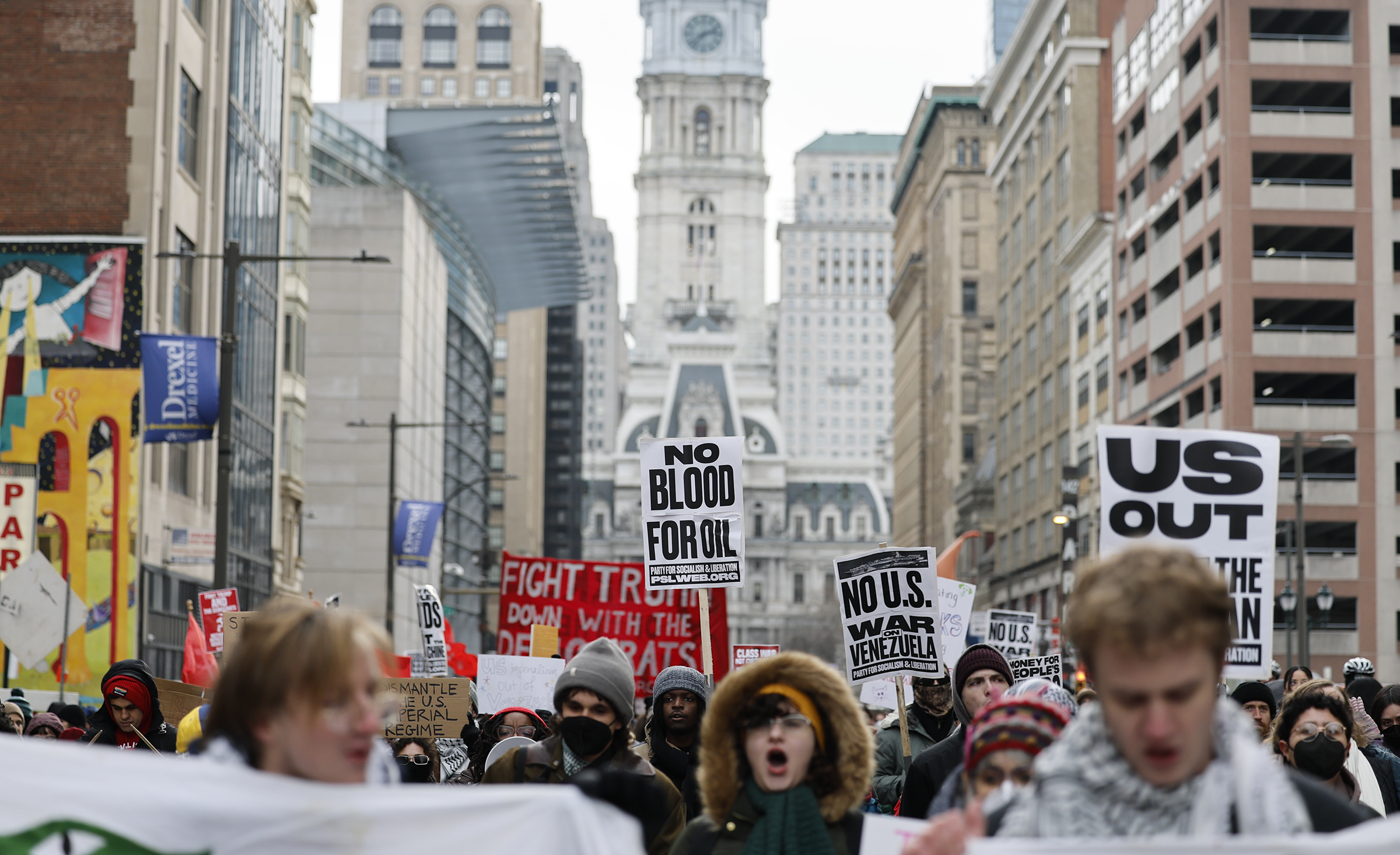
Demonstrators march along North Broad Street reacting to U.S. strikes on Venezuela on Saturday.
There are about 7,000 people of Venezuelan origin in the Philly metro area, according to the latest census data, out of a total metro area Latino population of 681,000. By comparison, there are 135,000 people of Mexican origin, and 74,000 people of Dominican origin in the metro area.
Three local Venezuelan organizations — Casa de Venezuela Philadelphia, Casa de Venezuela Delaware, and Gente de Venezuela Philadelphia — rallied for peace and unity among the diaspora.
“In moments of heightened emotional sensitivity and rapid information circulation, we urge our community in exile to act with serenity, caution, and a sense of collective responsibility,” a joint statement read.
A vigil for Venezuela’s future is scheduled for noon Sunday at the Cathedral Basilica of SS. Peter and Paul.
“We firmly believe that no process of change will be sustainable if built on hatred, confrontation, or suffering,” the statement said.
After the news began to sink in, Arends, the restaurateur, checked in with his employees, asking about their family members in Caracas. Overall everyone was OK, he said, although some were startled and concerned by the bombing sounds.
“There is so much uncertainty in every single level and we have been through so much; we have seen bad things become worse so it’s very difficult to just be happy without fearing what that might lead to,” Arends said. “I’m hopeful but it doesn’t feel like we are at the point where this is over.”
As the first day of a post-Maduro Venezuela came to a close, Venus Lucini, 28, said she felt like there was a difference in the air.
“There are too many emotions, too much uncertainty, but for the first time, there is possibility,” Lucini said, as she held her daughter Sofi’s hand.
For the young mother this is a chance for younger generations to recover a sense of the future.
“I already had to emigrate, but this is her chance to see a new Venezuela,” Lucini said, longing to visit with family members who have never seen her 6-year-old in person.
“Can we go to Venezuela now, Mami?” Sofi asked.
“Not yet, baby, but soon you will get to see all the places Mami grew up in,” Lucini replied.
Graphics editor John Duchneskie and the Associated Press contributed to this article.
President Donald Trump on Saturday demonstrated how expansively he is willing to exert U.S. power abroad, removing a foreign leader who had not threatened military force against America and declaring that Washington could assume long-term control in Venezuela.
The operation echoed those by past hawkish U.S. presidents to overthrow leaders in Iraq and Panama, raising questions about whether Trump’s “America First” doctrine is being redefined as he authorizes successive foreign attacks and pursues regime change in the South American nation.
“We’re going to run the country until such time as we can do a safe, proper, and judicious transition,” Trump said in a news conference at Mar-a-Lago. The remark contrasted with Trump’s past criticism of U.S. leaders who, he has argued, acted as “the policemen of the world,” andstood to sharpen tensions inside his political movement, which has long been skeptical of overseas entanglements. He did not say how long the United States would seek to control Venezuela.
But Trump described the operation as part of a broader effort to reassert “American dominance in the Western Hemisphere,” language that echoed Cold War-era interventionism more than the restraint he once championed.
“We’re not afraid of boots on the ground,” Trump said, adding that the United States would be “replacing” the country’s oil infrastructure. The remarks pointed to a scope of involvement that could extend beyond the limited, short-term actions Trump has previously championed.
In a wide-ranging news conference, Trump pointed to multiple justifications for the action, citing drugs, dictatorship, and regional dominance. Taken together, the shifting explanations suggest not a single rationale for the operation, but a broader assertion of presidential authority — one in which the White House claims latitude to act first and justify later.
Trump’s approval of a “large scale strike” on Venezuela early Saturday to capture President Nicolás Maduro and his wife marked the latest in a series of U.S. military actions since Trump returned to office, following strikes on Iranian nuclear facilities in June and attacks against the Islamic State in Nigeria on Christmas that underscore his expanding use of force abroad.
Despite branding himself a “peace president” who ran on a promise of “no new wars” and openly coveted the Nobel Peace Prize, Trump has increasingly relied on military force abroad — a turn that has unsettled parts of his MAGA base even as it has not yet produced prolonged U.S. involvement.The approach reflects a gamble Trump appears willing to take as he seeks to project strength and test the limits of presidential authority, even if doing so strains the anti-interventionist identity once central to his political brand.
Asked how taking control of a South American country was “America First,” Trump told reporters it is because he wanted to “surround” America with “good neighbors” and “stability.”
“We have tremendous energy in that country,” Trump said. “It’s very important that we protect it. We need that for ourselves. We need that for the world.”
Trump rose to power in 2016 in part because of his willingness to break sharply with previous Republican interventionism, especially the 2003 invasion of Iraq, which his Democratic rival Hillary Clinton supported.
Throughout his first term, he focused on reducing U.S. presence abroad, including setting in motion the pullout from Afghanistan ultimately carried out by President Joe Biden in 2021.
But Trump has been willing to be sharply more interventionist in his second term, declaring a desire to take over Gaza and again threatening Iran this week — saying the U.S. is “locked and loaded” to take action if the government harms more protesters in a 3 a.m. social media post Friday.
The president said hehad watched the Venezuela mission in real time fromhis Mar-a-Lago estate in Palm Beach, Fla., surrounded by military generals, and compared the feed to an action-packed “television show.” The “massive number” of aircraft — helicopters and fighter jets — and “steel all over the place” that didn’t stop the U.S. team from snatching Maduro in the dead of night.
Calling into Fox News’ morning show, Trump touted “the speed, the violence” employed by the military personnel assigned to the mission.
“‘Violence.’ They used that term,” Trump said, describing accounts of the operation relayed to him. “It was just an amazing thing.”
As he spoke with the conservative news channel, his first extensive public remarks about the operation since he had announced it hours earlier on Truth Social, Trump offered shifting rationales for why the apprehension of Maduro had occurred,suggesting that he is still testing howto sell the operation to American voters.
On the one hand, Trump said,preventing Venezuela from being “run by a dictatorship” was important, asserting that the United States has a role in shaping the country’s political future — a claim he framed as serving Venezuelan citizens’ interests.
“We can’t take a chance of letting somebody else run it and just take over what he left off,” Trump said. “We’ll be involved in it very much. And we want to do liberty for the people … I think the people of Venezuela are very, very happy because they love the United States. You know, they were run by, essentially, a dictatorship or worse.”
“But look,” Trump said as he returned to the antidrug message he has emphasized for months, “Tremendous numbers of people were being killed through drugs. And what they did to our country in sending prisoners and mental people, people from mental institutions and drug lords and everything — they sent them by the hundreds of thousands of people into our country — and that is just unforgivable.”
An Economist/YouGov poll conducted Dec. 20-22 found that 52% of respondents opposed using the U.S. military to overthrow Maduro, while just 22% said they supported doing so. Another 26% of adults, meanwhile, said they were not sure.
Vice President JD Vance, who has privately urged restraint in some foreign-policy decisions, said on social media Saturday that Trump had “offered multiple off-ramps” to Maduro before apprehending him, framing the operation as chiefly a law enforcement mission. He cited U.S. indictments ofMaduro “for narco-terrorism.”
“You don’t get to avoid justice for drug trafficking in the United States because you live in a palace in Caracas,” Vance wrote.
He was not among theseniorofficials flanking Trump during a news conference at Mar-a-Lago on Saturday — a notable absence given his past criticisms of excessive military action abroad. A spokesperson for Vance said the vice president “was deeply integrated in the process and planning of the Venezuela strikes and Maduro’s arrest,” and remotely took part in several late-night meetings ahead of and during the operation. Vance “briefly” met with Trump at his West Palm Beach golf club Friday to discuss the strikes, the spokesperson said, but steered clear of Mar-a-Lago as the operation took place for fear of signaling an attack was imminent.
Trump gave little indication this week that his administration was preparing the strike, declining to answer reporters’ questions about Venezuela as he entered his glitzy New Year’s Eve party Wednesday. He spent Friday shopping for marble for his planned White House ballroom project and spending time at his West Palm Beach golf club.
Photos released by Trump on Truth Social showed that the administration had stood up a makeshift situation room where the president, Defense Secretary Pete Hegseth, and Secretary of State Marco Rubio — a longtime proponent of regime change in the South American country — monitored the attack. Black fabric draped the room, where the president and administration officials sat on golden chairs.
Trump at the news conference Saturday embraced the “Donroe Doctrine” — a play on former president James Monroe’s declaration that the Western Hemisphere is Washington’s sphere of interest and that U.S. leaders would not tolerate unfriendly nations in their backyard.
Despite a flurry of recent declarations from right-wing commentators and online influencers criticizing the Trump administration for focusing too much on foreign affairs, many MAGA-aligned voices were largely silent Saturday morning, a sign that they were waiting to see the scope of the strike and potential fallout.
Stephen K. Bannon, a former Trump adviser and prominent MAGA commentator who has been sharply critical of the prospect of the United States pushing for regime change in Iran, initially spoke favorably about the operation in Venezuela.
Before Trump’s news conference, during his War Room show, Bannon called it “a stunning and dazzling overnight strike by U.S. forces.” But after Trump declared the United States would “run” the country, Bannon withheld further endorsement.
While Trump appeared to have the backing of traditional, hawkish Republicans, there were signs that his staunchest supporters may remain uneasy about open-ended control.
MAGA-aligned pollster Rich Baris warned that any brief “rally around the flag” effect from Trump’s announcement would fade if the Venezuela mission expanded. “Unless Trump can pull off the first ever successful regime change in a non-Western European nation since WWII,” Baris wrote on social media, “this will consume much of the year and voters will get more pissed he isn’t focused on them.”
So far, however, resistance inside Trump’s coalition has been limited. Congressional Republicans largely praised the strike despite Trump not seeking authorization or briefing lawmakers in advance, while only two House Republicans publicly raised concerns. Democrats, by contrast, warned the move amounted to an overreach of executive authority that could set a dangerous precedent.
Trump has declared ambitions over the Western Hemisphere so sweeping that they would reshape world affairs — and maps — for generations. He has said he wants to turn Canada into the 51st state, an effort that would require military force.
He evinced interest in annexing Greenland from Denmark, a close ally, and has tapped a top Republican as a special envoy to the territory. He has tied military action in Latin America to his top domestic priorities of reducing immigration and stopping the flow of drugs into the United States.
On Saturday, he left the door open to further military action against the leaders of Cuba and Colombia, who have also opposed Trump and his policies.
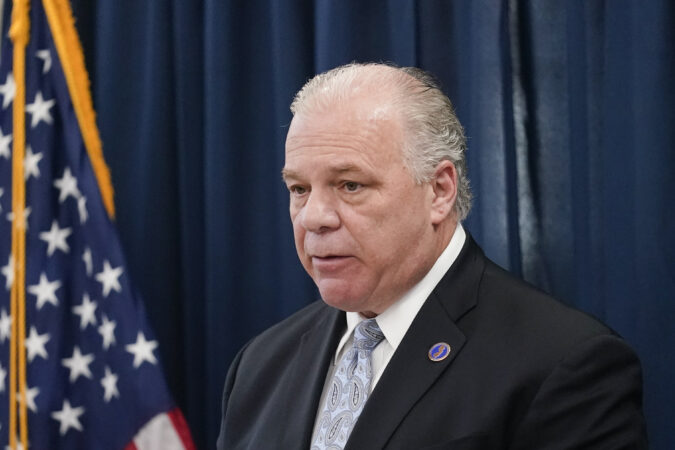
Former New Jersey Senate President Steve Sweeney, who finished last in the six-way Democratic primary for New Jersey governor in June, will receive a six-figure salary in Gloucester County for a new role.
The Gloucester County Board of Commissioners appointed Sweeney ascounty administrator at its public reorganizational meeting Friday night. The role has a salary rage of $191,308 to $287,168.
The resolution appointing Sweeney, 66,to the position is tucked away in an unsearchable 236-page packet posted online Friday afternoon, just hours before the meeting. It does not say what Sweeney will be paid, but the document specifies that the county will provide him with a vehicle that can be utilized for personal use — “as in the past,” the resolution notes.
Sweeney replaces Chad Bruner, the county’s longtime administrator who recently stepped down. Bruner chairs Rowan University’s Board of Trustees, which Sweeney joined in September.
The resolution easily won approval by the board, which is composed of five Democrats and two Republicans. All five Democrats voted yes. Republican Nicholas DeSilvio voted no, while Republican Chris Konawel Jr. abstained from voting in protest.
“They violated procedure, and I do believe that was an illegal meeting,” Konawel said Saturday morning.
Democratic commissioners wouldn’t allow him to object to a “consent agenda,” which would have let commissioners look more closely at each resolution on the agenda, Konawel said. He said he received a copy of the resolution just four hours before the meeting, and noted that the vote was scheduled during a meeting with no public comment period.
“The biggest thing for me is, we just handed somebody a $290,000 a year job, with no idea what his qualifications were,” Konawel said.
Sweeney’s contract will last 5 years, the maximum for the role.
Sweeney, a longtime friend of power broker George Norcross and an ironworker union leader, served the longesttenureas state Senate president,the most powerful position in New Jersey government aside from governor.
The Republican commissioners first found out that Sweeney was picked for the role through the rumor mill weeks ago when department heads were given a heads-up behind closed doors, Konawel said.
Konawel and DeSilvio each questioned Sweeney’s credentials in part because he didn’t attend college.
“I kind of thought that they would actually go through a process to pick somebody qualified. I didn’t think they would just give it to Steve Sweeney, but that’s what they did,” DeSilvio said.
Sweeney and Democratic leaders on the county board could not be reached on Friday for comment.
Since leaving the state Senate, Sweeney served as the founding chair of a think tank at Rowan University called the Steve Sweeney Center for Public Policy.
He attempted a political comeback last year, but his campaign for governor failed to gain traction outside of South Jersey and he did worse than expected even within the region.
As county administrator, Sweeney will overseeall county department heads and can sign off on all personnel actions. Thepowerful role also comes with the authority to help prepare the county budget, authorize payments, take part in board discussions (without voting power), inquire into county operations, and sign off on behalf of the clerk of the board if the clerk is absent.
County administrators are paid six-figure salaries throughout the state, but Gloucester County has developed a reputation for paying its administrator particularly well.
Bruner was the second highest paid county administrator in the state at $253,324 in 2023, according to data compiled by the Bergen Record. The highest county administrator salary that year was in Middlesex County, which has more than double the population of Gloucester, according to the Census Bureau. Sweeney’s starting salary was not stated at the meeting, according to Konawel.
Sweeney cannot be removed from the role without cause for the duration of his contract, and if he is, he will still receive his remaining salary, according to the resolution. He will be eligible for raises.
Attorney General Matt Platkin expressed disapproval over the position’s high salary last month, noting that Gloucester’s County administrator was making more than the governor, whose salary is $175,000 and will raise to $210,000 this year when Sherrill takes office.
“A county administrator making $100k more than the current governor’s salary is a pretty good argument to keep the comptroller as an independent agency to combat waste, fraud, and abuse in local government,” Platkin said in asocial media post in early December when the state legislature was considering an ultimately unsuccessful bill to limit the watchdog’s power.