Category: Politics

Political news and coverage

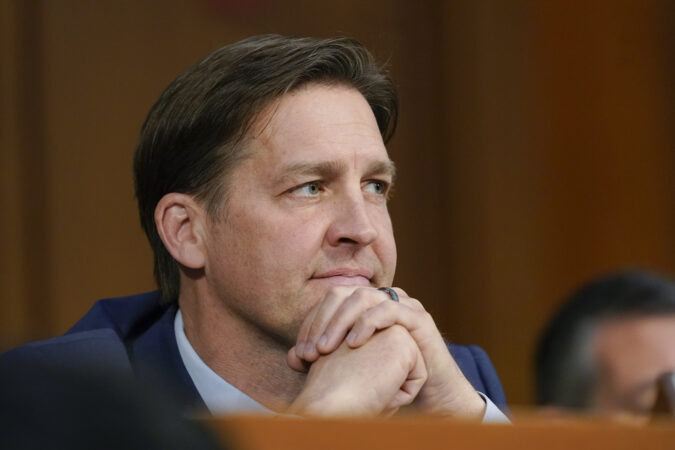
  • Republican former senator Ben Sasse says he has terminal cancer

    Republican former senator Ben Sasse says he has terminal cancer

    Former Republican senator Ben Sasse of Nebraska said Tuesday that he was diagnosed with terminal cancer and suggested he would not have long to live.

    “Last week I was diagnosed with metastasized, stage-four pancreatic cancer, and am gonna die,” Sasse wrote in a lengthy social media post Tuesday morning. “Advanced pancreatic is nasty stuff; it’s a death sentence. … Death is a wicked thief, and the bastard pursues us all. Still, I’ve got less time than I’d prefer.”

    Sasse, 53, was first elected to the Senate in 2014 as a political newcomer — he had previously served as president of Midland University in Nebraska. Sasse handily won reelection in 2020 but resigned from his seat partway through his second term to become president of the University of Florida. Sasse abruptly stepped down from that post last summer, citing concerns about his wife’s health.

    Nearly a year and a half later, Sasse said it was he who was facing grim news about his health. His terminal diagnosis, he wrote Tuesday, was “hard for someone wired to work and build, but harder still as a husband and a dad.”

    “I can’t begin to describe how great my people are. During the past year, as we’d temporarily stepped back from public life and built new family rhythms, [my wife] Melissa and I have grown even closer — and that on top of three decades of the best friend a man could ever have,” Sasse wrote.

    He continued by listing the achievements of his three children and hinted at undergoing possible treatments.

    “I’m not going down without a fight. One subpart of God’s grace is found in the jaw-dropping advances science has made the past few years in immunotherapy and more,” he wrote. “Death and dying aren’t the same — the process of dying is still something to be lived. We’re zealously embracing a lot of gallows humor in our house, and I’ve pledged to do my part to run through the irreverent tape.”

    After Donald Trump was elected to his first term in 2016, Sasse became an outsider in his own party. He was one of a handful of Republican senators who regularly spoke out against Trump and who tied Trump’s rhetoric and actions to the violent siege of the U.S. Capitol on Jan. 6, 2021. Trump periodically attacked Sasse, ridiculing him as “the least effective” GOP senator and calling him a “RINO,” or Republican in name only.

    Sasse was also one of the few GOP senators who supported moving forward with Trump’s impeachment trial. Because of that, Sasse faced the threat of censure in 2021 from the Nebraska Republican Party, which accused Sasse of, among more than a dozen purported offenses, having “persistently engaged in public acts of ridicule and calumny” against Trump. Sasse pushed back in a video message directed at party leaders.

    “Let’s be clear: The anger in this state party has never been about me violating principle or abandoning conservative policy. I’m one of the most conservative voters in the Senate. The anger’s always been simply about me not bending the knee to … one guy,” he said then.

    Ultimately, the Nebraska GOP voted to rebuke Sasse, stopping short of a censure. Though Sasse at one point considered leaving the Republican Party, he said he would remain “committed to the party of Lincoln and Reagan as long as there is a chance to reform.” In subsequent years, he described himself as an “independent conservative.” Earlier this month, he was named a nonresident senior fellow at the American Enterprise Institute, a conservative think tank.

    Public figures from across the political spectrum responded to Sasse’s announcement on Tuesday to wish him well.

    “I’m very sorry to hear this Ben. May God bless you and your family,” Vice President JD Vance wrote on X.

  • Controversial ’60 Minutes’ segment on Trump immigration policy leaks online

    Controversial ’60 Minutes’ segment on Trump immigration policy leaks online

    A news segment about the Trump administration’s immigration policy that was abruptly pulled from 60 Minutes was mistakenly aired on a TV app after the last minute decision not to air it touched off a public debate about journalistic independence.

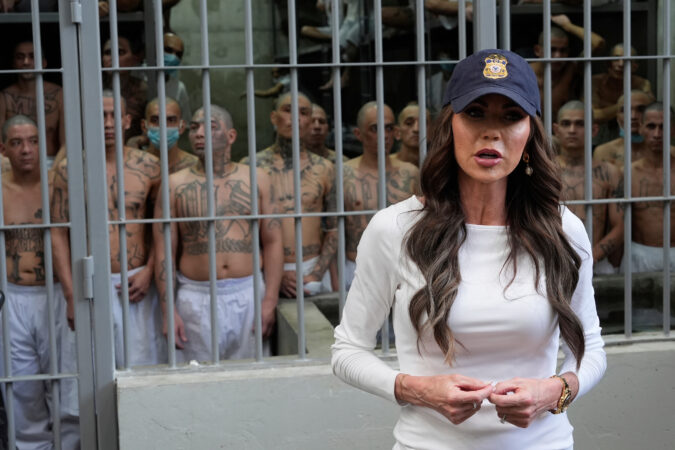
    The segment featured interviews with migrants who were sent to a notorious El Salvador prison called the Terrorism Confinement Center, or CECOT, under President Donald Trump’s aggressive crackdown on immigration.

    The story was pulled from Global Television Network, one of Canada’s largest networks, but still ran on the network’s app. Global Television Network swiftly corrected the error, but copies of it continued to float around the internet and pop up before being taken down.

    “Paramount’s content protection team is in the process of routine take down orders for the unaired and unauthorized segment,” a CBS spokesperson said Tuesday via email.

    A representative of Global Television Network did not immediately respond to a request for comment.

    In the story, two men who were deported reported torture, beatings, and abuse. One Venezuelan said he was punished with sexual abuse and solitary confinement.

    Another was a college student who said guards beat him and knocked out his tooth upon arrival.

    “When you get there, you already know you’re in hell. You don’t need anyone to tell you,” he said.

    The segment featured numerous experts who called into question the legal basis for deporting migrants so hastily amid pending judicial decisions. Reporters for the show also corroborated findings by Human Rights Watch suggesting that only eight of the deported men had been sentenced for violent or potentially violent crimes, using available ICE data.

    The decision to pull a critical account of the Trump administration was met with widespread accusations that CBS leadership was shielding the president from unfavorable coverage.

    The journalist who reported the story, Sharyn Alfonsi, said in an email sent to fellow 60 Minutes correspondents that the story was factually correct and had been cleared by CBS lawyers and its standards division.

    CBS News chief Bari Weiss said Monday that the story did not “advance the ball” and pointed out that the Trump administration had refused to comment for the story. Weiss said she wanted a greater effort made to get its point of view and said she looked forward to airing Alfonsi’s piece “when it’s ready.”

    The dispute put one of journalism’s most respected brands — and a frequent target of Trump — back in the spotlight and amplified questions about whether Weiss’ appointment is a signal that CBS News is headed in a more Trump-friendly direction.

  • Millions of dollars for homeless services in Bucks and Montgomery Counties are at risk under new Trump administration plan

    Millions of dollars for homeless services in Bucks and Montgomery Counties are at risk under new Trump administration plan

    Millions of dollars in federal funding for homeless services are at risk after the Trump administration on Friday moved forward with a plan to cut support for most long-term housing programs that serve people otherwise without stable shelter, according to officials in Bucks and Montgomery Counties.

    The plan, which is still being fought in court after the Department of Housing and Urban Development released an earlier iteration of the policy shift in November, seeks to upend the way communities across the nation, including Philadelphia, treat people experiencing homelessness and would reroute the spending of $3.9 billion in grants for a program called Continuum of Care that localities rely on to fund housing programs.

    The latest development came Friday night, when HUD appeared to respond to a judge’s ruling in the legal battle by issuing a new set of rules to apply for the federal awards. The new HUD document reduced the amount of funding available for permanent housing by two-thirds, a drastic decrease, said Kayleigh Silver, administrator of the Montgomery County Office of Housing and Community Development.

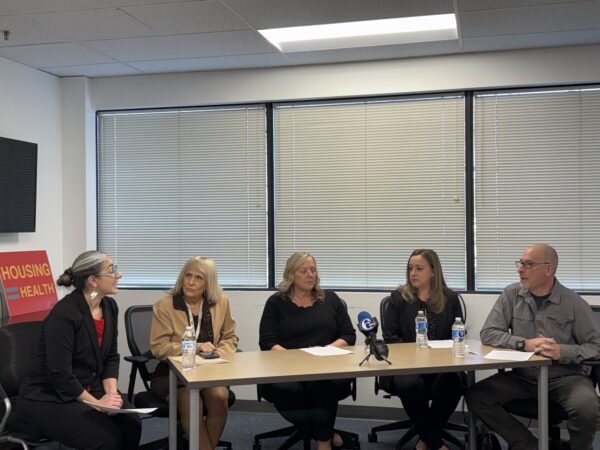
    The new plan “we believe will worsen homelessness and destabilize communities, not improve them,” said Kristyn DiDominick, executive director of the Bucks-Mont Collaborative, at a news conference Monday in Warminster. The nonprofit fosters resource sharing between the two counties.

    Officials said hundreds of people in the counties, including families, veterans, and people with disabilities, could lose access to housing as a result of the funding shift. Nationwide, the HUD plan could displace 170,000 people by cutting two-thirds of the aid designated for permanent housing, advocates say. In Philadelphia, tens of millions of dollars used to fund the city’s 2,330 units of permanent supportive housing are at risk, city officials said in November

    Bucks County Commissioner Diane Ellis-Marseglia, a social worker by trade, said HUD broke its “promise” to continue providing support to programs.

    “If we can’t trust HUD, how are we supposed to get the people we work with to trust us?” said Ellis-Marseglia, a Democrat.

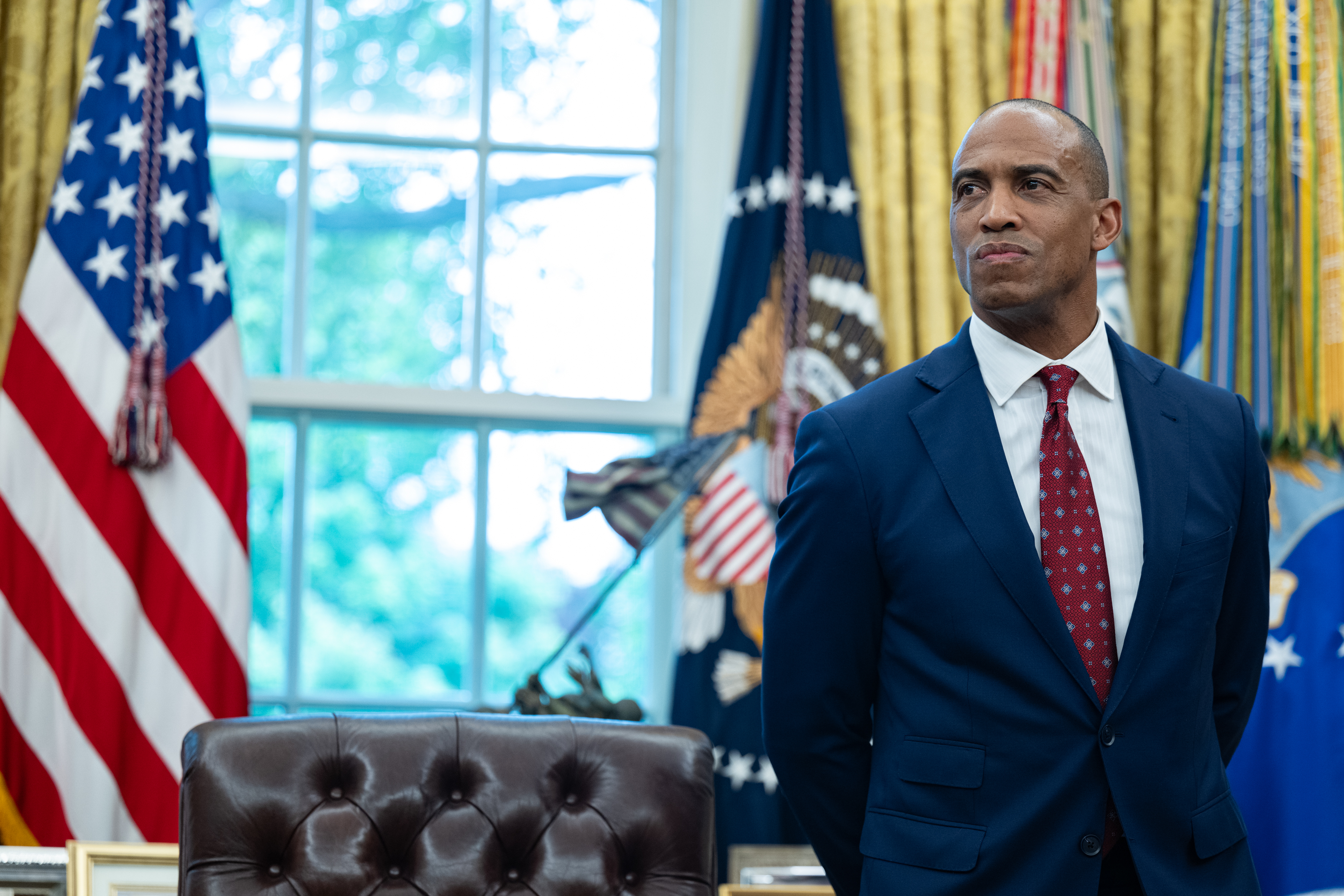
    Secretary of Housing and Urban Development Scott Turner in the Oval Office on May 5.

    The HUD announcement followed two lawsuits, including one from Pennsylvania Gov. Josh Shapiro and 20 other states’ attorneys general and governors, against President Donald Trump’s administration over the cuts included in the November draft of the plan.

    The earlier plan gave HUD the authority to restrict funding for groups that recognize the existence of transgender and nonbinary people, populations that face greater risks for homelessness. County officials are still seeking clarification on whether that provision remains in the new plan.

    HUD temporarily rescinded the controversial plan on Dec. 8, just hours before a hearing on the lawsuits, citing an intent to revise it. On Friday, U.S. District Judge Mary S. McElroy, who presided over the hearing, issued a preliminary injunction blocking HUD’s efforts until a new funding notice is issued. It remained unclear to local advocates and service providers the differences between the new plan posted later that night and the original.

    “HUD will continue working to provide homelessness assistance funding to grantees nationwide. The Department remains committed to program reforms intended to assist our nation’s most vulnerable citizens and will continue to do so in accordance with court orders,” a spokesperson for the department said in a statement to The Inquirer.

    The confusing standoff marks the latest obstacle that nonprofits have had to endure after a lengthy federal government shutdown and Pennsylvania’s state budget impasse, both of which contributed to funding delays and instability.

    It also signifies a turn away from the “Housing First” mindset, which prioritizes giving permanent housing to people who are homeless as a foundation for bettering their quality of life, according to the National Alliance to End Homelessness. In a post on X on Saturday, HUD Secretary Scott Turner called the strategy “failed.”

    Bucks and Montgomery County service providers and advocates at Monday’s news conference handed out literature that said “Chaos isn’t a strategy” and called on Congress to step in, noting that the funding process is months behind.

    The impacts “land on real people,” DiDominick said.

    Housing is also an important resource for survivors of domestic violence, said Stacy Dougherty, executive director of Laurel House, a domestic violence organization in Montgomery County.

    “For victims of domestic violence, access to safe housing can be the difference between staying in an abusive relationship and being able to leave, and sometimes even the difference between life and death,” Dougherty said.

    Erin Lukoss, CEO of the Bucks County Opportunity Council, added that “housing is the foundation,” a backbone for the entire system that tries to address poverty and food insecurity. A lack of clarity on this funding is another stressor for service providers and those who benefit from the resources

    “What makes this moment especially concerning is not just the potential reduction in funding, it’s the instability of the rules themselves,” Lukoss said.

  • Second big batch of Epstein files includes many mentions of Trump

    Second big batch of Epstein files includes many mentions of Trump

    Three days after releasing a large tranche of Jeffrey Epstein documents that contained few mentions of President Donald Trump, the Justice Department disclosed thousands more files that included wide-ranging references to the president.

    The documents show that a subpoena was sent to Mar-a-Lago in 2021 for records that pertained to the government’s case against Ghislaine Maxwell, Epstein’s accomplice in sex trafficking. They include notes from an assistant U.S. attorney in New York about the number of times Trump flew on Epstein’s plane, including one flight that included just Trump, Epstein, and a 20-year-old woman, according to the notes.

    The newly released documents also include several tips that were collected by the FBI about Trump’s involvement with Epstein and parties at their properties in the early 2000s. The documents do not show whether any follow-up investigations took place or whether any of the tips were corroborated.

    In a statement Tuesday morning, the Justice Department said: “Some of these documents contain untrue and sensationalist claims made against President Trump” that it characterized as “unfounded and false.”

    “Nevertheless, out of our commitment to the law and transparency, the DOJ is releasing these documents with the legally required protections for Epstein’s victims,” the statement said.

    The documents were available for several hours Monday afternoon and evening on the Justice Department website but appeared to have been taken down around 8 p.m. The Washington Post downloaded the full set of files while they were accessible. The department reposted the files on its website shortly before midnight Monday night. It was not immediately clear whether officials had done any further redactions of the documents before posting.

    The department did not immediately respond to questions about why the documents had been posted and then apparently removed. The White House also did not respond to requests for comment about the newly released documents.

    Being mentioned in a mass trove of investigatory documents does not demonstrate criminal wrongdoing. Trump has not been accused of being involved in Epstein’s criminal activities. It has long been known that Trump had a years-long friendship with Epstein that ended in the early 2000s.

    The president has said he did not know about Epstein’s criminal behavior, and his spokesperson has said he kicked Epstein out of his Mar-a-Lago Club for being a “creep.”

    Epstein, a wealthy financier and convicted sex offender, died in 2019 while in federal custody awaiting trial on sex-trafficking charges. His death was ruled a suicide.

    The files include correspondence among prison officials about Epstein’s psychological assessments, with discussions about holding him in a special housing unit about two weeks before he died.

    “We have supporting memorandums from the responding officers who indicated they observed inmate Epstein with a makeshift noose around his neck,” one of the emails stated.

    At one point, the documents indicate, prison officials planned to house Epstein in a cell with Cesar Sayoc, a fanatical supporter of Trump’s who in 2019 was sentenced to 20 years in prison after he mailed explosive devices to prominent Democrats and media figures.

    The Federal Bureau of Prisons did not respond to requests for comment about Epstein’s incarceration.

    Also included in this batch of files are a large number of documents related to objections filed by Epstein’s victims in 2008 after Alex Acosta, the U.S. attorney in Miami, reached an agreement not to prosecute Epstein on federal charges in return for his pleading guilty to less-serious state charges of soliciting prostitution from a minor.

    There is a 22-page memo from the criminal division of the Justice Department to authorities in the United Kingdom, seeking to interview “material witness PA,” a reference to Prince Andrew. It outlines what has been uncovered about him and seeks a voluntary interview. Andrew Mountbatten-Windsor, the brother of King Charles III, was recently stripped of his royal titles, including that of prince, because of his links to Epstein.

    The files are being released in compliance with a law passed by Congress last month that mandated the disclosure of Epstein-related documents. Trump signed the measure into law, but on Monday, he repeated some of his long-standing objections to the disclosures.

    Asked about the Justice Department’s release on Friday of photos of former President Bill Clinton with Epstein, Trump, who has called on the department to investigate Clinton and other Democrats, suggested that he had some sympathy for the former president.

    “I don’t like the pictures of Bill Clinton being shown. I don’t like the pictures of other people being shown. I think it’s a terrible thing,” he told reporters during an event at Mar-a-Lago. “Bill Clinton’s a big boy. He can handle it, but you probably have pictures being exposed of other people that innocently met Jeffrey Epstein years ago. Many years ago. And they’re, you know, highly respected bankers and lawyers and others.”

    Trump was responding to questions about Epstein at an event at Mar-a-Lago on Monday at which he announced he would be overseeing the development of a new class of Navy battleship named after himself.

    “Everybody was friendly with this guy, either friendly or not friendly,” Trump said. “But I mean, he was around. He was all over Palm Beach and other places. The head of Harvard was his best friend — Larry Summers — and Bill Clinton was a friend of his, but everybody was. I actually threw him out of Mar-a-Lago.”

    The wave of files released Friday had few documents that mentioned Trump, even while administration officials have acknowledged that the president’s name is included multiple times throughout the files.

    The initial batch, however, included a number of photographs of Clinton, who appeared in a swimming pool and a hot tub, as well as in more formal settings or posing with Michael Jackson.

    Clinton spokesman Angel Ureña suggested Monday that the administration had engineered the releases to shield Trump, something Deputy Attorney General Todd Blanche has denied. On Monday, Ureña issued a statement on X demanding that all photographs and documents related to Clinton be released immediately.

    “What the Department of Justice has released so far, and the manner in which it did so, makes one thing clear: someone or something is being protected,” Ureña said in the statement. “We do not know whom, what or why. But we do know this: We need no such protection.”

    The new documents at times provide a window onto what federal prosecutors had been examining, as well as their awareness of ties that Epstein had with Trump.

    In January 2020, during Trump’s first term, for example, an assistant U.S. attorney in the Southern District of New York wrote an internal email about a review of flight records the day before as part of the government’s case against Maxwell, who was convicted in 2021 of sex trafficking.

    “For your situational awareness, wanted to let you know that the flight records we received yesterday reflect that Donald Trump traveled on Epstein’s private jet many more times than previously has been reported (or that we were aware), including during the period we would expect to charge in a Maxwell case,” the email states.

    There were at least eight flights, the prosecutor wrote, between 1993 and 1996 in which Trump was a passenger. On at least four of those flights Maxwell was also present.

    In some cases, the prosecutor wrote, there were passengers who could be called as possible witnesses in a case against Maxwell.

    “We’ve just finished reviewing the full records (more than 100 pages of very small script) and didn’t want any of this to be a surprise down the road,” the prosecutor wrote.

    The full reason for the subpoena to Mar-a-Lago was not immediately clear, but an assistant U.S. attorney had been seeking past employment records from Trump’s club that were relevant in the case against Maxwell.

    “I have not been able to locate anyone who recalls [redacted] working at Mar a Lago in 2000,” the federal prosecutor wrote in an internal email.

    The subpoenas issued to Mar-a-Lago were also included in the latest documents. Attached to one of the subpoenas was a letter dated Feb. 12, 2015, on Mar-a-Lago letterhead, in which officials of the club indicate that they don’t have the employment records from 1999 to 2001 that federal agents are seeking. They found an employee by the name they were seeking on a 2000 spreadsheet but could not confirm it was the same person without more identifying information.

    Trump on Monday also grew annoyed with reporters who asked him about Epstein.

    “What this whole thing is with Epstein is a way of trying to deflect from the tremendous success that the Republican Party has,” he said. “Like, for instance, today we’re building the biggest ships in the world, the most powerful ships in the world, and they’re asking me questions about Jeffrey Epstein. I thought that was finished.”

  • Former Trump national security adviser H.R. McMaster says Americans should ‘have a say’ on strikes against Venezuelan boats

    Former Trump national security adviser H.R. McMaster says Americans should ‘have a say’ on strikes against Venezuelan boats

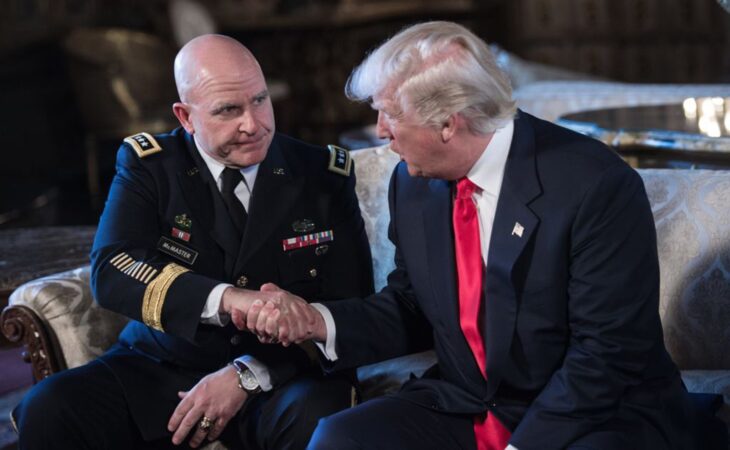
    Americans should “have a say” in the Trump administration’s unilateral decision to use military force against Venezuelan boats, according to H.R. McMaster, former national security adviser during the first Trump administration, and a retired lieutenant general who grew up in Roxborough.

    Being honored Jan. 16 at the Museum of the American Revolution’s 320th birthday celebration of Benjamin Franklin, McMaster was interviewed by The Inquirer last week. He offered a brief but wide-ranging discussion on foreign policy and military matters. McMaster will be named the 2026 Franklin Founder honoree during the annual Philadelphia event that celebrates the life and legacy of Franklin. McMaster is scheduled to speak about the role of the military in a democracy.

    “A comprehensive explanation for bombing boats is lacking,” McMaster said in the interview, referencing the attacks on vessels allegedly carrying drugs that find their way to the United States, which have resulted in around 100 deaths since early September. “The American people should have a say through Congress.” The Trump administration has said it has complete authority to conduct the attacks.

    McMaster said certain questions must be answered, such as whether the strikes are a “just cause,” and whether the right to conduct the missions is within the purview of presidential power under Article II of the U.S. Constitution.

    McMaster didn’t discuss the ongoing controversy about whether U.S. forces were justified in killing two survivors of a Sept. 2 attack on a Venezuelan boat. Defense Secretary Pete Hegseth is refusing to release video showing the killing of two men clinging to wreckage in the Caribbean Sea.

    McMaster, 63, is a historian and senior fellow at the conservative Hoover Institution at Stanford University who served 457 days in the Trump administration, from February 2017 to April 2018. He left after disagreements with Trump over foreign policy and internal dynamics.

    Trump considered using force against drug smuggling during his first term, McMaster said, when the president asked his staff, “Why don’t we just bomb the drugs?” coming out of Mexico.

    Military intervention was avoided, McMaster said, after he “huddled a team” and won “unprecedented cooperation” with the Mexican government to fight the flow of drugs.

    Addressing other military matters, McMaster discussed the widely reported meeting of military commanders called by Hegseth in September.

    One of Hegseth’s main messages was there’s no place for “wokeness” in the military, saying too many uniform leaders were being promoted “for the wrong reasons — based on their race … gender quotas [and] based on historic so-called firsts.” He added he wants “no more … DEI programs or dudes in dresses. No more climate change worship.”

    While he agrees with much of what Hegseth said, McMaster explained, the secretary was speaking to the wrong people: “There are no woke generals and admirals,” McMaster said. “They had been following unwise directives from senior civilian officials pushing an extreme social agenda in the Biden administration.” Under Biden, McMaster concluded, the military had come to “valorize victimhood.”

    Civilian guidance on so-called woke matters isn’t needed in a self-policing entity such as the military, McMaster said: “Yes, there have been criminals and sexists in the military, but hell, we threw them out ourselves.”

    McMaster also said he doesn’t have a problem with the Trump administration deploying National Guard troops to U.S. cities such as Los Angeles; Chicago; Memphis; Washington, D.C.; and Portland, Ore. “It’s the president’s right to do so, allowing local law enforcement to enforce the law,” he said. “Regrettably,” he said, local authorities have resisted guard placement, especially in Oregon and California, where Democratic governors are in charge. “This is an example of how partisan politics can undermine our ability to work together,” he said.

    As a former insider in a Trump-led administration, McMaster has said in previous writing that he’d witnessed the machinations of the White House, including “exercises in competitive sycophancy” among officials in Oval Office meetings. McMaster didn’t comment on the atypically blunt revelations by Trump chief of staff Susie Wiles in Vanity Fair.

    He’s written that Trump is a “flawed commander in chief: mercurial, inconsistent, and easily distracted.” But, he added, Trump’s erratic course reversals can be helpful, because they make him unpredictable to our adversaries.

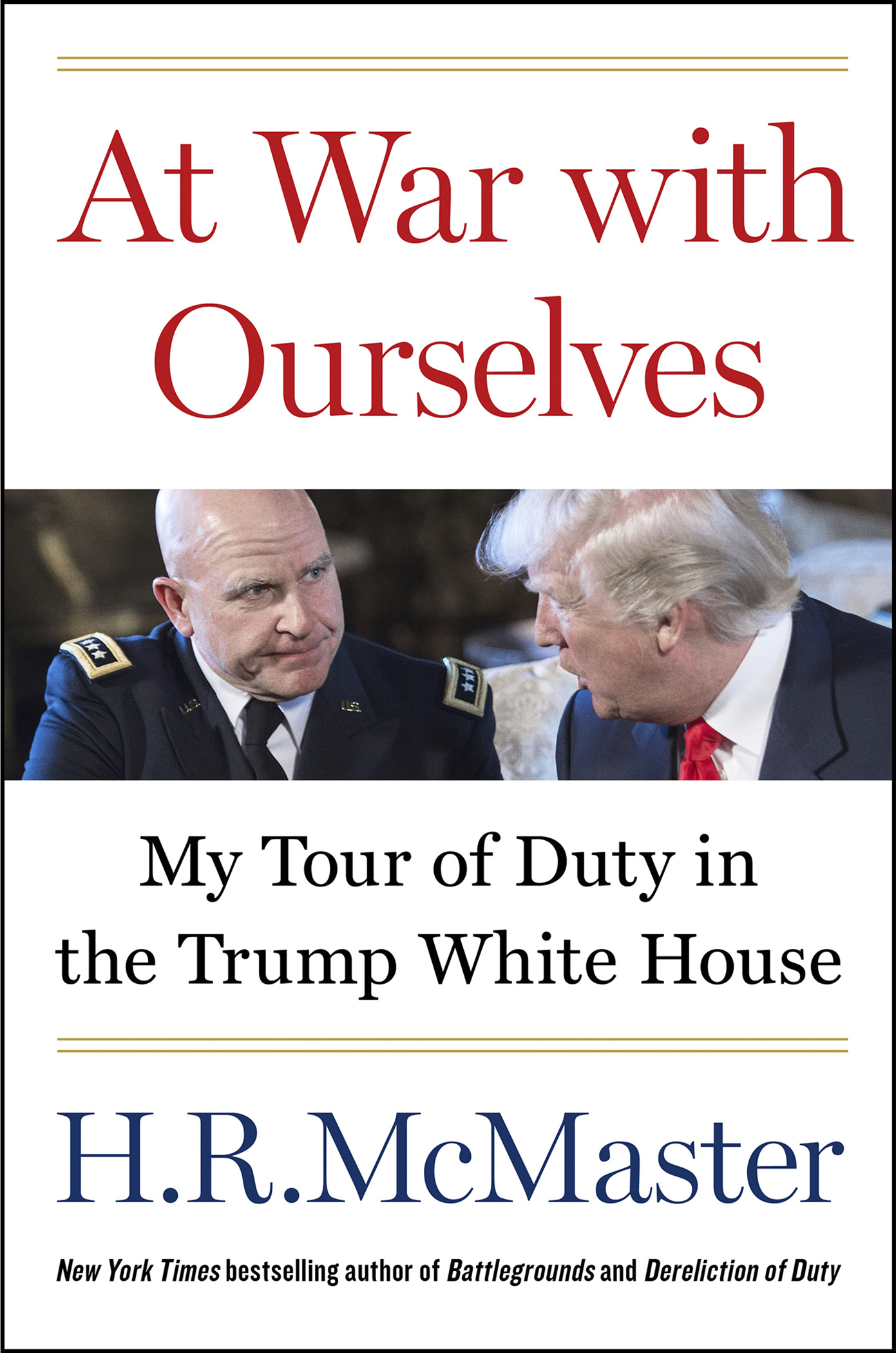
    This cover image released by Harper shows “At War with Ourselves: My Tour of Duty in the Trump White House” by H.R. McMaster.

    Despite his time in the inner sanctum of the Trump administration, McMaster would write in his book, At War With Ourselves: My Tour of Duty in the Trump White House, that he’d been unable to foresee Trump’s “persistent false claims of widespread election fraud [in 2020] and his encouragement of a mob [on Jan. 6] to conduct the most significant attack on the U.S. Capitol since August 1814,” when British troops set fire to the White House.

    The partisanship that helped spur the attack is a continued threat to the republic, McMaster said in the interview with The Inquirer, referencing Franklin, “who feared factionalism.”

    Each year, the Franklin celebration highlights a theme that connects Franklin’s work to current social issues and concerns. In receiving the Franklin Founder Award, McMaster joins company with others from a wide variety of fields:

    John Mather, an astrophysicist who won a Nobel Prize, was the 2025 winner. He helped develop the James Webb Space Telescope, connecting with Franklin who uncovered important principles in electricity, marine oceanography, magnetism, and aeronautics.

    In 2020, the centennial anniversary of Congress’ act to grant women the right to vote, awards went to Linda Greenhouse for her coverage of the Supreme Court for the New York Times, as well as to Cokie Roberts, political commentator and author.

    The 2016 award went to pediatrician Paul Offit from Children’s Hospital of Philadelphia as well as the Perelman School of Medicine. Offit is the co-inventor of the rotavirus vaccine, and an author and public speaker. This topic was closely aligned with Franklin, whose civic involvement included creation of the first public hospital. Offit has frequently sparred with Health Secretary Robert Kennedy Jr. over the issue of vaccines.

    McMaster is a graduate of Norwood-Fontbonne Academy (formerly Norwood Academy for Boys, and Fontbonne for girls), a private Catholic school in Chestnut Hill. He also graduated from Valley Forge Military Academy, which will be closed in the spring (it doesn’t affect Valley Forge Military College, which shares a campus with the academy in Wayne).

    McMaster went on to the U.S. Military Academy at West Point, and was a U.S Army Officer for 34 years. His career included combat service in the Gulf War. Afterward, he returned to teach history at West Point and earned a Ph.D. in history from the University of North Carolina-Chapel Hill.

  • Ted Cruz weighs another presidential run, setting up clash with Vance

    Ted Cruz weighs another presidential run, setting up clash with Vance

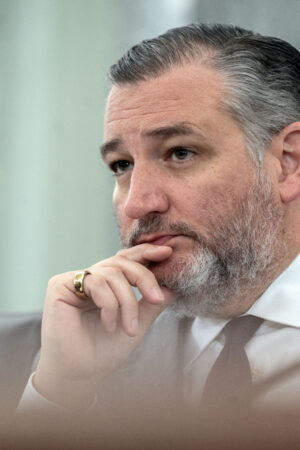
    Sen. Ted Cruz sat down with a longtime ally in November at an office near D.C.’s Union Station to discuss the future of the Republican Party. Before long, the discussion touched on his own future.

    His friend Morton Klein, president of the Zionist Organization for America, told Cruz he believed that “Jew hatred and Israel bashing” was on the rise on the right — and that something had to be done about it. Cruz, who had begun a series of speeches decrying antisemitism in the GOP, told Klein he had been fielding requests from people urging him to run for president in 2028.

    Cruz came across as someone “seriously” considering such a run, Klein recalled.

    With the future of the party up for grabs in a Donald Trump-less 2028 primary, Cruz has in recent months positioned himself as a loud voice for a more traditional, hawkish Republican foreign policy. He’s also urging the GOP to rid itself of popular MAGA pundit Tucker Carlson, whom he argues is injecting the “poison” of antisemitism into the movement with his broadsides against Israel. Carlson has rejected that characterization.

    As he feuds with Carlson, Cruz is weighing a second presidential bid, according to a person close to the senator and another briefed on his thinking, who spoke like others on the condition of anonymity to disclose internal conversations. A White House run would be politically risky for Cruz, 55, putting him on course to collide with Vice President JD Vance, whom many Republicans expect to enter the 2028 race.

    Friction is already evident behind the scenes: Cruz has criticized Vance, a close ally of Carlson, to Republican donors, according to two people familiar with the comments. The senator has warned that Vance’s foreign policy views are dangerously isolationist, the people said. (Vance has been one of the GOP’s most prominent skeptics of U.S. intervention abroad.)

    The emerging rivalry shows how much the party has changed under Trump’s leadership since Cruz arrived in the Senate in 2013. After rising to prominence as a rebel against the establishment, Cruz is now a vocal champion of some longtime orthodox GOP positions, as a new generation of conservatives is ascending with a different vision.

    Some political observers are skeptical that another Cruz run would gain much traction. He can no longer run as an outsider and alienated some conservatives with his fight against Trump in the 2016 campaign. Still, Cruz has built name recognition and relationships with plenty of activists and donors across the country in recent years, and it’s far from clear what will animate the base in the next GOP primary.

    “Can Ted help craft or meld together the traditional Republican approach with the new reality of what the Republican Party is now?” asked Daron Shaw, a political science professor at the University of Texas who overlapped with Cruz as a staffer on George W. Bush’s presidential campaign. “It’s a heavy lift.”

    The day after his chat with Klein, Cruz called Carlson “a coward” during a speech before a group supporting Jewish conservatives in Las Vegas, again denouncing the “poisonous lies” of antisemitism. He said they were “blessed” to have Trump, who “loves the Jewish people,” in the White House right now.

    “When Trump is not in the White House, what then?” he asked in his booming voice.

    “Ted Cruz!” an audience member shouted.

    The senator just smiled, then continued his speech.

    “All of us hate Ted Cruz”

    Anyone considering a run for the GOP nomination in 2028 faces a big obstacle: Vance.

    The 41-year-old vice president leads early polls and is seen as a loyal lieutenant to Trump, who maintains high support from the party base even as the president’s approval ratings have plummeted.

    But Trump has been noncommittal about endorsing his running mate as heir to his Make America Great Again movement, leaving an opening for an ambitious conservative with a different vision for the party.

    “The Republicans will be fighting for their identity,” Rep. Marjorie Taylor Greene (R., Ga.) said of the 2028 primary. Greene, a close ally of Carlson who represents the populist and isolationist wing of the party, added: “There’ll be Ted Cruz, I’m sure, running against JD Vance. All of us hate Ted Cruz.”

    Cruz has adapted to changes in his party over several decades in politics. Following a stretch in the establishment during Bush’s 2000 campaign, he became solicitor general of Texas in 2003 and launched a Senate campaign in 2011 as a tea-party-infused change agent, defeating the lieutenant governor in the GOP primary.

    “The best thing to happen to the Republican Party was to get its teeth kicked in in 2008,” Cruz said during a 2012 campaign event with the libertarian Ron Paul.

    When he arrived in Washington, Cruz picked fights over spending and President Barack Obama’s healthcare law, sparking a government shutdown in 2013. Not everyone in his party liked his style. “If you killed Ted Cruz on the floor of the Senate, and the trial was in the Senate, nobody could convict you,” Sen. Lindsey Graham (R., S.C.) joked at a 2016 press dinner.

    Cruz brought his insurgent pitch into the 2016 presidential race, but Trump caught fire with an antiestablishment campaign that dramatically eclipsed the senator’s. After bowing out of the GOP race as the last major Trump opponent standing, Cruz told delegates at the Republican National Convention that year to “vote your conscience,” instead of throwing his support behind Trump, who had branded him as “Lyin’ Ted.” He returned to the Senate, where he is now chair of the Commerce Committee and has refashioned himself into a bipartisan dealmaker on aviation safety and other issues.

    The Texas senator, who has called himself a “noninterventionist hawk” and has long been a vocal ally of Israel, argues that an anti-Israel foreign policy could embolden terrorists. And he is a defender of the benefits of traditional capitalism at a time when some in the New Right are calling for a more populist turn.

    “Those who are anti-Israel quickly become anti-capitalist and anti-American,” Cruz said in a brief interview about his decision to speak out against Carlson. “Tucker’s obsession is unhealthy and dangerous.”

    By targeting Carlson and growing anti-Israel sentiment within the party, Cruz has hit upon a division within the GOP base that some believe could animate the 2028 primaries. Carlson is closely allied with Vance, a onetime Trump critic who is now an America First populist, embracing skepticism of some big-business interests and rejecting the U.S. foreign policy status quo.

    Cruz is staking out positions against isolationism and antisemitism at a time when explicitly antisemitic figures such as white supremacist commentator Nick Fuentes are gaining an audience on the right.

    Vance, by contrast, has rejected the suggestion that the right has a problem with antisemitism after Carlson hosted Fuentes for a friendly interview. (The vice president disavowed Fuentes months before the interview and has not explicitly weighed in on Carlson hosting him.)

    It’s “kind of slanderous to say that the Republican Party, the conservative movement, is extremely antisemitic,” Vance said in a recent interview with NBC News. In a social media post last week, Vance criticized a news article claiming antisemitism was rising among young people.

    “I would say there’s a difference between not liking Israel (or disagreeing with a given Israeli policy) and antisemitism,” he replied to one user.

    Asked to respond to Vance’s comment, Cruz said he is not in agreement with “people who are anti-Israel or people who are antisemitic.”

    “Every Hamas or Hezbollah or IRGC terrorist that Israel took out makes Americans safer,” Cruz said, referencing militants in Gaza, Lebanon, and Iran that the United States designates as terrorist groups. “And those who don’t see that are not acting in accordance with American national security interests.”

    The feud

    In early July, Cruz sat down in Washington with Israel’s prime minister and delivered a dire warning. Over cigars at Blair House, Cruz told Benjamin Netanyahu that antisemitism on the right was rising to a level he had never seen before.

    “No, Ted,” Netanyahu responded, according to Cruz, who recounted the conversation in a speech. “That’s Qatar, that’s Iran, that’s astroturf, that’s paid for.”

    But Cruz said he was not placated. Replies to his social media posts were flooded with anti-Jewish bigotry from what looked to him like ordinary, real people. He began to fear that what he saw as antisemitism on the left was beginning to infect the right, he said.

    In June, Cruz sat for an interview with Carlson that grew heated over the topic of Israel. Cruz suggested that Carlson criticizes Israel more than other countries because of bigotry toward Jews. Carlson said he has many Jewish friends who have the same questions as him and grilled Cruz with factual questions on the Middle East. In an uncharacteristic lapse, Cruz failed to identify the population of Iran. “You don’t know the population of the country you seek to topple?” Carlson asked.

    Since then, the two have savaged each other in increasingly personal terms. Carlson has called Cruz “vulgar and dumb and reckless” for connecting U.S. military support for Israel to a biblical responsibility to defend the Holy Land and God’s chosen people. After Carlson hosted Fuentes on his podcast this fall, Cruz called on Republicans to repudiate the pundit.

    Carlson “decided Jews are the source of all evil in the world,” Cruz said in a recent podcast. The senator also posted a digitally altered sexually suggestive photo of Carlson to critique his friendly stance toward Qatar, a U.S. ally with which Israel has clashed.

    Since the killing of conservative influencer Charlie Kirk, internal battles about the future of the GOP have spilled into the open, many centering on the true meaning of “America First” as Trump spends time and political capital on Ukraine, Israel, and Venezuela. Carlson criticized Trump’s decision to strike Iran’s nuclear sites in June and has warned the president against pursuing regime change in Venezuela, a goal Cruz shares.

    “What Ted is trying to do is say, this is where our voters are,” said one person close to the senator. “Trump and Ted are much more aligned on foreign policy than Trump and Tucker are.”

    Few Republicans have publicly rallied to Cruz’s side.

    “I can tell you, my colleagues, almost to a person, think what is happening is horrifying,” Cruz said in one speech on Carlson. “But a great many of them are frightened because he has one hell of a big megaphone.”

    Rep. Dan Crenshaw (R., Texas) said he “applauds” Cruz for speaking out against Carlson. But others declined to weigh in.

    Sen. Tommy Tuberville (R., Ala.), a close Trump ally, said he believes the back-and-forth is personal. “Sometimes when you get embarrassed, you get mad, get your feelings hurt,” he said.

    Sen. Richard Blumenthal (D., Conn.) said he is surprised but happy that Cruz has the “courage” to challenge such a powerful figure on the right. “To give Senator Cruz due credit, it requires some guts and gumption to stand up against Tucker Carlson,” he said.

    As Carlson and Cruz have attacked each other, Trump has declined to take sides, calling Carlson a “nice guy” and Cruz a “good friend” in recent months.

    Carlson has said he thinks “antisemitism is immoral, and I am against it.” He argues the feud is just politics. “All [Cruz] wants is to be president. That’s all he’s ever wanted,” Carlson said in an interview. “As a political matter, he somehow thinks that calling me a Nazi is going to get him the nomination because it’s going to hurt JD Vance.” (Cruz has not publicly used that word to described Carlson.)

    Rep. Ryan Zinke (R., Mont.), who argued that Cruz damaged his credibility with conservatives after spurning Trump in 2016 but later recovered his standing, said Cruz “always has an eye on running.”

    “Ted stakes out his position pretty well, and so were he to run, we know where he is,” Zinke said.

    So far, there are few signs that Cruz is gaining an advantage. Hal Lambert, a major GOP donor who helped organize a super PAC to support Cruz when he ran for president in 2016, said he thinks a 2028 bid would be tricky for the senator.

    “If JD Vance is running, I’m going to be supporting JD Vance,” Lambert said.

    “I just don’t understand what the platform would be,” he said of Cruz’s potential run. “The platform would be, I’m Ted, and that’s JD?”

  • Gov. Josh Shapiro schedules a book tour as he stands for reelection, and builds his 2028 profile

    Gov. Josh Shapiro schedules a book tour as he stands for reelection, and builds his 2028 profile

    Days before his memoir is set to hit shelves Pennsylvania Gov. Josh Shapiro will kick off his book tour at Philadelphia’s Parkway Central Library on Jan. 24.

    Shapiro will swing through Philadelphia, New York and Washington, D.C., in the final week of January to promote his book Where We Keep the Light: Stories from a Life of Service, according to events posted online.

    The tour and the book, set for release Jan. 27, will fuel speculation about a potential presidential run in 2028 as Shapiro works to expand his national profile as he also seeks reelection in Pennsylvania next year.

    The forthcoming memoir is expected to detail his life and political career, including the attempted arson attack on the governor’s mansion while he, and his family, slept inside earlier this year on Passover.

    Shapiro, who grew up in Montgomery County and first forged his political brand there, has become a leading figure in the national Democratic Party. The memoir will delve into his vetting to serve as Vice President Kamala Harris’ running mate last year, according to the publicized summary.

    In her own memoir, 107 Days, Harris cited Shapiro’s ambition as a reason she ultimately didn’t ask him to be her vice president and instead opted for Minnesota Gov. Tim Walz. Shapiro remained a regular presence on the campaign trail despite the snub, but Harris’ loss in Pennsylvania has caused much scrutiny of her decision.

    The Pennsylvania governor, Harris wrote, would be unable to “settle for a role as number two” and questioned her about whether he could get Pennsylvanian’s artwork in the vice president’s residence.

    In an interview with the Atlantic, Shapiro called the depiction “complete and utter bulls—.”

    Shapiro also features prominently — and negatively —in Sen. John Fetterman’s memoir.

    The Democratic senator, who has publicly feuded with the governor, described the tension between Pennsylvania’s two top Democrats, which traces back to their time together on the Pennsylvania Board of Pardons when Fetterman was lieutenant governor and Shapiro was state attorney general.

    It’s unclear whether Shapiro will discuss his relationship with Fetterman in the memoir.

    Shapiro’s book tour will kick off at a 3 p.m. event at the Parkway Central Library on Jan. 24. He will also speak at the Kauffman Concert Hall in New York on Jan. 27 and Sixth and I, a historic synagogue and Jewish cultural center in Washington, D.C., on Jan. 29.

  • Heritage staffers walk out amid latest strife at MAGA institution

    Heritage staffers walk out amid latest strife at MAGA institution

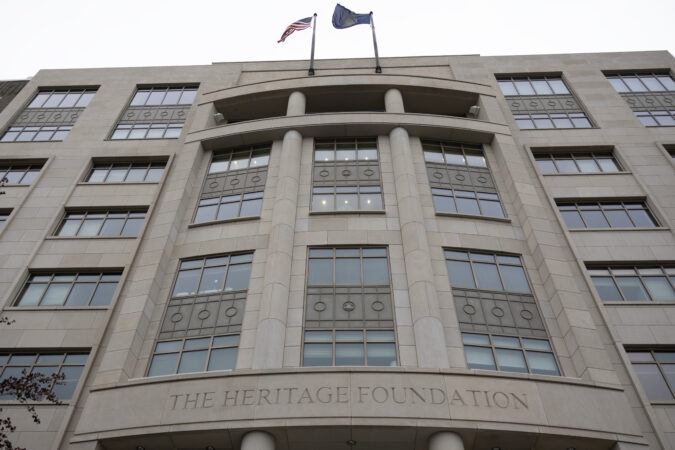
    More than a dozen employees of the Heritage Foundation walked away from their jobs over the weekend as the right-wing think tank struggles with allegations of antisemitism and as the conservative movement grapples with its post-Trump future.

    “This weekend, most of our staff, from our legal and economic centers, are departing immediately,” Heritage President Kevin Roberts wrote in a Sunday night email to staff obtained by the Washington Post. “We wish them well, though the manner of their departures speaks volumes.”

    Heritage has been wrapped in controversy for more than a month after Roberts defended former Fox News host Tucker Carlson’s interview of Nick Fuentes, a white supremacist who routinely espouses antisemitic views.

    Roberts has explained that he was trying to appeal to Fuentes’s followers, who might be open to adopting Heritage’s worldview. After several apologies last month, he said the foundation would cut ties with Carlson, though he said the podcaster remains a personal friend.

    The Wall Street Journal first reported the departures.

    In a statement, Heritage Foundation chief advancement officer Andy Olivastro said the departing staff members were disloyal. He said two of the departing employees had been terminated for “conduct inconsistent with Heritage’s mission and standards.”

    “Heritage has always welcomed debate, but alignment on mission and loyalty to the institution are nonnegotiable,” Olivastro said. “Their departures clear the way for a stronger, more focused team.”

    Three board members, including two last week, have also resigned in protest.

    It’s unclear how many staffers left the organization over the weekend. Thirteen former employees, including three in leadership posts, were hired at Advancing American Freedom, a competing policy and advocacy group founded by former Vice President Mike Pence. The group said it raised more than $10 million to fund the hires.

    Pence’s group defines its ideological tenets as free markets, limited government, and the rule of law — staking out a claim to ground that the Heritage Foundation once occupied.

    Historically, institutions such as Heritage and the American Conservative Union served to guard the party’s flank against extremists and fringe figures who could undermine electoral appeals to middle-of-the-road Americans.

    But in the Trump era, those groups have transformed to more closely match the nationalism, isolationism, and economic populism of the MAGA movement, sparking new controversies over what views that banner should or should not tolerate.

    John Malcolm was Heritage’s vice president at its Institute for Constitutional Government and led the think tank’s Meese Center for Legal and Judicial Studies. Former attorney general Edwin Meese III said in a news release that his eponymous center would relocate to Advancing American Freedom.

    Richard Stern ran Heritage’s economic policy group, and Kevin Dayaratna was Heritage’s chief statistician; both also departed for Pence’s group.

    Advancing American Freedom announced that 10 additional policy associates had joined the organization from Heritage.

    Pence, in a statement, called the newcomers “principled” and said they bring “a love of country, and a deep commitment to the Constitution and Conservative Movement.” But Roberts, in his all-staff email, emphasized obedience.

    “Heritage has always been home to voices within the conservative movement, but alignment on mission and loyalty to senior leadership are nonnegotiable,” he wrote.

    Josh Blackman, who edited the Heritage Guide to the Constitution, also resigned Sunday. In his resignation letter published by the libertarian magazine Reason, Blackman said Roberts made the think tank’s brand “toxic” and caused judges to say they would no longer speak at Heritage events or recommend their clerks to its programs.

  • Trump administration pauses five offshore wind projects on the East Coast

    Trump administration pauses five offshore wind projects on the East Coast

    WASHINGTON — The Trump administration said Monday it is pausing leases for five large-scale offshore wind projects under construction in the East Coast due to unspecified national security risks identified by the Pentagon.

    The pause is effective immediately and will give the Interior Department, which oversees offshore wind, time to work with the Defense Department and other agencies to assess the possible ways to mitigate any security risks posed by the projects, the administration said.

    “The prime duty of the United States government is to protect the American people,” Interior Secretary Doug Burgum said in a statement. “Today’s action addresses emerging national security risks, including the rapid evolution of the relevant adversary technologies, and the vulnerabilities created by large-scale offshore wind projects with proximity near our east coast population centers.”

    The administration said leases are paused for the Vineyard Wind project under construction in Massachusetts, Revolution Wind in Rhode Island and Connecticut, Coastal Virginia Offshore Wind, and two projects in New York: Sunrise Wind and Empire Wind.

    The Interior Department said unclassified reports from the U.S. government have long found that the movement of massive turbine blades and the highly reflective towers create radar interference called “clutter.” The clutter caused by offshore wind projects obscures legitimate moving targets and generates false targets in the vicinity of wind projects, the Interior Department said.

    The action comes two weeks after a federal judge struck down President Donald Trump’s executive order blocking wind energy projects, saying the effort to halt virtually all leasing of wind farms on federal lands and waters was “arbitrary and capricious” and violates U.S. law.

    Judge Patti Saris of the U.S. District Court for the District of Massachusetts vacated Trump’s Jan. 20 executive order blocking wind energy projects and declared it unlawful.

    Saris ruled in favor of a coalition of state attorneys general from 17 states and Washington, D.C., led by New York Attorney General Letitia James, that challenged Trump’s Day One order that paused leasing and permitting for wind energy projects.

    Trump has been hostile to renewable energy, particularly offshore wind, and prioritizes fossil fuels to produce electricity.

  • ‘60 Minutes’ pulled a story about Trump deportations from its lineup

    ‘60 Minutes’ pulled a story about Trump deportations from its lineup

    An internal CBS News battle over a “60 Minutes” story critical of the Trump administration has exploded publicly, with a correspondent charging it was kept off the air for political reasons and news chief Bari Weiss saying Monday the story did not “advance the ball.”

    Two hours before airtime Sunday, CBS announced that the story where correspondent Sharyn Alfonsi spoke to deportees who had been sent to El Salvador’s notorious CECOT prison, would not be a part of the show. Weiss, the Free Press founder named CBS News editor-in-chief in October, said it was her decision.

    The dispute puts one of journalism’s most respected brands — and a frequent target of President Donald Trump — back in the spotlight and amplifies questions about whether Weiss’ appointment was a signal that CBS News was headed in a more Trump-friendly direction.

    Alfonsi, in an email sent to fellow “60 Minutes” correspondents said the story was factually correct and had been cleared by CBS lawyers and its standards division. But the Trump administration had refused to comment for the story, and Weiss wanted a greater effort made to get their point of view.

    “In my view, pulling it now after every rigorous internal check has been met is not an editorial decision, it is a political one,” Alfonsi wrote in the email. She did not immediately respond to requests for comment from The Associated Press.

    Alfonsi said in the email that interviews were sought with or questions directed to — sometimes both — the White House, State Department and Department of Homeland Security.

    “Government silence is a statement, not a VETO,” Alfonsi wrote. “Their refusal to be interviewed is a tactical maneuver designed to kill the story. If the administration’s refusal to participate becomes a valid reason to spike a story, we have effectively handed them a ‘kill switch’ for any reporting they find inconvenient.”

    “Spike” is a journalist’s term for killing a story. But Weiss, in a statement, said that she looked forward to airing Alfonsi’s piece “when it’s ready.”

    Speaking Monday at the daily CBS News internal editorial call, Weiss was clearly angered by Alfonsi’s memo. A transcript of Weiss’ message was provided by CBS News.

    “The only newsroom I’m interested in running is one in which we are able to have contentious disagreements about the thorniest editorial matters with respect and, crucially, where we assume the best intent of our colleagues,” Weiss said. “Anything else is completely unacceptable.”

    She said that while Alfonsi’s story presented powerful testimony about torture at the CECOT prison, The New York Times and other outlets had already done similar work. “To run a story on this subject two months later, we need to do more,” she said. “And this is ‘60 Minutes.’ We need to be able to get the principals on the record and on camera.”

    It wasn’t clear whether Weiss’ involvement in seeking administration comment was sought. She reportedly helped the newscast arrange interviews with Jared Kushner and Steve Witkoff this past fall to discuss Trump’s Middle East peace efforts. Trump himself was interviewed by Norah O’Donnell on a “60 Minutes” telecast that aired on Nov. 2.

    Trump has been sharply critical of “60 Minutes.” He refused to grant the show an interview prior to last fall’s election, then sued the network over how it handled an interview with election opponent Kamala Harris. CBS’ parent Paramount Global agreed to settle the lawsuit by paying Trump $16 million this past summer. More recently, Trump angrily reacted to correspondent Lesley Stahl’s interview with Trump former ally turned critic Marjorie Taylor Greene.

    “60 Minutes” was notably tough on Trump during the first months of his second term, particularly in stories done by correspondent Scott Pelley. In accepting an award from USC Annenberg earlier this month for his journalism, Pelley noted that the stories were aired last spring “with an absolute minimum of interference.”

    Pelley said that people at “60 Minutes” were concerned about what new ownership installed at Paramount this summer would mean for the broadcast. “It’s early yet, but what I can tell you is we are doing the same kinds of stories with the same kind of rigor, and we have experienced no corporate interference of any kind,” Pelley said then, according to deadline.com.