Category: Politics

Political news and coverage

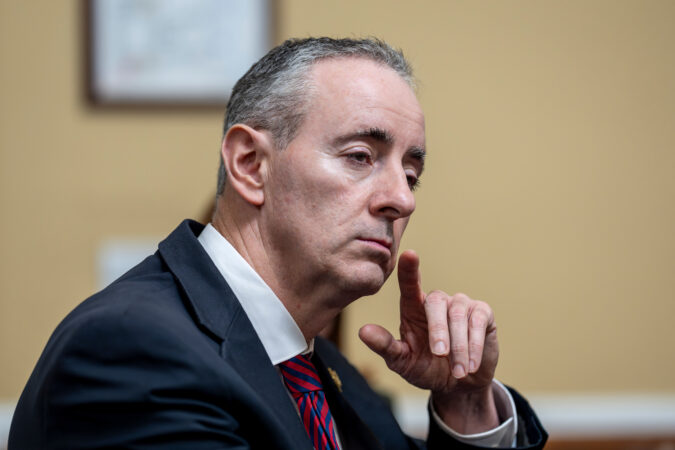
  • Brian Fitzpatrick talks Trump’s ‘lack of moral clarity,’ November’s midterms, and his hatred for the two-party system in Philly Mag

    Brian Fitzpatrick talks Trump’s ‘lack of moral clarity,’ November’s midterms, and his hatred for the two-party system in Philly Mag

    U.S. Rep. Brian Fitzpatrick didn’t vote for President Donald Trump in 2024, penciling in former Ambassador Nikki Haley instead.

    In 2020, he voted for Trump. Four years earlier, he wrote in former Vice President Mike Pence’s name instead of Trump.

    Those decisions by the moderate Republican, who represents purple Bucks County and a sliver of Democratic-leaning Montgomery County, underscore Fitzpatrick’s unique relationship with and perspective of the president, Philadelphia Magazine reported Friday.

    There are times when Fitzpatrick is blunt in his opposition, telling Philly Mag that Trump’s placation to Russian President Vladimir Putin is because of a “lack of moral clarity.”

    But in other instances, he couches his words against the Trump administration. Fitzpatrick, a former FBI agent, told the magazine that the state of the FBI under Director Kash Patel is “heartbreaking,” but that “we’ve seen the weaponization of the Justice Department now, I believe, in two administrations.”

    He also called it “unbecoming” for Trump to accuse six Democratic members of Congress — including U.S. Rep. Chrissy Houlahan of Chester County — of committing sedition after they appeared in a video urging service members to refuse illegal orders.

    Trump claimed in a social media post that the lawmakers, all military veterans or former members of the intelligence community, had engaged in behavior that was “punishable by DEATH!”

    Fitzpatrick’s comments came in a Philadelphia Magazine profile that details how the Bucks County Republican — who rarely gives interviews to local media — is grappling with an American political system that he wishes was drastically less partisan.

    “I could talk for hours about this, but the two-party system needs to go away. We need to move to a coalition government and not the way it is now, which is a zero-sum, all-or-nothing game,” Fitzpatrick said, describing his preference for a form of government in which competing political parties govern and work together.

    “In the House, if you get 218 votes on a bill, you get everything. And if you get 217 votes, you get nothing,” he said. “Well, a 218-217 breakdown is representative of a very divided electorate that wants compromise, but they don’t get it. And that’s why we have this great, cavernous divide.”

    The interview comes as the lawmaker’s district has been named a key target for Democrats in the midterms, along with the seats of Republican U.S. Reps. Scott Perry of York County, Ryan Mackenzie of Lehigh County, and Rob Bresnahan of Lackawanna County.

    “I’m going to keep doing this as long as I can,” Fitzpatrick told the magazine.

    Fitzpatrick has strayed from voting with his party (and Trump) on several key issues. But other times, he toes the party line, and Democrats have said that Fitzpatrick votes with his party when it counts.

    Fitzpatrick said that party leadership discourages reaching across the aisle, but that he attempts to do so on certain issues.

    Recently, Fitzpatrick, Bresnahan, and Mackenzie joined Democrats to sign a discharge petition on extending Affordable Care Act subsidies. He also voted against the final version of Trump’s domestic policy package, the One Big Beautiful Bill Act.

    The latter vote earned Trump’s ire. Without using his name, the president said that Fitzpatrick was disloyal after Trump did him “a big personal favor. As big as you can get having to do with death and life.” This was in reference to Fitzpatrick’s family receiving permission from Trump’s acting secretary of veterans affairs to bury Fitzpatrick’s late brother, Mike Fitzpatrick, who held the seat before him, in a national veterans’ cemetery in Washington Crossing, Pa., that Mike Fitzpatrick had proudly established.

    The late representative, a former Navy ROTC enlistee, did not meet the required years of service.

    Fitzpatrick told Philly Mag that he thought Trump’s invocation of his brother crossed a line.

    “I was really upset to hear that,” he said.

    This story has been updated to clarify that Fitzpatrick wrote in Nikki Haley in the 2024 presidential election, following a revision to Philadelphia Magazine’s profile.

  • How the Trump administration erased centuries of Justice Department experience

    How the Trump administration erased centuries of Justice Department experience

    WASHINGTON — Michael Ben’Ary was driving one of his children to soccer practice on an October evening last year when he paused at a red light to check his work phone. He was in the middle of a counterterrorism prosecution so important that President Donald Trump highlighted it in his address to Congress.

    Ben’Ary said he was shocked to see his phone had been disabled. He found the explanation later in his personal email account, a letter informing him he had been fired.

    A veteran prosecutor, Ben’Ary handled high-profile cases over two decades at the Justice Department, including the murder of a Drug Enforcement Administration agent and a suicide bomb plot targeting the U.S. Capitol. Most recently he was leading the case arising from a deadly attack on American service members in Afghanistan.

    Yet the same credentials that enhanced Ben’Ary’s resumé spelled the undoing of his government career.

    His termination without explanation came hours after right-wing commentator Julie Kelly told hundreds of thousands of online followers that Ben’Ary had previously served as a senior counsel to Lisa Monaco, the No. 2 Justice Department official in Democratic President Joe Biden’s administration. Kelly also suggested Ben’Ary was part of the “internal resistance” to prosecuting former FBI Director James Comey, even though Ben’Ary was never involved in the case.

    As Trump’s attorney general, Pam Bondi, approaches her first year on the job, the firings of lawyers such as Ben’Ary have defined her turbulent tenure. The terminations and a larger voluntary exodus of lawyers have erased centuries of combined experience and left the department with fewer career employees to act as a bulwark for the rule of law at a time when Trump, a Republican, is testing the limits of executive power by demanding prosecutions of his political enemies.

    Interviews by the Associated Press of more than a half-dozen fired employees offer a snapshot of the toll throughout the department. The departures include lawyers who prosecuted violent attacks on police at the Capitol on Jan. 6, 2021; environmental, civil rights, and ethics enforcers; counterterrorism prosecutors; immigration judges; and attorneys who defend administration policies. This week, several prosecutors in Minnesota moved to resign amid turmoil over an investigation into the shooting of a woman in Minneapolis by an Immigration and Customs Enforcement officer.

    “To lose people at that career level, people who otherwise intended to stay and now are either being discharged or themselves are walking away, is immensely damaging to the public interest,” said Stuart Gerson, a senior official in the George H.W. Bush administration and acting attorney general early in Bill Clinton’s administration. “We’re losing really capable people, people who have never viewed themselves as political and attempted to do the right thing.”

    Justice Connection, a network of department alums, estimates that more than 230 lawyers, agents, and other employees from across the department were fired last year, apparently because of their work on cases they were assigned or past criticism of Trump, or seemingly for no reason. More than 6,400 employees are estimated to have left a department that at the end of 2025 had roughly 108,000, the group says.

    The Justice Department says it has hired thousands of career attorneys over the past year. The Trump administration has characterized some of the fired and departed workers as out of step with its agenda.

    Ben’Ary left with unfinished business, including the prosecution stemming from the airport bombing in Kabul, the Afghan capital, and the national security unit he led at the U.S. attorney’s office for the Eastern District of Virginia.

    Left to pack his belongings, he posted a typed note near his door that functioned as a distress call, reminding colleagues they had sworn an oath to follow the facts “without fear or favor” and “unhindered by political interference.”

    But, he warned, “In recent months, the political leadership of the Department have violated these principles, jeopardizing our national security and making American citizens less safe.”

    Unparalleled in scale, scope, and motivation

    Since its founding in 1870, the Justice Department has occupied elevated status in American democracy, sustained through transitions of power by reliance on facts, evidence, and law.

    To be sure, there has always been a political component to the department, with lawyers appointed by the president.

    But even during turbulent times, when attorneys general have been pushed out by presidents or resigned rather than accede to White House demands — as in the Watergate-era “Saturday Night Massacre” — the department’s rank and file have generally been insulated thanks to long-recognized civil service protections.

    “This is completely unprecedented in both its scale and scope and underlying motivation,” said Peter Keisler, a senior official in the George W. Bush Justice Department.

    In his first term, Trump pushed out one attorney general and accepted another’s resignation, but the workforce remained largely intact. He returned to office in January 2025 seething over Biden-era prosecutions of him and vowing retribution.

    The firings began even before Bondi arrived in February. Prosecutors on special counsel Jack Smith’s team that investigated Trump were terminated days after the inauguration, followed by prosecutors hired on temporary assignments for cases resulting from the Capitol insurrection in 2021.

    “The people working on these cases were not political agents of any kind,” said Aliya Khalidi, a Jan. 6 prosecutor who was fired. “It’s all people who just care about the rule of law.”

    The firings have continued, at times surgical, at times random and almost always without explanation.

    Adam Schleifer, a Los Angeles prosecutor targeted in a social media post by far-right activist Laura Loomer over past critical comments about Trump, was fired in March. The Justice Department the following month fired attorney Erez Reuveni, who conceded in court that Salvadoran national Kilmar Abrego Garcia was mistakenly deported. Reuveni later accused the department of trying to mislead judges to execute deportations. Department officials deny the assertion.

    Two weeks after Maurene Comey completed a sex trafficking trial against Sean “Diddy” Combs, the New York prosecutor was fired, also without explanation. Like Ben’Ary, she wrote a pointed farewell, telling colleagues that “fear is the tool of a tyrant.” Her father, the former FBI director who was a frequent Trump target, said those same words after being indicted in September in a case that has been dismissed.

    Among the most affected sections is the storied Civil Rights Division. A recent open letter of protest was signed by more than 200 employees who left in 2025, with several supervisors recently giving notice of plans to depart. The Public Integrity Section, which prosecutes sensitive public corruption cases, has also been hollowed out by resignations.

    The Justice Department has disputed the accounts of some of those who have been fired or quit and has defended the termination of those who investigated Trump as “consistent with the mission of ending the weaponization of government.”

    “This is the most efficient Department of Justice in American history, and our attorneys will continue to deliver measurable results for the American people,” the department said in a statement. More than 3,400 career attorneys have been hired since Trump took office, the department says.

    The departures have caused backlogs and staff shortages, with senior leaders soliciting job applications. It has affected the department’s daily business as well as efforts to fulfill Trump’s desires to prosecute political opponents.

    Desperate for lawyers willing to file criminal cases against Comey and New York Attorney General Letitia James, the administration in September forced out the veteran U.S. attorney for the Eastern District of Virginia, replacing him with Lindsey Halligan, a White House aide with no experience as a federal prosecutor.

    Halligan secured the indictments but the win was short-lived.

    One judge later identified grave missteps in how Halligan presented the Comey case to a grand jury. Another dismissed both prosecutions outright, calling Halligan’s appointment unlawful.

    Smith, the special counsel who investigated Trump but left before he could be fired, has himself lamented the losses. “These are not partisans,” he recently told lawmakers.

    “They just want to do good work,” he added, “and I think when you lose that culture, you lose a lot.”

    ‘Our dream was to be federal prosecutors’

    Khalidi joined the department in 2023 in a group of new prosecutors hired to help with the hundreds of cases stemming from the Capitol riot.

    Upon Trump’s return to the White House, she watched cases she prosecuted get dismantled by Trump’s sweeping clemency for all 1,500 defendants charged in the riot, including those who attacked police.

    Less than two weeks later, a Justice Department demand for the names of FBI agents involved in Jan. 6 investigations triggered rumors of potential mass firings. Worried about the agents she worked with, Khalidi spent the day checking in on them. But as she started preparing dinner one Friday evening, she received an email suggesting she had lost her own job.

    Attached was a memo from then-acting Deputy Attorney General Emil Bove ordering the firings of prosecutors such as Khalidi who had been hired for temporary assignments but were moved into permanent roles after Trump’s win, a maneuver Bove called “subversive personnel actions by the previous administration.” Neither the email nor memo identified the fired prosecutors, leaving them to guess.

    Khalidi grabbed a suitcase to collect family photos and other personal items she kept at work and rushed to the office, retreating with fellow shocked prosecutors to a bar where they received termination emails.

    The group of 15 fired attorneys later assembled to surrender their computers and phones, entering the same room where they gathered on their first day in 2023.

    “For a lot of us, our dream was to be federal prosecutors,” Khalidi said. “And so we had happy memories of that room, of being excited on our first day. So it was just kind of surreal to be back there turning in our stuff.”

    The news came for Anam Petit, an immigration judge, during a break between hearings.

    Hired during the Biden administration, she said she felt a little uneasy when Trump won the election but also figured her position would probably be safe because immigration judges generally have job stability and because they bear responsibility for issuing removal orders for those who are in the United States illegally, a core presidential priority.

    Petit arrived on Sept. 5 bracing for bad news because it was the Friday of the pay period before her two-year work anniversary, when her probationary appointment was poised to become permanent. Though she said she had received strong performance reviews and had already exceeded her case completion goal for the year, she had become anxious as colleagues were fired amid an administration push to accelerate deportations.

    She was in the courtroom between hearings when she learned via email that she had been fired. She left to text her husband, then returned to the courtroom to render a decision in the case before her.

    “I just put my phone back in my pocket and went into the courtroom and delivered my decision, with a very shaky voice and shaky hands, trying to center myself back to that decision just so that I could relay it,” Petit said.

    Joseph Tirrell was mindful of his job security from the very start of the Trump administration. As the department’s chief ethics officer, he had affirmed that Smith, the special counsel, was entitled to a law firm’s free legal services, a decision he sensed had the potential to rile incoming leadership.

    But he remained in the position and over the ensuing months counseled Bondi’s staff on the propriety of accepting various gifts, including a cigar box from mixed martial arts fighter Conor McGregor.

    He was fired in July, just before a FIFA Club World Cup final in New Jersey that Tirrell had said Bondi could not ethically accept a free invitation to. He was not terribly surprised, he says, when it was later reported that Bondi attended in Trump’s box. The Justice Department said in a statement that none of Tirrell’s advice “was ever overruled” and that “the Attorney General obtained ethics approval to attend this event in her official capacity as a member of the FIFA Task Force.”

    “There’s a great deal of fear there just because I was fired and just because so many others were summarily fired,” Tirrell said. “Are you going to get fired because you provided ethics advice? Are you going to get fired because you have a pride flag on your desk?”

    ‘Our country depends on you’

    Trump was promoting his administration’s commitment to counterterrorism during his address to Congress in March when he announced a success: the capture of a militant from the Islamic State group’s Afghanistan affiliate who was charged in the Kabul airport bombing that killed 13 American service members during the 2021 withdrawal from the country.

    Mohammad Sharifullah arrived the following day in the United States, encountering Ben’Ary in an Alexandria, Va., courtroom.

    Ben’Ary spent the next several months working on the case, but on Oct. 1, he was fired. It was the apparent result, he told colleagues, of a social media post he said contained “false information” — a reference to the one from Kelly, the commentator.

    The termination was so abrupt that Ben’Ary could not tell his colleagues where he had saved important filings and notes. Another prosecutor listed on the case, James Comey’s son-in-law, Troy Edwards, had resigned days earlier upon Comey’s indictment. Once set for trial last month, the case has been postponed.

    In his farewell note, Ben’Ary observed that he was not alone, that in “just a few short months” career employees like himself had been removed from U.S. attorneys offices, the FBI “and other critical parts of DOJ.”

    “While I am no longer your colleague, I ask that each of you continue to do the right thing, in the right way, for the right reasons,” Ben’Ary wrote. “Follow the facts and the law. Stand up for what we all believe in — our Constitution and the rule of law. Our country depends on you.”
  • Mixed signals and suspicions fueled clash between Fed and prosecutors

    Mixed signals and suspicions fueled clash between Fed and prosecutors

    The battle between the Federal Reserve and Trump administration prosecutors accelerated over the past few weeks amid mixed signals and mutual suspicion, according to interviews with a half-dozen figures with knowledge of both sides of the dispute.

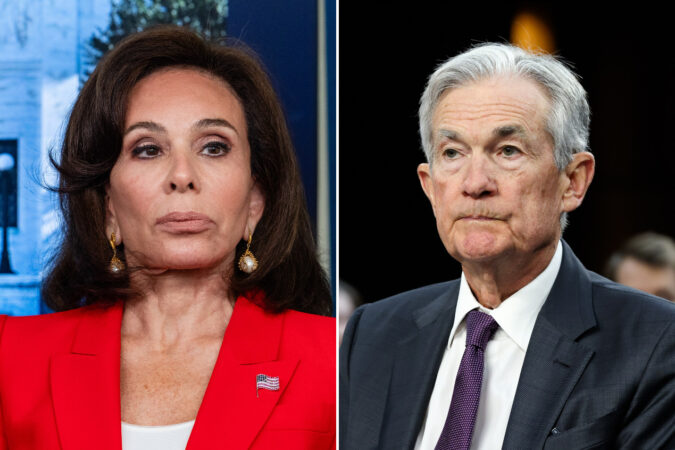
    Late last month, Fed officials grew concerned that the Justice Department was preparing a criminal case against them when they received two casually worded emails from a prosecutor working for Jeanine Pirro, the U.S. attorney for Washington, D.C. The messages sought a meeting or phone call to discuss renovations at the central bank’s headquarters, according to three people familiar with the matter, who like most others interviewed spoke on the condition of anonymity to discuss an open investigation.

    The emails, sent Dec. 19 and Dec. 29, came from Assistant U.S. Attorney Carlton Davis, a political appointee in Pirro’s office whose background includes work for House Oversight Committee Chairman James Comer (R., Ky.), the people said.

    The messages struck Fed officials as breezy in tone.

    “Happy to hop on a call,” one of the missives read in part.

    The casual approach generated suspicions at the Fed. Chair Jerome H. Powell, who by that point had sustained months of criticism from President Donald Trump and his allies over the central bank’s handling of interest rates, retained outside counsel at the law firm Williams & Connolly. Fed officials opted not to respond to Davis, choosing to avoid informal engagement on a matter that could carry criminal implications, according to a person familiar with the decision.

    That led Pirro, a former Fox News host and longtime personal friend of Trump’s, to conclude that the Fed was stonewalling and had something to hide, according to a Justice Department official familiar with the matter.

    “The claim that, ‘Oh, they didn’t think it was a big deal’ is naive and almost malpractice,” the official said. “We gave them a deadline. We said the first week of January.”

    The investigation centers on the Fed’s first large-scale renovation of its headquarters on the National Mall since it was built in the 1930s and whether proper cost controls are in place. Powell testified to Congress in June about the scope of a project that had ballooned to $2.5 billion in costs, up from about $1.9 billion before the coronavirus pandemic.

    Trump, his aides, and some congressional Republicans have sought to cast the renovation as overly luxurious and wildly over budget, claims that Powell has strenuously disputed. Fed officials have said that the economic disruptions following the pandemic triggered a jump in the price of steel, cement, and other building materials.

    Powell and the Fed’s defenders say the renovation claims are being used to pressure the independent central bank to lower interest rates, as Trump has called for, and potentially to bully Powell into resigning.

    The emails from Davis to a Federal Reserve lawyer did not indicate the existence of a criminal investigation because prosecutors had not yet opened one, according to two people with knowledge of the matter. There was no FBI involvement when Pirro’s office opened a fact-gathering inquiry in November, and the bureau remains uninvolved, according to two other people familiar with the matter.

    In the emails, Davis asked “to discuss Powell’s testimony in June, the building renovation, and the timing of some of his decisions,” a Justice Department official said. “The letter couldn’t have been nicer,” that official said. “About 10 days after that, we sent another, saying, ‘We just want to have a discussion with you.’ No response through January 8.”

    “We low-keyed it,” the official added. “We didn’t publicize it. We did it quietly.”

    The subpoenas were served the next day. They seek records or live testimony before a grand jury at the end of the month.

    Powell publicly disclosed the probe Sunday evening in a video statement, saying the Fed had received subpoenas “threatening a criminal indictment.”

    “The threat of criminal charges is a consequence of the Federal Reserve setting interest rates based on our best assessment of what will serve the public, rather than following the preferences of the president,” he said.

    In a post on X, Pirro said the outreach had been benign, writing: “The word ‘indictment’ has come out of Mr. Powell’s mouth, no one else’s. None of this would have happened if they had just responded to our outreach.”

    Conducting an investigation without using the FBI is an approach Pirro’s office has used on at least one previous occasion. In August, one of the prosecutors now assigned to the Fed inquiry, Steven Vandervelden, was tasked with reviewing numerous complaints that the D.C. police, under then-Police Chief Pamela A. Smith, had been incorrectly categorizing some crimes to paint a rosier picture than the reality on the ground.

    That inquiry relied on voluntary interviews with more than 50 police officers and other witnesses, as well as cooperation from the mayor’s office and the police department’s internal affairs unit, according to a seven-page report Pirro and Vandervelden issued at its conclusion. The report recommended changes to police practices while saying the classification issues did not rise to the level of criminality. No subpoenas were issued in that probe, according to a person familiar with the matter, and the report does not mention any.

    But Smith announced her resignation shortly before the report was released.

  • Mixed signals and mutual suspicions fueled the clash between the Federal Reserve and Trump administration prosecutors

    Mixed signals and mutual suspicions fueled the clash between the Federal Reserve and Trump administration prosecutors

    The battle between the Federal Reserve and Trump administration prosecutors accelerated over the past few weeks amid mixed signals and mutual suspicion, according to interviews with a half-dozen figures with knowledge of both sides of the dispute.

    Late last month, Fed officials grew concerned that the Justice Department was preparing a criminal case against them when they received two casually worded emails from a prosecutor working for Jeanine Pirro, the U.S. attorney for Washington, D.C. The messages sought a meeting or phone call to discuss renovations at the central bank’s headquarters, according to three people familiar with the matter, who like most others interviewed spoke on the condition of anonymity to discuss an open investigation.

    The emails, sent Dec. 19 and Dec. 29, came from Assistant U.S. Attorney Carlton Davis, a political appointee in Pirro’s office whose background includes work for House Oversight Committee Chairman James Comer (R-Kentucky), the people said.

    The messages struck Fed officials as breezy in tone.

    “Happy to hop on a call,” one of the missives read in part.

    The casual approach generated suspicions at the Fed. Chair Jerome H. Powell, who by that point had sustained months of criticism from President Donald Trump and his allies over the central bank’s handling of interest rates, retained outside counsel at the law firm Williams & Connolly. Fed officials opted not to respond to Davis, choosing to avoid informal engagement on a matter that could carry criminal implications, according to a person familiar with the decision.

    That led Pirro, a former Fox News host and longtime personal friend of Trump’s, to conclude that the Fed was stonewalling and had something to hide, according to a Justice Department official familiar with the matter.

    “The claim that, ‘Oh, they didn’t think it was a big deal’ is naive and almost malpractice,” the official said. “We gave them a deadline. We said the first week of January.”

    The investigation centers on the Fed’s first large-scale renovation of its headquarters on the National Mall since it was built in the 1930s and whether proper cost controls are in place. Powell testified to Congress in June about the scope of a project that had ballooned to $2.5 billion in costs, up from about $1.9 billion before the coronavirus pandemic.

    Trump, his aides and some congressional Republicans have sought to cast the renovation as overly luxurious and wildly over budget, claims that Powell has strenuously disputed. Fed officials have said that the economic disruptions following the pandemic triggered a jump in the price of steel, cement and other building materials.

    Powell and the Fed’s defenders say the renovation claims are being used to pressure the independent central bank to lower interest rates, as Trump has called for, and potentially to bully Powell into resigning.

    The emails from Davis to a Federal Reserve lawyer did not indicate the existence of a criminal investigation because prosecutors had not yet opened one, according to two people with knowledge of the matter. There was no FBI involvement when Pirro’s office opened a fact-gathering inquiry in November, and the bureau remains uninvolved, according to two other people familiar with the matter.

    In the emails, Davis asked “to discuss Powell’s testimony in June, the building renovation, and the timing of some of his decisions,” a Justice Department official said. “The letter couldn’t have been nicer,” that official said. “About 10 days after that, we sent another, saying, ‘We just want to have a discussion with you.’ No response through January 8.”

    “We low-keyed it,” the official added. “We didn’t publicize it. We did it quietly.”

    The subpoenas were served the next day. They seek records or live testimony before a grand jury at the end of the month.

    Powell publicly disclosed the probe Sunday evening in a video statement, saying the Fed had received subpoenas “threatening a criminal indictment.”

    “The threat of criminal charges is a consequence of the Federal Reserve setting interest rates based on our best assessment of what will serve the public, rather than following the preferences of the president,” he said.

    In a post on X, Pirro said the outreach had been benign, writing: “The word ‘indictment’ has come out of Mr. Powell’s mouth, no one else’s. None of this would have happened if they had just responded to our outreach.”

    Conducting an investigation without using the FBI is an approach Pirro’s office has used on at least one previous occasion. In August, one of the prosecutors now assigned to the Fed inquiry, Steven Vandervelden, was tasked with reviewing numerous complaints that the D.C. police, under then-Police Chief Pamela A. Smith, had been incorrectly categorizing some crimes to paint a rosier picture than the reality on the ground.

    That inquiry relied on voluntary interviews with more than 50 police officers and other witnesses, as well as cooperation from the mayor’s office and the police department’s internal affairs unit, according to a seven-page report Pirro and Vandervelden issued at its conclusion. The report recommended changes to police practices while saying the classification issues did not rise to the level of criminality. No subpoenas were issued in that probe, according to a person familiar with the matter, and the report does not mention any.

    But Smith announced her resignation shortly before the report was released.

  • The White House and a bipartisan group of governors, including Josh Shapiro, want to fix AI-driven power shortages and price spikes

    The White House and a bipartisan group of governors, including Josh Shapiro, want to fix AI-driven power shortages and price spikes

    Washington — The Trump administration and a bipartisan group of governors on Friday tried to step up pressure on the operator of the nation’s largest electric grid to take urgent steps to boost power supplies and keep electricity bills from rising even higher.

    Administration officials said doing so is essential to win the artificial-intelligence race against China, even as voters raise concerns about the enormous amount of power data centers use and analysts warn of the growing possibility of blackouts in the Mid-Atlantic grid in the coming years.

    “We know that with the demands of AI and the power and the productivity that comes with that, it’s going to transform every job and every company and every industry,” Interior Secretary Doug Burgum told reporters at the Eisenhower Executive Office Building, next to the White House. “But we need to be able to power that in the race that we are in against China.”

    Trump administration says it has ‘the answer’

    The White House and governors want the Mid-Atlantic grid operator to hold a power auction for tech companies to bid on contracts to build new power plants, so that data center operators, not regular consumers, pay for their power needs.

    They also want the operator, PJM Interconnection, to contain consumer costs by extending a cap that it imposed last year, under pressure from governors, that limited the increase of wholesale electricity payments to power plant owners. The cap applied to payments through mid-2028.

    “Our message today is just to try and push PJM … to say, ‘we know the answer.’ The answer is we need to be able to build new generation to accommodate new jobs and new growth,” Energy Secretary Chris Wright said.

    Govs. Josh Shapiro of Pennsylvania, Glenn Youngkin of Virginia, and Wes Moore of Maryland appeared with Burgum and Wright and expressed frustration with PJM.

    “We need more energy on the grid and we need it fast,” Shapiro said. He accused PJM of being “too damn slow” to bring new power generation online as demand is surging.

    Shapiro said the agreement could save the 65 million Americans reliant on that grid $27 billion over the next several years. He warned Pennsylvania would leave the PJM market if the grid operator does not align with the agreement, a departure that would threaten to create even steeper price challenges for the region.

    PJM wasn’t invited to the event.

    Grid operator is preparing its own plan to meet demand

    However, PJM’s board is nearing the release of its own plan after months of work and will review recommendations from the White House and governors to assess how they align with its decision, a spokesperson said Friday.

    PJM has searched for ways to meet rising electricity demand, including trying to fast-track new power plants and suggesting that utilities should bump data centers off the grid during power emergencies. The tech industry opposed the idea.

    The White House and governors don’t have direct authority over PJM, but grid operators are regulated by the Federal Energy Regulatory Commission, which is chaired by an appointee of President Donald Trump.

    Trump and governors are under pressure to insulate consumers and businesses alike from the costs of feeding Big Tech’s data centers. Meanwhile, more Americans are falling behind on their electricity bills as rates rise faster than inflation in many parts of the U.S.

    In some areas, bills have risen because of strained natural gas supplies or expensive upgrades to transmission systems, to harden them against more extreme weather or wildfires. But energy-hungry data centers are also a factor in some areas, consumer advocates say.

    Ratepayers in the Mid-Atlantic grid — which encompasses all or parts of 13 states stretching from New Jersey to Illinois, as well as Washington, D.C. — are already paying billions more to underwrite power supplies to data centers, some of which haven’t been built yet, analysts say.

    Critics also say these extra billions aren’t resulting in the construction of new power plants needed to meet the rising demand.

    Tech giants say they’re working to lower consumer costs

    Technology industry groups have said their members are willing to pay their fair share of electricity costs.

    On Friday, the Information Technology Industry Council, which represents tech giants Google, Meta, Microsoft, and Amazon, said it welcomed the White House’s announcement and the opportunity “to craft solutions to lower electricity bills.” It said the tech industry is committed to “making investments to modernize the grid and working to offset costs for ratepayers.”

    The Edison Electric Institute, which represents investor-owned electric companies, said it supports having tech companies bid — and pay for — contracts to build new power plants.

    The idea is a new and creative one, said Rob Gramlich, president of Grid Strategies LLC, a Washington, D.C.-based energy markets and transmission consultancy.

    But it’s not clear how or if it’ll work, or how it fits into the existing industry structure or state and federal regulations, Gramlich said.

    Part of PJM’s problem in keeping up with power demand is that getting industrial construction permits typically takes longer in the Mid-Atlantic region than, say, Texas, which is also seeing strong energy demand from data centers, Gramlich said.

    In addition, utilities in many PJM states that deregulated the energy industry were not signing up power plants to long-term contracts, Gramlich said.

    That meant that the electricity was available to tech companies and data center developers that had large power needs and bought the electricity, putting additional stress on the Mid-Atlantic grid, Gramlich said.

    “States and consumers in the region thought that power was there for them, but the problem is they hadn’t bought it,” Gramlich said.

    Associated Press writer Matthew Daly and The Washington Post contributed to this article.

  • Federal immigration agents filmed dragging a woman from her car in Minneapolis

    Federal immigration agents filmed dragging a woman from her car in Minneapolis

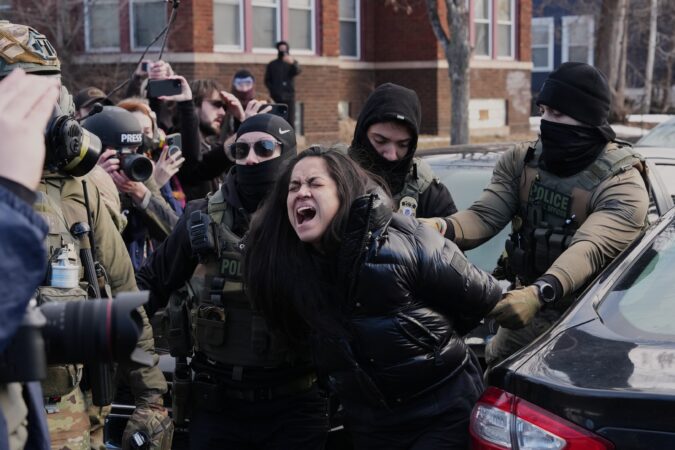
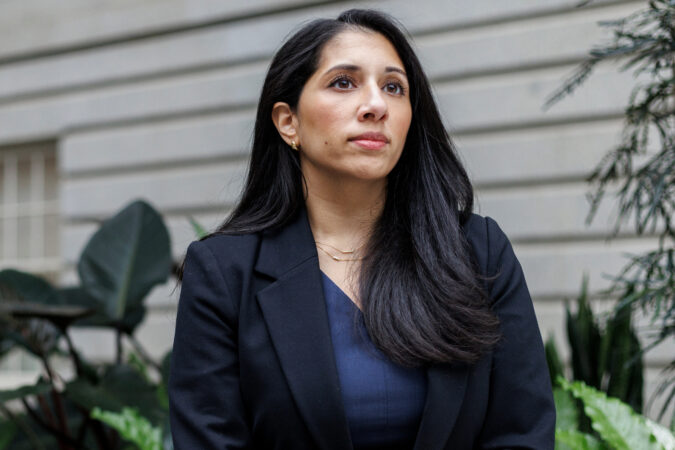
    A U.S. citizen on her way to a medical appointment in Minneapolis was dragged out of her car and detained by immigration officers, according to a statement released by the woman on Thursday, after a video of her arrest drew millions of views on social media.

    Aliya Rahman said she was brought to a detention center where she was denied medical care and lost consciousness. The Department of Homeland Security said she was an agitator who was obstructing ICE agents conducting arrests in the area.

    That video is the latest in a deluge of online content that documents an intensifying immigration crackdown across the midwestern city, as thousands of federal agents execute arrests amid protests in what local officials have likened to a “federal invasion.”

    Dragged from her car

    Rahman said that she was on her way to a routine appointment at the Traumatic Brain Injury Center when she encountered federal immigration agents at an intersection. Video appears to show federal immigration agents shouting commands over a cacophony of whistles, car horns and screams from protesters.

    In the video, one masked agent smashes Rahman’s passenger side window while others cut her seatbelt and drag her out of the car through the driver’s side door. Numerous guards then carried her by her arms and legs towards an ICE vehicle.

    “I’m disabled trying to go to the doctor up there, that’s why I didn’t move,” Rahman said, gesturing down the street as officers pulled her arms behind her back.

    A spokesperson for the Department of Homeland Security disputed that account in an emailed statement on Thursday, saying that Rahman was an agitator who “ignored multiple commands by an officer to move her vehicle away from the scene.” She was arrested along with six other people the department called agitators, one of whom was accused of jumping on an officer’s back.

    The department did not specify if Rahman was charged or respond to questions about her assertion that she was denied medical treatment.

    Barrage of viral videos draw scrutiny

    The video of Rahman’s arrest is one of many that have garnered millions of views in recent days — and been scrutinized amid conflicting accounts from federal officials and civilian eyewitnesses.

    Often, what’s in dispute pertains to what happened just before or just after a given recording. But many contain common themes: Protesters blowing whistles, yelling or honking horns. Immigration officers breaking vehicle windows, using pepper spray on protesters and warning observers not to follow them through public spaces. Immigrants and citizens alike forcibly pulled from cars, stores or homes and detained for hours, days or longer.

    In one video, heavily armed immigration agents used a battering ram to break through the front door of Garrison Gibson’s Minneapolis home, where his wife and 9-year-old child also were inside. The video shot inside the home captures a woman’s voice asking, “Where is the warrant?” and, “Can you put the guns down? There is kids in this house.”

    Another video shows ICE agents, including Border Patrol Cmdr. Gregory Bovino, detain two employees at a Target store in Richfield, Minnesota. Both are U.S. citizens who were later released, according to social media posts from family members.

    Monica Bicking, 40, was leaving the homeless shelter where she works as a nurse when she took a video that appears to show a federal agent kneeing a man at least five times in the face while several other agents pin him facedown on the pavement in south Minneapolis.

    Bicking works full time, so she says she doesn’t intentionally attend organized protests or confrontations with ICE. But she has started to carry a whistle in case she encounters ICE agents on her way to work or while running errands, which she says has become commonplace in recent weeks.

    “We’re hypervigilant every time we leave our houses, looking for ICE, trying to protect our neighbors, trying to support our neighbors, who are now just on lockdown,” Bicking said.

    ‘I thought I was going to die’

    Rahman said in her statement that after her detainment, she felt lucky to be alive.

    “Masked agents dragged me from my car and bound me like an animal, even after I told them that I was disabled,” Rahman said.

    While in custody, Rahman said she repeatedly asked for a doctor, but was instead taken to the detention center.

    “It was not until I lost consciousness in my cell that I was finally taken to a hospital,” Rahman said.

    Rahman was treated for injuries consistent with assault, according to her counsel, and has been released from the hospital.

    She thanked the emergency department staff for their care.

    “They gave me hope when I thought I was going to die.”

  • Senate passes more spending bills, but Homeland Security dispute looms

    Senate passes more spending bills, but Homeland Security dispute looms

    WASHINGTON — Congress is halfway home in approving government funding for the current budget year that began Oct. 1 after the Senate on Thursday overwhelmingly passed a three-bill package.

    Now comes the hard part. Lawmakers still must negotiate a spending bill for the Department of Homeland Security amid soaring tensions on Capitol Hill after the shooting of a Minnesota woman by an Immigration and Customs Enforcement agent.

    Lawmakers are working to complete passage of all 12 annual spending bills before Jan. 30, the deadline set in a funding patch that ended a 43-day government shutdown in November. With the Senate’s action on Thursday, six of those bills have now passed through both chambers of Congress. The measure before the Senate passed by a broadly bipartisan vote of 82-15. It now goes to President Donald Trump to be signed into law.

    That recent success would greatly reduce the impact of a shutdown, in the unlikely event that there is one at the end of January, since lawmakers have now provided full-year funding for such agencies as the Departments of Agriculture, Commerce, Energy, Interior and Justice.

    Lawmakers from both parties are determined to prevent another lapse in funding for the remaining agencies. The House’s approval of a separate two-bill package this week nudges them closer to getting all 12 done in the next two weeks.

    “Our goal, Mr. President is to get all of these bills signed into law. No continuing resolutions that lock in previous priorities and don’t reflect today’s realities,” said Sen. Susan Collins, the Republican chair of the Senate Appropriations Committee. “No more disastrous government shutdowns that are totally unnecessary and so harmful.”

    ICE shooting inflames debate on funding

    The biggest hurdle ahead is the funding bill for the Department of Homeland Security. The plan was to bring that bill before the House this week, but Rep. Tom Cole, the chairman of the House Appropriations Committee, said the decision was made to pull the bill and “buy some time” as lawmakers respond to the Minneapolis shooting.

    Democrats are seeking what Rep. Rosa DeLauro called “guardrails” that would come with funding for ICE.

    “We can’t deal with the lawlessness and terrorizing of communities,” said DeLauro (D., Conn.), the top Democrat on the House Appropriations Committee. “We’re going back and forth with offers, and that’s where we are.”

    Trump’s deportation crackdown, focused on cities in Democratic-leaning states, has incensed many House Democrats who demand a strong legislative response. Last week, an Immigration and Customs Enforcement officer shot and killed Renee Good in a shooting that federal officials said was an act of self-defense but that the mayor described as reckless and unnecessary.

    Some 70 Democrats have signed onto an effort to impeach Homeland Security Secretary Kristi Noem. Others are seeking specific changes to how the agency operates, such as requiring ICE agents to wear body cameras.

    “There are a variety of different things that can be done that we have put on the table and will continue to put on the table to get ICE under control so that they are actually conducting themselves like every other law enforcement agency in the country, as opposed to operating as if they’re above the law, somehow thinking they’ve got absolute immunity,” said Democratic leader Hakeem Jeffries.

    The Congressional Progressive Caucus, which includes nearly 100 Democratic members, formally announced opposition to any funding to immigration enforcement agencies within the Department of Homeland Security “unless there are meaningful and significant reforms to immigration enforcement practices.”

    Looking for a solution

    Cole said any changes to the Homeland Security funding bill would need sign-on from the White House. He said one possible answer would be to let Democrats have a separate vote on the Homeland Security bill. If passed, it would then be combined with some other spending bills for transmittal to the Senate. Republicans used a similar procedural tactic to get a previous spending package over the finish line in the House.

    The options for Democrats on Homeland Security are all rather bleak. If Congress passes a continuing resolution to fund the agency at current levels, that gives the Trump administration more discretion to spend the money as it wants.

    Meanwhile, any vote to eliminate funding for ICE won’t stop massive sums from flowing to the agency because Trump’s tax cut and border security bill, passed last summer, injects roughly $170 billion into immigration enforcement over the next four years.

    Also, any vote to eliminate funding could put some Democrats in tough reelection battles in a difficult position this fall as Republicans accuse them of insufficiently supporting law enforcement.

  • U.S. warns Iran that ‘all options are on the table’ in emergency U.N. meeting

    U.S. warns Iran that ‘all options are on the table’ in emergency U.N. meeting

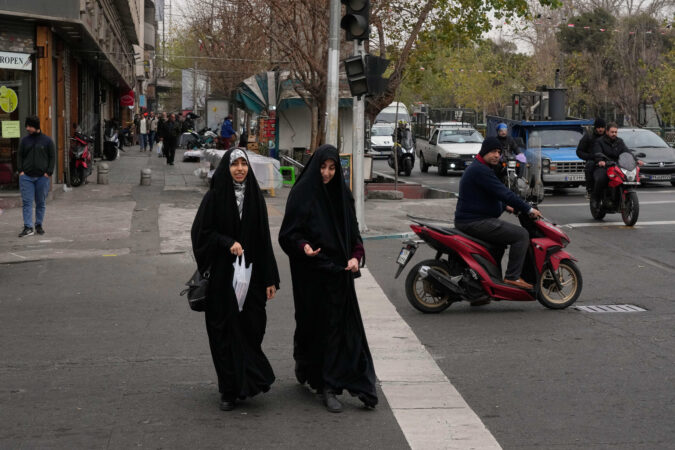
    UNITED NATIONS — After weeks of escalating tension, U.S. and Iranian officials faced one another Thursday at the U.N. Security Council, where America’s envoy renewed threats against the Islamic Republic despite President Donald Trump’s efforts to lower the temperature between the two adversaries.

    The U.S. was joined by Iranian dissidents in rebuking the government’s bloody crackdown on nationwide protests that activists say have killed at least 2,677 people.

    “Colleagues, let me be clear: President Trump is a man of action, not endless talk like we see at the United Nations,” Mike Waltz, U.S. ambassador to the U.N., told the council. “He has made it clear that all options are on the table to stop the slaughter. And no one should know that better than the leadership of the Iranian regime.”

    Waltz’s remarks came as the prospect of U.S. retaliation for the protesters’ deaths still hung over the region, although Trump signaled a possible de-escalation, saying the killing appeared to be ending. By Thursday, the protests challenging Iran’s theocracy appeared increasingly smothered, but the state-ordered internet and communication blackout remained.

    One diplomat told the Associated Press that top officials from Egypt, Oman, Saudi Arabia, and Qatar spent the last 48 hours raising concerns with Trump that a U.S. military intervention would shake the global economy and destabilize an already volatile region.

    During the meeting, Hossein Darzi, the deputy Iranian ambassador to the U.N., blasted the U.S. for what he claimed was America’s “direct involvement in steering unrest in Iran to violence.”

    “Under the hollow pretext of concern for the Iranian people and claims of support for human rights, the United States is attempting to portray itself as a friend of the Iranian people, while simultaneously laying the groundwork for political destabilization and military intervention under a so-called ′humanitarian′ narrative,” Darzi said.

    The U.S. requested the emergency Security Council meeting and invited two Iranian dissidents, Masih Alinejad and Ahmad Batebi, to describe their experience as targets of the Islamic Republic.

    In a stunning moment, Alinejad addressed the Iranian representative directly.

    “You have tried to kill me three times. I have seen my would-be assassin with my own eyes in front of my garden, in my home in Brooklyn,” she said while the Iranian official looked directly ahead, without acknowledging her.

    In October, two purported Russian mobsters were each sentenced to 25 years behind bars for hiring a hit man to kill Alinejad at her New York home three years ago on behalf of the Iranian government.

    Batebi described the deep cuts the prison guards in Iran would inflict on him before pouring salt on his wounds. “If you do not believe me, I can show you my body right now,” he told the council.

    Both dissidents called on the world body and the council to do more to hold Iran accountable for its human rights abuses. Batebi pleaded with Trump not to “leave” the Iranian people alone.

    “You encouraged people to go into the streets. That was a good thing. But don’t leave them alone,” he said.

    Russia was the only member of the council that defended Iran’s actions while calling for the U.S. to stop intervening.

    Protests appear smothered as death toll rises

    Videos of demonstrations have stopped coming out of Iran, likely signaling the slowdown of their pace under the heavy security force presence in major cities.

    In Iran’s capital, Tehran, witnesses said recent mornings showed no new signs of bonfires lit the night before or debris in the streets. The sound of gunfire, which had been intense for several nights, has also faded.

    The clampdown on the demonstrations has killed at least 2,677 people, according to the U.S.-based Human Rights Activists News Agency. The figure reported Thursday is an increase of 106 from a day earlier, and the organization says the number will likely continue to climb. The death toll exceeds that of any other round of protest or unrest in Iran in decades and recalls the chaos surrounding the country’s 1979 Islamic Revolution.

    The U.S.-based agency, founded 20 years ago, has been accurate throughout multiple years of demonstrations, relying on a network of activists inside Iran that confirms all reported fatalities.

    With communications greatly limited in Iran, the AP has been unable to independently confirm the group’s toll. The Iranian government has not provided casualty figures.

    New sanctions on senior Iranians

    In other developments Thursday, the U.S. announced new sanctions on Iranian officials accused of suppressing the protests, which began late last month over the country’s faltering economy and the collapse of its currency. The Group of Seven industrialized democracies and the European Union also said they too were looking at new sanctions to ratchet up the pressure on Iran’s theocratic government.

    Among those hit with U.S. sanctions was the secretary of Iran’s Supreme Council for National Security, whom the Treasury Department accuses of being one of the first officials to call for violence against protesters. The Group of Seven, of which the U.S. is a member, also warned they could impose more sanctions if Iran’s crackdown continues.

    European Union chief Ursula von der Leyen said the 27-nation bloc was looking at strengthening sanctions “to push forward that this regime comes to an end and that there is change.

  • European troops arrive in Greenland as talks with U.S. highlight ‘disagreement’ over island’s future

    European troops arrive in Greenland as talks with U.S. highlight ‘disagreement’ over island’s future

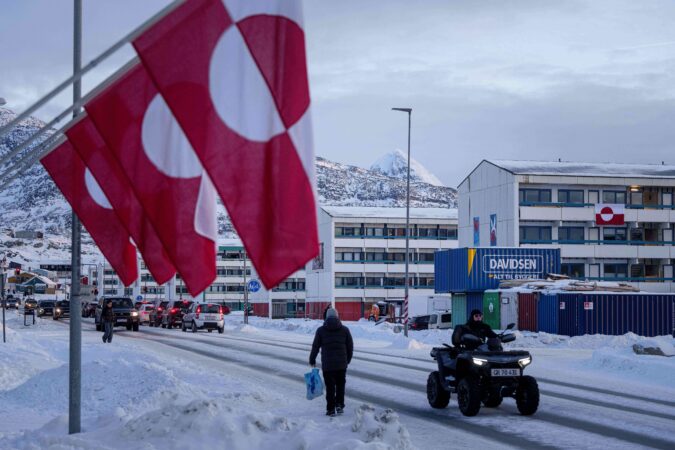
    NUUK, Greenland — Troops from several European countries continued to arrive in Greenland on Thursday in a show of support for Denmark as talks among representatives of Denmark, Greenland and the U.S. highlighted “fundamental disagreement” over the future of the Arctic island.

    The disagreement came into starker focus Thursday, with the White House describing plans for more talks with officials from Denmark and Greenland as “technical talks on the acquisition agreement” for the U.S. to acquire Greenland.

    That was a far cry from the way Danish Foreign Minister Lars Løkke Rasmussen described it as a working group that would discuss ways to work through differences between the nations.

    “The group, in our view, should focus on how to address the American security concerns, while at the same time respecting the red lines of the Kingdom of Denmark,” he said Wednesday after the meeting.

    Before the talks began Wednesday, Denmark announced it would increase its military presence in Greenland. Several European partners — including France, Germany, the U.K., Norway, Sweden, and the Netherlands — started to send symbolic numbers of troops or promised to do so in the following days.

    The troop movements were intended to portray unity among Europeans and send a signal to President Donald Trump that an American takeover of Greenland is not necessary as NATO together can safeguard the security of the Arctic region amid rising Russian and Chinese interest.

    The European troops did little to dissuade Trump.

    White House press secretary Karoline Leavitt said Thursday that it had no impact on the president’s decision-making or goal of acquiring Greenland.

    “The president has made his priority quite clear, that he wants the United States to acquire Greenland. He thinks it’s in our best national security to do that,” she said.

    Rasmussen, flanked by his Greenlandic counterpart Vivian Motzfeldt, said Wednesday that a “fundamental disagreement” over Greenland remained after they met at the White House with Vice President JD Vance and Secretary of State Marco Rubio.

    Rasmussen said it remains “clear that the president has this wish of conquering over Greenland” but dialogue with the U.S. would continue at a high level over the following weeks.

    Meanwhile, French President Emmanuel Macron announced Wednesday that “the first French military elements are already en route” and “others will follow,” as French authorities said about 15 soldiers from the mountain infantry unit were already in Nuuk for a military exercise.

    Germany will deploy a reconnaissance team of 13 personnel to Greenland on Thursday, the Defense Ministry said.

    On Thursday, Danish Defense Minister Troels Lund Poulsen said the intention was “to establish a more permanent military presence with a larger Danish contribution,” according to Danish broadcaster DR. He said soldiers from several NATO countries will be in Greenland on a rotation system.

    ‘Greenland does not want to be part of the United States’

    Inhabitants of Greenland and Denmark reacted with anxiety but also some relief that negotiations with the U.S. would go on and European support was becoming visible.

    Greenland’s Prime Minister Jens-Frederik Nielsen welcomed the continuation of “dialogue and diplomacy.”

    “Greenland is not for sale,” he said Thursday. “Greenland does not want to be owned by the United States. Greenland does not want to be governed from the United States. Greenland does not want to be part of the United States.”

    In Greenland’s capital, Nuuk, local residents told The Associated Press they were glad the first meeting between Greenlandic, Danish, and American officials had taken place but suggested it left more questions than answers.

    Several people said they viewed Denmark’s decision to send more troops, and promises of support from other NATO allies, as protection against possible U.S. military action. But European military officials have not suggested the goal is to deter a U.S. move against the island.

    Maya Martinsen, 21, said it was “comforting to know that the Nordic countries are sending reinforcements” because Greenland is a part of Denmark and NATO.

    The dispute, she said, is not about “national security” but rather about “the oils and minerals that we have that are untouched.”

    More troops, more talks

    On Wednesday, Poulsen announced a stepped-up military presence in the Arctic “in close cooperation with our allies,” calling it a necessity in a security environment in which “no one can predict what will happen tomorrow.”

    “This means that from today and in the coming time there will be an increased military presence in and around Greenland of aircraft, ships and soldiers, including from other NATO allies,” Poulsen said.

    Denmark informed NATO that it will be conducting exercises in Greenland, and the alliance’s Supreme Allied Commander Alexus Grynkewich spoke Thursday with Denmark’s chief of defense, Col. Martin O’Donnell, a spokesperson for Grynkewich told the AP.

    He said such dialogue is typical and added that “we all agree the Arctic – including Greenland – is important for transatlantic security.”

    The Danish exercises and deployment of additional troops “bolster our collective defenses there,” O’Donnell said.

    The Russian embassy in Brussels on Thursday lambasted what it called the West’s “bellicose plans” in response to “phantom threats that they generate themselves”. It said the planned military actions were part of an “anti-Russian and anti-Chinese agenda” by NATO.

    “Russia has consistently maintained that the Arctic should remain a territory of peace, dialogue and equal cooperation,” the embassy said.

    Some diplomatic progress

    Commenting on the outcome of the Washington meeting on Thursday, Poulsen said the working group was “better than no working group” and “a step in the right direction.” He added nevertheless that the dialogue with the U.S. did not mean “the danger has passed.”

    The most important thing for Greenlanders is that they were directly represented at the meeting in the White House and that “the diplomatic dialogue has begun now,” Juno Berthelsen, a lawmaker for the pro-independence Naleraq opposition party, told AP.

    A relationship with the U.S. is beneficial for Greenlanders and Americans and is “vital to the security and stability of the Arctic and the Western Alliance,” Berthelsen said. He suggested the U.S. could be involved in the creation of a coast guard for Greenland, providing funding and creating jobs for local people who can help to patrol the Arctic.

    In Washington, Rasmussen and Motzfeldt also met with a bipartisan group of senators at the U.S. Capitol.

    “We really appreciate that we have close friends in the Senate and the House as well,” Rasmussen told reporters, adding that Denmark would work to “accommodate any reasonable American requests” with Greenland.

    There has been significant concern among lawmakers of both political parties that Trump could upend the NATO alliance by insisting on using military force to possess Greenland. Key Republicans lawmakers have pushed back on those plans and suggested that the Trump administration should work with Denmark to enhance mutual security in the Arctic.

    Line McGee, 38, from Copenhagen, told AP that she was glad to see some diplomatic progress. “I don’t think the threat has gone away,” she said. “But I feel slightly better than I did yesterday.”

    Trump, in his Oval Office meeting with reporters, said: “We’ll see how it all works out. I think something will work out.”

  • Prosecutor urges manslaughter verdict for guard who ‘did nothing’ as fellow officers killed inmate

    Prosecutor urges manslaughter verdict for guard who ‘did nothing’ as fellow officers killed inmate

    UTICA, N.Y. — A New York prison guard who failed to intervene as he watched an inmate being beaten to death should be convicted of manslaughter, a prosecutor told a jury Thursday in the final trial of correctional officers whose pummeling, recorded by body-cameras, provoked outrage.

    “For seven minutes — seven gut-churning, nauseating, disgusting minutes — he stood in that room close enough to touch him and he did nothing,” special prosecutor William Fitzpatrick told jurors during closing arguments. The jury began deliberating Thursday afternoon.

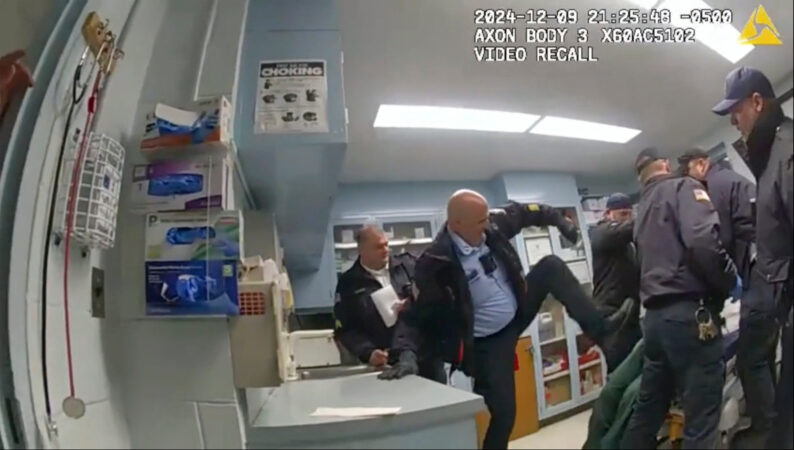
    Former corrections officer Michael Fisher, 55, is charged with second-degree manslaughter in the death of Robert Brooks, who was beaten by guards upon his arrival at Marcy Correctional Facility on the night of Dec. 9, 2024, his agony recorded silently on the guards’ body cameras.

    Fisher’s attorney, Scott Iseman, said his client entered the infirmary after the beating began and could not have known the extent of his injuries.

    Fisher was among 10 guards indicted in February. Three more agreed to plead guilty to reduced charges in return for cooperating with prosecutors. Of the 10 officers indicted in February, six pleaded guilty to manslaughter or lesser charges. Four rejected plea deals. One was convicted of murder, and two were acquitted in the first trial last fall.

    Fisher, standing alone, is the last of the guards to face a jury.

    The trial closes a chapter in a high-profile case led to reforms in New York’s prisons. But advocates say the prisons remain plagued by understaffing and other problems, especially since a wildcat strike by guards last year.

    Officials took action amid outrage over the images of the guards beating the 43-year-old Black man in the prison’s infirmary. Officers could be seen striking Brooks in the chest with a shoe, lifting him by the neck and dropping him.

    Video shown to the jury during closing arguments Thursday indicates Fisher stood by the doorway and didn’t intervene.

    “Did Michael Fisher recklessly cause the death of Robert Brooks? Of course he did. Not by himself. He had plenty of other helpers,” said Fitzpatrick, the Onondaga County district attorney.

    Iseman asked jurors looking at the footage to consider what Fisher could have known at the time “without the benefit of 2020 hindsight.”

    “Michael Fisher did not have a rewind button. He did not have the ability to enhance. He did not have the ability to pause. He did not have the ability to get a different perspective of what was happening in the room,” Iseman said.

    Even before Brooks’ death, critics claimed the prison system was beset by problems that included brutality, overworked staff and inconsistent services. By the time criminal indictments were unsealed in February, the system was reeling from an illegal three-week wildcat strike by corrections officers who were upset over working conditions. Gov. Kathy Hochul deployed National Guard troops to maintain operations. More than 2,000 guards were fired.

    Prison deaths during the strike included Messiah Nantwi on March 1 at Mid-State Correctional Facility, which is across the road from the Marcy prison. 10 other guards were indicted in Nantwi’s death in April, including two charged with murder.

    There are still about 3,000 National Guard members serving the state prison system, according to state officials.

    “The absence of staff in critical positions is affecting literally every aspect of prison operations. And I think the experience for incarcerated people is neglect,” Jennifer Scaife, executive director of the Correctional Association of New York, an independent monitoring group, said on the eve of Fisher’s trial.

    Hochul last month announced a broad reform agreement with lawmakers that includes a requirement that cameras be installed in all facilities and that video recordings related to deaths behind bars be promptly released to state investigators.

    The state also lowered the hiring age for correction officers from 21 to 18 years of age.