Last year, the council voted to increase taxes 23% as federal COVID-19 relief dollars that had filled the county’s longstanding structural deficit began to run dry. That hike took effect in January.
The new 19% increase, which will take effect next month, will place Delaware County on stable financial footing, members of the council argued.
“Our primary responsibility is to ensure that this county is on solid financial footing. Make no mistake, absent this increase tonight that would not be the case. We would run out of money,” said Councilmember Kevin Madden, whose term on the board runs out this year.
The budget, Council Chair Monica Taylor said, would be the first truly balanced budget for the county in more than a decade.
The tax increase will translate to an additional $188 annually for the county’s average assessed home value of $255,000.
Taylor and the other council members said they didn’t take the increase lightly, but that it was a necessary step. Their Republican predecessors, they argued, went too long without substantially increasing taxes and left the county in dire straits when Democrats took control in 2020.
Amid inflation and shrinking federal funds, they said the last two years of increases were needed. And after increasing taxes 19% in 2026, they predicted taxes could be kept level in the future.
“If it comes down to it, next year rather than raise taxes I am going to be looking at cutting discretionary spending,” Councilmember Christine Reuther said Wednesday.
The proposed budget increased spending by just under 6% with the majority of new spending attributed to increased costs for employee health benefits, increased court costs, employee pay, and increases to the county’s SEPTA contribution.
“Our strategy is not just to increase revenue but to decrease expenses,” County Executive Barbara O’Malley said.
Over the course of several meetings and hearings ahead of the vote Delaware County residents showed frustration with the increase and doubt that 2026 would be the end of the hikes. They urged council members to find ways to cut the budget or to spread the increases out over more years.
“I own my home but I’m behind on my taxes because the taxes are so high,” resident Maureen Mitchell said in a Monday budget hearing. “Something’s gotta give for the seniors, we’re losing our homes.”
Although Democrats inherited a deficit when they took control of the council, residents pointed out that they also made significant expenditures in recent years, including the decision to deprivatize the prison, spending more on legal fees, and launching a health department. The majority of the health department is funded by state and federal dollars.
“Find some cuts and give taxpayers a break, then hold the line on future spending,” said Michael Straw, the chair of the Media Borough Republican Committee.
Cynthia Sabatini, an Upper Providence resident, asked council members to release a full list of what spending is discretionary and to spread the increase out over several years.
“Why does it have to be done in one fell swoop?” she asked Monday.
Councilmember Elaine Schaefer voted against the increase because she said she couldn’t justify such a steep hike during hard economic times.
“We do need to raise the revenue but in my opinion it’s too abrupt and causes too much of a hardship to do two really significant increases in a row,” Schaefer said Wednesday.
Delaware County is one of three of Philadelphia’s collar counties considering a tax increase this year. Montgomery County is poised to vote on a 4% tax increase next week while Bucks County is contemplating a tax increase to fill a $16 million deficit.
WASHINGTON — The House voted to pass a sweeping defense policy bill Wednesday that authorizes $900 billion in military programs, including a pay raise for troops and an overhaul of how the Department of Defense buys weapons.
The bill’s passage comes at a time of increasing friction between the Republican-controlled Congress and President Donald Trump’s administration over the management of the military.
The annual National Defense Authorization Act typically gained bipartisan backing, and the White House has signaled “strong support” for the must-pass legislation, saying it is in line with Trump’s national security agenda. Yet tucked into the more than-3,000-page bill are several measures that push back against the Department of Defense, including a demand for more information on boat strikes in the Caribbean and support for allies in Europe, such as Ukraine.
Overall, the sweeping bill calls for a 3.8% pay raise for many military members as well as housing and facility improvements on military bases. It also strikes a compromise between the political parties — cutting climate and diversity efforts in line with Trump’s agenda, while also boosting congressional oversight of the Pentagon and repealing several old war authorizations. Still, hard-line conservatives said they were frustrated that the bill does not do more to cut U.S. commitments overseas.
“We need a ready, capable and lethal fighting force because the threats to our nation, especially those from China, are more complex and challenging than at any point in the last 40 years,” said Rep. Mike Rogers, the GOP chair of the House Armed Services Committee.
Lawmakers overseeing the military said the bill would change how the Pentagon buys weapons, with an emphasis on speed after years of delay by the defense industry. It’s also a key priority for Defense Secretary Pete Hegseth. Rep. Adam Smith, the top Democrat on the armed services panel, called the bill “the most ambitious swing at acquisition reform that we’ve taken.”
Still, Smith lamented that the bill does not do as much as Democrats would like to rein in the Trump administration but called it “a step in the right direction towards reasserting the authority of Congress.”
“The biggest concern I have is that the Pentagon, being run by Secretary Hegseth and by President Trump, is simply not accountable to Congress or accountable to the law,” he said.
The legislation next heads to the Senate, where leaders are working to pass the bill before lawmakers depart Washington for a holiday break.
Several senators on both sides of the aisle have criticized the bill for not doing enough to restrict military flights over Washington. They had pushed for reforms after a midair collision this year between an Army helicopter and a jetliner killed all 67 people aboard the two aircraft near Washington’s Ronald Reagan National Airport. The National Transportation Safety Board has also voiced opposition to that section of the bill.
Here’s what the defense bill does as it makes its way through Congress:
Boat strike videos and congressional oversight
Lawmakers included a provision that would cut Hegseth’s travel budget by a quarter until the Pentagon provides Congress with unedited video of the strikes against alleged drug boats near Venezuela. Lawmakers are asserting their oversight role after a Sept. 2 strike where the U.S. military fired on two survivors who were holding on to a boat that had partially been destroyed.
The bill also demands that Hegseth allow Congress to review the orders for the strikes.
Reaffirm commitments to Europe, Korea
Trump’s ongoing support for Ukraine and other allies in Eastern Europe has been under doubt over the last year, but lawmakers included several positions meant to keep up U.S. support for countering Russian aggression in the region.
The defense bill requires the Pentagon to keep at least 76,000 troops and major equipment stationed in Europe unless NATO allies are consulted and there is a determination that such a withdrawal is in U.S. interests. Around 80,000 to 100,000 U.S. troops are usually present on European soil. It also authorizes $400 million for each of the next two years to manufacture weapons to be sent to Ukraine.
Additionally, there is a provision to keep U.S. troops stationed in South Korea, setting the minimum requirement at 28,500.
Cuts to climate and diversity initiatives
The bill makes $1.6 billion in cuts to climate change-related spending, the House Armed Services Committee said. U.S. military assessments have long found that climate change is a threat to national security, with bases being pummeled by hurricanes or routinely flooded.
The bill also would save $40 million by repealing diversity, equity and inclusion offices, programs and trainings, the committee said. The position of chief diversity officer would be cut, for example.
Iraq War resolution repeal
Congress is putting an official end to the war in Iraq by repealing the authorization for the 2003 invasion. Supporters in both the House and Senate say the repeal is crucial to prevent future abuses and to reinforce that Iraq is now a strategic partner of the U.S.
The 2002 resolution has been rarely used in recent years. But the first Trump administration cited it as part of its legal justification for a 2020 U.S. drone strike that killed Iranian Gen. Qassim Suleimani.
Lawmakers imposed economically crippling sanctions on the country in 2019 to punish former leader Bashar Assad for human rights abuses during the nearly 14-year civil war. After Syrian President Ahmed al-Sharaa led a successful insurgency to depose Assad, he is seeking to rebuild his nation’s economy.
Advocates of a permanent repeal have said international companies are unlikely to invest in projects needed for the country’s reconstruction as long as there is a threat of sanctions returning.
Lack of IVF coverage
Democrats criticized House Speaker Mike Johnson (R., La.) for stripping a provision from the bill to expand coverage of in vitro fertilization for active duty personnel. An earlier version covered the medical procedure, known as IVF, which helps people facing infertility have children.
WASHINGTON — Foreigners who are allowed to come to the United States without a visa could soon be required to submit information about their social media, email accounts and extensive family history to the Department of Homeland Security before being approved for travel.
The notice published Wednesday in the Federal Register said Customs and Border Protection is proposing collecting five years’ worth of social media information from travelers from select countries who do not have to get visas to come to the U.S. The Trump administration has been stepping up monitoring of international travelers and immigrants.
The announcement refers to travelers from more than three dozen countries who take part in the Visa Waiver Program and submit their information to the Electronic System for Travel Authorization (ESTA), which automatically screens them and then approves them for travel to the U.S. Unlike visa applicants, they generally do not have to go into an embassy or consulate for an interview.
DHS administers the program, which currently allows citizens of roughly 40 mostly European and Asian countries to travel to the U.S. for tourism or business for three months without visas.
The announcement also said that CBP would start requesting a list of other information, including telephone numbers the person has used over the past five years or email addresses used over the past decade. Also sought would be metadata from electronically submitted photos, as well as extensive information from the applicant’s family members, including their places of birth and their telephone numbers.
The application that people are now required to fill out to take part in ESTA asks for a more limited set of questions such as parents’ names and current email address.
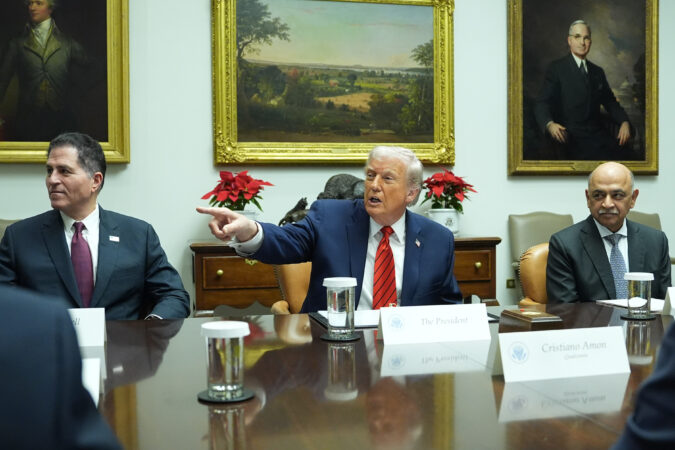
Asked at a White House event whether he was concerned the measure might affect tourism to the U.S., President Donald Trump said no.
“We want safety, we want security, we want to make sure we’re not letting the wrong people come into our country,” Trump said.
The public has 60 days to comment on the proposed changes before they go into effect, the notice said.
CBP officials did not immediately respond to questions about the new rules.
The announcement did not say what the administration was looking for in the social media accounts or why it was asking for more information.
But the agency said it was complying with an executive order that Trump signed in January that called for more screening of people coming to the U.S. to prevent the entry of possible national security threats.
Travelers from countries that are not part of the Visa Waiver Program system are already required to submit their social media information, a policy that dates back to the first Trump administration. The policy remained during Democratic President Joe Biden’s administration.
But citizens from visa waiver countries were not obligated to do so.
Since January, the Trump administration has stepped up checks of immigrants and travelers, both those trying to enter the U.S. as well as those already in the country. Officials have tightened visa rules by requiring that applicants set all of their social media accounts to public so that they can be more easily scrutinized and checked for what authorities view as potential derogatory information. Refusing to set an account to public can be considered grounds for visa denial, according to guidelines provided by the State Department.
U.S. Citizenship and Immigration Services now considers whether an applicant for benefits, such as a green card, “endorsed, promoted, supported, or otherwise espoused” anti-American, terrorist or antisemitic views.
The heightened interest in social media screening has drawn concern from immigration and free speech advocates about what the Trump administration is looking for and whether the measures target people critical of the administration in an infringement of free speech rights.
The Supreme Court on Wednesday wrestled with whether to allow Alabama to execute a man with low cognitive function, a ruling that could set new rules for states to condemn those with borderline intellectual disabilities to death row.
Roughly two hours of intense arguments did not seem to produce a consensus among the justices over how states should assess IQ tests to determine mental disability.
In a landmark 2002 ruling Atkins v. Virginia, the court decidedthat sentencing a mentally disabled person to death violated the Eighth Amendment’s prohibition on “cruel and unusual punishment,” but left it up to states to come up with standards for determining who is too disabled.
Since then, the rules states have used to determine who is ineligible for the death penalty have come before the court several times, in part becausemany death row inmates skirt the line of intellectual disability.
In the current case, Alabama is asking the court to cut back on protections that those previous rulings have given to those who have borderline intellectual disabilities.The case involves how lower courts weighed Alabama’s use of multiple IQ tests to decide Joseph Clifton Smith should face death for robbing and killing a man in 1997.
Under Alabama’s death penalty rules, a defendant is ineligible for the death penalty if he or she has an IQ at or below 70 and significant deficits in everyday skills and those issues occurred before adulthood. Many states have similar IQ thresholds.
In Wednesday’s argument, Robert Overing, deputy solicitor general for Alabama, told the justices that lower courts, which threw out Smith’s death sentence, had placed too much weight on a single low IQ score and additional evidence of impairment, rather than considering the cumulative results of five tests that placed Smith above the IQ cutoff. He said the latter was a more accurate yardstick for his abilities.
“He didn’t come close to proving an IQ of 70 or below … but the lower courts changed the rules,” Overing said.
The court’s three liberal justices expressed skepticism the law required lower courts to consider the cumulative effect of multiple scores as Overing suggested.
In previous rulings, the high court said defendants were permitted to offer additional evidence of cognitive impairment if IQ scores fell below the threshold, but Overing downplayed that idea. That drew rebukes from the liberals as well as questions from conservative Justice Brett Kavanaugh.
“What you’ve done is shift this to be all about the IQ test, which is not supported by our case law,” Justice Ketanji Brown Jackson told Overing.
Kavanaugh asked at another point about additional evidence: “What’s the logic or the rationale or the sense behind not having a district court or a trial court or a state court have the ability in those circumstances to go on and look at more?” he asked.
Justice Neil Gorsuch floated the idea of a ruling that would allow states to set the threshold for a claim of mental disability, but not allow eligibility to turn solely on a single IQ test score. Any additional evidence of impairment would not be allowed to outweigh a low test score.
But there was little agreement among the justices as they groped for the proper standard.
Smith’s murder case began in 1997, while he was on work release from prison. Smith and an accomplice robbed a man of $140 and killed him. A jury convicted Smith of capital murder during a robbery and sentenced him to death.
After the court’s 2002 decision in the Atkins case, Smith filed a petition in federal court arguing his intellectual disability met the criteria to bar his execution. The case has gone back and forth in the lower courts ever since.
During an evidentiary hearing, testimony revealed Smith had scored 75, 74, 72, 78 and 74 on IQ tests over the course of his lifetime. Those were the scores Overing, the lawyer for Alabama, pointed to in arguing that the cumulative effect of the tests placed Smith slightly above the state’s IQ cutoff.
The federal district judge considering the case, however, pointed to the test on which Smith scored 72, saying it indicated his IQ could be as low as 69, since the test had a three-point error range. For that reason, the court allowed Smith to present additional evidence of his impairment to assess his cognitive function.
In seventh grade, Smith’s school classified him as “Educable Mentally Retarded,” meaning he had mild intellectual disability. Smith never consistently held a job, never had a bank account and had difficulty following laws, according to testimony in the lower court hearings. He also acted impulsively, and read and did math at a low level.
The court determined Smith’s “actual functioning” was comparable to someone who was intellectually disabled so he couldn’t be sentenced to death.
After an appeals court ruled in Smith’s favor, Alabama appealed to the Supreme Court. The high court vacated the decision, asking the appeals court to clarify whether its ruling was based solely on one low IQ score or had considered other evidence and expert testimony.
The appeals court once again found Smith was intellectually disabled and said its decision was based on a holistic approach that considered Smith’s deficits in everyday skills along with the IQ score of 72. Alabama again appealed to the Supreme Court, which agreed to take up the case it heard Wednesday.
Seth P. Waxman, an attorney for Smith, said the lower courts had not erred in their assessment of Smith and it was proper to consider additional evidence of his impairment.
“Every court in Alabama … this court and every other court in every other state that I am aware of understands that raw observed test scores is not the definition of true IQ,” Waxman said.
But Harry Graver, an attorney for the Trump administration, which backed Alabama’s position, said the lower court did not give proper weight to the multiple IQ scores.
“Even if you look at other evidence, you still need to circle back and see how that weighs against the evidence on the other side of the scale,” Graver said.
Smith’s case is not the first time the Supreme Court has tackled intellectual disability and the death penalty.
In a 2014 case from Florida and a 2019 case from Texas, the high court noted that IQ tests are not precise. In the 2019 case, the court specifically said that lower courts needed to consider the possible error range in IQ scores.
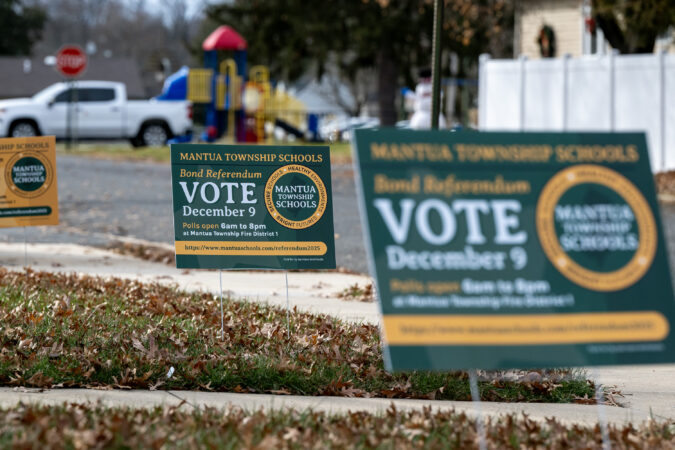
Voters in Shamong handily rejected a $25 million school bond question that would have raised property taxes, while a referendum in Mantua was too close to call, officials said Wednesday.
Shamong voters rejected the bond question 797-271, according to unofficial results from Tuesday’s election in the Burlington County school system.
If approved, the bond issue would have meant a $408 annual property tax increase on a home assessed at the township average of $309,500.
The district had said funding was needed for projects at the Indian Mills and Indian Mills Memorial schools that need immediate action. They included roofing and HVAC work.
Superintendent Mayreni Fermin-Cannon did not respond to a message seeking comment on next steps for the district.
Shamong Mayor Michael Di Croce, who tried unsuccessfully to block Tuesday’s election, hailed the results. Shamong residents make up 90% of the town’s tax base and could not afford an increase, he said.
Di Croce, an attorney, filed a complaint last week on behalf of several residents that contended school officials provided incorrect or misleading information about state funding for the project.
The complaint also alleged the district has refused to disclose why it could not earmark $4 million in capital reserves for renovations prior to seeking a bond referendum.
At a hearing Monday, Superior Court Judge John E. Harrington refused to invalidate the referendum.
“I’m very happy with the way things played out,” Di Croce said Wednesday. “Their whole sky is falling just was not credible and voters didn’t buy it.”
Mantua results too close to call
Meanwhile, the outcome of Tuesday’s vote in Mantua Township on a $39.1 million school bond referendum was too close to call Wednesday.
In preliminary results, there were 1,097 votes opposed and 1,074 votes in favor, the Gloucester County district said. The totals are expected to change over the next few days as officials count mail ballots and verify provisional ballots.
“Regardless of the result, our mission remains the same — to prepare our students for lifelong success through comprehensive academics, community partnerships, and character education,” Superintendent Christine Trampe said in a statement.
The bond issue would fund improvements at all three schools in the kindergarten-through-sixth-grade district, including renovations, roof repairs, and new classrooms.
Trampe called the renovations “true necessities.” Without the funding, the district may need to cut programs, she said.
If approved, the bond issue would increase property taxes about $336 annually on a home assessed at the township average of $311,993.
Elsewhere in the region, voters in Woodbine in Cape May County and Cumberland Regional district in Cumberland County approved bond questions, according to the New Jersey School Boards Association.
Tuesday was one of five times during the year that school boards may ask voters to approve a bond issue or special question. Bond referendums allow districts to pay for projects that cannot readily be funded through their annual operating budget.
WASHINGTON — Oil companies offered $279 million for drilling rights in the Gulf of Mexico on Wednesday in the first of 30 sales planned for the region under Republican efforts to ramp up U.S. fossil fuel production.
The sale came after President Donald Trump’s administration recently announced plans to allow new drilling off Florida and California for the first time in decades. That’s drawn pushback including from Republicans worried about impacts to tourism.
Wednesday’s sale was mandated by the sweeping tax-and-spending bill approved by Republicans over the summer. Under that legislation, companies will pay a 12.5% royalty on oil produced from the leases. That’s the lowest royalty level for deep-water drilling since 2007.
Thirty companies submitted bids, including industry giants Chevron, Shell and BP, federal officials said. The total amount of high bids was down by more than $100 million from the previous lease sale in the Gulf of Mexico, under former Democratic President Joe Biden, in December 2023.
“This sale reflects a significant step in the federal government’s efforts to restore U.S. energy dominance and advance responsible offshore energy development,” said Laura Robbins, acting director of the Gulf region for the Bureau of Ocean Energy Management, which is part of the Interior Department.
The administration’s promotion of fossil fuels contrasts sharply with its hostility to renewable energy, particularly offshore wind. A judge on Monday struck down an executive order from Trump blocking wind energy projects, saying it violated U.S. law.
Environmentalists said the fossil fuel sales would put wildlife in the Gulf at an higher risk of dying in oil spills. Spills occur regularly in the region and have included the 2010 Deepwater Horizon tragedy that killed 11 workers in an oil rig explosion and unleashed a massive spill.
“The Gulf is already overwhelmed with thousands of oil rigs and pipelines, and oil companies are doing a terrible job of cleaning up after themselves,” said Rachel Matthews with the Center for Biological Diversity.
Erik Milito with the National Ocean Industries Association, an industry group, said the takeaway from Wednesday’s sale was that the Gulf “is open.”
While results of individual lease sales may fluctuate, Milito added, “the real success is the resumption of a regular leasing cadence.”
“Knowing that (another lease sale) is coming in March 2026 allows companies to plan, study, and refine their bids, rather than being forced to respond to the uncertainty of a politically-driven multiyear pause,” he said.
At least two lease sales annually are mandated through 2039 and one in 2040.
The sales support an executive order by Trump that directs federal agencies to accelerate offshore oil and gas development, Interior Secretary Doug Burgum said in a statement. He said it would unlock investment, strengthen U.S. energy security and create jobs.
But Earthjustice attorney George Torgun said the Trump administration conducted the sale without analyzing how it would expose the entire Gulf region to oil spills, how communities could be harmed by pollution and how it could devastate vulnerable marine life such as the endangered Rice’s whale, which numbers only in the dozens and lives in the Gulf of Mexico.
The environmental group has asked a federal judge to ensure that the lease sale and future oil sales better protect Gulf communities.
Only a small portion of parcels offered for sale typically receive bids, in areas where companies want to expand their existing drilling activities or where they foresee future development potential. It can be years before drilling occurs.
The drilling leases sold in December 2023 and during another sale in March 2023 are held up by litigation, according to Robbins. A federal court ruled this spring that Interior officials did not adequately account for impacts to planet-warming greenhouse gas emissions and the Rice’s whale.
A Montgomery County Democratic Committee leader has set his sights on unseating a Republican state senator in the suburbs — part of a larger effort by Pennsylvania Democrats to flip the state Senate for the first time in 31 years.
Chris Thomas, the former executive director of the Montgomery County Democratic Committee, who lefthisroleatthe end of November to run for Senate, launched his bid on Wednesday to challenge State Sen. Tracy Pennycuick, a first-term senator representing parts of Montgomery and Berks Counties.
Thomas, 29, is also an Upper Frederick Township volunteer firefighter andtaught in a Philadelphiapublicschool for a year prior to his jump into politics. His campaign is focused on increasingpublicschoolfunding, finding a newfundingstream for masstransit, and making Pennsylvania more affordable for working people.
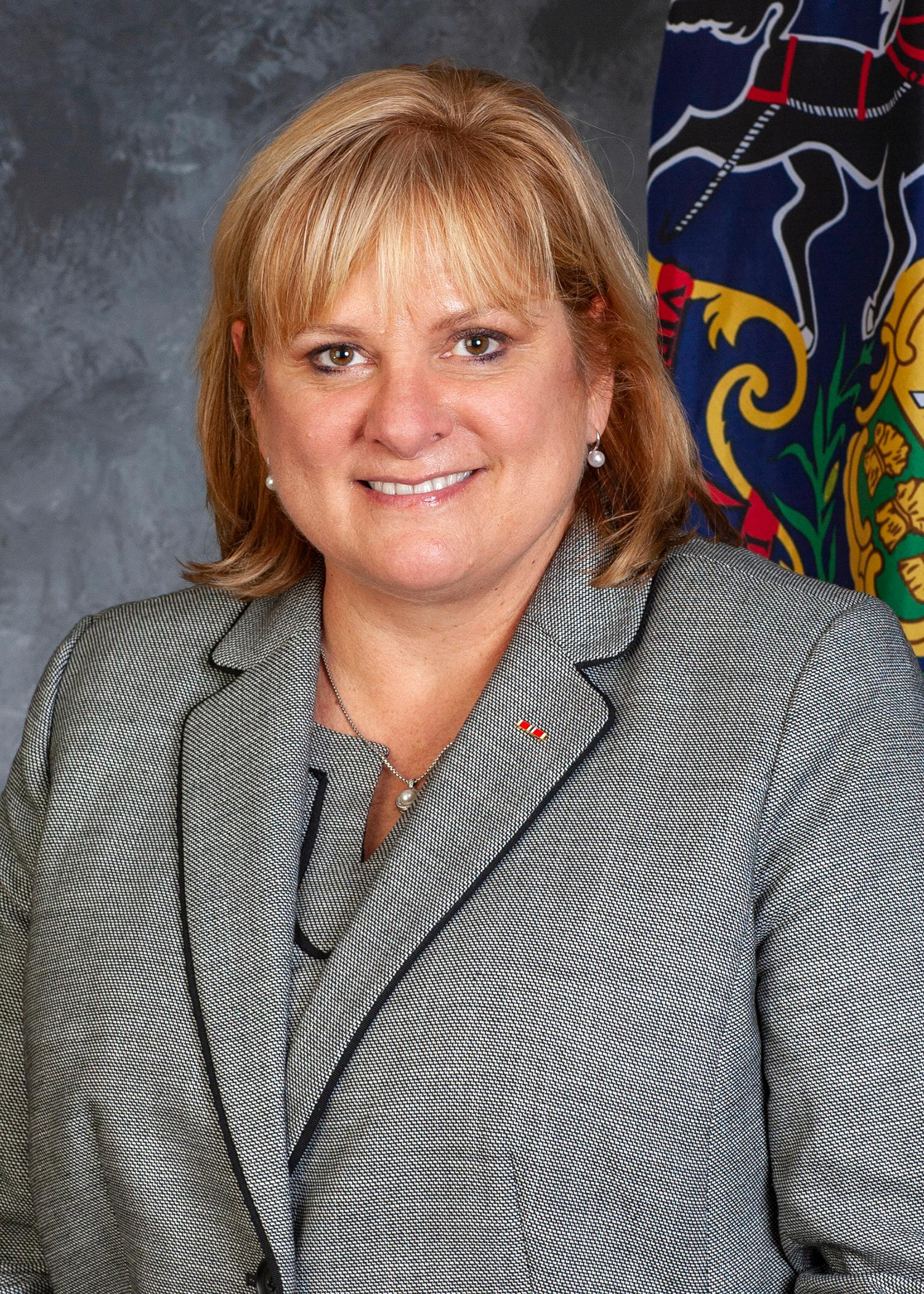
Pa. state Rep. Tracy Pennycuick (R., Montgomery County). (Photo: Pa. House of Representatives)
Thomas announced his campaign with dozens of endorsements from state and local elected officials, including five sitting senators from the Philadelphia suburbs. He also secured the endorsement of House Majority Leader Matt Bradford (D., Montgomery), another driving force behind the Democratic efforts to flip the state Senate in the 2026 midterm election in attempts to control all three branches of Pennsylvania’s government.
Pennsylvania is one of few divided legislatures in the country, where Democrats hold a narrow majority in the state House, 102-101, and Republicans control the Senate, 27-23.
Gov. Josh Shapiro, a Democrat, and House Democrats frequently butt heads with GOP Senate leaders. By flipping two seats next November, Democrats would tie the chamber 25-25 and Democratic Lt. Gov. Austin Davis would act as a tiebreaker. But Democrats are targeting four GOP-held seats, three of which are in the Philadelphia suburbs, in hopes of gaining control in the upper chamber for the first time in 31 years.
The GOP-controlled state Senate has been a thorn in the side of Shapiro and House Democrats, as the more conservative members of the GOP Senate caucus have objected to most spending increases and rejected top Democratic priorities, like a long-term revenue source for mass transit. The state budget, passed in November, was 135 days late, requiring school districts, counties, and social service providers to take out loans or lay off staff to continue operating during the monthslong standoff.
Mirroring national efforts to win control of congressional seats, Pennsylvania Democrats are targeting GOP-held districts that President Donald Trump won in 2024 but Shapiro carried in 2022. With Pennsylvania’s popular first-term governor and potential 2028 contender back at the top of the ticket — and a methodical, behind-the-scenes effort by Shapiro to orchestrate a decisive year for Democrats in 2026 — Democrats see it as possible this time around.
Thomas’ first order of business if he is elected to Harrisburg and Democrats flip the chamber: electing Democratic floor leaders in the chamber.
“No meaningful legislation moves in Harrisburg unless we fix who’s in charge, and right now Sen. Pennycuick is supporting a Senate leadership that’s failed working people,” Thomas said.
Pennycuick said she “welcomes this campaign as an opportunity” to talk about the successes she has achieved while serving in the state Senate, such as her support for public education funding, reducing overreaching regulations, and her bipartisan proposal to create safeguards around artificial intelligence.
Kofi Osei, a Towamencin Township supervisor and Democrat, has also announced his bid for Senate District 24, which stretches along the northwestern parts of Montgomery County and into parts of Berks County.
The state Senate Democratic Campaign Committee does not endorse candidates in a primary election, and will support whoever wins the Democratic nomination in Pennsylvania’s May 19 primary. However, State Sen. Vincent Hughes (D., Philadelphia), who chairs the SDCC, said Thomas’ candidacy is “the right time and the right moment.”
“I’m really excited about having a young person in there, generating young people and getting young people motivated,” Hughes added.
The state Senate Republican Campaign Committee, meanwhile, is fundraising off Democrats’ efforts to flip the state’s upper chamber, warning voters that Democratic special interest group dollars are already pouring in.
“State Democrats have made it clear their goal is to have a blue trifecta in Pennsylvania in 2026,” the SRCC wrote in a fundraising email Tuesday. “They know Senate Republicans are the last line of defense against Josh Shapiro and PA House Democrats far-left agenda.”
Thomas was a public school teacher for one year at the Northeast Community Propel Academy, teaching seventh-grade math and science. He comes from a family of educators, he said, but quickly realized he needed to get more involved to improve the education system and government services to better serve these students. He made the jump to politics to try to make change.
“I was sitting there, trying to feed my kids in the morning to make sure they had full stomachs to learn, having supplies to make sure they’re fully equipped for the day,” Thomas added. “I saw a system that wasn’t working for our students.”
If elected, Thomas would be Pennsylvania’s youngest sittingstate senator, and would join State Sen. Joe Picozzi (R., Philadelphia), 30, as part of a new generation of leaders hoping to shape the state’s future.
“Our generation has grown up during economic crashes, school shootings, endless wars, and now we’re watching our parents and grandparents struggle to retire with dignity,” Thomas said.
During a combative hearing on legislation related to Parker’s signature housing initiative, Council President Kenyatta Johnson on Wednesday afternoon refused to allow a vote on an amendment brought by the Parker administration and instead advanced Council’s version of the proposal over the mayor’s objections.
In a voice vote, Council’s Committee on Fiscal Stability and Intergovernmental Cooperation approved its own changes to the legislation — authorizing the city to take out $800 million in city bonds to fund Parker’s Housing Opportunities Made Easy, or H.O.M.E., initiative — without considering the mayor’s requested tweaks.
Councilmembers Brian O’Neill, Anthony Phillips, and Curtis Jones Jr. signaled their support for Parker’s vision by voting against the measure, which now heads to the Council floor for a final passage vote or further amendments, either of which could come as soon as January.
It is unclear how Johnson’s handling of H.O.M.E. will change the tight working relationship Parker and Johnson have maintained since both took office in January 2024. Wednesday’s vote marked their most contentious public disagreement during their tenures. Both officials still agree on many policy goals and have plenty to gain politically from maintaining their alliance.
Philadelphia Mayor Cherelle L. Parker stands beside Council President Kenyatta Johnson (left) after finishing her budget address to City Council in Philadelphia City Hall on Thursday, March 13, 2025.
The dispute between Parker and Council centers on income eligibility thresholds for two of the housing programs that will be funded by bond proceeds: the Basic Systems Repair Program (BSRP), which provides funding for needed home improvements to eligible owners who might be displaced by costly repairs, and the Adaptive Modification Program (AMP), which funds projects to improve mobility for permanently disabled renters and homeowners.
“The whole debate over income eligibility limits for BSRP and Adaptive Modifications is to make sure that we leave no working Philadelphian and no qualifying Philly rowhome owner excluded from these vital programs,” Parker said in a statement Wednesday. “If we don’t save Philly rowhomes, we’re going to become a city of used-to-be neighborhoods, blocks that used to be nice but now are showing signs of age and decline. I will not allow that to happen — not on my watch as Mayor of Philadelphia.”
Councilmember Jamie Gauthier, who chairs the Committee on Housing, Neighborhood Development and the Homeless, said Wednesday’s vote sent the message “that Council takes its job seriously as a steward of taxpayer money in the city of Philadelphia, that we are not here to just rubber-stamp in a proposal, that we’re here to work together.”
Change in fortunes for Parker
Wednesday’s vote appears to mark the first instance of Parker’s hard-line negotiating tactics failing her since she took office. Even when she could not get negotiating counterparts to bend to her will in the past, Parker has largely prevailed.
And in July, when the largest union for city workers went on strike to try to squeeze larger raises out of the administration, Parker stuck to her guns amid increasing pressure to fold as trash piled up across the city and 911 wait times grew longer. The union ultimately folded after an eight-day work stoppage with a new contract that closely aligned with Parker’s last offer before the strike began.
But this time, Parker appears to be out of options to prevent Council from getting its way because she cannot veto another key piece of legislation to keep the housing initiative in motion that needs to pass before the city can issue the bonds. That measure — a resolution setting the first-year budget for H.O.M.E. that received preliminary approval in a Council committee last week — could see final approval as soon as Thursday.
“We’ve got to take care of the people who are most in need, but we can’t penalize the people who are going to work every day, pay their taxes, contribute to the city, and they can’t benefit from home improvement programs,” she said.
Mayor Cherelle L. Parker speaks to the crowd at The Church of Christian Compassion in the Cobbs Creek neighborhood of West Philadelphia on Sunday, Dec. 7, 2025. Parker visited 10 churches in Philadelphia on Sunday to share details about her H.O.M.E. housing plan.
That maneuver did not appear to go over well with lawmakers, who likely did not appreciate the mayor encouraging their constituents to oppose Council’s version of the plan.
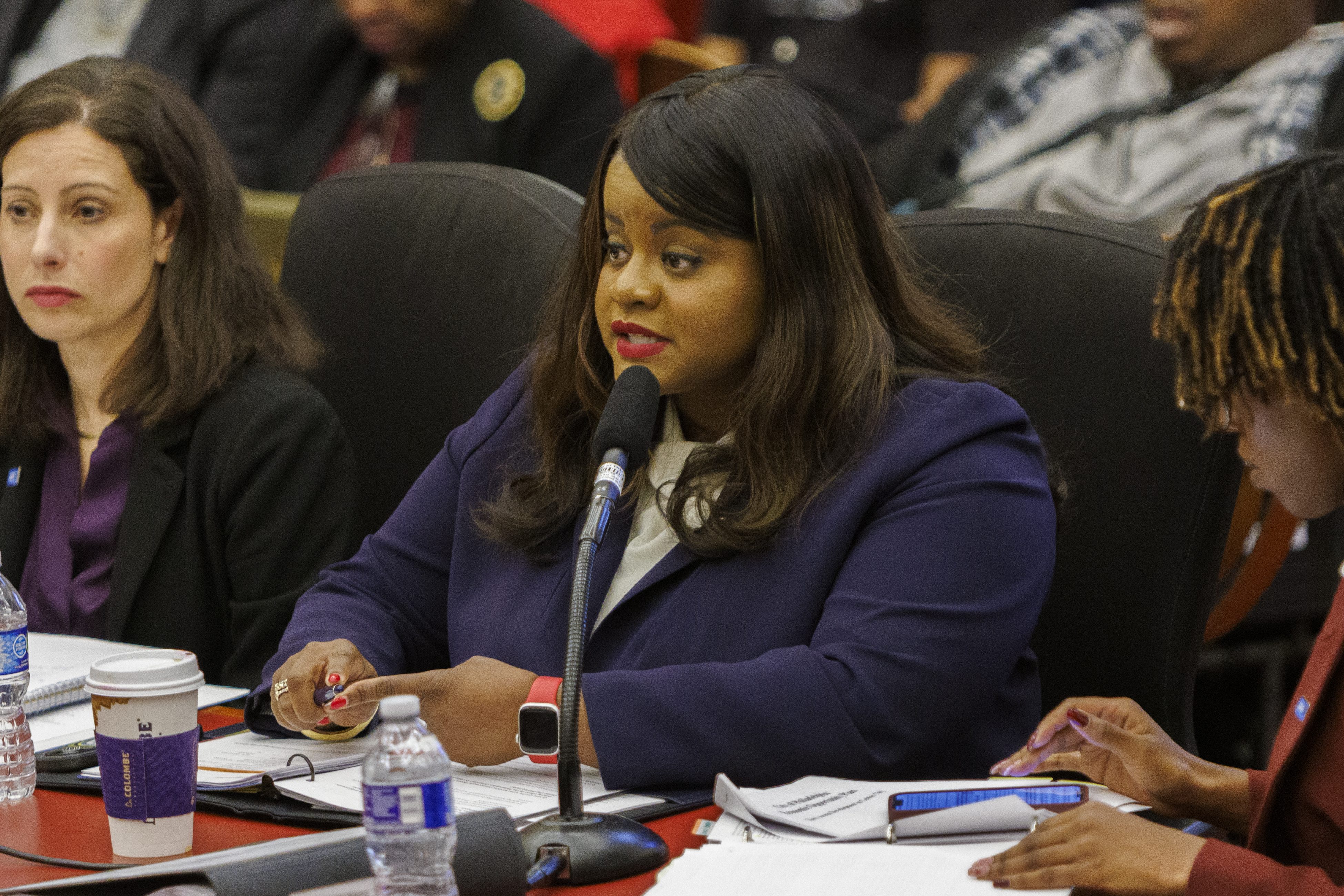
Even before chief of staff Tiffany W. Thurman presented Parker’s amendment at Wednesday’s hearing, lawmakers sounded off, with Gauthier saying the administration was spreading “misinformation” and Councilmember Nicolas O’Rourke calling Parker’s approach “Trumpian.”
“It was in response to misinformation being spread during that tour,” said Gauthier, who, along with fellow progressive Councilmember Rue Landau, led the charge to lower the income eligibility thresholds included in H.O.M.E.
Gauthier noted that Council’s version of the bill still increases those thresholds beyond what is offered in existing programs.
“Obviously, the mayor, all of us, have the right to go and talk to our constituents,” she said, “but we have to be operating from a fact-based perspective, and telling folks that the Council proposal excludes them is not factual.”
No vote on Parker amendment
The legislative process for approving the city bond issuance — the centerpiece of Parker’s H.O.M.E. initiative, which she first proposed in March — has been long and tortured.
Council initially approved the bond authorization in June, but lawmakers at that time inserted a provision requiring the administration to get their approval for annual budget resolutions determining how the proceeds will be spent.
Johnson delayed a vote on the first H.O.M.E. budget resolution for months before allowing it to be approved last week by the Committee of the Whole. But lawmakers made major changes over the mayor’s objections, including granting themselves the right to set income thresholds for the initiative’s programs.
It was the first sign that Council was serious about enacting its own ideas even if Parker was not on board and, in Council’s view, would not negotiate. In a twist, lawmakers took their latest stand Wednesday at a time when the mayor’s team came to the table with a significant, albeit last-minute, counteroffer.
Council’s changes to the eligibility requirements for BSRP and AMP would require 90% of the H.O.M.E. bond proceeds for those programs to be spent on households making 60% of Philadelphia’s area median income, which is about $71,640 for a family of four.
Thurman on Tuesday proposed a compromise in which only 60% of bond money would be set aside for those households. She told lawmakers that Parker, in part, wants to ensure H.O.M.E. helps city workers, who are required to live in Philadelphia but often struggle to make ends meet on municipal salaries. (Parker pointed to the H.O.M.E. plan during the strike as evidence she backed city workers despite opposing higher wages.)
Johnson responded that he hopes “one day our city workers are getting paid enough where they don’t have to sign up” for assistance programs.
“You know as well as I do we agree,” Thurman replied, prompting Johnson to cut her off.
“I’m not acknowledging you yet,” Johnson said, referring to a Council hearing procedure in which the chair must recognize speakers.
Tiffany Thurman, Mayor Parker’s chief of staff, takes questions from Council members in 2024.
Parker’s latest offer, which came months into the standoff over H.O.M.E., appears to have been too little, too late.
Phillips — who voted for the Council budget resolution last week but said he has since changed his mind to support Parker’s vision — wanted to call upthe administration’s amendmentfor a vote, he said in an interview.
“This week I changed my mind because that’s where my mind really has been,” said Phillips, who represents the Northwest Philadelphia-based 9th District that Parker held when she was on Council. “The 9th District neighbors — they’ve made abundantly clear that our housing policy needs to reflect them. … They’re long-term homeowners, residents who are on fixed incomes, multigenerational families.”
Under Council rules, only Johnson can call on members to put forward amendments in committee. But instead he blocked it, prompting Jones, Parker’s most vocal ally on Council, to protest.
“We should do the right thing always, even in spite of its inconvenience and time,” Jones said during Council. “Resolutions and amendments need to be introduced so that they can get the light of day and be heard.”
Johnson said he pushed through Council’s version because the mayor’s administration did not engage with him about its new proposal ahead of the meeting.
“Just for the record … I had not officially seen any official amendment prior to this actual hearing,” Johnson said. “The administration just showed up.”
Despite Wednesday’s vote, the fight over H.O.M.E. may not be over. Councilmember Mike Driscoll, a Parker ally who voted to advance the bond authorization, signaled there may be further changes.
“I wanted to keep the HOME initiative process moving,” Driscoll said in a statement, “but still hope to influence a reasonable solution which includes program support for row home Philadelphians.”
President Donald Trump said Wednesday that the United States has seized an oil tanker off the coast of Venezuela as tensions mount with the government of President Nicolás Maduro.
Using U.S. forces to seize an oil tanker is incredibly unusual and marks the Trump administration’s latest push to increase pressure on Maduro, who has been charged with narcoterrorism in the United States. The U.S. has built up the largest military presence in the region in decades and launched a series of deadly strikes on alleged drug-smuggling boats in the Caribbean Sea and eastern Pacific Ocean. The campaign is facing growing scrutiny from Congress.
“We’ve just seized a tanker on the coast of Venezuela, a large tanker, very large, largest one ever seized, actually,” Trump told reporters at the White House, later adding that “it was seized for a very good reason.”
Trump did not offer additional details. When asked what would happen to the oil aboard the tanker, Trump said, “Well, we keep it, I guess.”
The seizure was led by the U.S. Coast Guard and supported by the Navy, according to a U.S. official who was not authorized to comment publicly and spoke on the condition of anonymity. The official added that the seizure was conducted under U.S. law enforcement authority.
The Coast Guard members were taken to that ship by helicopter from the aircraft carrier USS Gerald R. Ford, the official said. The Ford is in the Caribbean Sea after arriving last month in a major show of force, joining a fleet of other warships that have been increasing pressure on Maduro.
Video posted online by Attorney General Pam Bondi shows people fast-roping from one of the helicopters involved in the operation as it hovers just feet from the deck.
The Coast Guard members can be seen in later shots of the video moving throughout the superstructure of the ship with their weapons drawn.
Bondi wrote that “for multiple years, the oil tanker has been sanctioned by the United States due to its involvement in an illicit oil shipping network supporting foreign terrorist organizations.”
Half of ship’s oil is tied to Cuban importer
The U.S. official identified the seized tanker as the Skipper.
The ship departed Venezuela around Dec. 2 with about 2 million barrels of heavy crude, roughly half of it belonging to a Cuban state-run oil importer, according to documents from the state-owned company Petróleos de Venezuela S.A., commonly known as PDVSA, that were provided on the condition of anonymity because the person did not have permission to share them.
The Skipper was previously known as the M/T Adisa, according to ship tracking data. The Adisa was sanctioned by the U.S. in 2022 over accusations of belonging to a sophisticated network of shadow tankers that smuggled crude oil on behalf of Iran’s Revolutionary Guard and Lebanon’s Hezbollah militant group.
The network was reportedly run by a Switzerland-based Ukrainian oil trader, the U.S. Treasury Departmeny said at the time.
Hitting Venezuela’s sanctioned oil business
Venezuela has the world’s largest proven oil reserves and produces about 1 million barrels a day. Locked out of global oil markets by U.S. sanctions, the state-owned oil company sells most of its output at a steep discount to refiners in China.
The transactions usually involve a complex network of shadowy intermediaries, as sanctions have scared away more established traders. Many are shell companies, registered in jurisdictions known for secrecy. The buyers deploy so-called ghost tankers that hide their location and hand off their valuable cargoes in the middle of the ocean before they reach their final destination.
Maduro did not address the seizure during a speech before a ruling-party organized demonstration in Caracas, Venezuela’s capital. But he told supporters that the country is “prepared to break the teeth of the North American empire if necessary.”
Maduro, flanked by senior officials, said only the ruling party can “guarantee peace, stability, and the harmonious development of Venezuela, South America and the Caribbean.”
During past negotiations, among the concessions the U.S. has made to Maduro was approval for oil giant Chevron Corp. to resume pumping and exporting Venezuelan oil. The corporation’s activities in the South American country resulted in a financial lifeline for Maduro’s government.
Maduro has insisted the real purpose of the U.S. military operations is to force him from office.
Democrat says move is about ‘regime change’
Sen. Chris Van Hollen (D., Md.), a member of the Senate Foreign Relations Committee, said the U.S. seizing of the oil tanker cast doubt on the administration’s stated reasons for the military buildup and boat strikes in the region.
“This shows that their whole cover story — that this is about interdicting drugs — is a big lie,” the senator said. “This is just one more piece of evidence that this is really about regime change — by force.”
The seizure comes a day after the U.S. military flew a pair of fighter jets over the Gulf of Venezuela in what appeared to be the closest that warplanes had come to the South American country’s airspace. Trump has said land attacks are coming soon but has not offered more details.
Lawmakers are demanding to get unedited video from the strikes, but Defense Secretary Pete Hegseth told congressional leaders Tuesday he was still weighing whether to release it. Hegseth provided a classified briefing for congressional leaders alongside Secretary of State Marco Rubio and CIA Director John Ratcliffe.
It was not immediately clear Wednesday who owned the tanker or what national flag it was sailing under. The Coast Guard referred a request for comment to the White House.
Former Gov. Ed Rendell endorsed Democratic State Sen. Sharif Street in his bid to represent Philadelphia in Congress.
In his endorsement, Rendell, who was Philadelphia’s mayor from 1992 to 2000, called Street someone with a track record of delivering for working families in Philadelphia.
“With our nation in crisis, we need fighters like Sharif Street representing us in Congress,” Rendell said in a statement Wednesday.
“I’ve known Sharif since he was a teenager, and he’s spent his entire career fighting for our community,” Rendell said, commending Street’s work as a state legislator to help implement Pennsylvania’s Affordable Care Act exchange, Pennie, and delivering money to programs that work to reduce gun violence.
Street, a former chair of the state Democratic Party, has worked closely with Rendell on party business and fundraising in the past. The candidate’s father, former Mayor John F. Street, served as City Council president during Rendell’s mayorship before succeeding him in the office.
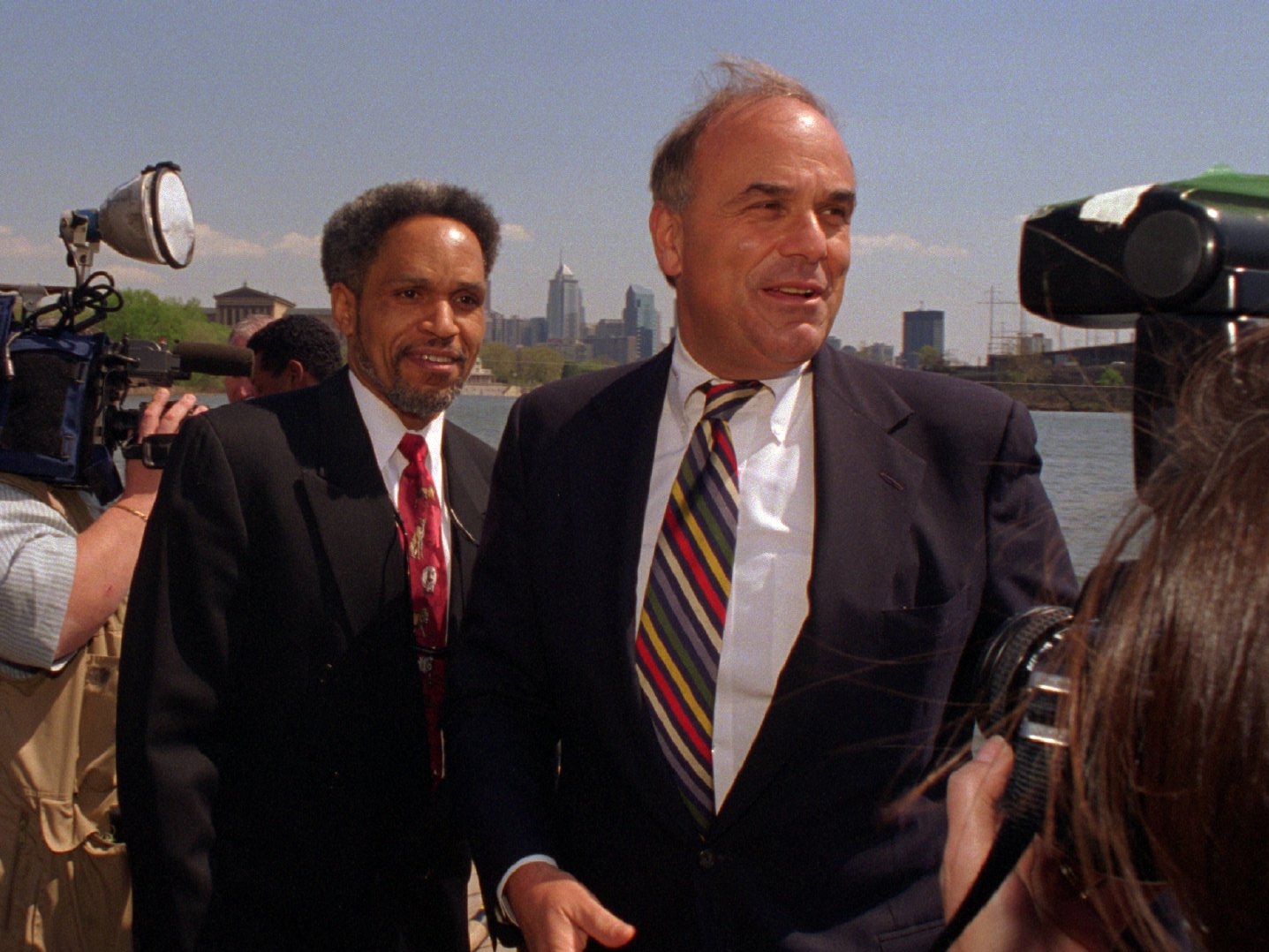
John Street and Ed Rendell arrive for a 1994 news conference when Rendell was serving as mayor. Street went on to succeed Rendell as mayor after collaborating with him closely as City Council president.
The endorsement comes as the race for the 3rd Congressional District heats up.
U.S. Rep. Dwight Evans’ decision to retire has kicked off the city’s first competitive primary in more than a decade — with one of most Democratic-leaning districts in the country up for grabs.
Evans endorsed Ala Stanford, a physician, founder of Philadelphia’s Black Doctors COVID-19 Consortium, and former regional director at the U.S. Department of Health.
A half dozen other hopefuls include Jahmiel Jackson, a West Philly native and recent University of Chicago graduate; Isaiah Martin, a 25-year-old real estate developer and executive director of Empowered CDC, which runs community programs in Southwest Philadelphia; Pablo McConnie-Saad, a Bella Vista resident and former U.S. Treasury Department adviser in the Biden administration; Temple University computer science professor Karl Morris; and former city employee Robin Toldens.
Rendell’s endorsement further solidifies Street as the early Democratic establishment favorite in the race. Street also received endorsements from several city labor unions.
“I’m honored to accept the endorsement of a leader like Governor Rendell,” Street said in a statement, calling the endorsement part of a “broad-based coalition — from labor unions to elected officials to community activists.”
Street’s strength with the establishment could become a target in the race. At the first campaign forum, held last week, Rabb said he was running because Philadelphians needed a true progressive representing them, “not another establishment ally.”
There has been no independent polling done in the race, but an internal poll from Street’s campaign, conducted by Democratic pollster Celinda Lake’s firm, showed him with a 5-percentage-point lead (22%) over Rabb (17%), with Stanford (11%), Cephas (7%), and Oxman (2%) behind them. The survey of 500 likely 2026 Democratic primary voters had a margin of error of plus or minus 4 percentage points.
But the survey showed a plurality of voters, 36%, were undecided.