Category: Politics

Political news and coverage

  • Danish official says there’s a “fundamental disagreement” with Trump over Greenland

    Danish official says there’s a “fundamental disagreement” with Trump over Greenland

    WASHINGTON — A top Danish official said Wednesday that a “fundamental disagreement” over Greenland remains with President Donald Trump after talks in Washington with Vice President JD Vance and Secretary of State Marco Rubio.

    The two sides, however, agreed to create a working group to discuss ways to work through differences as Trump continues to call for a U.S. takeover of the Denmark’s Arctic territory of Greenland.

    “The group, in our view, should focus on how to address the American security concerns, while at the same time respecting the red lines of the Kingdom of Denmark,” Danish Foreign Minister Lars Løkke Rasmussen told reporters after joining Greenland’s foreign minister, Vivian Motzfeldt, for the talks.

    Trump is trying to make the case that NATO should help the U.S. acquire the world’s largest island and says anything less than it being under American control is unacceptable.

    Denmark has announced plans to boost the country’s military presence in the Arctic and North Atlantic as Trump tries to justify his calls for a U.S. takeover of the vast territory by repeatedly claiming that China and Russia have their designs on Greenland.

    Vance and Rubio met with Løkke Rasmussen and Greenlandic Foreign Minister Vivian Motzfeldt for roughly an hour to discuss Greenland, a semiautonomous territory of NATO ally Denmark.

    But a few hours before the officials sat down, Trump reiterated on his social media site that the U.S. “needs Greenland for the purpose of National Security.” He added that “NATO should be leading the way for us to get it” and that otherwise Russia or China would — “AND THAT IS NOT GOING TO HAPPEN!”

    “NATO becomes far more formidable and effective with Greenland in the hands of the UNITED STATES,” Trump wrote. “Anything less than that is unacceptable.”

    Løkke Rasmussen told reporters that it remains “clear that the president has this wish of conquering over Greenland.”

    “And we made it very, very clear that this is not in the interest of the kingdom,” he said after the meeting, citing a “fundamental disagreement” with the Trump administration but willing to keep talking.

    Both Løkke Rasmussen and Motzfeldt offered measured hope that the talks were beginning a conversation that would lead to Trump dropping his demand of acquiring the territory and create a path for tighter cooperation with the U.S.

    “We have shown where our limits are and from there, I think that it will be very good to look forward,” Motzfeldt said.

    Denmark bolstering presence in Arctic

    In Copenhagen, Danish Defense Minister Troels Lund Poulsen announced an increase in Denmark’s “military presence and exercise activity” in the Arctic and the North Atlantic, “in close cooperation with our allies”.

    Poulsen said at a news conference the stepped-up military presence was necessary in a security environment in which “no one can predict what will happen tomorrow.”

    “This means that from today and in the coming time there will be an increased military presence in and around Greenland of aircraft, ships and soldiers, including from other NATO allies,” Poulsen said.

    Other NATO allies were arriving in Greenland along with Danish personnel, he said. Poulsen declined to name the other countries contributing to increased Arctic presence, saying that it is up to the allies to announce their own participation.

    Earlier, Swedish Prime Minister Ulf Kristersson wrote on X that “some officers from the Swedish Armed Forces are arriving in Greenland today” as part of a group from several allied countries. “Together, they will prepare events within the framework of the Danish exercise Operation Arctic Endurance,” Kristersson said. Two Norwegian military personnel also will be sent to Greenland to map out further cooperation with allies, the country’s Defense Minister Tore O. Sandvik told newspaper VG.

    Greenlanders want the U.S. to back off

    Greenland’s prime minister, Jens-Frederik Nielsen, said Tuesday that “if we have to choose between the United States and Denmark here and now, we choose Denmark. We choose NATO. We choose the Kingdom of Denmark. We choose the EU.”

    Asked about those comments, Trump replied: “I disagree with him. I don’t know who he is. I don’t know anything about him. But, that’s going to be a big problem for him.”

    Greenland is strategically important because, as climate change causes the ice to melt, it opens up the possibility of shorter trade routes to Asia. That also could make it easier to extract and transport untapped deposits of critical minerals which are needed for computers and phones.

    Trump says Greenland is also “vital” to the United States’ Golden Dome missile defense program. He also has said he wants the island to expand America’s security and has repeatedly cited what he says is the threat from Russian and Chinese ships as a reason to control it.

    But experts and Greenlanders question that claim.

    “The only Chinese I see is when I go to the fast food market,” heating engineer Lars Vintner said. He said he frequently goes sailing and hunting and has never seen Russian or Chinese ships.

    His friend, Hans Nørgaard, agreed, adding “what has come out of the mouth of Donald Trump about all these ships is just fantasy.”

    Denmark has said the U.S, which already has a military presence, can boost its bases on Greenland. The U.S. is party to a 1951 treaty that gives it broad rights to set up military bases there with the consent of Denmark and Greenland.

    For that reason, “security is just a cover,” Vintner said, suggesting Trump actually wants to own the island to make money from its untapped natural resources.

    Mikaelsen, the student, said Greenlanders benefit from being part of Denmark, which provides free health care, education and payments during study, and “I don’t want the U.S. to take that away from us.”

    Løkke Rasmussen and Motzfeldt, along with Denmark’s ambassador to the U.S., met Wednesday with senators from the Arctic Caucus, a bipartisan delegation of U.S. lawmakers is also heading to Copenhagen this week to see Danish and Greenlandic officials.


  • Women in tight uniforms and maggots in the soft serve: Two ex-employees sue Trump’s N.J. golf club

    Women in tight uniforms and maggots in the soft serve: Two ex-employees sue Trump’s N.J. golf club

    Women working at Trump National Golf Club in New Jersey were required to wear tight uniforms that were too small and told to “smile more,” as they endured “sexist remarks about their bodies and menstruation,” according to two lawsuits by former employees.

    Both complaints describe a similar pattern: A female employee at the Bedminster club, working in a culture hostile to women, reported safety issues and was penalized for doing so.

    Maria Hadley, a former banquet server who worked at the private club, owned by President Donald Trump, from February until she resigned in August, says she suffered from a retaliation campaign after she reported a manager who spiked the drink of an underage employee with vodka. And Justine Sacks, who was hired as clubhouse manager in 2023, says that she was demoted and ultimately fired in May for reporting health and safety violations, including maggots and mold in the soft-serve machine.

    The lawsuits describe a hyper-sexualized work environment, in which female staffers were expected to endure sexual harassment from workers and guests.

    Both Hadley and Sacks are represented by the New Jersey-based McOmber McOmber & Luber law firm. Their attorneys did not respond to a request for comment.

    The Bedminster club is operated by the Trump Organization, which is led by the president’s sons Eric Trump and Donald Trump Jr. Neither the club nor general manager David Schutzenhofer responded to requests for comment.

    In this July 15, 2017 file photo, President Donald Trump turns to wave to the people gathered at the clubhouse as his walks to his presidential viewing stand during the U.S. Women’s Open Golf tournament at Trump National Golf Club in Bedminster, N.J.

    Vodka-spiked Shirley Temple

    Hadley, a banquet server, says women were treated as “a prop” andwere expected to look pleasing, work without complaint, and stay quiet,” according to the lawsuit filed Monday in New Jersey Superior Court in Camden. Male managers and coworkers harassed their female peers, and called teenage guests “sexy.” When a guest inappropriately touched Hadley, a manager advised “they pay a lot of money to come here, just ignore it.”

    Hadley reported in June that a bartender poured vodka into the Shirley Temple of an underage employee without the employee’s consent, saying it would give her energy.

    The bartender was temporarily fired, but the club’s management launched a retaliation campaign against Hadley, the complaint says. She was denied a $1,000 bonus, isolated by her peers, and received worse hours and assignments.

    Hadley resigned via email in August, the suit says, writing to the club’s human resources representative that her employment became “unbearable.” The club accepted her resignation, which the suit calls “effectively forcing her out,” and rehired the fired bartender.

    That man went on to make sexual comments about 12-year-old guests with braces in September, according to a message Hadley sent to Eric Trump, the executive vice president of Trump National, which is included in the complaint.

    Maggots and mold

    Sacks joined Trump National in January 2023 and was told from the onset to expect “gender differences” in treatment, according to the suit, which was filed last month in Monmouth County Superior Court. She was instructed to hire women based on their looks, and received complaints from multiple direct reports about offensive, gender-based comments from male managers and peers.

    The complaints were dismissed by Schutzenhofer, who told Sacks to “vote the mean girls off the island,” the suit says.

    The club’s management slowly stripped Sacks’ authority and stopped inviting her to leadership meetings, in what the suit says was retaliation for elevating the complaints of female staffers.

    People play golf next to the Trump National Golf Club Bedminster’s clubhouse in Bedminister on Friday, June 9 , 2023, in New Jersey.

    Sacks was also retaliated against for reporting unsanitary conditions at the club’s kitchens, which included expired and unlabeled food, and the bistro operating without running water, the complaint says. There were flies all over the clubhouse in the fall of 2023, which even Donald Trump complained about, according to the lawsuit.

    Management told Sacks that she was new to working at golf clubs and was “wrapped too tight” when she complained about the sanitation conditions, as well as employees drinking and vaping on the job. But even Eric Trump asked the club’s management team to make sanitation a “huge focus” because a few health inspectors are “eager and politically motivated to try and embarrass us,” according to a copy of an email sent by the executive vice president in January 2024.

    The clubhouse’s bistro-area became more unsanitary, and by September 2024 the soft-serve machine was filled with maggots and mold, the suit says.

    Sacks was placed on a 90-day performance improvement plan in December 2024 for, among other issues, being “off-putting,” the complaint says. In April, Sacks was reassigned from clubhouse manager to managing the bistro, which the lawsuit calls a clear demotion.

    Schutzenhofer terminated Sacks in May, the lawsuit says, shortly after the club “failed miserably” a state health inspection.

  • Bucks County sheriff terminates controversial alliance with ICE, prohibits deputies from asking about immigration status

    Bucks County sheriff terminates controversial alliance with ICE, prohibits deputies from asking about immigration status

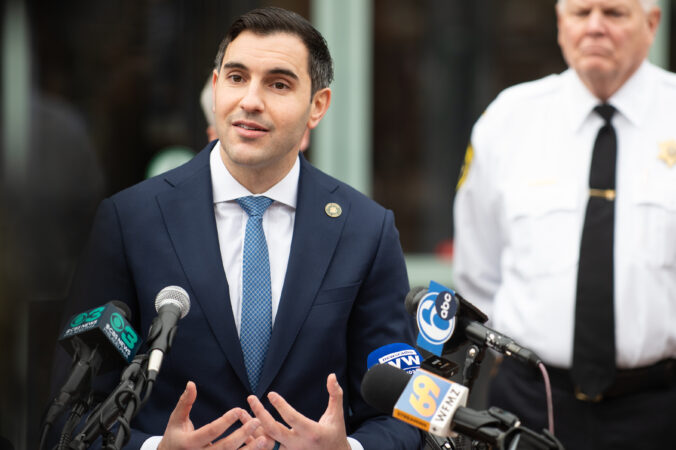
    Bucks County Sheriff Danny Ceisler terminated his office’s controversial partnership with ICE Wednesday, citing negative impacts on public safety and immigrants’ trust of law enforcement.

    The partnership, known as a 287(g) agreement, which enabled 16 sheriff deputies to act as immigration enforcement, was initiated by former Sheriff Fred Harran, the Trump-aligned Republican who Ceisler defeated in November.

    Ceisler said Wednesday that he signed two orders, one revoking the 287(g) partnership, and another that prohibited deputies from asking crime victims, witnesses, and court observers about their immigration status.

    “Bucks County is home to over 50,000 immigrants … those immigrants are our neighbors,” said Ceisler, a Democrat who took office last week, during a news conference outside of the Bucks County Justice Center Wednesday. “They are our friends. They are taxpayers and they deserve the protection of law enforcement in this community.”

    Ceisler’s decision to terminate 287(g) was expected, but his announcement comes amid a nationwide reckoning over federal immigration agents’ deployments to U.S. cities as ordered by the Trump administration. Protests against U.S. Immigration and Customs Enforcement escalated across the country, including in Philadelphia, after an ICE agent shot and killed a woman in Minnesota last week.

    Wednesday’s decision “has nothing to do with what’s going on in Minneapolis,” Ceisler said.

    Other officials in the region have spoken out directly in response to the Minnesota incident. Philadelphia Sheriff Rochelle Bilal’s comments calling ICE “fake, wannabe law enforcement” went viral.

    Ceisler, on Wednesday, called Bilal’s comments “completely counterproductive, and said she was the “wrong messenger for them.”

    The Bucks sheriff was adamant Wednesday that his order does not make Bucks County a so-called sanctuary jurisdiction, which have been increasingly targeted by President Donald Trump.

    The president announced Wednesday morning that on Feb. 1 he would cut off federal funding to states that have cities with sanctuary policies, which prohibit local law enforcement cooperation with ICE. Ceisler’s directive prohibits sheriff deputies from acting as immigration authorities, but does not cut off the county’s cooperation with ICE.

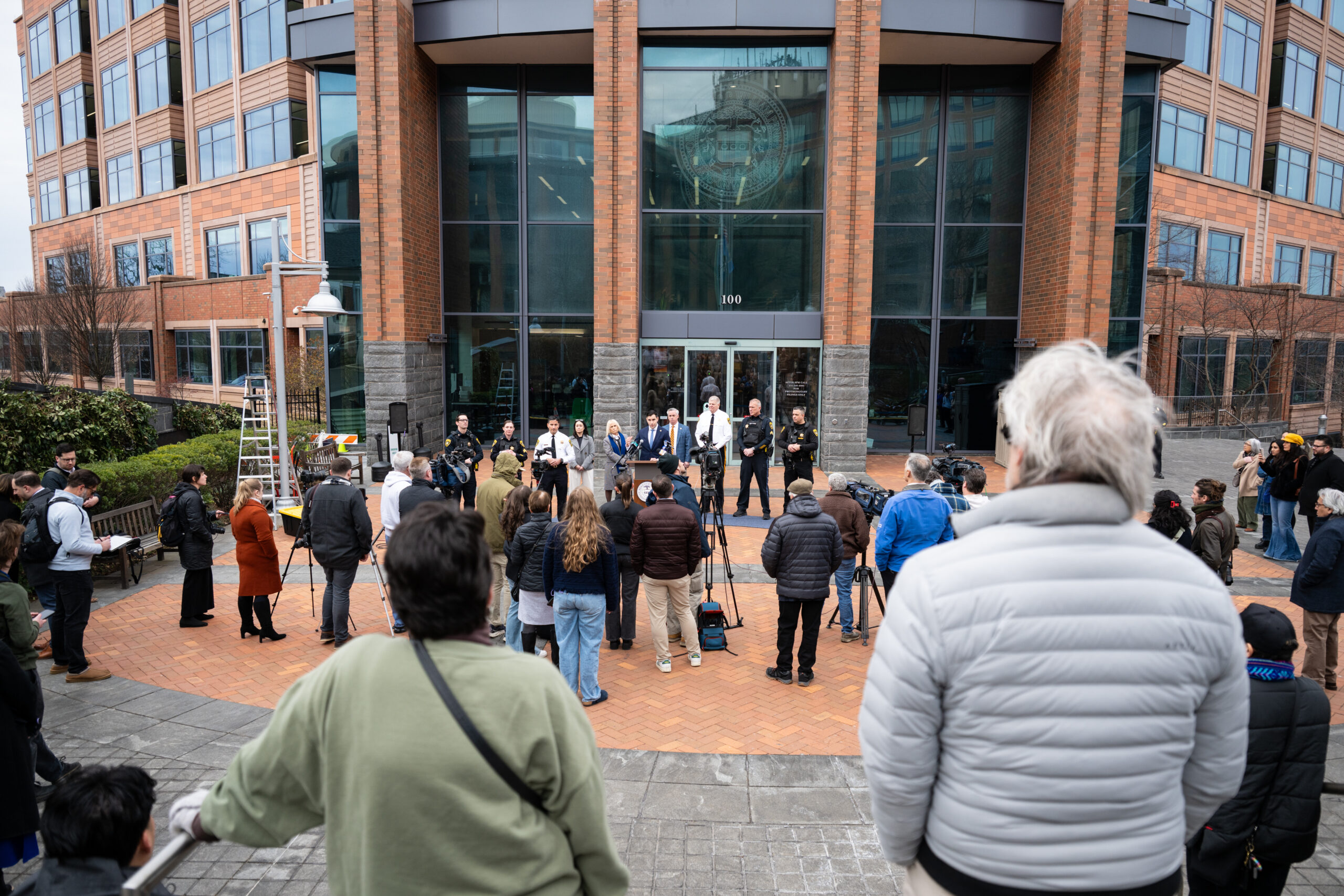
    People and press gather at a press conference announcing the termination of Bucks County’s partnership with ICE.

    “Bucks County has not, has never been, and will never be a so-called sanctuary county,” Ceisler said. “Our county has not severed all ties with ICE, nor precluded future partnership with ICE when it comes to dangerous criminals. Instead, we are returning to a level of partnership we’ve been operating under for decades.”

    Bucks was the only county in the Philadelphia area that wasn’t named as a sanctuary jurisdiction by the Trump administration last year when it rolled out an initial list of state and local governments in danger of losing funding — which was later deleted. Officials from the other collar counties disputed the designation at the time.

    Democratic Gov. Josh Shapiro downplayed concerns about Trump’s Feb. 1 funding threat during a Wednesday appearance at the Pennsylvania Farm Show in Harrisburg.

    “We don’t pay attention to the bluster, we pay attention to what’s written in the directive,“ Shapiro told reporters. ”Pennsylvania’s not a sanctuary state. I would anticipate us not losing funding at the state level unless they wanna be punitive.”

    The sheriff said that the county Department of Corrections will continue to share information with law enforcement agencies, including ICE. Federal immigration agents will also continue to have access to county jails and honor judicial warrants to hold individuals who are incarcerated for immigration enforcement.

    The motivation for the sheriff’s orders Wednesday were in response to “heartbreaking feedback” from Bucks’ immigrant community that they were afraid to report crimes or engage with law enforcement, Ceisler said

    “To the members of our immigrant communities, you are safe to call 911, you are safe to report crime and you are safe to come into this courthouse and testify,” Ceisler said.

    Heidi Roux, an immigration advocate, said her “community is breathing a collective sigh of relief” by ending the 287(g) agreement, but noted that continuing to partner with local law enforcement is crucial to public safety.

    “I believe criminal activity can be addressed while simultaneously supporting the human rights and dignity of our residents,” Roux said.

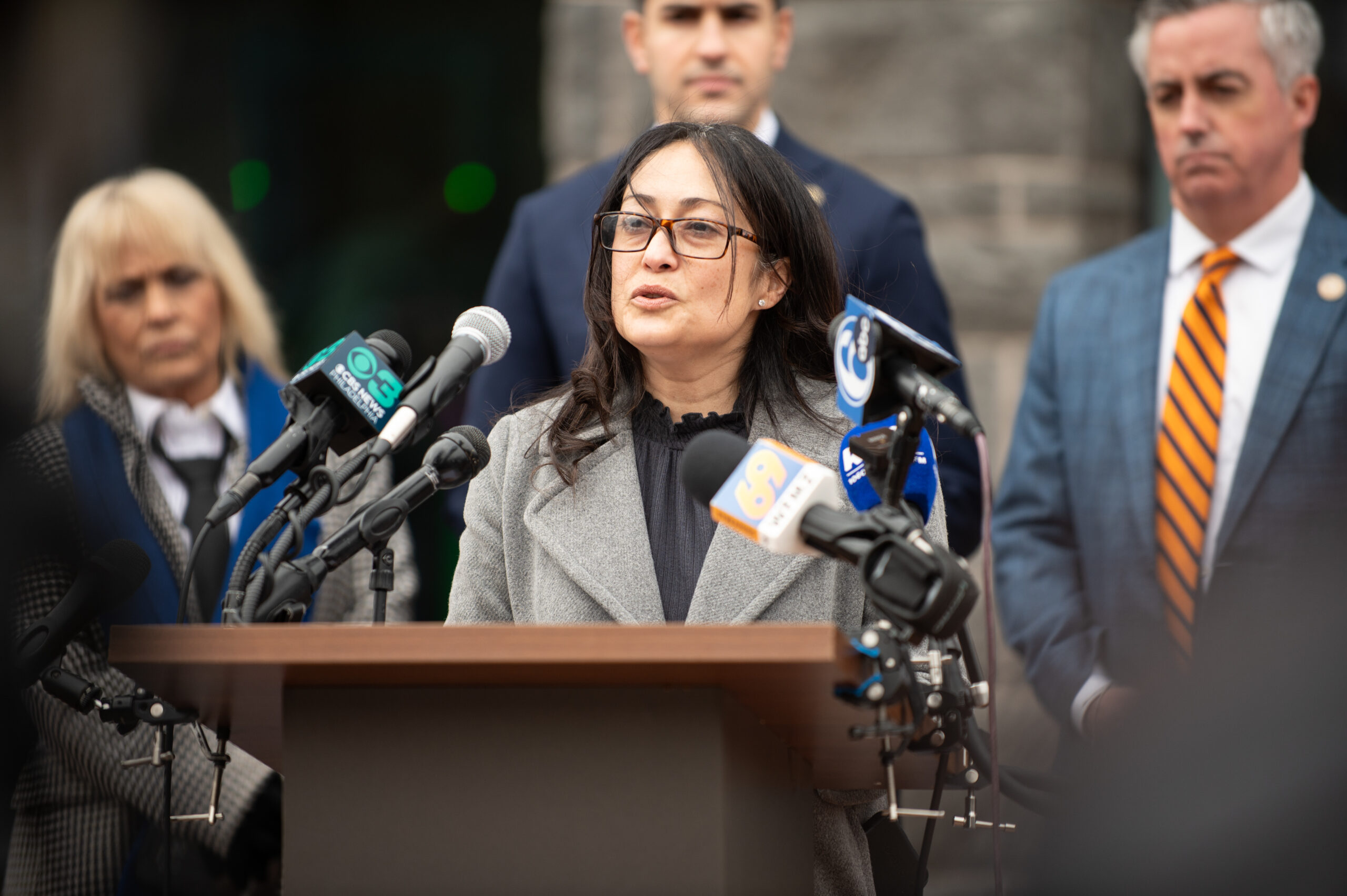
    Heidi Roux, executive director at Immigrant Rights Action, speaks at a press conference about the termination of Bucks County’s partnership with ICE.

    The 287(g) affiliation stirred up controversy when then-Sheriff Harran announced the department’s alliance with ICE in April of last year. The agency had 455 agreements with police authorities in 38 states across the country.

    Since then the number has exploded, to 1,318 in 40 states, with 11 additional agreements pending as of Monday, according to ICE.

    ICE says the program helps protect American communities, a force-multiplier that adds strength to an agency workforce that numbers about 20,000 nationwide. Opponents, however, insist that turning local officers into immigration agents breaks community trust with the police and puts municipal taxpayers at risk of paying big legal settlements.

    In Pennsylvania, the number of participating agencies has grown from 39 in September to 52 today.

    Seven states, including New Jersey and Delaware, bar the agreements by law or policy.

    The growth in Pennsylvania and across the nation has been driven by Trump, who has pumped incentive money into the program as he pursues plans to arrest and deport millions of immigrants.

    On Trump’s first day in office in January, he directed the Department of Homeland Security to authorize local police to “perform the functions of immigration officers” to “the maximum extent permitted by law.”

    In the Philadelphia area, Harran’s decision to collaborate with ICE sparked public protests and a lawsuit – and may have cost him his job in a hard-fought November election.

    No one had yet been detained under that program, but opponents saw Ceisler’s election as the last chance to stop the Sheriff’s Department’s alliance with ICE, and the Democrat said he would act quickly to end the alliance.

    The former sheriff said his only goal was to make the community safer, that the department would not conduct random immigration checks or broad enforcement but “those who commit crimes must face the consequences regardless of immigration status.”

    The Democratic-led Bucks County Board of Commissioners warned county employees that they could be personally liable for helping ICE, passing a resolution that said the alliance was “not an appropriate use of Bucks County taxpayer resources.” Democratic Commissioners Diane Ellis-Marseglia and Bob Harvie were at Wednesday’s news conference but did not speak.

    In October, however, Bucks County Court Judge Jeffrey Trauger ruled that Harran’s cooperation with ICE was “clearly lawful under Pennsylvania jurisprudence,” and both “reasonable and necessary” in fulfilling his lawful duty to keep the citizens of Bucks County safe.

    Ceisler said that terminating the agreement is the first step to regaining trust of the county’s immigrant communities. Next, he said, comes getting out into the communities.

    “It’s about letting people know that they are safe,” he said.

    Staff writer Gillian McGoldrick contributed reporting.

  • These prosecutors spent years on cases. Then Trump granted pardons.

    These prosecutors spent years on cases. Then Trump granted pardons.

    Melanie Smith pulled grueling hours alongside FBI agents and other prosecutors as she prepped dozens of witnesses to prove that a Virginia sheriff had accepted $75,000 in bribes from wealthy business owners and undercover agents. Just over a year ago, the jury returned a guilty verdict against former Culpeper County sheriff Scott Jenkins in an astounding 90 minutes.

    V. Grady O’Malley built one of the most complicated cases of his 47-year Justice Department career to prove that a New York businessman who owned a chain of nursing homes had failed to pay more than $38 million in employment taxes, then laundered the money by bouncing it from account to account. The defendant, Joseph Schwartz, pleaded guilty.

    Just months after the defendants were sentenced, President Donald Trump pardoned them as he wielded his executive power to grant clemency to a host of convicts — many of them politically connected — outside of the traditional pardon-application process.

    Jenkins was pardoned the day before he was set to begin his prison sentence, his entire punishment erased and the restitution he owed taxpayers wiped out.

    “The president has the authority to grant a pardon, but when you have a strong case, and it is a good case, and you are holding elected officials accountable for wrongdoing, it is frustrating,” Smith said in an interview. “You put a lot of time and energy into these cases. It was a righteous case. The fact that the pardon happened before he went to prison, it undermines one of the purposes of the criminal justice system.”

    White-collar and public corruption cases are among the most resource-intensive for the Justice Department to pursue. Prosecutors, FBI agents, and other specialists often work for years to build such cases, following money trails and interviewing scores of witnesses before they even file an indictment.

    More than half a dozen experienced prosecutors interviewed for this story, some of whom spoke on the condition of anonymity because they feared retaliation, said Trump’s clemency acts have eroded faith among current and former Justice Department employees that the cases they devote years to prosecuting will lead to accountability.

    Calculating the amount of government resources poured into prosecuting a single case is next to impossible. But the cost can often run to millions of dollars when factoring in salaries and travel expenses, prosecutors said. On top of that, witnesses might require transportation to court and accommodation for the duration of the trial, paid for by taxpayers, the prosecutors noted.

    Some complex cases can take years to investigate before charges are filed, with prosecutors interviewing dozens of witnesses before grand juries to build their cases. Years typically pass before those cases reach a trial date.

    And once the trial arrives, prosecutors can spend upward of 80 hours a week preparing witnesses and getting exhibits ready. A long trial can involve more than 1,000 exhibits that need to be prepped and reviewed.

    “To bring a case to trial is just an incredible effort and use of department resources,” said John Keller, the former acting head of the Justice Department’s Public Integrity Section. “There’s an intensity of experience and effort and emotion that doesn’t come at any other stage of the case. It’s the pinnacle of the practice.”

    During Trump’s two terms, multiple defendants whose cases Keller has tried and supervised have received pardons. He said the pardons sting, but prosecutors are focused on their cases and trials, and do not allow a potential presidential act of clemency to influence how they approach a case.

    “There’s a feeling that, if a jury or judge has reached a verdict after hearing all the evidence, it’s even more of a slap in the face to have clemency handed down,” he said.

    During the first year of his second term, Trump has pardoned some of the most high-profile public corruption and white-collar defendants prosecuted during President Joe Biden’s administration, as well as some prosecuted during his own first term and some under earlier administrations.

    Among them: former Republican congressman George Santos of New York, Democratic Rep. Henry Cuellar of Texas, former Tennessee state senator Brian Kelsey, and Trevor Milton, the former executive chairman of electric trucking company Nikola. One of the defining acts of Trump’s return to office has been his sweeping pardons of more than 1,500 people convicted in connection with the riot at the U.S. Capitol on Jan. 6, 2021, including those who assaulted police officers.

    Trump has defended his use of the pardons, saying the people to whom he granted clemency had been pursued by what he considers a corrupt and overzealous Justice Department under Biden. But the attorneys interviewed said they investigated each case scrupulously and apolitically to ensure a fair prosecution.

    “It’s personally upsetting because of how much time I invested in this case — the time traveling, the late nights looking through documents and prepping for witness interviews,” said Jacob Steiner, a former Justice Department employee who prosecuted the Santos case. “Beyond and more important than the personal aspect, it’s really disheartening that someone who lied to the public and stole a lot of money just gets to walk free and not have to pay back his victims.”

    Reality television star Todd Chrisley speaks as his daughter Savannah Chrisley looks on during a news conference on May 30, 2025, in Nashville. Todd Chrisley and his wife, Julie, were pardoned in May after being convicted in 2022 of bank fraud and tax evasion.

    In Atlanta, prosecutors and federal agents spent years investigating reality stars Todd and Julie Chrisley. The couple were found guilty of bank fraud and tax evasion in 2022 after a nearly three-week jury trial. The Justice Department then defended the conviction during appeals. But after a public campaign from the Chrisleys’ daughter, who spoke at the Republican National Convention and socialized at Trump’s Mar-a-Lago Club, the president granted the reality stars a pardon in May.

    In New York, prosecutors and federal agents spent roughly two years investigating the online black market Silk Road before indicting its creator, Ross Ulbricht, on charges related to the sale of drugs and other illegal goods on the platform. It took another two years before the case went to trial in 2015, resulting in convictions on seven counts and a sentence of life in prison. Trump pardoned Ulbricht on his first full day in office.

    “I couldn’t believe it was a complete and total pardon,” said one law enforcement official who worked on the Silk Road case.

    Santos, the Chrisleys, Ulbricht, and others who received pardons from Trump have said they deserved forgiveness because they were prosecuted at the hands of a corrupt Justice Department or were innocent and wrongly convicted.

    Every recent president has exercised the pardon power to benefit his allies, but legal experts say that Trump’s use of clemency has bucked every norm of a largely undefined process. Typically, Justice Department employees vet tens of thousands of applications, only recommending to the president people who have completed their sentences and showed contrition. Trump, however, has pardoned criminals without any such vetting, people familiar with the process said, sometimes granting clemency to convicts who have not started their sentences or admitted wrongdoing. Trump and his allies have pointed to Biden’s pardoning of his son Hunter as an example of how Trump’s predecessors politicized the pardon.

    O’Malley, who retired in 2023 and described himself as a supporter of the president, said he was flummoxed over Trump’s pardoning of Schwartz, the nursing home magnate. He said that sifting through the more than 100 accounts Schwartz set up to evade taxes had required a lot of effort, and that the prosecutors and agents assigned to the case did “yeoman’s work.”

    The Washington Post reported that Schwartz paid two lobbyists, right-wing provocateurs Jack Burkman and Jacob Wohl, $960,000 to help secure a pardon from Trump. (Schwartz must still complete a sentence on state charges in an Arkansas prison.)

    “I think the president was misled as to the reasons why [Schwartz] should be pardoned,” O’Malley said. “I can’t see anyone accepting an application and alleging that he somehow deserves to be pardoned unconditionally and completely in this case. Something had to be said to the president. Whether he was paying attention to it or not, I don’t know.”

    O’Malley continued: “I was stunned and angered. The $5 million in restitution was vacated. It was a strong case. I do not indict cases on a wing and a prayer.”

    In December — less than a month after Trump pardoned Schwartz — the Internal Revenue Service decided to present O’Malley with an award for his work on the Schwartz case. O’Malley said he declined to attend.

  • She made a Facebook comment about her mayor. Then the police arrived.

    She made a Facebook comment about her mayor. Then the police arrived.

    Raquel Pacheco began recording on her phone Monday as she opened her front door to the pair of police officers standing outside.

    They told her they had questions about a Facebook comment she had written.

    “Is that your account?” one officer asked. The other held out his phone, showing a message Pacheco had written days earlier about the mayor of Miami Beach, where she lives.

    Pacheco had left the comment about a post from Mayor Steven Meiner, calling his city a “safe haven for everyone.” Meiner, who is Jewish, contrasted Miami Beach with “places like New York City,” where he accused officials of discriminating against Jews and “promoting boycotts” of Jewish and Israeli-owned businesses.

    In a series of replies, Pacheco called him racist and criticized his actions toward a number of communities, including Palestinians and LGBTQ people. She said she felt his words of welcome were superficial.

    At her door, the officers told Pacheco they were looking for the commenter because that person’s words could “probably incite somebody to do something bad,” her video shows. Pacheco refused to answer their questions without an attorney present, and the officers left within minutes.

    Heart racing, Pacheco shut her door and texted her recording of the exchange to three friends who practice law. She struggled to comprehend why the officers were sent to question her – a private citizen who once ran for elected office, knew the mayor and other local officials, and had deep faith in American values. Where the officers saw a comment that could incite violence, Pacheco saw an expression of her right to free speech, she said.

    “If we can’t hold this line, we are screwed,” Pacheco, 51, told The Washington Post.

    The Miami Beach Police Department on Tuesday evening told The Post that detectives had “conducted a brief, consensual encounter” to make sure there was no safety threat to the mayor or the community. They assessed the social media posting, the department said, to be cautious, citing “recent national concerns regarding antisemitism.”

    Meiner said in a statement Tuesday evening that the situation was “a police matter,” adding that he was “a strong supporter of the State of Israel” and its “right to defend its citizens.”

    “Others might have a different view and that is their right,” Meiner wrote. “In this situation, our police department believed that inflammatory language that is false and without any factual basis was justification for follow-up to assess the level of threat and to protect the safety of all involved.”

    The now-public tussle over Pacheco’s Facebook comment, which was first reported by the Miami Herald, is another salvo in a battle between activists across the country and authorities whom they accuse of stifling speech about divisive political topics, all against the backdrop of political violence that has rocked the country. In recent years, people have faced suspensions, firings and other punishments for social media posts about the Israel-Gaza war, the assassination attempts against President Donald Trump and the killing of Charlie Kirk.

    Pacheco, who has lived in Miami Beach since 2004 and has run for local elected office three times as a Democrat, said she voted for Meiner in 2023. But she started speaking out against the mayor when he began addressing issues such as crime and homelessness by taking a page from “the Trump playbook,” using measures that she saw as laden with cruelty, Pacheco said. Her criticism often took the form of Facebook posts and comments, alongside advocacy work in the community.

    Miami Beach voters elected Meiner to his office, which is nonpartisan, a month after the Oct. 7, 2023, Hamas-led attack on Israel in which about 1,200 people were killed. Since then, the city has experienced a deepening rift among residents, including between Meiner and his constituents.

    In March, the mayor tried to end the lease of a local cinema after it screened “No Other Land,” a movie made by Palestinian and Israeli filmmakers that shows Israelis bulldozing a town in the West Bank. Meiner described the documentary at the time as a “false one-sided propaganda attack on the Jewish people.” He backpedaled his efforts against the theater after a fraught, nine-hour city commission meeting.

    Pacheco referenced the incident in the comment that led police to her doorstep.

    On Jan. 6, Meiner’s official Facebook account published the post about Miami Beach being a welcoming place. It featured a photo of the mayor with the following text: “Miami Beach is a safe haven for everyone. We will always stand firm against any discrimination.”

    Pacheco replied: “‘We will stand firm against any discrimination’ – unless you’re Palestinian, or Muslim or you think those people have a right to live.” She added: “Careful your racism is showing.”

    The next day, the mayor’s post was shared on a community Facebook page, where Pacheco again responded.

    “The guy who consistently calls for the death of all Palestinians, tried to shut down a theater for showing a movie that hurt his feelings, and REFUSES to stand up for the LGBTQ community in any way (even leaves the room when they vote on related matters) wants you to know that you’re all welcome here,” she wrote, alongside three clown emojis.

    It was this comment that police showed her when she opened her door Monday, Pacheco said.

    “This is freedom of speech, this is America, right? I’m a veteran,” she told the officers, according to her recording of the two-minute conversation.

    “And I agree with you 100 percent,” one officer responded. “We’re just trying to see if it’s you, because if we’re not talking to the right person, we want to go see who the right person is.”

    Pacheco, who said she served in Connecticut’s Army National Guard from 1993 to 1999, said the officers told her she was not going to jail and that they were “just here to have a conversation.” Later in the video, an officer tells Pacheco: “I would think to refrain from posting things like that, because that can get something incited.”

    After the brief exchange, Pacheco sat in disbelief.

    “There were cops at my door because of something I said,” Pacheco told The Post on Tuesday. “It felt like such a foreign, alien feeling.”

    In the day since the officers’ visit, she has retained an attorney and made public records requests about the situation. Should it escalate, she said she was “prepared to sue.” While she described herself as progressive, she said she is “conservative when it comes to the Constitution,” a document she had come to revere since moving to the United States from Portugal in the 1980s. She said she strongly sees Monday’s interaction at her home as a violation of the rights guaranteed by it.

    “I’m not one to stand down,” Pacheco said. “I don’t do well with bullies.”

    And the next time she sees a social media post from her mayor, or other elected officials for that matter, Pacheco said she knows what she will do: open the comment section, type her thoughts and hit send.

  • Trump threatens to halt federal money next month not only to sanctuary cities but also their states

    Trump threatens to halt federal money next month not only to sanctuary cities but also their states

    President Donald Trump said Tuesday that starting Feb. 1 he will deny federal funding to any states that are home to local governments resisting his administration’s immigration policies, expanding on previous threats to cut off resources to the so-called sanctuary cities themselves.

    Such an action could have far-reaching impacts across the U.S., potentially even in places that aren’t particularly friendly to noncitizens.

    Two previous efforts by Trump to cut off some funding for sanctuary jurisdictions were shut down by courts.

    Trump unveiled the concept this time late in a speech Tuesday at the Detroit Economic Club, without offering specifics.

    “Starting Feb. 1, we’re not making any payments to sanctuary cities or states having sanctuary cities, because they do everything possible to protect criminals at the expense of American citizens and it breeds fraud and crime and all of the other problems that come,” he said. “So we’re not making any payment to anybody that supports sanctuary cities.”

    Back in Washington, Trump was asked by reporters what kind of funding would be affected on Feb. 1: “You’ll see,” he said. “It’ll be significant.”

    There is no strict definition for sanctuary policies or sanctuary cities, but the terms generally describe limited cooperation with Immigration and Customs Enforcement.

    Courts have rejected the idea before

    In an executive orders last year, the president directed federal officials to withhold money from sanctuary jurisdictions that seek to shield people in the country illegally from deportation.

    A California-based federal judge struck it down despite government lawyers saying it was too early to stop the plan when no action had been taken and no specific conditions had been laid out.

    In Trump’s first term in office, in 2017, courts struck down his effort to cut funding to the cities.

    Some of the details are tricky

    The Justice Department last year published a list of three dozen states, cities and counties that it considers to be sanctuary jurisdictions.

    The list is overwhelmingly made up of places where the governments are controlled by Democrats, including the states of California, Connecticut and New York, cities such as Boston and New York and counties including Baltimore County, Maryland, and Cook County, Illinois.

    That list replaced an earlier, longer one that was met with pushback from officials who said it wasn’t clear why their jurisdictions were on it.

    The administration has been threatening funding in specific places

    The federal government has moved to halt funding for a variety of programs in recent weeks and is already facing legal challenges.

    The U.S. Department of Agriculture has warned states that have refused to provide data on recipients of Supplemental Nutrition Assistance Program money that they’ll be docked administrative funds. A court fight over the request for information was already underway before the threat came. Money hasn’t been stopped yet.

    The U.S. Department of Health and Social Services said last week that it was halting money from five Democratic-led states for daycare subsidies and other aid to low-income families with children over unspecified suspicions about fraud. A court put that on hold

    The administration has tried to use additional financial pressure against Minnesota, a state where it has also sent a wave of federal officers in an immigration crackdown. The Agriculture Department has said it’s freezing funding in the state — but without laying out many details.

    The Centers for Medicare and Medicaid Services also told Minnesota last week that it intends to withhold $515 million every three months from 14 Medicaid programs that were deemed “high risk” after rejecting a corrective action plan it demanded because of fraud allegations. The amount is equivalent to one-fourth of the federal money for those programs. State officials said Tuesday that they’re appealing.

  • Stacy Garrity says she’s ‘talking to a lot of people’ about being her running mate. Only two have stepped up.

    Stacy Garrity says she’s ‘talking to a lot of people’ about being her running mate. Only two have stepped up.

    HARRISBURG — State Treasurer Stacy Garrity has been the Pennsylvania Republican Party’s endorsed candidate for governor since September, but few candidates have stepped up to run alongside her for lieutenant governor.

    Only two candidates have officially thrown their hats in the ring for Republican lieutenant governor, as Garrity faces the uphill battle of running against a popular incumbent in Democratic Gov. Josh Shapiro. And despite amassing unusually early support from the state party, recruiting someone to run as her No. 2 has proven challenging, as some potential candidates have declined to run.

    Garrity said Monday at the Pennsylvania Press Club luncheon she’s in talks with “a lot of people,” and she’s confident she’ll find a running mate “perfect for the ticket.”

    But time is of the essence, as she has less than a month until the state GOP meets for its winter meeting, where the party is expected to endorse a lieutenant governor candidate. Whomever she picks is likely to get the nod.

    “In many respects, it’s up to Stacy Garrity,” said GOP strategist Charlie Gerow. “The lieutenant governor candidate has to not only be a good political fit, but has to be a good personal fit for her. Otherwise, the ticket falls apart before you get to Election Day.”

    So far, the only two GOP candidates to formally announce their campaigns for lieutenant governor are State Sen. Cris Dush (R., Jefferson), who is one of the most conservative members of the Senate GOP caucus, and Bucks County businessman and political newcomer Brian Thomas. Dush said he’d likely pursue the GOP primary nomination even if he isn’t endorsed by the state party, while Thomas announced his candidacy last week in a press release and said he is now reaching out to party leaders seeking their support.

    And more far-right Republicans have publicly floated a run, teeing up a potential battle among some of the state’s most conservative members to run alongside Garrity on the November ballot.

    In Pennsylvania, candidates for lieutenant governor face their own primary races separate from the candidates for governor. After the primary, the winners are joined onto one ticket and run together in the general election.

    Shapiro announced his reelection campaign with his running mate, Lt. Gov. Austin Davis, at two campaign rallies last week. Davis was the nation’s youngest lieutenant governor when he took office in 2023, and the first Black person elected to the state’s executive branch.

    The lieutenant governor’s main duty is to preside over the state Senate and break tied Senate votes on nonlegislative matters, a job that may become more important as Democrats attempt to tie or flip the state Senate in the midterms.

    Former State Rep. Rick Saccone, who previously ran for lieutenant governor and was on U.S. Capitol grounds during the Jan. 6, 2021 riot but did not face criminal charges, has publicly stated his interest in the role. Saccone said he would not enter the race if the state party backed another candidate.

    And State Sen. Doug Mastriano, a far-right Republican who lost to Shapiro in 2022 and last week ruled out a second run for the GOP nomination, later claimed on a local radio station that Garrity would need him as her running mate if she wants to win.

    Few more moderate options have emerged.

    Montgomery County Commissioner Tom DiBello, a Republican from Shapiro’s home county, said in an interview that he had been approached about pursuing the role. DiBello said he received a positive reception when he traveled the state contemplating a run, but he implied Monday that he’d moved on. On Tuesday night DiBello lost his bid to be the next chair of the county party to his former running mate, Liz Ferry.

    “I had a lot of support out there as far as potentially running for lieutenant governor, but I’m right now very dedicated to Montgomery County,” DiBello added.

    A number of other officials are rumored to have withdrawn themselves from consideration or are still in talks with Garrity’s campaign, several Republican insiders said.

    Statewide appeal

    When the state GOP declined to endorse in the 2022 primary in a crowded, nine-person field for governor, Mastriano won the Republican nomination. However, his lieutenant governor pick did not win in a nine-candidate field for the No. 2 role, and he instead ran alongside the voters’ choice, former State Rep. Carrie DelRosso (R., Allegheny). DelRosso was much more moderate compared to Mastriano, and would often sidestep questions about his more extreme views.

    This time around, the sense among Pennsylvania state party members is that Garrity should be given leeway to choose her running mate and party faithful will endorse her choice.

    Many hadn’t even heard who might be in the running. But several Republicans who spoke to The Inquirer said they think Garrity needs to pick someone who will appeal to Democrats and independents who voted for Shapiro four years ago.

    “We’re a purple state, and my sense is a more moderate candidate that appeals to a bigger swath of the electorate would be, if I were selecting, would be a preference here,” said Jason Richey, the chair of the Allegheny County GOP.

    Or, as Val Biancaniello, a Republican state committeewoman from Delaware County, put it, a candidate needs “statewide appeal.”

    State Treasurer Stacy Garrity greets supporters following a campaign rally in Bucks County on Sept. 25, 2025. The GOP gubernatorial candidate visited the Newtown Sports & Events Center, in one of Pennsylvania’s top swing counties.

    DiBello argued that Garrity’s running mate needs corporate and government experience, though he refused to name anyone else being considered behind the scenes. Garrity said she believed that DiBello was no longer “in the mix” for the job, but she did not expand further.

    “I’m not putting my finger on the scale,” DiBello said before joking: “I’ve heard this Montgomery County commissioner would be awesome. I’ll put my finger on that scale.”

    Garrity largely declined to comment on the candidates whose names have been circulating for her running mate, except for Mastriano.

    “I didn’t even know he wasn’t running for governor until last week,” Garrity told reporters, noting her friendship with Mastriano. “We’re in discussion with a number of people, and I know that we will have the absolute best partner as lieutenant governor when the time is right.”

    Garrity, who previously denied the 2020 election results and has a history of opposing abortion that she has softened since announcing her run for governor, has sought on the campaign trail to present herself as more mainstream.

    In his campaign launch Thursday, Shapiro tied Garrity to the extremes of her party, asking voters to choose between “getting stuff done” and “chaos.” A far-right running mate will make that message easier for Democrats as they work to secure the governor’s mansion for another four years.

    Despite this, Mastriano was bullish Friday morning speaking on WEEO News Talk 103.7 FM in central Pennsylvania.

    “That’s a possibility,” Mastriano said about a potential lieutenant governor run. “To be honest, that probably [is] the only way to generate some excitement for the Garrity ticket, and we know Garrity being on top of the ticket, that’s probably the only way the party would win if I did that.”

  • More Philadelphia police live outside the city than ever before

    More Philadelphia police live outside the city than ever before

    When Cherelle L. Parker was a City Council member, she championed a strict residency rule that required city employees to live in Philadelphia for at least a year before being hired.

    Amid protest movements for criminal justice reform in 2020, Parker said stricter residency requirements would diversify a police force that has long been whiter than the makeup of the city, and ensure that officers contribute to the tax base.

    “It makes good common sense and good economic sense for the police policing Philadelphia to be Philadelphians,” she said then.

    But today, under now-Mayor Parker, more police live outside Philadelphia than ever before.

    About one-third of the police department’s 6,363 full-time staffers live elsewhere. That share — more than 2,000 employees — has roughly doubled since 2017, the last time The Inquirer conducted a similar analysis.

    (function() {
    var l2 = function() {
    new pym.Parent(‘ppd_zips’,
    ‘https://media.inquirer.com/storage/inquirer/projects/innovation/arcgis_iframe/ppd_zips.html’);
    };
    if (typeof(pym) === ‘undefined’) {
    var h = document.getElementsByTagName(‘head’)[0],
    s = document.createElement(‘script’);
    s.type = ‘text/javascript’;
    s.src = ‘https://pym.nprapps.org/pym.v1.min.js’;
    s.onload = l2;
    h.appendChild(s);
    } else {
    l2();
    }
    })();

    Today, the percentage of nonresidents is even higher among the top brass: Nearly half of all captains, lieutenants, and inspectors live outside the city, according to a review of the most recent available city payroll data.

    Even Commissioner Kevin Bethel keeps a home in Montgomery County, despite officially residing in a smaller Northwest Philadelphia house that he owns with his daughter.

    Most municipal employees are still required to live within city limits. Across the city’s 28,000-strong workforce, nearly 3,200 full-time employees listed home addresses elsewhere as of last fall. Most of them — more than 2,500 — are members of the police or fire departments, whose unions secured relaxed residency rules for their workers in contract negotiations. About a quarter of the fire department now lives outside the city.

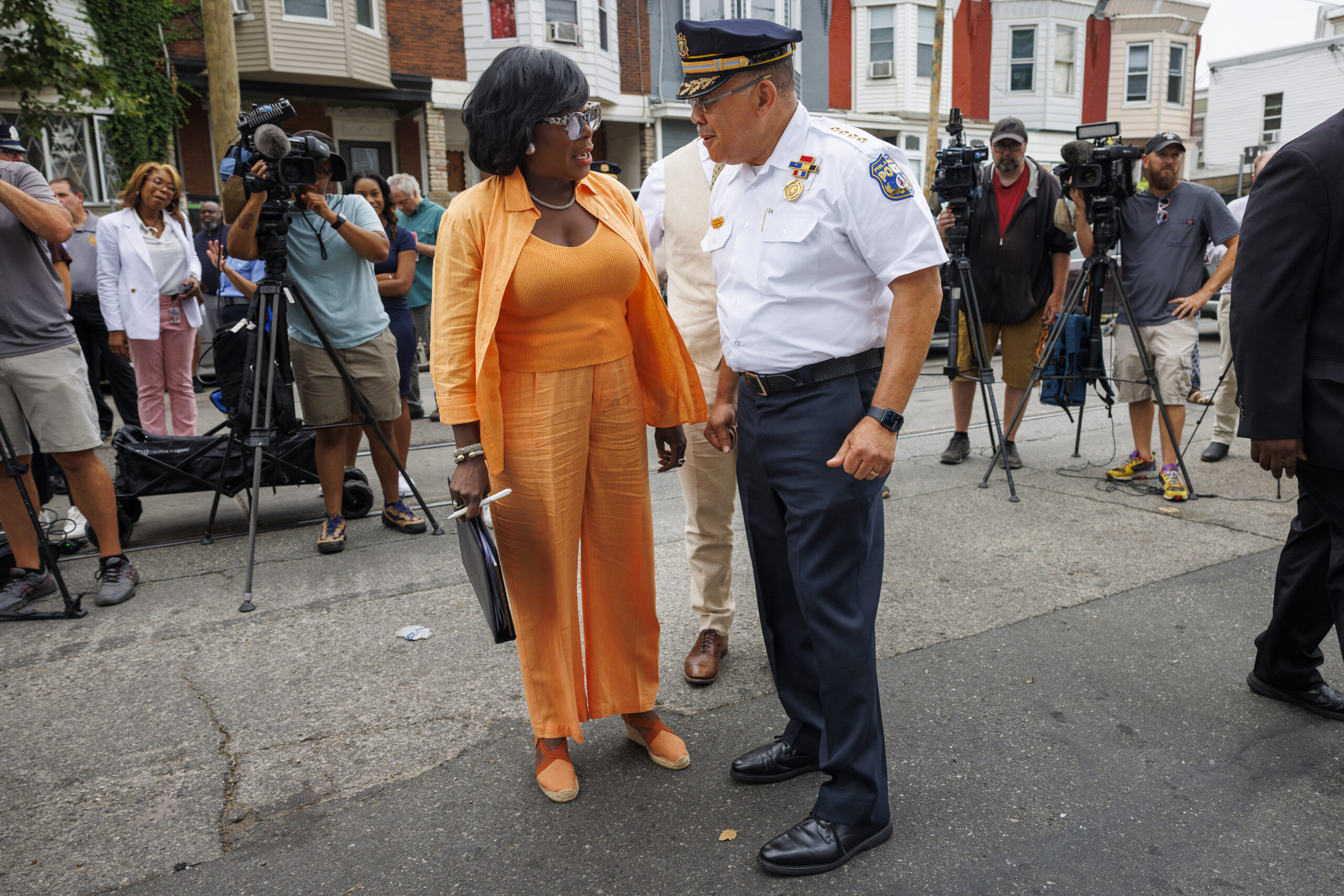
    Philadelphia Mayor Cherelle L. Parker and Police Commissioner Kevin Bethel speak before the start of a news conference.

    Proponents of residency rules in City Hall have long argued they improve rapport between law enforcement and the communities they serve, because officers who have a stake in the city may engage in more respectful policing.

    But experts who study public safety say there is little evidence that residency requirements improve policing or trust. Some say the rules can backfire, resulting in lesser quality recruits because the department must hire from a smaller applicant pool.

    A survey of 800 municipalities last year found that residency requirements only modestly improved diversity and had no measurable effect on police performance or crime rates.

    “It’s a simple solution thrown at a complex problem,” said Fritz Umbach, an associate professor at John Jay College of Criminal Justice. “It doesn’t have the impact people think it will.”

    Parker, a Philadelphia native who lives in the East Mount Airy neighborhood, says she would still prefer all municipal employees live in the city.

    “When I grew up in Philadelphia, it was a badge of honor to have police officers and firefighters and paramedics who were from our neighborhood,” she said in a statement. “They were part of the fabric of our community. I don’t apologize for wanting that to be the standard for our city.”

    ‘Where they lay their heads at night’

    What qualifies as “residency” can be a little pliable.

    Along with his wife, Bethel purchased a 3,600-square-foot home in Montgomery County in 2017 for over a half-million dollars. Although he initially satisfied the residency rule by leasing a downtown apartment after being named commissioner by Parker in late 2023, he would not have met the pre-residency requirement the mayor championed for other city employees while she was on Council.

    Today, voter registration and payroll data shows that Bethel resides in a modest, 1,800-square-foot rowhouse in Northwest Philadelphia, which he purchased with his daughter last year. While police sources said it was common for Bethel to sleep in the city given his long work hours, his wife is still listed as a voter in Montgomery County.

    Police Commissioner Kevin Bethel speaks during the 22nd District community meeting at the Honickman Learning Center on Dec. 2, 2025.

    Sgt. Eric Gripp, a spokesperson for the department, said in a statement that Bethel is a full-time resident of Philadelphia, and that while he owns a property outside the city, his “main residence” is the home in Northwest Philly.

    Although sources say it was not unheard of for rank-and-file officers to use leased apartments to satisfy the requirement on paper, Gripp said “only a small number” of residency violations had required formal disciplinary action following an investigation by the department’s Internal Affairs Division.

    That likely owes to officers’ increasing ability to reside elsewhere legally. The Fraternal Order of Police Lodge 5, which represents thousands of active and retired Philadelphia Police officers, won a contract provision in 2009 allowing officers to live outside the city after serving on the force for at least five years.

    The union didn’t respond to a request for comment.

    Few of the cops who left the city went very far.

    While Northeast Philly and Roxborough remain the choice neighborhoods for city police, the top destinations for recent transplants were three zip codes covering Southampton, and Bensalem and Warminster Townships, according to city payroll data.

    A few officers went much farther than the collar counties.

    Robert McDonnell Jr., a police officer in West Philadelphia’s 19th district with 33 years on the force, has an official address at a home in rural Osceola Mills, Pa., about 45 minutes north of Altoona in Centre County.

    A person who answered a phone number associated with McDonnell — who earned $124,000 last year between his salary, overtime, and bonus pay — declined to speak to a reporter.

    Asked about the seven-hour round-trip commute McDonnell’s nominal residence could entail, Gripp said the department doesn’t regulate the manner in which employees travel to and from work.

    “Our members serve this city with dedication every day,” he said, “regardless of where they lay their heads at night.”

    A long and winding history

    Versions of residency rules can be found as far back as the 19th century, when police recruits were required to live in the districts they sought to work in.

    But when Mayor Joseph S. Clark pushed to reform the city charter in the 1950s, he sought to abolish the rules as an impediment to hiring, saying “there should be no tariff on brains or ability.”

    Instead, City Council successfully fought to expand the restrictions. And, for more than five decades, the city required most of its potential employees to have lived in Philadelphia for a year — or obtain special waivers that, in practice, were reserved for the most highly specialized city jobs, like medical staff.

    Many other big cities enacted similar measures either to curb middle-class flight following World War II or to prioritize the hiring of local residents. But the restrictions were frequently blamed for causing chronic staff shortages of certain hard-to-fill city jobs.

    Officers Azieme Lindsey (from left), Charles T. Jackson, and Dalisa M. Carter taking their oaths in 2023.

    Citing a police recruit shortage in 2008, former Mayor Michael A. Nutter successfully stripped out the prehiring residency requirement for cadets. Recruits were required only to move into the city once they joined the force.

    A year later, the police union attempted to have the residency requirement struck from its contract entirely.

    Nutter’s administration objected. But an arbitration panel approved a compromise policy to allow officers to live elsewhere in Pennsylvania after five years on the job. By 2016, firefighters and sheriff’s deputies secured similar concessions.

    Then, in 2020, Parker and then-Council President Darrell L. Clarke successfully fought to have the one-year, prehire residency requirement reinstated. They said it would result in a more diverse force and an improved internal culture.

    But experts say there’s little research showing that to be true.

    “I am unsure if requiring officers to reside in the city is a requirement supported by evidence,” said Anjelica Hendricks, an assistant law professor at the University of Pennsylvania who worked for the city’s Police Advisory Commission. “Especially if that rule requires a city to sacrifice something else during contract negotiations.”

    Residency requirements have been a point of contention for organized labor over decades.

    FOP leaders have long opposed the rule and said it was partly to blame for the department’s unprecedented recruitment crisis and a yearslong short-staffing problem that peaked in the aftermath of the COVID-19 pandemic.

    In 2022, facing nearly 1,500 unfilled police jobs, former Mayor Jim Kenney loosened the prehire residency rule for the police department again, allowing the force to take on cadets who lived outside the city, so long as they moved into Philadelphia within a year-and-a-half of being hired.

    Since then, recruiting has rebounded somewhat, which police officials attribute to a variety of tactics, including both the eased residency rules and hiring bonuses. The force is still short 20% of its budgeted staffing and operating with 1,200 fewer officers than it did 10 years ago.

    Umbach, the John Jay professor, said the impact on recruiting is obvious: Requiring officers to live in a city where the cost of living may be higher than elsewhere amounts to a pay cut, which shrinks candidate pools.

    “Whenever you lower the standards or lower the appeal of the job, you’re going to end up with people who cause you problems down the road,” he said. “A pay cut is just that.”

  • Tensions flare in Minnesota as protesters and federal agents repeatedly square off

    Tensions flare in Minnesota as protesters and federal agents repeatedly square off

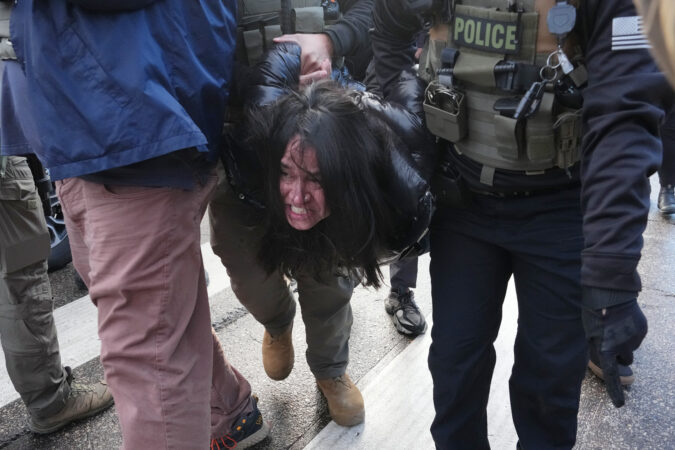
    MINNEAPOLIS — Federal officers dropped tear gas and sprayed eye irritant at activists Tuesday during another day of confrontations in Minneapolis, while students miles away walked out of a suburban school to protest the Trump administration’s bold immigration sweeps.

    Meanwhile, the fallout from the fatal shooting of a Minneapolis woman by an immigration agent reached the local U.S. Attorney’s Office: At least five prosecutors have resigned amid controversy over how the U.S. Justice Department is handling the investigation, according to people familiar with the matter.

    Separately, a Justice Department official said Wednesday there’s no basis for a criminal civil rights investigation. An FBI probe of Renee Good’s death is ongoing.

    Strife between federal agents and the public continues to boil, six days since Good was shot in the head while driving off in her Honda Pilot. At one scene, gas clouds filled a Minneapolis street near where she died. A man scrubbed his eyes with snow and screamed for help after agents in a Jeep sprayed an orange irritant and drove off.

    It’s common for people to boo, taunt and blow orange whistles when they spot heavily armed immigration agents passing through in unmarked vehicles or walking the streets, all part of a grassroots effort to warn the neighborhood and remind the government that they’re watching.

    “Who doesn’t have a whistle?” a man with a bag of them yelled.

    Brita Anderson, who lives nearby and came to support neighborhood friends, said she was “incensed” to see agents in tactical gear and gas masks, and wondered about their purpose.

    “It felt like the only reason they’d come here is to harass people,” Anderson said.

    In Brooklyn Park, Minn., students protesting the immigration enforcement operation walked out of school, as students in other communities have done this week.

    Good’s death has ripple effect

    The departures in the U.S. Attorney’s Office include First Assistant U.S. Attorney Joe Thompson, who had been leading the sprawling prosecution of public fraud schemes in the state, according to people who spoke to The Associated Press on the condition of anonymity to discuss personnel matters.

    With the Department of Homeland Security pledging to send more than 2,000 immigration officers into Minnesota, the state, joined by Minneapolis and St. Paul, sued President Donald Trump’s administration Monday to halt or limit the surge.

    The lawsuit says Homeland Security is violating the First Amendment and other constitutional protections by focusing on a progressive state that favors Democrats and welcomes immigrants.

    “What we are seeing is thousands — plural — thousands of federal agents coming into our city. And, yeah, they’re having a tremendous impact on day-to-day life,” Minneapolis Mayor Jacob Frey said.

    A judge set a status conference for Wednesday.

    Homeland Security says it has made more than 2,000 arrests in the state since early December and is vowing to not back down. Spokesperson Tricia McLaughlin, responding to the lawsuit, accused Minnesota officials of ignoring public safety.

    Trump defiant

    In a social media post, Trump defended the aggressive immigration enforcement actions being carried out across Minneapolis as part of his deportation agenda.

    The president asserted in the post that the anti-ICE activity is also shifting the spotlight away from alleged fraud in the state and said, “FEAR NOT, GREAT PEOPLE OF MINNESOTA, THE DAY OF RECKONING & RETRIBUTION IS COMING!”

    Trump blames what he calls “professional agitators” for the widespread protests. He has not provided evidence to support his claims.

    In response, Minnesota Gov. Tim Walz posted on X: “Trump admits that this is nothing but political retribution. Minnesota voted against him three times and now he’s punishing us – putting lives at risk and wasting enormous resources in the process.”

    ICE tactics on docket

    In a different lawsuit, a judge said she would rule by Thursday or Friday on a request to restrict the use of force, such as chemical irritants, on people who are observing and recording agents’ activities. Government attorneys argued that officers must protect themselves.

    The Trump administration has repeatedly defended the immigration agent who shot Good, a 37-year-old mother of three, saying he acted in self-defense. But that explanation has been widely panned by Frey, Walz, and others based on videos of the confrontation.

    State and local authorities are urging the public to share video and any other evidence as they seek to separately investigate Good’s death after federal authorities insisted they would approach it alone and not share information.

    In Wisconsin, Lt. Gov. Sara Rodriguez is proposing that the state ban civil immigration enforcement around courthouses, hospitals, health clinics, schools, churches and other places. She is hoping to succeed Gov. Tony Evers, a fellow Democrat, who is not running for a third term.

    “We can take a look at that, but I think banning things absolutely will ramp up the actions of our folks in Washington, D.C.,” Evers said, referring to the Trump administration. “They don’t tend to approach those things appropriately.”

  • Claudette Colvin, who refused to move seats on a bus at start of civil rights movement, dies at 86

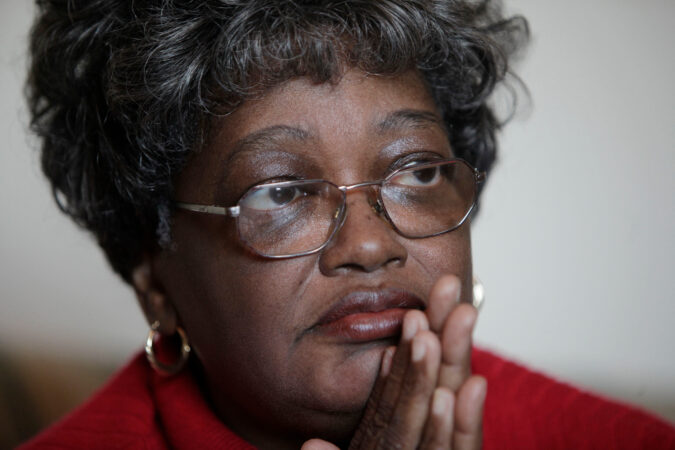
    Claudette Colvin, who refused to move seats on a bus at start of civil rights movement, dies at 86

    On March 2, 1955, a 15-year-old Black high school junior named Claudette Colvin boarded a segregated city bus in Montgomery, Ala., taking a window seat near the back. When the driver ordered her to give up her seat so a white woman could be more comfortable, Ms. Colvin — who had been studying Black history in class, learning about abolitionists like Harriet Tubman and Sojourner Truth — did not budge.

    “History had me glued to the seat,” she said later, recalling how it felt as though Tubman and Truth had their hands on her shoulders, giving her “the courage to remain seated.”

    History would record that it was Rosa Parks, the longtime secretary of the local NAACP, who helped kick-start the modern civil rights movement by refusing to give up her seat on a crowded Montgomery bus.

    Yet it was Ms. Colvin, nine months earlier, who engaged in one of the first defiant challenges to the city’s Jim Crow transit system, remaining in her seat until police dragged her backward off the bus.

    While Parks’ stand proved far more consequential, leading to a year-long bus boycott that thrust the Rev. Dr. Martin Luther King Jr. to national prominence, Ms. Colvin’s arrest inaugurated what King described as a pivotal period for Black people in Montgomery. Community leaders formed a committee to meet with city and bus company officials, calling for improved treatment for Black passengers. Those discussions proved fruitless, King recalled in a memoir, but “fear and apathy” gradually gave way to “a new spirit of courage and self-respect.”

    Historian David Garrow said in an interview for this obituary that “Colvin’s experience proved a major motivating force for adult Black activists” including Jo Ann Robinson, who helped launch and sustain the bus boycott. Another leading figure in the boycott, lawyer Fred Gray, brought the federal lawsuit that overturned bus segregation, with Ms. Colvin serving as a plaintiff and star witness.

    “I don’t mean to take anything away from Mrs. Parks,” Gray said, “but Claudette gave all of us the moral courage to do what we did.”

    Ms. Colvin, who died Jan. 13 at 86, was almost forgotten in the annals of civil rights. Overshadowed by Parks and other activists, she spent decades in obscurity, caring for elderly patients as a nurse’s aide before gaining late-in-life recognition through the efforts of historians and writers such as Phillip Hoose, whose 2009 biography, Claudette Colvin: Twice Toward Justice, won the National Book Award for young people’s literature.

    “Young people think Rosa Parks just sat down on a bus and ended segregation, but that wasn’t the case at all,” Ms. Colvin told the New York Times in 2009. “Maybe by telling my story — something I was afraid to do for a long time — kids will have a better understanding about what the civil rights movement was about.”

    A movie based on her life, Spark, was announced in 2022, with actor Anthony Mackie lined up to make his directorial debut, and Saniyya Sidney slated to star.

    In the days after Ms. Colvin’s arrest, civil rights leaders in Montgomery wondered if her case might offer a chance to put segregation itself on trial. But, as Robinson later wrote in a memoir, “opinions differed where Claudette was concerned.”

    Some deemed her too young and immature, saying she was prone to profane outbursts. (Ms. Colvin said she never cursed.) There were also concerns about her class and background: She was looked down upon, Montgomery activist Gwen Patton once recalled with frustration, because she “lived in a little shack.”

    The deciding factor was the discovery by labor organizer E.D. Nixon, the local NAACP president, that Ms. Colvin was expecting a child. She later said that she became pregnant in the months after the bus standoff as a result of an encounter with a married man, which she described as statutory rape.

    “Even if Montgomery Negroes were willing to rally behind an unwed pregnant teenager — which they were not — her circumstances would make her an extremely vulnerable standard-bearer,” author Taylor Branch observed in Parting the Waters, a Pulitzer Prize-winning civil rights history.

    Ms. Colvin often said Nixon and other organizers were right to rally around Parks, who exuded a quiet authority, was familiar to activists from her work in the NAACP, and had an appeal that crossed class divisions through her job as a department-store seamstress.

    But Ms. Colvin remained frustrated by what she described as a lack of support and recognition in the years after she was arrested, when she struggled as a single mother to find work and eventually left Alabama for New York.

    “They wanted someone, I believe, who would be impressive to white people. … You know what I mean? Like the main star,” she told the Guardian in 2021. “And they didn’t think that a dark-skinned teenager, low income without a degree, could contribute. It’s like reading an old English novel when you’re the peasant, and you’re not recognized.”

    ‘I had had enough’

    Claudette Austin, as she was then known, was born in Birmingham, Ala., on Sept. 5, 1939. Her father, C.P. Austin, left the family when she was young.

    Her mother, Mary Jane Gadson, was unable to support Ms. Colvin and her younger sister by herself, and turned the children over to her aunt and uncle, Mary Ann and Q.P. Colvin. The older couple lived on a farm in Pine Level — the rural Alabama community where, by chance, Parks had gone to elementary school — and gave the girls their last name.

    When Ms. Colvin was 8, the family moved to nearby Montgomery, where her adoptive parents were hired by white families to do home and yard work. Her sister died of polio in 1952, shortly before Ms. Colvin started her first year at Booker T. Washington High School.

    Ms. Colvin was still grieving her sister’s death when her neighbor Jeremiah Reeves, an older schoolmate, was arrested and charged with raping a white woman. Following a confession he gave under duress and later retracted, he was convicted by an all-white jury, sentenced to death, and executed in 1958, at age 22.

    His arrest “was the turning point of my life,” Ms. Colvin said. As she saw it, the case embodied the hypocrisies of the legal system: Reeves was sent to death row as a juvenile because of a false confession, but when a white man raped a Black girl, “it was just his word against hers, and no one would ever believe her.”

    Ms. Colvin told Hoose that on the day the bus driver asked her to give up her seat, “rebellion was on my mind.”

    She was sitting in a row near the rear exit, joined by three schoolmates as the bus started filling up, and passengers stood in the aisle. Before long, a white woman was standing over Ms. Colvin and her peers. The driver asked for all four of their seats, so that the woman wouldn’t have to sit in the same row as a Black passenger.

    “I might have considered getting up if the woman had been elderly, but she wasn’t,” Ms. Colvin recalled. “She looked about 40. The other three girls in my row got up and moved back, but I didn’t. I just couldn’t.”

    Ms. Colvin remained seated as the driver grew exasperated — “Gimme that seat! Get up, gal!” — and hailed a transit policeman, who in turn summoned a squad car. Ms. Colvin said that as the police arrived, she began crying but remained defiant, telling the officers, “It’s my constitutional right to sit here as much as that lady. I paid my fare, it’s my constitutional right!”

    By her account, one of the officers kicked her as she was pulled off the bus. (One of the officers alleged that it was the other way around.) She was placed in handcuffs and put in a squad car, where, according to Ms. Colvin, the officers took turns trying to guess her bra size.

    Bailed out of jail by her minister, she returned home to fears of retaliation. Her adoptive father didn’t sleep that night, staying awake with a shotgun in case the Ku Klux Klan arrived. At school, classmates began to consider her a troublemaker, describing her as “that crazy girl off the bus.”

    Ms. Colvin was charged with assault and disorderly conduct in addition to violating the segregation law. Tried in juvenile court because of her age, she was found guilty of assault (a judge dismissed the other two charges), placed on indefinite probation and ordered to pay a small fine.

    Over the next few months, other Black women defied Montgomery’s segregated bus policy. The group included Lucille Times, who staged a one-woman boycott after an altercation with a driver, and 18-year-old Mary Louise Smith, who was arrested, convicted and fined after refusing to give up her seat.

    As with Ms. Colvin, organizers worried that Smith wasn’t right for a marquee case: Her father was said to be an alcoholic, and the family was deemed too low-class. It wasn’t until Parks’s arrest on Dec. 1, 1955, that a citywide bus boycott was organized.

    As the boycott progressed, Ms. Colvin became one of several plaintiffs in Browder v. Gayle, a federal lawsuit brought by Gray that challenged the city and state laws enforcing bus segregation in Montgomery. The case reached the U.S. Supreme Court, which ordered an end to bus segregation in late 1956.

    Ms. Colvin gave birth to her first son, Raymond, earlier that year. She never publicly identified the father and said she was expelled from high school as a result of her pregnancy.

    After passing a high school equivalency exam, she briefly attended Alabama State College in Montgomery and then moved in 1958 to New York, where she got a job as a live-in caregiver.

    She had a second son in 1960 and moved back and forth between New York and Montgomery — where her adoptive mother helped care for her children — before settling in New York City in 1968 and receiving training as a nurse’s aide.

    “The only thing I am still angry about is that I should have seen a psychiatrist,” she told The Washington Post in 1998, reflecting on her life after the movement. “I needed help. I didn’t get any support. I had to get well on my own.”

    Ms. Colvin’s death was confirmed by Ashley D. Roseboro, a spokesman for the family and for the Claudette Colvin Foundation. He said she died in hospice in Texas but did not share additional details.

    Her son Raymond died in 1993. Her younger son, Randy, worked as an accountant. He survives her, as do several sisters and grandchildren.

    In 2021, Ms. Colvin successfully petitioned to have her juvenile arrest record expunged, a symbolic act recognizing the injustice of the segregation laws.

    “I’m not doing it for me, I’m 82 years old,” she explained to the Times. “But I wanted my grandchildren and my great-grandchildren to understand that their grandmother stood up for something very important, and that it changed our lives a lot, changed attitudes.”