Category: Politics

Political news and coverage

  • Camden County is building 60 efficiency apartments for people experiencing homelessness

    Camden County is building 60 efficiency apartments for people experiencing homelessness

    For Patricia Clark, who survived living on the streets of Camden for 25 years, the county’s move to build a supportive housing center with 60 efficiency apartments for people experiencing homelessness is a welcome development in a distressing moment.

    “The homeless rate is crazy, and this new place is needed, absolutely,” said Clark, 65, who struggled with substance abuse disorder starting at age 32 before going through recovery and becoming a homeowner and administrator at Joseph’s House of Camden, which offers shelter and support for unhoused people.

    “I thought I’d die as Jane Doe with a needle in my arm and a crack pipe in my mouth,” she said. “I’m so grateful for the help I got. I know the new center will help, too.”

    Named after a former Camden city attorney, the $22 million Martin McKernan Supportive Housing Center in Blackwood is expected to be completed in the spring, according to Camden County spokesperson Dan Keashen. Ten of the center’s 60 units will be set aside for emergency shelter, while the balance will be transitional housing, available to individuals for up to two years, according to Rob Jakubowski, director of Camden County Homelessness and Community Development. Residents will be offered case-management services that typically include counseling, employment help, and assistance finding permanent housing, he said.

    Camden County has seen homelessness grow by 20% between 2020 and today — from 633 to 759 people, 148 of them unsheltered, according to figures provided by Keashen.

    The county is confronting that increase in need as it faces a threat to federal housing aid under a Trump administration plan to cut two-thirds of the aid designated for permanent housing for people experiencing homelessness.

    Federal housing administrators argue its proposal would “restore accountability” and promote “self-sufficiency” in people by addressing the “root causes of homelessness, including illicit drugs and mental illness. But housing experts say it could displace 170,000 people nationwide.

    “We are already seeing some of the effects of the HUD plan, with housing programs being cut,” Colandra Coleman, executive director of Joseph’s House, said. “I expect more to be cut back significantly.”

    The McKernan center now seems that much more important, said Louis Cappelli, director of the Camden County Board of Commissioners. He stressed that homelessness is growing not just in the city of Camden, but in other parts of the county.

    “It’s in Haddonfield and Collingswood and so many other places,” he said. “We want to provide the best possible opportunity for people everywhere who need it.”

    While substance abuse and behavioral health are at the root of homelessness for many people, anti-homelessness agencies say the main reason Americans are homeless is the dearth of affordable housing.

    “The affordability crisis is at the heart of the larger numbers of people who experience homelessness,” said Kathleen Noonan, president and CEO of Camden Coalition, a nonprofit helping those with complex health and social needs. The average rent in New Jersey as of this month is $2,087, a 2% increase over last year, according to Apartments.com.

    For Clark, having a roof over her head and the sobriety to keep it still feels like a miracle.

    “I never had a happy moment on the street in 25 years,” she said. “Getting beaten, going hungry, being arrested for shoplifting, being judged by people. I remember wishing I was dead.

    “But now it’s different. I work to give hope to people living like I used to. In the end, God had a better plan for me.”

  • Gov. Josh Shapiro’s administration just fired a vendor for failing to send state agency mail, impacting an unknown number of residents

    Gov. Josh Shapiro’s administration just fired a vendor for failing to send state agency mail, impacting an unknown number of residents

    HARRISBURG — An unknown amount of mail from Pennsylvania state agencies to residents has gone undelivered, Gov. Josh Shapiro’s administration discovered this week.

    The Pennsylvania Department of General Services said in a statement Friday that it has ended its contract with an unidentified vendor that pre-sorts state agency mail before delivering it to the U.S. Postal Service to be sent to residents around the state. The department discovered in the last 48 hours that the vendor “had been failing to deliver Commonwealth mail to constituents,” said Paul Vezzetti, a spokesperson for the department.

    The state is still determining how much and what type of mail was not delivered to Pennsylvania’s residents. It was unclear Friday why the vendor failed to send the state’s mail, where the mail was located when it was not in the state’s possession, how long the mail went unsent, and how the failure was not identified sooner.

    The unsent mail could prove to be a major headache for Shapiro’s administration, depending on the magnitude of the issue and which state communications were not delivered to residents.

    After discovering the backlog, the Department of General Services rapidly hired a new vendor to sort and deliver the unsent mail “as quickly as possible,” Vezzetti said. The unsent mail has already been transferred to the new vendor and the state estimates that it will be mailed by early next week.

    According to an emergency contract made public Friday, the state hired technology solutions company Pitney Bowes for $1 million, citing its preparedness to process and resume mail operations. If the services were not immediately restored, it “could result in missed deadlines, loss of services, delayed benefits, legal exposure, and operational disruptions for multiple agencies and constituents,” according to contract.

    The unsent mail from unspecified state agencies could include critical communications relating to state services, such as health benefits or food assistance, among other potential communications. State agencies send communications by mail about an individual’s eligibility for services or benefits, renewals and appeals, and whether a person is due to appear at a hearing about that eligibility, and more.

    Vezzetti declined on Friday to confirm which agencies were impacted by the stalled mail, or to name the vendor that had been fired.

    Pennsylvania lawmakers last month ended a 135-day-long state budget impasse that required counties, schools and social service organizations to take out loans or limit their services during the protracted budget fight.

    The state is now taking steps to “carefully assess and mitigate impacts” of the mail delay and adjust deadlines for impacted residents.

    Staff writer Ximena Conde contributed to this article.

  • Jeffrey Yass, Pennsylvania’s richest man, details how school vouchers drive his massive political spending operation in rare interview with Washington Post

    Jeffrey Yass, Pennsylvania’s richest man, details how school vouchers drive his massive political spending operation in rare interview with Washington Post

    It’s no secret that Jeffrey Yass, Pennsylvania’s richest man, is a big political spender.

    Just within the past year, the billionaire megadonor and founder of the Bala Cynwyd-based Susquehanna International Group largely bankrolled the unsuccessful effort to oust three Pennsylvania Supreme Court justices and has helped pay for President Donald Trump’s presidential transition and controversial White House ballroom.

    But in a rare interview with the Washington Post, published Thursday, Yass shared details on the key motivation behind his political spending: school vouchers, which supporters say will allow parents and students to choose their school. Yass’ unwavering support for vouchers and other school choice measures has led him to throw his dollars to Pennsylvania, other states, and to Trump, whose candidacy he once opposed.

    And in 2026, he said he’ll continue to financially back pro-voucher candidates across the nation.

    “I have come across what I think is a great way to relieve the suffering of tens of millions of kids,” Yass told The Washington Post. “To most people it’s like if you’re a libertarian billionaire, you must be Lex Luthor trying to do something nefarious. If I gave to a hospital, you wouldn’t be saying that.”

    School vouchers, which are opposed by teacher unions and public school advocates, have been a high-profile issue in Pennsylvania’s state budget talks in years past, but they’ve failed to pass it. Yass poured money into that effort, but Democratic Gov. Josh Shapiro, who has embraced — though softened — his support for a voucher program, vetoed the measure from the state budget after it couldn’t pass a Democratic-controlled state House in 2023.

    Yass told the Post that “It was a dramatic failure. We thought we had it.“

    The billionaire saw better success in Texas where he contributed to help defeat anti-voucher Republicans in the primary, creating a more favorable atmosphere for passing the state’s $1 billion voucher program.

    But these instances were hardly the beginning — or the end — of Yass’ involvement with politics. He gave $3.2 million in political contributions in Pennsylvania in 2018, and by last year, that had risen to $35 million, the Post reported.

    Though now known as a major backer of GOP candidates, he has supported Democrats who he believes can help champion the school choice message. The first major beneficiary of Yass’ contributions was State. Sen. Anthony Williams (D., Philadelphia) who unsuccessfully ran for governor in 2010 and Philadelphia mayor in 2015.

    And in 2007, Yass conversed with then-Sen. Barack Obama, who received a $2,300 donation from Yass for his 2008 presidential campaign, the Post reported. Yass believed that Obama would support school choice if elected, but his administration ended up opposing voucher programs for children in the D.C. school system.

    According to the Post, this may have been an indication to Yass that Democrats would not be an ally for the school choice cause.

    His allegiance to school choice also appears to have made him switch his perspective of Trump from an opponent — who spent millions of dollars to back GOP primary opponents in 2024 — to a supporter.

    But after the November 2024 election, where Trump was victorious, Yass changed his tune and helped bankroll Trump’s $14 million presidential transition and donated at least $2.5 million to the president’s proposed White House ballroom.

    The billionaire owed his change of thought on Trump to the president being “a true champion” of school choice, Yass told the post, crediting him for the passage of the Texas voucher bill and a new federal tax credit for donations to scholarship organizations.

    His support for the president also coincides with Yass having business in front of the Trump administration. Yass’ trading firm is a top stakeholder in ByteDance, TikTok’s parent company. Trump is mulling the fate of the popular social media app in the United States and Yass could benefit from a deal supported by Trump to keep TikTok operational here.

  • An ex-Philly labor official claims she complained about sex discrimination and then was fired

    An ex-Philly labor official claims she complained about sex discrimination and then was fired

    A former top Philadelphia labor official claims in a lawsuit that she was passed over for a promotion because she’s a woman, and was later fired after raising concerns about gender-based discrimination spanning two mayoral administrations.

    Monica Marchetti-Brock, the former first deputy director of the Department of Labor, said in a federal lawsuit filed Wednesday that Mayor Cherelle L. Parker fired her last year, days after Marchetti-Brock had reiterated complaints about gender bias at the top rungs of the city government that had occurred before Parker took office.

    Marchetti-Brock had worked for the city since 2013. Under former Mayor Jim Kenney, she rose to the city’s No. 2 labor role.

    But when former Deputy Mayor for Labor Richard Lazer resigned in 2022 to lead the Philadelphia Parking Authority, Marchetti-Brock wasn’t hired to replace him because she’s a woman, alleges the complaint, filed in the Eastern District of Pennsylvania.

    The man hired for the position was Basil Merenda, a former top state labor official whom Marchetti-Brock claims “had a problem with women.”

    What started as a change in boss under then-Mayor Jim Kenney culminated in spring 2024 with Parker firing Marchetti-Brock after she complained of sex-based discrimination, according to the suit. The lawsuit says an outside investigator probed Merenda’s behavior and in 2023 recommended he undergo implicit bias training.

    The lawsuit accuses the city of minimizing the results of that investigation and of terminating Marchetti-Brock and a second woman who was mistreated by Merenda.

    “When [Marchetti-Brock] asked if her termination had anything to do with her sex discrimination complaints, [the city] refused to answer the question,” the complaint says.

    Merenda is currently one of two commissioners of the Department of Licenses and Inspections. Parker announced his appointment in February 2024, a few weeks before Marchetti-Brock says she was fired. It is common for there to be significant turnover in personnel at the beginning of a new mayoral administration.

    A city spokesperson declined to comment, citing the pending litigation.

    Attempts to reach Kenney were unsuccessful. The former mayor appointed many women to his top staff through his more than two decades in City Hall. When he took office as mayor in 2016, the majority of his cabinet were women.

    Marchetti-Brock began reporting to Merenda in January 2023. He ignored his deputy, excluded her from meetings and communications, yelled, and “unjustly” criticized her, the suit says.

    Marchetti-Brock says she complained of sex discrimination in the labor department to a long list of officials, some of whom still work for the city, including City Solicitor Renee Garcia and Chief Administrative Officer Camille Duchaussee. Marchetti-Brock “described how she was treated compared to how male employees were treated, including that Merenda ignored what female employees said and focused on what male employees said,” according to the lawsuit.

    The city opened an investigation in the spring of 2023, the suit says.

    After Parker was elected in November 2023, Marchetti-Brock again expressed her interest in the top labor role. However, the incoming mayor ultimately tapped Perritti DiVirgilio, who was previously the city’s director of labor standards. Marchetti-Brock described DiVirgilio in the suit as a “noncomplaining, male employee.”

    In February 2024, Marchetti-Brock received a letter summarizing the findings of the investigation into Merenda. The letter said that the probe concluded that “no violation” of the city’s sexual harassment prevention policy occurred. According to the complaint, Marchetti-Brock was told that Merenda had received a warning and the investigator recommended he undergo implicit bias training.

    The policy says city employees are protected from sexual harassment regardless if it’s “unlawful,” and it prohibits retaliation against employees who raise concerns or complain. Marchetti-Brock had a role crafting the policy following a critical 2018 City Controller report that said the city’s sexual harassment reporting protocols were inadequate.

    According to the suit, Marchetti-Brock pushed back on the summary letter in an email to Andrew Richman, a city attorney, saying that even though no unlawful behavior was found, “there were findings of bias toward me and other women.”

    “As you are aware, our policy holds our leaders to a higher standard than the law,” Marchetti-Brock wrote, according to the complaint. “It is misleading to say there are no findings under our policy.”

    Three days later, in early March 2024, top officials from Parker’s administration informed Marchetti-Brock that her employment would be terminated, according to the complaint. The suit states that another female employee who had complained about Merenda was terminated as well.

    The lawsuit asks the federal court to find that the city violated antidiscrimination laws and award Marchetti-Brock an unspecified amount of damages.

  • Former Sen. Bob Menendez is ‘forever disqualified’ from ever holding public office again in N.J.

    Former Sen. Bob Menendez is ‘forever disqualified’ from ever holding public office again in N.J.

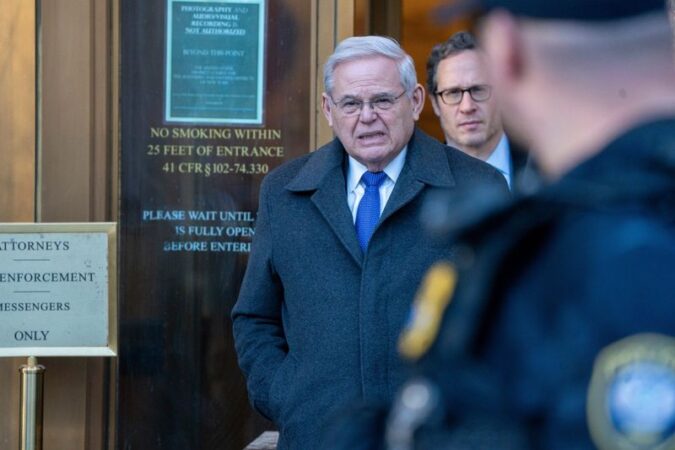
    Former U.S. Sen. Bob Menendez is permanently banned from holding public office in New Jersey. If he tries to anyway, he could face criminal charges.

    Mercer County Superior Court Judge Robert Lougy wrote in an order that Menendez is “forever disqualified from holding any office or position of honor, trust, or profit” in New Jersey state or local government.

    If the once-powerful New Jersey Democrat applies for public office or employment, or shows any efforts to campaign or be appointed to political office, he will be subject to a fourth-degree contempt of court charge.

    Menendez, 71, was convicted in July 2024 for selling the powers of his office to wealthy benefactors and acting as a foreign agent for the Egyptian government.

    He accepted bribes of gold bars, cash, a Mercedes-Benz, and more from 2018 to 2022 in exchange for using his position to advance the interests of three New Jersey business owners and Egyptian officials.

    Prior to his conviction, Menendez floated the idea of running as an independent to maintain his Senate seat as a competitive Democratic primary was underway to replace him.

    He ultimately did not run and South Jersey Democratic Sen. Andy Kim, a U.S. House lawmaker at the time, won his former Senate seat.

    In January, Menendez was sentenced to 11 years in prison and began serving in June at the Federal Correctional Institution Schuylkill in Minersville, Pa.

    New Jersey Attorney General Matt Platkin’s office announced Lougy’s order on Friday.

    “Critical to preserving the public’s faith and trust in government institutions is ensuring that elected officials who commit crimes involving their offices don’t find new opportunities to regain positions of power,” Platkin said in a statement.

    The former senator’s wife, Nadine Menendez, was convicted in April of serving a “critical role” in his scheme. She was sentenced to 4-and-a-half years in prison and is slated to begin her sentence next summer.

    Menendez rose from the Union City school board at age 20 to the powerful Senate Foreign Relations Committee chair position over the course of five decades, becoming mayor earlier in his career and later being elected to the U.S. Senate in 2006.

    Platkin’s office filed a lawsuit in May requesting Menendez’s lifetime ban on public office in New Jersey. At the time, Platkin’s office pointed to former Paterson Mayor Jose “Joey” Torres, who was convicted of contempt in December 2024 after running for mayor in 2022 in violation of a similar 2017 order not to run. sentenced to three years of probation through a plea deal, along with a $10,000 fine, in February of this year.

    Platkin said he hopes the order on Menendez “sends a message” that pubic corruption will come with consequences.

    “Too many people in New Jersey have a cynical viewpoint that corruption is a routine, widespread feature of our politics,” he added.

  • Philly is poised to launch a retirement savings program for workers without 401(k)s

    Philly is poised to launch a retirement savings program for workers without 401(k)s

    Philadelphia could soon become the first American city to establish its own retirement savings program for residents whose employers don’t offer one.

    City Council is poised to pass legislation that would enable the plan, called PhillySaves, which is modeled on similar state-facilitated “auto-IRA” programs that have been increasingly established across the country.

    The idea is that workers would be automatically enrolled in the city-managed plan and would contribute through payroll deductions at no cost to their employer. The plan would then follow employees, even as they change jobs.

    Council President Kenyatta Johnson, a Democrat, said during a committee hearing on the legislation last week that the program is an anti-poverty measure aimed at generating wealth for more than 200,000 Philadelphians who do not have access to a retirement savings plan through their job.

    “We want to make sure we are lifting all Philadelphians out of poverty, building generational wealth, and ensuring our seniors are financially stable in retirement,” Johnson said.

    A Council committee approved the legislation following a hearing last week, and the full Council is expected to pass it. Voters would have to approve the creation of an investment management board through a ballot question, which could come as early as the May primary election.

    Councilmember Cindy Bass, a Democrat who represents parts of North and Northwest Philadelphia, called the plan a “game changer.”

    “There was a time when you could retire just on Social Security alone,” she said. “That day has come and gone.”

    How would the program work?

    Workers would be automatically enrolled in the plan with a default contribution rate of 3 to 6% of their wages, however they can opt out or change their contributions at any time.

    Employers that do not offer their own retirement plans would be required to sign up. Their only responsibility would be facilitating the payroll deductions for their employees. There is no matching program for employers or the city.

    City Councilmember Mike Driscoll, a Democrat who represents parts of Northeast Philadelphia and is sponsoring the legislation, emphasized last week that there is “no cost” to employers and no fiduciary liability.

    “The goal is to make it easy for employees who want to save,” he said, “and not burden employers who are already managing their many responsibilities.”

    In this 2023 file photo, Council President Kenyatta Johnson (left) greets 6th District Councilmember Michael J. Driscoll (center) and Councilmember At-Large Katherine Gilmore Richardson (right) before the last City Council meeting of the year.

    The legislation includes minimal fines for employers who don’t enroll employees. But Council members said the city will launch a significant public education and outreach campaign before levying fines.

    Who is the program for?

    Under the current version of the legislation — which could still be amended — the program applies to businesses with at least one employee. It must have been operating in Philadelphia for at least two years.

    Auto-IRA plans are especially geared toward hourly workers who generally have fewer employer-covered benefits, such as 401(k) plans, as well as people who work for small businesses that can’t afford to provide retirement benefits.

    Is this a new thing?

    Twenty states have passed legislation creating their own auto-IRA plans and 16 programs are open to participants, according to the Center for Retirement Initiatives at Georgetown University.

    Pennsylvania is not among them, but New Jersey launched a state-run retirement savings program last year. That plan, called RetireReady NJ, was first established in 2019 and signed into law by Gov. Phil Murphy, a Democrat.

    As of July, more than 18,000 workers were saving through the program, according to the state’s Department of the Treasury.

    It is more limited than Philadelphia’s would be, in that it only applies to businesses with at least 25 employees. Philadelphia’s would apply to businesses with just one.

    Gov. Phil Murphy speaks with members of the media after meeting with Governor-elect Mikie Sherrill at the governor’s office in Trenton on Nov. 5.

    Two other cities — New York and Seattle — passed legislation enabling auto-IRA programs, but neither was implemented because both New York and Washington states enacted state-run programs that include the cities.

    The Democratic-controlled Pennsylvania State House passed legislation in 2023 along party lines enabling a similar program called Keystone Saves, but it stalled in the Republican-controlled Senate.

    Treasurer Stacy Garrity, a Republican now running for governor, has for years advocated for the program’s passage.

    How will the investments be managed?

    The city would create a nine-member Retirement Savings Board, which would include four appointees by the mayor, four by the City Council president, and one by the city controller.

    That board would be responsible for facilitating the program and may contract third-party consultants, financial advisers, actuaries, and other experts to manage the investments.

    Why does the money go into a Roth IRA?

    The program defaults to a Roth IRA, though people covered can elect to switch to a traditional IRA.

    John Scott, director of the retirement savings project at Pew Charitable Trust, said during the Council hearing last week that Roth IRAs are often the default in auto IRA programs because participating employees can pull money out of those accounts at any time without taxes or penalty.

    He said that’s especially appealing to workers “who sometimes have fluctuations in their work schedule or they might have a financial shock.”

    “For many of these workers in these programs, this is really the first opportunity to save money,” Scott said. “So, you know, life happens. And sometimes they do need to pull that money out, and the Roth IRA is really the best vehicle to do that.”

    When will this become reality?

    Creating the board that will oversee the investments requires a change to Philadelphia’s Home Rule Charter, the city’s governing document.

    If Council passes legislation and Mayor Cherelle L. Parker signs it — both are expected to support it — then voters could approve the change through a ballot question as early as May.

    The legislation says the program must be launched by July 2027, however there are exceptions in the case of legal challenges or a state-level program superseding the city’s.

  • Ocean City’s mayor files for personal bankruptcy but he plans to stay in office

    Ocean City’s mayor files for personal bankruptcy but he plans to stay in office

    Ocean City Mayor Jay A. Gillian has filed for personal bankruptcy.

    The “extraordinarily difficult decision” was made after a combination of business decisions he made, personal financial obligations, and outside circumstances led to “serious financial strain” on his family, Gillian said in a statement shared on Ocean City’s government website.

    “Like many individuals and families across our nation who encounter unexpected hardship, I found myself in a position where traditional methods were no longer viable,” Gillian said. “It is my hope that by being transparent and direct, others facing similar hardships will feel empowered to seek help, take responsible action, and work toward rebuilding.”

    Despite this personal challenge, Gillian said his leadership of Ocean City remained “unwavering,” and he would stay in his role as mayor. In the statement, the mayor assured residents that his personal financial issues had no impact on city finances and operations were uninterrupted.

    “Safeguards, oversight, and the structure of municipal government ensure that personal finances and public finances remain entirely separate,” Gillian said.

    Gillian referred to his public statement when asked for additional comment.

    A sign welcomes visitors to Gillian’s Wonderland Pier in Ocean City on Tuesday, August 20, 2024.

    While the mayor, who has been in office since 2010, did not specify what led to the bankruptcy beyond his statement, the Gillian family, which owned Gillian’s Wonderland Pier since 1965, sold the property to developer Eustace Mita, of Icona Resorts, in 2021. At the time, the Gillian family had defaulted on $8 million in loans, with the pier as collateral.

    Mita has since embarked on plans to transform the site, first into a $150 million luxury hotel, and later, into townhomes. After a City Council vote Thursday, the property is now under review by the Ocean City Planning Board to determine whether the property should be rehabilitated or rezoned for new development.

  • Grand jury rejects new mortgage fraud indictment against New York Attorney General Letitia James

    Grand jury rejects new mortgage fraud indictment against New York Attorney General Letitia James

    NORFOLK, Va. — The Justice Department failed Thursday to secure a new indictment against New York Attorney General Letitia James after a judge dismissed the previous mortgage fraud prosecution encouraged by President Donald Trump, according to people familiar with the matter.

    Prosecutors went back to a grand jury in Virginia after a judge’s ruling halting the prosecution of James and another longtime Trump foe, former FBI Director James Comey, on the grounds that the U.S. attorney who presented the cases was illegally appointed. But grand jurors rejected prosecutors’ request to bring charges.

    It’s the latest setback for the Justice Department in its bid to prosecute the frequent political target of the Republican president.

    Prosecutors are expected to try again for an indictment, according to one person familiar with the matter who spoke on the condition of anonymity because they were not authorized to publicly discuss the case.

    James was initially charged with bank fraud and making false statements to a financial institution in connection with a home purchase in Norfolk, Va., in 2020. Lindsey Halligan, a former White House aide and Trump lawyer, personally presented the case to the grand jury in October after being installed as U.S. attorney for the Eastern District of Virginia amid pressure from Trump to charge Comey and James.

    James has denied any wrongdoing and accused the administration of using the justice system to seek revenge against Trump’s political opponents. In a statement Thursday, James said: “It is time for this unchecked weaponization of our justice system to stop.”

    “This should be the end of this case,” her attorney, Abbe Lowell, said in a statement. “If they continue, undeterred by a court ruling and a grand jury’s rejection of the charges, it will be a shocking assault on the rule of law and a devastating blow to the integrity of our justice system.”

    The allegations related to James’ purchase of a modest house in Norfolk, where she has family. During the sale, she signed a standard document called a “second home rider” in which she agreed to keep the property primarily for her “personal use and enjoyment for at least one year,” unless the lender agreed otherwise.

    Rather than using the home as a second residence, James rented it out to a family of three, allowing her to obtain favorable loan terms not available for investment properties, prosecutors alleged.

    It’s the latest example of pushback by grand jurors since the beginning of the second Trump administration. It’s so unusual for grand jurors to refuse to return an indictment that it was once said that prosecutors could persuade a grand jury to “indict a ham sandwich.” But the Justice Department has faced setbacks in front of grand juries in several recent cases.

    Even if the charges against James are resurrected, the Justice Department could face obstacles in securing a conviction against James.

    James’ lawyers separately argued the case was a vindictive prosecution brought to punish the Trump critic who spent years investigating and suing the Republican president and won a staggering judgment in a lawsuit alleging he defrauded banks by overstating the value of his real estate holdings on financial statements. The fine was later tossed out by a higher court, but both sides are appealing.

    The defense had also alleged “outrageous government conduct” preceding her indictment, which the defense argued warrants the case’s dismissal. The judge hadn’t ruled on the defense’s arguments on those matters before dismissing the case last month over the appointment of Lindsey Halligan as U.S. attorney.

    U.S. District Judge Cameron McGowan Currie took issue with the mechanism the Trump administration employed to appoint Halligan to lead one of the Justice Department’s most elite and important offices.

    Halligan was named as a replacement for Erik Siebert, a veteran prosecutor in the office and interim U.S. attorney who resigned in September amid Trump administration pressure to file charges against both Comey and James.

    The following night, Trump said he would be nominating Halligan to the role of interim U.S. attorney and publicly implored Attorney General Pam Bondi to take action against his political opponents, saying in a Truth Social post that, “We can’t delay any longer, it’s killing our reputation and credibility” and “JUSTICE MUST BE SERVED, NOW!!!”

    Comey was indicted three days after Halligan was sworn in by Bondi, and James was charged two weeks after that.

    The Justice Department had defended Halligan’s appointment but has also revealed that Bondi had given Halligan a separate position of “Special Attorney,” presumably as a way to protect the indictments from the possibility of collapse. But Currie said such a retroactive designation could not save the cases.

  • Supreme Court lets Texas use congressional map favored by Trump

    Supreme Court lets Texas use congressional map favored by Trump

    WASHINGTON – Texas can use a congressional map drawn to give President Donald Trump and Republicans an advantage in the 2026 midterm elections, the Supreme Court said Dec. 4 in a decision that may help the GOP keep control of the U.S. House.

    An ideologically divided court paused a lower court’s ruling that the map likely discriminates against racial minorities by diluting the voting power of Hispanic and Black Texans.

    That opinion, which replaces a temporary freeze on the ruling issued by Justice Samuel Alito on Nov. 21, keeps the map in place for the midterm elections as litigation over the boundaries continues.

    The court said the order blocking the map from being used next year was improper because it came too close to the election.

    “The District Court improperly inserted itself into an active primary campaign, causing much confusion and upsetting the delicate federal-state balance in elections,” the majority wrote in a brief, unsigned opinion.

    The court’s three liberal justices dissented.

    Texas started redistricting push

    At the urging of the Trump administration, the GOP-controlled Texas legislature drew new district lines midway through the usual 10-year redistricting cycle, setting off a race among states to get in the game. Some of those other efforts are also being challenged in court.

    Despite the uncertainty about what the playing field will look like, Democrats remain favored to flip the House next year, according to nonpartisan handicappers at the University of Virginia’s Center for Politics.

    That could change, however, if the Supreme Court issues a ruling in a pending case from Louisiana that could open the door to more redistricting attempts in southern states. Depending on what the court says and how quickly the justices rule, Republicans could create multiple districts they’d be expected to win, analyst Kyle Kondik estimates.

    The new Texas map was designed to help Republicans win five more seats, although that’s not a sure thing.

    Republicans currently hold 25 of the state’s 38 seats in the U.S. House, where they have a slim majority. If Democrats seize control, they can block Trump’s legislative agenda and launch investigations into his administration.

    Racial gerrymandering?

    In redistricting battles, the Supreme Court has said federal courts can review whether race was improperly used to draw new lines, but not whether partisan politics was a factor.

    Civil rights groups and others challenging Texas’ new map argue it has fewer districts where Hispanic and Black voters together make up the majority, diminishing their voting power.

    “This is as stark a case of racial gerrymandering as one can imagine,” lawyers for some of the challengers said in a filing.

    A three-judge panel in Texas that reviewed the map ruled 2-1 that Texas Republican Gov. Greg Abbott directed the legislature to use race to redraw the lines following a demand from the Trump administration that discussed the racial makeup of some districts.

    “The public perception of this case is that it’s about politics. To be sure, politics played a role in drawing the 2025 Map. But it was much more than just politics,” Judge Jeffrey Brown, who was appointed to the federal bench by Trump in 2019, wrote. “Substantial evidence shows that Texas racially gerrymandered the 2025 Map.”

    In an irate and unusually personal dissent, Judge Jerry Smith – who was appointed by former President Ronald Reagan – called the decision “the most blatant exercise of judicial activism that I have ever witnessed.”

    Texas says race wasn’t main factor

    Texas’ attorneys told the Supreme Court that partisanship – not race – drove the redistricting. And the lower court’s ruling has caused chaos because candidates have already gathered signatures and filed applications to run in the new districts, they argued.

    Weighing in on behalf of Texas, the Justice Department told the Supreme Court that the lower court “misconstrued” the direction the administration gave the state.

    “Indeed, the record here affirmatively shows that the 2025 map was drawn in a race-blind manner,” the Justice Department wrote in a filing.

    The civil rights groups and voters challenging the map said the lower court’s decision was based on a nine-day hearing that included dozens of witnesses and hours of footage of legislators and Abbott discussing their motives.

    The challengers also said the impending December 8 filing deadline for Texas candidates running in the spring primary is not a reason to allow the new map to be used.

    Texas created its own emergency by unnecessarily choosing to create new maps, they told the Supreme Court, and “can’t insulate unconstitutional conduct from judicial review by deliberately timing that conduct close to an election.”

  • Speaker Johnson pleads with Republicans to keep concerns private after tumultuous week

    Speaker Johnson pleads with Republicans to keep concerns private after tumultuous week

    WASHINGTON — House Speaker Mike Johnson is imploring his fellow Republicans to stop venting their frustrations in public and bring their complaints to him directly.

    “They’re going to get upset about things. That’s part of the process,” Johnson told reporters Thursday. “It doesn’t bother me. But when there is a conflict or concern, I always ask all members to come to me, don’t go to social media.”

    Increasingly, they’re ignoring him.

    Cracks inside the GOP conference were stark this week as a member of Johnson’s own leadership team openly accused him of lying, rank-and-file Republicans acted unilaterally to force votes and a leadership-backed bill faltered. It’s all underscored by growing worries that the party is on a path towards losing the majority next year.

    “I certainly think that the current leadership and specifically the speaker needs to change the way that he approaches the job,” GOP Rep. Kevin Kiley of California said on Thursday.

    Kiley, who has grown vocally critical of Johnson after the GOP’s nationwide redistricting campaign backfired in California, said that the speaker has been critical of rank-and-file Republicans, so “he needs to be prepared to accept any criticism that comes with the job.”

    “And I think, unfortunately, there’s been ample reason for criticism,” he added.

    ‘Why do we have to legislate by discharge petitions?’

    For the first part of 2025, Johnson held together his slim Republican majority in the House to pass a number of President Donald Trump’s priorities, including his massive spending and tax cut plan.

    But after Johnson kept members out of session for nearly two months during the government shutdown, they returned anxious to work on priorities that had been backlogged for months — and with the reality that their time in the majority may be running out.

    First was a high-profile discharge petition to force the vote on releasing the Jeffrey Epstein files, which succeeded after it reached the 218-signature threshold. Other lawmakers are launching more petitions, a step that used to be considered a major affront to party leadership.

    “The discharge petition, I think, always shows a bit of frustration,” said GOP Rep. Dusty Johnson.

    Another discharge petition on a bill that would repeal Trump’s executive order to end collective bargaining with federal labor unions reached the signature threshold last month, with support from seven Republicans.

    And this week, GOP Rep. Anna Paulina Luna of Florida brought a long-anticipated discharge petition for a bill to bar members of Congress from trading stock. A number of Republicans have already signed on, in addition to Democrats.

    “Anxious is what happens when you get nervous. I’m not nervous. I’m pissed,” Luna wrote on social media late Thursday, responding to leadership comments that she was overly anxious.

    GOP Rep. Nancy Mace of South Carolina signed both Luna’s petition and the one to release the Epstein files. She told reporters Thursday that she expressed her frustrations directly to Johnson in a phone call, and also in what she described as “a deeply personal, deeply passionate letter, that we are legislating by discharge petition.”

    “We have a very slim majority, but I want President Trump’s executive orders codified,” Mace said. “I want to see his agenda implemented. Why do we have to legislate by discharge petitions?”

    Johnson’s own leadership team going after him

    At the center of Johnson’s pleas for members to bring concerns to him privately instead of on social media is the chairwoman of House Republican leadership, New York Rep. Elise Stefanik.

    Angered that a provision she championed wasn’t included in a defense authorization bill, Stefanik blasted Johnson’s claims that he wasn’t aware of the provision as “more lies from the Speaker.” She conducted a series of media interviews criticizing Johnson, including one with The Wall Street Journal in which she said he was a “political novice” who wouldn’t be re-elected speaker if the vote were held today.

    Johnson told reporters Thursday that he had a “great talk” with Stefanik the night before.

    “I called her and I said, ‘why wouldn’t you just come to me, you know?’” Johnson said. “So we had some intense fellowship about that.”

    Asked if she had apologized for calling him a liar, Johnson said: “Um, you ask Elise about that.”

    Illinois GOP Rep. Mary Miller released a statement Thursday providing support for Johnson, saying that while there are differences among members “our mission is bigger than any one individual or headline.”

    Democrats, who have had leadership criticisms of their own, have reveled in the GOP’s disarray. House Republican leaders attempted to muscle through an NCAA-backed bill to regulate college sports after the White House endorsed it, before support within Republican ranks crumbled. Some GOP lawmakers pointedly said they had bigger priorities before the end of the year.

    “It’s not that Congress can’t legislate, it’s House Republicans that can’t legislate. It’s the gang that can’t legislate straight. They continue to take the ‘my way or the highway’ approach,” said House Democratic Leader Hakeem Jeffries.

    Underlying GOP unease about 2026

    All eyes in the U.S. House were on a special election Tuesday night in a Tennessee district that a Republican had won in 2024 by nearly 21 percentage points, with Trump carrying the area by a similar margin.

    Republicans hoped the contest would help them regain momentum after losing several marquee races across the country in November. Democrats, meanwhile, argued that keeping the race close would signal strong political winds at their backs ahead of next year’s midterms, which will determine control of both chambers.

    Republican Matt Van Epps ultimately won by nearly 9 percentage points.

    “I do think to have that district that went by over 20 points a year ago be down to nine, it should be a wake up call,” said GOP Rep. Don Bacon of Nebraska.

    He argued that Republicans need “to get some economic progress, like immediately,” adding that “the president and his team have got to come to grips” that tariffs are not driving the economic growth Americans are feeling.

    “I just feel like they’re going to have to get out of their bubble,” Bacon said of the White House. “Get out of your bubble. The economy needs improving. Fix Ukraine and we do need a temporary health care fix.”

    Bacon is among a growing number of House Republicans who have announced they will retire after this term. Republican Rep. Marjorie Taylor Greene abruptly declared last month that she would resign in January, citing multiple reasons, including that “the legislature has been mostly sidelined” this year.

    Those retirements add to the GOP’s challenge in holding the House, as the party must now defend more open seats. Republicans have also seen a redistricting battle — sparked by Trump’s pressure on Texas Republicans and then more states — backfire in part. In November, California voters handed Democrats a victory by approving a new congressional map.

    “That’s living in a fantasy world if you think that this redistricting war is what’s going to save the majority,” said Kiley, now at risk of losing his seat after redistricting in California.

    He added: “I think what would make a lot bigger impact is if the House played a proactive role in actually putting forward legislation that matters.”