Category: Politics

Political news and coverage

  • National Guard can stay in D.C. for now, appeals court says

    National Guard can stay in D.C. for now, appeals court says

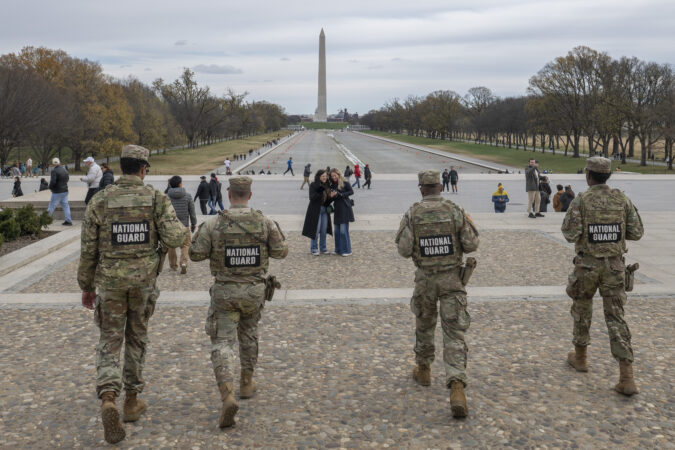
    The Trump administration will be allowed to continue its National Guard deployment in D.C. at least temporarily, pending another appeals court decision, a panel of U.S. Court of Appeals judges said Thursday.

    The ruling means the deployment of troops to the nation’s capital could persist beyond Dec. 11, the date a lower-court judge had previously set as a deadline for the administration to halt the mission.

    Judges with the D.C. Circuit of the U.S. Court of Appeals granted an administrative stay in the case, meaning the drawdown of troops in the capital will be delayed at least until the appeals court makes an additional ruling. The court emphasized that Thursday’s decision had nothing to do with the merits of the Trump administration’s arguments in the case.

    “The purpose of this administrative stay is to give the court sufficient opportunity to consider the motion for stay pending appeal and should not be construed in any way as a ruling on the merits of that motion,” the judges wrote.

    The appeals court ruling comes the week after an attack in which prosecutors say a man targeted National Guard members, killing one and critically injuring another in a busy downtown area of D.C. blocks from the White House. For Trump administration officials, the attack – allegedly carried out by a lone gunman who was resettled in the United States from his native Afghanistan after work for a CIA-backed counterterrorism squad – only deepened their resolve to keep the troops in the capital city.

    Trump called for an additional 500 troops; South Carolina’s governor said this week he would send up to 300 members of his state’s National Guard in response.

    “Our warriors are strong and we will not back down until our capital and our cities are secure,” Pentagon press secretary Kingsley Wilson said at a news briefing Tuesday.

    For D.C. Attorney General Brian Schwalb, who sued the Trump administration in September over the National Guard deployment, the shooting and its aftermath offered further proof that the deployment of troops was ill-advised and unsafe. D.C. police officers have since paired up with National Guard troops for the troops’ safety, potentially diverting officers from other public safety tasks, he said in a court filing this week.

    “The deployment impinges on the District’s home rule, requires the diversion of scarce police resources, and exposes both the public and Guard members to substantial public safety risks, as Defendants themselves acknowledged at the outset of the deployment, and as the horrific attack on two National Guard members last week tragically underscored,” Schwalb wrote.

    President Donald Trump deployed the D.C. National Guard to city streets on Aug. 11 as part of a broader crime crackdown he initiated in the city. He also took temporary control of the D.C. police department and launched a surge of federal law enforcement into D.C. neighborhoods. Multiple Republican governors heeded Trump’s call for reinforcements and sent troops from their National Guards to the District. As of Wednesday, about 2,300 National Guard members were stationed in the city – about 100 more than the previous day.

    The National Guard members have stood watch at Metro stations and picked up trash at national parks. They also carry weapons and have been instructed to use them only as a last resort.

    Unlike in states, where governors control their National Guards, the president is commander in chief of the D.C. National Guard – a role the administration argues gives Trump vast power over the deployment and legally authorizes his actions in the District. But Schwalb, in his lawsuit, has argued that the president’s power over the Guard has limits. Schwalb also has alleged that the troops in D.C. have been illegally engaged in law enforcement, in violation of a federal law that prohibits military troops from engaging in domestic policing.

    In November, U.S. District Judge Jia M. Cobb sided with D.C. in a preliminary ruling, writing that the National Guard deployment was illegal and that Trump lacked the authority to activate the Guard for the mission. Cobb ordered the Trump administration to halt the deployment in D.C. while litigation continued over whether the troops should be permanently withdrawn. However, she delayed her order from going into effect until Dec. 11 to give the Trump administration time to appeal.

    In response, the administration asked an appeals court for an emergency ruling to allow the deployment to continue while litigation continues, arguing in court documents that Cobb’s order “impinges on the President’s express statutory authority as Commander-in-Chief of the D.C. National Guard and impermissibly second-guesses his successful efforts to address intolerably high crime rates in the Nation’s capital.” The appeals court on Thursday did not rule on that request; the administrative stay means the deployment can continue while the appeals court considers it.

    The Trump administration has argued that the troops have not been engaged in city law enforcement and merely deter crime through their presence, freeing up police for other tasks.

    Questions of the mission’s safety implications have taken on new weight in the aftermath of last week’s attack, but each party in the lawsuit has argued that the city would be safer if the court sided with them.

    A group of retired senior military officers and the Vet Voice Foundation, a nonpartisan, nonprofit organization representing veterans and their supporters, filed a brief in the appeals court that they said was “in support of neither party.” They argued that the use of the National Guard in D.C. “threatens to undermine the apolitical reputation of the military as an institution, places service members in situations for which they are not specifically trained, and pulls the Guard away from its critical missions.”

    But attorneys general from 24 Republican-led states – including some that sent their troops to D.C. – argued that crime is high in D.C. and while the mission “has already produced strong results,” there is more to be done. Violent crime is down 28 percent in D.C. compared to last year, although crime in the city began to fall steeply well over a year before Trump surged federal law enforcement in August.

    “Danger still lingers,” the states’ attorneys general wrote in their brief, filed in support of the Trump administration. “Just last week, an Afghani national committed a heinous terror attack, shooting two National Guardsmen at close range and murdering one.”

    In arguing that the Guard troops should stay, they also cited a few actions that Guard members had taken to keep the city safe.

    “National Guard troops have stopped at least one fight near the metro,” they wrote, “helped provide first aid to elderly residents of the district, and aided in the successful search for a missing child.”
  • Immigration crackdown in New Orleans has a target of 5,000 arrests. Is that possible?

    Immigration crackdown in New Orleans has a target of 5,000 arrests. Is that possible?

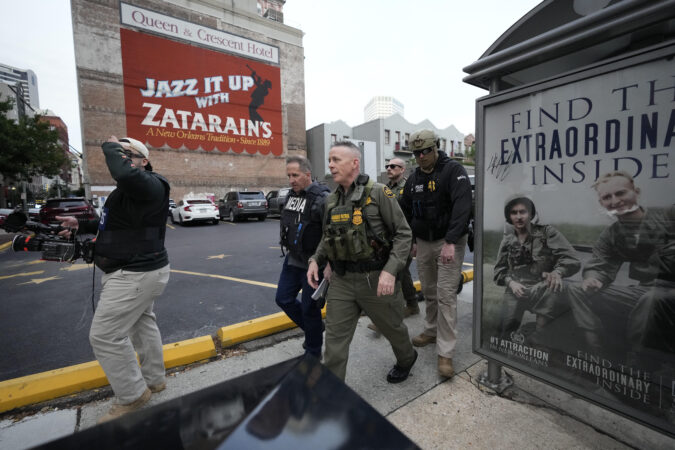
    NEW ORLEANS — Trump administration officials overseeing the immigration crackdown launched this week in New Orleans are aiming to make 5,000 arrests with a focus on violent offenders, a target that some city leaders say is not realistic.

    It’s an ambitious goal that would surpass the number of arrests during a two-month enforcement blitz this fall around Chicago, a region with a much bigger immigrant population than New Orleans.

    In Los Angeles — the first major battleground in President Donald Trump’s aggressive immigration plan — roughly 5,000 people were arrested over the summer in an area where 10 million LA county residents are foreign-born.

    “There is no rational basis that a sweep of New Orleans, or the surrounding parishes, would ever yield anywhere near 5,000 criminals, let alone ones that are considered ‘violent’ by any definition,” New Orleans City Council President J.P. Morrell said Thursday.

    Census Bureau figures show the New Orleans metro area had a foreign-born population of almost 100,000 residents last year, and that just under 60% were not U.S. citizens.

    “The amount of violent crime attributed to illegal immigrants is negligible,” Morrell said, pointing out that crime in New Orleans is at historic lows.

    Violent crimes, including murders, rapes, and robberies, have fallen by 12% through October compared to a year ago, from a total of 2,167 violent crimes to 1,897 this year, according to New Orleans police statistics.

    A flood of messages about arrests

    Federal agents in marked and unmarked vehicles began spreading out across New Orleans and its suburbs Wednesday, making arrests in home improvement store parking lots and patrolling neighborhoods with large immigrant populations.

    Alejandra Vasquez, who runs a social media page in New Orleans that reports the whereabouts of federal agents, said she has received a flood of messages, photos and video since the operations began.

    “My heart is so broken,” Vasquez said. “They came here to take criminals and they are taking our working people. They are not here doing what they are supposed to do. They are taking families.”

    Several hundred agents from Customs and Border Protection and U.S. Immigration and Customs Enforcement are participating in the two-month operation dubbed “Catahoula Crunch.”

    House Speaker Mike Johnson, who is from Louisiana, is among the state’s Republicans supporting the crackdown. “Democrats’ sanctuary city policies have failed — making our American communities dangerous. The people of our GREAT city deserve better, and help is now on the ground,” Johnson posted on social media.

    Operation is being met with resistance

    About two dozen protesters were removed from a New Orleans City Council meeting Thursday after chants of “Shame” broke out. Police officers ordered protesters to leave the building, with some pushed or physically carried out by officers.

    Planning documents obtained last month by The Associated Press show the crackdown is intended to cover southeast Louisiana and into Mississippi.

    Homeland Security Department spokesperson Tricia McLaughlin said agents are going after immigrants who were released after arrests for violent crimes.

    “In just 24 hours on the ground, our law enforcement officers have arrested violent criminals with rap sheets that include homicide, kidnapping, child abuse, robbery, theft, and assault,” McLaughlin said Thursday in a statement. Border Patrol and immigration officials have not responded to requests for details, including how many have been arrested so far.

    She told CNN on Wednesday that “we will continue whether that will be 5,000 arrests or beyond.”

    Immigration arrests go beyond violent criminals

    To come close to reaching their target numbers in New Orleans, immigrant rights group fear federal agents will set their sights on a much broader group.

    New Orleans City Councilmember Lesli Harris said “there are nowhere near 5,000 violent offenders in our region” whom Border Patrol could arrest.

    “What we’re seeing instead are mothers, teenagers, and workers being detained during routine check-ins, from their homes and places of work,” Harris said. “Immigration violations are civil matters, not criminal offenses, and sweeping up thousands of residents who pose no threat will destabilize families, harm our economy.”

    During the “Operation Midway Blitz” crackdown in Chicago that began in September, federal immigration agents arrested more than 4,000 people across the city and its many suburbs, dipping into Indiana.

    Homeland Security officials heralded efforts to nab violent criminals, posting dozens of pictures on social media of people appearing to have criminal histories and lacking legal permission to be in the U.S. But public records tracking the first weeks of the Chicago push show most arrestees didn’t have a criminal record.

    Of roughly 1,900 people arrested in the Chicago area from early September through the middle of October — the latest data available — nearly 300 or about 15% had criminal convictions on their records, according to ICE arrest data from the University of California Berkeley Deportation Data Project analyzed by The Associated Press.

    The vast majority of those convictions were for traffic offenses, misdemeanors or nonviolent felonies, the data showed.

    New Orleans, whose international flavor comes from its long history of French, Spanish, African, and Native American cultures, has seen a new wave of immigrants from places in Central and South America and Asia.

    Across all of Louisiana, there were more than 145,000 foreign-born noncitizens, according to the Census Bureau. While those numbers don’t break down how many residents of the state were in the country illegally, the Pew Research Center estimated the number at 110,000 people in 2023.

  • Philly lawmakers approved $800M for Mayor Parker’s housing plan in June. Now they have to redo it. | City Council roundup

    Philly lawmakers approved $800M for Mayor Parker’s housing plan in June. Now they have to redo it. | City Council roundup

    Call it a H.O.M.E. repair.

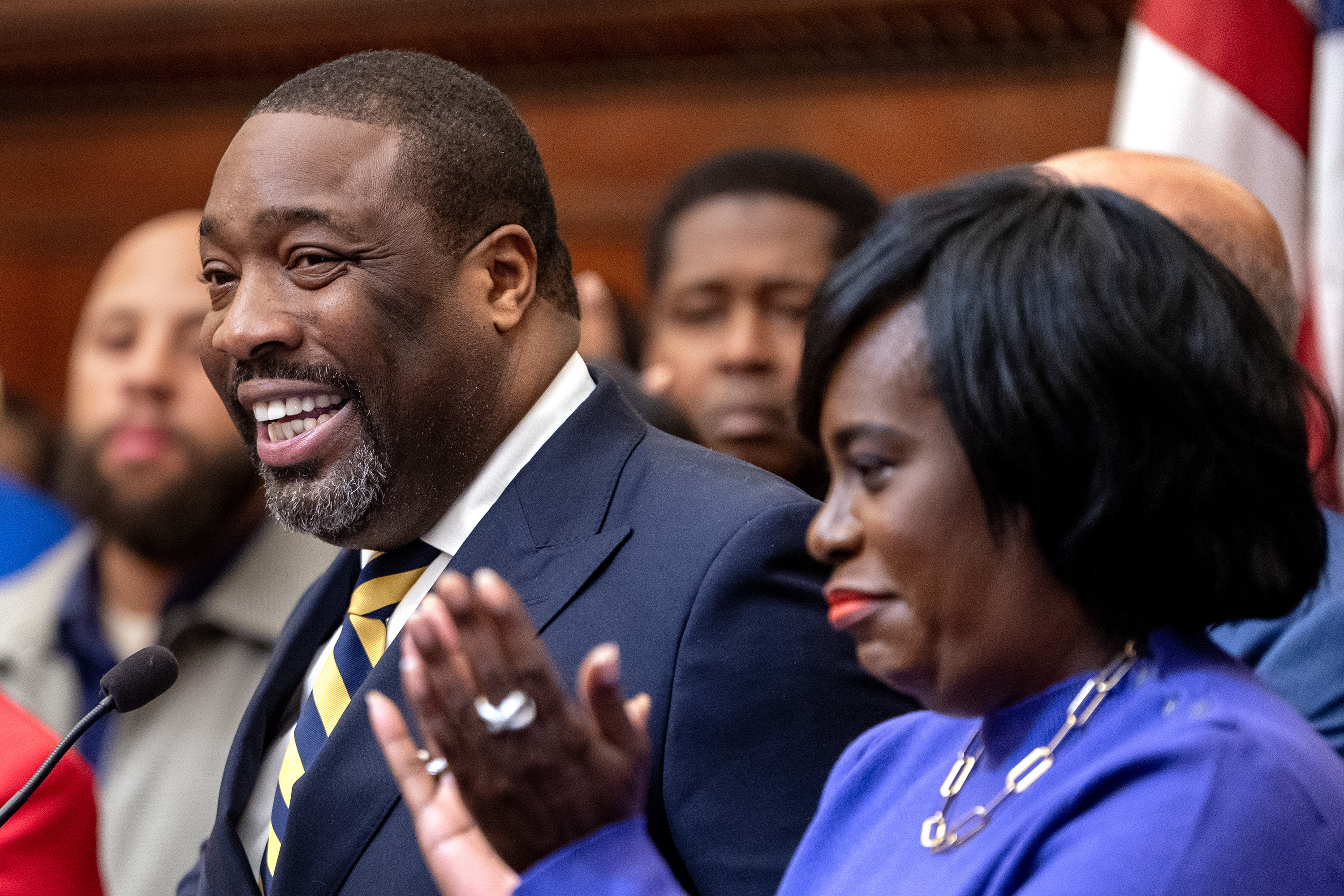
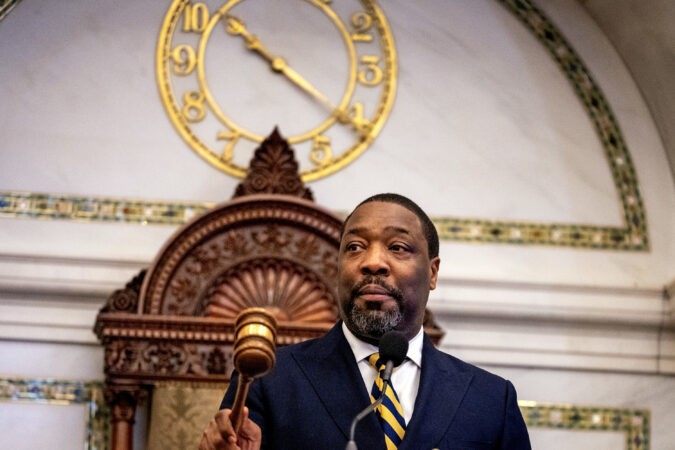
    City Council President Kenyatta Johnson on Thursday introduced legislation that will amend a bill lawmakers approved in June that authorized the city to take out $800 million in debt to fund Mayor Cherelle L. Parker’s Housing Opportunities Made Easy, or H.O.M.E., initiative.

    It’s the latest development in a saga that has seen several procedural squabbles, the most significant public dustup between Johnson and Parker to date, and a monthslong delay in the administration’s plan to issue city bonds to launch the housing initiative.

    The fix was needed because Council earlier this week amended a separate but related piece of legislation — called the H.O.M.E. budget resolution — that sets the first-year spending levels for the housing programs funded or created by the initiative.

    Council’s changes, which Parker largely opposed, were significant enough that the budget resolution no longer aligns with the bond authorization bill Council approved in June, meaning the administration cannot rely on the original legislation as its legal basis for taking out city debt.

    The new bond bill introduced Thursday reflects Council’s changes, which include increasing the first-year H.O.M.E. budget from $194.6 million to $277.2 million and changing eligibility requirements for some programs to make sure the lowest-income Philadelphia households were prioritized.

    “We want to make sure that this is a H.O.M.E. plan that supports everyone, but obviously members of Council had an issue and concern about making sure those most in need are supported throughout this process,” Johnson said.

    The bill now heads to committee, and Johnson said negotiations could lead to further changes. Next week is Council’s final meeting of the year, and Johnson on Thursday ruled out adding an extra session, meaning the bill likely will not pass until January at the earliest.

    Parker originally had hoped to issue the first of two planned $400 million tranches of H.O.M.E. bonds this fall. She said Tuesday that the legislative delays mean they might not go to market until March or later.

    “Working with Council President Johnson and the Members of City Council, we are laser-focused on building, repairing and restoring 30,000 units of housing and making H.O.M.E. a reality for the people of Philadelphia,” Parker said in a statement Thursday.

    ‘That’s my sister’: Johnson says relationship with Parker still strong

    Parker-Johnson pact intact: The Council president on Thursday downplayed his spat with Parker that saw both issue pointed statements Tuesday night blaming the other for delays in issuing the bonds.

    The exchange was notable because the two city leaders, who meet in person weekly, have forged an unusually close working relationship since both took office in January 2024.

    But Johnson said Thursday their relationship remains the same and has always involved disagreements — just not ones that have spilled out into public view.

    City Council President Kenyatta Johnson and Mayor Cherelle L. Parker have maintained a close working relationship.

    “That’s my sister,” Johnson said. “Most of the time, when we do have disagreements, y’all just don’t see it. We meet every week, so you don’t get a chance to see the back-and-forth. But at the end of the day, the mission is to move the city of Philadelphia forward together.”

    Council makes it harder to open convenience stores and pharmacies in Kensington

    No new nuisances: Members passed legislation Thursday that aims to make it significantly harder for convenience stores and pharmacies to open in Kensington and sections of North Philadelphia.

    The bill, authored by Councilmember Quetcy Lozada, forces any new “sundries, pharmaceuticals, and convenience sales” businesses in her 7th District — which covers much of Kensington and parts of North and Northeast Philadelphia — to get approval from the Philadelphia Zoning Board of Adjustment. That process is notoriously long and can be expensive for applicants.

    Lozada has said that the bill is targeted at corner stores and smoke shops, not chain businesses like CVS and 7-Eleven.

    The legislation is part of the body’s broader war on so-called nuisance businesses, which lawmakers say attract crime and disrupt neighborhoods. And it comes in addition to a controversial 11 p.m. business curfew in Lozada’s district that took effect earlier this year.

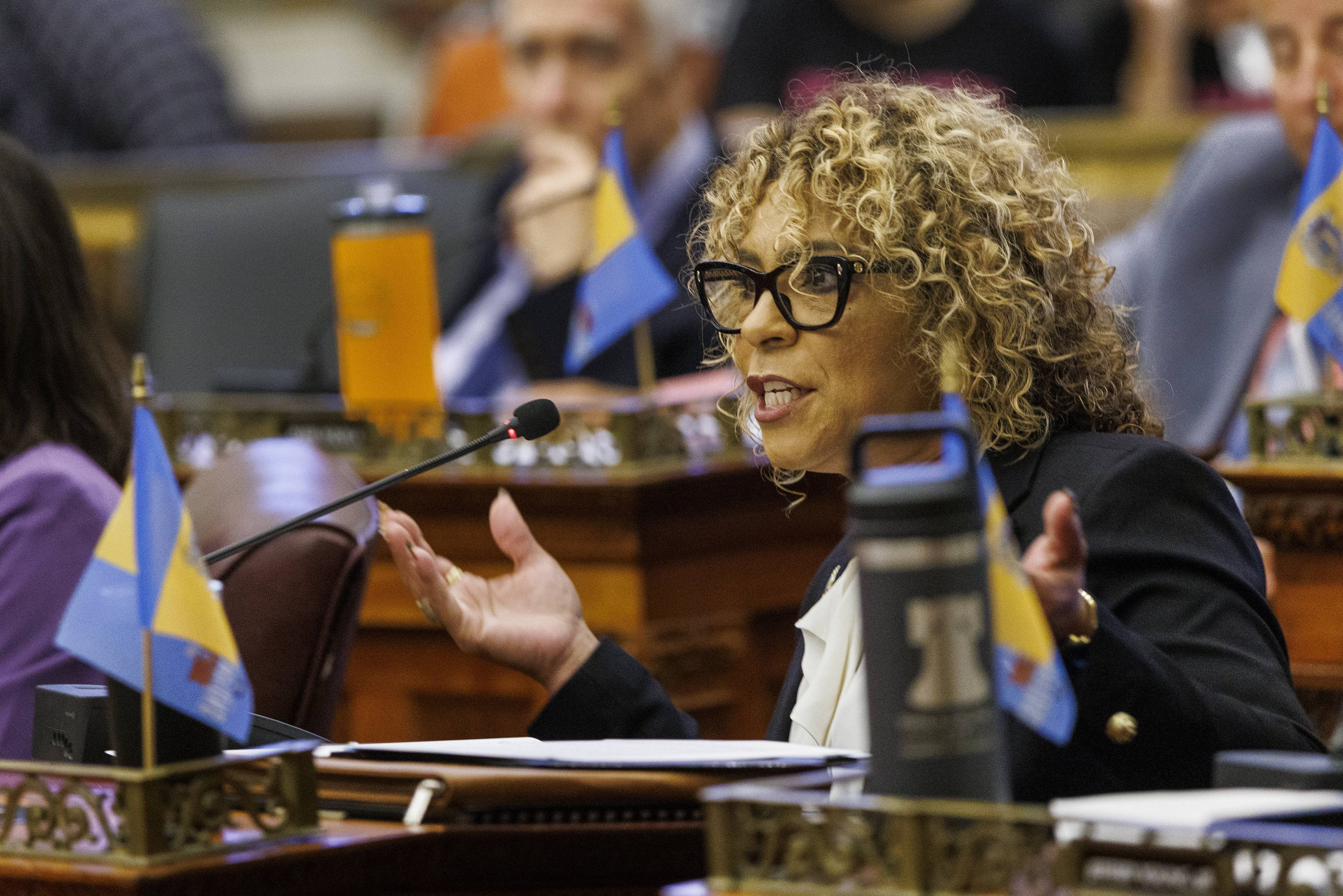
    City Councilmember Quetcy Lozada represents Kensington.

    It’s one of several legislative remedies lawmakers have undertaken to curb small businesses like smoke shops and convenience stores that have unregulated slot machine-like “skill games,” sell marijuana-like products, and peddle drug paraphernalia without a license to do so.

    Seriously … no nuisances, please: Lozada was not the only lawmaker taking aim at “nuisance” businesses Thursday, when Council approved two bills by Majority Leader Katherine Gilmore Richardson on the same topic.

    One measure makes it easier for the Philadelphia Department of Licenses and Inspections to issue stop-work and cease-operations orders to businesses violating city regulations. The other is aimed at closing loopholes that “let nuisance business owners avoid enforcement by changing their name or ownership, ensuring those with similar ownership or operations remain accountable for past violations,” Gilmore Richardson’s office said.

    The measures, which were both approved 16-0, were aimed at stopping “the spread of dangerous and destructive businesses and the need for further action to address their impact on our communities,” Gilmore Richardson said.

    “While I am encouraged by the steps we are taking today, I am also working on additional legislation to more aggressively crack down on these businesses and the bad actors behind them,” she said.

    Quote of the week

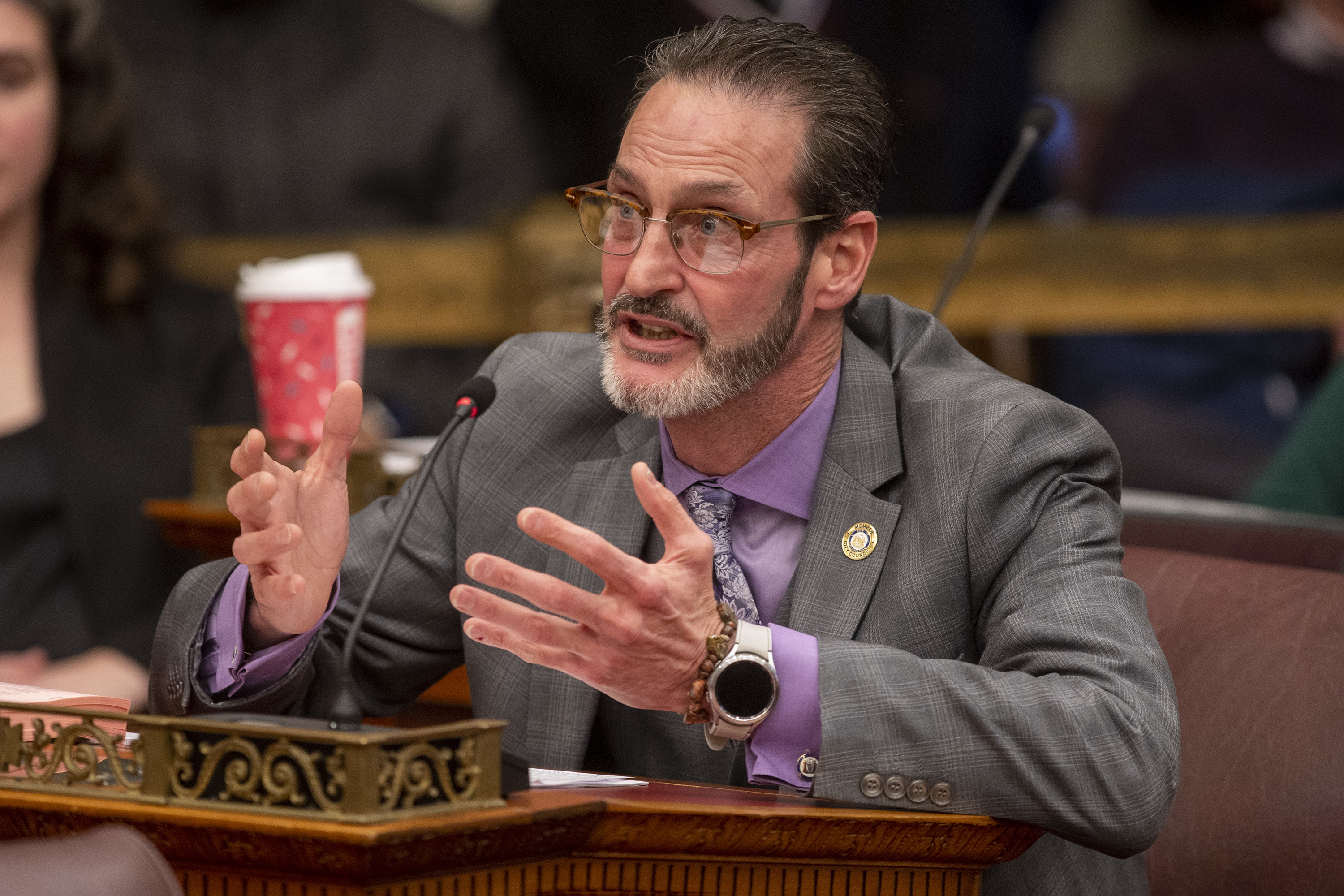
    Councilmember Jim Harrity in December 2023.

    Fond farewell: City Councilmember Jimmy Harrity gave an emotional speech in Council lamenting the loss of his friend Paul Staico, who died suddenly Sunday and was the owner of Big Charlie’s Saloon in South Philadelphia.

    Staico stood by Harrity when the future lawmaker was struggling with addiction, Harrity said.

    “Anybody that knew Paul will tell you he really was that guy, that guy who would give you the shirt off his back,” Harrity said. “He’s the only person I truly knew never lost faith in me, even when I was at my lowest 10 years deep in my addiction.”

    Councilmember Curtis Jones Jr. thanked Harrity, who often gives impassioned speeches, for his heartfelt tribute to Staico.

    “I want to shout out Jimmy Harrity for making crying in Council cool,” Jones said. “Nobody does it better, brother.”

    Staff writer Jake Blumgart contributed to this article.

  • Montco immigration advocates urge all towns to limit collaboration with ICE as the agency creates ‘a crisis in our neighborhoods’

    Montco immigration advocates urge all towns to limit collaboration with ICE as the agency creates ‘a crisis in our neighborhoods’

    Montgomery County immigration advocates renewed calls for more municipalities to approve policies that would limit police and local government cooperation with U.S. Immigration and Customs Enforcement as President Donald Trump’s administration ramps up enforcement.

    Advocates have been calling for welcoming policies across the county for months but advocates estimated that as of Wednesday, only six of Montgomery County’s 62 municipalities had enacted policies. Even those, they argued, were lackluster.

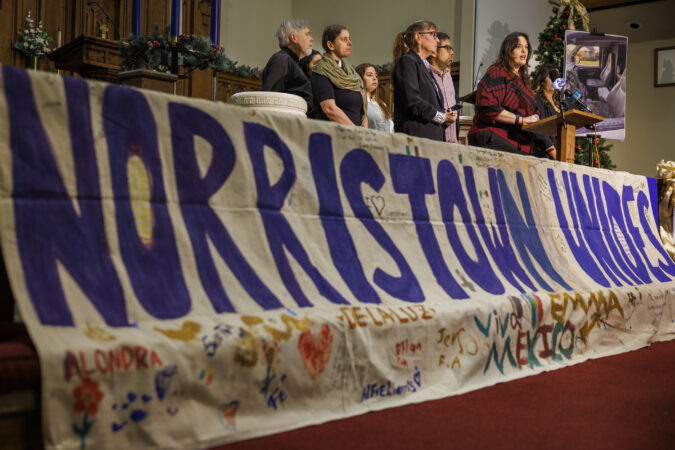
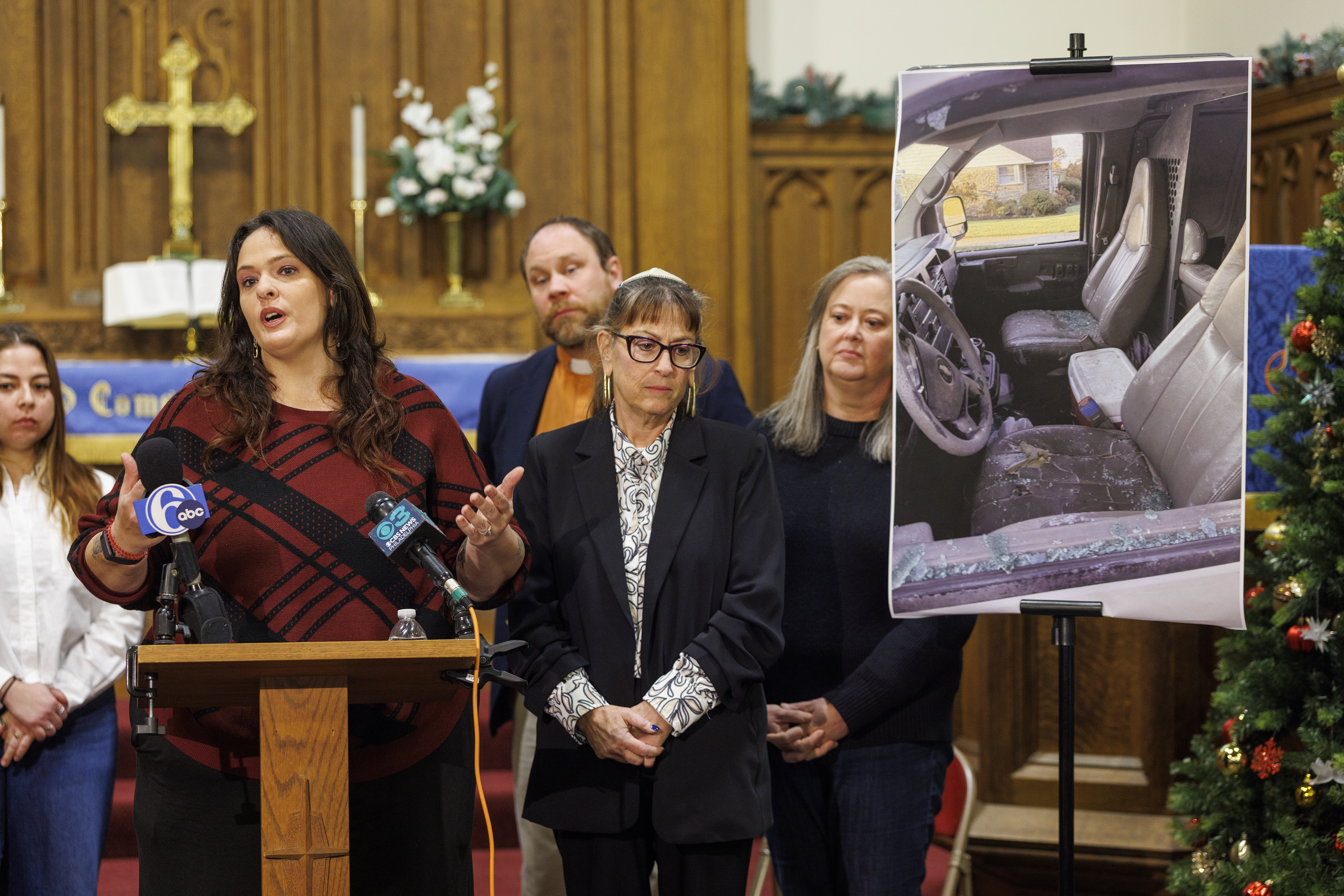
    Montco Community Watch, a grassroots group of activists who track and document ICE enforcement, said Thursday during a news conference at a West Norriton church that the need for more local governments to set their own is dire.

    “ICE has created a crisis in our neighborhoods, and we cannot afford silence, mixed signals, or leadership that only reacts once harm has already happened,” said Stephanie Vincent, a leader of Montco Community Watch.

    Ambler, Springfield, West Norriton, Abington, Norristown, and Cheltenham had approved policies, advocates said, though they are mostly internal policies that advocates say don’t do enough to protect immigrants.

    Stephanie Vincent, the leader of Montco Community Watch, speaks at a news conference about ICE activity in Montgomery County at Ascension Church in West Norriton Thursday.

    The sense of urgency was palpable Thursday as ICE dramatically expands its presence and visibility, both in the Philadelphia region and across the United States.

    Montco Community Watch has documented at least 97 detentions and 30 suspected ICE detentions in Montgomery County, and “there are likely more detentions that we have not heard about,” Vincent said.

    The group was joined Thursday by representatives for Indivisible Greater Jenkintown, a progressive advocacy group, and the Pennsylvania Immigration Coalition at Ascension Church. Advocates said that strong welcoming policies, sometimes referred to as sanctuary policies, would outline that police will not honor ICE detainer requests without a judicial warrant, that local government resources will not be spent on ICE, and that communities will feel safe to access resources without fear of federal agents.

    The policies that advocates are striving for are often referred to as sanctuary policies, and Trump has threatened to strip federal resources from local governments that do not cooperate with ICE.

    Advocates had been working since the summer to encourage municipalities across Montgomery County to approve policies limiting cooperation with ICE. The county, particularly the Norristown area, had become a hot spot for ICE enforcement in the early months of the Trump administration.

    In July, video of a raid at a West Norriton grocery store appeared to show local police assisting the federal agency; the township said federal authorities had sought assistance to retain order while they served a warrant for tax evasion.

    Super Gigante International Food Market, 1930 W. Main St., in West Norriton on July 16.

    Advocates pushed county leaders to enact a welcoming resolution, but officials consistently reiterated that they lacked any control over local police forces.

    Despite months of requests, Montgomery County has not passed a formal ordinance or resolution declaring itself a welcoming county. The county’s Democratic commissioners have cited limits to their power, concern about creating a false sense of security, and a preference for internal policy changes.

    Earlier this year, county officials approved a policy limiting communication between county employees and ICE and said they would not honor prison detainer requests without warrants.

    Advocates said Thursday that they strongly prefer limitations on local collaboration with ICE to be enshrined in ordinances rather than enacted through internal policies or statements, which can lack transparency and accountability and are not always enforceable.

    “None of [the six municipalities’ policies] are complete and the most visible problem on all of them is a lack of any accountability,” said Rabbi Elyse Wechterman, of Indivisible Greater Jenkintown.

    Julio Rodriguez, from the Pennsylvania Immigration Coalition, added that a lack of clear boundaries between local policies and federal agents creates more confusion and worry in the community.

    “It reinforces that fact the people just don’t know what’s happening,” Rodriguez said.

    Staff writer Jeff Gammage contributed to this article.

  • N.Y. attorney general challenges authority of acting U.S. attorney investigating her Trump lawsuits

    N.Y. attorney general challenges authority of acting U.S. attorney investigating her Trump lawsuits

    ALBANY, N.Y. — President Donald Trump’s effort to install political loyalists as top federal prosecutors has run into a legal buzz saw lately, with judges ruling that his handpicked U.S. attorneys for New Jersey, eastern Virginia, Nevada, and Los Angeles were all serving unlawfully.

    On Thursday, another federal judge heard an argument by New York Attorney General Letitia James that the administration also twisted the law to make John Sarcone the acting U.S. attorney for northern New York.

    James, a Democrat, is challenging Sarcone’s authority to oversee a Justice Department investigation into regulatory lawsuits she filed against Trump and the National Rifle Association. It’s one of several arguments she is making to block subpoenas issued as part of the probe, which her lawyers say is part of a campaign of baseless investigations and prosecutions of Trump’s perceived enemies.

    Her attorney Hailyn Chen argued in court that since Sarcone lacks legitimate authority to act as U.S. attorney, legal steps taken by him in that capacity — like the subpoenas — are unlawful. In response to a question from U.S. District Judge Lorna G. Schofield, Chen said Sarcone should be disqualified from the investigation and the office.

    “Sarcone exercised power that he did not lawfully possess,” Chen told the judge.

    Justice Department lawyers say Sarcone was appointed properly and the motion to block the subpoenas should be denied. Assistant U.S. Attorney Richard Belliss argued that disqualifying Sarcone would be “drastic and extreme.”

    “We don’t think that’s a proper remedy,” Belliss said.

    Schofield, after peppering both attorneys with questions, did not say when she would rule.

    The fight in New York and other states is largely over the legality of unorthodox strategies the Trump administration has adopted to appoint prosecutors seen as unlikely to get confirmed by the U.S. Senate.

    The hearing came a week after a federal judge in Virginia dismissed indictments brought there against James and former FBI Director James Comey. That judge concluded that the interim U.S. attorney who brought the charges, Lindsey Halligan, was unlawfully appointed. The Justice Department is expected to appeal.

    On Monday, a federal appeals court ruled that Alina Habba, Trump’s former personal lawyer, is disqualified from serving as New Jersey’s top federal prosecutor.

    Under federal law, the president’s nominees for U.S. attorney must be confirmed by the Senate. If a position is vacant, the U.S. attorney general can appoint someone temporarily, but that appointment expires after 120 days. If that time period elapses, judges in the district can either keep the interim U.S. attorney or appoint someone of their own choosing.

    Sarcone’s appointment didn’t follow that path.

    Trump hasn’t nominated anyone to serve as U.S. attorney for the Northern District of New York. U.S. Attorney General Pam Bondi appointed Sarcone to serve as the interim U.S. attorney in March. When his 120-day term elapsed, judges in the district declined to keep him in the post.

    Bondi then took the unusual step of appointing Sarcone as a special attorney, then designated him first assistant U.S. attorney for the district, a maneuver federal officials say allows him to serve as an acting U.S. attorney.

    Chen called it an abuse of executive power.

    The New York subpoenas seek records related to a civil case James filed against Trump over alleged fraud in his personal business dealings and records from a lawsuit involving the National Rifle Association and two senior executives.

    Belliss argued in court that the U.S. attorney general has broad authority to appoint attorneys within her department and to delegate her functions to those attorneys. Belliss said that even if Sarcone is not properly holding the office of acting U.S. attorney, he can still conduct grand jury investigations as a special attorney.

    Sarcone was part of Trump’s legal team during the 2016 presidential campaign and worked for the U.S. General Services Administration as the regional administrator for the Northeast and Caribbean during Trump’s first term.

    Habba also served as an interim U.S. attorney. When her appointment expired, New Jersey judges replaced her with a career prosecutor who had served as her second-in-command. Bondi then fired that prosecutor and renamed Habba as acting U.S. attorney.

    A similar dynamic is playing out in Nevada, where a federal judge disqualified the Trump administration’s pick to be U.S. attorney there. And a federal judge in Los Angeles disqualified the acting U.S. attorney in Southern California from several cases after concluding he had stayed in the job longer than allowed by law.

  • Donald Trump will visit Northeast Pa. on Tuesday to promote his economic agenda ahead of 2026 midterms

    Donald Trump will visit Northeast Pa. on Tuesday to promote his economic agenda ahead of 2026 midterms

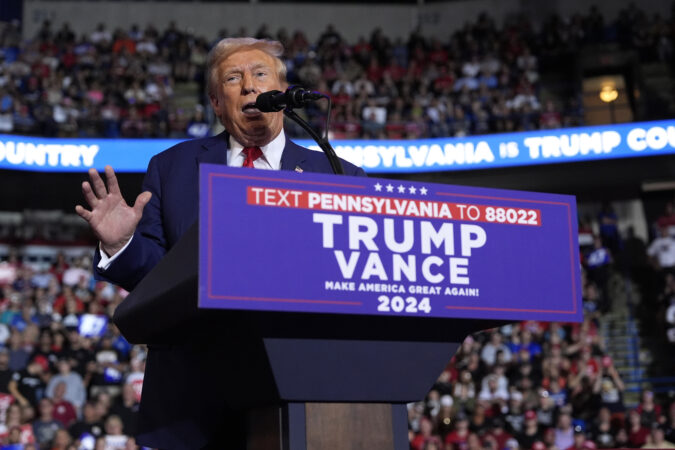
    President Donald Trump will visit Northeast Pennsylvania on Tuesday to promote his economic agenda, including efforts to lower inflation, the White House confirmed to The Inquirer on Thursday.

    The trip will kick off what is expected to be a national tour of Trump touting his economic policies ahead of the 2026 midterms, when Democrats and Republicans will battle for control of Congress.

    The specific location for Trump’s visit has not yet been made public, but Northeast Pennsylvania will be a major battleground in next year’s midterms.

    Democrats believe that they can oust freshman Republican U.S. Rep. Rob Bresnahan, of Lackawanna County, threatening the GOP’s slim House majority. Democrats are also specifically targeting the districts of U.S. Reps. Brian Fitzpatrick, of Bucks County; Ryan Mackenzie, of Lehigh County; and Scott Perry, of York County.

    Trump endorsed Bresnahan and most of Pennsylvania’s GOP delegation on his social media platform, Truth Social, last month. Scranton Mayor Paige Cognetti, a Democrat, is mounting a campaign to unseat Bresnahan, who won by roughly a percentage point last election.

    Affordability — which Trump called a “fake narrative” used by Democrats — has been a top issue for voters, including during November’s blue wave when Democrats won local contests throughout Pennsylvania, in addition to the gubernatorial races in Virginia and New Jersey.

    The president has repeatedly claimed that prices have fallen since he took office in January, but a CNN fact-checking report from November said prices and inflation have increased. Many experts have pointed to Trump’s tariff policies as contributing to increased prices.

    Tuesday’s visit appears to be the president’s first to the Keystone State since attending an energy summit in Pittsburgh in July. In November 2024, Trump defeated former Vice President Kamala Harris and won the presidency with the help of battleground Pennsylvania, garnering more votes than any statewide Republican candidate in history.

    The president had a particularly strong performance in Northeast Pennsylvania. last year, making some of his top gains compared with his 2020 performance in Lackawanna and Luzerne Counties.

  • Trump hires new White House ballroom architect

    Trump hires new White House ballroom architect

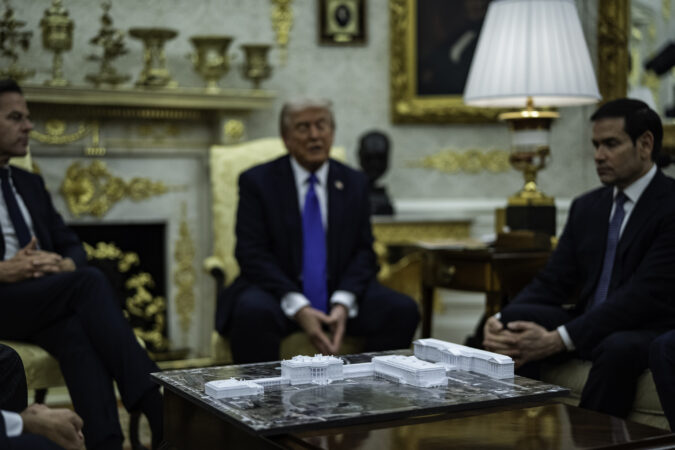
    President Donald Trump has replaced the architect he handpicked to design his White House ballroom, according to three people familiar with the project, ending the involvement of a boutique firm whose selection raised questions from the start about whether it had the capacity to complete the massive, high-profile endeavor.

    For more than three months, James McCrery II and his architecture firm led the effort to design Trump’s $300 million ballroom building — until late October, when he stopped working on the project, one of the people said. It is unclear whether McCrery stepped back voluntarily, but the men parted on good terms and remain so, according to one of the people familiar with the project, all of whom spoke on the condition of anonymity to discuss internal conversations.

    Trump and McCrery had clashed over the president’s desire to keep increasing the size of the building, but it was the firm’s small workforce and inability to hit deadlines that became the decisive factor in him leaving, one of the people said.

    Trump has chosen architect Shalom Baranes, who’s been designing and renovating government buildings in Washington for decades, to pick up the mantle, according to two of the people. Baranes’ firm has handled a number of large Washington projects dating back decades, including projects involving the main Treasury building near the White House and the headquarters of the General Services Administration.

    “As we begin to transition into the next stage of development on the White House Ballroom, the Administration is excited to share that the highly talented Shalom Baranes has joined the team of experts to carry out President Trump’s vision on building what will be the greatest addition to the White House since the Oval Office — the White House Ballroom,” White House spokesman Davis Ingle said in a written statement. “Shalom is an accomplished architect whose work has shaped the architectural identity of our nation’s capital for decades and his experience will be a great asset to the completion of this project.”

    The White House and McCrery’s representative have continued to say that McCrery remains involved in the project in a “consulting” role.

    The ballroom building — at 90,000 square feet and estimated to hold nearly 1,000 guests and cost $300 million — was from the start a herculean task for McCrery, said people familiar with his firm’s operations. That might have been true for any firm given Trump’s rushed timeline, but it was especially difficult for the head of a small firm better equipped to design churches, libraries, and homes.

    Trump’s selection of the firm raised eyebrows of architects and planning experts worried that a shop as small as McCrery’s couldn’t complete such a large project in little more than three years. One architect said federal officials tasked with awarding contracts would normally consider only firms four times bigger than McCrery’s to take on projects of that scale.

    Those concerns grew almost immediately, according to one of the people, who spoke on the condition of anonymity about the project.

    “Everybody realized he couldn’t do it,” the person said.

    McCrery’s spokesman did not respond to requests for an interview.

    The renovation represents one of the biggest changes to the White House in its 233-year history, and has yet to undergo any formal public review. The administration has not publicly provided key details about the building, such as its planned height. The structure also is expected to include a suite of offices previously located in the East Wing. The White House has also declined to specify the status of an emergency bunker located beneath the East Wing, citing matters of national security.

    In the weeks since the switch from McCrery to Baranes, crews of dozens of workers have continued to prep the site for construction, driving piles, stockpiling materials such as reinforced concrete pipes and amassing an array of cranes, drills and other heavy machinery, photos obtained by The Post show. On Wednesday, they erected a towering crane anchored into a concrete paddock.

    On Tuesday, Trump said during a Cabinet meeting that the pile drivers operate “all night” and have created a disagreement in his marriage. The president said he loves the sound while first lady Melania Trump has asked him to make the constant pounding stop, a request he’s denied.

    “Sorry, darling, that’s progress,” Trump said he told her.

  • Under Robert F. Kennedy Jr., America’s health department is in the business of promoting Kennedy

    Under Robert F. Kennedy Jr., America’s health department is in the business of promoting Kennedy

    As health and human services secretary, Robert F. Kennedy Jr. wields one of the louder megaphones the federal government has. Yet he insists he doesn’t want to impose his opinions on Americans.

    “I don’t think people should be taking medical advice from me,” Kennedy told a Democratic congressman in May.

    Kennedy once expressed different views — for example, about the need to proselytize about exercise. As he said on a podcast, he wants to use the “bully pulpit” to “obliterate the delicacy” with which Americans discuss fitness and explain that “suffering” is virtuous.

    “We need to establish an ethic that you’re not a good parent unless your kids are doing some kind of physical activity,” Kennedy told the podcaster in September 2024.

    The Department of Health and Human Services is tasked with communicating information to protect and improve the health and well-being of every American. It provides reminders about vaccinations and screenings; alerts about which food is unsafe; and useful, everyday tips about subjects such as sunscreen and, yes, exercise.

    Under Kennedy’s watch, though, HHS has compromised once-fruitful campaigns promoting immunizations and other preventive health measures. On Instagram, the agency often emphasizes Kennedy’s personal causes, his pet projects, or even the secretary himself. Former agency employees say communications have a more political edge, with “Make America Healthy Again” frequently featured in news releases.

    Interviews with over 20 former and current agency employees provide a look inside a health department where personality and politics steer what is said to the public. KFF Health News granted many of these people anonymity because they fear retribution.

    One sign of change is what is no longer, or soon will not be, amplified — for instance, acclaimed anti-smoking campaigns making a dent in one of Kennedy’s priorities, chronic disease.

    Another sign is what gets commemorated. On the official HHS Instagram account this year, out were posts saluting Juneteenth and Father’s Day. In, under Kennedy, were posts marking President Donald Trump’s birthday and Hulk Hogan’s death.

    Commenting on such changes, HHS spokesperson Andrew Nixon said in an email that “DEI is gone, thanks to the Trump administration.”

    Some elected officials are pointedly not promoting Kennedy as a source of healthcare information. Regarding the secretary’s announcement citing unproven links between Tylenol and autism, Senate Majority Leader John Thune (R., S.D.) told MSNBC (now called MS NOW) that, “if I were a woman, I’d be talking to my doctor and not taking, you know, advice from RFK or any other government bureaucrat, for that matter.” (Thune’s office did not respond to a request for comment.)

    At least four polls since January show trust in Kennedy as a medical adviser is low. In one poll, from the Economist and YouGov, barely over a quarter of respondents said they trusted Kennedy “a lot” or “somewhat.”

    The department’s online messaging looks “a lot more like propaganda than it does public health,” said Kevin Griffis, who worked in communications at the CDC under President Joe Biden and left the agency in March.

    Transition to a new administration

    The new administration inaugurated dramatic changes. Upon arrival, political appointees froze the health agency’s outside communications on a broader scale than in previous changeovers, halting everything from routine webpage updates to meetings with grant recipients. The pause created logistical snafus: For example, one CDC employee described being forced to cancel, and later rebook, advertising campaigns — at greater cost to taxpayers.

    Even before the gag order was lifted in the spring, the tone and direction of HHS’ public communications had shifted.

    According to data shared by iSpot.tv, a market research firm that tracks television advertising, at least four HHS ads about vaccines ended within two weeks of Trump’s inauguration.

    “Flu campaigns were halted” during a season in which a record number of children died from influenza, Deb Houry, who had resigned as the CDC’s chief medical officer, said in a Sept. 17 congressional hearing.

    Instead of urging people to get vaccinated, HHS officials contemplated more-ambivalent messaging, said Griffis, then the CDC’s director of communications. According to Griffis, other former agency employees, and communications reviewed by KFF Health News, Nixon contemplated a campaign that would put more emphasis on vaccine risks. It would “be promoting, quote-unquote, ‘informed choice,’” Griffis said.

    Nixon called the claim “categorically false.” Still, the department continues to push anti-vaccine messaging. In November, the CDC updated a web page to assert the false claim that vaccines may cause autism.

    Messaging related to tobacco control has been pulled back, according to Brian King, an executive at the Campaign for Tobacco-Free Kids, as well as multiple current and former CDC employees. Layoffs, administrative leaves, and funding turmoil have drained offices at the CDC and the Food and Drug Administration focused on educating people about the risks of smoking and vaping, King said.

    Four current and former CDC employees told KFF Health News that “Tips From Former Smokers,” a campaign credited with helping approximately a million people quit smoking, is in danger. Ordinarily, a contract for the next year’s campaign would have been signed by now. But, as of Nov. 21, there was no contractor, the current and former employees said.

    Nixon did not respond to a question from KFF Health News regarding plans for the program.

    “We’re currently in an apocalypse for national tobacco education campaigns in this country,” King said.

    Kennedy’s HHS has a different focus for its education campaigns, including the “Take Back Your Health” campaign, for which the department solicited contractors this year to produce “viral” and “edgy” content to urge Americans to exercise.

    An earlier version of the campaign’s solicitation asked for partners to boost wearables, such as gadgets that track steps or glucose levels — reflecting a Kennedy push for every American to be wearing such a device within four years.

    The source of funds for the exercise campaign? In the spring, leadership of multiple agencies discussed using funding for the CDC’s Tips From Former Smokers campaign, employees from those agencies said. By the fall, the smoking program had not spent all its funds, the current and former CDC employees said.

    Nixon did not respond to questions about the source of funding for the exercise campaign.

    Food fight

    At the FDA, former employees said they noticed new types of political interference as Trump officials took the reins, sometimes making subtle tweaks to public communications, sometimes changing wholesale what messages went out. The interventions into messaging — what was said, but also what went unsaid — proved problematic, they said.

    Early this year, multiple employees told KFF Health News, Nixon gave agency employees a quick deadline to gather a list of all policy initiatives underway on infant formula. That was then branded “Operation Stork Speed,” as if it were a new push by a new administration.

    Marianna Naum, a former acting director of external communications and consumer education at the FDA, said she supports parts of the Trump administration’s agenda. But she said she disagreed with how it handled Operation Stork Speed. “It felt like they were trying to put out information so they can say: ‘Look at the great work. Look how fast we did it,’” she said.

    Nixon called the account “false” without elaborating. KFF Health News spoke with three other employees with the same recollections of the origins of Operation Stork Speed.

    “Things that didn’t fit within their agenda, they were downplayed,” Naum said.

    For example, she said, Trump political appointees resisted a proposed news release noting agency approval of cell-cultured pork — that is, pork grown in a lab. Similar products have raised the ire of ranchers and farmers working in typically GOP-friendly industries. States such as Florida have banned lab-grown meat.

    The agency ultimately issued the news release. But a review of the agency’s archives showed it has not put out news releases about two later approvals of cell-cultured meat.

    Wide-ranging layoffs have also hit the FDA’s food office hard, leaving fewer people to make sure news gets distributed properly and promptly. Former employees say notices about recalled foods are not circulated as widely as they used to be, meaning fewer eyeballs on alerts about contaminated ice cream, peaches, and the like.

    Nixon did not respond to questions about changes in food recalls. Overall, Nixon answered nine of 53 questions posed by KFF Health News.

    Pushing politics

    Televised HHS public service campaigns earned nearly 7.3 billion fewer impressions in the first half of 2025 vs. the same period in 2022, according to iSpot data, with the drop being concentrated in pro-vaccine messaging. Other types of ads, such as those covering substance use and mental health, also fell. Data from the marketing intelligence firm Sensor Tower shows similar drops in HHS ad spending online.

    With many of the longtime professionals laid off and new political appointees in place atop the hierarchy, a new communications strategy — bearing the hallmarks of Kennedy’s personality — is being built, said the current and former HHS employees, plus public health officials interviewed by KFF Health News.

    Whereas in 2024, the agency would mostly post public health resources such as the 988 suicide hotline on its Instagram page, its feed in 2025 features more of the health secretary himself. Through the end of August, according to a KFF Health News review, 77 of its 101 posts featured Kennedy — often fishing, biking, or doing pull-ups, as well as pitching his policies.

    By contrast, only 146 of the agency’s 754 posts last year, or about 20%, featured Xavier Becerra, Kennedy’s predecessor.

    In 2024, on Instagram, the agency promoted Medicare and individual insurance open enrollment; in 2025, the agency has not.

    In 2024, the agency’s Instagram feed included some politicking as Biden ran for reelection, but the posts were less frequent and often indirect — for instance, touting a policy enacted under Biden’s signature legislation, the Inflation Reduction Act, but without mentioning the name of the bill or its connection to the president.

    In 2025, sloganeering is a frequent feature of the agency’s Kennedy-era Instagram. Through the end of August, “Make America Healthy Again” or variants of the catchphrase featured in at least 48% of posts.

    Amid the layoffs, the agency made a notable addition to its team. It hired a state legislative spokesperson as a “rapid response” coordinator, a role that employees from previous administrations could not recall previously existing at HHS.

    “Like other Trump administration agencies, HHS is continuously rebutting fake news for the benefit of the public,” Nixon said when asked about the role.

    On the day Houry and Susan Monarez, the CDC leader ousted in late August, testified before senators about Kennedy’s leadership, the agency’s X feed posted clips belittling the former officials. The department also derisively rebuts unfavorable news coverage.

    “It’s very interesting to watch the memeification of the United States and critical global health infrastructure,” said McKenzie Wilson, an HHS spokesperson under Biden. “The entire purpose of this agency is to inform the public about safety, emergencies as they happen.”

    ‘Clear, powerful messages from Bobby’

    Kennedy’s Make Our Children Healthy Again report, released in September, proposes public awareness campaigns on subjects such as illegal vaping and fluoride levels in water, while reassuring Americans that the regulatory system for pesticides is “robust.”

    Those priorities reflect — and are amplified by — cadres of activists outside government. Since the summer, HHS officials have appeared on Zoom calls with aligned advocacy groups, trying to drum up support for Kennedy’s agenda.

    On one call — on which, according to host Tony Lyons, activists “representing over 250 million followers on social media” were registered — famous names such as motivational speaker Tony Robbins gave pep talks about how to influence elected officials and the public.

    “Each week, you’re gonna get clear, powerful messages from Bobby, from HHS, from their team,” Robbins said. “And your mission is to amplify it, to make it your own, to speak from your soul, to be bold, to be relentless, to be loving, to be loud, you know, because this is how we make the change.”

    The communications strategy captivates the public, but it also confuses it.

    Anne Zink, formerly the chief medical officer for Alaska, said she thought Kennedy’s messaging was some of the catchiest of any HHS director.

    But, she said, in her work as an emergency physician, she has seen the consequences of his health department’s policies on her puzzled patients. Some question vaccines. Children show up with gastrointestinal symptoms Zink says she suspects are related to raw milk consumption.

    “I increasingly see people say, ‘I just don’t know what to trust, because I just hear all sorts of things out there,’” she said.

    KFF Health News is a national newsroom that produces in-depth journalism about health issues and is one of the core operating programs at KFF — the independent source for health policy research, polling, and journalism.

  • Delaware County approves a nondiscrimination ordinance protecting LGBTQ+ residents

    Delaware County approves a nondiscrimination ordinance protecting LGBTQ+ residents

    Delaware County became the third of Philadelphia’s collar counties to enact a local policy protecting LGBTQ+ residents from discrimination.

    The suburban county’s all-Democratic council voted unanimously Wednesday evening to empower a human relations commission established earlier in the year to adjudicate claims of discrimination based on sexual orientation and gender identity and expression, barring discrimination against LGBTQ+ residents among a wide list of protected classes.

    The vote comes after Chester and Montgomery Counties approved similar policies earlier this year as President Donald Trump targets the LGBTQ+ community through policy and rhetoric.

    Delaware County had been working toward the ordinance for months, introducing the policy in August before hitting pause as county council members and attorneys worked through the details.

    At least 79 local governments across Pennsylvania, including Philadelphia, have enacted nondiscrimination ordinances, according to the Pennsylvania Youth Congress, which advocates for LGBTQ+ youth.

    “Now almost an entire half of the state is now protected by a [local] human relations commission,” Kyle McIntyre, the organizer of Delco Pride, said in an interview Thursday.

    The ordinance mirrors a state policy barring discrimination and establishing a human relations commission to adjudicate complaints.

    While regulations for the state commission bar discrimination based on gender identity and sexual orientation, Delaware County’s policy goes a step further to specifically prohibit such discrimination in law.

    The ordinance provides Delaware County residents a local venue to bring complaints before taking concerns to the Pennsylvania Human Relations Commission.

    “This ordinance reflects what good local government should be,” Monica Taylor, a Democrat who chairs the county council, said Wednesday.

    Some residents, including Delaware County Controller Joanne Phillips, a council member-elect, raised concerns that the ordinance could become expensive in a county that is already looking at a potential 19% tax increase for next year.

    Phillips, a Democrat, said she supported the concept of the commission but worried it would cost more than anticipated once a board began adjudicating cases.

    County officials estimated the commission would cost the county just $3,000 annually and said adjustments could be made to the commission’s role if enforcement of the ordinance became too costly.

    Critics of the policy on Tuesday claimed, without evidence, that the ordinance would dampen free speech in the county, allowing fines against those who say offensive things.

    Charlie Alexander, a far-right activist who unsuccessfully sought the GOP nomination for the county council earlier this year, arrived in a dog costume with a rainbow blanket draped over his head. He argued the ordinance was an unconstitutional infringement on First Amendment rights.

    “Don’t infringe on our rights and you won’t be made to feel very uncomfortable in your homes and neighborhoods,” he threatened the council members.

    The ordinance, however, does not regulate private speech. It bars discrimination in housing, employment, education, healthcare, and public accommodations.

    “This is not infringing on speech. It’s really clear what practices are deemed unlawful,” council member Kevin Madden, a Democrat, said.

    Taylor said the commission, which was first approved over the summer, will be staffed with volunteers early next year and prepared to take cases by next summer.

    “This ordinance provides a fair, reliable, and community-focused way to address concerns,” she said.

    This story has been updated to clarify the name of the commission.

  • Trump praises Congo and Rwanda as they sign U.S.-mediated peace deal

    Trump praises Congo and Rwanda as they sign U.S.-mediated peace deal

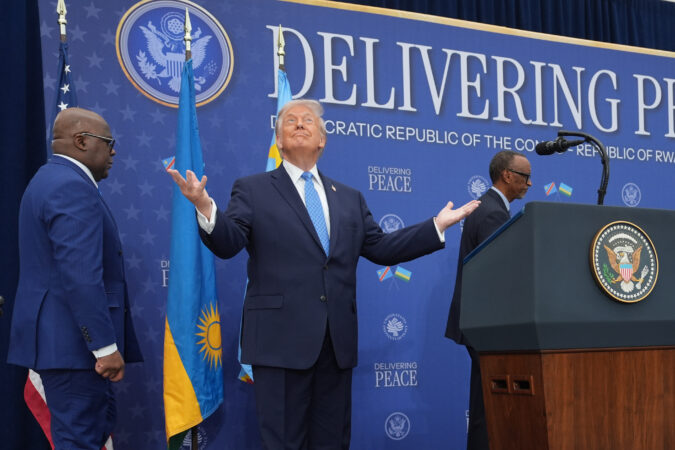
    WASHINGTON — President Donald Trump praised the leaders of the Democratic Republic of Congo and Rwanda for their courage as they signed onto a deal on Thursday aimed at ending the conflict in eastern Congo and opening the region’s critical mineral reserves to the U.S. government and American companies.

    The moment offered Trump — who has repeatedly and with a measure of exaggeration boasted of brokering peace in some of the world’s most entrenched conflicts — another chance to tout himself as a dealmaker extraordinaire on the global stage and make the case that he’s deserving of the Nobel Peace Prize. The U.S. leader hasn’t been shy about his desire to receive the honor.

    “It’s a great day for Africa, a great day for the world,” Trump said shortly before the leaders signed the pact. He added, “Today, we’re succeeding where so many others have failed.”

    Trump welcomed Presidents Felix Tshisekedi of Congo and Paul Kagame of Rwanda, as well as several officials from other African nations who traveled to Washington to witness the signing, in the same week he contemptuously derided the war-torn country of Somalia and said he did he did not want immigrants from the East African nation in the U.S.

    Lauded by the White House as a “historic” agreement brokered by Trump, the pact between Tshisekedi and Kagame follows monthslong peace efforts by the U.S. and partners, including the African Union and Qatar, and finalizes an earlier deal signed in June.

    But the Trump-brokered peace is precarious.

    The Central African nation of Congo has been battered by decadeslong fighting with more than 100 armed groups, the most potent being the Rwanda-backed M23 rebels. The conflict escalated this year, with M23 seizing the region’s main cities of Goma and Bukavu in an unprecedented advance, worsening a humanitarian crisis that was already one of the world’s largest, with millions of people displaced.

    ‘We are still at war’

    Fighting, meanwhile, continued this week in the conflict-battered region with pockets of clashes reported between the rebels and Congolese soldiers, together with their allied forces. Trump, a Republican, has often said that his mediation has ended the conflict, which some people in Congo say isn’t true.

    Still, Kagame and Tshisekedi offered a hopeful tone as they signed onto to the agreement.

    “No one was asking President Trump to take up this task. Our region is far from the headlines,” Kagame said. “But when the president saw the opportunity to contribute to peace, he immediately took it.”

    “I do believe this day is the beginning of a new path, a demanding path, yes. Indeed, quite difficult,” Tshisekedi said. ”But this is a path where peace will not just be a wish, an aspiration, but a turning point.”

    Indeed, analysts say Thursday’s deal also isn’t expected to quickly result in peace. A separate peace deal has been signed between Congo and the M23.

    “We are still at war,” said Amani Chibalonza Edith, a 32-year-old resident of Goma, eastern Congo’s key city seized by rebels early this year. “There can be no peace as long as the front lines remain active.”

    Rare earth minerals

    Thursday’s pact will also build on a Regional Economic Integration Framework previously agreed upon that officials have said will define the terms of economic partnerships involving the three countries.

    Trump also announced the United States was signing bilateral agreements with the Congo and Rwanda that will unlock new opportunities for the United States to access critical minerals–deals that will benefit all three nations’ economies.

    “And we’ll be involved with sending some of our biggest and greatest U.S. companies over to the two countries,” Trump said. He added, “Everybody’s going to make a lot of money.”

    The region, rich in critical minerals, has been of interest to Trump as Washington looks for ways to circumvent China to acquire rare earths, essential to manufacturing fighter jets, cell phones and more. China accounts for nearly 70% of the world’s rare earth mining and controls roughly 90% of global rare earths processing.

    Trump hosted the leaders on Thursday morning for one-on-one meetings at the White House as well as a three-way conversation before the signing ceremony at the Institute of Peace in Washington, which the State Department announced on Wednesday has been rebranded “the Donald J. Trump Institute of Peace.”

    Later Thursday, the U.S. Chamber of Commerce will host an event that will bring together American business leaders and the Congolese and Rwandan delegations to discuss potential investment opportunities in critical minerals, energy and tourism.

    Ongoing clashes

    In eastern Congo, meanwhile, residents reported pockets of clashes and rebel advances in various localities. Both the M23 and Congolese forces have accused each other of violating the terms of the ceasefire agreed earlier this year. Fighting has also continued in the central plateaus across South Kivu province.

    The hardship in the aftermath of the conflict has worsened following U.S. funding cuts that were crucial for aid support in the conflict.

    In rebel-held Goma, which was a regional hub for security and humanitarian efforts before this year’s escalation of fighting, the international airport is closed. Government services such as bank operations have yet to resume and residents have reported a surge in crimes and in the prices of goods.

    “We are waiting to see what will happen because so far, both sides continue to clash and attack each other,” said Moise Bauma, a 27-year-old student in rebel-held Bukavu city.

    Both Congo and Rwanda, meanwhile, have touted American involvement as a key step towards peace in the region.

    “We need that attention from the administration to continue to get to where we need to get to,” Makolo said. “We are under no illusion that this is going to be easy. This is not the end but it’s a good step.”

    Conflict’s cause

    The conflict can be traced to the aftermath of the 1994 genocide in Rwanda, where Hutu militias killed between 500,000 and 1 million ethnic Tutsi, as well as moderate Hutus and Twa, Indigenous people. When Tutsi-led forces fought back, nearly 2 million Hutus crossed into Congo, fearing reprisals.

    Rwandan authorities have accused the Hutus who fled of participating in the genocide and alleged that elements of the Congolese army protected them. They have argued that the militias formed by a small fraction of the Hutus are a threat to Rwanda’s Tutsi population.

    Congo’s government has said there can’t be permanent peace if Rwanda doesn’t withdraw its support troops and other support for the M23 in the region. Rwanda, on the other hand, has conditioned a permanent ceasefire on Congo dissolving a local militia that it said is made up of the Hutus and is fighting with the Congolese military.

    U.N. experts have said that between 3,000 and 4,000 Rwandan government forces are deployed in eastern Congo, operating alongside the M23. Rwanda denies such support, but says any action taken in the conflict is to protect its territory.