Category: Politics

Political news and coverage

  • Putin says there are points he can’t agree to in the U.S. proposal to end Russia’s war in Ukraine

    Putin says there are points he can’t agree to in the U.S. proposal to end Russia’s war in Ukraine

    Russian President Vladimir Putin says some proposals in a U.S. plan to end the war in Ukraine are unacceptable to the Kremlin, indicating in comments published Thursday that any deal is still some ways off.

    President Donald Trump has set in motion the most intense diplomatic push to stop the fighting since Russia launched the full-scale invasion of its neighbor nearly four years ago. But the effort has once again run into demands that are hard to reconcile, especially over whether Ukraine must give up land to Russia and how it can be kept safe from any future aggression by Moscow.

    Trump’s special envoy, Steve Witkoff, and son-in-law Jared Kushner, are set to meet with Ukraine’s lead negotiator, Rustem Umerov, later Thursday in Miami for further talks, according to a senior Trump administration official who wasn’t authorized to comment publicly and spoke on condition of anonymity.

    Putin said his five-hour talks Tuesday in the Kremlin with Witkoff and Kushner were “necessary” and “useful,” but also “difficult work,” and some proposals were unacceptable.

    Putin spoke to the India Today TV channel before he landed Thursday in New Delhi for a state visit. Ahead of the broadcast of the full interview, Russian state news agencies Tass and RIA Novosti quoted some of his remarks in it.

    Tass quoted Putin as saying that in Tuesday’s talks, the sides “had to go through each point” of the U.S. peace proposal, “which is why it took so long.”

    “This was a necessary conversation, a very concrete one,” he said, with provisions that Moscow was ready to discuss, while others “we can’t agree to.”

    Trump said Wednesday that Witkoff and Kushner came away from their marathon session confident that he wants to find an end to the war. “Their impression was very strongly that he’d like to make a deal,” he added.

    Putin refused to elaborate on what Russia could accept or reject, and none of the other officials involved offered details of the talks.

    “I think it is premature. Because it could simply disrupt the working regime” of the peace effort, Tass quoted Putin as saying.

    European leaders, left on the sidelines by Washington as U.S. officials engage directly with Moscow and Kyiv, have accused Putin of feigning interest in Trump’s peace drive.

    French President Emmanuel Macron met in Beijing with China’s leader Xi Jinping, seeking to involve him in pressuring Russia toward a ceasefire. Xi, whose country has provided strong diplomatic support for Putin, did not say respond to France’s call, but said that “China supports all efforts that work towards peace.”

    Russian barrages of civilian areas of Ukraine continued overnight into Thursday. A missile struck Kryvyi Rih on Wednesday night, wounding six people, including a 3-year-old girl, according to city administration head Oleksandr Vilkul.

    The attack on Ukrainian President Volodymyr Zelensky’s hometown damaged more than 40 residential buildings, a school and domestic gas pipes, Vilkul said.

    A 6-year-old girl died in the southern city of Kherson after Russian artillery shelling wounded her the previous day, regional military administration chief Oleksandr Prokudin wrote on Telegram.

    The Kherson Thermal Power Plant, which provides heat for over 40,000 residents, shut down Thursday after Russia pounded it with drones and artillery for several days, he said.

    Authorities planned emergency meetings to find alternate sources of heating, he said. Until then, tents were erected across the city where residents could warm up and charge electronic devices.

    Russia also struck Odesa with drones, wounding six people, while civilian and energy infrastructure was damaged, said Oleh Kiper, head of the regional military administration.

    Overall, Russia fired two ballistic missiles and 138 drones at Ukraine overnight, officials said.

    Meanwhile, in the Russia-occupied part of the Kherson region, two men were killed by a Ukrainian drone strike on their vehicle Thursday, Moscow-installed regional leader Vladimir Saldo said. A 68-year-old woman was also wounded in the attack, he said.

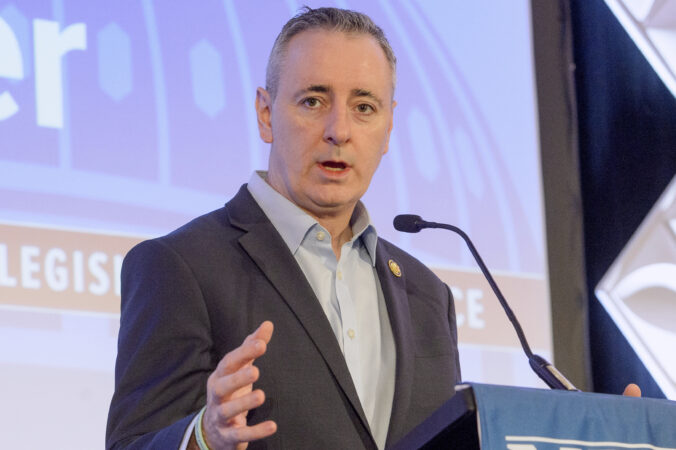
  • Brian Fitzpatrick has a plan to extend ACA subsidies and avoid premium hikes for millions. He’s ready for an uphill battle.

    Brian Fitzpatrick has a plan to extend ACA subsidies and avoid premium hikes for millions. He’s ready for an uphill battle.

    U.S. Rep. Brian Fitzpatrick plans to introduce a bipartisan bill as early as this week to extend Affordable Care Act subsidies after the prolonged, bitter shutdown battle this fall left the issue unresolved.

    Fitzpatrick, a Bucks County Republican, said on Wednesday the bill’s language is “pretty much buttoned up” and has the support of some moderate Republicans and some Democrats.

    He said the members of the bill’s working group have been in touch with the White House as they try to get a compromise deal through Congress before healthcare premiums spike when the subsidies expire at the end of the year.

    “We’re trying to get to 218 and to 60,” Fitzpatrick said in an interview Wednesday, referencing the minimum vote thresholds to pass the House and Senate. “Anything that’s not designed with that end goal in mind is a futile legislative exercise.”

    But Fitzpatrick was candid about the uphill climb to get the needed votes in both chambers weeks after the issue was at the center of the longest government shutdown in history.

    Some Republicans don’t want to extend the credits at all, while others want abortion restrictions included. Democrats, meanwhile, have argued for a clean extension of the existing program and opposed an income cap for the enhanced credit.

    “We’re trying our best to navigate all this, to figure out how we can do something. You know, nobody’s going to love it, but hopefully enough people are OK with it,” he said.

    The countdown to premium hikes is deeply concerning to millions of Americans already frustrated by affordability, opinion surveys show. And vulnerable Republican incumbents in Washington have stressed the need to find a solution with next year’s midterms looming. Fitzpatrick, who has represented Bucks County since 2017, could face a tight reelection campaign next year.

    So far, leadership has not engaged with Fitzpatrick on discussions over an ACA extension compromise, Fitzpatrick said. Republicans have not offered up a proposal, though Senate Majority Leader John Thune (R., S.D.) has promised a vote in the coming weeks. House Democrats have offered a three-year clean extension of the existing tax credits, and are just four votes away from a discharge petition to force a vote, but no Republicans, including Fitzpatrick, have joined them.

    Senate Democrats plan to propose a companion bill next week, Punchbowl News reported Wednesday.

    But neither Democratic plan looks poised to get the votes needed, making it more of a messaging exercise for the party. And House Speaker Mike Johnson (R., La.) is expected to release his own plan next week, Politico reported Thursday, but it’s unclear whether it will appeal to Democrats, whose support would be needed to pass in the Senate.

    “On the right, they think the majority of the GOP conference does not like the premium tax credit structure, and I think the leadership on the left wants to use it as a political issue,” Fitzpatrick said.

    That would mean the compromise bill’s only chance for a vote would be via a discharge petition, the tactic recently used to pass legislation to release the Jeffrey Epstein files after House leadership slow-walked the issue.

    Fitzpatrick said he would back a discharge petition on the ACA bill but would not be the one to put it forward.

    “I’ll support it,” Fitzpatrick said of an ACA discharge. “The question really is: Are 217 of my colleagues? Are they going to allow the perfect to be the enemy of the good? Are they willing to take 80% of something, or they’re going to get 100% of nothing? That’s really going to be the key, because, you know, so many people have so many ‘red lines.’”

    Fitzpatrick said he is already committed to using a discharge petition to force legislation on sanctions against Russia amid the war in Ukraine.

    What’s in the proposal?

    Under the ACA, people who earn less than 400% of the federal poverty level — about $60,000 — are eligible for tax credits on a sliding scale, based on their income, to help offset the monthly cost of an insurance premium.

    That tax credit is part of the law, and therefore not expiring. But what will expire is an expansion passed in 2021 when Congress increased financial assistance so that those buying coverage through an Obamacare marketplace do not pay more than 8.5% of their income.

    Fitzpatrick’s proposal, awaiting legislative counsel review, would provide a two-year extension of the expiring ACA subsidies, with a cap on those enhanced credits for earners who make 700% of the federal poverty level, about $225,000 for a family of four. Currently there is no income cap on the enhanced credit.

    The bill would also expand health savings accounts and crack down on pharmacy benefit managers.

    And to appease Republicans concerned about fraud in the program, Fitzpatrick’s bill would implement a $5 monthly fee for low-income enrollees, intended to prompt them to actively confirm their eligibility. There’s an option, requested by Democrats who oppose such a fee, to pay it in a one-time $60 sum to avoid losing coverage.

    “This is all like, give one to the left, give one to the right,” Fitzpatrick said.

    Not included in the bill are restrictions on abortion, something Fitzpatrick’s Republican colleagues had pushed for.

    “We kept that out. I don’t think it has any place in this bill,” Fitzpatrick said. “It would be a death knell to a lot of my colleagues on the left … and I don’t think abortion should be an issue here. This is about lowering healthcare costs for people who really need the assistance.”

    Staff writer Sarah Gantz contributed to this article.

  • How Palantir shifted course to play key role in ICE deportations

    How Palantir shifted course to play key role in ICE deportations

    For years, Alex Karp, Palantir’s CEO, had declared the data-management company to be “involved in supporting progressive values,” saying he has repeatedly “walked away” from contracts that targeted minorities or that he found otherwise unethical. Even as Palantir took on extensive data-management contracts for the federal government, the company said it was not willing to allow its powerful tools to broadly track immigrants across America.

    That commitment no longer holds. Palantir’s software is helping U.S. Immigration and Customs Enforcement track undocumented immigrants and deport them faster, according to federal procurement filings and interviews with people who have knowledge of the project and who spoke on the condition of anonymity to discuss sensitive details. The software, Immigration OS, plays a key role in supporting the Trump administration’s mass deportation agenda.

    Karp, formerly an outspoken Democrat who a decade ago said that he respected “nothing” about Donald Trump and that a deportation drive made “no sense,” has staunchly defended the president’s immigration policies. Declaring Palantir to be “completely anti-woke,” he has repeatedly praised Trump’s ongoing crackdown on immigrants, thrusting the company into one of the country’s most contentious issues.

    That shift in political alliances in no way signals a change in his core beliefs, Karp said in a statement to The Washington Post, portraying his commitment to controlling immigration as of a piece with his long-standing devotion to social justice.

    “For over two decades, I have implored our political elite to take seriously the truly progressive position on immigration: one of extreme skepticism. To no avail,” Karp said. “Unfettered immigration in Europe, where I lived for well over a decade, has been a disaster — depressing wages for the working class and resulting in mass social dislocation. I remain an economic progressive, isolated among self-proclaimed progressives that are anything but.”

    The changes at Palantir have been driven by multiple factors, according to five of the people familiar with the company’s project. Palantir executives saw Trump’s election to a second term as a mandate from voters for stricter border control, the people said, and, like many other companies, Palantir has changed some policies in response to executive orders targeting diversity in hiring and other issues. They added that Karp’s support of Israel after the Oct. 7, 2023, Hamas attack has drawn him closer to Republican national security hawks.

    Palantir’s federal contracting business has bloomed during the Trump administration. Its September tally of new federal contracts was $128 million, its largest monthly sum on record, according to USASpending.gov. The company’s stock price is up more than 120 percent this year, as it rides its contracting wave and the boom in companies that, like Palantir, are centered on the development and use of AI.

    Palantir has long defied simple political characterization. For years, it has worked with administrations of both parties on projects other Silicon Valley firms shunned, such as the Pentagon’s Project Maven AI target identification system. But its support for ICE on a deportation crackdown punctuated by violent clashes and stiff court challenges has sparked debate among current and former employees over whether it runs afoul of the company’s values and endangers its bipartisan profile.

    Seven months into the project, which was renewed in late September, some Palantir employees still harbor concerns about Immigration OS, according to two of the people familiar with the matter. They say some Palantir staff members have been discussing whether the contract should be discontinued if ICE’s use of the technology veers into extrajudicial actions or violate the company’s civil liberties principles. It couldn’t be determined whether the company’s senior executives are involved in those discussions. A Palantir spokeswoman declined to comment.

    ICE and its parent department, the Department of Homeland Security, declined to answer questions about Immigration OS. DHS said in a statement that Palantir has been a contractor for 14 years, providing “solutions for investigative case management and enforcement operations” to ICE. “DHS looks holistically at technology and data solutions that can meet operational and mission demands,” it said.

    ICE awarded Palantir a $30 million contract on April 11 to build an “Immigration Lifecycle Operating System,” or Immigration OS for short. Its aim, according to procurement filings by the agency, is to facilitate the “selection and apprehension operations of illegal aliens” based on ICE priorities, minimize “time and resource expenditure” in deportations, and track in “near real-time” which individuals leave the country voluntarily. Palantir won the contract without a competitive bidding process, with ICE citing an “urgent and compelling need” and stating that “Palantir is the only source that can provide the required capabilities … without causing unacceptable delays.” ICE renewed the contract on Sept. 25, bringing its total value to about $60 million — a relatively small amount in the context of Palantir’s$2.87 billion revenue in 2024.

    In an internal communication to employees in the spring, Palantir presented the project as a “prototype” and said “longer-term engagements” were “TBD,” according to a copy obtained by 404 Media. The company said it was “pursuing this effort because we believe it is critical to national security and that our software can make a meaningful difference in the safety of all involved in enforcement actions.”

    ICE and Palantir have declined to disclose how many people the system tracks, which agencies it pulls data from, and whether there are safeguards against mistaken identity or overcollection of surveillance data. Shyam Sankar, Palantir’s chief technology officer, told the New York Times in a recent interview that Immigration OS tracked encounters at the border, asylum applications and applications for benefits. Immigration OS does not track information of U.S. citizens who are relatives of undocumented immigrants, Palantir said in a statement.

    ICE adopted Immigration OS this year as it rolled out a campaign to identify and detain what it calls the “Worst of the Worst.” The agency has cited cases of undocumented immigrants committing serious crimes as justification for broad deportation sweeps through Chicago, Charlotte and Portland, Oregon, and other cities. ICE and Palantir declined to say whether Immigration OS played a role in helping compile ICE’s “Worst of the Worst” lists.

    Trump said on Thanksgiving Day that he would “permanently pause” migration from “Third World Countries,” broadly deport undocumented immigrants, and end all federal benefits and subsidies to noncitizens. That would mark an escalation of a campaign that federal judges have repeatedly ruled exceeds the administration’s legal authority, with one Chicago judge saying last month that the use of force involved “shocks the conscience.” The Department of Homeland Security has decried the rulings as coming from “activist judges” and said its actions have been lawful.

    In an interview with Wired published in November, Karp said he had previously “pulled things” that he believed were being deployed in violation of the company’s code of conduct, while rejecting contentions that its immigration software is. Asked whether he needed to take a closer look at how Palantir’s products were being used in the United States, he called it “exactly the right question,” adding: “I’m telling you that I have done this, and I will continue to do it.”

    Wendy R. Anderson, who was Palantir’s senior vice president for national security until May, said Karp has never wavered in his conviction that tech companies working in defense have a duty to the country, not to politics.

    “Alex starts from a single, nonnegotiable premise: America has to win,” she said, speaking generally and not in reference to Immigration OS. “Not in a partisan sense, but in the enduring one — the survival of the United States and the Western institutions that make free societies possible.”

    Palantir, founded by Karp and PayPal co-founder Peter Thiel in 2003 in the wake of 9/11, has long drawn criticism from civil rights activists over the powerful data-management tools it sold to the likes of the Pentagon, CIA and ICE.

    Karp is the son of a Jewish father and African American mother, who brought him along to civil rights protests as a child. He grew up in Philadelphia, graduated from Central High School in 1985 and earned a bachelor’s degree in philosophy from Haverford College. Karp has long been outspoken in his self-identification as a Democrat and his beliefs in privacy protections. “We as a company, and I as an individual, always have been deeply involved in supporting progressive values and causes,” Karp said in 2011.

    In summer 2015, shortly after Trump announced his first major presidential run, Karp told his staff that he had turned down an opportunity to meet Trump, as “it would be hard to make up someone I find less appealing,” according to a leaked video published by BuzzFeed. Karp said he opposed Trump’s broad deportation platform, saying it made “no sense” to throw out hardworking people. He said blaming immigrants for the nation’s ills would bring up “the worst that a society can bring up.”

    During Trump’s first presidency, Palantir said it would not work directly with ICE’s Enforcement and Removal Operations arm on deportations, citing the risk of human rights violations. The company limited its contracts to the agency’s Homeland Security Investigations division, which worked on issues such as terrorism, sex trafficking and drug smuggling, though in practice there was at least some crossover with raids on undocumented immigrants.

    Palantir had made that distinction, Courtney Bowman, the company’s director of privacy and civil liberties, wrote in a 2020 letter to Amnesty International, “because we share your organization’s concern with the potential serious human rights violations against migrants, refugees, and asylum seekers at the U.S.-Mexico border and risks of disproportionate immigration enforcement inside the U.S.”

    Critics say Immigration OS represents a breach of those principles. The project has drawn public backlash, including from Y Combinator co-founder Paul Graham, who wrote on X that Palantir was “building the infrastructure of the police state.” In a public letter, 13 of the company’s former employees accused Palantir’s leadership of being “complicit” in “normalizing authoritarianism” in America.

    Within Palantir, executives defended the project by citing changing voter sentiment on the border issue and changes to ICE’s structure. In one of his first executive orders in January, Trump had ordered ICE’s Homeland Security Investigations to prioritize immigration enforcement instead of national security.

    “The national conversation around immigration enforcement, both at the border and in the interior of the United States has shifted,” the company wrote in an internal communication to employees, according to a copy obtained by 404 Media. Palantir said it had realized that “to really support the agency’s immigration enforcement mission, we must expand our aperture … this means supporting workflows that are substantially distinct from our historical scope and into Enforcement and Removal Operations (ERO).”

    The policy reversal prompted some employee resignations. Brianna Katherine Martin, who had been a U.S. government strategist for the company for almost three years, left in May, citing the recent expansion of the company’s work with ICE.

    “For most of my time here, I found the way that Palantir grappled with the weight of our capabilities to be refreshing, transparent, and conscionable,” Martin wrote on LinkedIn. “This has changed for me over the past few months.” She did not respond to requests for comment.

    The deepened partnership with ICE has come amid other changes at the company.

    Palantir revised its employee code of conduct in March, removing pledges to avoid biased decision-making and eschew unfair action based on race or national origin. The “Protect the Vulnerable” section of the code previously said: “We will not create or perpetuate the unfair treatment and/or stigmatization of individuals or groups, particularly when such unfair action is based on race, color, national origin, religion, sex, gender identity, disability, age, ancestry, marital status, citizenship, or sexual orientation.” The new version pledges more generally to avoid unfair action “based on any characteristic protected by federal, state, or local laws.”

    Palantir also deleted a section that said employees should strive to overcome conscious and unconscious biases in their decision-making. The section now says employees should engage with one another with respect.

    The code-of-conduct changes were made in response to Trump executive orders unrelated to the company’s ICE business, according to a person familiar with the matter, who spoke on the condition of anonymity to discuss the shift. Trump had forbidden federal contractors from “illegal” diversity practices in January.

    Karp biographer Michael Steinberger, whose book “The Philosopher in the Valley” was published last month, said his interviews revealed Karp’s increasing exasperation with what he saw as the Democratic Party’s unwillingness to control the border and preoccupation with identity politics.

    “He has definitely moved to the right,” Steinberger said. “Though I suspect he would be more inclined to say that he thinks the left left him.”

    An important factor in Karp’s rightward shift has been the Oct. 7 attack on Israel two years ago, Steinberger wrote in his book. “I’m now very willing to overlook my disagreements with Republicans on other issues because of the position they have taken on this one,” he quotes Karp there as saying.

    In a letter in July to Amnesty International, responding to questions about its ICE contracts, Palantir said that while it took the human rights risks of its work with governments seriously, its role was to serve as a responsible federal contractor and uphold the law, not to set U.S. government policy.

    “Palantir is not an oversight authority entrusted with scrutinizing or questioning executive branch actors,” the company wrote.

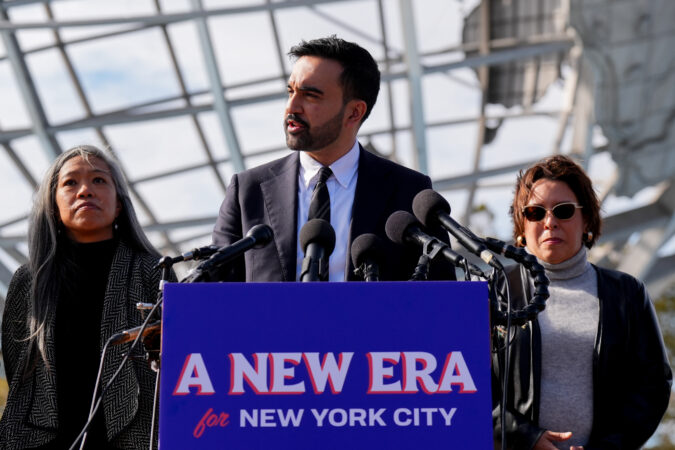
  • The political operatives who powered Mamdani’s and Fetterman’s campaigns are trying to win back House seats in Pa.

    The political operatives who powered Mamdani’s and Fetterman’s campaigns are trying to win back House seats in Pa.

    Eric Stern drove out to Erie last January and got a slice of pizza with Christina Vogel at Donato’s, the downtown shop she has owned for nine years.

    The small-business owner and political novice was interested in running for county executive against a vulnerable Republican incumbent. Stern, a longtime Democratic political operative, was part of a newly founded firm looking for candidates to help flip Republican-held seats.

    “It all started with trying to find candidates who were, frankly, better messengers for the values we had and the things we cared about,” Stern said. “She was someone who understood the urgency of this moment as a small-business owner and mom but just as critically was not part of this broken system that had Democrats losing in the past.”

    A year later, Vogel is the newly elected Democratic county executive after flipping one of the most famously swingy counties in the nation, widely seen as a presidential bellwether. And Stern’s firm, FIGHT, a national Democratic media consulting agency based in Pennsylvania, could play a critical role in elevating other Democratic challengers in 2026, when control of Congress is up for grabs.

    FIGHT is working with Scranton Mayor Paige Cognetti in Northeast Pennsylvania and firefighter Bob Brooks in the Lehigh Valley. U.S. Rep Rob Bresnahan and U.S. Rep. Ryan Mackenzie, the freshman Republicans who represent those areas, each won by about a percentage point in 2024, making them two of the most vulnerable incumbents in next year’s elections.

    This past year FIGHT’s six-person team helped Zohran Mamdani win the New York mayoral race, the buzziest contest of the cycle. The Philadelphia-based agency had a hand in the Pennsylvania Supreme Court slate’s retention, county executive wins in Lehigh and Erie, and two successful Democratic judicial campaigns in the state.

    The firm was cofounded by Rebecca Katz, a Central High graduate who lives in New York; Philadelphia ad-maker Tommy McDonald; and Julian Mulvey, an architect of Sen. Bernie Sanders’ 2016 presidential campaign.

    “New York isn’t Pennsylvania and Pennsylvania isn’t New York,” Katz said of lessons learned from Mamdani’s win, also noting primaries and generals are extremely different. “But there’s a universal desire for authentic candidates laser-focused on the affordability crisis.”

    The strategists started the firm in January 2025 after Democrats suffered across-the-board losses in 2024, a year she helped Sen. Ruben Gallego defy that trend and win an open seat in Arizona.

    Stern, a Pittsburgh native and resident, and McDonald both quit their jobs to sign on with the agency.

    Their most basic strategy is creating authentic campaigns that reflect the communities the candidates are running in, clear economic messaging, and trying different things across media platforms to win back working-class voters, Katz said.

    “We try to think about what makes an ad pop, what makes people look up from their phone, or, if they’re on their phone, what makes them stay there,” Katz said. “It can’t look like everything else on TV.”

    Tommy McDonald (left), and Eric Stern (right), are longtime Democratic media consultants now with FIGHT, a Philly-based agency working on two key Congressional races in Pennsylvania in 2026.

    ‘A new road map’

    In the November election, standing out meant ads about the state Supreme Court race that featured Pennsylvanians talking directly to the camera about how they felt their rights had been protected by the three justices on the ballot, who were all first elected as Democrats. Sixteen Pennsylvania counties that Vice President Kamala Harris lost wound up voting to retain the judges in the most expensive judicial contest in state history.

    The victory provided a blueprint for Gov. Josh Shapiro and other Democrats running in Pennsylvania in 2026, said McDonald, who made the ads for the retention race.

    “These are the typical working-class voters that Democrats are bleeding,” McDonald said. “It’s Beaver County. It’s where the New York Times visits diners. It showed us there’s a new road map for how to get persuadable voters in Pennsylvania. We know where they are now.”

    Stern, Katz, and McDonald all worked on Fetterman’s 2022 campaign, a race that included the unprecedented challenge of navigating a candidate’s stroke days before the primary and running a general election campaign as he recovered.

    They wound up winning awards for the campaign, which featured bright yellow and black branding and creative trolling of Republican nominee Mehmet Oz’s New Jersey ties. McDonald had the idea to fly a banner plane along the Jersey shoreline: “HEY DR. OZ, WELCOME HOME TO NJ! ♥ JOHN,” it read.

    They called that July, which also included Jersey Shore cast member Nicole “Snooki” Polizzi making a surprise cameo, “New Jersey Summer.”

    “We all learned politics here,” McDonald said of his home state. “The idea is to try to do things differently, redefine Democratic campaigns.”

    This year, political headwinds certainly helped Democrats, but hyperlocal messaging did, too, the strategists argue.

    Stern worked with Vogel’s campaign in Erie to create ads that looked like a pizzeria’s commercials, to stand out from the cookie-cutter format.

    ”In Erie County, we know good things start with the right ingredients,” the ad says as a hand scatters toppings atop a pie.

    Another ad showed Republicans and self-proclaimed three-time Donald Trump voters on-camera saying they were supporting Vogel over the incumbent, Republican Brenton Davis. A Democrat cannot win in the county without some independent and Republican support.

    “They were all people I met on the campaign trail,” Vogel said of the ad. “We really focused on what matters most with affordability, how stretched thin people are across the U.S., and just focused relentlessly on the same message and reminding people why voting matters.”

    And in Lehigh County, a slightly bluer but still purple region, Stern worked with State Rep. Josh Siegel’s campaign for county executive. That was more of an offensive against Republican Roger MacLean, a former Allentown police chief, whom ads described as a “grifter and a disgrace,” highlighting his multiple beach houses amid an affordability crisis.

    “We came up with an ad strategy that basically determined the most important thing was to beat the crap out of this guy,” Stern said.

    “I think Democrats have pulled their punches for way too long,” he added. “There’s a difference between fighting dirty and fighting back, and we have to be in a position where we’re willing to say, ‘We’re here to fight.’”

    Siegel, 32, soon to become the youngest county executive in Pennsylvania history, credited the agency with urging him to be specific in his pitch to voters.

    “For me, the problem with the way we communicate as Democrats is part of the professional consultant class has created this art form of saying a lot and saying nothing,” he said. “I think people have a particularly adept bulls— detector and they are tired of what is just the most inoffensive, poll-tested, style-over-substance speak we’ve perfected.”

    As they look to next year, Stern thinks anti-corruption will be the key issue in the race against Bresnahan in the Northeast. Bresnahan has faced criticism for stock trading while in Congress. Cognetti, his opponent, has been the mayor since 2020, when she won on an anti-corruption platform.

    While affordability runs across races, Stern said campaigns cannot make the mistake of being too general in their messaging. “There’s no one right message that cuts across all these districts,” he said.

    “Too many folks are running the same ads or calling the same plays they would have a decade ago. We are in a different world. Things have totally changed in a million different ways.”

  • Trump targets Minnesota’s Somali community with harsh words and policies

    Trump targets Minnesota’s Somali community with harsh words and policies

    MINNEAPOLIS — Recent statements by President Donald Trump and top administration officials disparaging Minnesota’s large Somali community have focused renewed attention on the immigrants from the war-torn east African country and their descendants.

    Trump on Tuesday said he did not want Somalis in the U.S. because “they contribute nothing.” The president spoke soon after a person familiar with the planning said federal authorities are preparing a targeted immigration enforcement operation in Minnesota that would primarily focus on Somali immigrants living unlawfully in the U.S.

    Here are some things to know about Somalis in Minnesota:

    Largest Somali American population in the U.S.

    An estimated 260,000 people of Somali descent were living in the U.S. in 2024, according to the Census Bureau’s annual American Community Survey. The largest population is in the Minneapolis-St. Paul area, home to about 84,000 residents, most of whom are American citizens. Ohio, Washington and California also have significant populations.

    Almost 58% of the Somalis in Minnesota were born in the U.S. Of the foreign-born Somalis in Minnesota, an overwhelming majority — 87% — are naturalized U.S. citizens. Of the foreign-born population, almost half entered the U.S. in 2010 or later, according to the Census Bureau.

    They include many who fled the long civil war in their east African country and were drawn to the state’s welcoming social programs.

    Trump targets the community

    Trump has become increasingly focused in recent weeks on Somalis living in the U.S., saying they “have caused a lot of trouble.”

    Trump and other administration officials stepped up their criticism after a conservative news outlet, City Journal, claimed that taxpayer dollars from defrauded government programs have flowed to the militant group al-Shabab, an affiliate of al-Qaida that controls parts of rural Somalia and often has targeted the capital, Mogadishu.

    While Treasury Secretary Scott Bessent said in a social media post Monday that his agency is investigating whether “hardworking Minnesotans’ tax dollars may have been diverted to the terrorist organization,” little evidence has emerged so far to prove a link. Federal prosecutors have not charged any of the dozens of defendants in recent public program fraud cases in Minnesota with providing material support to foreign terrorist organizations.

    Last month, Trump said he was terminating Temporary Protected Status for Somali migrants in Minnesota, a legal safeguard against deportation. A report produced for Congress in August put the number of Somalis covered by the program at just 705 nationwide.

    The announcement drew immediate pushback from some state leaders and immigration experts, who characterized Trump’s declaration as a legally dubious effort to sow fear and suspicion.

    Fraud allegations lead to pushback

    Local Somali community leaders, as well as allies like Gov. Tim Walz and Minneapolis Mayor Jacob Frey, have also pushed back against those who might blame the broader Somali community for some recent cases of massive fraud in public programs.

    Those include what is known as the Feeding Our Future scandal, which federal prosecutors say was the country’s largest COVID-19-related fraud case. It involved a program meant to feed children during the pandemic. The defendants were accused of fraudulently claiming to be feeding millions of meals to children. While the alleged ringleader was white, many of the defendants were Somalis, and most of them were U.S. citizens.

    Prosecutors in recent months have raised their estimate of the thefts to $300 million from an original $250 million, and the number of defendants last month grew to 78. The cases are still working their way through the court system.

    Republican candidates for governor and other offices in 2026 are staking their hopes on voters blaming Walz for failing to prevent the losses to taxpayers. Trump has blasted Walz for allowing the fraud to unfold on his watch.

    Earlier terrorism cases still echo

    Authorities in Minnesota struggled for years to stem the recruiting of young Somali men by the Islamic State group and the Somalia-based militant group al-Shabab.

    The problem first surfaced in 2007, when more than 20 young men went to Somalia, where Ethiopian troops propping up a weak U.N.-backed government were seen by many as foreign invaders.

    While most of those cases were resolved years ago, another came to light earlier this year. A 23-year-old defendant pleaded guilty in September to attempting to provide material support and resources to a designated foreign terrorist organization.

    Mostly in the 2010s, the Islamic State group also found recruits in Minnesota’s Somali community, with authorities saying roughly a dozen left to join militants in Syria.

    Somalis have become a force in Minnesota politics

    The best-known Somali American is arguably Democratic U.S. Rep. Ilhan Omar, a fiery progressive whose district includes Minneapolis and is a frequent target of Trump.

    Several other Somali Americans have served in the Minnesota Legislature and the Minneapolis and St. Paul city councils. State Sen. Omar Fateh, a democratic socialist, finished second in the Minneapolis mayoral election in November to incumbent Mayor Frey.

  • Trump admin threatened to withhold SNAP funds in Pa. and N.J.  unless recipient data is released. N.J. AG called stance ‘immoral’

    Trump admin threatened to withhold SNAP funds in Pa. and N.J. unless recipient data is released. N.J. AG called stance ‘immoral’

    The Trump administration’s threat to withhold money that Democratic-run states use to administer the SNAP food aid program unless officials release personal information about individual recipients puts 2 million people in Pennsylvania and more than 800,000 in New Jersey at risk of food insecurity.

    On Wednesday, New Jersey Attorney General Matthew Platkin called the administration’s stance “deeply immoral.”

    “The past few weeks have shown that the Trump administration is willing to sacrifice millions of Americans’ most basic needs in service of a political agenda,” he added.

    In a cabinet meeting Tuesday, Agriculture Secretary Brooke Rollins said that data describing Supplemental Nutrition Assistance Program recipients’ names, addresses, Social Security numbers, and immigration status are necessary to ferret out fraud, the Associated Press reported. The Department of Agriculture runs the SNAP program.

    Twenty-two states, including New Jersey, have sued the administration over its demand for personal information, which states have never shared with the federal government. Representing Pennsylvania, Gov. Josh Shapiro joined the lawsuit. A California federal court issued a preliminary injunction on Oct. 15, allowing all parties until next Monday to respond.

    The federal government splits the cost of running SNAP with states, and the Trump administration said it is not planning to take SNAP benefits from individuals, but rather to pull funds it sends to the states to run the program..

    Individuals could nonetheless see their payments disrupted, said Joel Berg, CEO of Hunger Free America, in an interview. The agency is a national nonprofit that fights hunger.

    “People in the Philadelphia region could go hungry,” he said. “Even people in rural Pennsylvania and South Jersey in counties that supported Trump who are highly dependent on these programs could be hurt.

    “This is an authoritarian intrusion of big government. It’s a way to bully Democratic states.”

    Around 500,000 of the 2 million people in Pennsylvania who receive the federal food aid are in Philadelphia.

    Neither Shapiro nor New Jersey Gov. Phil Murphy offered comments. The White House referred requests for comment to the USDA, which released a statement Wednesday evening complaining that blue states “choose to protect illegals, criminals, and bad actors over the American taxpayer.”

    The statement added that the USDA recently sent an additional request to Democratic-run states for data. However, the statement warned, “if they fail to comply, they will be provided with formal warning that USDA will pull their administrative funds.”

    Lately, the SNAP program has played a significant role in aspects of how the Trump administration governs, advocates say.

    During the shutdown, the Trump administration paused SNAP benefits in early November, and then went to the Supreme Court to fight orders by federal judges to release the funding.

    The way SNAP has been thrust into the White House’s partisan battles irks George Matysik, executive director of the Share Food Program, which provides food to hundreds of Philadelphia-area pantries. “We have a serious food affordability crisis developing and it requires a focused response, not continuous political sideshows,” he said Wednesday.

    Temple University sociologist Judith Levine agreed. “It’s extremely disturbing that because of political games, people may lose this very basic benefit needed for survival,” she said. “Being food insecure has nothing to do with infighting between political parties.”

    Loss of SNAP places an inordinate strain on the charitable food system, primarily food pantries, which in turn hurts families, said Eliza Kinsey, a professor in the department of family medicine and community health at the University of Pennsylvania’s Perelman School of Medicine.

    “There’s tons of evidence that stoppages of SNAP can disproportionately affect households with children,” she said. “Cutting SNAP could be disastrous.”

  • Pentagon knew boat attack left survivors but still launched a follow-on strike, AP sources say

    Pentagon knew boat attack left survivors but still launched a follow-on strike, AP sources say

    WASHINGTON — The Pentagon knew there were survivors after a September attack on an alleged drug boat in the Caribbean Sea and the U.S. military still carried out a follow-up strike, according to two people familiar with the matter.

    The rationale for the second strike was that it was needed to sink the vessel, according to the people familiar with the matter who spoke on the condition of anonymity because they weren’t authorized to discuss it publicly. The Trump administration says all 11 people aboard were killed.

    What remains unclear was who ordered the strikes and whether Defense Secretary Pete Hegseth was involved, one of the people said. That will be part of a classified congressional briefing Thursday with the commander that the Trump administration says ordered the second strike, Adm. Frank “Mitch” Bradley.

    Hegseth has defended the second strike as emerging in the “fog of war,” saying he didn’t see any survivors but also “didn’t stick around” for the rest of the mission.

    Hegseth is under growing scrutiny over the military strikes on alleged drug traffickers in the Caribbean and eastern Pacific. Legal experts and some lawmakers say a strike that killed survivors would have violated the laws of armed conflict.

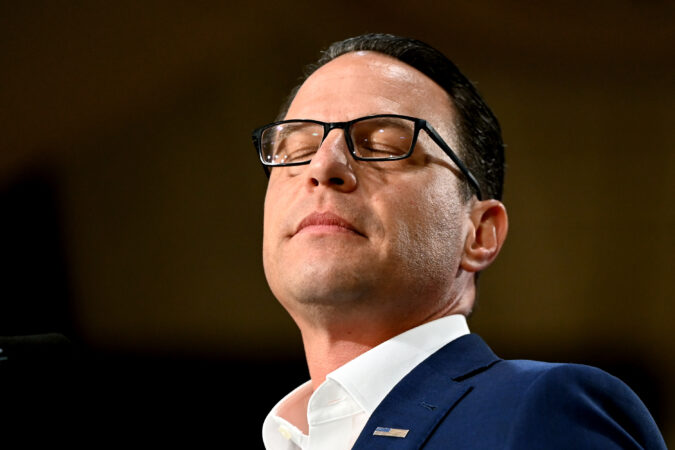
  • Gov. Josh Shapiro says Kamala Harris’ descriptions of him were ‘blatant lies’ intended to sell books

    Gov. Josh Shapiro says Kamala Harris’ descriptions of him were ‘blatant lies’ intended to sell books

    Gov. Josh Shapiro lashed out over former Vice President Kamala Harris’ portrayal of his interview to become her 2024 running mate, calling Harris’ retellings “complete and utter bulls—” intended to sell books and “cover her a—,” according to the Atlantic.

    Shapiro, Pennsylvania’s first-term Democratic governor now seen as a likely presidential contender in 2028, departed from his usual composed demeanor and rehearsed comments in a lengthy Atlantic profile, published Wednesday, when journalist Tim Alberta asked the governor about Harris’ depiction of him in her new book.

    In her book, titled 107 Days, Harris described Shapiro as “poised, polished, and personable” when he traveled to Washington to interview with Harris for a shot at becoming the Democratic vice presidential candidate during her historic campaign against Donald Trump.

    However, Harris said, she suspected Shapiro would be unhappy as second-in-command. He “peppered” her with questions, she wrote, and said he asked questions about the vice president’s residence, “from the number of bedrooms to how he might arrange to get Pennsylvania artists’ work on loan from the Smithsonian.” The account aligns with reporting from The Inquirer when Harris ultimately picked Minnesota Gov. Tim Walz over Shapiro, in part, because Shapiro was too ambitious to serve in a supporting role if chosen as her running mate.

    But Shapiro, the Atlantic reported, was taken aback by the portrayal.

    “She wrote that in her book? That’s complete and utter bull—,” Shapiro reportedly told the Atlantic when asked about Harris’ account that he had been imagining the potential art for the vice presidential residence. He added: “I can tell you that her accounts are just blatant lies.”

    The governor’s sharp-tongued frustration depicted in the Atlantic marked a rare departure for the image-conscious Shapiro, whose oratory skills have been compared to those of former President Barack Obama, and who has been known to give smiling, folksy interviews laced with oft-repeated and carefully told anecdotes.

    The wide-ranging, nearly 8,000-word profile in the Atlantic also detailed Shapiro’s loss of “some respect” for Harris during the 2024 election, including for her failure to take action regarding former President Joe Biden’s visible decline.

    Governor Josh Shapiro speaks with press along with Vice President Kamala Harris during their short visit to Little Thai Market at Reading Terminal Market after she spoke at the APIA Vote Presidential Town Hall at the Pennsylvania Convention Center in Philadelphia, Pa., on Saturday, July 13, 2024.

    When Shapiro was asked by the Atlantic whether he felt betrayed by Harris’ comments in her book about him, given that the two have known each other for 20 years, he said: “I mean, she’s trying to sell books and cover her a—.”

    He quickly reframed his response: “I shouldn’t say ‘cover her a—,’ I think that’s not appropriate,” he added. “She’s trying to sell books, period.”

    The Atlantic piece, titled “What Josh Shapiro Knows About Trump Voters,” presented Shapiro as a popular Democratic governor in a critical swing state that went for Trump in 2024, and as a master political operator who has carefully built a public image as a moderate willing to work across the aisle or appoint Republicans to top cabinet positions. That image was tested this year during a protracted state budget impasse that lasted 135 days, as Shapiro was unable to strike a deal between the Democratic state House and GOP-controlled state Senate for nearly five months past the state budget deadline.

    The Atlantic piece also outlined common criticisms of Shapiro throughout his two decades in Pennsylvania politics, including those from within the Democratic Party: He is too ambitious with his sights set on the presidency, and his pragmatic approach often leaves him frustrating all sides, as evidenced in his 2023 deal-then-veto with state Senate Republicans over school vouchers. It highlighted some of the top issues Shapiro will face if he chooses to run for president in 2028, including a need to take clearer stances on policy issues — a complaint often cited by Republicans and his critics. If he rises to the presidential field, Shapiro will also have to face his past handling of a sexual harassment complaint against a former top aide that Shapiro claimed he knew very little about despite the aide’s long-held reputation.

    Gov. Josh Shapiro takes the stage ahead of U.S. Vice President Kamala Harris and Gov. Tim Walz at a rally in Philadelphia’s Liacouras Center on August 6, 2024.

    “The worst-kept secret in Pennsylvania politics is that the governor is disliked — in certain cases, loathed — by some of his fellow Democrats,” the Atlantic reported. Further, Alberta noted that when an unnamed Pennsylvania lawmaker received a call from a member of Harris’ vetting operation, the member said they had never seen “so many Democrats turning on one of their own.”

    Shapiro has been featured in several other prominent national media outlets in recent weeks, including in the New Yorker, which ran a profile about his experience with political violence. He has become vocal on that issue in the months since a Harrisburg man who told police he wanted to kill Shapiro broke into the governor’s residence in April and set several fires while Shapiro and his family slept upstairs. As one of the most prominent Jewish elected officials in the nation, Shapiro has frequently said that leaders must “bring down the temperature” in their rhetoric, and has tried to refocus his own messaging on the good that state governments can do to make people’s lives easier, such as permitting reforms and infrastructure improvements.

    “The fact that people view institutions as incapable or unwilling to solve their problems is leading to hyper-frustration, which then creates anger,” Shapiro told the Atlantic. “And that anger forces people oftentimes into dark corners of the internet, where they find others who want to take advantage of their anger and try and convert that anger into acts of violence.”

  • Sabrina Carpenter slams Trump administration for using her music in ‘disgusting’ ICE video

    Sabrina Carpenter slams Trump administration for using her music in ‘disgusting’ ICE video

    Sabrina Carpenter’s not mincing words when it comes to the Trump administration using one of her songs in a video promoting ICE and the Department of Homeland Security.

    On Tuesday, the pop princess condemned the White House for posting a video featuring ICE arresting protesters and undocumented immigrants to one of her songs. The video, which was published on the White House’s X account one day earlier, was captioned “Have you ever tried this one?“ alongside the hearteye emoji and was paired with Carpenter’s track ”Juno.”

    It’s a nod to a scene in Carpenter’s just-wrapped “Short n’ Sweet” tour, where she would playfully “arrest” someone in the crowd “for being so hot,” giving them a souvenir pair of fuzzy pink cuffs before performing “Juno.”

    Carpenter, a Bucks County native, replied to the post, “this video is evil and disgusting. Do not ever involve me or my music to benefit your inhumane agenda.” Her response has been viewed more than 2 million times.

    It’s the latest in a series of similar incidents, where artists ranging from Beyoncé to the Rolling Stones have objected to the White House using their music in videos promoting the Trump administration’s agenda without their consent.

    Last month, Olivia Rodrigo had a similar exchange in the comments of a White House Instagram video demanding that undocumented immigrants self-deport over the singer’s track “All-American Bitch.” Rodrigo, who is Filipino American, commented at the time, “Don’t ever use my songs to promote your racist, hateful propaganda.”

    The White House also used a song by Carpenter’s friend and musical collaborator, Berks County’s Taylor Swift, last month. Fans of Swift’s called out the use of “The Fate of Ophelia” in a video celebrating President Donald Trump, despite the president’s repeated slights toward the pop star. Swift herself did not comment on the video, but she has previously criticized Trump for posting AI photos of her on his social platforms.

    Carpenter, 26, worked with HeadCount on her “Short n’ Sweet” tour, registering 35,814 voters — more than any other artist the nonpartisan voter registration group worked with in 2024. She’s been vocal about her support for LGBTQ+ rights and has publicly donated to the National Immigration Law Center.

    When Trump won last year, she took a moment during her concert to say “I’m sorry about our country and to the women here, I love you so, so, so much.”

    “Here’s a Short n’ Sweet message for Sabrina Carpenter: We won’t apologize for deporting dangerous criminal illegal murderers, rapists and pedophiles from our country,” White House spokesperson Abigail Jackson told the New York Times. “Anyone who would defend these sick monsters must be stupid, or is it slow?”

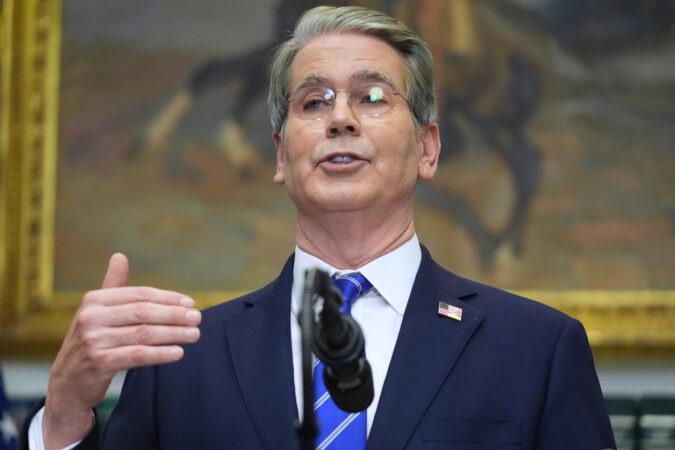
  • Bessent says Federal Reserve Board could ‘veto’ future regional presidents

    Bessent says Federal Reserve Board could ‘veto’ future regional presidents

    WASHINGTON — Treasury Secretary Scott Bessent said Wednesday he would push a new requirement that the Federal Reserve’s regional bank presidents live in their districts for at least three years before taking office, a move that could give the White House more power over the independent agency.

    In comments at the New York Times’ DealBook Summit, Bessent criticized several presidents of the Fed’s regional banks, saying that they were not from the districts that they now represent, “a disconnect from the original framing” of the Fed.

    Bessent said that three of the 12 regional presidents have ties to New York: Two previously worked at the New York Federal Reserve, while a third worked at a New York investment bank.

    “So, do they represent their district?” he asked. “I am going to start advocating, going forward, not retroactively, that regional Fed presidents must have lived in their district for at least three years.”

    Bessent added that he wasn’t sure if Congress would need to weigh in on such a change. Under current law, the Fed’s Washington, D.C.-based board can block the appointment of regional Fed presidents.

    “I believe that you would just say, unless someone’s lived in the district for three years, we’re going to veto them,” Bessent said.

    Bessent has stepped up his criticism of the Fed’s 12 regional bank presidents in recent weeks after several of them made clear in a series of speeches that they opposed cutting the Fed’s key rate at its next meeting in December. President Donald Trump has sharply criticized the Fed for not lowering its short-term interest rate more quickly. When the Fed reduces its rate it can over time lower borrowing costs for mortgages, auto loans, and credit cards.

    The prospect of the administration “vetoing” regional bank presidents would represent another effort by the White House to exert more control over the Fed, an institution that has traditionally been independent from day-to-day politics.

    The Federal Reserve seeks to keep prices in check and support hiring by setting a short-term interest rate that influences borrowing costs across the economy. It has a complicated structure that includes a seven-member board of governors based in Washington as well as 12 regional banks that cover specific districts across the United States.

    The seven governors and the president of the New York Fed vote on every interest-rate decision, while four of the remaining 11 presidents vote on a rotating basis. But all the presidents participate in meetings of the Fed’s interest-rate setting committee.

    The regional Fed presidents are appointed by boards made up of local and business community leaders.

    Three of the seven members of the Fed’s board were appointed by Trump, and the president is seeking to fire Governor Lisa Cook, which would give him a fourth seat and a majority. Yet Cook has sued to keep her job, and the Supreme Court has ruled she can stay in her seat as the court battle plays out.

    Trump is also weighing a pick to replace Chair Jerome Powell when he finishes his term in May. Trump said over the weekend that “I know who I am going to pick,” but at a Cabinet meeting Tuesday said he wouldn’t announce his choice until early next year. Kevin Hassett, a top economic adviser to Trump, is widely considered Trump’s most likely choice.

    The three regional presidents cited by Bessent are all relatively recent appointees. Lorie Logan was named president of the Dallas Fed in August 2022, after holding a senior position at the New York Fed as the manager of the Fed’s multitrillion dollar portfolio of mostly government securities. Alberto Musalem became president of the St. Louis Fed in April 2024, and from 2014-2017 was an executive vice president at the New York Fed.

    Beth Hammack was appointed president of the Cleveland Fed in August 2024, after an extended career at Goldman Sachs.

    Musalem is the only one of the three that currently votes on policy and he supported the Fed’s rate cuts in September and October. But last month he suggested that with inflation elevated, the Fed likely wouldn’t be able to cut much more.

    Logan has said she would have voted against October’s rate cut if she had a vote, while Hammack has said that the Fed’s key rate should remain high to combat inflation. Both Hammack and Logan will vote on rate decisions next year.

    Bessent argued last month in an interview on CNBC that the reason for the regional Fed banks was to bring the perspective of their districts to the Fed’s interest rate decisions and “break the New York hold” on the setting of interest rates.

    __

    Associated Press Writer Fatima Hussein contributed to this report.