Chester County may be the only county in Philadelphia’s suburbs that will avoid a property tax hike next year.
In the proposed 2026 budget, released last month, Chester County’s commissioners projected $666.3 million in operational spending, roughly 4.7% more than the county budgeted for 2025. The budget is expected to pass the three-member board of commissioners with bipartisan support.
Despite the increased spending and more limited state and federal resources, county officials said, they expected to avoid a tax increase next year thanks to budget cuts across nearly every department and delayed projects.
“This budget was really difficult for us, but we did what we had to to keep it at zero,” said Chester County Commissioner Marian Moskowitz, a Democrat.
David Byerman, the county’s CEO, described the county as being in a “defensive crouch” financially.
“We are in a very unpredictable environment in which we have a lot of conflicting information that we’re dealing with,” Byerman said, citing federal funding uncertainty under President Donald Trump. “We were charged by our commissioners in Chester County with crafting a budget that held the line in terms of tax increases.”
How does Chester County compare with the rest of the region?
The decision sets Chester County apart from its peers in a year that has been marked by budget uncertainty at the state and federal levels. In recent weeks, Delaware County’s executive director proposed a 19% property tax hike to address the county’s structural deficit. Montgomery County’s commissioners are proposing a 4% increase. Bucks County’s commissioners have floated a tax increase to address a deficit in next year’s budget.
“This is a pared-down budget because we didn’t know what the federal and state government were going to do,” said Josh Maxwell, a Democrat, who chairs the county board of commissioners.
The biggest cost increases, he said, came in the form of employee and inmate healthcare.
How did Chester County cut its budget?
In the first quarter of this year, Chester County officials asked each county department to reduce non-personnel spending by 5% for the 2026 budget. By and large, officials said, they responded to the call, freeing up significant funds even as overall personnel costs increased.
“We asked them to cut back, and some of them really did,” said Eric Roe, the lone Republican on the board of commissioners. “I’m really happy with how they helped us get to this point.”
In this year’s budget, officials said, they opted to delay projects like park maintenance and computer system upgrades that could be put off.
“The cuts are giving us an opportunity to prioritize and rethink our discretionary spending,” Maxwell said. “They may have to go to some of the things that the federal and state government used to do that they’re getting out of the business of doing.”
Additionally, Byerman said, the county instituted a soft hiring freeze by requiring all new hires to be approved by top-level management.
Can Chester County avoid tax increases in future years?
Heading into next year, Maxwell said, he is bracing for cuts to federal social service programs that will result in larger expenditures from the county to serve its neediest residents.
“This is a year where we’re going to look at all of our programs and make sure that we’re investing in the areas that the community wants us to,” Maxwell said.
This suburban content is produced with support from the Leslie Miller and Richard Worley Foundation and The Lenfest Institute for Journalism. Editorial content is created independently of the project donors. Gifts to support The Inquirer’s high-impact journalism can be made at inquirer.com/donate. A list of Lenfest Institute donors can be found at lenfestinstitute.org/supporters.
Philadelphia City Council on Tuesday amended the initial budget for Mayor Cherelle L. Parker’s signature housing initiative to direct more money to programs that will help the lowest-income Philadelphians, a move that sparked one of the most notable confrontations between Parker and city lawmakers since she took office almost two years ago.
The amendment, which followed a weekslong standoff between the executive and legislative branches, represents a rare act of defiance for a Council that has otherwise been largely compliant with Parker’s agenda, and it appeared at first to be a major win for Philly progressives.
But Parker is not giving up the fight, and she said Tuesday night that the amendment may have had unintended consequences that could hold up much of the housing initiative for months.
The changes to the legislation, she said, may trigger additional procedural steps that will prevent the city from issuing $400 million in bonds to fund the initiative until March or later. The mayor did not hold back from laying the blame for the delays at Council’s feet.
“The resolution that City Council passed out of the Committee of the Whole today contained language that our bond lawyers have repeatedly advised would prevent the administration from being able to issue the bonds,” Parker said in a statement. “That means homes are not being restored. It means homes are not being built or repaired.”
In an unusually blunt statement late Tuesday night, Council President Kenyatta Johnson pushed back against the administration’s analysis of the situation.
“Council’s responsibility is not to rubber-stamp legislation, but to ensure that any multi-billion-dollar public investment is legally sound and targeted to the Philadelphians who need it most,” Johnson said.
But he also vowed to have Council quickly introduce new legislation that could ameliorate the procedural problem Parker identified, tacitly conceding that additional legislation was needed hours after lawmakers approved the resolution with no mention of that possibility.
Johnson said Council would “resolve remaining legal and policy issues swiftly,” and that a new measure to legalize lawmakers’ most recent changes could be introduced this week.
Council wants “shovels in the ground” and “homes repaired,” he said, but ”refuses to rush into issuing $800 million in debt without iron-clad legal protections and clear guarantees.”
“Council members repeatedly raised concerns — directly and in good faith — about accountability, neighborhood equity, homeowner protections, and the long-term impact of the H.O.M.E legislation,” he said. “Council’s action today strengthened the H.O.M.E resolution, not sabotaged it.”
The late-night war of words between Parker and Johnson came hours after a celebratory Council committee meeting in which lawmakers took a victory lap for standing up to the administration.
After the vote, Councilmember JamieGauthier and Councilmember Rue Landau, respectively the chair and vice chair of the Committee on Housing, Neighborhood Development and the Homeless, said the amended resolution means “working and low-income families will finally be able to get the support they need sooner.”
“With roughly $30 million in federal homelessness funding at risk, it is more important than ever that this multiyear, $800 million investment begins by prioritizing the more than 200,000 Philadelphia households on the brink of losing their homes,” Gauthier and Landau said in a joint statement, referring to a federal policy change proposed by President Donald Trump’s administration that could cost the city millions in funding for anti-homelessness programs.
Council pushes for policy changes
Parker, who has long championed the city’s “middle neighborhoods,” structured her sweeping Housing Opportunities Made Easy, or H.O.M.E, initiative to ensure that the myriad programs funded or created by the program would be available to homeowners and renters at a variety of income levels.
But Johnson — in an unexpected break from his usual alignment with Parker — stood with Gauthier and other progressives who fought to ensure the neediest city residents were prioritized in the budget resolution, which sets the first-year spending allocations for H.O.M.E. The distribution of funding must be approved by Council before the administration can issue the first of two planned $400 million tranches of city bonds that will finance much of the initiative.
Council’s Committee of the Whole, which includes all members, approved the amendment and advanced the resolution in a pair of unanimous voice votes Tuesday afternoon following hours of testimony.
The measure would now head to the Council floor for a final passage vote in the next two weeks. Parker’s statement, however, could mean Council has additional work to do before getting the measure over the finish line. Johnson’s office said the vote is still scheduled for Dec. 11.
“The majority of the members of City Council want to focus on the issues of those who are poor here in the city of Philadelphia when it comes to housing and equality,” Johnson told reporters after the vote.
It’s unclear whether the vote represents a serious rupture in the tight relationship between Parker and Johnson, who have worked closely together since both took office in January 2024. Council approved the most important pieces of legislation Parker proposed as part of the H.O.M.E initiative earlier this year, and the changes adopted Tuesday do not alter the fundamentals of the program, which Parker hopes will achieve her goal of creating or preserving 30,000 units of housing in her first four-year term.
“We support the H.O.M.E. plan,” Johnson said. “And I think the mayor did a good job in investing close to $1 billion … in supporting the issue of housing inequality here in the city of Philadelphia. This amendment represents the will of the members. … We want to specifically focus on those who are the most least well-off, those who are poor.”
But after reading about Parker’s statement in the evening, Johnson’s attitude toward the administration sharpened. His lengthy statement included the most critical language the Council president has directed at the mayor since they were inaugurated.
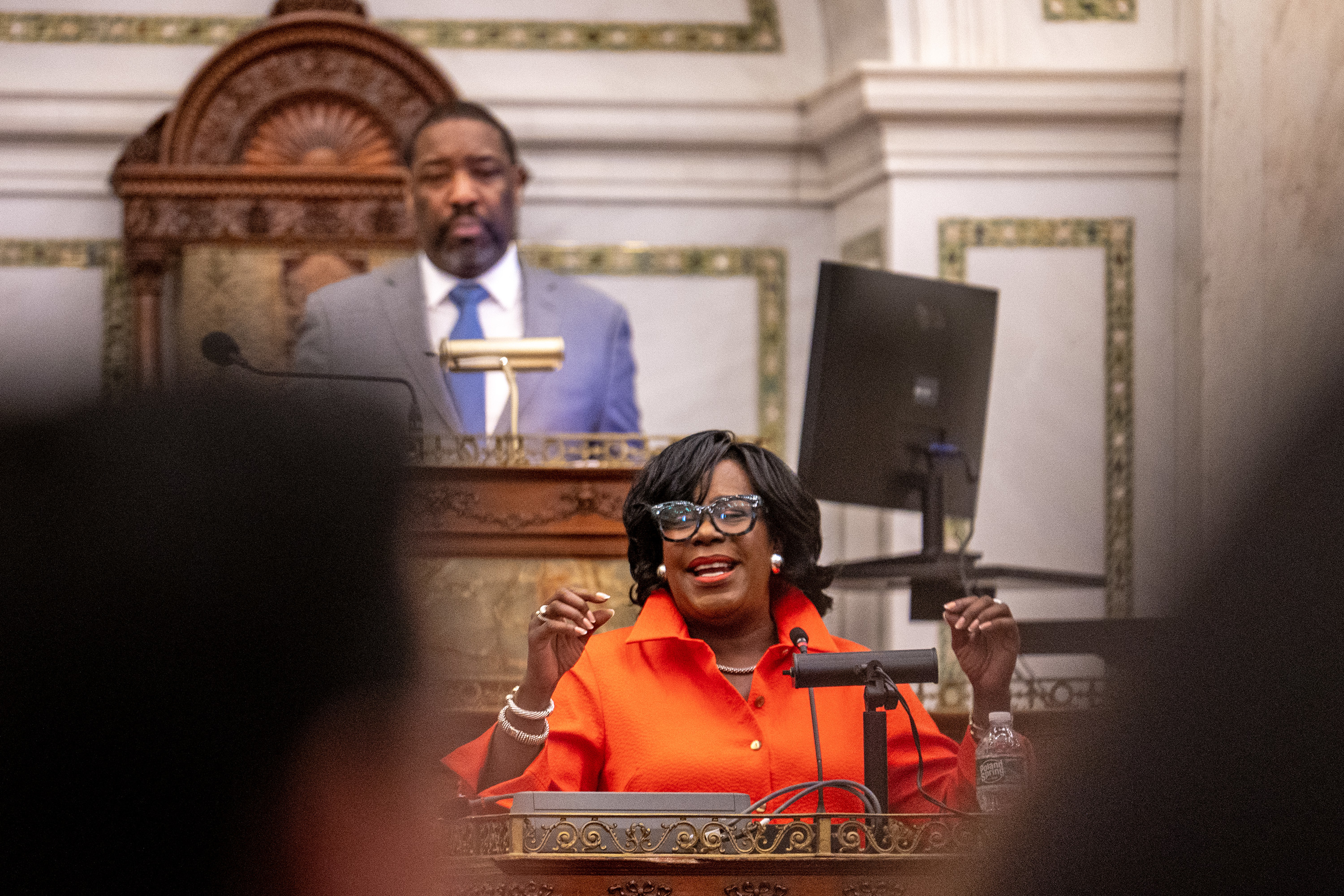
Mayor Cherelle L. Parker unveils her long-awaited plan to build or preserve 30,000 units of housing during a special session of City Council Monday, Mar. 24, 2025. Council President Kenyatta Johnson is behind her.
Johnson rejected Parker’sclaim that the legislative delays could cause the popular Basic Systems Repair Program to temporarily run out of funding, saying that there is plenty of money in the current city budget to cover shortfalls.
“Threatening residents with a shutdown of the Basic Systems Repair Program and assigning blame does not move this process forward,” he said. “Collaboration and working together does.”
The amendment increases the first-year budget for spending the bond proceeds from $194.6 million to $277.2 million. The increased price tag, however, does not represent new money in the housing budget; it merely allows the administration to spend more of the $400 million in bond proceeds in the initiative’s first year.
The changes include increases in funding for housing preservation from $29.6 million to $46.2 million, and housing production from $24.3 million to $29.5 million. Additionally, the amendment boosted funding for homelessness prevention programs from $3.8 million to $8.8 million.
But perhaps more importantly, Council altered the income eligibility levels for several programs.
Parker, for instance, had proposed that the H.O.M.E. funding for the Basic Systems Repair Program, which subsidizes critical home improvements to prevent residents from being displaced by the costs of needed repairs, be open to any homeowner who makes Philadelphia’s area median income, or AMI, which is about $119,400 for a family of four.
Council’s amendment, however, requires 90% of the new funding to go to families making 60% of AMI or less, about $71,640 for a family of four.
The administration initially planned to issue the first $400 million in bonds this fall, and Parker sent Johnson’s office a first draft of the budget resolution in July. Council then delayed the committee vote on the resolution several times as Johnson negotiated with Parker on potential changes.
The amendment adopted Tuesday appears to largely mirror Gauthier’s priorities for the spending plan, rather than a negotiated compromise, the first sign that Johnson had moved forward despite not reaching a deal with Parker.
Parker’s plan to sell the initial round of bonds this fall appeared to be on schedule when Council in June approved the most important pieces of legislation associated with the H.O.M.E. initiative, including an $800 million bond authorization.
But lawmakers at that time inserted a provision into the bond legislation that required the administration to get Council approval of its H.O.M.E. budget each year before it can spend the bond proceeds. For the initiative’s first year, that provision means the city cannot take the bonds to market at all without Council signing off on the budget resolution, city Finance Director Rob Dubow has said.
The latest potential delay, which could set Parker’s schedule back months more, stems from the amendment approved in committee Tuesday.
Parker did not elaborate on the procedural issue that could cause the latest delay, but her comments indicated what it may be: Because the resolution, which dictates how the bond proceeds can be spent, now includes significant differences from the bond authorization bill Council approved months ago, the city may not be able to rely on the original bill as its legal basis for taking out debt and selling the bonds.
To make them align, Council may have to approve a new bond authorization bill, or abandon some of its changes to the spending resolution.
In his statement Tuesday night, Johnson indicated Council has chosen the former route.
“City Council is preparing to introduce an amendment to the H.O.M.E bond ordinance as early as this week’s Council session,” he said.
It’s unclear if the resolution could pass by the end of the year. But Johnson’s reference to the potential of the current city budget’s surplus covering shortfalls in housing programs indicates that might not be possible.
Council’s last meeting is scheduled for Dec. 11. Lawmakers can vote to suspend Council rules and fast-track legislation as needed.
This story was updated to include Council President Kenyatta Johnson’s response to Mayor Cherelle L. Parker’s statement.
WASHINGTON — Hopes for an extension of healthcare subsidies were diminishing in Congress this week as Republicans and Democrats largely abandoned the idea of bipartisan talks on the issue, increasing the odds that millions of Americans could see sharp premium spikes starting Jan. 1.
Democrats who agreed earlier this month to reopen the government in exchange for a December healthcare vote were hoping they could work with Republicans to extend the COVID-era Affordable Care Act tax credits that help many Americans pay for their health coverage. But lawmakers in both parties have spent most of the time since talking among themselves instead, while rehashing longstanding partisan arguments over the law in public.
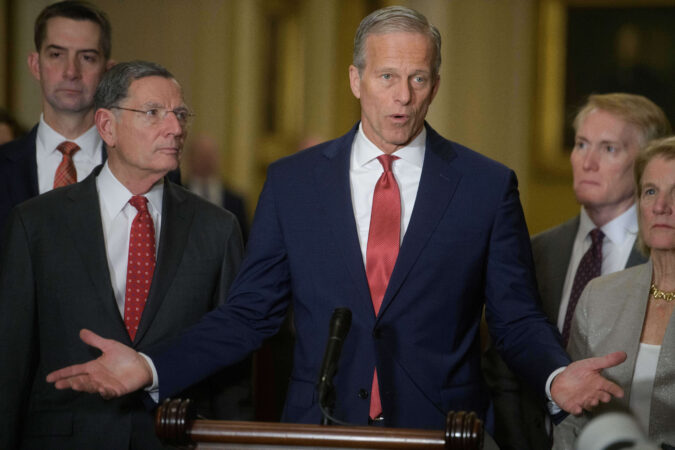
“I don’t think at this point we have a clear path forward, I don’t think the Democrats have a clear path forward,” Senate Majority Leader John Thune said Tuesday after Republicans met and discussed different proposals to overhaul the law.
The impasse means the Senate vote, expected next week, could be a party-line messaging exercise with no real chance of passage. Under the deal struck to end the shutdown, Democrats can determine the legislation that comes up for a vote. But Senate Democratic Leader Chuck Schumer has indicated they are leaning toward a vote on a straight extension of the subsidies with no new limits or tweaks to the law, which Republicans have already rejected.
“So far the Republicans are in total disarray and have no plan,” Schumer said Tuesday. “We have a plan.”
Democrats say they are willing to negotiate on the issue, and some have said they would be open to new limits on the subsidies. But they argue that two main issues are holding up talks: the lack of input from President Donald Trump, and Republicans’ insistence that abortion funding be part of the discussion.
“Our Republican colleagues aren’t going to engage with us” unless Trump weighs in, Sen. Peter Welch (D., Vt.) said. “That’s the paralysis here.”
Abortion issue holds up compromise
Maine Sen. Angus King, an independent who caucuses with the Democrats, was part of the group that struck a deal to end the shutdown. He says there have been some informal bipartisan discussions since then, but says they stalled as Republicans insisted on stricter abortion restrictions on Affordable Care Act plans.
“They have set up a red line that is also a red line for the Democrats,” King said of Republicans. “So they’re going to own these increases.”
Missouri Sen. Josh Hawley, who has said he wants to see the tax credits extended, said the issue “should not be a deal-killer” since a ban on federal funding for abortions is already in the law.
Democrats say current law should be sufficient. While many states ban abortion coverage from all plans in the ACA marketplaces, others allow or require abortion coverage that isn’t paid for with federal funding.
Republican senators have discussed several competing proposals in recent weeks. Louisiana Sen. Bill Cassidy and Florida Sen. Rick Scott have suggested creating different types of health savings accounts that would change the way people buy insurance — an idea that Trump has endorsed in social media posts without much detail. Other senators have suggested extending the subsidies with new limits on income.
Thune said Tuesday that “we will see where the Republicans come down, but that conversation continues.”
Republicans want to work on a constructive solution, he said, “but that hasn’t landed yet.”
In the House lawmakers were also discussing different ideas. But there was no indication that any of them could be ready by the end of the year or generate enough bipartisan support.
“Healthcare is a very complicated issue,” House Speaker Mike Johnson (R., La.) said Tuesday, while insisting that Republicans were still “pulling ideas together.”
Trump gives little guidance
Lawmakers in both parties have said it will be hard to move forward without Trump’s support for a plan. But the president has yet to formally endorse any legislation.
Last week, the White House circulated a proposal to extend the subsidies with some limits, like new income caps and a requirement that all recipients pay some sort of premium. The proposal would also have allowed those in lower-tier plans, such as the bronze-level or catastrophic plans, to put money into health savings accounts.
But the proposal was never released.
Asked last week whether he wants to extend the subsidies, Trump appeared to refer to the leaked plan, saying that “somebody said I wanted to extend it for two years. … I’d rather not extend them at all.”
Still, he acknowledged that some sort of extension may be “necessary.”
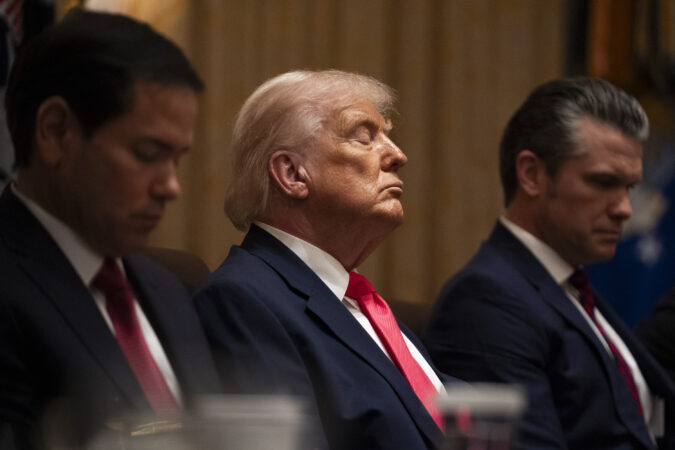
President Donald Trump closed his eyes for extended periods as cabinet officials went around the room Tuesday providing updates on their work, at times seeming to nod off.
It was the second time in less than a month that Trump has appeared to struggle to stay awake as his advisers speak about the administration’s initiatives. A Washington Post analysis of multiple video feeds of the meeting Tuesday showed that during nine separate instances, Trump’s eyes were closed for extended periods or he appeared to struggleto keep them open, amounting cumulatively to nearly six minutes. The episode was similar to an Oval Office event on Nov. 6 when the president spent nearly 20 minutes battling to keep his eyes open.
Trump’s apparent drowsiness during the 2-hour, 17-minute gathering with his cabinet followed pronouncements in recent days by the79-year-old president, his advisers and his doctor that he is in excellent health and full of stamina — an assertion the president repeated early in Tuesday’s meeting.
“Right now, I think I’m sharper than I was 25 years ago,” Trump said, criticizing a recent New York Times article that said the president was facing the realities of aging. He later resurrected a frequent insult, “Sleepy Joe,” to mock former President Joe Biden, the first octogenarian to serve as president, who faced regular scrutiny for his perceived lack of stamina.
In response to a request for comment about Trump’s eyes being closed during the meeting, a White House official initially told the Post that he was not sleeping,though a subsequent statement from press secretary Karoline Leavitt did not specifically address whether the president had dozed off.
Leavitt instead said he was “listening attentively and running the entire” meeting,and cited Trump’s “amazing final answer in the news conference,” in which he bashed Somali migrants, calling it an “epic moment.”
The White House has worked to refute suggestions that Trump has slowed down since his first term eight years ago. His advisers on Monday provided private logs to the New York Post that they said revealed Trump “working up to 12-hour days” on several instances during the past few weeks, the outlet reported.
But on Tuesday, the president appeared sleepy. Throughout Secretary of State Marco Rubio’s discussion of “the most transformational year in American foreign policy since the end of the Second World War — at least,” Trump leaned his head forward and shut his eyes. They remained closed even as Rubio discussed one of the president’s favorite topics, his efforts to broker peace between warring foreign nations.
Trump appeared far more alert later Tuesday when announcing “Trump accounts,” new tax-advantaged investment accounts for children. Unlike the meeting that had ended an hour earlier, where Trump was seated as he appeared to battle sleep, the president, Sen. Ted Cruz (R., Texas) and other officials were standing during the 40-minute announcement.
“I don’t think [Trump] sleeps at all,” Cruz said at one point.
While Trump’s Oval Office drowsiness last month came a week after he returned from a trip to Asia — a journey known for causing jet lag — the episode Tuesday followed a late night and early morning of the president scrolling and posting on social media.
Between 10 p.m. Monday and midnight, Trump made nearly 150 posts and reposts on his Truth Social account, ranging from criticisms of Democrats and screenshots of posts from right-wing conspiracy theorists to positive video clips about himself and first lady Melania Trump. Despite being a prolific and longtime user of social media, Trump’s blitz of posts that night was far more than is typical for him, though Trump’s advisers have told the Post he frequently only gets about four hours of sleep a night.
By 5:30 a.m. Tuesday, the president was back to posting again online.
Defense Secretary Pete Hegseth previously emphasized the samemilitary law that the Trump administration has been calling Pennsylvania lawmakers seditious for citing.
Hegseth notedthe military rule not to obey unlawful orders during a forum in 2016,when he was a Fox News contributor, in recorded remarks CNN unearthed on Tuesday.
Hegseth spoke at length about his views on the military — and criticism of former President Barack Obama — in a talk titled “The US Military: Winning Wars, Not Social Engineering.” The talk was shared online by the Liberty Forum of Silicon Valley and was marked as taking place on April 12, 2016. Hegseth, an Army veteran, had a book coming out that he promoted at the event.
The moderator asked him a question from an attendee: “Can you comment on soldiers who are being held at Leavenworth Prison for being soldiers?”
Hegseth argued that some prisoners at the facility did not deserve to be there but that others were facing the consequences for their unlawful actions.
“There are some guys at Leavenworth who made really bad choices on the battlefield, and I do think there have to be consequences for abject war crimes,” he said. “If you’re doing something that is just completely unlawful and ruthless, then there is a consequence for that.”
“That’s why the military said it won’t follow unlawful orders from their commander in chief,” he added. “There’s a standard, there’s an ethos, there’s a belief that we are above what so many things that our enemies or others would do.”
It is the same policy that a group of six Democratic members of Congress cited in a video that enraged President Donald Trump.
On his social media website, Truth Social, Trump said they were committing sedition “punishable by DEATH” and shared other posts attacking the lawmakers, including one calling for them to be hanged. Hegseth called them the “seditious six.”
“Encouraging our warriors to ignore the orders of their Commanders undermines every aspect of ‘good order and discipline,’” Hegseth said in a social media post. “Their foolish screed sows doubt and confusion — which only puts our warriors in danger.”
When asked for comment by CNN, spokespersons for the Pentagon and the White House further criticized the Democratic lawmakers who made the video.
Pentagon spokesperson Kingsley Wilson also told CNN that the military “has clear procedures for handling unlawful orders” and defended Trump’s orders as legal.
White House spokesperson Anna Kelly told CNN that Hegseth’s position has remained consistent and that his remarks were “uncontroversial.”
Sean Timmons, a Houston-based attorney specializing in military law who served as an active-duty U.S. Army captain in the U.S. Army Judge Advocate General (JAG) program, told The Inquirer that service members can get in trouble for refusing orders and that it is largely up to commanders to determinewhether orders are lawful or not. While the military rules specify not to follow obviously illegal orders, such as war crimes, they also say to presume orders are lawful.
Houlahan expressed disappointment in her Republican colleagues for largely not defending the Democratic lawmakers, though U.S. Rep. Brian Fitzpatrick, a Bucks County Republican, said he stood by his Democratic colleagues when asked by The Inquirer.
The fallout from the video has gone beyond rhetoric on X and Truth Social.
Hegseth also said in his 2016 talk that he believed U.S. Sen. Ted Cruz (R., Texas), Trump’s top rival for the GOP nomination that year, would be the best president at fighting wars, but that he believed Cruz and Trump would both “unleash war fighters and get the lawyers out of the way, which is really a big impediment to how we fight wars.”
The Democratic lawmakers did not cite specific orders in their video announcement, but Trump’s involvement of the National Guard in U.S. cities and the Pentagon’s strikes in the Caribbean have drawn legal debate.
WASHINGTON — President Donald Trump’s administration said Tuesday that it will move to withhold SNAP food aid from recipients in most Democratic-controlled states starting next week unless those states provide information about those receiving the assistance.
Agriculture Secretary Brooke Rollins said at a cabinet meeting Tuesday that the action is looming because those states are refusing to provide data the department requested such as the names and immigration status of aid recipients. She said the cooperation is needed to root out fraud in the program. Democratic states have sued to block the requirement, saying they verify eligibility for SNAP beneficiaries and that they never share large swaths of sensitive data on the program with the federal government.
Marissa Saldivar, a spokesperson for California Gov. Gavin Newsom, a Democrat, was skeptical about whether funding will really be taken away.
“We no longer take the Trump Administration’s words at face value — we’ll see what they actually do in reality,” she said in a statement. “Cutting programs that feed American children is morally repugnant.”
Twenty-two states and the District of Columbia previously sued over the request for information, which was initially made in February. A San Francisco-based federal judge has barred the administration, at least for now, from collecting the information from those states.
The federal government last week sent the states a letter saying that it was time to comply, as other states have, but the parties all agreed to give the states until Dec. 8 to respond.
Approximately 2 million Pennsylvanians receive SNAP benefits, or nearly one in six of the state’s residents.
This fall, Gov. Josh Shapiro, a Democrat, joined 21 other states in his capacity as Pennsylvania’s governor in suing the USDA to prevent the department from withholding its SNAP payments. A federal judge in California in October ruled in favor of the Democratic-led states and temporarily blocked the USDA effort from going into effect.
A spokesperson for Shapiro on Tuesday declined to comment.
Administration says data is needed to spot fraud
About 42 million lower-income Americans, or 1 in 8, rely on SNAP to help buy groceries. The average monthly benefit is about $190 per person, or a little over $6 a day.
Rollins has cited information provided by states that have complied, saying it shows that 186,000 deceased people are receiving SNAP benefits and that 500,000 are getting benefits more than once.
“We asked for all the states for the first time to turn over their data to the federal government to let the USDA partner with them to root out this fraud, to make sure that those who really need food stamps are getting them,” Rollins said, “but also to ensure that the American taxpayer is protected.”
Her office has not released detailed data, including on how much in benefits obtained by error or fraud are being used.
It’s also not clear which states have handed over the information. Rollins said 29 have complied and 21 have not. But 22 have sued to block the order.
Additionally, Kansas, which was not part of the lawsuit, has not provided it. The USDA told the state in September that SNAP funds would be cut off. The state asked the agency to reverse the action. A spokesperson for Gov. Laura Kelly, a Democrat, said there had not yet been a reply as of Tuesday. North Carolina appears to be the only state with a Democratic governor that has handed over the information.
Experts say that while there is certainly fraud in a $100 billion-a-year program, the far bigger problems are organized crime efforts to steal the benefit cards or get them in the name of made-up people — not wrongdoing by beneficiaries.
U.S. Rep. Jahana Hayes, a Connecticut Democrat who is a co-sponsor of legislation to undo recent SNAP changes, said Rollins is trying to make changes without transparency — or without a role for Congress — and that she is mischaracterizing the program.
“Individuals who are just trying to buy food, those aren’t the ones who are gaming the system in the way that the administration is trying to portray,” Hayes said in an interview on Tuesday before Rollins announced her intention.
Democratic officials responded to Rollins’ announcement by blasting the administration.
“The Governor wishes President Trump would be a president for all Americans rather than taking out his political vendettas on the people who need these benefits the most,” said Claire Lancaster, a spokesperson for Minnesota Gov. Tim Walz, a Democrat. ”Whether it’s threatening highway funding or food assistance, the President is making malicious decisions that will raise prices and harm families.”
In response to Rollins’ comments, New York Gov. Kathy Hochul tweeted, “Genuine question: Why is the Trump Administration so hellbent on people going hungry?”
SNAP has been in the spotlight recently
The program is not normally in the political spotlight, but it has been this year.
As part of Trump’s big tax and policy bill earlier in the year, work requirements are expanding to include people between the ages of 55 and 64, homeless people and others.
And amid the recent federal government shutdown, the administration planned not to fund the benefits for November. There was a back-and-forth in the courts about whether they could do so, but then the government reopened and benefits resumed before the final word.
Historic preservation advocates are sounding the alarm about legislation from Councilmember Mark Squilla, which they argue would weaken existing protections in Philadelphia.
The bill, introduced Nov. 20, would institute changes to the city’s Historical Commission, which regulates properties on the Philadelphia Register of Historic Places and ensures that they cannot be demolished or their exteriors substantially altered.
“This is the first time the [preservation] ordinance has been proposed for amendment in decades,” said Paul Steinke, executive director of the Preservation Alliance for Greater Philadelphia. “This is a developer-driven proposal that does not reflect any of the priorities of the preservation community.”
Proponents of the bill argue that it is simply meant to give more notice and power to property owners before their buildings are considered by the Historical Commission.
“The bill does nothing to decrease the power of the Historical Commission to protect important historic resources,” said Matthew McClure, who served as co-chair of the regulatory committee of Mayor Jim Kenney’s preservation task force.
“It is a modest good government piece of legislation,” said McClure, a prominent zoning attorney with Ballard Spahr. He emphasized that he was not speaking on behalf of a client.
The bill was introduced too late in this year’s Council session to receive a hearing. Squilla says it will be considered next year.
Currently, the interest group most supportive of the bill is the development industry. But even some preservation opponents are displeased with Squilla’s effort, arguing that it does too little for homeowners.
“Everybody’s talking, and I think they all agree to move forward with continued conversations to maybe tweak the language a little bit so everybody feels comfortable with it,” Squilla said.
At least one more stakeholder meeting will be held in December.
Tensions over preservation
Squilla’s proposal comes in the midst of heightened debate around preservation in Philadelphia, where the majority of buildings were constructed before 1960.
Over the last decade, the number of historically protected properties doubled, although well below 5% of the city’s buildings are covered. Preservationists oppose what they see as a demolition-first approach to development in the United States’ only World Heritage City.
These have provoked backlash among some homeowner groups and pro-development advocacy organizations, which see these regulations as increasing housing costs.
Members of the Philadelphians for Rational Preservation gathered at Seger Park in the Washington Square West neighborhood on July 27 to talk about their opposition to the Washington Square West Historic District.
Some property owners have grievances against the way the local nomination process works.
In Philadelphia, citizens are empowered to nominate buildings to the local register — giving buildings protection from demolition or exterior changes — without input from the property owner until the Historical Commission considers the case.
This practice persistently causes controversy, especially because there are few local incentives for homeowners whose properties get protected.
In some localities, preservation protections are promulgated exclusively by planners. In others, owner consent is required.
“The current historic nomination process is most often dictated by nongovernmental actors who operate without notice to property owners,” McClure said. “The administration’s bill is aimed at increasing transparency and basic fairness during the nomination process.”
Mayor Cherelle L. Parker’s administration did not respond to a request for comment.
What’s in the bill
Squilla’s bill is thick with new provisions to the local historic ordinance. A key aspect of the legislation gives property owners at least 30 days before a pending nomination of their building is considered by the commission and protections kick in.
While homeowners probably would not have time to radically alter the exterior of their house — and presumably wouldn’t demolish it — preservationists fear that developers will use the extra time to begin razing historic buildings.
“No one likes the notice provision the way it’s written; that’s freaking people out,” Steinke said. “We made clear why we think that’s a problem, and we were heard. Of course, the development community would love it to be the way it’s currently expressed in the bill.”
A Victorian home in the Spruce Hill historic district. Recently large new historic districts have been created to cover neighborhoods like Powelton Village, parts of Spruce Hill, and 1,441 properties in Washington Square West.
The delayed provision particularly worries preservationists in combination with a proposed requirement that the commission approve permits — including demolition or exterior design work — if “material commitments” were made to plans before the attempt to protect the historic building.
Other provisions include language to make it more difficult to protect land because it may house archaeological remains. It also limits the ability to consider a property for protection due to its relation to a landscape architect (as opposed to, say, a building designer).
Despite their animus toward existing preservation rules in the city, groups like 5th Square and Philadelphians for Rational Preservation called the legislation a sop to those who least need help.
“While this bill is a boon to developers, it doesn’t help ordinary Philadelphians,” said Jonathan Hessney of Philadelphians for Rational Preservation.
He argues that Squilla isn’t curbing historic districts that burden homeowners, “while at the same time risks allowing genuinely historic properties to be destroyed in the new 30-day race to demolish or deface it creates.”
A possible reform that some critics of the bill would like to see are flexible, tiered historic districts, where only a select group of buildings would be fully regulated. Demolition protections would still exist for many buildings, but most would not be subjected to oversight for changes like replacing a door or window.
“That was discussed as something that the preservation community would like to see that was mentioned in the original draft and then stripped out,” Steinke said.
Squilla said the pushback surprised him, given that negotiations have been held since June. He’s confident a compromise can be reached.
Beyond the Preservation Alliance — the advocacy group with the most funding and pull in City Hall — the bill has caused alarm among historic activists.
“It was a blindside to the progress that many stakeholders in the preservation community felt they were reaching with him,” said Arielle Harris, an advocate. “Squilla understands the preservation climate in the city — given that he was on the preservation task force — so this is out of left field.”
Mayor Cherelle L. Parker has said her administration relied on expert advice from a top law firm when it decided to end a Philadelphia policy prioritizing businesses owned by women or people of color in city contracting following recent court rulings that limited affirmative action-style government programs in hiring and contracting.
“I call them my genius attorneys because they all clerked for Supreme Court justices, and they handle the hardest cases throughout the country,” City Solicitor Renee Garcia, the city’s top lawyer, recently said of the New York-based firm Hecker Fink.
“And we went back and forth,” Garcia said. “Can we do this? Can we do this? What about this? What about that?”
But when it came time to replace the city’s old program with a new policy, the Parker administration didn’t adopt all of the suggestions it received from Hecker Fink, internal administration documents obtained by The Inquirer show.
Hecker Fink attorneys suggested that Philadelphia replace its old contracting system with one that favors “socially and economically disadvantaged” businesses, the documents show. Parker instead created a new policy favoring “small and local” companies.
The differences between Parker’s program and alternatives the city could have adopted are highly technical but hugely important, attorneys and researchers who study government contracting told The Inquirer.
Critics say the new policy indicates Philadelphia took the easy way out in the face of conservative legal attacks, instead of fighting to preserve the spirit of the old program: promoting equity and diversity in city contracting.
Parker, however, is adamant that her “small and local” policy will achieve that goal, given that many small companies in the city are owned by Black and brown Philadelphians who have faced discrimination.
“Our small and local business program is our disadvantage program,” Garcia said in a written statement. “Considering counsel’s advice, the City determined that a small and local business program is the best way to incorporate social and economic disadvantage in a way that is objective, content-neutral, consistent, demonstrable, and could be stood up very quickly.”
The documents, which include confidential legal memos from Hecker and internal administration emails, show how top city officials attempted to navigate a new legal landscape after the U.S. Supreme Court in 2023 upended decades of jurisprudence on affirmative action and other race-conscious policies.
Mayor Cherelle L. Parker said her “small and local” contracting policy will boost Philadelphia companies.
In early 2025, the Law Department provided a spreadsheet of line-by-line edits to the city’s Five Year Plan, a long-term budgeting document, to remove language about racial and gender-equity goals submitted by city departments.
When the Office of Community Empowerment and Opportunity, for instance, wrote that its mission involved “advancing racial equity,” the Law Department simply wrote, “remove racial,” as it did for several other agencies.
The edits signify a stark contrast to the city’s approach under former Mayor Jim Kenney, who in 2020, operating under very different circumstances, instructed all departments to craft comprehensive racial-equity plans.
There is no indication in the internal documents, which are primarily from 2024 and 2025, that Parker, the city’s first Black female mayor, or administration officials were eager to make those changes. And no city officials appeared in the documents to view the “small and local” policy as less aggressive or safer than the other options at Parker’s disposal when she replaced the city’s race-conscious contracting system.
But for Wendell R. Stemley, president of the National Association of Minority Contractors, the mayor’s choice was revealing.
“The cities that want to cave in on this issue without doing the hard work are just doing small [and] local, race- and gender-neutral,” Stemley said.
‘Disadvantaged’ vs. ‘small and local’
The documents obtained by The Inquirer show that Hecker recommended the city abandon its decades-old contracting system — responsible for allotting more than $370 million each year in city contracts to historically disadvantaged firms — due to the threat of potential legal challenges, as Parker and Garcia have said.
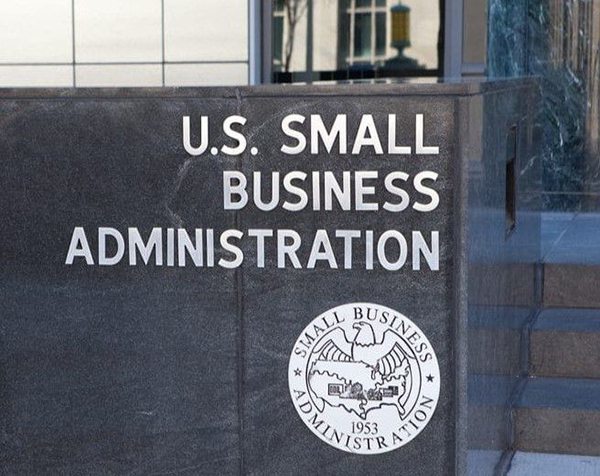
But they also show that the firm proposed replacing that policy with a system “setting mandatory goals for hiring socially and economically disadvantaged businesses or persons,” a race- and gender-neutral standard based on the federal Small Business Administration’s 8(a) business development program.
Like the city’s contracting policies, the federal program previously had a stated policy of aiding business owners who were members of specific historically disadvantaged groups, such as women and Black people. But a 2023 federal court ruling in Washington, D.C., prohibited the SBA from presuming that members of those groups had faced barriers and required 8(a) applicants to demonstrate social and economic disadvantages.
The change allowed the program to pass legal muster by not favoring race or gender groups, while still allowing the agency to consider whether each applicant had faced discrimination on an individual basis.
Hecker, a litigation and public interest firm, suggested that Philadelphia adopt a similar approach.
“Adopting mandatory goals for hiring socially or economically disadvantaged individuals or businesses, defined along the same race-neutral lines as in the SBA’s 8(a) program, would likely be defensible if challenged,” Hecker lawyers wrote in a May 5 memo to the city.
An internal administration memo analyzing the city’s options on May 16 said that Hecker “recommended taking a look at the federal SBA 8(a) Business Development Program as a model.”
“This is a program to recognize small and disadvantaged businesses,” the city’s memo said, adding that the SBA defines socially disadvantaged individuals as “those who have been subjected to racial or ethnic prejudice or cultural bias within American society because of their identities as members of groups and without regard to their individual qualities.”
The executive order governing the city’s old minority contracting program, which aimed to award 35% of contracts to historically disadvantaged firms, expired at the end of 2024, and the city quietly ended it at some point earlier this year.
The key difference between Parker’s program and the 8(a) model is that the city’s new policy gives no explicit consideration for social disadvantage, prejudice, or cultural bias.
Garcia, the city solicitor, firmly pushed back against the notion that the city had ignored Hecker’s advice on reshaping its contracting landscape and contended that the “small and local” policy will result in equitable outcomes because many of Philadelphia’s small businesses are owned by people of color and have faced discrimination and other barriers to growth.
“The City’s small and local business program … is more aggressive [than an SBA 8(a)-style policy] in that it is broadly applicable to small and local businesses, without creating unnecessary hurdles and confusion over the word ‘disadvantage’ or requiring onerous paperwork” for business owners to demonstrate their disadvantages, she said.
City Solicitor Renee Garcia is the Parker administration’s top lawyer.
Although Parker’s new program is not exclusively available to disadvantaged firms, Garcia said it “has built-in elements of social and economic disadvantaged programs like the SBA 8(a) and [U.S. Department of Transportation] programs, such as utilizing SBA business size standard caps, examining years in business, examining employee count, and personal net worth considerations.”
But Andre M. Perry, a senior fellow at the Brookings Institution, said that while the city may be intending to help disadvantaged businesses with its “small and local” approach, specifying that goal in writing is important. The mayor’s executive order does not use the word disadvantage.
“They are different,” said Perry, the author of Black Power Scorecard, an examination of access to property, education, and business success. “The downside of any approach that does not use some criteria for being disadvantaged is that you can ignore them.
“There is a history that suggests that you absolutely need some process to identify groups of people who have been ignored by the city. It’s certainly not a given that you will touch those communities that have been denied opportunities in the past under ‘small and local,’” Perry said.
‘Too early to tell’
Parker’s move to abandon the city’s goal of prioritizing businesses owned by women and Black and brown people has become the latest flashpoint in the debate over the centrist Democrat mayor’s approach to the new political reality under President Donald Trump’s second administration, as critics like progressive City Councilmember Kendra Brooks have accused her of “caving” to Trump.
Parker, however, said the city had little choice but to end the old system following Students for Fair Admissions v. Harvard, a 2023 Supreme Court ruling that prohibited affirmative action in college admissions and has had widespread consequences for race-conscious government programs.
“There were people who told us that leadership meant justifying the [old] law,” Parker said at a recent news conference announcing the contracting policy changes. “They said, ‘Forget about the Supreme Court ruling. Philadelphia should just continue functioning and operating its program even if your Law Department and these genius lawyers at [Hecker] who have clerked for Supreme Court justices [recommended abandoning it.]’
“I want to take some advice from somebody to interpret the Supreme Court ruling right for some folks who have worked there.”
The U.S. Supreme Court upended the legal landscape for race-conscious government programs with a 2023 case ending affirmative action in college admissions.
But Parker also said she felt that the city’s old system was “broken” long before the Harvard decision because it failed to achieve its goal of boosting the number of “Black and brown and women and disabled business owners” in Philadelphia.
Parker, who as a lawmaker worked on policies aimed at boosting economic opportunities for minority- and women-owned firms, said she was optimistic that pivoting to a focus on “small and local” firms would produce better results.
Parker has not publicly discussed suggested alternatives to her new policy, including the 8(a)-style approach.
Several government contracting attorneys and researchers interviewed by The Inquirer said that both “small and local” and “socially disadvantaged” programs have downsides and that the success of either would primarily depend on how well it is executed. Details are scant on what the new policy will actually look like, making it difficult to evaluate the potential impact.
But experts said choosing a policy that seeks to favor disadvantaged businesses rather than any small Philadelphia firm would indicate the mayor was fighting to maintain the spirit of the old program, which sought to boost companies owned by women and people of color who have long been underrepresented among business owners and government contractors.
“Adopting an 8(a)-style program with language prioritizing contracts for socially disadvantaged businesses would signal a desire to maintain the pre-2024 understanding that cities can procure goods deliberately, intentionally, in different ways, with preferences from disadvantaged businesses,” said Brett Theodos, a senior fellow at the Urban Institute who has written a paper about how governments can use contracting to promote equity, despite recent court decisions. “Having an (8)a-style [program] would signal that the mayor wanted to try something more.”
Parker has defended her policy shift by invoking the bona fides of the Hecker attorneys who worked with the city. She and other city officials have noted that one clerked for liberal U.S. Supreme Court Justice Sonia Sotomayor and now works for the American Civil Liberty Union — “not somebody who would have had a conservative mindset,” as Garrett Harley put it. (Those comments later prompted the ACLU-PA to distance itself from what it described as the city’s “DEI rollback.”)
To be sure, adopting a program in which contractors need to demonstrate social disadvantages, such as past instances of discrimination, has its own drawbacks.
Following the 2023 federal court decision, the SBA now requires 8(a) applicants to submit “social disadvantage narratives,” or essays, increasing administrative burdens and potentially favoring savvier contractors. The U.S. Department of Transportation has a similar essay-based approach.
The U.S. Small Business Administration’s 8(a) business development program is aimed at helping “socially and economically disadvantaged” firms.
“We have heard from our businesses it is already too hard to do business in Philadelphia; these kinds of additional requirements will exacerbate an already difficult and burdensome process,” Garcia said.
And despite being a race- and gender-neutral federal policy, the current 8(a) standard, which was adopted in President Joe Biden’s administration, may still be challenged in court.
The lawyers at Hecker Fink, however, believed that a Philadelphia version of the policy could withstand scrutiny.
“The next wave of conservative litigation in this space may target such programs, arguing that social or economic disadvantage is a proxy for race,” Hecker attorneys wrote in the May 2025 memo. “However, based on our assessment of the current legal landscape, the City would have a strong chance of defeating such challenges.”
Like many diversity, equity, and inclusion initiatives cast as discriminatory by the president, the 8(a) program has come under siege since Trump took office in January. On the agency’s website, hyperlinks to guidelines on how companies can demonstrate social disadvantage have gone dead, and the Trump administration has launched an audit of the program in the wake of an alleged bribery scheme.
None of those issues, however, address the question of whether a similar policy crafted for the city would be legally defensible. Despite Trump’s attacks, the current version of the 8(a) program’s focus on “socially disadvantaged” firms has not been overturned in court.
Regina Hairston, president and CEO of the African-American Chamber of Commerce of PA, NJ, and DE, said the organization will wait and see how Parker’s new policy shakes out.
“It’s too early to tell if the mayor’s policy is the right policy, but from what I’ve seen across the country, other cities are moving to [prioritize] small, medium enterprises,” Hairston said. “We don’t know if that’s the answer, but we will be monitoring it.”
Staff writer Anna Orso contributed to this article.
A New Jersey Senate hearing on a proposal to scale back the authority of a state oversight office degenerated Monday into a blistering back-and-forth between Attorney General Matthew Platkin and state Sen. James Beach.
A bill from Senate President Nicholas Scutari (D., Union) would shift the state comptroller’s investigative responsibilities regarding long-form corruption fraud or organized criminal activity probes to the State Commission of Investigation (SCI).
The legislation drew opposition from two of the state’s most prominent Democrats: Platkin, who has served as New Jersey’s top lawyer since 2022, and U.S. Sen. Andy Kim (D., N.J.).
But Democrats on the Senate State Government, Wagering, Tourism & Historic Preservation Committeeappeared agitated by their presence at the marathon hearing.
Beach, the committee’s chairman whorepresents Camden and Burlington Counties, told fellow DemocratPlatkin the bill was necessary “because of you,” though the bill does not involve the attorney general’s office.
Platkin, who had been critical of the bill, answered, “Now you’re saying the quiet part out loud.”
Beach suddenly went on a tirade excoriating Platkin on his overall performance as attorney general, calling him a “problem,” questioning his ethics, and telling Platkin he’d been “sloppy” in bringing various indictments. ”And,” Beach said, “your leadership has been lacking.”
Platkin,an appointee of outgoing Gov. Phil Murphy,retorted, “This isn’t about me.”
The exchange may reflect sore feelings at Platkin within some corners of the Democratic Party following his pursuit of a corruption case against business owner and South Jersey power broker George E. Norcross III.
Beach chairs the Camden County Democratic Committee, a position previously held by Norcross.
Platkin’s office is currently seeking to reinstate a racketeering case against Norcross after a judge dismissed the indictment earlier this year. Norcross has also come into conflict with the state comptroller’s office, which has investigated him.
Prior to his heated exchange with Platkin, Beach got into it with Kim, whose victory in the Senate race last year came after battles with the Democratic machine. Kim, whohad previously criticized the bill, said he’d broken away from responsibilities in Washington to attend the hearing.
Kim advanced to the hearing microphone with Platkin and acting State Comptroller Kevin Walsh, which angered Beach.
“What makes you special that you can come up with your people?” Beach said to Kim. After Kim’s allotted time expired, he continued to talk. Beach yelled, “Your three minutes are up. You don’t run the meeting.”
Beach then criticized Kim for voting in favor of several of President Donald Trump’s cabinet appointees.
“Why did you vote with [Trump] so many times? Tell me. Tell me. Why don’t you tell me? Why did you vote to approve [Secretary of State Marco] Rubio? Why did you vote to approve [Secretary of Homeland Security] Kristi Noem?” Beach castigated the senator.
Following the fiery exchanges, Beach’s committee voted to advance the bill to the Senate floor.
The legislation states that the comptroller could continue its essential auditing functions but in practice it would remove the office’s ability to conduct investigations or issue subpoenas. In effect, the comptroller could still review government agencies’ finances but would no longer be empowered to probe misconduct or force corrective action.
The Office of the State Comptroller (OSC) would still audit Medicaid-fraud cases, but its investigations arm would be absorbed by the SCI.
The comptroller office’s reports on corruption, waste, and mismanagement have long frustrated officials across the state.But opponents of the legislation see it as an effort to weaken the state’s financial watchdog.
Both Kim and Platkin were not called to speak until the hearing, which had taken up other bills, had gone on for nearly five hours. That annoyed Hoboken Mayor Ravi Bhalla, who accused Beach of not allowing the two to speak for so long.
“That is a senator,” Bhalla said. “And this is a disgrace. This whole hearing is a sham.”
The nasty tone of the hearing even took some lawmakers by surprise.
“I hope it’s last time I ever see it,” said state Sen. John McKeon (D., Essex County). “I’m so proud to be here every day, but not right now. So let’s stop.”
While Platkin and Kim have been vocal in their opposition to the bill, New Jersey Gov.-elect Mikie Sherrill said she was “opposed to efforts that weaken essential accountability and oversight, including with our watchdog agencies,” but added she “would not weigh in on pending legislation as it changes, is amended, and moves through the legislature.”
In his introduction of the bill, Scutari said it would strengthen accountability by reviving the historic SCI and eliminating duplicative efforts between state oversight entities.
“The investigations operations of the Office of the State Comptroller is smaller than, and different from, its main responsibilities, which are Medicaid fraud, procurement oversight, and audit functions,” the bill says. “Transferring the investigations function to the State Commission of Investigation does not curtail those responsibilities and is a more logical fit that will capitalize on its experience and success,” the bill says.
Critics argue that in a state that has long been plagued with government corruption, the more watchdogs, the better.
And Platkin charges that the motivation is personal. Walsh has taken an aggressive approach to the job since taking over in 2020. He led investigations on police accountability, government waste and fraud, and investigations into government benefit plans.
A recent investigation released in September targeted Norcross in a scathing investigation alleging conflicts of interest and violations of public contracting laws related to the South Jersey power broker’s insurance empire. The report alleged that Conner Strong & Buckelew, and PERMA, separate entities owned by the same parent company under Norcross, operated as one entity, with one steering contacts to the other.
Norcross told Politico that the report was “rife with factual inaccuracies and evidences a fundamental lack of understanding of the issues, here how insurance markets work.” He called Walsh a politically motivated ally of Platkin.
Senators have blocked Walsh’s confirmation for years, keeping him in acting status. If the bill becomes law, he would no longer be in charge of the office.
As the bill shifts power to the SCI, it also increases the three commissioners’ salaries and changes who appoints the chair from the governor to the Senate president and the Assembly speaker.
Last week, Platkin wrote on social media, “This Thanksgiving, the NJ Senate is killing a gov’t watchdog that stops wasteful spending, giving politically powerful individuals broad powers to intimidate law enforcement fighting corruption & even letting them tap phones. Outrageous.”
Now, a man accused of committing voter fraud in that contest by voting twice for Trump is seeking to wipe out a pending criminal case by saying the powers of that pardon action should extend to him.
Attorneys for Matthew Laiss wrote in court documents last month that the language in Trump’s pardon proclamation “clearly extend” to Laiss, who is awaiting trial on charges that he illegally voted twice in the 2020 election — first by submitting a mail-in ballot in Bucks County, then by voting in-person at his new home in Florida.
Federal prosecutors in Philadelphia charged Laiss in September with crimes including voter fraud and voting more than once in a federal election, and they said he faces potential prison time if convicted.
Last month, however, Laiss’ attorneys filed a motion to dismiss the case, saying that the pardon Trump issued Nov. 7 clearly applied to Laiss, and that Laiss had accepted it.
Although Laiss was not among the 77 people Trump listed when specifying who would receive relief, Laiss’ lawyers said the proclamation’s preamble included language making it applicable to “all United States citizens” for conduct, voting, or advocacy surrounding the contest.
In addition, his attorneys wrote, Trump allies including Rudy Giuliani, Sidney Powell, and Mark Meadows were all explicitly pardoned for “exponentially more egregious alleged conduct.” Extending relief to them while denying it to Laiss, his lawyers wrote, “would be outrageous.”
Federal prosecutors say Laiss is “entirely incorrect.”
In a reply brief filed last week, the U.S. Attorney’s Office said Trump’s pardon was intended for people who were seeking to expose or rectify potential fraud in the 2020 election — not for people like Laiss, who are accused of actually committing it.
Beyond what they said was Laiss’ clear misinterpretation, prosecutors said that they checked with Trump’s Office of the Pardon Attorney and that it does not believe the president’s clemency —` which it helped effectuate — applies to Laiss.
“In other words, it is this office’s understanding that if Laiss were to appeal directly to the Office of the Pardon Attorney for a pardon based on [the] November 7 pardon proclamation, that petition would be denied,” prosecutors wrote.
It was not immediately clear how or when U.S. District Judge Joseph F. Leeson Jr. might rule on the issue, although Laiss was scheduled to have a final pretrial hearing Tuesday morning.
If Leeson rules that the case can proceed, a trial is scheduled to begin next week.