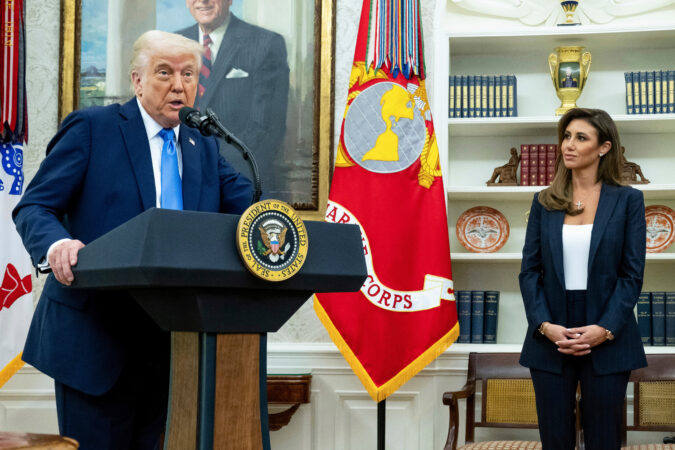
A federal appeals court in Philadelphia ruled Monday that President Donald Trump’s attempts to keep his former personal lawyer Alina Habba as New Jersey’s U.S. attorney have been illegal.
The decision was unanimous from a Third Circuit Court of Appealspanel of three judges, including two appointed by former Republican President George W. Bush and one appointed by former Democratic President Barack Obama.
It supports a federal district court judge’s ruling in August that determined the Trump administration kept Habba in her powerful role unlawfully since her temporary term expired in July. The top federallaw enforcement role in the state is charged with enforcingU.S.criminal and civil law.
The Monday ruling is the first federal appeals court decision on Trump’s efforts to sidestep the Senate confirmation process for U.S. attorneys.
That makes it “critically important,” saidCarl Tobias, a professor at theUniversity of Richmond School ofLaw who specializes in federal judicial selection.
The Trump administration can either bring the case to the Supreme Court or petition for all the appeal court’s judges to hold a rehearing through a rare process, he said.
“I assume the Justice Department will … go to the Supreme Court, ask for a stay and continue to litigate it,” Tobias said. “Whether the justices will take it is not clear.”
Trump nominated Habba to the role in March through an interim appointment that was supposed to last no more than 120 days.
Wanting to instill his loyalist for a full four-year term, the president sent Habba’s name to the Senate over the summer for confirmation. But U.S. Sens. Andy Kim and Cory Booker, both New Jersey Democrats, said they opposed Habba in the position in part because she lacked experience and politicized the office.
The Senate traditionally defers to the home state senators for these nominations, putting that path out of the picture.
The two Democratic senators said in a joint statement Monday afternoon that the appeals court decision “vindicates concerns we have long raised about the extraordinary and unlawful steps taken by the Trump Administration to keep Habba in office without Senate confirmation.”
Kim and Booker urged Trump’s administration to “follow the long-established process” to “restore public trust” in the position.
My joint statement with @SenBooker on today's unanimous court ruling that affirmed Alina Habba has been unlawfully serving as U.S. Attorney for the District of New Jersey. pic.twitter.com/ck7t94Jqut
Judge D. Michael Fisher, a Bush appointee, acknowledged that “the current administration has been frustrated by some of the legal and political barriers to getting its appointees in place” in the panel’s Monday opinion.
“Where a vacancy exists, Congress has shown a strong preference that an acting officer be someone with a breadth of experience to properly lead the office,” he also stated in the roughly 30-page appellate court opinion.
New Jerseyans and U.S. attorney employees “deserve some clarity and stability,” the opinion also said.
Some criminal cases have slowed down and some grand jury proceedings have been halted in New Jersey’s federal courts due to Habba’s unclear status, the New York Times reported.
Habba had no prosecutorial experience prior to her appointment and most of her experience was in state courts, not federal. She represented Trump in personal cases before his second term and was involved in both his campaign and administration prior to her appointment. She previously worked as a partner in a small law firm near his Bedminster golf course.
She said after her appointment that she wanted to help “turn New Jersey red” in her role, which is supposed to be apolitical.
In the role, Habba brought a trespassing charge against Newark Mayor Ras Baraka, a gubernatorial candidate at the time, who was arrested outside an ICE facility. Those charges were quickly dropped, drawing a scolding from a federal judge who called the situation “worrisome” and “embarrassing” for Habba.
Habba later charged Democratic U.S. Rep. Monica McIver with assault stemming from the same scuffle with ICE officers, a rare federal criminal case against a sitting member of Congress other than for corruption. McIver denied the charges, which she has called political. She pleaded not guilty and the case is pending.
New Jersey Gov.-elect Mikie Sherrill said in a statement that the judges’ decision “makes clear that the rule of law applies to everyone, regardless of who they are.”
“The Trump administration should not be playing political games with the U.S. Attorney’s Office,” she said. “We need a new candidate in that post as soon as possible, so the office can focus on serving the people of New Jersey, not the president.”
Trump and Habba took another blow in an Atlanta-based appeals court last week when it upheld penalties nearing $1 million against them for making “frivolous” legal arguments against his political enemies.
Trump is running into similar roadblocks elsewhere in his pursuit of instilling loyalists into prosecutorial positions and sidestepping Senate approval.
Last week, a federal judge dismissed criminal cases against former FBI Director James Comey and New York Attorney General Letitia James after determining that the U.S. attorney for the Eastern District of Virginia, who brought the charges in both cases at Trump’s urging, was unlawfully appointed by his administration.
The U.S. Justice Department has not yet publicly commented on that matter.
In September in Nevada, the Trump administration was found to have kept the acting U.S. attorney in her position for too long. In October, a federal judge ruled the same for the pick in Los Angeles.
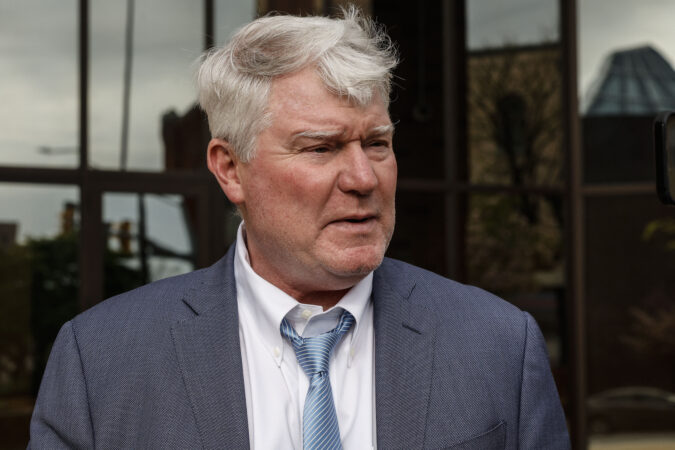
Convicted former labor leader John J. Dougherty is again asking a federal judge to cut short his six-year prison term, this time because he says the recent death of his father-in-law has left his gravely ill wife without a caregiver.
Dougherty made the request in a brief filed last month with U.S. District Judge Jeffrey L. Schmehl, writing that his wife, Cecilia — who for years has suffered from a debilitating brain injury — has been left “entirely alone and without any capable caregiver” since her father died from pancreatic cancer on Nov. 10.
Dougherty has previously argued that he should be granted compassionate release and allowed to serve the remainder of his sentence on house arrest to oversee his wife’s care — a request federal prosecutors have opposed.
In the latest request, Dougherty’s attorney, George Bochetto, wrote that Dougherty’s father-in-law, Joseph Conroy, had been serving as Cecilia Dougherty’s primary caregiver despite his own poor health and that Conroy’s death is “precisely the type of development” that warrants a change to Dougherty’s sentence.
Dougherty, Bochetto wrote, “remains the only person able and willing to provide his wife’s necessary care. No one besides Mr. Dougherty can fill the detrimental need that Mrs. Dougherty requires for survival.”
Federal prosecutors, however, said that Dougherty had previously asserted that Conroy was incapable of serving as Cecilia’s primary caretaker and that his newest motion for relief “directly contradicts” the representations he made in the last one.
“In short, the unfortunate passing of Mr. Conroy has no bearing at all on the circumstances,” prosecutors wrote in a reply brief filed last week.
Dougherty, 65, was once one of the state’s most powerful political figures, serving as the charismatic leader of Local 98 of the International Brotherhood of Electrical Workers with a wide range of connections in City Hall and Harrisburg.
Dougherty’s latest request for relief came several months after he first asked Schmehl for compassionate release.
In August, Bochetto filed an emergency brief saying that a trust fund established to pay for Cecilia Dougherty’s care was about to run out of money and that the couple’s adult daughters were not equipped to serve as permanent caregivers.
It also said Conroy, “once a limited source of support, is now medically incapacitated and permanently unable to contribute to her care in any way.”
Beyond detailing issues around the health of Dougherty’s wife, that filing said that Dougherty had also effectively run out of money and assets since he began serving his sentence at a federal penitentiary in Lewisburg and that he’d suffered from several new health issues while behind bars, including a chronic foot infection that made it hard for him to walk.
Prosecutors at the time wrote that they were sympathetic to the plight of Dougherty’s wife but that his absence from her life “does not distinguish this case from that of countless defendants whose loved ones suffer as a result of their crimes.”
It was not immediately clear when Schmehl might rule on Dougherty’s requested relief, or if he might take any additional action — such as scheduling a hearing — before doing so.
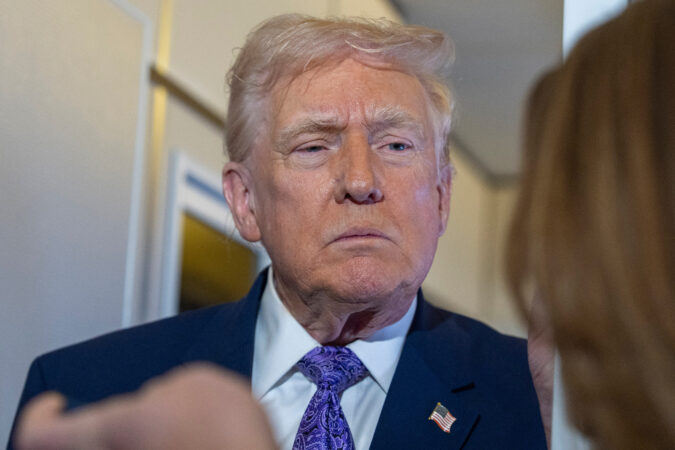
WASHINGTON — President Donald Trump said he’ll release the results of his MRI test that he received in October.
“If you want to have it released, I’ll release it,” the Republican president said Sunday during an exchange with reporters as he traveled back to Washington from Florida.
He said the results of the MRI were “perfect.”
The White House has declined to detail why Trump had an MRI during his physical in October or on what part of his body.
The press secretary, Karoline Leavitt, has said that the president received “advanced imaging” at Walter Reed National Military Medical Center “as part of his routine physical examination” and that the results showed Trump remains in “exceptional physical health.”
Trump added Sunday that he has “no idea” on what part of his body he got the MRI.
“It was just an MRI,” he said. “What part of the body? It wasn’t the brain because I took a cognitive test and I aced it.”
WASHINGTON — Ahead of a morning Budget Committee meeting, U.S. Rep. Brendan Boyle gathered his senior advisers in a brightly lit conference room just off the Capitol to settle on a simple strategy.
“Let’s keep the main thing the main thing,” he said. “Fifteen million Americans are gonna lose their healthcare because Republicans care more about tax breaks for billionaires. It’s accurate. You can describe it in a sentence.”
Boyle, a six-term lawmaker, is the most veteran of Pennsylvania’s eight Democrats in Washington. He has been the ranking member of the House Budget Committee since 2023, meaning he is the top Democrat playing defense as the Republican-controlled Congress ushers through GOP spending priorities. It can be a futile exercise in shouting into a void — until the yelling starts to echo outside.
“He’s one of our best messengers who appropriately comes across as both strong and authentic at the same period of time,” House Minority Leader Hakeem Jeffries (D., N.Y.) said in an interview late last month.
Jeffries credited Boyle with homing inon a key statistic: Taken together, Trump’s reconciliation bill andthe expiration ofAffordable Care Act tax credits represent the largest cut to Medicaid in American history.
“That one observation became core to our arguments in pushing back against that toxic piece of legislation, and it’s also one of the reasons I believe that the law is so deeply unpopular amongst the American people,” Jeffries said.
Democrats have been recently on a roller coaster — securing big wins in the November election and then splitting over how long to withstand the government shutdown, with eight senators ultimately crossing the aisle to end the impasse. But Boyle’s messaging war is ongoing, and he thinks it is his party’s best bet for winning key midterm races in his home state, where Democrats are targeting four Republican-held seats in swing areas.
If Democrats reclaim Congress in next year’s election, Boyle would shift from ranking member to chair of the powerful Budget Committee — becoming the first Pennsylvanian to lead it since Philadelphian Bill Gray, a Democratwho chaired it from 1985 to 1989. It would be another resumé builder for the 48-year-old lawmaker whose role in Washington keeps growing and who has not ruled out a potential Senate run in 2028, when Democratic Sen. John Fetterman’s seat would be up.
“I get asked a lot: How do you keep this message going for the next year?” Boyle said in an interview in his Washington office. “Well, we started this five months ago, and actually more people know about it today than over the summer. Every single day, continuing to talk about healthcare, continuing a broader conversation about affordability, is absolutely what we have to do.”
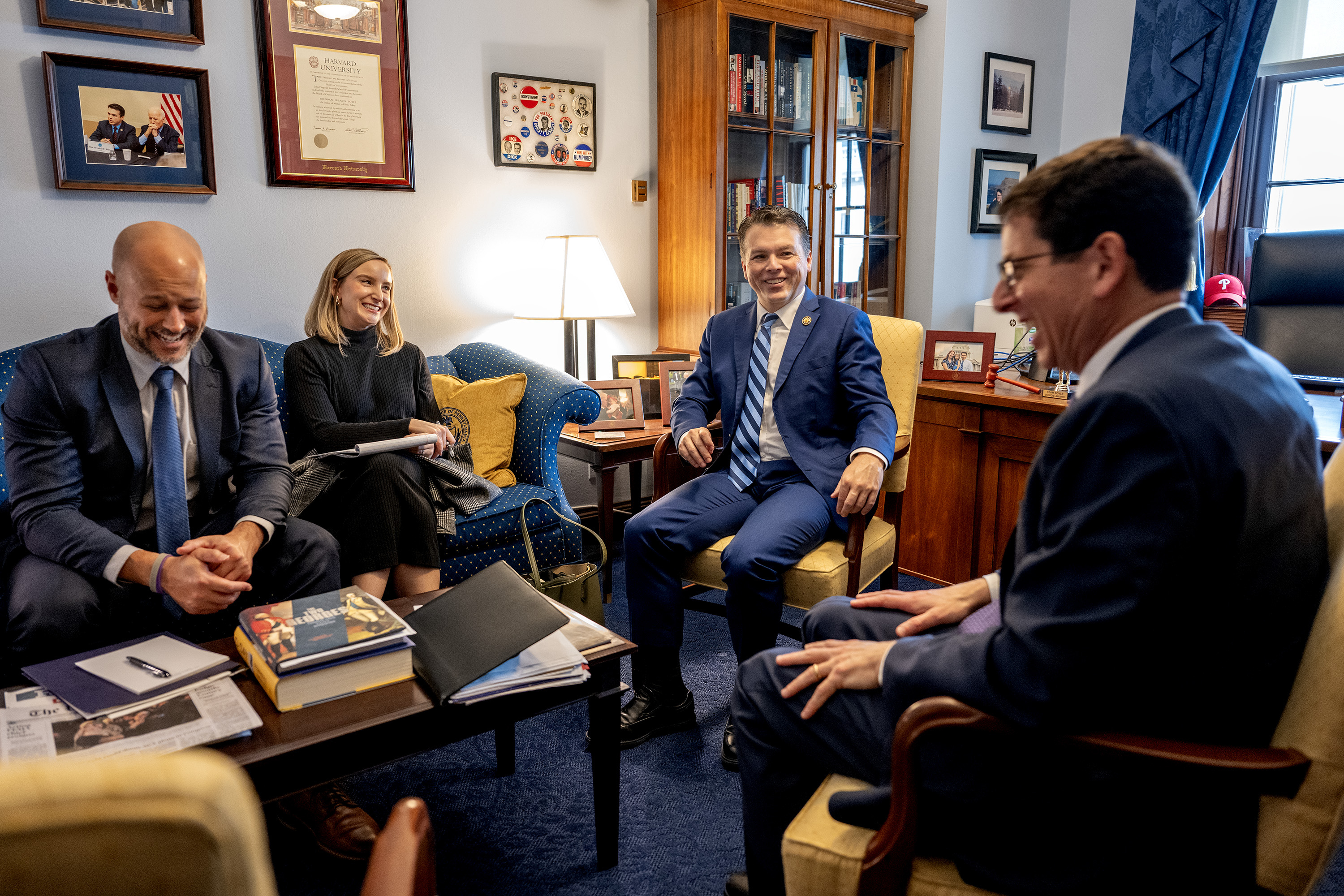
U.S. Rep. Brendan Boyle (center) meets in his Capitol Hill office with Phillip Swagel (right), director of the Congressional Budget Office, following Swagel’s testimony before House Committee on the Budget last month. As Budget’s ranking member, Boyle has been central in shaping Democratic messaging around Republican policies.
‘Scrappy Irish Catholic boys from Olney’
Boyle, who lives in Somerton with his wife and 11-year-old daughter, is an affable, earnest lawmaker in a role that is unapologetically wonky — and high-profile, especially lately.
From Oct. 1 through the end of November — a period including the shutdown — Boyle popped up on TV news more than two dozen times, by his office’s count.
His political beginnings were far less polished. In 2014, Boyle shocked Philadelphia’s political establishment by winning the Democratic primary over a field that included former U.S. Rep. Marjorie Margolies, scion of a powerful political family. Then a 37-year-old state representative, Boyle ran as a blue-collar, antiestablishment pragmatist from Northeast Philly. His ads cast his opponents as out of touch, and he leaned hard on his family’s story: his father, an Irish immigrant, worked at an Acme warehouse and later as a SEPTA janitor; his mother was a school crossing guard. Boyle still keeps his dad’s SEPTA cap on a bookshelf in his Washington office.
That same year, his brother Kevin won a seat in the state House, prompting Philadelphia Magazine to profile the “scrappy Irish Catholic boys from Olney” who were reshaping the party.
A decade later, Democrats are still striving to win back blue-collar voters. Boyle, meanwhile, has traded some of his insurgent edge for the stature of a Hill veteran.As Philadelphia elects a replacement for retiring U.S. Rep. Dwight Evans next year, Boyle will be a key ally for the new lawmaker, and a coveted endorsement during the election, though he has said he does not plan to weigh in. He has been in the thick of some of the year’s biggest fights — leading Democrats through a 12-hour reconciliation markup, testifying at a 1 a.m. Rules Committee hearing, and grinding through an overnight Ways and Means marathon.
His younger brother has had a far more tumultuous path. Kevin lost his state House seatlast year amid long-running mental health struggles.
Boyle declined to discuss the situation beyond saying: “The last five years — almost exactly five years — have been very challenging. And I’ll just leave it at that.”
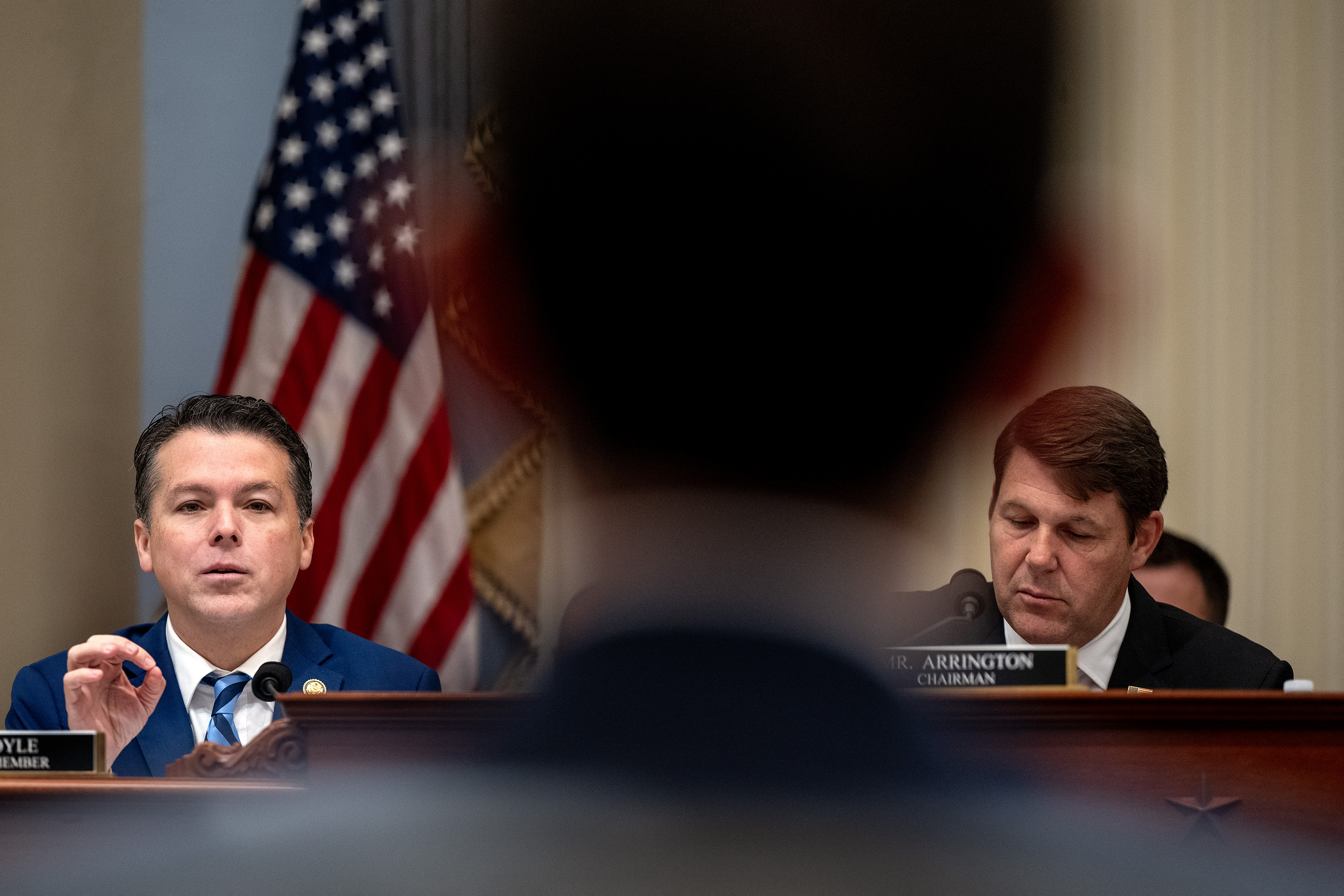
U.S. Reps. Brendan Boyle (left) (D., Philadelphia) and Jodey Arrington (right) (R., Texas) question Phillip Swagel (back to camera), director of the nonpartisan Congressional Budget Office, during a hearing on Capitol Hill in Washington, D.C. Tuesday, Nov. 18, 2025. Arrington chairs the House Budget Committee, while Boyle is the panel’s top Democrat.
In line for the gavel
Before that late November hearing, Boyle had already reached out to fellow Democrats on the committee: Talk about healthcare, he urged them. Talk about affordability. Talk about it ad nauseam.
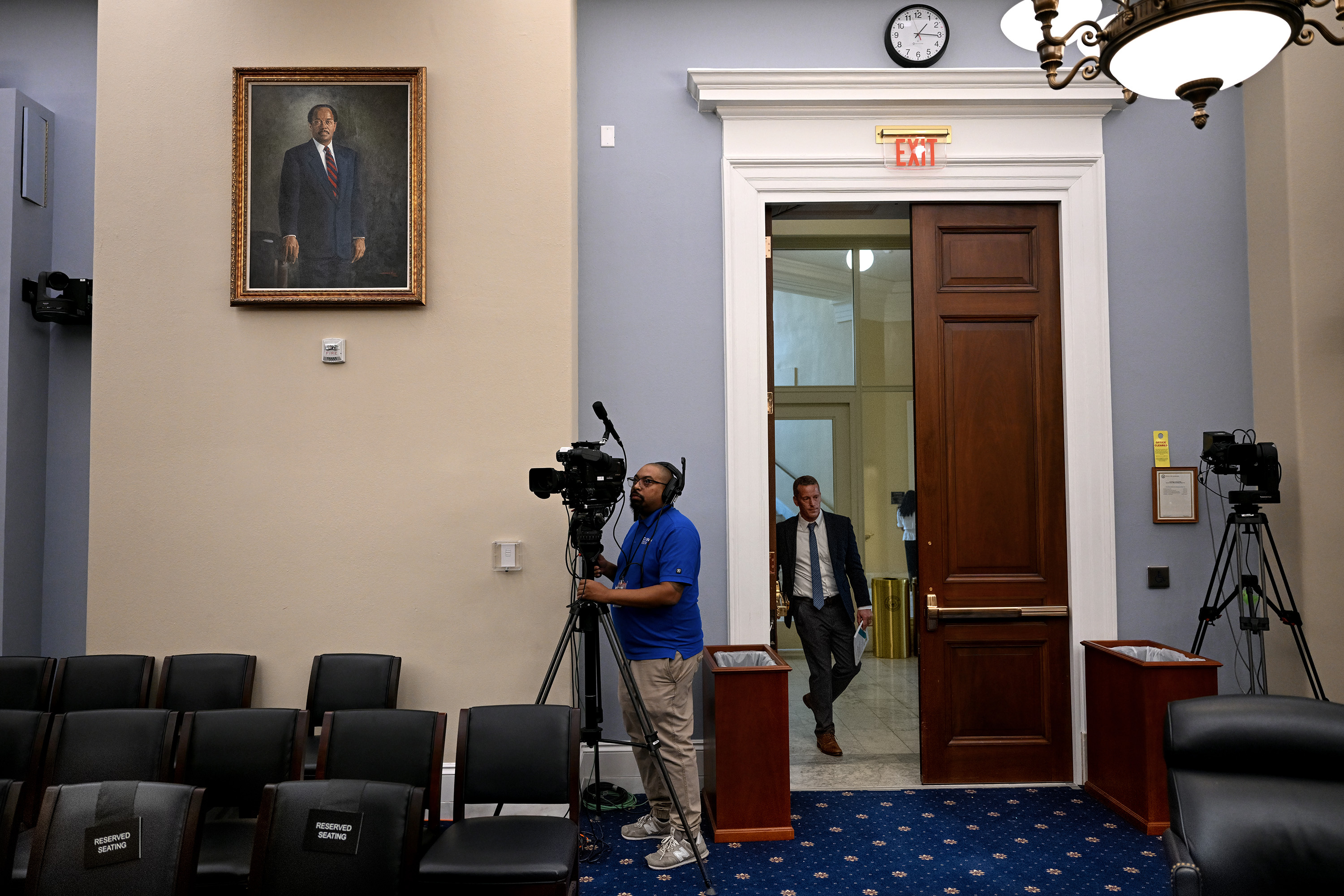
He sat at the dais across from a portrait of Gray in an ornate hearing room, surrounded by paintings of former budget chairs, and delivered his opening remarks.
“The president has stopped calling it the ‘Big, Beautiful Bill.’ He’s stopped talking about the bill altogether,” Boyle said. “… Because it’s not just that healthcare’s become unaffordable in America. It is beef, it is coffee, it’s electricity, almost every staple in the average consumer basket.”
The director of theCongressional Budget Office, Phillip Swagel, was called before the committee that day and fielded questions from both sides. Democrats wanted to know Swagel’s projections on how Trump’s policies would affect everything from the national debt to the price of Thanksgiving dinners, eager for sound bites to send to constituents back home and to pressure Republicans on the healthcare debate.
Republicans were pushing Swagel for an audit, seekingmore transparency on how the nonpartisan agency comes to its projections.
“We need to be able to cut through the politics and the partisanship and figure out where you and your team can do a better job,” said U.S. Rep. Jodey Arrington,the Texas Republican who chairs the committee.
Boyle, whose office uses CBO projections to compile and distribute national and district-level data to Democrats, said he is open to an audit, if performed responsibly and not as a means to “discredit” the agency over numbers Republicans don’t like.
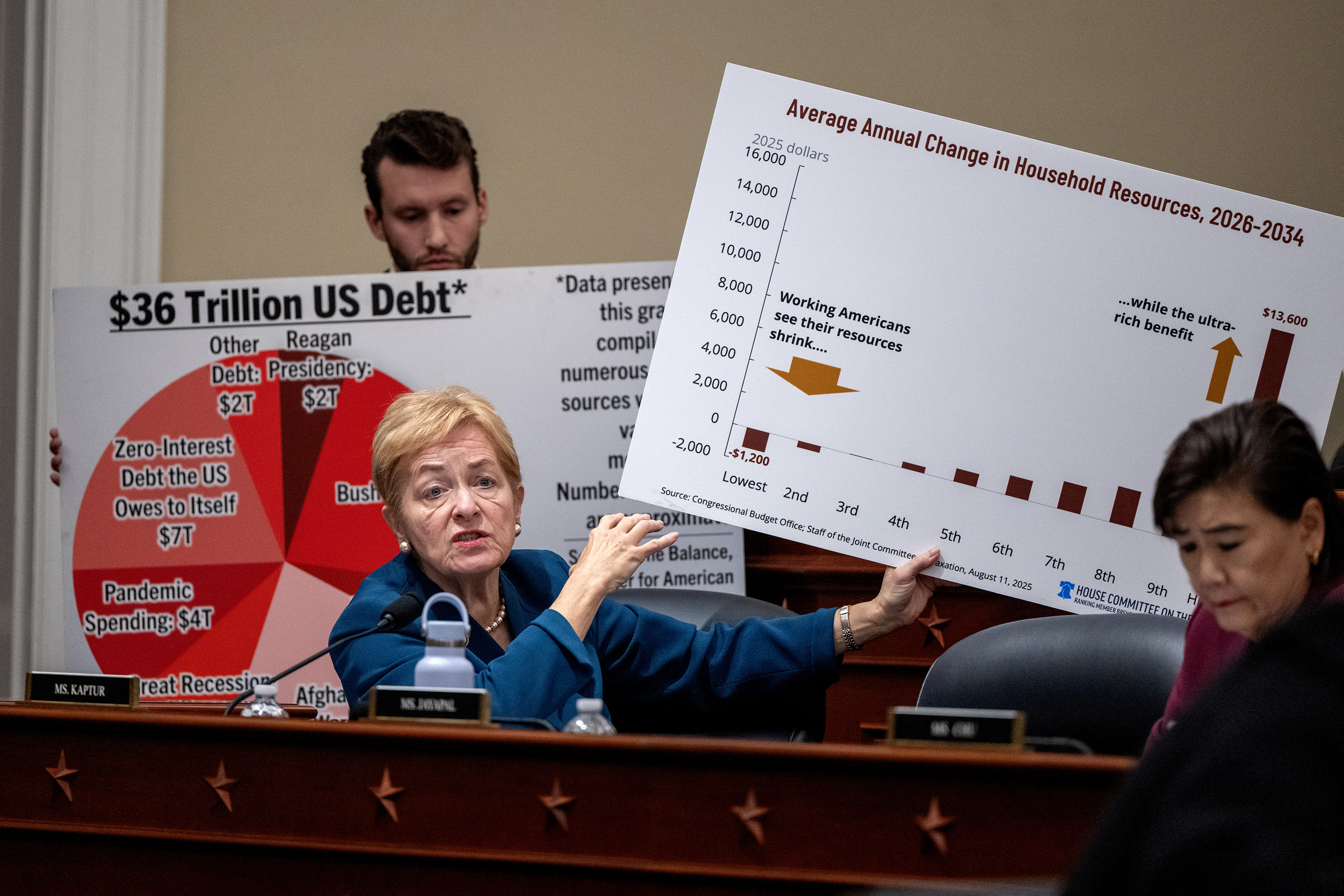
U.S. Rep. Marcy Kaptur, a Democrat from Ohio, brings visual aids to a hearing of the House Committee on the Budget on Capitol Hill in Washington, D.C. Tuesday, Nov. 18, 2025.
Throughout the three-hour hearing, Boyle would sidebar with Arrington, who is retiring next year. The Philly Democrat and the West Texas conservative make an unlikely pair, but the two have bonded across many late-night sessions over having younger children and their college football fanaticism — Boyle for his alma mater, Notre Dame, Arrington for Texas Tech.
“He’s a very good communicator because he’s a really smart and thoughtful guy,” Arrington said. “I always can appreciate, whether I agree or not, with a good communicator. He’s authentic in what he believes and he’ll even say, ‘I grant you it’s not perfect,’ or ‘You make a good point.’”
The midterms will dictate not just the party that controls Congress but also which ideological track the Budget Committee takes. If Democrats win, and Boyle takes the gavel, he plans to put more scrutiny on the administration and aim to regain some of Congress’ control over purse strings that Republicans have ceded to Trump.
Another Pennsylvanian, U.S. Rep. Lloyd Smucker, a Republican who represents Lancaster, has announced he is running to be the top Republican on the committee following Arrington’s retirement. That means regardless of party control, two Pennsylvanians will likely be at the helm of one of the most powerful committees in Congress. Smucker, a fiscal conservative running with Arrington’s backing, said in an interview he would focus on rising national debt and getting a budget resolution adopted. He was a key negotiator for Republicans during reconciliation, helping to get conservative House Freedom Caucus members on board.
Smucker called Boyle someone who is “serious about the budget process, and wants to make sure that it functions.”
“He genuinely cares about strengthening Congress as an institution,” Smucker added.
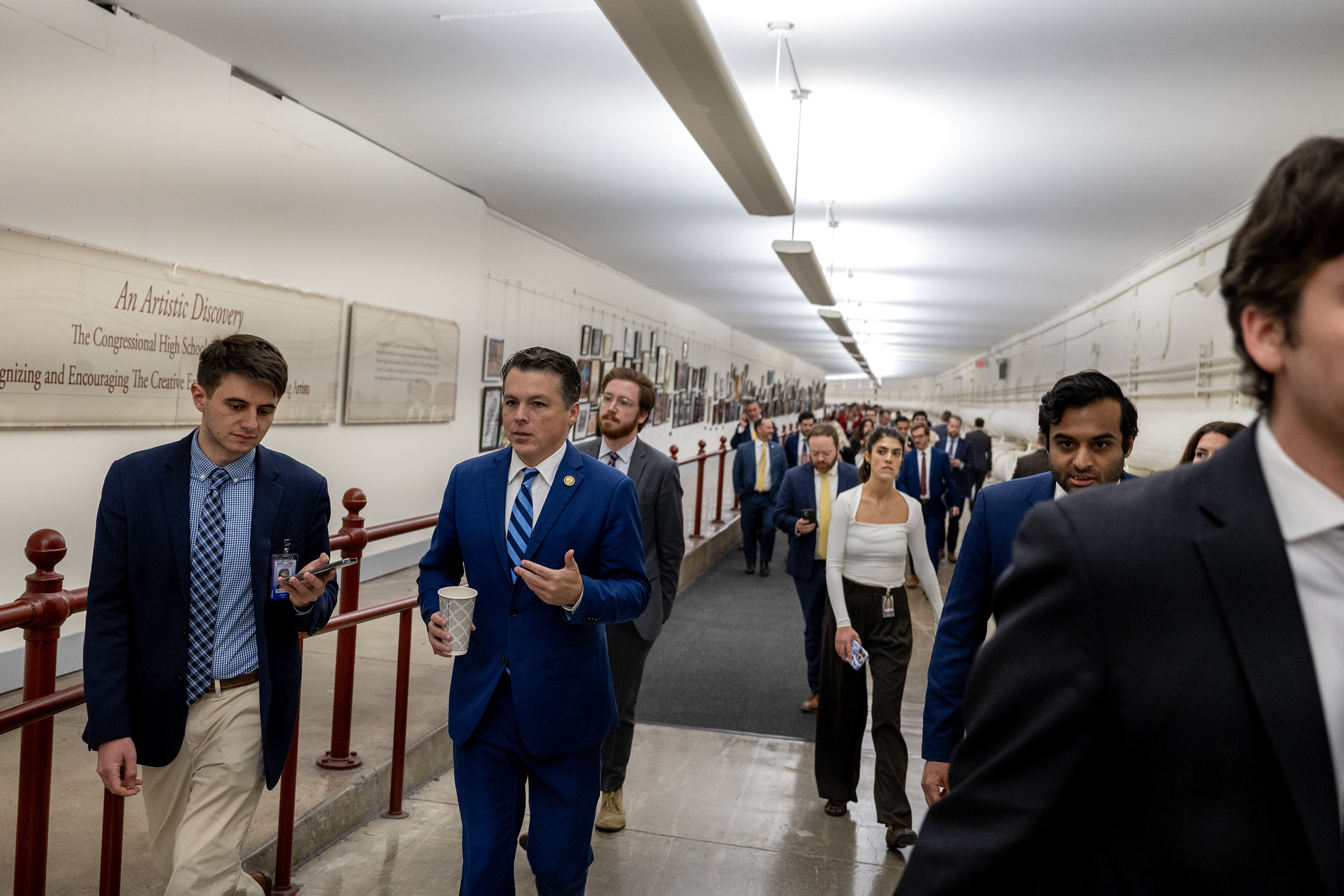
U.S. Rep. Brendan Boyle is interviewed by Charles Hilu (left), a reporter with the Dispatch, as he moves between office buildings on Capitol Hill in Washington, D.C. Tuesday, Nov. 18, 2025.
The road ahead
The longer Boyle stays in the House, in a safe Democratic seat, the harder it is to think about walking away.
In September, Jeffries appointed him the lead Democrat for the congressional delegation to the NATO Parliamentary Assembly. For Boyle, a history lover who has biographies of George Washington on his office coffee table, it’s an exciting opportunity to represent the country internationally as Trump continues to criticize the historic alliance. Boyle would become the leader of the parliamentary assembly delegation if Democrats take control of the House, just as he would take the gavel in the Budget Committee. Past committee chairs include former House Speaker Paul Ryan (R., Wis.), former Defense Secretary Leon Panetta, and former Ohio Gov. John Kasich.
“Some really high-quality, high-caliber people have done that over the last 40 years. So that’s what I’m looking forward to in the near term,” Boyle said. “After that, come 2028, and beyond, we’ll deal with that then. But it is interesting, like the longer you’re here, and if you move up the ranks, then actually it does make it more difficult to leave.”
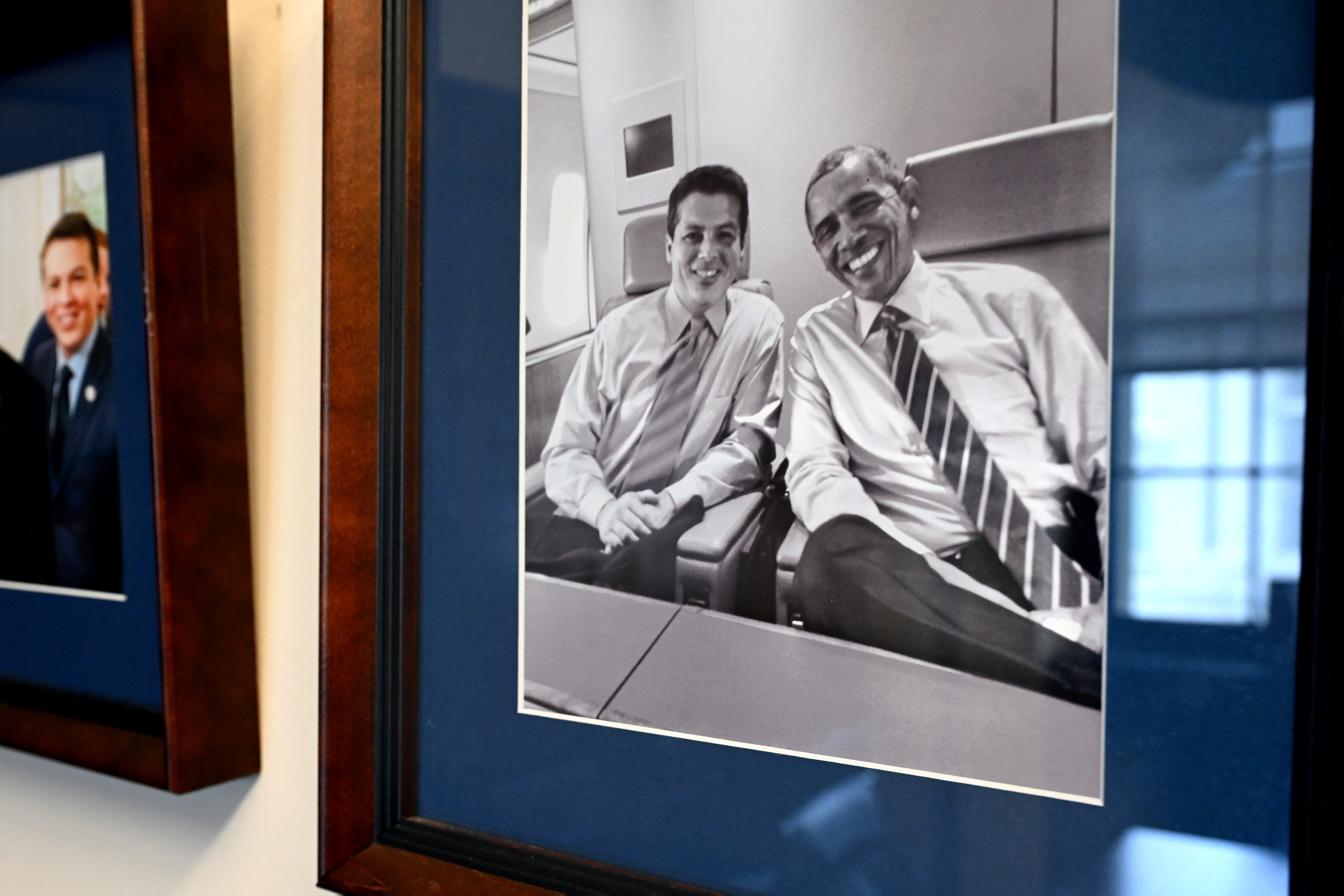
A painting of former U.S. Rep. William H. Gray III hangs in the hearing room of the House Committee on the Budget on Capitol Hill. It’s been 40 years since a Philadelphia lawmaker led a House committee. A photo of U.S. Rep. Brendan Boyle with former President Barack Obama on Air Force One hangs in his office on Capitol Hill in Washington, D.C.
But Boyle has not been shy about airing frustrations with Fetterman, whose term is up in 2028, sparking speculation Boyle could have an interest in a run against him.
Boyle said he avoided criticizing Fetterman until this spring, when the senator’s positions started to directly conflict with the party messaging he was pushing out.
“As I was doing TV opportunity after TV opportunity, what I increasingly found was that the clip they would show before I would be asked the question wouldn’t be a clip of what Donald Trump had said; it would be a clip of what my state’s Democratic senator had said,” Boyle said. “And I obviously would have to combat it.”
Fetterman has embraced an independent streak as a purple-state senator, often willing to work with the GOP. While pleasing to voters eager to see compromise and bipartisanship in a tenuous moment in Washington, it has also alienated some progressives.
Boyle said when it comes to the Senate, “I don’t rule anything in and I don’t rule anything out.”
If he were to run, a challenge could be building his statewide profile. He is still relatively unknown outside Philadelphia, though he has proven to be a prolific fundraiser. Today’s politics also tend to elevate showmen and outsiders, while Boyle has the more traditional cadence of an establishment politician — disciplined, polished, and most compelling when he speaks off-script.
Some local Philadelphia Democrats have criticized Boyle’s voting record on immigration, arguing it has not reflected the interests of the Latino community he represents in his majority-minority district. Boyle voted for the bipartisan Laken Riley Act, which requires the Department of Homeland Security to detain noncitizens who are arrested or charged with certain crimes, often forgoing due process. He was one of 46Democrats in the House along with 12 in the Senate, including Fetterman, to support the GOP-led bill.
“I have the same criticism as I do of Josh Shapiro: I wish he would take a stronger stance on immigration,” said State Rep. Danilo Burgos, who represents North Philadelphia. At the same time, Burgos credited Boyle as being a “good partner in our community” who always returns phone calls and texts.
For now, Boyle keeps an extremely busy schedule. The day of the budget hearing, his schedule stretched over 15 hours. He hustled from a meeting with Social Security and Medicaid experts to a floor vote to release the Jeffrey Epstein files.
Back in his office, where Eagles throw blankets, Phillies pennants, and a painting of Donegal, Ireland, his father’s home county, decorate the space, he sat down for his final meeting of the day.
Gwen Mills, the international president of UNITE HERE,a labor union that represents hospitality workers, wanted advice on how to translate Democrats’ work in Washington to members frustrated with both parties.
“Talk about affordability and how Republicans are making it worse — with the so-called beautiful bill,” Boyle suggested, running through some numbers and data before offering up a simpler sound bite:
“It boils down to life in America is just too damn expensive right now.”
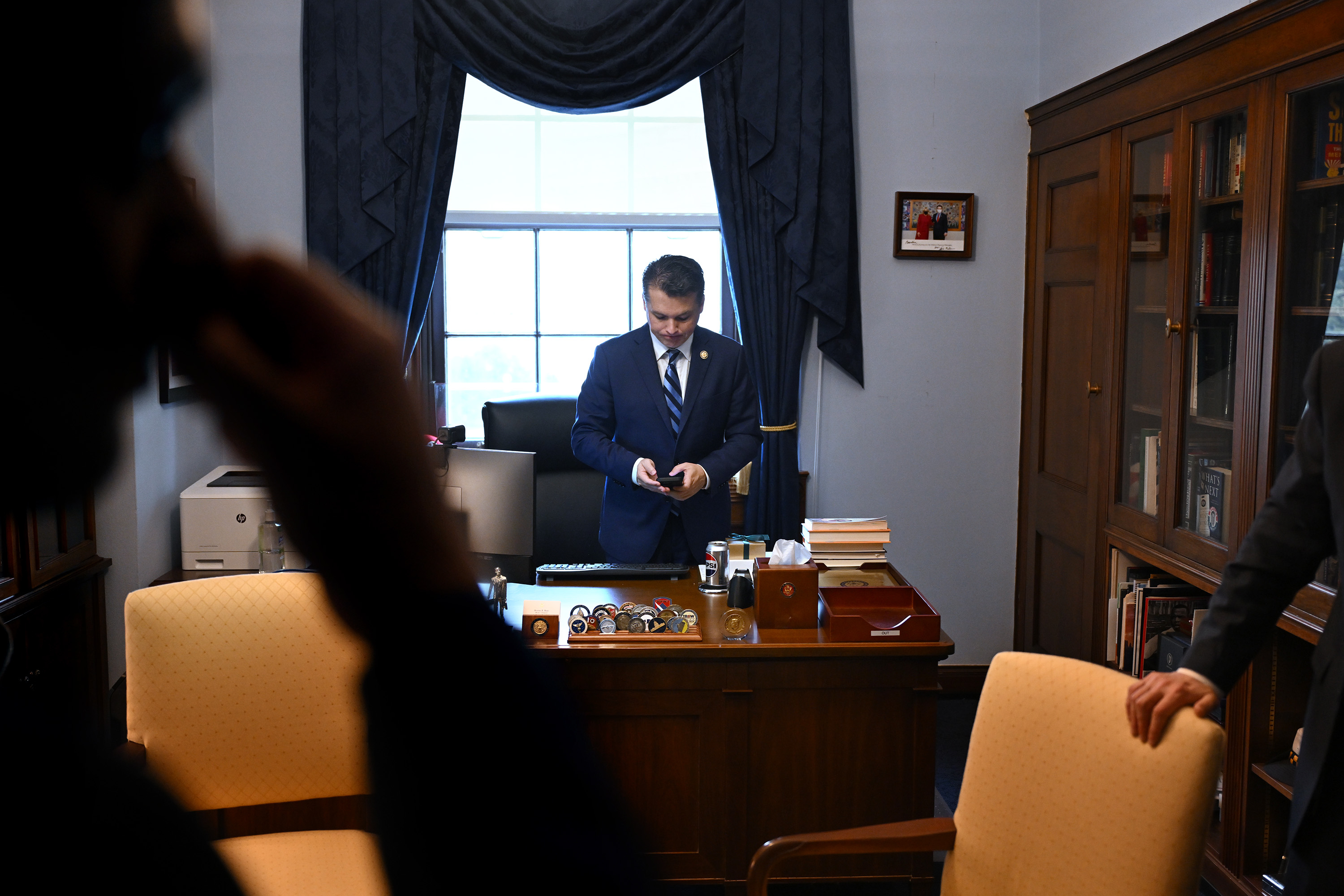
U.S. Rep. Brendan Boyle checks his phone before leaving his office on Capitol Hill in Washington, D.C. Tuesday, Nov. 18, 2025.
It’s shaping up to be a tree-mendous year for anyone planning to bring home a real Christmas tree, according to industry experts tracking supply and prices.
“It’s probably the best supply of real trees in at least a decade,” said Marsha Gray, president of the Real Christmas Tree Board, a research and promotional group.
A national survey of tree farmers — including many in Pennsylvania — found that prices are expected to hold steady or even dip, thanks to an unusually strong supply. The survey, conducted in August, polled wholesale growers responsible for roughly two-thirds of all Christmas trees sold in the United States. A hearty 84% said they don’t plan to raise prices, with some even expecting to trim them.
Pennsylvania alone has more than 1,400 tree farms covering over 31,000 acres, according to state statistics.
Still, most trees sold in the Northeast come from Canada, and those evergreens remain exempt from tariffs, which has also helped keep costs down this year.
For artificial tree makers, meanwhile, the outlook is less merry and bright. Nearly all artificial trees are manufactured overseas, particularly in China, and have been hit with tariffs that are pushing prices upward. An artificial tree seller in California told NPR he anticipates a 10-15% price hike for consumers due to customs costs, even though manufacturing expenses have stayed steady.
Growing Christmas trees is a long-haul endeavor — it takes about 10 years for a tree to reach full size. That means today’s growers have to guess what demand might look like in 2035 while tending the evergreens that will be ready in 2029 and 2030. Their work involves pruning and pest management — the parts they can control — as well as coping with unpredictable challenges like climate shifts and surprise deep freezes.
Drought mostly affects younger saplings and typically spares mature trees, so even though 2025 has been dry in many regions, that hasn’t been a factor on the firs for sale, Gray said.
Gray said growers saw this abundant year coming: “It’s a multiyear process, so we can see what’s coming up and this is the story of the season — excellent supply.”
In recent years, headlines highlighted shortages. Gray notes there were always enough trees to go around, but during lower-supply years, shoppers might have found that the most convenient lot sold out early or that cut-your-own farms wrapped up the season weeks before Christmas.
“It does go in waves. We have little peaks and valleys,” she said. “And we’re in a peak right now.”
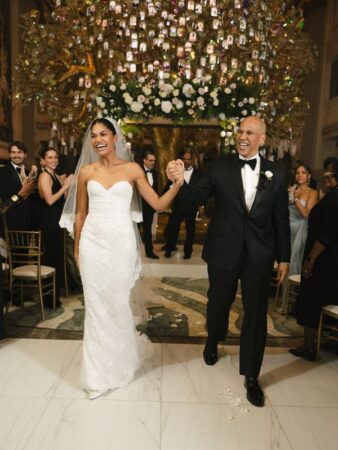
After a brief engagement, New Jersey Sen. Cory Booker and real estate executive Alexis Lewis celebrated their nuptials Saturday in Washington, after a courthouse wedding last Monday.
“Overflowing with gratitude. We said ‘I do’ in two places that shaped us — Cory’s beloved Newark and Alexis’s hometown of Washington, D.C. — first at the courthouse, then with our families,” the couple said in the post. “Hearts full and so grateful.”
Booker, the former mayor of Newark and a former Democratic candidate for president, announced the couple’s engagement in September. He and Lewis had been dating for about a year and a half at that point.
“Alexis is one of the greatest unearned blessings of my life,” Booker captioned the carousel of photos from the Hawaii beach proposal. “She has transformed me, helping me to ground and center my inner life, and discover the joys of building a nurturing home with someone you love.”
He called Lewis “my partner, best friend, and now my fiancée.”
Lewis, an executive at Brasa Capital Management, a real estate investment firm, previously worked for former Los Angeles Mayor Eric Garcetti. She has an undergraduate degree from New York University and a master’s degree from Cornell University.
Booker admitted to The Shade Room’s Thembi Mawema during a June appearance that he had Googled Lewis before going on a blind date with her (although he didn’t name her at the time). The pair was “fixed up by a friend,” he told Mawema.
The only bachelor to run for president in 2020, Booker said on The Shade Room, “I want to be married, I still want to have kids,” adding that “dating [Lewis] has made me so much of a better senator.”
During the Saturday ceremony, which was attended by family only, the New York Times reported, a rabbi and a pastor blessed the couple under a huppah, in a ceremony marking the couple’s faiths — Booker is Christian and Lewis is Jewish.
The couple married on Nov. 24, at the U.S. District Court for the District of New Jersey in Newark, the Times reported. Their parents witnessed the nuptials and U.S. District Judge Julien Xavier Neals officiated.
State police Cpl. Joshua Mack is suing the Pennsylvania State Police in federal court, arguing that he lost a lucrative position on the governor’s security detail because of racial discrimination.
Mack, who is white, claims that his superiors reassigned him earlier this year and that he had heard them talk about the “need” for “more minorities” on Gov. Josh Shapiro’s security team.
Mack had been the longest-serving member of the governor’s security detail, joining the elite squad in 2011 when Ed Rendell was in office.
“Mack’s removal and replacement on the Governor’s Detail were motivated by race considerations and intended to satisfy [Pennsylvania State Police’s] stated goal of increasing minority representation in the Governor’s Detail,” the lawsuit reads. “As a result, Mack suffered loss of pay, loss of overtime income, diminished professional opportunities, and emotional distress.”
Mack joined the state police in 2004 and went on to protect four governors. The lawsuit claims that he “consistently received strong performance evaluations” and that guarding the governor came with opportunities for specialized dignitary-protection training, state-owned vehicles, and far more overtime than other state troopers have.
Pennsylvania State Police declined to comment, saying that they don’t respond to queries about personnel matters or pending litigation. Shapiro’s office declined to comment as well.
According to the lawsuit, Mack lost the position on March 25 — although he retained his rank of corporal — and was told that it was only because of “administrative changes.” His supervisors repeatedly informed him their decision was not due to any deficiencies in his performance, the lawsuit states.
“As a result of his removal from the Governor’s Detail, Mack was reassigned to another unit farther from his home, lost access to a state vehicle, and lost substantial overtime opportunities,” reads the lawsuit, which was filed on Nov. 25.
“He was assigned back to patrol, which was a drastic change, as he was out of patrol work for so long and much has changed during that time,” wrote Anthony T. Bowser, who is representing Mack, in an email to The Inquirer.
Mack alleges he was then replaced by two non-white troopers “who were substantially less qualified and lacked any dignitary-protection experience.”
Mack is demanding a jury trial. He is alleging damages stemming from lost wages and benefits, damage to his professional reputation, and “emotional distress, humiliation, and embarrassment.”
Bowser says that while the damages would have to be determined during litigation, the lost overtime amounts to over $50,000 annually because it is capped in Mack’s new patrol position. The lost overtime would also affect his pension.
Mack is specifically suing the Pennsylvania State Police and his superiors Cpl. John Nicholson and Lt. Col. George Bivens. Shapiro is not mentioned by name in the suit.
Mack first filed an administrative charge of discrimination with the Equal Employment Opportunity Commission, a necessary first step before filing in federal court.
Spotlight PA is an independent, nonpartisan, and nonprofit newsroom producing investigative and public-service journalism that holds power to account and drives positive change in Pennsylvania. Sign up for our free newsletters.
HARRISBURG — This year’s state budget didn’t pull slot-like skill games out of their legal limbo in Pennsylvania, despite bipartisan consensus on the need to do so.
But it could still happen. Democratic Gov. Josh Shapiro called the matter “unfinished business,” and legislative leaders have also indicated interest in taking up the issue again next year.
“This building has a long history of going through gaming debates, and they are very complex and very tedious and very difficult,” state Senate Majority Leader Joe Pittman (R., Indiana) said after the budget passed on Nov. 12. “I certainly believe gaming reform is — and must be — an important policy initiative going forward.”
Pennsylvania faces a structural deficit, which will require spending cuts or more cash in the state’s coffers. A gambling levy, alongside other sin taxes, offers a way to raise revenue without making politically unpopular increases to sales or income taxes.
While such taxes are potentially more palatable to the broader electorate, gambling debates are complex and difficult within the Capitol due to the array of monied interests that defend their existing market share or attempt to expand it further.
The money at stake is real. Existing taxes on revenue from slot machines and table games, whether in brick-and-mortar casinos or online, as well as levies on activities like sports betting and truck stop-based video gaming terminals, brought in $2.7 billion last fiscal year, a record high.
What was on the table this budget cycle?
Skill games, which have proliferated in bars and gas stations across the state, exist in a legal gray area and have been subject to years of litigation. They are untaxed and unregulated, and officially setting up laws around them would bring in more gaming cash.
Shapiro proposed in his budget address a 52% tax on the gross revenue of skill games, estimating that it would bring in roughly $400 million. State Senate Republican leaders later backed a plan to tax skill games at a lower rate, 35% of gross revenue.
(Politically powerful casinos pay a 55% tax on electronic games and are pushing for skill games to be taxed at a similar rate.)
As budget talks progressed, neither of the plans went far. Lobbyists for Pace-O-Matic, a major skill games developer and distributor, wanted lawmakers to support legislation introduced by State Sen. Gene Yaw (R., Lycoming) with a 16% tax.
In the weeks leading up to a final budget deal, Yaw and another state senator, Anthony Williams (D., Philadelphia), proposed levying a $500 monthly fee per machine, rather than a tax. They estimated such a fee would bring in about $300 million.
Yaw, whose district is home to a skill games manufacturer, told Spotlight PA the bill was an attempt to sidestep the impasse between leaders, adding that he thinks the tax rates proposed so far would destroy the existing industry.
Williams noted that the bill also seeks to regulate “stop-and-go” convenience stores with liquor licenses. These stores can serve as illegal gaming hubs, which is a concern among Philadelphia lawmakers.
Both lawmakers said they hope that the legislature will finally address skill games regulations in 2026. If not his bill, Williams added, he hopes the legislature will pass another proposal.
“I think it will be included,” Williams said of skill games. “We got a budget that’s passed, but revenue challenges are coming next year, and we’re not going to raise taxes. So this, along with other items, will be considered.”
Adding complexity to the matter is a case before the state Supreme Court. Justices heard oral arguments about the legality of skill games in late November.
Attorneys for the state argued that the machines’ mechanisms and functionality effectively constitute gambling, violating the state’s gaming law. “A game that looks like a slot machine, and plays like a slot machine, is a slot machine,” the state attorney general’s office wrote in its brief.
Matthew Haverstick, Pace-O-Matic’s attorney, argued that the devices comply with decades of legal precedent and that many of the concerns raised by justices, such as the devices’ profitability, amount to policy questions.
“Why [do skill machines] make money? Because somebody really brilliant came up with an idea that they tested. … It was held to be legal, and nobody appealed,” Haverstick said.
It is not known when the high court will issue a ruling.
‘We get threatened all the time’
Part of what makes gaming such a complex topic is simple: Money.
Gambling is a multibillion-dollar industry in Pennsylvania with several key players. And public officials hold the keys to either helping or hurting their bottom lines.
Pace-O-Matic alone has paid millions of dollars to employ dozens of lobbyists to influence the legislature in recent years. Casinos, legalized in the 2000s, likewise are heavily involved in the legislative process — they employ dozens of lobbyists of their own and also spend millions.
Other, smaller players, including those involved in horse racing, sports betting, and truck-stop-only video gaming terminals, add to the complexity of the policy debate.
Then there’s campaign fundraising. A Spotlight PA analysis of campaign finance records found that gaming interests of all stripes gave $1.7 million to top legislative leaders and the governor between Jan. 1, 2023, and Dec. 31, 2024.
Current campaign finance reports show Pace-O-Matic has given money to a PAC that, in turn, donated to a second PAC that has attacked incumbent state Senate Republicans — something that could complicate talks going forward, particularly in the upper chamber.
The company historically has made significant donations to legislative Republicans. But that once-friendly relationship soured earlier this year, after GOP leaders in the state Senate backed legislation that would have taxed the industry at a higher rate than it preferred.
Around the same time, door knockers delivered fliers attacking key GOP lawmakers. State Sens. Frank Farry (R., Bucks) and Chris Gebhard (R., Lebanon) were “siding with Harrisburg insiders and lobbyists to stop small town groups like our volunteer firefighters and VFWs from being able to raise additional revenues,” the fliers, viewed by Spotlight PA, said.
In June, Pace-O-Matic accused the state Senate’s top two GOP leaders of intimidating its lobbyists unless they dropped the company as a client. Three firms did. (A GOP spokesperson called the allegation “bizarre.”)
A lobbyist for Pace-O-Matic told Spotlight PA at the time that it did not coordinate with the group that advanced the ad campaign attacking GOP senators.
However, federal campaign finance records show Pace-O-Matic began giving money to Citizens Alliance, a national conservative political group, as budget talks intensified in May — $630,000 total as of Nov. 21.
Soon after Pace-O-Matic’s first donation, Citizens Alliance contributed to an Ohio-based super PAC called Defeating Communism — the group behind the fliers. Citizens Alliance has donated $428,000 to the super PAC this year.
Cliff Maloney, CEO of Citizens Alliance, said the organization’s aims are to make Pennsylvania into a “red wall” by running a program to “compete with Democrats’ door-knocking efforts,” and to “run a pledge program to hold both Democrats and Republicans accountable to the principles of the [Pennsylvania] and [U.S.] Constitution.”
“Yes, partners are working to hold Senate Republicans accountable that proposed a new tax on certain small businesses,” Maloney said in a statement.
Pennsylvania Department of State disclosures show that in October, Defeating Communism reported $225,000 for door-knocking targeting Gebhard as well as State Sen. Camera Bartolotta (R., Washington). The campaign focused on their votes on past budgets and carbon capture and sequestration, as well as skill games.
Bartolotta told Spotlight PA that she expected taxation of skill games to still be a leading topic in state Senate Republicans’ internal discussions despite the wave of attacks.
The skill games lobby, she said, is “just passing out garbage. And they’re acting like criminals. And I don’t know what in the world they think this is going to do to engender our support.”
Defeating Communism did not respond to a request for comment. Mike Barley, Pace-O-Matic’s chief public affairs officer, said in a statement that the company “donates substantial amounts of funding to politicians and PACs, and we will continue to do so.”
A growing field
The number of moneyed gambling interests that wish to play in the Keystone State is growing.
As Spotlight PA recently reported, the national trade group for sports betting firms launched a more than $500,000 pressure campaign to kill a closed-door budget pitch. The proposal would have raised taxes on sports betting and online casino gaming.
That pressure helped kill the proposal for now, a source told Spotlight PA.
Legal Sports Report, a trade news outlet, reported in November that sports bettors were creating a $10 million super PAC, citing an anonymous source who claimed that Pennsylvania has “rocketed to the top of the list of states where operators are looking to play big during next year’s midterm election.”
While gaming was off the table in 2025, it’s unclear what the future holds.
“We get threatened all the time by some of these interests, you know, ‘We’re going to come beat you up. We’re going to come take you out,’” state Senate President Pro Tempore Kim Ward (R., Westmoreland) said at a news conference after the budget’s passage.
“That’s just ridiculous, and it just makes my blood pressure go up. We don’t do well being bullied. And I think a lot of these gaming interests have done nothing but try to bully us. And I don’t think we stand for that.”
EXCLUSIVE INSIGHTS … If you liked this reporting from Stephen Caruso, subscribe to Access Harrisburg, a premium newsletter with his unique insider view on how state government works.
U.S. President Donald Trump said on Thursday his administration will “permanently pause” migration from all “Third World Countries,” following the death of a National Guard member in an attack near the White House.
The comments mark a further escalation of migration measures Trump has ordered since the shooting on Wednesday that investigators say was carried out by an Afghan national who entered the U.S. in 2021 under a resettlement program.
Trump did not identify any countries by name or explain what he meant by third-world countries or “permanently pause.” He said the plan would include cases approved under former President Joe Biden’s administration.
“I will permanently pause migration from all Third World Countries to allow the U.S. system to fully recover, terminate all of the millions of Biden illegal admissions, including those signed by Sleepy Joe Biden’s autopen, and remove anyone who is not a net asset to the United States,” he said on his social media platform, Truth Social.
Trump said he would end all federal benefits and subsidies for “non-citizens,” adding he would “denaturalize migrants who undermine domestic tranquility” and deport any foreign national deemed a public charge, security risk, or “non-compatible with Western civilization.”
White House and U.S. Citizenship and Immigration Services did not immediately respond to Reuters’ requests for comment.
Trump claims hundreds of thousands of migrants are unvetted
Earlier, officials from the Department of Homeland Security said Trump had ordered a widespread review of asylum cases approved under Biden’s administration and green cards issued to citizens of 19 countries.
The alleged gunman, identified by officials as 29-year-old Rahmanullah Lakanwal, was granted asylum this year under Trump, according to a U.S. government file seen by Reuters.
He entered the U.S. in a resettlement program set up by Biden after the U.S. military withdrawal from Afghanistan in August 2021 that led to the rapid collapse of the Afghan government and the country’s takeover by the Taliban.
In a separate post prior to his “permanently pause” announcement, Trump claimed that hundreds of thousands of people poured into the U.S. totally “unvetted and unchecked” during what he described as the “horrendous” airlift from Afghanistan.
The U.S. Citizenship and Immigration Services on Wednesday stopped processing all immigration requests relating to Afghan nationals indefinitely.
Trump pushes reverse migration
Trump indicated that his administration’s goals are aimed at significantly reducing “illegal and disruptive populations,” suggesting that measures would be taken to achieve this outcome.
“Only REVERSE MIGRATION can fully cure this situation.”
Even though Lakanwal was in the country legally, the incident bolsters Trump’s immigration agenda. Cracking down on both legal and illegal immigration has been a key focus of his presidency, and this case gave him an opportunity to broaden the debate beyond legality to include stricter vetting of immigrants.
Trump has already deployed additional immigration officers to major U.S. cities to achieve record deportation levels, including many long-term residents and individuals with no criminal record.
Over two-thirds of the roughly 53,000 people arrested by U.S. Immigration and Customs Enforcement and detained as of Nov. 15 had no criminal convictions, according to ICE statistics.
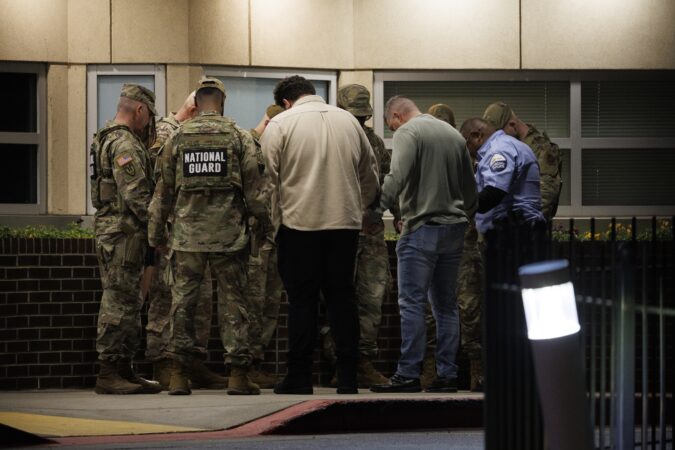
WEST PALM BEACH, Fla. — President Donald Trump said that one of the two West Virginia National Guard members shot by an Afghan national near the White House had died, calling the shooter who had worked with the CIA in his native country a “savage monster.”
As part of his Thanksgiving call to U.S. troops, Trump said that he had just learned that Specialist Sarah Beckstrom, 20, had died, while Staff Sgt. Andrew Wolfe, 24, was “fighting for his life.”
“She’s just passed away,” Trump said. “She’s no longer with us. She’s looking down at us right now. Her parents are with her.”
The president called Beckstrom an “incredible person, outstanding in every single way.”
Trump used the announcement to say the shooting was a “terrorist attack” as he criticized the Biden administration for enabling Afghans who worked with U.S. forces during the Afghanistan War to enter the United States. The president has deployed National Guard members in part to assist in his administration’s mass deportation efforts.
Trump suggested that the shooter was mentally unstable after the war and departure from Afghanistan.
“He went cuckoo. I mean, he went nuts,” the president said. “It happens too often with these people.”
Staff Sgt. Andrew Wolfe and Specialist Sarah Beckstrom.
The shooter worked with U.S. forces in Afghanistan
The suspect charged with the shooting is Rahmanullah Lakanwal, 29. The suspect had worked in a special CIA-backed Afghan Army unit before emigrating from Afghanistan, according to two sources who spoke to the Associated Press on condition of anonymity due to the sensitivity of the situation, and #AfghanEvac, a group that helps resettle Afghans who assisted the U.S. during the two-decade war.
Jeanine Pirro, the U.S. attorney for the District of Columbia, declined to provide a motive for Wednesday afternoon’s brazen act of violence which occurred just blocks from the White House. The presence of troops in the nation’s capital and other cities around the country has become a political flashpoint.
The Veterans of Foreign Wars post in Webster Springs, where Beckstrom is from, will hold three prayer vigils Thursday, Friday, and Saturday evenings, according to a Facebook post from the Webster County Veterans Auxiliary.
Pirro said that the suspect, Lakanwal, launched an “ambush-style” attack with a .357 Smith & Wesson revolver. The suspect currently faces charges of assault with intent to kill while armed and possession of a firearm during a crime of violence. Pirro said that “it’s too soon to say” what the suspect’s motives were.
The charges could be upgraded, Pirro said, adding: “We are praying that they survive and that the highest charge will not have to be murder in the first degree. But make no mistake, if they do not, that will certainly be the charge.”
The rare shooting of National Guard members on American soil, on the eve of Thanksgiving, comes amid court fights and a broader public policy debate about the Trump administration’s use of the military to combat what officials cast as an out-of-control crime problem.
Trump issued an emergency order in August that federalized the local police force and sent in National Guard troops. The order expired a month later. But the troops have remained in the city, where nearly 2,200 troops currently are assigned, according to the government’s latest update.
The guard members have patrolled neighborhoods, train stations and other locations, participated in highway checkpoints and been assigned to pick up trash and guard sports events. The Trump administration quickly ordered 500 more National Guard members to Washington following Wednesday’s shooting.
The suspect who was in custody also was shot and had wounds that were not believed to be life-threatening, according to a law enforcement official who was not authorized to discuss the matter publicly and spoke to AP on condition of anonymity.
Shooting raises questions about legacy of Afghanistan War
A resident of the eastern Afghan province of Khost who identified himself as Lakanwal’s cousin said Lakanwal was originally from the province and that he and his brother had worked in a special Afghan Army unit known as Zero Units in the southern province of Kandahar. A former official from the unit, who spoke on condition of anonymity because of the sensitivity of the situation, said Lakanwal was a team leader and his brother was a platoon leader.
The cousin spoke to the Associated Press on condition of anonymity for fear of reprisals. He said Lakanwal had started out working as a security guard for the unit in 2012, and was later promoted to become a team leader and a GPS specialist.
Kandahar is in the Taliban heartland of the country. It saw fierce fighting between the Taliban and NATO forces after the U.S.-led invasion in 2001 following the al-Qaeda attacks on Sept. 11. The CIA relied on Afghan staff for translation, administrative and front-line fighting with their own paramilitary officers in the war.
Zero Units were paramilitary units manned by Afghans but backed by the CIA and also served in front-line fighting with CIA paramilitary officers. Activists had attributed abuses to the units. They played a key role in the chaotic U.S. withdrawal from the country, providing security around Kabul International Airport as the Americans and withdrew from the country.
CIA Director John Ratcliffe said in a statement that Lakanwal’s relationship with the U.S. government “ended shortly following the chaotic evacuation” of U.S. service members from Afghanistan.
Lakanwal, 29, entered the U.S. in 2021 through Operation Allies Welcome, a Biden administration program that evacuated and resettled tens of thousands of Afghans after the U.S. withdrawal from the country, officials said. Lakanwal applied for asylum during the Biden administration, but his asylum was approved under the Trump administration, #AfghanEvac said in a statement.
The initiative brought roughly 76,000 people to the U.S., many of whom had worked alongside U.S. troops and diplomats as interpreters and translators. It has since faced intense scrutiny from Trump and others over allegations of gaps in the vetting process, even as advocates say there was extensive vetting and the program offered a lifeline to people at risk of Taliban reprisals.
The Philadelphia region played a crucial role in supporting the largest resettlement effort since the end of the Vietnam War, as the United States evacuated thousands of allies from Afghanistan as Kabul fell to the Taliban.
Philadelphia International Airport served as the nation’s main arrival point for more than 25,000 evacuees, about 1,500 of whom needed immediate medical attention for everything from diabetes to gunshot wounds. The flights to Philadelphia came from first-stop, emergency evacuation centers in Germany, Bahrain, Qatar, Spain, the United Arab Emirates, and elsewhere.
Most arrivals to Philadelphia were bused from the airport to temporary living quarters at Joint Base McGuire-Dix-Lakehurst in South Jersey. Others went to seven other military installations being used as “safe havens,” from where they were resettled in communities across the country.
At one point more than 11,000 Afghans were living in a tent city, christened “Liberty Village,” on the South Jersey base. The Trump administration recently designated the base as one of two military sites where it intends to hold immigration detainees.
Ultimately at least 600 evacuees were resettled in the Philadelphia area, many of them living in the Northeast, which already had a significant Afghan population.
Almost everyone who came to Philadelphia and to this country served the United States in a military, diplomatic, or development capacity, or was the family member of someone who did. Others worked in media, women’s organizations, or humanitarian groups that faced Taliban retaliation.
Lakanwal has been living in Bellingham, Wash., about 79 miles north of Seattle, with his wife and five children, said his former landlord, Kristina Widman.
The director of U.S. Citizenship and Immigration Services, Joseph Edlow, said in a social media post Thursday that Trump directed him to review the green cards of people from countries “of concern.”
Edlow didn’t name the countries. But in June, the administration banned travel to the U.S. by citizens of 12 countries and restricted access from seven others, citing national security concerns. Green card holders and Afghans who worked for the U.S. government or its allies in Afghanistan were listed as exempt.
Attack being investigated as terrorist act
FBI Director Kash Patel said the shooting is being investigated as an act of terrorism. Agents have served a series of search warrants, with Patel calling it a “coast-to-coast investigation.”
Washington Mayor Muriel Bowser, a Democrat, has previously questioned the effectiveness of using the National Guard to enforce city laws. Last week, a federal judge ordered an end to the deployment there, but the judge also paused her order for 21 days to allow the administration to remove the troops or appeal.
On Thursday, Bowser interpreted the shooting as a direct assault on America itself, rather than specifically on Trump’s policies.
“Somebody drove across the country and came to Washington, D.C., to attack America,” Bowser said. “That person will be prosecuted to the full extent of the law.”
Staff writer Jeff Gammage contributed to this article.