Category: Politics

Political news and coverage

  • Funding for Mayor Cherelle Parker’s H.O.M.E. initiative will be delayed until next year

    Funding for Mayor Cherelle Parker’s H.O.M.E. initiative will be delayed until next year

    Mayor Cherelle L. Parker promised to build or preserve 30,000 homes in her first term. But much of her plan to reach that goal now won’t get underway until her four-year term is more than halfway over.

    City Council this week again delayed a key piece of legislation that needs to pass before the Parker administration can sell hundreds of millions of dollars in city bonds, the primary source of funds for the myriad housing programs being created or expanded through the mayor’s Housing Opportunities Made Easy initiative, or H.O.M.E.

    The delay comes as lawmakers negotiate to amend the legislation — a resolution setting the first-year budget for H.O.M.E. — to increase spending levels beyond the currently proposed $195 million and to lower income eligibility thresholds for some programs, prioritizing poorer residents.

    The most recent setback came this week, when Council President Kenyatta Johnson canceled a Monday hearing to advance the resolution and declined to reschedule it before Thursday’s regular Council meeting, when the administration said the proposal would need to receive final approval for the first $400 million round of bonds to be sold in 2025. (The city plans to sell a second and final $400 million tranche of bonds in 2027.)

    The administration sent Johnson’s office an initial draft of the resolution in July, but the Council president has repeatedly delayed advancing the measure throughout the fall.

    “It is critically important to get the first-year spending plan right because what is agreed upon in the first year will influence all future spending for the H.O.M.E. program,” Johnson said in a statement explaining the cancellation of Monday’s hearing. “It is also essential that the final legislation include spending priorities important to City Councilmembers.”

    Parker is known as a hard-line negotiator who rarely cedes ground, and Johnson’s delays might be meant to send the signal that if she doesn’t bend on Council’s demands, he won’t meet her timelines.

    The saga marks a rare moment of discord between Parker and Johnson, who have worked hand in glove on most issues since both took office in January 2024 — including the passage of the initial package of legislation related to H.O.M.E. last spring.

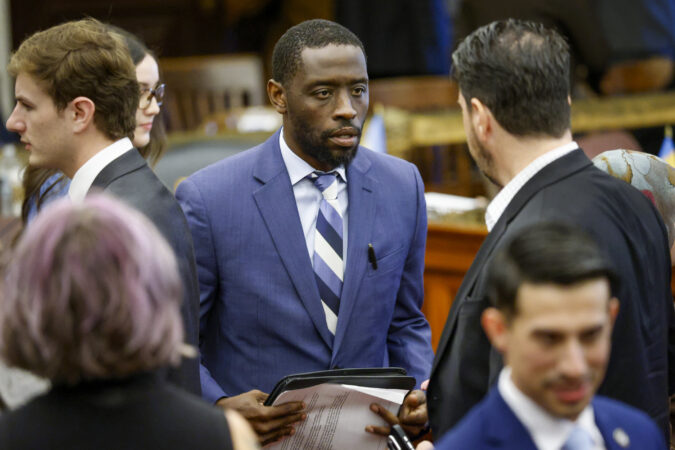
    At left is Council president Kenyatta Johnson speaking with Philadelphia Mayor Cherelle L. Parker before start of her press conference regarding her first budget in Philadelphia City Hall on Thursday, June 6, 2024.

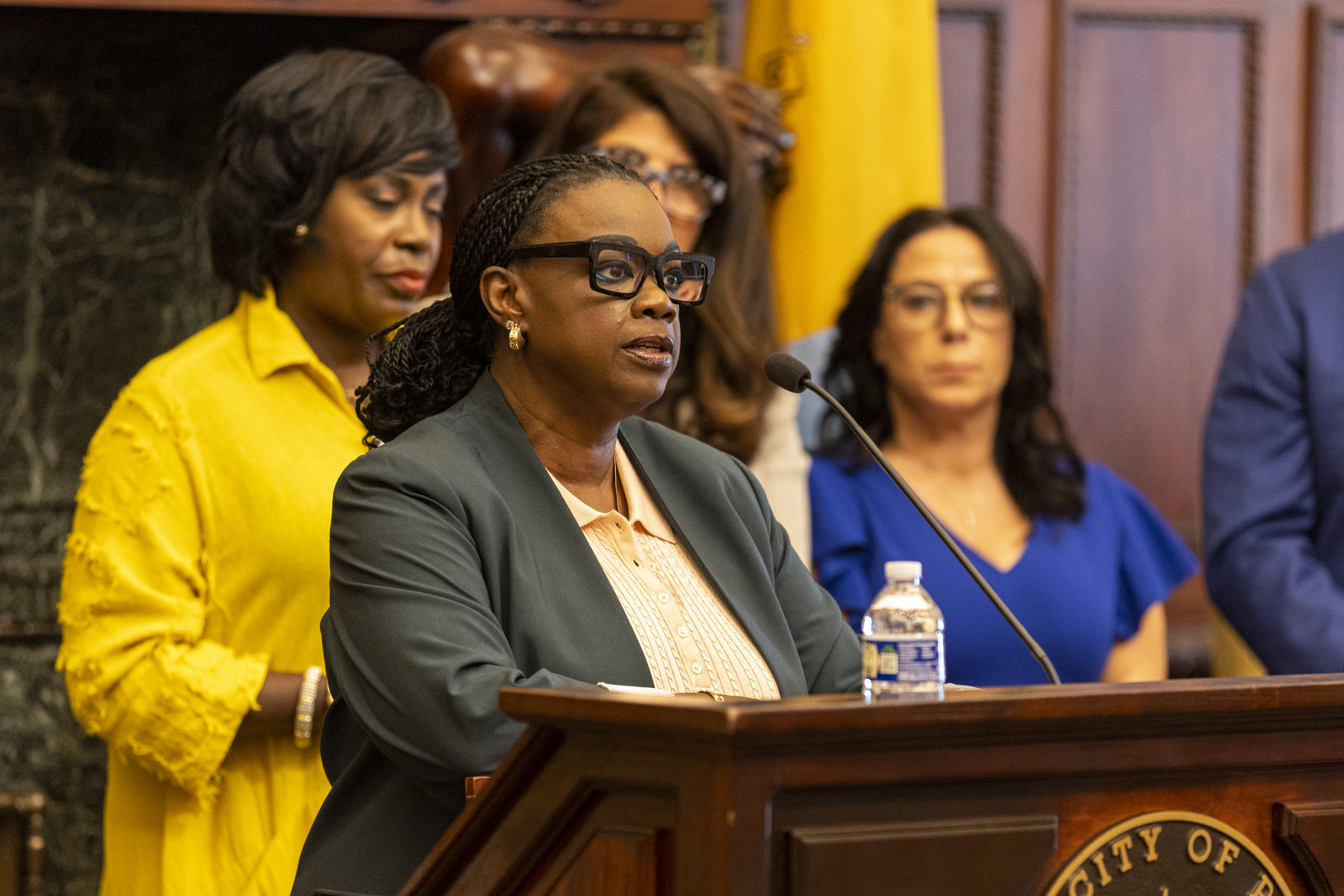
    In a hearing last week, Johnson appeared to side with lawmakers, led by Housing Committee Chair Jamie Gauthier, who were pushing for the administration to lower income thresholds for some H.O.M.E. programs, saying the city should prioritize the neediest Philadelphians.

    Parker has proposed expanding income eligibility requirements in some cases so that the programs can also be accessible to middle-class residents, saying she does not want to pit “the have-nots vs. the have-a-littles.”

    ‘Pit one against the other’

    Even with the bonds delayed until next year, the mayor does not appear to have given up the fight to maintain her vision for the housing initiative. At an unrelated Council hearing on the school district on Tuesday, Parker brought up the H.O.M.E. initiative unprompted.

    She then called out four Council members who have middle-class constituencies that are likely to benefit from increased income thresholds for housing programs: Curtis Jones Jr., whose district includes Roxborough and Overbook; Anthony Phillips, who represents East Mount Airy and West Oak Lane; Mike Driscoll, of the Lower Northeast; and Katherine Gilmore Richardson, who represents the city at large but is a Democratic ward leader for Wynnefield.

    “I am unapologetic about making sure that constituents represented by you … should not be left out of any investment that we make in the city of Philadelphia,” Parker said. “Every community can be lifted up with the work that we are doing, so I won’t let us pit one against the other.”

    The remarks, however, effectively pitted members with poorer constituencies against those with middle-class bases. Johnson represents Southwest Philadelphia and the western half of South Philly; Gauthier’s district covers much of West Philadelphia.

    Despite the dustup, it remains unlikely that a lasting fissure has emerged in Parker and Johnson’s relationship, given that they still share many policy priorities and can benefit each other politically.

    “Council President Kenyatta Johnson and I have an amazing working relationship,” Parker, a former Council member, said in an interview Monday. “Council has a right to do its due diligence. If I hadn’t been there, if I wasn’t a former staffer in there, maybe it would be foreign [to me]. No. We’re going through the process, and I have to trust the process.”

    Additionally, Johnson standing up for Council members’ concerns over the H.O.M.E. budget may help shield him from questions about whether he is overly compliant with the mayor’s agenda.

    “Both branches of government remain committed to ensuring the H.O.M.E. program is implemented transparently, equitably, and in a way that maximizes benefits to Philadelphia residents,” Johnson said in his statement. “Taking extra time to finalize these critical elements will result in a stronger, more effective program.”

    Tracking progress

    The administration is not waiting for the H.O.M.E. bonds to be sold to start notching wins for Parker’s 30,000 housing units goal. The city’s Philly Stat 360 website has already begun tallying units built and preserved during her tenure.

    To be sure, some of the mayor’s strategies for the H.O.M.E. initiative do not require bond money. For instance, Parker has led a shake-up of the Land Bank, which she hopes will accelerate the redevelopment of unoccupied city-owned parcels into housing, and she won Council approval last spring for zoning changes meant to streamline building.

    But the potential infusion of $800 million is undoubtedly the centerpiece of the initiative. The money will help launch programs like Parker’s One Philly Mortgage, which aims to provide 30-year fixed-rate loans to qualified homebuyers, and will buttress existing ones like the Basic Systems Repair Program, which has been credited with preventing the displacement of low-income residents who end up moving if they cannot afford needed home repairs.

    “It’s never been done in the history of our city, and we do that together in partnership with each other, and that’s what we’re working to do right now,” Parker said.

    Staff writers Jake Blumgart, Kristen A. Graham, and Anna Orso contributed to this article.

  • Trump signs bill to release Jeffrey Epstein case files after fighting it for months

    Trump signs bill to release Jeffrey Epstein case files after fighting it for months

    WASHINGTON — President Donald Trump signed legislation Wednesday that compels his administration to release files on convicted sex offender Jeffrey Epstein, bowing to political pressure from his own party after initially resisting those efforts.

    Trump could have chosen to release many of the files on his own months ago.

    “Democrats have used the ‘Epstein’ issue, which affects them far more than the Republican Party, in order to try and distract from our AMAZING Victories,” Trump said in a social media post as he announced he had signed the bill.

    Now, the bill requires the Justice Department to release all files and communications related to Epstein, as well as any information about the investigation into his death in a federal prison in 2019, within 30 days. It allows for redactions about Epstein’s victims for ongoing federal investigations, but DOJ cannot withhold information due to “embarrassment, reputational harm, or political sensitivity.”

    It was a remarkable turn of events for what was once a farfetched effort to force the disclosure of case files from an odd congressional coalition of Democrats, one GOP antagonist of the president, and a handful of erstwhile Trump loyalists. As recently as last week, the Trump administration even summoned one Republican proponent of releasing the files, Rep. Lauren Boebert of Colorado, to the Situation Room to discuss the matter, although she did not change her mind.

    But over the weekend, Trump did a sharp U-turn on the files once it became clear that congressional action was inevitable. He insisted the Epstein matter had become a distraction to the GOP agenda and indicated he wanted to move on.

    “I just don’t want Republicans to take their eyes off all of the Victories that we’ve had,” Trump said in a social media post Tuesday afternoon, explaining the rationale for his abrupt about-face.

    The House passed the legislation on a 427-1 vote, with Rep. Clay Higgins, R-La., being the sole dissenter. He argued that the bill’s language could lead to the release of information on innocent people mentioned in the federal investigation. The Senate later approved it unanimously, skipping a formal vote.

    It’s long been established that Trump had been friends with Epstein, the disgraced financier who was close to the world’s elite. But the president has consistently said he did not know of Epstein’s crimes and had cut ties with him long ago.

    Before Trump returned to the White House for a second term, some of his closest political allies helped fuel conspiracy theories about the government’s handling of the Epstein case, asserting a cover-up of potentially incriminating information in those files.

  • Woman who worked for N.J. Congressman Van Drew charged with false report of violent political attack

    Woman who worked for N.J. Congressman Van Drew charged with false report of violent political attack

    A 26-year-old Ocean City woman who worked for U.S. Rep. Jeff Van Drew was charged with falsely reporting that she had been seriously lacerated across her upper body in a politically motivated attack when she actually paid a Pennsylvania body modification artist $500 to cut her, according to a federal criminal complaint released Wednesday by the U.S. Attorney’s Office.

    Natalie Greene was charged with one count of conspiracy to convey false statements and hoaxes and one count of making false statements to federal law enforcement, acting U.S. Attorney Alina Habba said.

    In a statement provided Wednesday evening, Van Drew’s office said: “We are deeply saddened by today’s news, and while Natalie is no longer associated with the Congressman’s government office, our thoughts and prayers are with her. We hope she’s getting the care she needs.”

    Greene’s lawyer, Louis M. Barbone of the Jacobs & Barbone law firm in Atlantic City, said in a statement released Thursday: “At the age of 26, my client served her community working full time to assist the constituents of the Congressman with loyalty and fidelity. She did that while being a full-time student. Under the law, she is presumed innocent and reserves all of her defenses for presentation in a court of law.”

    On July 23, a coconspirator called 911 shortly after 10:30 p.m. to report that Greene had been attacked by three unknown men who knew her name and that she worked for Van Drew, according to the criminal complaint, which identifies him only as “Federal Official 1.”

    “They were attacking her. They were like talking about politics and stuff. They were like calling her names,” the coconspirator told 911, reporting that the attack occurred at the Egg Harbor Township Nature Preserve, the complaint said.

    The coconspirator, who was not named in the criminal complaint, allegedly said the attackers claimed they had a gun. “They said that if we don’t be quiet they were going to shoot us,” the coconspirator allegedly said, also explaining that she was able to flee the men but they still had Greene.

    Egg Harbor Township police arrived with a K9 dog and located Greene just off a nature trail lying on the ground with her feet and hands bound together with black zip ties, the complaint said.

    Greene’s shirt was pulled over her head and the words “Trump Whore” were written with black marker on her stomach, and “[Federal Official 1] is Racist” was written on her back, the complaint said.

    She had long crisscrossing lacerations on her upper chest, shoulder, back, neck, and lower right side of her face, the complaint showed with included photos.

    Greene was transported to a hospital, and then later transferred to a second hospital for treatment.

    Before Greene was taken to the first hospital, she was interviewed by police and asked to recount what happened. When police asked to check Greene’s Maserati SUV, her coconspirator became agitated and said she didn’t think the police needed to search the vehicle, the complaint said.

    However, Greene consented to a search and police found two black zip ties similar to the zip ties used on Greene, as well as a roll of duct tape, the complaint said.

    Investigators later found that location data from Greene’s phone showed that on the day of the alleged attack, she had traveled to the scarification artist’s studio in Pennsylvania, then to Ventnor, where the coconspirator lived, the complaint said.

    Two days earlier, someone using the coconspirator’s phone did a Google search for “zip ties near me,” the complaint said.

    Investigators later reviewed surveillance video from a Dollar General store in Ventnor that showed the coconspirator at the store 40 minutes after the Google search was made, the complaint said. The store sold black zip ties similar to what was used on Greene and the same duct tape, though the video did not show her purchasing zip ties while she did purchase other items. The surveillance video only showed the cash register area and not other parts of the store, the complaint said.

    On July 25, Greene was interviewed by agents from the FBI Joint Terrorism Take Force and Egg Harbor Township police detectives, and she again reported that she was attacked and cut up by three men, the complaint said.

    She also was asked to describe any threats made to Van Drew’s office.

    “There’s so many. I mean. Yeah, racist um. Windmills belong on your grave. Like stupid, I mean like there, they have a bunch of little things on there that they’ll write on there. We have them all, you can look at all of them. But um. Yeah we keep em just. We keep all of our hate mail. We recently got like, a letter with like powder in it and stuff,” she said, according to the complaint

    Greene was asked if the powder incident was recent.

    “Yeah very recent. Like maybe a week ago. And are to the point where our Chief of Staff was like you guys need to be using gloves to open the mail. Stuff like that,” she allegedly said.

    A review of phone records showed that Greene had a Reddit account that followed communities for “bodymods” and “scarification,” the complaint said.

    On July 30, the FBI visited the studio in Pennsylvania and obtained a consent form signed by Greene with a copy of her New Jersey driver’s license that she allegedly provided the day of the reported attack, according to the complaint.

    The FBI also obtained the receipt showing that Greene allegedly paid the studio $500 cash, as well as photos the artist took of his work on Greene’s body.

    The photos showed the cuts made by the artist matched the cuts photographed at the hospital, the complaint said.

  • Trump administration tells Dems it has no timeline for confining immigrants at South Jersey base

    Trump administration tells Dems it has no timeline for confining immigrants at South Jersey base

    It doesn’t look like the Trump administration will begin holding undocumented immigrants at a South Jersey military base anytime soon.

    Democratic elected officials said Wednesday that they received a letter from the administration saying there is currently no approved construction plan, nor a timeline, for confining people at Joint Base McGuire-Dix-Lakehurst.

    The administration previously announced plans to include the base among the military sites it wants to use as immigration detention centers, as it presses its arrest-and-deportation agenda.

    Estimates are that the base, which spans parts of Burlington and Ocean Counties, could hold 1,000 to 3,000 detainees. Specifics surrounding the when, where, and how of that undertaking remain unknown.

    New Jersey U.S. Reps. Donald Norcross and Herb Conaway, Democratic members of the House Armed Services Committee, announced that they received a response earlier this week from the Department of Homeland Security after requesting more information about the administration’s plans.

    “The Trump Administration’s ongoing disregard for due process and humane treatment of undocumented immigrants has required us to press repeatedly for answers and fulfill our congressional oversight responsibilities,” the lawmakers said in a joint statement. “While we acknowledge that the Department of Homeland Security has finally responded to our questions, we will continue to monitor for any further developments.”

    Their priority, the lawmakers said, is to uphold standards of human rights to ensure that plans to detain immigrants do not interfere with military readiness.

    The administration’s response said the government’s need for more detention space “reflects the Trump administration’s commitment to restoring the rule of law and ending the catch-and-release policies of prior years that jeopardized American communities.”

    Trump administration officials earlier named the base as one of two sites in the country now certified to assist in the president’s plan to remove millions of immigrants. The other is Camp Atterbury in Indiana.

  • Philly City Council is advancing legislation to let members keep their jobs while running for Congress

    Philly City Council is advancing legislation to let members keep their jobs while running for Congress

    Philadelphia City Council is attempting once again to change city law to allow members to keep their jobs while running for higher office, an effort that has already failed three times in the last 20 years.

    Maybe the fourth time’s really the charm?

    This attempt is a little bit different. A Council committee on Wednesday advanced legislation to change the 70-year-old resign-to-run rule that requires city officeholders to leave their jobs while campaigning for another office.

    But the legislation — which must be approved by a majority of voters through a ballot question — doesn’t repeal the rule entirely. It merely narrows it to allow members to keep their seats if they are seeking state or federal office, such as seats in Congress or the state General Assembly.

    Under the new proposal, Philadelphia’s resign-to-run rule would remain in place for members seeking a city office, like mayor or district attorney.

    That distinction makes the rule change more likely to become reality, said Councilmember Isaiah Thomas, who sponsored the legislation even though voters rejected attempts to eliminate the rule in 2007 and 2014.

    More than a year ago, Thomas proposed that the city try again to eliminate the rule entirely. But this week, he amended his proposal to apply only to those seeking state or federal office, calling that a compromise.

    “I personally think that you should be able to run for mayor and keep your seat in City Council,” Thomas said. “But that’s not what the majority of people who I’ve talked to feel. And I don’t think that this should be about how I feel. It should be about what’s best for the city.”

    A necessary measure or a barrier to entry?

    Thomas, a Democrat in his second term who represents the city at-large, is one of several Council members rumored to have aspirations for higher office. But there is not currently an obvious seat for him or his colleagues to seek.

    The earliest a rule change could be implemented is next year — too late for a Council member to run without resigning in the crowded and closely watched race to succeed retiring U.S. Rep. Dwight Evans (D., Philadelphia).

    Thomas said he is not currently interested in serving in Washington — he has two young children — but said he has some “amazing colleagues” who may want to run for Congress in the future.

    Councilmember Isaiah Thomas speaks during a City Council Committee on Legislative Oversight hearing held at the Museum of the American Revolution in April.

    The resign-to-run rule has been codified in the Home Rule Charter since 1951 when the charter was established. Proponents have long said that public servants should not be influencing policy while campaigning for another office.

    But others contend that the rule — which applies to Council members, row office holders, and members of the mayor’s administration — creates an unnecessary barrier for people who want to run for higher office but can’t financially withstand giving up their salary.

    The rule also recently led to a handful of lawmaker vacancies. In 2022, six of City Council’s 17 members — including now-Mayor Cherelle L. Parker — resigned to run for mayor, at times making it complicated for the city’s legislative body to govern.

    Ethics questions emerge

    Multiple ethics officers said they oppose the change as it’s currently proposed. Jordana Greenwald, general counsel for the city’s Board of Ethics, said the board was not involved in drafting the rule change, and has a handful of “technical” concerns about its implementation.

    “What we don’t want is for this to be passed and then it to become something where there are unintended problems or pitfalls for people who choose to take advantage,” Greenwald said.

    Thomas said there is “plenty of time” to address the board’s concerns before passage. He is hopeful the legislation can be passed in time for a question to appear on the 2026 primary election ballot in May.

    But Lauren Cristella, CEO of the good-government group Committee of Seventy, questioned the urgency and said Council should give the Board of Ethics time to do its “due diligence.”

    While the Committee of Seventy has supported past attempts to repeal resign-to-run, Cristella said she does not understand the purpose of a carveout for members seeking state or federal office.

    And she said any repeal should be paired with a three-term limit for Council members, who are currently not term limited.

    “Philadelphians deserve comprehensive, not piecemeal, reform here,” she said.

    Several Council members said they support Thomas’ legislation, pointing out that state and federal lawmakers do not need to resign from their jobs to seek higher office.

    “It’s an issue of consistency across the board,” said Councilmember Cindy Bass, a Democrat who represents parts of North and Northwest Philadelphia. “It’s crazy when everyone’s doing something different.”

  • Delco GOP reports vandalism to Media police in second incident in 13 months

    Delco GOP reports vandalism to Media police in second incident in 13 months

    Staff members arrived at the Delaware County Republican Party headquarters in Media on Wednesday morning to find the building’s glass door shattered.

    The apparent vandalism appeared to have occurred overnight, said Frank Agovino, the party chair. The Media Police Department, he said, is investigating.

    The incident comes a year after the local party had to call police to the same office when protesters cornered two volunteers ahead of the presidential election.

    “It’s just a sign of the times, unfortunately,” Agovino said. “There’s some people who just refuse to be civil about political disagreements.”

    It was unclear who damaged the office or their motive. However, according to photos shared to Facebook by the Delaware County GOP, a sign identifying the office as a Republican office was posted on the door above the broken glass.

    The Media Police Department did not immediately comment on the incident.

    Political violence has become increasingly common across the United States in recent years, including the September killing of right-wing activist Charlie Kirk.

    Agovino called for state and federal officials to consider stricter penalties for the perpetrators of such violence.

    “People that are working in the political arena need to be protected,” he said.

    This suburban content is produced with support from the Leslie Miller and Richard Worley Foundation and The Lenfest Institute for Journalism. Editorial content is created independently of the project donors. Gifts to support The Inquirer’s high-impact journalism can be made at inquirer.com/donate. A list of Lenfest Institute donors can be found at lenfestinstitute.org/supporters.

  • Trump administration says it wants to ‘completely deconstruct’ SNAP program. Here’s what’s actually happening.

    Trump administration says it wants to ‘completely deconstruct’ SNAP program. Here’s what’s actually happening.

    SNAP benefits are restored, and the program is funded through next year. But the Trump administration is now looking to “completely deconstruct the program,” its top USDA official said.

    Agriculture Secretary Brooke Rollins said that millions of low-income Supplemental Nutrition Assistance Program recipients will have to reapply for their benefits as part of an effort to crack down on “fraud.”

    “It’s going to give us a platform and a trajectory to fundamentally rebuild this program, have everyone reapply for their benefit, make sure that everyone that’s taking a taxpayer-funded benefit through SNAP or food stamps, that they literally are vulnerable, and they can’t survive without it,” she told Newsmax last week.

    On Tuesday, Rollins told Fox Business that her plan is for the U.S. Department of Agriculture to “completely deconstruct” SNAP.

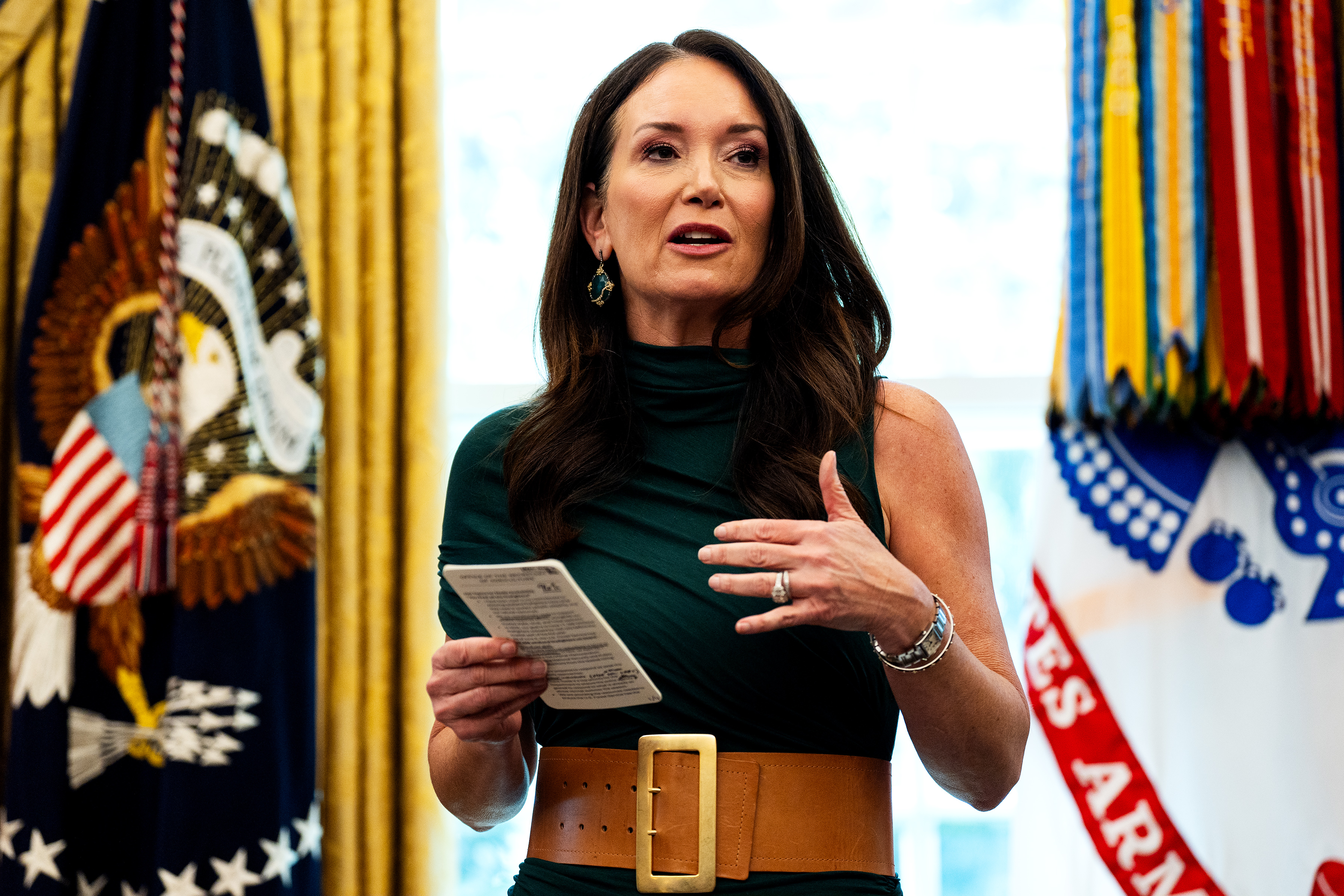
    Agriculture Secretary Brooke Rollins speaks to the media in the Oval Office of the White House in June. Rollins had various roles in the first Trump administration.

    However, there is no official guidance from USDA on the plans Rollins spoke of and the rules have not changed, said Community Legal Services staff attorney Mackenzie Libbey.

    “Most SNAP recipients in Pennsylvania are already required to reverify household and income information every six months. SNAP recipients should continue submitting their semiannual reports and annual renewals as the current rules require,” Libbey said.

    In a statement, the USDA did not confirm the existence of new changes to SNAP. Instead, a spokesperson for the agency said the “standard recertification processes for households is a part of that work.”

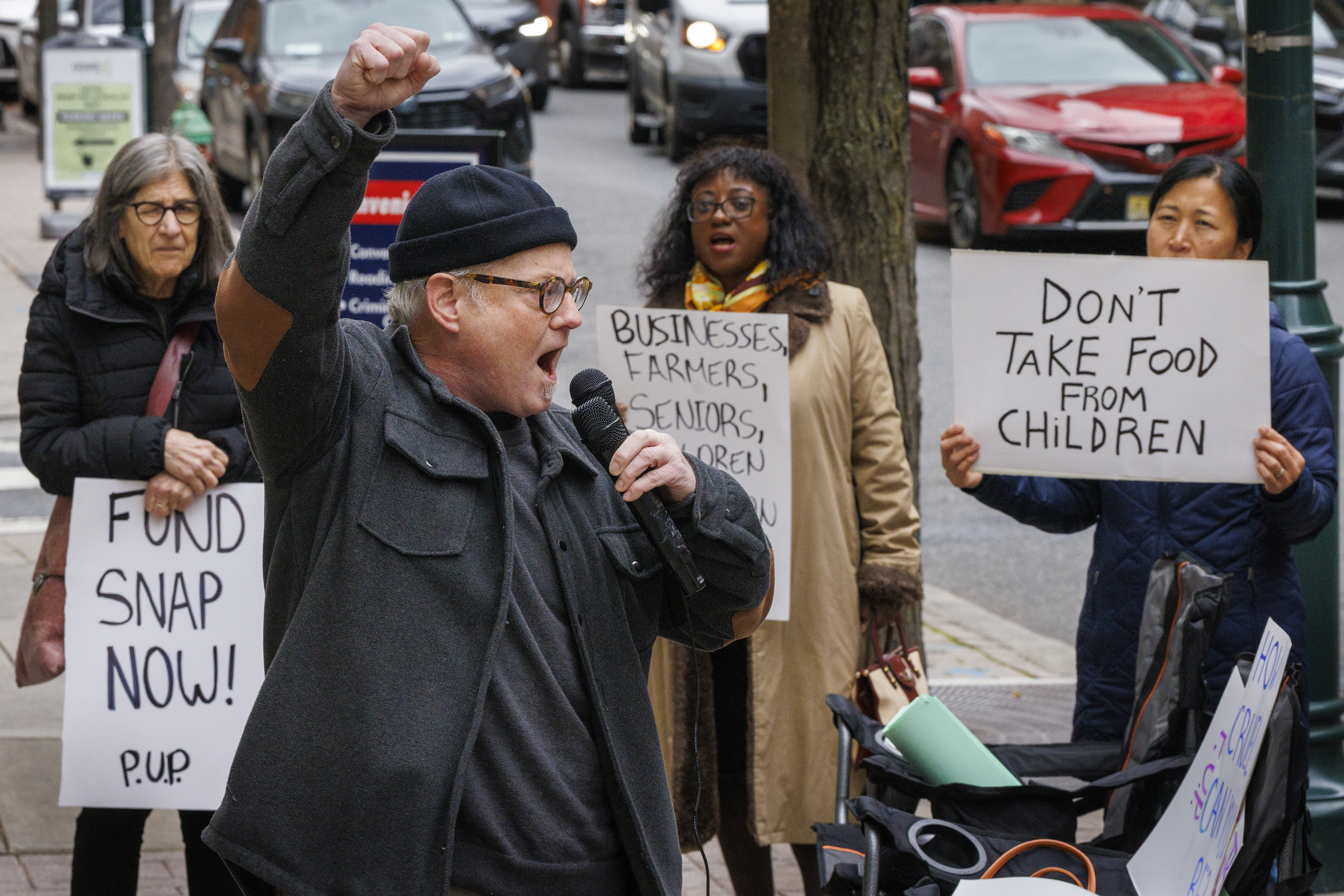
    Jeff Garis, Outreach and Patnership Director, Penn Policy chants during rally along side SNAP recipients, clergy members, and other advocates at a rally and news conference outside of Reading Terminal Market, to urge the Trump administration to restore full SNAP funding, Wednesday, November 12, 2025.

    Are SNAP benefits changing?

    There are a few changes to SNAP work requirements that were implemented on Sept. 1 and Nov. 1.

    President Donald Trump in September signed new requirements into law that denied states the ability to waive work requirements for most SNAP recipients. Work requirement waivers are now available only for specific reasons, such as pregnancy, needing to be home to care for someone ill, or participation in a drug or alcohol treatment program, to name a few.

    On Nov. 1, some older low-income Americans were forced back to work when Congress and Trump passed additional work requirements, raising the maximum working age cap from 54 to 64 years old.

    Parents with dependents age 14 and over also must go back to work or lose benefits. Previously, SNAP recipients with dependents under 18 did not have to meet work requirements. Veterans and former foster youth ages 18 through 24 are no longer exempt from work requirements either, under new federal law.

    Do you have to reapply for SNAP benefits?

    SNAP recipients do not currently need to reapply to the program. SNAP recipients should continue filing their semiannual reports every six months to recertify their income and household.

    Lisa Mellon, 59, of Bridesburg, Pa., is walking her groceries to her friends car, who was kind enough to driver her around 40 minutes to the Feast of Justice at St. John’s Lutheran Church and back home on Tuesday, Nov. 11, 2025.

    Will snap benefits be issued in December?

    Yes. The SNAP program is funded through Sept. 30, 2026, after Congress reached an agreement on a spending deal last week. Most other federal government agencies and programs are funded only through Jan. 30.

    Congress will need to strike another spending deal before the January deadline; otherwise the federal government could be shut down again.

    However, SNAP benefits have been guaranteed through next September regardless of another shutdown.

    How do you qualify for SNAP benefits?

    SNAP requirements are based on your work hours and income. Other factors, like whether a member of your household is disabled, elderly, or a veteran, can provide households with additional benefits.

    Resources:

    Work requirements

    SNAP recipients must be working, volunteering, or participating in an education or training program for at least 20 hours a week (or 80 hours a month). They also must report those work hours.

    These rules apply to you if you:

    • Are ages 18 through 64.
    • Do not have a dependent child under 14 years old.
    • Are considered physically and mentally able to work.

    Income requirements

    Households cannot exceed these monthly income limits to be eligible for SNAP benefits.

    How to apply for SNAP

    Apply for SNAP online, in person, or by mail.

    • Online: Apply online using Pennsylvania’s online benefits access tool, COMPASS, at www.compass.dhs.pa.gov.
    • In person: Find your county assistance office (CAO) at pa.gov/agencies/dhs/contact/cao-information. Visit your CAO and apply with help from staff.
    • Mail: Download and complete an application, available in English and Spanish. Mail or drop off the application to your county’s assistance office.
  • Congress acts swiftly to force release of Epstein files, and Trump agrees to sign bill

    Congress acts swiftly to force release of Epstein files, and Trump agrees to sign bill

    WASHINGTON — Both the House and Senate acted decisively Tuesday to pass a bill to force the Justice Department to publicly release its files on the convicted sex offender Jeffrey Epstein, a remarkable display of approval for an effort that had struggled for months to overcome opposition from President Donald Trump and Republican leadership.

    When a small, bipartisan group of House lawmakers introduced a petition in July to maneuver around Speaker Mike Johnson’s control of the House floor, it appeared a longshot effort — especially as Trump urged his supporters to dismiss the matter as a “hoax.”

    But both Trump and Johnson failed to prevent the vote. The president in recent days bowed to political reality, saying he would sign the bill. And just hours after the House vote, senators agreed to approve it unanimously, skipping a formal roll call.

    The decisive, bipartisan work in Congress Tuesday further showed the pressure mounting on lawmakers and the Trump administration to meet long-held demands that the Justice Department release its case files on Epstein, a well-connected financier who killed himself in a Manhattan jail while awaiting trial in 2019 on charges he sexually abused and trafficked underage girls.

    For survivors of Epstein’s abuse, passage of the bill was a watershed moment in a years-long quest for accountability.

    “These women have fought the most horrific fight that no woman should have to fight. And they did it by banding together and never giving up,” said Rep. Marjorie Taylor Greene as she stood with some of the abuse survivors outside the Capitol Tuesday morning.

    “That’s what we did by fighting so hard against the most powerful people in the world, even the president of the United States, in order to make this vote happen today,” added Greene, a Georgia Republican.

    In the end, only one lawmaker in Congress opposed the bill. Rep. Clay Higgins, a Louisiana Republican who is a fervent supporter of Trump, was the only “nay” vote in the House’s 427-1 tally. He said he worried the legislation could lead to the release of information on innocent people mentioned in the federal investigation.

    The bill forces the release within 30 days of all files and communications related to Epstein, as well as any information about the investigation into his death in federal prison. It would allow the Justice Department to redact information about Epstein’s victims or continuing federal investigations, but not information due to “embarrassment, reputational harm, or political sensitivity.”

    Even before the bill’s passage Tuesday, thousands of pages of emails and other documents from Epstein’s estate have been released from an investigation by the House Oversight Committee.

    Those documents show Epstein’s connections to global leaders, Wall Street powerbrokers, influential political figures and Trump himself. In the United Kingdom, King Charles III stripped his disgraced brother Prince Andrew of his remaining titles and evicted him from his royal residence after pressure to act over his relationship with Epstein.

    Trump’s reversal on the Epstein files

    Trump has said he cut ties with Epstein years ago, but tried for months to move past the demands for disclosure.

    Still, many in the Republican base continued to demand the release of the files. Adding to that pressure, survivors of Epstein’s abuse rallied outside the Capitol Tuesday morning. Bundled in jackets against the November chill and holding photos of themselves as teenagers, they recounted their stories of abuse.

    “We are exhausted from surviving the trauma and then surviving the politics that swirl around it,” said one of the survivors.

    Another, Jena-Lisa Jones, said she had voted for Trump and had a message for the president: “I beg you Donald Trump, please stop making this political.”

    The group of women also met with Johnson and rallied outside the Capitol in September, but have had to wait months for the vote.

    That’s because Johnson kept the House closed for legislative business for nearly two months and refused to swear-in Democratic Rep. Adelita Grijalva of Arizona during the government shutdown. After winning a special election on Sept. 23, Grijalva had pledged to provide the crucial 218th vote to the petition for the Epstein files bill. But only after she was sworn into office last week could she sign her name to the discharge petition to give it majority support in the 435-member House.

    It quickly became obvious the bill would pass, and both Johnson and Trump began to fold. Trump on Sunday said Republicans should vote for the bill.

    Yet Greene told reporters that Trump’s decision to fight the bill had betrayed his Make America Great Again political movement.

    “Watching this turn into a fight has ripped MAGA apart,” she said.

    How Johnson handled the bill

    Rather than waiting until next week for the discharge position to officially take effect, Johnson held the vote under a procedure that requires a two-thirds majority.

    But Johnson also spent a morning news conference listing off problems that he sees with the legislation. He argued that the bill could have unintended consequences by disclosing parts of federal investigations that are usually kept private, including information on victims.

    “This is a raw and obvious political exercise,” Johnson said.

    Still, he voted for the bill. “None of us want to go on record and in any way be accused of not being for maximum transparency,” he explained.

    Meanwhile, the bipartisan pair who sponsored the bill, Reps. Thomas Massie, R-Ky., and Ro Khanna, D-Calif., warned senators against doing anything that would “muck it up,” saying they would face the same public uproar that forced both Trump and Johnson to back down.

    “We’ve needlessly dragged this out for four months,” Massie said, adding that those raising problems with the bill “are afraid that people will be embarrassed. Well, that’s the whole point here.”

    Senate acts quickly

    Even as the bill cleared his chamber, Johnson pressed for the Senate to amend it to protect the information of “victims and whistleblowers.” But Senate Majority Leader John Thune quickly shut down that notion.

    As senators gathered in the chamber Tuesday evening for the first votes of the week, it became clear no one would object to passing the bill as written.

    Just before Senate Democratic leader Chuck Schumer called to pass the bill by unanimous consent, Oklahoma Sen. Markwayne Mullin, a Republican who is close to Trump, walked in the chamber and gave Schumer a thumbs-up. He then walked over to Schumer and shook his hand.

    “This is about giving the American people the transparency they’ve been crying for,” said Schumer, D-N.Y. “This is about holding accountable all the people in Jeffrey Epstein’s circle who raped, groom, targeted and enabled the abuse of hundreds of girls for years and years.”

  • Mayor Cherelle Parker defends ending racial diversity goals for Philly contracts: ‘Fighting the fight the way I know best’

    Mayor Cherelle Parker defends ending racial diversity goals for Philly contracts: ‘Fighting the fight the way I know best’

    Mayor Cherelle L. Parker faced criticism last week for quietly eliminating racial diversity goals from city contracting in what appeared to be a preemptive concession to the conservative legal movement’s dismantling of affirmative action.

    But this week, Parker is going on the offensive. The mayor said she was eager to eliminate the city’s racial participation targets long before the current legal threats to the policy emerged, saying the city’s 40-year-old effort to use its contracting process to boost diverse businesses had failed.

    “Did the Supreme Court ruling have anything to do with our decision-making? Absolutely,” Parker said Monday, referring to a 2023 ruling that threatened race-based affirmative action programs. “But it wasn’t the impetus for it. I ran on providing access to economic opportunity for all here in the city of Philadelphia.”

    That case, Students for Fair Admissions v. Harvard, could mark the beginning of the end for a wide variety of government programs that seek to boost diversity or aid people of color.

    In her first extensive comments since The Inquirer reported Parker’s administration had ended race- and gender-conscious contracting policies, the mayor defended her decision Monday at a last-minute “roundtable” meeting she organized in Northwest Philadelphia with business leaders.

    And she doubled down during a news conference Tuesday at the African American Chamber of Commerce headquarters, where she signed an executive order codifying the city’s shift to favoring firms that are registered as “small and local.”

    “We knew the system was broken years before,” Parker, the city’s first Black female mayor, said. “Because every time we would look at the numbers and we would want to see how many Black and brown and women and disabled business owners were growing in the city of Philadelphia, the numbers became stagnant.”

    Historically disadvantaged firms win city contracts worth more than $370 million annually, and supporters of the program criticized Parker for not fighting to preserve it.

    City Councilmember Kendra Brooks of the progressive Working Families Party said Parker was “caving” to President Donald Trump, whose administration has sought to roll back policies on diversity, equity, and inclusion.

    “People want to see leaders fighting for something,” Brooks said last week, “and right now we don’t see our city fighting for anything.”

    But Chief Deputy Mayor Vanessa Garrett Harley said Monday that the administration examined the Philadelphia Office of Economic Opportunity’s registry of disadvantaged businesses that should get a leg up in city procurement opportunities, and found that only 20% were actually winning contracts.

    “Obviously, it was not working,” Garrett Harley said.

    Deputy Mayor Vanessa Garrett Harley speaks during a press conference in Philadelphia, Pa., on Thursday, June 27, 2024.

    Parker said that setting diversity goals was not enough to grow women- and minority-owned businesses. Instead, she said, they need technical assistance, access to capital, and other tools so that they can develop to the point where they are able to regularly compete for city contracts without relying on set-asides.

    Her administration is focused on providing those resources, she said, and not just “checking boxes.”

    “I’m fighting,” Parker said. “But I’m fighting the fight the way I know best: to achieve the results and act and extract the tangible results that I need for the people who live in this city, who own businesses in the city.”

    ‘Small and local:’ A new world for city contracting

    Parker on Tuesday signed an executive order detailing city’s new contracting system. As previously detailed in The Inquirer, the city will now give preference to “small and local” firms rather than requiring participation for businesses owned by women, minorities, and people with disabilities.

    The executive order does not set a target goal for what share of city contracting dollars should go to “small and local” businesses.

    The city’s previous goal of directing 35% of contracting dollars to disadvantaged firms was similarly not enumerated in law. Instead, Parker’s order outlines a structure for setting benchmarks and providing assistance to firms seeking to do business with the city.

    For example, it charges the economic opportunity office with setting overall contracting goals, as well as establishing “participation ranges” for individual contracts. Those ranges will be used to give contractors benchmarks for money that should be set aside for subcontractors and suppliers that are considered disadvantaged businesses.

    The office is also responsible for maintaining the registry of small and local businesses. Garrett Harley said the “overwhelming majority” of businesses that are registered with the city as minority-, women-, or disabled-owned will qualify as “small and local.”

    Nadir Jones, the city’s director of business impact and economic advancement, said firms already registered with the city will be “grandfathered in” and will not need to register again as small or local.

    To qualify as “local,” a business must either be headquartered in Philadelphia city limits or meet two of three other criteria:

    • More than 60% of employees live in Philadelphia.
    • More than half of the business’ employees work in the city at least 60% of the time.
    • More than 75% of the business’ gross receipts came from Philadelphia.

    To qualify as “small,” Jones said, a business must have fewer than 750 employees.

    Parker said her administration is working with outside advisers to hone the program. That includes the African American Chamber of Commerce, which announced Tuesday it had established a Special Task Force on Economic Access and Procurement in response to the contracting changes.

    “We will continue to advocate for policies that are not only measurable and defendable, but also those that produce real impact,” said Regina Hairston, the organization’s president and CEO. “However, as we have recently learned, these policy changes are happening whether we fully support them or not.”

    A risk-averse legal strategy

    Parker’s elimination of racial diversity targets in city contracting — due in part to the hypothetical threat of litigation raised by City Solicitor Renee Garcia — in some ways parallels the mayor’s decision earlier this year to settle a lawsuit challenging a city tax break that primarily benefited small businesses.

    In both instances, critics said that the Parker administration overstated the legal jeopardy the programs faced and gave up without a fight. But there are key differences between Parker’s handling of the contracting goals and the tax break, which exempted firms’ first $100,000 in revenue from the business income and receipts tax, or BIRT.

    If anything, there was less of an immediate threat to the city’s contracting diversity goals, which are not facing any legal challenge. The administration instead preemptively abolished its racial diversity targets due to rulings on separate issues, such as affirmative action in college admissions or the city’s project labor agreements.

    The catalyst for Parker eliminating the BIRT exemption was a 2024 lawsuit filed by a Massachusetts medical device manufacturer challenging the constitutionality of the tax break. Critics of Parker’s decision argued that if the city had fought it in court, the case could have been thrown out because the company may have struggled to demonstrate harm, given that the tax break actually benefited the firm.

    Instead, the city settled with the company, and Parker pressed Council to remove the tax break from city law.

    Renee Garcia, Philadelphia City Solicitor speak on Jan 22, 2025 during a hearing exploring Philadelphia’s readiness and commitment to protecting immigrant, LGBTQ+, and other marginalized communities in preparation for the impending Trump administration.

    During the debate over the BIRT exemption, Garcia said Philadelphia could potentially lose hundreds of millions of dollars in tax revenue if it didn’t cave to the legal challenge. Critics of the city’s approach cast doubt on whether that was a realistic outcome.

    But in the case of the contracting DEI goals, the potential risks articulated by the administration are far less dire.

    Garcia said Monday the primary financial risk involved in maintaining the contracting diversity program is that if the city ever did get sued, and then lost a protracted court battle, it may have to pay the plaintiff’s attorney’s fees.

    She also cited the possibility of creating unwanted legal precedent if the hypothetical lawsuit against the city reached the U.S. Supreme Court and lost — something that could still happen if a suit is filed against any of the hundreds of jurisdictions across the country that still have racial participation goals in contracting.

    “This way, we do it on our terms,“ Garcia said. ”We have time to build it. We have a plan.”

    The most important difference between the business tax and contracting issues is that Parker was in favor of the BIRT exemption but does not support the old contracting system.

    In her budget address in March, Parker said she was begrudgingly seeking to end the tax break because state judicial rulings, in the administration’s view, had forced the city’s hand. But when it comes to the city’s contracting practices, Parker’s aims in some ways align with those seeking to undo longstanding city policy on diversity in contracting.

    The administration’s messaging on the issue has become somewhat mixed. On one hand, Garcia said Parker was “anguished” when she realized she had to make changes to the contracting system due to the legal environment.

    “She did not want to do this,” Garcia said.

    On the other hand, Parker said she has long planned to reform the contracting system. Asked if her policy goals or new legal rulings were driving the decision, Parker said: “It’s both. It’s not either/or.”

    “We are building something that does not exist here in the city of Philadelphia,” she said. “We are asking you to join the fight with us.”

  • EEOC sues Penn for failing to release information related to antisemitism investigation

    EEOC sues Penn for failing to release information related to antisemitism investigation

    The U.S. Equal Employment Opportunity Commission is suing the University of Pennsylvania for failing to release information related to an investigation it began in 2023 over the school’s treatment of Jewish faculty and other employees regarding antisemitism complaints.

    Penn, according to the complaint filed in federal court Tuesday, has not complied with a subpoena for information, including the identification of employees who could have been exposed to alleged harassment and the names of all employees who complained about the behavior.

    In its quest to find people potentially affected, the EEOC demanded a list of employees in Penn’s Jewish Studies Program, a list of all clubs, groups, organizations and recreation groups related to the Jewish religion — including points of contact and a roster of members — and names of employees who lodged antisemitism complaints.

    Penn usually does not comment on litigation, but in this case, the school ardently objected to the EEOC’s characterization of its cooperation and the personal nature of the material it was still seeking.

    The school said in a statement it has cooperated extensively with the EEOC, including providing more than 100 documents and over 900 pages.

    But the private university said it will not disclose personal information, specifically “lists of Jewish employees, Jewish student employees and those associated with Jewish organizations, or their personal contact information” to the government.

    “Violating their privacy and trust is antithetical to ensuring Penn’s Jewish community feels protected and safe,” the university said Tuesday.

    Penn also provided information on employees who complained and agreed that it could be shared, the school said, but the school would not provide information on those who objected.

    “Penn also offered to help the EEOC reach employees who are willing to speak with the agency by informing all employees of the investigation and how they could reach out to the agency,” the university said. “The EEOC rejected that offer.”

    The original complaint was launched by EEOC Commissioner Andrea Lucas, now chair of the body, on Dec. 8, 2023, two months after Hamas’ attack on Israel that led to unrest on college campuses, including Penn, and charges of antisemitism. It was also just three days after former Penn President Liz Magill had testified before a Republican-led congressional committee on the school’s handling of antisemitism complaints; the testimony drew a bipartisan backlash and led to Magill’s resignation days later.

    Lucas, who was appointed chair this year by President Donald Trump, also brought similar antisemitism charges against Columbia University that earlier this year resulted in the school paying $21 million for “a class settlement fund.”

    EEOC complaints typically come from those who allege they were aggrieved. Lucas, according to the complaint, made the charge in Penn’s case because of the “probable reluctance of Jewish faculty and staff to complain of harassing environment due to fear of hostility and potential violence directed against them.“

    The EEOC’s investigation ensued after Lucas’ complaint to the EEOC’s Philadelphia office that alleged Penn was subjecting Jewish faculty, staff, and other employees including students “to an unlawful hostile work environment based on national origin, religion, and/or race.”

    The allegation, the complaint said, is based on news reports, public statements made by the university and its leadership, letters from university donors, board members, alumni and others. It also cited complaints filed against Penn in federal court and with the U.S. Department of Education over antisemitism allegations and testimony before a congressional committee.

    The EEOC complaint pointed to public comments by Magill, addressing antisemitism while she led Penn.

    “I am appalled by incidents on our own campus, and I’ve heard too many heartbreaking stories from those who are fearful for their safety right here at Penn,” Magill said in 2023. “This is completely unacceptable.”

    Magill also in a message had addressed “a small number of Penn staff members” who “received vile, disturbing antisemitic emails that threatened violence against members of our Jewish community,” in November 2023.

    The complaint cited incidents of antisemitic obscenities being shouted on the campus, destruction of property in Penn’s Hillel, a swastika painted in an academic building, graffiti outside a fraternity and a pro-Palestinian encampment on the campus in 2024 that eventually was dismantled by police.

    “Throughout its investigation, the EEOC has endeavored to locate employees exposed to this harassment and to identify other harassing events not noted by respondent in its communications, but respondent has refused to furnish this information, thereby hampering the EEOC’s investigation,” the complaint said.

    Penn said it had received three antisemitism complaints, according to the federal complaint, but the EEOC questioned that number given the university’s workforce of more than 20,000. It demanded that the school provide names of all people who attended listening sessions as part of the school’s task force on antisemitism and all faculty and staff members who took the task force’s survey.

    Penn objected to the subpoena and the commission partially modified it in September, ordering the school to comply within 21 days, the complaint said.

    In its statement to The Inquirer, Penn defended its response to antisemitism.

    “Penn has worked diligently to combat antisemitism and protect Jewish life on campus,” the school said.