Category: Politics

Political news and coverage

  • DOJ prepares to send election monitors to California, New Jersey following requests from state GOPs

    DOJ prepares to send election monitors to California, New Jersey following requests from state GOPs

    LOS ANGELES — The Department of Justice is preparing to send federal election observers to California and New Jersey next month, targeting two Democratic states holding off-year elections following requests from state Republican parties.

    The DOJ announced Friday that it is planning to monitor polling sites in Passaic County, New Jersey, and five counties in southern and central California: Los Angeles, Orange, Kern, Riverside, and Fresno. The goal, according to the DOJ, is “to ensure transparency, ballot security, and compliance with federal law.”

    “Transparency at the polls translates into faith in the electoral process, and this Department of Justice is committed to upholding the highest standards of election integrity,” Attorney General Pam Bondi said in a statement to the Associated Press.

    Election monitoring is a routine function of the Justice Department, but the focus on California and New Jersey comes as both states are set to hold closely watched elections with national consequences on Nov. 4. New Jersey has an open seat for governor that has attracted major spending by both parties and California is holding a special election aimed at redrawing the state’s congressional map to counter Republican gerrymandering efforts elsewhere ahead of the 2026 midterms.

    The DOJ’s efforts are also the latest salvo in the GOP’s preoccupation with election integrity after President Donald Trump spent years refusing to accept the results of the 2020 election and falsely railing against mail-in voting as rife with fraud. Democrats fear the new administration will attempt to gain an upper hand in next year’s midterms with similarly unfounded allegations of fraud.

    The announcement comes days after the Republican parties in both states wrote letters to the DOJ requesting their assistance. Some leading Democrats in the states blasted the decision.

    New Jersey Attorney General Matt Platkin called the move “highly inappropriate” and said the DOJ “has not even attempted to identify a legitimate basis for its actions.”

    Rusty Hicks, chair of the California Democratic Party, said in a statement that “No amount of election interference by the California Republican Party is going to silence the voices of California voters.”

    California’s House districts at stake

    The letter from the California GOP, sent Monday and obtained by the AP, asked Harmeet Dhillon, who leads the DOJ’s Civil Rights Division, to provide monitors to observe the election in the five counties.

    “In recent elections, we have received reports of irregularities in these counties that we fear will undermine either the willingness of voters to participate in the election or their confidence in the announced results of the election,” wrote GOP chairwoman Corrin Rankin.

    The state is set to vote Nov. 4 on a redistricting proposition that would dramatically redraw California’s congressional lines to add as many as five additional Democratic seats to its U.S. House delegation.

    Each of the counties named, they alleged, has experienced recent voting issues, such as sending incorrect or duplicate ballots to voters. They also take issue with how Los Angeles and Orange counties maintain their voter rolls.

    California is one of at least eight states the Justice Department has sued as part of a wide-ranging request for detailed voter roll information involving at least half the states. The department has not said why it wants the data.

    Brandon Richards, a spokesman for Gov. Gavin Newsom, said the DOJ has no standing to “interfere” with California’s election because the ballot contains only a state-specific initiative and has no federal races.

    “Deploying these federal forces appears to be an intimidation tactic meant for one thing: suppress the vote,” he said in an email.

    Orange County Registrar of Voters Bob Page said he welcomes anyone who wants to watch the county’s election operations and said it’s common to have local, state, federal and even international observers. He described Orange County’s elections as “accessible, accurate, fair, secure, and transparent.”

    Los Angeles County Clerk Dean Logan said election observers are standard practice across the country and that the county, with 5.8 million registered voters, is continuously updating and verifying its voter records.

    “Voters can have confidence their ballot is handled securely and counted accurately,” he said.

    Most Californians vote using mail ballots returned through the Postal Service, drop boxes or at local voting centers, which typically leaves polling places relatively quiet on Election Day. But in pursuit of accuracy and counting every vote, the nation’s most populous state has gained a reputation for tallies that can drag on for weeks — and sometimes longer.

    In 2024, it took until early December to declare Democrat Adam Gray the winner in his Central Valley district, the final congressional race to be decided in the nation last year.

    Passaic County the target in New Jersey

    California’s request echoed a similar letter sent by New Jersey Republicans asking the DOJ to dispatch election monitors to “oversee the receipt and processing of vote-by-mail ballots” and “monitor access to the Board of Elections around the clock” in suburban Passaic County ahead of the state’s governor’s race.

    The New Jersey Republican State Committee told Dhillon that federal intervention was necessary to ensure an accurate vote count in the heavily Latino county that was once a Democratic stronghold, but shifted to President Donald Trump’s column in last year’s presidential race.

    The county could be critical to GOP gubernatorial nominee Jack Ciattarelli’s hopes against Democrat Mikie Sherrill. But the letter cited previous voter fraud cases in the county and alleged a “long and sordid history” of vote-by-mail shenanigans.

    In 2020, a judge ordered a new election for a city council seat in Paterson — the largest city in Passaic County — after the apparent winner and others were charged with voter fraud.

    Platkin said the state is committed to ensuring its elections are fair and secure. With the DOJ’s announcement, he said the attorney general’s office is “considering all of our options to prevent any effort to intimidate voters or interfere with our elections.”

    Election observers are nothing new

    Local election offices and polling places around the country already have observers from both political parties to ensure rules are followed. The DOJ also has a long history of sending observers to jurisdictions that have histories of voting rights violations to ensure compliance with federal civil rights laws.

    Last year, when the Biden administration was still in power, some Republican-led states said they would not allow federal monitors to access voting locations on Election Day.

    Trump has for years railed against mail voting as part of his repeated false claims that former President Joe Biden’s victory in 2020 was rigged. He alleges it is riddled with fraud, even though numerous studies have found no evidence of widespread fraud in U.S. elections.

    Earlier this year, Trump pledged to ban vote-by-mail across the country, something he has no power to do under the U.S. Constitution.

    The DOJ’s effort will be overseen by Dhillon’s Civil Rights Division, which will deploy personnel in coordination with U.S. attorney’s offices and work closely with state and local officials, the department said

    The department also is soliciting further requests for monitoring in other jurisdictions.

    David Becker, a former DOJ attorney who has served as an election monitor and trained them, said the work is typically done by department lawyers who are prohibited from interfering at polling places.

    But Becker, now executive director of the Center for Election Integrity & Research, said local jurisdictions normally agree to the monitors’ presence.

    If the administration tried to send monitors without a clear legal rationale to a place where local officials didn’t want them, “That could result in chaos,” he said.

  • Pentagon accepts $130 million donation to help pay the military during the government shutdown

    Pentagon accepts $130 million donation to help pay the military during the government shutdown

    WASHINGTON — The Pentagon confirmed Friday that it has accepted an anonymous $130 million gift to help pay members of the military during the government shutdown, raising ethical questions after President Donald Trump had announced that a friend had offered the gift to defray any shortfalls.

    While large and unusual, the gift amounts to a small contribution toward the billions needed to cover service member paychecks. The Trump administration told Congress last week that it used $6.5 billion to make payroll. The next payday is coming within the week, and it is unclear if the administration will again move money around to ensure the military does not go without compensation.

    “That’s what I call a patriot,” Trump said during a White House event Thursday when he disclosed the payment from the donor.

    The president declined to name the person, whom he called “a friend of mine,” saying the man didn’t want the recognition.

    The Pentagon confirmed it had accepted the donation on Thursday “under its general gift acceptance authority.”

    “The donation was made on the condition that it be used to offset the cost of Service members’ salaries and benefits,” said Sean Parnell, chief spokesman for the Pentagon. “We are grateful for this donor’s assistance after Democrats opted to withhold pay from troops.”

    Congress is at a stalemate over the government shutdown, now on track to become one of the longest federal closures ever, in its 24th day. Neither Republicans, who have control of the House and Senate, nor Democrats, in the minority, are willing to budge in their broader standoff over health care funding.

    Payment for service members is a key concern among lawmakers of both parties as well as a point of political leverage. The Trump administration shifted $8 billion from military research and development funds to make payroll last week, ensuring that military compensation did not lapse.

    But it is unclear if the Trump administration will be willing — or able — to shift money again next week as tensions rise over the protracted shutdown.

    While the $130 million is a hefty sum, it would cover just a fraction of the billions needed for military paychecks. Trump said the donation was to cover any “shortfall.”

    What’s unclear, however, is the regulations around such a donation.

    “That’s crazy,” said Max Stier, president and CEO of the Partnership for Public Service, a nonpartisan organization focused on the federal government.

    “It’s treating the payment of our uniformed services as if someone’s picking up your bar tab.”

    He questioned the legality of the donation and called for more transparency around it.

    Pentagon policy says authorities “must consult with their appropriate Ethics Official before accepting such a gift valued in excess of $10,000 to determine whether the donor is involved in any claims, procurement actions, litigation, or other particular matters involving the Department that must be considered prior to gift acceptance.”

  • Penn releases letter rejecting Trump compact

    Penn releases letter rejecting Trump compact

    The University of Pennsylvania on Friday afternoon released the letter that President J. Larry Jameson sent to the U.S. Department of Education last week, explaining why the school rejected the compact proposed by President Donald Trump’s administration.

    Several other schools, including the Massachusetts Institute of Technology, Dartmouth College, and Brown University, already have released their letters rejecting the compact.

    “Our university policies and practices are already aligned with many of the core principles of the Compact…” Jameson wrote. But “we find that significant portions of the Compact and its overarching framing would undermine Penn’s ability to advance our mission and the nation’s interests.”

    The “Compact for Academic Excellence in Higher Education” was the latest attempt by the Trump administration to force changes in the way universities operate as the president tries to reshape higher education to match his vision. It offered colleges that sign preferential consideration for federal funding. It’s still not clear what penalty, if any, Penn — which receives about $1 billion annually in federal funding — will face for not signing.

    “Institutions of higher education are free to develop models and values other than [those in the compact], if the institution elects to forego federal benefits,” the compact states.

    Penn last week declined to release its letter, but Jameson in a message to the campus community Friday afternoon said “in the spirit of transparency” he would share it. He said he’d received many requests for its release.

    The university has not had further discussions with the government since rejecting the compact, Jameson said, noting “we believe there remains opportunity to advance the long-standing relationship between American higher education and the federal government which has greatly benefited our community, nation and world.”

    But he also was clear that Penn’s greatest partnership is with the public.

    “America’s great universities already have a compact with the American people,” he said. “It is built on the open exchange of ideas, merit-based selection and achievement, and freedom of inquiry to yield knowledge. It affirms that knowledge should serve the public good, that education should remain a ladder of opportunity, and that discovery should make life better, richer, and freer.”

    Jameson highlighted seven areas where he said Penn and the compact appear to be in alignment and five areas that pose concerns.

    Areas of agreement include hiring and promotion standards and “merit based admissions” that comply with the law, including the 2023 U.S. Supreme Court decision that banned the use of race-based admission, Jameson said. The university also has reinstituted a standardized test score requirement for admission; Penn like many others had paused the requirement during the pandemic. And, its undergraduate student body is 13% international, Jameson said. That’s under the 15% mark that the compact would require.

    Penn also is in compliance with federal foreign gift regulations and has “viewpoint-neutral rules” governing protests and expression, he said.

    The university last year adopted an “institutional neutrality” policy, which states that the school will no longer make statements about world events unless they have a direct effect on Penn’s operations; the compact calls for schools to adhere to institutional neutrality.

    While the university hasn’t agreed to freezing tuition for five years as the compact asks, the school has taken steps to make education more affordable, Jameson said, noting that its aid is all grants and no loans and is need based. Nearly half its students receive aid, he said.

    And, Jameson said, Penn officials “share concerns about grade inflation and believe there may be an opportunity to engage the higher education community to seek a broader solution.”

    But Penn objects to federal funding being meted out based on signing a compact, Jameson said.

    “Research and our nation are better served by competition that rewards promise and performance,” he said. “Penn seeks no special consideration beyond fair and merit-based funding.”

    The compact fails to promise or even mention academic freedom, which is “the bedrock of our national system of higher education,” Jameson said. It seeks to protect conservative thought alone, he said.

    “One-sided conditions conflict with the viewpoint diversity and freedom of expression that are central to how universities contribute to democracy and to society,” Jameson wrote.

    He also objected to the compact mandating free tuition to students in the “hard sciences.”

    “We celebrate the sciences,” Jameson wrote. “However, we focus our financial aid efforts on those who cannot afford to pay, ensuring that a Penn education is accessible to those who are offered admission.”

    Jameson also called out the compact’s financial penalties for failing to comply “based on subjective standards and undefined processes.” That could endanger teaching and research, he said.

    “Universities must be accountable for their actions,” he wrote. “We believe that existing laws and policies suffice to achieve compliance and accountability.”

    Many groups on campus had spoken out against the compact and were watching closely, given that the university had struck an agreement with the Education Department in July over the participation of a transgender athlete on the women’s swim team.

    Penn’s announcement that it would reject the compact brought praise from local and state officials, including Democratic Gov. Josh Shapiro.

  • The government shutdown is disrupting air travel. Sean Duffy visited PHL to blame Democrats.

    The government shutdown is disrupting air travel. Sean Duffy visited PHL to blame Democrats.

    The federal shutdown messaging war was in full swing at Philadelphia International Airport Friday, where U.S. Transportation Secretary Sean Duffy blamed airline travel disruptions on Democrats, as air traffic controllers are slated to miss their first full paycheck next week.

    “If you’re seeing an increase in shutdowns right now, or delays, or cancellations, it’s because the Democrats won’t open the government back up,” said Duffy.

    Duffy also reiterated a Republican talking point, inaccurately accusing Democrats of pushing for a shutdown in order to extend health care to undocumented immigrants. Various policy experts, however, have found this claim to be false, as undocumented immigrants were already ineligible for Medicaid and insurance provided by the Affordable Care Act.

    Travel disruptions fueled by air traffic controller absences played a major role in pressuring politicians to relent and reopen government during the last government shutdown, which started in December 2018 and bled into the new year for a total of 35 days. As that shutdown dragged on, air traffic controllers who were working without pay began calling out sick, sparking major delays across the country.

    Though a PHL spokesperson said the airport has not experienced disruptions as a result of the shutdown to date, other hubs, including Newark Liberty International Airport, have. Duffy said while about 5% of delays are typically due to staffing shortages, that number has been as high as 53% since the shutdown began Oct. 1.

    Joining Duffy, Nick Daniels, president of the National Air Traffic Controllers Association, described how members report taking on side gigs delivering food or driving rideshares.

    Air traffic controllers were able to receive about 90% of their pay in their last check because most of their biweekly pay period fell before the shutdown.

    As more families feel the impact of the shutdown, Daniels said air traffic controllers would feel the stress at work and “instead of focusing on the safety of the American flying public, they’re now focusing on what they can’t afford to pay.”

    The visit to Philadelphia International Airport comes amid a back-and-forth between President Donald Trump‘s administration and Democrats. The White House’s official website has a “Government Shutdown Clock,” which tells visitors, “Democrats have shut down the government.” Other federal government sites blame the “Radical Left” or call the shutdown “Democrat-led.”

    Airports have not been immune to the shutdown messaging wars, with Homeland Security Secretary Kristi Noem blaming Democrats in a video sent to the travel hubs to play — the Transportation Security Administration is part of Noem’s department and TSA workers are not being paid during the shutdown. PHL and several other airports have refused to play the video, citing federal limits on political messaging they can display.

    Just last week, Pennsylvania Gov. Josh Shapiro‘s administration pushed back with its own messaging on the state Department of Human Services website.

    “Because Republicans in Washington D.C., failed to pass a federal budget, causing the federal government shutdown, November 2025 [Supplemental Nutrition Assistance Program] benefits cannot be paid,“ reads a banner on the website.

    For airports and travelers, the possibility of a prolonged shutdown brings the potential for disruptions during one of the most popular times to travel.

    What’s more, it could affect those in the Federal Aviation Administration’s training academy, hoping to become air traffic controllers. Those students continued to receive modest pay amid the shutdown — their instructors have not — but Duffy said money is slated to run out in as little as a week or two. The transportation secretary said fears of future funding issues have caused some students to drop out at a time the department is short some 3,000 air traffic controllers.

    TSA employees at PHL, meanwhile, are also suffering.

    Joe Shuker, Region 7 vice president for AFGE Council 100, which represents TSA employees there, said workers are being required to bring doctor’s notes if they call out, adding the cost of a copay to legitimately sick staff. Shuker, like Daniels, said employees were being encouraged to keep working.

    “However, at some point running out of money will be an issue,” he said as workers struggle to pay for gas, childcare, and mortgages.

    Duffy on SEPTA

    Ahead of his visit to PHL, Duffy wrote a blistering letter to Shapiro, blaming the Democrat for SEPTA’s financial woes and, in particular, for five Regional Rail train fires this year involving 50-year-old Silverliner IV cars.

    “Thankfully, no fatalities resulted, but the department will not stand by waiting for tragedy to strike,” Duffy told Shapiro. “If changes are not made immediately, it is only a matter of time before SEPTA’s crumbling commuter rail system erupts in flames and kills someone.”

    The governor clapped back. A spokesperson noted that Shapiro has fought for new, stable state funding for SEPTA and other transit agencies in the last two budgets — only to have Senate Republicans, who hold the majority in the chamber, kill the proposals.

    “Instead of issuing a press release, if Secretary Duffy actually wants to be helpful, he should call his fellow Republicans and get them to fund the governor’s mass transit funding package for SEPTA,” said Rosie Lapowsky, Shapiro’s press secretary. “We would be happy to provide their phone numbers.”

    The mass-transit agency has been pulling the 225 cars off the line for extensive safety inspections and repairs, acting on an Oct. 1 order from the Federal Railroad Administration, which regulates commuter rail. SEPTA also is installing a modern thermal detection system on the Silverliner IVs, which were built in the mid 1970s.

    The FRA order imposed a deadline of Oct. 31 and Duffy warned unrepaired rail cars could be ordered out of service if it is not met.

    “I want a great system for Philadelphia, that’s what I want,” Duffy said when asked about the letter at PHL. “If I can be helpful, I will, if I get resistance, we can we can be great friends, or we can be really bad enemies. I think we should be in the friend business and serve in this community.”

  • Killing of Kada Scott prompts hearing on Philly’s handling of domestic violence cases | City Council roundup

    Killing of Kada Scott prompts hearing on Philly’s handling of domestic violence cases | City Council roundup

    City Council will probe the Philadelphia justice system’s procedures for “protecting victims of abuse and domestic violence” following the killing of 23-year-old Mount Airy resident Kada Scott.

    Prosecutors have charged Keon King with murder and other crimes for allegedly kidnapping Scott, shooting her, and burying her body behind a closed East Germantown school in early October.

    King was arrested in two separate incidents in December and January in which authorities allege he violently assaulted an ex-girlfriend. In the second incident, he is accused of kidnapping her and choking her in his car.

    Philadelphia District Attorney Larry Krasner held a press conference at his office regarding the death of Kada Scott on Monday, October 20, 2025.

    District Attorney Larry Krasner’s office requested bail to be set at just under $1 million in that case. A judge instead set bail at $200,000, allowing King to be released after posting the necessary $20,000. Krasner’s office did not appeal the bond decision.

    Prosecutors then withdrew both cases after the victim and witnesses failed to appear in court. Krasner has admitted that dropping charges against King for the second incident was a mistake because there was enough video evidence to proceed with the prosecution. But he also directed blame at the courts for letting King out on bail following each arrest.

    “As the City of Philadelphia, I think we failed the young lady, right?” Council President Kenyatta Johnson told reporters Thursday. “You got two agencies, two city departments, pointing fingers at one another, and at the end of the day, that’s not going to bring resolution to the family. And so at the end of the day, that needs to be addressed. And so we’ll look at the system as a whole.”

    Council approved a resolution authored by Johnson that will allow the Committee on Public Safety to hold hearings on how the courts, sheriff’s office, district attorney’s office, and police department work to protect domestic violence victims.

    Kada Scott ‘a beacon of light and love’

    Remembering Scott: Council also approved a resolution by Councilmember Anthony Phillips honoring Scott’s life and legacy, describing her as a “a beacon of light and love, remembered for her faith, kindness and countless lives she touched.“

    Scott, who opened a beauty spa in Mount Airy when she was 19 years old, “was the kind of person who made others feel seen,” said Phillips, whose 9th District includes Mount Airy.

    Prosecutors have charged Keon King with the murder of Kada Scott, pictured.

    “Kada was a young woman whose light and kindness reflect the very best of us,” Phillips said in a speech on the Council floor. “She had vision and determination. She believed in the power of self-care, community, and purpose.”

    Councilmember Cindy Bass, whose 8th District includes the school where Scott’s remains were found, added that “it’s never been more important that we get our young men together.”

    “There is a vulnerability that exists, and protection is needed. Protection is important,” Bass said. “What we do and how we handle our situations in our community — there’s just so much to be done.”

    Childcare providers could get tax break

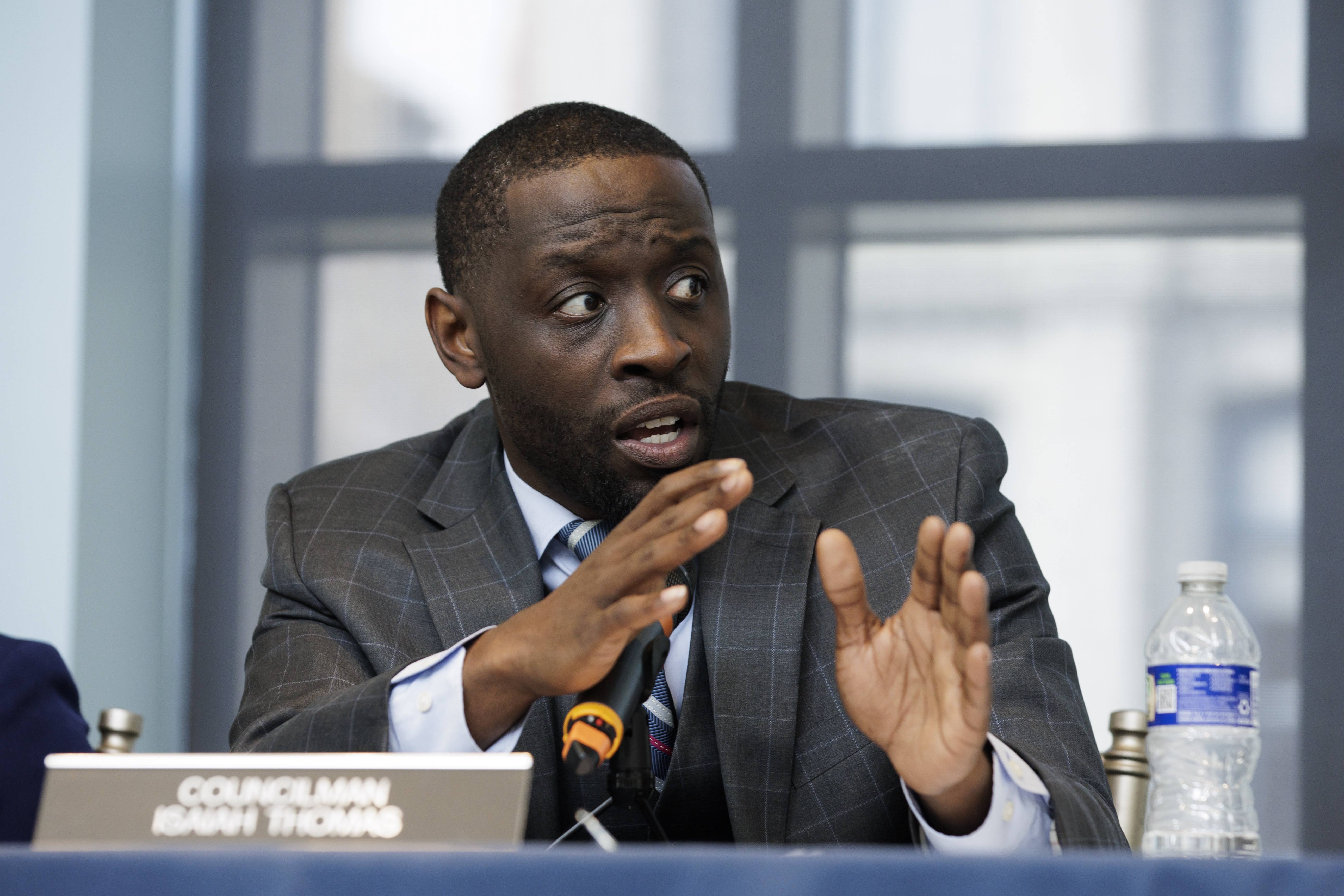
    Targeted relief: Councilmember Isaiah Thomas last spring pushed for the city to aggressively cut the business income and receipts tax, or BIRT.

    Johnson and Mayor Cherelle L. Parker ultimately went with a less aggressive schedule of tax cuts than Thomas had wanted. But the sophomore lawmaker is now trying another route to lighten the BIRT burden: cutting rates for a specific industry.

    Thomas on Thursday introduced a bill that would halve BIRT’s two tax rates for childcare providers, which are facing a nationwide crisis over costs, staffing, and financial viability. The gross receipts portion of BIRT would be reduced from 0.1415% to 0.07075% for daycare owners, and the net income rate would go from 5.81% to 2.805%.

    City Councilmember Isaiah Thomas wants to give daycares a tax break.

    “There’s one business and one industry in the city of Philadelphia that touches every district and a lot of families, especially working families, that are struggling,” Thomas said. “This legislation is another example of us trying to think through what we can do to support businesses who support families as well as families who are in need.”

    Regulatory bill sparked by Center City bike lane debate passes after arduous legislative process

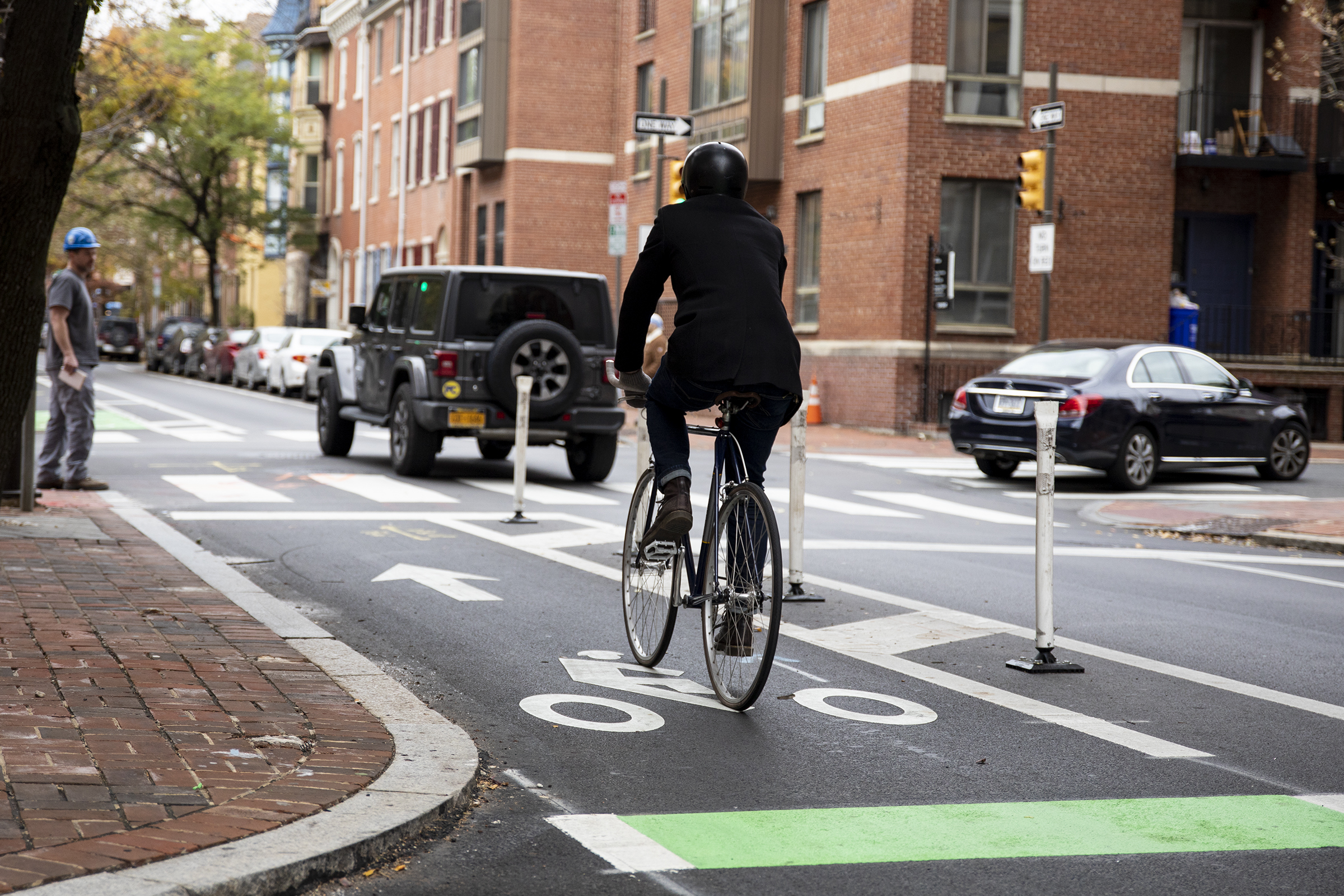
    Unloading over loading zones: Heated fights over legislation with narrow impact are nothing new in City Council, where limited proposals often become battlegrounds in larger disputes over issues such as gentrification or the opioid crisis.

    But a bill on loading zones in parts of Center City, approved Thursday, may have set a new standard.

    The bill, which was proposed by the Parker administration and carried by Johnson, will allow the mayor’s administration to add or remove loading zones in parts of Center City without new ordinances from Council.

    It ultimately passed in a 16-0 vote, with Councilmember Brian O’Neill absent.

    But the journey to Thursday’s vote began with the high-profile death of a cyclist, involved a lawsuit, went through two rounds of amendments limiting and expanding its scope, and ended with plans for further proposals to tweak the law.

    The saga began when Johnson passed a bill making it illegal for vehicles to idle in bike lanes following the 2024 death of Barbara Friedes, who was killed while riding in a bike lane on the 1800 block of Spruce Street. Parker’s administration then adjusted loading zones in Center City streets with bike lanes, with the goal of providing spaces for residents who used the bike lanes for unloading their vehicles.

    After neighbors complained the loading zones would take away a handful of parking spots, attorney George Bochetto successfully sued the city, with Common Pleas Court Judge Sierra Thomas Street this summer ruling the administration did not have the authority to promulgate loading zone regulations without Council approval.

    The case led to the revelation that a 1980s city law granting that regulatory authority was somehow never officially codified, throwing into legal jeopardy hundreds of parking regulations promulgated over the last four decades. The bill passed Thursday was intended to fix that legal conundrum by reiterating Council’s intention to grant the administration that authority.

    A cyclist rides along Spruce Street.

    But Johnson and Councilmember Mark Squilla, whose districts include parts of Center City, at one point amended the bill so that it applied only to loading zone regulations and to the Spruce and Pine Streets corridors, which have bike lanes. They eventually reversed course on the geography of the bill, adopting a new amendment allowing it to affect all areas of their districts included in the old law. But they maintained the part of the original amendment narrowing its scope to loading zones and not other parking rules.

    Meanwhile, Councilmember Jeffery “Jay” Young Jr., whose 5th District also has a slice of Center City, removed his territory from the bill entirely.

    Next, Councilmember Jamie Gauthier is expected to work with the administration to fix the regulatory black hole in University City, which is part of her 3rd District. And Johnson said Thursday he may be open to revisiting whether the administration should be given explicit statutory authority to regulate other parking rules beyond loading zones in the affected area of his district.

    “We always have an open mind,” he said.

    Quotable: Honoring the late Philadelphia newspaper editor Michael Days

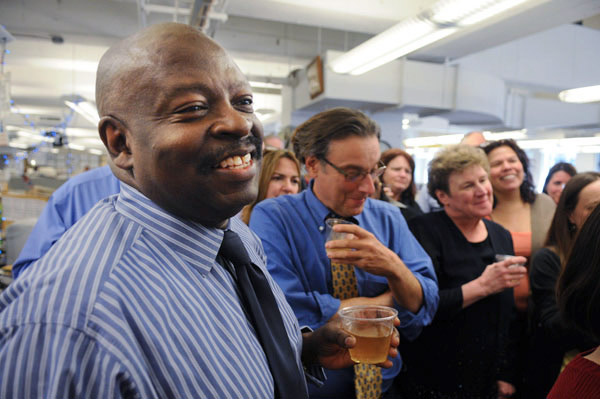
    Glory Days: Michael Days was a longtime editor of the Philadelphia Daily News, an executive at The Inquirer, and the inaugural president of the National Association of Black Journalists-Philadelphia.

    He died on Saturday in Trenton at 72 years old. Council on Thursday approved a resolution by Johnson and Majority Leader Katherine Gilmore Richardson honoring Days “for his extensive career serving Philadelphians.”

    Philadelphia Daily News Editor Michael Days celebrates with the newsroom after word of the Pulitzer win.

    A North Philadelphia native and devout Catholic, Days was revered as a principled reporter and editor, a mentor for young journalists of color, and a leader who helmed the Daily News when it won the 2010 Pulitzer Prize for investigative reporting.

    Staff writer Ellie Rushing contributed to this article.

  • Comcast is one of 37 ‘patriot donors’ paying for Trump’s $300 million White House ballroom

    Comcast is one of 37 ‘patriot donors’ paying for Trump’s $300 million White House ballroom

    Comcast is among 37 corporations, foundations, and individuals donating money to build President Donald Trump’s proposed ballroom where the East Wing of the White House once stood, according to CNN and various news reports.

    The exact amount that the Philadelphia-based global media and technology company will be contributing toward the estimated $300 million construction cost was not included on a list of donors provided to news media by the White House.

    Comcast officials didn’t comment Friday.

    The company has supported Trump in the past. It donated $1 million to Trump’s 2025 inaugural committee in December, The Philadelphia Inquirer reported. And it made a $250,000 donation to his 2017 inauguration, according to CNN.

    Despite the contributions, the Trump administration has attacked Comcast-owned media outlets such as NBC and MSNBC for content he’s found objectionable.

    The 90,000-square-foot ballroom, to be named after Trump, could hold close to 1,000 people for state dinners and events, Time magazine reported.

    The project is not without controversy.

    Trump lacked approval for construction from the National Capital Planning Commission, which signs off on construction work and major renovations to government buildings in the Washington area, according to the Associated Press.

    Ethics experts wonder whether donors are looking for special consideration from Trump.

    Claire Finkelstein, a University of Pennsylvania Carey Law School professor and director of the school’s Center for Ethics and the Rule of Law, said the ballroom project rouses “a lot of concerns,” according to FactCheck.org, a project of the Annenberg Public Policy Center at Penn.

    “Is he really going to use it for the duties of his office, or will he entertain a lot of individuals trying to curry favor with the administration or him personally?” Finkelstein asked. She wondered whether it could be “a misuse of public real estate.”

    Others complain that the administration initially pledged not to demolish the East Wing, which turned out “to be a lie,” according to New York Magazine.

    Comcast joins an elite roster of ballroom underwriters, including Amazon, Apple, Google, Lockheed Martin, Meta Platforms, Microsoft, and T-Mobile, according to NBC News.

    Also on the list are crypto, oil, and tobacco companies, owners of sports teams, and the foundations of several billionaires.

    Trump said he’ll contribute his own money to the ballroom’s construction, joining the list of what he calls “patriot donors.”

    Staff writer Sean Collins Walsh contributed to this article.

  • What is the Shutdown Fairness Act 2025?

    The Shutdown Fairness Act 2025 is a GOP-backed bill that would pay federal employees who are working during the government shutdown, with Republicans continuing to put pressure on Democrats to reopen the government.

    Senate Majority Leader John Thune earlier this week announced the measure, Senate Bill 3012, as hundreds of thousands of federal workers will miss their paychecks, while the military, while paid Oct. 15, face missing their Oct. 31 paychecks. This as families face food security issues, with SNAP benefits stretched thin.

    Senate Bill 3012, known as the S. 3012, is a measure that would pay federal employees who are working through the shutdown, including members of the military and contractors who support “excepted” work.

    Majority Whip Sen. John Barrasso, a Wyoming Republican, said live on the Senate floor on Thursday, Oct. 23, that there was “no single argument against passing it immediately” since it would pay the troops, Coast Guard, Border Patrol, members of ICE, air traffic controllers, TSA agents at airports, and Capitol police officers in Washington, D.C.

    The bill would provide “such sums as are necessary” to pay non-furloughed workers; however, Democrats have argued that all federal workers, including those on furlough, should be paid.

    The bill, sponsored by GOP Sen. Ron Johnson of Wisconsin, applies only to “excepted” federal employees whose work is considered essential during a period of prolapsed funding. Those employees continue to work but cannot get back pay until the shutdown is over. Nonessential workers are placed on furlough, and also get back pay.

    The bill was first proposed by Senate Majority Leader John Thune this week. The legislation requires the backing of Democrats, but some have warned the bill would give power to President Donald Trump.

    “We know what will happen — any agencies that he doesn’t like won’t get paid,” Sen. Chris Murphy, a Connecticut Democrat, told reporters earlier this week, per CBS News.

  • Democrats in Upper Darby accuse a GOP council candidate and former police officer of racist posts

    Democrats in Upper Darby accuse a GOP council candidate and former police officer of racist posts

    Bob Yantorno, a Republican candidate for a seat on the Upper Darby Township Council, is facing scrutiny over material he posted three years ago that Democrats have decried as racist.

    Yantorno, 65, is a former commanding officer of the Narberth Police Department, a former paramedic, and a veteran of other law enforcement agencies. He’s running in the township’s 3rd District.

    Yantorno denies that anything he has ever posted was motivated by racism and said his social media comments reflected his outrage over incidents of violence.

    The controversy stems from posts Yantorno made in 2022 on Twitter, now known as X, in response to crime news stories from Fox 29 that involved Black suspects.

    “Take him out back n bullet in occipital section,” Yantorno wrote about a suspect from Drexel Hill charged with two homicides.

    “Arrest convict bury,” Yantorno wrote in response to a booking photo of a Camden man accused of rape.

    In a 2022 reply to an Upper Darby Police Department statement about a rash of thefts from automobiles, Yantorno wrote under four photos of young men in hoodies walking near cars but not stealing anything, “Common denominator?”

    The race of the men was not obvious from the photos posted by the department.

    Democrat Noah Fields, 25, who is running for one of two at-large council seats, neither of which Yantorno is seeking, condemned Yantorno in an interview for what he said was “shocking” and “hateful” speech, as well as “violent rhetoric.”

    Fields said that “racism has no place in Upper Darby.” He added that “this guy is calling for the execution of people without due process. The violent rhetoric we’re hearing on the national level is trickling down to local politics.”

    State Rep. Heather Boyd (D., Delaware), who represents Upper Darby, said the posts were “really upsetting, offensive, and disappointing.”

    She added, “We don’t want anyone in a position of influence to not consider people’s right to due process and the rule of law.”

    Asked about the posts in an interview Wednesday, Yantorno initially said he was unaware of their existence.

    “I have no idea what you’re talking about. What Democrats are saying is slanderous. People put stuff out there about me that’s not true,” Yantorno said. “All I can tell you that in the Narberth Police Department, my reputation was stellar.”

    Yantorno said he didn’t know how posts with his name, photo, and personal details got onto X. His page says he joined the platform in 2022 and features a profile photo of him in police uniform.

    He bristled at being called racist. He added, “I would never put a picture of somebody of any color and disparage them because of their race.”

    Yantorno said that personal experience has made him sensitive to race bias. He said that when he and his first wife, whom he identified as a woman of color, moved into a house in Stonehurst, an Upper Darby neighborhood, someone stuck a cross in their lawn.

    It was, Yantorno said, a symbol of hatred aimed at his then-wife.

    Similarly, he said, when he was a police officer in Yeadon, he and his former wife “fell in love” with a house they wanted to buy, but had to back out of the deal because their real estate agent said if they moved in, “someone would burn down the house and the real estate office.”

    Yantorno added without being asked: “You will never see anything from me online using the N-word. That’s not how I roll, brother.”

    A statement emailed Thursday by the Upper Darby Republican Campaign Committee included remarks attributed to Yantorno that differed from his original explanation.

    In the new statement, Yantorno no longer said he was unaware of the posts. Instead, he said, “those comments reflected my frustration and anger over the senseless violence in our community and had nothing to do with race.” He added that “claims of racism are offensive and absurd.”

    A GOP committee statement, which was not attributed to a specific person, emphasized Yantorno’s commitment to public service and said that he does not deserve a “fabricated inference that has no basis in reality.”

    Jeff Jones, an Upper Darby real estate developer who has been a Republican candidate for the council in the past, defended Yantorno.

    “I read the tweets. They were comments made by a gentleman 35 years in law environment who’s seen criminals and victims at their worst, and the frustration came through in those tweets,” said Jones, who is Black.

    Melissa DiNofia-Bozzone, Yantorno’s Democratic opponent for the 3rd District seat, declined to comment on the posts, saying, “I’m focused on running a positive campaign.”

    Friends describe Yantorno, a veteran, as a gregarious person with a desire to help his community.

    In 2020, he biked across the United States to raise money for families of slain police officers. He also did the ride, he said, for the family of Daniel Faulkner, the Philadelphia police officer who was killed in 1981. Mumia Abu-Jamal received the death penalty for the shooting, which was later reduced to a life sentence without parole.

    Yantorno is also the author of a 1995 crime novel set in Philadelphia called Brutal Mercies. According to the publishing company, Trafford, the story opens with “a horrific act of mutilation” in Overbrook that “leaves the police asking, ‘Why?’”

    Staff writers Katie Bernard and Ryan W. Briggs contributed to this article.

  • Johnny Doc played a pivotal role electing his brother to the Pa. Supreme Court. Ten years later, things are different.

    Johnny Doc played a pivotal role electing his brother to the Pa. Supreme Court. Ten years later, things are different.

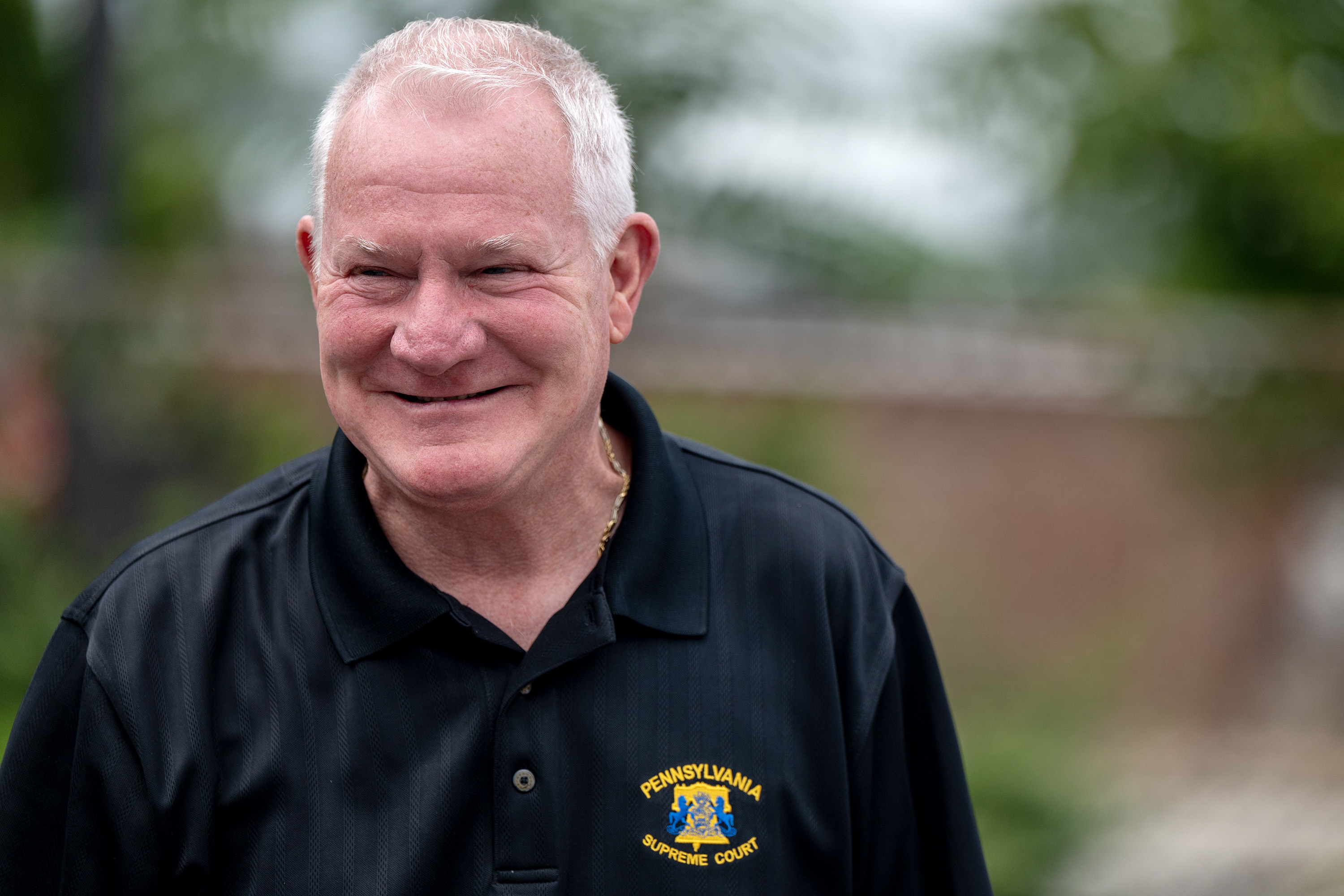
    As Pennsylvania Supreme Court Justice Kevin Dougherty knocked on doors in Northeast Philadelphia last month, a voter made a connection.

    Peering out his front door on a sunny September day, the man asked if the mild-mannered and smiling white-haired justice standing on his front porch was related to former labor leader John Dougherty. Widely known as “Johnny Doc,” the former head of Local 98 of the International Brotherhood of Electrical Workers and a onetime kingmaker in state and local politics was sentenced last year to six years in federal prison on embezzlement and bribery convictions.

    Despite the public fall from grace, the voter said he missed John Dougherty’s leadership in Philadelphia, adding that he believed Dougherty had been good for workers in the city. They are brothers, Kevin Dougherty confirmed.

    Justice Kevin Dougherty (left) canvasses with his son, State Rep. Sean Dougherty (center) in Fox Chase Sunday Sept. 7, 2025, stopping at the home of a voter. The elder Dougherty is one of three Pennsylvania Supreme Court justices up for retention.

    The justice had spent the day asking voters in his neighborhood to keep him and two other justices on the state’s Supreme Court for an additional 10-year term. At that stage, many voters were not even aware of the typically sleepy and nonpartisan contest on which both parties are spending millions in the lead-up to the Nov. 4 election.

    But in this year’s unusually high-profile state Supreme Court retention race, the connection has, in some circles, become unavoidable. Republicans seeking to oust Kevin Dougherty and two of his colleagues, all initially elected as Democrats, have sought to tie the judge to his brother’s misdeeds. The justice, a son of South Philadelphia who previously led Philadelphia’s Family Court, has sought to distance himself, and has seen the continued support of labor unions in his retention campaign.

    “Over the course of 25 years as a judge, including ten years as a Justice on the Supreme Court, Justice Dougherty has had the privilege and the benefit of meeting a multitude of Pennsylvanians including the working men and women of organized labor,” Shane Carey, Kevin Dougherty’s campaign manager, said in a statement. “Our campaign is proud to receive their support, as well as the support from almost 5,000 other individual donors.”

    How Johnny Doc helped elect his brother to the Supreme Court in 2015

    Kevin Dougherty didn’t choose to be related to one of the city’s most prominent power brokers, but he certainly benefited from his brother’s former union’s help, with significant support from the politically powerful Local 98 during his 2015 campaign for the state bench.

    Local 98, where John Dougherty was the longtime business manager, contributed more than $620,000 during Kevin Dougherty’s 2015 campaign for the Pennsylvania Supreme Court. Local 98’s spokesperson at the time also served as Kevin Dougherty’s campaign manager and appears from campaign finance filings that year to have been paid by Local 98. The union also spent more than $480,000 on in-kind contributions for “professional services,” mailers, merchandise, and more.

    Justice Kevin Dougherty talks with volunteers before they head out the canvass in Fox Chase Sunday Sept. 7, 2025. Dougherty is one of three Pennsylvania Supreme Court justices up for retention.

    Kevin Dougherty is the only justice up for retention from Southeastern Pennsylvania. The other justices, Christine Donohue and David Wecht, live in Pittsburgh. They will each appear on the November ballot with no party and no home county. Voters will simply be asked “yes” or “no” whether each individual justice should be retained for another term.

    Republicans working to oust the three justices this year have tried to leverage Kevin Dougherty’s past support from his brother to encourage voters to oppose his retention.

    Scott Presler, an influencer aligned with President Donald Trump who has more than 2.4 million followers and runs a political action committee aimed at registering Republican voters, posted an AI-generated image of John Dougherty behind bars, tying, without evidence, Local 98’s contributions to Kevin Dougherty’s 2015 campaign to his brother’s convictions.

    “Coincidence?” Presler wrote.

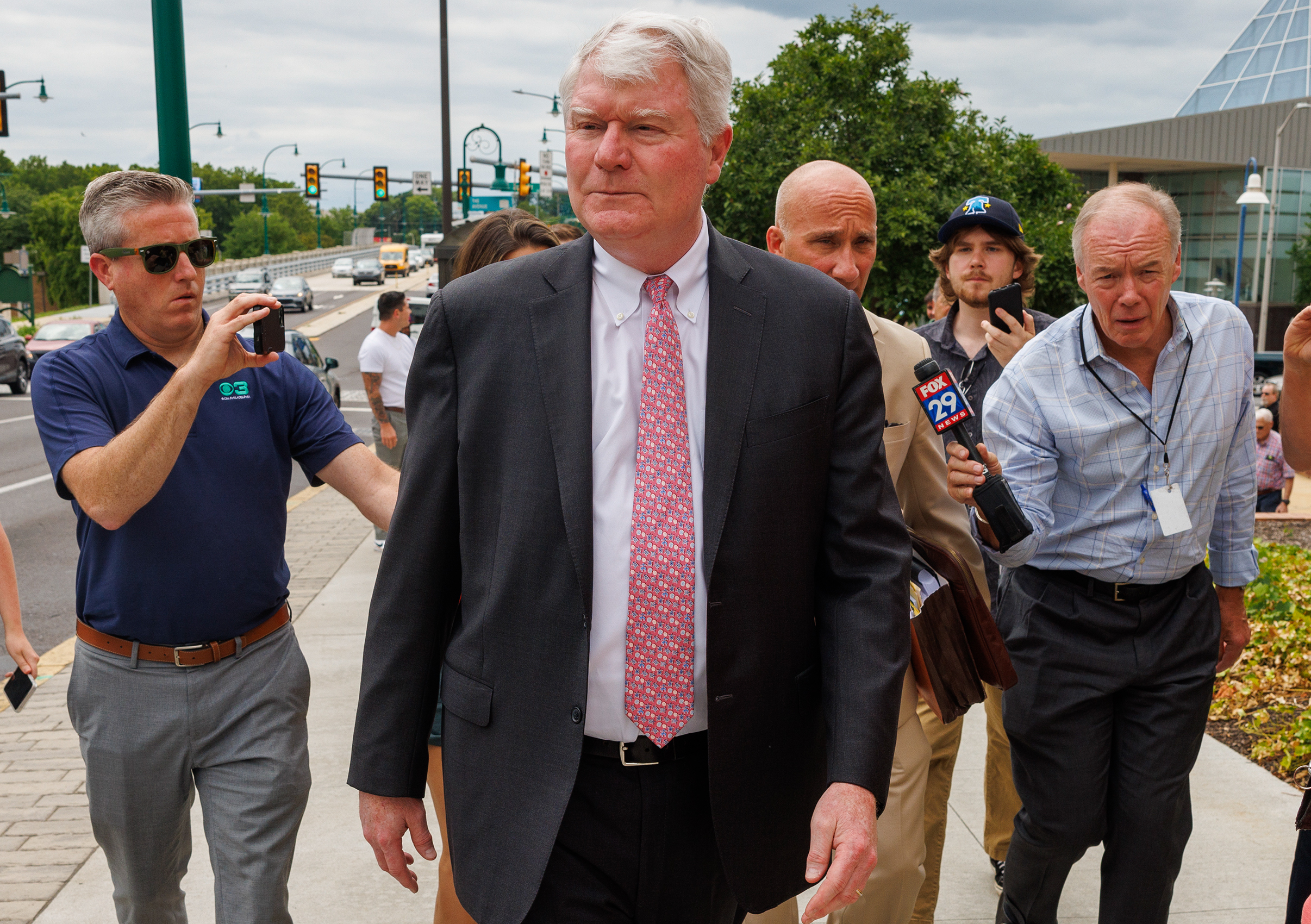
    Johnny Dougherty, the former IBEW business manger, and his attorney Gregory J. Pagano as they leave the U.S. District Court, Reading, Pa. on the day he was sentenced to 6 years in prison Thursday, July 11, 2024.

    For months, the conservative influencer has posted on social media urging followers to vote against retaining Kevin Dougherty and his colleagues, citing the times his name was mentioned during John Dougherty’s trials, such as when prosecutors alleged the justice received free home repairs or snow removal on the union’s dime. Kevin Dougherty’s lawyer at the time of the embezzlement trial said the judge never knowingly accepted services paid for with union funds.

    While door-knocking in September, Kevin Dougherty dismissed attacks against him related to his brother as “misinformation,” noting his decades-long career as a judge.

    Kevin Dougherty, 63, spent more than a decade as a Common Pleas Court judge in Philadelphia before his election to the state Supreme Court. During his tenure on the state’s highest court, he has authored majority opinions and is leading a statewide initiative to improve how Pennsylvania’s judicial system interacts with people with behavioral health issues.

    “I spent close to a quarter of a century being a judge,” Dougherty said on a sidewalk in Northeast Philly. “I just don’t accept people’s comments and judgment. I want to know what the motive behind those comments are. Some of these comments are just partisan … and I believe in my reputation.”

    The justice should be vetted on his own merits, said John Jones, a former U.S. District Court judge for the Middle District of Pennsylvania who was appointed to the bench by former President George W. Bush.

    “You can pick your friends, but you can’t pick your relatives,” Jones, now president of Dickinson College, added. “You have to judge the justice on his own merits. This is not a country where we favor guilt by association.”

    This time on the campaign trail, Kevin Dougherty has new familial support. State Rep. Sean Dougherty, a Democrat who was elected last year to represent parts of Northeast Philadelphia, has joined his dad to stump for his retention.

    Kevin Dougherty still has broad union support, including from Local 98

    With John Dougherty no longer at the helm of Local 98, labor unions in Pennsylvania this year still overwhelmingly supported the justice for retention, contributing $665,000 to Kevin Dougherty’s campaign as of September. While trades unions contributed the most of any interest group to all three justices — for a total of $903,000 as of the latest filings — Kevin Dougherty is the largest beneficiary of that support.

    Among those contributors: Local 98. The union, which has reorganized and distanced itself from John Dougherty since he was first convicted in 2021, gave $70,000 to Kevin Dougherty’s retention campaign.

    “IBEW Local 98 does not support candidates based on personal relationships,” said Tom Lepera, Local 98’s political director, in a statement. “We support candidates who understand and stand up for the needs of working men and women in organized labor. Justice Dougherty, along with Justices Donohue and Wecht, have consistently demonstrated their commitment to protecting the rights and interests of middle-class workers across this commonwealth.”

    Kevin Dougherty’s campaign did not respond to several questions this week about his brother’s role in his 2015 campaign or whether his brother’s reputation has influenced the retention campaign.

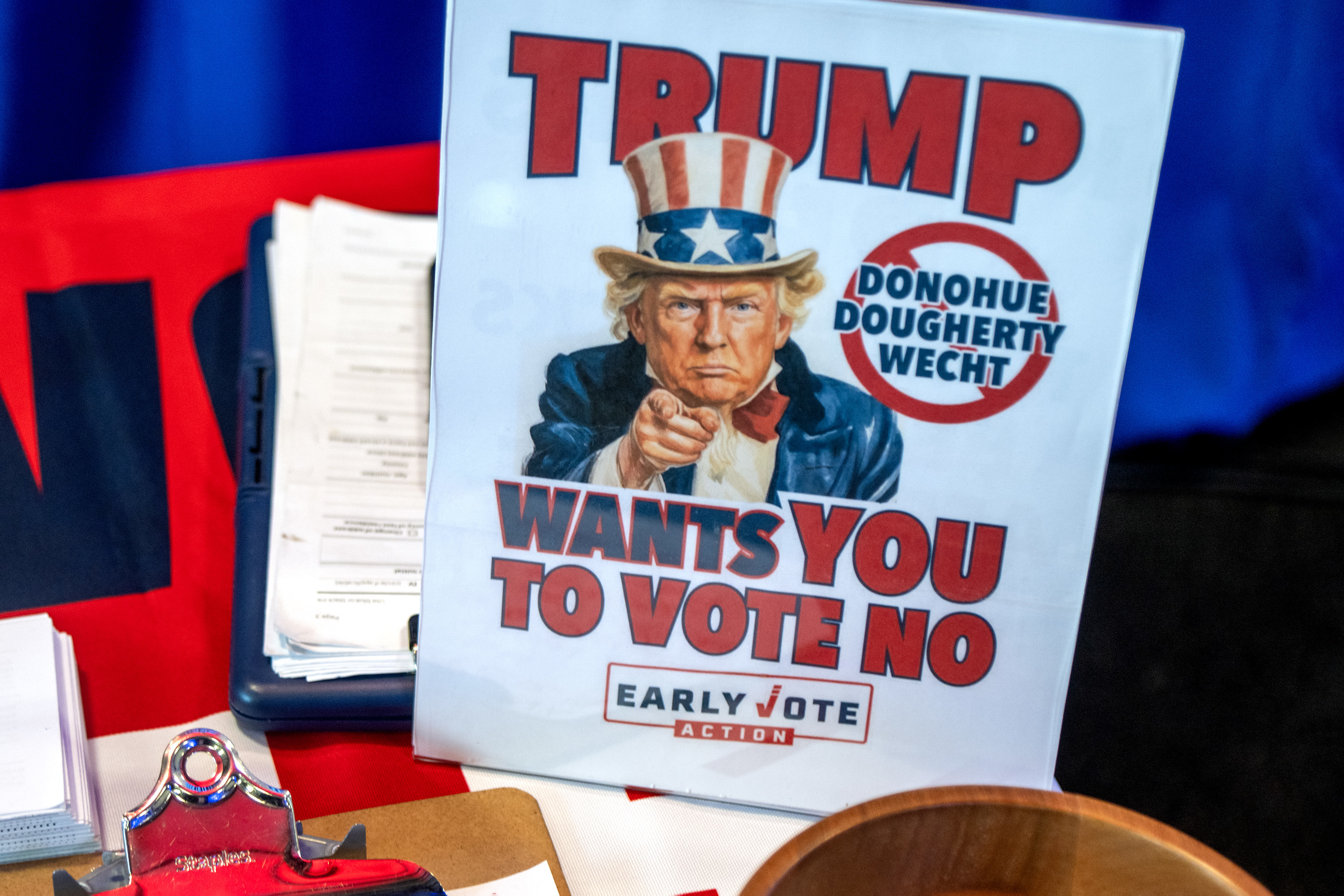
    Anti-retention material featuring President Donald Trump as Uncle Sam was on display at Republican rally in Bucks County last month headlined by Treasurer Stacy Garrity, a candidate for governor. The material is from Early Vote Action, a group led by GOP influencer Scott Presler.

    Union leaders insist their support for Kevin Dougherty this year has nothing to do with his brother and is a reflection of his quality work in the judiciary. Labor unions often support Democratic candidates, who are often seen as more beneficial to unions and their priorities.

    “It’s about keeping good judges on the bench,” said Ryan Boyer, leader of the Philadelphia Building and Construction Trades Council, an umbrella organization of local trades unions once commanded by John Dougherty. This year, the building trades gave just over $33,000 to each justice.

    “We don’t live on Mars where we don’t know that sometimes familial connections can be there,” Boyer said, “and they try to exploit those things.”

    Nonpartisan and Democratic groups favor Dougherty’s tenure on the bench

    Like his colleagues running for retention, Kevin Dougherty has earned broad support from nonpartisan and partisan groups alike.

    Dougherty was recommended for retention by the Pennsylvania Bar Association, which is a rigorous, nonpartisan decision based on a jurist’s behavior on the bench, and endorsed by several law enforcement organizations.

    Lauren Cristella, CEO of the Committee of Seventy, the Philadelphia-based good-government group, noted that the justice was never charged or found guilty of wrongdoing.

    Justices David Wecht, Christine Donohue and Kevin Dougherty sit onstage during a fireside chat at Central High School on Monday, Sept. 8, 2025 in Philadelphia.

    “The Committee of Seventy relies on the findings of law enforcement and professional oversight organizations, such as the Bar Association, when evaluating judicial candidates. This year, the Pennsylvania Bar Association has evaluated Justice Dougherty and recommended him for retention. Our focus remains on transparency, accountability, and maintaining public trust in Pennsylvania’s courts,” Cristella said in a statement.

    Dougherty and his fellow justices have also gained the support of Gov. Josh Shapiro, Pennsylvania’s popular Democratic governor, who in a fundraising email to Pennsylvania Democrats on Thursday urged voters to mark “yes” on retaining Dougherty, Donohue, and Wecht.

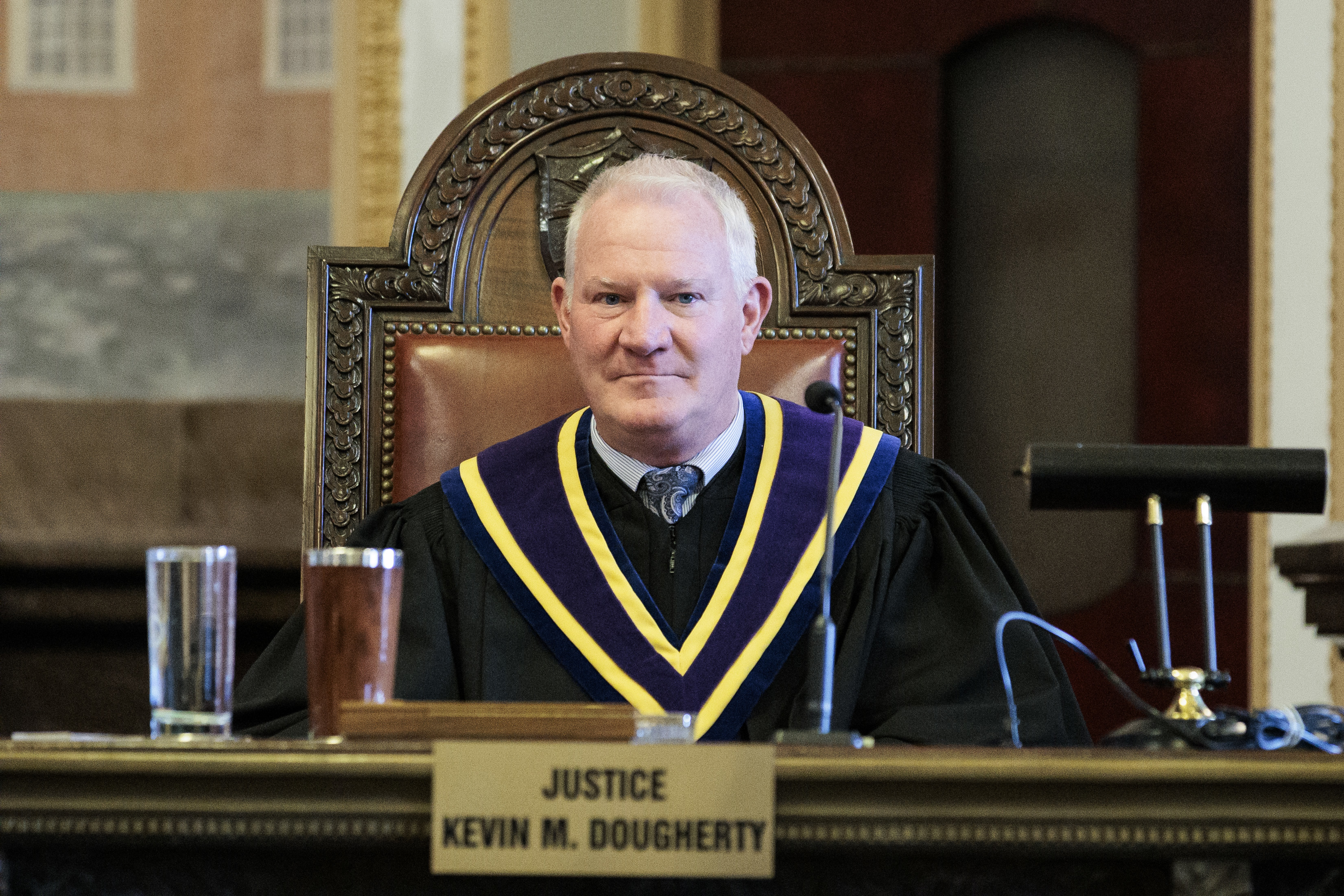
    Justice Kevin M. Dougherty listens during a Courtroom Dedication Ceremony at the Supreme Court Courtroom in Philadelphia City Hall on Tuesday, Sept. 9, 2025 in Philadelphia.

    “The threats to our freedoms are coming from all directions, and we need a Court that stands up for what’s right,” Shapiro said in the email. “Justices Donohue, Dougherty, and Wecht have proven that we can count on them to protect freedom, reproductive rights, and the rule of law.”

    In a statement to The Inquirer, Kevin Dougherty didn’t mention his brother by name.

    “With regard to my personal relationship I love my big brother. For obvious reasons, my brother is not participating in my Retention campaign,” he said.

  • Trump backs off planned surge of federal agents into San Francisco after talking to the mayor

    Trump backs off planned surge of federal agents into San Francisco after talking to the mayor

    ALAMEDA, Calif. — President Donald Trump said Thursday that he’s backing off a planned surge of federal agents into San Francisco to quell crime after speaking to the mayor and several prominent business leaders who said they’re working hard to clean up the city.

    Trump had been threatening to send the National Guard to San Francisco, a move Mayor Daniel Lurie and Gov. Gavin Newsom said was unnecessary because crime is on the decline. Separately, U.S. Customs and Border Protection agents began arriving at a Coast Guard base in the region earlier Thursday for a possible ramp up of immigration enforcement, a move that drew several hundred protesters.

    It was not clear if the president was canceling a National Guard deployment or calling off immigration enforcement by CBP agents. At his news conference, Lurie said he could not clarify and could only repeat what the president had told him. Lurie said Homeland Security Secretary Kristi Noem “reaffirmed” Trump’s commitment on Thursday morning. DHS oversees CBP agents as well as U.S. Immigration and Customs Enforcement.

    “The Federal Government was preparing to ‘surge’ San Francisco, California, on Saturday, but friends of mine who live in the area called last night to ask me not to go forward with the surge,” Trump posted on social media. “I spoke to Mayor Lurie last night and he asked, very nicely, that I give him a chance to see if he can turn it around.”

    Specifically, Trump said he heard from Salesforce CEO Mark Benioff and Nvidia CEO Jensen Huang. He said the federal government could handle crime better than city leaders, and he indicated he could still send agents in the future.

    At an afternoon news conference, Lurie said he welcomes the city’s “continued partnership” with the Drug Enforcement Agency and other federal authorities to get illegal narcotics off the streets and contribute to San Francisco’s falling crime rates.

    “But having the military and militarized immigration enforcement in our city will hinder our recovery,” the mayor said. Trump’s assertions of out-of-control crime in the city of roughly 830,000 have baffled local and state leaders, who point to statistics showing that many crimes are at record lows.

    Newsom’s office said on X: “Trump has finally, for once, listened to reason — and heard what we have been saying from the beginning. The Bay Area is a shining example of what makes California so special, and any attempt to erode our progress would damage the work we’ve done.”

    Protesters assembled just after dawn at Coast Guard Island in Alameda, California, where CBP agents were arriving before Trump made his remarks. Several hundred people stood outside the facility, with many singing hymns and carrying signs saying, “Protect our neighbors” and “No ICE or troops in the Bay.”

    Police used at least one flash-bang grenade to clear a handful of demonstrators from the entrance as CBP vehicles drove onto the base. Organizers urged protesters to remain peaceful, as a line of Coast Guard officers in helmets watched from just outside the entrance.

    Protester Gala King participated in an interfaith vigil against the federal crackdown and in support of immigrants.

    “The Bay Area is a beautiful place full of diversity, and we are here to protect that,” King said. “Our faith traditions, our interfaith traditions, call on us to stand on the side of justice, to stand on the side of those that are most marginalized, that are most targeted right now.”

    Coast Guard Island is an artificial island formed in 1913, and the Coast Guard first established a base there in 1926. The island is owned by the federal government and is not open to the general public, so escorts or specific government ID cards are required for visitors. The Coast Guard is part of the Department of Homeland Security.

    Trump has deployed the Guard to Washington, D.C., and Memphis, Tennessee, to help fight what he says is rampant crime. Los Angeles was the first city where Trump deployed the Guard, arguing it was necessary to protect federal buildings and agents as protesters fought back against immigration arrests.

    He has also said they are needed in Chicago and Portland, Oregon. Lawsuits from Democratic officials in both cities have so far blocked troops from going onto city streets.